
Patch News – May 2022
This edition of Patch news is likely to be rather shorter than usual as I was only around for about half of the month and I’m writing this on 19th May in an attempt to get it ready for publication on 1st June. Any new models or exciting happenings towards the end on May will have to wait for the next issue I’m afraid. The patch is in good condition and while Captain Slow mowed one day Dougal Entendre entertained us with his Riverdance moves.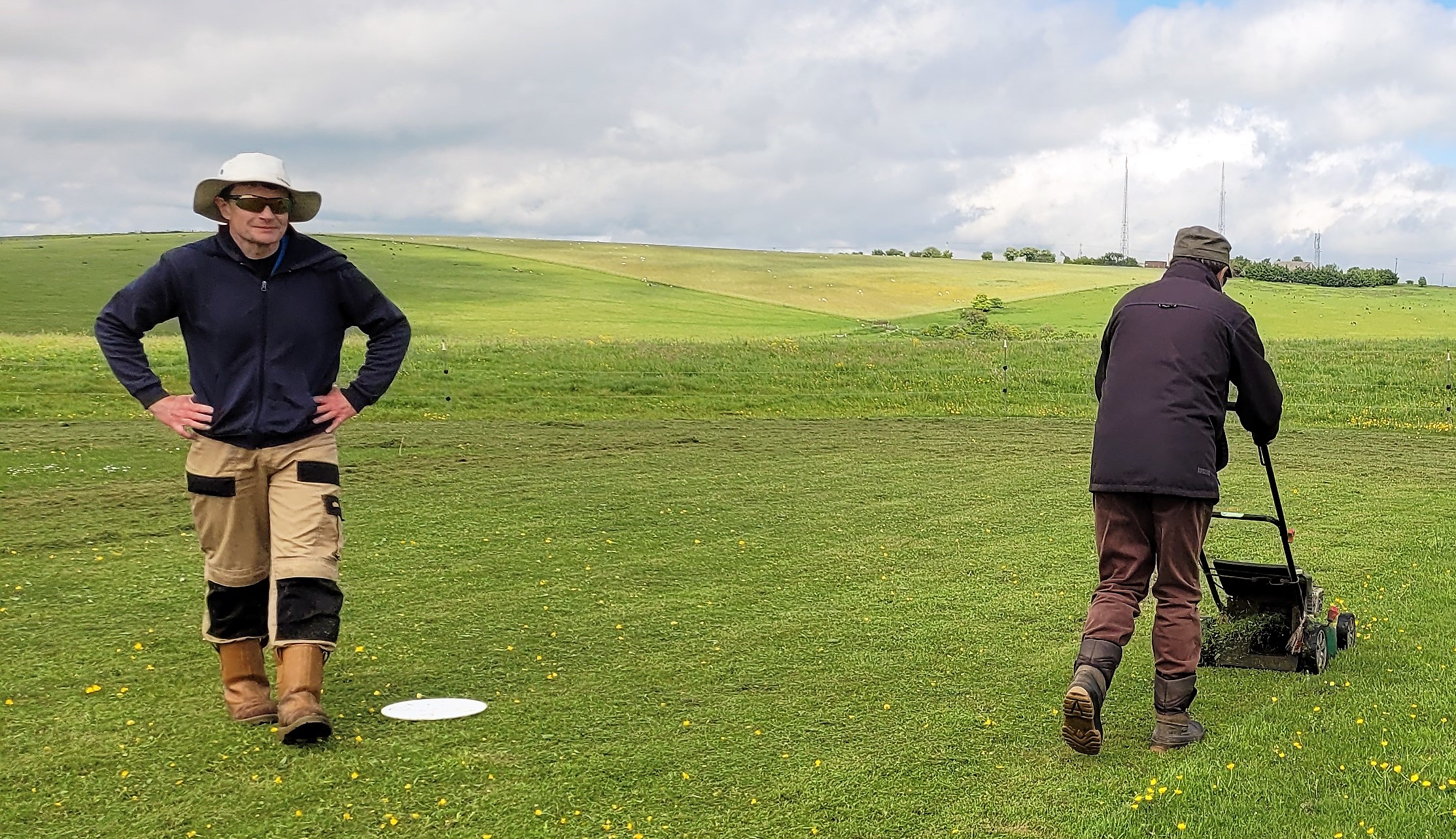 The South Downs Green Fair took place on 8th May and our field was taken over for car parking so there was no flying allowed. Some of the members, led by Captain Slow, adorned the fence with lots of high vis tape to prevent anyone driving across our patch.
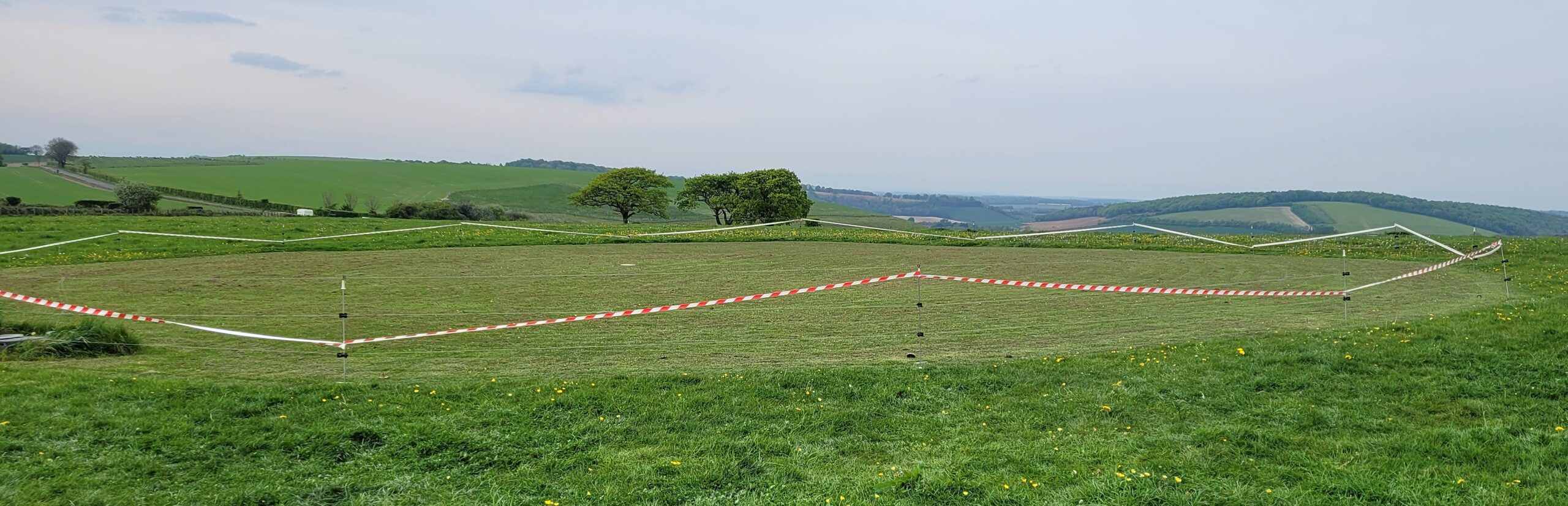 It was probably the one time in the year that all those 4 wheel drive diesel guzzling off-roaders actually got off-road! Once the vehicles had all left Captain Slow and Woody returned to remove the tape and turn the fence back on. The field had been animal free for quite a while but after the Green Fair a herd of young and inquisitive bullocks arrived.
I expect they’ll soon get used to us but at the time of writing they are being a bit of a pain!
It was probably the one time in the year that all those 4 wheel drive diesel guzzling off-roaders actually got off-road! Once the vehicles had all left Captain Slow and Woody returned to remove the tape and turn the fence back on. The field had been animal free for quite a while but after the Green Fair a herd of young and inquisitive bullocks arrived.
I expect they’ll soon get used to us but at the time of writing they are being a bit of a pain!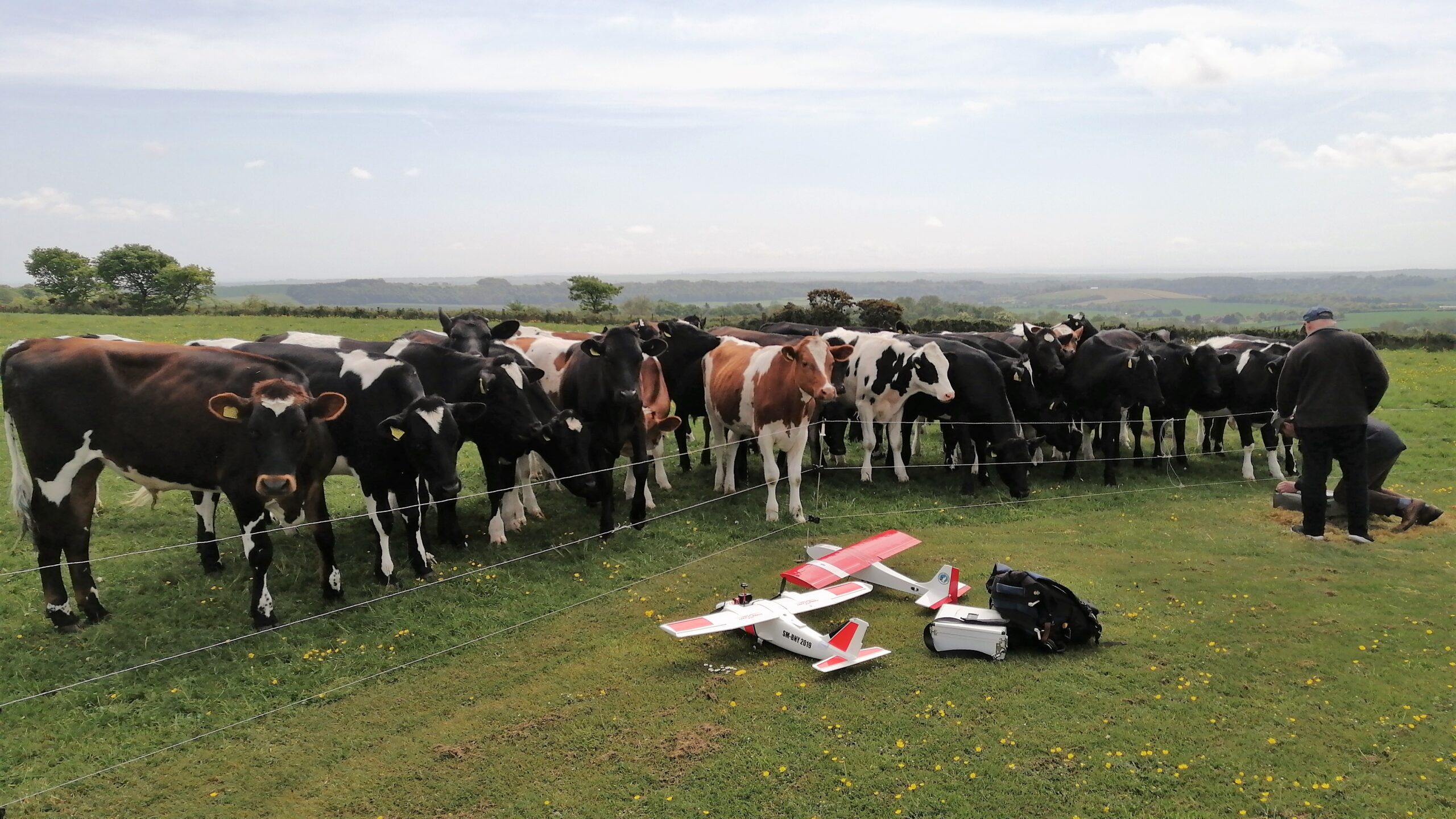 The May weather was pretty good in general so the members enjoyed lots of flying.
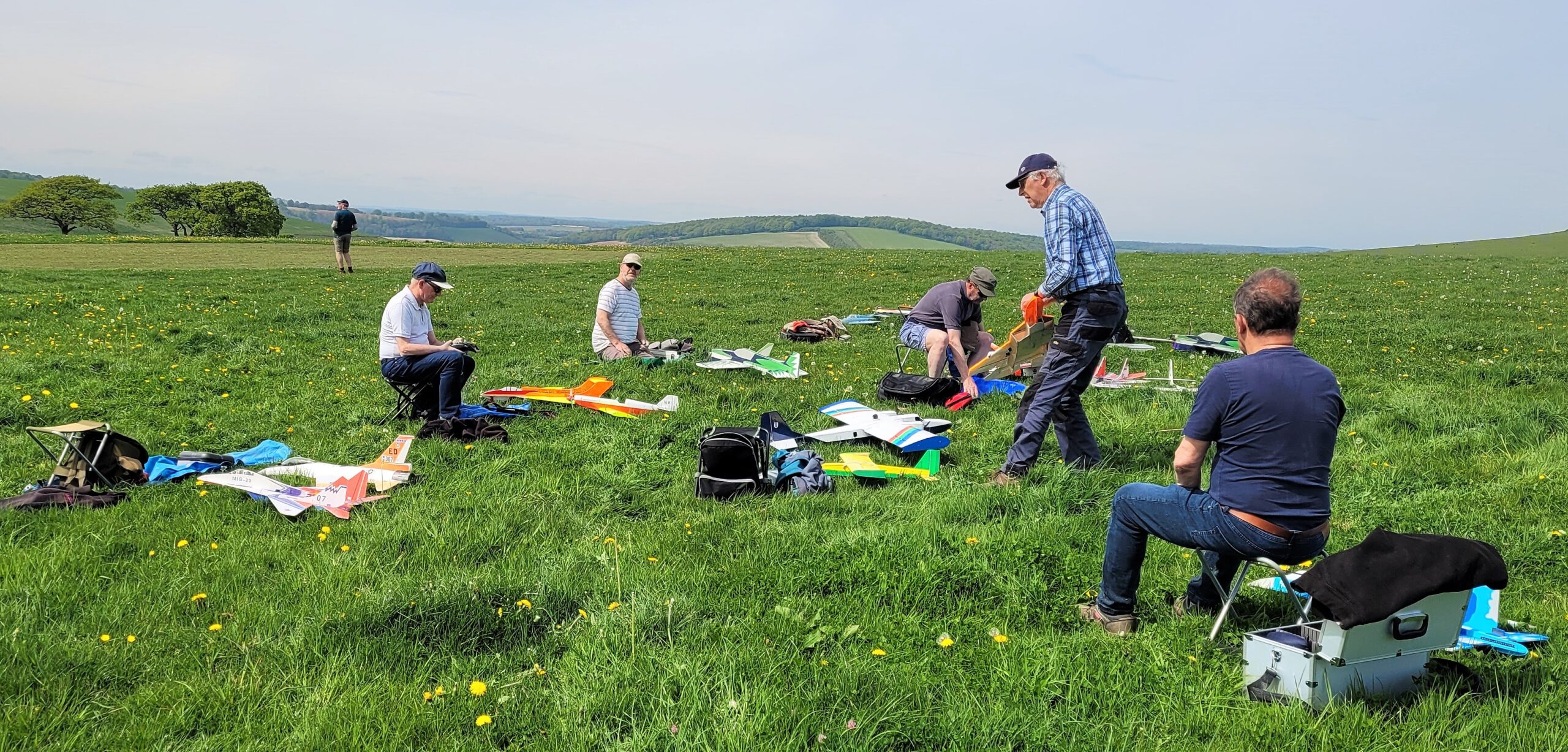 I was hoping to write about the Petersfield Aero Modellers participation in the BMFA Centenary Record Attempt but sadly it was washed out by heavy rain. More of that later.
Avid builder Dwayne Pipe has built and successfully flown a new model called Size Zero.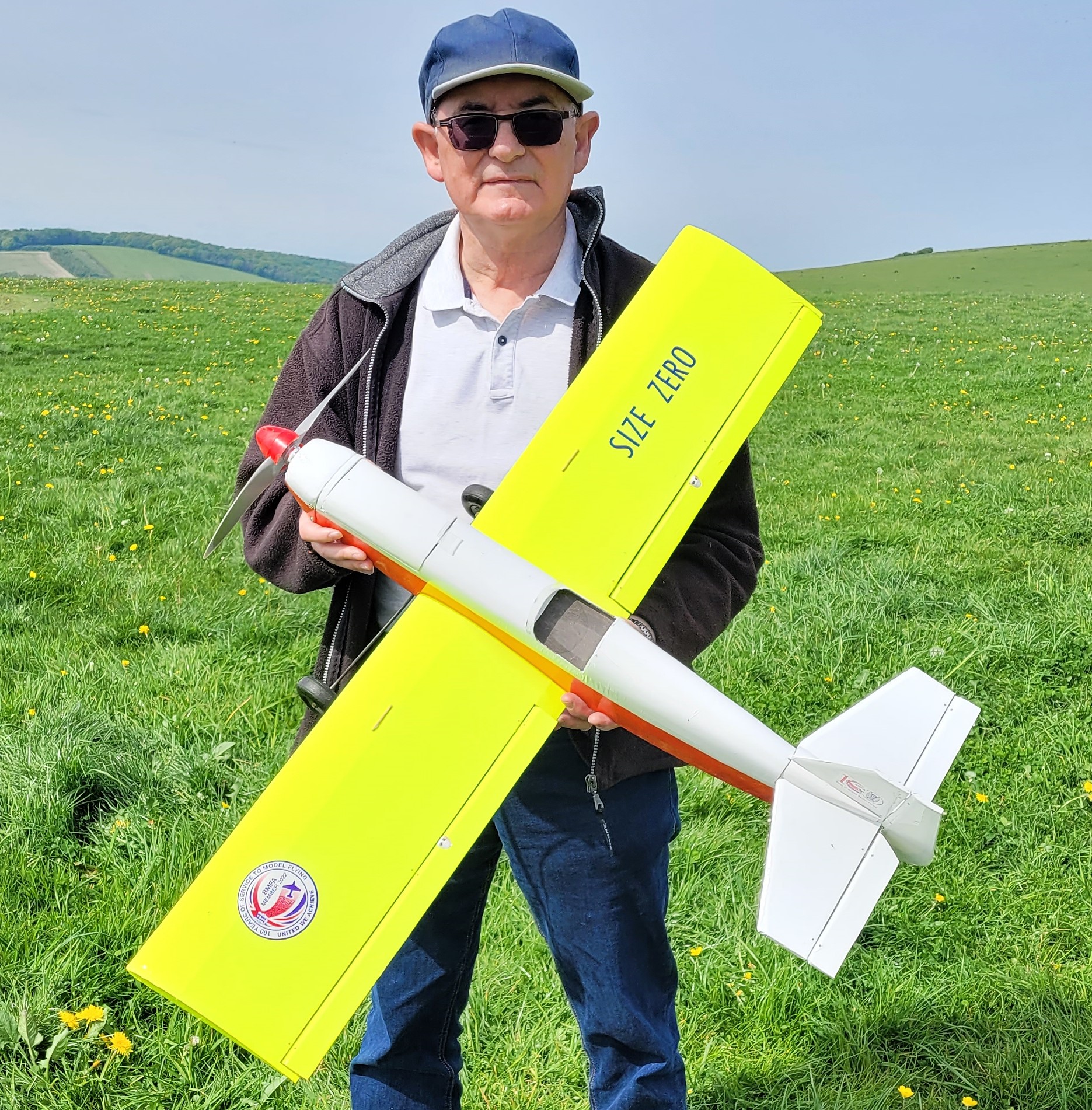 Slightly odd name I thought but a quick Google search explains that it’s an American dress size about which there was lots of controversy concerning skinny models back in the early 2000’s. Size Zero is a ‘vanity size’ which in 1970 it would have been called Size 6. In other words Size Zero is a small model. Amazing what you learn by reading Patch News isn’t it!
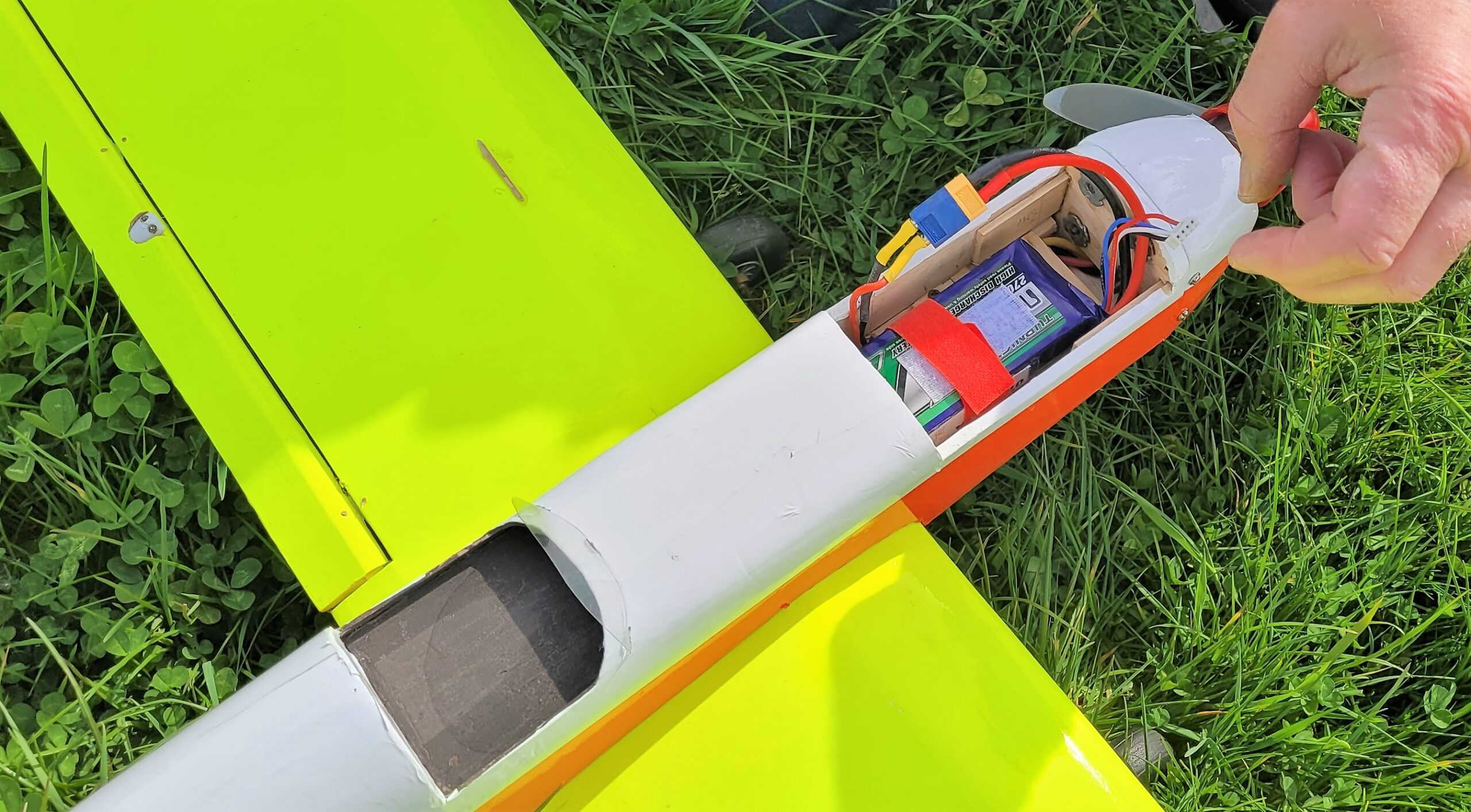
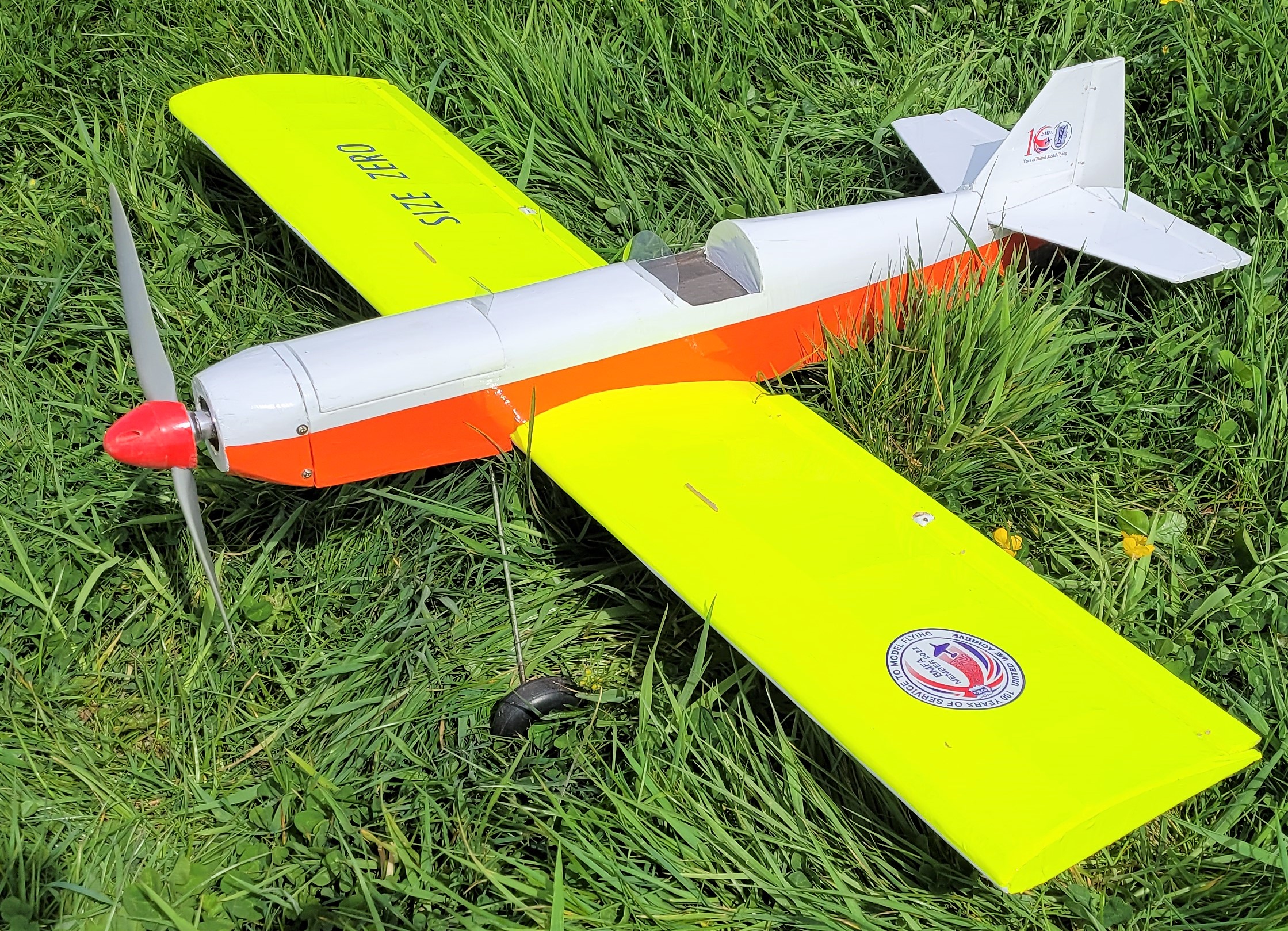 This is what Dwayne says about it: The Size Zero is based on a Peter Miller design in RCME back in about 2007. The original design was for IC and I have converted it for electric. I originally built it as my first homemade plane when I decided to restart aero modelling back in 2006. This first build was a disaster. The wings incidence was negative and with full up elevator, it refused to fly above head height. I never got the hang of the 25 engine and the plane lasted about 6 flights. Having built a few models since then I thought I would have another try. The Size Zero has a wingspan of 40 inches and an all up weight of just over 2 1/2 pounds. Pulls a 11×6 prop with a 3s battery and a 30A esc. To date it’s flown twice and I am very pleased to have got it right in the end.
 Thanks Dwayne. If you fancy building a Size Zero for yourself the plan is available from Sarik Hobbies for just £13.50, this screenshot is taken from there website:
 We all stopped to watch the maiden flight with great interest after Dwayne had explained about the first one being a failure but it was a real anti-climax, this one just took off and flew beautifully! You can see some of the first flight in this month’s video.
I featured Dougal Entendre’s large Spad S.XIII in Patch News some time ago but it’s a model he doesn’t fly much and some haven’t seen it so it’s worth another look. Dougal flew it at the field at the start of the month to prepare it for flying at the BMFA South East Area Electric Fly-In at the Epsom Radio Flying Club site near Charlwood in Surrey on 8th May.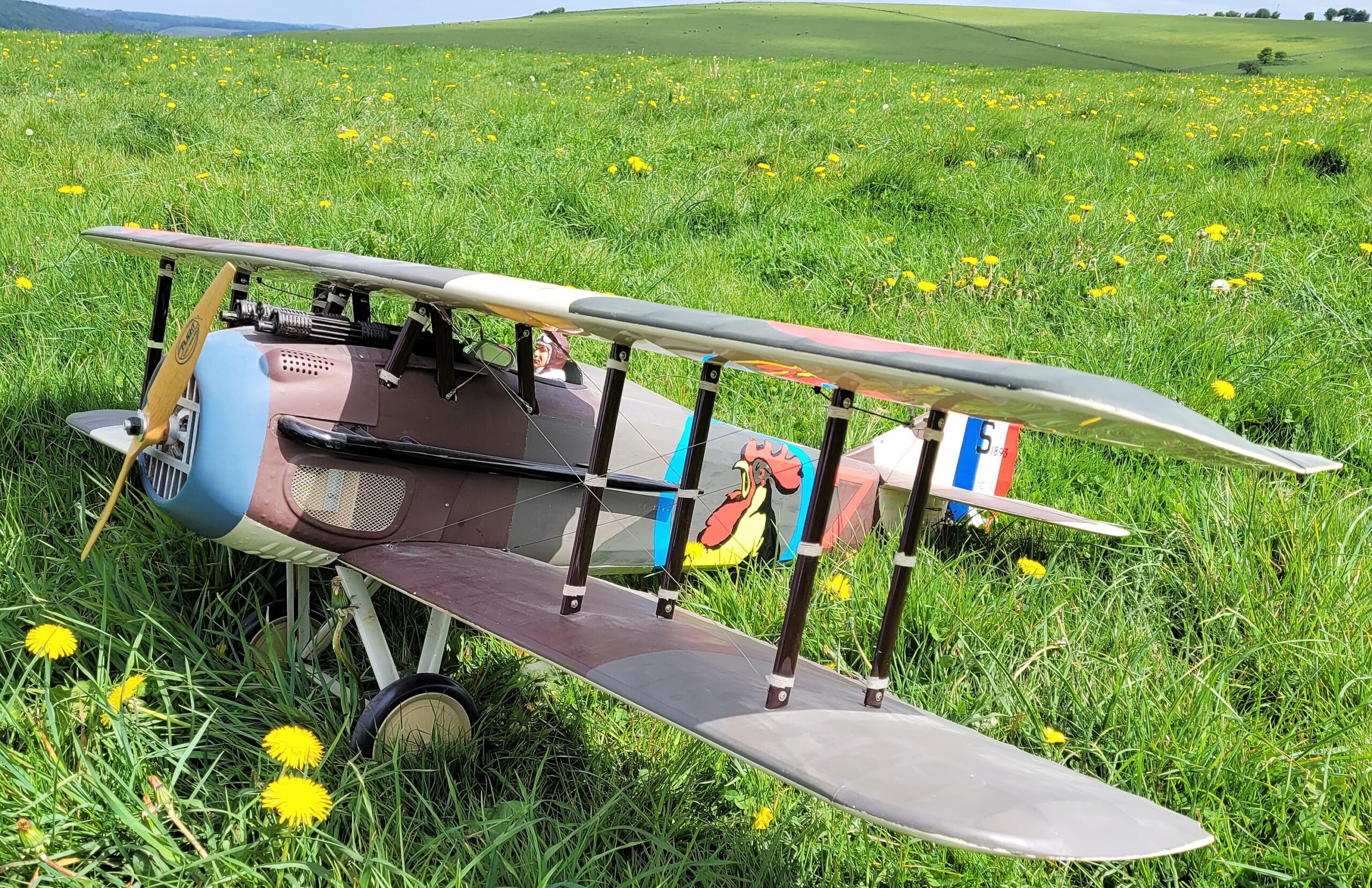
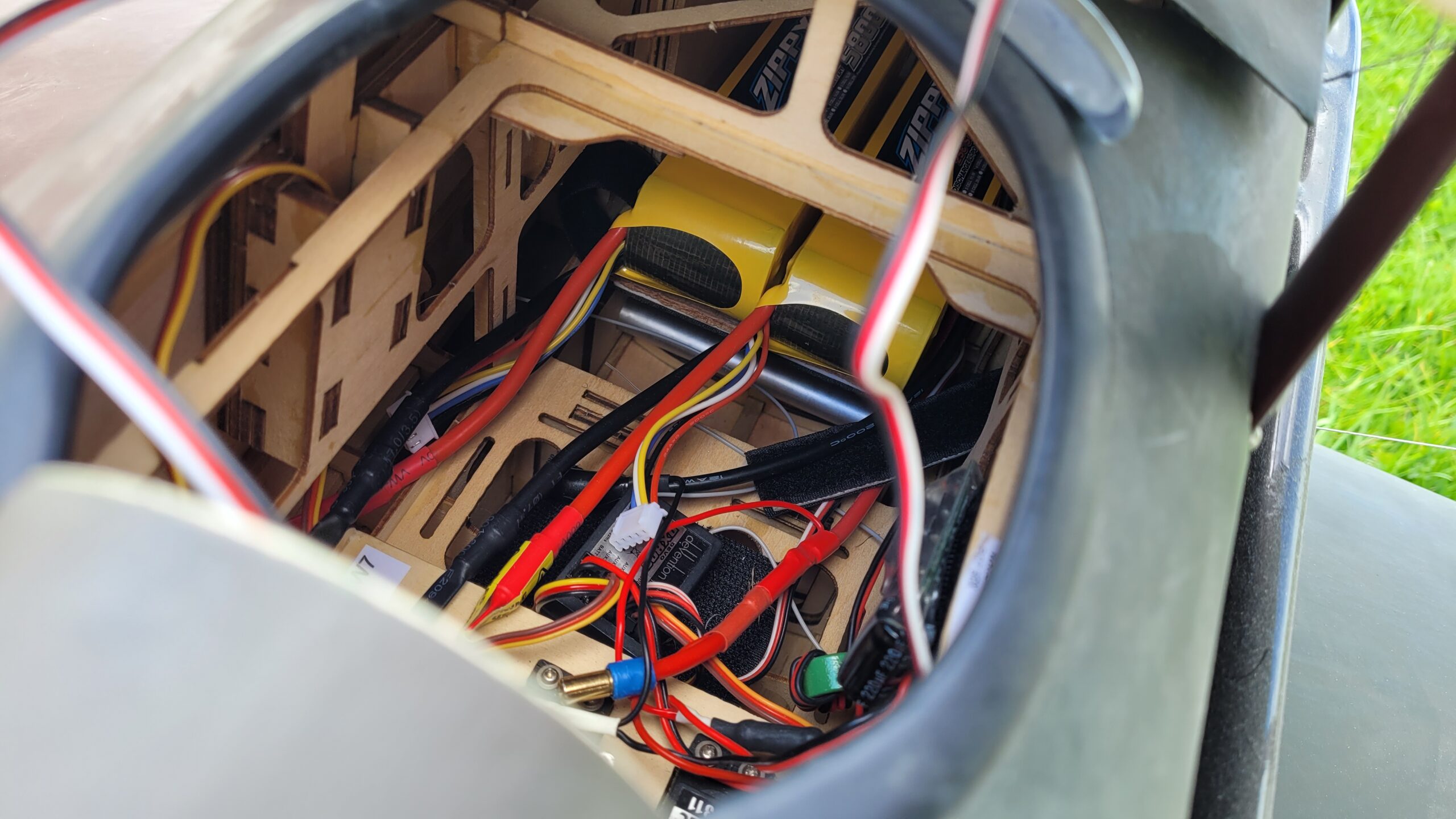
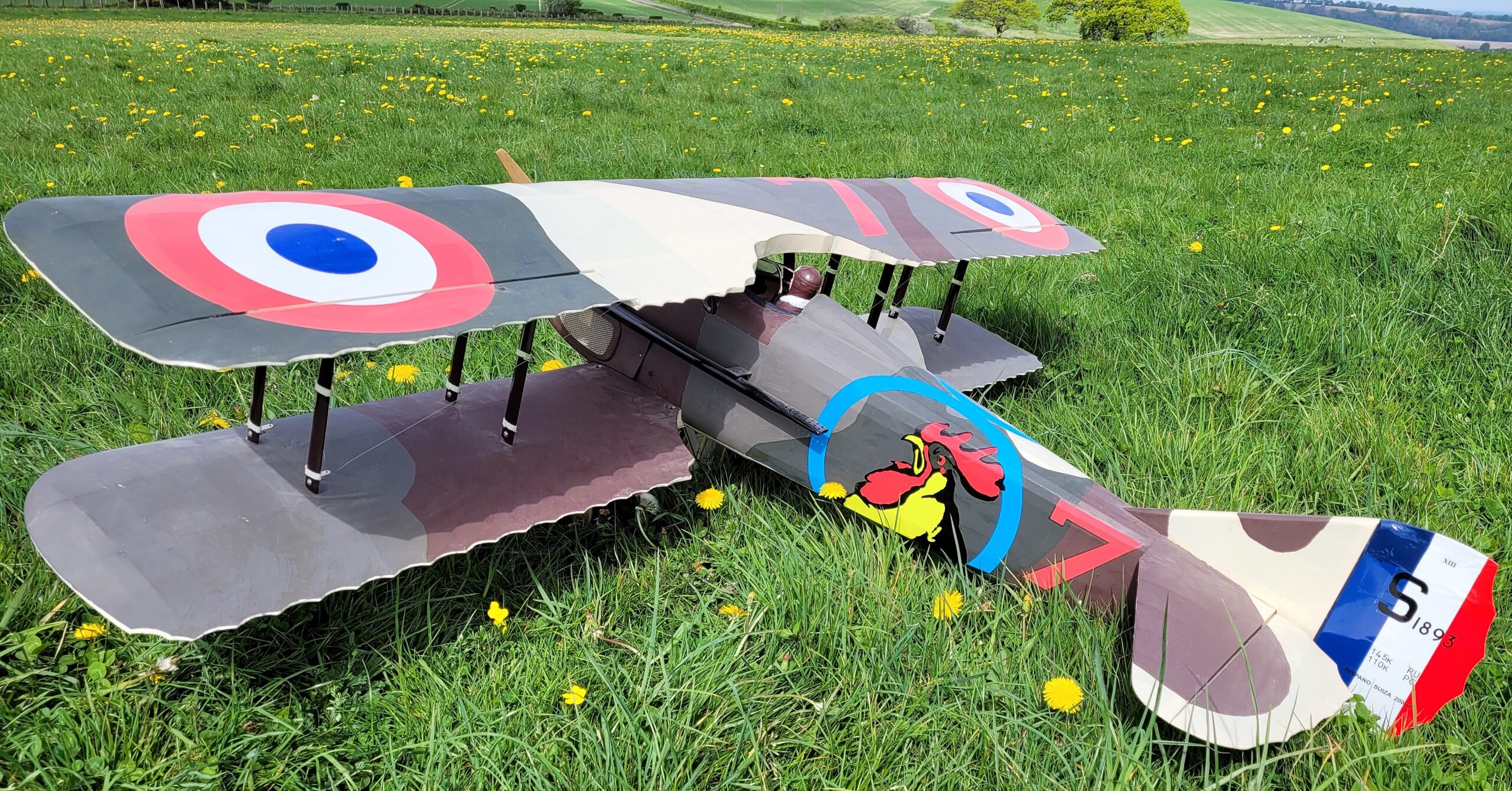 The Spad is an ARTF model produced by Maxford USA. At 1/5th scale it’s 1727mm (68”) span and weighs around 6kgs (13lbs) so to power it Dougal chose a Turnigy Aerodrive SK3 – 6364-245kv brushless outrunner which swings an 18 x 8 propeller at about 6000rpm. He uses two 5800mAh 4 cell Zippy Compact lipos in series (8 cells) linked to a Robotbirds Pro-80 amp Brushless ESC V4 Opto HV speed controller. He also fitted a separate high voltage BEC to ensure the radio gets the voltage it requires.
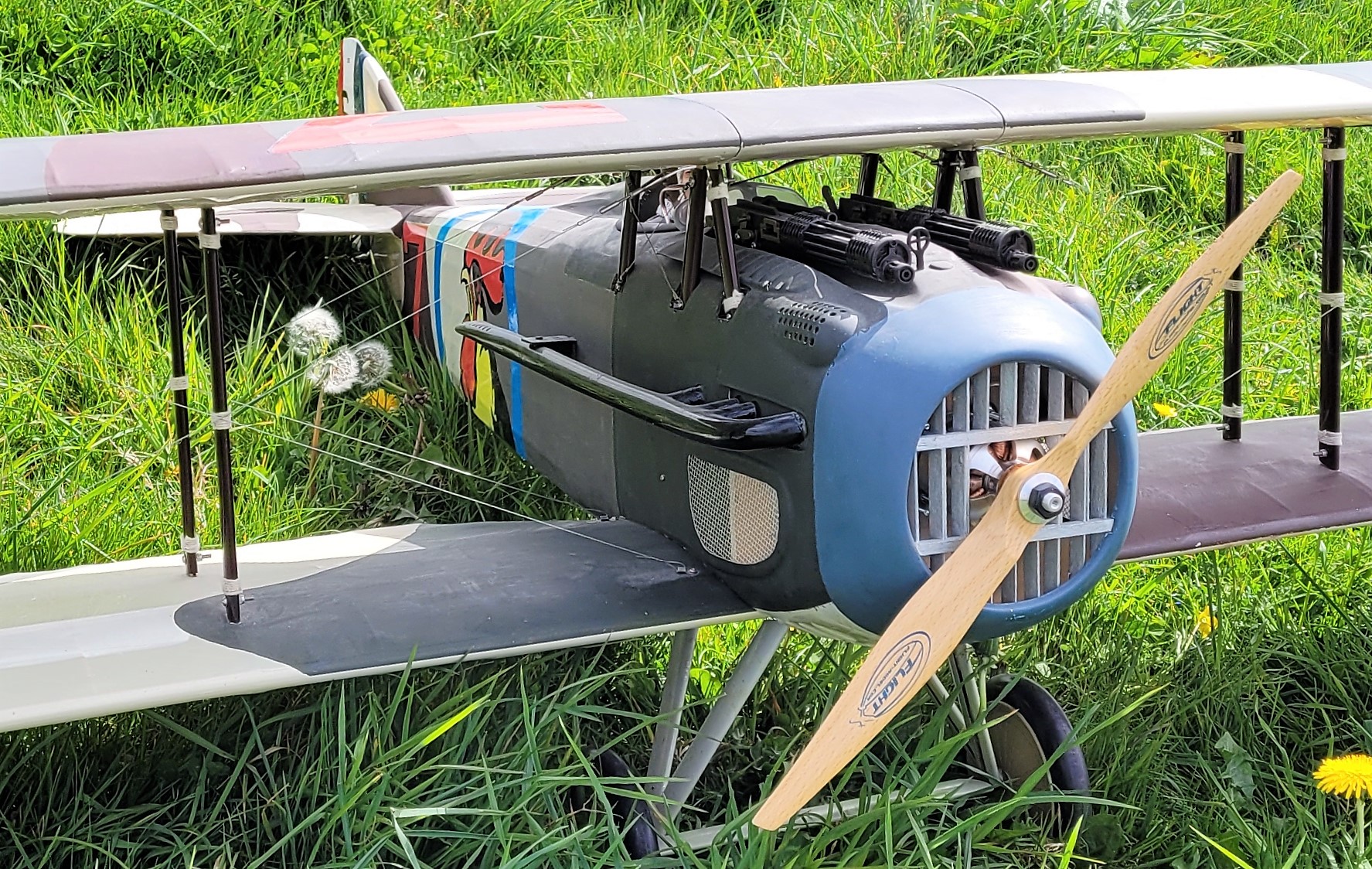
 To really finish the model off Dougal purchased the optional extra Vickers machine guns.
 I filmed one flight from the ground and then followed the Spad with my FPV Ranger and got some quite nice aerial footage as well. Highlights from both are in this months’ video.
Back now to the BMFA Centenary Record Attempt. For those that don’t know, as part of the celebrations for the BMFA’s 100th year the idea was to get all BMFA members to fly their models at 12pm on 15th May to break the world record for the number of model aircraft in the air at any one time. Captain Slow registered PAM as one of the clubs wishing to participate and despite a rather dodgy looking weather forecast a number of members turned up to take part. As the bullocks were in the field the electric fence pits area extension was erected but just as they were preparing to fly the heavens opened.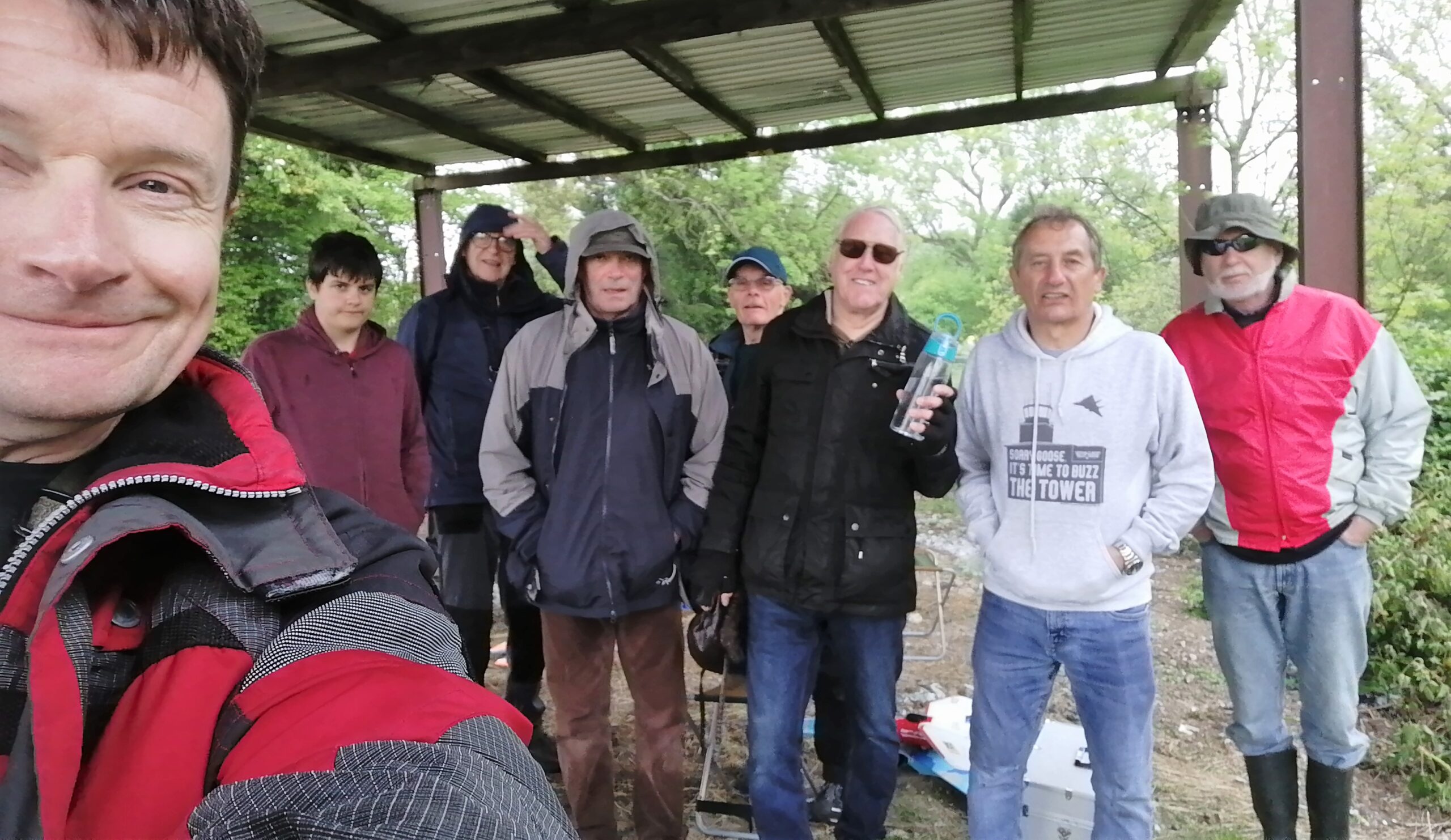 Everybody rushed to shelter in the barn hoping the downpour would stop before 12pm but sadly the very heavy rain just continued. Captain Slow had brought along his little Powerup RC Paper Plane and decided to try flying it under the shelter of the very leaky barn roof just so the club could record at least one flight to be part of the record. The flight was very short as despite the barn roof providing some shelter the Paper Plane got rather damp and soggy and Captain Slow has since has to make a new wing for it! But never mind, he managed to fulfil the flight requirement and has now submitted it to BMFA so Petersfield Aero Modellers should be recorded as taking part in the event.
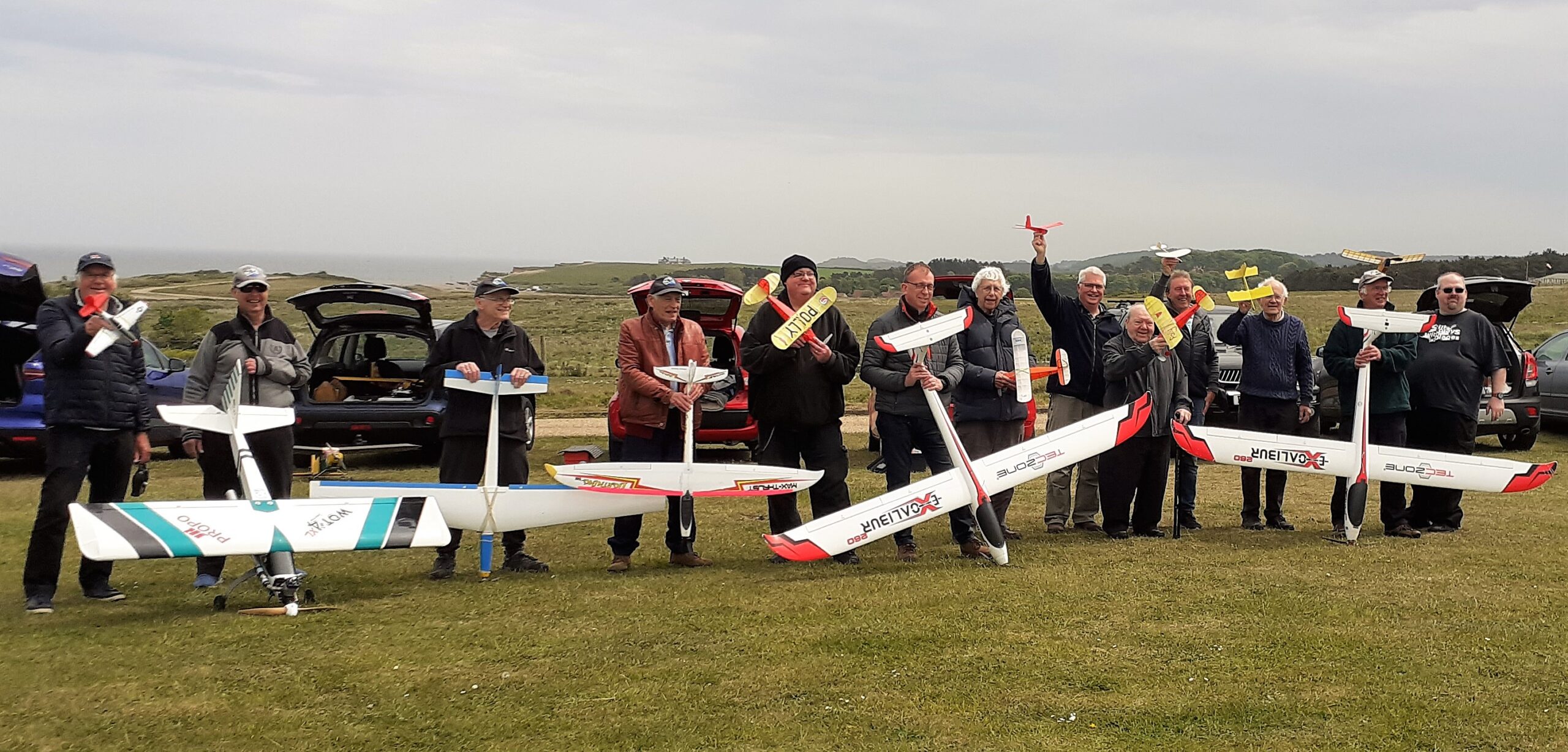
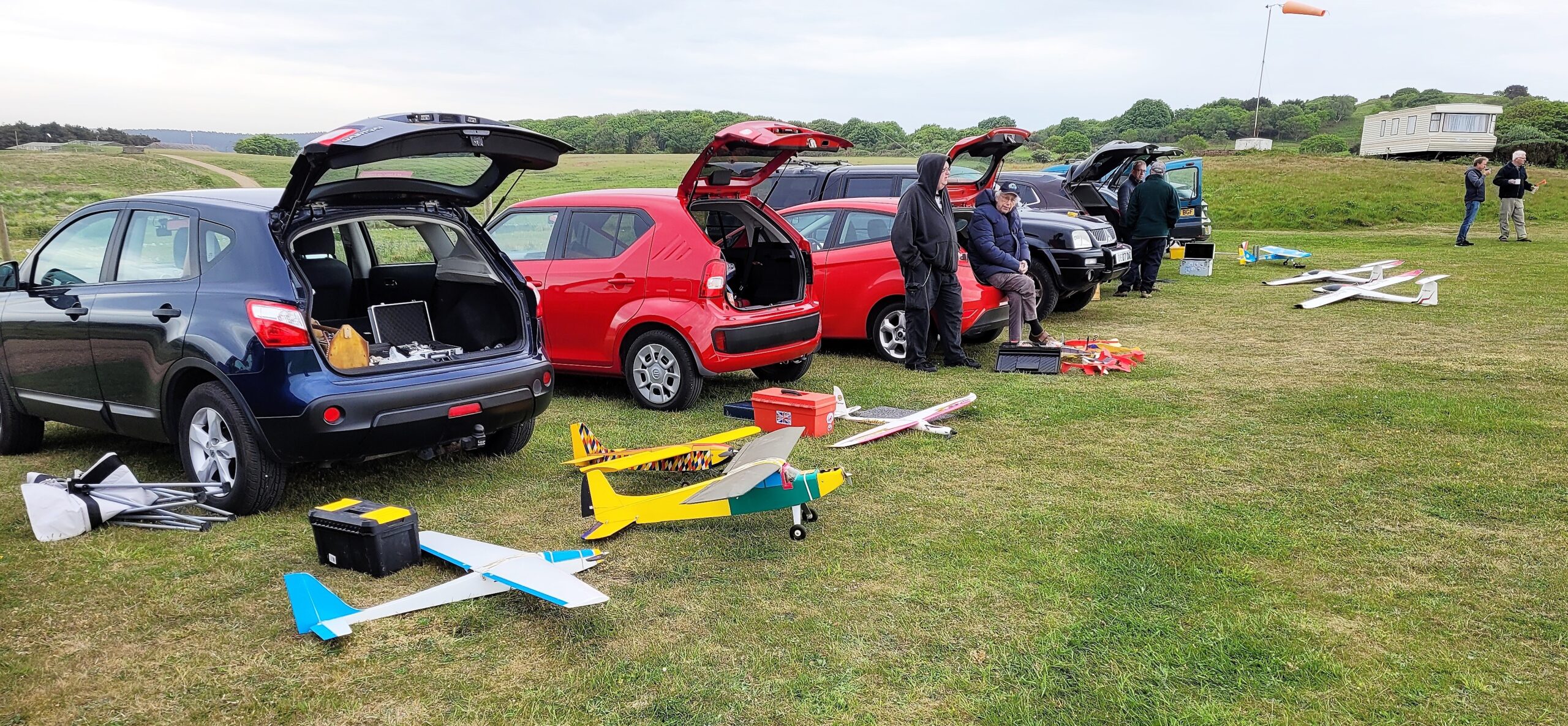
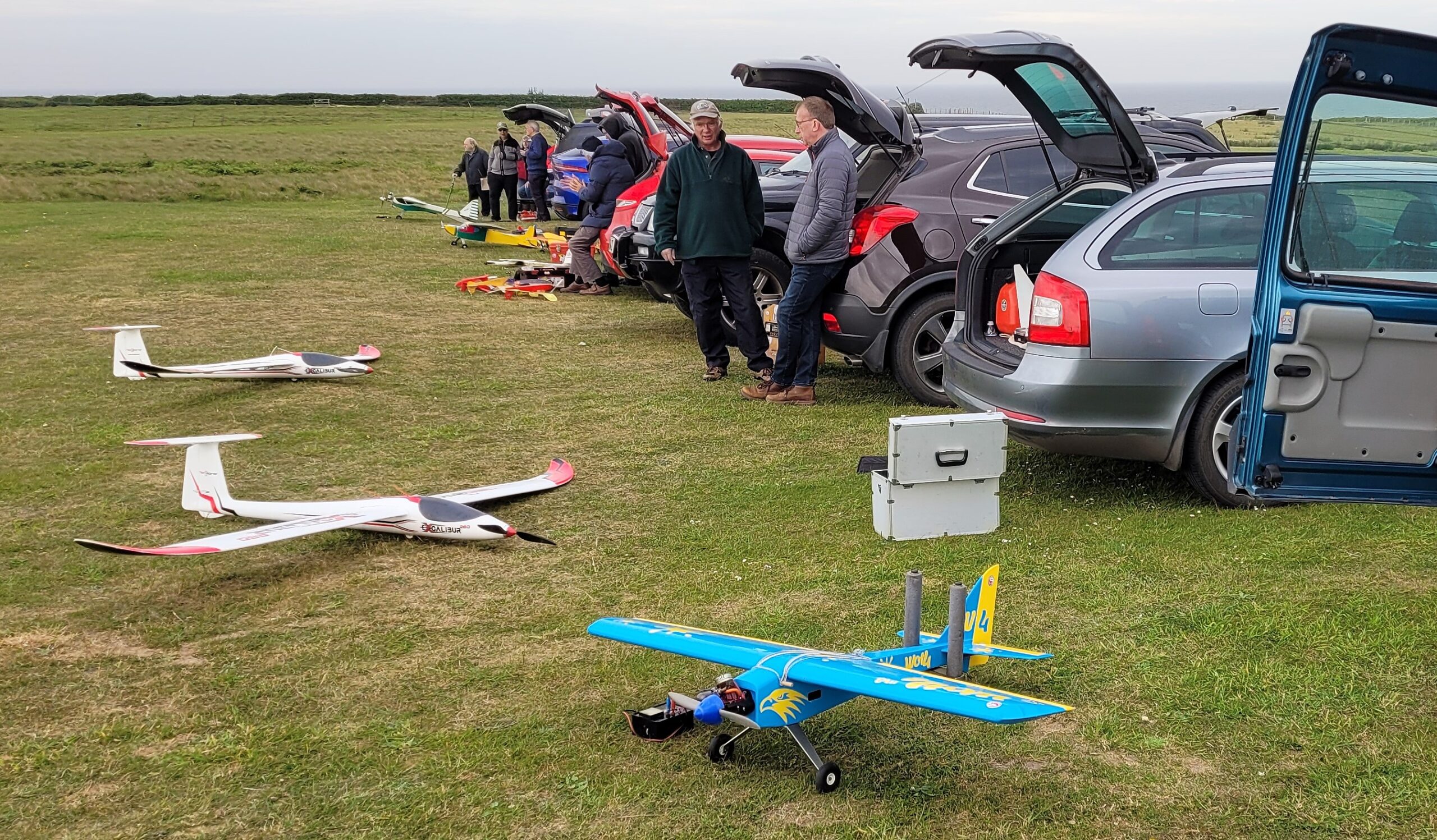
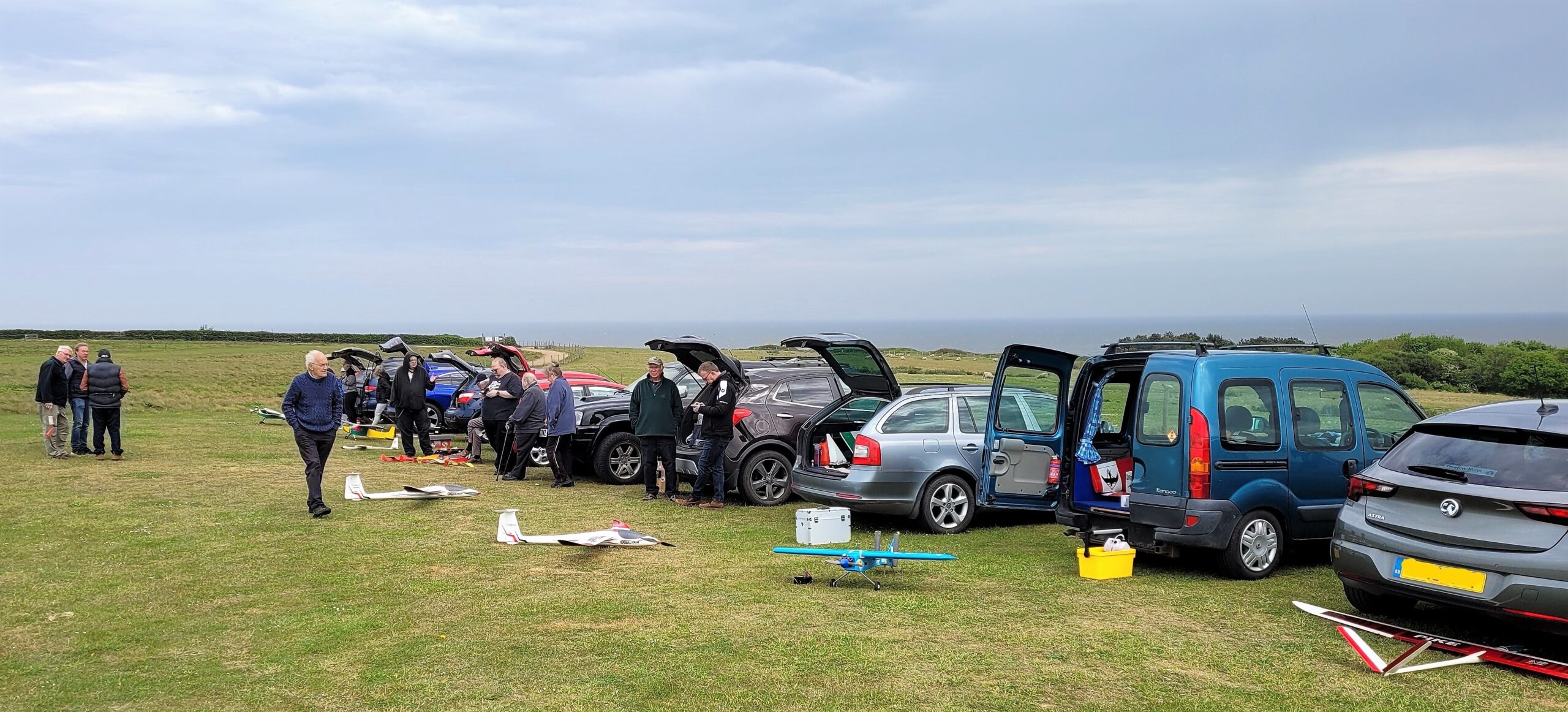
The Record Attempt was rather different for me as, knowing I would be on holiday in Norfolk at the time, I had arranged to fly with the Kelling Model Flying Club. I had made contact with the club secretary Andrew Jenkins who was extremely helpful and supportive and Doreen and I arrived at their field at around 10.30 as agreed. The club flies on the airfield alongside the Muckleburgh Collection which is a military museum sited on a former military camp at Weybourne, on the North Norfolk coast. It was opened to the public in 1988 and is the largest privately owned military museum in the United Kingdom.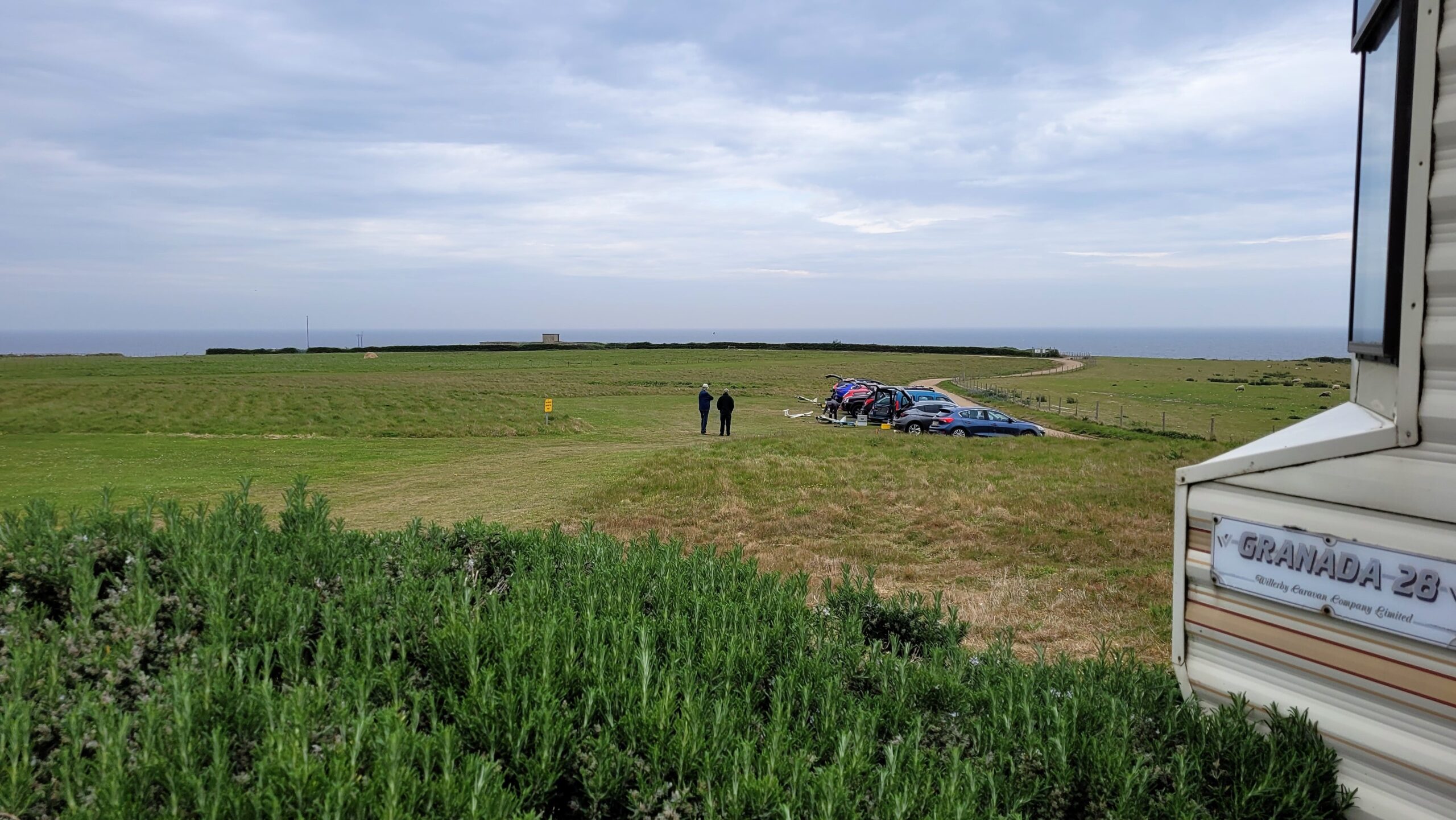 The airfield is on top of the cliffs overlooking the sea so, like our field, tends to be breezy and that day the wind was at ninety degrees to the grass runway which is still occasionally used by full-size planes. They have a large club caravan with a kitchen area and a fully plumbed in toilet, as well as room to socialise and store models and equipment, luxury!
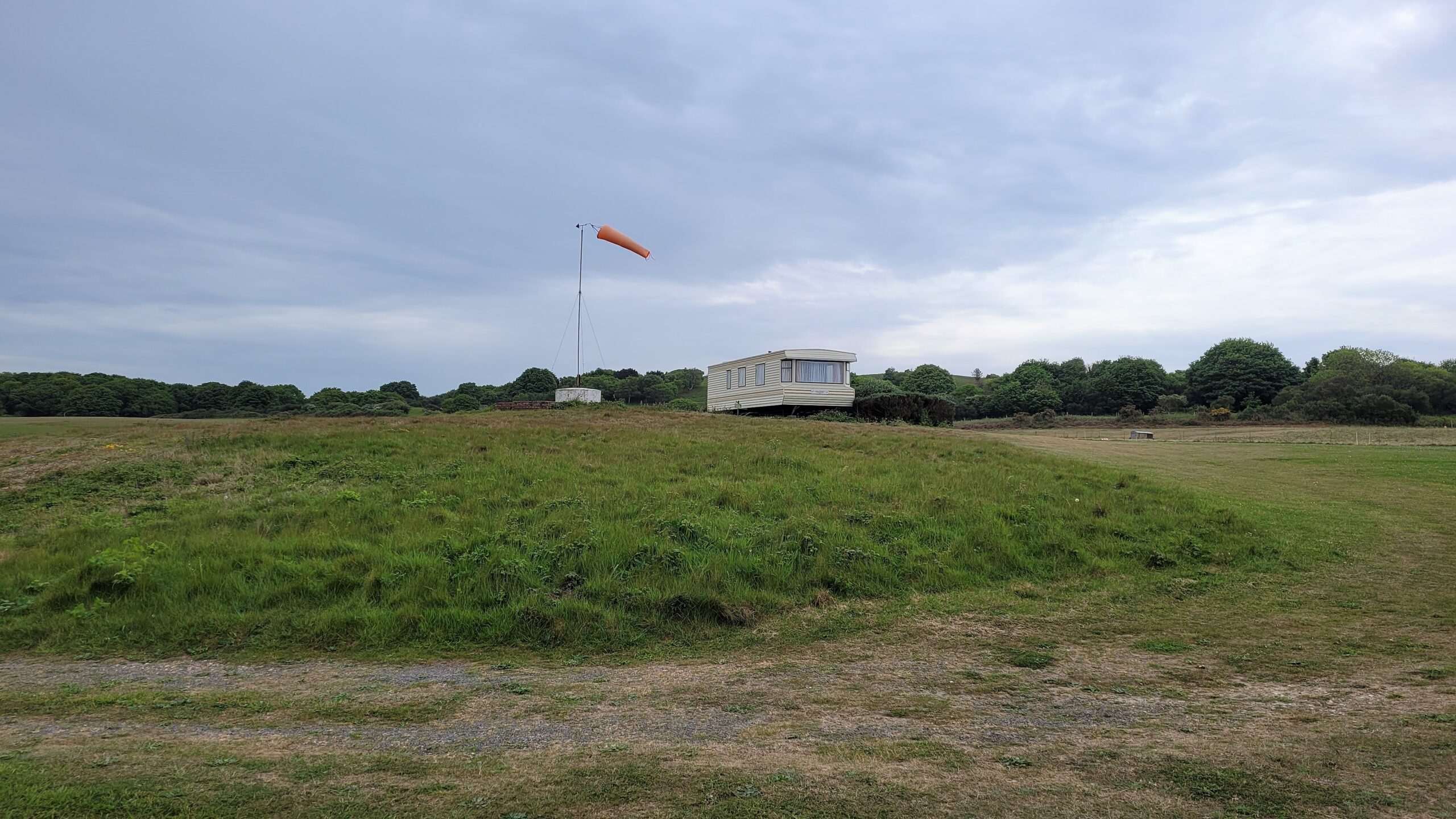 Doreen and I were introduced to everyone and then plied with tea and biscuits before the pilots’ briefing. Andrew explained where the various disciplines would fly as the guys were using a variety of models for the record attempt, power models, electric gliders, and chuck gliders. I had taken my Eachine Mustang and Raptor and flew the Mustang for the event.
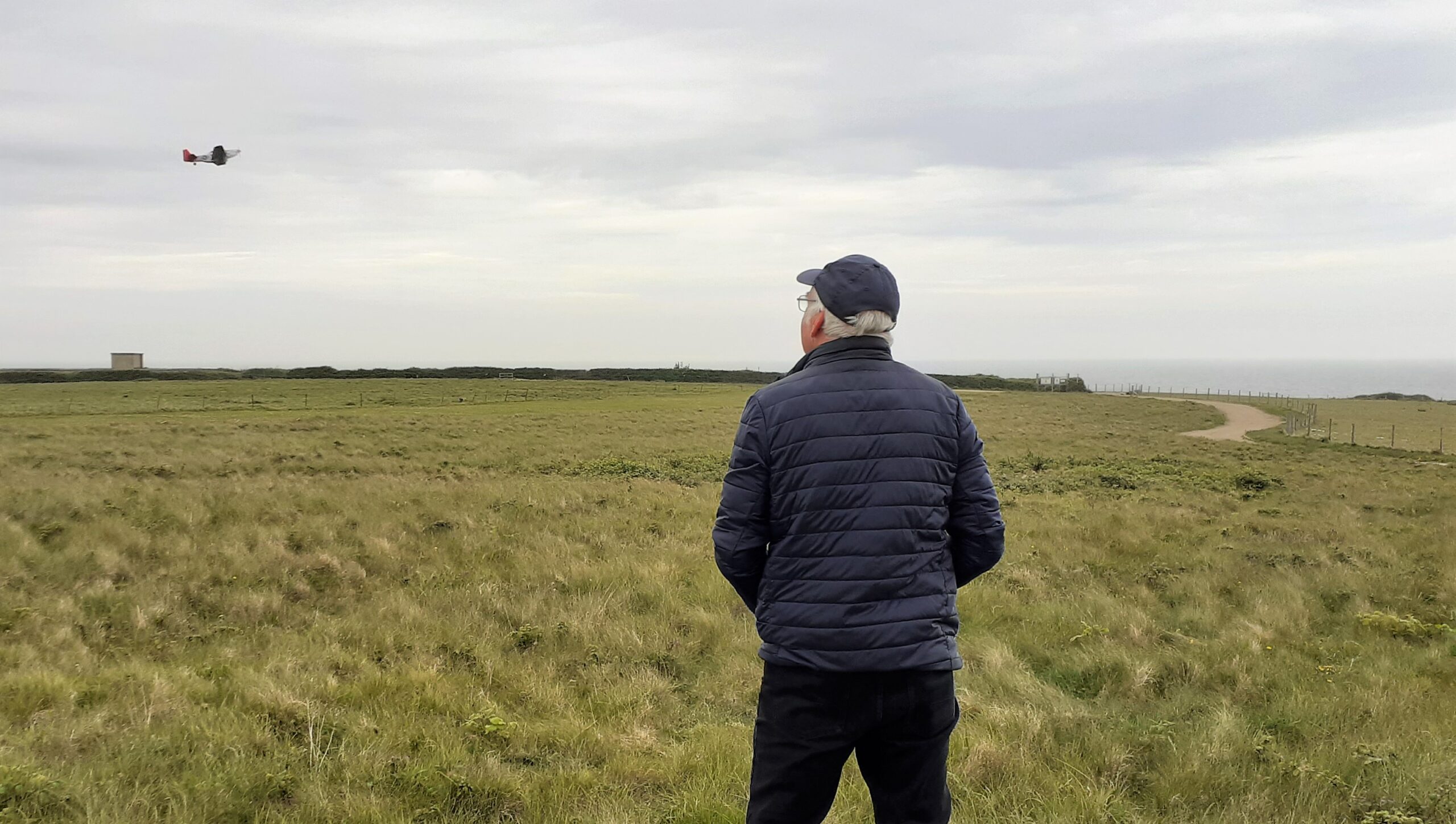 A few minutes before 12pm the power models and electric gliders took to the air and at 12.00 Steve the chairman sounded an air-horn, the signal to launch the chuck gliders.
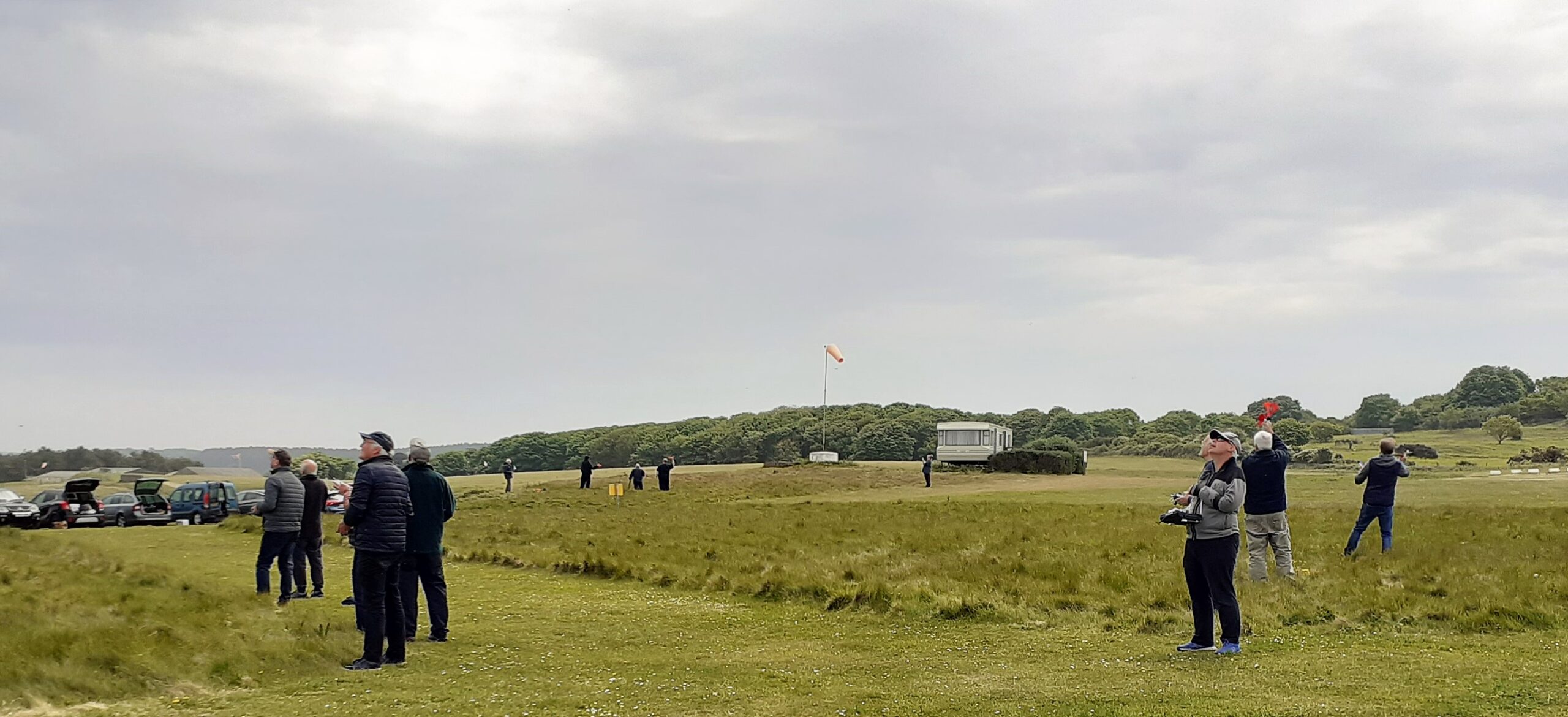 All went perfectly and I think there were thirteen models in the air at the correct time.
 I had a total of three flights with the Mustang and two with the Raptor during our visit.
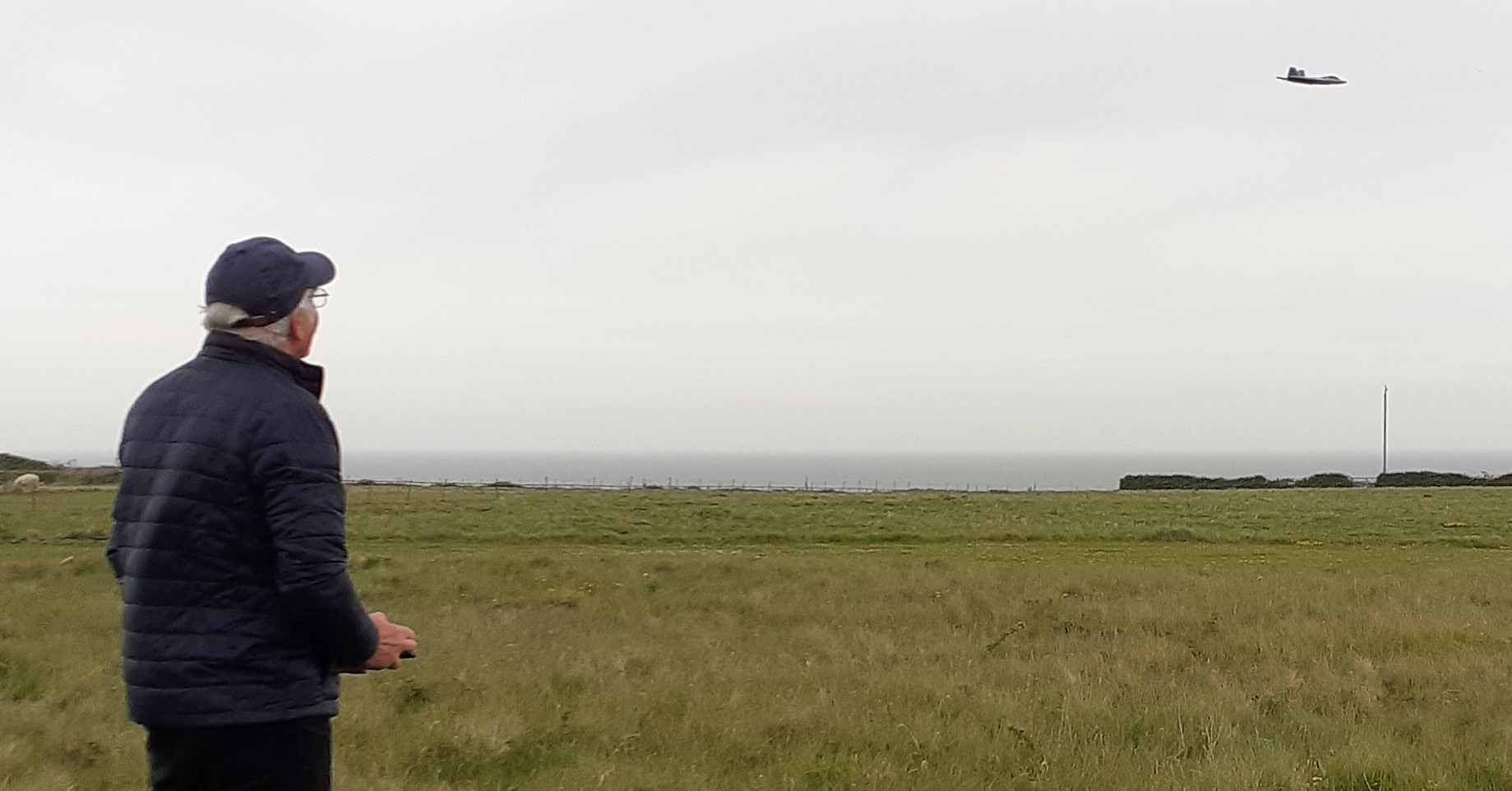 Doreen and I were made very welcome by Kelling MFC, all in all a really enjoyable visit.
Young Leo has been busy and built a Cloud Dancer, a 1300mm span balsa wood kit model.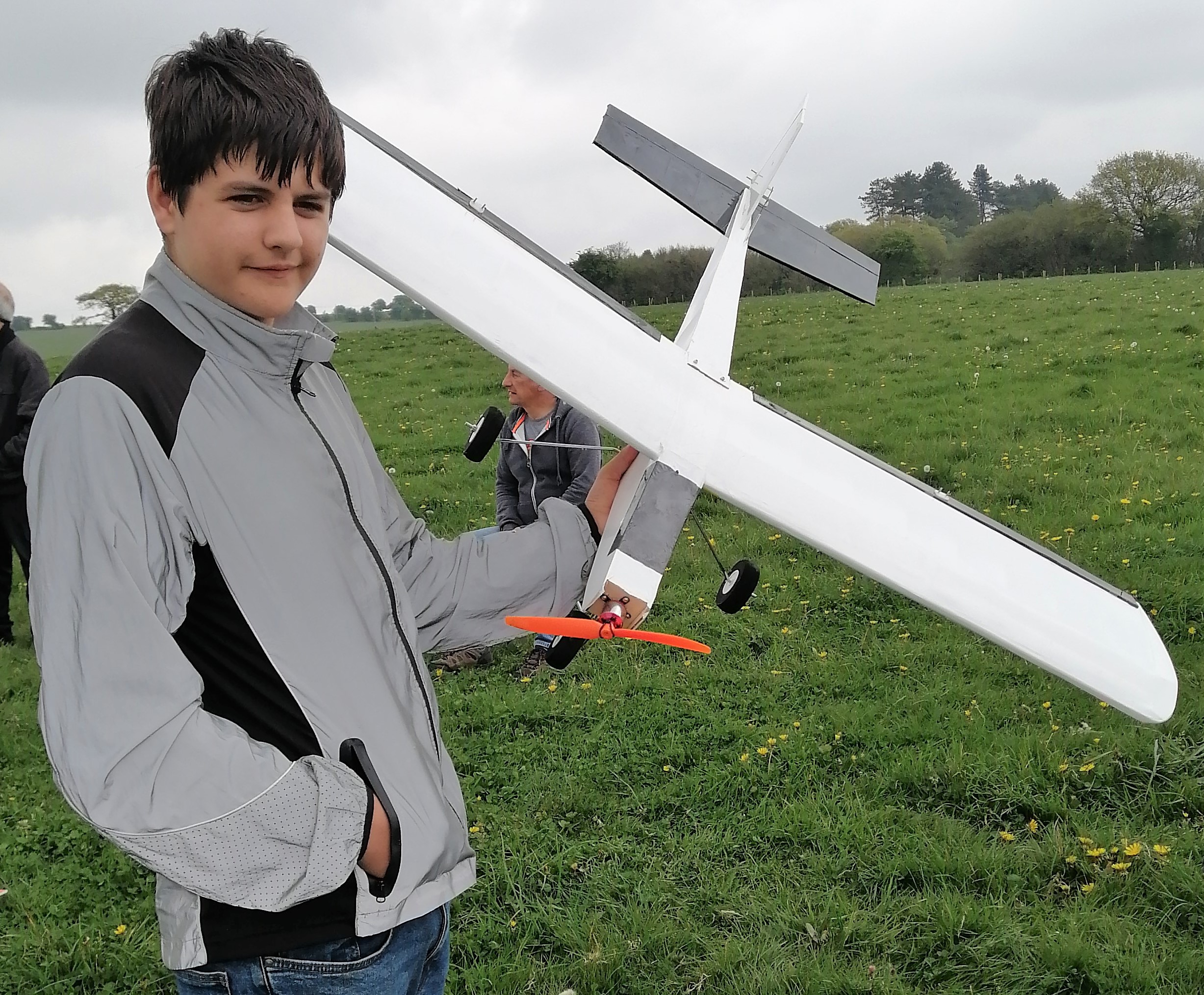 He bought it from Banggood and this is what the website says about it: The Cloud Dancer is an all built up, 4 channel electric powered trainer. It features sharp accurate cut parts that simply slot together with little fuss, the wing looks fantastic when covered with transparent covering to show off the construction. The power system consists of a 30 size outrunner and 2200 3s battery, using mini servos to keep her nice and light. The resulting model is a nice electric trainer model with tricycle undercarriage that performs well. Leo built the model very quickly, made a nice job of it, and it has flown successfully.
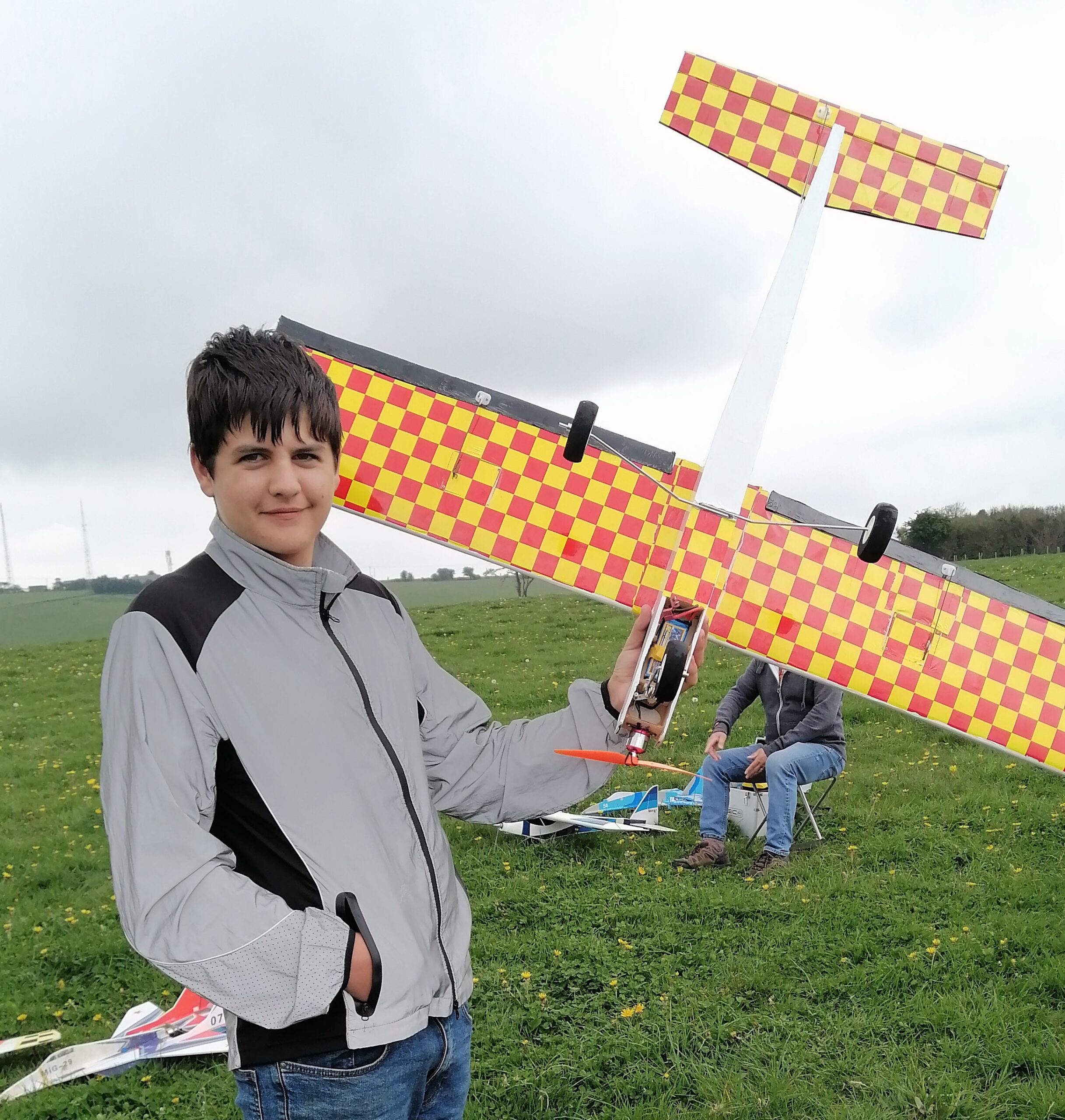 But not happy with building one plane he has also built a Mini Blitz and repaired Dougal’s rather knocked about Multiplex Blizzard. He obviously has too much time on his hands!
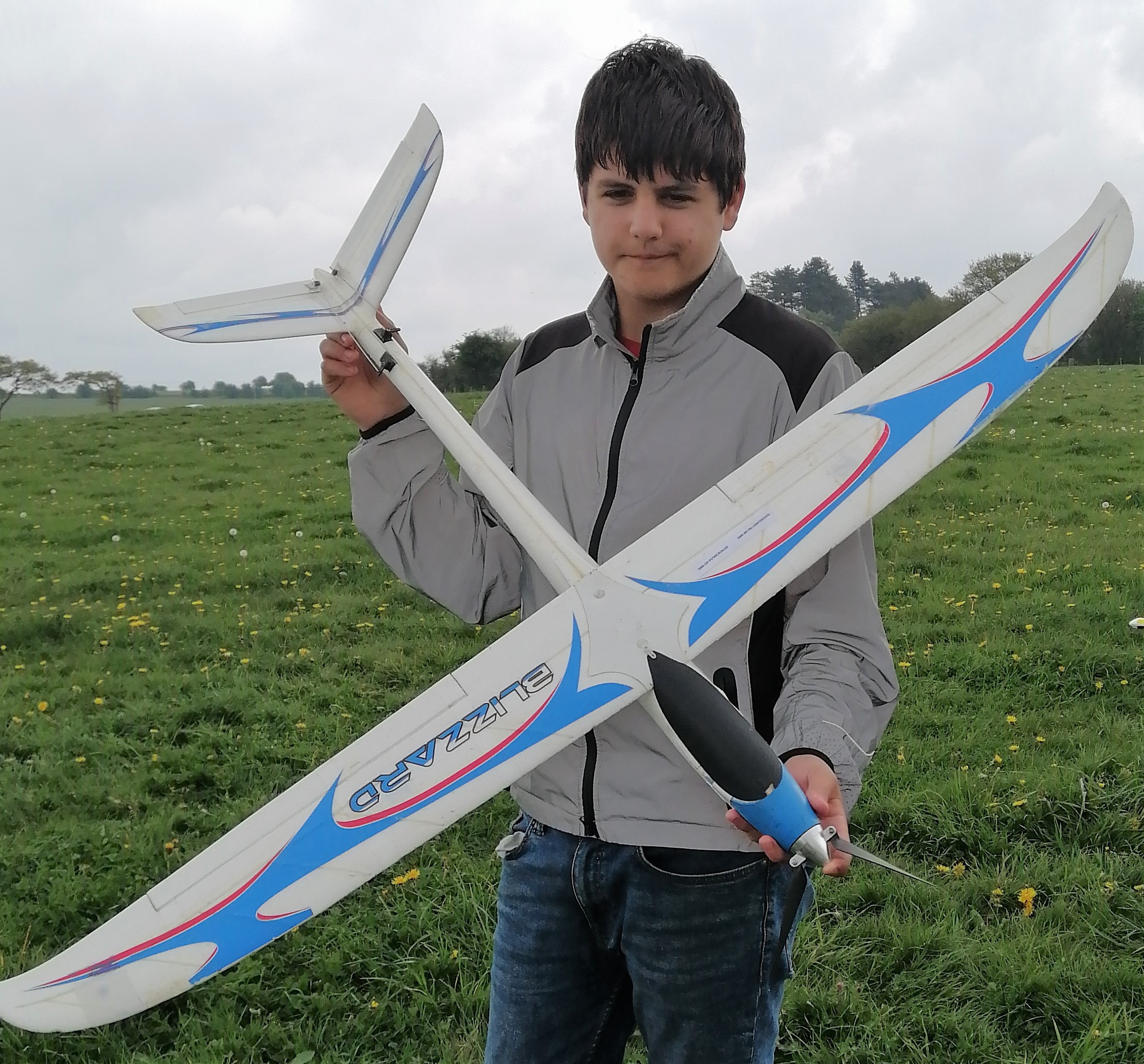 Leo’s flying is pretty good and what he needs to do now is swot up on the rules and regulations so he’s ready to take his BMFA ‘A’ certificate. Leo flew his E-flite Valiant and Parkzone Corsair one day when we had left the fence up because of the bullocks and he had no problems at all landing within it. Watch the video to see how well he did.
Bob the Builder has also been busy again and has rebuilt the twin he damaged a while ago.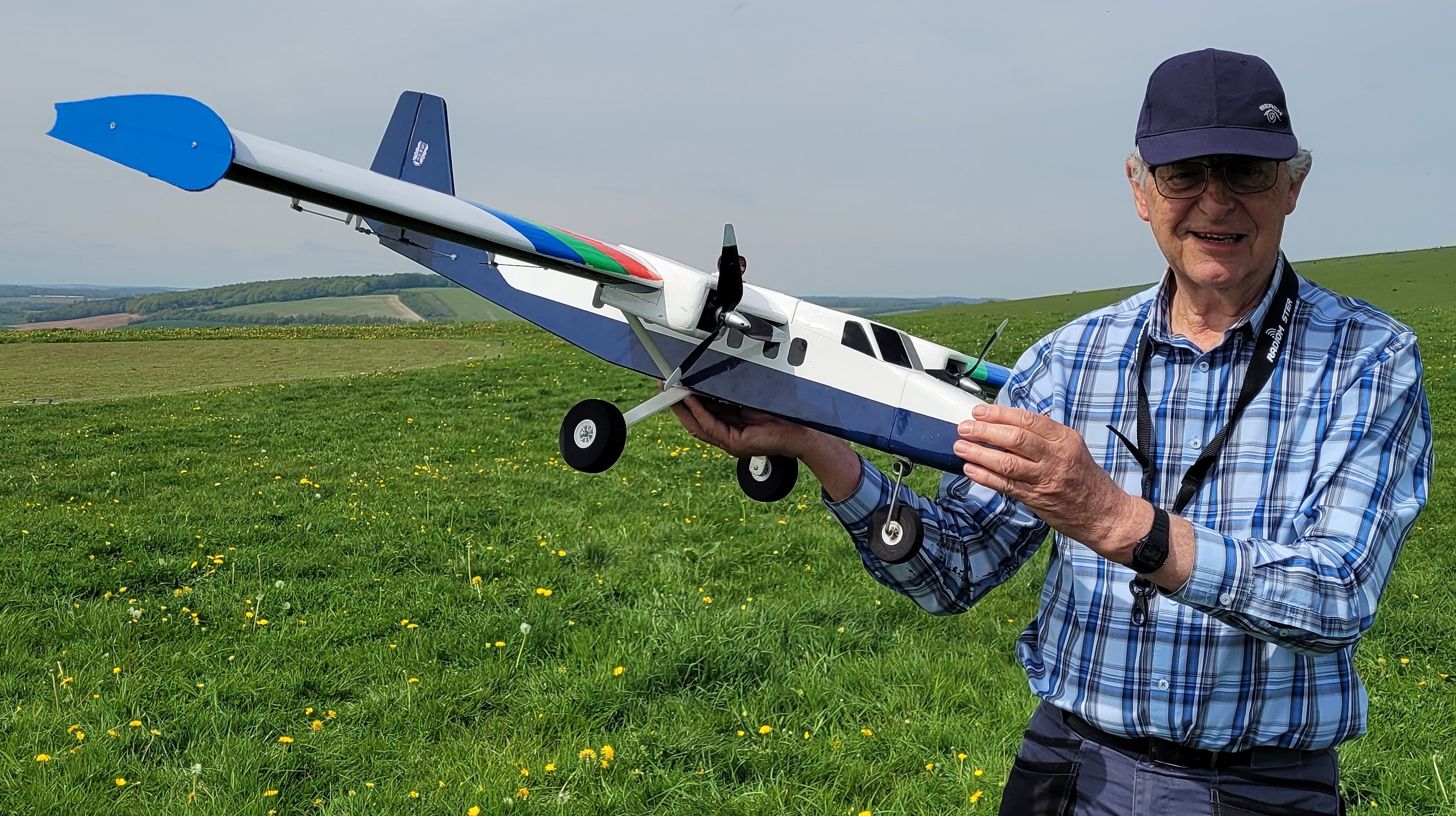 Not realising he was away on holiday I emailed Bob asking for info on the model and this was his reply: Well here I am enjoying the peace and quiet of the Isles of Scilly and now I need to wrack my brain for comments about my Twin. Not much to tell really. 1500mm wing span, 5.5lbs, 4000 4s battery, designed to be high lift with large flaps for STOL capabilities. Motors, props, ESCs, servos, and battery all taken from my old twin that I crashed a couple of years ago. I have stuck to my principles of having longer motor leads rather than long battery leads and the ESCs are in the fuselage rather than the wings, taking care to ensure there is a good cooling airflow through the fuselage.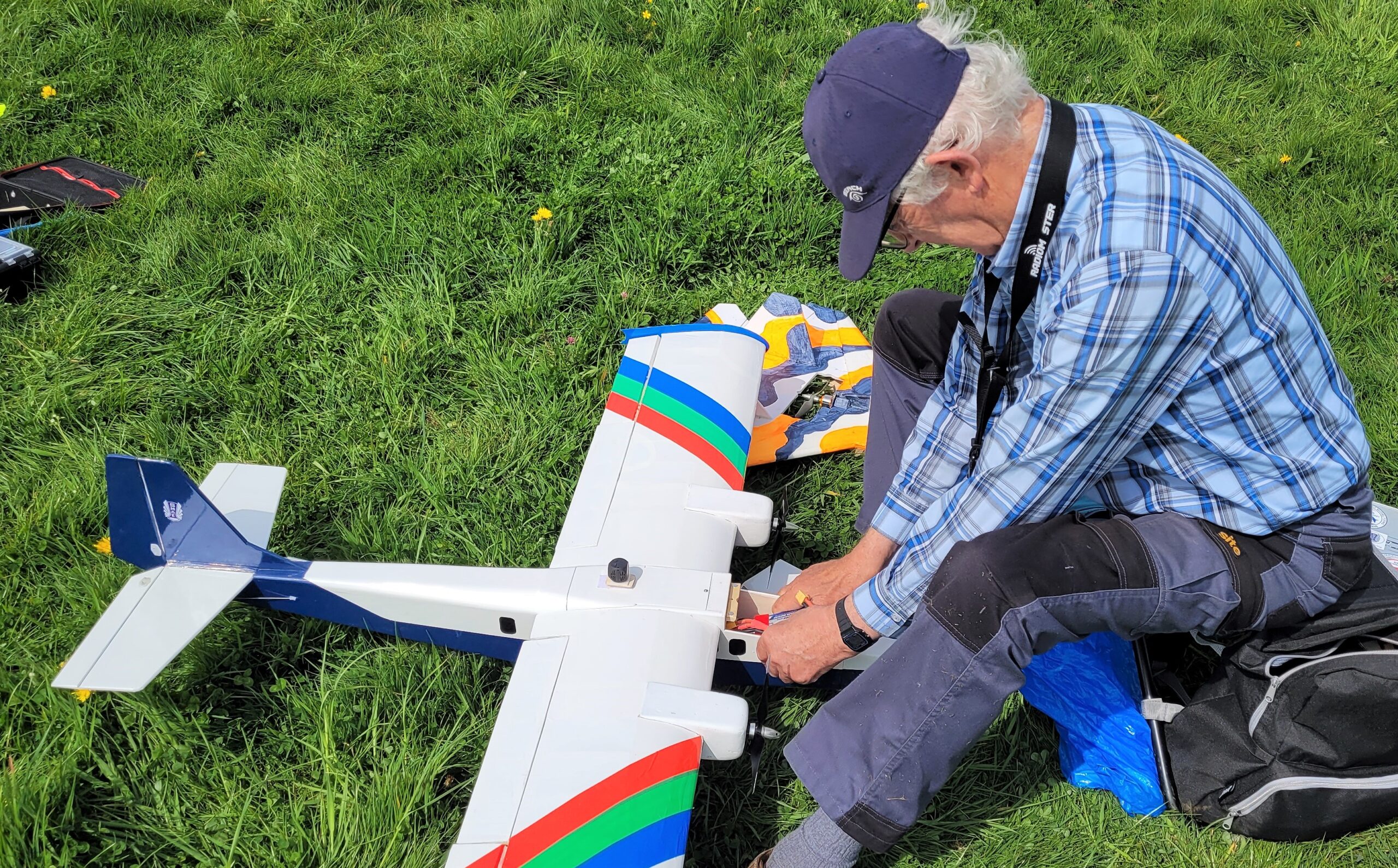
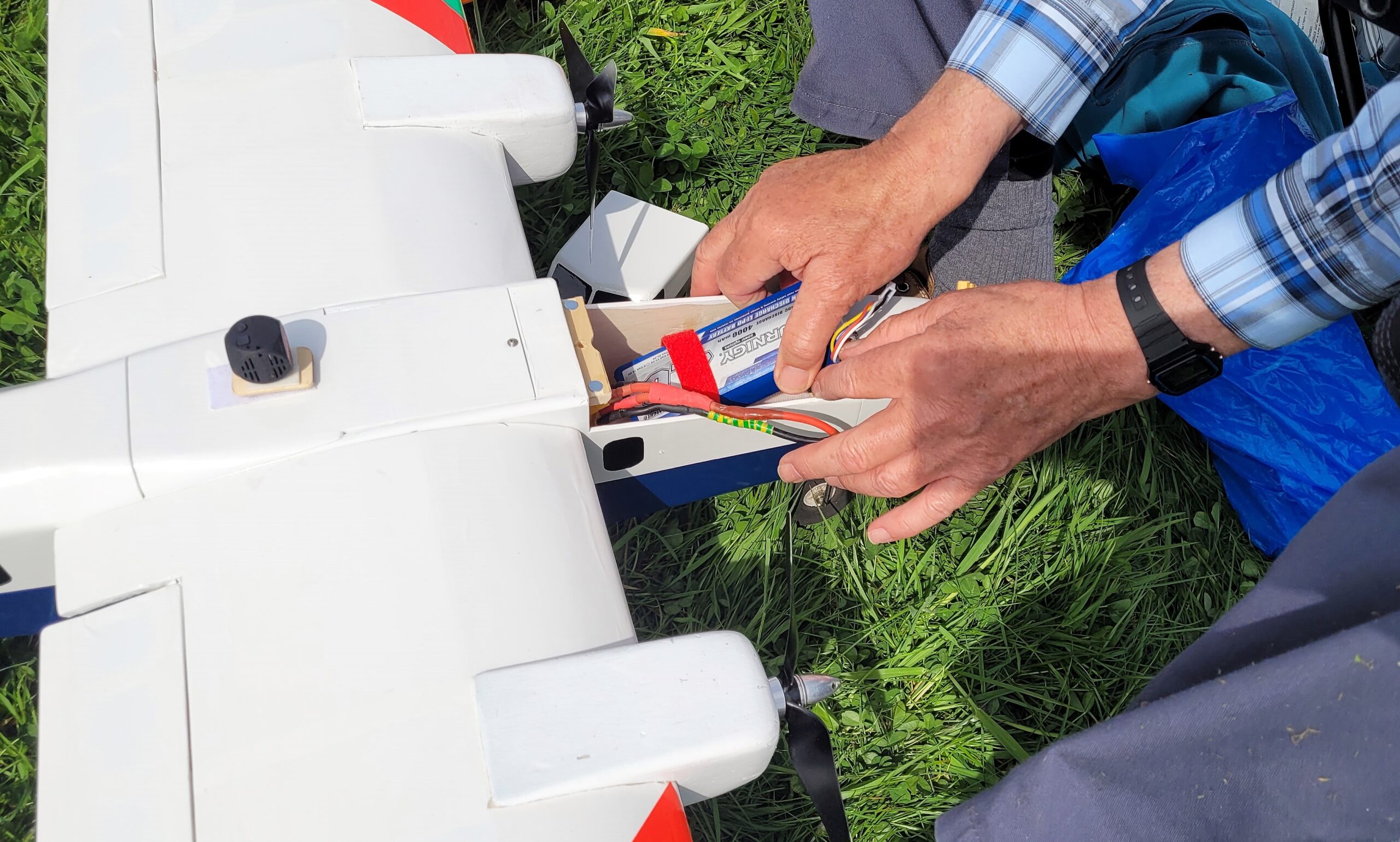 Should be good to carry my RunCam2 camera. A slow docile flyer, just right for my type of flying. I styled the fuselage on a Twin Otter but having just flown in the real thing I don’t think I have got the proportions quite right. It really is a small plane with a maximum of 12 passengers and 2 crew, but a very capable workhorse. Let’s hope I can avoid the fate of my last twin. Thanks for that Bob, sorry to interrupt your holiday. I can confirm that the twin flies extremely well, you can see it in the video.
Two new EDF jets appeared at the patch in May, both produced by Arrows Hobby.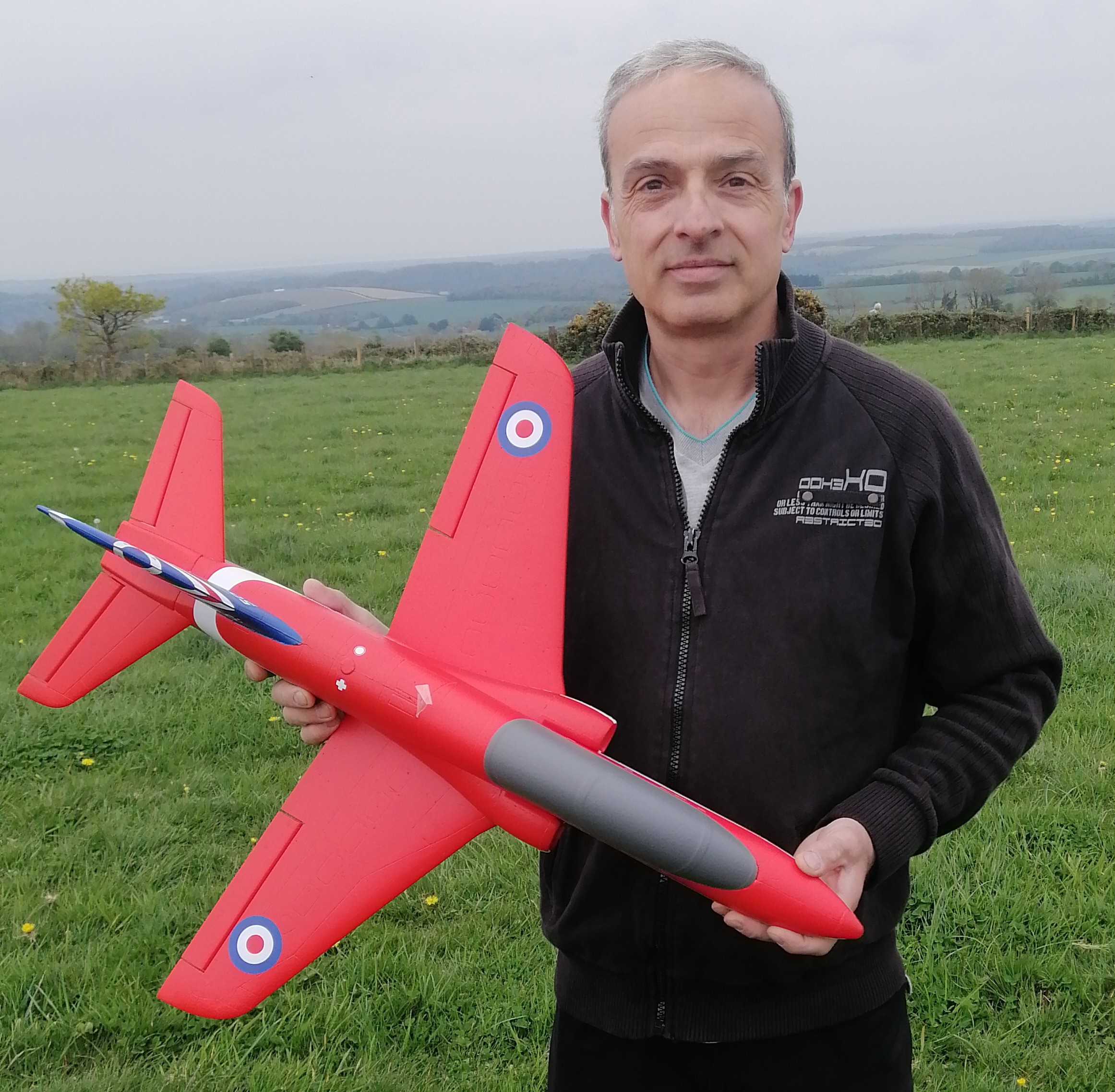 First to show was Mini-Mike’s BAE Hawk, a model that I had also spotted and was seriously contemplating purchasing for myself. Arrows say this: EDF jets rarely fly as well as the 3S-powered Hawk. Get a load of grab-n-go simplicity in this perfectly-formed semi-scale package. Sleek, powerful and perfectly formed the Arrows Hobby Hawk will be something of an eye-opener to anyone who still thinks EDF jets have some catching up to do. Experience the Hawk in action and you’ll quickly realise that nothing could be further from the truth. Packing a sweet-sounding 50mm 11-blade fan that’s spun up by a precision 2627 4500KV brushless motor, this 3S-fuelled semi-scale Red Arrows jet can’t fail to delight with its flowing aerobatics, cloud punching performance and exceptional speed. But that’s not the half of it, the Hawk is also a beautifully practical model that exhibits exceptional low speed handling, is small enough to transport in one piece, is retract (hassle) free and, moreover, gets away easily from an underarm launch. Given that it’s enticingly budget-friendly and such a good performer, we just know that the Hawk will become a frequent flyer in your air fleet and, of course, that equates to superb value for money. I was away when Mike brought it along but Dougal filmed the first two flight attempts. I say attempts because although the Hawk went away well from the hand launch on both tries the motor cut out very soon after launch. Mini-Mike has since done a bench test of the batteries and found that on both packs two of the three cells showed a voltage drop of 0.4v more than the third cell under load which probably explained the problem. So having sorted out some better lipos Mini-Mike returned to the field later in the month and this time the Hawk superbly. Two flights no problems. See it in the video.
The second Arrows Hobby EDF jet was a Lockheed T-33 Shooting Star belonging to Chas.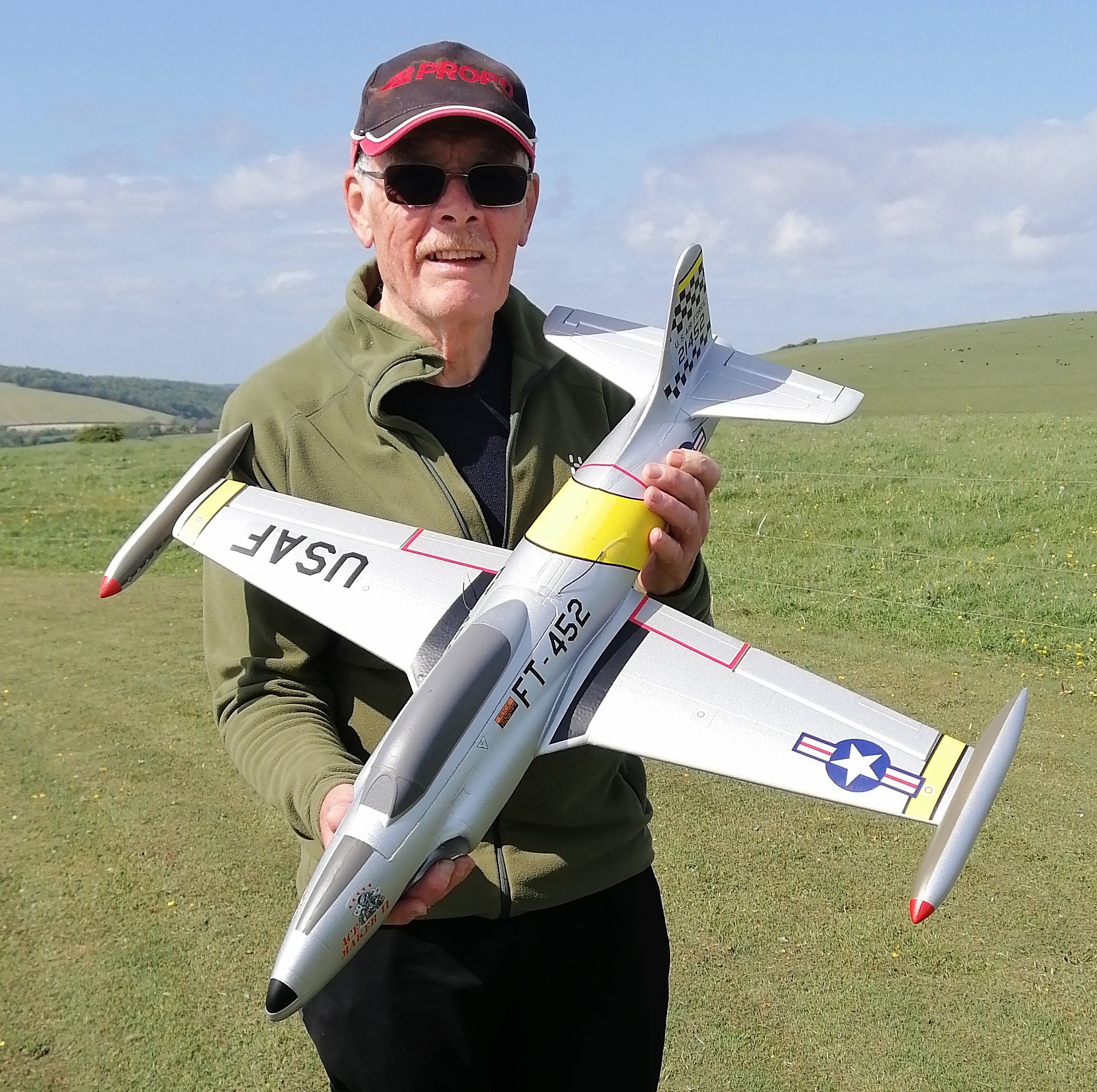 As with the Hawk I was away at the time but Dougal took a couple of photos and Chas has also sent some. Chas decided against flying the T-33 when he took it to the field as it was a very blustery day. This is from the Arrows website: Combining superb 3S performance, cost effectiveness and sheer practicality, the Arrows Hobby EDF Viper has been so well received that it seemed churlish not to answer the call for more of the same. Enter, then, the striking, universally-adored T-33. Sporting the Viper’s proven powerset, size and outstanding flyability, if this one doesn’t do it for you, nothing will. Perfectly capturing the post-war appeal of the iconic Shooting Star, Arrows Hobby’s T-33 will be something of an eye-opener to anyone who still thinks EDF jets have some catching up to do.
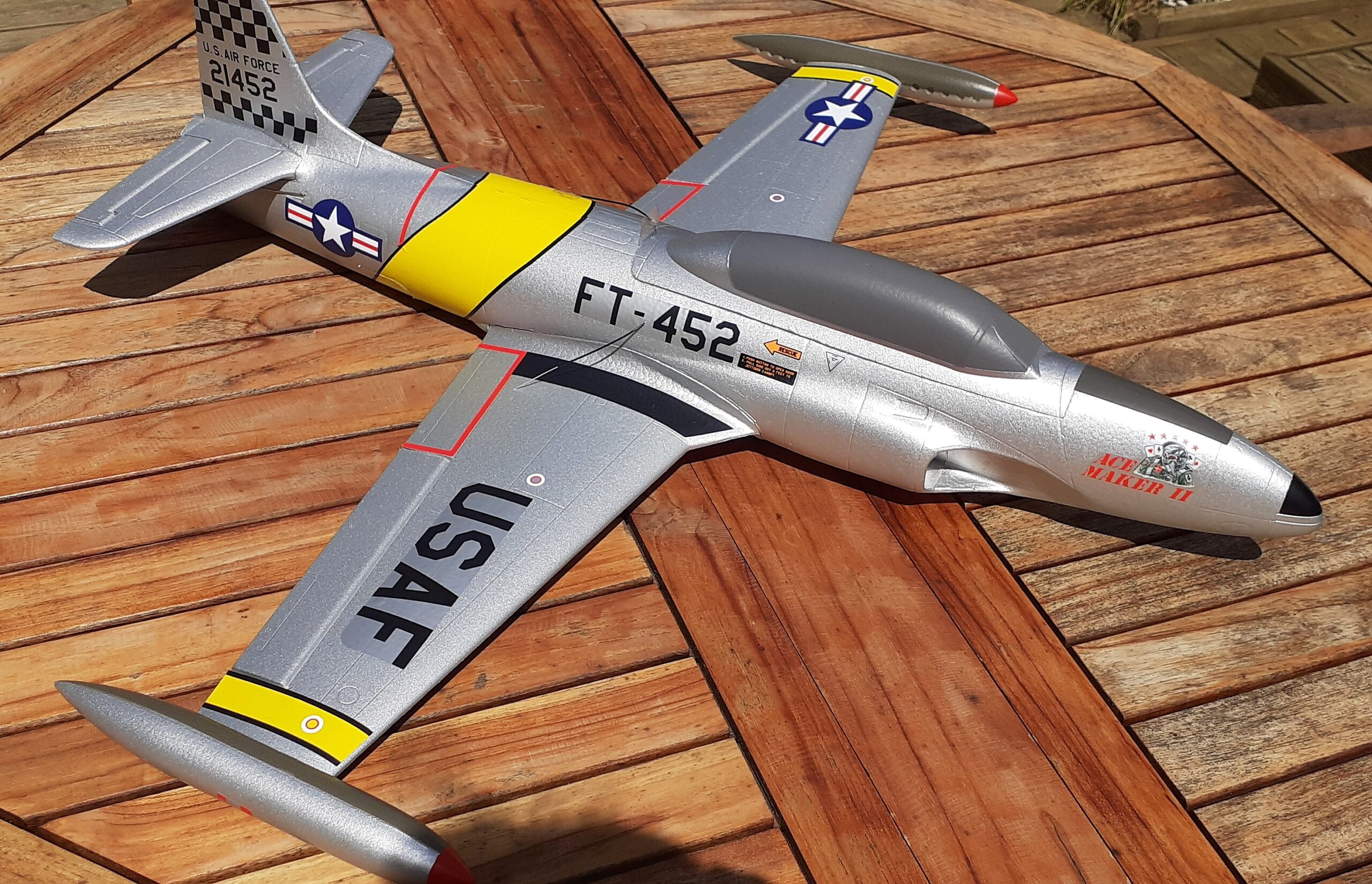 Experience the T-33 in action and you’ll quickly realise that nothing could be further from the truth. Packing a sweet-sounding 50mm 11-blade fan that’s spun by a precision 2627 4500KV brushless motor, this 3S-fuelled semi-scale version of Lockheed’s jet trainer can’t fail to delight with its flowing aerobatics, cloud punching performance and exceptional speed. But that’s not the half of it, the T-33 is also a beautifully practical model that exhibits exceptional slow speed handling, is small enough to transport in one piece, is retract (hassle) free and, moreover, gets away beautifully from an underarm launch. Given that it’s enticingly budget-friendly and such a good performer, the T-33 offers outstanding value for money and, for that alone, we just know you’ll love it.
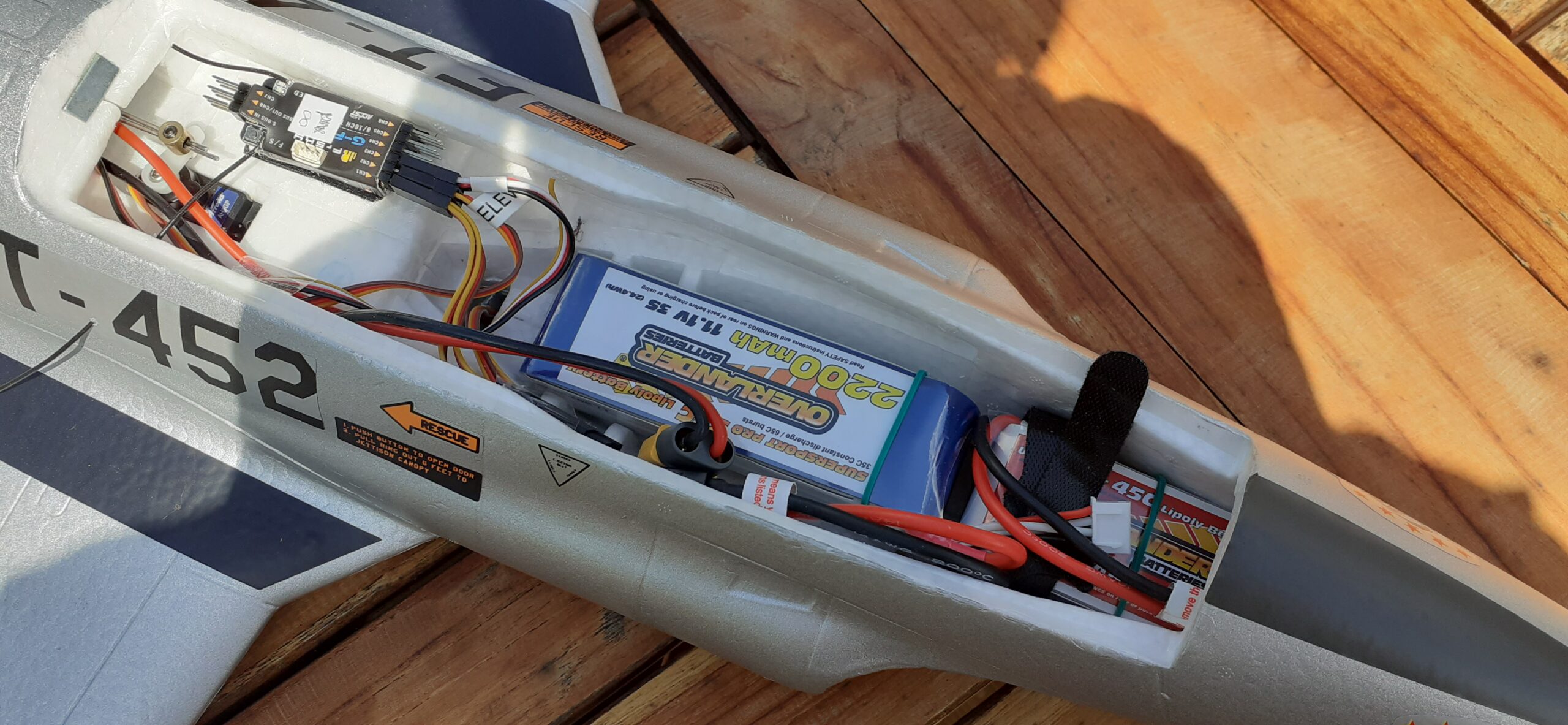 The T-33 can use 1300mAh to 2200mAh 3s lipos and Chas’s photo above shows a 1350mAh 3s and a 2200mAh 3s in their respective positions that provide the same C of G.
As well as the T-33 Chas has also bought another Eachine models to go with his Trojan.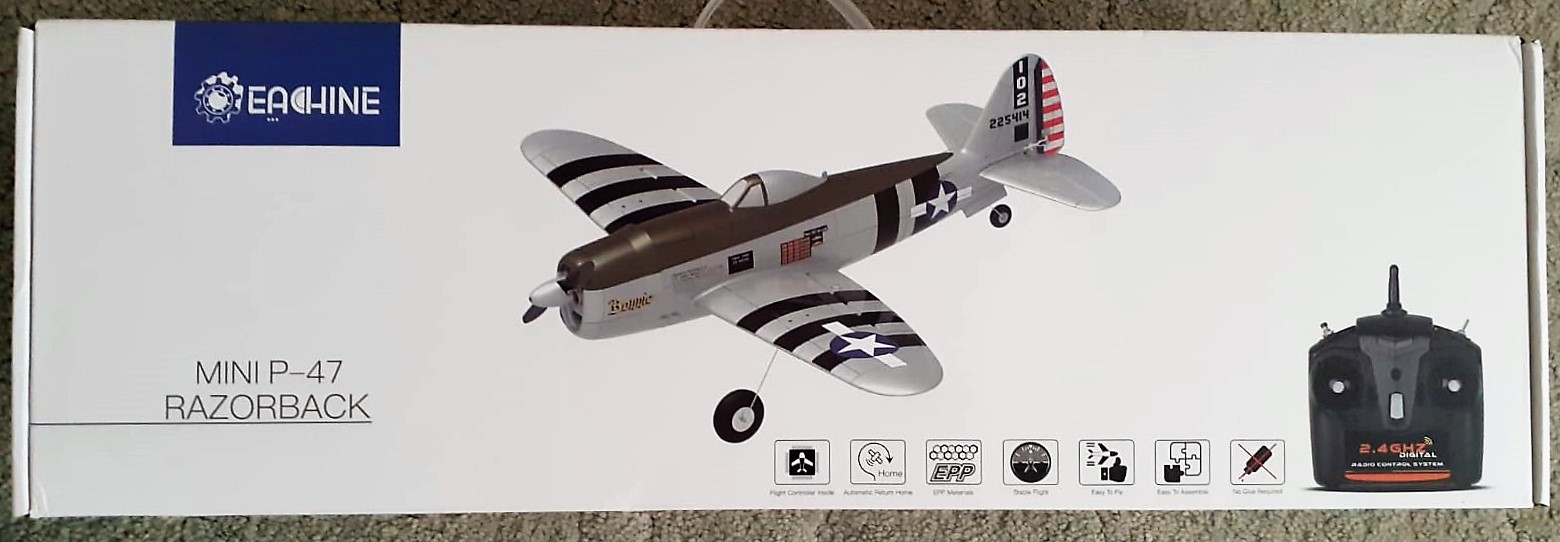 This one is a P-47 Razorback and with a wingspan of 500mm it’s a bit bigger than the others in the range. It uses 500mAh single cell batteries instead of 400mAh that the smaller ones use and the included transmitter is slightly different to the others.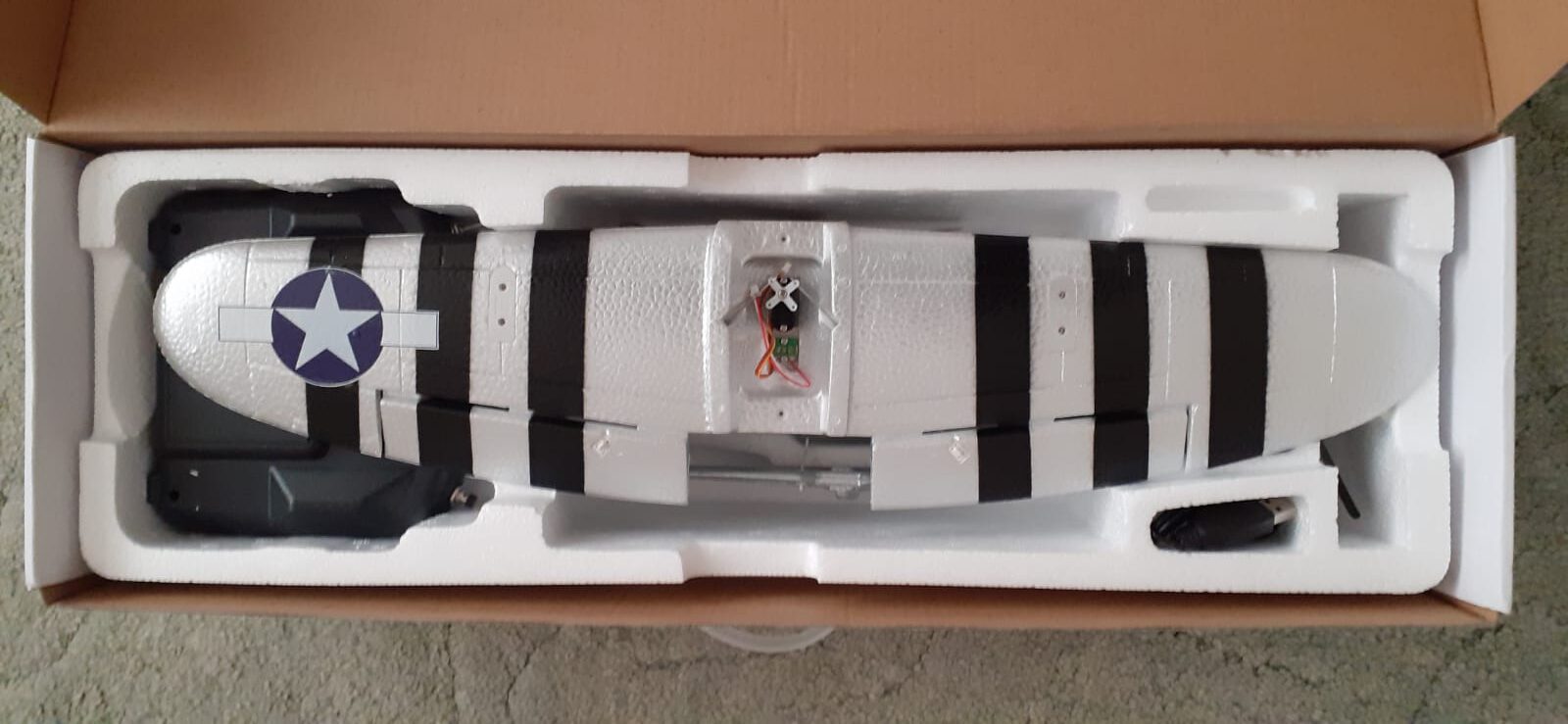
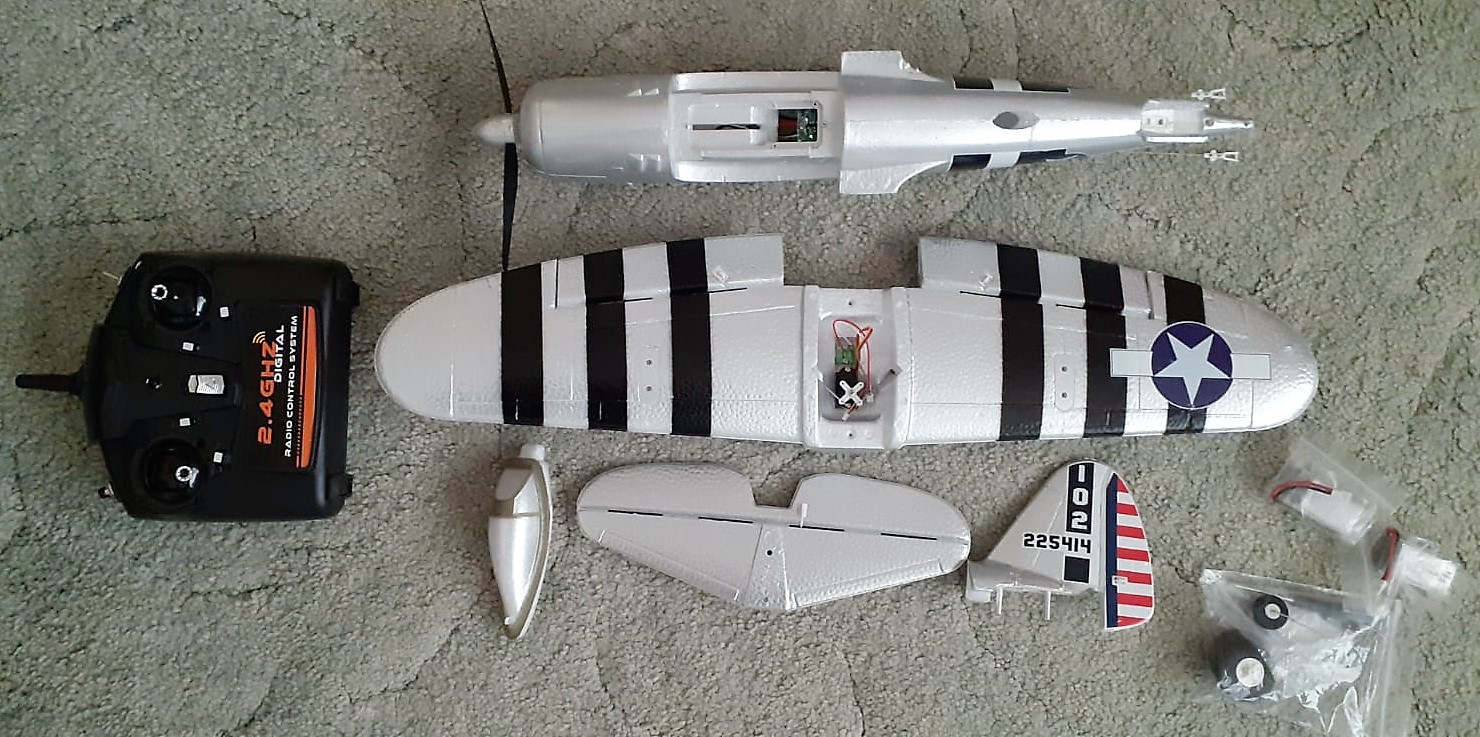 Chas has bound his Eachine Trojan to his multi-protocol RadioMaster transmitter so he doesn’t use the one it comes with and no doubt he’ll do the same with the P-47 although I understand the Razorback uses a different protocol. I’m looking forward to seeing it fly.
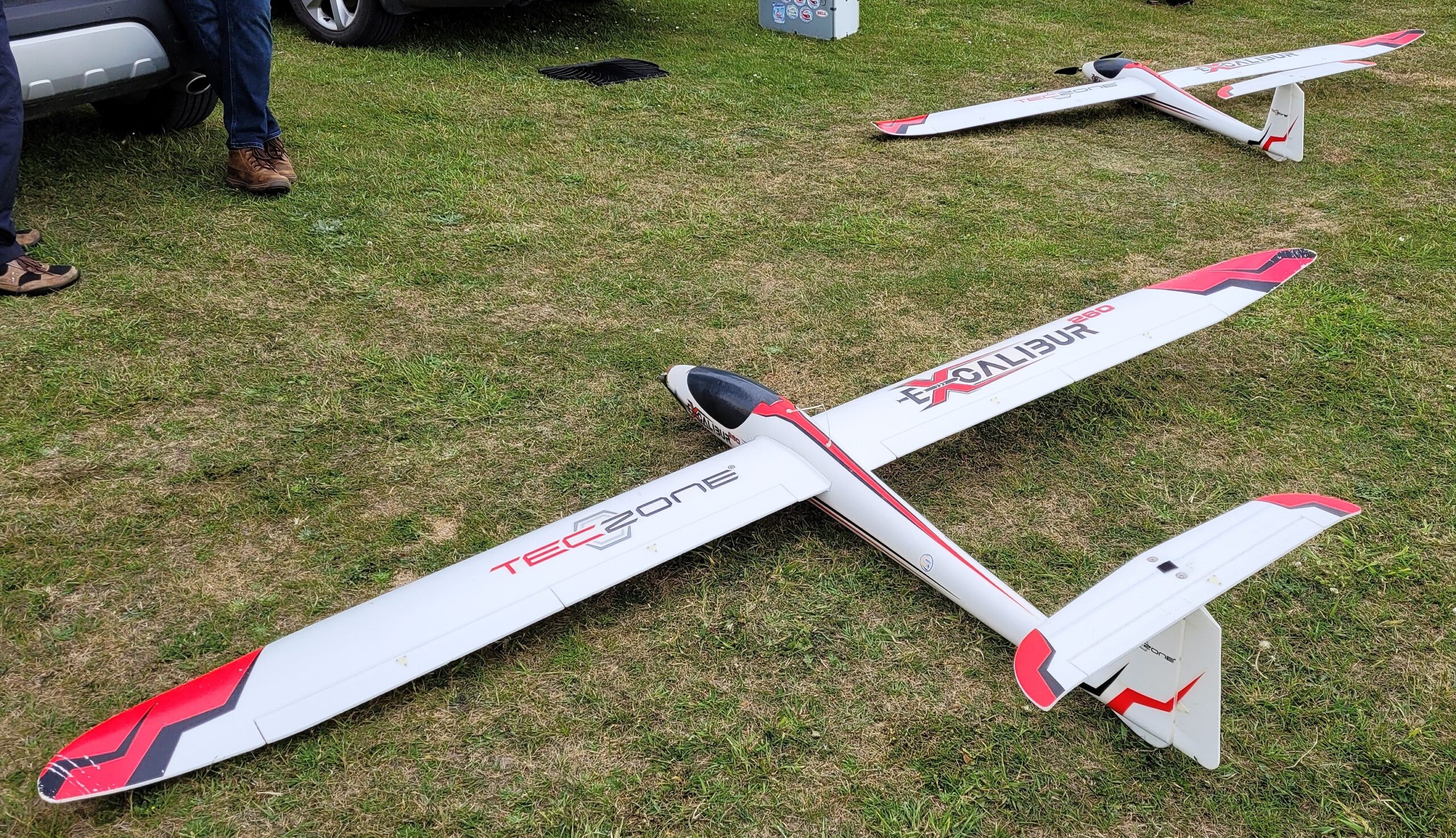
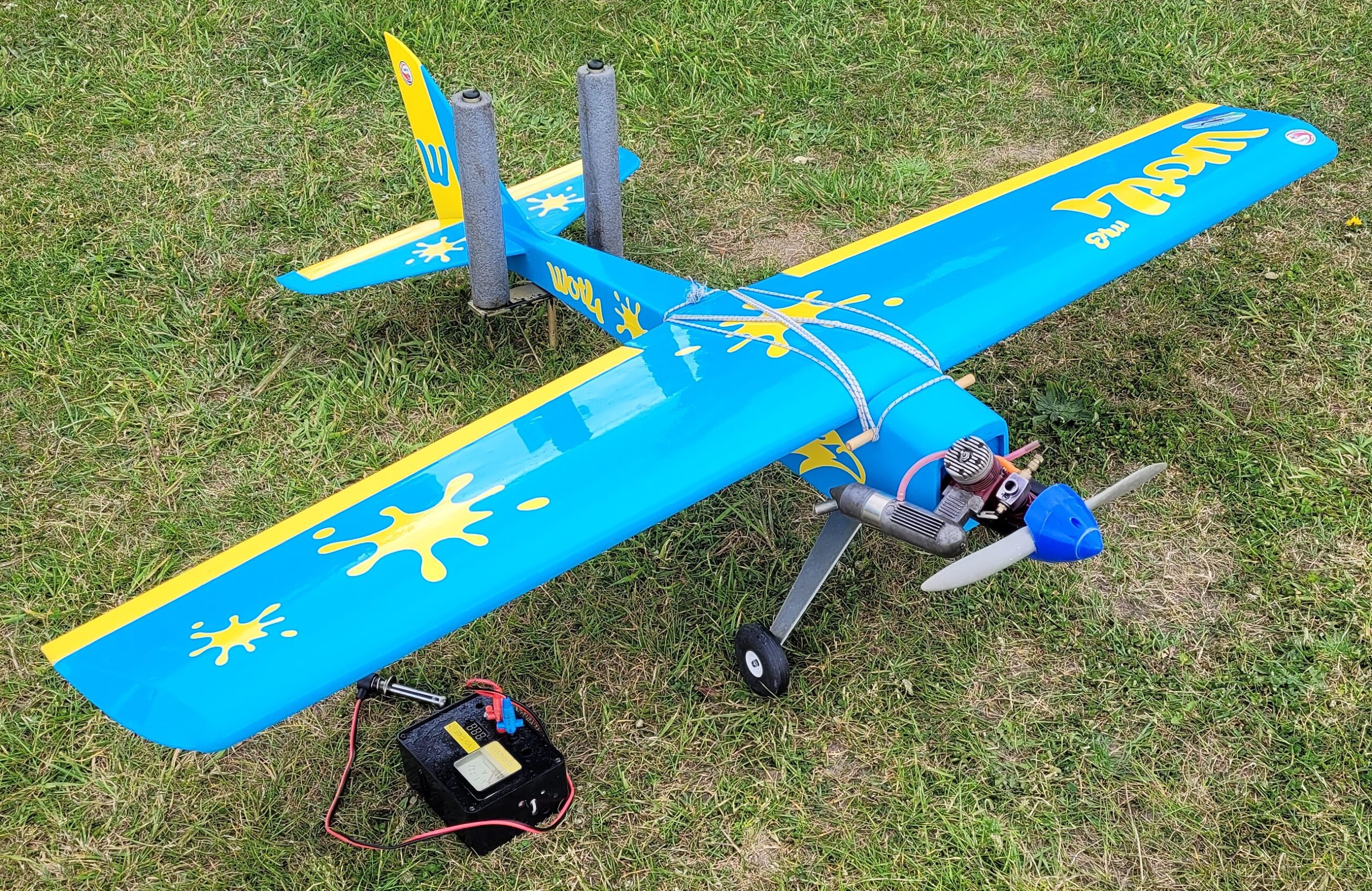
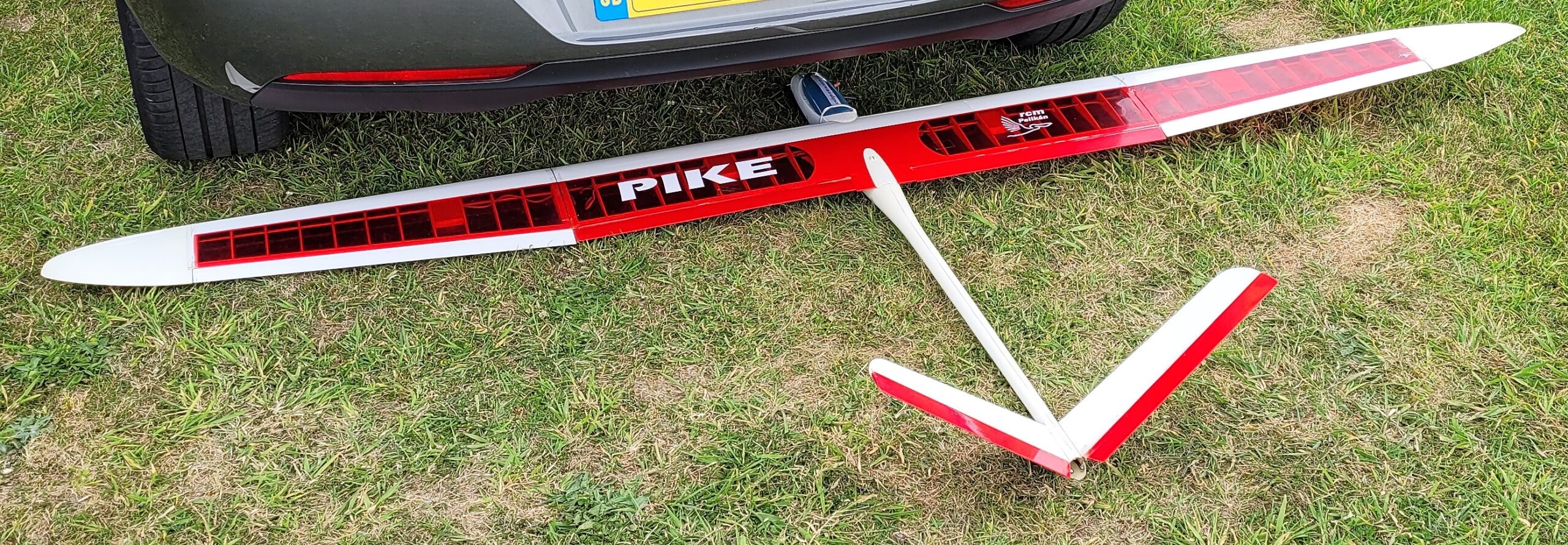
I don’t have any airborne photos this month so here are some that I took at the Kelling MFC when I visited them for the BMFA Centenary Record Attempt: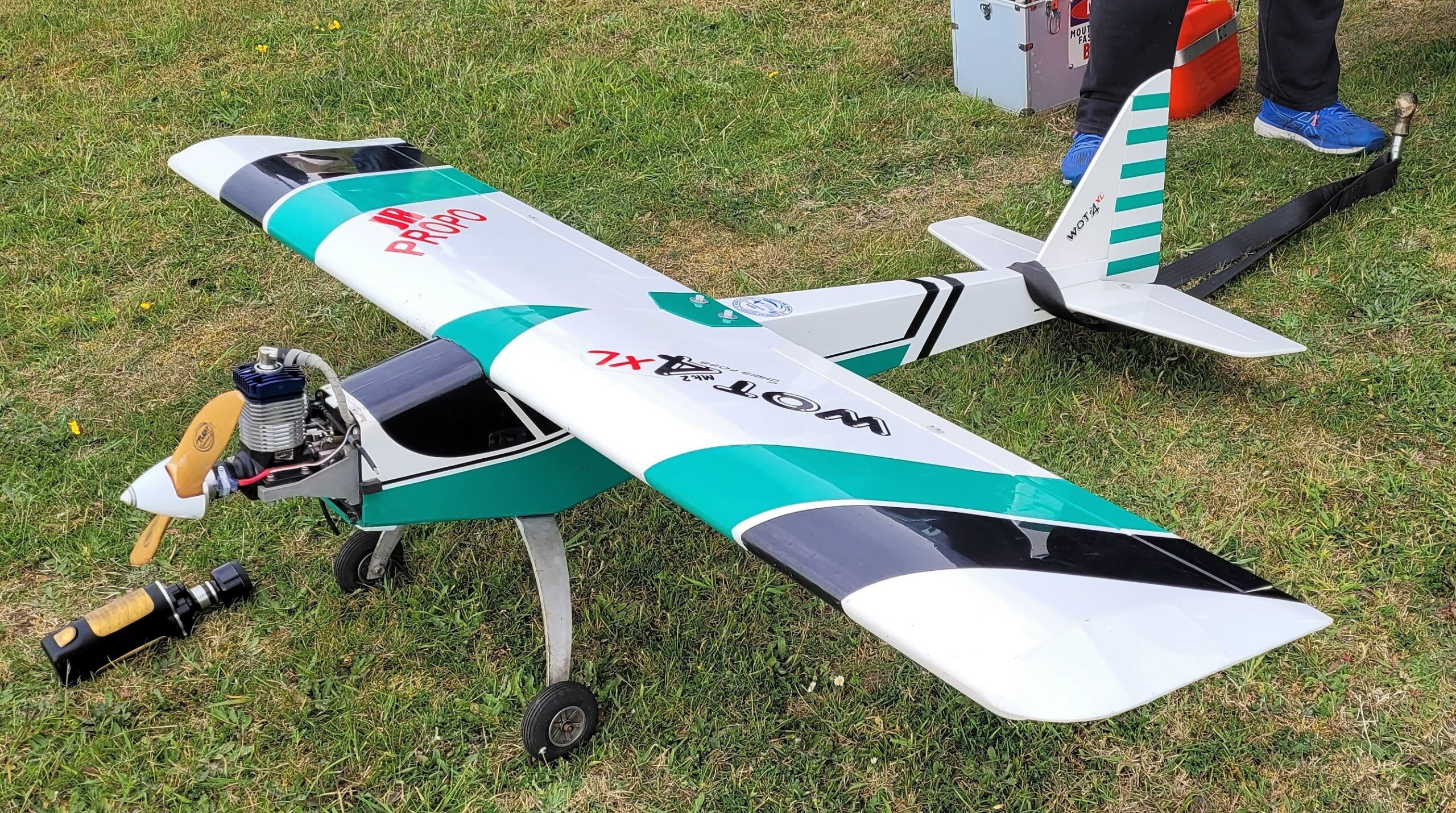
Video time now which this month has footage shot by myself and Dougal Entendre. Please watch the video full-screen, it’s so much better with small models flying around. If the video won’t play for you please click HERE
On an evening Air Lingus flight from Dublin to Boston, the flight attendant nervously announced the following in her lovely Irish brogue: “Ladies and Gentlemen, unfortunately, it appears that our catering service has made a terrible mistake. Despite the fact that we have 103 passengers on board, we only received 40 dinner meals. Anyone who offers to give up their meal, so that someone else can eat, will receive free and unlimited drinks during the 10 hour flight….” Her next announcement came about 2 hours later: “We still have 40 dinners available for anyone who is hungry…”
Colin Cowplain
Patch News – April 2022
The April weather wasn’t as good as in March but overall it was reasonable and we had very few of the proverbial April Showers, in fact it was one of the driest Aprils on record. But one sunny day several of us got caught in a sudden downpour that interrupted our flying for a few minutes before we were able to carry on flying and dry out in the sunshine.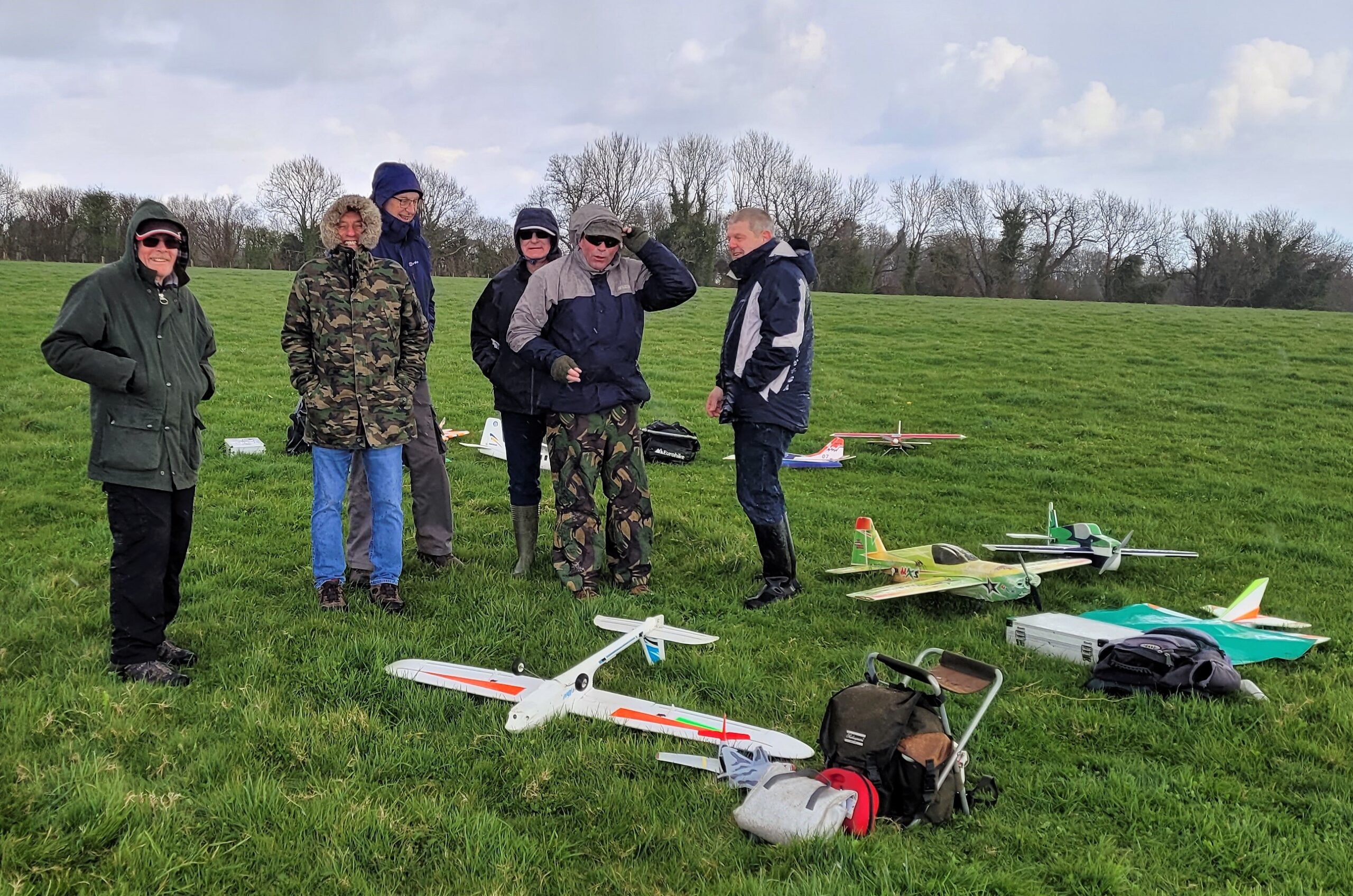
The rain doesn’t show up in the photo but it was actually very heavy at the time. 1066 had forgotten that his jacket has a hood so we reminded him once he had got nicely drenched! At the start of the month the light winds that we had enjoyed in March continued and Chas and I were able to fly our tiny Eachine models several times, they are great little models.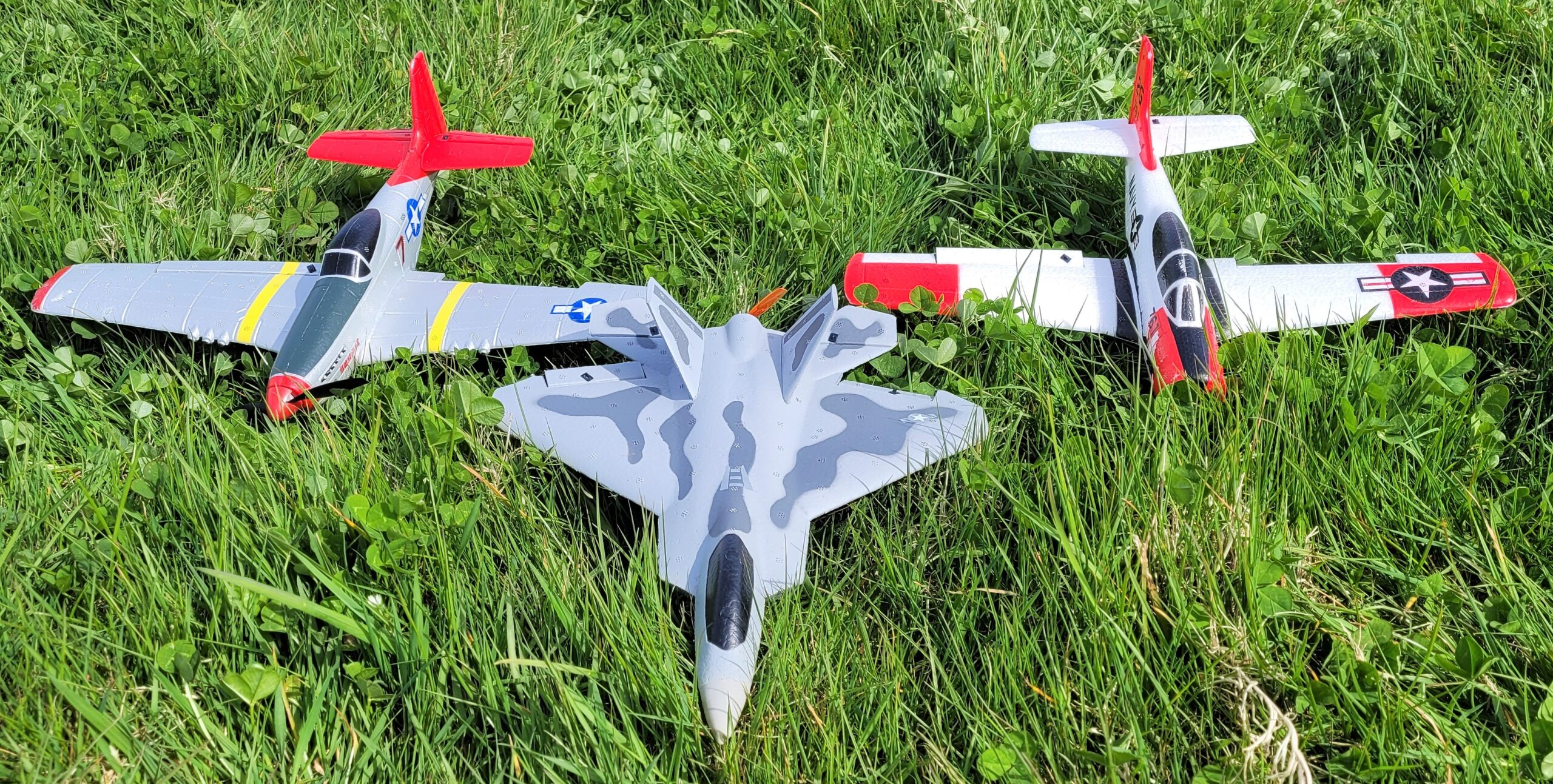
One day Dougal Entendre decided to try a new look and wore some WW1 flying goggles at the flying session. He said they were to stop his eyes watering in the breeze but he’s really just a frustrated Biggles fan. The W E Johns fictional Biggles even appeared on a stamp!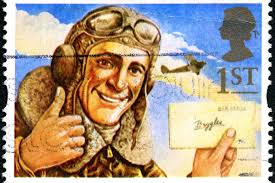

First class of course! I posted this photo on the club Facebook page and it got a lot of likes!
The first new model I’ll feature this month is John Warren’s Sunday Flyer and although it’s a new model the design is not new to John, this is actually the third one he’s built!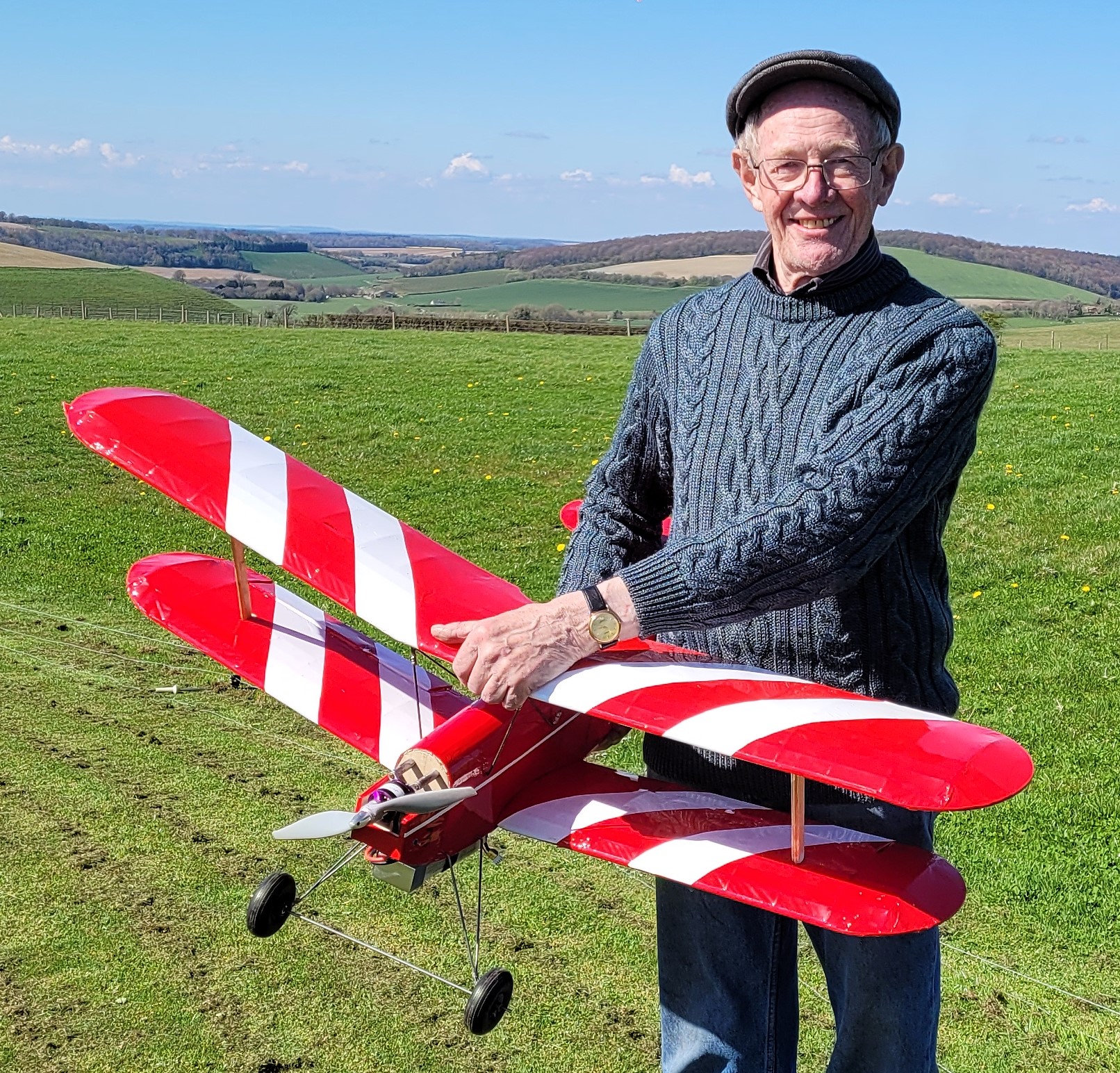
The original design by Mike Conrad was for just rudder and elevator controls and was powered by a 0.20cu in IC engine. The model is classed as a vintage style sports biplane and has a wingspan of 1180mm. When I first met John in the IBM model club many years ago he was flying an IC powered Sunday Flyer which he later converted to electric power. Eventually that one died and in February 2017 John replaced it with another Sunday Flyer which was built with the addition of ailerons in the bottom wing. Now John has built this third one which also has ailerons added and is powered by a 3542 motor and a 3 cell lipo.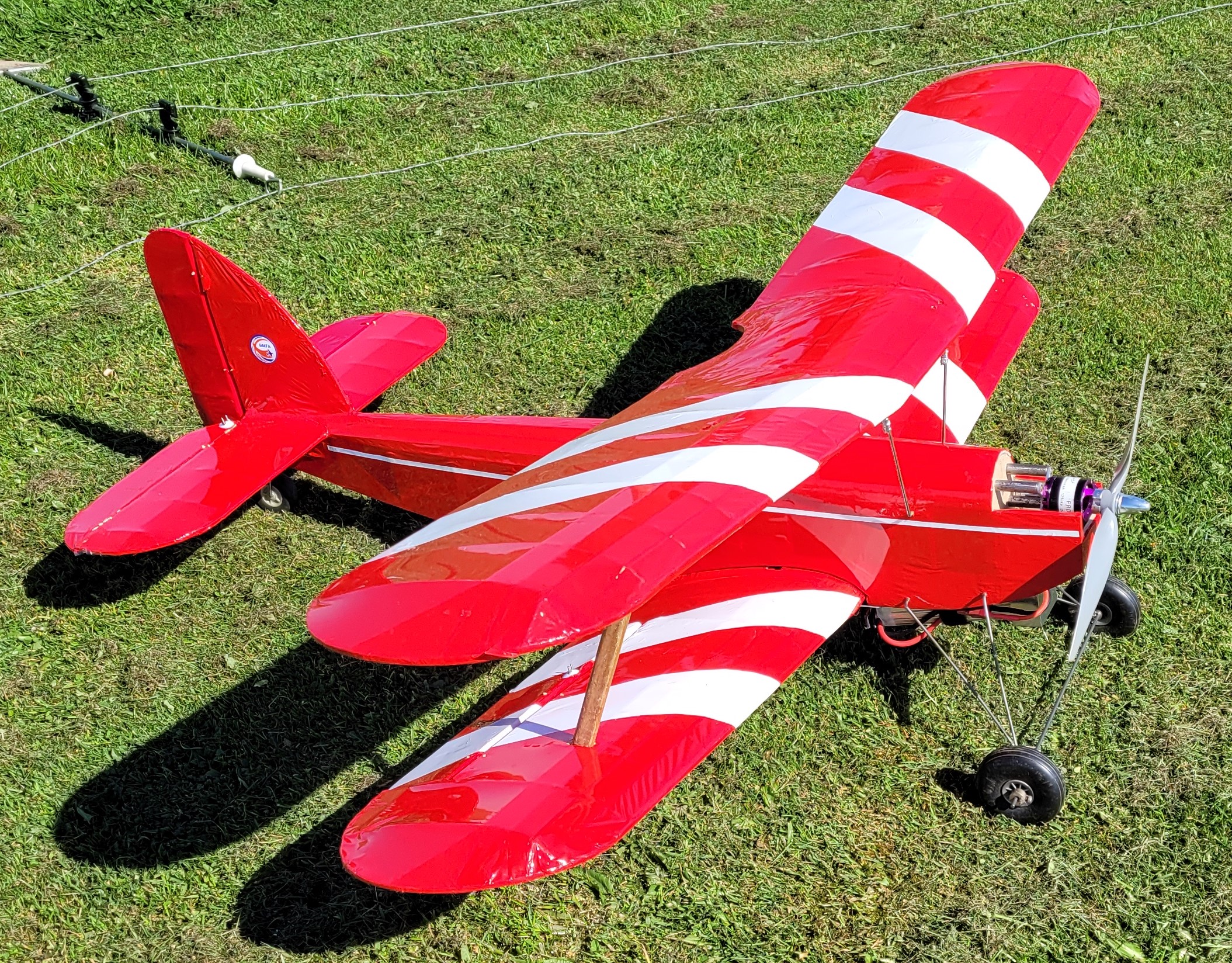 I was nominated to do the test flight and gave the model a quick check over. It all looked good to me but in the air I found the model needed full right trim on both aileron and rudder to hold it straight so I landed for John to make the necessary adjustments.
The ailerons are rather ineffective, presumably because the model was designed for rudder/elevator control and has lots of dihedral. So John switched in rudder/aileron coupling on the transmitter and mechanically added some right trim and I flew it again.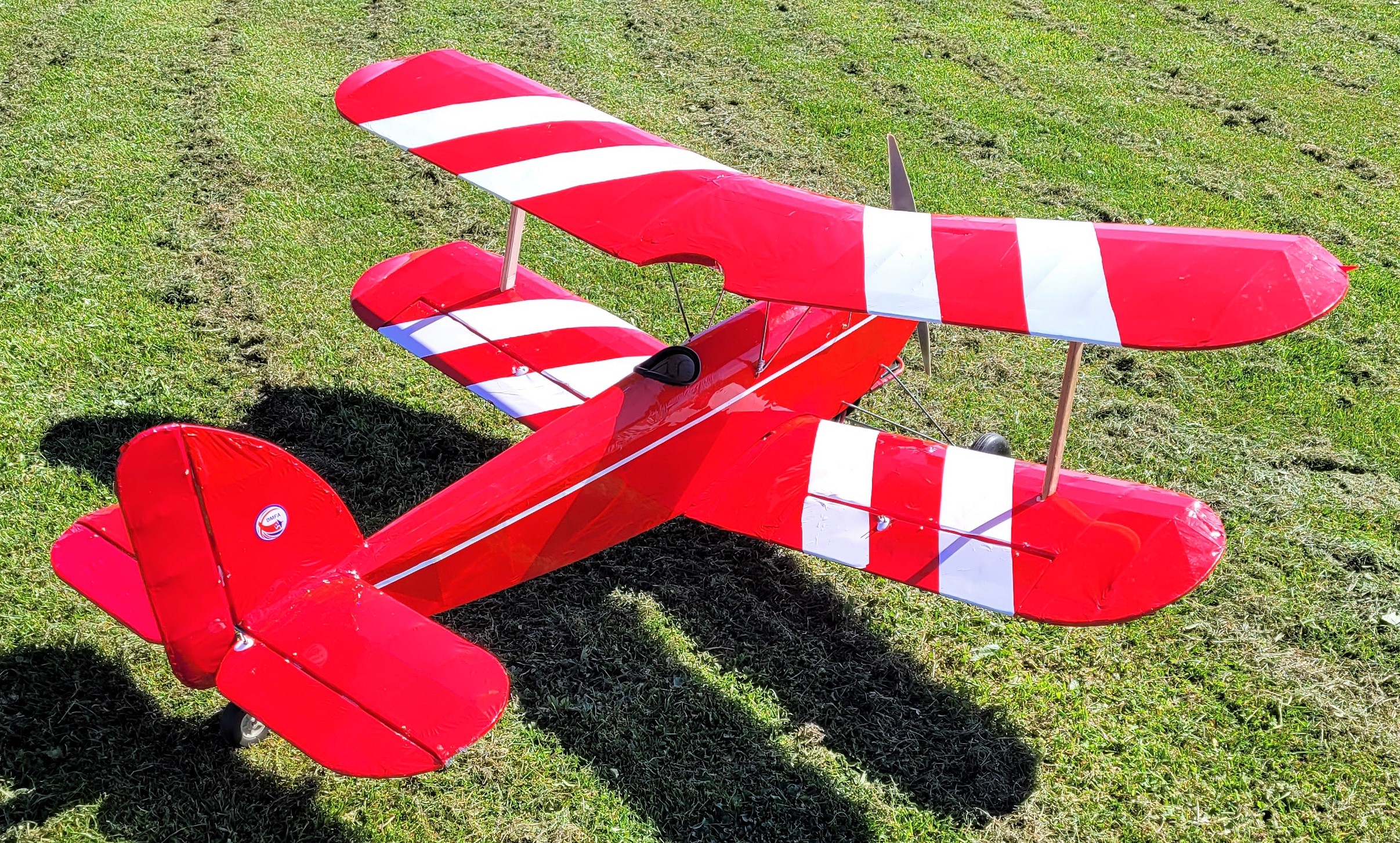 This was much better and the Sunday Flyer took off straight as a die but unfortunately as it lifted off the battery fell out so it was a very short flight! John took the model back to his workshop to redesign the battery fixing and I’m sure the next flight will be fine.
Last month I included the photo below and said it was “…a photo that Dougal snapped when he was able to get his FPV model up amongst the clouds one day. In this excellent shot you can just make out the Solent and the Isle of Wight in the distance. I was spotting and the model was at the limit of my vision when I saw a full-size plane approaching so I told him which direction to head and to descend Rapidly Also Of course.”
It seems nobody twigged that Patch News was published on April 1st and Rapidly Also Of is an anagram of April Fools Day. In fact I took the photo at around 33000ft over Portugal on a recent trip to Morocco. I wouldn’t want to embarrass the first of several club members who said what a great FPV photo it was so I won’t mention Woody…oops!
Norwegian Nick is an avid builder who always produces beautifully built models and the latest one to come off Nick’s production line is this lovely Peter Holland designed Archie.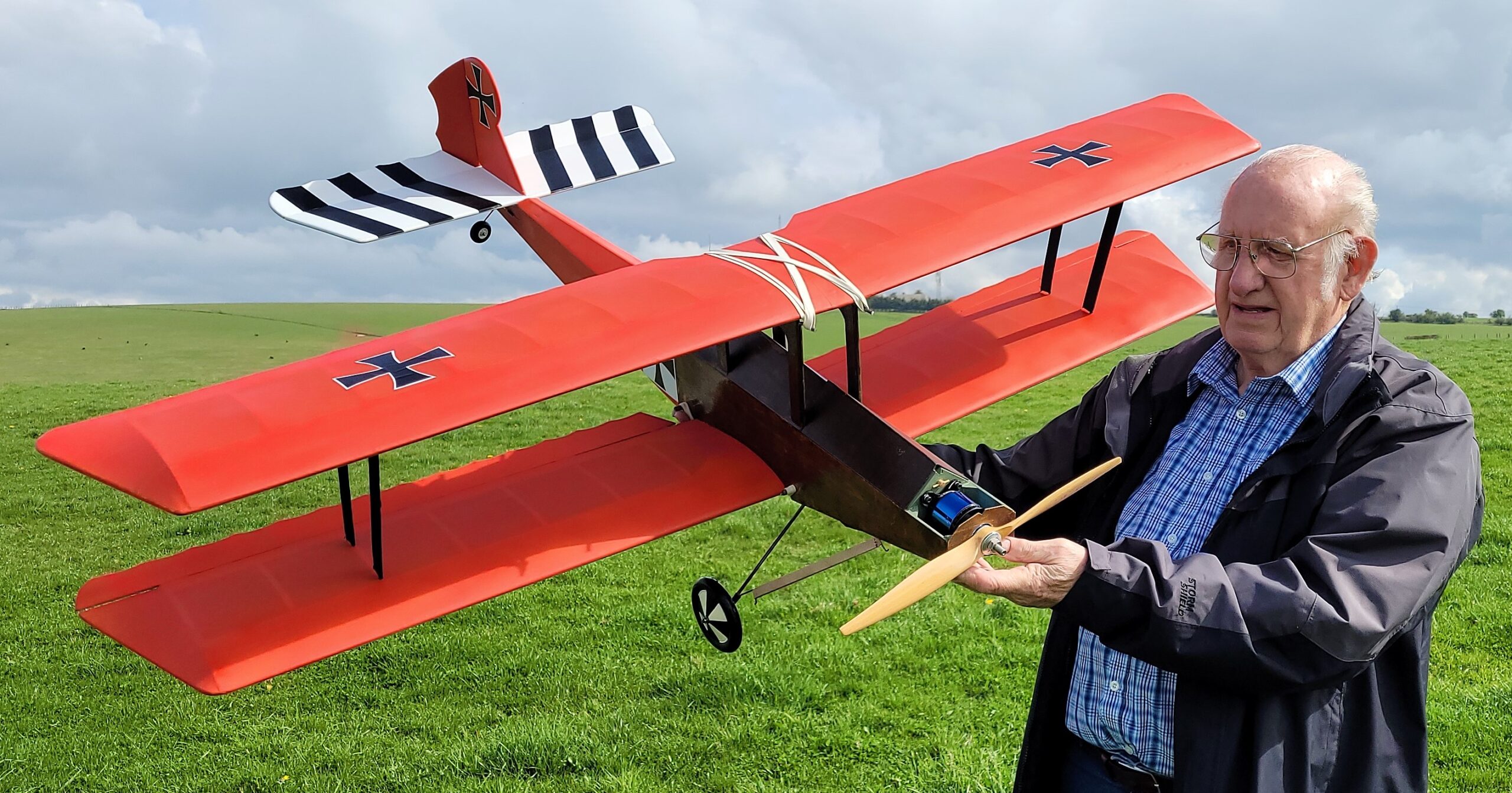
The Archie plan was first published in Radio Modeller in May 1972 and the plan can now be downloaded free of charge from Outerzone along with some supplementary notes.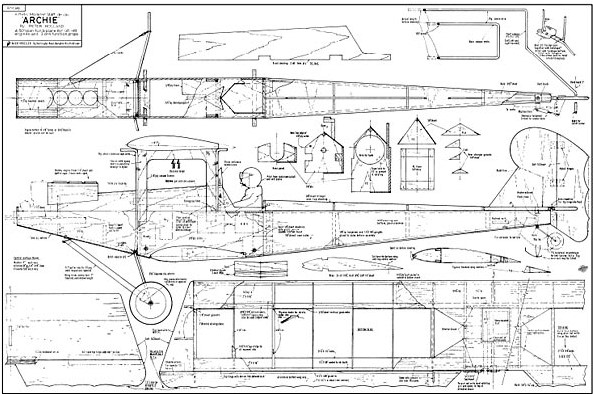
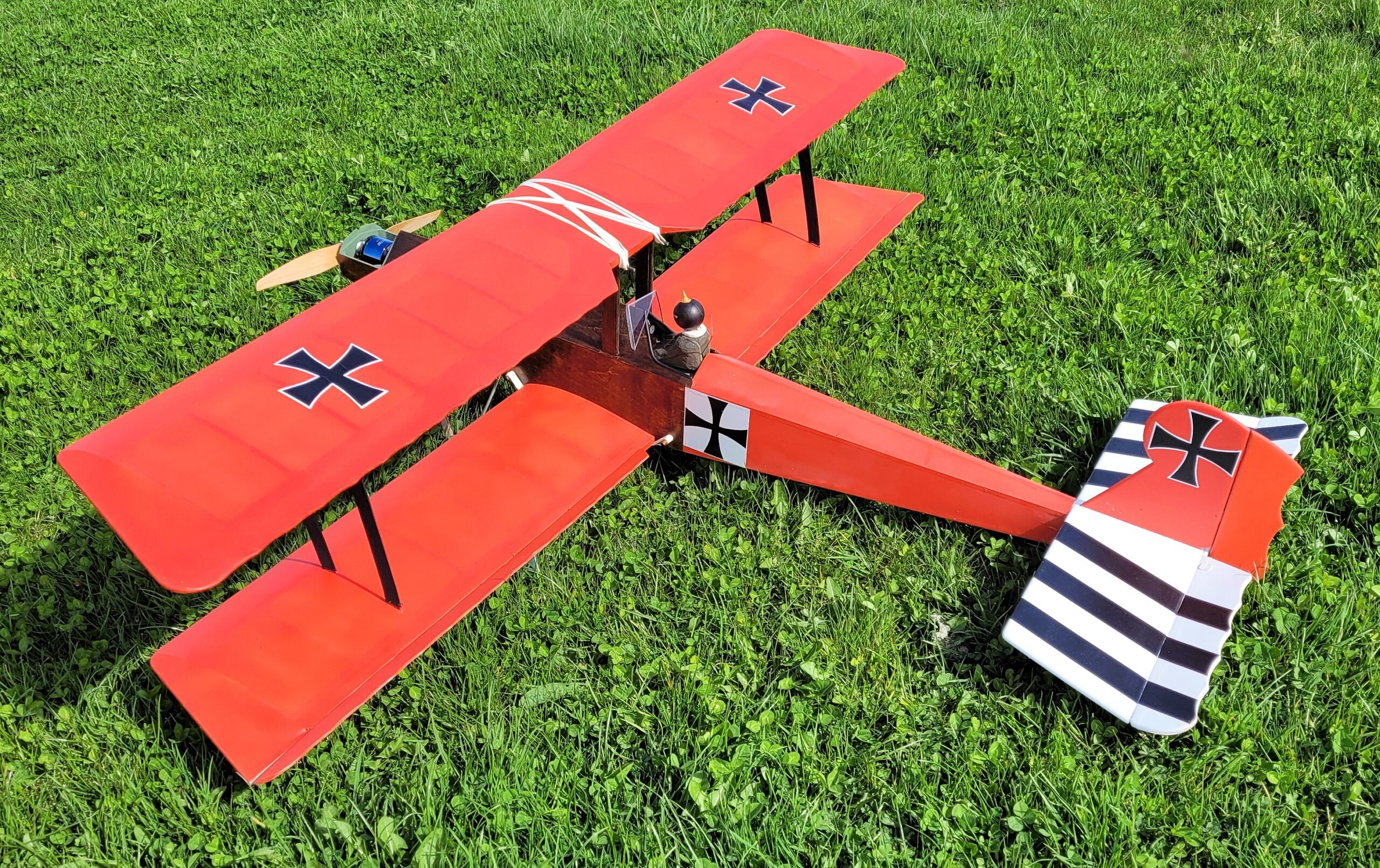
This is what Outerzone say about the model: This is Archie, the model we have had so much fun developing, building and flying. We set out to provide a model which would do the impossible and please all of the people all of the time, and we think we have succeeded! For the average to skilful pilot Archie is a perfect relaxer for a lazy afternoon in the sunshine, as the bees drone and the wispy clouds drift lazily across the sky. Although it is relatively slow flying, it is far from loath to perform simple manoeuvres, such as loops, rolls, inverted flying and similar aerobatics, but it will not spin easily because the stall is almost non-existent, which is as it should be, so that it can be ‘held off’ for those satisfying three pointers, or touch and go’s. Also, if you fancy a brief chat to your next-door pilot, Archie will fly itself around quite happily for a circuit or so, yet send a control and it will respond. In other words then, a model to have fun with. What, however, if you are not a practised pilot? Well Archie is still for you, because it is a trainer which is not outgrown as soon as one has mastered the rudiments of flying. We do not recommend Archie as a trainer to someone who is going it absolutely alone from scratch – not because it is not as docile as other trainers, but because, if one does make an error, as all beginners do, then being a biplane there is more of it to break ! However, for the tyro who has the help of someone who, as a minimum, knows how to take-off and land, Archie can be recommended as a happy choice to ease your way into solo flying…”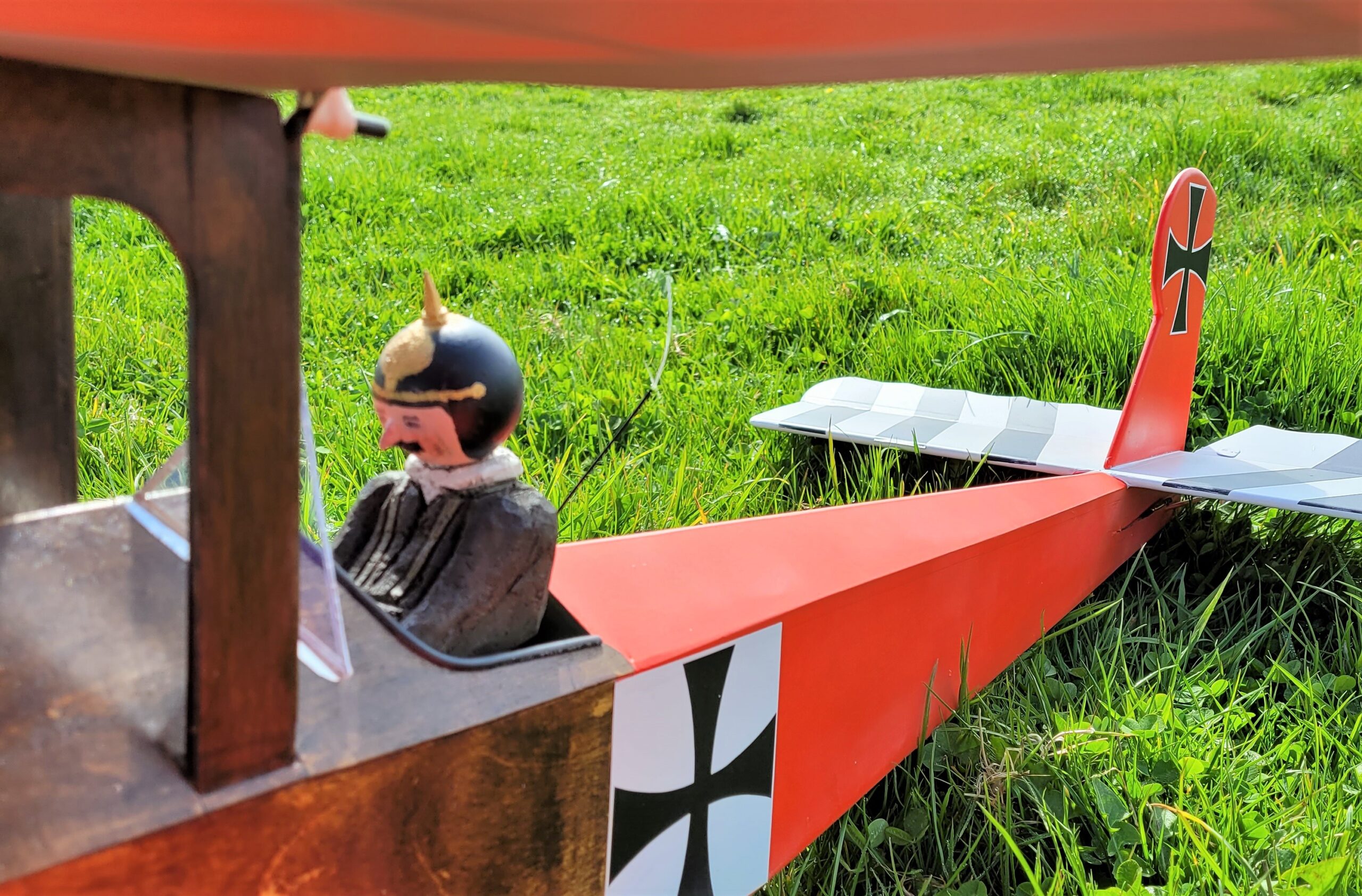
It is all starting to sound very much like John Warren with his aforementioned Sunday Flyer as this is the fourth Archie that Nick has built, the first three being IC powered but this one is electric. The Archie is of balsa and ply construction and Nick has covered it in Solartex. The wingspan is 50” and the model weighs 5lb 4oz complete with a 5 cell lipo.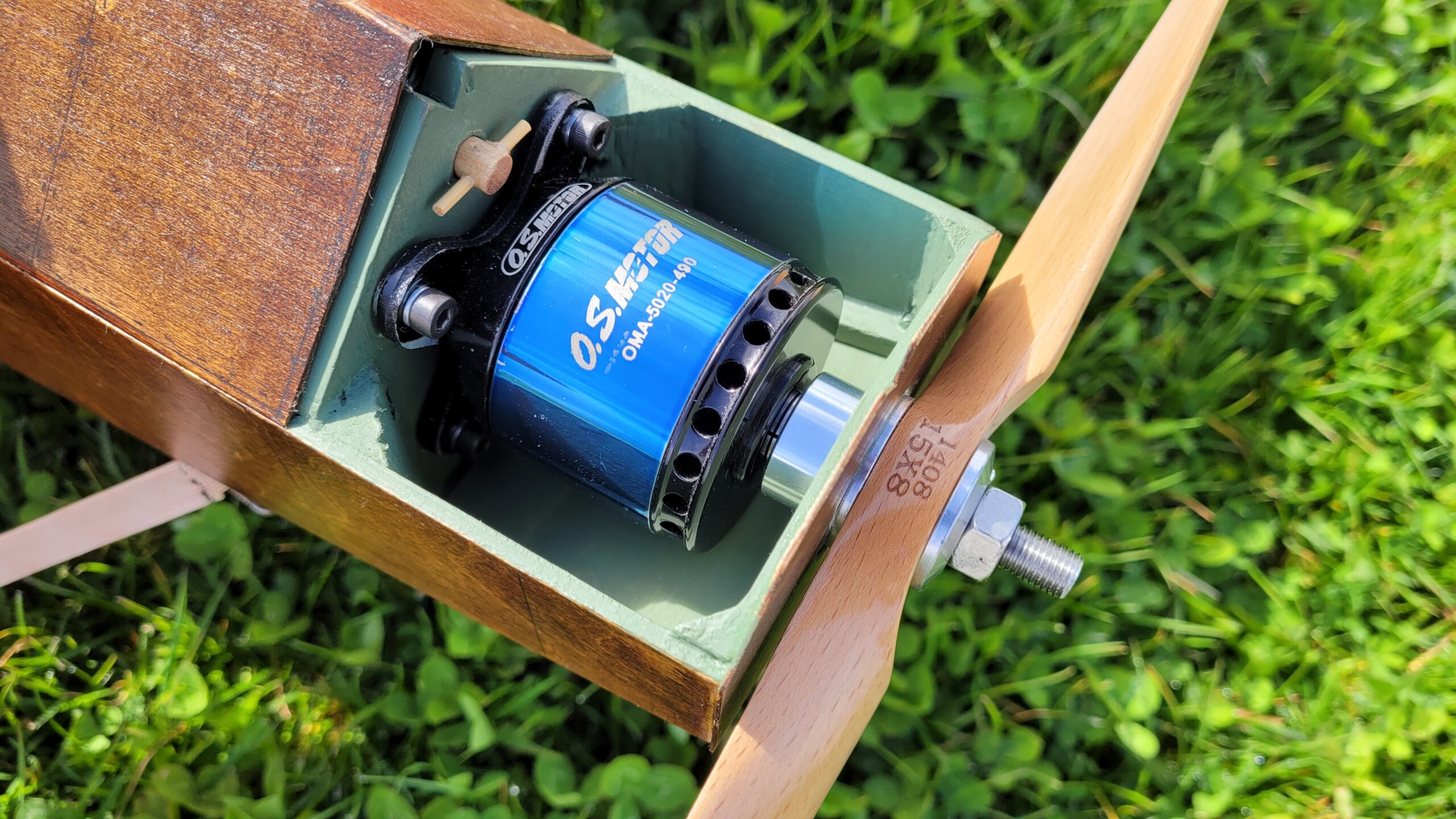 Nick is using a Hobbyking Skywalker 80 amp esc to power an OS-OMA 5020-490kv outrunner motor which swings a 15 x 8 wooden propeller. On the first day he brought the model up to the field Nick’s pre-flight checks found that only one aileron was working.
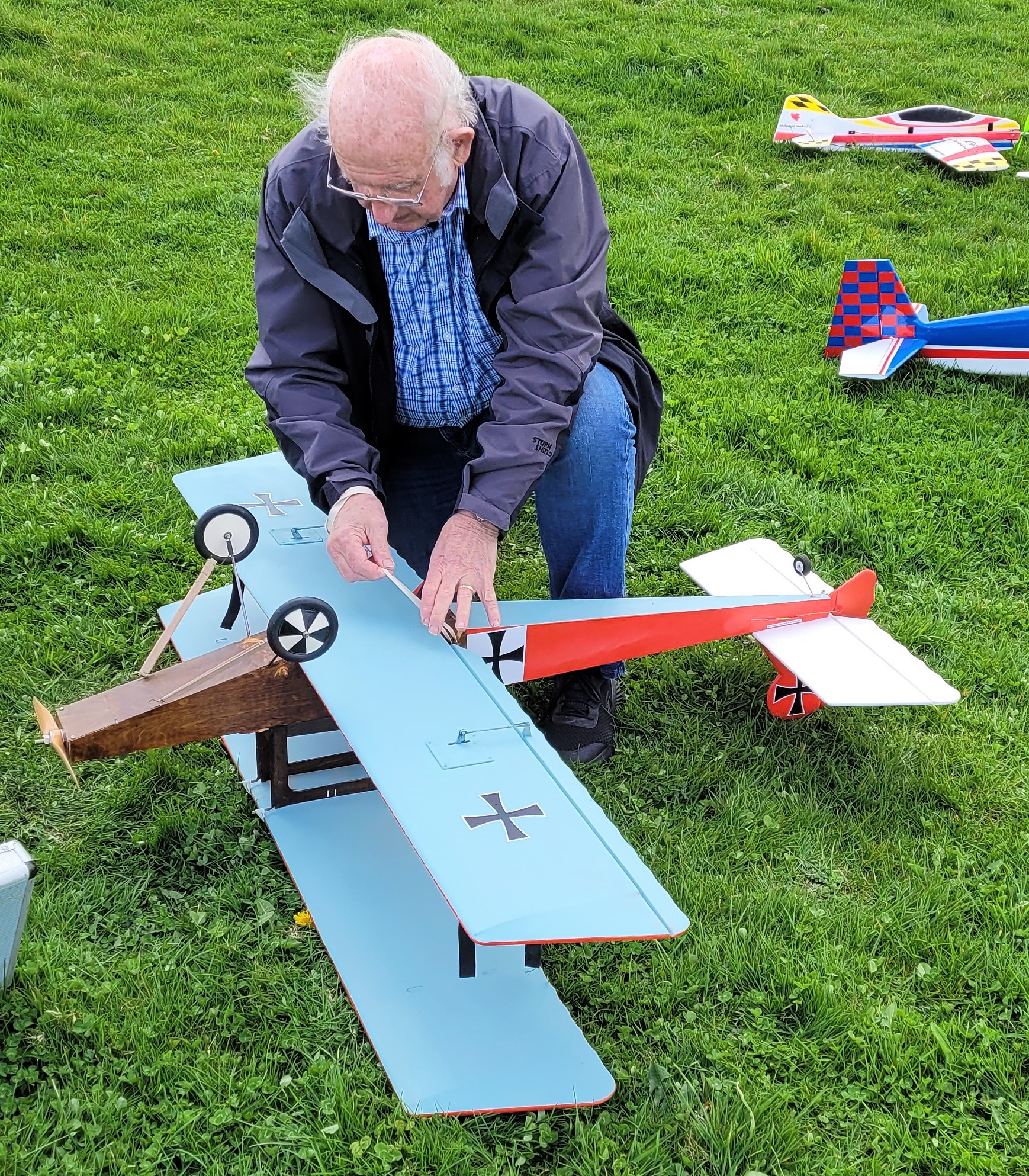 After lots of checking of connections, servo extension leads, and anything else any of us could think of Nick reluctantly took the model home without flying to check it over in his workshop. Eventually he discovered that on his transmitter he had got aileron differential set to Inhibit instead of Active. Never mind, it’s all sorted now and Archie has now flown successfully. Nick flew Archie on 27th April and other than needing a load of down trim it was perfect. Don’t take my word for it, you can see it for yourself in this month’s video.
Last month I featured Leo, the club’s latest junior member, and said he likes buying used and/or damaged models. Well he’s been at it again, this time paying just £30 for a used Parkzone F4U-1A Corsair at a swap meet down in Cornwall.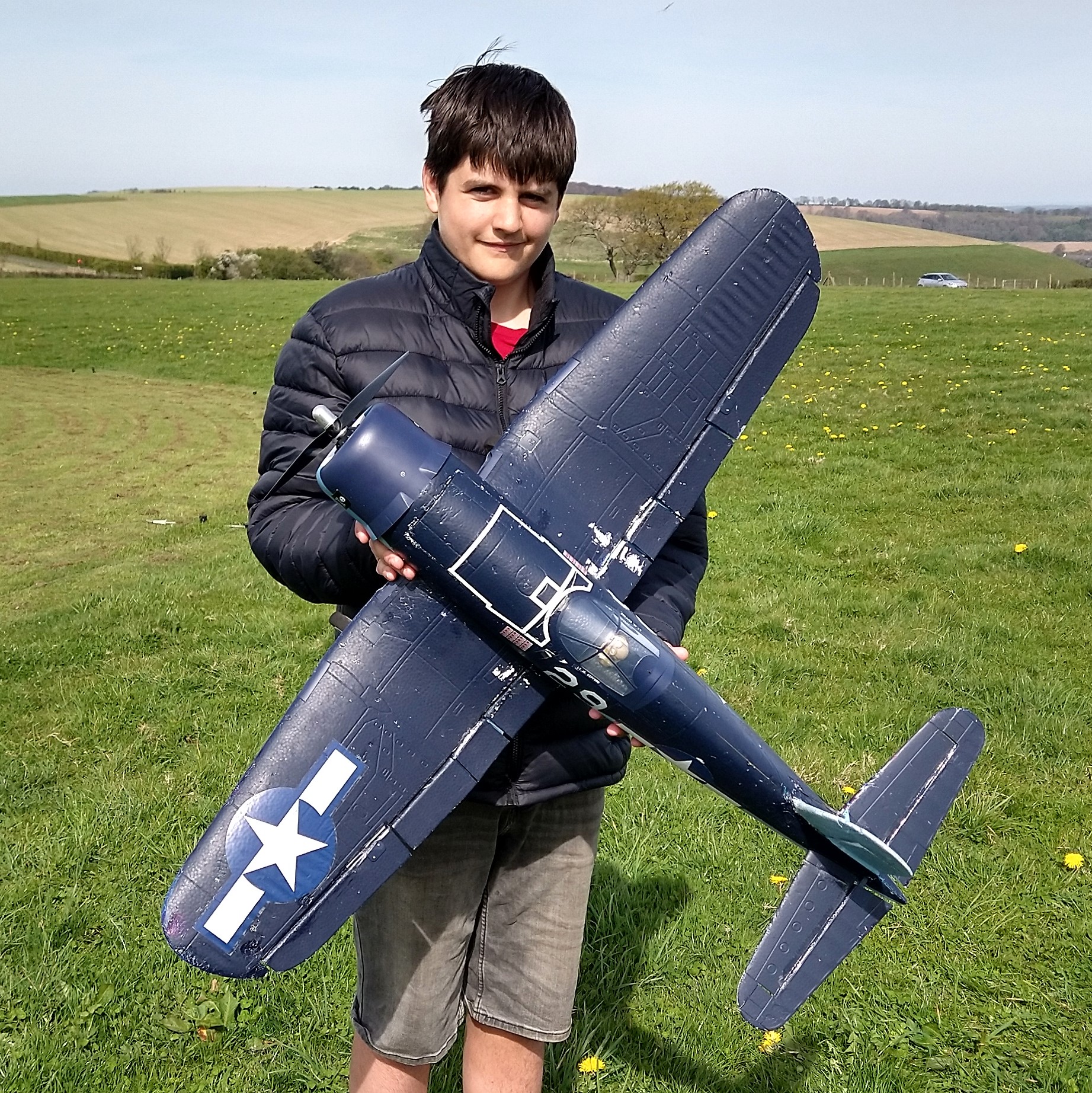
The model appears to have been well used and the paintwork could do with a bit of tidying up but for £30 it was certainly a bargain. The 44” span foamie came complete with the motor, speed controller, and the servos, plus it has the optional flaps fitted.
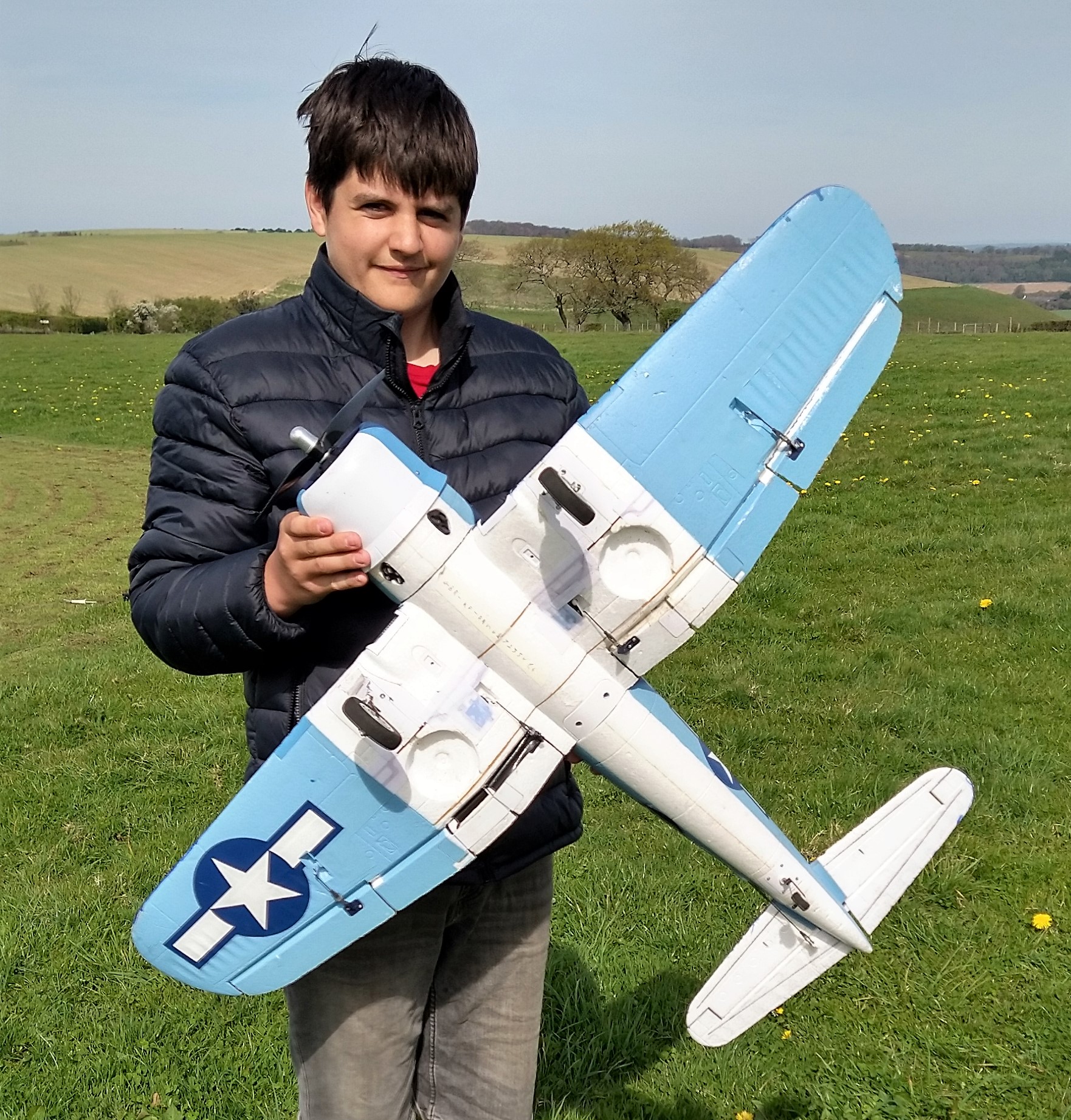 If it still has the original equipment fitted the motor is a 15 size Outrunner BL, the speed controller an EFL 30A and it uses a 3 cell 2200mAh lipo to power it all. It has a fixed undercarriage but retracts were available when it was first produced about 10 years ago. The Corsair flies really well, better than most of us were expecting I think, and the fixed landing gear copes perfectly with the grass patch. Leo doesn’t seem to have any problems flying the plane and I think it will serve him well.
Woody’s XFly T-7A Red Hawk flies very nicely once it’s up in the air but getting it up has proved to be a bit of a problem. If the patch has been freshly mown and there’s a bit of a breeze it will just about get off but if the grass is a little long and there are light winds it won’t make it. So we tried hand launching the Hawk and it went away perfectly so now Woody has removed the fixed undercarriage and it’s hand launches and belly landings all the way. In the air it looks much better without the wheels hanging down anyway.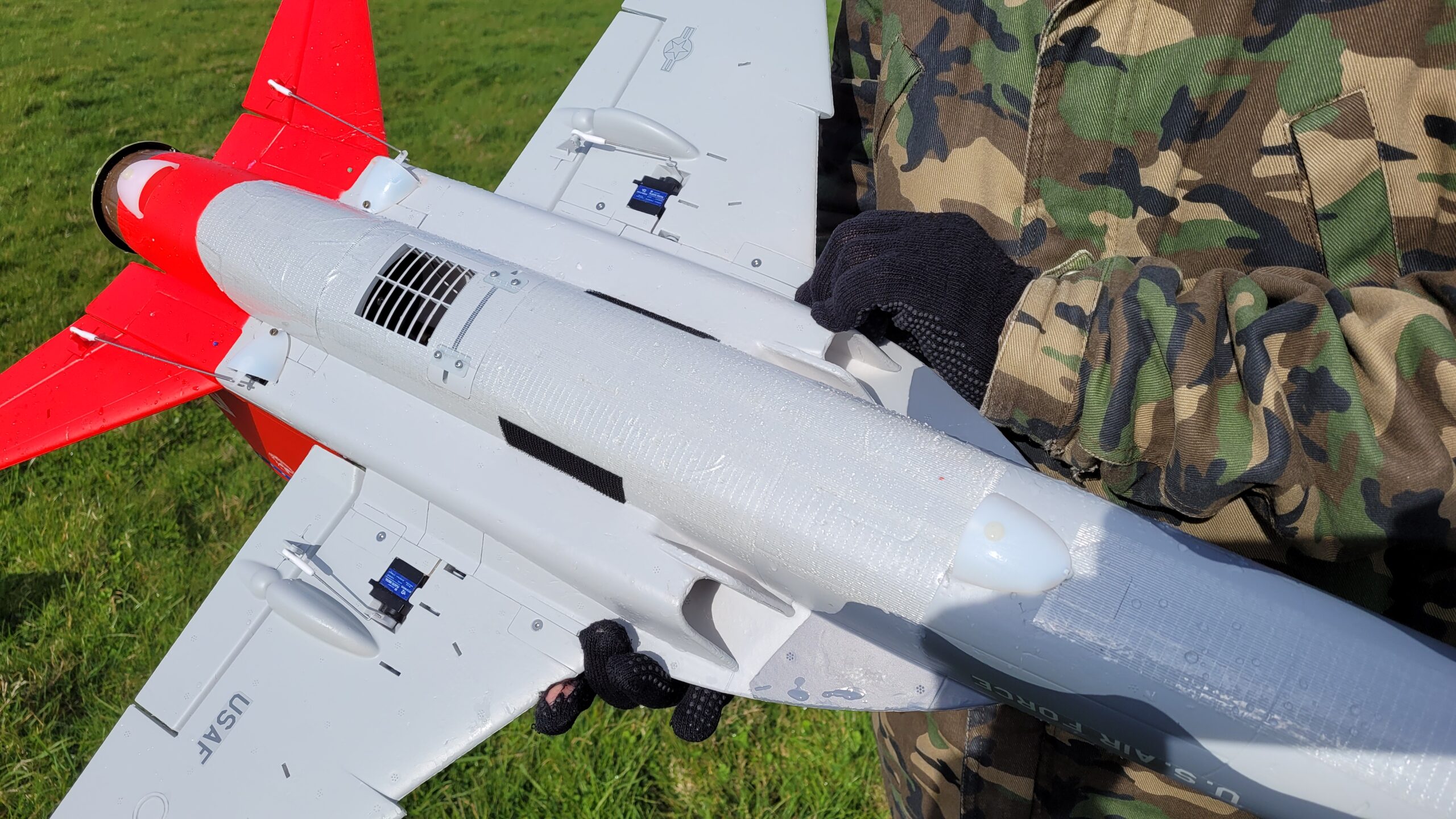
Woody added some protective tape to the underside, some covers to protect the elevator servos, and some Velcro that acts as finger grips for the launch. Without the extra drag and weight of the undercarriage it is easy to hand launch and makes for a much better flight.
Dwayne Pipe’s now built Sea Vixen Mk3 as part of his quest of continuous improvement.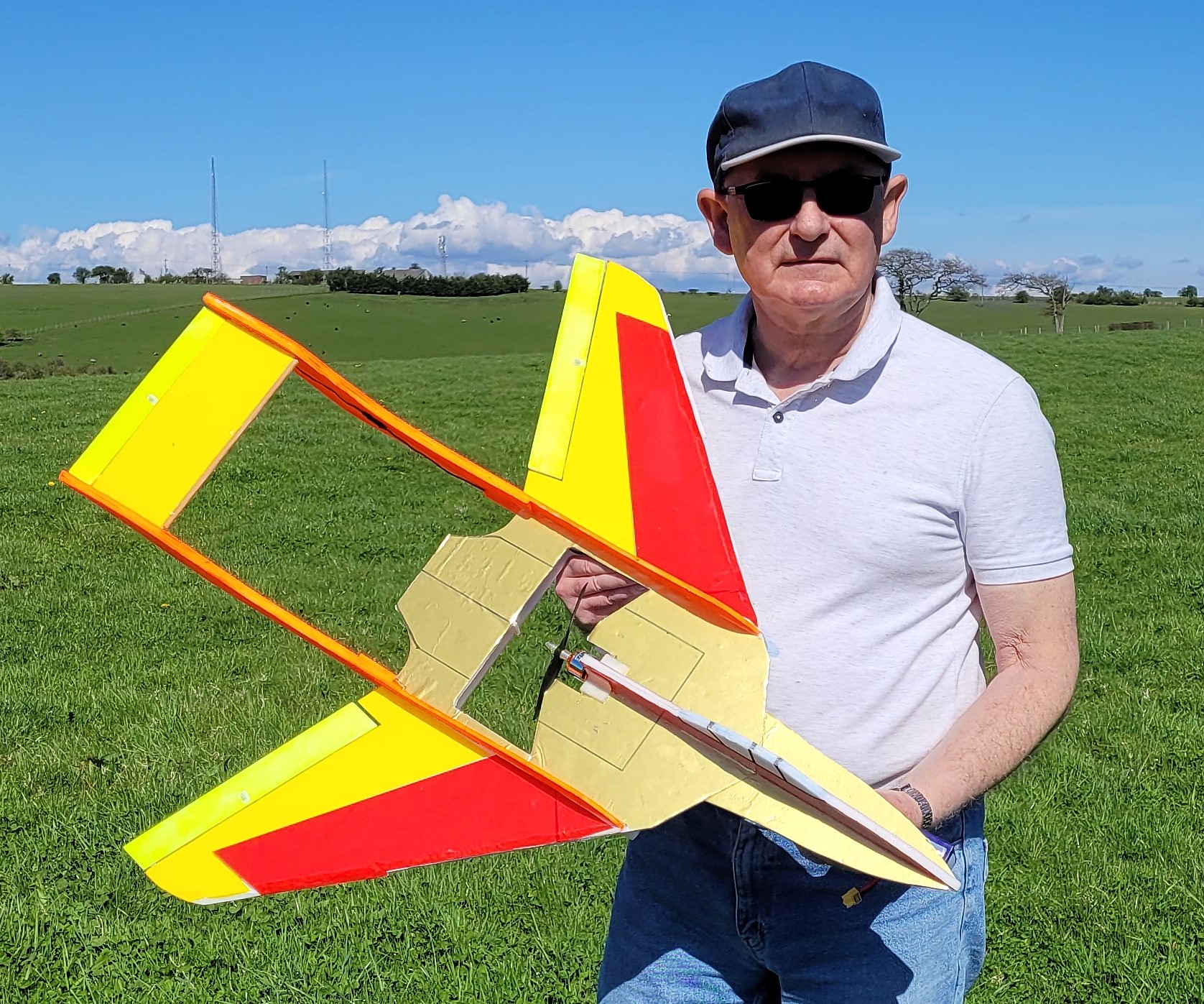
Here he explains what he’s changed: The Mk 3 is a development using the experience of the other club members who have built this design. Bob has used a KF before (That’s a Kline Fogleman wing section for those who don’t know) but not I think on the Sea Vixen. The electronics are identical to the Mk 2. It has a 30 A ESC, 2200Kv motor with a 6×3 prop. Unlike most of the other planes built I have removed the paper covering, as whatever you do it eventually separates from the foam, but I doubled up the tail booms as the Mk2 was starting to warp with just a single thickness.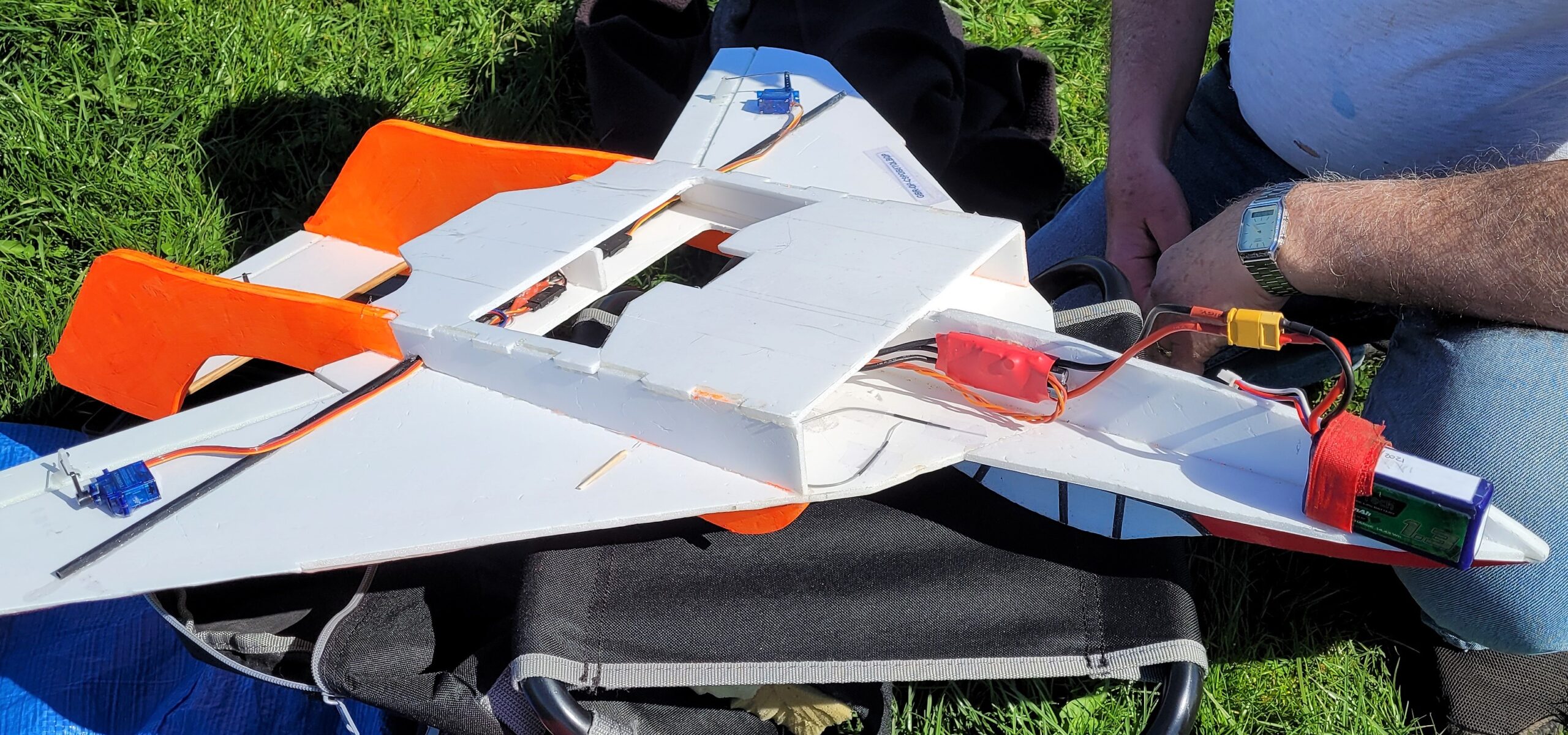
In addition the join of the boom with the fuselage is reinforced with 6x6mm balsa strip.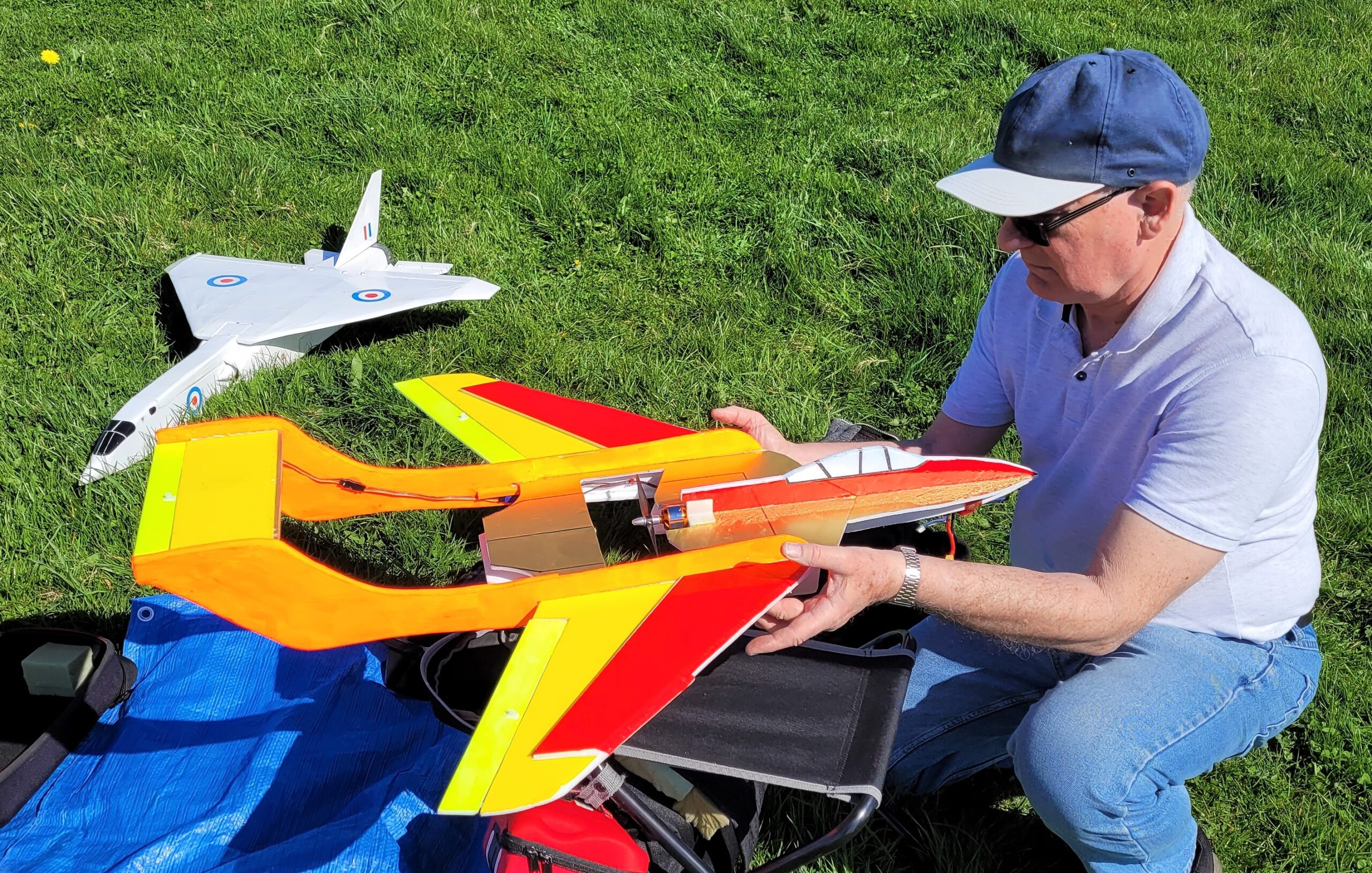 The wing is a KF design with the KF extending from the leading edge back 50% of the chord. This was done to provide more lift but also to reinforce the wing as the original was staring to warp which made flying it tricky. The KF section is made out of the remains of my Sukhoi wing as this is slightly thicker and certainly stiffer than the foam board we buy. The whole thing covered with a mixture of sticky back plastic, Solarcote and pound shop fluorescent acrylic paint. The new version flies very well, looks great in the air, and should be more durable than the previous versions. Watch it in the video.
We had a fortunately rare event at the patch in April when Catapult King’s Yellow Tail crashed and the lipo started smoking. The Yellow Tail has a thin wing which gives it tendency to tip-stall and as Catapult was on the landing approach it suddenly dropped a wing and crashed. I was watching at the time and I was as surprised as Catapult was, the model looked to have enough speed to me. The Yellow Tail came down about a hundred yards short of the patch and almost immediately we saw puffs of smoke so we ran over and with my paparazzi hat on I took a short video before unplugging the battery!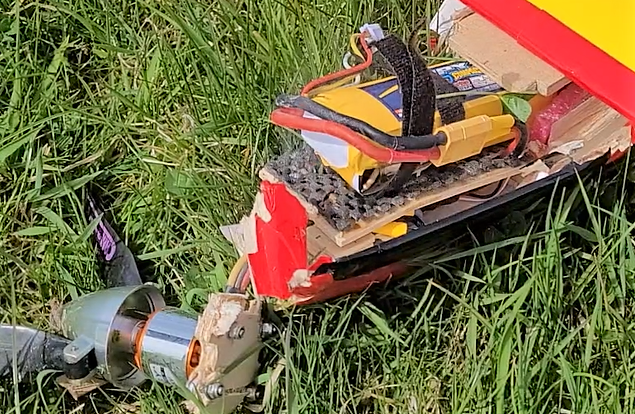
By the time we reached the model the worst of the smoke was over as only one cell was damaged and although it smoked a lot it didn’t burst into flames. It’s difficult to see the smoke in the picture above which is taken from the video, it shows up better in the video itself which I’ll include in this month’s video.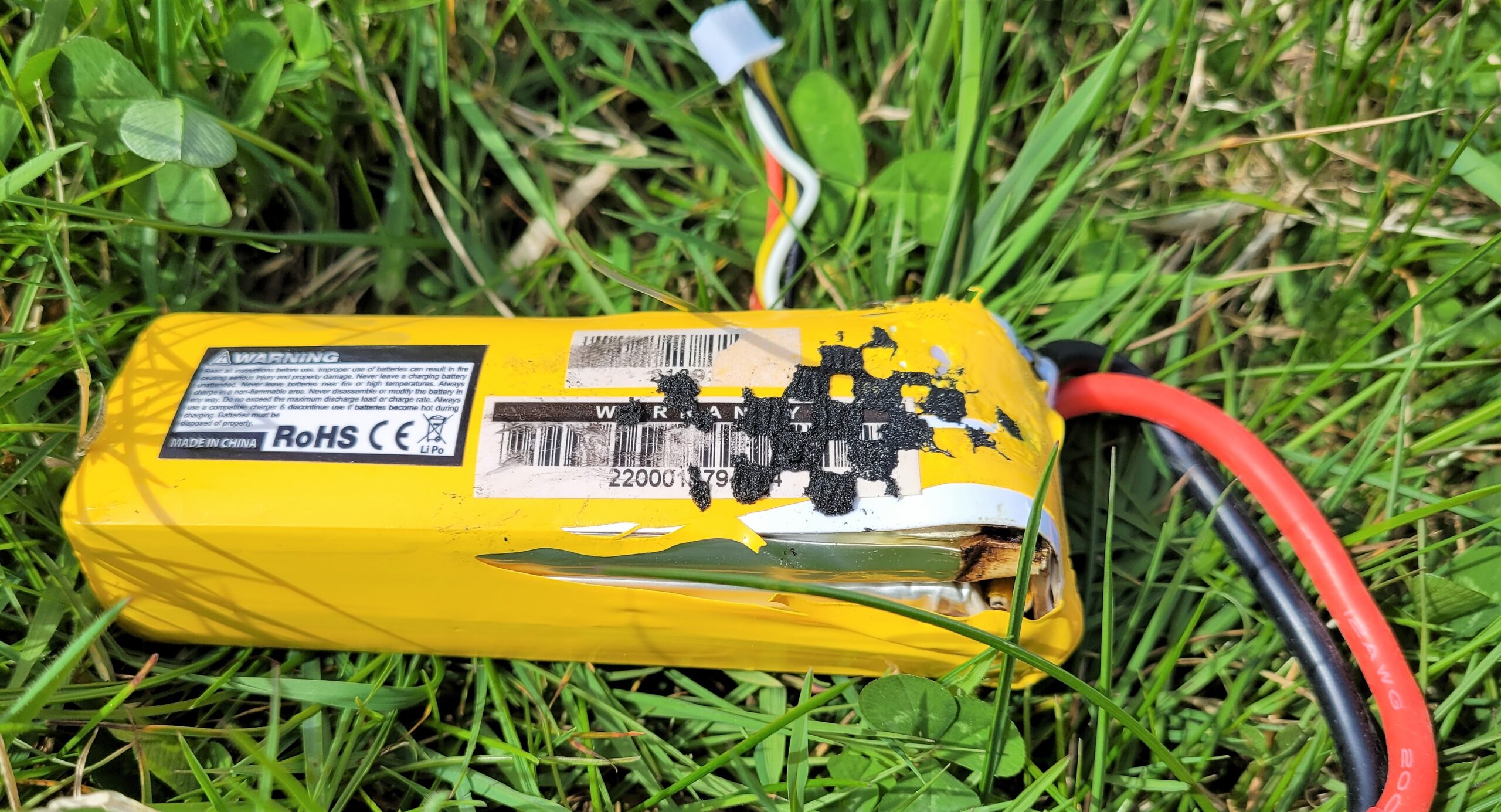 As you can see the pack has seen better days!
Mini-Mike has flown lots recently, in fact I think he’s flown more in the last couple of months than in the whole of last year. His flying has improved with the extra practice and he seems to have got his landings under control now with both his Pitts Python and his Arrows Hobby Marlin. I snapped him looking pensive ”Which one should I fly…?”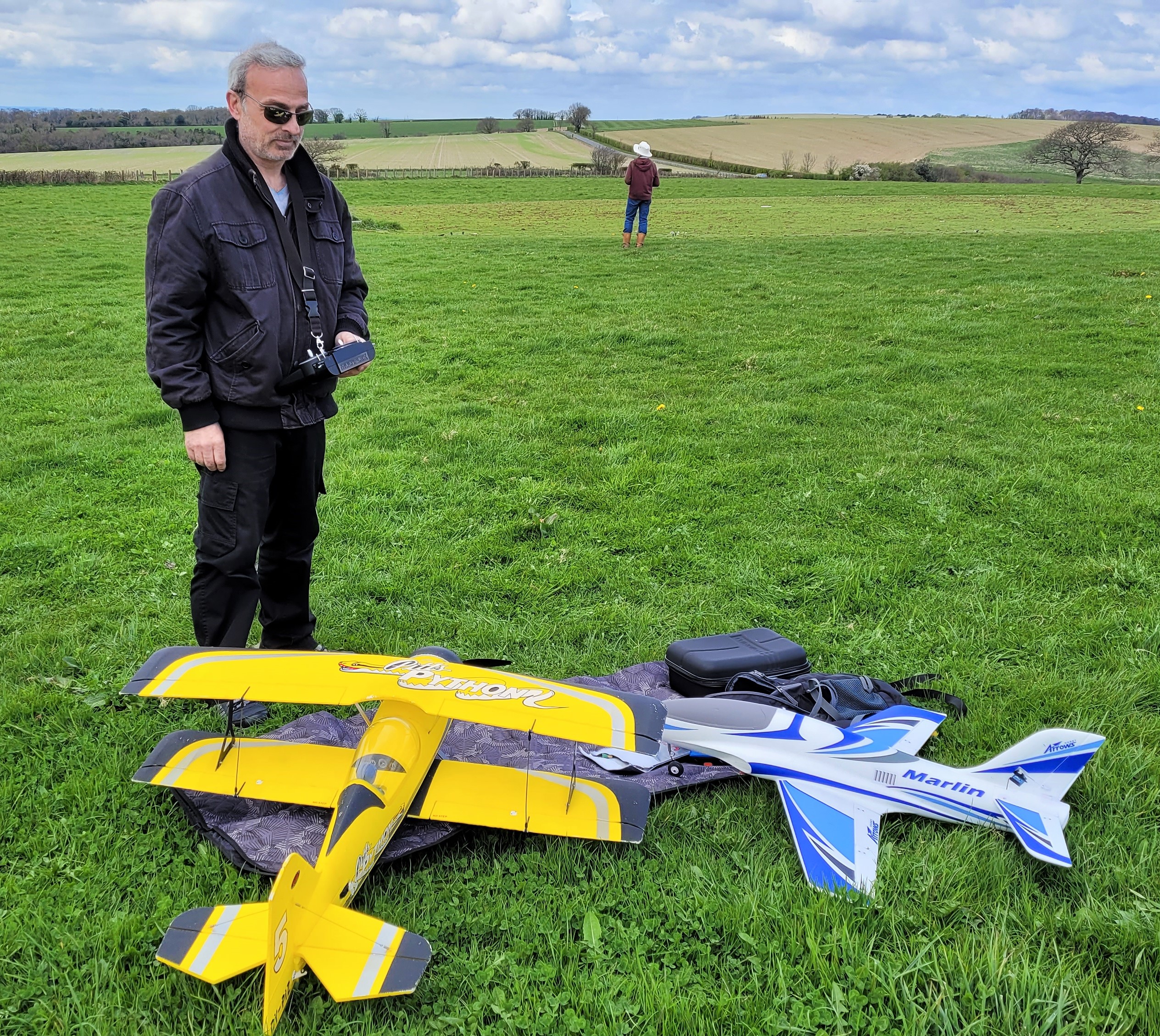
He settled on the Pitts Python first but also flew the Marlin later in the day.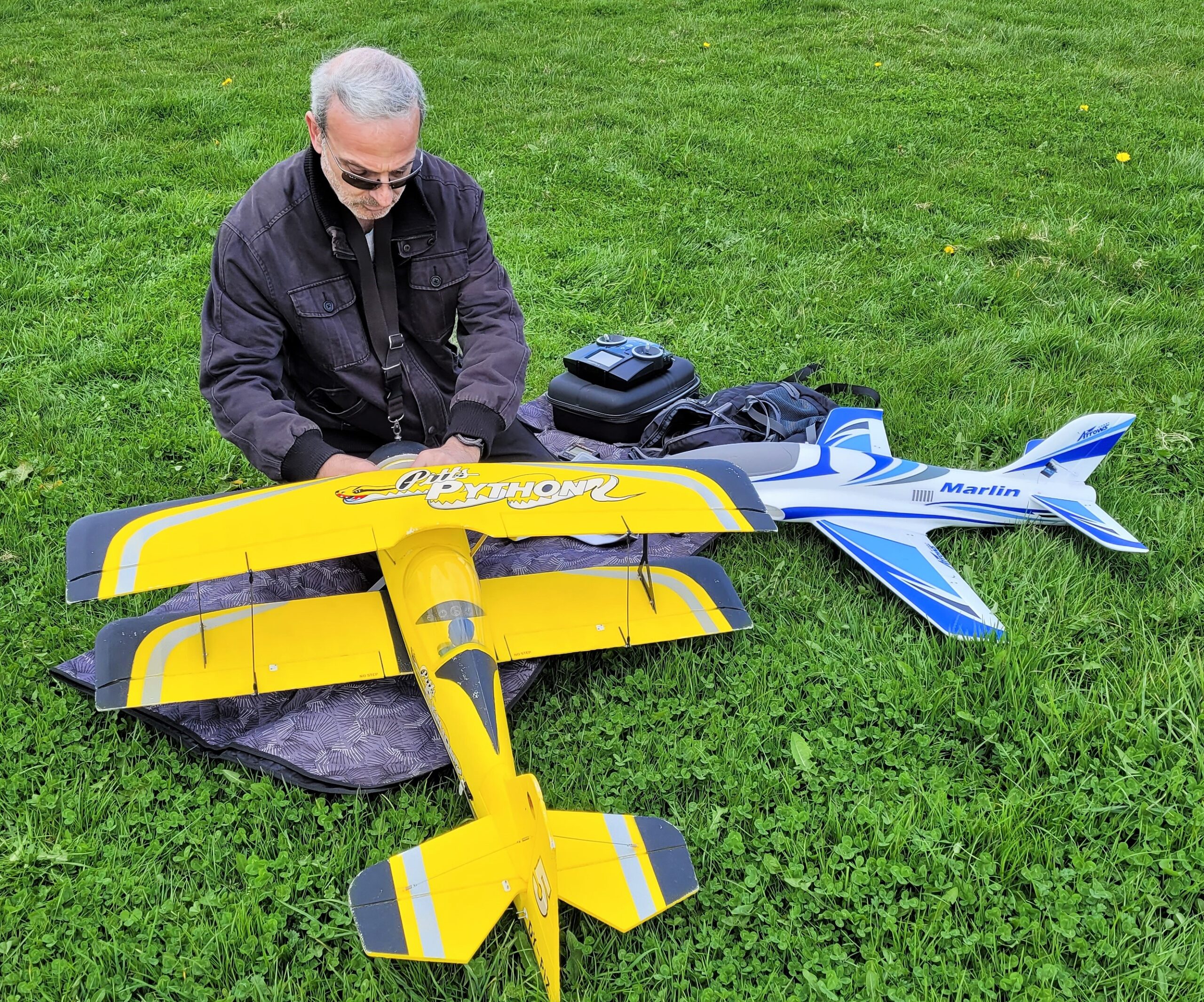
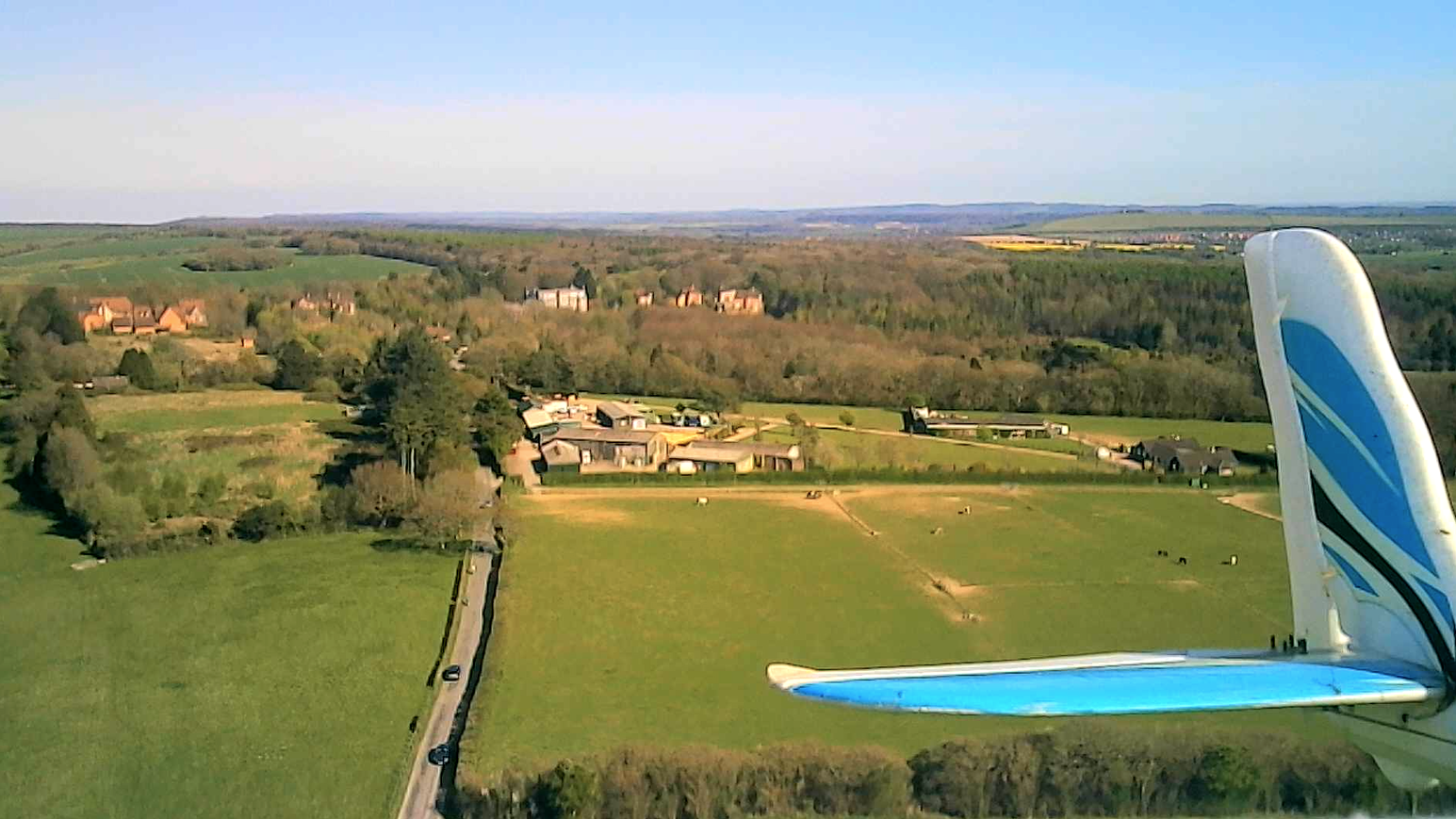
Sadly I have no flying shots this month but here is a selection of screenshots from videos that Dougal and I shot with our onboard cameras. The first one features 1066…don’t ask!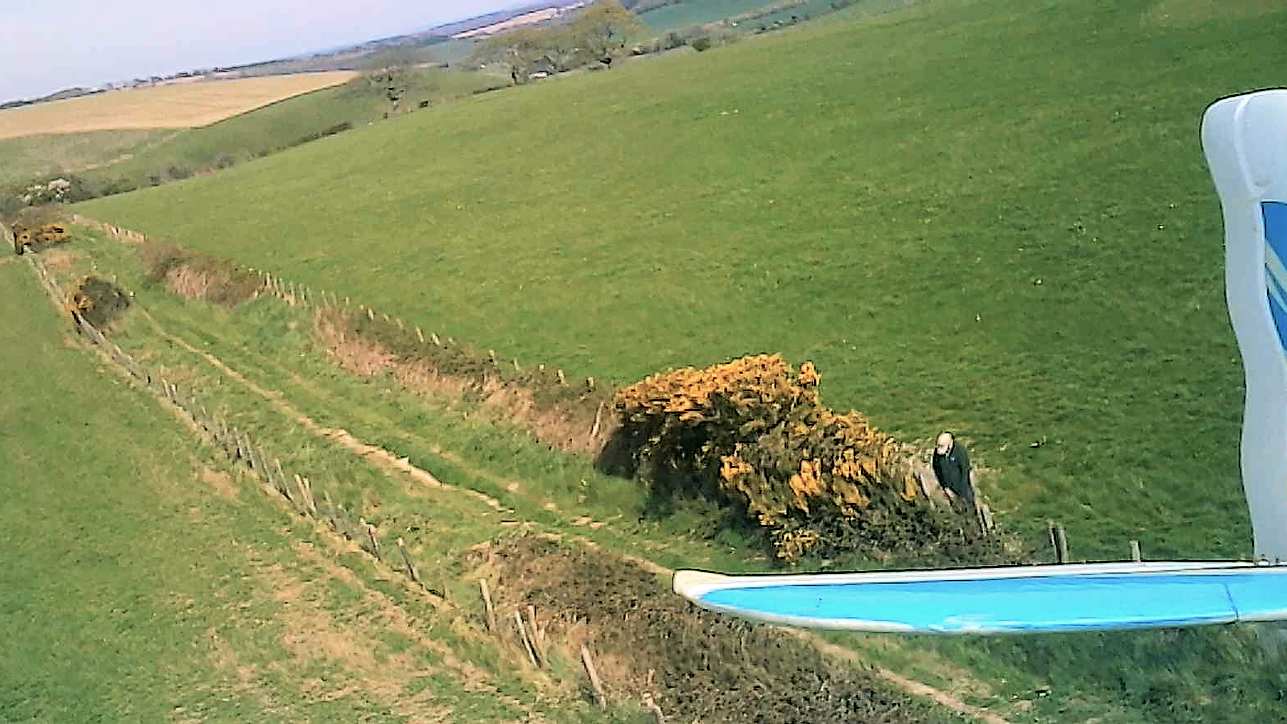
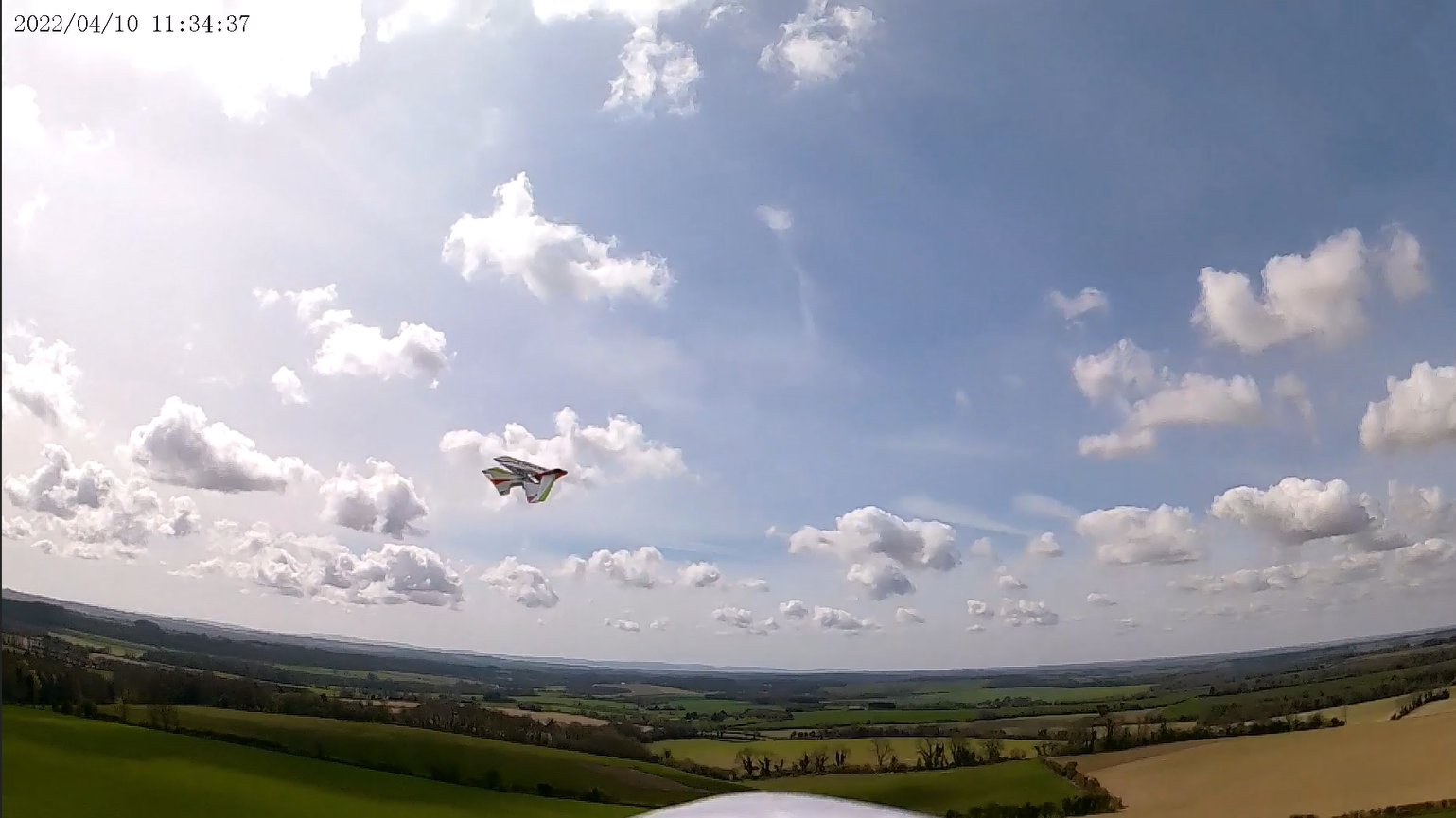

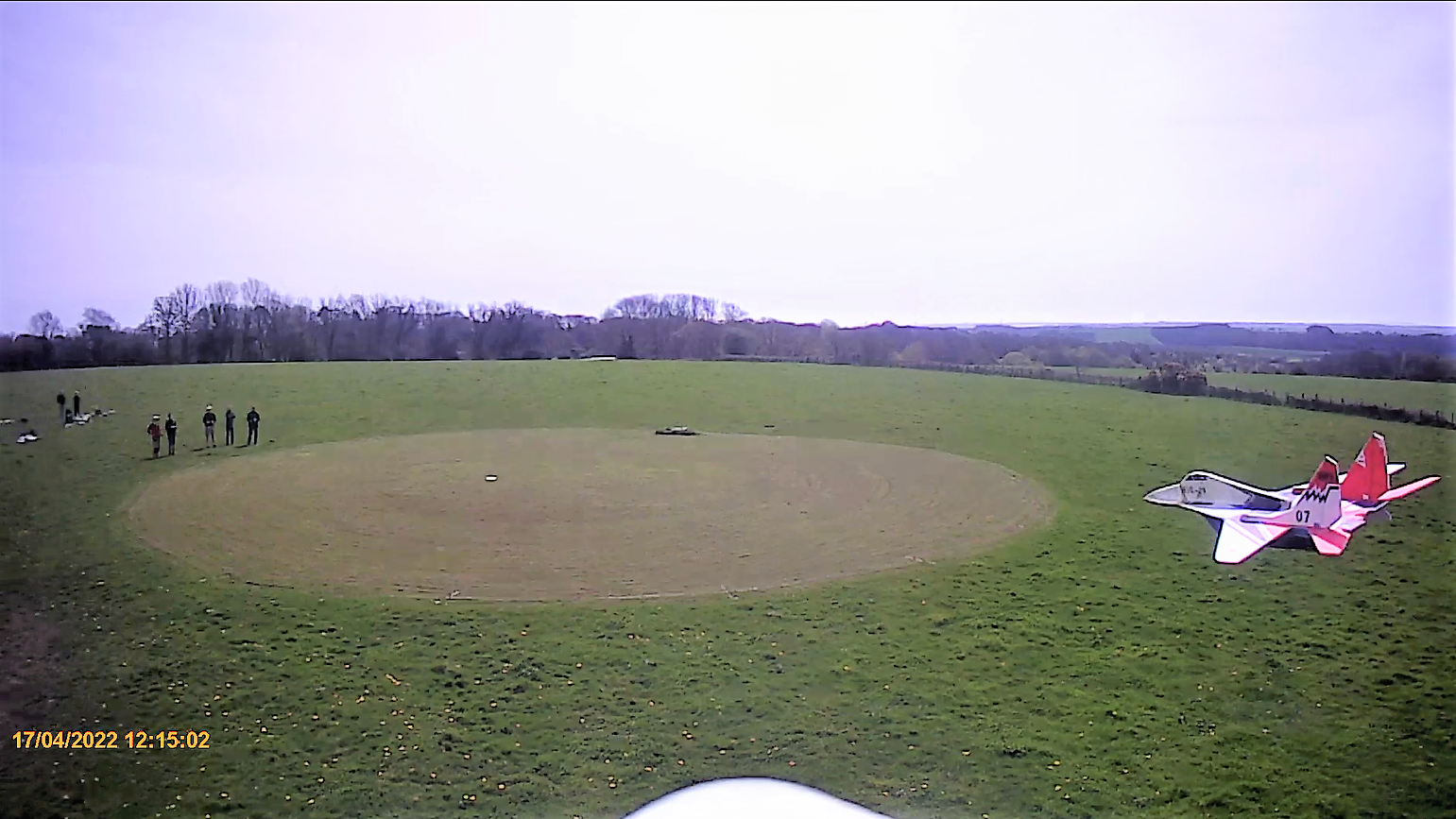
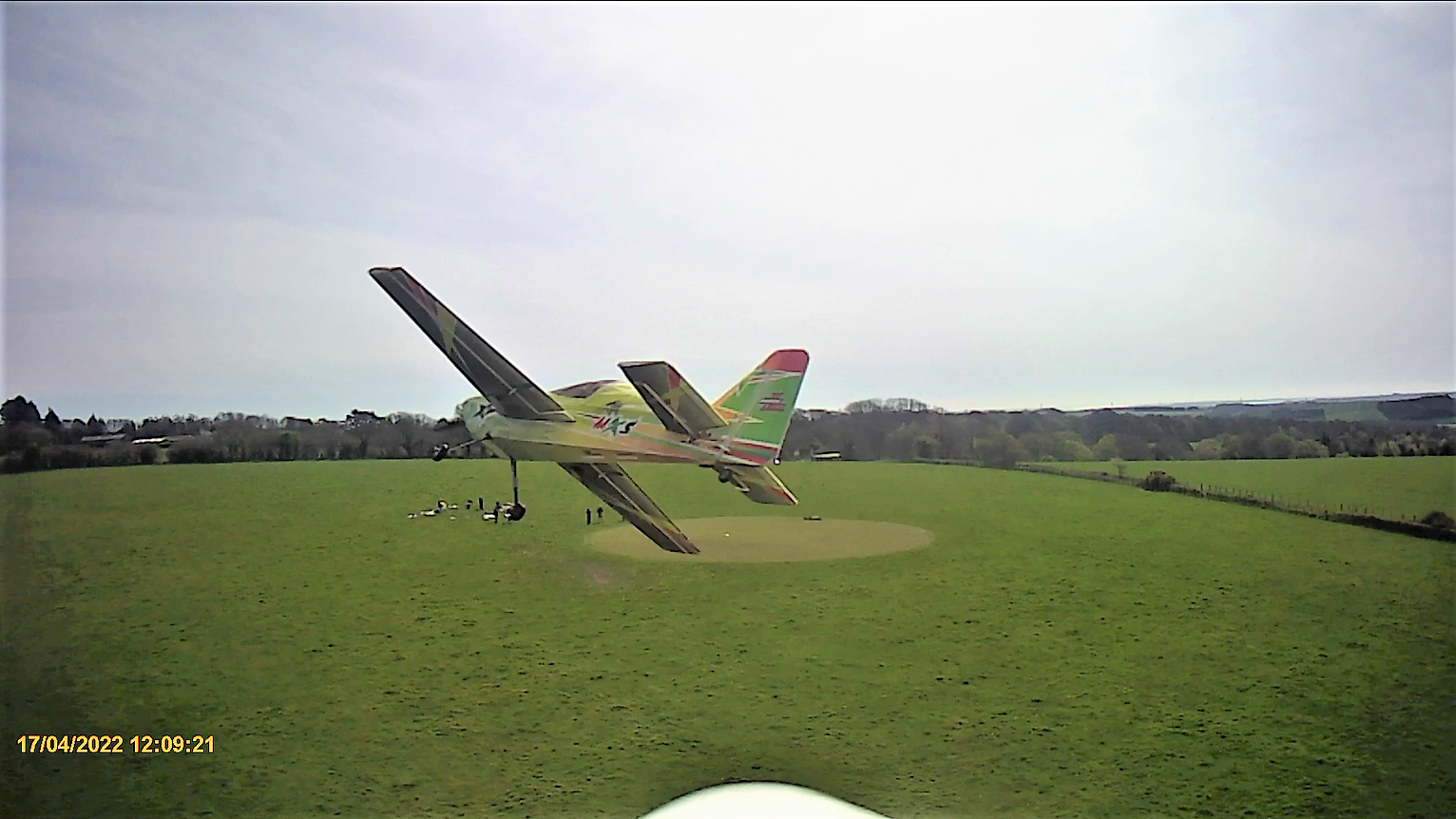
Video time now which this month includes footage by Dougal Entendre and myself. Please watch the video full-screen, it’s so much better with small models flying around.
If the video won’t play for you please click HERE
The late Captain Mickey Munn – an all-round fine fellow, highly experienced pilot and, at the time of this event, Sergeant in the Red Devils ( Parachute Regiment display team) – was piloting a Britten Norman Islander to jumping altitude with a full load of paras crammed into the rear of the aircraft.
With no warning at all, a bang and a flash of flame, the port engine blew itself to pieces. Mickey’s hands flashed around the cockpit as he brought the aircraft under control.
As soon as the aircraft was straight and level he turned to his passengers and said: “Phew. I think you chaps should…”
But his words tailed away as he gaped at the empty passenger cabin.
At the first sign of trouble, the paras had leaped from the aircraft and were at that moment floating serenely towards the earth. Mickey landed safely to tell the tale.
Colin Cowplain
Patch News – March 2022
What a difference a month makes, in the February Patch News I wrote about storms and 80mph winds but in March we had a long dry spell with sunshine and light winds. The field stayed free from cattle and sheep for most of the month and the patch was mown a couple of times and remains in excellent condition. Several new models were successfully flown although Woody’s latest own design foamie F-15 caused lots of hilarity when it did a javelin impersonation from its’ first launch. It did eventually fly (just), more of that later.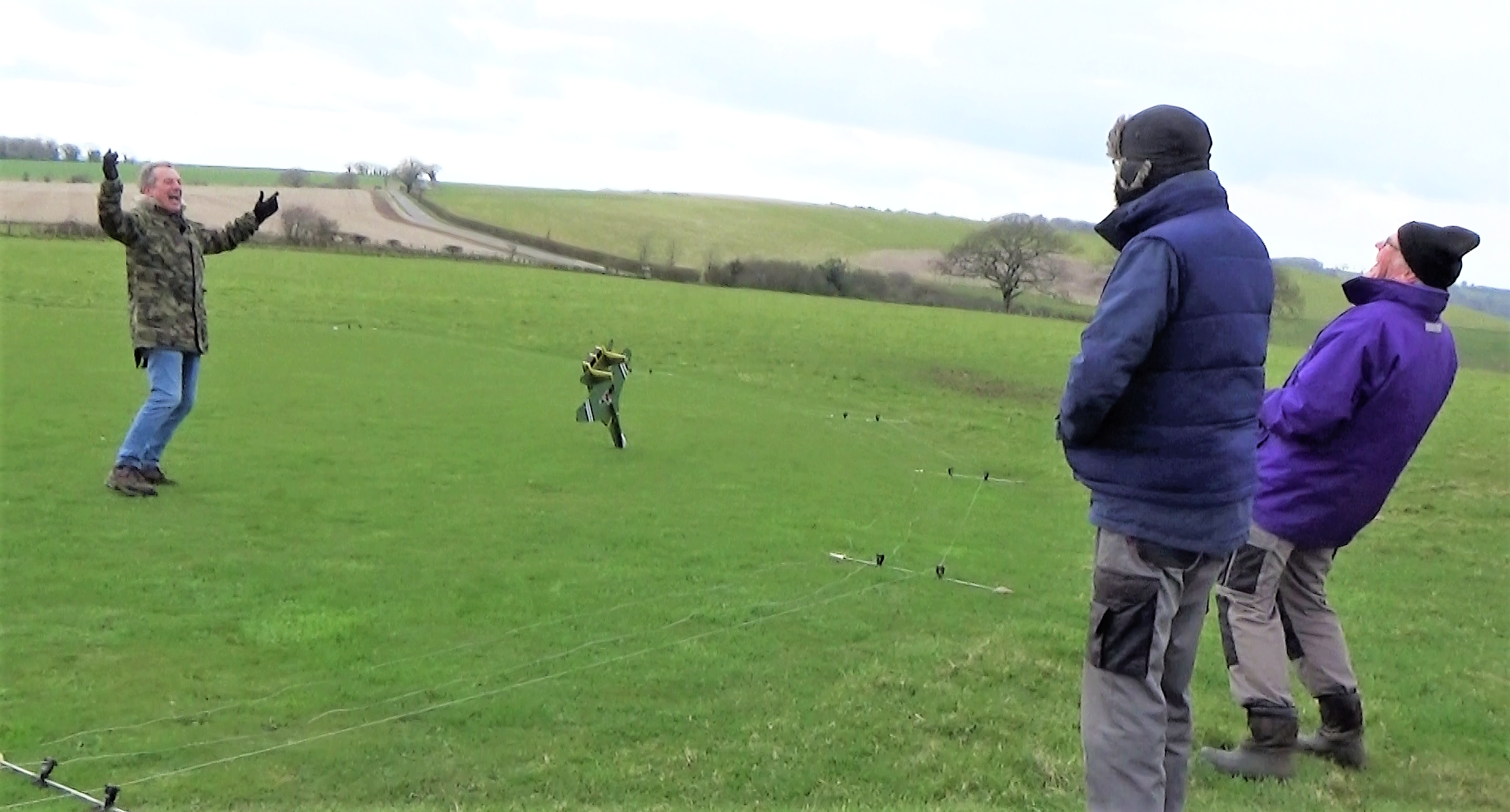
Juniors are a bit of a rarity nowadays so we are pleased to welcome Leo as a member.
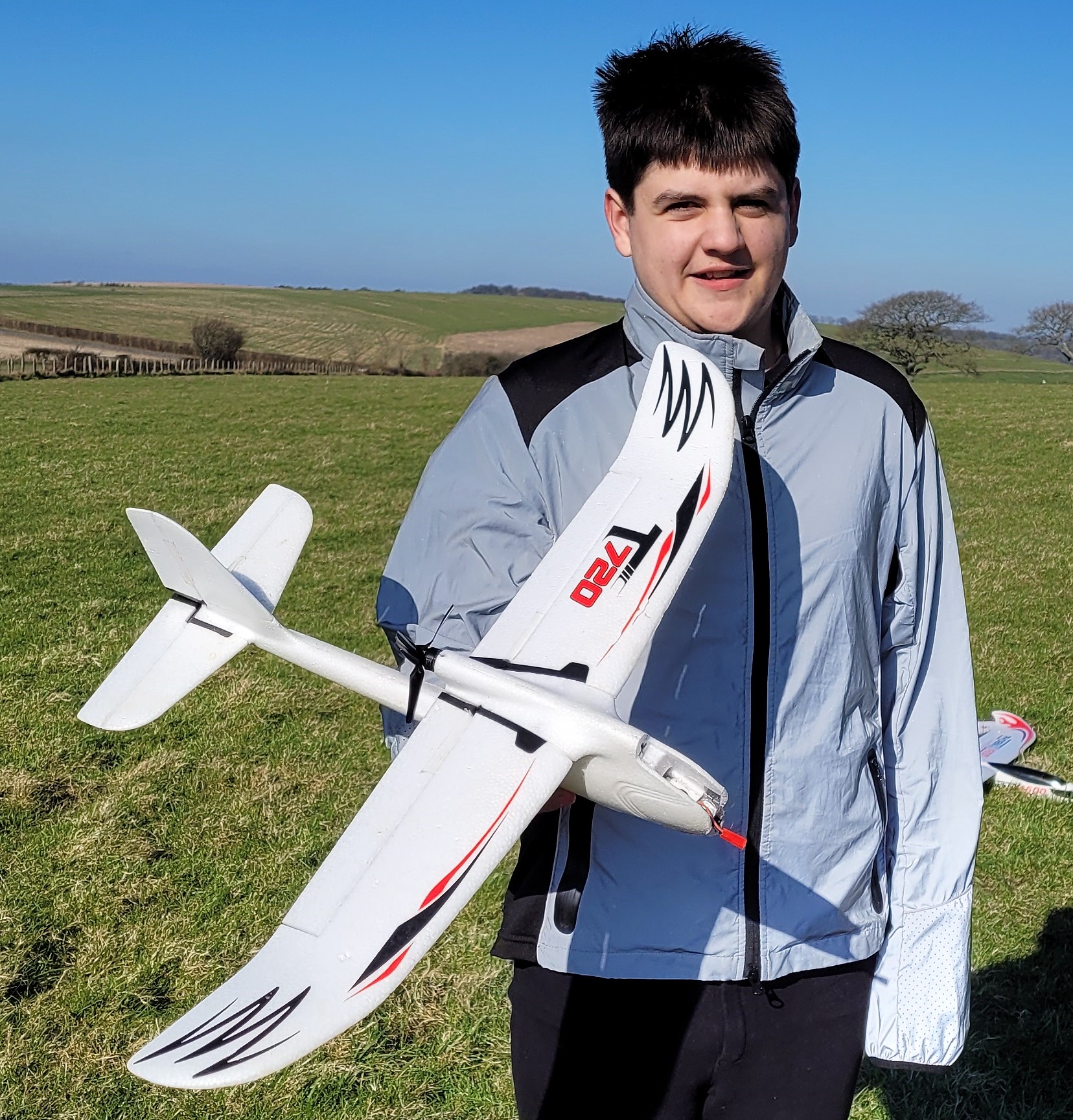 At just thirteen Leo has already got a fair bit of modelling experience and owns a variety of planes as he enjoys buying used/damaged models and making them fit for purpose.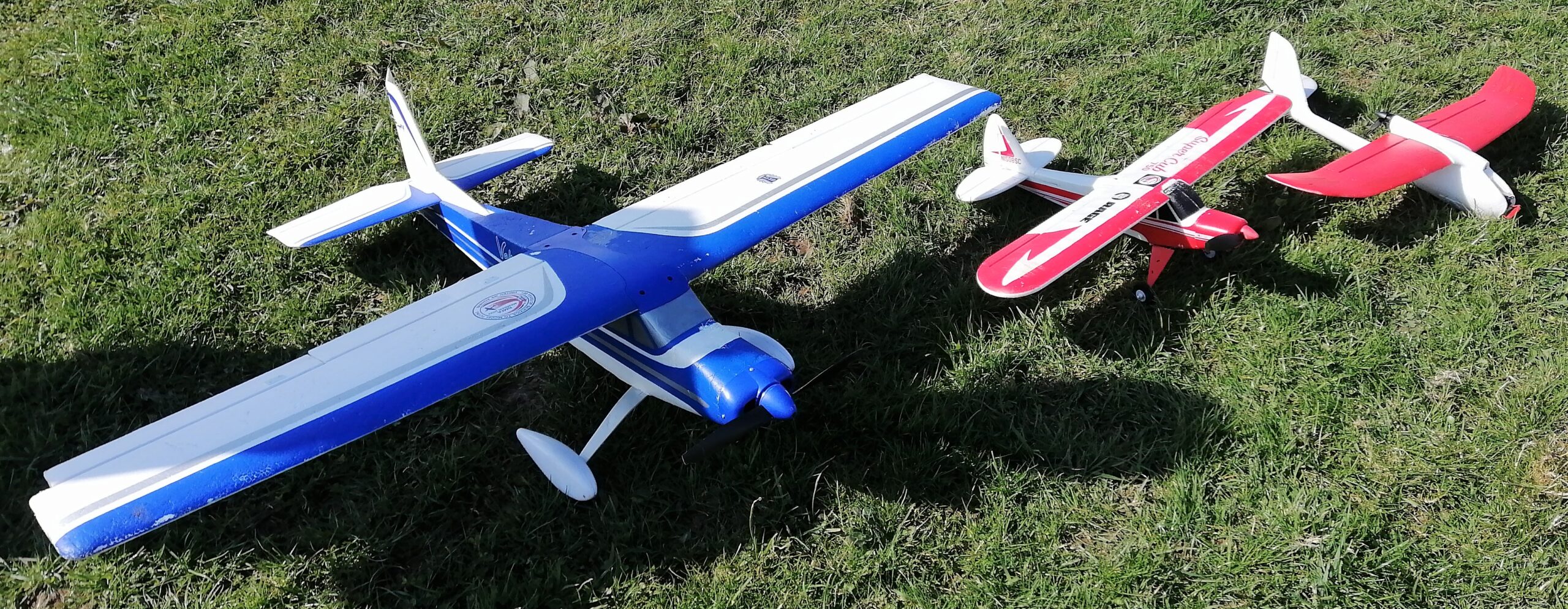
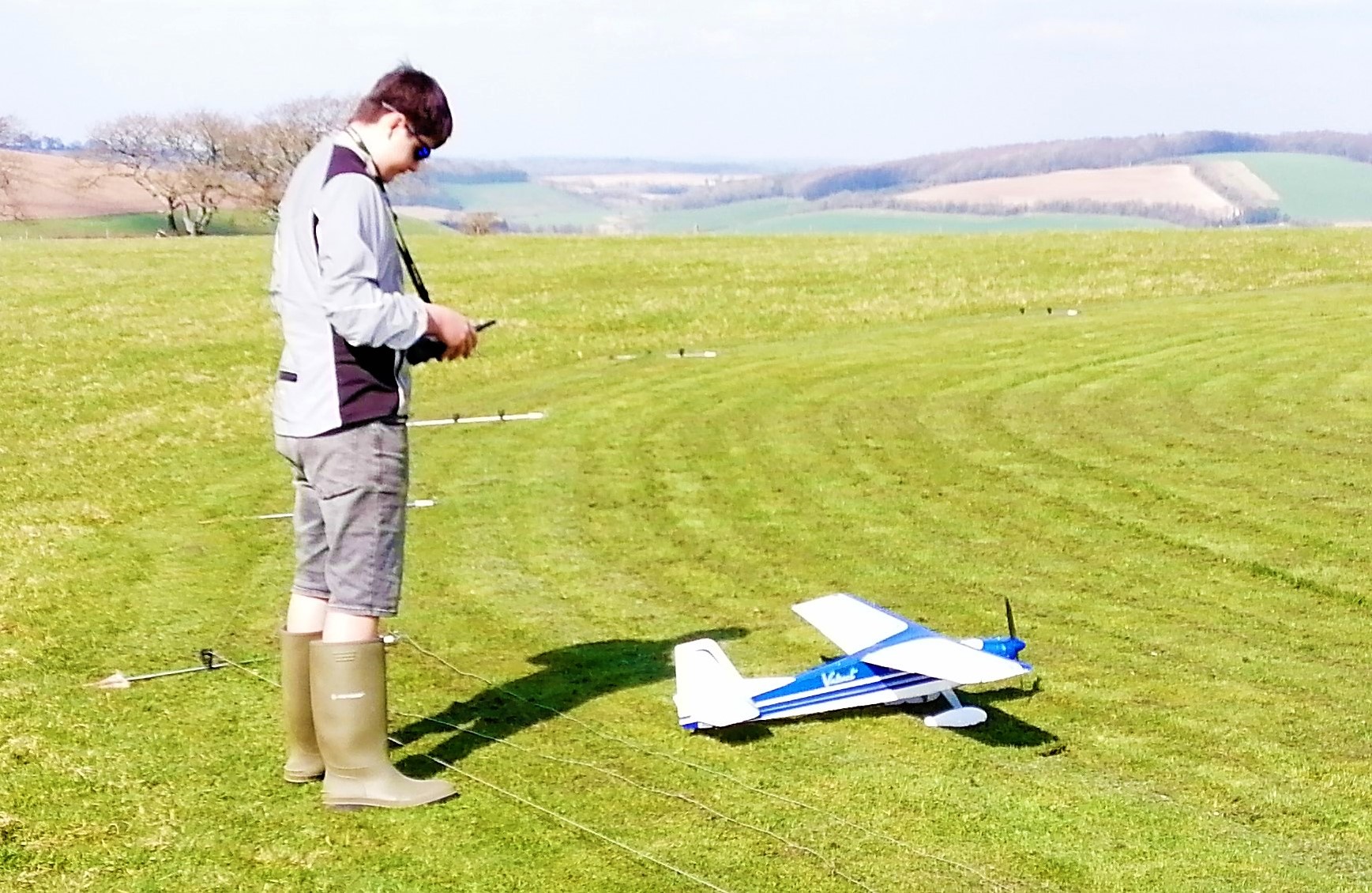 Gordon Bennett has passed his first Valiant over to Leo as it will make an excellent trainer.
 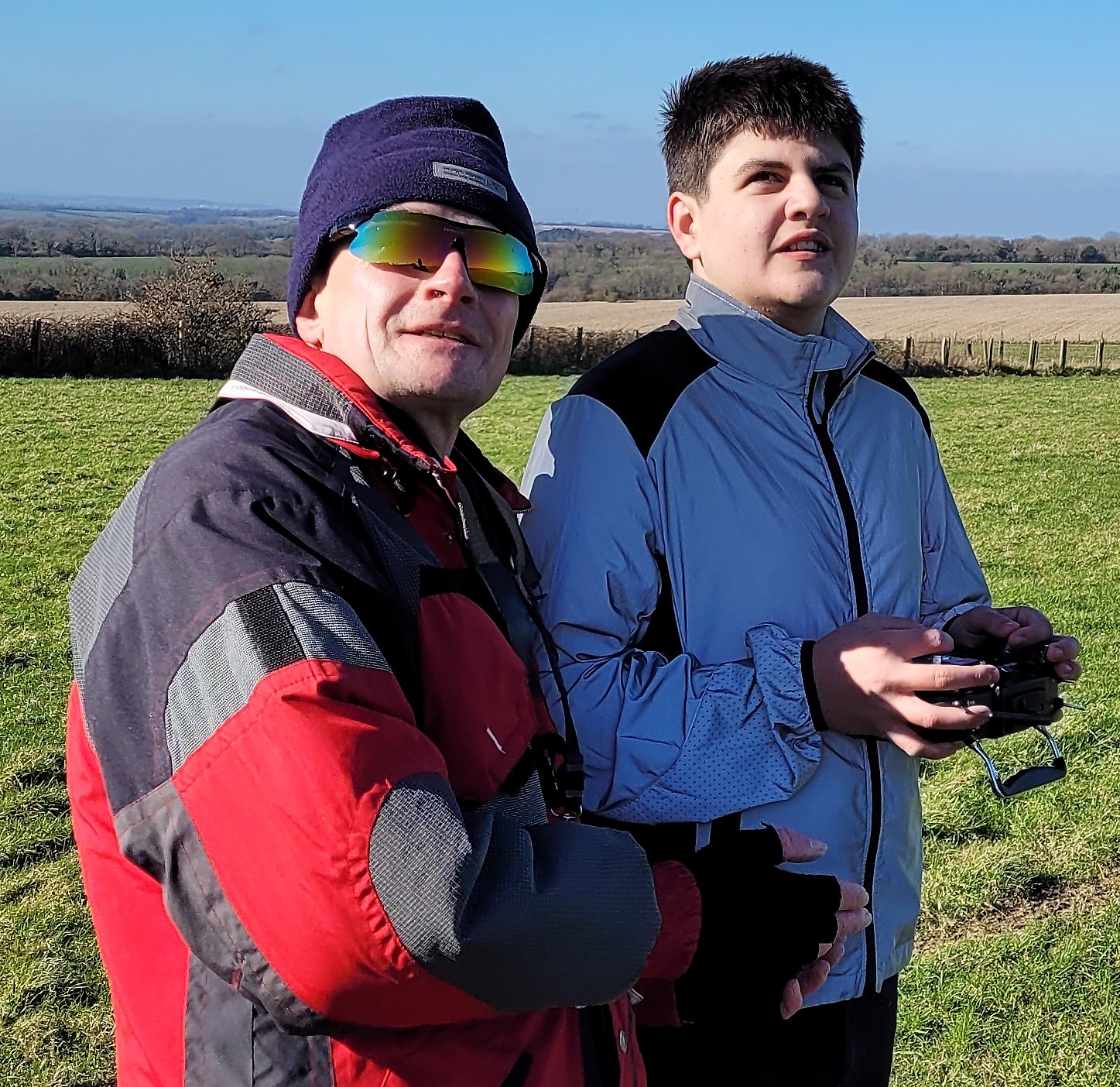 Dougal Entendre is looking after Leo and tells me that it’s going well and that Leo is confident enough to do take-offs and landings with the Valiant and is now honing his skills and learning all the regulations so he can take his BMFA ‘A’ Certificate before too long.
1066 test flew his latest 3D machine, a HobbyKing MX2 at the end of February. It’s the same type as Dougal had a while ago and is made from almost destructible EPP foam. The MX2 is 955mm wingspan and weighs around 550g without the required 3 cell lipo.
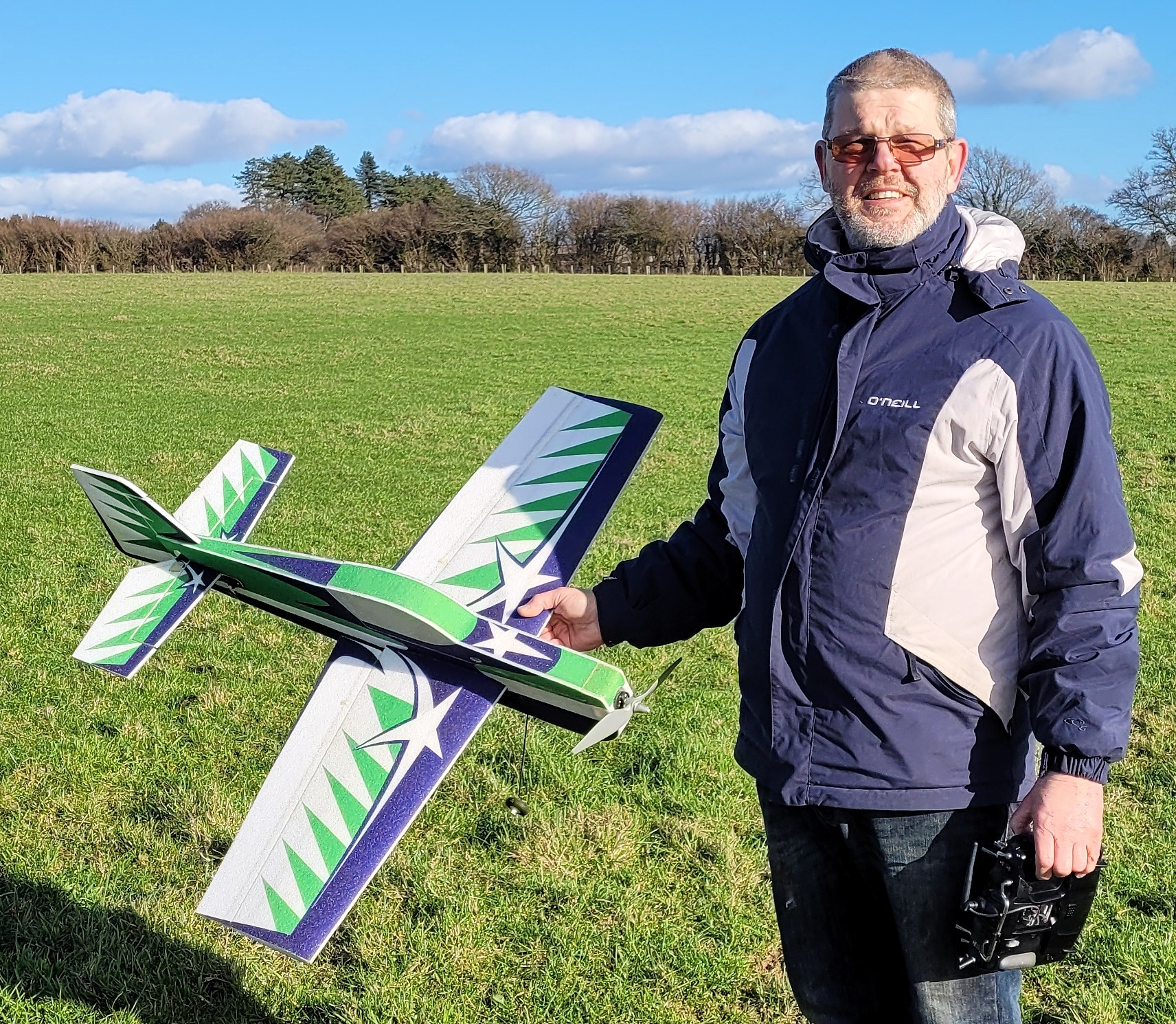 This is from the HobbyKing website: Its fuselage is torsionally very stiff yet light with loads of space beneath the long top hatch for your radio and power system. The wing is a one-piece affair featuring EPP construction, a very accurate symmetrical aerofoil with 2 additional spars to minimize flex and twist. The control surfaces are something else – the elevator, rudder, and ailerons feature a 3 layer construction (EPP-Depron-EPP) making for stiff surfaces and NO flex at extreme throws! Snap rolls “Snap” and the control response is instantaneous. The light – yet rigid – airframe adds up to one great flying 3D “foamy”. Waterfalls, harriers, flat spins, rolling circles, this model has the precision to perform these and any other moves you can think of! Assembly of the airframe is a quick 10-15 minute process with the help of a little medium CA. The radio and power system layouts are very straightforward, the long top hatch making for easy access. This is a great model for general park flying and hardcore 3D. You will be hard-pressed to break this model, it will take hard knocks and just keep bouncing back every time!
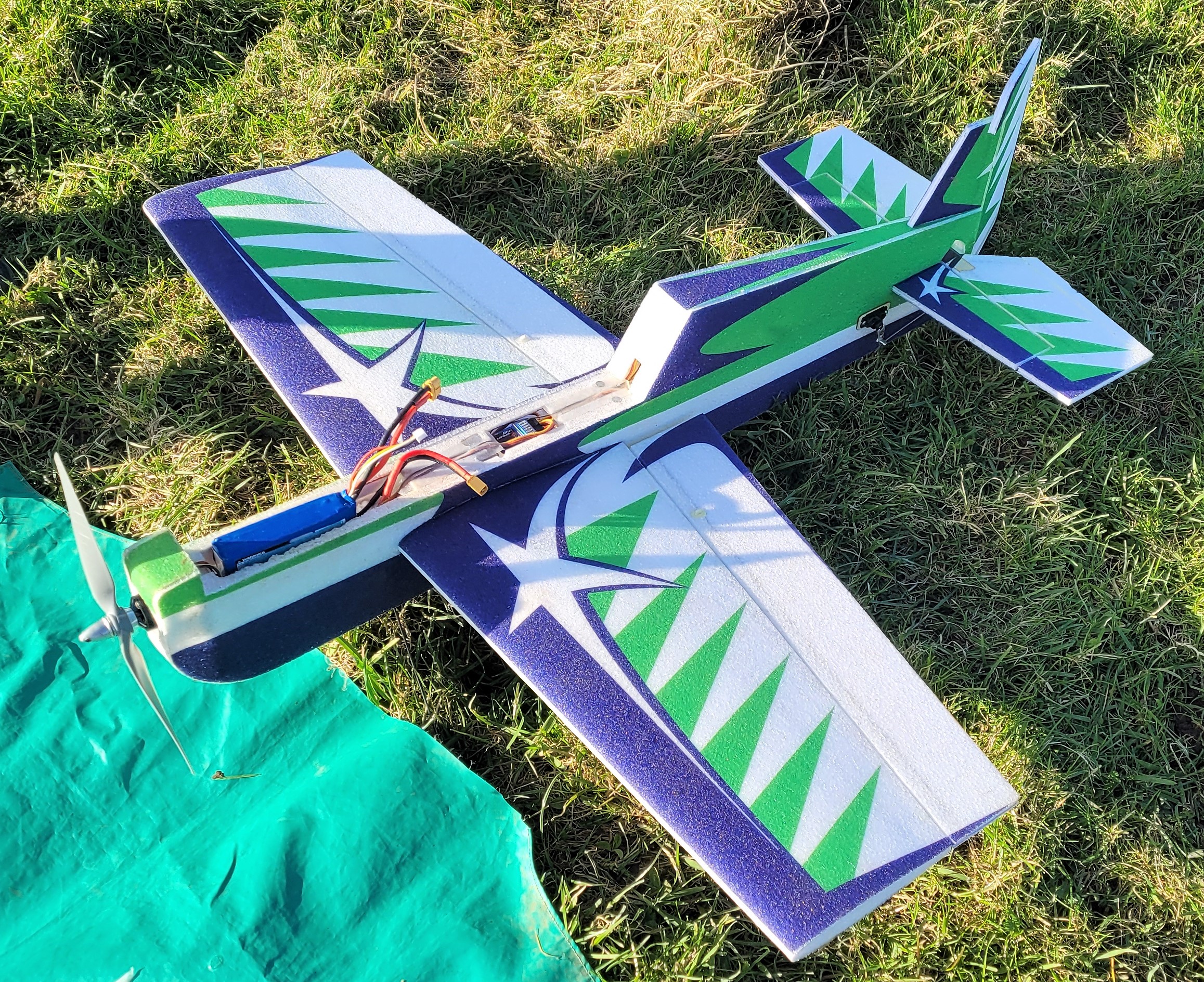
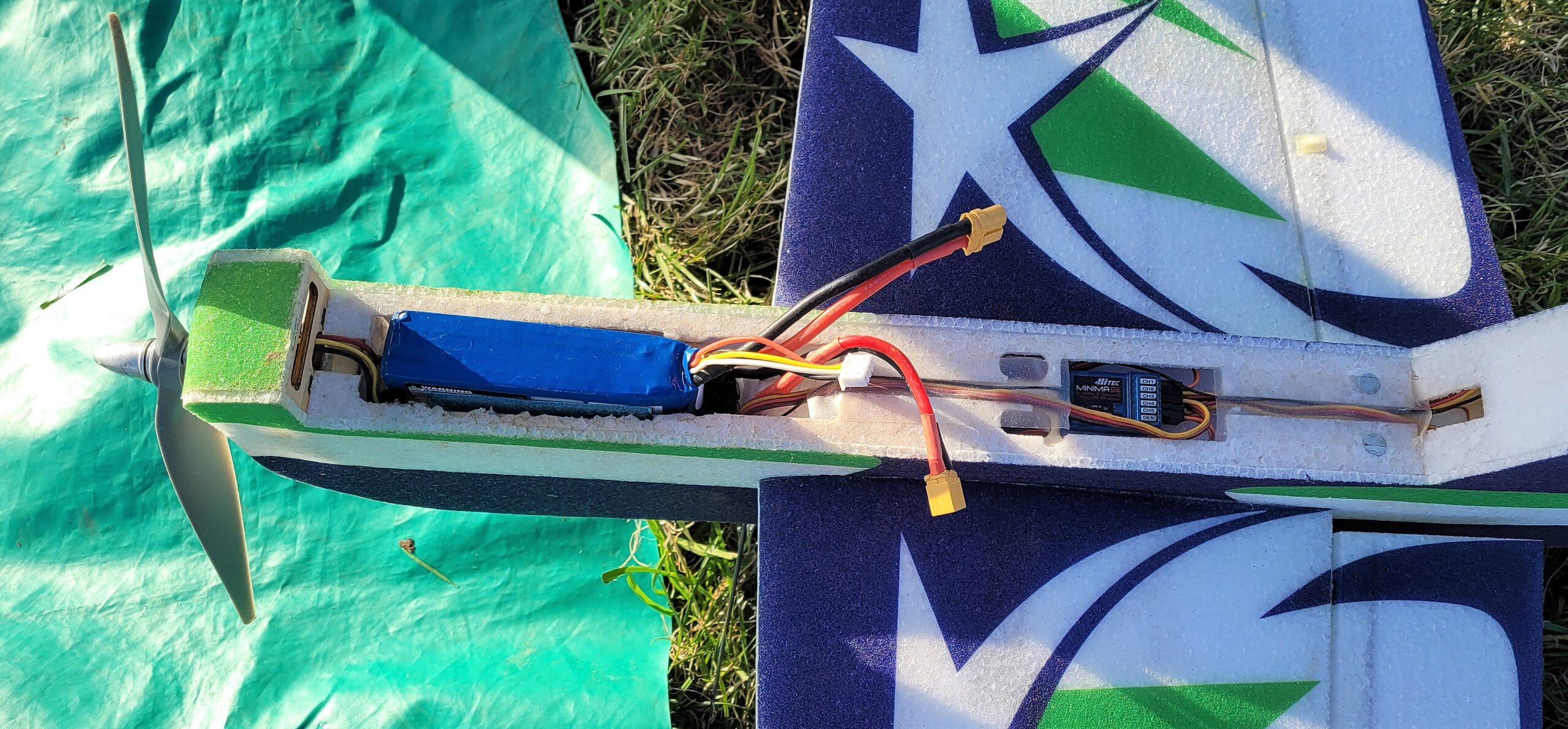 Before the test flight Dougal told 1066 it wouldn’t fly very well so 1066 promptly took-off and immediately threw the model into all kinds of weird and wonderful manoeuvres just to prove him wrong! You can see some of that first flight in this month’s video.
Back now for the full story of Woody’s F-15 which is his own design, based on the other foamboard models that lots of us fly. He constructed it mostly from Hobbycraft foam with the paper covering left on but also added wood reinforcements where he saw fit.
 He also added a piece of foamboard across the back between the fuselage sides as extra bracing. Actually I think it was just an excuse for somewhere to mount more LED lights!
 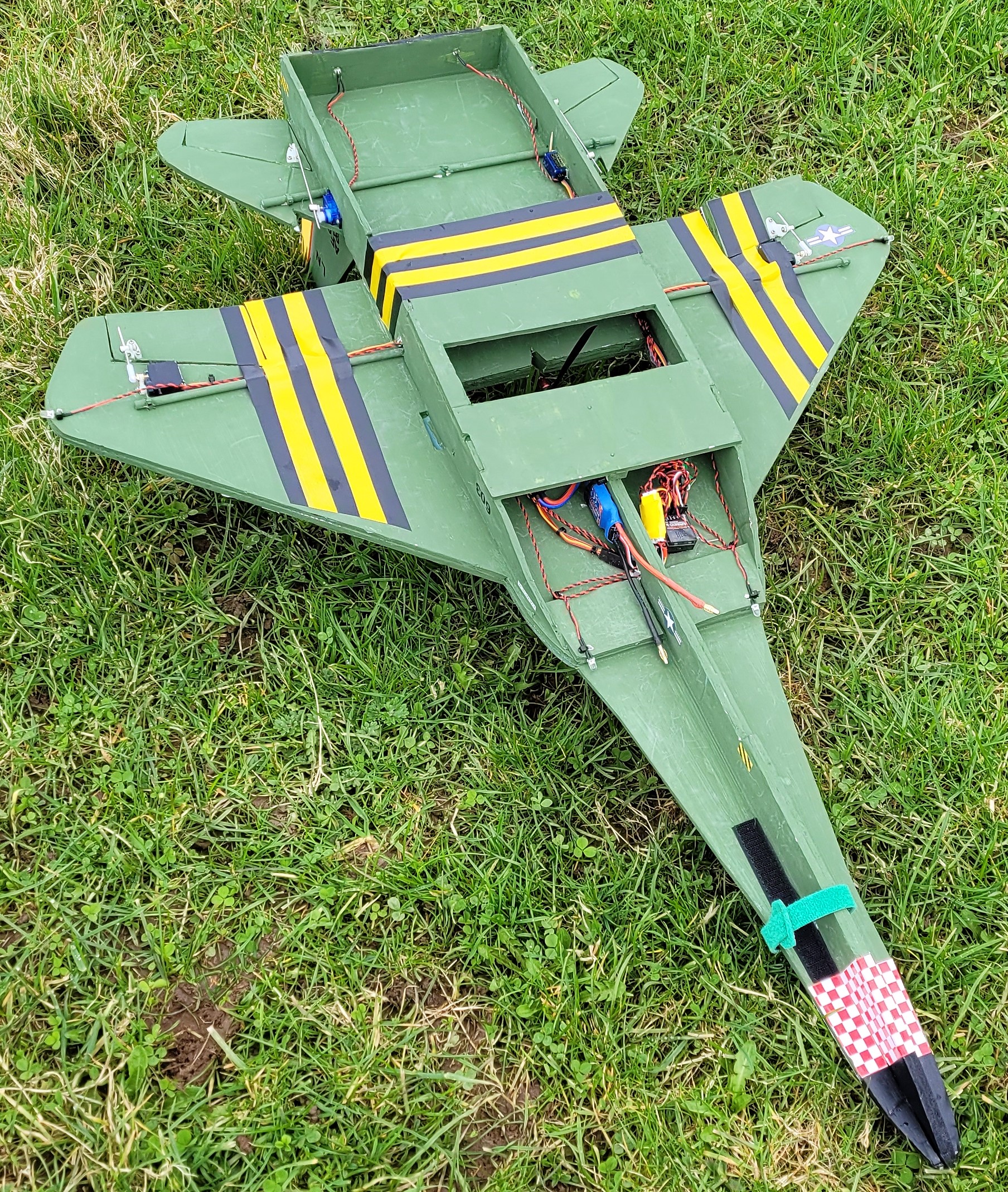 The power set-up is a fairly standard Turnigy D2826/6 motor and a 3 cell lipo battery. Woody was unsure where the centre of gravity should be so plumped for a safe forward position. As can be seen in the earlier photo the initial 45 degree upwards launch resulted in an immediate near vertical dive into the deck. The following two launches had the same result despite moving the battery further back and the application of full up elevator.
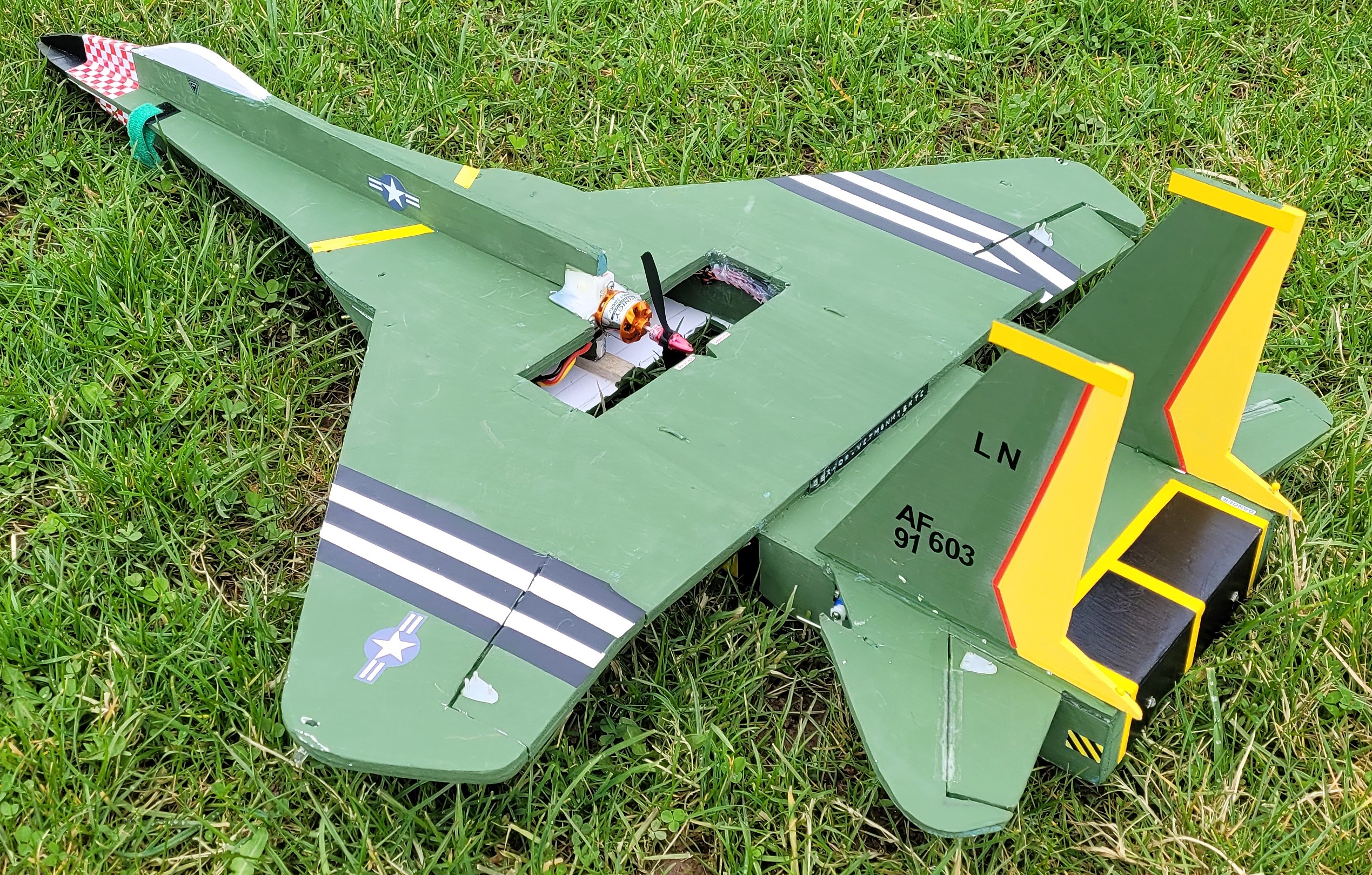 The ‘experts’ decided the reinforcing piece across the back was effectively adding full down elevator so Woody cut it out and we tried again. This time the F-15 got away from the launch and flew although it was way out of trim and the centre of gravity was probably too far back now. Woody was rather disheartened and has removed all the gear from the model but I think with a little more effort it could be made to fly successfully.
When he took the gear out of the F-15 Woody fitted it to a Sukhoi SU-27 from Banggood. 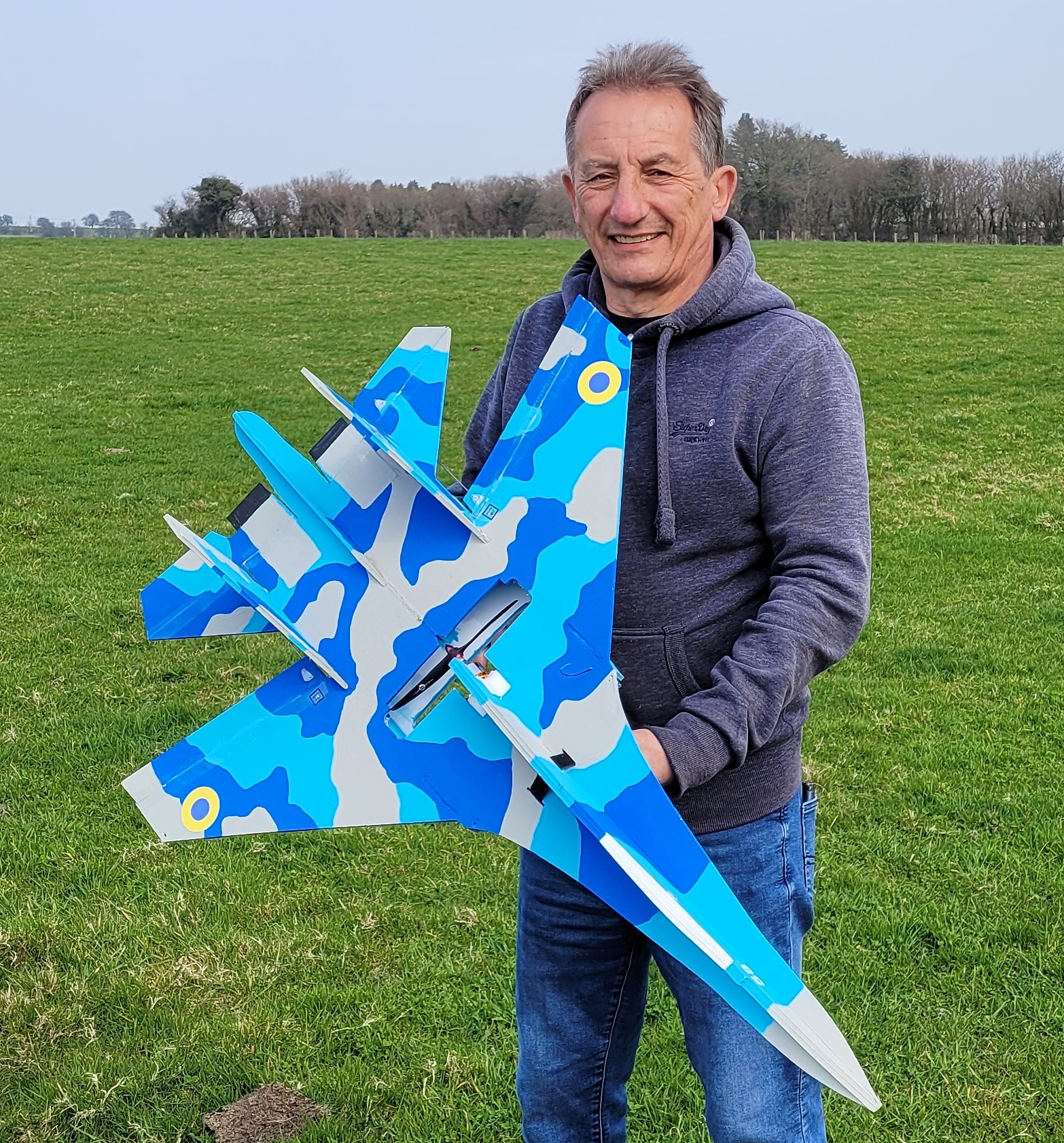 Woody has painted it in the colours of Col. Oksanchenko of the Ukrainian Air Force who he and Chas saw displaying the Sukhoi at a Royal International Air Tattoo one year. Sadly Col. Oksanchenko was shot down near Kyiv in the first few days of the Russian invasion.

Woody had struggled to get the delta configuration set up correctly on his Multiplex transmitter and without having the manual to hand none of us could remember how to do it either. After much head scratching we bound the Sukhoi to Captain Slow’s later version Mpx transmitter which happened to have my Sukhoi in its’ model memory. Don’t ask why!
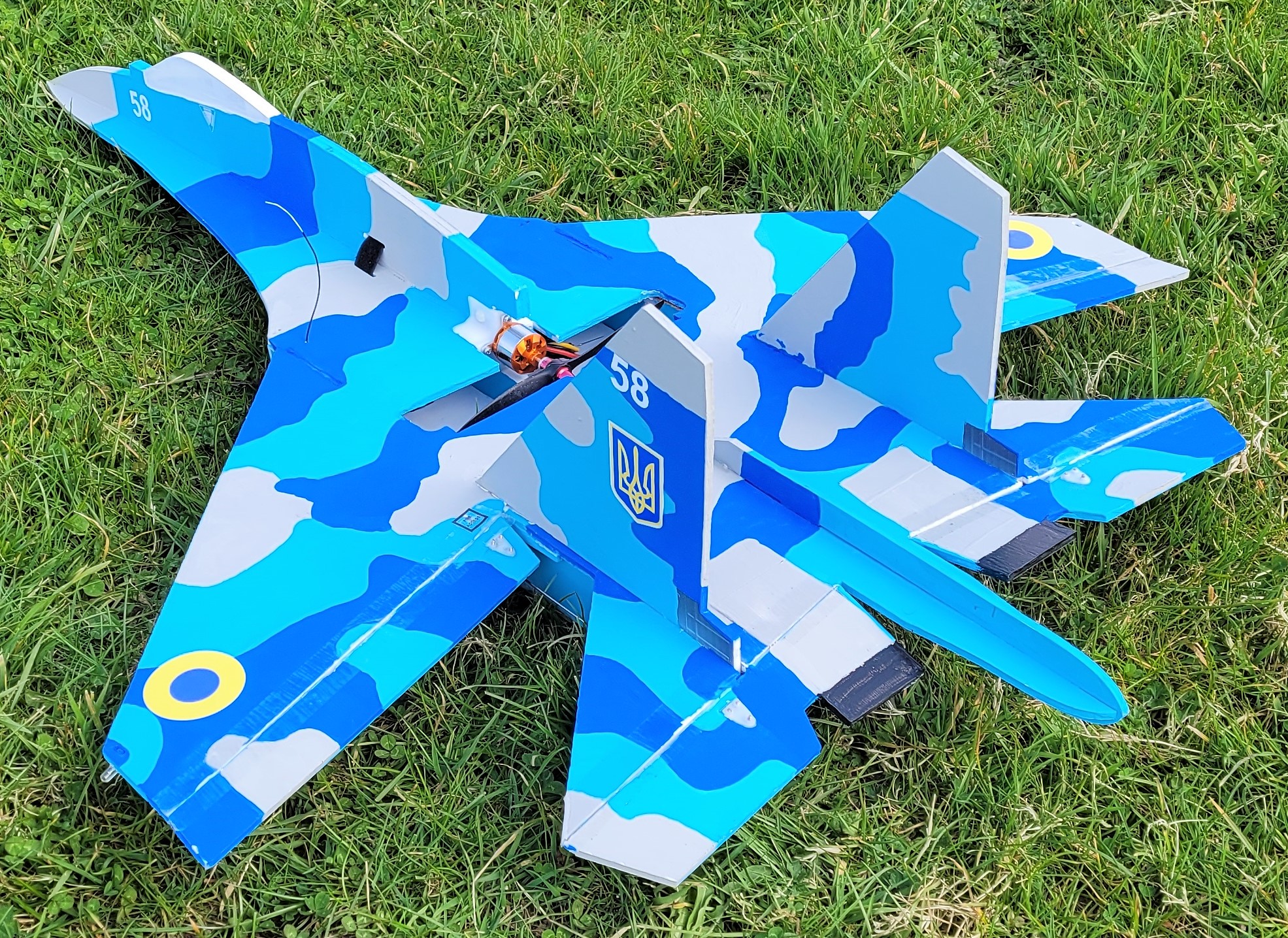 It then worked correctly so I flew the model but found it was incredibly twitchy so I landed after just one circuit. I tried again after dialling back the movements a lot and it was much better. Woody brought his transmitter manual along to the next flying session and we were soon able to set everything up on his transmitter and the model is now flying beautifully.
I spotted the photograph below on the internet, it’s one of the Ukrainian SU-27s that supposedly hit a road sign while flying extremely low to avoid Russian radar. I can’t help thinking it probably hit the sign when it landed on a road but I might be wrong.
As I mentioned in Patch News last month several of us have bought very cheap and small video cameras to add to planes to get some airborne footage. Gordon Bennett was one of the purchasers and he attached his camera to his Mig-29 facing rearward and I tried to fly my Mig in formation behind Gordon’s, hoping for some Mig on Mig action. The camera did record some footage of my plane but I think the term ‘flying in formation’ would be stretching the truth too far even for me! However, before he made his billions and retired at the age of 17 from his position as CEO Lord Bennett of ITV Gordon had worked his way up from floor sweeping via make-up, costume design, make-up, sound recording, make-up, filming, make-up, stunt coordinating, make-up, producing, make-up, and directing. So using the Mig footage and his TV experience Gordon has made a video for us all to enjoy.Even if you never bother watching the Patch News videos I urge you to turn the sound up loud and watch this video, it’s only 1 minute 20 secs long and it’s brilliant!
Wow, I need a lie down now after all that action, back to a little gentility with a photo that Dougal snapped when he was able to get his FPV model up amongst the clouds one day. In this excellent shot you can just make out the Solent and the Isle of Wight in the distance.
I was spotting and the model was at the limit of my vision when I saw a full-size plane approaching so I told him which direction to head and to descend Rapidly Also Of course.
Back in October last year 1066 built a foamboard version of a Mirus that he used to fly in his youth (yes the Mirus design really is that old!). He had used Hobbycraft foamboard and added a wooden spar but not much else and called it Cirus the Mirus. The plane flew really well but suffered with poor structural integrity, especially when landing on wet grass. Yes, it kept falling apart. So in March 1066 produced Cirus the Mirus Mk2. Dougal keeps calling it the Miley Cyrus but I think his mind is drifting back to his youth as well! 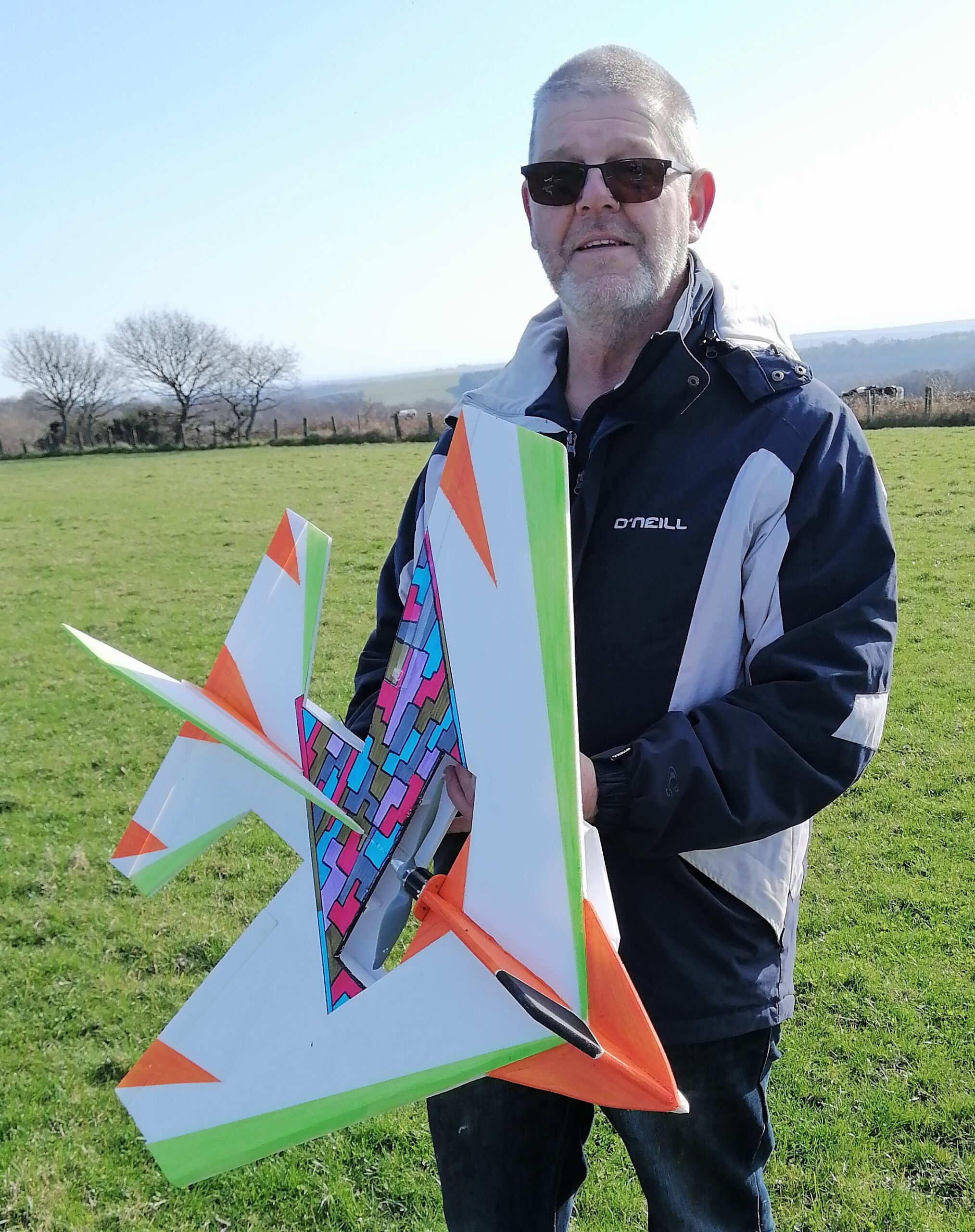 Apparently it’s identical to the Mk1 in outline but 1066 says he’s made it much stronger. Unlike the first version it has a Kline-Fogleman wing section which obviously provides more lift as well as being stronger. All the powertrain and electronics were simply swapped straight over from the Mk1, it worked well before so there was no need to change anything.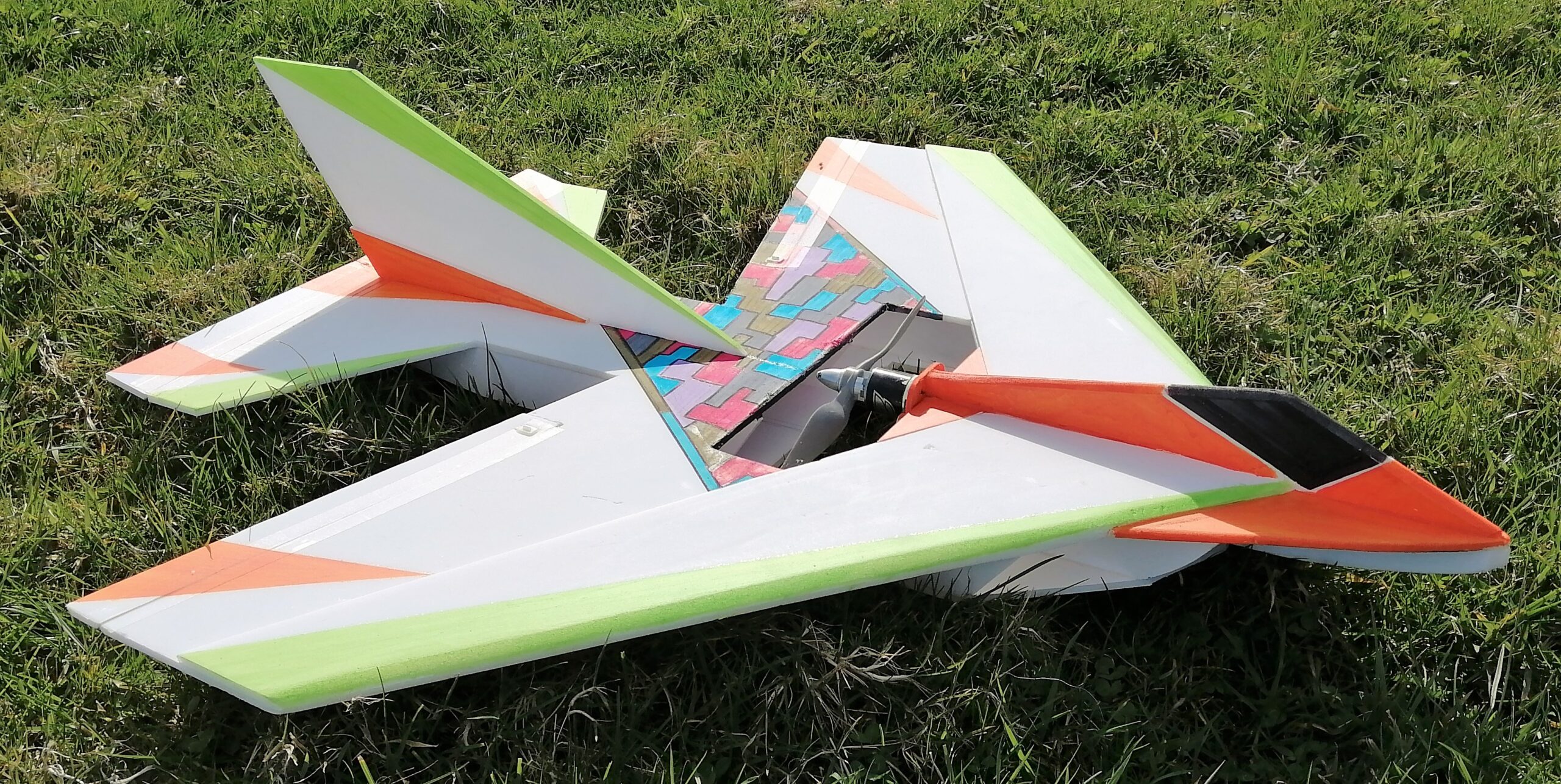
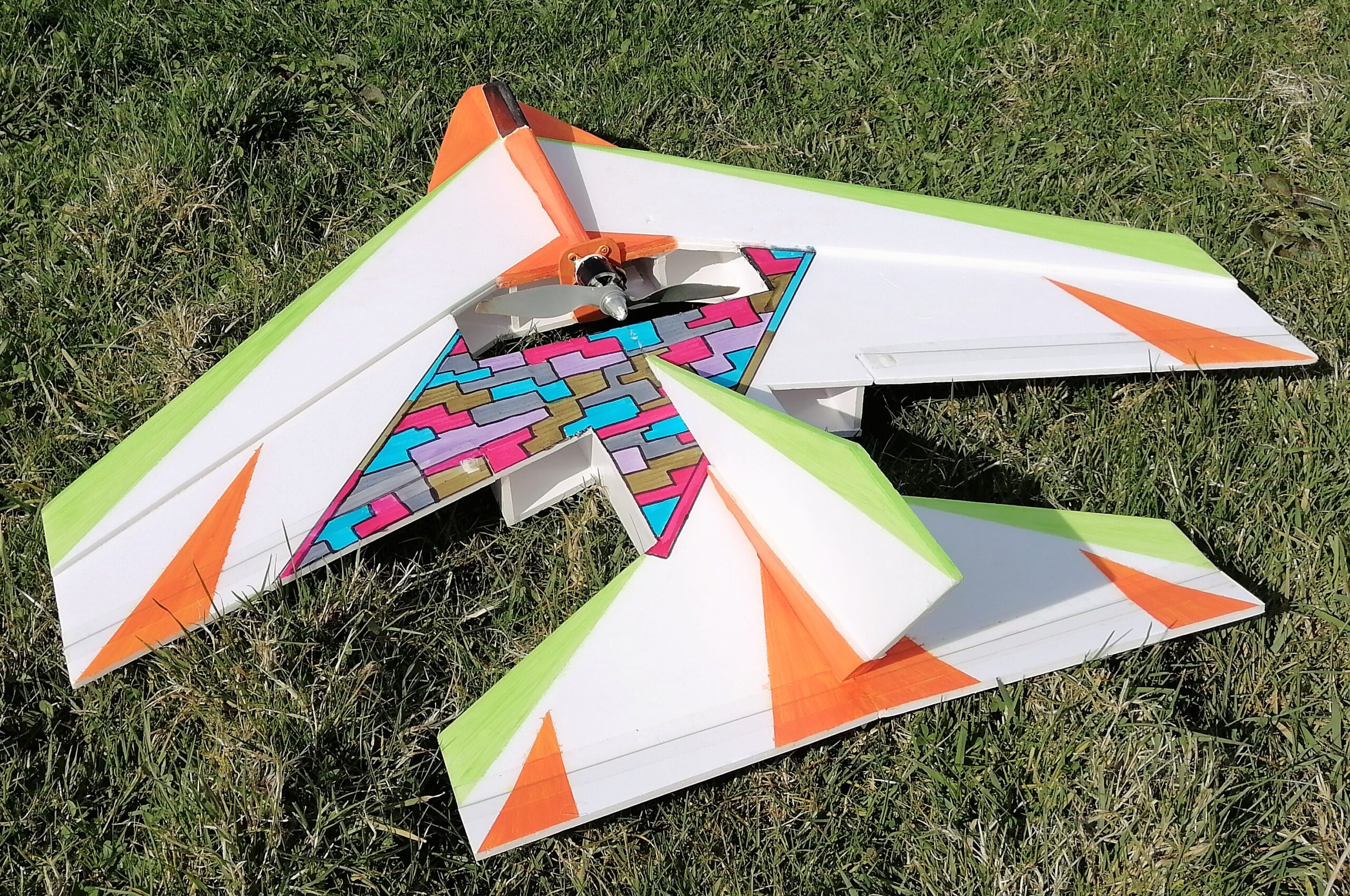 The colour scheme is interesting, I really like the multi-coloured lozenge-like panel and assumed it was a piece of stick on plastic film he’d found but apparently it was painted by his grandson. It’s quite telling that the best bit of the model is the part that was done by a three year old! It flies really well, better than the earlier version in fact so maybe that’s due in part to the Kline-Fogleman section and so far it hasn’t fallen apart.
We hadn’t seen much of Catapult King for a while but in March he appeared with a Ripmax Jive that Gorgeous Gary had given him. We haven’t seen Gary for a while either, hope he’s ok. The Jive was originally powered by an IC engine but Catapult has converted it to electric power by fitting a Propdrive V2 3536 910Kv (max 40A) motor and a 60A ESC. He’s using a 4 cell lipo which takes the weight to 2Kg (4lb 6oz) so there is plenty of power. 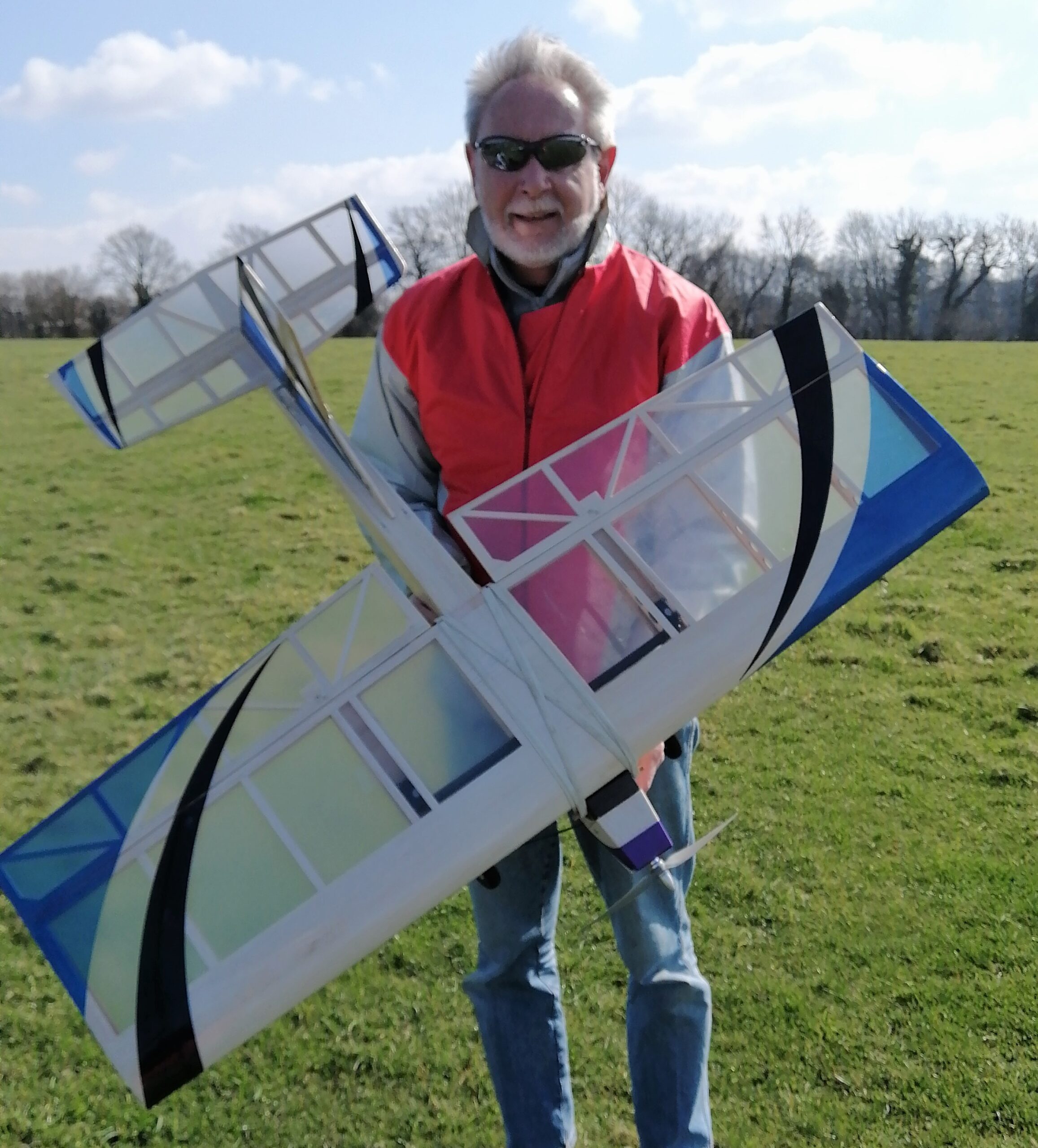 The weight includes 300g of lead that Catapult needed to add to the nose in order to attain the correct centre of gravity. It’s a shame it needs so much but that’s a result of the Jive having such a short nose when it was designed for an IC engine. The battery is a very tight fit and Catapult reckons if it swells at all in flight he won’t be able to get it out again!
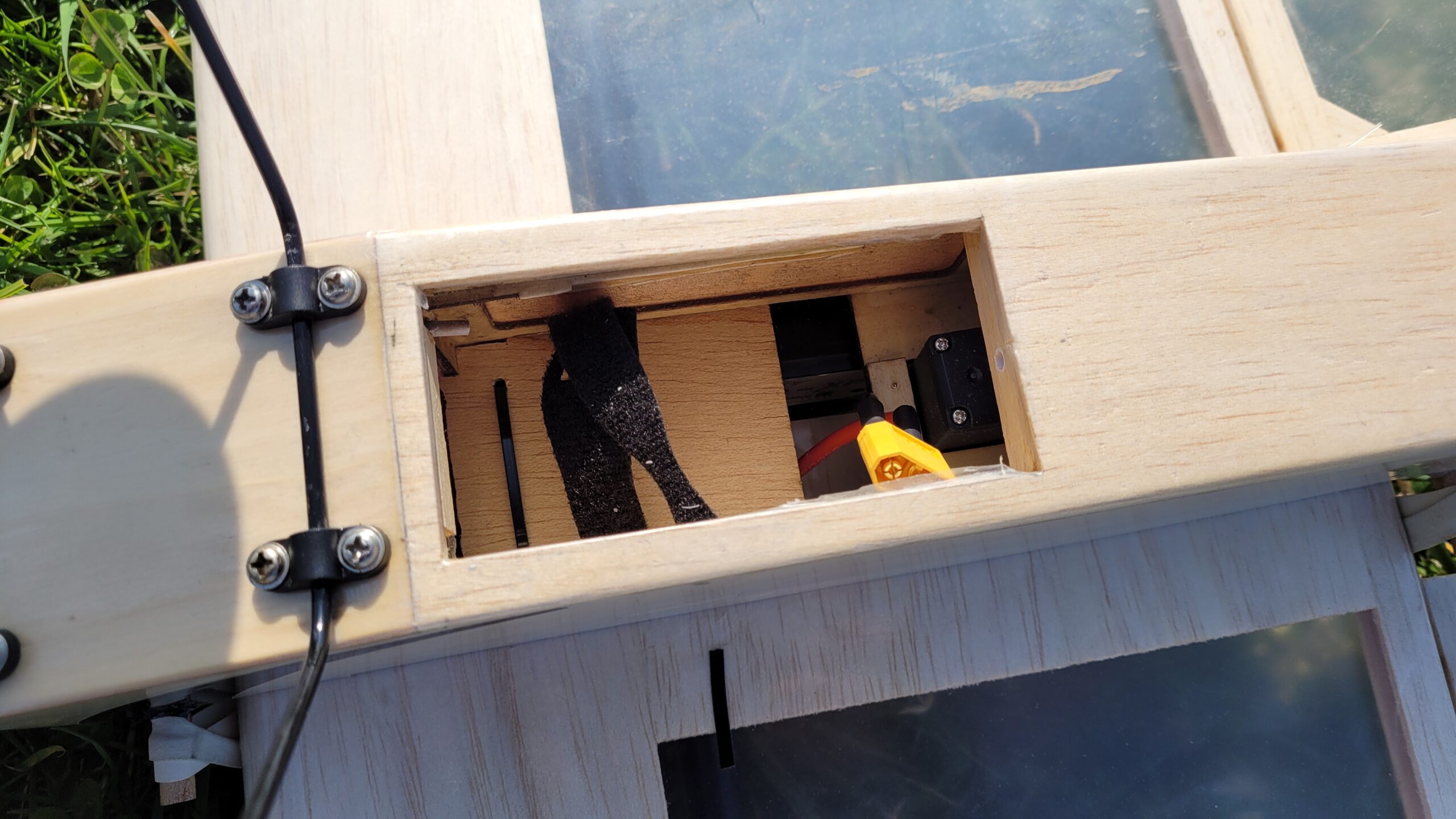
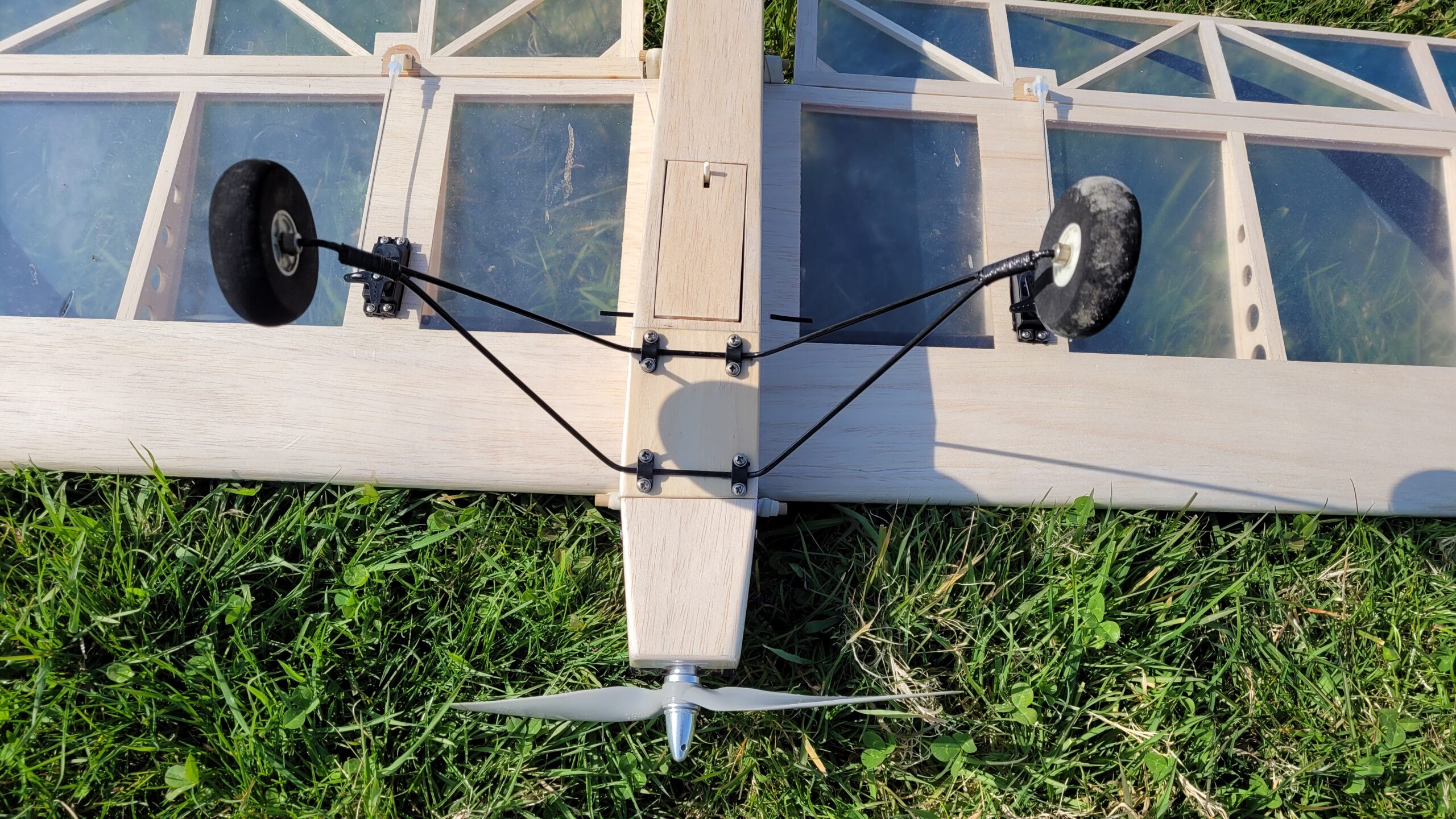 The conversion has obviously worked exactly as intended as the Jive flies well, it just needs Catapult to get up the nerve to start chucking in some 3D stuff now.
Dougal needed some new batteries in March and with the HobbyKing UK warehouse seemingly now shut for good he decided to try some he spotted on eBay. The 4 cell Zeee Power 3700mAh packs are 60C rated and Dougal is happy with their performance so far. 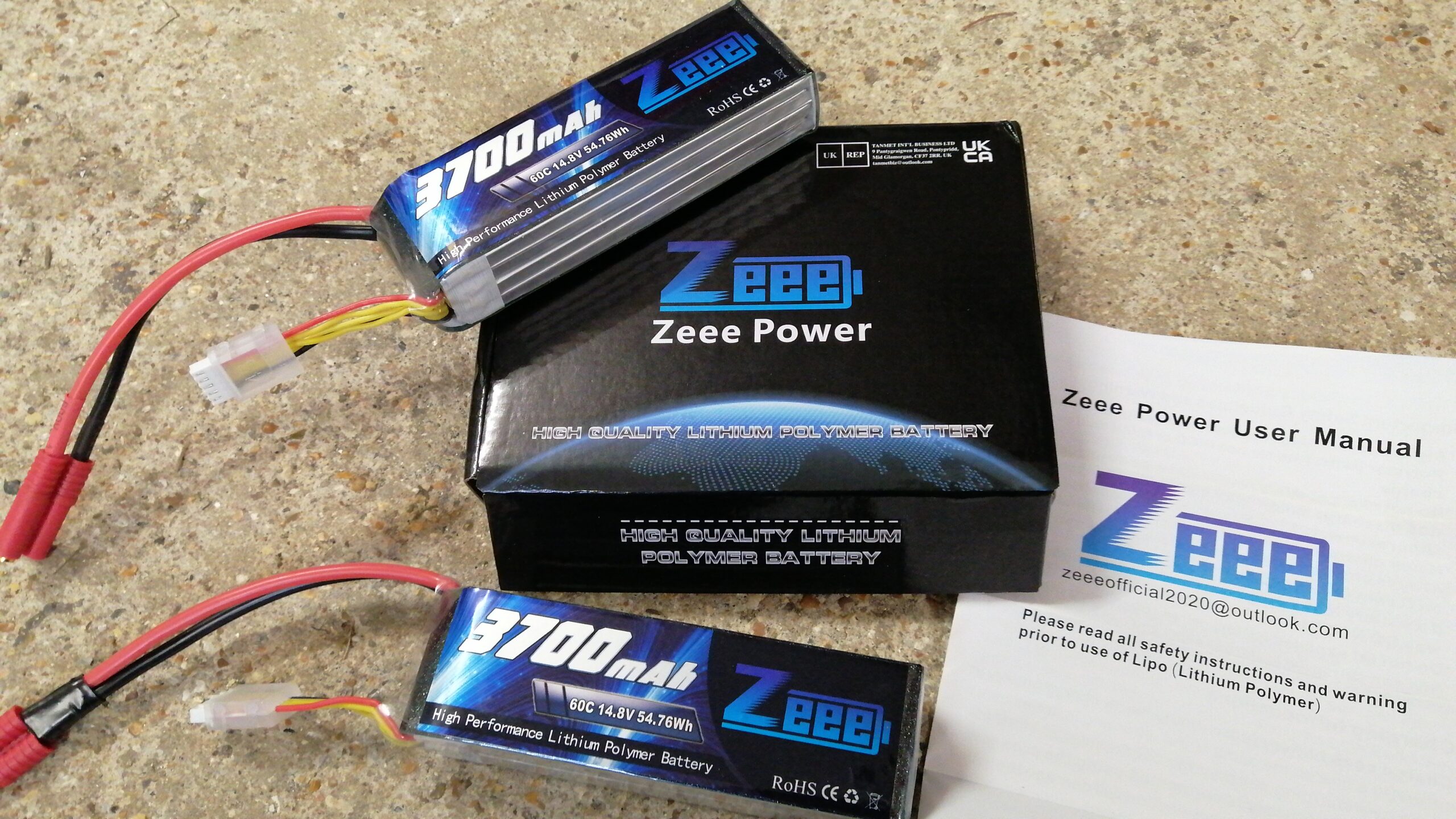 They were on eBay with a Buy-It-Now price of £30 per pack but there was a Make Offer button so Dougal made an offer of £55.00 for two packs which was accepted and that including the delivery. I’ve just checked a couple of other well-known battery suppliers and their equivalent packs are at least twice the price so it will be interesting to see how the Zeee Power packs last. They came with a pretty comprehensive User Manual with some good advice on storage charging etc. to ensure the packs have a long and safe life.
Since he joined the club new member Geoff Hill has been flying a HobbyKing Bixler, mostly looked after by Dougal and using a Futaba radio and buddy box system.
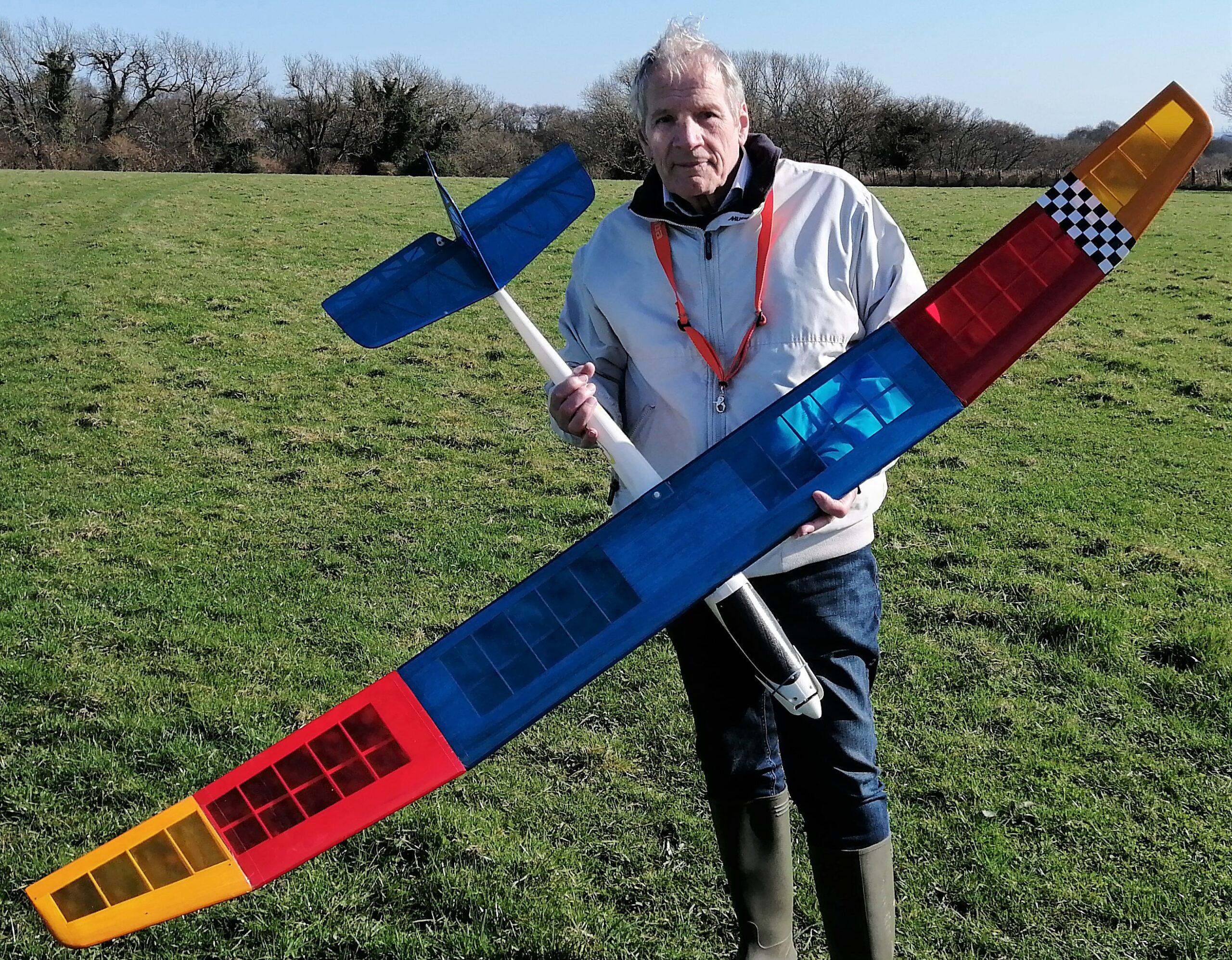 But on one of the nicer weather days in March Geoff also brought along a Nebula 2000E electric glider. The 3 channel Nebula is two metre span with rudder, elevator, and throttle controls, no ailerons. The wings and tail are built-up and the fuselage is moulded plastic.
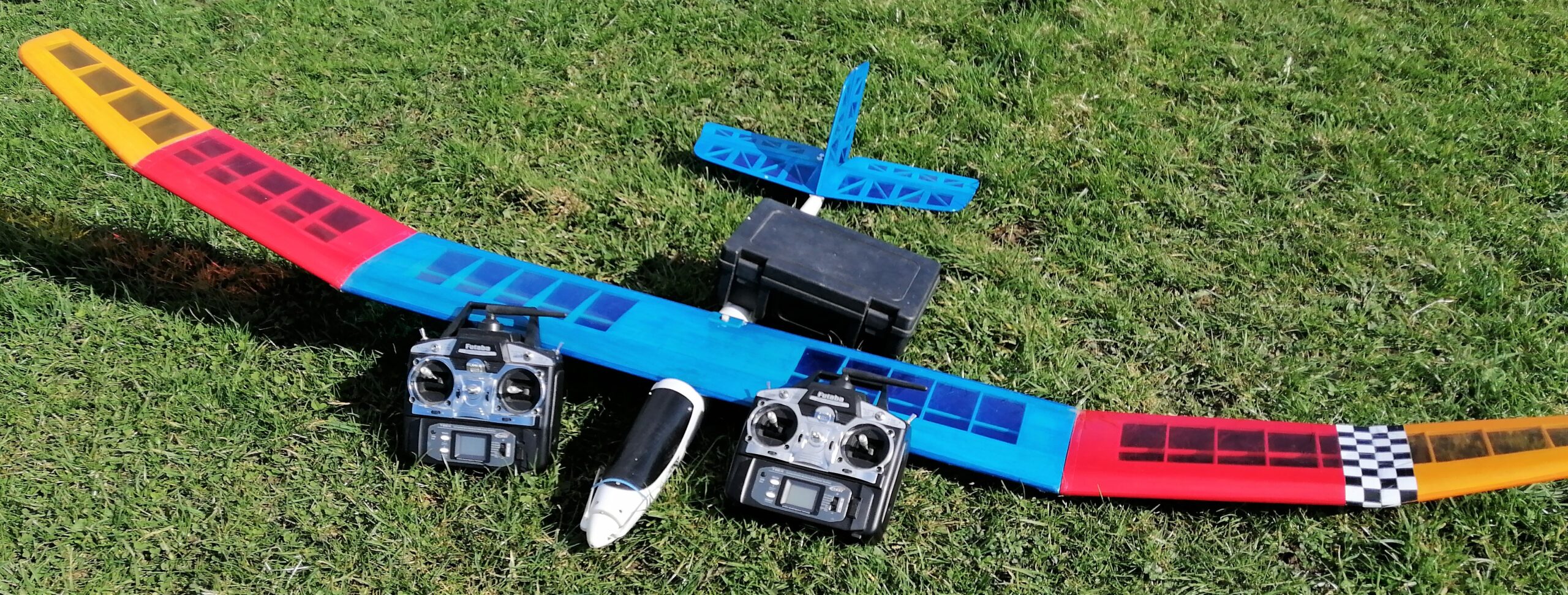 I think it’s an old Ripmax model that is no longer produced but it looks to be in perfect condition and it flew well enough, probably a good model to learn with on calm days.
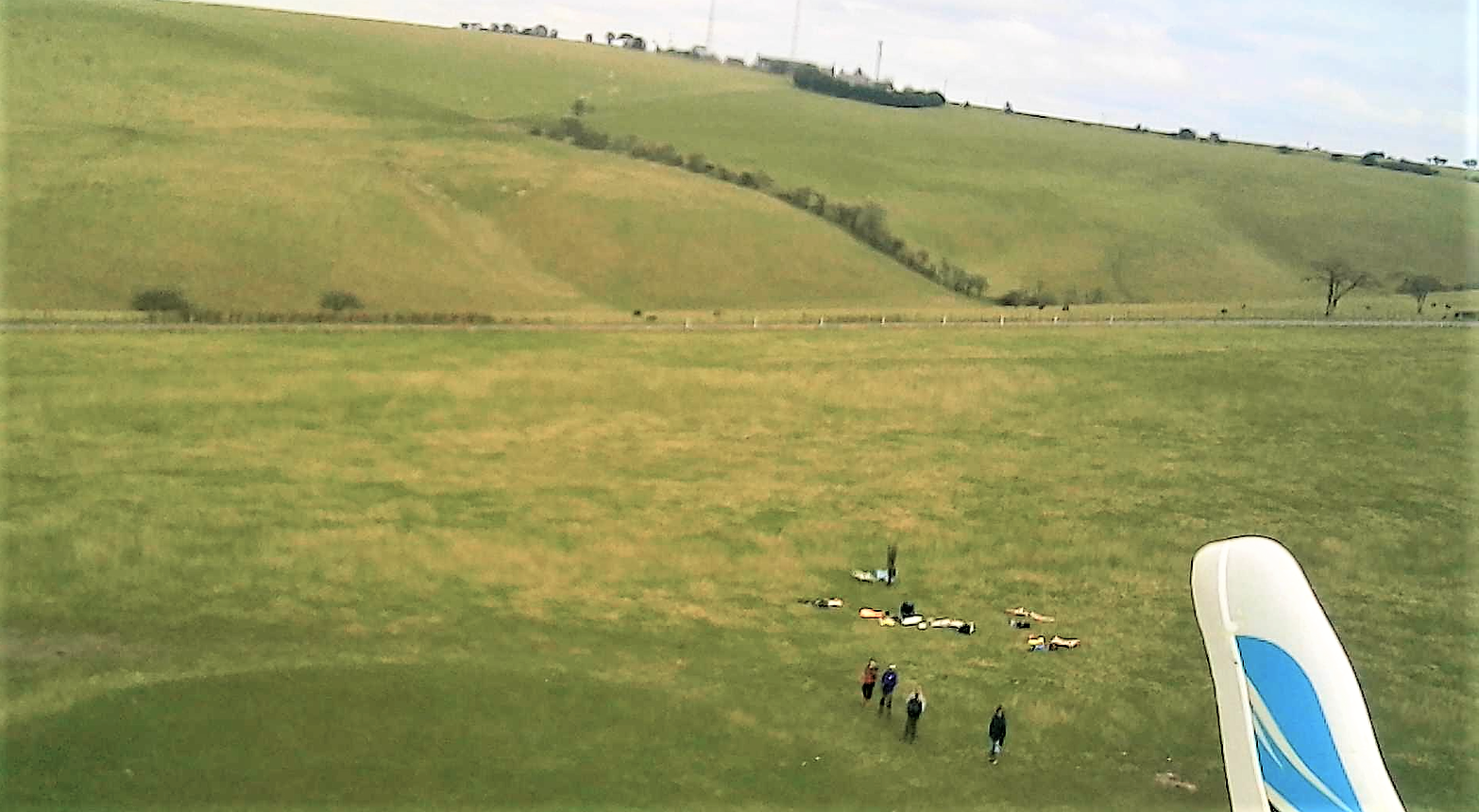
Photos now, some were taken from the ground and some are screenshots from FPV video: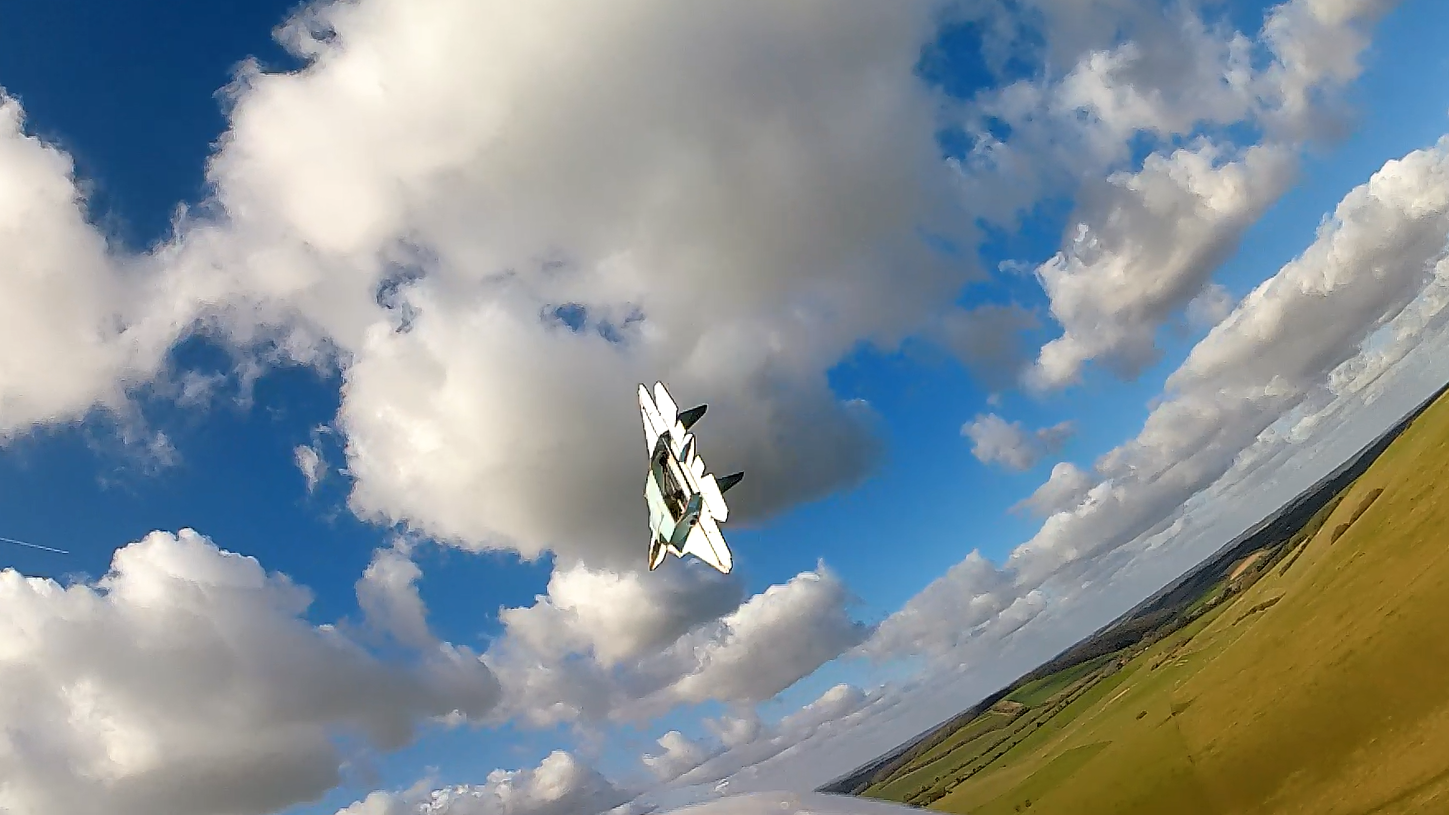
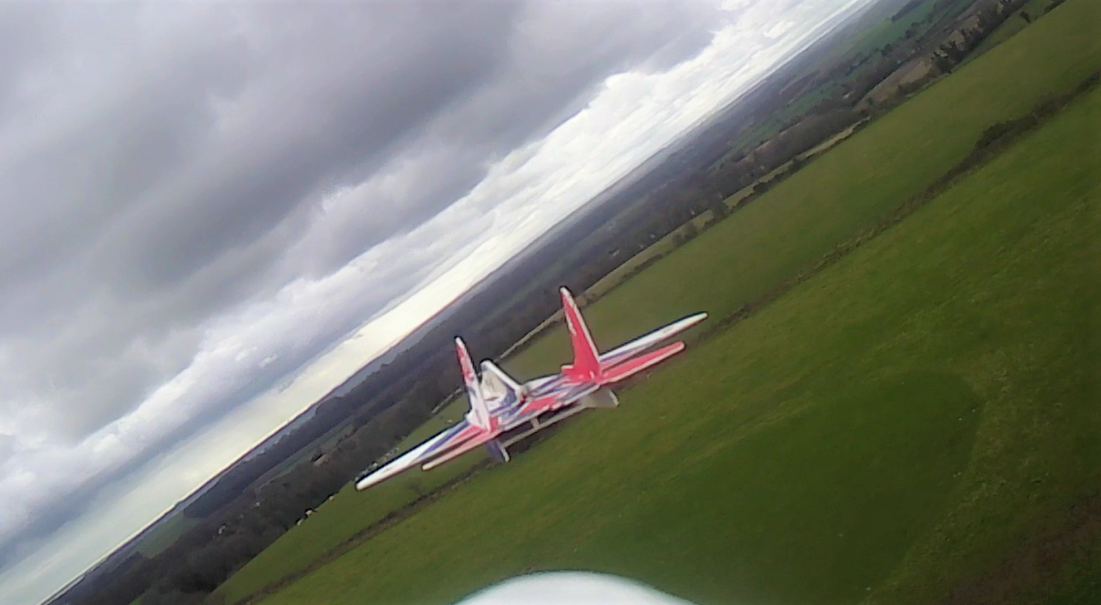
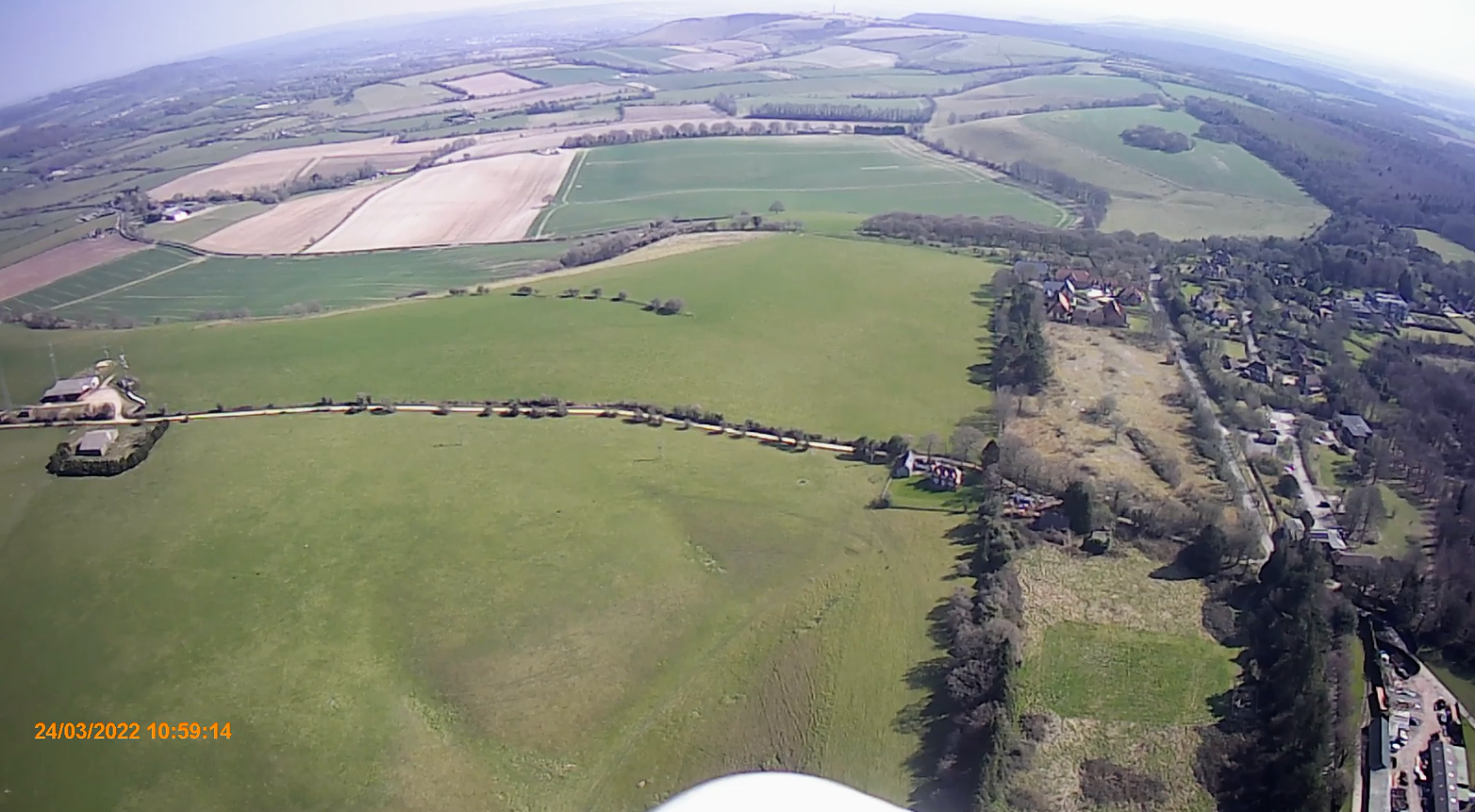
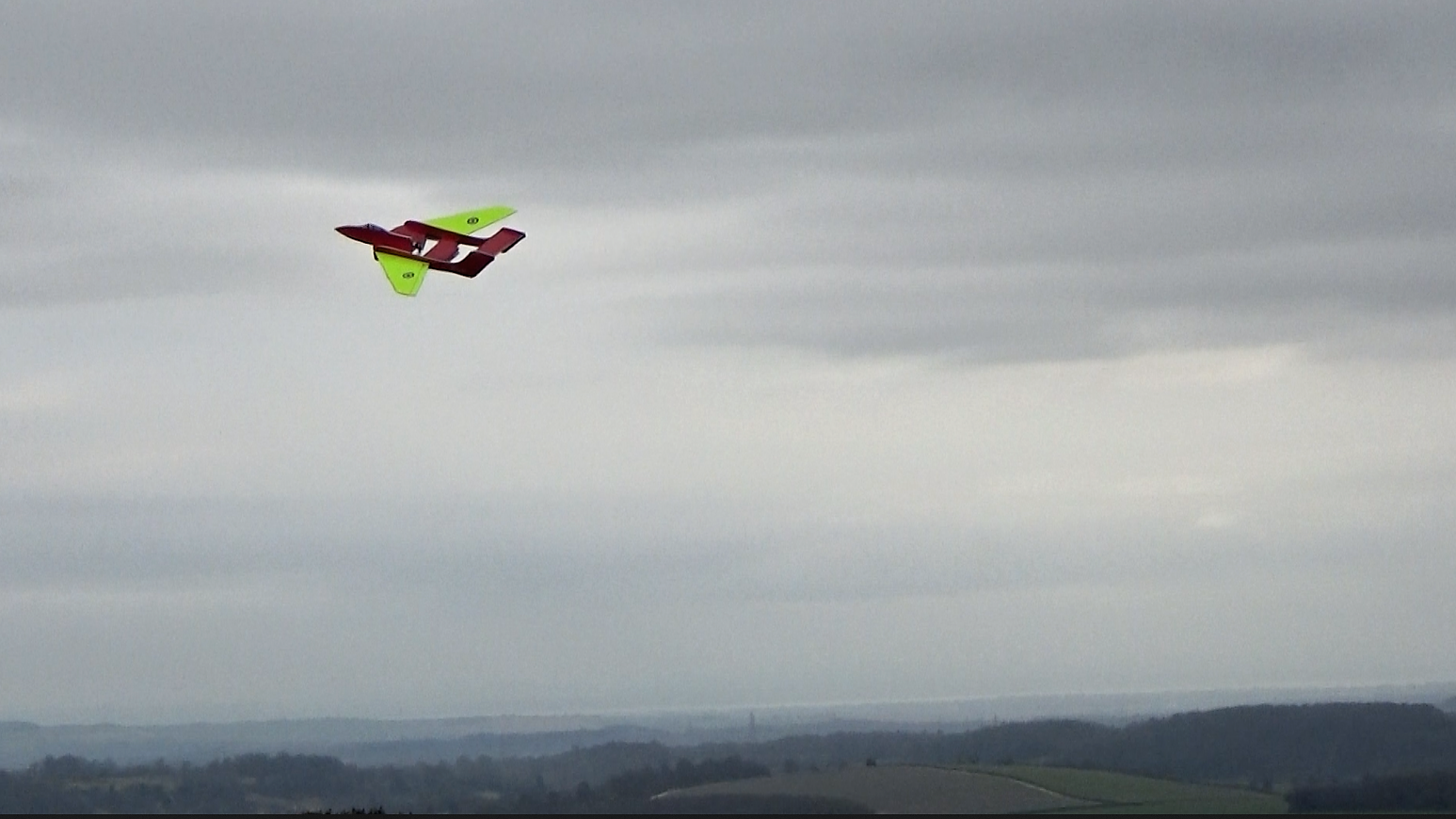
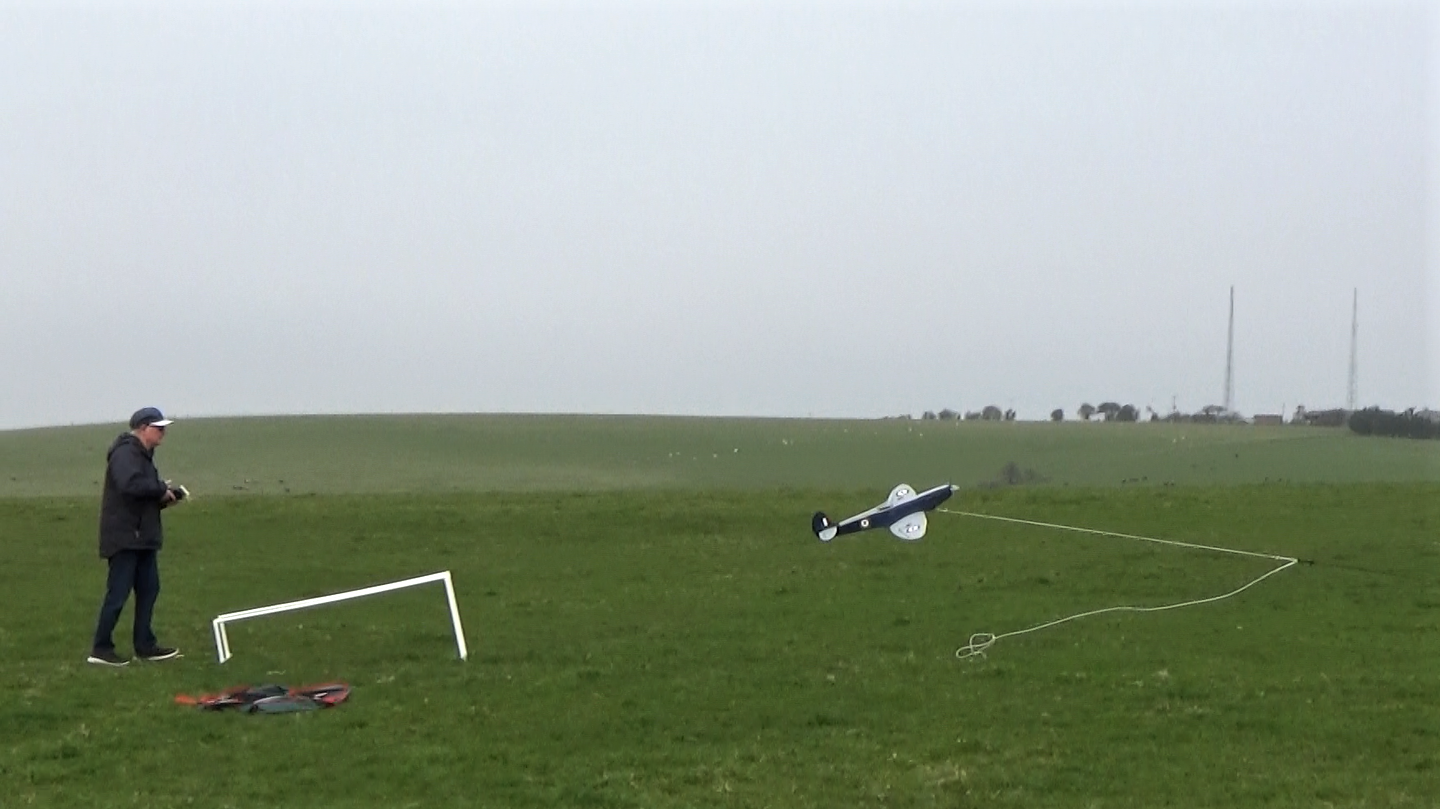
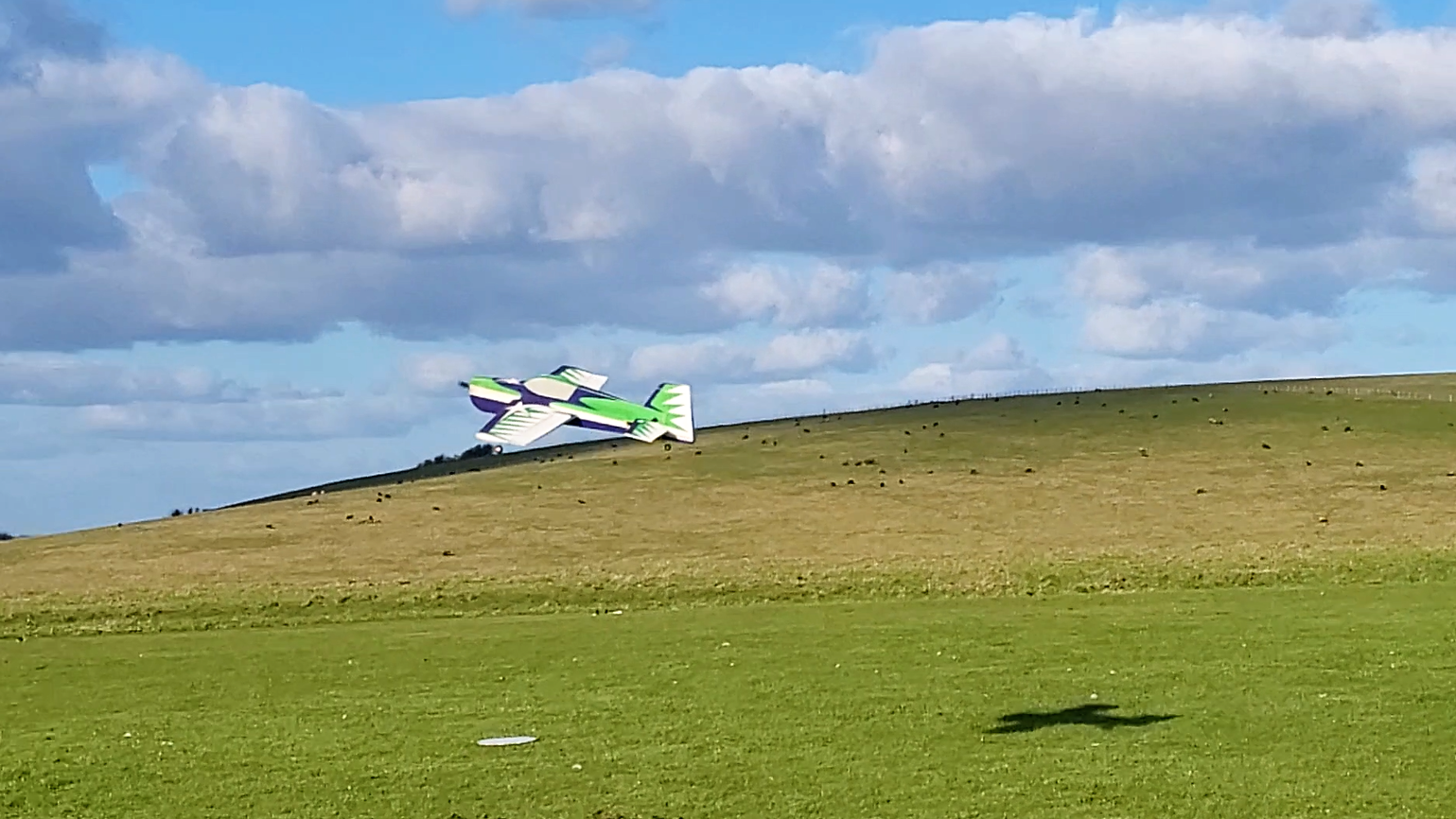
Video time now with footage shot by myself, Captain Slow, and Dougal Entendre. Please watch the video full-screen, it’s so much better with small models flying around:
If the video won’t play for you please click HERE
Co-Pilot to Captain (looking down): “Sir, can you explain to me what these buttons do”
Captain to Co-Pilot: “They keep your shirt closed”
Colin Cowplain
Patch News – February 2022
Well what a month February turned out to be, it began with some pretty good weather but then deteriorated into a series of storms with extremely strong winds. The weather station on the mast opposite our field (Holfuy – Mercury) recorded wind speeds of over 80mph.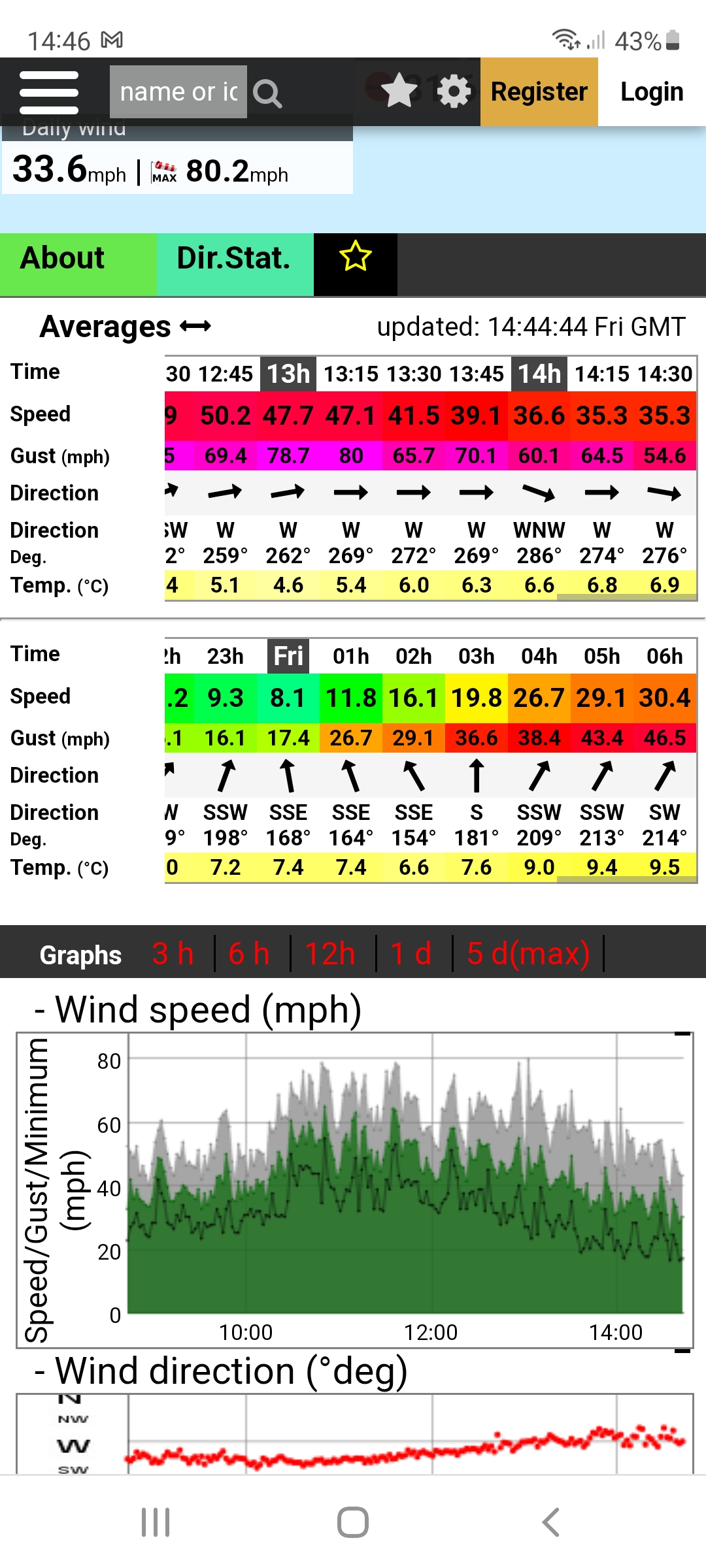 When Captain Slow and Woody went to change the battery they found that some branches had come down in our parking area so four of us then went and cleared everything away.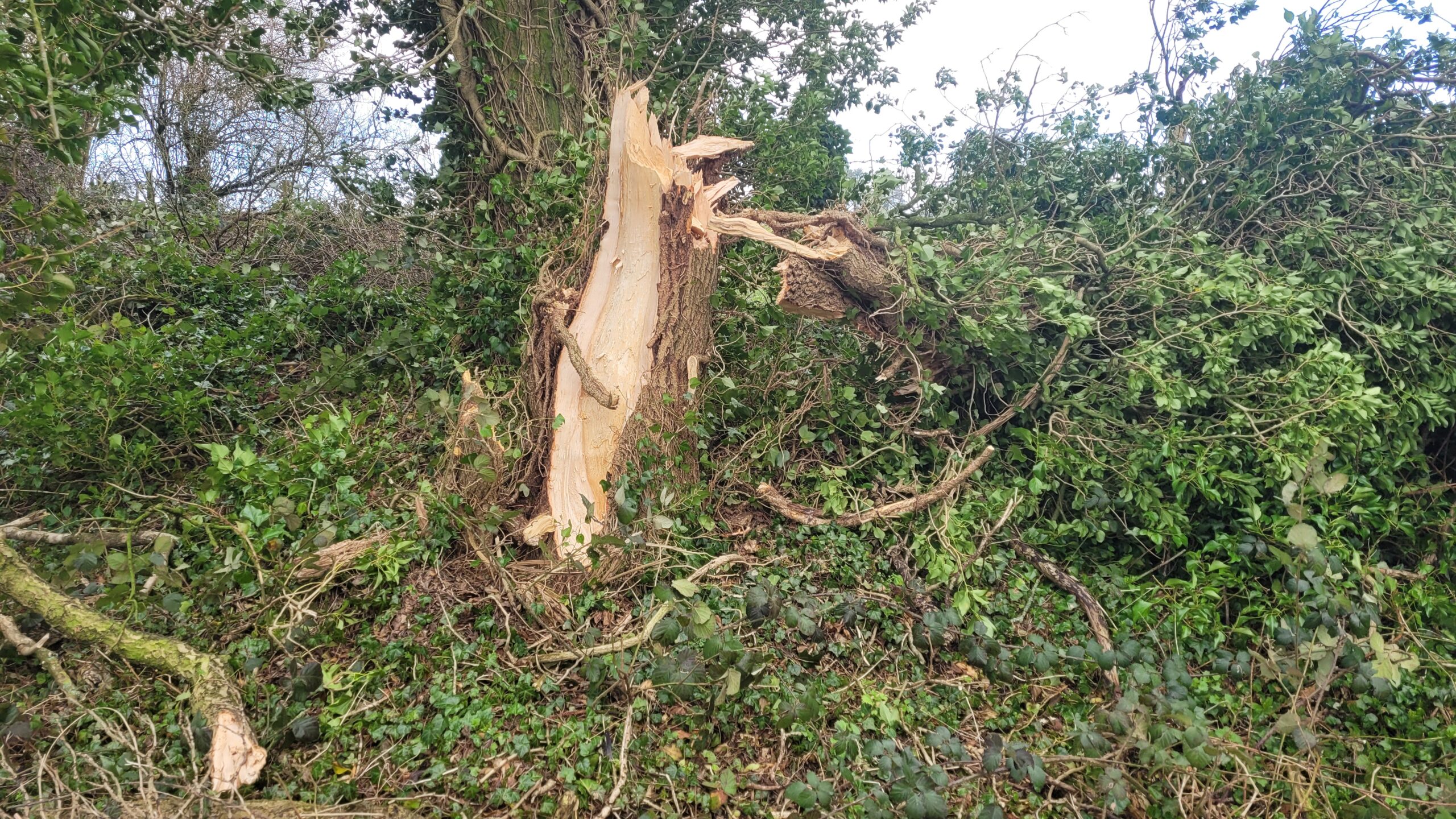
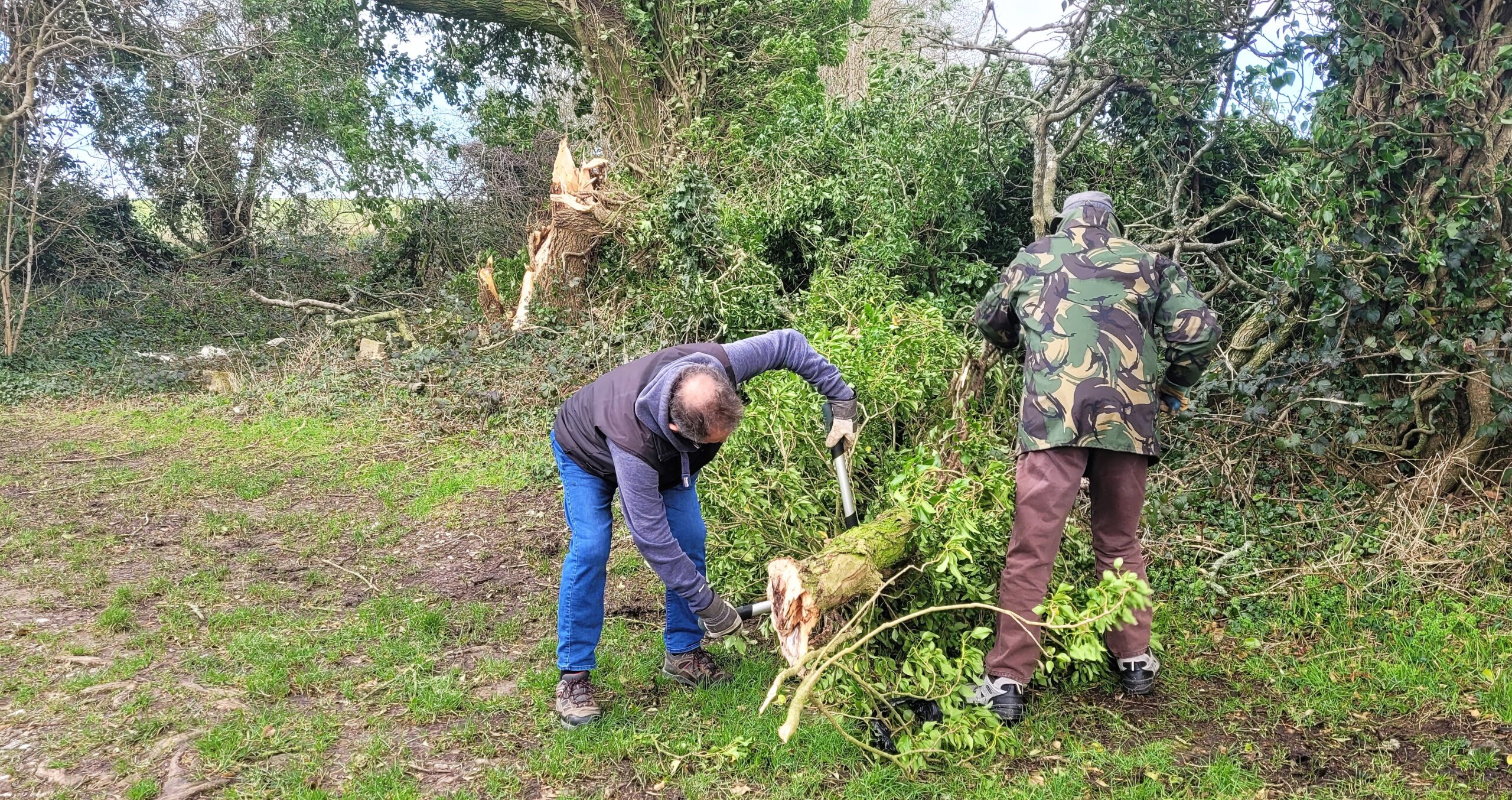 We also cut some of the undergrowth back to give all the cars space to park more easily.
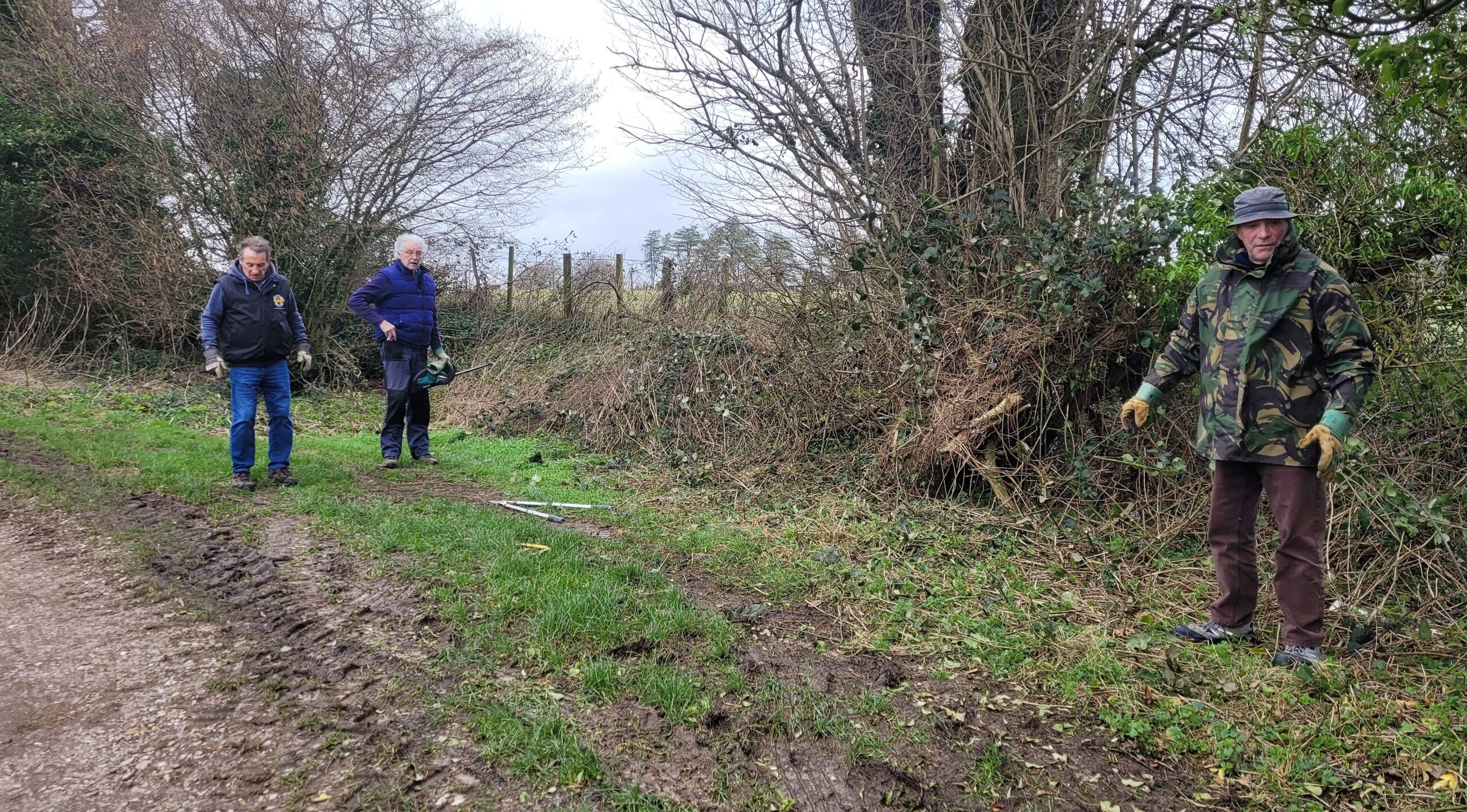 We cleared both areas so there is room for everybody as long as people park sensibly. Please think of others when you park, don’t just dump your car in the middle of the area, park up close to one end of the area or close to any cars that are already there.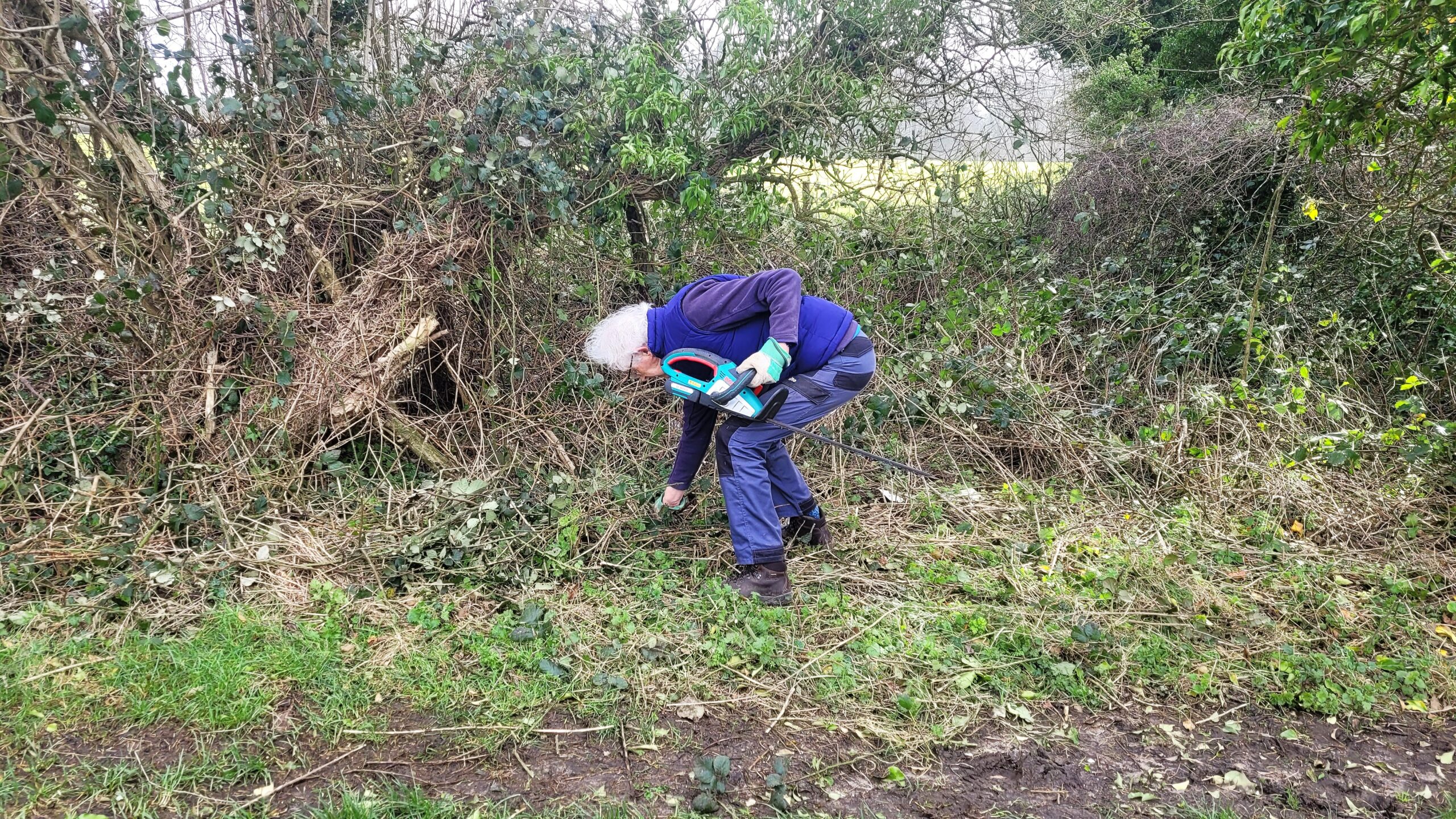
Despite the terrible weather stopping all flying for twelve days in a row the regular fliers actually managed to get airborne quite a few times, mostly near the start of February, and we were also able cut the patch again. The sheep came and went a few times but were never a problem to us and they soon had the grass reasonably short over the whole field.
On 4th February Gordon Bennett snivelled round our Chairman Captain Slow who’s birthday it was the previous day and flew his Mig-29 with a Happy Birthday banner in tow. 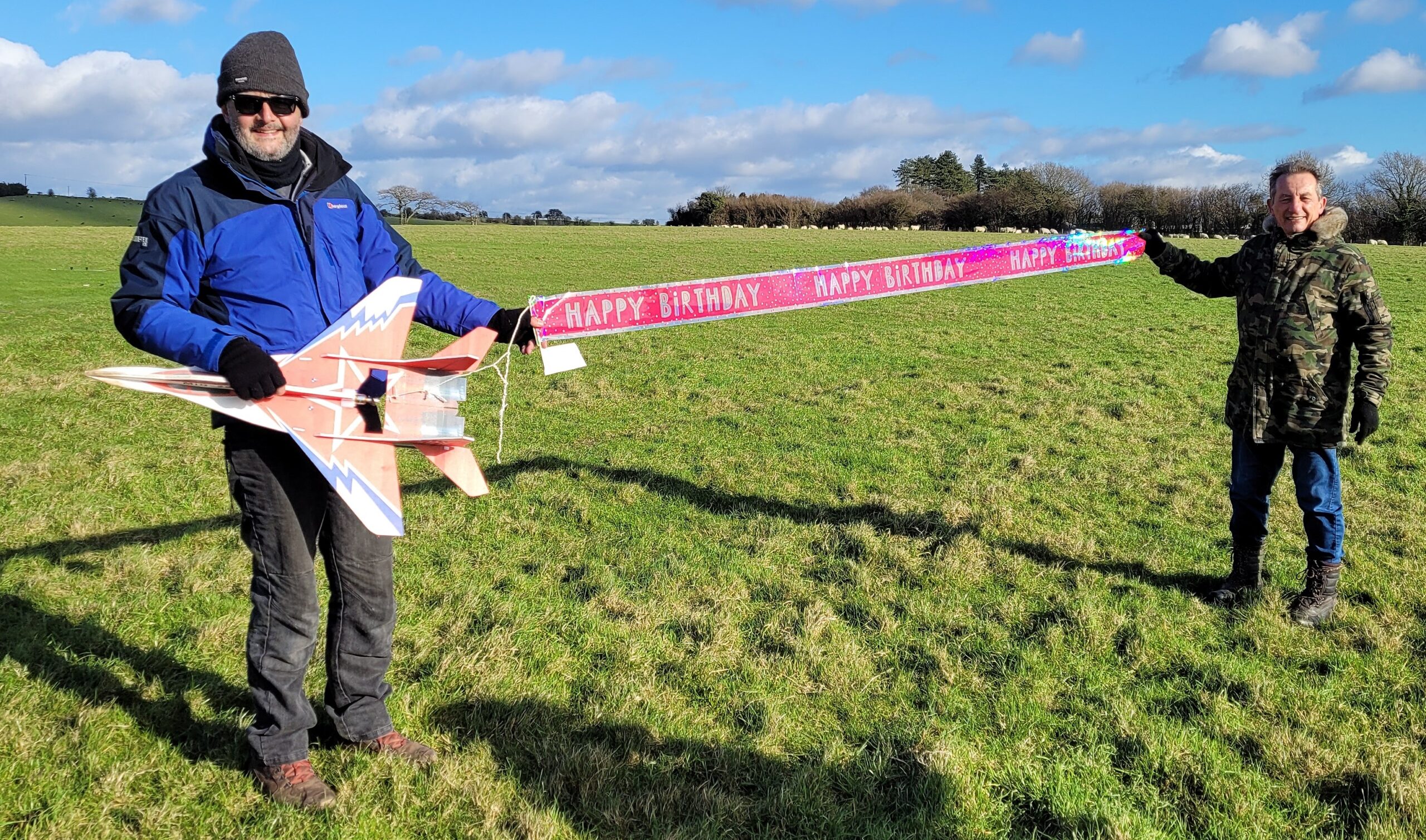 He was obviously hoping for special privileges but all he got was a cake like the rest of us. Actually the only person who got any sort of special treatment was 1066, he wasn’t able to be there on the day so Captain Slow saved him a cake and a few days later the rest of us had to stand and watch longingly while 1066 munched his slightly stale cake alone.
In the good weather at the start of the month I was able to take my Volantex Ranger up to some light and fluffy clouds whilst flying it FPV and I recorded some nice video footage.
 That’s East Meon on the right of the picture. The following day Dougal Entendre also managed to get some FPV cloud footage but sadly the day was more overcast and the cloud was the nasty plane enveloping type that Dougal and I have learnt to fear and avoid!
Two new EDF models were flown in the month, the first being Woody’s rather nice T-7A Red Hawk which is produced by XFly, a manufacturer I’ve not come across before.
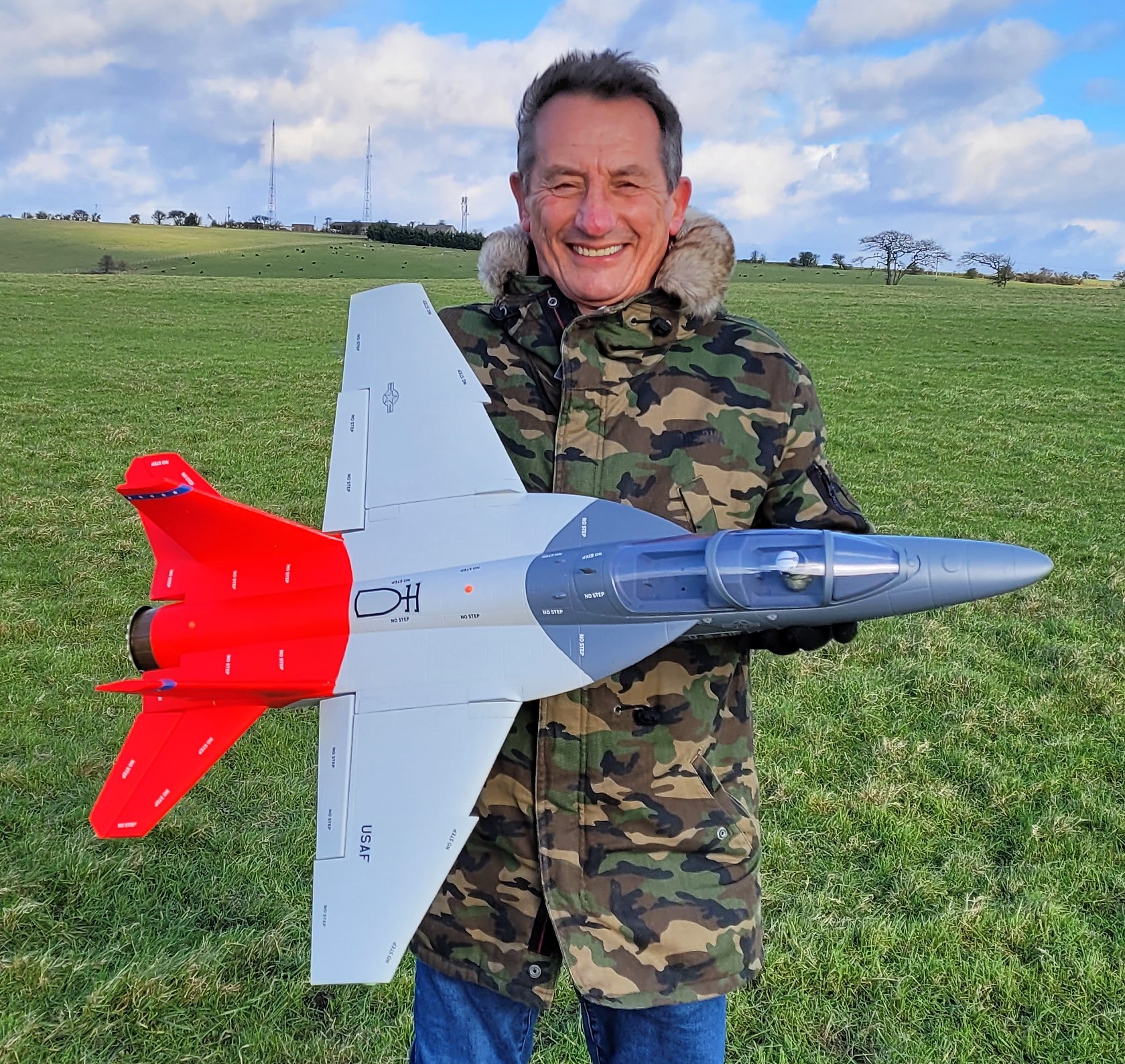
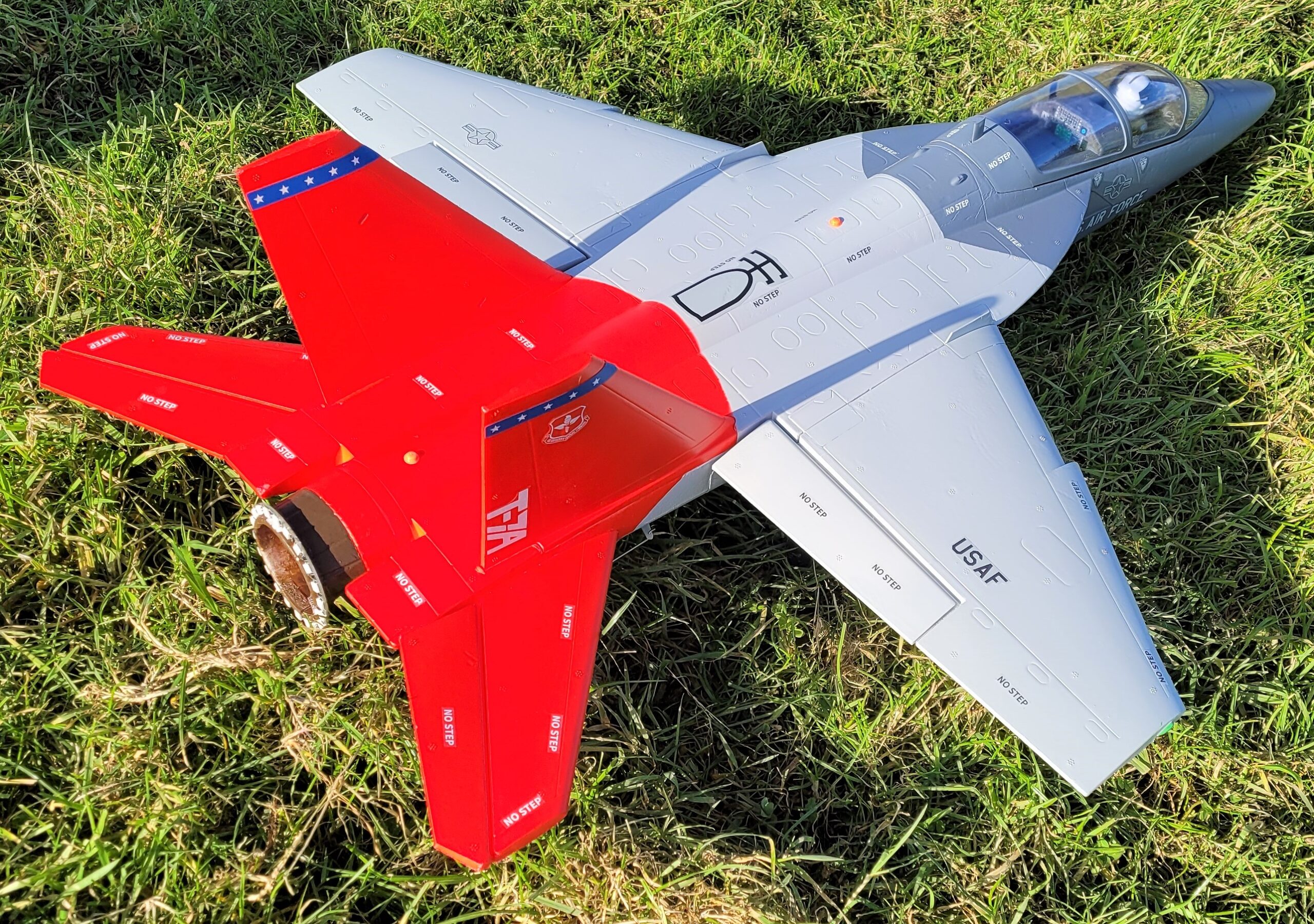 Woody bought the model from Wheelspin Models, this is how their website describes it: The Boeing-Saab T-7 Red Hawk, originally known as the Boeing T-X, is an American/Swedish advanced jet trainer produced by Boeing in partnership with Saab. It was selected on 27 September 2018 by the United States Air Force (USAF) as the winner of the T-X program to replace the Northrop T-38 Talon. The shape of the T-7A is similar to the reduced version of the F/A-18 because they are designed with a large leading edge root extension surface and a V-shaped double vertical tail design. Not only does this design provide dexterous control at low speeds but it also has better flying capabilities at high angles of attack, so that its flight performance can be closer to the fighters in active service. It is also equipped with an embedded training system and remote connection, which can be combined with the most advanced ground training exercises. The pilots who have completed T-7A exercises can easily get hands on the F-22, F-35 and other 5th Generation fighters which shortens the intermediate adaption period. The XFly Model T-7A Red Hawk 64mm EDF jet is an easy-to-fly and versatile trainer jet for a wider variety of experienced pilots to enjoy – including those with limited EDF experience. The 4S compatible brushless motor and 40-amp ESC that are matched to a 12 blade 64mm fan deliver an abundance of speed, thrust and a turbine-like sound compared to other models in its class. The model arrived pretty much finished with the motor/fan unit and five 9g digital servos already fitted but Woody felt the need for speed… no sorry, not speed, lights!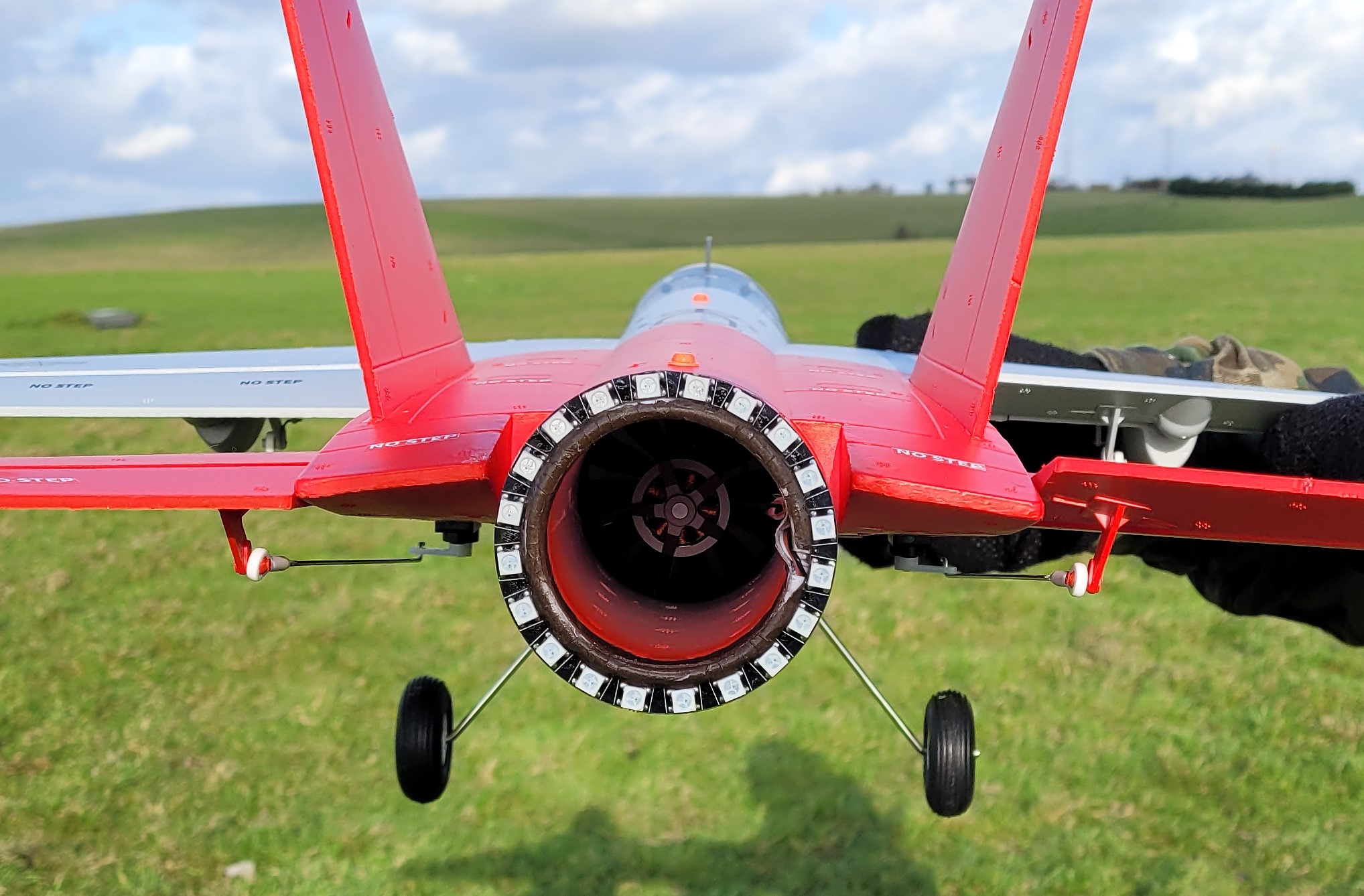
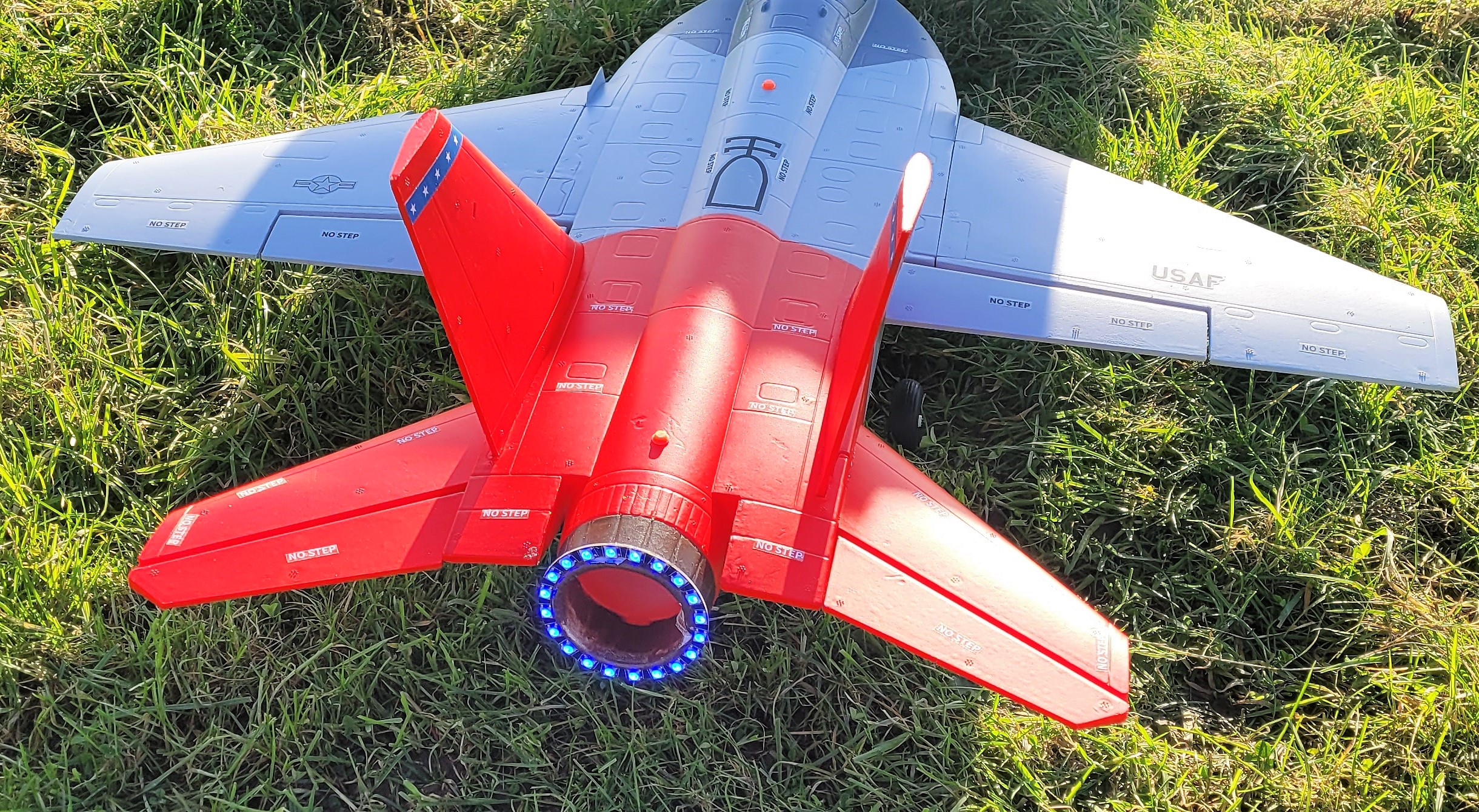 He bought an Afterburner light set from George Worley at 4-Max and fitted it to the end of the tailpipe. It’s a ring of LEDs which is connected to the throttle outlet of the receiver so the higher the throttle setting the brighter the LEDs glow. I have to say that it’s pretty impressive and shows up quite well especially on duller days. Woody asked me to do the test flight and all went well although it only just lifted off the newly mown grass in time.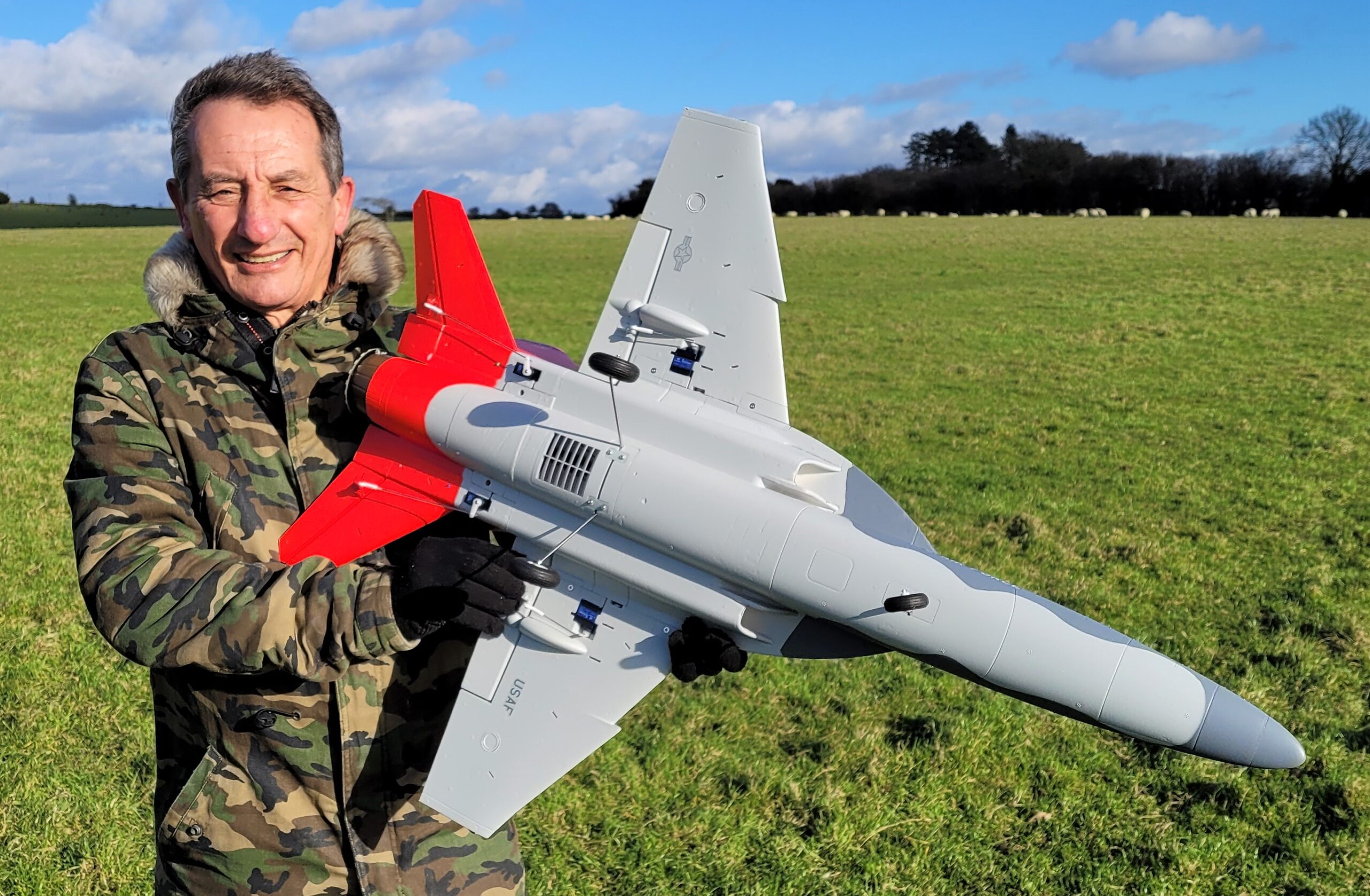
I think Woody will probably end up removing the optional undercarriage in favour of hand launching and belly landing. Other than that all was good, the model handled nicely, sounded great, and had plenty of power. Dougal Entendre filmed the flight so some of it can be seen in this month’s video and you should be able to see the afterburner in action. Woody has since fitted the XFly gyro to the T-7 which should help smooth out the flying.
When I was flying my little Mustang and Raptor models last month I struggled to check the battery voltages. The tiny Eachine models use single cell lipos that are charged from a USB port but there’s no way of knowing the state of charge other than by an LED. Most of the lipo testers we use at the field can’t check single cells so they are of no use. But Chas showed me a Turnigy gizmo that he was using for the lipos he uses in his Eachine Trojan.
 It can be powered by any 3 cell lipo with an XT60 connector, will charge up to six single cell lipos at once, and reads of the voltage of each one sequentially whilst it is charging. When a lipo is fully charged it beeps and the LED for that outlet turns from red to green. The current supplied can be adjusted between 0.1A and 1.0A and it can be switched for either LIPO or LIHV batteries. It has 3 different types of connector at each of the 6 ports so can charge a variety of single cell lipos and it also has a USB socket so you can charge a phone etc. It was perfect, just what I needed, but HobbyKing no longer sells them, typical!
Searching the internet I found the same device is sold with a variety of different names but almost all were around the £25 mark (some up to £35). Chas thought his had cost him around £15 and after much searching I found one just over £16 including postage. Mine is an Ultra Power UP-6S and is identical to Chas’s Turnigy in everything but the name.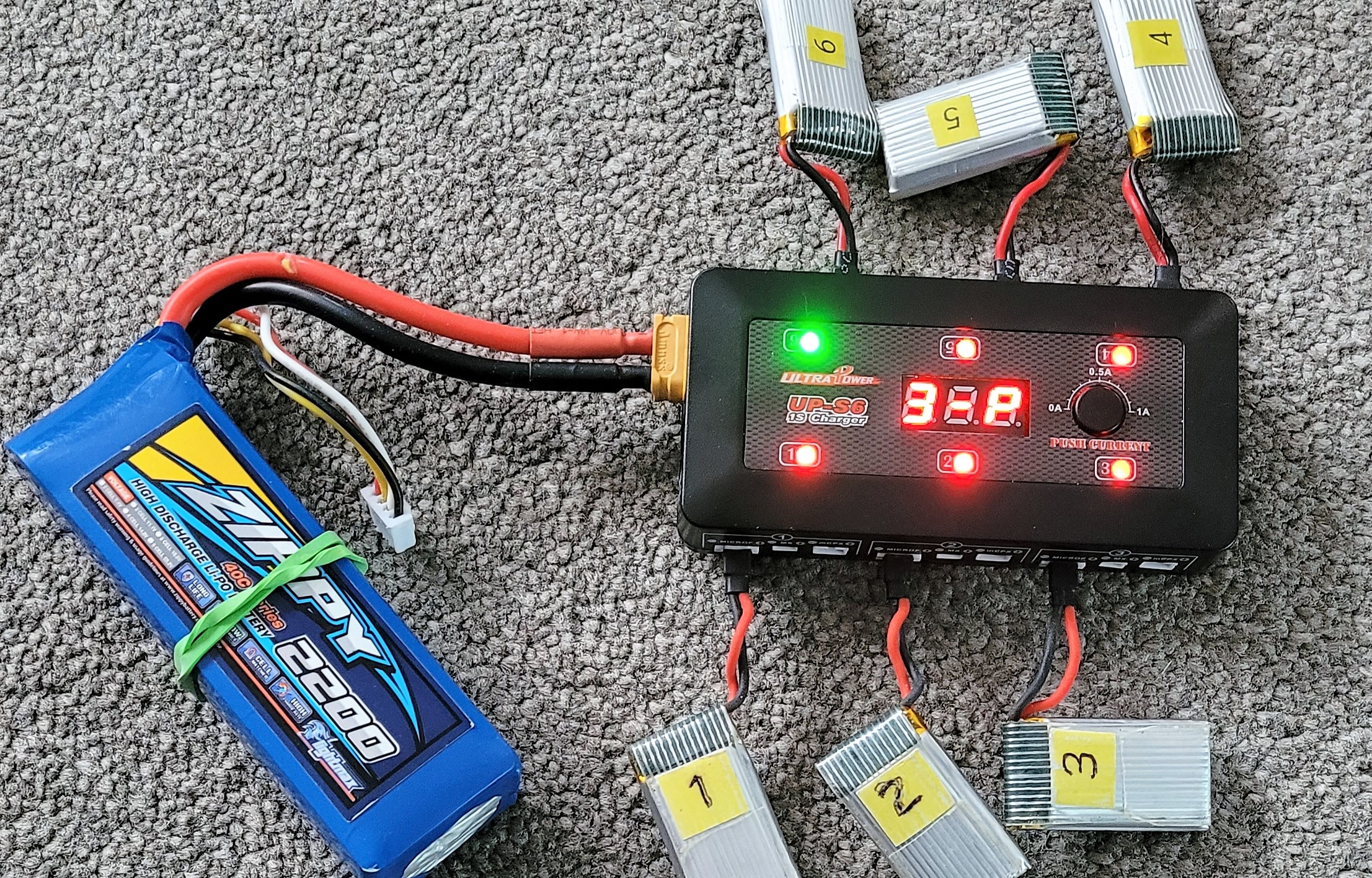
So now I can easily check the voltage of all my cells at the field and charge them if necessary and I could even charge my transmitter from the USB socket in an emergency. There is also a cheaper version that looks almost identical but has a fixed current output of 1A so check the specifications carefully if you are in the market for one.
On the subject of the Eachine models I lost the propeller from my Raptor in the long grass one day. The props are just a push fit and it came off when I landed and I didn’t notice it was missing when I picked up the plane. It came with a spare so I have been able to continue flying but it seemed sensible to get some spares. The Banggood website has lots of tiny drone props that would fit so I ordered some Gemfan 65mm red ones (I think they’ll be easier to find in the grass!). I’ve not had a chance to fly one yet but the reviews say they give more thrust and longer flight times than the original paddle style propeller.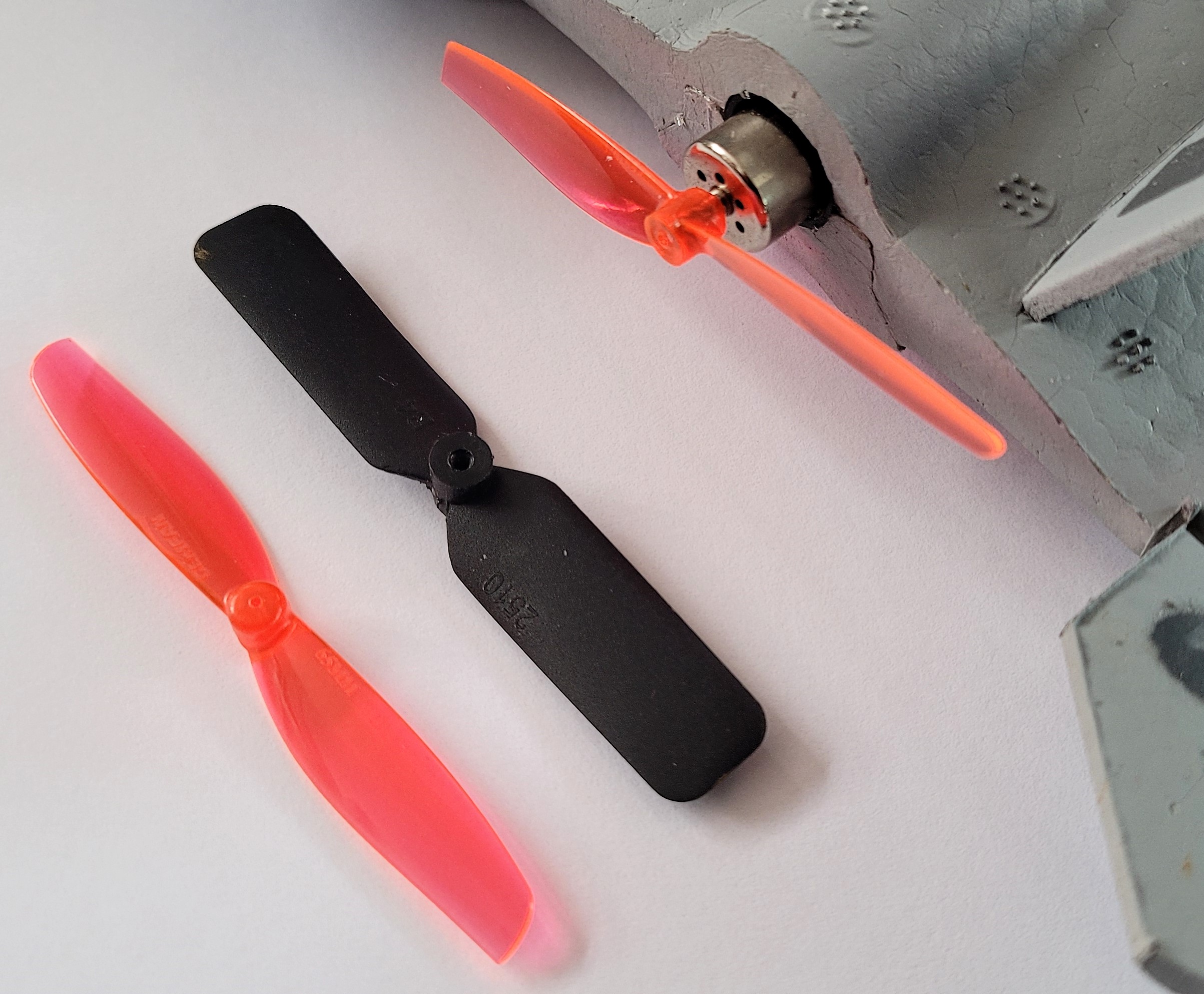 The pack I bought is for a Toothpick drone and consists of four pairs, four tractor props and four pushers. As all eight only cost me £2.49 I figured I could cope with having four pushers I don’t need. Anyone want to buy some 65mm pusher props, only £1.50 each?!
Basher Bob has behaved himself recently and hasn’t collided with anyone for quite a while so he can revert to his Bob the Builder name…for now. So, in February Bob the Builder built and flew a new foamboard model which he describes as an F22/SU57 hybrid.
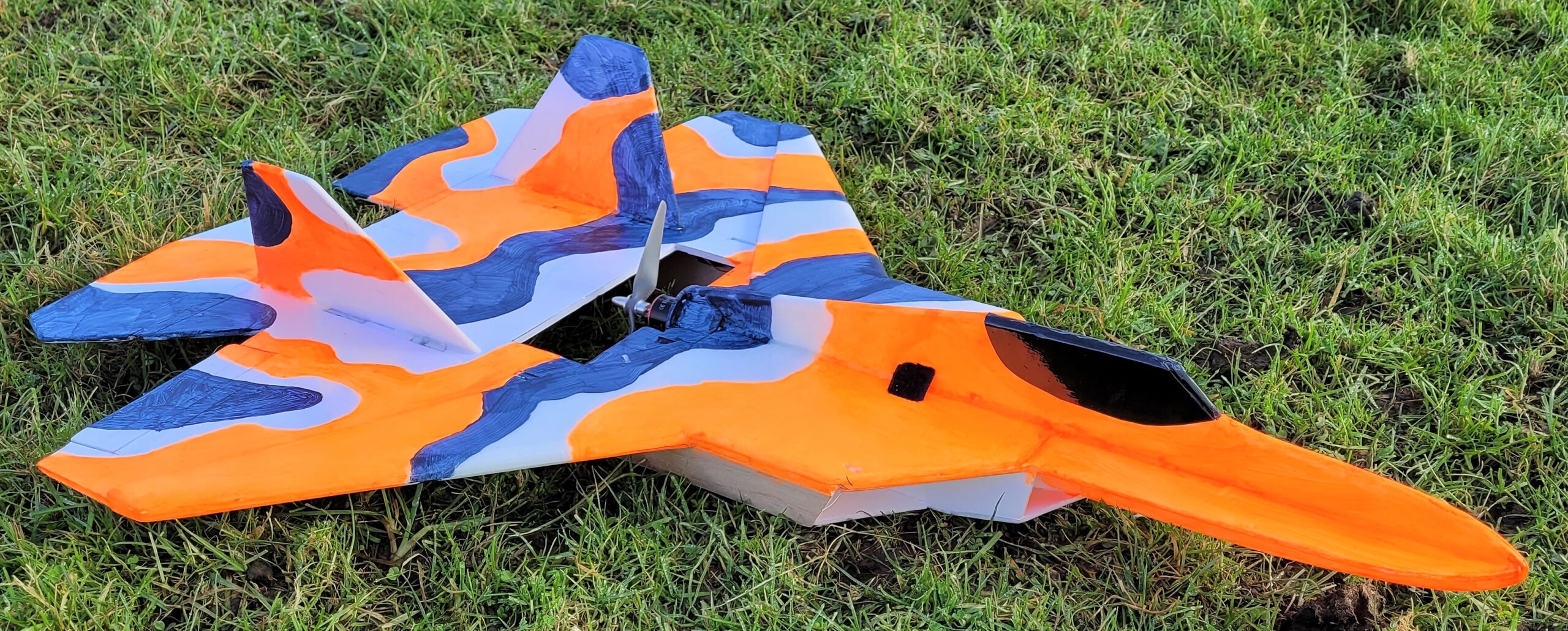 This is what Bob says about it: The design is a mishmash of both aircraft including RCpowers.com F22 Version 5 models. There are several videos on YouTube about building and flying F22 foamies, I tried to pick the best features and combine them with my own experience. The result is a much stiffer airframe with very flexible controls. My plan is to start with 6 servos providing all possible control options which I can experiment with to find which combination performs best. Elevons alone, elevons and ailerons. Separate elevators and ailerons, flaps, spoilerons, Rudders, etc.
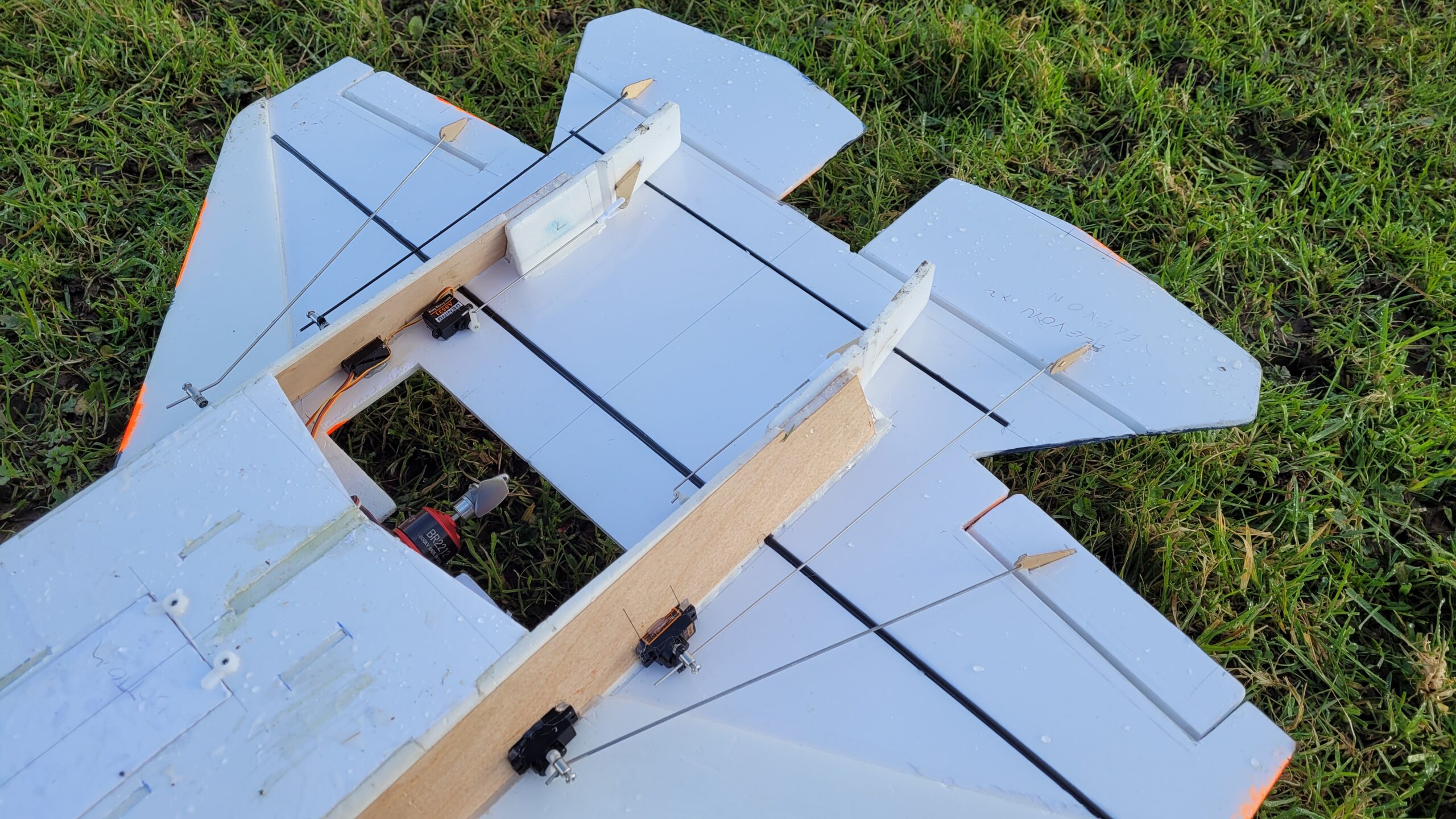 I intend to use a standard 3s 2200kv motor but am currently running an 1800kv one. The extra stiffness comes from the 3 layers of foam on the KF wing and the fact that I left the paper on all the foam board aft of the KF aerofoil. I needed to seal the paper otherwise it would have all fallen off the first time it got wet and noticed a cheap spray can of finishing varnish in Lidl which I have used, seems to be OK so far.
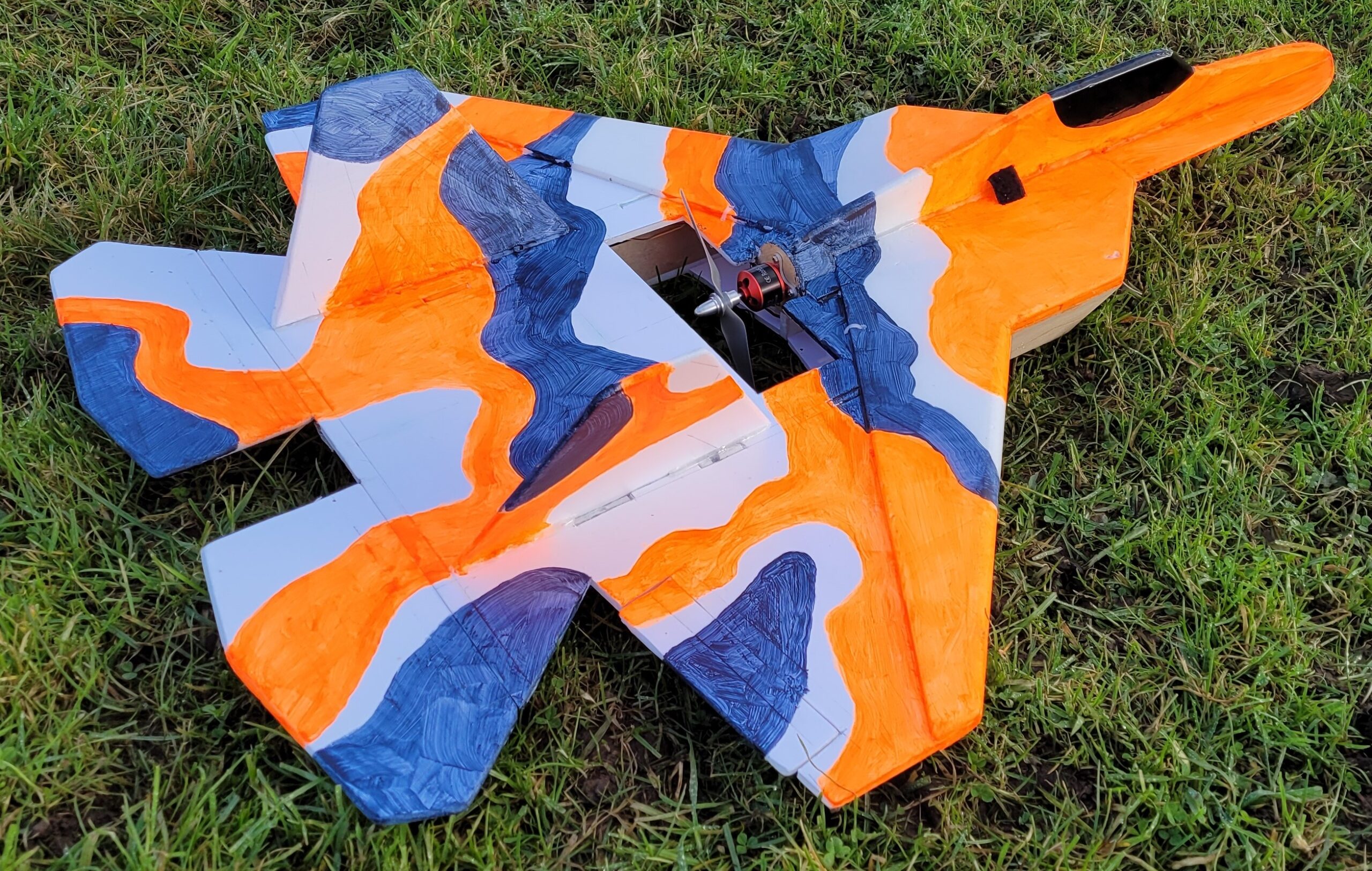 It’s a bit heavy at 700 grams AUW but lift seems to be better than a totally flat board as it is easy to land properly rather than dropping the last few feet as with most other foam boards. The art work is painted by hand with acrylic paint from the art shop. Battery is 3s 1300 to 2200 with a 30ESC. Well done Bob, it looks great and flies as well as it looks. At the field some members said the colour scheme reminded them of the Dazzle camouflage sometime known as Razzle Dazzle used on warships mostly in WW1.
 This is the Mersey ferry Snowdrop in Dazzle camouflage. It seems odd to use a camouflage ship scheme on an aircraft but it shows up really well in the air. So is it a Bobby Dazzler?
We were joined by a prospective new member this month, Glyn Morden. Glyn has been a modeller for some time and likes old-timer type RC models which might struggle in the rather breezy conditions we tend to get at our field but on his first visit he flew his Phoenix 2000 electric glider which is ideal, in fact there are already several of them in the club.
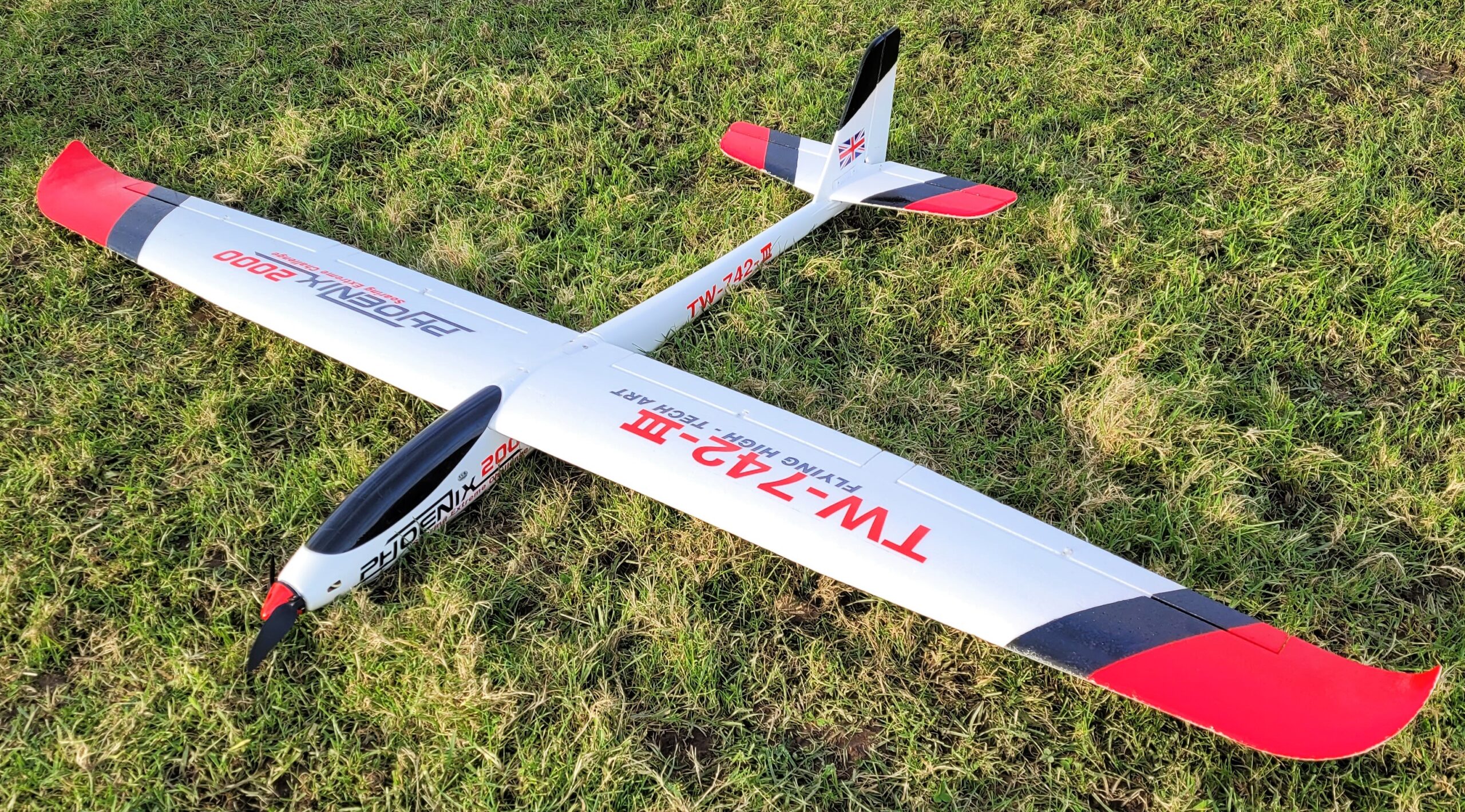 Glyn also brought along a Mercury Matador that he built from a Ben Buckle kit during lockdown and has covered in film. I remember the Matador from my youth, I built and flew a diesel powered free-flight one in around 1963-64. Mine was nylon covered, heat shrink film hadn’t been invented back then. Obviously I was only 2 years old at the time…
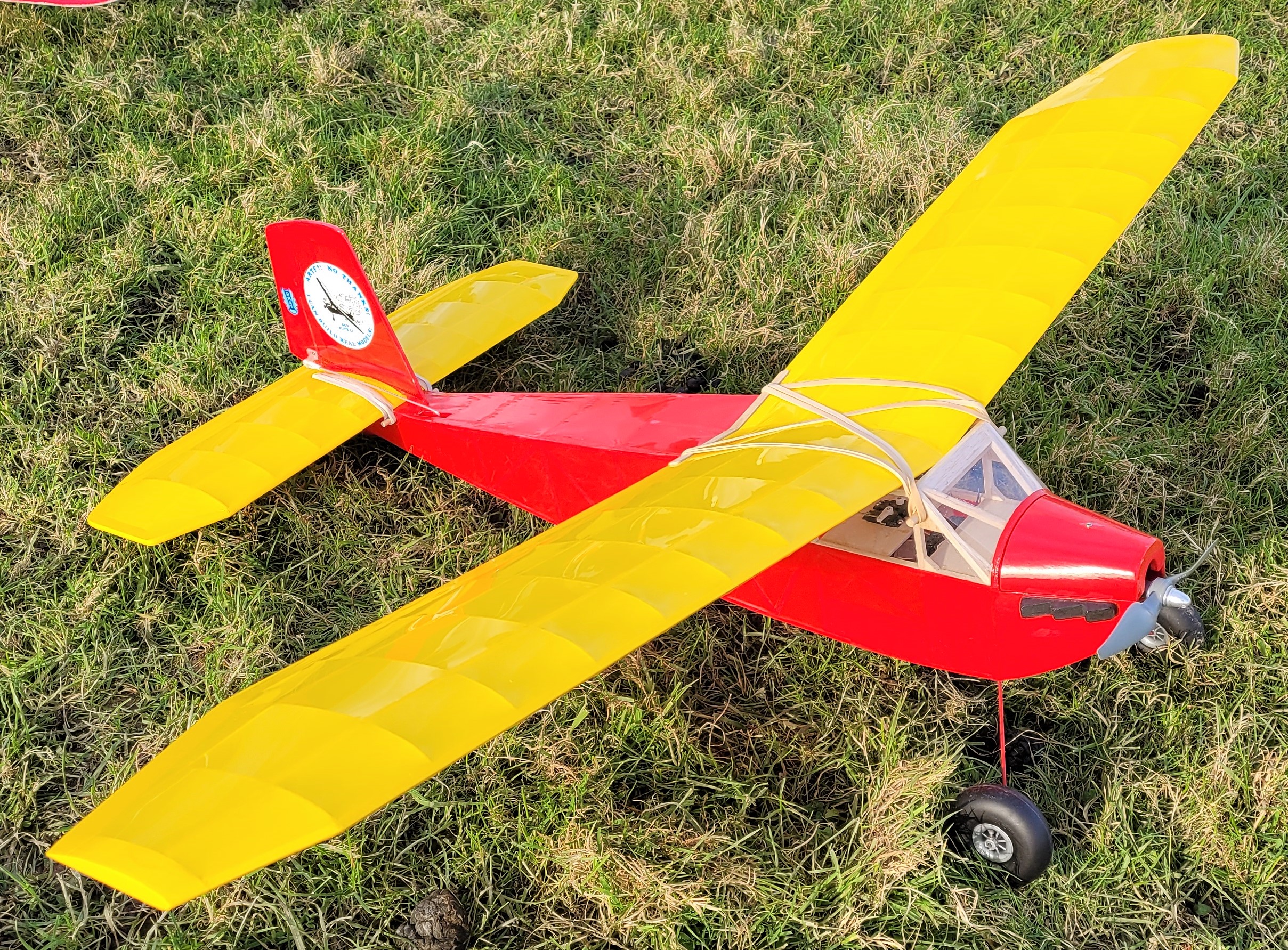
 Glyn’s Matador is bang up to date with electric power and three channel radio control.
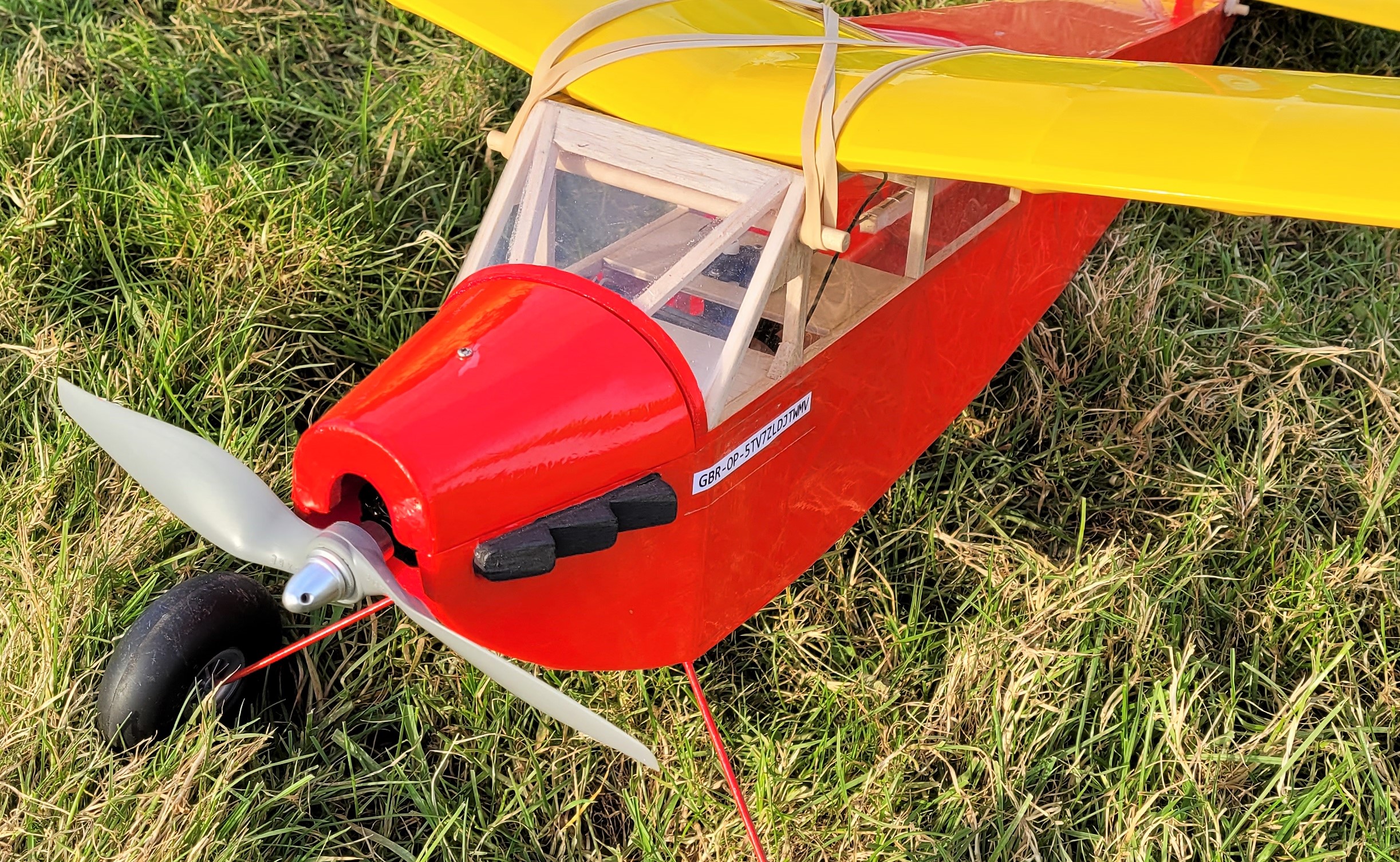 The motor in an Overlander 1000kv which swings an 8×4 propeller and he is using a 2200mAh 3 cell lipo which also runs the radio with just rudder, elevator, and throttle control via a Turnigy 20A speed controller. Welcome to Petersfield Aero Modellers Glyn.
One day when I was trawling the Banggood website I spotted a mini cube camera with built in video recorder that was reduced to just £10.51. I’m not really sure why I needed it but it seemed rude not to, plus I seem to get loads of discount vouchers on the Banggood site so I used one and got the camera delivered for £9.14. According to the specs it will record at 1920 x 1080P /1280 x 720P at 30fps which is pretty good but not top spec.

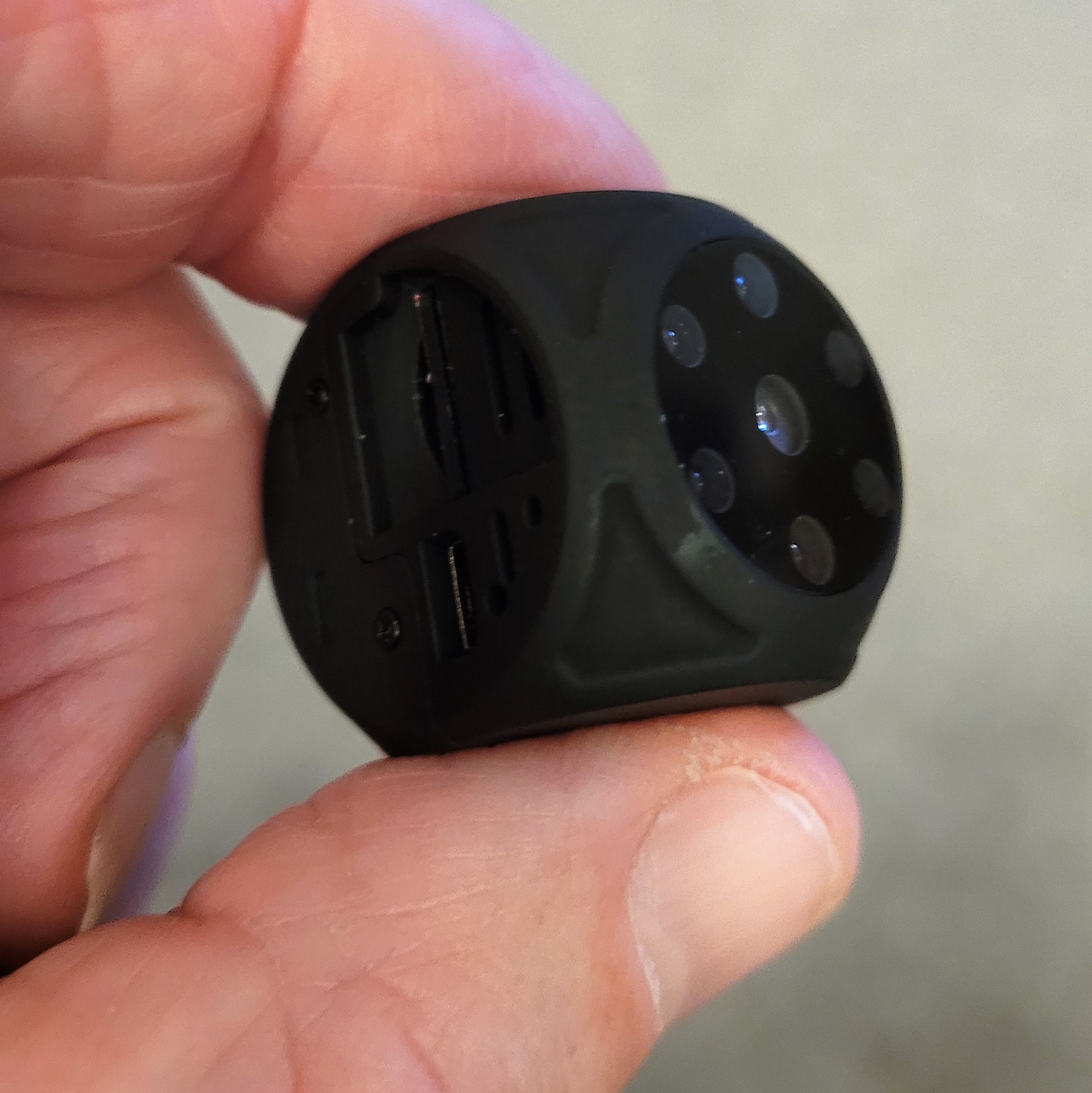 It comes with quite a variety of straps and mounting brackets so to test it out during the storms I tried it as a dash cam a few times and it provided pretty good quality recordings.
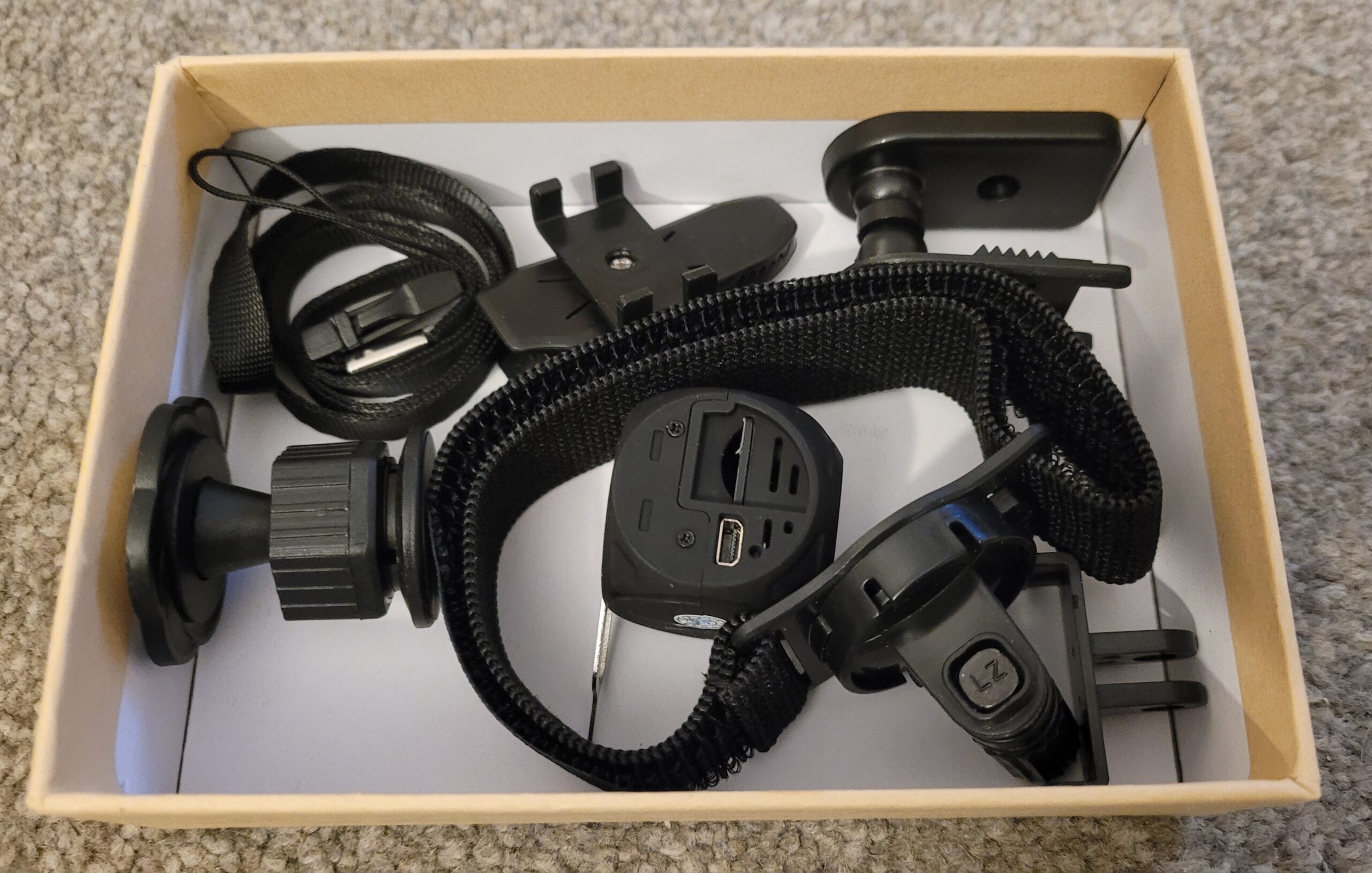 On the first flyable day I used it as a dash cam driving up to the field where I turned it off and put it in my pocket before taping it to my Ranger for a couple of flights. Back home I downloaded the videos and found I had an hour of video of the inside of my pocket…! But next time out I captured some nice video although the grass colours are a bit off.
 Then I saw that the price has been reduced again and it’s now just £7.48. I mentioned this at the field and promptly got orders from Dougal, Captain Slow, and Gordon Bennett. While placing their orders I added another one for myself and all four arrived in two days.
Chas has been happily using JR radio gear for a while but has now bought a RadioMaster TX16S MAX transmitter. Here he explains why he’s making the switch: I was considering purchasing new JR receivers for two models I’m either building or about to commence building. I was in for a bit of a shock as the price of a six channel receiver had risen from just under £80 to £96 and the eight channel was now £110. I’ve always been happy with the reliability of this brand but the functionality of JR equipment is rather dated.
Having seen Bob and Mark using RadioMaster transmitters I decided to find out more. They have an internal multi-protocol module and the facility to use an external JR type module. It just so happens that I bought a JR 2.4 GHz module (no longer available) some years ago for my old PCM9X transmitter. Having quizzed Bob on several occasions and downloaded the TX Open Companion software I was gradually being won over. This software allows the user to update the transmitter’s firmware, set up models and check these setups on the inbuilt simulator.
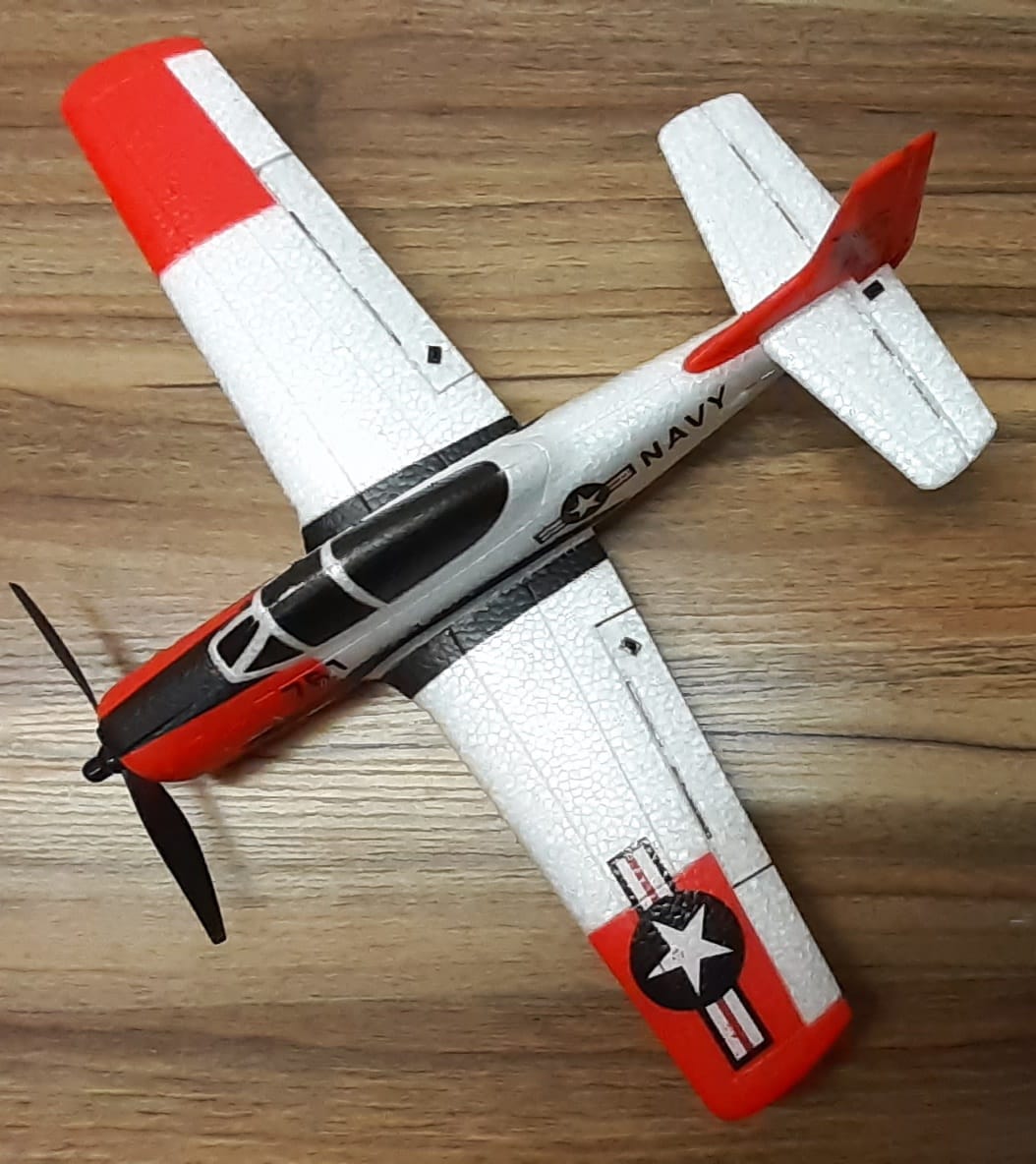
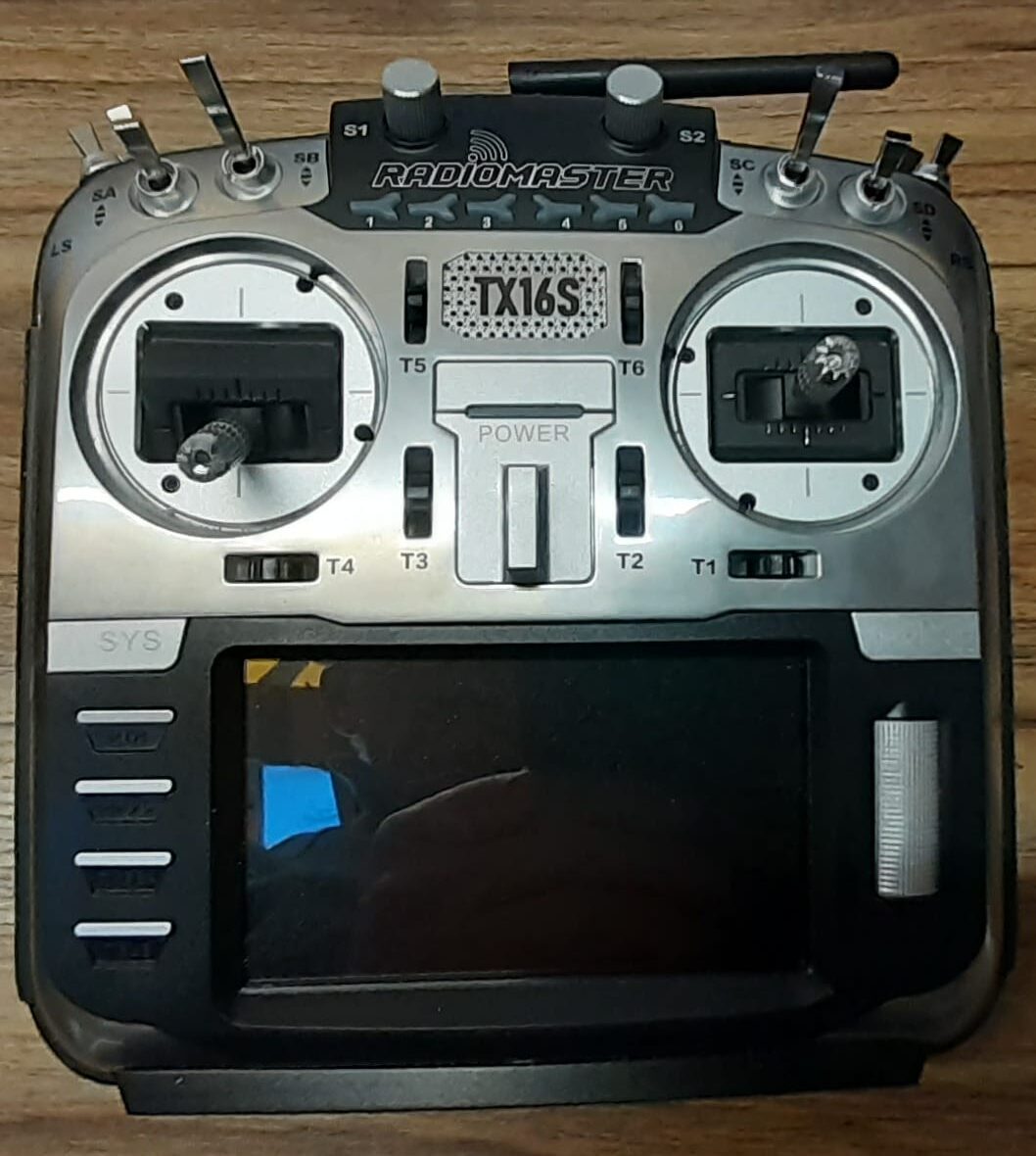 Having viewed several YouTube videos it became clear that I could use the transmitter for my Eachine T28 Trojan and E-Flite UMX Yak 54 and the fact that I could buy an FrSky eight channel receiver, with a built in vario for £38, swayed me into purchasing one of these units.
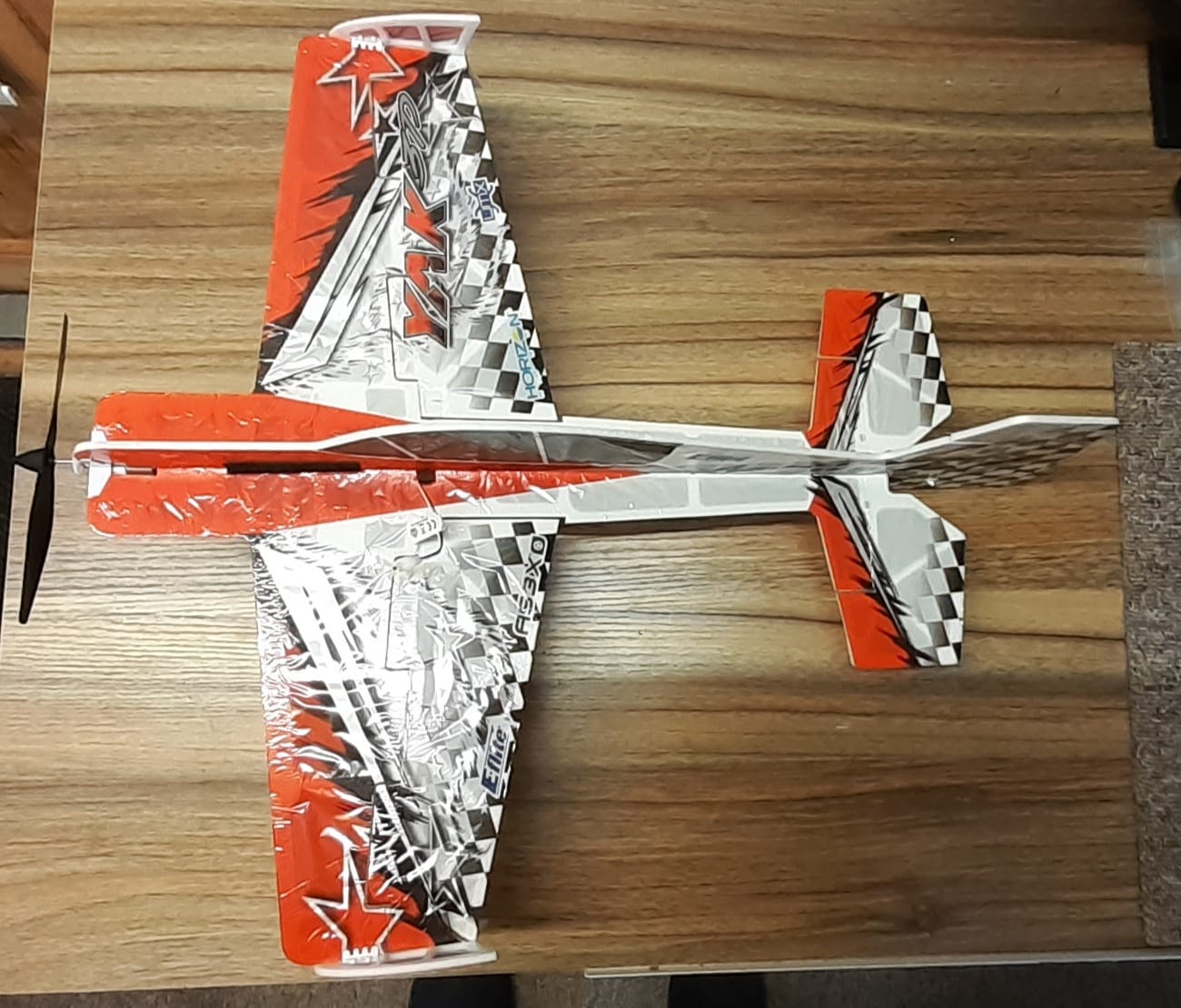 Having taken delivery of my transmitter I’ve played around with it and the Companion software to become familiar with its many functions. An example of these functions is an instant trim. When you’re testing a new model you may have to hold in some up elevator and maybe some aileron to keep the model flying straight and level so then, all you need to do is, flick a switch and the respective trims are set to the stick positions allowing the sticks to be returned to their neutral positions.
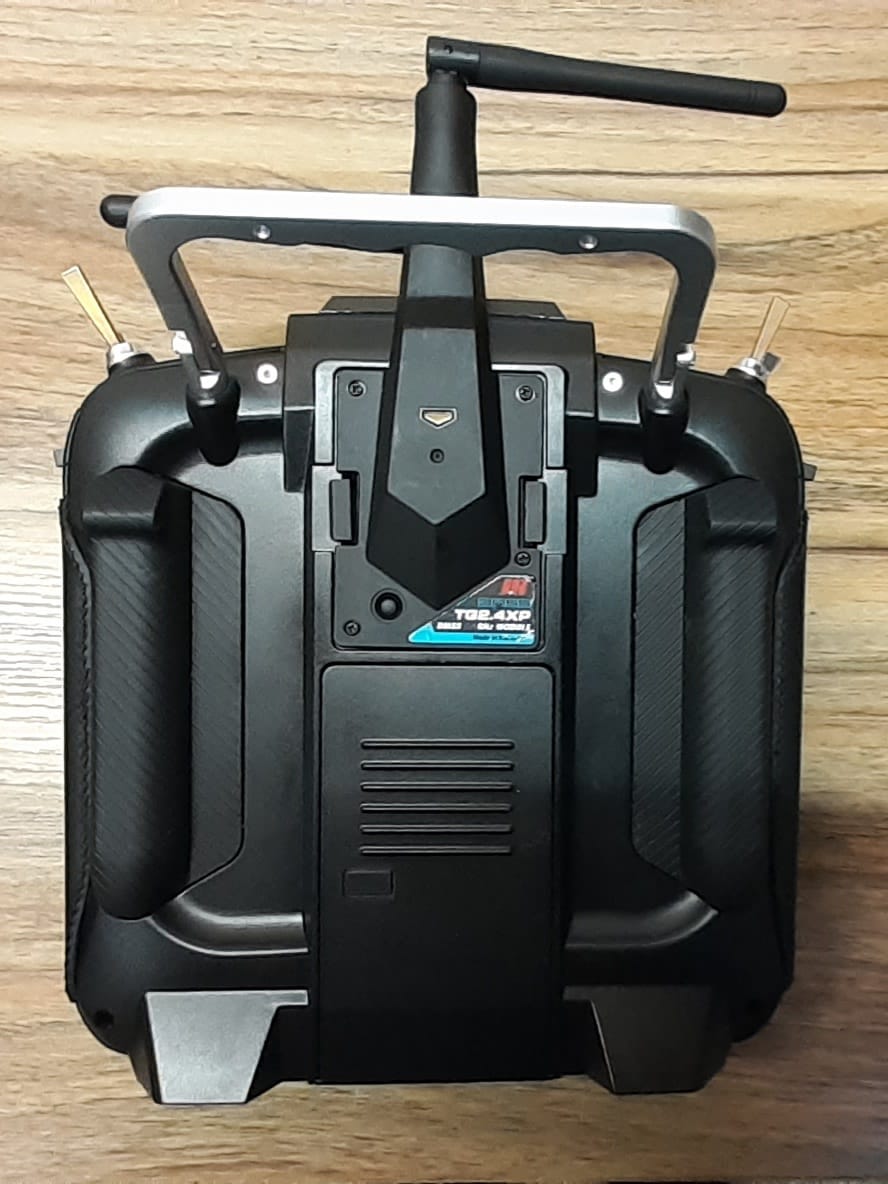 Unfortunately since obtaining this new toy the weather has been at its worst with rain and high winds for the last couple of weeks I’ve not been able to try it out yet so I’m keeping my fingers crossed that next week’s weather may be more favourable.
While Gordon Bennett was unwell recently he decided he needed to cheer himself up with a little retail therapy. He must have needed a lot of cheering up as he bought an E-flite Viper 70mm EDF. The Viper is a model I’ve always drooled over but jealous…me? Never!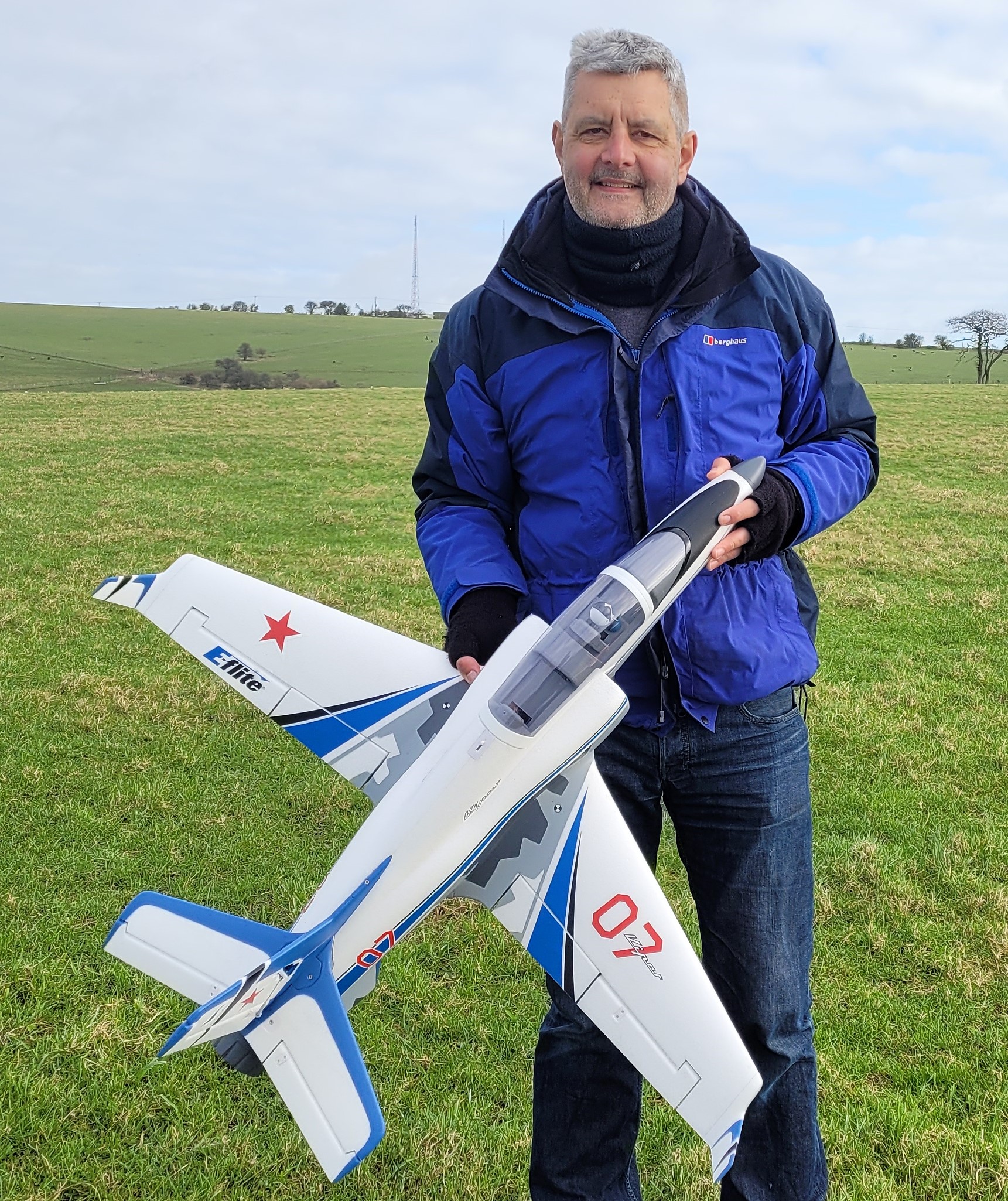
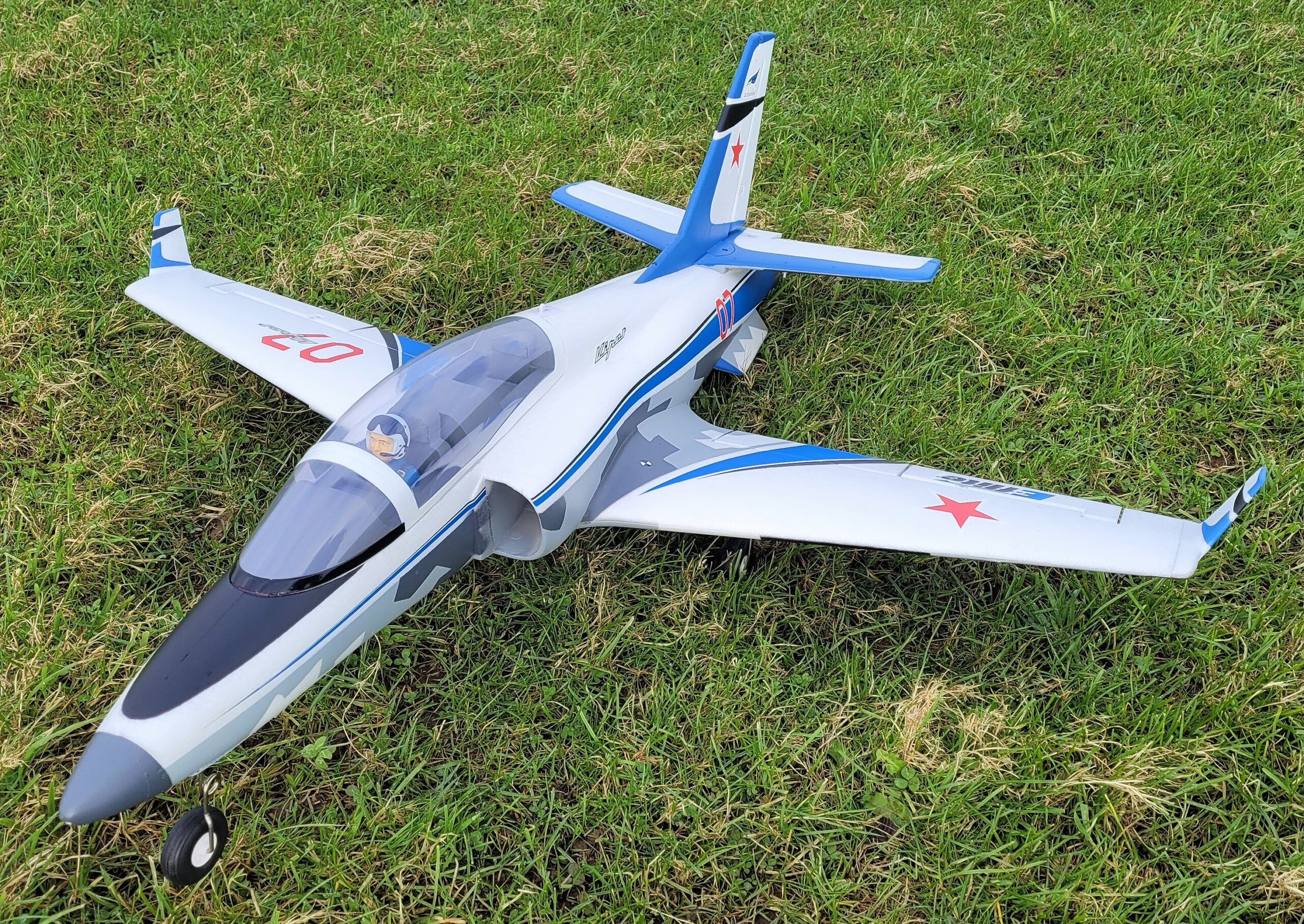 This is from the Horizon Hobby website: The Viper 70mm EDF offers smooth, sport airplane-like handling plus incredible performance and aerobatic capability that makes it the perfect choice for experienced and first-time jet pilots alike. At its core is a 6S-compatible brushless motor and 70-amp ESC that are matched to a 12-blade fan to deliver an abundance of speed, thrust and a turbine-like sound. Functional, factory-installed flaps and electric retracts are included to provide the best jet experience and the widest flight envelope possible. Assembly is fast and simple with a one-piece wing and stabilizers that bolt into place–no glue required. The detailed cockpit is integrated with the large top-mounted hatch that makes flight battery access as easy and convenient as possible. Digital, metal-geared servos and ball-link equipped linkages provide precise control, and the lightweight yet strong EPO airframe adds to the durability and precision. But what truly sets the Viper 70mm EDF apart, and helps make it the BEST choice for a first jet model, is how easy it is to take off, fly and land. It’s a scale jet that flies smooth and handles like a sport airplane, with stability that makes it feel rock-solid so all you have to do to make your jet pilot dreams come true is advance the throttle.
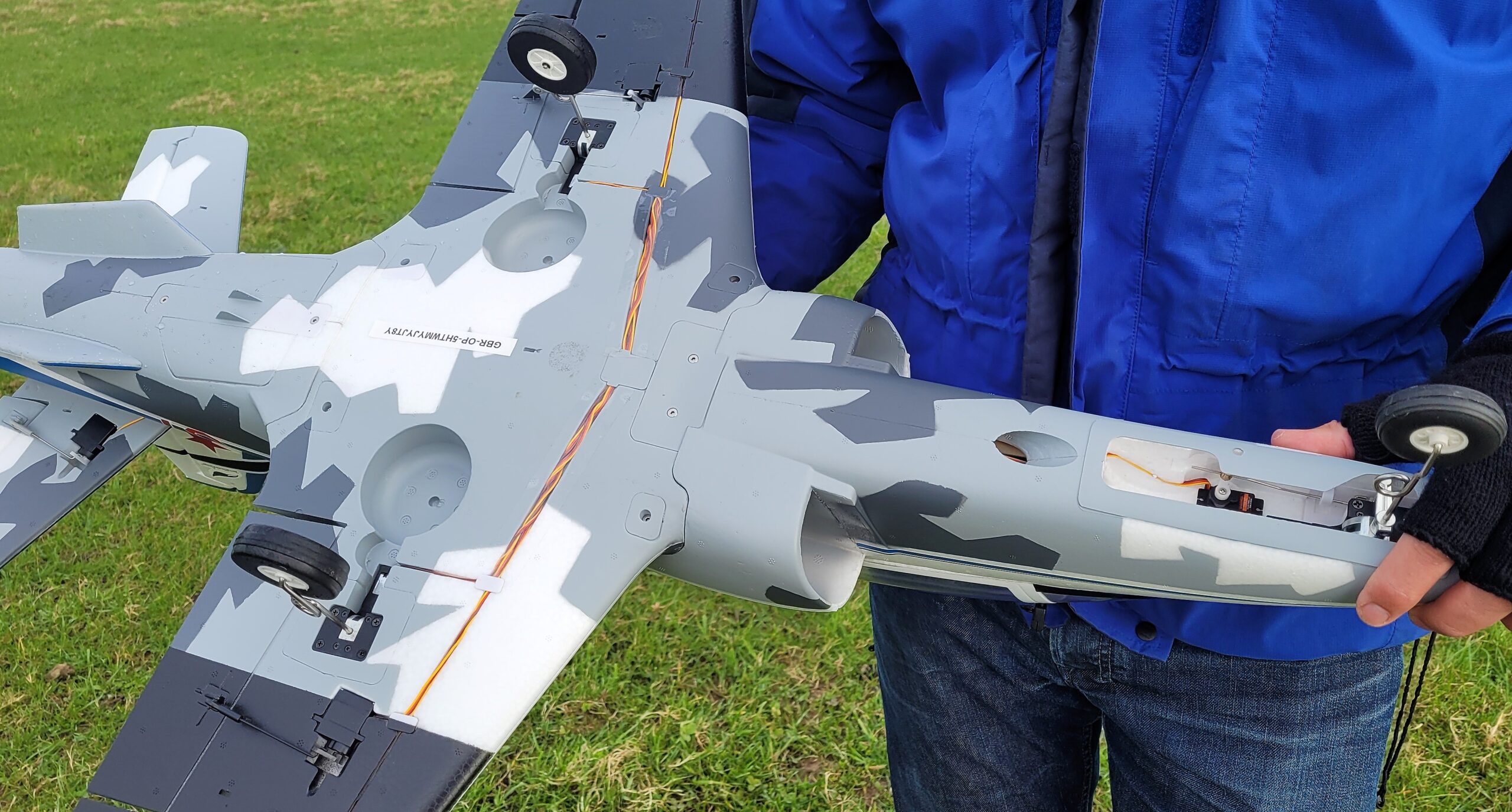 As the 1100mm span Viper uses 6 cell lipos Gordon also had to buy some batteries so being unwell was a pretty expensive experience! The model feels quite heavy so we were a little concerned about it getting off our small patch but with the thrust provided by the 6 cell set up it was no problem at all and with the application of half-flap the Viper lifted off by the halfway point. Gordon uses Spektrum radio so was able to use the AS3X stabilisation the model comes provided with but he had the SAFE mode turned off. After a couple of circuits Gordon had the wheels and flaps up and we could see that the Viper is a very smooth flier and is also very quiet. Gordon didn’t try any aerobatics on the first flight, he just wanted to get the feel for flying what is his first EDF. He did a couple of practice approaches with wheels down and full-flap and as you can see in the video it all looked good. When he actually came to land the model dropped the last couple of feet too fast, bounced, and turned turtle. Fortunately the damage was very minor, was easily repaired, and it has since flown again. It’s all part of the learning curve Gordon!
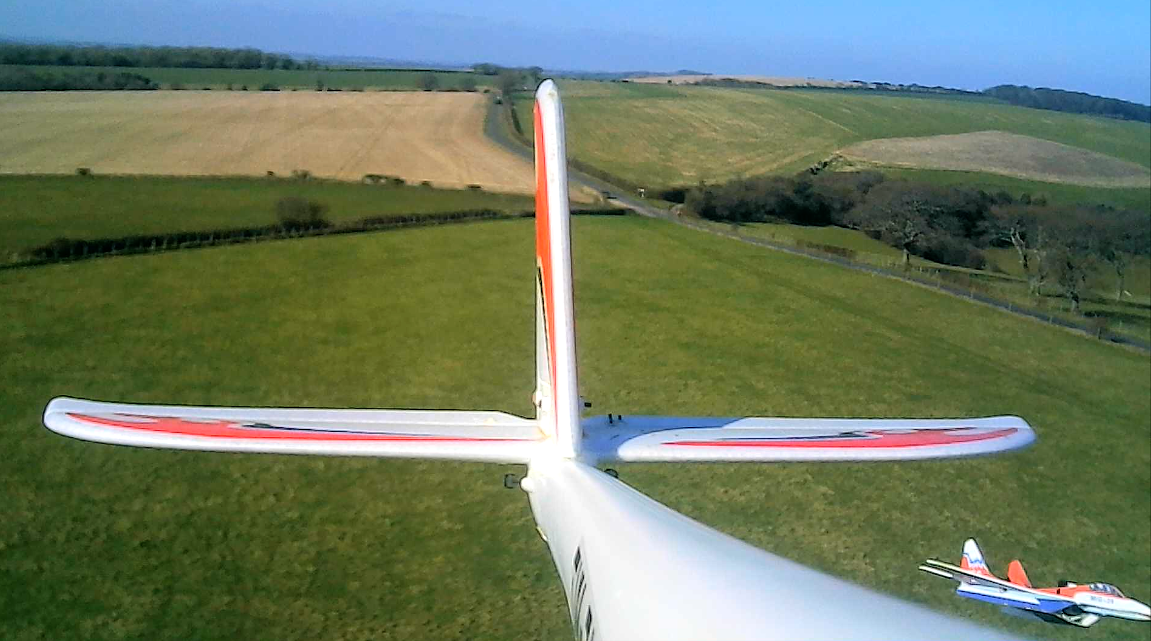
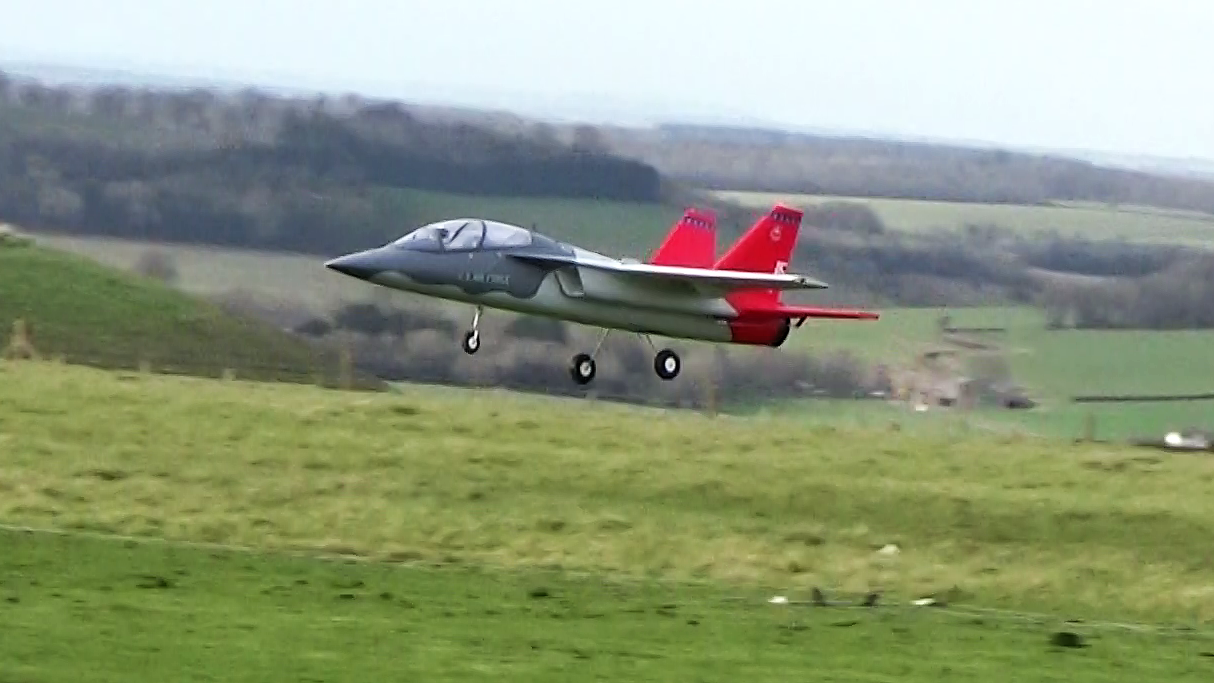
Here are a few airborne shots taken in February, all are screenshots from videos: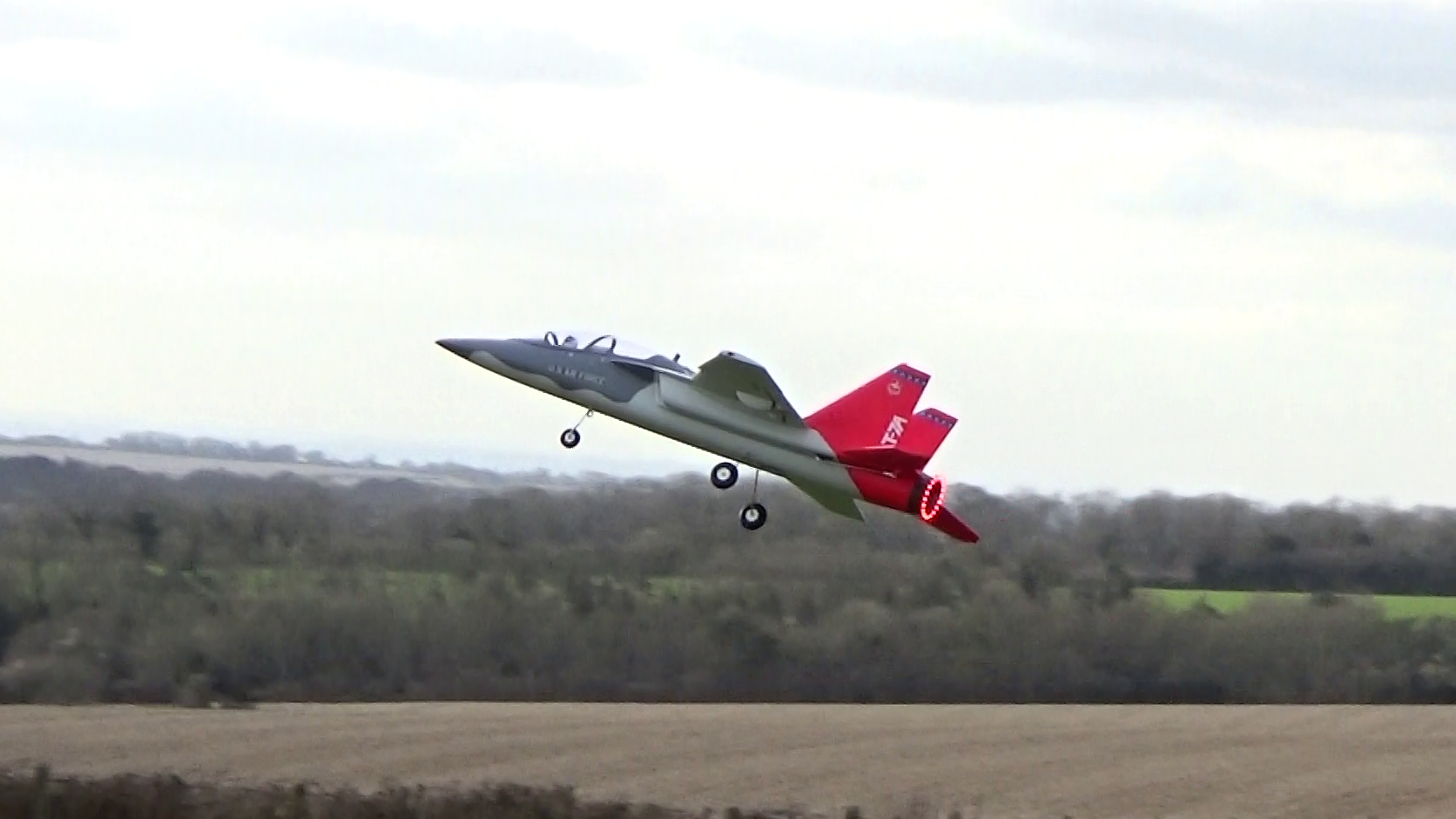

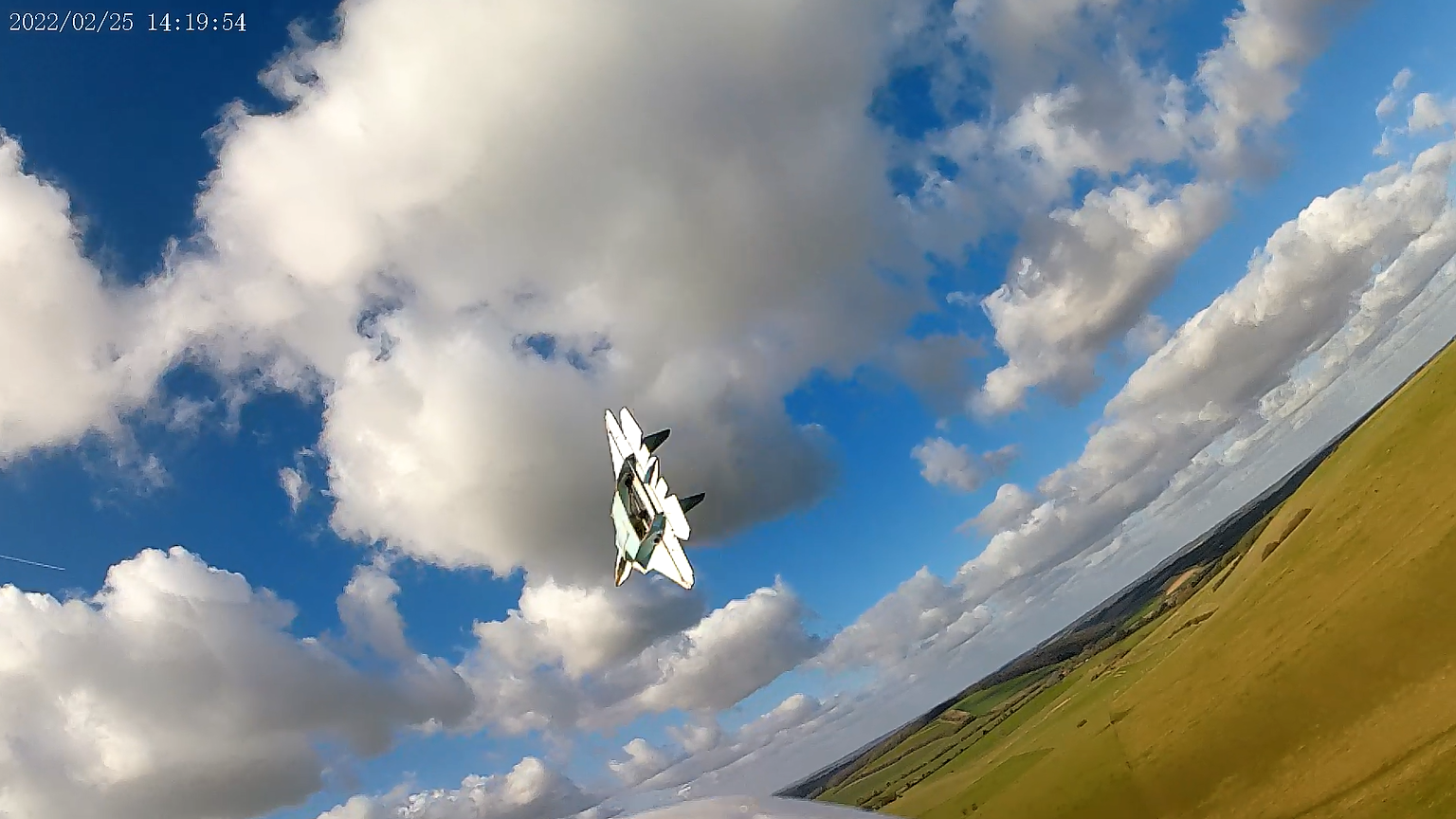
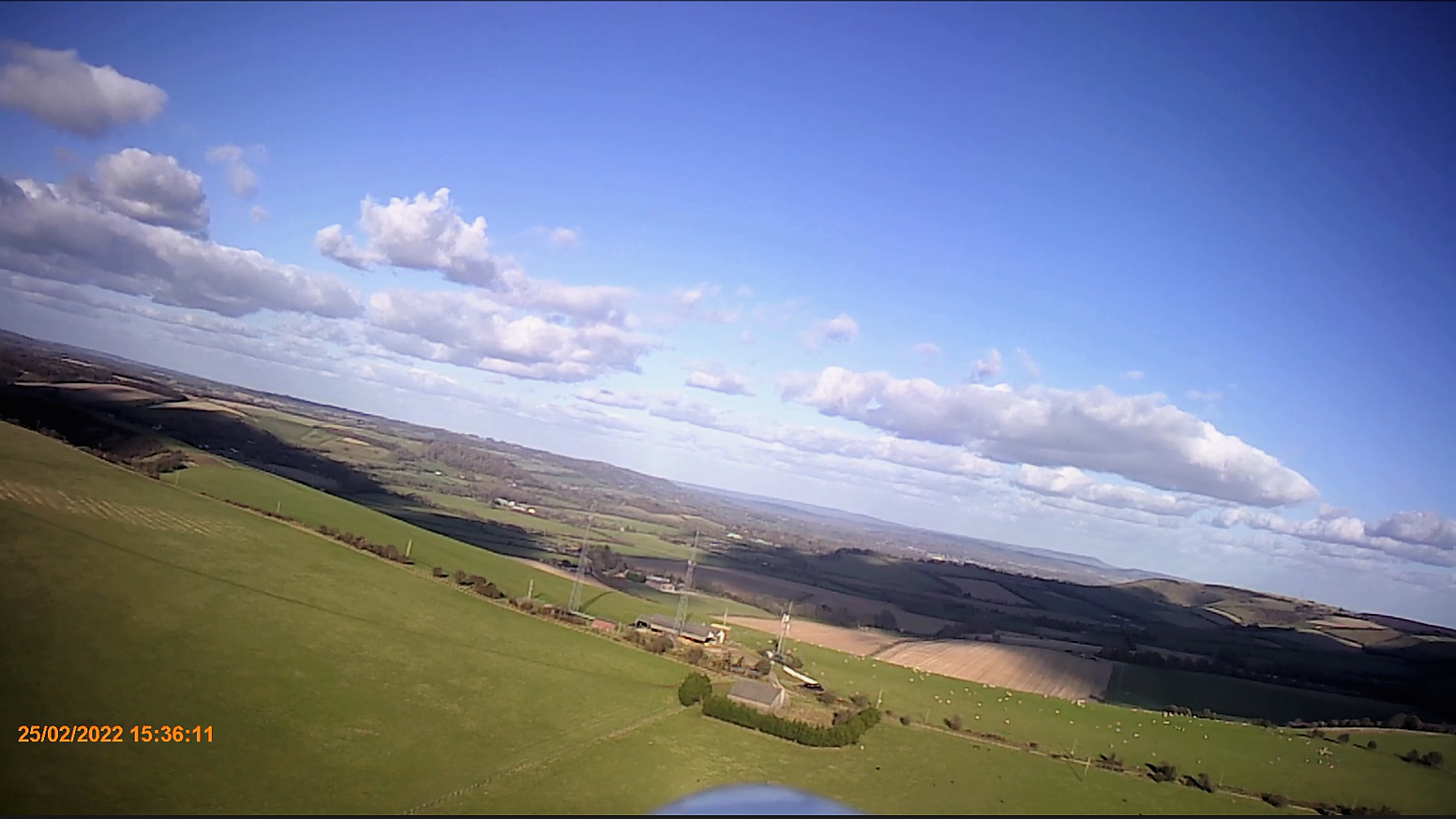
Video time now with footage shot by myself, Captain Slow, and Dougal Entendre. Please watch the video full-screen, it’s so much better with small models flying around:If the video won’t play for you please click HERE
Apparently British Airways flights are really fast, when I called to check the flight time from Heathrow to New York the girl said “Just a minute…”
Colin Cowplain