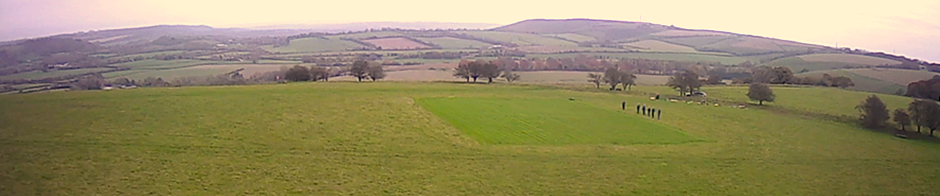
Welcome to springtime, April actually had mostly good weather! It was often quite windy but there was very little rain and club members were able to gets lots of flying time in.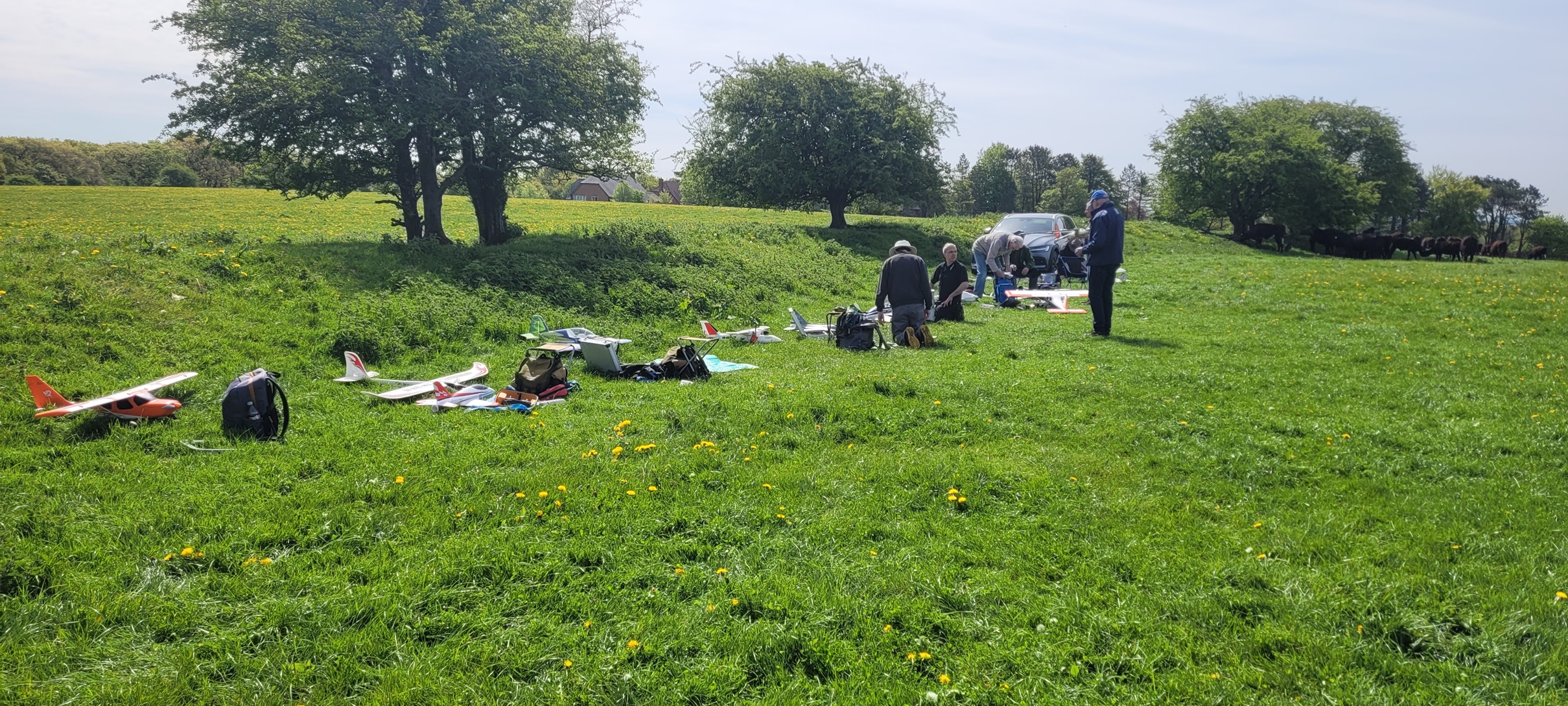
We had some unfortunate mower problems in April which I won’t go into here but, following a WhatsApp request for help from 1066, there was a good turnout of helpers on Tuesday 21st and after a couple of hours work the patch is in great condition once again.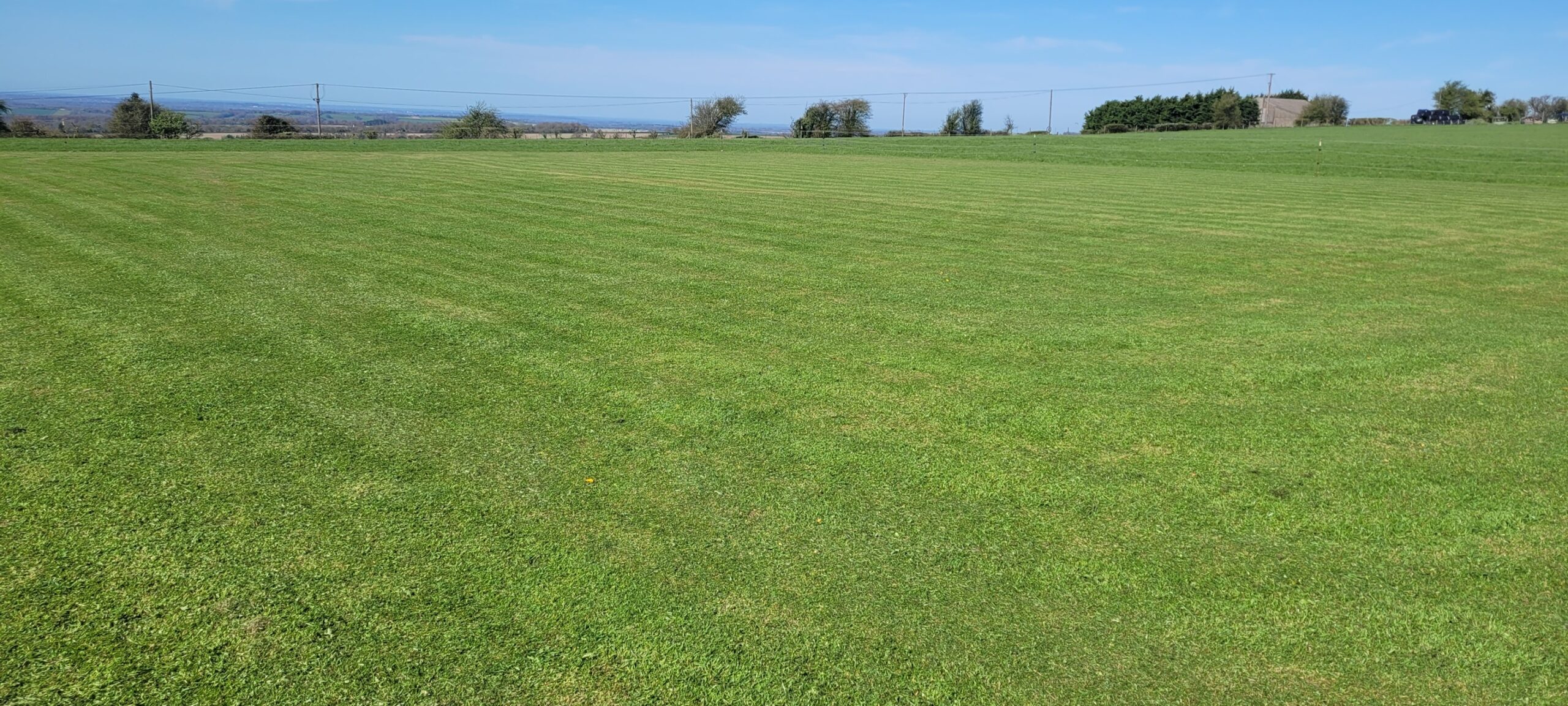
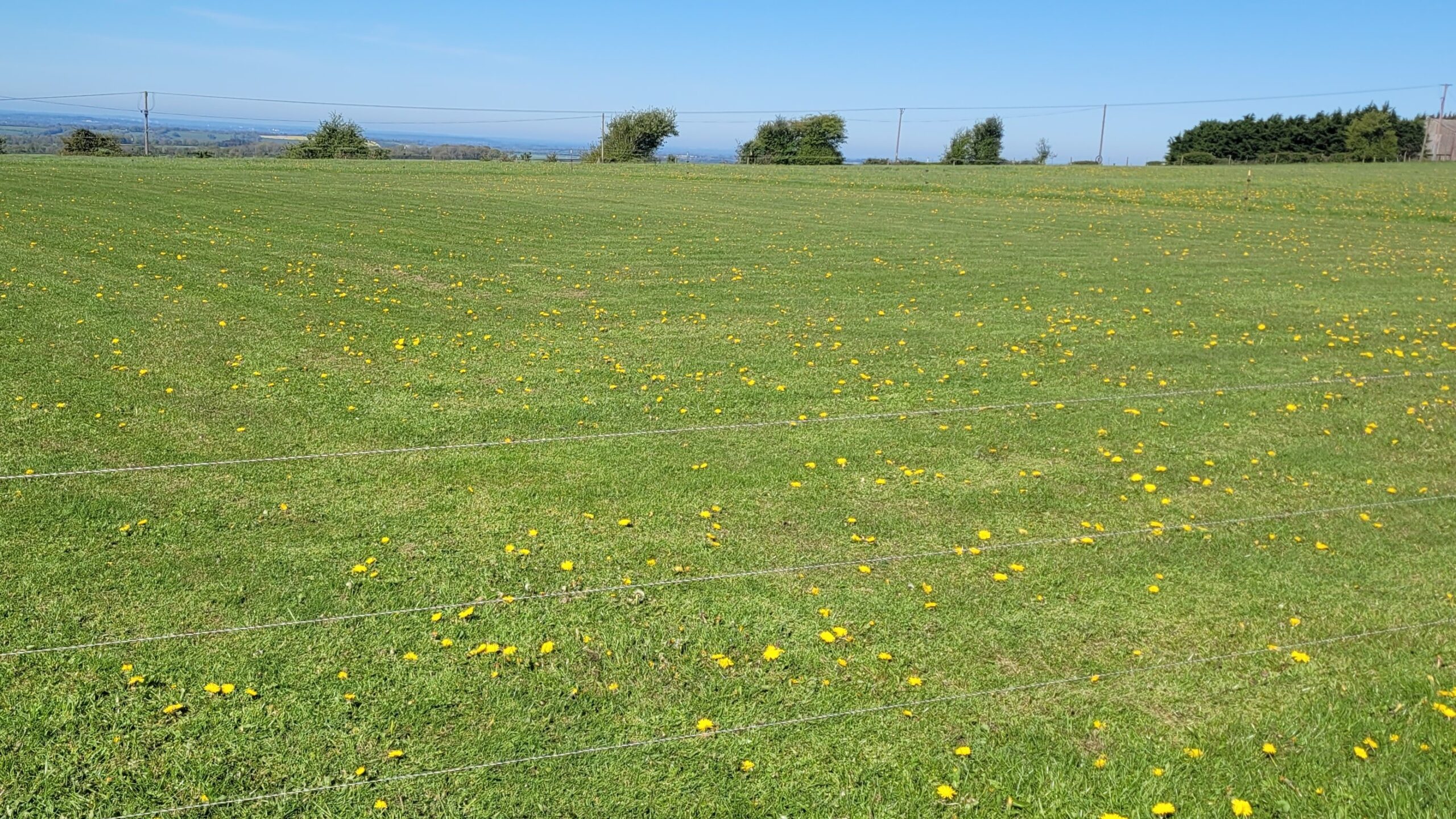
It’s amazing how quickly dandelions appear on the patch, the first photo was taken after cutting the grass on 7th April and second one on 24h April following two more cuts.
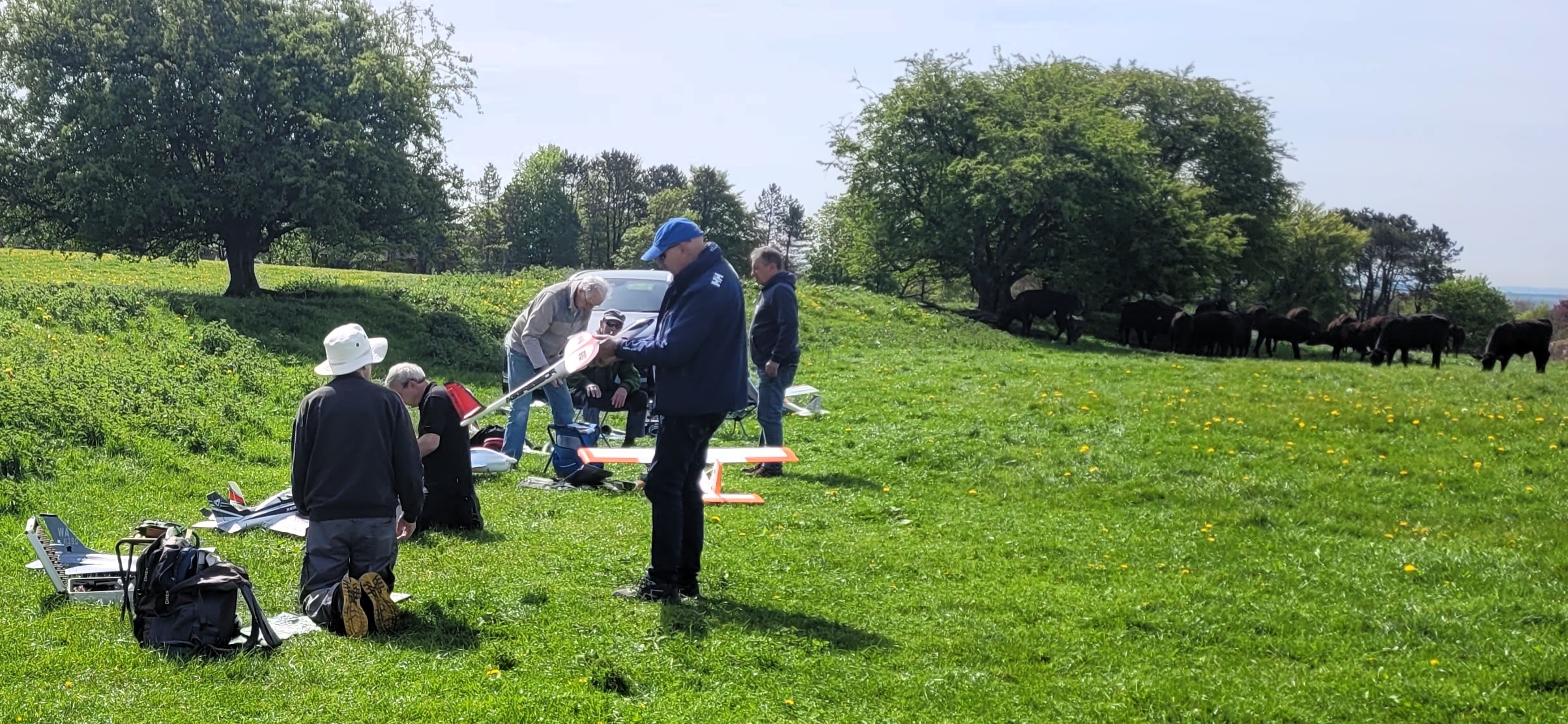
The farmers put about fifty young bullocks in the field early on Friday 24th and they seemed rather pleased to see us when we arrived to fly just a few hours later.
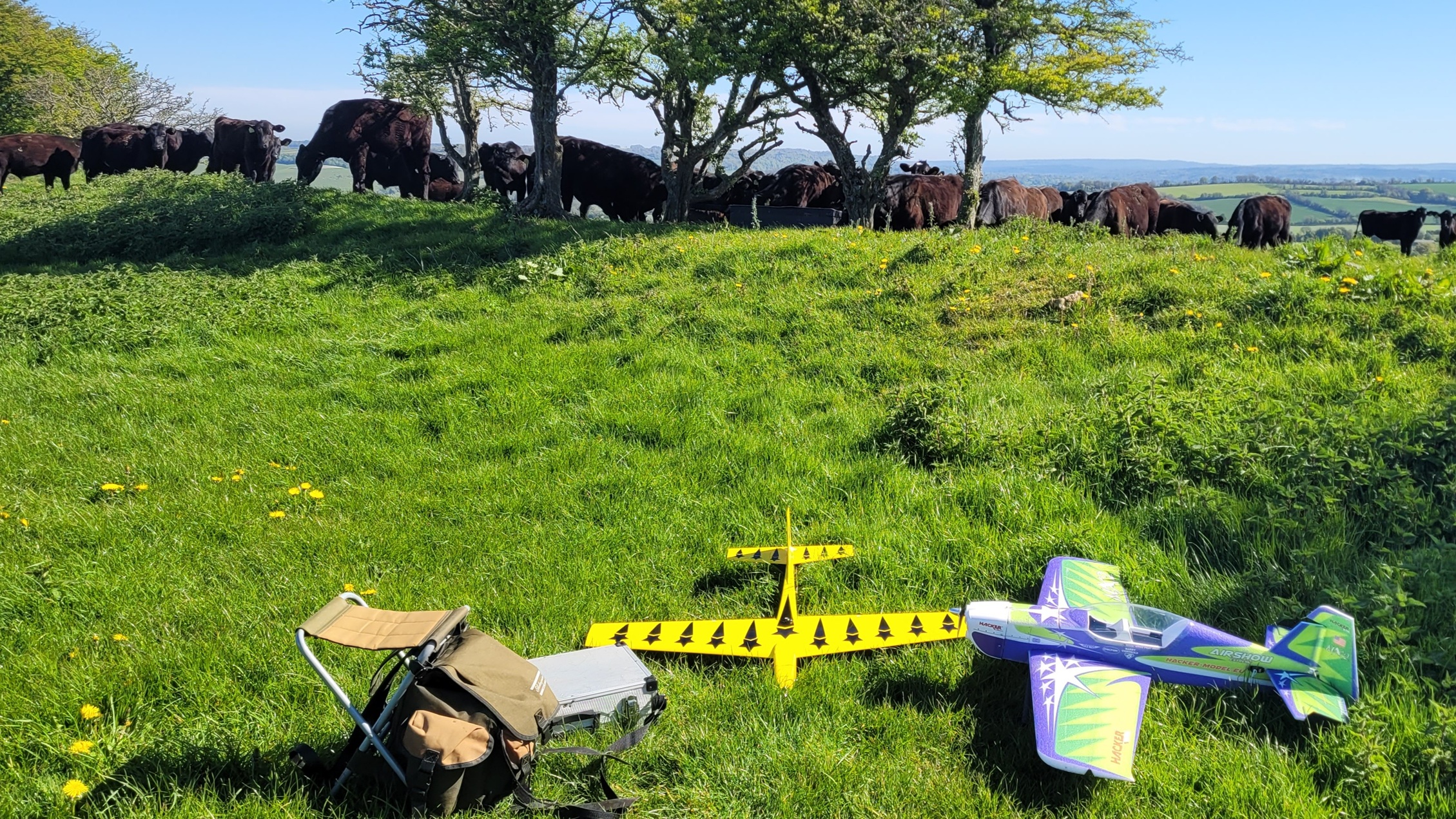 The young ones are usually the most trouble as they tend to be rather inquisitive, maybe they think we have food for them. But these weren’t much of a problem and we only had to herd them away when we arrived and then once again shortly before we packed up.
The club Competition Secretary, Dwayne Pipe, has asked me to remind everybody that the fun fly competitions run throughout the year and he encourages us all to take part. Dwayne has made a posh new aluminium spot for the spot landing task which is just one of seven tasks to try. Pilots can have a go at any or all of the tasks, whatever they fancy, as often as they like through the year. No need to stop the general flying, just ask someone to time/count/measure whatever they choose to try and let Dwayne know the score. There are two categories, one for BMFA A certificate fliers, the other for B certificate fliers so whatever your skill level you’ll be competing with similarly skilled pilots. Go on, try it!
In April we heard the sad news that ex-PAM member John Bourne had passed away on 15th April at the age of ninety two. Most current PAM members probably won’t have known John but I first met him while working at IBM in Havant about forty-five years ago. He is probably best described as a bit of an eccentric, nutty professor type, he was constantly making odd gadgets and experimenting with anything he could think of! Although he was employed by IBM as an Interior Designer he had his own large well-equipped workshop there and seemed to spend his time doing almost anything he wanted! When he heard I was a modeller he put in a request for me to help him during his busy times. I was in heaven, getting paid to play with stuff such as building mad machines to entertain the kids (and adults) at IBM Family Days etc. One day he told me that he’d built an electric powered Luton Minor but he couldn’t fly RC so wanted me to check it out. I flew it in the IBM car park one lunchtime, my first ever electric flight, and it flew surprisingly well.
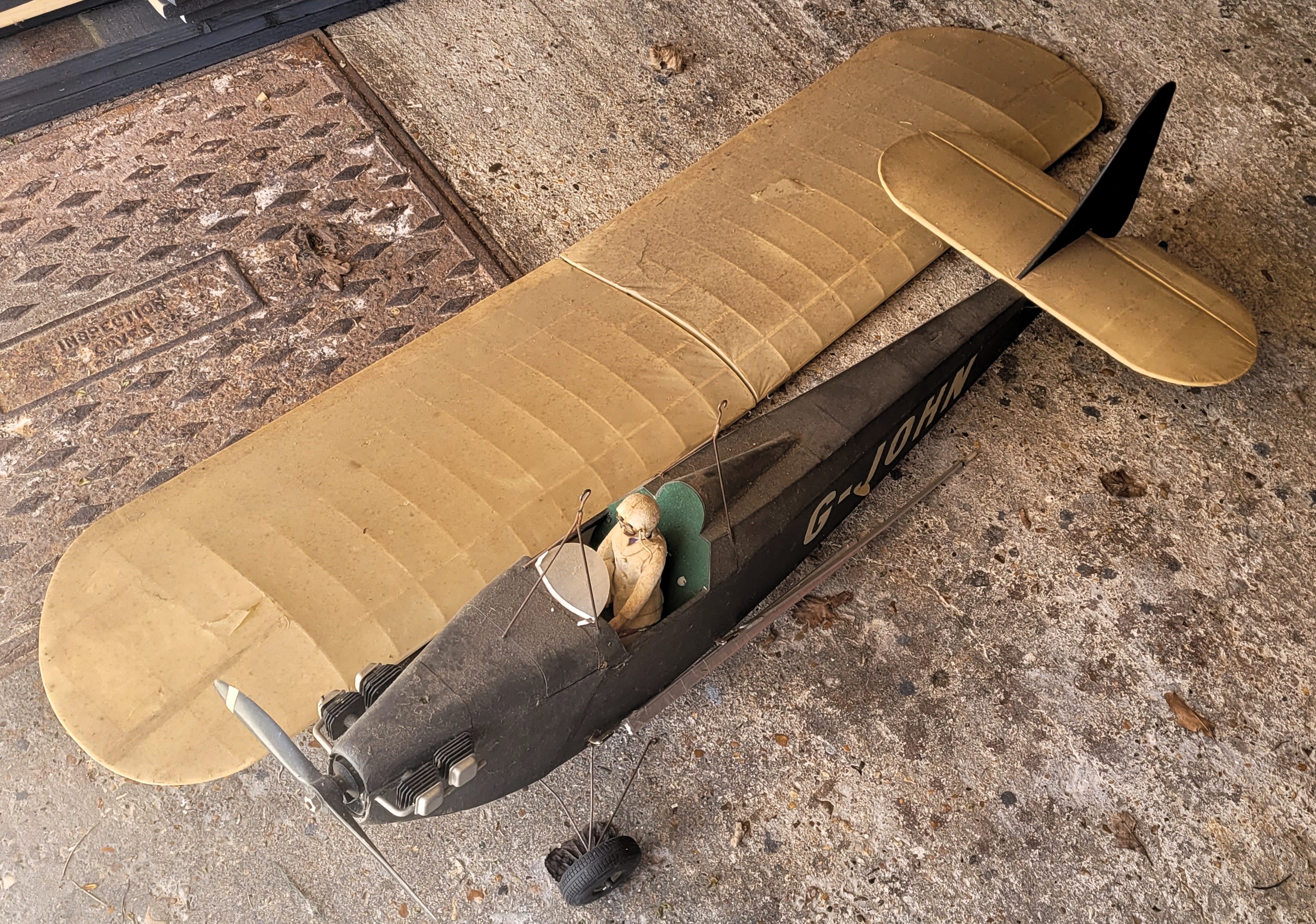
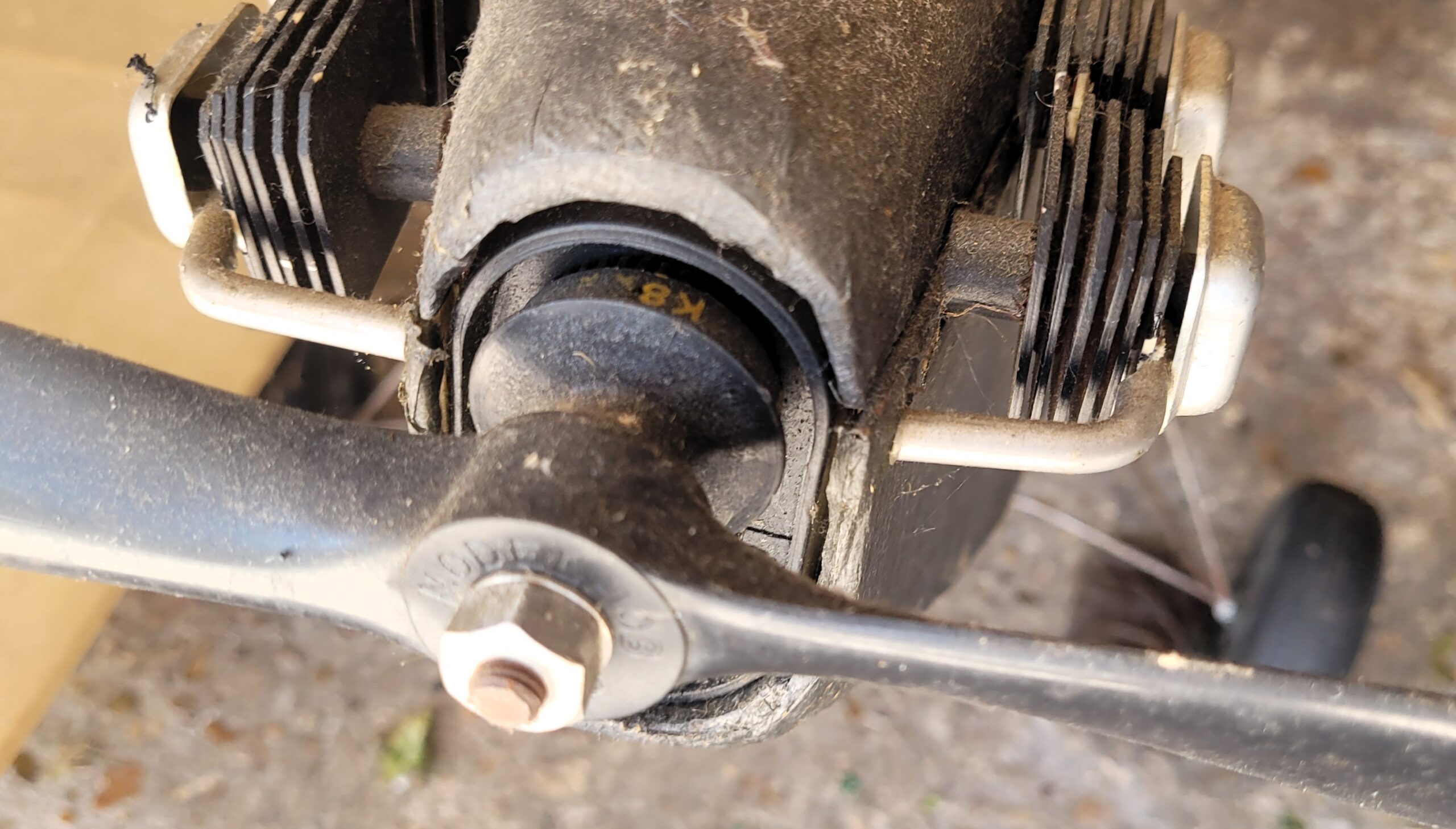 He was a great model builder but I remember thinking that if he could build a successful electric model when he knew little about RC planes, I should be able to do even better.
At John’s invitation I joined the IBM model club where I also met current PAM member John Warren. Shortly afterwards John Bourne joined PAM and gave us several club meeting talks on things such as the series of fully working Stirling engines he had built and his exploits in hang-gliding when in it’s infancy, even flying at Dog Mountain near Seattle!
A couple of years ago John and his wife Kay had to move into a care home and he asked his daughter Rona to contact PAM to dispose of his aero-modelling stuff, and both I and Dougal Entendre went to sort it all out. Many of his planes were sold at a club meeting, along with more of his modelling goods, with all the money going into club funds.
I took the opportunity to buy that very first electric model I had flown, the Luton Minor.
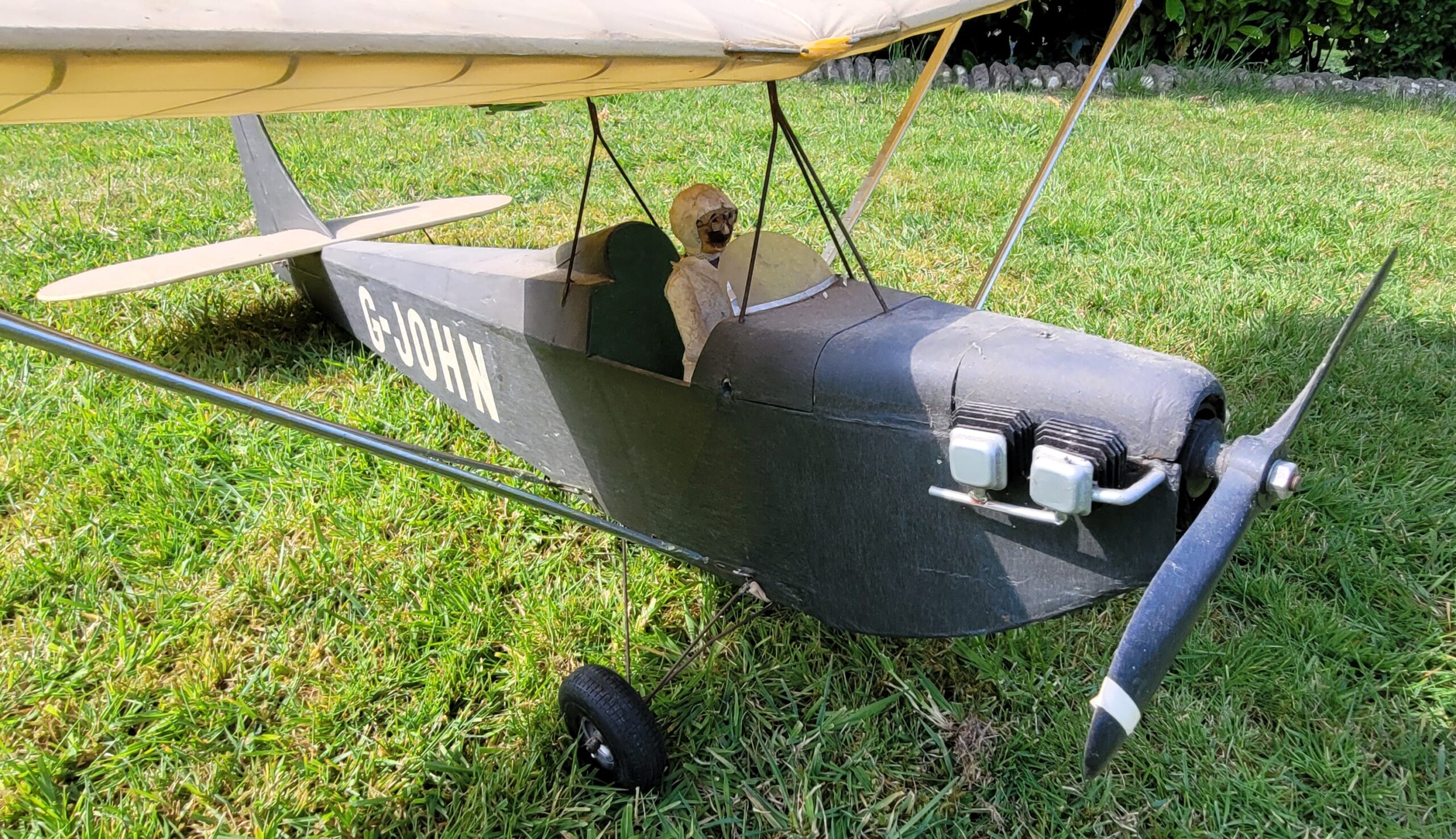
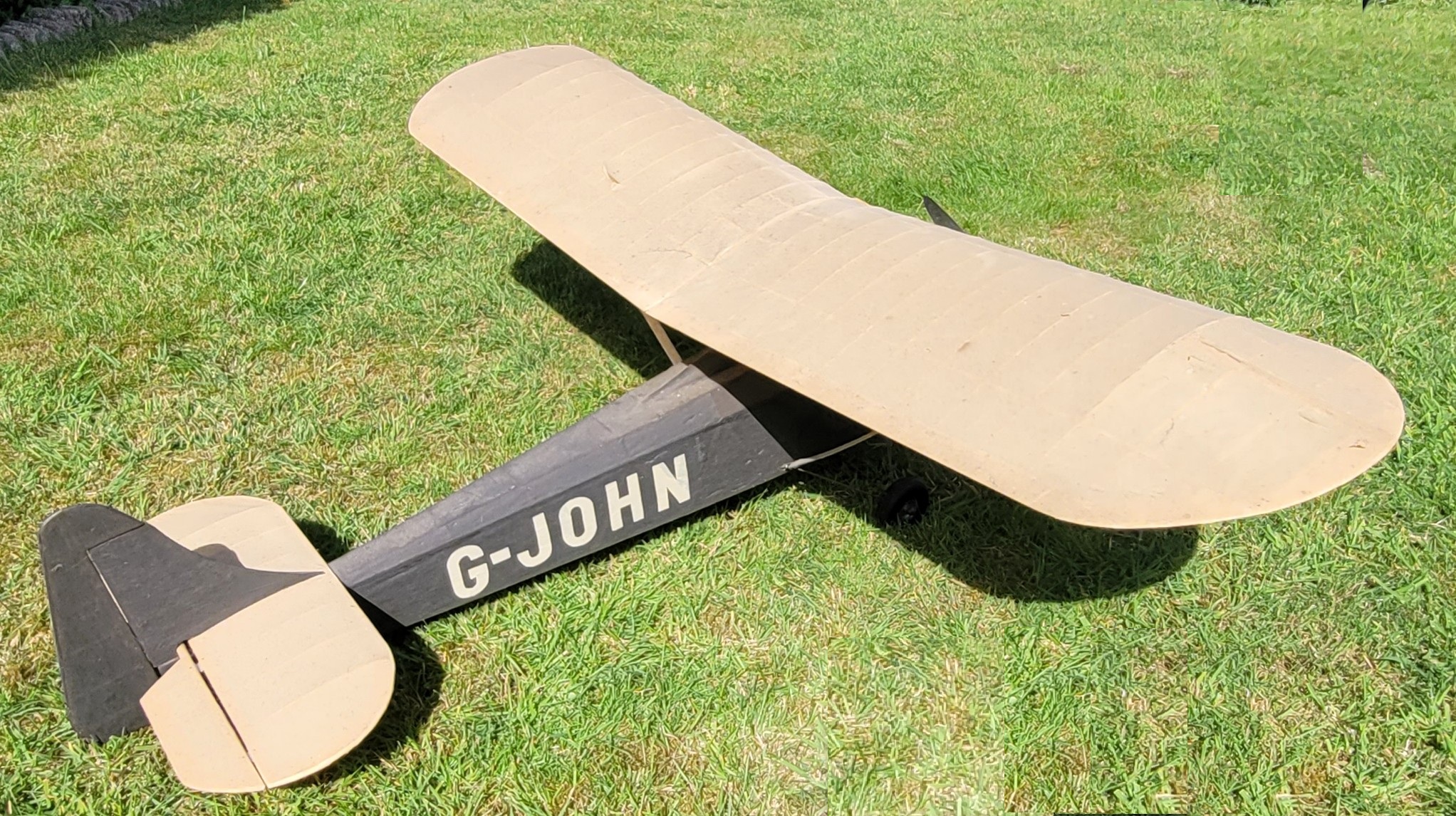 Several other members also bought some of John’s models including Dougal Entendre who bought a large vintage Sportster that he flew a few times but has since sold on,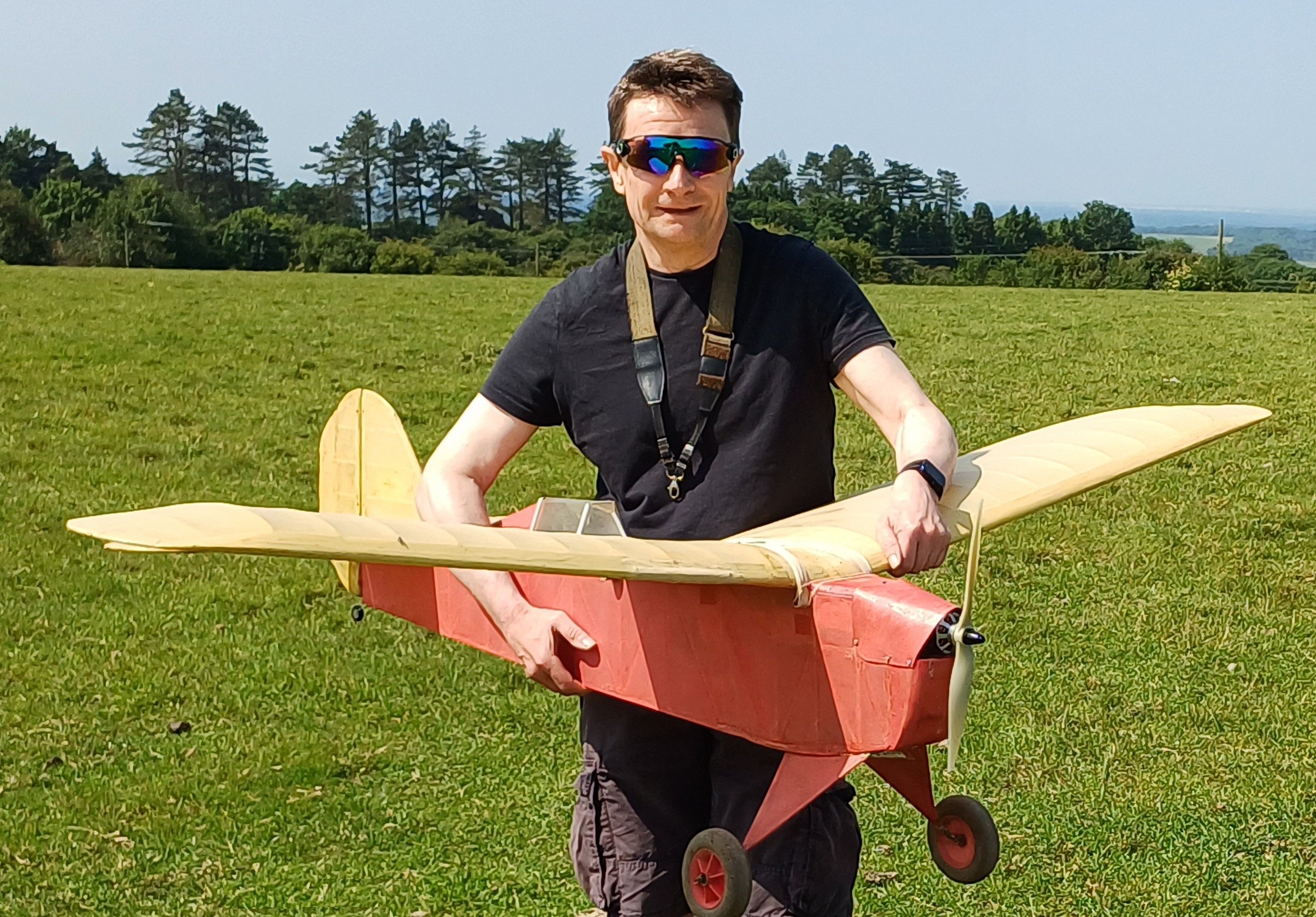
Gordon Bennett bought a Fosdyke Flyer, and Dwayne Pipe bought an electric glider.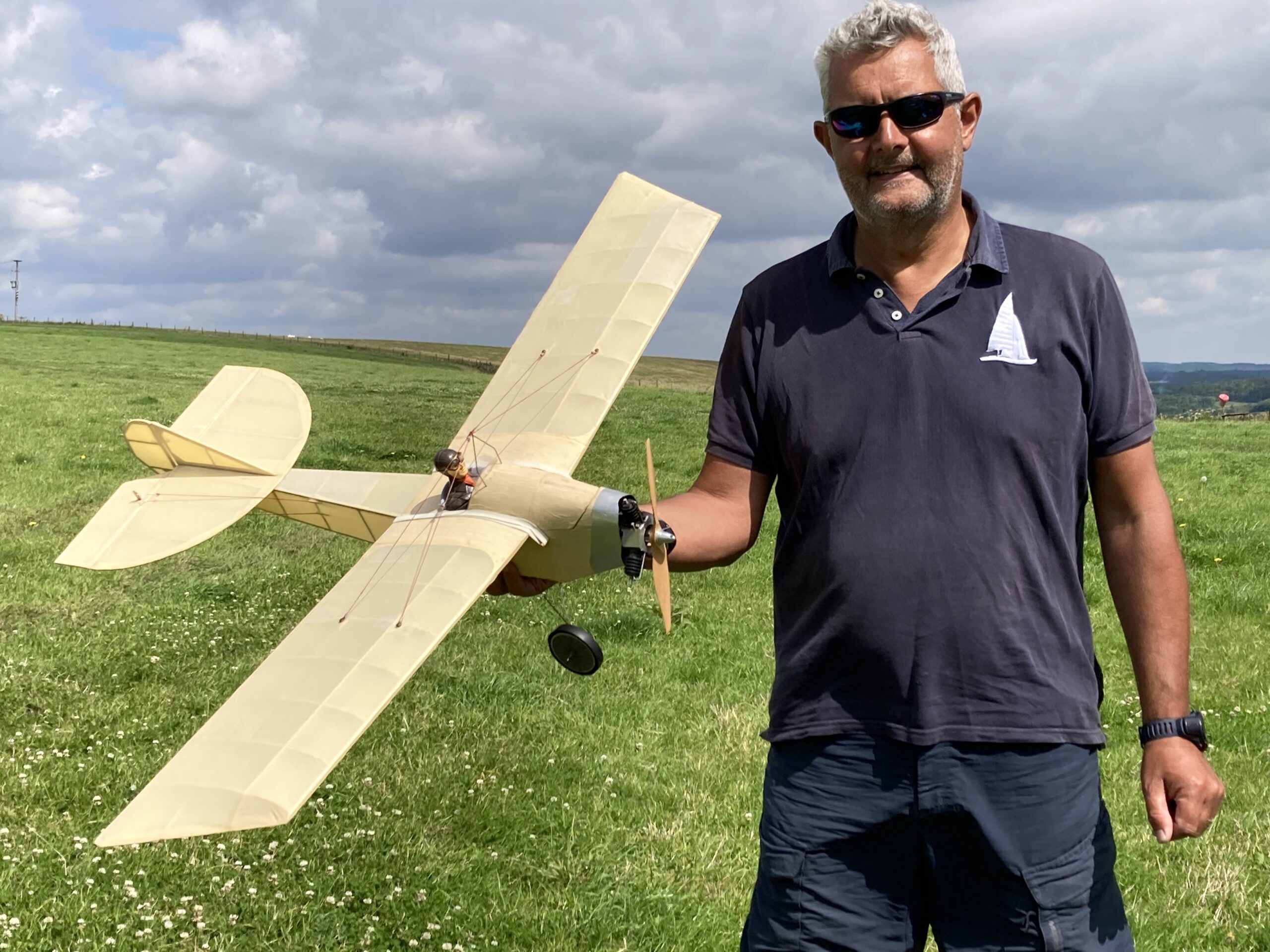
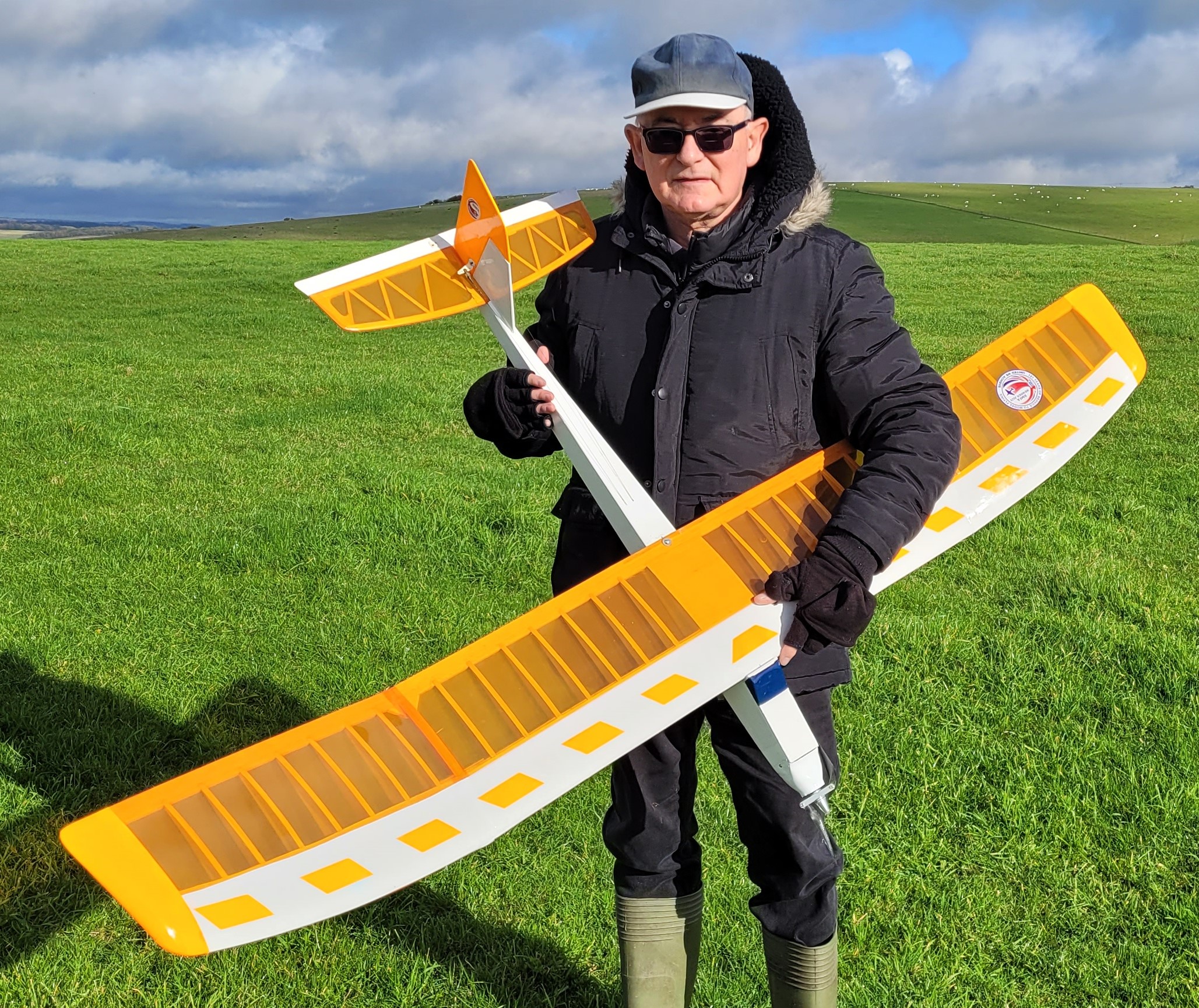
All these models had been beautifully built by John and fly well, he was a great modeller.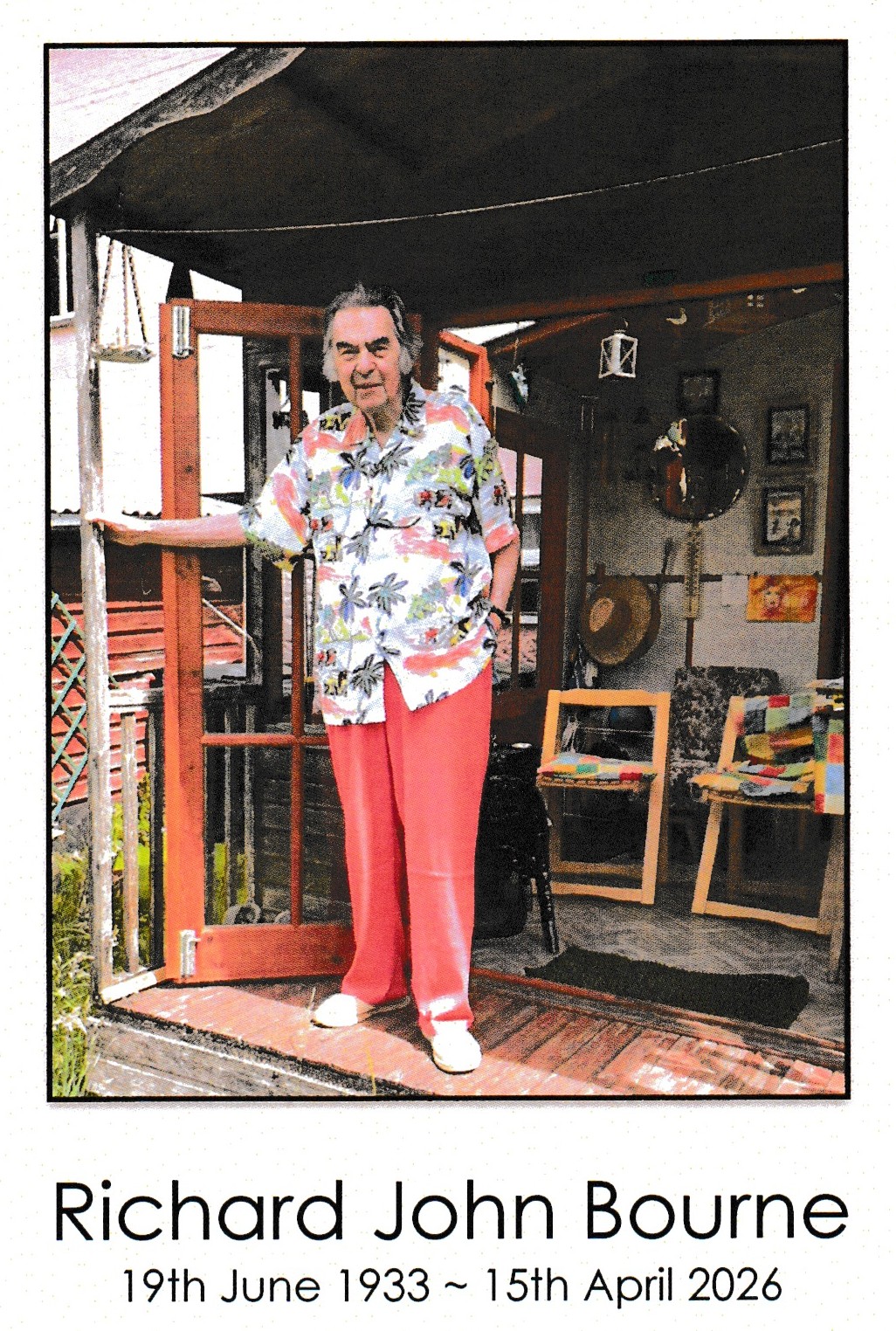 Doreen and I attended John’s funeral on 30th April and met more of his friends and family and heard more of his exploits over a long and well lived life. You’ll be missed John.
Although there was plenty of flying in April there wasn’t a single new model flown. I think that’s a first, I can’t remember a month when there wasn’t at least one to write about.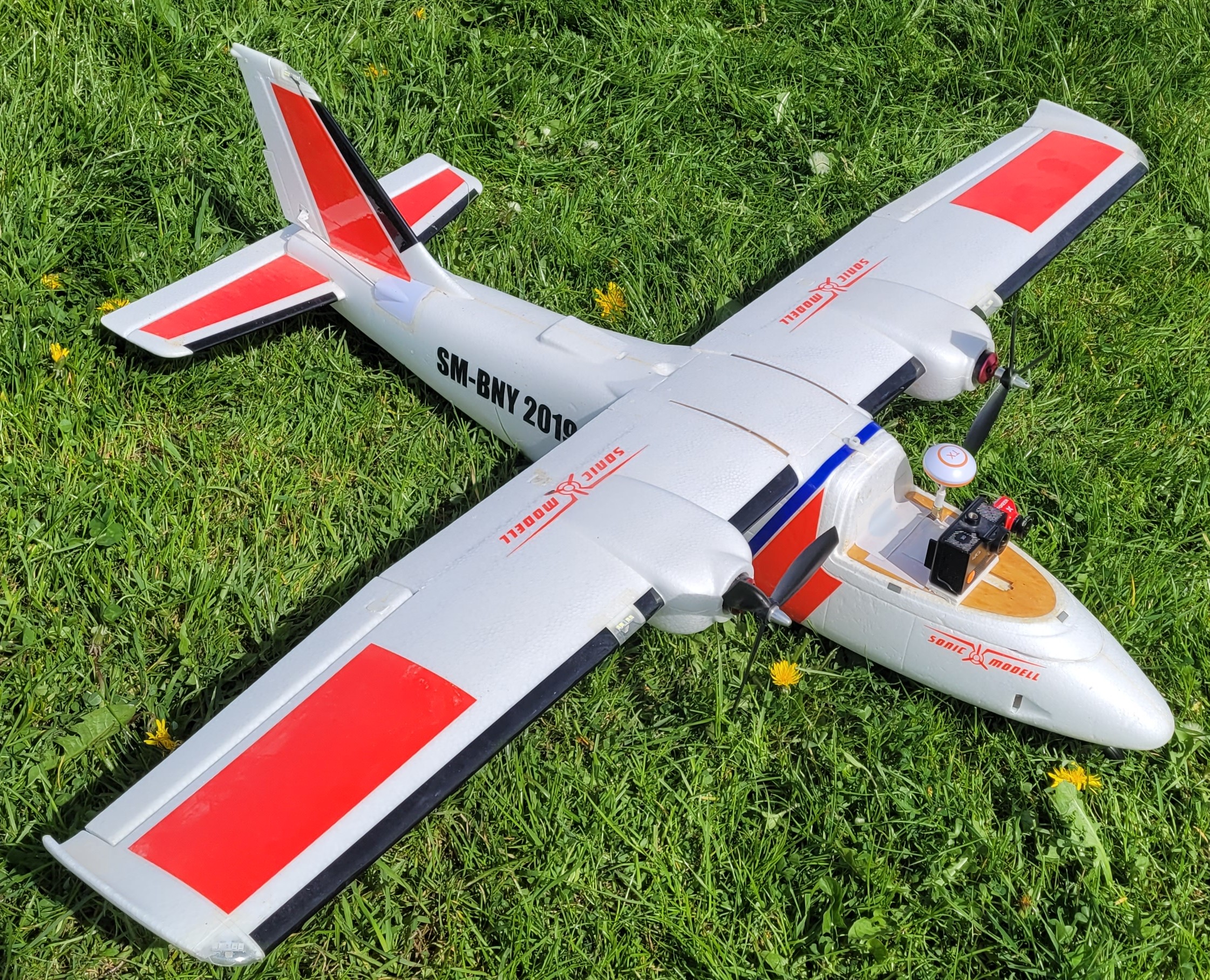
So I’ll concentrate on other things this month, starting with Dougal’s FPV (First Person View) plane, a SonicModell Binary. Both Dougal and I fly FPV occasionally, and Captain Slow tried it for a while but decided it wasn’t for him and sold the equipment.
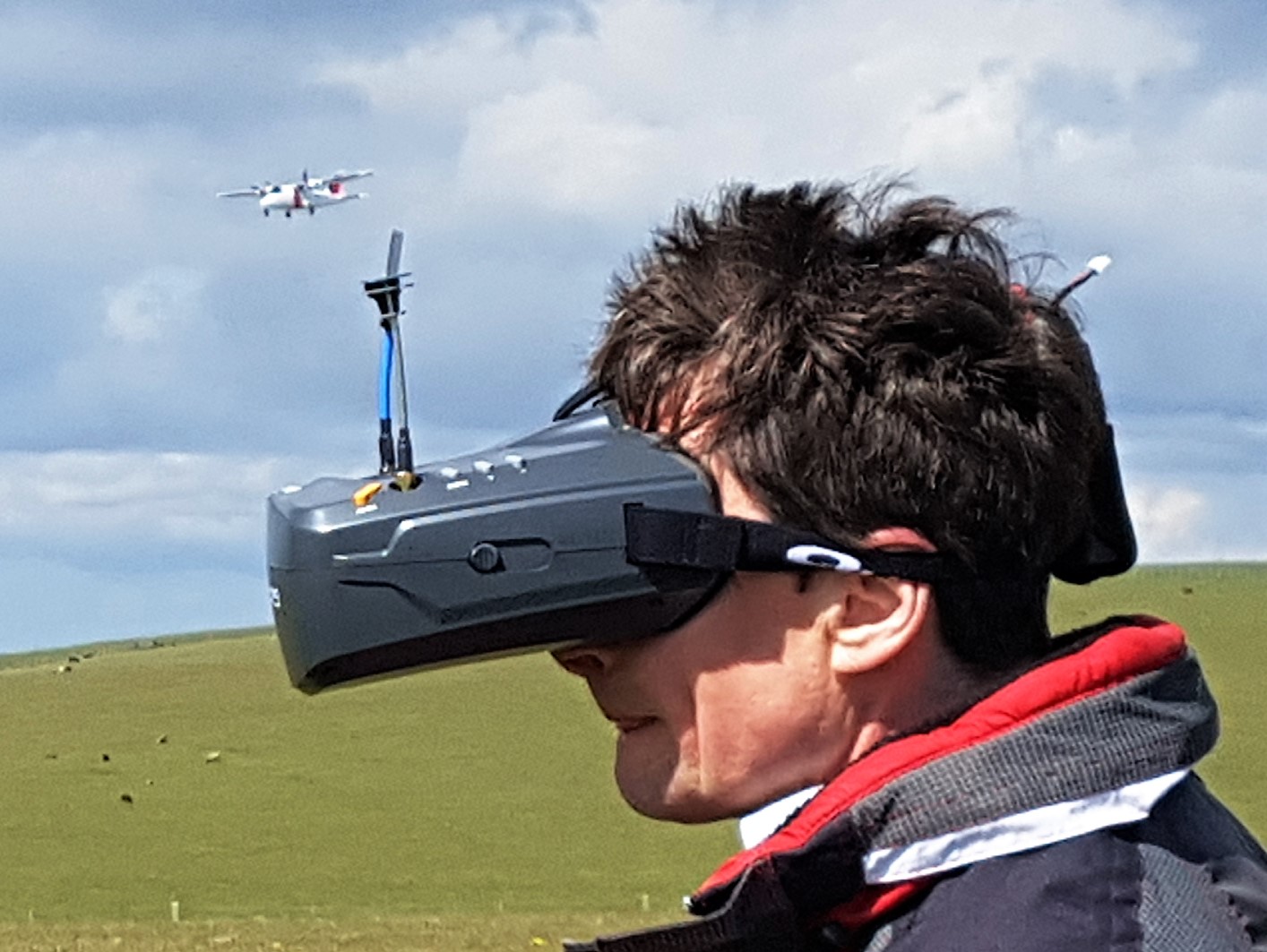 It’s not something we do very regularly, partly because it can be a bit of a faff setting everything up, plus you must always have a willing spotter to stand by the pilot and advise on positioning and, in case of emergencies such as video loss, to take control of the model.
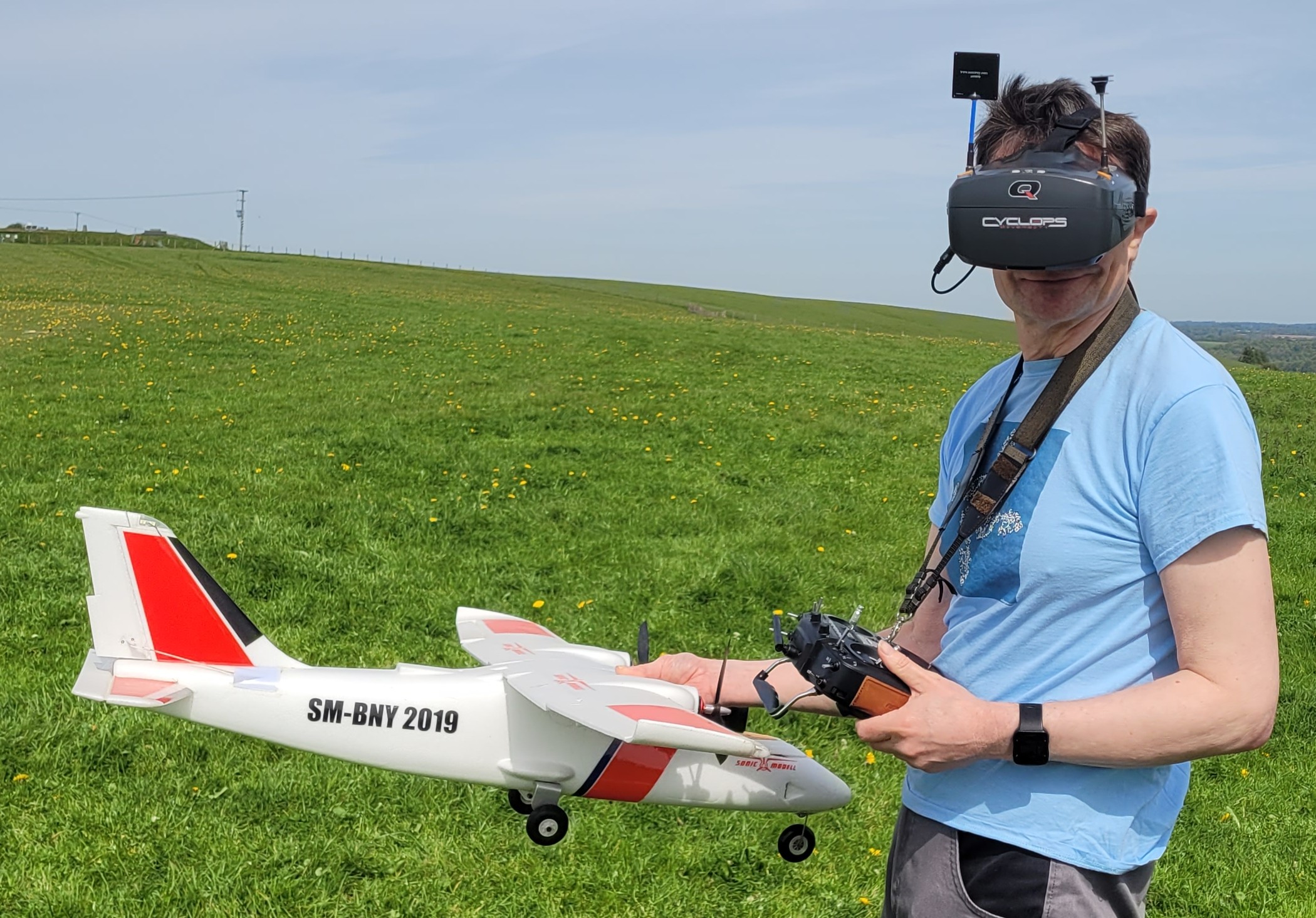 Also, unless there is another plane to follow, or maybe a bird, it can get a bit boring just flying over the same bit of countryside. FPV is limited to LOS (Line of Sight) so the pilot can only fly over the same area around the field. Having said that, it’s fun to do now and again, and it’s certainly quite a challenge at times. Dougal and I tend to spot for each other when possible as it’s helpful to have a spotter who is familiar with the problems that can occur. !’ve had occasions when I’m unsure where I am and asked the spotter for directions only to be told “Head back towards the patch”, or “Turn left…no right…”. All great fun…!
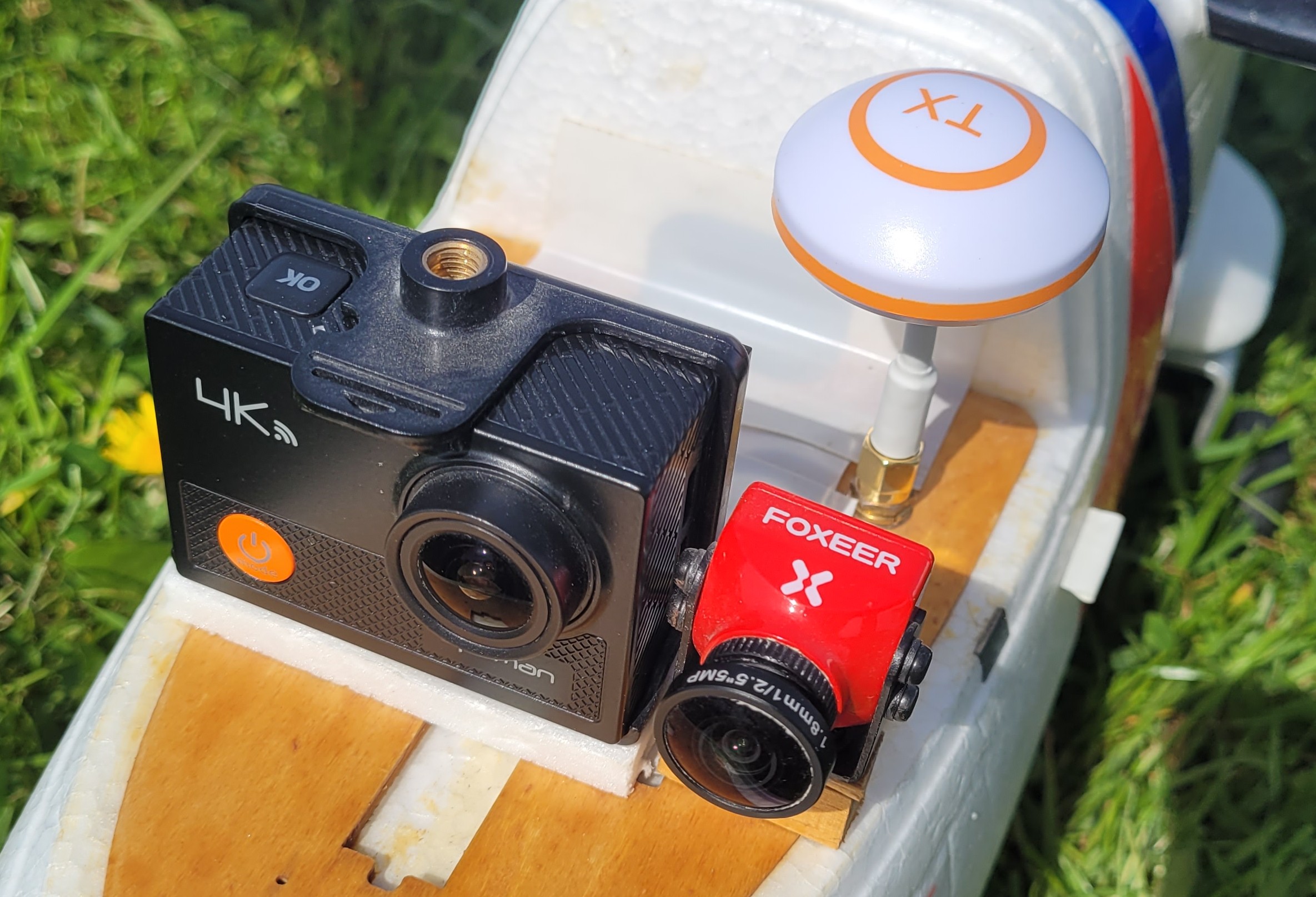 As well as the FPV gear Dougal has added a 4K action camera alongside the Foxeer FPV camera to record better quality in-flight video. Dougal says: The FPV camera is right next to the action camera, and they both seem to get a similar field of view. Although the action camera is 4K, I only run it in 1080p mode (at 60Hz frame rate). This is because 4K video files are huge and unwieldy, and the camera drops the frame rate right down to get 4K, which is no good at all, whereas the 1080p quality seems pretty good. I got comments about how long it took me to prep the plane for each flight. This is because I have to power up about 6 systems. In order, I go: Transmitter, plane (including lights), video Tx (from separate 1000mAh 3s battery), goggles, action cam, then set goggles and action cam recording. When I power up the action cam, it’s very difficult to see the video screen, even if I do remember to take my sunglasses off! I have to listen to the chimes as it powers up, and then different chimes when I press the button to start it recording. The latter nearly always seems to coincide with someone loudly saying “that’s a right faff to set up”, or “why has it got two cameras”, so it’s a miracle we have any video at all.
Well we do have video and very good quality it is too. I’ve included some of the footage in this month’s video, interspersed with footage from the ground recorded by MacFly.
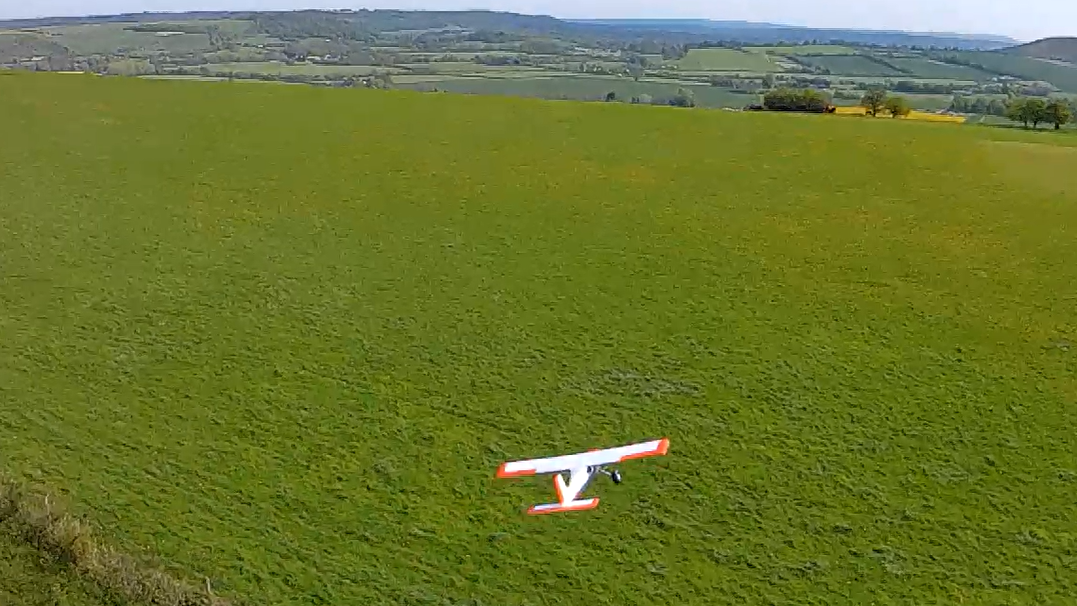
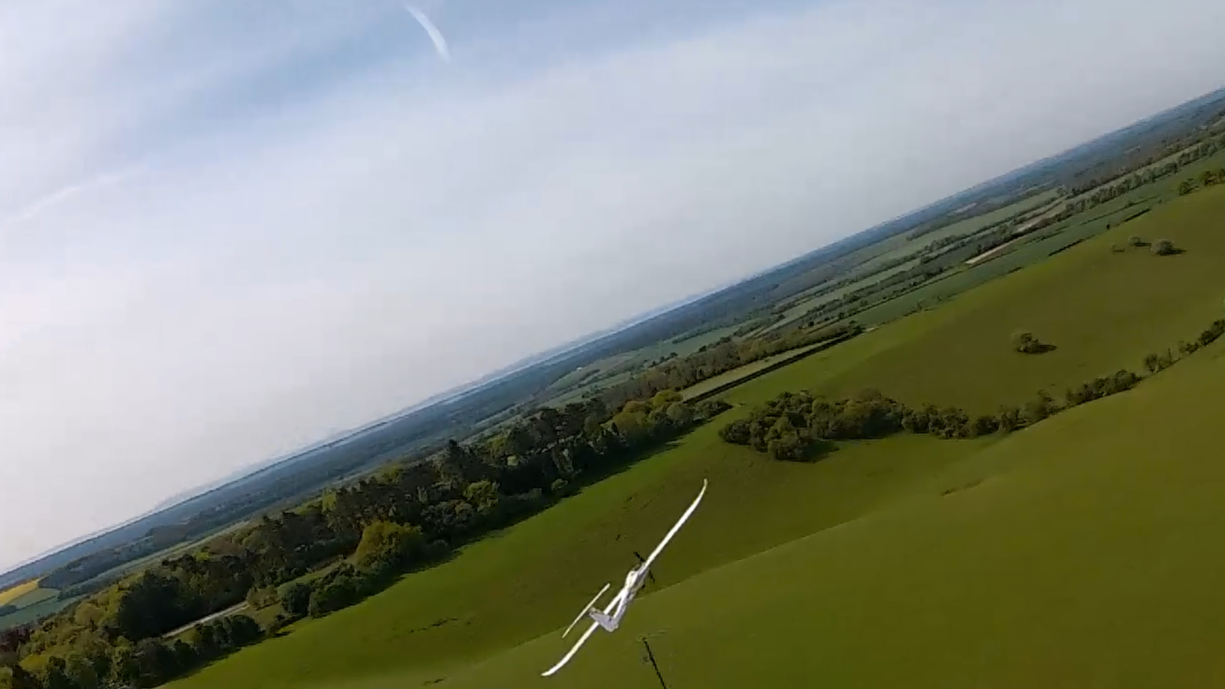 Here are a couple of stills from the video, I’ll probably use more video in May Patch News.
The other day I mentioned to 1066 that I was very short of material for this month’s Patch News as there had been no new models flown in April. He told me that he was in the process of covering something and he hoped to have it finished by the end of the month, in time for this Patch News. Then he sent me a photo…he’s covering his garage roof!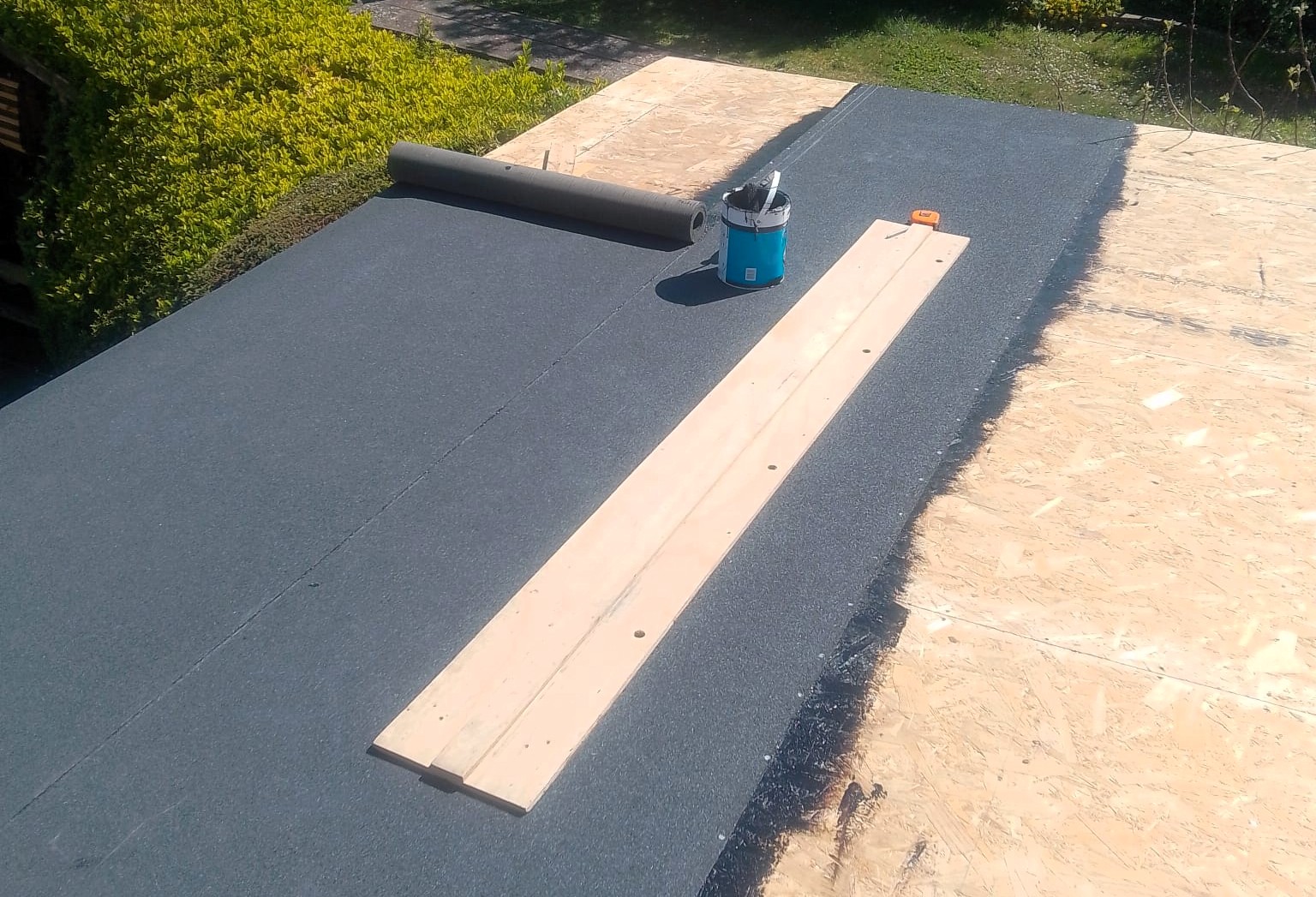
Well, he uses his garage for his modelling so I suppose it sort of qualifies…
Another non-new model story was something that happened to me at the start of the month. It wasn’t even a new model when I got it, I bought the XFly T-7A Red Hawk EDF jet from Woody when he found it was a bit too much of a handful for him.
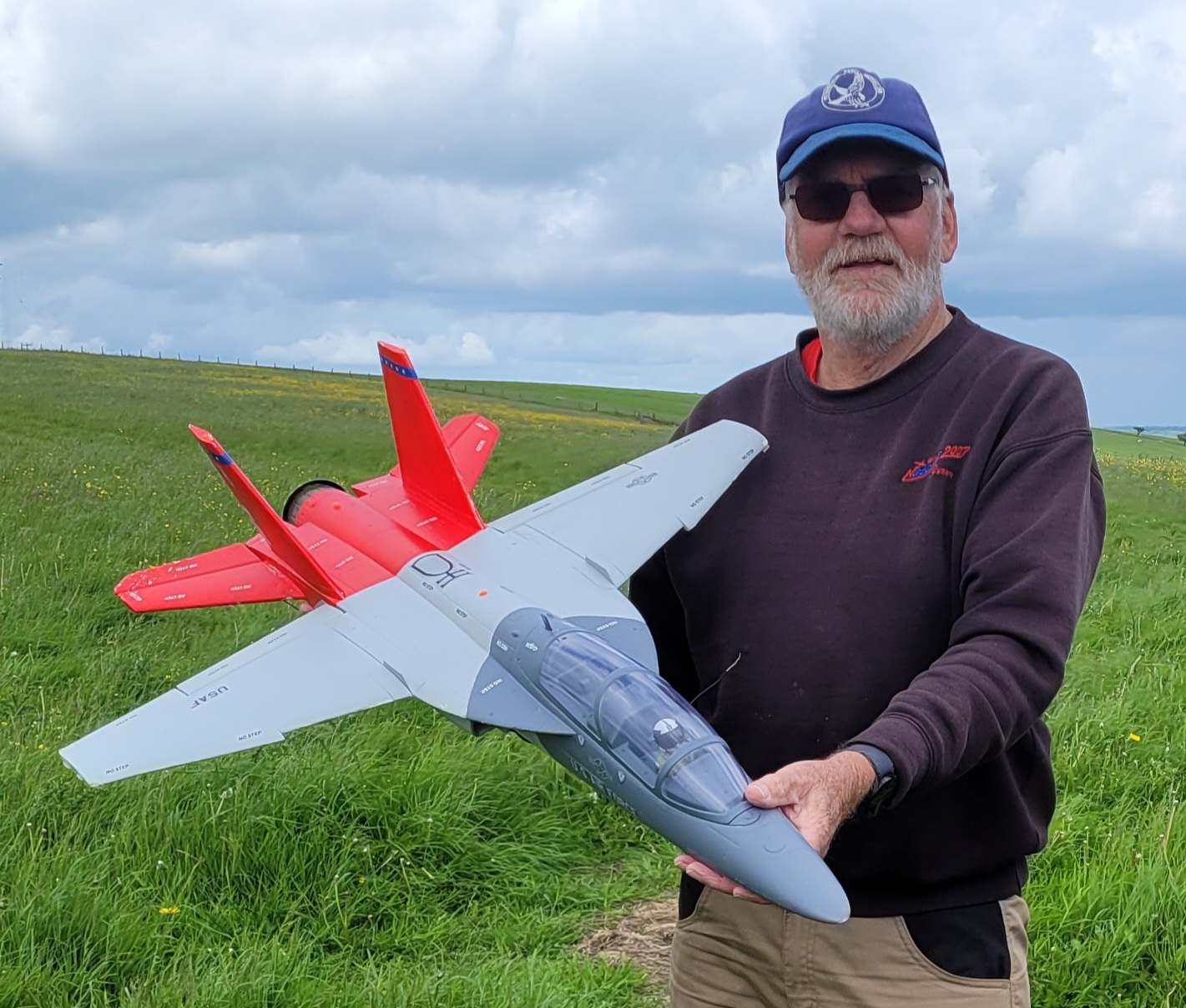 I’ve been flying it a lot recently and very much enjoying it as it flies very nicely, but you do need to keep the speed up unless it is flying more or less straight and level. When the speed drops there is not enough airflow over the surfaces (no propwash of course) and you lose control until the speed builds up again. The same is true of most EDFs but it seems more pronounced on the Red Hawk than with other EDFs that I’ve flown. It sounds great in the air with its 12 blade 64mm fan and, being ex-Woody, it has a throttle linked ‘afterburner’ ring which shows up well when climbing out from a low and slow pass.
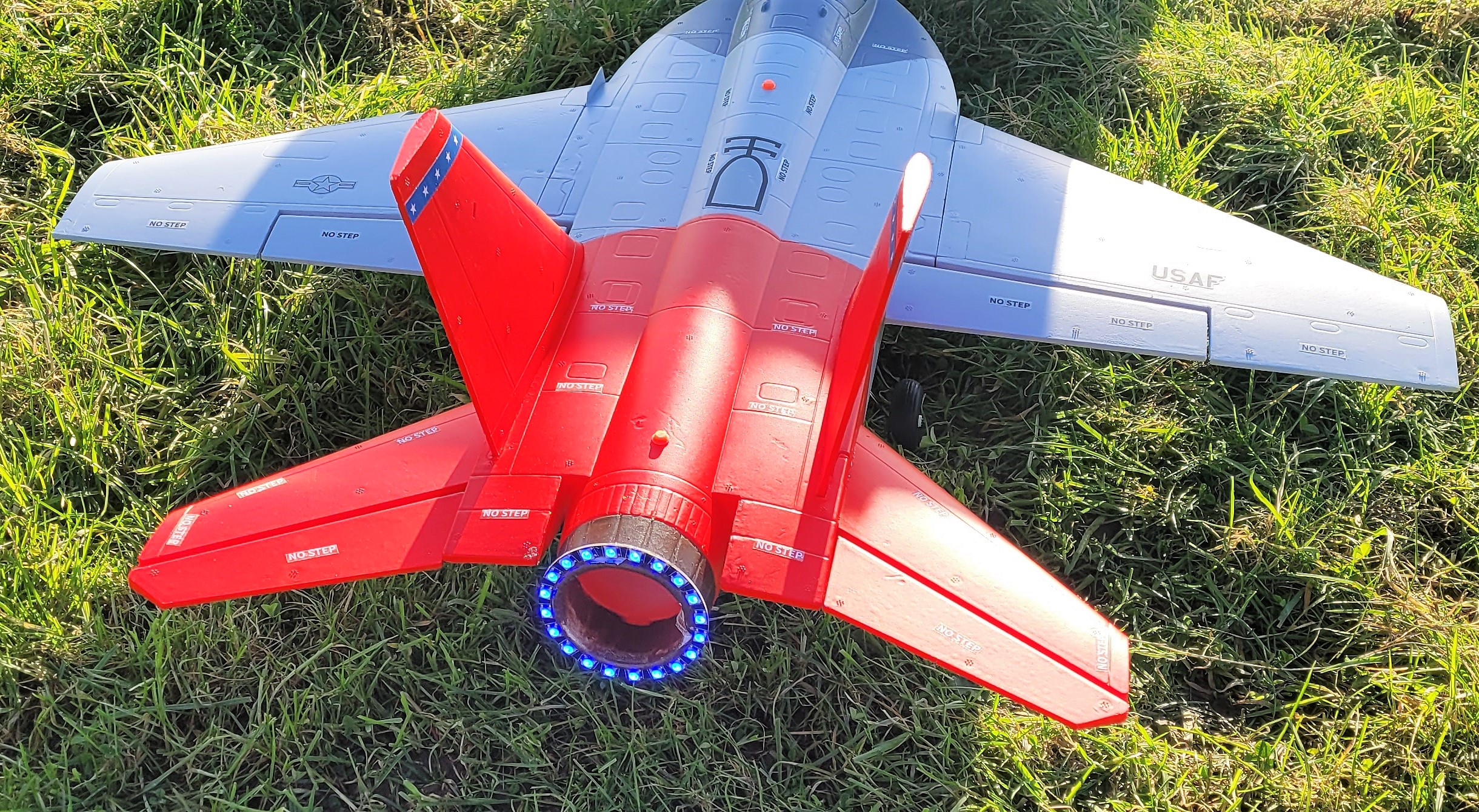 Incidentally, the Boeing-Saab T-7A Red Hawk is one of the aircraft currently being considered as a replacement for the Red Arrows Hawks which are scheduled to be retired in March 2030. So what happened to mine? The short answer is that I ran out of battery. My throttle timer was down to about 30 seconds and I was just turning in on finals when I realised I had no power. Unfortunately the plane was quite a long way downwind, out over the valley to the east, and the Red Hawk dropped out of sight below the field level.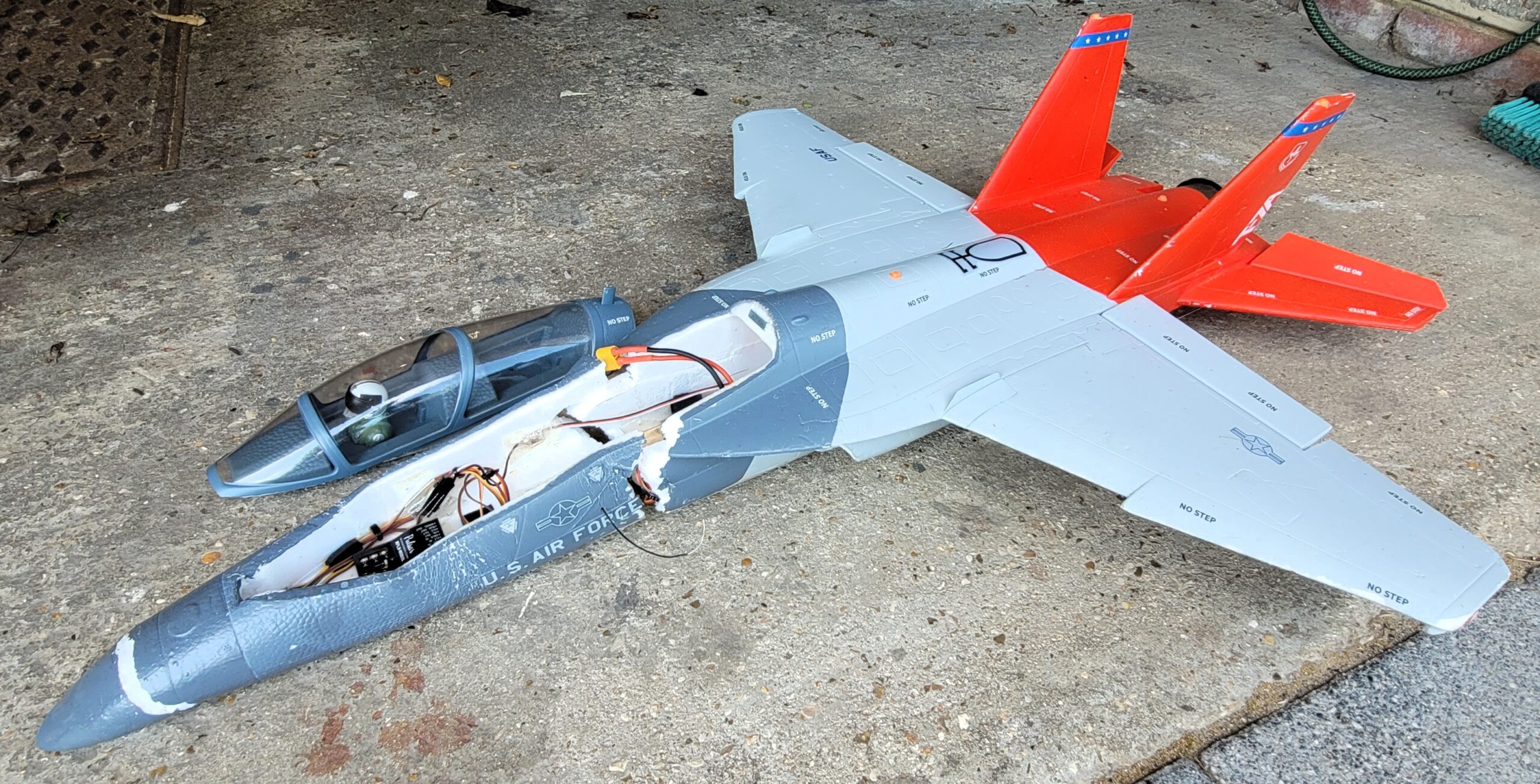
1066 was good enough to retrieve it for me and, although the nose is quite badly damaged, it is certainly repairable. I just need to put this laptop down and get round to doing it!
Did you know there is a full-size display team that flies electric powered aircraft? Yes, there really is, the NEBOair Electric Arrows! They aren’t quite in the same league as the Red Arrows, they are a team of just two and they fly a pair of Pipistrel Velis Electros.
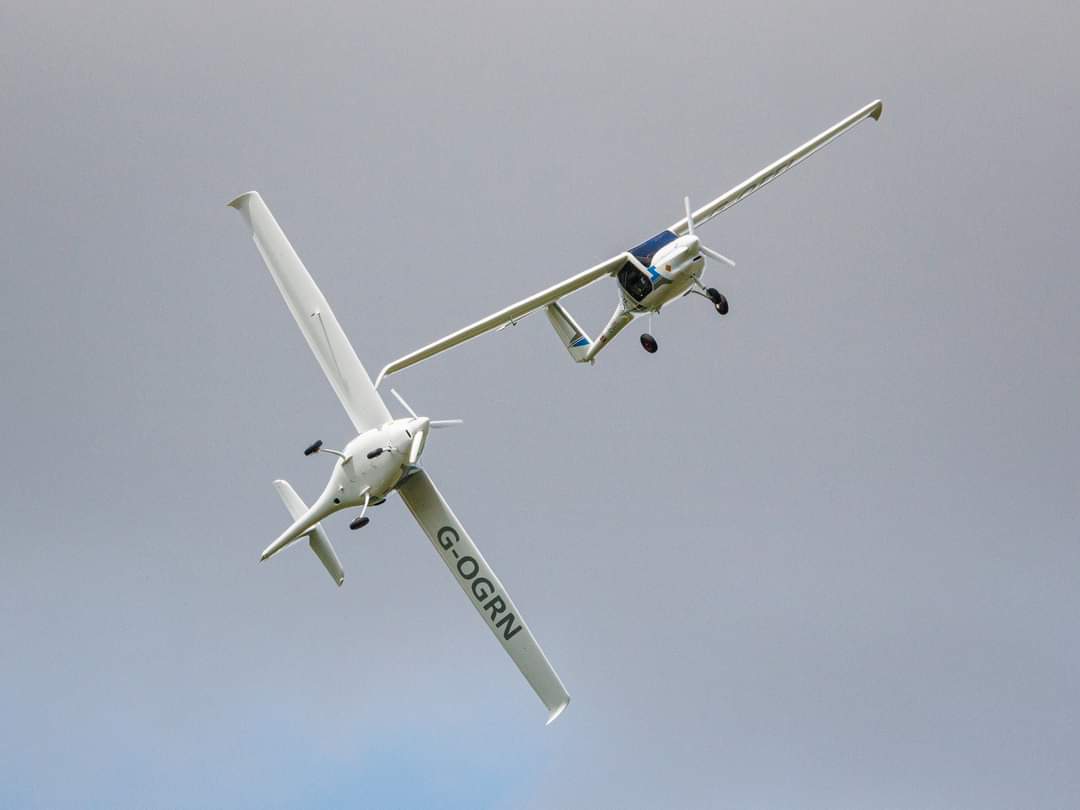
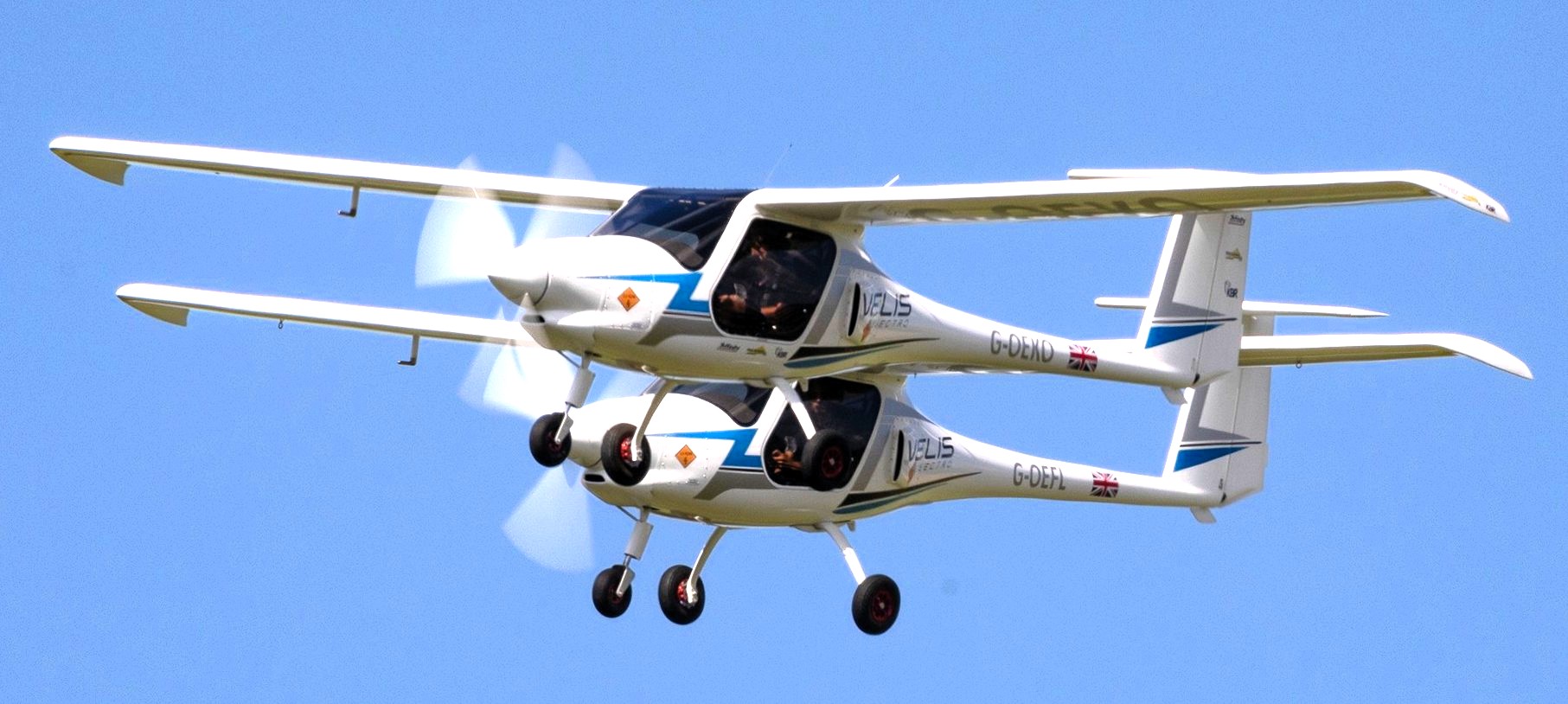 I found this on the Pipistrel website: This aircraft is world’s first electric powered airplane to receive a Type Certificate (EASA.A.573 TCDS). The two-seater, intended primarily for pilot training, is a game-changing aircraft in terms of technological innovations and cost-efficiency. Velis Electro can be operated commercially and is fully approved for pilot training as well as other operations. With its quietness, Velis Electro can bring flight training much closer to urban areas without adversely affecting communities’ quality of life. Unlike a start-up procedure of a conventionally powered airplane, the Velis Electro is powered-up by four switches and requires no warm-up time before take-off. This paradigm shift coupled with unprecedented quietness both inside the cockpit as well as from the outside, the Velis Electro truly is a game-changing aircraft to revolutionize your organization and empower a new generation of aviators.
As the last Patch News was published on 1stApril I felt obliged to include an April Fools story, something I do almost every year. Amazingly 1066 was the only member who definitely spotted it, some even said they looked for an April Fool’s joke but didn’t find it.
Well look, I said I wanted to build an RC model out of recyclable plastic yoghurt pots etc from the fridge that I would call Polar Fly. I explained that it was proving tricky so I’d abandoned the idea and had put it all in the recycling bin (which pleased my wife no end!) I ended the article with the words Adios Polar Fly, an anagram of April Fools Day!
Now come on you lot, you must try harder next year, I expect a whole lot better of you!
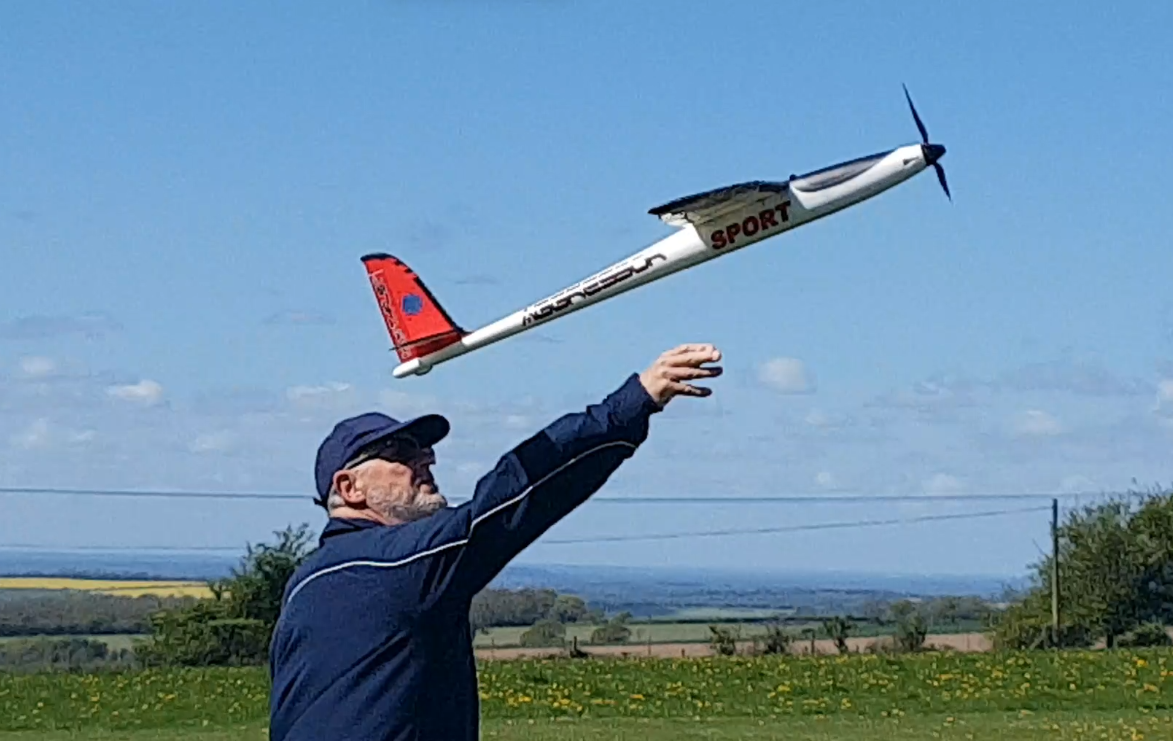
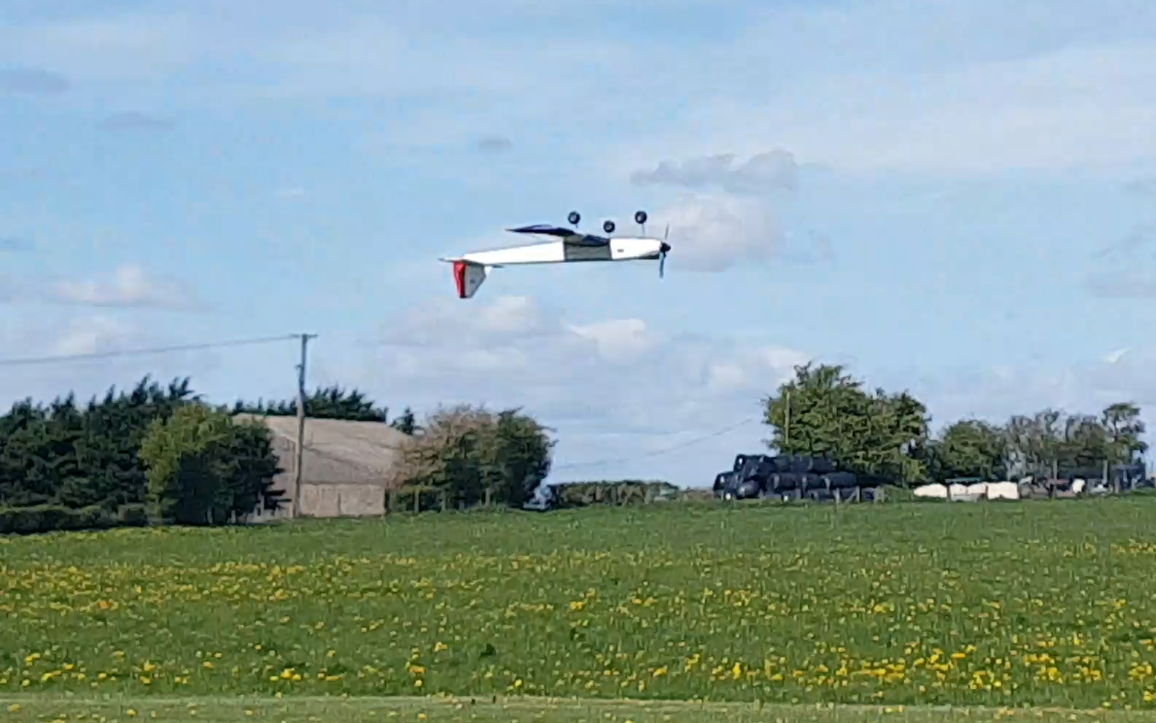
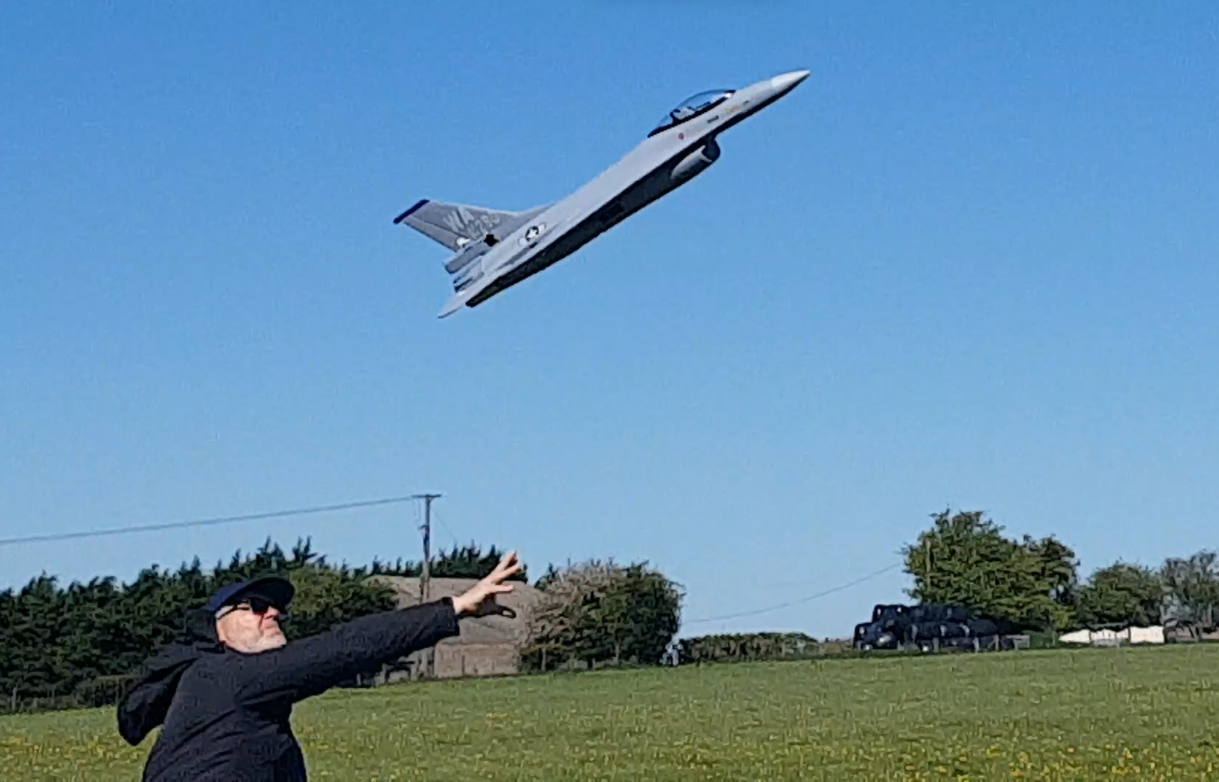
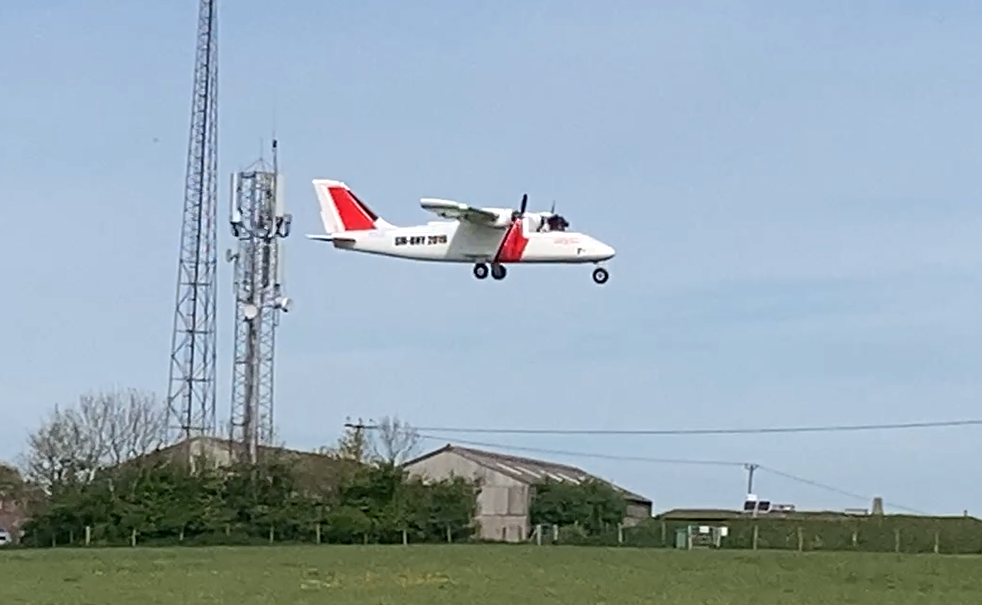
Take a look at some of the action shots from this month’s flying, all are from the video: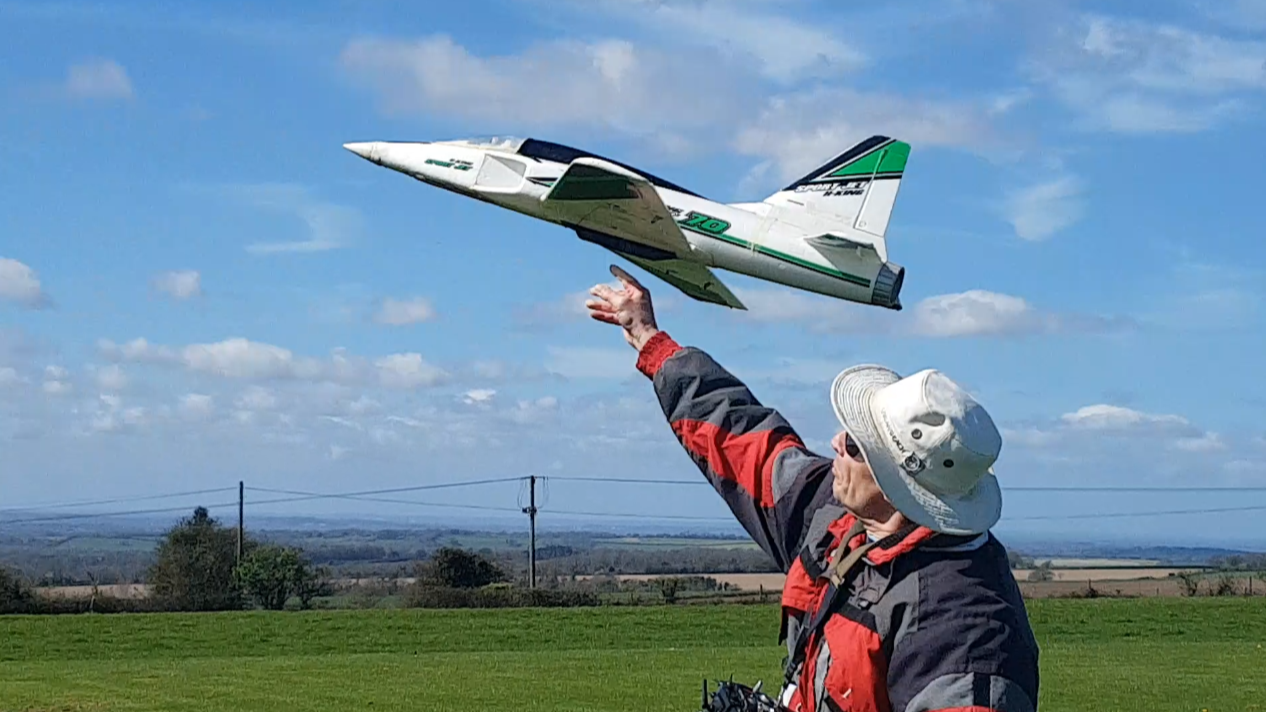
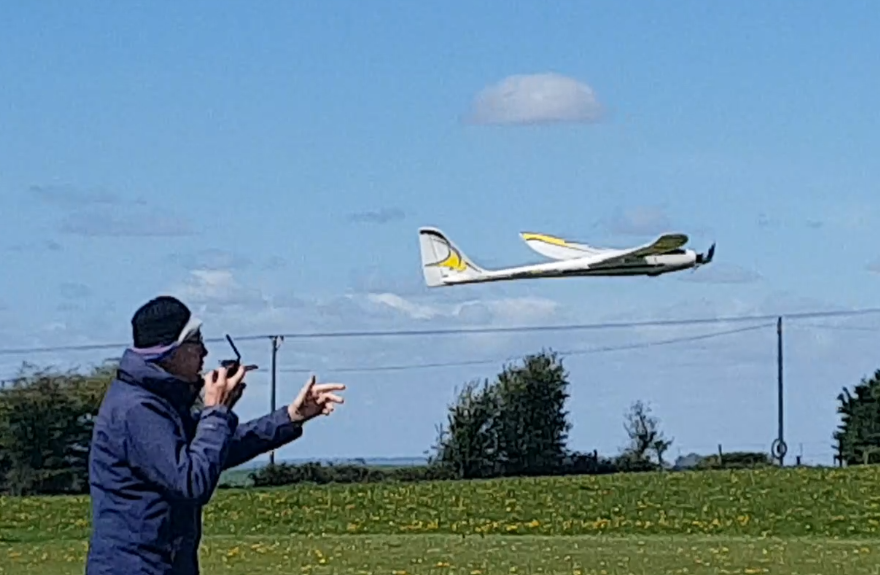
Video time now, with footage shot by me, Dougal Entendre, and MacFly.
Please watch the video full-screen, it’s so much better with small models flying around:
If the video won’t play for you please click HERE
The Final Funny:
The passengers boarded the plane which then took-off for a long flight over the Atlantic Ocean. The public address system came on with an important message for passengers.
“Ladies and Gentlemen, today we are introducing you to the latest and biggest aviation advancement in history. This plane is flying without either a pilot or co-pilot. Everything is controlled from the ground. by way of microwaves Sit back and relax and enjoy your flight. Be assured that absolutely nothing can go wrong…absolutely nothing can go wrong…absolutely can go wrong… nothing wrong, go wrong….wrong…”
Colin Cowplain

Thanks again Colin. Nice tribute to John Bourne.
Great Patch News Colin, and a great video too!
I wasn’t taken in by your April Fool (honest!), it’s just that I’d seen it done before, but for real! Check out https://www.youtube.com/watch?v=Vp2CT2nGOts
Yeah yeah Dougal! I like the one in your link but he used paper plates. The late Ted Webb from Winchester club built an RC flying pizza disc many years ago and I think he had the plans published but I can’t find them online at the moment.