Patch News – November 2015
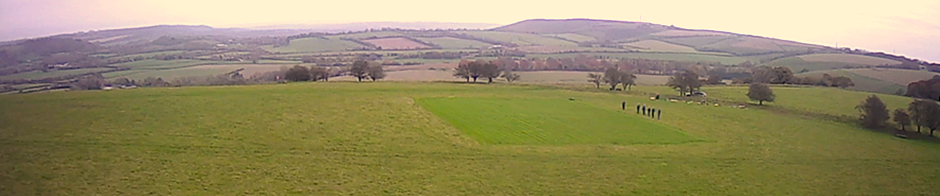
It’s 10.30 on a Sunday morning and I should be at the patch, but it’s blowing a gale and there is light drizzle so I’m taking the opportunity to produce some light drivel of my own. The Hampshire Astronomical Group weather station, which is close to the patch and at roughly the same elevation, is showing a wind speed of 34mph right now so I think I’ve made the right decision. If you missed the link I gave to the station a couple of months ago it’s worth saving for future use: http://weather.hantsastro.org.uk/
This morning about sums up the weather for most of November, damp and windy. But, as always, we’ve managed to get some flying in and I have plenty to write about. Oddly, several of the days that weren’t damp and windy were almost flat calm, most unusual for Chidden Down.
Last month, at the end of the October Patch News, I posted a caption competition. There have been a few entries but I’d like to see some more. I will award a prize for the best caption at the club meeting on 3rd December so if you haven’t entered yet please have a go now.
I’ll start this month with some photos taken on a foggy 1st November, those that turned up flew but it was certainly a day to stay close and take great care.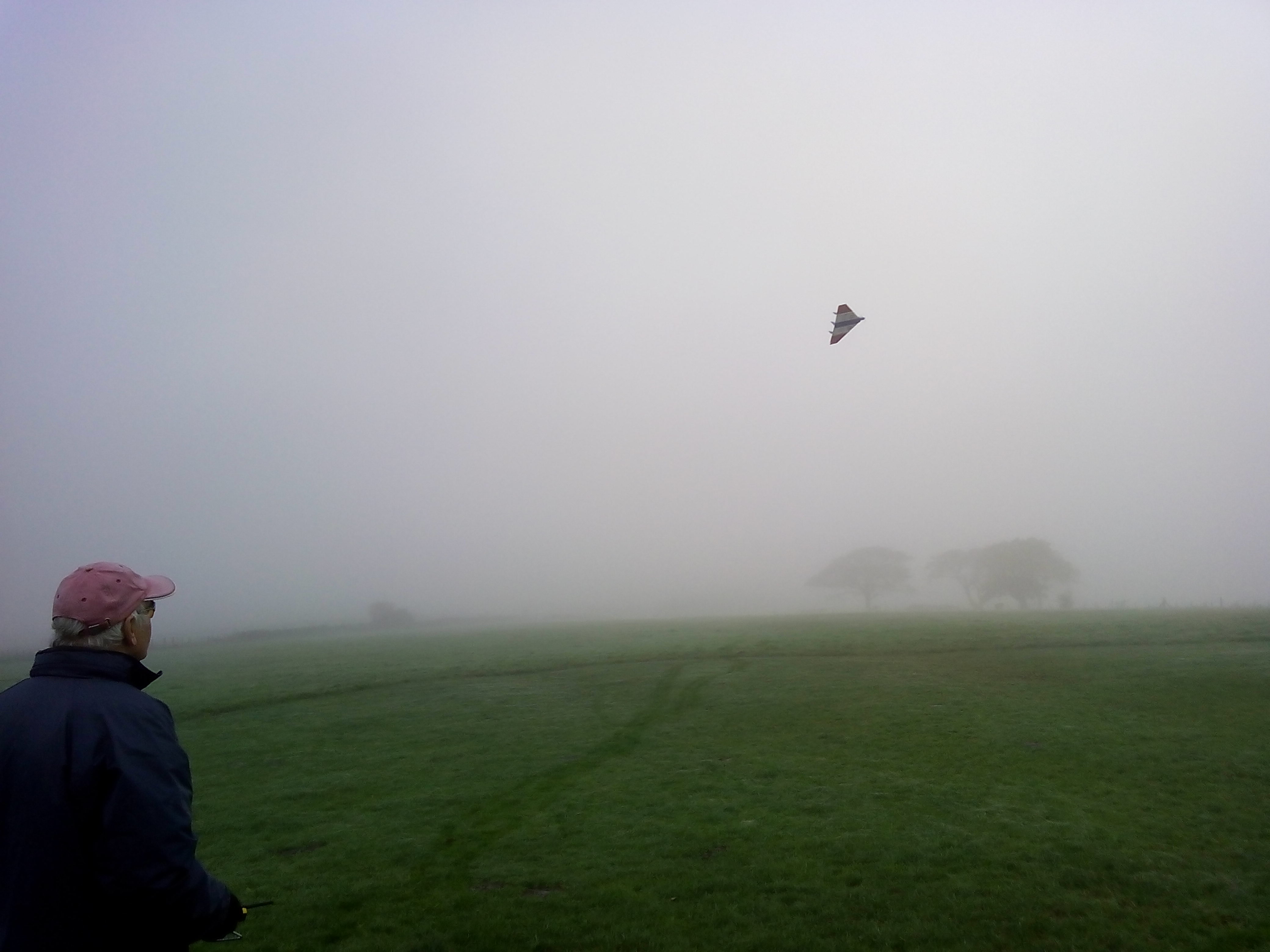
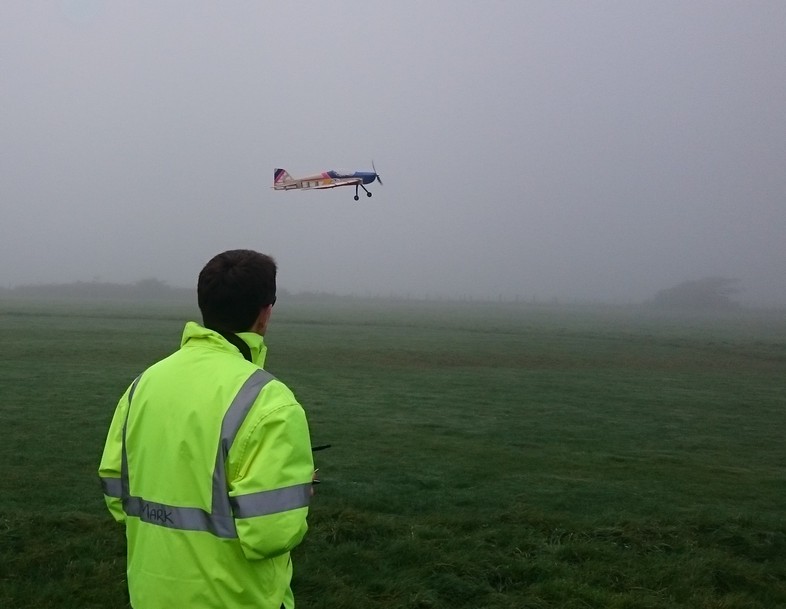 Mark (Dougal Entendre) snapped me flying my Delta so I snapped him flying his Laius. See some of the misty flying, along with some better days, in THIS MONTH’S VIDEO
The last remaining I/C stalwart in the club Gary Houghton was running out of model space so he gave his Cougar 2000 to Modelling Clay. (He GAVE it…doesn’t he know I’m a poor pensioner?!).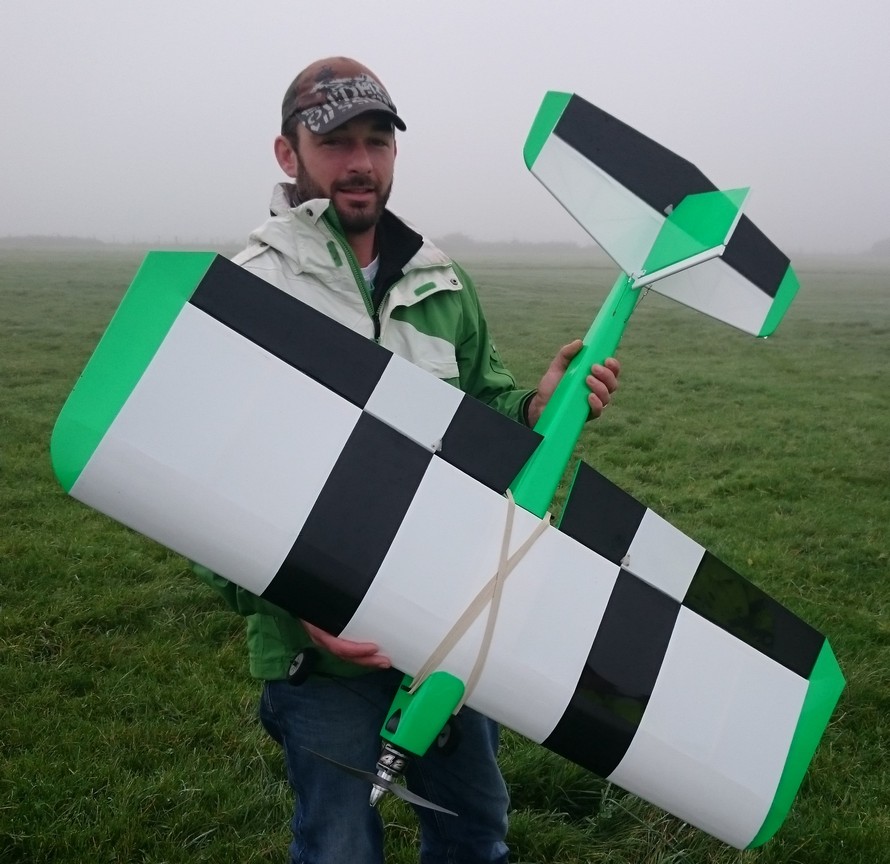 Tim promptly did the decent thing and converted it to electric and in the process he stripped off the oily covering and redid it in a fresh new colour scheme.
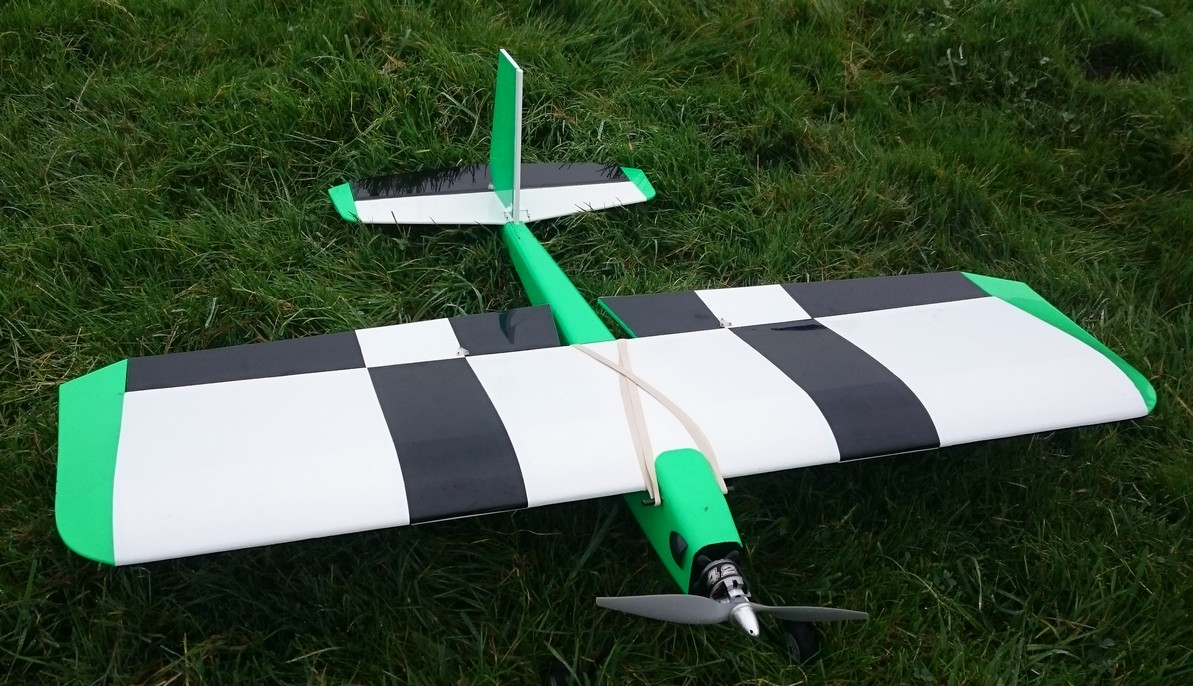 Not sure what electrics he used but it looks like an NTM Prop Drive 42 Motor and the setup seems spot on, plenty of power and decent duration. Meanwhile Gary is busy using the space he gained and is building an Acro Wot…and its electric powered, I knew he’d see the light eventually!
Modelling Tim also has another new plane, an Addiction from Precision Aerobatics no less.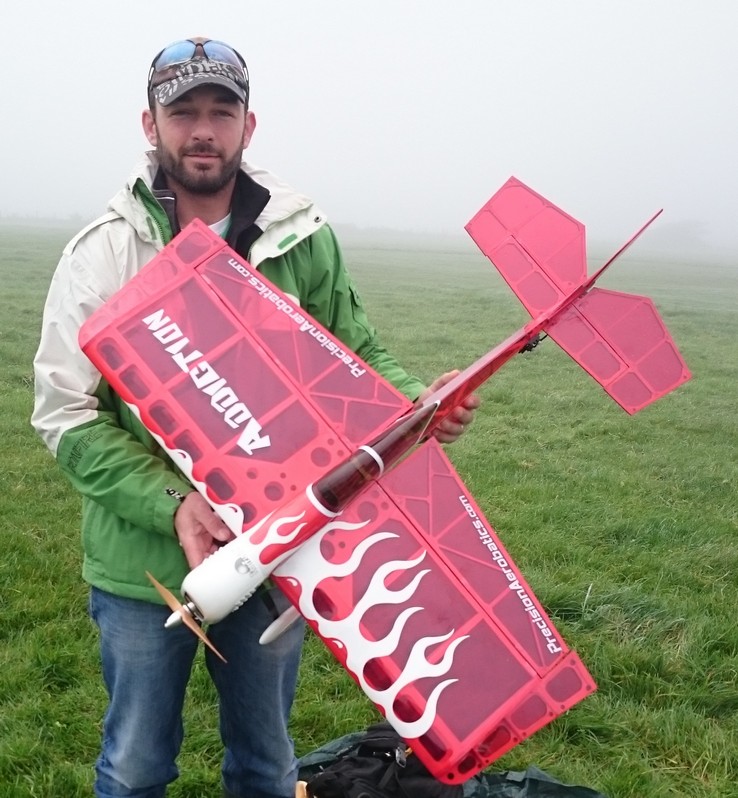 This is what it Precision Aerobatics say about the Addiction on their website: “PA brings you a new aerodynamic design with a huge wing area of 485 sq.in and amazing flying weight of only 750g (26.5oz). The Addiction is predictable and stable, features exceptional stall and slow speed handling characteristics, quick recovery and robustness – allowing any modeller to fly hardcore 3D with ease, inches off the ground.”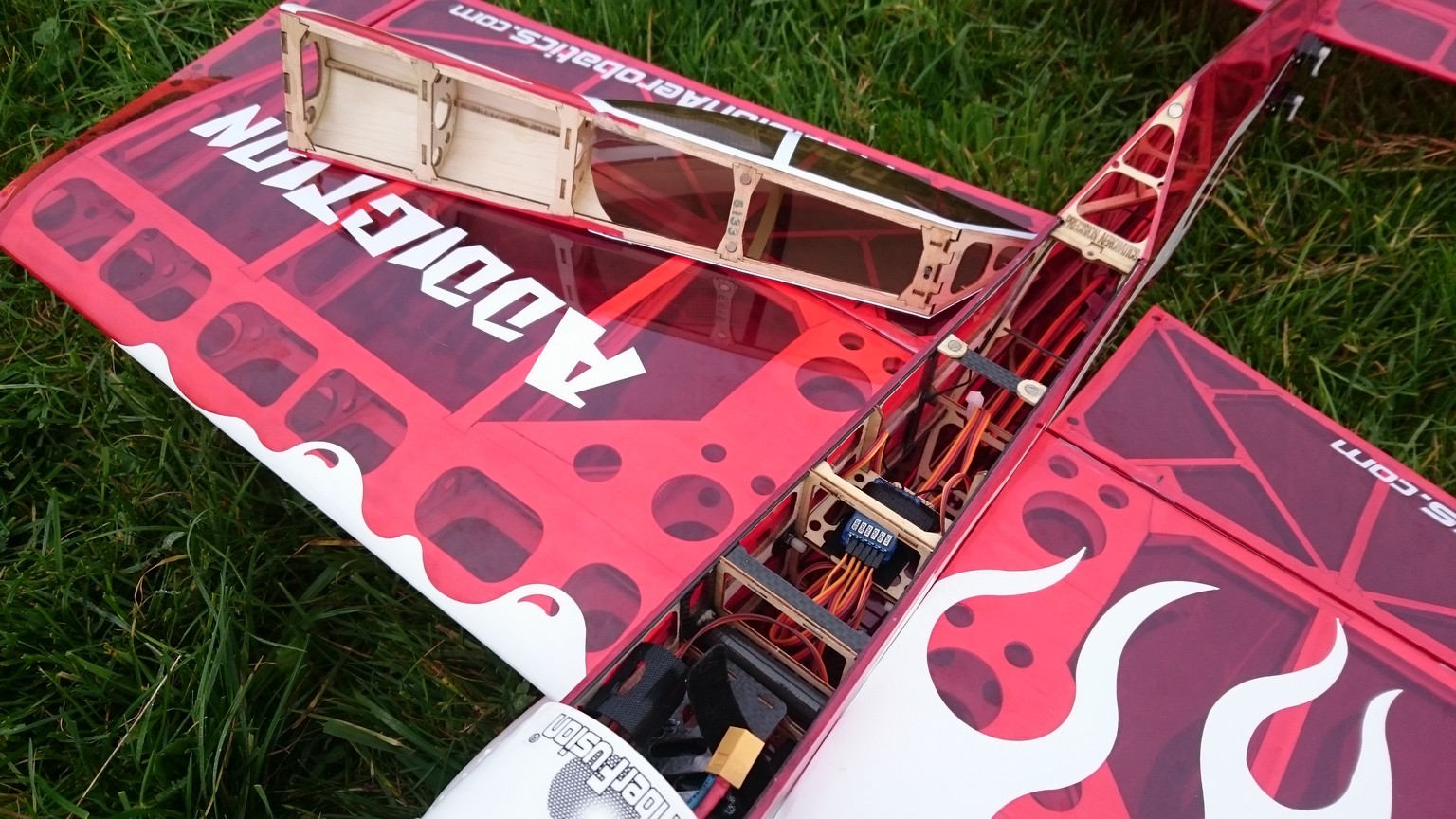
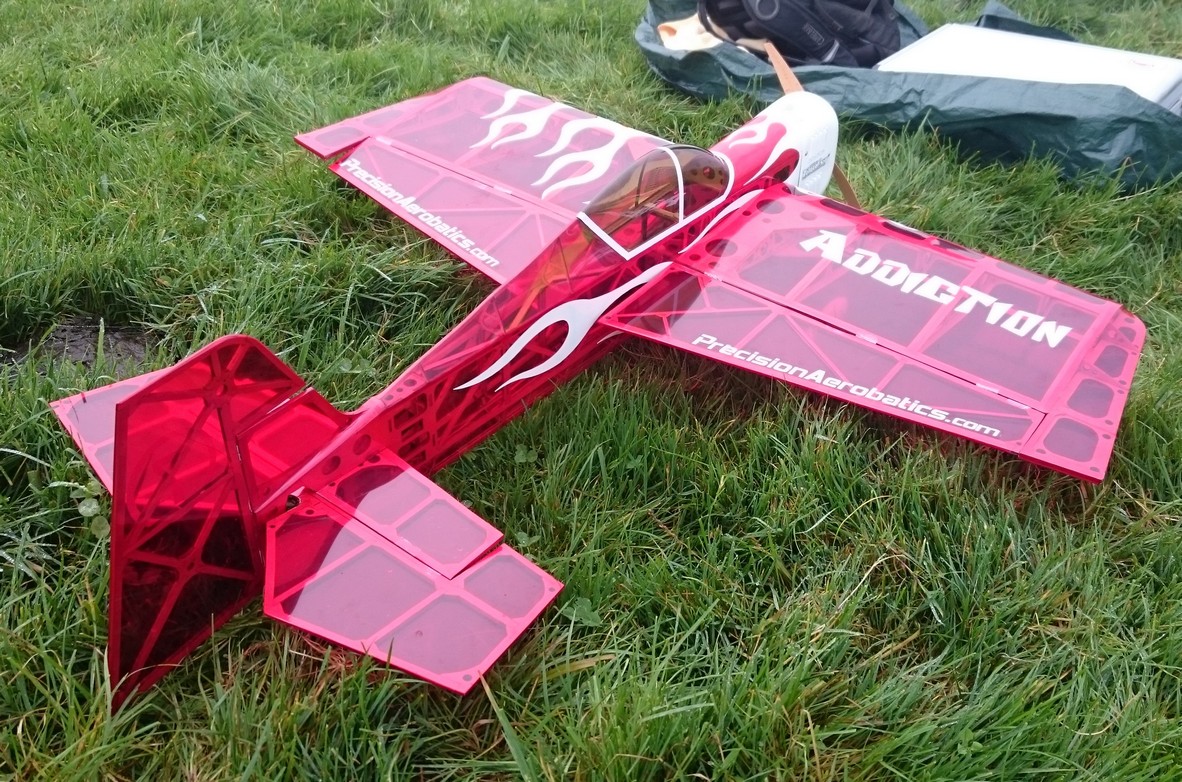 There you go then Tim, we expect to see hardcore 3D just inches off the ground any day now.
It’s a good thing that Modelling has got a couple of new models; he’s been busy breaking the old ones. Dougal sent me this photo, taken after he and Tim flew on one of the windier Sundays of November.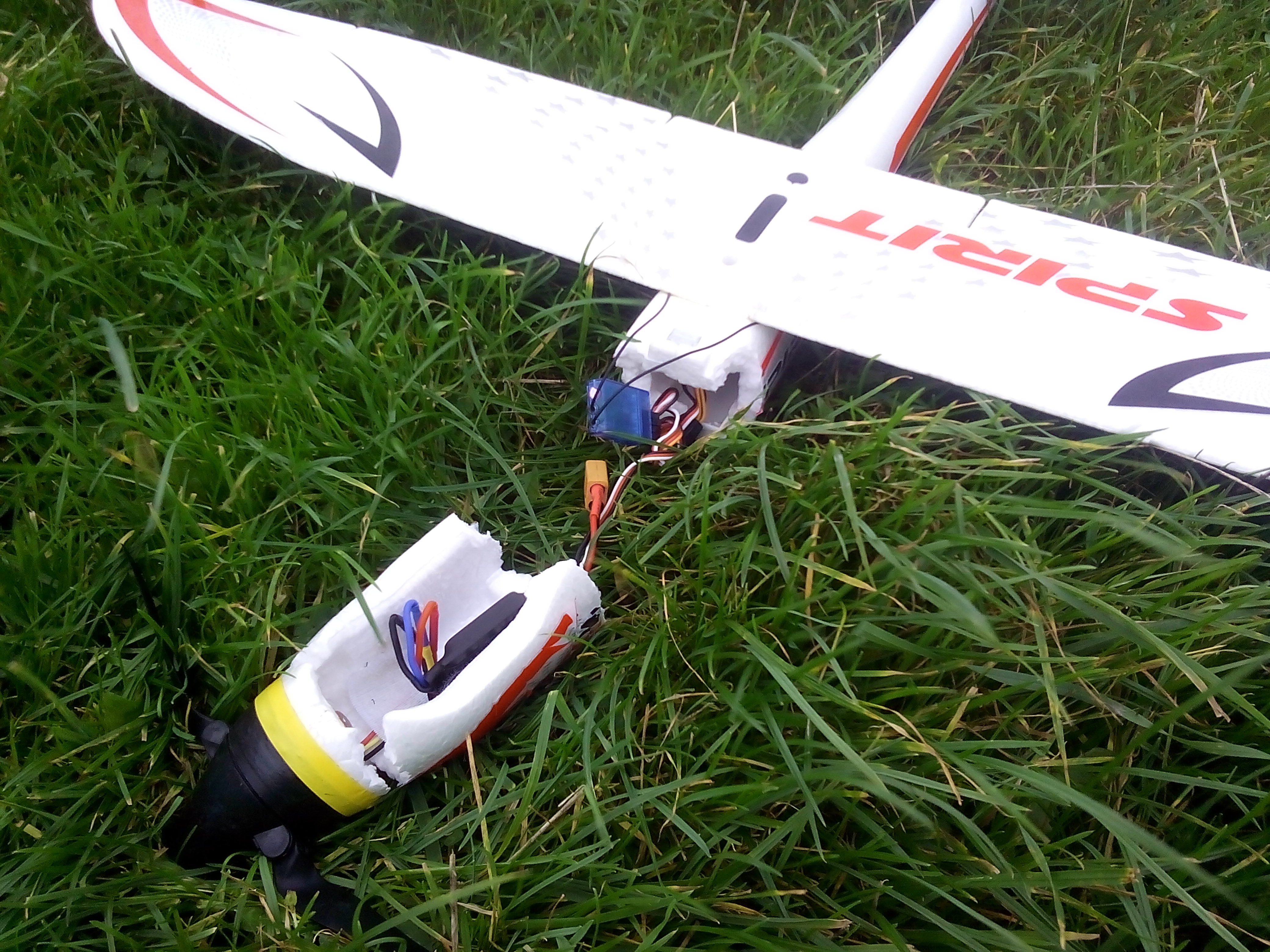 Most of us had more sense and stayed home. Fortunately the damage isn’t too bad; Spirits are tough little birds and repair well after ‘heavy landings’.
Dwayne Pipe (sometimes known as Keith Evans) has been busy experimenting with a new model that he’s designed to be a slow flier. Using a play on the name of the Ugly Stik he’s called it the Rugby Stick as he’s hoping to fly it on the rugby pitches at Penns Place (close to his home) once he’s got it trimmed and fully sorted.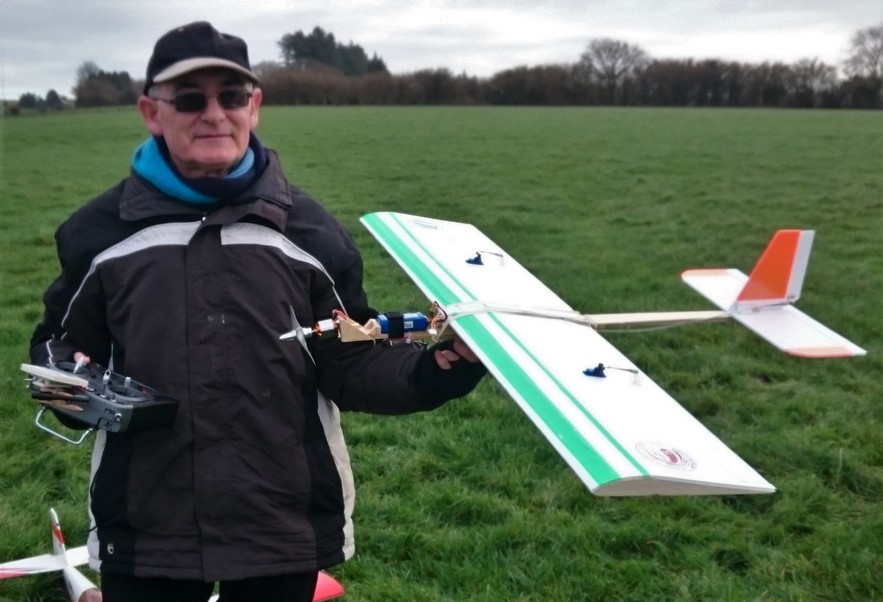 To make it fly slowly Dwayne has used a simple lightweight stick built fuselage and a large under-cambered wing which he’s made from Correx. He’s simply bent the Correx over a few ribs to form the wing section, simple and effective although at the moment he’s having a few problems with flutter so needs to stiffen the structure somewhat.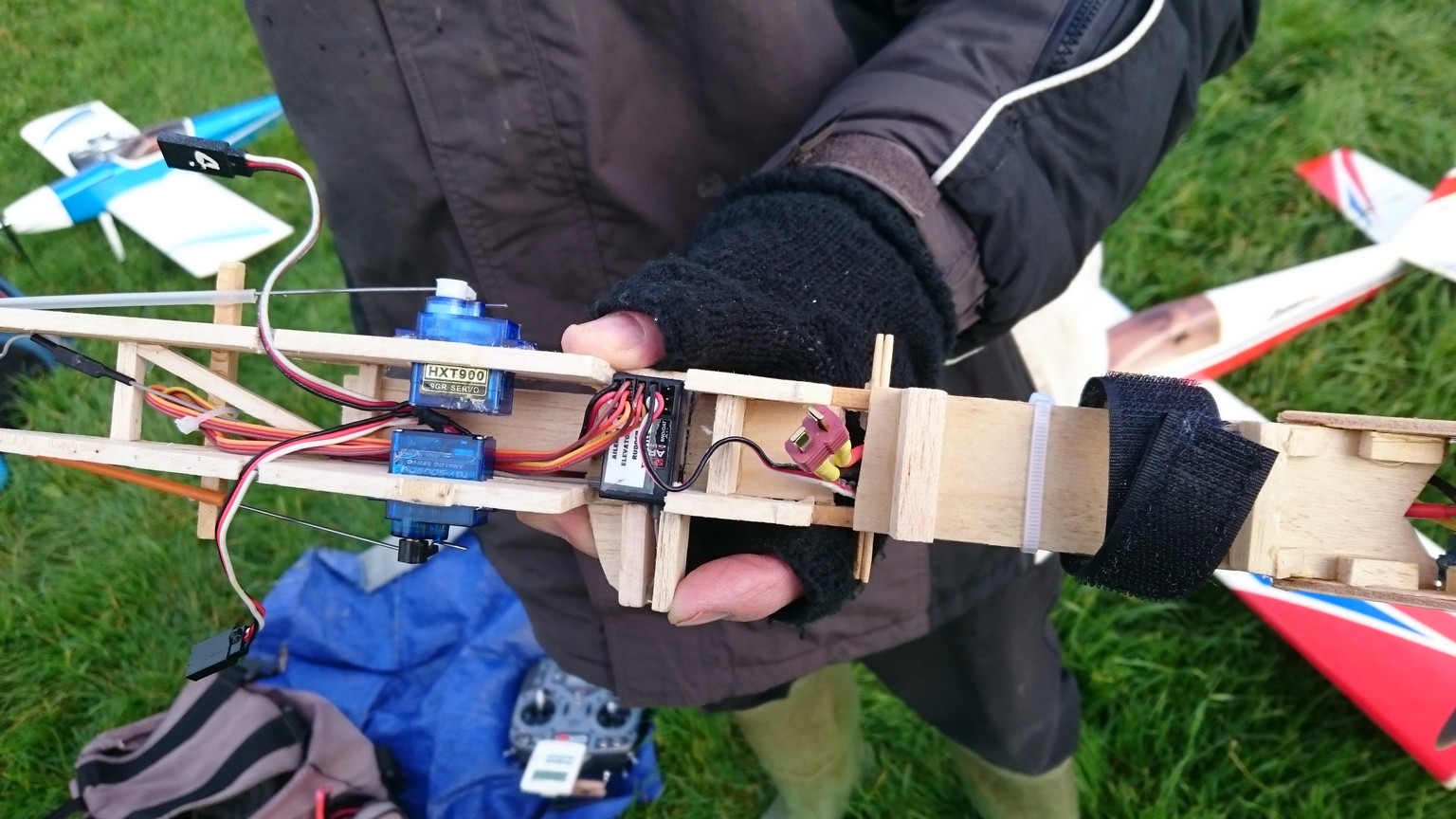
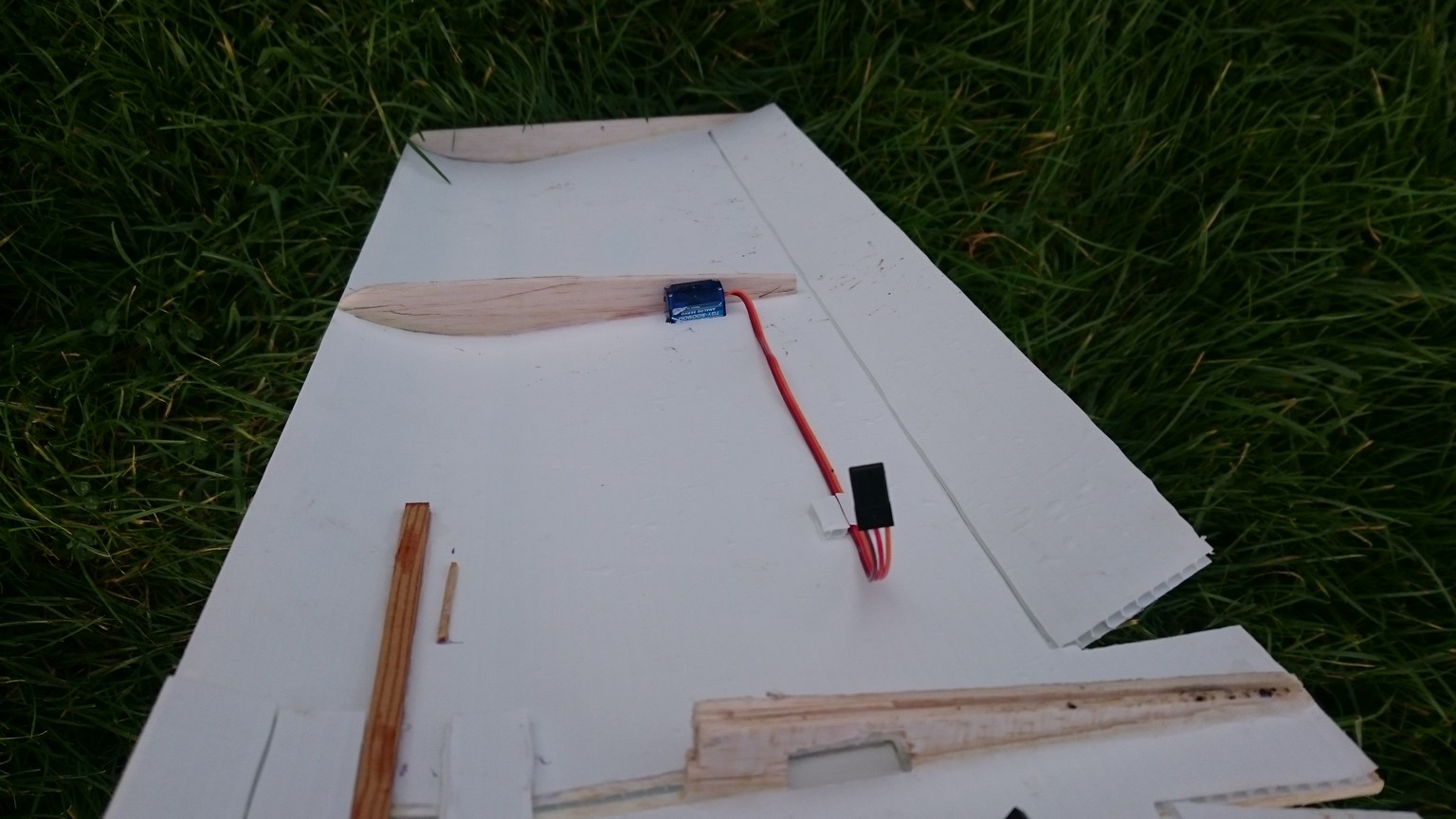 I saw Dwayne fly the Rugby Stick the other day (you can see it and more in THIS MONTH’S VIDEO) and it flew well until he tried a loop, as the speed built up on the downward part the flutter demonstrated it itself bigtime! No doubt it will be sorted soon and Keith will be sneaking off in quiet moments to fly on the rugby pitches.
Basher Bob has been at it again. No, not having more mid-airs, this time he’s been balsa bashing or to be correct balsa and Depron bashing. He’s built a mini Splot, a 2/3rds size one at just 24” span and the wing is made from Depron. It’s powered by a Prodrive 28-36 1400kv motor that gives anything from 200 to 550 watts depending on a 3 or 4 cell battery etc. The flat plate tailplane is made from 6mm Depron, but the wing has a Depron sheet top and bottom with a 10mm carbon spar in the middle. It has a balsa leading edge, and ailerons are made from 1″ trailing edge balsa. The flying weight is about 1.5 lbs. Bob has made fibre glass u/c legs but the wheels are a bit small for our patch so he’ll hand launch it to start with.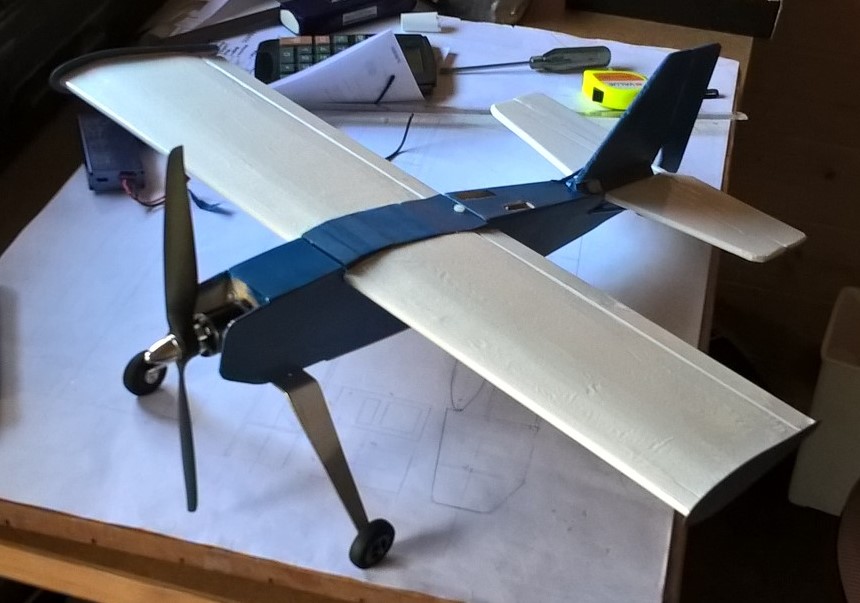 It will be interesting to see how it flies, I’ve not seen a smaller than standard Splot before, I imagine it will be pretty twitchy but very maneuverable. The designer of the Splot, Graham Head, built a Big Splot of 48” span which flew very well, just like the normal one really but a little less maneuverable. Graham’s was powered by a 4 stroke I/C engine but Dwayne Pipe has a 48” span Splot under construction at the moment which will of course be electric powered. That means Bob’s 24” mini Splot is really a half scale Big Splot and knowing Bob he won’t call it Mini Splot, it will be Sploblet or similar!
A little light relief now with something for all you Whovians out there. What’s a Whovian? A Doctor Who fan of course! I already knew Dougal was one and it seems young Monty is also one. He’s made a Tardis (police box) body for one of his copters and demonstrated it one Sunday morning with a brief flight while we were waiting for the weather to clear.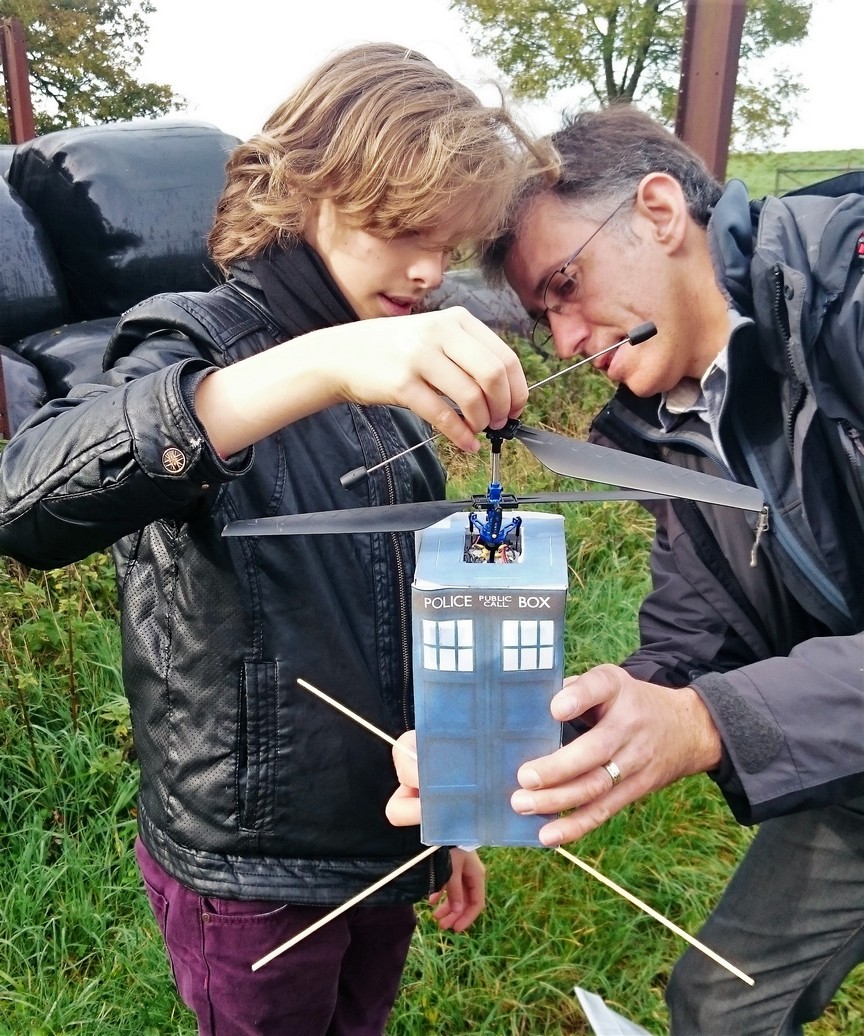 Well done Monty, it’s certainly something different. “Exterminate…exterminate…!”
Captain Slow has gone and bought an ST Models MX2, against the better judgement of several other club members who didn’t really get on with theirs. But, as if to prove the others wrong, Captain Slow’s seems to fly very well, so far anyway.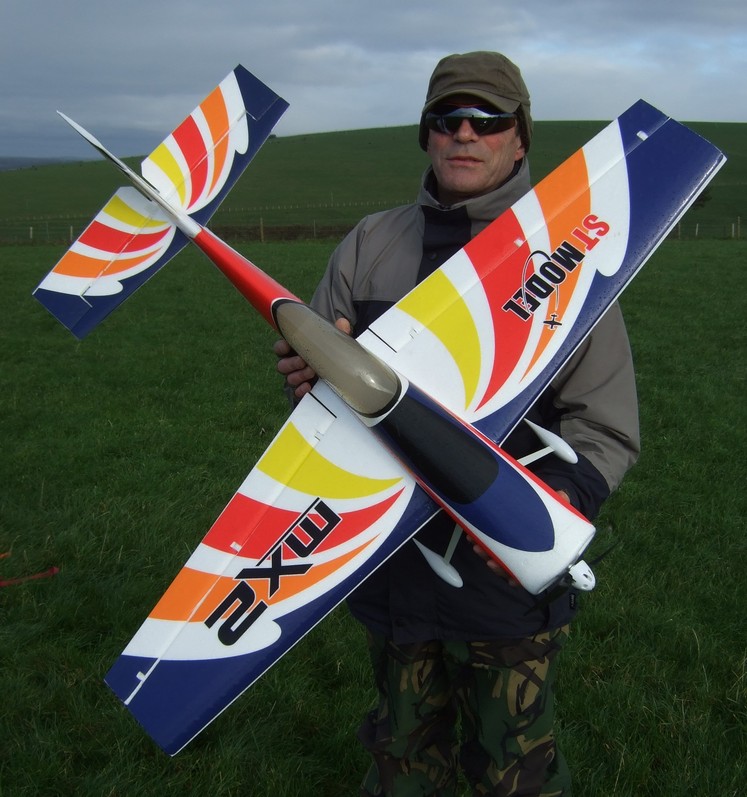 One of the failings the others experienced was the usual ARTF problem of weak undercarriage mountings but I see from the adverts that they are now producing an updated version with strengthened mountings and I think John’s must be one of these as the undercarriage has stayed firmly on, for the first few flights at least. ST Models have also fitted a 36A speed controller (I think the earlier ones had a 30A one) and they’ve added some side-thrust to the motor. I remember 1066 playing around with the thrust angles on his MX2 so maybe that’s part of the reason John’s seems to fly much better.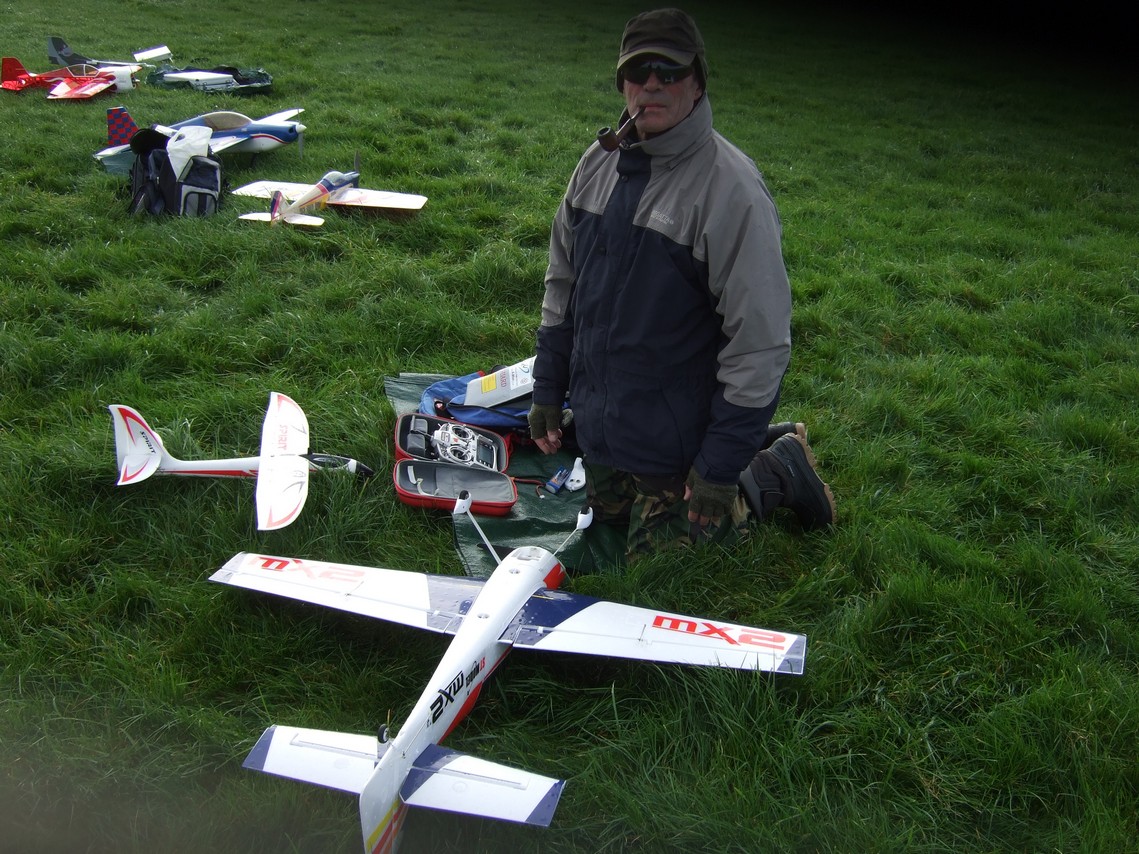
 He hasn’t had a chance to fly it very much yet because of the recent bad weather but it’s looking promising. You can see the first take-off in THIS MONTH’S VIDEO.
Chris P Bacon (Nigel) has also bought a new plane, a Ripmax Jive. Nigel bought it secondhand from a guy who said he’d been flying it all summer. The Jive is only available in an I/C version (very surprising I think in this day and age) so the seller must have done the electric conversion himself. The lipo is just strapped on under the nose, not the neatest solution but at least it’s easy to swap packs over. It is fitted with a Turnigy G10 motor which is supposed to be equivalent to a 0.10 glow motor but the recommended motor for the Jive is an Irvine 35 or 39 so I was expecting it to be underpowered when Chris P asked me to test fly it, but no, it tore across the patch and shot into the air.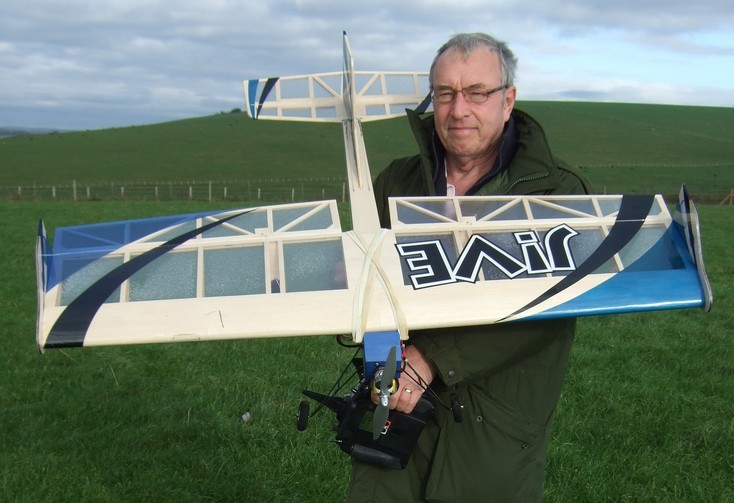 It flew very well and had loads of power so after the flight we checked the current and found it was pulling over 80A from the 4 cell pack! A couple of flights later Crisp P’s enjoyment was cut short when it went deadstick and the motor felt very rough when we turned it, I think it’s cooked. If the previous owner really had flown it a lot as he stated I think he must have been using a much smaller prop or 3 cells or probably both.
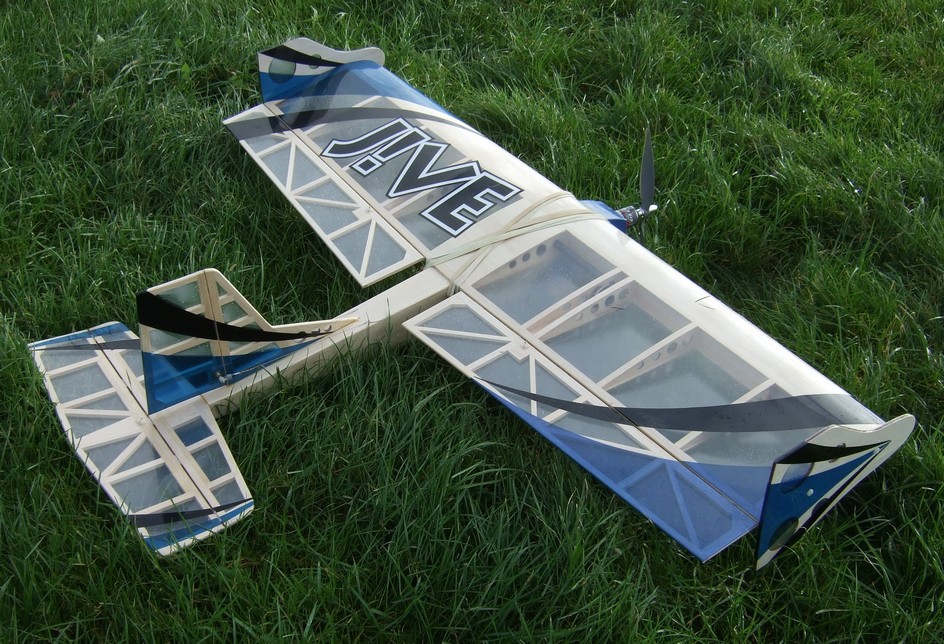 No doubt Nigel will soon fit another motor and having it flying again. It seemed excellent until the motor failed so I think it will still prove to have been a good buy.
Captain Slow sent me a link to a short video of an airline pilot making a passenger announcement, probably not one you want to hear: Click HERE
We often see a white light aircraft around the field and I always say it’s from Lower Upham Airfield as a friend of mine flies a similar looking plane from there. I finally got around to looking it up on the internet and discovered that there are actually three of them, operated by Solent Flight at Lower Upham. They aircraft are IKarus C-42 microlights; two have 80hp Rotax engines, the other a 100hp Rotax. They are very quiet so cause few problems with their neighbours in Lower Upham.
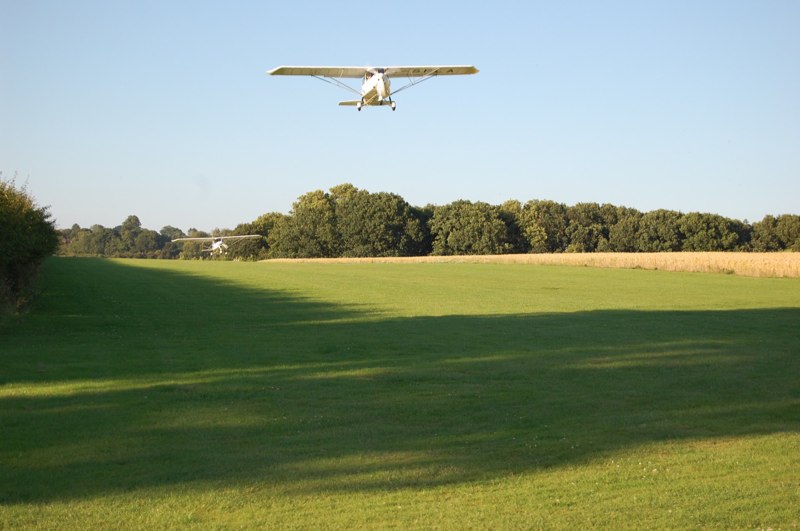 The grass runway is just 578 metres long and has obstacles at both ends so visiting aircraft are very rare although a few helicopters are also based there. Solent Flight offers a variety of trial lessons and PPL courses. I had a quick measure up on Google Maps and the airfield is 8.75miles from the patch, almost exactly due west, so it’s not surprising we see them so often. They have an interesting website, take a look: http://www.solentflight.co.uk
New member Graham Swan sent me some photos he took at the field on one of the decent, calm, midweek days. He was using a good quality camera so the shots are better than the ones I take with my mobile.
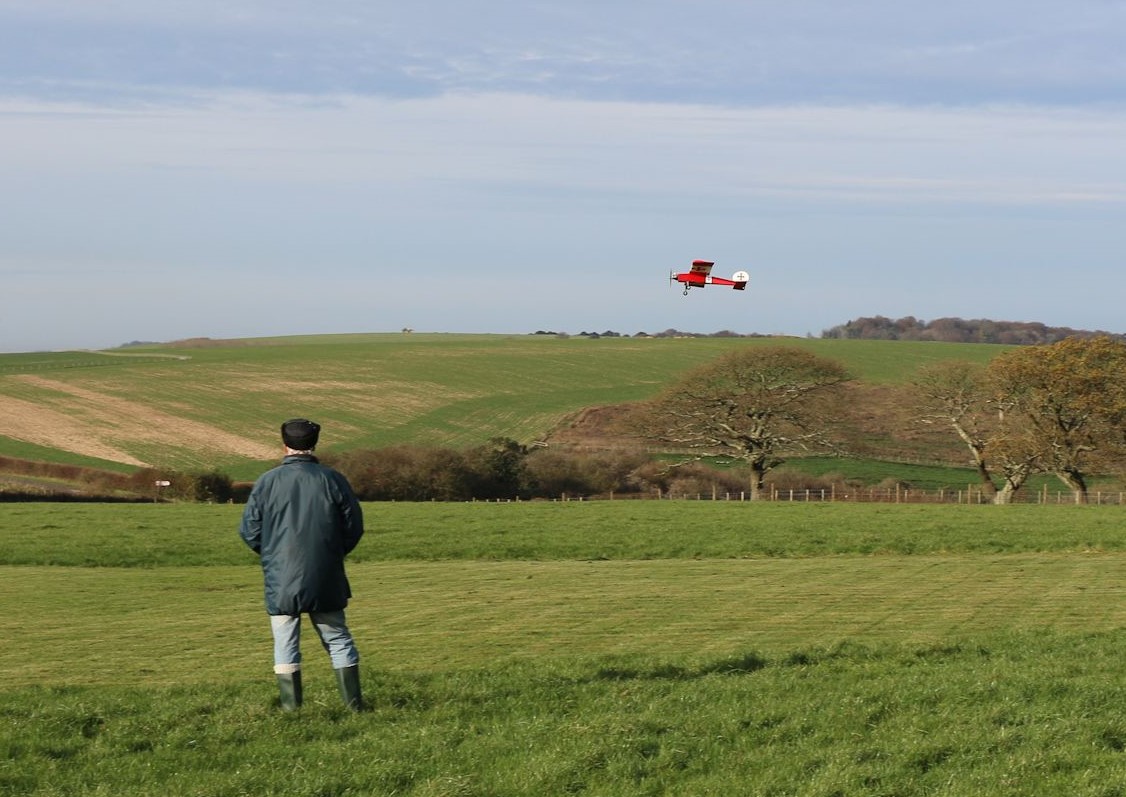
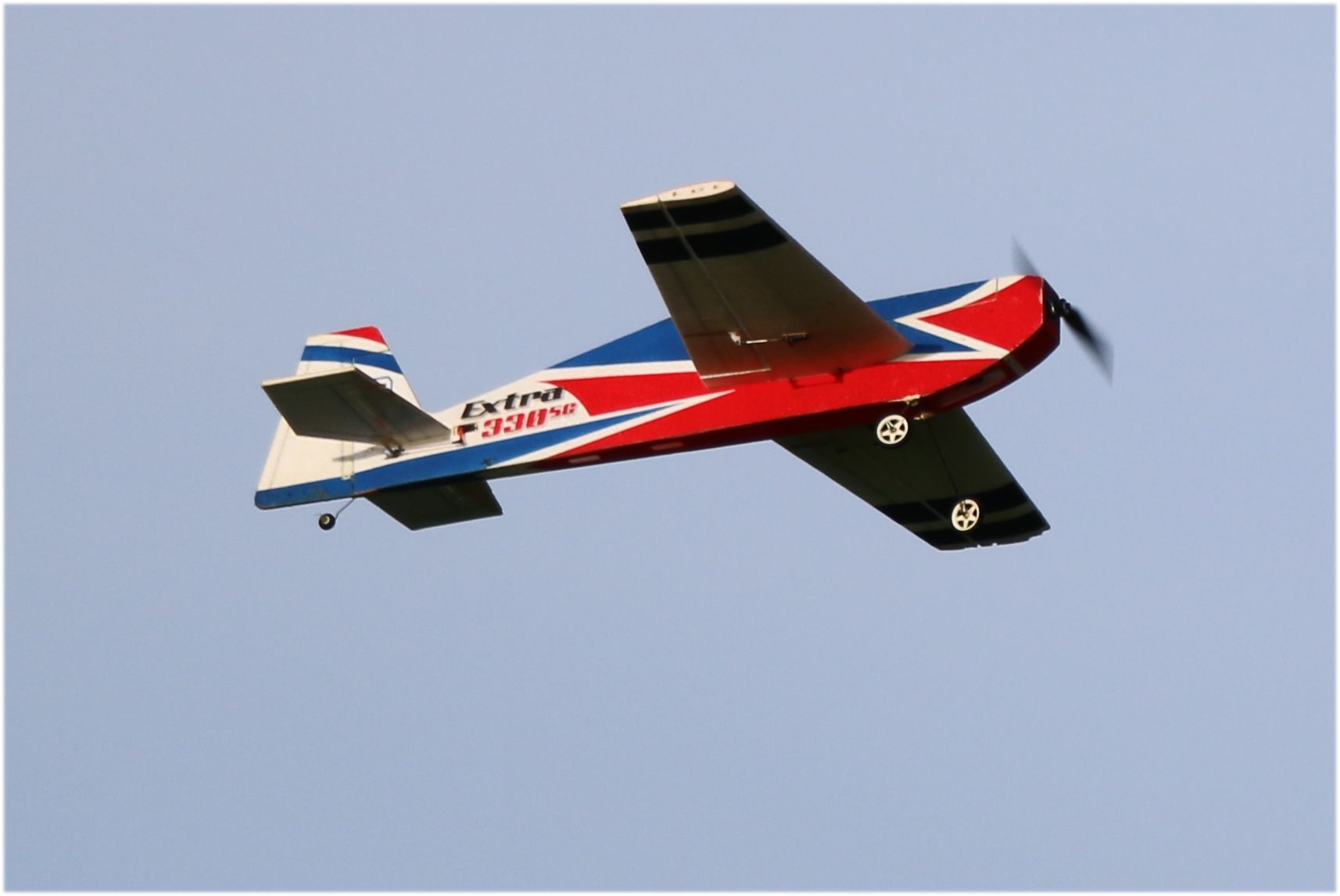
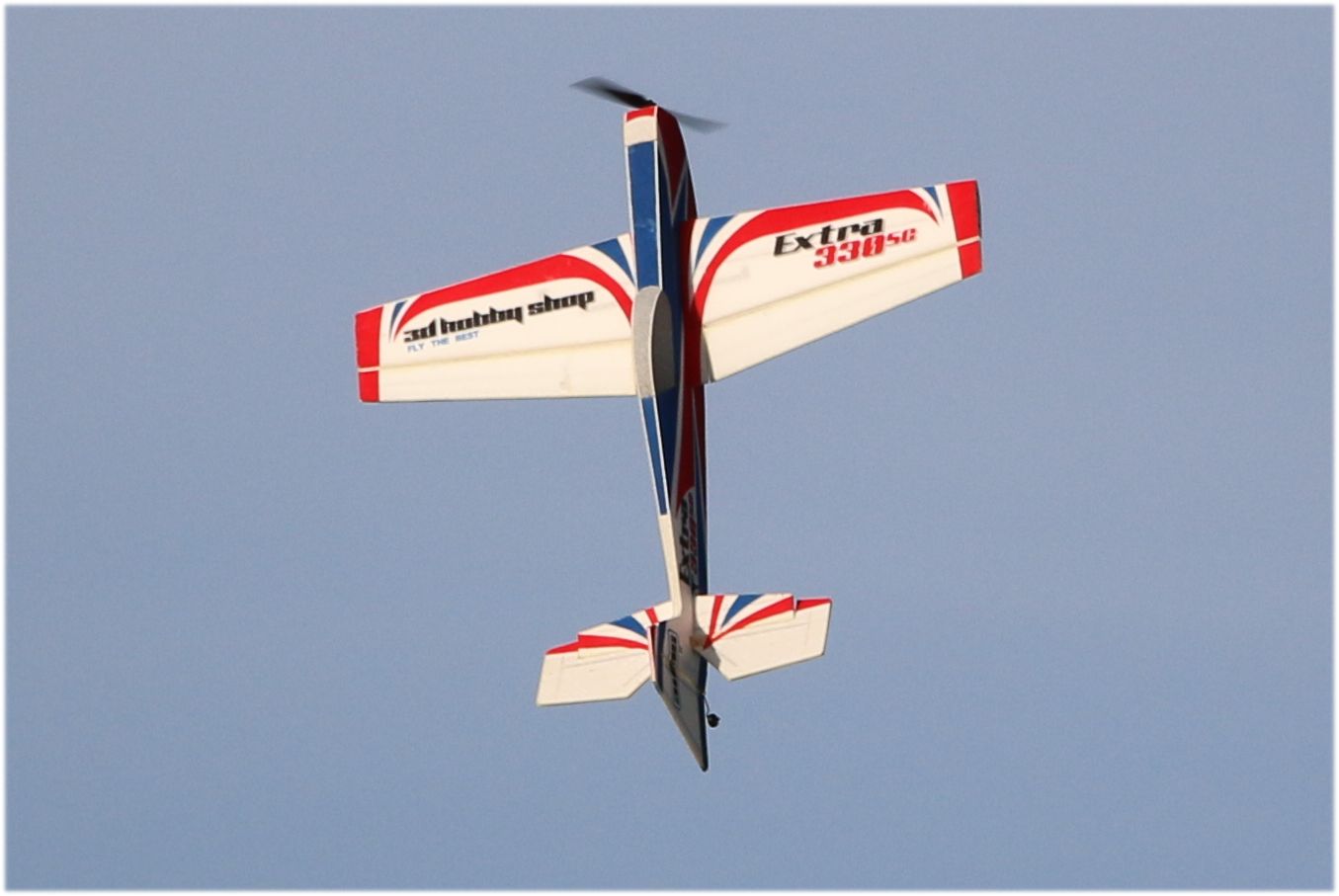
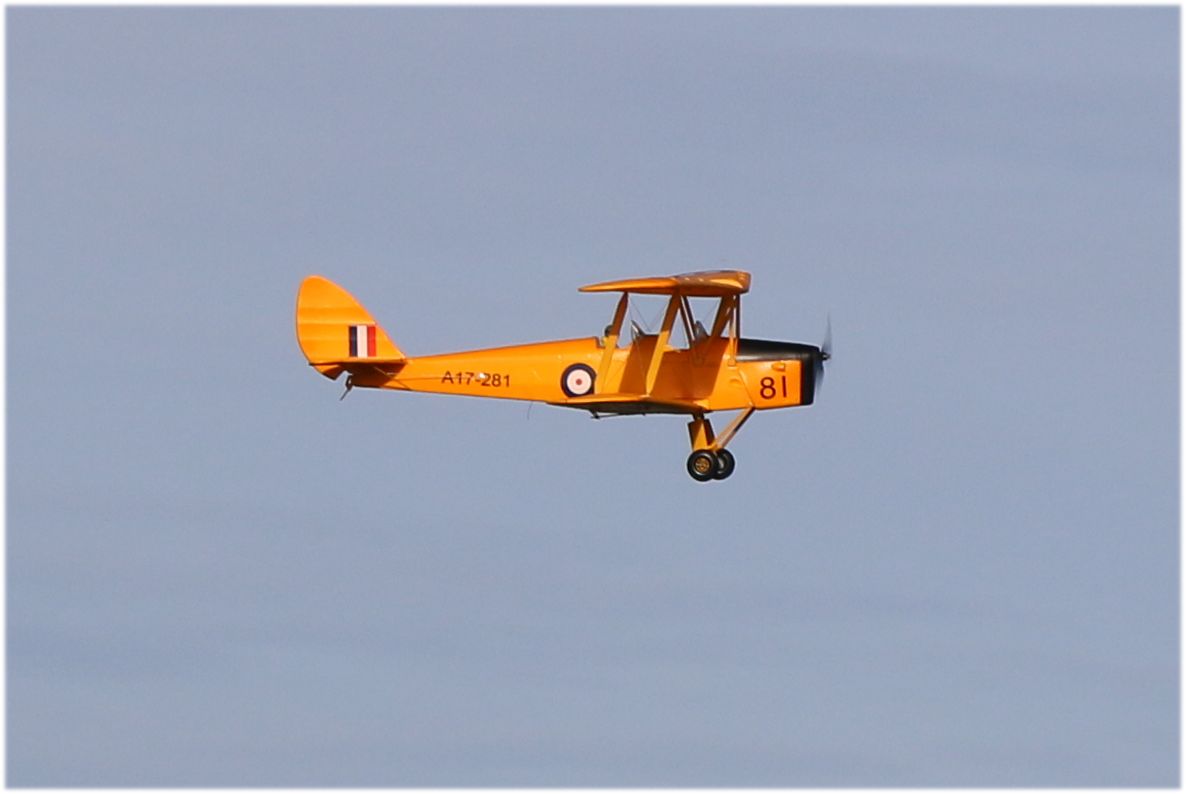
 Thanks Graham, great photos, I especially like the one of Norwegian Nick’s little Tiger Moth, it’s a great shot and you’d never know it’s a small, lightweight foamie.
Like it or not Christmas is coming and the Black Friday sales have just finished. No doubt most of you have seen the HobbyKing Cyber Sale that ran for a week with new items being added every hour. More than 650 items were discounted, some by very large amounts, and a good percentage of them were from the UK warehouse so I’m wondering if many of you took advantage? I know one lucky person who was browsing the sale items with various exclamations such as “Wow, look, reduced by 50% now” was told very firmly “Just buy it, it can be your Christmas present”. So what was I supposed to do? The only problem is that I’m not allowed to open it until 25th December.
On a Norwegian Airlines flight:
“We have commenced our descent to London Gatwick, and the toilets are now closed. The cabin crew will shortly be coming round to collect your waste.”
Merry Christmas everyone. Colin Cowplain
Patch News – October 2015
In Patch News last month I explained that I would be away on holiday at the end of September and beginning of October so would be relying on others to keep me up to date with patch happenings. Everything worked out as hoped, I received updates from several members, and I was able to upload Patch News from my tablet on 1st October while in my Singapore hotel room, isn’t technology great? So now it’s time to report on October and some of the report, photos, and video content has been provided by Dougal Entendre, Captain Slow, JP, and Barracking.
The weather hasn’t been too bad recently; in fact we’ve had some very good flying days, some with hardly a breath of wind. By the start of the month Chairman Ron had got the patch in really good condition, his hard work mowing over the summer really paid off and the grass was the best it’s ever been. But then, in mid-October, George put some bullocks in the field… Sadly now the patch has been badly churned up and is well manured. Initially the young bullocks were very inquisitive, a real pain to keep out of our way, and had a tendency to follow us from the barn up to the patch, as demonstrated by Dougal Entendre and Basher Bob in this photo.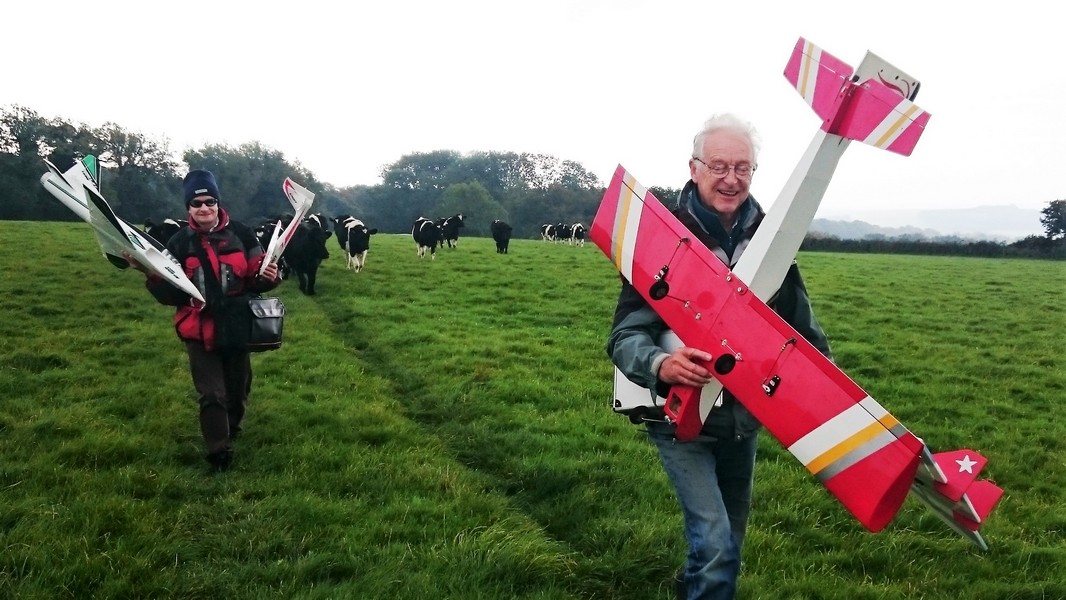 But happily, more recently they seem to have got used to us and now ignore us most of the time. The little presents (ok, big wet sloppy presents) they leave on the patch make landings interesting, it’s not easy to consistently land on the patch and much harder when you’re trying to avoid ‘obstacles’! See Wonky Wiltshire in THIS MONTH’S VIDEO. At least most of the deltas people built for the Delta Challenge don’t have wheels so can be plonked down with virtually no running on. If the initial touchdown is on a clean bit of grass the plane should stay clean. But Basher Bob discovered the hard way that if the delta actually lands smack in the middle of a pat the result is not pleasant.
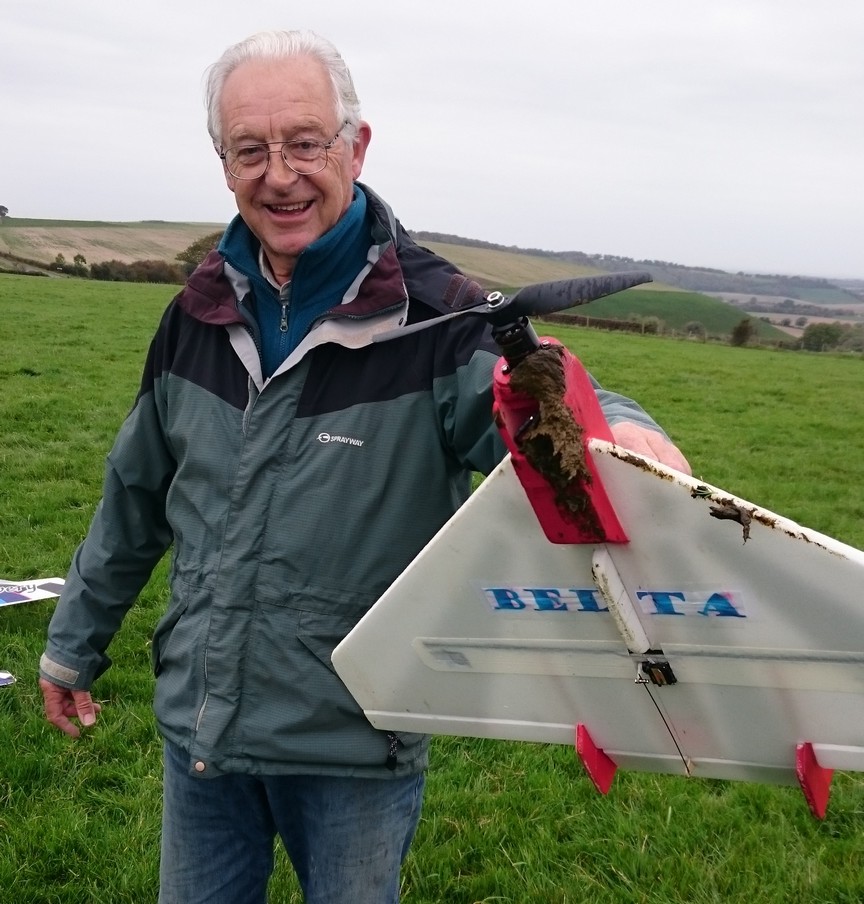 Perhaps I should confess that it was actually me that landed it that time following a trimming flight…payback time Basher…payback!
While JP was on herding duties he got all artistic and snapped my Delta flying over the cows.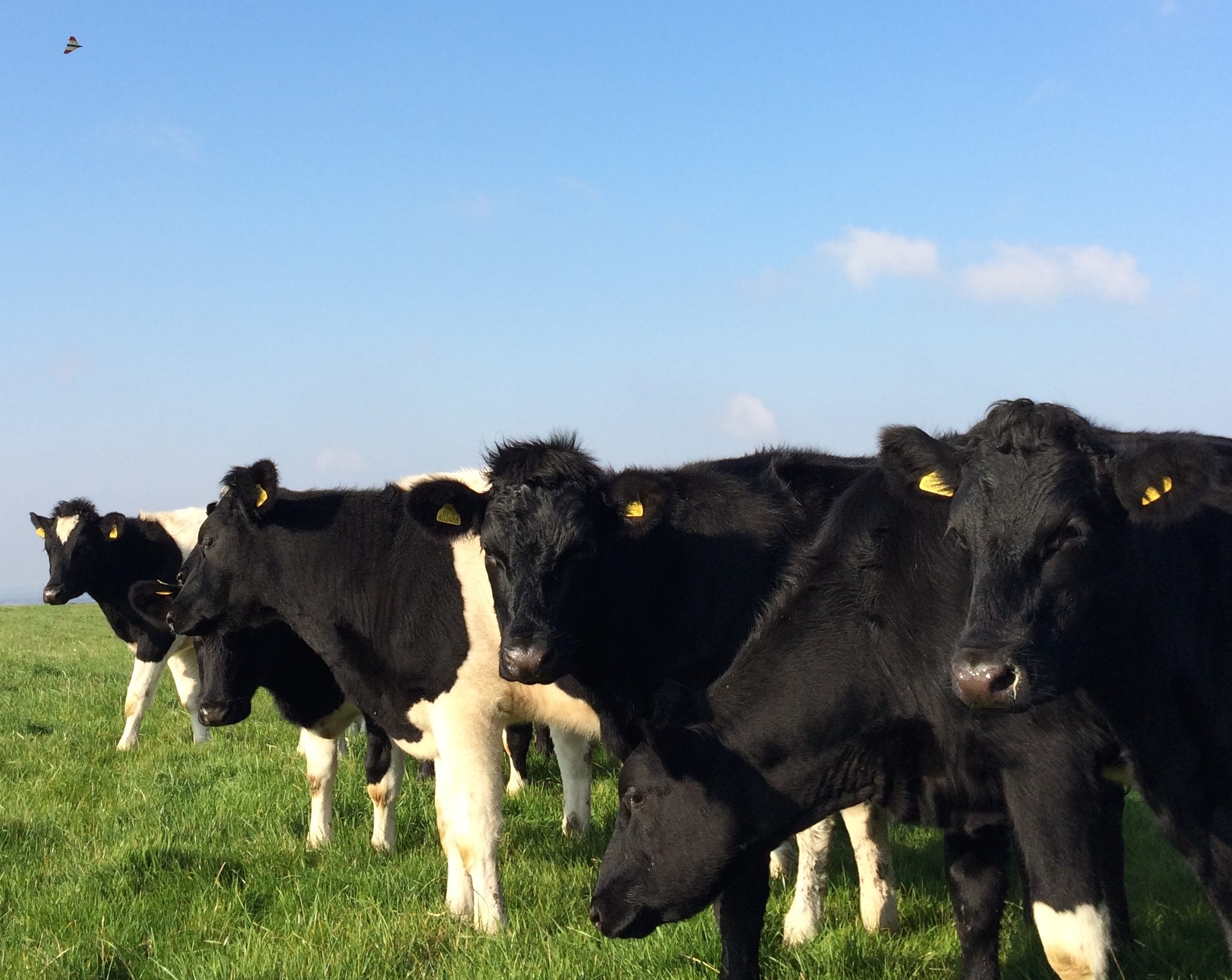 How come his photos are so much better than mine? It must be something to do with him being a professional photographer I suppose!
Basher Bob tends to incorporate his name or initial into the models that he’s designed or heavily modified, so his delta is actually Belta, his Splot has become Splob, and his Calmato is Bobmato. The last one should be ‘was’ Bobmato, he heavily modified it rather badly recently and I don’t think it will re-emerge this time.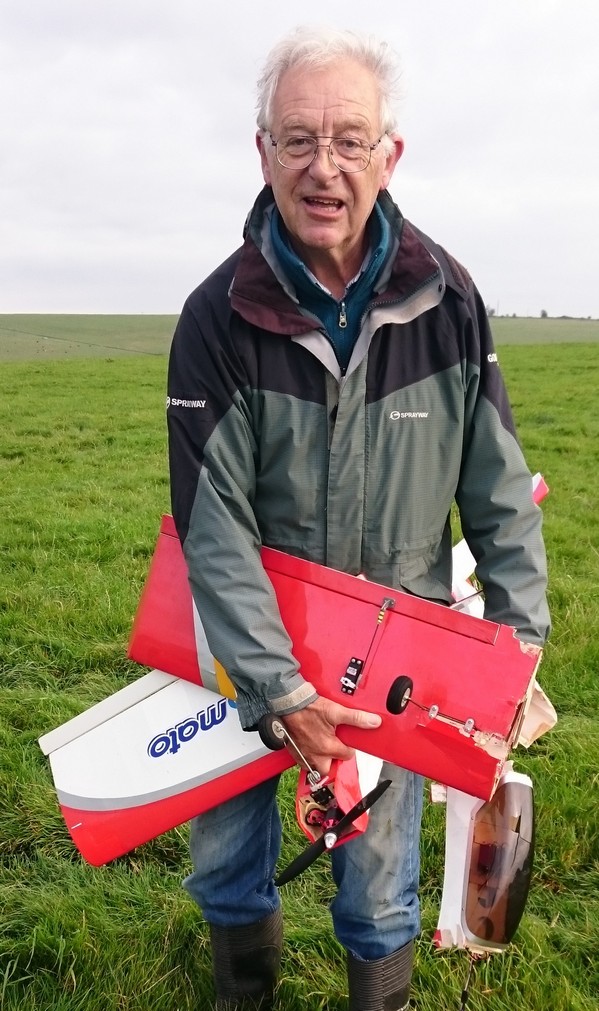
One thing I missed while away was a low level aerobatic display by a Yak. Woody says it’s our friendly local Tiger Moth pilot who also flies a Yak. Shame I missed it, by all accounts it was a very good display, but unfortunately nobody seems to have got any photographs of the event. Dougal managed to get a short snippet of video though and it can be seen in THIS MONTH’S VIDEO.
Following a coming together between Basher Bob’s Spirit and Dougal Entendre’s Slick last month both models have been repaired and are back flying once more. Basher managed to graft half of his broken Spirit onto half of his broken Kinetic (they’re almost identical models) and made one decent model from the two wrecks.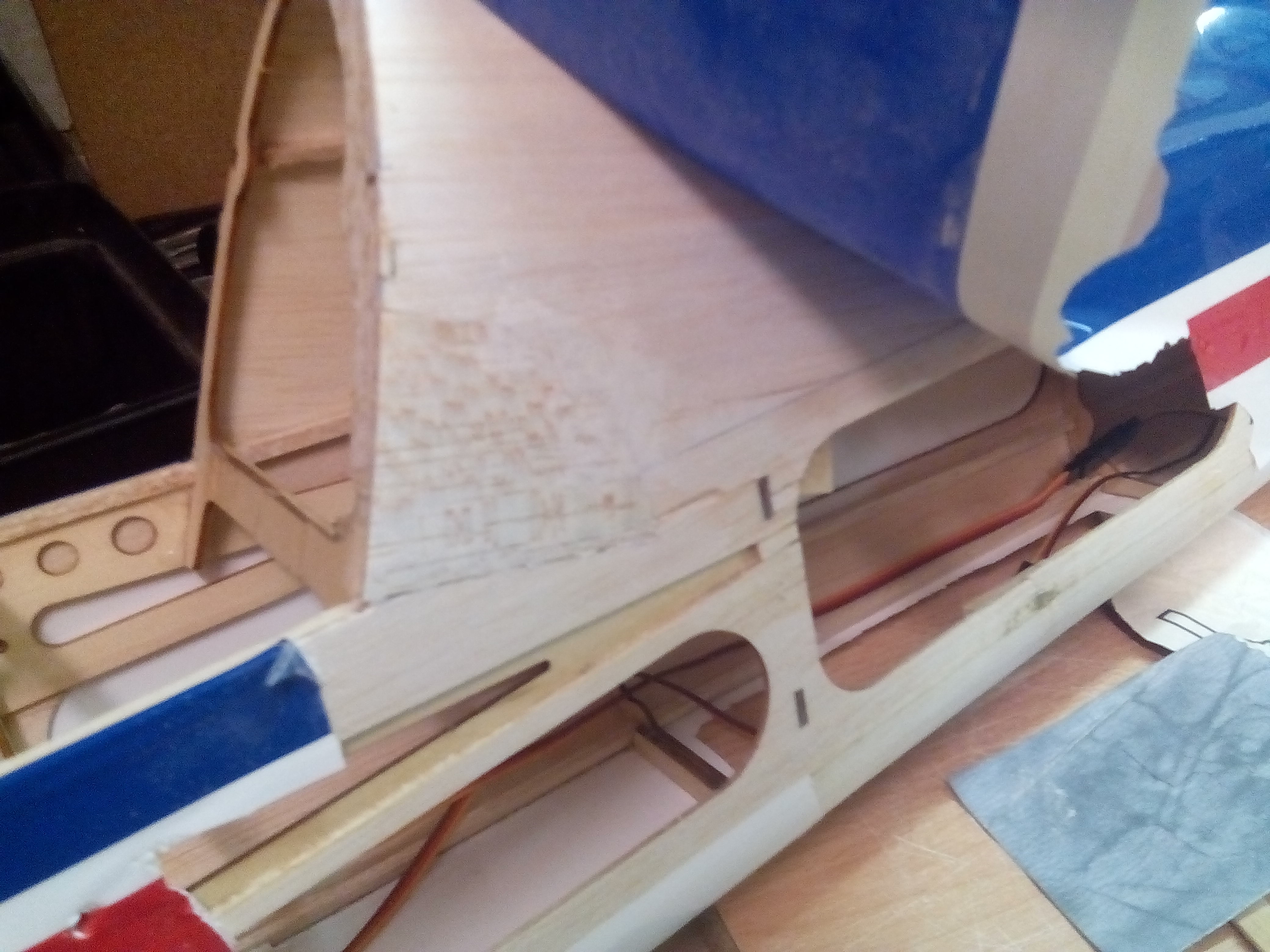
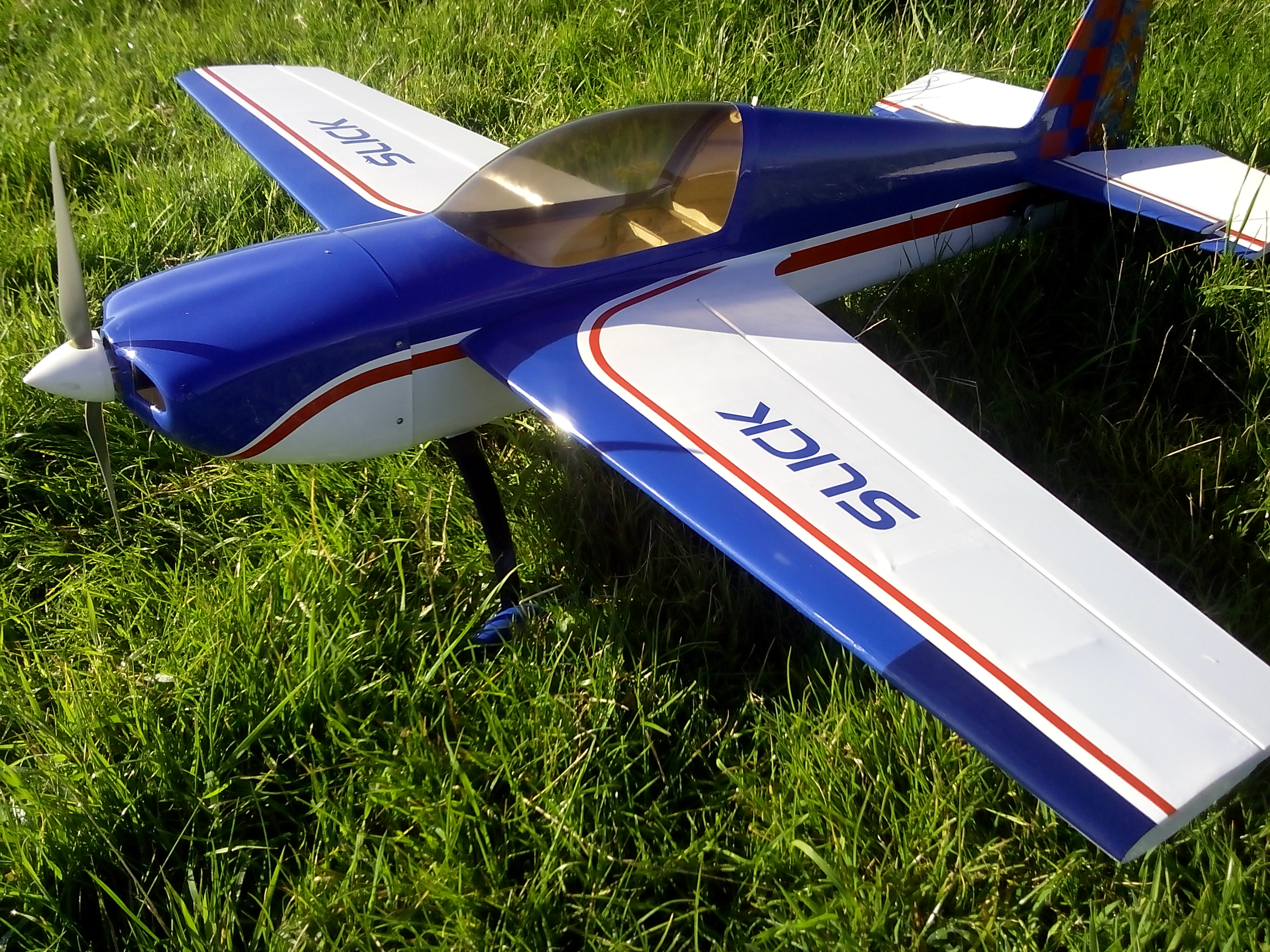 Dougal has made a lovely job of repairing the Slick and even included a small insignia to record the ‘kill’!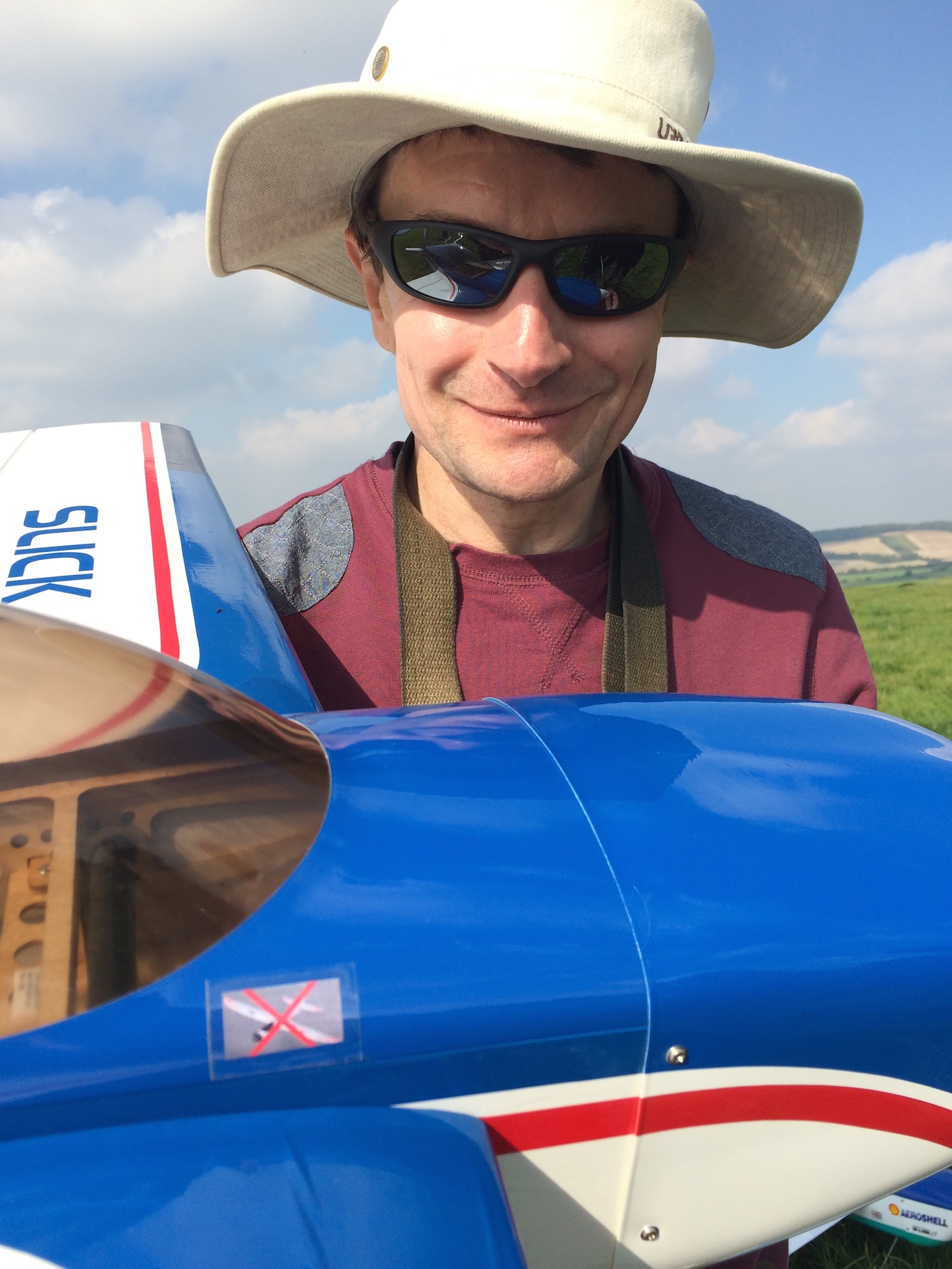
A few months ago Chris P Bacon (Nigel Baker) brought one of his mates (no, I didn’t think he had any either) to the patch to find out what model flying is all about. The friend is Mike Creamer and Mike has now fully joined as a member. That first occasion wasn’t a huge success; Chris P let Mike have a fly of his Wot 4 Foam-E with me in charge of looking after him. I’m not quite sure what happened but Mike managed to crash in the valley and I managed to not save him from doing so! But things have gone much better since then, Mike has bought a Freewing Pandora, a 1.4M span ready to fly foam model that has proved to be excellent. It’s very unusual in that it can be configured in 4 different ways and it can be changed between the 4 at any time. It can have either a tricycle undercarriage set up or the more usual taildragger arrangement, and it can be either high wing or low wing. All the parts are included with the kit, and you can choose whichever configuration suits you to start with and change to another version later. It also comes fitted with flaps but they are fixed as standard, you must add two of your own servos and the linkages if you want to use them. Mike has wisely gone for the high wing taildragger set up without flaps at the moment and the Pandora is serving him well.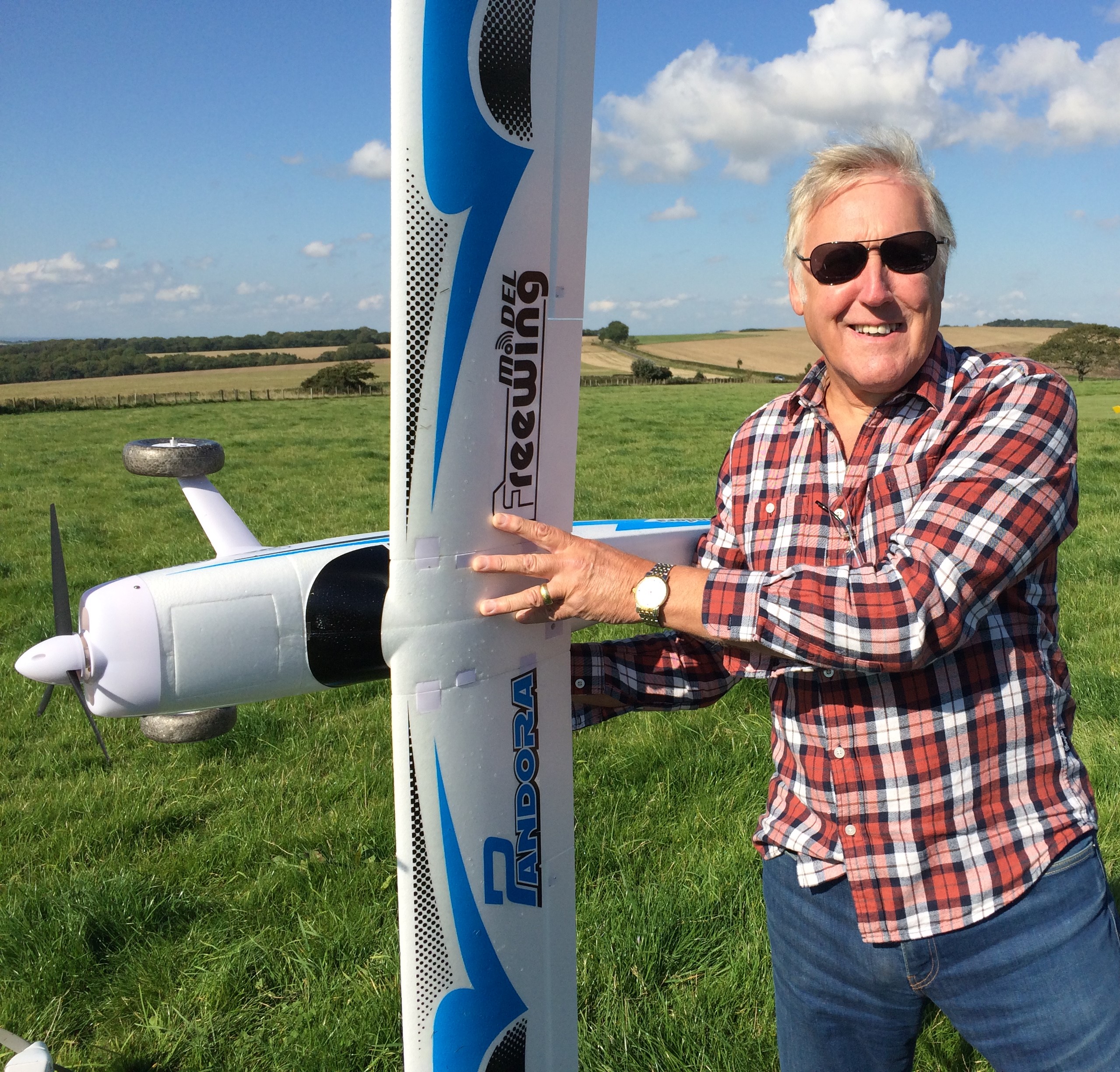 It’s a good size so handles the wind well and is easier to see than some of the smaller trainers, and with the taildragger arrangement it has pretty large wheels that are well suited to our patch. Later, when Mike’s skills improve he can convert it to a low winger and even swap it to a trike undercart if he wants. I must say I was quite surprised to see that it looks very pretty as a low winger, it doesn’t like a lash up at all, Freewing have done a good job on the design.
Woody’s Vulcan delta is flying well, last Sunday he had recorded the ‘Vulcan howl’ on his phone, and played it as his Vulc did a low slow pass and climb out, magic! It looks surprisingly realistic when flying at high level which is where Captain Altitude does most of his flying.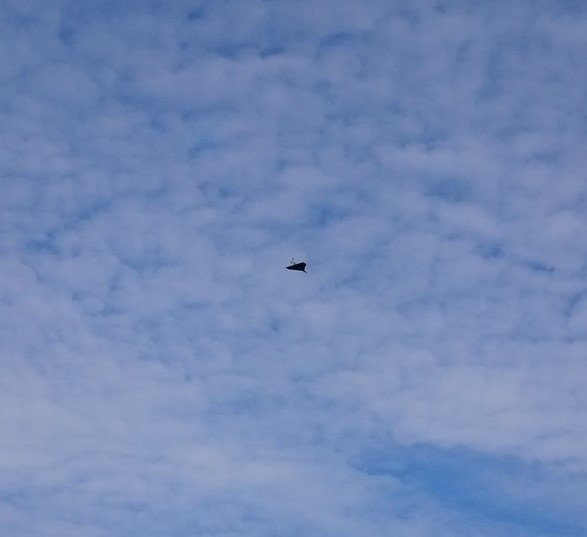
Woody says he can’t hit anything up there, time he was introduced to Basher Bob methinks! See it flying in THIS MONTH’S VIDEO. He managed to break the prop landing on the patch the other day and duly searched for the broken blade, we don’t want them being eaten by the cattle. He couldn’t find the missing blade so several others joined the search before someone finally spotted it.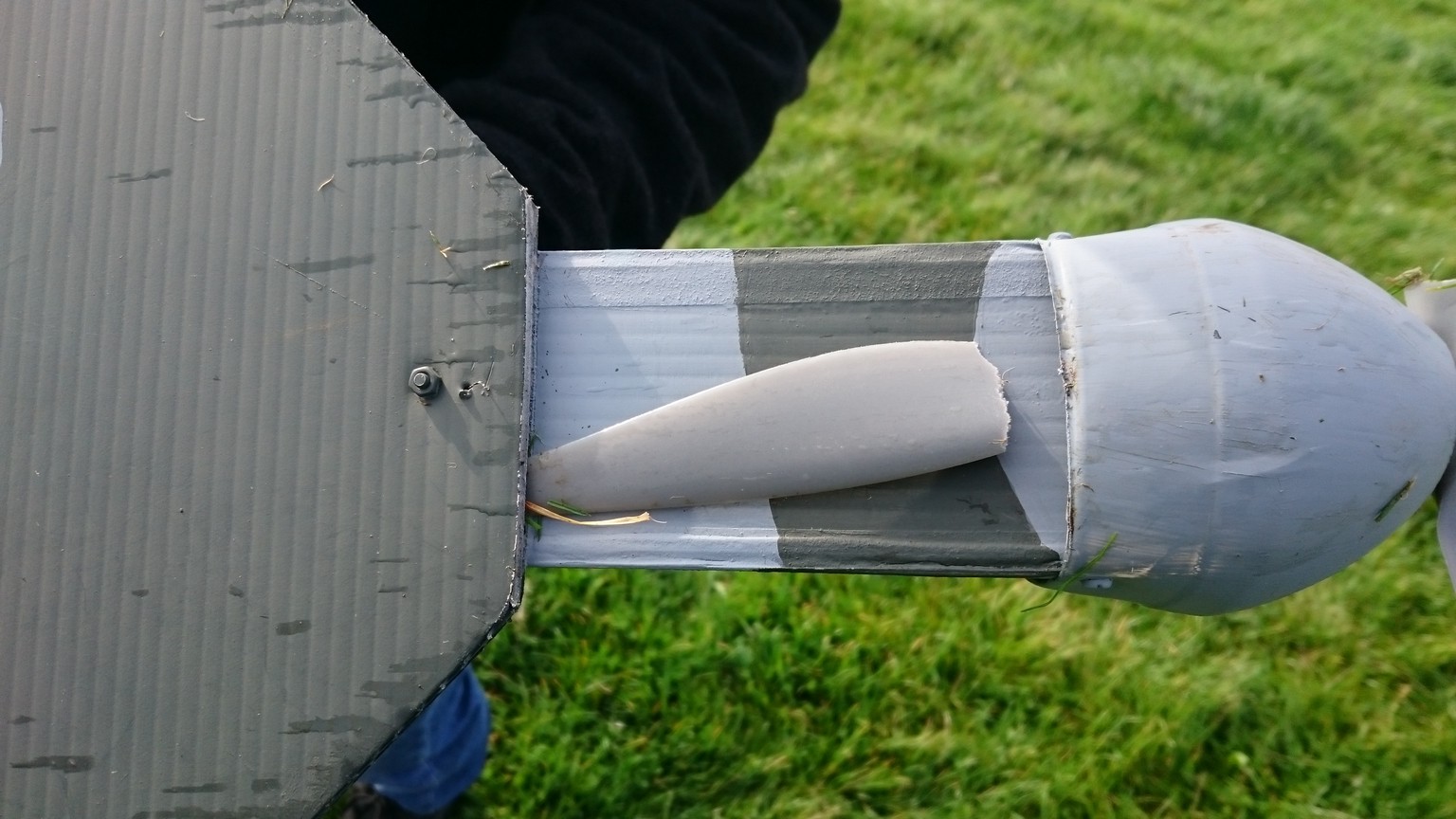 What are the chances…?
Several new models had their first outings in October. First up is Chairman Ron’s Splot, a beautifully made example that Ron built exactly to the original Graham Head design other than converting it to electric power.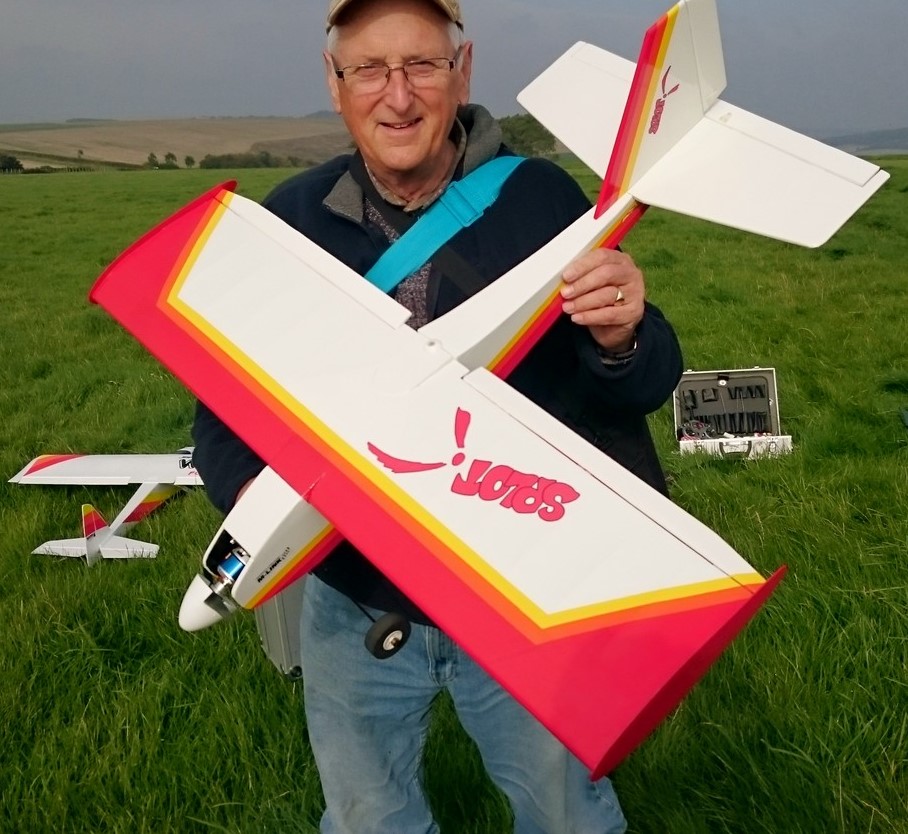 Ron didn’t feel the need to lengthen the nose or add extra bays to the wings; he simply fitted an E-Max 2815/09 motor with an 11 x 7 prop, a 40A esc, and a 2200mAH 3 cell battery pack. He even used the original design of fitting one centrally mounted aileron servo, something of a rarity these days but of course it was the norm back in 1986 when Graham designed the Splot.
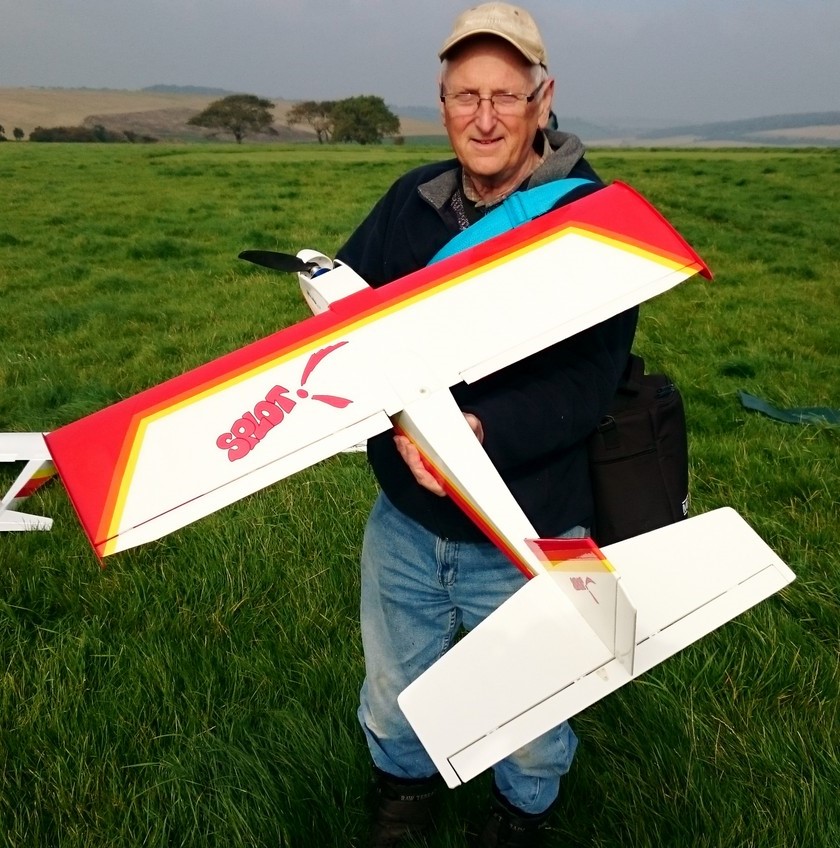 Ron asked me to do the test flight and I’m happy to report that it flies like all the Splots do, brilliantly. There was hardly a click of trim needed and the centre of gravity proved to be spot on. Ron has now had several flights with it and it’s already become a firm favourite.
Modelling Clay won the Big Raffle again recently (I knew he was trouble right from the start) and chose the Wingnetic. This is a flying wing version of the Kinetic/Spirit and it shares the same fuselage front end, motor and motor mount.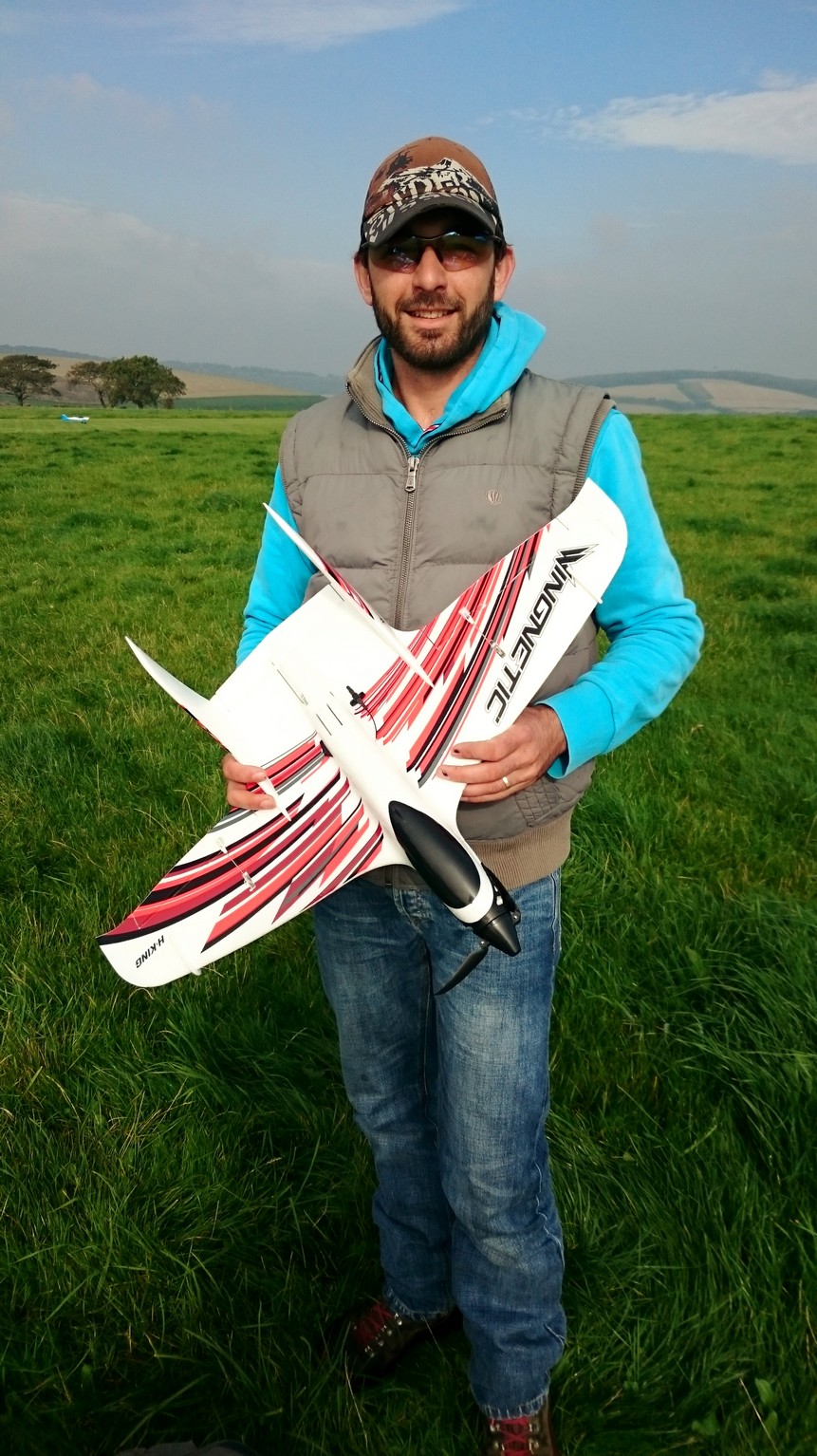
I flew 1066’s Wingnetic when he bought one a few months back and was very impressed. I think Tim’s is the same version as Steve’s, so it comes with the motor and speed controller but you have to provide you own servos, 3 x 5 or 6 gram ones are recommended.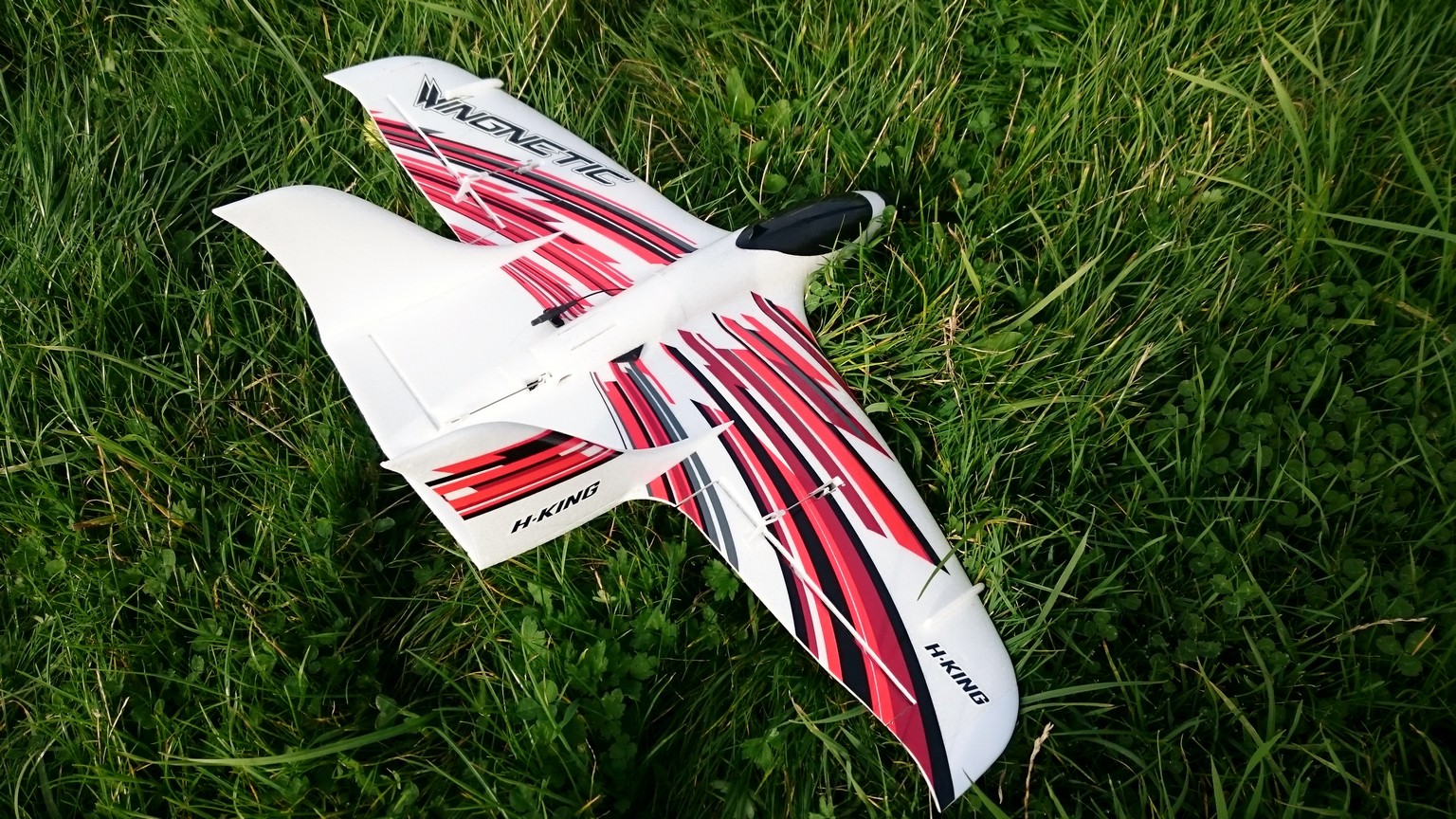 At around £45 it’s a great little model.
Now for a new model that a little different. It’s Gary Houghton’s new Black Horse Models Edge 540. So what’s different? It’s got one of those strange, old fashioned I/C engines!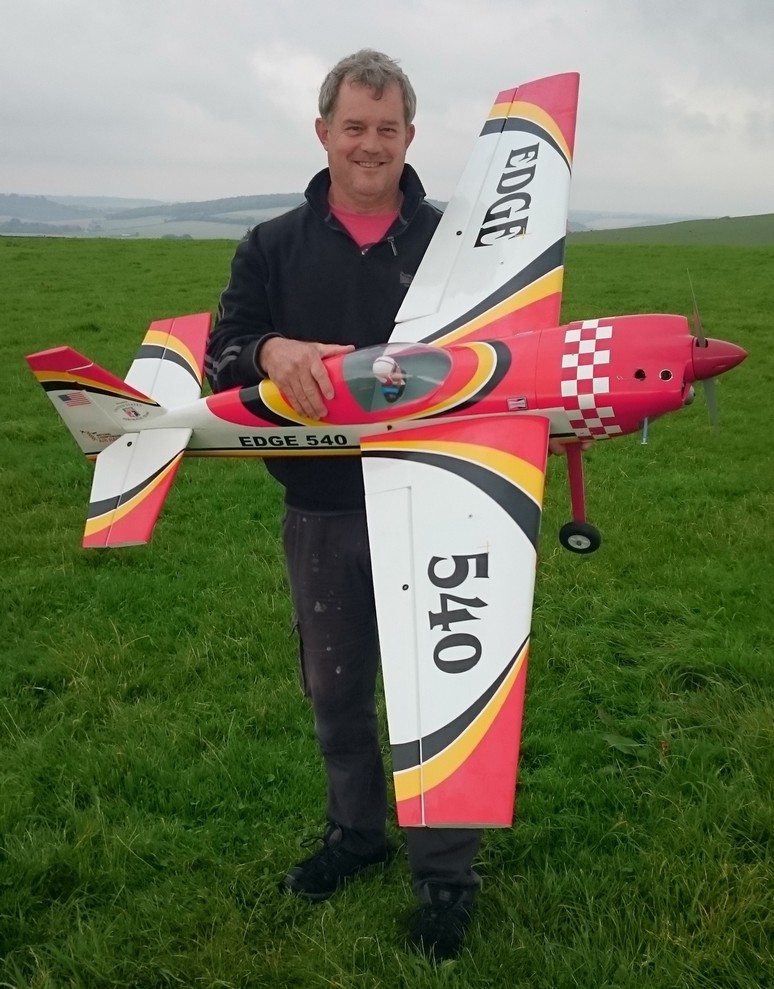 It’s an ARTF built from balsa and ply, and is covered in Oracover. The wingspan is 62” and the model weighs around 7-1/4lbs. The engine is an OS65AX, which is 10.63cc.
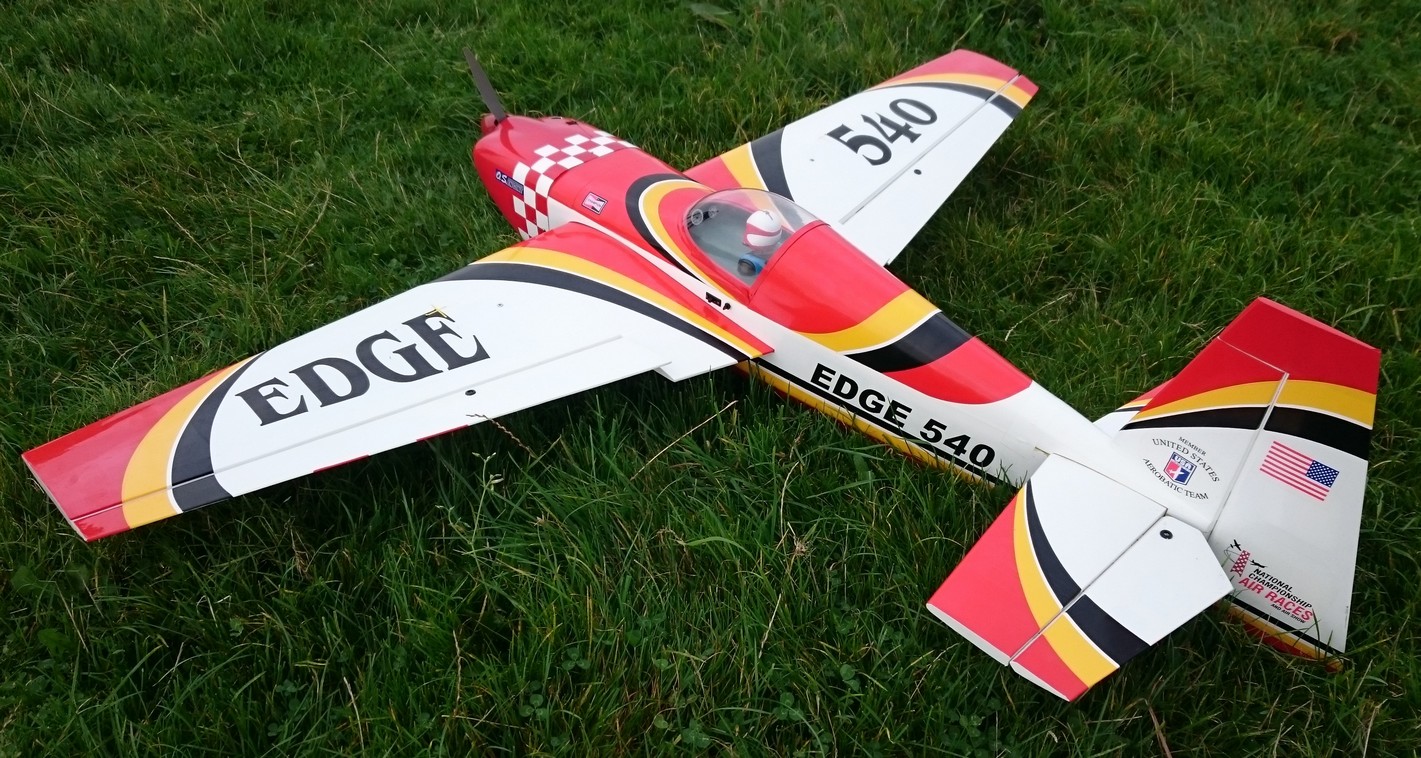 The model flies well and is capable of just about any manoeuvre in the book.
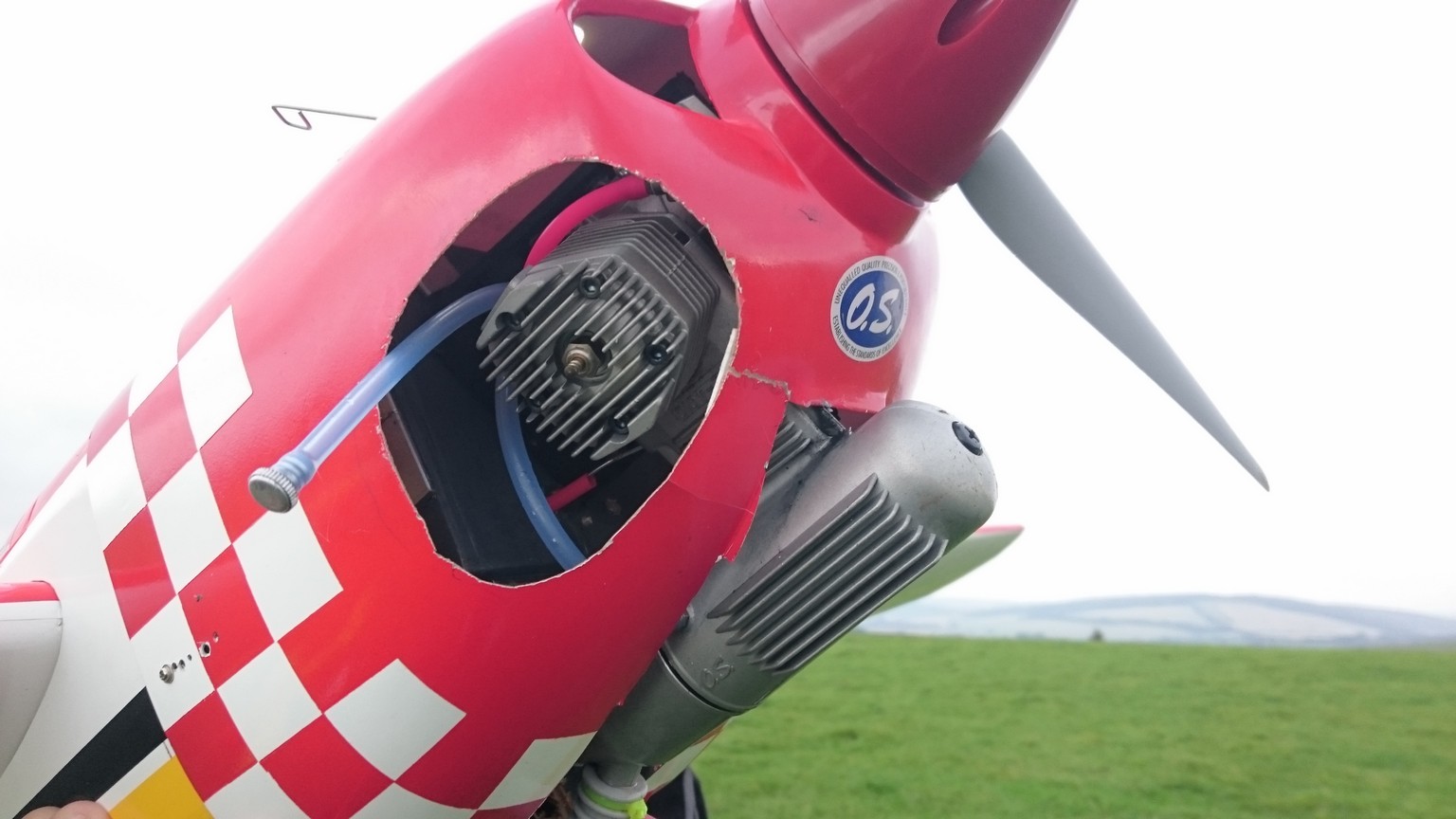 Gary’s is fitted with the standard silencer and passed the noise test ok. It didn’t seem noisy to me, it’s certainly quieter than his Wot 4. But I see from the OS website that there is an optional silencer available that is both quieter and lighter than the one they supply as standard. Why on earth don’t they supply the quieter, lighter one as standard in these days of noise problems and lost flying fields? Anyway, Gary has taken the hint from the rest of the club and he has an electric powered model under construction.
We haven’t seen any new EDF models for a while but Wonky Wiltshire has just bought a Mini Katana EDF from HobbyKing. The name seems a bit odd, Katana is actually the name of a long sword, but in full-size aircraft it’s a 2 seat composite light aircraft, and model Katanas are mostly 3D aerobatic types on the lines of an Extra or Edge.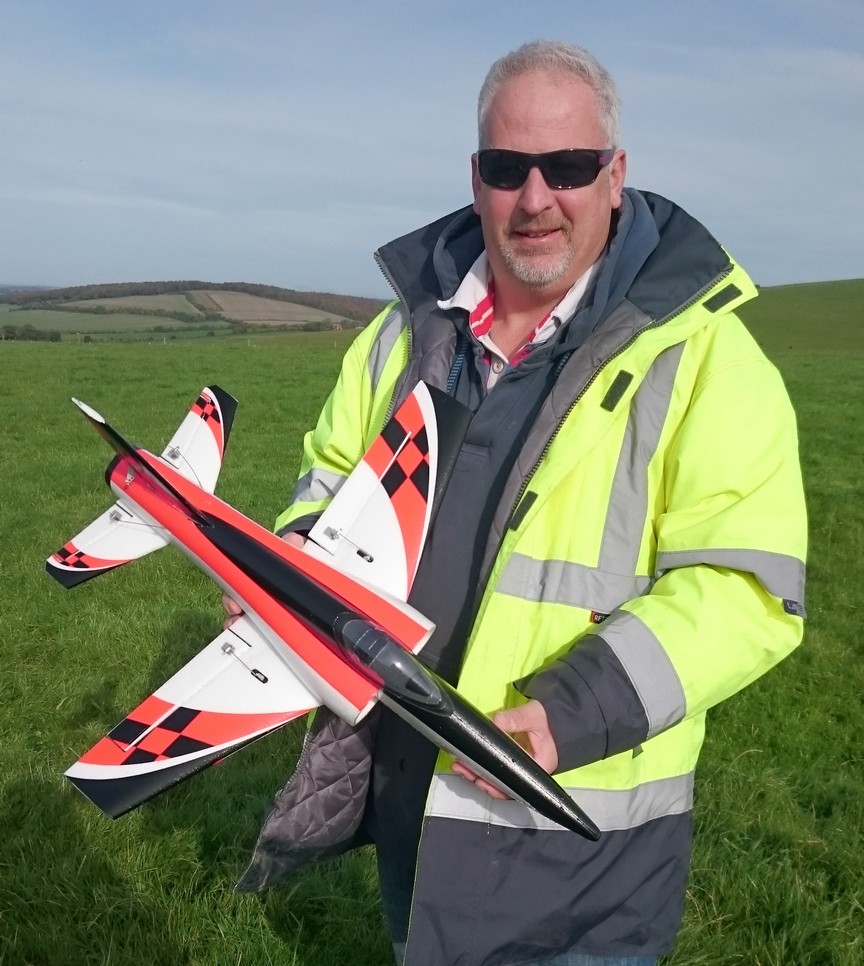 This Katana is 600mm span and is pushed along by a 5 bladed 50mm fan unit coupled to a 30A esc and the usual 1000mAH batteries that most of us have for our Spirits etc. It’s all moulded from EPO foam so it’s strong and can be glued with normal cyano, not foam safe.
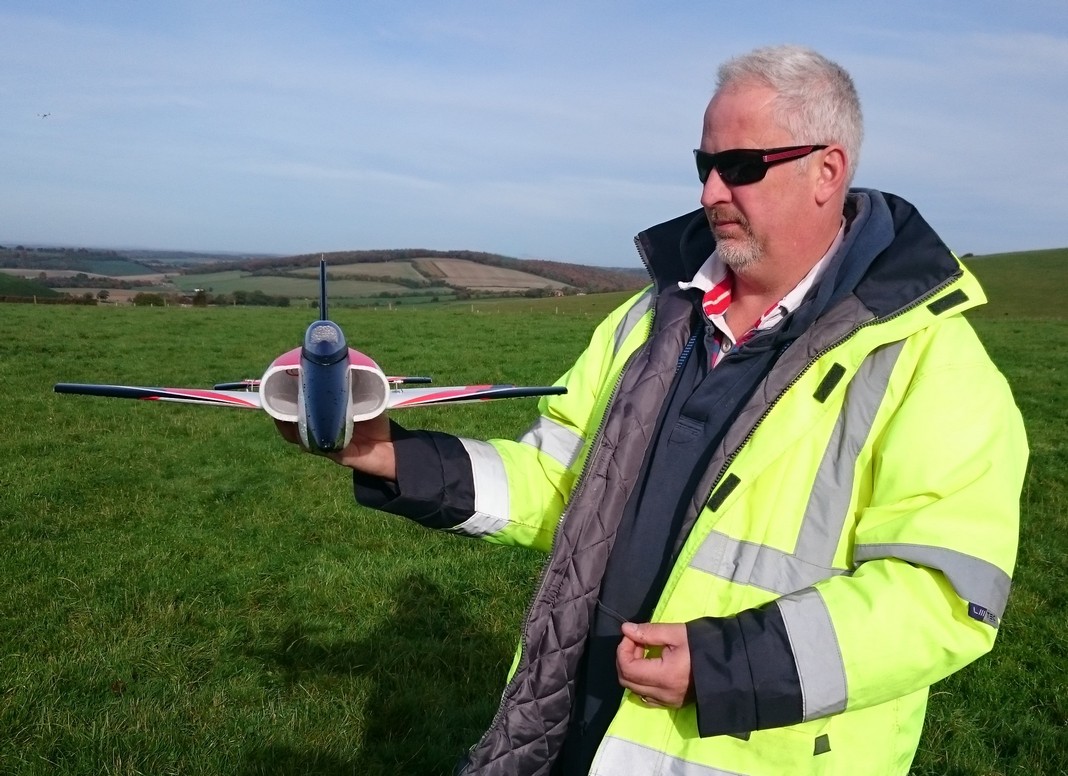 It seemed to fly well once Wonky had recovered from my dodgy launch and it certainly moved round the sky pretty quickly, not one you’d want to let get too far away! I look forward to trying it Phil…
I had a surprise this month when a prospective new member arrived at the field and introduced himself as Graham Swan, one of my old friends from school! We built and flew single channel radio control models together back in the 60’s, and Graham actually still has one of his, a Wizard of Oz slope soarer, as featured on the cover of Aero Modeller in April 1966.

I can also remember that he built (for obvious reasons) a Swannee, also from an Aero Modeller plan, and a Mini Concord from a Veron kit.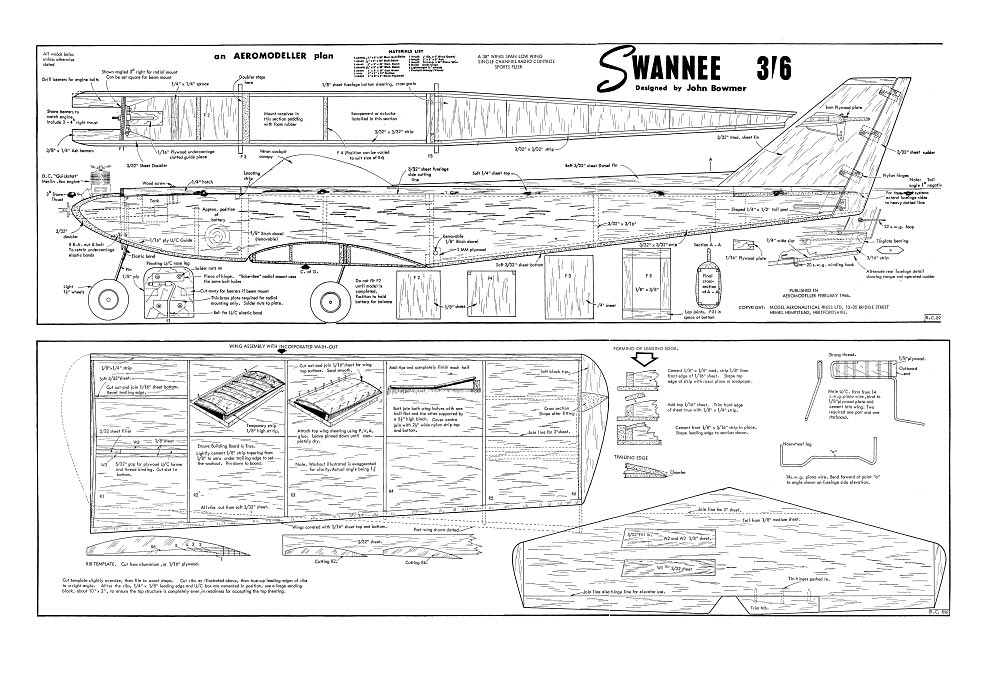
 Like me, Graham has recently retired and he decided to return to modelling following a trip to Old Warden on what turned out to be a model flying day. He has already bought an E-flite Apprentice, the new version with a built in gyro called SAFE – Sensor Assisted Flight Envelope.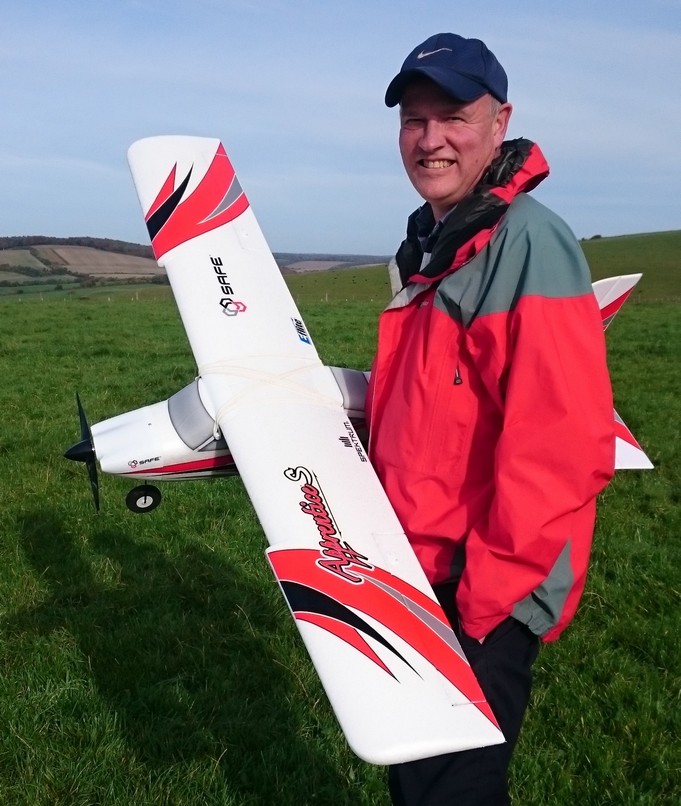
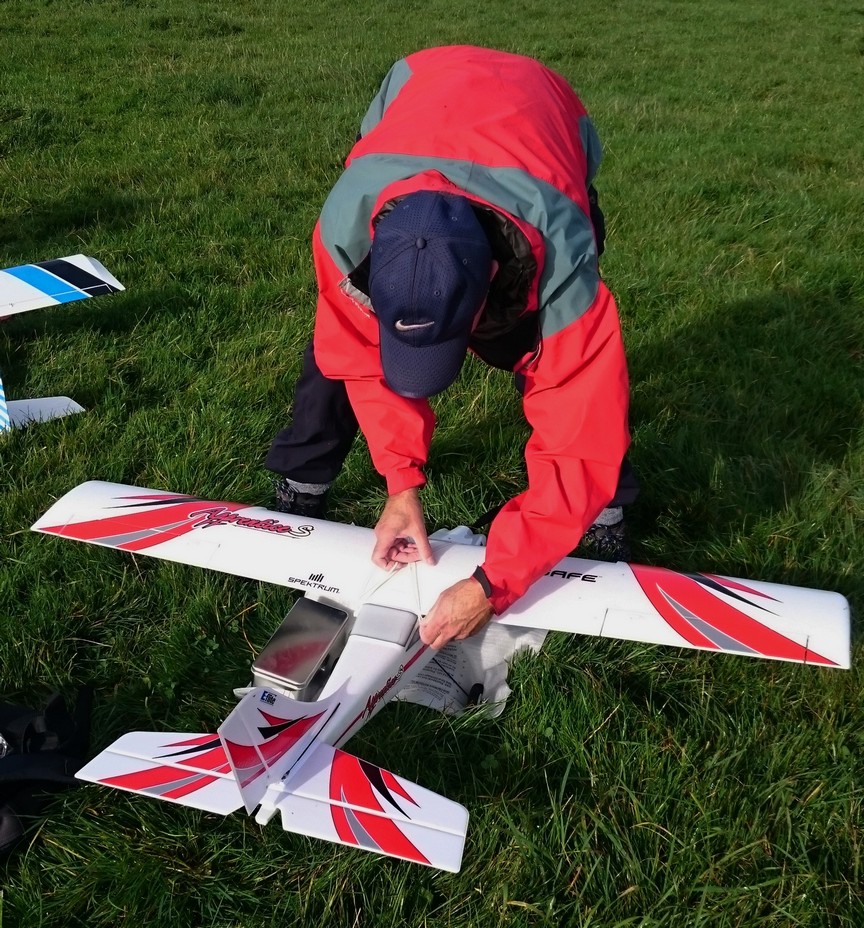 It works well; Graham has had three flights so far without crashing despite me looking after him! From what I saw on those flights I don’t think it will take him long to learn, although it will probably take longer to get used to the club ‘characters’.
Finally, it’s time for another Caption Competition. There will be a prize so place your entries in the Comments sections at the end.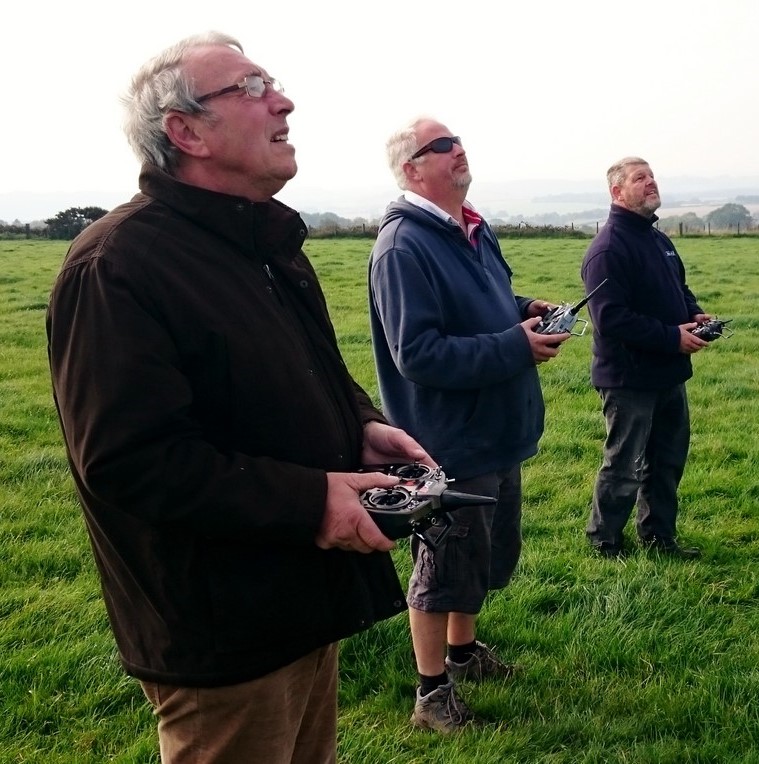 ‘The Good, the Bad, and the Ugly’ is too obvious, think up your own insults!
A supposedly true story of a Scottish flight:
After being airborne for approximately thirty minutes on an outbound evening flight from Glasgow, the lead flight attendant for the cabin crew nervously made the following painful announcement: “Ladies and gentlemen, I’m so very sorry but it appears that there has been a terrible mix up by our airport catering service… I don’t know how this has happened but we have 103 passengers on board and, unfortunately, only 40 dinner meals… I truly apologise for this mistake and inconvenience.”
When passengers’ muttering had died down, she continued: “Anyone who is kind enough to give up their meal so that someone else can eat will receive free, unlimited drinks for the duration of our 5 hour flight.”
Her next announcement came 90 minutes later: “If anyone would like to change their minds, we still have 40 dinners available.”
Colin Cowplain
Patch News – September 2015
This will be rather an odd edition of Patch News as I’m off on holiday (yeah yeah, I know…again!), so it won’t include the last week of September. My aim is to complete this before I leave and, wi-fi permitting, to publish it on the website on the first of October. Hopefully others will make notes and take photos of what I miss which will mean I’ll have plenty to write about in October.
The much hoped for Indian summer hasn’t really materialised and we have had some truly awful weather. But there have also been some good days and we’ve managed to fly quite a lot, both midweek and on Sunday mornings.
I’ll start will an update on my Cri-Cri. I have moved the main wheels forward even further and added more up thrust to the motors, both in an attempt to cure it’s reluctance to take-off. It seems to have worked although the wheels are probably a bit too far forward now as it has a tendency to sit on its tail rather than the nose wheel! But it manages to get off every time which was the aim. I have added a rudder as, having given up on the supplied nose wheel steering, I couldn’t steer it on the ground, and it also needs rudder to keep it on track in looping manoeuvres. Of course the tendency to sit on its tail has not been helped by the weight of the extra servo, linkage, and the rudder itself. However, it is now flying much better and it’s growing on me…slightly. JP kindly took some flying photos for me this month so you are rewarded with seeing the Cri-Cri in the air.
 I have since added a pilot as the huge cockpit looked ridiculous empty, especially on those low fly-bys. It’s just a profile pilot but it looks much better in the air than before. When making the pilot I decided only the best would do…
 JP also took a couple of photos of young Monty doing his landing practice; both Monty and dad JP are doing very well. These photos show just how accurately Monty is landing now.

Wonky Wiltshire made a welcome return to the field this month and trotted out all the usual excuses, wife, kids, work etc. but we know the truth, it’s all to do with lots of holidays, an Airstream caravan, and a new rib (that’s a rigid inflatable boat to you landlubbers). Phil has bought a Durafly EFX Racer, the same as Modelling Clay’s, but fortunately in the alternative yellow colour scheme. Like Tim’s, it flew well from the start and is a good, smooth, fairly fast sport flier. I suspect it won’t be too long before Wonky feels the need to fit it with 4 cells instead of the 3 cells it’s flying on at present.
 The EFX can be seen flying in THIS MONTHS VIDEO.
I featured Richard King’s F22 Raptor last month, details of which were supplied by Dougal Entendre. Dougal said it was made of Correx but I was convinced it was the Flite Test F22 which is supposed to be made from foam board. Richard (BarracKing?) kindly supplied some information on the model and it turns out that both Dougal and I were correct. It is built from the Flite Test plan but rather than use foam board BarracKing used some Correx he had left over from the Delta Challenge. That made it rather heavier than the foam board versions but it flies well. He’s added working twin rudders so should be able to do lots of strange manoeuvres once he’s got used to flying it. BarracKing was using a 1000kv motor with a 9 x 6 prop and it flew fine but needed a little more speed, so he’s now fitted a 2000kv motor and a 6 x 4 propeller. It is faster now but certainly not ballistic, I wonder if a 6 x 6 prop might be better? I’ve no idea what battery or speed controller he is using so maybe a 6 x 6 would be too much for it. Anyway, he was good enough to let me have a go with it with the original motor and I thought it handled nicely, much better than I expected really. I look forward to flying it with the new motor soon.
 Like Barracking, I have a sheet of Correx left over from the Delta Challenge, I could just get tempted. Good on you Richard, it’s good to see something a bit out of the ordinary, keep on experimenting, we love it! Want to see it in action? Watch THIS MONTHS VIDEO.
Jeremy Stuttard sent me a link to a weather station in Clanfield that belongs to the Hampshire Astronomical Group. It’s not one I’ve seen before and is especially useful if you want to know what the current wind speed is at Clanfield. I assume the weather station is at the same site as their telescopes on Hinton Heights, and if that’s correct it’s fairly high up on the downs and within a couple of miles of our patch so it’s likely to give a good indication of the conditions at the patch. It should be handy for all of you but will probably be especially useful to members on the Petersfield side of Butser hill. To view it CLICK HERE
You are probably all bored with reading about the many Spirits/Kinetics that are being flown in the club now but here’s a little more info for you. The Spirit motors don’t seem to last too long and aren’t available as spares from HobbyKing. But Kinetic motors are available and seem more durable, although you need to buy the Kinetic folding prop at the same time, the Spirit prop won’t fit. It’s also a good idea to buy the Kinetic motor mount, it makes it easier to fit the Kinetic motor to the Spirit and it strengthens the nose and adds some cooling holes at the same time. Dougal Entendre has tried a variety of motors and speed controllers in his Spirit, most of which haven’t lasted very long at all because they overheat so badly. However, he’s now fitted a Kinetic motor but didn’t buy the Kinetic motor mount (they cost about £2, obviously too much for Dougal!) so he has made up his own alternative nose strengthening/cooling pieces. I’ve seen neater jobs but they work well at both nose strengthening and cooling so I won’t complain too much. Dougal simply cut the pieces from very thin ply (milliply, about 0.015” I think) and glued them round each side of the nose. Cheap, simple, and effective, job done.
He also added a larger rudder in an attempt to be able to perform Hanno Screws and suchlike. If you don’t know what a Hanno Screw is you probably can’t do one!
I mentioned at the start that the weather has been pretty bad and it’s meant that even on sunny days the field has been very wet underfoot. This has produced some interesting variations of sartorial elegance! Here Captain Slow demonstrates his solution to the hot knees/wet feet problem. I probably shouldn’t say too much, my own crimes against fashion occur all too frequently!
Basher Bob has been at it again! In September, not only did he collide with Dougal Entendre, he caused another mid-air at the same time! Yet again Basher was flying his Kinetic and this time he came into contact with Dougal’s Slick. Both models suffered some damage but fortunately both were repairable.

 But the amazing thing was that as Bob and Dougal collided, Captain Slow and 1066 tried to see what the bang was whilst avoiding the bits, and they too collided! Fortunately the damage was minimal to both models and they landed safely with no further damage.
I included a photo of Basher Bob’s Parasail last month and this month I took one of the ‘workings’. The original design doesn’t have any elevator control, it relies instead on the speed of the motor to make it climb and descend. This obviously has limitations, especially in windy weather, so Bob has added a sliding bar mechanism to imitate the weight shift control used on full-size hang-gliders. It’s never going to be as precise as the elevator on a normal model but it certainly gives much greater control than previously and allows Bob to fly it in stronger winds than was possible before. It can be seen in action in THIS MONTHS VIDEO.
The big news of September has to be the Delta Challenge. Steve H (1066) came up with the idea of members building deltas, the only rules being that they should use a flat plate wing of a set size and shape, and that they must not be revealed to others until the club meeting on 10th September, before being flown on 13th September. It turned out to be a hugely popular challenge and 15 deltas were brought along to the meeting.


 Most were the correct size and shape but a couple were definitely undersized! A form was passed round for everyone to vote for their favourite model in various categories and the winners were:
Most creative – Dan Bennett Best Finish – Andy Palmer Why Did You Bother – John Warren
Most Scale – Alan Wood Probably Won’t Fly – Dan Bennett Most Effort – Nick Sivertsen
And the winner of the trophy, the Best Overall – Tony Neal. Congratulations to Tony, he produced a great model.
Incidentally, the trophy was a build it yourself kit of parts cut from Correx!
So the next stage was the flying on the following Sunday. Unfortunately Dan Bennett, Keith Evans, & Ron Vears couldn’t make it but the other 12 were there and they all flew (or at least made a fair attempt!). Woody was late arriving with his Vulcan delta so missed being in the photo. The main problem seemed to be having too much reflex so some only flew a circuit before landing for adjustments but all except Stanley Knife (Viv) and John Warren flew pretty well. Stanley’s seemed to need the movements reducing and the centre of gravity moving forward but I’m sure it will be fine when sorted. John’s probably just needs trimming by someone more experienced, and then it will be ok. 1066 damaged his delta later with some over exuberant flying and has now modified it into a Mark 2 version. The big surprise for me was Woody’s Vulcan lookalike which flew very well, very steady and nice to fly. Dougal Entendre’s delta was fitted with a retractable nose wheel which worked perfectly. The plane took-off well, retracted the wheel, and flew very well before lowering the wheel again and landing back on the patch. I videoed some of the first flights and attempts, if you’d like to see it click on DELTA DAY.
On the Sunday following the first delta flying day Desperate Dan turned up to test fly his fearful looking twin motored biplane delta, remember he won the Probably Won’t Fly award. Before the attempt we were laying bets as to how far it would get before crashing, my own guess was about eight feet. Well, we were all proved wrong, it just went away from the launch beautifully and flew perfectly with no trimming required, amazing! I have decided that in honour of his remarkable achievement Desperate Dan should be renamed Top Man Dan. I have included some of Top Man’s flight and also some more video of the initial Delta Day in THIS MONTHS VIDEO. Some of the material was provided by BarracKing, thanks Richard. There will be more photos and video of the event available at a later date and will be given out on CDs to anyone that would like one.
We were pleased to be joined at the patch one Sunday by Tim Clay’s dad Shaun. As well as being Chairman of the Eastbourne and District Model Flying Club Shaun and is a very experienced modeller and flier, it was good to meet and fly with him. As Tim’s nickname on here is Modelling Clay it seems only appropriate that Shaun should be nicknamed Play Doh! We look forward to having him fly with us again in the future.
“Dad, what’s the propeller on the front of the plane for?” “It’s a fan to keep the pilot cool son”
“I don’t think so Dad!” “Well watch him sweat if it stops going round!”
Colin Cowplain
Delta Challenge Video – September 2015
I’ve made a quick video of some of the Deltas flying on Sunday. I didn’t film all that flew but you’ll get the idea of the fun! Other members filmed all the models and used ‘proper’ video cameras (I was using my phone) so there will be a better and more complete video at a later date.
To watch the video CLICK HERE
Colin Cowplain