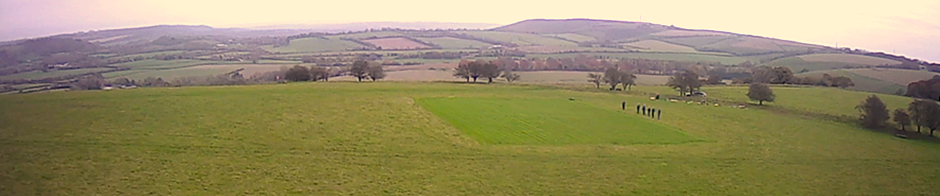
Patch News – May 2023
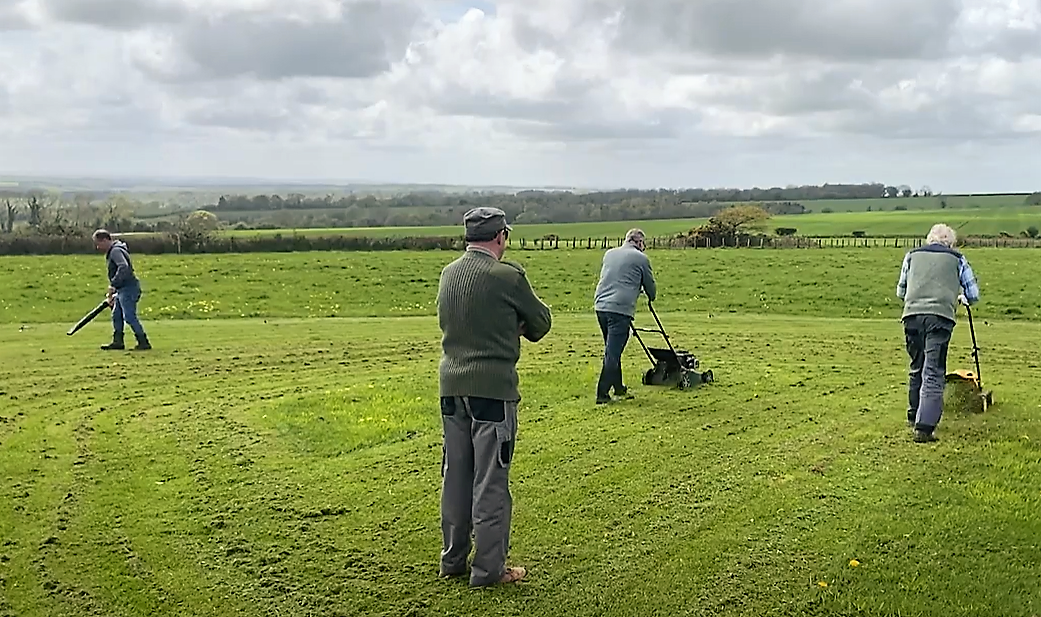 Also Woody brought along his leaf blower to help shift the grass cuttings and after being suitably supervised by Captain Slow the patch was soon back in near perfect condition.
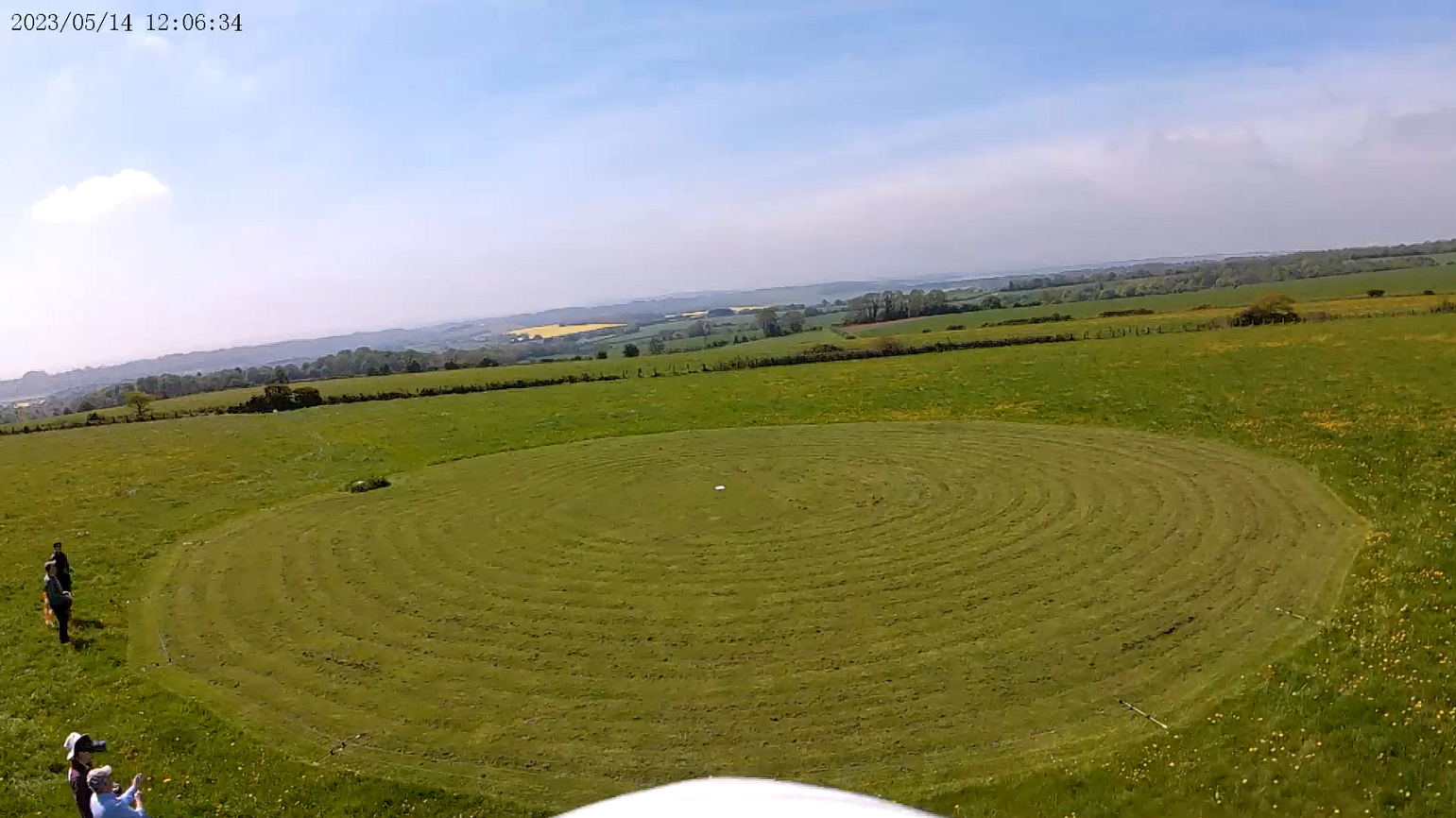 The field was used for car parking for the Sustainability Centre Green Fayre on 7th May so no flying was allowed and the electric fence was suitably adorned with red and white tape so none of the Chelsea tractors would drive right through it having failed to see it. Farmer George had previously said the bullocks would return soon after the Green Fayre but the grass (not the patch) had got very long so George decided to cut it for a crop.
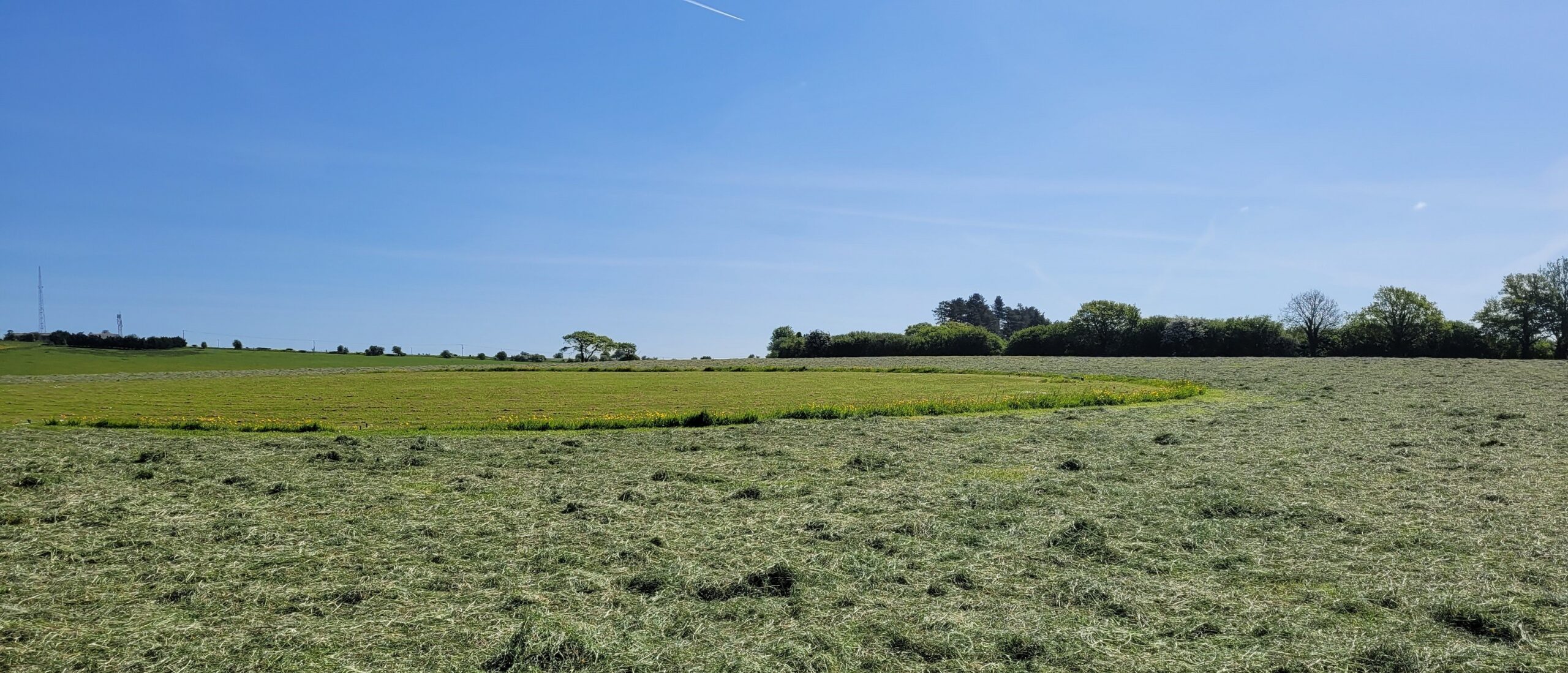 At the time of writing the cut grass is drying out in the glorious sunshine but will no doubt be baled and removed to the barn shortly, all good news for us as it means the whole field now has short grass and the bullocks won’t return for several weeks.
The main event of the month was the follow on from the 2022 BMFA Centenary Event during which 3109 models were flown at once at 263 flying sites across the UK in an attempt to set a world record for the number of models airborne at the same time.
It proved very popular so the BMFA decided to do it all again on 14th May this year. Unfortunately last year there was heavy rain at our field so the only plane that was able to qualify was Captain Slow’s RC Paper Plane which managed a brief flight in the barn!
At the time of writing the cut grass is drying out in the glorious sunshine but will no doubt be baled and removed to the barn shortly, all good news for us as it means the whole field now has short grass and the bullocks won’t return for several weeks.
The main event of the month was the follow on from the 2022 BMFA Centenary Event during which 3109 models were flown at once at 263 flying sites across the UK in an attempt to set a world record for the number of models airborne at the same time.
It proved very popular so the BMFA decided to do it all again on 14th May this year. Unfortunately last year there was heavy rain at our field so the only plane that was able to qualify was Captain Slow’s RC Paper Plane which managed a brief flight in the barn!
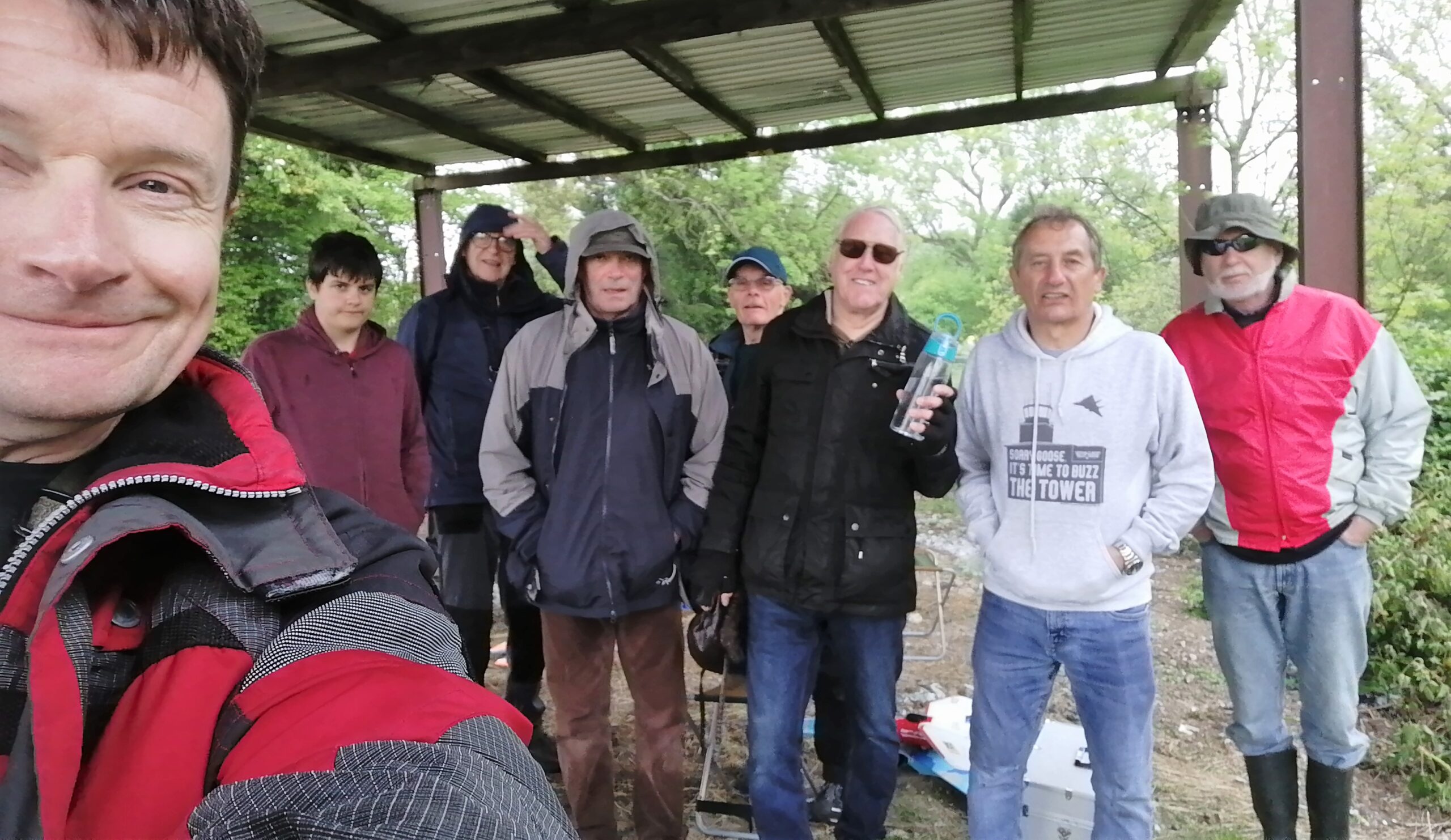 This year the weather was ideal and, as before, the idea was to have as many models in the air as possible at 12 noon. Chairman Gordon Bennett completed all the necessary paperwork for the BMFA and also wrote this report of the day for them:
Sunday started cold and misty up at our site but we kept warm by virtue of the fact we needed to mow the grass! We have a 30m circular patch and with a couple of mowers cutting in ever-decreasing circles we had the job done very quickly, the members taking turns of a couple of circuits each. By this time the sun had broken through, the mist burnt off and the temperature rose rapidly. Conditions were perfect with light and variable winds, a complete change from last year when heavy rain scuppered our day.
This year the weather was ideal and, as before, the idea was to have as many models in the air as possible at 12 noon. Chairman Gordon Bennett completed all the necessary paperwork for the BMFA and also wrote this report of the day for them:
Sunday started cold and misty up at our site but we kept warm by virtue of the fact we needed to mow the grass! We have a 30m circular patch and with a couple of mowers cutting in ever-decreasing circles we had the job done very quickly, the members taking turns of a couple of circuits each. By this time the sun had broken through, the mist burnt off and the temperature rose rapidly. Conditions were perfect with light and variable winds, a complete change from last year when heavy rain scuppered our day.
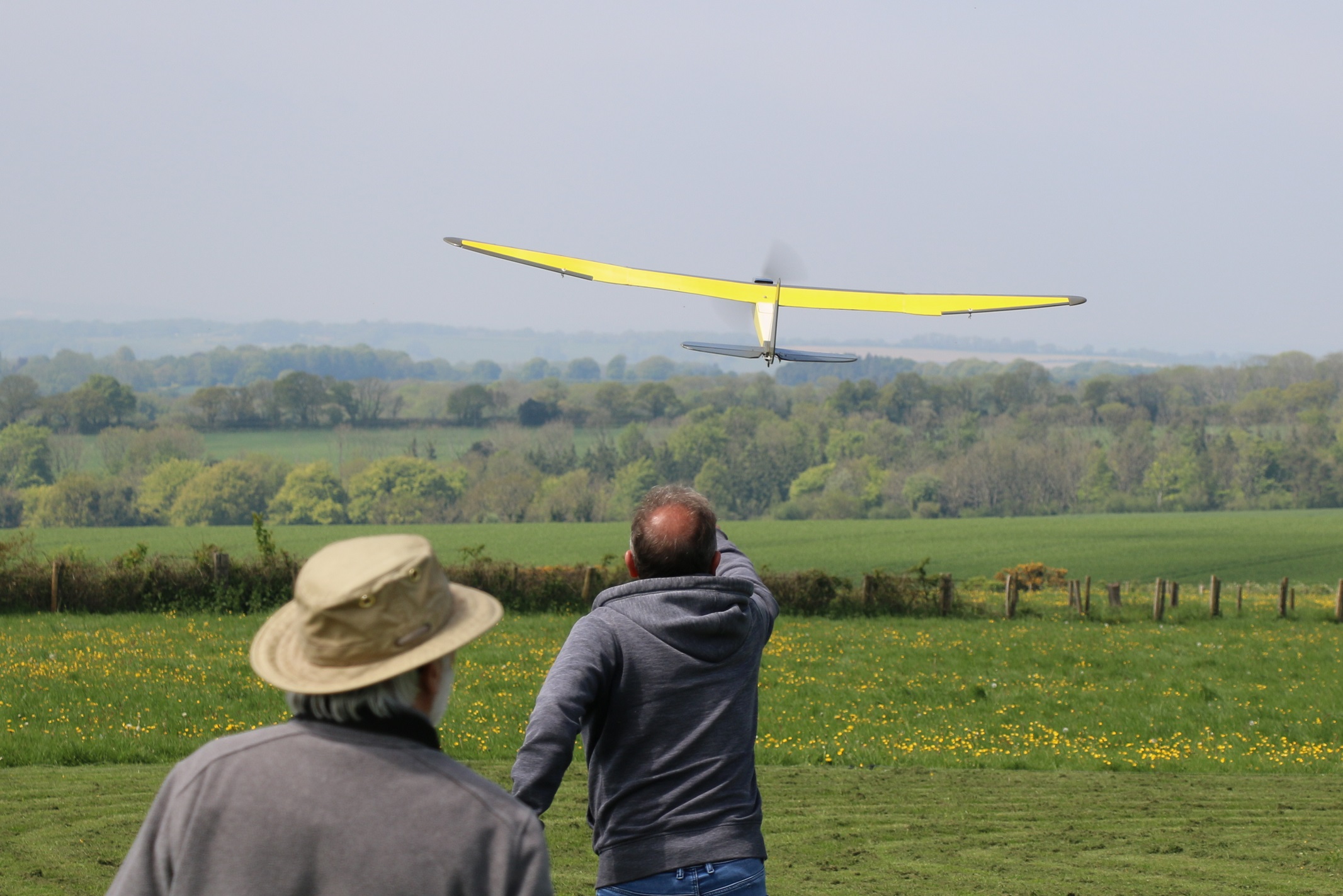 We had a great morning’s general flying, all models were electric-powered and one pilot flying FPV (with a trusted spotter). Around 11.45 general flying ceased as aircraft were prepared for the midday attempt. 12 pilots had come up for the attempt but one unluckily had a radio problem so we had a total of 11 aircraft in the air just before midday.
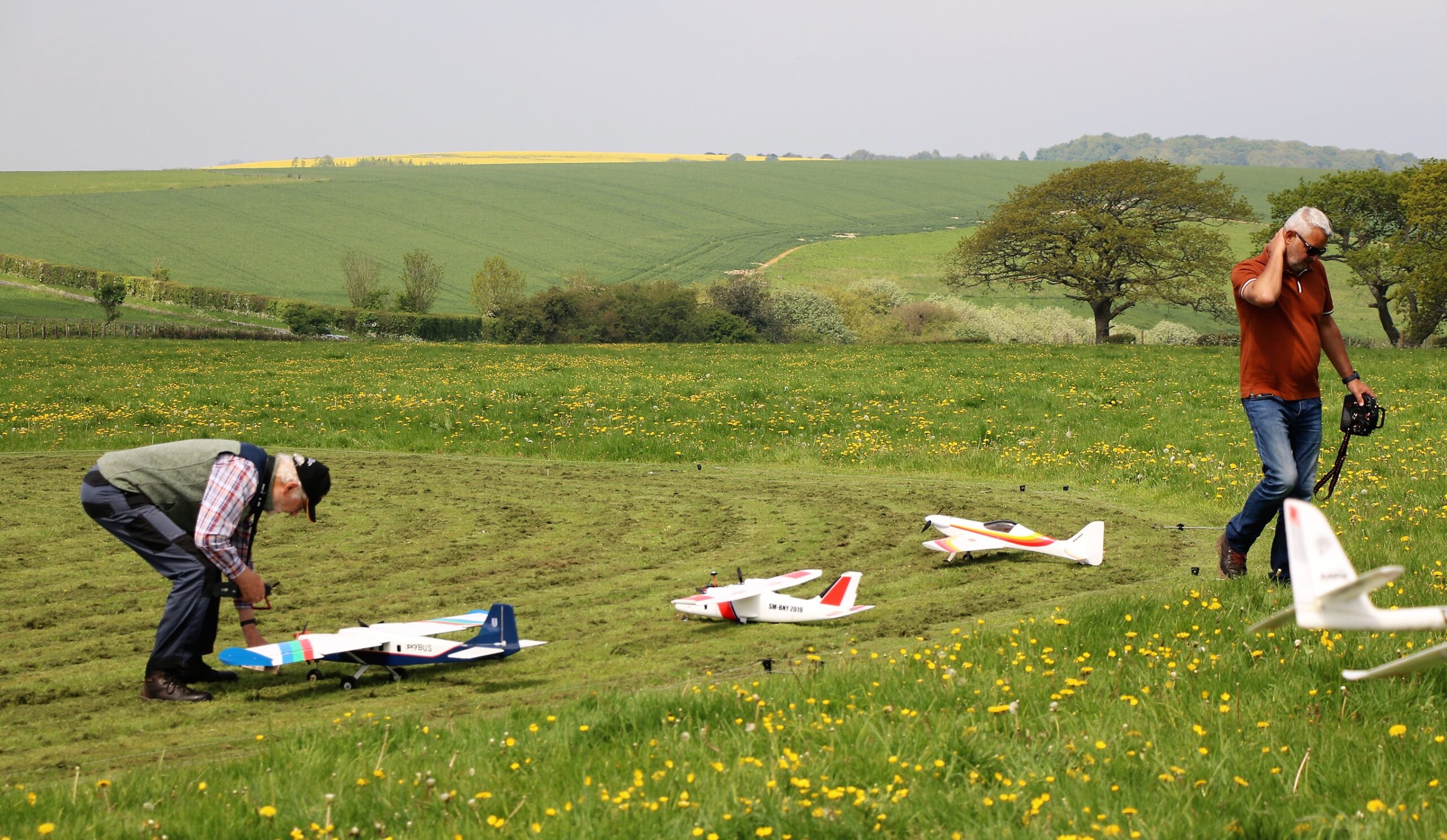
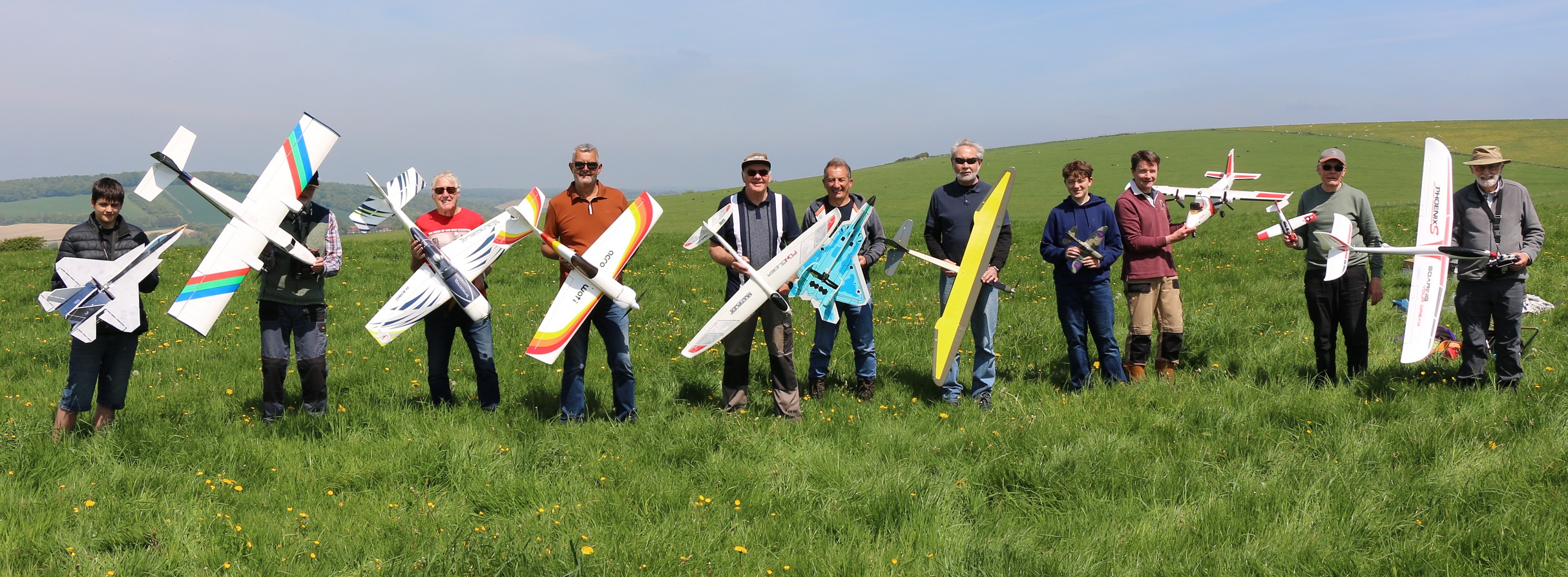
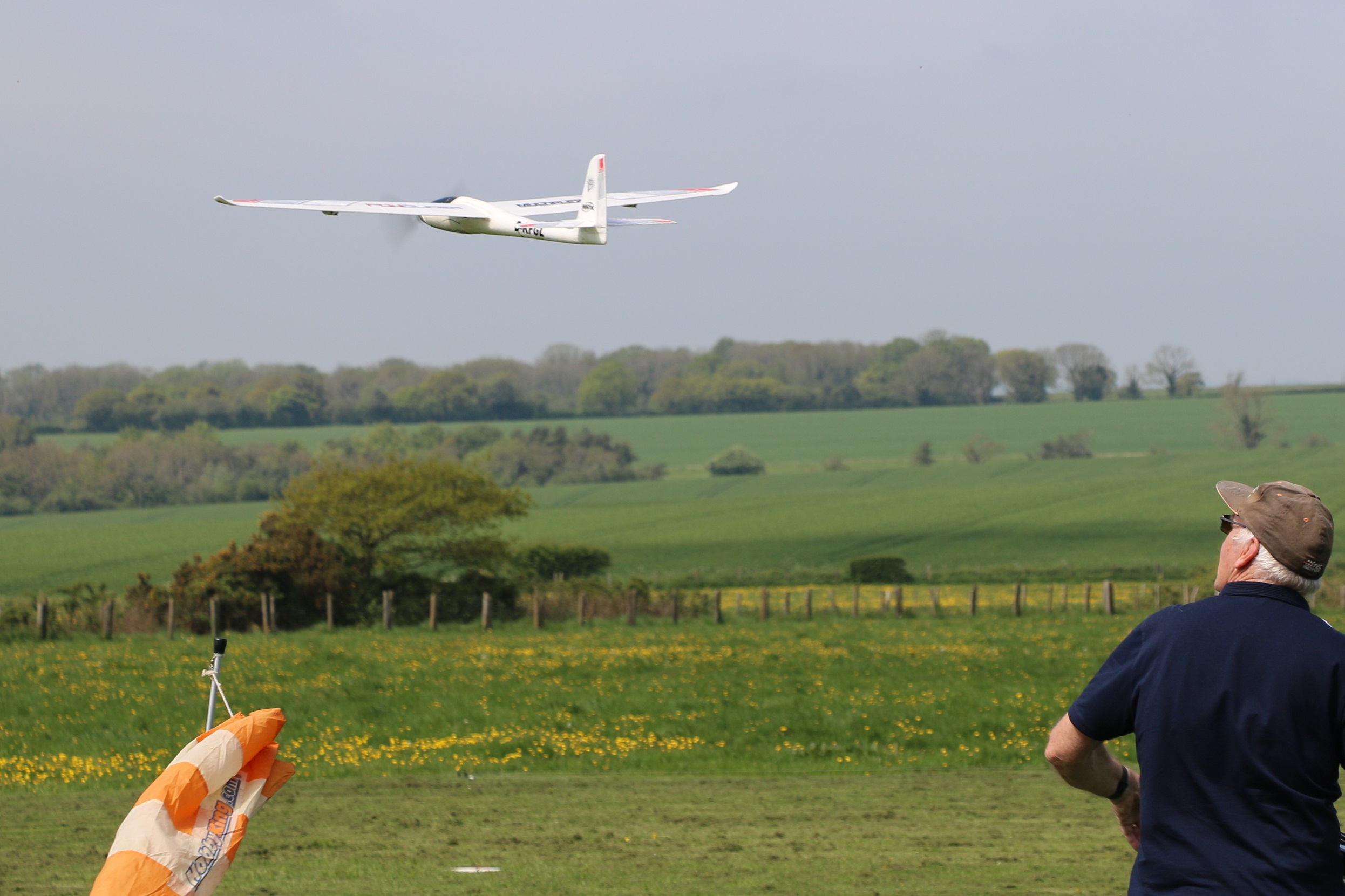 The fleet included motor gliders, foam boards, foamies, a couple of twins (both carrying video cameras) and two miniatures. Our site is in a beautiful rural location on the crown of a hill with views down to the Solent and Isle of Wight. We often have Red Kites joining us in the air as they take a bit of interest in what we’re up to. It would appear they were in on the deal as two Kites joined the circuit at the stroke of 12 and stayed for a couple of minutes, sadly I didn’t get the opportunity to get their BMFA membership details!
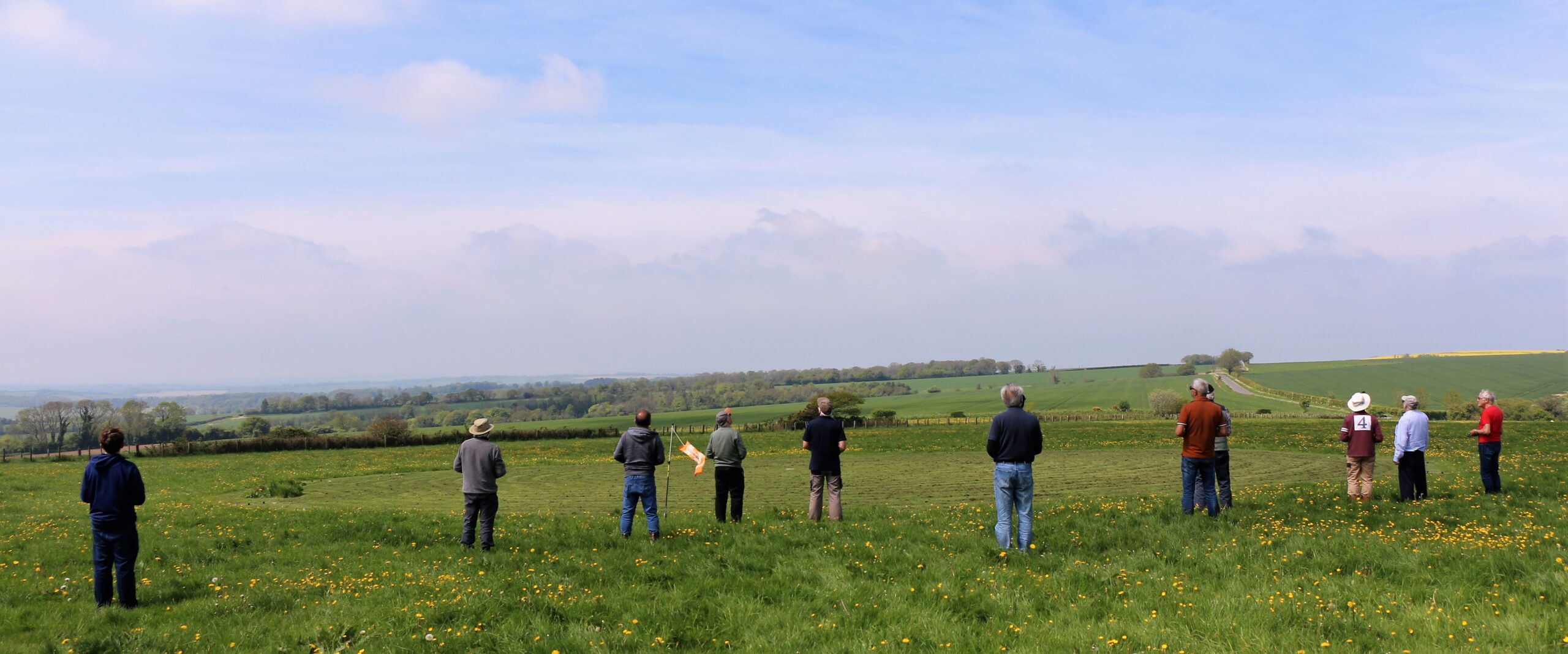 All aircraft got back safe and sound but the pilot of one of the motor gliders was off thermalling so had to be gently requested to land so that we could get the group photo.
  The FPV aircraft captured a video showing 7 aircraft in the frame, we’ve uploaded a still from the camera. A great day had by all, I’m sure we’ll be up for it again next year.
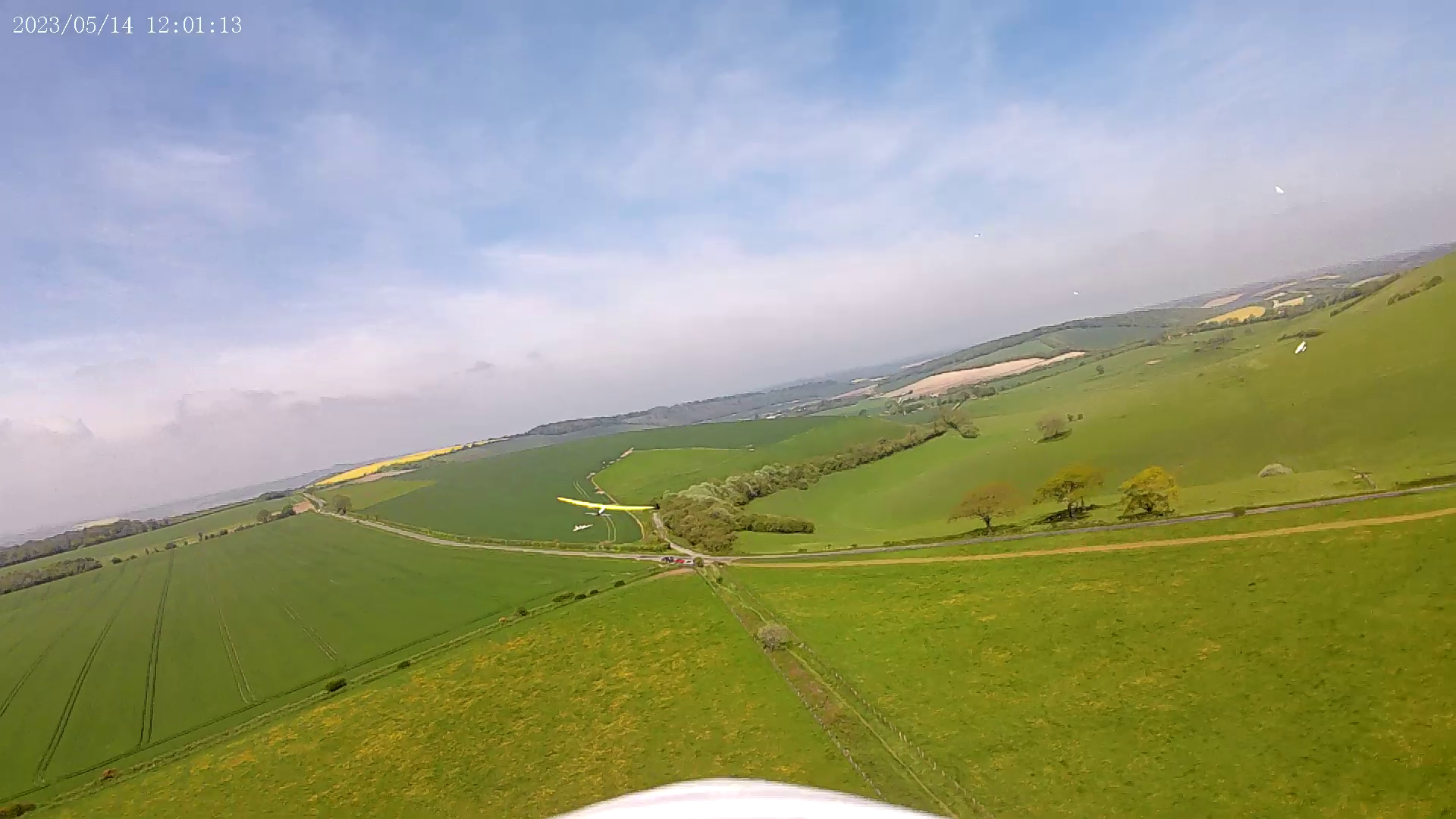 It was the unfortunate Kryten who had last minute radio problems and was unable to fly. Kryten insists the problem turned out to be a dodgy switch and nothing to do with his superior Spektrum radio…! Dougal Entendre flew his FPV model so he was able to film some of the action and it was his screenshot taken from the video in which he has circled 6 of the models so, including his plane that’s 7 of the 11 in the air, not a bad achievement.
 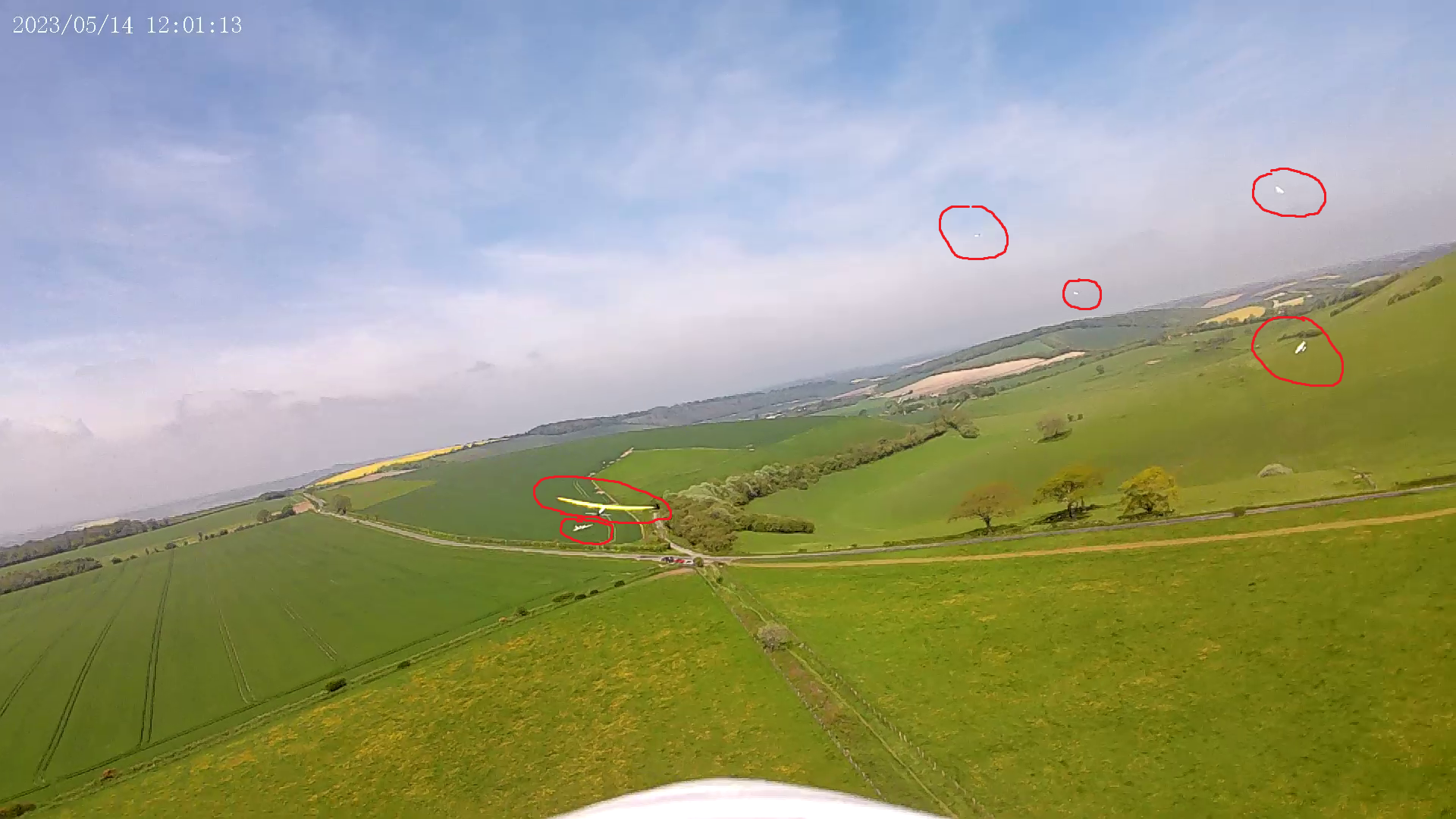 Dougal certainly had plenty of targets of targets to follow and in this month’s video you’ll see footage taken from Dougal’s plane and also some video shot from the ground.
The last time Mini-Mike flew his large Partenavia Victor he incurred a bit of damage to the fibreglass fuselage with a dodgy landing. He managed to complete the necessary and tricky repairs without too much trouble and at the beginning of May he brought it out for a few more flights. However, just a couple of minutes into the first flight of the day one of the motors didn’t appear to be running correctly and he seemed to be getting asymmetric thrust. Mike wisely decided to throttle right back and land immediately rather than risk losing one motor completely and fortunately he was able to land with no damage.
Dougal certainly had plenty of targets of targets to follow and in this month’s video you’ll see footage taken from Dougal’s plane and also some video shot from the ground.
The last time Mini-Mike flew his large Partenavia Victor he incurred a bit of damage to the fibreglass fuselage with a dodgy landing. He managed to complete the necessary and tricky repairs without too much trouble and at the beginning of May he brought it out for a few more flights. However, just a couple of minutes into the first flight of the day one of the motors didn’t appear to be running correctly and he seemed to be getting asymmetric thrust. Mike wisely decided to throttle right back and land immediately rather than risk losing one motor completely and fortunately he was able to land with no damage.
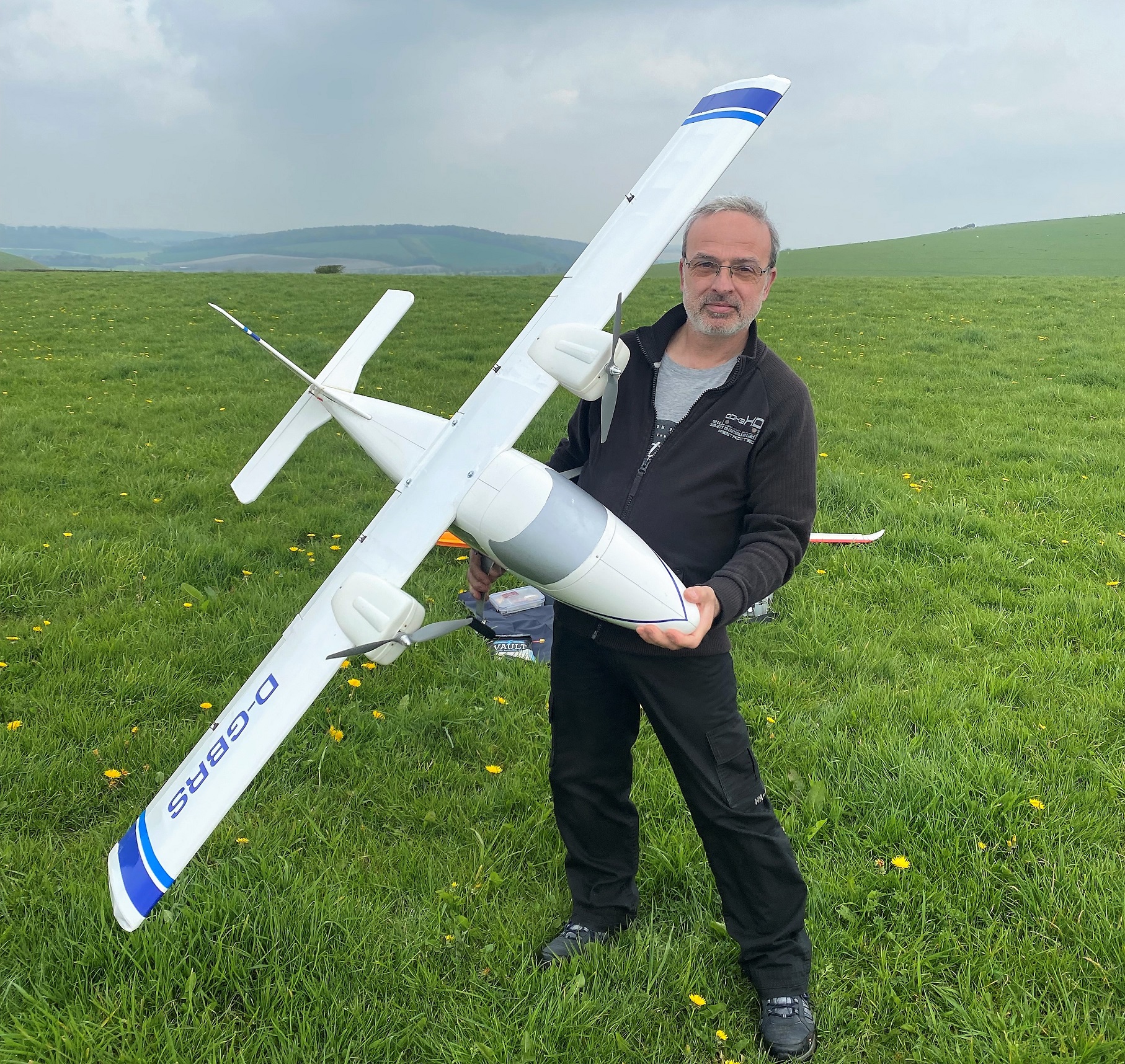 Typically, once back of the ground both motors appeared to run perfectly with no signs of any problems but Mike decided not to risk another flight and took the model off to his workshop to try and figure out what the problem could be.
Leo is becoming well known in the club for his ability to repair just about any model however badly damaged, and also build new ones in record breaking time. He is always on the lookout for something to repair so if you have any broken planes that you won’t get round to fixing Leo would love to take them off your hands and get them back in the air. In May he built a Phoebe foam model that had been featured in the May edition of RCM&E.
Typically, once back of the ground both motors appeared to run perfectly with no signs of any problems but Mike decided not to risk another flight and took the model off to his workshop to try and figure out what the problem could be.
Leo is becoming well known in the club for his ability to repair just about any model however badly damaged, and also build new ones in record breaking time. He is always on the lookout for something to repair so if you have any broken planes that you won’t get round to fixing Leo would love to take them off your hands and get them back in the air. In May he built a Phoebe foam model that had been featured in the May edition of RCM&E.
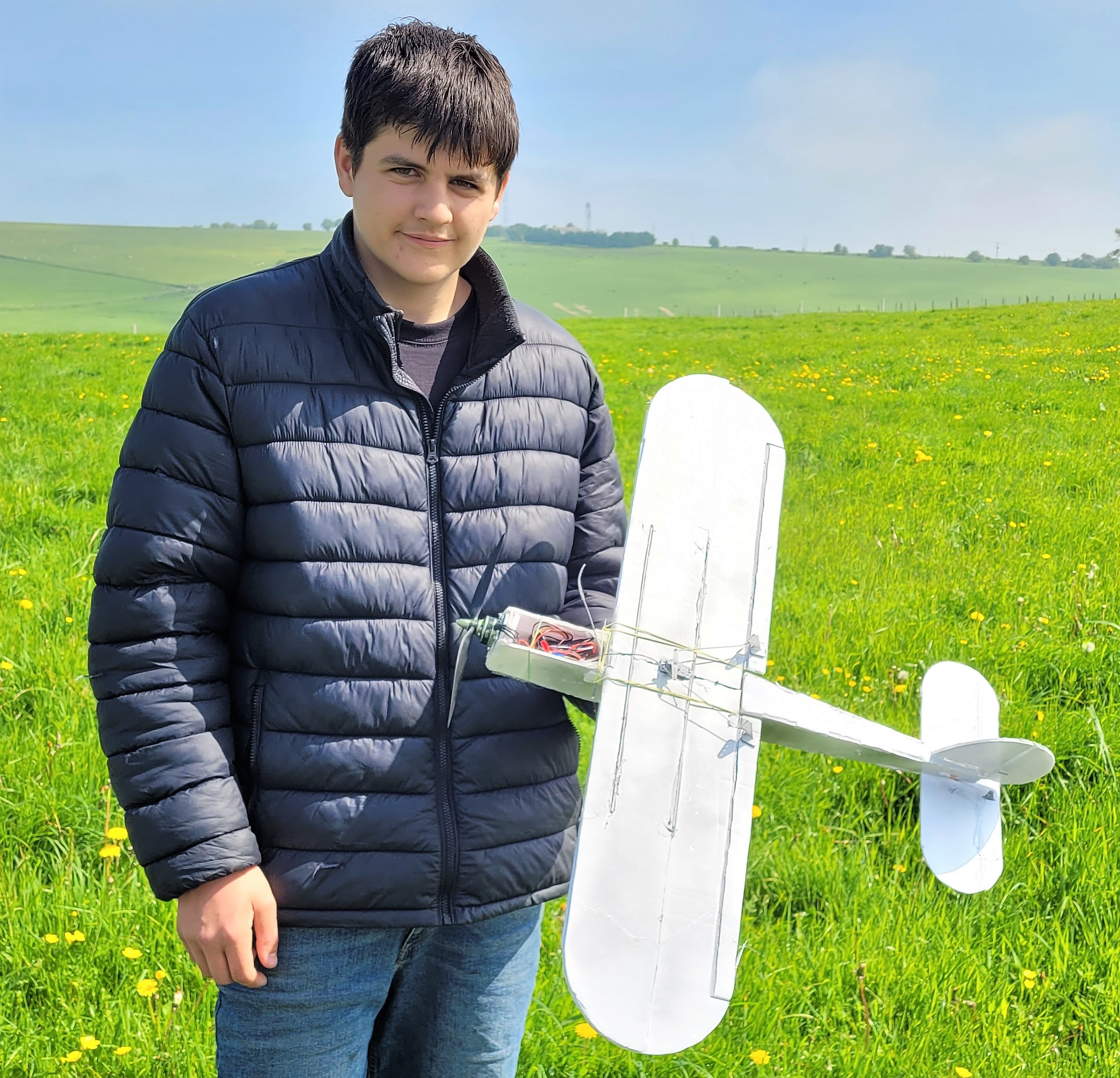 The Phoebe was designed by Bill Bowne and is a simple 29” span high wing trainer type.
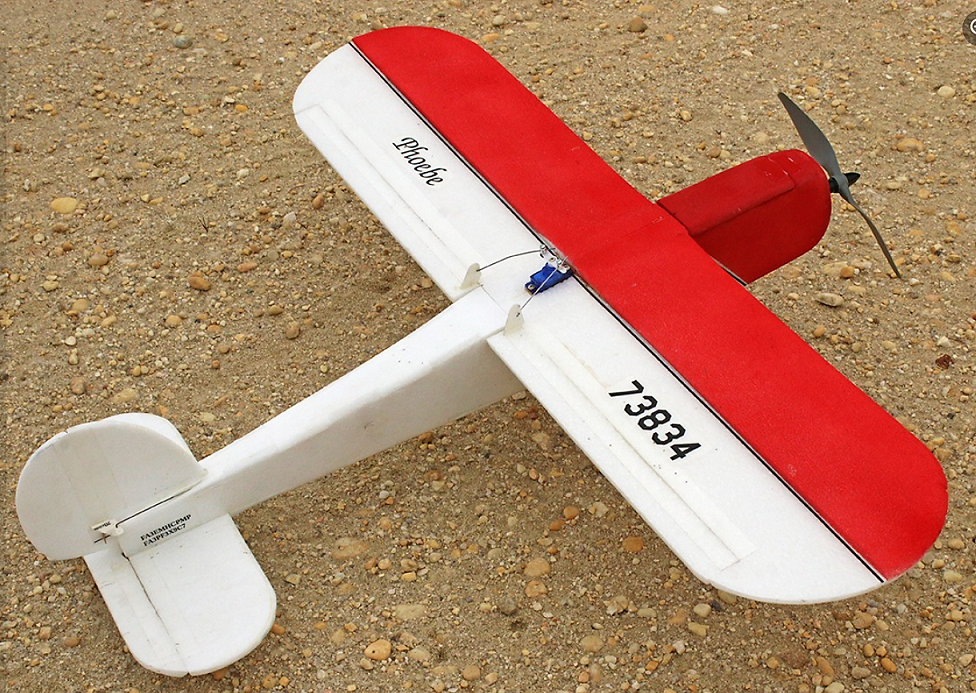 Leo says he thought about building it at 1pm, bought the bits he needed for it at 1.30pm, had it built by 3pm, and flew it at 6pm! Leo fitted his Phoebe with a MultiStar Elite 2204 2300kv motor which seems to provide more than enough go.
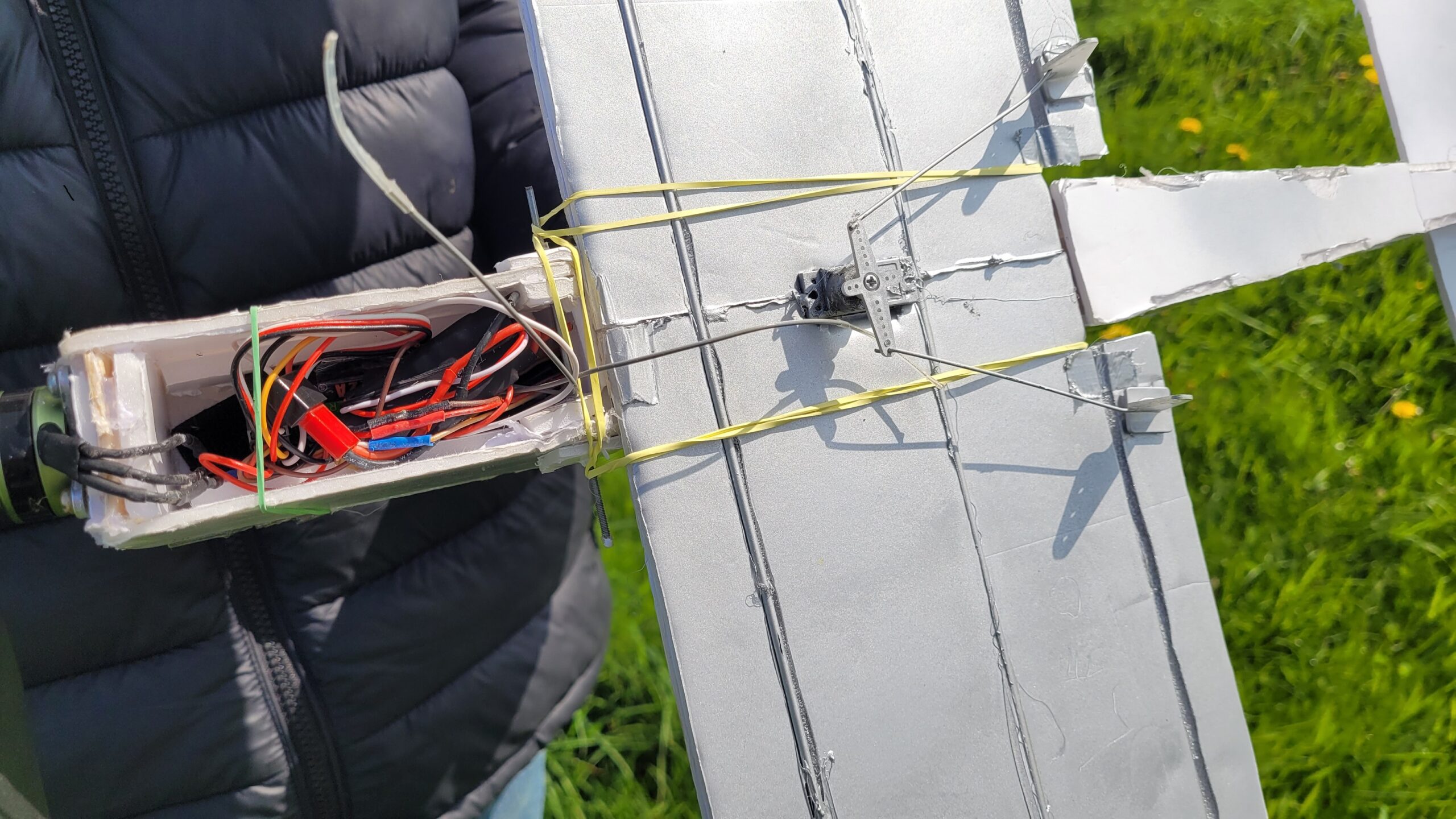 I have to say that despite looking rather rushed it seemed to fly very well so if anyone is looking for a cheap and quick to build small model a Phoebe might just be the one to pick.
Quiz time now: Your planes probably use 3 or 4 cells, possibly 6 cells but it’s unlikely to be more, and they can fly at full throttle for around 5 minutes. So what electric plane uses 6480 cells and can fly for around 8 minutes at full throttle? The Spirit of Innovation!
I have to say that despite looking rather rushed it seemed to fly very well so if anyone is looking for a cheap and quick to build small model a Phoebe might just be the one to pick.
Quiz time now: Your planes probably use 3 or 4 cells, possibly 6 cells but it’s unlikely to be more, and they can fly at full throttle for around 5 minutes. So what electric plane uses 6480 cells and can fly for around 8 minutes at full throttle? The Spirit of Innovation!
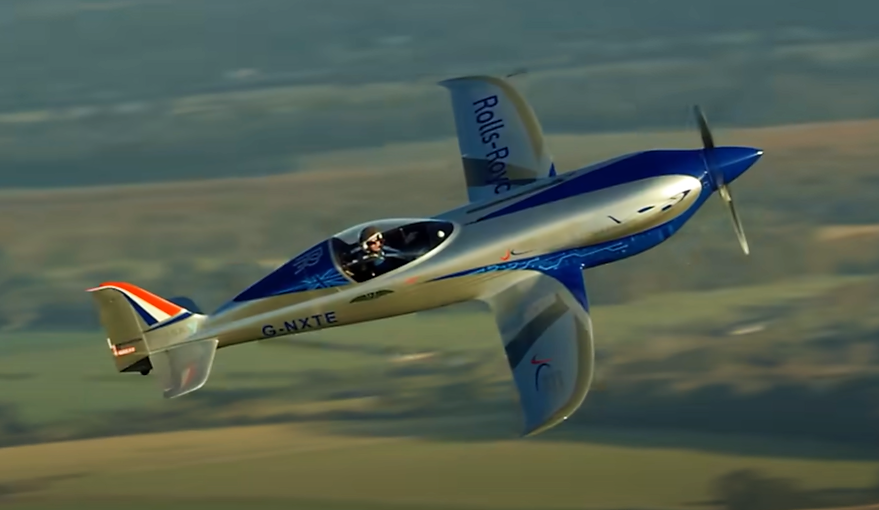 The cells are 18650 (18mm dia x 65mm long) and are made into 3 packs of 756V 24kWh.
 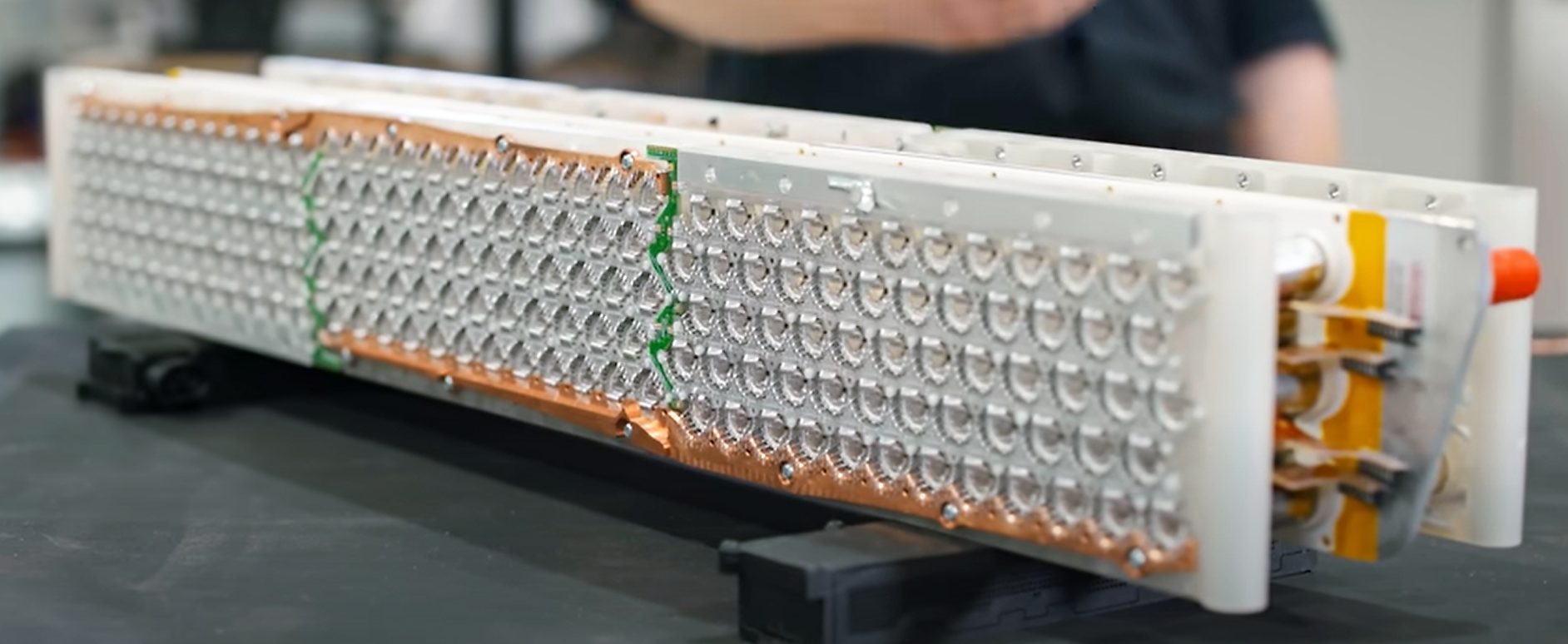 For comparison a 2200mAh 3 cell lipo is 0.02442kWh. The plane was designed and built to break the electric powered air speed record which it now holds at 345mph. Take a look at this fourteen minute video for more information about the plane and how it’s powered.
Chairman Gordon Bennett finished building and flew a Flair Cub in May so I asked him to write a report on how his first balsa build went, over to Gordon: I’ve always liked the Jet Provost. On my 40th birthday I was lucky enough to get a trip in one, but that story is for another time, perhaps over a pint, do we dare have another club meeting?!
For comparison a 2200mAh 3 cell lipo is 0.02442kWh. The plane was designed and built to break the electric powered air speed record which it now holds at 345mph. Take a look at this fourteen minute video for more information about the plane and how it’s powered.
Chairman Gordon Bennett finished building and flew a Flair Cub in May so I asked him to write a report on how his first balsa build went, over to Gordon: I’ve always liked the Jet Provost. On my 40th birthday I was lucky enough to get a trip in one, but that story is for another time, perhaps over a pint, do we dare have another club meeting?!
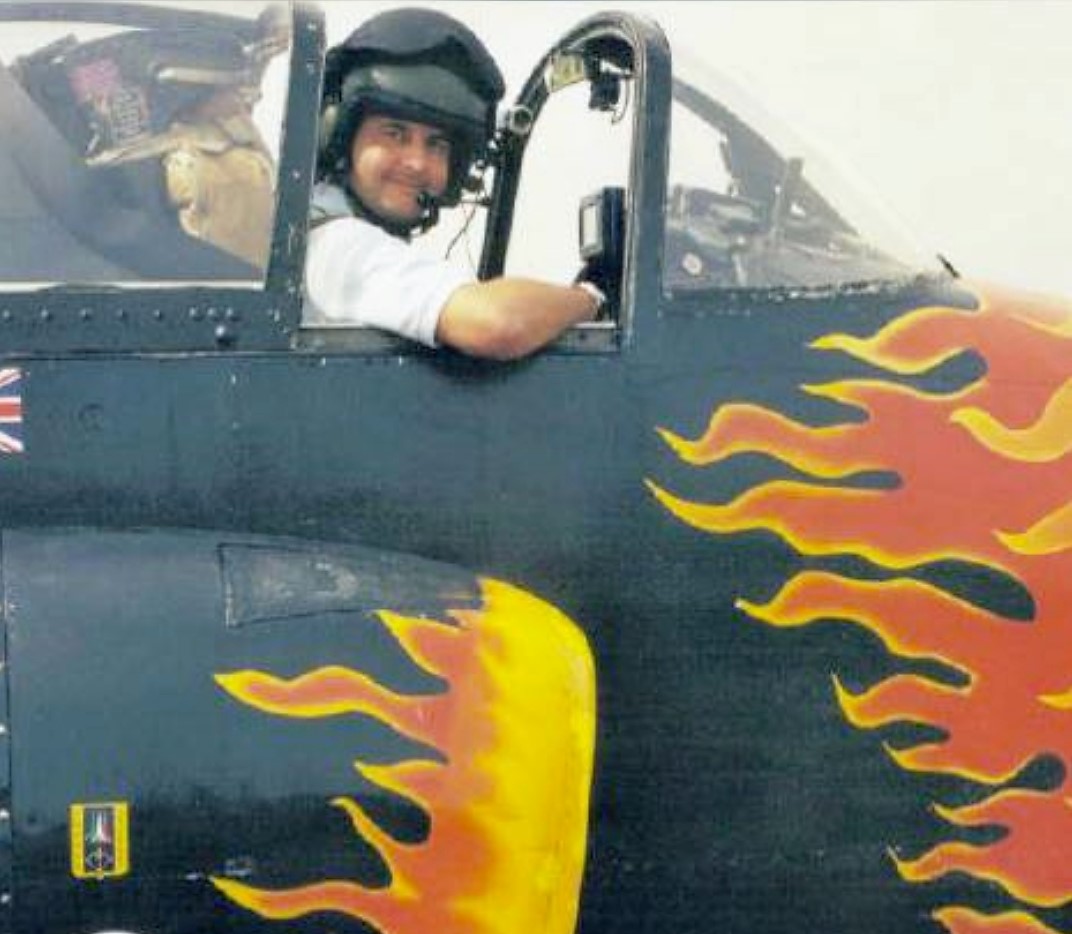 So, for my 60th birthday I asked my friends if they would buy various bits on the Tony Nijhuis 70mm EDF Provost as I was determined to build one. Unfortunately, I got three port wings a tailplane and no fuselage so it’s going to look a bit odd…only kidding.
This being my first kit I decided to take advice from the worthy PAM ‘builders’ and Dwayne Pipe’s initial reaction was ‘take your time and perhaps start with something a little simpler to learn basic building skills’. I followed his advice to the letter and did absolutely nothing for the next six months.
By chance the club was then contacted by a gent from Liss who said he had a Flair Cub kit that he had given up with and was up for grabs. He had everything for the airframe and had started work on the fuselage but then, for whatever reason, decided not to progress further. On collecting it I was immediately surprised on how big the box was, it’s hardly a large-scale model but bigger than what I’d anticipated.
Thinking again about Dwayne’s advice I did nothing for another three months.
Finally, I got fed up moving the box around my garage and decided with spring now upon us I should get stuck in.
So, for my 60th birthday I asked my friends if they would buy various bits on the Tony Nijhuis 70mm EDF Provost as I was determined to build one. Unfortunately, I got three port wings a tailplane and no fuselage so it’s going to look a bit odd…only kidding.
This being my first kit I decided to take advice from the worthy PAM ‘builders’ and Dwayne Pipe’s initial reaction was ‘take your time and perhaps start with something a little simpler to learn basic building skills’. I followed his advice to the letter and did absolutely nothing for the next six months.
By chance the club was then contacted by a gent from Liss who said he had a Flair Cub kit that he had given up with and was up for grabs. He had everything for the airframe and had started work on the fuselage but then, for whatever reason, decided not to progress further. On collecting it I was immediately surprised on how big the box was, it’s hardly a large-scale model but bigger than what I’d anticipated.
Thinking again about Dwayne’s advice I did nothing for another three months.
Finally, I got fed up moving the box around my garage and decided with spring now upon us I should get stuck in.
 First up finish the fuselage. The kit is really old. I mean really old, perhaps around 10 BC, or more properly 10 BCC (before Colin Cowplain). See what I mean, really old.
(Oi, I have a long memory you know, really long! – CC). All of the balsa had a strange powdery coating and the glue wouldn’t adhere so a clean-up of all parts was required.
First up finish the fuselage. The kit is really old. I mean really old, perhaps around 10 BC, or more properly 10 BCC (before Colin Cowplain). See what I mean, really old.
(Oi, I have a long memory you know, really long! – CC). All of the balsa had a strange powdery coating and the glue wouldn’t adhere so a clean-up of all parts was required.
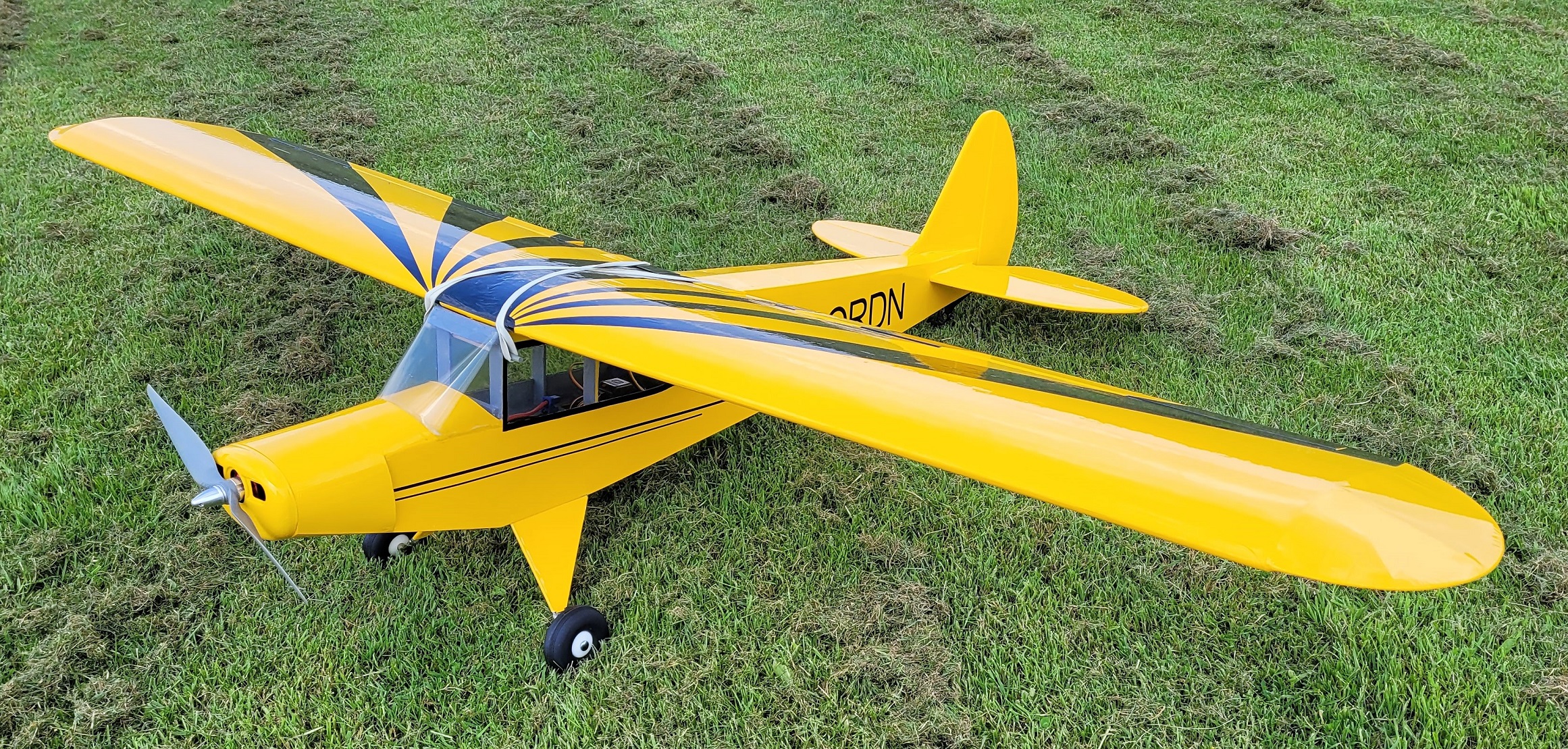 Next to the wings. Super simple as they’re a foam core with balsa skin, the tips are just made up from ribs. The wing jointing kit is glass cloth and epoxy but as it was so old the epoxy had gone off. Being an important structural part, I bought new epoxy and then realised the 6 foot wingspan meant I couldn’t fit the assembled wings on my workbench.
Tailplane, rudder and elevators are built up from solid balsa, so again, quick and simple.
The main problem was powertrain. Being an old design, before electricity was invented, the plans suggested a .30 Irvine. I went for a Ripmax Quantum II 36 brushless with a 60 amp ESC and 10×8 prop. The original engine bearers were lateral so I had to chop the front of the model off and install a new bulkhead to take the electric engine. The bulkhead is 3mm lite-ply and, at this, Dougal raised an eyebrow suggesting 6mm might be better. Having already installed it I slapped a bit more epoxy around to strengthen things.
Electronics are all Spektrum, only the best will do. (Now we know you’re joking! – CC)
Next to the wings. Super simple as they’re a foam core with balsa skin, the tips are just made up from ribs. The wing jointing kit is glass cloth and epoxy but as it was so old the epoxy had gone off. Being an important structural part, I bought new epoxy and then realised the 6 foot wingspan meant I couldn’t fit the assembled wings on my workbench.
Tailplane, rudder and elevators are built up from solid balsa, so again, quick and simple.
The main problem was powertrain. Being an old design, before electricity was invented, the plans suggested a .30 Irvine. I went for a Ripmax Quantum II 36 brushless with a 60 amp ESC and 10×8 prop. The original engine bearers were lateral so I had to chop the front of the model off and install a new bulkhead to take the electric engine. The bulkhead is 3mm lite-ply and, at this, Dougal raised an eyebrow suggesting 6mm might be better. Having already installed it I slapped a bit more epoxy around to strengthen things.
Electronics are all Spektrum, only the best will do. (Now we know you’re joking! – CC)
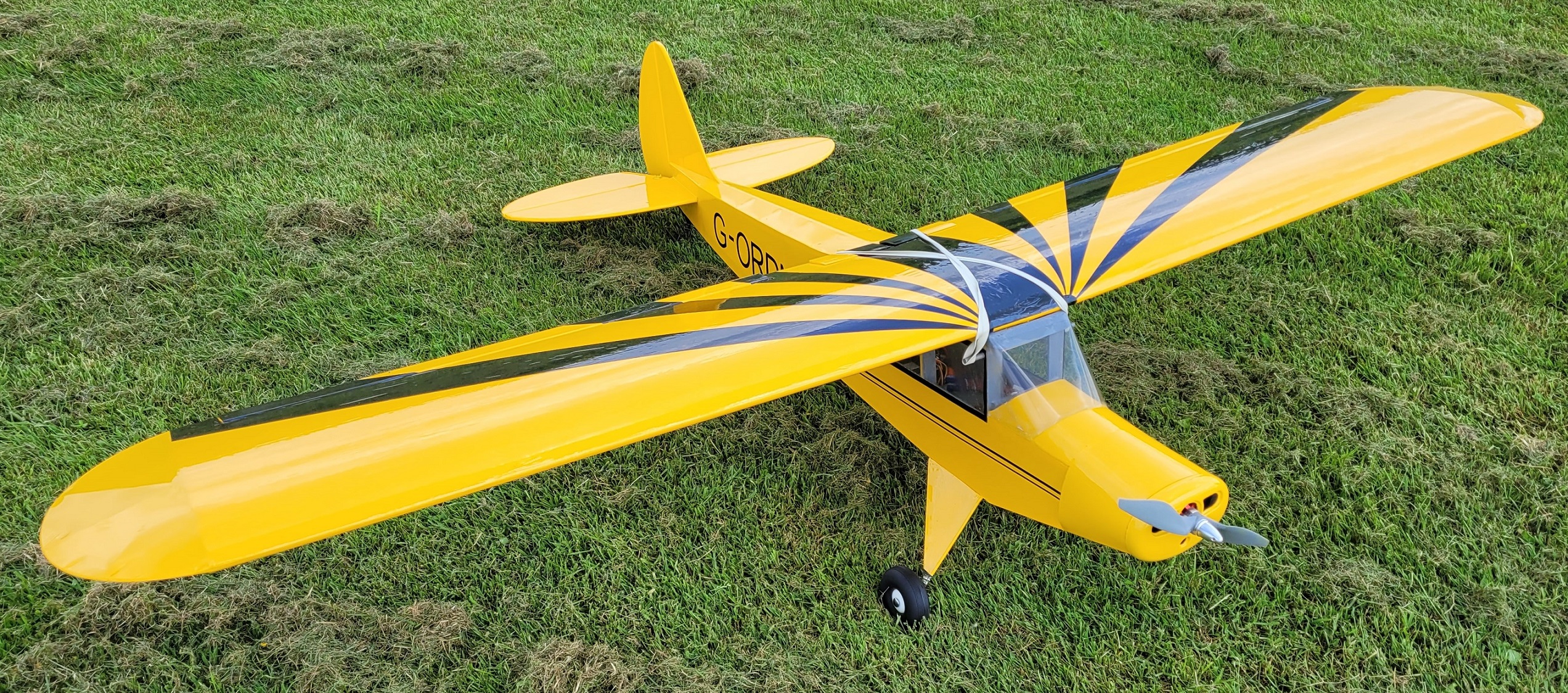 The original purchaser had also given me two rolls of Solartex (red and white) so I set about my first attempt at covering. First, the bottle of Balsa-Loc was solid so a new one was purchased, and then, still when nothing would stick, I realised the glue on the Solartex had gone off too!
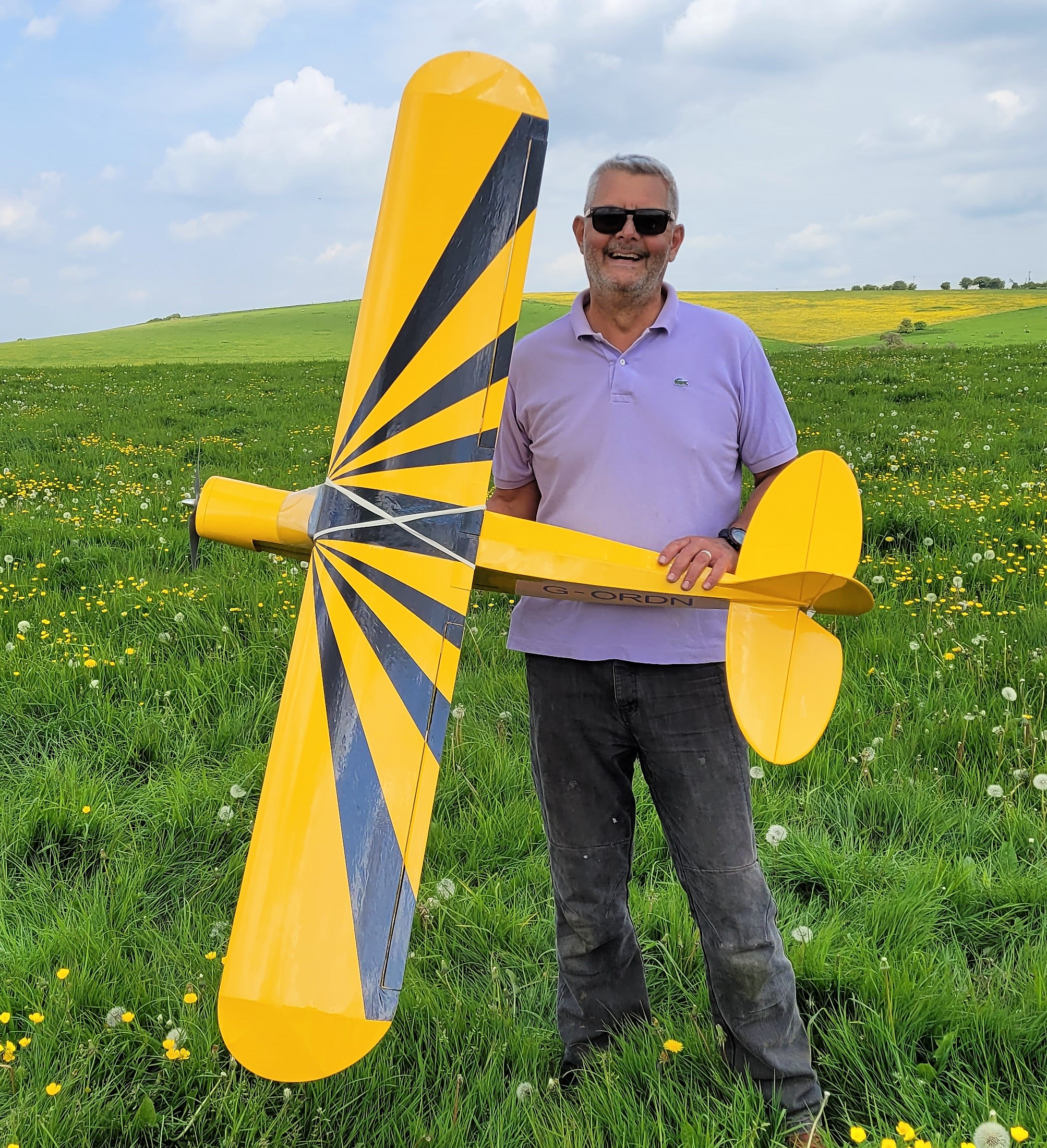
I bought a couple of rolls of Oracover film instead and decided to go ‘Cub Yellow’. The end result certainly isn’t perfect but it was my first attempt and was amazed what a great material it is to work with. Some limited detailing went on and I decided to fit the registration G-ORDN. (I can’t get that song “Gordon is a moron” out of my head! – CC)
The original purchaser had also given me two rolls of Solartex (red and white) so I set about my first attempt at covering. First, the bottle of Balsa-Loc was solid so a new one was purchased, and then, still when nothing would stick, I realised the glue on the Solartex had gone off too!
I bought a couple of rolls of Oracover film instead and decided to go ‘Cub Yellow’. The end result certainly isn’t perfect but it was my first attempt and was amazed what a great material it is to work with. Some limited detailing went on and I decided to fit the registration G-ORDN. (I can’t get that song “Gordon is a moron” out of my head! – CC)
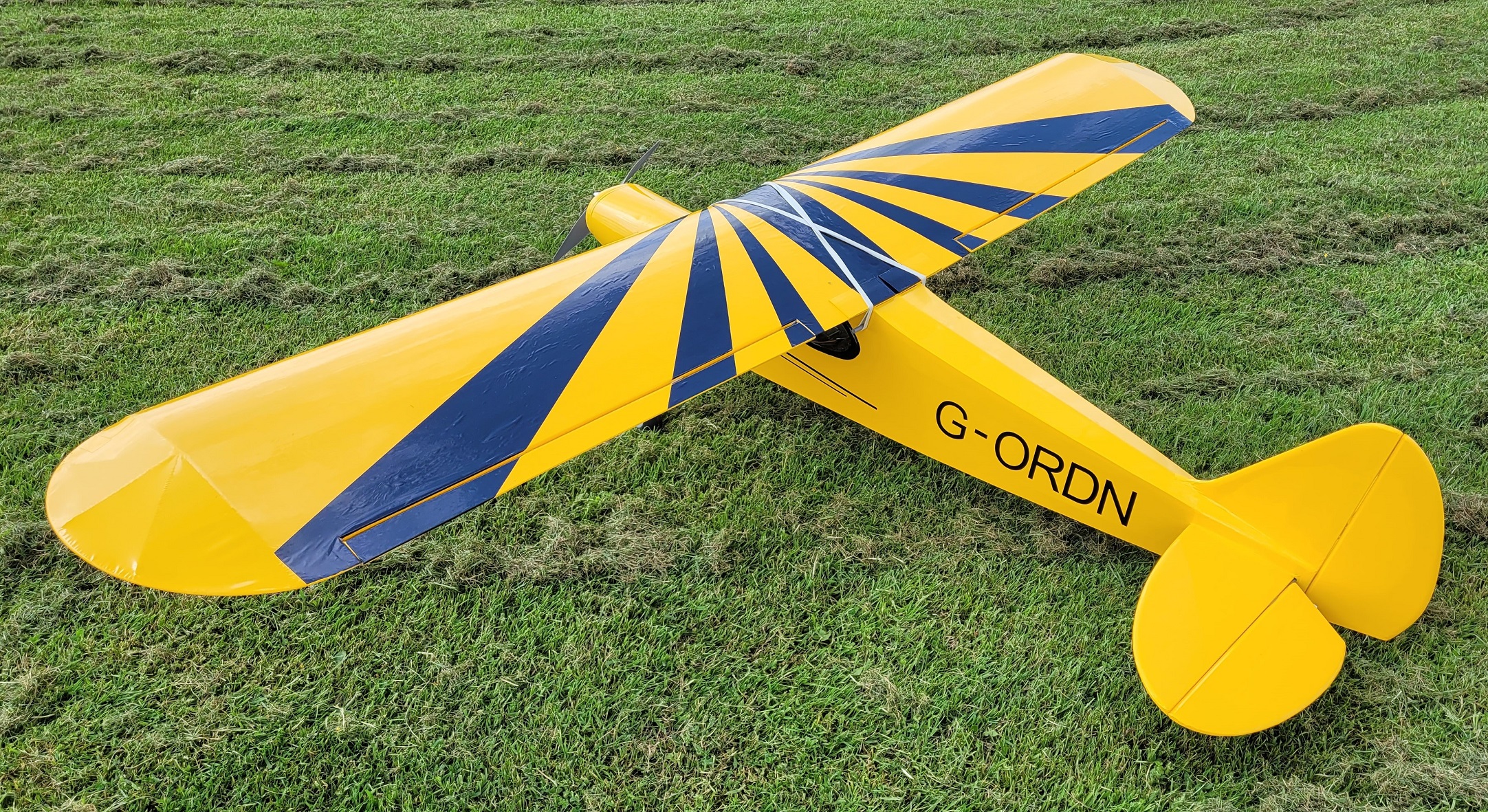 Cutting and fitting the windscreen from acetate sheet was a nightmare but I’m over it now. All the last touches and fiddly servo bits took a while but eventually she was ready.
Except she wasn’t. Even with the battery virtually on top of the engine, the C of G was about an inch too rearward. I took the model up to the patch to seek the advice of Colin Cowplain. He wasn’t happy about the C of G situation so I strapped and old 3S 2200 Lipo underneath the engine cowling and this sorted things out.
Cutting and fitting the windscreen from acetate sheet was a nightmare but I’m over it now. All the last touches and fiddly servo bits took a while but eventually she was ready.
Except she wasn’t. Even with the battery virtually on top of the engine, the C of G was about an inch too rearward. I took the model up to the patch to seek the advice of Colin Cowplain. He wasn’t happy about the C of G situation so I strapped and old 3S 2200 Lipo underneath the engine cowling and this sorted things out.
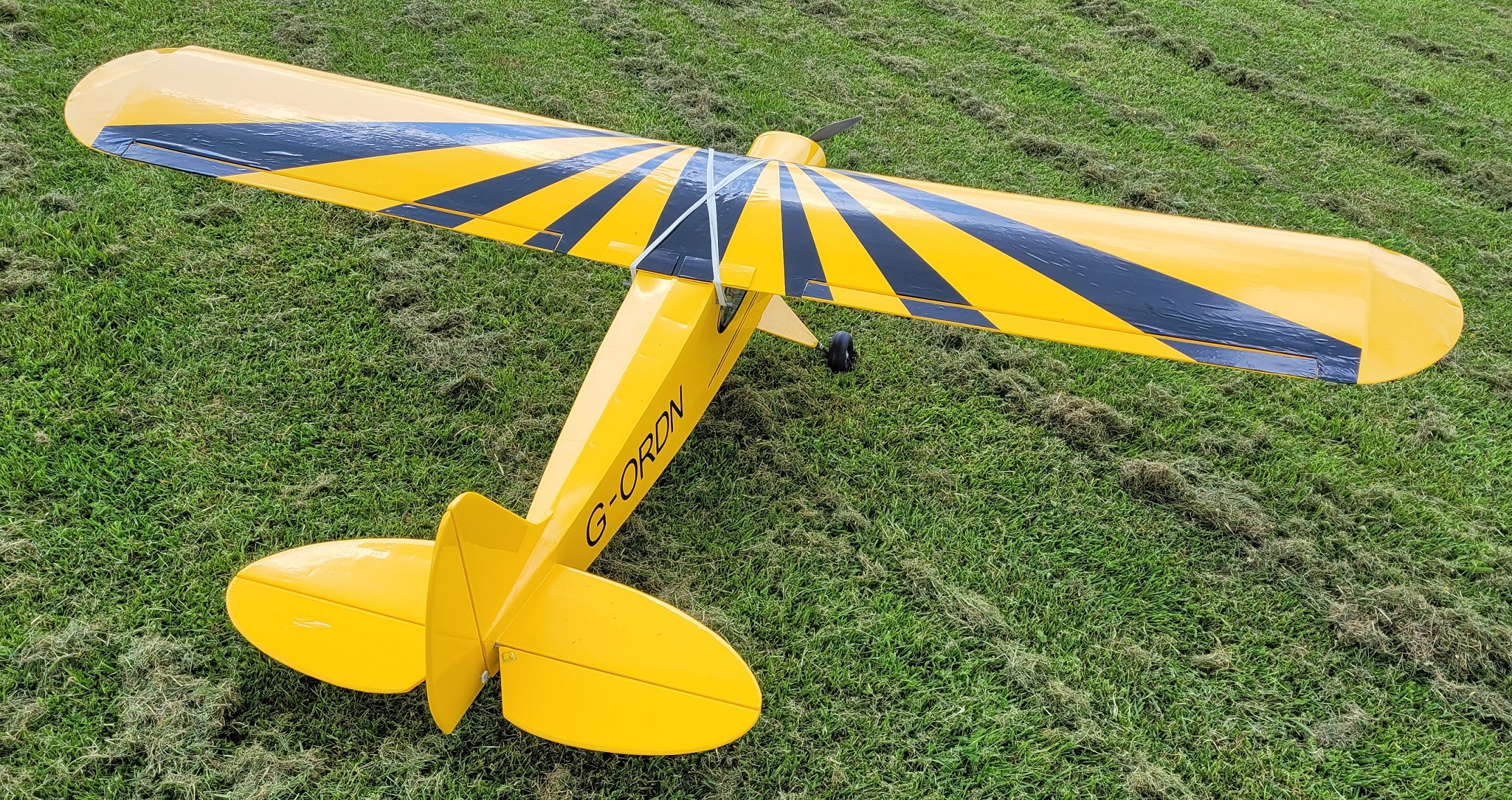 Cowplain took her up for the first flight and all seemed reasonable. Colin thinks she’s a bit overpowered and could do with a larger diameter prop. The engine could do with a bit of ‘up’ and ‘right’ thrust but this will be easy as I used stand-off bolts on the bulkhead. I also want to cut a hatch for the battery as at the moment you can only access it by taking the wings off.
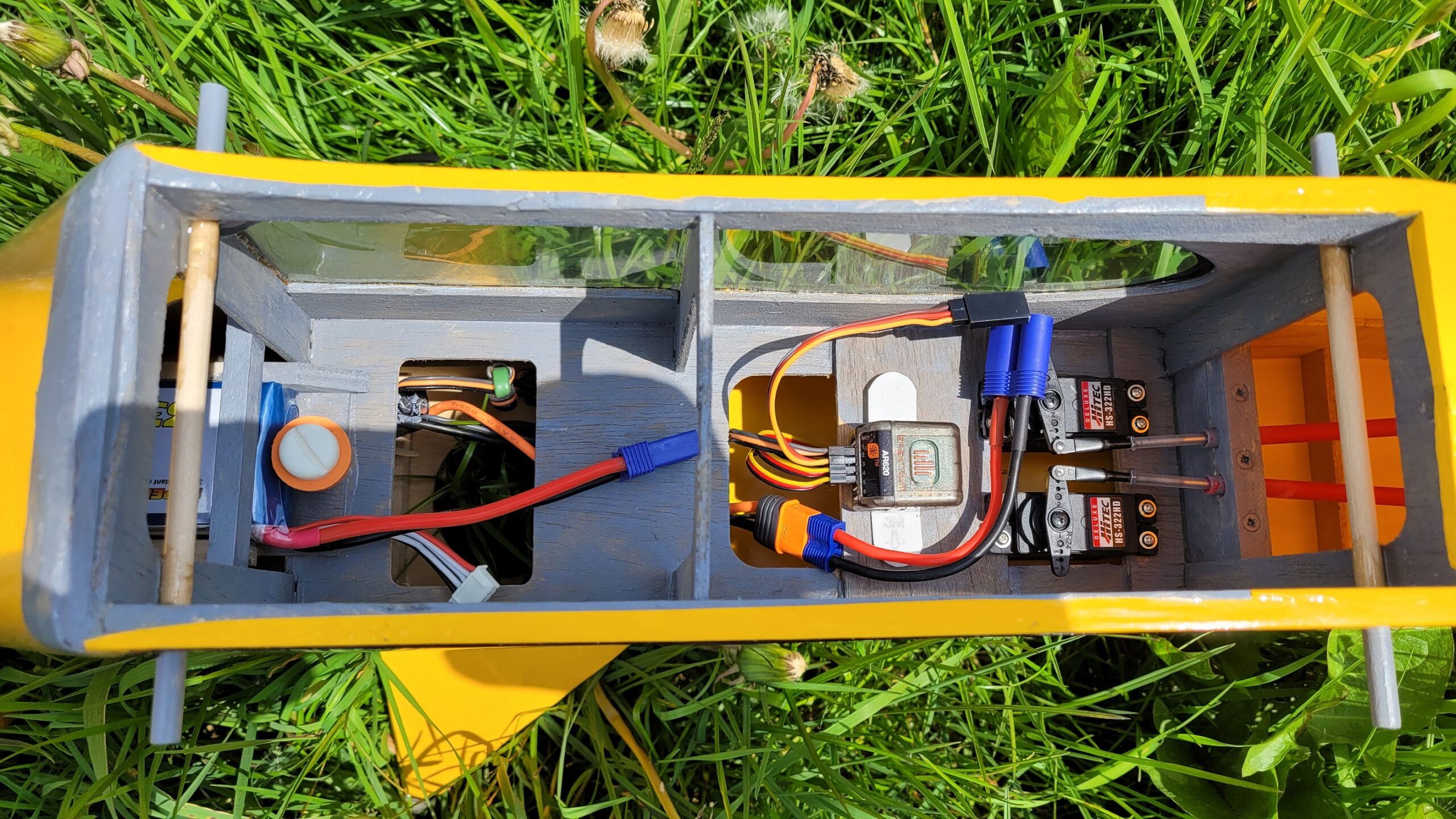 To sort the C of G I’ll need to put about 160 grams of lead in the nose (the whole model weighs about 2.5 Kg). Mini Mike suggested using ‘car wheel balancing’ lead and said he could get me a couple. Failing that there’s always the church roof.
The test flight should feature on Patch News this month. You’ll see Cowplain had handed the controls back to me and I decided to test the ‘Bush’ credentials of the Cub by landing so late on the patch that I was into the long grass. (It’s OK Gordon, I’ve cut that bit and used your second landing to spare your blushes – CC). Things did improve from there!
That’s my first ‘build’ completed, and I have to say I feel a small sense of achievement. It’s quite terrifying that all the hard work could be undone by a crash but I guess it’s all part of the fun. Now to crack on with the Provost, should be ready by the end of the decade.
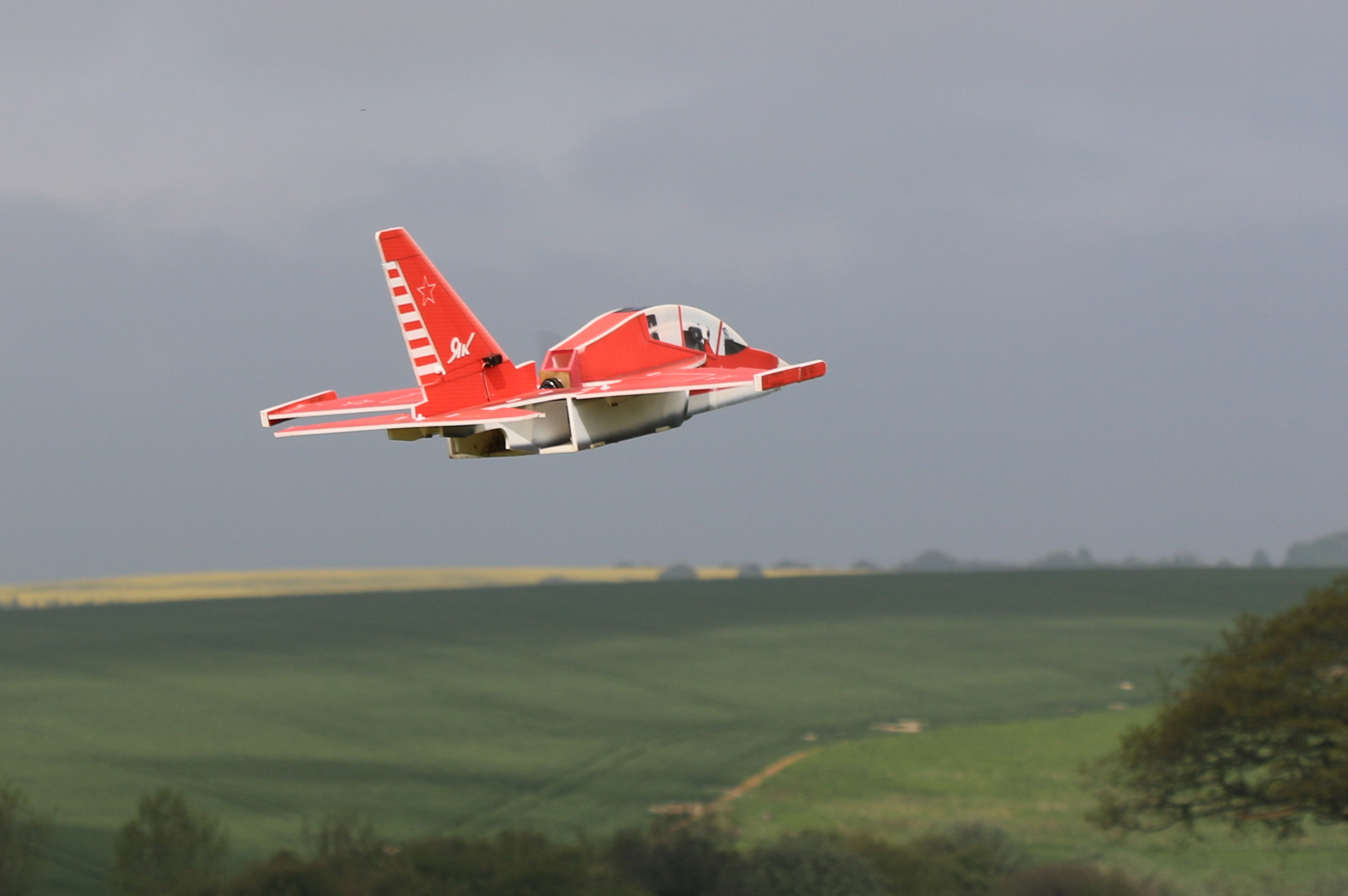
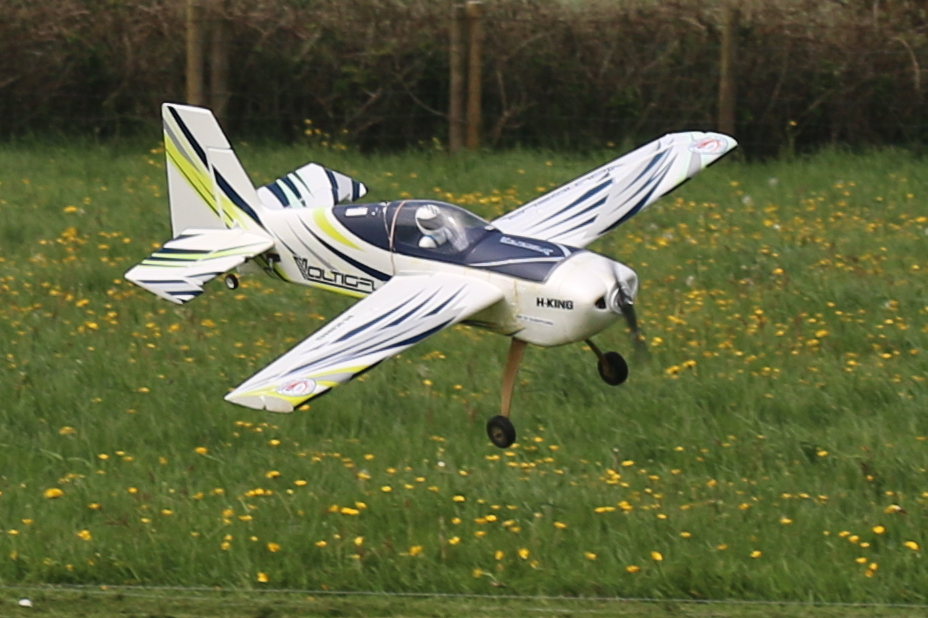
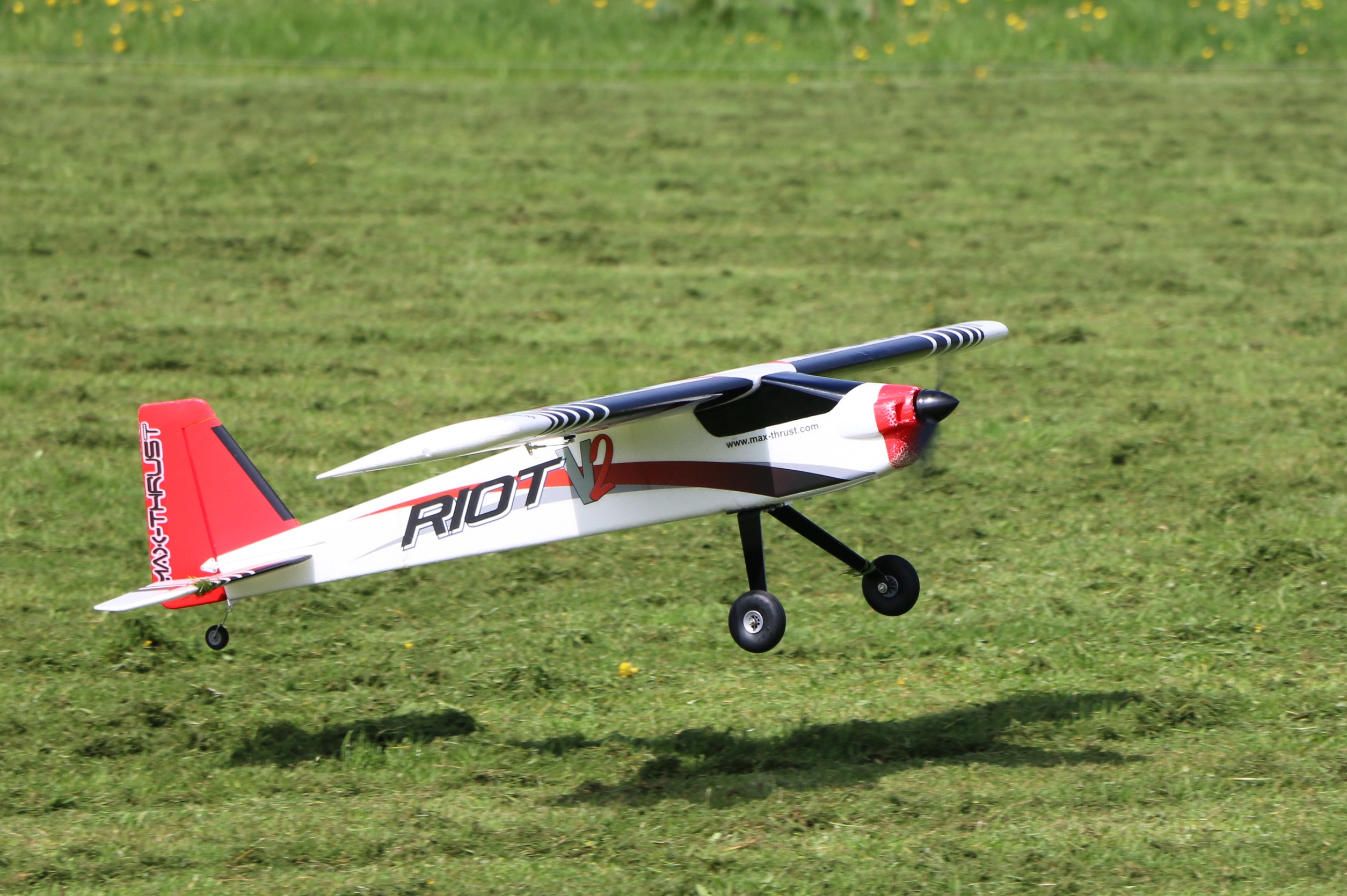
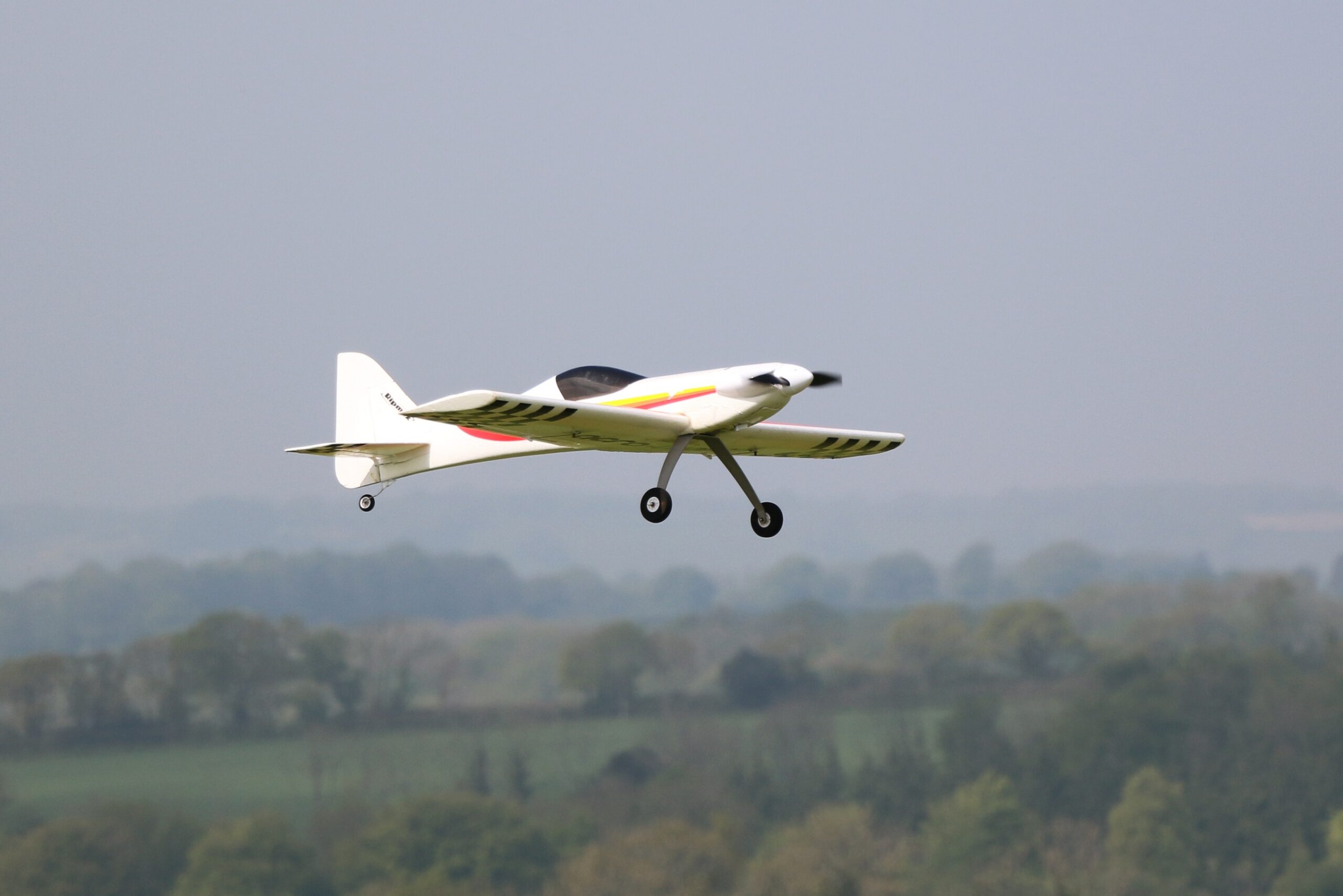
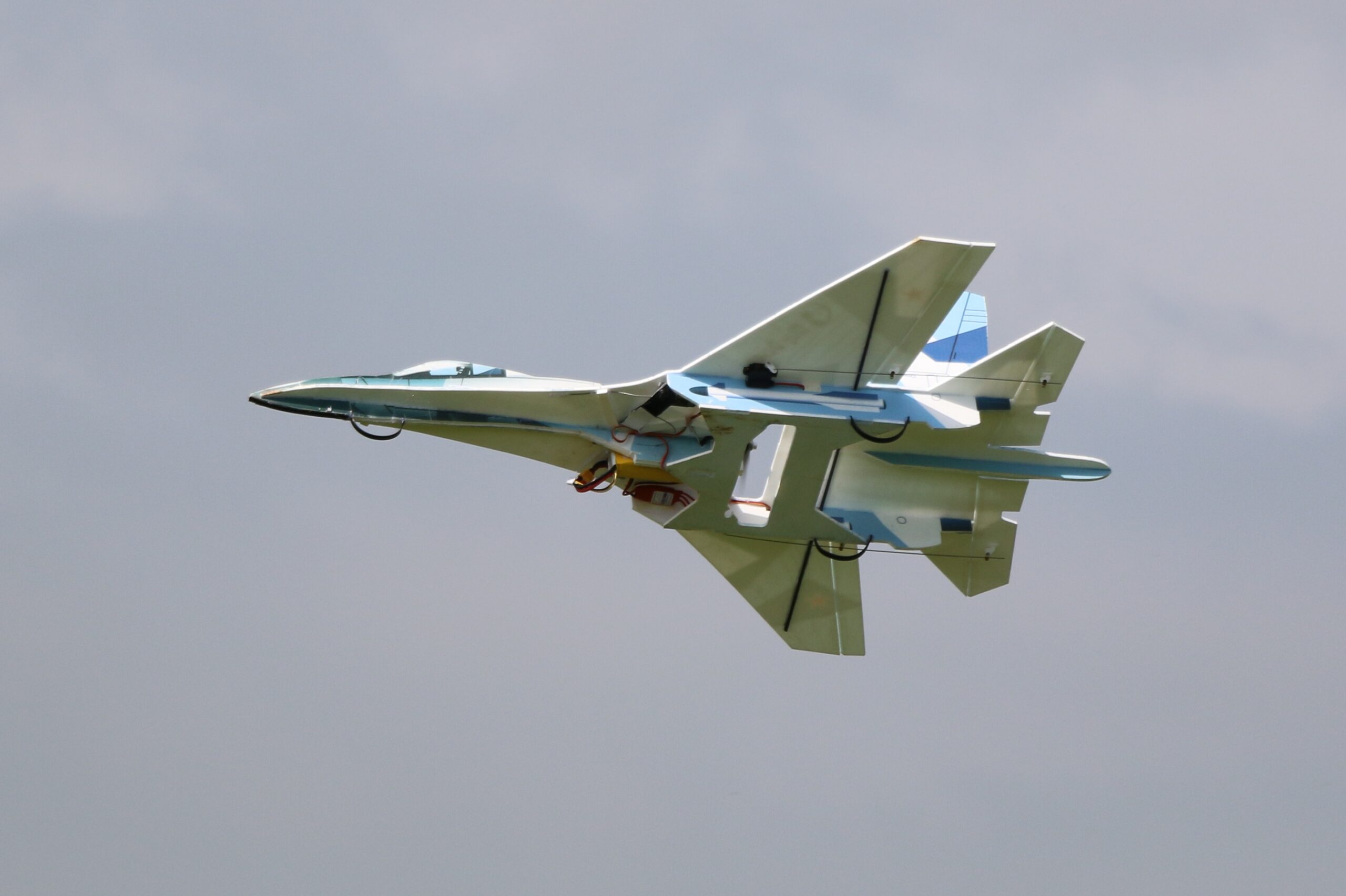
With the return of Kryten to the field this month comes some of his superb action photos:
To sort the C of G I’ll need to put about 160 grams of lead in the nose (the whole model weighs about 2.5 Kg). Mini Mike suggested using ‘car wheel balancing’ lead and said he could get me a couple. Failing that there’s always the church roof.
The test flight should feature on Patch News this month. You’ll see Cowplain had handed the controls back to me and I decided to test the ‘Bush’ credentials of the Cub by landing so late on the patch that I was into the long grass. (It’s OK Gordon, I’ve cut that bit and used your second landing to spare your blushes – CC). Things did improve from there!
That’s my first ‘build’ completed, and I have to say I feel a small sense of achievement. It’s quite terrifying that all the hard work could be undone by a crash but I guess it’s all part of the fun. Now to crack on with the Provost, should be ready by the end of the decade.
With the return of Kryten to the field this month comes some of his superb action photos:
 Video time now with footage by me, Dougal Entendre, Kryten, Nadine, and Peter F.
Please watch the video full-screen, it’s so much better with small models flying around.
If the video won’t play for you please click HERE
An airline stewardess was out golfing one day when she sliced her ball into the woods.
When she went into the woods to look for the ball she found a frog caught in a trap.
The frog said to her “If you release me from this trap, I will grant you three wishes”.
So she freed the frog who said, “Thanks, but I failed to mention that there was a condition, whatever you wish for your Captain will get ten times more or better!”
The stewardess said, “That’s ok, I can live with that” and she made her first wish which was that she wanted to be the most beautiful stewardess in the world.
The frog warned her, “You do realize that this wish will also make your Captain the most handsome pilot in the world, an Adonis that all the other stewardesses will flock to.”
She replied, “That’s ok, I will be the most beautiful one and he will only have eyes for me.”
So, KAZAM – she became the most beautiful stewardess in the world!
For her second wish she wanted to be the richest stewardess in the world.
The frog said, “That will make your Captain the richest pilot in the world and he will be ten times richer than you.” The stewardess said, “That’s ok because I’m such a devoted stewardess that what’s mine is also my Captain’s and what is my Captain’s is also mine.” So, KAZAM she’s the richest stewardess in the world!
The frog then inquired about her third wish. She thought about it for a minute, then said “I’d like to have a mild heart attack…”
Moral: Stewardesses are smart, don’t mess with them!
Colin Cowplain
Video time now with footage by me, Dougal Entendre, Kryten, Nadine, and Peter F.
Please watch the video full-screen, it’s so much better with small models flying around.
If the video won’t play for you please click HERE
An airline stewardess was out golfing one day when she sliced her ball into the woods.
When she went into the woods to look for the ball she found a frog caught in a trap.
The frog said to her “If you release me from this trap, I will grant you three wishes”.
So she freed the frog who said, “Thanks, but I failed to mention that there was a condition, whatever you wish for your Captain will get ten times more or better!”
The stewardess said, “That’s ok, I can live with that” and she made her first wish which was that she wanted to be the most beautiful stewardess in the world.
The frog warned her, “You do realize that this wish will also make your Captain the most handsome pilot in the world, an Adonis that all the other stewardesses will flock to.”
She replied, “That’s ok, I will be the most beautiful one and he will only have eyes for me.”
So, KAZAM – she became the most beautiful stewardess in the world!
For her second wish she wanted to be the richest stewardess in the world.
The frog said, “That will make your Captain the richest pilot in the world and he will be ten times richer than you.” The stewardess said, “That’s ok because I’m such a devoted stewardess that what’s mine is also my Captain’s and what is my Captain’s is also mine.” So, KAZAM she’s the richest stewardess in the world!
The frog then inquired about her third wish. She thought about it for a minute, then said “I’d like to have a mild heart attack…”
Moral: Stewardesses are smart, don’t mess with them!
Colin Cowplain Patch News – March 2023
March was an interesting month for PAM members, unfortunately mostly for the wrong reasons! Having decided at the December AGM to start holding quarterly meetings after three years with none we held a social meeting on 1st March at the Seven Stars in Stroud.
It went very well with about a dozen members attending for a general catch up and natter and it was good to see some faces that we’d hardly seen since the start of the pandemic. We’d waited much longer than the regulations required to hold a meeting because we didn’t want to risk anyone catching Covid but guess what happened…in the following few days almost half of the attendees went down with it! They then spread it on to their wives/girlfriends/boyfriends etc. but fortunately, as far as I know, nobody was seriously ill and all have now recovered. But looking on the bright side, it could have been very much worse, I could have got it! I’m not sure quite how I avoided it as the people on both sides of me went down with it but not me. Not that I’m complaining… Colin Complain? Never!
The sheep that had arrived in February were gone by the middle of March but with several members struck down with Covid the first half of the month was rather quiet although a few of the Covid free ones did manage to fly on a few occasions. Towards the end of the month everybody was back to good health and raring to go but the weather was rubbish on several of our usual flying days so overall was there was rather less flying than usual.
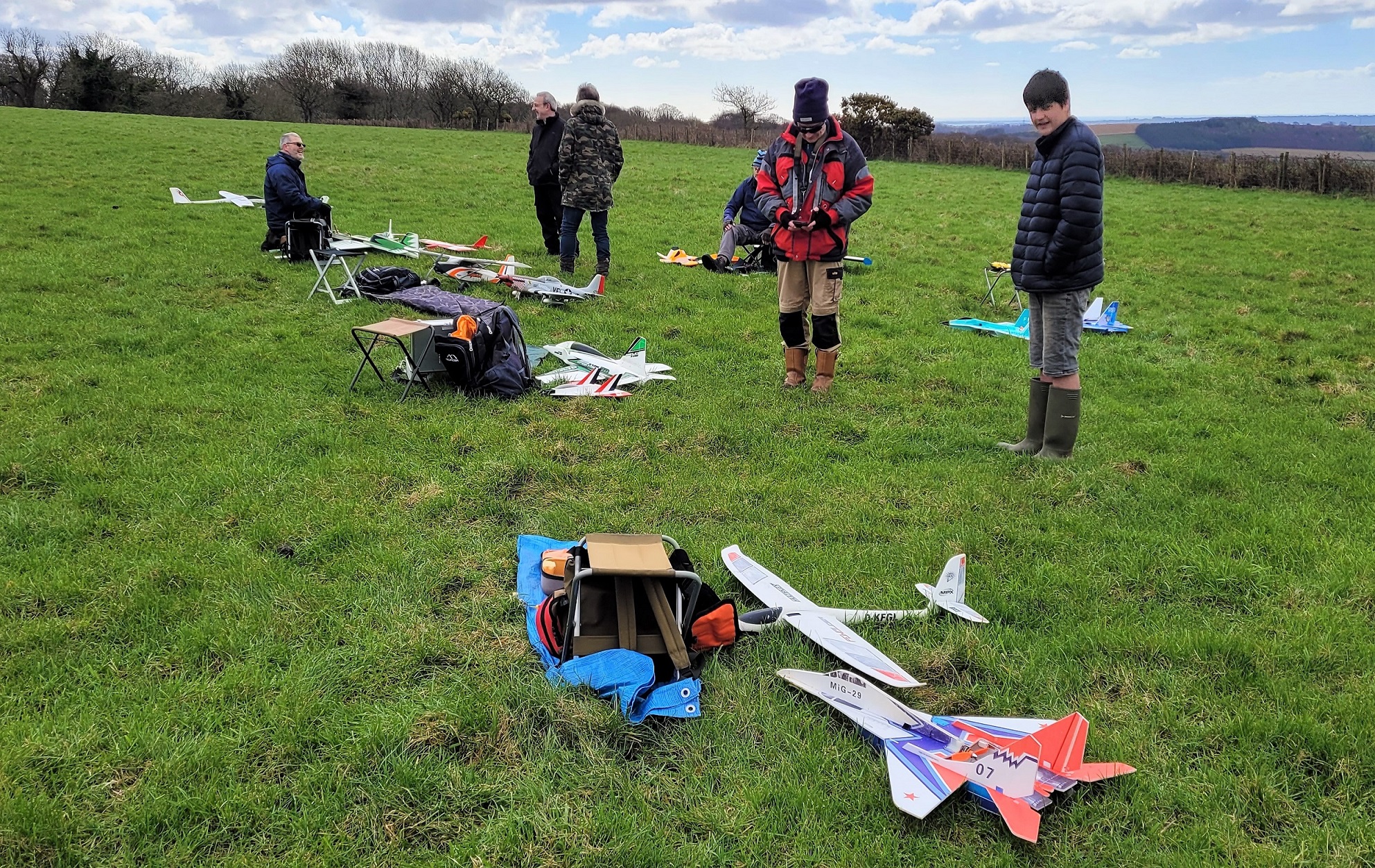 Some of the FARTS mowed the patch one Friday afternoon and Chairman Gordon Bennett kindly took the mower back over to the box when we’d finished. It wasn’t until we returned to fly the following Sunday morning that we realised he’d taken the mower back to the box but hadn’t actually put it away and it was sat next to the open box looking rather lonely.
 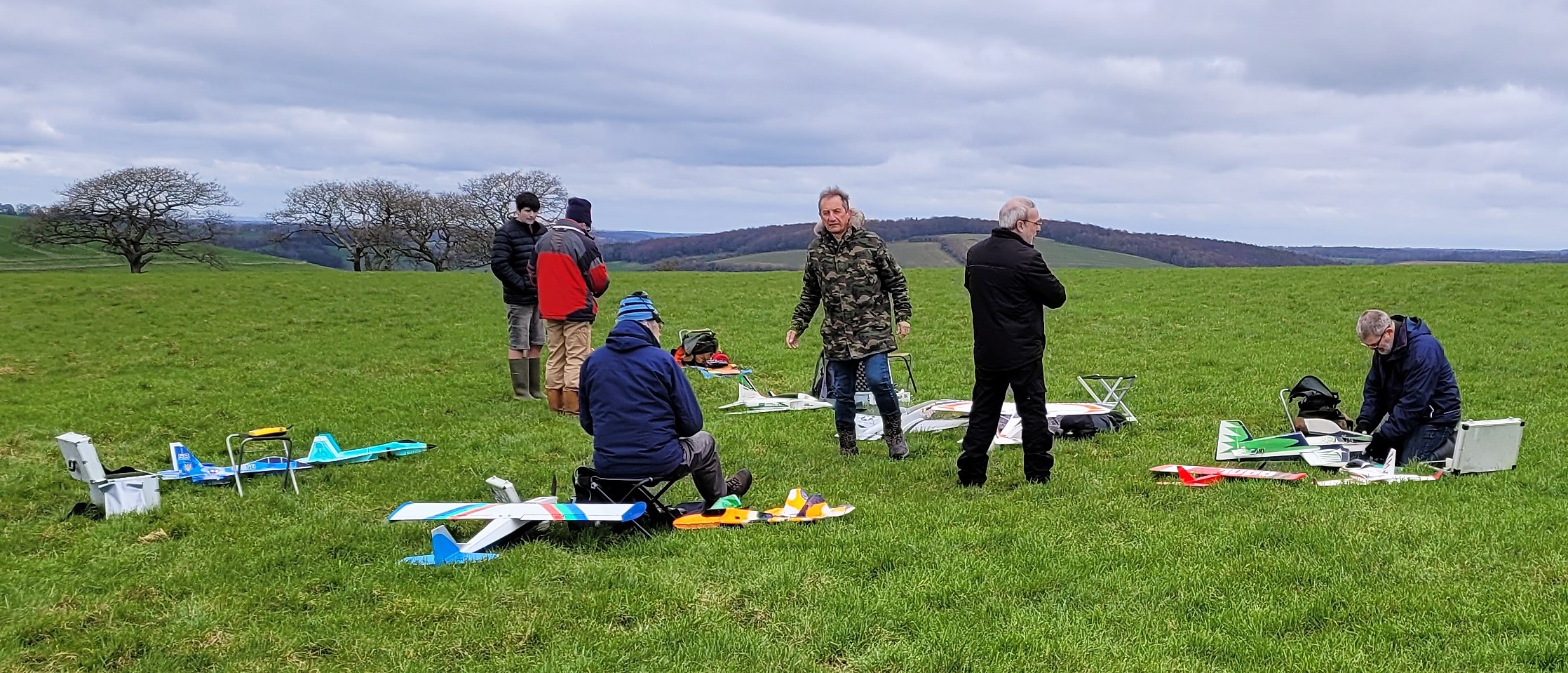 Fortunately the members of the public who had walked along the track in the meantime must have been either very honest or completely blind and all was well!
Gordon redeemed himself by going off to the States for a ‘business trip’ and managed to include a visit to the Florida Jets, a four day event which is billed as the world’s largest RC jet event with no less than six flight lines running each day. Following that he dragged himself over to Arizona where he inadvertently stumbled across the Arizona Warbirds & Classics fly-in, another four day event which is hosted by the Sun Valley Fliers. That’s the sort of ‘business trip’ we would all happily undertake and I’ve already volunteered to carry his bags if he goes again next year! Gordon took lots of photos and has written this for us:
Back in the depths of winter I was flicking through my copy of Model Aeroplane News (MAN) when I spotted an advert for ‘Florida Jets’. I like MAN as the articles are very ‘American’ compared to RCME and I enjoy the different perspective. The ad conjured up images of sunshine, palm trees and…. jets! Not only that, Arizona Warbirds and Classics was later in the same week. It had to be done.
Due to other commitments, I could only attend Florida Jets on the Wednesday, the show’s first day. I got to Lakeland a day early and got down to the Museum of Aviation (the base for Sun & Fun). It’s a great mid-size exhibition and had a couple of unusual outdoor exhibits in particular a FY2 Sea Dart and an XFV-1 Salmon.
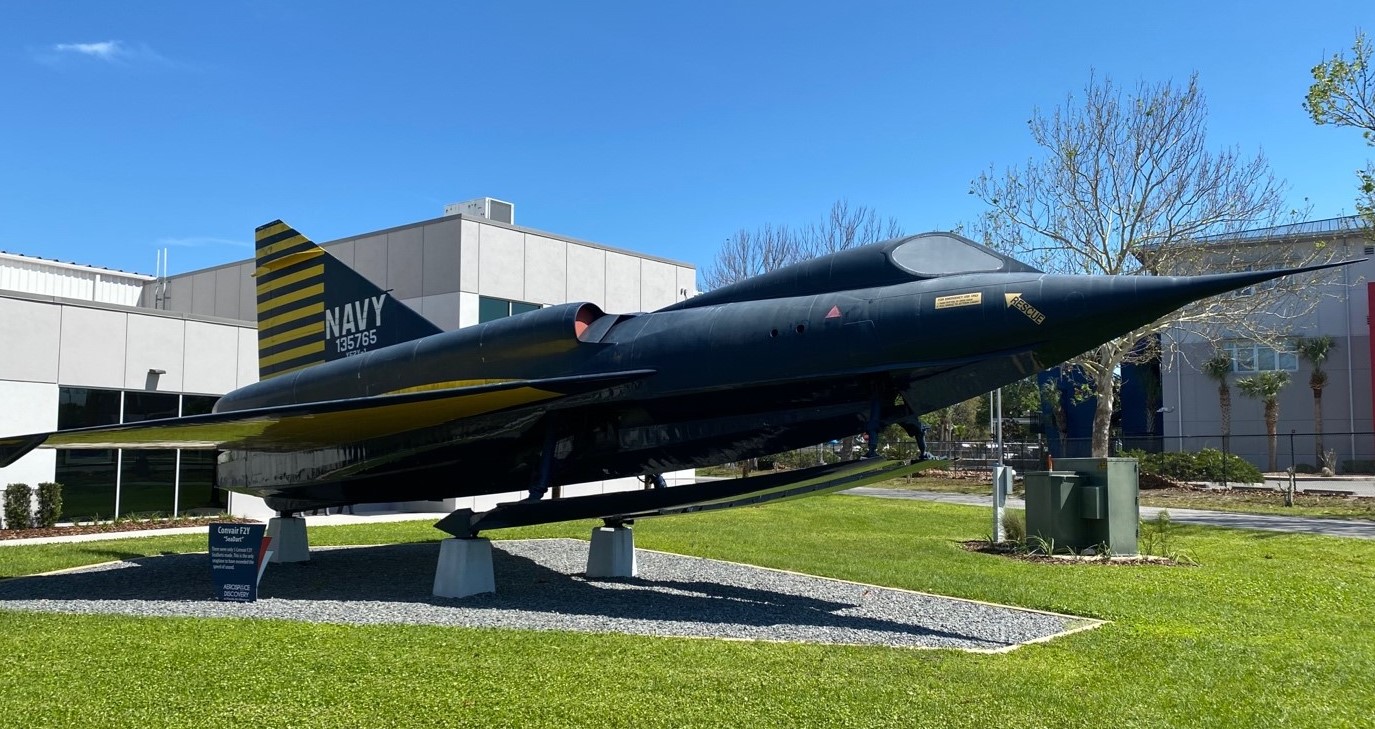
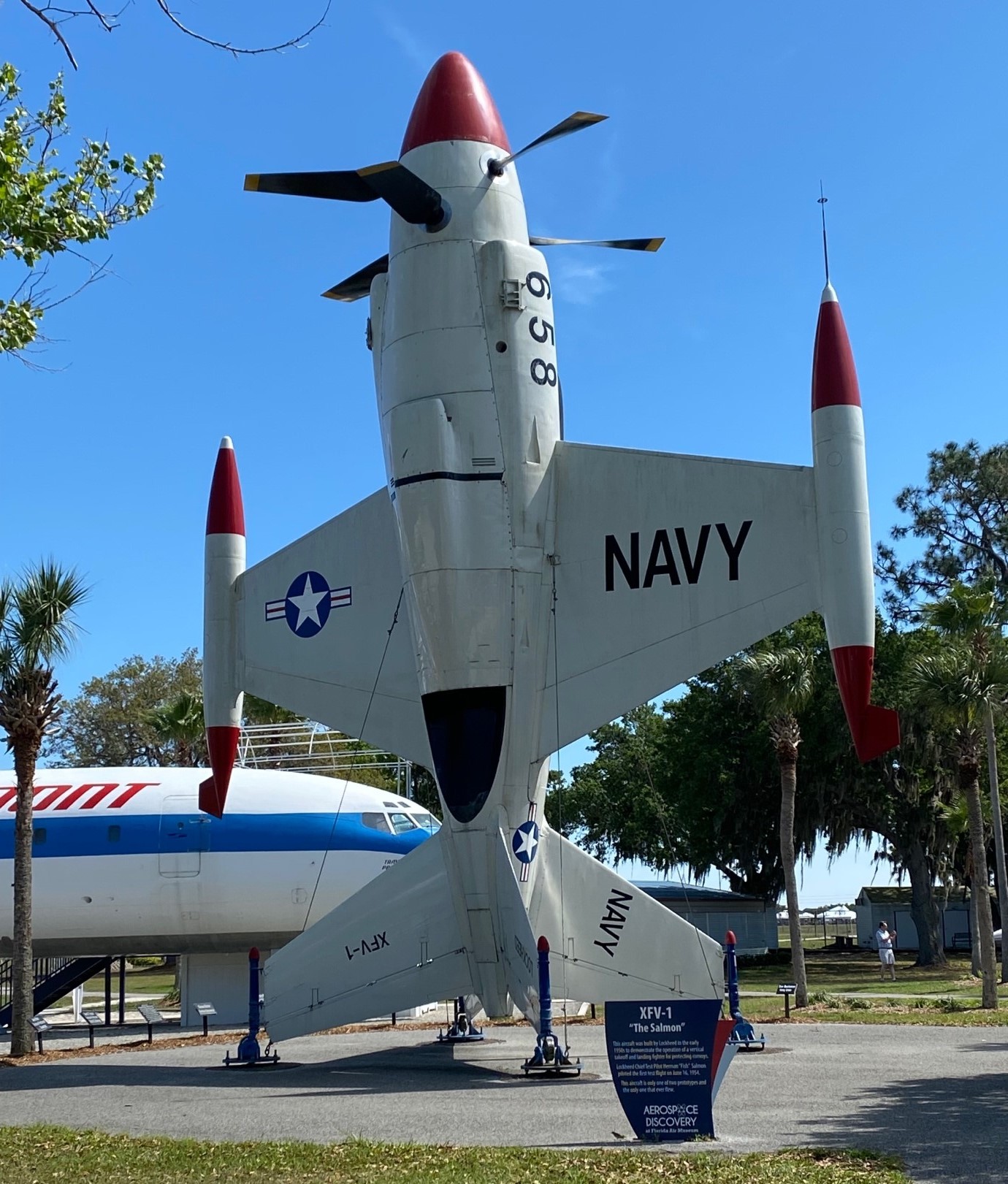 The Sea Dart was the only supersonic seaplane and XFV-1 is clearly something Dougal or 1066 should build a model of and get hanging.
The next day I was up bright and early and found myself as virtually the only spectator on a windswept, cold, rainy day at Paradise Field. Between the rain showers I trudged past the models hiding in their tents and met a load of super friendly RC aviation nuts displaying their planes.
I’ve put together a short video so won’t go into too much detail here but watch out for the Raptor, a model with amazing scale detail (cockpit with active displays etc).
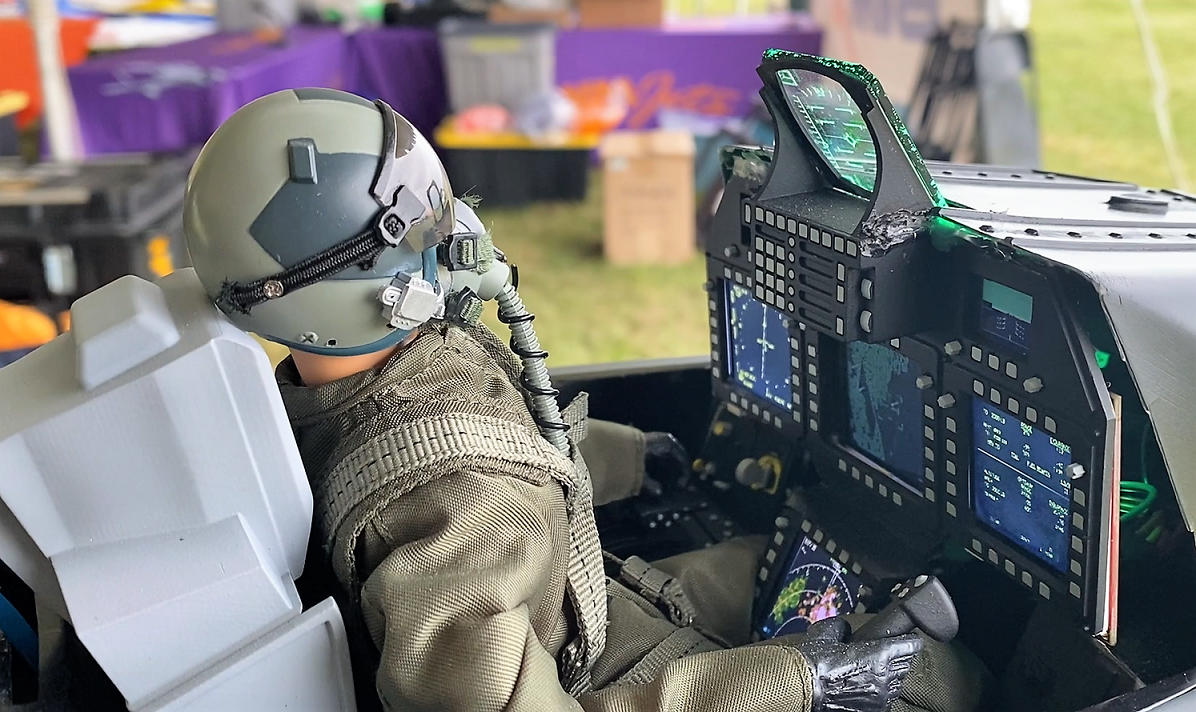 In the tent next door I heard English accents and met Ali Machinchy and his son. Being a relative newcomer to the sport I didn’t have a clue who he was but he was super kind and put up with my stupid questions. I was chuffed to bits that he was a big Spektrum fan (!) and only realised the full picture when I later googled him.
The sun broke through mid-morning and we were off. In fact, it was Al’s 18-year-old son who was the first airborne, totally unphased by a pretty stiff crosswind. It was an open event so a few professional displays and then everyone else just flying when they wanted, which turned out to be all the time. The standard of flying was spectacular as you’ll see.
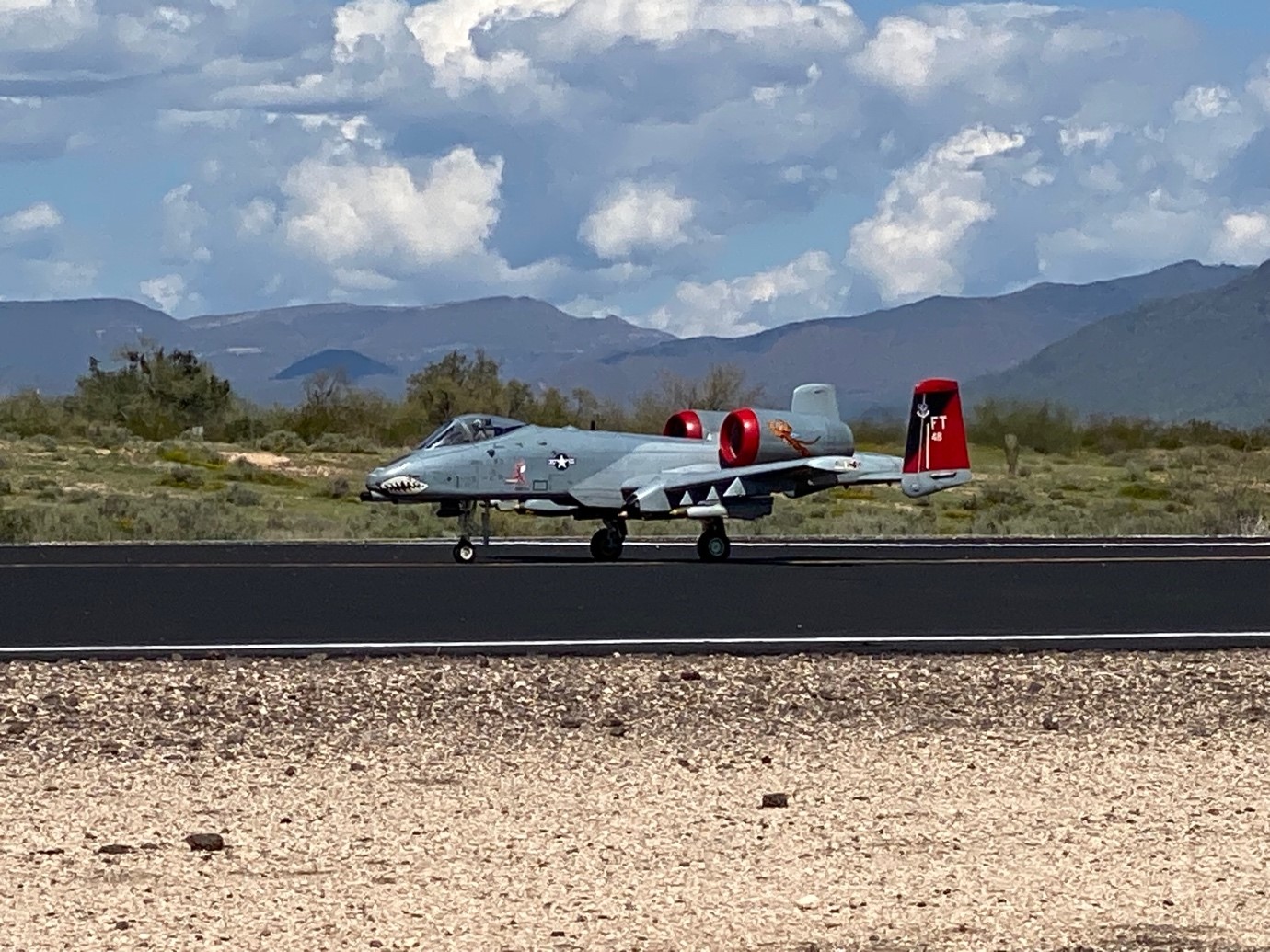 On Friday I made it to Phoenix, Arizona and from there a 30-minute drive to Sun Valley Flyers out in the desert. Now don’t get me wrong, I love our 30m patch and its beautiful views down to the IOW. But it’s hard not to be impressed by the sheer scale and quality of the facility they’ve built. The advantage of space means a peppercorn rent from the City Council, also the club has had a super strong 250-person membership for decades. Hence spending $80,000 to tarmac the runway was only part of the ongoing improvements.
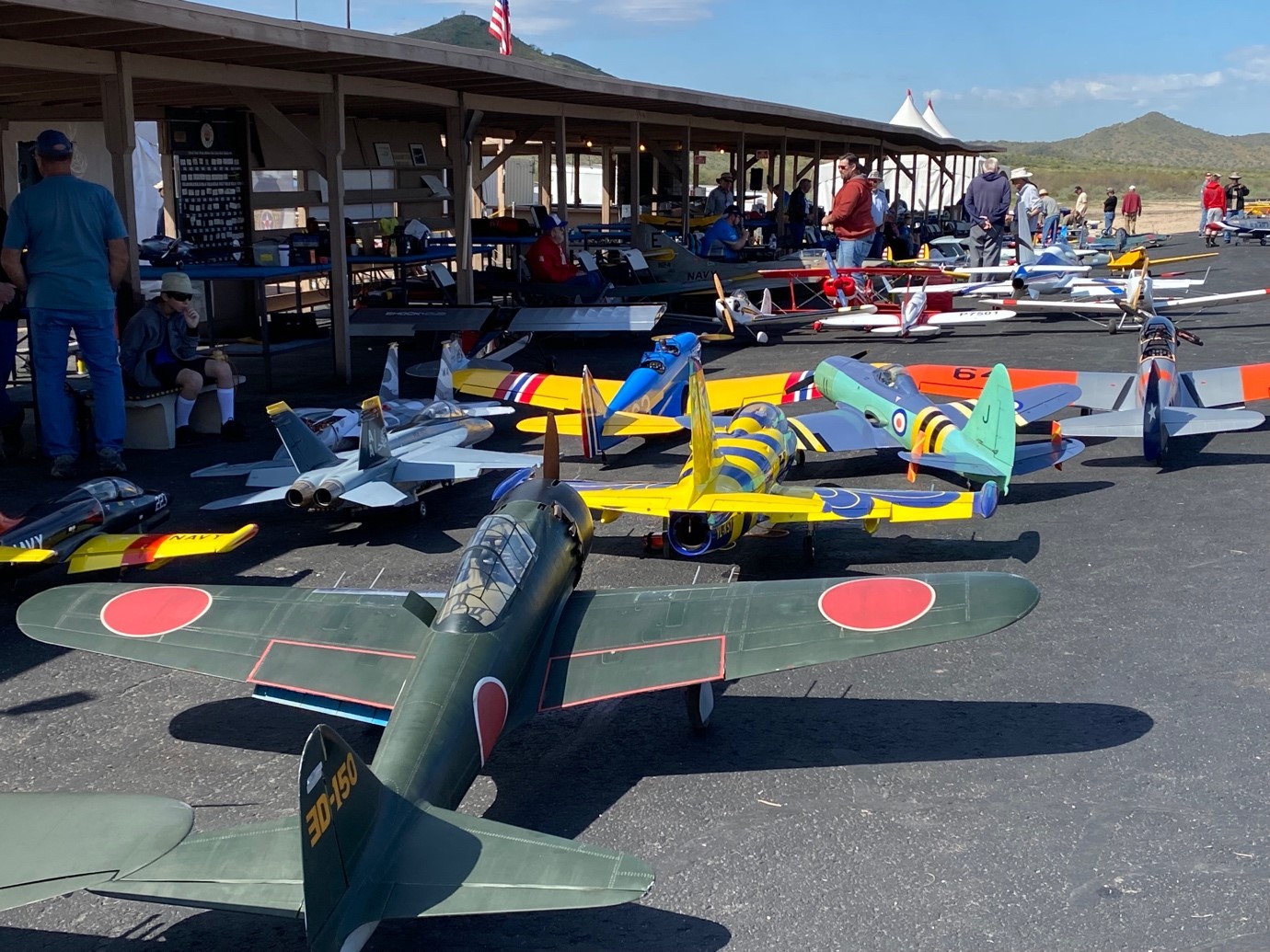 Arizona Warbirds and Classics was also an open event. There were a few organised spots like ‘let’s get as many WW1 aircraft as possible into the air at noon’ and a few stops for particular displays like the Sukhoi but other than that, endless fantastic aircraft being brilliantly flown.
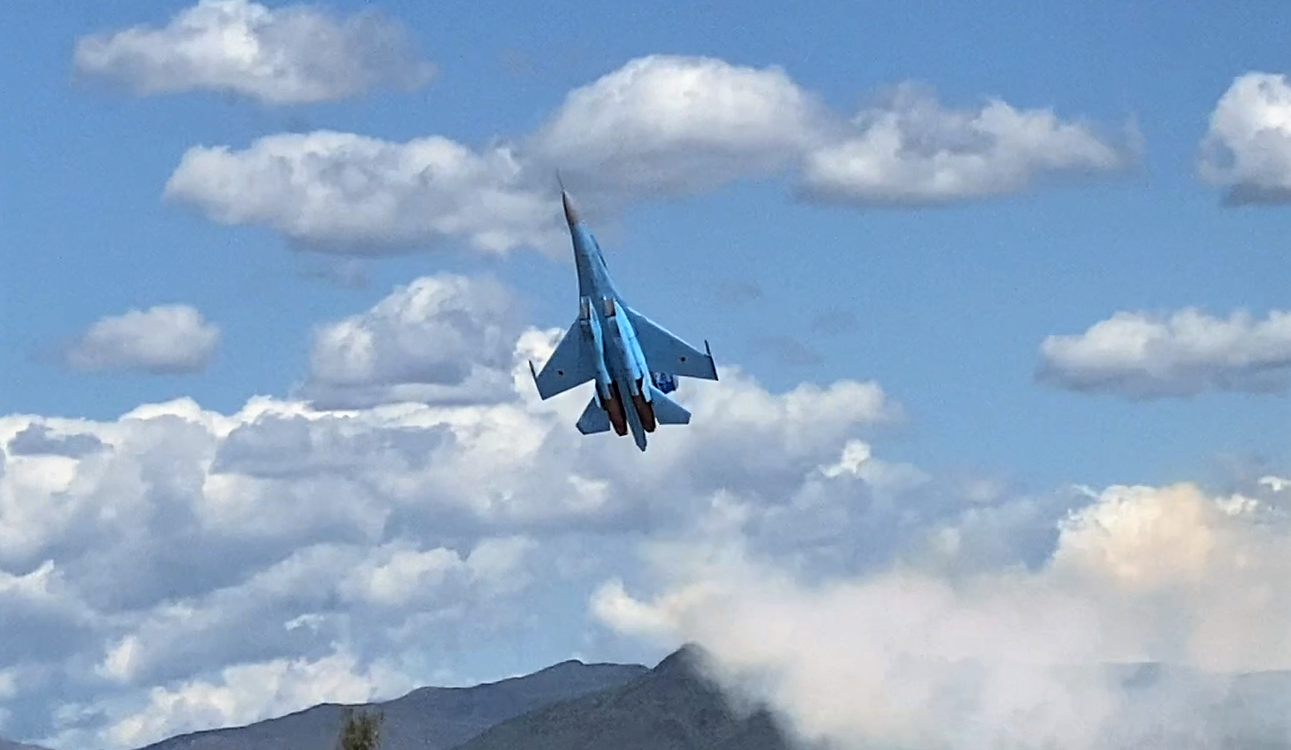 I used to be ambivalent about whether a model should have a pilot in the cockpit. Having seen the amazing scale models and flying techniques it was easy to think you were seeing full size. If a model didn’t have a pilot in situ, it suddenly didn’t feel right.
There were so many highlights, a scratch-built Dornier 335, an A10, a 12 year old superbly flying an L39 Albatross and the WW1 gaggle. But for me, the Sukhoi with its vectored thrust and the pair of massive Sabres in ‘Skyblazers’ livery were outstanding.
 Thanks for that Gordon, we’re not at all jealous! With his very best Film Director’s hat on Gordon shot plenty of video and has produced a five minute extravaganza for us to enjoy:
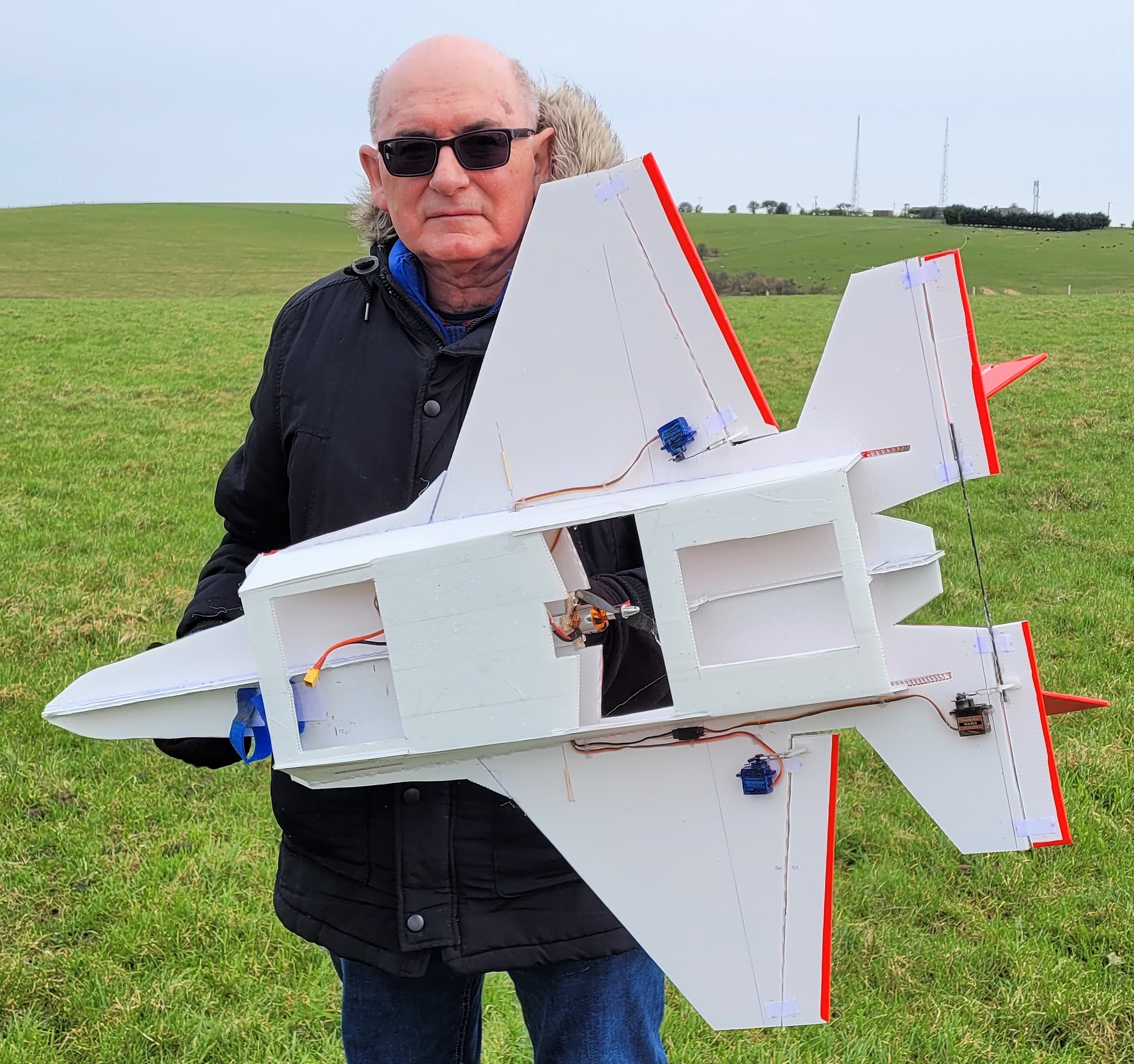
While Gordon was sunning himself in the States, back in the cold and damp of Hampshire Dwayne Pipe brought along a new own design F-22 Raptor to fly. Dwayne used the same basic principles of the foamboard jets that he’s designed and flown such as his Sea Vixen but this time he’s ditched the Hobbycraft foamboard and built it from a sheet of Correx.
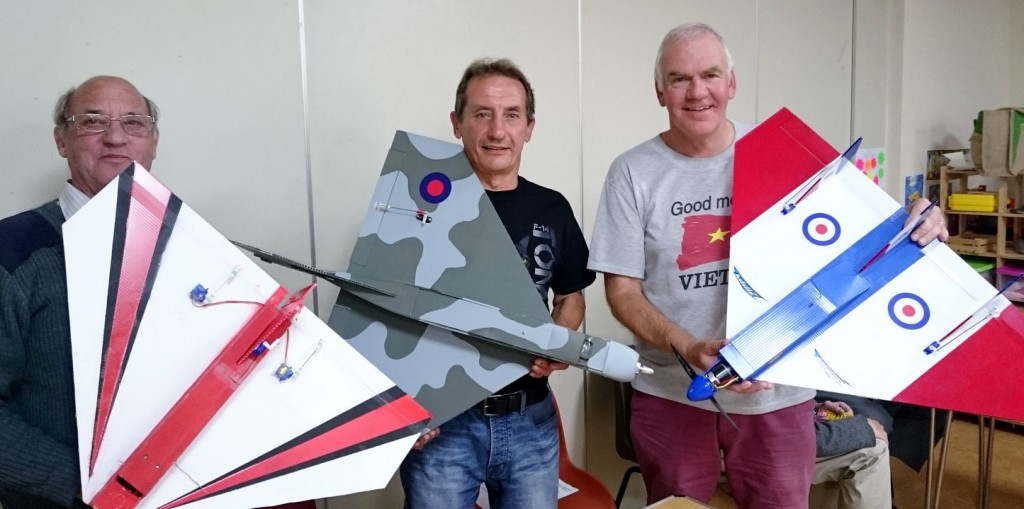
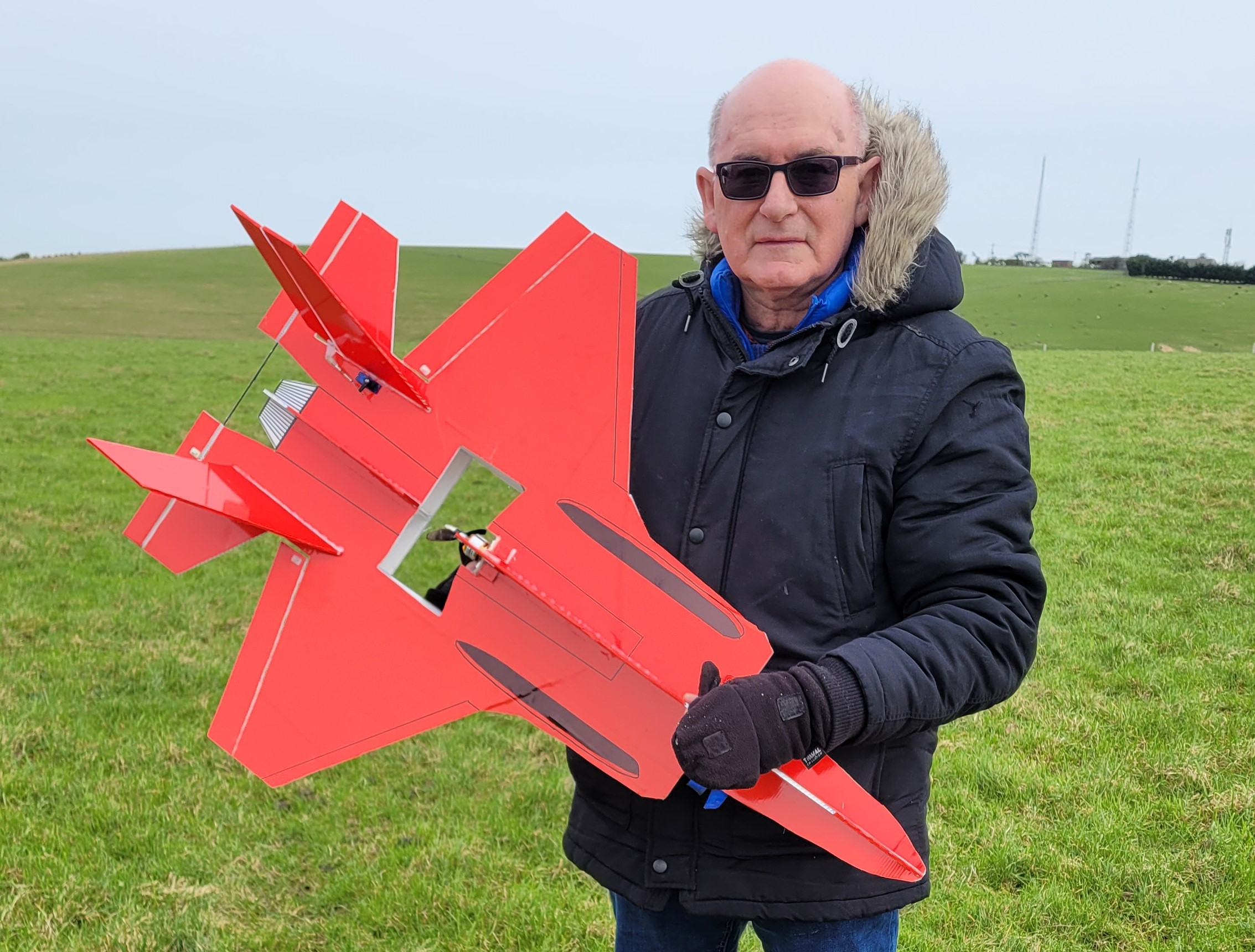 For those who don’t know Correx is the twin wall plastic board that many estate agents use for their signs and more importantly it’s the stuff lots of us used to make our planes for the Delta Challenge way back in 2015. Just look at all the young blokes in the photos below!
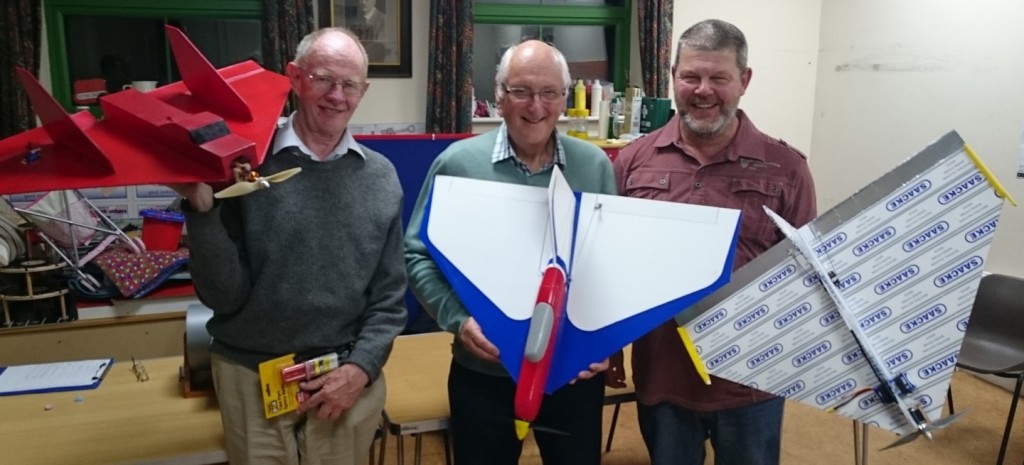
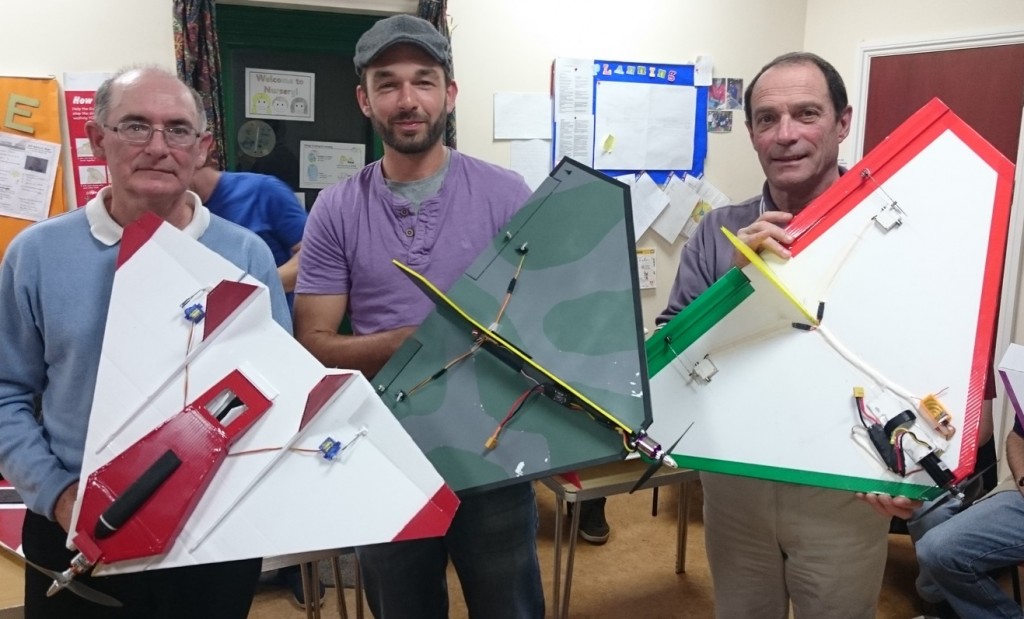
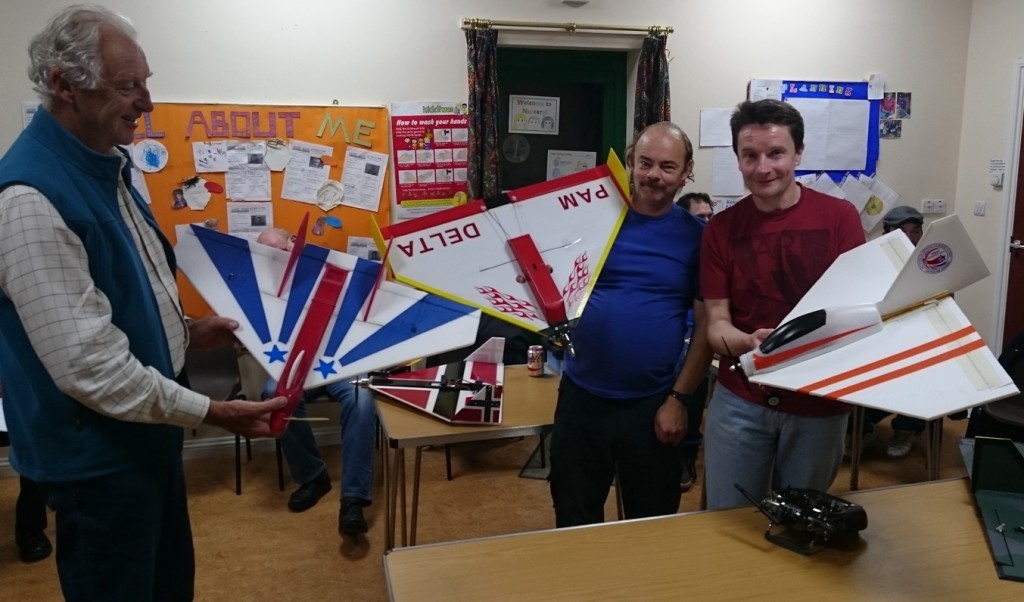 Anyway, back to Dwayne’s Raptor and you can see the Correx section pretty well in some of the photos, he chose the material because it’s extremely strong and easy to work with.
 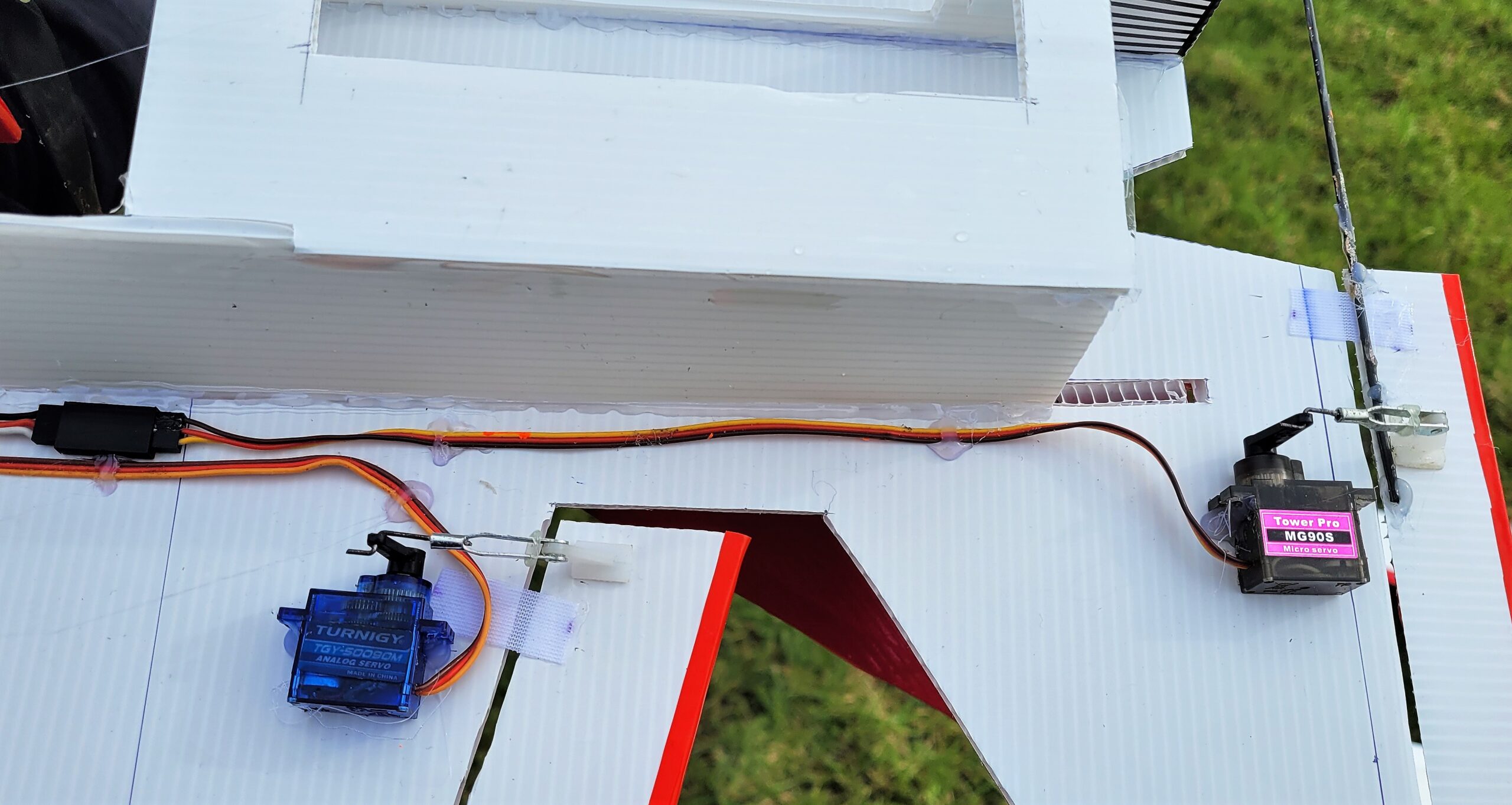 Although it is heavier than foamboard it’s completely waterproof, no problems with peeling paper on damp grass. Dwayne used hot melt glue for the construction, which works well on Correx, and he fitted a Turnigy Aerodrive D2826/6 2200kv motor, a 30A speed controller, and four 9g servos to move the waggly bits. There’s no mixing required on this one, it’s just straightforward ailerons, elevator and rudder controls. When I first saw the Raptor I thought Dwayne had painted it but it’s actually covered in Fablon.
 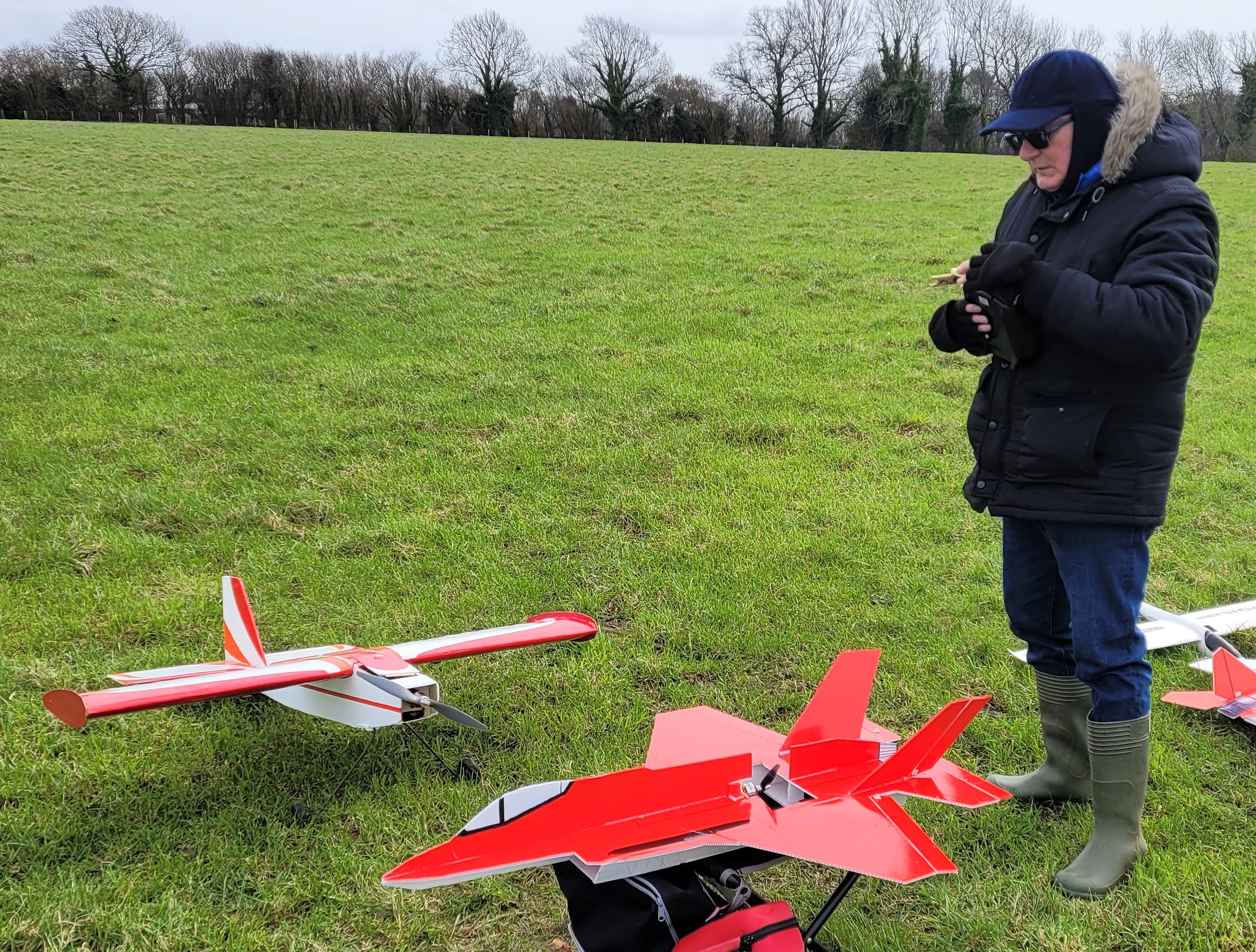 Remember Fablon? It’s a thin sticky back vinyl that first came out in the sixties and I haven’t seen it for years but a quick Google showed that it’s still alive and kicking and is available in a huge range of colours and finishes. It can be found on eBay and Amazon as well as from B&Q and Homebase etc. It’s certainly heavier than iron on films and I don’t think it will shrink with heat but it’s probably good for solid surfaces that don’t have any compound curves. It will be interesting to see how durable it turns out to be. So how did it fly? Erm…well…so far not very well! Dwayne had used an online calculator to determine the centre of gravity, something that he’d used before and found it worked well. But the first two or three attempts at flight showed that the centre of gravity was much too far back so Dwayne fitted a larger battery as far forward as possible for the next attempt. This time it was much better and managed a couple of rather hairy circuits before…err…’landing’.
 The flight showed what needs to be done and Dwayne headed off back to the workshop to make a few changes to the plane and the control movements but it will be back shortly and I think it will be fine after a few modifications. Sadly only Dwayne and I were at the field that day and I was chief launcher so I wasn’t able to capture any video for you to enjoy.
The next new model to appear in March was also an F-22 Raptor but this one is a foamboard version built by Woody. He was really happy with how his Su-27 from Ali Express flies and while browsing the site up popped the Raptor complete with the motor, three propellers, 30A esc, and two servos for just £23.48 with free postage!
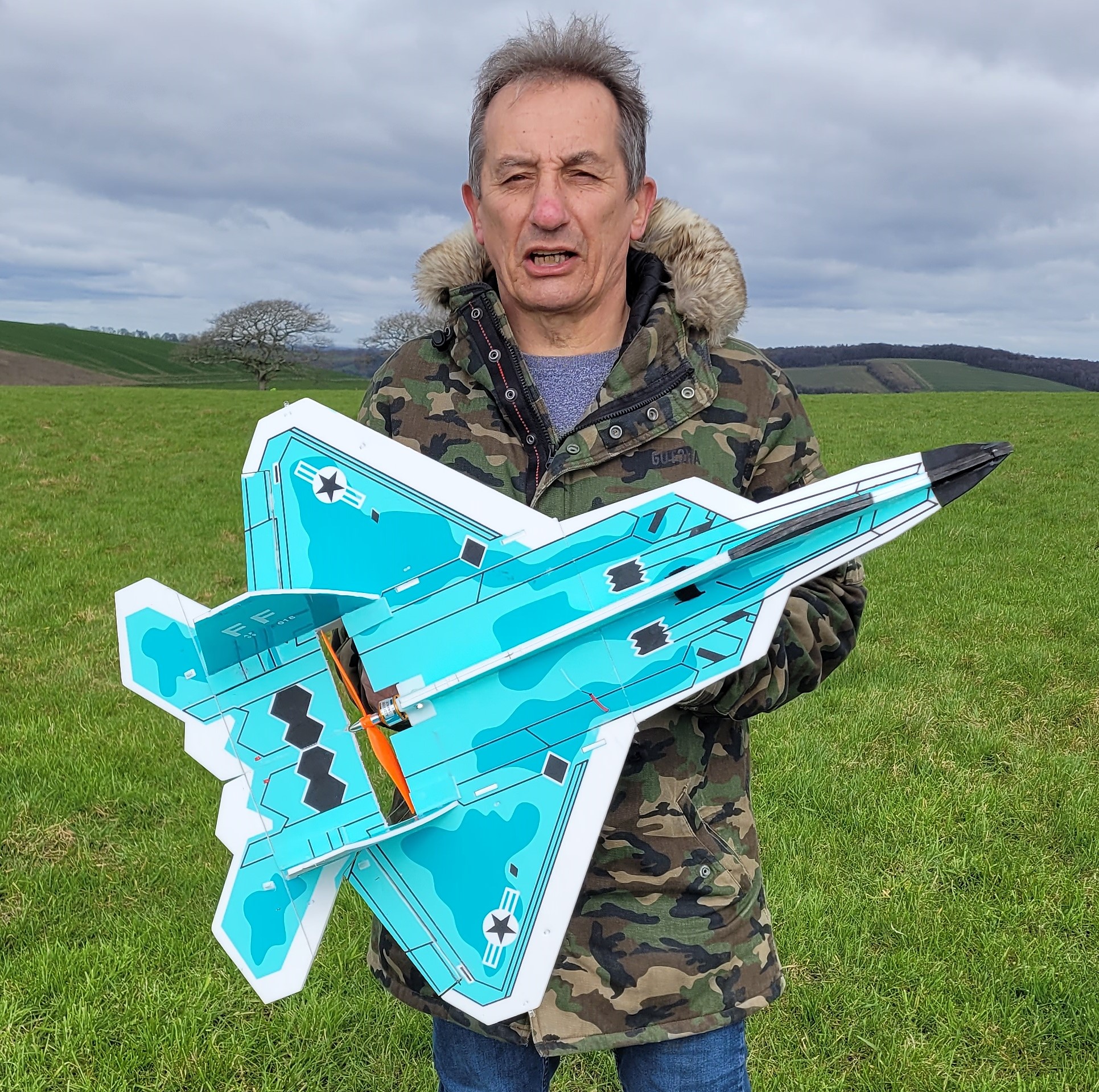 Because it comes from China Ali Express have to add tax but it’s still only £28.29. Woody has made a really nice job of putting it together and the finished model looks very smart.
 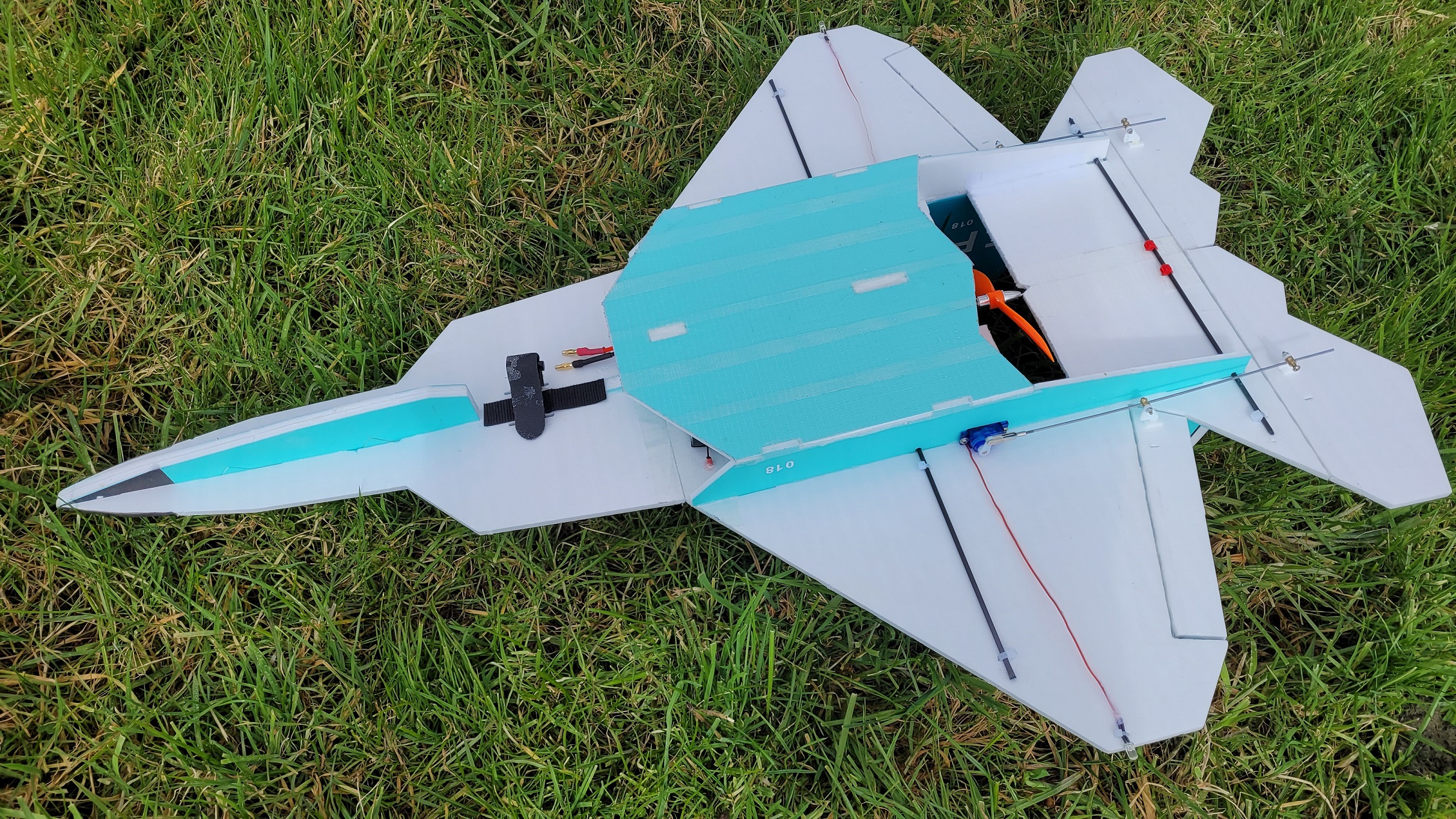 Obviously he’s added some lights but only two on this plane, one on each wingtip.
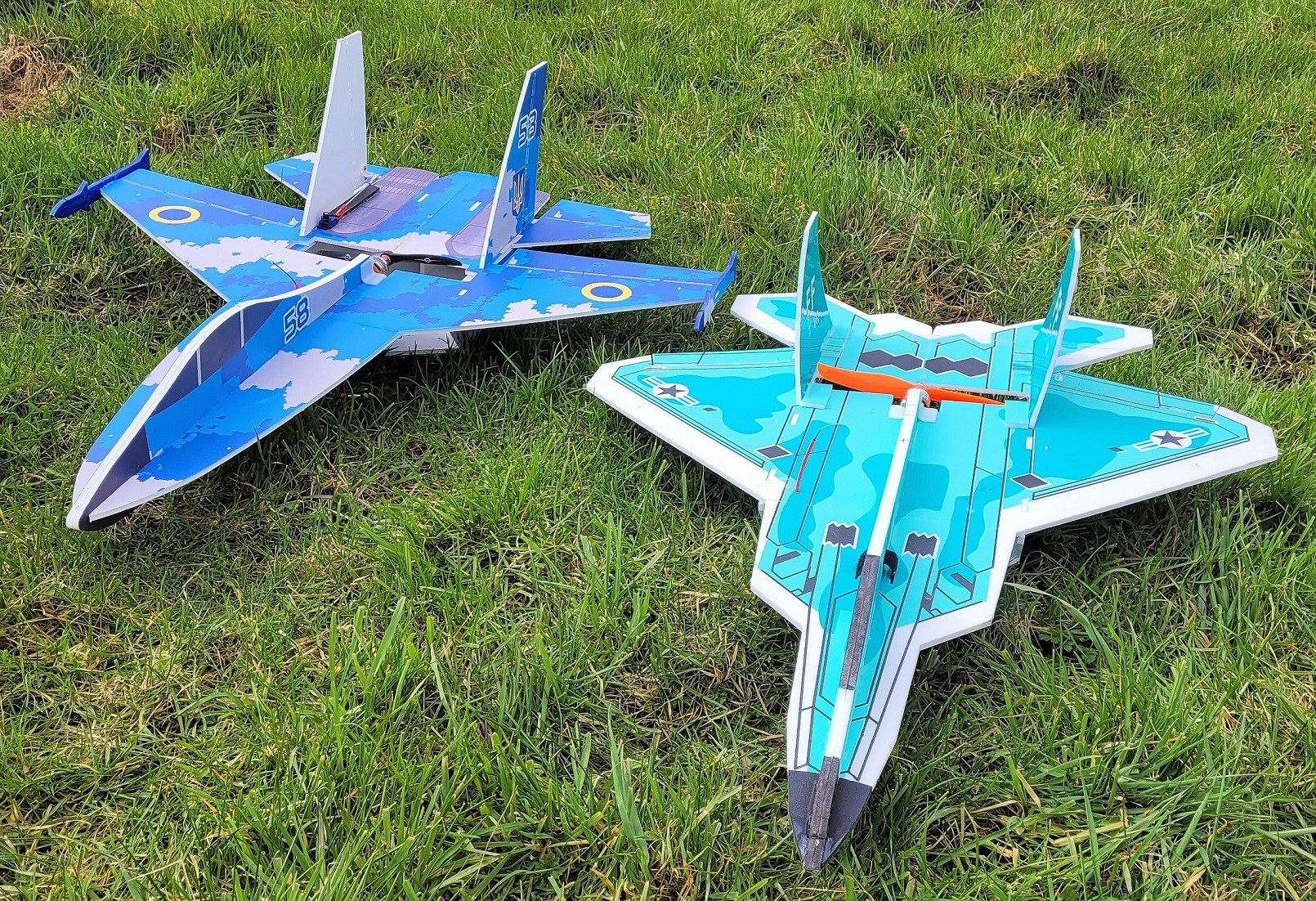 The motor that’s included in the package is an A2212/10T which is 1400kv rather than the 2200kv motors most of us fit to our foamboards so it needs an 8x 6 propeller instead of the usual 6×4 that we use. Before it flew we were a little concerned that it might be underpowered but it flies really well, not quite as fast as most of the foamboards but there’s plenty of power and it will climb almost vertically. Woody was unsure about the centre of gravity position but it turned out to be spot on and the Raptor is a delight to fly.
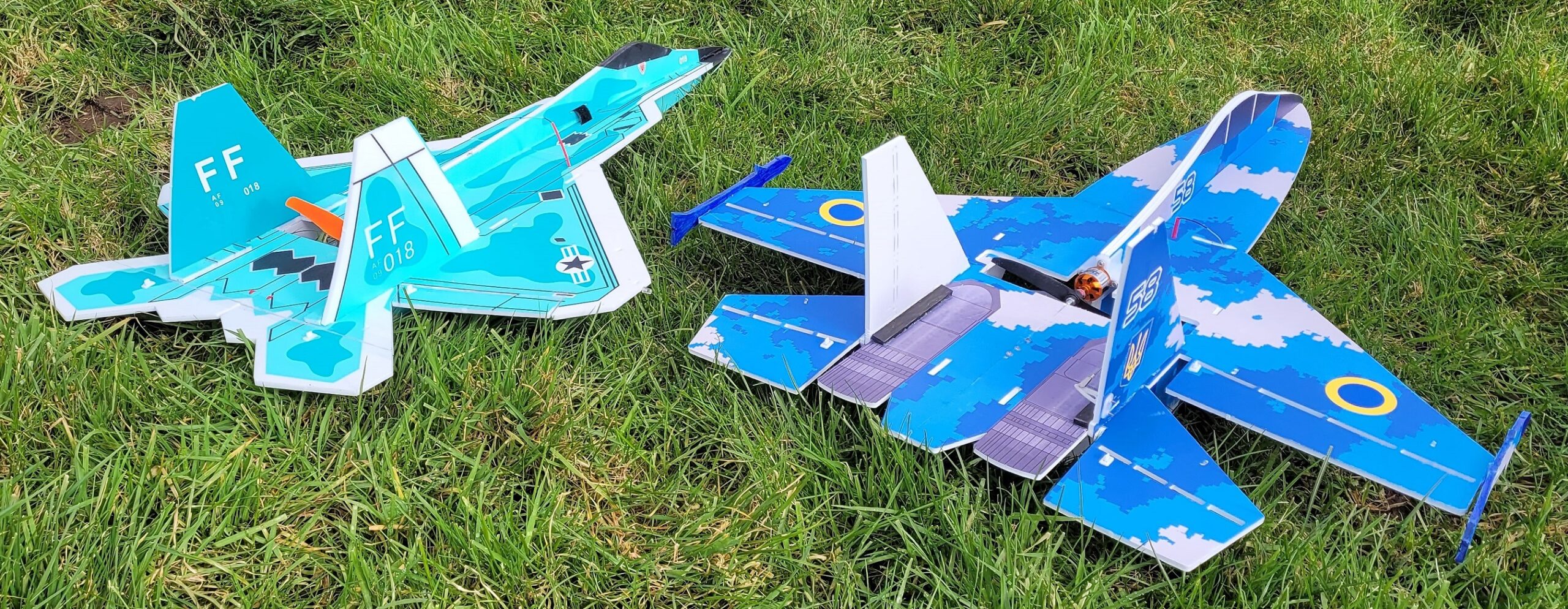 I liked it enough to order one for myself! You can see Woody’s flying in this month’s video.
Away from foamboards now and back to Gordon Bennett who has bought himself an E-flite P-51 Mustang. Gordon was browsing the adverts and saw that there was a new version of the E-flite Mustang available in the States and it was much cheaper than in England.
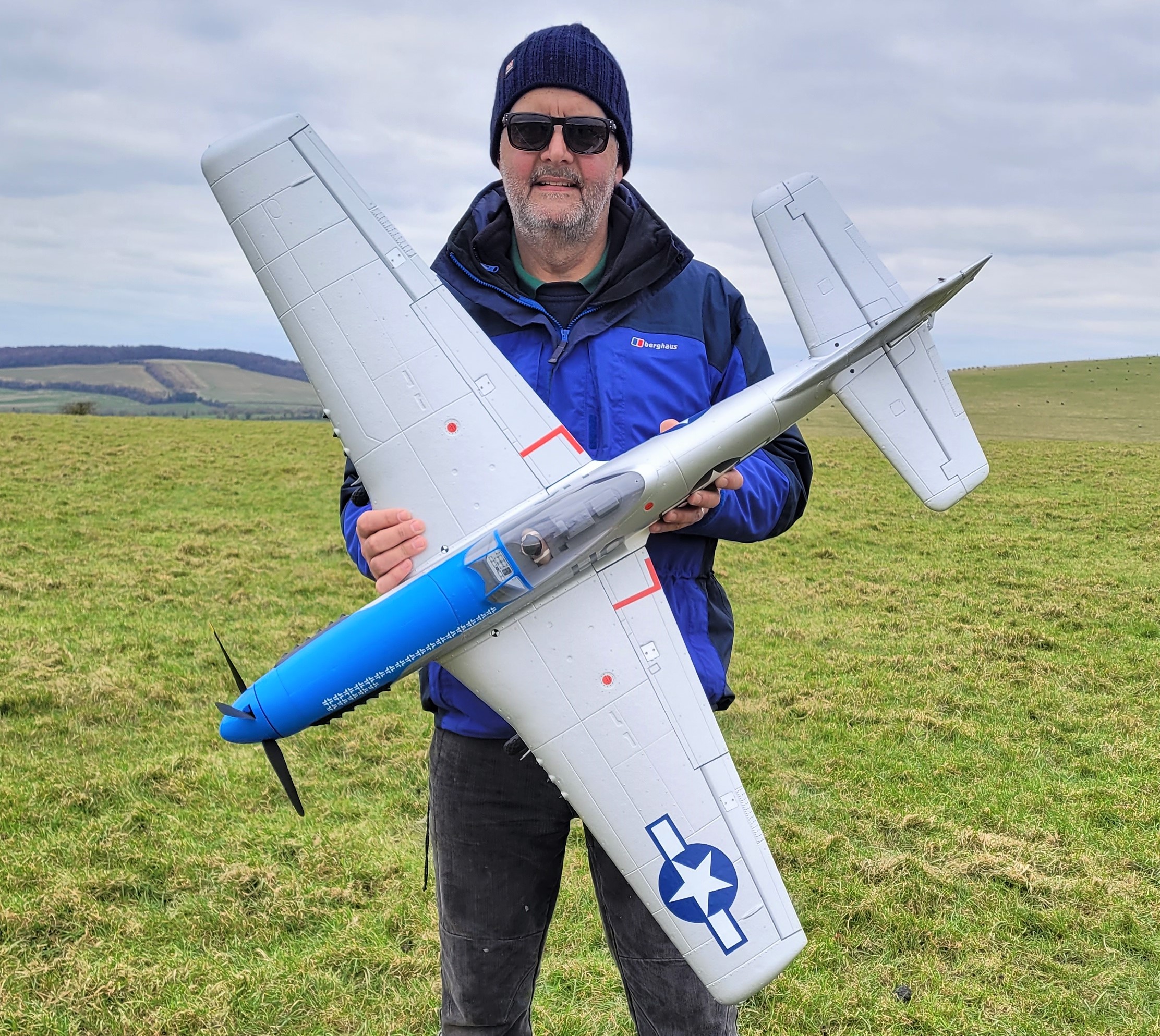 He had a friend in the US military who was able to get things posted to England very cheaply so it seemed only right to ask him to order one. After a bit of a delay due to the US military not wanting to fly any package containing lithium batteries (which it didn’t!) the model arrived safely. This is what E-flite have to say about it: This updated version of the E-flite® P-51D Mustang 1.2m delivers outstanding warbird appeal whether flying or just standing still. It’s now finished in the iconic “Cripes A’Mighty 3rd” trim scheme of George E. Preddy Jr., the top P-51 Mustang ace during World War II who downed six planes in a single day. This replica features a variety of scale details including moulded-in panel lines, a pilot figure, four-blade propeller and more. Plus, its functional flaps and retractable landing gear add to the scale flying experience. The 3S and 4S compatible power system includes an upgraded 70A Spektrum™ Avian™ Smart Lite ESC, and the BNF® Basic version is equipped with an AR631 receiver to deliver real-time telemetry data along with AS3X® and optional-use SAFE® Select technologies.
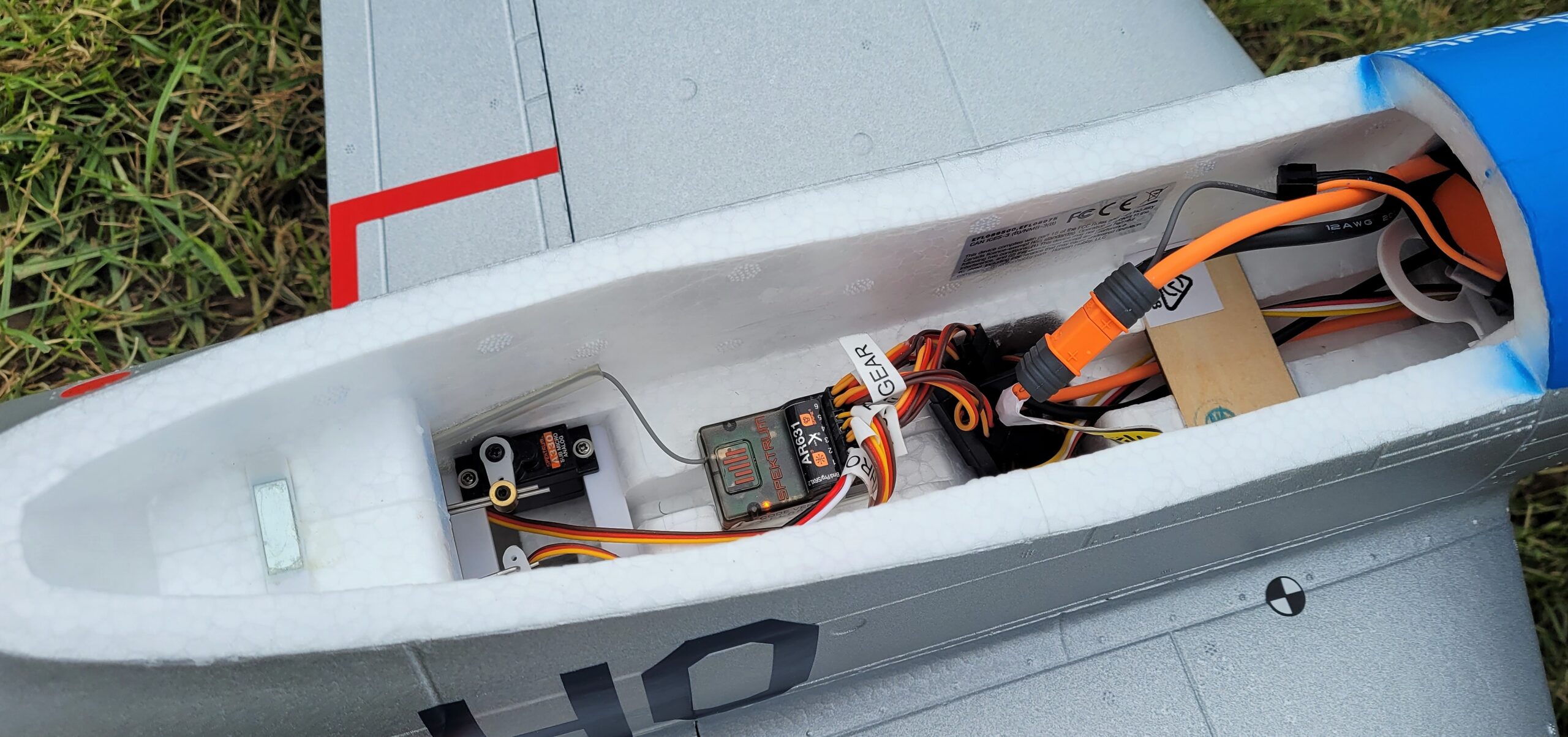
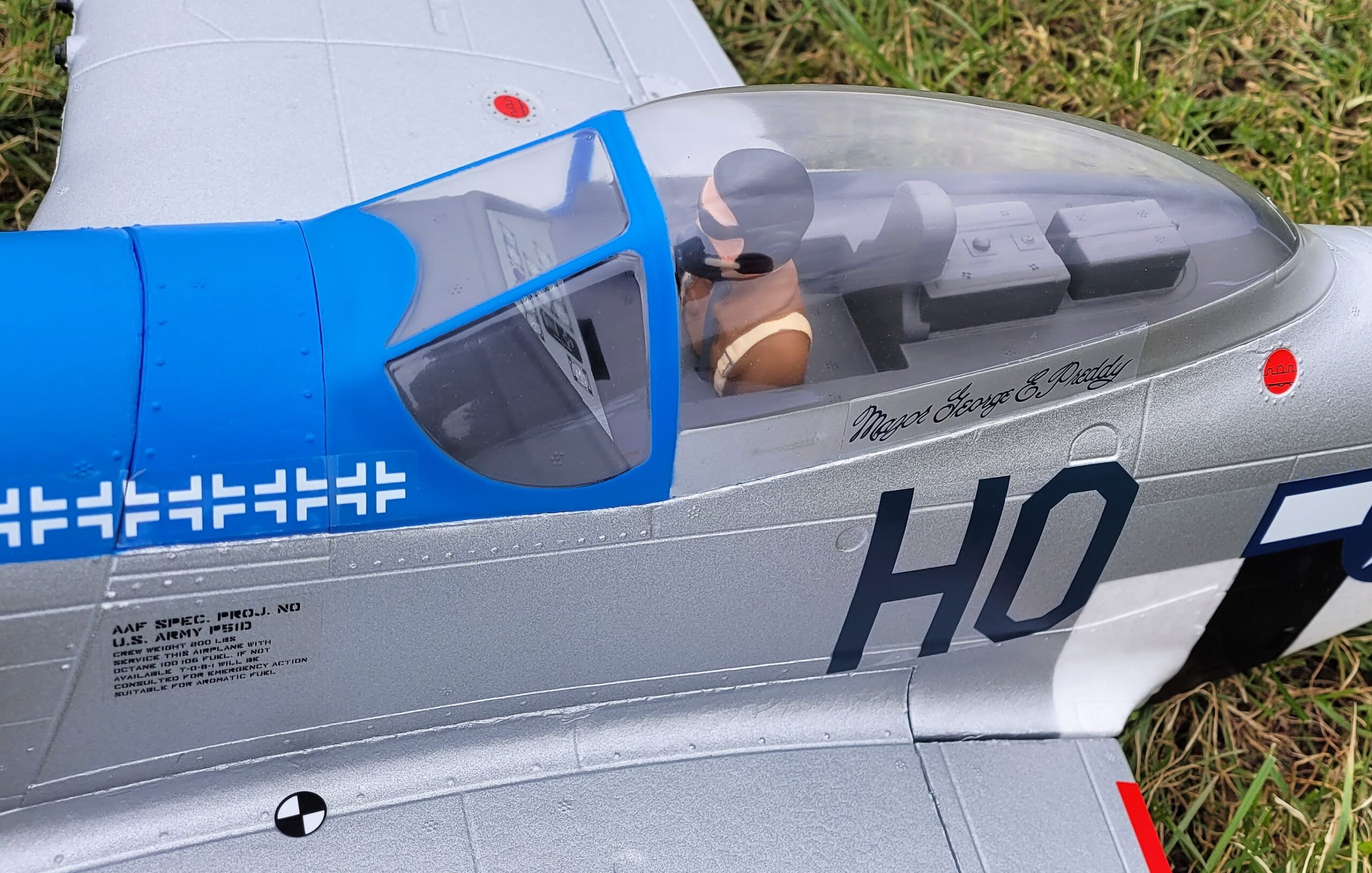 Best of all, no glue is required for final assembly so you can have it ready to fly in less time than it takes to charge a battery! And the 1.2m size allows for easy storage and transport without disassembly, or the one-piece wing can be removed and reinstalled quickly for even greater convenience. So, whether you’re an intermediate or advanced pilot, this P-51D Mustang has the details, features and heart-stopping performance—along with incredible handling at low and high speeds—you need to experience what piloting a legendary thoroughbred is all about.
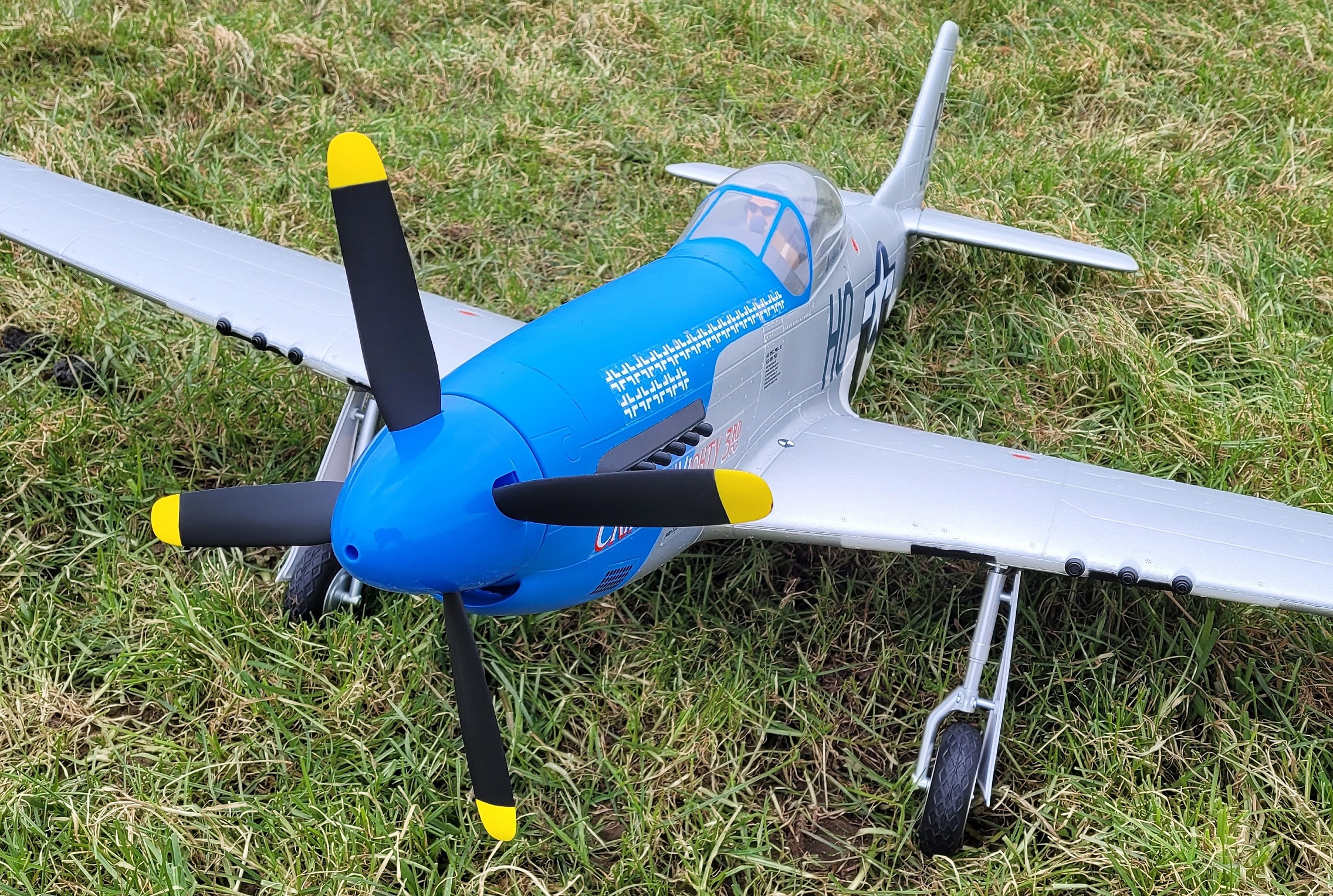
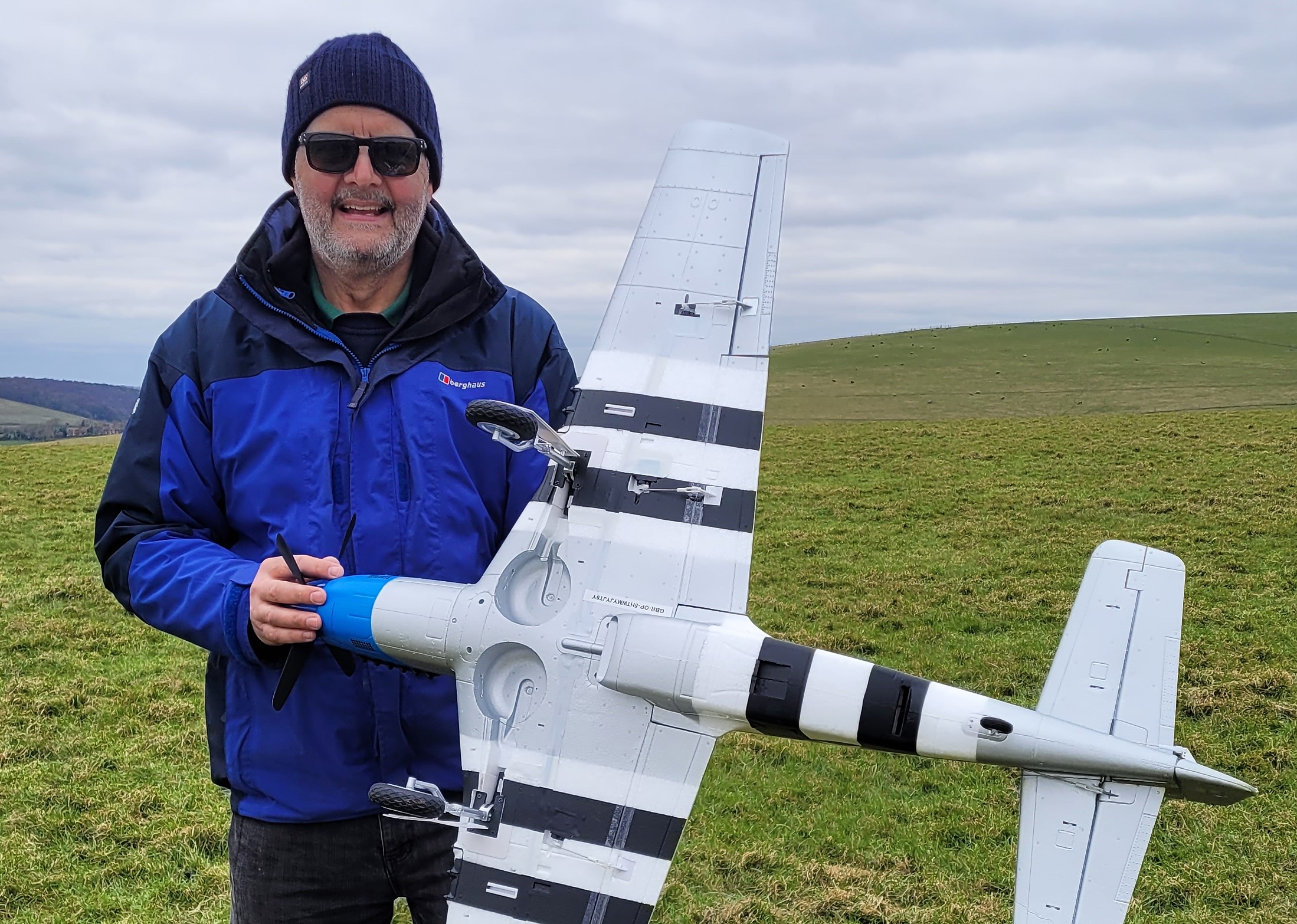 Gordon asked me to do the initial trimming and once I’d managed to stop the nose trying to peck into our patch the Mustang took-off and flew perfectly. The telemetry wouldn’t shut up, it kept saying something about low battery which was very unnerving with a brand new expensive model that wasn’t mine (bl****y Spektrum!). While trying to find the retract switch I inadvertently switched the gyro to ‘child’ mode but I didn’t realise until I tried to roll and it fought back and stated resolutely upright! Once Gordon had switched that out I handed the transmitter over to him for the rest of the flight. Despite the dire telemetry warnings nothing untoward happened and after a few minutes of gentle flight Gordon landed the P-51 safely. He is rather worried about the brand new lipo so will be checking it out before the next flight. You can see some of the flight in this month’s video.
The last new model this month belongs to young Leo and it’s yet another foamboard.
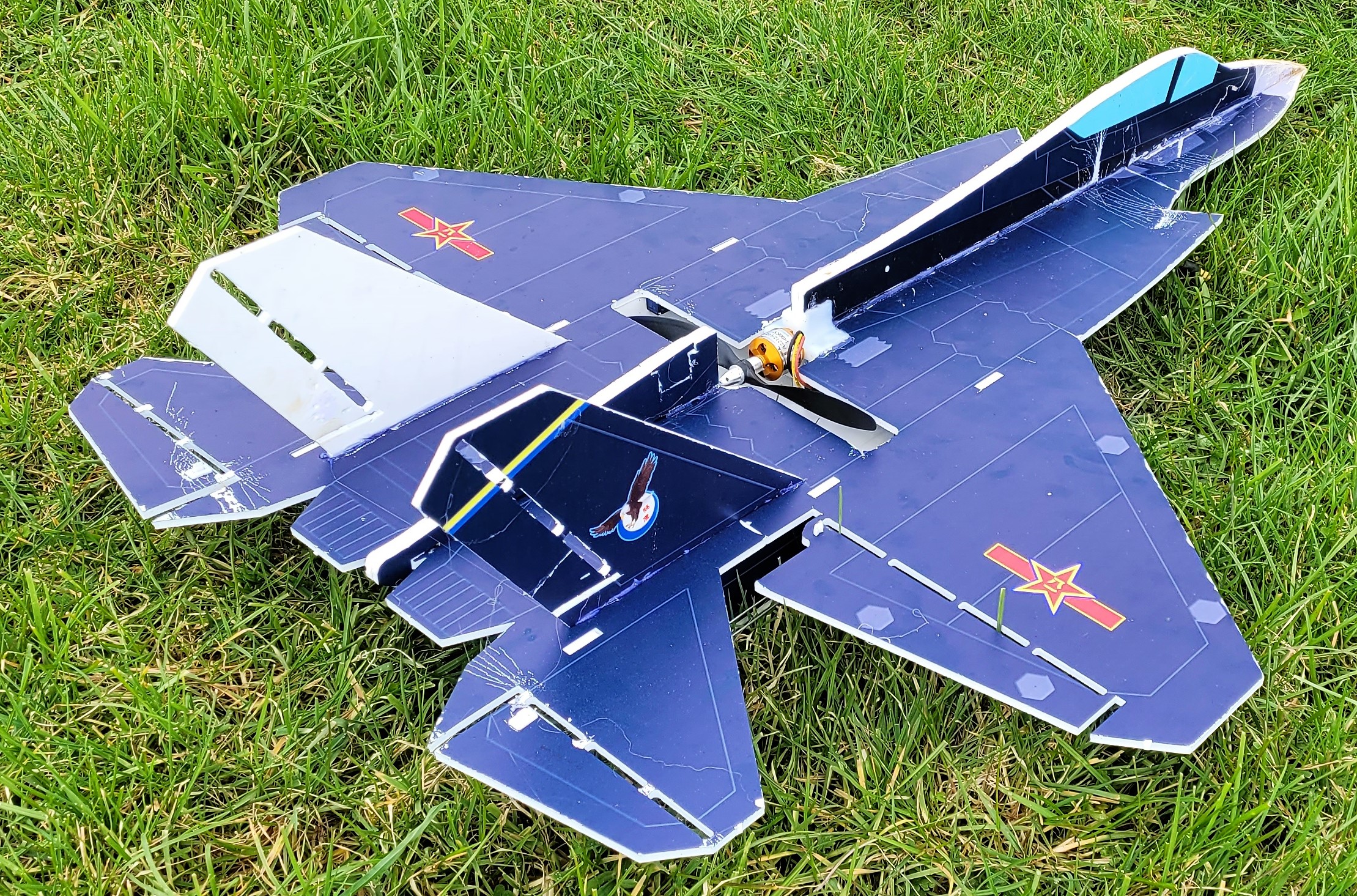 But this one is a bit of an unusual model as it’s a J-31. What’s a J-31 I hear you ask?
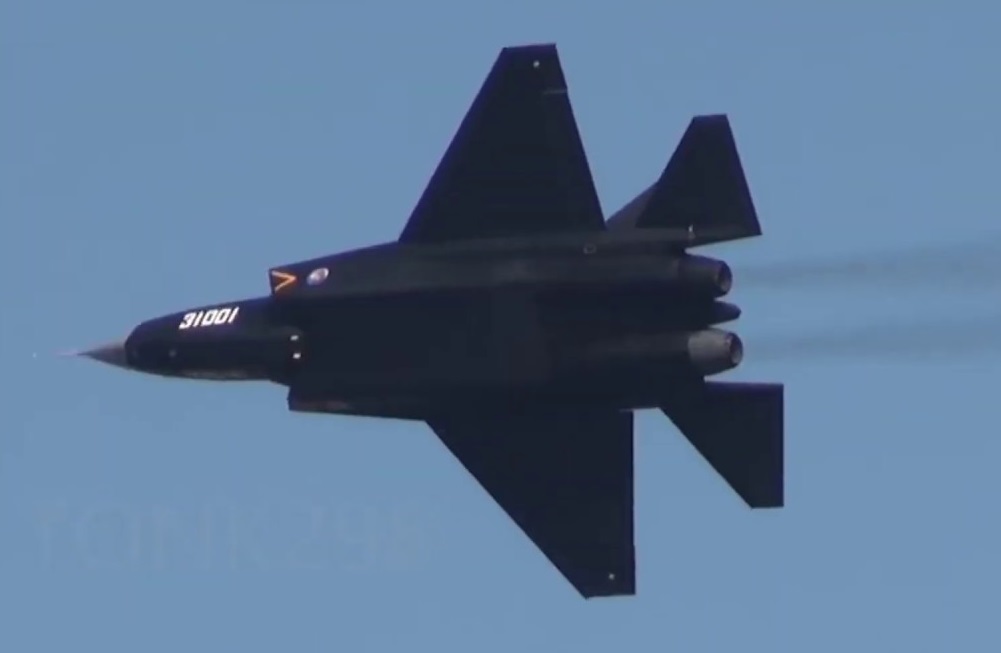 Well it’s a Chinese aircraft made by Shenyang which is sometimes known as an FC-31 and it looks pretty similar to an F-22 Raptor, some say it’s a copy. Leo’s model is another of the range from Ali Express and it came with the same electronics pack as Woody’s F-22 with an A2212/10T 1400kv motor, three 8×6 props, a 30A speed controller, and two servos.
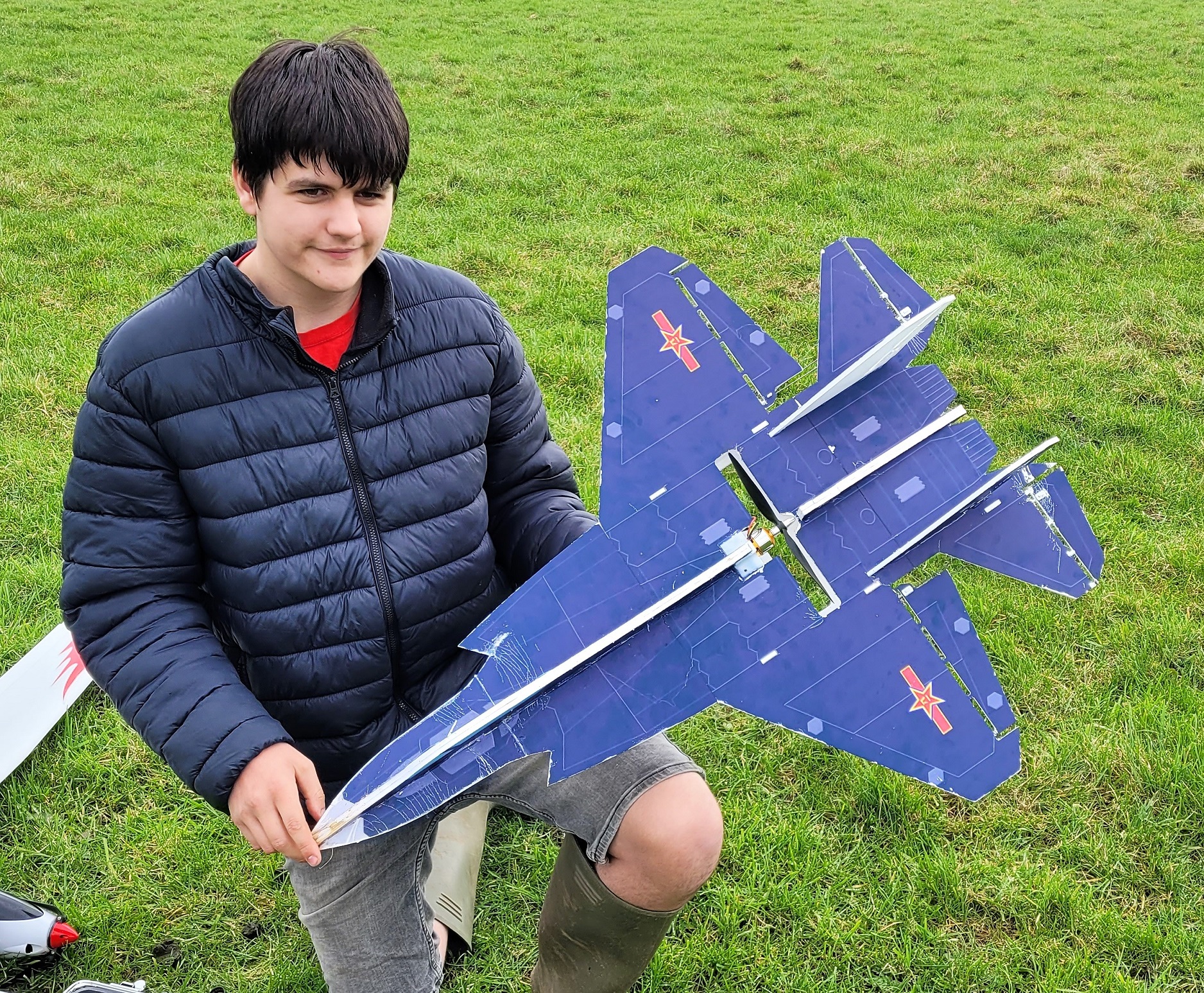
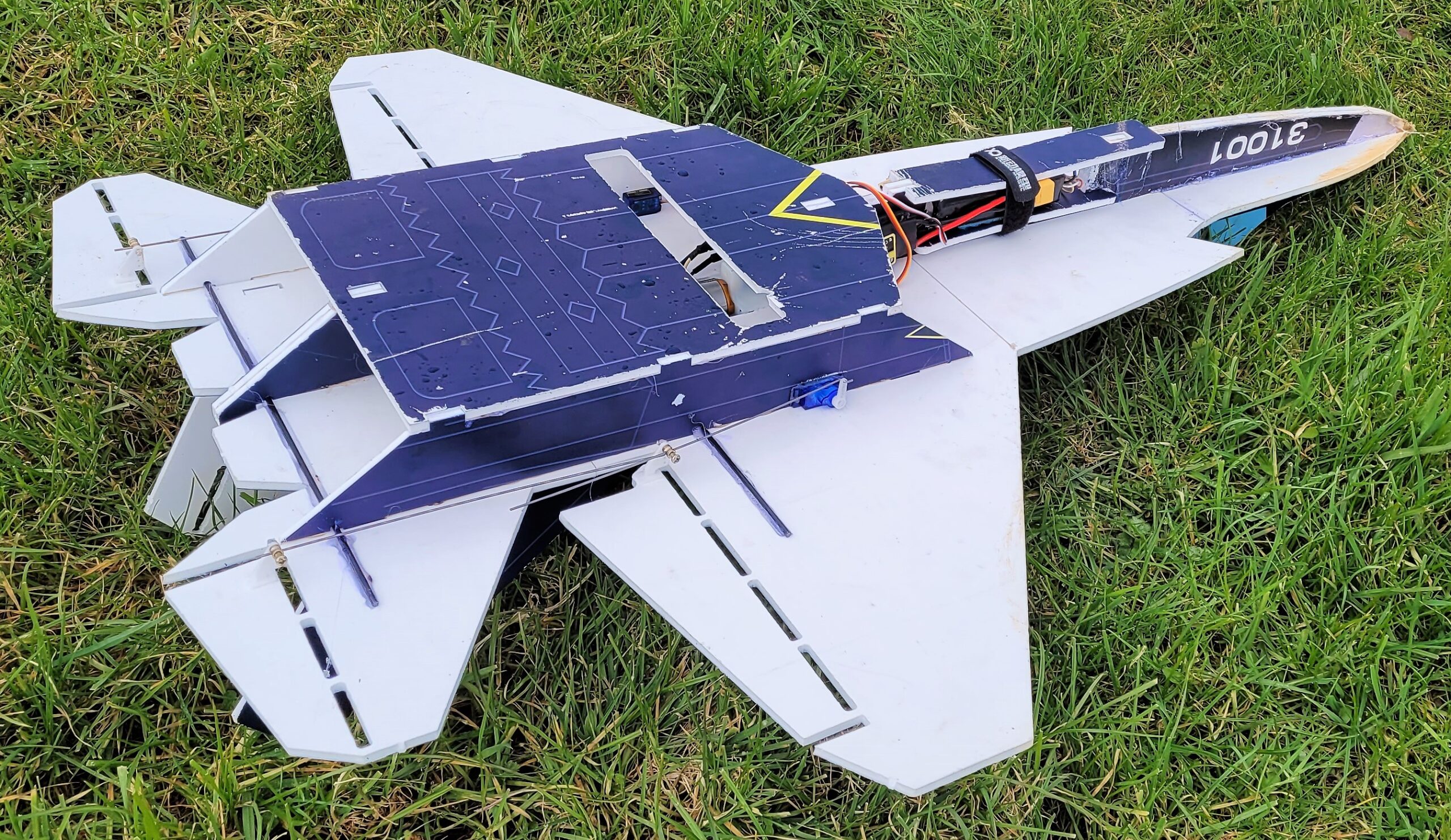 It flies extremely well, most of these foamboards seem to fly better than a flat plate of foam should be expected to fly and Leo has been demonstrating how he can fly it inverted at ridiculously slow speeds. Take a look at it in the video and prepare to be impressed by it.
For the monthly ‘action’ shots this month I’ve taken stills of some of the lovely models from Gordon’s video. The first one is of a Yak 130, the same as mine so I’ve included mine to see if you can tell the difference. No? OK, I’ll give you a clue, mine has the wheels up: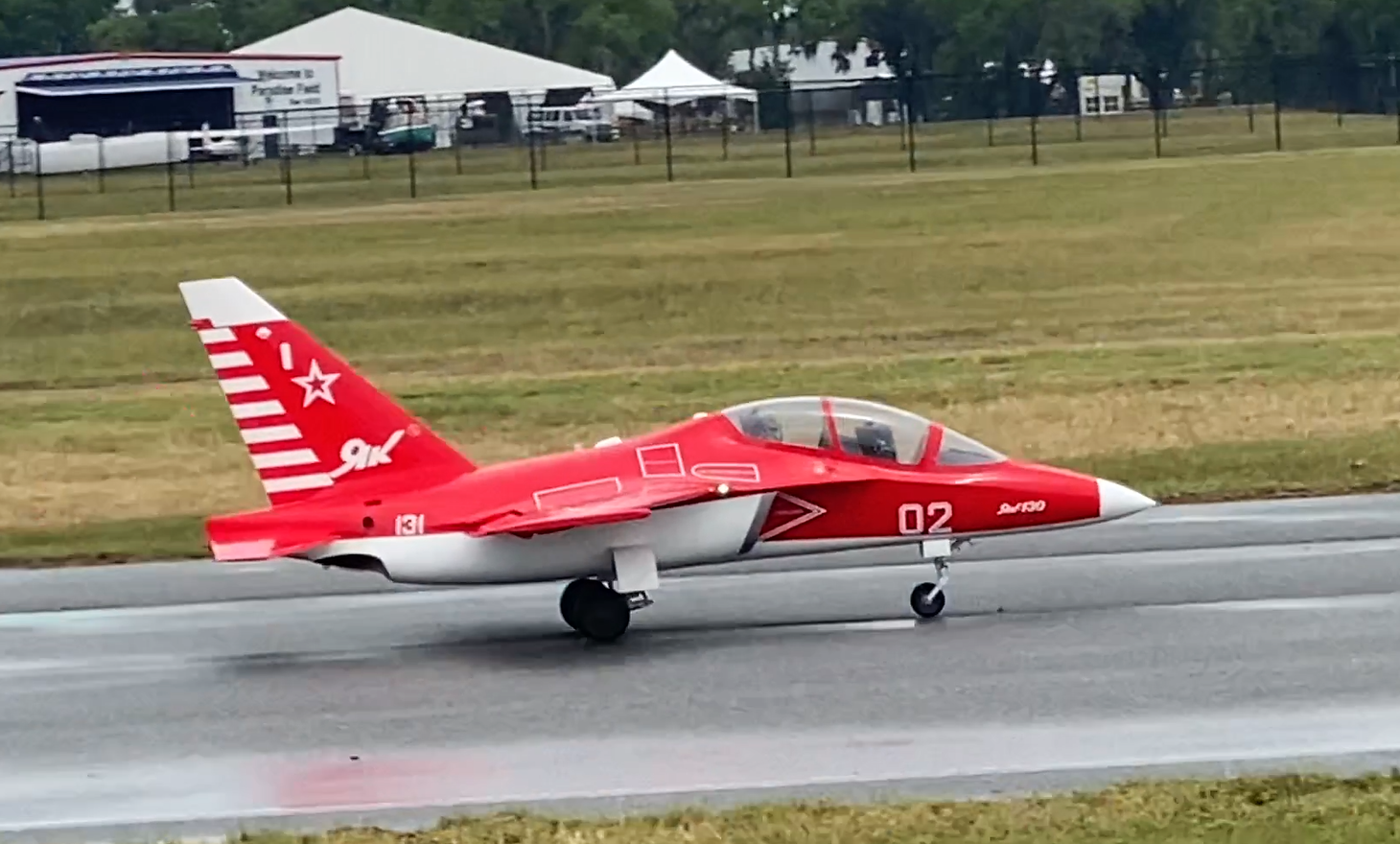
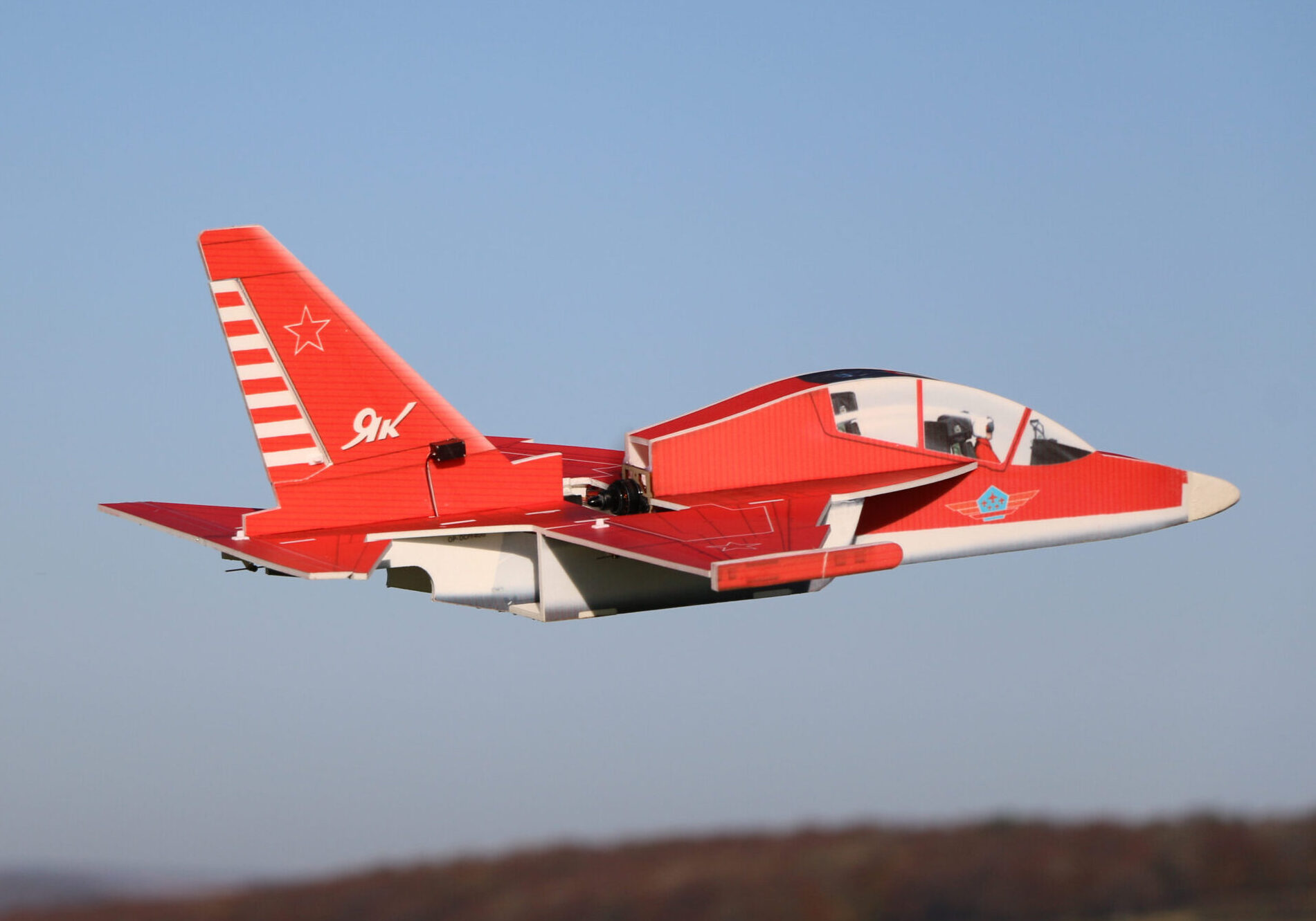
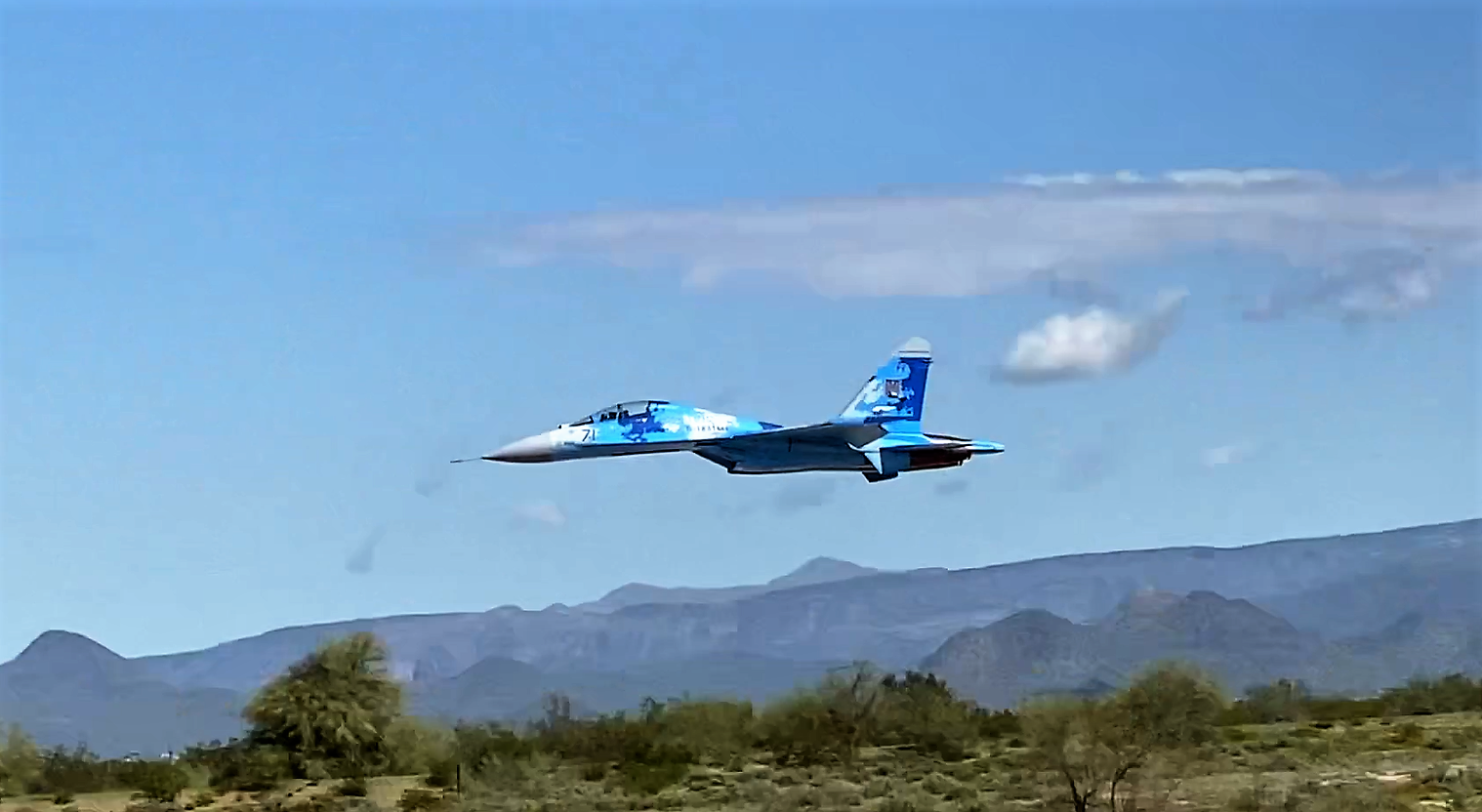
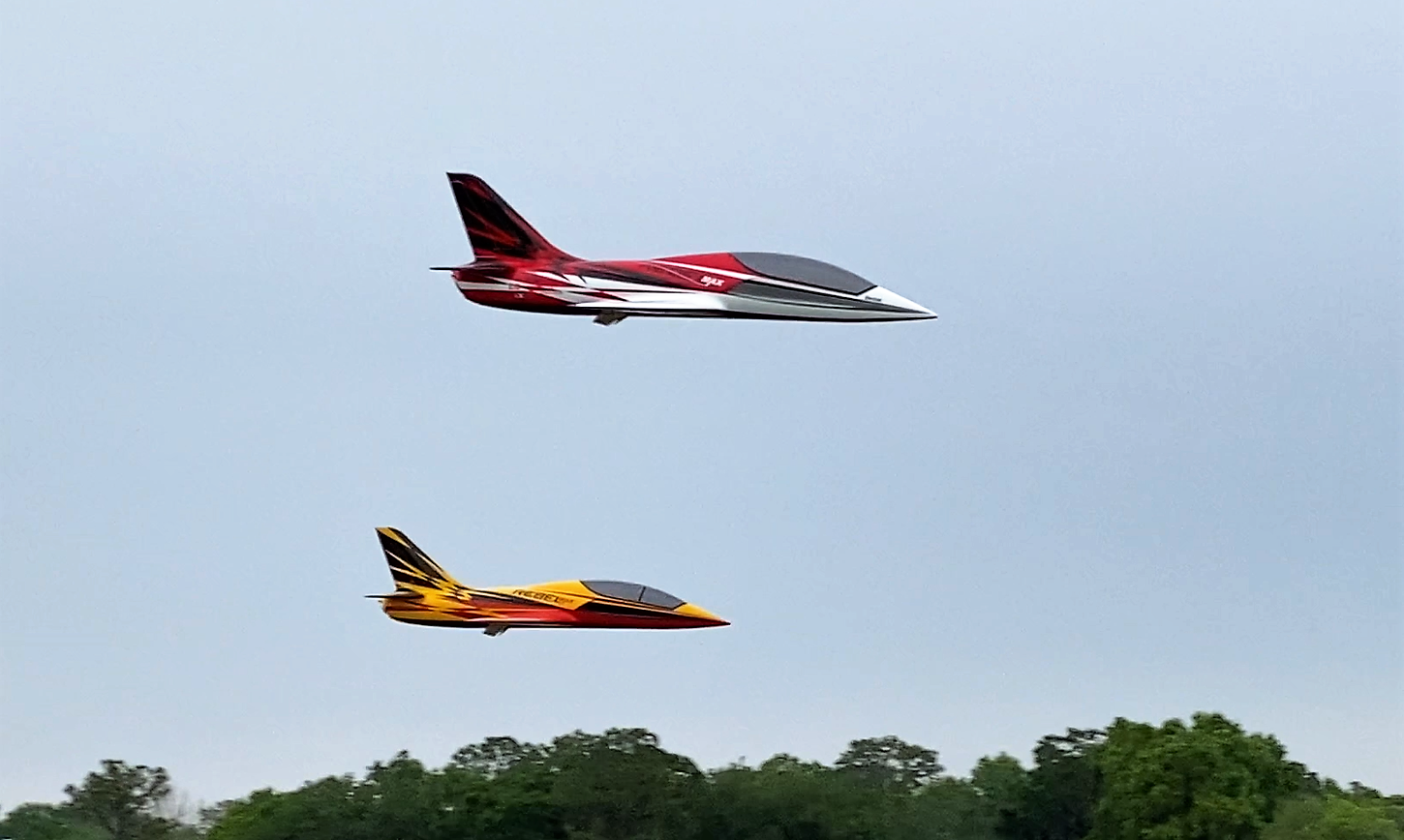
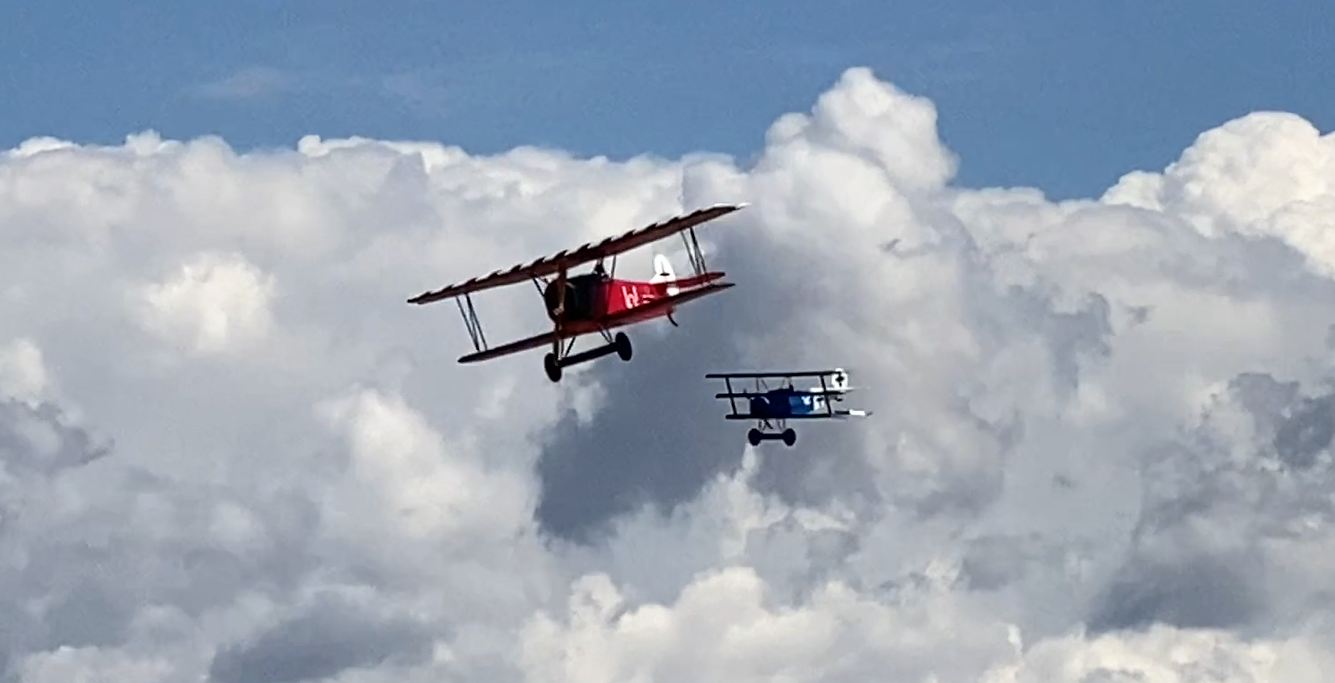
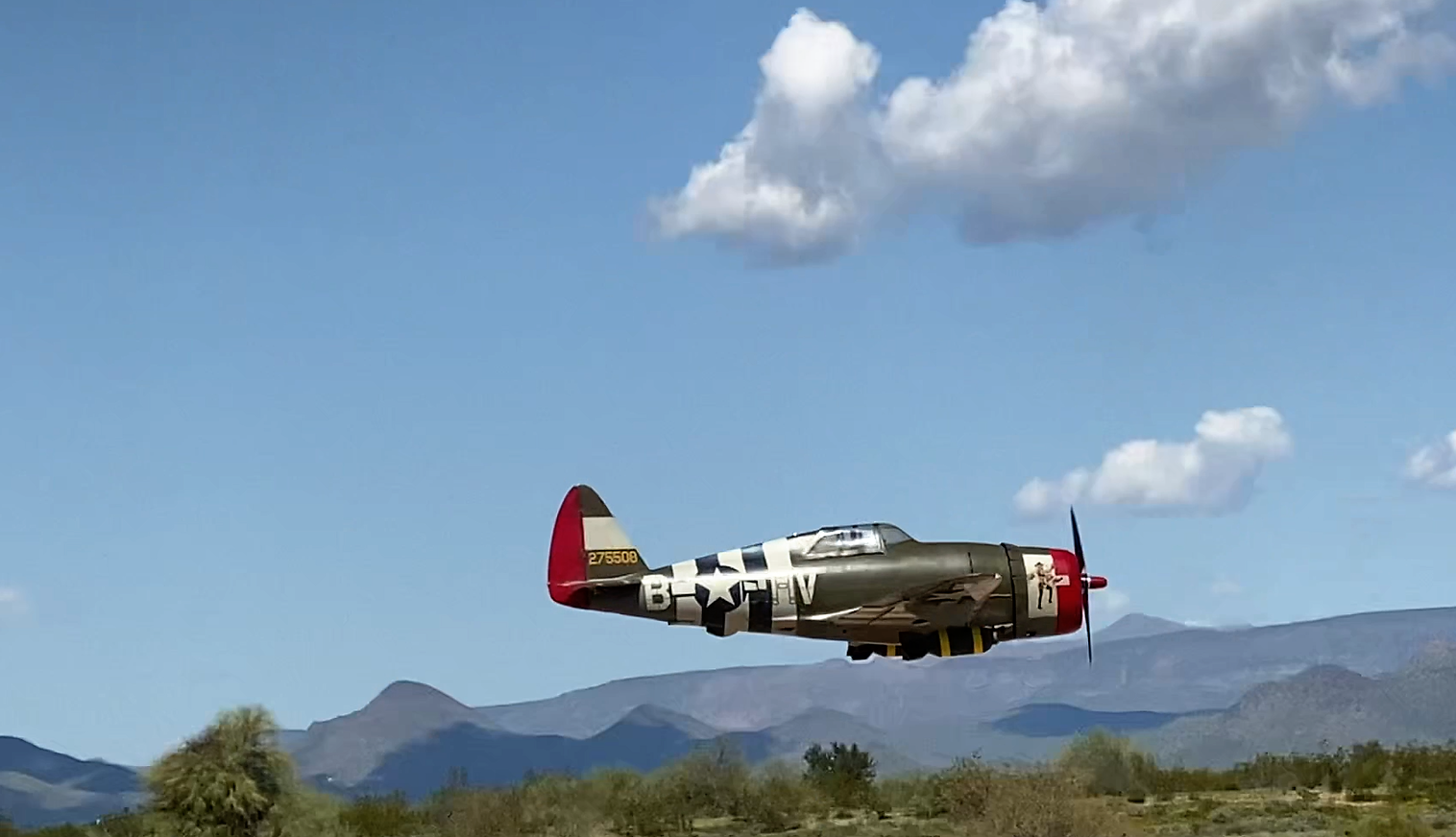

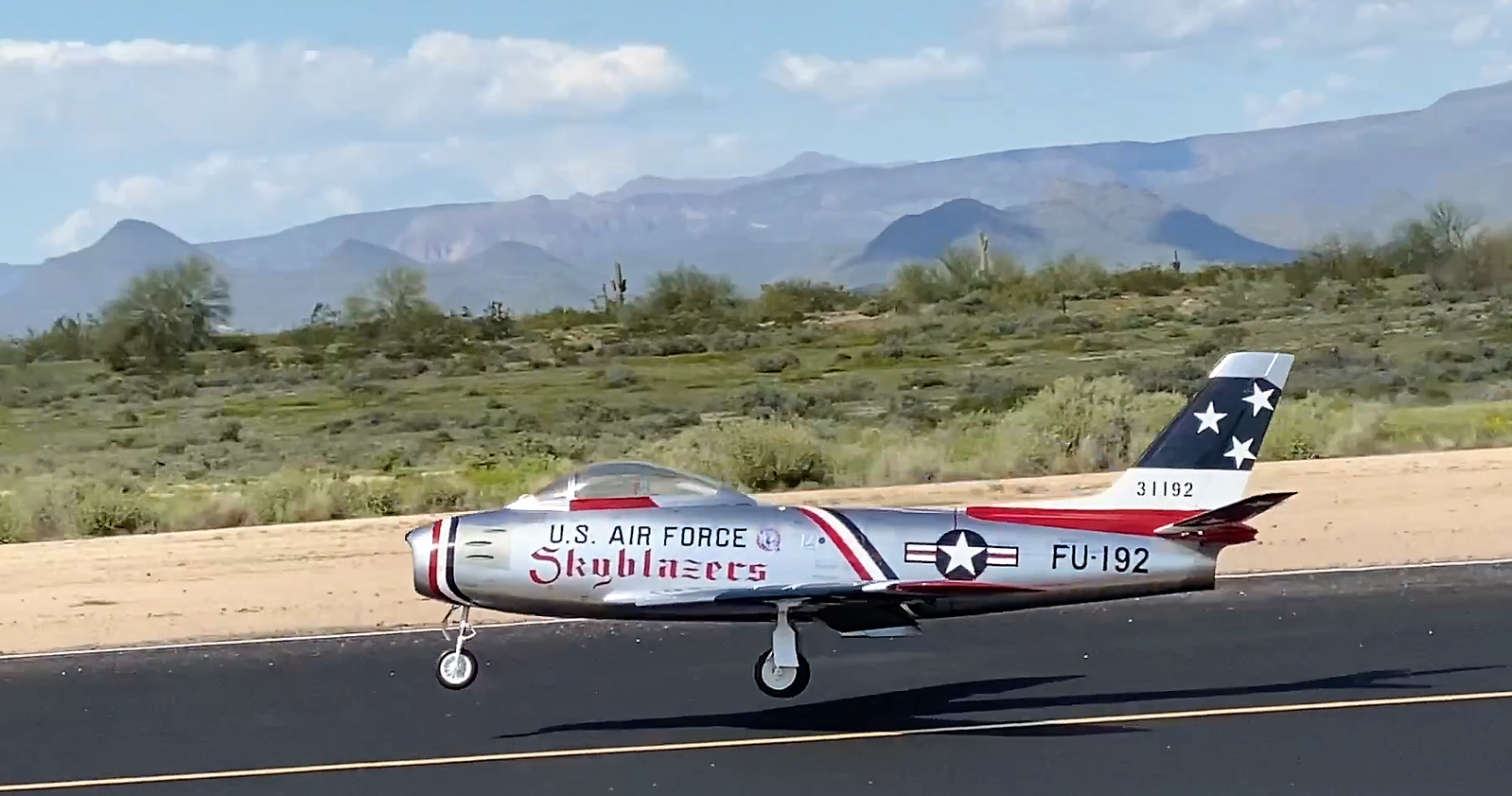 Video time now which this month includes footage shot by Peter F, Captain Slow, Dougal Entendre, and myself. Please watch the video full screen, it’s so much better with small models flying around:
If the video won’t play for you please click HERE
A man was sitting in a Heathrow bar when he noticed a beautiful woman. He thought “Wow, she’s gorgeous, must be a flight attendant. But which airline does she work for?”
Hoping to pick her up, he leant over and uttered the BA slogan: “To Fly. To Serve?”
She gave him a confused look and he immediately thought “No, she doesn’t work for BA”.
He remembered another slogan and leaned towards her “Something special in the air?”
He got the same confused look. Another no, so he crossed American Airlines off the list.
Next he tried the Virgin Atlantic slogan “Everyone can take on the world?”
This time the woman turned to him and snapped “What the **** do you want?”
The man smiled knowingly, slumped back in his chair, and said… “Ah yes, Ryanair”.
Colin Cowplain
Patch News – February 2023
With spring fast approaching we seem to be rushing through 2023 and are looking forward to lots of long sunny windless days…possibly. The February weather was generally quite kind to us and there were some good turnouts at the field with members bringing a few new models along. The FARTS had to mow the patch once in February and it will need mowing again in early March, a sure sign that the weather is gradually warming up. Another sign is that the farmer has brought some of the livestock back out to the fields and on Friday 24th February three of us arrived to find lots of sheep in ‘our’ field.
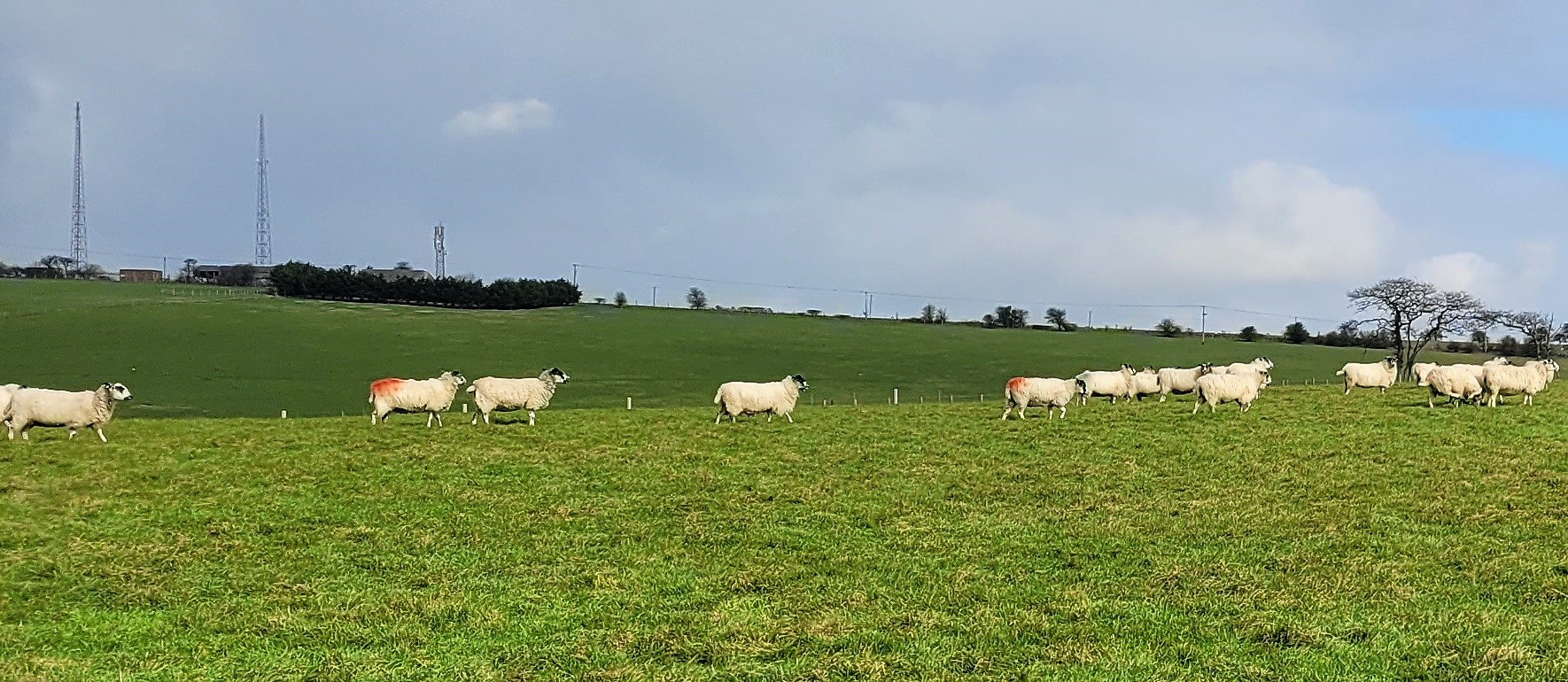 Sheep aren’t too much of a problem to us (other than the ‘gifts’ they leave) but last years’ bullocks are back in the lower field and there are some younger bullocks in the third field.
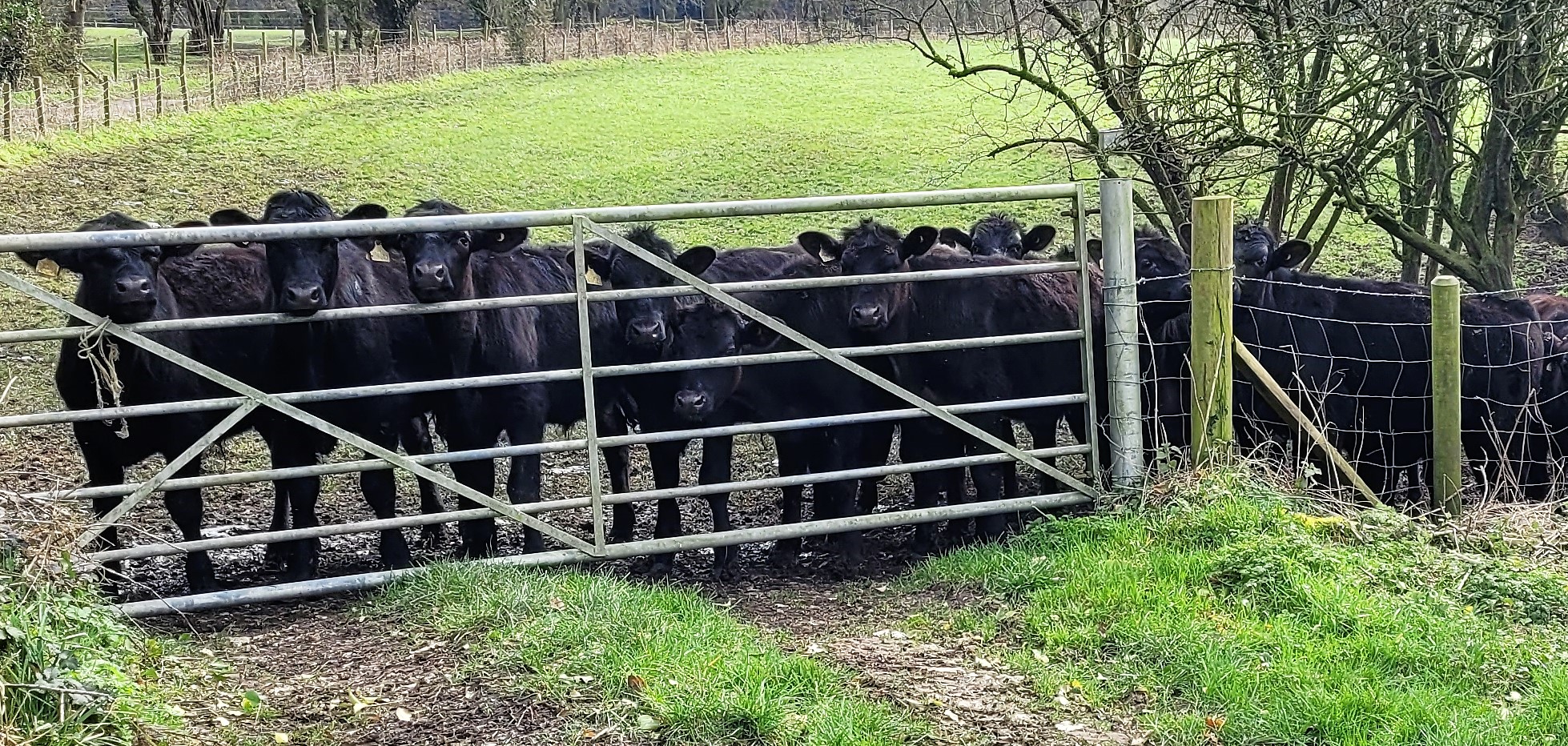 The very young ones can be a right pain as they tend to be annoyingly inquisitive at first and can get a bit aggressive as they get older and bigger, but we can cope with them ok.
When the pandemic hit the monthly club meetings had to be suspended and the flying sessions stopped during the lockdowns and strictly limited in between them. We could have held committee meetings over Zoom or similar but with no meetings and little flying there wasn’t really much to discuss so if anything urgent came up we just communicated via emails, WhatsApp, or phone. But on 1st February we had a committee meeting, the first one for about three years. We held it using Zoom and all seven committee members were present online. All went smoothly and the main business was to arrange a club meeting as at the AGM back in December it was agreed to hold quarterly social meetings.
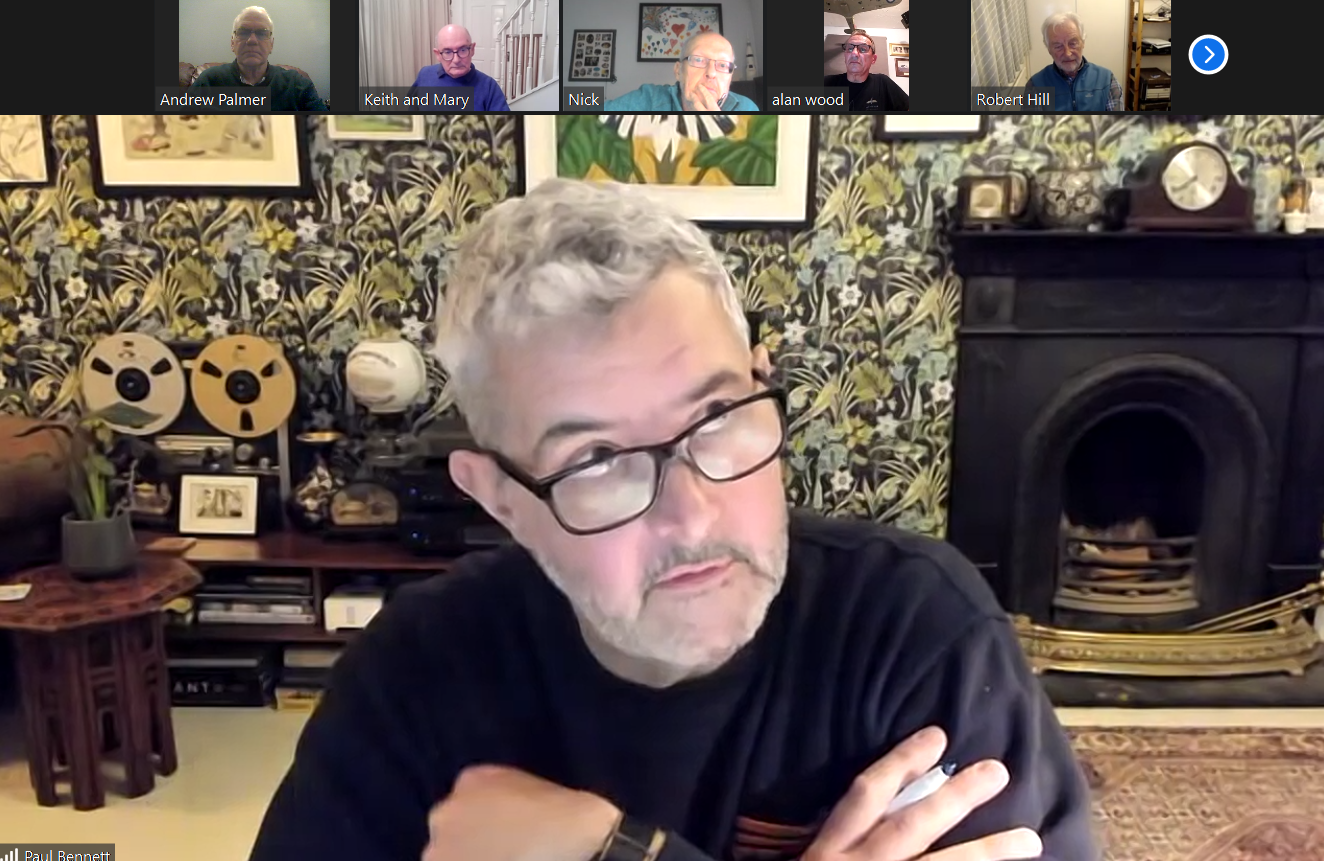 So if you’re reading this on the publication day of 1st March don’t forget that this evening the first club meeting of the year will be held at the Seven Stars at Stroud from 7pm onwards. It’s really just a social get together but I’m sure our new Chairman Gordon Bennett will have lots of interesting things to talk about. Of course if you’re reading this after 1st March and weren’t there then you’ve missed it and it was a brilliant evening!
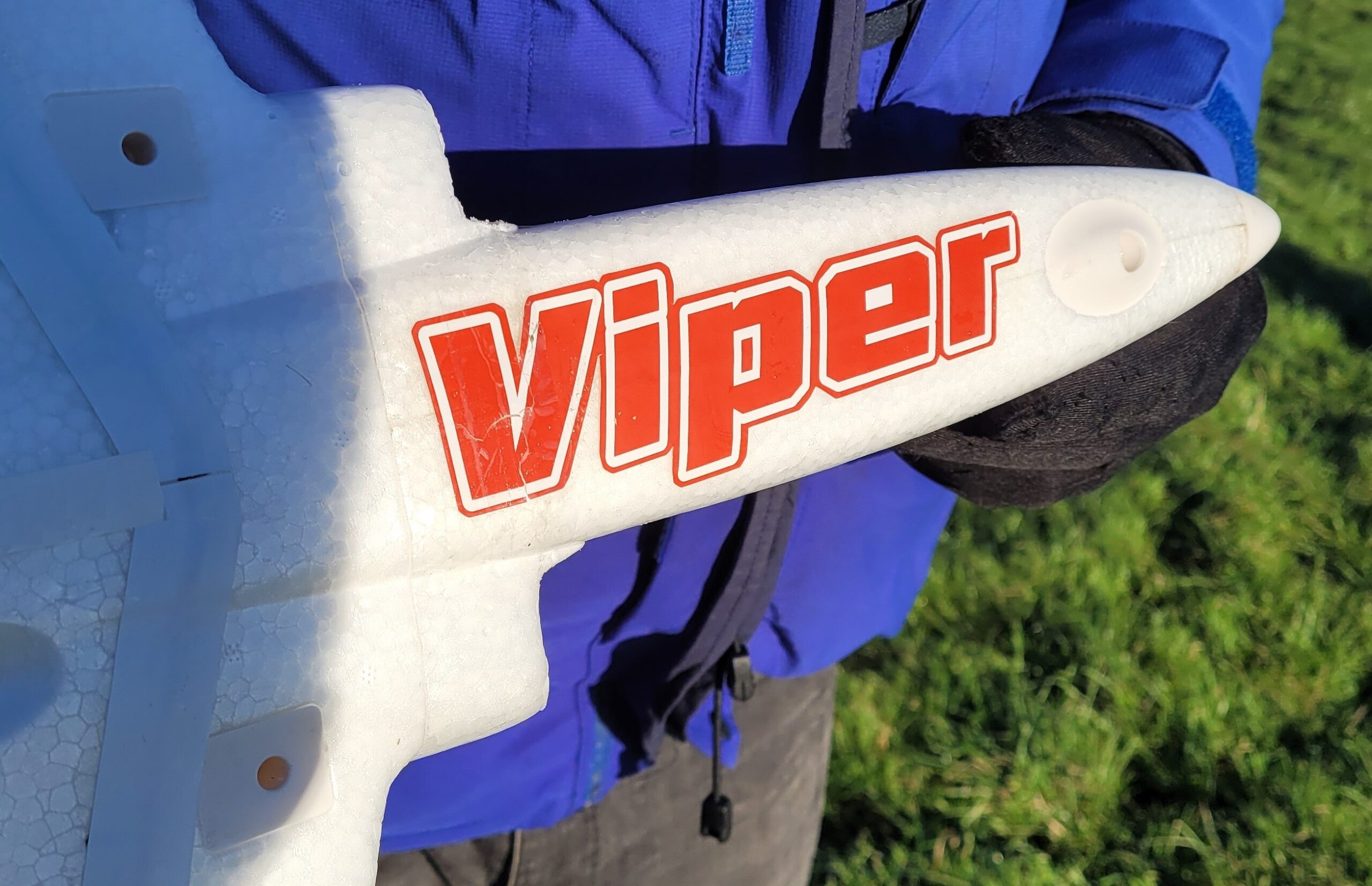
Straight on with the new models now starting with one that I forgot to include in the last Patch News, Gordon Bennett’s Arrows Hobby Viper. I included the Viper flying in the January video but forgot the photos and write-up and I don’t want Gordon sulking!
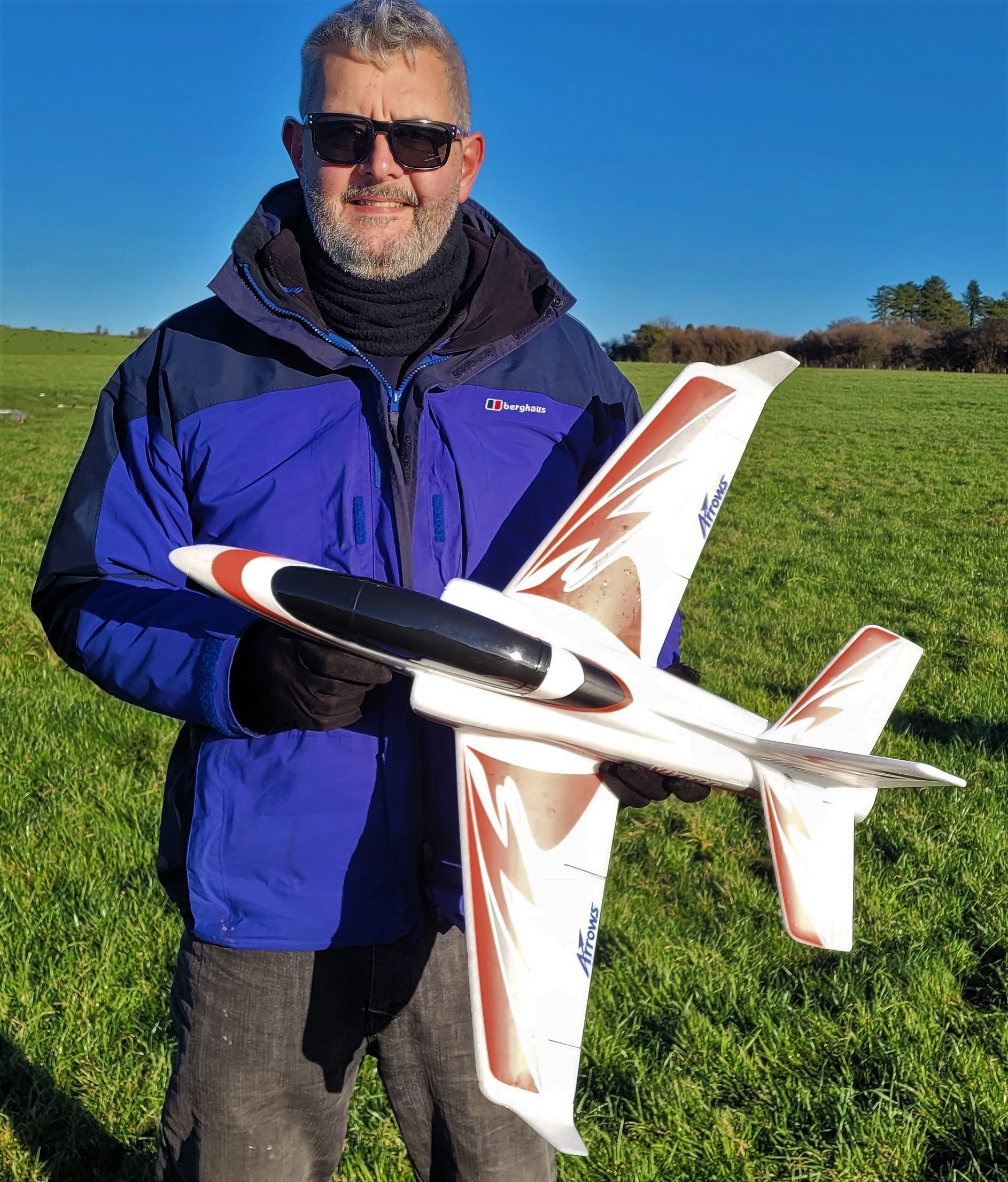 It’s a bog standard ARTF Viper and this is what the Inwood Models website says about it: Sleek, powerful and perfectly formed the Arrows Hobby Viper will be something of an eye-opener to anyone who still thinks EDF jets have some catching up to do. Experience the Viper in action and you’ll quickly realise that nothing could be further from the truth. Packing a jet-like 50mm 11-blade fan that’s spun up by a precision 2627 4500KV brushless motor, this 3S-fuelled pocket rocket will find favour in the hands of all who seek smooth, flowing aerobatics, a cloud punching performance and exceptional speed. But that’s not the half of it, the Viper is also a beautifully practical jet that exhibits exceptional low speed handling, is small enough to transport in one piece, retract free (hassle free) and enticingly budget-friendly. All this grace and performance from a 3S LiPo will almost certainly have you reassessing your EDF spend. So good is the Arrows Viper we’re convinced it’ll become a frequent flyer in your air fleet and, as we all know, that equates to superb value for money. Gordon chose the model after seeing how well 1066’s Viper flies and I think it’s safe to say that he’s very pleased with his decision. I see that Inwood says the flight time is 10+ minutes on 2200mAh LiPo. I know that Gordon gets longer flights than throttle bender 1066 but I don’t think he gets near to 10 minutes.
 He’s had a couple of dodgy launches and has now decided to abandon self-launching until he’s practised on other models and perfected his technique. But 1066 self-launches his Viper with no problems, a gentle lob and away it goes every time, sickening eh Gordon?!
Both Woody and Bob the Builder recently bought SU-27s from the XDRC store on Ali Express and both models have now flown. At the time of writing they are shown as £21.36 with free shipping but VAT will be added at the payment stage bringing the cost to £25.63. That seems like a bargain to me so be quick if you want one, the site shows that there are only a few left in various colour schemes. Postage is from China but says 15 day delivery so it shouldn’t be too long a wait. I note that the slightly Chinglish advert states that it’s made of “Anti-broken PP Material”! I’m not sure what that is but it seems like pretty good stuff.
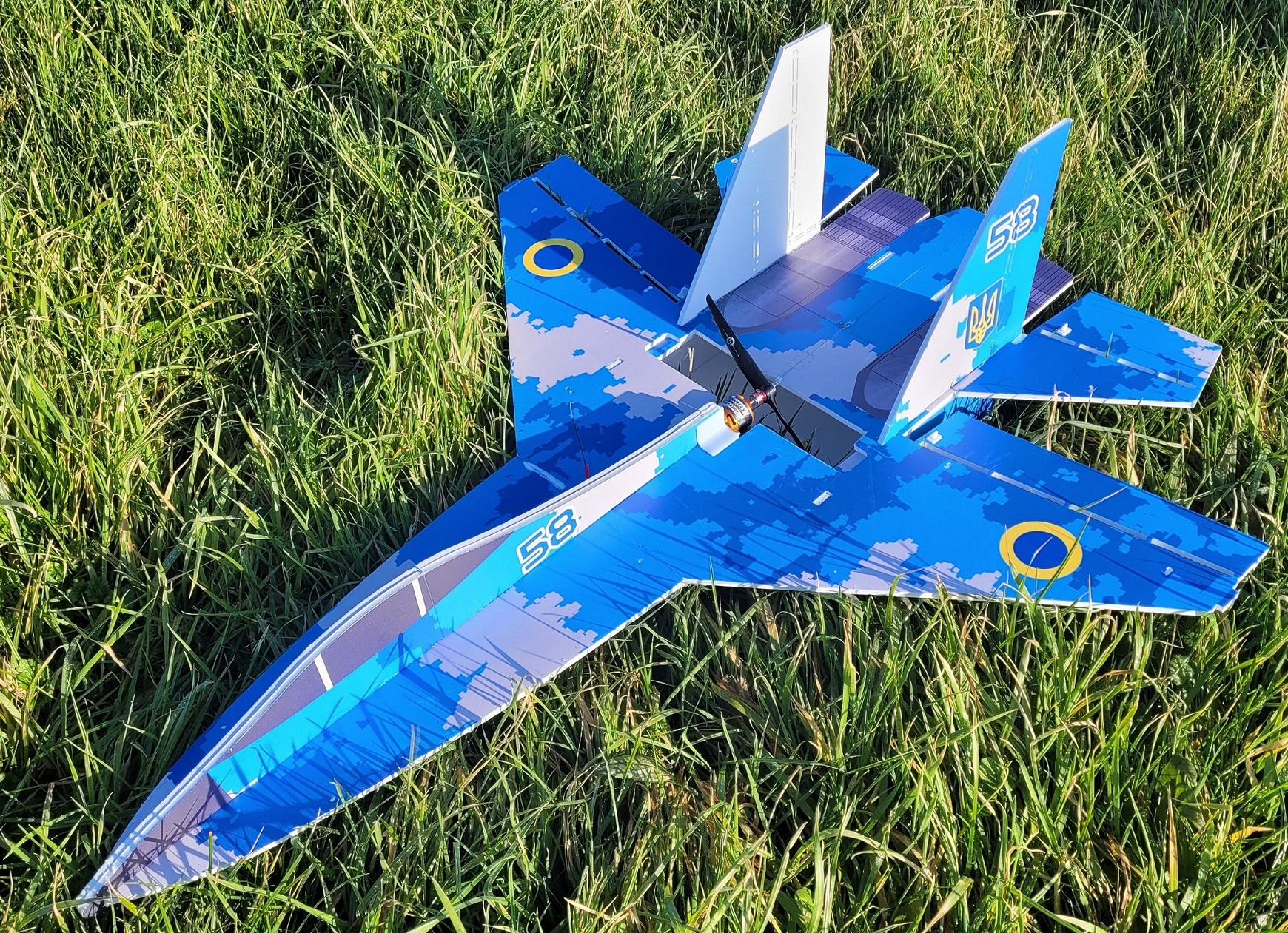
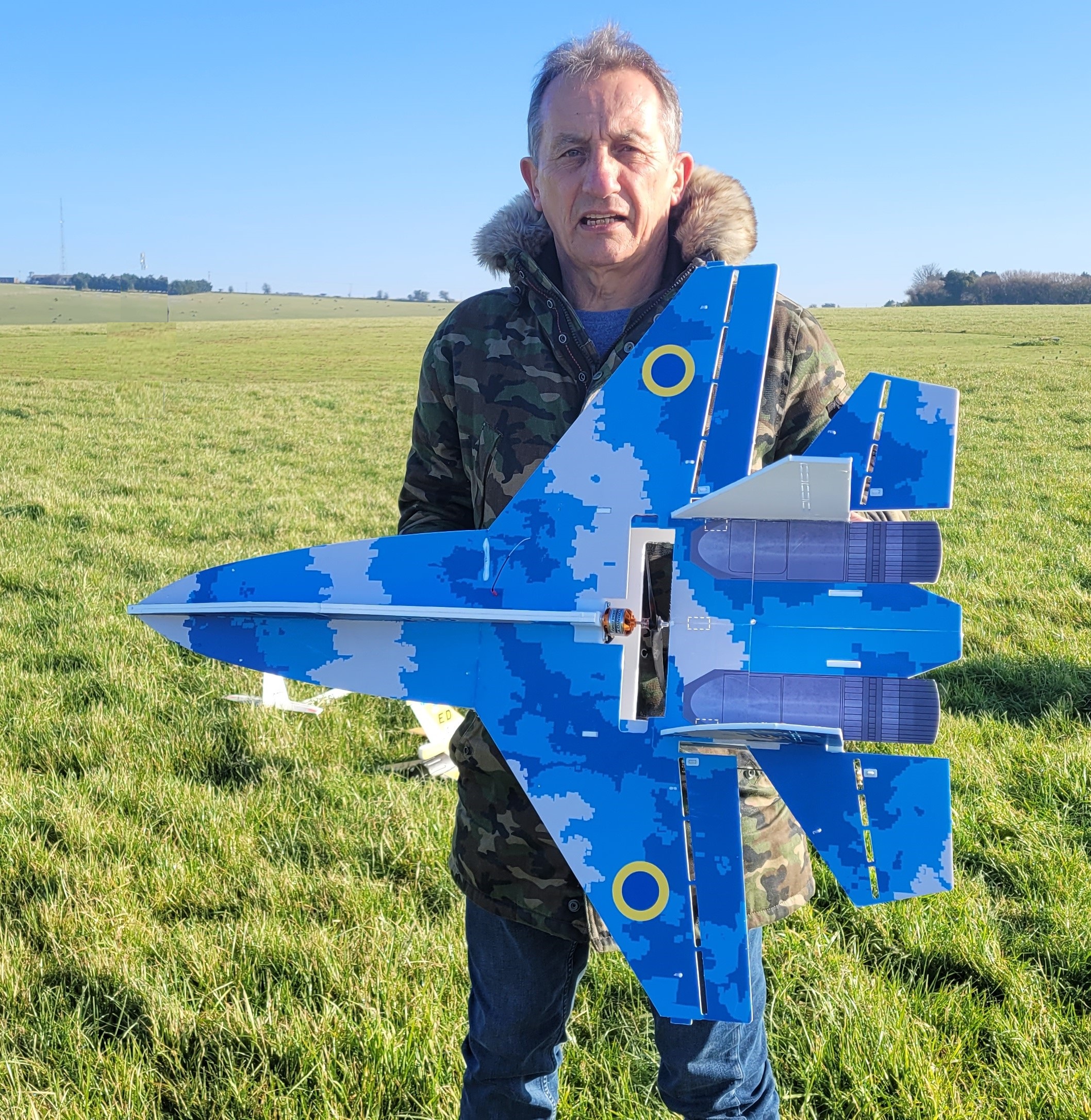 Woody plumped for the Ukrainian version and the finished model looks very attractive especially as Woody has (obviously, this is Woody we’re talking about!) added some lights.
 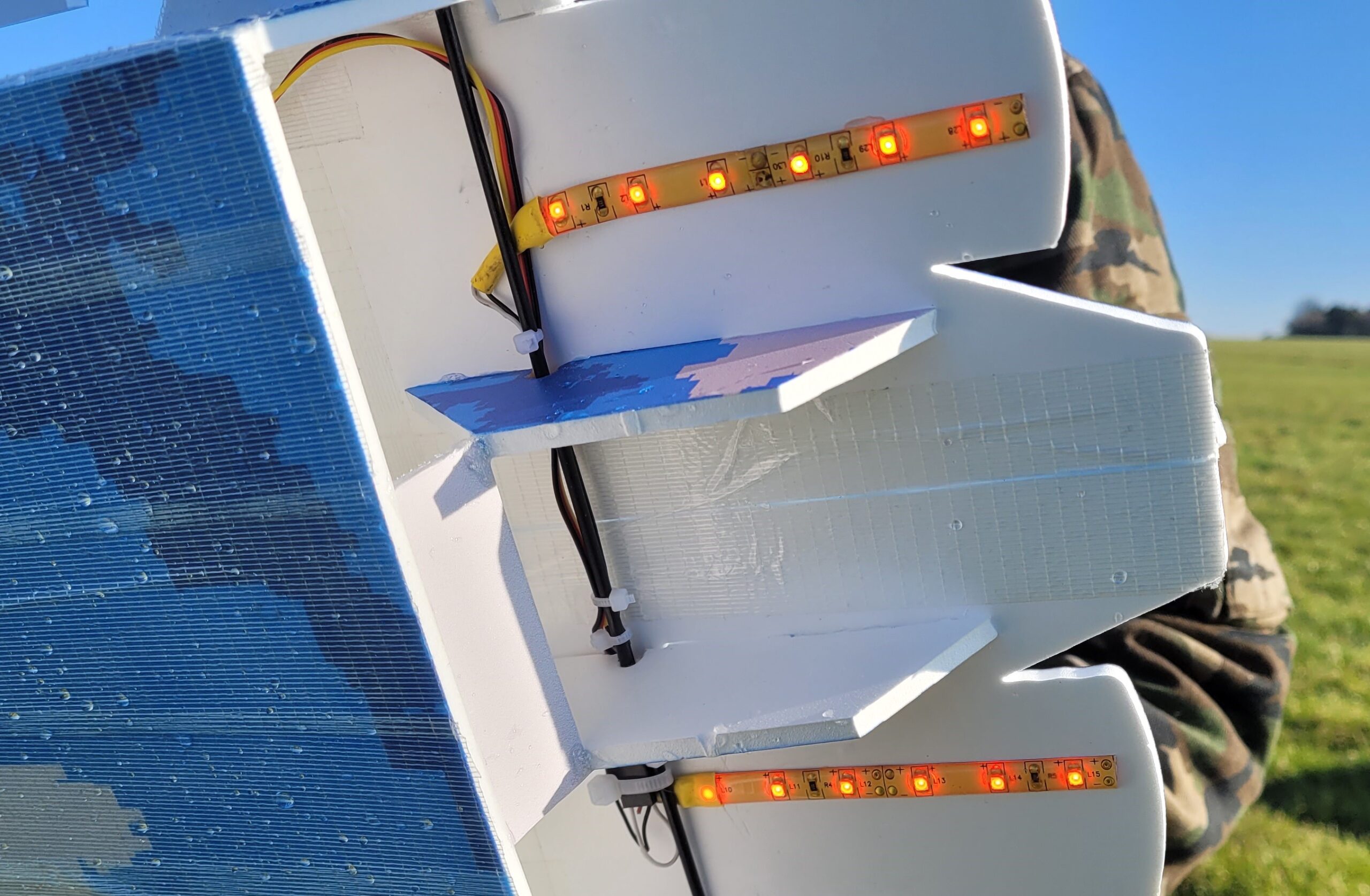 He has fitted a Turnigy Aerodrive 2866/6 2200kV motor and uses a 2200mAh 3 cell lipo for the power. The Sukhoi is the same as the HobbyKing version in that it comes with both ailerons and elevators that can be linked and each side moved by a single servo effectively making them both elevons. The hinges are simply parts of the foam and initially Woody had problems with the linkages being very stiff but once he’d sorted that out they worked well enough. Having had some trimming and centre of gravity problems with Woody’s Chengdu J-10 from the same manufacturer I was a little wary about the Sukhoi but it flew perfectly with just some minor trim adjustments needed. It has a larger wing area than the J-10 and it shows in how it flies. I’ve always said the SU-27 was the best of the HobbyKing foamboards and this appears to be the case with the Ali Express ones as well.
 The lights that Woody has added actually show up well, especially the ‘afterburner’ strips under the back end and hopefully you’ll be able to see them in the video.
Bob the Builder’s Sukhoi is in the red and blue Russian colour scheme but is otherwise the same as Woody’s. According to the website there are none left in stock so you’ll have to choose either the green camouflage Russian scheme or the Ukrainian one like Woody’s.
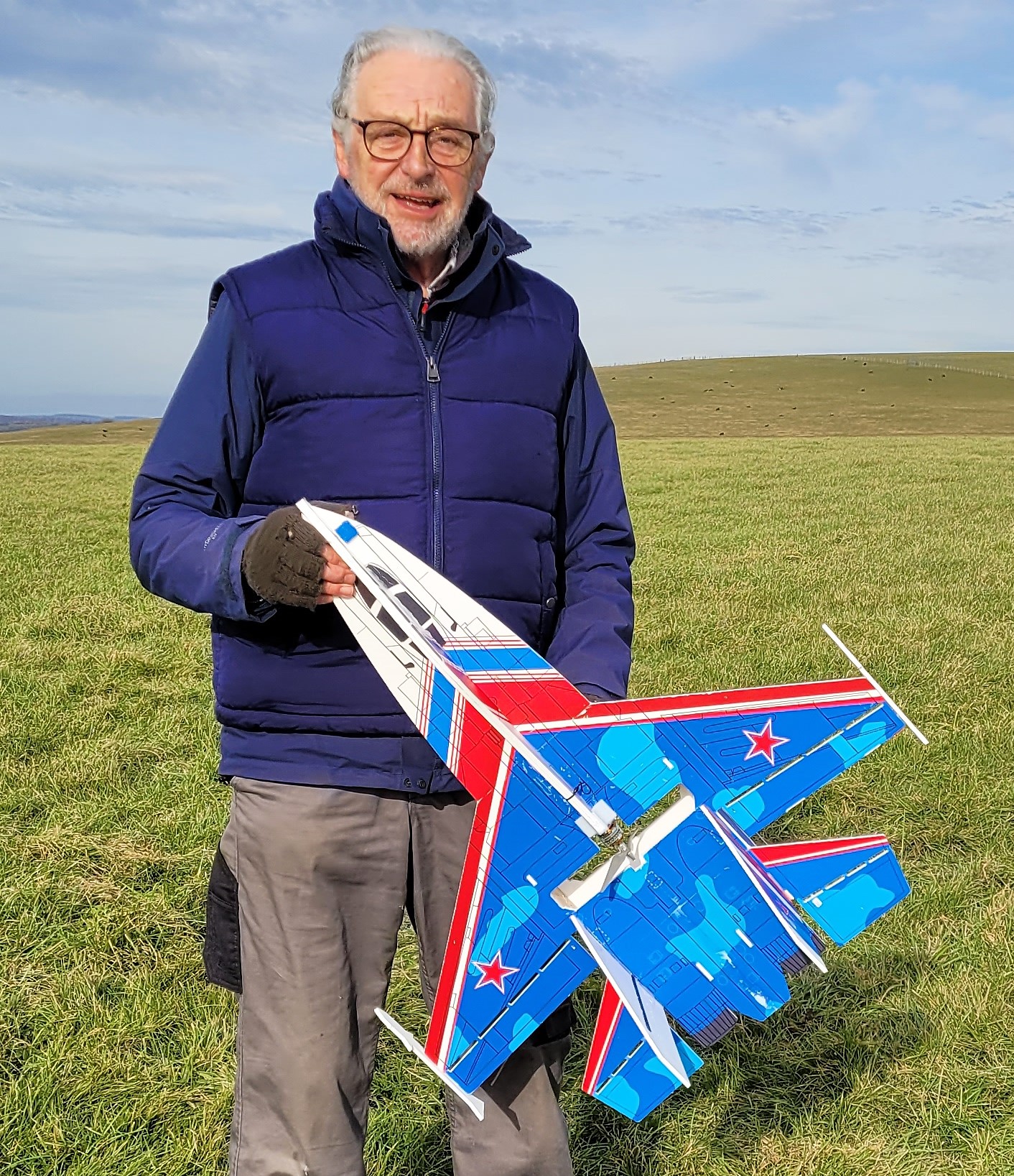
 Bob chose not to link the ailerons of his and is purely using the elevators as elevons which is the same as the HobbyKing Mig 29s. It works perfectly well and appears to fly the same as Woody’s but presumably there is slightly less control for the really violent manoeuvres.
 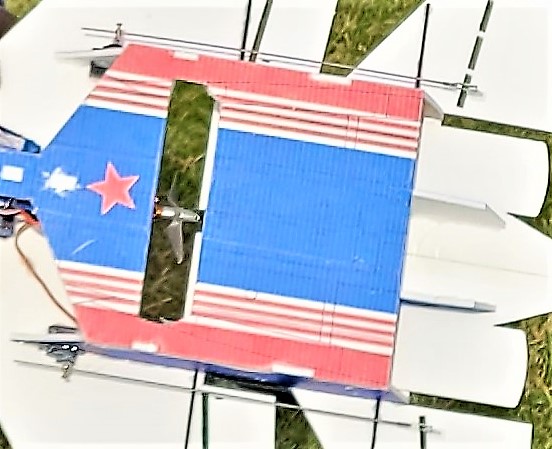 Bob is using the same motor and battery set-up as Woody so the performance is pretty much identical. Both Woody’s and Bob’s SU-27s feature in this month’s video.
Young Charlie bought a couple of models that had belonged to the late Ian Daniels, both of which were in need of some repair. So far he has completed the necessary repairs to one of them, an ST Model Blaze, a high performance electric glider. The Blaze is distributed by Ripmax, here’s what they say about it: This is a model that is all about performance. From the vertical climb as high as you can see to the super fast dives off power and the full aerobatic schedule she can perform, the Blaze is guaranteed to put a smile on your face!! The 1130kv outrunner, brushless motor is pre-installed as is the the 30A ESC (with brake if programmed) and Deans connector. A tough, engineering plastic, 10 x 6 folding propeller on the front combined with these is more than enough for that straight up climb. All you need to provide is an 1800-2500mAh 20C battery and your own receiver and you are ready to go flying. When you go flying, the Blaze will blow your mind! Even at relatively slow speeds, she is pretty efficient and pure gliding performance is very impressive. Like all hotliner type gliders, she will stall, but it is predictable. Loops can be tight or wide, rolls can be fast or slow, it’s entirely up to you.
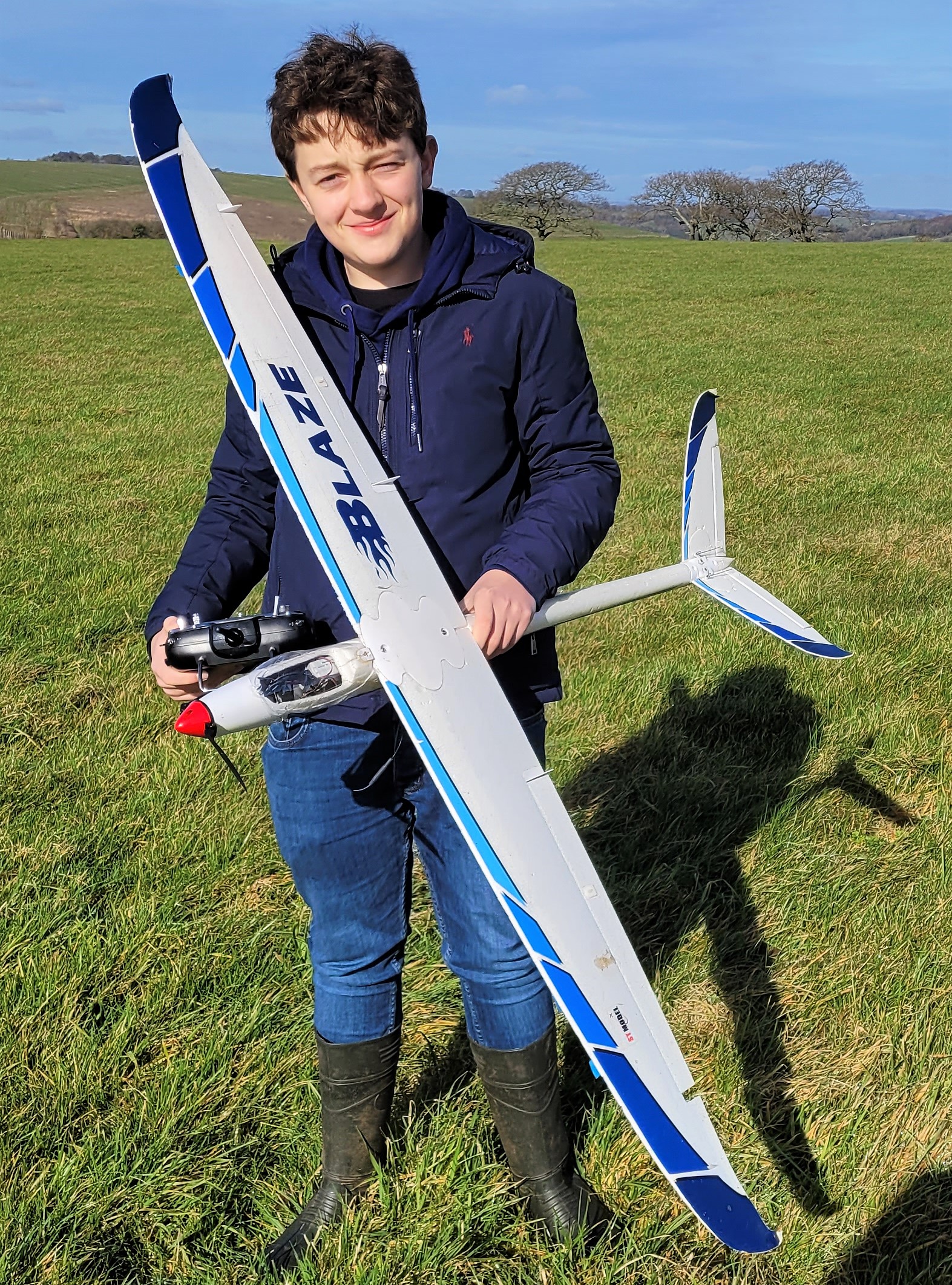 Several PAM members have owned (some still do) a Blaze and they are very well rated models with an excellent performance. The nose was snapped off on the one Charlie bought and it was a little rough around the edges but basically sound. Charlie (no doubt with the help of Nadine and Craig) repaired the nose, ensuring everything was nice and straight, fitted a new Hitec receiver, and did a bit of general tidying up. The test flight went perfectly with little trimming needed and the Blaze flew like a Blaze should. The only niggle at the moment is that the brake isn’t set on the speed controller so the prop windmills with the throttle shut but that’s a minor irritation that no doubt Charlie will sort out when he reads the instructions! I was a little concerned the Blaze might be too hot for Charlie but he’s been flying it with no problems so it’s been an ideal purchase for him.
Bob the Builder sent me a link to a YouTube video that he’d spotted. It shows an EDF model that was shredded when it hit a fence (not something any of us can relate to obviously…!) but was rebuilt even though it appeared to be a write-off. Well worth a watch.Bob said, and I quote “I know I’m good but I’m not that good.” You’ve had lots of practice!
The second new model that Charlie flew in February was one that he bought at the Popham model show back in August. It’s a second-hand HobbyKing Lancaster that he’d spotted for sale on one of the stalls and he haggled the price down to £80.
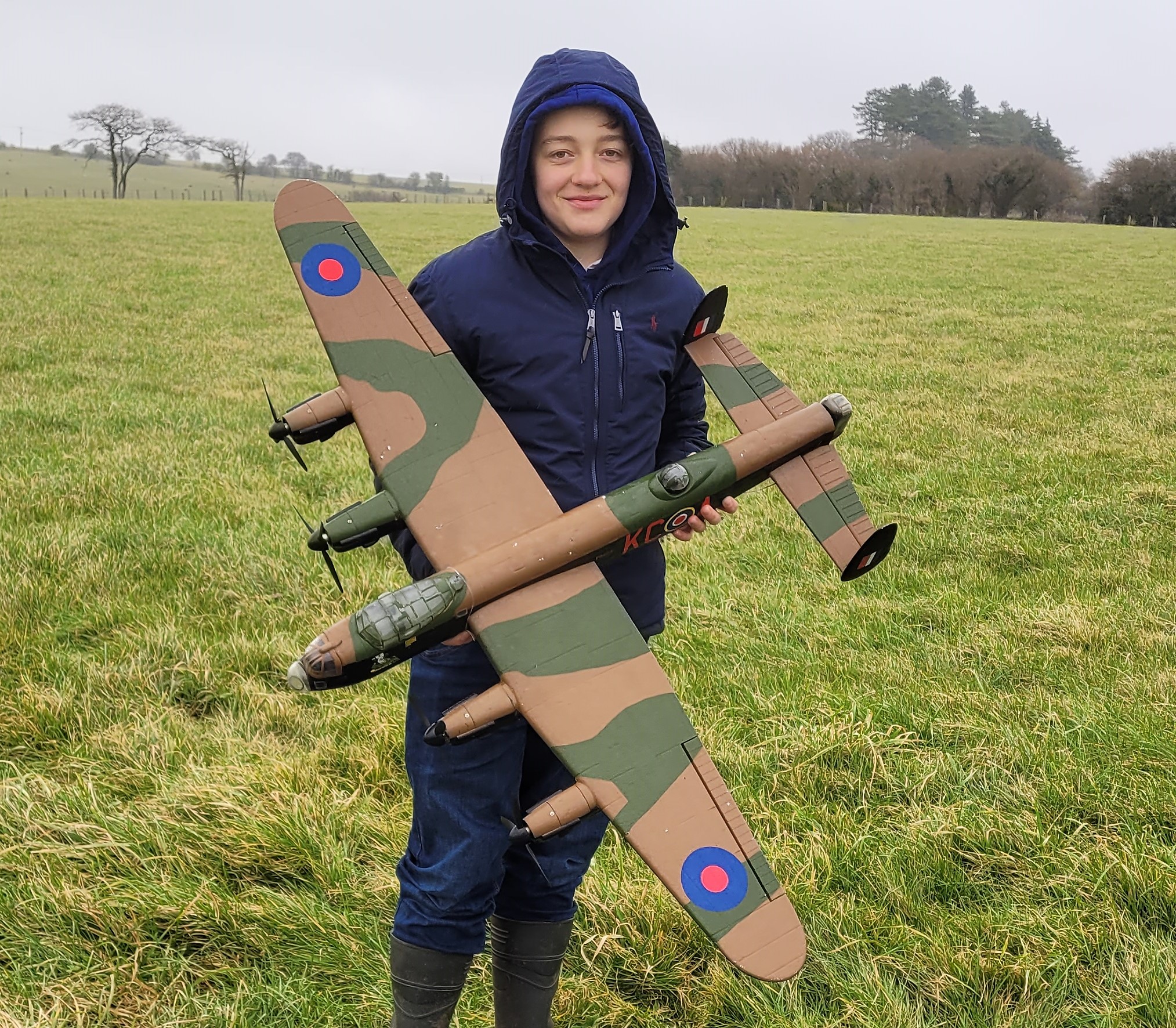 It’s the V2 version of the Lancaster that HobbyKing have produced, the V1 had servo operated bomb bay doors and a few other details that have been dropped on the V2 version making it 200g lighter than the V1, definitely a good thing. They have since produced a V3 version that has no retracts and is lighter again. The battery is fitted in the bomb bay and on Charlie’s V2 the bomb doors are held closed by magnets. The battery will fit either in the nose or in the next bay back below the wing which is where the instructions say it should go and is where Charlie had fitted it when he first brought it to the field.
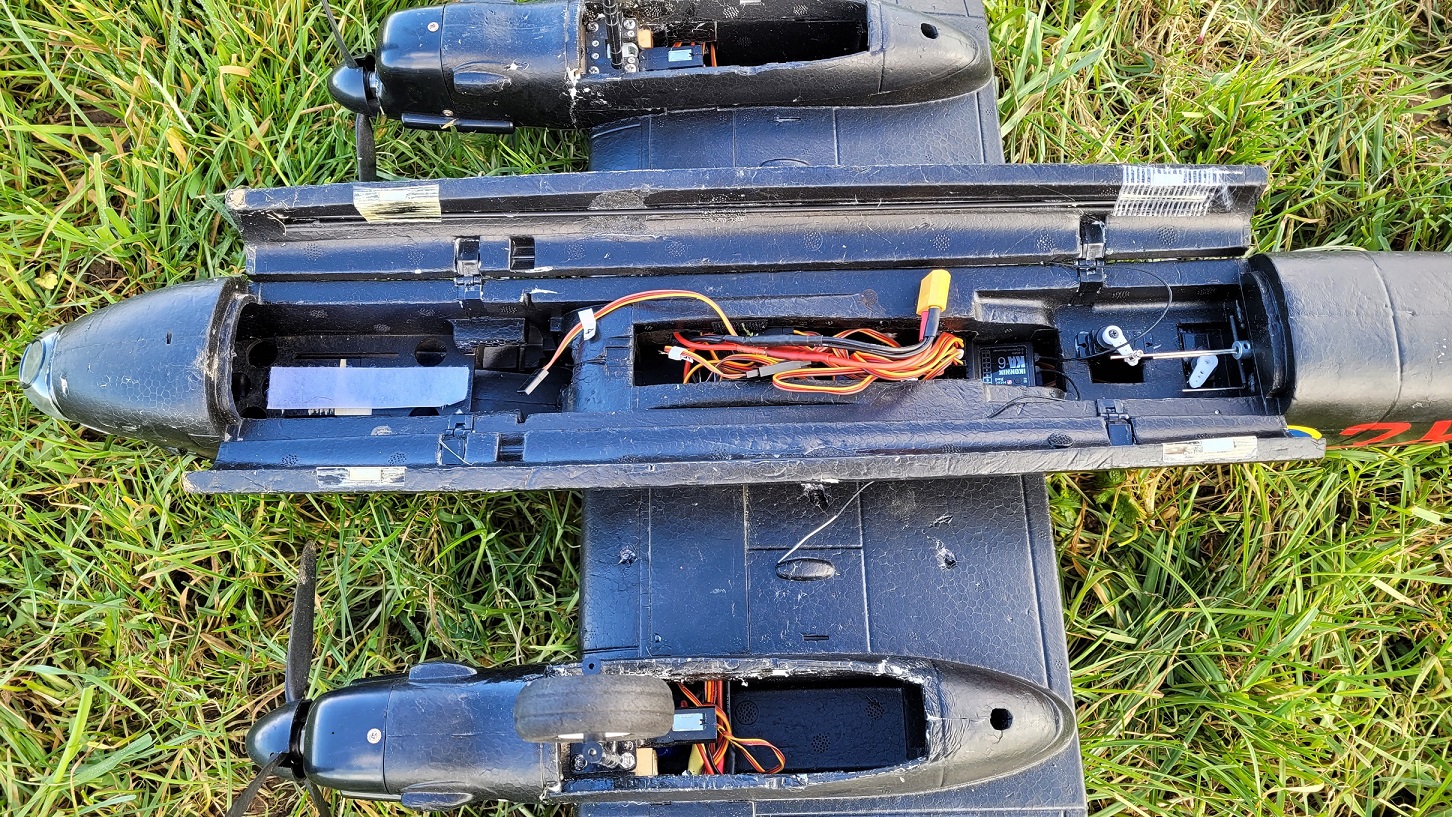 But when I checked the CG it was was obviously much too far back so Charlie took it home to reconfigure it and make a couple of other minor changes that I suggested.
There were plenty of willing volunteers eager to help Charlie get the Lancaster flight ready!
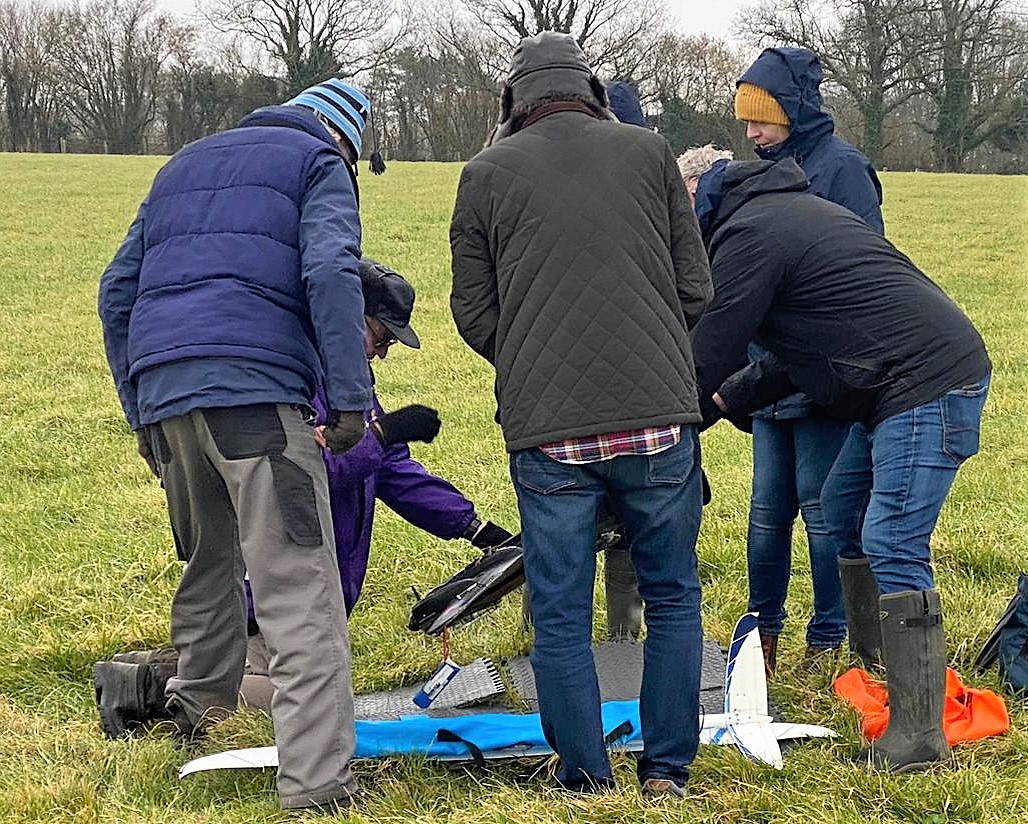 HobbyKing say to use an 1800-2200mAh battery and Charlie is using a 3300mAh which would obviously make the CG further back than intended but having read some comments on various forums people are saying to put the battery in the nose as the model is very unstable in pitch with it further back. Charlie’s Lanc also came with a gyro fitted which makes me think perhaps the original owner had stability problems with it. Once Charlie had moved the battery forward the Lanc seemed a little nose heavy if anything but that was definitely the safest way to be. When I tried to take off the grass was a bit long and the Lanc simply tipped on its’ nose even with full up elevator so I asked Leo to give it push.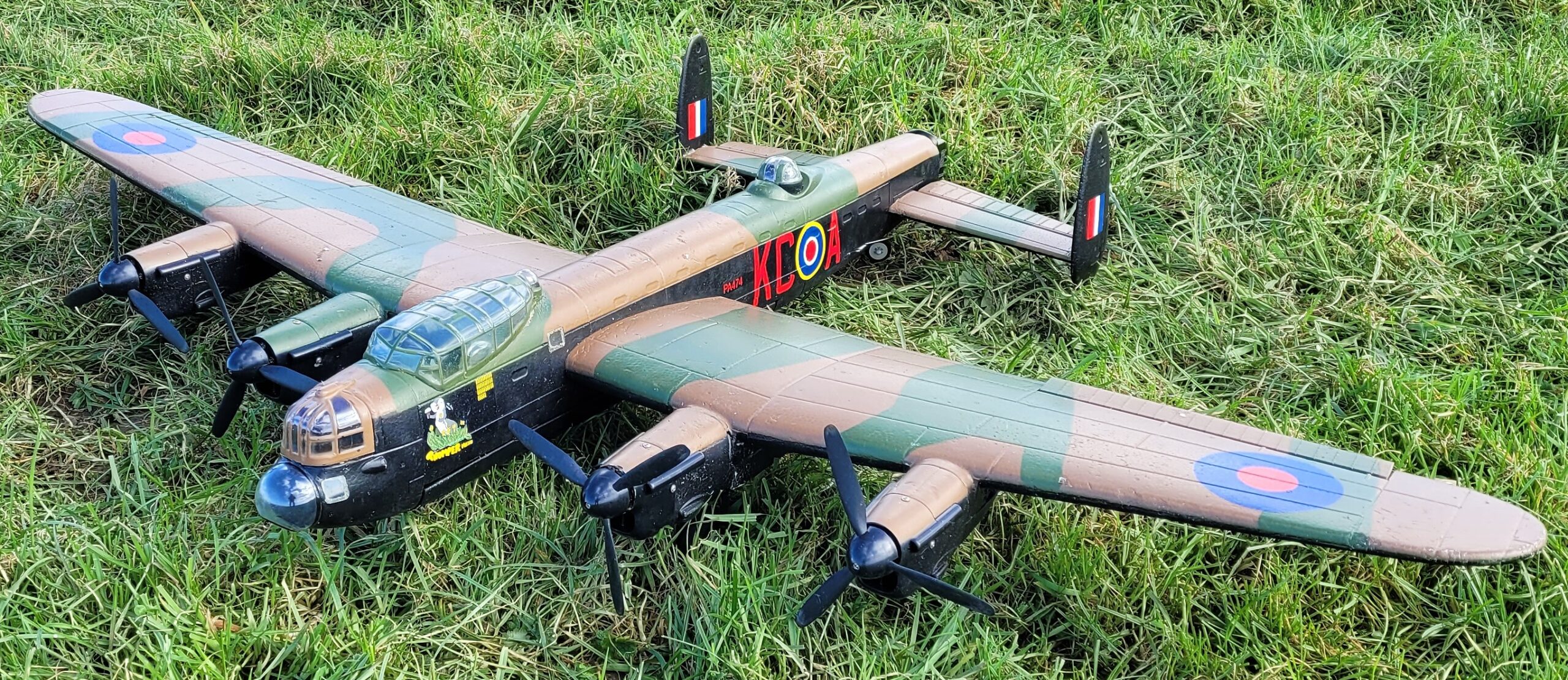
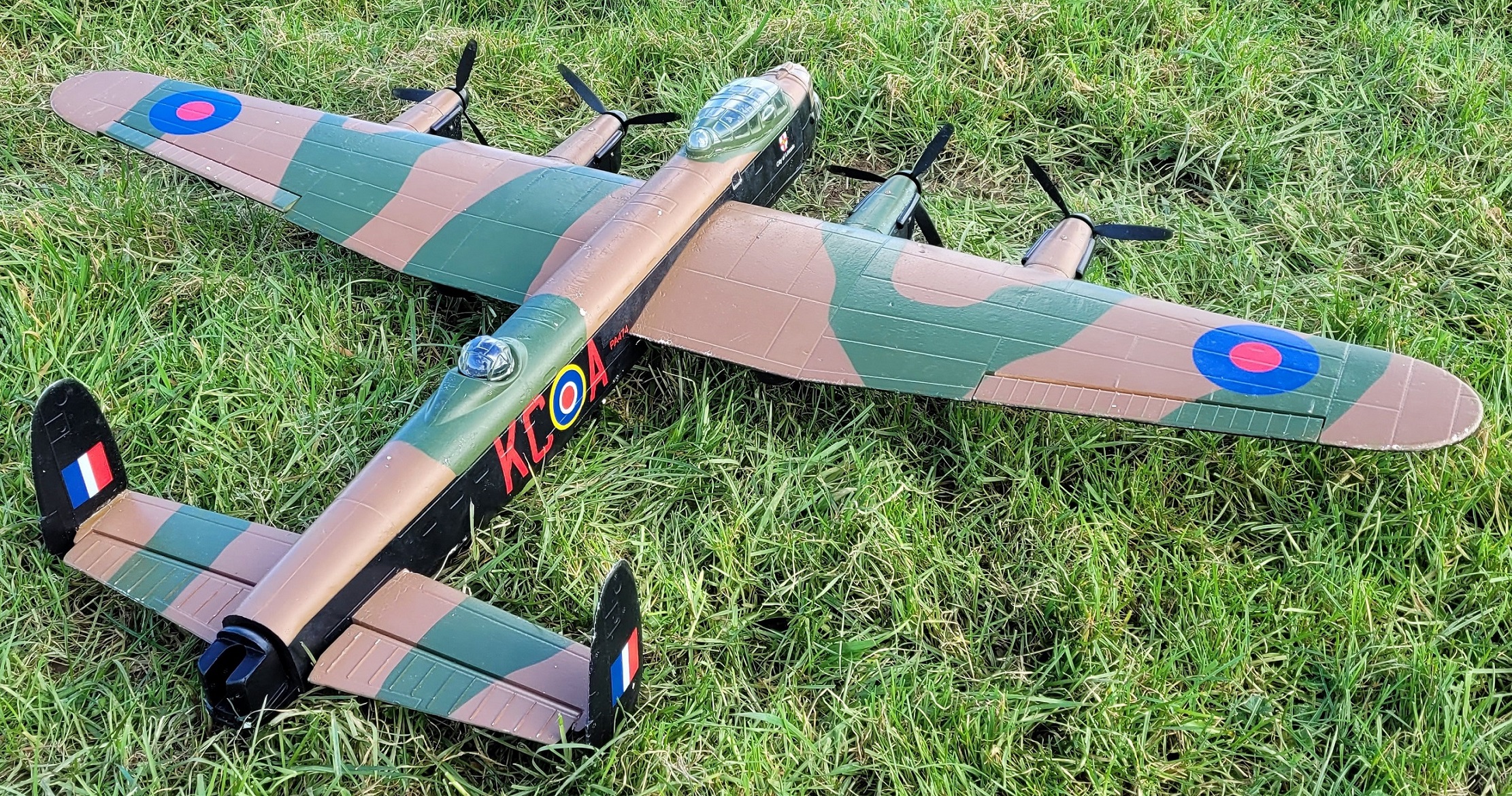 That did the trick and the Lanc took to the air with no problems at all. I did a few circuits before handing the transmitter over to Charlie who flew it well before handing it back to me for the landing. It came in fine but maybe a little fast and when it touched one of the retracts pulled out. I’m not sure but maybe I ran out of elevator so for the next flight we’ll increase the elevator movement a little and maybe move the battery slightly further back. But overall the flight was a success and with a bit of tweaking I think it should only get better from now on. You can see some of the flight in this month’s video.
Young Leo always seems to have lots of new (to him) models and the last Sunday in February was no exception when he arrived with a Hyperion Edge 540T 25e that had previously belonged to Dougal Entendre but he’d passed it over to Leo in need of repairs.
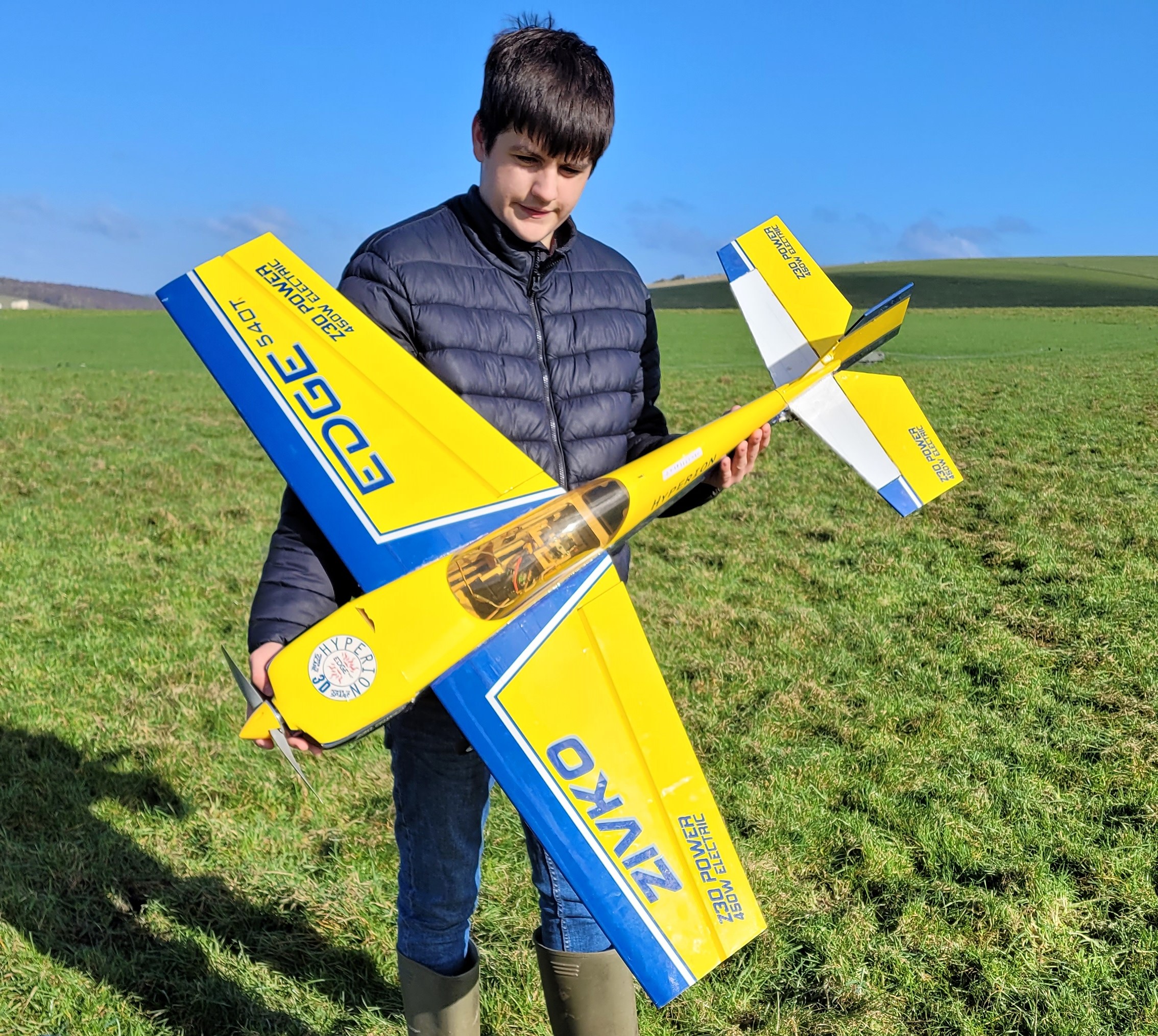 The Edge had been a second-hand buy for Dougal and it seemed like a good purchase at the time as it came with a receiver and three batteries. Unfortunately he had trouble with the receiver and one of the batteries was duff although the other two seemed fine. This is what Dougal said at the time: I don’t expect it to be particularly 3D-capable. Its empty weight is about the same as my Slick, but the Slick has a 4s pack and a span of about 51″, where the edge uses 3s, and is about 45″ span. Also the tail is fairly thin, and probably not up to the kind of loads we put on it with 3D manoeuvres (I’ve read on the forums that the tail strength has been a problem for some flyers). And the following month, after Dougal had flown the model: My misgivings about the strength of the tail proved correct when, while going straight and level, there was an audible crack and the plane twitched in pitch. Fortunately I got it down safely, but the left hand half of the tail had cracked at the joint with the fuselage, and was only held on by the covering! The Edge is now hanging from the garage roof while I ponder how to make a replacement tail.
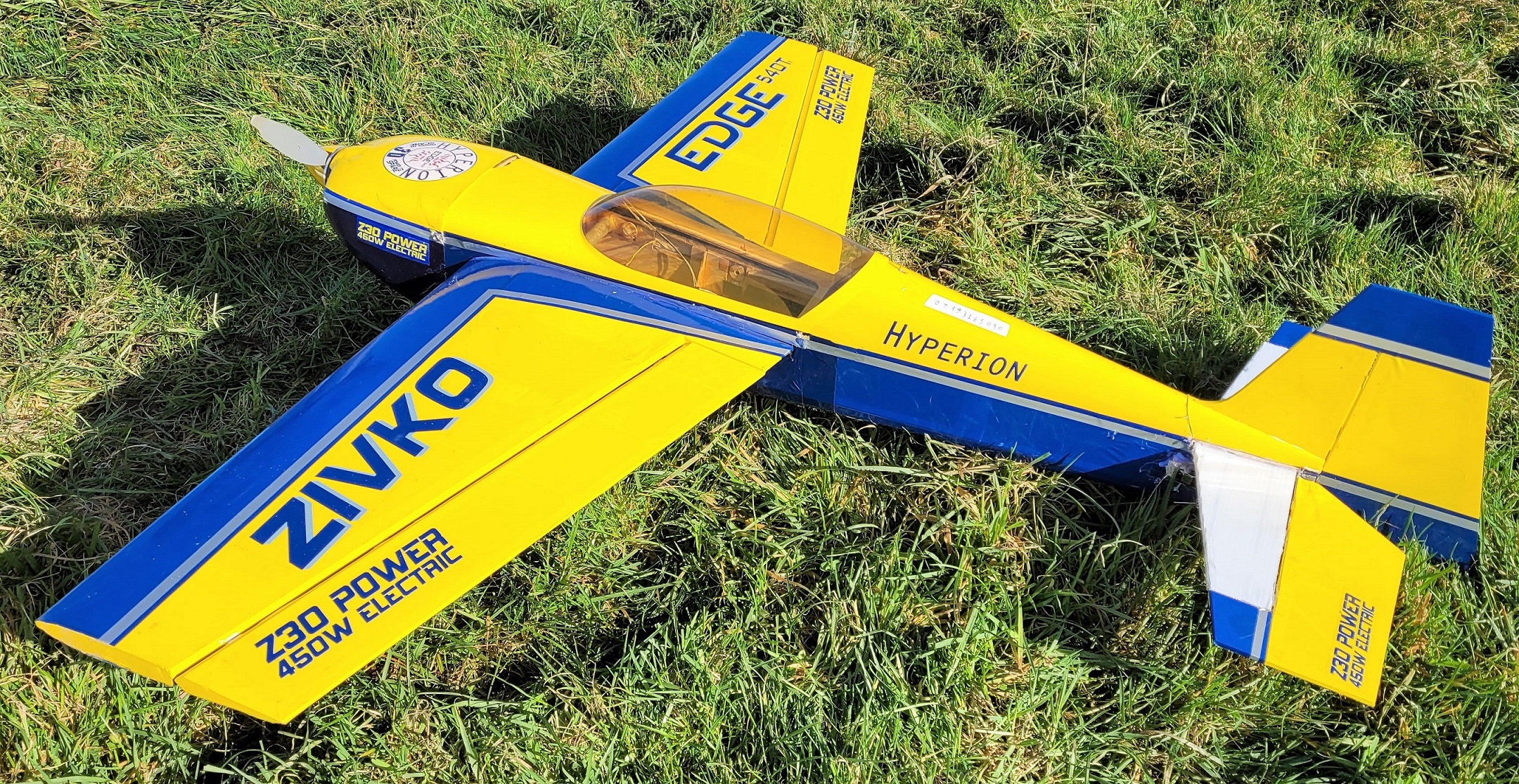 Well Leo has now sorted out the tail and made a few other changes so, as Dougal was absent, he asked 1066 to test fly it for him. 1066 had no problems at all and the Edge didn’t need any trim changes so he quickly handed the transmitter over to Leo who seemed to enjoy it. On about the third flight Leo made a rather sudden landing off the patch and when we asked what the matter was he showed us that the elevator had pulled away from the hinges and was hanging off! Fortunately he’d spotted one side of the elevator was loose while flying, hence the emergency landing. Other than that the Edge seemed fine and once the elevator is sorted it should keep Leo happy for lots of flights.
Kryten didn’t make it to the field to take any flying shots in February but he assures me he’ll be back soon. In the meantime here are a few screenshots, some old, some new: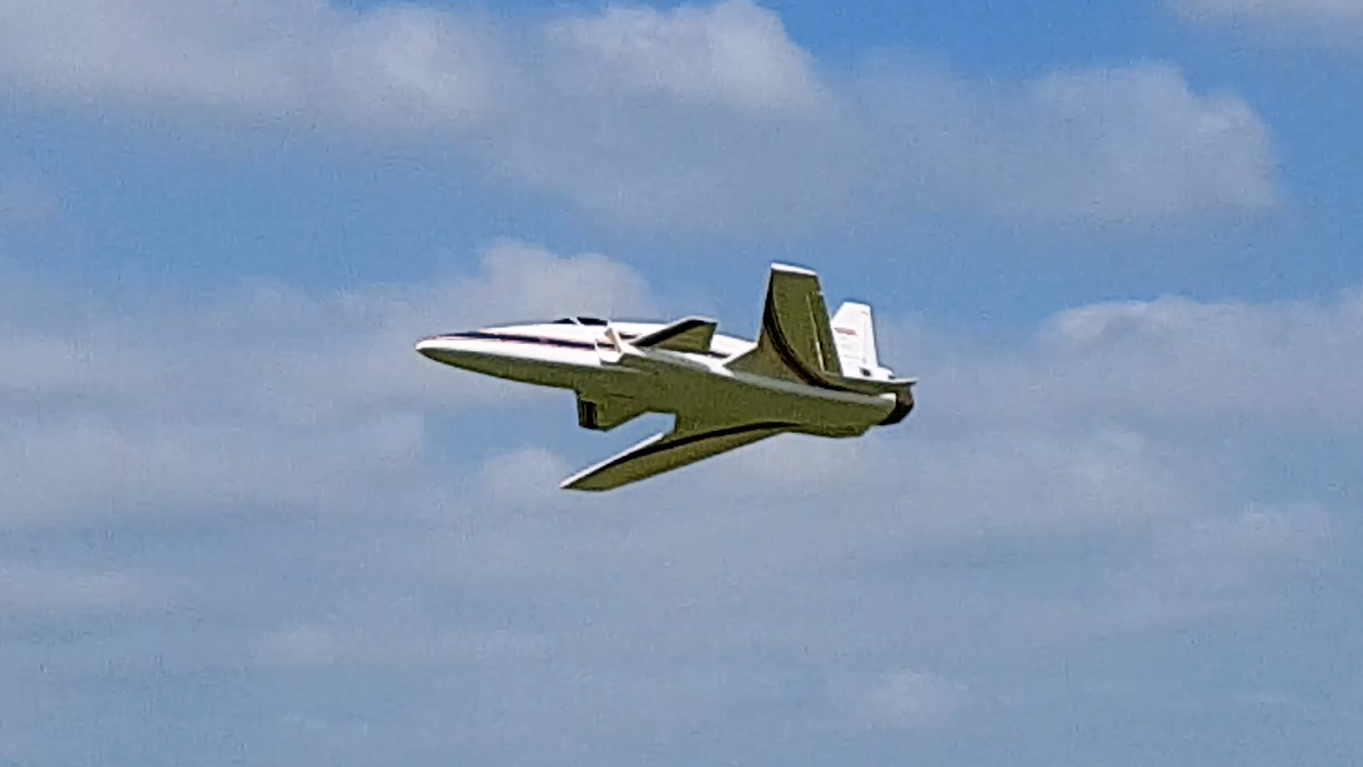
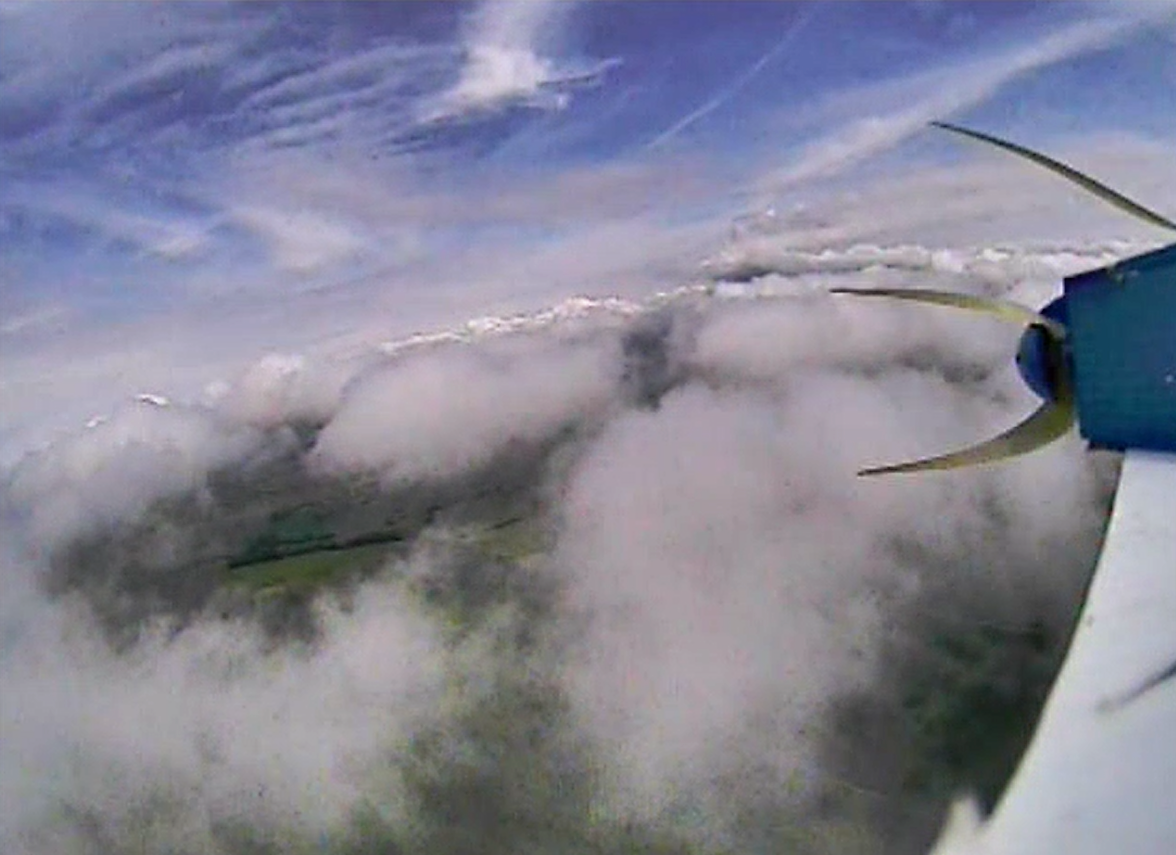
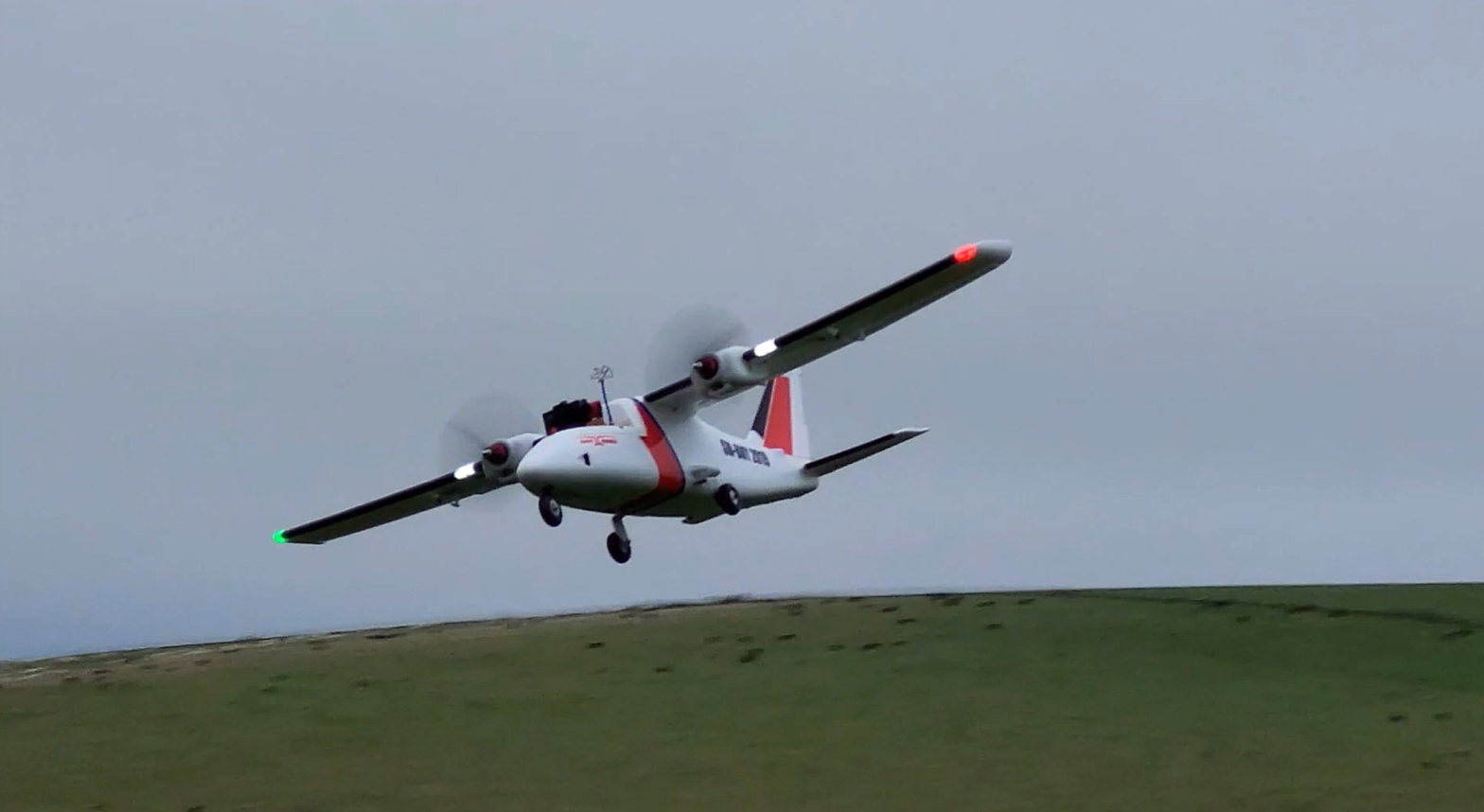

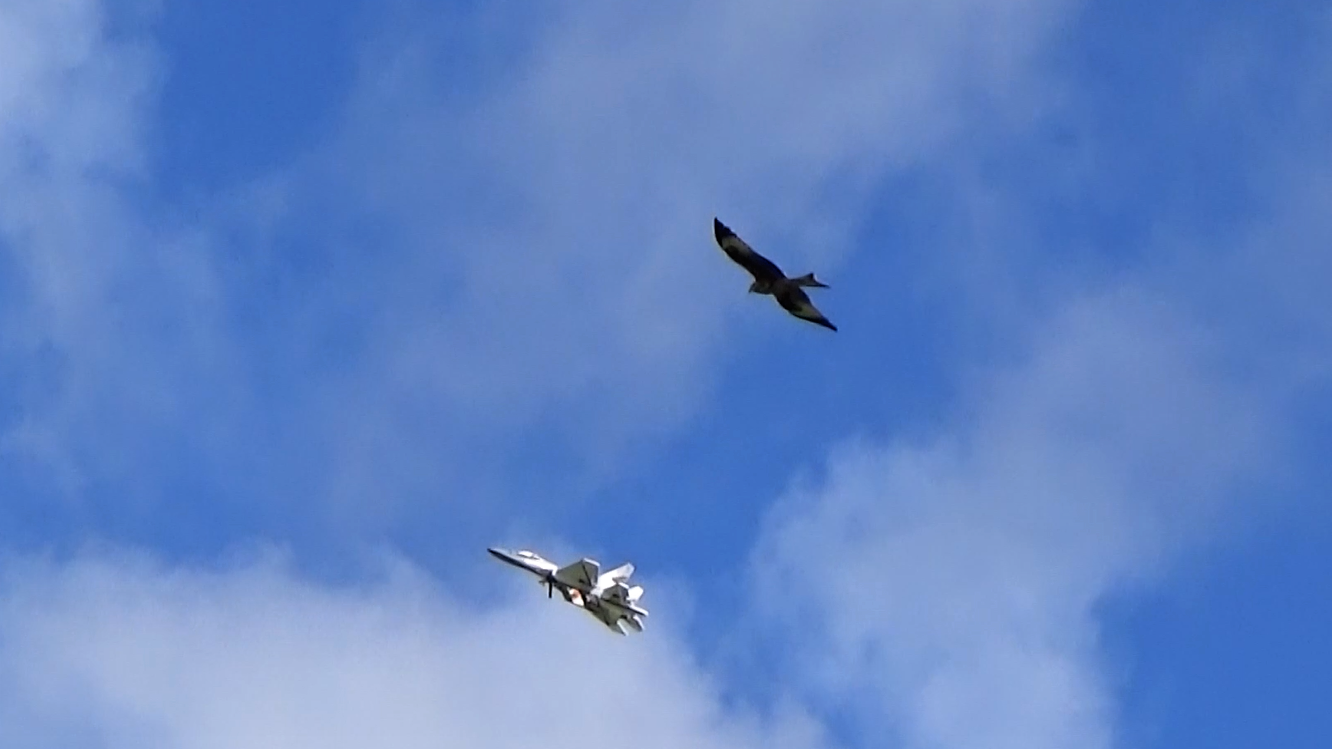
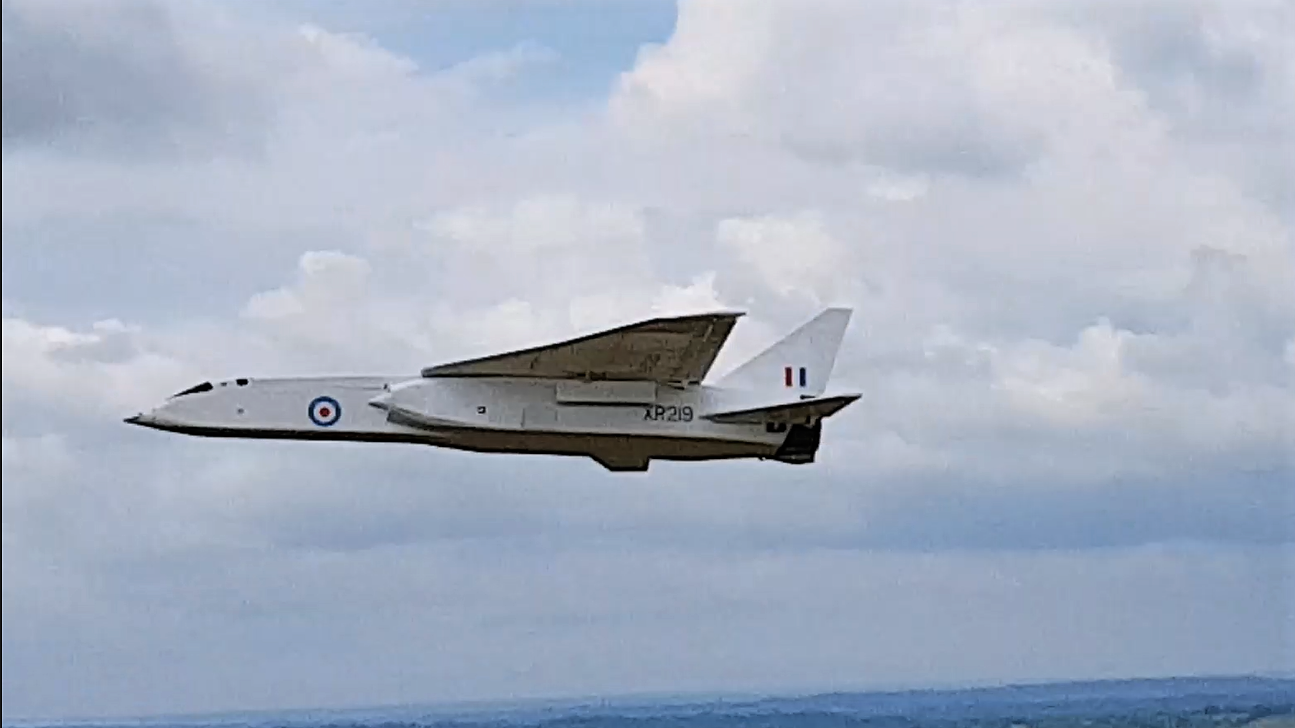
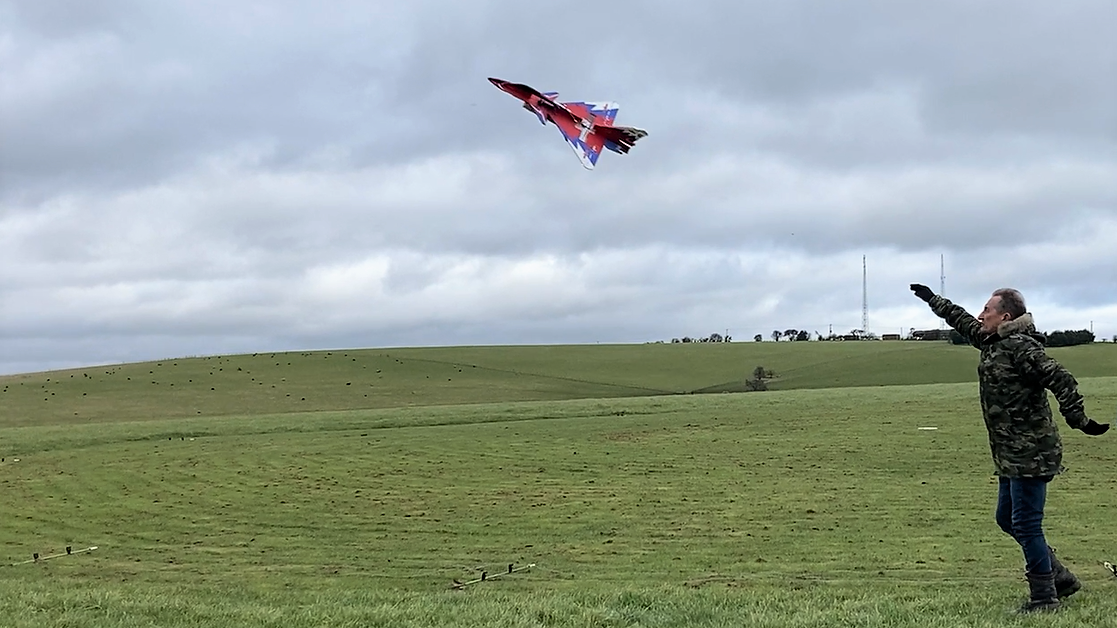 Video time now, with footage by Peter Fothergill, Dougal Entendre, Gordon Bennett, and me. Please watch the video full-screen, it’s much better with small models flying around:
If the video won’t play for you please click HERE
After an overnight flight to meet her husband at his latest military posting the very weary lady arrived in Hong Kong with her nine children, all aged under eleven.
Collecting their many suitcases, the ten of them entered the cramped customs area.
A young customs official watched the entourage in utter disbelief and asked her
“Madam, does all this luggage and do all these children really belong to you?”
“Yes, sir,” the lady said with a tired sigh. “They really are all mine.”
The customs agent interrogated her “Madam, do you have any weapons or guns?”
“Sir” she calmly answered, “if I’d had any of those I would have used them by now”
The official allowed them all to pass without opening a single suitcase.
Colin Cowplain