Patch News – May 2021
Fortunately the month of May came and went without any further Covid-19 restrictions being brought in to prevent us from flying. At the start of the month the committee decided to raise the number of pilots allowed at each session from six to ten so as we rarely get more than ten pilots anyway that means it’s virtually back to normal.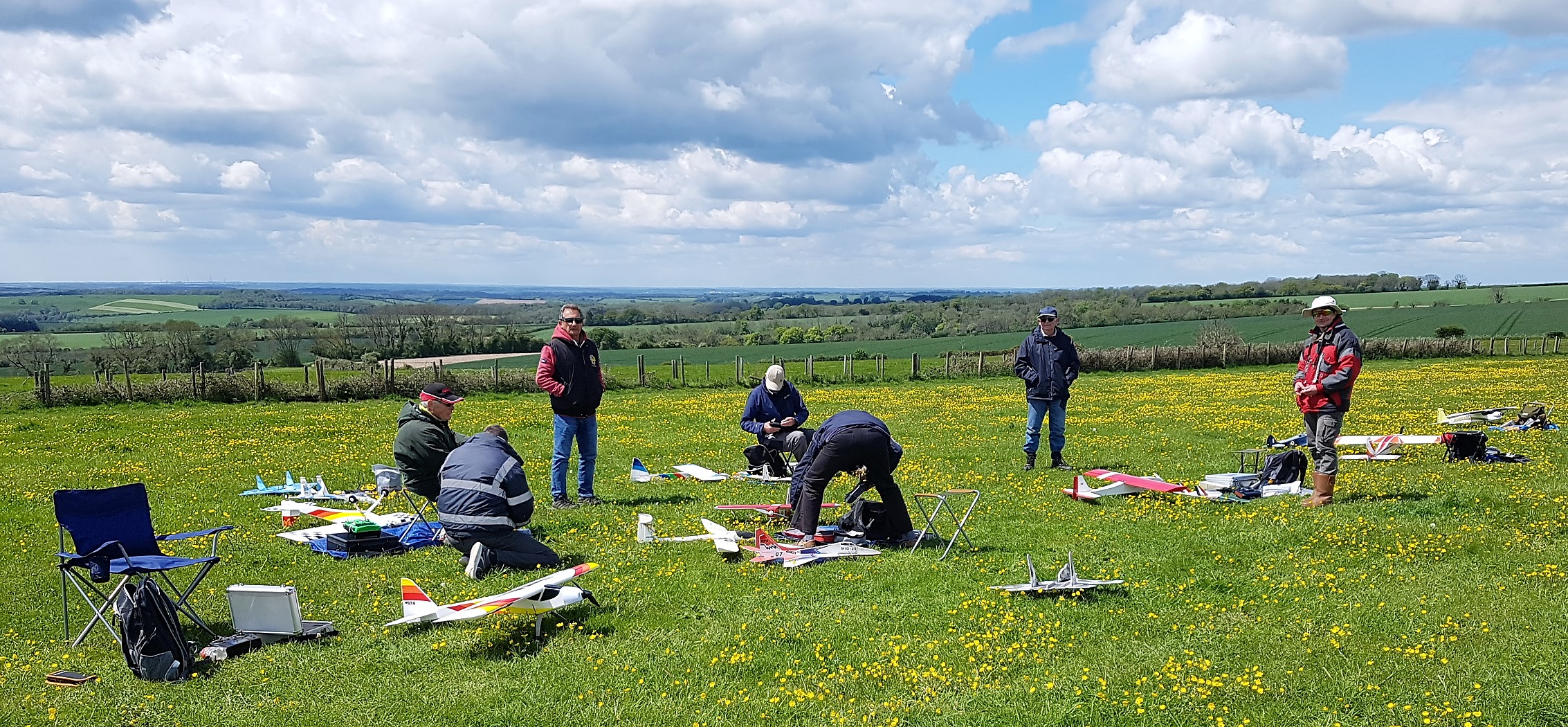 Of course Covid-19 hasn’t completely gone away so we still need to be careful with social distancing and hand sanitizing as necessary. The booking system remains in place to comply with government rules, we are required to record who attended and when. It’s easy enough, just email John if you intend to fly. Sadly much of the May weather was more like March which limited the amount of flying but I think all the regulars managed to get airborne although some also got wet! At the start of the month the bullocks were moved out and although they did return mid-month they didn’t stay long. They are well used to us now and rarely bothered us, their presence just means somebody always has to stay grounded to keep an eye open in case they wander too close to the pits or patch.
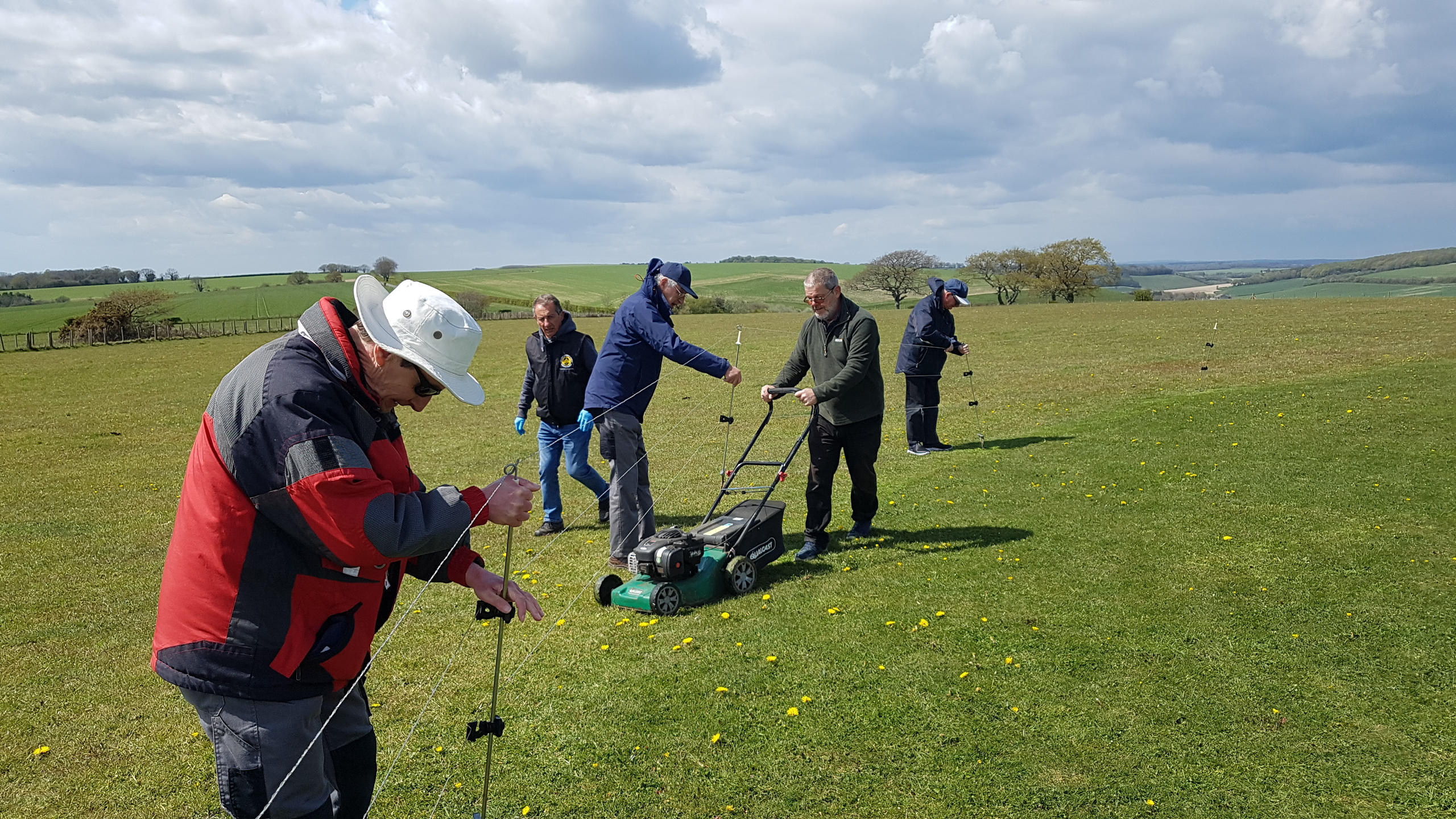 The often wet and warm(ish) weather meant the grass grew a lot so members of the Friday Afternoon Rural Trimming Society (FARTS) were kept busy. On a couple of occasions the weather caused the mowing to be delayed to the following Sunday morning so the team became SMARTS (Sunday Morning Alternative etc). That’s the first time some of them have been called smart! The last week of the month finally saw some sunnier and drier weather which lots of members took full advantage of. Sometimes they were even having to queue up to take-off.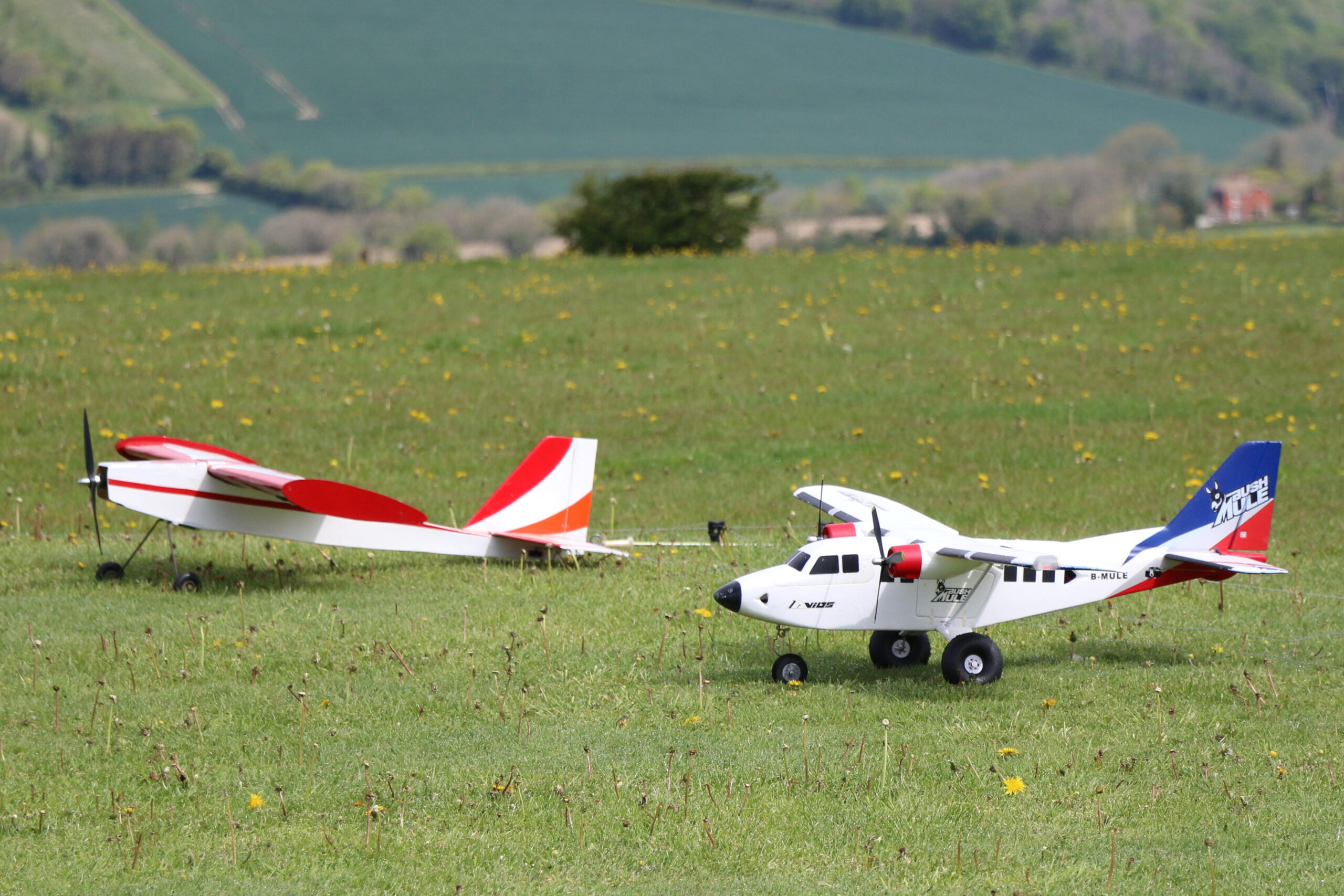
First of the new models to feature this month is Mini-Mike’s Marlin. The Marlin is produced by Arrows Hobby and is a 910mm span EPO foam moulded ducted fan model that comes ready fitted with an 11 bladed 64mm fan.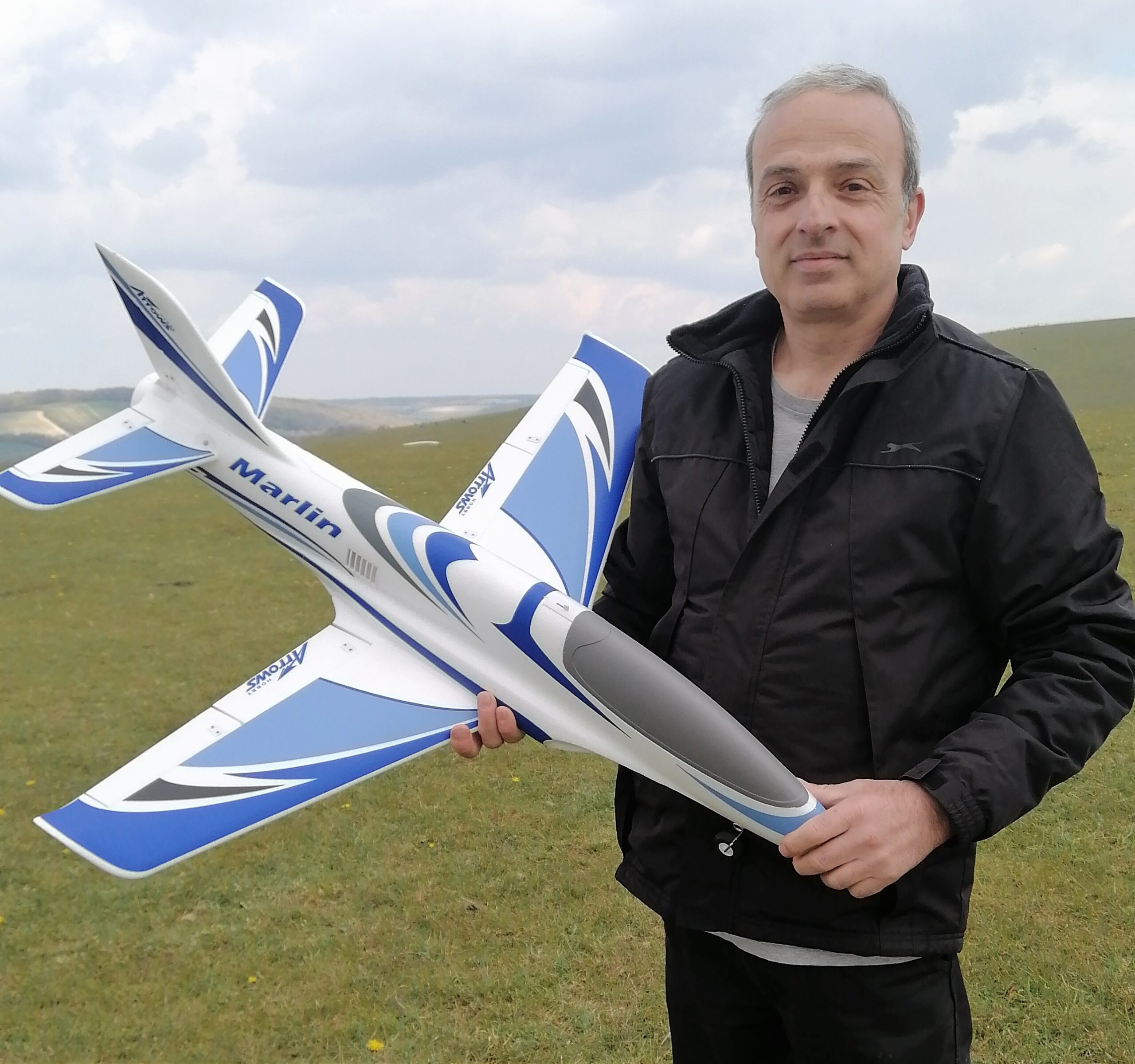 The brushless motor is a 2840 3150kv unit which is fed by a 40A esc. The model requires a 35C or greater 4 cell lipo of 2200-2700mAh capacity. A fixed undercarriage with a steerable nose-leg is supplied but is easily removed if the pilot prefers the cleaner lines. Apparently the model hand launches easily and belly landings shouldn’t be a problem. A few months ago I test flew Bob the Builder’s Marlin which went very well and Mini-Mike’s was no different.
 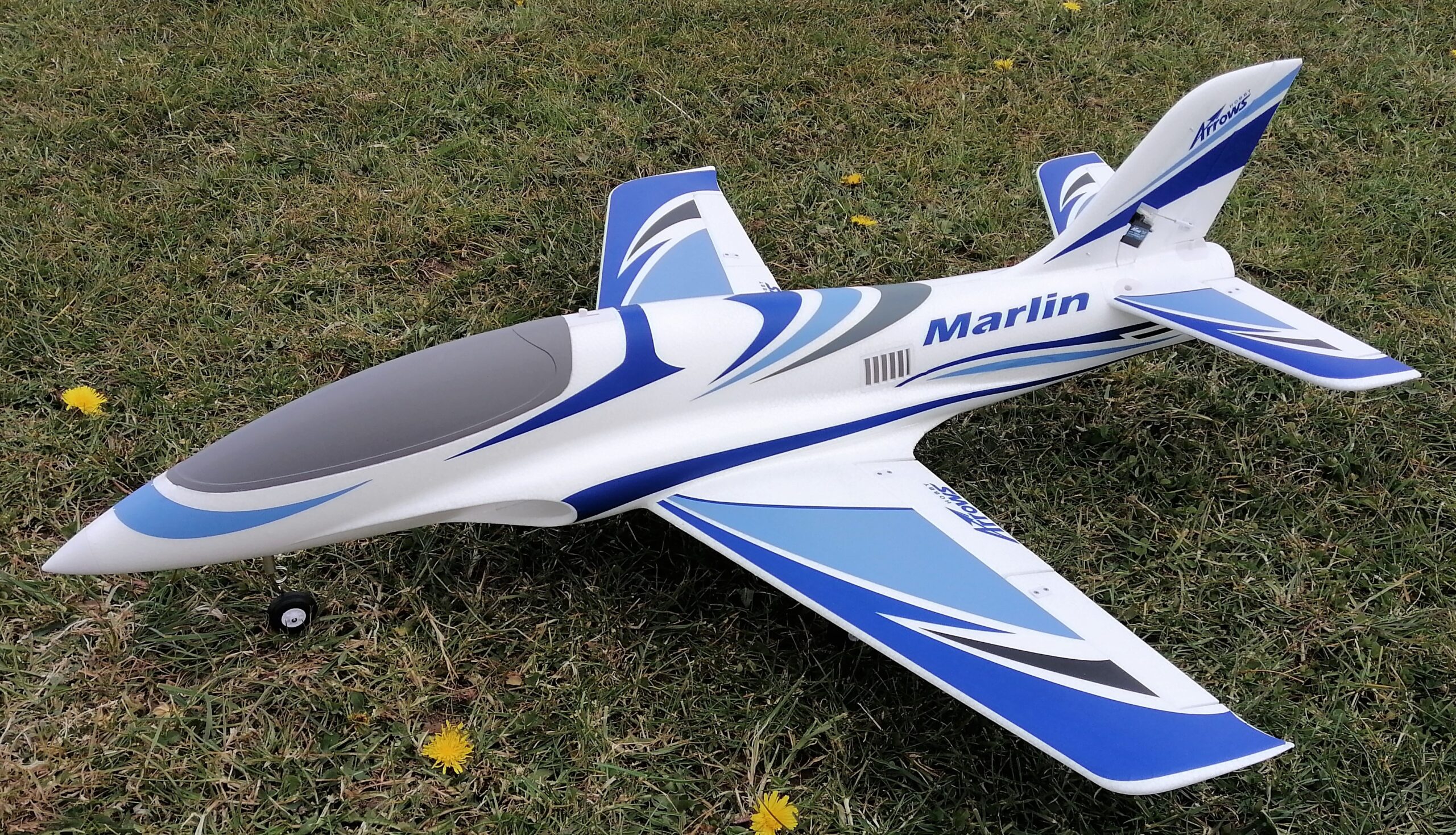 I was away at the time of the first flight but others filmed the event so you can see it in this month’s video. It appeared to need very little in the way of trim and was pretty quick with the flaps raised. Once the flaps were lowered the jet slowed up well although a little practice is required to get it down neatly on our relatively small patch. I believe its Mini Mike’s first EDF model and I’m sure he’s going to have a lot of fun with it.
Next up is 1066’s new Wasp e2k pylon racer that he’s built from a kit produced and sold by Cloud Models.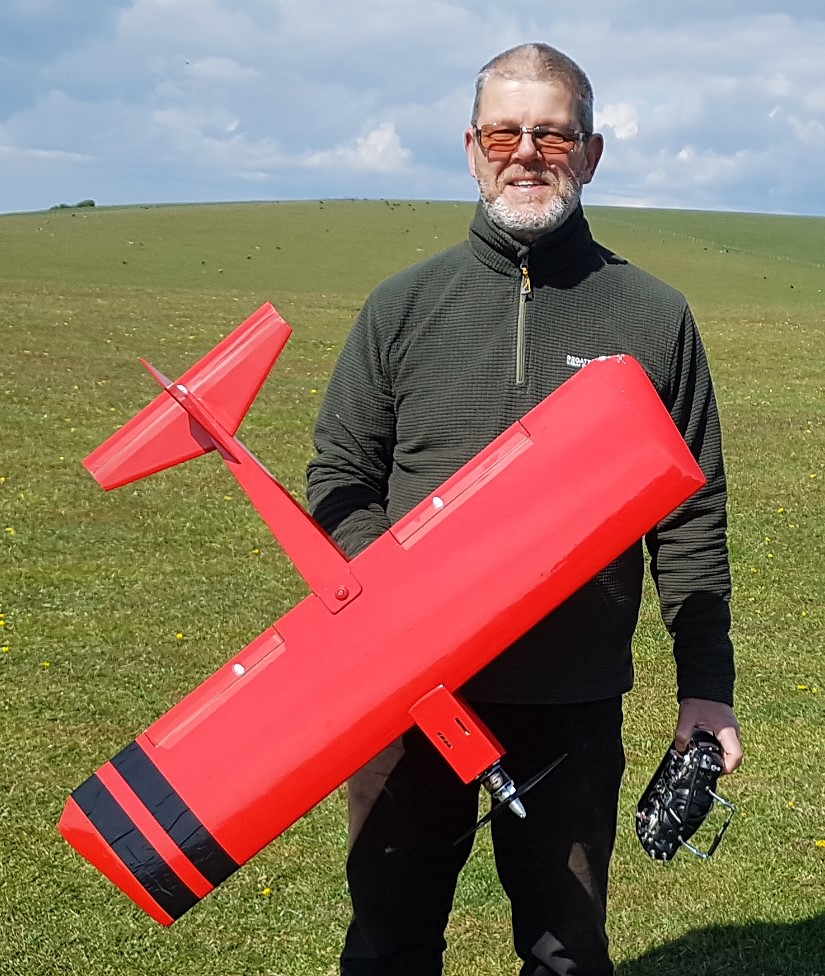
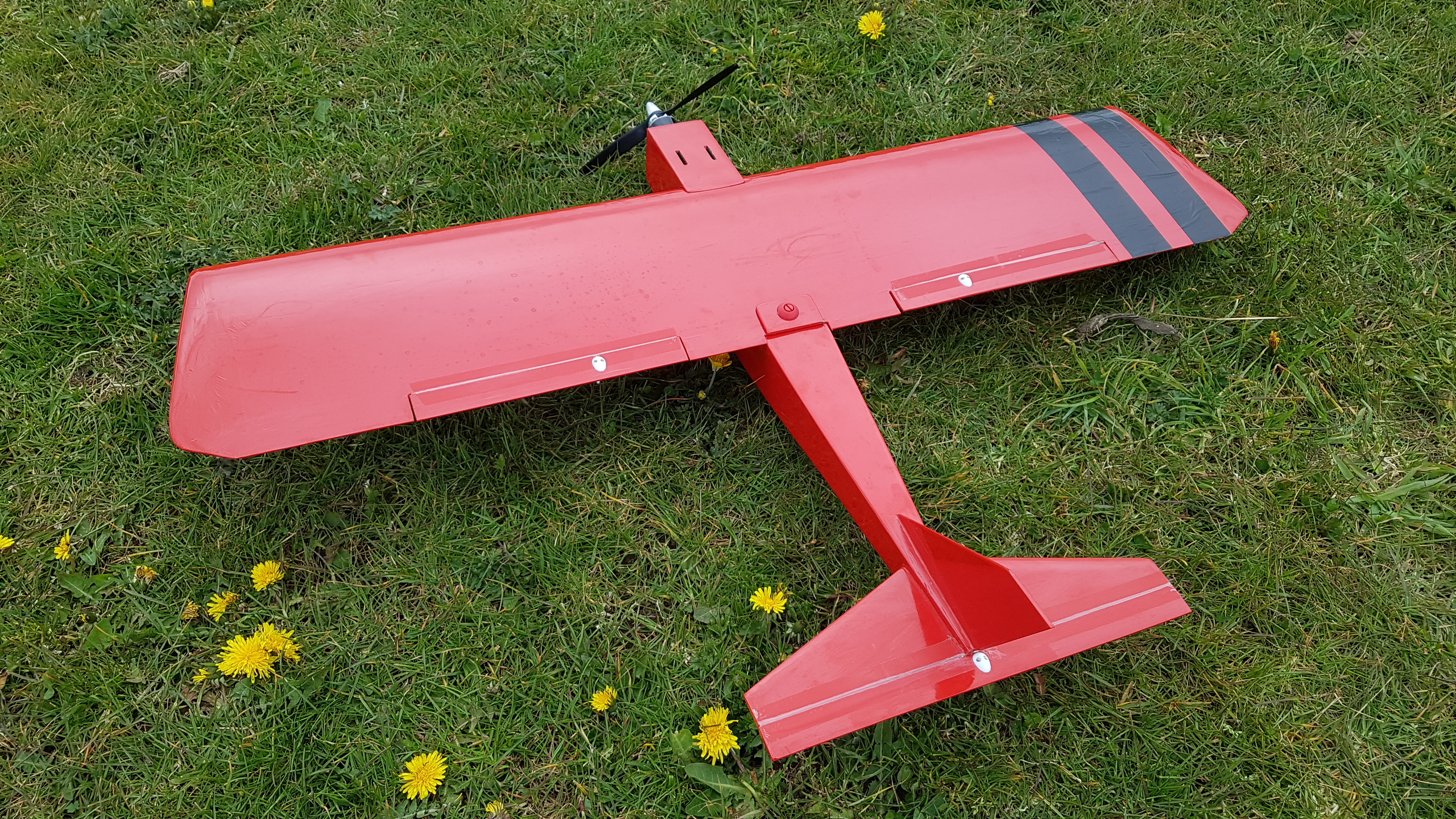 The Wasp is designed for the E2K electric pylon race class which has strict limits on both the model and the powertrain in order to make the racing close and ensure the winner is the best pilot and not simply the richest. 1066 doesn’t intend to race it, it’s just for fun, but it certainly shifts around the sky and is much quicker than most models we’ve seen at the patch. The Wasp is 39” span and has aileron, elevator, and throttle controls, no rudder.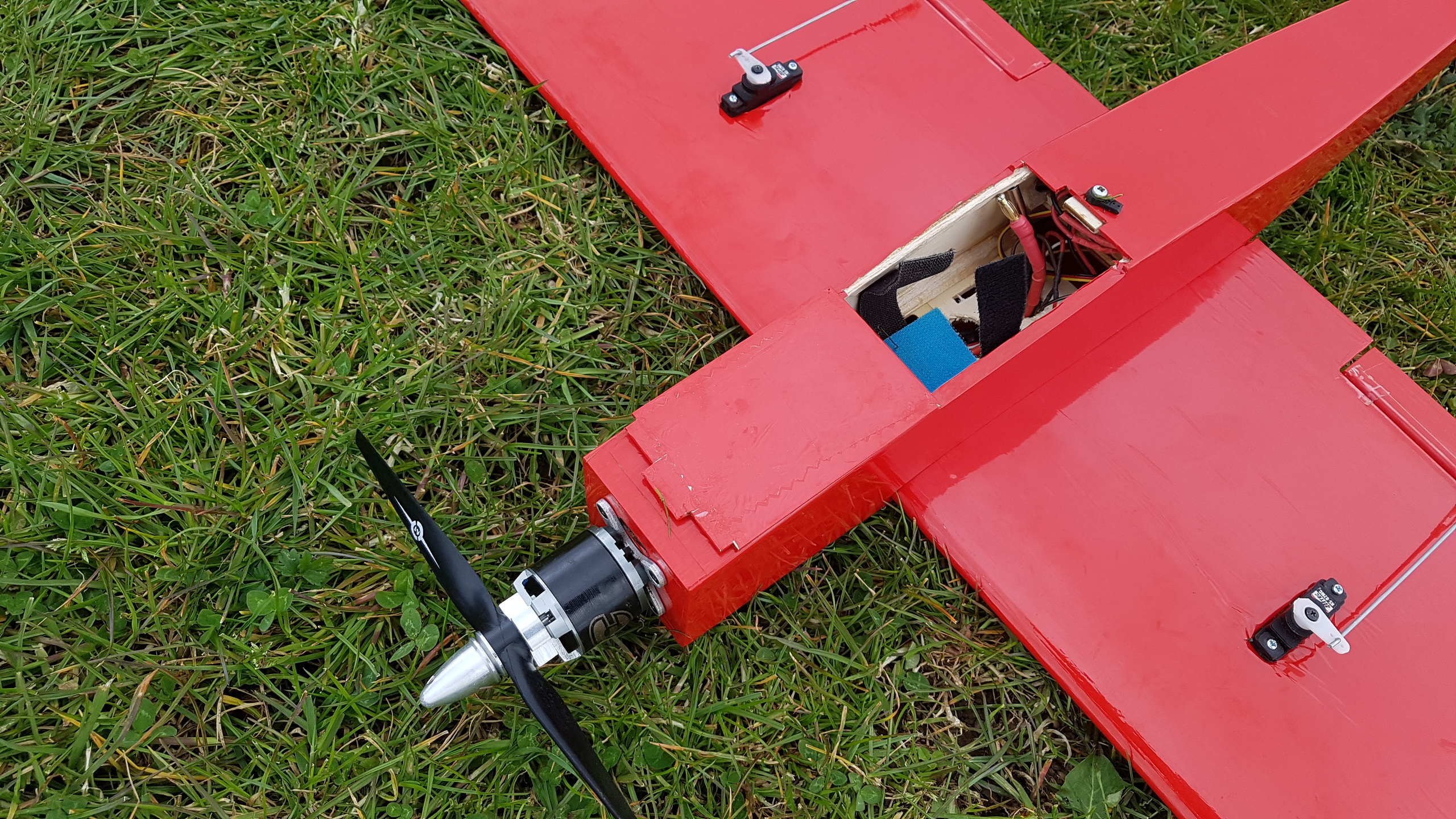
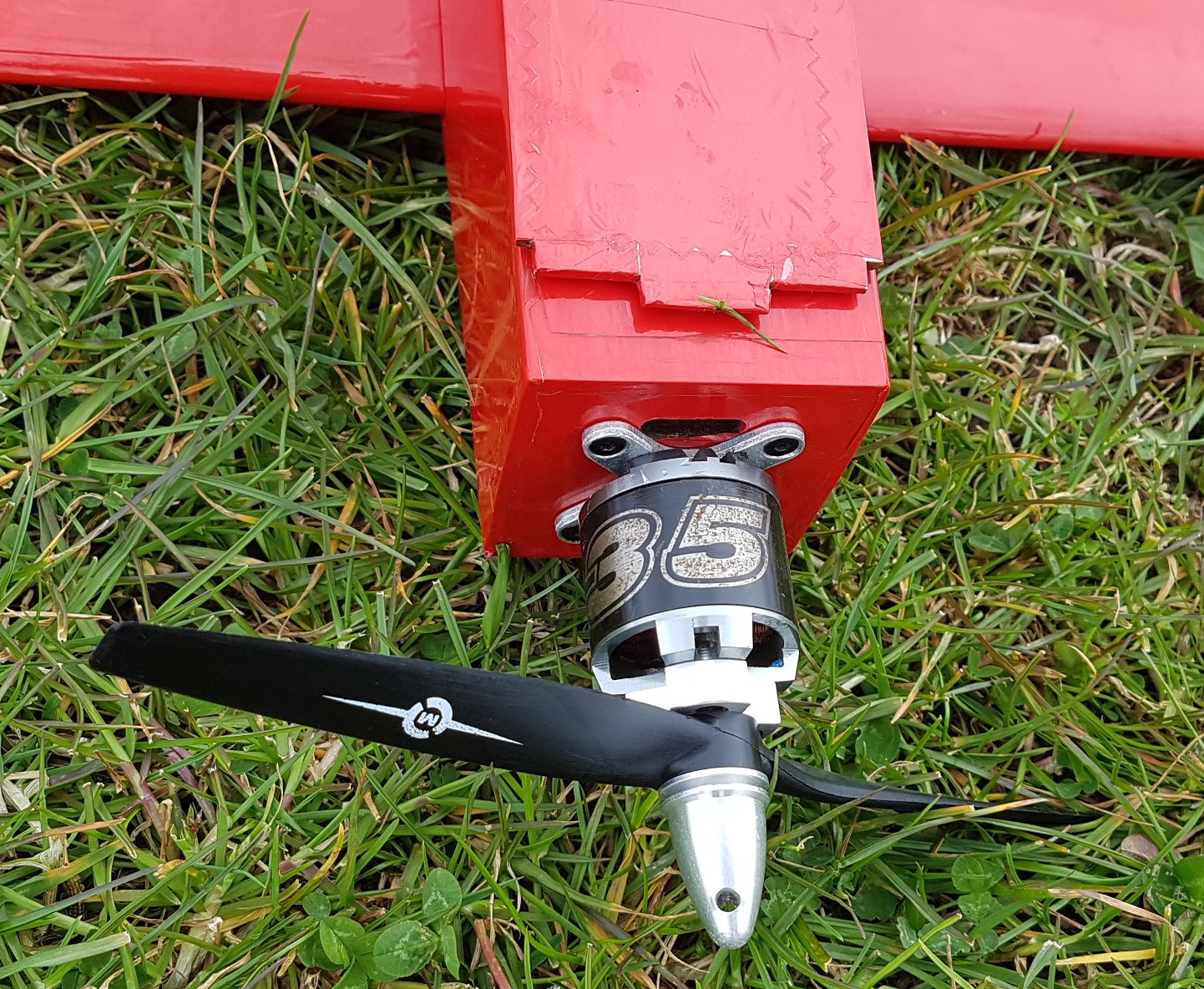 1066 has fitted a 1400kv 3536 motor and an 80A speed controller. The prop is an 8×6 Master Airscrew and the battery is a 4 cell lipo with a capacity of 3300mAh and a 30C rating. I wonder if it would be even quicker with an APC prop but it’s quite quick enough as it is. Judge for yourself, you can see it performing in this month’s video.
At the beginning of May Page Boy test flew the lovely Skywriter that he’s been building over the last few months.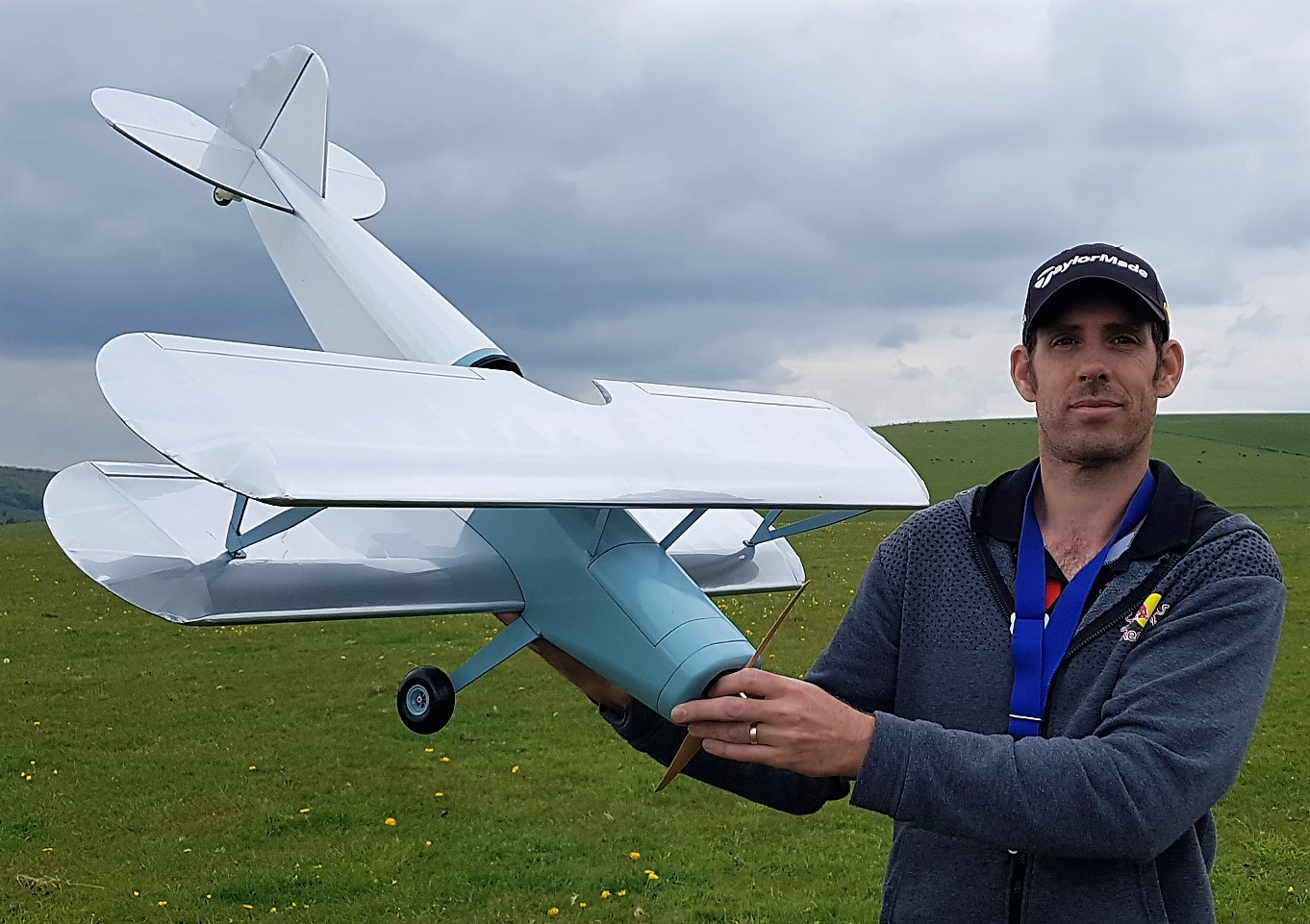 This is what Page Boy has to say about it: The plan was free in the RCM&E magazine in 2013 so quite a while ago but I knew as soon as I saw it I had to build it one day. It’s a Lindsay Todd design. I got the CNC kit from SLEC for £69 which to be honest would have been a good price except I had to alter the parts here and there quite a bit.
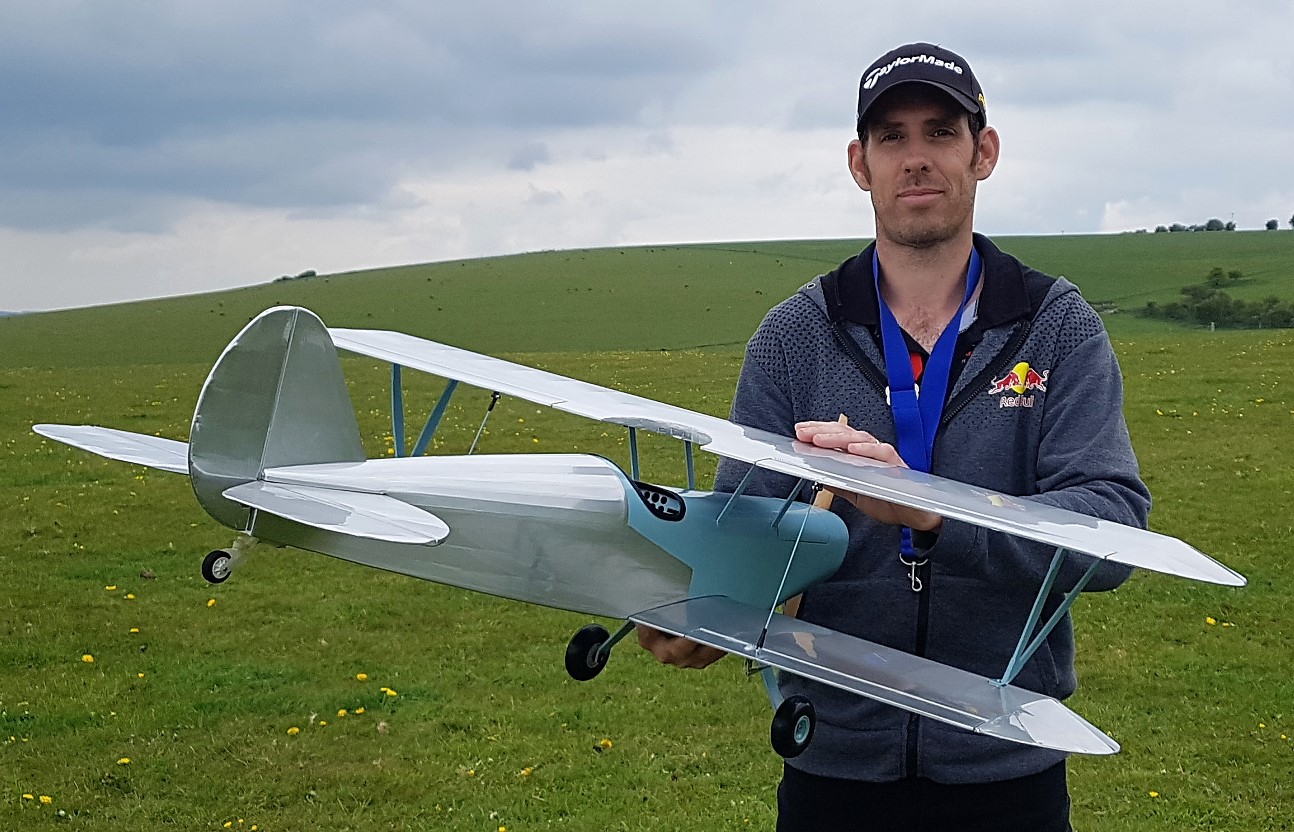 The most challenging parts of the build for me was to make all the aluminium parts from aluminium strip etc. and to get all wing incidences correct. I decided to give glass-clothing a go using light weight matting and Deluxe Materials resin which was then given two coats of primer and two coats of colour. The covering is the usual Hobbyking stuff that actually gave me a headache this time round. Normally I don’t have any issues but this one well @#*…!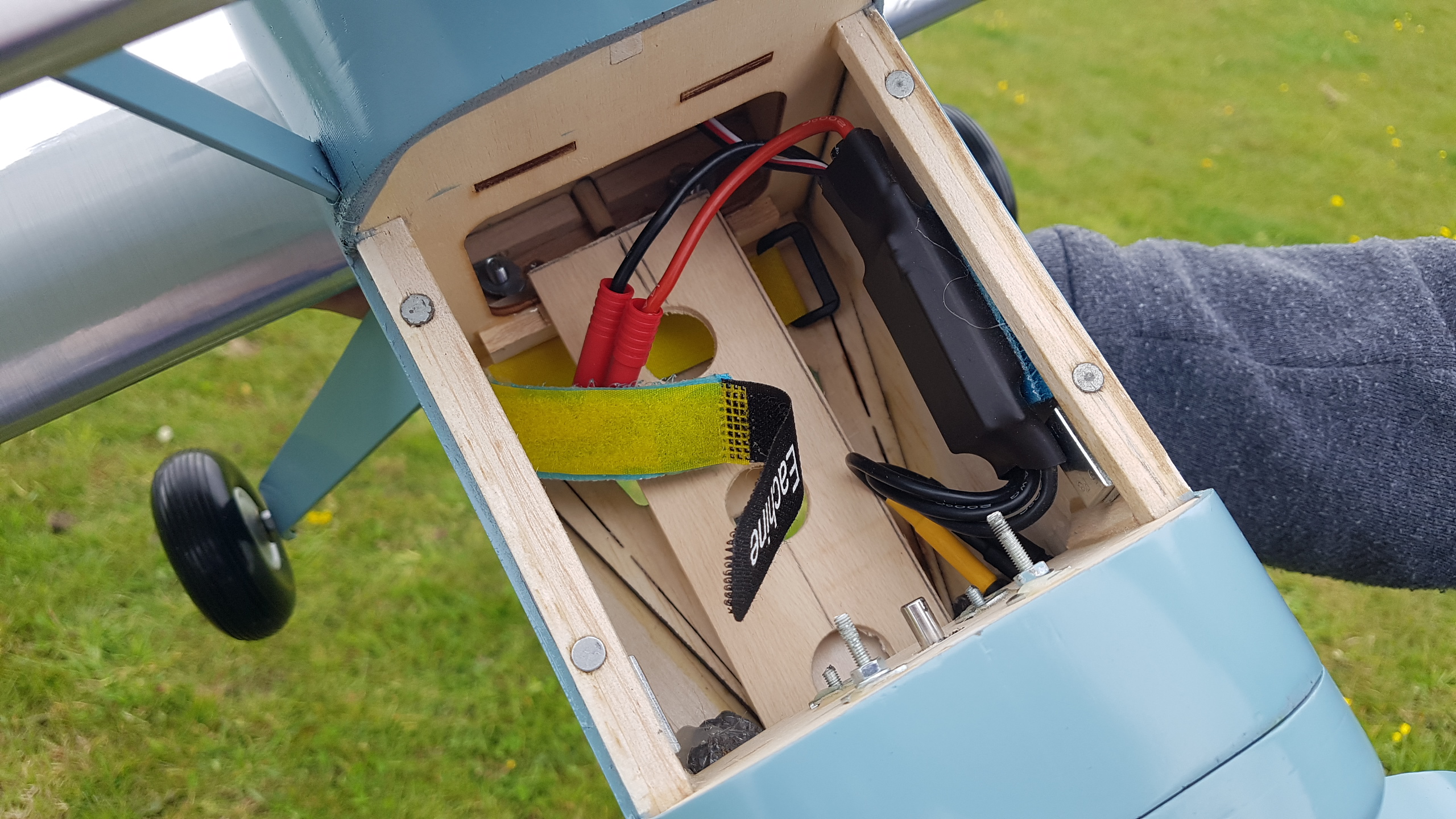
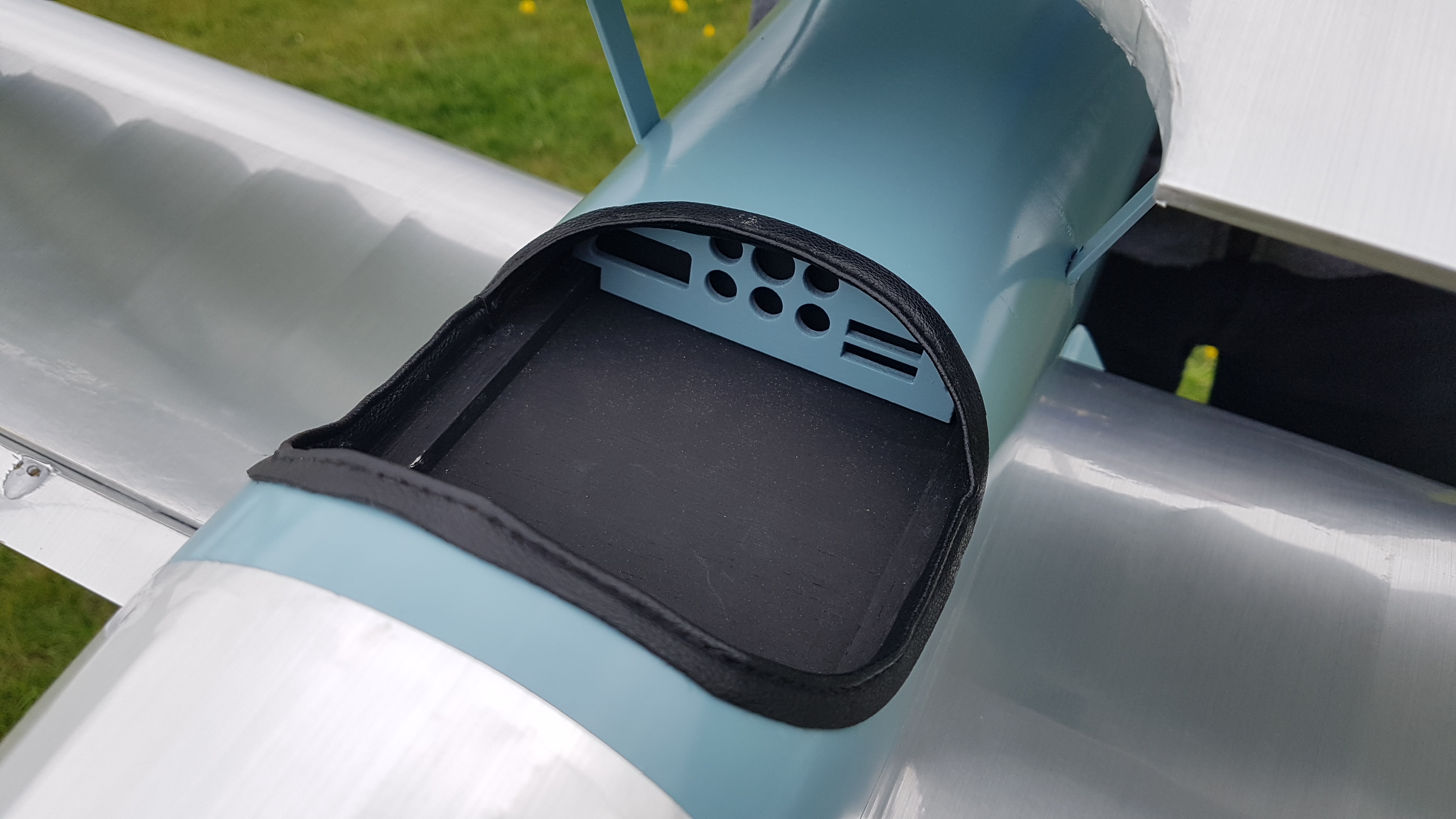 I believe silver covering is notoriously difficult to apply Page Boy although I’m not sure why. Anyway the finished result looks excellent to me. Page Boy is planning on completing the instrument panel now the model has flown. The Skywriter has a wingspan of 48″ and Page Boy’s weighs exactly 5lb. He has fitted an EMAX 2820/07 brushless motor coupled to a Hobbywing 60A esc. He’s currently using a 12×6 prop and a Turnigy Graphene 3000mAh 4 cell lipo. All the servos are from 4-Max. Page Boy was very happy after the first flight which you can see in this month’s video.
Captain Slow brought along a new model to show us but, never one to be rushed, he hasn’t actually flown it yet.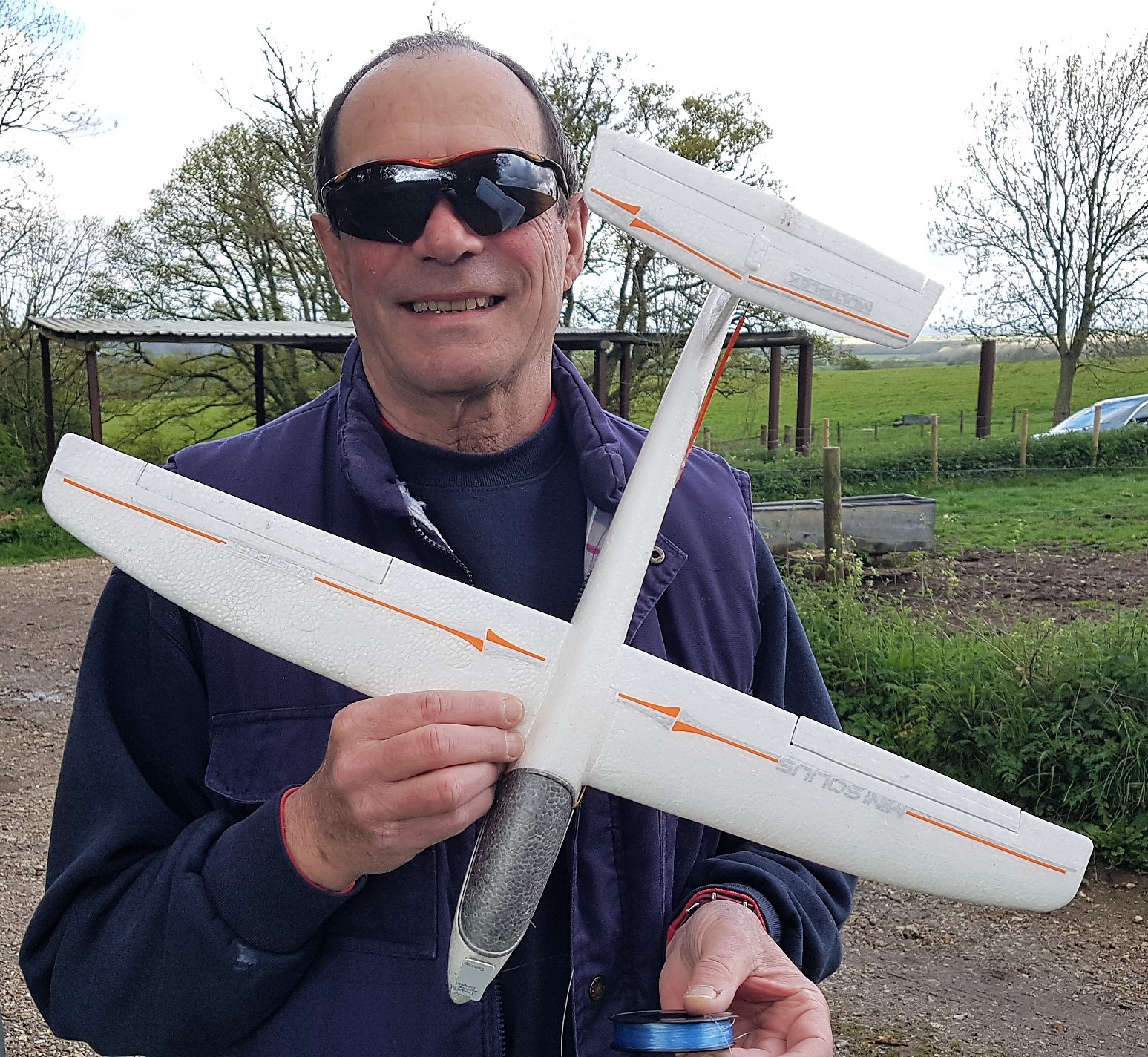 It’s a Multiplex Mini Solius, a 600mm span foam chuck glider that weighs just 45g. But Captain Slow has fitted his out with a micro RC system retrieved from a retired (broken) E-Flite indoor model. The receiver is a ‘brick’ type that includes two linear servos one of which Captain Slow is using for the elevator but it was simply too tricky to make a rudder linkage so the second servo is unused. Two further linear servos control the ailerons so what was originally a free-flight Mini Solius chuck glider is now a three channel RC glider that Captain Slow is intending to aerotow!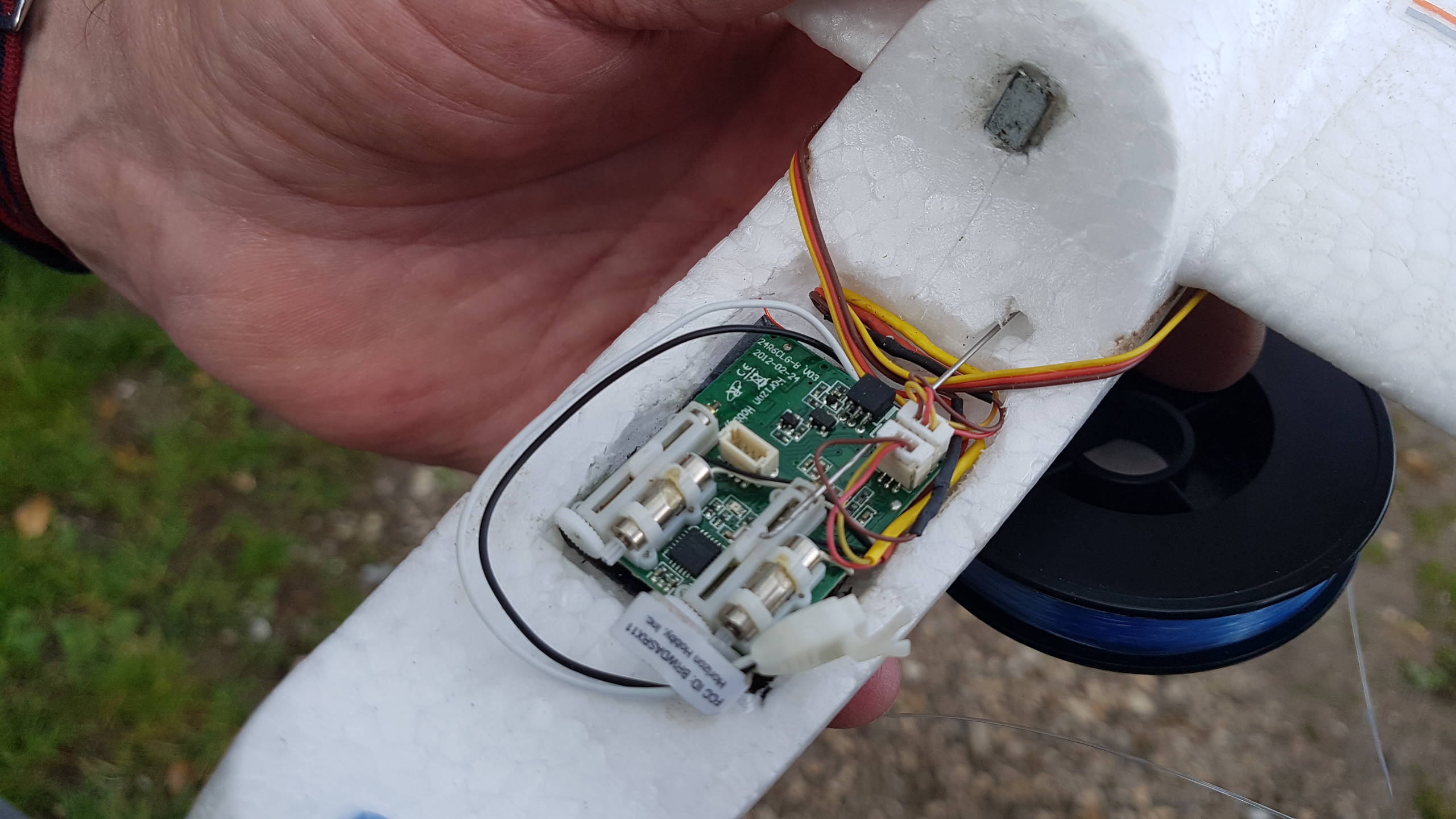
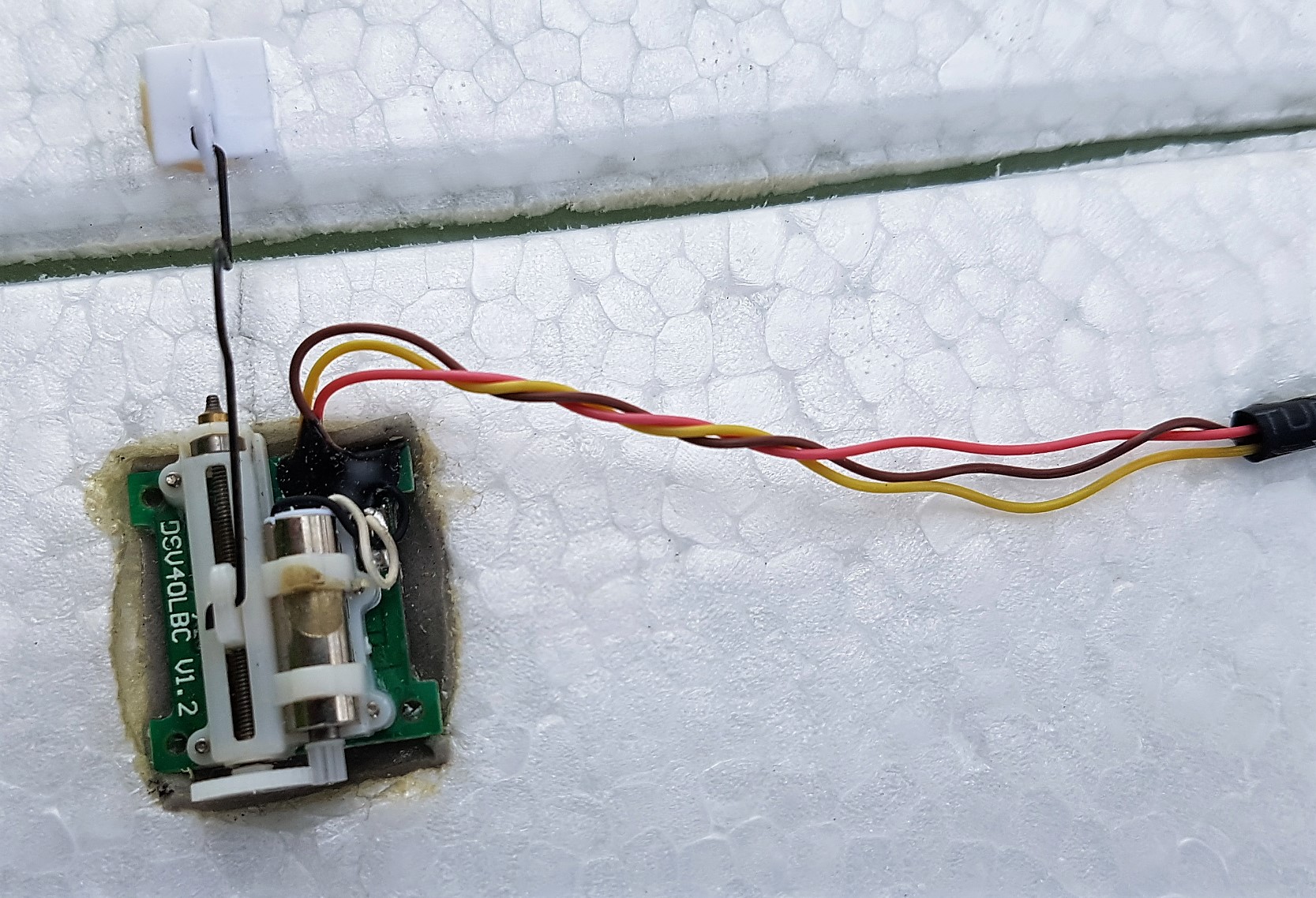 There is no servo operated towline release and the plan is to use a small piece of Velcro to hold the line onto the glider and release it by pulling hard using either up or down elevator, depending on the final choice of Velcro location. It sounds a bit odd but Captain Slow has read about the apparently tried and tested system somewhere and it’s supposed to work well. I look forward to trying it, possibly towing it with my Max Thrust Riot.
A few months ago Patch News included a photo of a small P51 Mustang that Catapult King had received as a Christmas present but at the time it hadn’t flown. But in May not only did it fly, it flew surprisingly well!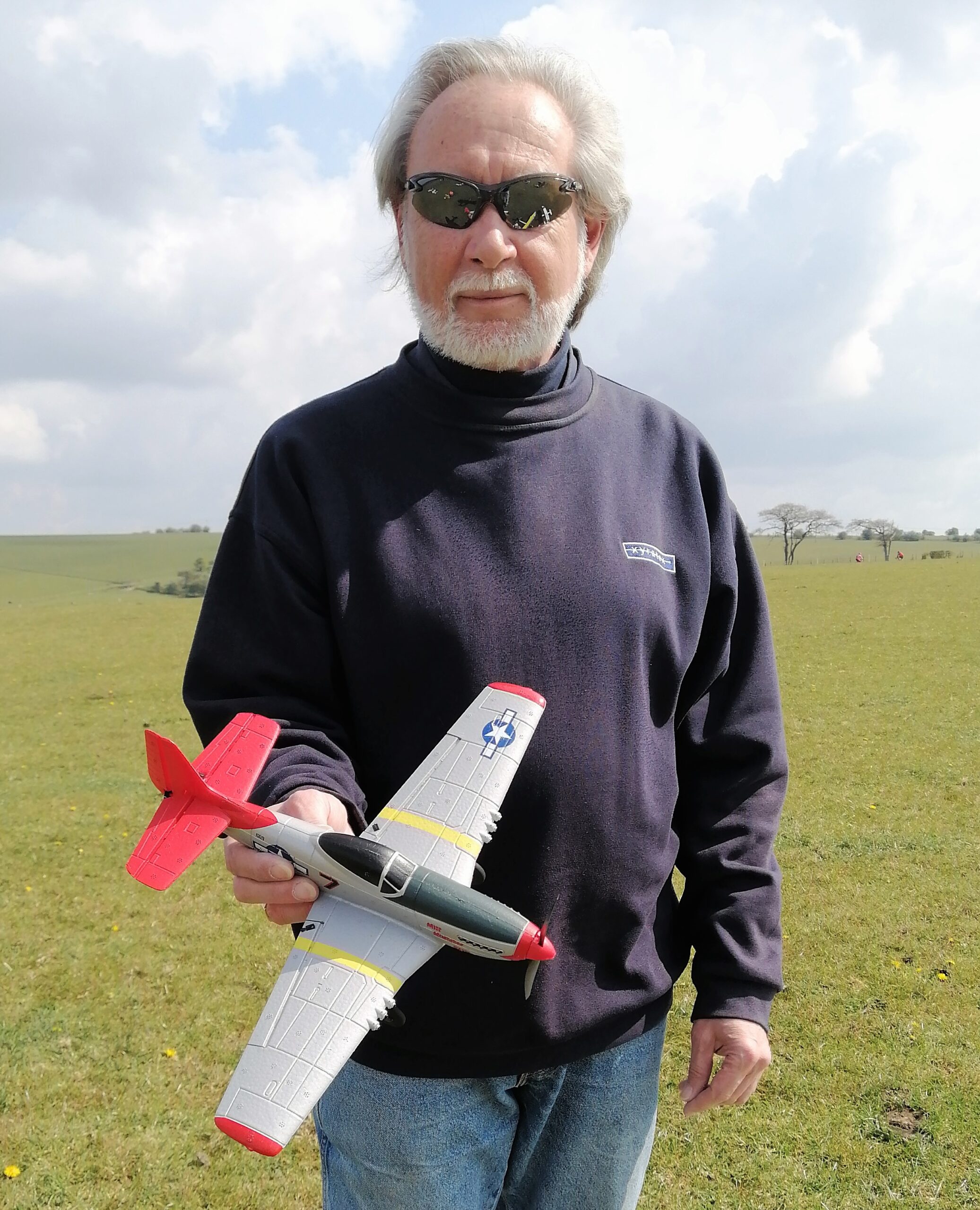 The Mustang is made by Eachine although an online search shows an identical model marketed under the Volantex name. The package includes a completed model with a 6 axis gyro, a 400mAh single cell lipo, and a transmitter.
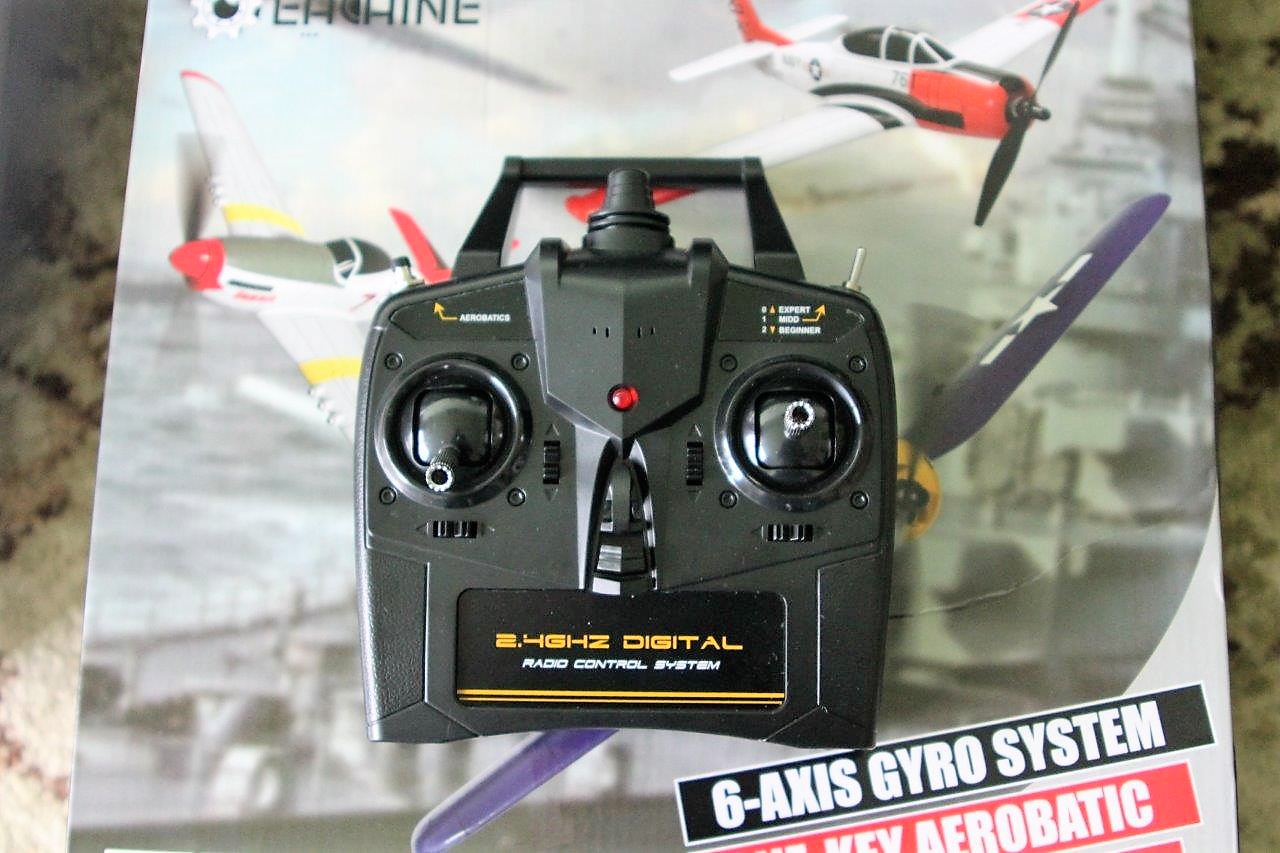 The transmitter has a 3 position switch for the gyro modes, the modes being beginner, intermediate, and expert. There is also an Aerobatics push button which enables the pilot to do a roll or a loop even when the gyro is in beginner mode. It’s rather like a flip button that lots of drones have, press the button once and the Mustang will roll once or loop once depending on which way the pilot moves the stick. The wingspan is 400mm, length is 317mm and it has a flying weight of just 60g. The lipo gives flight times of around 10 minutes and is charged from a USB socket just like your mobile phone. The only thing not in the box are 4 AA batteries for the transmitter. Catapult flew his with the undercarriage fitted but it’s easily removable if you’d rather fly without it.
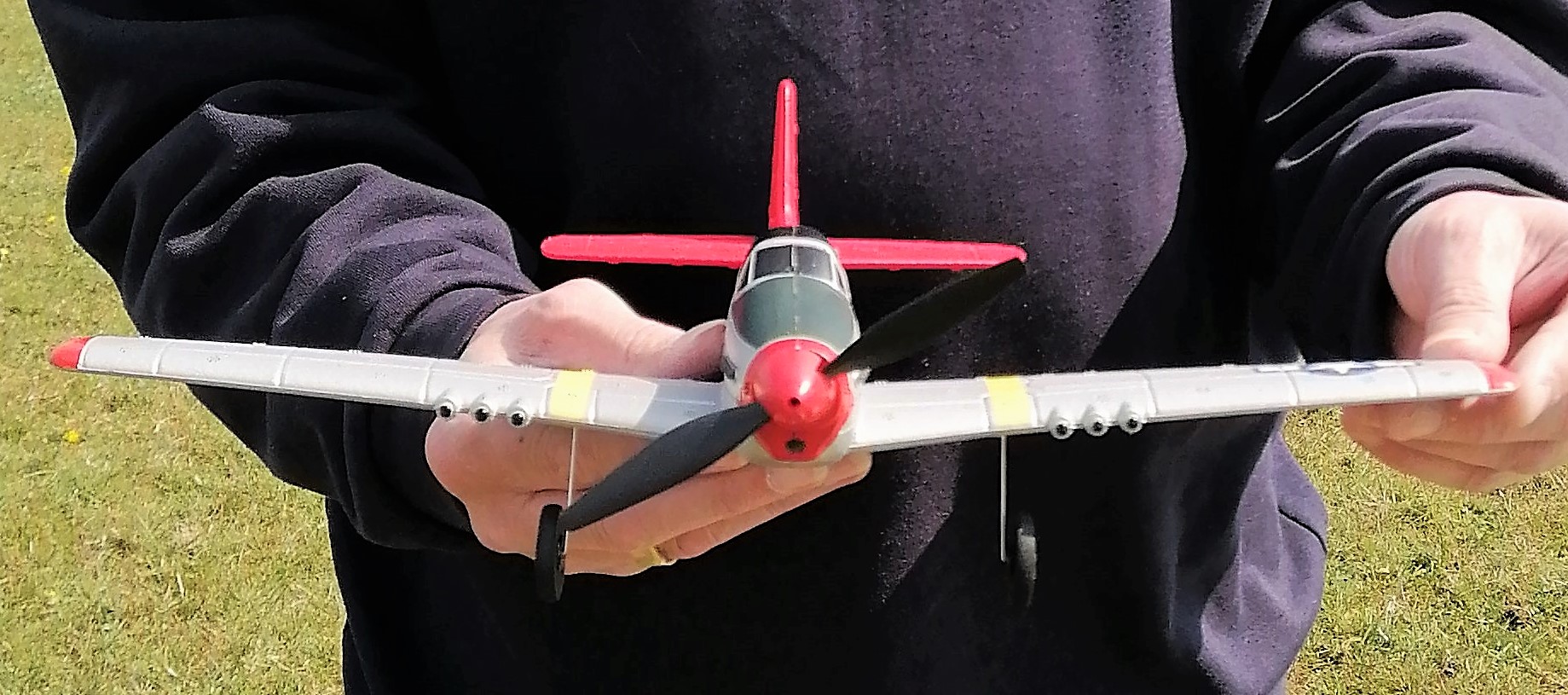 The first flight can be seen in this month’s video and I think you’ll agree that it’s pretty impressive for such a tiny model. The P-51 Mustang is sold by Banggood (and others) and if you like it you may also like the F4U Corsair or T-28 Trojan in the same range. At the time of writing the Corsair has to be ordered from China but the Trojan is available from the Banggood UK warehouse for just £67.77 with 3 batteries and free shipping…I’m tempted!
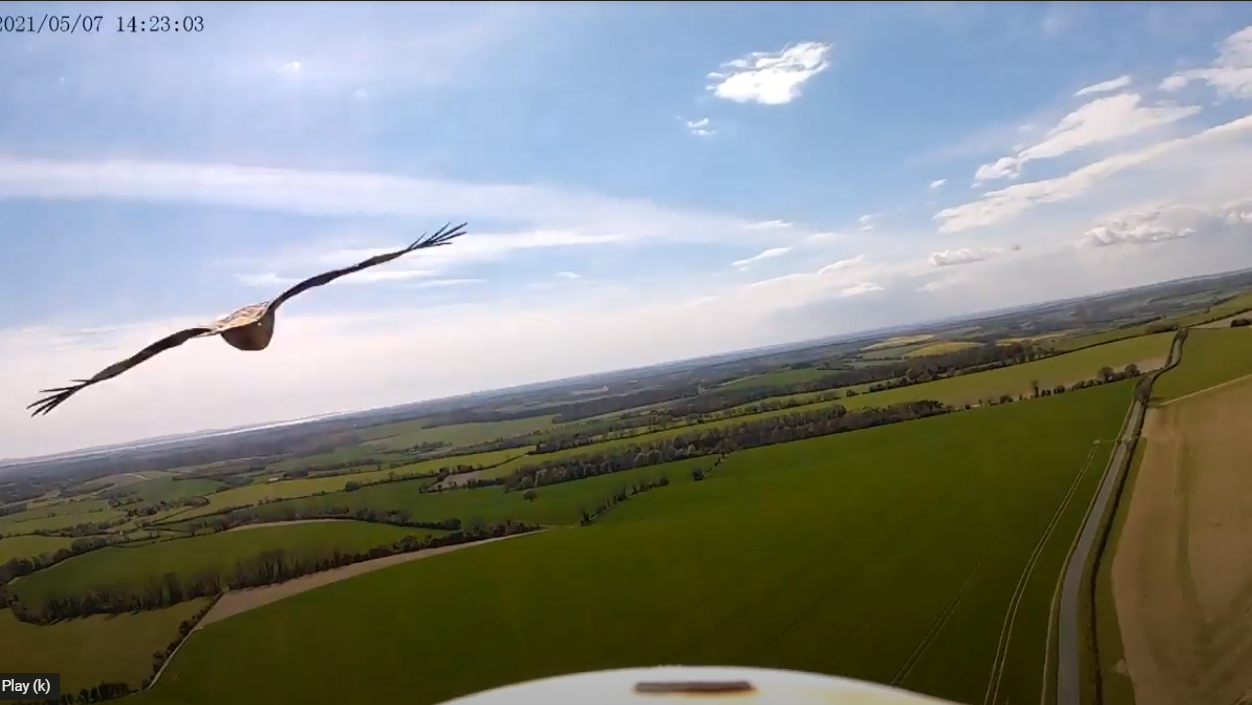
Dougal Entendre started using his FPV gear again during May, I must get my FPV model out again. He was flying his Sonic Modell Binary twin motored model that he’s flown a few times before but never using FPV.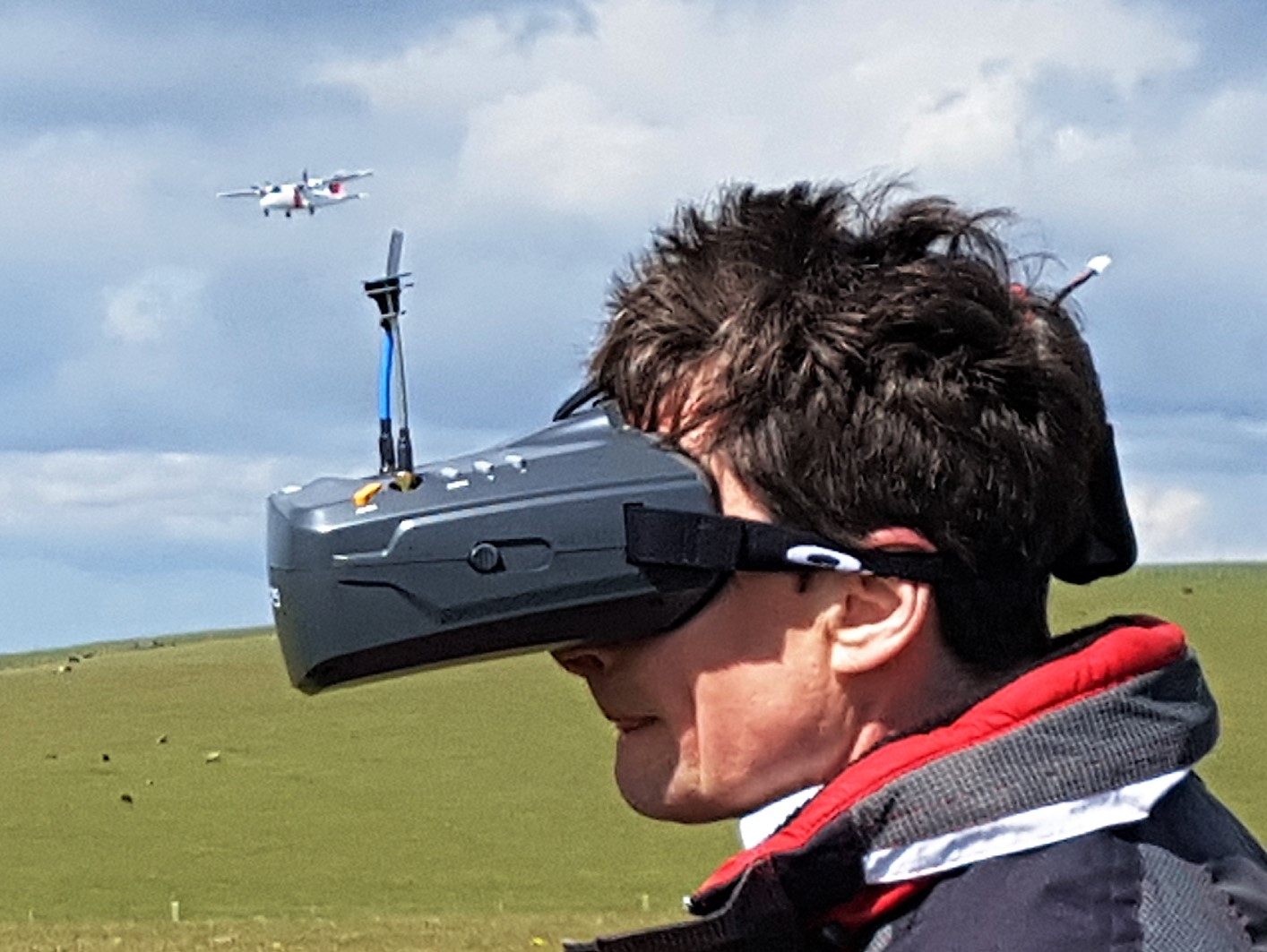 Note the balance lead sticking out out the back of Dougal’s head. It stops him falling over… As well as the FPV gear Dougal has added a 4K action camera alongside the Foxeer FPV camera to record better quality in-flight video.
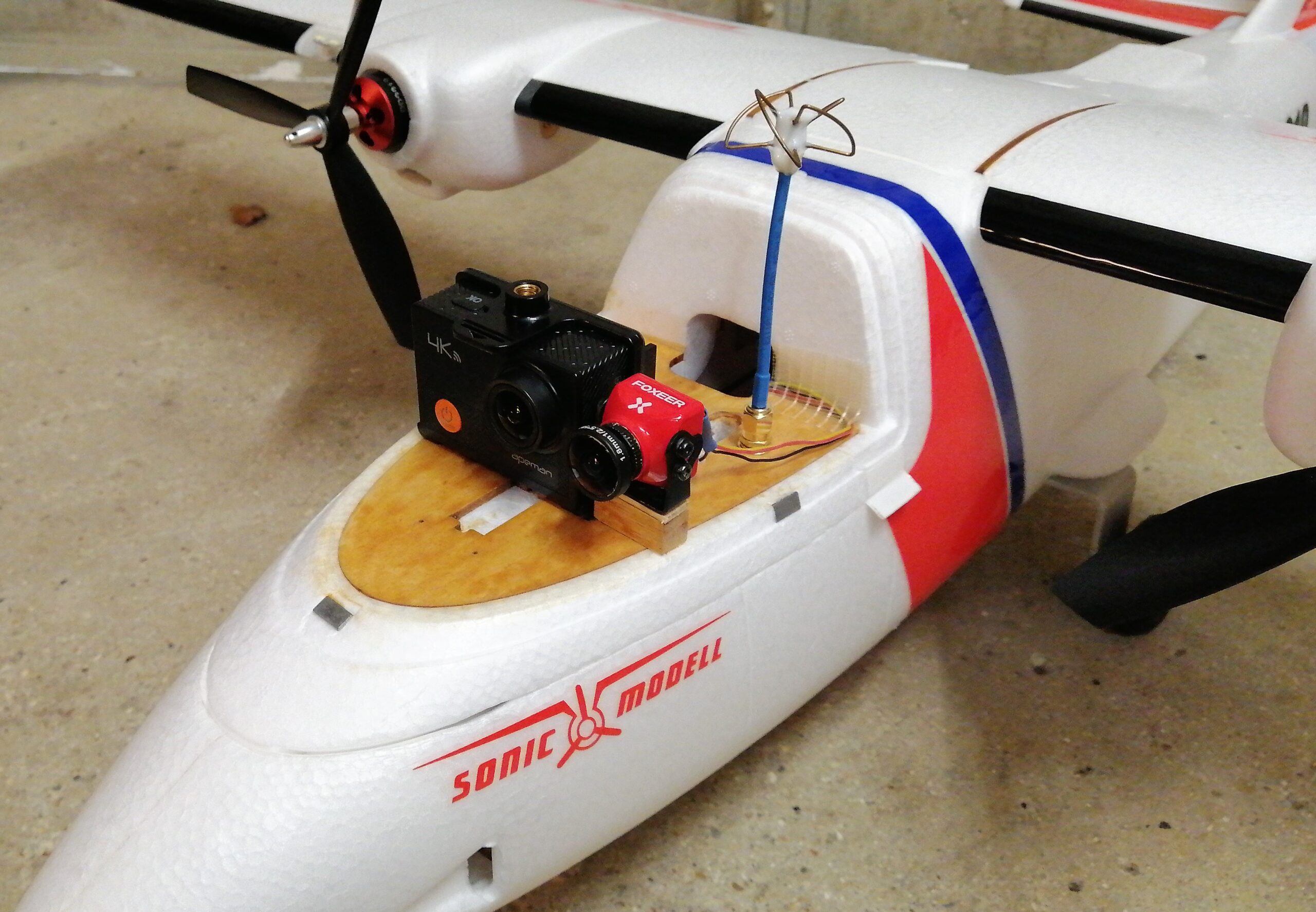 Dougal says: The FPV camera is right next to the action camera, and they both seem to get a similar field of view. Although the action camera is 4K, I only run it in 1080p mode (at 60Hz frame rate). This is because 4K video files are huge and unwieldy, and the camera drops the frame rate right down to get 4K, which is no good at all, whereas the 1080p quality seems pretty good. I got comments about how long it took me to prep the plane for each flight. This is because I have to power up about 6 systems. In order, I go: Transmitter, plane (including lights), video Tx (from separate 1000mAh 3s battery), goggles, action cam, then set goggles and action cam recording.
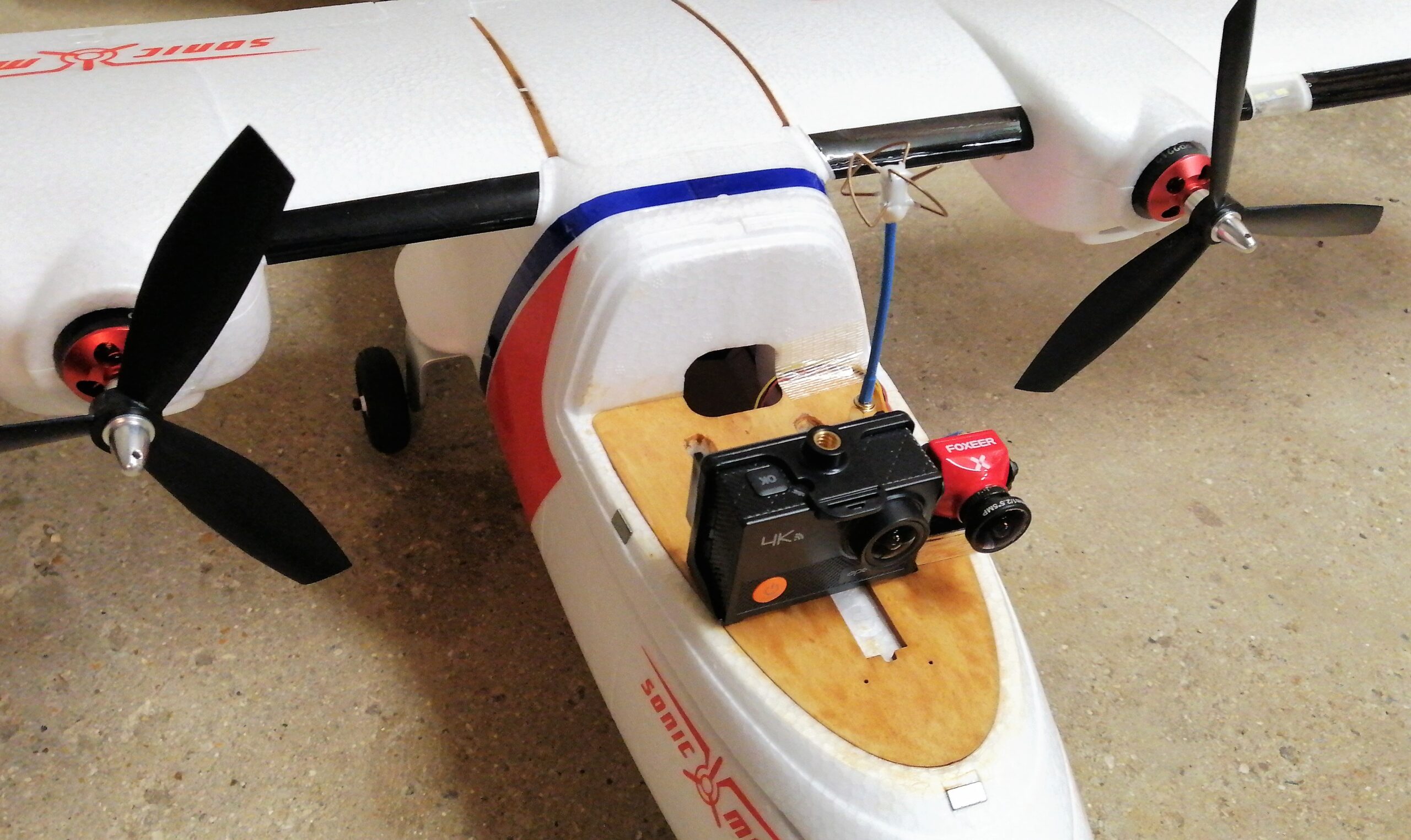 When I power up the action cam it’s very difficult to see the video screen, even if I do remember to take my sunglasses off! I have to listen to the chimes as it powers up, and then different chimes when I press the button to start it recording. The latter nearly always seems to coincide with someone loudly saying “that’s a right faff to set up”, or “why has it got two cameras”, so it’s a miracle we have any video material at all. Well we do have video material and very good quality it is too. On one flight Dougal homed in on a red kite that didn’t seem bothered by the model at all. You can see it all in the video but here are a couple of stills from it: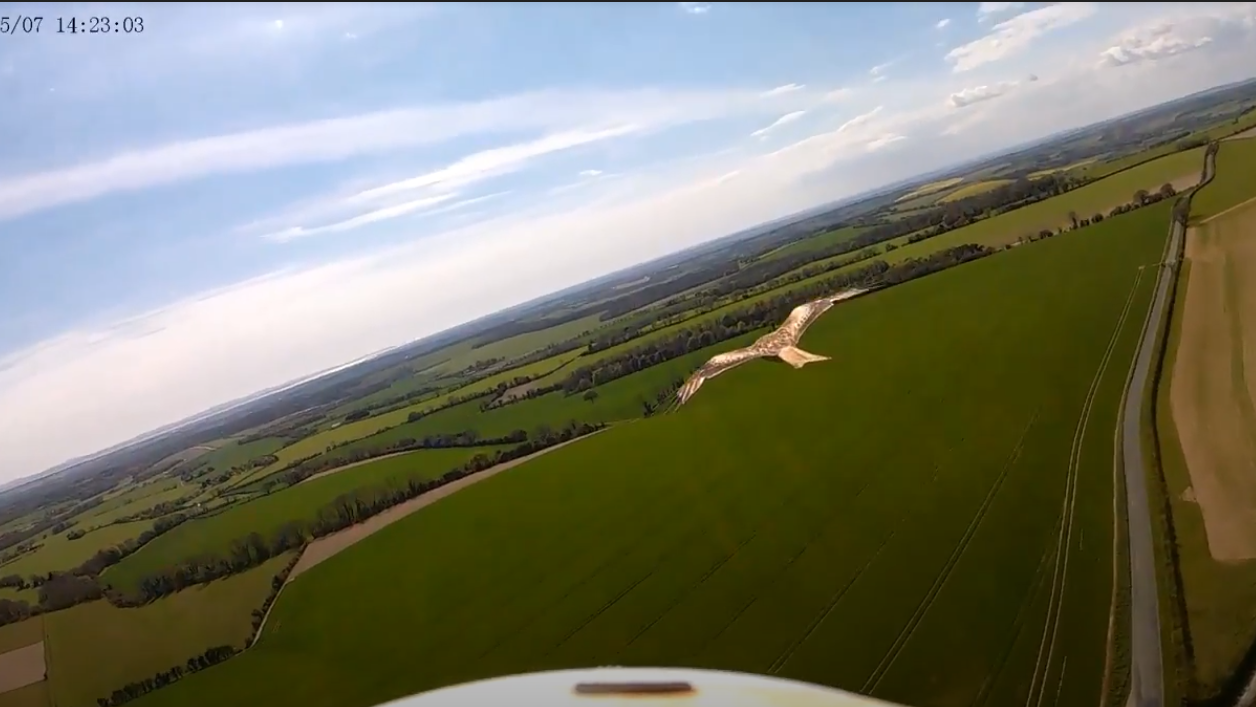
I caused lots of hilarity at one midweek flying session when I discovered that my beloved Multiplex transmitter was as dead as a dodo. As you can imagine there was great delight and lots of “bl**dy Multiplex” type comments, especially from the Spektrum pilots! I must admit I was rather concerned until I remembered that the previous flying session had been ended by a heavy rain shower and I had packed up very quickly and had obviously left my tx switched on…operator error! Fortunately fellow Multiplex flier Captain Slow allowed me to set up my Sukhoi on his transmitter and with a quick bind I was up and flying. When I returned home and charged my transmitter the screen showed the last model flight time as 99 mins & 59 seconds, thus proving I had forgotten to switch it off.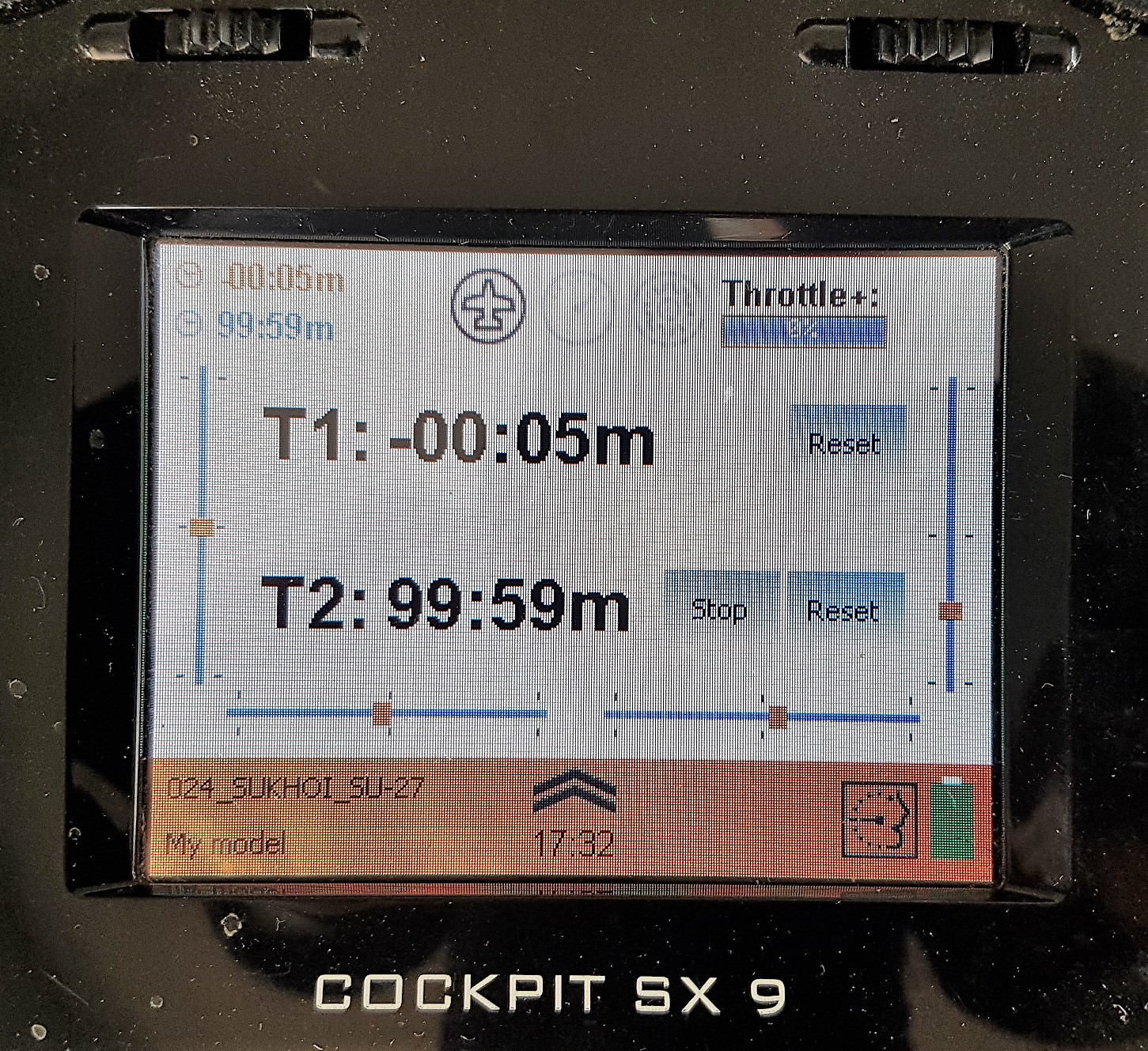 Nowadays all cars have USB charge points so if I’d had a charging lead in the car I would have been alright. I’ve put a lead in there now, that will ensure I’m never stupid enough to leave the transmitter on again!
Dwayne Pipe was recently given a voucher to go indoor skydiving at iFly in Basingstoke, something I did myself a couple of years ago. Basically the set-up is a transparent vertical 14ft diameter wind tunnel with a mesh ‘floor’ to stop you falling to the bottom if the fans stop. The average height that you ‘fly’ at is about 6ft above the mesh but you can go up to a max 39ft. An instructor is in the tunnel the whole flight to keep the student in the right place and stable. The air speed is controlled by an operator who is watching what’s happening the whole time and they adjust the speed from between 90mph and 180mph. The experience begins with a pre-flight briefing where you’re taught what to expect, what to do, and basic hand signals. Then it’s time to get kitted up, all the necessary gear is included in the price of the flights. The controller raises the air speed when signalled by the instructor and up you go, weird!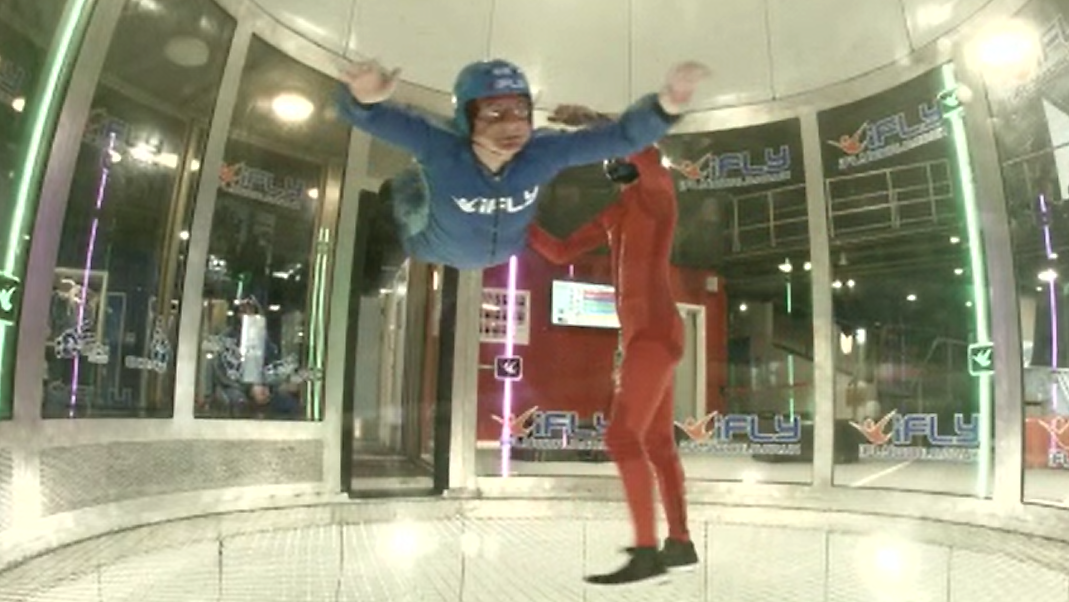 Dwayne said that it was over too quickly but as you can see he really enjoyed the flights. To see a short video of Dwayne Pipe flying in a drainpipe click HERE He gets better when he swaps his blue flying suit for a red one…
Chas has various building projects underway at the moment including a Westland Lysander but one that he has just finished was converting an eleven year old Wot 4 Classic to electric power. What’s a Wot 4 Classic I hear you ask?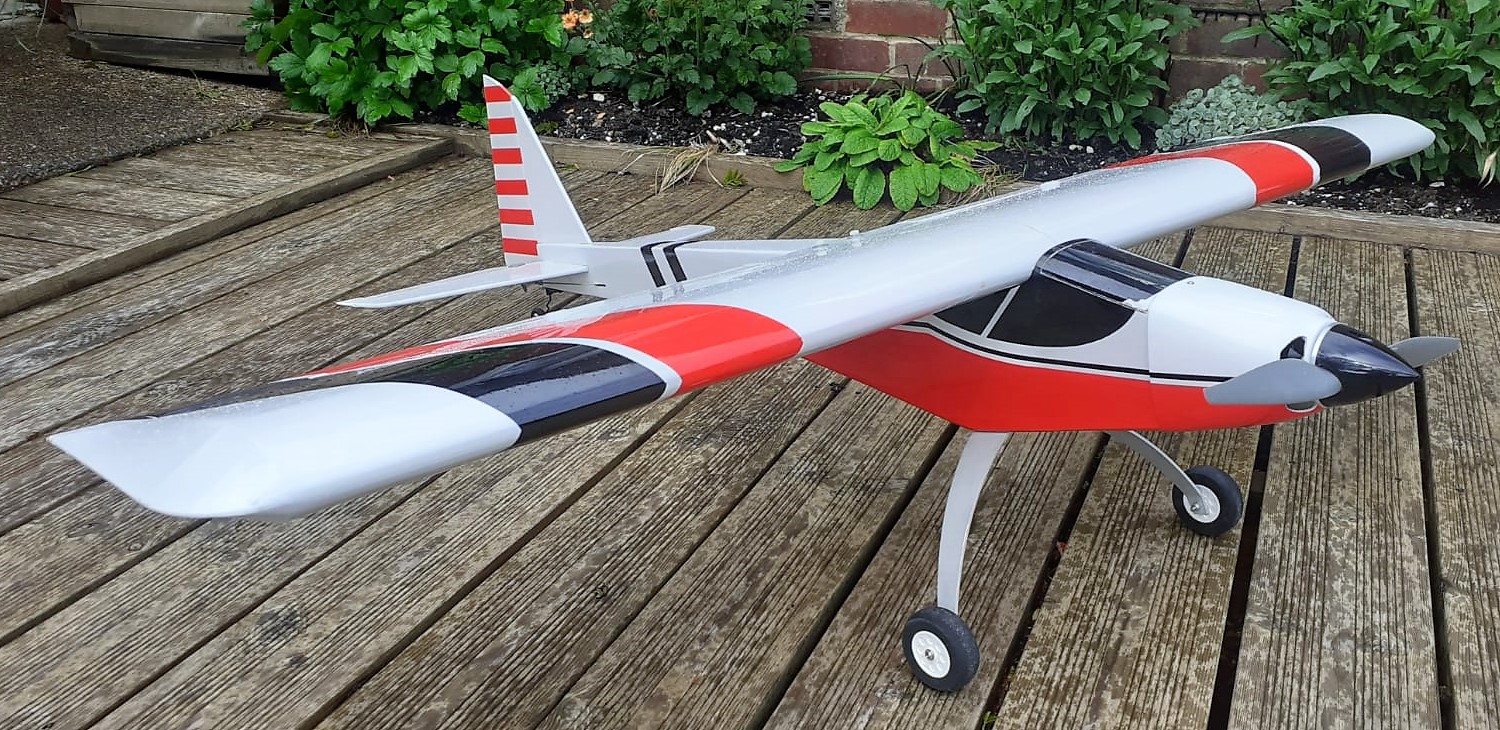 From the net: The Classic uses a 52’’ span parallel chord wing similar to the Wot 4 Mk2 but with the Mk3 fuselage, especially suited to slow fun type flying. The rakish swept vertical tail surfaces, underfin and increased lower rudder area greatly enhance flick manoeuvres and knife edge looping capability. Structurally the fuselage has undergone a major redesign, incorporating die-cut ply doublers, formers and integral servo tray, all slotted for ease of assembly. The front bulkhead can be installed in a choice of positions to accommodate any engine within the specified range.
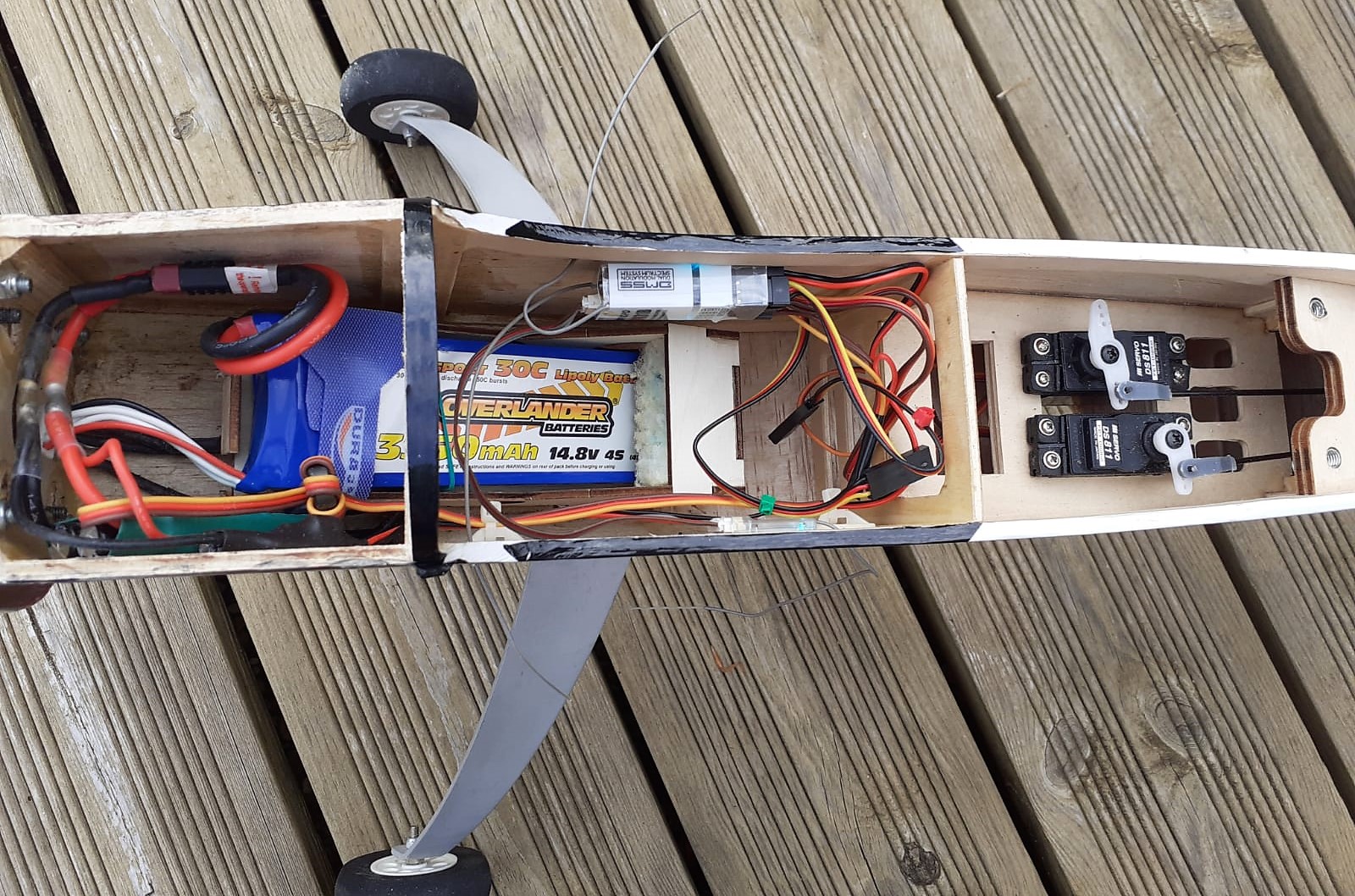 Chas’s plane started life with an OS46FX fitted but only had a couple flights in that guise and fortunately he hadn’t got round to cutting holes in the cowl to fit the I/C engine. So the old engine has now been replaced by a 595kv brushless motor spinning a 13 x 8 propeller. Power will be provided by a 4 cell 3300mAh lipo connected to a 60A speed controller and Chas has also fitted a 5A UBEC to power the JR receiver and four standard size digital servos.
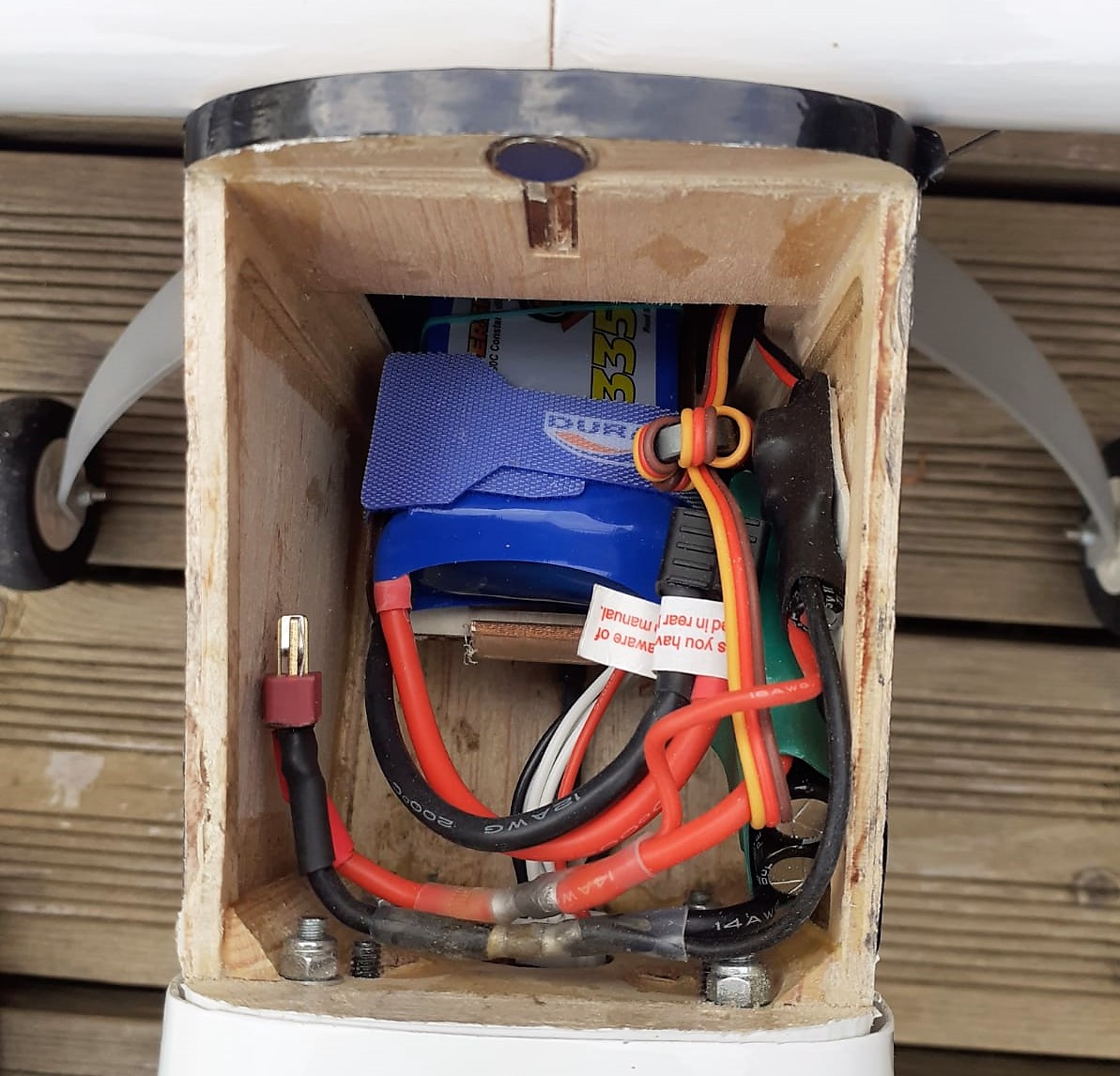 He has made the top of the old tank bay removable so he can swap batteries without having to remove the wings.
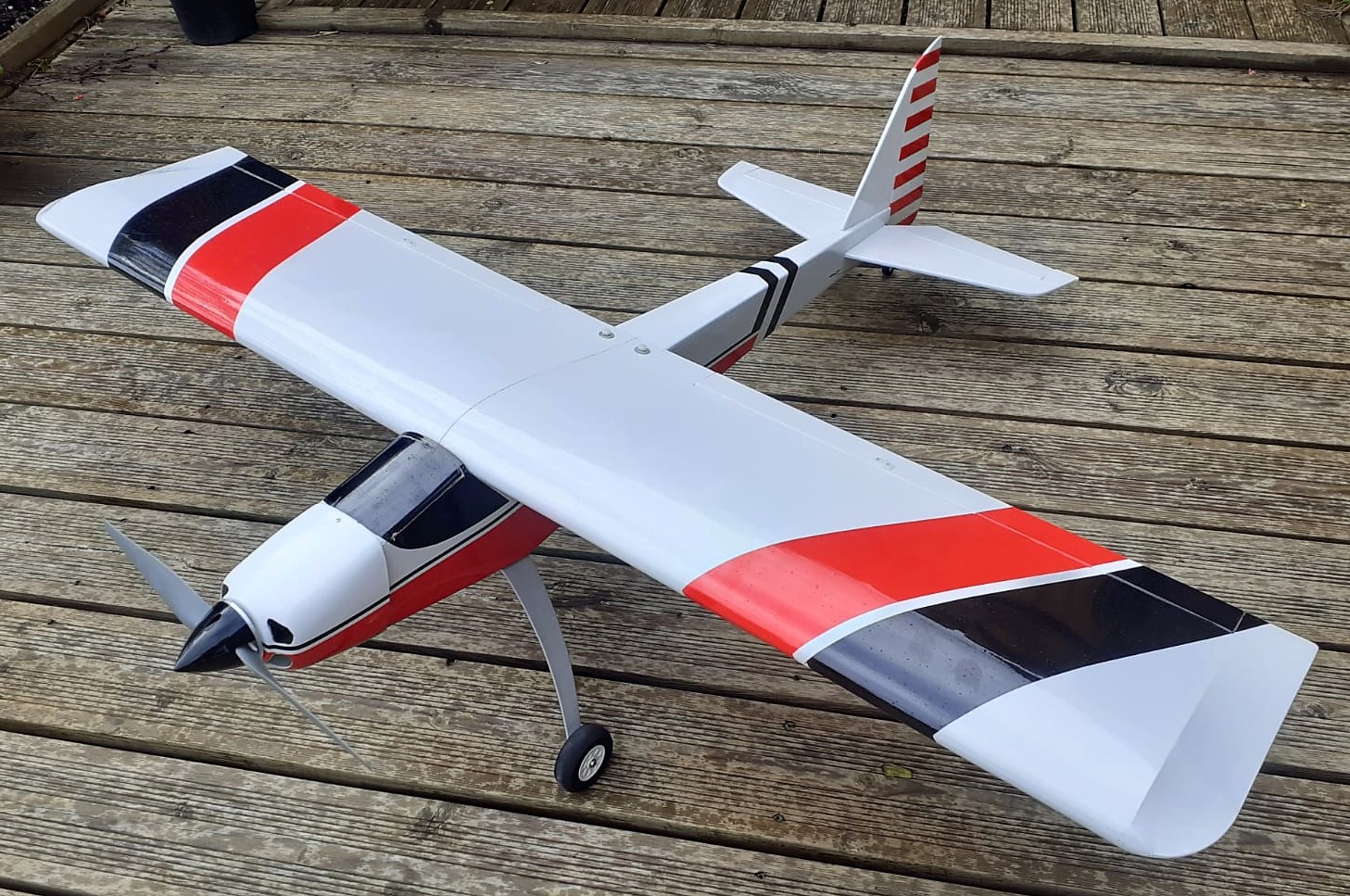 It all looks very smart and should go well with that power set-up. I can’t wait to see Chas doing knife edge loops.
A Wot 4 that’s also seen a transformation but for a different reason belongs to Bob the Builder.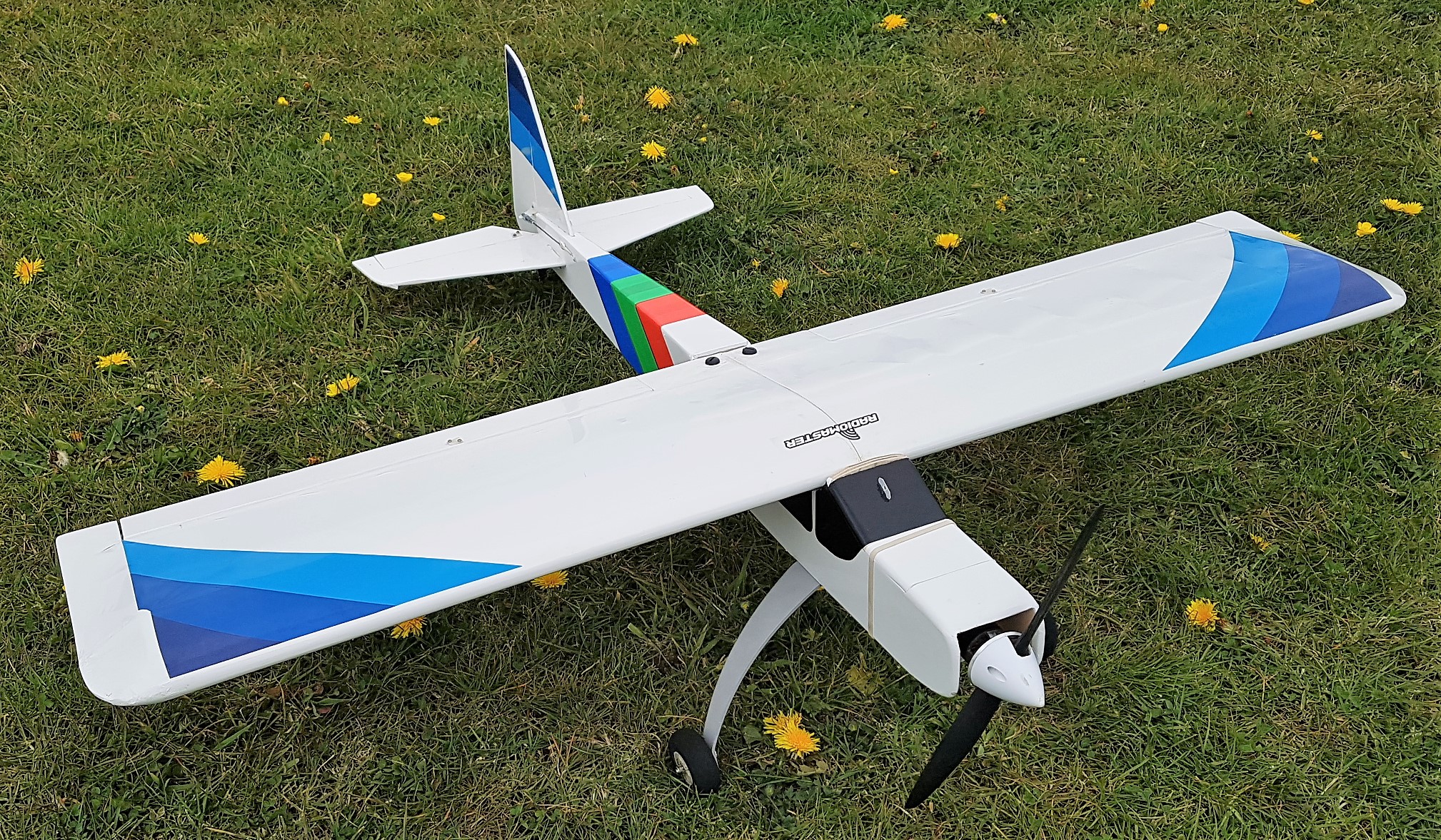
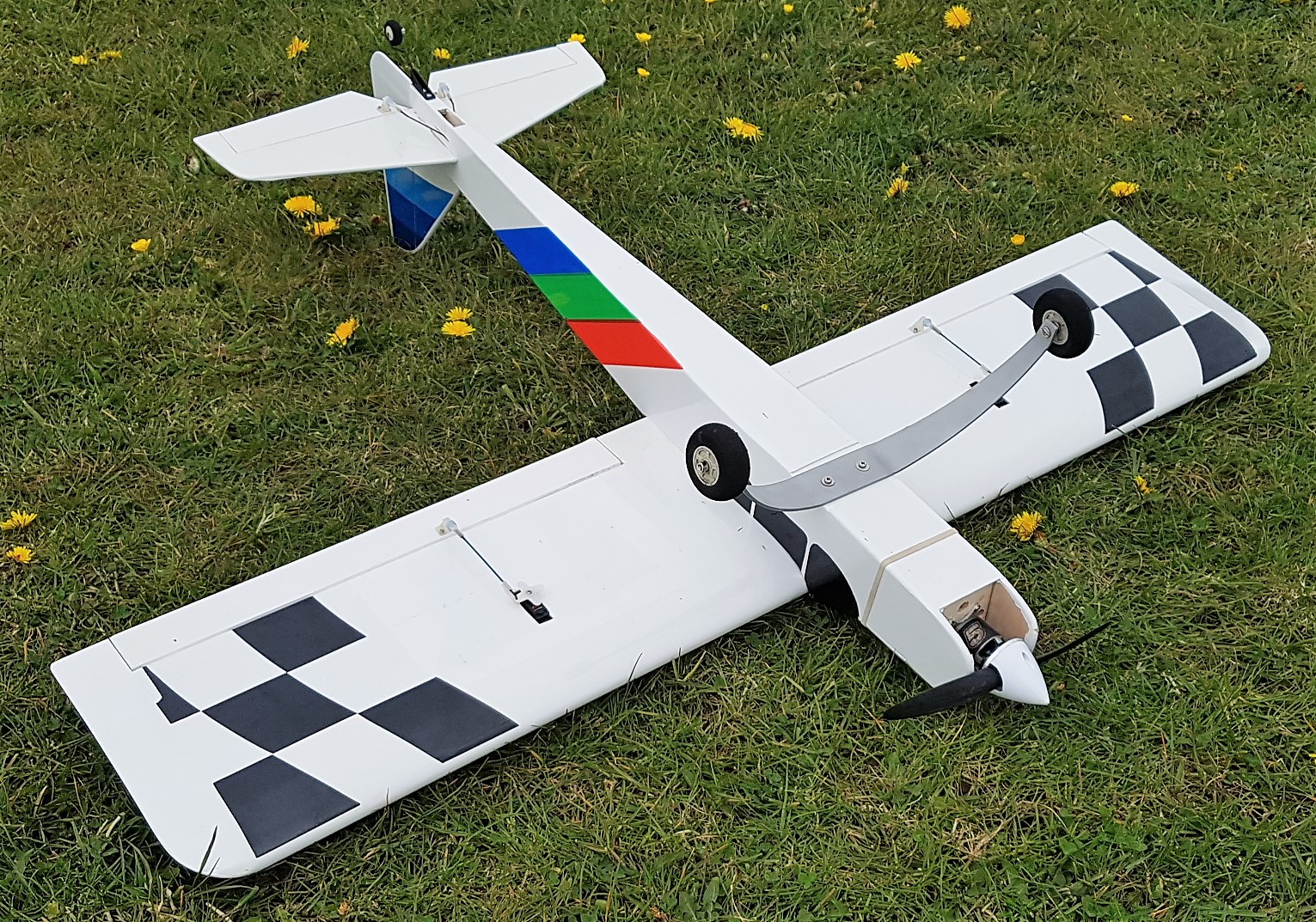 I’ve no idea what version his is (there are so many nowadays) but it’s now got a new fuselage. Bob’s alter ego Basher Bob ‘modified’ the original one rather badly so he’s built his own version replacement fuselage.
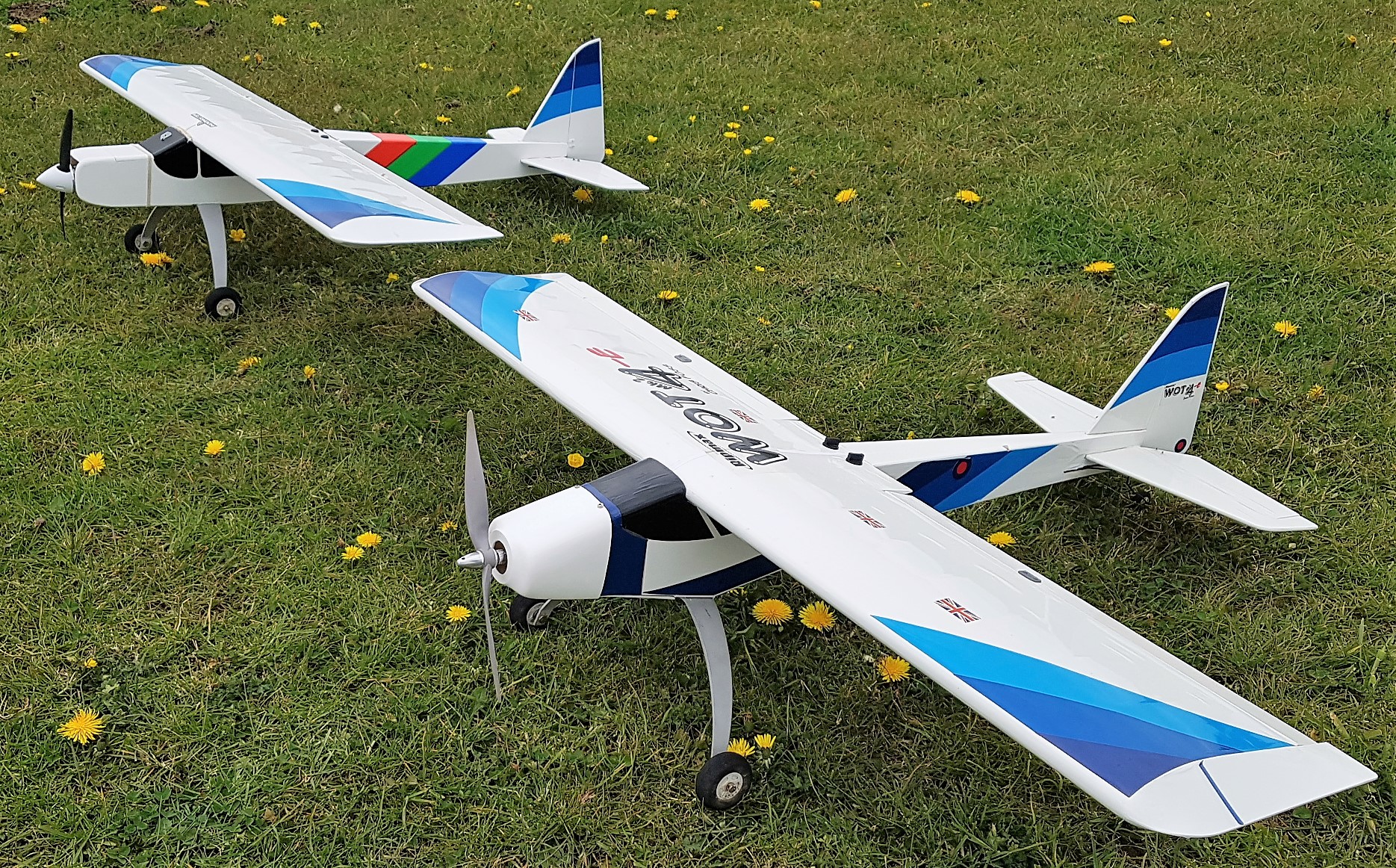 It looks fine and seems to fly just as well as the others although I doubt we’ll be seeing it doing knife edge loops!
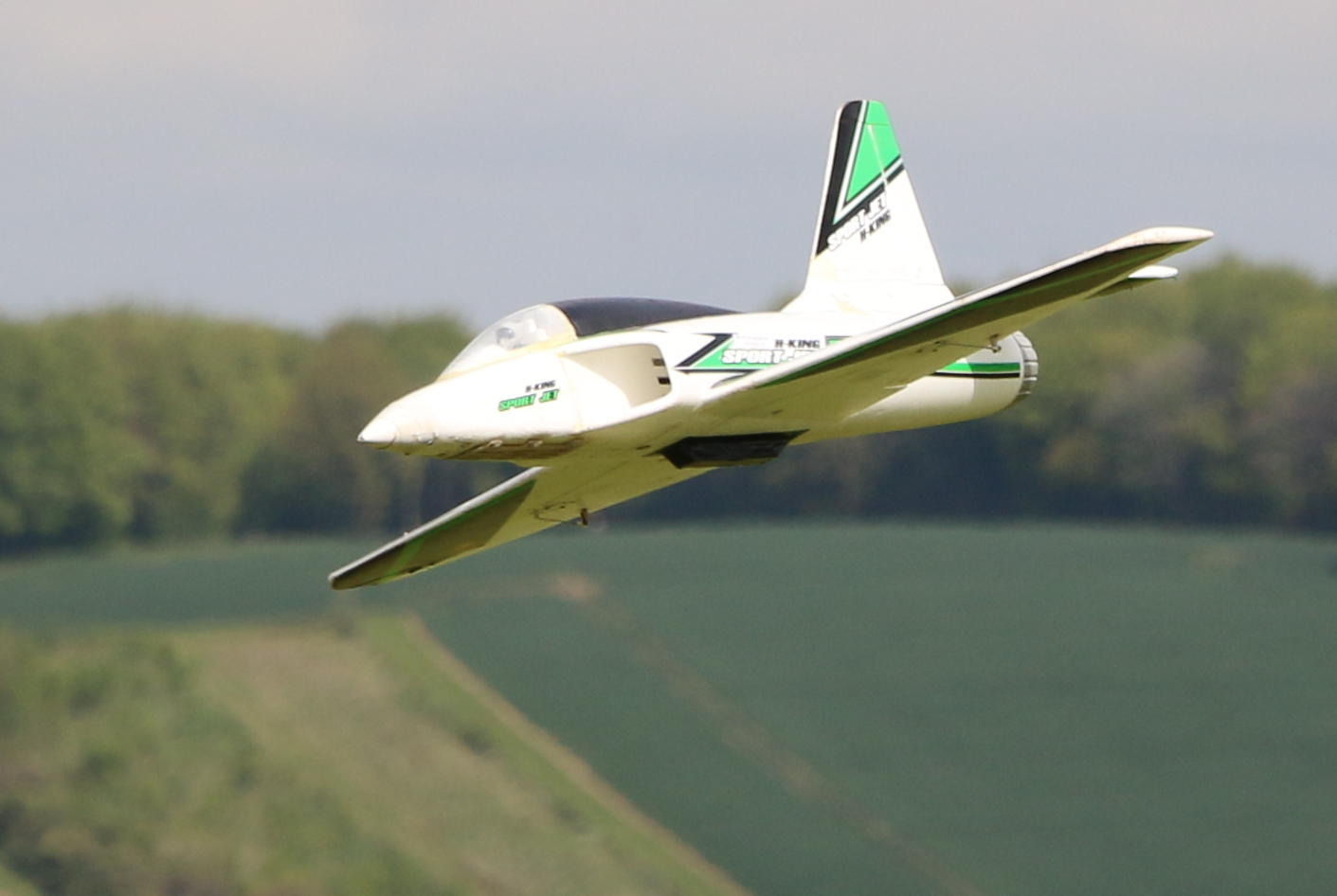
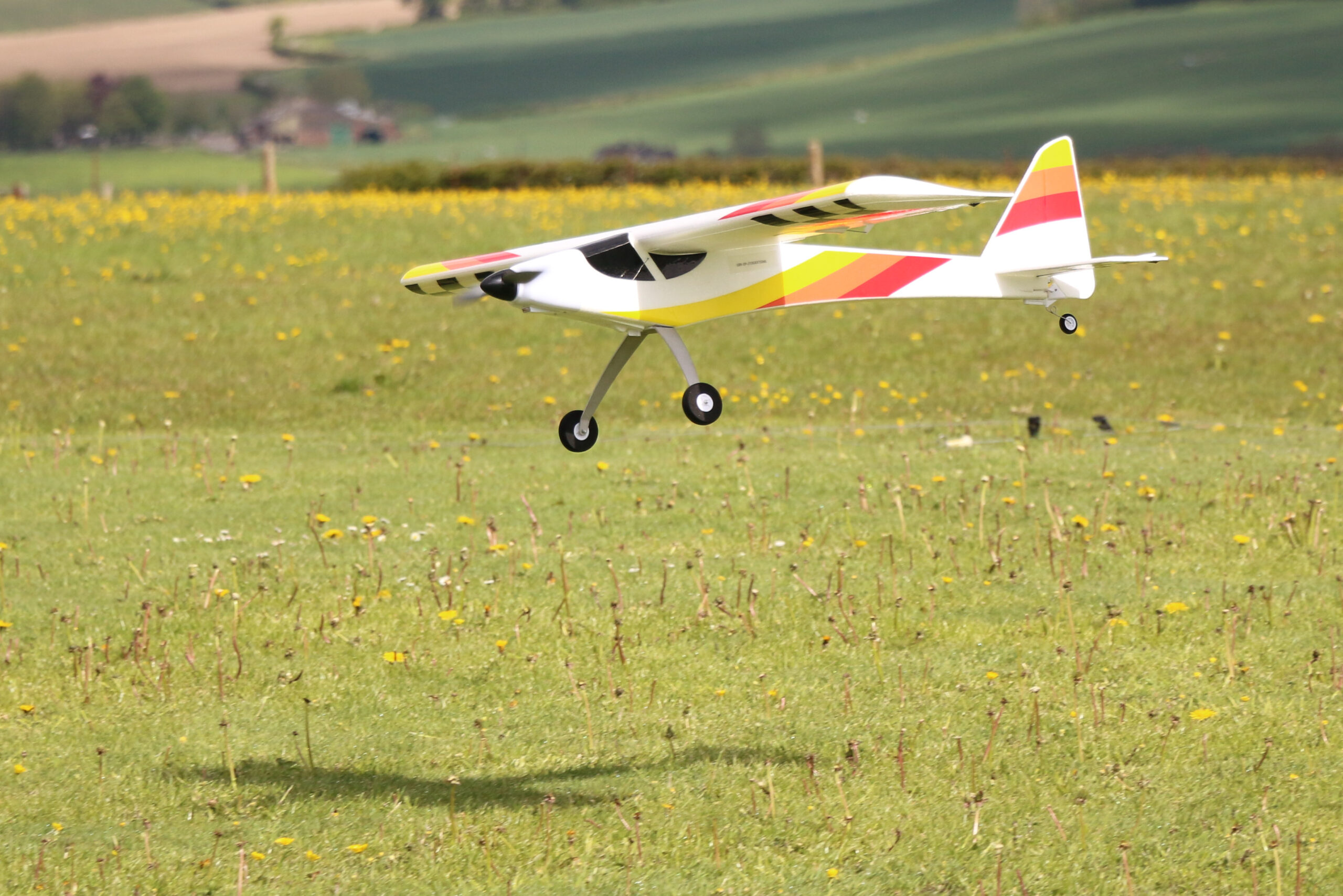
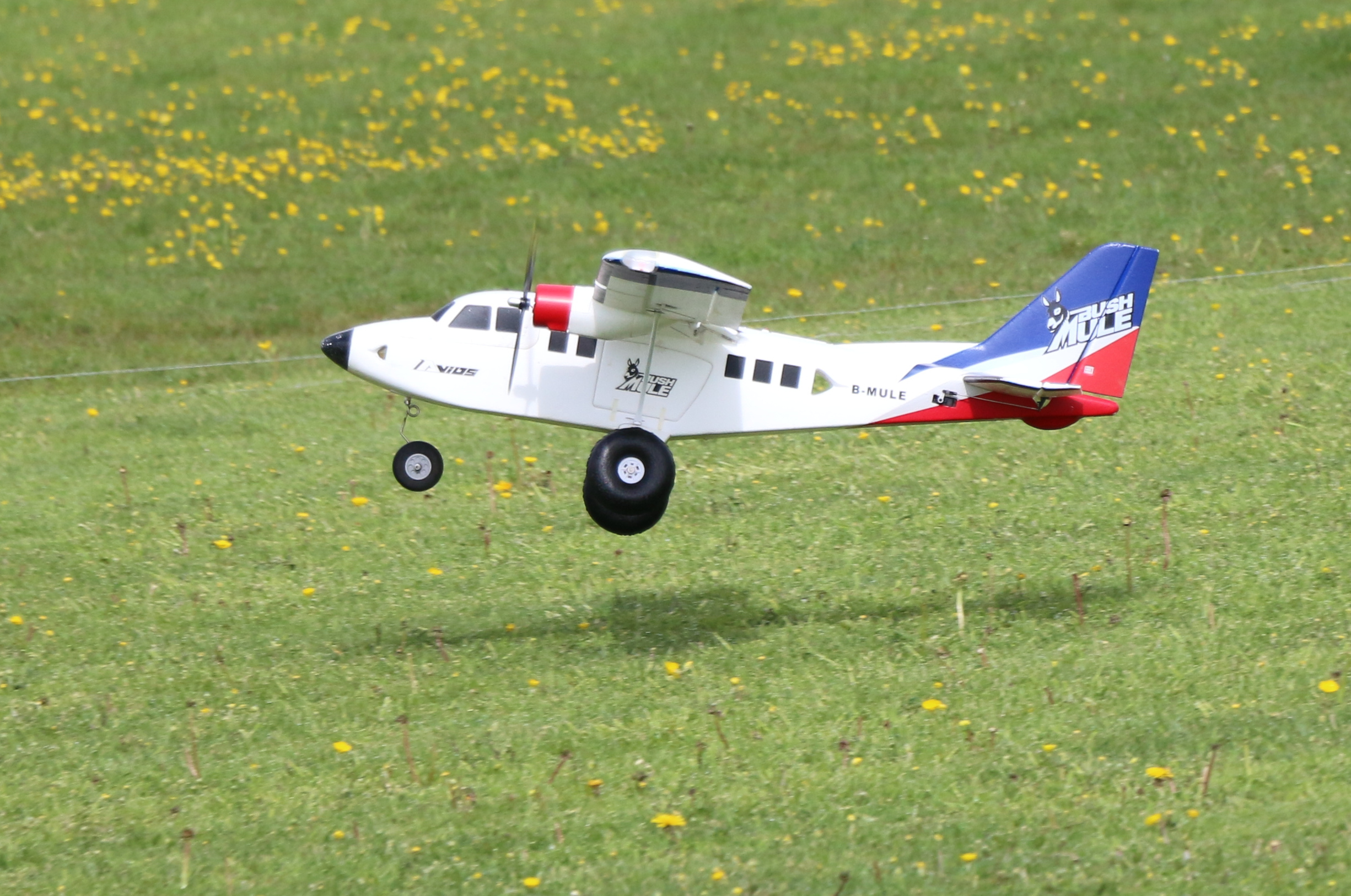
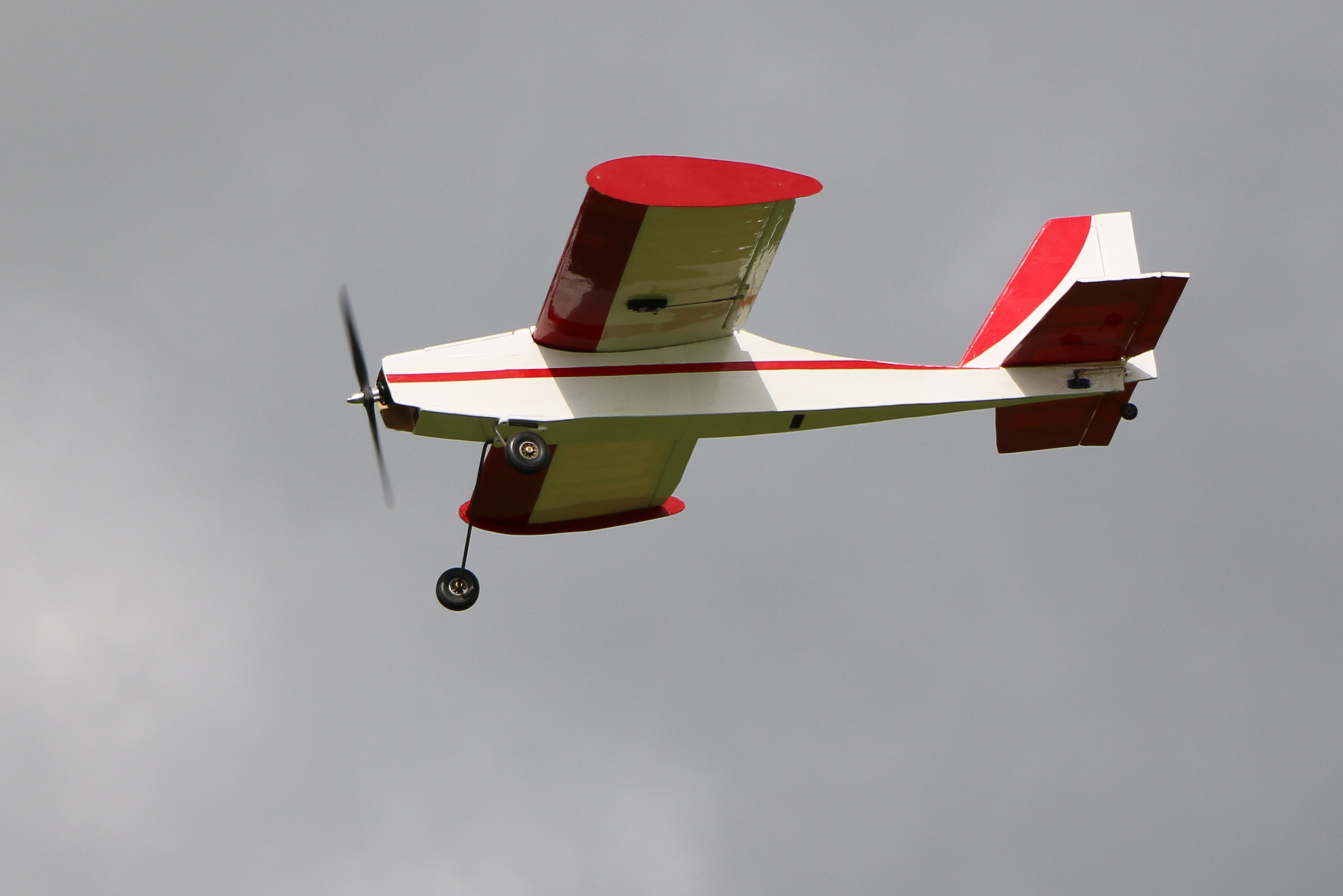
Kryten took som excellent flying shots in May including an absolutely superb one of Dougal’s inverted Sport Jet: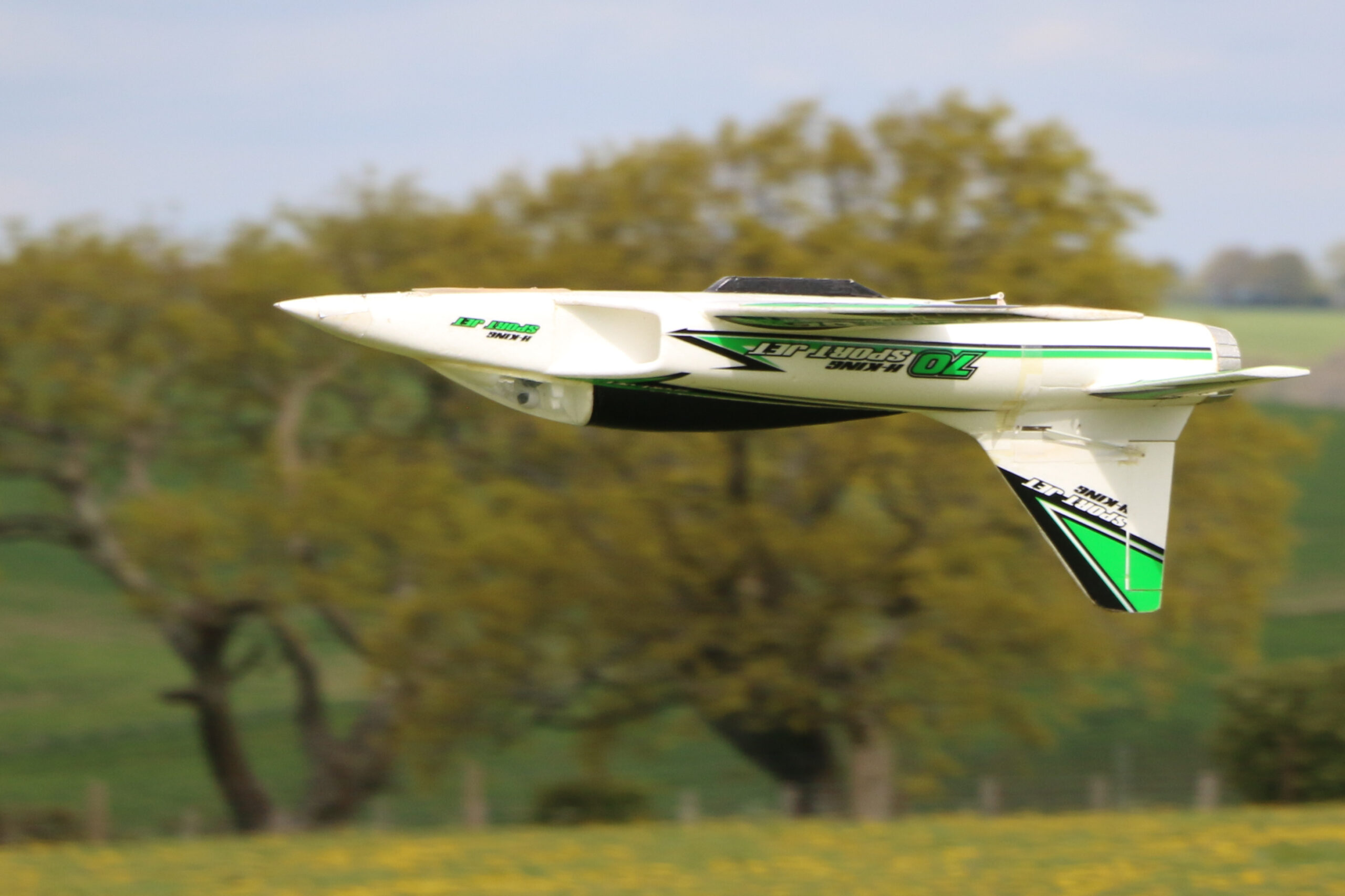
This month’s video was shot by myself, Dougal Entendre, Captain Slow, and Bob the Builder. Please watch the video full-screen, it’s so much better with small models flying around.If the video won’t play for you please click HERE
My skydiving instructor would always take the time to answer any of our stupid first-timer questions. One chap asked, “If my chute doesn’t open, and my reserve doesn’t open, how long before I hit the ground?” The instructor looked at him and, in perfect deadpan, answered… “The rest of your life.”
Colin Cowplain
Patch News – April 2021
After so many months of little or no flying due to various lockdowns we were able to fly for a full month in April. I think it’s fair to say that we made the most of the decent weather and lots of members flew, some for the first time in many months. Fortunately the bullocks were moved out of the field on 4th April which made things easier for us.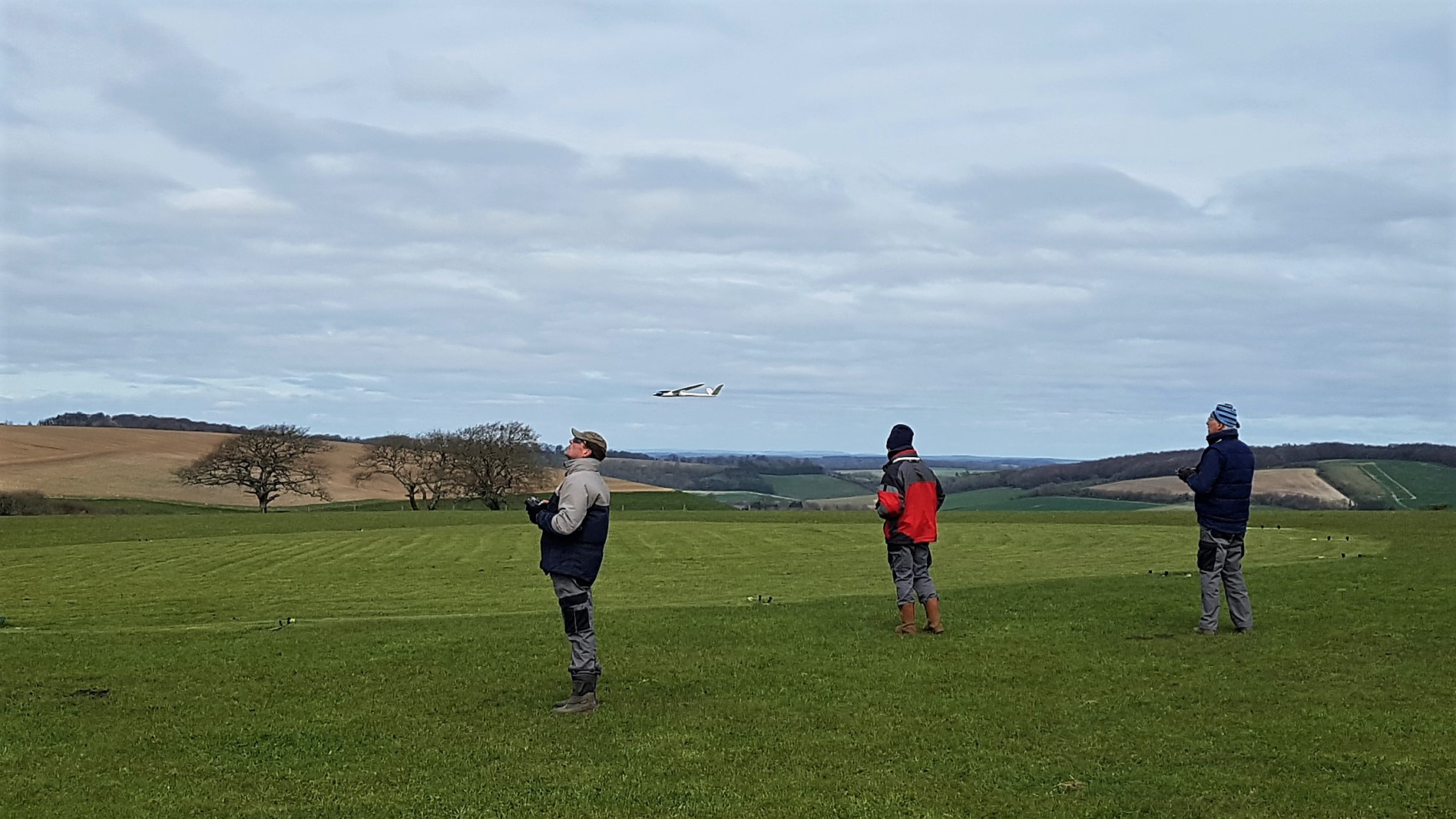 Less fortunately they returned on 20th April while we were flying but took little notice of us as they know we won’t feed them! Thanks to the maintenance work that was continued by several members (when it was allowed) the patch is now in great condition and ready for what will hopefully be a long and busy summer with lots of flying.
In the February Patch News I featured the launch ramp and bungee system that Dwayne Pipe had constructed to provide a safe and reliable way of launching his edf models and this month he was finally able to test the system. Somewhat appropriately Dwayne Pipe has made the ramp from several pieces of small diameter drain pipe.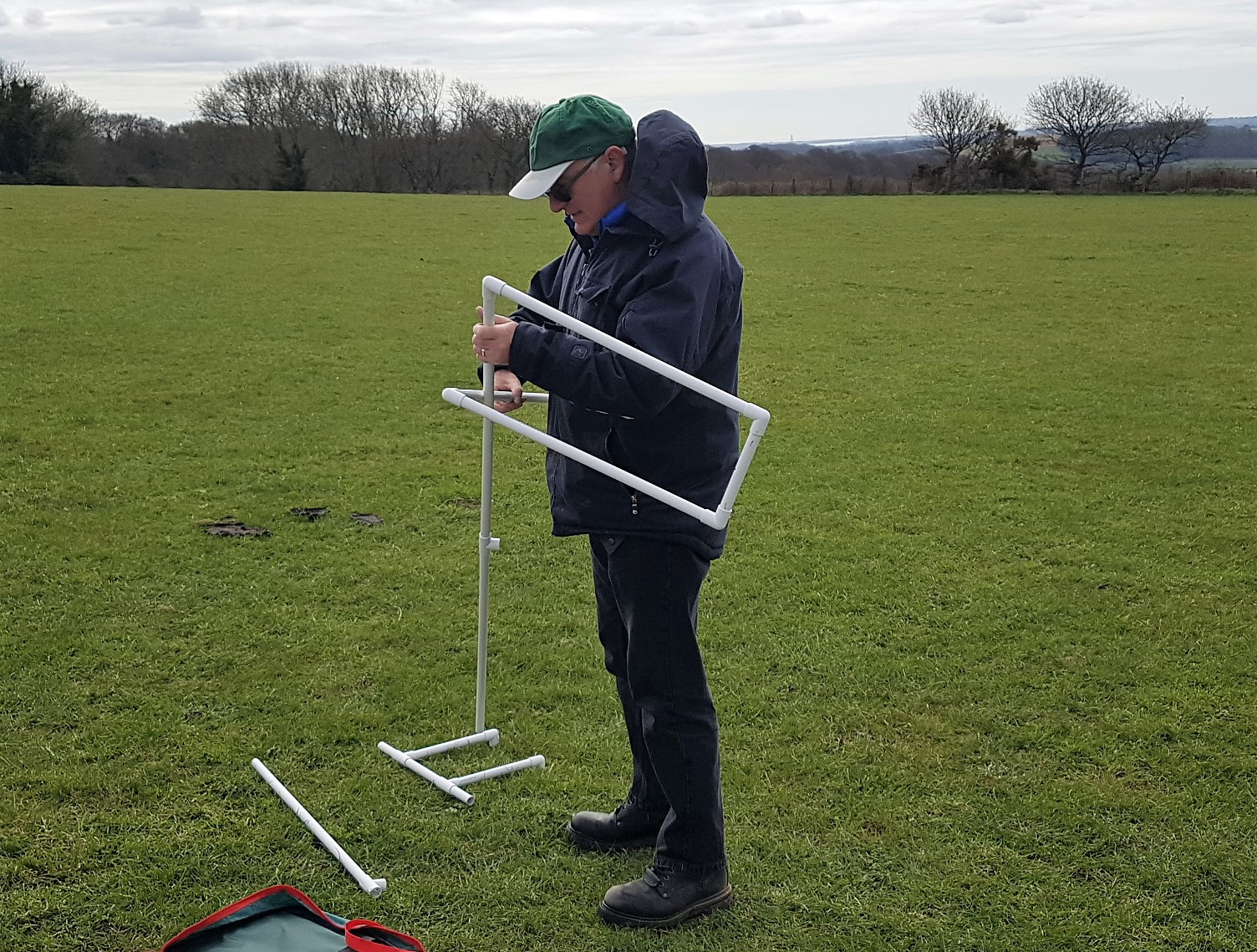
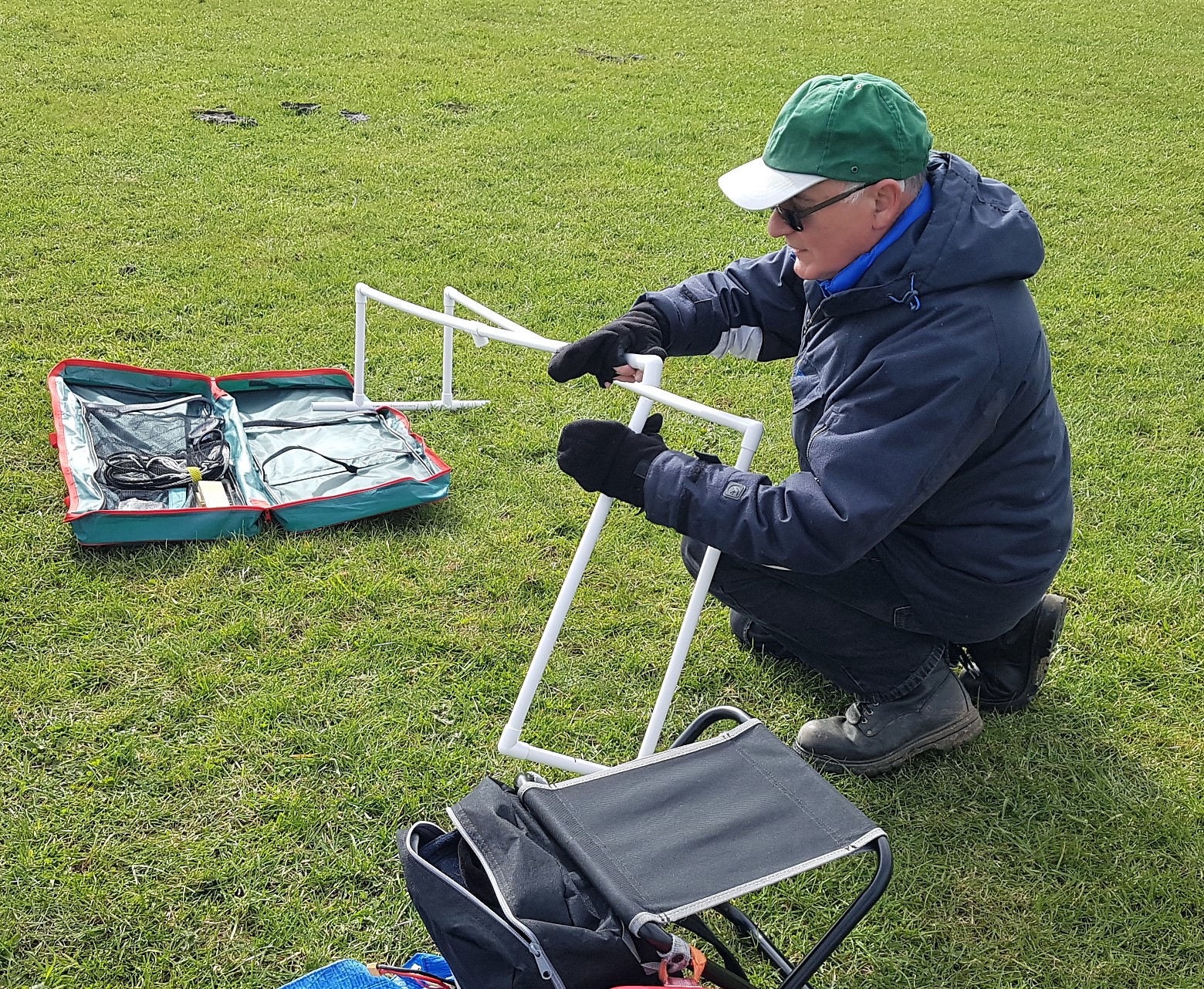 There was much frivolity and mickey taking as he put all the pieces together and it seemed to take an age but eventually it was set up and ready to go. Dwayne’s TSR2 was chosen as the guinea pig and mounted on the ramp.
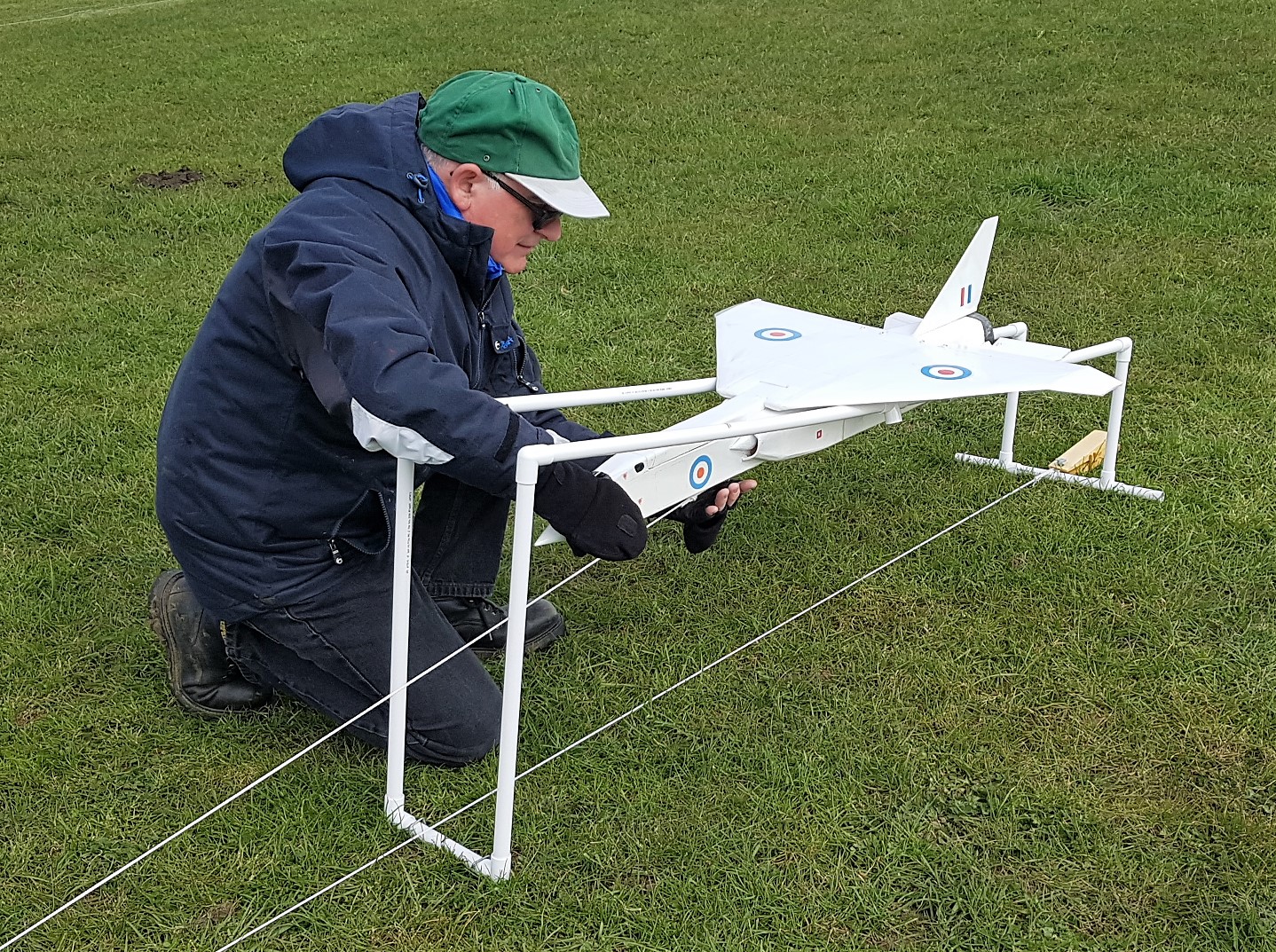 A great cheer went up when it was safely launched on the first attempt. The tension was increased slightly for the second launch and that time it went away even better. You can see both launches in this months’ video.
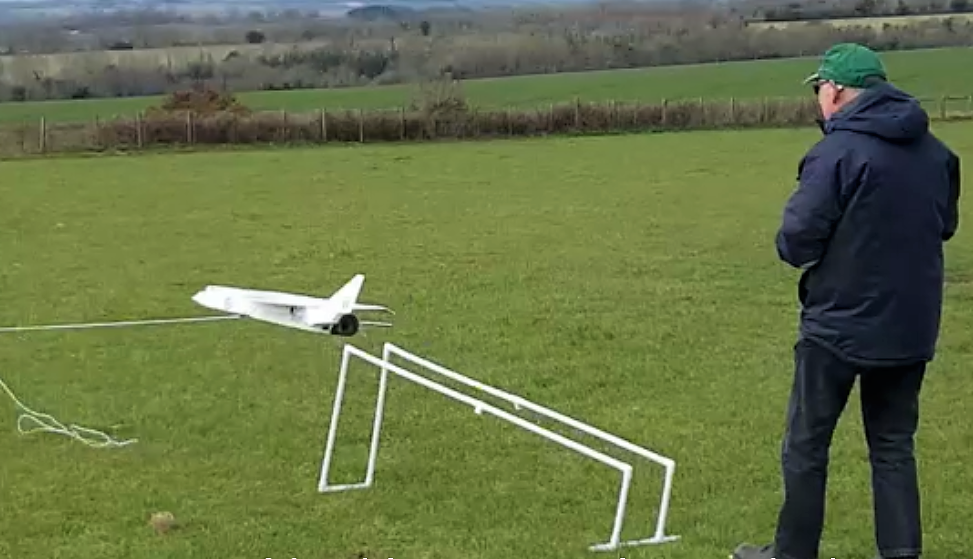 No doubt Dwayne will get quicker at setting the system up as he gets used to it and it was noticeable that the hilarity stopped and congratulations started when the system turned out to be such a resounding success.
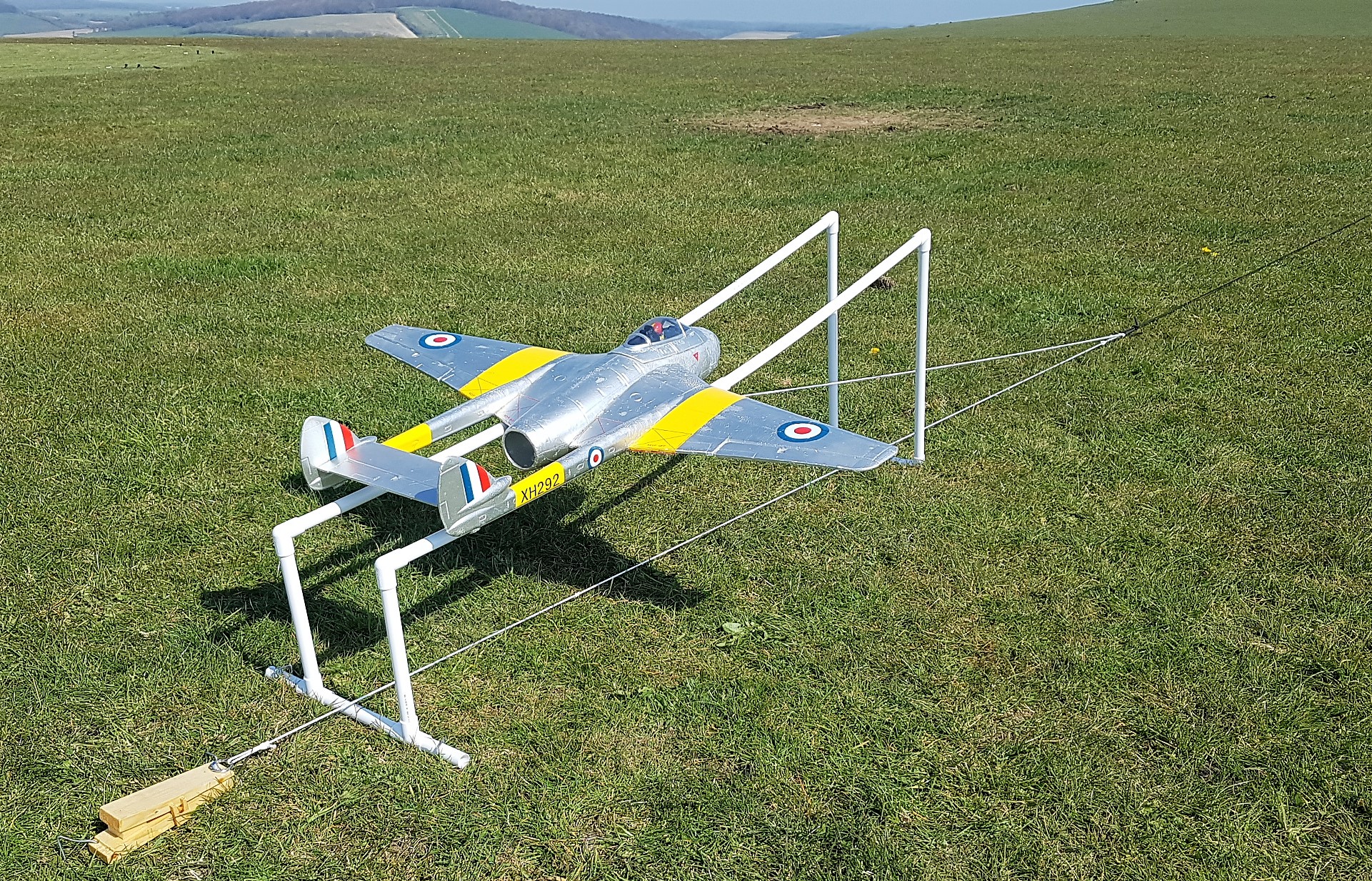 A few days later Dwayne launched his Vampire from the ramp, again with perfect results. Well done Dwayne.
While I’m on the subject of bungees, I’ve had an email from Catapult King. OK I know that was a terrible link but it’s the best I could do! Anyway Catapult wrote with a tale of woe regarding his F14 Tomcat, here’s what he said: If I ever mention an F14 again shoot me. As you can see by the picture it’s in the bin. Knowing that almost everything was going to be fixed and unreachable when completed everything was tested before gluing the final pieces of Depron in place. Having eventually put it all together and covered it was time to finish the programming. Unfortunately more issues. One of the elevator carbon fibre tubes decided to split rendering it useless. I thought fixing this was major surgery but I did it anyway. Then the rudders went juddery as if glue had dried on the hinges or the links had got dirty. Having finally finished the build the wings failed to go all the way back as easily as they had when originally tested as the Depron had warped in addition the servo now struggled.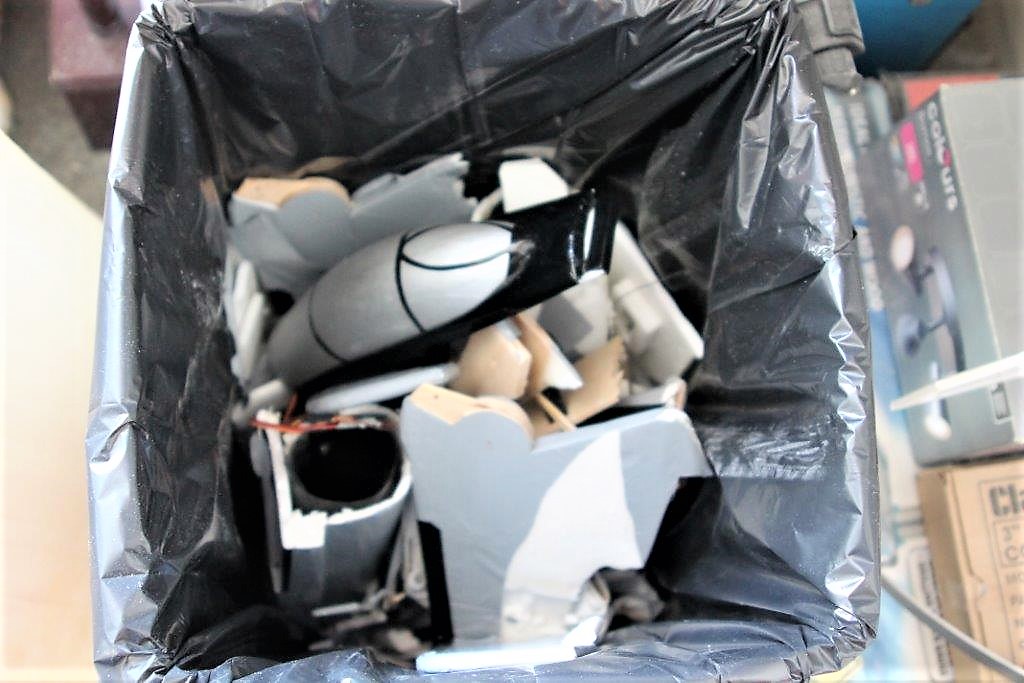 OK a bit of sanding more or less sorted that out but a meatier servo would not have gone a miss. Then the moment that finally broke the proverbial camel’s back, time for another current check (as in amps). I throttled up gently to 50% and there was enough thrust from both motors it started to slide of the workbench not bad when you think it didn’t have wheels. Then one of the motors spluttered and failed. As this was one area I could get too, I noticed one of the connections had broken but even after soldering another connector on, this motor was not going to spin. After checking the wiring, trying the ESC on the other motor successfully and various other things there was no joy. Replacing this was going to require rebuilding the entire nacelle and half the plane as there was no way just to cut it out so I’m afraid I gave up and in the bin it went. An awful lot of effort and materials gone.
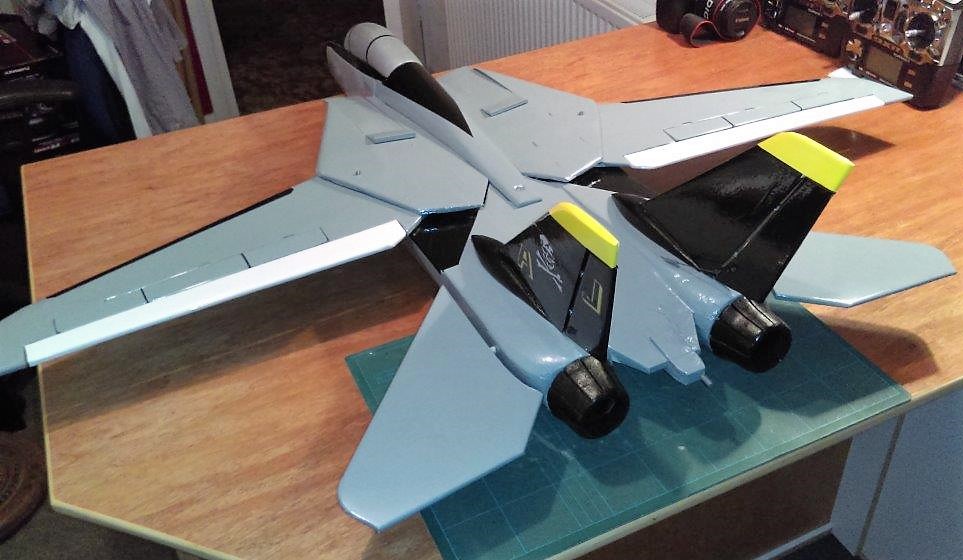 That’s very sad Catapult, it was looking so promising, but don’t be disheartened, just move on to the next project.
Young Charlie has been very unlucky to have his flying training interrupted by the various lockdowns but hopefully the worst is over now and he’ll be able to fly more regularly. He started flying with an FMS Easy Trainer which served him well for his initial training before moving on to a wooden Wot-4 that he was given by John Warren. Charlie had his 12th birthday in April and the following day he celebrated with several excellent flights with both models.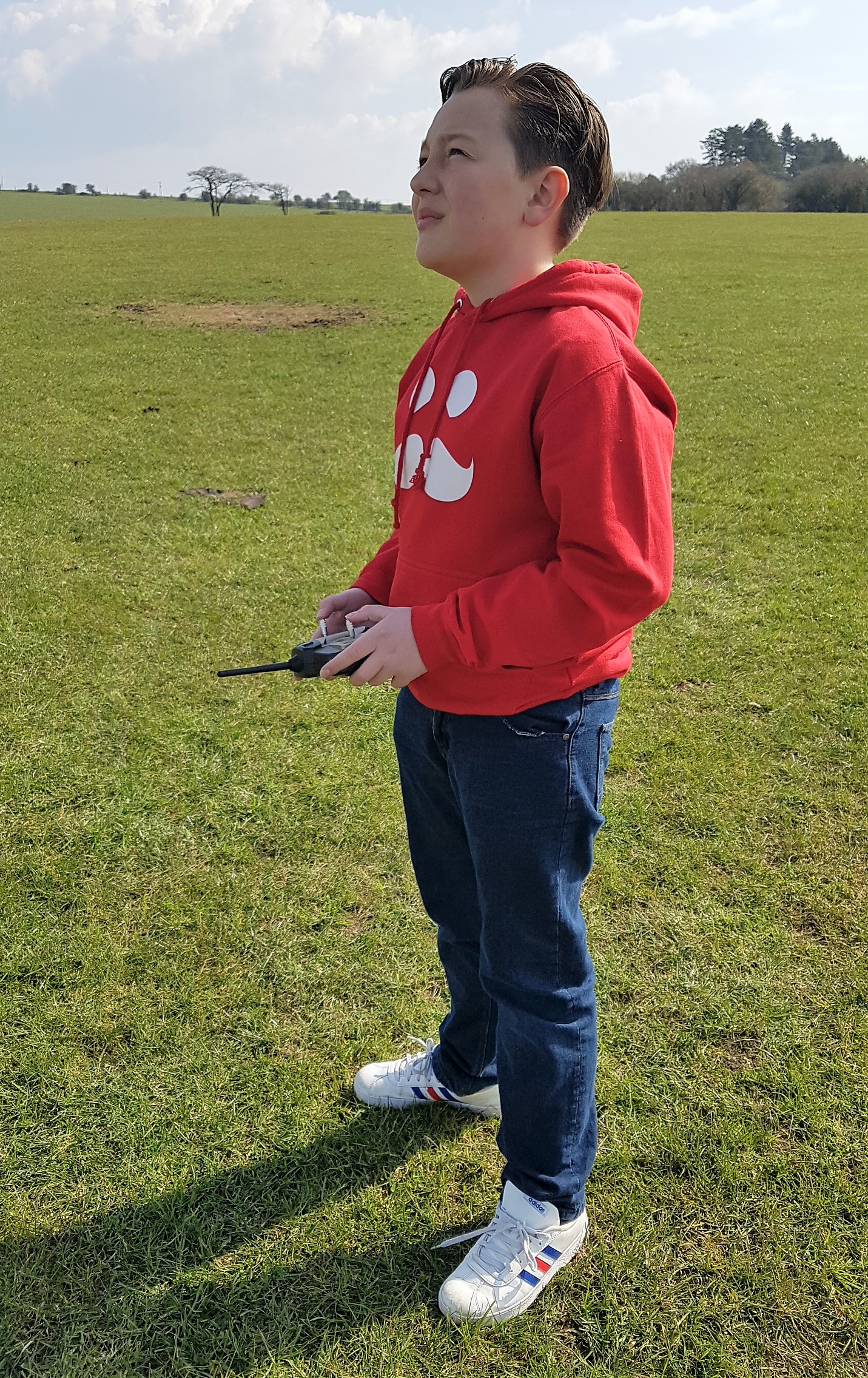 Charlie flew on several days in April and is now almost ready to take his BMFA ‘A’ test. He is competent with both models but will have to use the Wot-4 for his ‘A’ test flight as the Easy Trainer does not meet the regulations. It is too light and doesn’t have any wheels to perform the mandatory take-off but the Wot-4 is ideal.
Sadly Bob the Builder returned to his Basher Bob roots this month and managed to write off his electric twin.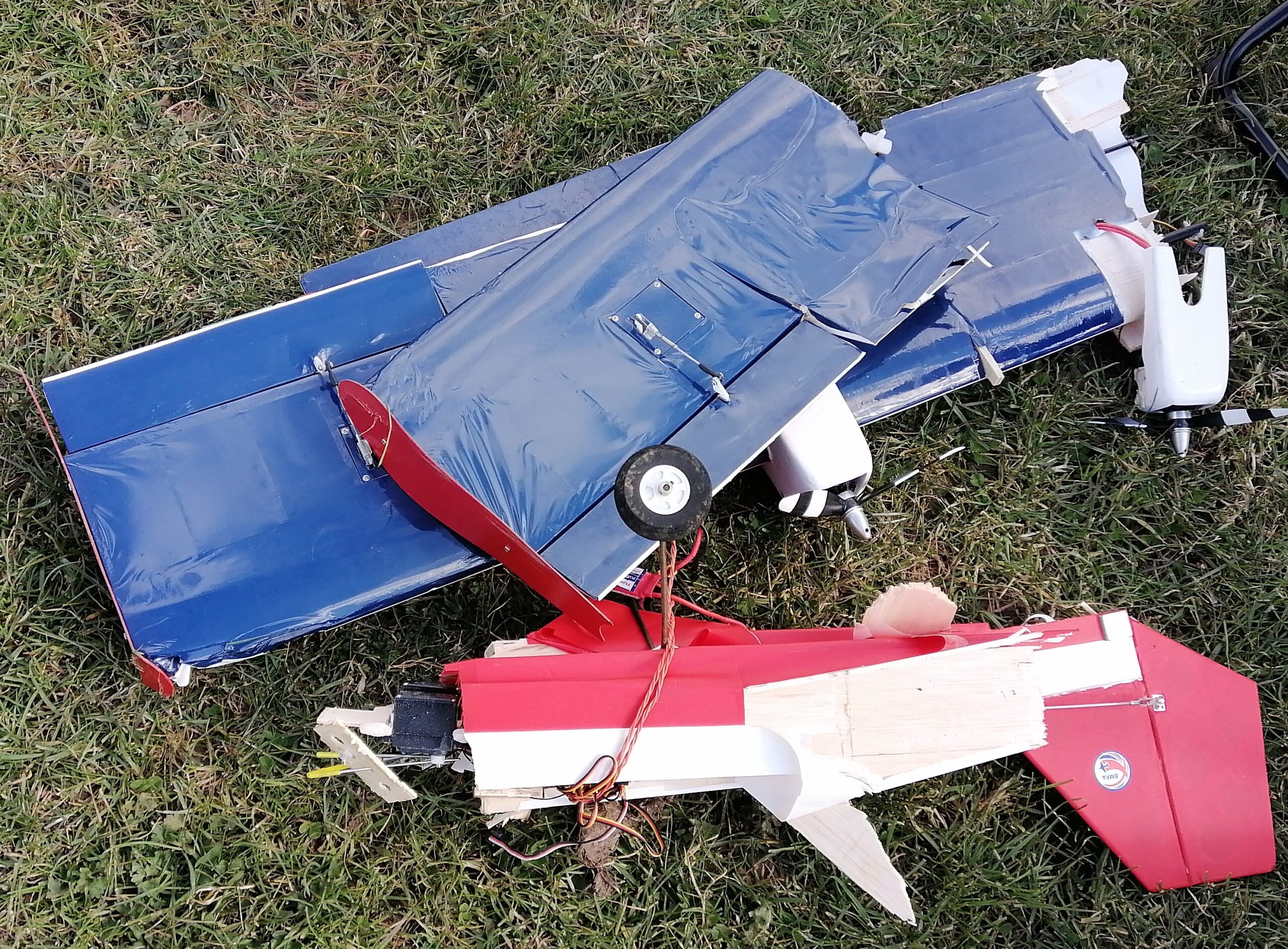 I wasn’t present at the time but Dougal Entendre tells me Basher suddenly shouted that he’d lost control but the model crashed before anyone could help. Basher had an on-board video camera running at the time and listening to the footage later Basher thinks one motor was playing up. That would obviously cause problems with asymmetric thrust and make control very difficult. I know that Basher had been trying to set up the asymmetric throttle control on his new RadioMaster transmitter so maybe that was a factor, he should have stuck with Multiplex!
During one midweek flying session Dougal and I had a little impromptu low inverted pass competition. We all know that low inverted passes are Dougal’s signature move but quite obviously I was the winner this time.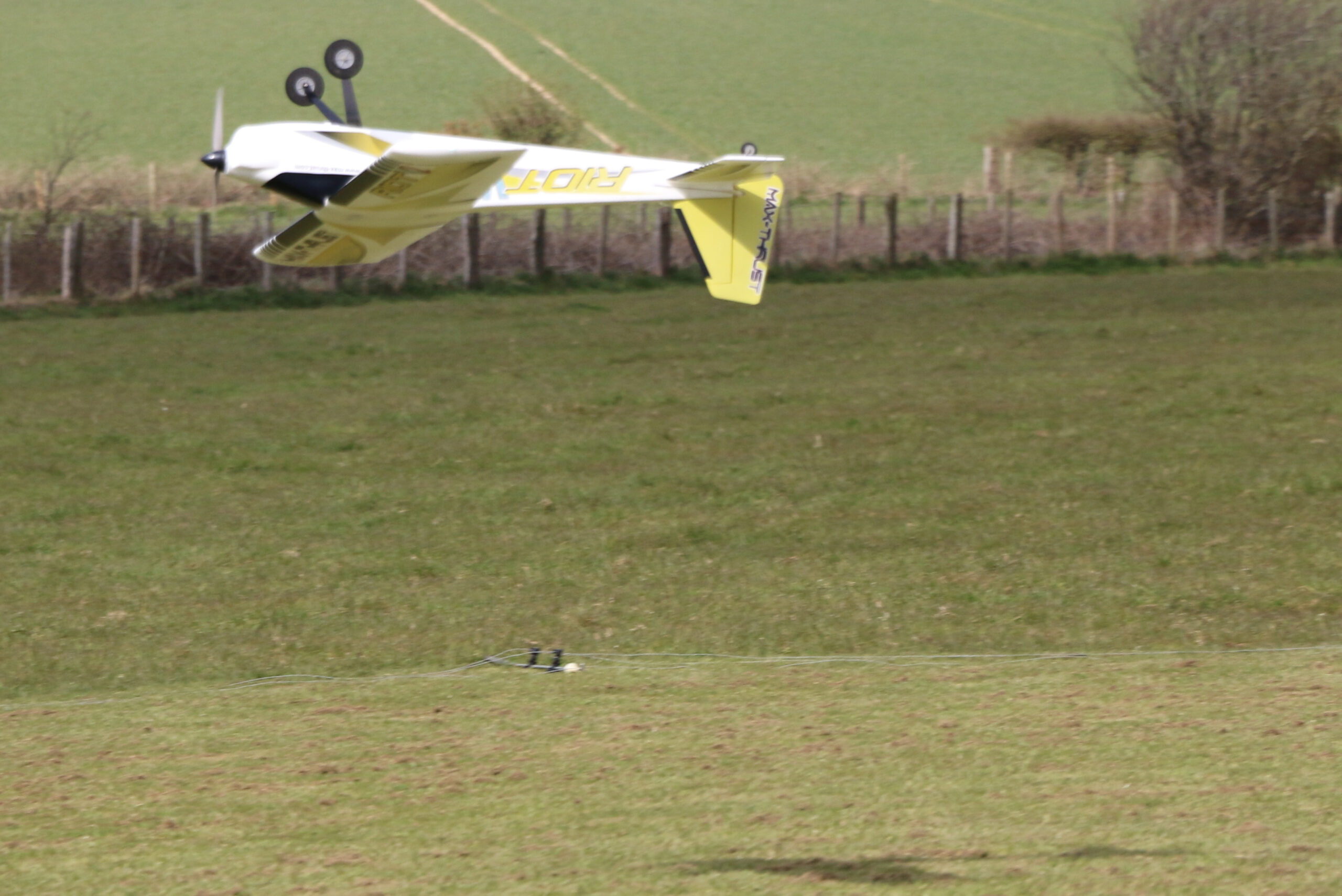
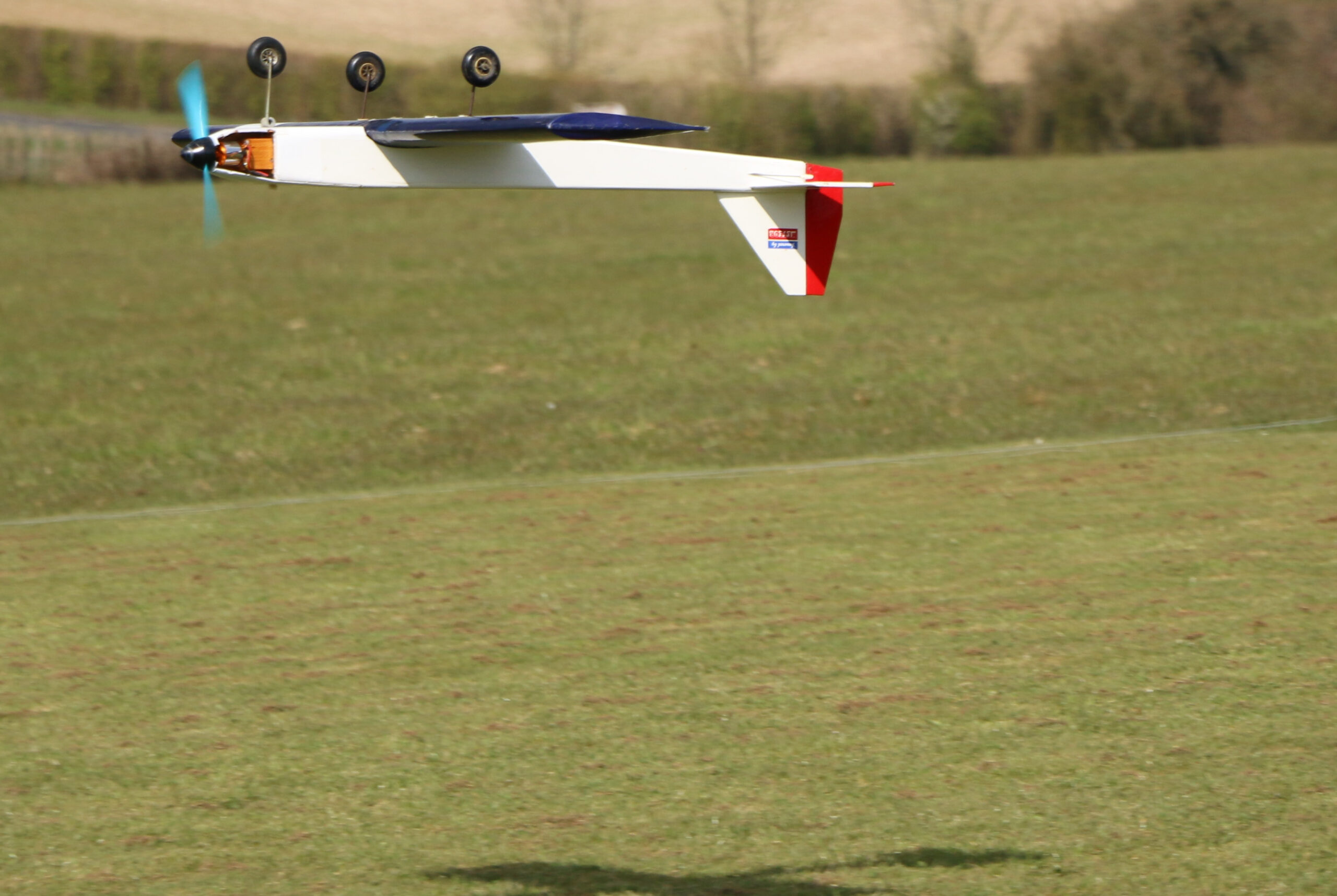 Why obviously I hear you ask… because I write Patch News of course! Fortunately Kryten was on hand and has been able to provide photographic evidence so you can decide for yourselves who really won. Some of the more devious members said I would simply doctor the photos to make it look as if I’d won whatever the truth really was…
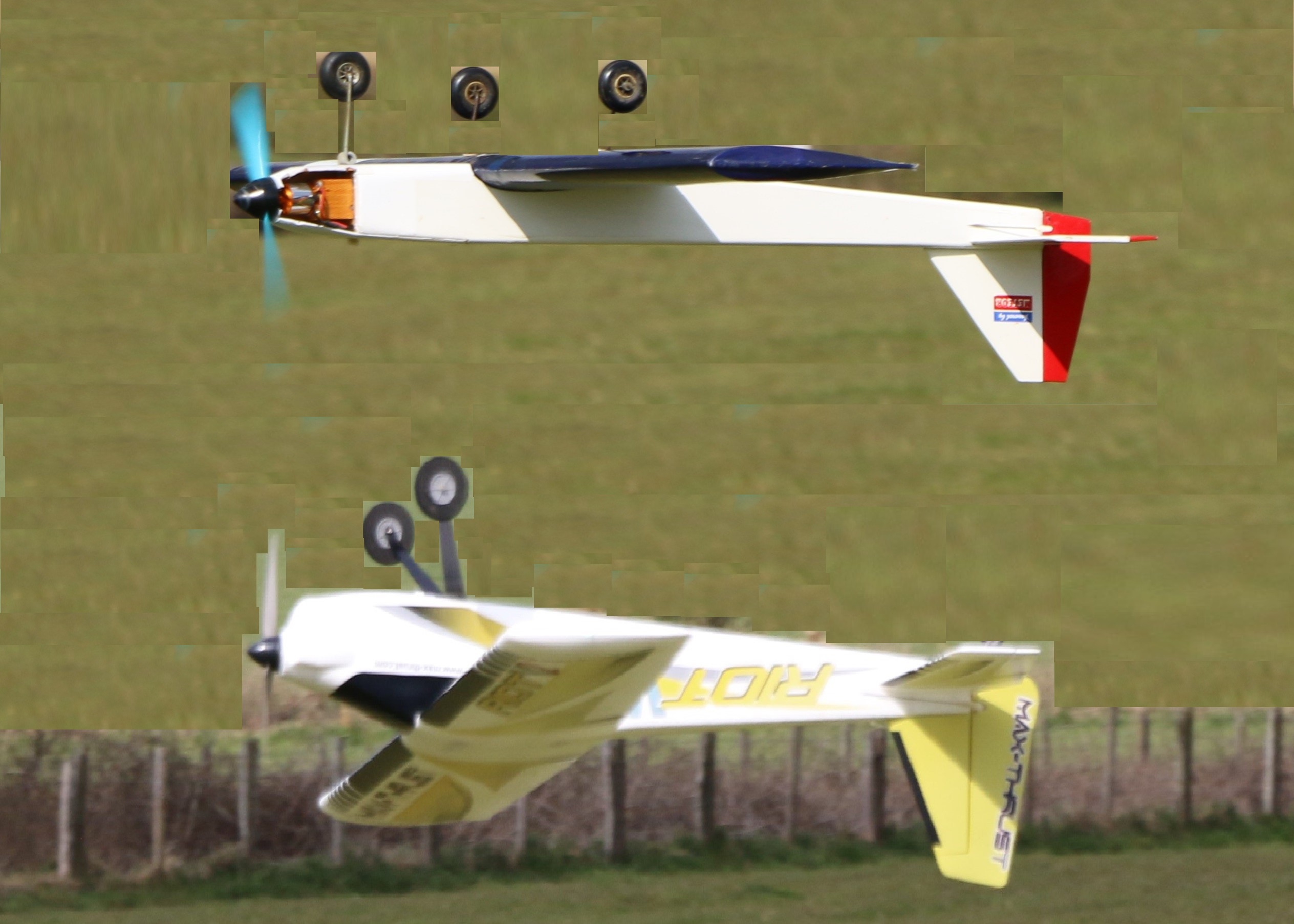 Well really, it would never cross my mind, I’ve no idea how they could even think such a thing, I am truly shocked!
Last month I featured Norwegian Nick’s SIG Decathlon that he’d got finished but hadn’t yet flown. Well it still hasn’t!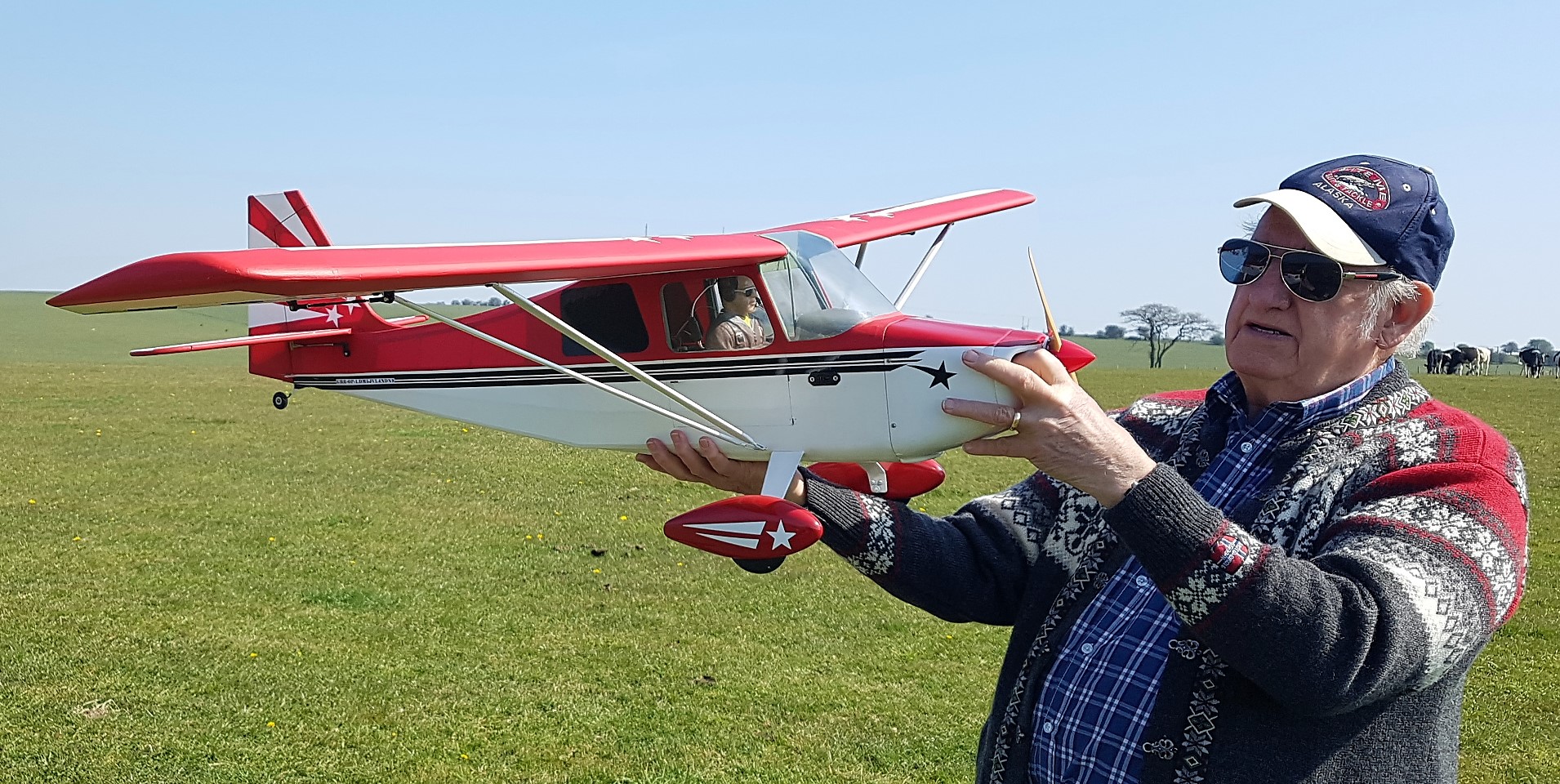 Nick brought the model to the field for it’s inaugural flight, got everything assembled, fitted the wing struts, and then test ran the motor prior to attempting the first flight. There was a sudden ‘pop’ and the motor stopped.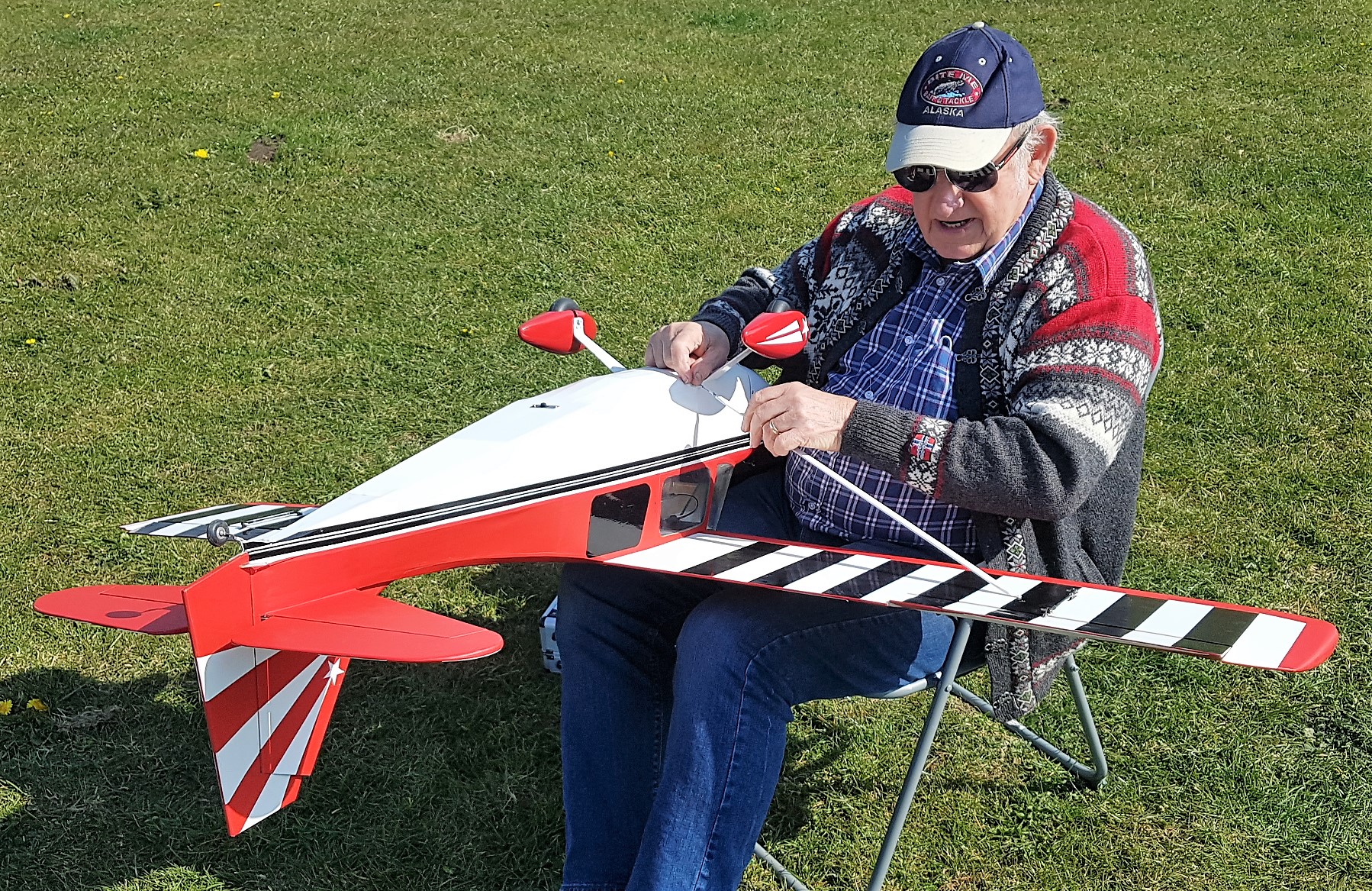
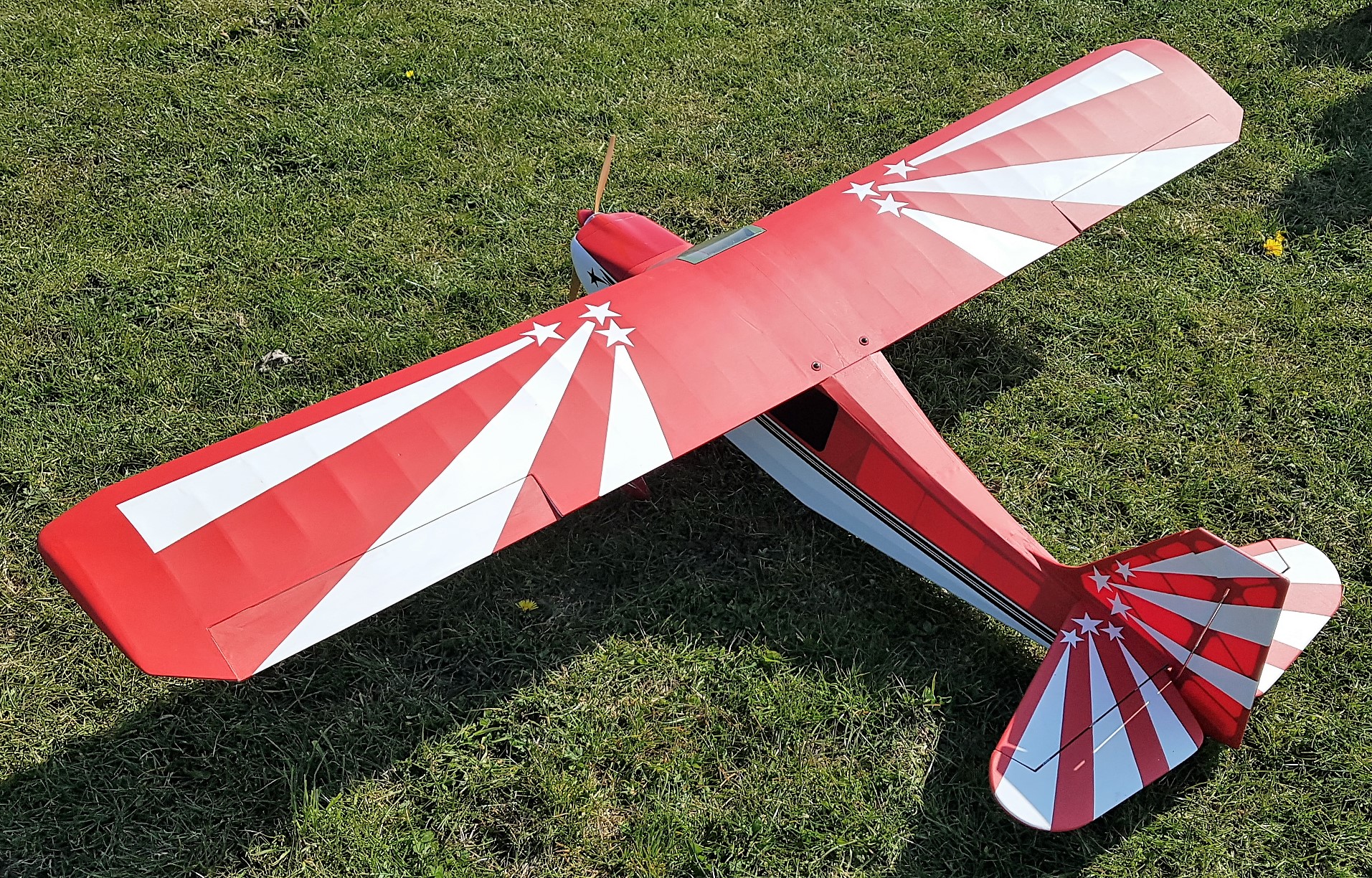 Upon investigation Nick found that the safety isolation link plug he’d fitted had burnt out so a flight wasn’t possible.
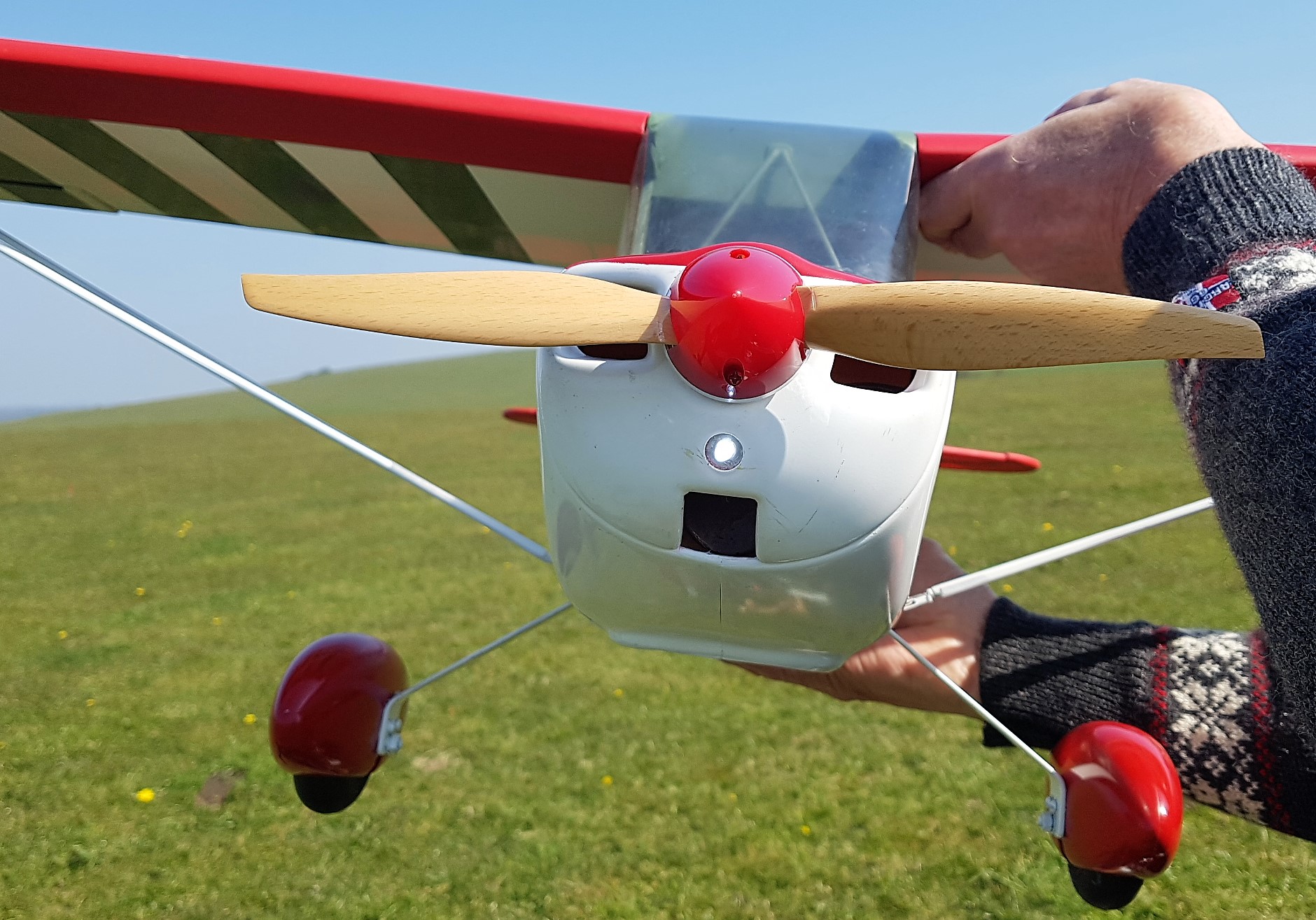 At least it’s a much easier fix than having to change the motor and or speed controller but that didn’t seem much of a consolation at the time. Everything else worked perfectly so no doubt it will fly successfully next time out.
A few of the older PAM members will remember Mike Upton who passed away fifteen years ago. Mike was a modeller who enjoyed building large models and could best be described as a bit of a character. One April morning Mike’s widow Sue came to the patch to say she’d found some plans that she wanted to pass on rather than simply throw away. Sue thought the plans were for a Lysander but they are actually for a large Fairey Swordfish and were drawn by another late PAM member Frank White. So does anyone want some free complete & detailed plans? They’re right up Norwegian Nick’s street I reckon. The day I collected the plans Sue also gave me a painting that had been used as the club glider competition trophy for a number of years. Mike was the last winner so he’d retained the trophy.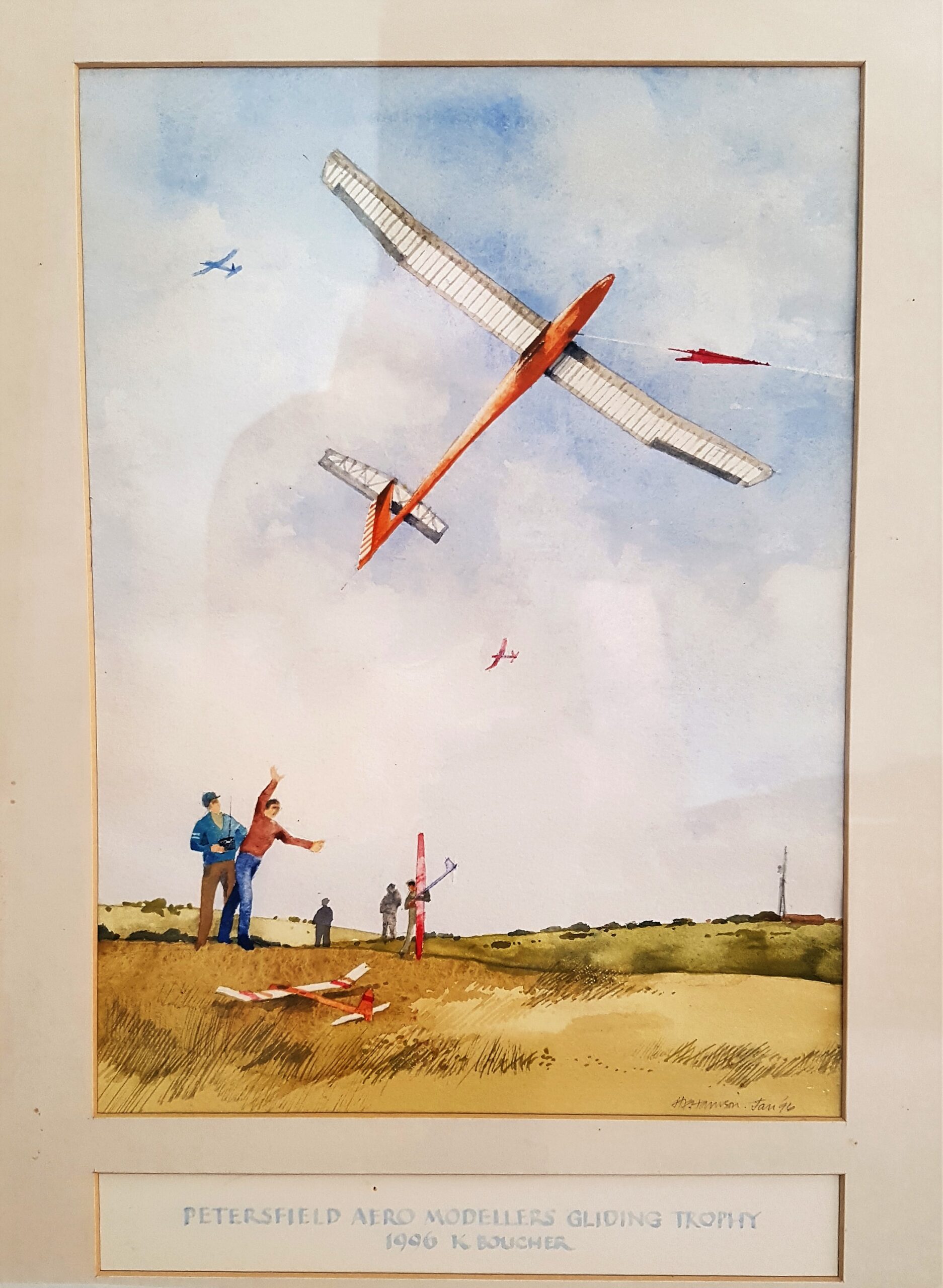 It was painted by another ex-Petersfield member Jim De’ath who left the club several years ago because his failing health meant he couldn’t walk up to the patch. Coincidentally a few years later Jim became a member of Dwayne Pipe’s art class and on the same day that Sue gave me the painting Dwayne broke the sad news that Jim had passed away. The painting is actually better than I remembered, the committee will need to decide what to do with it.
One April Sunday afternoon Chas’s wife Dawn joined him at the field when he flew his venerable Wot4 Foam-E. Dawn thought the Wot4 was looking very tatty (that’s when they fly best Dawn!) and decided to buy him a new model as an early birthday present. In due course the new model arrived and it’s a…drum roll…Wot4 Foam-E!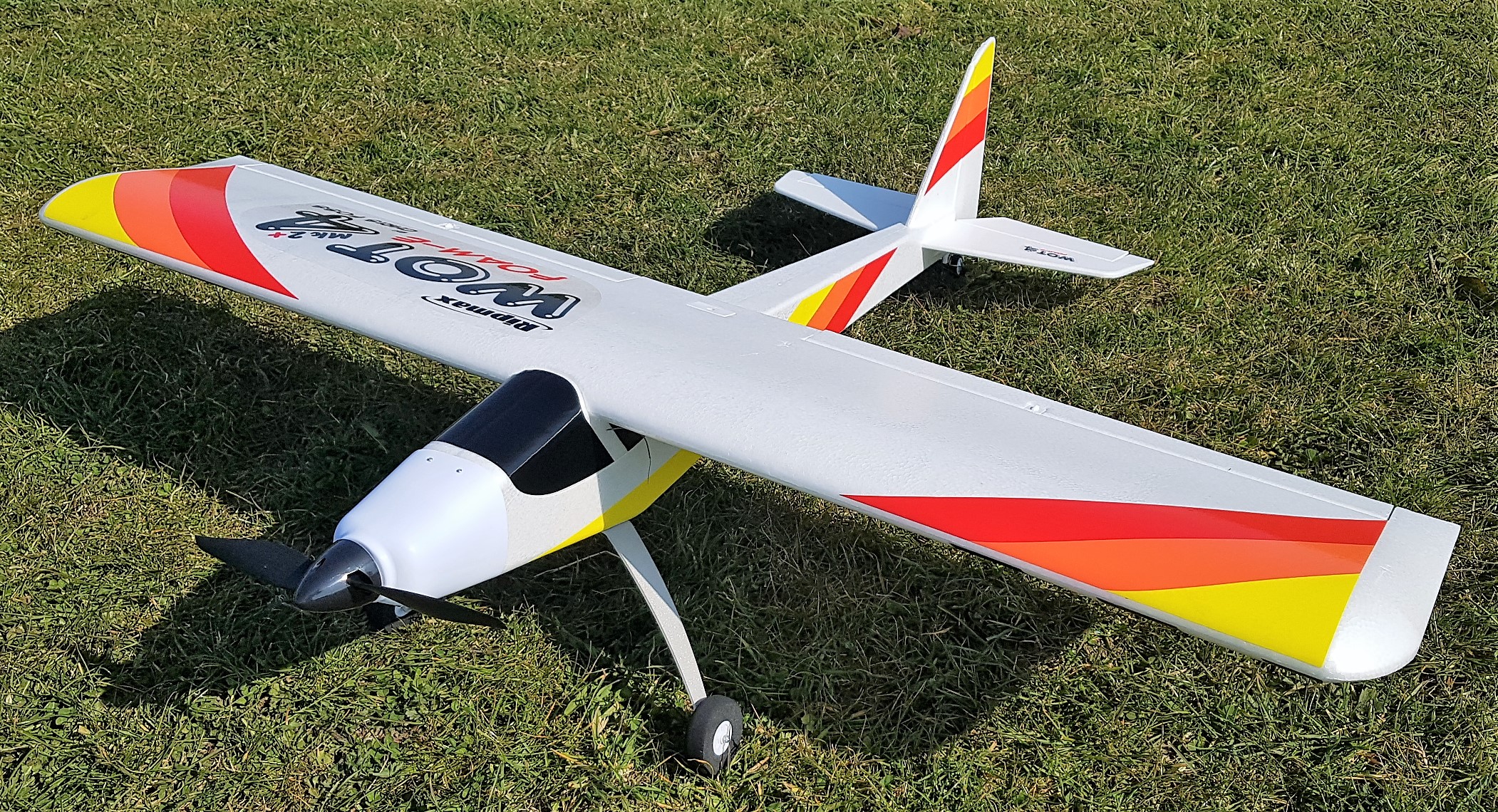
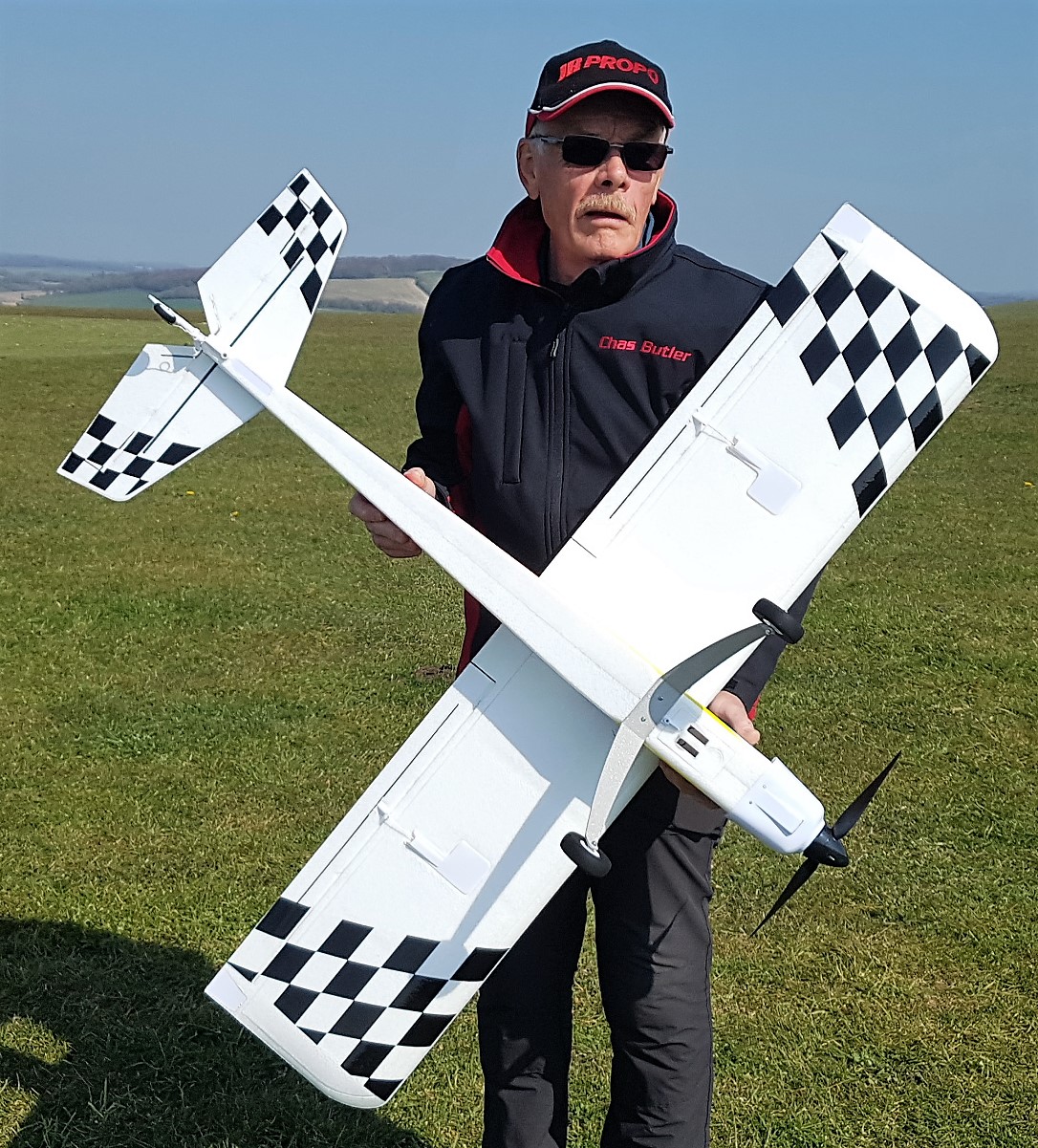 But it’s not just a smart new one, it’s a different colour, the old one was white with blue and black trim whilst the new one is white with yellow, orange, and red trim. Chas reports that the stated 30 minute assembly time turned out to be 3-1/2 hours but he must have got it right as the new model flew perfectly. Just like the old one in fact.
I’ve realised the best way to figure out how windy it will be at the patch is much simpler than poring over lots of different forecasts and calculating the average speed. Now I just look at the Patch Booking Sheet and see if Kryten is down to fly! I don’t know how he does it but he’s pretty much infallible, Kryten flying equals light winds. In April Kryten came out several times and I took this action shot of Chas launching Kryten’s Phoenix electric glider: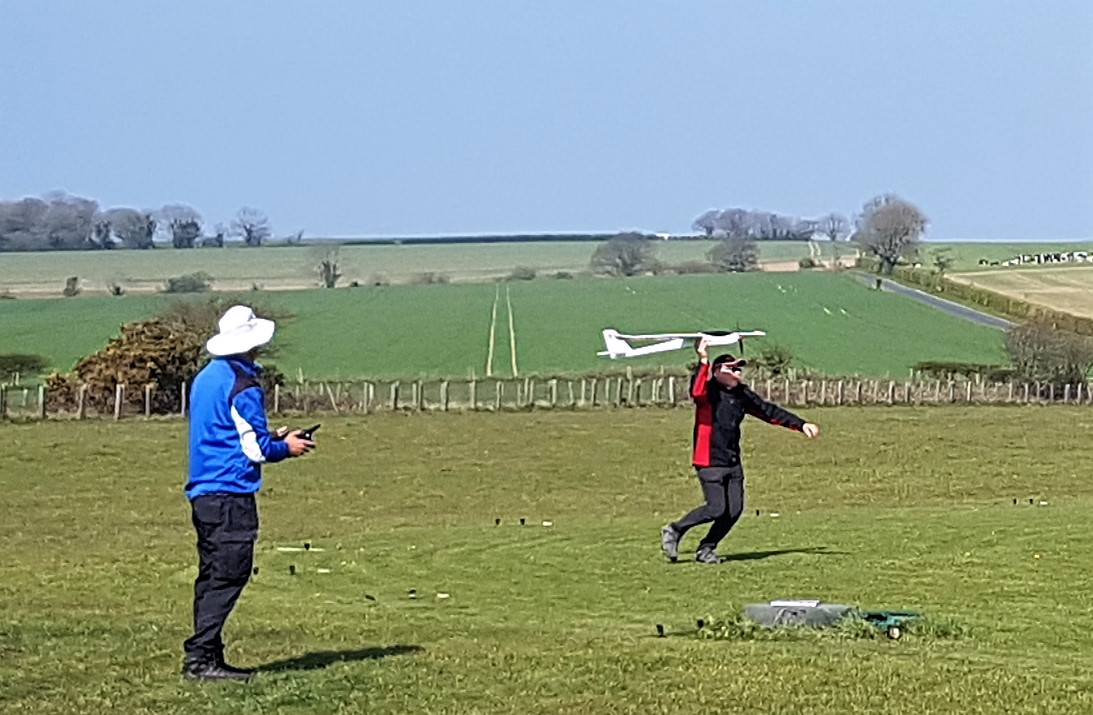 Kryten also brought along his beautifully built and finished Swannee, an updated vintage single-channel model.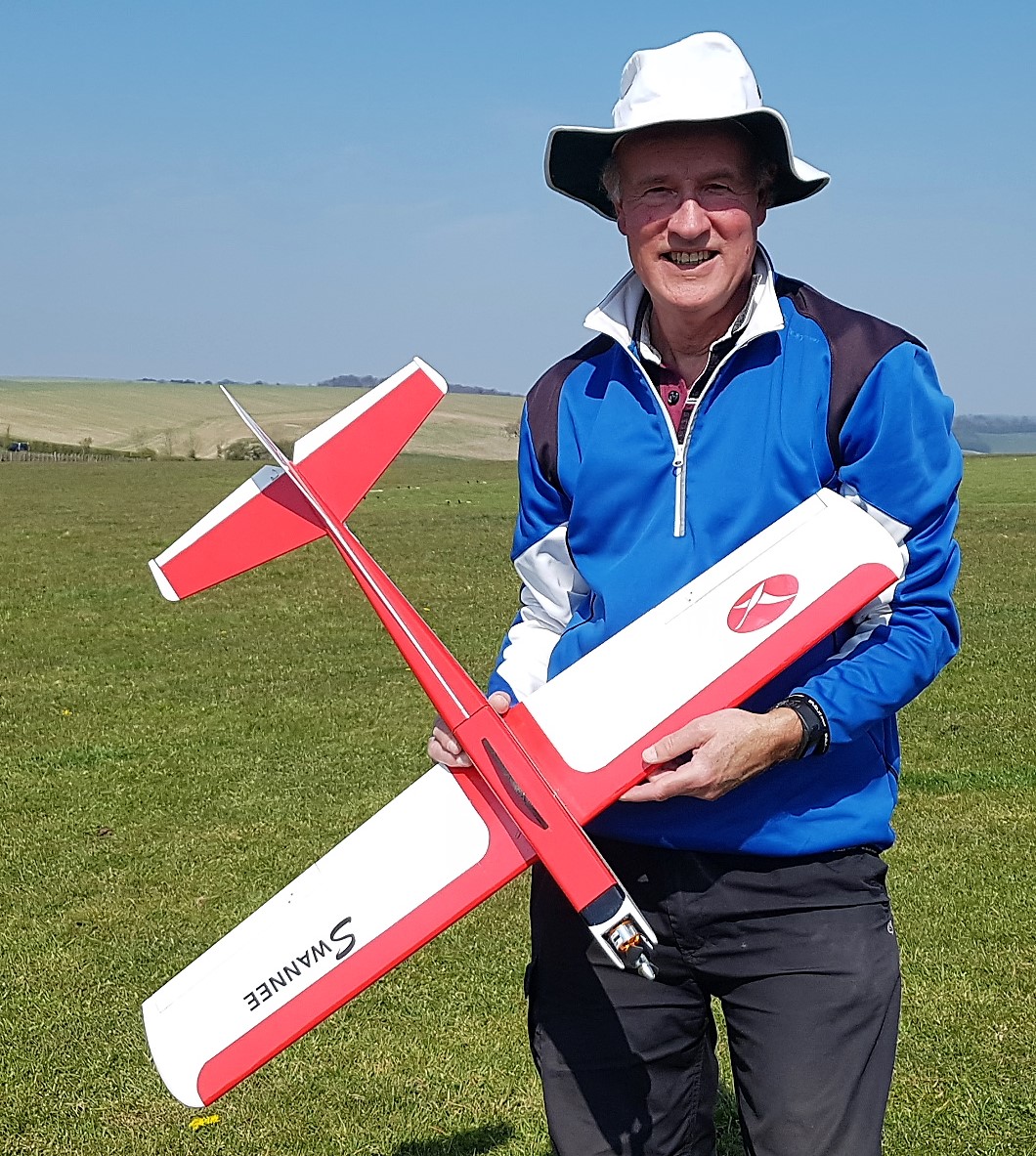
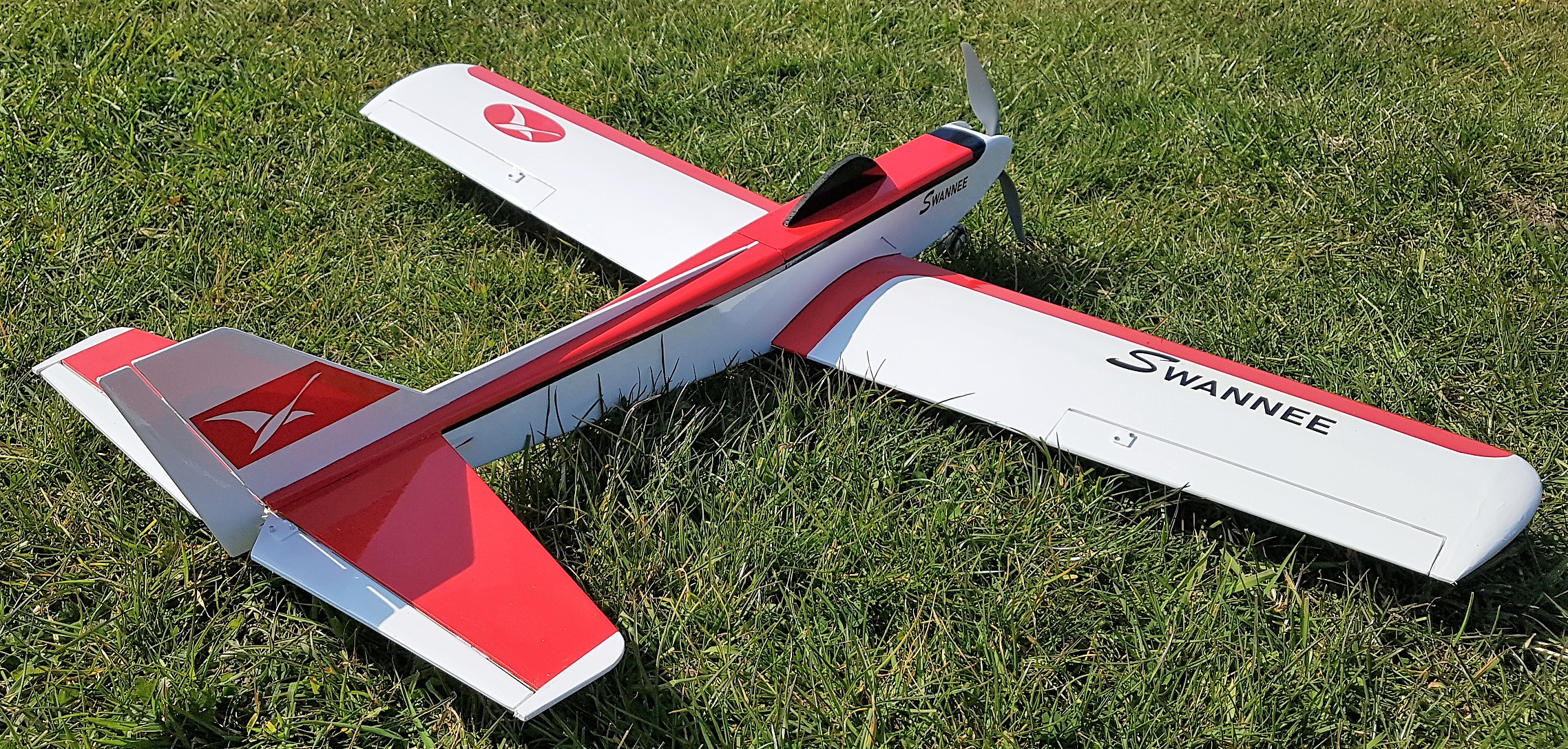 He built a single-channel one back in the sixties but it never flew successfully. When he and I were at school together Kryten (AKA Graham Swan) was always known as Swannee so maybe he should have called it Graham?
 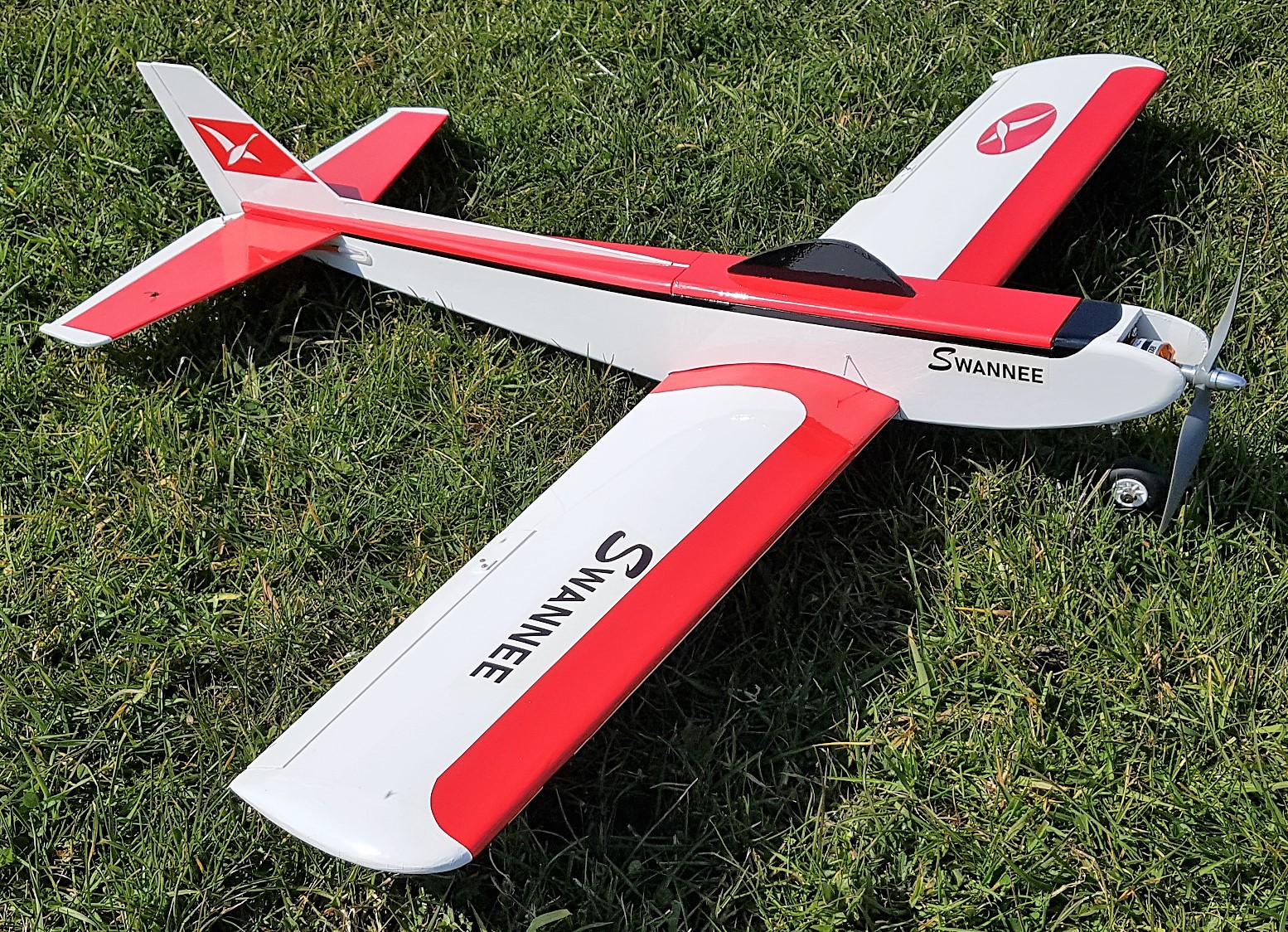 The 1966 design called for a 0.8cc diesel engine and had ‘rudder only’ control but Kryten has brought it bang up to date with four channel radio and electric power whilst still retaining the looks of the original design.
While he was at the patch in April Kryten was able to capture some more of his excellent action photos for us: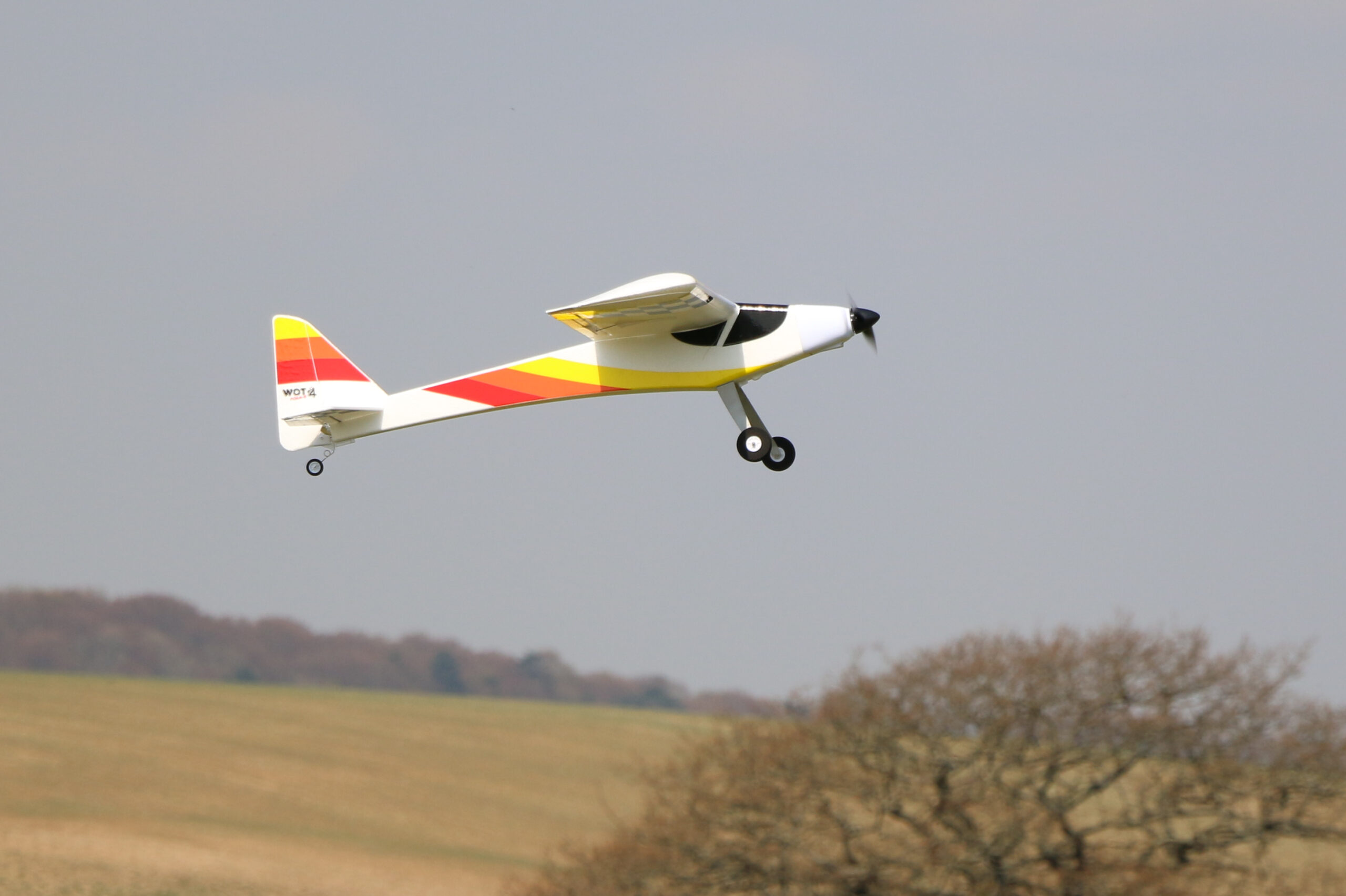
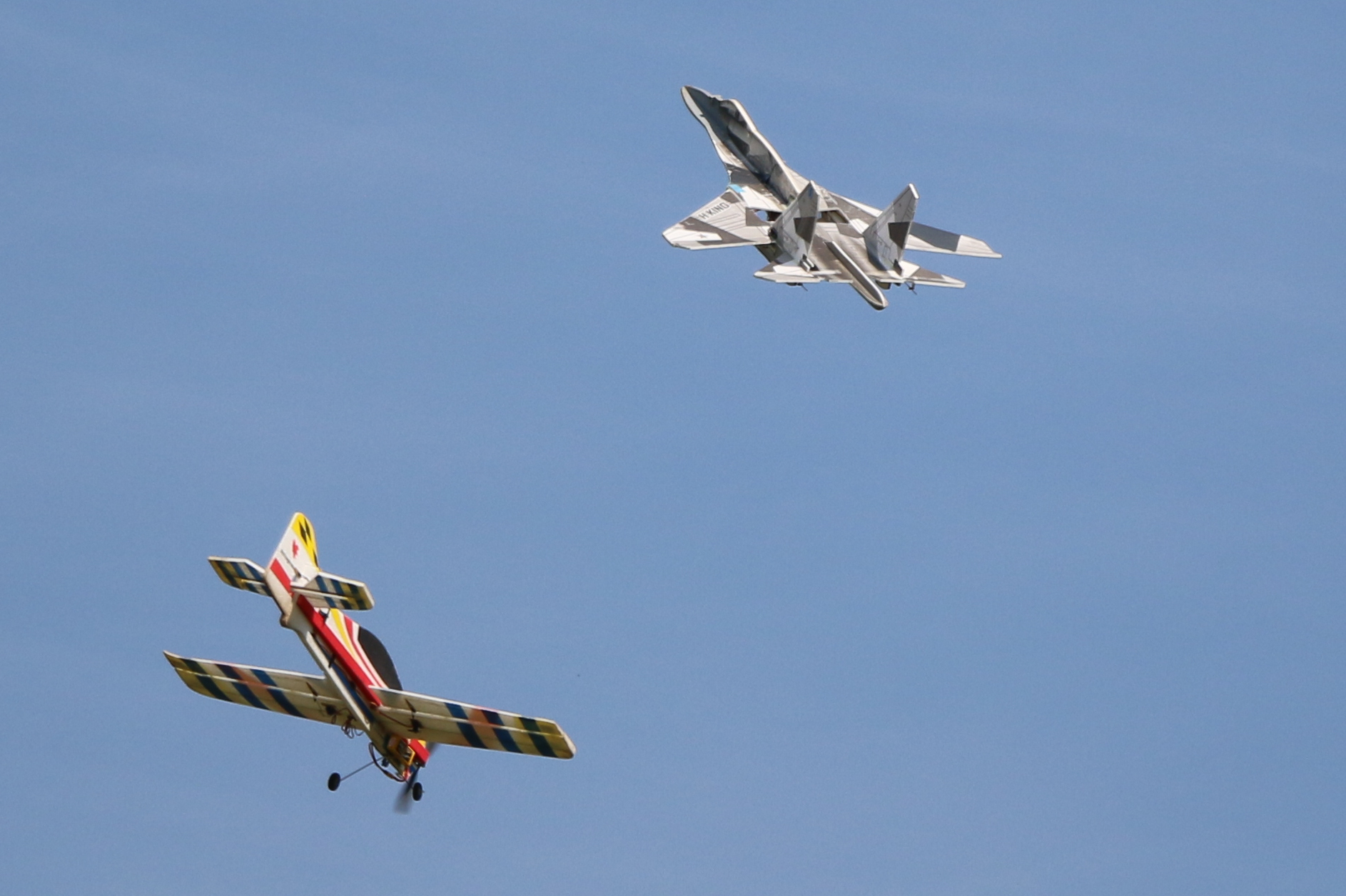
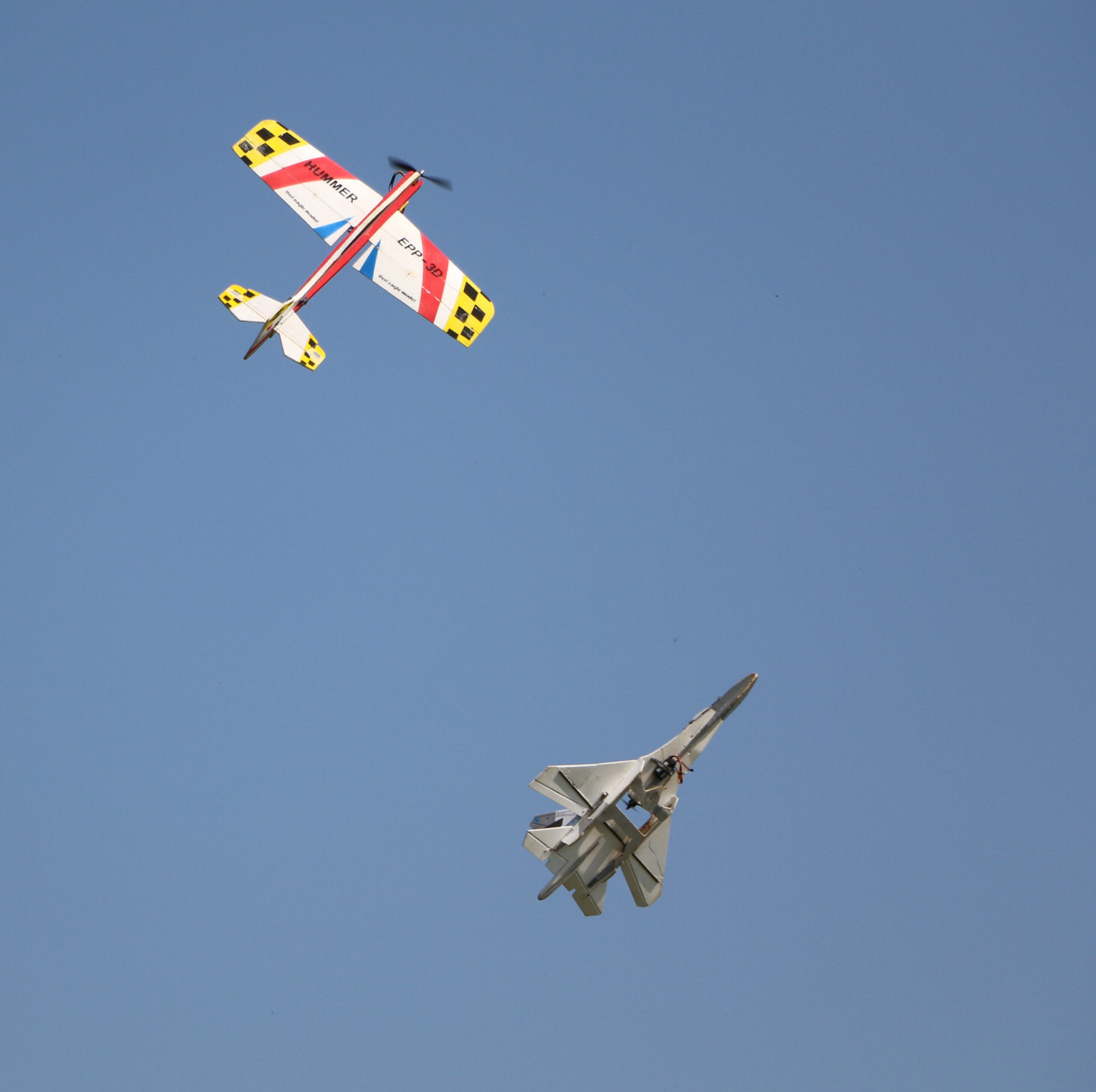
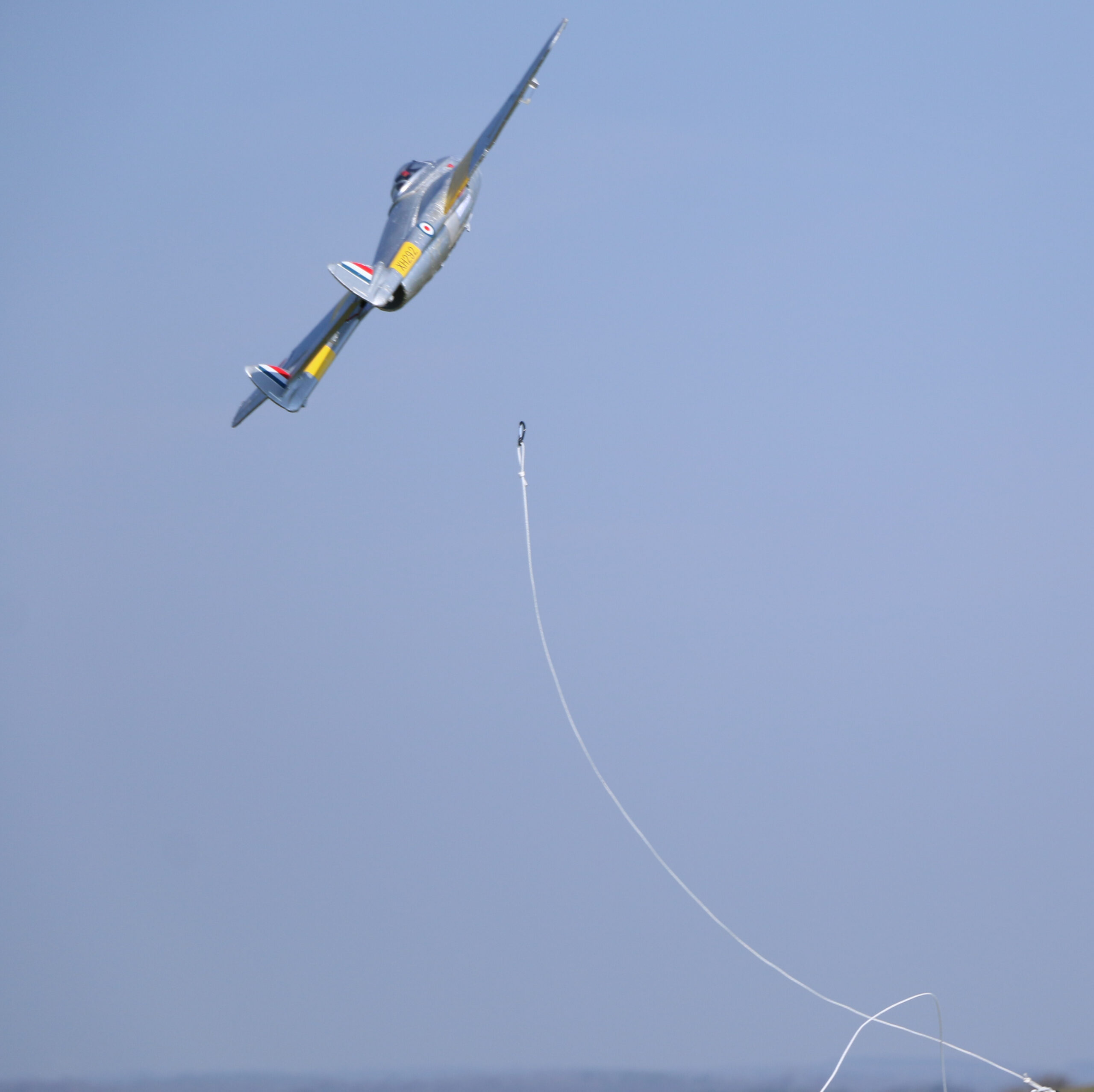
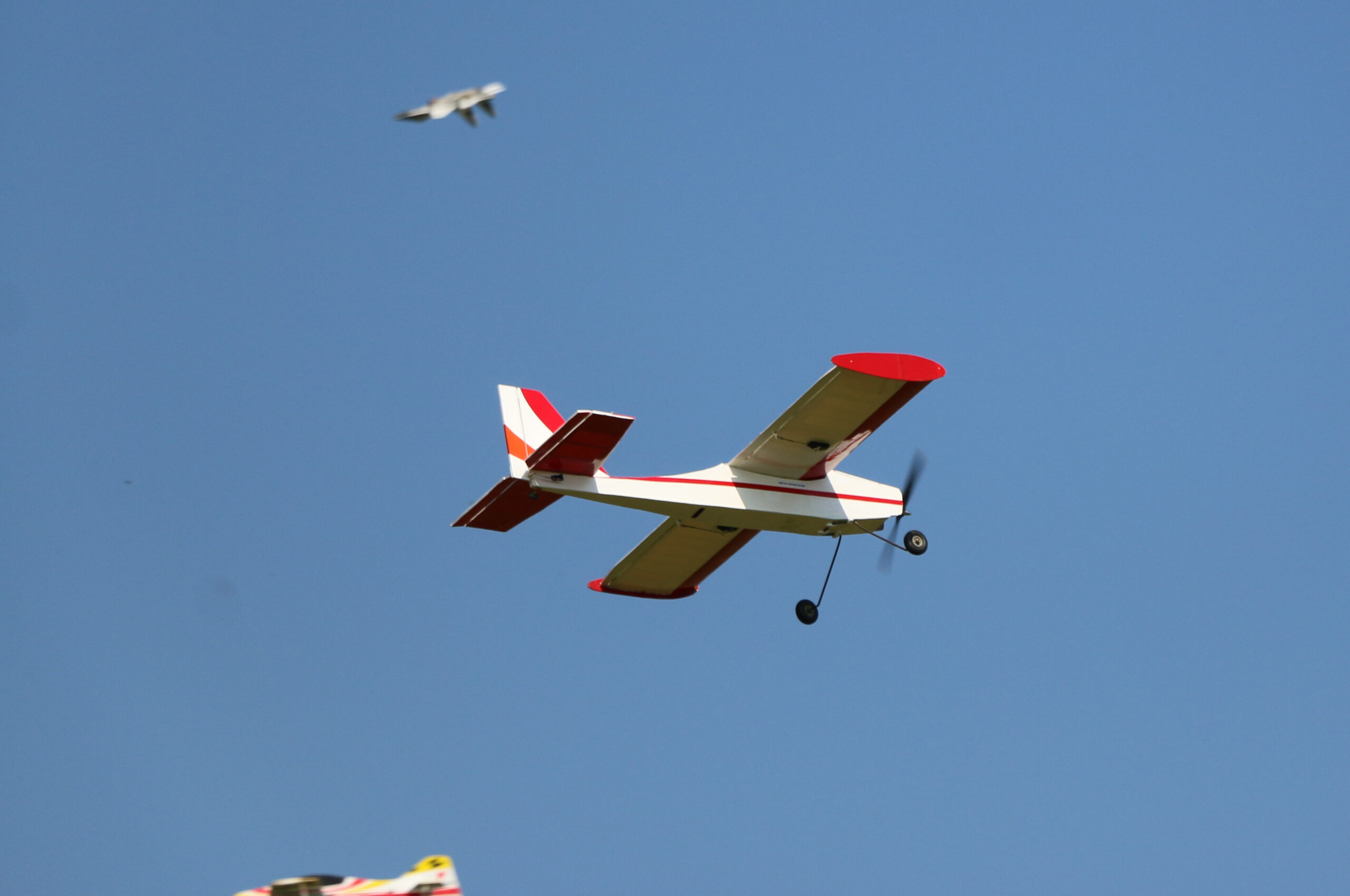
This month the video footage was captured by myself, Dougal Entendre, and Captain Slow. Dougal has just treated himself to a camcorder, a Sony HDR-CX240E. It’s early days but it looks to produce good results so far. If you’d like to follow suit it’s available at Argos, where you can get a 6.5% discount if you use the BMFA Vectis card.
Please watch the video full-screen, it’s so much better with small models flying around.If the video won’t play for you please click HERE
In April one hundred and eighteen years ago two brothers insisted that it was possible to fly …
It turned out they were Wright.
Colin Cowplain
Patch News – March 2021
At last, we’re flying again! As of Monday 29th March we are allowed to fly but the booking system remains in place and there are still some restrictions on numbers. Chairman John Wheeley has completed a risk assessment and emailed all members explaining that up to six fliers are allowed along with four non-fliers. Social distancing remains important of course and mask wearing is certainly a good idea, especially when assisting others. The use of hand sanitiser is also recommended when handling other people’s models and transmitters. Anyone without a BMFA ‘A’ certificate must be supervised by an NFC. In practise the numbers are unlikely to be a problem but workers (do we still have any?!) will be given priority at weekends. Please email John to book a slot, preferably with plenty of notice.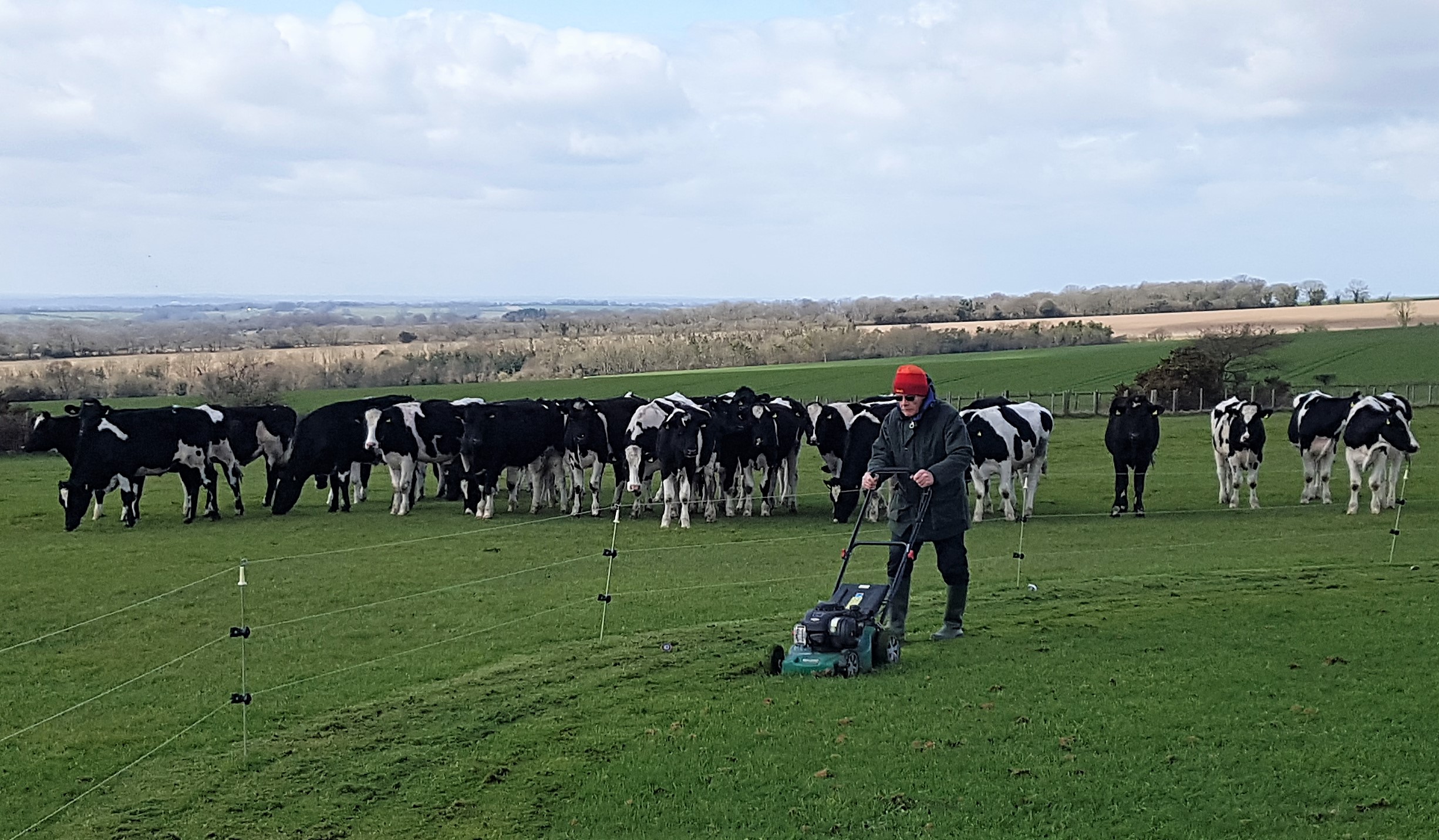 The patch is in excellent condition thanks to the efforts of several members who have changed the battery regularly and completed three mowing sessions. At the time of writing the bullocks are in the field but they are the same ones as last year so they are used to us and shouldn’t be a problem. They seemed to enjoy watching Chas mowing.
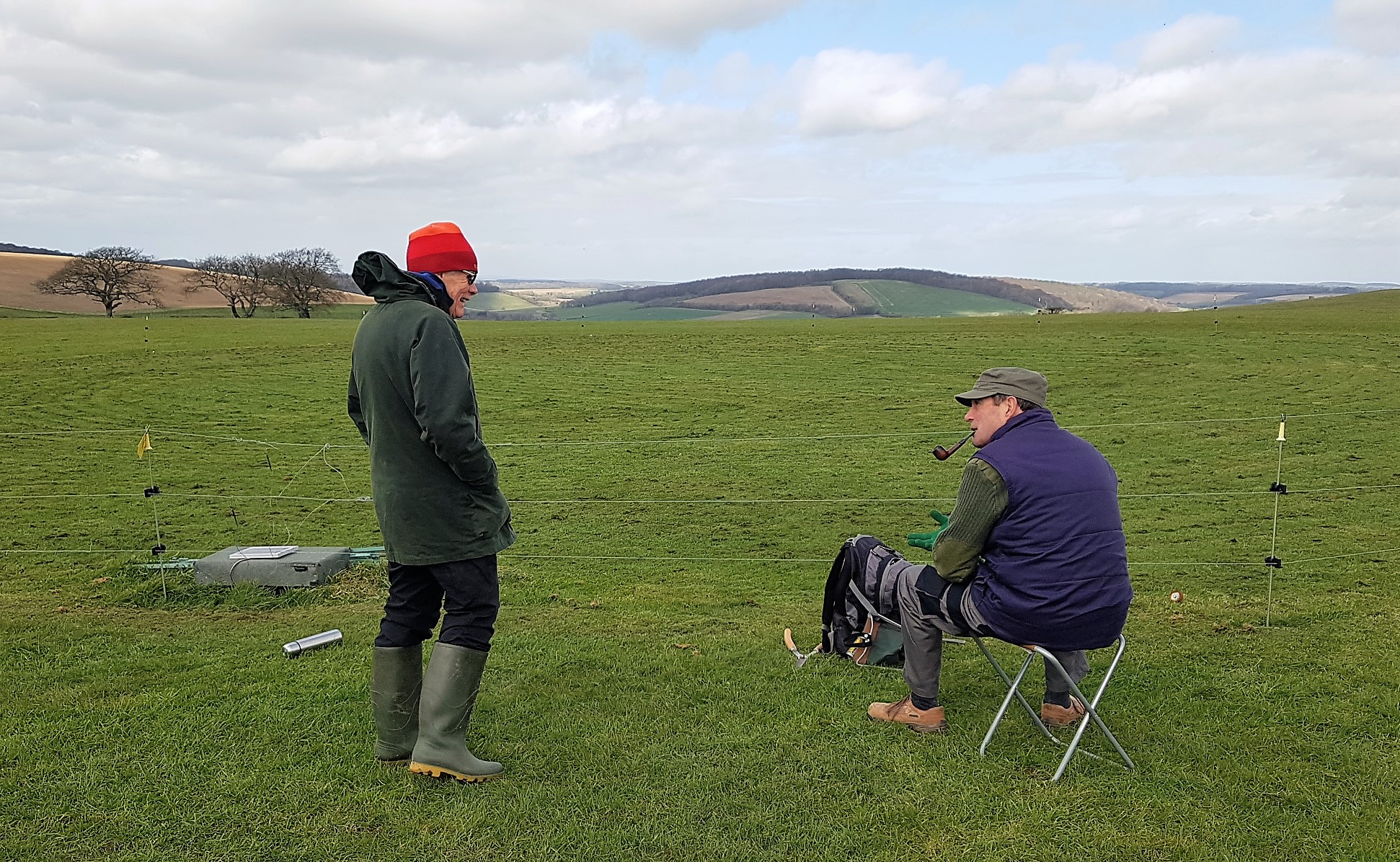 Utilising his military background Captain Slow took command, assumed his rightful place, and supervised everybody.
When Dougal and I arrived to fly on 29th March we were surprised to see a deer in the field. It seemed happy to be with the bullocks but was rather wary of us. At first I thought it was trapped in the field but that wasn’t the case.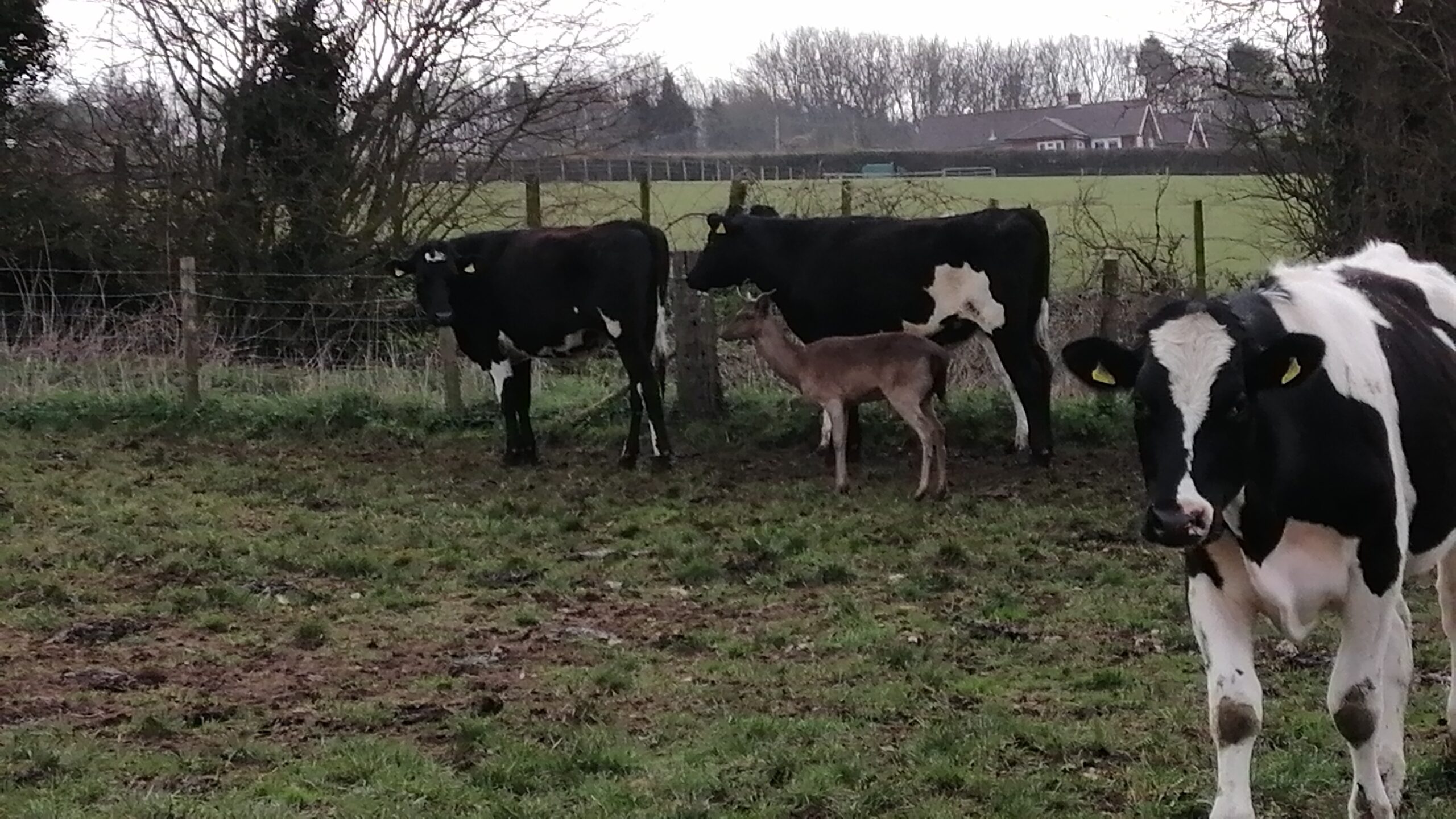
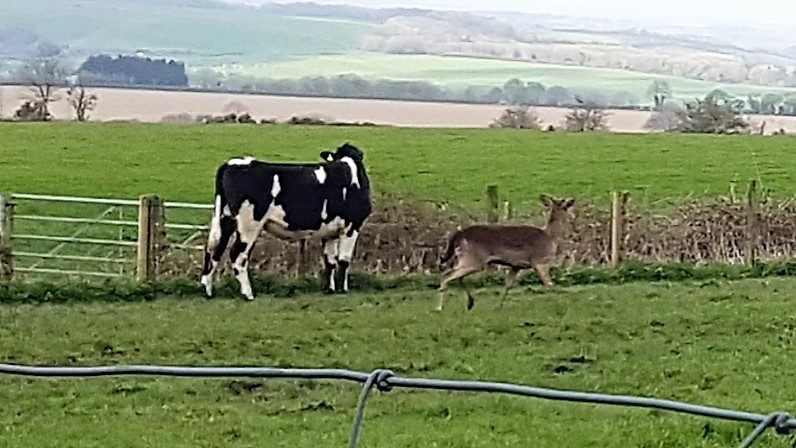 After a few minutes it hopped into the lower track and then across into the bottom field and on into the woods.
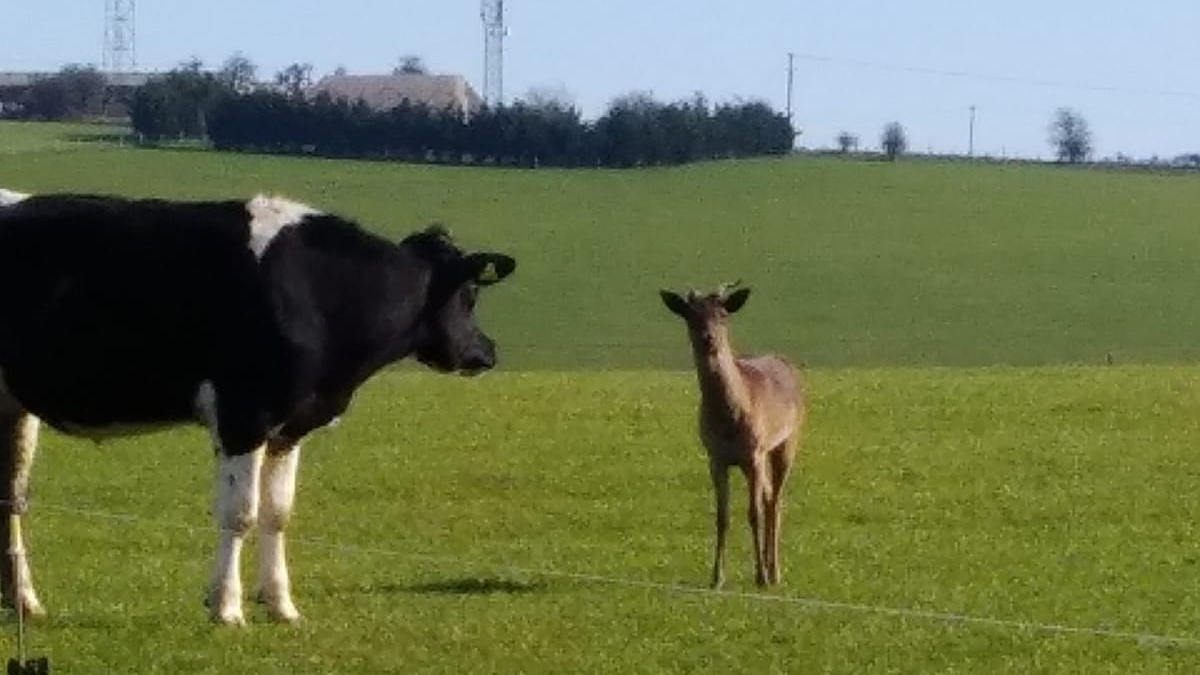 The next day it returned whilst flying was underway and came close to the patch. After watching the flying for a while it got bored and went off in the same direction as before. I hoped to see it on Wednesday but it didn’t show.
Many of you will have seen that the website has been offline at times recently and as webmaster I should explain what’s been happening. For many years the site has been hosted at zero cost by Steve (Cyano Steve) Montague’s company and although Steve retired a few years ago the company very kindly continued to host the site for free and Steve has always been on hand to help if there have been any problems. But recently the company requested we find another host so there were some decisions to be made. I am reasonably proficient at doing the day to day site updates, adding new stuff, Patch News and so on but anything major is beyond me. Knowing that Dougal Entendre is an expert in such things and had recently retired so had nothing to do (if only!) I passed the project over to him.
The initial idea was to simply switch the hosting to BMFA who offer free hosting to member clubs but following the initial approach nothing happened for a couple of months. To be fair this was largely because BMFA have been extremely busy with all the CAA Article 16 regulations and the Covid-19 restrictions but the delay meant we were in danger of being left without a host and hence no website. So the committee authorised Dougal to look for a commercial host which would cost around £60 per annum and following consultation with Steve a company was chosen and the switch was started. Then BMFA came back with the information required to switch to them!
As is so often the case with these things nothing went smoothly and at the moment the site is being hosted by a commercial company but the switch to BMFA will be made gradually over several months, ironing out problems and giving the site a fresh new look before going live. The last few weeks have seen literally hundreds of emails between Steve and Dougal trying to get everything sorted and I am extremely grateful to them both. Passing the buck was certainly the best decision I’ve made!
Back to actual modelling now and news that Percy Vears has kept himself busy during lockdown. The first of his models that I’ll feature is his new Mig 15. This is what Percy says about it: This is one of the Tony Nijhuis series of mini jets which first appeared in the RCM&E 2018 special issue. I’d discussed these models with an aero modelling friend, and shortly afterwards he turned up and presented me with an FMS 50mm EDF assembly. I had little option then but to agree to construct one of these models – I chose the Mig 15 and he opted for the F86 Sabre. The kit was purchased late 2018, but I was unable to contemplate building it at that time. The present lockdown gave me ample time to start construction and this has now been completed, so ready for test flights.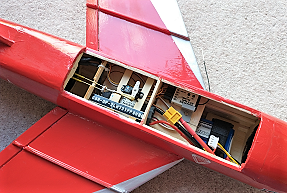 Construction largely followed the build photos supplied by Tony Nijhuis but I did change the thrust tube. This was supposed to be constructed from acetate sheet – a method I used when building the Avro Vulcan, but then I had turned up a wood mandrel on the lathe which helped form the acetate into the conical shape required. I decided a better approach might be to 3D print the thrust tube, so it was designed with 0.5mm wall thickness using FreeCAD.
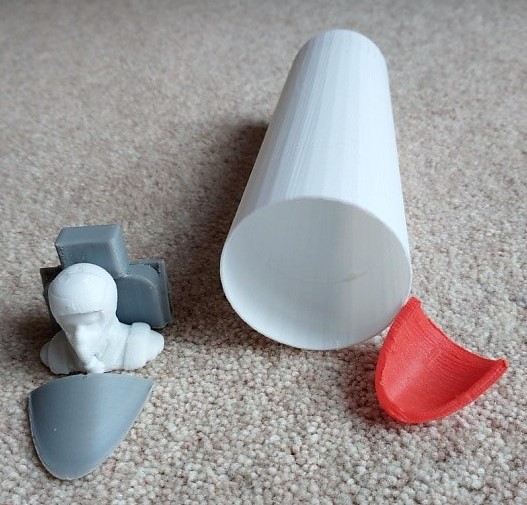 Having printed the thrust tube, the next problem was fitting it, since lack of flexibility prevented the larger end being folded and squeezed through the smaller holes in the rear formers. The only solution was to slice the formers and open up the fuselage to install the thrust tube (building a Folland Gnat now, I slid on the formers before gluing to the fuselage sides). The resulting tube weighed in at 28g – slightly heavier than one formed from acetate sheet.
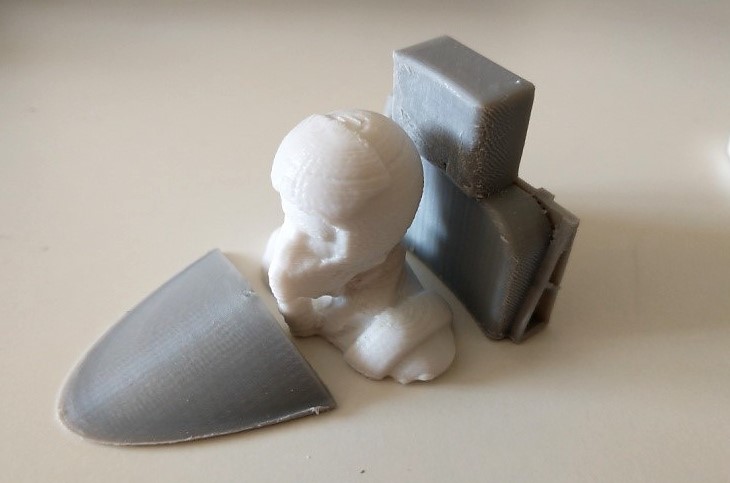 A couple of further items were 3D printed. The ‘cheat’ air scoops and the pilot. Pilots for the mini jet series are available for purchase from Tony Nijhuis at £10 each. Research showed me that .STL files for these pilots are available (free) on https://www.thingiverse.com (these may be scaled to required size in the Cura slicer). So I printed my own! Note from editor: Cura is an open source slicing application for 3D printers.
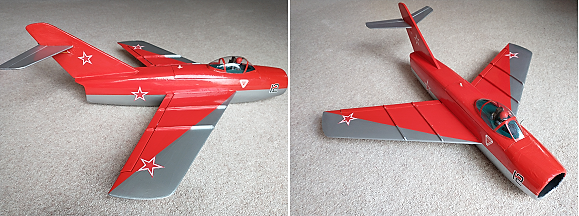 The model was finished with lightweight iron-on film in the Soviet Red Falcon display team colours. The weight of the airframe with servos esc and receiver (but without battery) is 436g. Tony specifies an AUW (All Up Weight) of 450g (16oz). Technically I believe that AUW includes the fuel source, but since a 3s 2200mAh battery weighs typically 150g – 180g, this would imply that the airframe should be 270g – 300g (unlikely to reduce the weight by this much without sanding away much of the wood, so perhaps the term AUW is being misused). The AUW of my model (with 3s 2200mAh battery) is 616g – the thrust from the EDF fan is 620g, so hopefully that will be enough.
Thanks for that very comprehensive write-up Percy, the Mig looks great and I’m sure it will fly well.
Having now retired Dougal used some of his spare time and money to buy some bling for his RadioMaster TX16s in the form of some leather side grips. Dougal purchased brown ones but they are also available in light tan or black.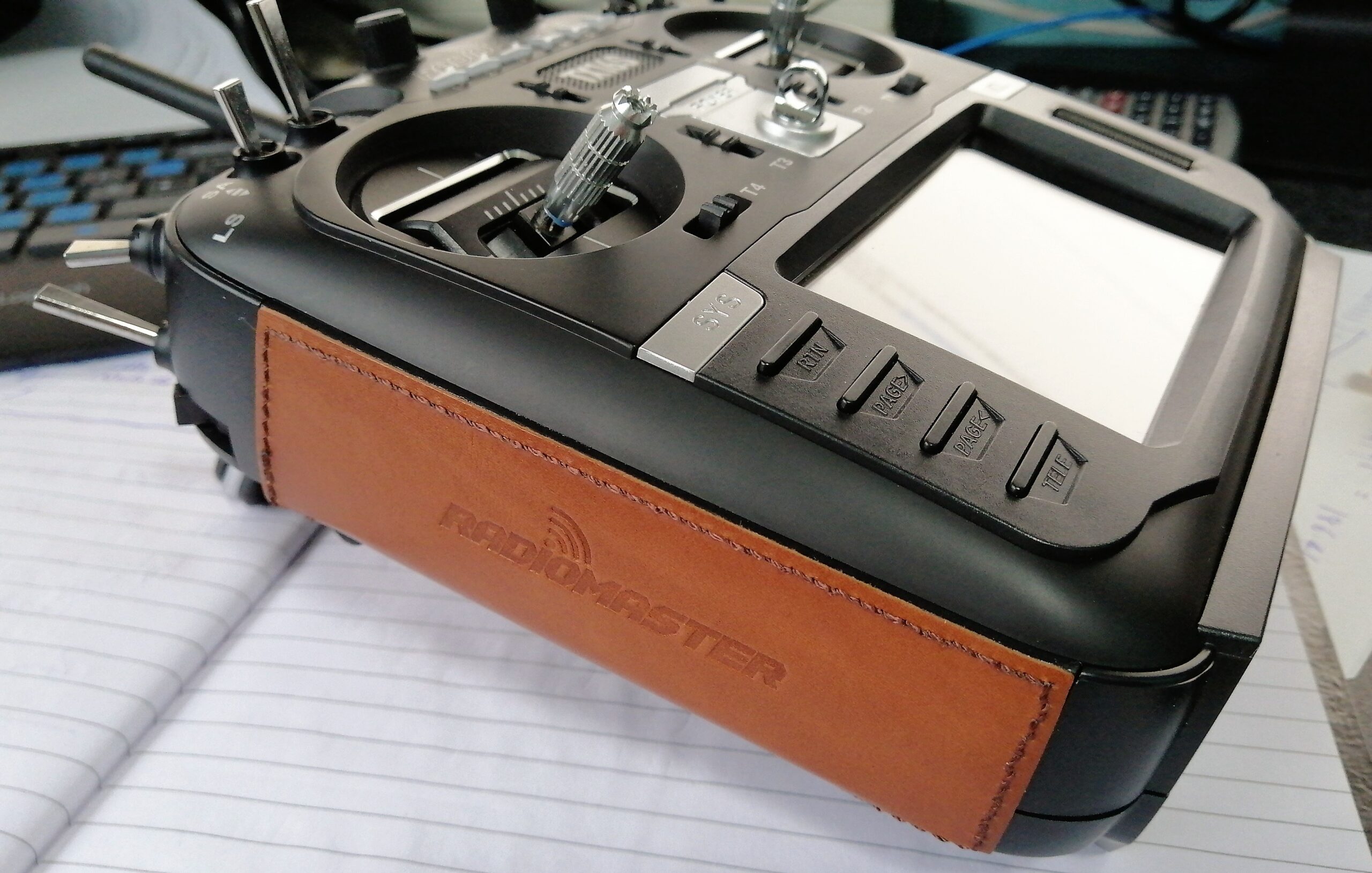 I reckon he’s made the right choice, the brown ones won’t show the cow poo nearly as much as light tan would…
 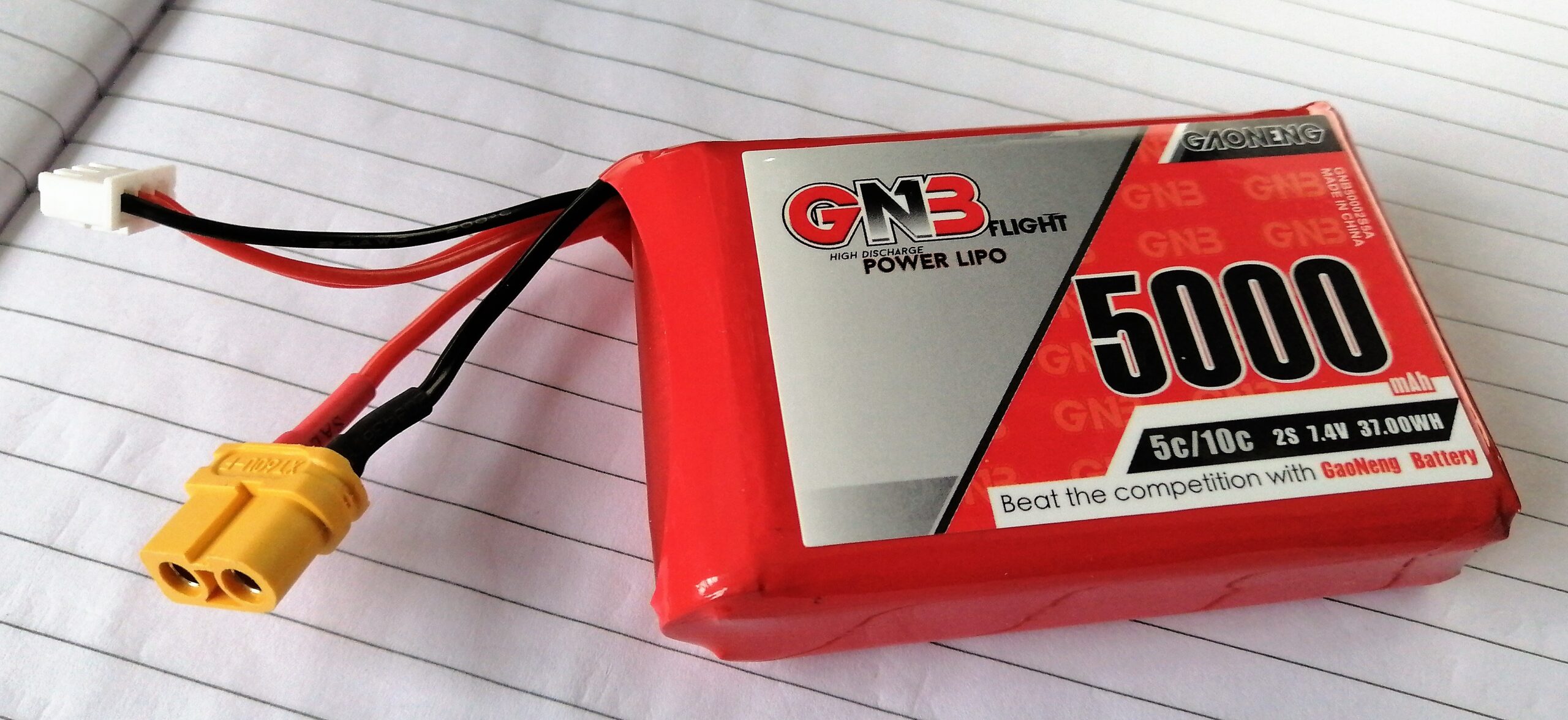 The transmitter doesn’t come with a battery so he’s also bought a 5Ah 2s lipo for it. I would imagine a 5Ah battery will last for several flying sessions before needing a charge. Both items came from https://www.hobbyrc.co.uk/
Meanwhile Bob the Builder has set-up and flown some of his many models using the RadioMaster transmitter he purchased during lockdown. He says OpenTx was quite a steep learning curve but lots of YouTube videos helped.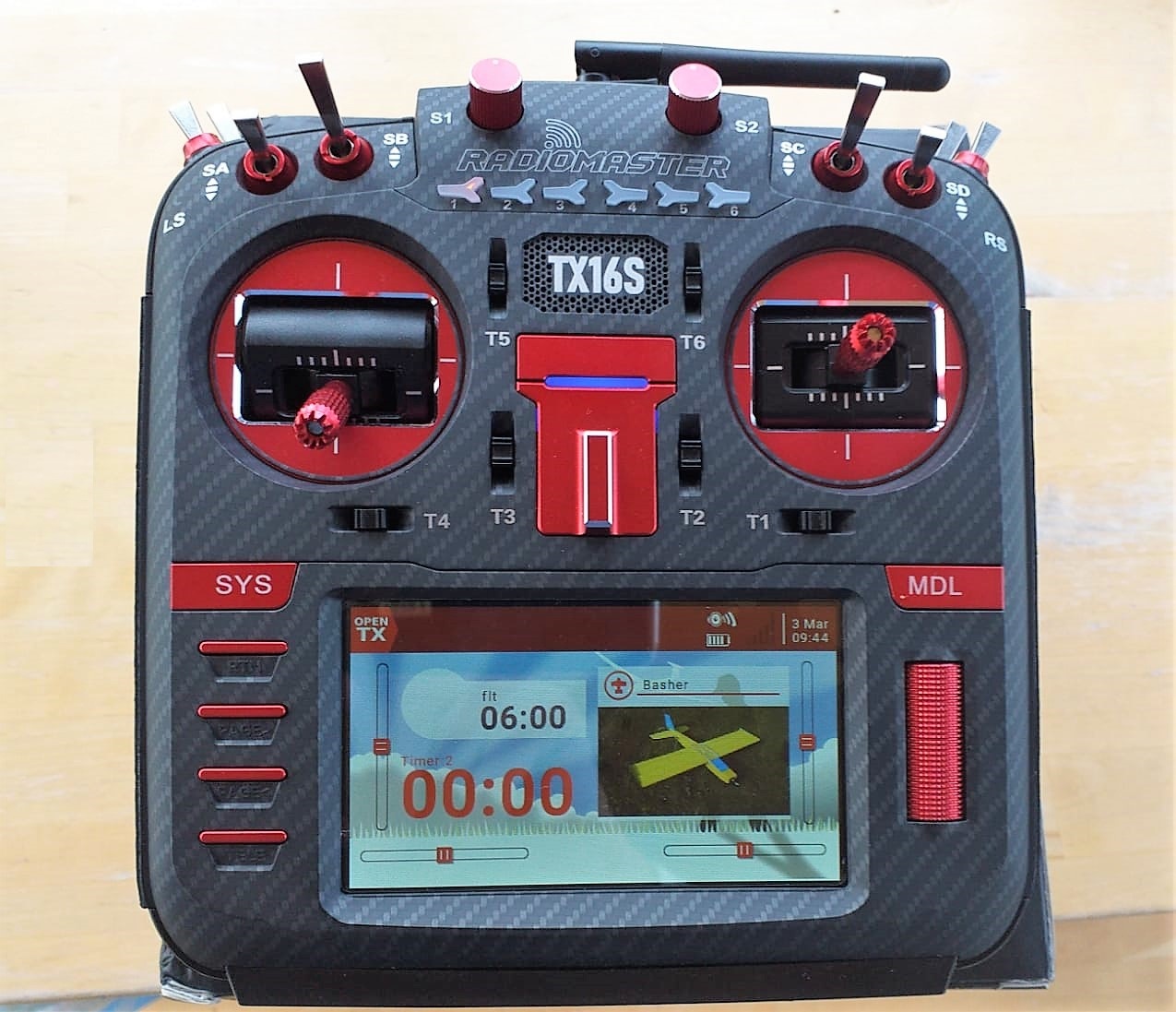
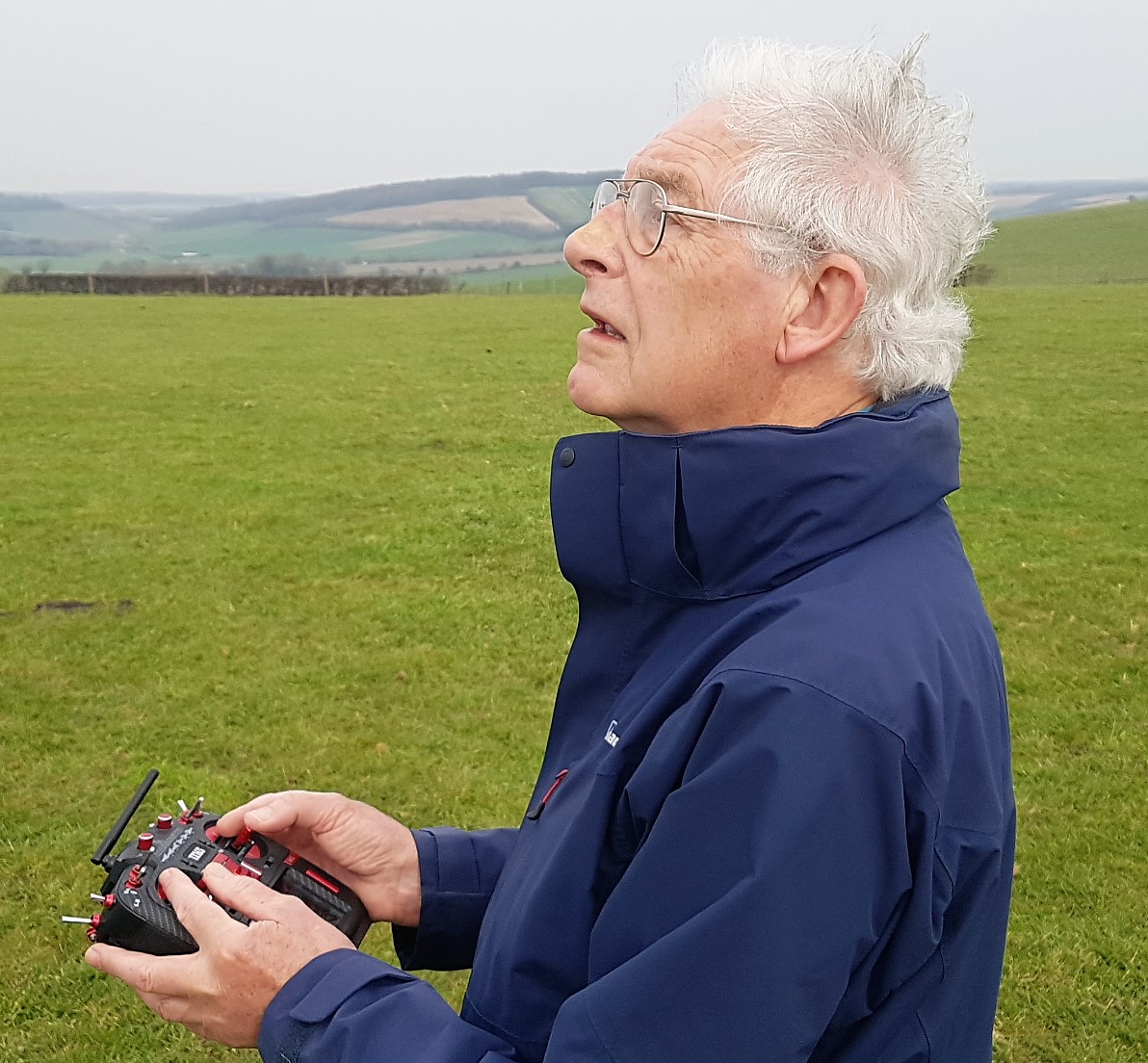
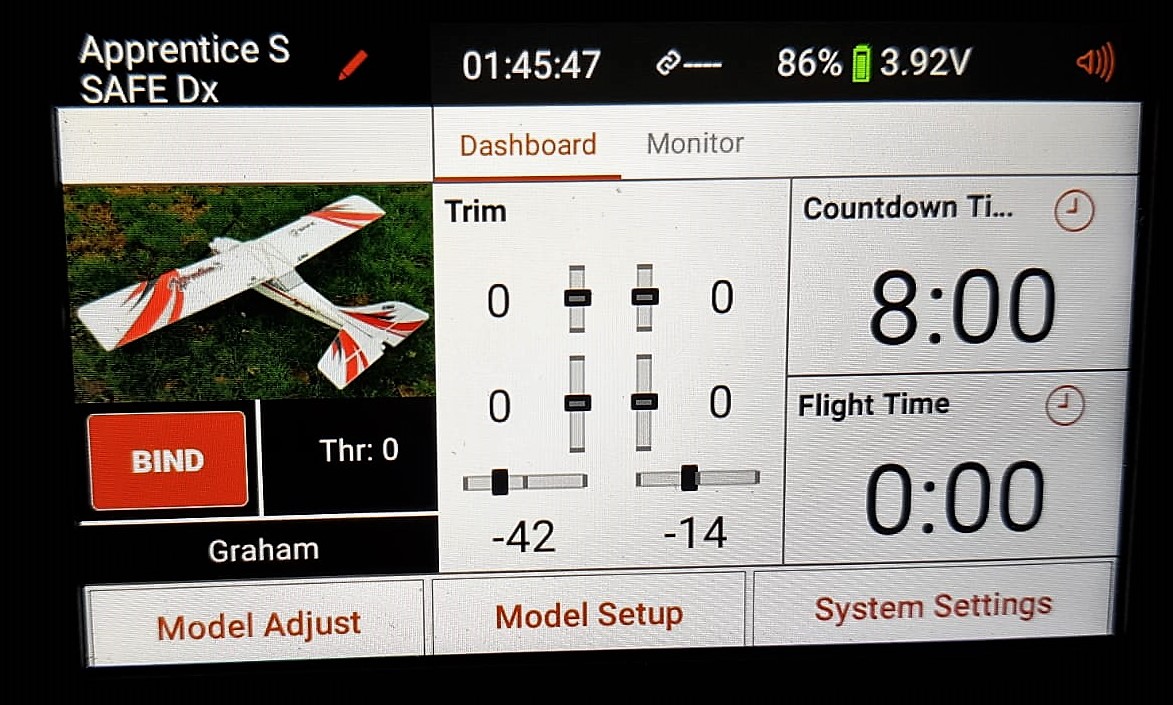
Kryten has also bought a new transmitter which he tested out on 31st March. Unlike the Radiomaster it’s a very up market transmitter, a Spektrum ix12, and it has an excellent screen with very clear graphics and controls.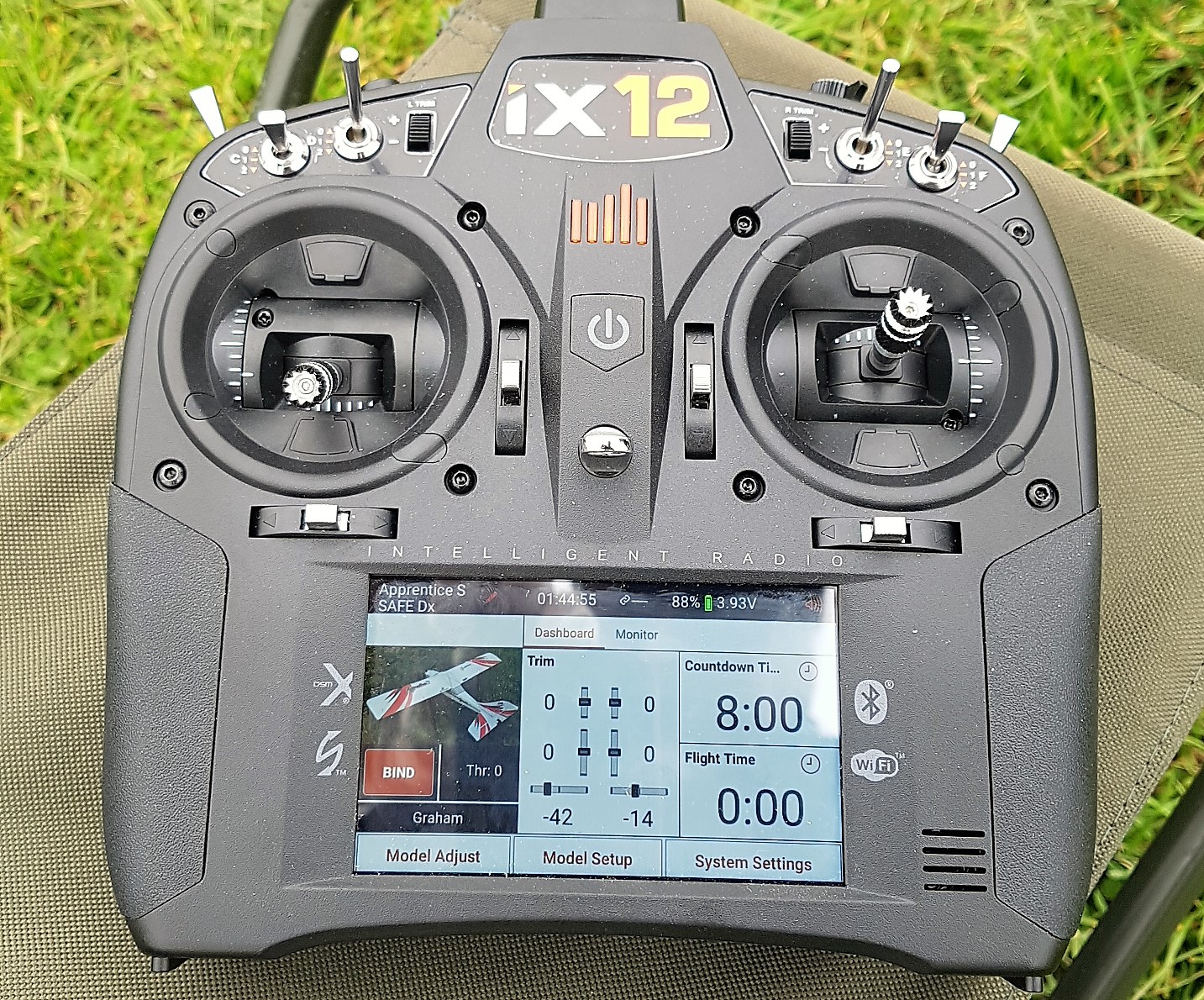
The next new build from Percy Vears is a lovely Keil Kraft Pixie: As a 10 year old boy, walking home from school, I would gaze longingly in the window of the local model shop where a built-up Keil Kraft Pixie was suspended. This was a 23” wingspan, rubber powered semi-scale plane based upon the Auster light aircraft. Of course, the rather high price of 4/11d (or about 25p) was out of reach for a schoolboy with his rather meagre pocket money.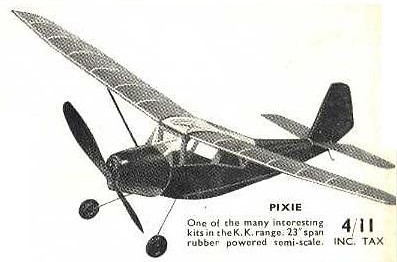 However, one day (I don’t remember how) my dream came true and I found myself in possession of this KK kit. Whether it was successfully built, or whether it flew is beyond my power of recall. However in more recent times, and with better skills at my fingertips, I had a hankering to relive those days and build another Pixie.
However a scaled up version of the Pixie by Tim Hooper featured in the December 2010 edition of RCM&E.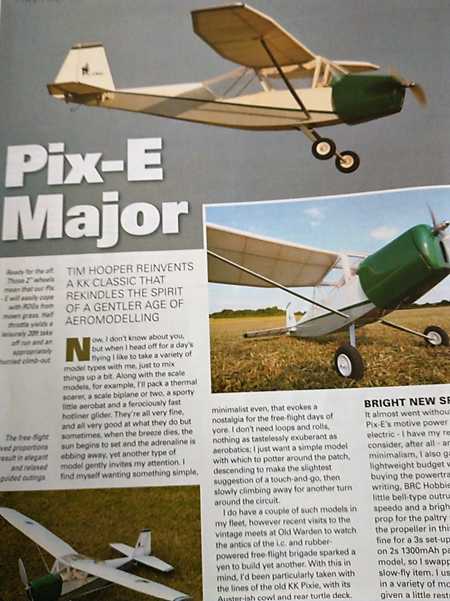 This was a 43in wingspan version featuring an electric motor and I decided that perhaps this was a better option than the original, but at the time never got around to thinking about building it. However, two or three years ago I went to the LMA show at RAF Cosford, and whilst rummaging through the SLEC stand I happened to see a set of CNC cut parts for the Pix-E Major. I purchased these parts which then languished in my garage until seizing the opportunity to use time during the present lockdown to do a bit of modelling.
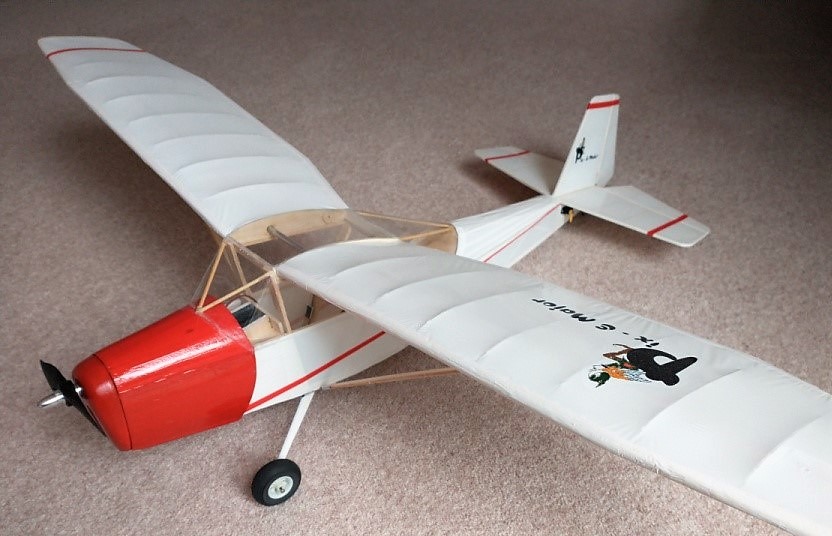 This is a very lightweight model, weighing in at about 320g (excluding the 2s battery), and the fuselage is mainly constructed with 1/8in square balsa (which frequently broke during construction). The most difficult part lay in all the cabin glazing needed! Needless to say, this plane will not provide an adrenaline rush – so forget aerobatics.
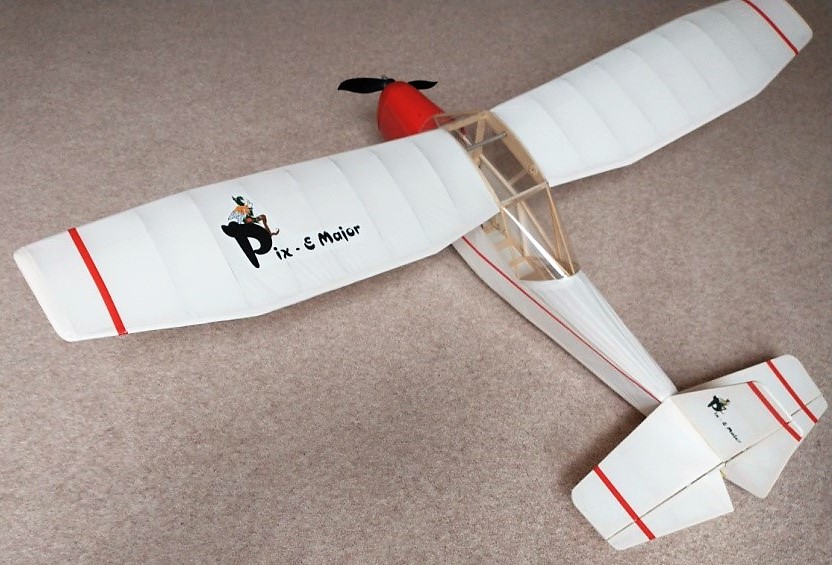 It is for leisurely flying on those very calm summer evenings, when it will probably fly for ages on its 2s battery.
Norwegian Nick has always been a prolific builder and he has sent me some information and photos of three models he’s been working on recently. First up is his Fantrainer which now just needs the colour scheme applying.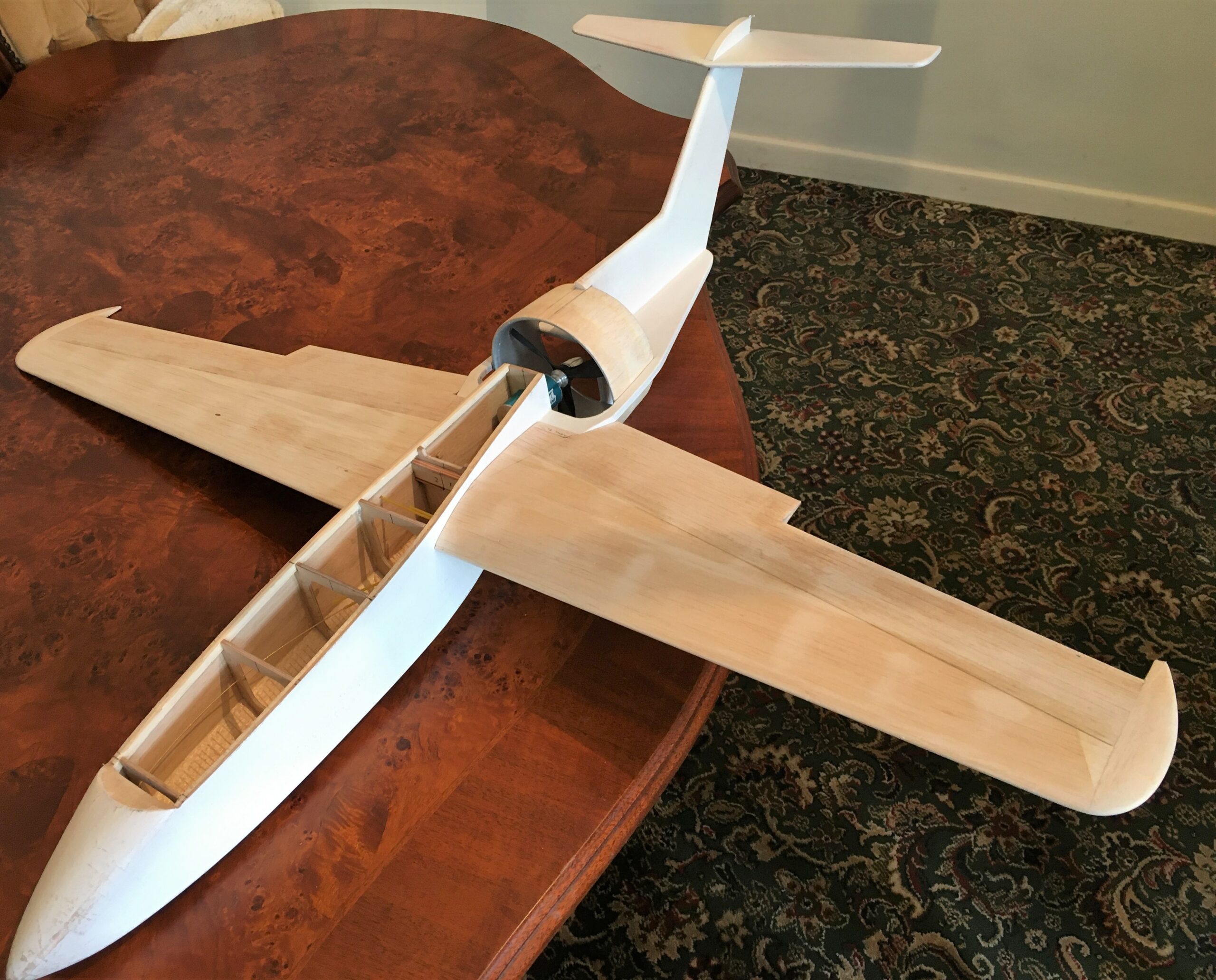
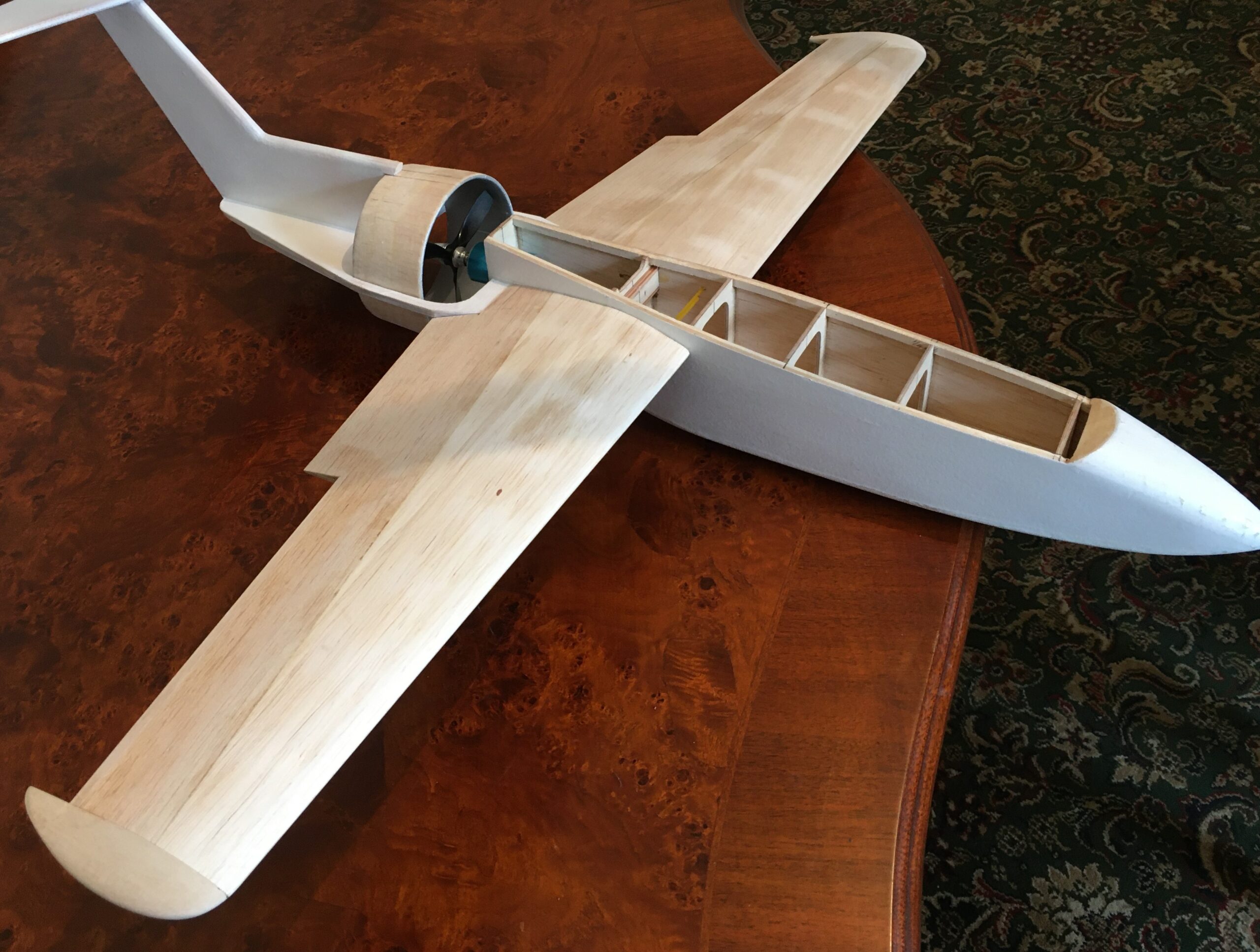 Nick has fitted an Overlander 2845 2100kv motor running on 4S lipo using 35amp speed controller.
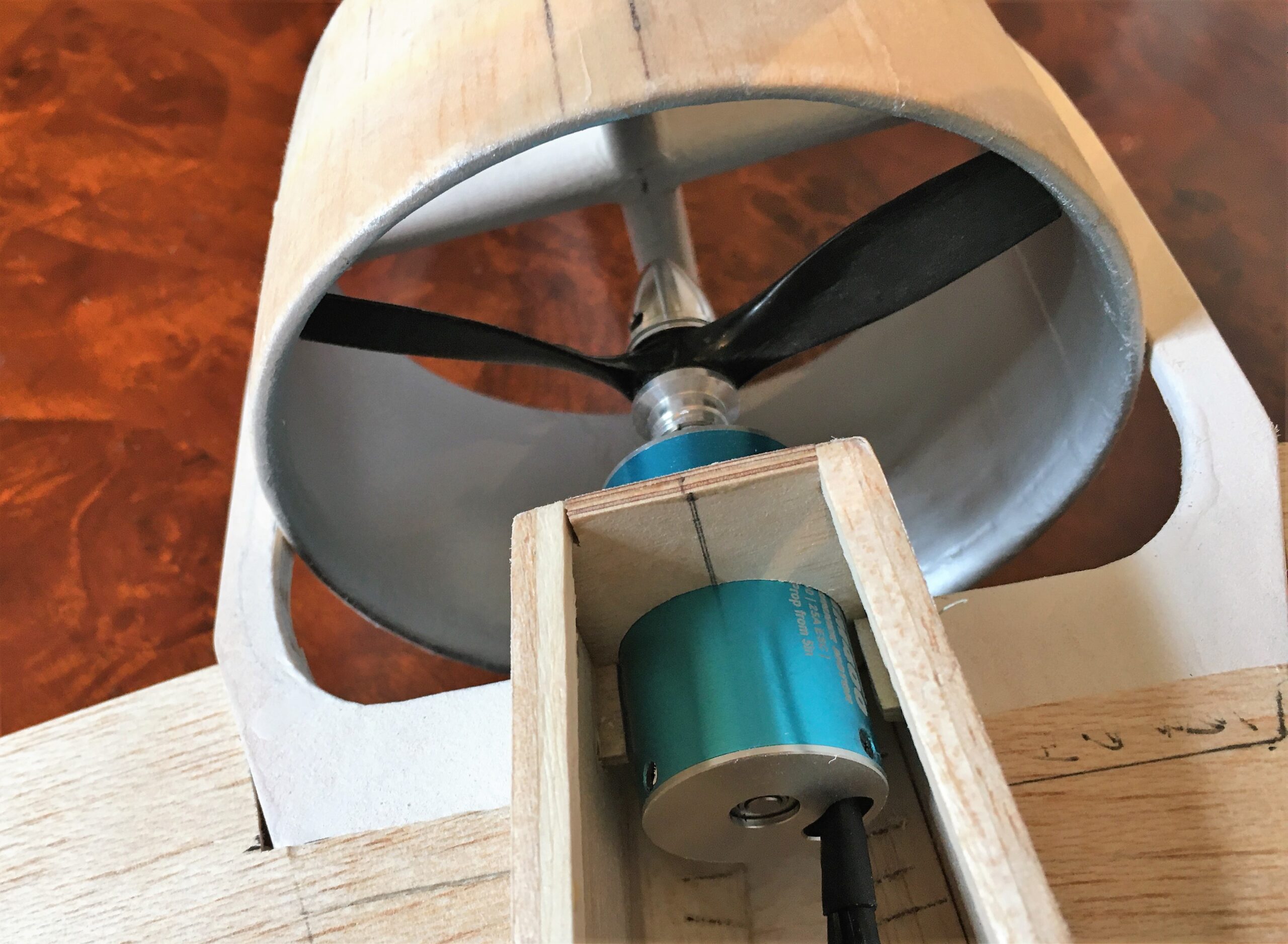 I’m not sure if it’s classed as an edf or a shrouded prop model but whichever it is I’m looking forward to seeing it fly.
Next is Nick’s SIG Decathlon that he started building in the late 80s and he’s recently dug out to finish.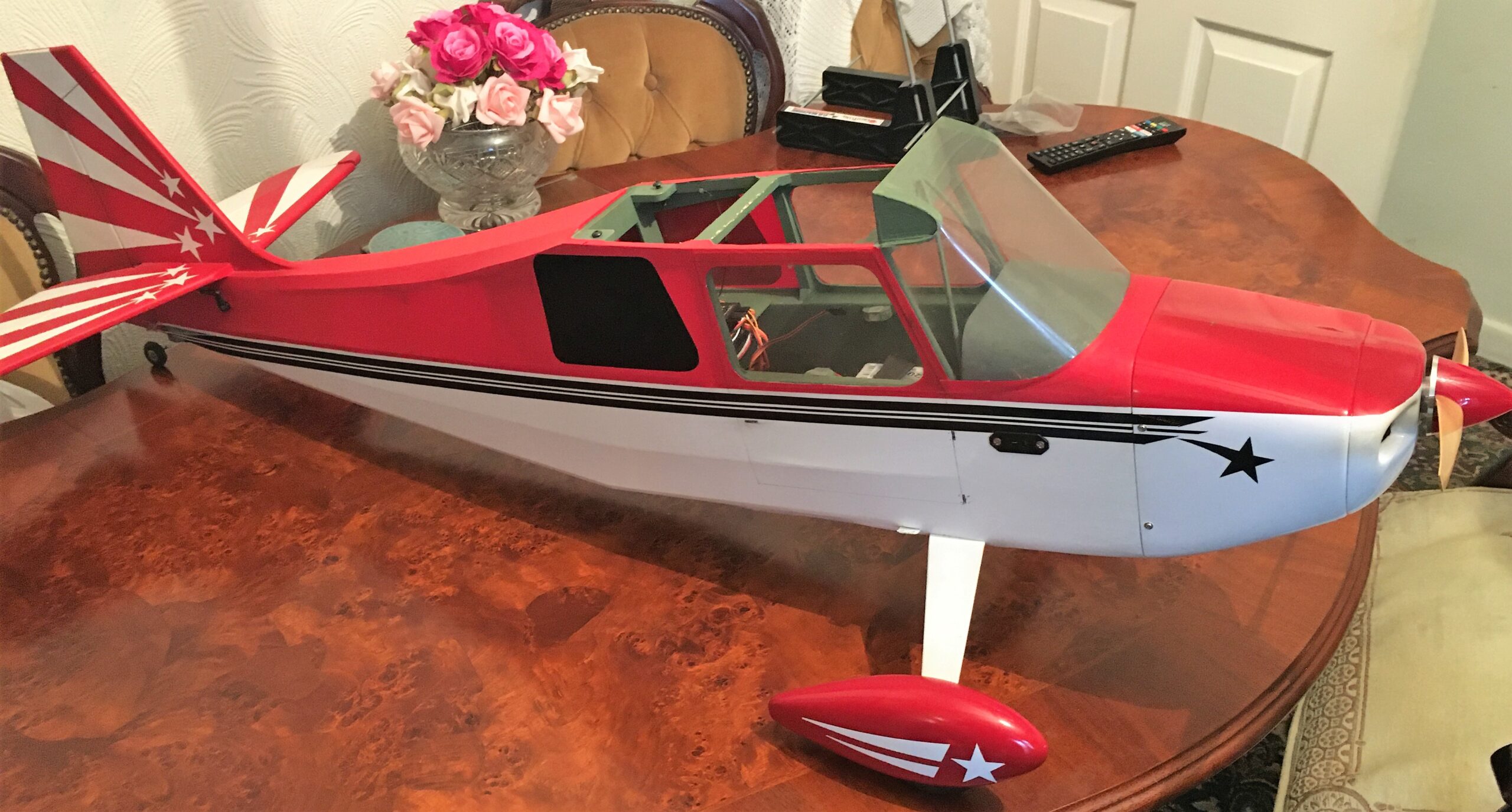 It’s powered by an Overlander Thumper 3548/05 900kv which is good for 710watts and is controlled by 60amp esc.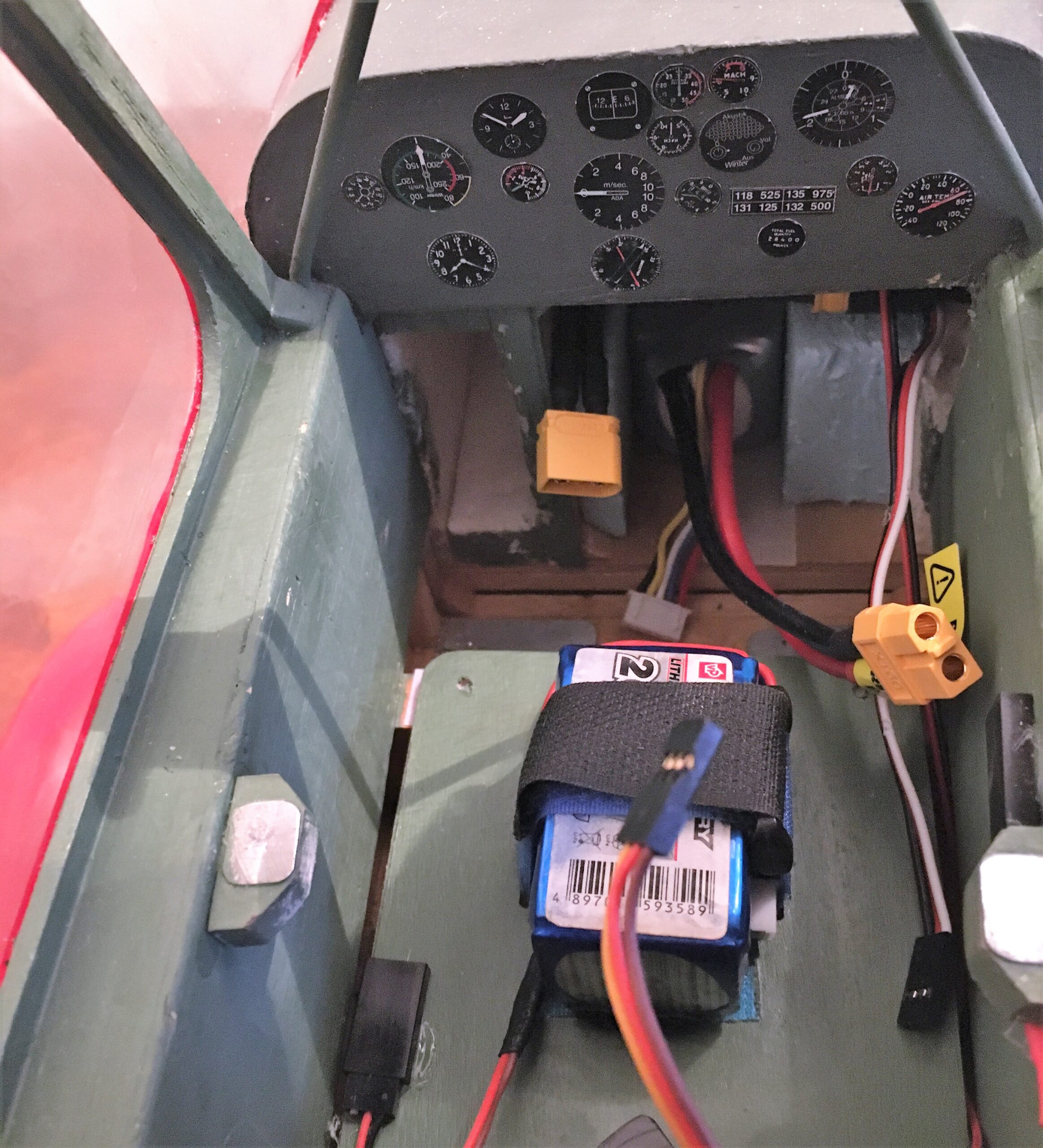
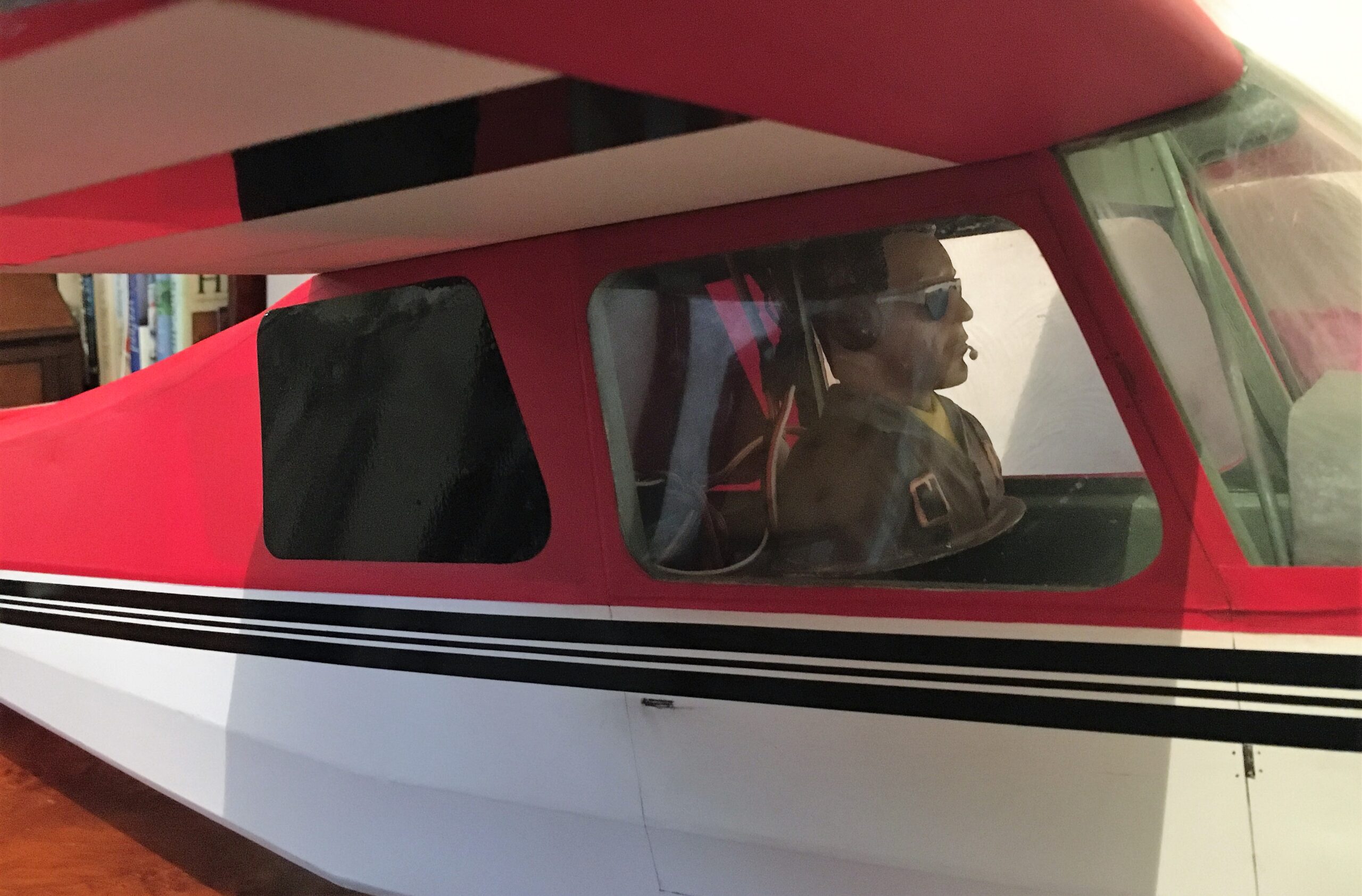 Nick will be using a 4s lipo. Do you think the pilot is a model of Norwegian Nick in the eighties? Many years ago the club had an evening of full-size gliding with the Royal Naval Gliding Club down at Daedalus (Lee-on-Solent). For a small fee members were able to have flights either being winch launched to around 1000’ or aero towed to a greater height. I had one of each and the tug plane was a Decathlon, I wonder if it’s the one that Nick has modelled.
Back to Percy now and the latest news on his lovely Lancaster that many of us have seen at club meetings at various stages of the build: This project was started about two years ago, and was a major undertaking, having many breaks in progress. It has reached the stage of being 99.5% finished, requiring battery connectors to be soldered and a few minor things before ground testing.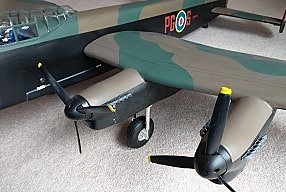 The balsa and ply construction was fairly straightforward except for the engine nacelles where a change in type of retracts over the years made some of the balsa shaping difficult (and different to the plan). It was intended to have servo operated bomb doors, but due to the length of the doors, two servos would be required (one at each end of the doors). Whilst some success was achieved, the problem arose with two servos operating in tandem at opposite ends of the door. This led to the servos fighting each other so there was always one or other of the servos “buzzing” and drawing excess current. This was holding up the project so it was eventually decided to use thumbscrews to hold the bomb bay doors closed, access being required to connect the removable wings and to install the battery. I may revisit this problem at a later date.
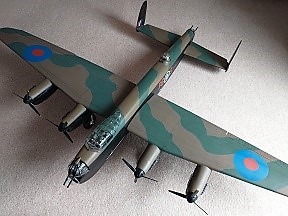 The complete airframe was covered with 18g glass cloth and resin before being finished for painting (quite a mammoth undertaking!). High build primer was applied and thoroughly rubbed down, followed by grey primer. The underside of the aircraft was spray painted with black satin finish. The upper surfaces were painted with acrylic matt brown and dark green using a standard camouflage pattern (wartime Lancasters were hand painted using rubber mats as stencils – this meant that all planes were identical, preventing the enemy from determining the total number of planes available to the RAF).
I decided to give the plane markings of 619 Squadron – PG-S (serial No LM742) which was lost on the night of 6-7 November 1944 at Gravenhorst – chosen because I had spent time with the individual who was the pilot of the plane on that fateful night. Unfortunately, I have no idea if the plane carried any nose artwork (still researching but a difficult task). Unfortunately the pilot is no longer with us and I had yet to take up aero modelling on the occasion I met him.
Finishing touches involved a lot of 3D printing (plus hand painting of the aircrew). This included:
Propeller spinners and Engine exhaust stacks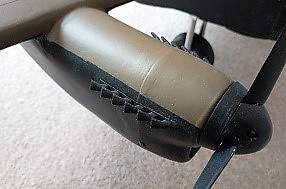 Browning guns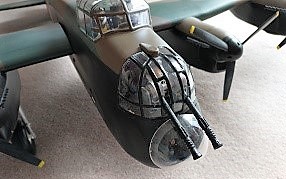
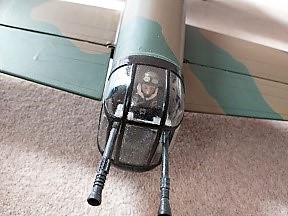
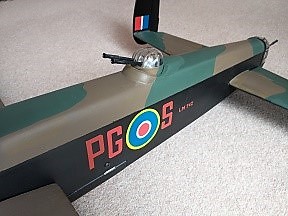 Aircrew (6 in total – wireless operator is hidden from view)
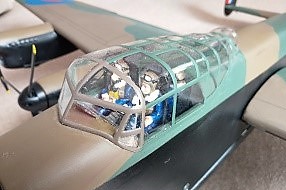 Another great project almost completed Percy, one that is going to look superb doing low passes over the patch.
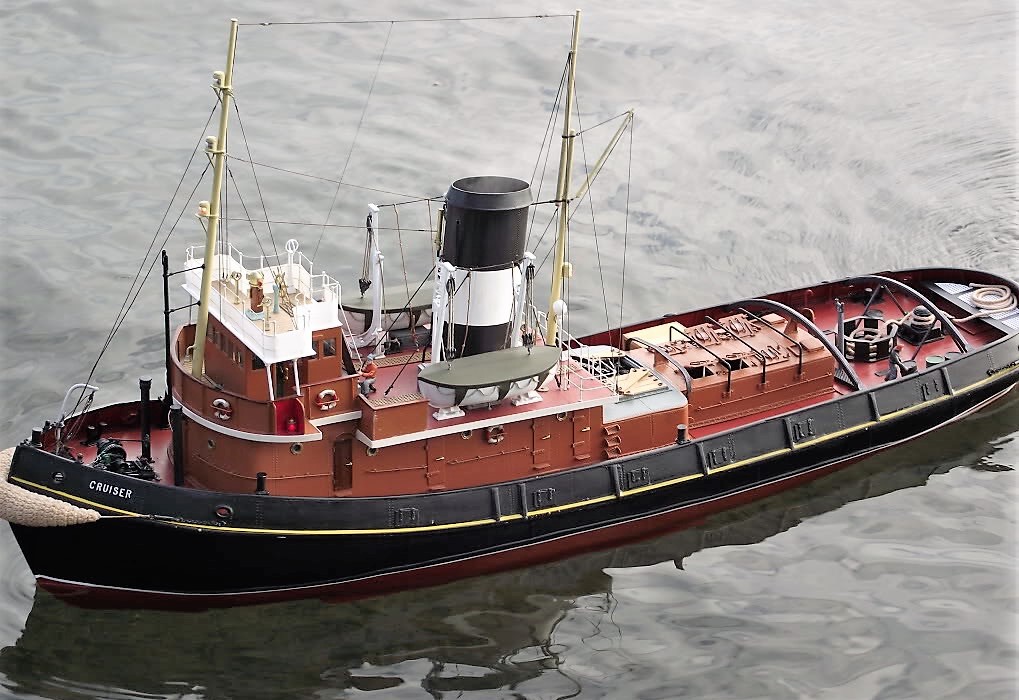
The last new model is a little unusual for an aeromodelling club and it shouldn’t really feature as it’s a tug boat!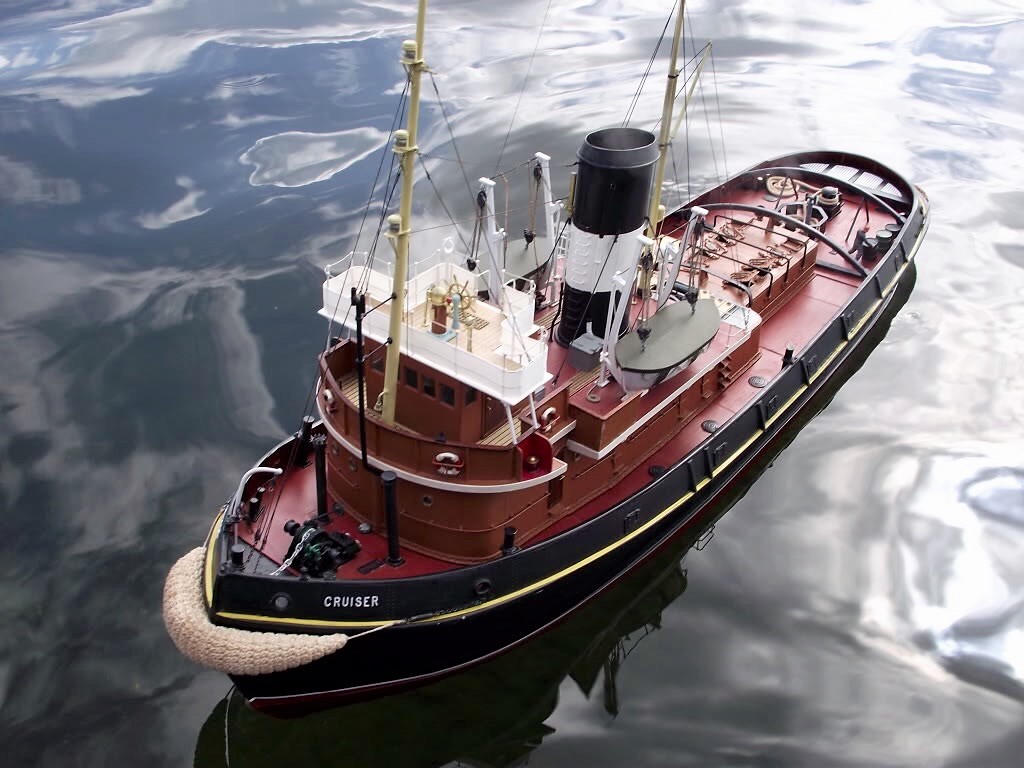 It’s another model from Norwegian Nick and I’ve included it just because it looks simply superb bobbing on the water on a sunny day. Nick took the photos of the 36lbs and 3’ 6” long model on Canoe Lake in Southsea.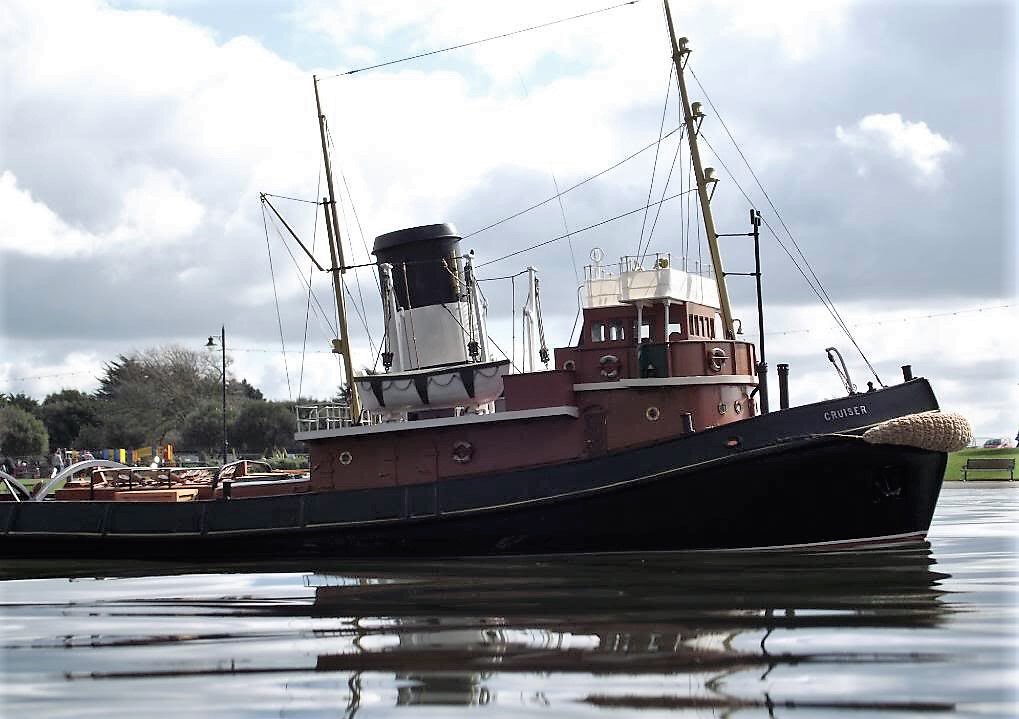
Sadly there are no flying photos this month but Dougal and I did manage to take some video of the first post lockdown flights. Then the following day Dwayne Pipe shot the deer… No, he shot some video not the deer!
Please watch the video full-screen, it’s so much better with small models flying around.If the video won’t play for you please click HERE
You do not need a parachute to skydive.
You only need a parachute to skydive twice.
Colin Cowplain
Patch News – February 2021
Here we are at the start of March having had zero flying in February. Fortunately things seem to be improving now with the vaccine rollout going well and Covid-19 cases dropping steadily so let’s hope flying is allowed soon. At the time of writing it looks as if from 8th March two members will be allowed to fly and then from 29th March it will be up to six members, but that’s not definite. Members must email Captain Slow to book a slot before flying. Captain Slow, assisted by Woody, has changed the fence battery regularly and reports that the patch will need cutting when we start flying again. Just as they finished the battery swap on 26th Feb the bullocks were moved into the field.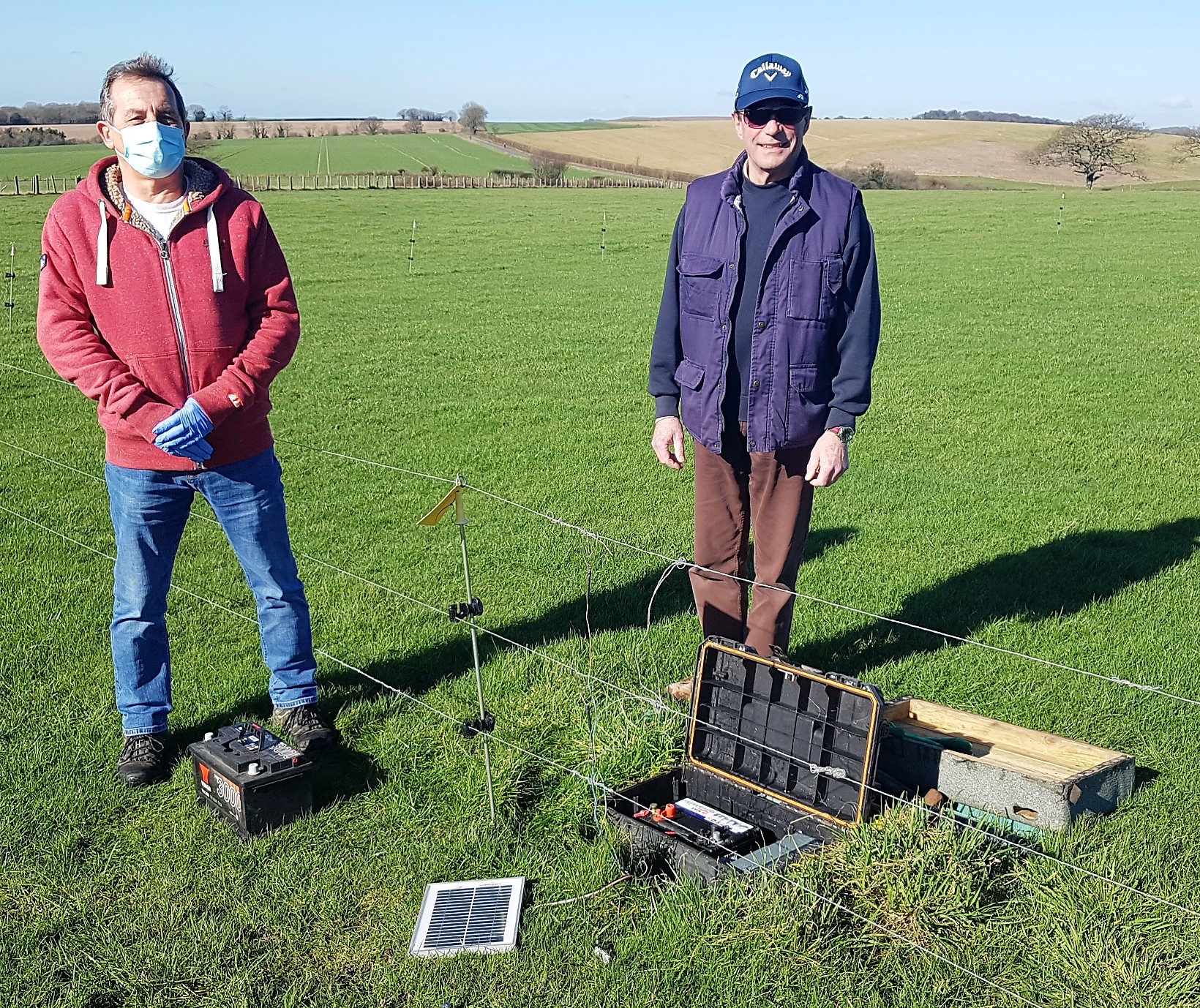
Some of you may have seen the feature on Don Eades, our late President, on BBC South Today on 17th February. There was no mention of his love of aeromodelling, it was about his life working as a photographer in the Petersfield area and him leaving a legacy of 120,000 photos to the Petersfield Museum. Don’s daughter Sandra was interviewed and spoke of some of his exploits while trying to get the best photographs. A good and fitting feature I thought. On Thursday 25th February at 2.30pm some club members attended Don’s funeral at Buriton church. Through his work Don met a great many people and in normal circumstances I’m sure his funeral would have been packed but due to the limit of thirty attendees the funeral had to be by invitation only. Funerals can never be happy occasions but I felt Don’s was about as good as it could be. The club was mentioned several times in the various tributes and its importance in Don’s life was stressed. During the Time for Reflection a slideshow of Don’s life was shown which included many photos of club activities, models, and club members. The final photo of the slideshow was Don waving goodbye. A very touching and poignant moment for everyone present.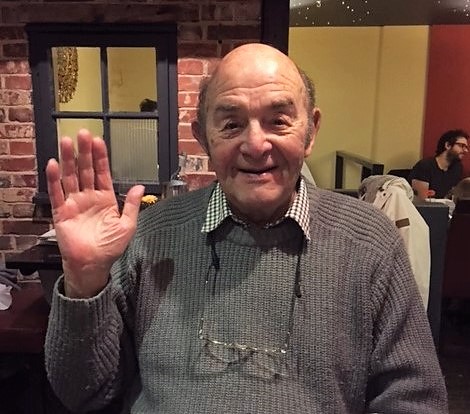
At least this latest lockdown has been over the winter period when the weather is frequently unsuitable for flying but Sunday 21st February was a perfect flying day with light winds and even a little sunshine. Catapult King wrote to say it would have been the ideal day for test flying his little P51 Mustang but of course that couldn’t happen.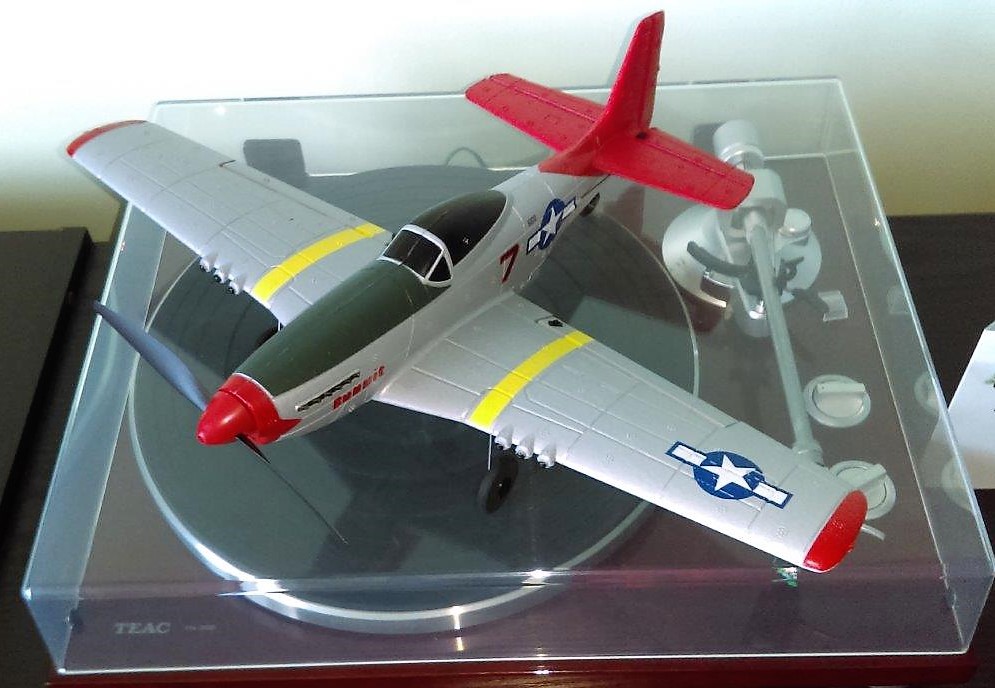 He also reports that his F-14 Tomcat ‘keeps dishing out problems’ as he’s trying to get it ready for it first flight.
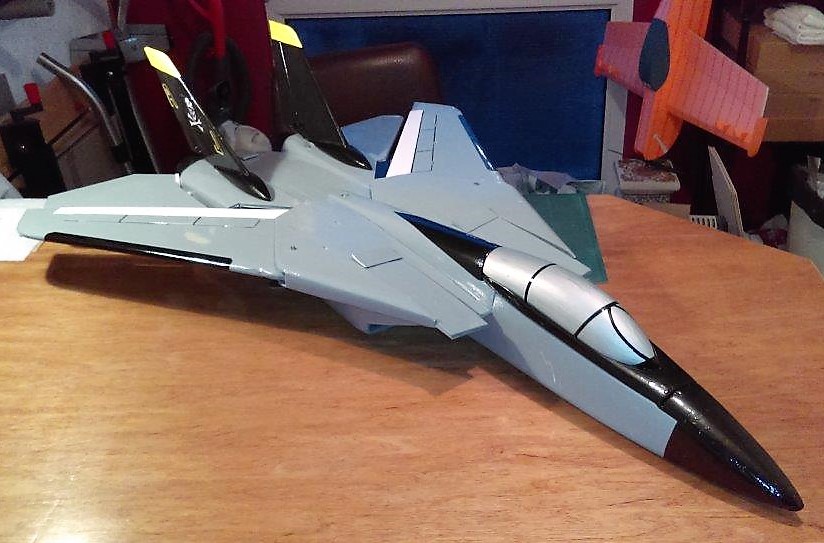 The latest problem is that his radio has all but died and will need repairing. (I can recommend Mike Ridley of Model Radio Workshop in Southampton, he’s very good). Apparently Catapult has been spaced out during lockdown! No he’s not got a drug habit, he had received and model of the International Space Station for his birthday.
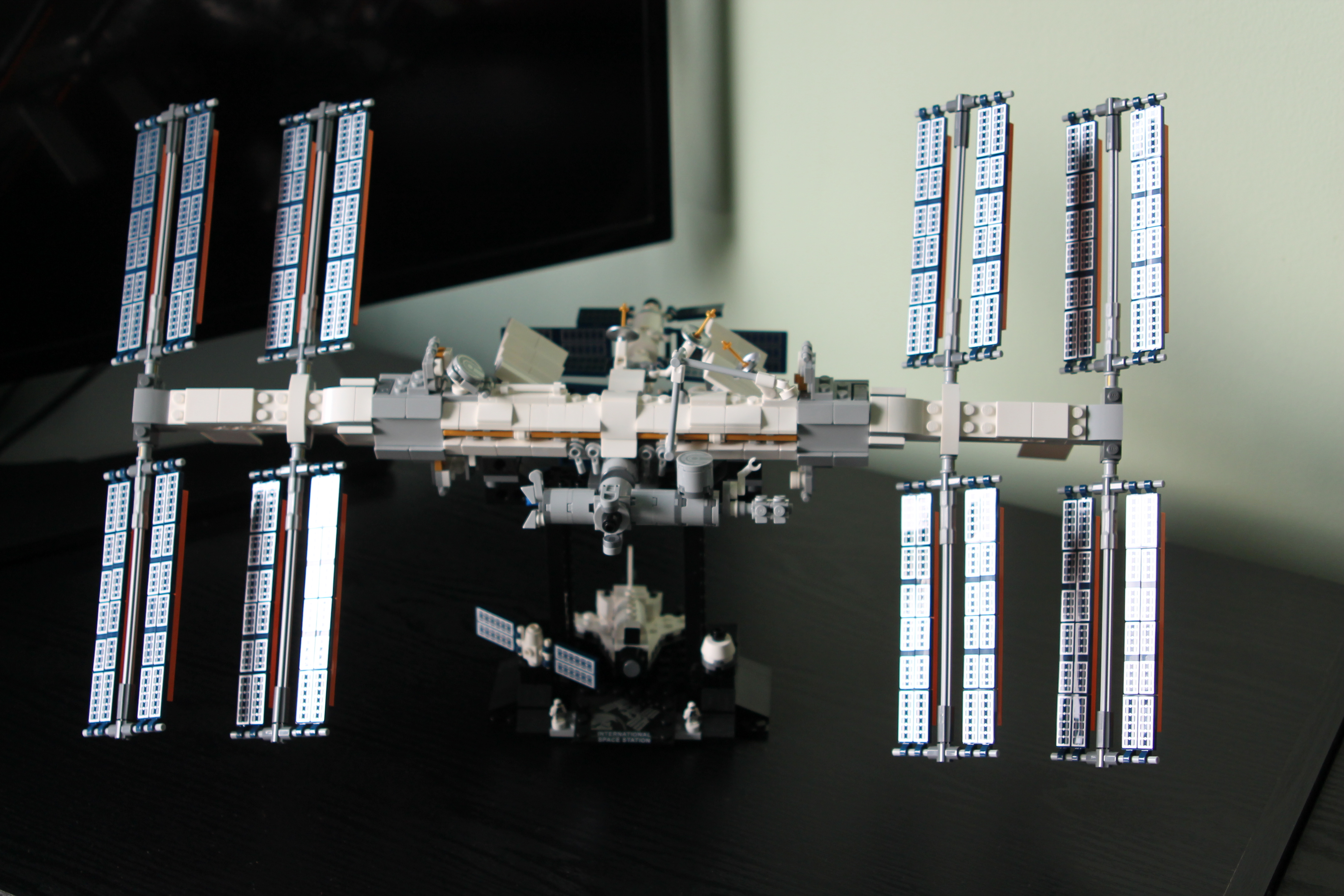 He’s now got it finished and I must say it looks good Catapult but I’m not sure it will fly.
I was rather surprised when Jeremy Stuttard (Jezza? No I bet he’d hate that!) emailed on 3rd February saying that he’d been flying that day. Does he live on a farm or have a large enough back garden to fly in, or was he blatantly breaking the rules? None of those actually, it turned out he meant he’d been ‘flying’ on Google and discovered that the aerial mapping of the patch has been updated. Jeremy said that not only were several fliers clearly visible but also it was possible to see a model in the air and the shadow it was casting. So I opened up Google to check it out and when I first looked at the field in 2D I wasn’t convinced he was correct about the dot being a model at all, let along actually in the air, but then I went to 3D mode, zoomed right in, and rotated the view.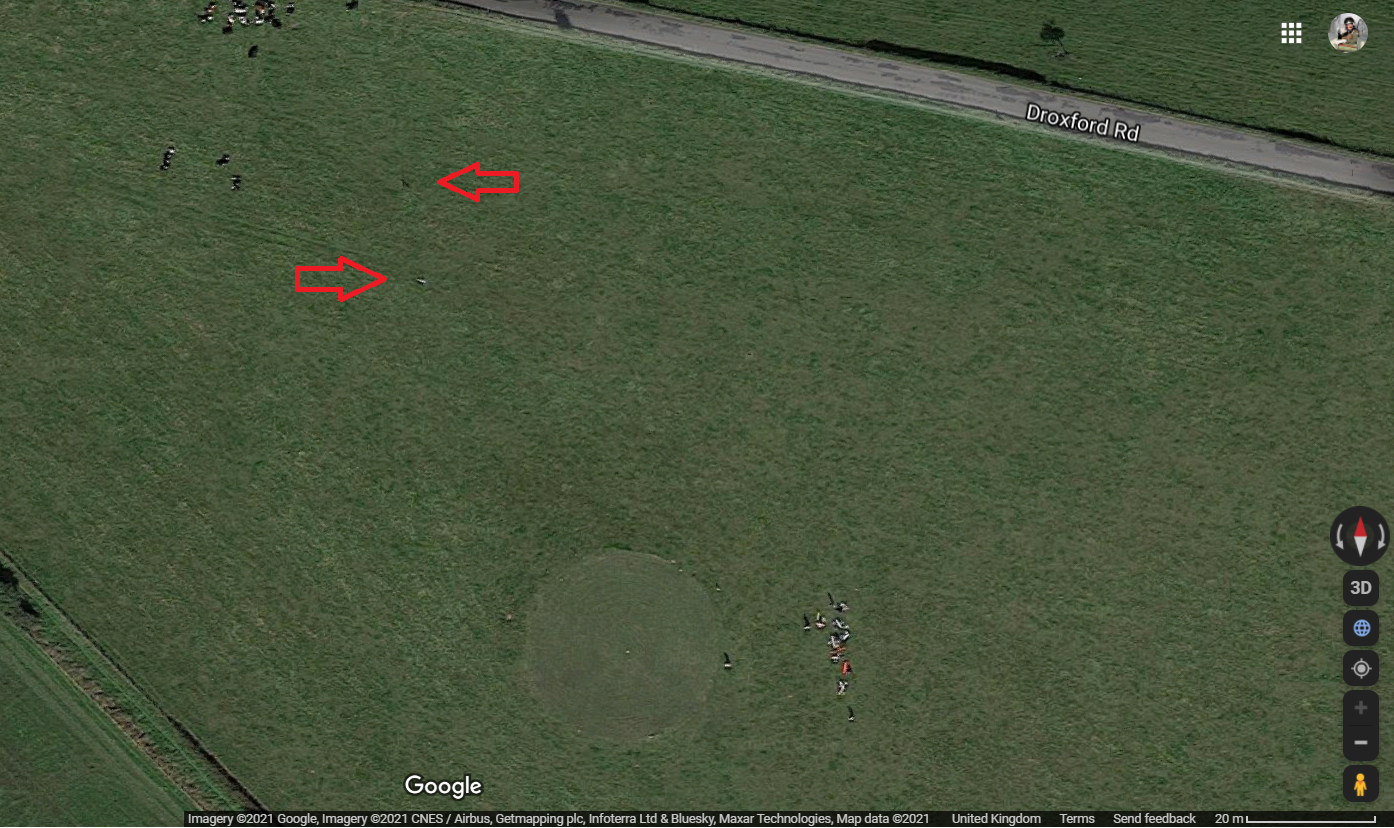
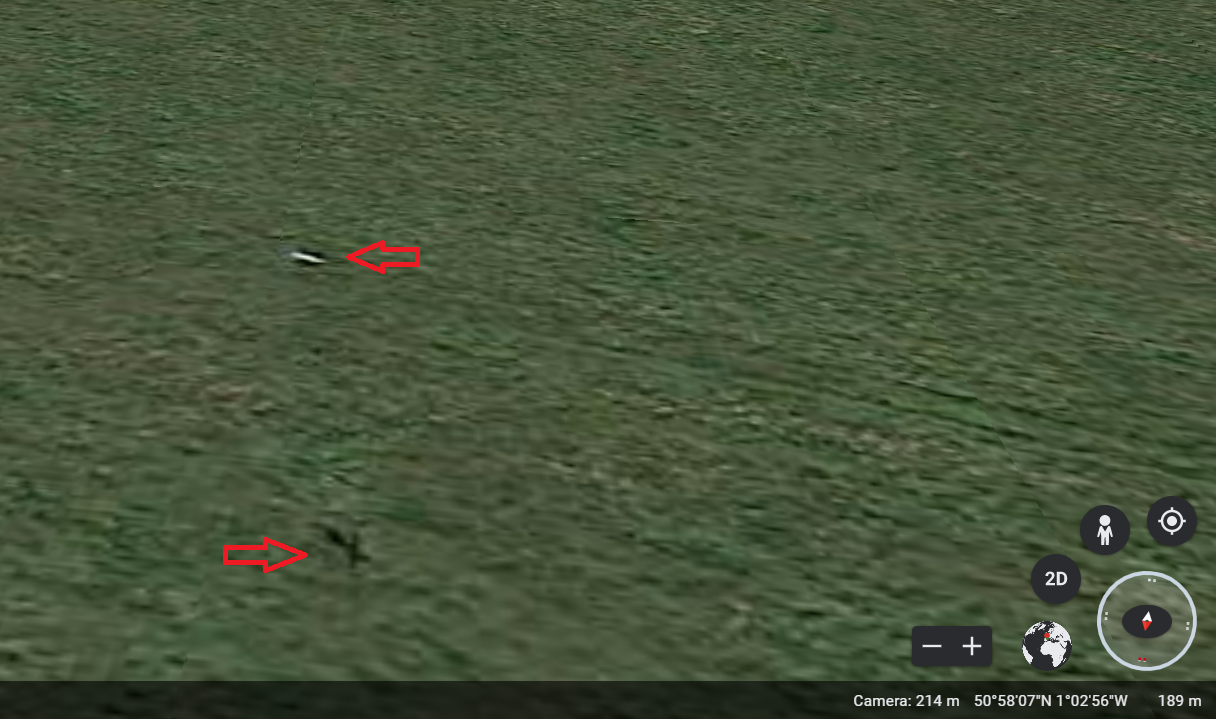 He’s correct, it’s definitely a model and the shadow shows the shape more clearly than the model itself. I don’t know when the photos were taken, I thought Google used to give a time and date but I can’t see it now. I think it must have been pre-Covid as there doesn’t seem to be any social distancing in the pits. Click on the pics to enlarge them.
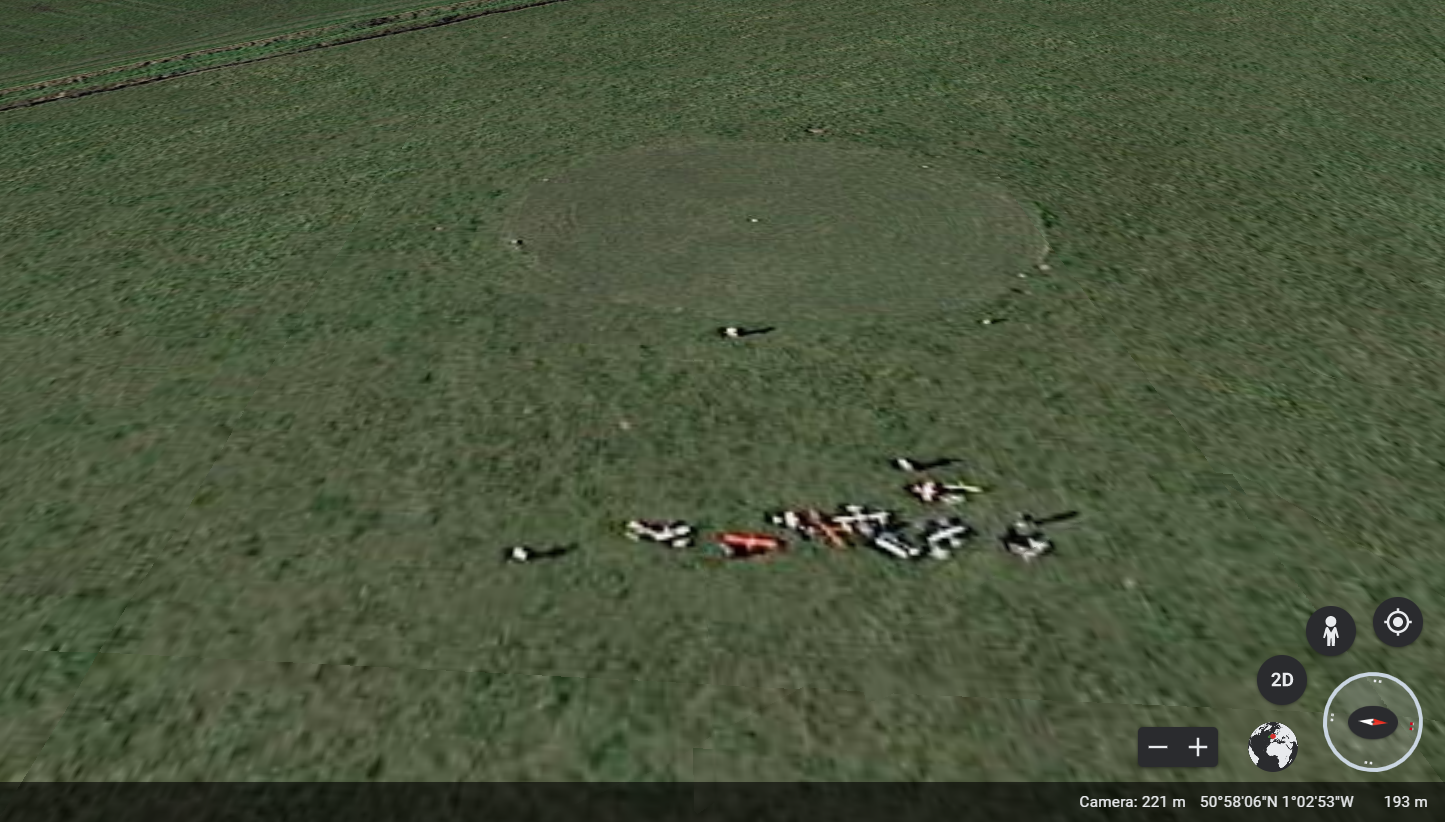 Further over most of the cars are hidden by the trees but three are visible next to the barn which I belong to me, Captain Slow, and Dougal Entendre. Good spot Jeremy, if we can’t fly we can at least look longingly at the field!
Last month I showed you some photos of an Eek mini pylon racer that Matt Takhar has been building for Nick Weatherley. Matt has now finished and covered the Eek and it’s looking extremely smart. Matt’s been experimenting with vinyl cutting recently but I don’t think he did the ones for the Eek, I assume they were bought online.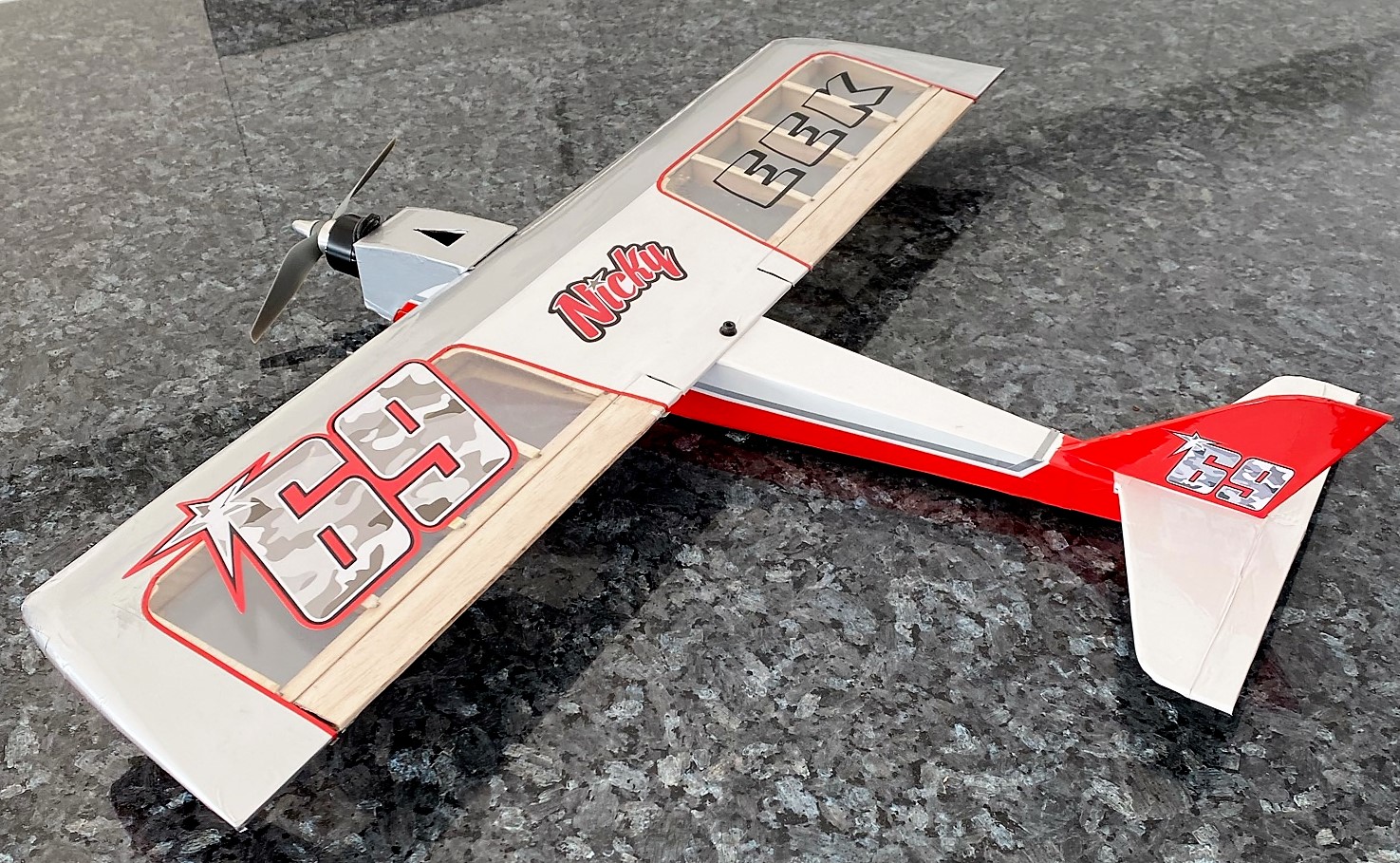
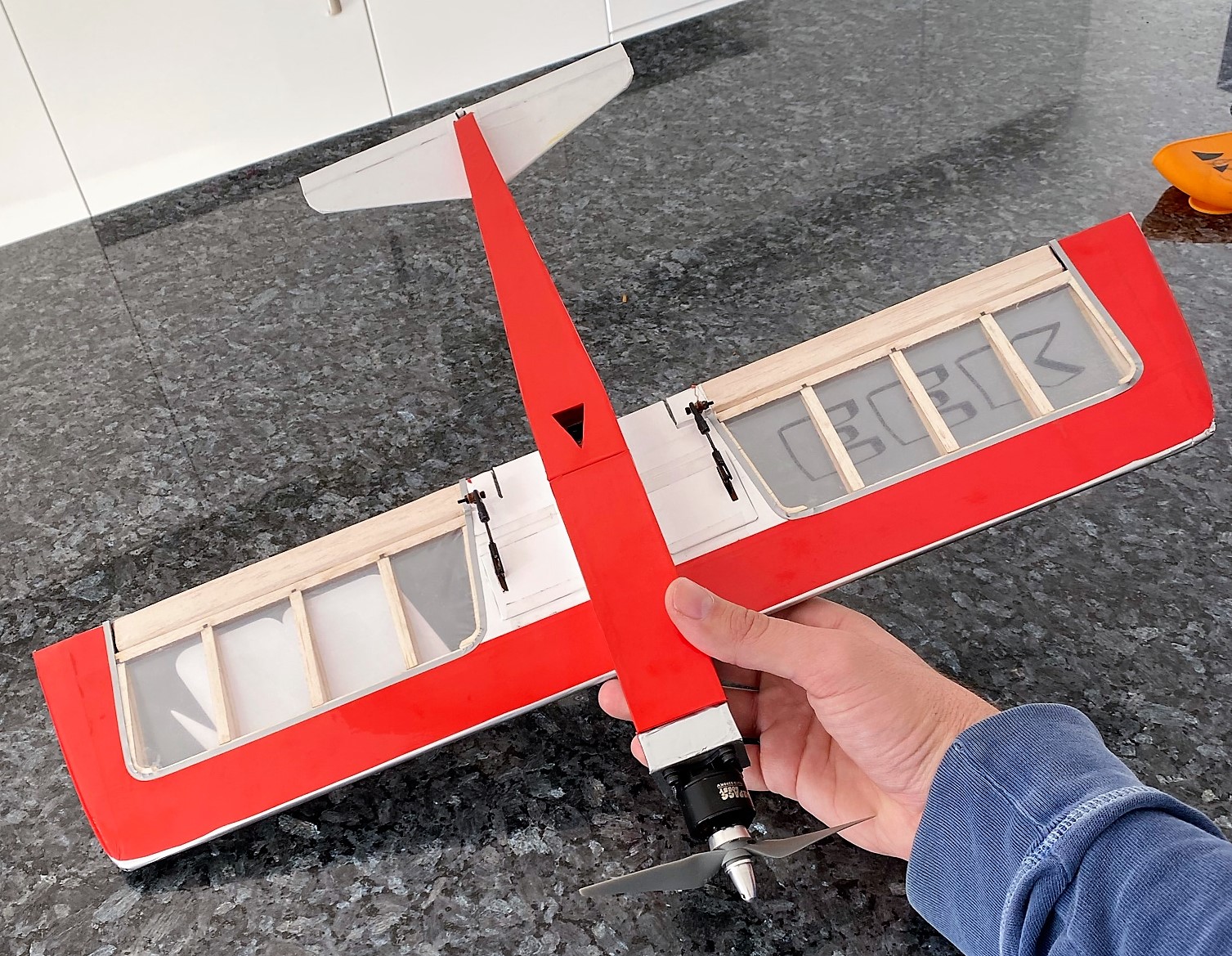 It seems likely that Nick will ask Matt to do the test flight, I hope his eyesight and reactions are up to it, at just 575mm span it’s going to be a hairy little thing but should be great fun if it survives.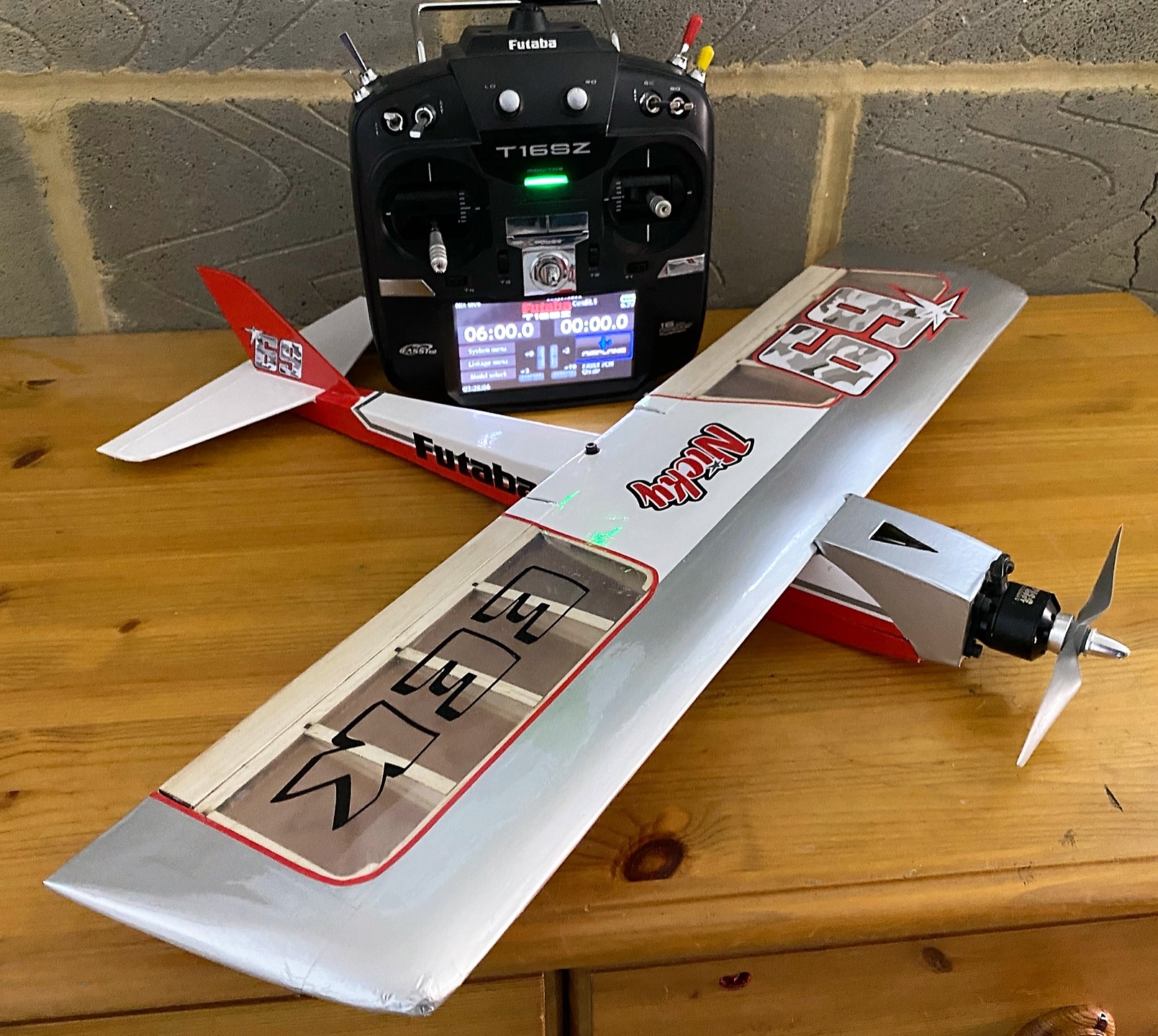
Matt has also been refurbishing a Madness 3D machine. He owned one around 10 years ago and had a hankering for another (nostalgia becomes more common as you get older Matt!). He bought a slightly tatty I/C one on the BMFA sale site and has converted it to electric power and done some general tidying up especially of the covering.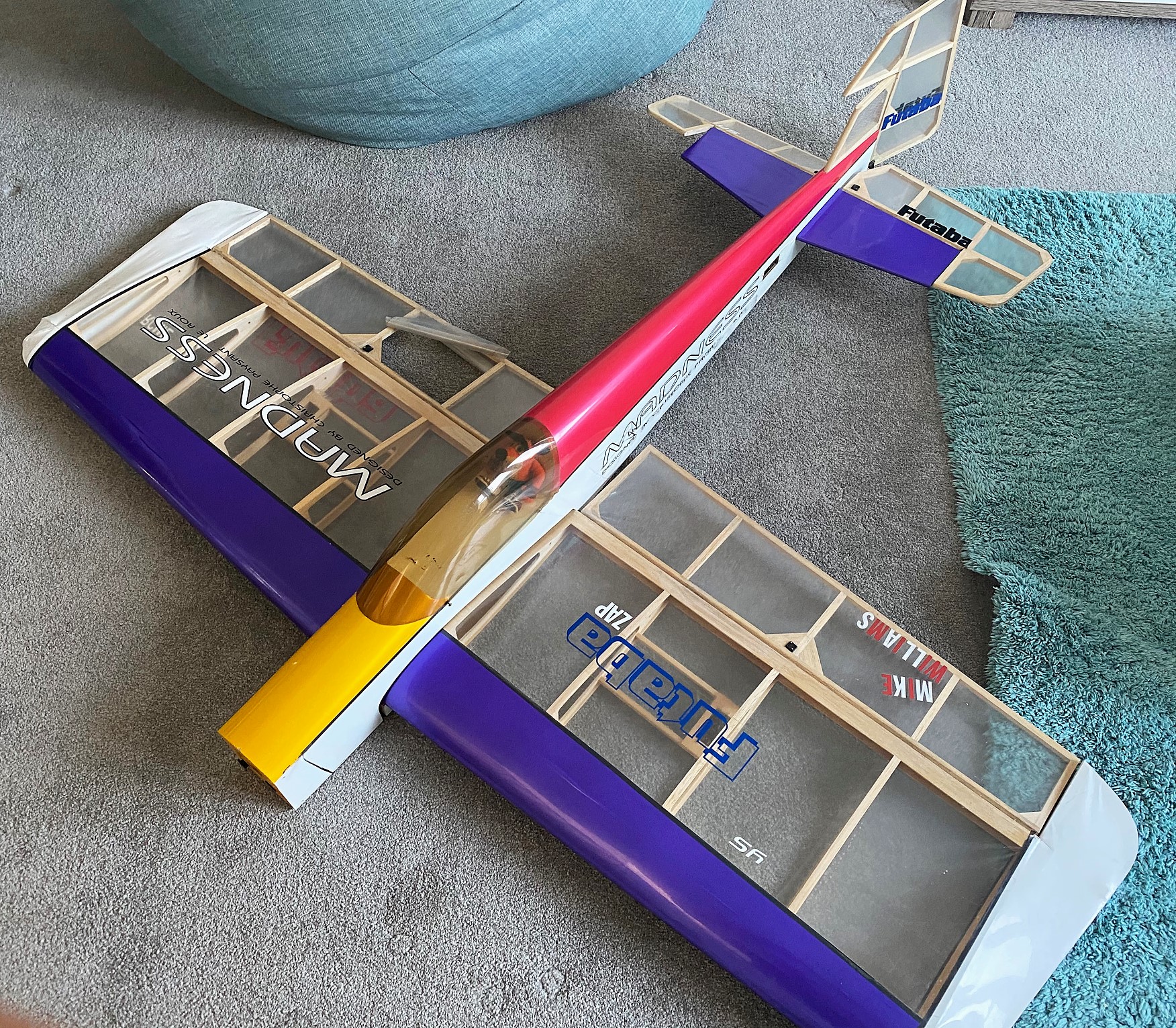
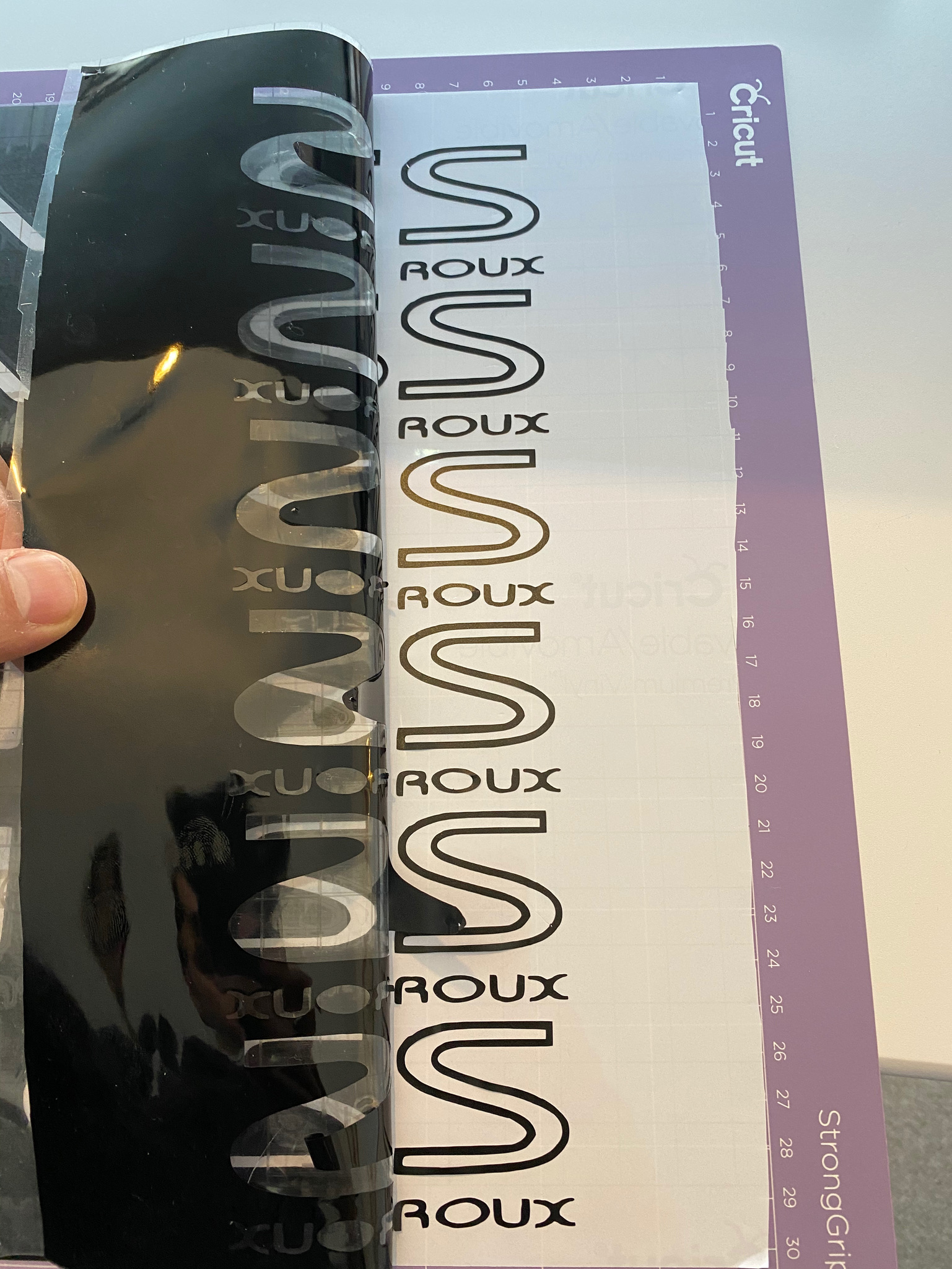
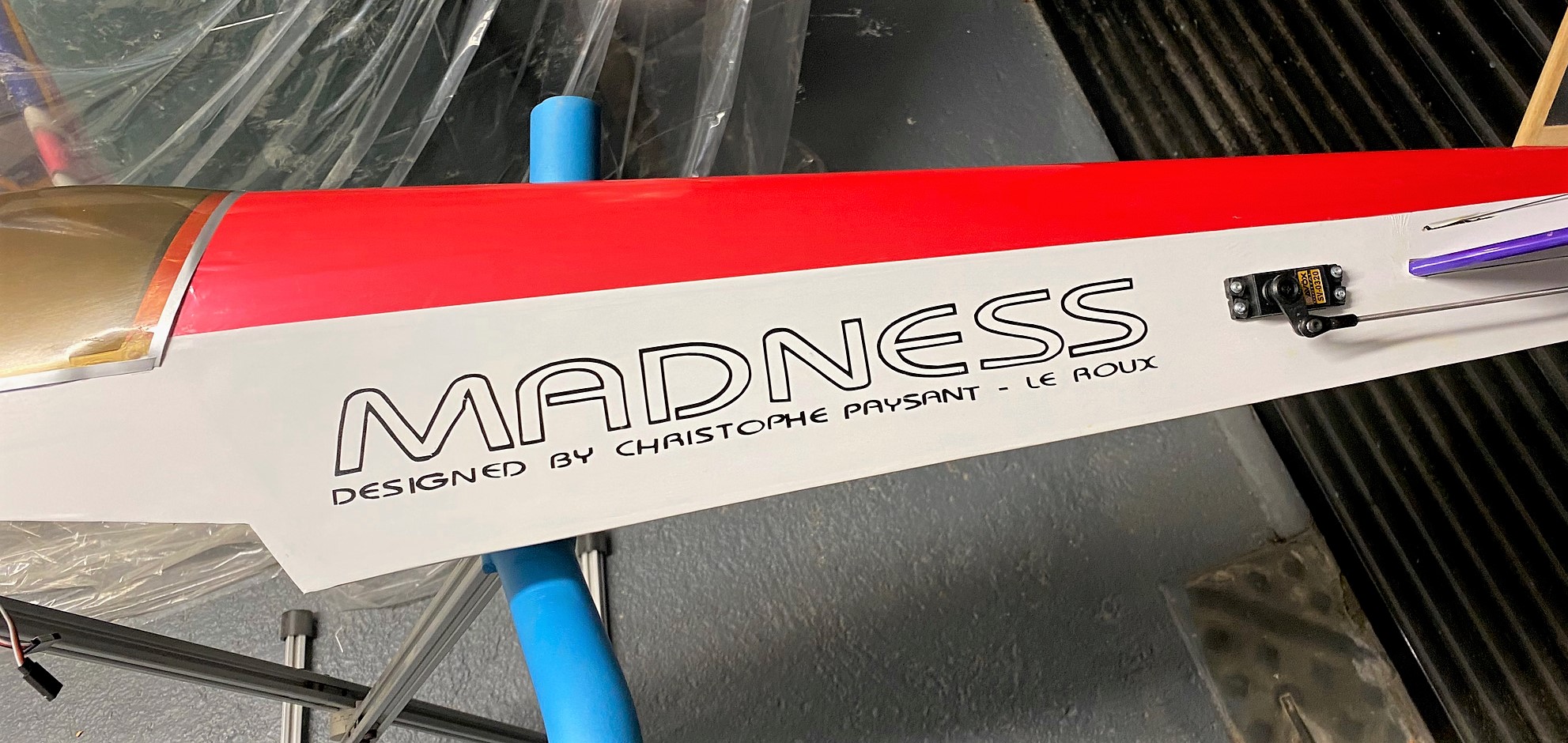 He used his vinyl cutter to produce some of the graphics which look to have turned out well. I’m sure Matt needs more practice at cutting vinyl so if you need any graphics for your latest pride and joy you know who to go to!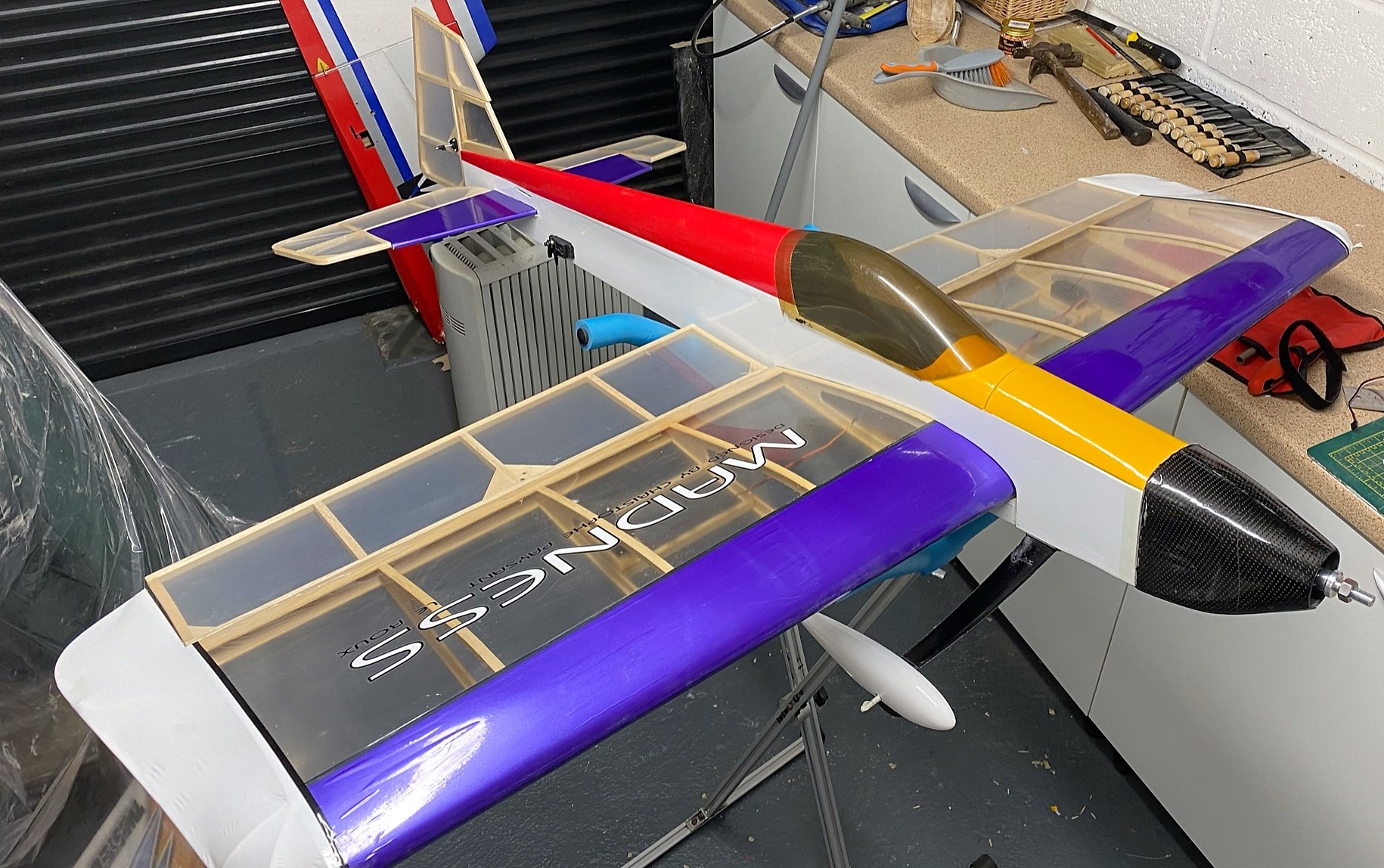
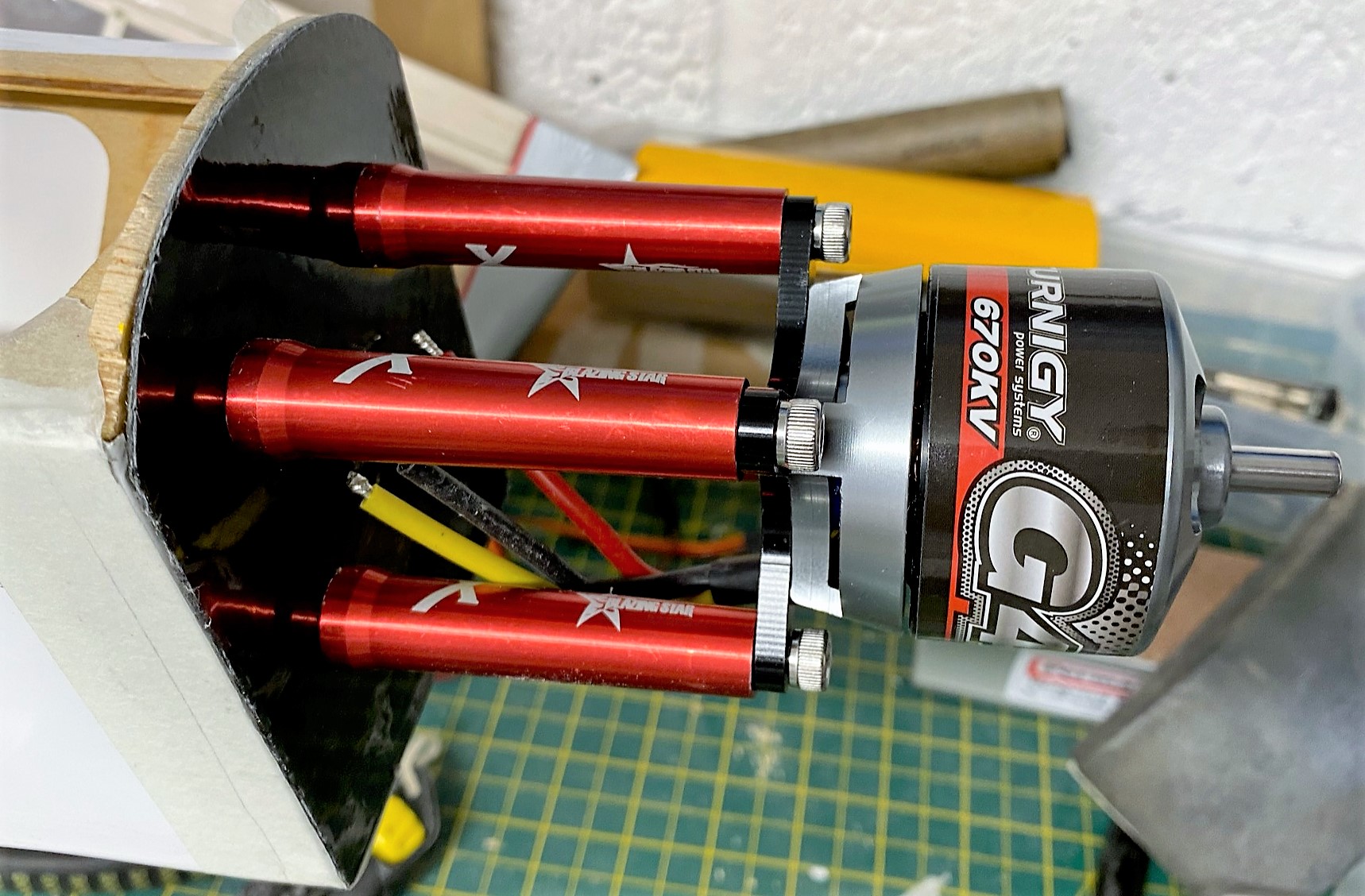 The power is now supplied by a Turnigy 670Kv motor, much nicer than the previous dirty smelly noisy I/C engine!
Shock news, Bob the Builder has sold his Multiplex radio gear, the traitor! He’s got a Radio Master Tx16s on order which should arrive sometime in March. It’s the same transmitter as Dougal’s latest that I featured in December.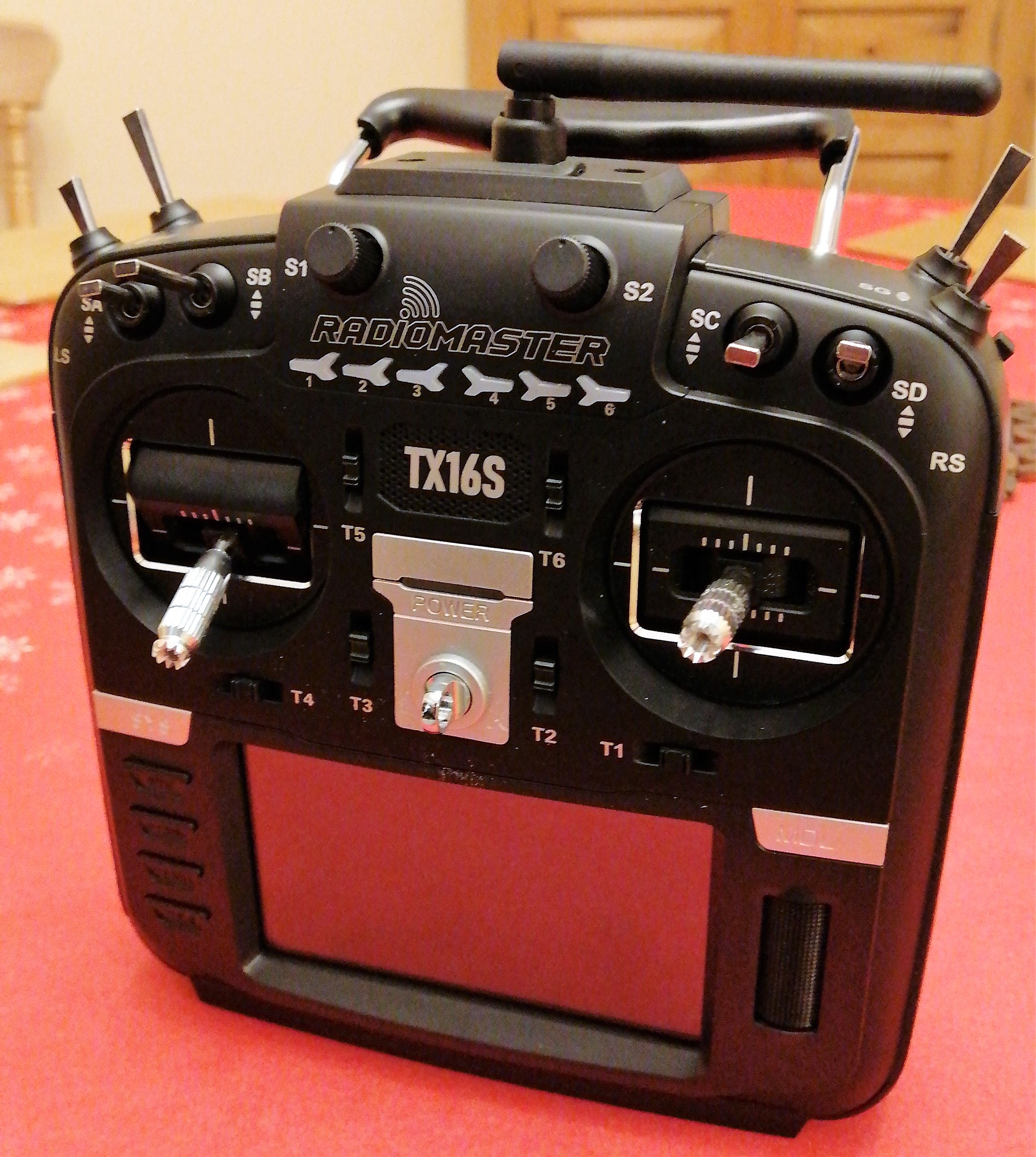 Bob explains that the reason for the change was that he wanted to experiment with flight controllers, specifically a ZOHD one, and for that he needs a multi-protocol radio that can handle PWM and SBus. It means he’ll be able to use the Hitec receivers that he was using before buying the Multiplex gear. Bob has spent this lockdown learning as much as he can about Open Tx programming, mostly by watching the many YouTube videos that are available online. It will be interesting to see how Bob gets on with it. He should be alright for loads of help and advice from Dougal as Dougal has just retired after a lifetime of work developing software. Incidentally Bob still has two of the little Multiplex 5 channel Light receivers that several of us use, contact him directly if you could use a couple more receivers. Bob has also done a bit of building and says: In a particularly bored moment looking at my Lockdown2 model I wondered if I could use the wing in a DLG glider so I have built a prototype fuselage, see attached.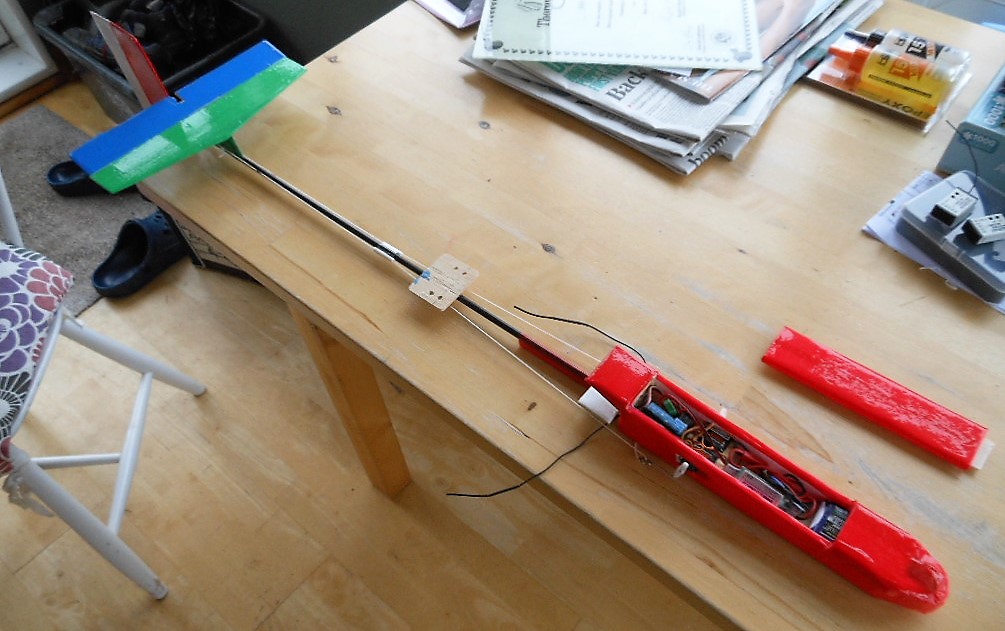
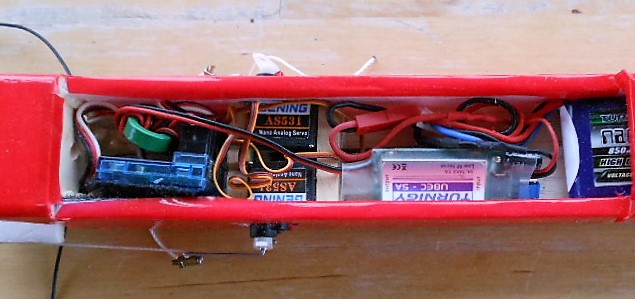 Had to learn how to spring load the rudder and elevator to save weight, which will be about 350grms, nowhere near an Alula at 200grms though. Hmm, interesting, I hope the wing is strong enough for discus launching.
I heard from Gorgeous Gary the other day saying he has now got his Multiplex Funjet Ultra finished and ready for the test flight, he reckons it could be his fastest ever crash! Multiplex say it will do 125mph so it might be the fastest crash any of us! Gary has fitted a Himax c3514-2900 motor, a 60A esc, and will be using a 3 cell 2200mAh lipo.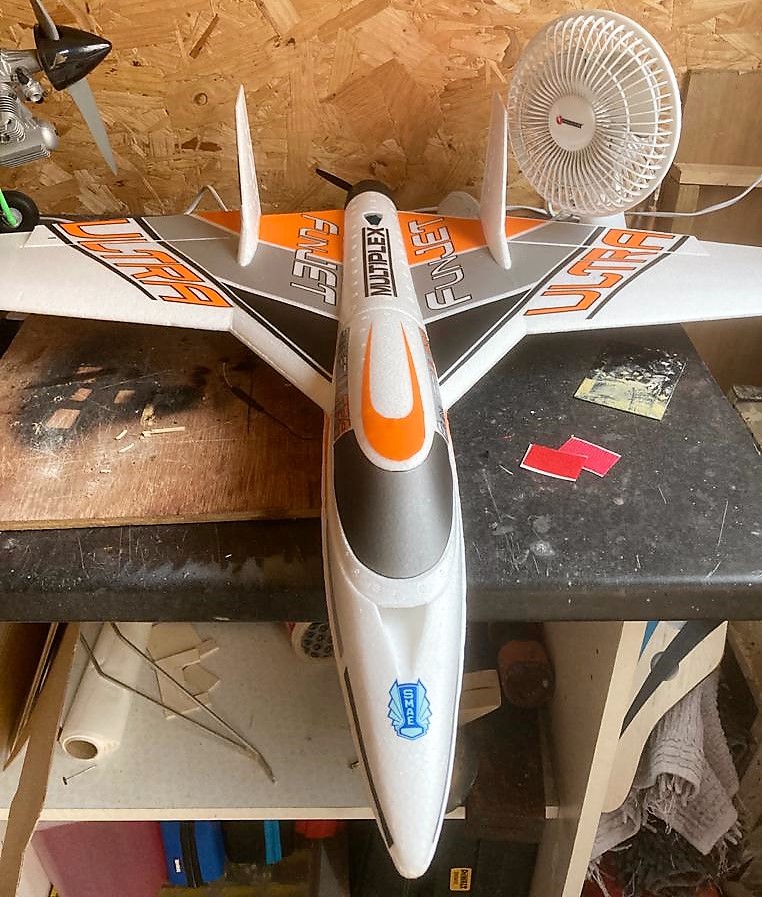
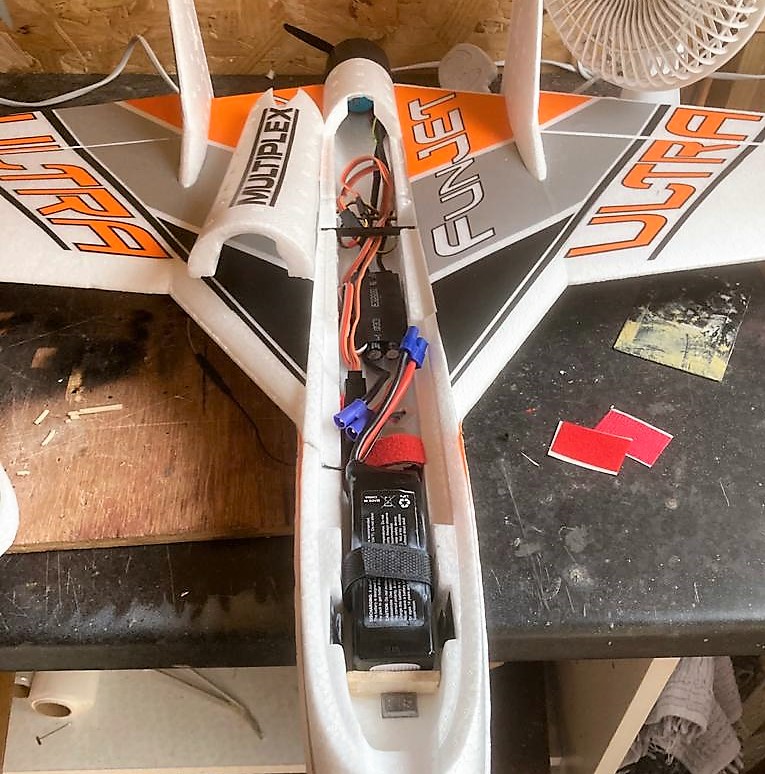 A couple of months ago I showed you a photo of Gary’s wrist that had been operated on, putting him out of action for a while. With the various restrictions and lockdowns he really hasn’t missed much flying but he says it’s on the mend now so he should be alright to fly once we are allowed. So what did the surgeons do to him? This:
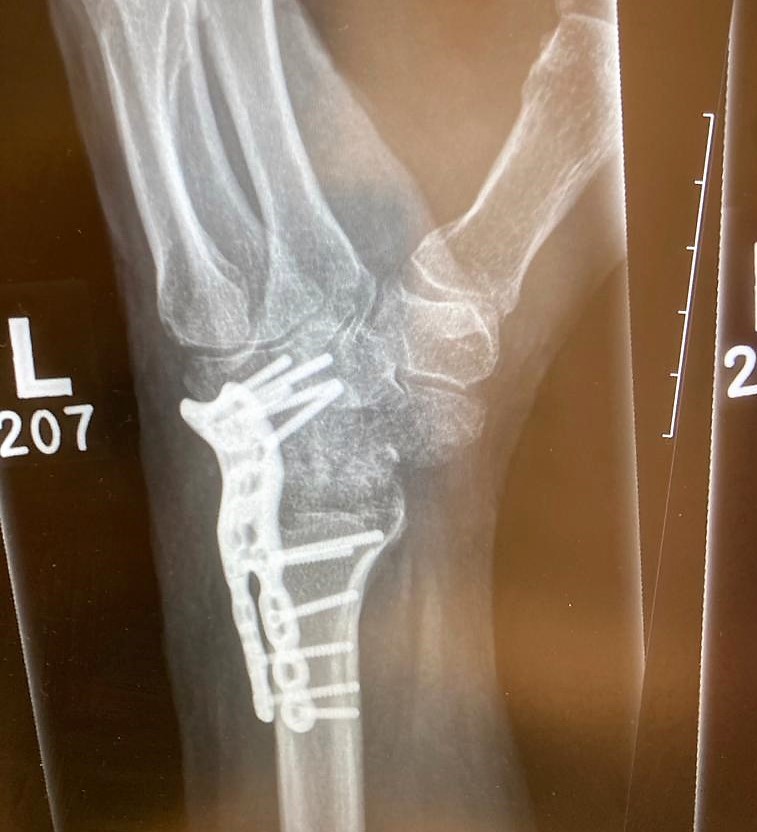 Ouch! That just had to be very painful, still it could have been worse, it could have been one of us instead of Gary!
John Warren has now finished his Albatross No.2 and has sent through some photos of some of the finer details.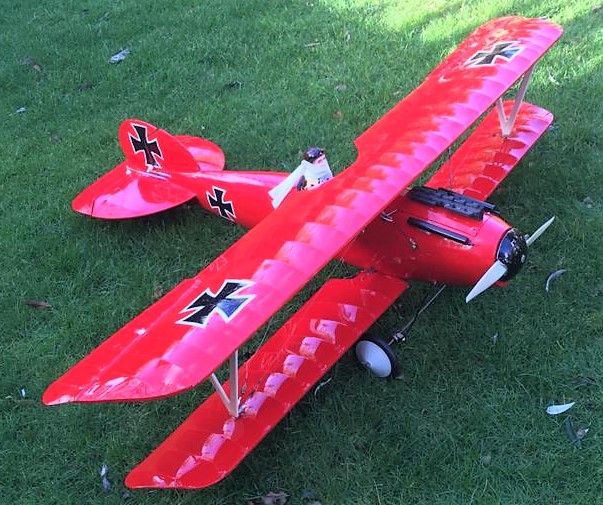
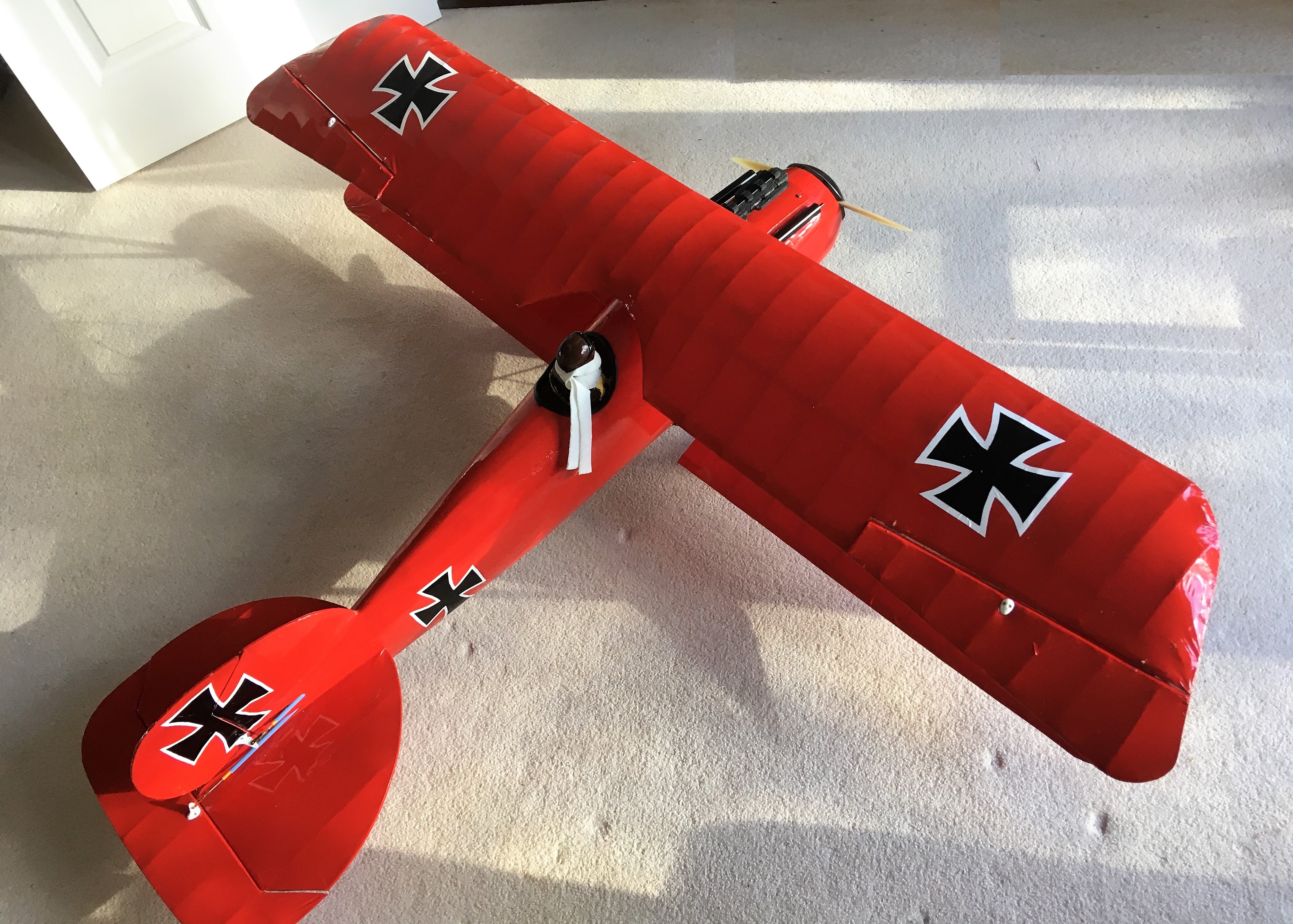 He says that on the old model the bottom wing was held in place by a ball and socket on the bottom of the strut. It was the failure of this joint that caused the wing to come off. He has changed the ball and socket to a hook and eye, and added a link joining both bottom wings. Let’s hope that does the job, I was unimpressed when the last one failed while I was flying it! The elevator and rudder controls are both closed loop using Gold-N-Rod snakes.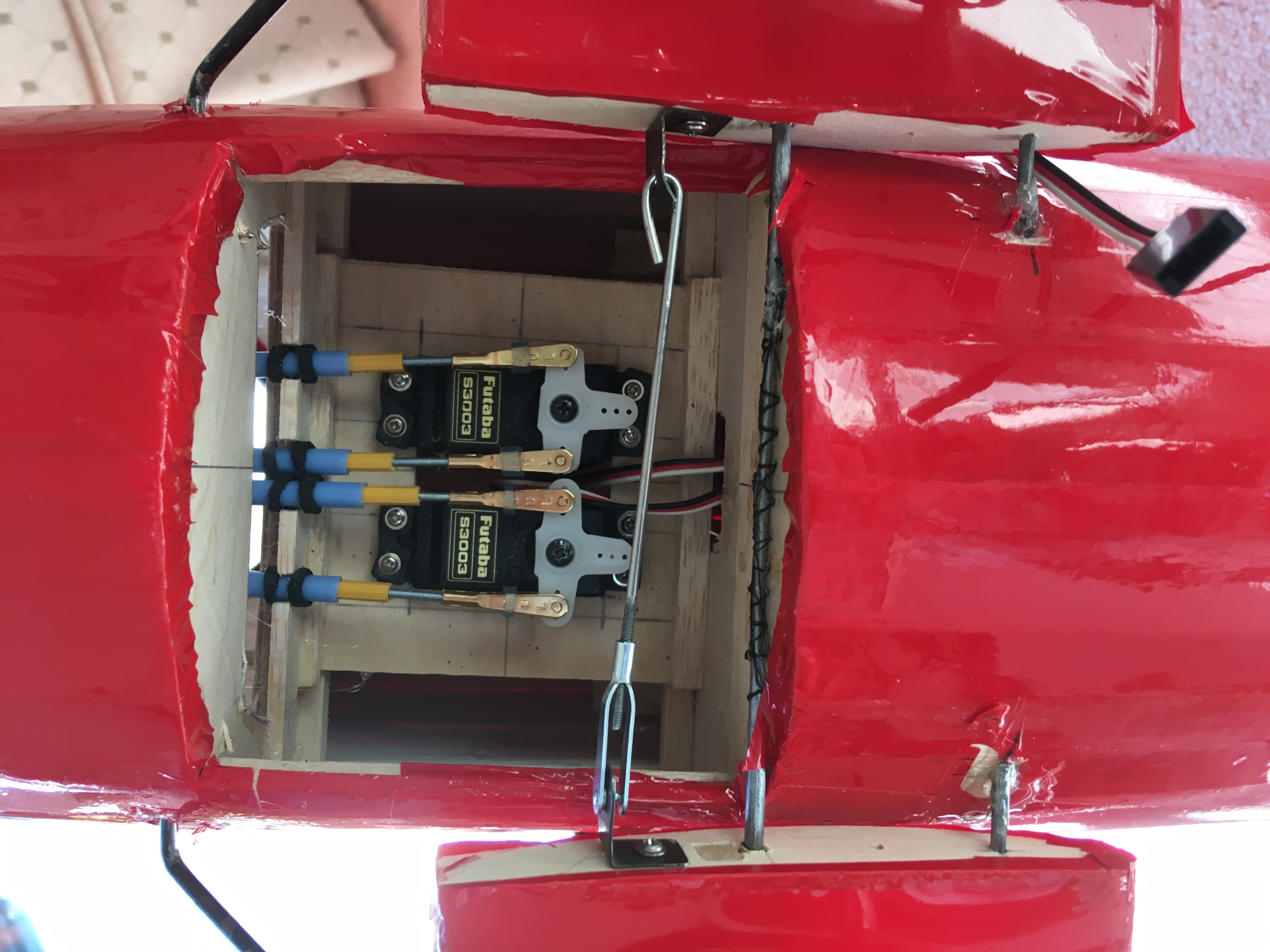
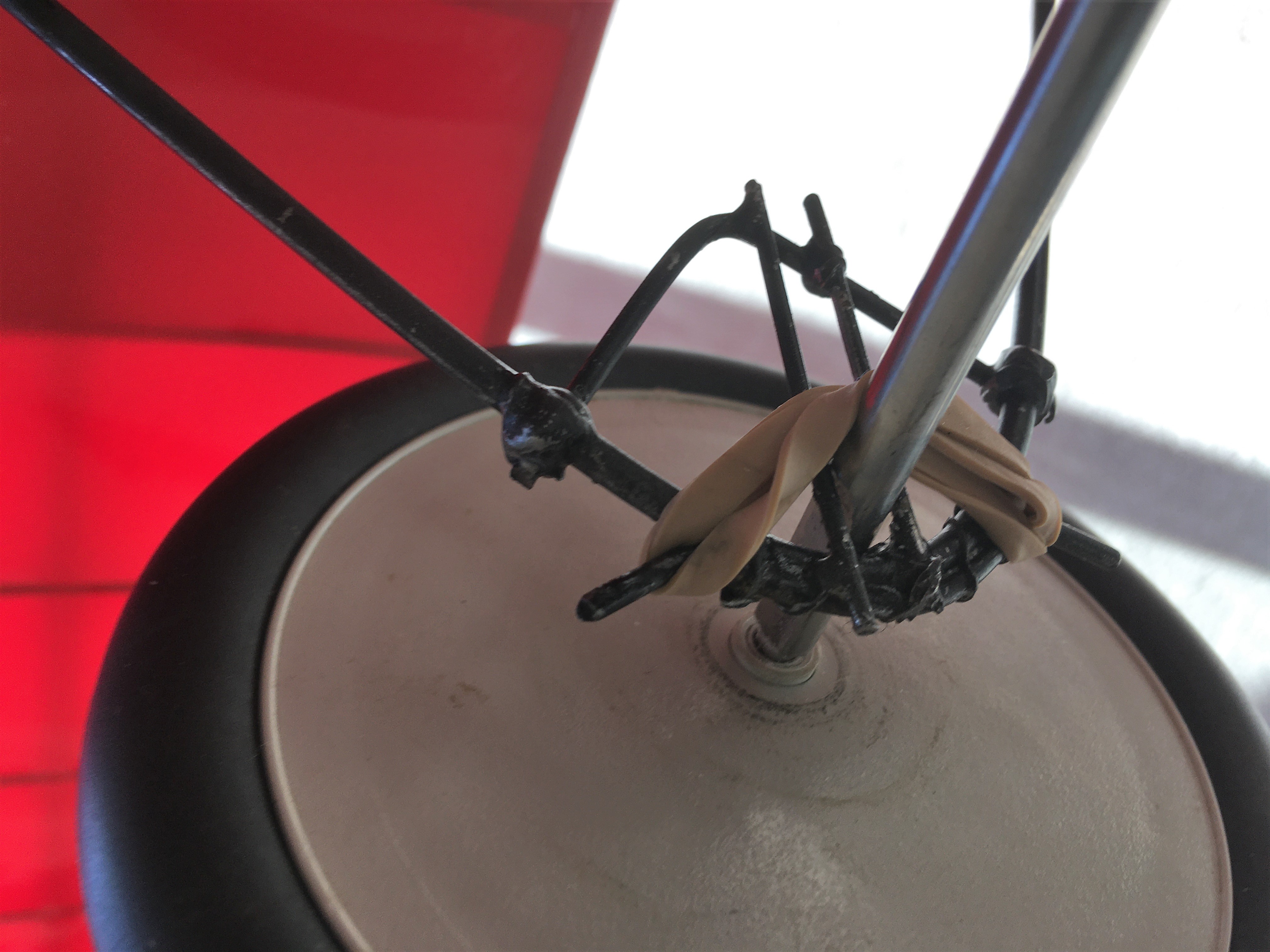 The undercarriage is bungee sprung in guides, and the wheels are toed in about 5mm to hopefully improve the ground handling. John has made a dummy inline 6 cylinder Mercedes engine from balsa wood, and also a pair of twin 7.9mm Spandau machine guns. John reckons the AUW is around 6lbs which he says rather worries him.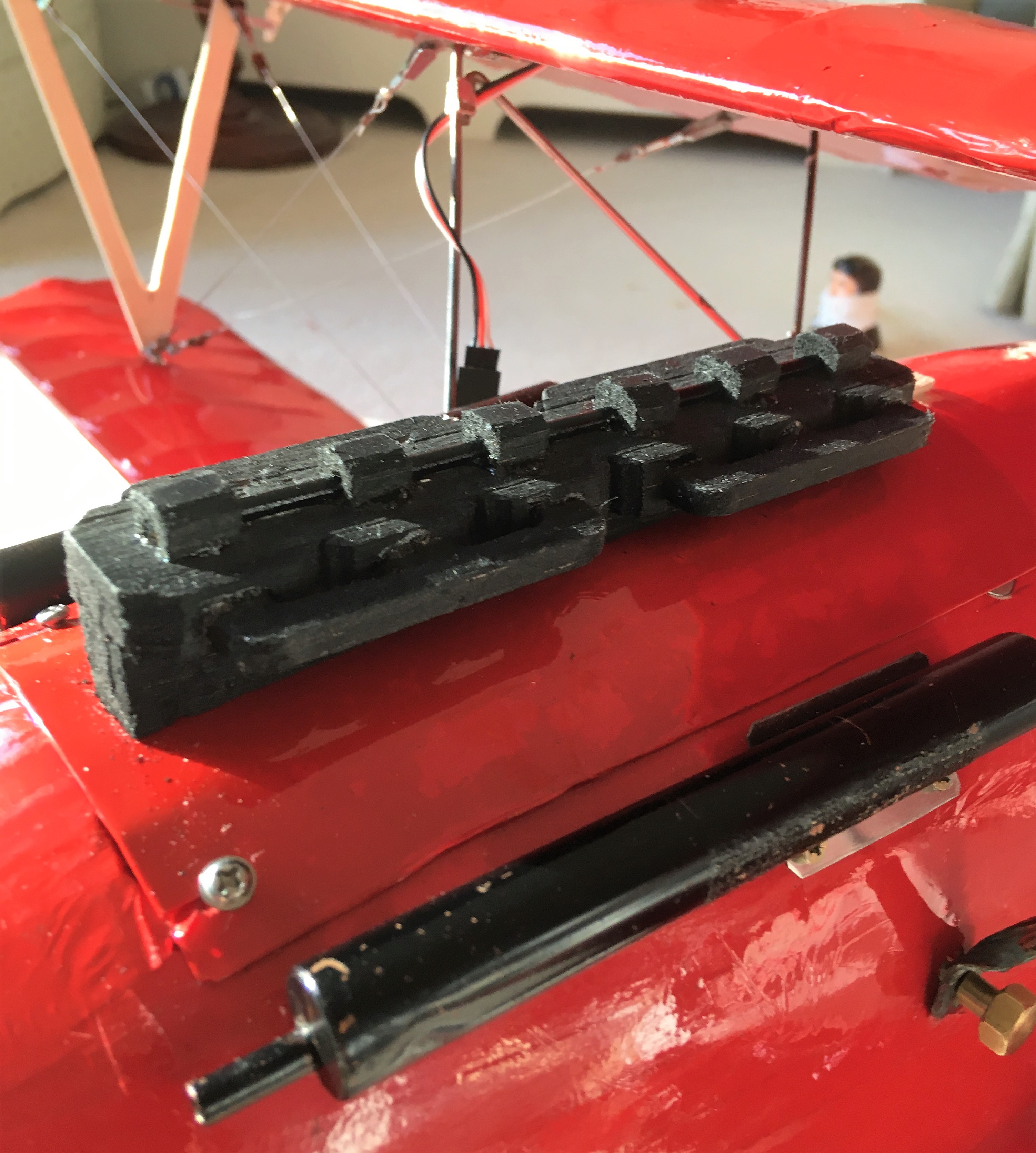
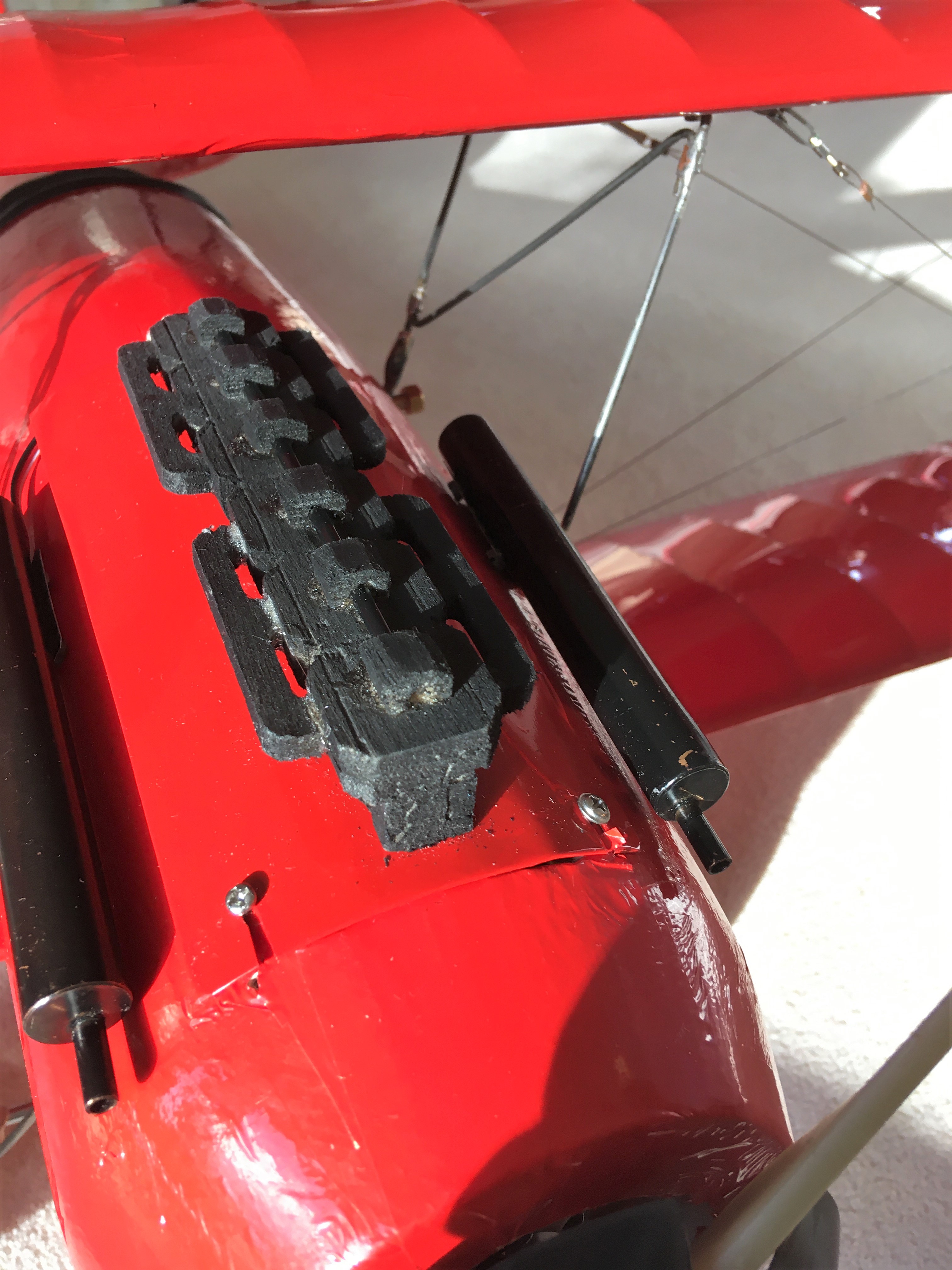 I don’t know what John’s first Albatross weighed but 6lbs doesn’t sound too bad to me for a model of that size.
Dwayne Pipe has kept busy during lockdown by building a bungee launch system for a couple of his EDF models. He says: EDF jets, either bought or made, usually have no undercarriage for the reason that their scale wheels are too small and almost useless for grass runways. This means that they have to be hand launched, which depending on who is doing the launching is a hit and miss affair. I have a pair of home built EDFs, the TSR2 and the Folland Gnat, where only one person in the club consistently launches them successfully. When Colin isn’t there I am stuck. As a result the TSR2 hasn’t been flown for a long time. My lockdown 3 project was not to build a new plane, but to build a bungee based launch system designed around these two planes, so that Colin could have a rest once in a while. (Quite right too Dwayne!) There are loads of videos on YouTube on building a bungee launcher, but almost all of these are for flying wings. It’s a lot easier to launch a plane if you don’t have a separate tail to get in the way!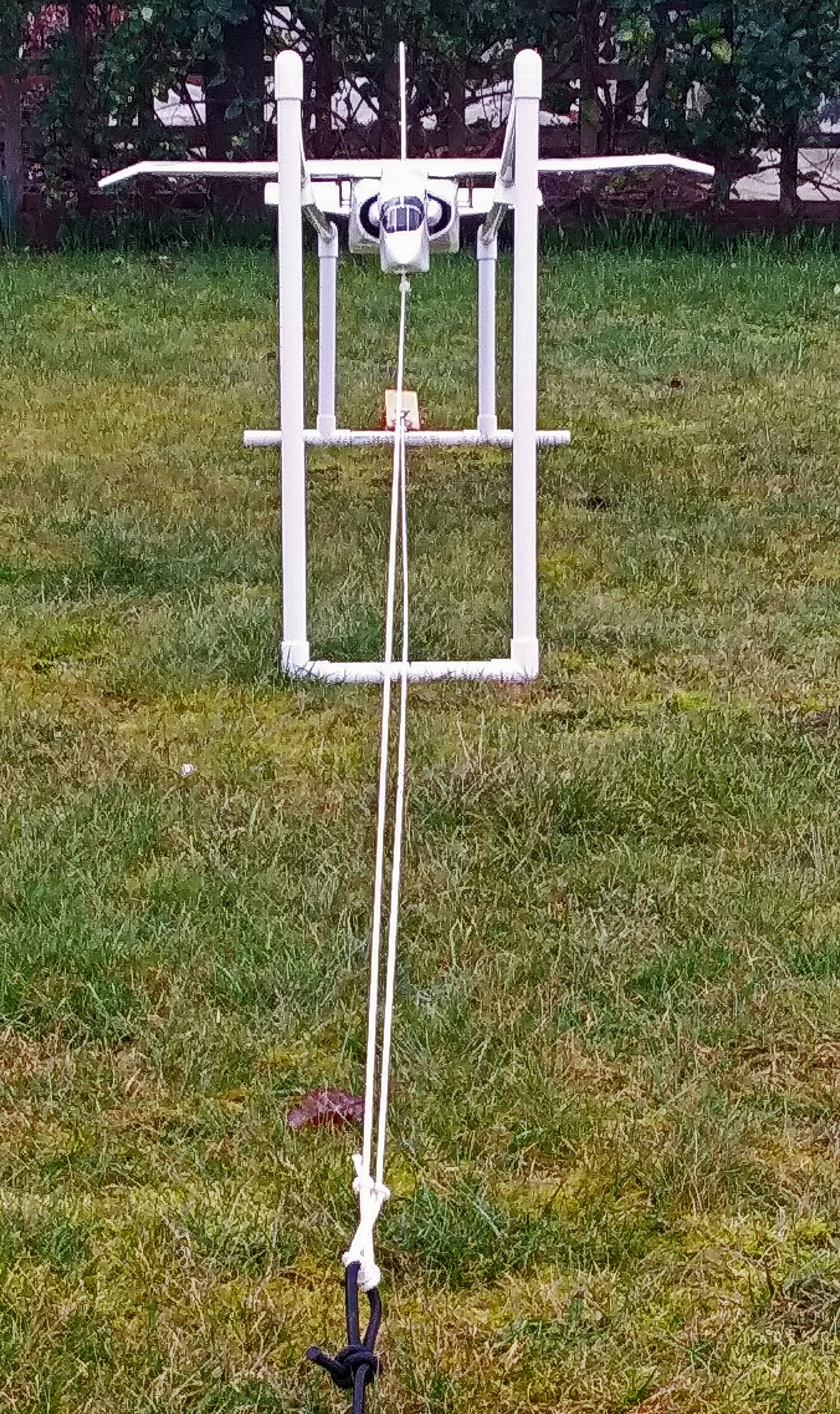 The best article I found was by Dave Royds from RCME and I used a lot of his ideas when planning my design. The launcher is constructed from 32mm PVC overflow pipe with push fit T’s and elbows to connect them together. The 1.5 metre ramp is inclined at 12 degrees with 20 feet of 6mm bungee and 10 feet of 3mm nylon cord providing the power. The foot trigger mechanism is a wooden seesaw which releases a split ring from a coach bolt.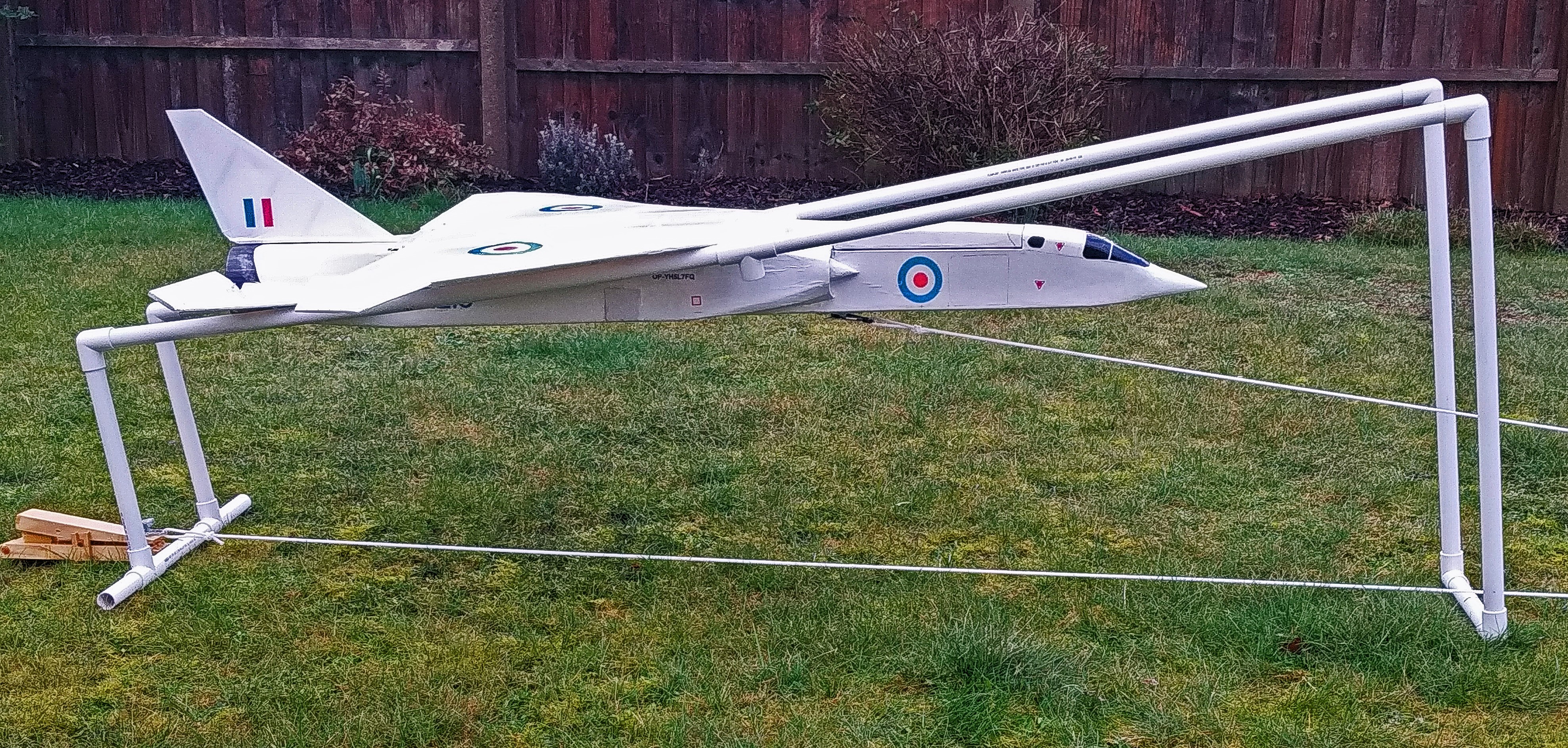
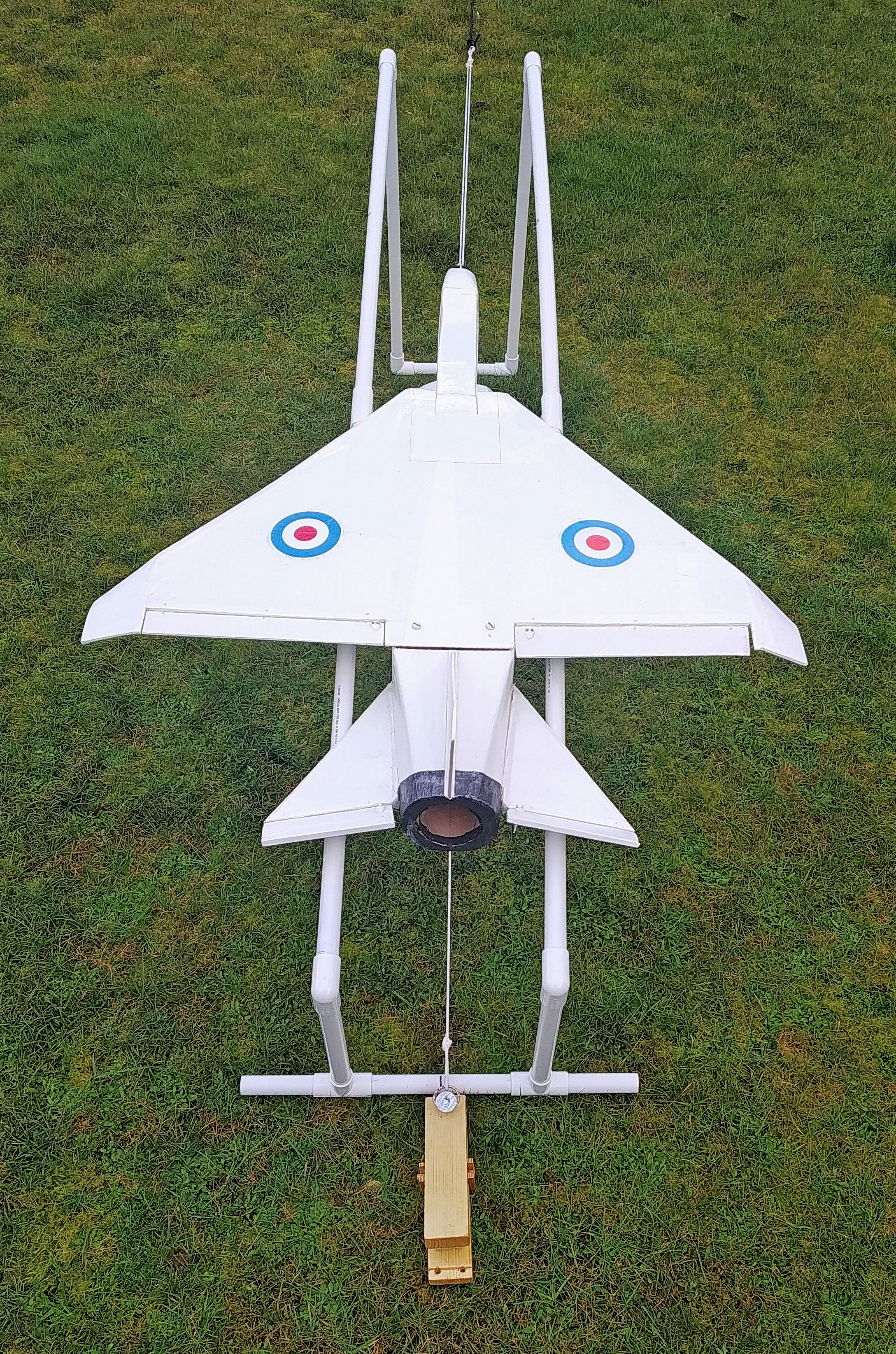 The bungee should be tensioned between three to five times the mass of the aircraft, so in my case 4.5 to 7kg pull. The whole system comes apart and is designed to be fitted into a sports bag.
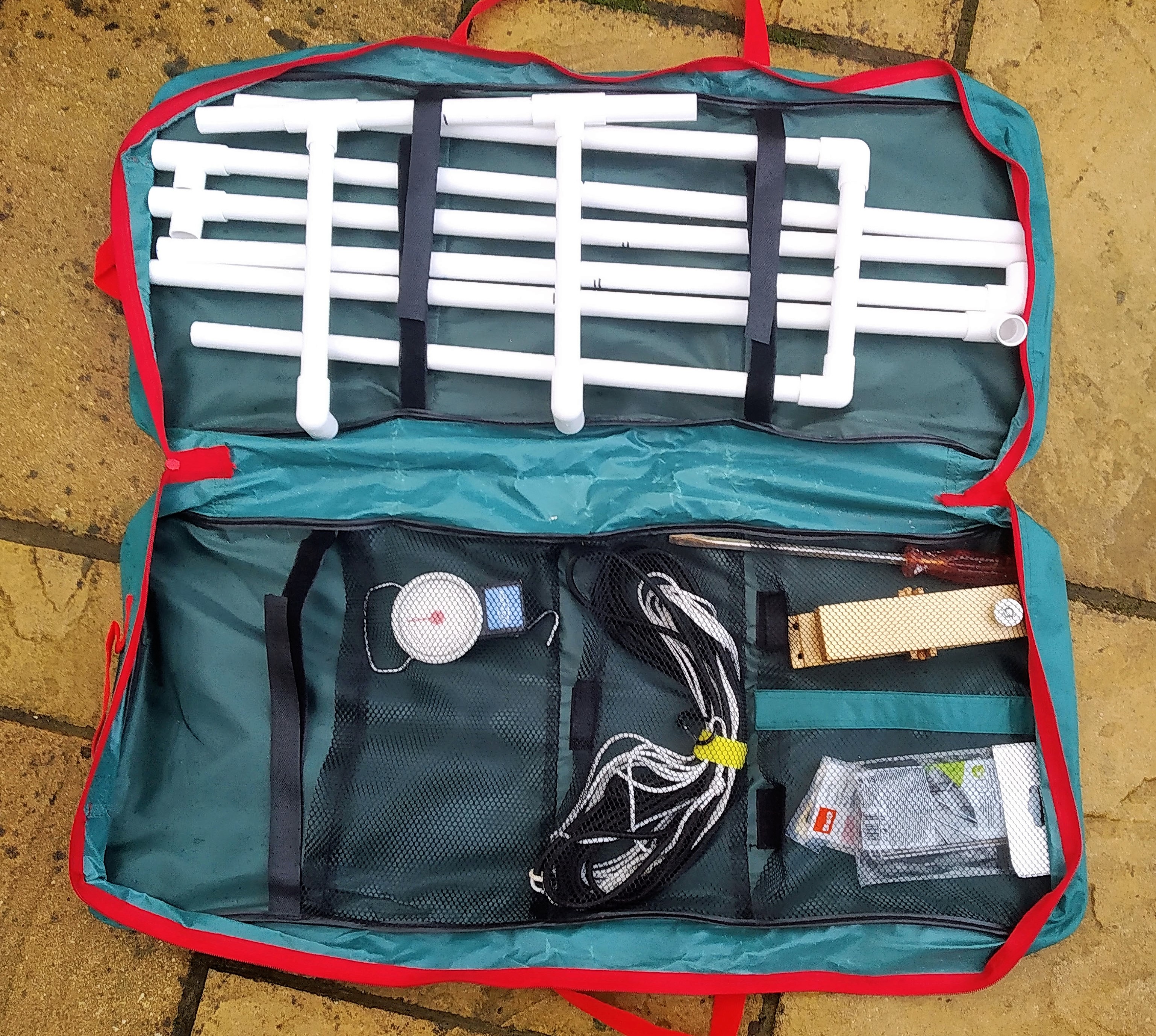 When the powers to be let us out to play again, I can test it out, and fine tune the system. The photos give a better idea of the arrangement. Thanks Keith, that looks excellent, I look forward to seeing it in action. Norwegian Nick made a similar looking one some time ago to launch some of his smaller EDFs. I don’t have any details of Nick’s but I remember that it was made from PVC pipe and it launched his little Sea Vixen with no problems.
Woody has added a Chance Vought Corsair and Hawker Hurricane to his collection that he calls Woody’s Warbirds!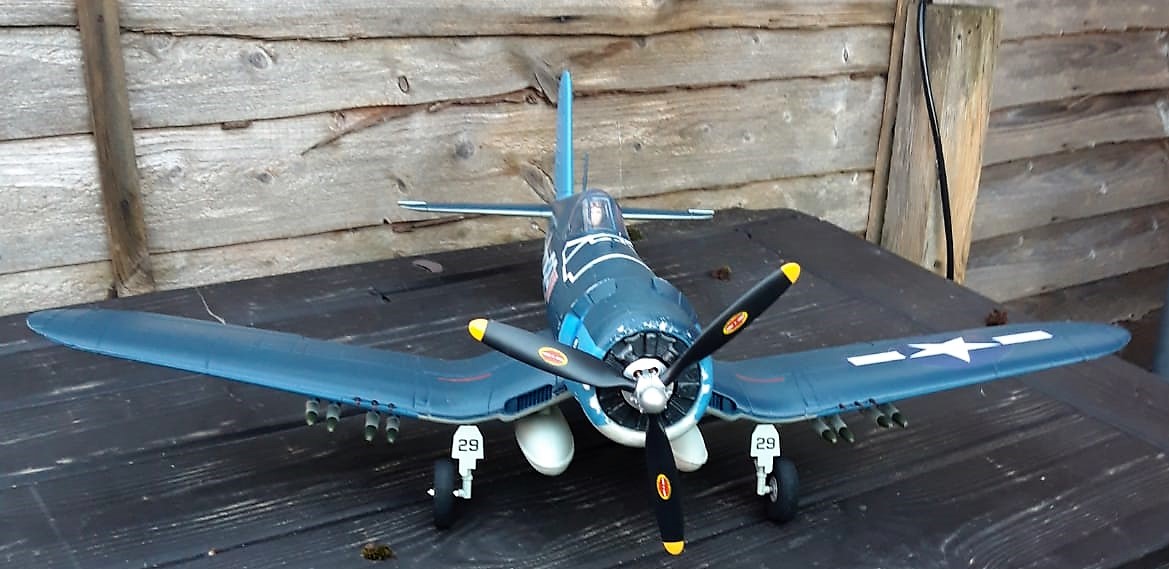
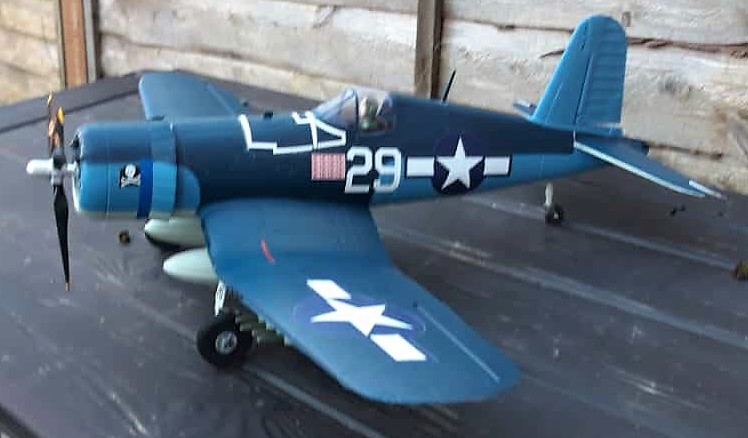 The Corsair is the HobbyKing PNF 30″ span one that comes fitted with 6 Axis ORX Flight Stabiliser. Woody has got it all set up with the stabiliser linked to his Multiplex radio gear and just needs the restrictions on flying lifted so he can test it. His Hurricane is the Dynam one and he’s added a sound system which is being demonstrated here:
Kryten snapped a couple of photos this month but not his usual flying shots, these are very firmly on the ground.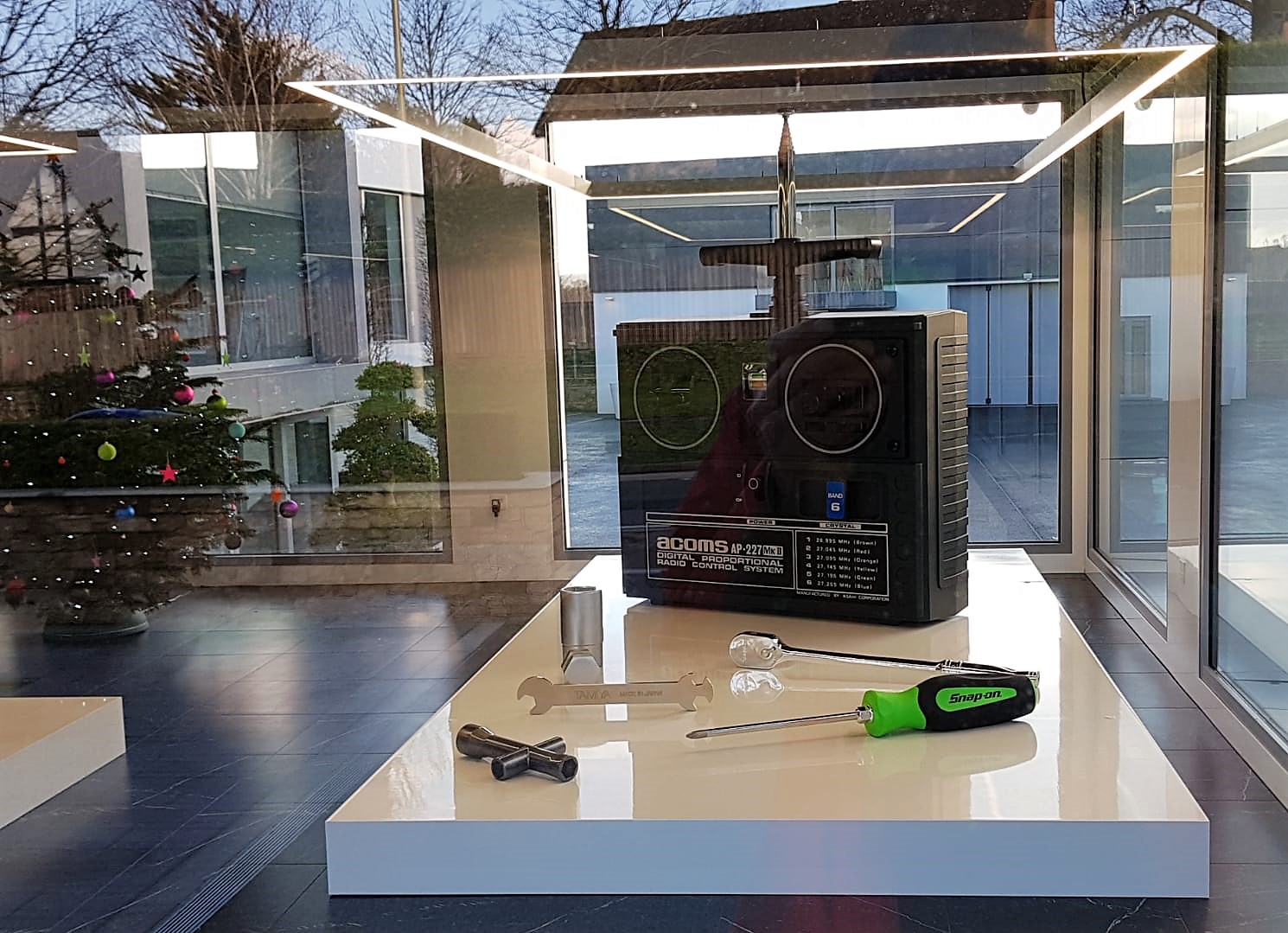 I bet Dougal is dribbling into his breakfast now at the sight of a vintage Acoms 27MHz transmitter! However, all is not as it first seems as the transmitter and tools are scaled up to fit on a plinth that usually displays a real car. The second photo includes the Lanzante Tamiya Sand Scorcher, a real car that was scaled up from the Tamiya RC model.
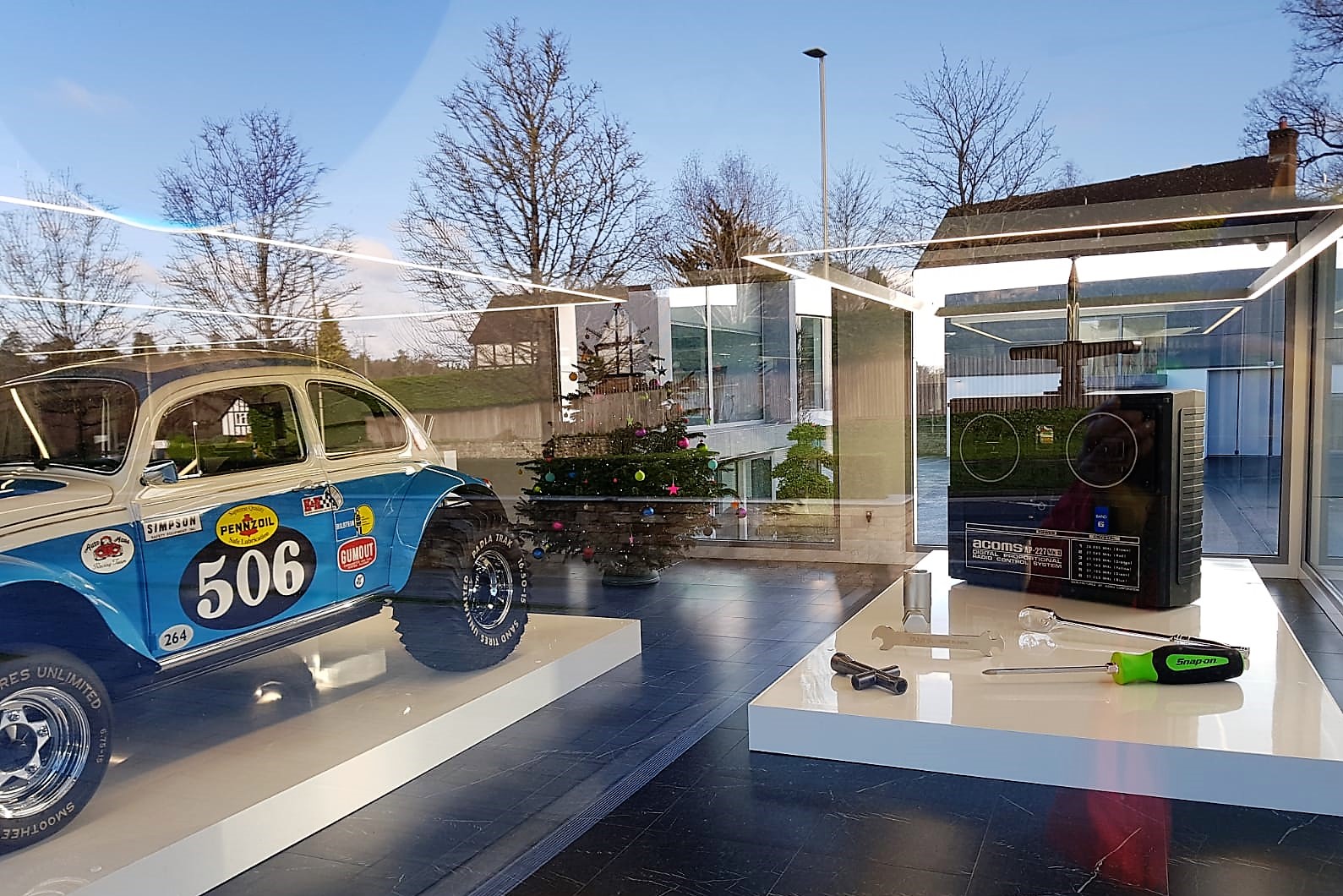 It’s very unusual to see something full-size that’s been modelled on an RC model, especially when it includes the transmitter. Here it is at Goodwood where, driven by a full-size driver, it took part in the hill-climb event. Amazing!
With no flying this month there is no video from the patch but John Warren sent me a link to one on YouTube that I think is worth sharing. It was filmed seven years ago and things have moved on a bit since then but it shows just the sort of flying skills that we all regularly demonstrate at the field…
Do you ever wake up, kiss the person sleeping next to you, and feel glad to be alive?
I just did.
Apparently I’ll never be allowed to fly with this airline again…
Colin Cowplain