
Patch News – September 2021
We had a bit of an Indian summer in September with some lovely days of sunshine and light winds. This came as a real treat following the very poor July and August weather and it brought out lots of members to fly. The patch was cut regularly, mostly on Friday afternoons by the Farts but also a couple of times by Page Boy and Richard Osborn who managed to get the grass nice and short by mowing on dry and sunny afternoons.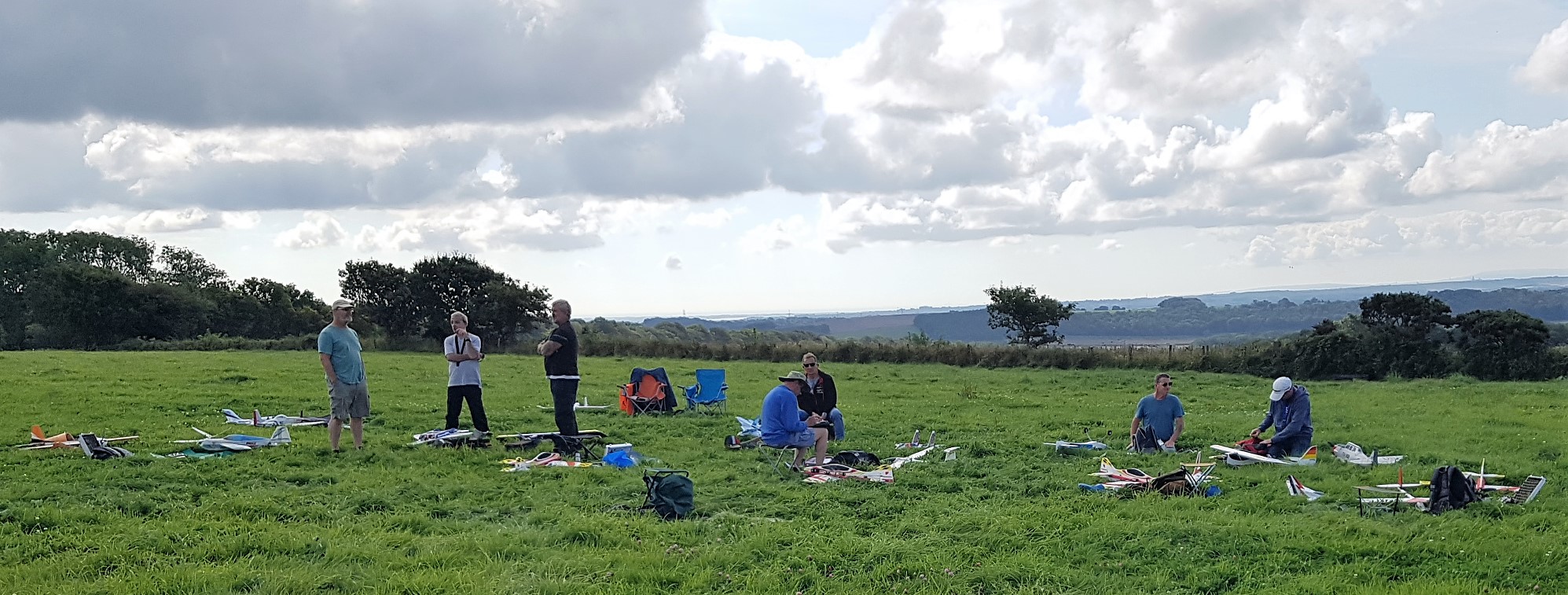
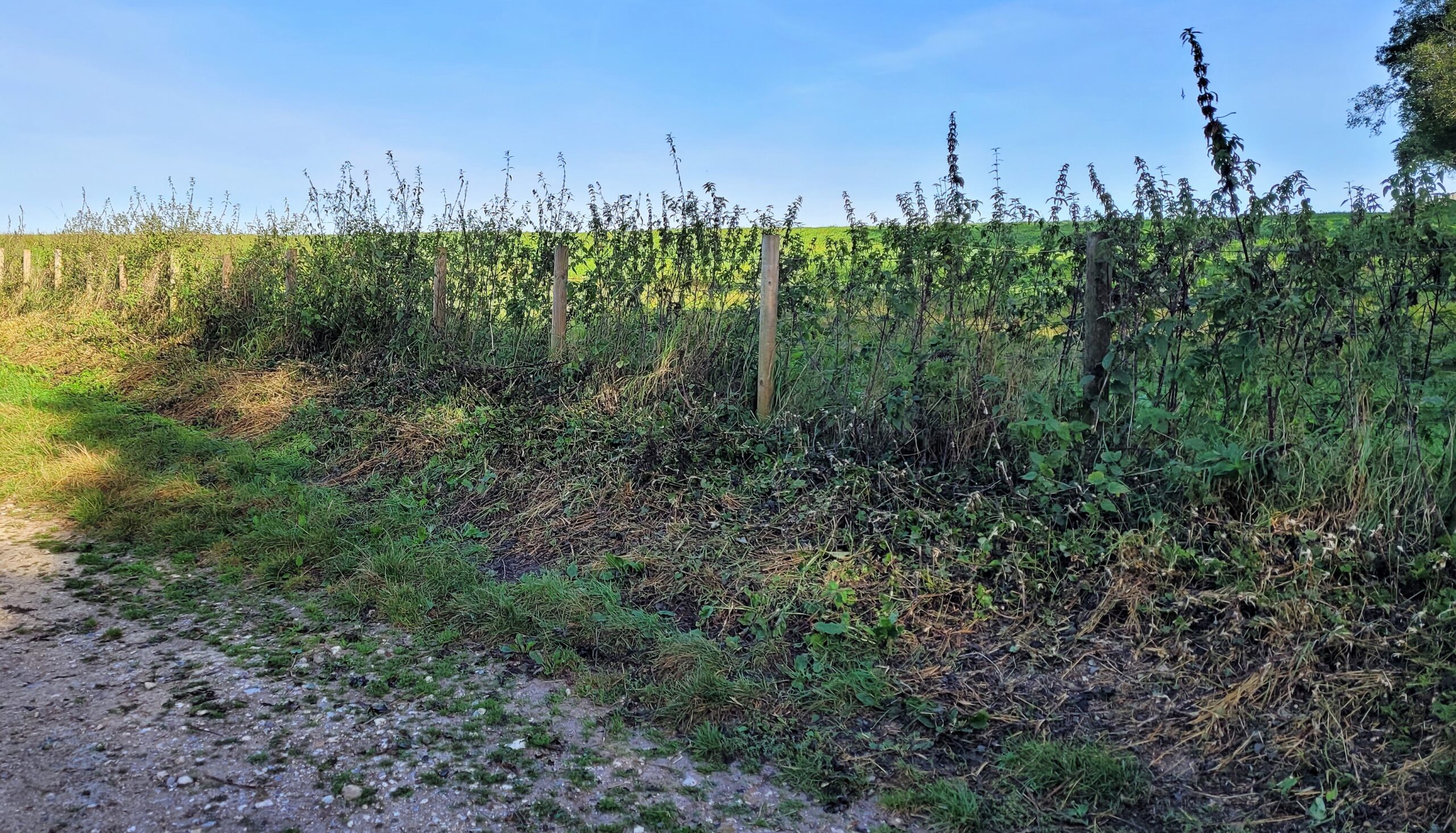 So thanks to all the workers for their efforts we can now park more easily and fly even small wheeled models off the patch without any problems. In the middle of the month the bullocks returned but they are used to us now and tend not to be too much of a problem.
 At the end of August, just too late for the last Patch News, young Charlie took and passed his BMFA ‘A’ certificate test. Charlie had taken his Registration Competency Certificate the previous week which simplified the theory part of his ‘A’ test so following the successful flight the examiner, Dougal Entendre, asked questions from the BMFA Safety Code and the PAM club rules after which he was happy to present Charlie with his certificate.
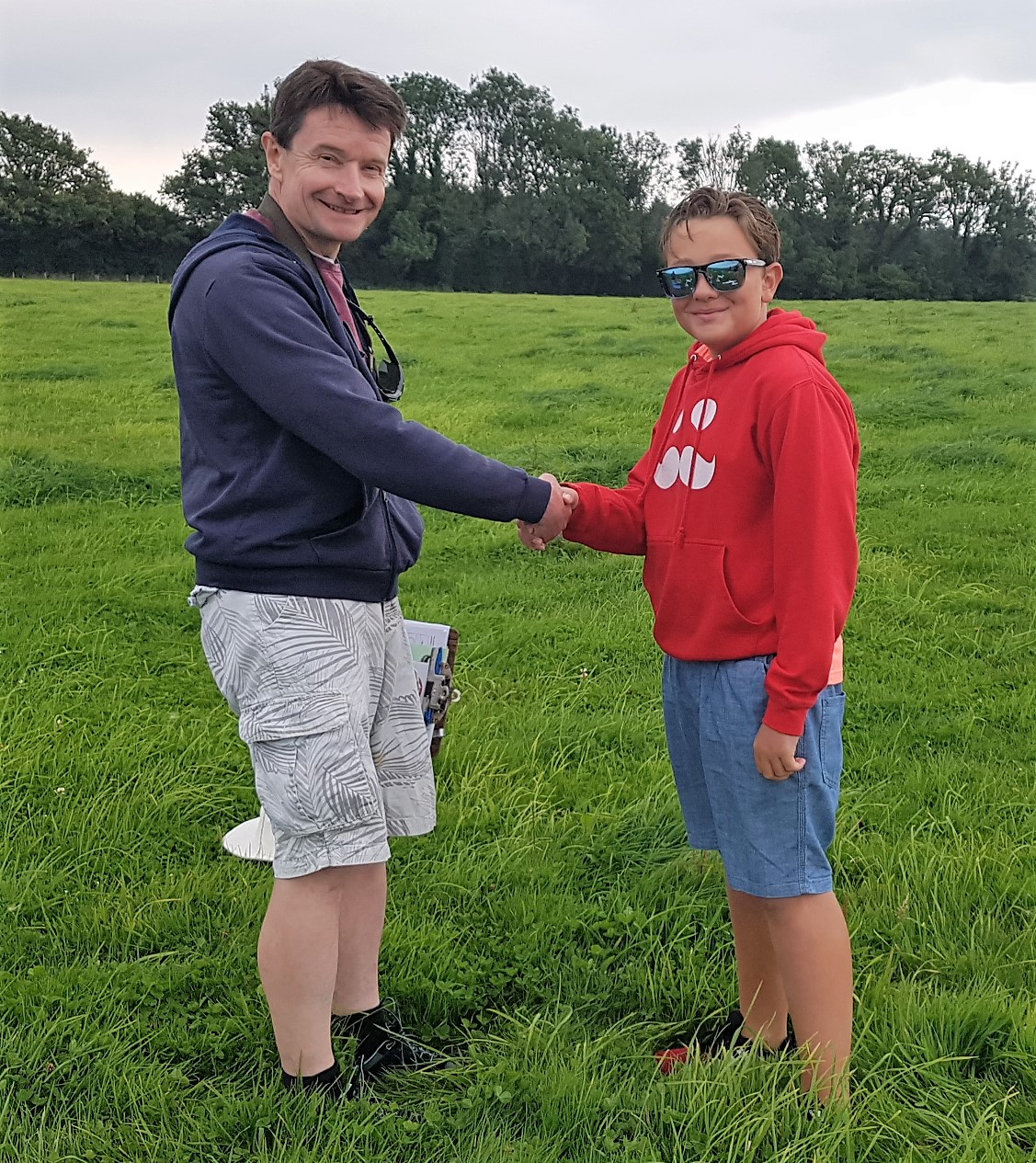 Charlie has since has lots of ‘solo’ flights and proved himself worthy of the certificate.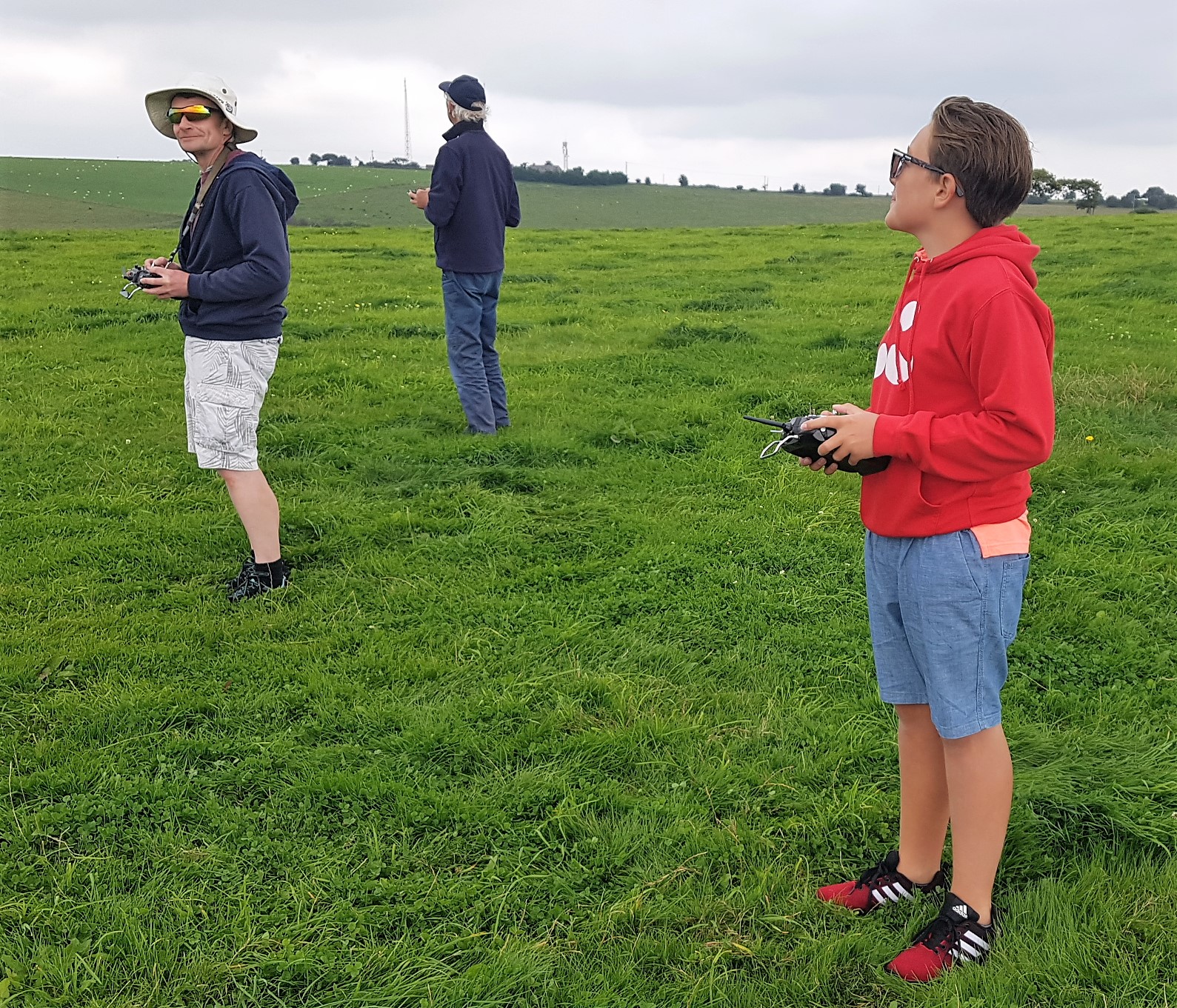
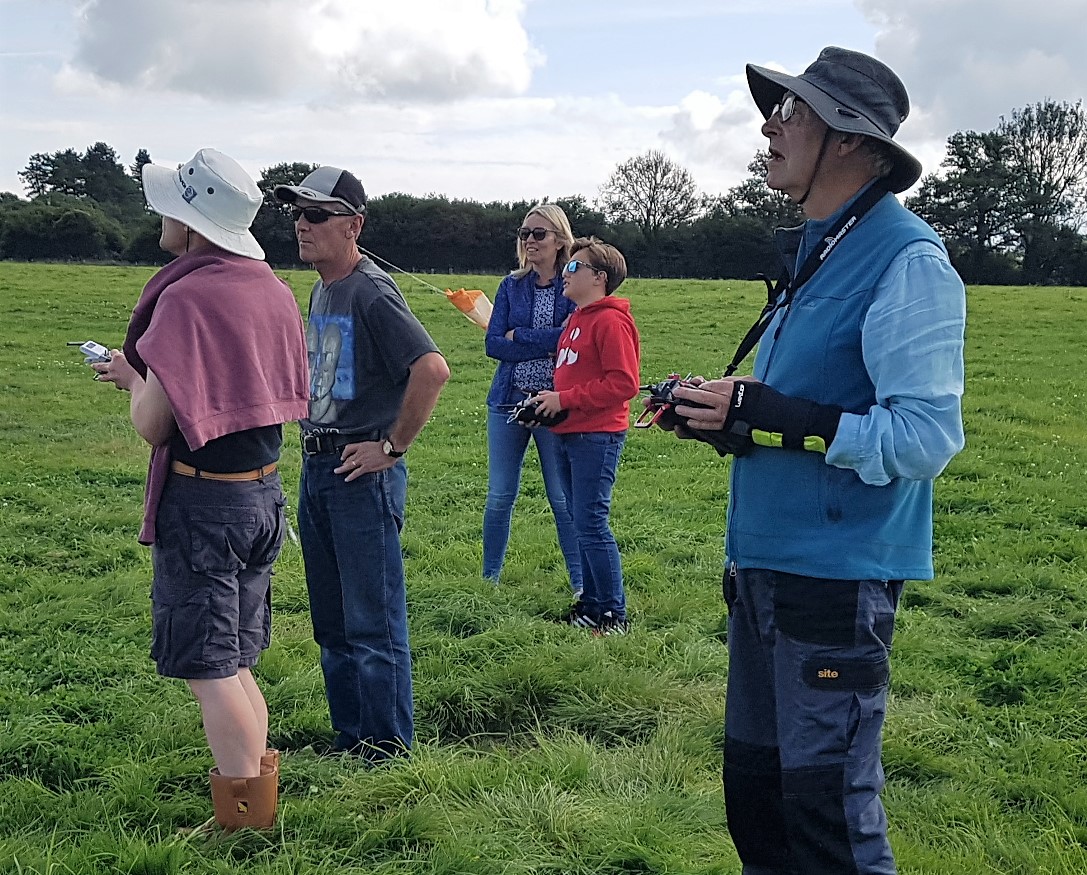 With the bullocks in the field several of Charlie’s landings have taken place with the fence partially erected and he has consistently landed safely back on the patch and avoided the fence, something several others have failed to do! Well done Charlie, happy landings.
Basher Bob has built himself a foamboard SU-57 which is a copy of the one that Woody bought from Banggood and has been flying successfully for quite a while.
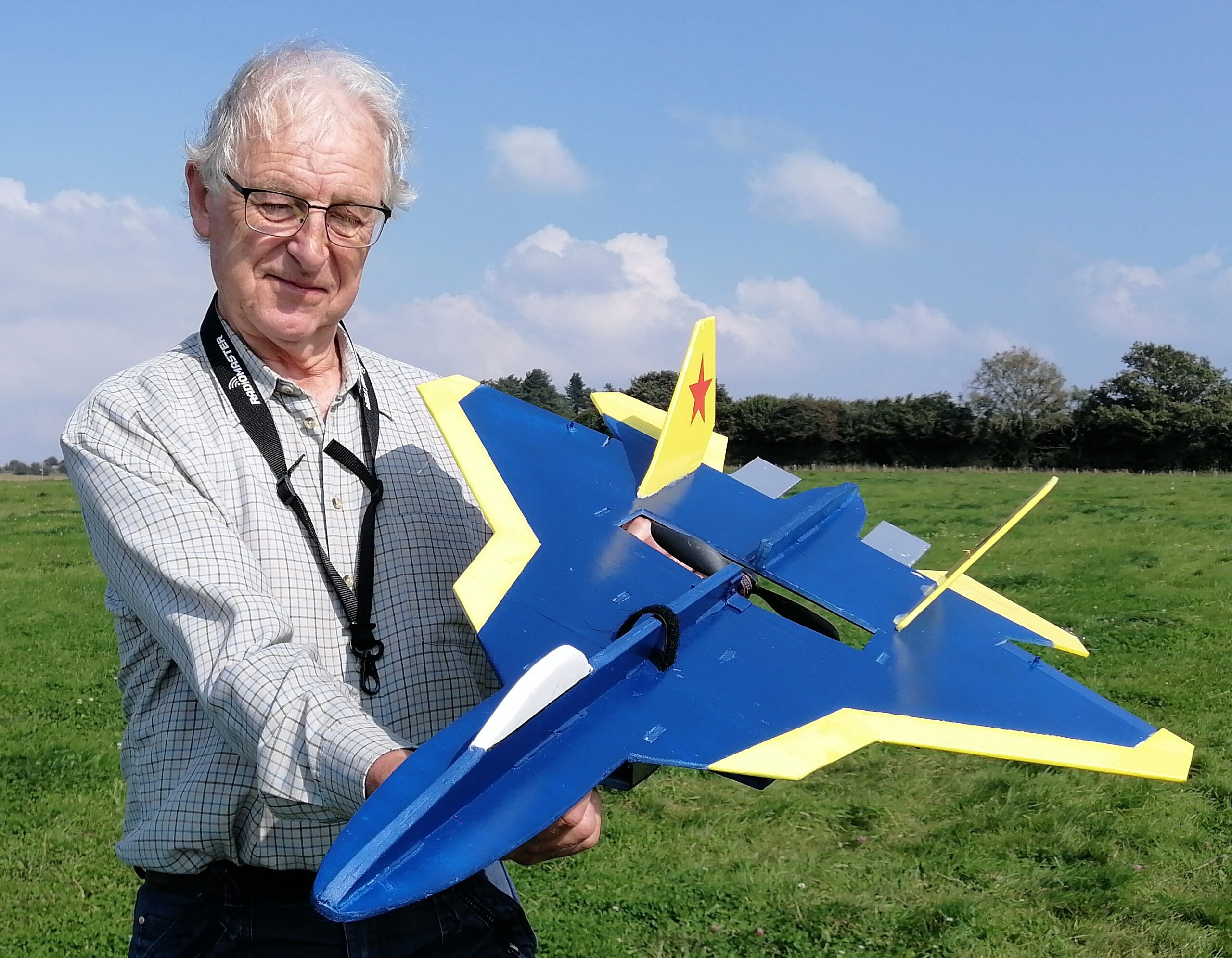 Like Dwayne Pipe’s Sea Vixen Basher’s Sukhoi is made of foamboard purchased from Hobbycraft but with the paper covering removed by soaking it in warm water for five minutes. The paper is heavy and doesn’t like wet grass so for our purposes it’s better to soak it off. The bare foam is rather flexible so Basher has added small pieces very thin plywood to areas of high stress and the resulting airframe is now both light and strong.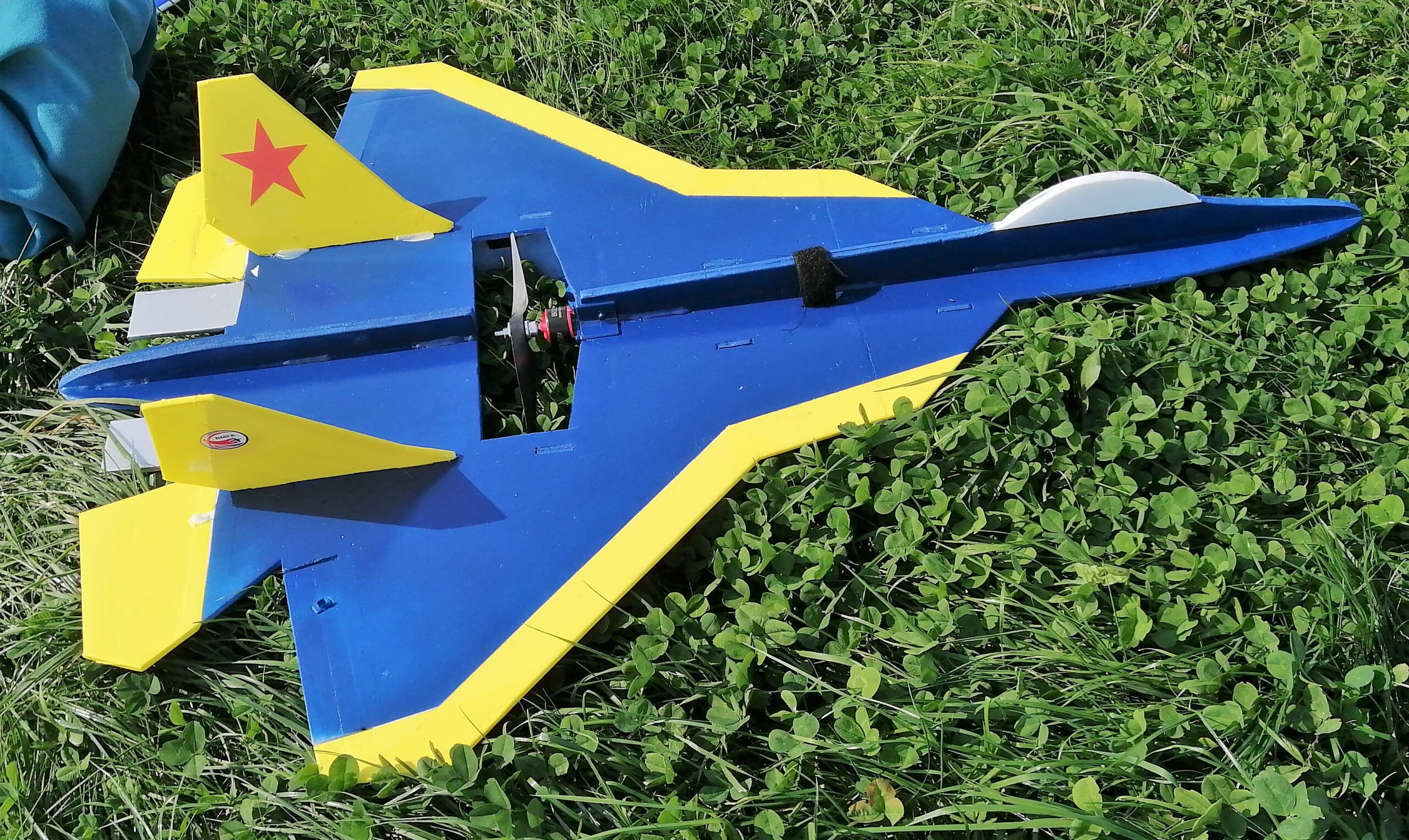
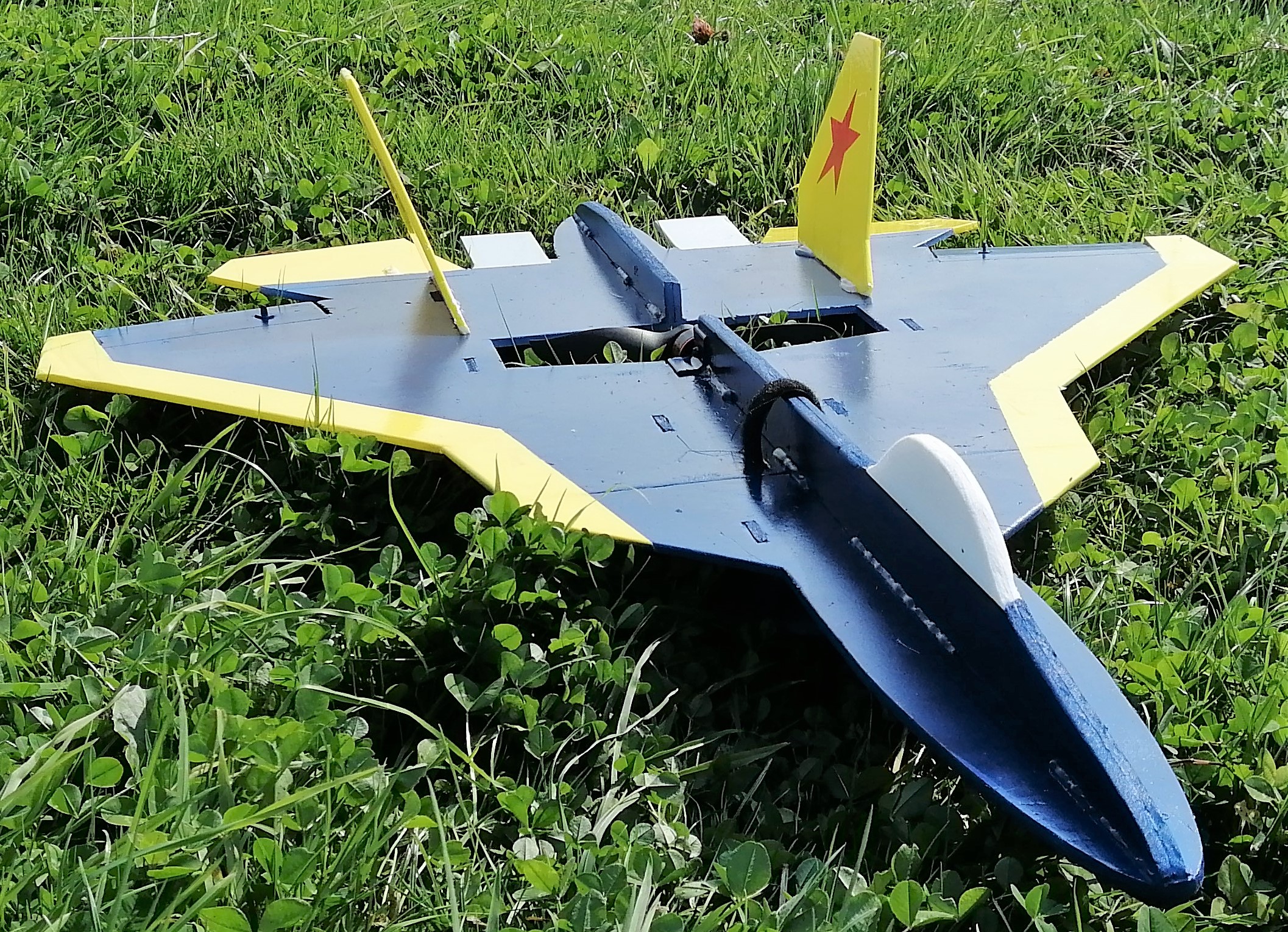 The motor is an 1800KV 2212 Racestar from Banggood spinning a 7×5 prop. Basher says he’s been running these motors for some time in his other models and has never had any problems despite his many attempts to bury them! He is also using Racestar 9g servos, a 30A esc and flies the Sukhoi with 2200mAh 3s batteries. The model flies very well, just like Woody’s original in fact. I’ve had a go with it and like most of the other foamboard models it will happily fly both quickly and slowly and doesn’t have any nasty tendencies.
Unfortunately Basher discovered the hard way that care is needed when launching the mid-engined foamboard models, it’s very easy to catch the prop with your fingers or in Basher’s case his wrist. The wound was pretty deep and required four stitches but would have been much worse had the prop hit a vein or artery. I know a few of us have caught our sleeves when launching but this incident really brought home the danger. Part of the answer is to hold the model as far forward as possible, not just in front of the motor which is the natural holding place because of the balance point. Basher now wears a wrist guard when launching, a sensible precaution that maybe others should consider trying.
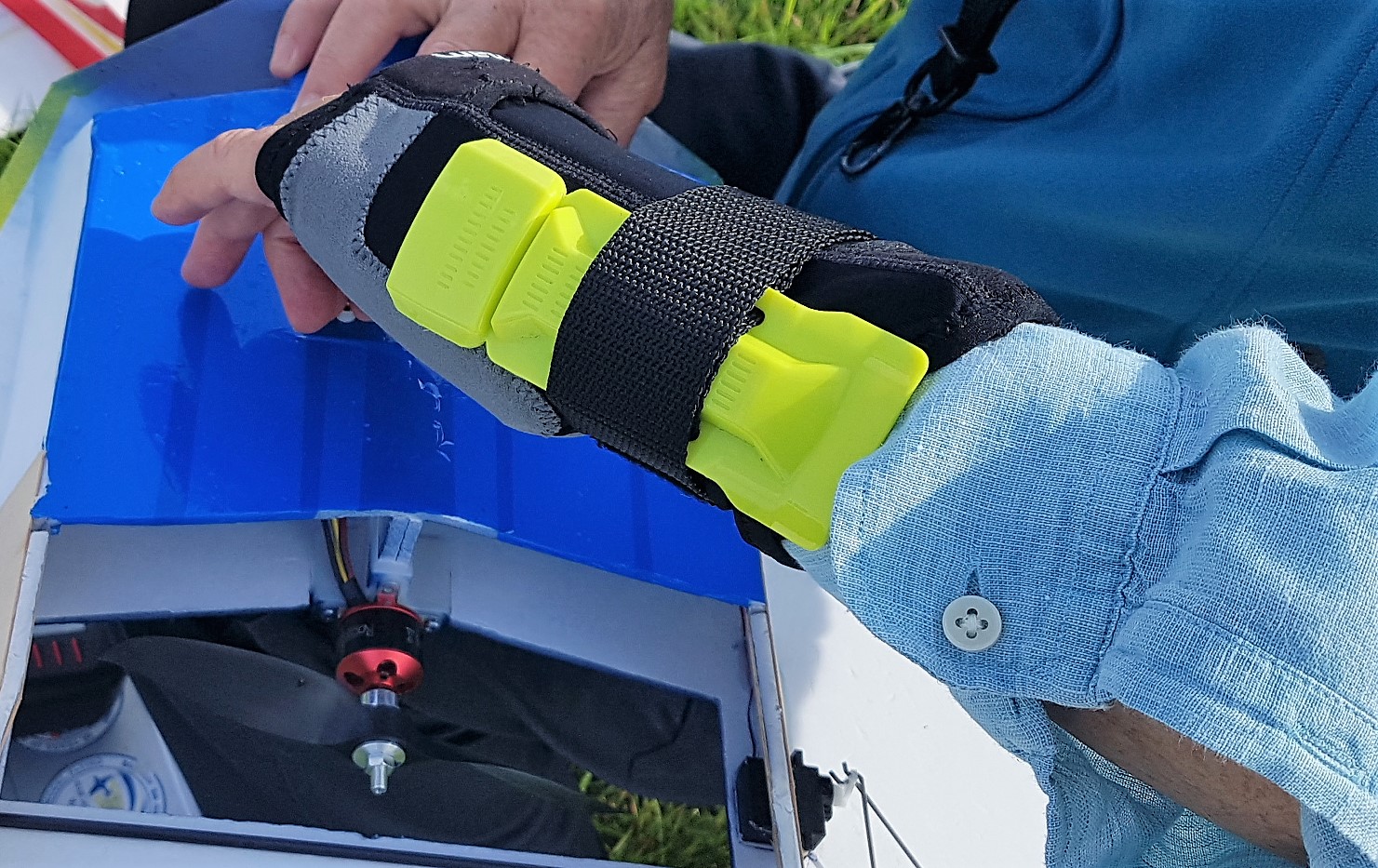 I happened to be videoing when the incident occurred and you can see it (and hear it) in this month’s video. The rest of the flight in the video is actually a later flight as Basher (or should he now be known as Slasher?) had to land immediately because of the injury.
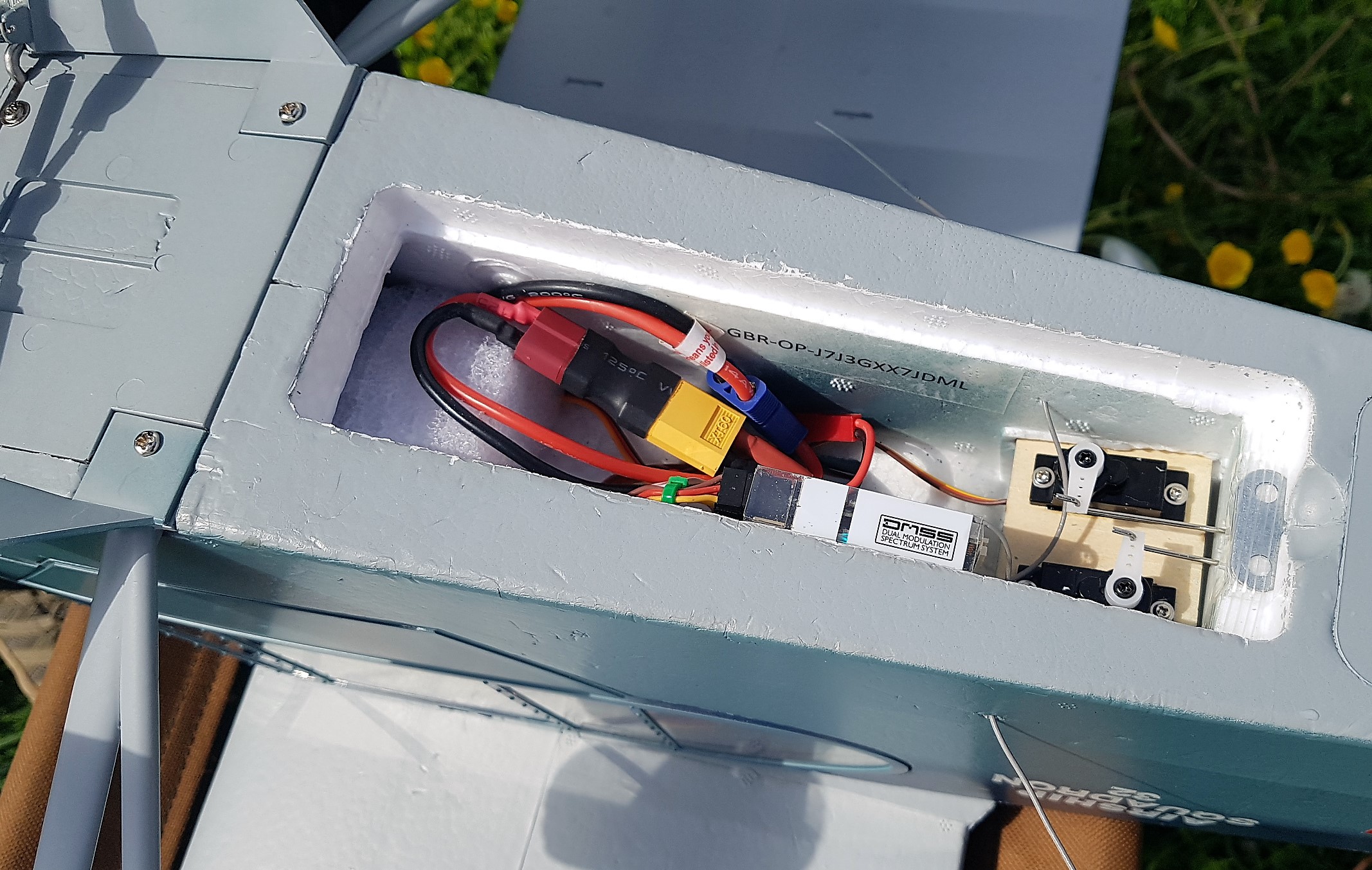
At the end of last month Chas sent me some information about a lovely little E-flite clipped wing J-3 Piper Cub that he’d just bought. This is what he says about it: I bought this model which had been crushed before it had ever been flown from a PO at HMS Sultan.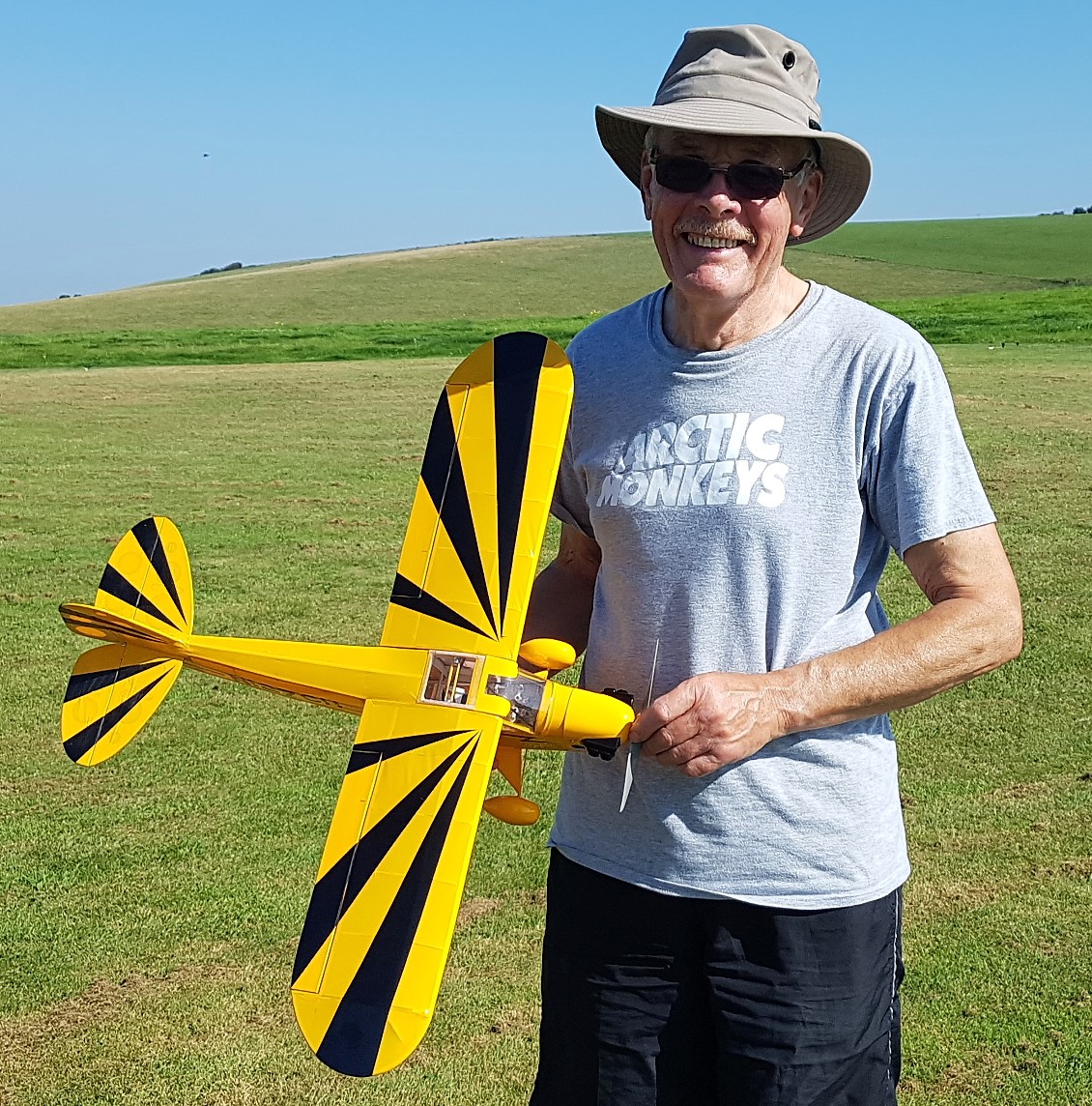
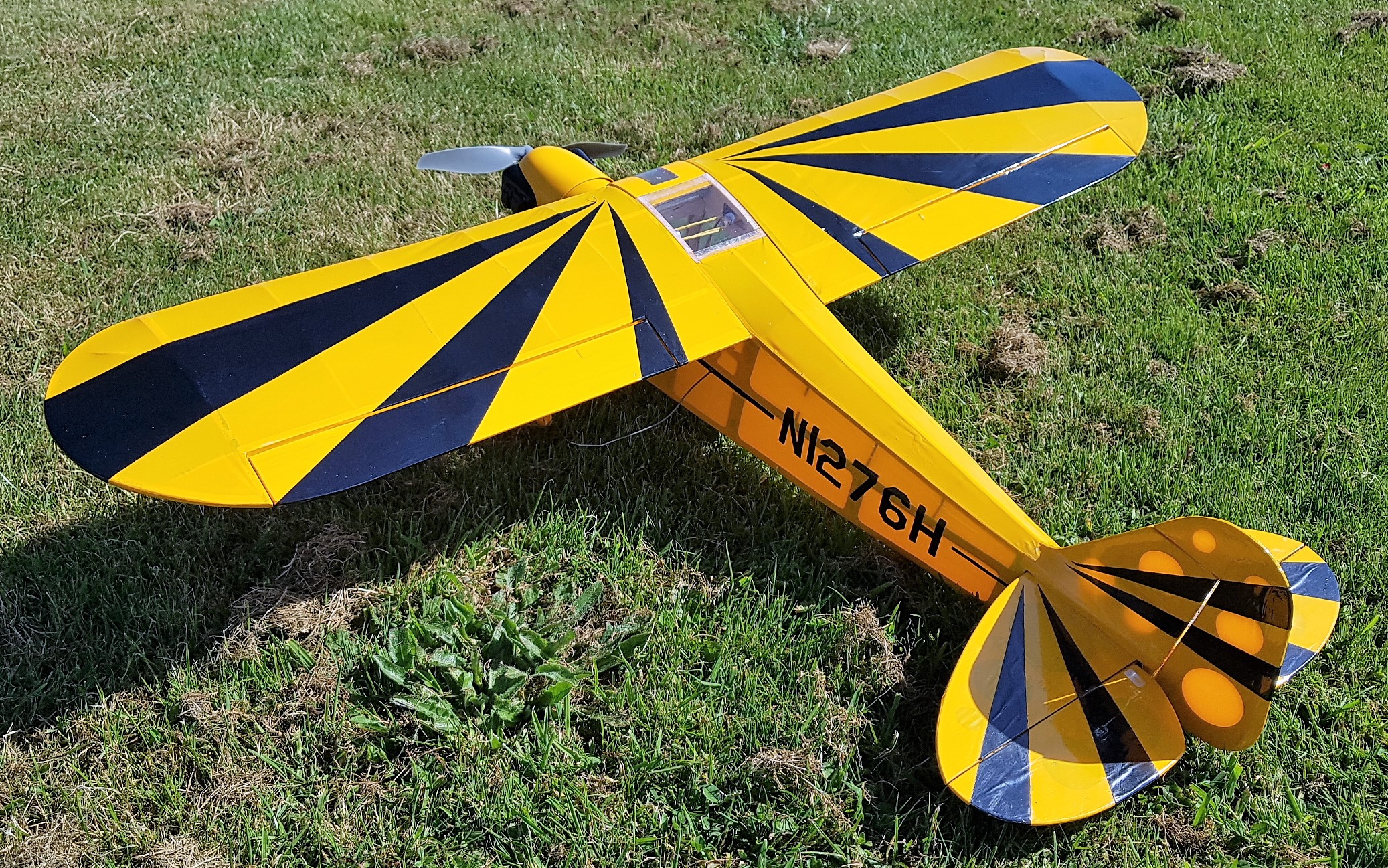 I managed to straighten the fuselage and add some doublers to the formers from underneath therefore all the covering on top is original. It has 4 HiTec HS-35 HD servos. The powertrain comprises an E-flite Park 250 2200 Kv motor and 10amp ESC powered by a 2s 450mAh battery. The propeller is a 7×4 APC item. The receiver is a 4 channel DMSS Park Flyer sourced from China. Range check at 50 feet in my garden was OK.
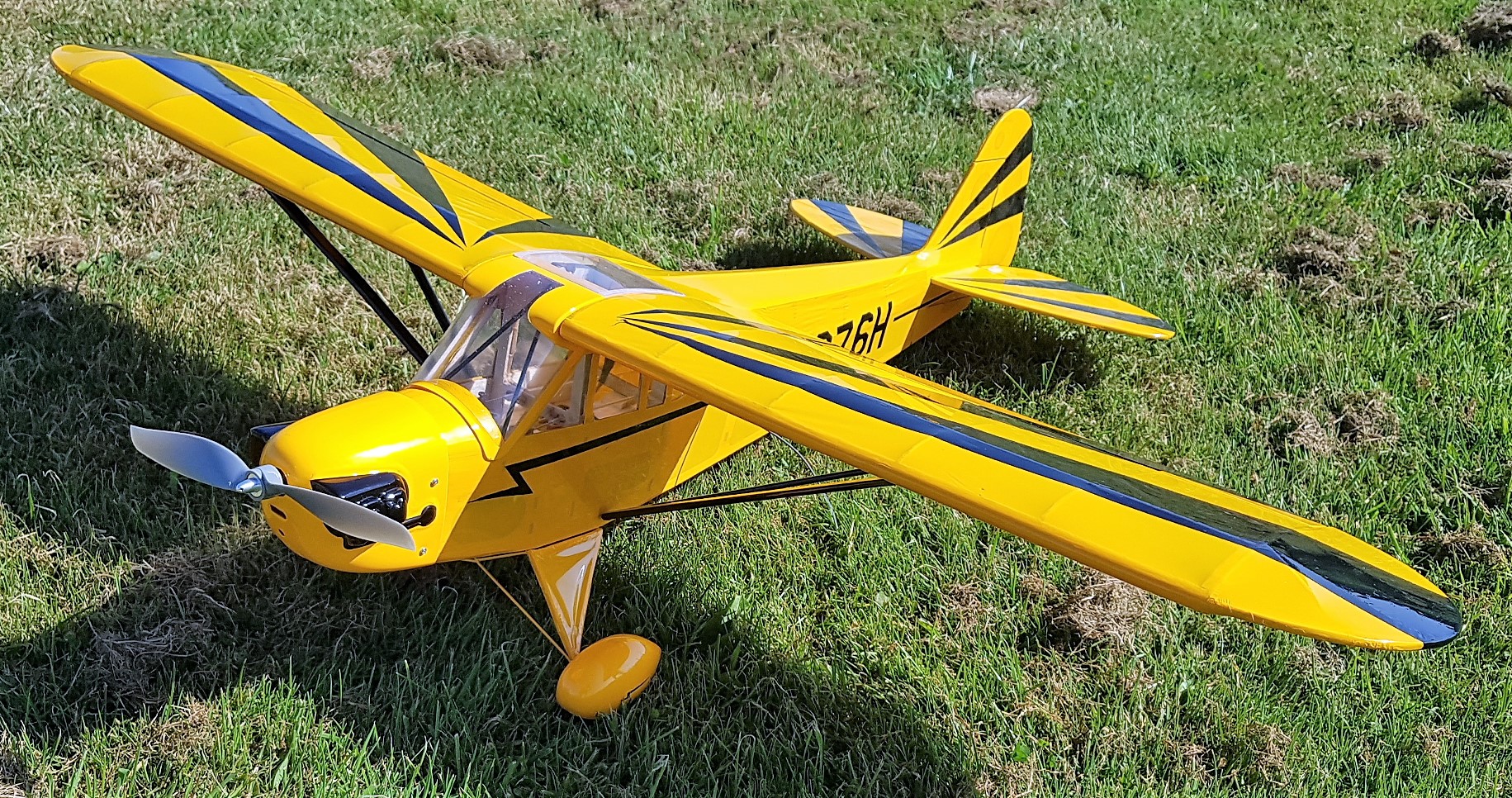 Wingspan is 30 1/2″ and the all up weight is 289 grams although the 850mAh 2s batteries from my Mini Wot4 will fit without hardly altering the C of G and only adding 16 more grams. I just need to re-cover the fuselage underside and wait for some calmer weather for the test flight. The wings should be glued to the fuselage but mine are held to the fuselage by aluminium buttons connected to each other via an elastic band.
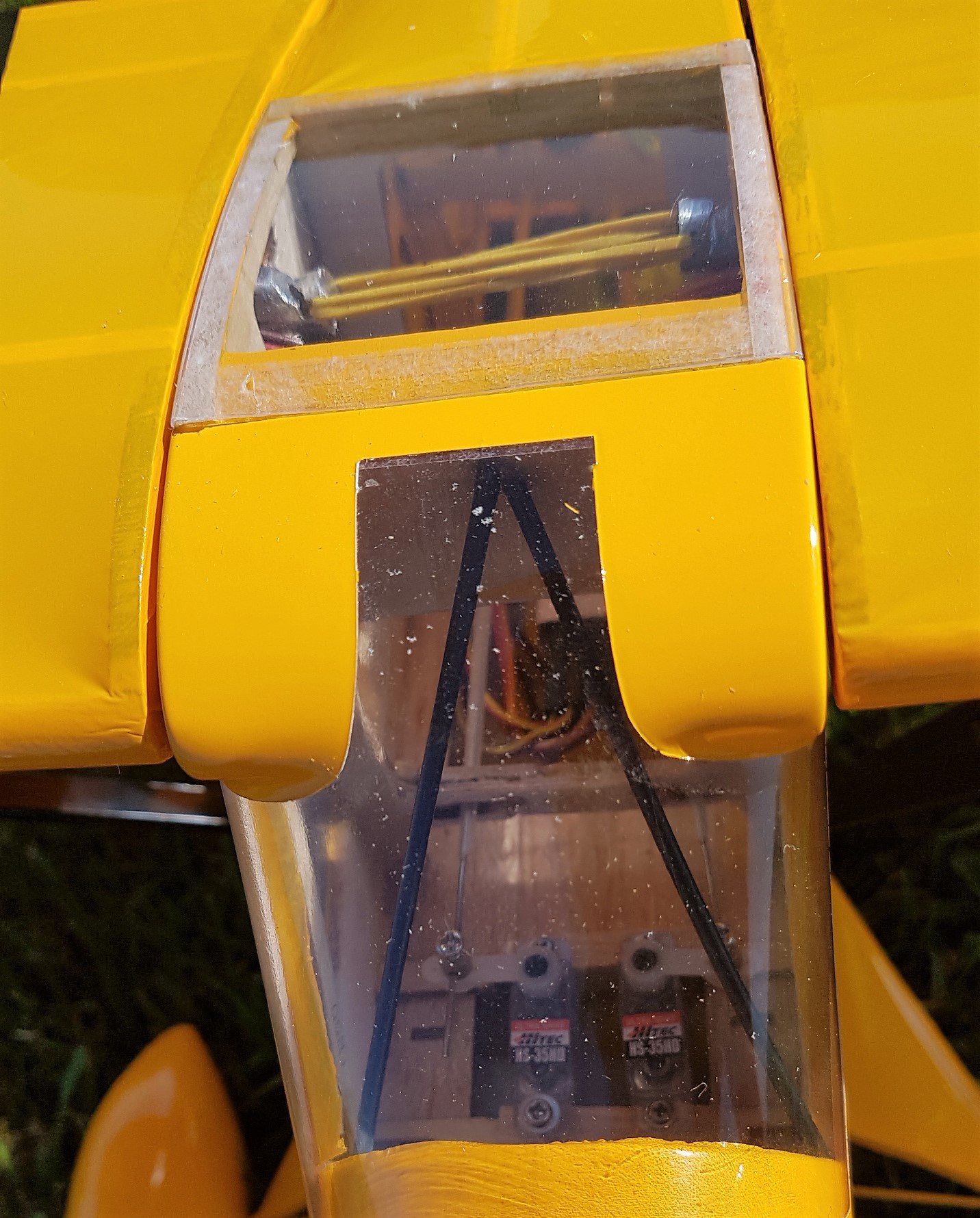 The heads of the buttons slide into the root ribs through a keyhole shaped slot. The wing load is taken by a carbon-fibre tube that passes through the fuselage and approximately 4″ into each wing. This configuration allows the model to be stored/transported in the original box. Having completed the covering on the fuselage underside Chas brought the Cub up to the field one midweek morning when the forecast promised light winds.
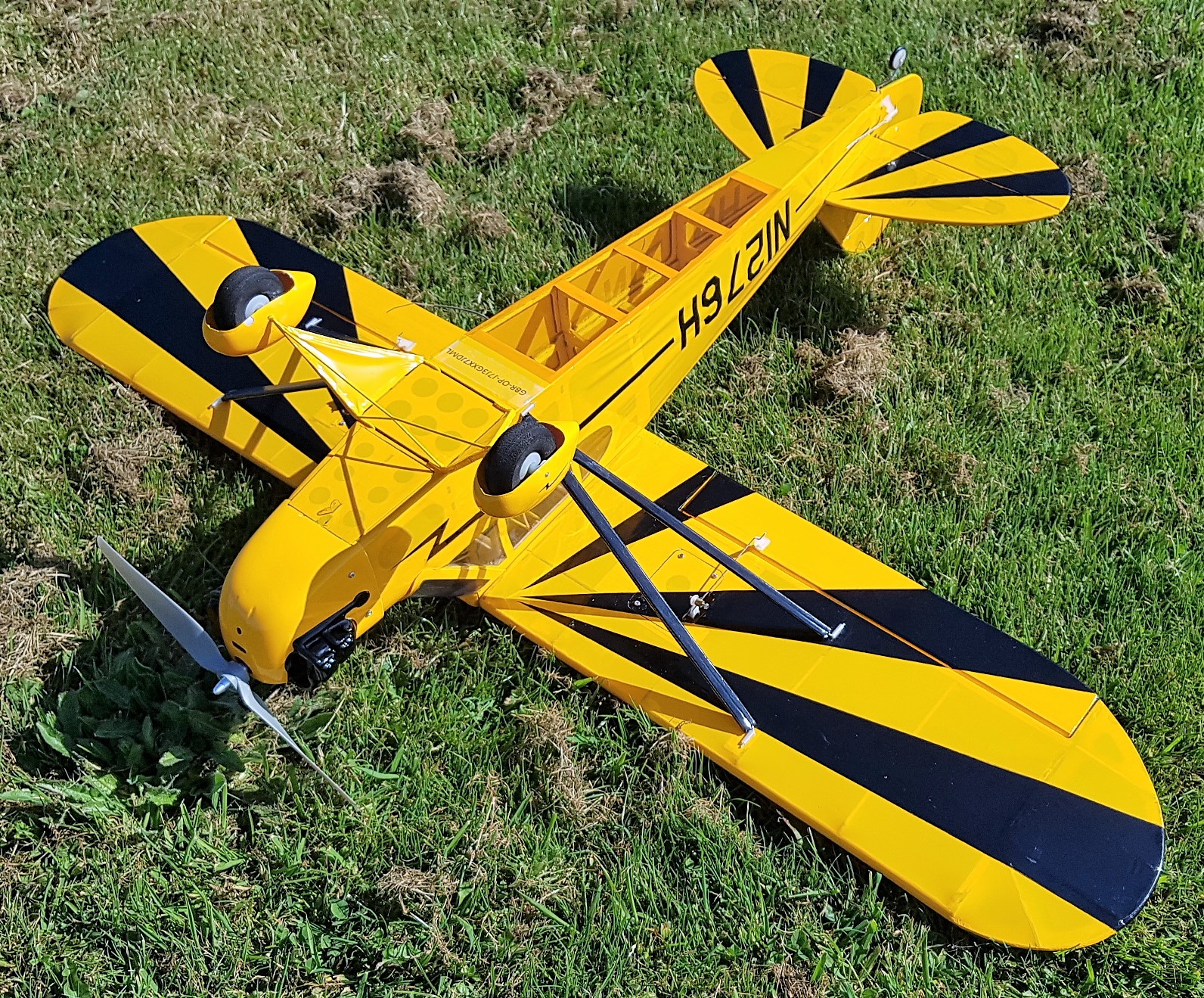 The model is sold as a park flyer and is only suitable for light winds which are something of a rarity at our field. That particular morning was pretty calm but probably not as calm as Chas would have liked for the test flight. He was also slightly concerned about the range of the cheap Chinese park flyer receiver but the low power range check seemed fine so he went ahead and flew. The little Cub certainly struggled a bit in the wind, it is definitely a calm weather model, but Chas managed several minutes of flying without too much of a problem. We think that at one stage it was right at the edge of the range but Chas brought it back closer again and all was well but he’s going to swap the receiver for a full range one. As Chas has made the wings detachable for transport I imagine he’ll be taking it on holidays and flying it on very calm evenings which should suit it perfectly.
I thought some of the calm September days were perfect for Hummer flying and several other members obviously thought the same as one midweek morning four showed up!
 On days with light winds Hummers are perfect models for practising prop hanging but I wouldn’t say they are good for very much else. Although they are extremely aerobatic they can be quite odd to fly ‘normally’ and windy days are most certainly not a good idea.
After years of sticking to I/C engines Gorgeous Gary seems to be coming round to the advantages of electric flight and has recently converted his Cougar to 2000 to electric.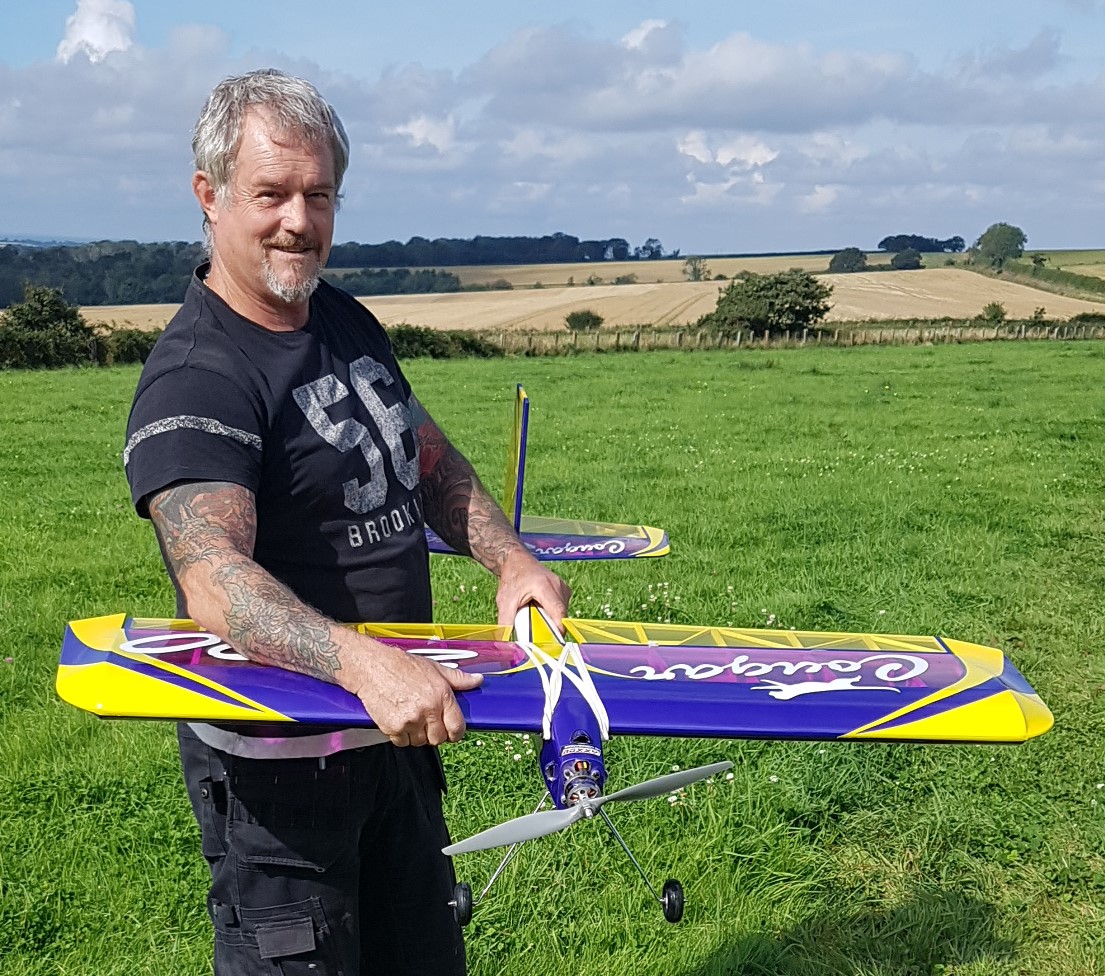
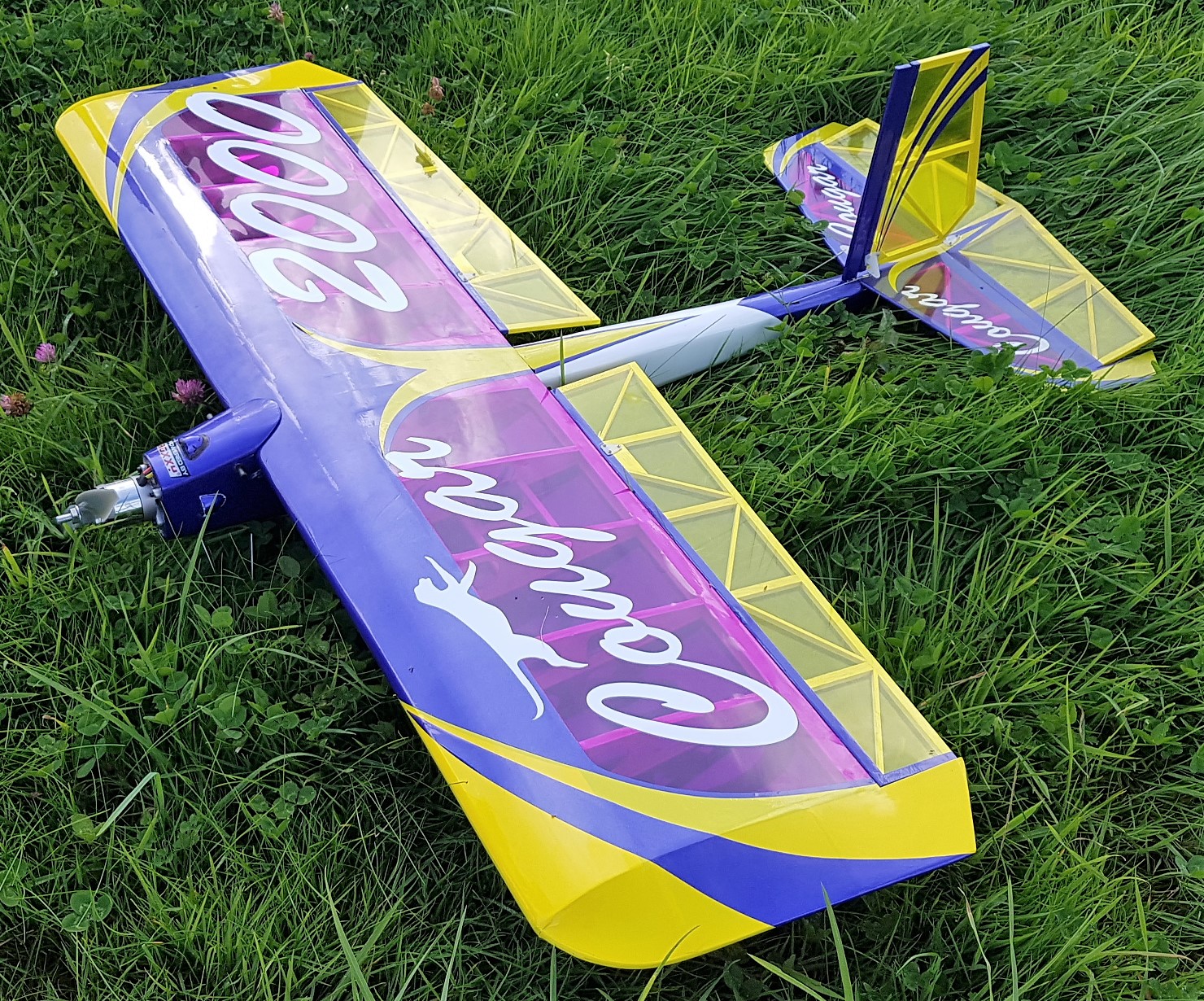 He’s fitted a Roxxy 4250/06 800kv outrunner motor along with a suitable speed controller and is using 4 cell lipos in the 2800-3300mAh range. He’s also added some air inlets.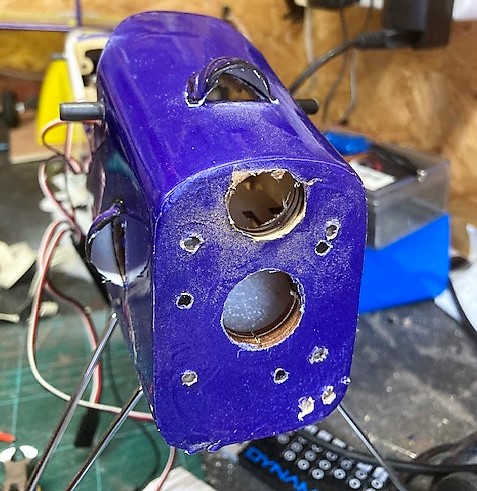
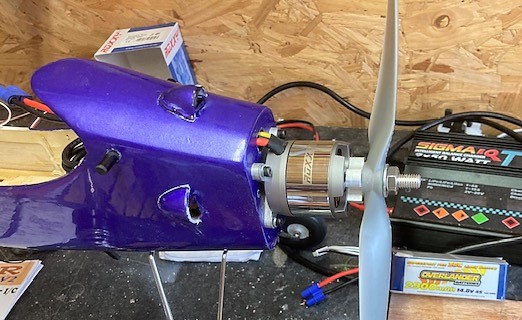 Gary says the model needed a lot of lead under the nose to obtain the correct C of G and having to remove the wing to swap batteries is a pain but otherwise all seems good.
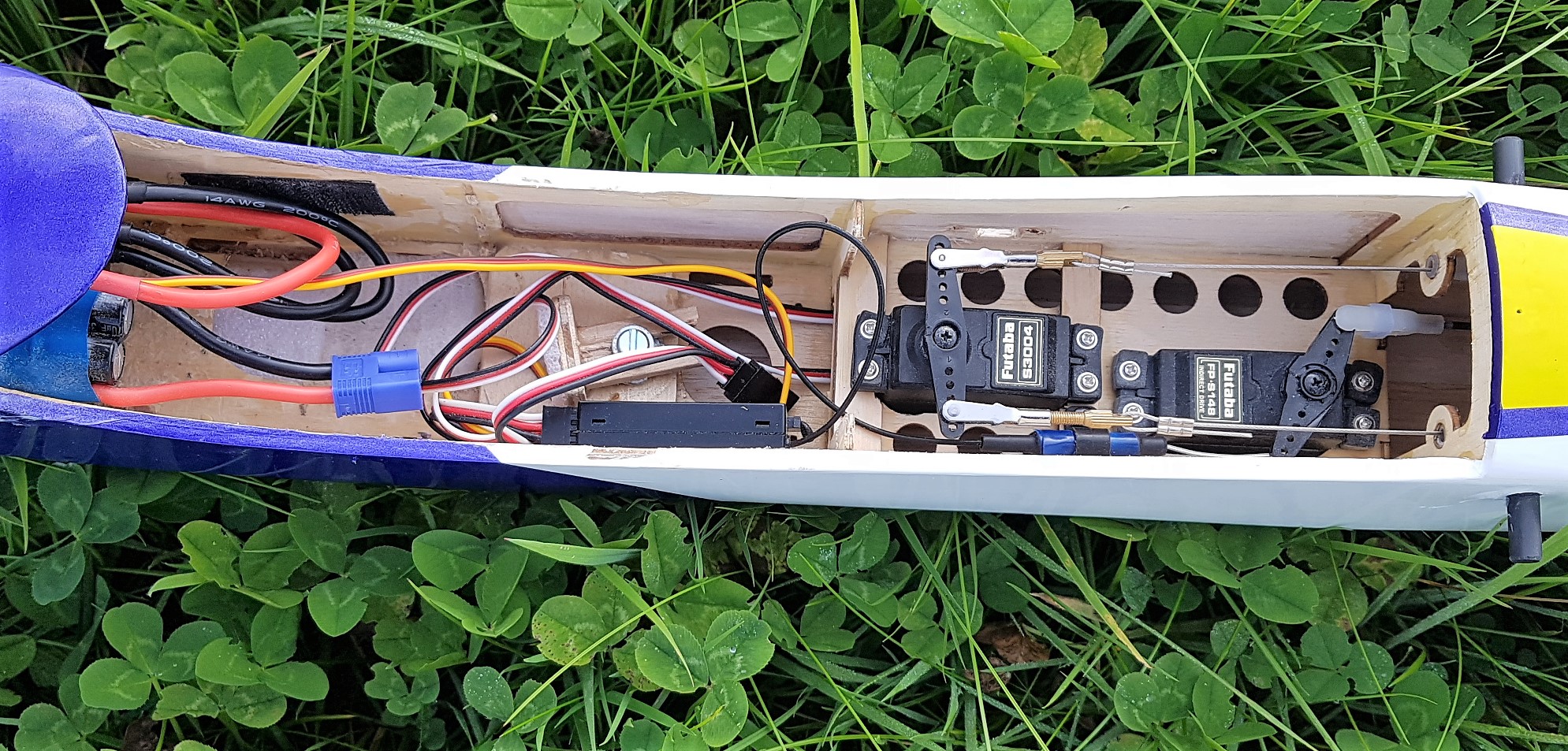 He flew the Cougar in September and found it had plenty of power and flew as well as ever. You can judge for yourselves as some of the first flight is in this month’s video.
Gary says he has also managed to get hold of an IC/EP Wot-4, I’m not sure if he means that it’s a brand new one or if he was able to pick up a second-hand one. Anyway he’s fitted that out with electric power as well, using a 40 size 800kv motor so Gary will be able to use the same batteries as the Cougar and should also have loads of power.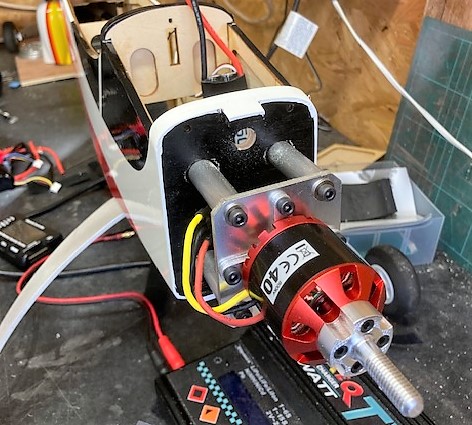 As you can see he’s used stand-off spacers to mount the motor, presumably to bring the prop forward enough to fit the cowl. Mounting the Cougar motor in a similar fashion would probably remove the need for some or maybe even all of the lead in the nose.
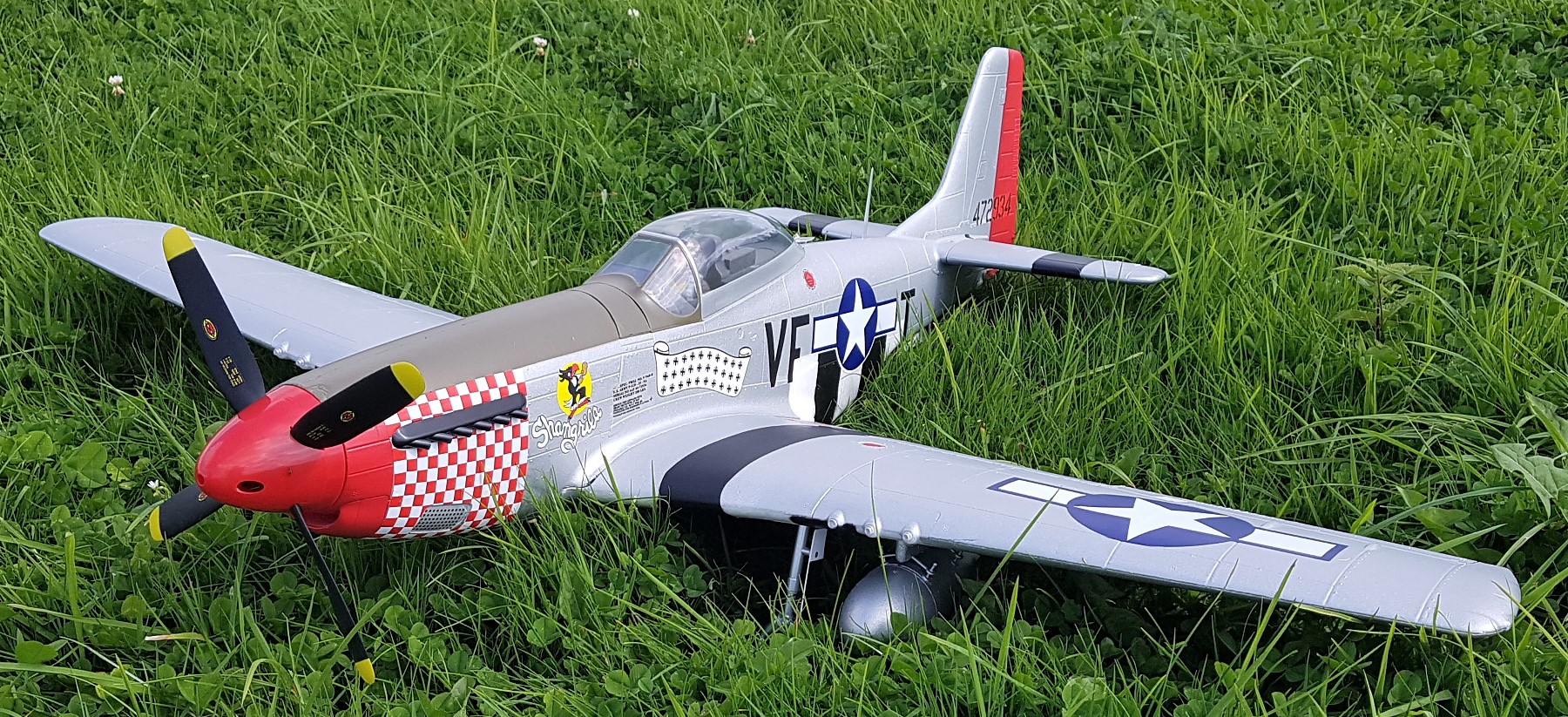
Fancy an Arrows Hobby P-51 Mustang? Well with the success of his Arrow Hobby Marlin ducted fan model so did Mini-Mike so he splashed the cash and waited for the postman.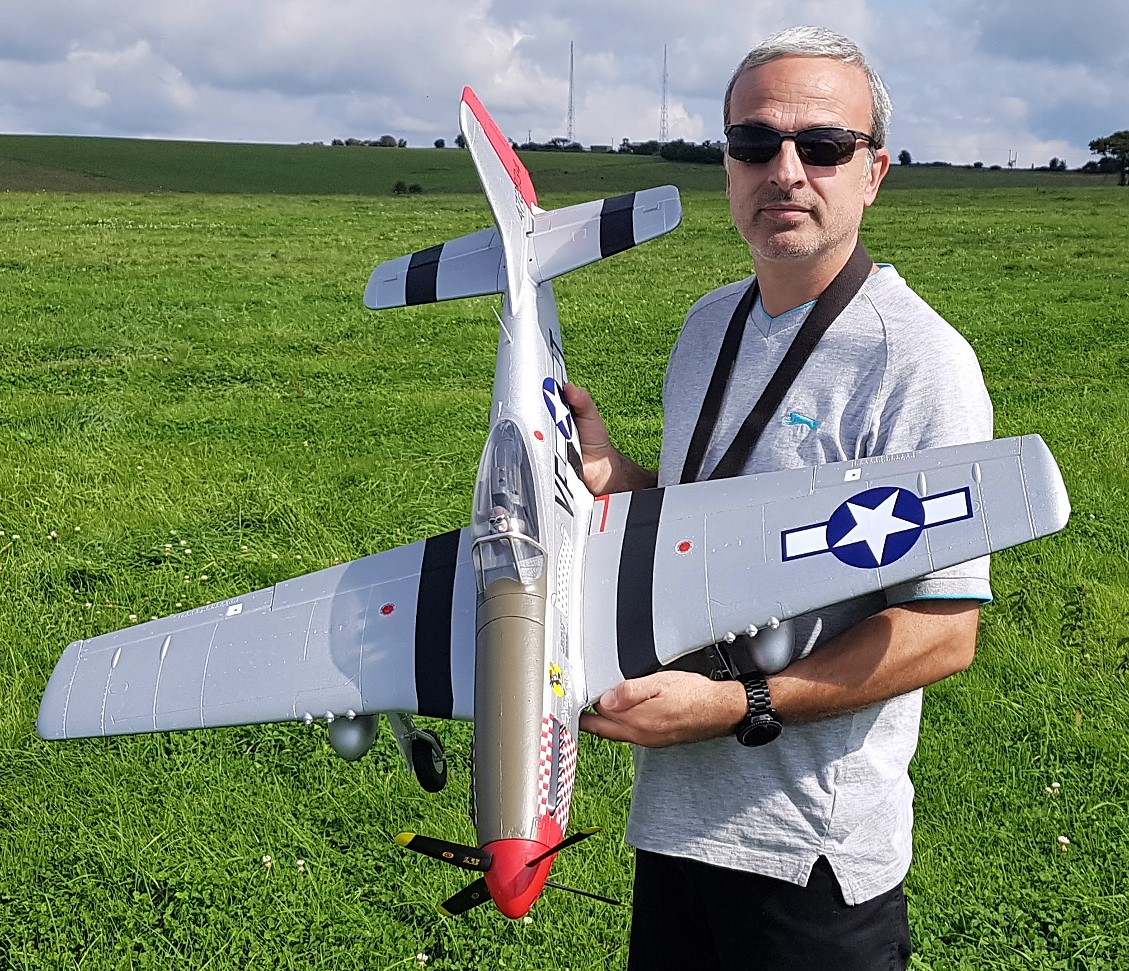
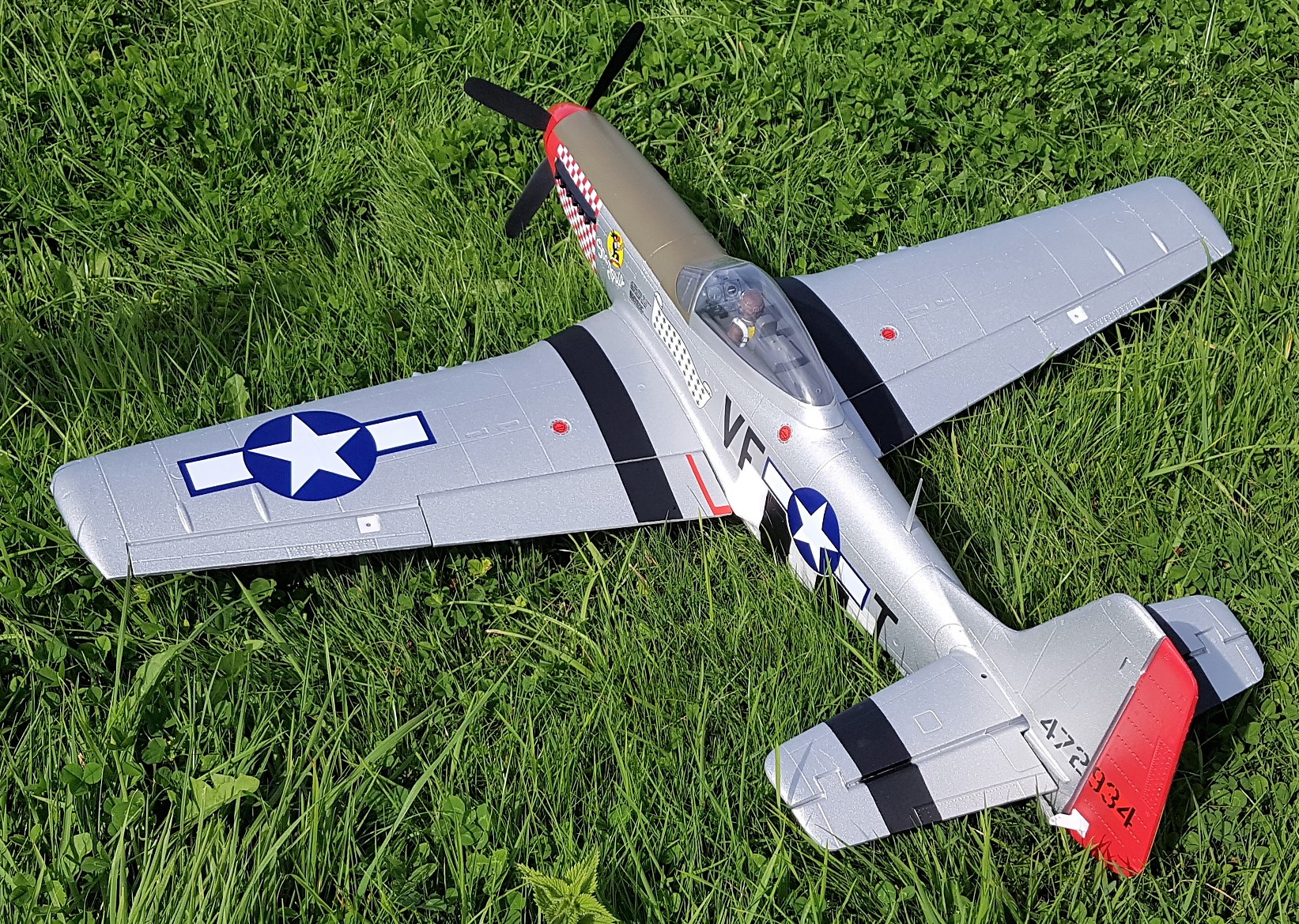 He says he was a little disappointed when it came as the quality didn’t seem as good as the Marlin but he soon got it all sorted and ready for flight. Everything went well on the first flight, the Mustang flew beautifully and didn’t appear to have any vices.
 It’s in the video.
Mini-Mike’s first landing was a real greaser and he returned to the pits a happy chappy.
It’s in the video.
Mini-Mike’s first landing was a real greaser and he returned to the pits a happy chappy.
After a long lockdown absence Stanley Knife finally returned to flying in September.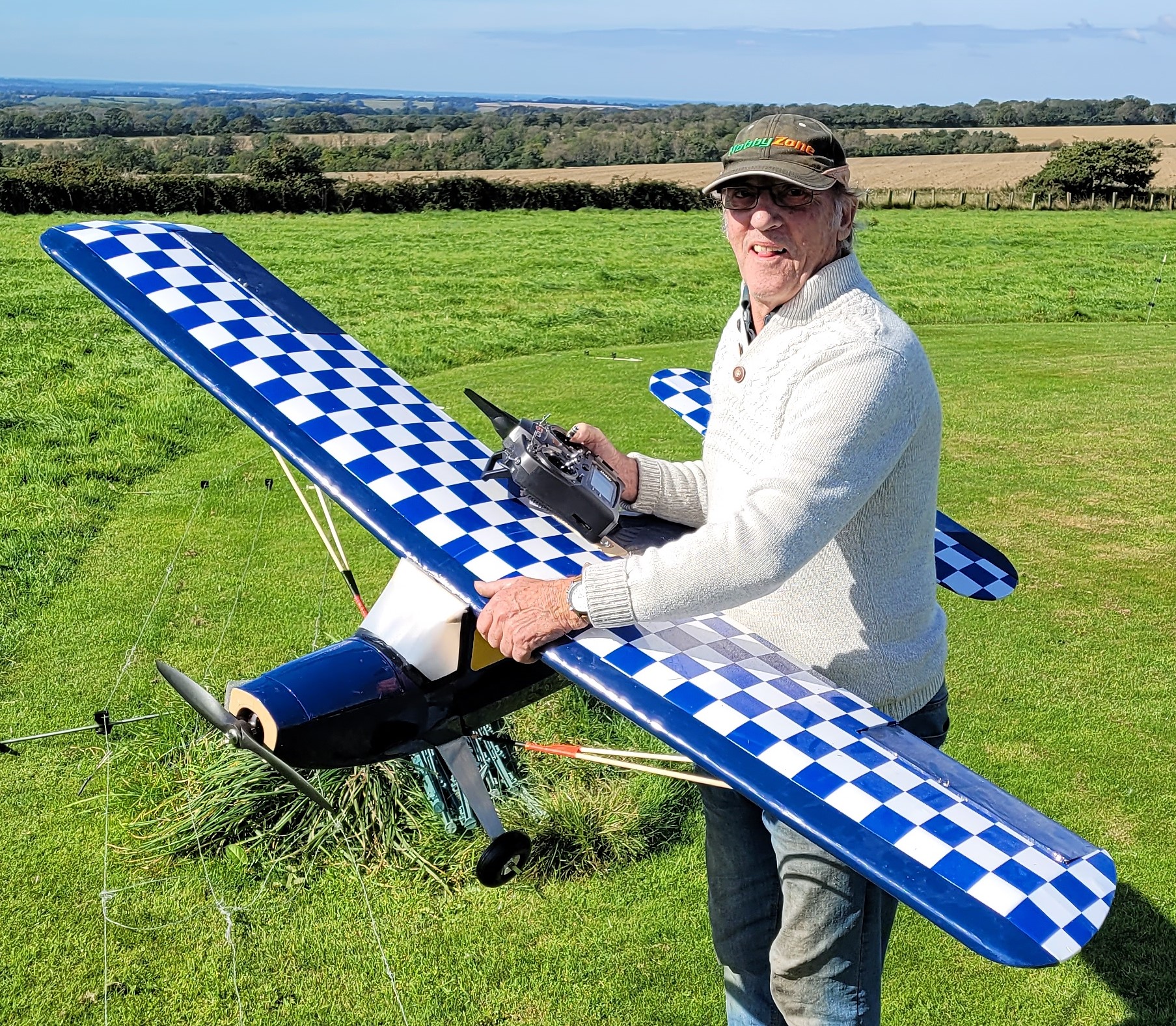 But he hasn’t been idle, he has been busy building a DB Models Expo Eighty. Stanley has always liked larger models and this one is 80” (2032mm) wingspan. The DB Models website says: A cabin type model with spats, Lovely flier and a real joy to build. Ideal for aero towing, piggy backing, etc. Unfortunately Stanley’s turned out not to be a real joy to build as he had problems with hanger rash before he’d even covered it. He’d carefully stood the newly completed (but as yet uncovered) wings up at the end of his shed when a large spirit level fell over and took out a row of six wing ribs! Undeterred Stanley made the necessary repairs and carried on to complete the model. He has fitted a 4248 490W motor coupled to an 80A speed controller and is powering it with a 4 cell lipo battery.
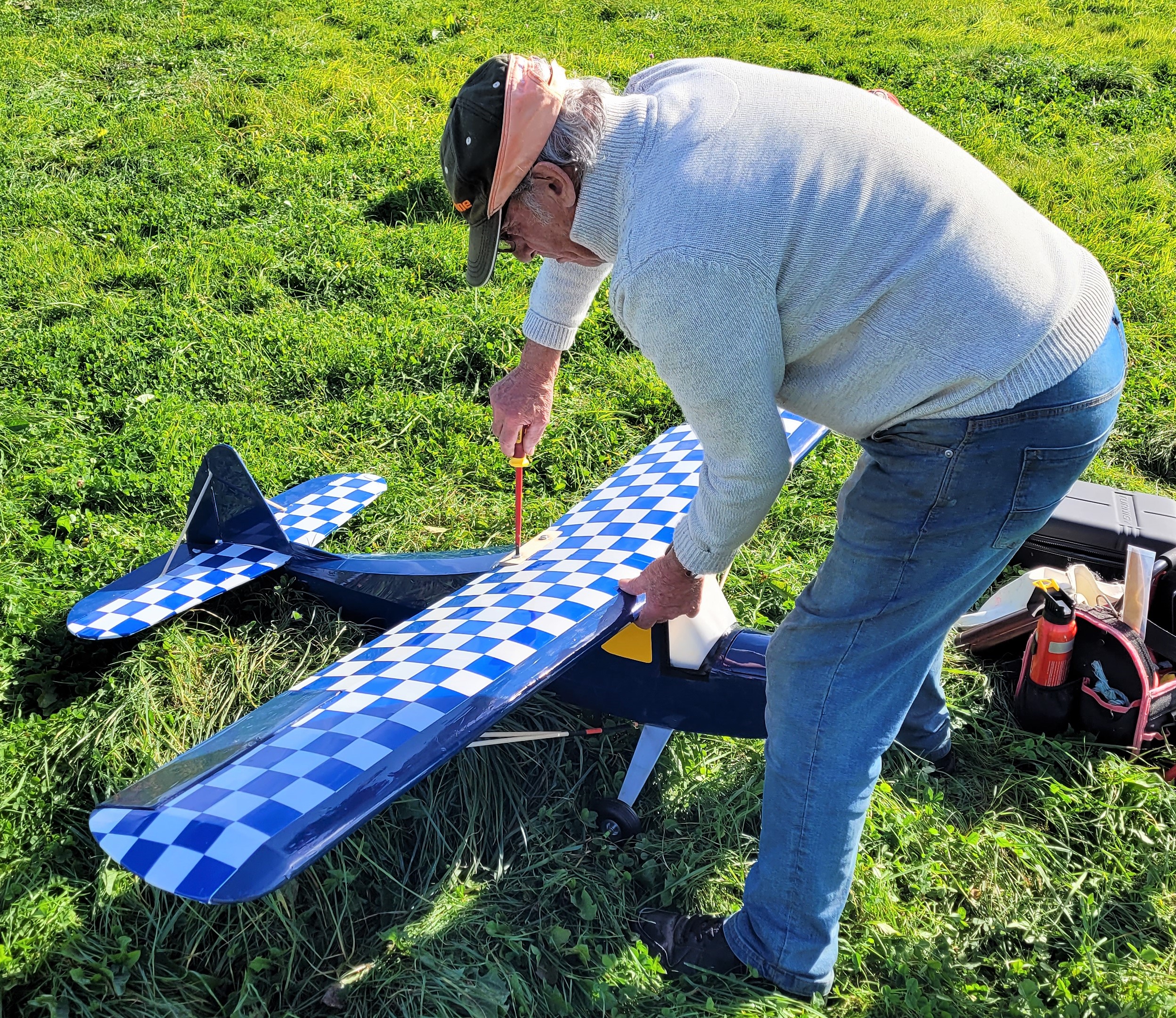 The all up weight of the model is only around 5lbs so there should have been plenty of power but, as you can see in the video, on the maiden flight the take-off run wasn’t exactly rapid. Sadly as Stanley struggled to gain a little height the model flicked inverted and crashed at which point Stanley was heard muttering things like “Oh dear” and “Oops”…at least I think that was what he said. The damage didn’t initially appear to be too bad but I don’t think Stanley will be in any hurry to repair it.
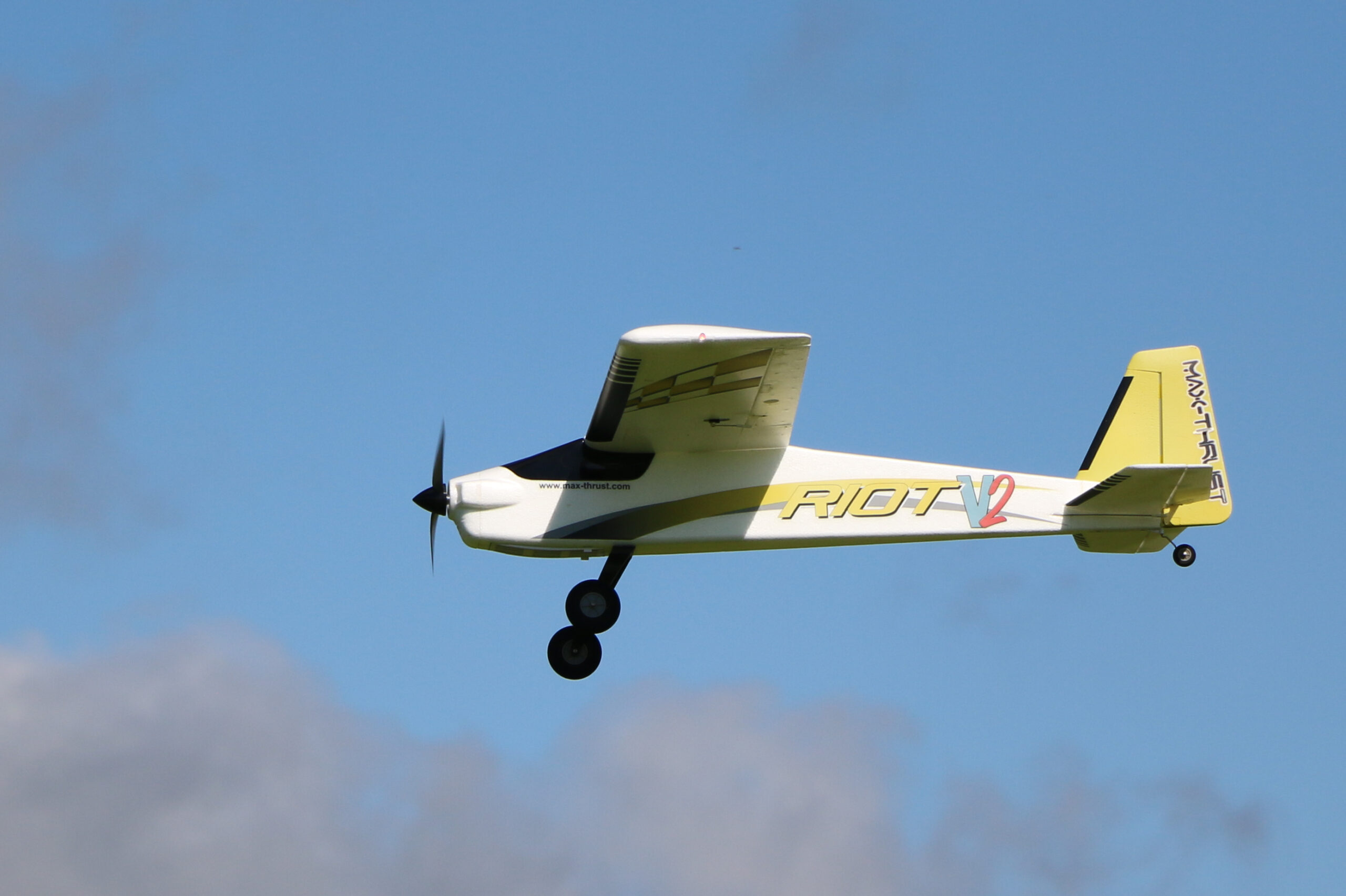
Once again Kryten has taken some excellent flying shots for us and it seems only fitting for the first one to be of his Max Thrust Riot. Flying and photographing…too clever by half!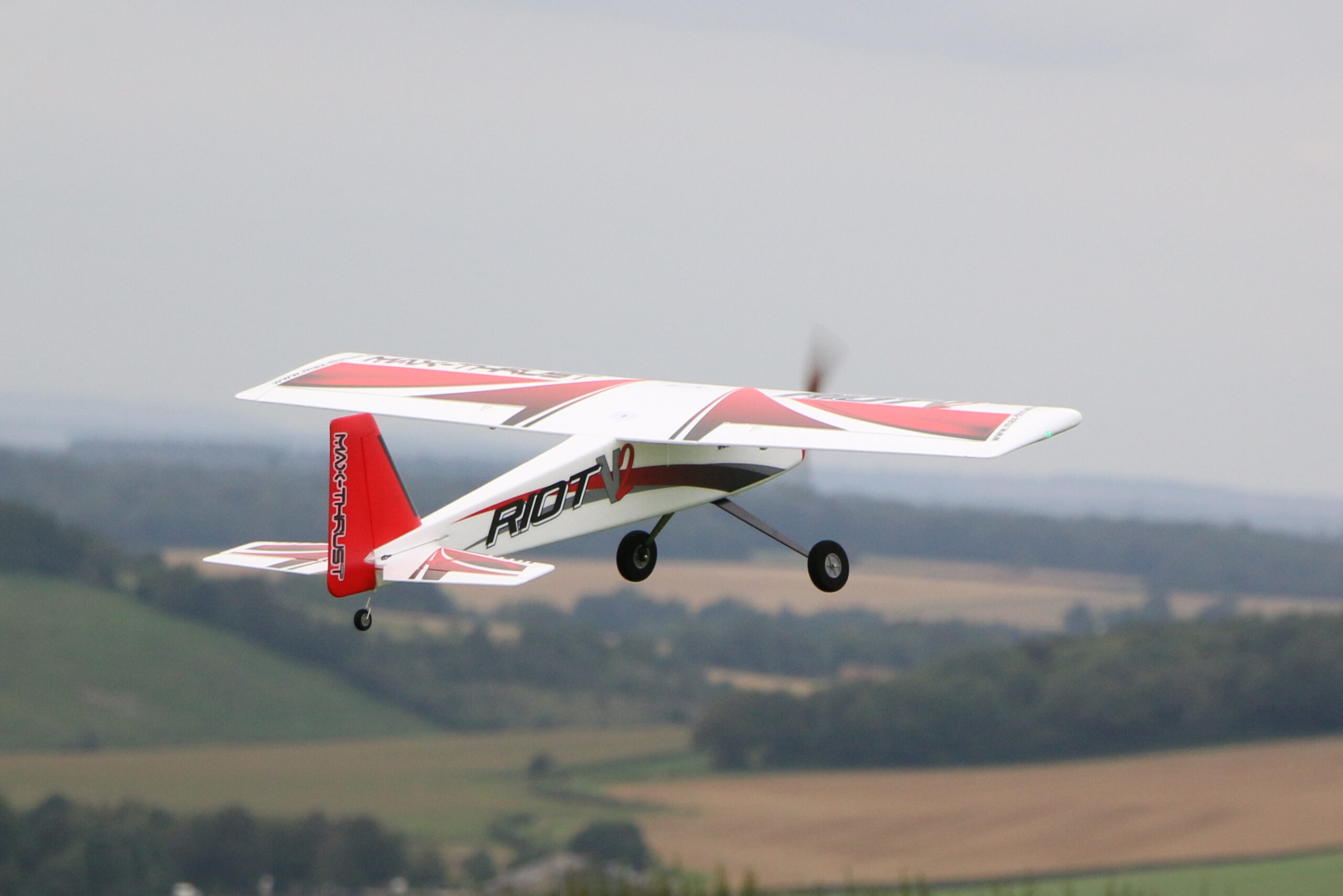
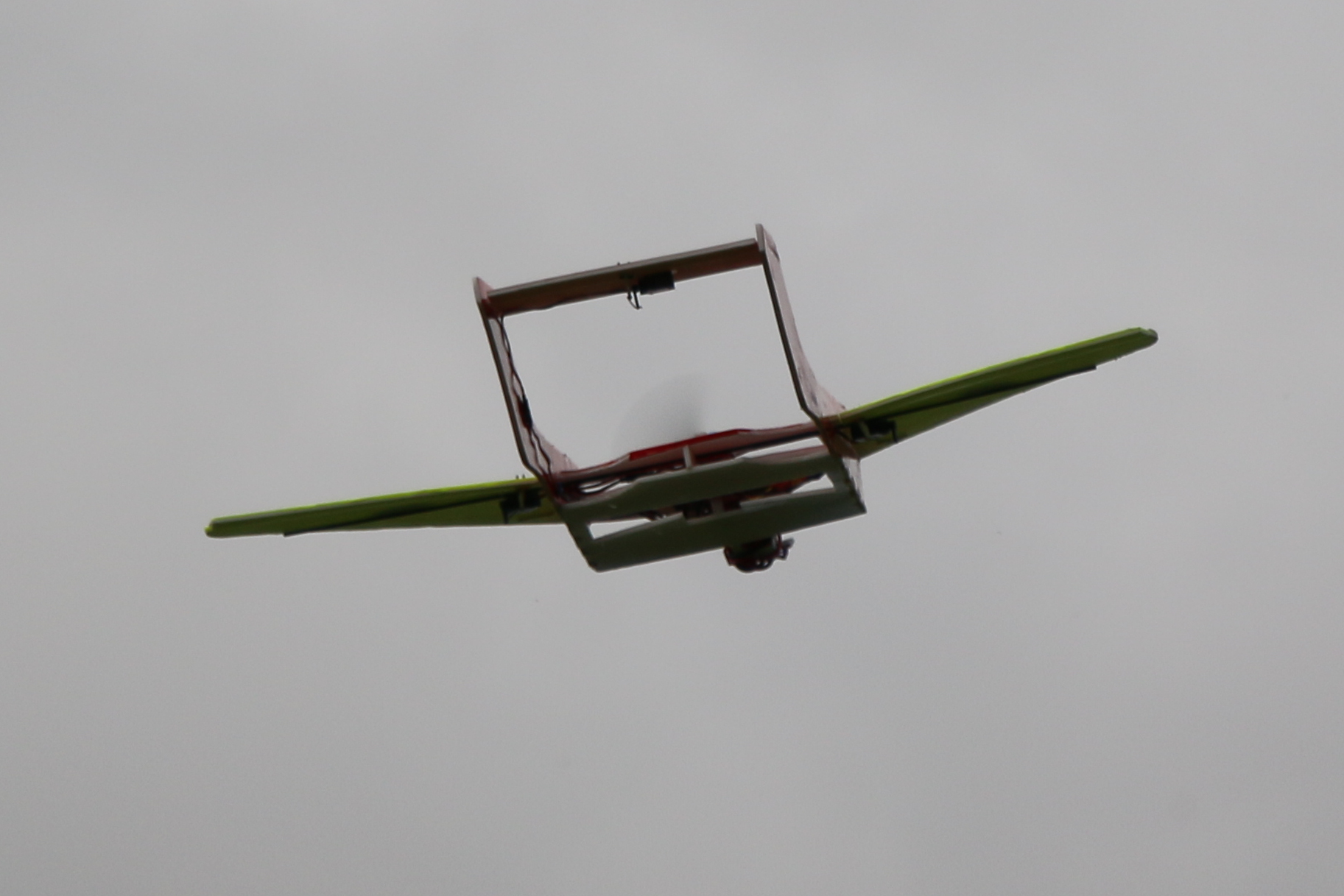
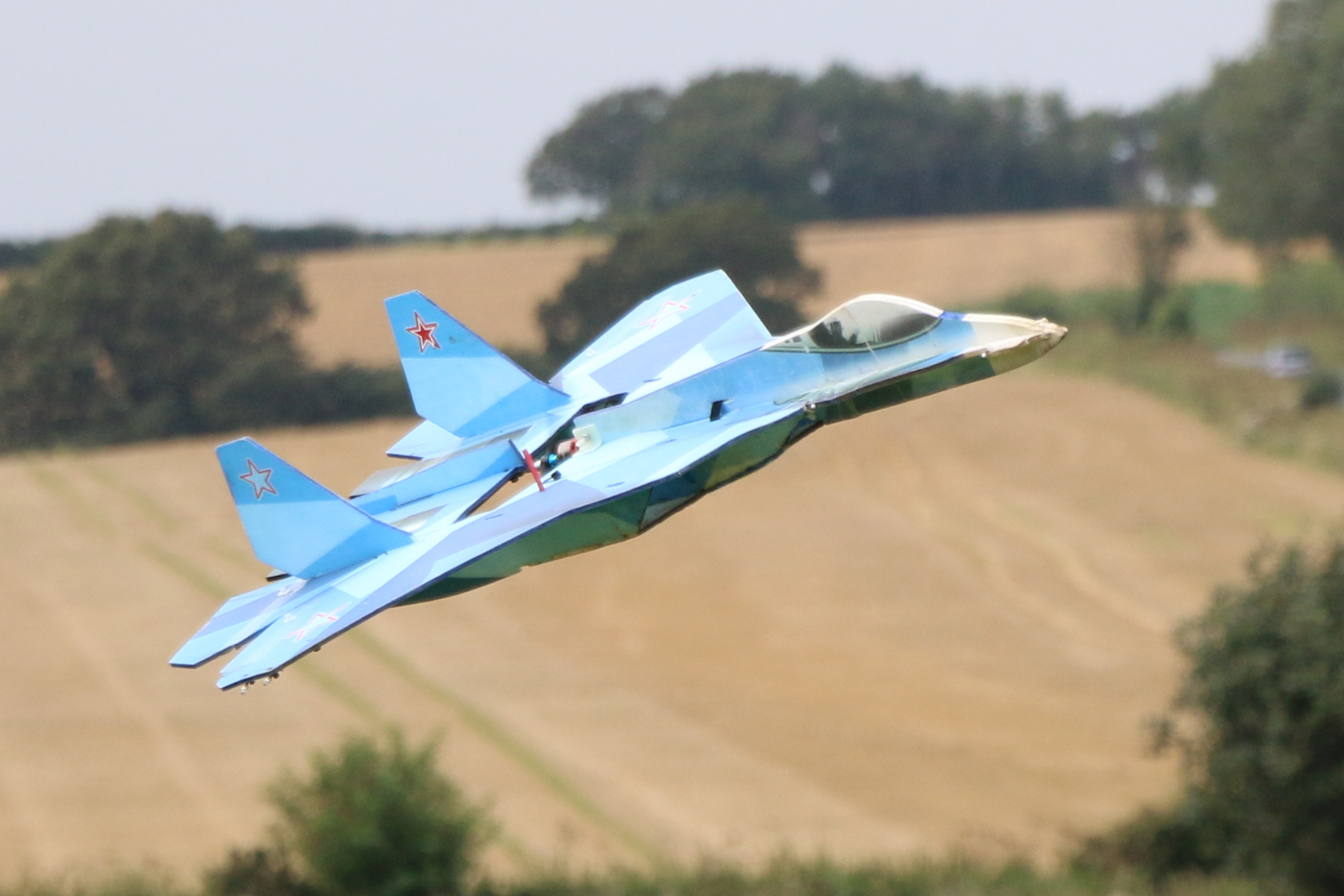
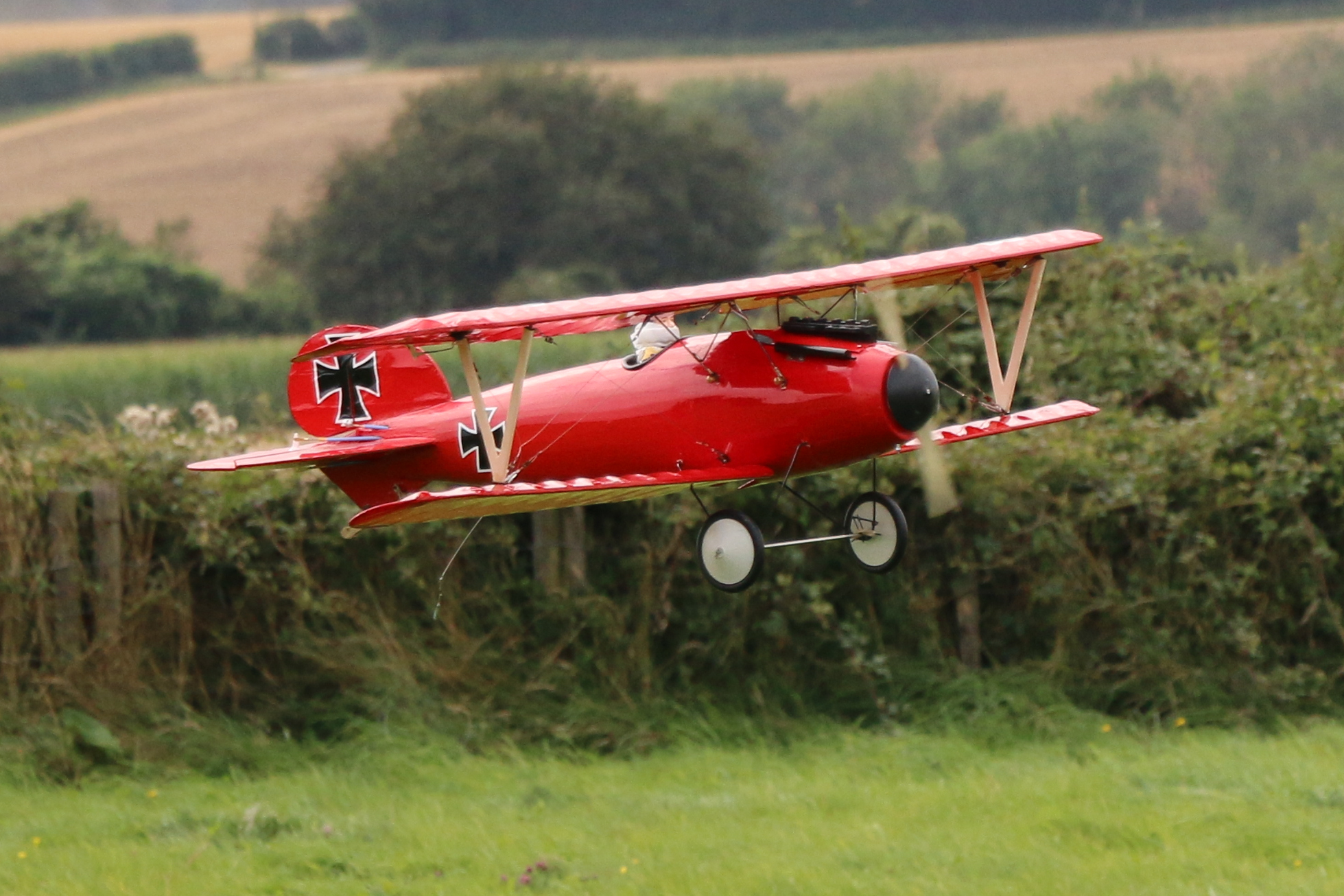
Time now for the video which includes footage by me, Dougal Entendre, and Captain Slow. Please watch the video full-screen, it’s so much better with small models flying around.If the video won’t play for you please click HERE
The girl at the Airlines check-in desk just threatened me! She looked me straight in the eyes and said “Window or aisle?” I laughed in her face and replied “Window or you’ll what…?”Colin Cowplain
Patch News – August 2021
I must start this edition with my Webmaster hat on and give a huge thank you to Dougal Entendre (AKA Mark Agate) for his work creating and setting up the new Petersfield Aero Modellers website. The original website was built by an employee of Steve Montague (Cyano Steve) whose company Symbios Group then hosted the site for us for several years at no cost even after Steve had sold his share of the business. The original website was heavily restricted in what I was able to change (so I couldn’t mess it up!) and if I had problems I had to contact Steve Montague and plead for his invaluable help.
But eventually we were asked to move to another host and we looked at using the BMFA free hosting service but there were a few problems and, so we didn’t lose the website completely, Dougal sorted another host but of course that came with a monthly fee.
So Dougal started building a new website with a fresher updated look that we would understand better and the admins would be able to change more easily. Last month when I tried to post Patch News we had lots of problems and eventually Dougal sorted it by posting a link to the new site. During August BMFA came up with what we needed so Dougal has now switched the hosting over to them and the new website is completely live.
Right, on with the August flying news now. The new herd of young bullocks joined us at the end of July and at the start of August we had to resort to using an electric fence around the pits and flying with either some or all of the fence around the patch still up.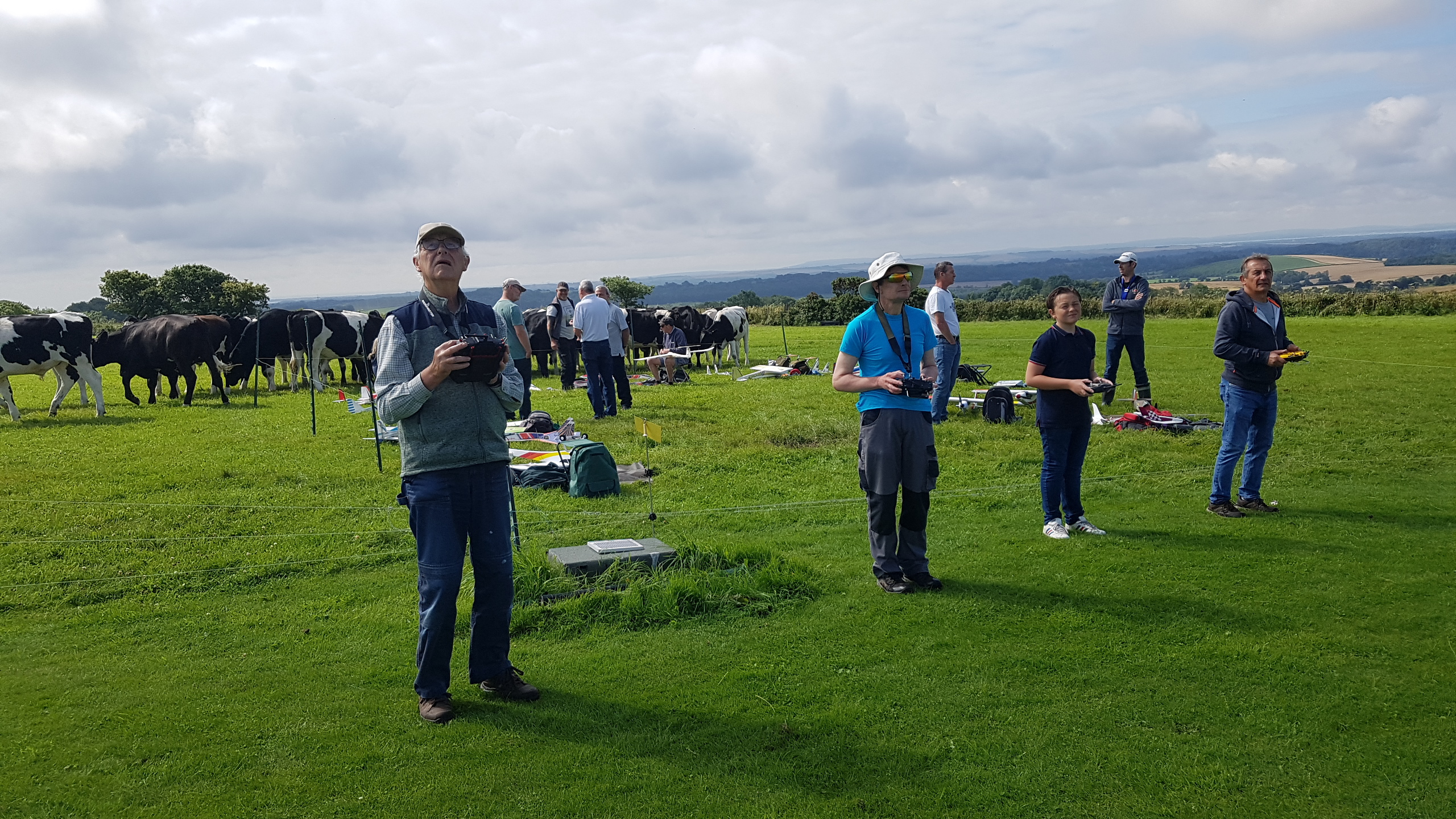
Landing inside the fence proved a bit of a challenge for some pilots, didn’t it Woody…!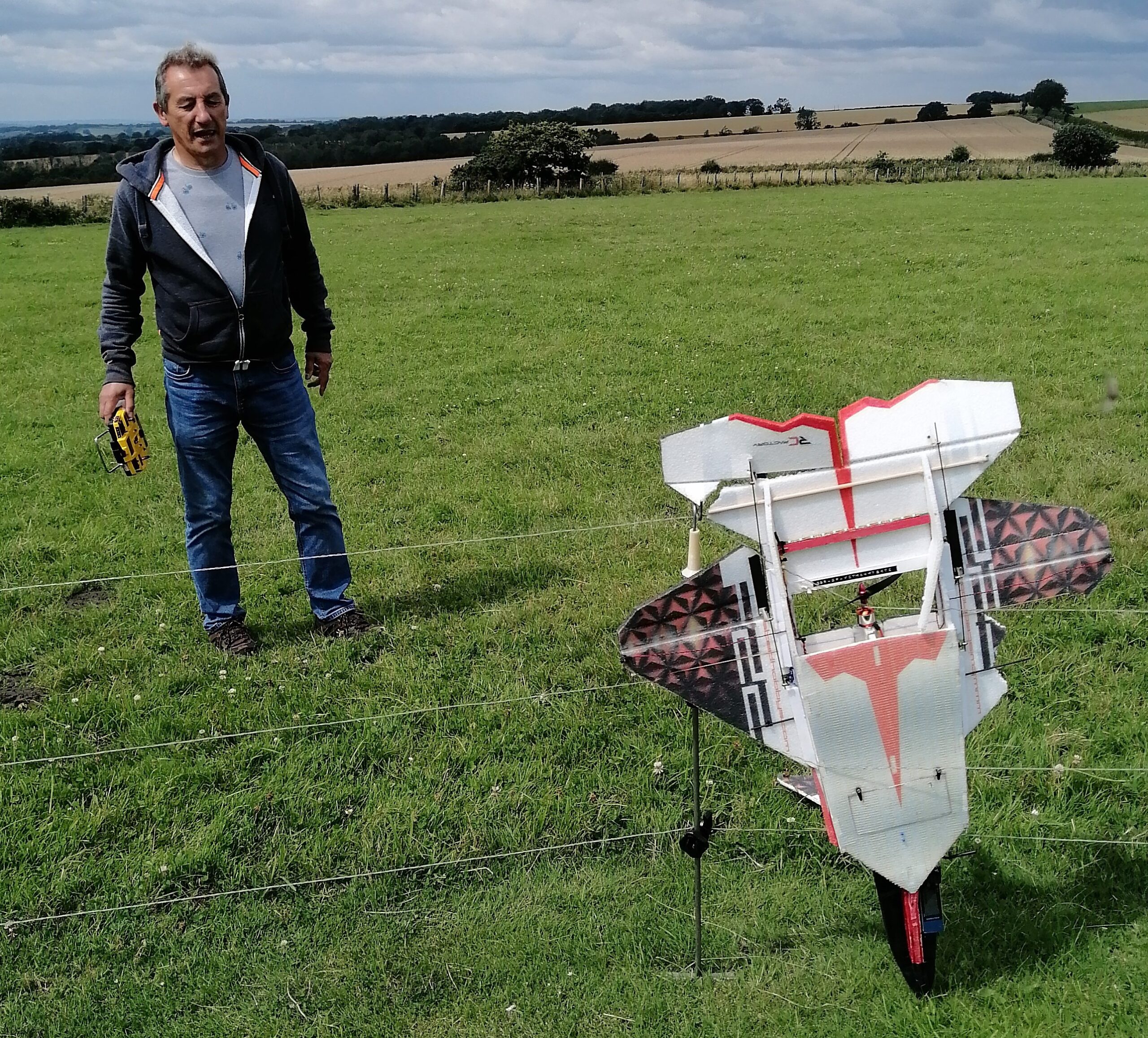
But the bullocks soon got bored with us and became less of a nuisance and they’ve now been moved to another field so we are trouble free at the moment. With the rubbish weather we had in August the grass was often wet when we mowed so we weren’t able to keep the patch grass quite as short as we would have liked but it stayed perfectly flyable.
Prolific builder Dwayne Pipe surprised us in August by turning up with a foamboard Sea Vixen. We’re used to the commercially available Sukhois, Migs etc. but not a Sea Vixen.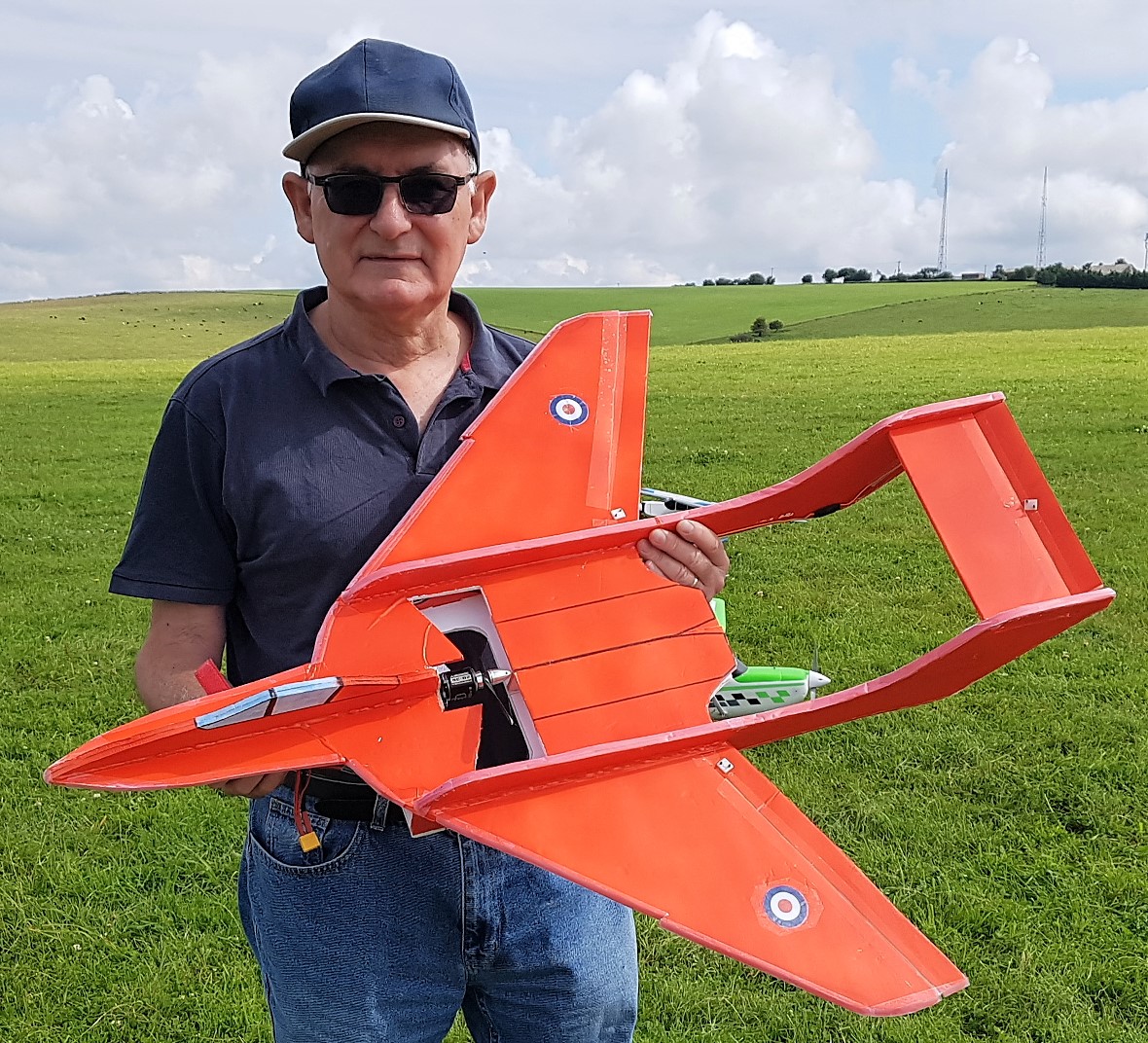
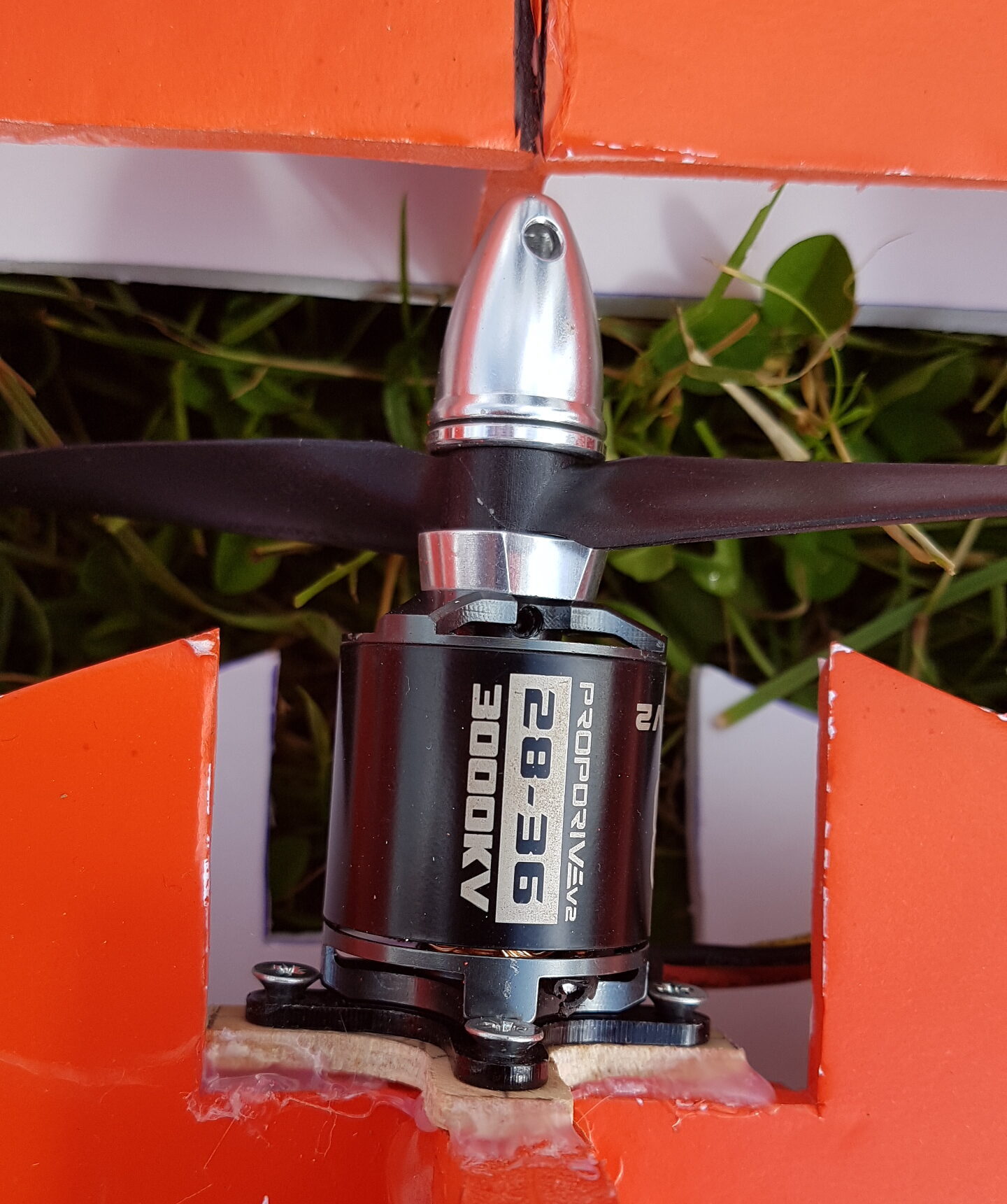
We were intrigued to see how the Sea Vixen would fly and were very pleased when it went away from the launch perfectly and flew extremely well. As you’ll see in this month’s video all went well until the landing when Dwayne discovered that we hadn’t lowered the fence! The model was undamaged other than a minor chunk out of the wing leading edge.
So spurred on by his success Dwayne set about building an improved Mark Two version.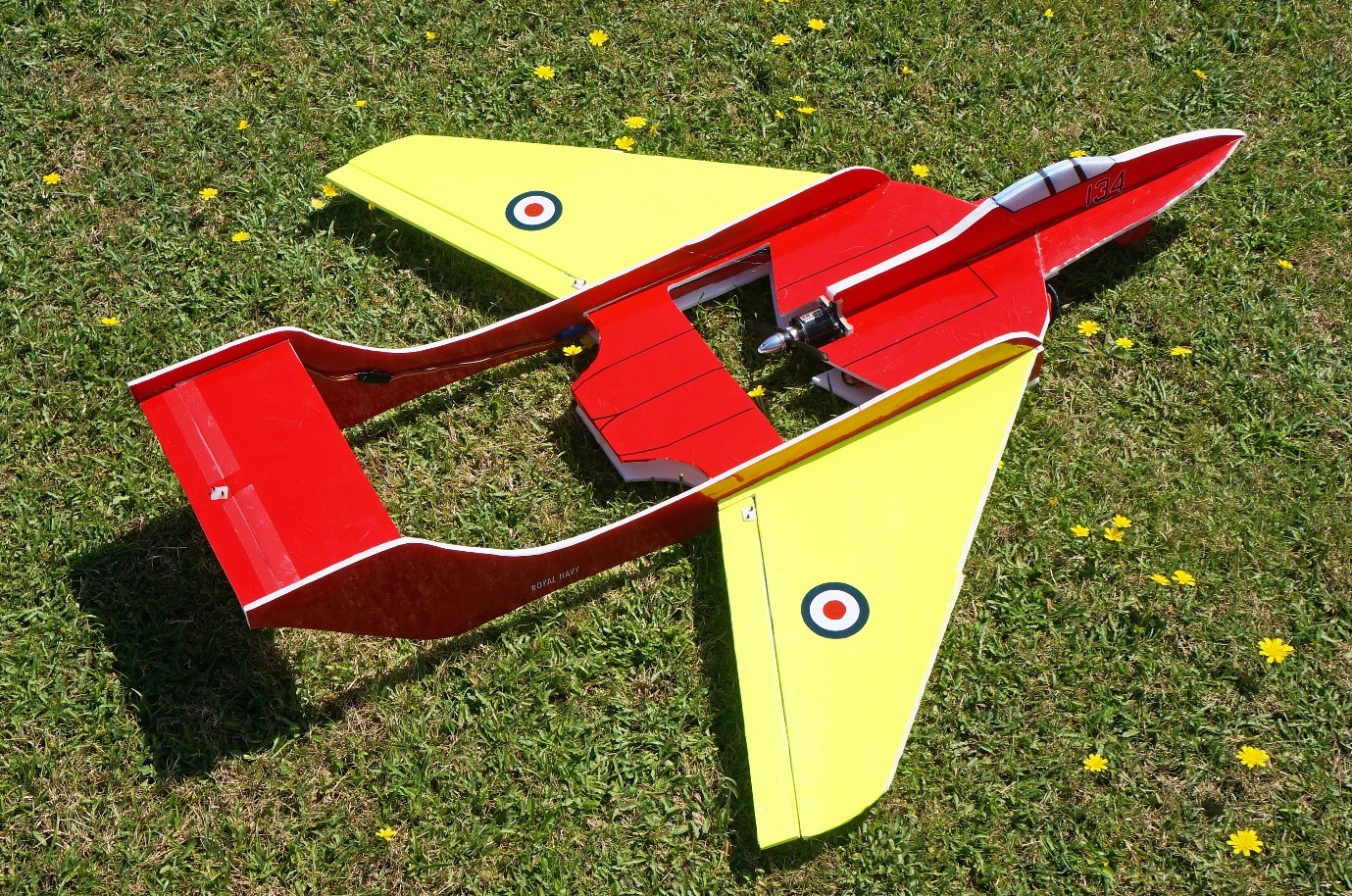
Dwayne designed the Sea Vixen using the same basic idea as the kit ones but sadly the foamboard the Chinese kit manufactures use doesn’t seem to be available to purchase here so he used Westboard foamboard from Hobbycraft. The Westboard foamboard comes with a paper covering which doesn’t like wet grass and it a tad heavy so the second model has had the paper removed. Dwayne has written an illustrated article about the build for possible magazine publication and if the article isn’t published I’ll put the whole thing on the website at a later date. If you fancy building one in the meantime speak nicely to Dwayne for the full article but here’s some of it: The complete design uses only 14 pieces of flat foamboard and can be made in a couple of days, even allowing for covering and glue drying. The design was transferred to the foamboard using my preferred method: photocopying the plans, cutting out the shapes and gluing them onto old cereal packets. Cutting them out carefully to produce templates that were used to draw round onto the foamboard. This is particularly useful as the templates can be manoeuvred to get the best use of the foamboard and minimise waste. The base pan is cut out in a single piece.
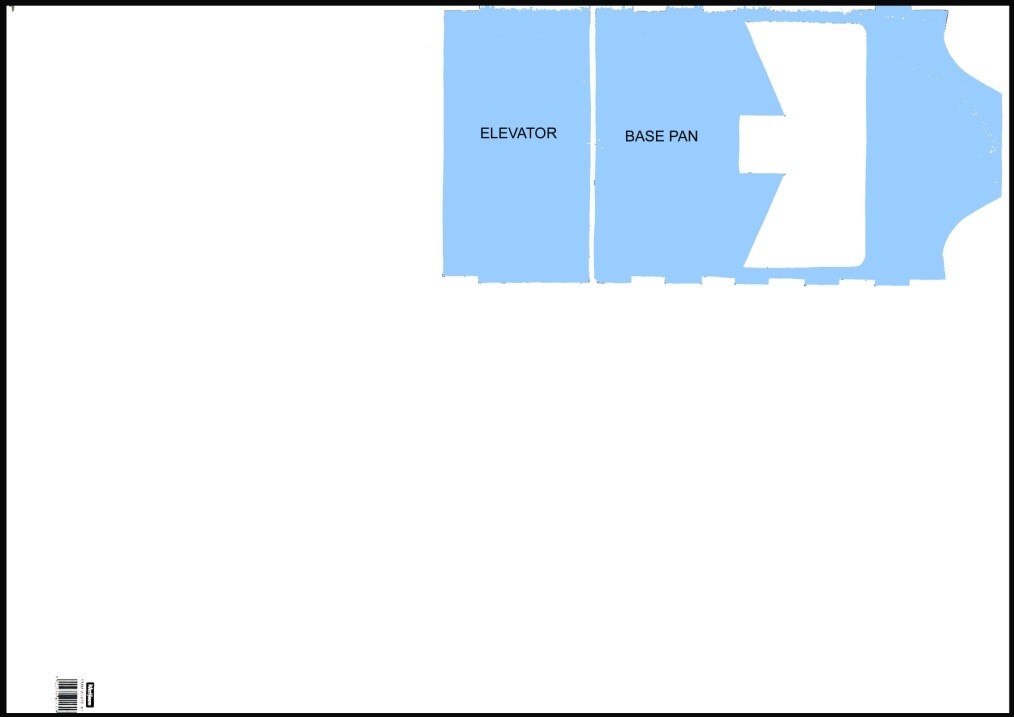 Cutting out the foamboard is easy if you use a sharp blade and a cutting mat. You will need to replace the blade frequently when the paper on the foam starts to tear. The disposable blades sold in pound shops are ideal as the edge is easily replaced. The pieces were cut-out as designed and were weighed at 200 grams. Then comes the clever bit.
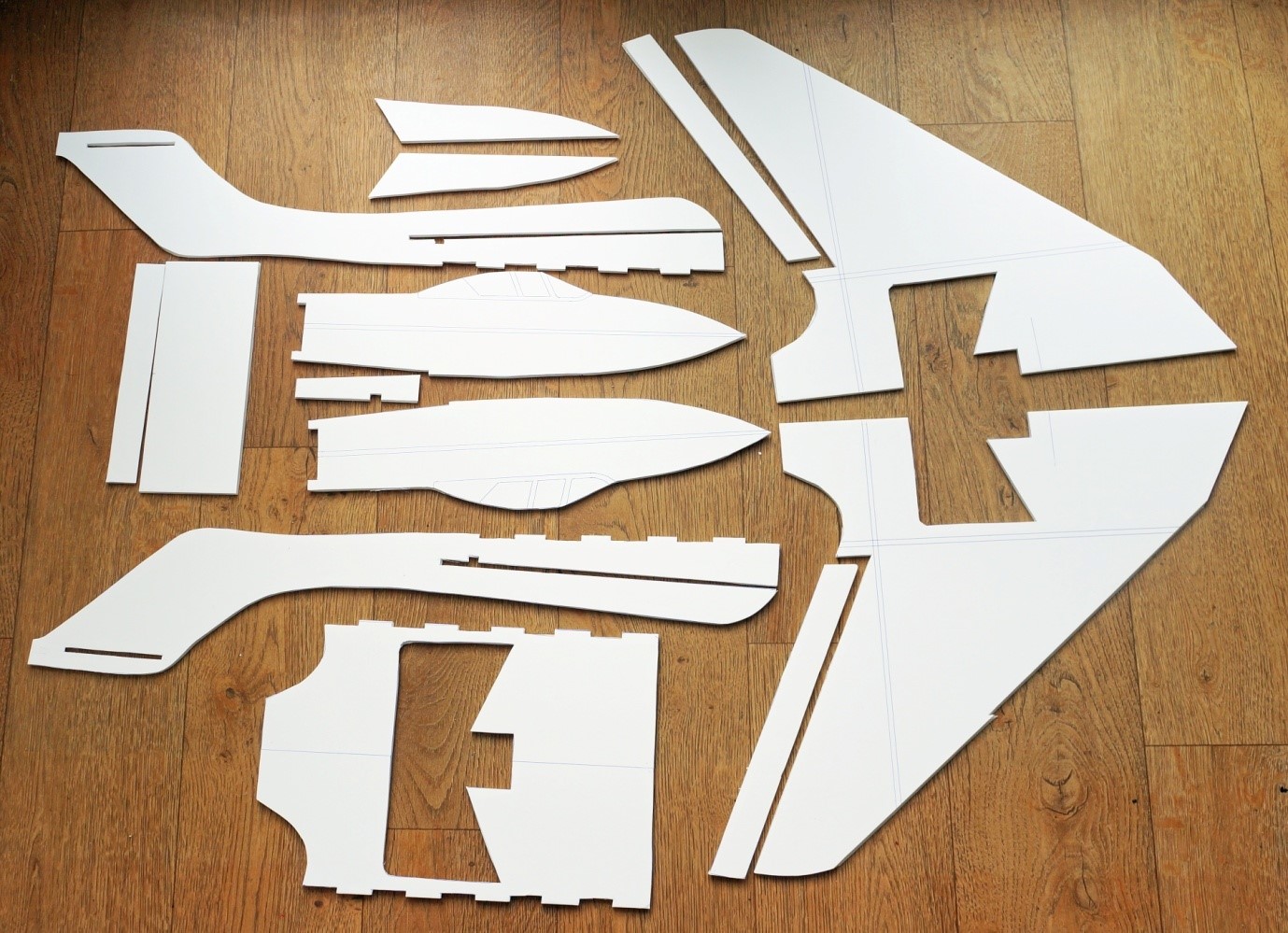 Take all your cut-outs and soak them in the bath just covering them in warm water. Within 5 minutes the paper floats off the foam. Carefully remove this and remove the foam leaving it to dry overnight supported on its edge as if it was wet paint. The foam will dry with a hard outer coating which readily takes paint or Solarfilm type coverings. With the paper removed the pieces halved in weight to 100 grams. It is important to leave the paper on before cutting out the parts. The paper takes pencil and ball point which the foam struggles with and the paper protects the foam from tearing. Thanks Dwayne, that’s really good, I just might be tempted to build one for myself.
Last month I featured a Hyperion Edge that Dougal had purchased as a second-hand bargain but hadn’t yet flown. In August he flew it and that’s when things got interesting: The gentleman who sold me the plane said he had discharged the 3 lipo packs so they would be safe to transport. In fact he had discharged each of the 3s packs to 9V, which is much too low for a lipo (3V per cell!). I knew from experience that you can be lucky and recover packs from this state, so I gave each a storage charge back up to 3.8V per cell and hoped for the best. When I fully charged the packs, one had a cell which clearly hadn’t recovered and wouldn’t balance, but the other two packs were fine.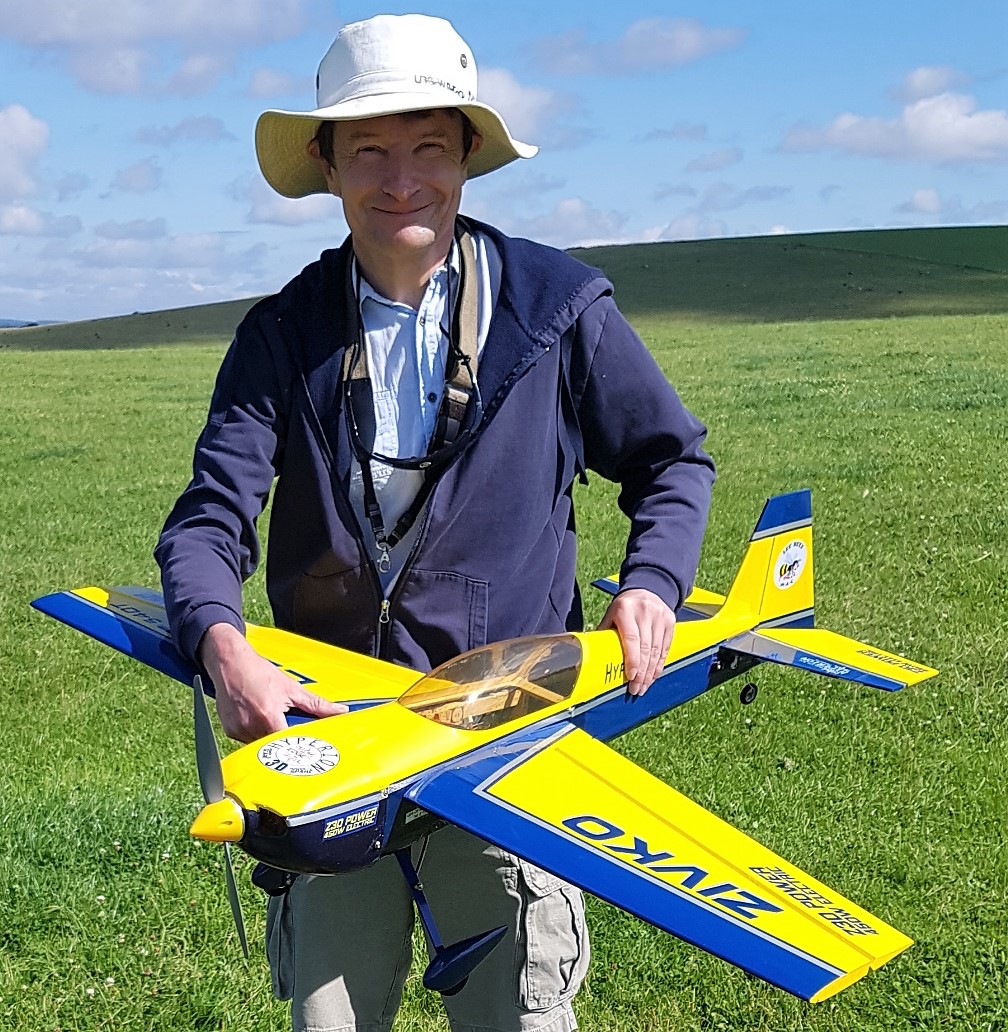
The plane was supplied with a Spektrum AR6210 receiver plus satellite. I bound my Radiomaster transmitter to it, and all seemed well. The first flight started well, and the plane had plenty of power, so I pulled a few aerobatics. During a roll there was a definite hesitation, as if there was a sudden loss of control, but it recovered immediately. I tried another roll and had another loss of control, so landed straight away, after just a minute of airtime. Ground checks showed that we got periodic lock-outs. I tried disconnecting the satellite receiver but the problem persisted, so I took it home and replaced the Spektrum receiver with a Devo RX1002, which gave no such problems. Not the first time I’ve had trouble with Spektrum gear.
From the start of the next flight it was clear that there was some kind of motor problem. It took off OK but the motor sounded like a 2-stroke running too rich, so I landed. Suspecting a battery problem I tried the other pack, but got the same symptoms. I took it home once again, and swapped the ESC.
For its third flying session, everything was finally sorted and I got some decent aerobatic performance. However, my misgivings about the strength of the tail (mentioned in the last Patch News) proved correct when, while going straight and level, there was an audible crack and the plane twitched in pitch. Fortunately I got it down safely, but the left hand half of the tail had cracked at the joint with the fuselage, and was only held on by the covering!
The Edge is now hanging from the garage roof while I ponder how to make a replacement tail. Although the price of the airframe with all electrics and batteries was a bargain, the experience has reminded me that there’s a cost of ownership with any model. So far it’s given me more grief than the three minutes of airtime was worth.
It’s just lucky that you’ve got nothing else to do now that you have retired Dougal!
Page Boy caused lots of hilarity (sorry, that should say ‘got lots of sympathy’) when he failed to secure the battery in his Hurricane. Needless to say halfway through the flight the battery slid rearwards which did nothing to improve centre of gravity and made the model pretty much unflyable. The ‘heavy landing’ that followed soon after broke the nose clean off but fortunately there was no other damage. Page Boy has since repaired the fuselage and sprayed it in grey primer but decided to test fly it before finishing the paintwork.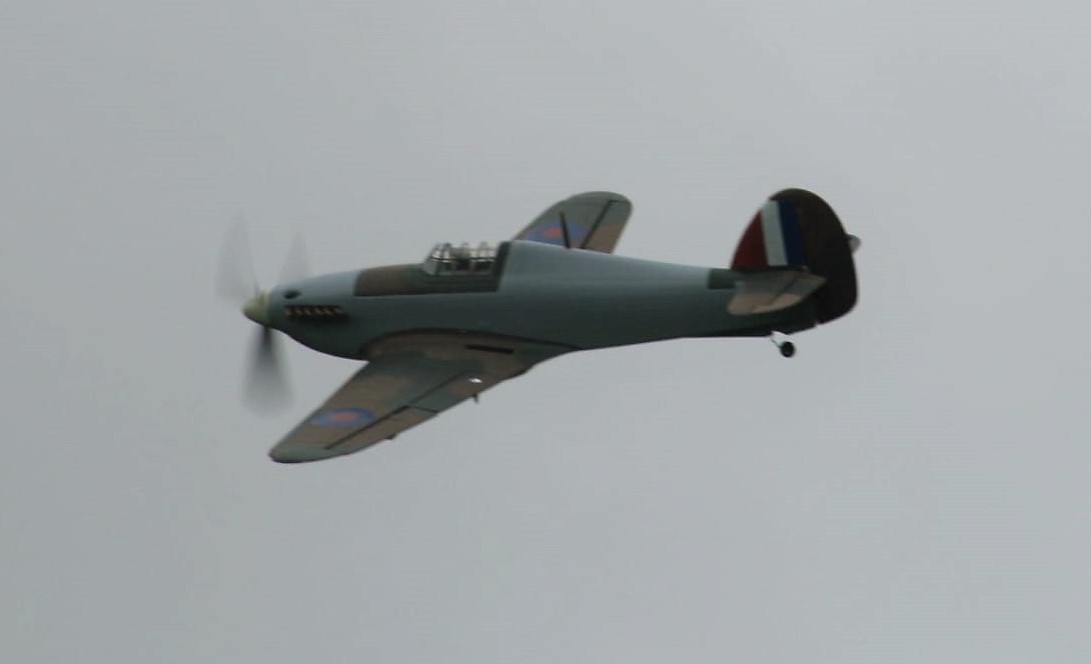
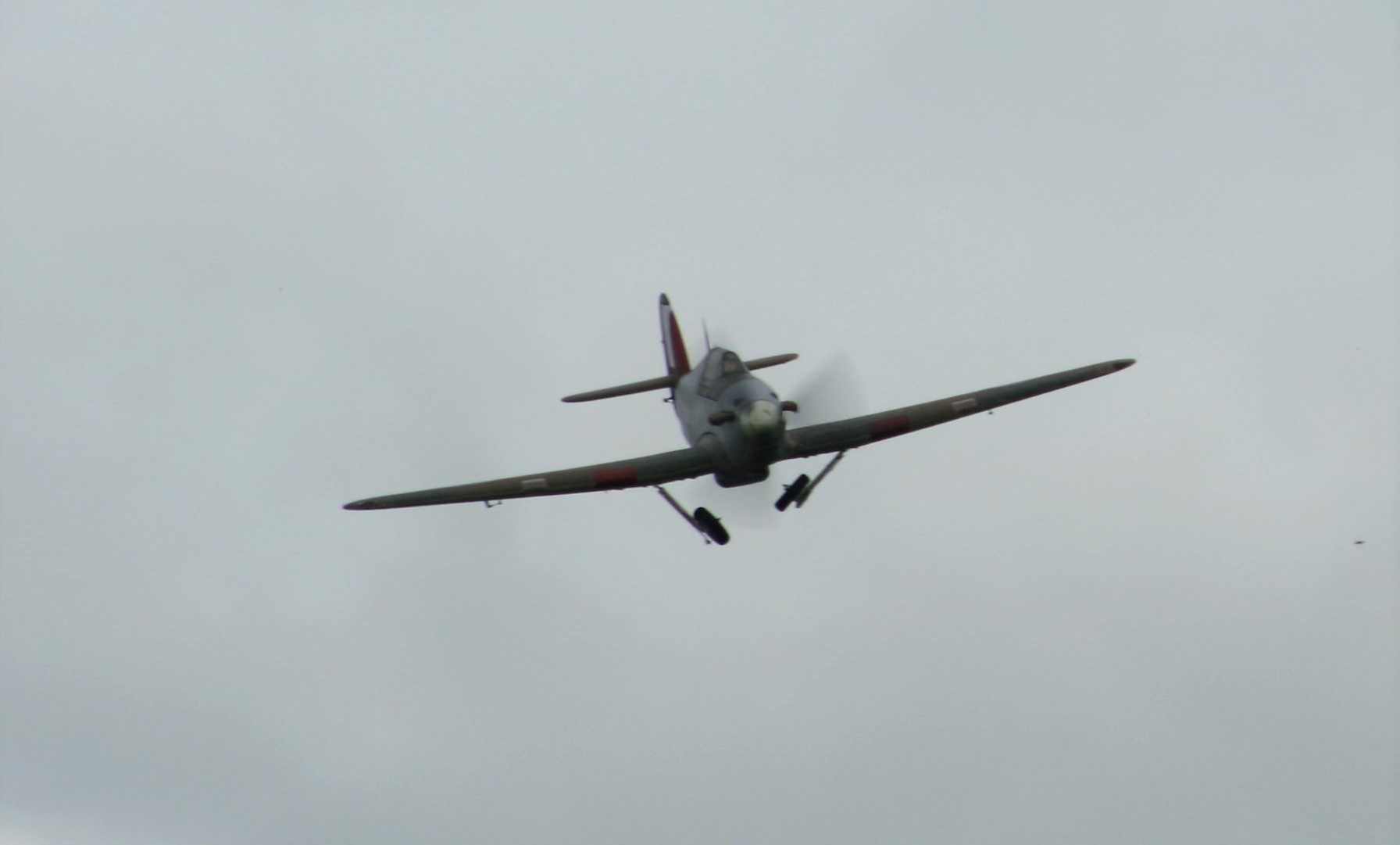
Happily all went well and the Hurricane flies beautifully (when the battery is restrained!) so now he will finish the paint. Rumour has it that it might re-emerge as a Sea Hurricane.
Page Boy also sent through some photos of Richard Osborn’s very nice new Pitts Special.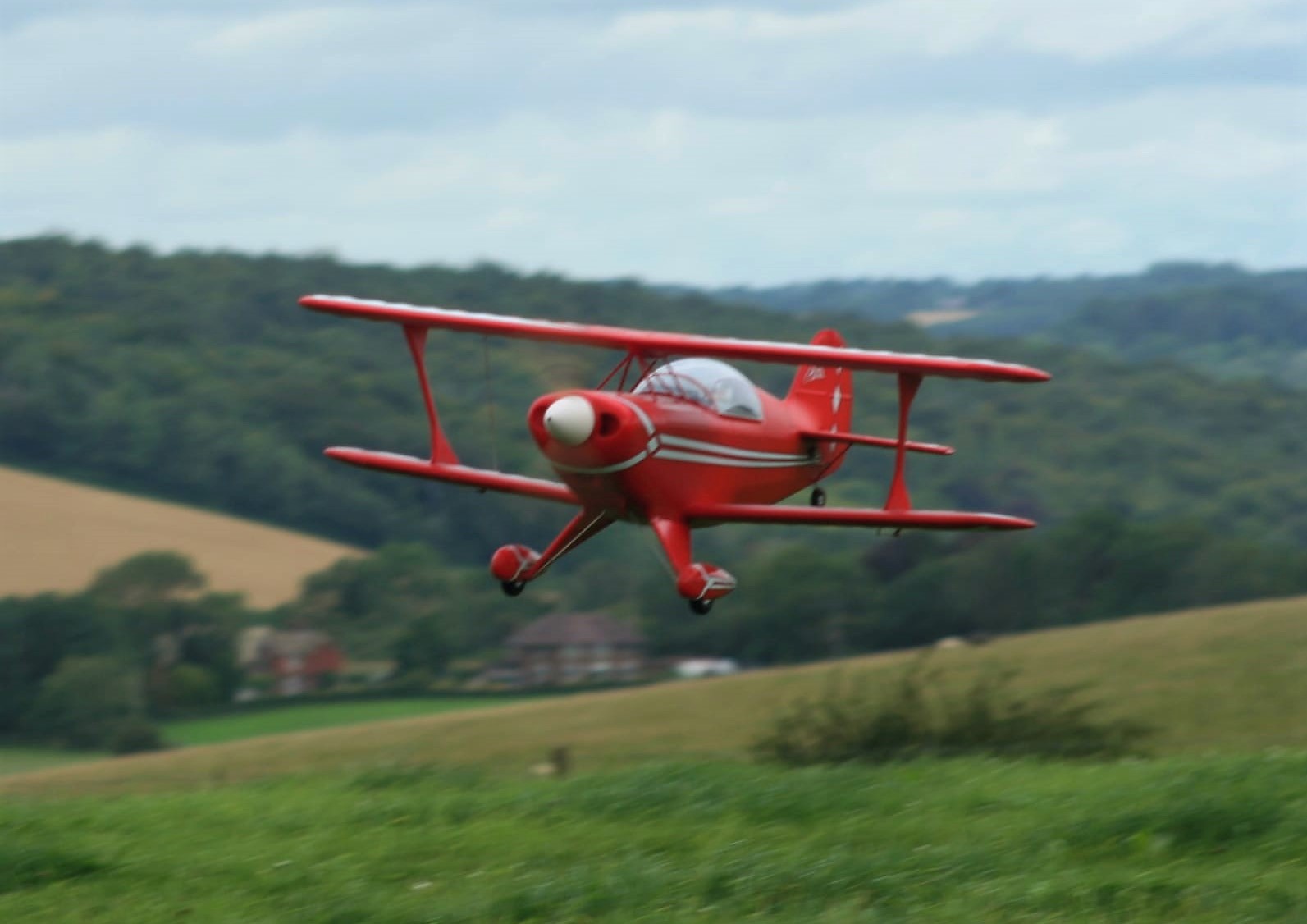 It’s an FMS model, this is from their website: The Pitts Special is a light aerobatic biplane designed by Curtis Pitts. It has accumulated many competitions wins since its first flight in 1944. The Pitts biplanes dominated world aerobatic competition in the 1960s and 1970s and, even today, remain a potent competition aircraft in the lower categories.
Built upon the successful V1 Pitts biplane, FMS is proud to announce the brand-new Pitts V2. Redesigned with a massive 1400mm wingspan, the Pitts V2 is constructed of lightweight and robust EPO foam material. Proprietary connector plugs built into the wing structure means that the wings can be attached to and detached from the fuselage using just a few screws. The slide-fit wing struts are just as simple, slide them on in just a few seconds and the wing is securely braced! An oversized battery bay accommodates most 6S packs with ease giving the pilot ample power to attempt all aerobatic manoeuvres. Hobbywing 50A ESC provides bulletproof performance!
Richard very sensibly asked Page Boy to do the test flight for him and Page Boy says it flies amazingly well, absolutely rock solid, and lands beautifully. It’s comes ready fitted with a gyro so no doubt that helps a lot. I assume the excellent photos were taken by Richard’s daughter, good stuff. By the way, did I mention that I’ve had an aerobatic flight in a Pitts?
Kryten brought along his new Max Thrust Riot to fly at one of our midweek sessions but every time the throttle was opened to take-off the prop adaptor came off the motor shaft.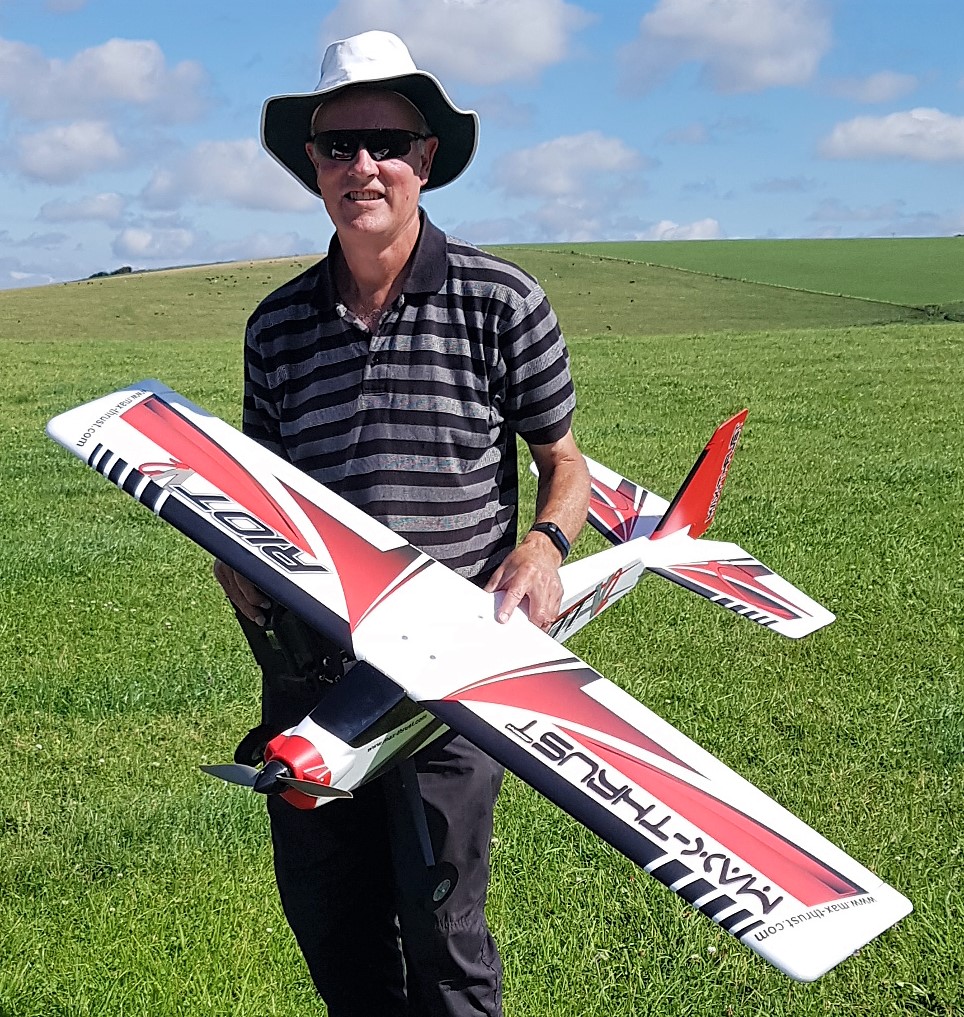
After several attempts at tightening it failed Kryten decided to take it home and sort it out properly. Never mind, it lives to fly another day, next time out it will be perfect…hopefully.
Basher Bob has put together a Sonicmodell Binary that he wants to use as a camera plane. It’s the same as the one that Dougal flies FPV but Basher won’t be trying FPV with his.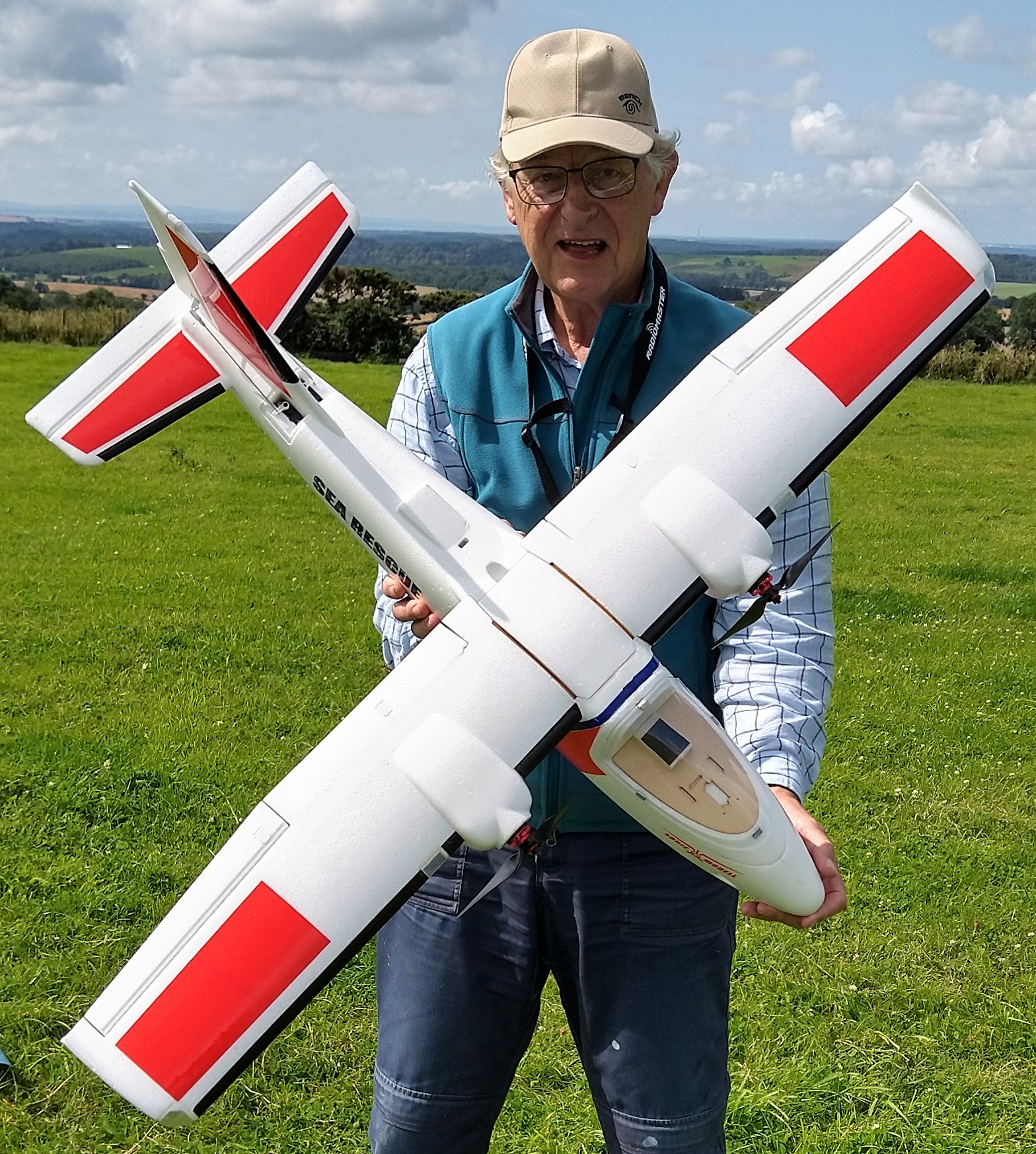
He says that having watched a few YouTube videos of the Binary tip-stalling and read comments about the small wing area he decided to keep his as light as possible so hasn’t bothered with the undercarriage or lights and has fitted the smallest battery he could.
As a result the Binary weighs a little under 3lbs with a 2200mAh 4 cell lipo battery.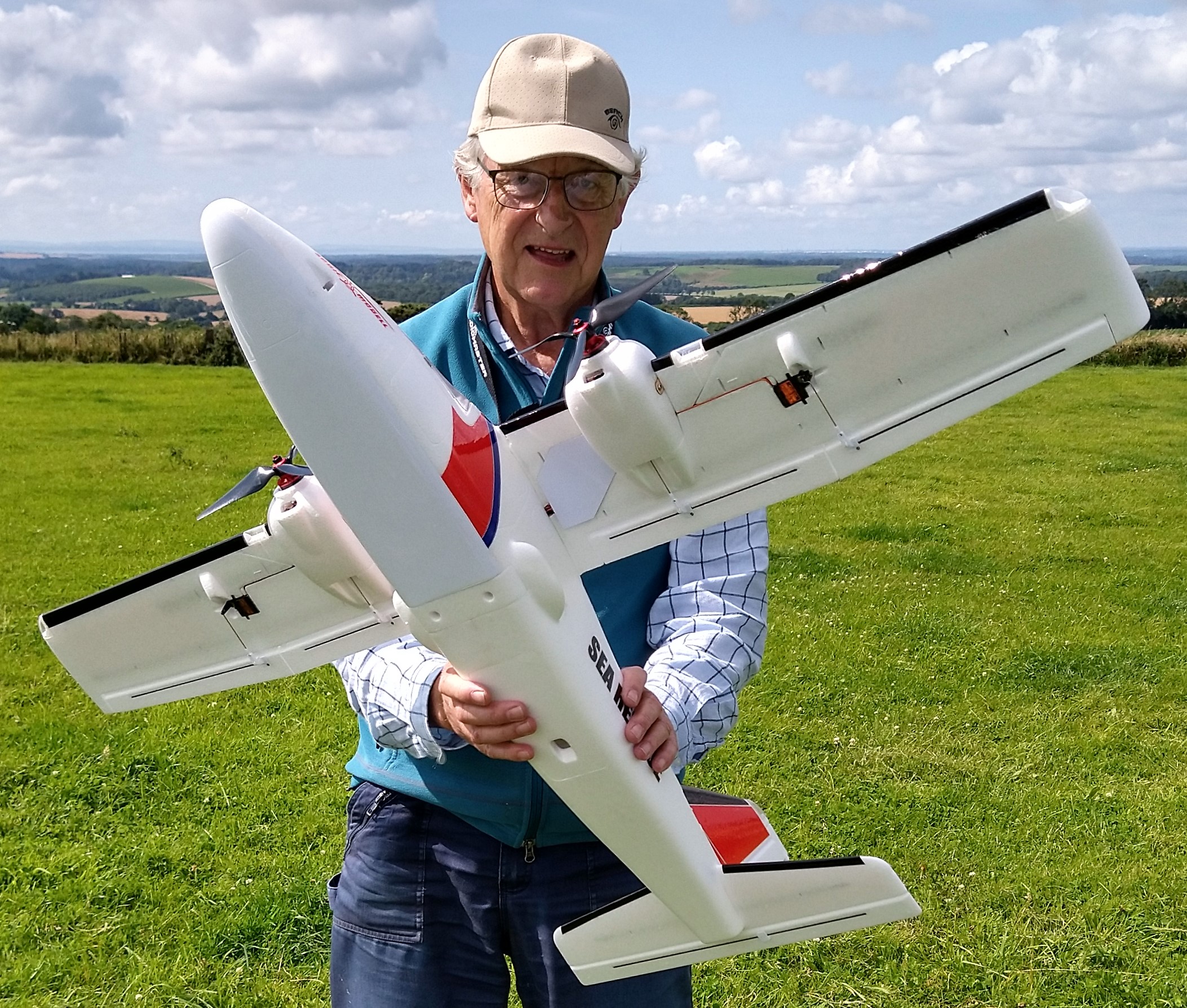
As it turns out he needn’t have worried as it doesn’t seem to tip-stall anyway and it is now flying well on a 3300mAh 4 cell battery which gives him flight times of around ten minutes. He has fitted it with Banggood Race Star 2216 1100kv motors and the 11g servos from his old HobbyKing Walrus. He is using a Runcam 2 video camera and promises to provide some video for us to watch in next month’s Patch News.
Norwegian Nick is a great builder and can always be relied upon to turn up with something new and interesting and in August it was this very nice little RFB Fantrainer: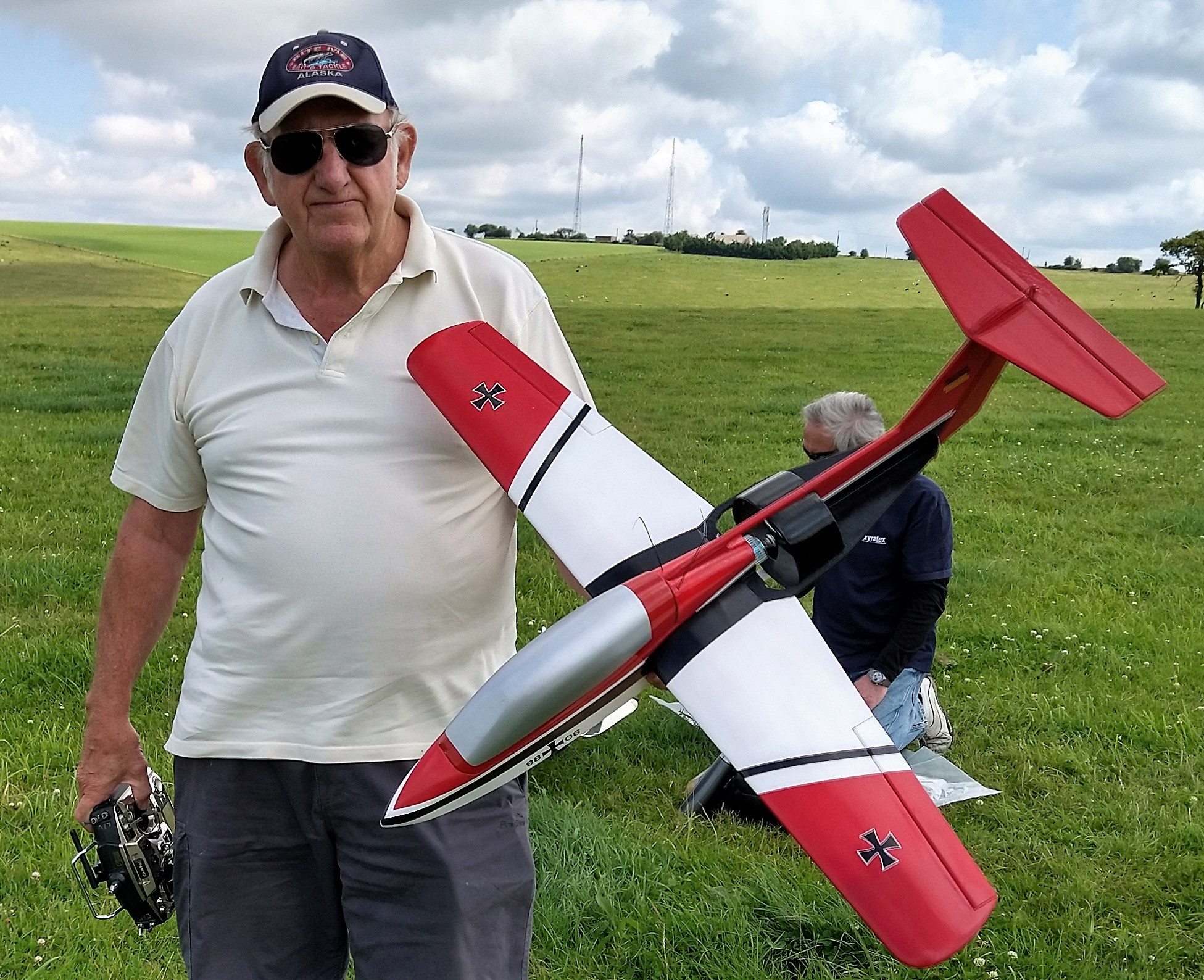
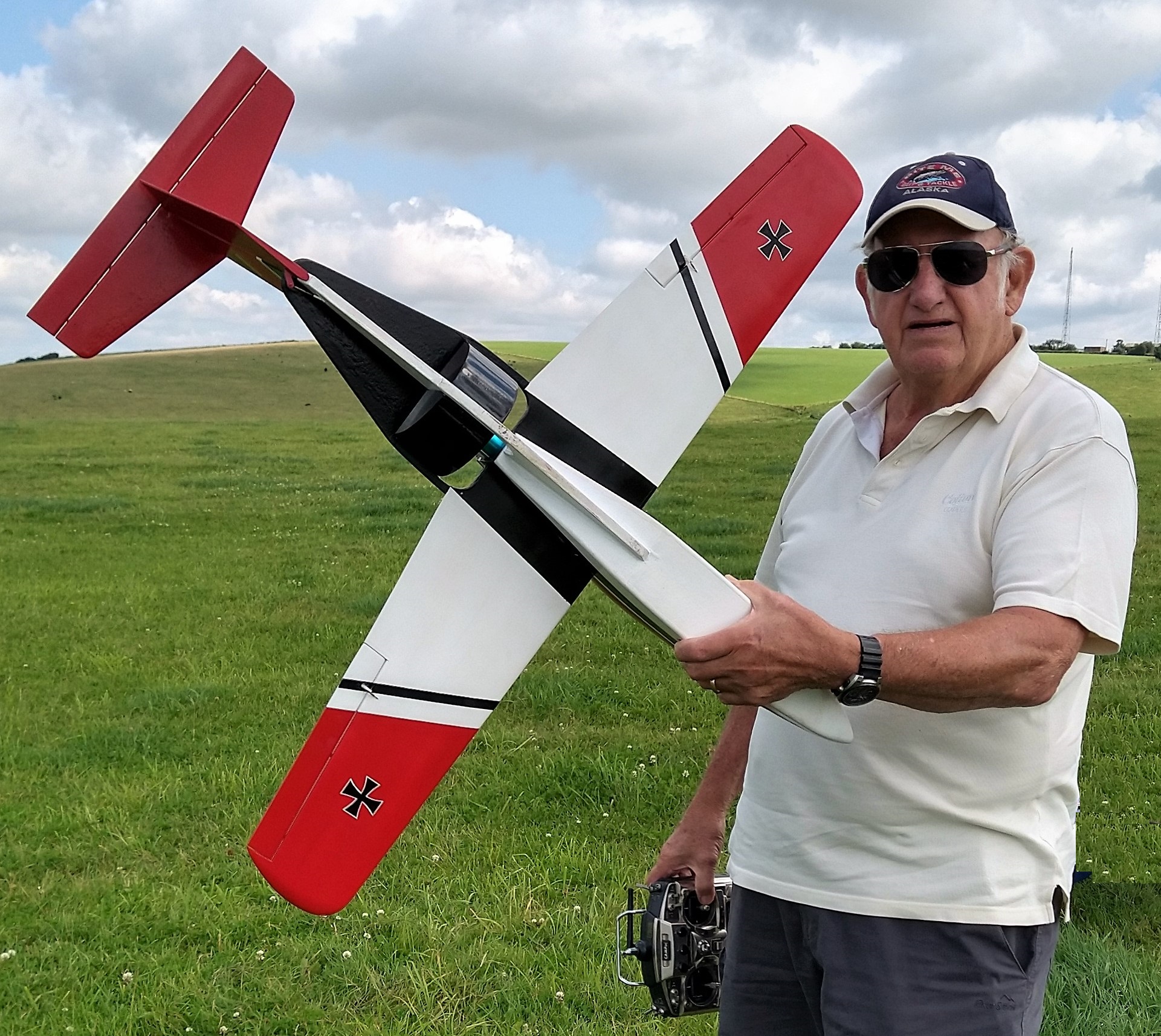
The full-size RFB Fantrainer is a two-seat training aircraft which uses a mid-mounted ducted fan propulsion system. Developed and built by German aircraft company Rhein-Flugzeugbau GmbH (RFB), it has been used by the Luftwaffe and Royal Thai Air Force.
Nick built his Fantrainer with balsa he bought from the late Gentleman Jim’s stocks. The motor is an Overlander BM 400 2845/09 2100kv inrunner linked to a 40 amp esc. It uses a Cox 3 bladed pusher prop 5 x 3.5 which Nick has cut down to 4 x 5.062. He’s covered the model in tissue and the finished weight is just 27oz complete with a 2200mAh 3 cell lipo. 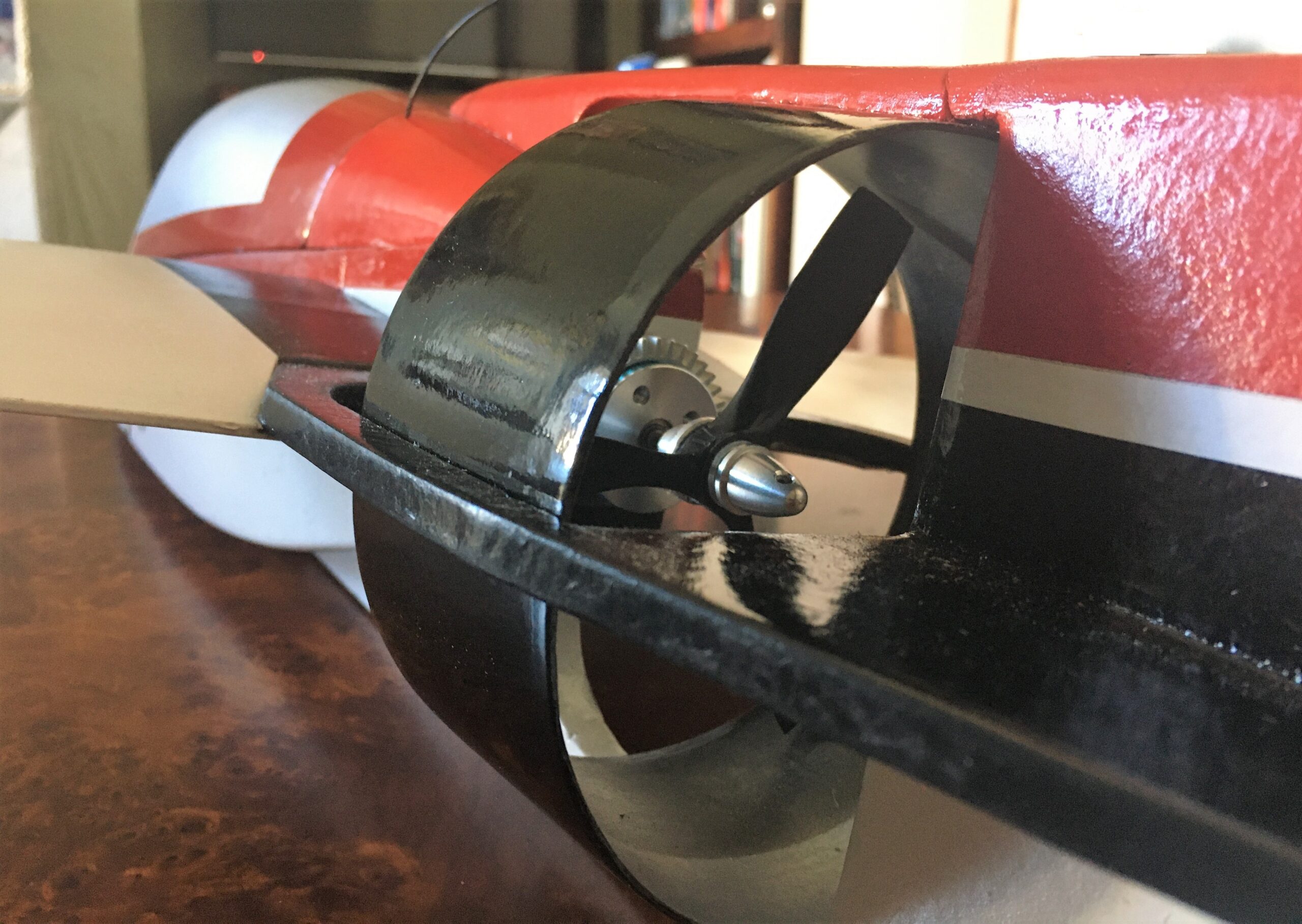
Nick says: It flew on rails straight from the launch with no trimming needed. However after a couple of circuits I noticed that the sound seemed to be changing or slowing down. Thought battery might be going down so turned to land and it tip-stalled into the ground. When picking up the bits I noticed the prop had departed from the drive shaft on the motor and was laying about 5 feet from the fuselage. Picked it up to see if it would go back onto the motor and it went back on with hardly any effort. The prop nut was really tight so I’m assuming that the prop adapter had a 3.5 mm hole and the motor drive shaft being 3 mm it was loose. When checked back at home found that was the case. Unfortunately the starboard wing broke off and some side part at the back of the fuselage had been chewed up by the prop. I think it’s fixable but I’ll put it on to the back burner and try and finish other projects.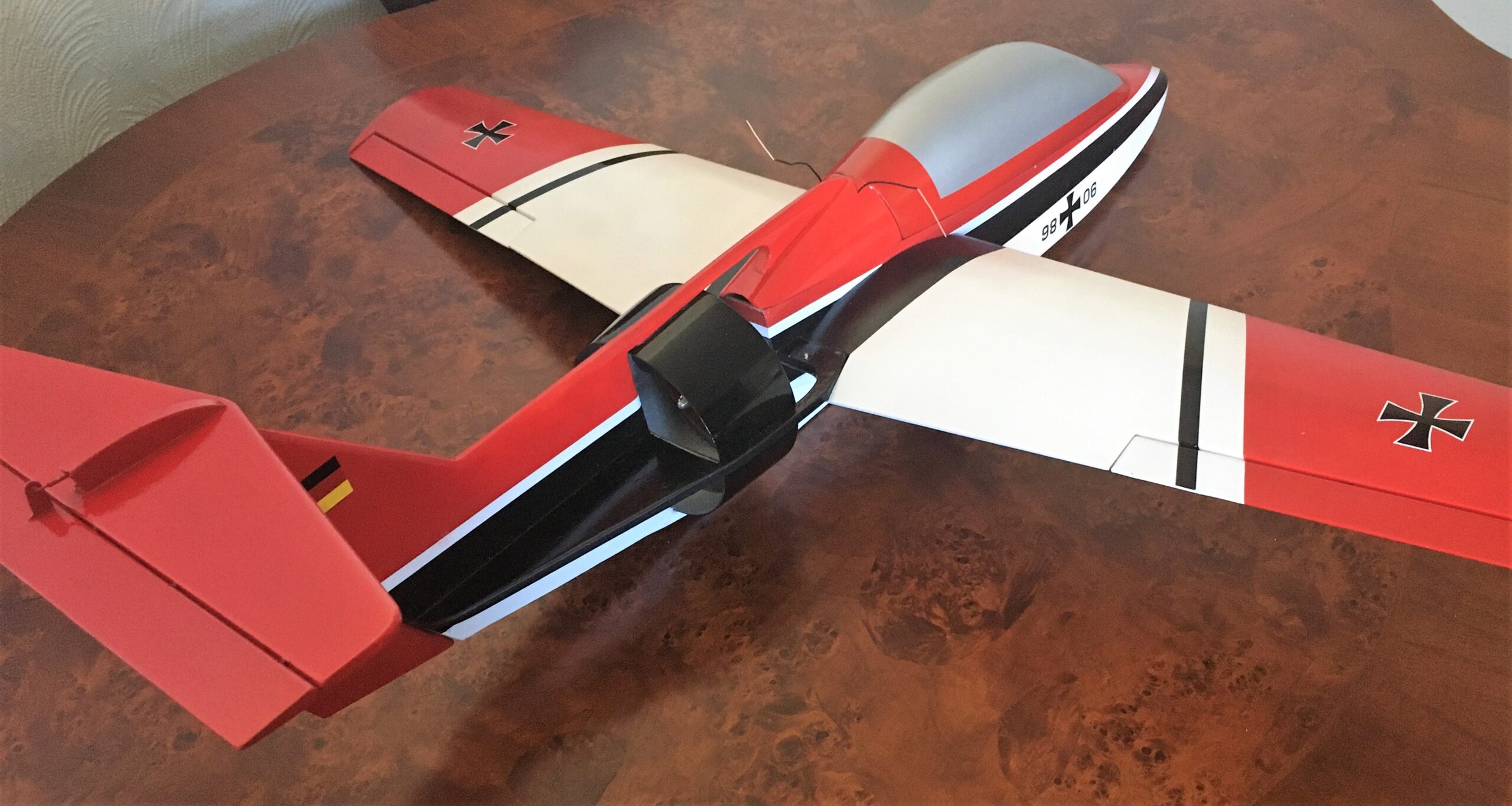
Nick’s Fantrainer looks great on the ground and in the video you’ll see that it also flew very well, let’s hope he gets it repaired soon so we can see it back up in the air where it belongs.
Dougal managed to pick up a Max Thrust Aggressor on eBay for an excellent price.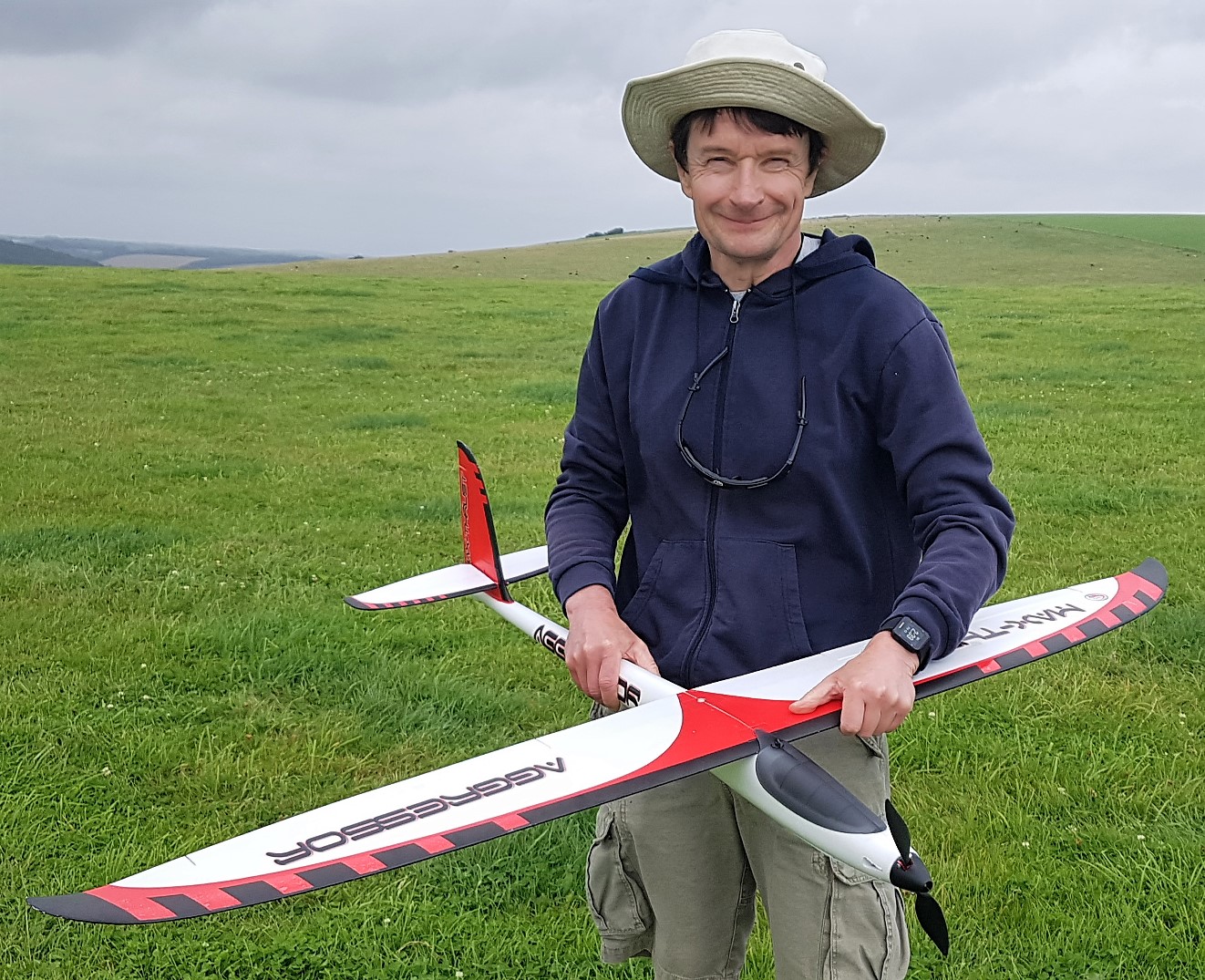
Although it was second-hand it was brand new in the box so Dougal had to spend about half an hour putting it together. It goes very well on the stock set-up, plenty of power, fast and fully aerobatic but it will also thermal soar pretty well, a great all-rounder in fact.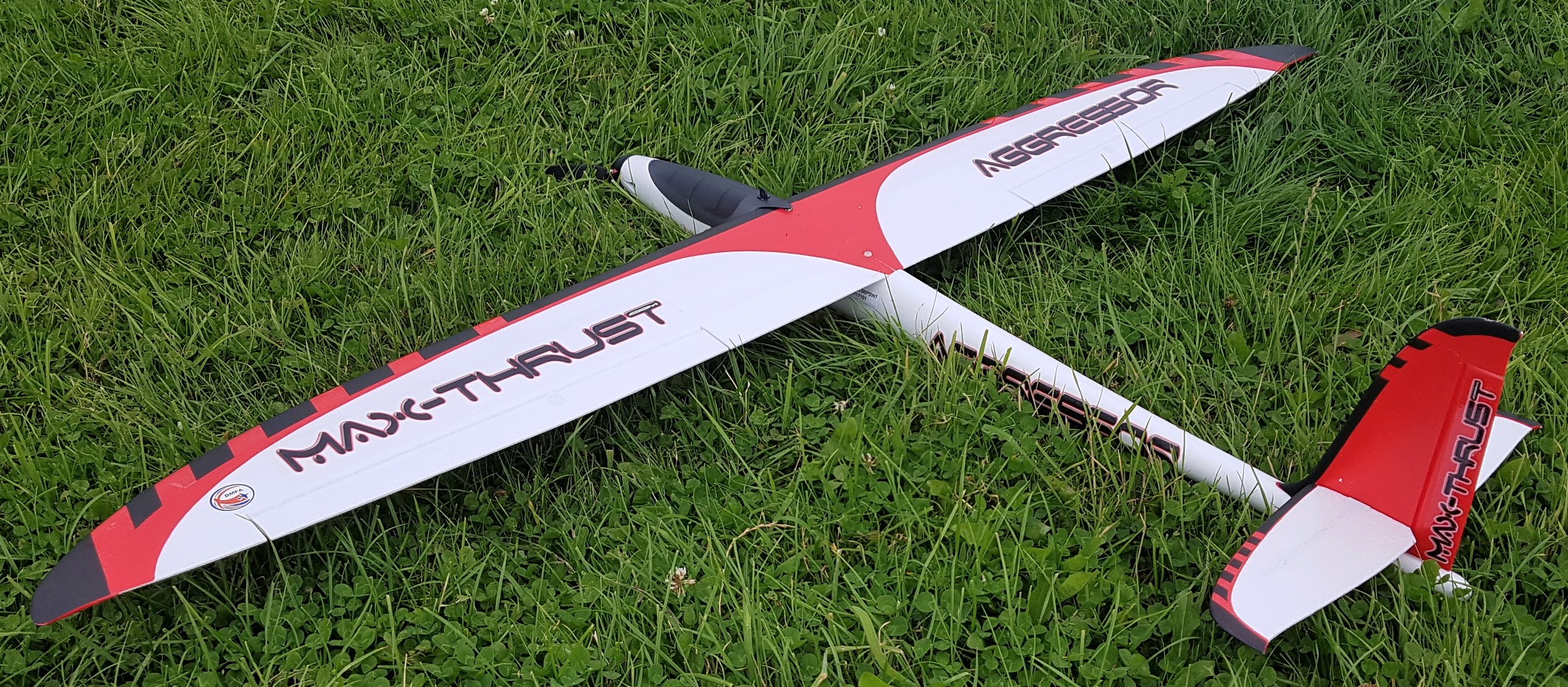
Unfortunately after several flights Dougal managed to crash it, he was getting a little too adventurous and it failed to recover from a spin. The nose end was quite badly damaged but nothing that can’t be repaired so no doubt it will soon be flying again.
Following on from Catapult King’s success with his tiny P-51 Mustang Ian Daniels has bought the F4U Corsair version. He bought it from Banggood for a little over £70 and it arrived from China in just over a week with no extra tax or import duties slapped on.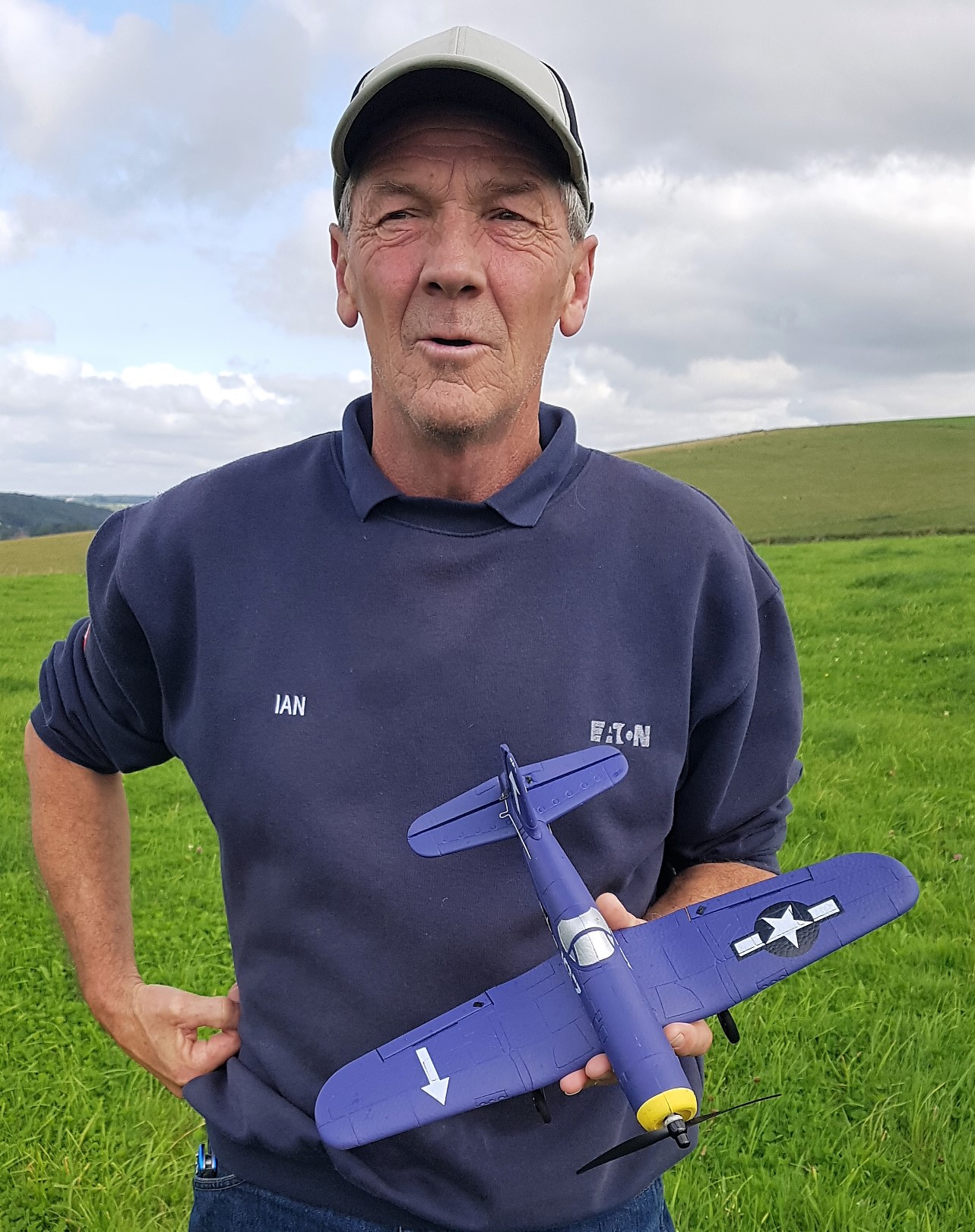
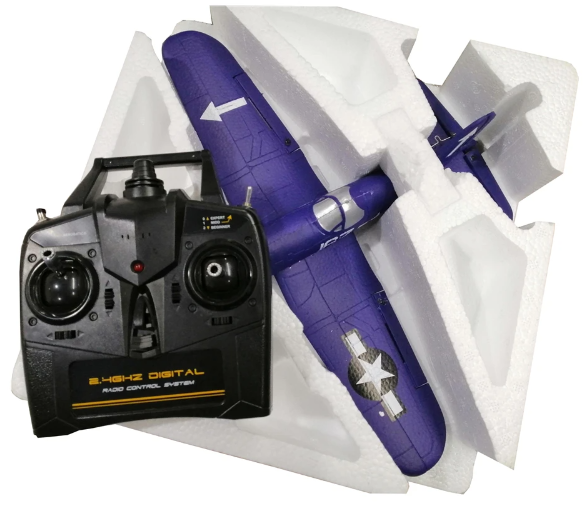
The Corsair comes complete with a transmitter and two single cell lipos that are recharged from any USB socket. It has a three stage gyro with beginner, intermediate, and expert modes and also an aerobatic button which will enable it to roll or loop safely in any mode.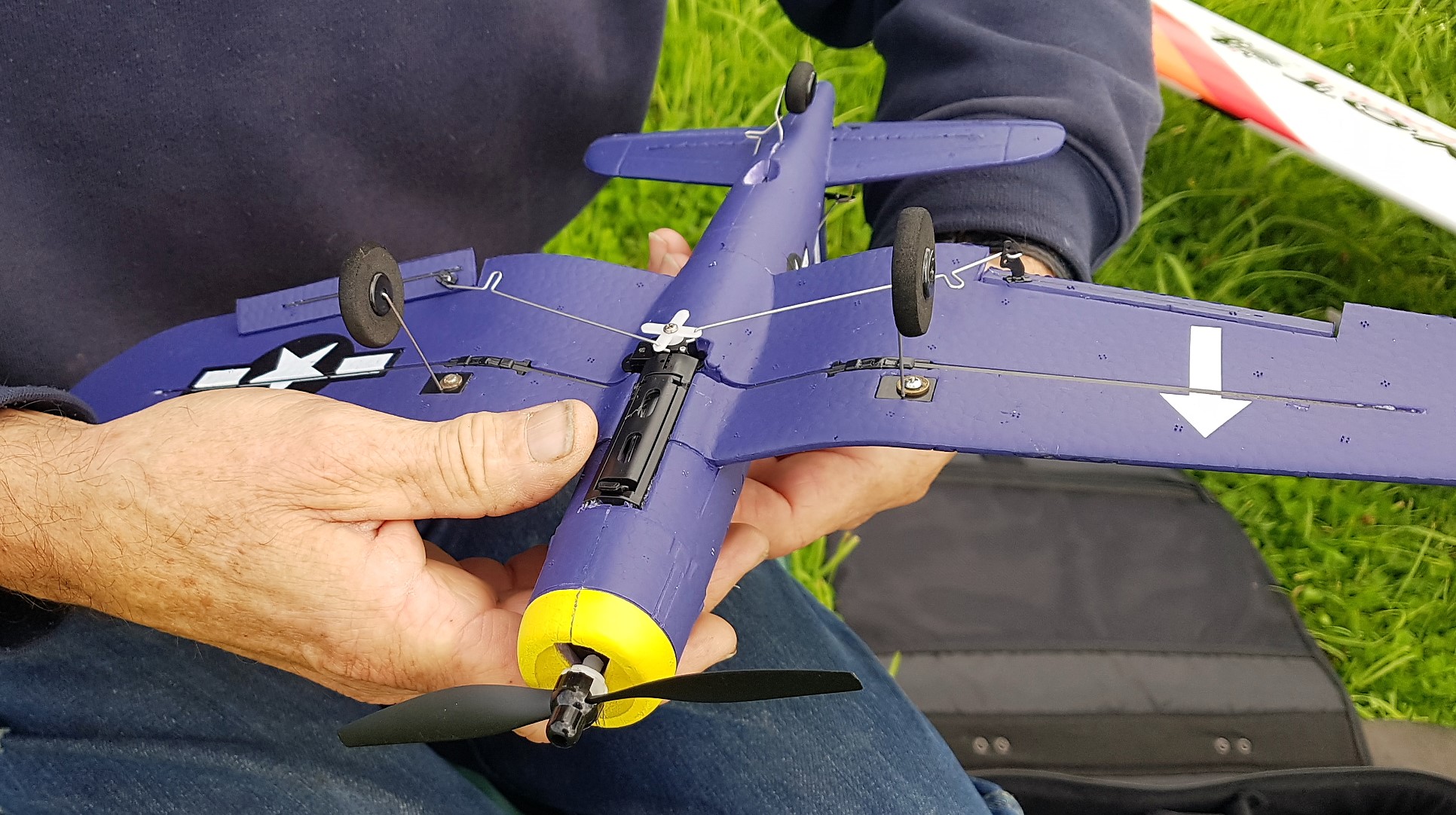
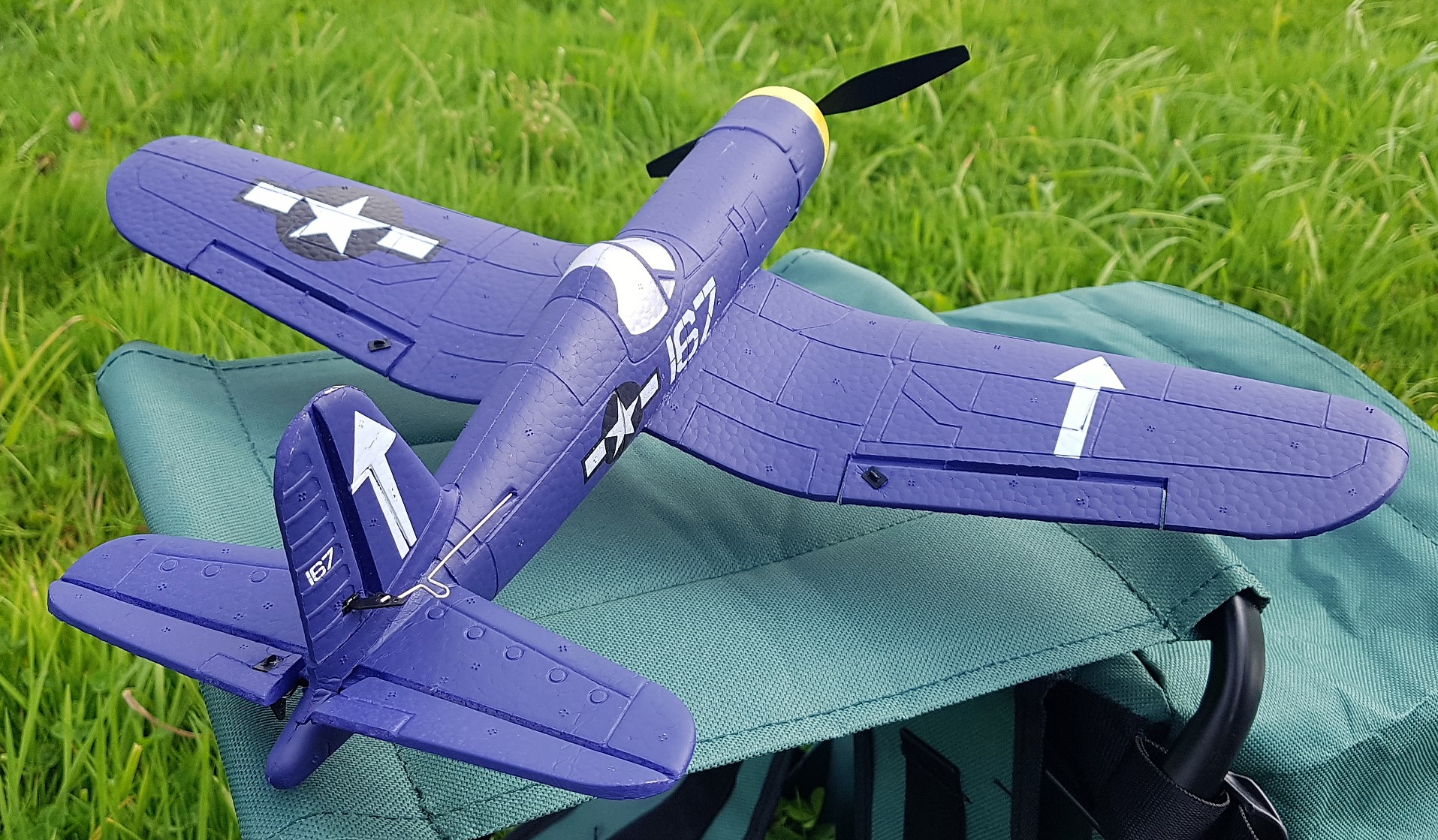 I did the start of the test flight but I needn’t have bothered, with the gyro in beginner mode it simply flew away perfectly and I quickly handed it over to Ian who had no problems at all. It was a fairly windy day but the Corsair handled it easily and Ian flew the rest of flight and then landed it safely back on the patch. As you can see in the video these tiny models really are brilliant little things and I’m sorely tempted…
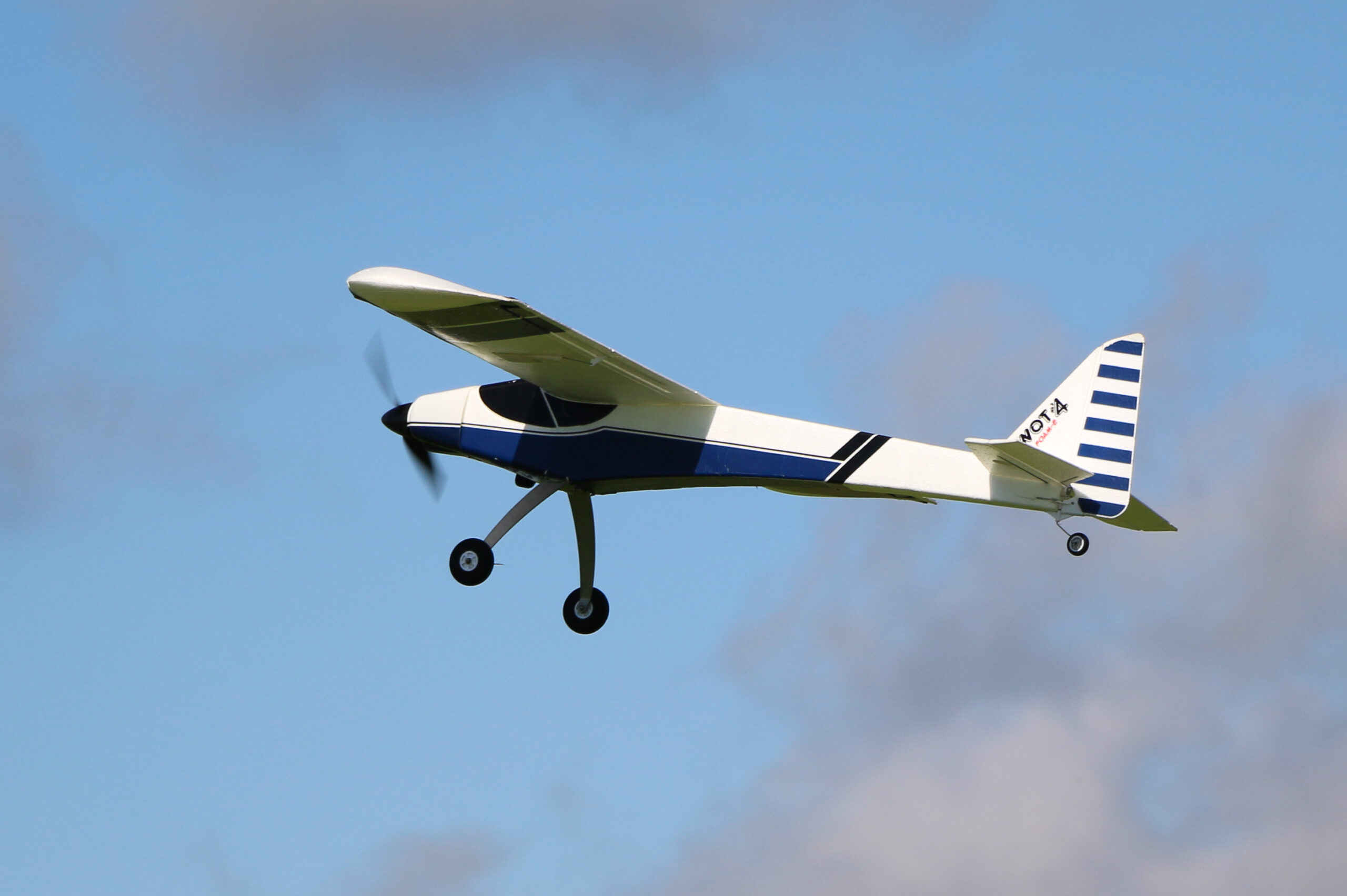
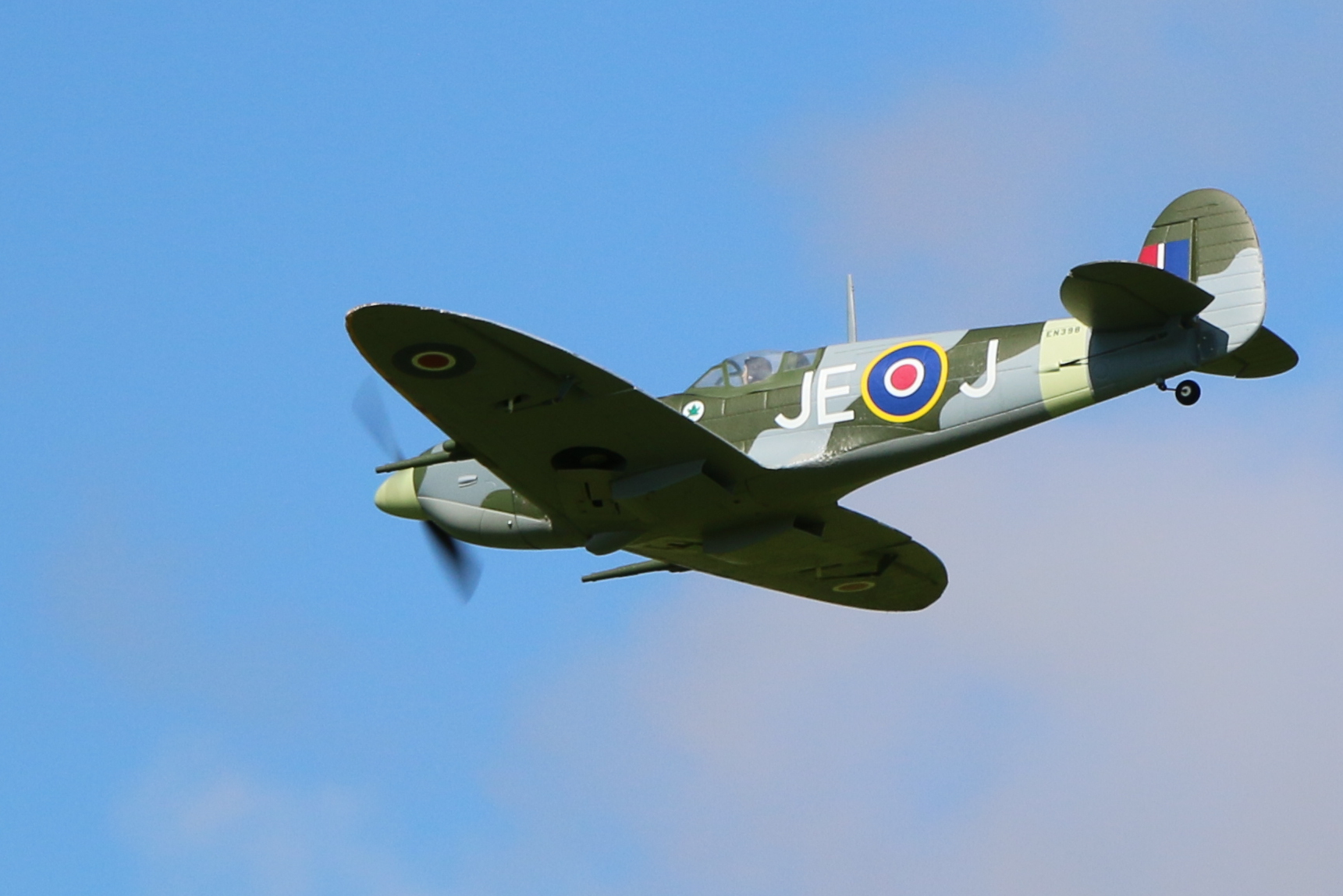
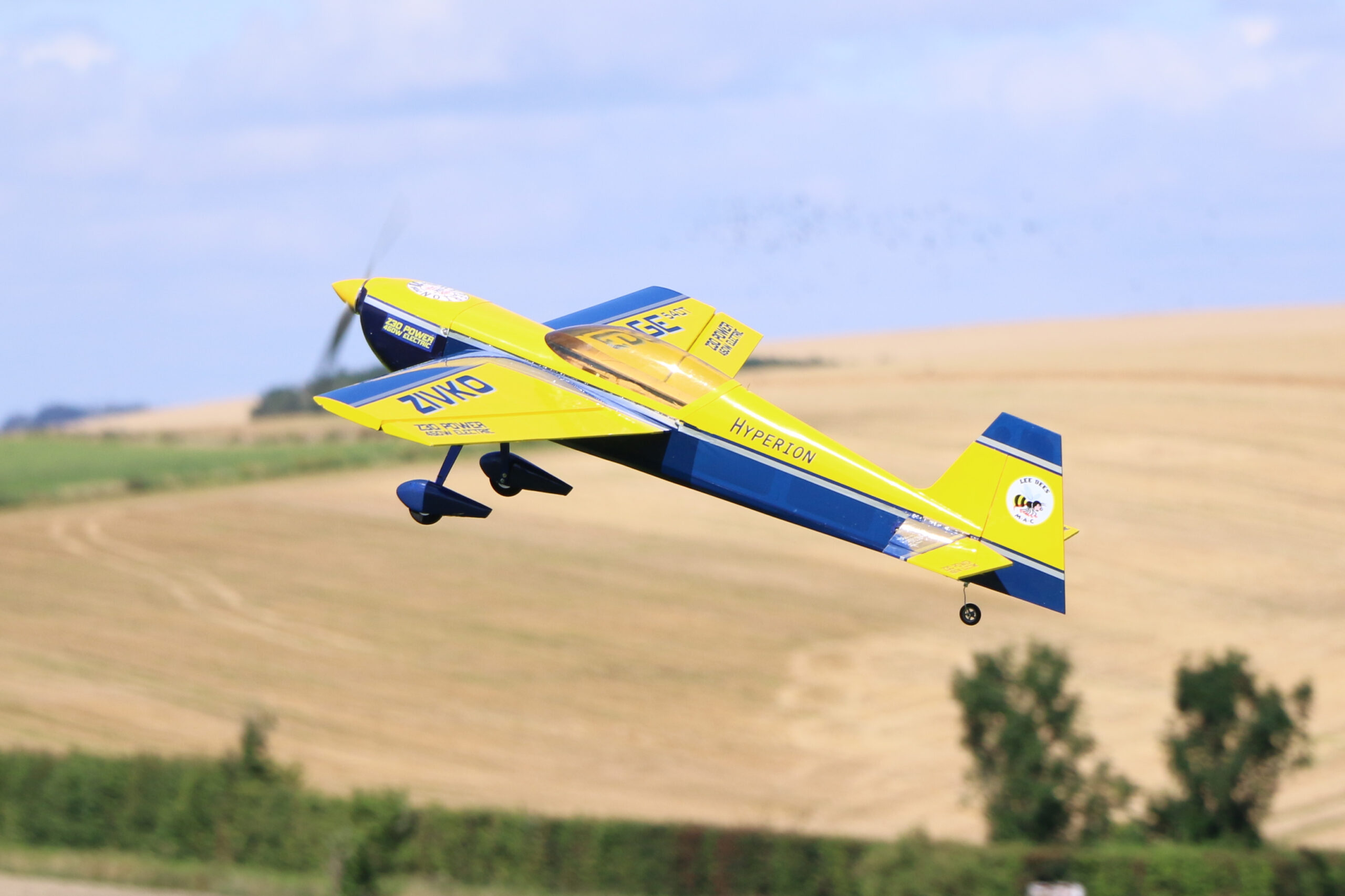
When Kryten came to fly his Riot he snapped some more great flying shots for us to enjoy: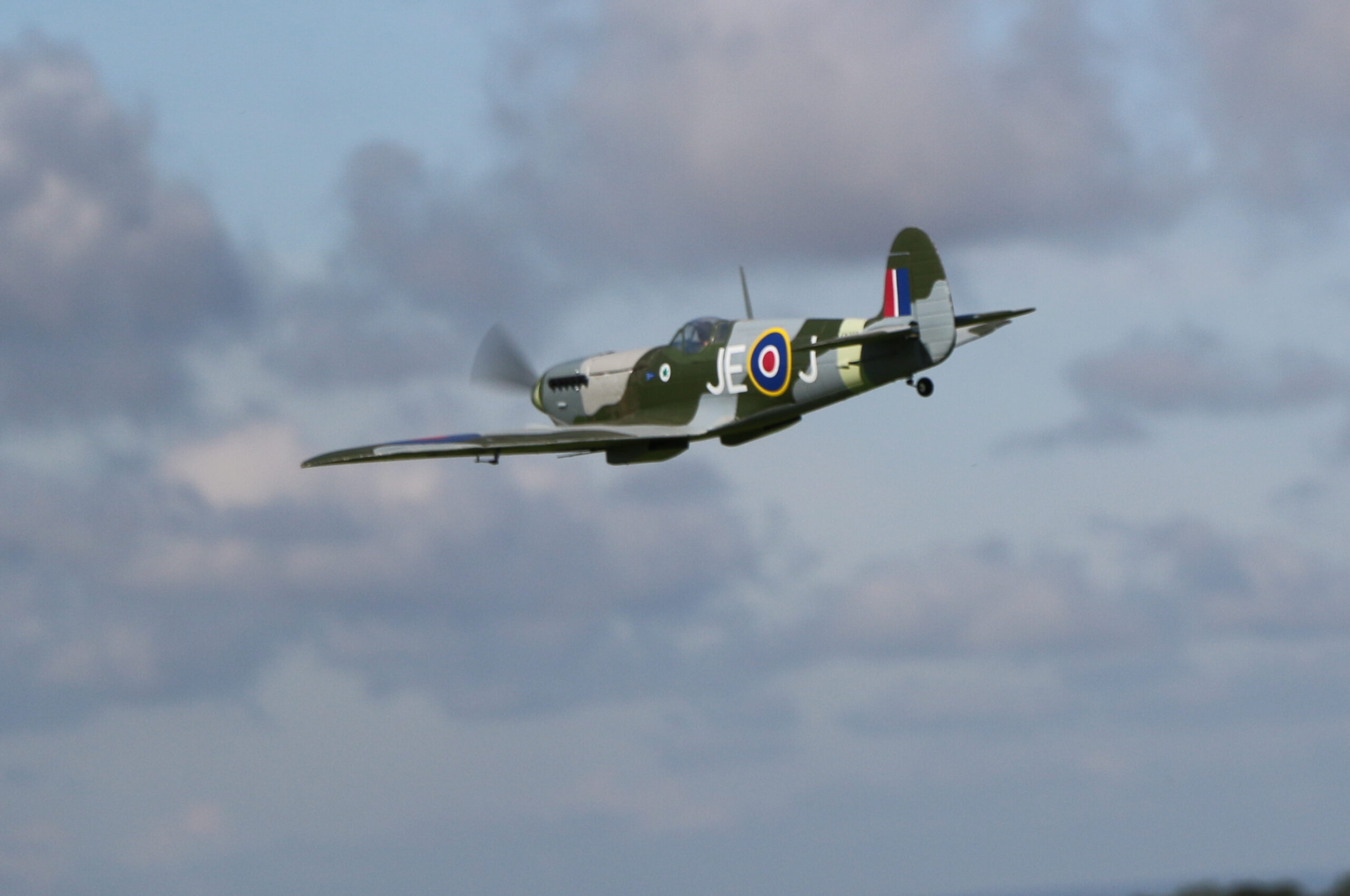

Video time now which this month includes footage shot by me, Dougal, and Captain Slow. Please watch the video full-screen, it’s so much better with small models flying around.
If the video won’t play for you please click HERE
What has eight wheels and flies?
A bin lorry…
Colin Cowplain
Patch News – July 2021
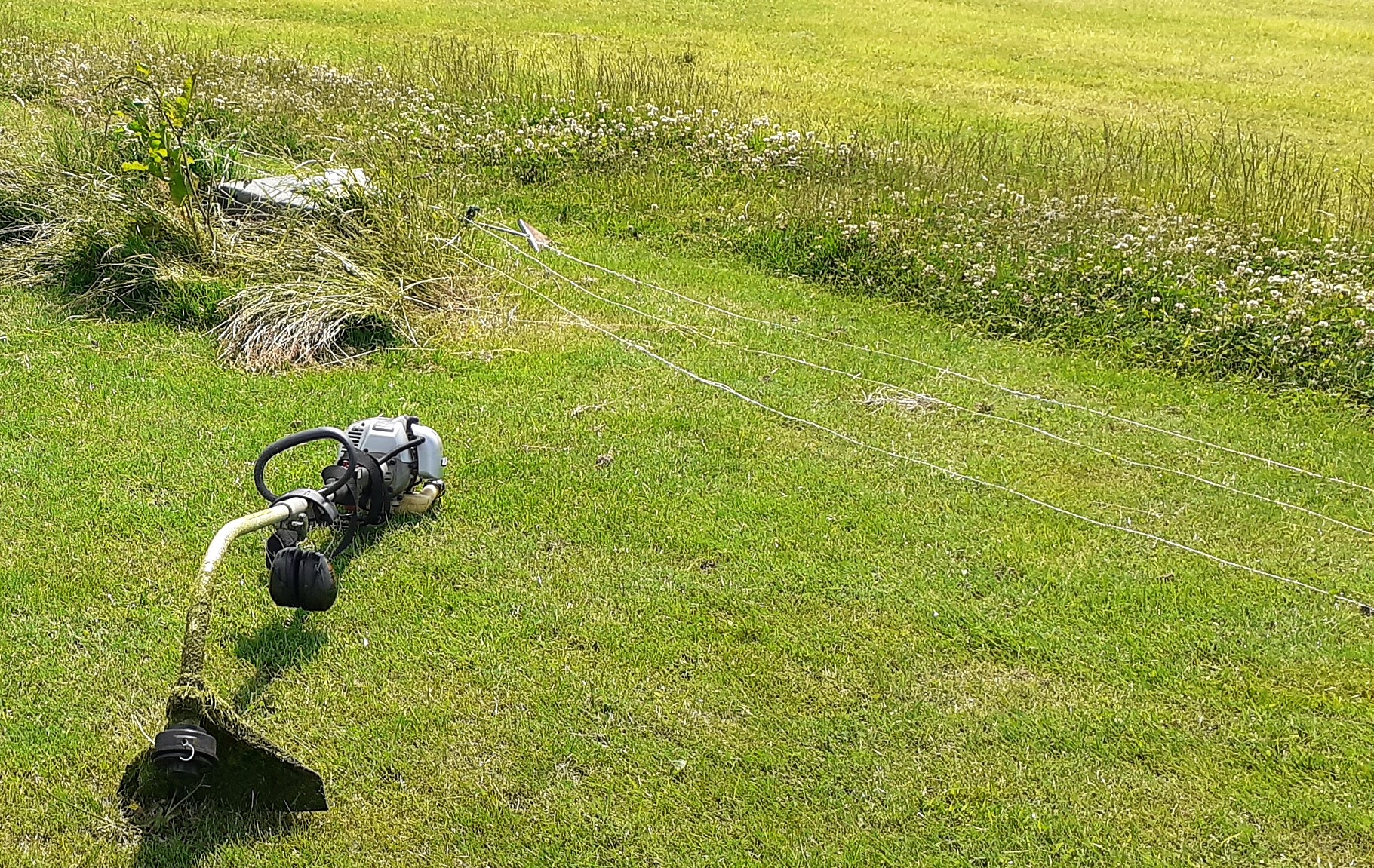
In the last Patch News I said the grass in ‘our’ field was getting very long and we were expecting the farmer to cut it before too long. Right on time it was cut and when we flew on 1st July it was being turned to help it dry. The following day it was baled and taken to be stored in the barn. The farmer was unable to safely cut right up to our fence so a border of long grass remained right around the patch but Chas attacked it with his petrol strimmer and then took away all the cuttings. It was a major job for one person to do and it must have taken him several hours to complete so a big ‘thank you & well done’ to Chas. Now about all the nettles alongside the parking area…
 The farmer was also busy in July muck spreading in the lower field and then later raking it all in. This was mainly noticed by Dougal when he flew FPV and was impressed by the pretty patterns that were visible from the air.
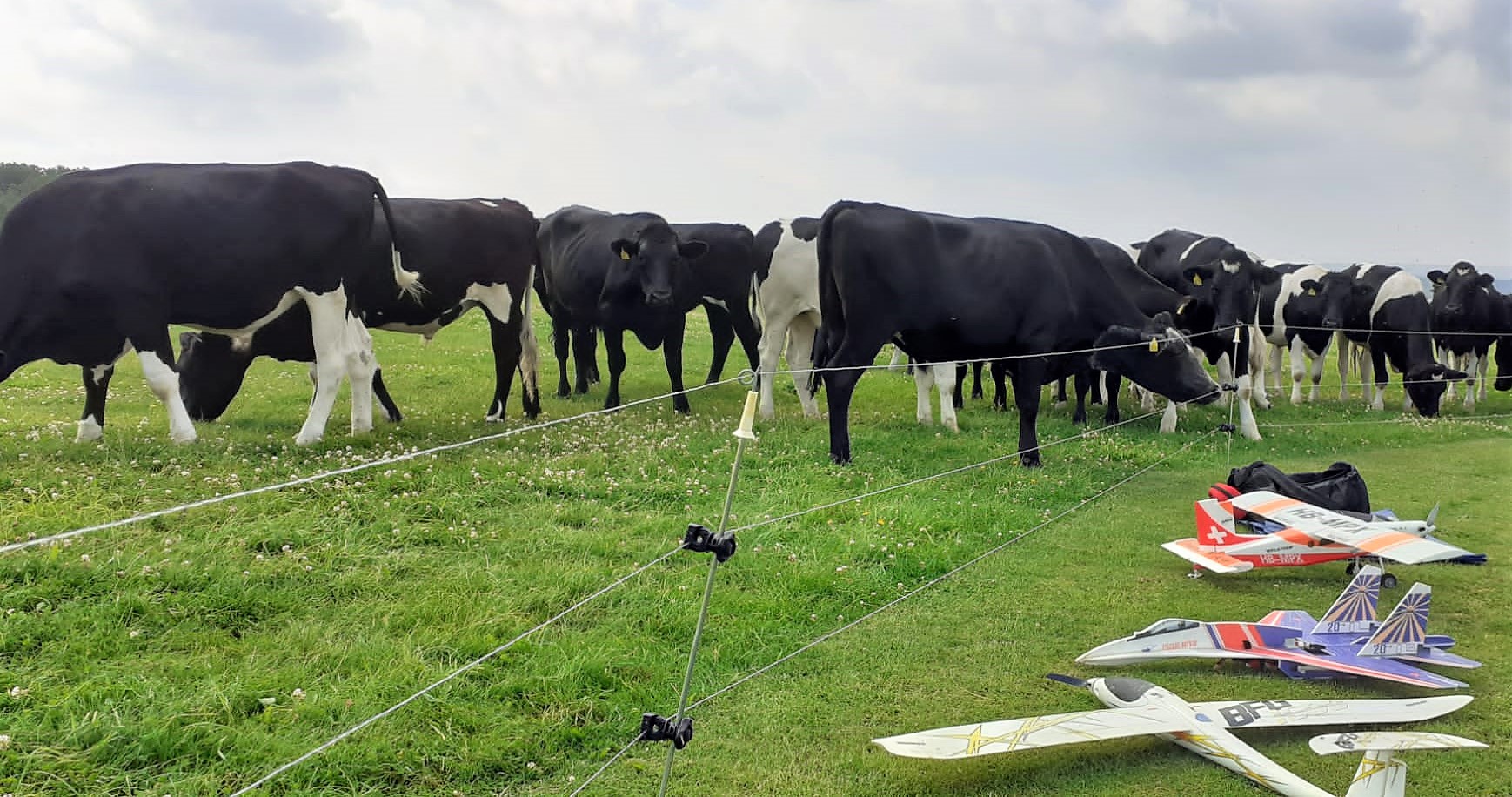
 Dougal seemed to think it was done to help him locate the patch. The patch was regularly cut during July and has remained in excellent condition. The latest herd of young bullocks put in an appearance on 26th July and proved to be inquisitive at first but I expect they’ll soon get used to us and be less bothersome. They tested out the fence!
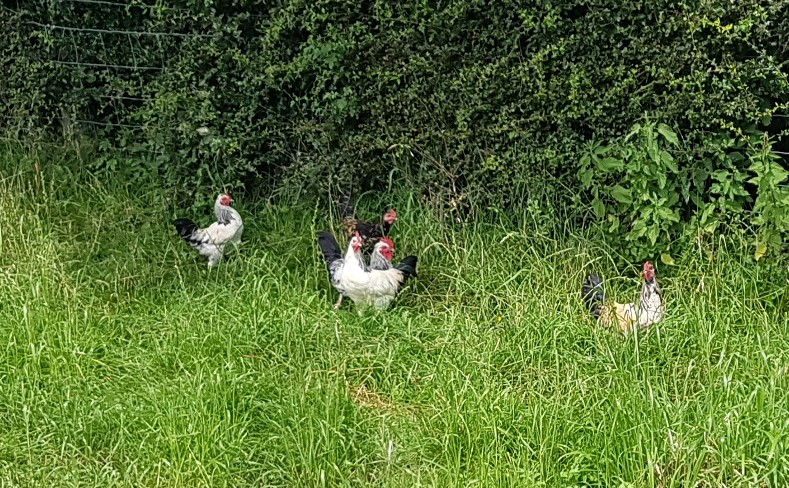
 Rather unusually we were also visited by a small brood of chickens, something I’ve never seen in the field before. Presumably they had strolled over from the bungalow and would have eventually wandered back home again.
 The July weather was as strange as we’ve come to expect these days, we had quite a long spell of record breaking heatwave conditions when it was too hot to fly and also some pretty wet and stormy days.
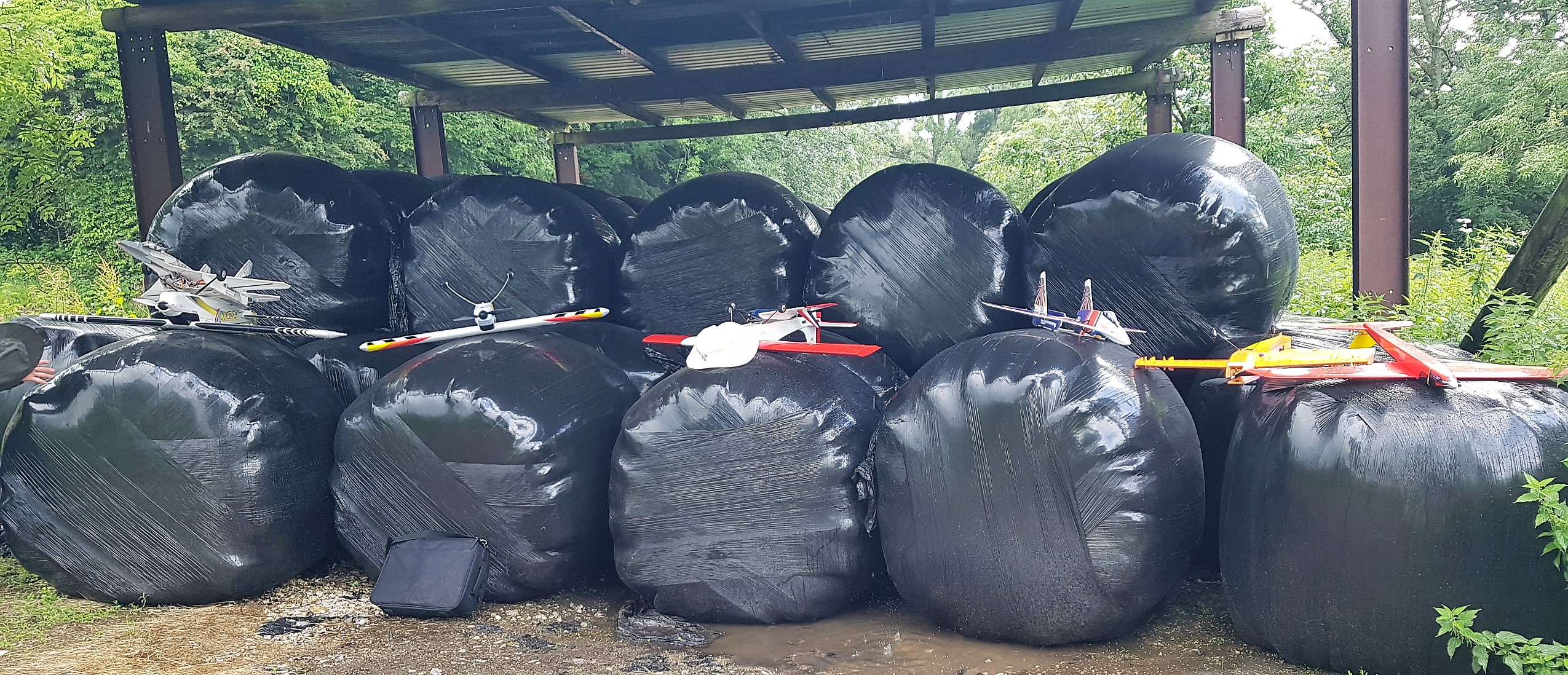
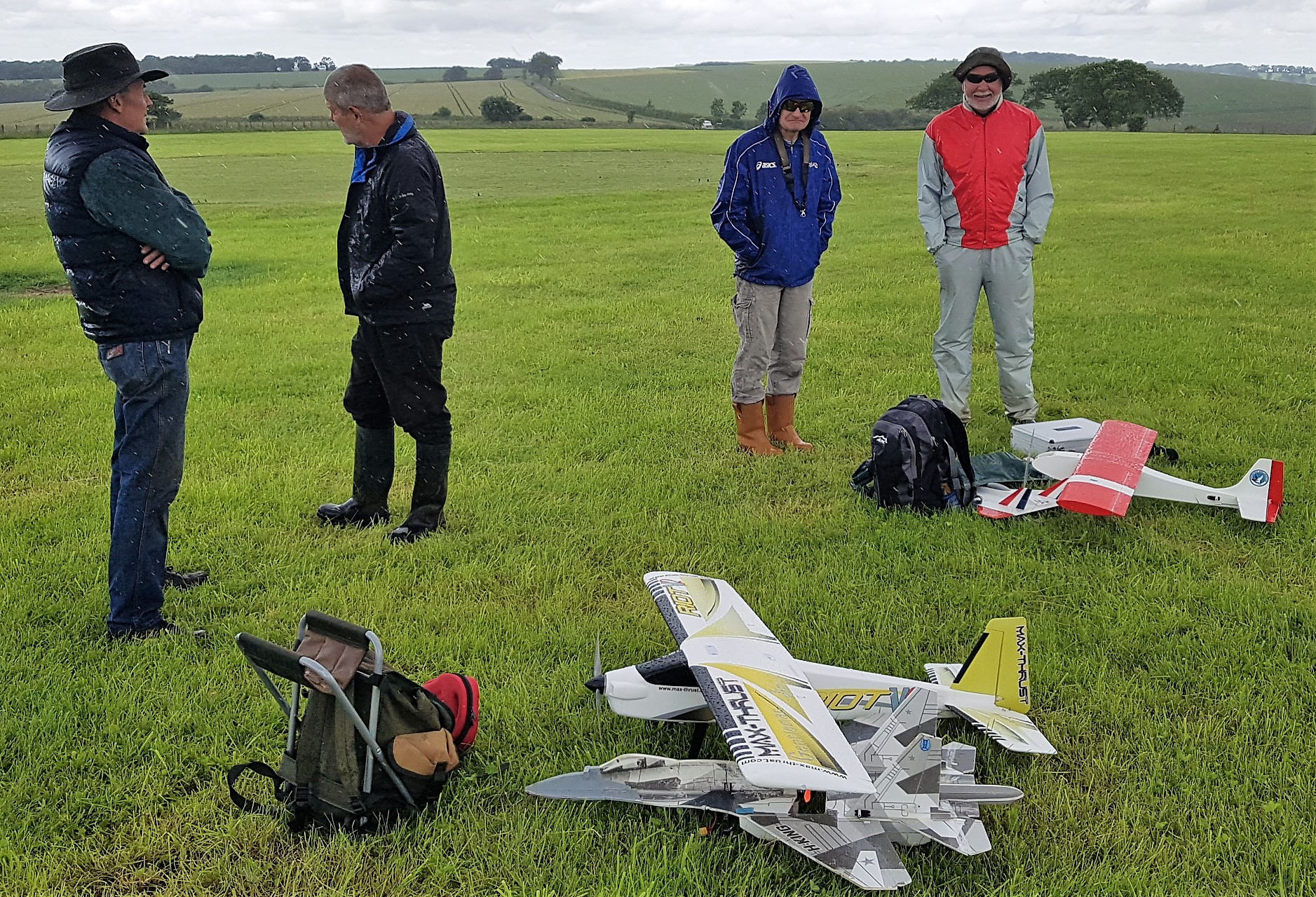 One day we alternated between flying, running for shelter in the barn, back to flying, and then getting drenched!
First of the new models to fly in July was Captain Slow’s second-hand Multiplex Pilatus PC-6 Turbo Porter.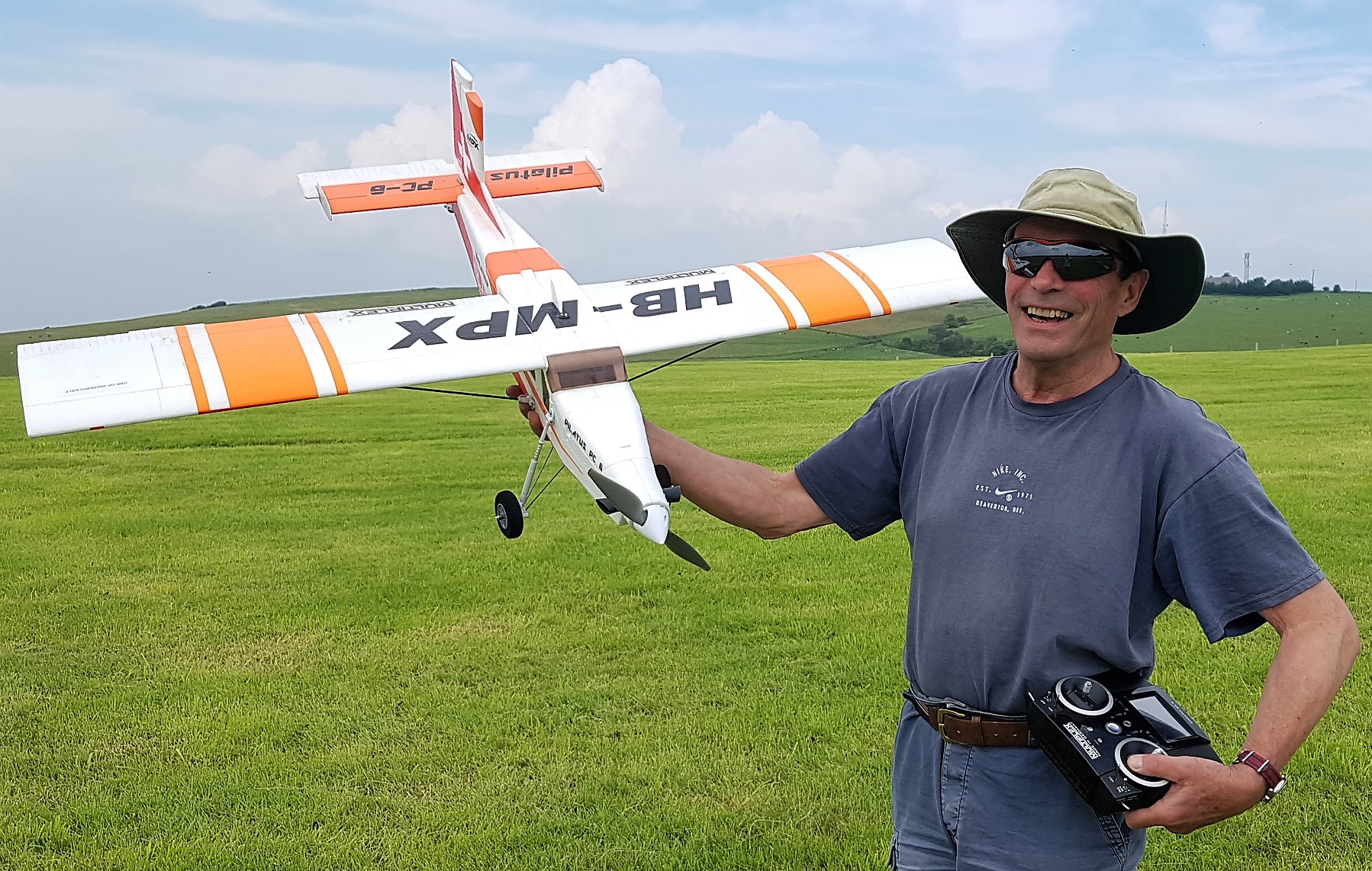
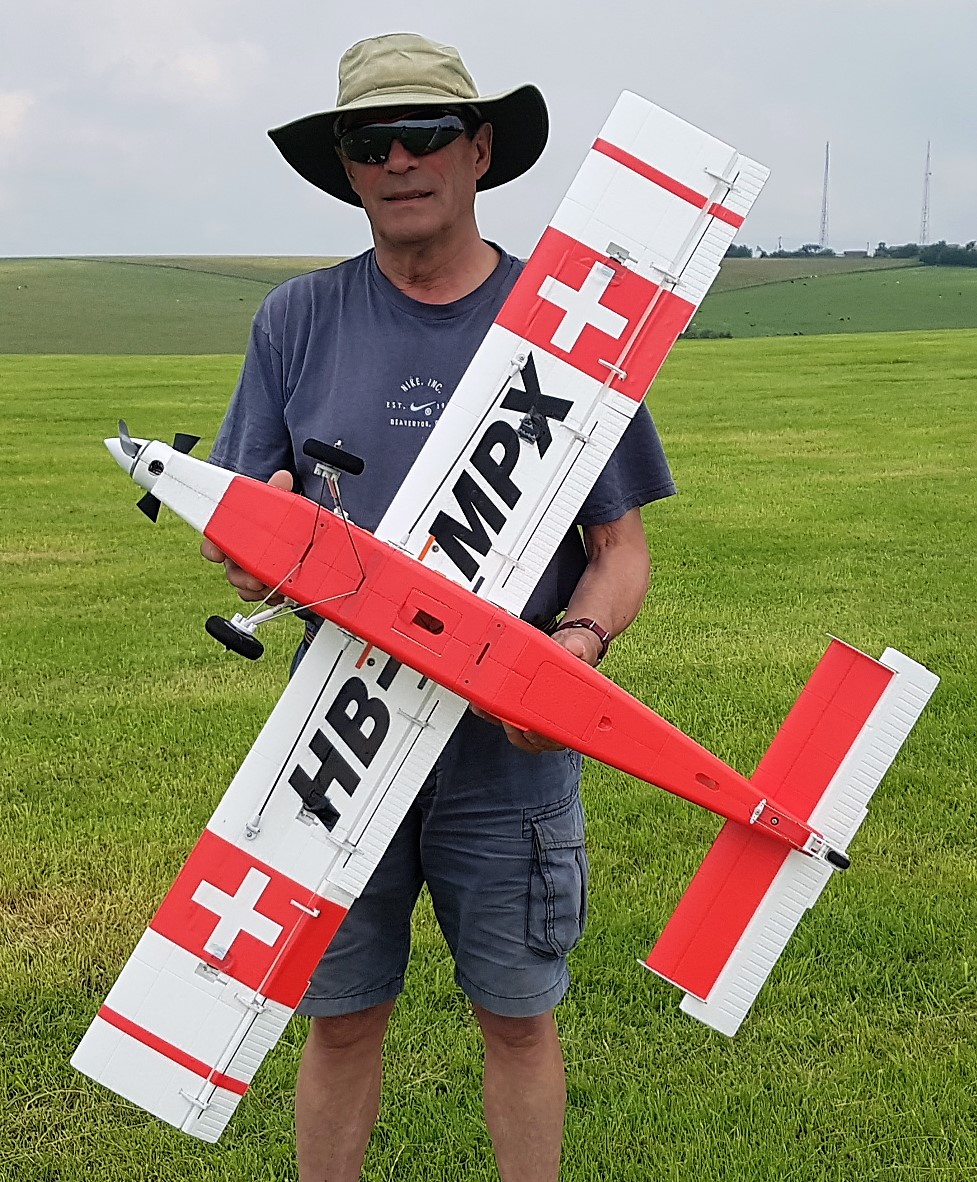 This is what he says about it: Believe it or not I bought the model in October 2019 through the BMFA Classifieds for £75. Not sure how old it is but it has had one plastic part of a main u/c leg replaced with an aluminium tube as oddly it seems to be one of the spare parts that isn’t available; otherwise it was in pristine condition complete with instructions and spare decals. It’s the RR (Ready to Run) version and so has factory fitted servos x 6, a 40 amp speed controller and 3530-1100 motor. I’m using a MPX 7 channel Light (non-telemetry) receiver. The wingspan is 1250mm and MPX quote the weight as 1100g and a flight time of 7 mins with a 3S 2200Ah battery.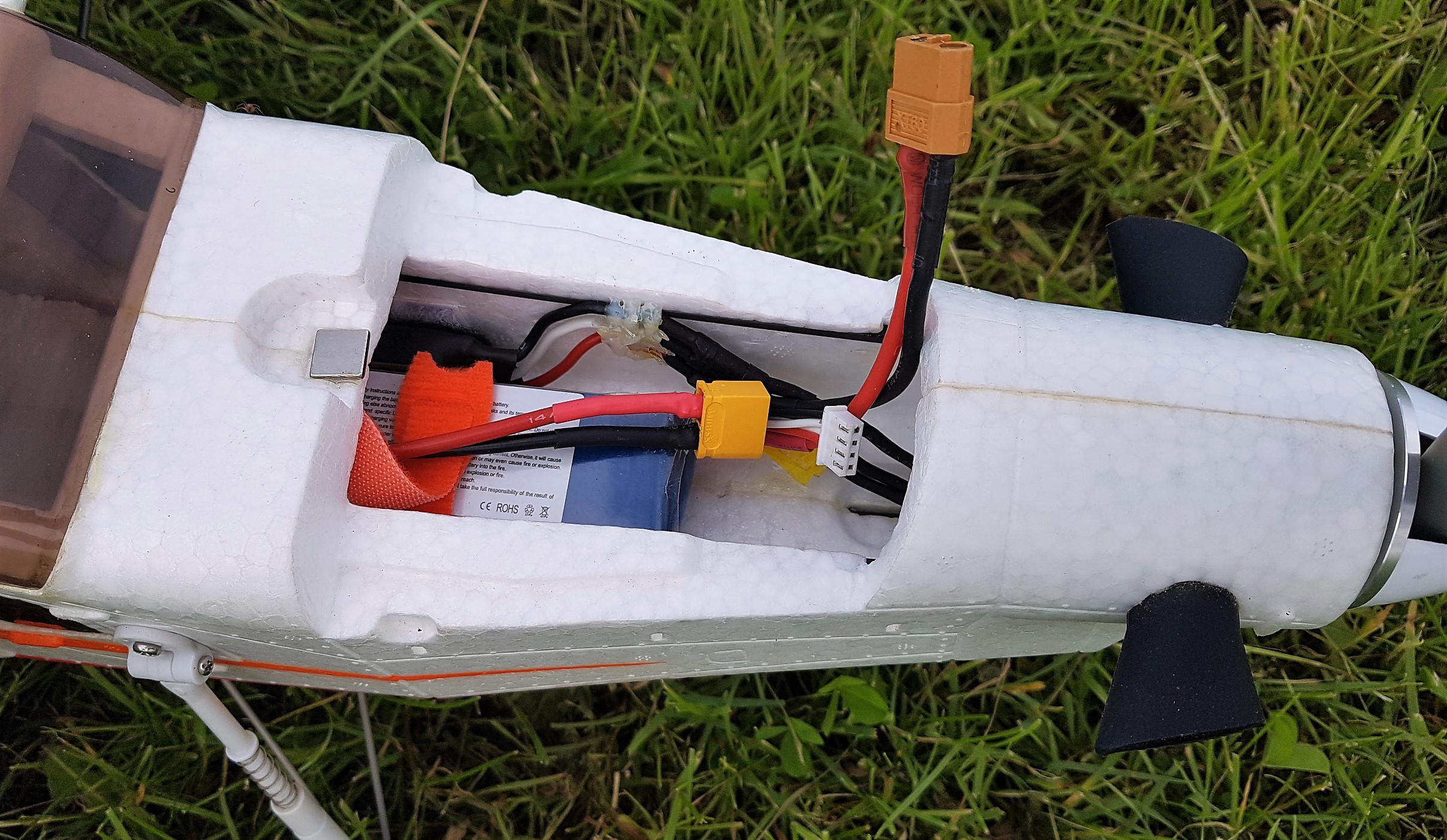
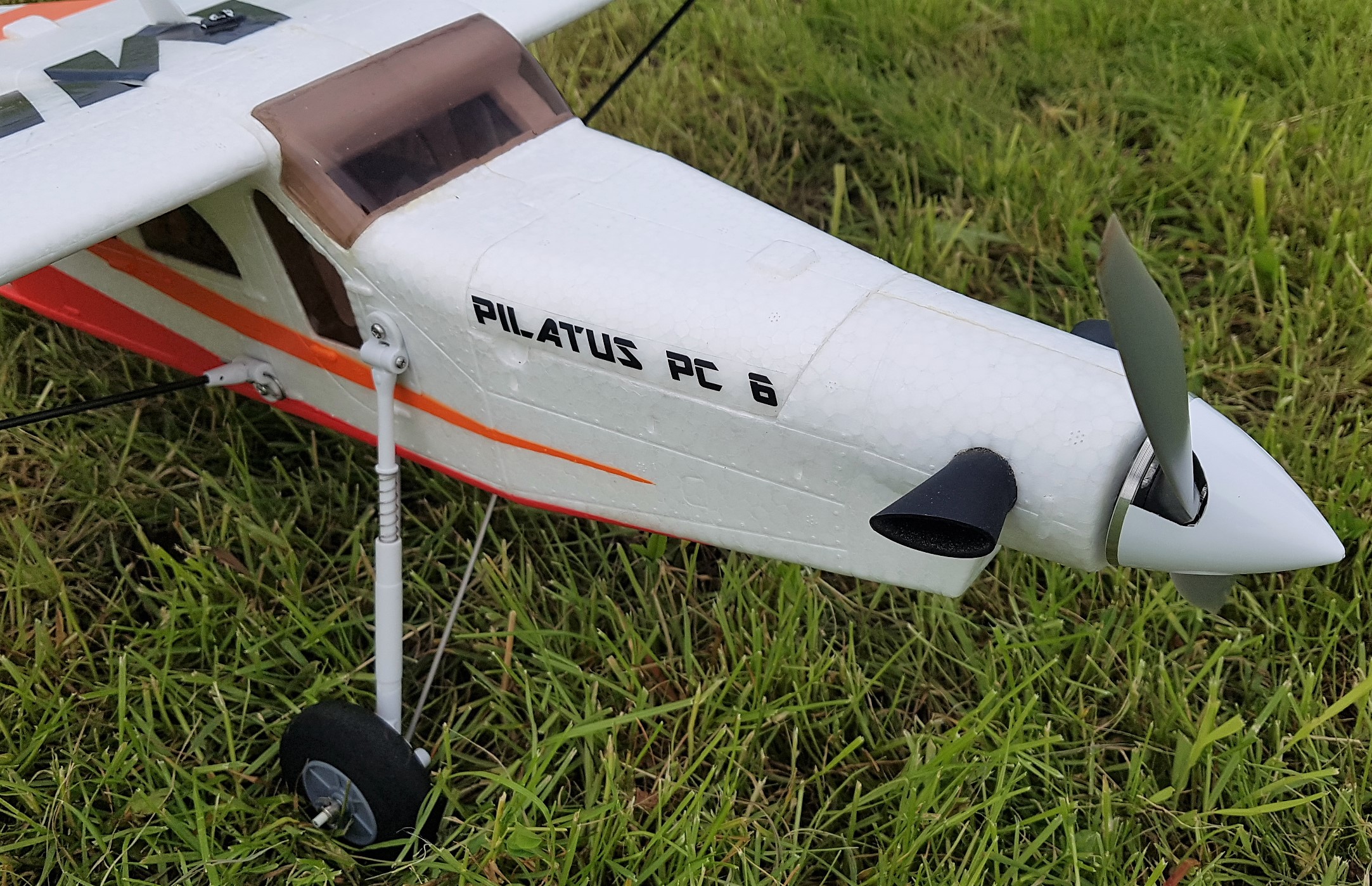 Less than two years from purchase to flight, that’s pretty quick for Slow! The Pilatus flew very nicely and as you would expect from a STOL (Short Take Off & Landing) plane it will fly very slowly. Captain Slow is still experimenting with flap settings and getting used to the flying characteristics but is overall very pleased with his purchase.
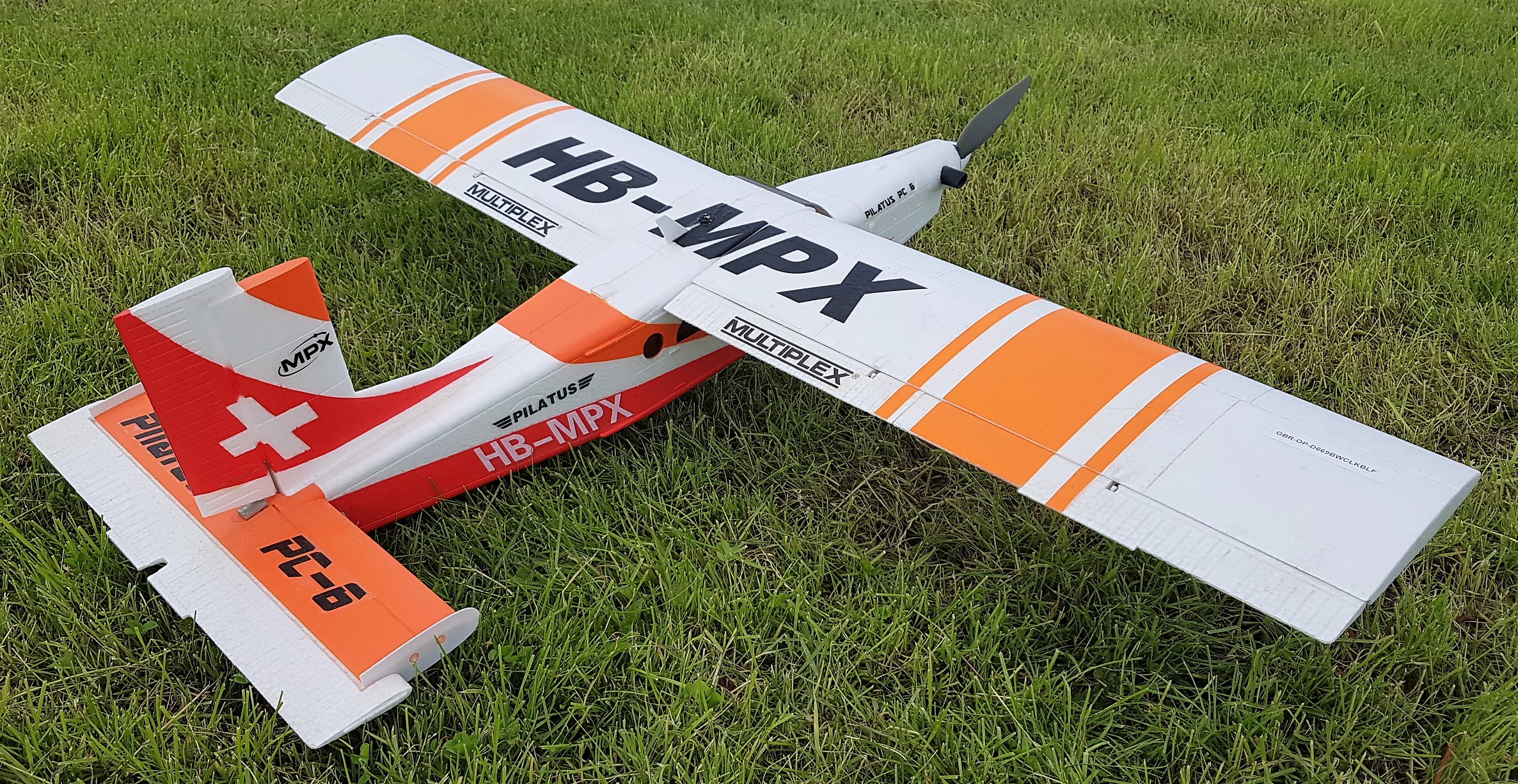 He was good enough to let me have a flight with the Pilatus and I discovered that it’s capable of mild aerobatics although I’m sure the full-size didn’t do them. You can see the Pilatus performing in this month’s video.
Dougal Entendre has also been splashing the cash on a second-hand model, his being a Hyperion Edge 540T 25e.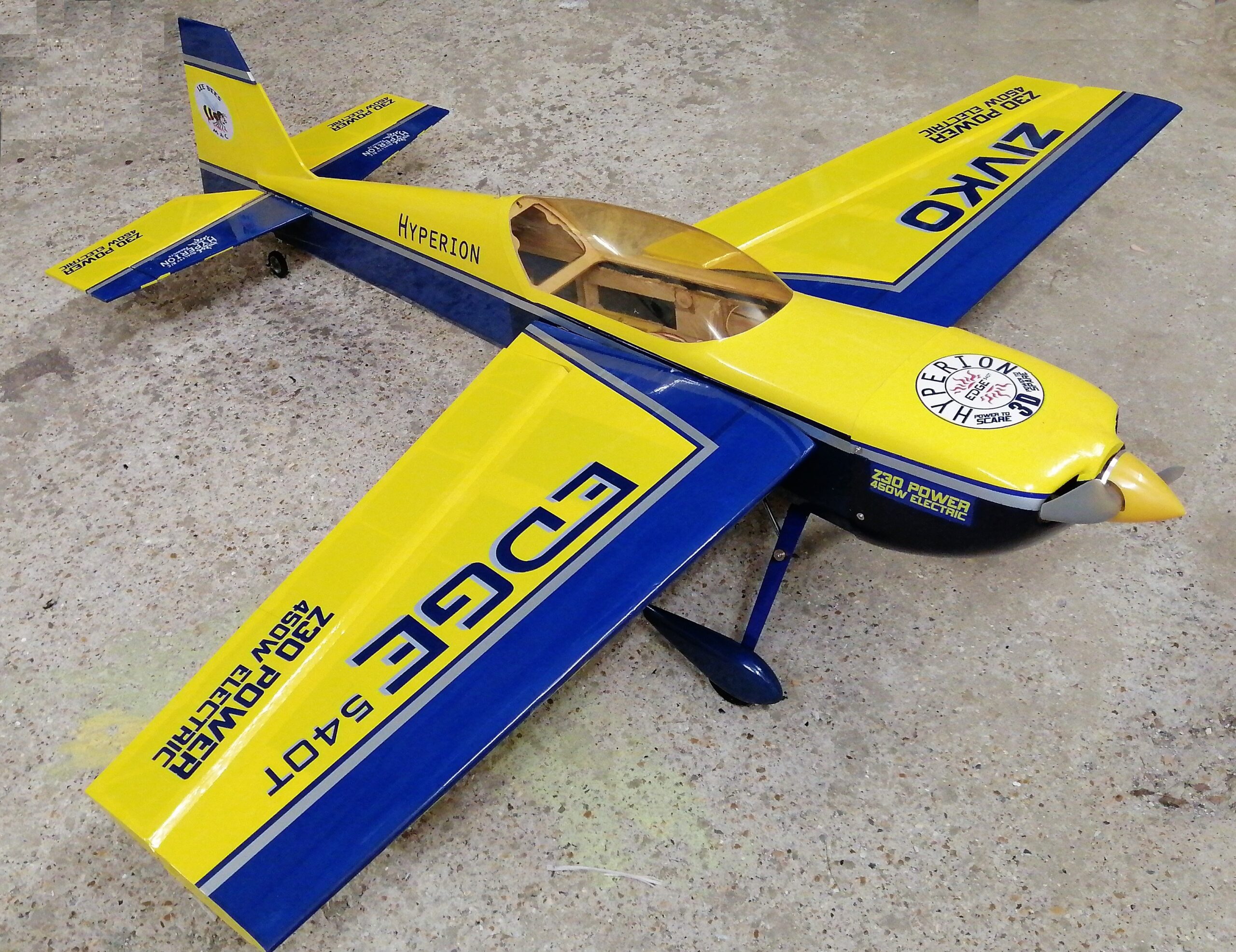 The 25e part refers to the Hyperion power set-up, they produce ranges of models in various sizes and give them an internal combustion engine equivalent number. So the Edge would be suitable for an electric motor equivalent to a 0.25cu.in (4cc) engine. Dougal paid the princely sum of £40 for the Edge which came fitted with a motor, speed controller, four Hitec servos, a Spektrum receiver, and three 3 cell 3600mAh lipos. The batteries might well be useless as the seller had discharged them to 3.3v per cell, 3.8v being the recommended storage voltage. Dougal says: The model is very smart, and though it’s clearly had a few repairs, they’ve been done very well.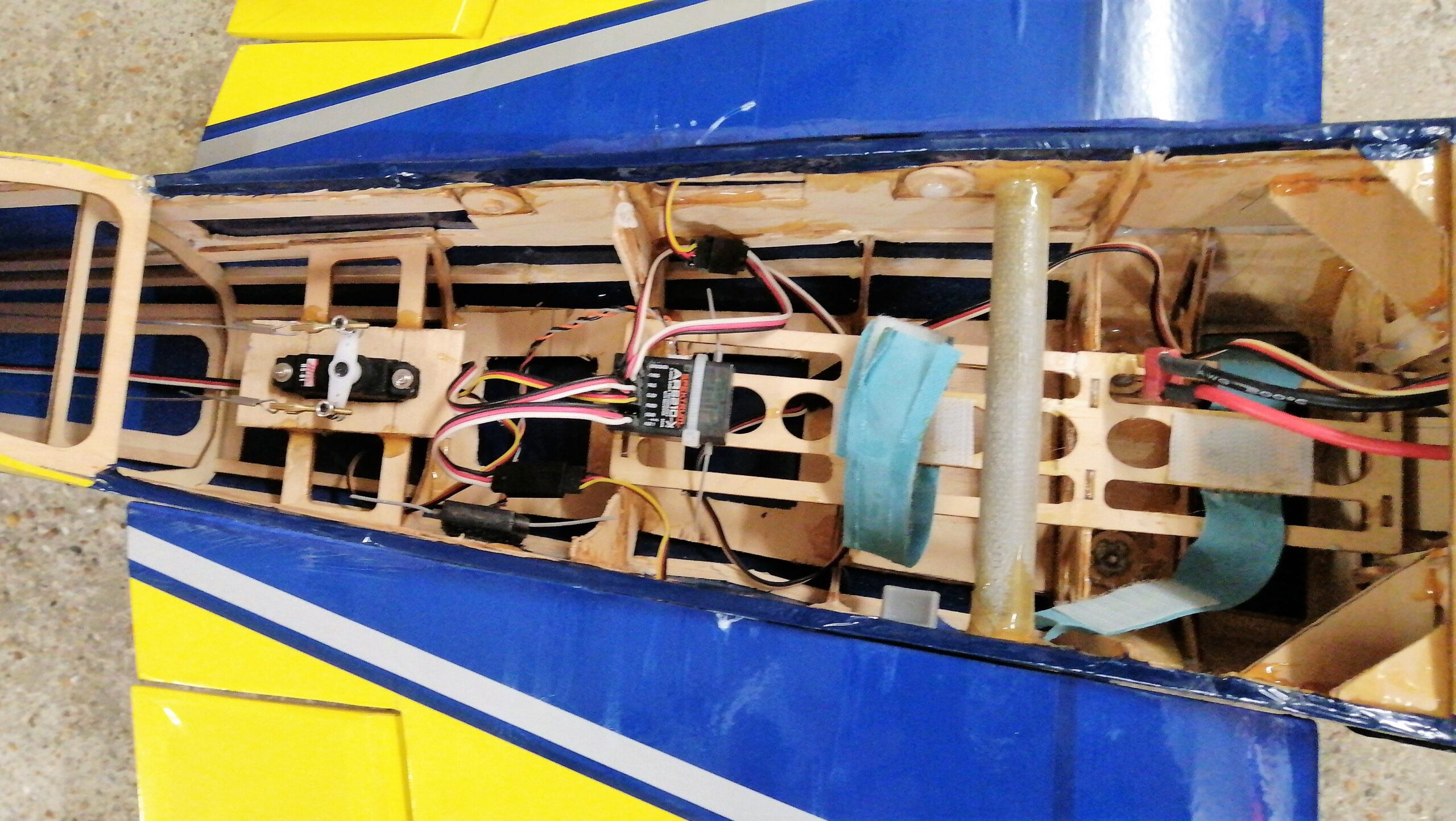
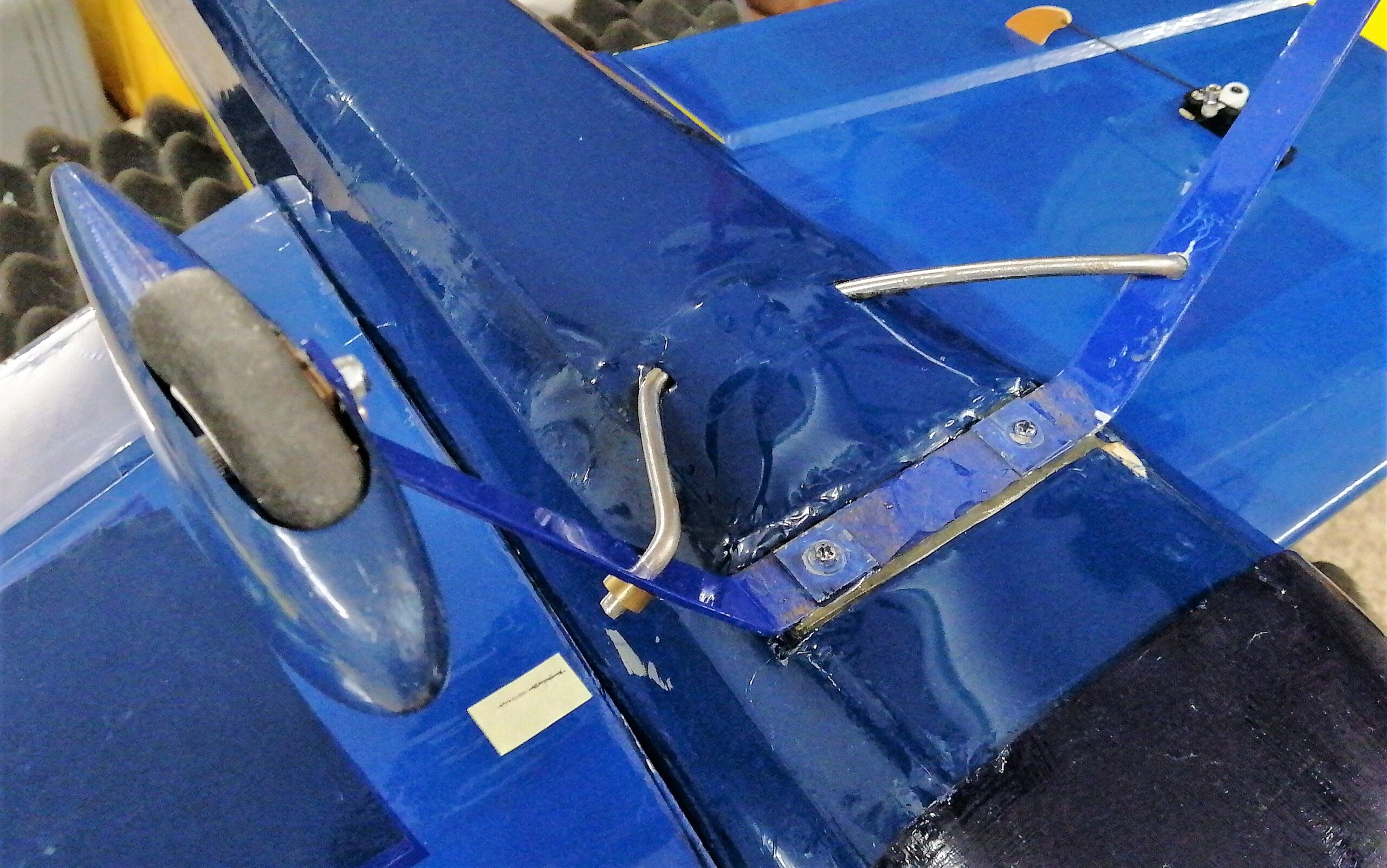 The seller told me he’d knocked the U/C off (who hasn’t with a model like this?), so he’d added a couple of thick piano wire struts, as you can see in the photo of the underside. I’ll probably bind my Radiomaster Tx to the Spektrum Rx it has installed, and give it a go soon. However I don’t expect it to be particularly 3D-capable. Its empty weight is about the same as my Slick, but the Slick has a 4s pack and a span of about 51″, where the edge uses 3s, and is about 45″ span. Also the tail is fairly thin, and probably not up to the kind of loads we put on it with 3D manoeuvres (I’ve read on the forums that the tail strength has been a problem for some flyers).
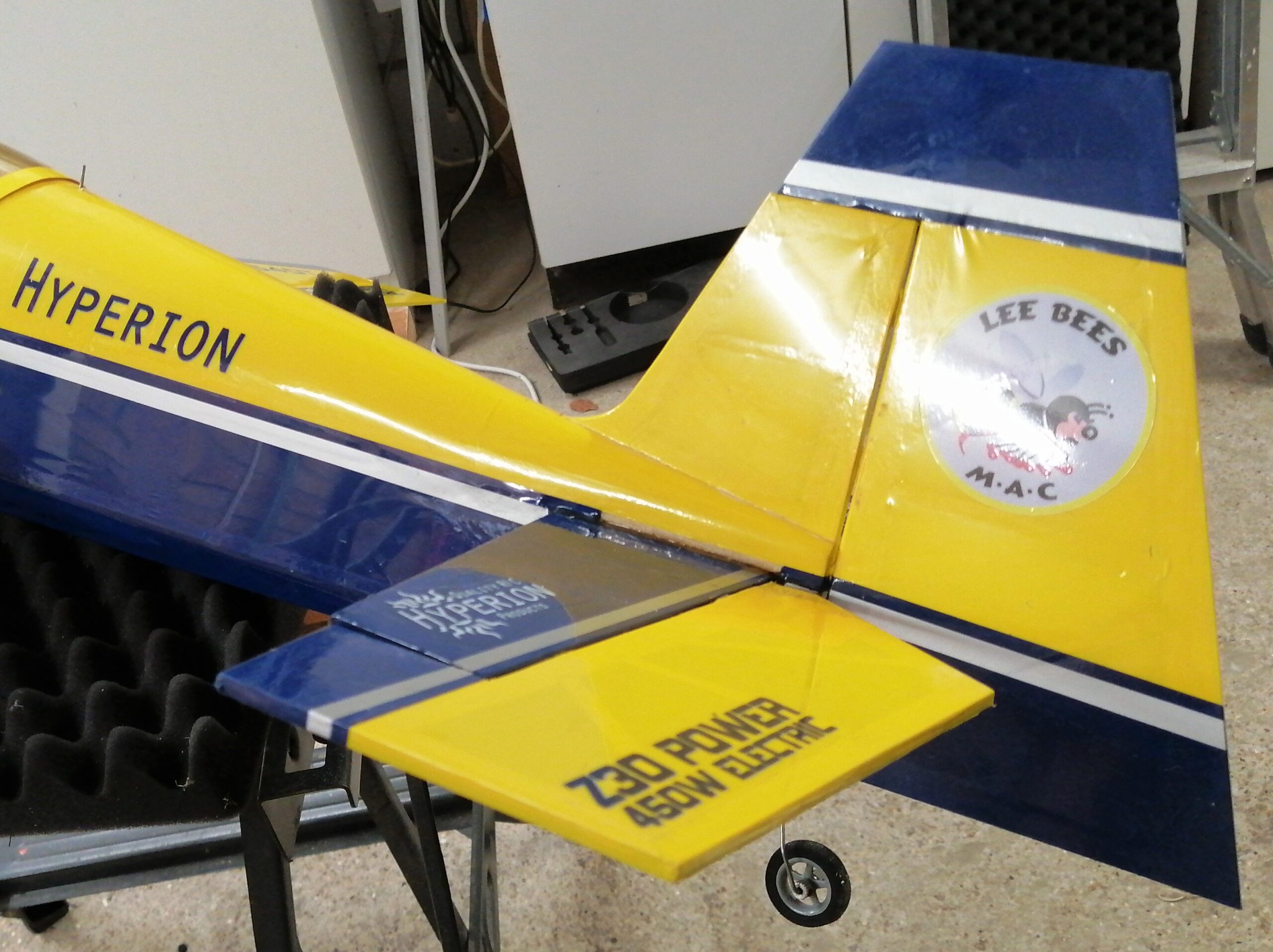 It might make a good first aerobat for someone, so if anyone would be interested in buying it, please let me know! Sounds like a good prospect so if you fancy an Edge 540 ready to go have a word with Dougal.
While I’m talking about Dougal, some unkind person (not me for once!) has said that he’s a one trick pony with his very low inverted passes. Well in July Dougal answered that criticism and proved that he’s actually a no trick pony!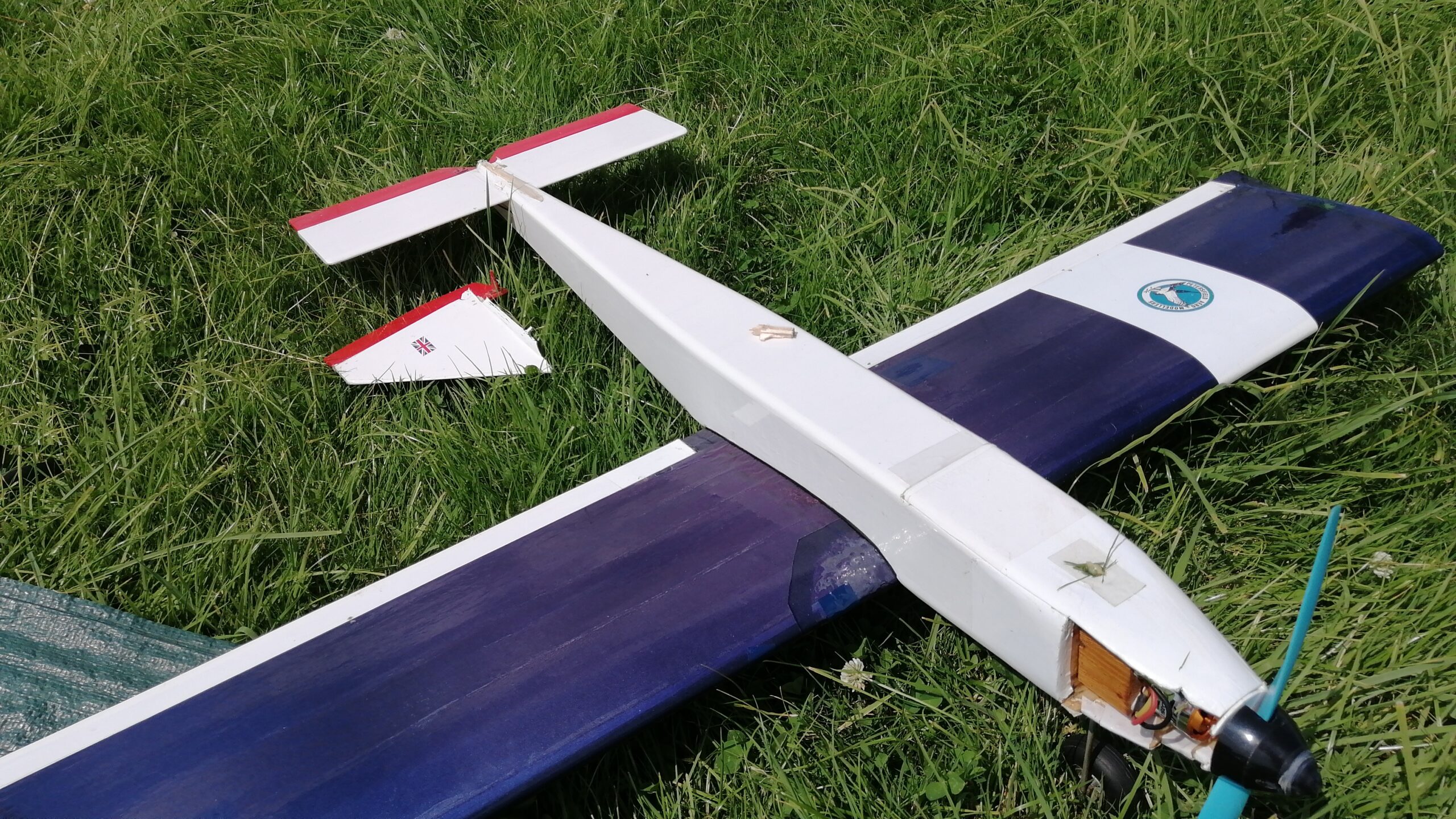 Oops, never mind Dougal it should repair easily enough. My only regret is that nobody was videoing at the time.
That same unkind person had his own problems one day. Having replaced the servos at the tail end of his Katana with some more powerful but heavier ones he failed to adjust the centre of gravity to allow for the extra weight. This resulted in an ‘interesting’ flight and a heavy landing and the removal of the undercarriage.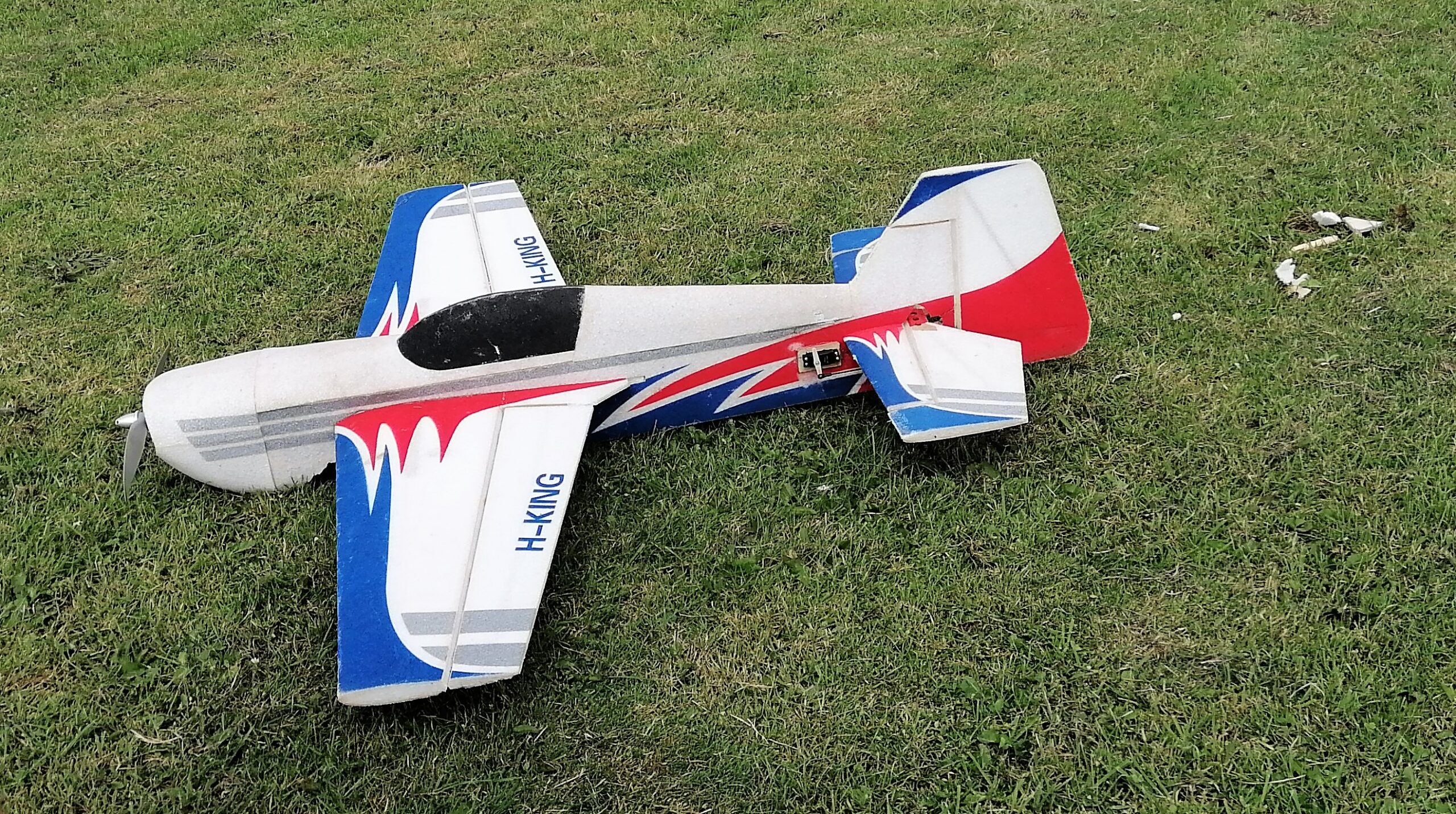 Well unlike Dougal’s ‘inadvertent landing’ 1066’s Katana was the right way up, although probably harder to repair!
Basher Bob also had a moment whilst flying his own design twin motored model. He was using his new RadioMaster radio gear in the model which was also fitted with a Multiplex gyro and all was well until he switched the gyro on or off, not sure which. Something was obviously not right in the set-up and the twin dived straight in with no control.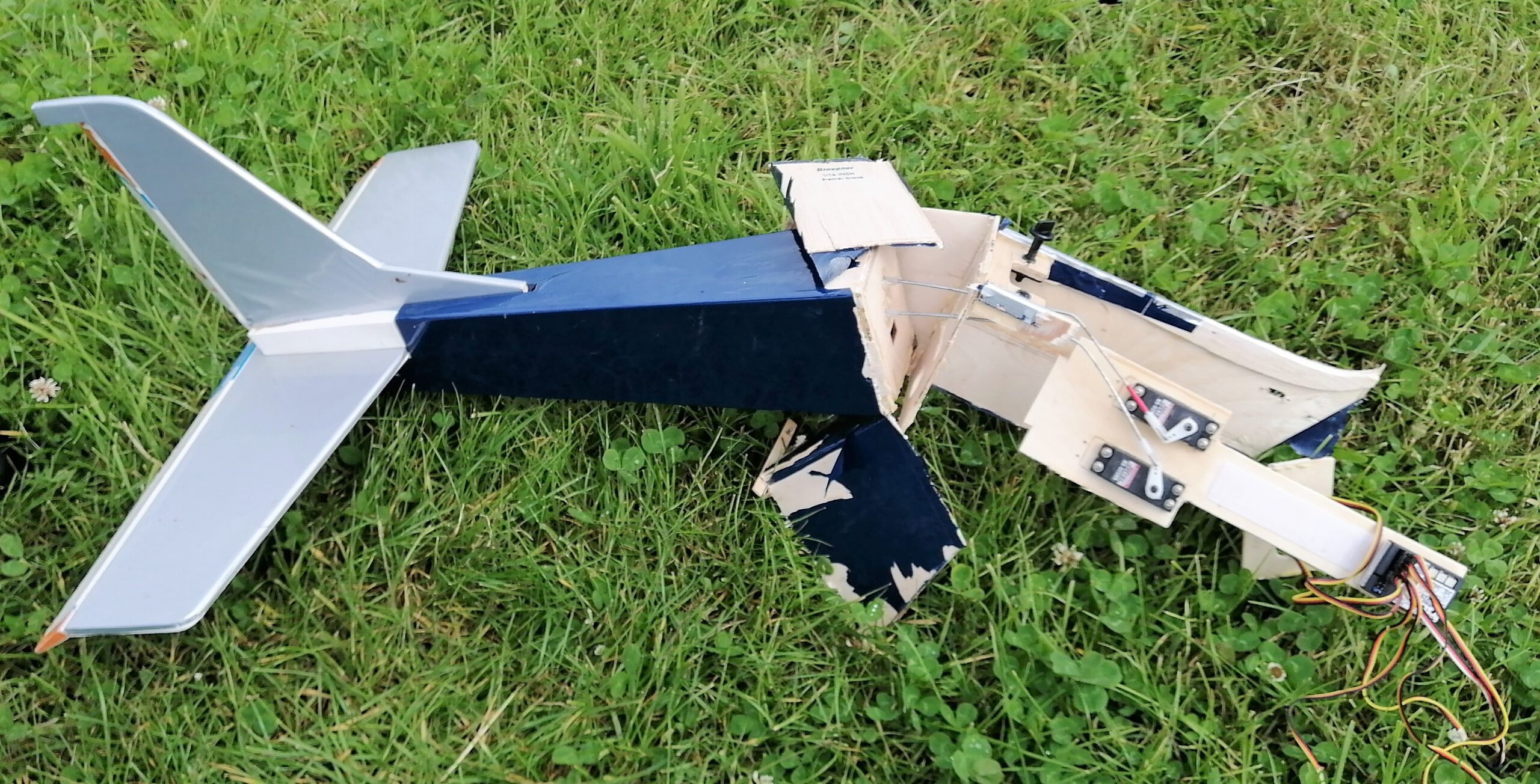 Sounds to me like a repeat of when Dougal uttered those immortal words “Well there’s a knob on the transmitter…”!
Woody treated himself to a Chance Vought F4U Corsair during one of the lockdown periods and he brought it along for its test flight in early July. The Corsair is the little 30” (750mm) wingspan foam model from HobbyKing that comes ready to fly complete with a 2408 1200kv motor, 20A esc, 4 servos and a 6 axis Orx flight stabiliser.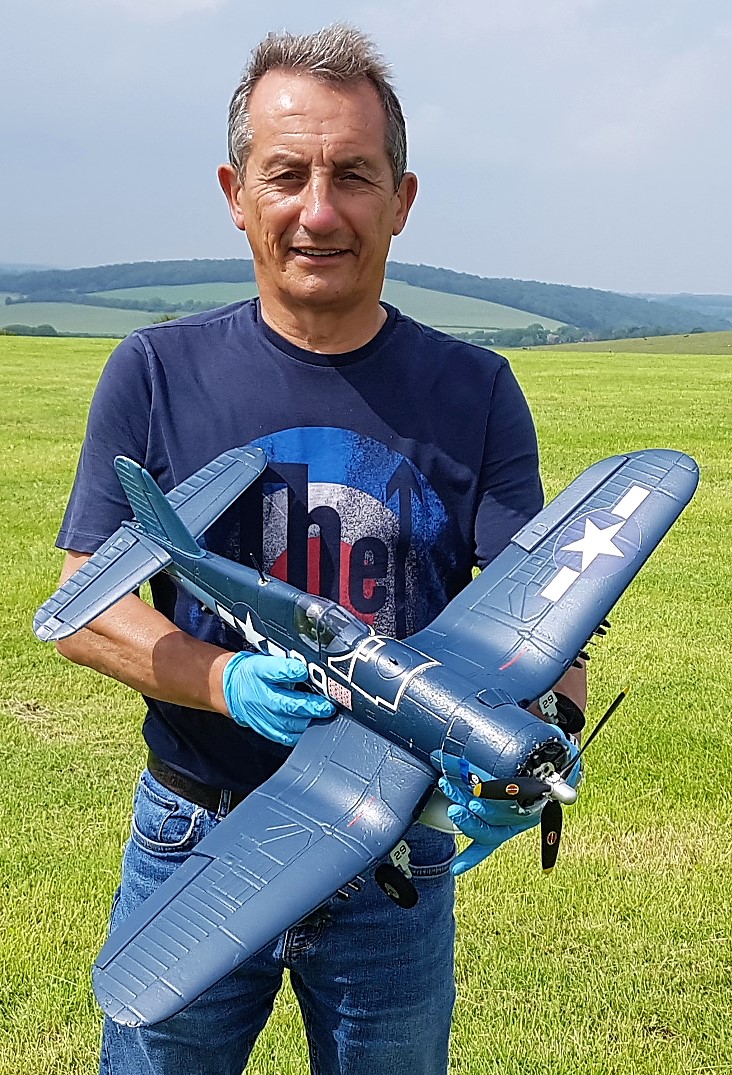
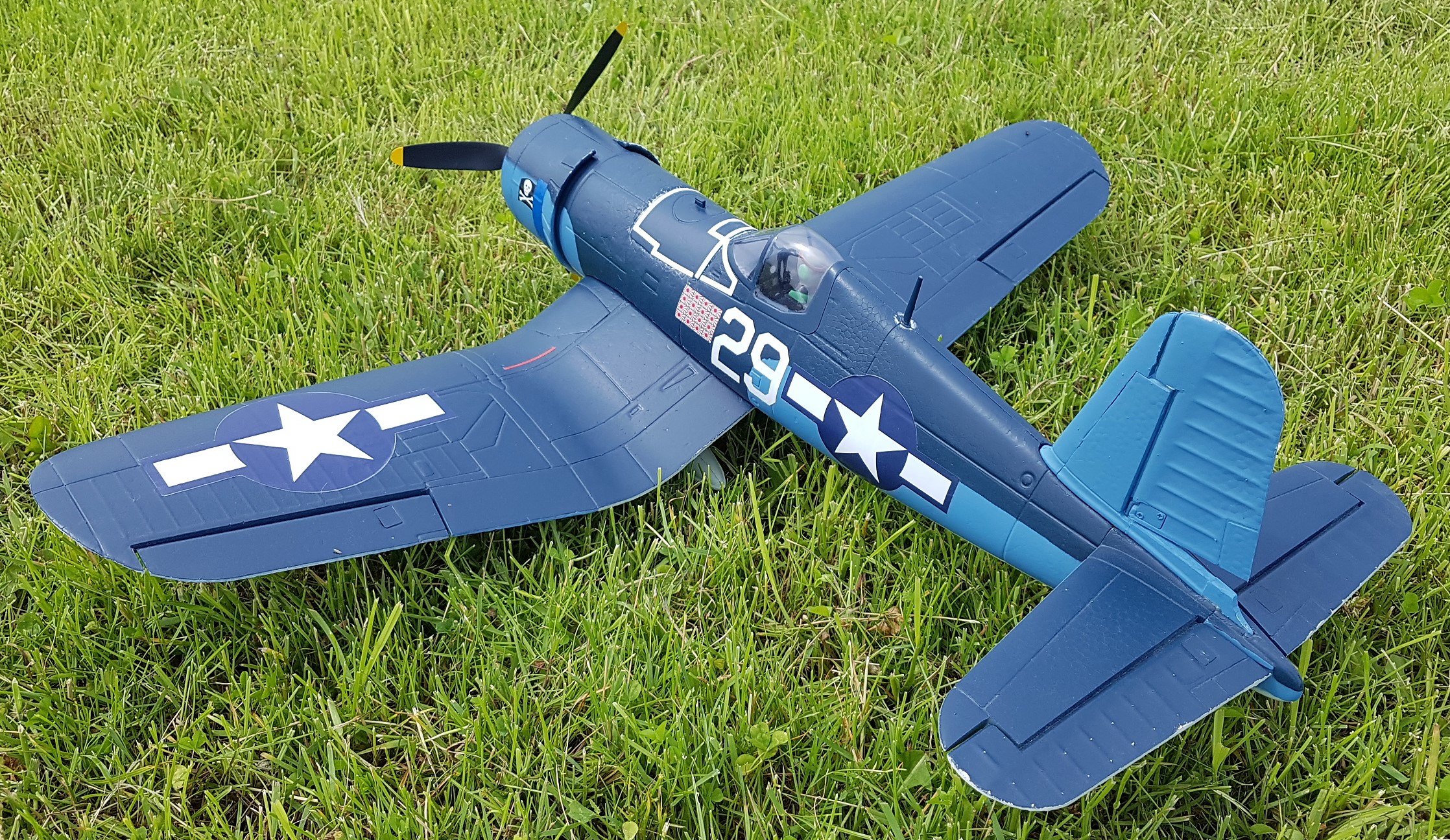 The Corsair will fly using either a 2 or 3 cell lipo and the undercarriage can be removed if the pilot prefers to hand-launch and belly land. Woody asked me to do the test flight which went well, better than I expected in fact.
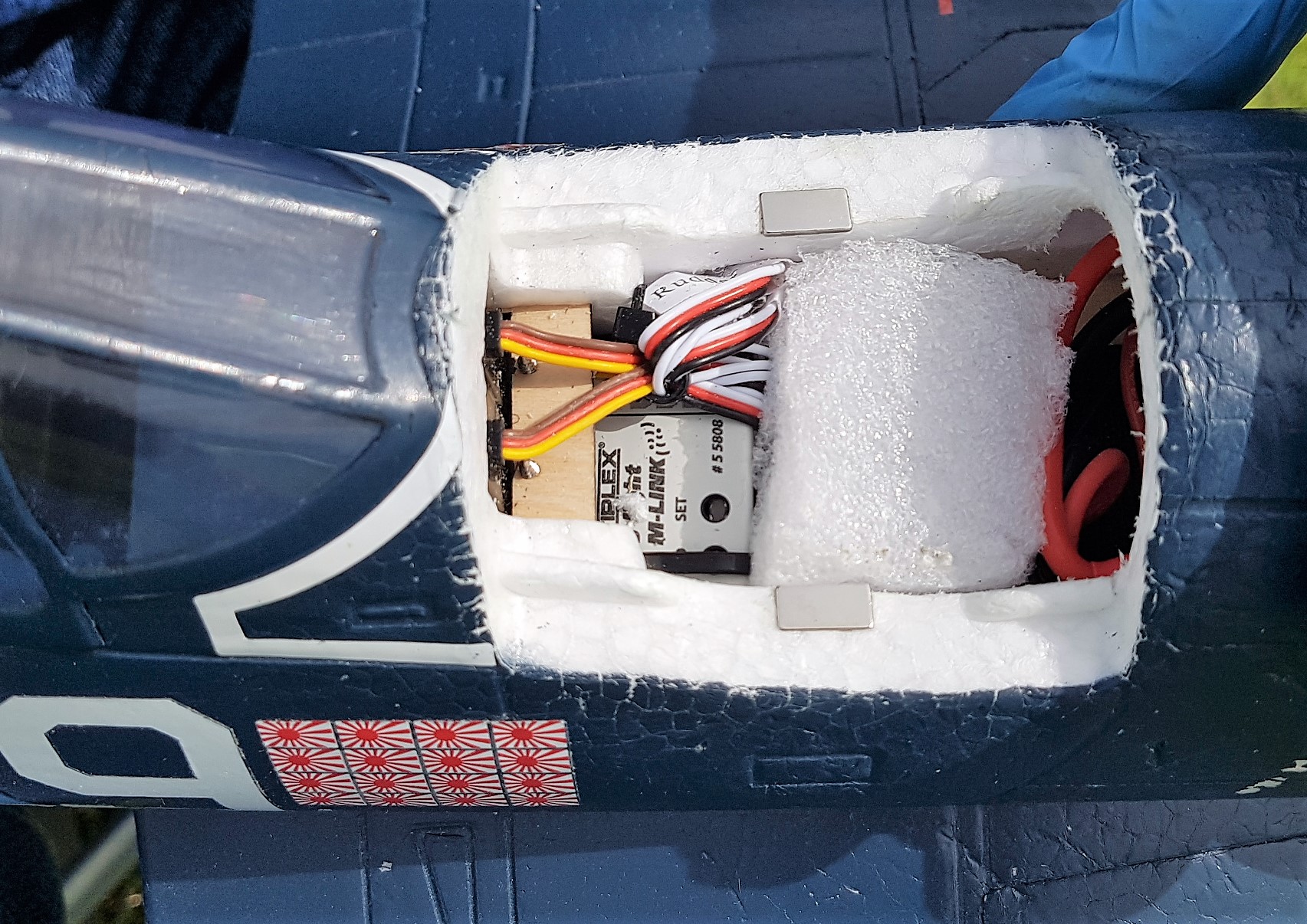 Woody was using a 2 cell lipo and the undercarriage was fitted so I tried a take-off and was rather surprised when it went off with no problems despite the very small wheels. The gyro worked well and kept the flight smooth whilst restricting the model to fairly gentle turns and no aerobatics. After a couple of minutes I switched the gyro off and had to trim for straight and level flight but once done everything was fine and certainly more responsive allowing me roll and just about loop. I was at full throttle for most of the flight and although there was enough power I felt a bit more would have been nice so I think 3 cells would be a better choice. The landing was uneventful and I was surprised when it managed a nice rolling landing until the last second when it tipped onto its nose.
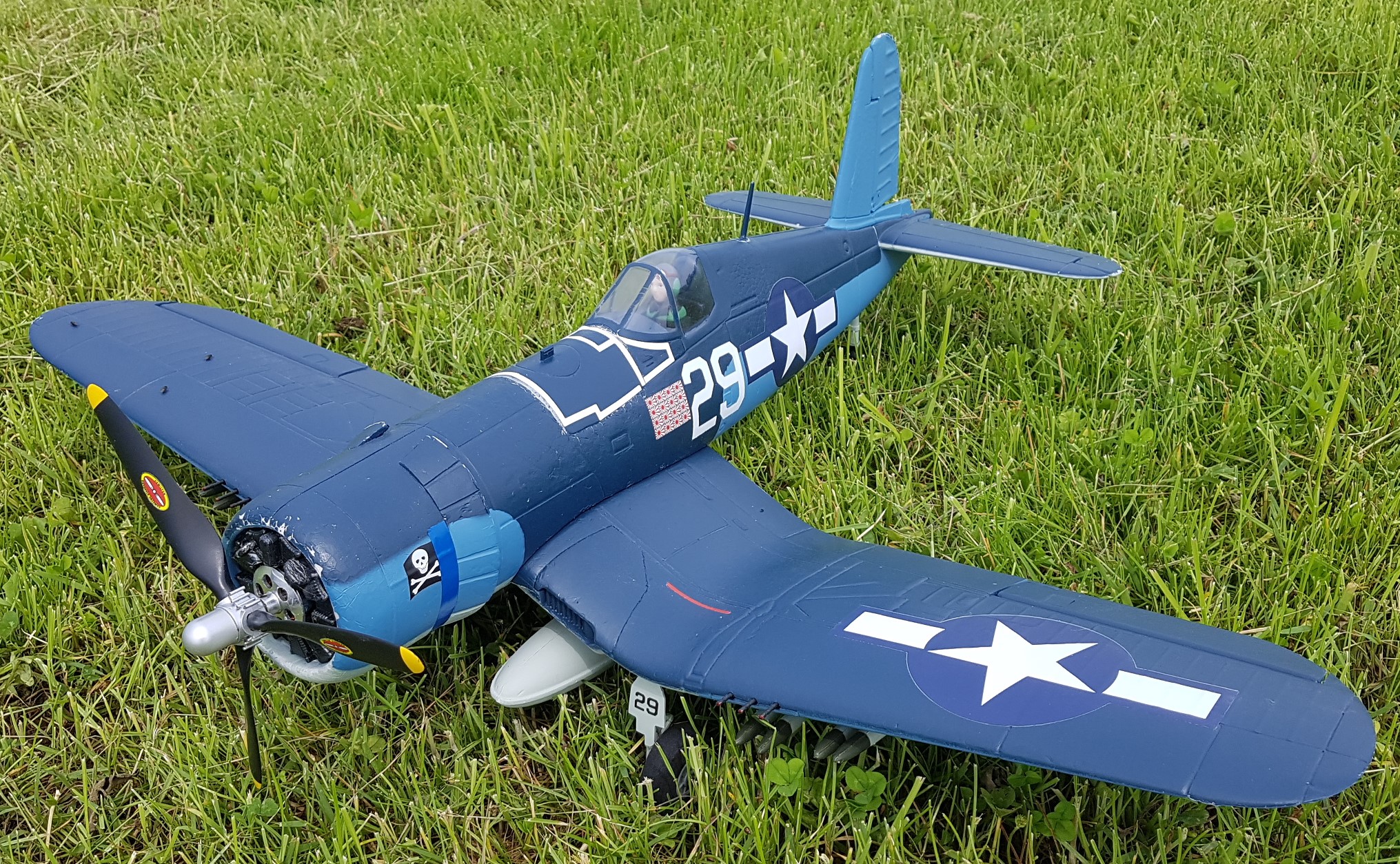 Unfortunately when we tried to fly it again the gyro didn’t seem to arm correctly and as the model lifted off the left wing dropped and the resulting cartwheel broke the 3 bladed prop. Reading the manual later I discovered that there is a certain arming procedure to follow to arm the gyro properly. Read the instructions Woody! Sadly spare props are unavailable at the moment so Woody is trying to sort out a suitable 2 bladed one to try. I’m sure it will be a great little flier once the teething troubles are sorted. You can see how well it performed in this month’s video.
July is always the month that the club holds the annual Chuck Glider competition and this year it was once again run by the club Competition Secretary Keith Evans (otherwise known as Dwayne Pipe). Before the competition started Kryten snapped this photo of an Auster that was carrying new PAM member Ian Daniels giving us a private airshow.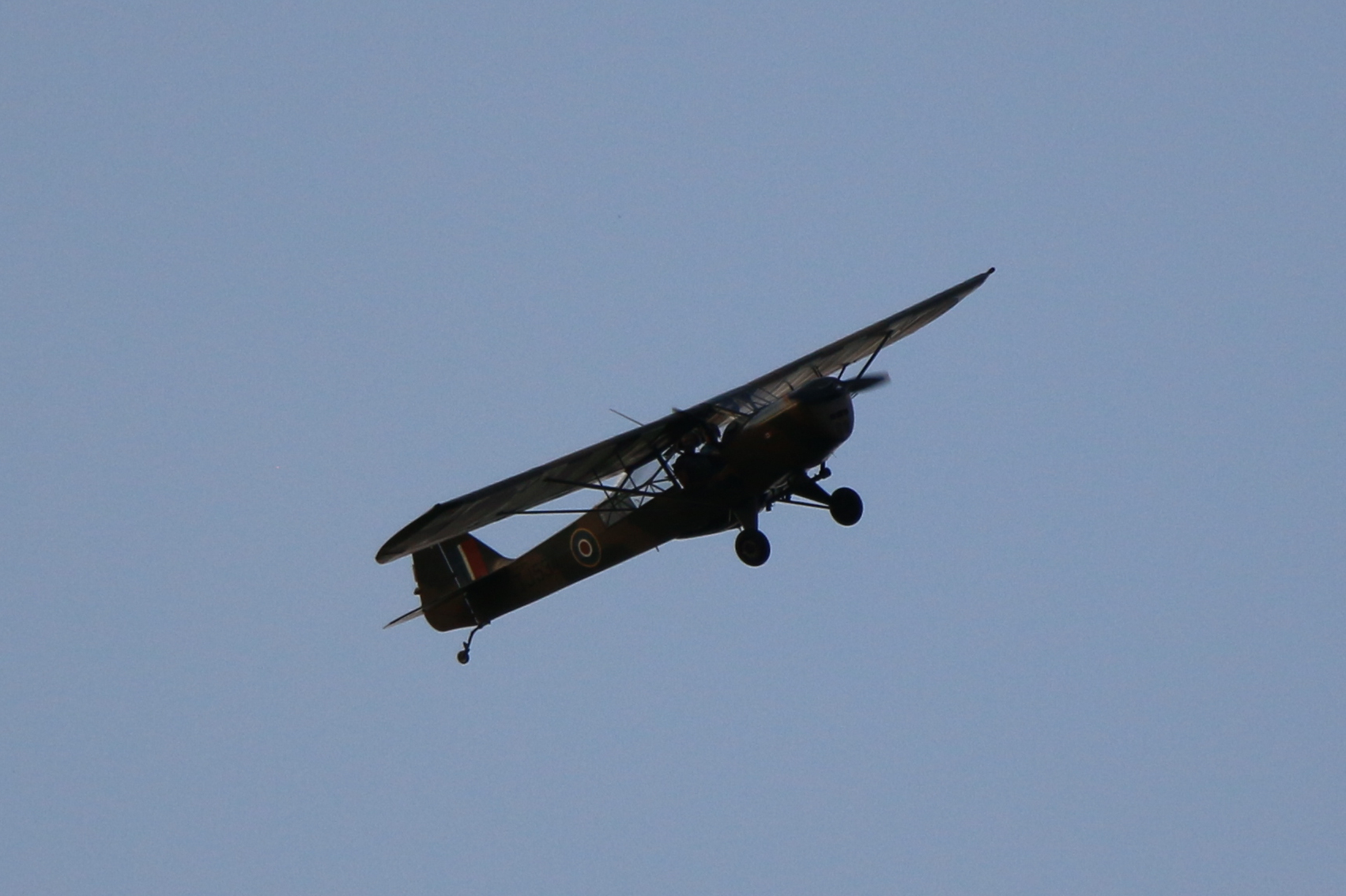 Here are some photos I took during the evening, the first showing Captain Slow in one of his weirder moments!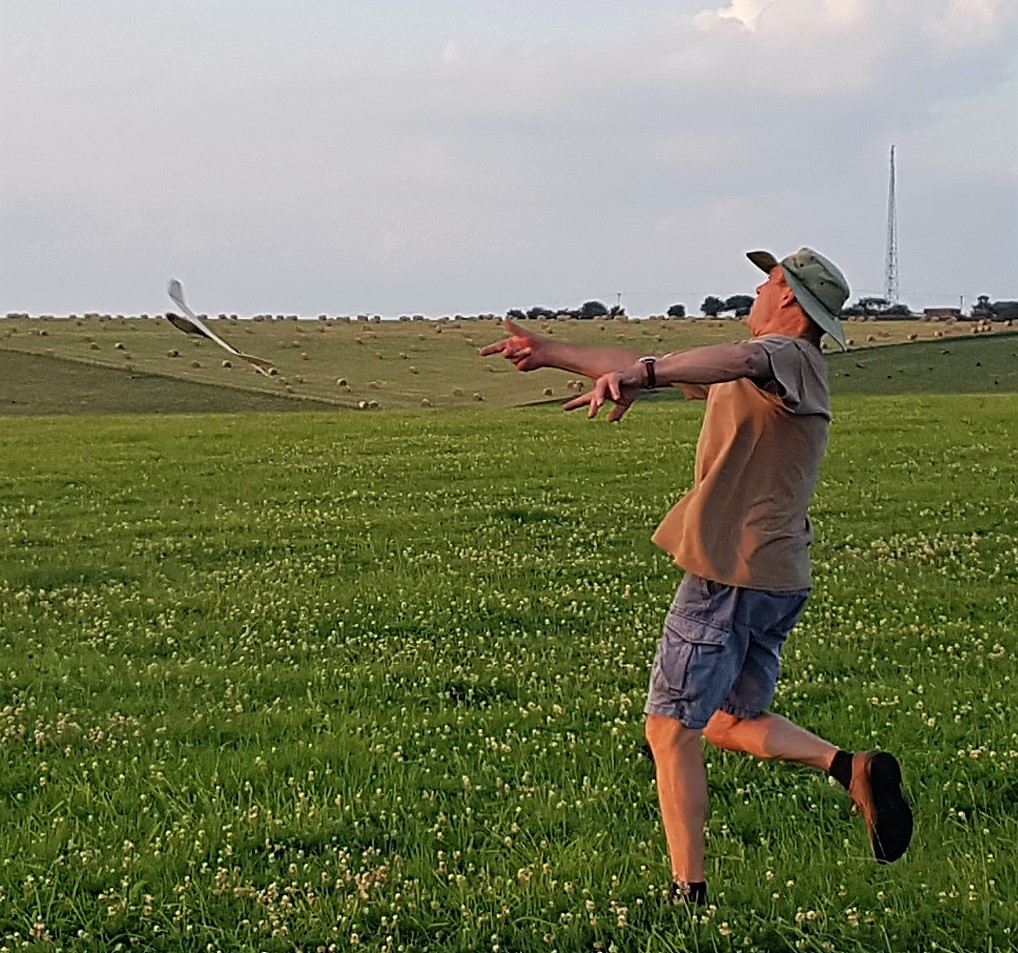
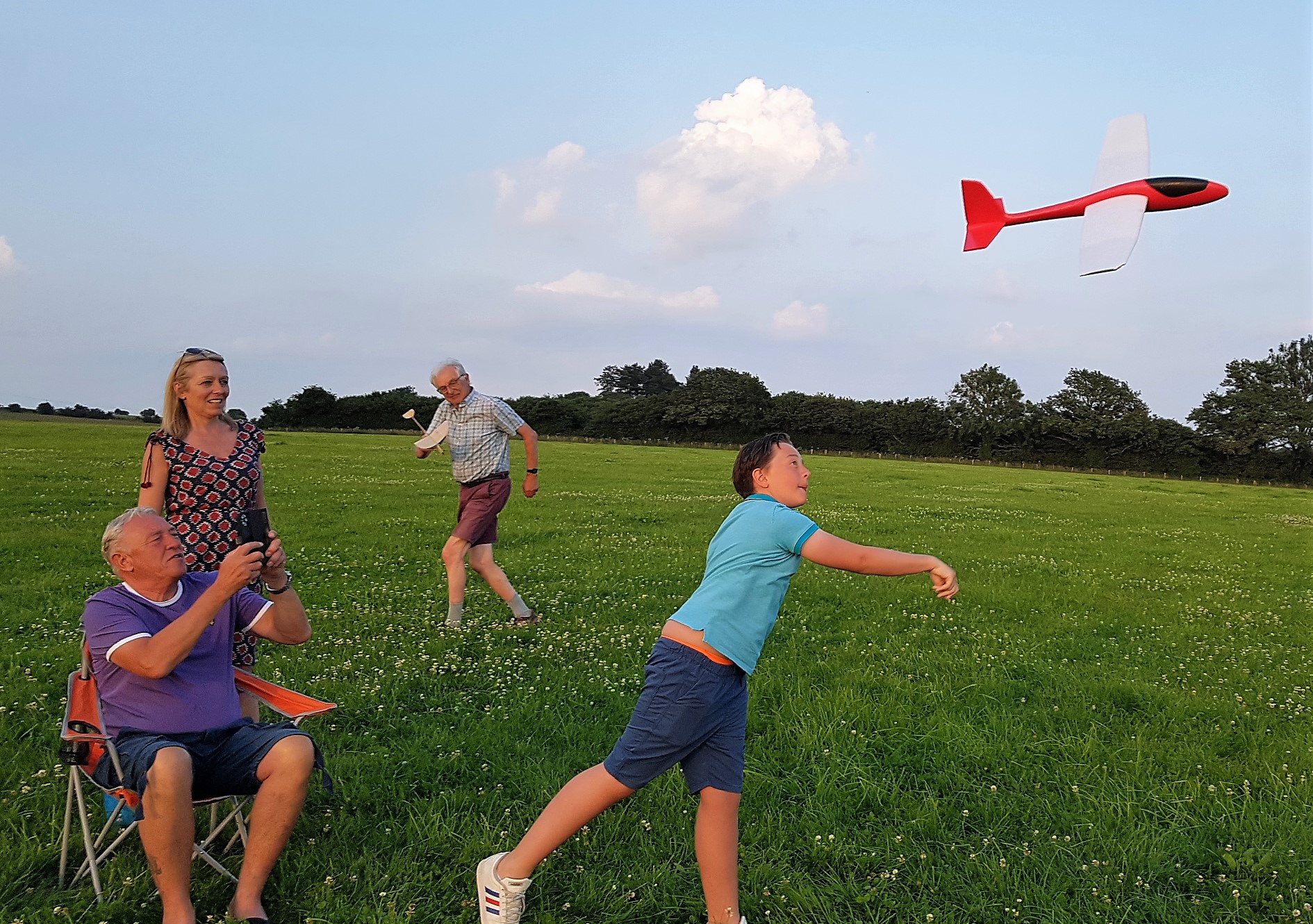
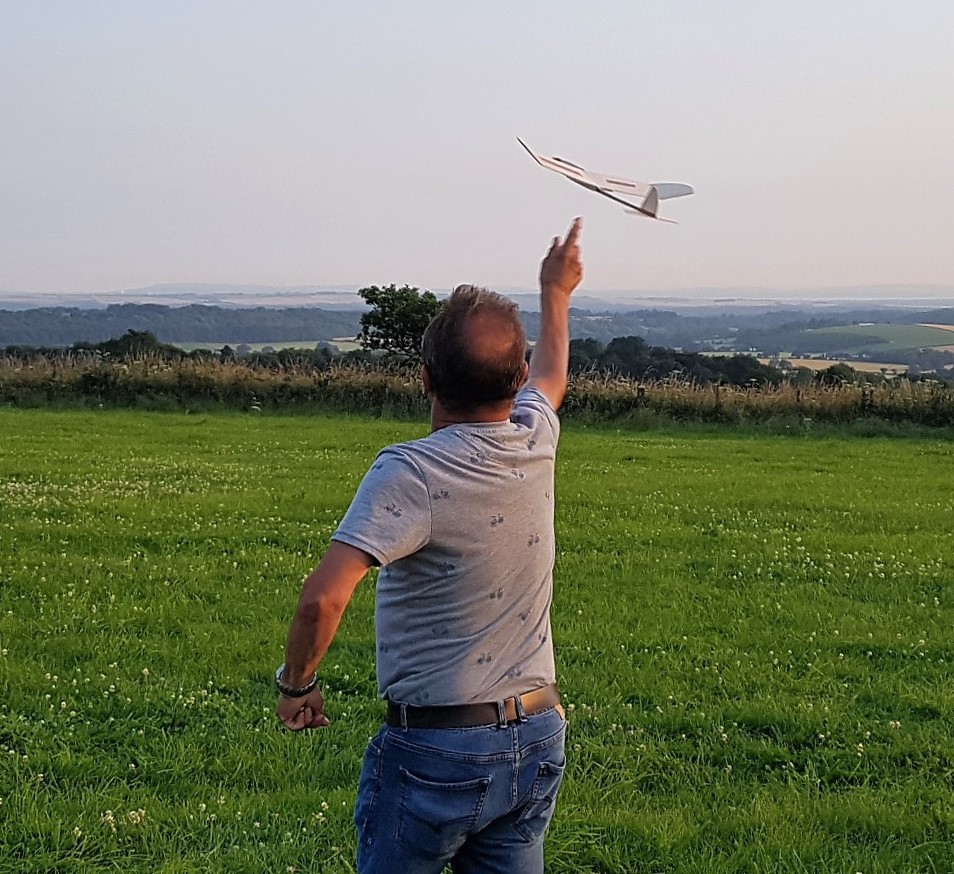
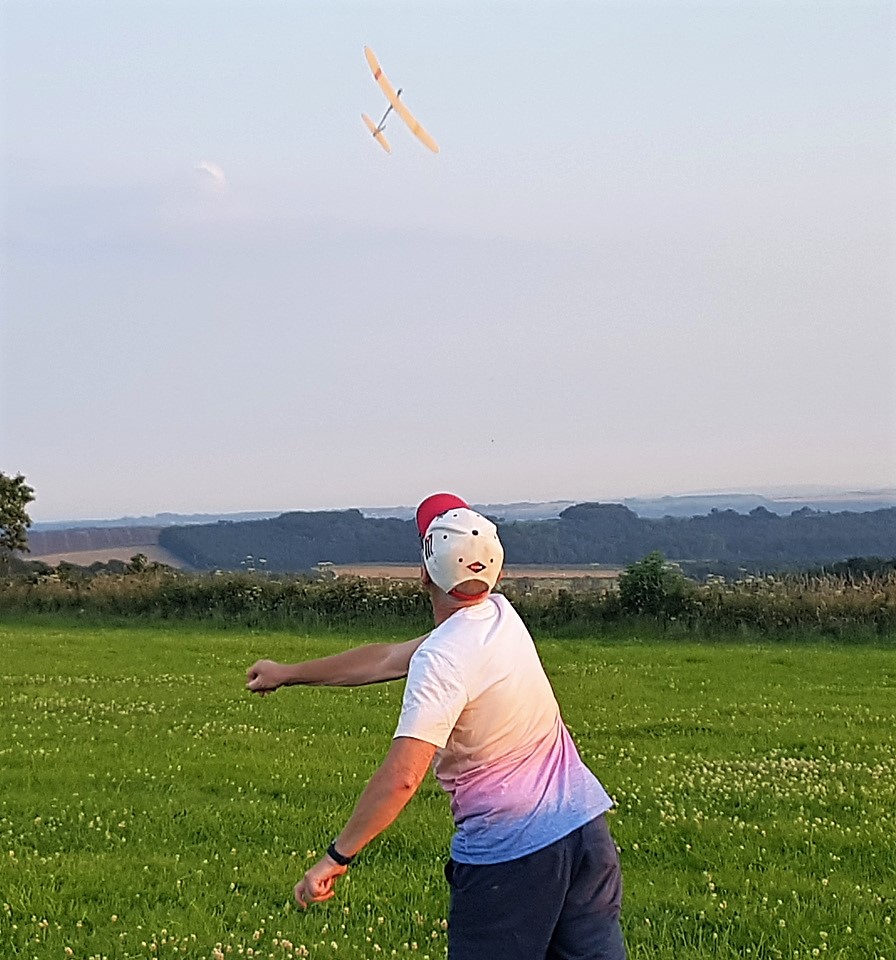 Dwayne says: The chuck glider competition on Wednesday 21st July was held under perfect weather conditions. There were two separate classes one for hand launched gliders and the other for catapult launched gliders. In the hand launched class there were ten entries flying six rounds each, the winner having the highest cumulative score.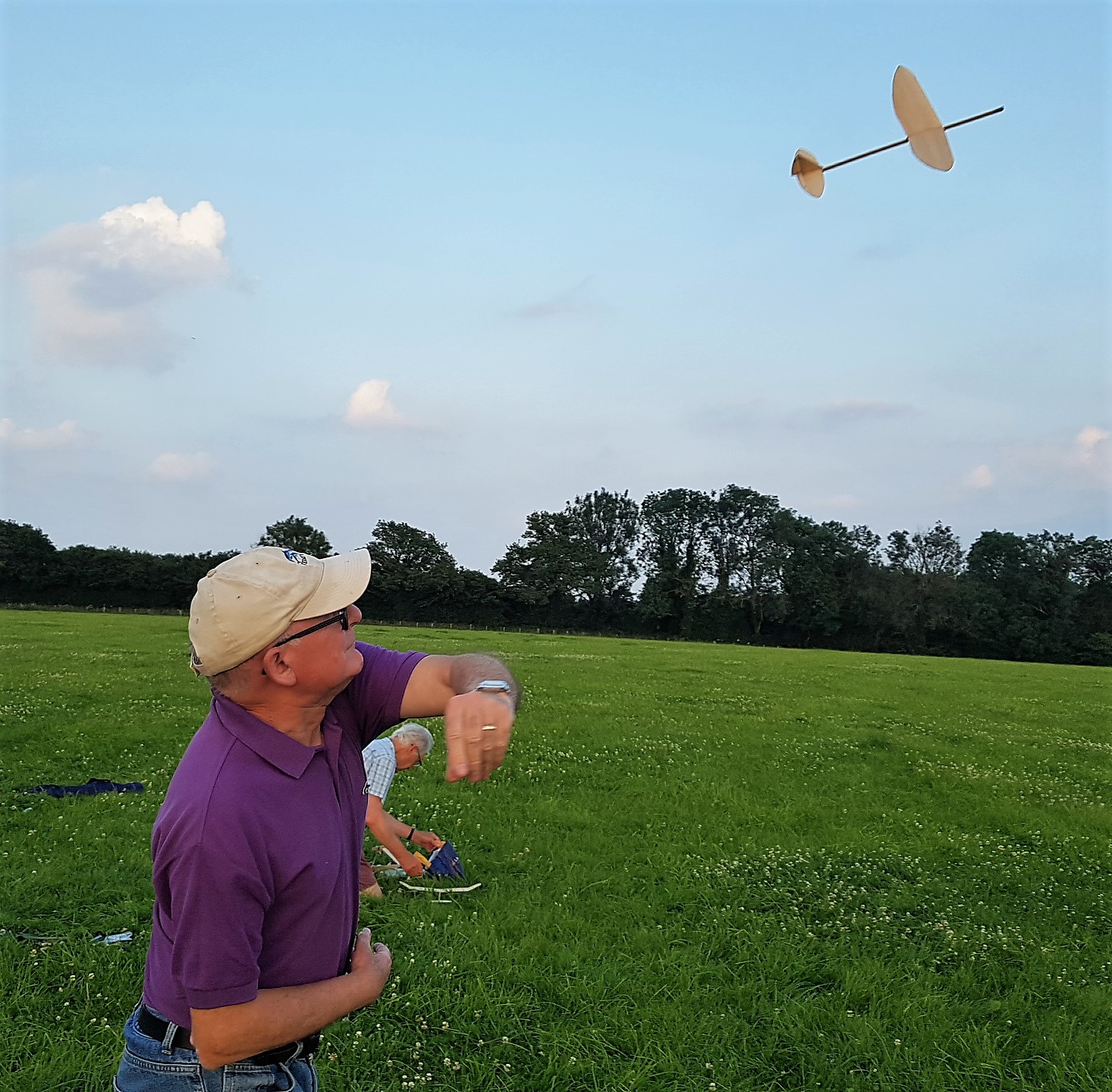

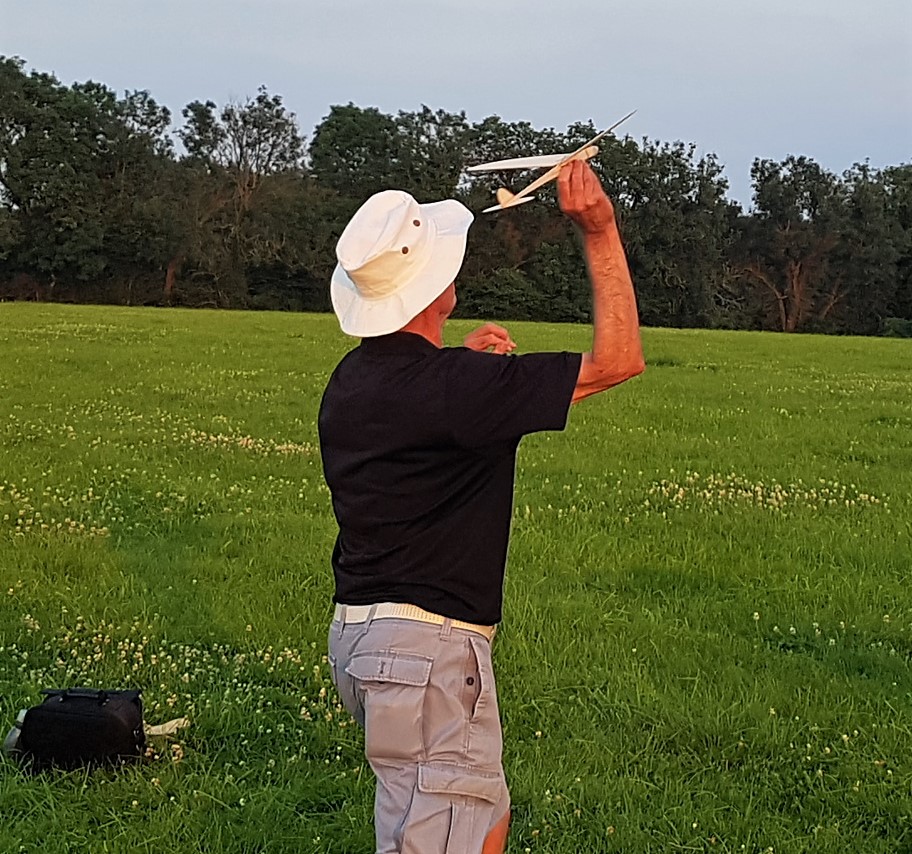
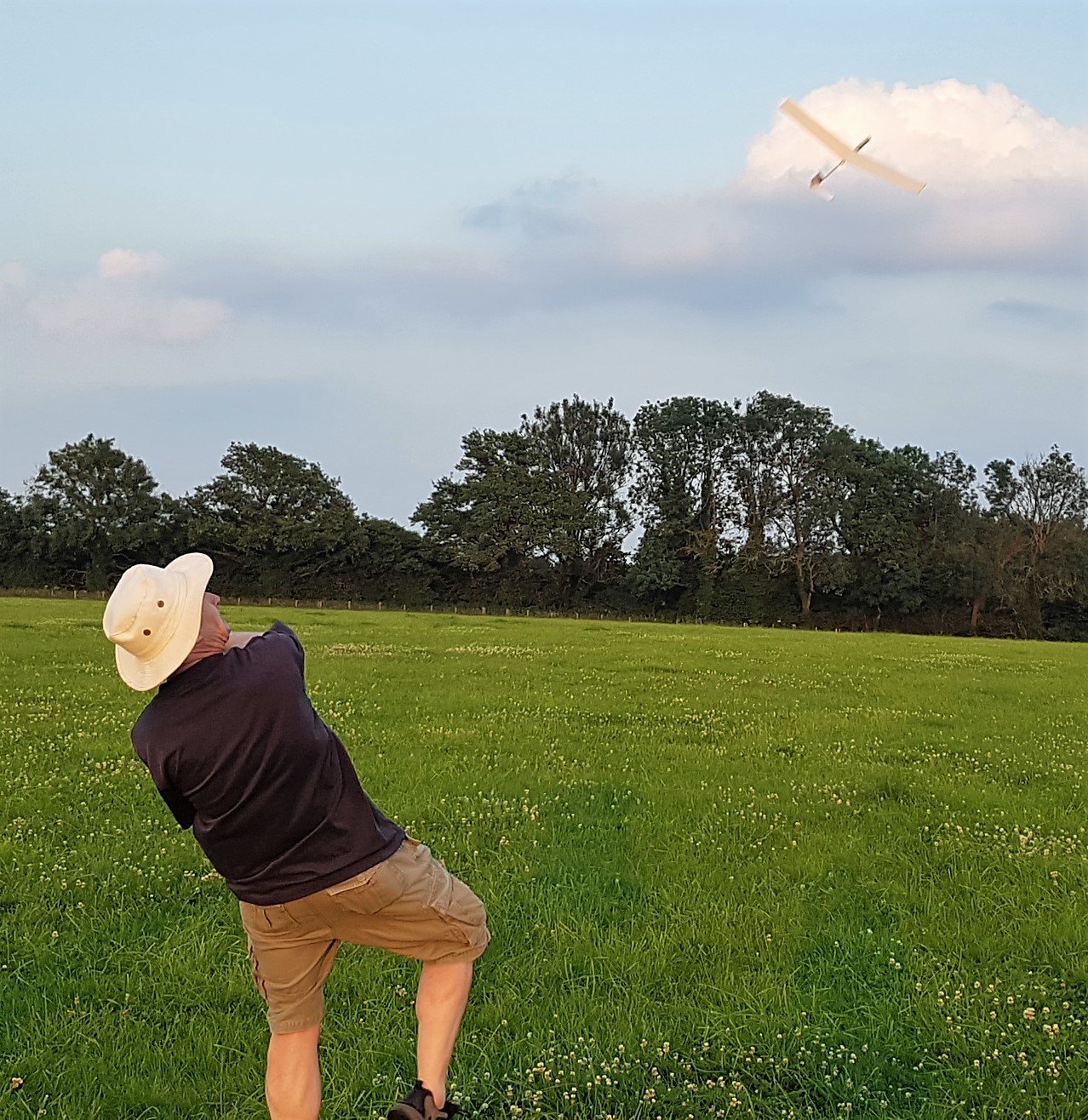 The highest time of 85.6 secs went to Andy Palmer. Second with 66.1 secs went to Chas Butler and third with 50.1 secs went to Graham Swan. In the junior section Charlie Standen made a creditable score of 26.3 secs.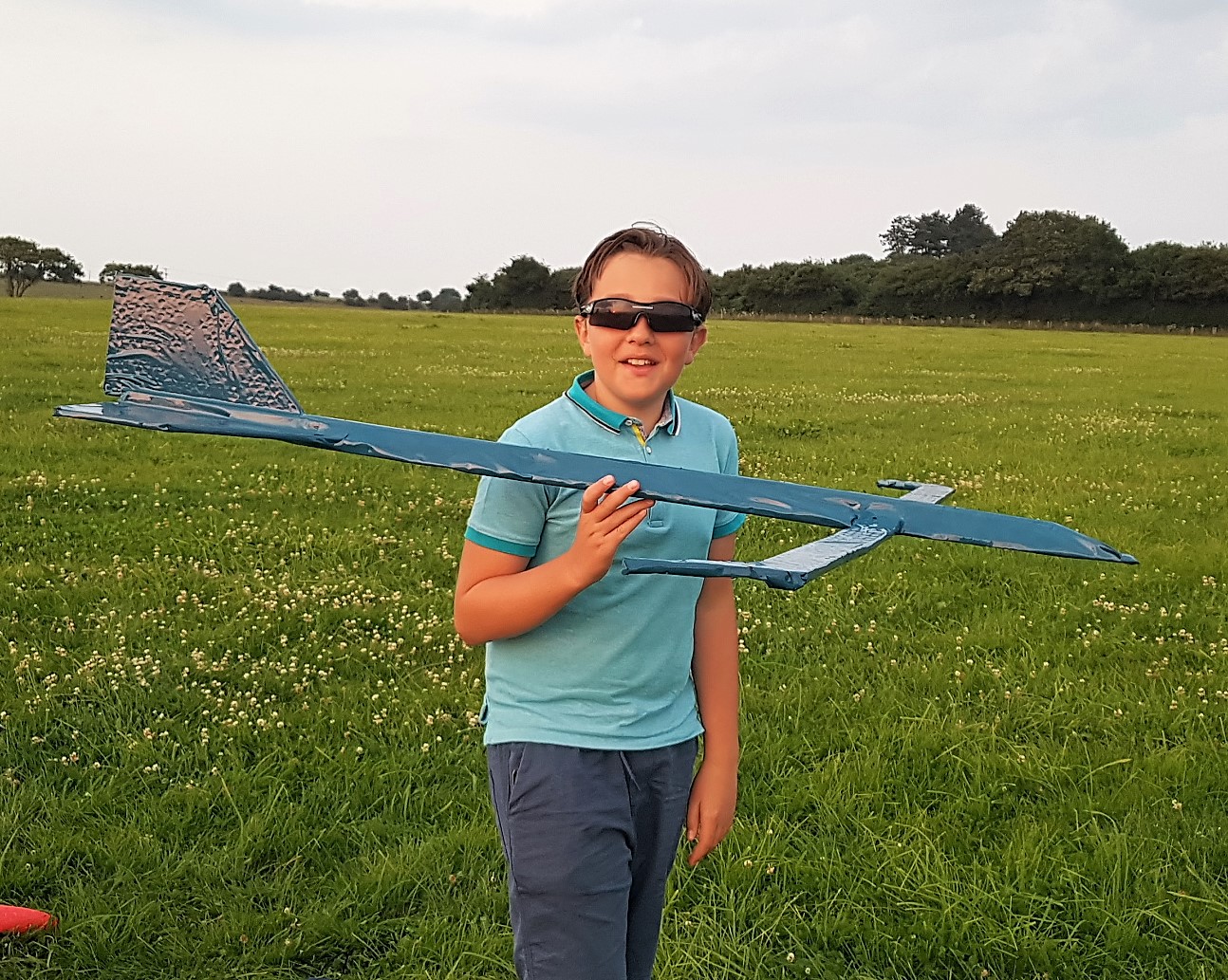
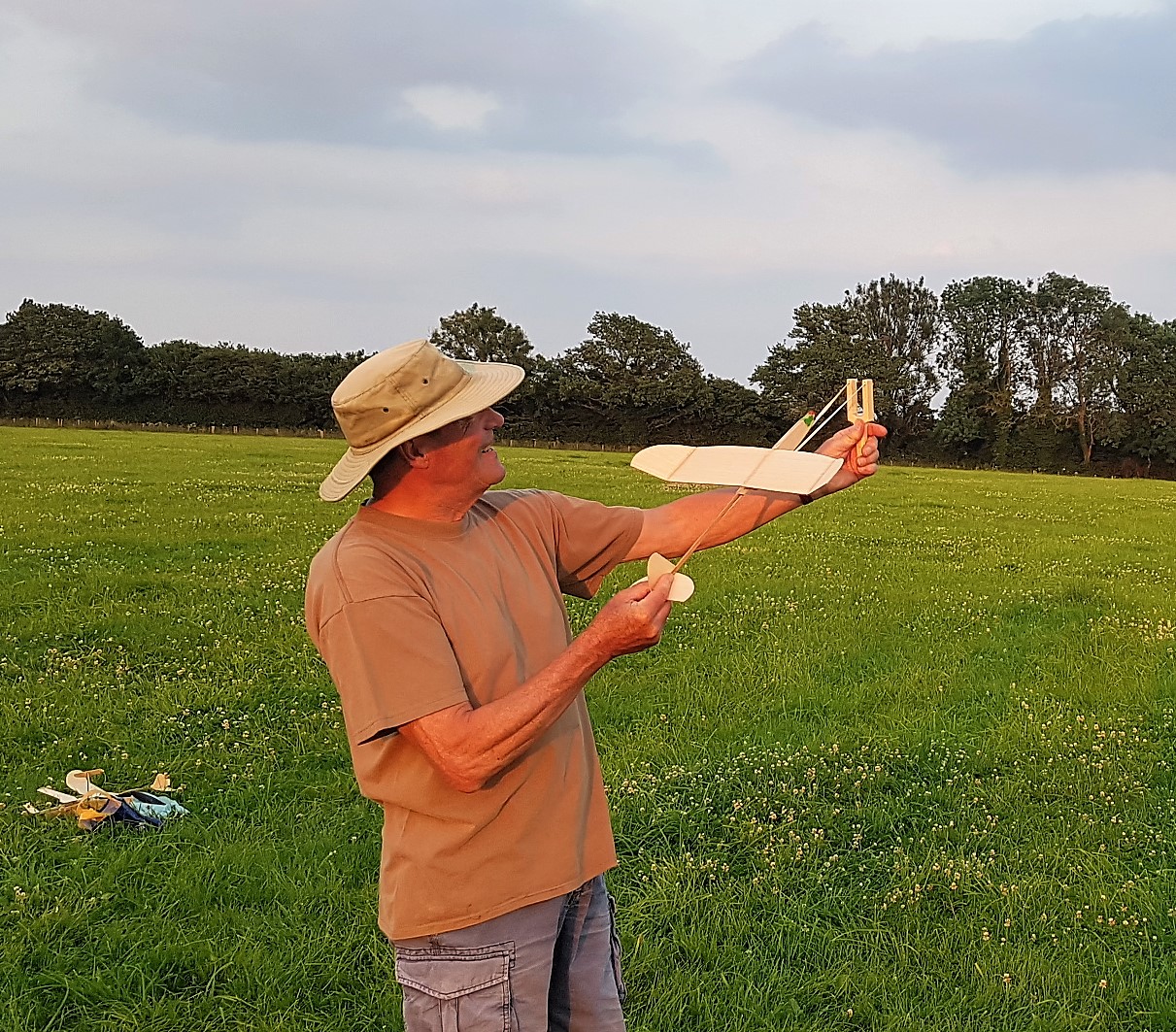
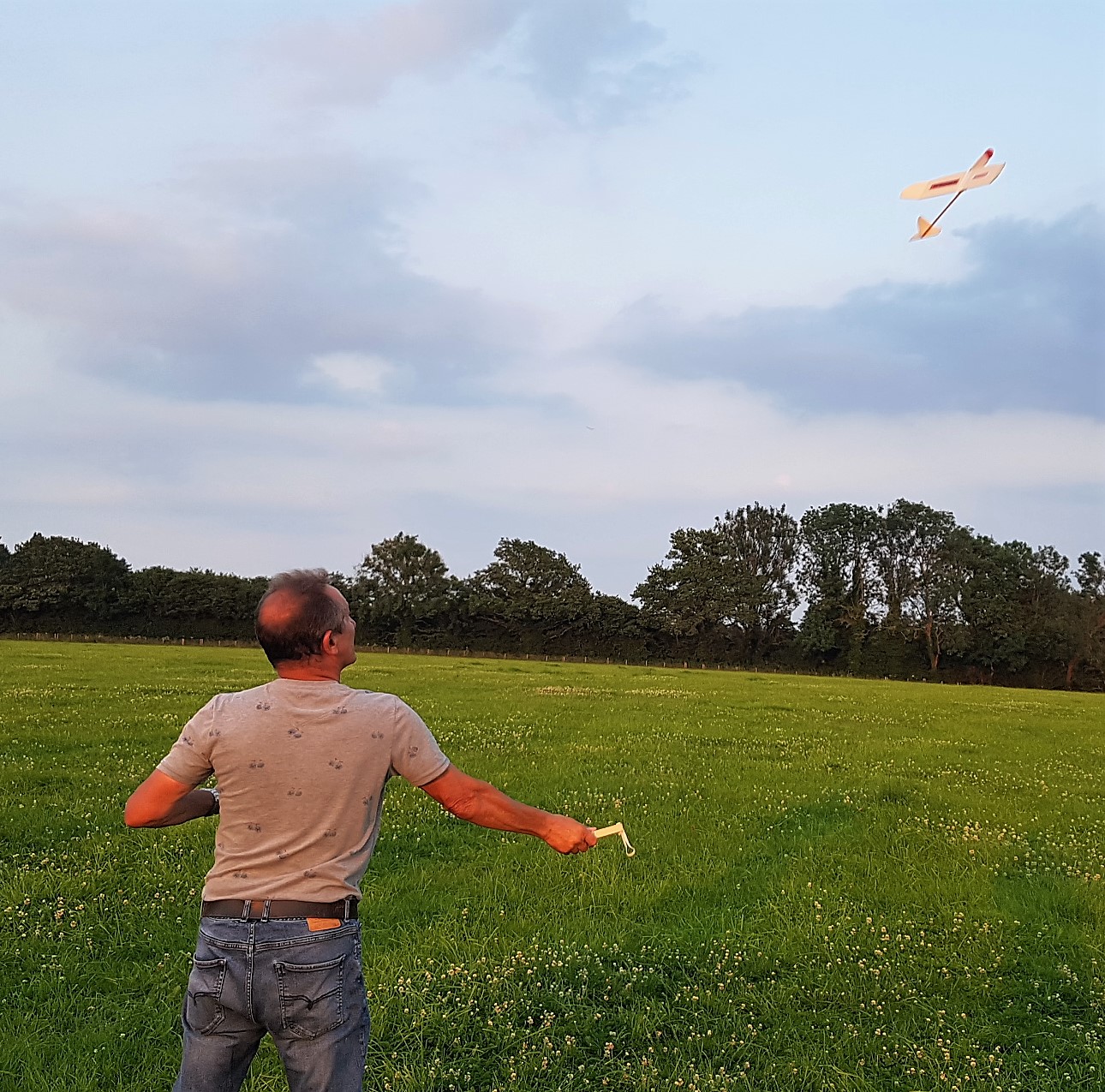
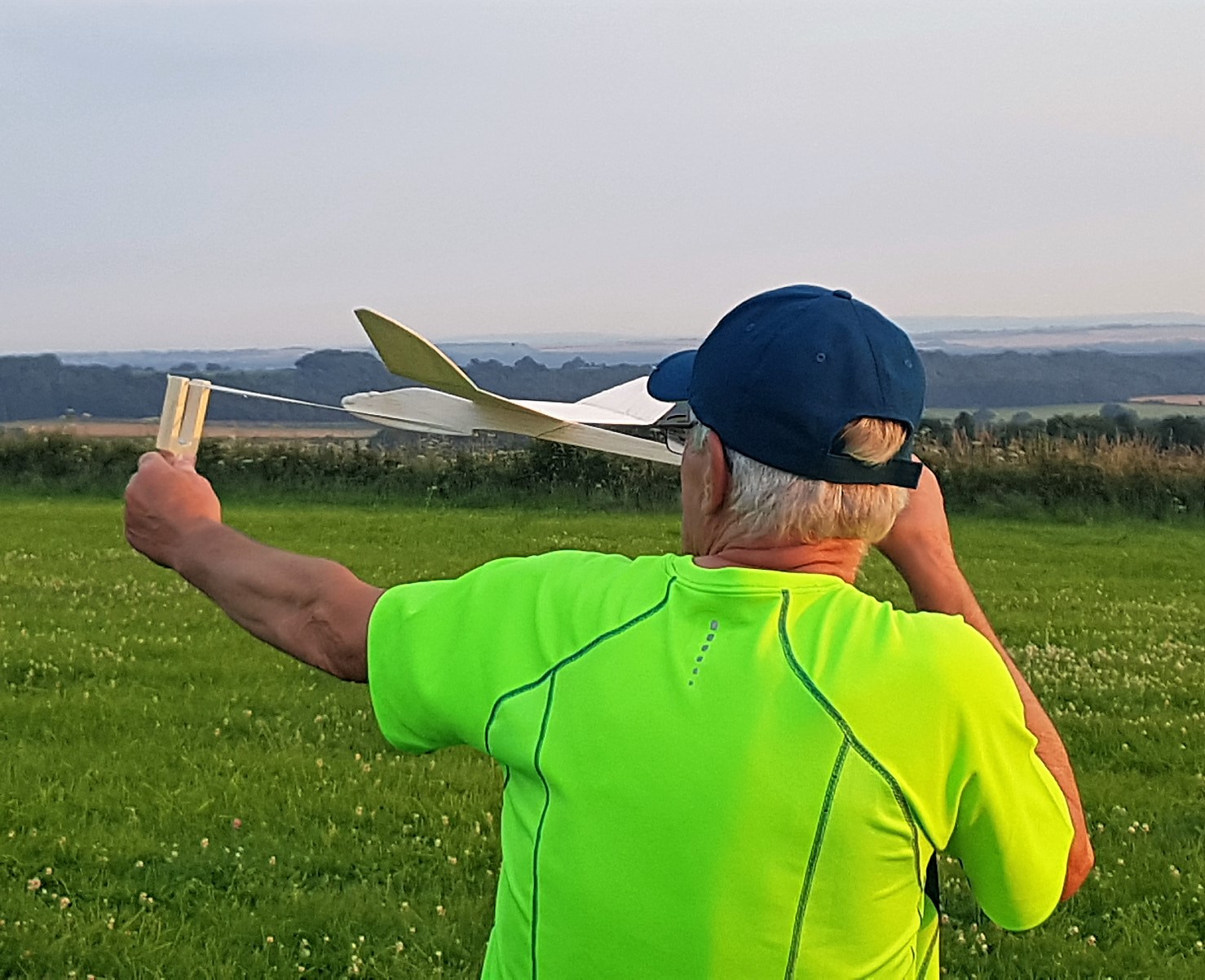 In the catapult launch section there were 6 entries. First was Keith Evans with 69.5 seconds, second was Mark Agate with 32.2 seconds and third was Alan Wood with 26.8 seconds. A good evening was had by all.
Once the Chuck Glider comp has finished Captain Slow took advantage of the calm conditions to test fly his latest new model, a paper plane! Captain Slow explains: The model, a Christmas present from my son in NYC, is a PowerUp 4.0. I didn’t use the paper in the kit because I wasn’t sure if it would survive and so scanned and printed onto a gash sheet. On returning home I found that the firmware needed to be updated, which I have now done.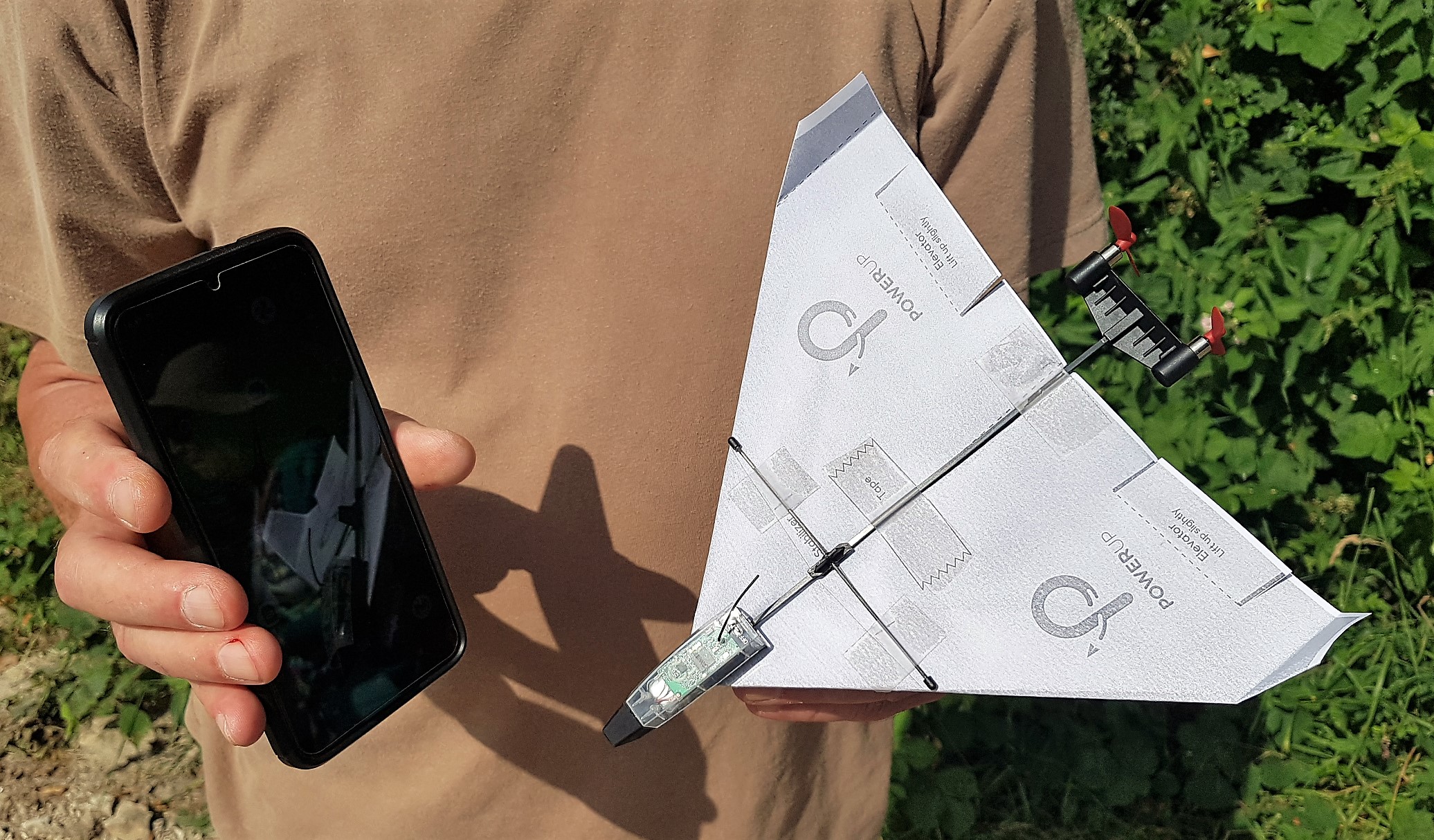 It is also possible to adjust all the control settings which I will do next time I fly it as I found it rather insensitive to turn commands. My one reservation is the throttle control which relies on you sliding your thumb up and down on the phone screen and which I found too easy to lose the setting because if it senses that you’ve taken your thumb away will shut down the motors and hence all control. More practice needed!! It certainly seemed like a lot of fun and actually flew better than I expected. It is controlled by a mobile phone using Bluetooth and has a range of around 70m which should be enough considering the plane is only 220mm (8.6”) long.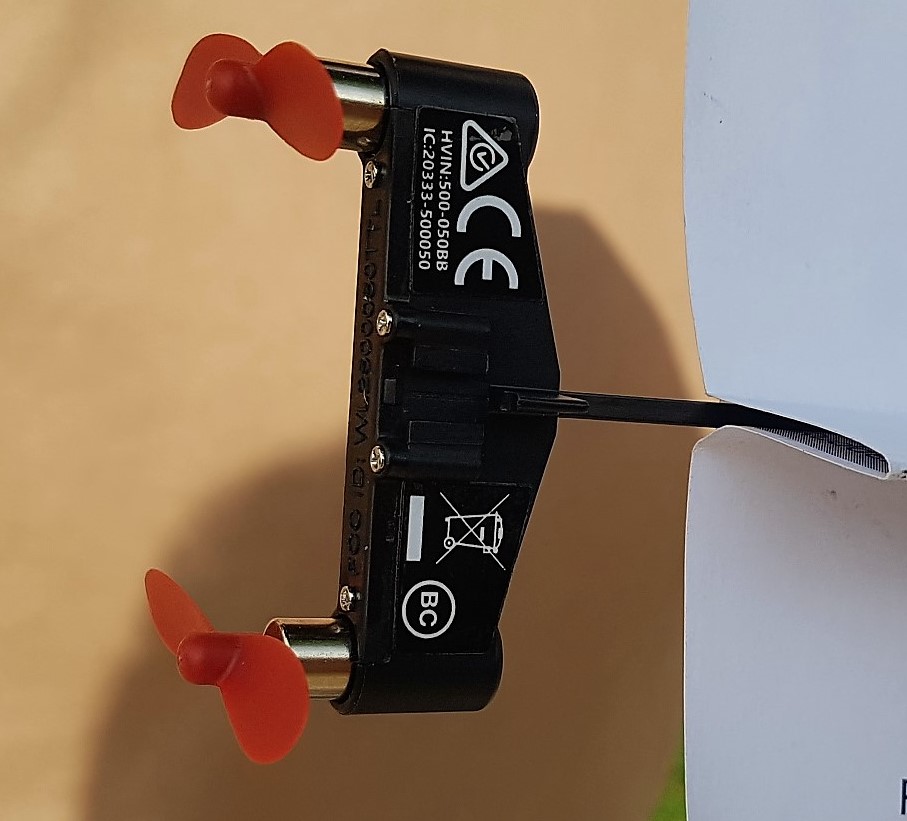
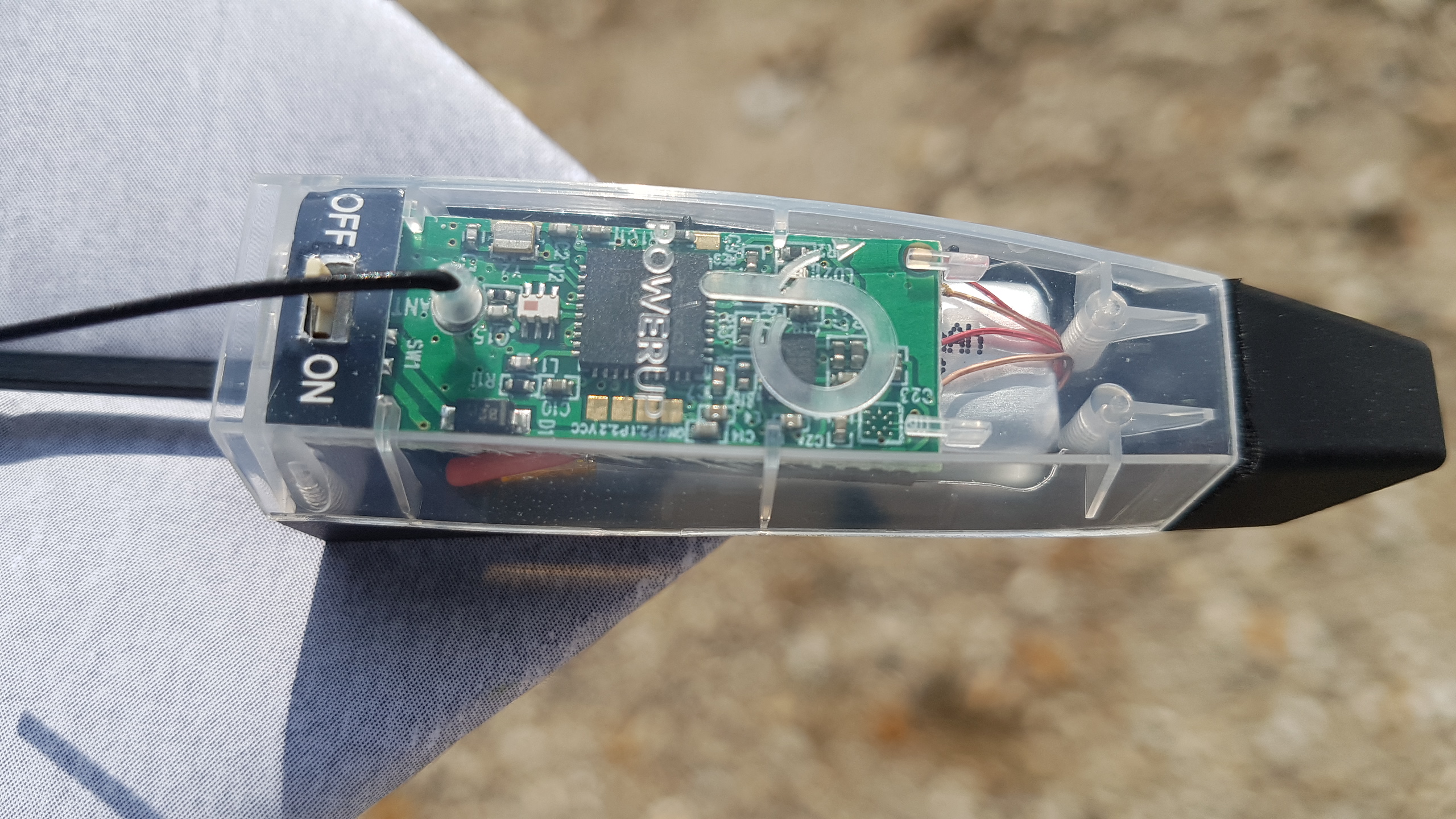 I think it would only be suitable for near calm conditions although the website says it’s ok in ‘less than perfect’ weather. Take a look at this video, it’s funny and good to see just what these paper planes are capable of doing:
Last month I mentioned Captain Slow’s wild aggressiveness when flying his Mig-29 at the same time as I’m flying my SU-27. Unsurprisingly he disagreed with my version of events and pointed out some of the battle scars on his Mig that he’s very unfairly (in my opinion) marked as attributable to me.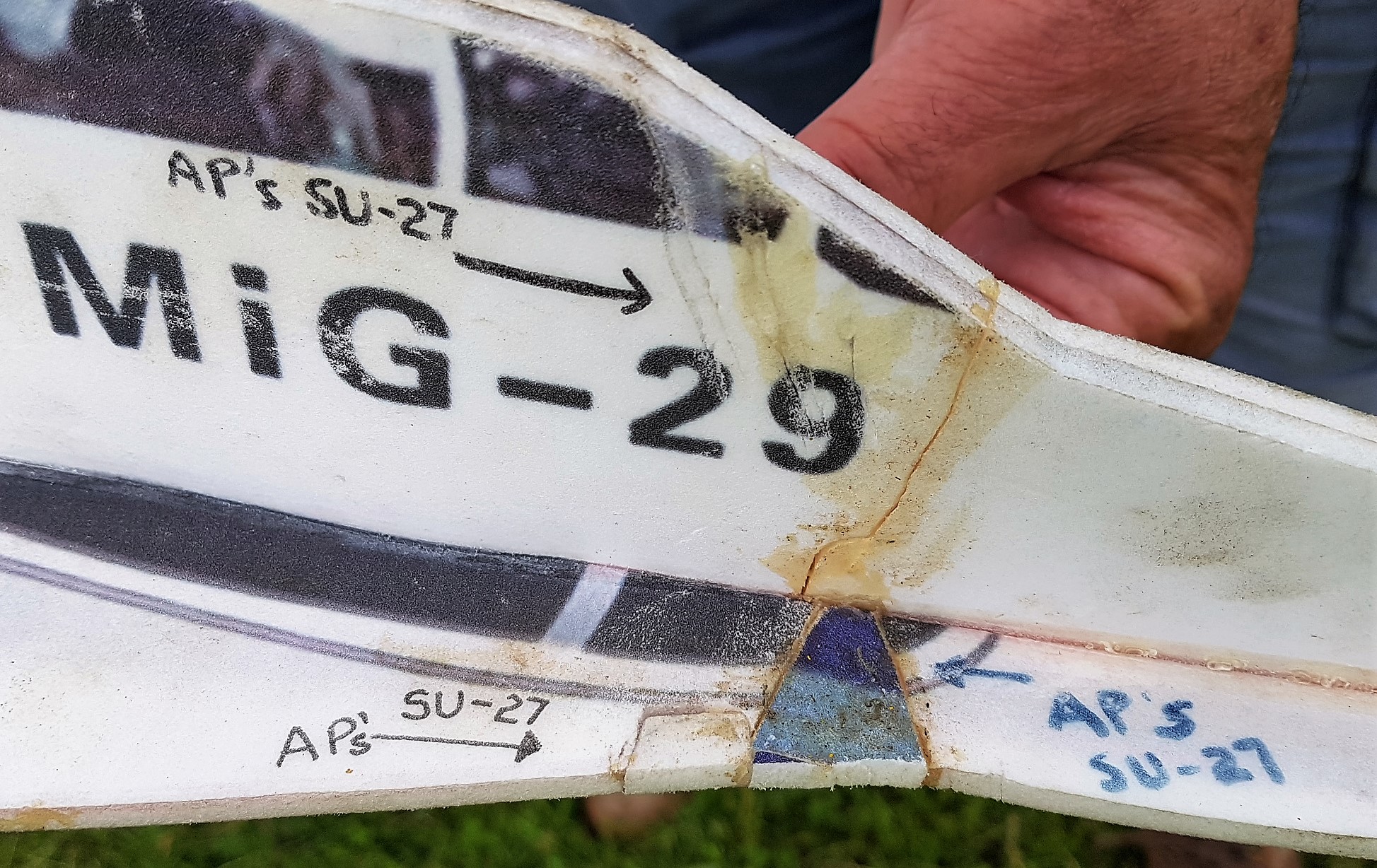
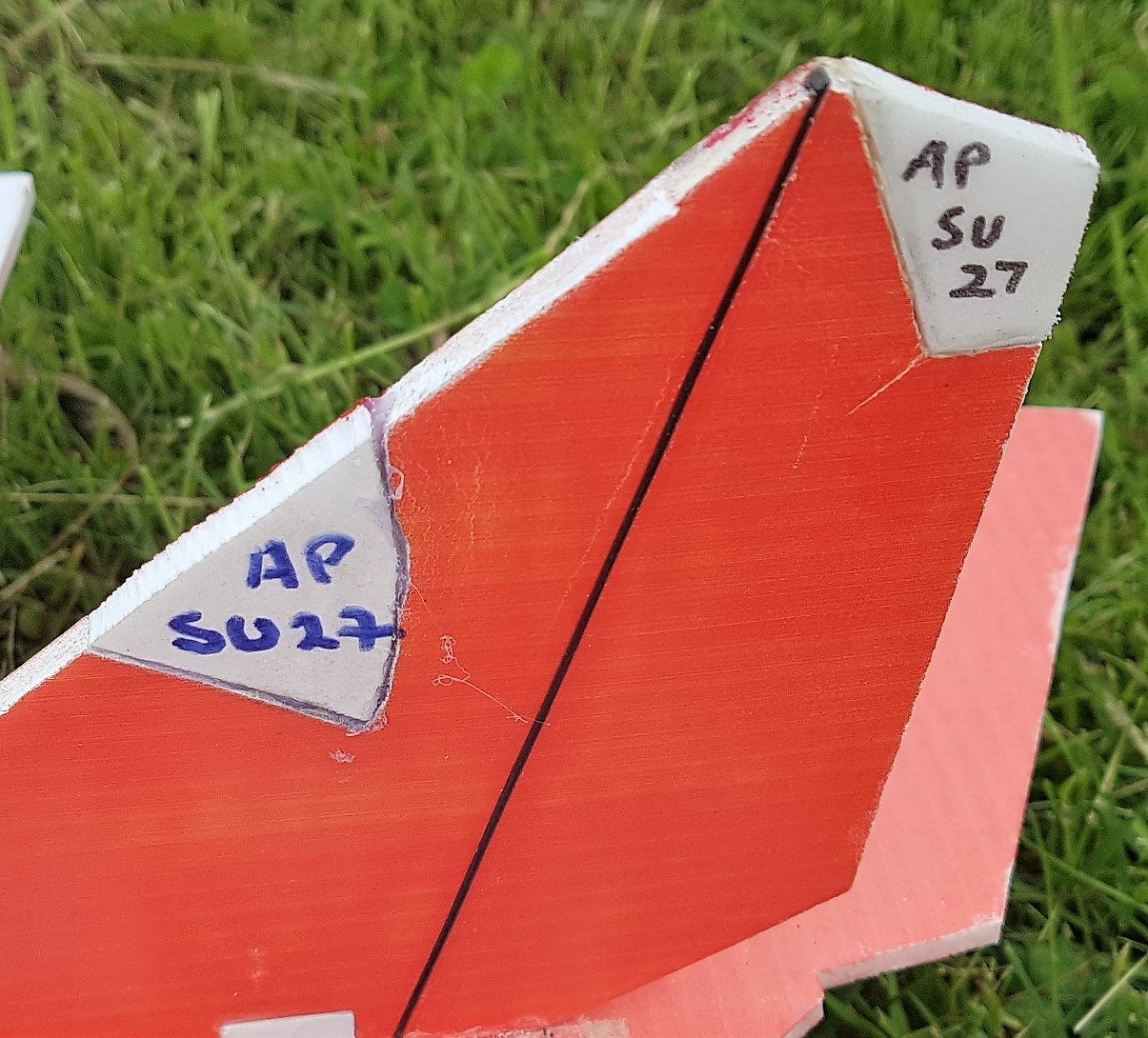 Surely not all those, I’m just an innocent party with an occasional bout of misfortune…
Oddly a similar misfortune occurred while Chas was flying his Wot4 and I was flying my Max Thrust Riot this month. We were both flying circuits with touch & goes and I don’t think either of us thought we were especially close but suddenly we heard the models touch although both carried on with no obvious problems.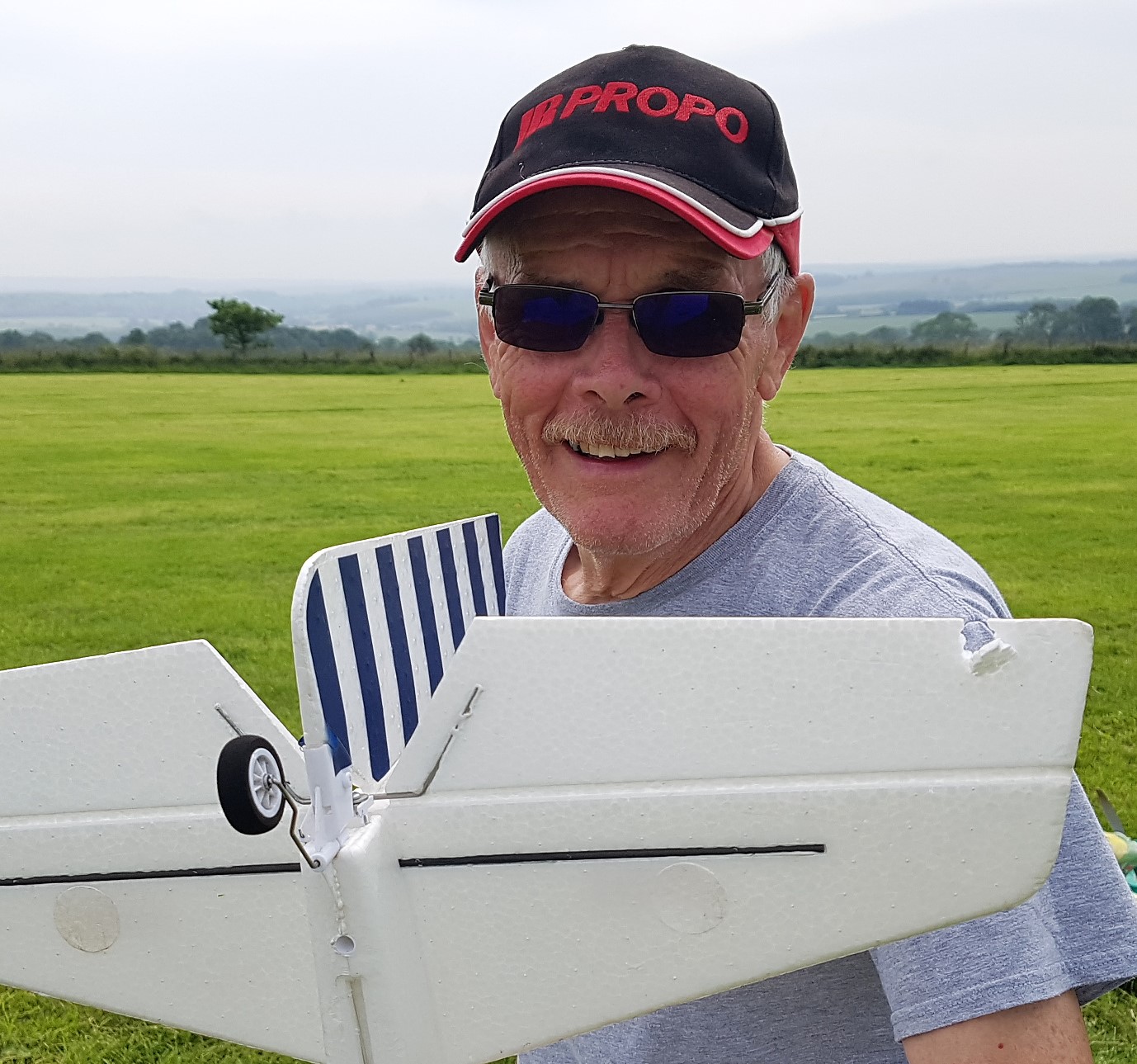 When we landed we checked over both planes thoroughly and it seems that Chas had backed his Wot4 tailplane onto the propeller of my Riot. How careless Chas, you really must take more care…!
The Max Thrust Aggressor is proving to be a popular model in the club, both Chas and Captain Slow have the electric glider versions and now Mini-Mike has bought the Extreme version that is powered by a ducted fan mounted on a pylon above the wing. Captain Slow’s Aggressor is the Sport version and Chas’s is the larger wingspan Thermic.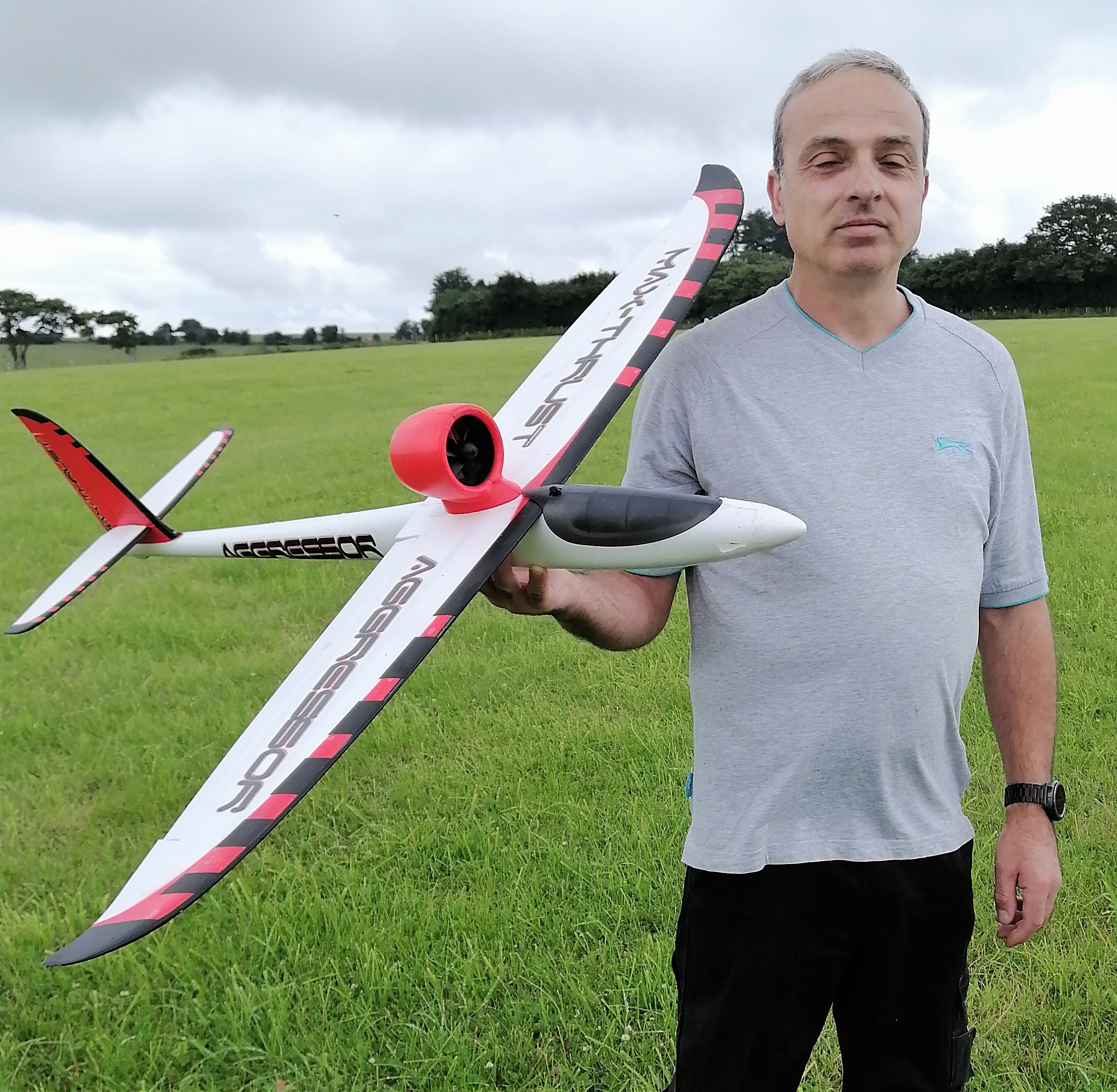 The fuselage and tail are the same as used on the Sport version but the 1200mm span Extreme wing is more streamlined than on the Sport. The Extreme comes ready fitted with a 3850kv motor and four digital servos.
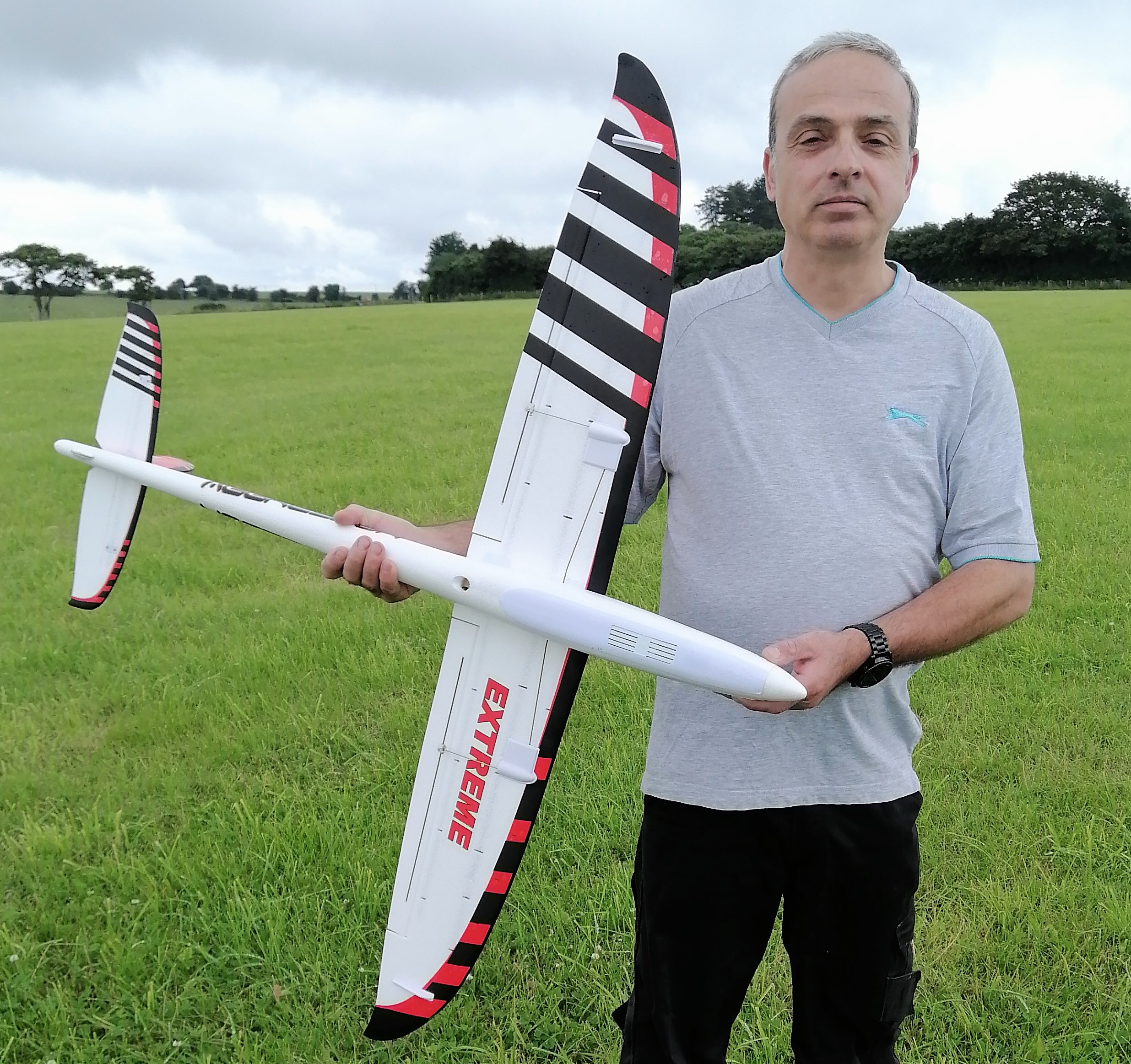 All the purchaser need to supply is a receiver and a 4 cell lipo of around 2200mAh. Mini-Mike discovered that the launch requires so up elevator as the high mounted EDF unit tries to push the nose down but once safely away the model really performs well being a fast, agile, and smooth performer. It’s in the video, take a look for yourself.
The last new model this month is Chas’s Mini Wot4. I’ve not actually seen the model yet but Chas sent through some photos and this report: The Mini Wot4 comes with four servos, the motor and the ESC pre-installed.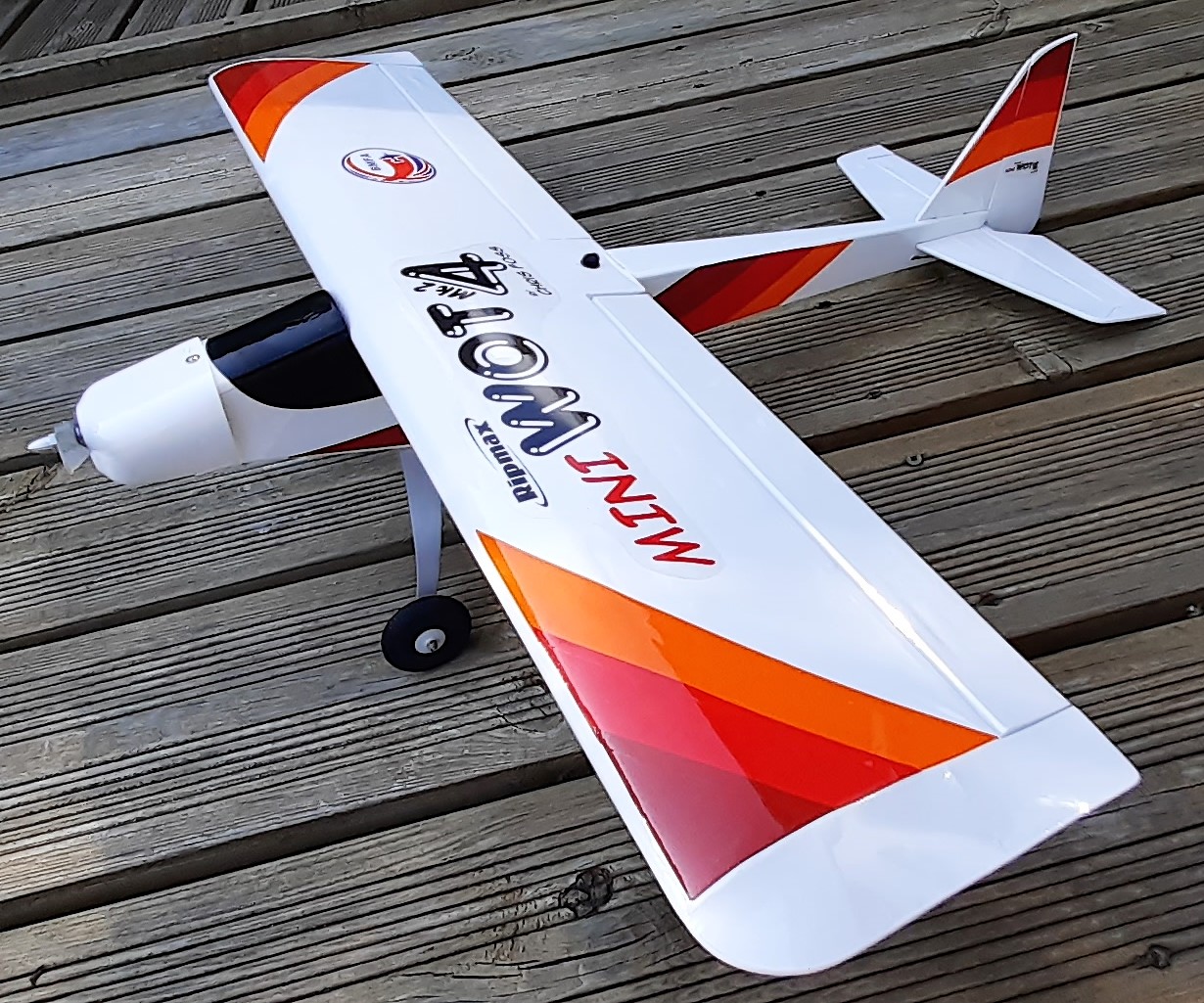
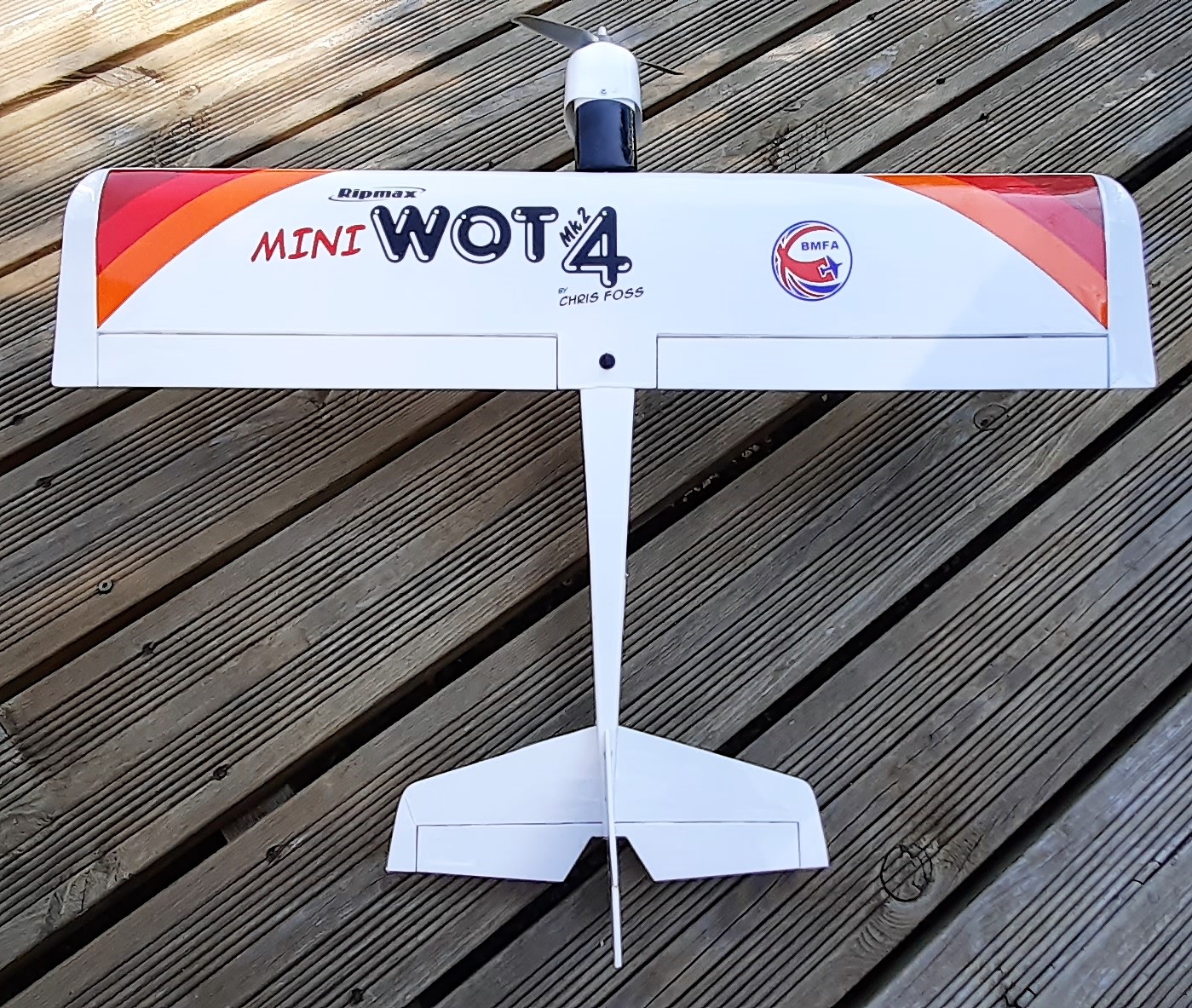 The horizontal and vertical stabilisers need to be glued in place and the control rods fitted and adjusted for length. I’ve used a 6 channel JR park flyer receiver and power is provided by an 850mAh 2s LiPo which brings the C of G to the recommended position. This gives a motor run time of 6′ 30″ with over 30% charge remaining.
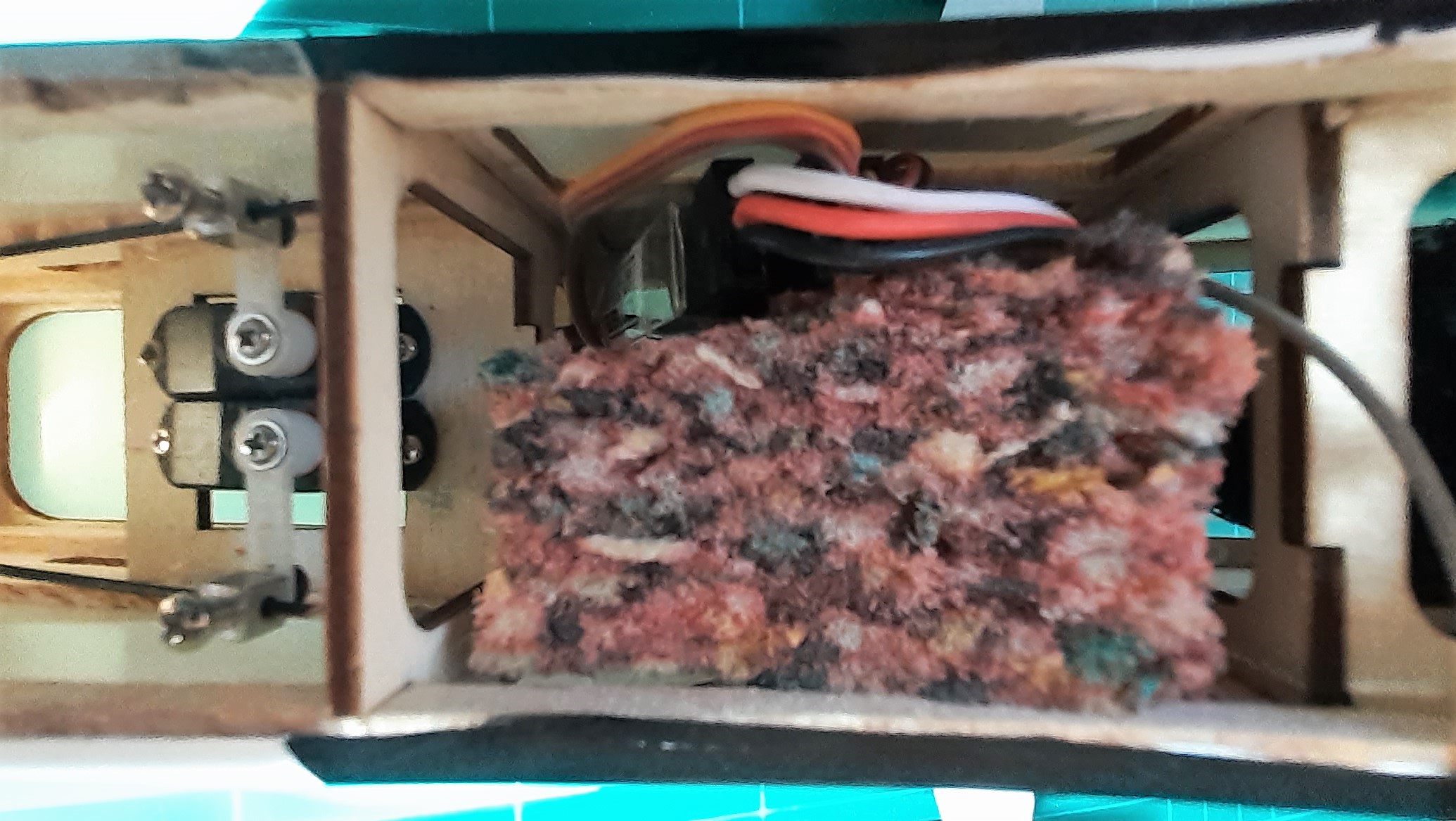 The wingspan is 26.4 inches and the all up weight is 7.8oz giving a wing loading of approximately 8.34oz/sq. ft. The first flight was interesting as the model was very sensitive to elevator and aileron movement. With the rates reduced it is very comfortable to fly and hand launches are a piece of cake. It will handle quite blustery conditions and landings are best made with a bit of power on. I have tried spinning the model a couple of times which is quite interesting as it completes a couple of turns in about a second. I have read that the servos on these models don’t centre properly but, touch wood, I’ve not yet encountered this problem and have completed 18 x 6 minute plus flights. Chas took the model with him to fly on holiday recently and snapped this photo of it on Bodmin Moor, nice.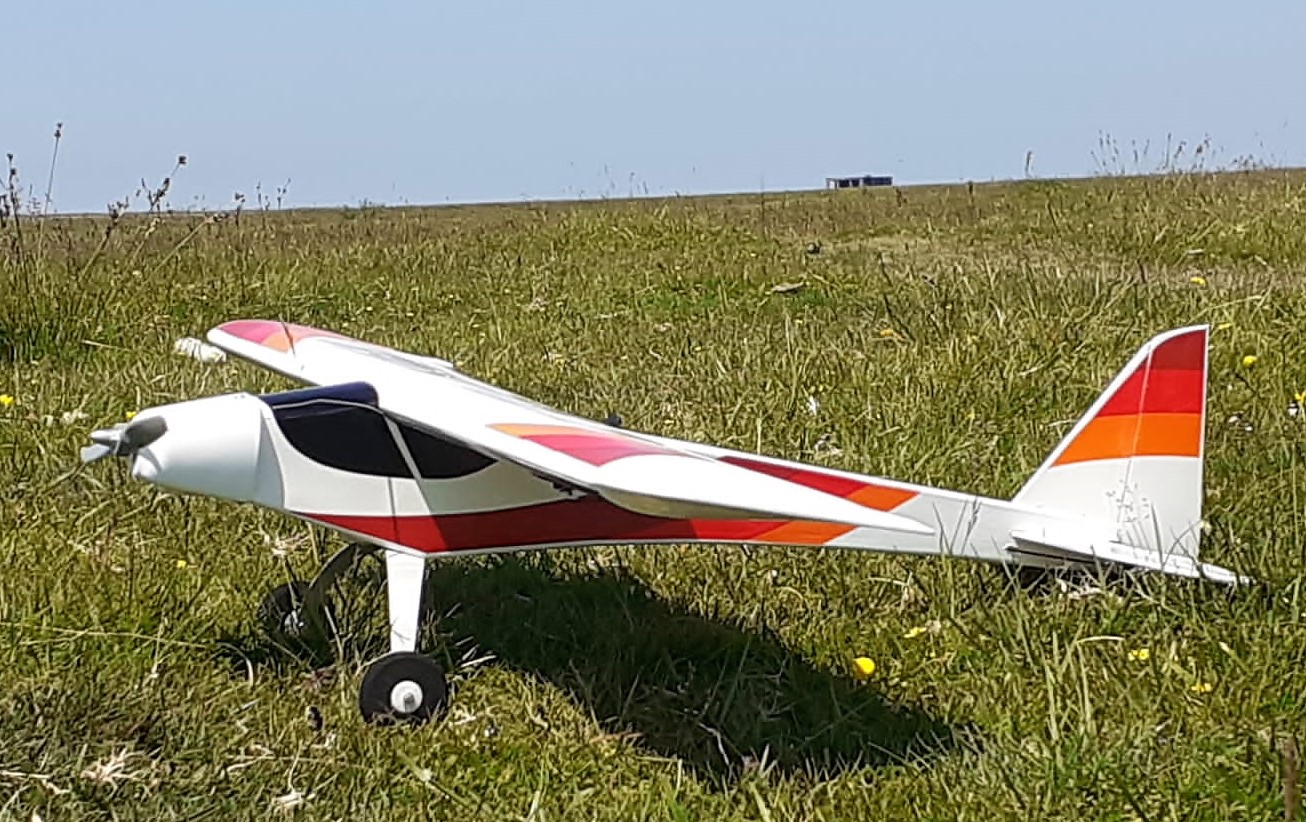
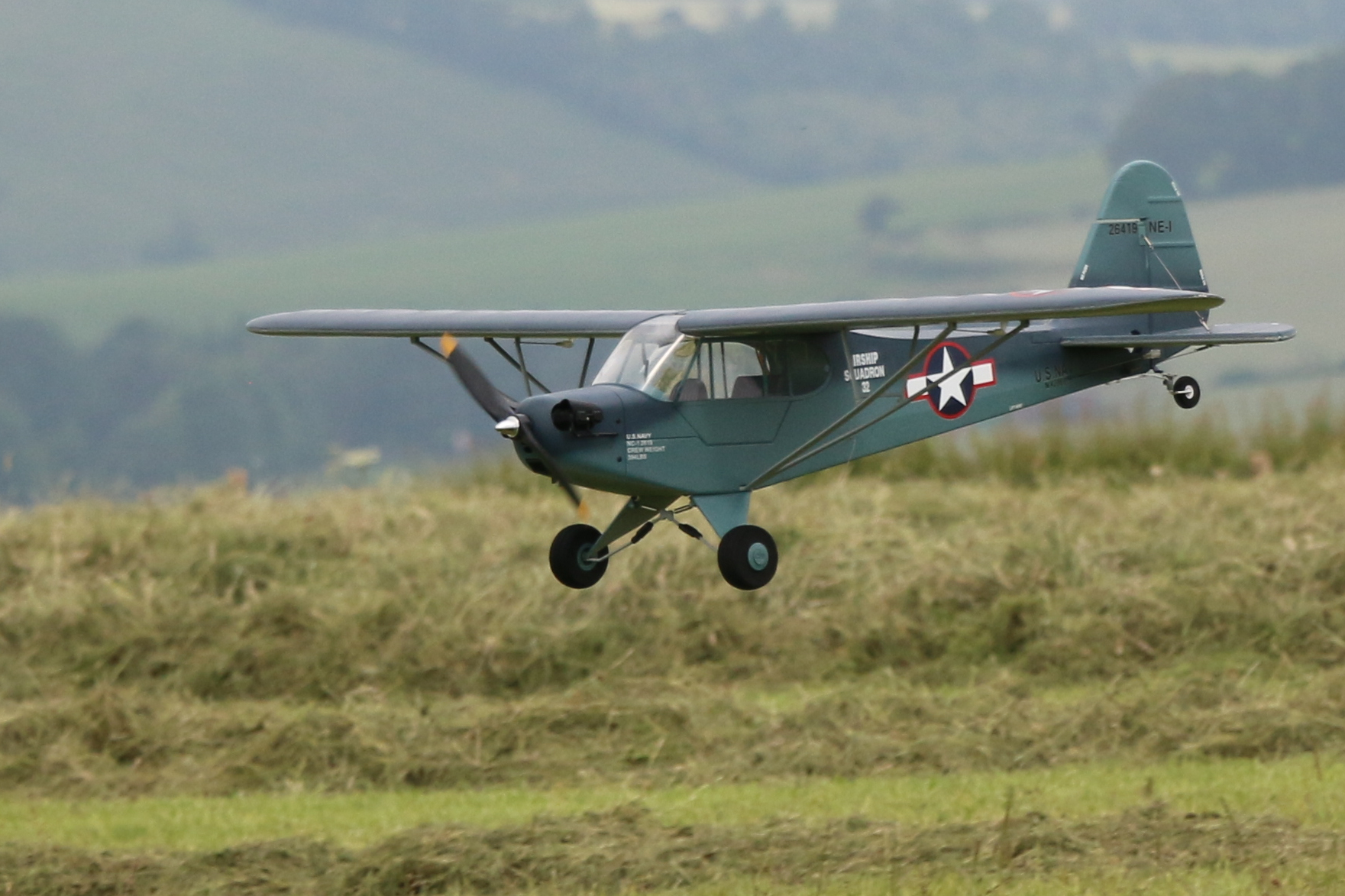
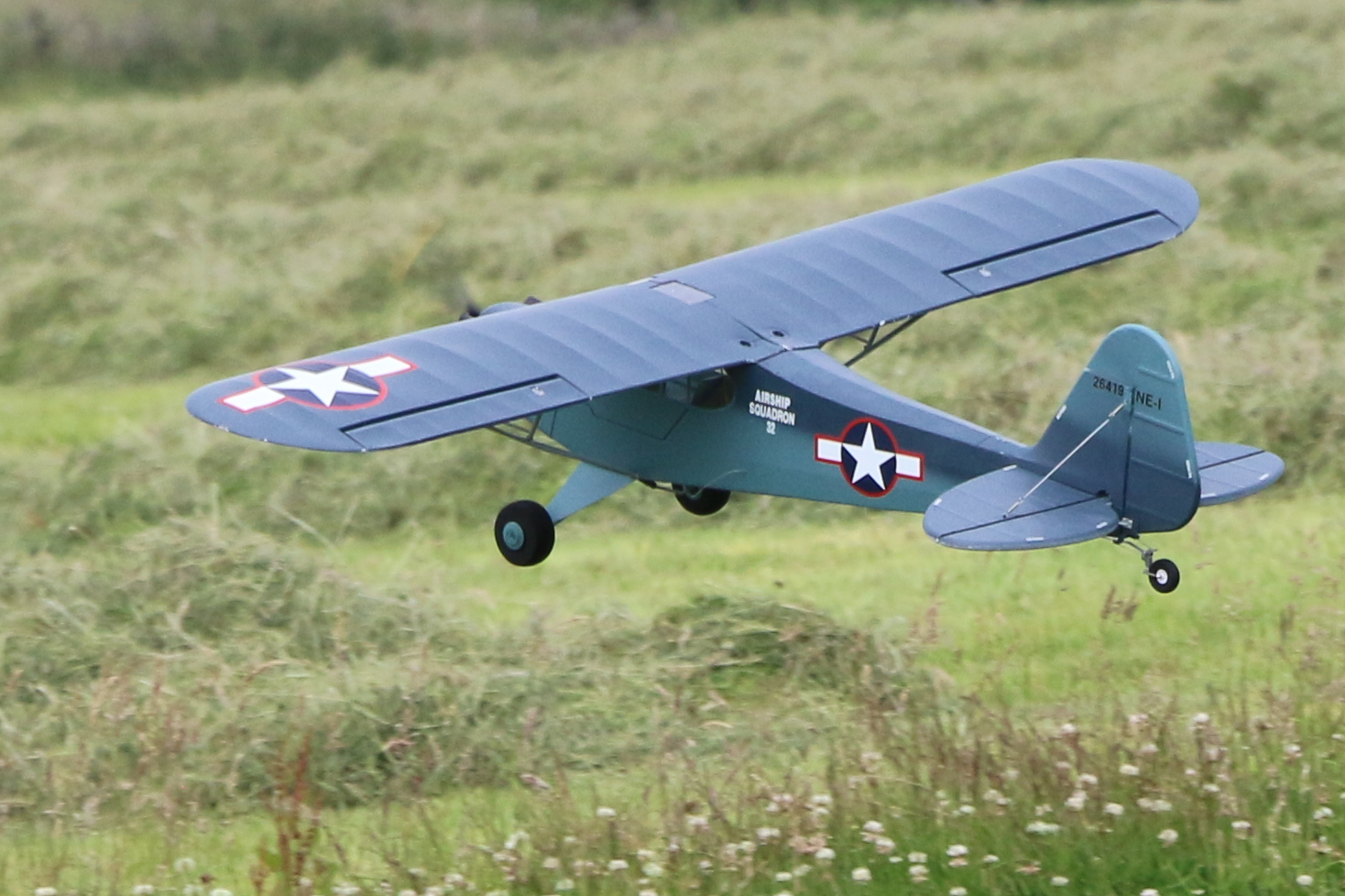
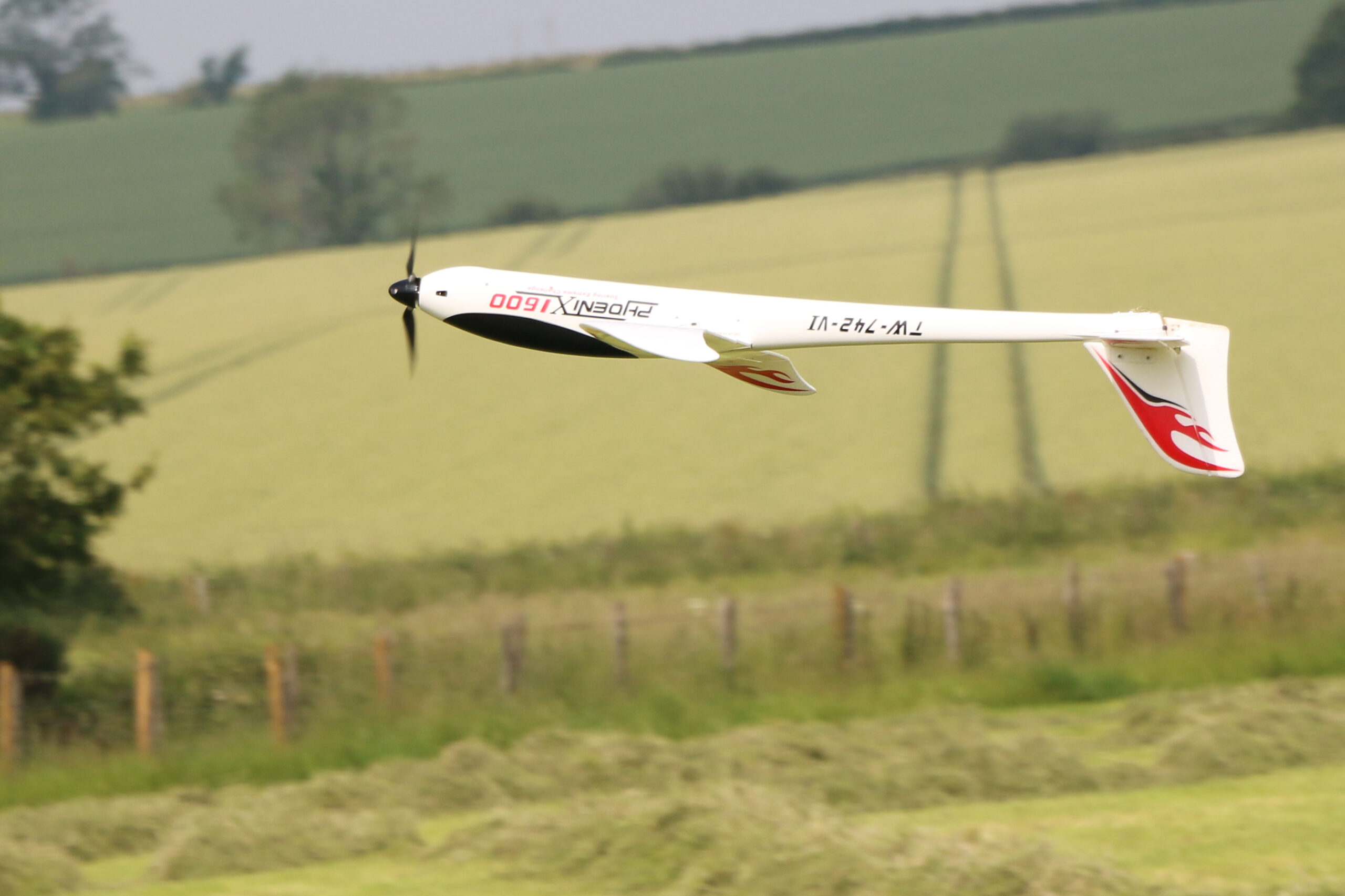
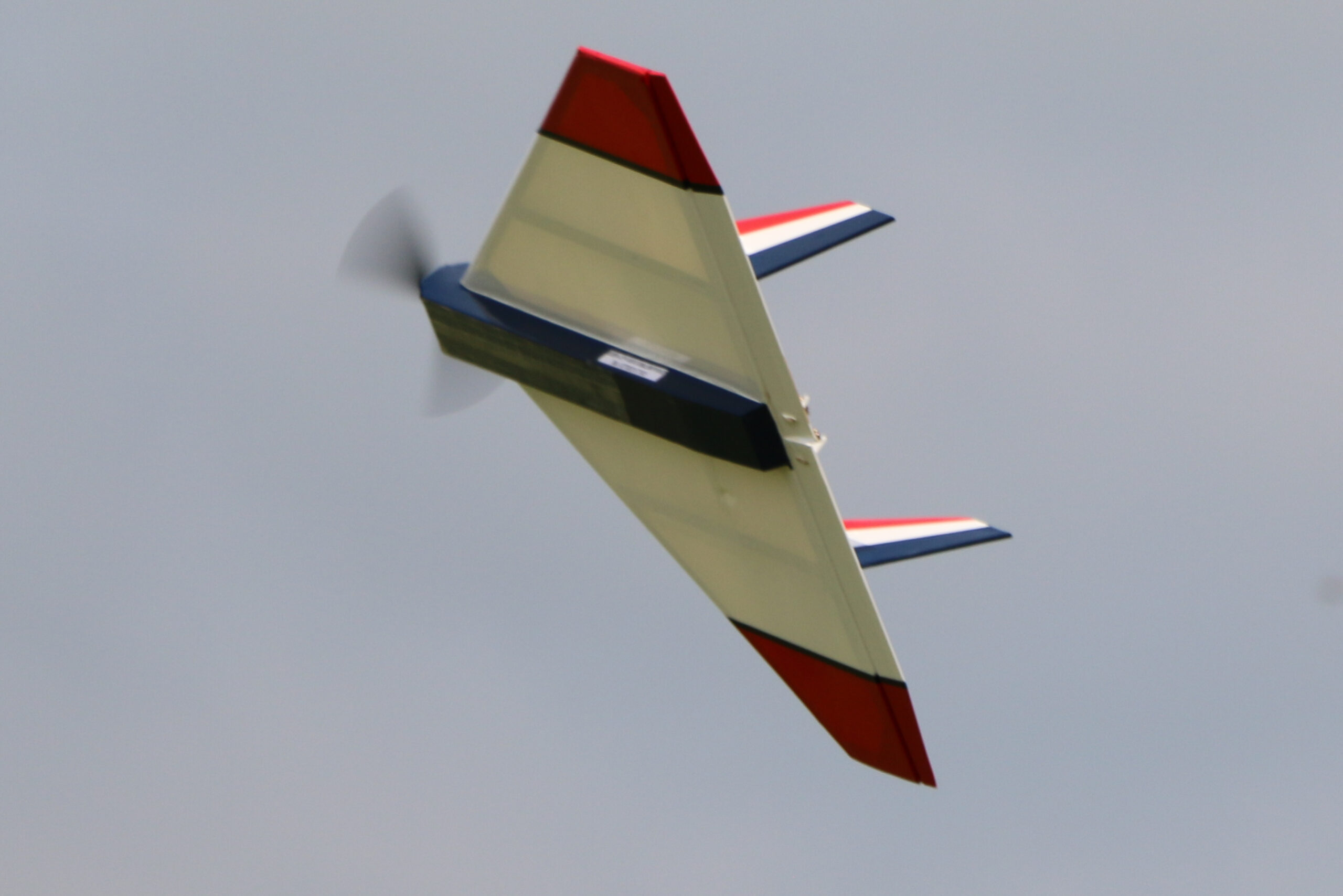
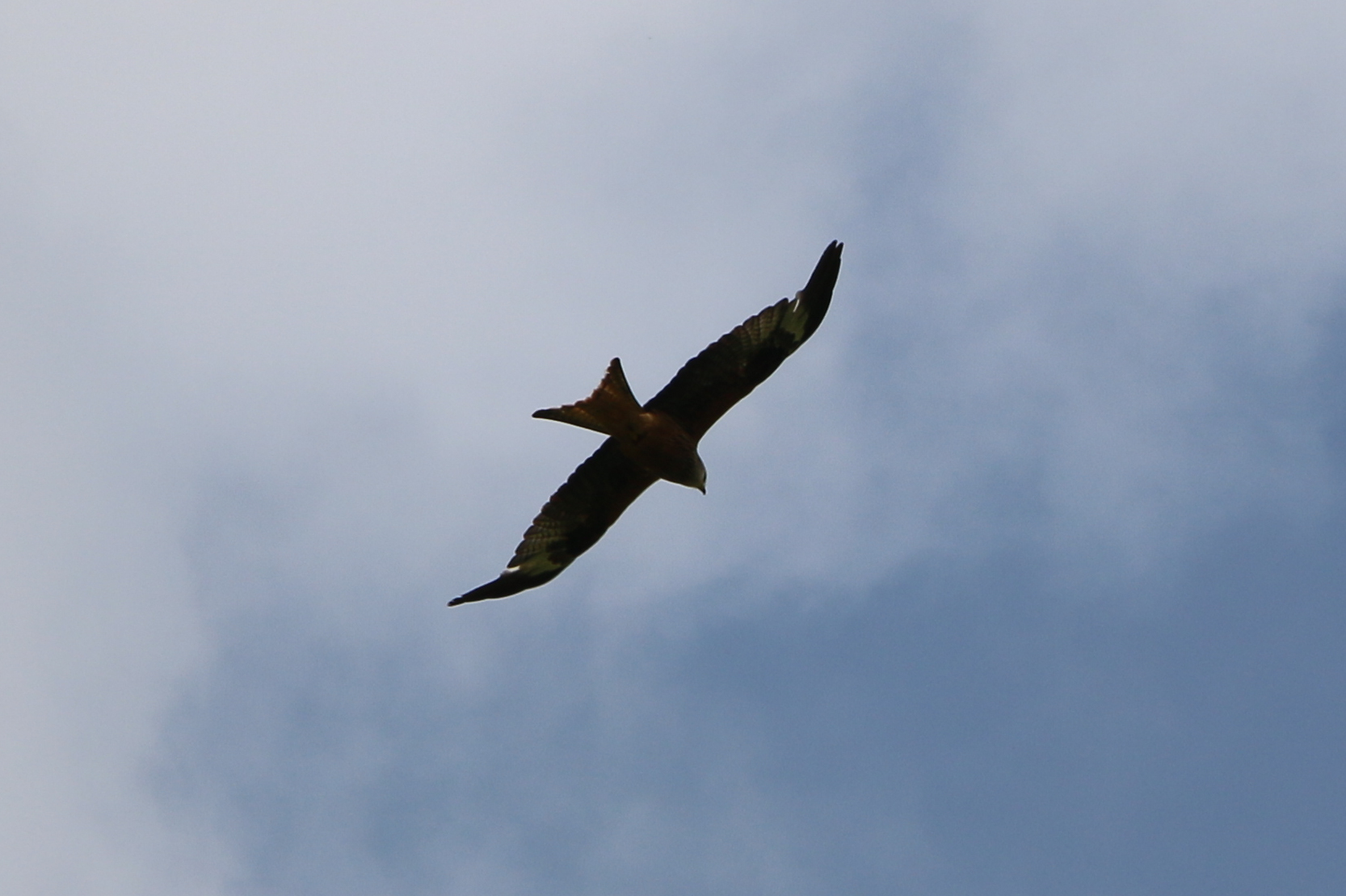
Kryten captured some more excellent flying shots for us this month including some superb ones of Chas’s Cub: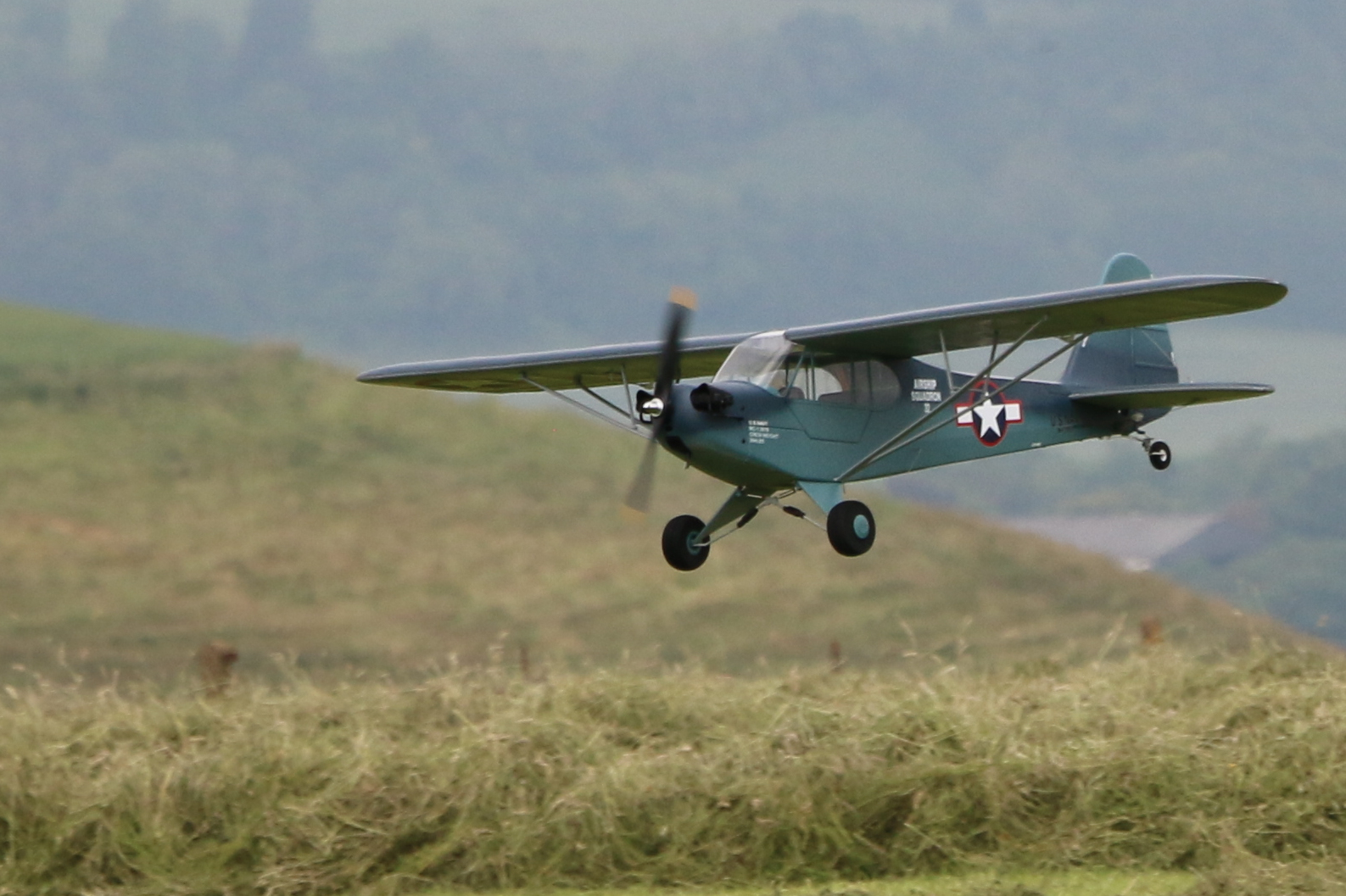
Video time now which this month includes footage taken by myself, Dougal Entendre, and Captain Slow. Please watch the video full-screen, it’s so much better with small models flying around:If the video won’t play for you please click HERE
I tried to sue the airline for losing my luggage.
I lost my case…
Colin Cowplain
Patch News – June 2021
Well that’s it then, the longest day has passed, the nights are drawing in, and winter’s on its way. Ok, that’s possibly a little pessimistic but the June weather really hasn’t been what we’d hoped for. I think ’variable’ describes it best, we had some lovely days but also a lot of wet and windy ones. With the mix of sunshine and rain the grass has grown quickly and the patch is in excellent condition. It has been mown every week, mostly on Friday afternoons.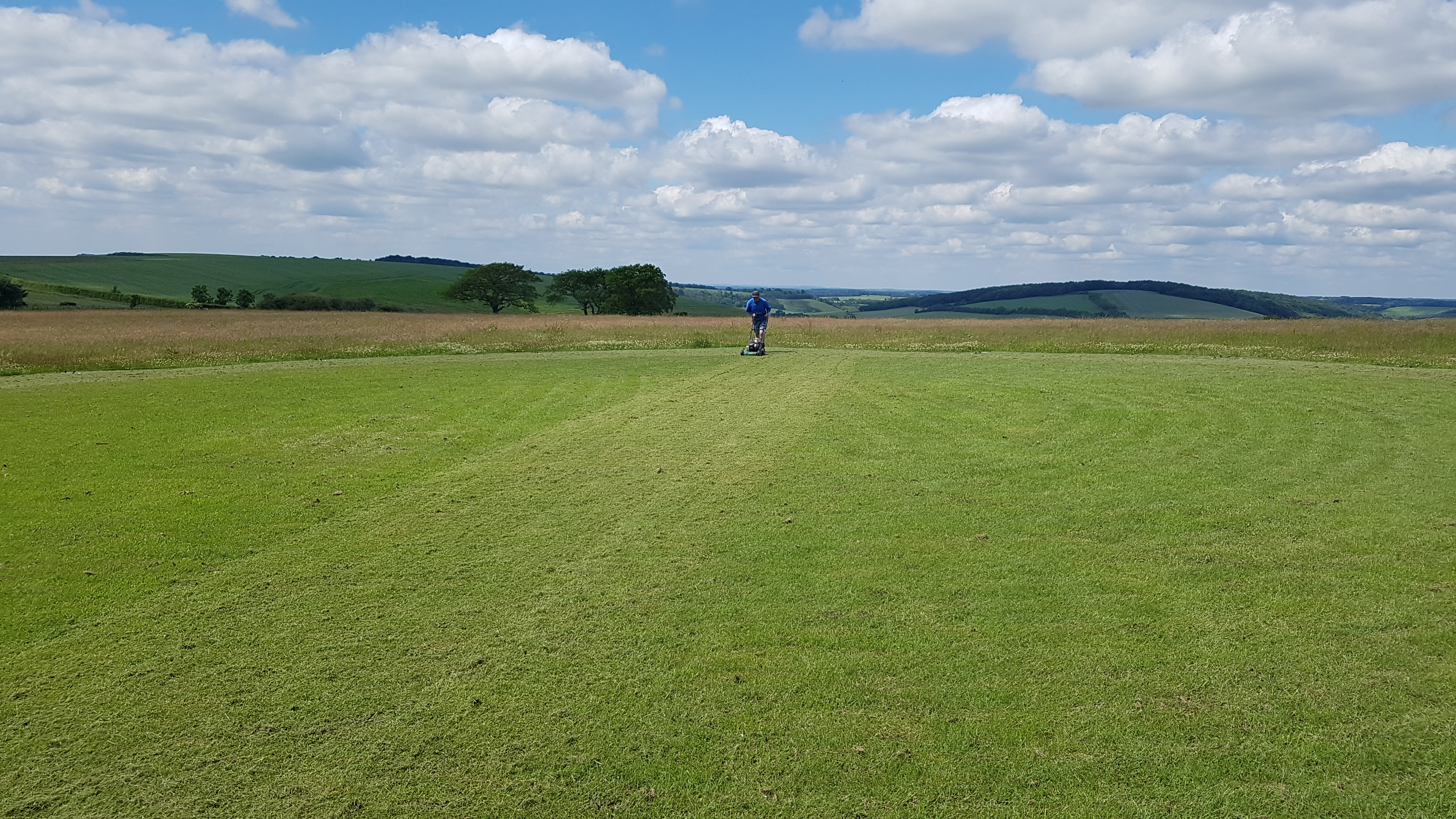 Captain Slow would like you think that he did all the mowing alone but actually all the usual workers were there as well. The grass on the rest of the field has been getting extremely long and as I write Woody has just said that it’s being cut at this very moment. Presumably Farmer George will soon be baling it ready to use as winter feed.
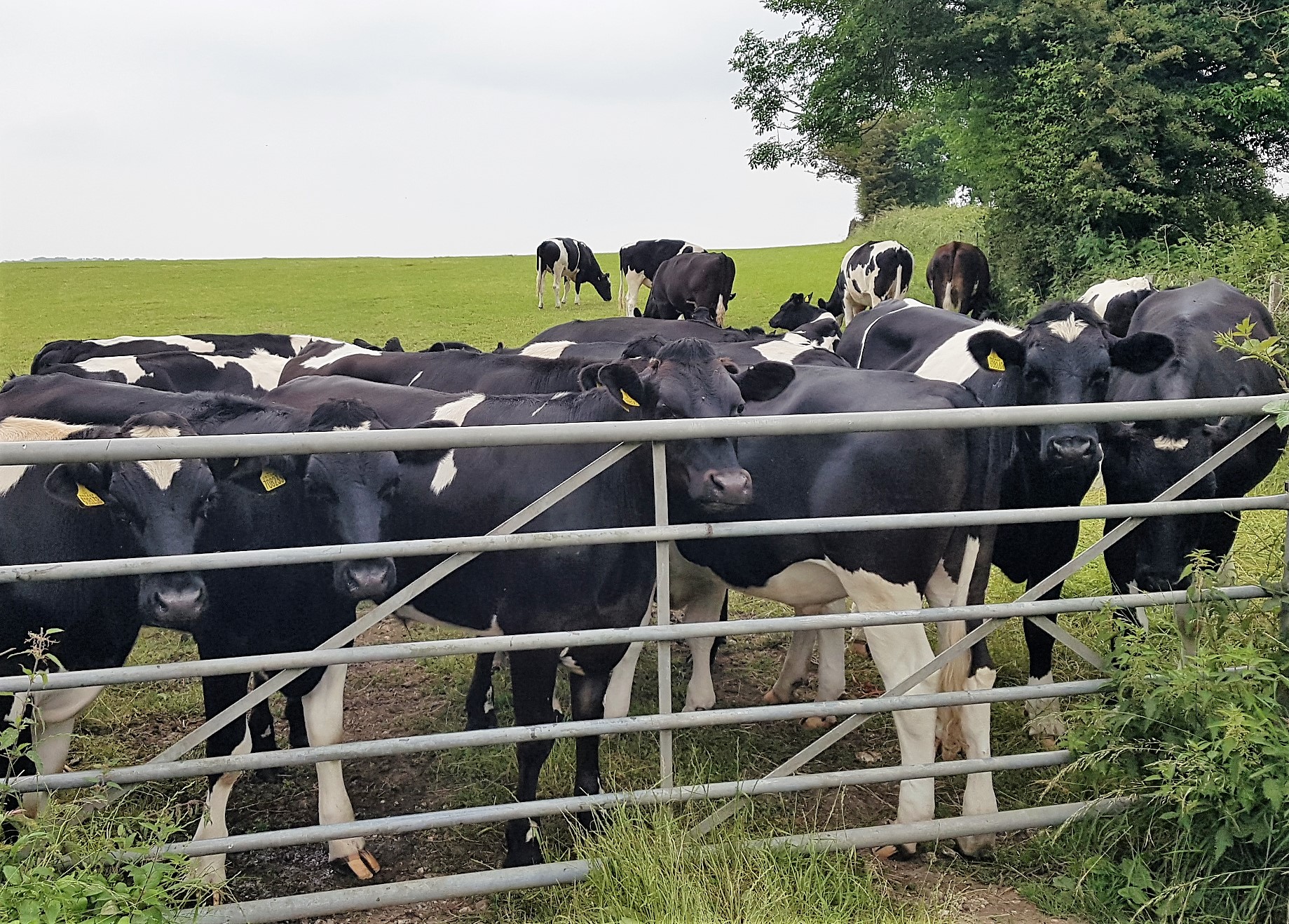 This is a herd of inquisitive young bullocks in the lower field which I imagine will arrive in our field before too long.
I’ll begin this edition with congratulations to Richard Osborn who passed his BMFA ‘A’ test so can now fly without the need to have someone supervising him. Although the flying part of the test hasn’t changed for several years the theory part has recently got much more complicated as all unmanned aircraft operations in the UK must now adhere to the eighth edition of the CAA CAP 722 Unmanned Aircraft System Operations in UK Airspace.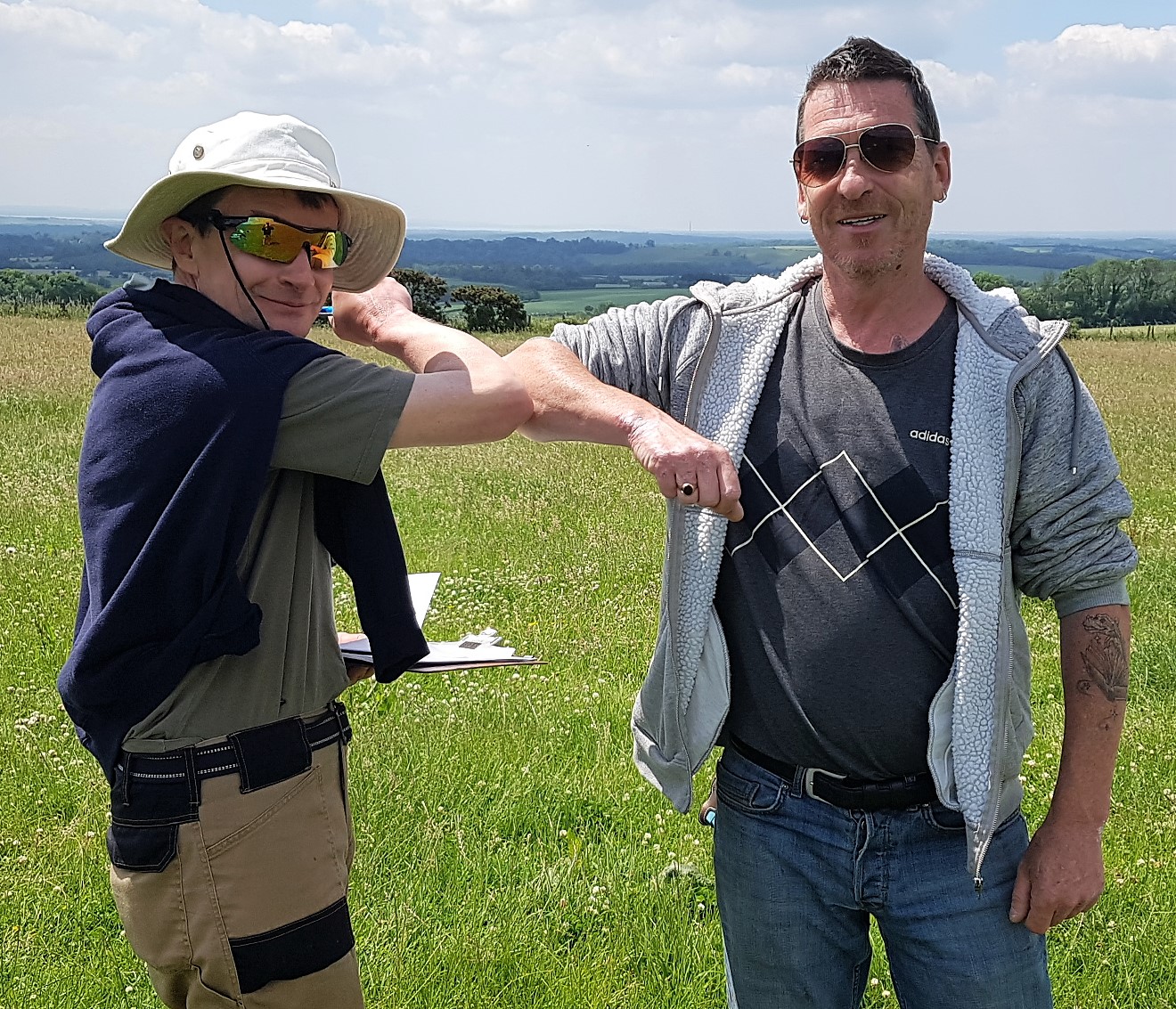 It’s all very simple, just download the 238 page document and learn it! Fortunately BMFA members can choose to conform to the CAA Article 16 Authorisation instead, a mere 14 pages. So next time you are wondering what the BMFA does for you remember that it saved you having to read 224 extra pages of stuff that is mostly irrelevant to what we do! Fortunately Richard had previously taken and passed the online BMFA Registration Competency Test.
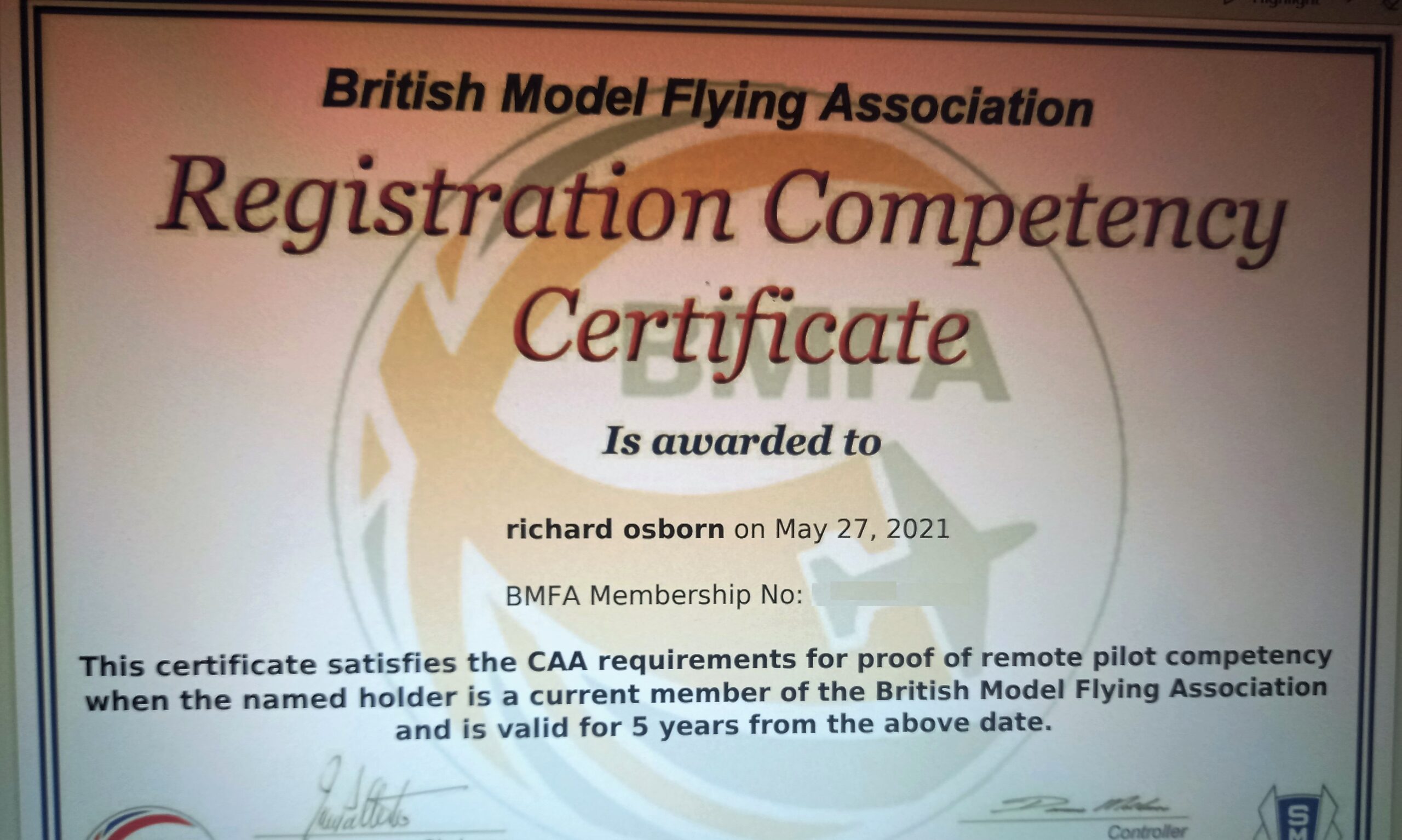 This meant he didn’t have to answer the Mandatory Questions as part of his ‘A’ test, just a minimum of 5 questions from the BMFA Safety Codes and PAM club rules. Although not mandatory it’s a good idea for all members to take the online test and register it alongside their BMFA membership. You’ll find it at https://rcc.bmfa.uk/rcc All fliers are required to display their Operator ID on all their models but of course you have all done that already haven’t you?
Club members managed a lot of flying during the month and several new models made it up to the patch to be test flown, many of which belonged to Chas Butler, he successfully test flew no less than five new models in June!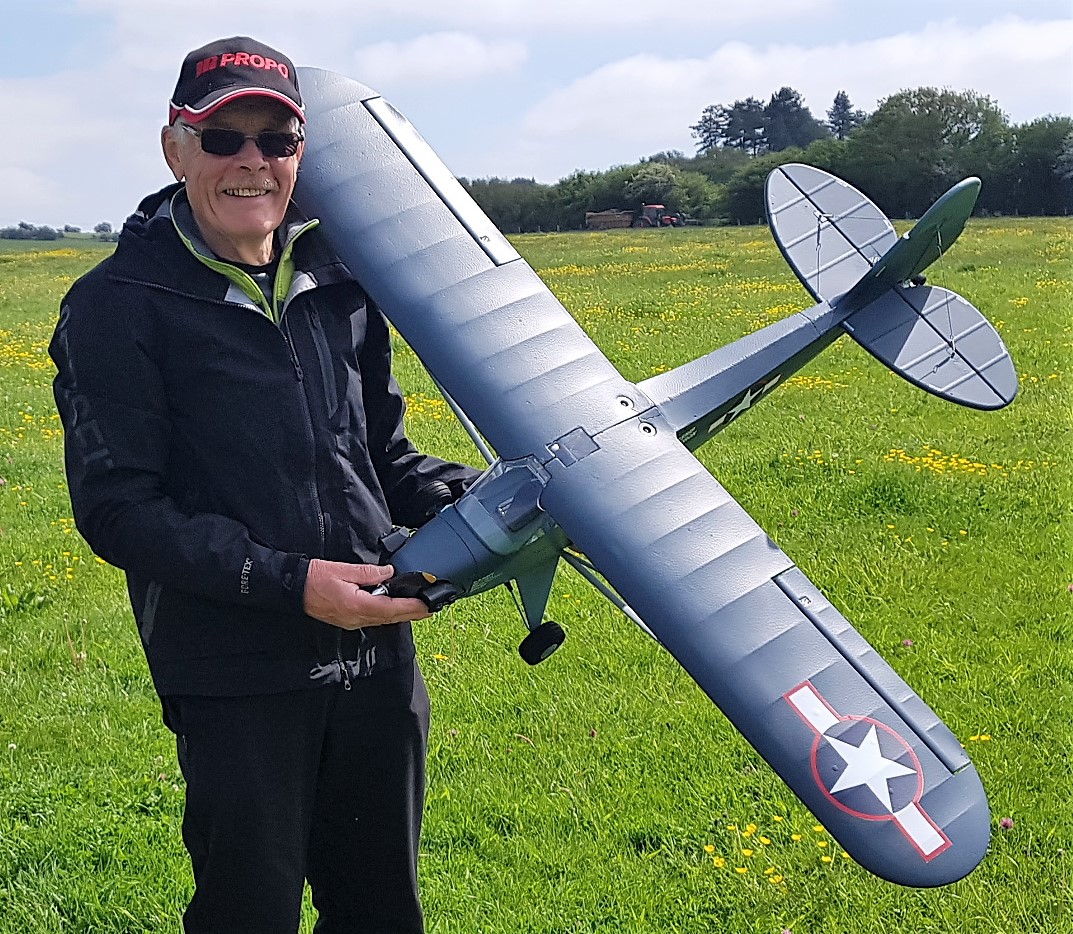 So I’ll kick off with one of his, a US Navy Cub, this is what Chas says about it: The HobbyKing US Navy Cub comes pre-fitted with a 3648 700Kv motor with a 45amp ESC and four servos. The landing gear assembly instructions were a bit vague and I have reservations about its durability. After four flights two of the tensioning springs have broken.
 Suggested batteries are either 3s or 4s with a 2200mAh capacity. I’ve only tried 4s batteries so far and there is plenty of thrust from the 12 x 6 scale’ish propeller. There was a tendency for the model to try to ground loop on the first attempt to take off but using a lower rate on the rudder/tailwheel makes this easier to avoid.
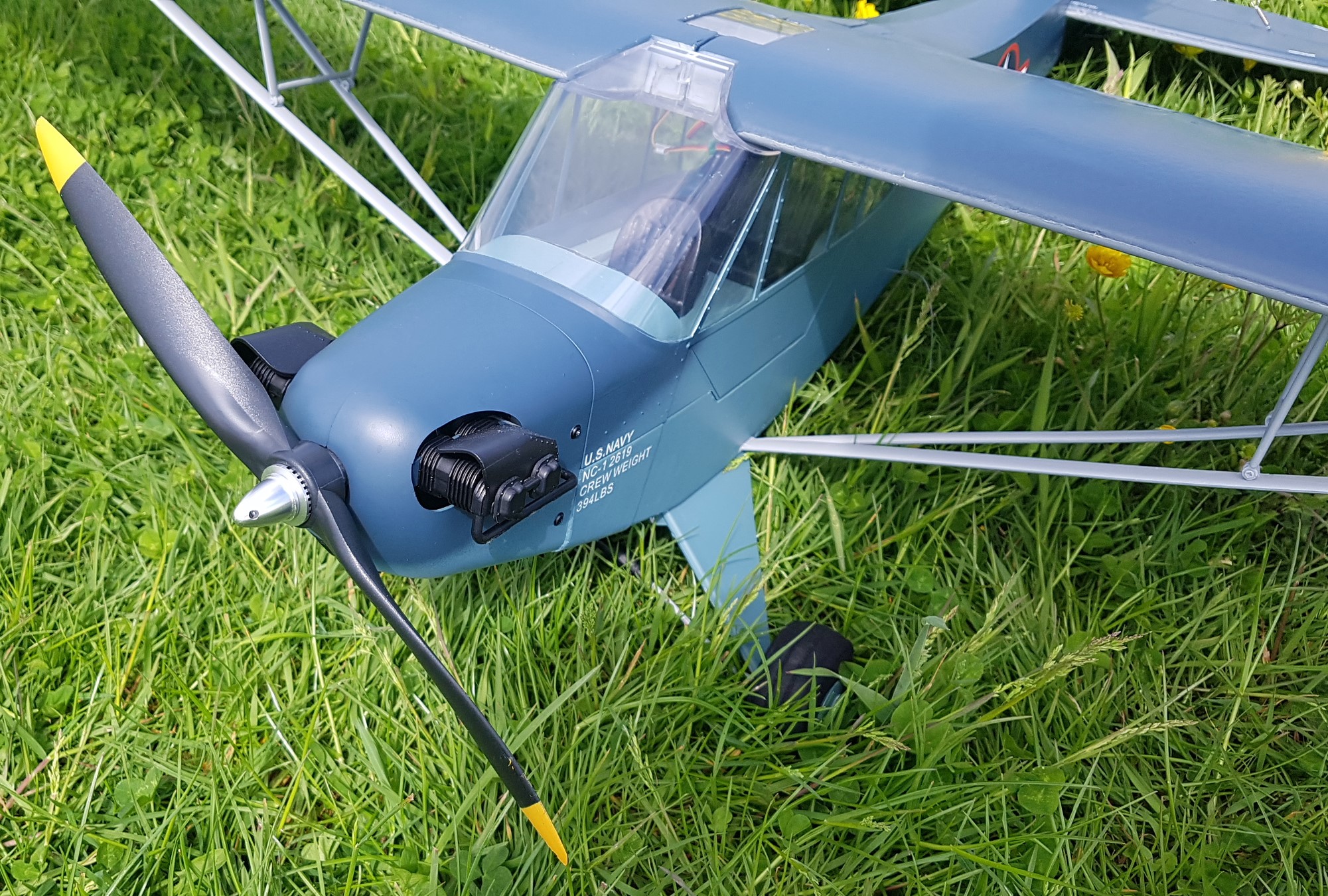 It flies very well and turns nicely with a little rudder added to the aileron and flight times of seven minutes have only used about 60% of battery capacity. Thanks for that Chas. If I remember correctly the HobbyKing US Navy Cub is the same model as 1066’s US Army Cub with only the colour scheme being different. I know 1066 also had trouble with the undercarriage, both assembly and durability, and I think he replaced it completely eventually. Of course to stop needing the undercarriage at all Chas could rig up a model of the Brodie System that the Americans used for launching and recovering Cubs and Stinsons at sea. It’s one of those mad things you’d think would never work:
Woody has built himself an F-22 Raptor from an RC Factory kit that he purchased from Align Trex. When I checked the website it was out of stock but is available from RobotBirds although I don’t think I’d pay £54.41 for one.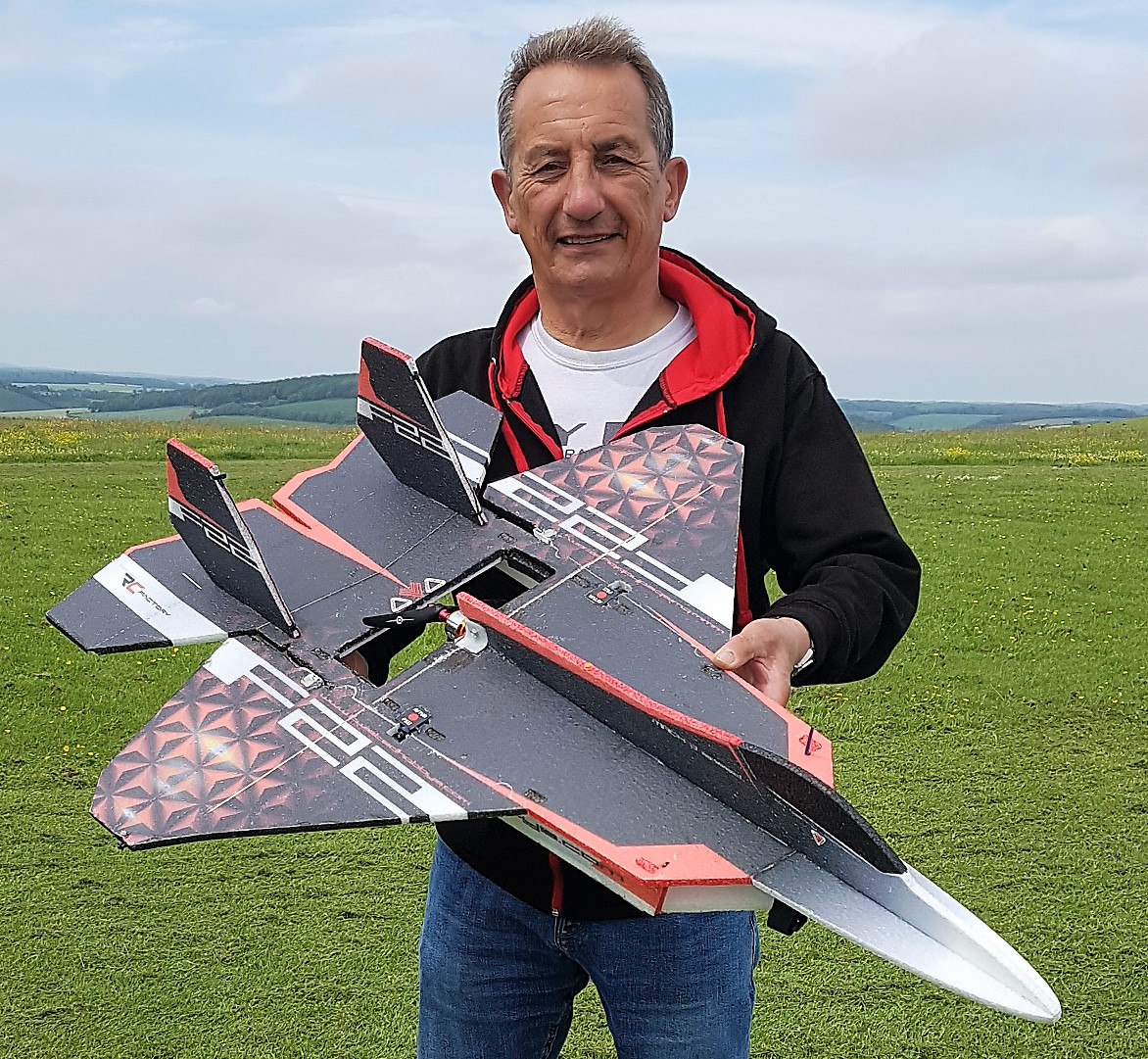
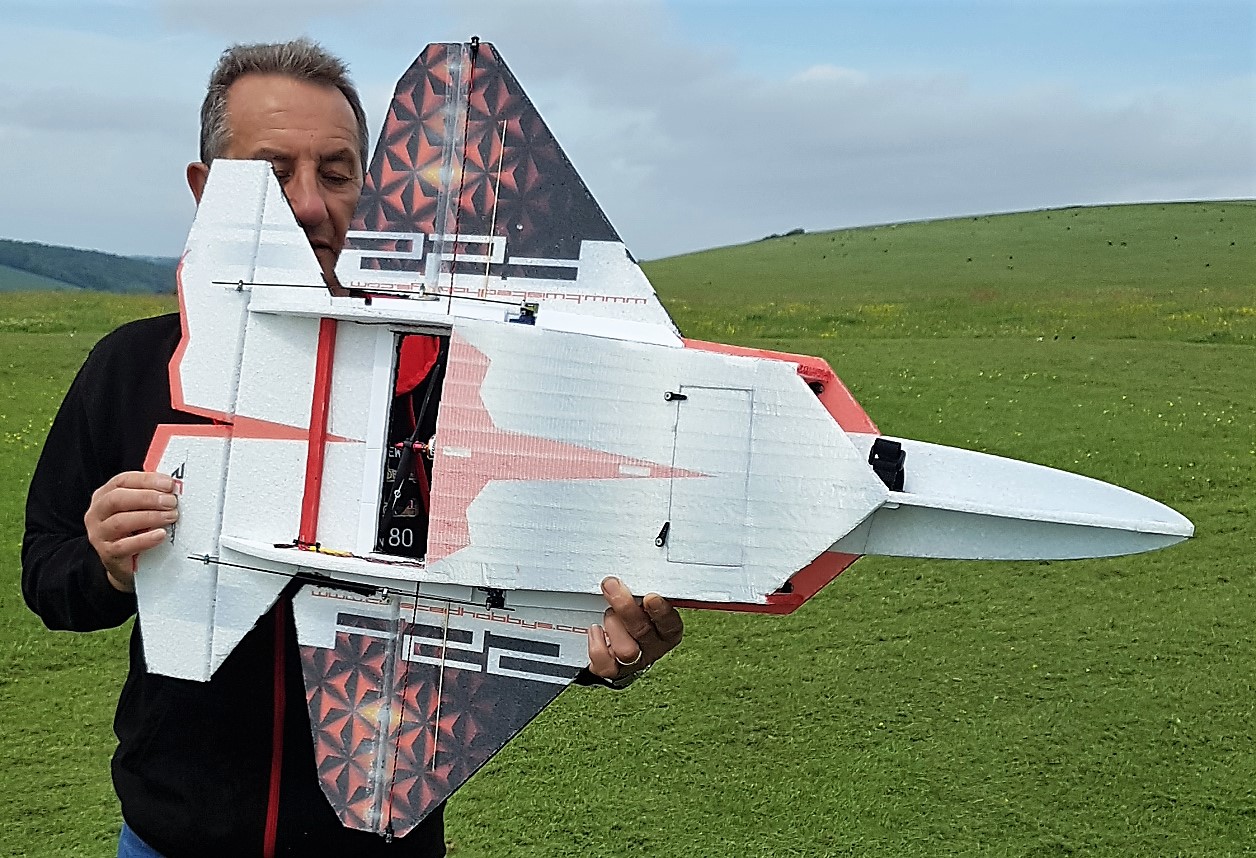 It’s very much along the lines of the foamboard jets that many of us are flying but this one is made from EPP not foamboard. I did the initial test flight at which point the model was fitted with a 1400Kv motor and although it flew fairly well once I’d trimmed it out it definitely needed a higher Kv motor to provide more power.
 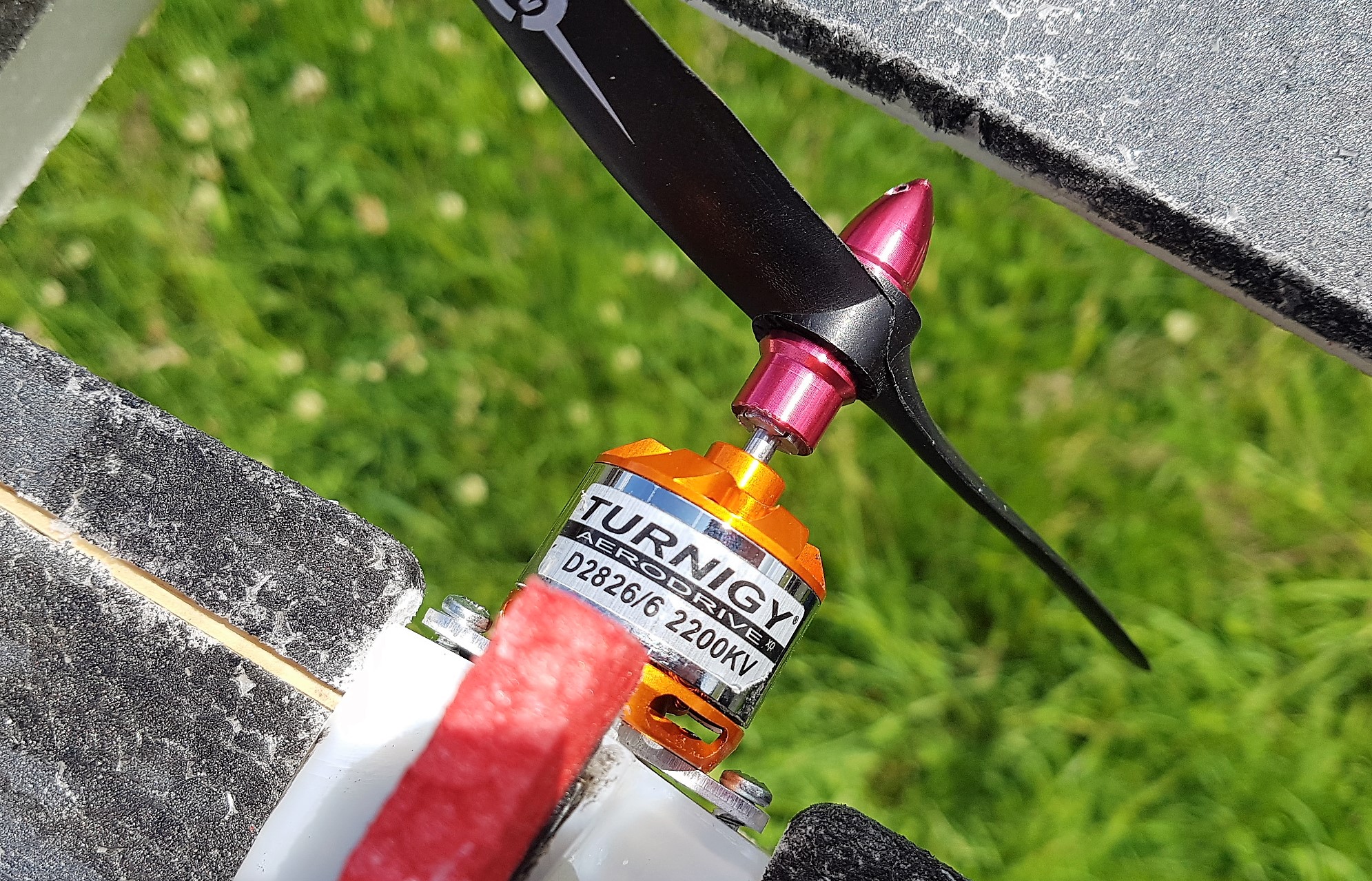 So Woody later swapped the motor for a Turnigy 2826/6 2200Kv and now it performs as it should, just like all the foamboard jets in fact. Woody is using a Turnigy Plush 30A speed controller, two Turnigy 6g servos and lots and lots of lights that were sourced from HobbyKing. He says it now flies much like his Sukhoi SU-57.
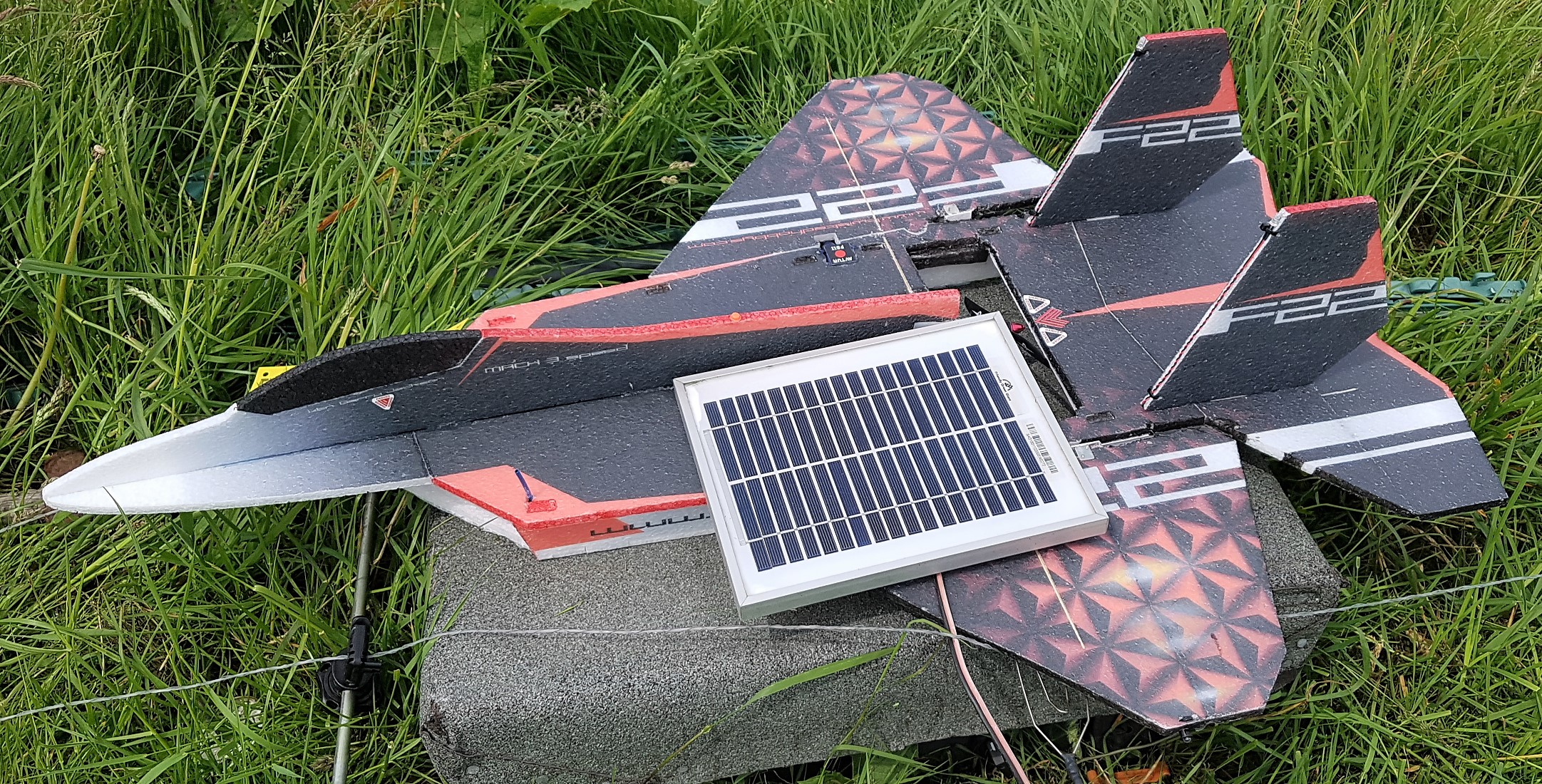 Woody uses 2200mAh 3 cell lipos to power the Raptor and you would expect them to give pretty long flights but he was spotted trying to sneak a bit of extra capacity using the fence solar panel…
1066 has now flown the Weston Models Mini-Capiche that I featured in Patch News a few months ago.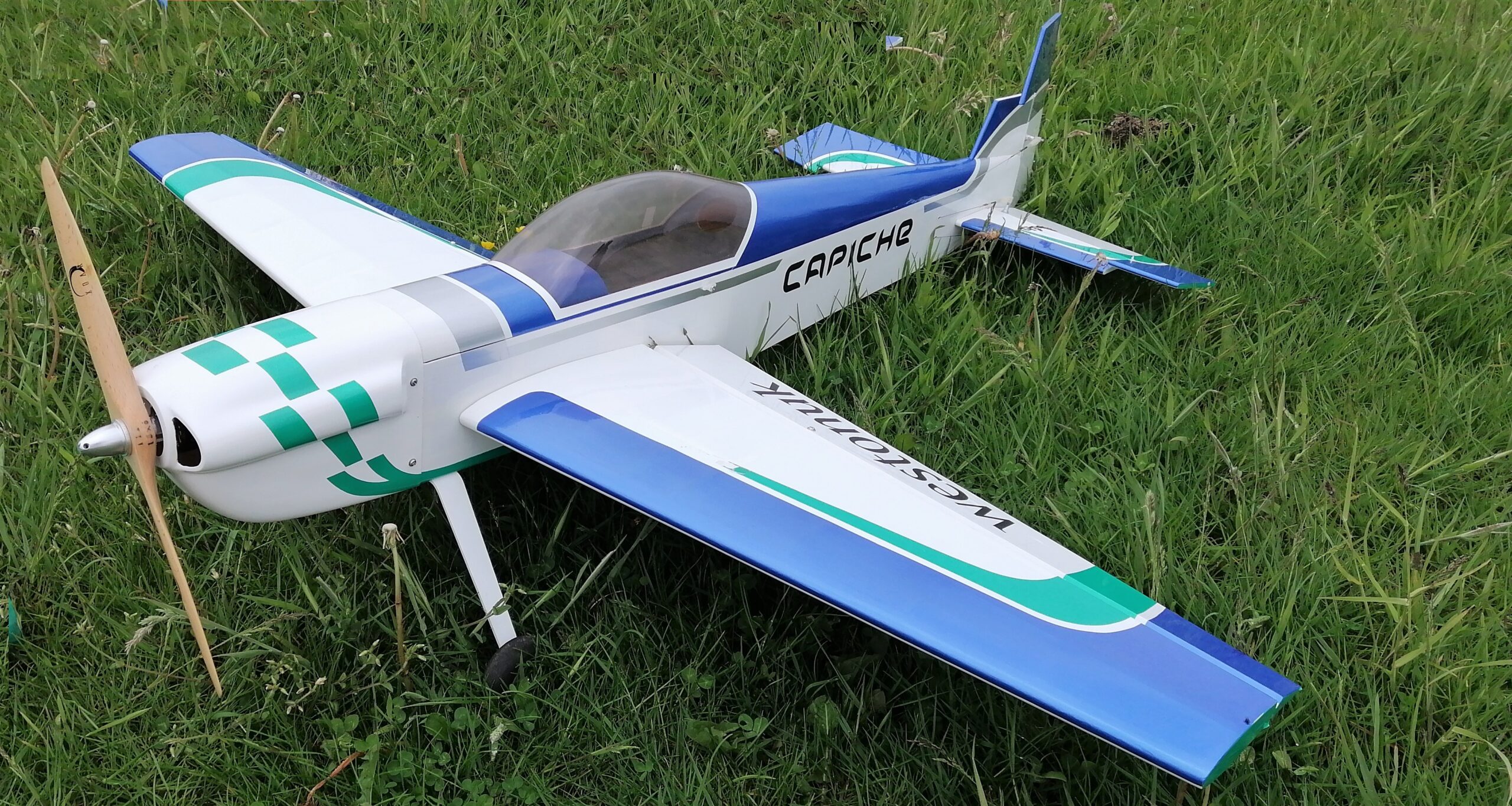
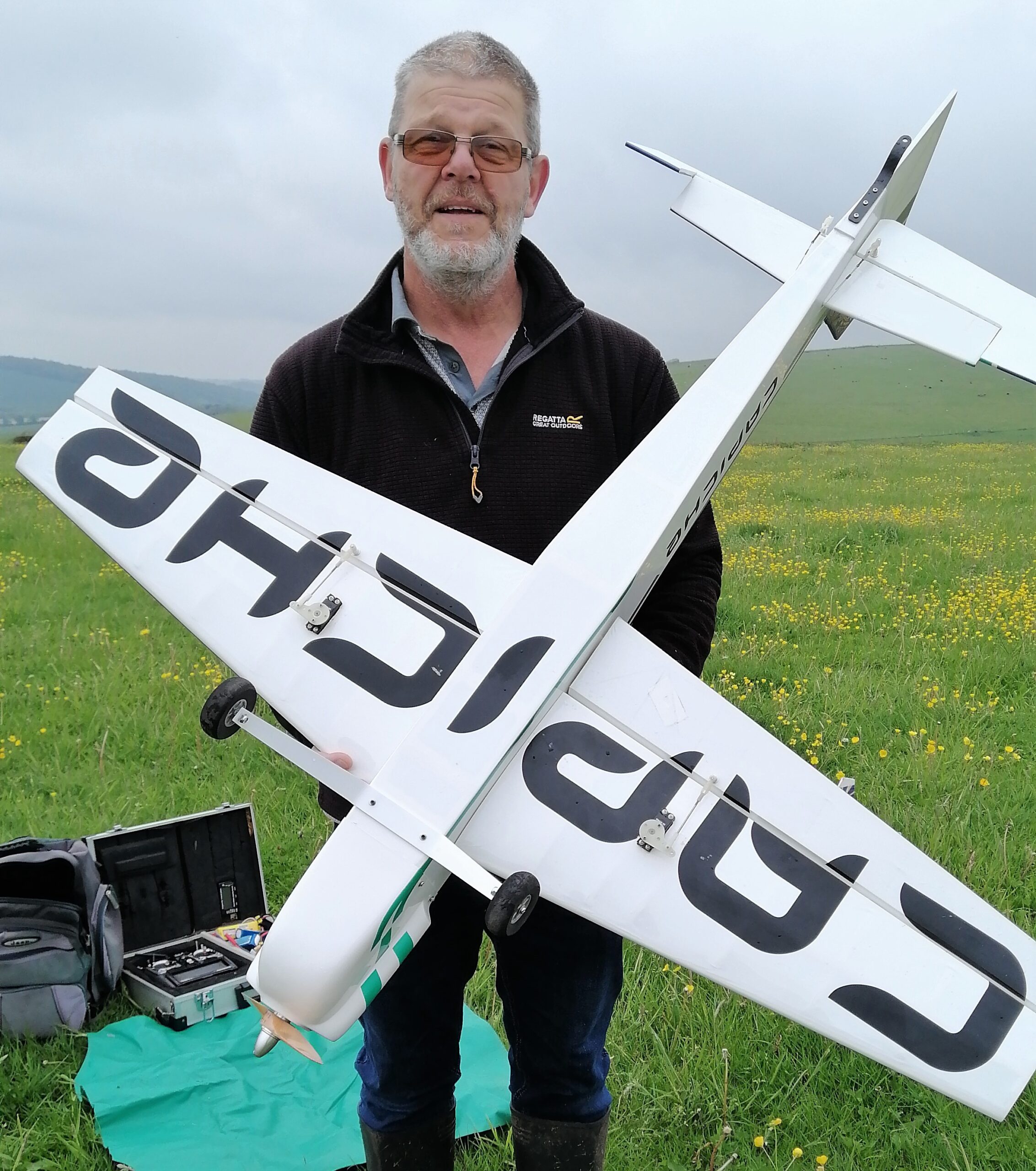 He had spotted it for sale on Facebook Marketplace and paid £100 for the untouched ARTF kit. 1066 has fitted a 4248 850kv motor that swings a 15×6 propeller. The speed controller is an 80A Turnigy Plush and it’s all powered by a 4 cell lipo. It flies well but 1066 says he’s not sure about it. No doubt he’ll get it sorted to his liking before long.
Dougal Entendre made a substantial change to his Skylark mini pattern ship during June, can you see what he did?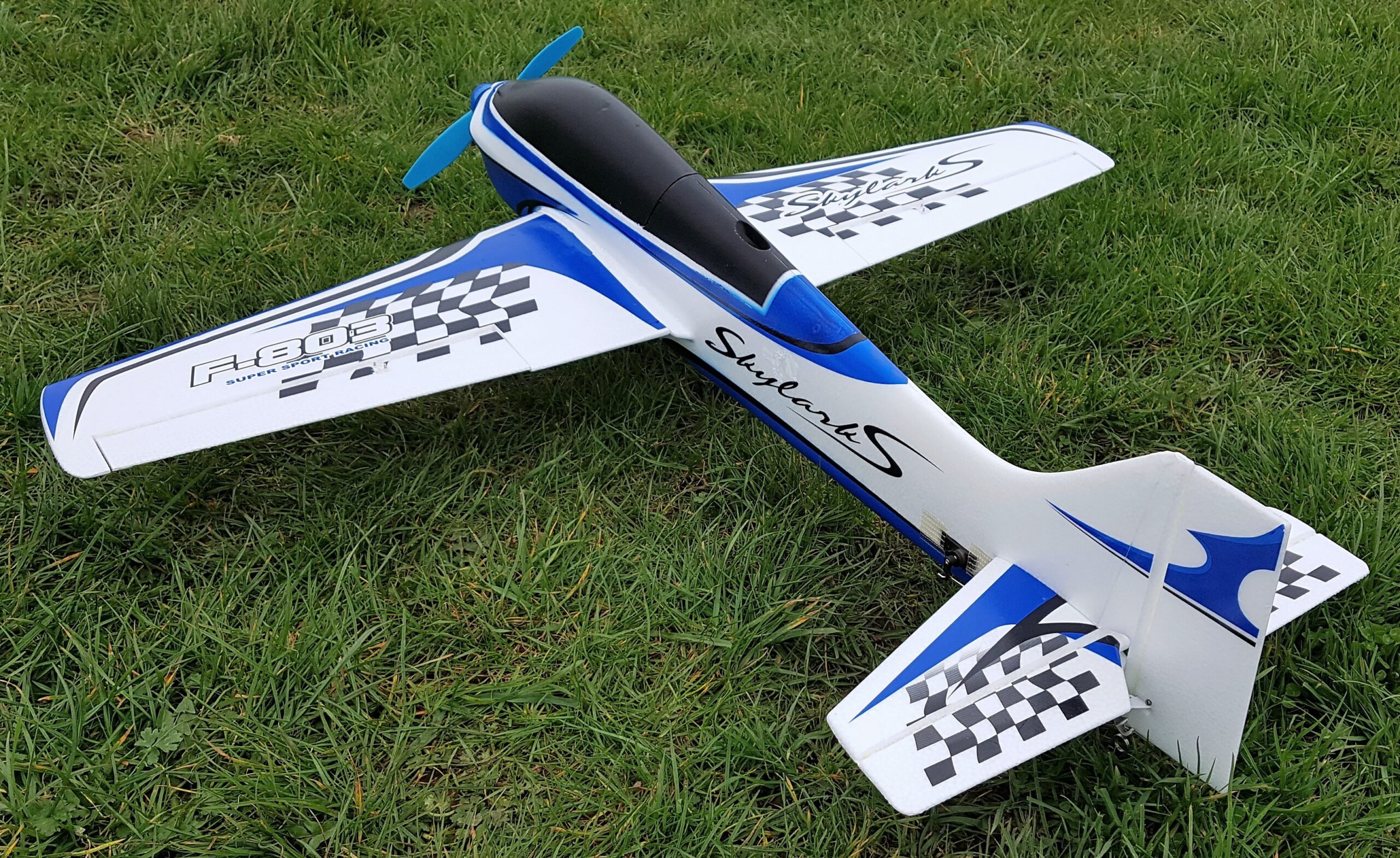
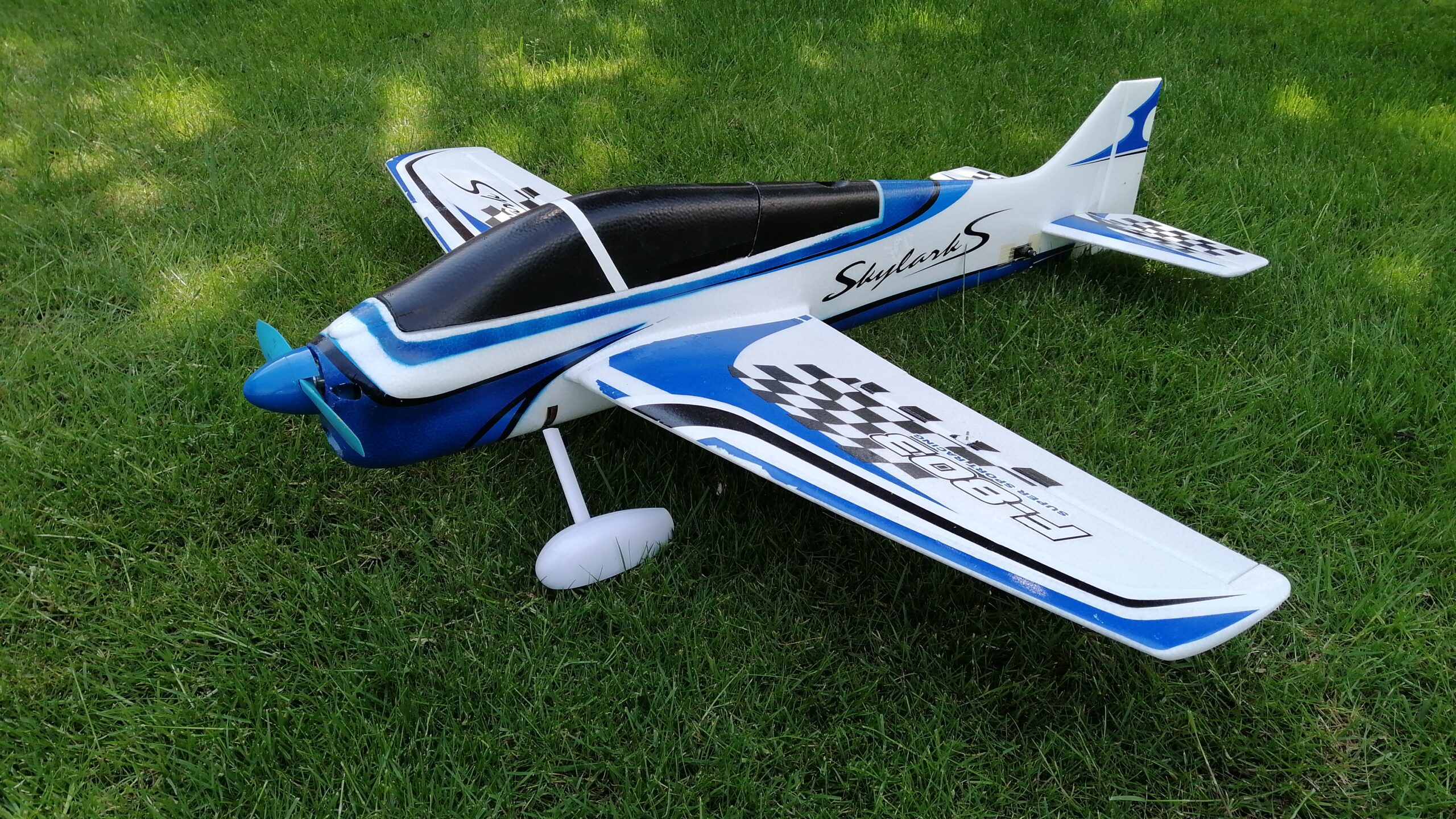 Yes that’s right, he’s added a strip of white tape across the top of the canopy… Wow, what a transformation!
Back to Chas now and the second of the new models he flew in June, an electric glider from Max-Thrust.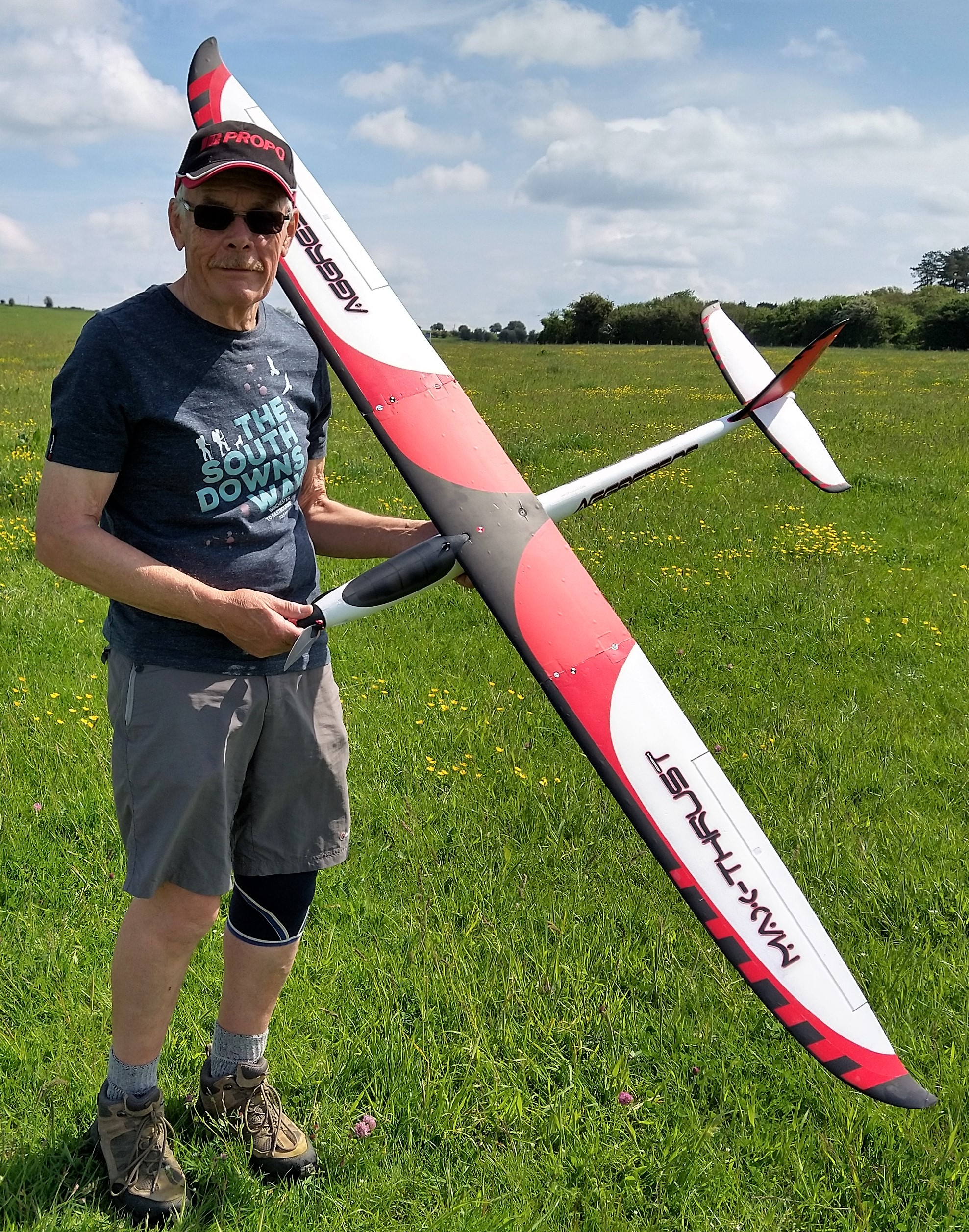 I’d tell you what it’s called but it seems the plane changes its name depending on which way you configure the wing! Chas explains all: The Max-Thrust Aggressor glider is pre-fitted with a 2415 1150Kv motor controlled by a 40amp ESC and four servos. The suggested battery is a 3s 2200mAh but I have used it with a 2900mAh example. This version has a centre wing panel that extends the 1.5 meter Aggressor into a 2.1 meter model called a Thermic.
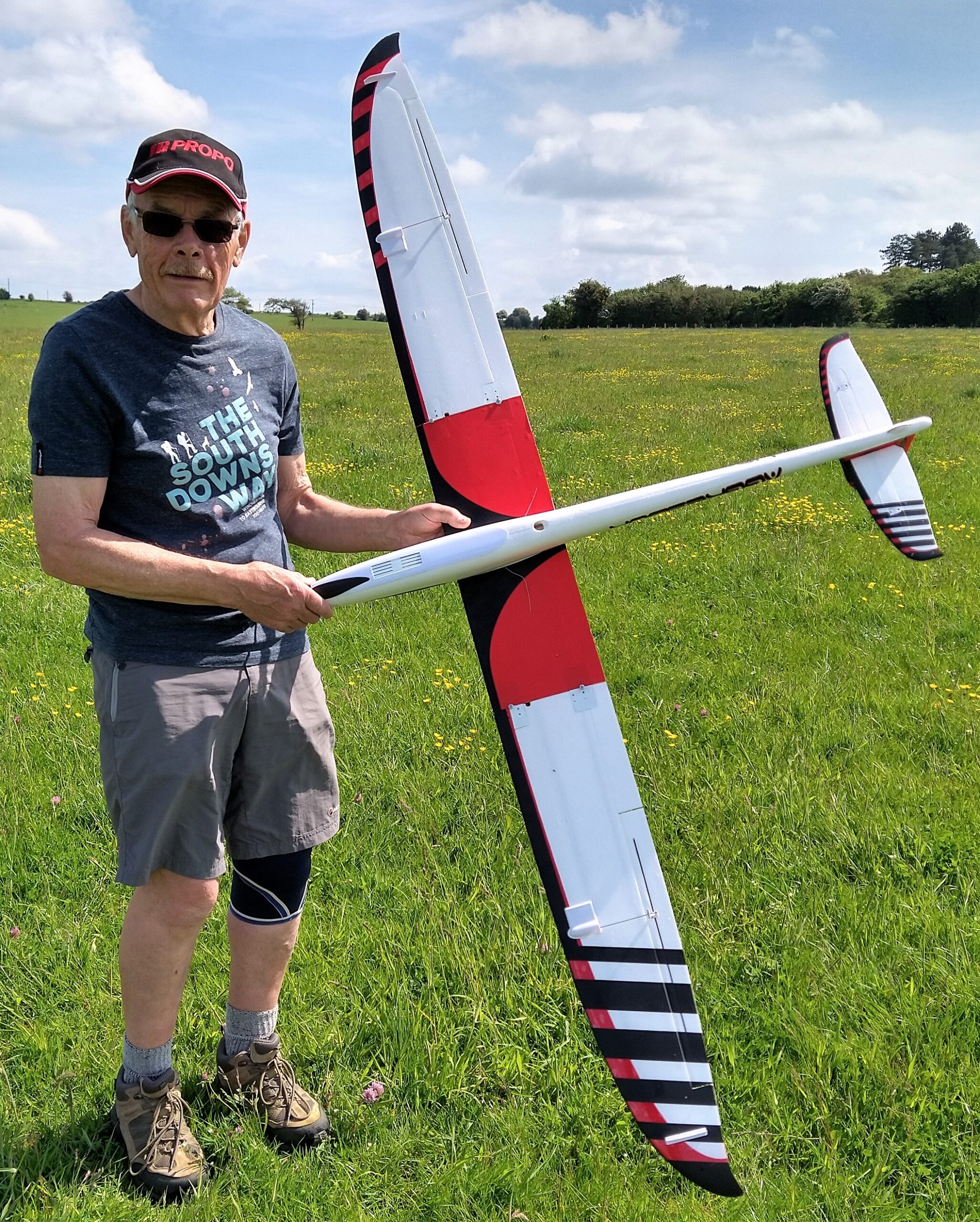 I’ve only flown this glider as the extended wing version. The rate of climb with the 10 x 6 folding propeller is fairly rapid and flying is very pleasant. Landing is smooth but care needs to be taken as the model picks up lift very easily from the slightest little hump, bump or ridge. You can see the Thermic performing in this month’s video where you can see what Chas means about the humps, bumps, and ridges. Captain Slow also has an Aggressor but he didn’t buy the additional centre section extension wing panel so he can’t turn his into a Thermic. He only bought it around eighteen months ago so don’t hold your breath, we won’t see it at the field for a few years yet!
On one of sunnier June days Jeremy Stuttard brought along his E-flite Pulse to fly. As well as being a member of Petersfield Aero Modellers Jeremy is also a member of CADMAC (Chichester & District Model Aero Club) and usually flies with them down at Thorney Island but likes to pay occasional visits to the PAM patch to see what we’re up to.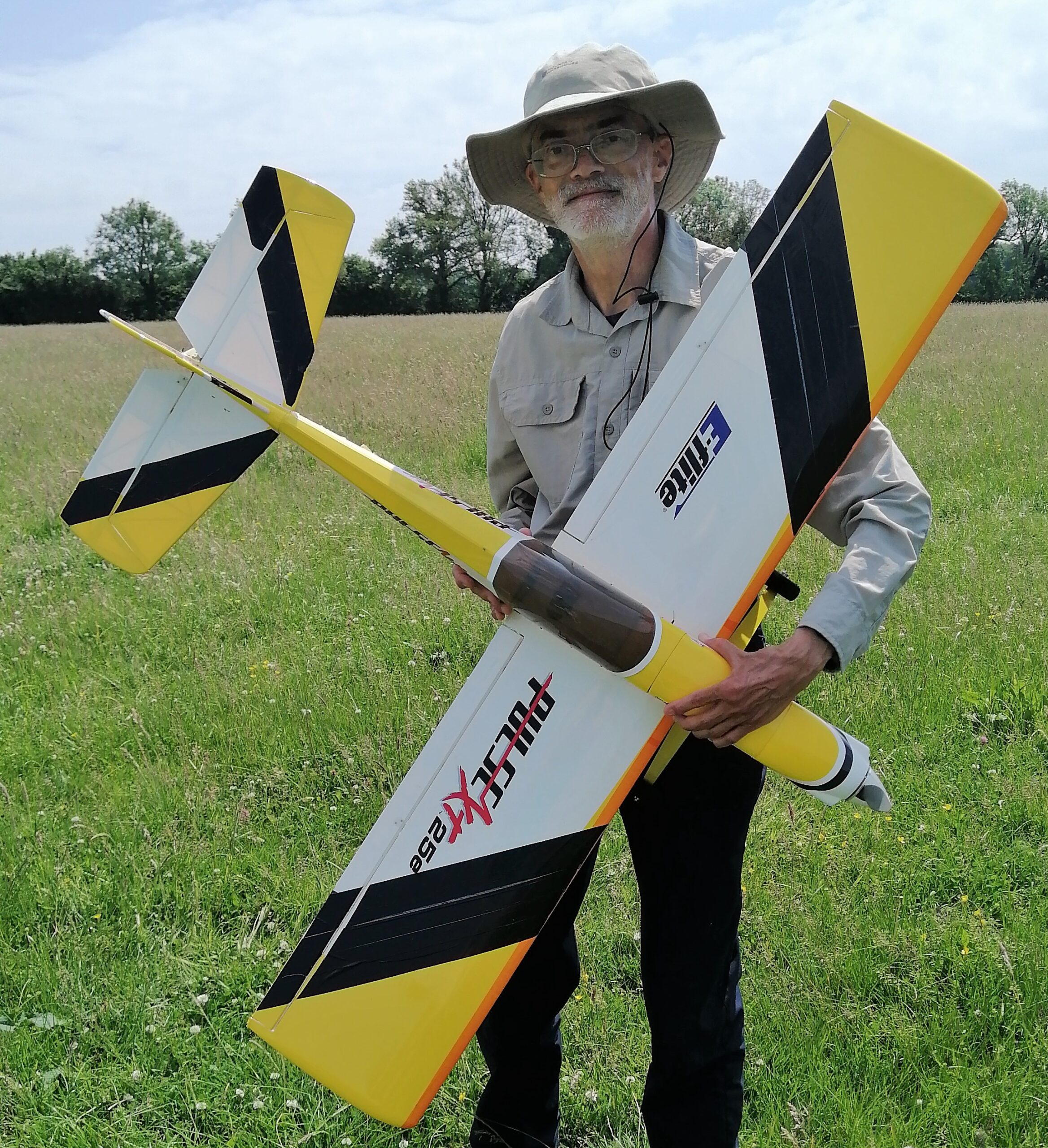 Like all E-Flite models his Pulse flies well and must have had lots of flights, it’s been around for quite a while now.
June saw the arrival of new member Ian Daniels. Ian started his aeromodelling career with control-line models when he was a child and moved on to radio control at the age of 16 with the Esher & District Model Flying Club. After leaving college Ian got into full-size aircraft working on restoring vintage aircraft for 10 years before moving to work for British Airways at Heathrow for 25 years. He gained and held a PPL for many years but eventually let it lapse. Ian half-heartedly dabbled in slope-soaring until recently but has now decided to swap to fixed-wing power models.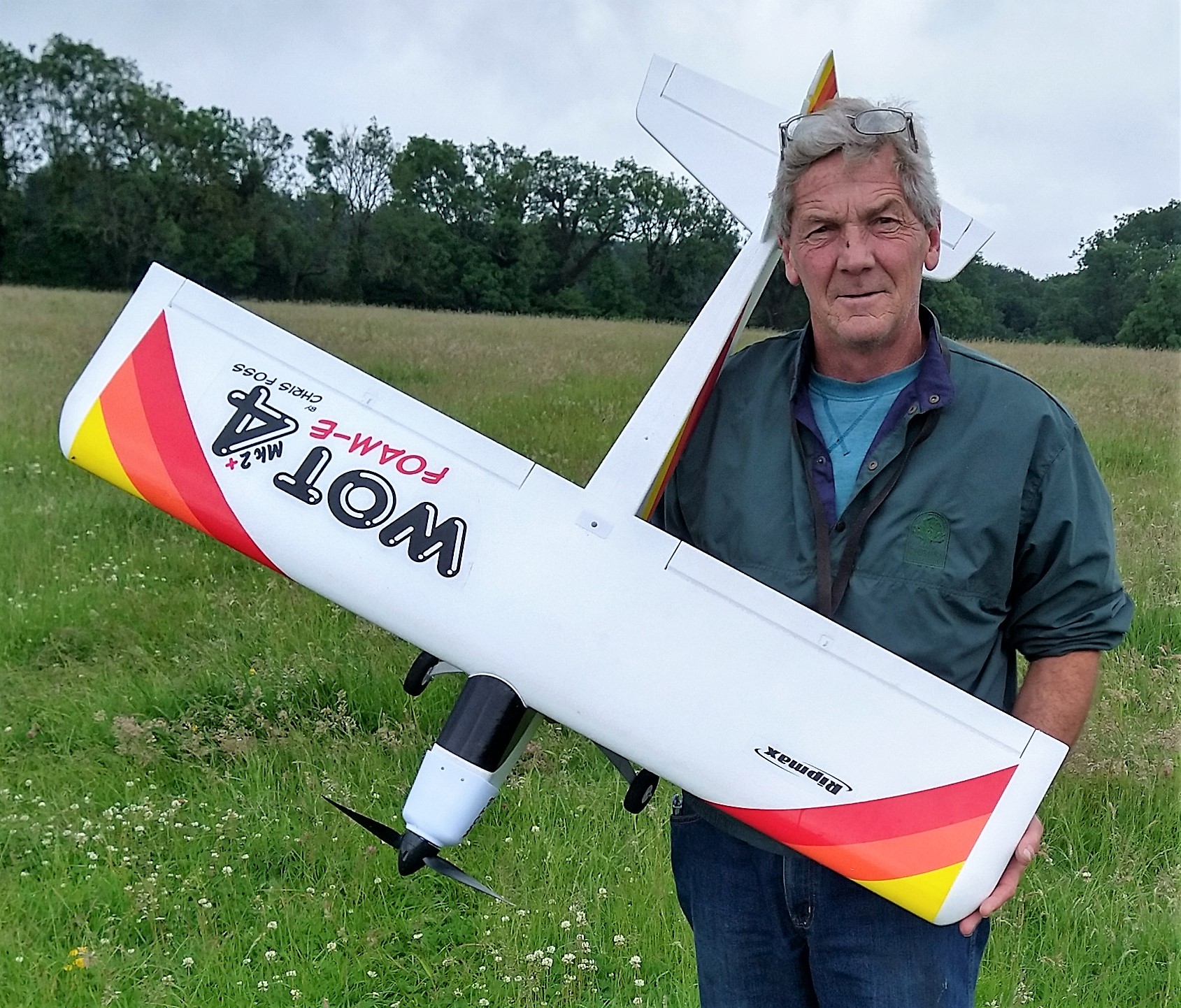 Ian has bought himself a Wot4 Foam-E which, from what I hear, he flew well after 1066 had test flown it for him.
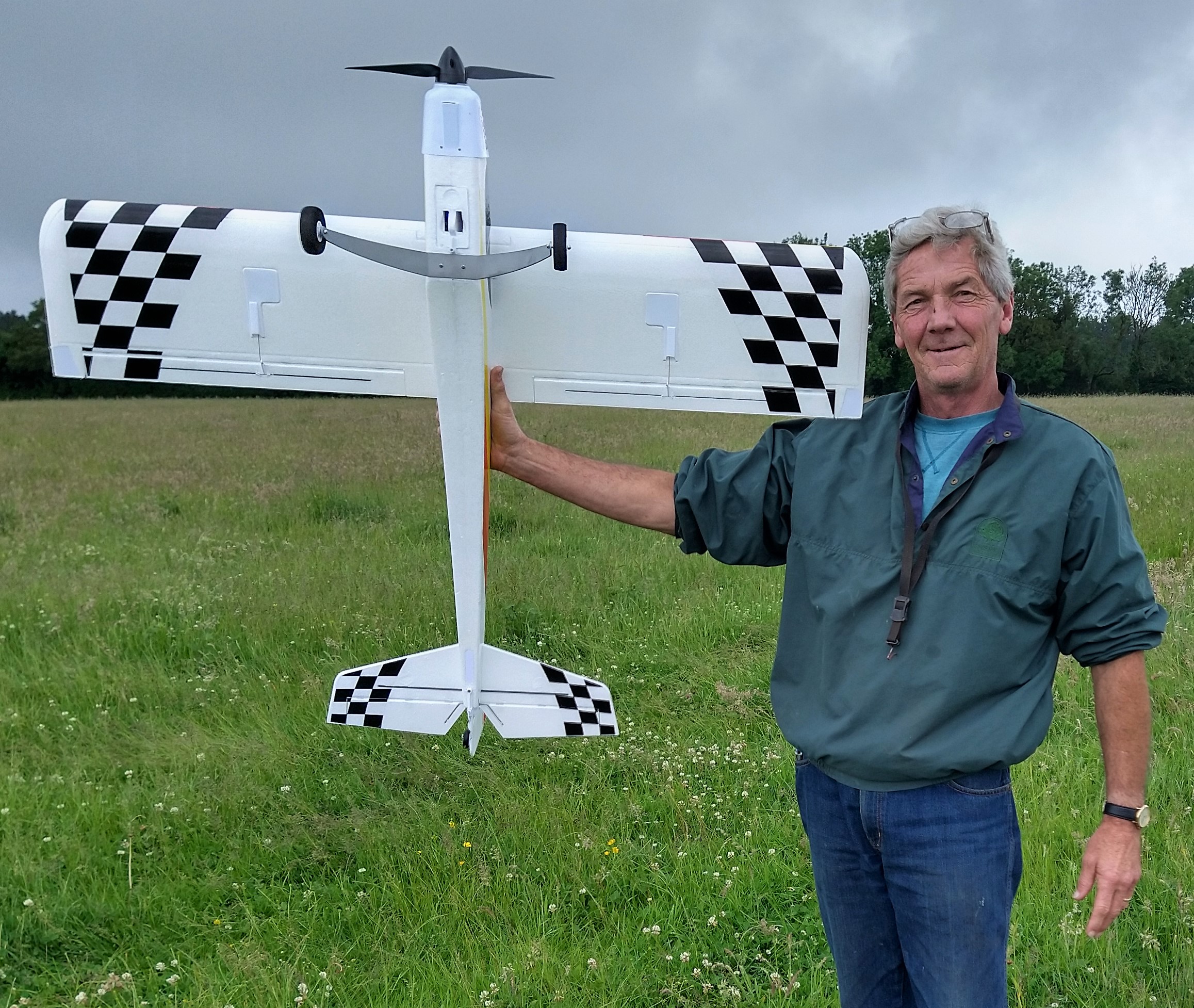 Ian has made the obligatory three visits and paid his subs so is now a fully-fledged member. Welcome to PAM Ian.
The third of Chas’s new models is a HobbyKing Walrus: The HobbyKing Walrus comes with a pre-fitted 2212 1350Kv motor with a 20amp ESC. There are also six pre-fitted servos as the glider has flaps fitted as standard.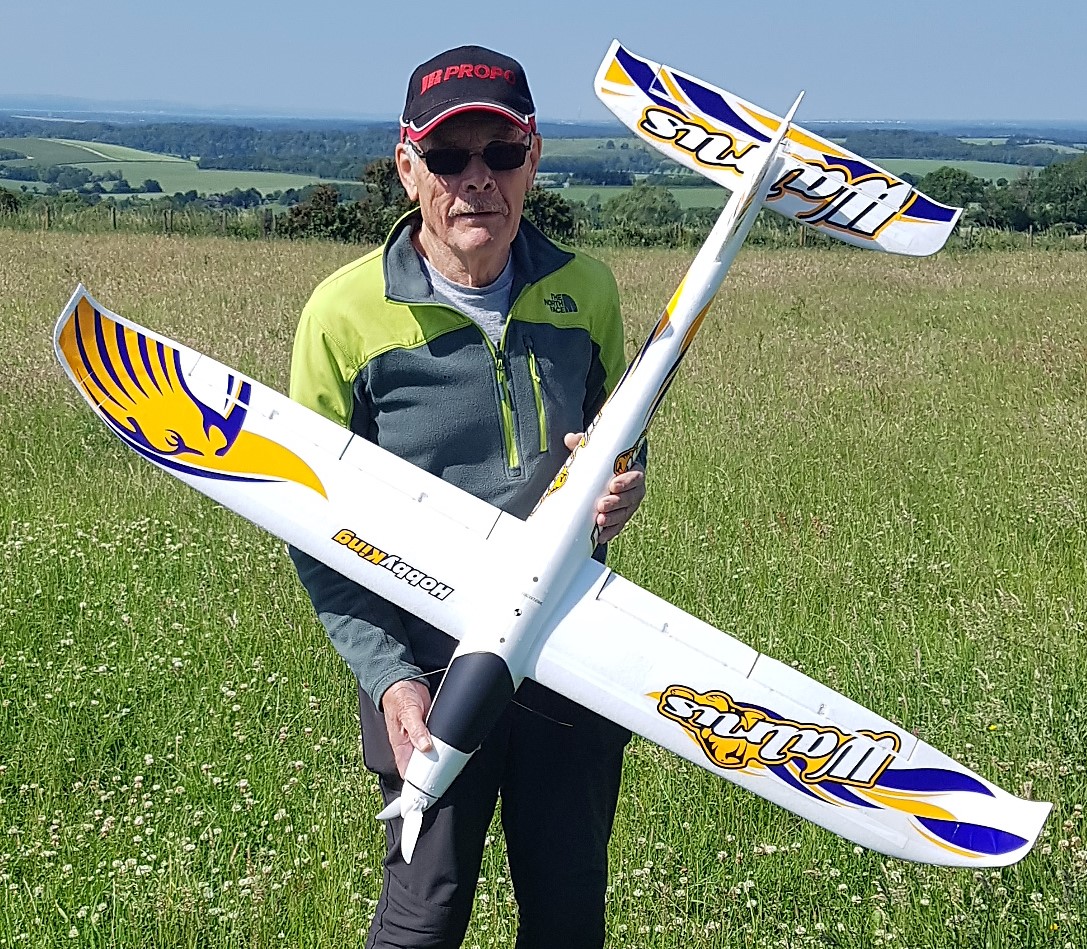 The vertical and horizontal stabilisers should be glued to the fuselage but I’ve modified them so that they are removable for transport purposes. I took this photo to show how Chas has made his Walrus tail removable:
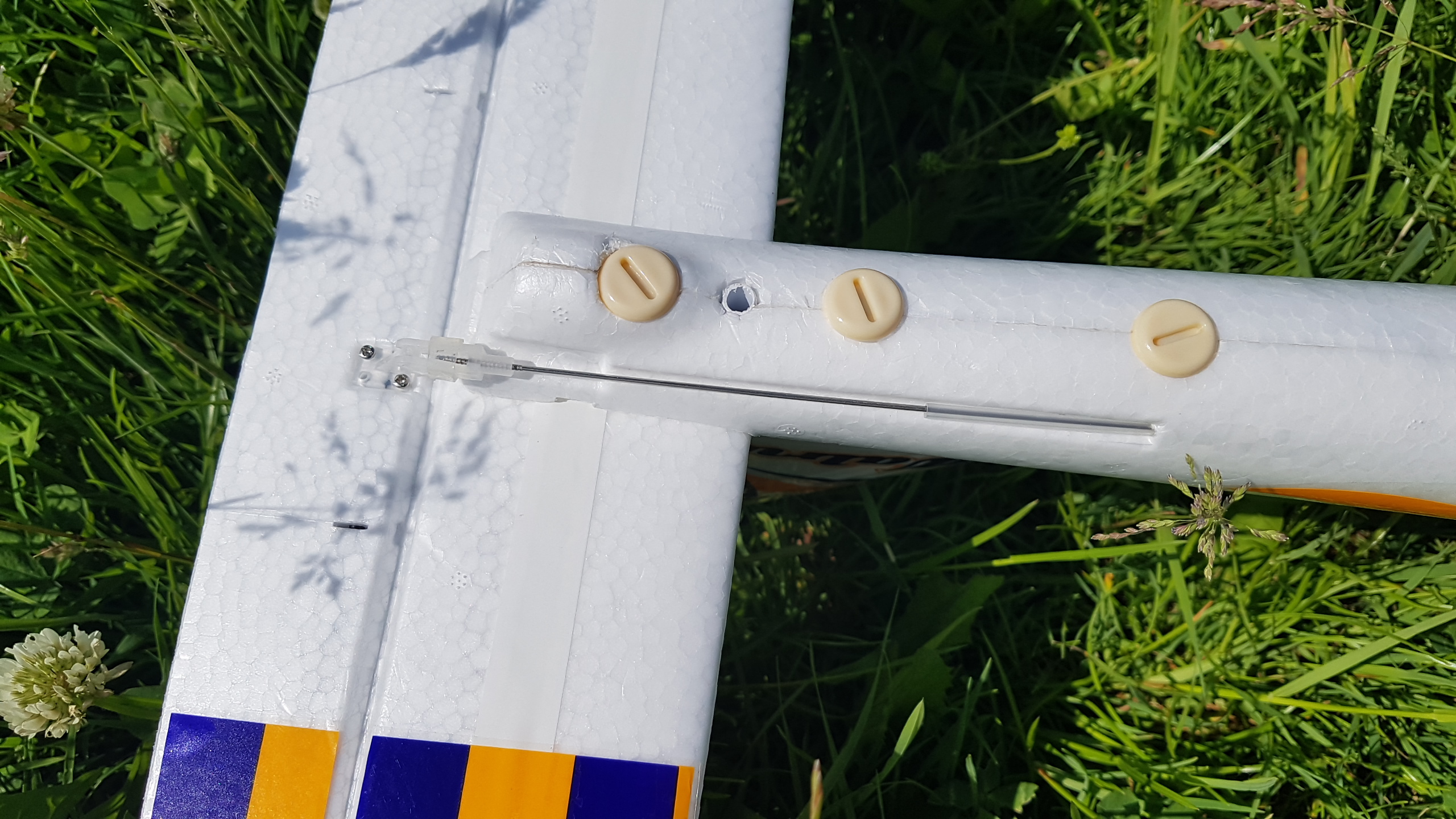 The included instructions state a 3s 1300mAh battery is required whereas the website suggests a 3s 2200mAh item. I went with the 2200mAh option and the C of G has come out spot on with the battery almost as far forward as it will go. Although the fuselage looks spacious the amount of room for the receiver is fairly limited. For this reason I’ve fitted the seven channel JR receiver inside the canopy base. I’ve also re-routed the wing servo leads as it took me about 15 minutes to assemble the two piece wing to the fuselage with a carbon fibre wing joiner whilst feeding the leads through a barely accessible aperture in the fuselage. They now run forwards to the wing leading edge within the fuselage mounting area. The model flies on the 9 x 5 folding propeller without any serious issues although the ailerons are a bit sluggish. I’m going to play around with differential and may use the spare receiver channel to allow the flaps to be programmed to act as inboard ailerons. Excellent Chas, it should make a great holiday model.
The foamboard jets that many of us fly are pretty much indestructible as well as being extremely manoeuvrable and capable of flying both quite quickly and very slowly. So there is a temptation to attempt to fly in close formation and occasionally the models inadvertently touch. Fortunately because the motors are centrally mounted these generally result in nothing more than a small nick or two in the foamboard. But there seems to be a disproportionately high number of these touches between Captain Slow’s Mig and my Sukhoi which I can only attribute to the Captain’s wild aggressiveness. One recent touch ended with the models becoming locked together and ending up like this!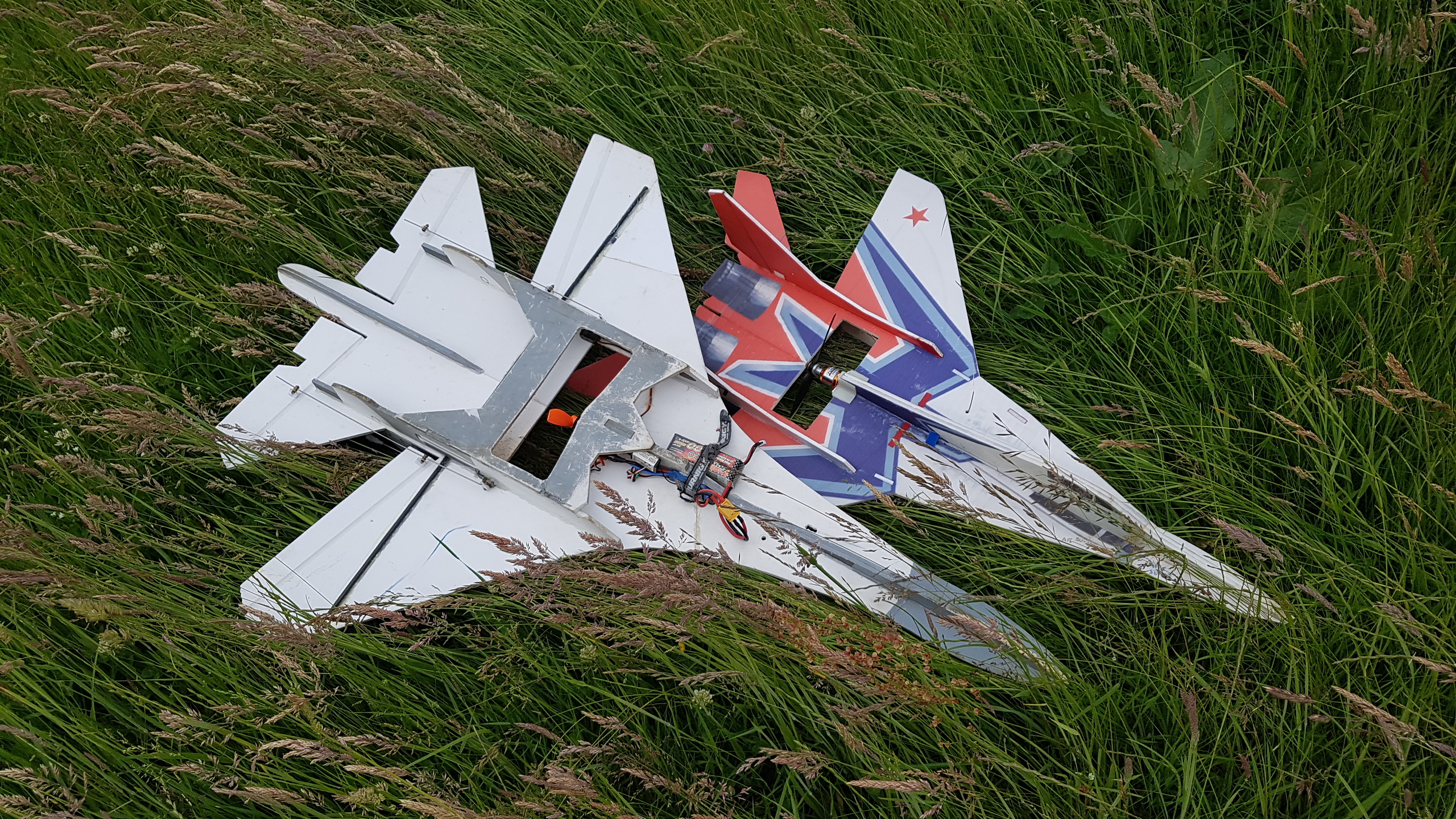 Of course certain elements of what I’ve written above might be open to debate by others… especially Captain Slow!
Back to Chas again now for his fourth new model, his Wot4 Classic that I featured in Patch News last month.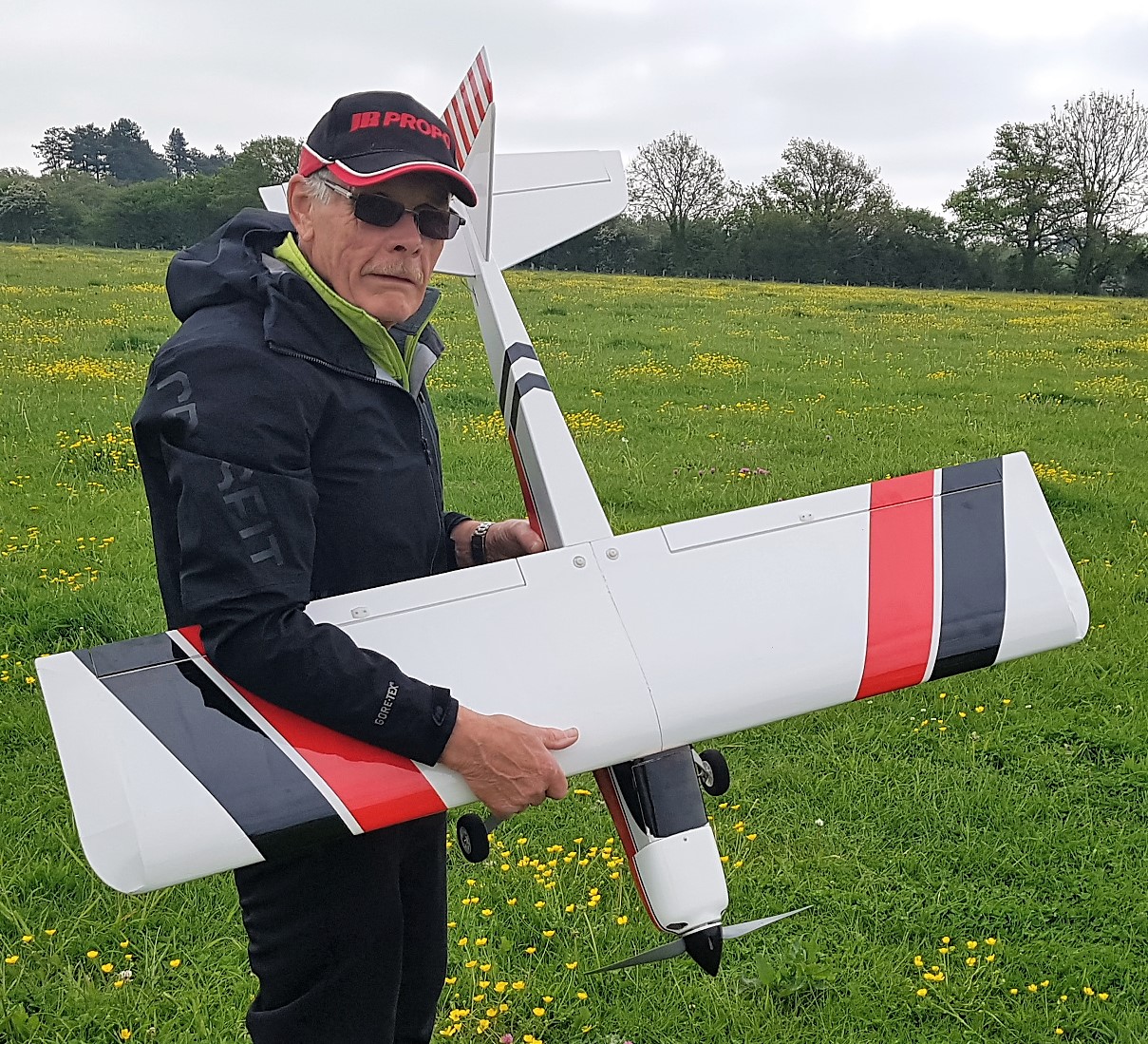 Chas’s Wot4 Classic is actually eleven years old but it has barely flown and Chas has now swapped out the original IC engine for an electric motor so it’s now quiet and clean. His fifth new model to fly was yet another Wot4 but this one’s the Mini version. No pictures or info this month, you’ll have to read the July Patch News to find out about it.
Unfortunately I don’t have any new flying shots from Kryten this month but here are some of his great photos from previous months, some of which I haven’t used before: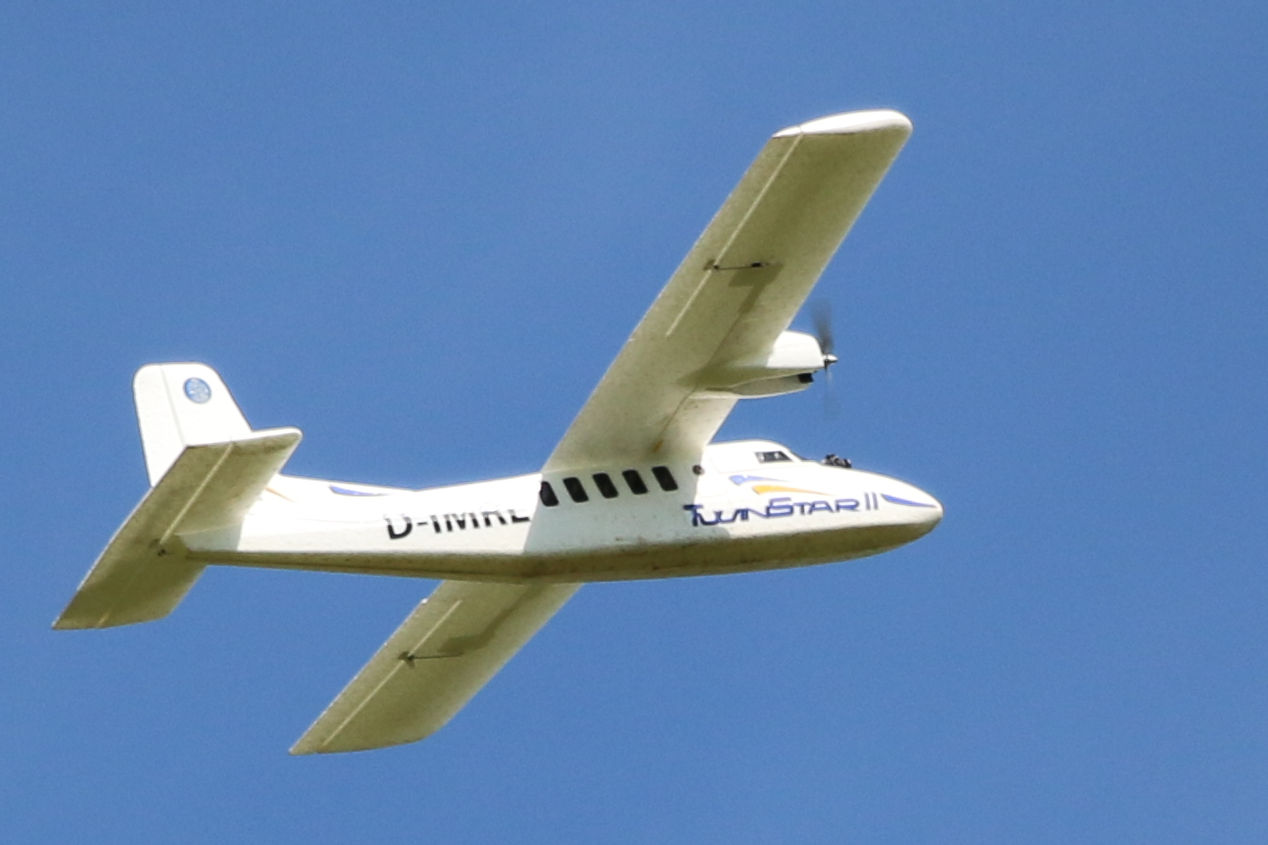
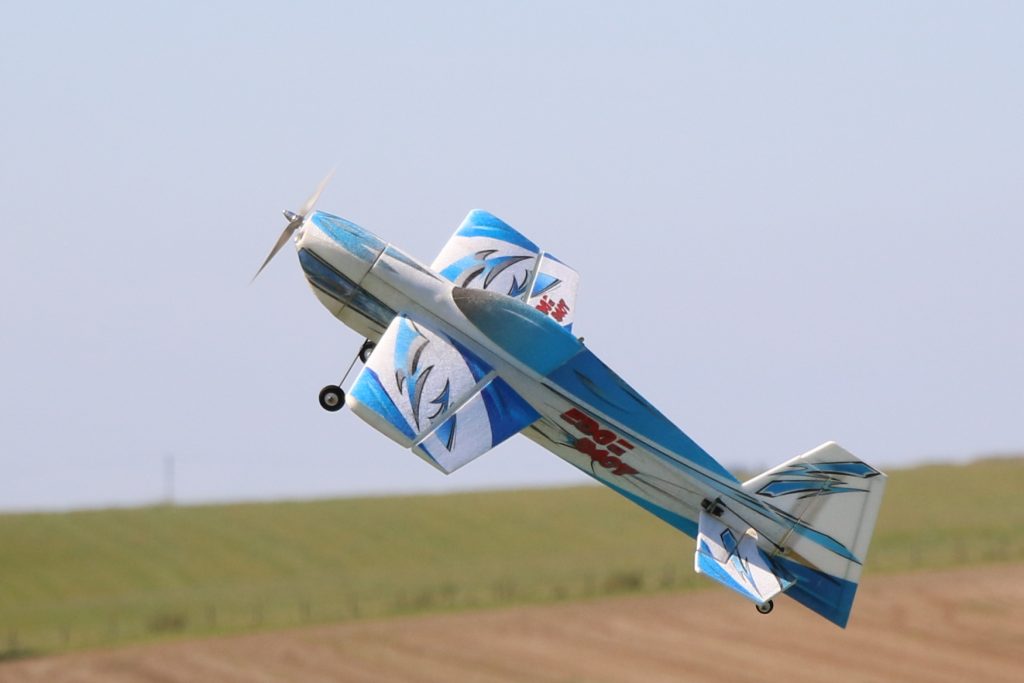
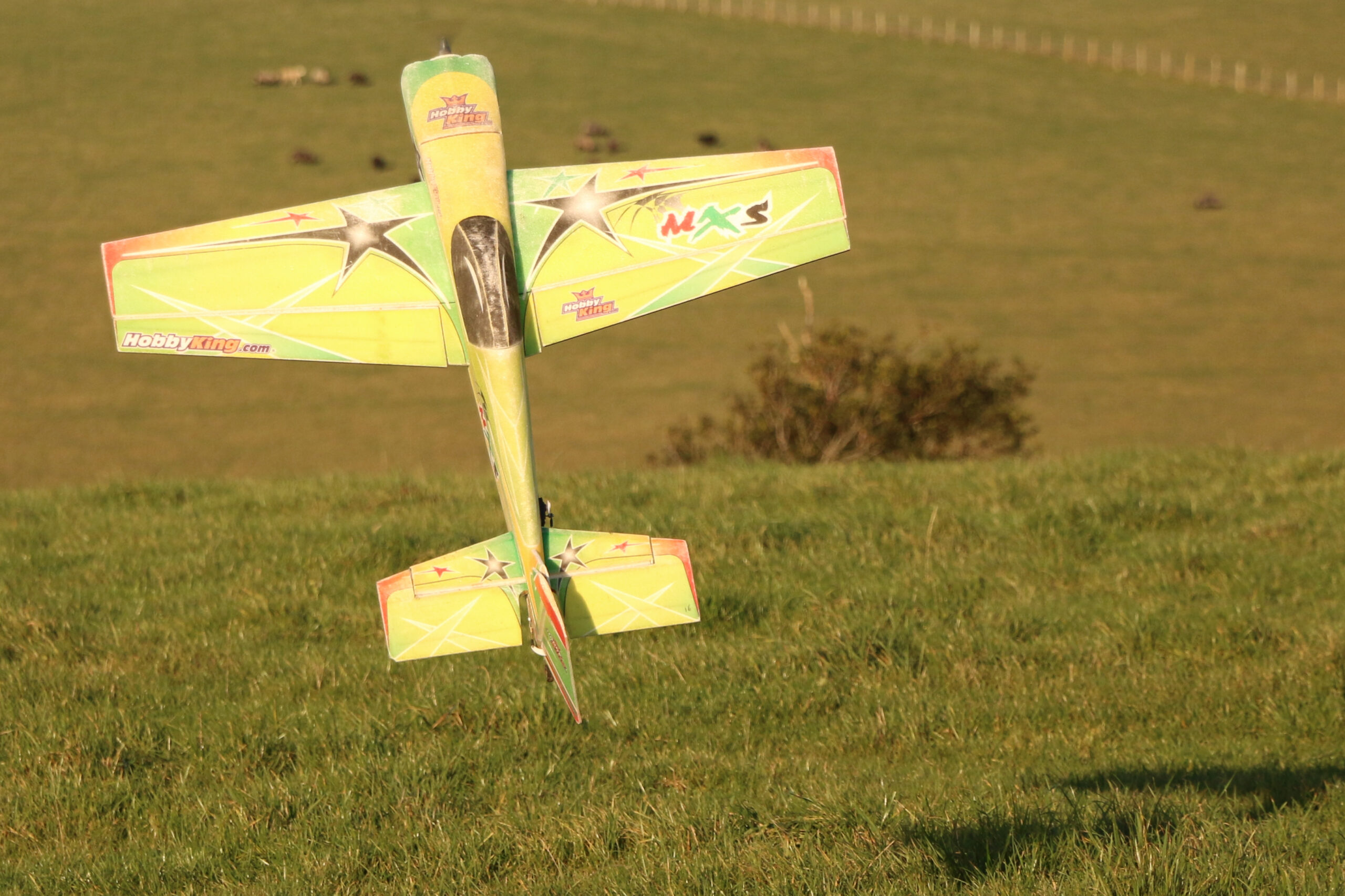
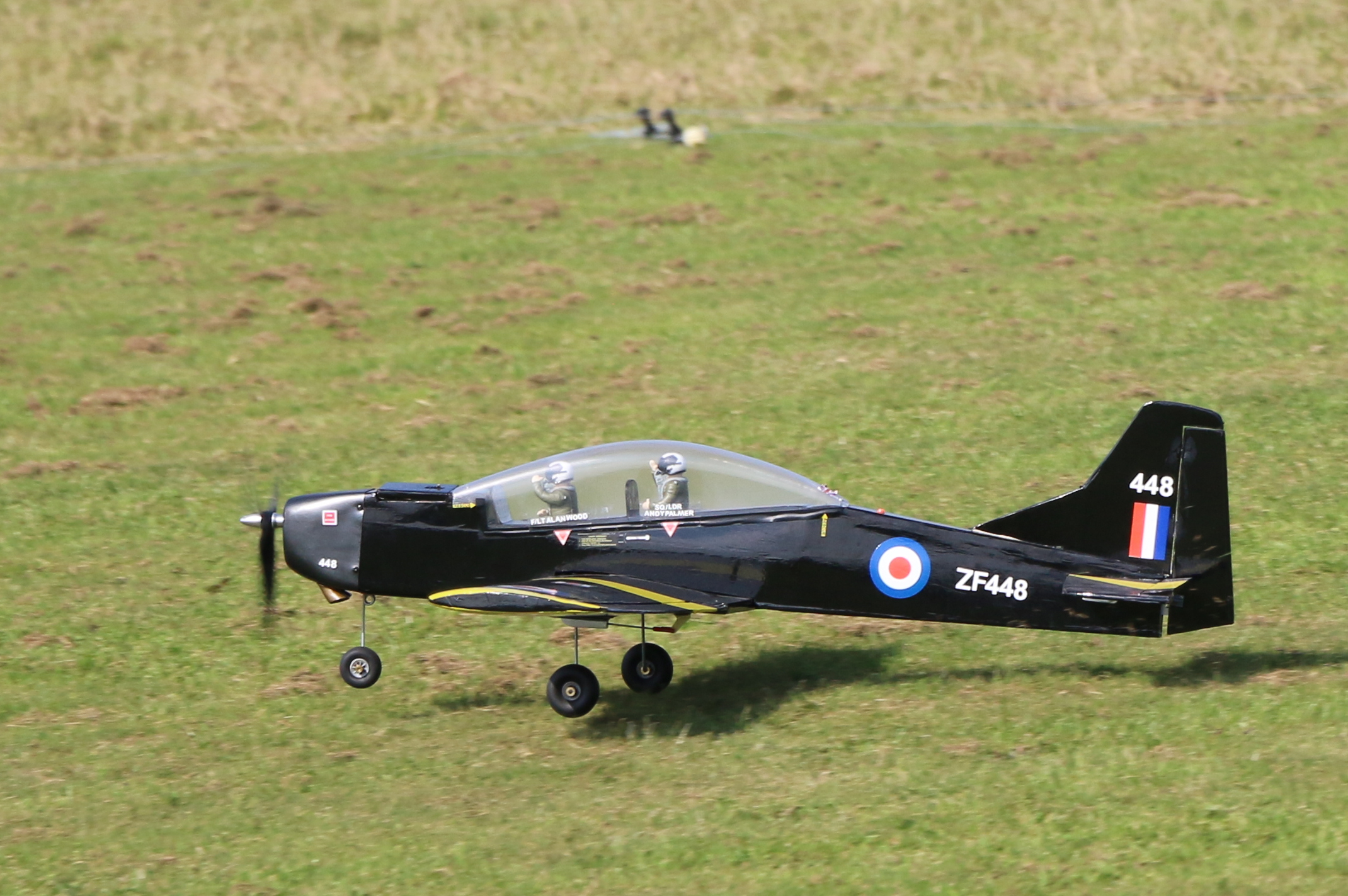

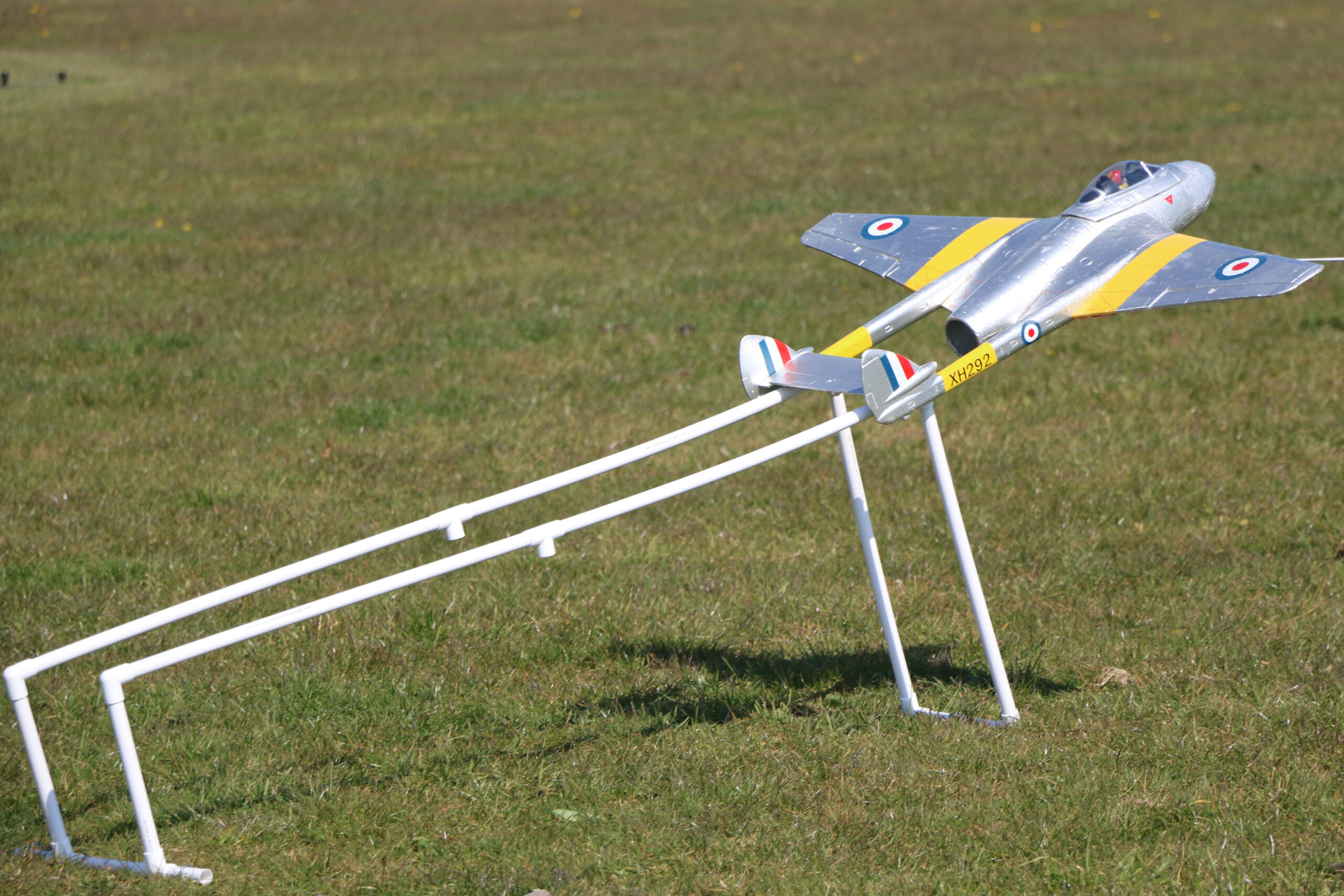
Video time now which this month includes some taken by me, Dougal, and Captain Slow. Please watch the video full-screen, it’s so much better with small models flying around.If the video won’t play for you please click HERE
A Lufthansa pilot landed his Airbus A320 at London’s Heathrow Airport. Later an Operations Manager spoke to him and asked if he’d had any trouble landing the plane since there was a strong crosswind.
“Nein,” the pilot answered, “I let Otto land the plane.”
“Otto? Is that your co-pilot?”
“Nein, my co-pilot was Frederick, and I would not trust my life with him, or my passengers.”
Startled, the Ops guy asked, “So, then who is Otto?”
“Otto-pilot, perfect landing every time.”
Colin Cowplain