
Patch News – January 2021
Sadly I must start this edition with the news that Don Eades our club President has passed away at the age of 84.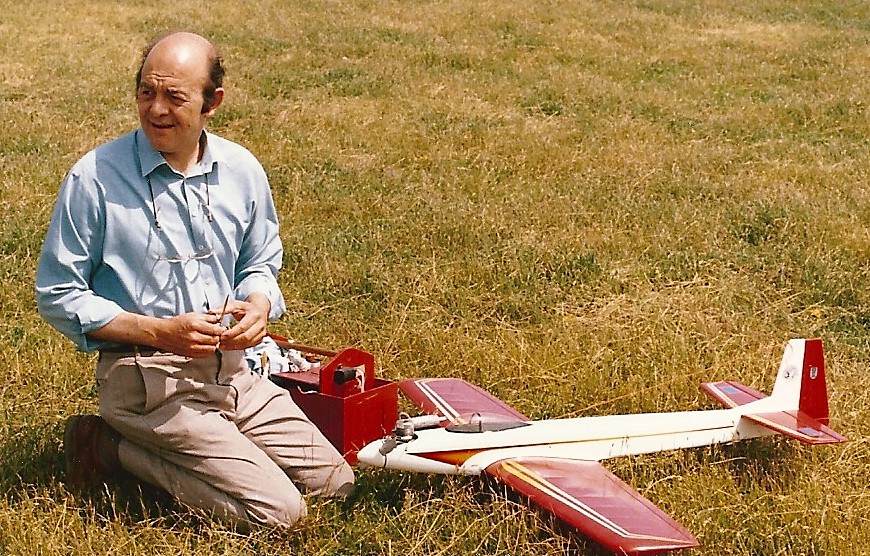 Don was a founder member of Petersfield Aero Modellers in 1972 but he had been an aero-modeller for many years before that. When I first met Don in around 1963 he was flying control-line models, all built and finished to an extremely high standard, a standard he maintained throughout his modelling lifetime. In 1978 I returned to modelling after a break and found Don was club Chairman, a position he continued to hold for many years during which the club flourished under his leadership. In around 1979 Don became one of the first Area Chief Examiners in the country and, leading by example, he encouraged PAM members to take their A & B certificates, and conducted a large number of tests for many other clubs right across the BMFA Southern Area.
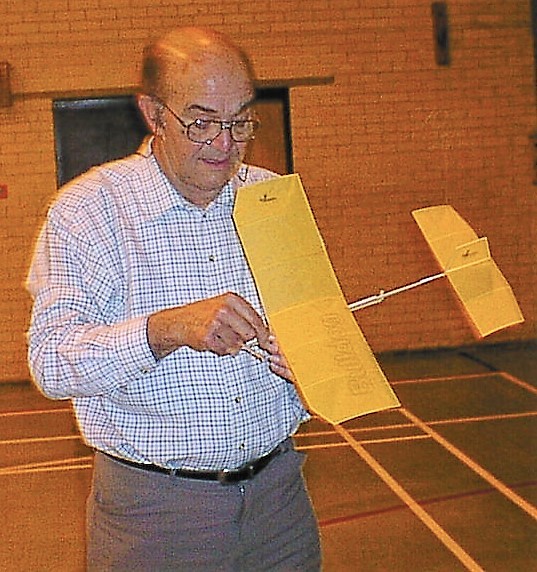 When the Southern Area was close to collapse with the lack of a leader he stepped in and served as Area Chairman for many years. During that time he encouraged and participated in inter-club competitions, including the Southern Area Galas, two day events that were held at Beaulieu, and the Balsa Brain quiz that is still held annually to this day.
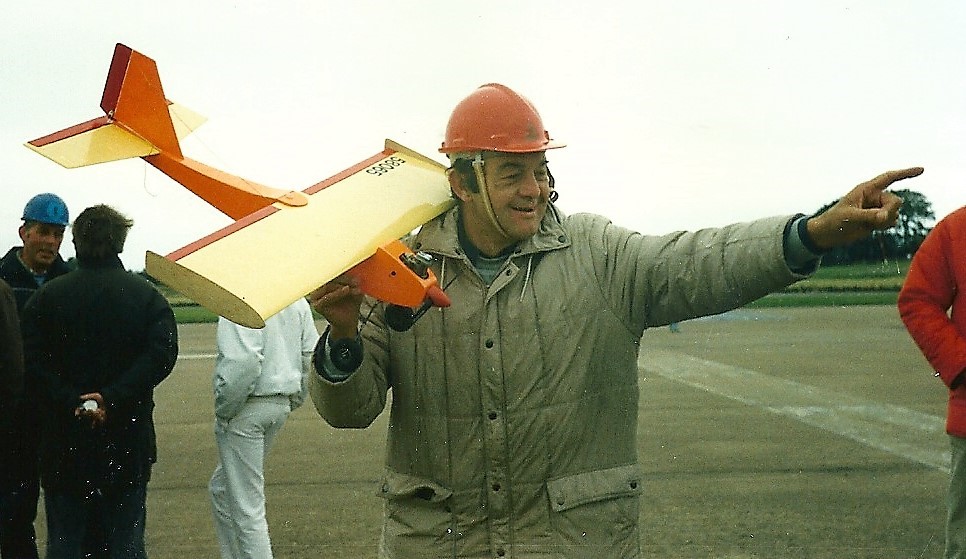
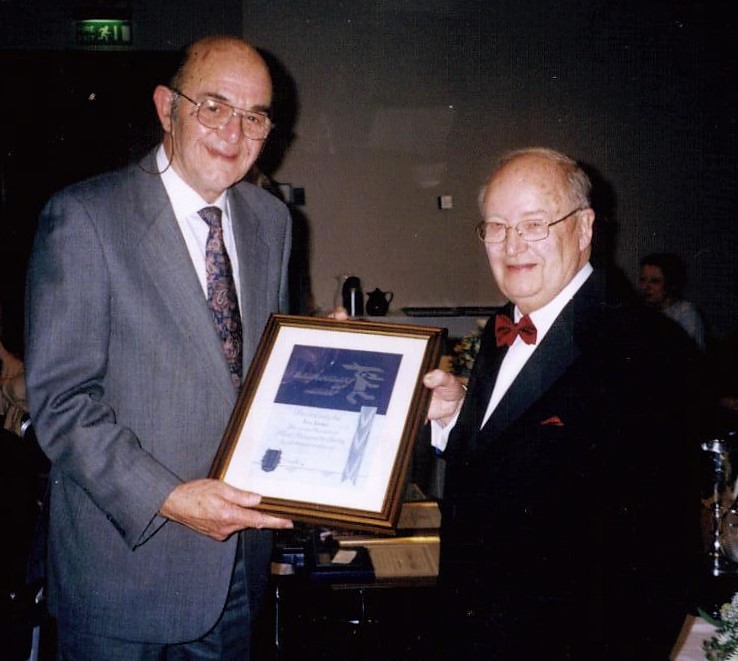 At the BMFA Annual Dinner in 2003 Ron Moulton presented Don with a Certificate of Merit for his efforts. Don was a keen competitor in club competitions and was always at or close to the top of the scoreboard. The photo below was taken at the 1987 Nationals when Don competed in the Fun Fly event, winning the Touch’n’Go event in Class 2.
 In the latter years, with failing health, Don was unable to manage the flying sessions but attended the fortnightly club meetings for as long as he could. Eventually he had to move into a care home where he spent his remaining years, passing away on 26th January. Fortunately both of Don’s children, Sandra and David, were able to be with him at that time. The club has lost a founder, a leader, a superb modeller, and an inspiration to so many of us.
Now onto slightly happier things: Another year, another lockdown. As last year ended the situation was that just two people at a time were allowed to meet up and fly. The club booking system remained in place in order to control the numbers and keep a record of attendees. So on New Years’ Day 1066 and Mini-Mike (obviously neither of whom had overdone the revelling the previous evening) ventured out and discovered that it was very, very frosty at the field. 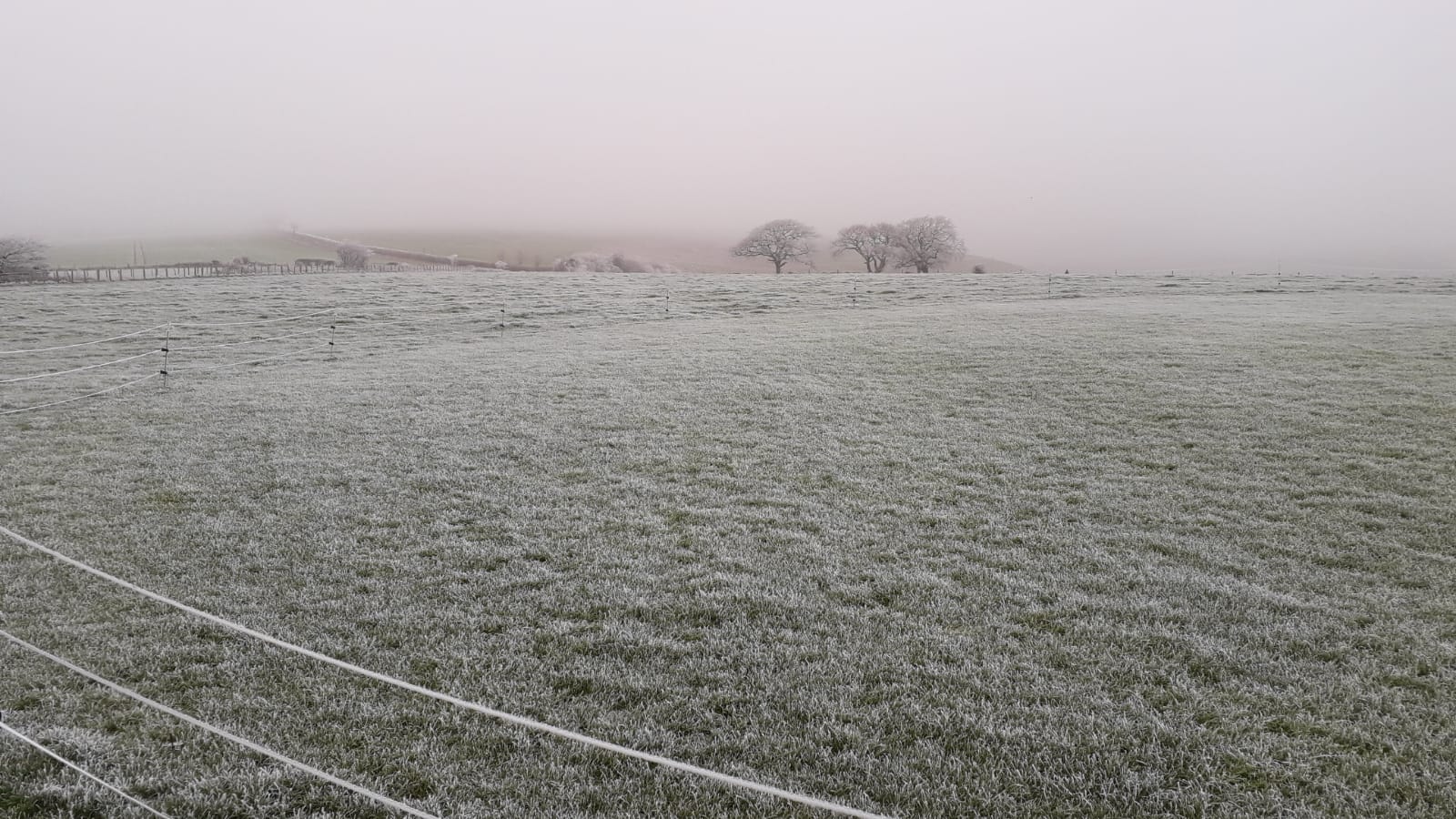
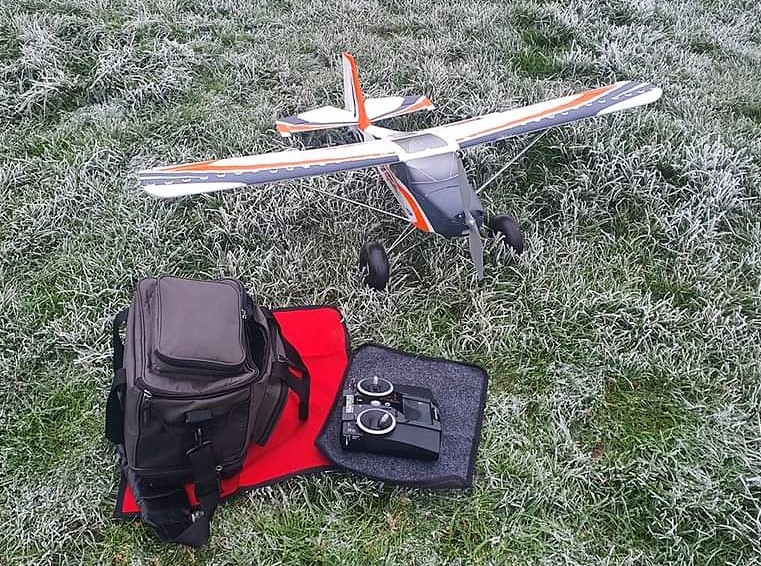
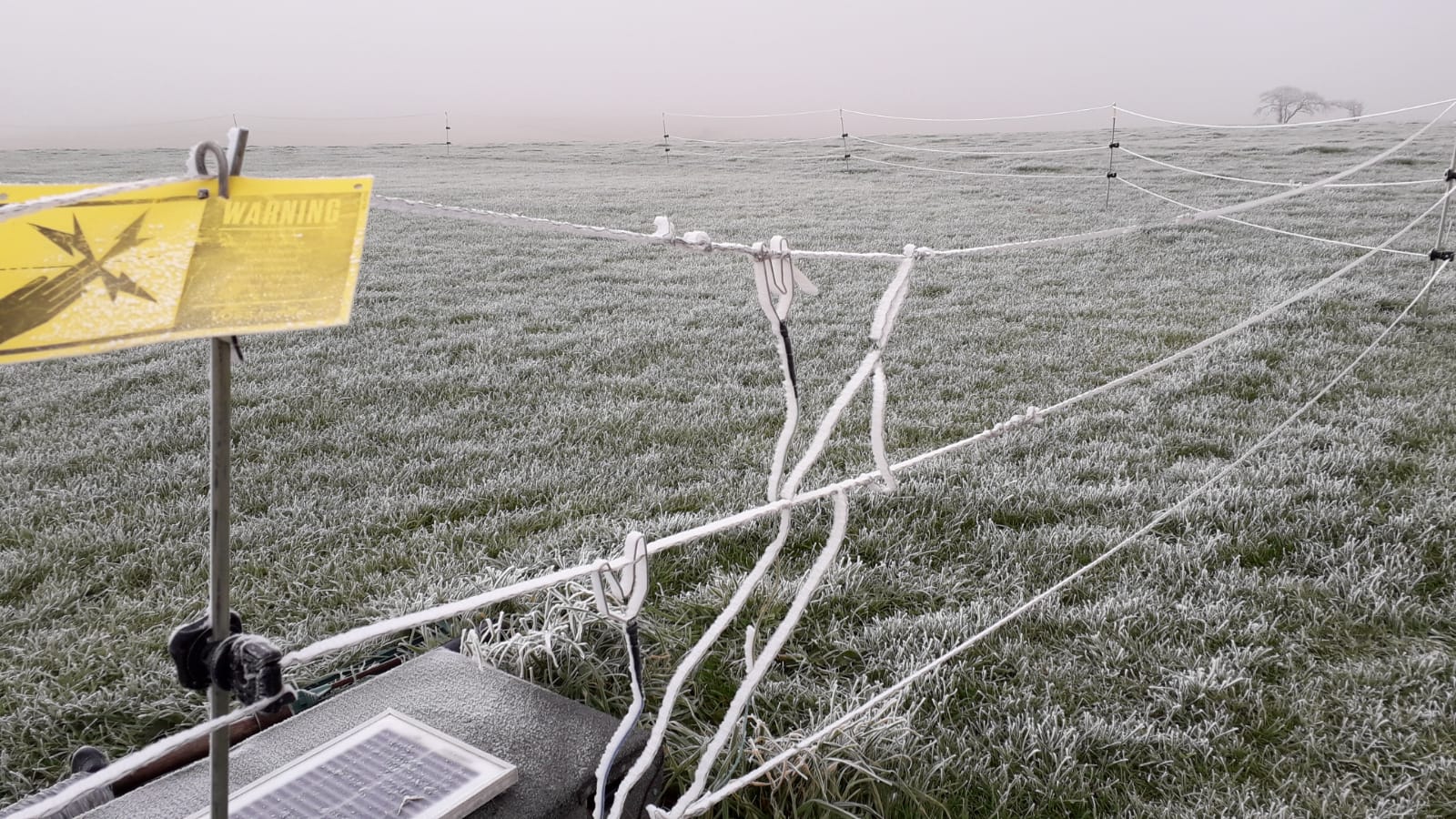 Despite the extreme cold they both managed a few flights in the rather murky conditions, with 1066 flying his Edge 540T and SU-27 and Mini-Mike his Durafly Tundra. It must have been cold, Mike is wearing more than a T-shirt!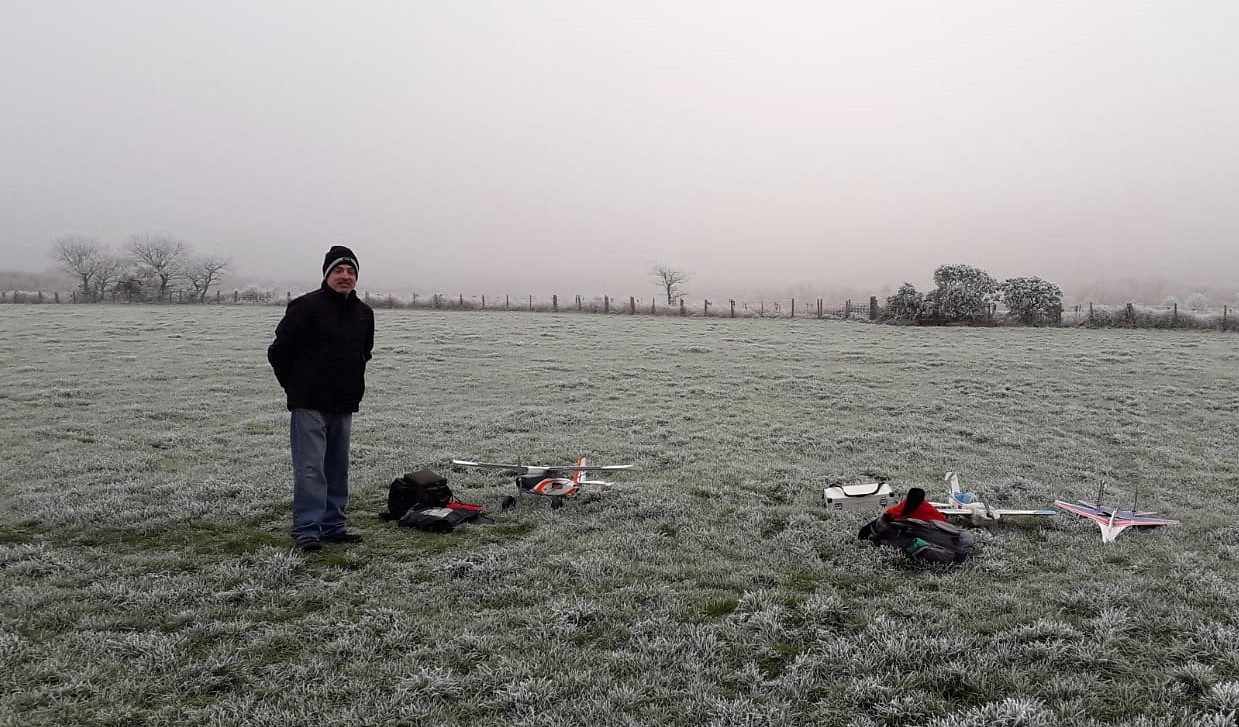
 On Sunday 3rd January Dougal Entendre and I took our turns and flew in chilly and blustery conditions. It was warmer than on the 1st but we both needed our transmitter muffs and I found the heater in mine was a great boon. Both 1066 and Mini-Mike had booked the afternoon session that day so they were able to fly again. But later that day Lockdown 3 was announced, starting at midnight on the 4th. This time the rules meant that no flying at all was allowed and the BMFA said clubs must close their sites. So that was the end of January flying, just the four of us got some flying in, something for which we were very grateful. We have no idea when flying will be allowed again and the terrible situation of the NHS struggling with the new Covid variants doesn’t make the future look very promising.
When Dougal and I flew on January 3rd I took my foamboard SU-27 and MPX FunGlider and Dougal flew both his Skylark and Slick using his new Radiomaster TX16S for the first time. He had managed to sort the programming enough to be confident of flying the models without any disasters although there still seemed to be a few ‘oddities’ that he was working on, mostly to do with arming the speed controller and throttle locking. Both models needed trimming and some of the features in the set-up were a little different to previously, particularly with the Skylark.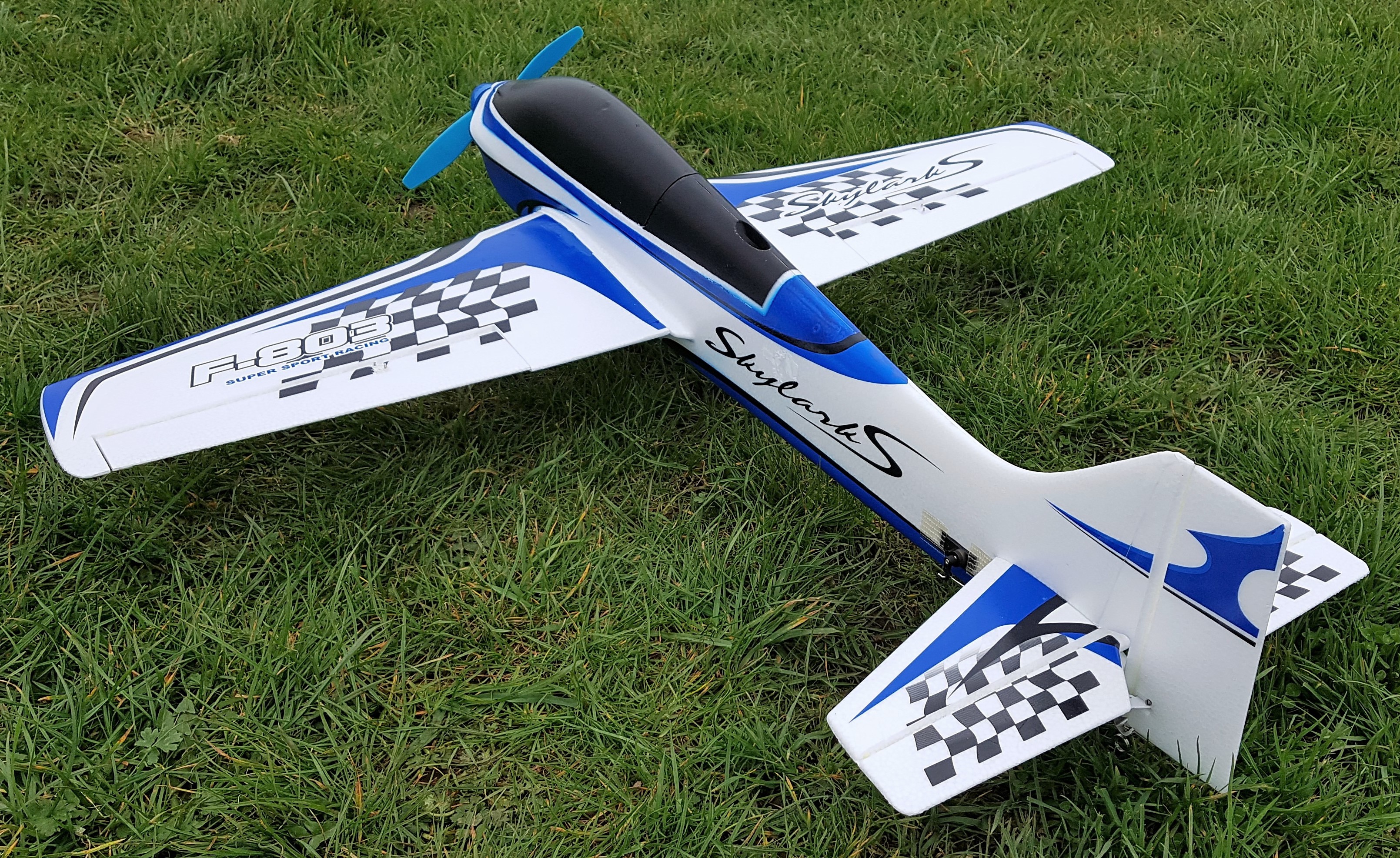 On the first flight the elevator was much too sensitive although that may have been caused by a rather rearward centre of gravity (put the battery in the right place Dougal!). In this month’s video you’ll see that the Skylark started off rather erratically but Dougal gradually sorted it out and by the second flight it was flying much better. The Slick was also over-sensitive on elevator at first but less so than with the Skylark and it was soon trimmed out and flying well. In the air the radio was faultless and Dougal was pleased to have voice announcements for the first time on any of his many many transmitters. I must say it was pleasant to hear a different voice speaking the flight time etc., So many of us now use Multiplex radio the most common sound is a pilot saying “Was that 2 minutes me or you?”
When 1066 arrived at the field on the afternoon of 3rd January he discovered he’d unknowingly previously damaged the fuselage side where the wing tube is mounted. Unusually he’d only taken one model with him so it was a case of fix it or give up and go home. With a bit of ingenuity and using available materials 1066 did a masterful repair.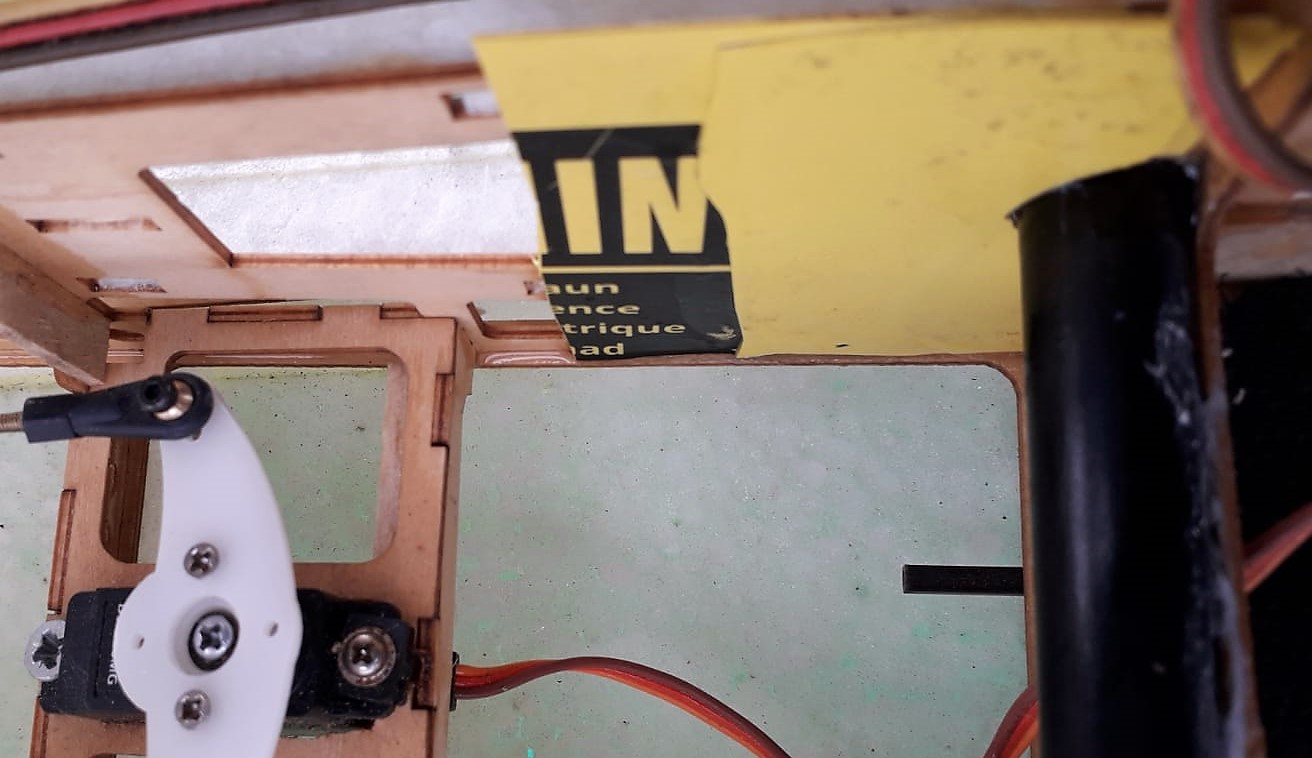
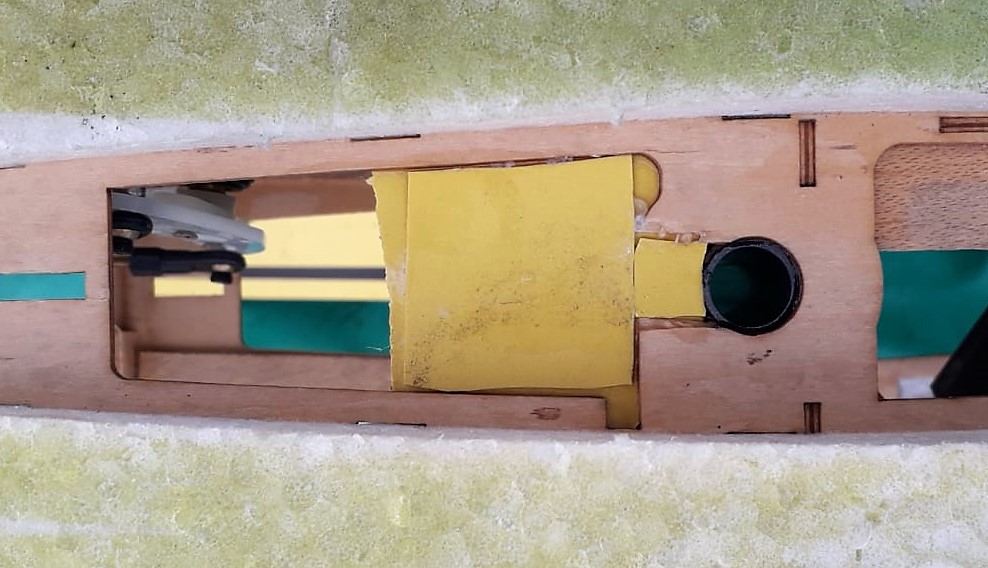 Well ok, he stole some club property (one of the electric fence warning signs) and with a bit of cyano he cobbled together a right old bodge job! But it worked perfectly and enabled him to have six flights with no problems.
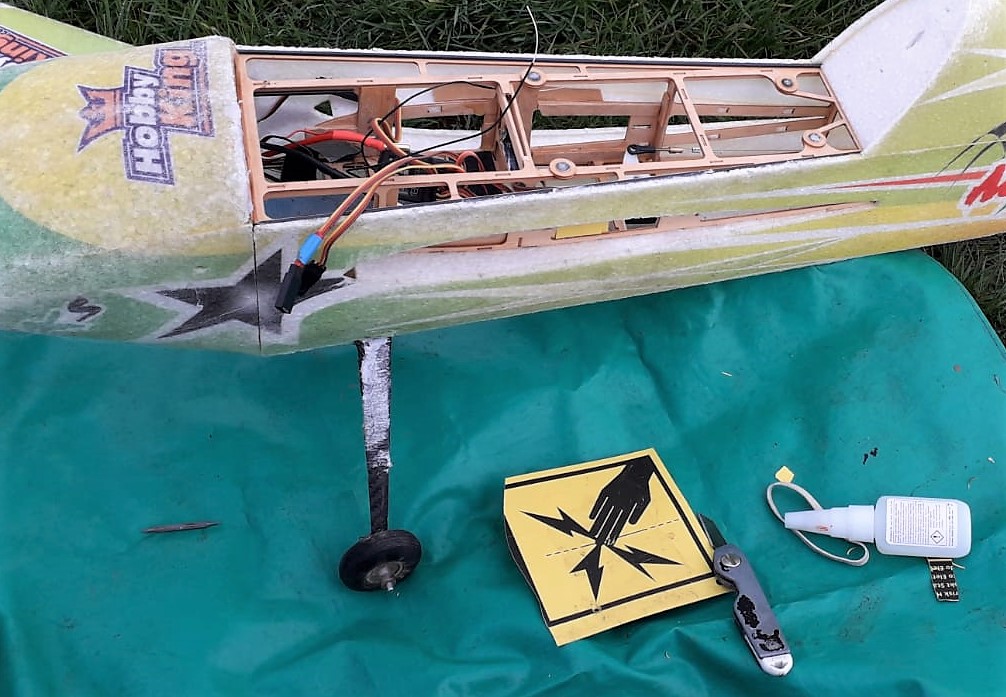 As it turned out to be the last flying session for at least two months I’d call that a very worthwhile job well done.
Now for a bit of news about a PAM member rather than actual flying. As those of you in the PAM WhatsApp group may have seen Chas Butler had some hospital time in January. Back in September 2004 Chas had a hip replaced having worn it out with too much walking (that’s just my opinion not a medical fact!). I can remember him being in a lot of pain for ages but the doctors refused to operate because he was only in his early fifties and they thought a new hip wouldn’t last his lifetime. They were right! Here’s what happened this month, straight from Chas: The day after the storm on Boxing Day I was tidying up the garden. Having swept the deck I was using a dust pan and brush to pick up the leaves, twigs and other garden rubbish. On straightening up there was a strange noise coming from my waist area. Initially I thought it came from the phone in my pocket. After removing the phone the noise sounded again. I then thought it may have been my belt creaking. At this time I was starting to feel a bit of discomfort that rapidly became more painful. Initially I thought I might have pulled a muscle or trapped a nerve. I phoned my Surgery the next day. They advised me to go to A & E preferably at St Richards as levels of Covid were very high in Portsmouth hospitals at that time. Five hours and two x-rays later the problem was no clearer. They advised me to go home with a view to return for a CT scan. Eight days later I received a phone call asking me to go in the following afternoon for a scan. The scan was on the Friday followed by another call on the following Monday to go in for a pre-op in the afternoon and then to return at 7:30 the following morning to replace the prosthetic hip. Needless to say, in the end, things happened very quickly. I think I was fortunate that a consultant from the orthopaedic department who had nothing to do, apart from emergency procedures, was checking back through recently undiagnosed cases. He noticed something amiss on my x-rays hence the reason for me being called at short notice for a scan. Apparently the ceramic material was crazed with the possibility of shards coming off and ending up, who knows where? This may not have occurred under normal circumstances. Chas’s operation took 4 ½ hours and left him with a 20” scar but the outcome was good and he’s now hobbling around on crutches, doing his daily exercises, and working his way back to normal fitness. Looking on the bright side at least he’s not missing any flying and should be fit enough to return to the field when we are allowed. All the best Chas, we hope you’re back to 100% again soon.
Both 1066 and Dougal Entendre spotted a piece on one of the Facebook groups about Team Mirus flying at various model shows back in the 1980’s. There was a photo of the team that included our very own 1066!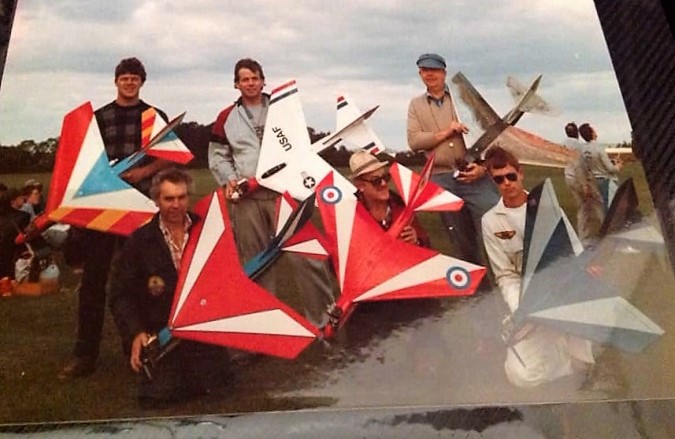
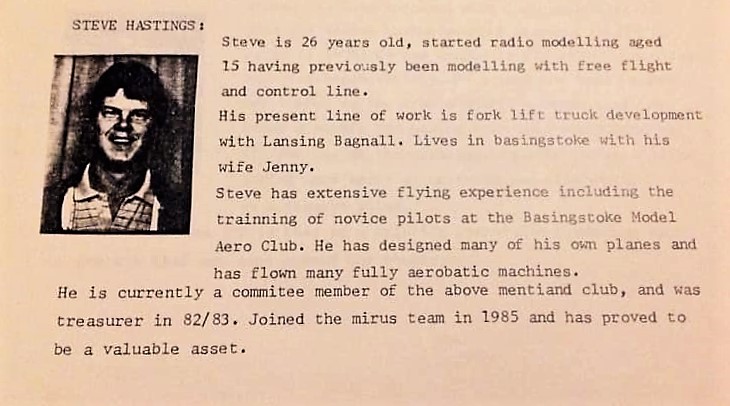 There was also some information about each team member and a video taken at one of the shows. This is what 1066 says about it: I am the young guy (now 61) top left of the group picture TEAM MIRUS, standing next to me is my great friend Dave Richardson, sadly now passed. It was Dave who introduced me to Ken via the youngest of the group, (bottom right) whose name escapes me. We spent a year traveling the country displaying the Mirus, often arriving expecting to get in as a trader but having to pay as no one knew we were attending, we even had to buy the plan pack, but it was worth every penny, nothing beats picking up the model at the end of a good flight and turning to face an appreciative crowd. Great Plane, Great Guy, Great Times.
The video appears to be taken by someone filming the original video on their laptop so it’s not the best quality. I’ve edited the video down to four minutes to include the parts with 1066. You’ll notice that at around the 45 seconds mark he appears to take a swig of methanol to calm his nerves! At 2 mins 20 secs he’s interviewed by the legendary Dave Bishop, and at the end he does what Dave describes at an ‘emergency landing’! I think the engine must have been stuck on full throttle, maybe it was a throttle servo failure, but whatever the cause he got away with it.
Three years ago, remembering the good times he had with the Mirus team, 1066 built another one. The kit is no longer available but he made an electric powered version using his own construction methods. He’s barely changed! 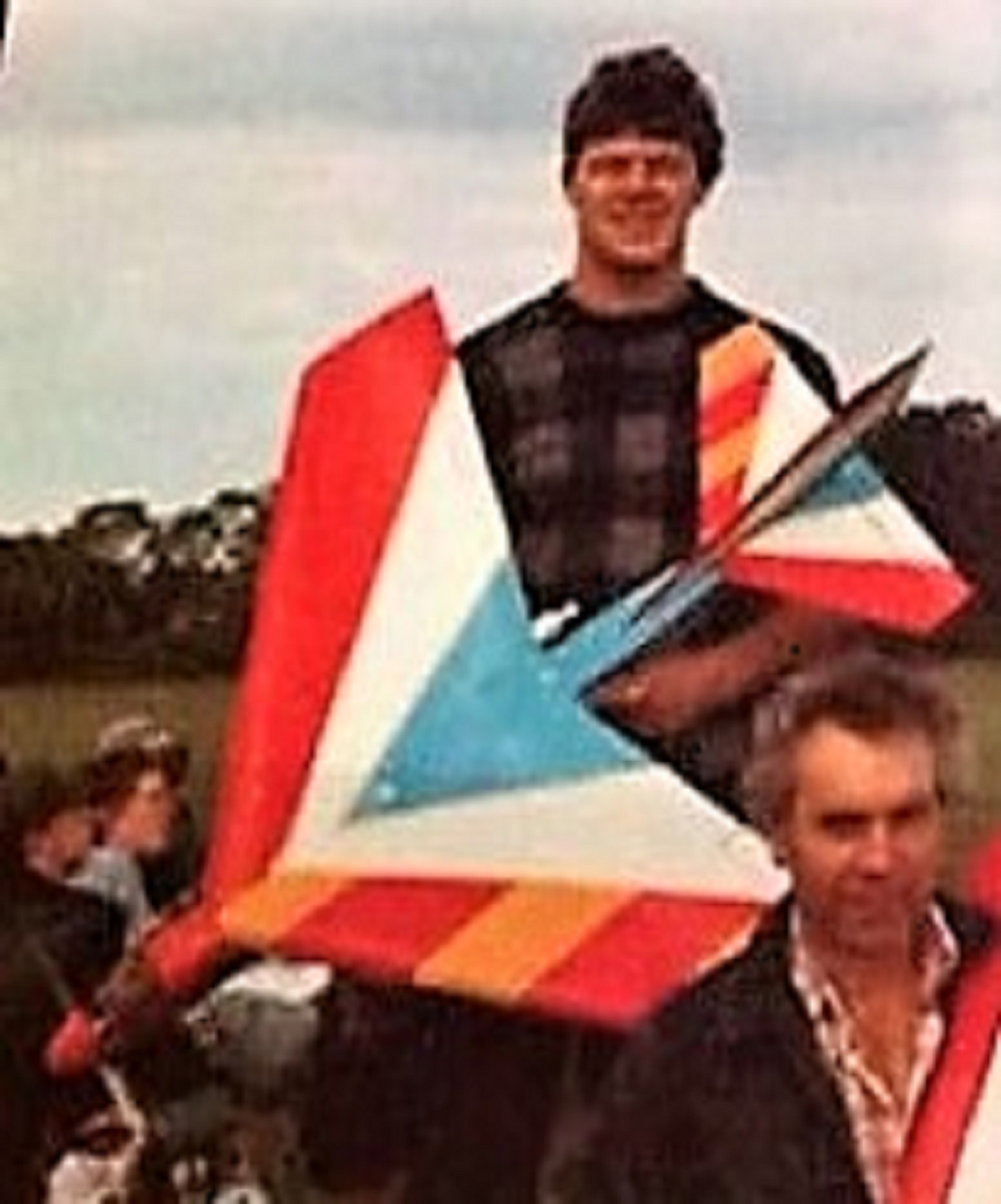
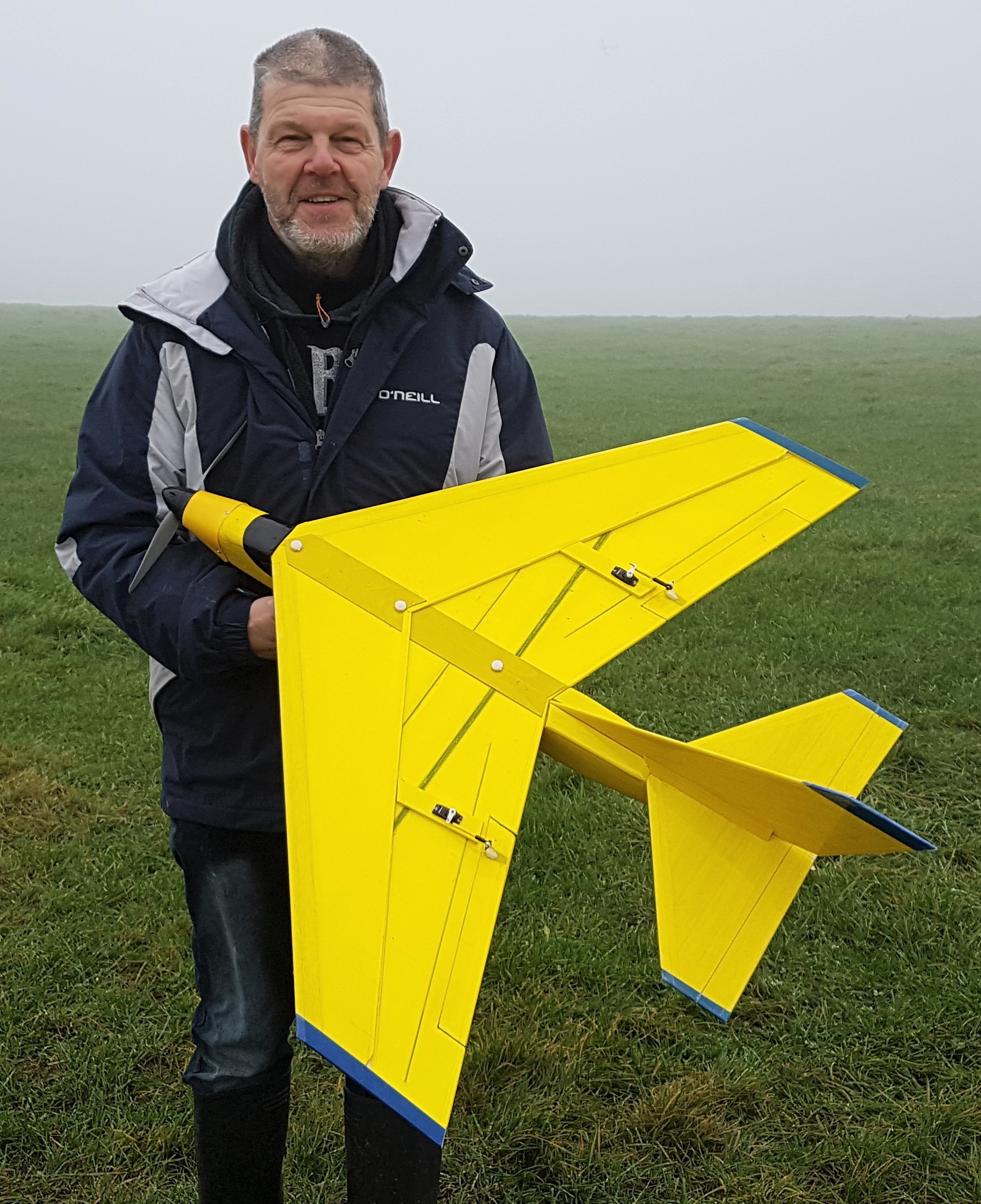 After a few teething troubles the new one goes really well and is a great flier, especially suited to poor weather.
I spotted a couple of things on the internet that made me smile in January. The first was posted on Facebook: If only it were true! It’s not fake news, not trying to fool anyone, it’s just a joke and it cheered up my January a bit.
The other thing was a Banggood advert that keeps coming up. I was intrigued with what appears to be pair of electrically heated underpants! Eventually my curiosity got the better of me and I clicked on it for more info.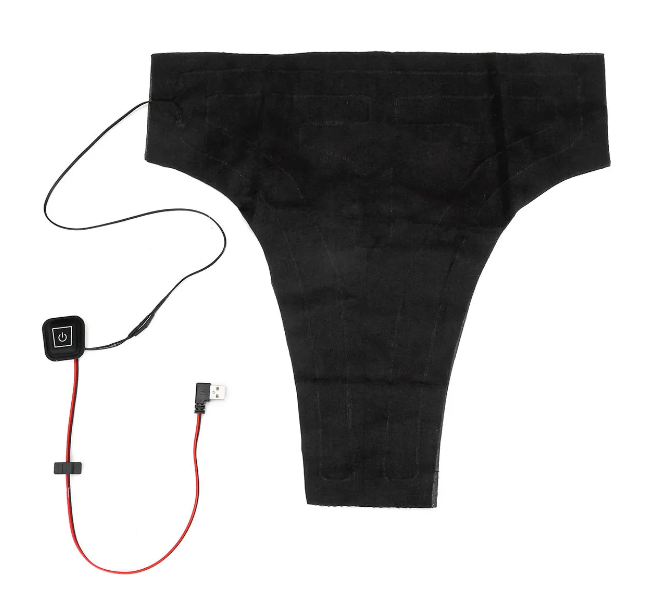 I was almost disappointed to discover that it’s actually a heated pad that goes on your back and the picture is (to my mind at least) upside down. Scrolling through the info revealed another photo that made a lot more sense.
  I totally blame Dwayne Pipe. A couple of months ago I searched Banggood for details of the heater pad he is using in his transmitter muff and now they keep trying to flog me all sorts of heat pads!
Always one who’s on the lookout for a bargain 1066 spotted a Weston Models Mini-Capiche for sale on Facebook Marketplace. It seems to be an untouched ARTF and he secured it for just £100. 1066 says it’s not as flimsy as most of the later models of this type, some of them seem to take the ‘add lightness’ theory a bit too far these days.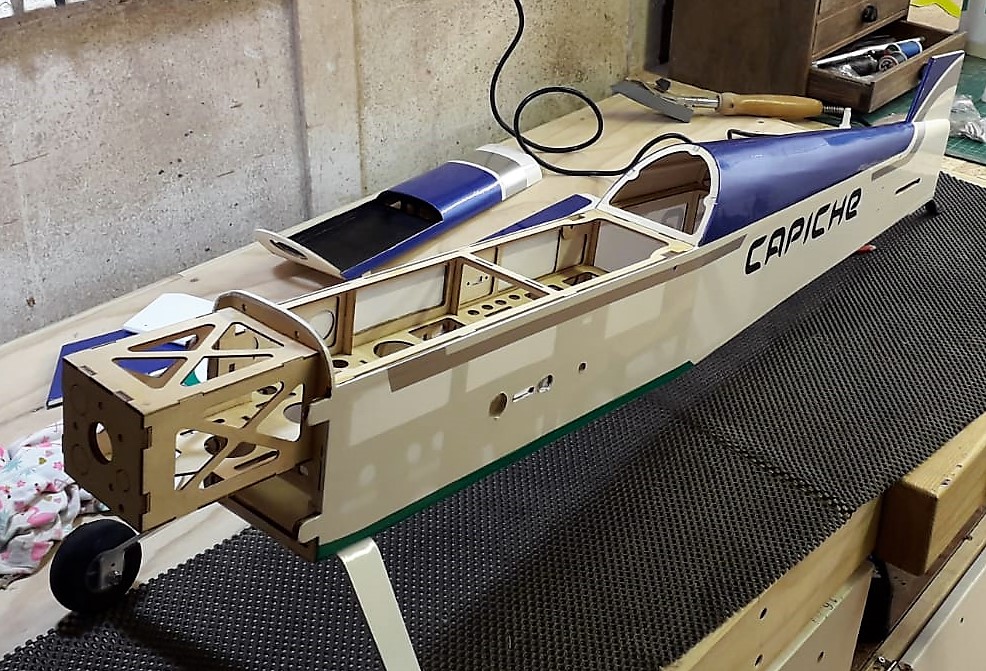 The Capiche is unusual in having push-pull cable linkages on the two elevator servos as well as the rudder. Personally I’m not a fan of push-pull linkages, they often seem to be a problem and I don’t see any advantage over having the servos mounted close to the tail and a direct short linkage, other than to help the CG maybe.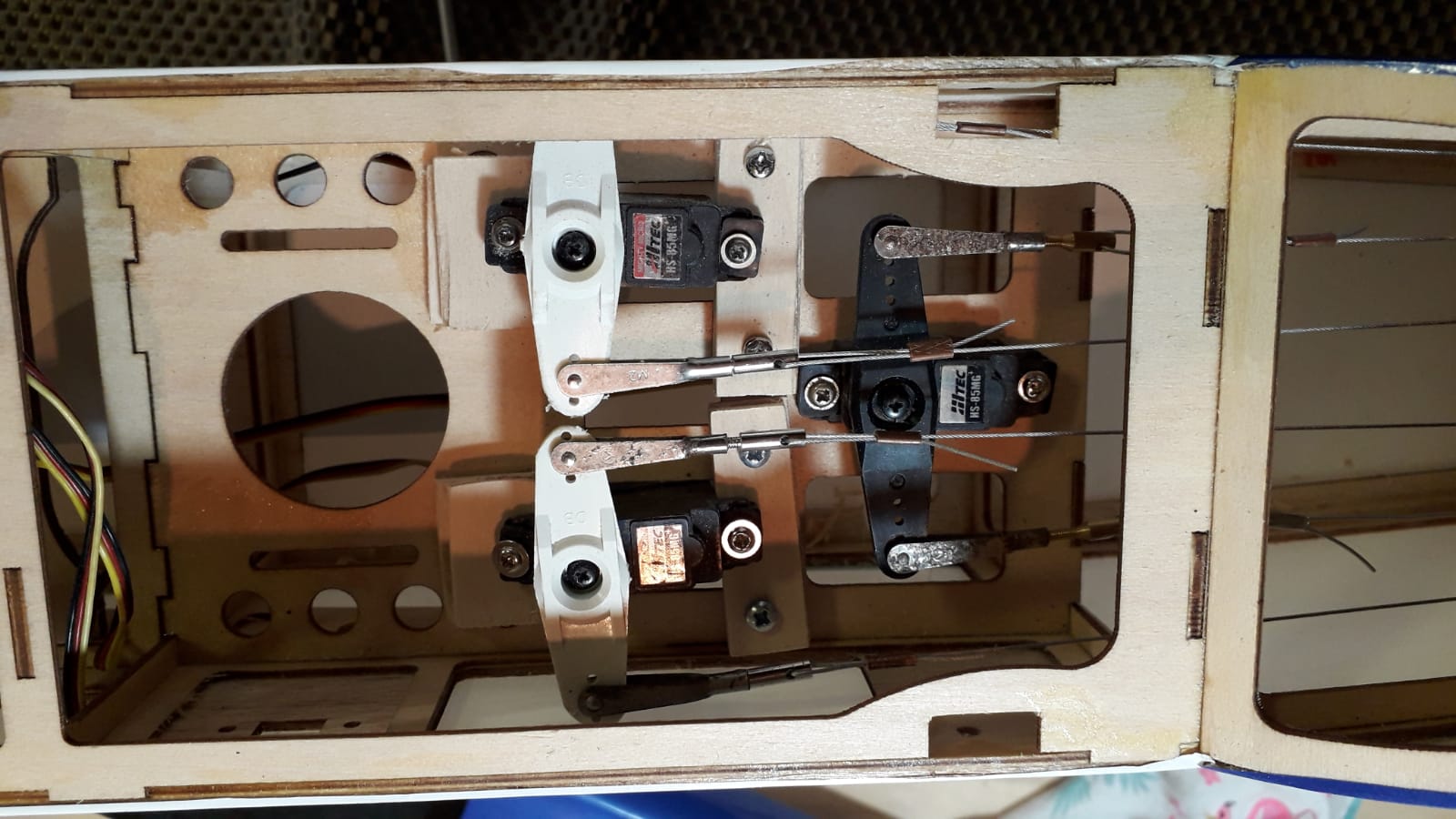
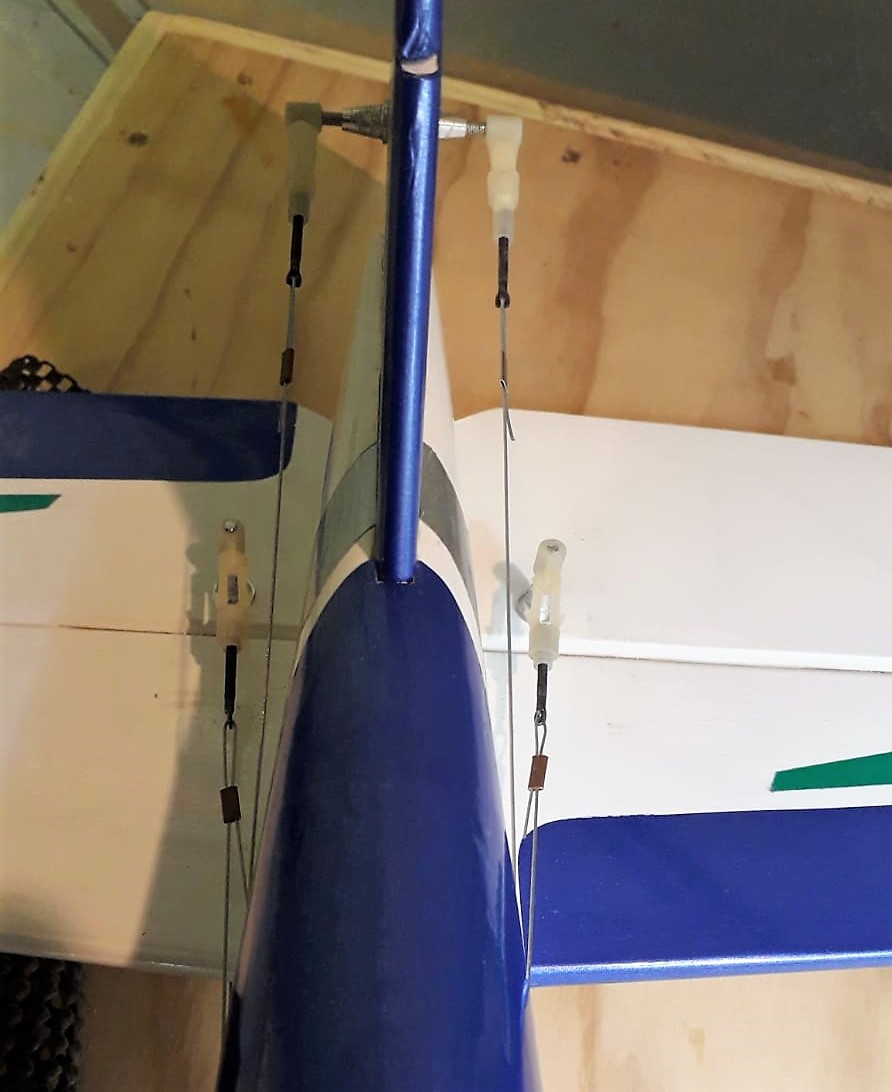 Anyway, 1066 has done them as designed and they appear to work perfectly. I don’t have any details of the powertrain other than that it’s all bits that 1066 had kicking around but I believe he’s fitted a 650Kv motor and will be using a 4 cell lipo. Presumably it will need at least a 50A speed controller. The Capiche is around 1200mm span.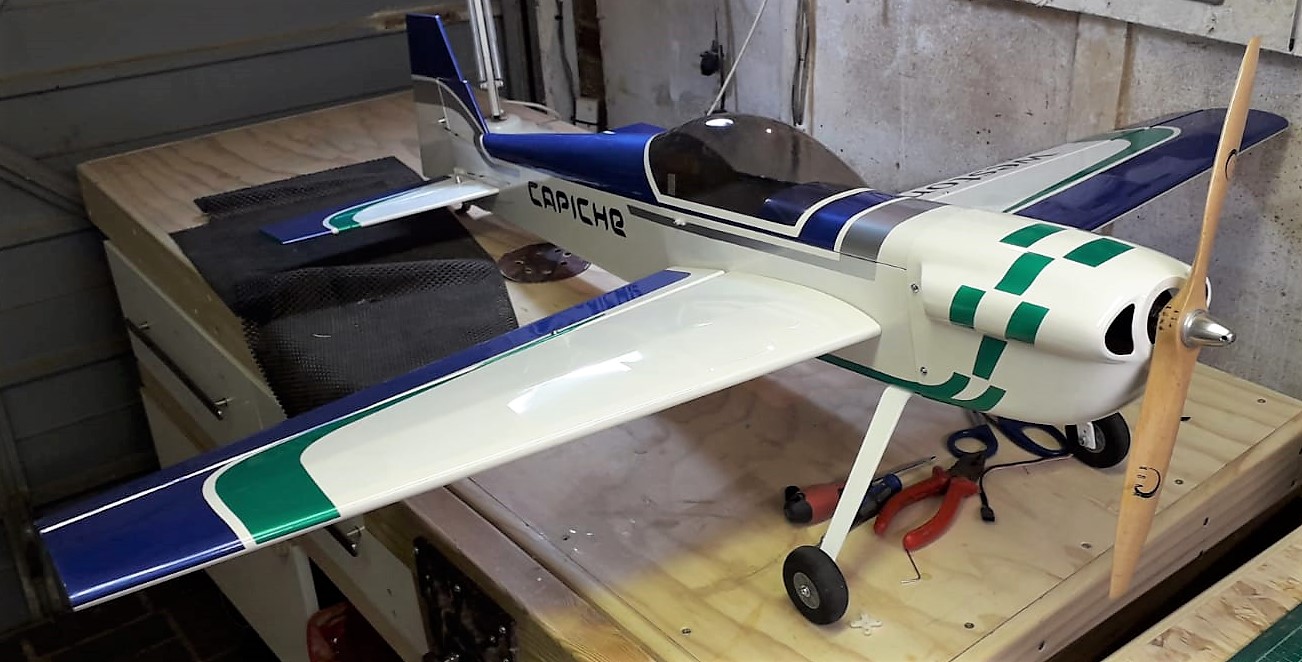
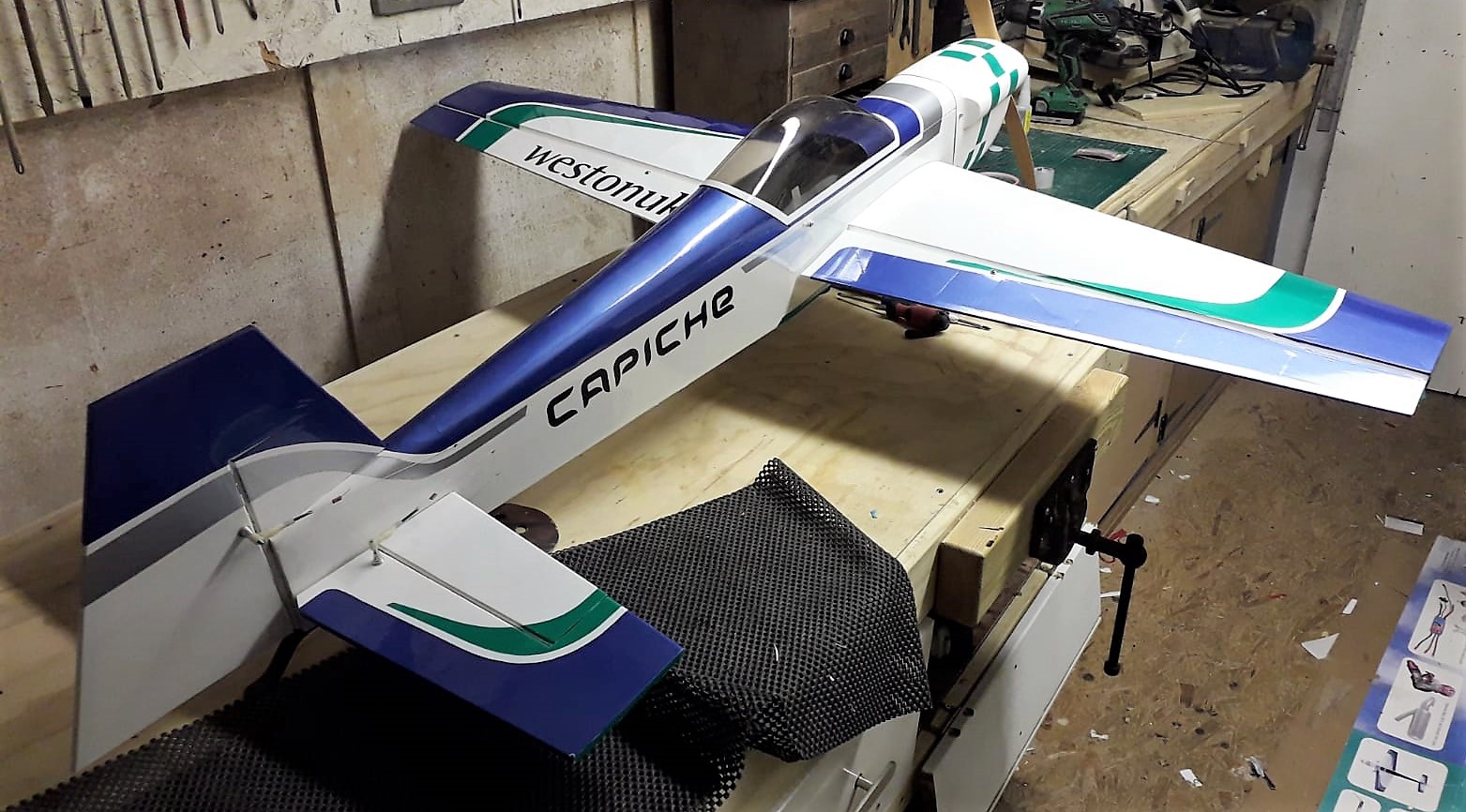 It’s all ready to go now and looks very smart indeed, well done 1066. We just need to be allowed to fly again now!
Matt Takhar emailed me, mostly to explain that he and Nick Weatherley are now Lee Bees members because the flying site at Daedalus is much more suitable to the large models that they both than ours. Can’t argue with that. But now, to go along with their large models, Matt is putting together a micro pylon racer for Nick!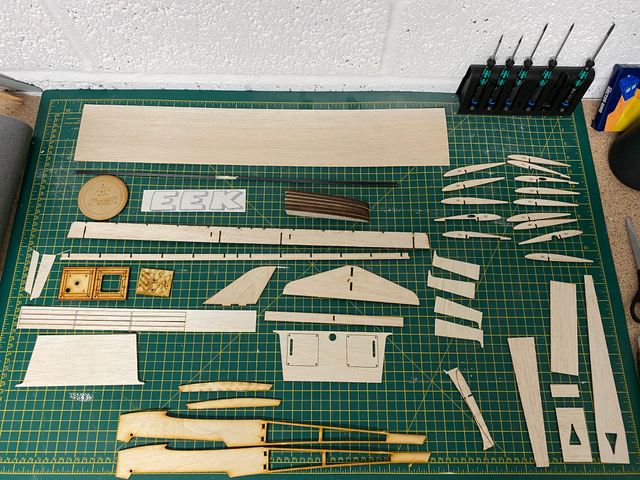 It’s called Eek and was designed by Andy Whitehead and IAD Model Designs produce a CNC cut kit. It has a wingspan of 575mm (just over 22 ½”) and uses three 6g servos on the ailerons and elevator. The motor is 2300Kv and is controlled by an 18A esc. It uses a 500mAH lipo of either 3 or 4 cells and either a 4.7 x 4.7 or 4.1 x 4.1 prop.
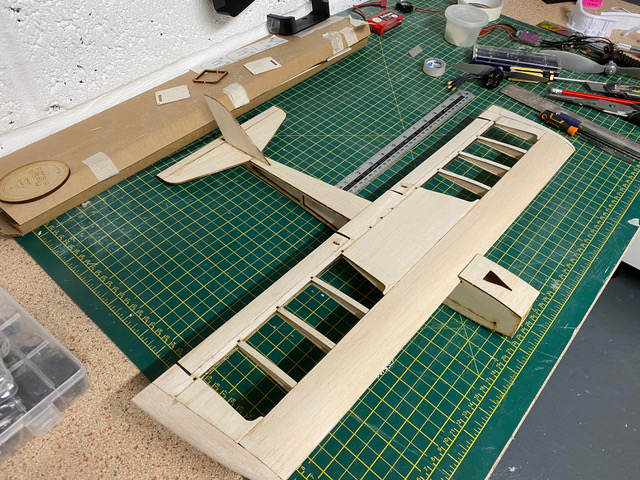 Just one comment: Are you mad? That thing is really going to shift, especially on 4 cells, good eyesight and reactions required! But both Nick & Matt are rather younger than most PAM members so maybe they’re up to it.
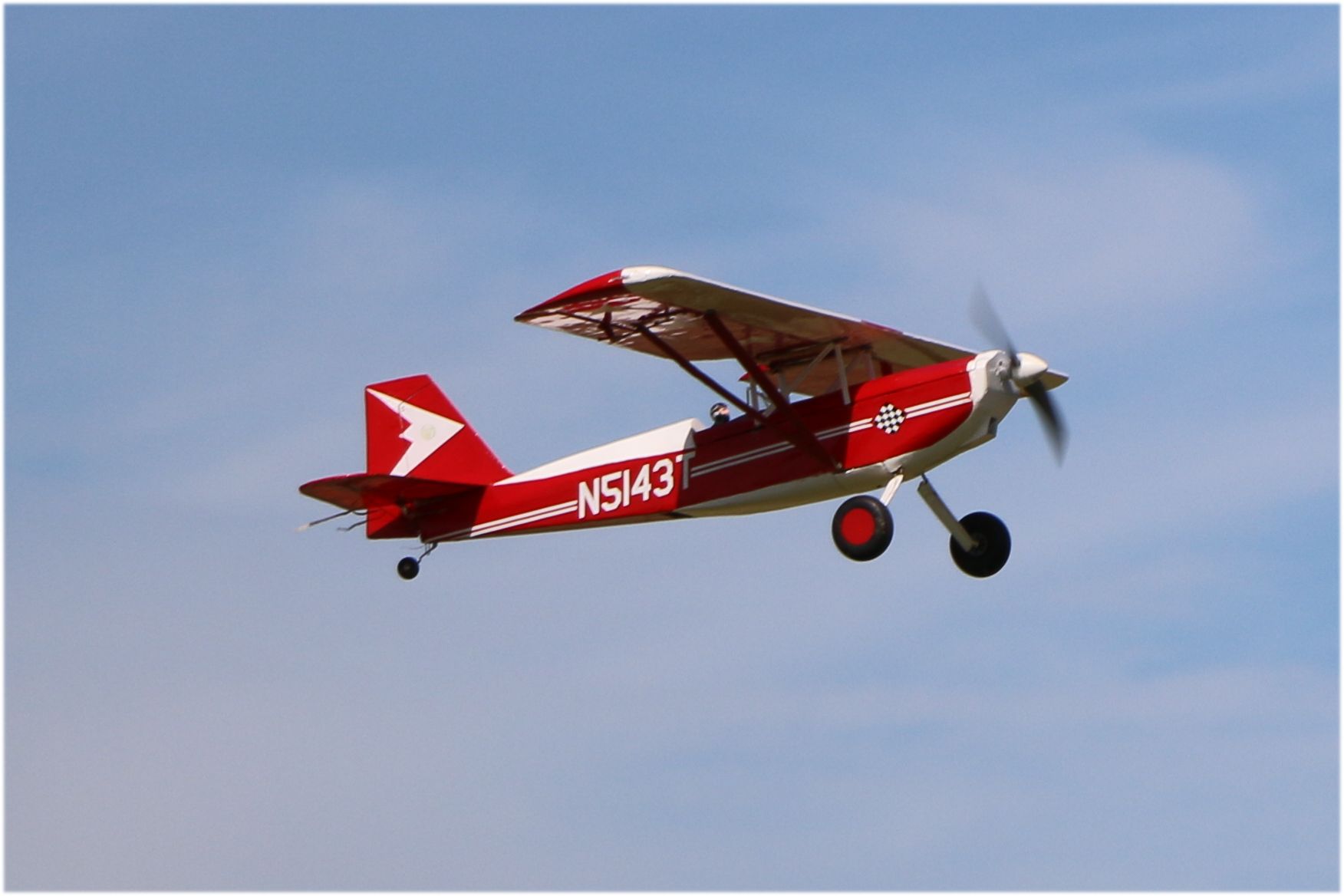
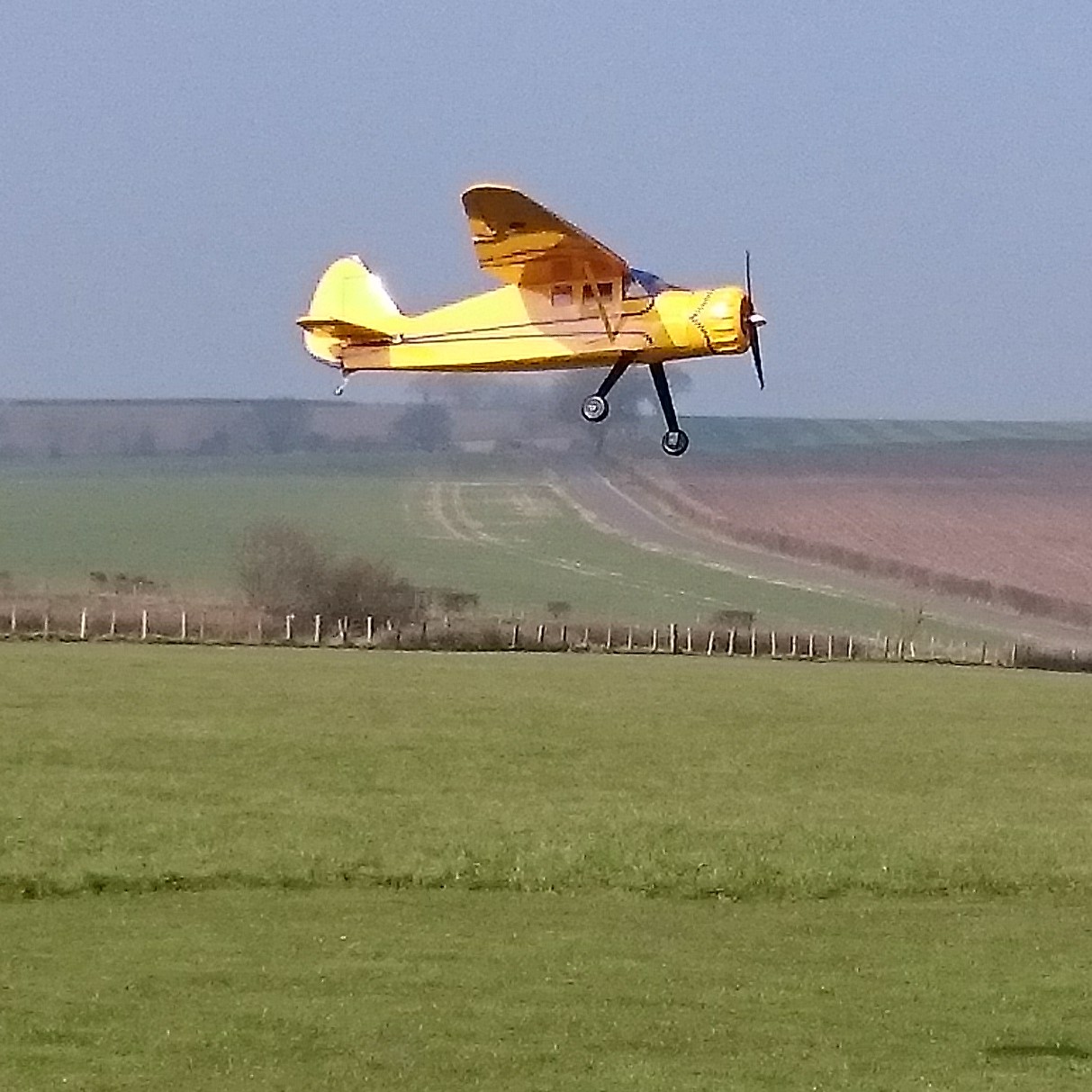
Sadly Lockdown 3 meant Kryten couldn’t take any flying shots this month so here are some blasts from the past: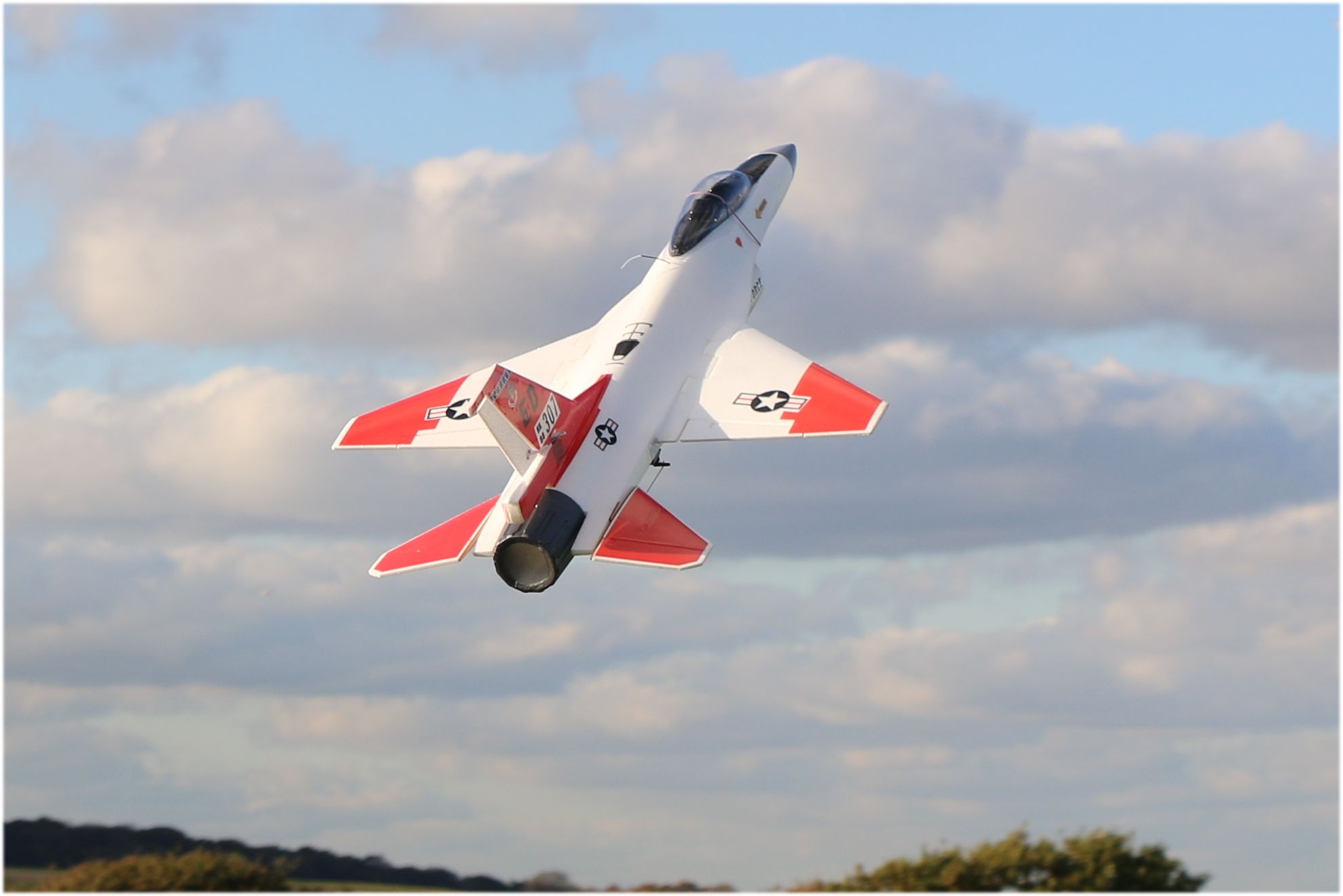
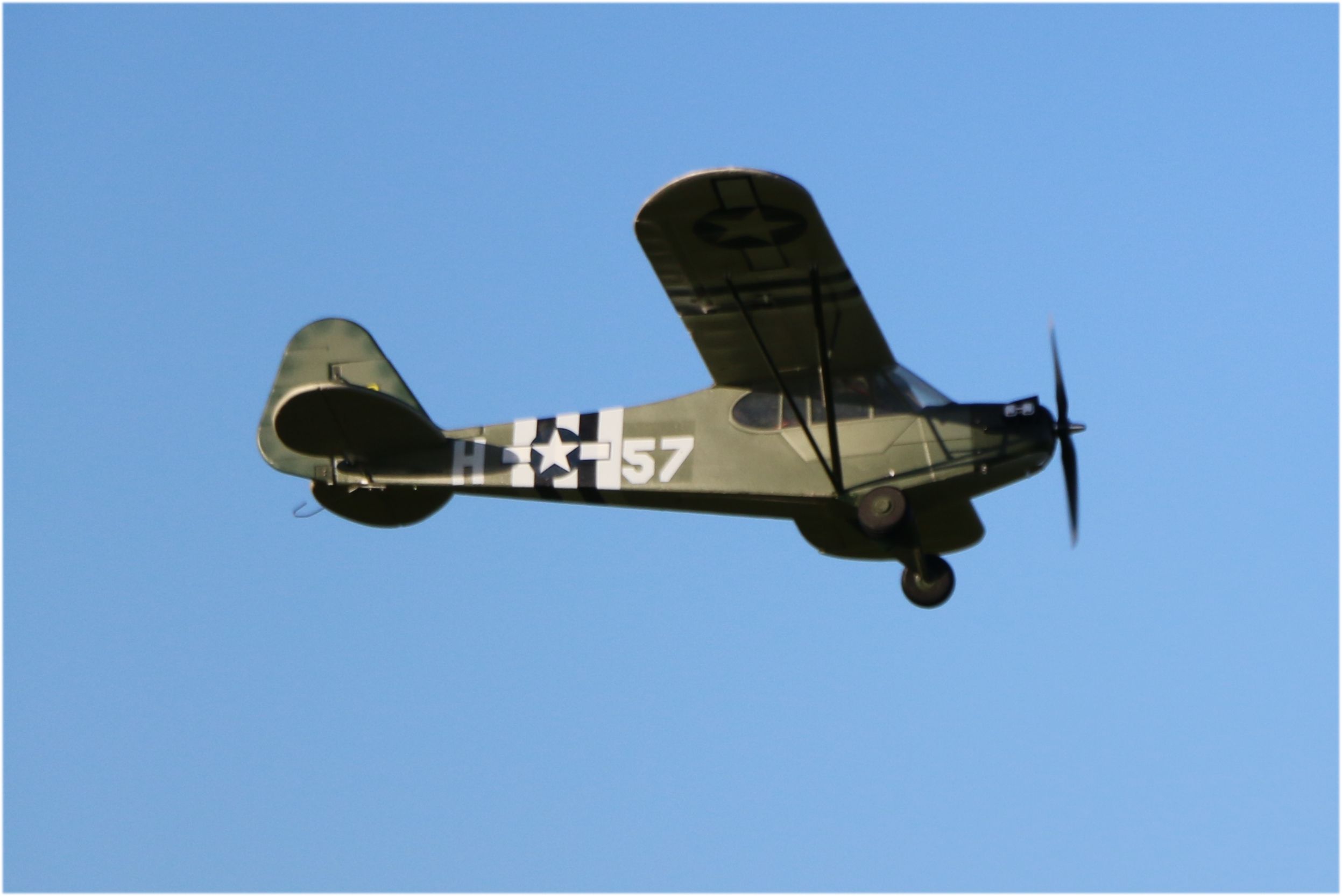
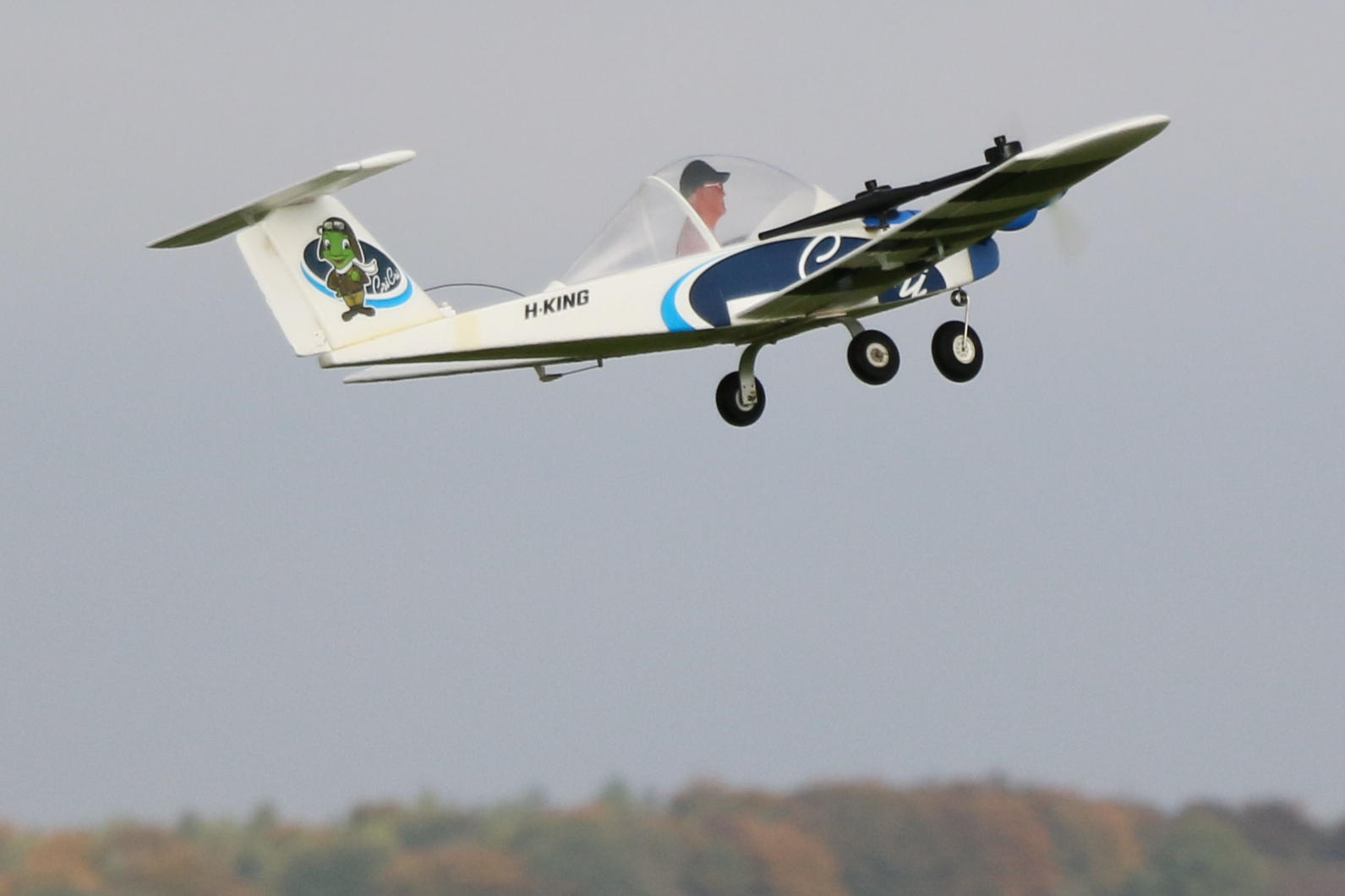
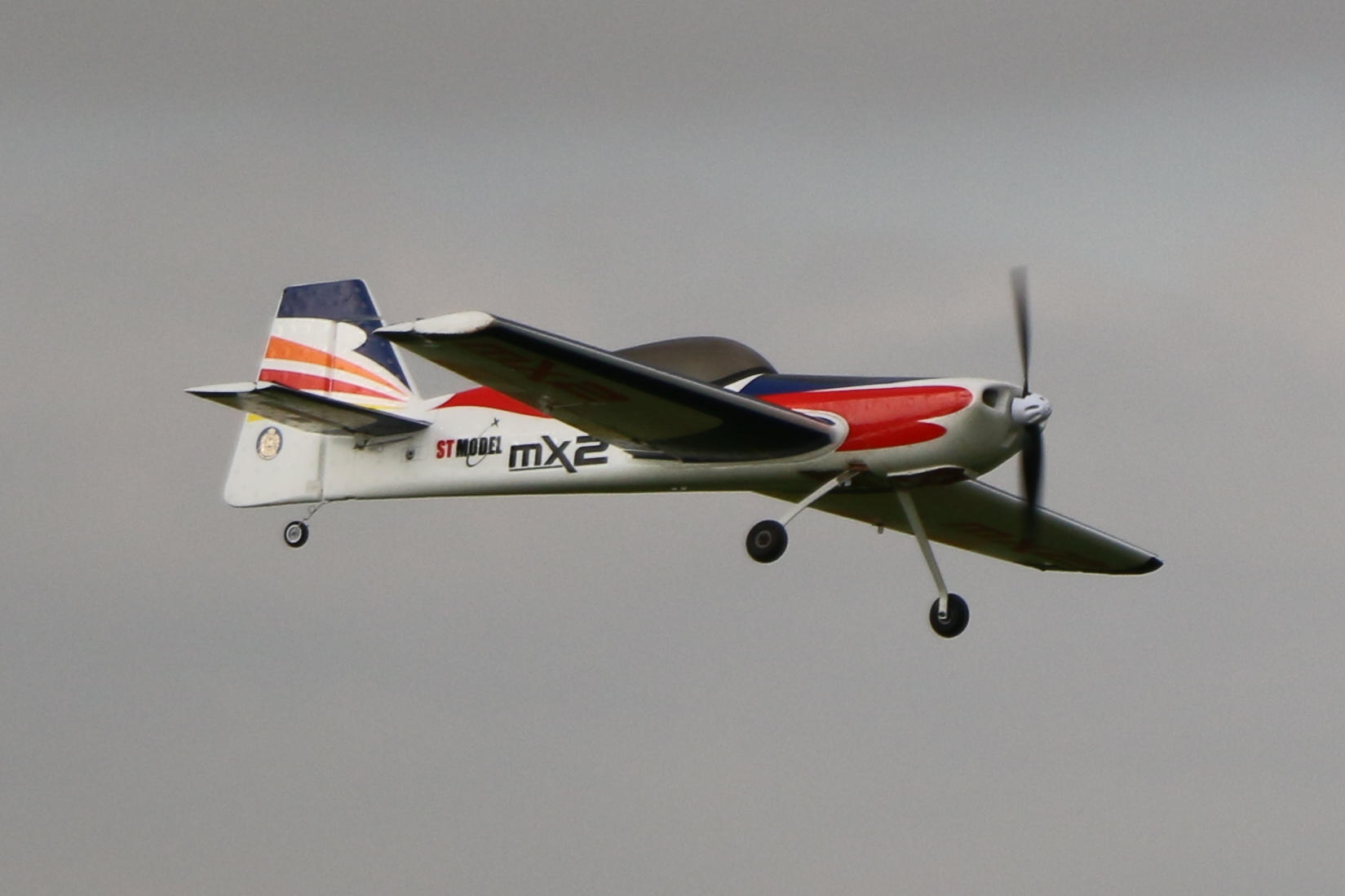
Video time now which this month is rather limited as the lockdown meant that Dougal and I were only able to film on one day. Please watch the video full-screen, it’s so much better with small models flying around.If the video won’t play for you please click HERE
Son “Mummy, when I grow up I want to be a pilot.” Mum “Make your mind up son, you can’t do both.”
Colin Cowplain
Patch News – December 2020
Happy New Year everybody! I hope you all had a good Christmas and made the best of it despite the restrictions. We’ve finally reached the end of an awful 2020, surely 2021 can only be better can’t it? It will obviously be several months yet before the vaccine roll-out has much effect on the virus and I suspect we won’t be flying normally again for quite a while. December was a strange month, when Lockdown 2 ended on 3rd December the whole of the local area was placed in Tier 2 and flying was allowed, albeit with social distancing and the rule of six. Some of us flew on the 3rd and several times after that whenever the weather was reasonable. On the 4th we saw a lovely sunset.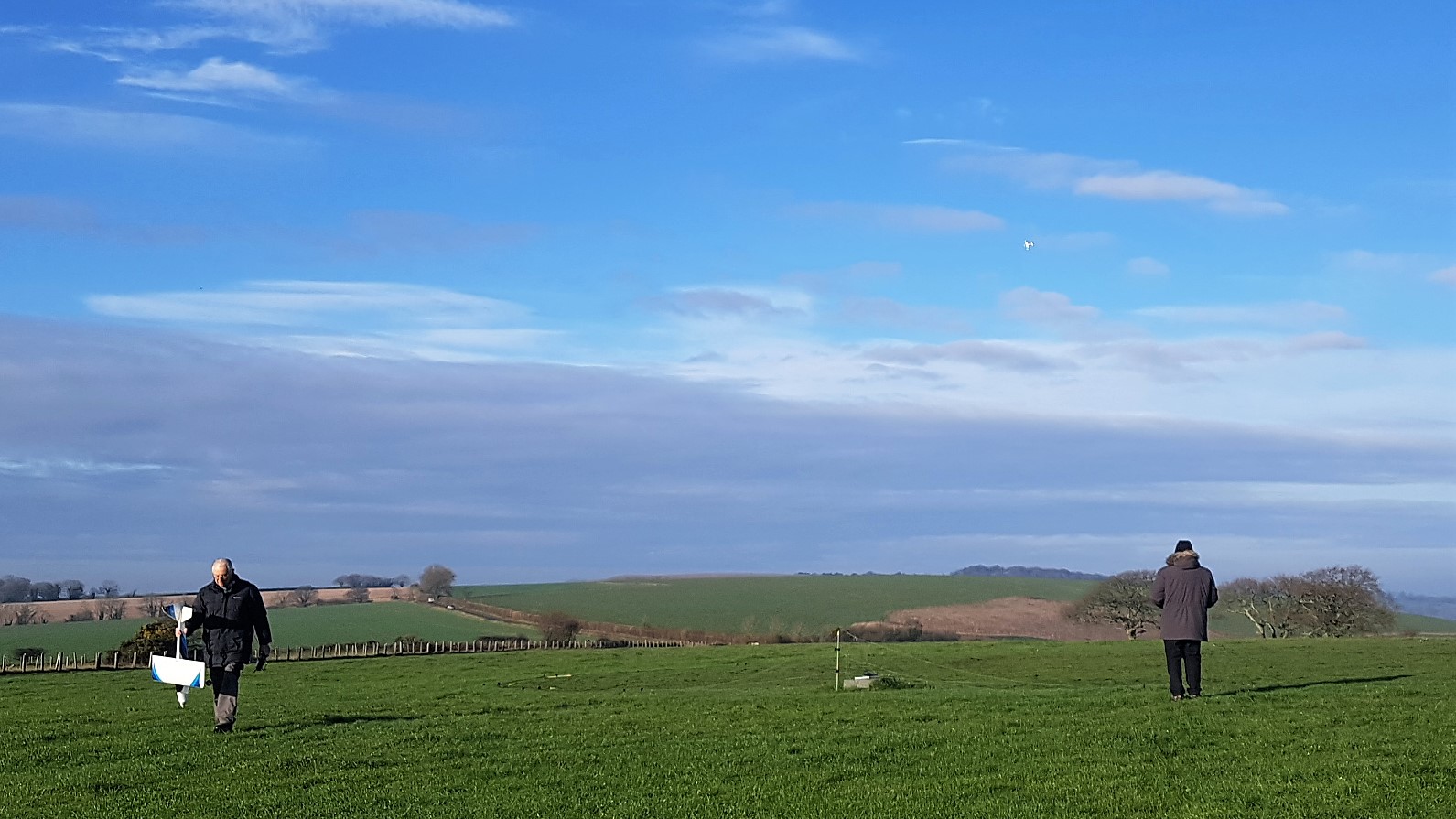
 But on the 19th Portsmouth, Gosport and the Havant Council areas were switched into Tier 3 and just 24 hours later into Tier 4. This meant that members in those areas were not allowed to fly but members in Tier 2 could carry on as before, effectively cutting the club in half. Then on Boxing Day the whole of Hampshire was moved into Tier 4 so none of us could fly except with just one other. Those in the WhatsApp group will have seen that Iven booked a slot and went flying after lunch on Christmas Day! He reported back that it well and despite not having flown for six months he didn’t break anything. He also said the patch seemed to have shrunk somewhat…yes Iven that’s what happens after a six month break! Captain Slow has continued to regularly change the fence battery throughout the various restrictions and some of us were able to mow the patch at the start of December so it shouldn’t need much attention for a while now. I was especially upset by the new restrictions as I’d been looking forward to impressing you all at the field with my classy new Christmas jumper. Never mind. You’ll just have to make do with a photo:
During the lockdown Bob the Builder spent some time knocking up a new model that he’s named Lockdown Two.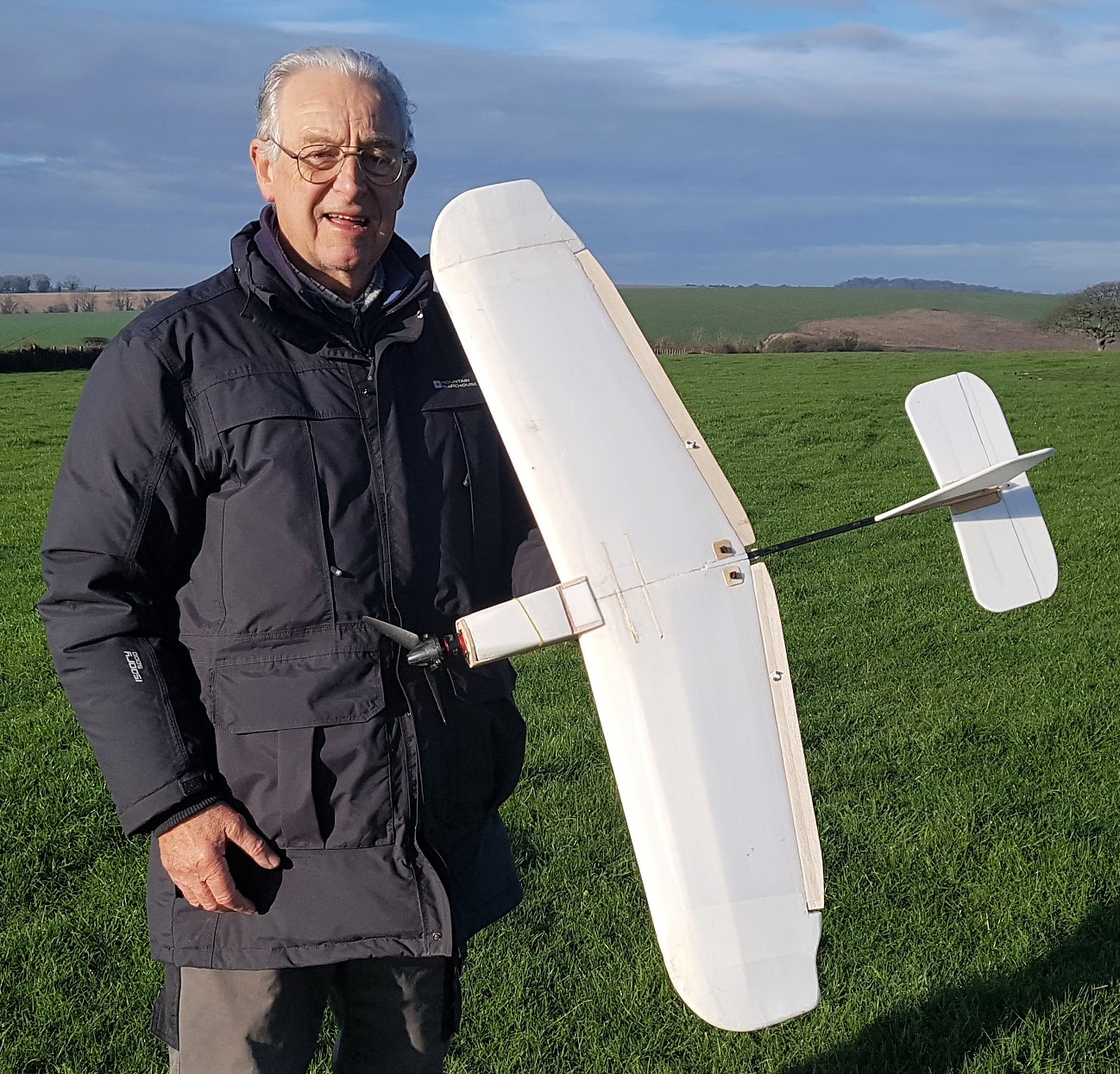 Bob says it draws inspiration from the new Eachine Razor and the Dream-Flight Alula from about 10 years ago.
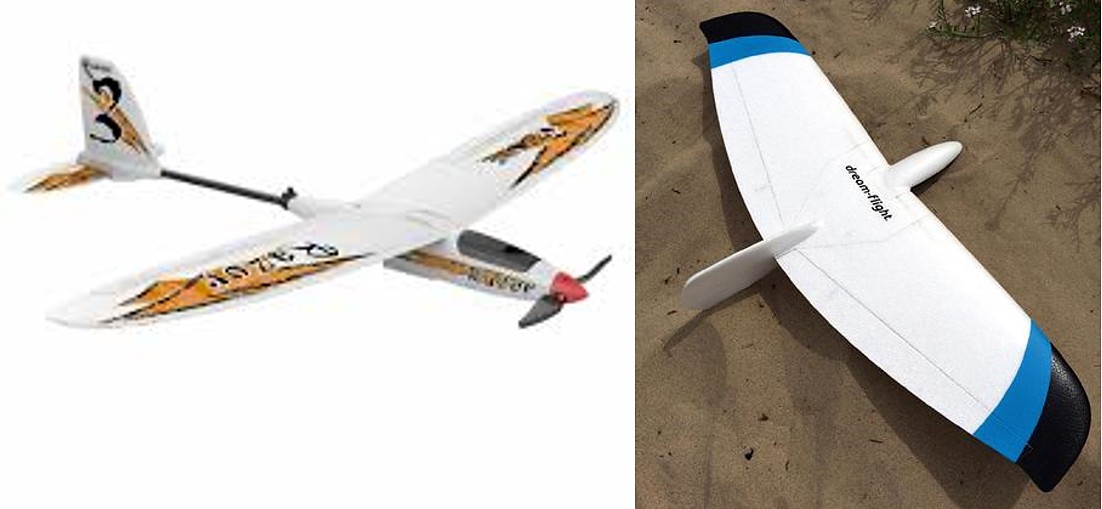 I can see where he’s going with that. The wing is made from two layers of 5mm Depron with a flat bottomed aerofoil and an Alula style plan shape. An 8mm square section carbon tube is combined with a fuselage front section built from balsa. All the materials were bits Bob already had kicking around. The motor from Banggood is an 1800kv 2 or 3 cell one, the same as Bob uses in his small yellow basher. He has fitted aileron and elevator control only, no rudder and has managed to keep the flying weight to 520 grams using either a 1300mAh 3s battery or an 850mAh 2s with 50 grams nose weight. Bob said he built it to be a slow flier that he can fly in a small area. I did the test flight and I’m pleased to report that apart from being too twitchy on elevator it flew brilliantly. You can see it in this month’s video. The first flight was using a 2 cell battery a later Bob flew it on a 3 cell one which proved to also be good.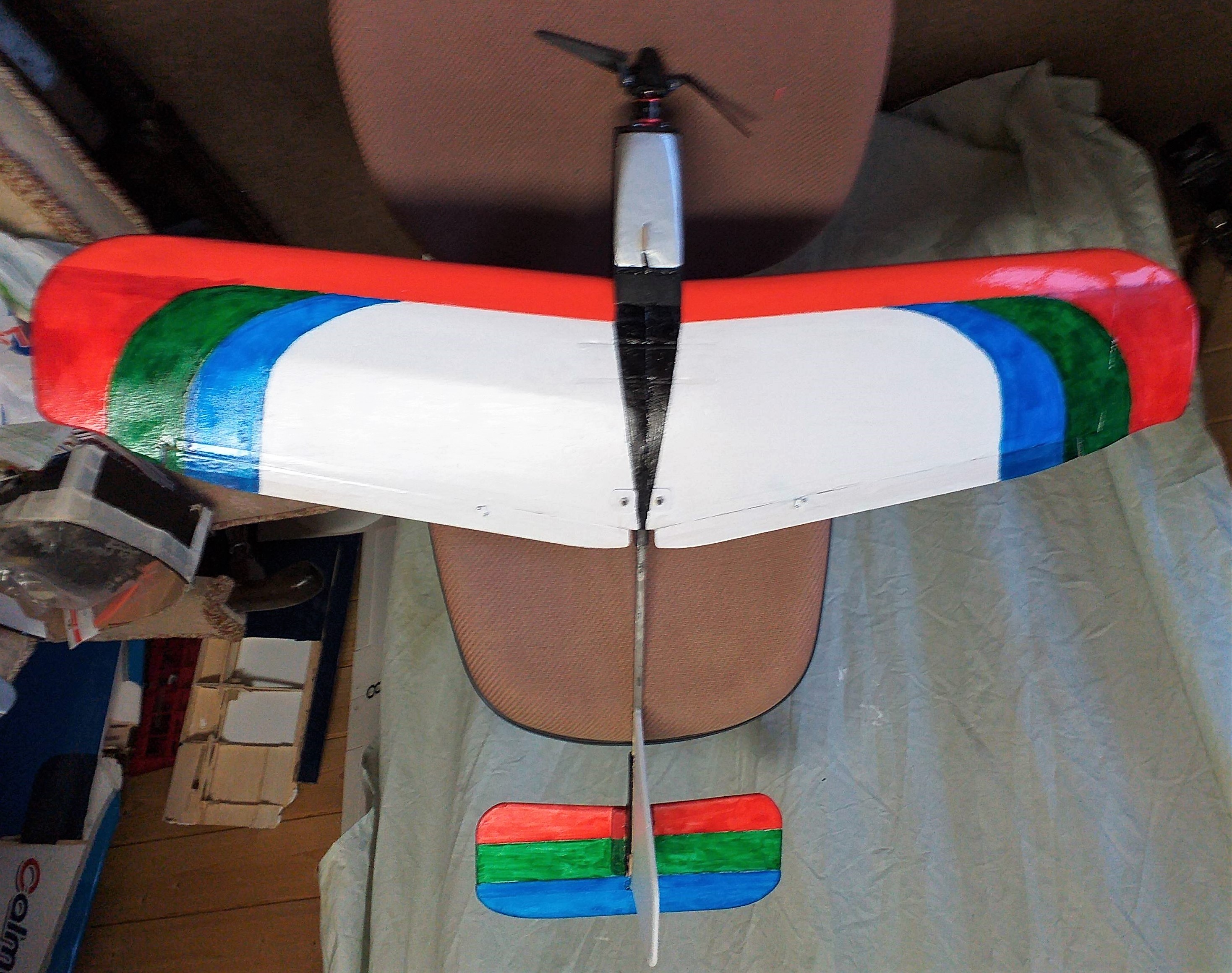
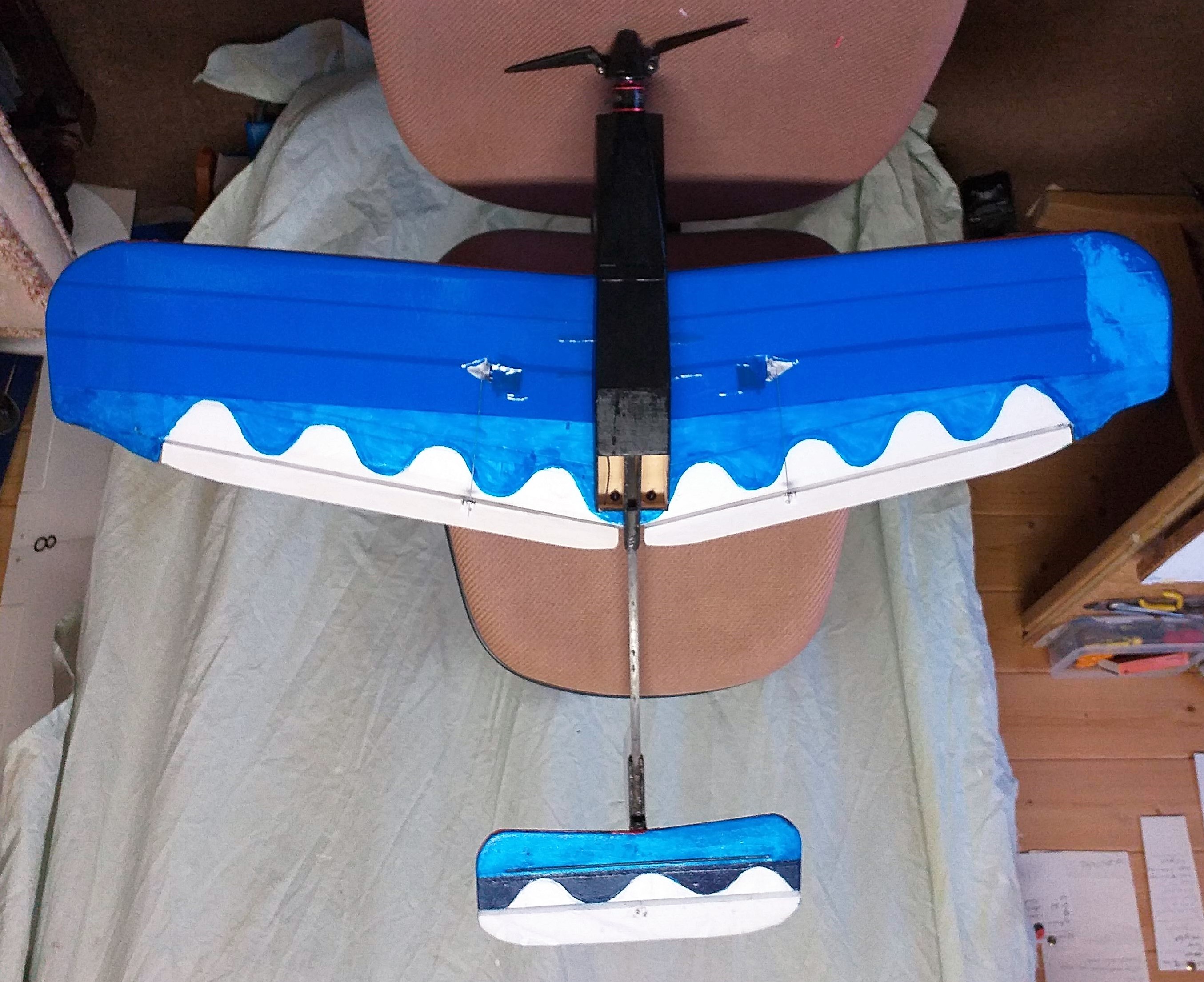 Bob added a bit of colour after the first outing to aid visibility. I’m not sure quite why but on the second outing Bob had a bit of trouble with it and did a little damage but once 1066 had trimmed it out again all seemed well.
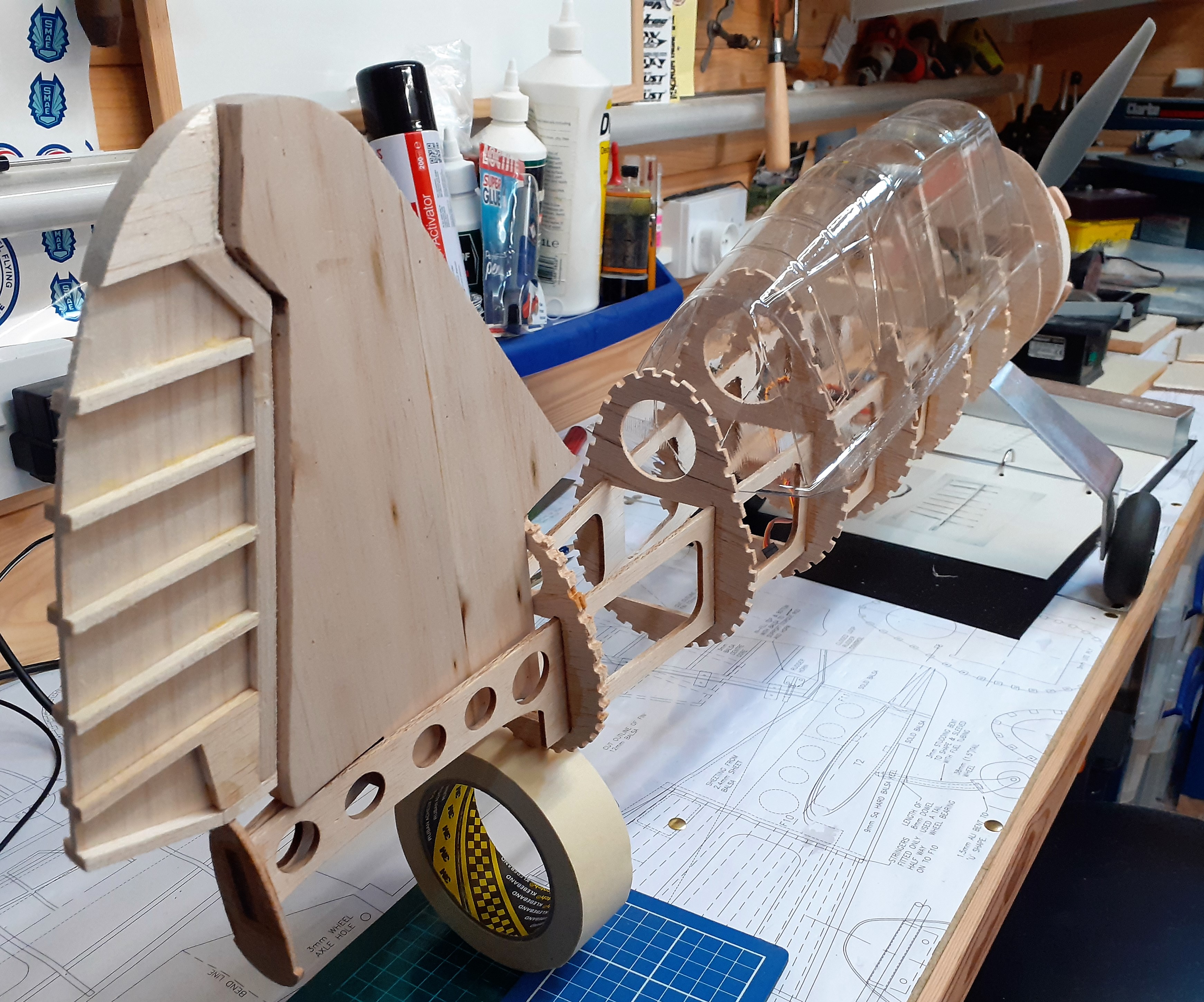
During December Chas flew his ex-Gentleman Jim Wildcat a couple of times and seemed to be enjoying it a lot.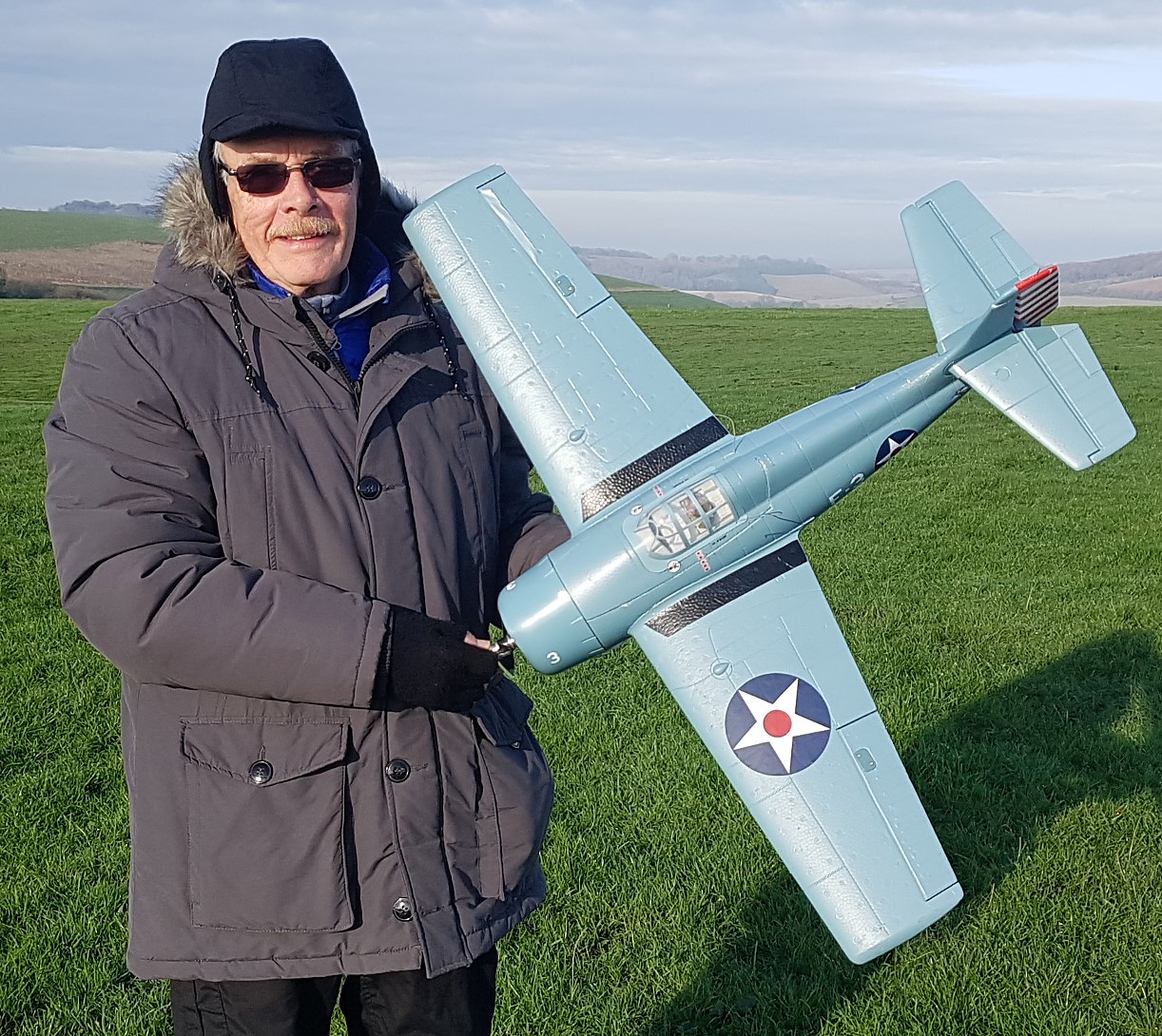 But back in the workshop Chas has been busy working on his Lysander which is coming along well now.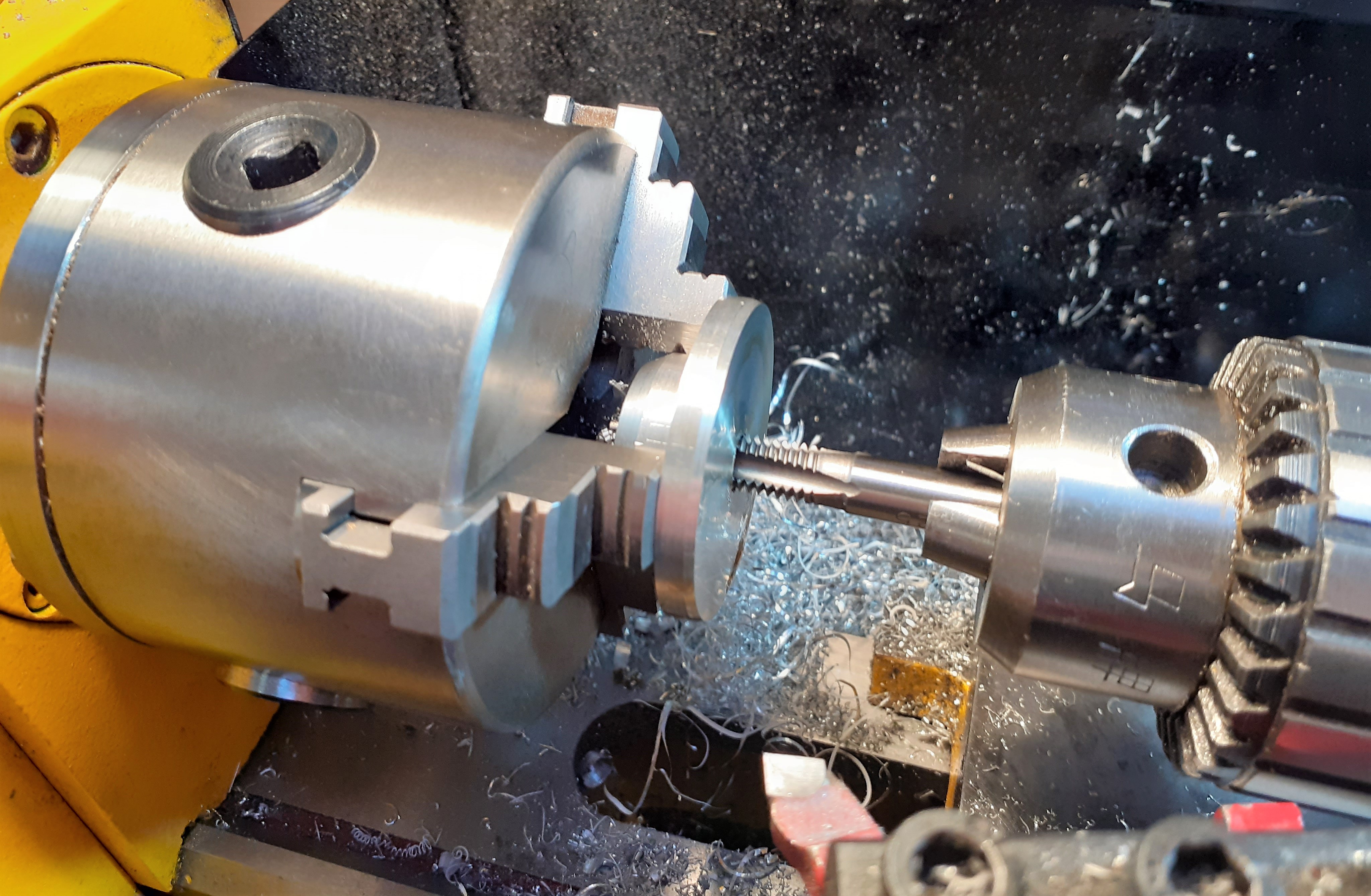
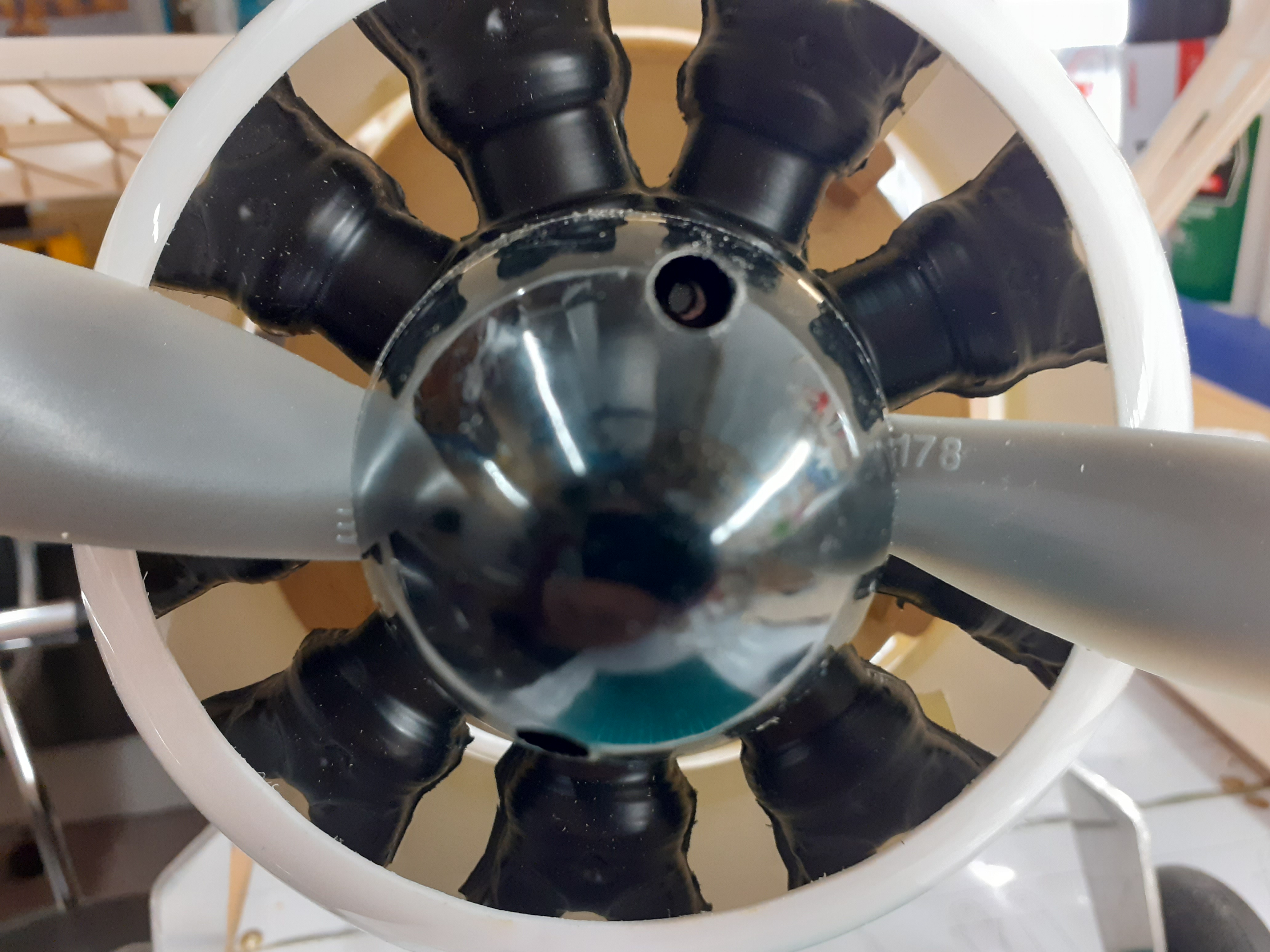
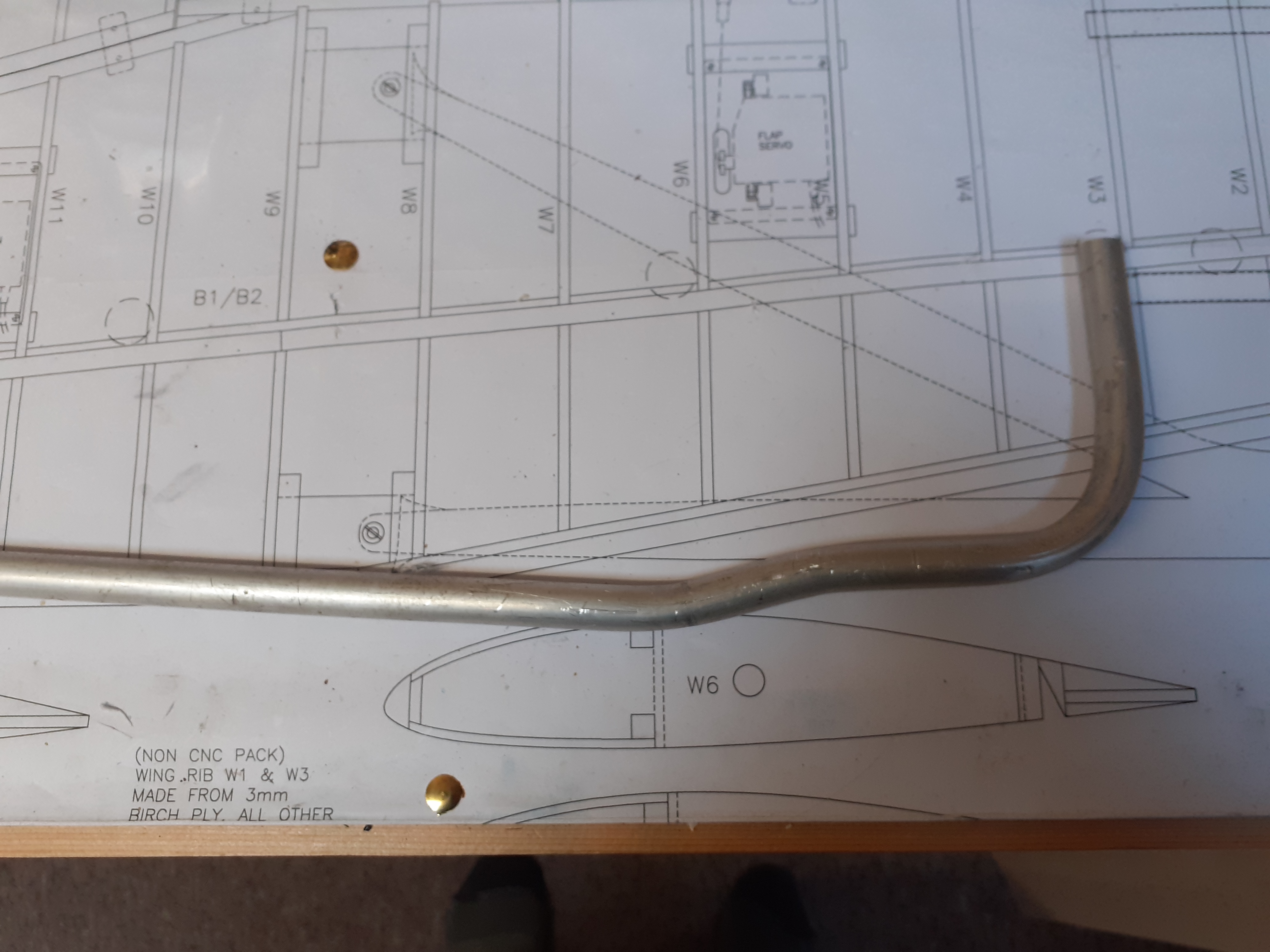
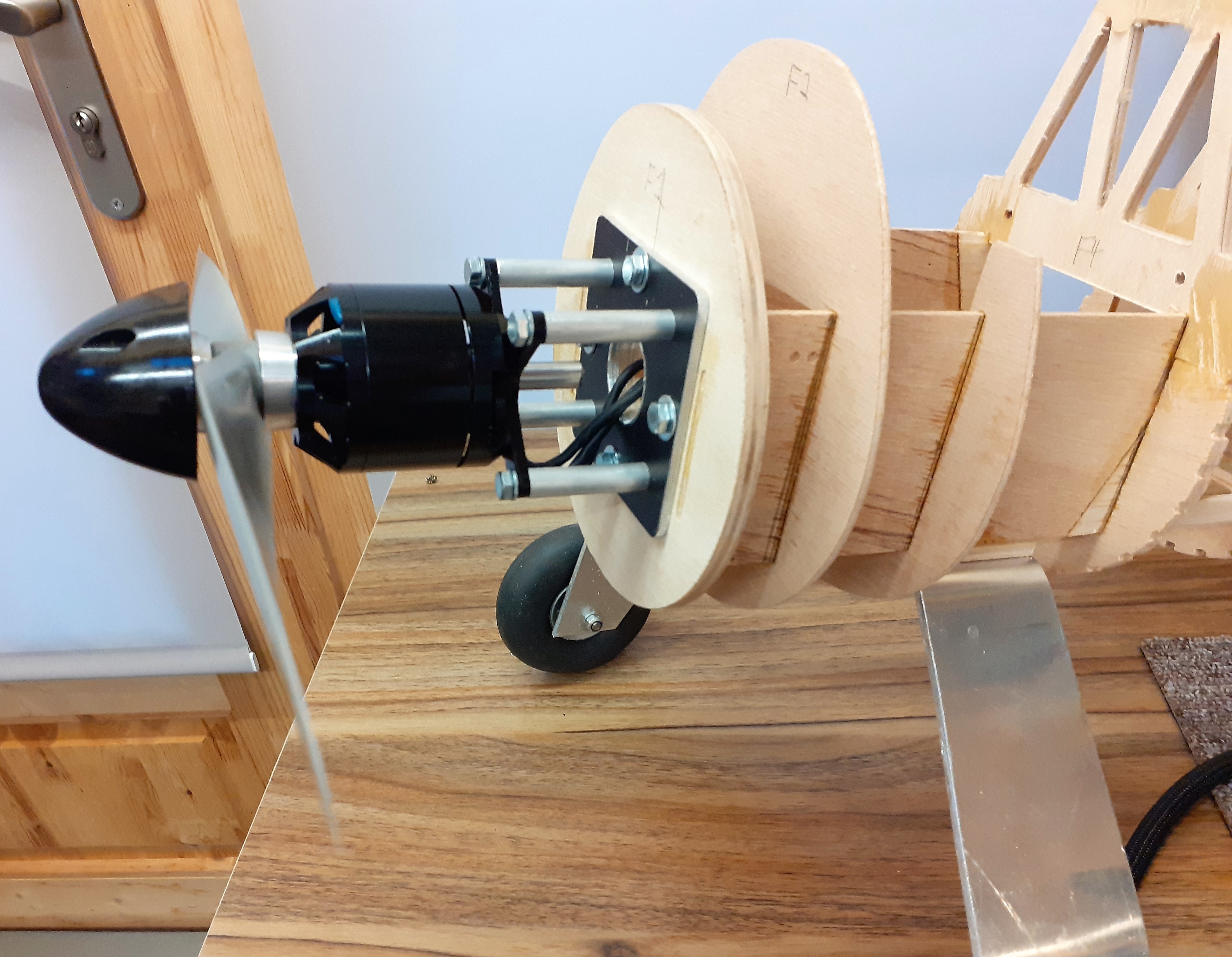 With the aid of his lathe he’s sorted out the motor mount and spinner and has managed to mount a Top Flite Pratt & Witney engine moulding in the cowl. It’s an interesting choice of engine as Lysanders were all powered by Bristol engines but needs must! The engine will be fitted with a home-made aluminium exhaust system in due course.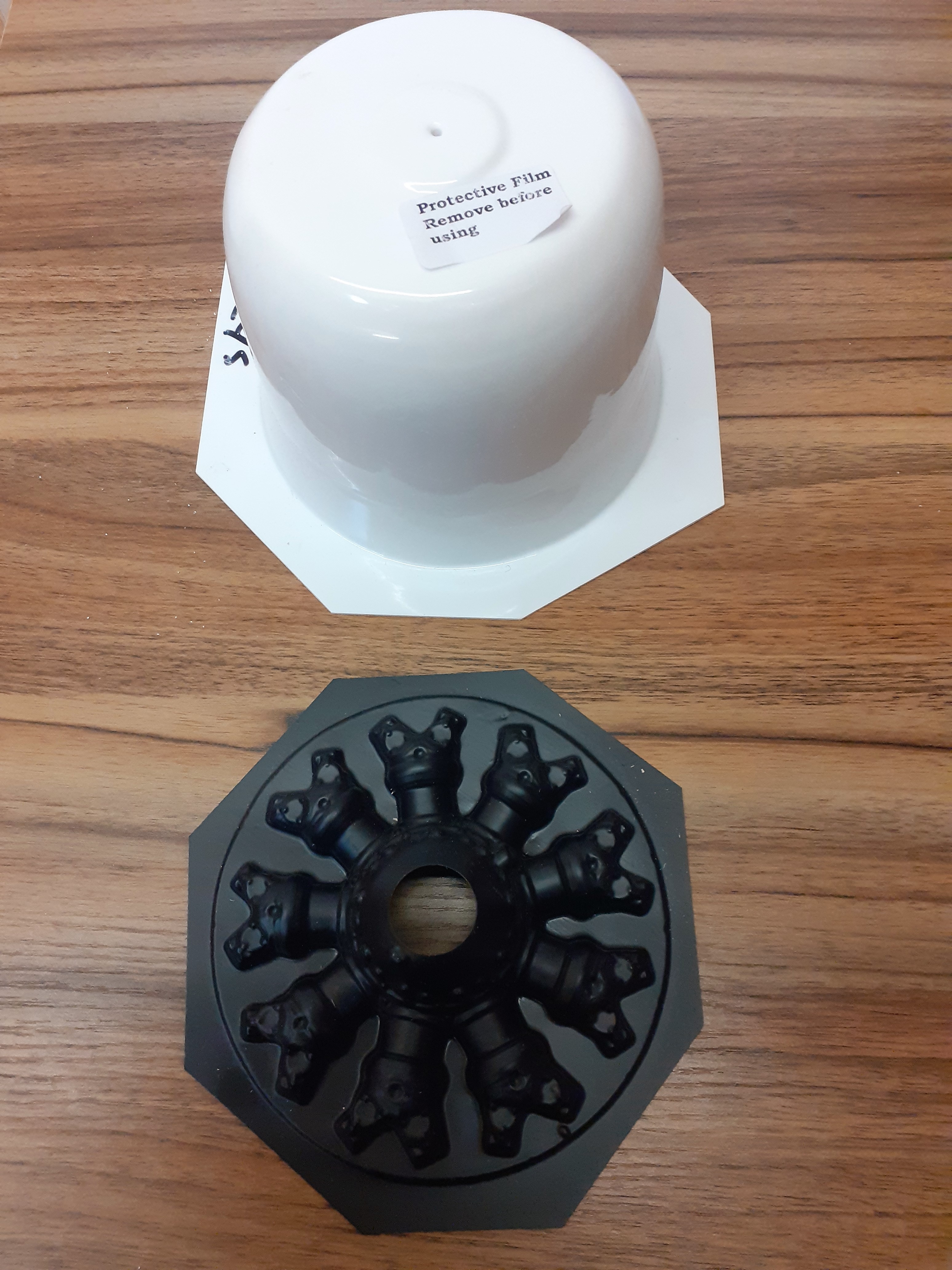
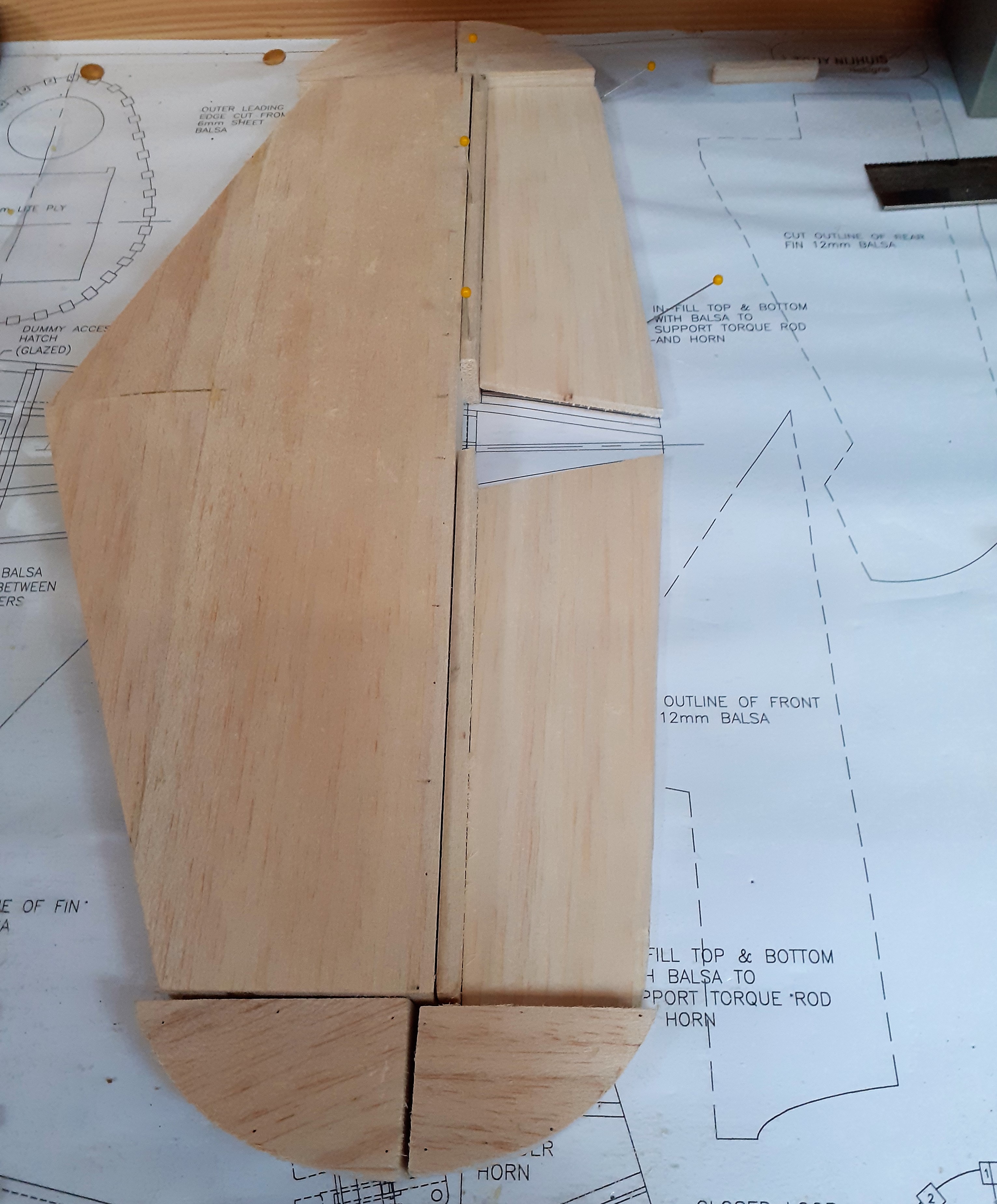
 Chas has also been working on the woodwork and the tail feathers look to be pretty much complete now. The fin is laminated from two pieces of 6mm sheet balsa whilst the rudder has a core of sheet balsa with riblets on either side. The elevators are built in the same method as the rudder whilst the tail plane is all built up with obechi spars, ribs, leading and trailing edges and then sheeted with 1.5mm balsa and laminated tips added to both the tail plane and elevators. It is built upside down so that when turned over it has a flat top surface and dihedral on the underside.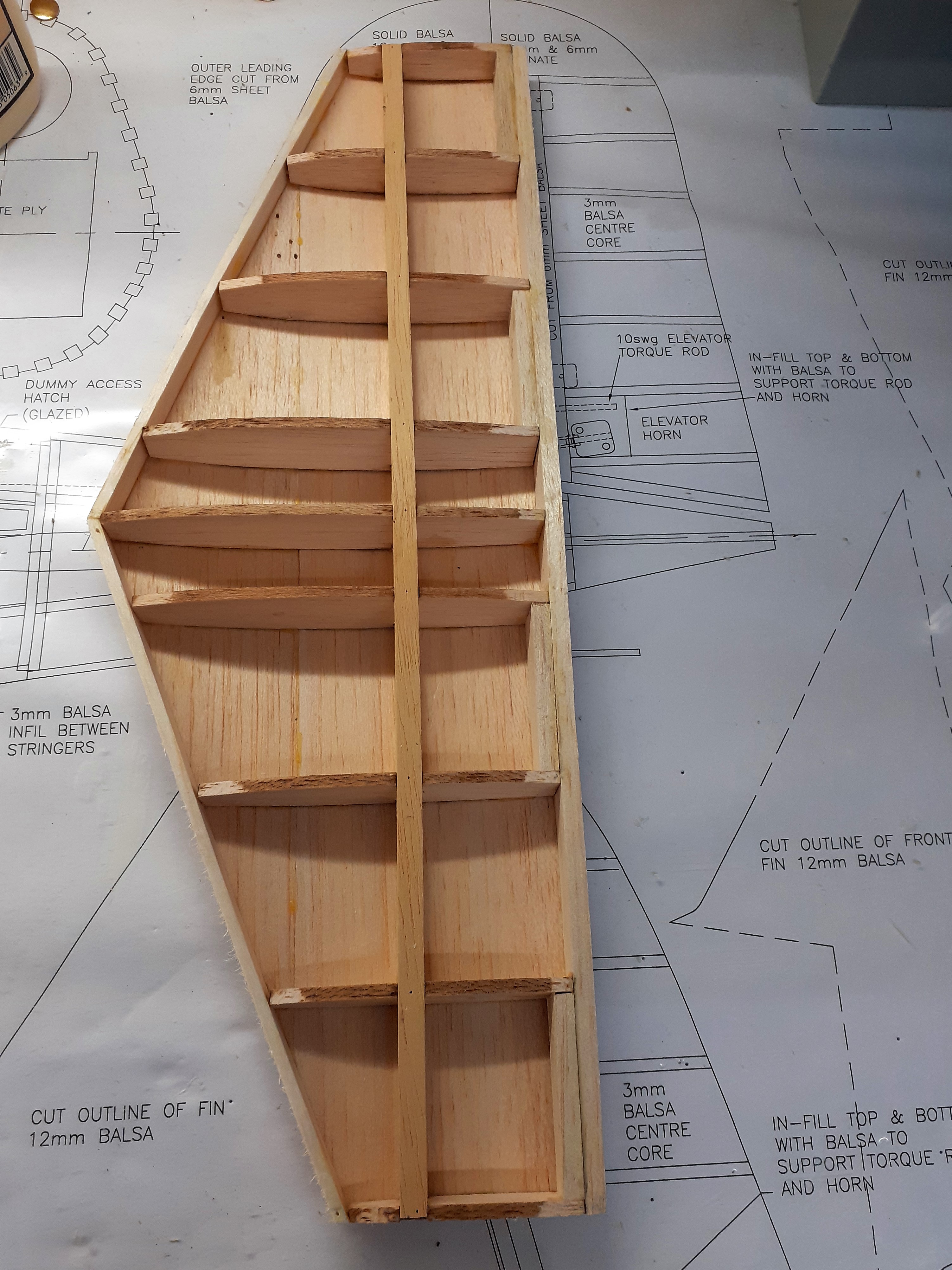
 The wing struts are made from two laminations of lite ply and one of balsa with a stud at the lower end and two aluminium plates at the upper ends. The struts are there just to hold the wings against the fuselage.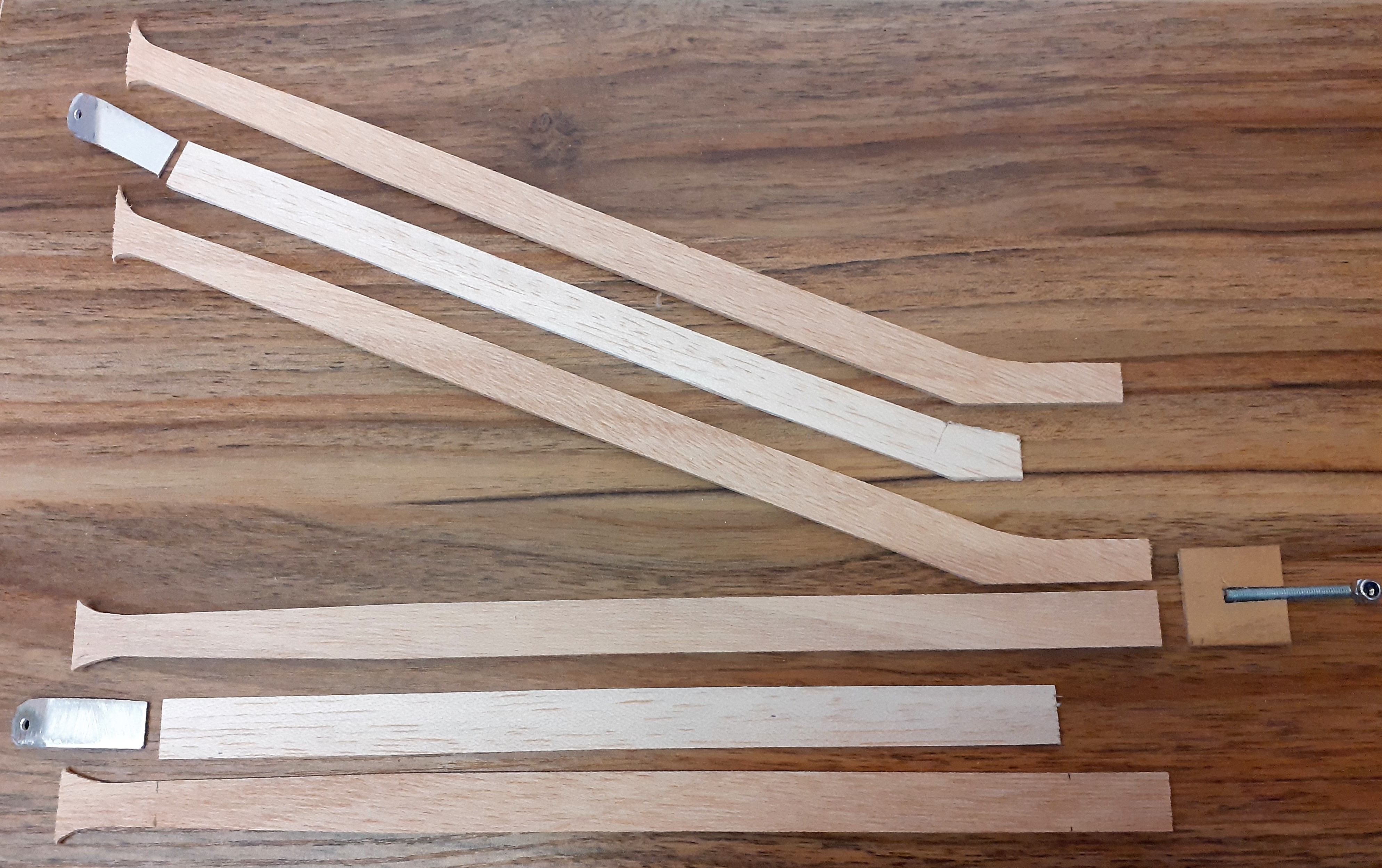
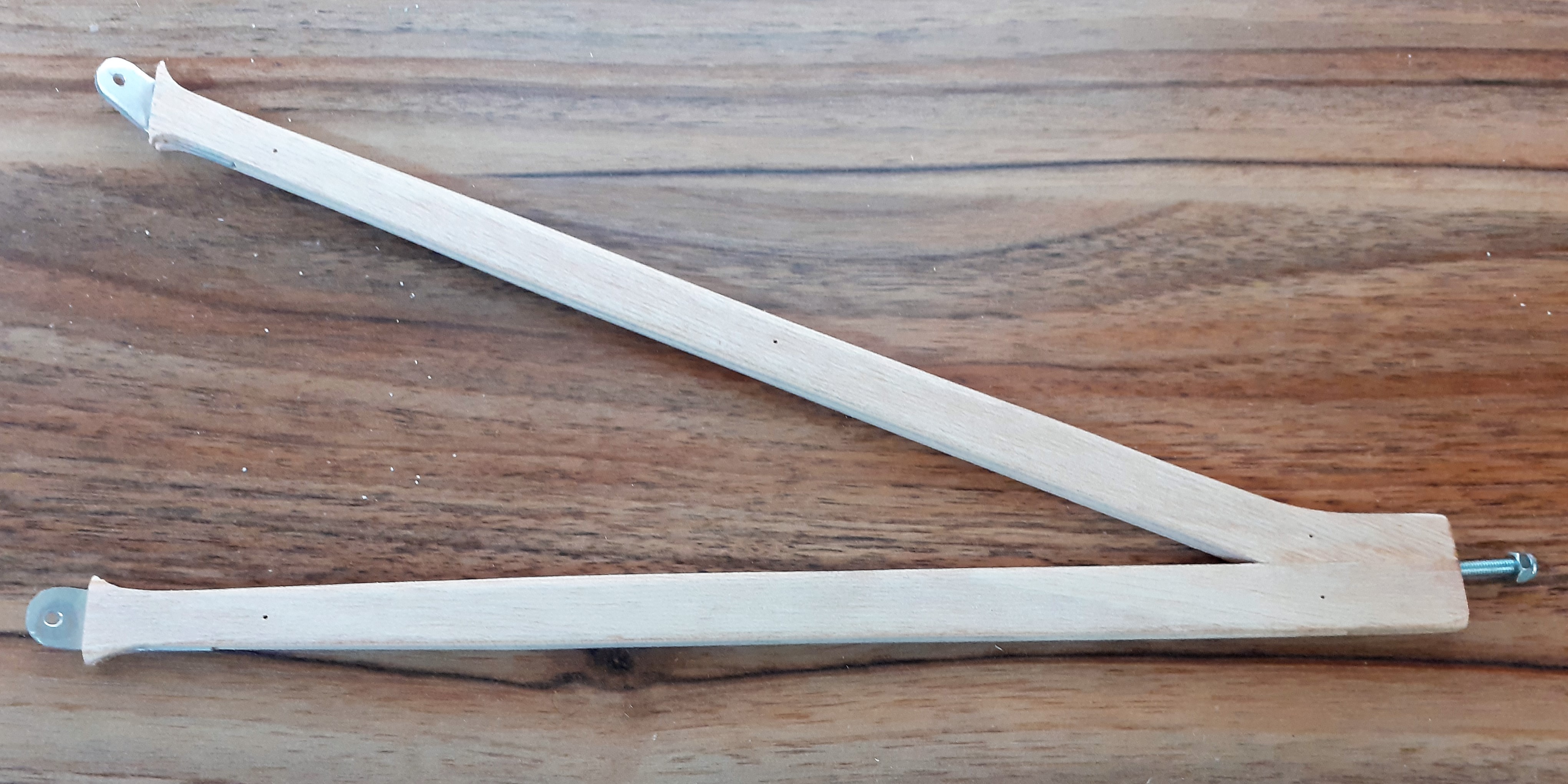 As Chas has now fully retired I expect work on the Lysander will move on swiftly although there is still an awful lot to do. There’s no hurry anyway as it’s unsure when he’ll be able to test fly it with the Covid restrictions.
We haven’t seen Gorgeous Gary for a while and he emailed to explain it’s because he’s had an operation on his wrist. That sounds like a pathetic excuse to me, just fly full throttle out and ignore the rudder, same as always!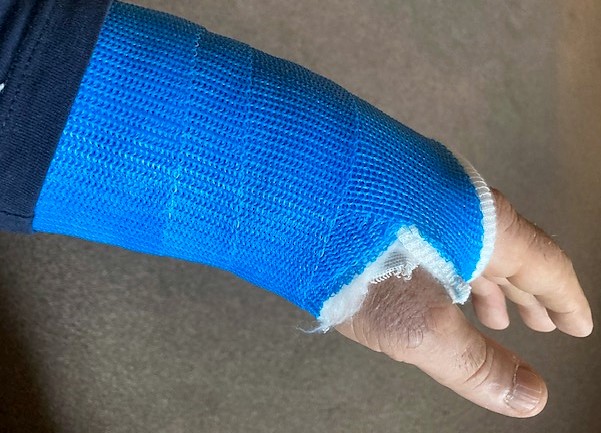
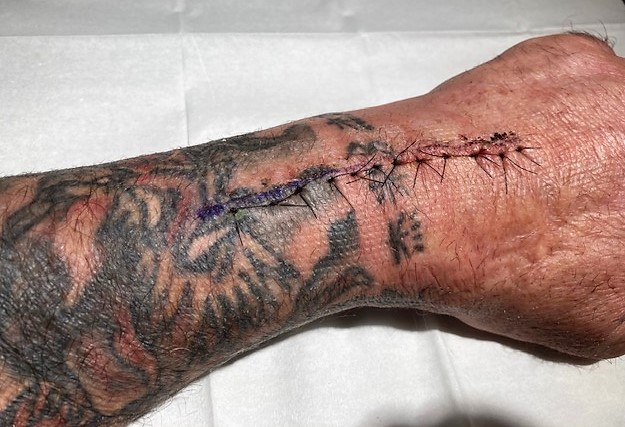 Gary’s been having trouble with his wrist for some time and he’s hoping that the operation will have resolved the problem. He says he has very little movement in his thumb but that’s it’s a lot better than it was a few weeks ago. He’s still managing to work though and hopes to be back flying with us quite soon. All the best from PAM Gary.
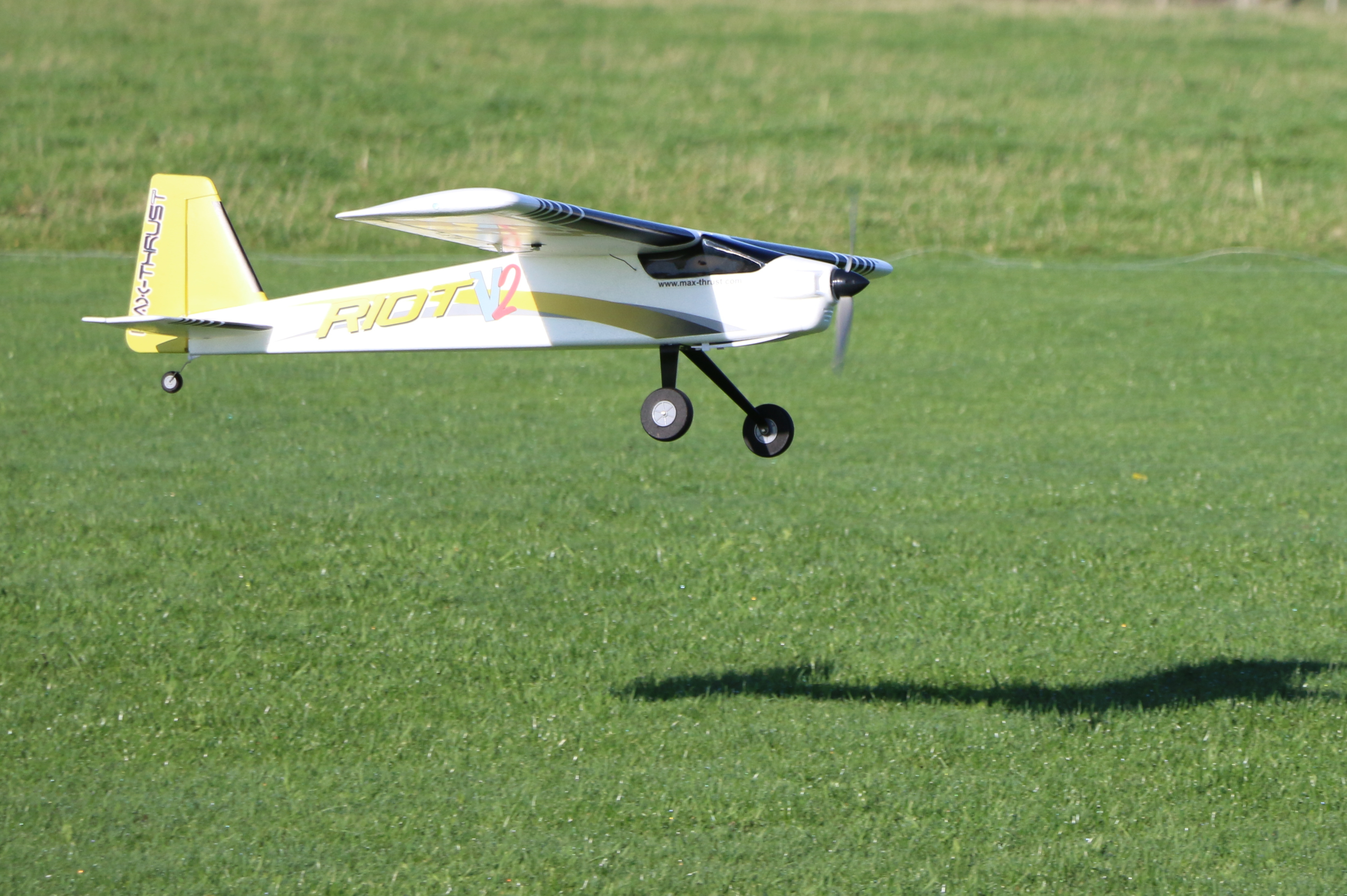
You’ll no doubt be amused to hear that I managed to knock the tail off the Max Thrust Riot that I purchased in the sale of Gentleman Jim’s goods. Yes I know it’s just a reasonably aerobatic trainer but it was a windy and very turbulent morning and I was practising touch & go’s, doing very tight turns at low level when I got caught out.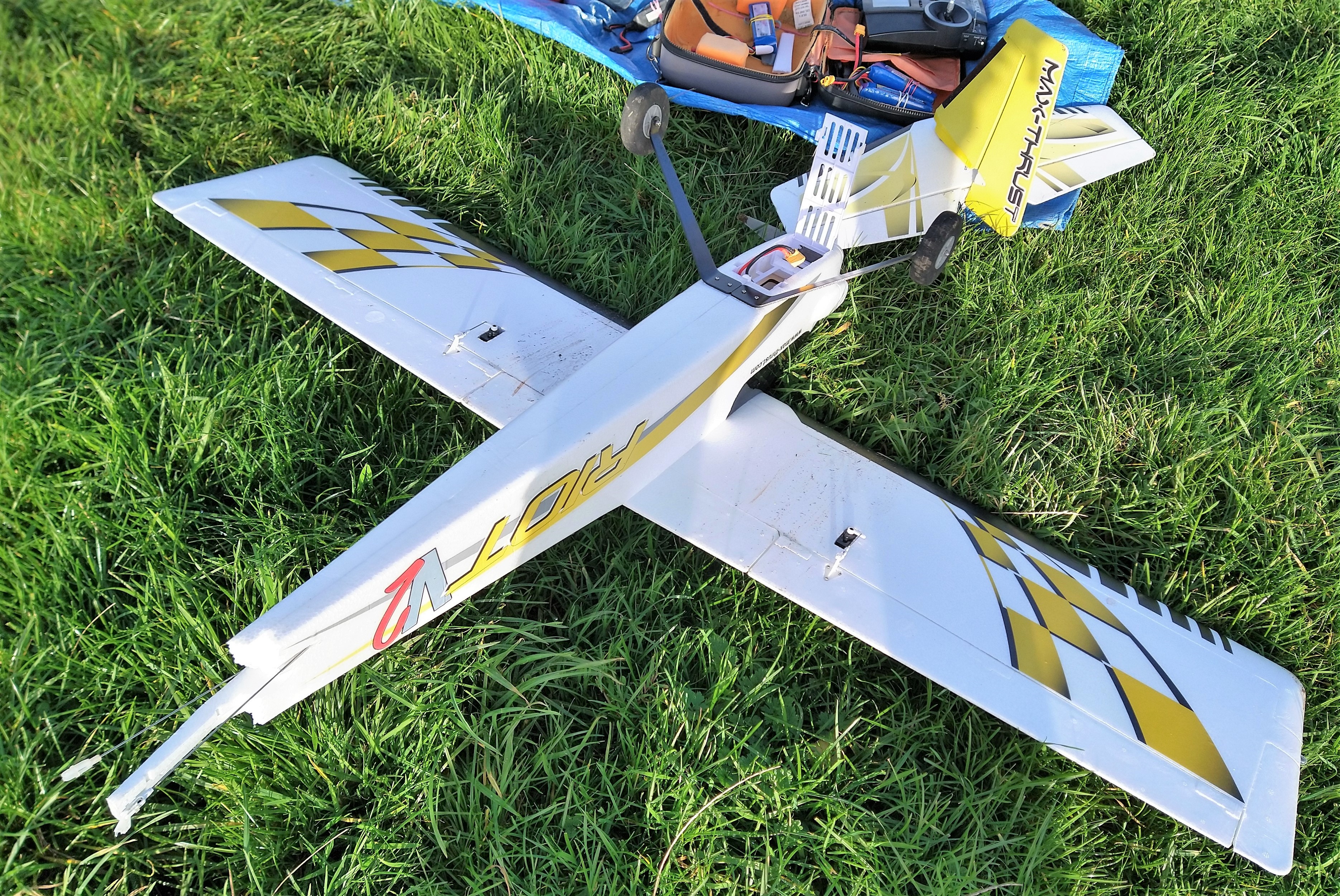 That’s my excuse anyway. Captain Slow was kind enough to snap a photo of the damage and insisted that I include it for your viewing pleasure (swine!). Gluing the tail back on was barely a few minutes work but both the rudder and elevator control horns had snapped and it took me much longer to find some suitable replacements from my stocks and get them fitted. Never mind, it was ready for the next flying session when it performed perfectly once again.
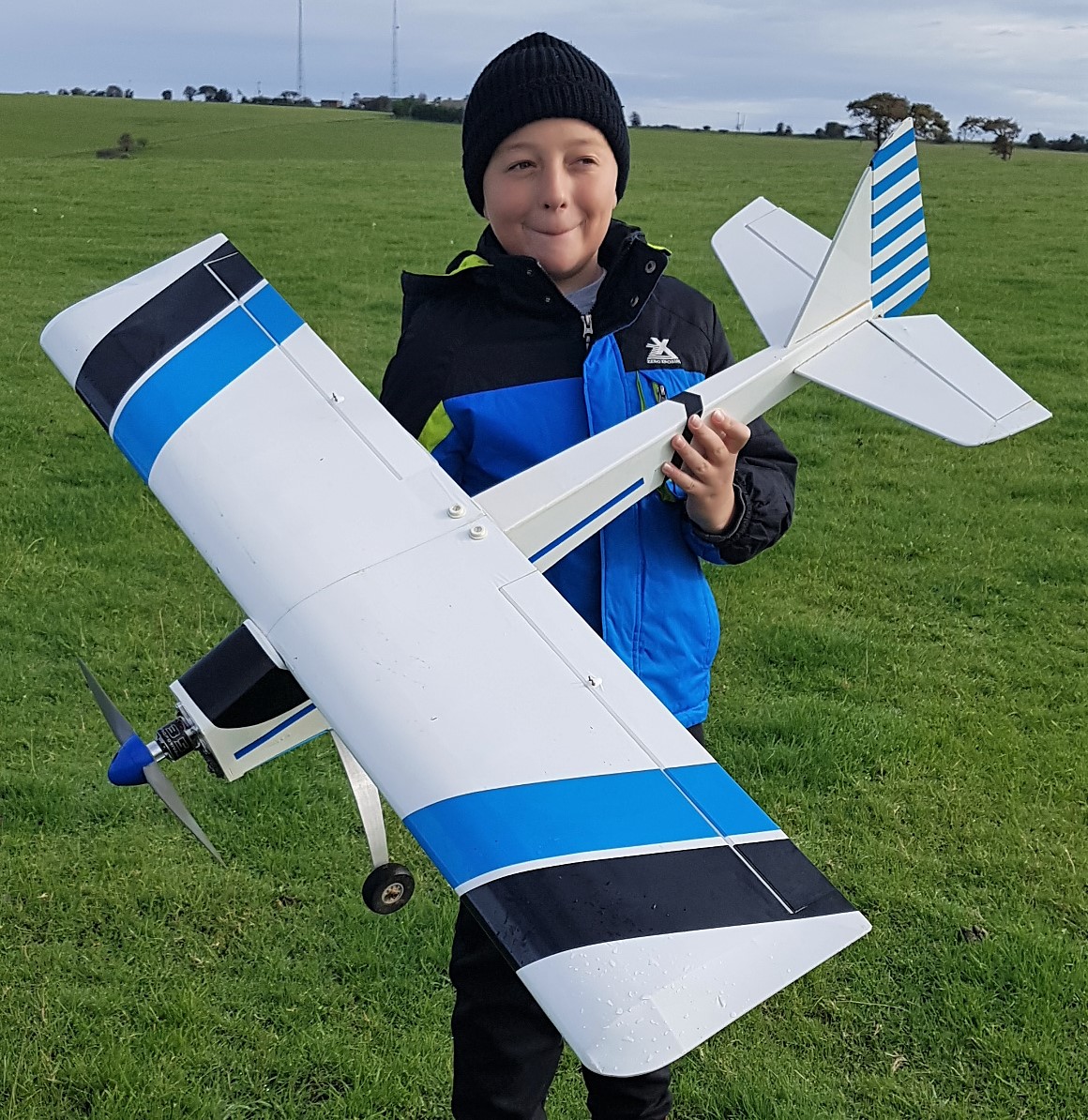 Young Charlie was flying his Wot-4 in exactly the same conditions that morning and managed four flights, including all the take-offs and landings, with no problem at all. He’s continuing to progress well and once the restrictions are over and the weather improves it won’t be long before he’s ready for his ‘A’ test. On a different December morning Charlie’s mum Nadine filmed him taking-off and landing which I’ll include in this month’s video. The landing was the worst one he did that particular morning but it was just on the patch and in one piece so all was well.
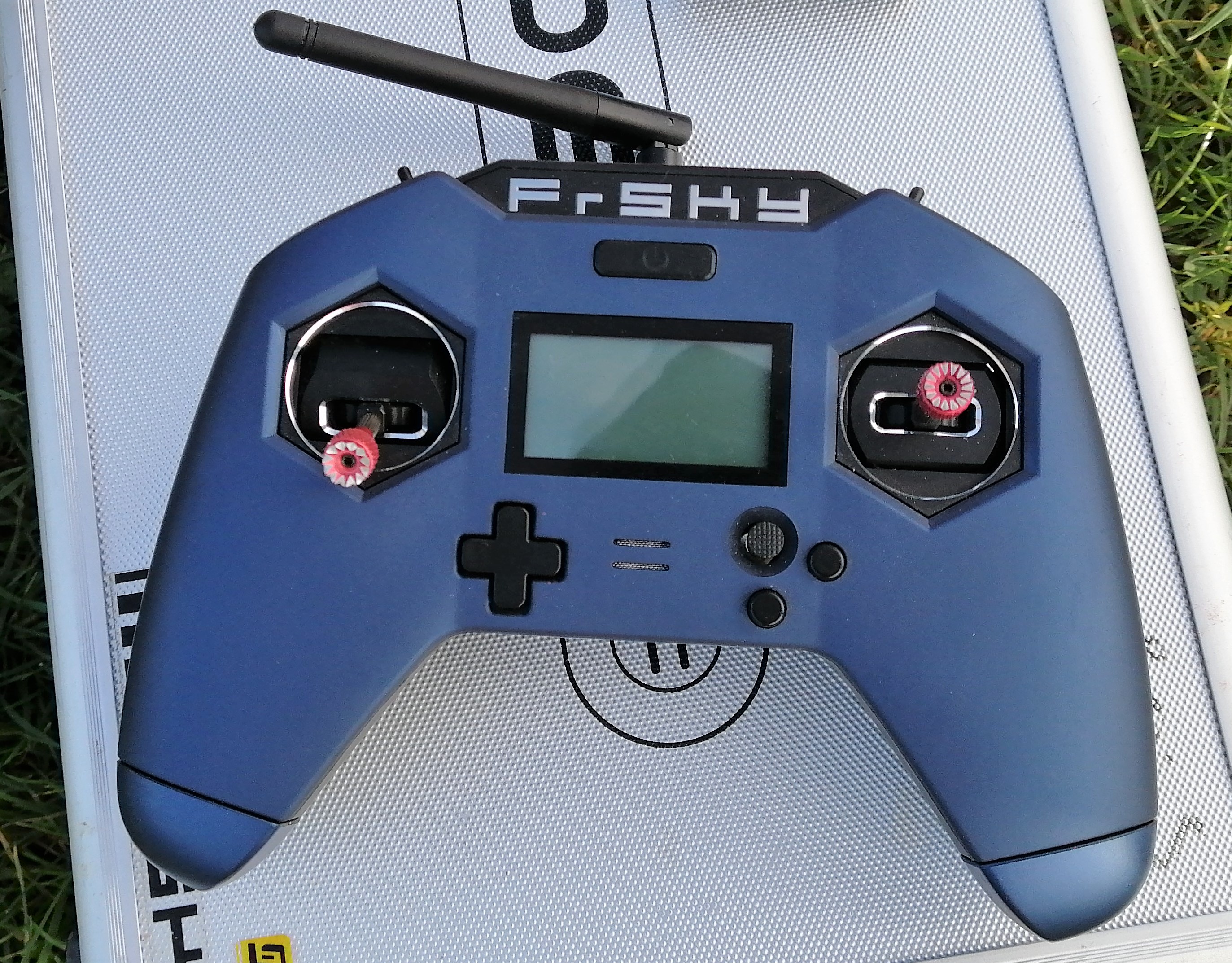
New member Ben (well he will be in January) brought along an FW190 one morning but was unable to fly it as he discovered there was a problem with some of the controls interacting. Ben uses a Taranis transmitter and the problem might have been down to something in the very capable but also very complicated open source software.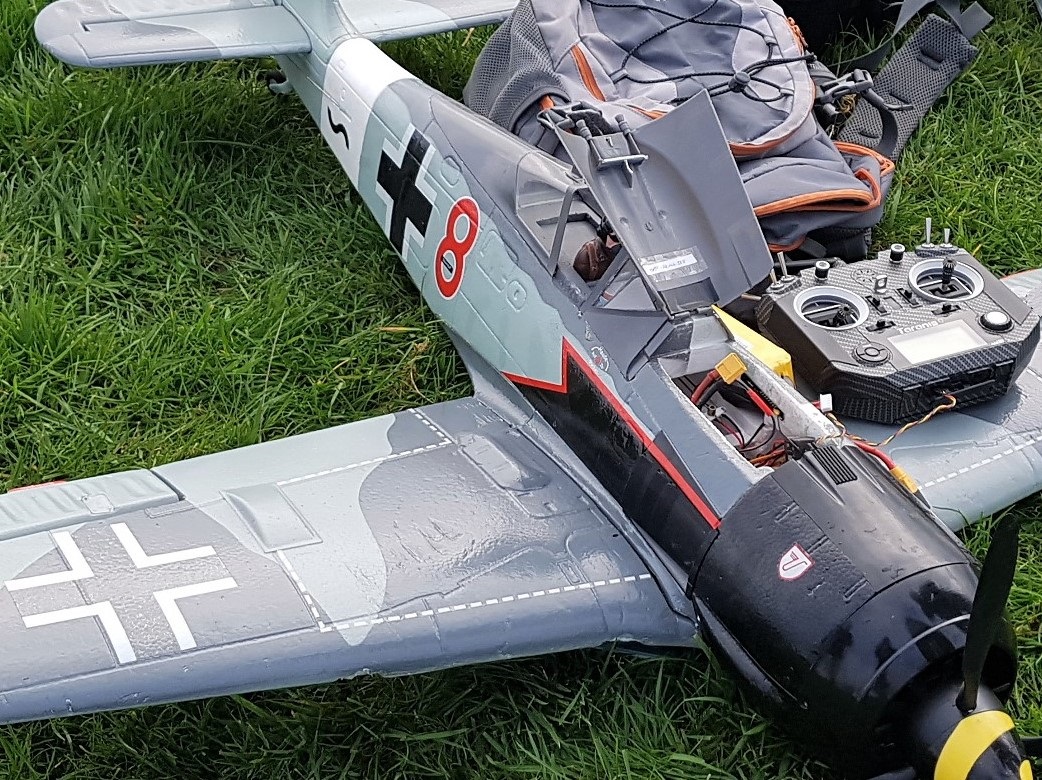 I expect he’s got it sorted now and we’ll see the FW in action soon. But he was able to fly his Gee Bee R3 which he’s fitted with FPV gear. Ben uses a very neat looking FrSky gamer style transmitter for the Gee Bee, I bet Dougal wants one of those! Ben flew normal LOS (line of sight) first and trimmed it out before trying the FPV on the next flight.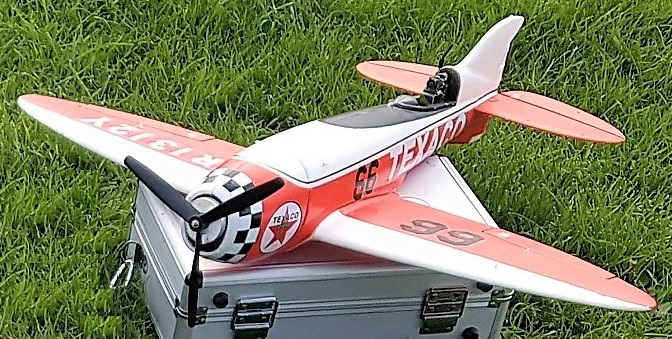
 All seemed ok at first but then the model started drifting away downwind and Ben was struggling to bring it back so he removed his goggles to fly LOS again. Both Bob and Dougal were helping with the spotting and giving directions (no further explanation required then!) but Ben was obviously in trouble as the Gee Bee was getting further and further away. Eventually the Gee Bee came down a long way off over the bottom fields. I was busy in the pits at the time and couldn’t figure out why Ben was struggling but Dougal told me later that the lipo had coming out and was swinging around beneath the model. A constantly varying centre of gravity would explain a lot!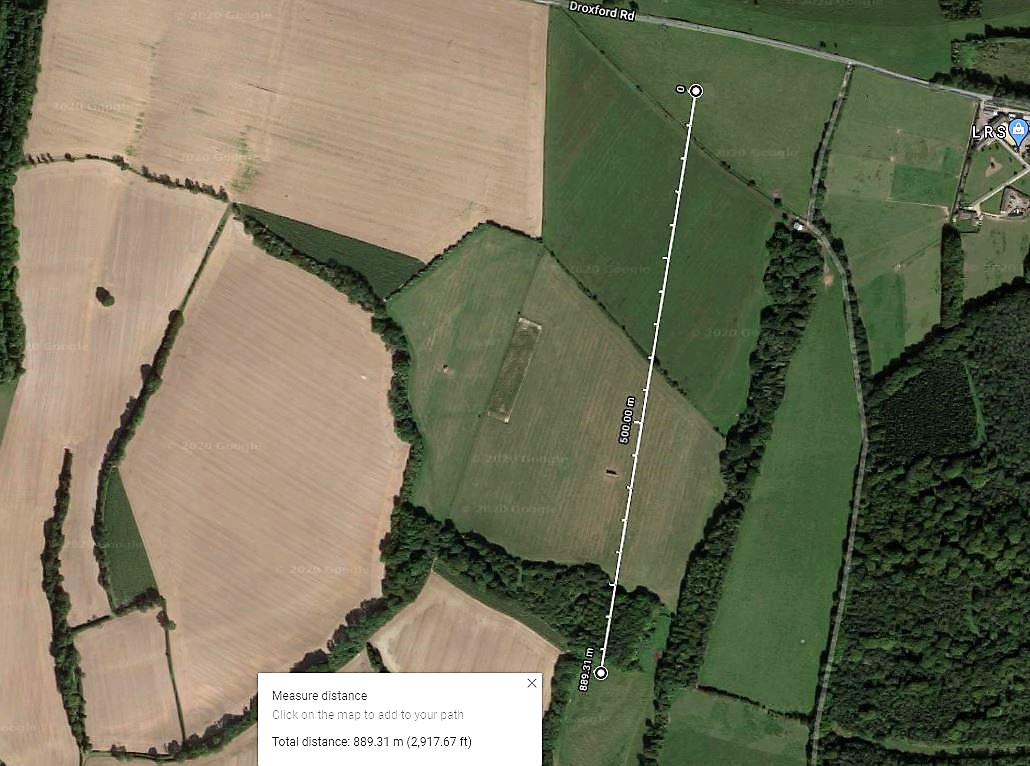
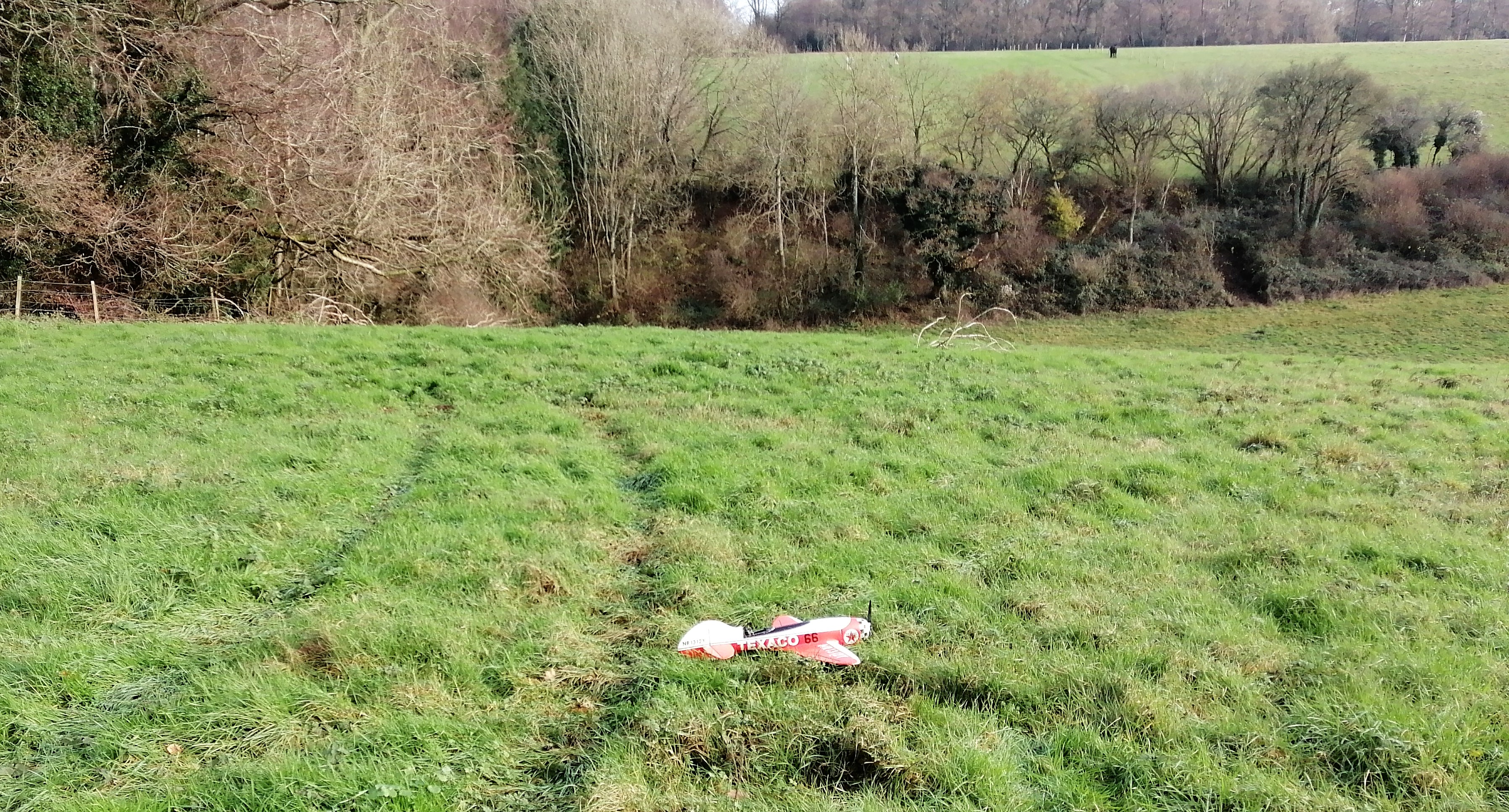 After a bit of searching the model was found to have landed safely almost 900 metres away. Fortunately it had cleared a small wooded area and was just sitting completely undamaged in an open field waiting to be retrieved.
Back to Chas’s workshop now and some information he sent me about his battery driven power tools: Something a little different. What can be done to your old power tools when the NiCads no longer function?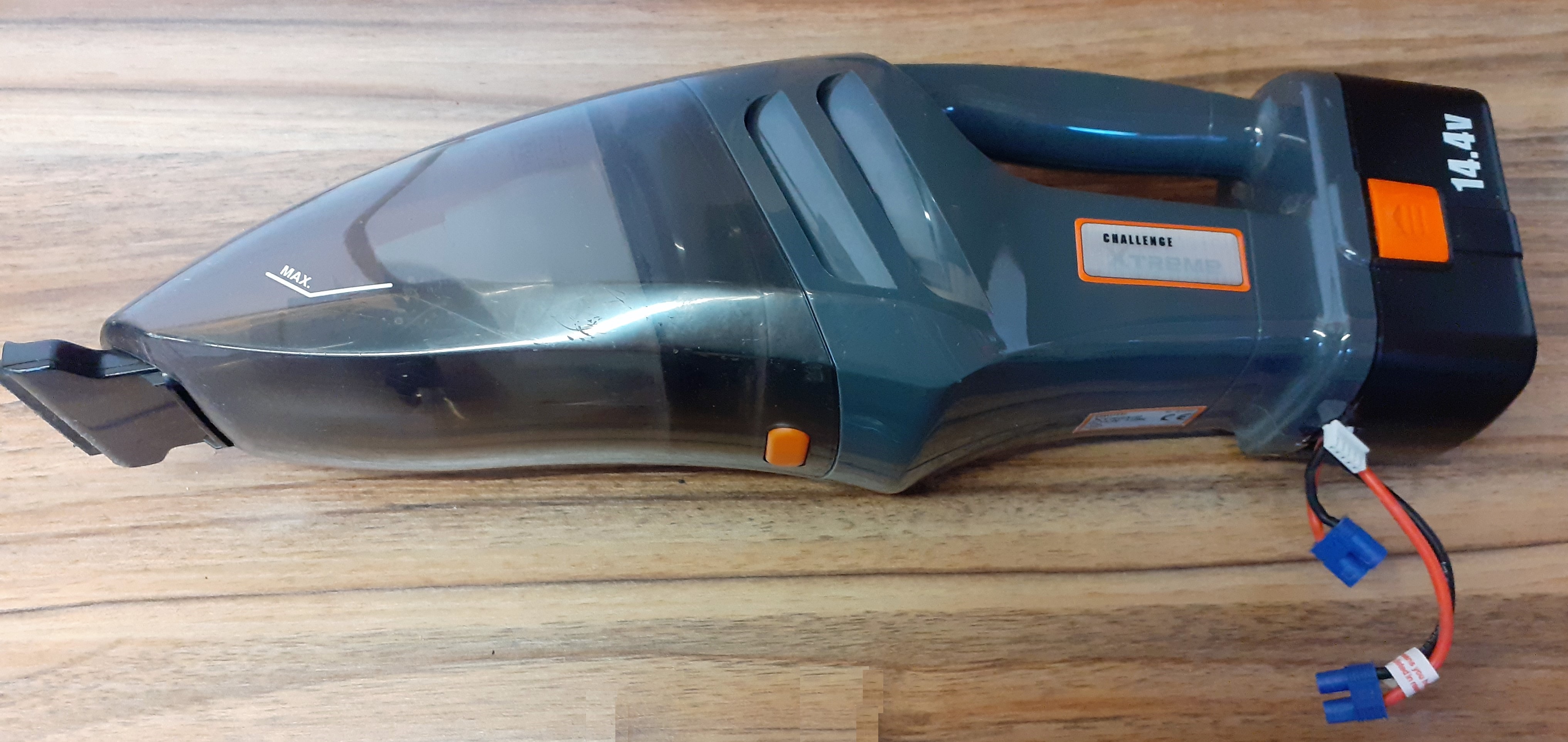 The mini drill, scissors and screwdriver are all now fitted with a 1s 1000mAh lipo. The Skil drill has a 2s 2000 mAh lipo and the vacuum cleaner has a 4s 1350mAh lipo. I’m sure the vacuum works better now than it ever did.
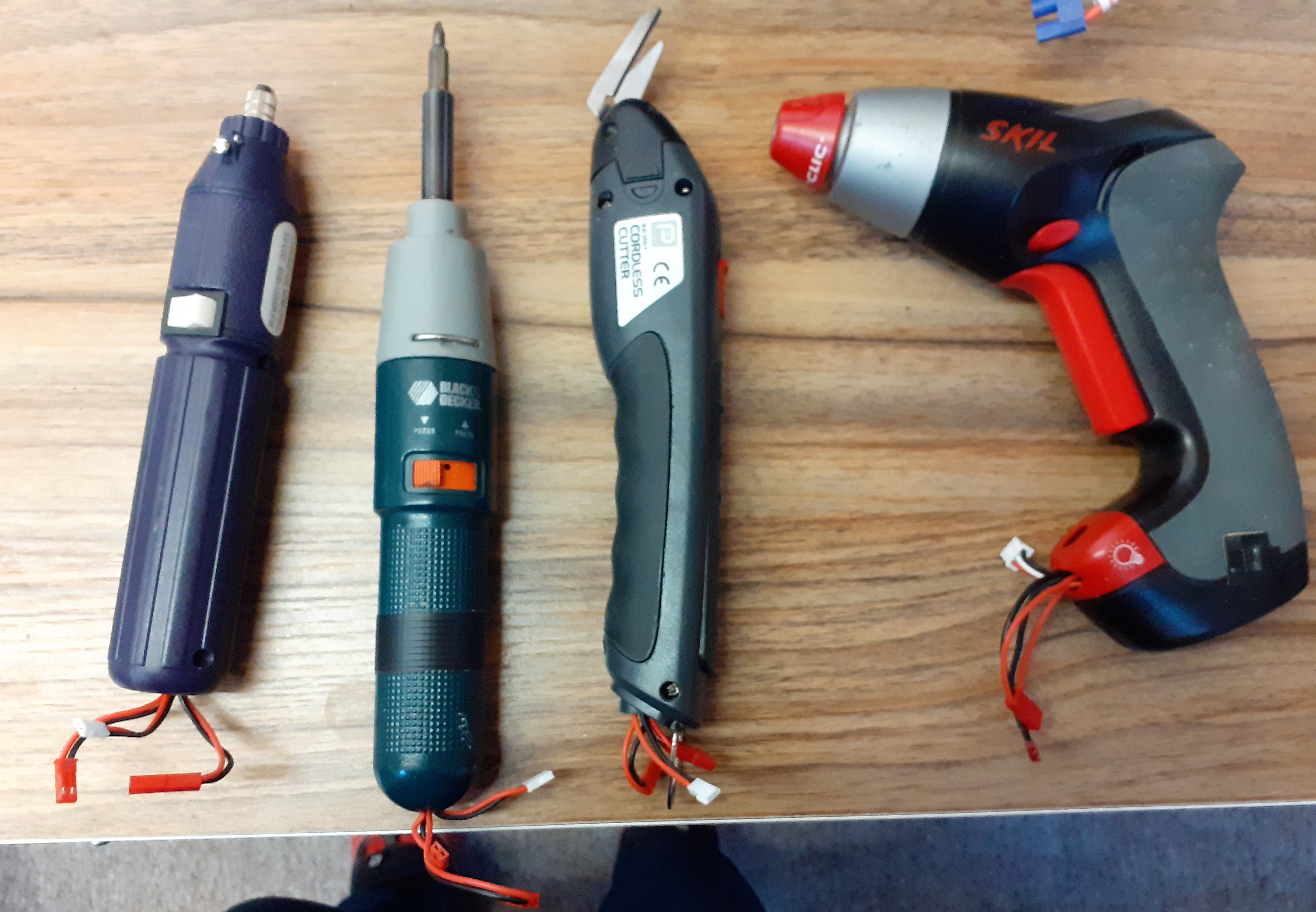 The screwdriver’s epicyclic gearbox and locks fell apart when the unit was stripped down. Very fiddly to reassemble!! When not in use the lipos are put into storage mode and then charged when a building session is anticipated. Thanks for that Chas.
The saga of Dougal’s Jumper T16 transmitter continues, or rather it ends with his latest news: My Jumper T16 had one final insult for me – even having changed all the ribbon cables for the gold-plated ones, the USB charging didn’t work. I may sell it, or I might keep it for doing my own software experiments without buggering up the transmitter which (I hope) I’ll be using for regular flying sessions. What transmitter is that I hear you ask? I’ve lost count of the number in his collection now but it is somewhere in the mid-thirties I believe. Well now it’s plus one as he’s bought a shiny new RadioMaster TX16S. I’m very confused about the links between Jumper, RadioMaster, and RadioKing transmitters, Jumper appeared first and the others seem to be further developed copies of the Jumper transmitter. Dougal’s initial reaction on opening the box was that the transmitter was a little smaller than he’d expected.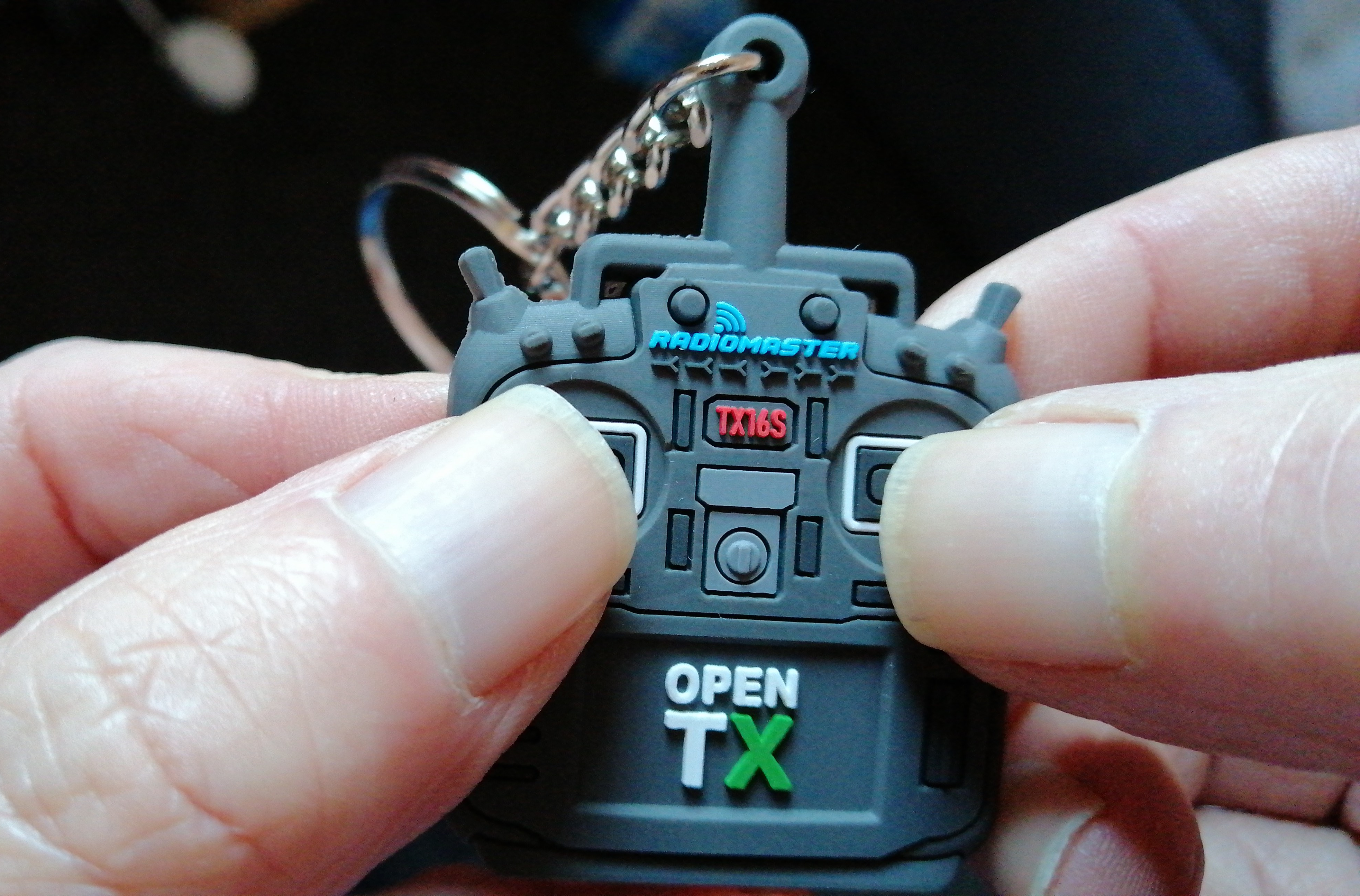 But delving deeper he found the real thing, so how’s he getting along with his new one: I’ve only played with the hardware so far – I intend to get the software updated over Xmas & get some planes configured.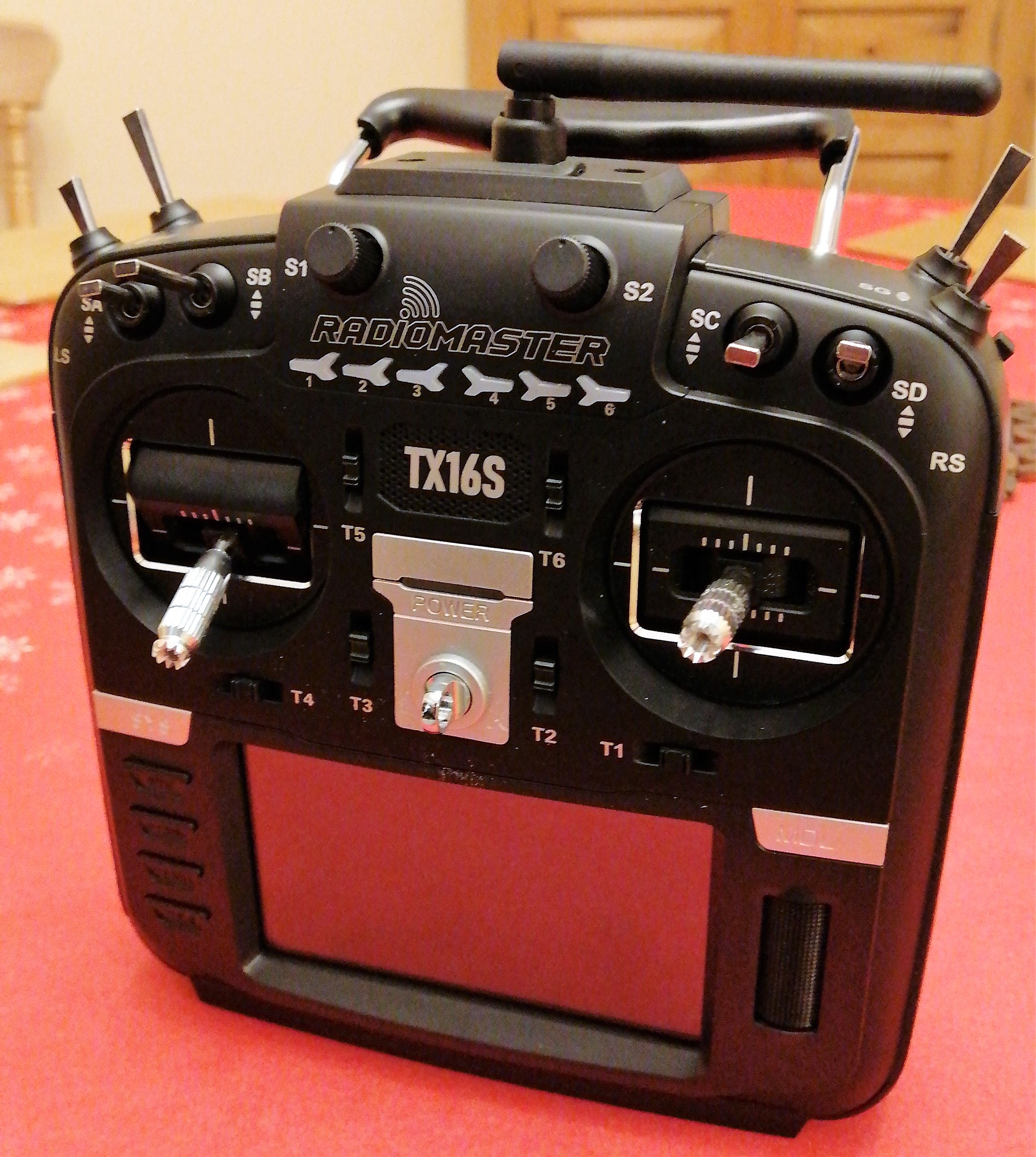
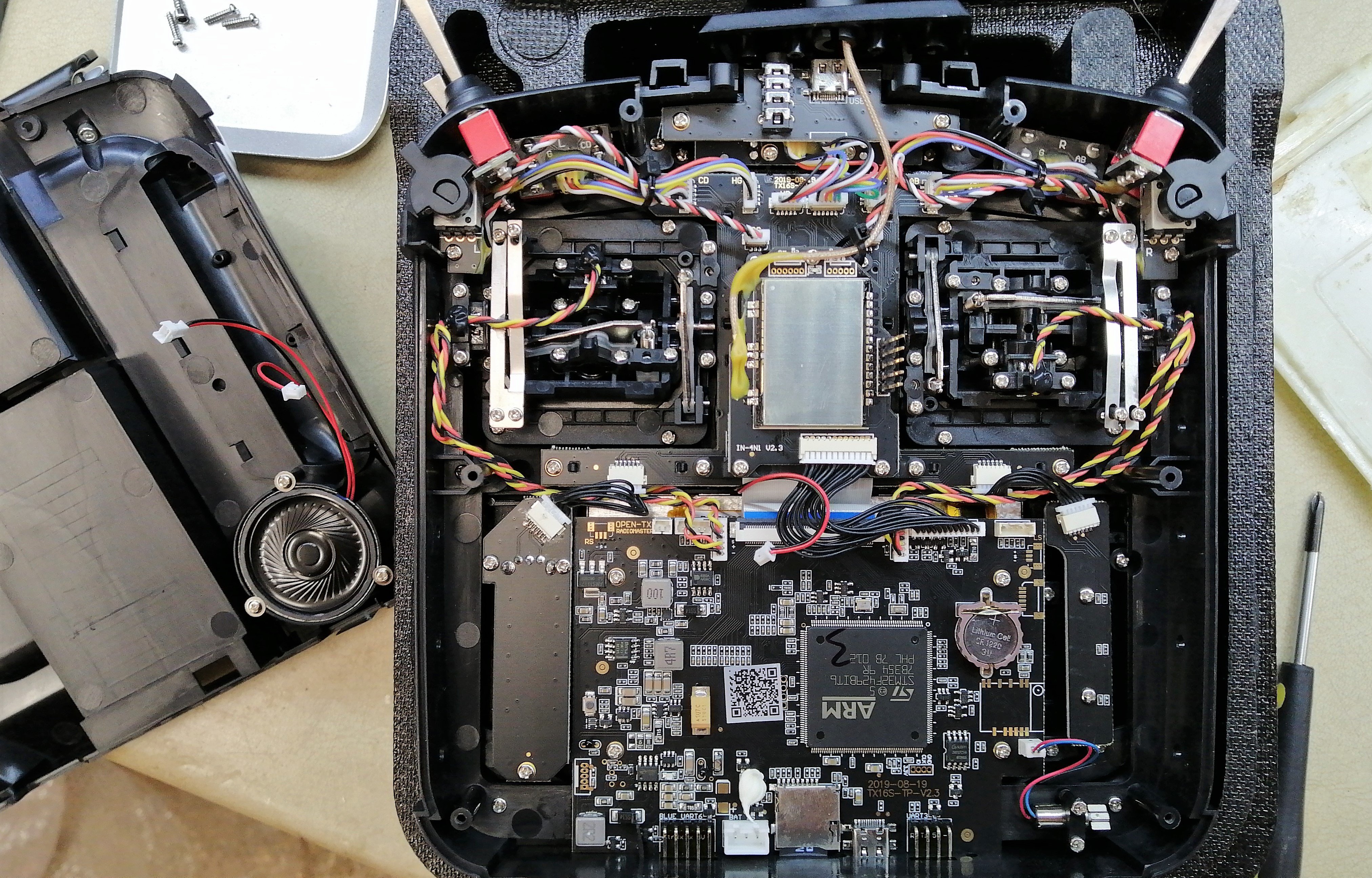 I changed it from Mode 1 to Mode 2 by swapping the stick units over, which was quite a straightforward operation.
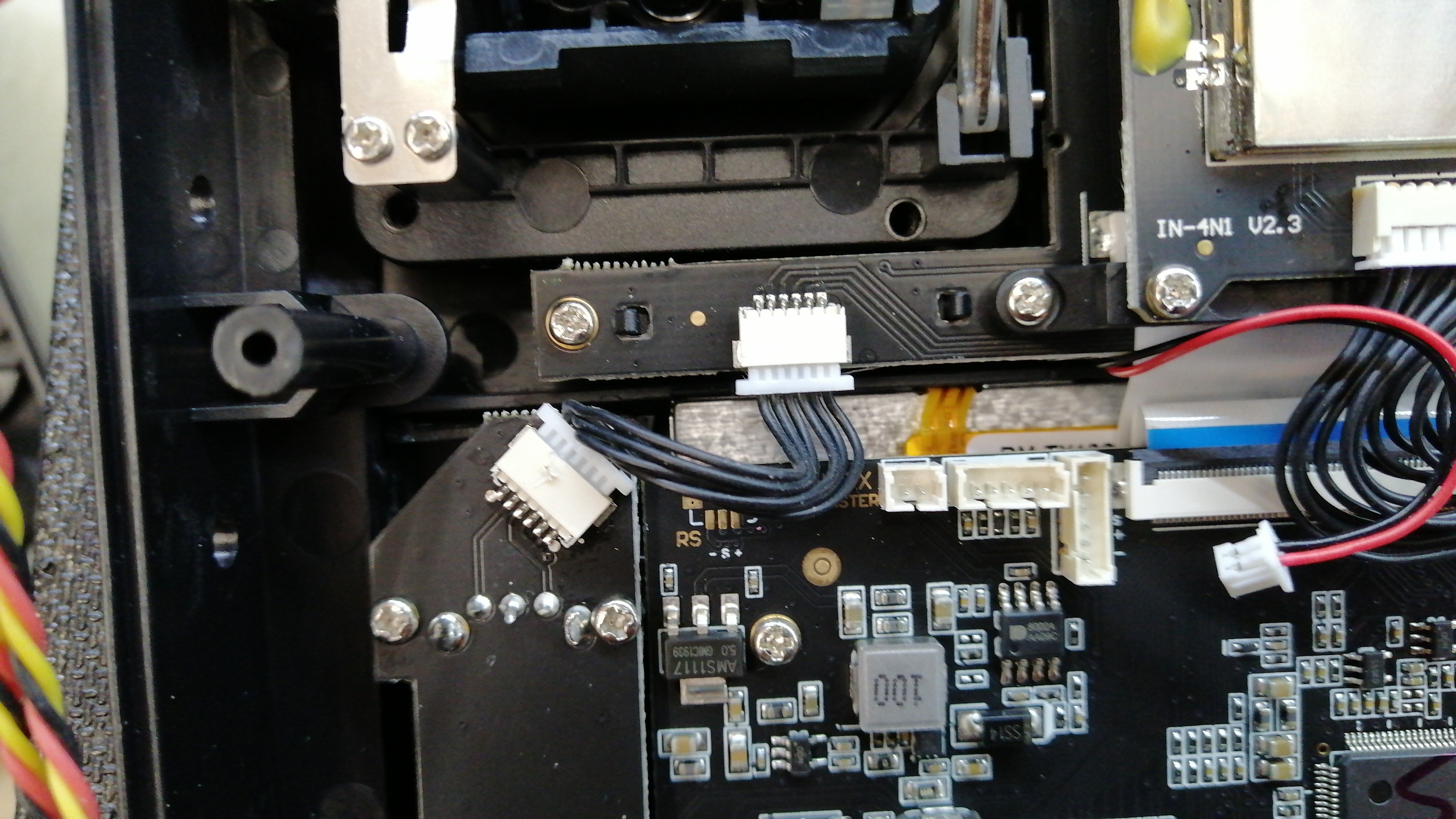 The connectors seem a lot better than the flimsy ribbon cables in the Jumper T16, so I hope the reliability will be a lot better. The Hall sensor sticks feel a bit weird as the pivot point is a bit higher than I’m used to. I felt I wanted to make the sticks longer, which was a bit of a shame as they are not really adjustable. I solved this problem by unscrewing the stick ends, adding a bit of plastic tube as a spacer, then screwing them back on.
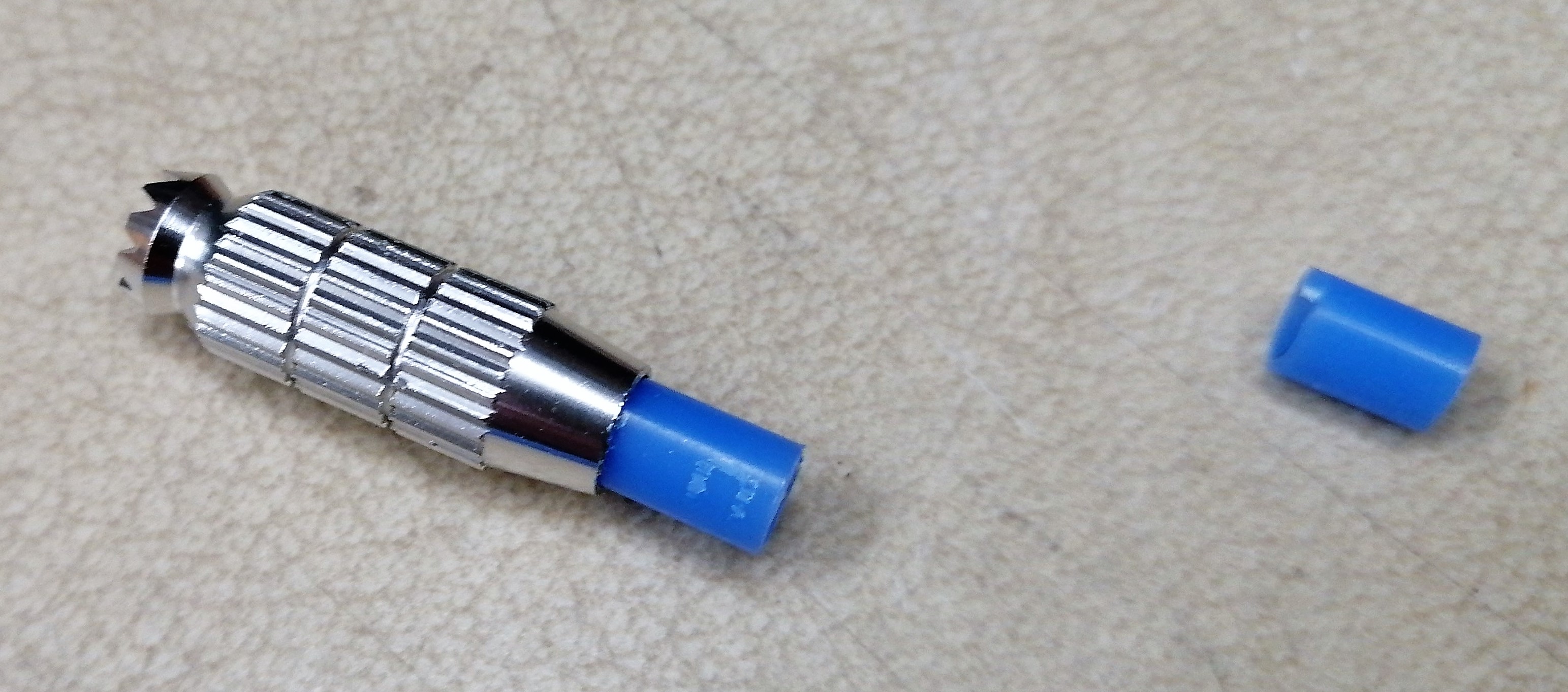 Old school modellers will recognise the plastic tube as Sullivan Gold-n-rod outer! Curiously I found a YouTube video by someone who details a modification for making the sticks shorter! He also used a 3D-printed spacer to lower the stick units in the case. Sounds promising Dougal, just a RadioKing transmitter required now to complete the set!
Catapult King has also been busy during the lockdown and he sent me information and photos of his latest creation. Catapult has never been one to go for an easy option and his new F14 proves that! I started to build the F14 years ago but I never finished it before the Depron had dried out. So this year I decided to give it another go only this time with some modifications from the original Steve Shumate plans and using the original model as a template. The original plans will make a perfectly good flyable representation of the aircraft but as usual my goal was to go a little further on an already good design. Having found out a lot more about the flying surfaces it had to have the front looking ‘Gull wing’ shape, I just had to change ailerons for flaps and spoilers (front slats and glove veins were out due to not enough radio channels) and it just had to have EDF’s. Other than that there was nothing to it, Ha Ha!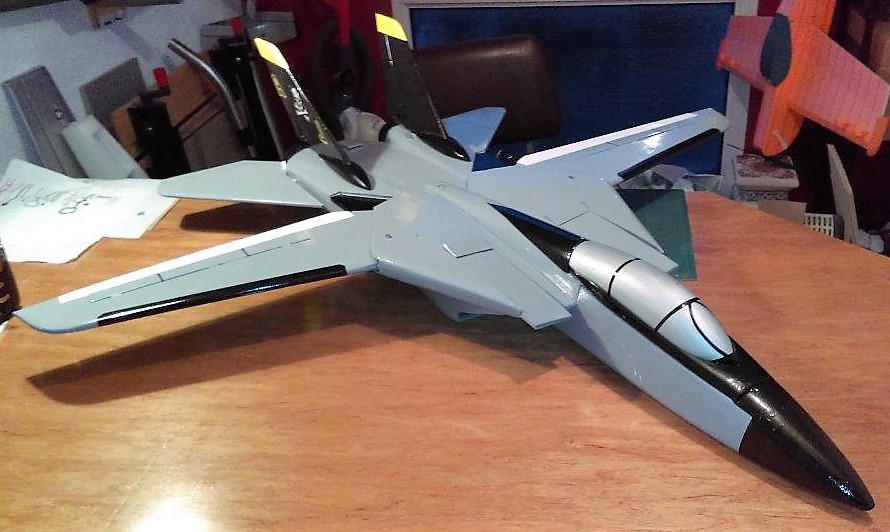 How do you turn a square engine intake to a round exhaust, whilst flaps were straight forward spoilers are not especially as they’re just in front of said flaps and then creating the ‘Gull wing’. I started with the motors and had two 50mm 10 blade 4s EDF’s which supposedly produce 650g of thrust each (should be enough I thought) and created the nacelles by setting up formers on a square length of wood and using strips of Depron strips to form the shape making sure there was enough room to put the motors and a long thrust tube taking the FSA to circa 90%.
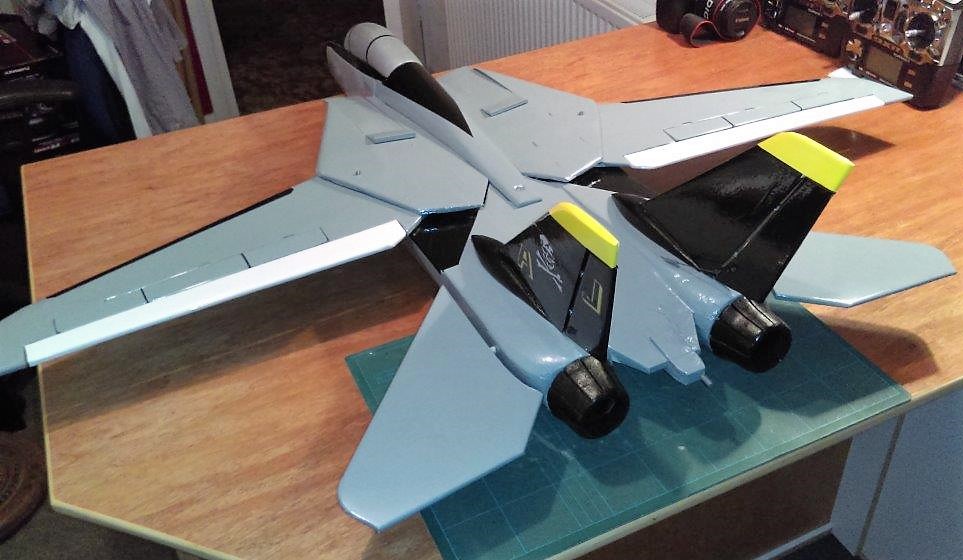 The wings were next and were made from two layers of 6mm. The general shape cut, I removed the area for the flaps then cut a section out of the top half for the spoilers (needless to say I made two right wings here) but how do you hinge spoilers and then and how to move them when the you need the mechanism to slip (up and no down can be programmed in the radio)? Sorted in the end by filing out all the holes in a control horn so that when the arm moves up it pushes the surface up but the wire slides back in the slot. This might not have a lot to do with the actual flying but the aesthetics should look good. The bulk of the flying controls will be done by the elevons.
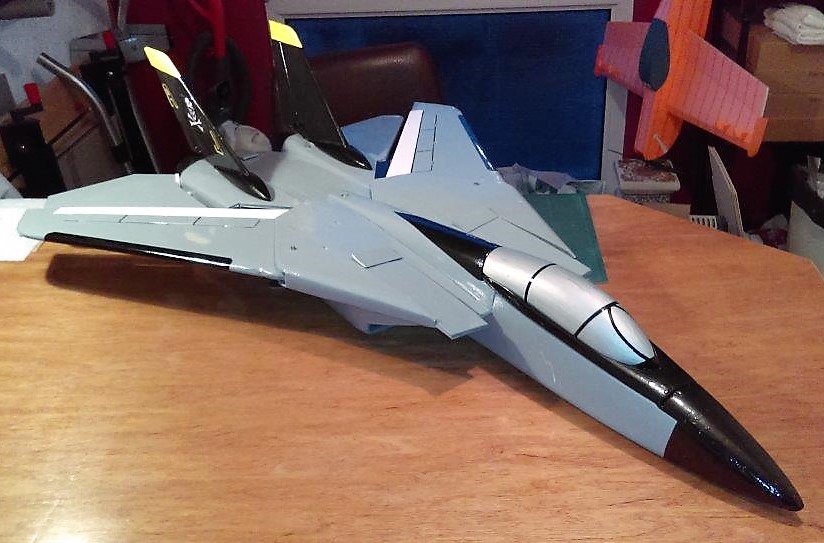 The ‘Gull wing’ effect was created by lowering where the wing root meets the fuselage. Having put the various parts together in principal and all appearing to work as planned (swing wings work, flaps and spoilers work, rudders work and elevons work and an awful lot of air comes out the back (Is that merely wind or thrust)? I then had to start the covering. Heat shrink on Depron is without a doubt a pain (Me thinks a lesson from Norwegian Nick would be useful here as the photos look good but close up??). The covering pulls the foam out of shape. Subsequently the nearer I get to finishing this thing the more unforeseen problems there are to solve. Close but no cigar.
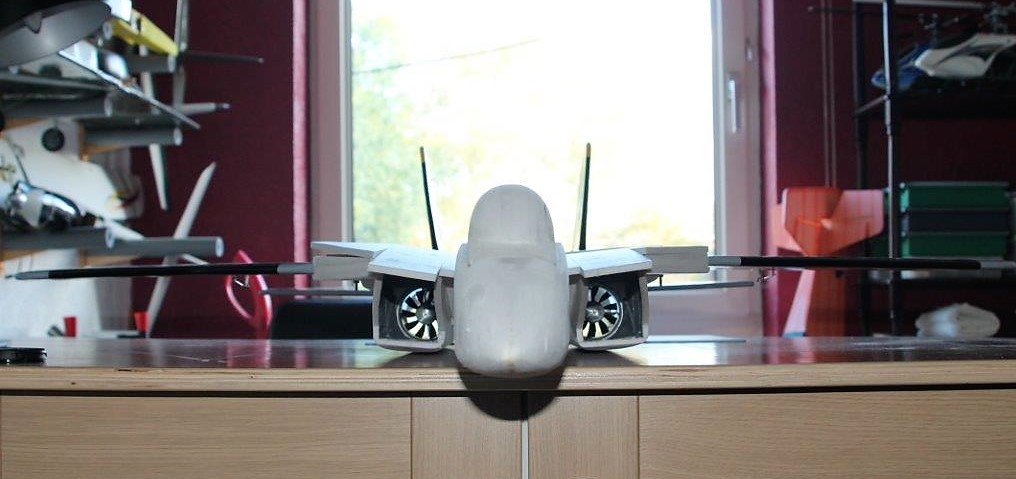 The power train is as previously mentioned two HK 50mm 10 blade EDF’s, two good old Hobby King 40 amp ECS’ and the flight weight, close at 1190g as I would like it to go vertical. Four 5g servos in the wings the rest are HK900’s so I hope the swing wing survives. Even when I do finish it how am I going to launch it? Throwing it doesn’t appear to be an option so I might need to create a trolley dolly (oops, launch dolly it is Xmas).
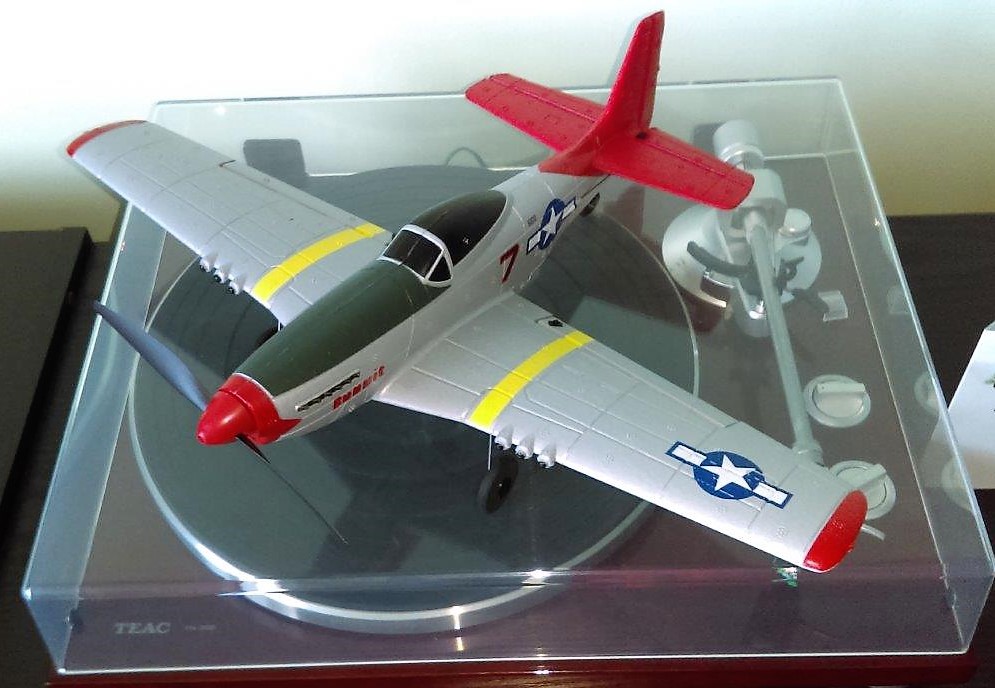 In the meantime I got the P51 for Xmas, 400mm wing span and an absolutely horrid radio but it does look fun and looks like it should go like a little pocket rocket, just as well it has a gyro. Thanks Catapult, that F14 is quite a build!
The last new model to feature this month is another one that’s been pretty much completed but not flown yet, and this one is Captain Slow’s: It’s a Multiples Mini-Solius chuck glider that I bought at least 3 years ago to play with at the Club’s chuck glider competition; in which it was useless achieving the lowest score. (Workman & tools maybe?!)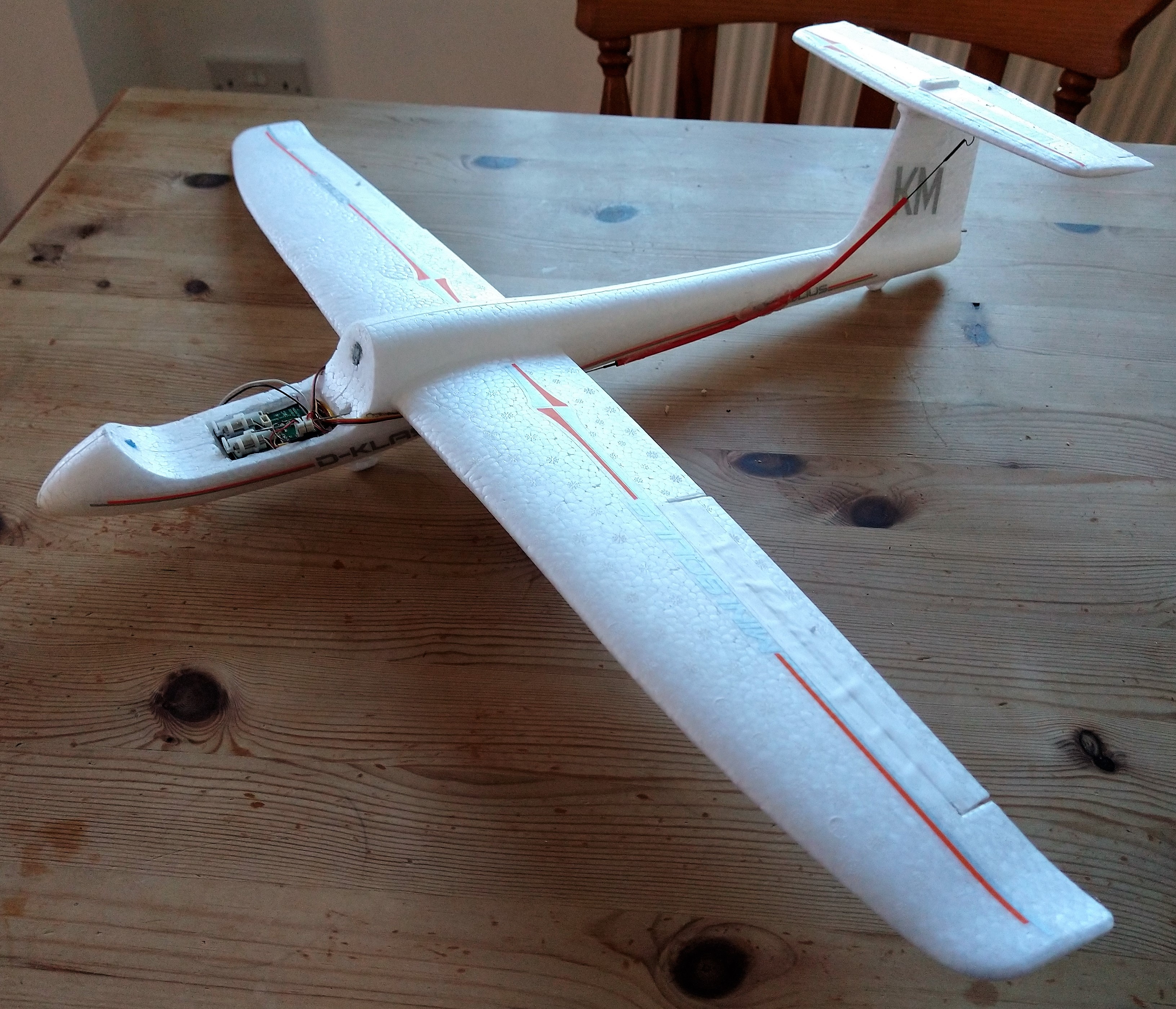 It has a wing span of 655mm, is 490mm long and with its 1S 150Mah battery, weights 80g. The radio brick is 4 channel and came from an E-Flight UMX AS3Xtra that died after too many indoor collisions at Havant.
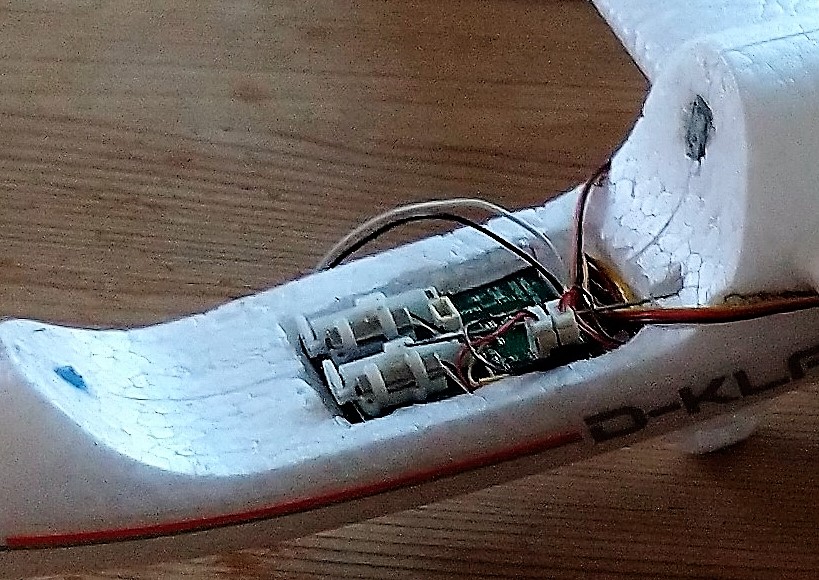 This works with my – whisper it – Spectrum Tx and has stabilisation. I plan to use the Velcro method of tow release as the spare (rudder) servo doesn’t really have enough throw or grunt. It’s intended as a proof of concept before converting my Lidl glider to RC. Captain Slow is thinking about using a Hummer for an aero-tow launch. My first thoughts were that a larger tow plane with a bit more power would be needed but reading the size and weight of the Mini-Solius I think he’s right. I’m really looking forward to seeing how this little model will perform with radio fitted.
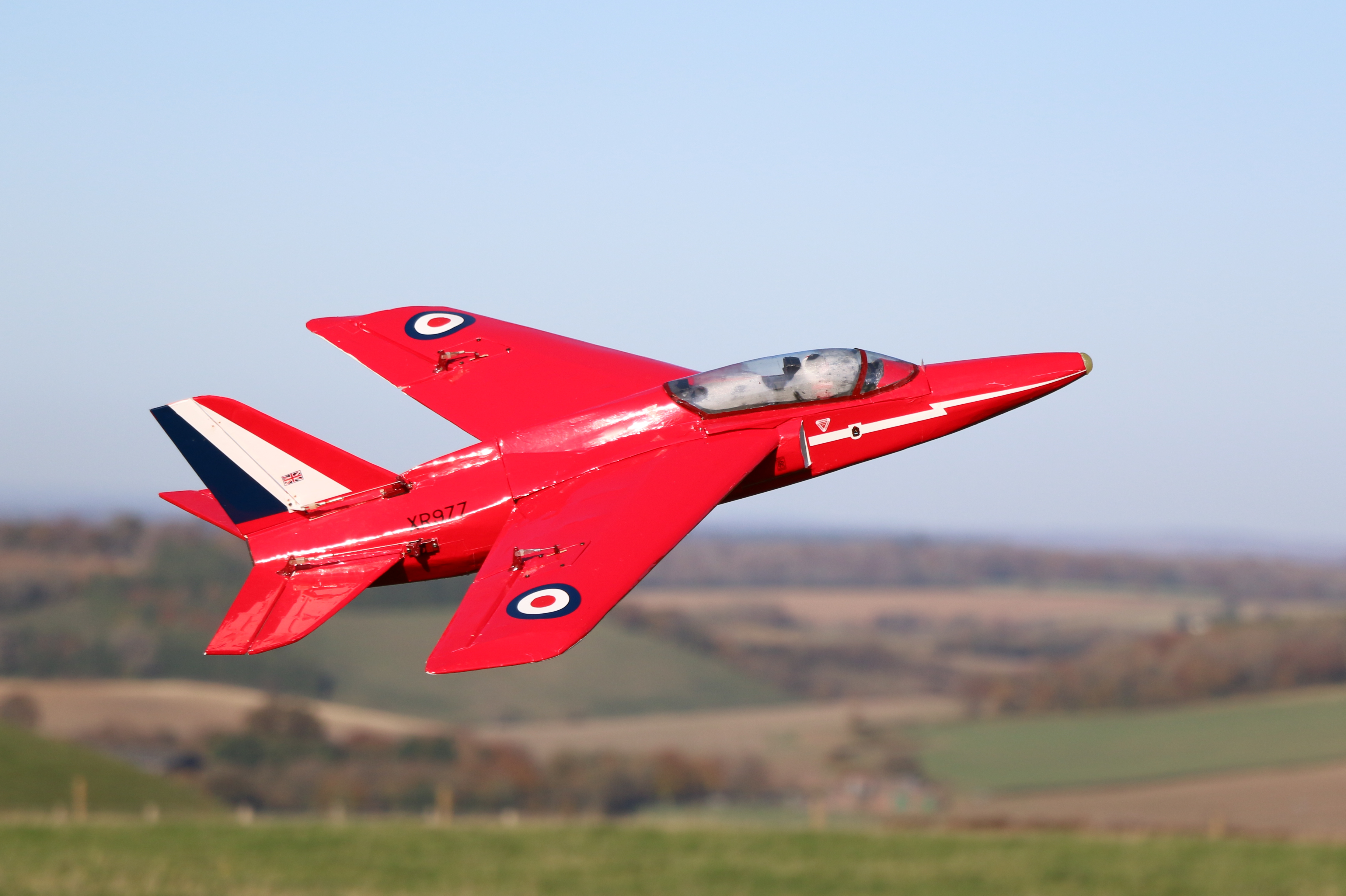
Kryten didn’t manage to take any flying shots this month but here’s some of his that I haven’t used previously: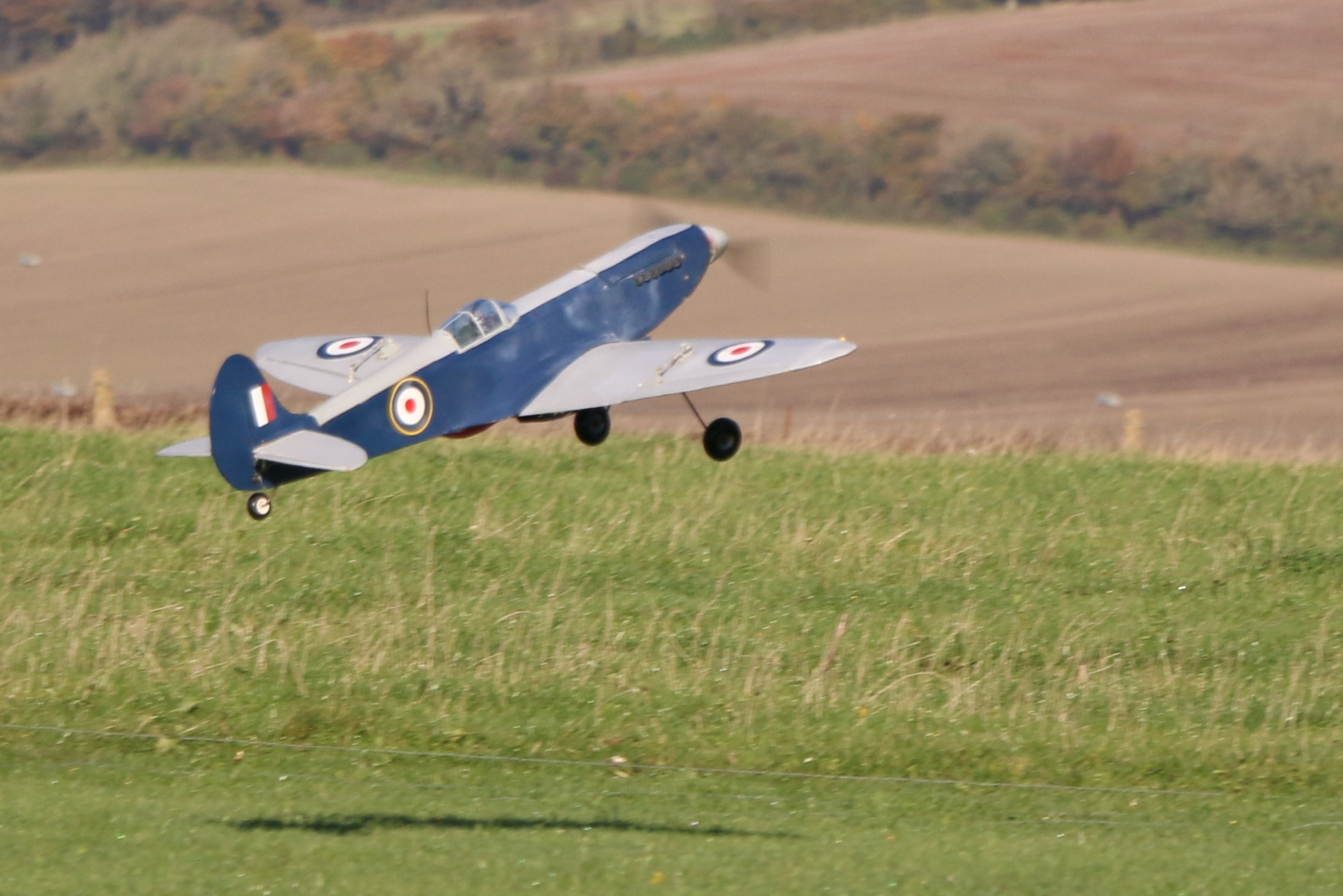

Video time now, this month with extra contributions from Captain Slow and Dougal Entendre. Please watch the video full-screen, it’s so much better with small models flying around.If the video won’t play for you please click HERE
This month’s ‘joke’ is a Christmas cracker special:
Why don’t aeroplanes ever study for exams?
Because they just like to wing it…
Colin Cowplain
Stay safe
Patch News – November 2020
2020 continues to be an awful year and Lockdown 2 prevented any flying after 4th November. As I write it appears that we’ll be able to fly again after 2nd December although the limit of six and social distancing rules will still apply. Never mind, we can cope with that. Still no club meetings for the foreseeable future but we do at least have a glimmer of hope with vaccines on the horizon so maybe meetings will be able to resume sometime next spring.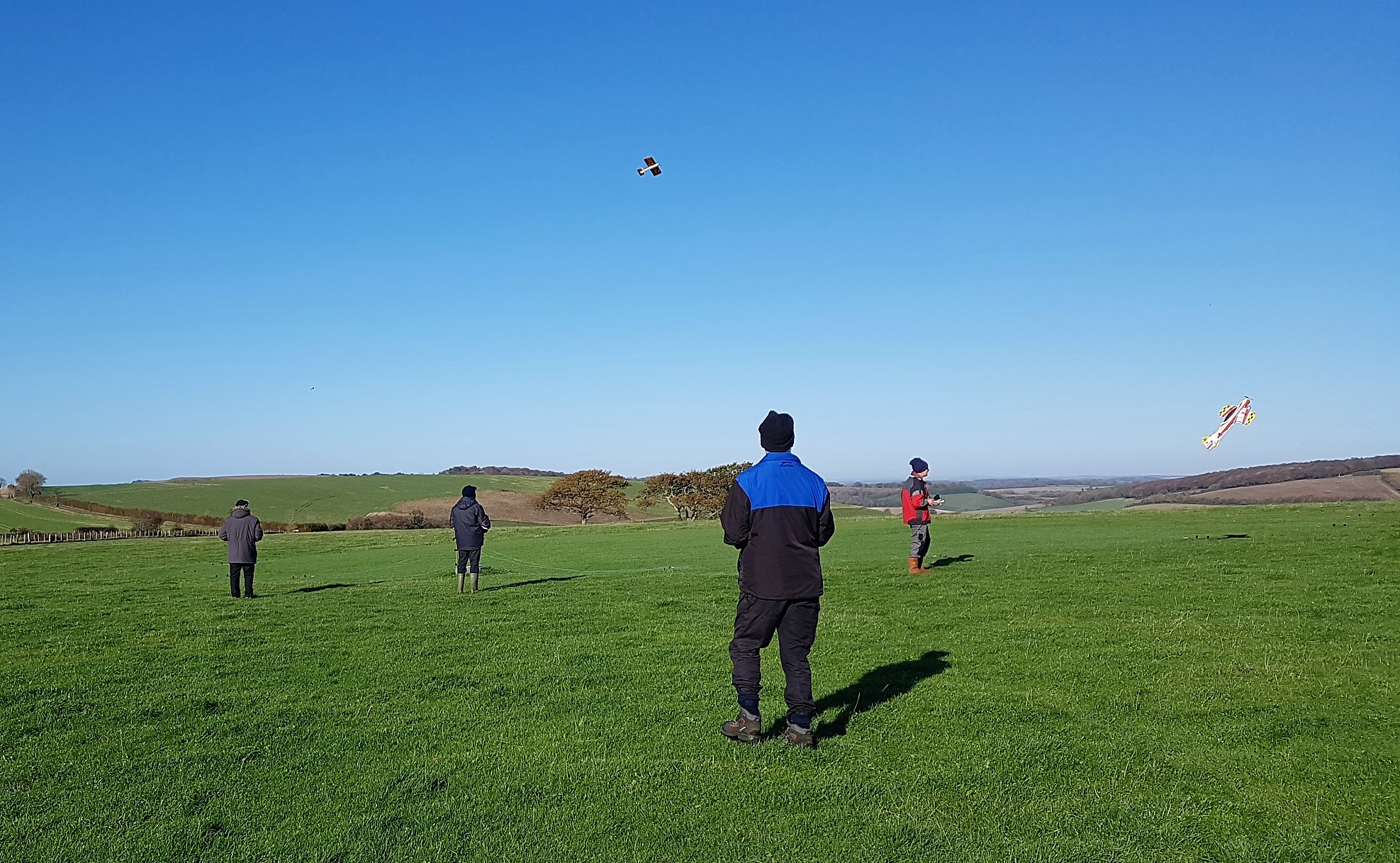 Some of the Midweekers were fortunate enough to fly on the 3rd and 4th of the month but for most members there was no flying at all. November 3rd was cold and very windy so not terribly enjoyable but the following day was lovely with clear skies and very little wind, a perfect winter’s day in fact and the maximum of six booked to fly.
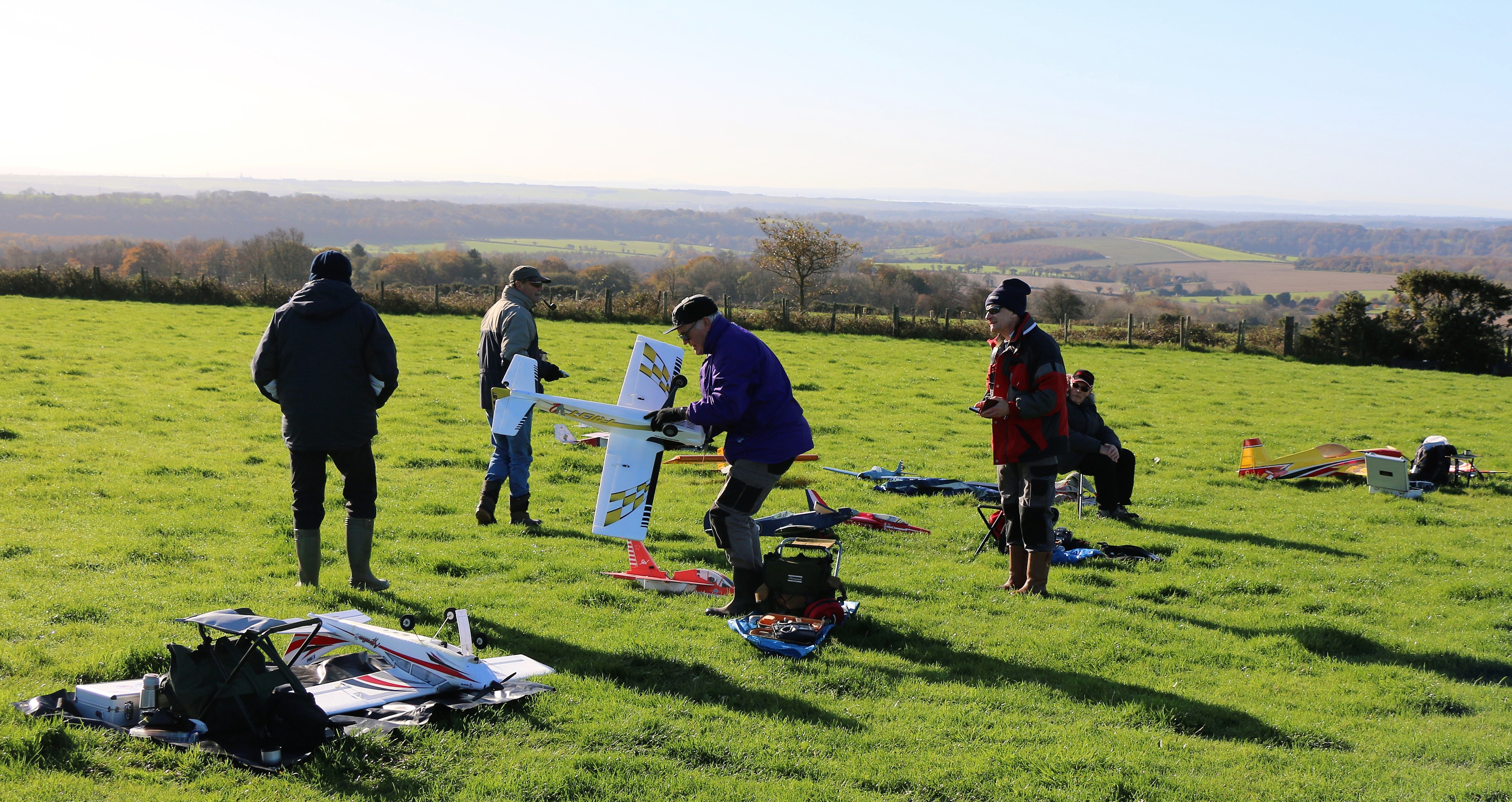 The members maintained a safe separation both when in the pits and whilst flying. A few days after the start of lockdown a fresh herd of young and inquisitive bullocks moved into the field but the fence kept them off the patch so it remains in good condition. It will need another cut when we are able to do it although it’s perfectly flyable for most models at the moment and it should be pretty easy to mow as the bullocks have now moved out again.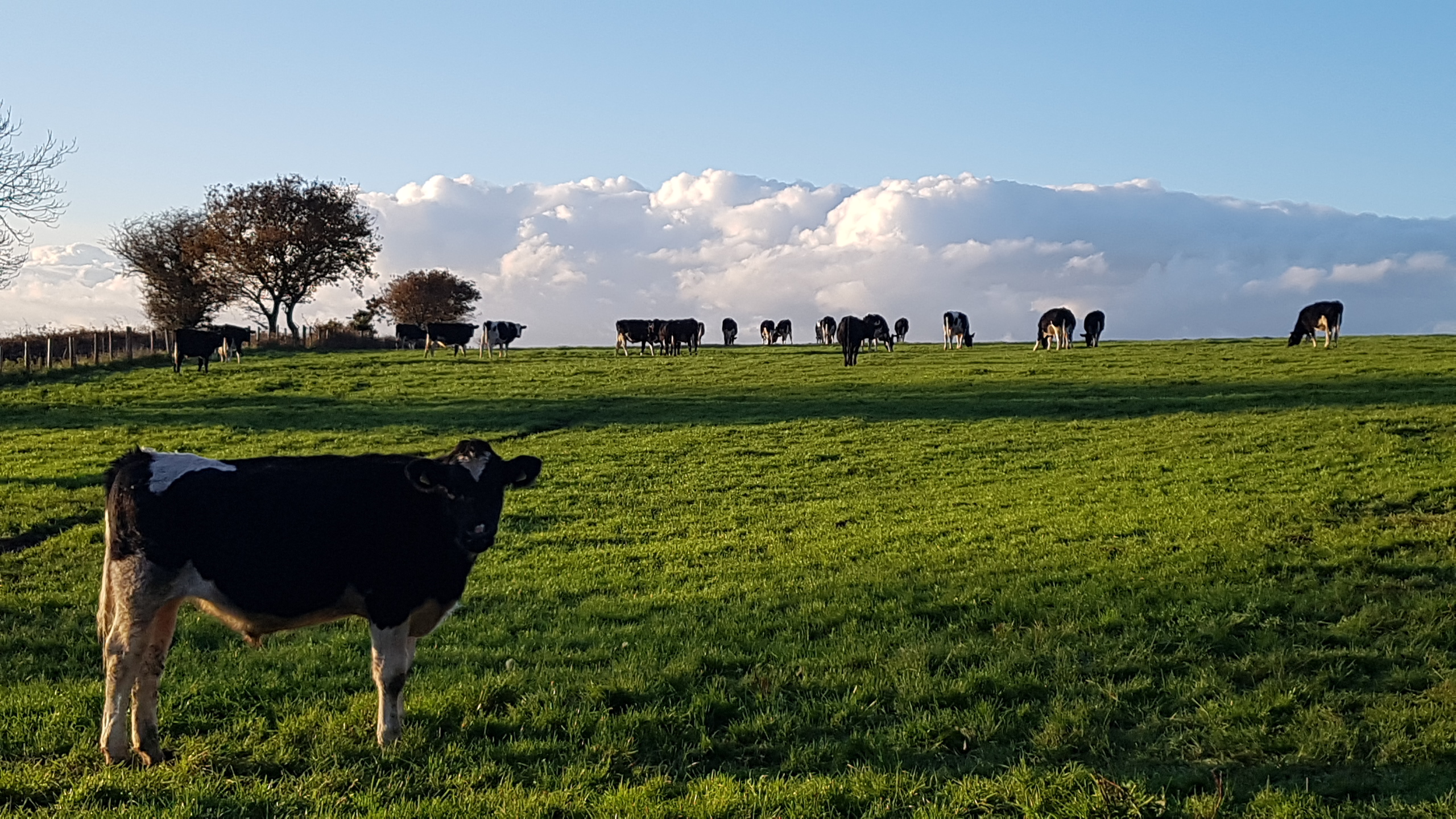
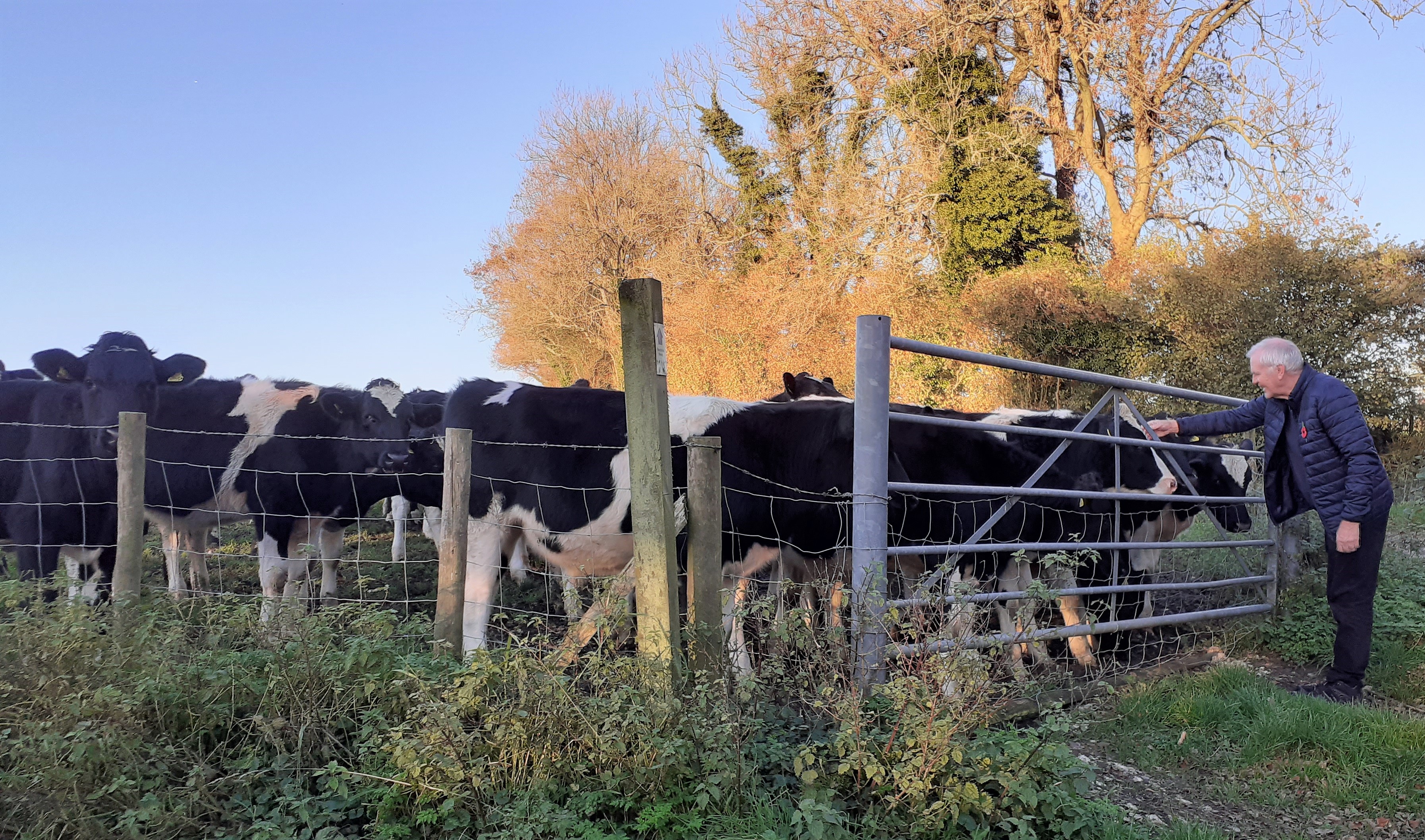 At last, we’ve found something good thing about the lockdown, we missed the bullocks!
I’m very sad to report that, as existing club members will already know, Gentleman Jim Hobday passed away in November. Jim had been a club member for around 10 years and was a regular at the flying field, mostly on midweek days so the Sunday fliers may not be aware of just how frequently he flew.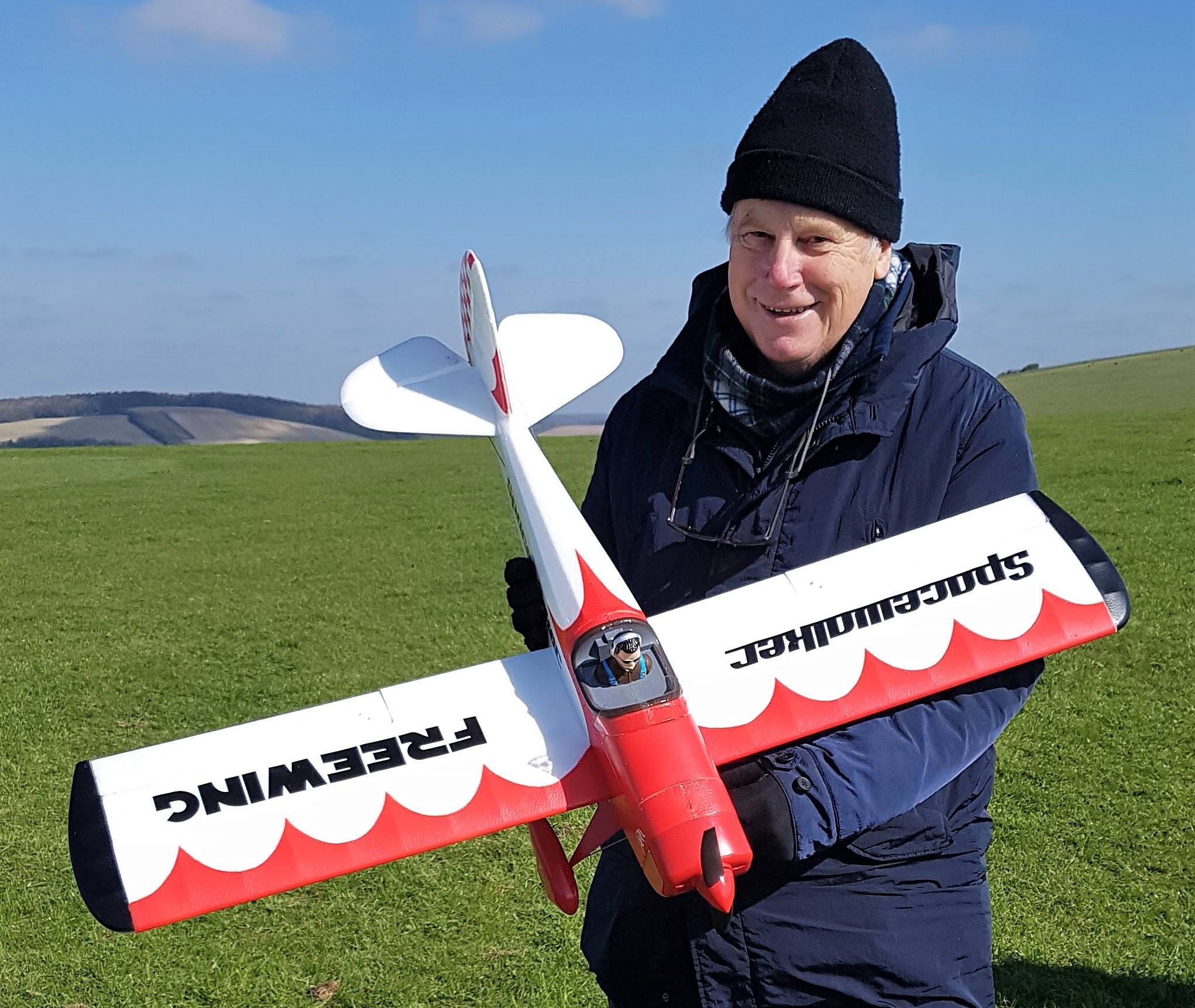 Jim had a variety of models over the years choosing a range of foamies, ARTFs, several ’proper’ builds from kits, and a Splot built from the plan. He always did things properly, a ‘that’ll do’ job simply wasn’t in his mindset.
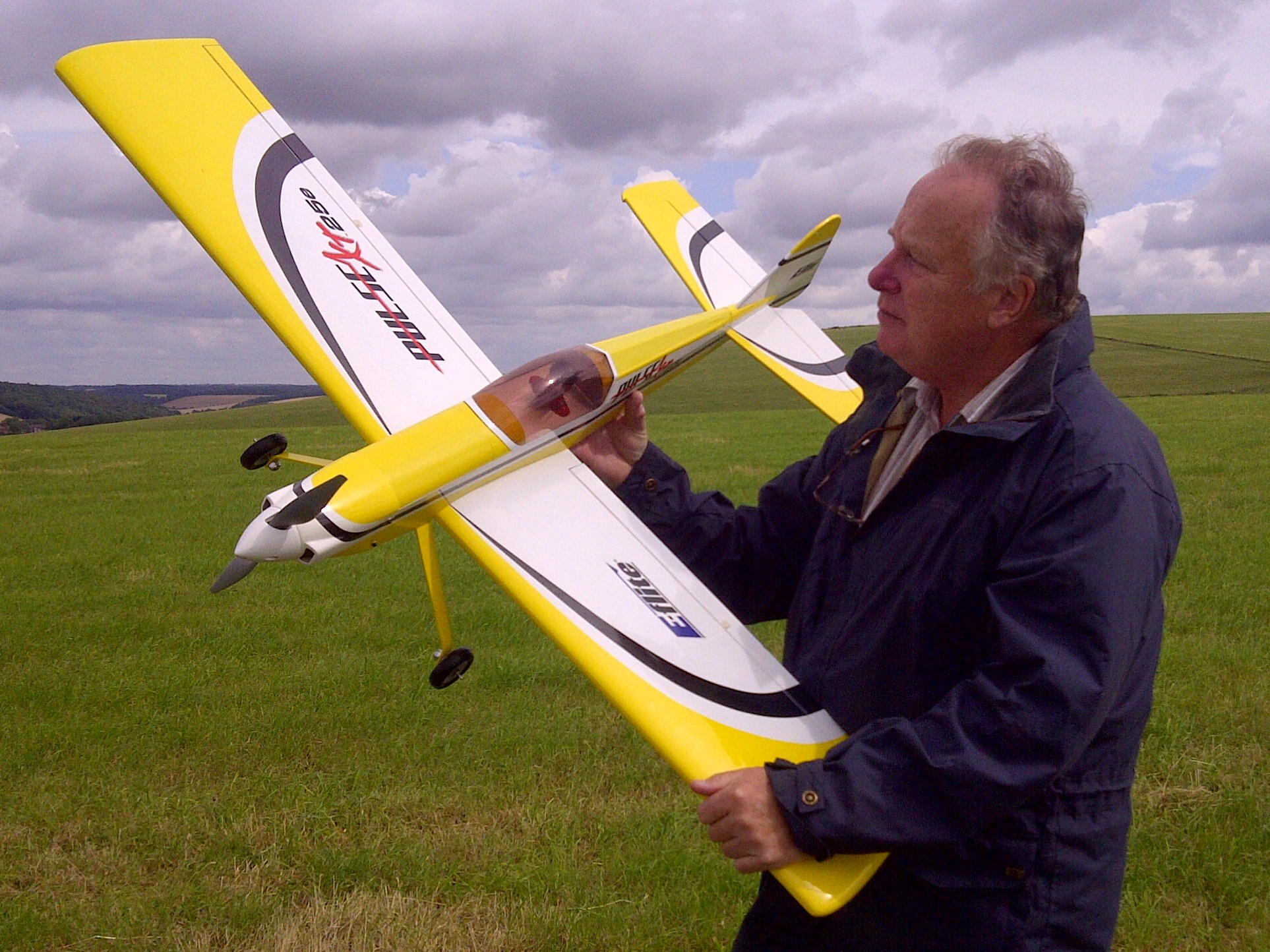 Jim was an extremely private and modest individual so most of us knew little of his battle with cancer and it wasn’t until last month that we became aware how serious the situation had become. In the typical Gentleman Jim way he barely mentioned his health problems, merely brushing away any queries with “Oh it’s fine, everything is under control” or similar. When the inevitable became unavoidable Jim began ensuring all his affairs were in order which included asking me to take care of his modelling stuff. Many club members bought models or equipment and I bought the last model he had been assembling, a Max Thrust Riot which Jim had almost completed. Sadly, at the age of 76, Jim lost his battle on 2nd November, passing away at home in accordance with his wishes.
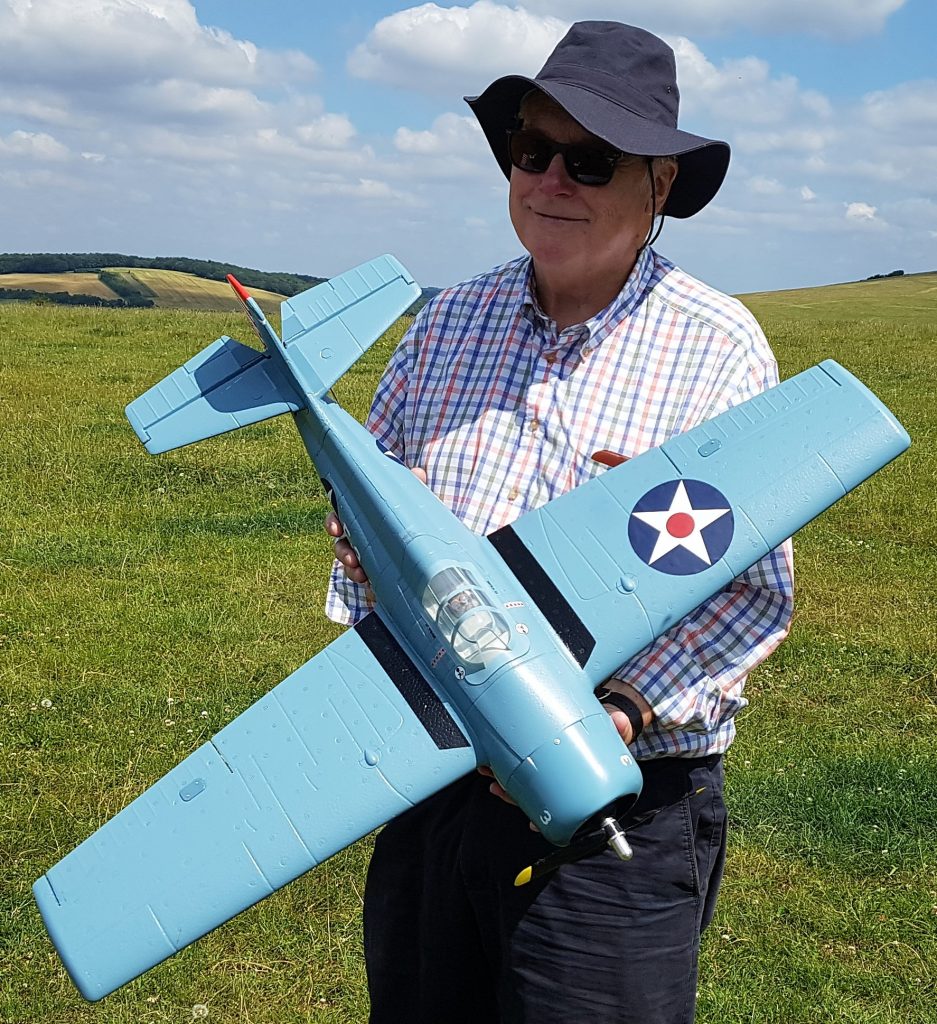 By then Chas had purchased Jim’s Parkzone Wildcat and I had finished the Riot so we were able to fly both models in Jim’s memory before the lockdown. I have added my own personal tribute to the Riot wings.
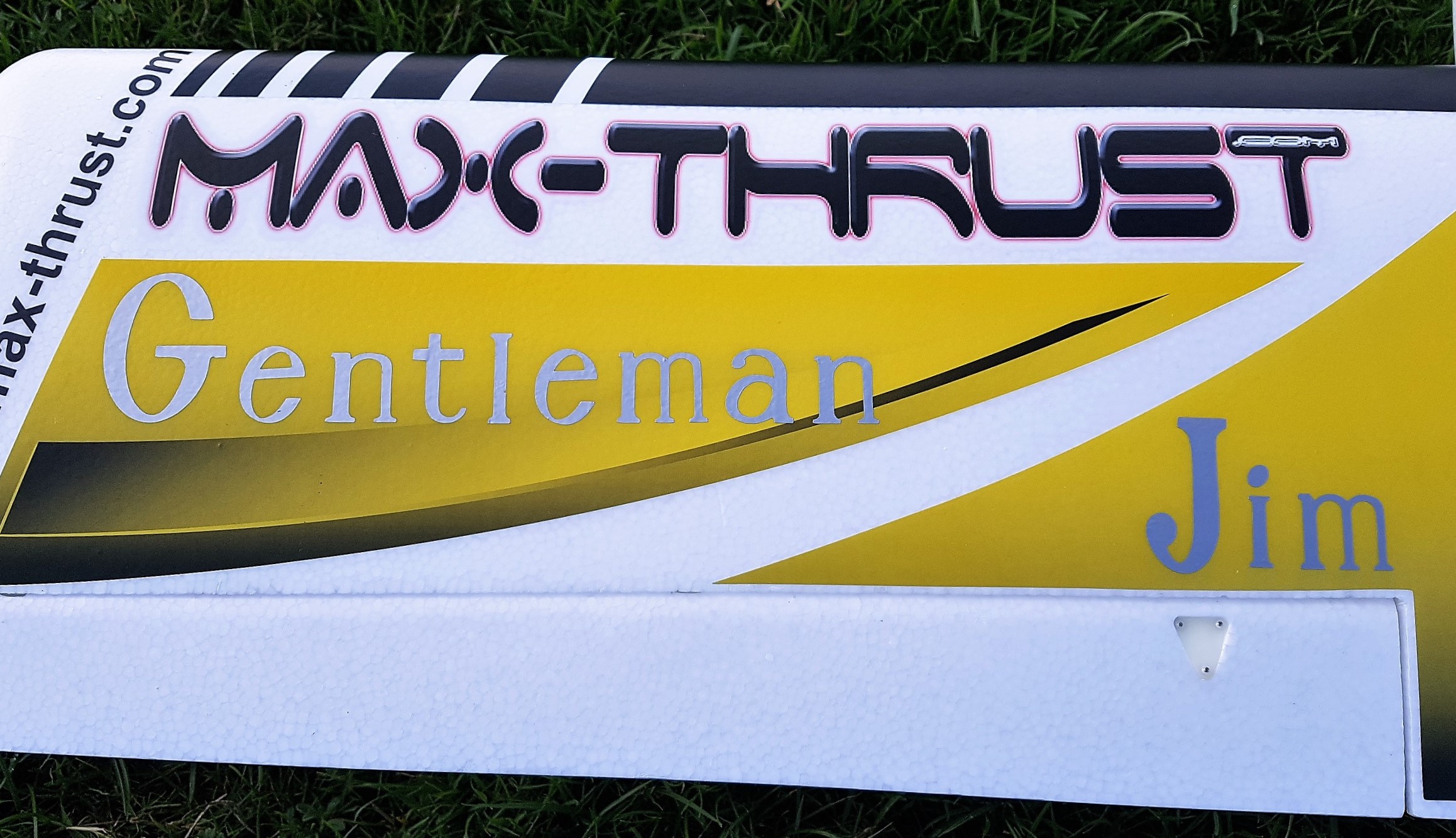 Jim’s wife Bobby has asked me to pass on her thanks to the members who bought Jim’s models and equipment raising £600 for the Macmillan Specialist Palliative Care Service at Midhurst. Rest in Peace Gentleman Jim.
Dougal Entendre wrote about the trials and tribulations of his new Jumper transmitter for us back in April and this month he’s pleased (?) to share part 2: During the first lockdown I used my Jumper T16 transmitter to buzz a couple of quadcopters around the garden. The April Patch News tells the tale of how I had to re-seat a couple of ribbon cables to get it to work properly, but it seemed fine after that.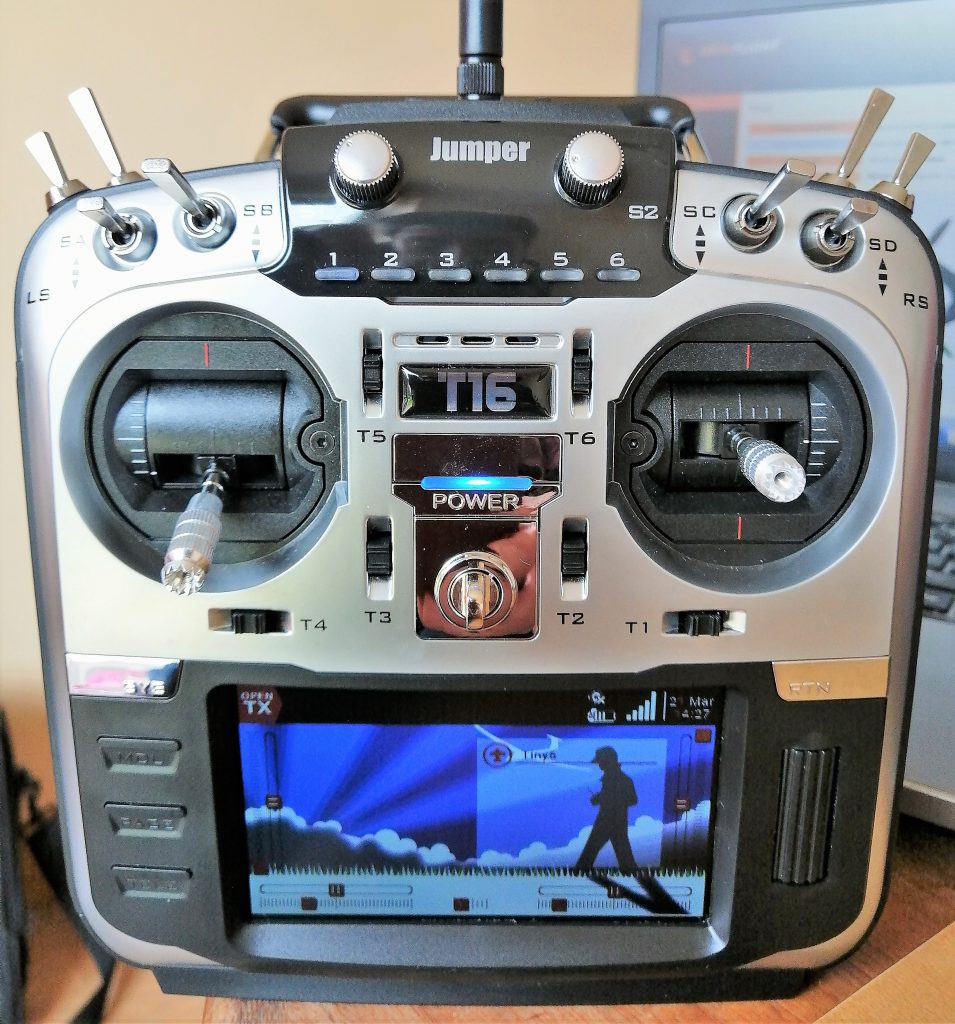 Then lockdown was lifted, and I went back to my Devo transmitters for flying proper models!
After a couple of months I thought I’d give the quads another go, but when I switched the Tx on, the gremlins had got back in and the buttons and roller didn’t work again. By then Jumper were offering replacement ribbon cables, so I got a set from a UK distributor. I was still busy with proper models though, so I didn’t get round to fitting the cables until the second lockdown.
In the photo of the Tx innards, the duff cables are the two ribbons at the top corners of the main circuit board (the one with the ARM processor on it). The replacement cables seem to be higher quality and are more flexible. At any rate, they seem to work OK (so far!).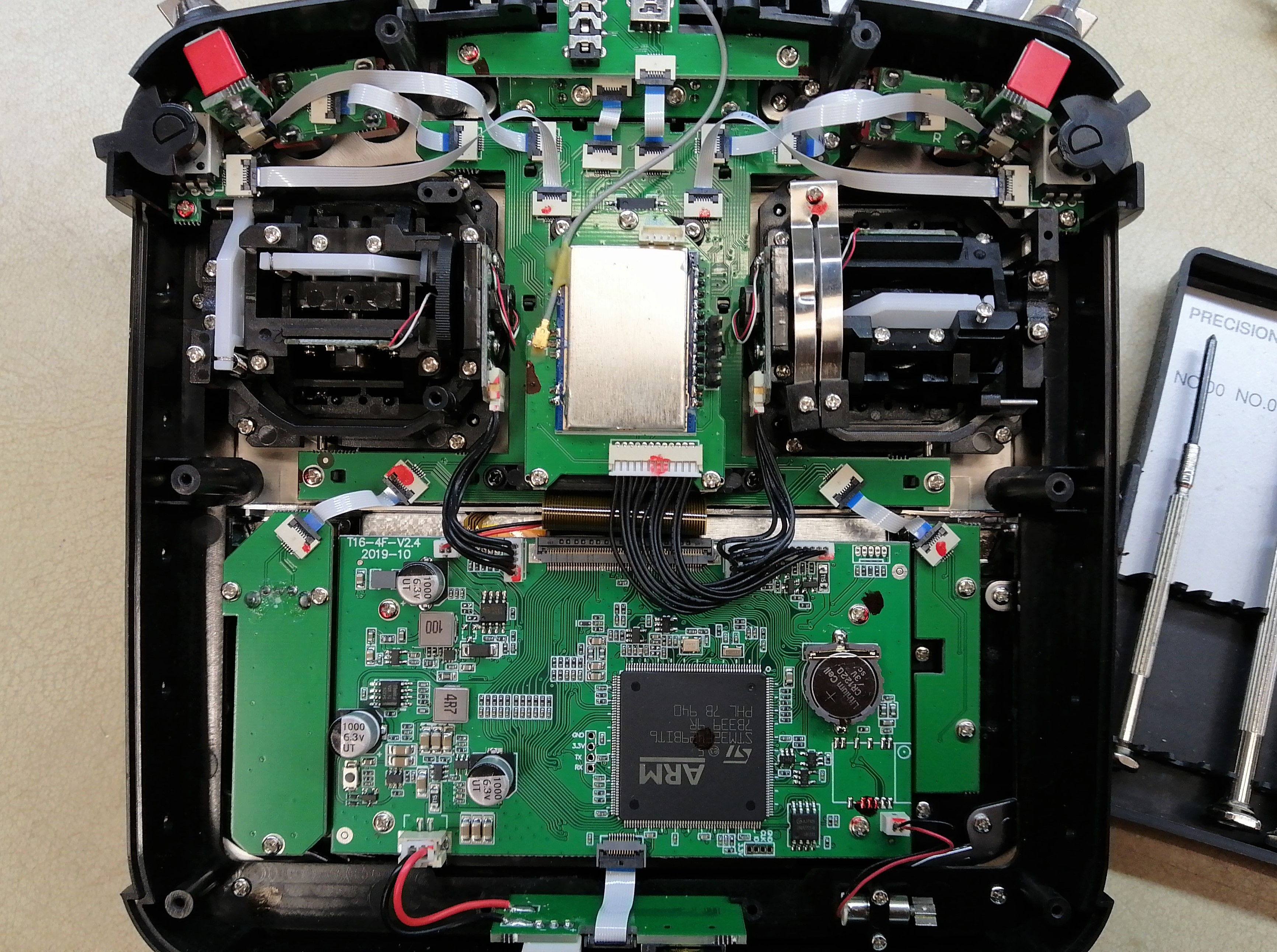 When I connected the Tx to my laptop, it advised that I update the transmitter firmware, so I downloaded the file and went through the procedure, which seemed to go fairly smoothly. However… when I switched the Tx on, all kinds of alarms went off, including one about the throttle stick not being at idle (though it was!). I recalibrated the sticks, but the message persisted. Eventually I found that the Tx had defaulted to Mode 1 when I updated the firmware, and switching it back to Mode 2 fixed that particular issue.
Then I tried to get it to work with my Devo receivers (the Tx is advertised as having a multi-protocol module which is compatible with these). When I went to the menu to select the right protocol, there was no Devo option available! It was also flashing a message that I also ought to update the firmware for the internal module. Why it couldn’t have told me that when I updated the main Tx firmware I don’t know. Instead it sat there beeping nasty alarm noises at me, making me want to hurl it across the workshop.
Anyway, I figured I had to update the module firmware. After watching several YouTube videos and getting confused about whether or not my Tx had the required bootloader, plus having to work out precisely which firmware file I needed, I eventually managed to get it sorted. It was a great relief when my Devo airborne set finally bound to the Tx and the servos moved, but my blood pressure was pretty high by then.
One of the reasons I bought this Tx was to learn how to set up models using the OpenTx firmware it runs. After many hours of re-wiring it, watching YouTube videos and faffing around updating it, I think I’m finally at the point where I can start to learn OpenTx! I note that they’ve stopped making the Jumper T16 now, and it’s been replaced by the very similar RadioMaster TX16S. It’s not a transmitter I would recommend to anyone who is not computer-literate. And come to think of it, it’s probably not a transmitter I would recommend to anyone who IS computer-literate either! Thanks for the report Dougal, I don’t think I’ll be rushing out to buy a Christmas Jumper…
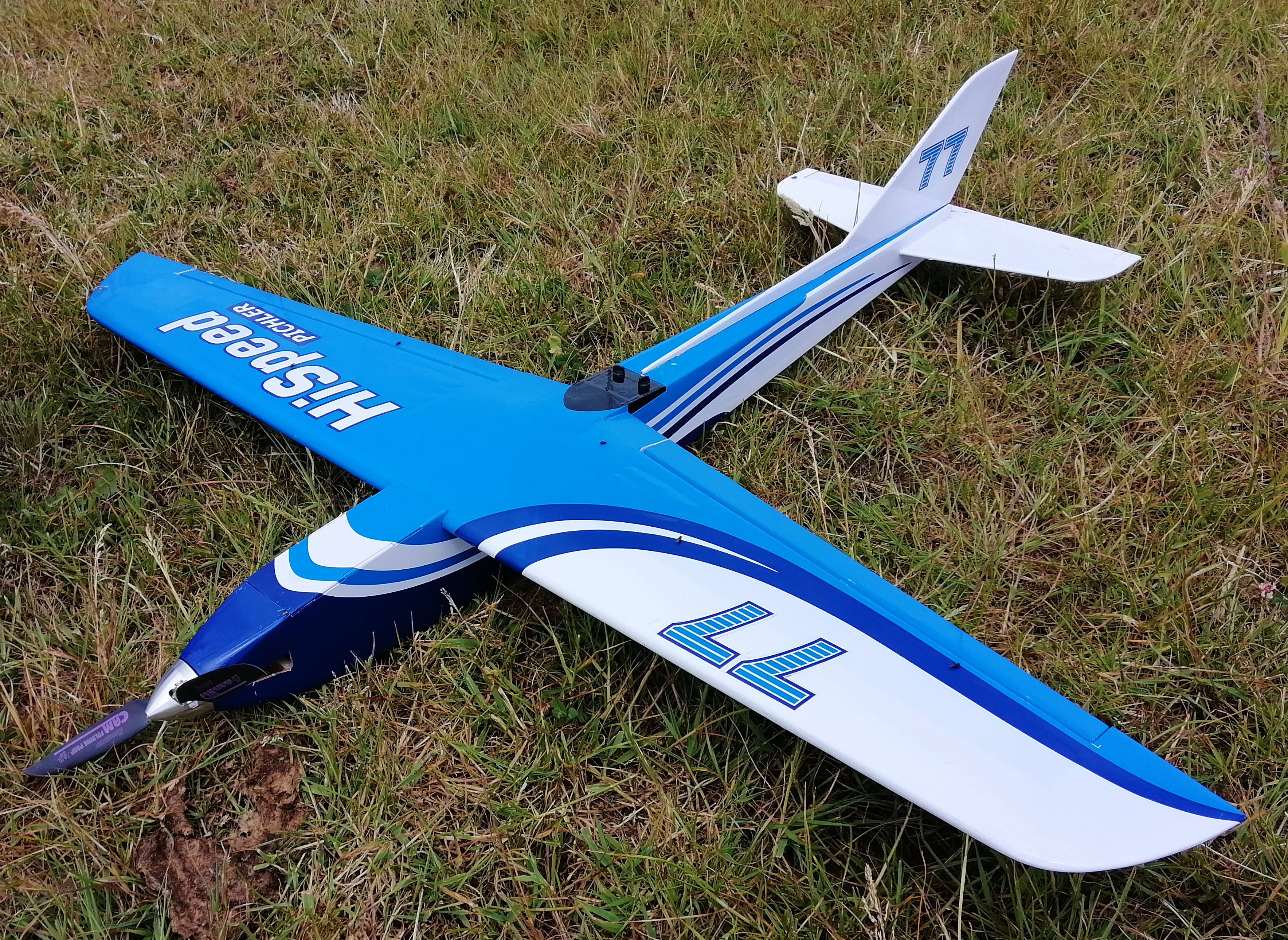
During the first lockdown, realising that I would be short of material for Patch News, I asked members to send me information on any new projects they had on the building board and was promptly swamped with stuff. So this time I decided to just ask a select few and it turns out that none of them were doing much building, typical! Never mind, some of you are building and first up is one from 1066. I know 1066 isn’t keen on building models these days, preferring to buy ARTFs and just enjoy the flying. I can relate to that, gone are my days of spending months working on a new creation and I rarely build anything from scratch. But 1066 has made an exception and is building a Wasp e2k, a model that’s designed to compete in the E2K pylon racing class, not that he’ll be competing with it.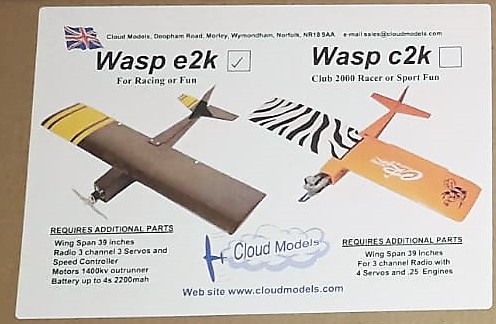 E2K came about in an attempt to have a class of pylon racing that doesn’t require expensive motors or batteries. The rules state that competitors must use an esc that limits the motor revs to 15232rpm and an APC 8×8 propeller so with everybody using the same size prop and the maximum revs limited there’s no point in specially tuned racing motors and any old 4 cell lipo will do. There are rules about the size of the models, cross sectional areas and so on to ensure they are all well matched and the racing is close. So the winner should be the pilot with the best skills not the biggest wallet. None of the rules will apply to 1066 of course, he just wants a fast, fun, sport model and the Wasp promises to be exactly that, unlike the Pichler Hi-Speed that has never quite matched his expectations.
 The Wasp cost £63 including delivery and 1066 says he was a bit underwhelmed on opening the box but that may be because he’s used to receiving ready covered ARTFs rather than a box of laser cut wood and a foam wing.
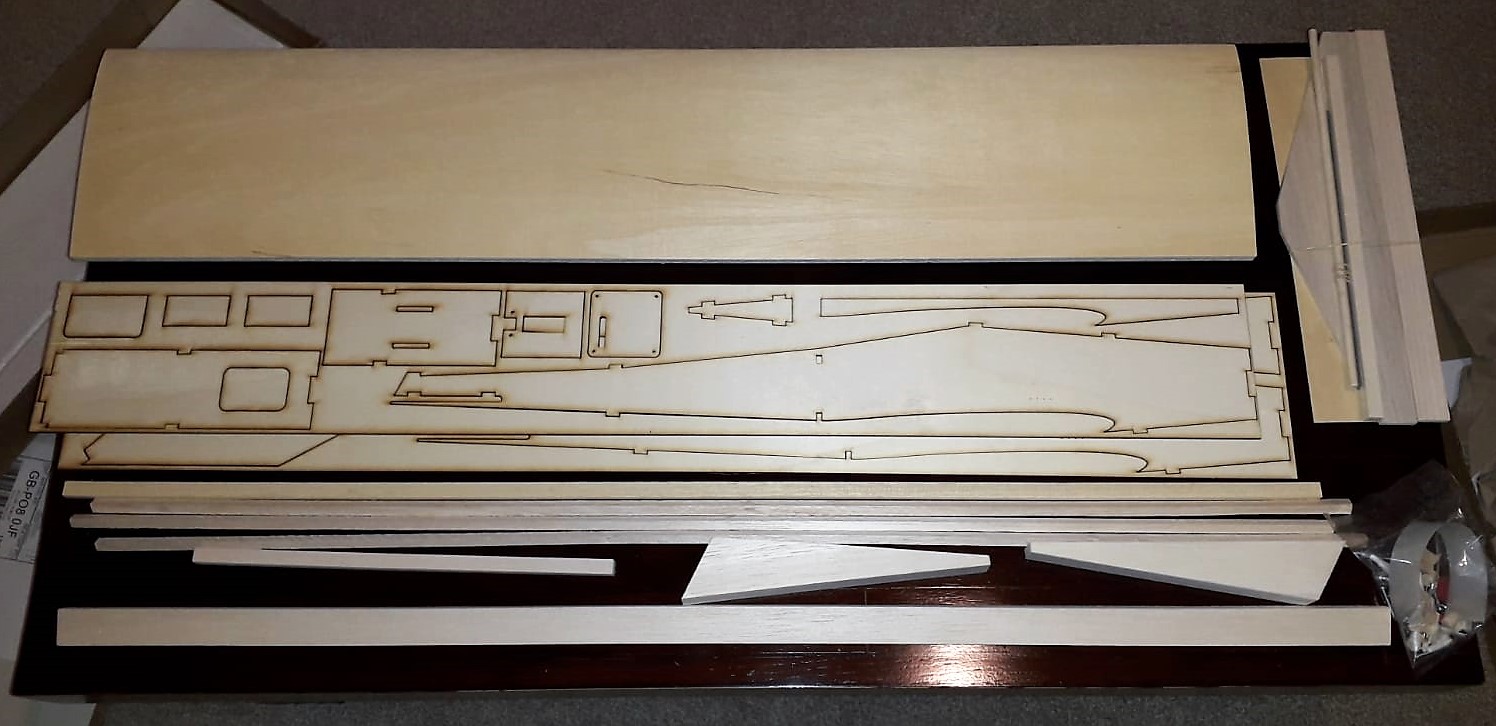 The laser cut parts made the fuselage build pretty straightforward build and it has all gone together quickly.
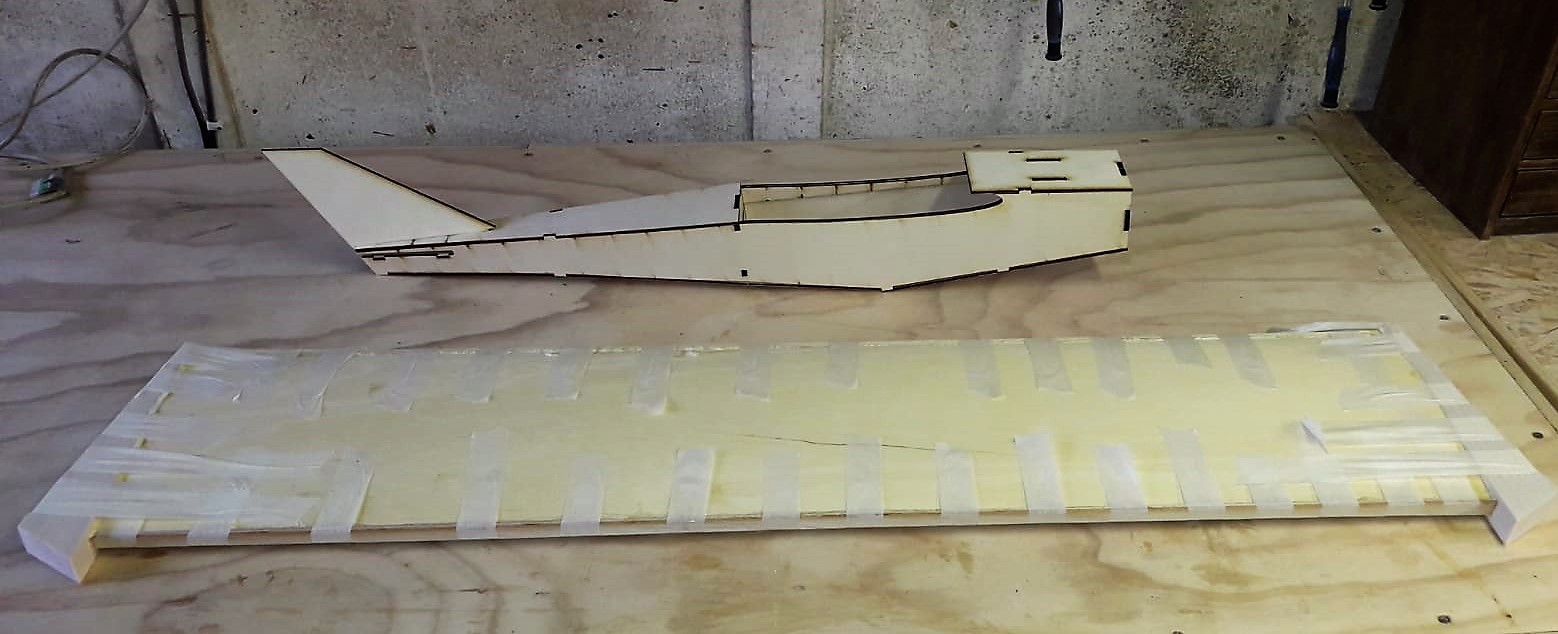 The biggest problem was that 1066 didn’t have any blades for his razor plane so had to resort to his orbital sander!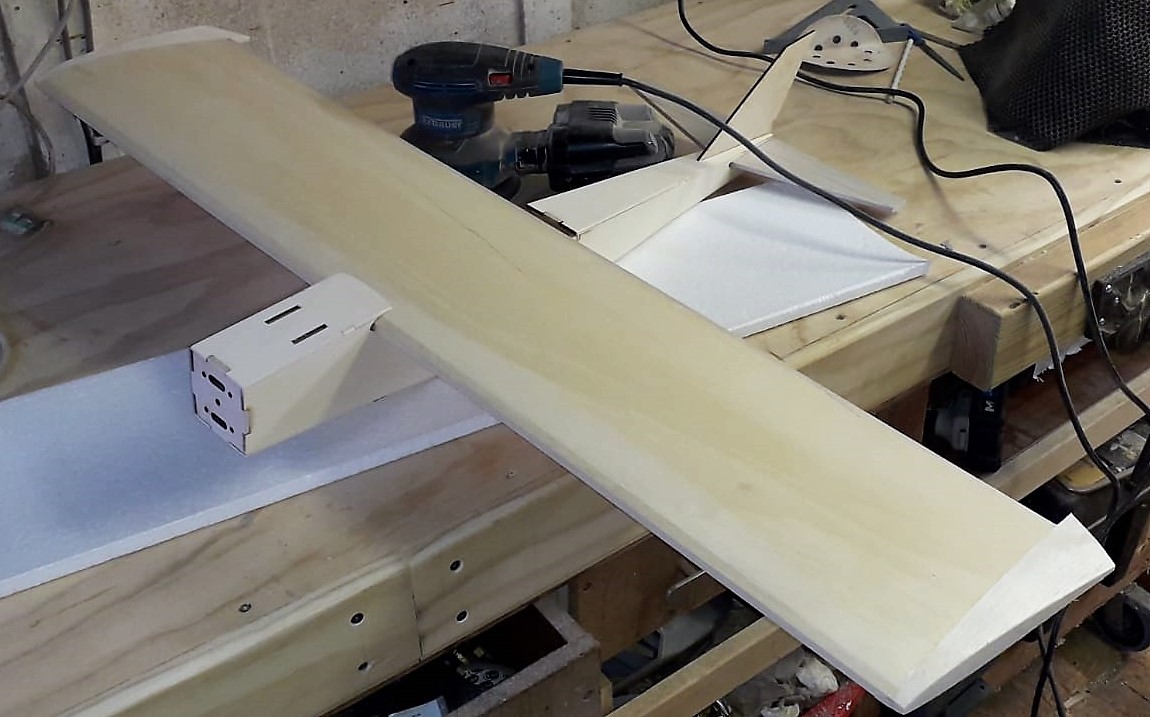
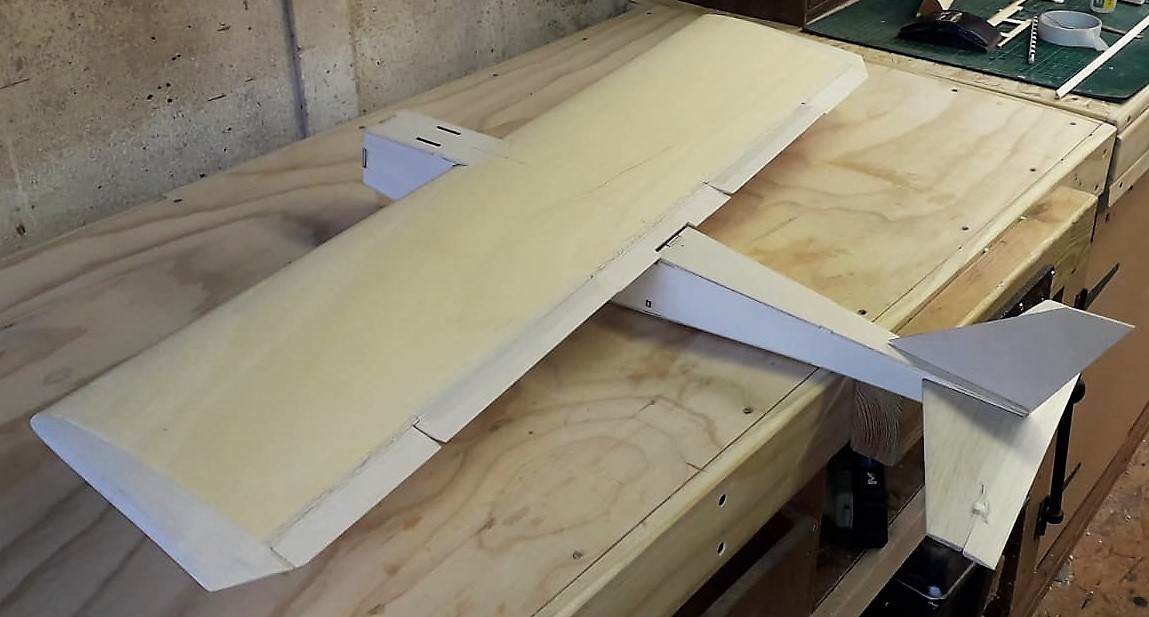 The only change 1066 made was to top hinge the ailerons rather than using the Mylar strip provided. It’s all looking good so far and should be ready to fly in December so hopefully I can give a flying report in the next Patch News.
As I mentioned earlier I bought the Max Thrust Riot that Gentleman Jim had assembled. There was very little work needed to get it flying but I checked it all over thoroughly and read some of the reviews to know what to look for.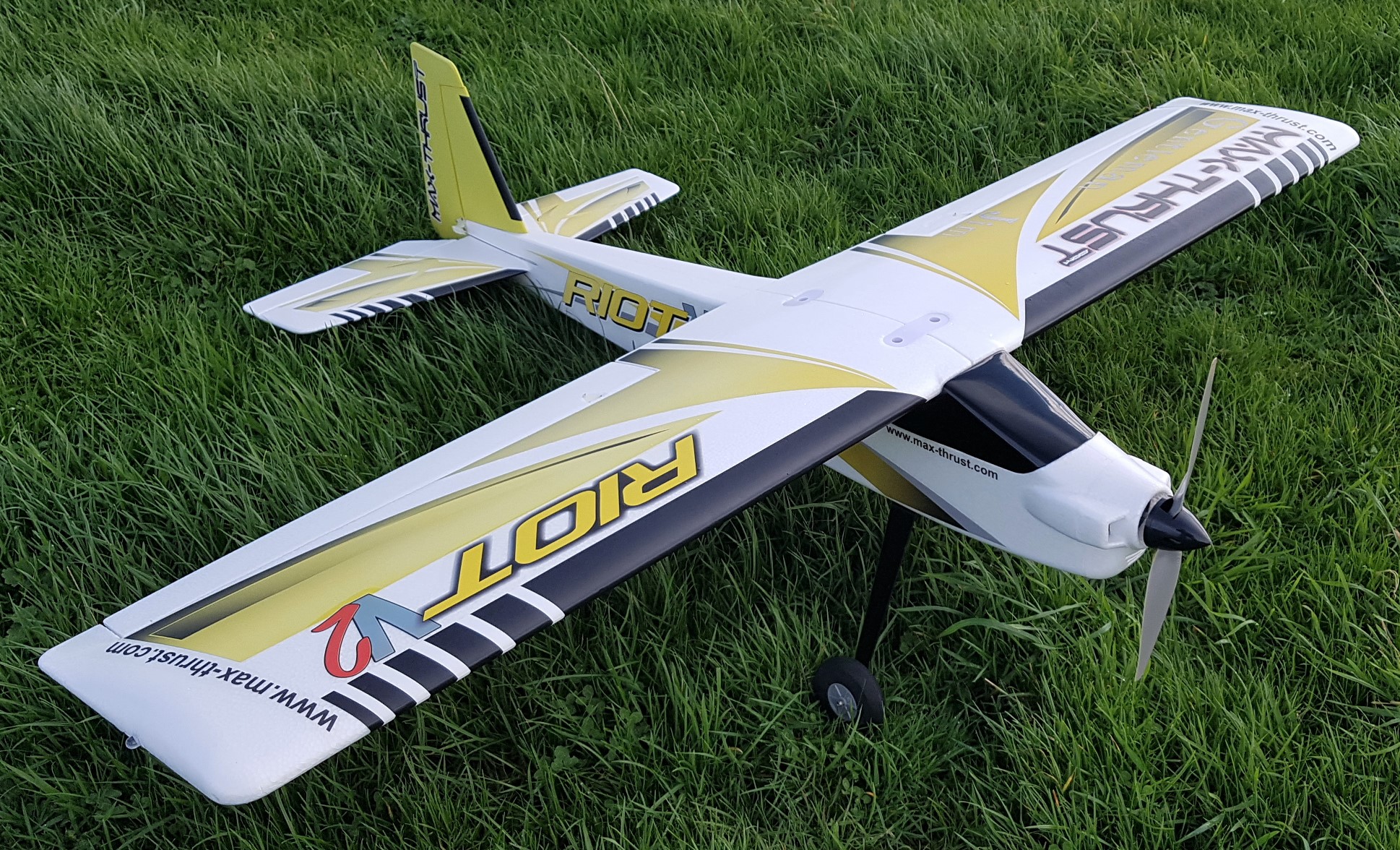 The Riot is a V2 and I think some of the negative points I read about 0n the original version have been addressed on the V2. I did remove the snake inners and lubricated them to make sure they were running reasonably smoothly. The worst thing about it is the flimsy plastic battery box which is barely deep enough to take the recommended 2200mAh 3 cell lipo and has weak and badly designed clips to hold it closed and stop the battery falling out.
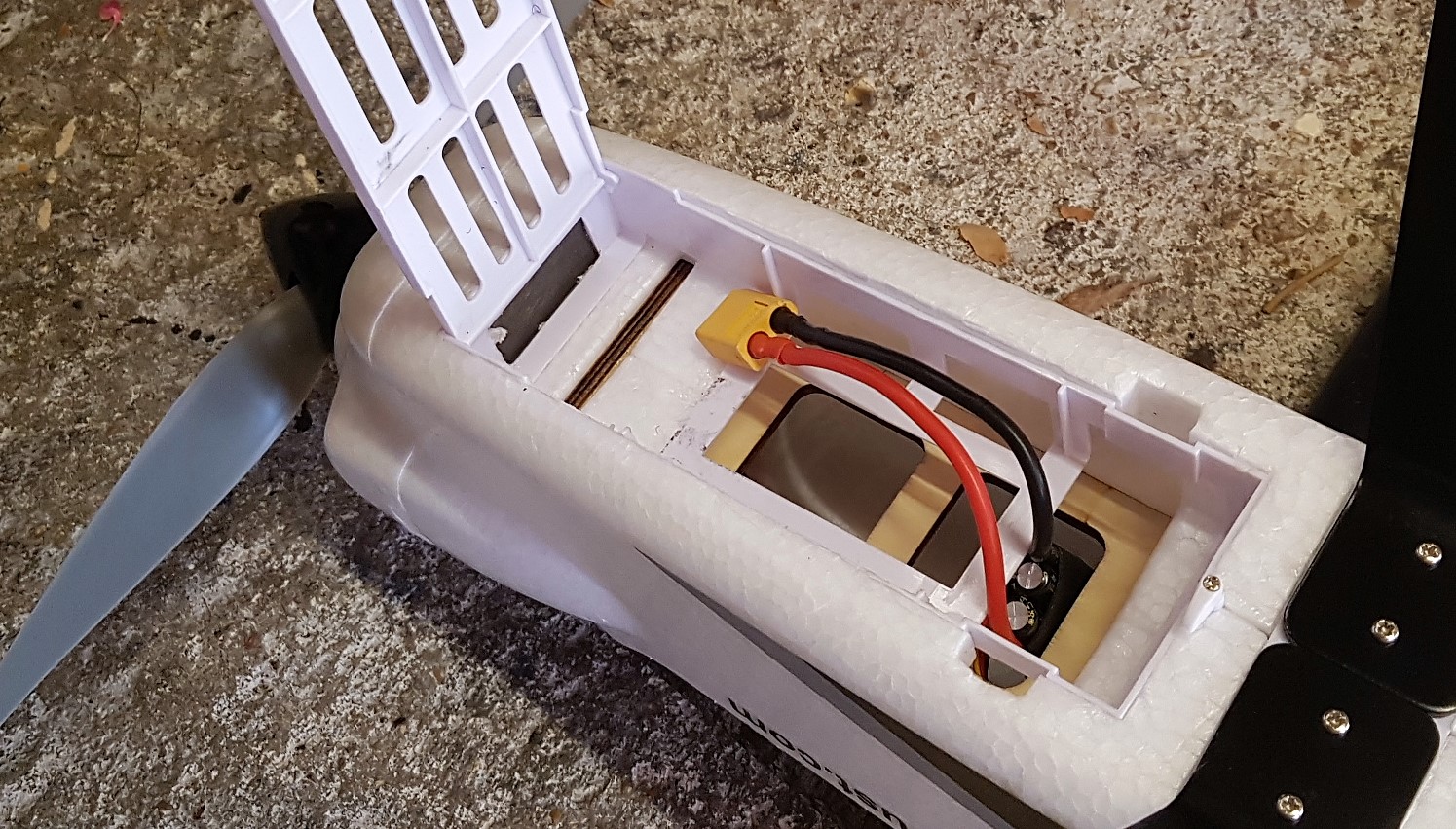 I can see me cutting the whole box out before too long and sorting out something better! The Riot has a couple of wingtip lights and the instructions mention plugging the leads into a circuit board but I think that was something on the earlier version as on this one there are simply a couple of adaptor leads that plug into the receiver via a Y-lead.
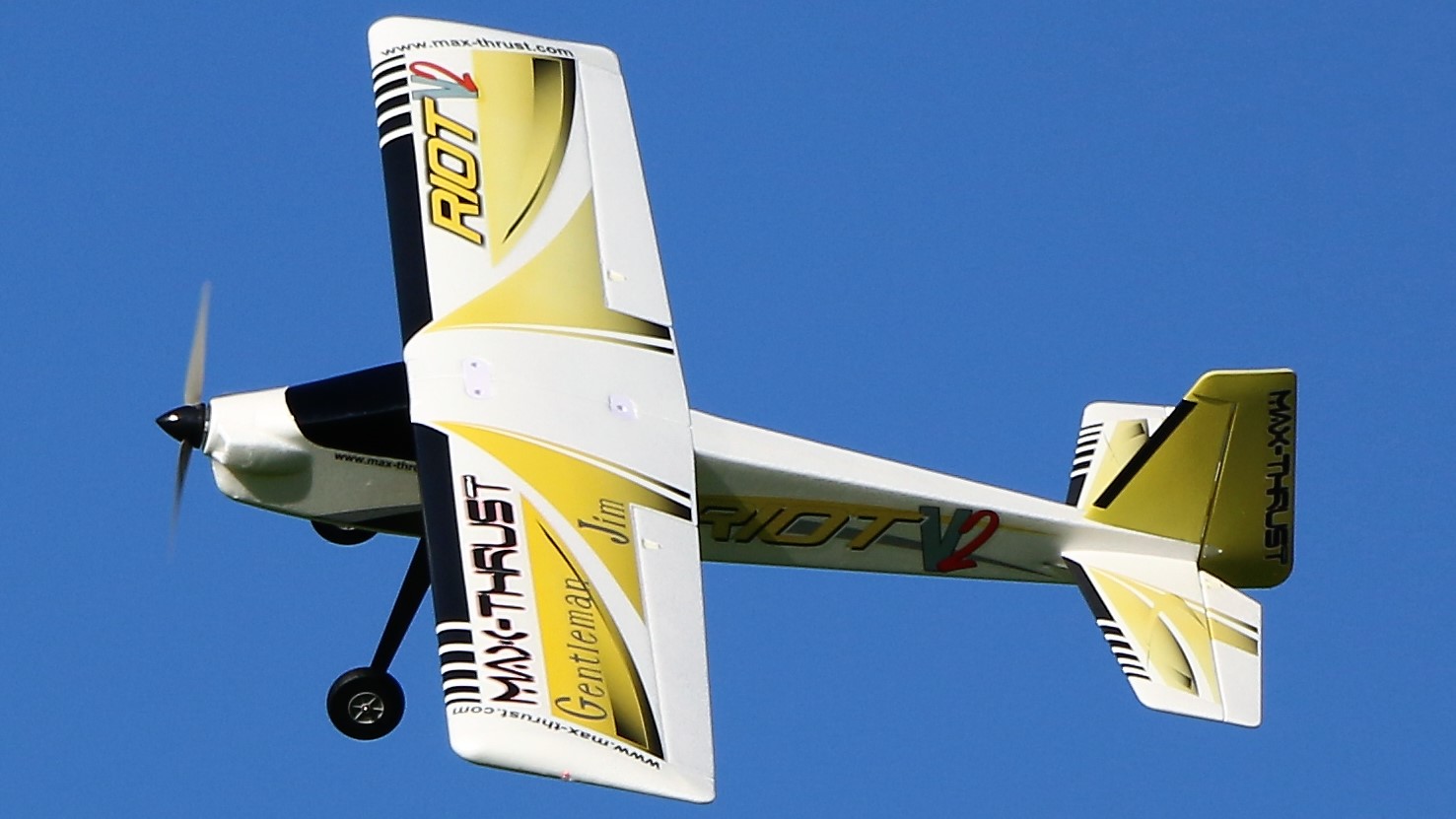
 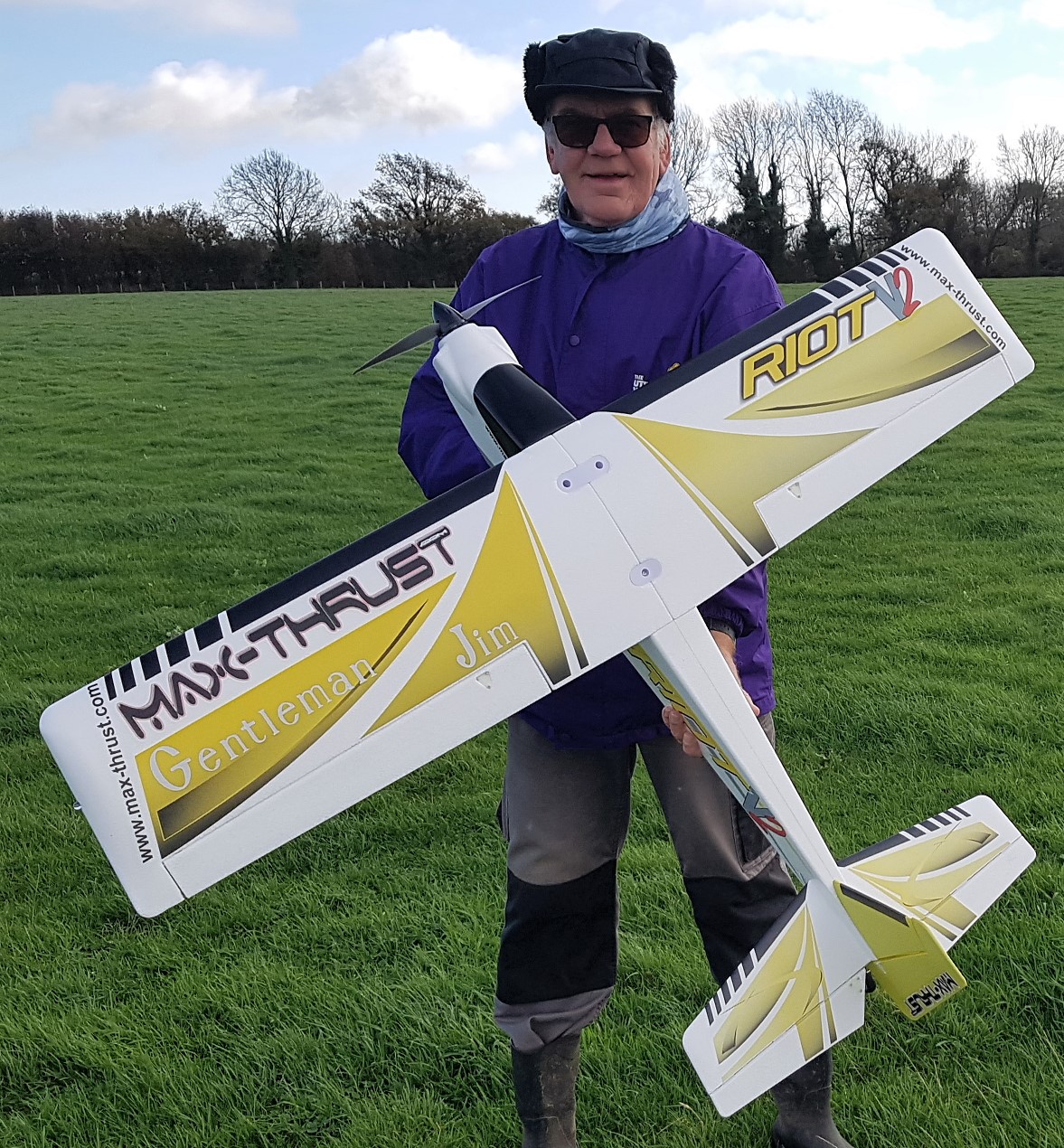 I was able to fly the Riot for the first time on the day following Jim’s death which seemed somehow appropriate although it was hardly an ideal day with a strong gusty wind blowing. But all went well and the Riot handled the conditions with no problems. The following morning, the last flying day before lockdown, was glorious with very light winds so I was able to enjoy the Riot much more. It seems to be a good flier, fully aerobatic, and it will be as gentle or as wild as you want. Unsurprisingly it flies much like a Wot-4. You can see it performing in this month’s video.
Those of you who are in the PAM WhatsApp group will have seen that John Warren is getting on well with his replacement Albatross. He managed to save the fin, rudder, and ailerons from the previous model but other than those parts it’s all new. John sent me some photos showing the progress he’s made and it’s looking good so far.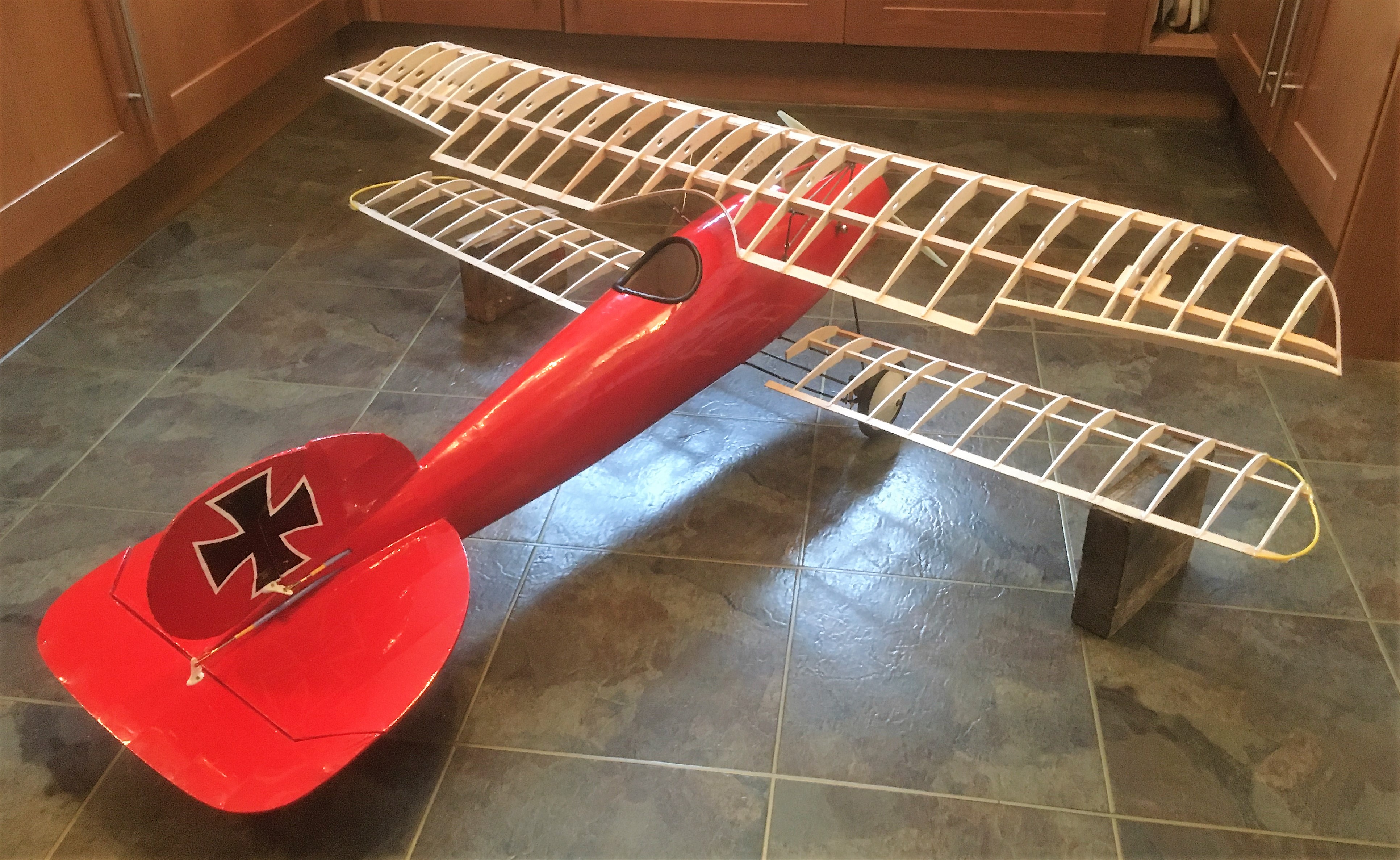
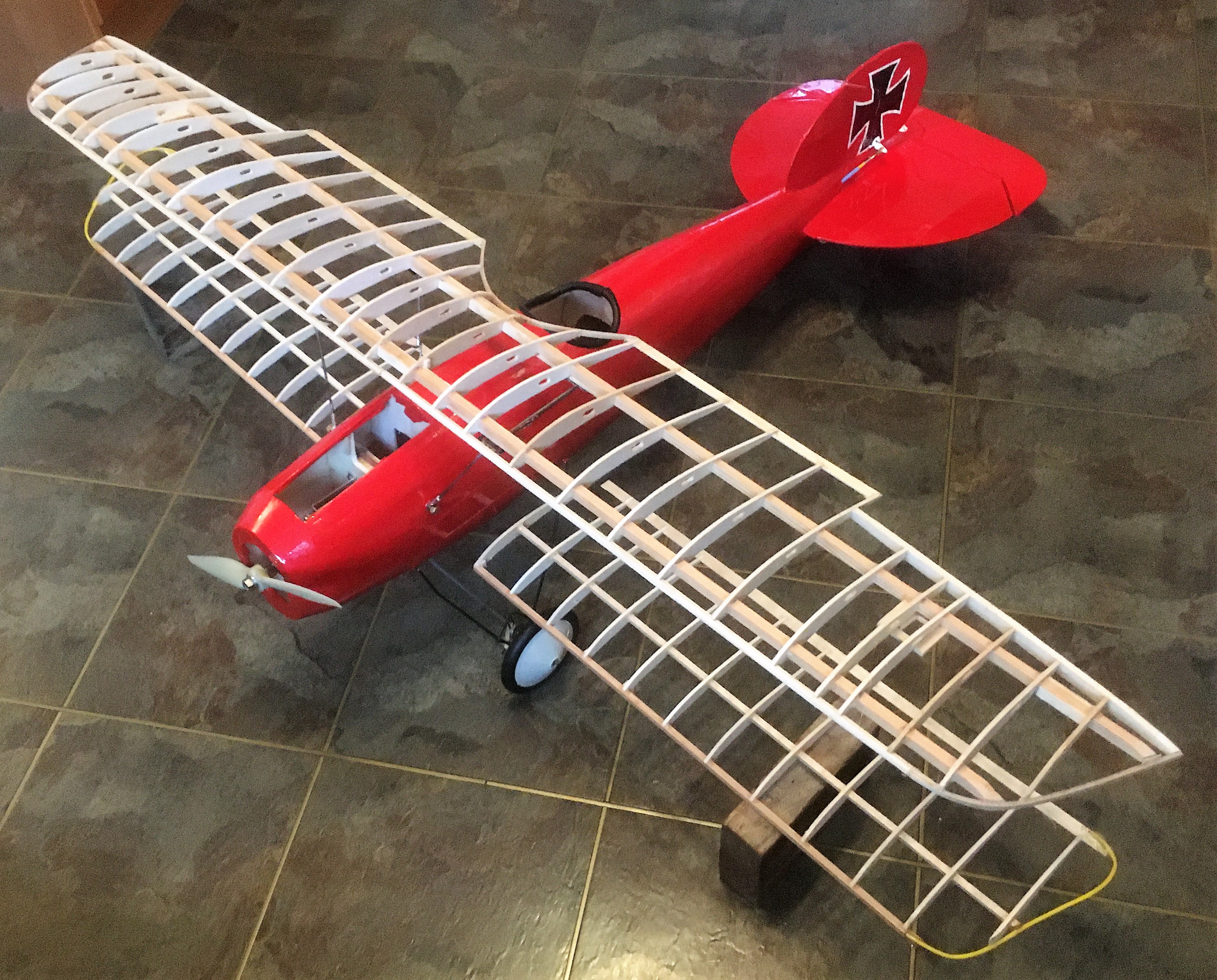 Most of the actual woodwork is done, the tricky cabane struts made, motor fitted, and the fuselage and tail are already covered. The plan calls for a 60 sized 4-stroke but John will be using the same powertrain as before, a Turnigy 710Kv motor swinging a 13×6 propeller, a 60A speed controller and a 4 cell lipo.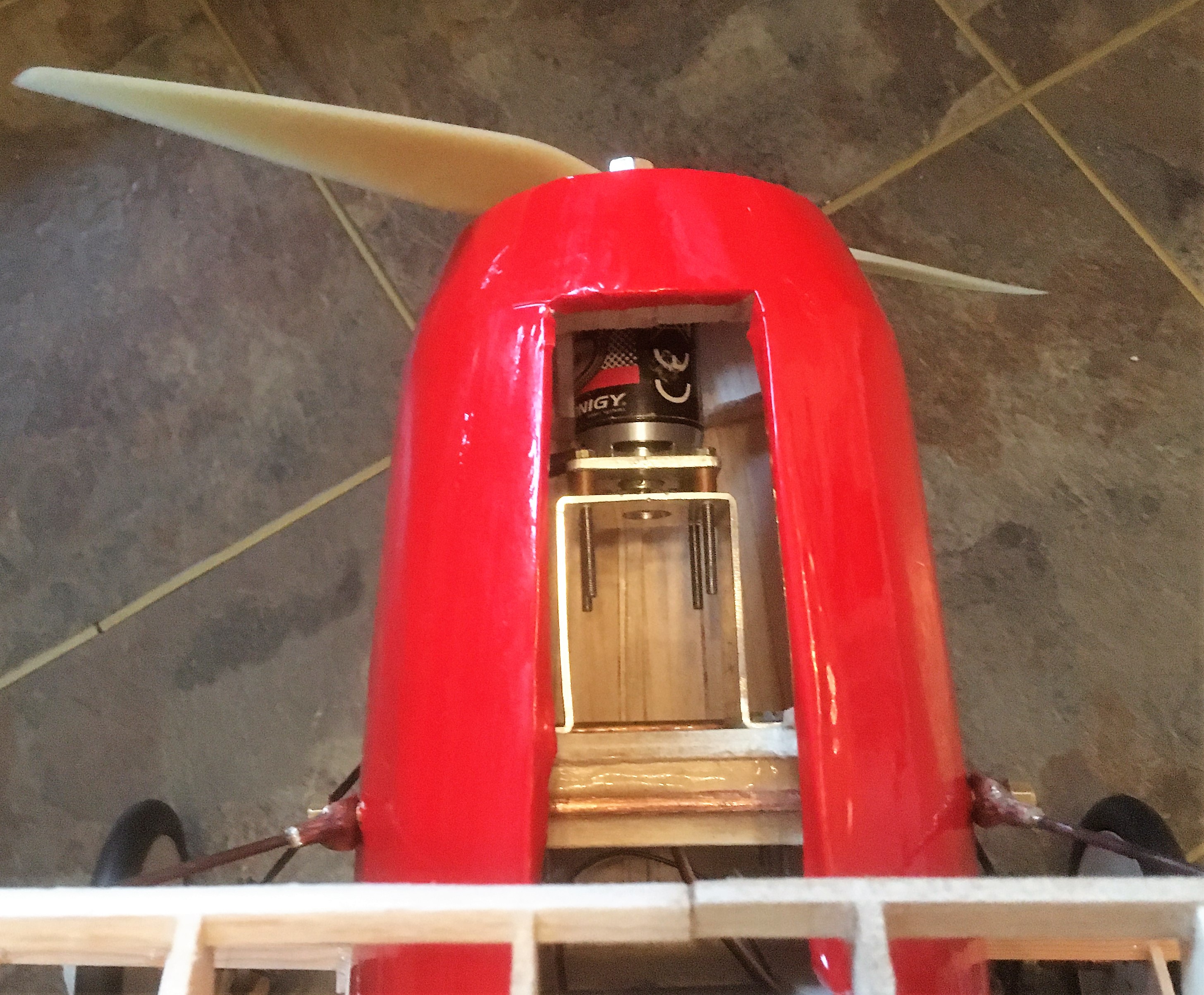
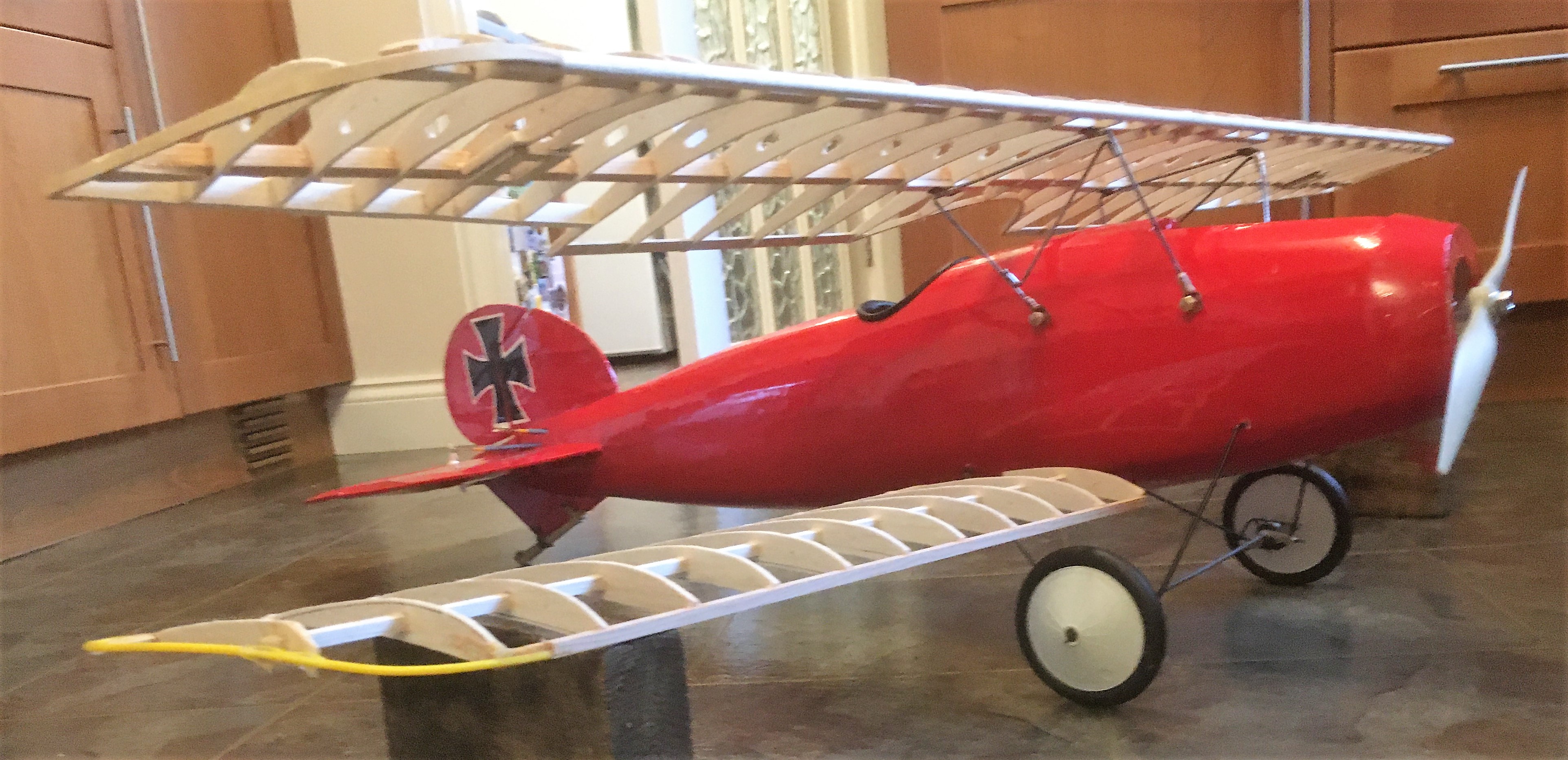 The combined wing area of the top and bottom wings is around 1000sq. in. and John expects the final weight to be around 5lbs. John says he’s open to suggestions for improvements to the powertrain but I always thought the original one was well suited to the model so I wouldn’t change anything myself.
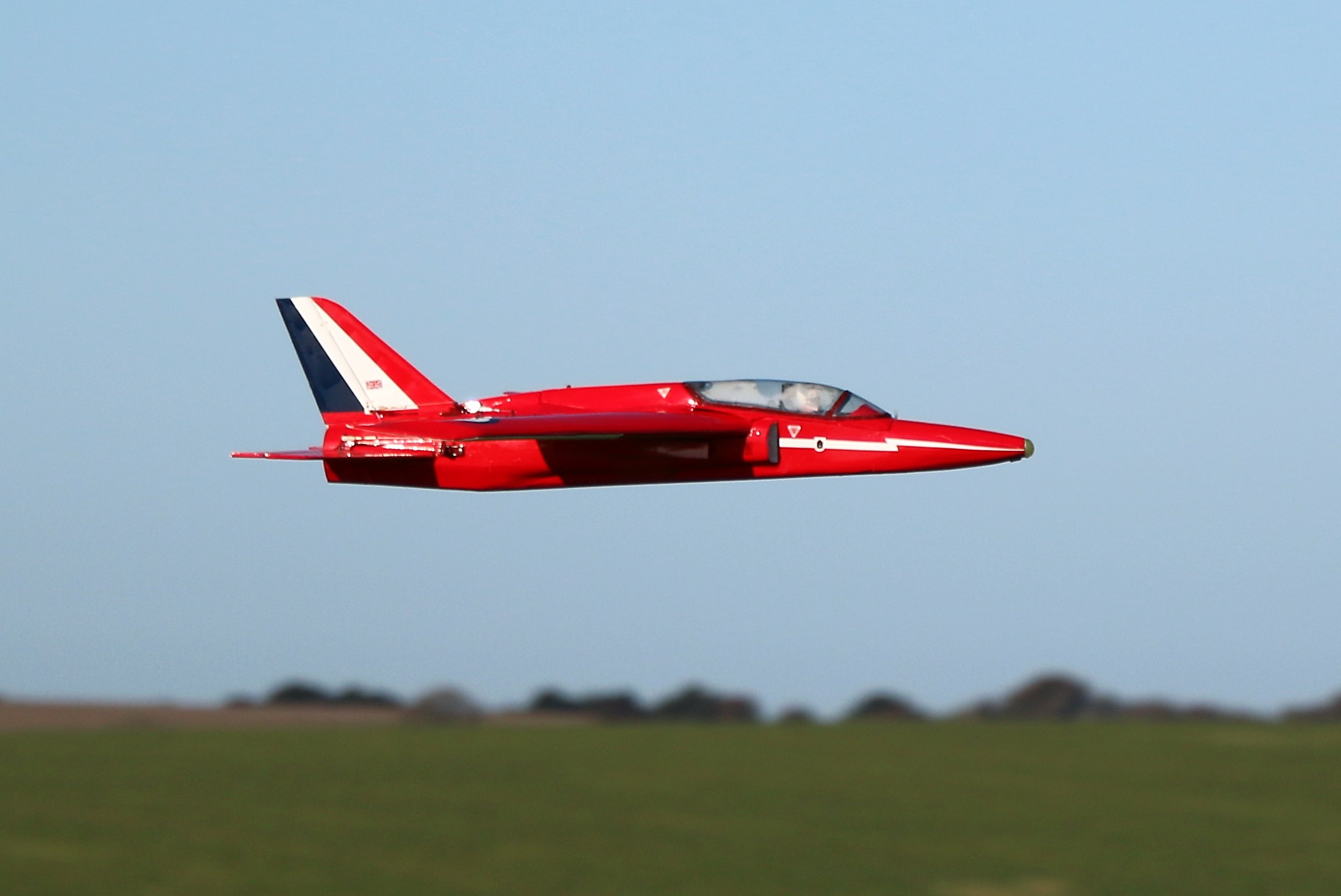
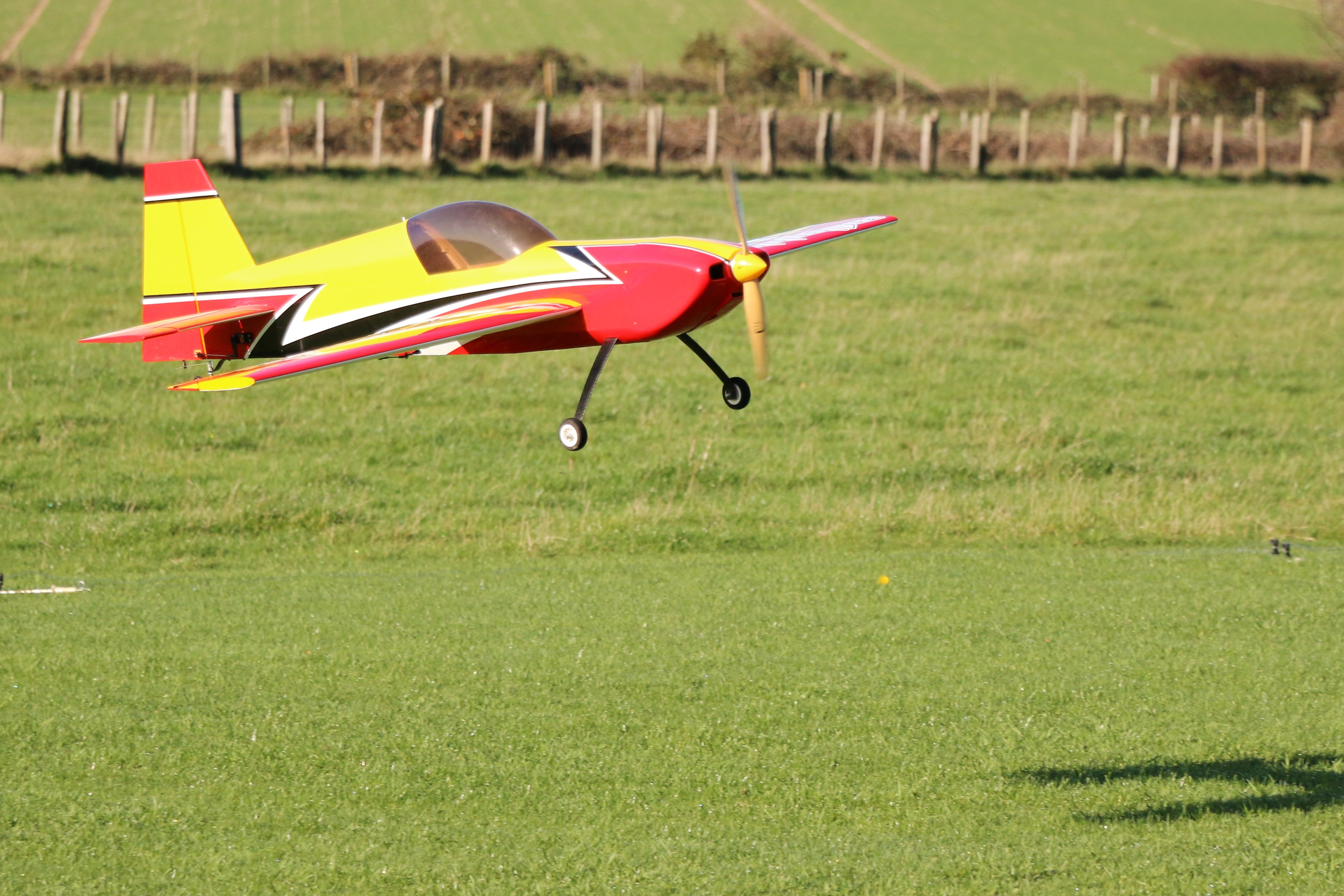
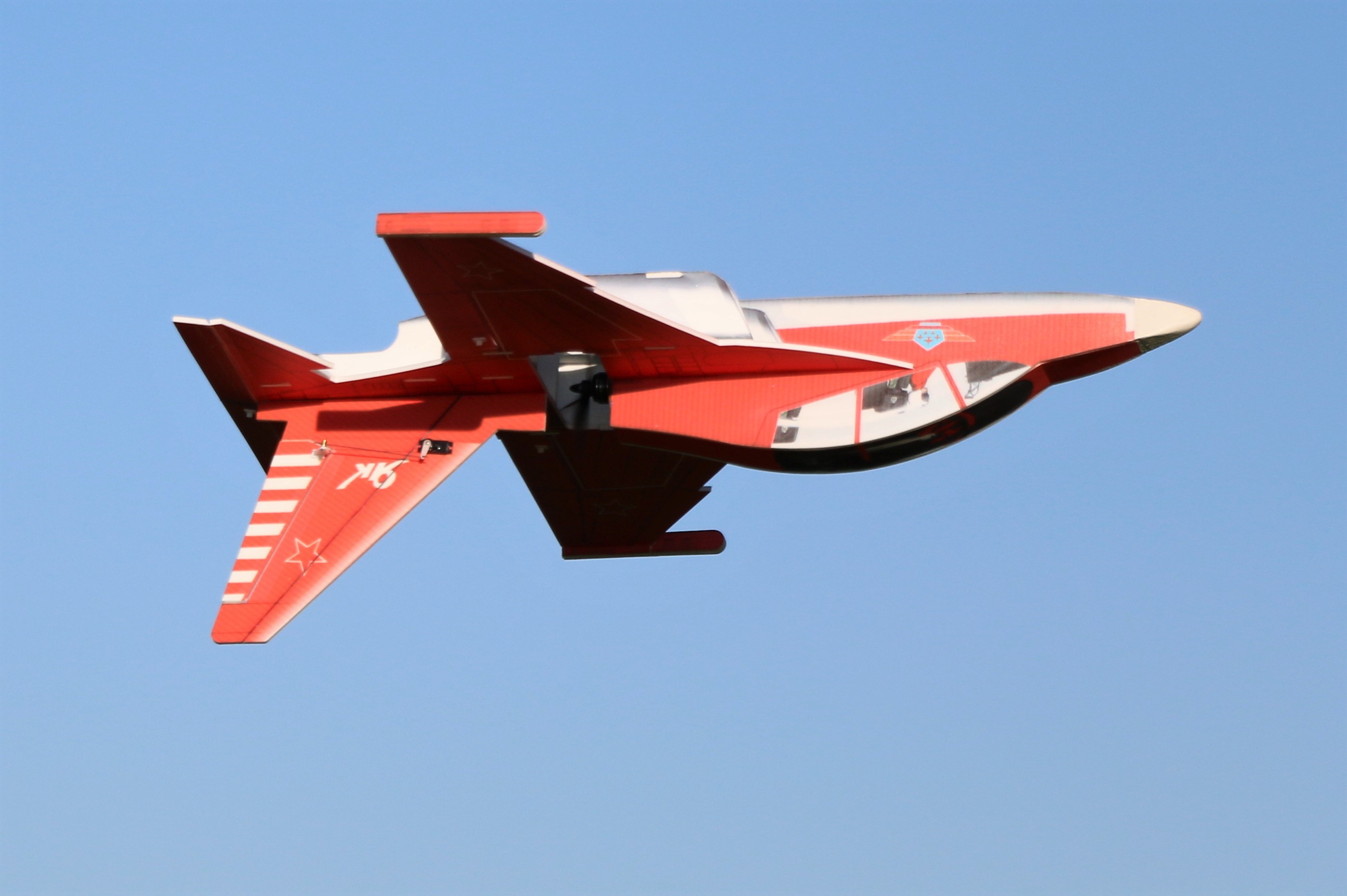
Although we could only fly for two days this month I captured some video and Kryten took lots of superb photos: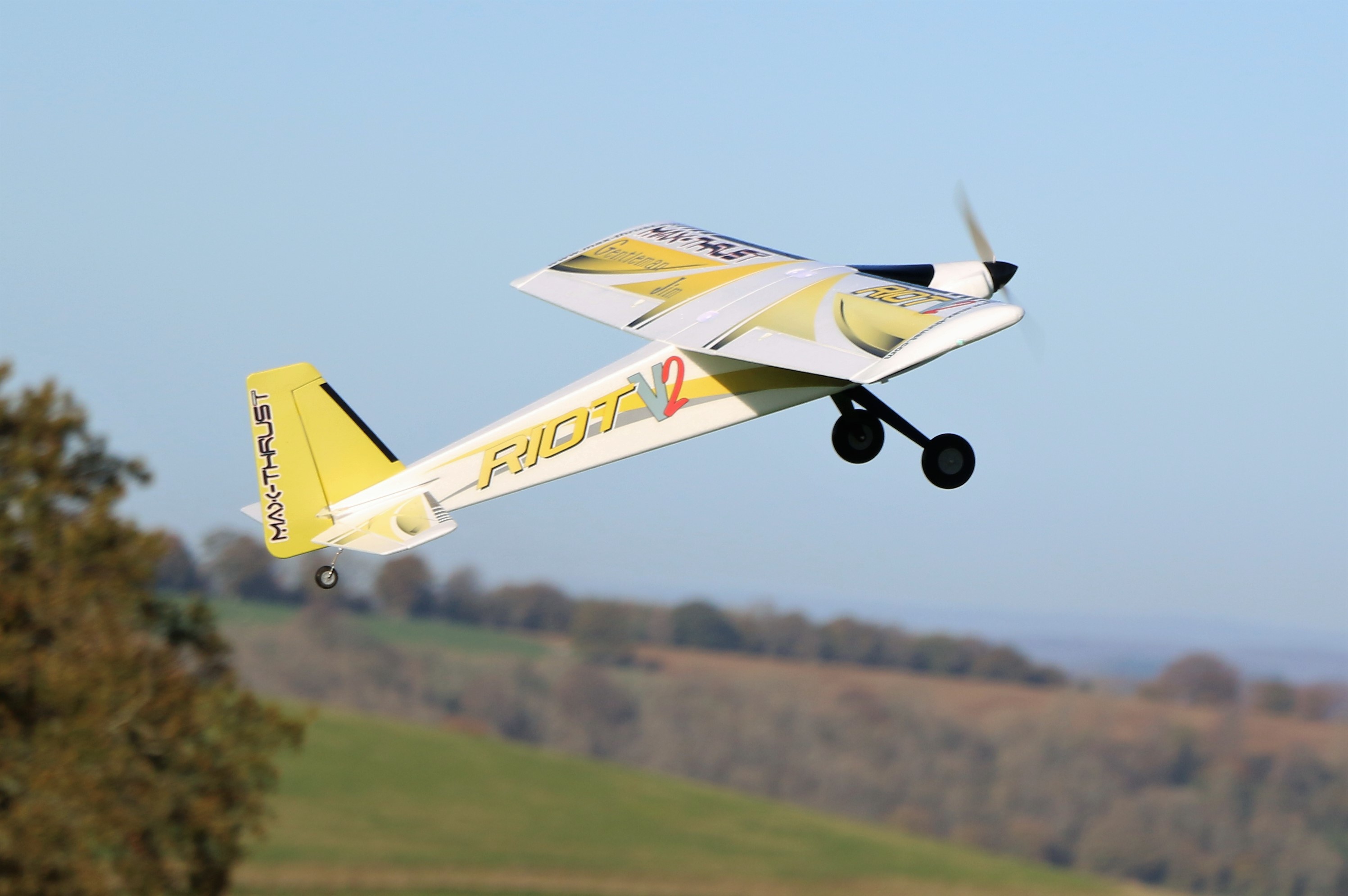

Video time now, this month with additional video from Captain Slow and Dougal Entendre but all from just two days of flying. Please watch the video full screen, it’s so much better with small models flying around.If the video won’t play for you please click HERE
Rudolph the Red-nosed reindeer died over Barcelona today when he was hit by a flock of seagulls and a 747.
Eyewitnesses said “The reindeer in Spain was struck mainly by the plane…”
Merry Christmas, stay safe, here’s hoping for a better New Year.
Colin Cowplain
Patch News – October 2020
STOP PRESS: A new lockdown has just been announced, I think that will mean no flying after 4th Nov for a month.
October has come and gone, the clocks have gone back and winter has blown in. The patch has been mown a couple of times and part of it was rolled to flatten out the worst bumps. The poor weather has meant fewer opportunities to fly although the hardier members managed to fly several times in October including this dodgy looking pair: 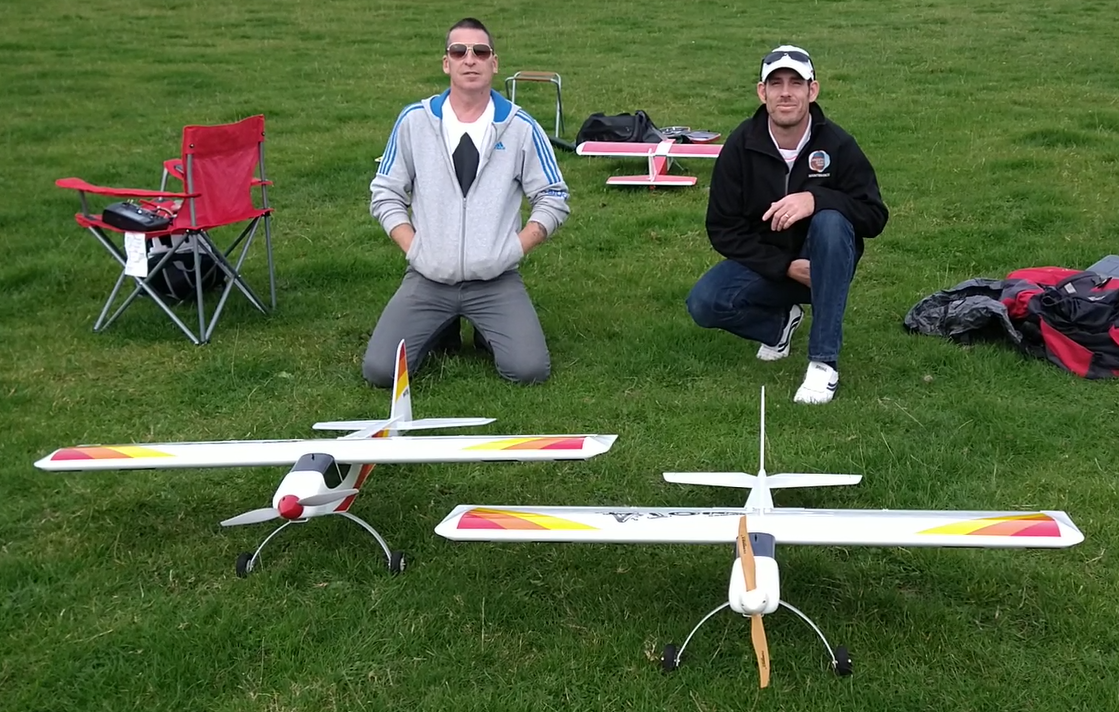 I heard that later that day Page Boy tore the wheels off Richard’s Wot-4 whilst ‘helping him’ to land! Who told me? The clue is in the photo. Since the sheep moved out in late September the field has remained animal free but there are some young and inquisitive bullocks in the lower fields so I expect they’ll be joining us before too long.
During October Bob the Builder decided to take the plunge and try his first EDF. He chose an Arrows Models Marlin.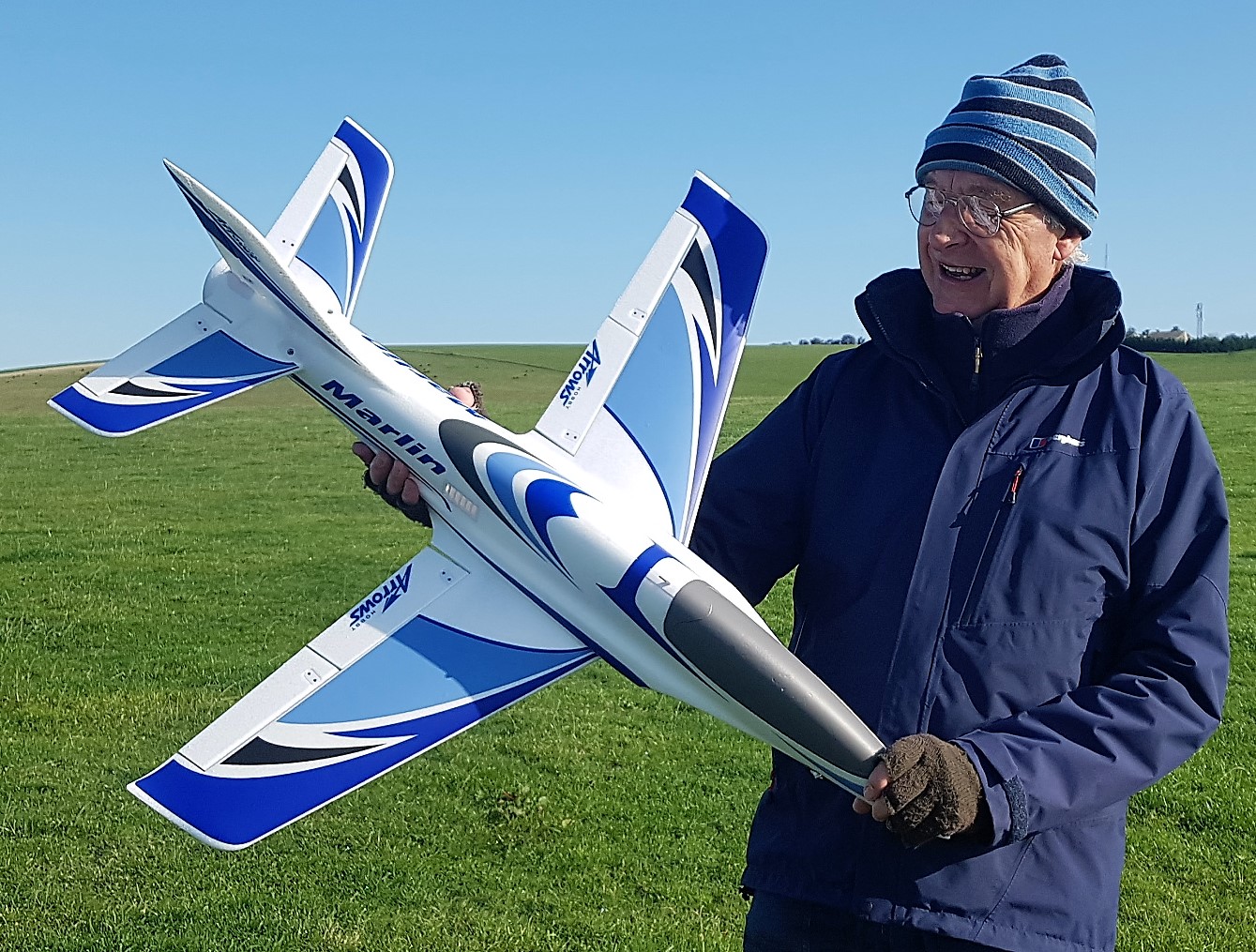
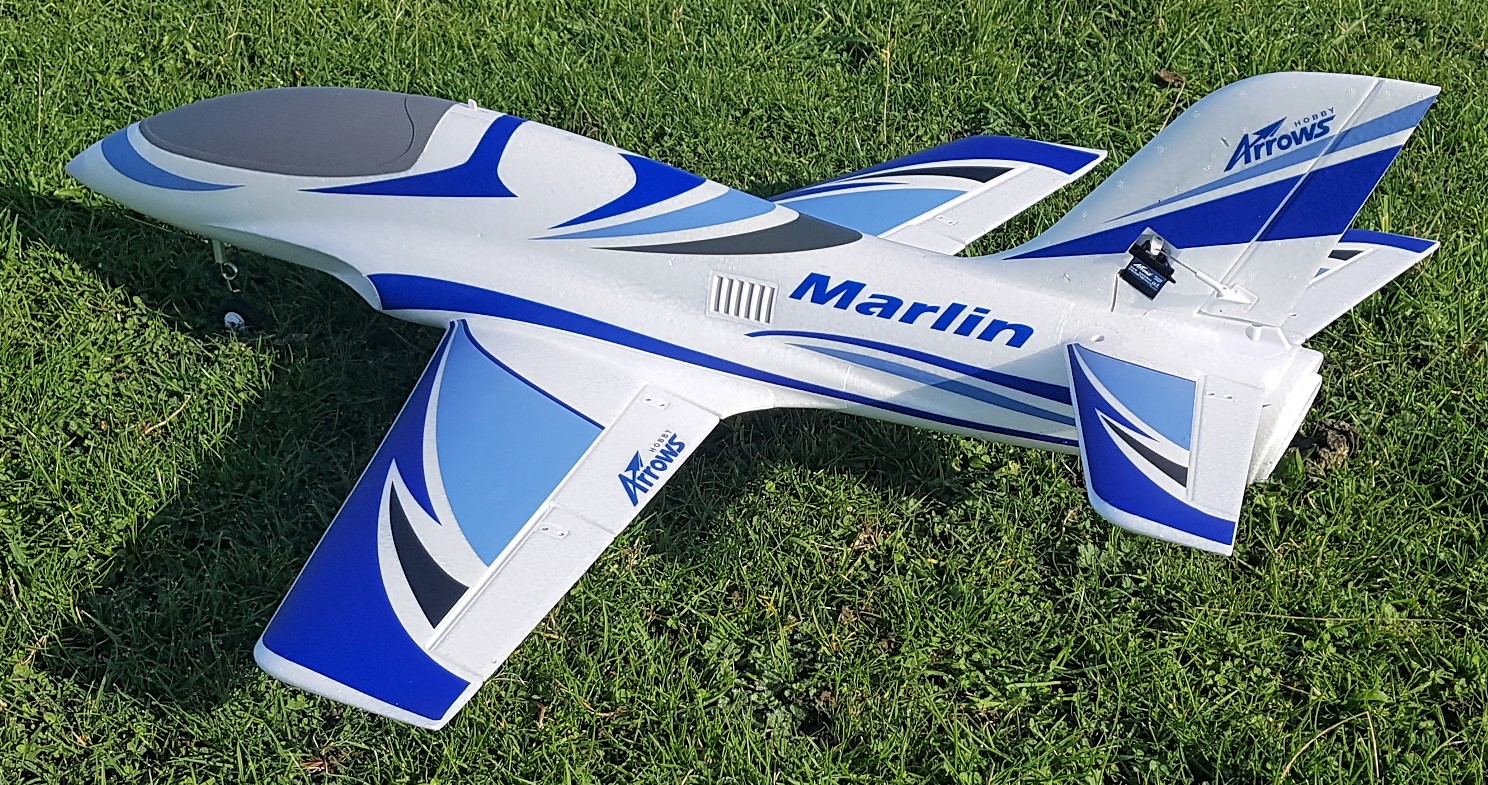 It’s a very pretty EPO foam model with a wingspan of 910mm. It’s PNP so Bob just had to screw a few bits together and program the transmitter. It comes fitted with a 64mm 11 bladed fan which is driven by a 2840 3250Kv motor, a 40A esc, and 8 x 9g digital servos which control the ailerons, elevator, rudder, and flaps. All the purchaser has to fit is a 5 channel receiver and a 4 cell lipo in the 2200-2700mAh range. It has a tricycle undercarriage which can easily be removed if you prefer to hand launch and belly land the Marlin. Even the stickers are pre-applied so it’s a very complete package for around £150. Bob asked me to test fly the Marlin and I found it flew well and handled nicely.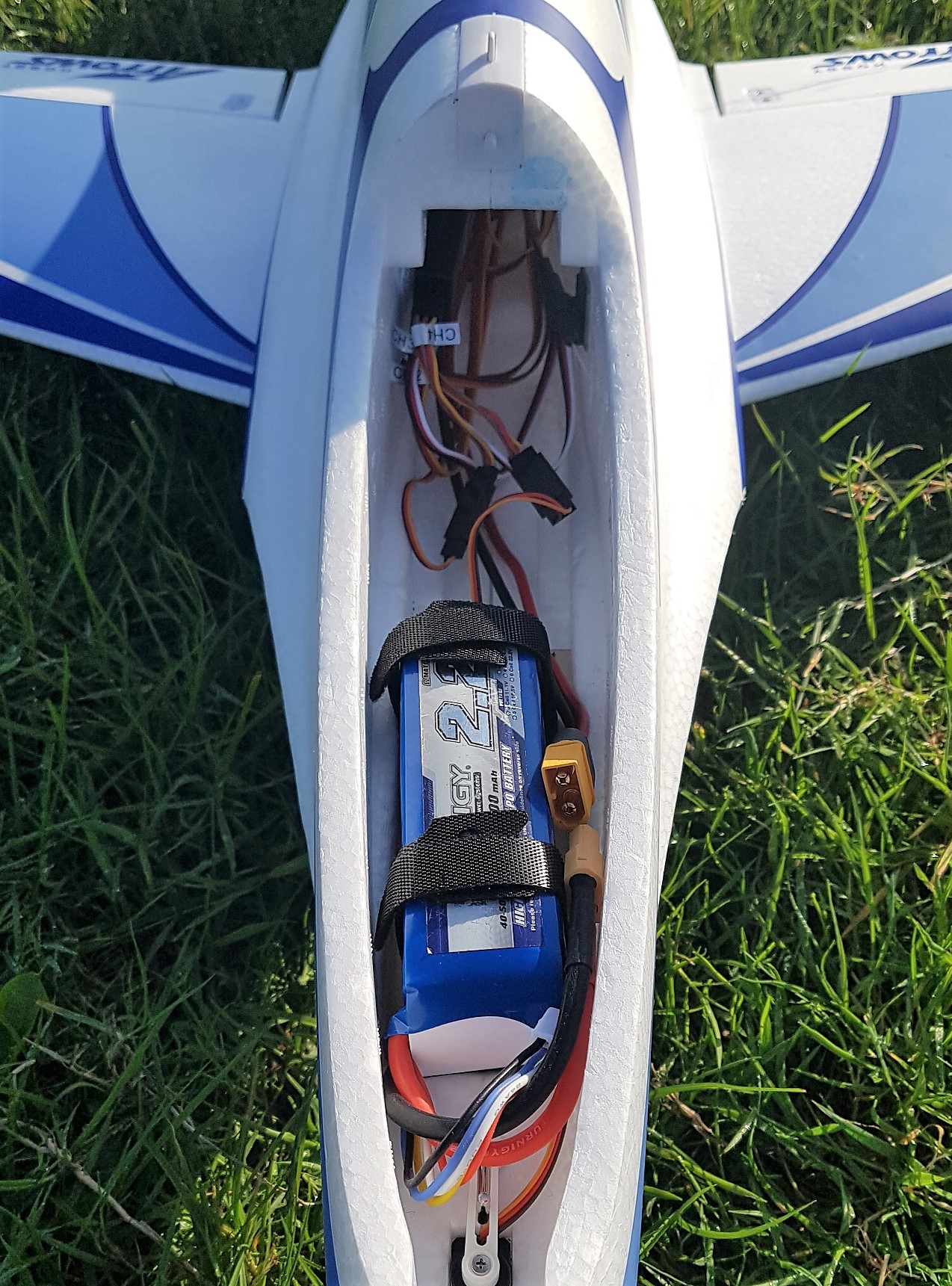
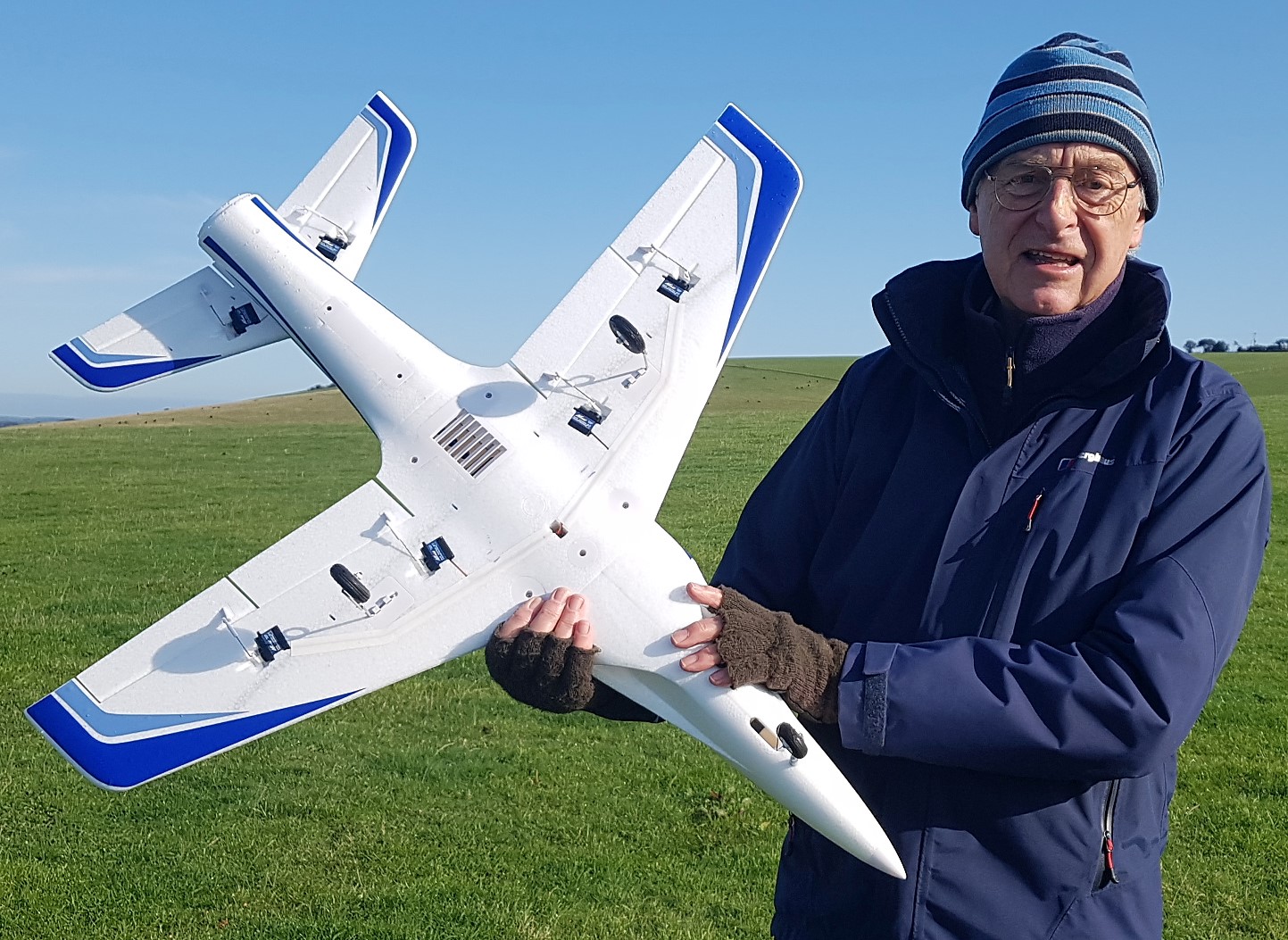 Using full flap for landing slowed the Marlin up well and I quickly found it was best to keep a little power and speed on to stop it bouncing on touchdown. Bob had a few minutes stick time once it was in the air and was confident enough to take it off himself later but he has yet to land it. All in all a very nice EDF, good choice Bob.
While Bob was in his modelling shed working on the Marlin he also got round to repairing his HobbyKing Walrus.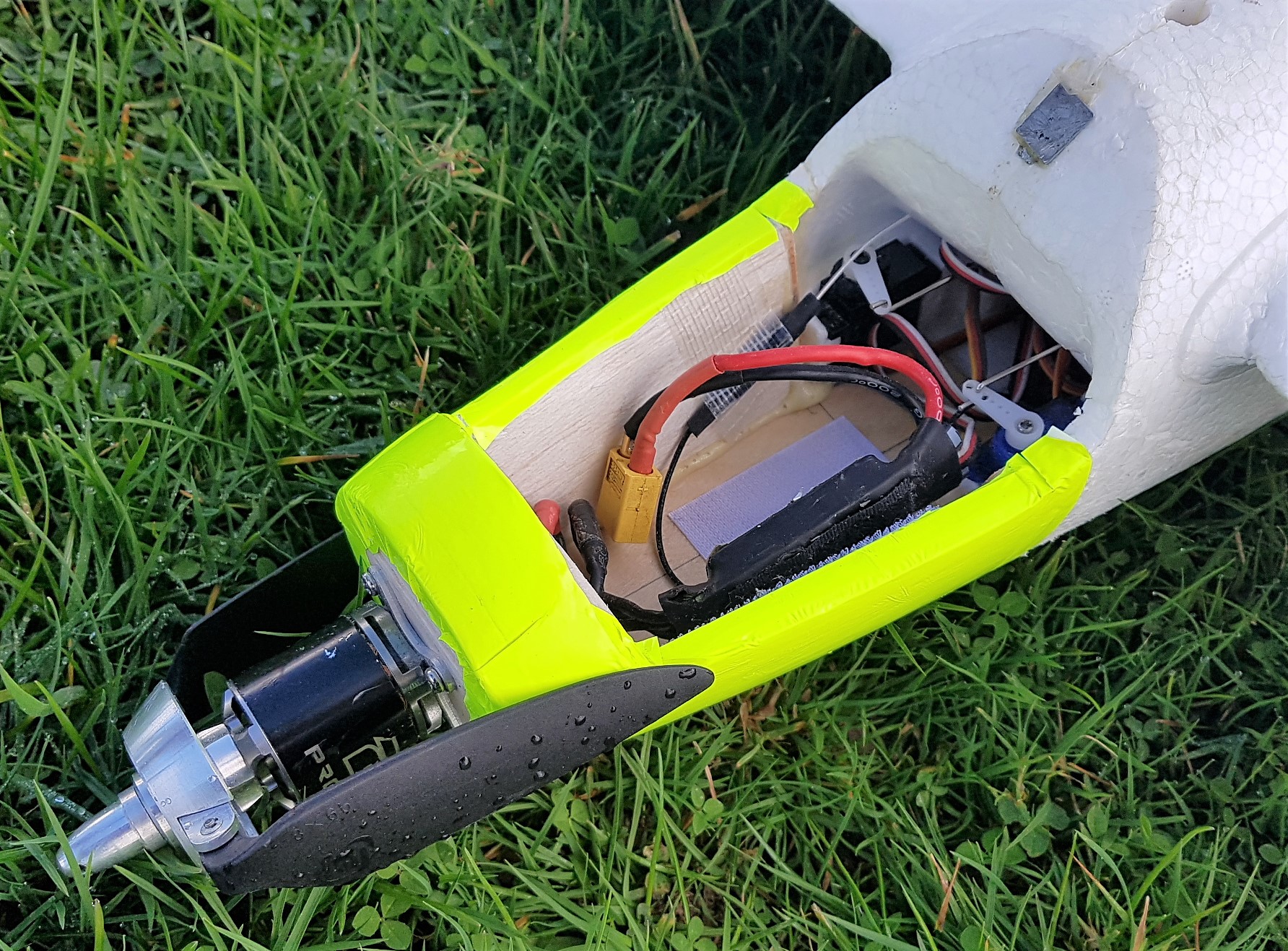
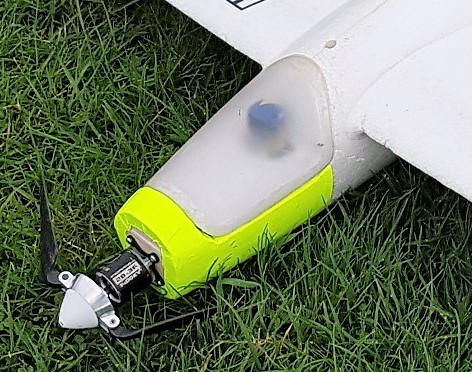
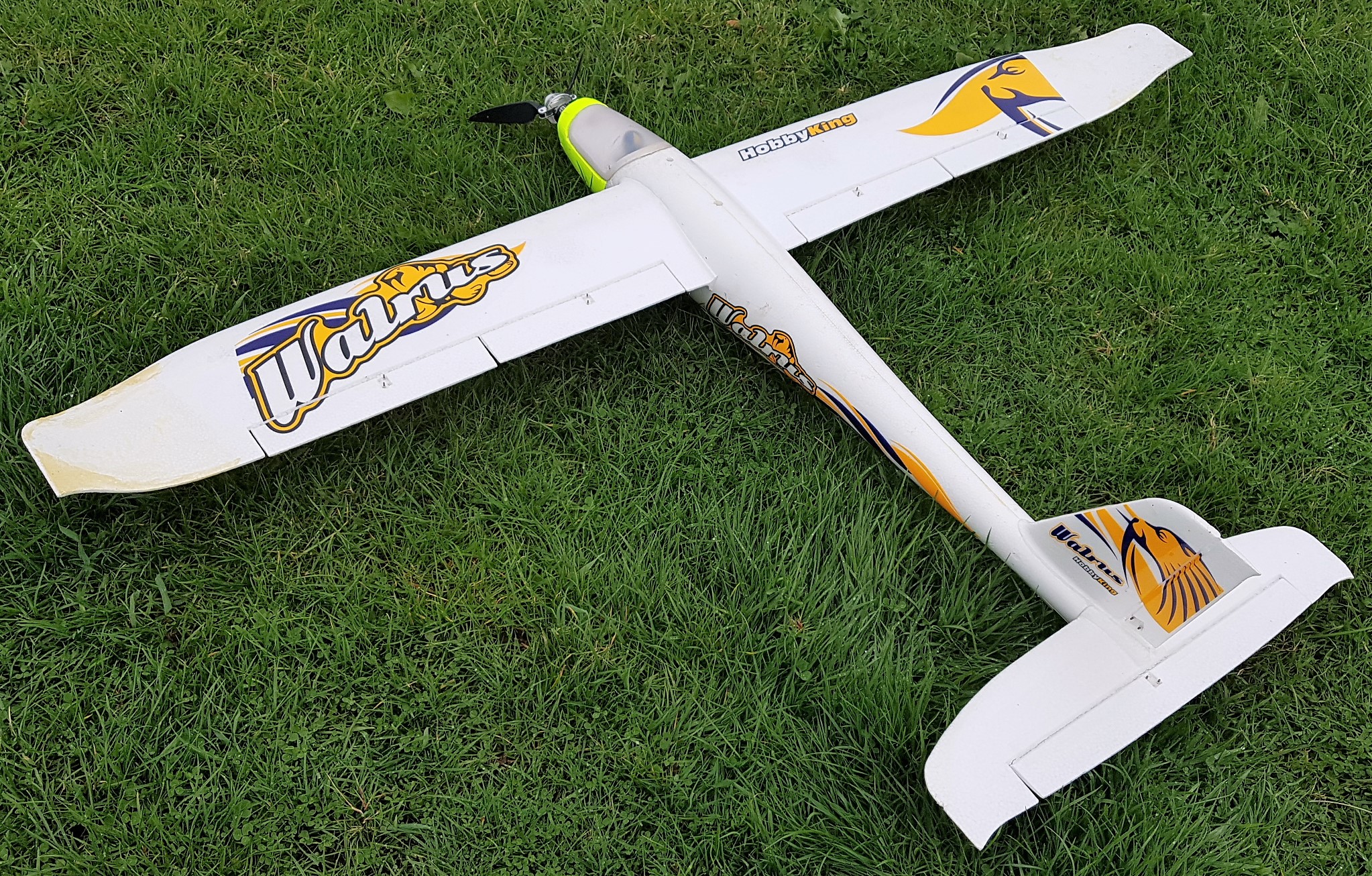 The Walrus had been damaged when Bob let WingCo Winkworth have a go with it and, as Bob says, he let WingCo get too low before snatching back the transmitter. The nose of the Walrus was smashed back as far as the wing leading edge but the rest of the model was undamaged so Bob simply grafted on a new balsa nose and fitted a 2836 1400Kv motor on the front. Can barely tell the difference… Well ok, it’s not the prettiest repair I’ve seen but it does the job and the Walrus now flies as well as ever. Here are before and after pictures: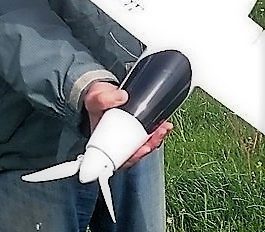
During October John Warren very kindly offered his crash damaged Wot-4 complete with servos free of charge to any PAM member. I believe the model is actually a Student 64E Intermediate Trainer from HobbyKing, not a Wot-4 but it seems pretty much identical and the manual, which can be downloaded from the HK website, is actually the Wot-4 manual. But I’ve no idea what the 64 in the name stands for as the wingspan is 48”.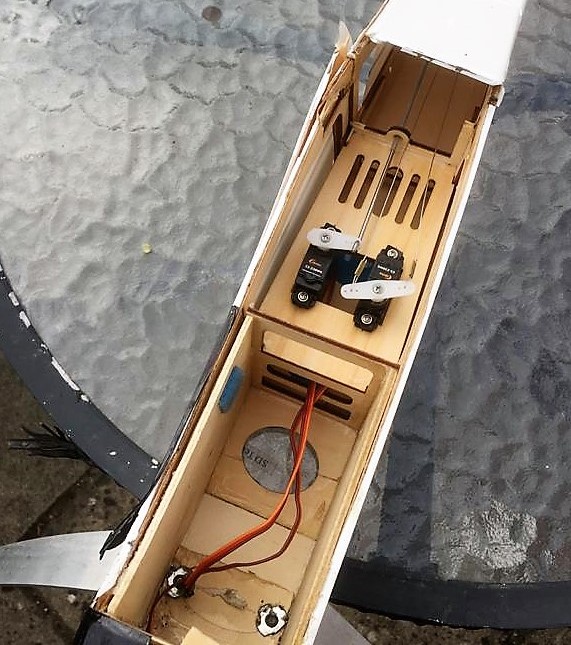 Chas suggested it would make an ideal second plane for Charlie and at around the same time some of Gentleman Jim’s gear became available so I took on the repairs and fitted one of Jim’s receivers. I had a spare Propdrive 3536 910Kv motor and 40A speed controller which I thought would be ideal for the Wot-4. The Kv is a bit low on 3 cells but I decided that with a 12 x 6 propeller it should be fine. I didn’t have the remains of the cowl to copy so I just left the model without one, finishing the fuselage at the front bulkhead. It turned out that even with a 3300mAh lipo it was a bit tail heavy so I had to screw a lump of lead to the bulkhead which does little to enhance the looks.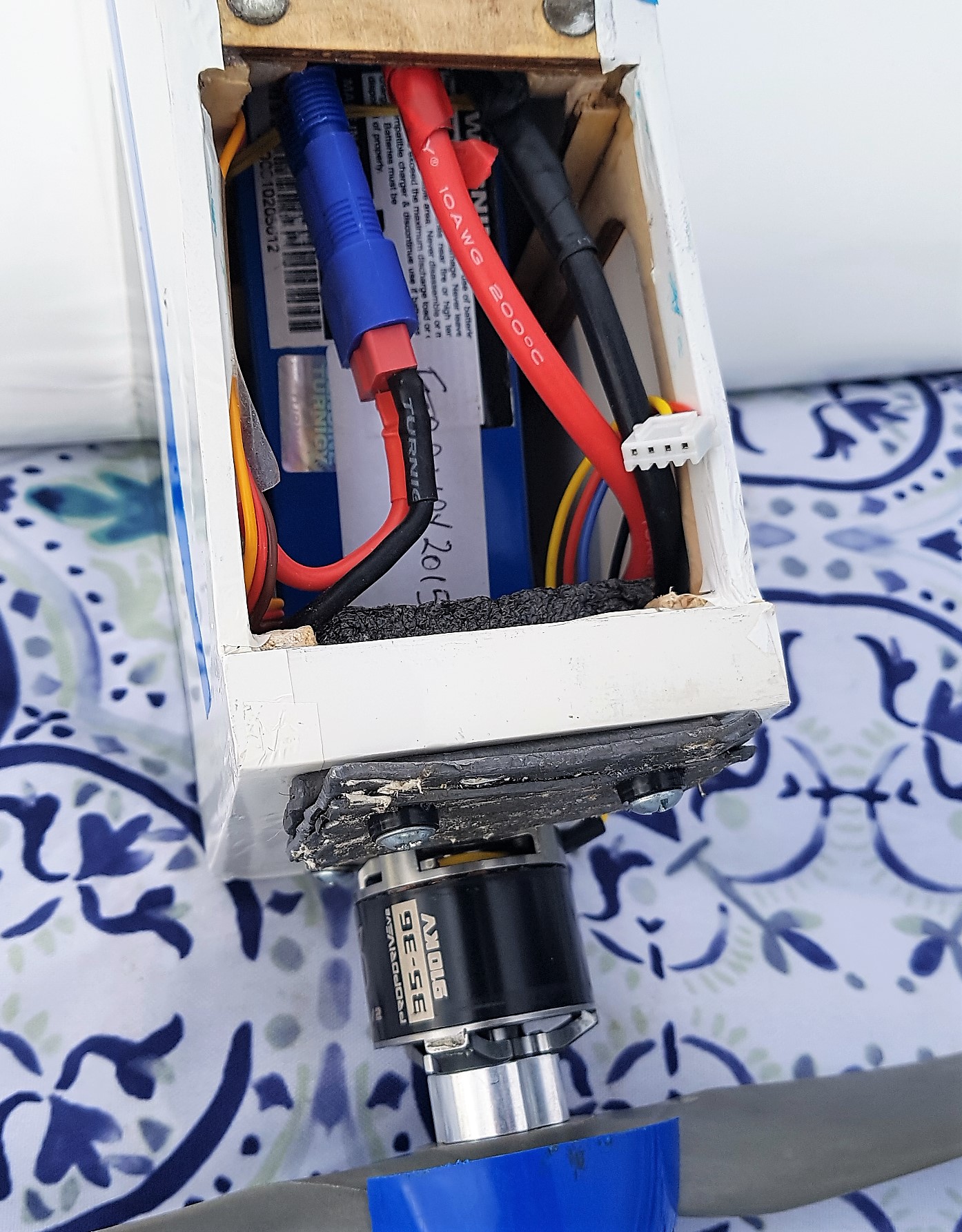
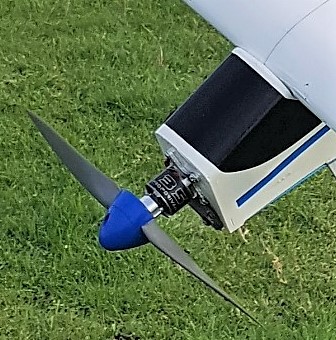 Apparently the Wot-4 has a ply box on the bulkhead to bring the motor further forward and help with the centre of gravity but never having owned a Wot-4 I didn’t realise that until later. The repair job wasn’t too difficult and while I was doing it I took the opportunity to make sure the front bulkhead and the undercarriage mounting were strong enough to withstand some hard landings. Along with the receiver Charlie’s mum Nadine bought a Hitec transmitter, some 3300mAh 3 cell lipos and a suitable lipo charger, all of which came from Gentleman Jim.
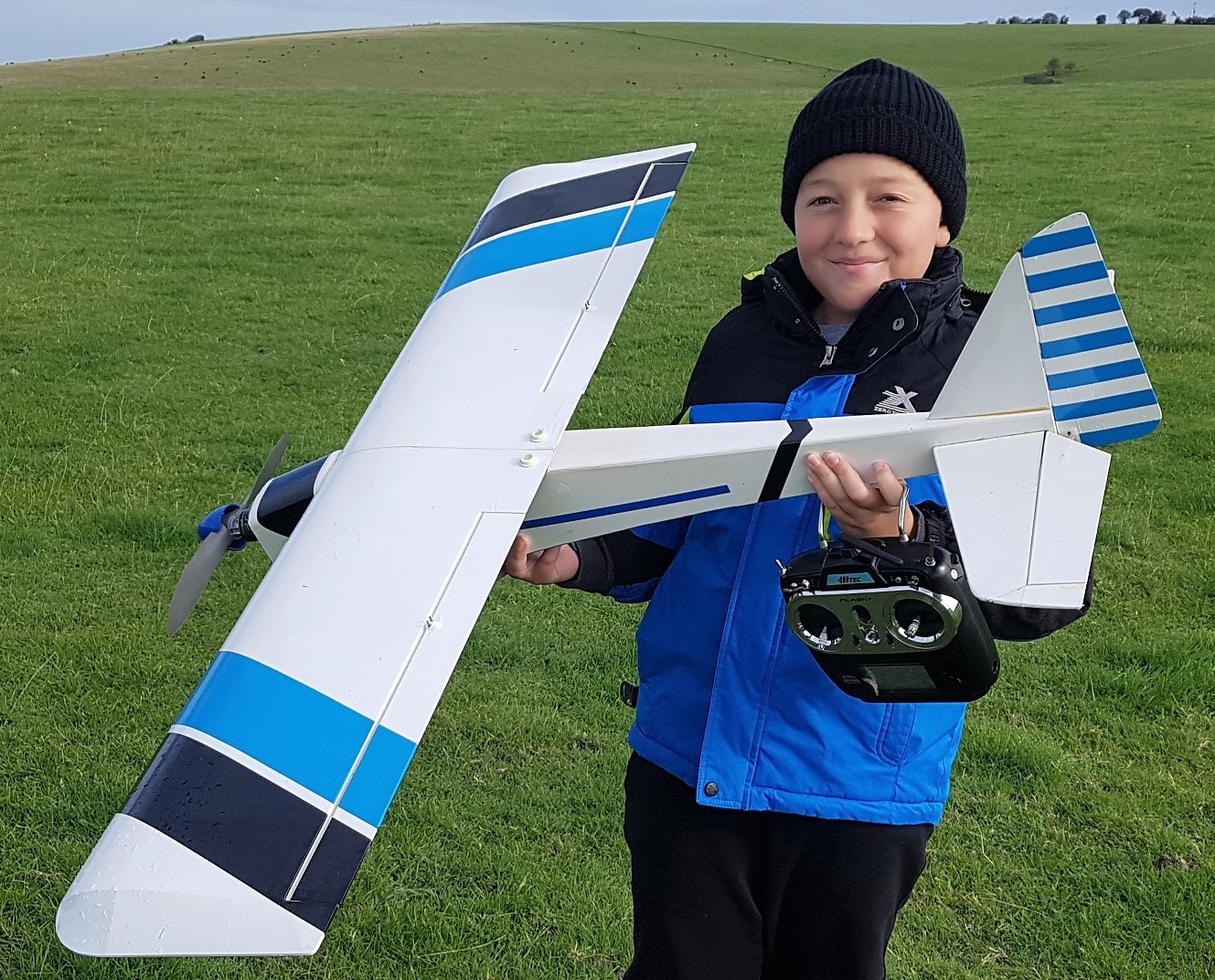 So young Charlie now has an excellent complete set-up and I’m sure that Jim will be pleased that the equipment is being put to good use by a young newcomer to the hobby. When I did the test flight the powertrain turned out to be just right for Charlie, it has enough power for cruise around and do some gentle aerobatics but it’s not screaming around the sky even at full throttle, and flight times are a safe 6 minutes. Charlie really likes the plane and he’s being flying it well right from his first go with it. He has already done several complete flights including the take-offs and landings without breaking anything. You can see Charlie in action in two parts of this month’s video.
OK, it’s confession time. All who know me will agree that I’m a bit of smart-a**e, always ready with an insult, quick comeback, and the first to take the mickey out of others. So you’ll be pleased to hear that I made a really stupid mistake when I put my foamboard Yak-130 together. When I posted a review with photos on the Banggood website somebody pointed out that the wingtip mounted missiles are supposed to be folded in half before being attached.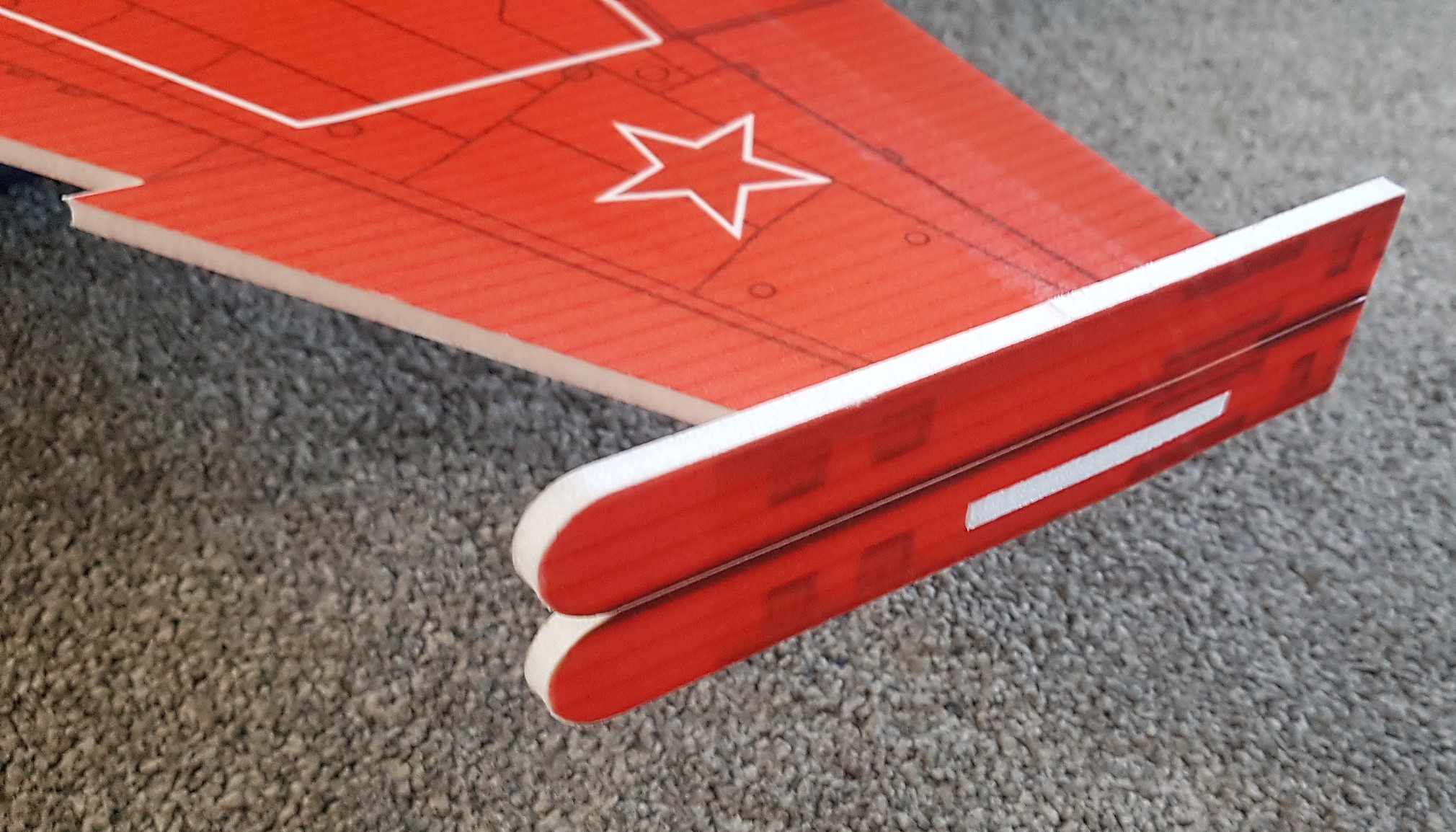
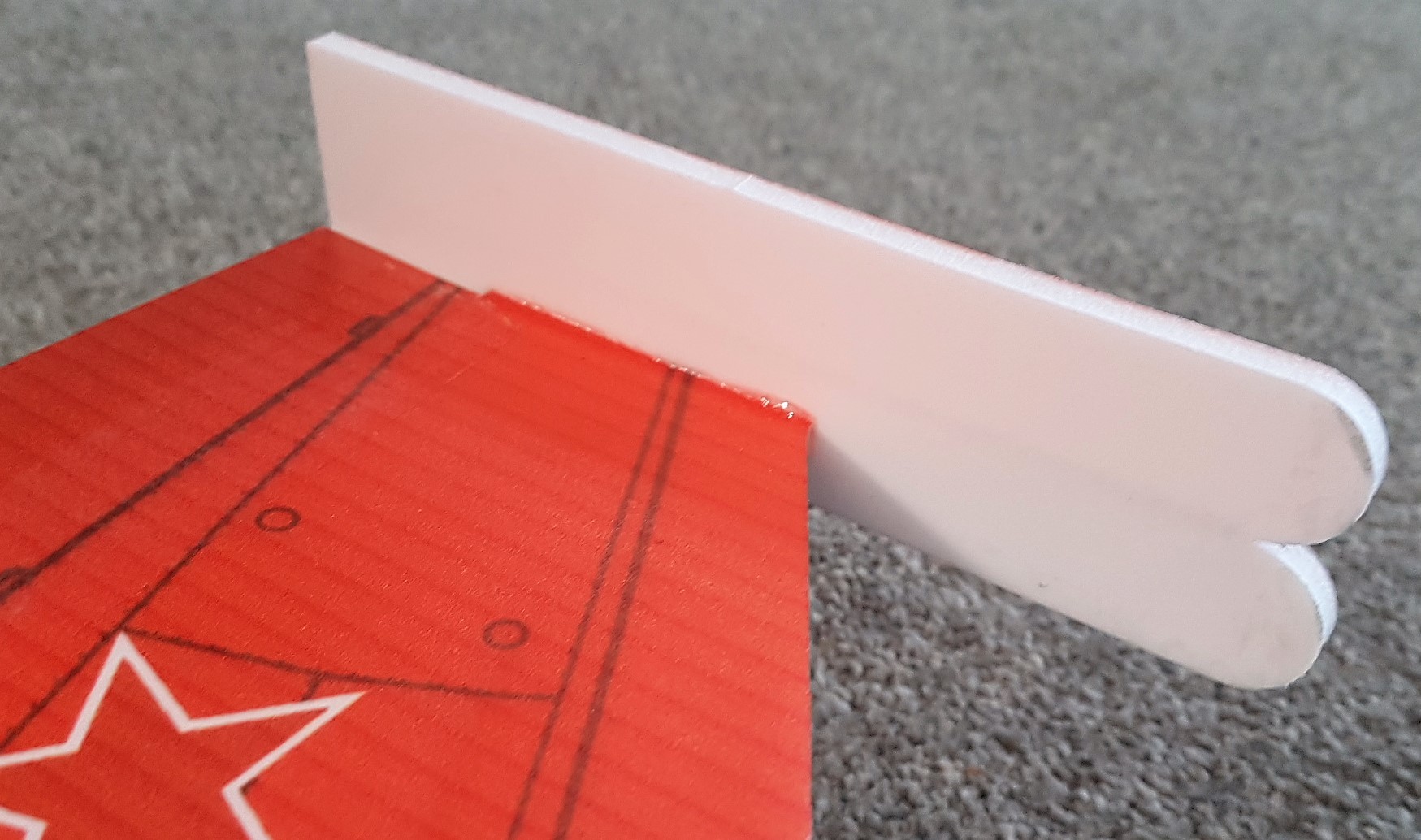 So it was scalpel time. I cut them off, glued them folded over on themselves, and then stuck them back on the tips.
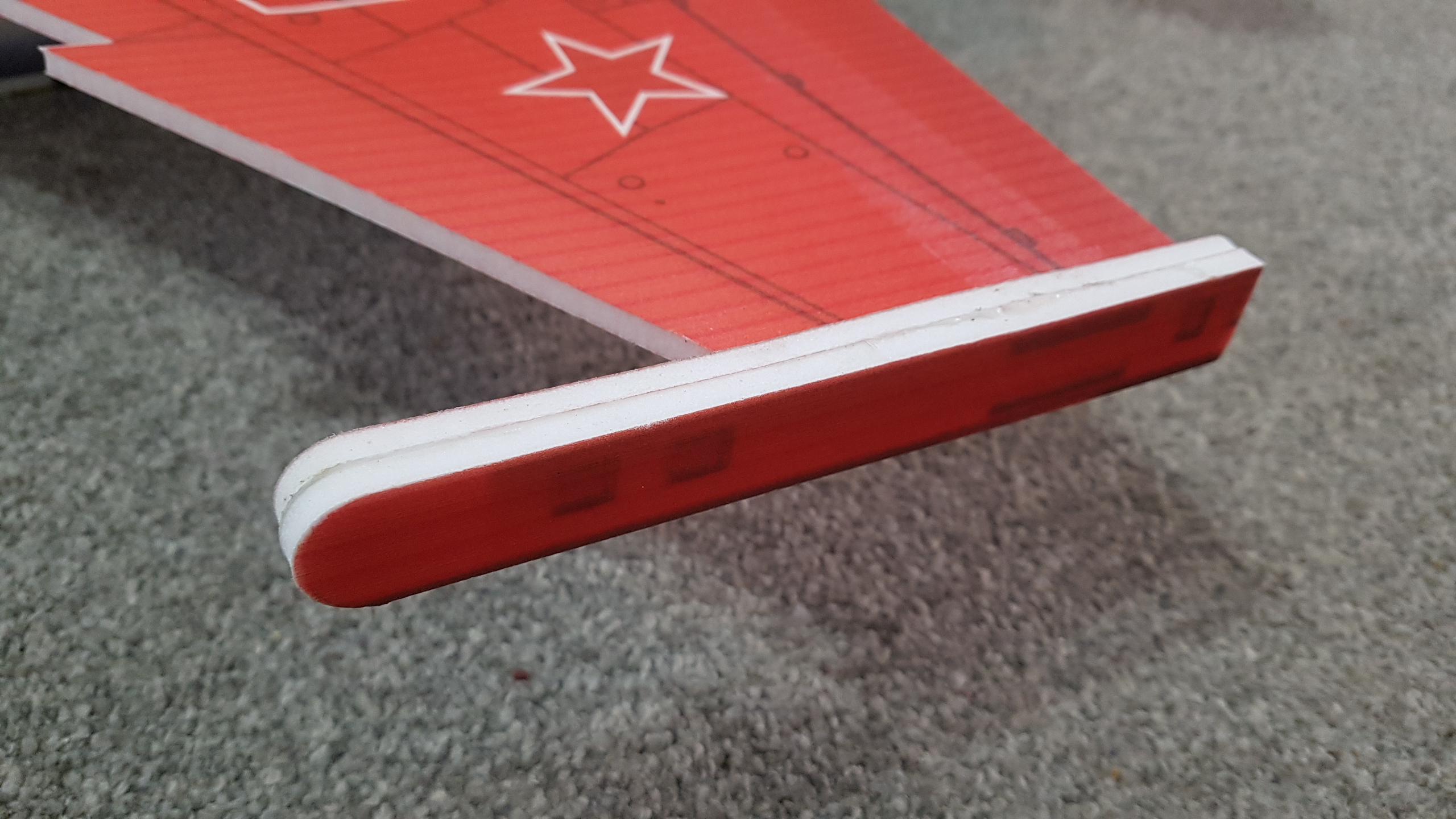 It looks so much better now. I can’t believe I got it so wrong, what an idiot…Doh!
A couple of months ago I pictured the remains of John Warren’s Albatross which had suffered a mid-flight structural failure. The model was beyond repair but, not to be defeated, John has got a replacement Albatross well under way.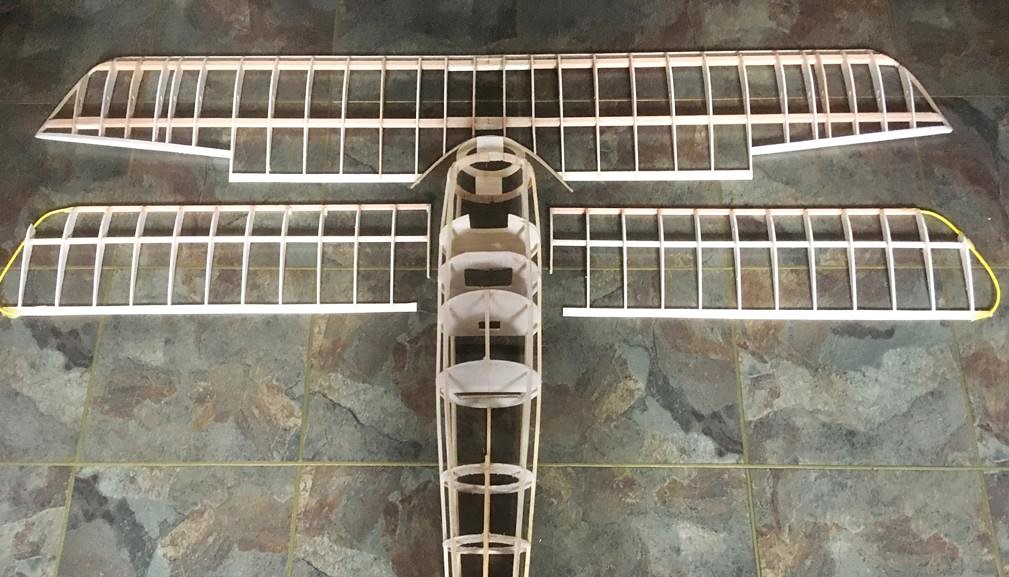
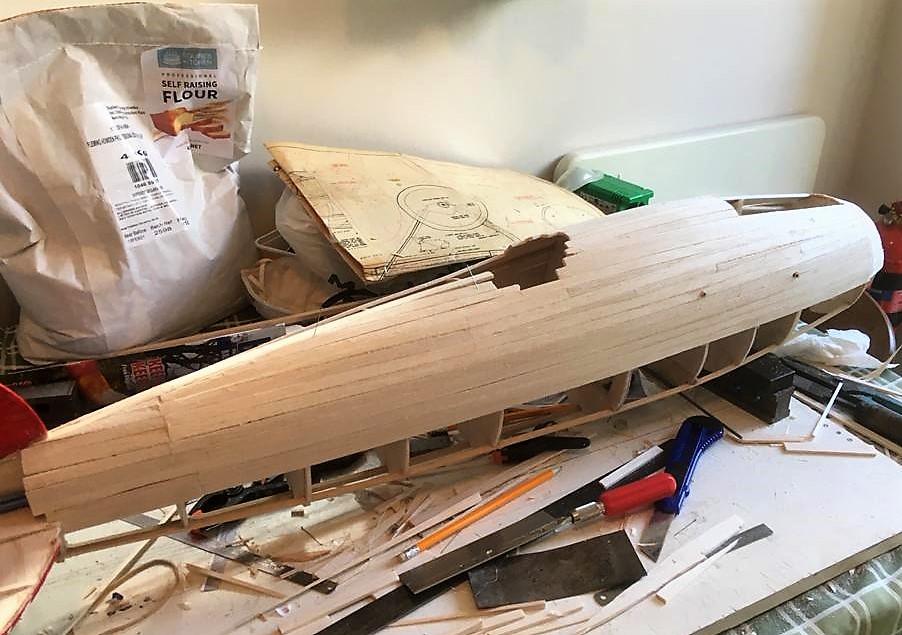 Well done John it’s looking good so far, there’s a lot of work gone into it already, and I love all the planking.
For one October flying session we were joined by Ben Smith as a guest flier. He flew the Dynam Hurricane that he had flown on his previous visit and also a Parkzone Spitfire. Unfortunately I forgot to take any photos at the field so I asked him for some photos and info on the models: The Spit is standard Parkzone Spit with E-flite retracts installed. Flies just so on a 2200 3s with the only gripe being the ground handling (or lack of it) which is due to the smartie-sized wheels. A little shove on take-off and she leaps up fine though with guaranteed nose over on landing!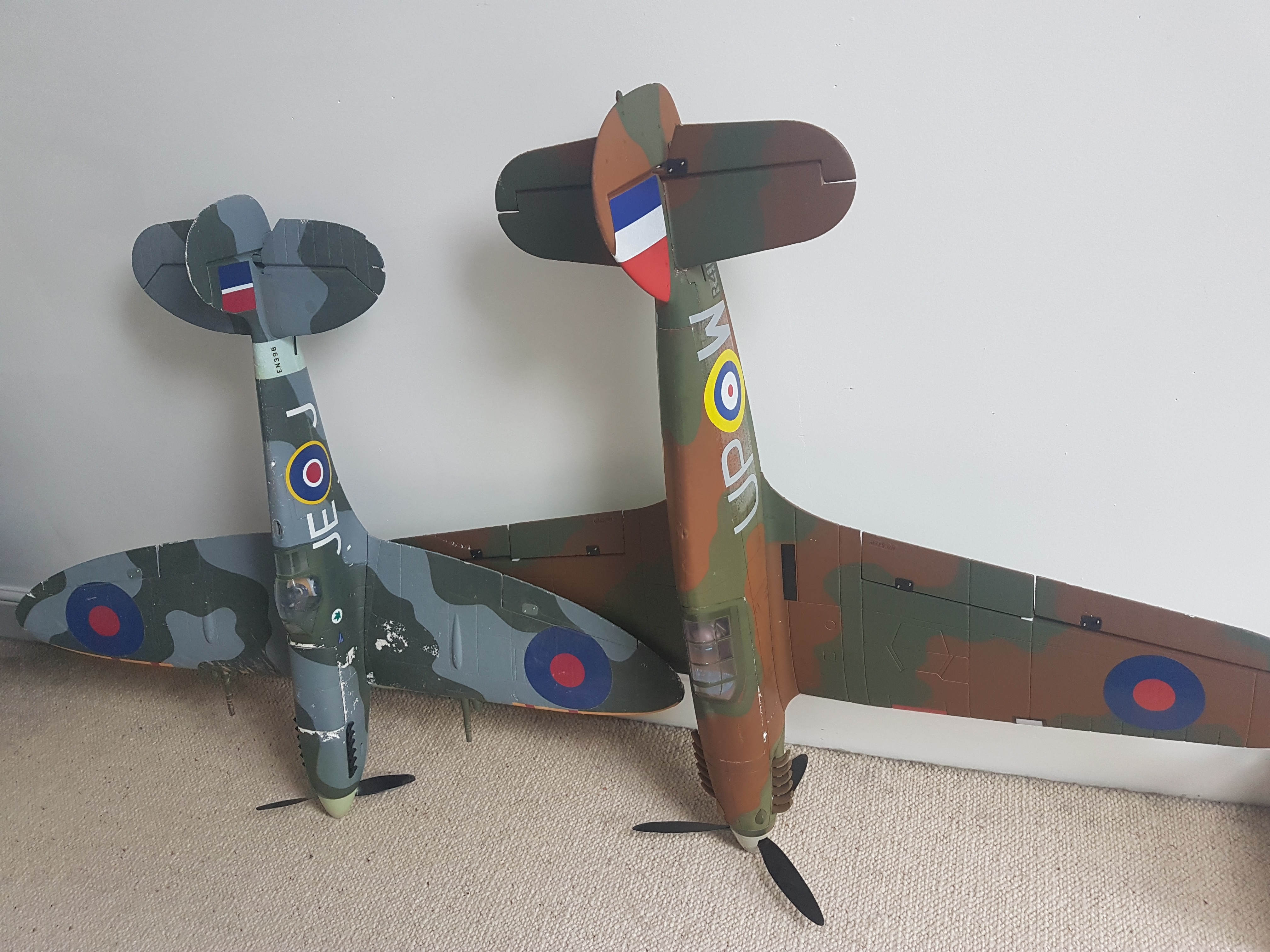 As for the Hurricane… I swapped out the supplied esc for a 50a Beatles sbec unit and run it on 2 x 2200mAh 4s packs. This did require some trimming of the foam to accommodate the two batteries side by side but everyone I spoke to who owns one has added lead to the front – I’ve tried to make the extra weight do something for me! Seems to have worked as I can easily get 10 minutes from the packs and the extra weight certainly helps punch through the air better and achieve smoother flying.
I also have swapped out the supplied wing leds, which were like candles, to some spare “strip” leds I had lying around and covered the lenses with thin paper to hide. These are connected to a brushed esc running behind a 12v regulator which allows me to switch them on and off remotely. The regulator is there to try and avoid burning the brushed esc out which has held up so far…
The retracts are run on separate channels with delays built in to achieve the staggered effect and lighten the load on esc bec, but the retracts units need replacing as they simply haven’t held up and one has failed completely on the last outing, requiring pretty much zero airspeed to pull the wheel all the way up! Thanks Ben. Woody has just ordered one of these so now he knows what mods to make. You can see Ben’s models flying in this month’s video.
With colder weather on its way, and knowing that cold hands aren’t conducive with good flying, Dwayne Pipe decided to add a heater to his Turnigy transmitter muff. HobbyKing used to sell universal heaters that were suitable for heating transmitter muffs, lipos, or model car tyres but they aren’t available now so Dwayne had to design his own. Dwayne bought a 12v heat plate from Banggood and added an on/off switch and warning light so he can leave a 3 cell lipo connected and simply turn it on when heat is required. The heat plate is actually made for heating beehives to warm the bees over winter and cut down on the amount of honey they eat so if you see him buzzing around…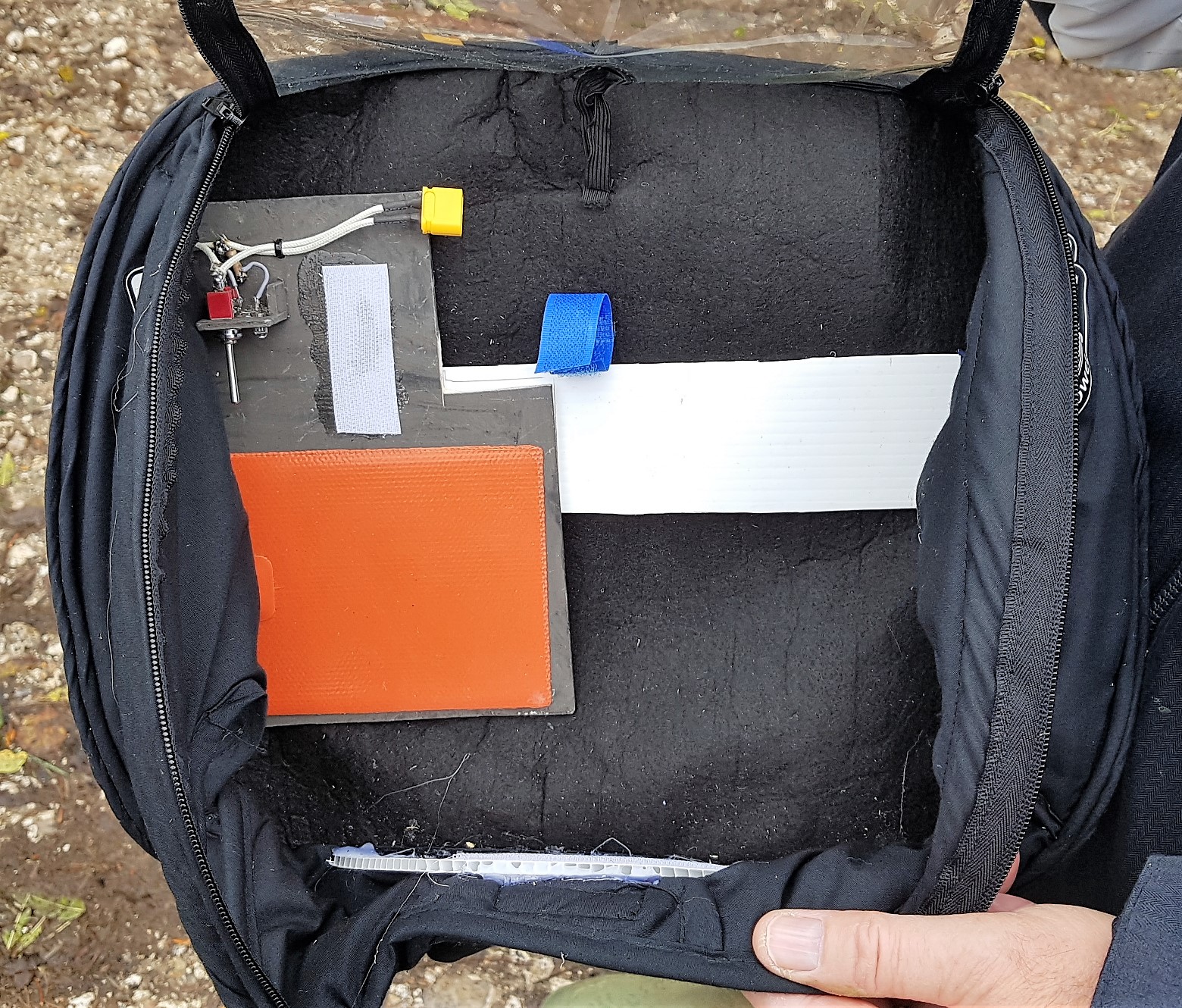 Dwayne cannabalised an old Spektrum transmitter for the on/off switch (at last someone has found a use for all those old Spektrum transmitters!) and mounted the assembly on a liteply base attached by Velcro, to insulate the heater from the plastic muff underneath and to be able to remove the heater if it’s not required. Dwayne flies mode 3 so has positioned the heat plate under his left hand but the heat warms the whole of the muff quite effectively. The plate heats up to around 40C and pulls 1A so a 2200mAh battery should last for a flying session.
I made a new best friend during October, no need to be jealous, it’s EverBuild Superglue Debonder. Don’t pretend you’ve never dripped superglue of your trousers and found it impossible to remove. I’ve previously used Loctite Glue Remover which is a gel that you leave on overnight before washing off. It worked reasonably well but often needed a second overnight application and it also removed all the colour from the spot so at around £4 for a 5ml tube I was unimpressed. The EverBuild Debonder costs just £1.85 for 20ml from Toolstation and works in 30 seconds.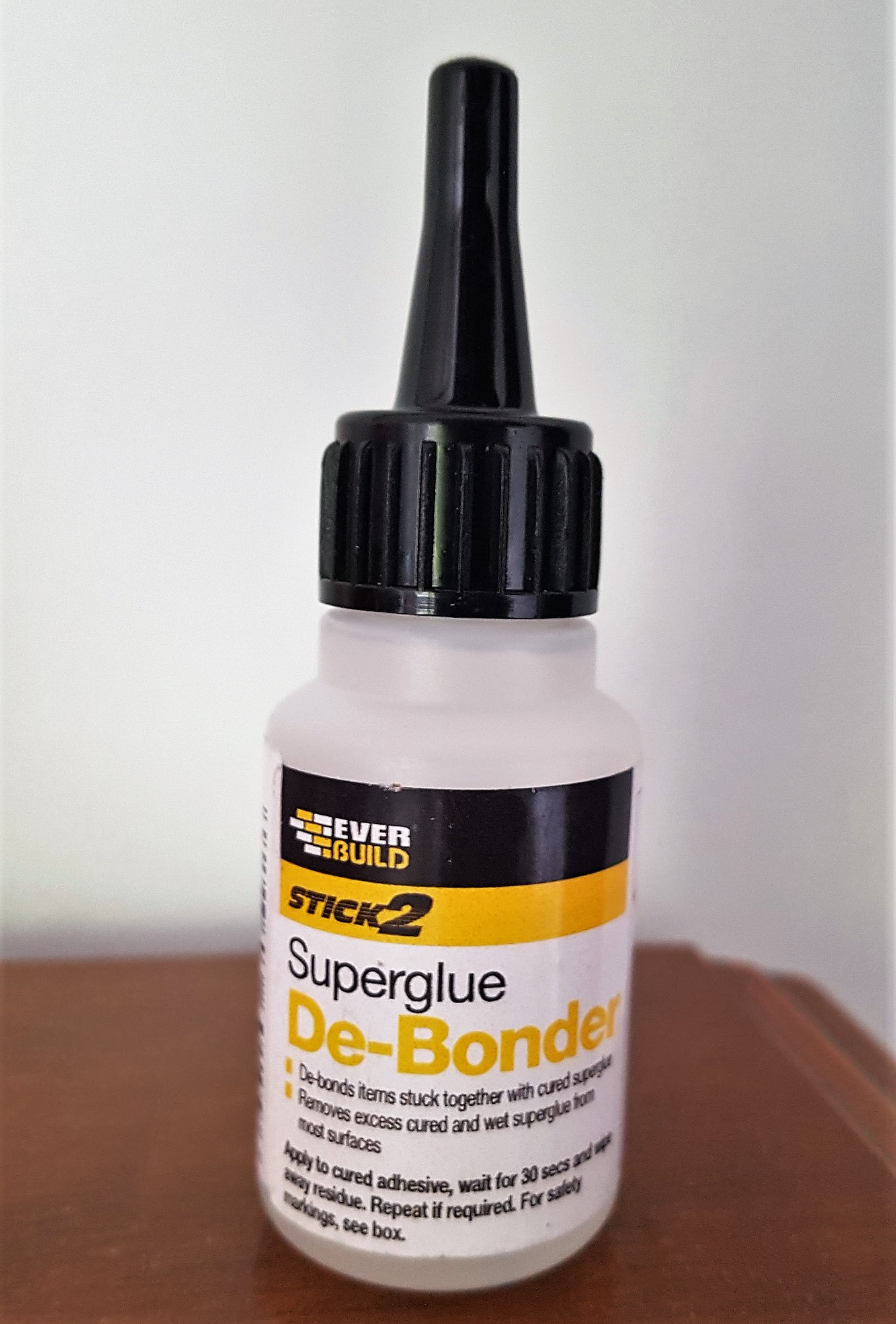 It’s a thin liquid so soaks into material and I needed several applications but it’s fast and works well. Being a debonder it’s intended to undo misaligned joints and so on but I’ve found it excellent at removing glue blobs from clothes and glue runs from Solarfilm etc. Apparently it’s also brilliant at removing glue blobs from kitchen worktops, stainless steel sinks, and vinyl flooring without any damage but obviously I wouldn’t know about that…
Dougal Entendre has been playing again and has put together a SonicModell Binary. Banggood describe the Binary as a 1200mm Wingspan EPO Twin Motor Multirole Aerial Survey FPV Platform Mapping RC Airplane. Gosh!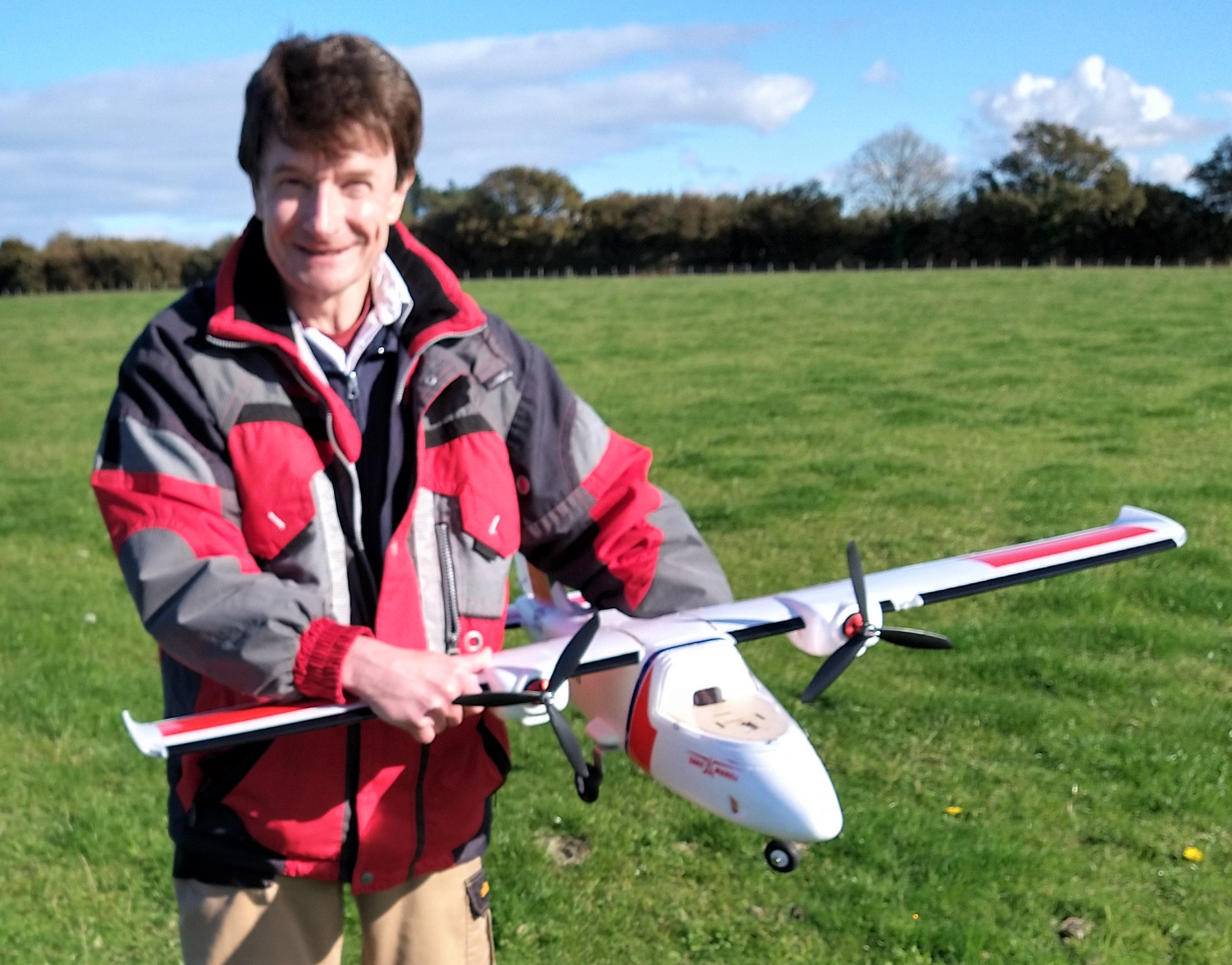 This is what SonicModell says about it: This is the first time that SonicModell has released a plane based on requirements from private and government organizations to the hobby community. That’s right, Binary wasn’t born for the FPV enthusiasts, but for the people that fly every day UAVs for a living. Many of those organizations were flying several type of airframes (usually extremely large) and approached us with a list of requirements for a plane that can not only be used for their missions, but also to train new pilots. They needed something easier to carry, fully featured, and with lower risk in case of a crash. Yes, huge, heavy birds they do their job, but in the words of some of the pro pilots: “We do a lot of our missions over urban terrain… if an 8Kg UAV hits your head while you’re walking to work, your day will be ruined… Having said that, we cannot compromise performance and features. They all should be there”. Having that in mind and for the lapse of one year, we created several prototypes, until we got the perfect balance in every area without compromises. As we’re writing this, Binary has been adopted as a quick deployment UAV by 4 different government organizations, 3 private companies (Mapping, Security survey and Sea life watch). According to their records, in total, Binary has more than 375 successful missions (with no planes lost so far), hundreds of hours of training for rookie pilots and has been proven in the hardest conditions. Now it’s time to release her to the FPV community. That’s another Gosh then!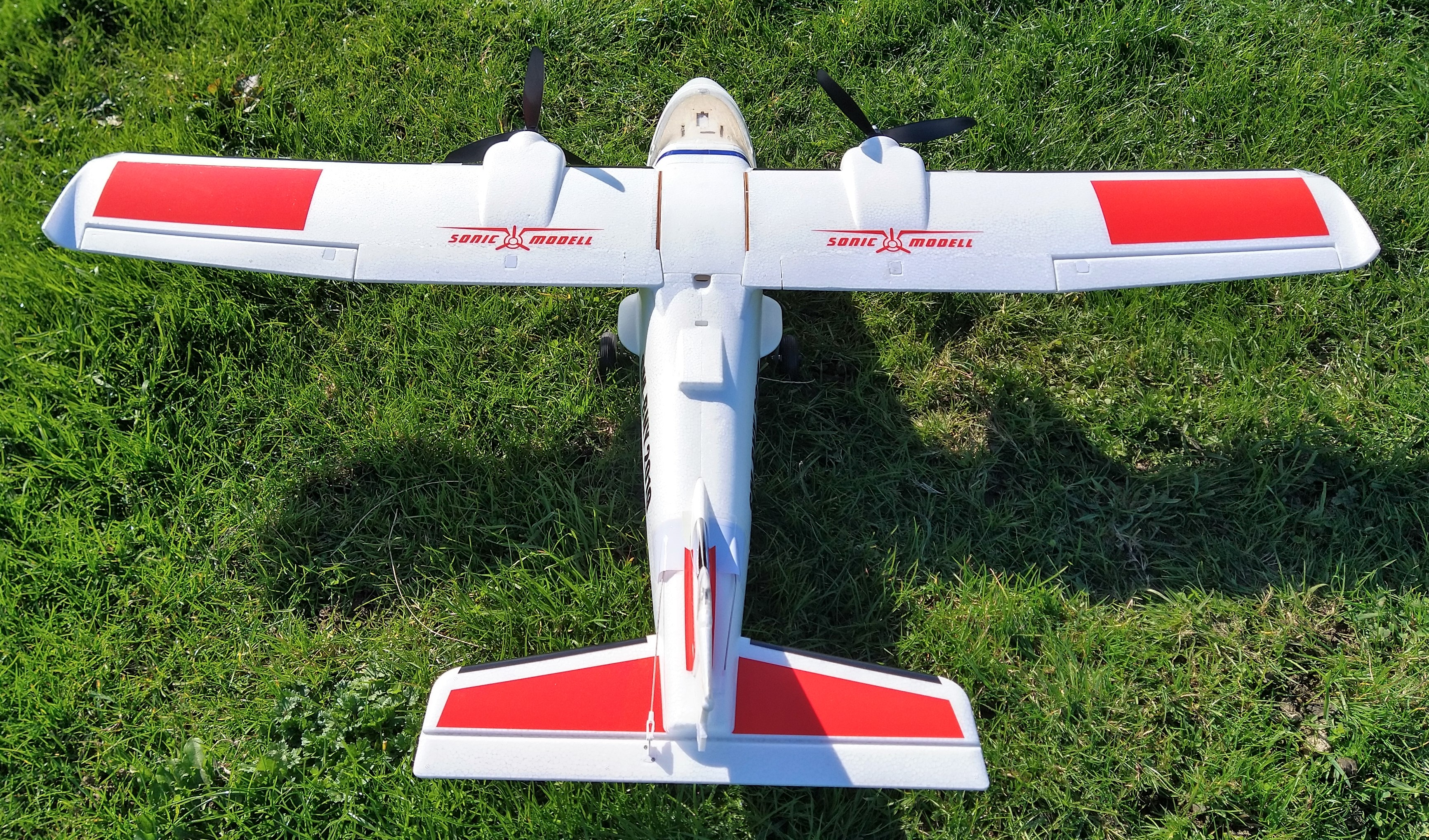
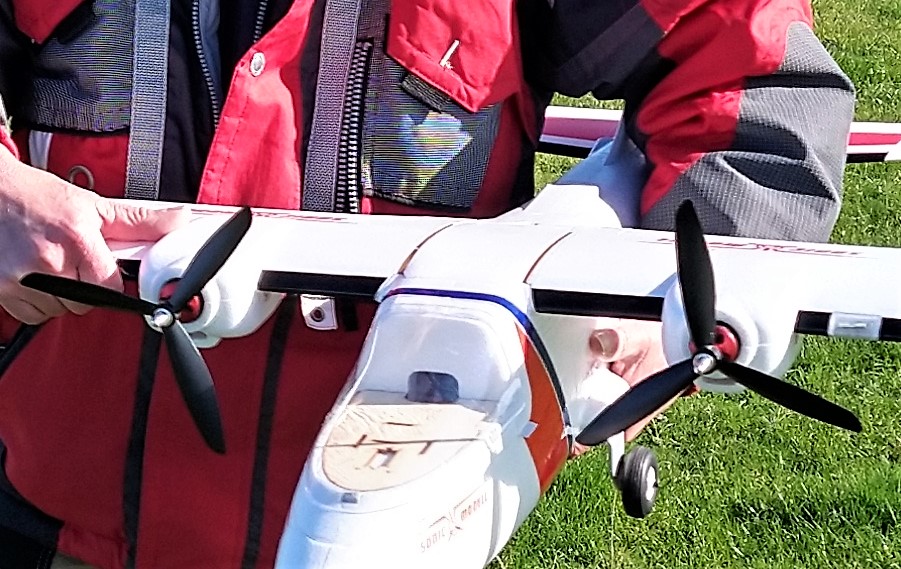 Here’s what Dougal says about it: I bought the kit plus the lighting set and undercarriage set. I figured I could get the motors and propellers cheaper than the set offered by Banggood, and ended up buying a set of 4 Racerstar motors (so I’ve got a couple of spares!), same spec as the SonicModell ones except 1000kV instead of 1100. Even so, there’s tons of power and I worry that the 8045 3-blade props are overworking them, so I’m experimenting by chopping half an inch off every blade of a second pair (and rebalancing carefully!). I’ve run them in the garage but not tried it in the air yet. I’ve replaced the steerable nose-wheel because the leg bent and it stripped the output head of the servo (I think the servo itself is OK). The replacement leg is sprung so less likely to bend – I think it was one of the main legs from my Sportjet, which looks and flies much better without U/C. I think the Binary may be based on the full size Tecnam MRI, though that only has 2-bladed props.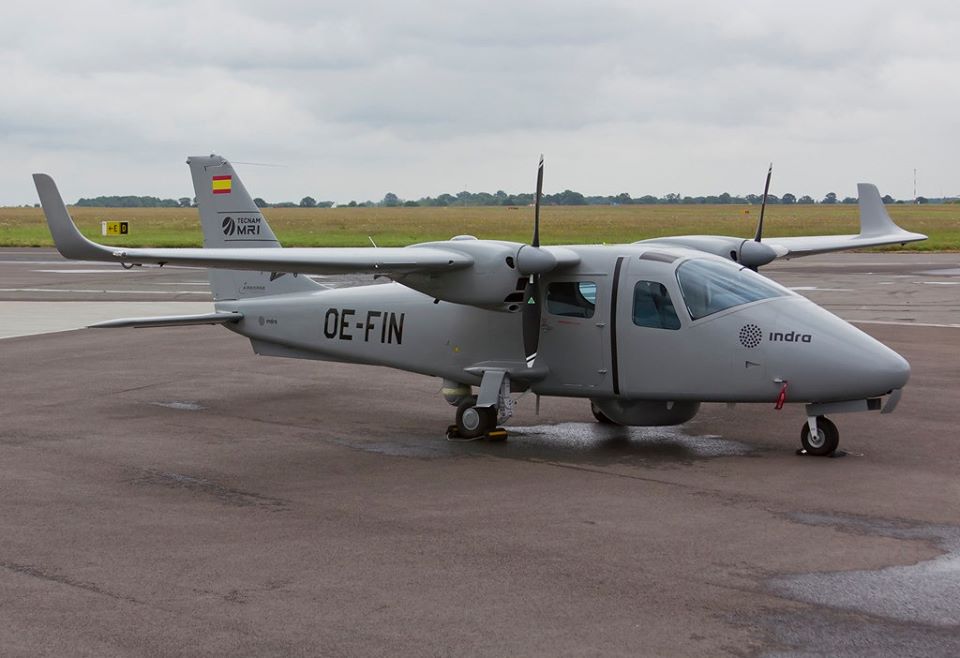
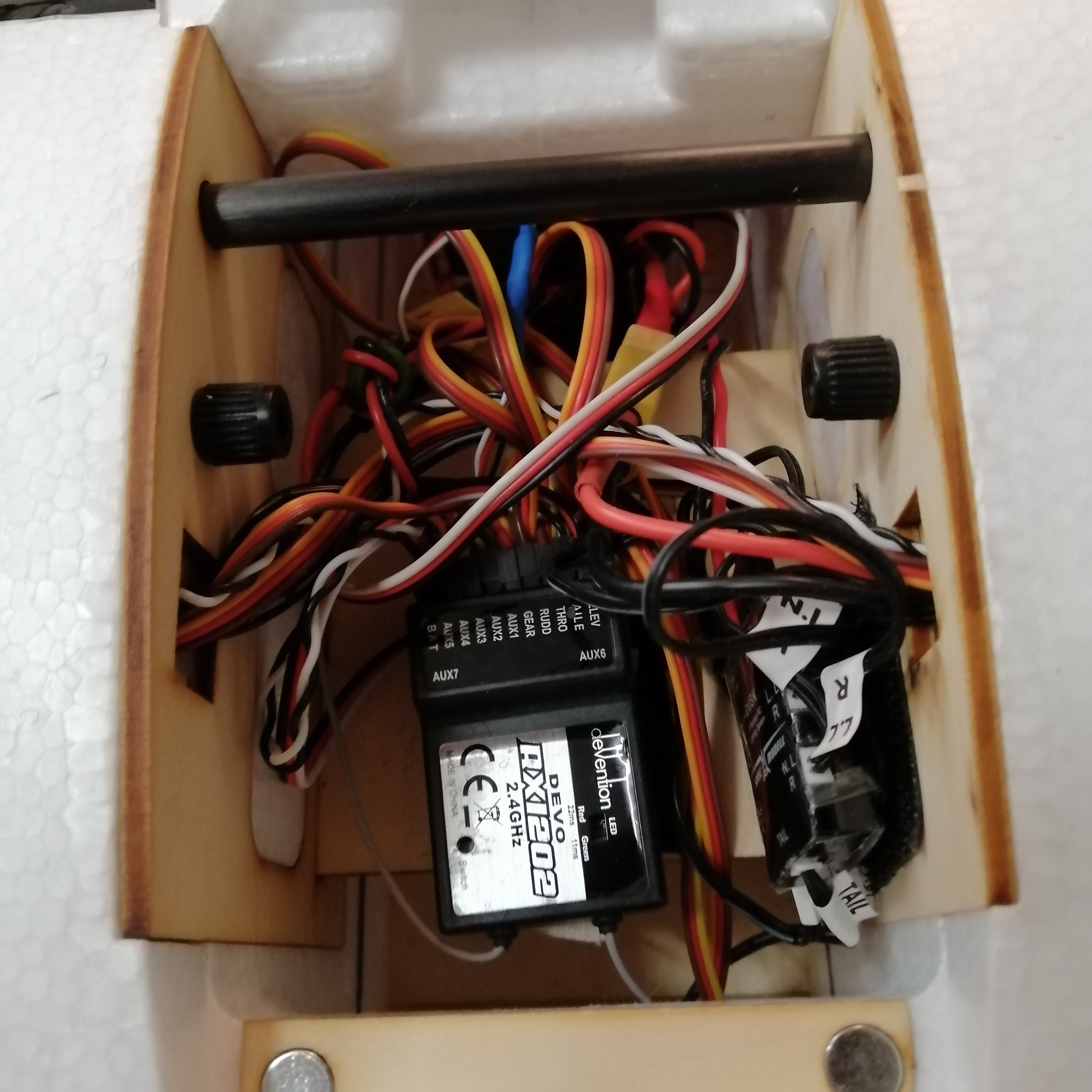 As you can see from the shot of the internals, it’s quite a busy receiver! I’ve avoided using any Y-leads, so the 12-ch Rx has outputs to the 7 servos (4 in the wing, elevator, rudder + steerable nose-wheel), two ESCs, and connection to the lighting controller. It’ll be even worse if I mount the FPV camera on a servo. I’m on plan C with transmitters, and have gone back to the Devo F12E.
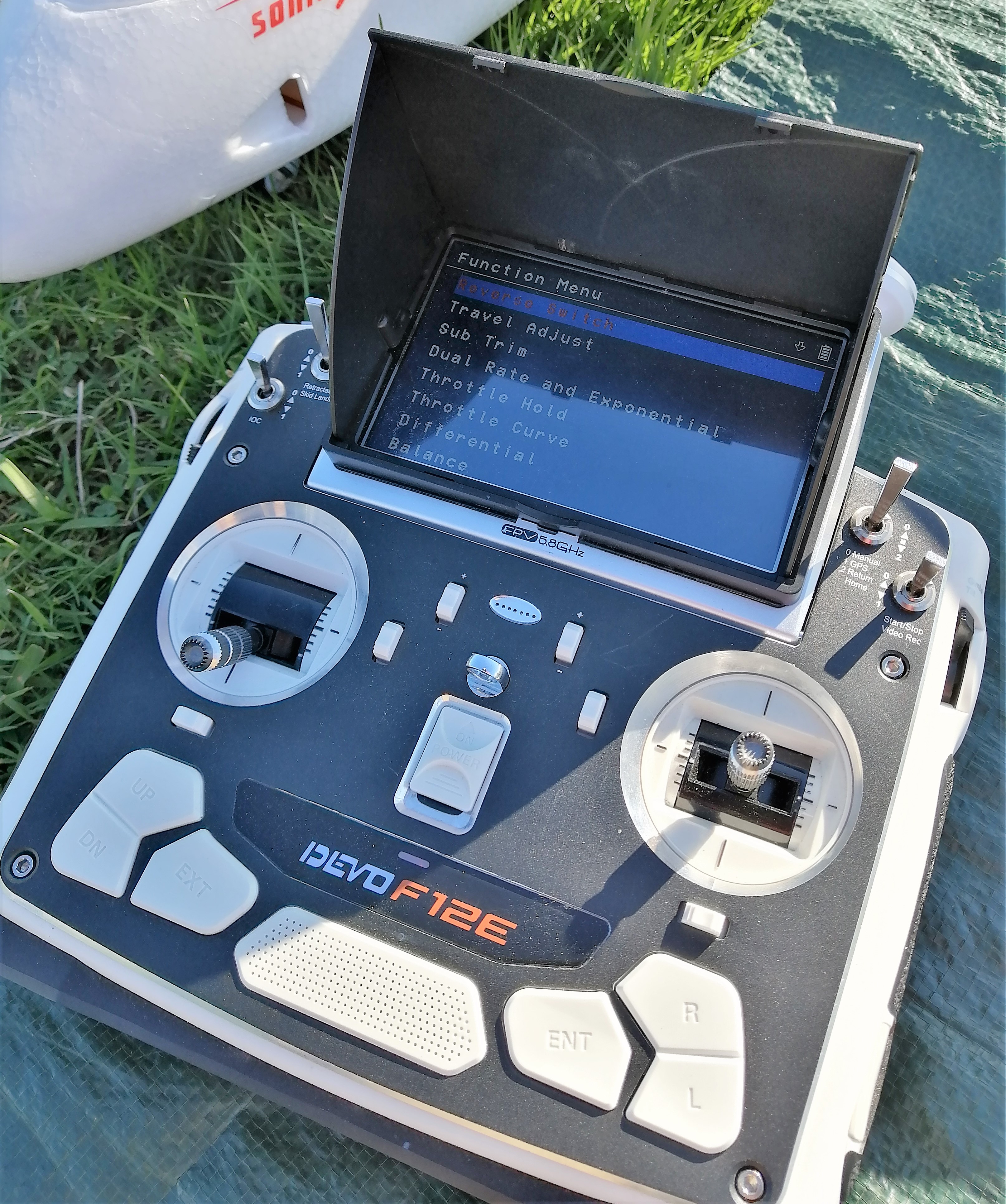 It’s quite big and heavy due in no small part to the FPV screen, but it’s got much better daylight visibility. Anyway the Binary flew very well. I had to wind in a load of up trim after the first flight, probably because I got the pushrod length wrong when I first did the linkages. It’s got tons of power from the 4s battery, and after 6 minute flights I was landing with about 50% remaining in the 3300mAh packs, and 60% still in the 3700mAh one. Quite fast, but capable of going much slower with the flaps down. Not surprisingly it pitches up when the flaps are dropped, so I’m going to mix in some down elevator. It didn’t steer too well after the first landing as the patch is quite bumpy, but I did manage to taxi it after flights 2 and 3. Looking forward to setting it up for FPV. I thought I’d fly it LOS (line of sight) first though as it’s quite a good looking model, and I wanted to see it flying with the lights on. Dougal’s Binary features in this month’s video where you’ll see that it flies extremely well. Sadly the lights don’t show in the video but when Dougal flew it on a very overcast day later in the month they showed up well.
Away from the patch and on a personal note for a moment, many of you will know that I had my 70th birthday in September (yes I know it’s impossible to believe I’m that old) and my daughter bought me a WW2 Dogfight Duo simulator experience for two which I enjoyed with my son on 5th October. It turned out to be ME109 and Spitfire simulators with a dividing screen between them and the pilots try to shoot each other down for thirty minutes and then swap planes for another thirty minutes. It was great fun and the simulators were surprisingly realistic. My wife Doreen took some photos and videos so if you want to see what it was it was like watch the video below.
My son bought me a 30 minute flight in a two seat Spitfire with Boultbee Flight Academy which I took on 20th October from Solent Airport Daedalus. Percy Vears had a one hour flight with Boultbee from Goodwood airfield back in June and hopefully the club will get to hear more about his flight later, maybe when club meetings resume. My flight took me east past Portsmouth harbour, then over to Ryde and west along the north coast of the Isle of Wight, then we dived down for a tight turn around the Needles, and back along the south coast of the island. I was able to take the controls for a while before we headed north for some aerobatics over the Solent, a victory roll, barrel roll, wingover, and a loop before returning to land back at Solent Airport, an amazing experience that I’ll never forget. I wasn’t allowed to film during the flight (although Boultbee make a 3D cockpit video of all flights and I’ll get a copy of my flight soon) but my family shot some video from the ground which you can view below.
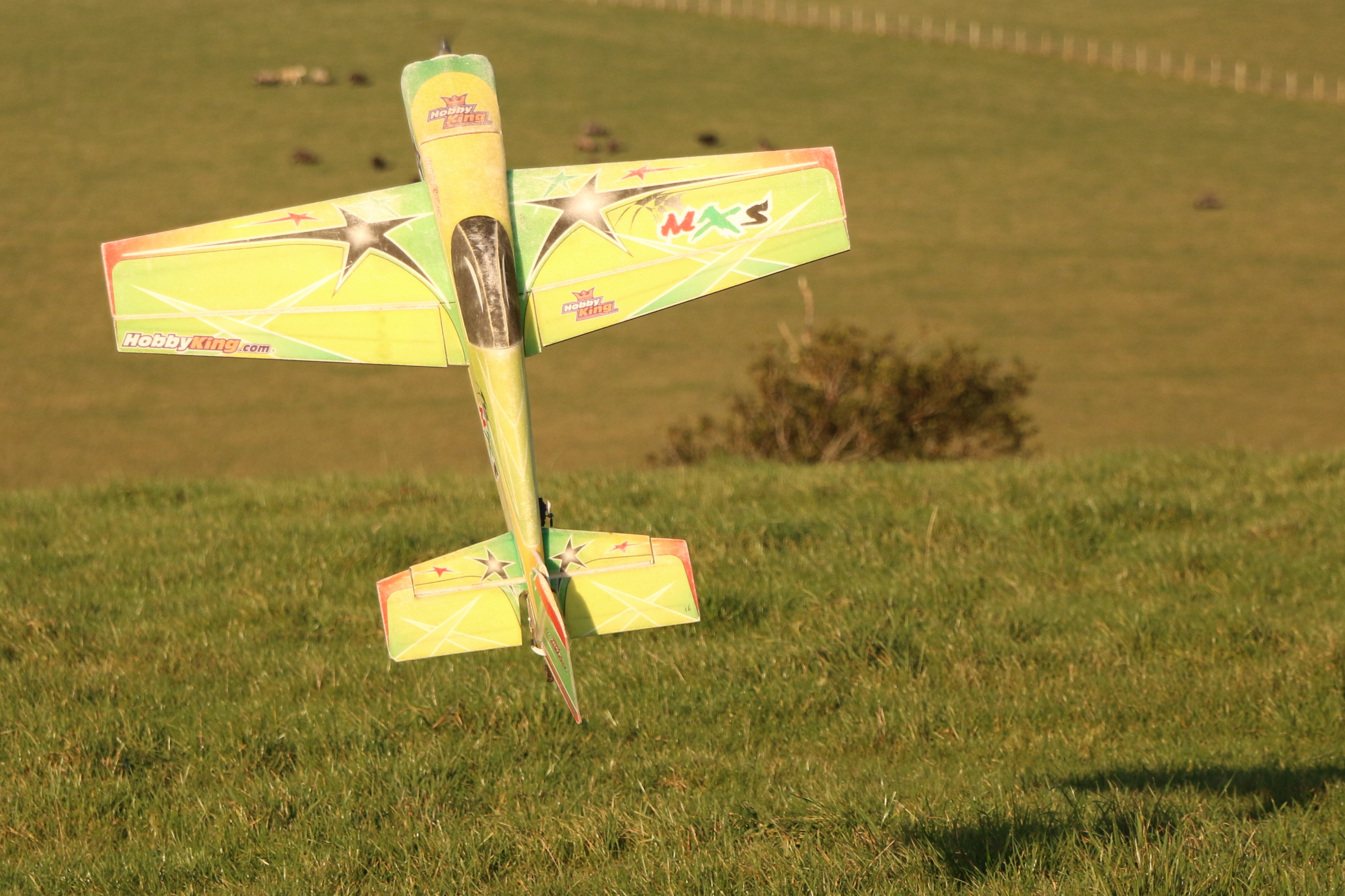
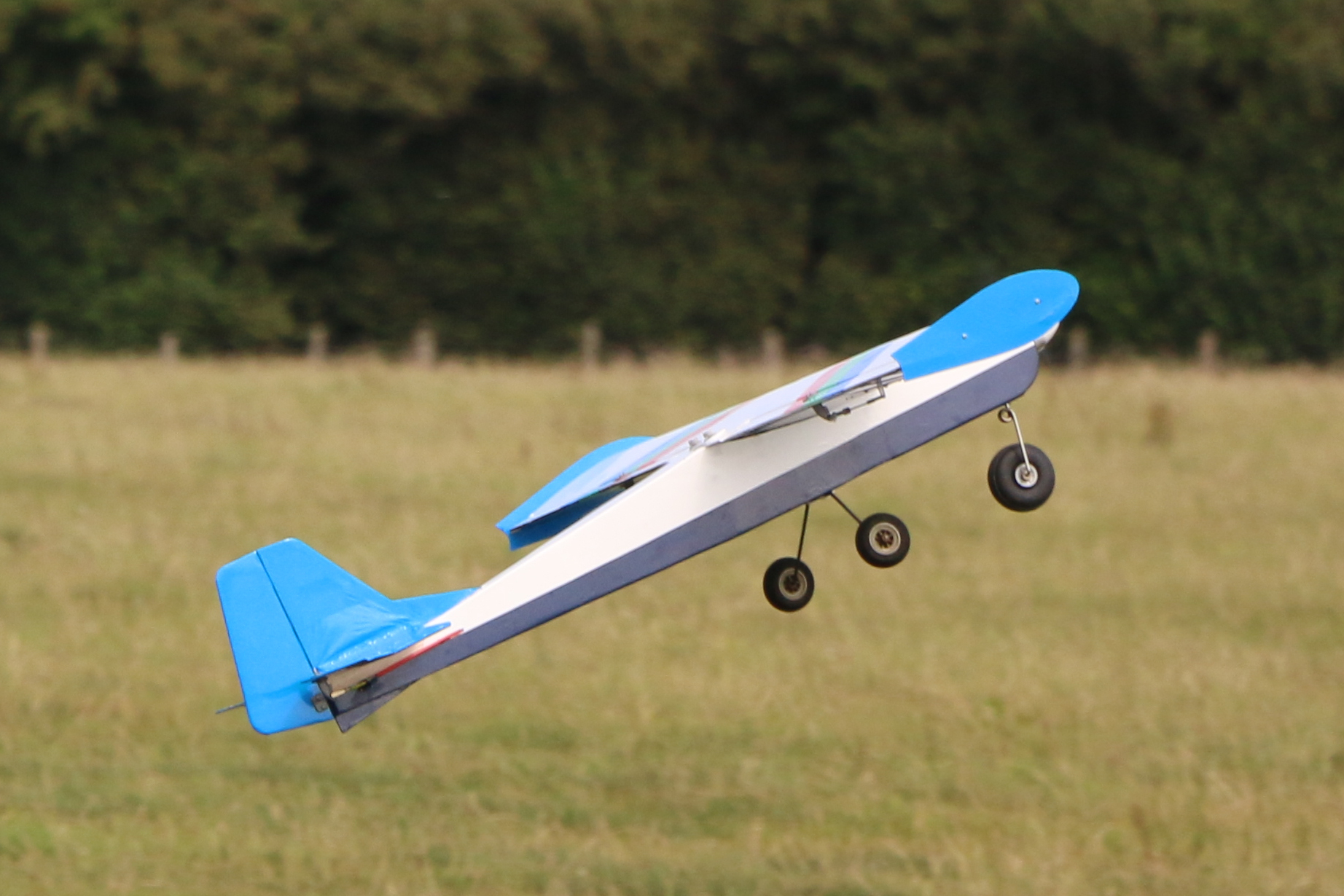
Kryten didn’t manage to get any flying shots this month so here’s a selection of his photos from previous months: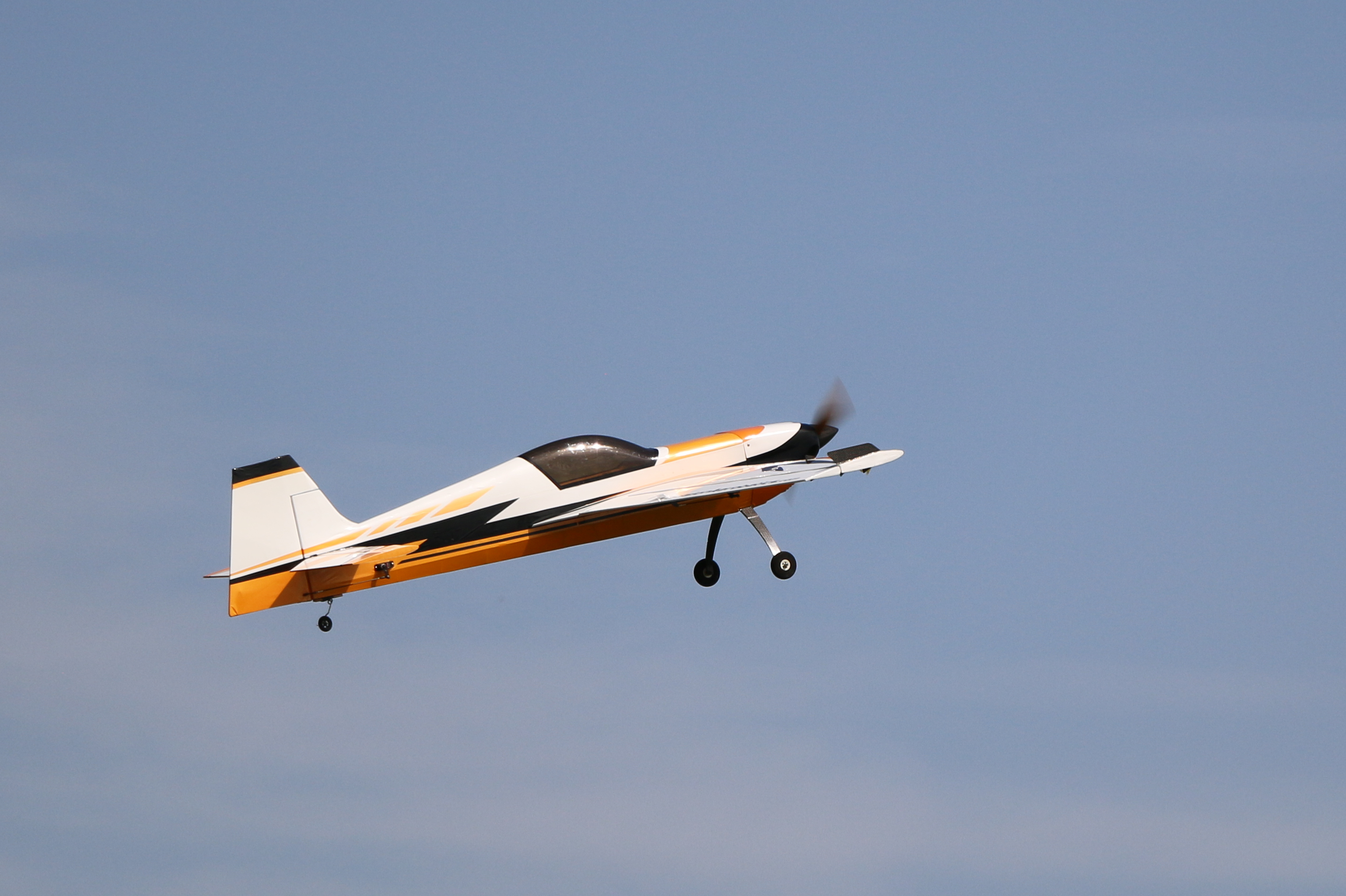

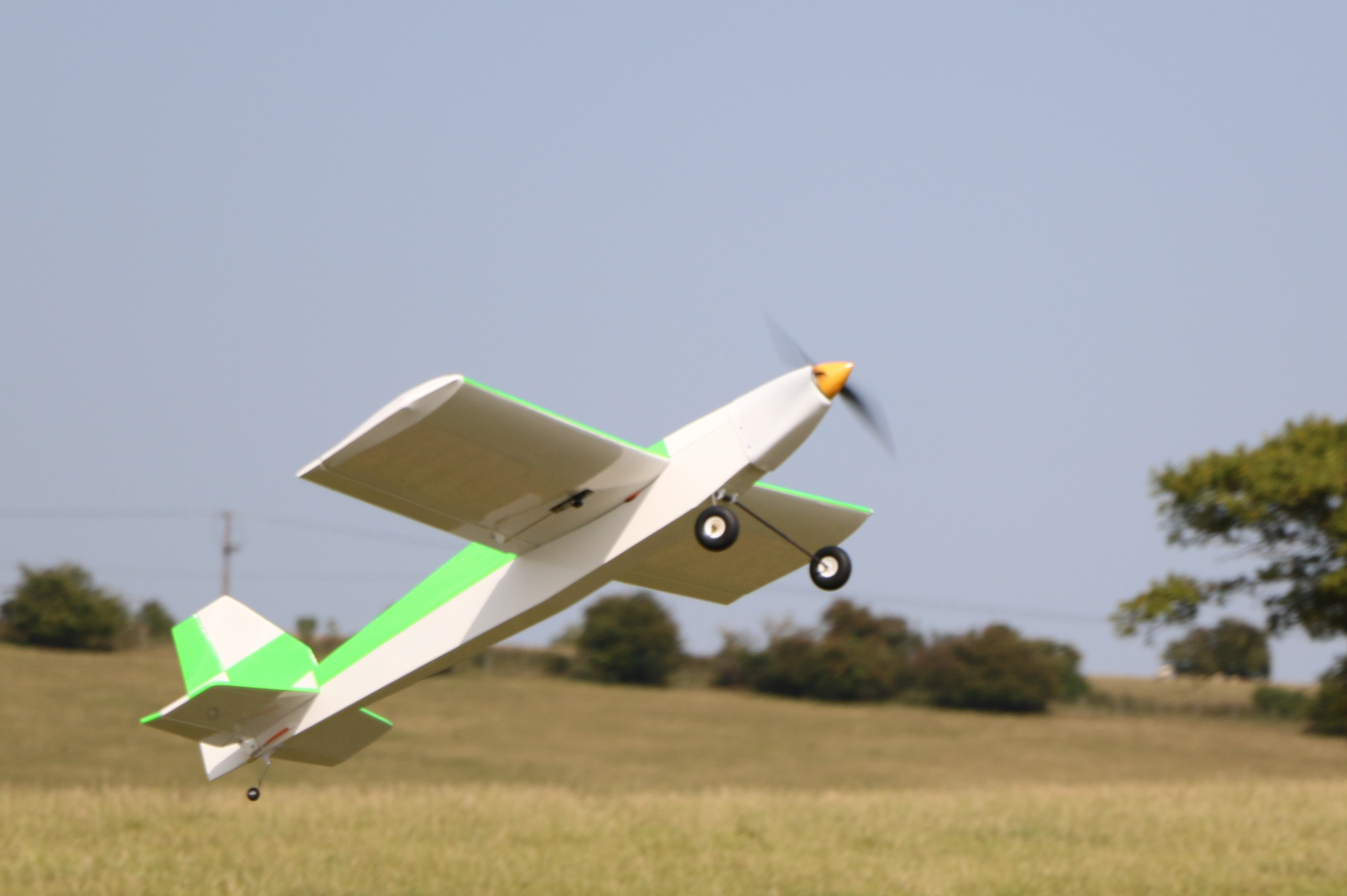
Video time now, this month with additional video from Captain Slow, Dougal Entendre, and Charlie’s mum Nadine. Please watch the video full screen, it’s so much better with small models flying around.If the video won’t play for you please click HERE
The air traffic controller cleared a small Cessna for landing but as the Cessna turned to final approach an airliner called in ‘over the marker’ (5 miles from the airport).
The Cessna was only about a half mile from the runway, and the controller knew he could land and clear the runway well before the airliner would land, so he cleared the airliner to land as well.
A few seconds later, the Cessna pilot asked the controller, “How far behind me is that 737?”
Before the controller could reply the airline pilot keyed his mike and in a deep bass voice said, “Don’t look back…!”
Stay Safe
Colin Cowplain