
Patch News – October 2016
Autumn has certainly now arrived, and this month we’ve had a variety of weather including lots of wet and windy days. One windy Sunday morning only Woody and I turned up and, despite the strong winds, we both flew but then, spotting approaching rain, we retreated to the barn just in time. As you can see it absolutely chucked it down!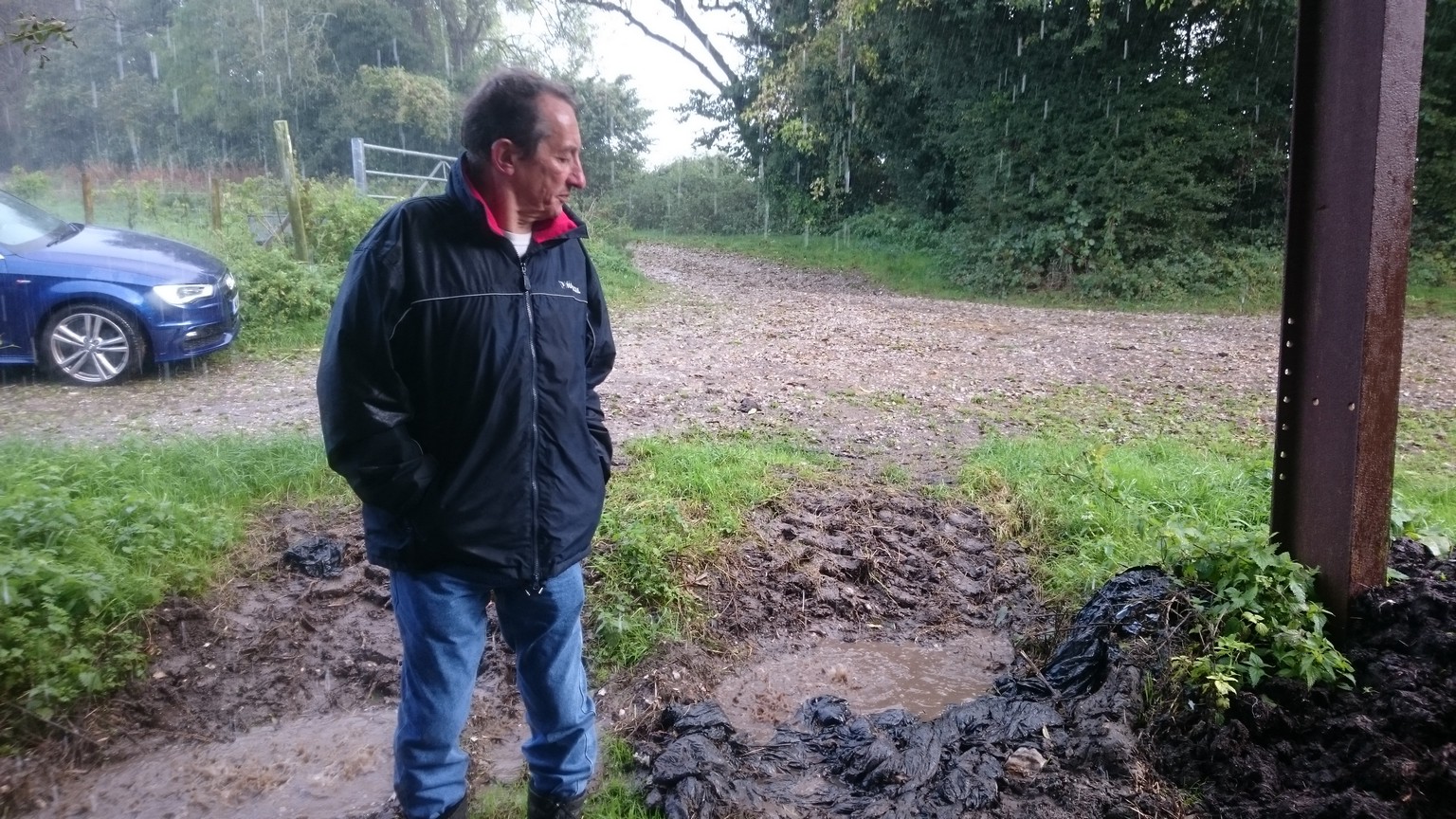 The end of the month brought a mild spell which meant fog in the mornings that often delayed us for a while. This is Basher testing the density of the murk one midweek morning!
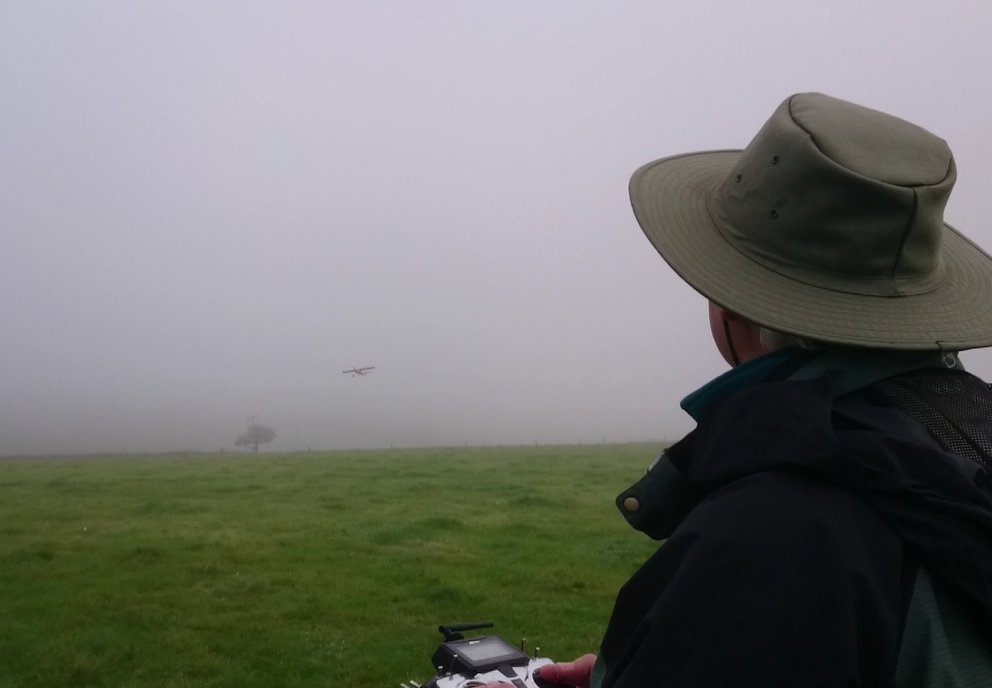 We managed quite a bit of flying during October but, apart from the Kline Fogleman models, there seems to have been a lack of new models. I suppose I rather shot myself in the foot by doing a ‘special’ Patch News that covered the KF models as it has left me a little short of material but it seemed like a good idea at the time.
Speaking of the KF models, I use our third bedroom as my model room, but when it came to building the new one there simply wasn’t any space so Doreen offered that I could use the second bedroom to store a couple of models for a week or two. This was the result. It’s lucky I don’t fly those dirty oily things nowadays!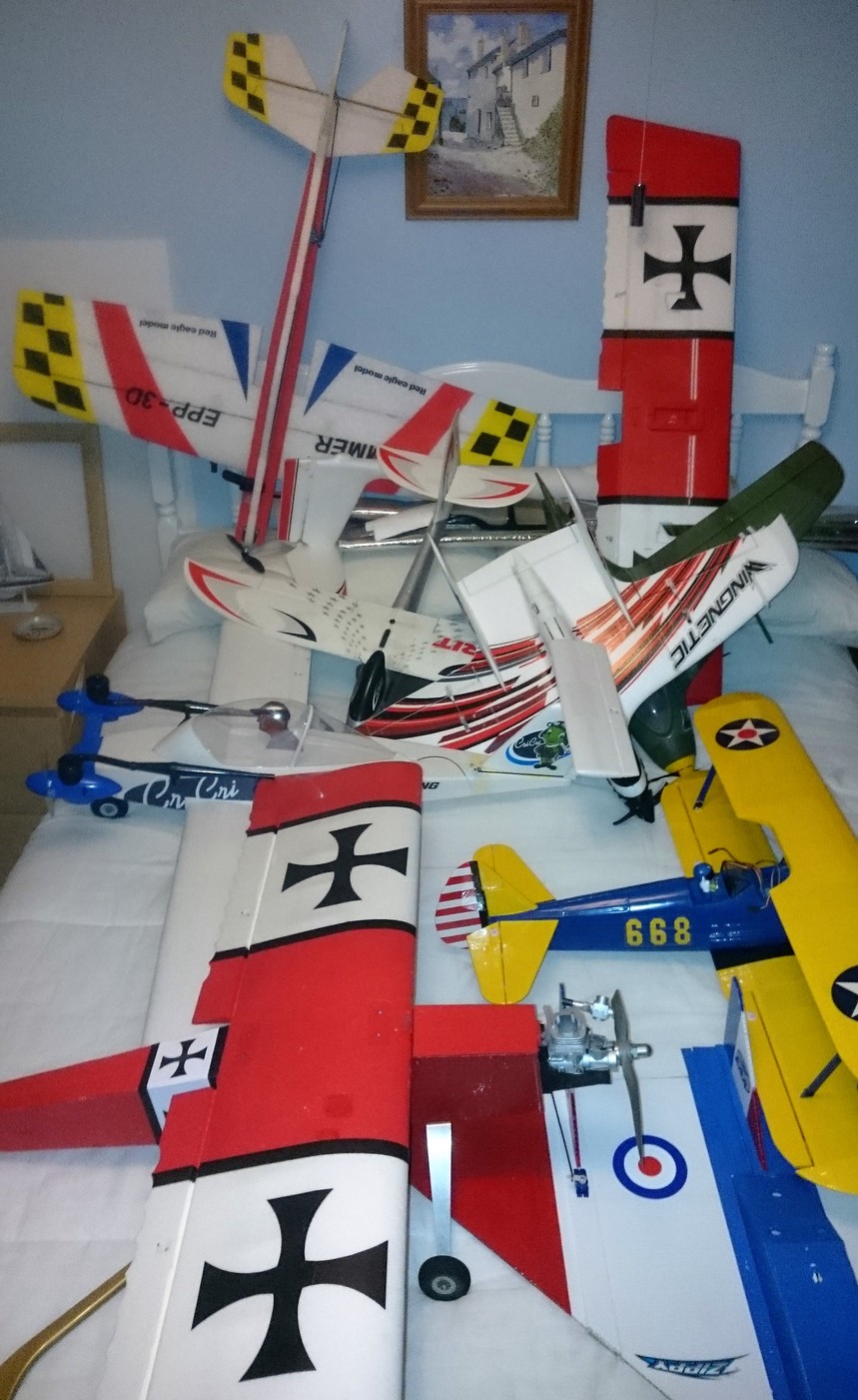 Fortunately, the KF club model was quickly built and I was soon able to move them all back to my usual room.
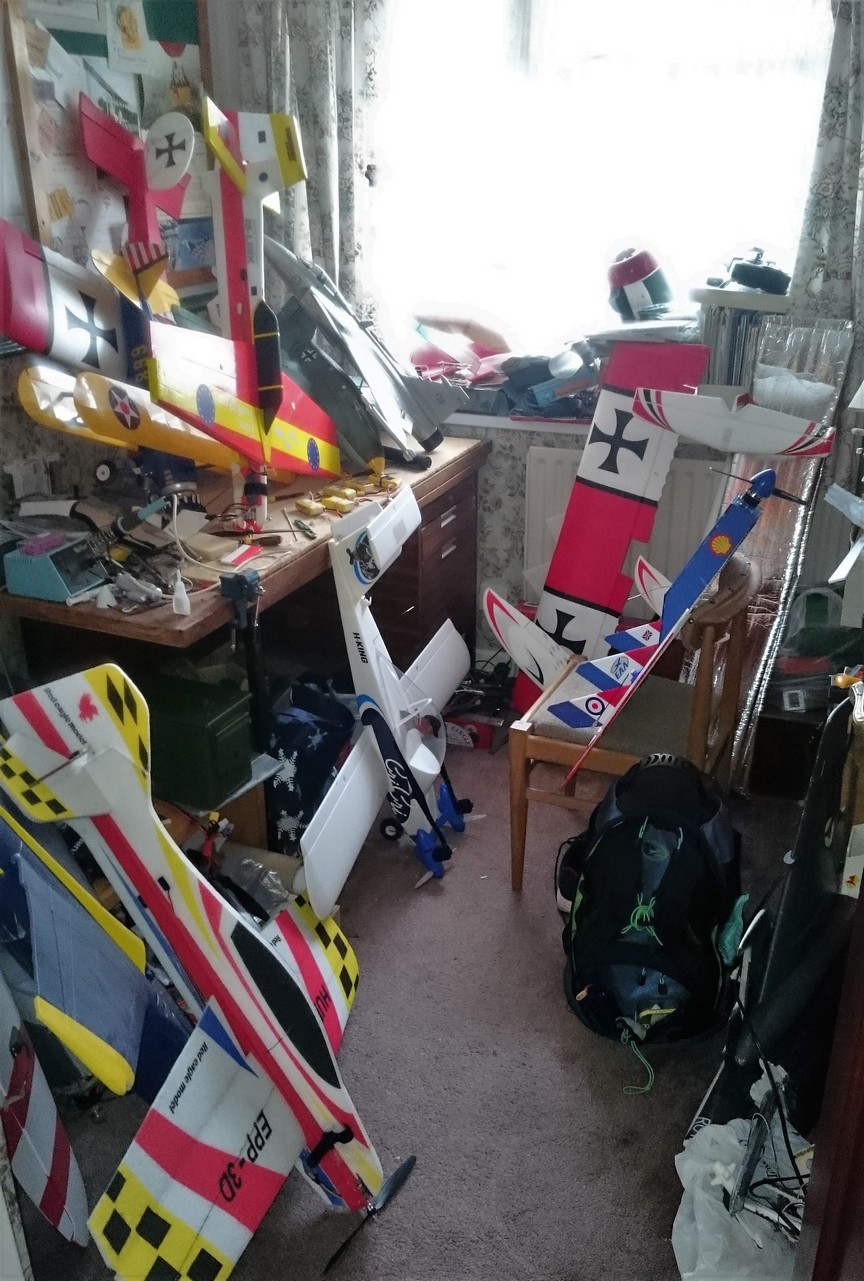 I really must have a clear-out/sale! I consider myself very lucky that Doreen is so understanding.
So, the first of only three new models I spotted this month, other than the KF ones, was Chris P Bacon’s replacement for his Cougar 2000 that was damaged in a mid-air collision with Terribull’s new Fizza. Note my careful wording there, if you want to know more about the mid-air you’ll have to read Patch News September Part One! The Cougar 2000 was rather badly damaged in the collision and Chris P quickly replaced it with… a Cougar 2000.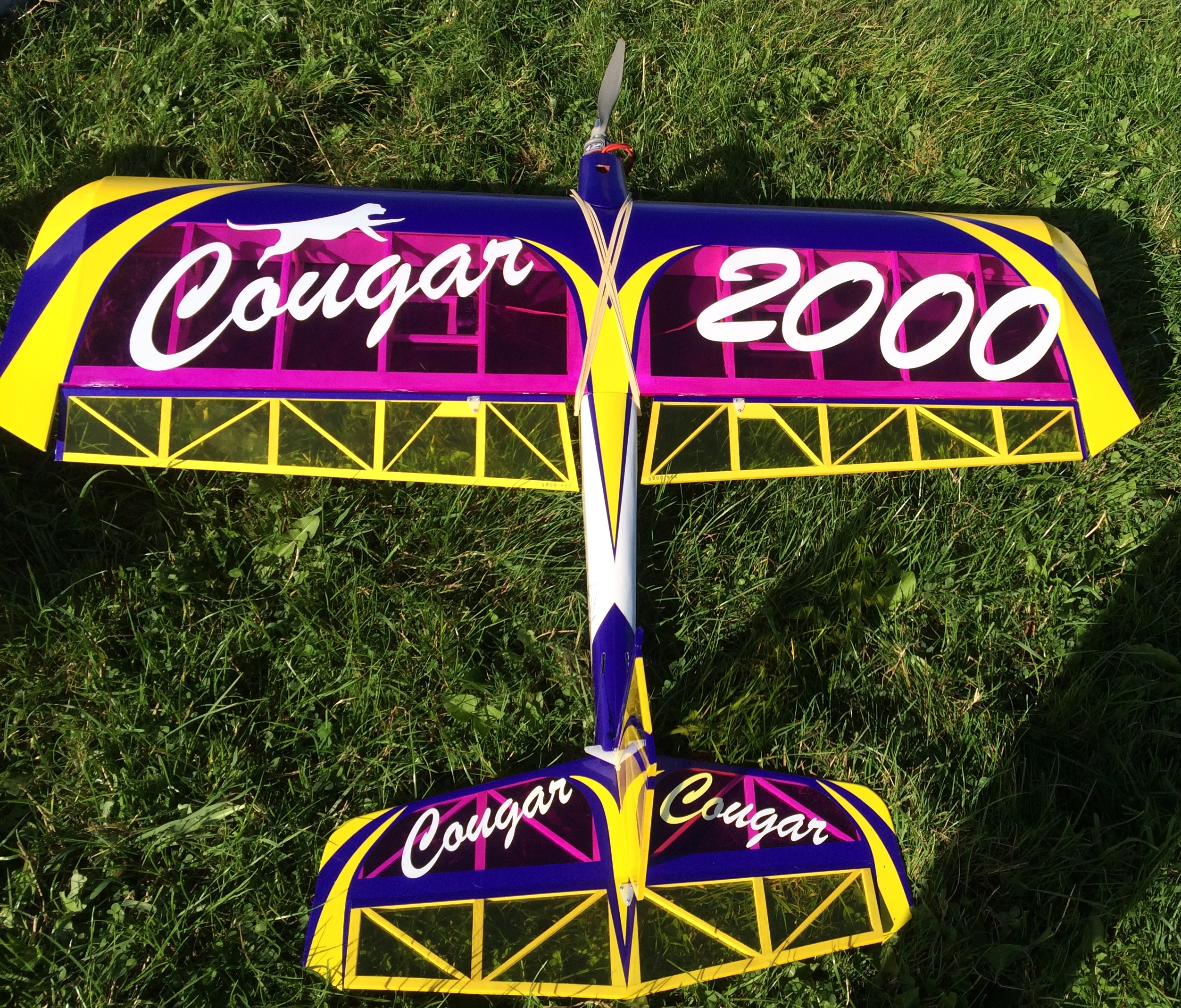 He obviously likes them a lot as this is actually his third one. I must say I always thought the Cougar was the best of a bunch of very similar models that emerged at round about the same time. Sadly Chris P reports that he preferred the old one! The new version has been modified with electric fliers in mind and features a ply plate that the battery sits on. Unfortunately, it seems as if the ‘conversion’ was designed by an I/C flier as the position of the ply plate means the wing has to be removed every flight to replace the battery! Previously, on the I/C version, Chris P simply cut a hatch under the nose and was able to swap batteries without removing the wing. Progress eh!
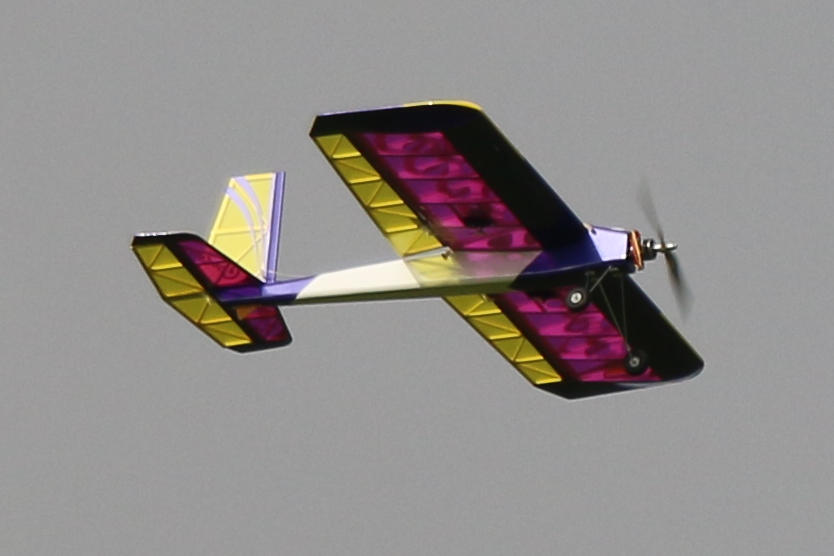 Anyway, it flies just as well are the first one so he’s not too unhappy. Kryten captured the Cougar in action.
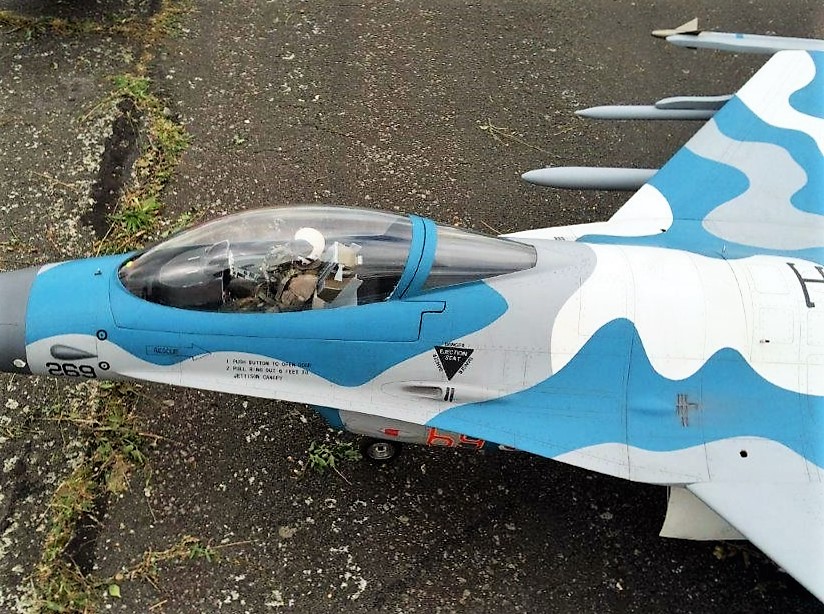
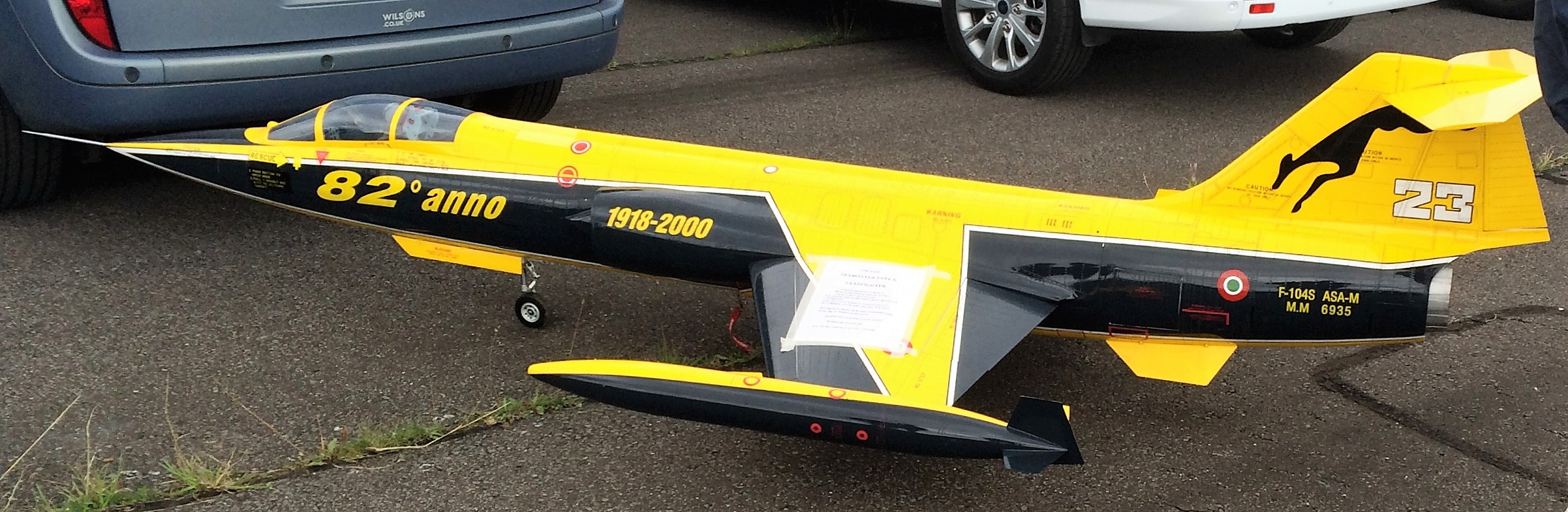
Chris P Bacon kindly sent me some photos he took during a recent trip to the Abingdon Jet Meet. There were certainly some beautiful models to see, my favourite is the F-16 but that Starfighter looks amazing as well.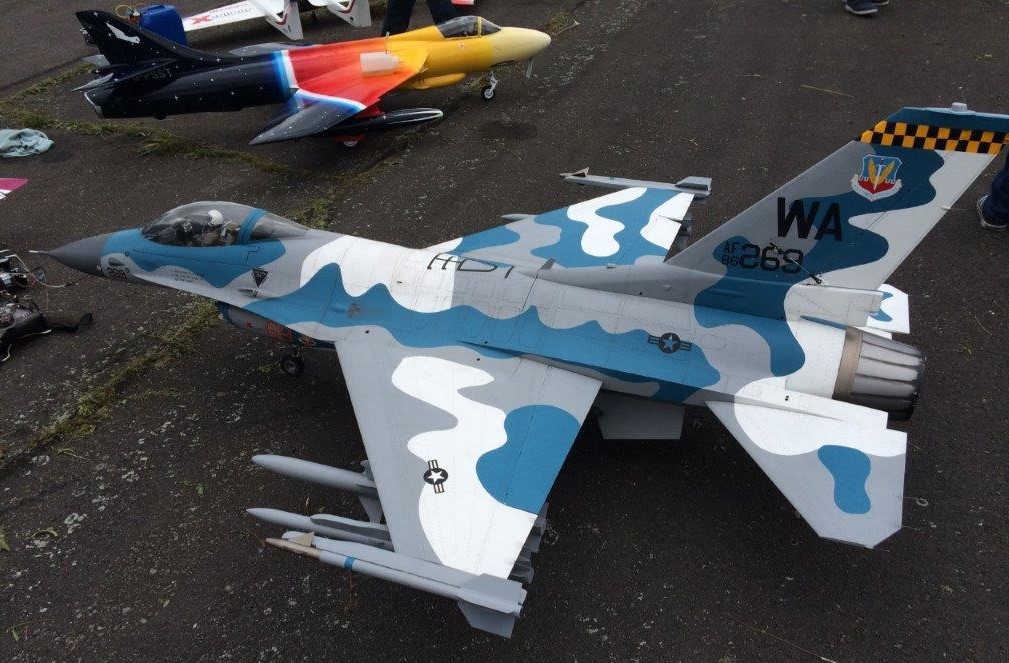
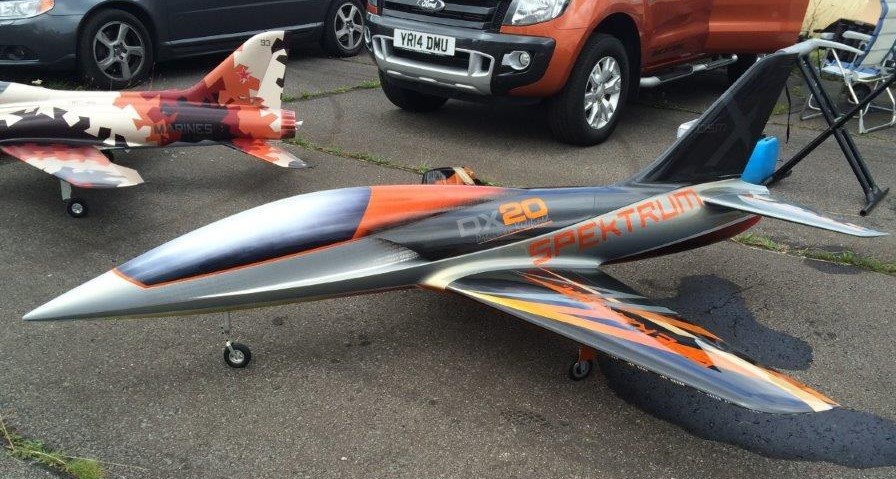 The Spektrum model seems to have wet itself…the poor thing was scared, someone told it it had to fly!
The second new model that appeared in October was this one of Basher’s although this isn’t really new, it’s a bitzer. Like Dougal Entendre previously, Basher has built a new balsa fuselage to replace the damaged Spirit one.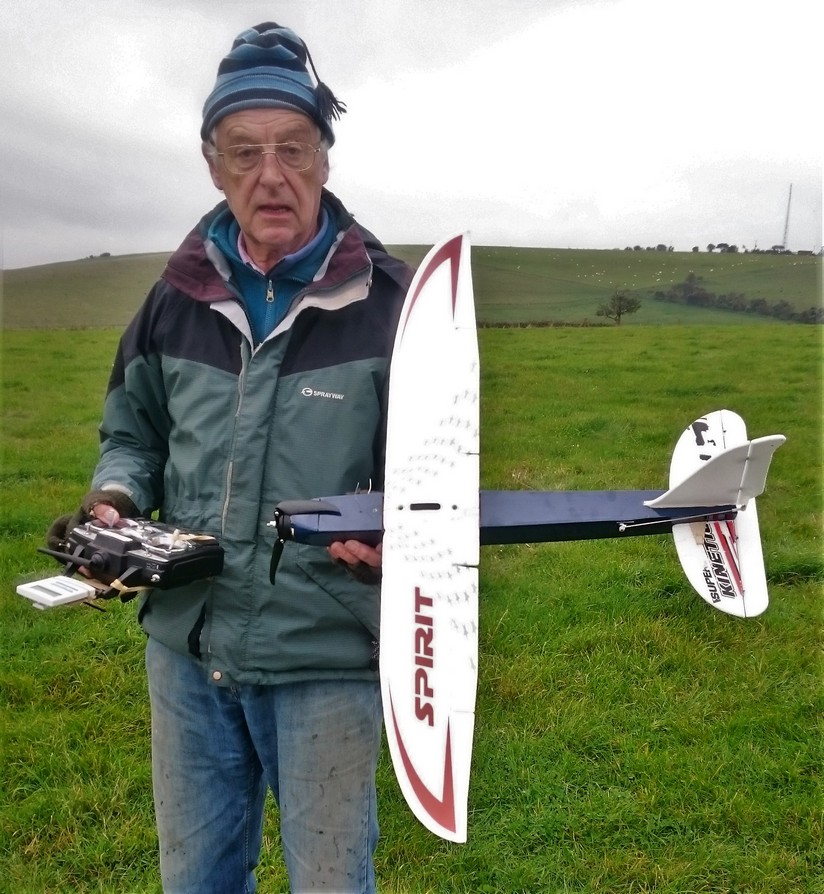 Dougal calls his a Vignette and it features a V-tail so really just uses the Spirit wing and running gear. If anything, Dougal’s Vignette performs better than the original and I wonder if that’s a result of the new balsa fuselage being less flexible than the original.
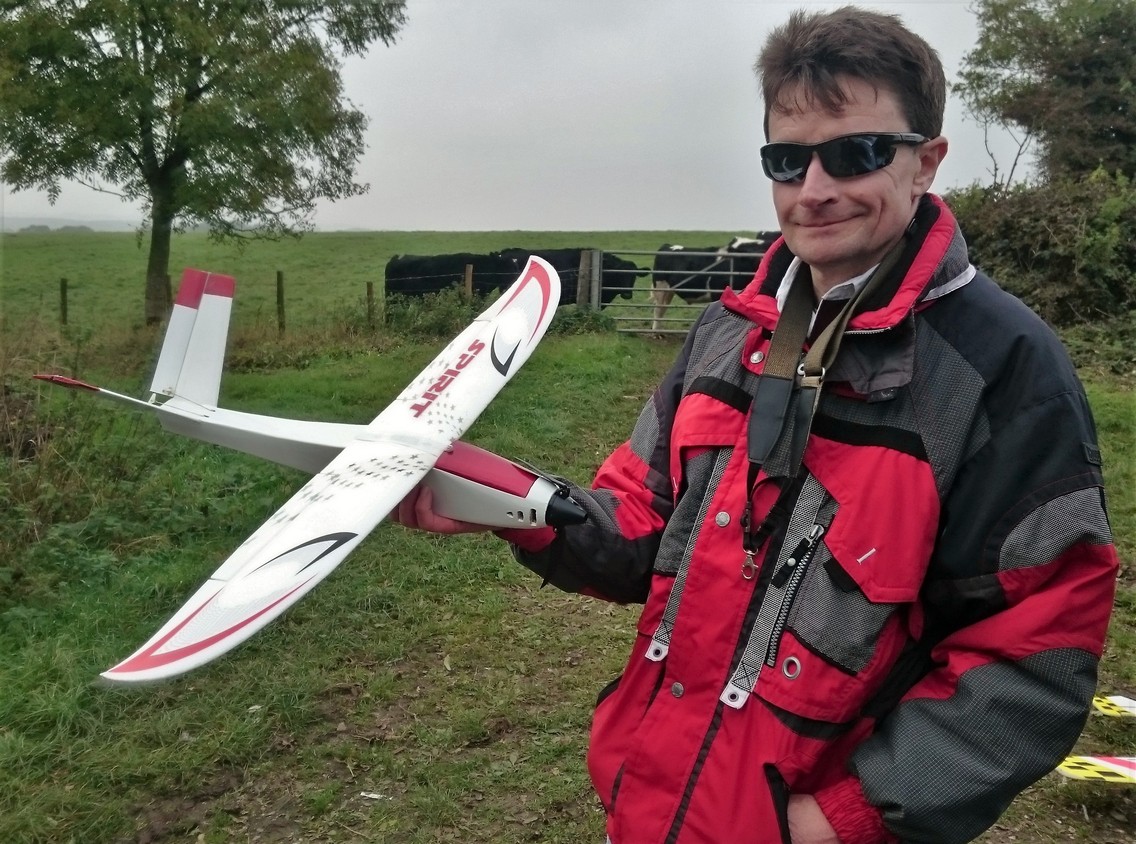 Basher obviously managed to write-off both a Spirit and an almost identical Kinetic, as his model sports a Spirit wing and a Kinetic tail. Perhaps it should be called a Kindred Spirit! Unlike the original Spirit/Kinetic that both feature an all moving tailplane Basher’s new version has a conventional fixed tailplane and a separate elevator. It also uses a fin and rudder from one or other of the ‘donor’ aircraft.
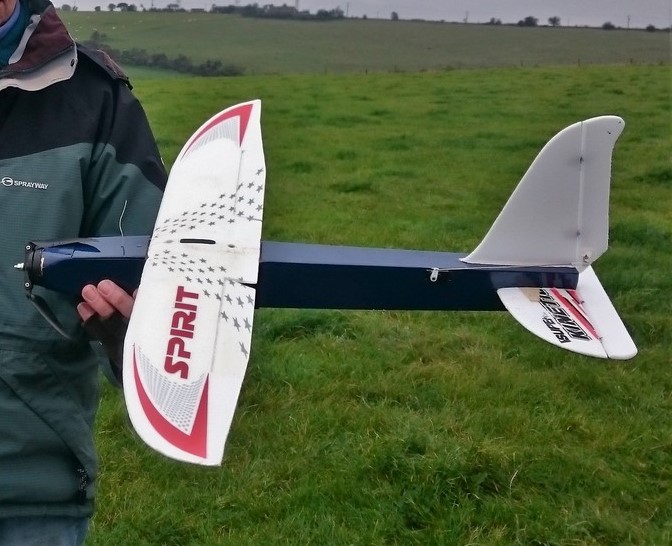 The new fuselage is a bit bulkier than the original, it’s not as streamlined and is presumably a little heavier but it doesn’t seem to make much difference to the flying, it still performs well.
The other day I spotted this sticker sheet on the HobbyKing website for just 40p. I am very tempted to buy it and make an addition to one of Basher’s models while his back is turned one day!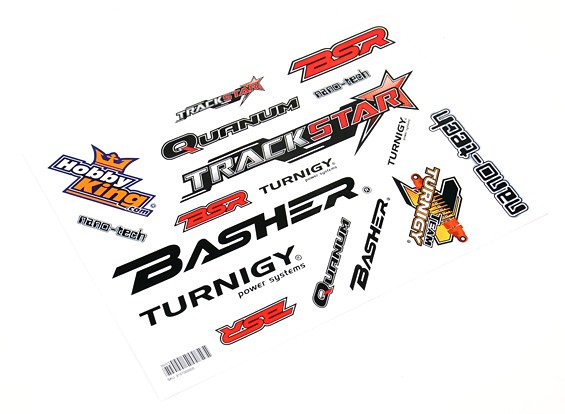
Captain Slow has been happily flying his Art Tech Diamond 1100 for about 6 months and it’s proved to be a reliable performer. But a couple of weeks ago he was doing a low pass over the patch (Slowly of course!) and when he whacked the throttle open the propeller threw a blade. This meant the motor was rapidly gaining speed while spinning a very out of balance propeller, not good, and the resulting vibration ripped the whole nose clean off!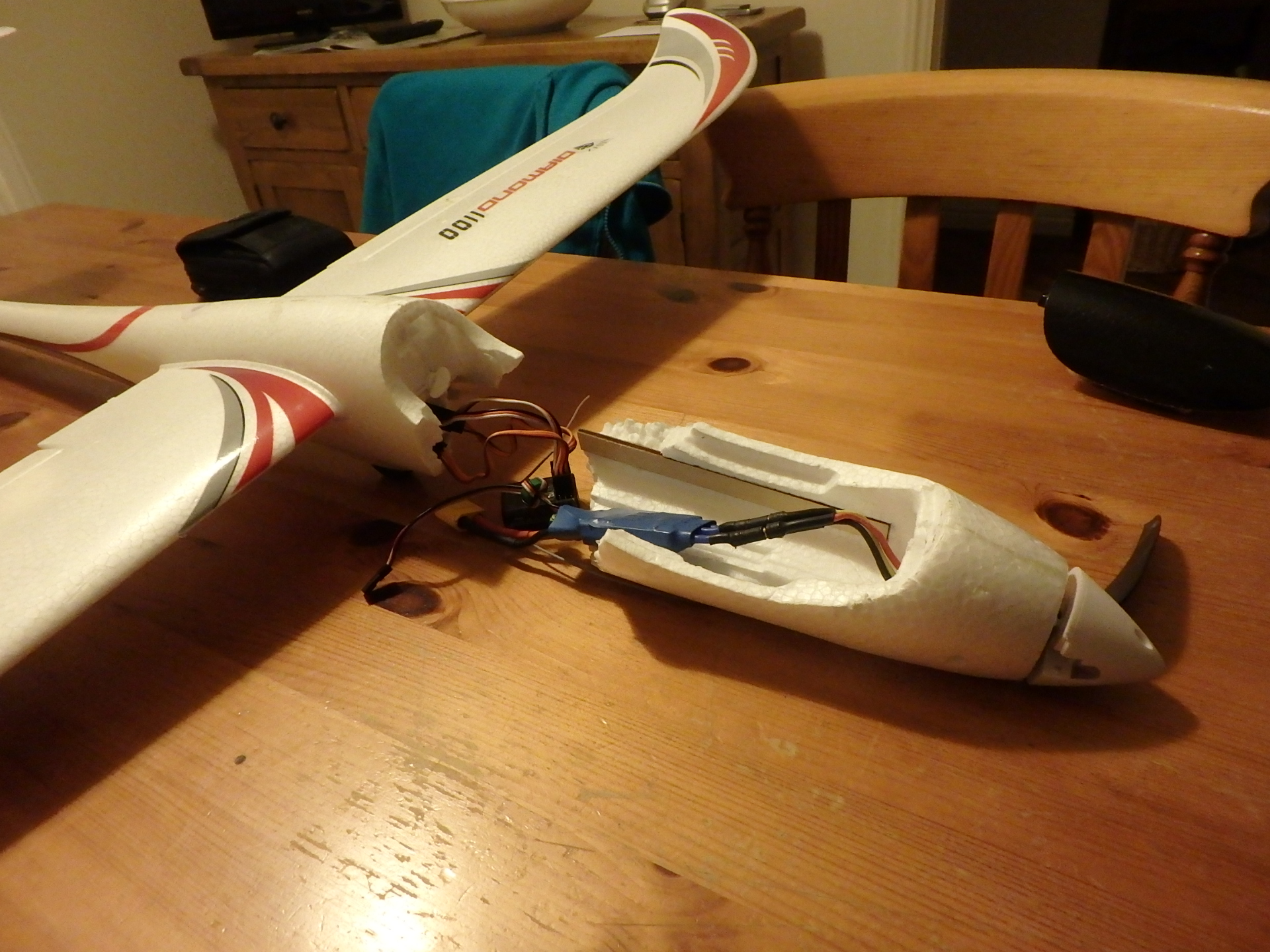 I’ve previously seen motors tear their way out of the nose in similar circumstances but I’ve never seen the whole nose come off like this. We can only think that the prop must have suffered slight unnoticed damage in an earlier landing and the sudden throttle opening was the straw that broke the camel’s back. The fuselage damage isn’t too bad and no doubt Captain Slow will soon have it back in one piece, and he’ll fit a nice new balanced folding prop.
I featured Terribull’s Weekender Plus last month and mentioned that I thought it would be much nicer if it had an undercarriage rather than having to be hand launched and belly landed. The original Weekender plan shows an optional undercarriage but Terribull chose not to fit it, and when he scaled it up to the Weekender Plus he did the same. But now he’s seen sense and has fitted one (at last, someone listened to me!) and personally I think the plane is much better for it.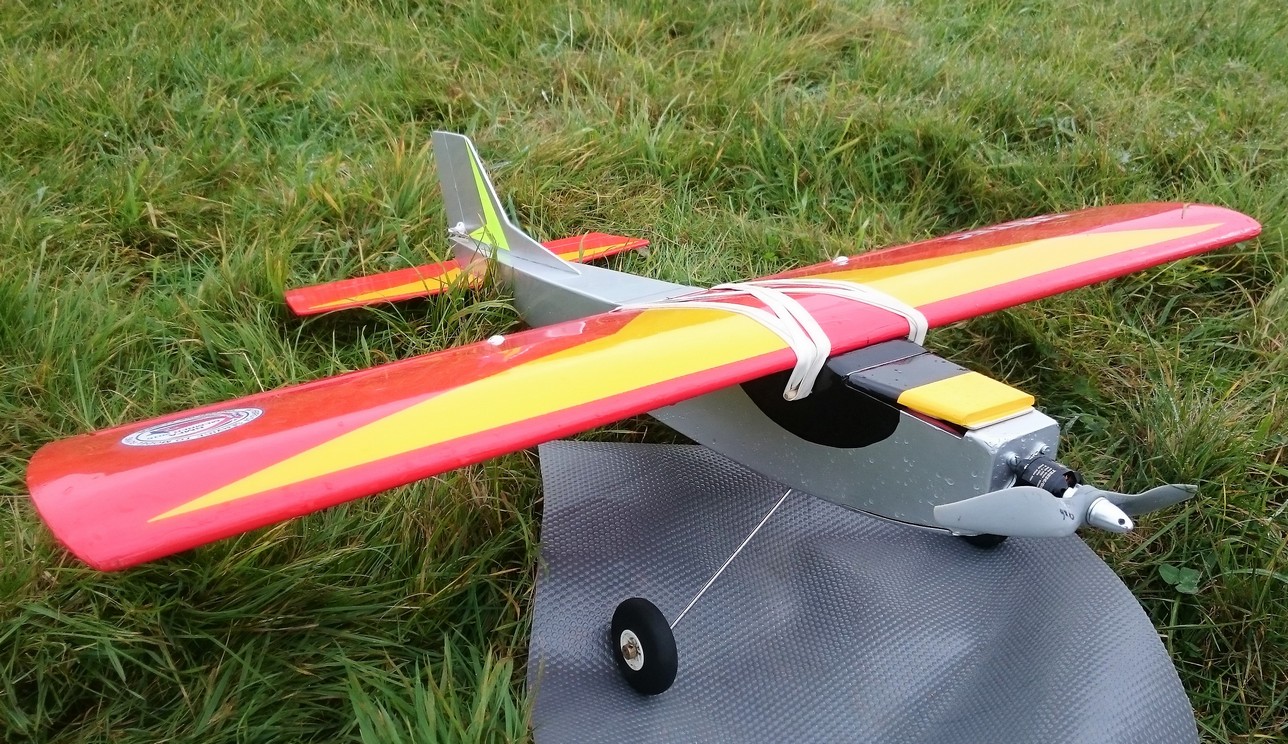 When he was flying the other day there was a tendency for it to nose over on landing but it just needs the undercarriage legs to be bent forward a little and it will be perfect.
Stanley Knife is a regular visitor to the patch and he has always liked large models so it wasn’t unusual to seeing him struggling up to the patch with this monster.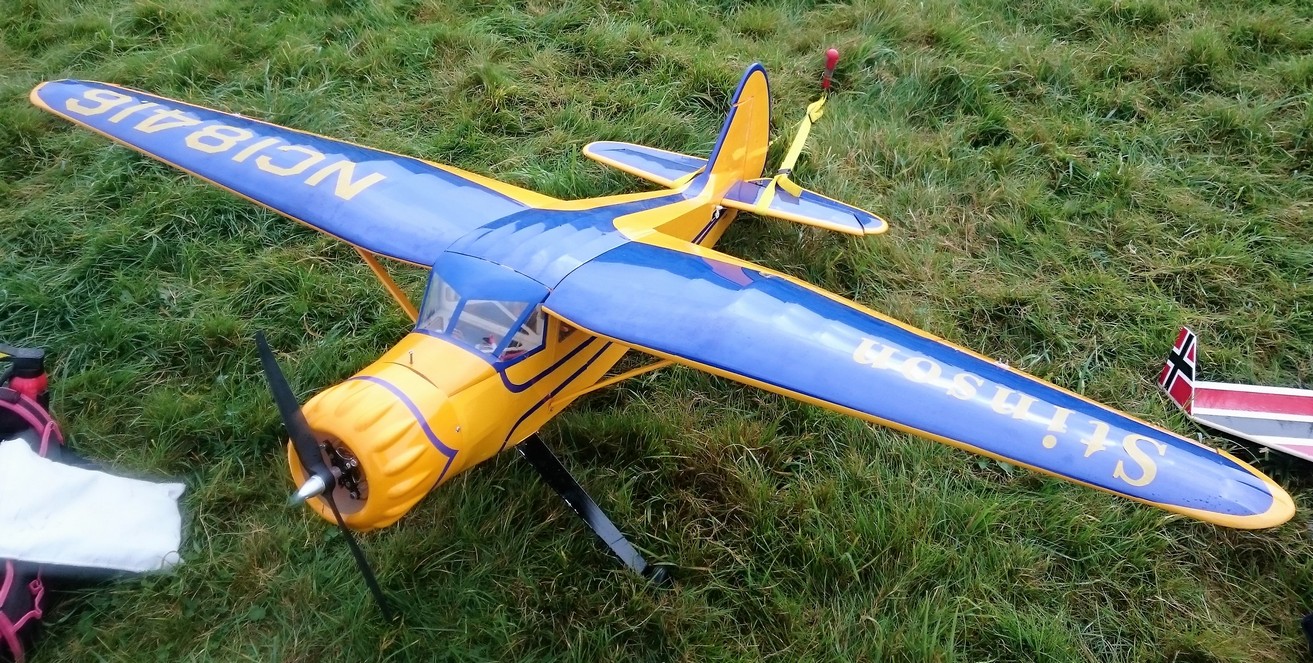 It’s not a new model and has featured in Patch News previously but it’s worth another mention. The model is 2160mm span (85”) and is designed to have a petrol engine fitted, something in the 26cc-35cc range, but of course Stanley has converted it to electric. The model came from HobbyKing but I notice that Jamara do a very nearly identical one that’s the same size so I think we know it’s origin.
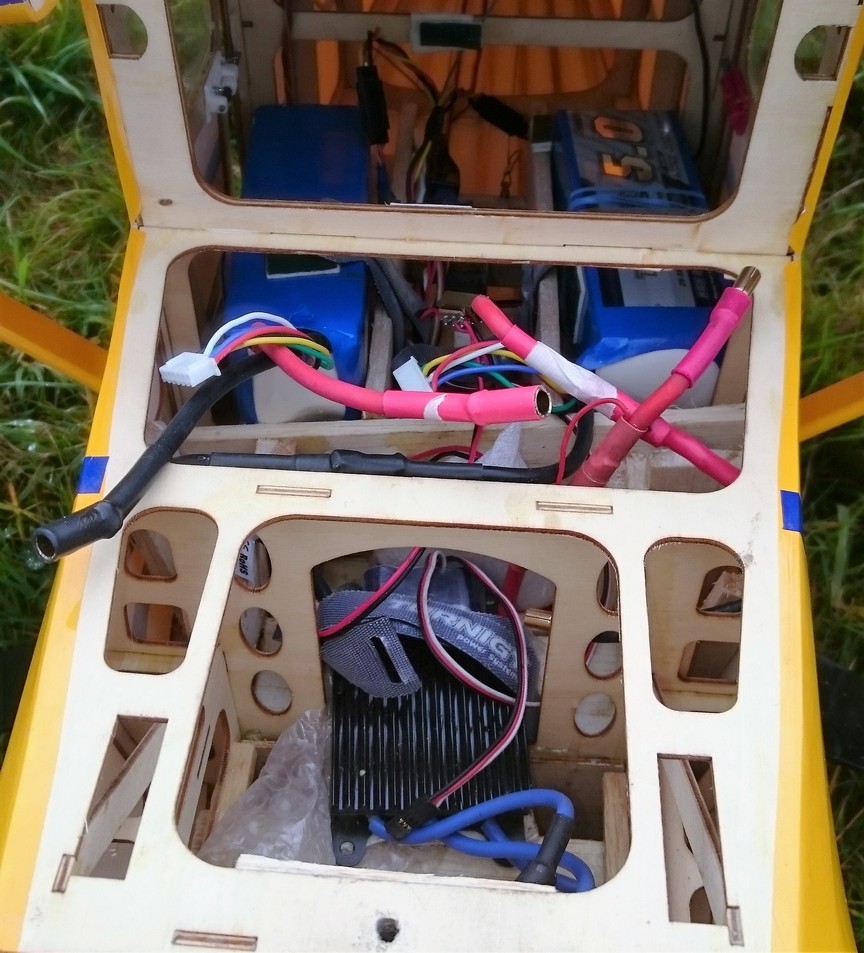 It flies on 10 cells (two five cell 5000mAH packs connected in series) and with 2.7kW of power available it’s dragged into the air very quickly indeed. Stanley normally flies it fairly gently and after a five minute flight he’s usually only used around 20% of the available battery capacity.
Stanley also brought this Spacewalker along one midweek day and again, it’s one we’ve seen before occasionally.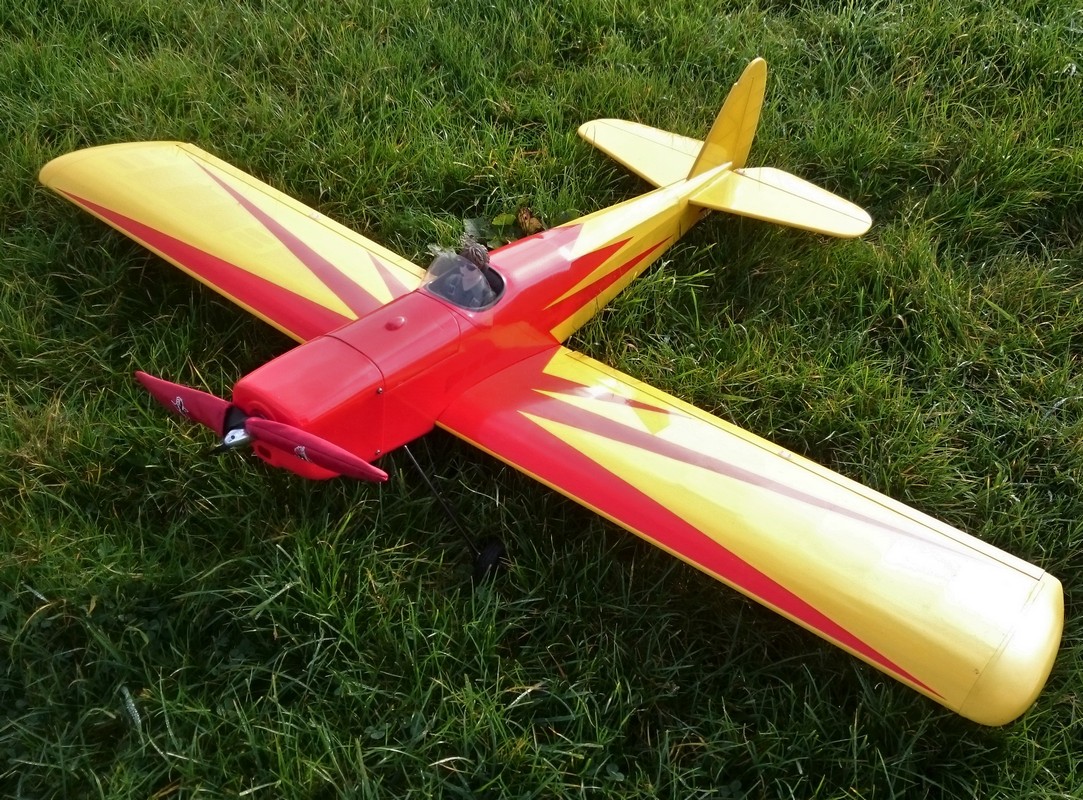 This one is from Seagull Models and is 1580mm span (a mere 62”) and I think it flies on 5 cells. A lovely model and I believe Stanley said it was for sale so if you fancy a Spacewalker speak to Stanley (or Viv Burgess!).
The final new model to appear in October was well worth the wait. It’s been a long wait as Norwegian Nick’s wife bought him the Balsa USA kit of this beautiful Citabria Pro about twenty years ago. Nick says he started it about thirteen years ago and it’s been finished for four years but he’s been wondering about a suitable electric set-up. The model is 2032mm spam (80”), is covered in Solartex and is fitted with Hitech servos. The all up weight is 11lb 9oz so it needs a powerful motor and Nick eventually plumped for a PPPO 5065-380kv from 4-Max which should provide 1820-2100 watts. He has fitted a YEP 100A speed controller and it is all powered by a 5 cell lipo of 3000mAH capacity.
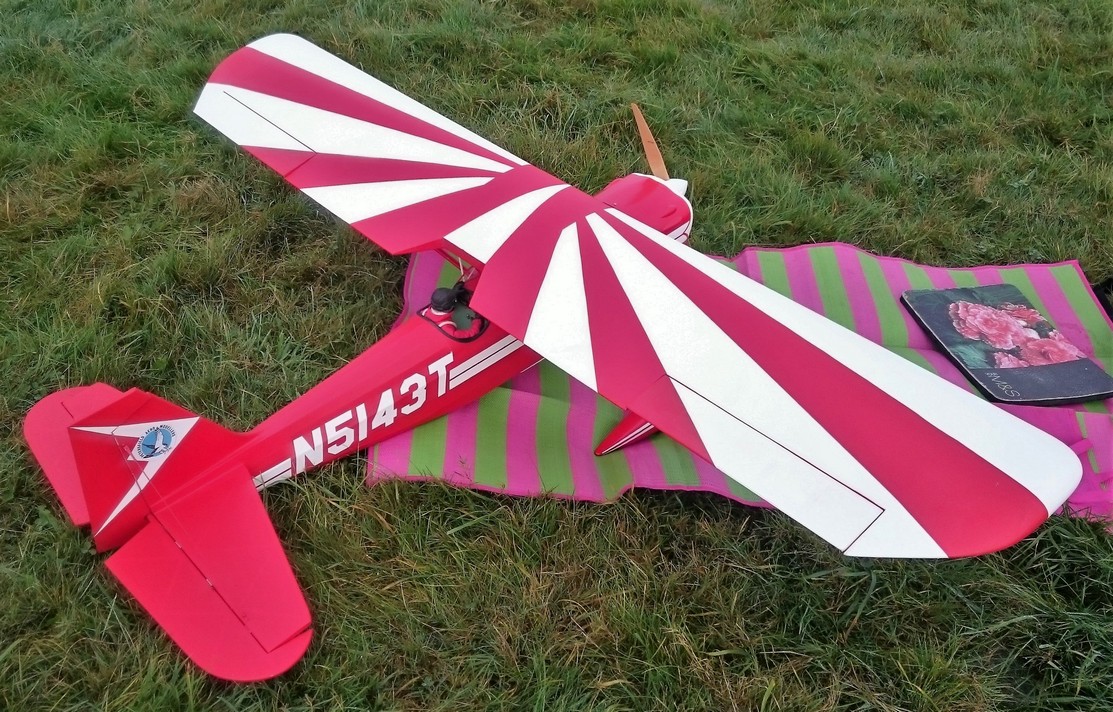 For the first flight he used a 14” prop and the motor was pulling around 900W which was adequate but a little more would have been nice so I think he’s going to try a larger prop for the next flight. The model flew beautifully and some of the first flight can be seen in this month’s video at the end of this Patch News.
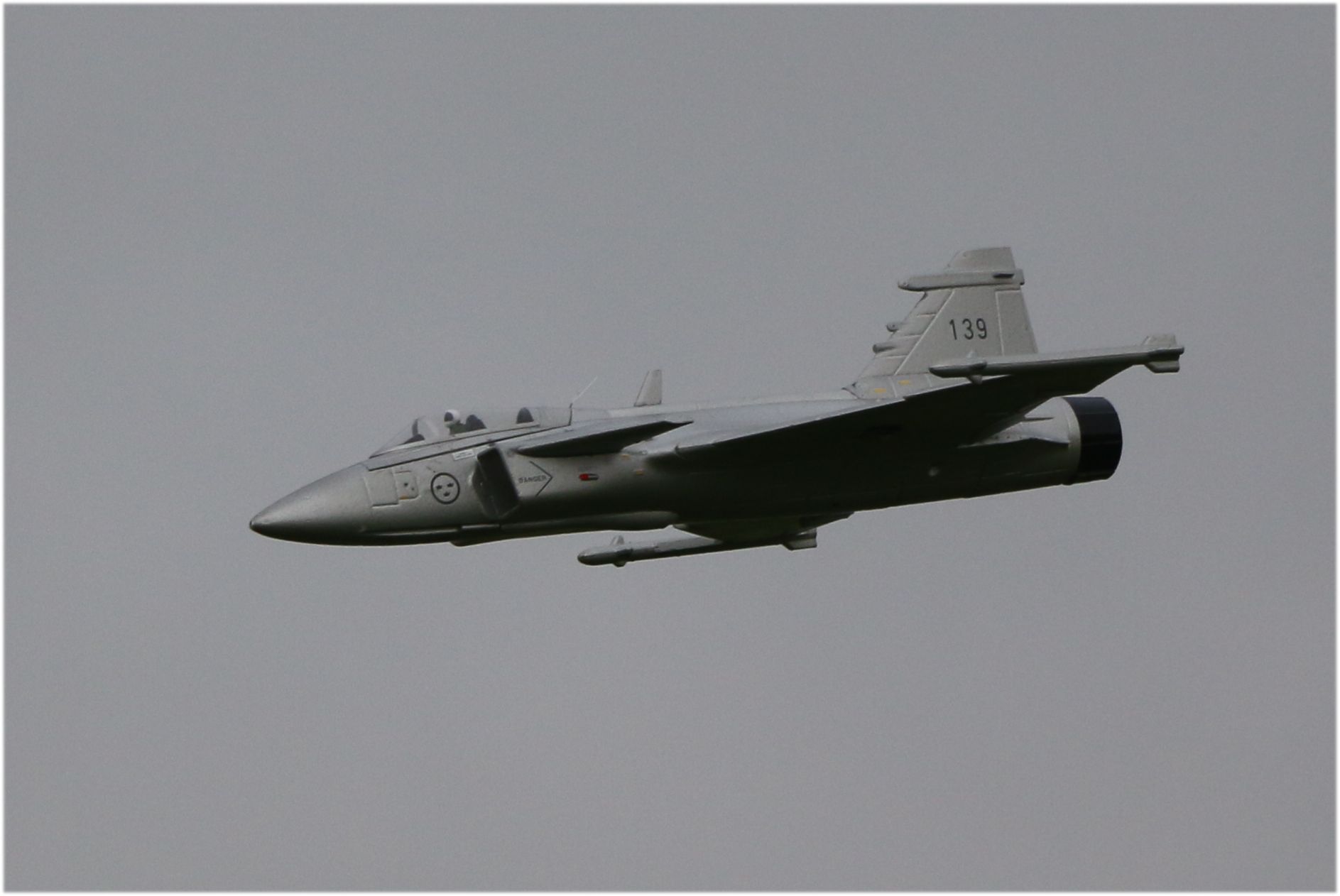
Recently, having become fed up with swapping receivers between models, I treated myself to some new ones. I use Multiplex radio and usually buy receivers online from Germany or Austria as it’s normally the cheapest way. I bought three because the cost took me over the minimum to get free postage and the total cost was just £78.30 delivered, not bad for three top quality receivers. The ones I bought this time were the RX-5 Light M-Link ones of which I already own several. The Light part means they are non-telemetry but I tend to only use telemetry in a few of my models so that’s not a problem. They are single receivers (some of the MPX ones are dual) and only have one aerial but they have proved to be totally reliable in all my models. One of the features I like about Multiplex radio is that you can bind the transmitter to a receiver and also set up the failsafe without having to touch the receiver at all, a useful feature when access to the receiver is not always easy. This is the case with my Saab JAS 39 Gripen (Griffin in English), a little 510mm span (20”) EDF model, the receiver is impossible to reach when it’s in the model.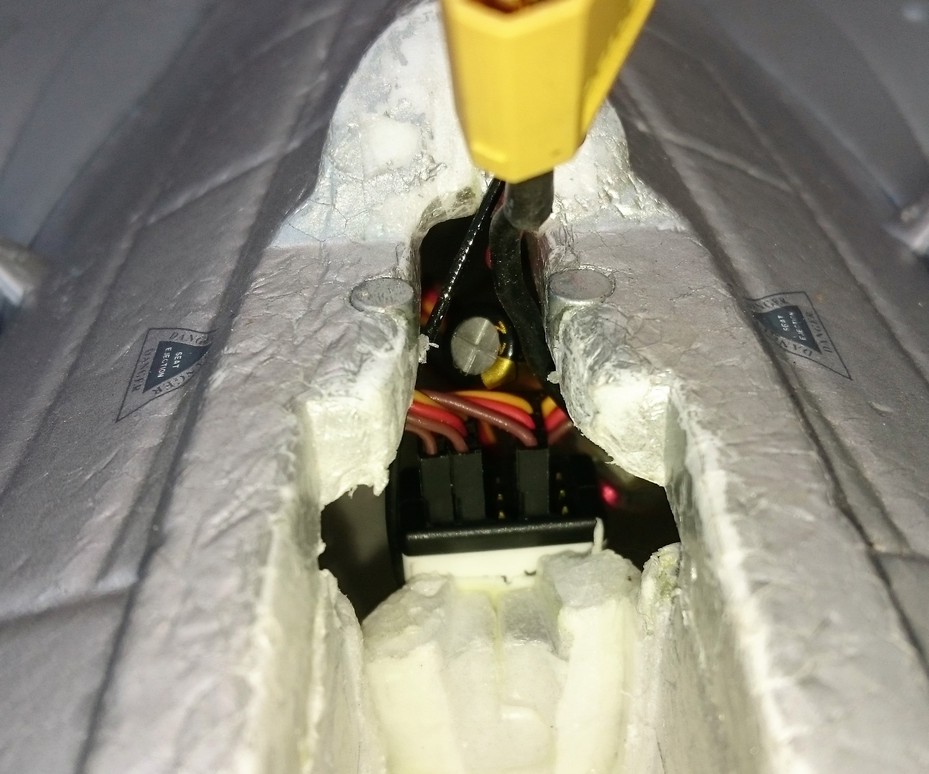 It’s mounted vertically in the duct, immediately behind the battery compartment, and when the battery is in place the speed controller pulls forward and sits on top of the receiver connectors with the aerial running past it.
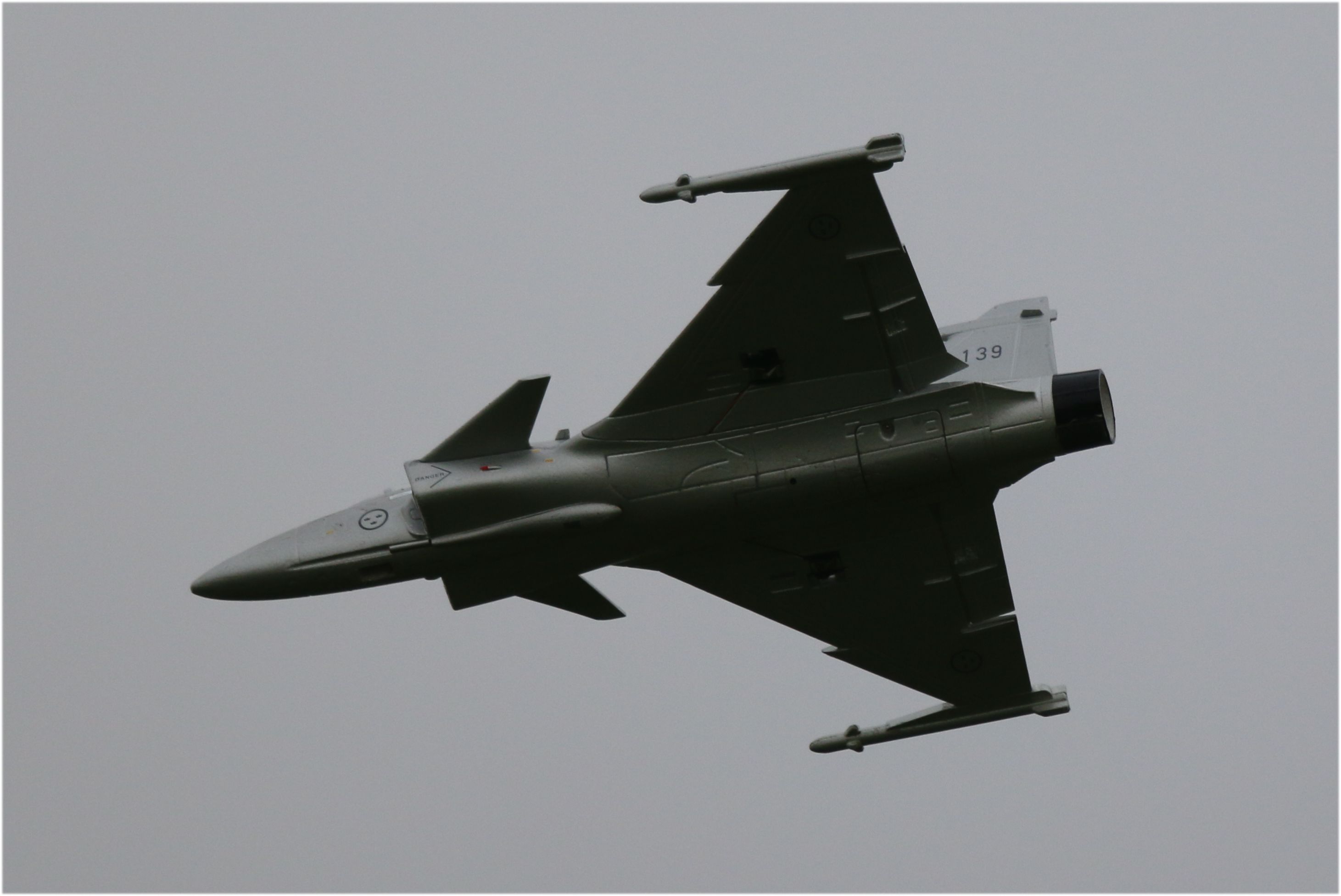
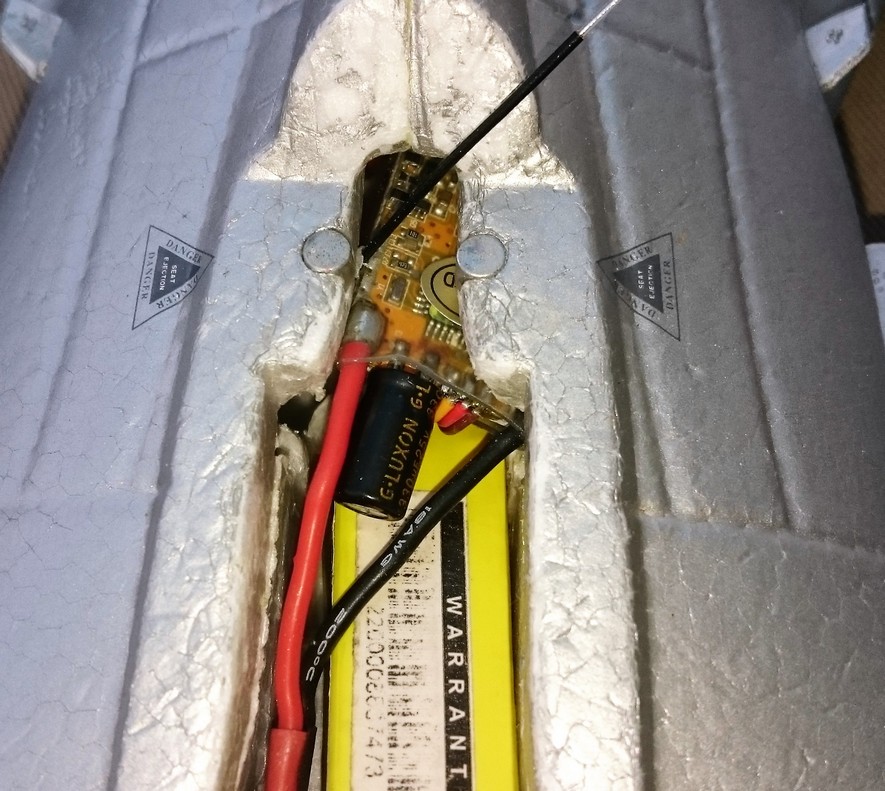 Now if that’s not a nightmare for the radio signal I don’t know what is, but it all works perfectly, good old Multiplex! Kryten took these cracking shots of it flying the other day.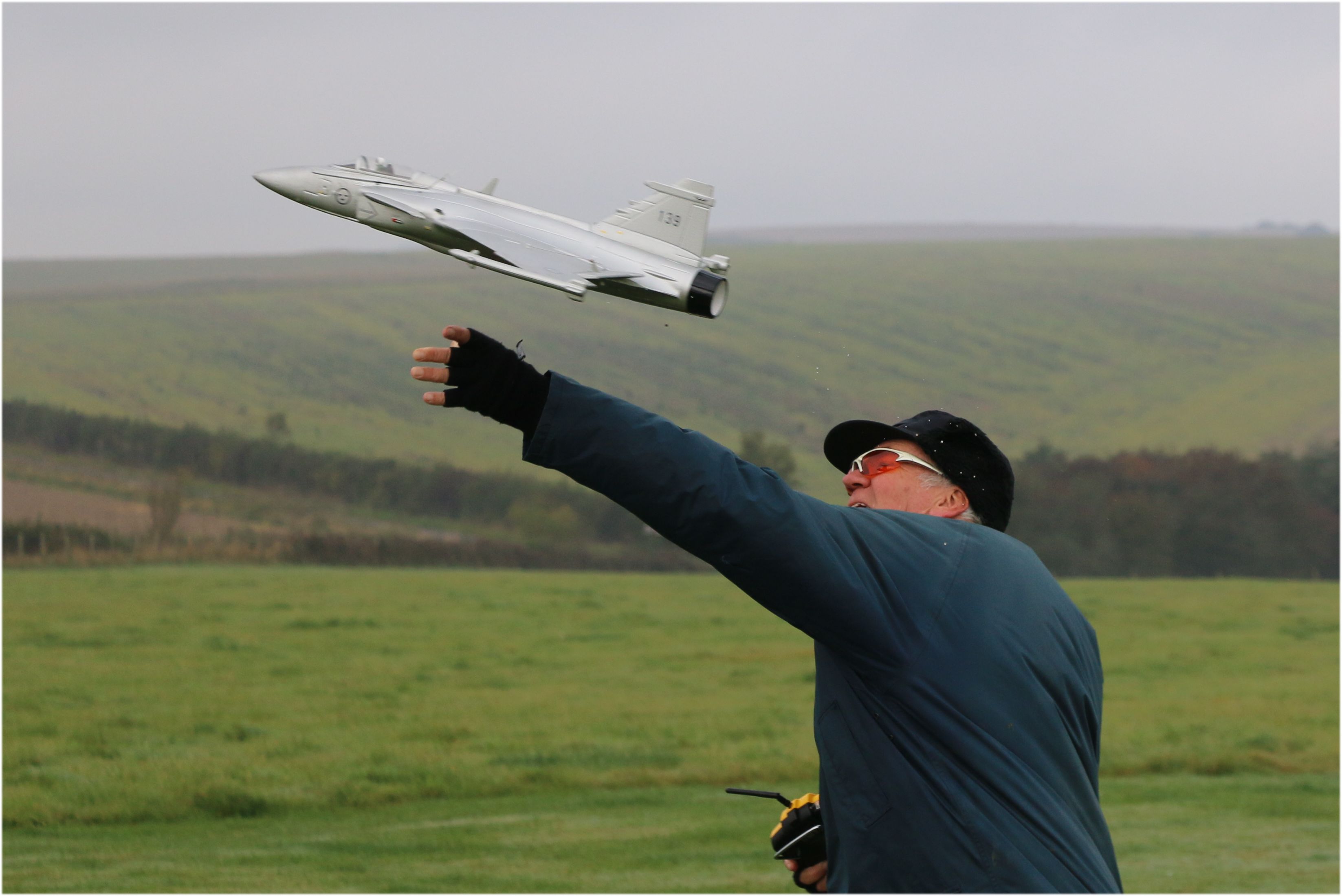
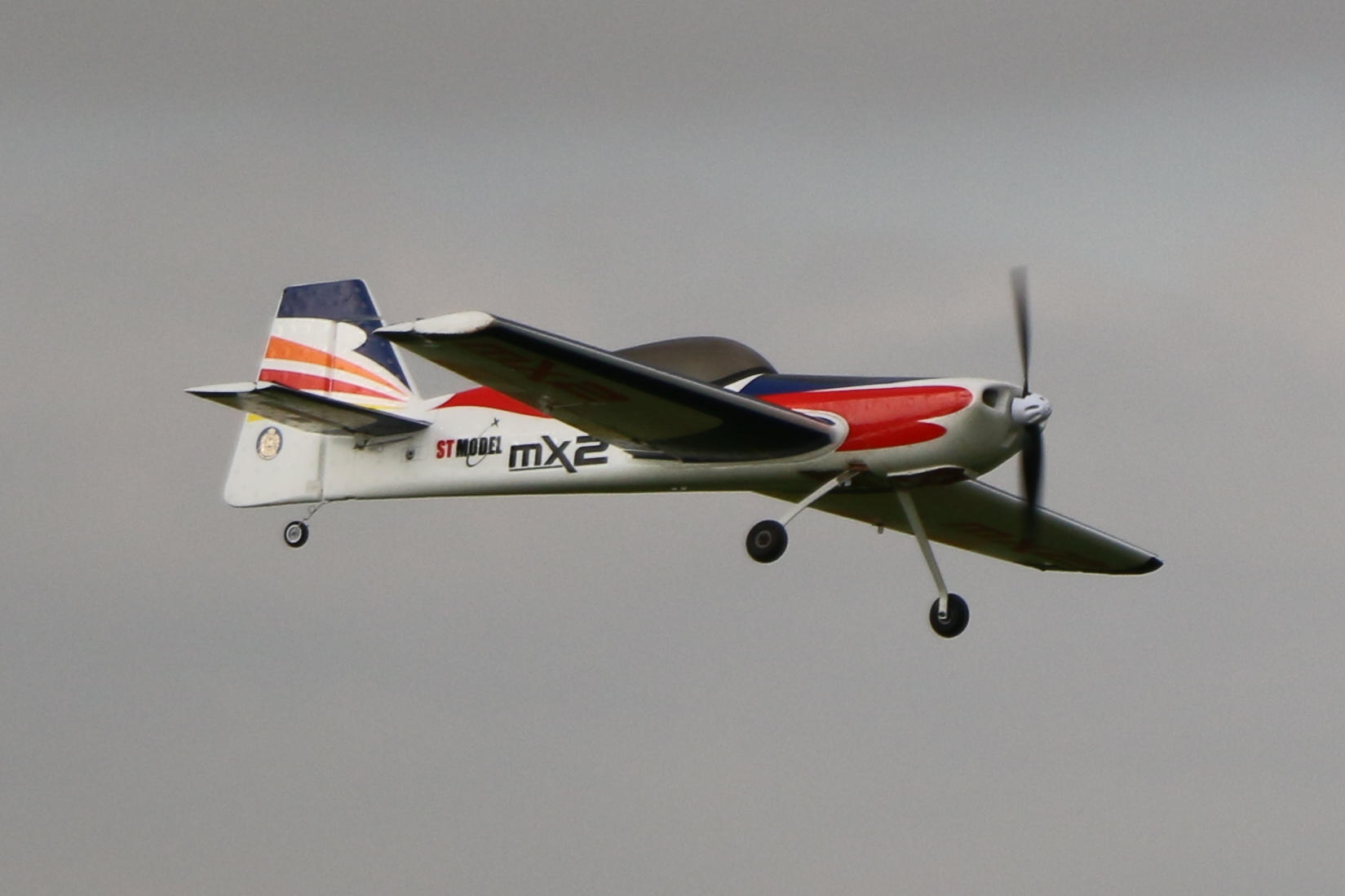
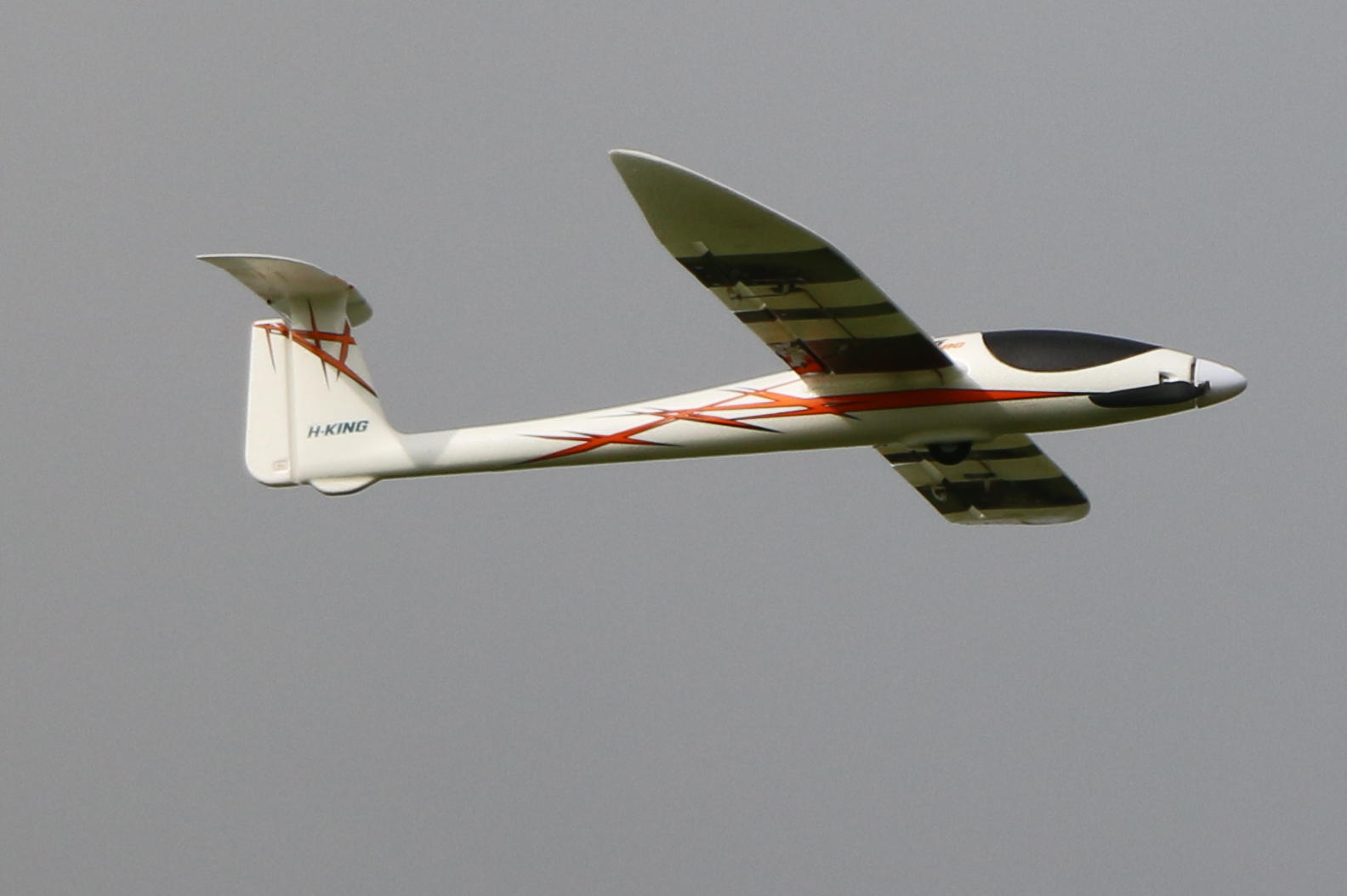
Kryten also took these excellent photos of my Cri-Cri, Captain Slow’s MX2 and BFG glider, Dwayne Pipe’s Citabria, and someone’s Wingnetic, not sure whose but possibly 1066’s.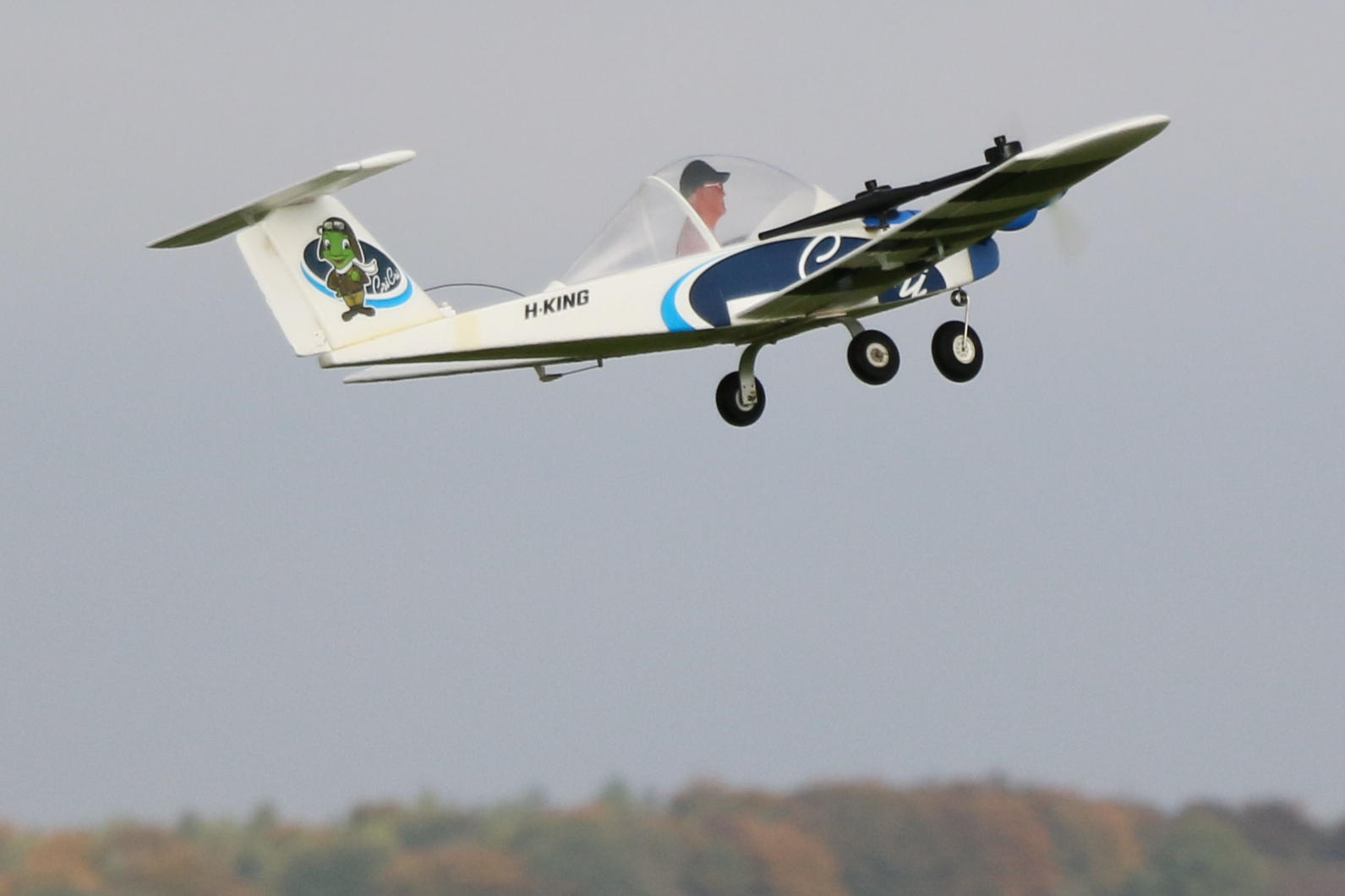
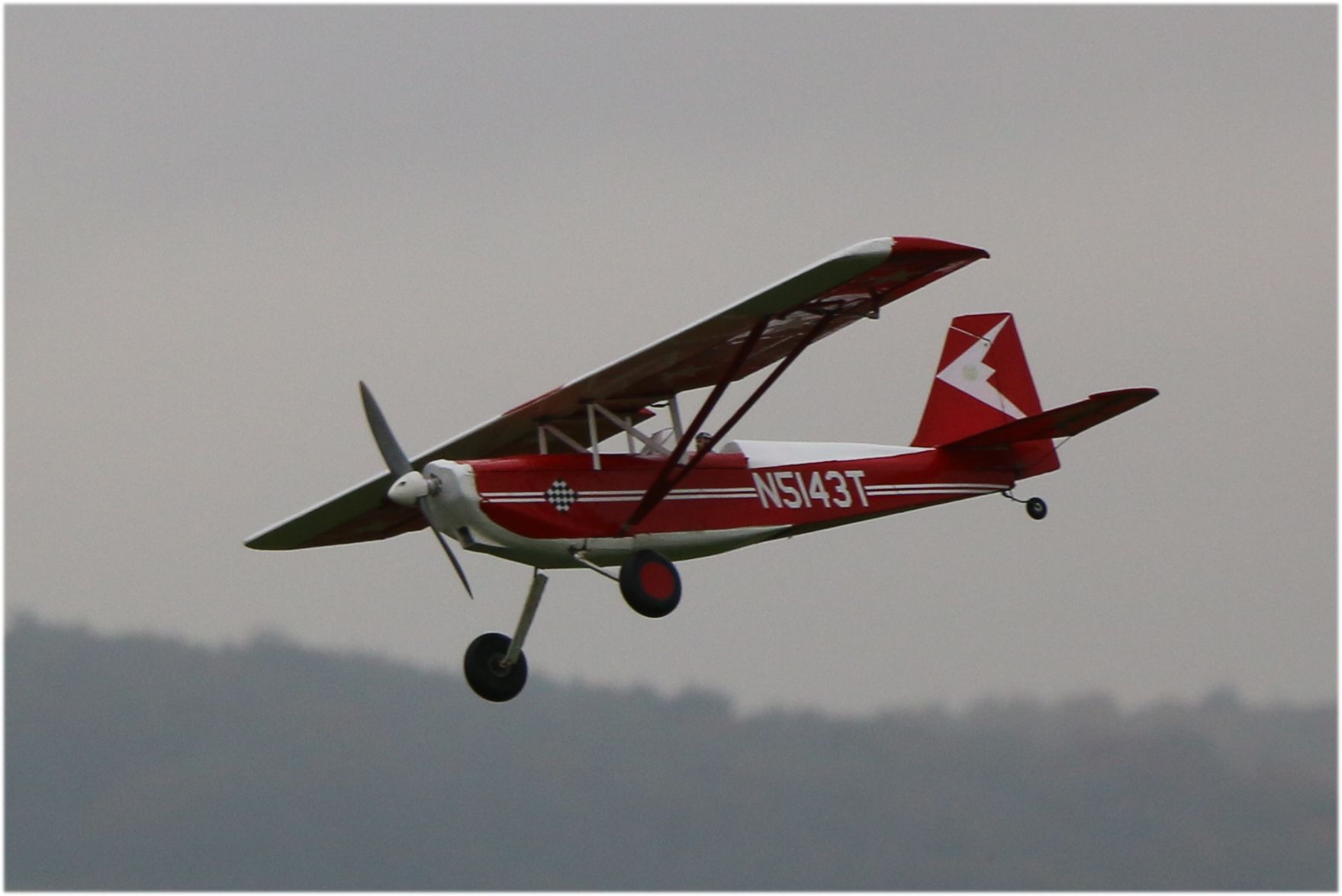
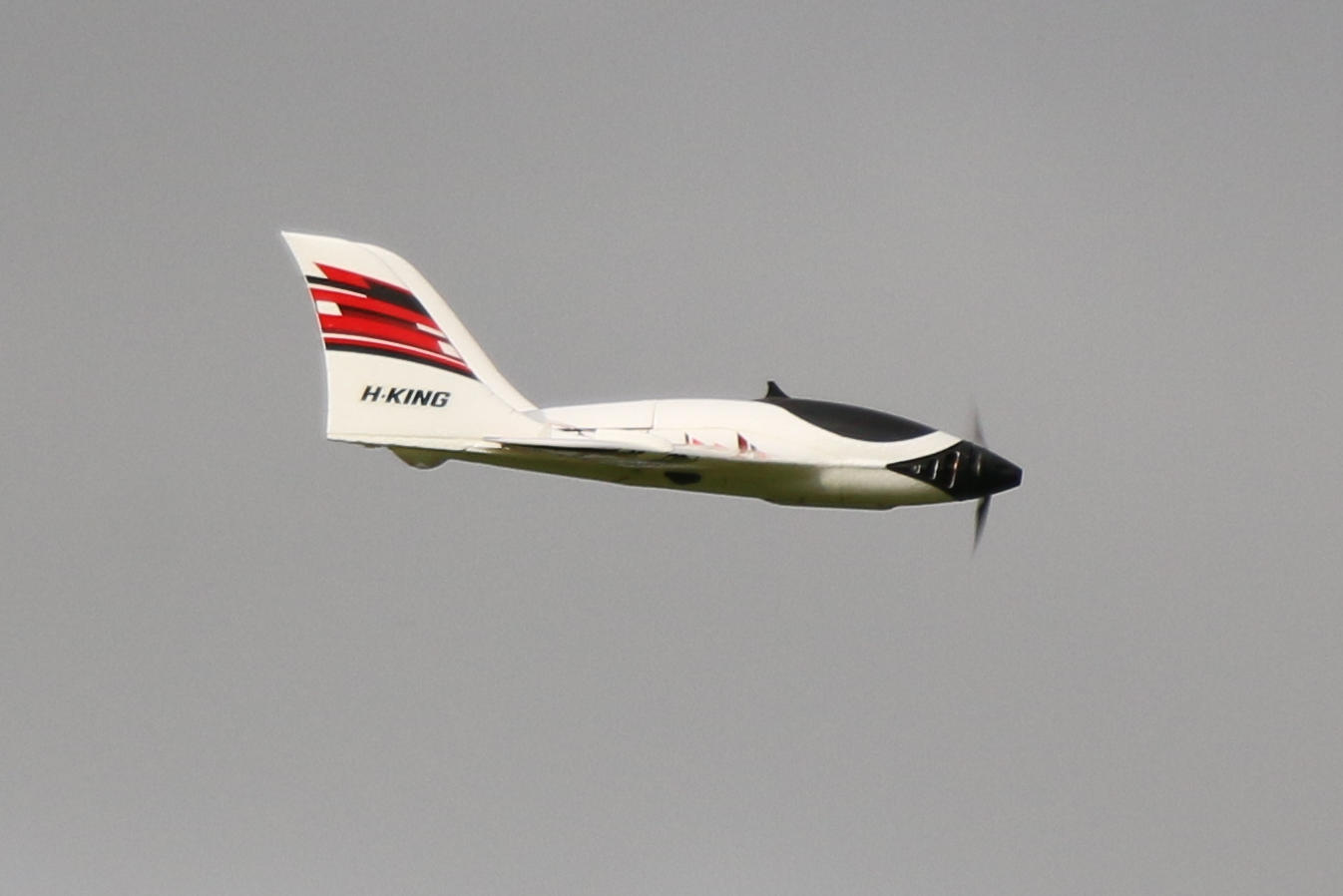
And finally, it’s time for this month’s video:
Please watch the video full screen, it’s so much better with small models flying around. If the video above won’t play for you CLICK HEREAn airline recently introduced a special half-price ticket for wives accompanying their husbands on business trips. Anticipating some valuable testimonials the PR department sent out letters to the wives of the businessmen who’d used the special rates asking how they had enjoyed their trip. Responses are still pouring in from angry wives asking “WHAT TRIP?”
Colin Cowplain
Patch News – September 2016 – Part Two
In Part One of the September Patch News I explained that I would be away on holiday at the end of September and beginning of October so would miss the first flights of the models built for the Kline-Fogleman challenge. Well I’m back now and all the models have been flown, so here’s Part Two to tell you all about it.
First a quick recap of the rules: The wingspan had to be no more than 36”, the wing had to have a Kline-Fogleman wing section, and the model had to be a fun fly design with high wing.
So what is a Kline-Fogleman wing section? Well this is what Wikipedia says: The Kline-Fogleman airfoil or KF airfoil is a simple airfoil design with single or multiple steps along the length of the wing. It was originally devised around 50 years ago for paper airplanes. In the 21st century the KF airfoil has found renewed interest among hobbyist builders of radio-controlled aircraft, due to its simplicity of construction. The airfoil was designed by Richard Kline & Floyd Fogleman.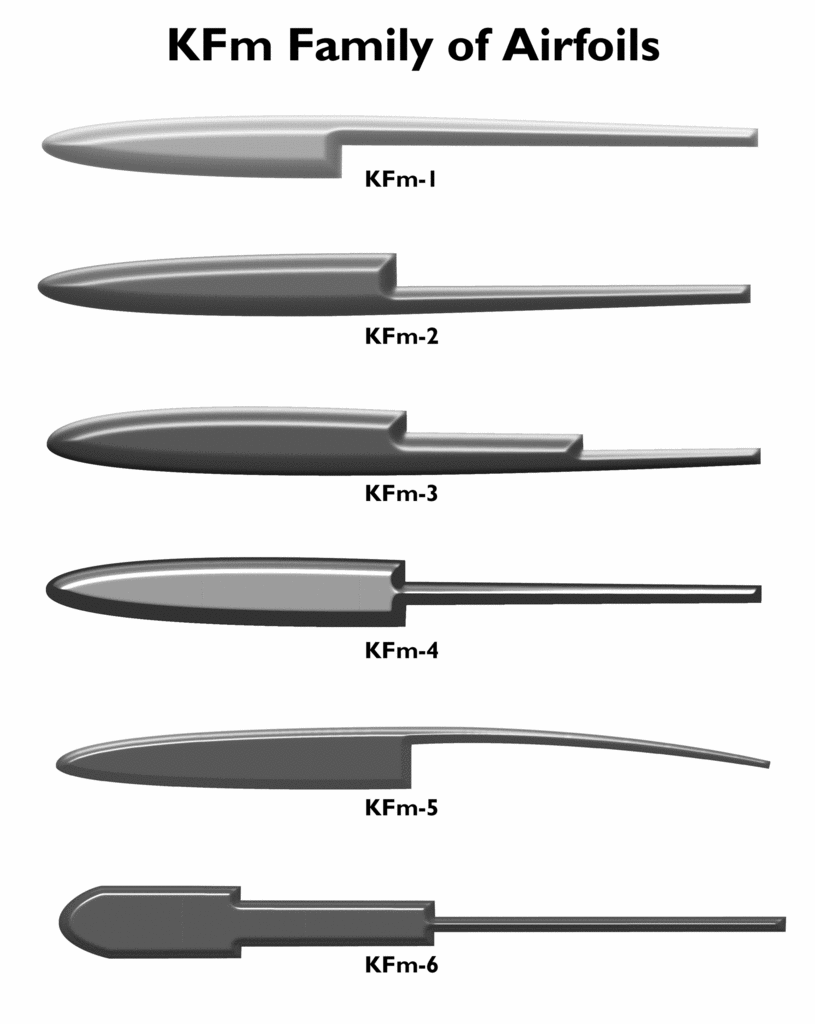 Seven models were brought along to the club meeting on 22nd September where everybody was able to vote for their favourite in three categories and the winners were: Best Looking – Andy Palmer (obviously but what about the plane?!). Most Original – Tim Clay. Least Likely to Fly – Mark Agate.
There was a very wide range of models, some totally scratch built, others modified from existing models. I’m a bit short of info on a couple of the models and I can only pass on the details that are either given to me or I can discover for myself. I’ll start with mine as I know loads about it!
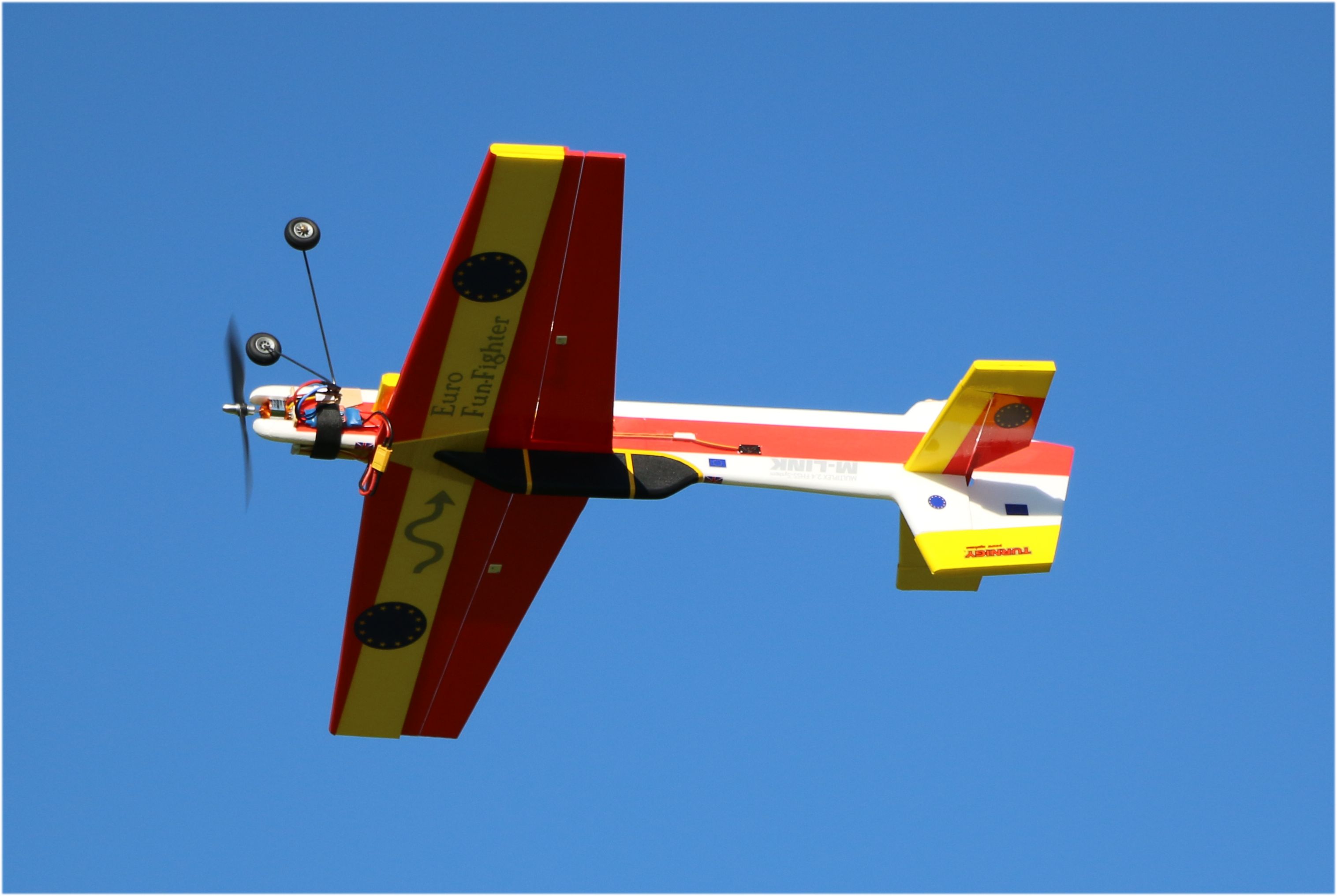
I called mine Euro Fun-Fighter as a bit of a wind-up in these Brexit days, but oddly it’s shrunk by almost 20% since 23rd June! It’s a very basic all Depron, 3D style, profile fuselage model.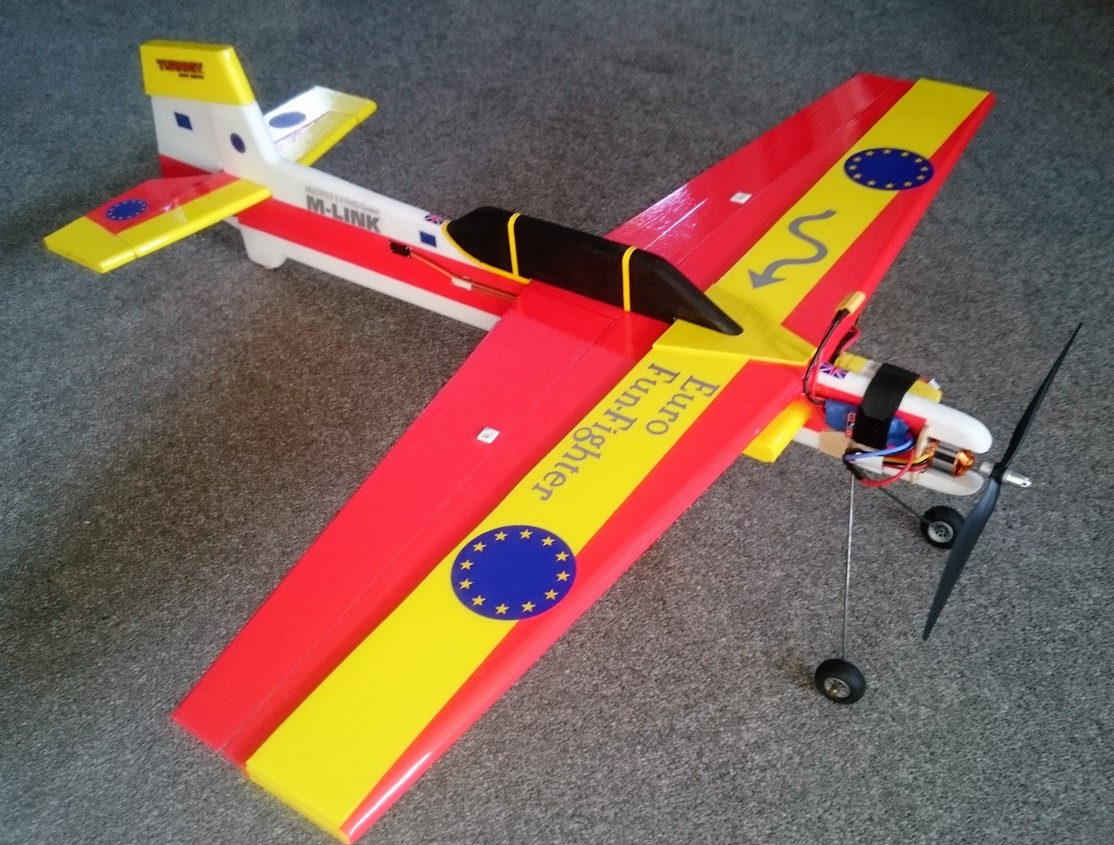 The Depron was all from a single 6mm thick sheet as obtained by 1066. The fuselage is simply 3 laminations of Depron cut to shape and incorporates the fin. The wing is 3 laminations but steps down to a single thickness at around 40% of the chord, with a step top and bottom, a KFm4 section. There is a spruce spar at the underside step position to provide some strength. The ailerons simply continue the wing in a single thickness. The tailplane is 2 laminations thick but the elevators are single thickness except at the tips where 2 thicknesses provide stiffness and match the tailplane. The rudder is single thickness but has 3 laminations at the top to provide the necessary stiffness and to match the fin.
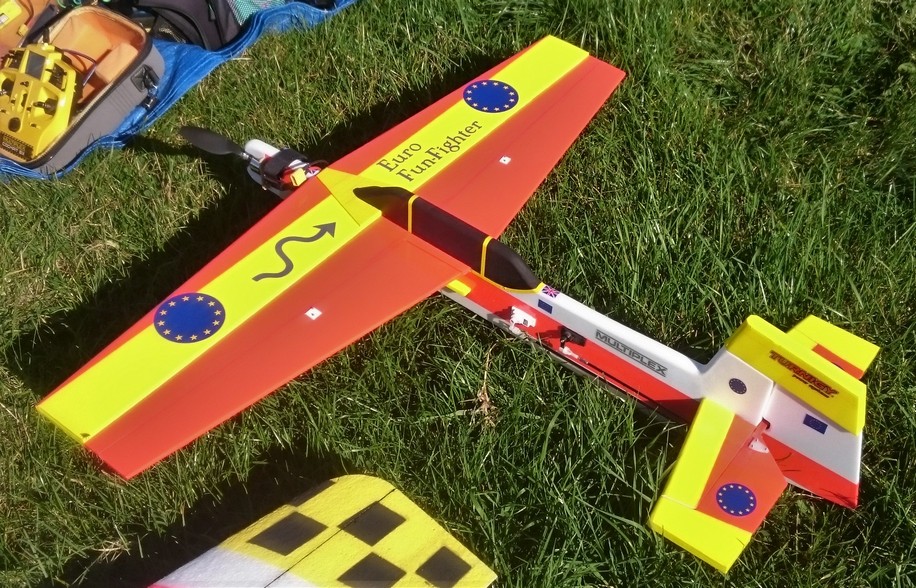 The power train is exactly the same as in the HobbyKing Hummer, a Turnigy 2830/11 1000kv motor fitted with a 10×4.5 prop powered by a 3 cell lipo of either 1000 or 1300mAH. I fitted a 30A esc which is much larger than is required but the cost and weight difference is minimal, and it’s more likely to be useful in the future.
I decorated/covered the wing and tail with some HK Wing Tape that I won in the raffle and painted the ‘cockpit’ with black acrylic paint. With the addition of a few stickers I had kicking around I think it looks quite smart.
Dougal Entendre’s model is a real ‘bitzer’ and can hardly be described as fun fly style but who cares. The fuselage and V tail were built to replace the broken foam parts of his Spirit and normally flies with the original Spirit wing fitted. Dougal calls it Vignette and it’s built from balsa and ply and it’s fitted with Wingnetic motor, speed controller, and prop. It flies absolutely brilliantly and I covered it more fully in the August Patch News.
For the Kline-Fogleman Challenge Dougal used the Vignette fuselage and tail but built a new wing with the Kline-Fogleman stepped section. I’m happy to report that despite winning Least Likely to Fly it does!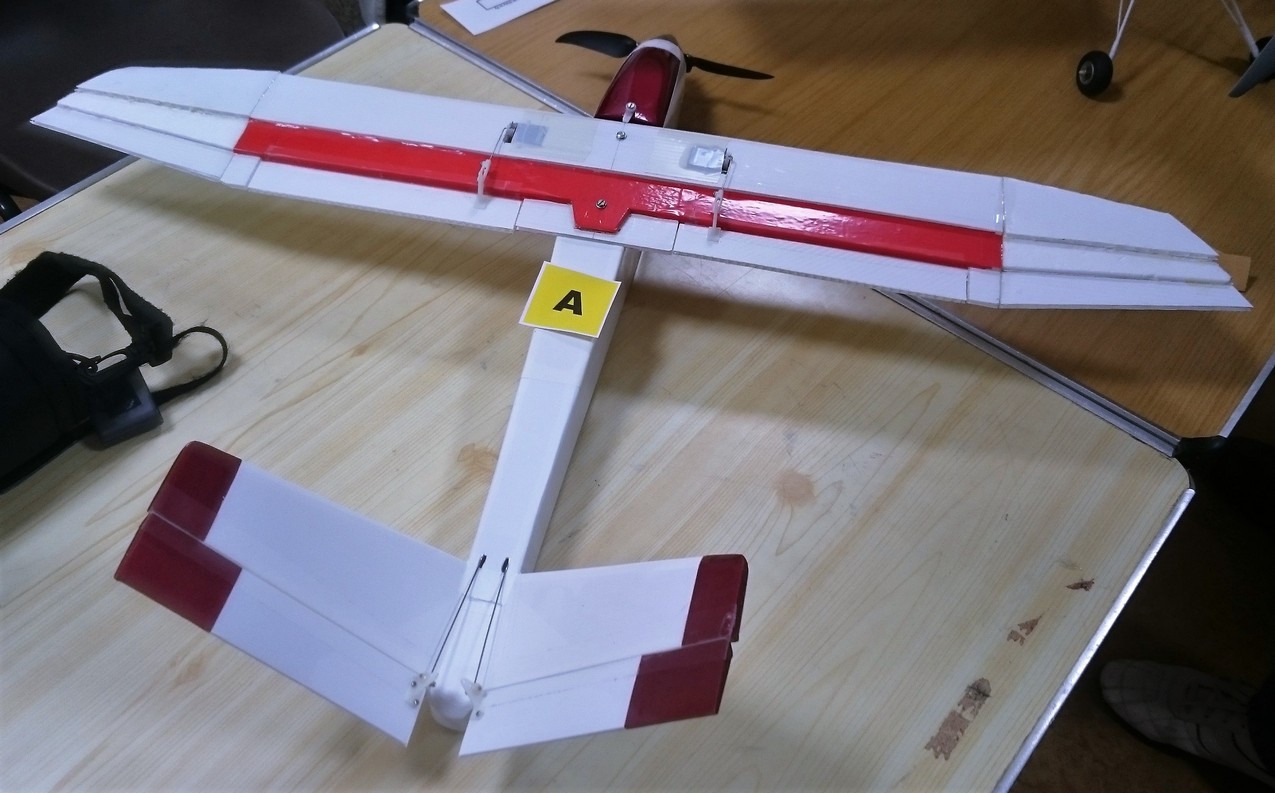 This is how he describes the wing construction: The wing is 3 sections of 1/8″ Correx folded back over 1/8″ thick other stuff: 1/8″ ply (in about the centre 4″), balsa (outboard of the ply), or Depron (tip sections). I was going to put carbon spars in it, but it came out heavier than the Spirit wing and seemed pretty strong anyway, so I didn’t bother. So there you have it, it’s simply a Spirit with a different fuselage, tail, wing, and motor!
Kryten (I’m watching Red Dwarf on TV as I’m writing this!) should have got a special award for the longest build as he’d started his model back in 1968. The fuselage and tail are a Pal Joey, a Bill Winter design that was published in RCM&E in December 1963.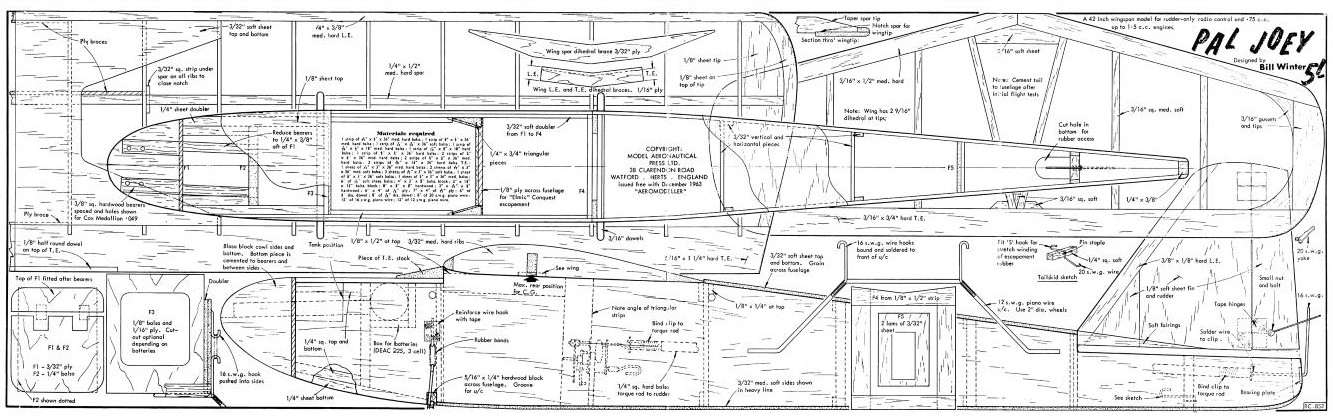
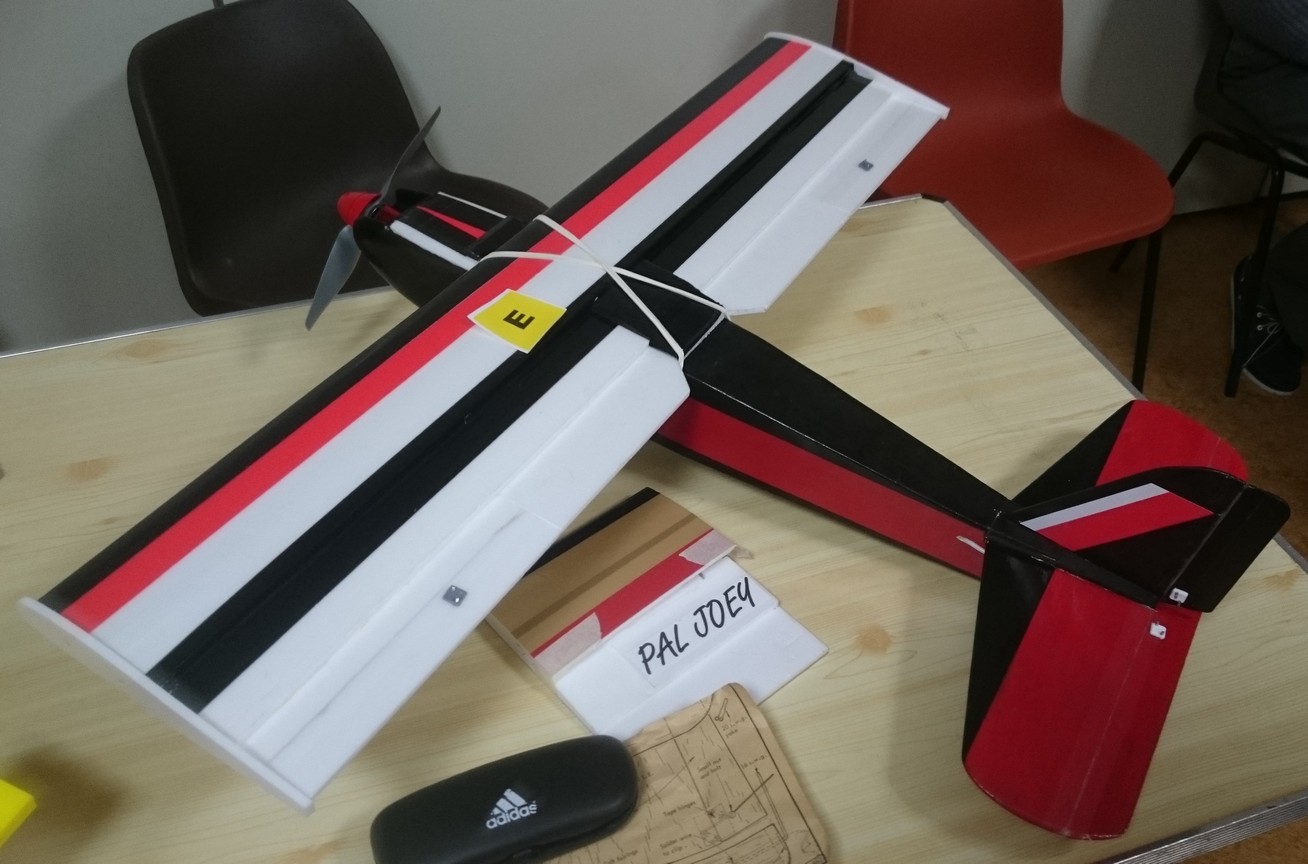 This is what Kryten says about it: I started building in 1968 but the model was never completed but I kept it “just in case”!! When the club build was announced I decided to resurrect it and put on a KF Depron wing. The original model had a 42-inch wingspan with 7-inch chord. I decided, as it would be relatively heavy compared to an all foam model, to construct a KF-3 wing section with an 8-inch chord resulting in a similar wing loading to the original.
The wing was constructed using 6mm Depron with wing tape applied to the outer surface (Experimental Airlines technique described on YouTube) and then folded along the leading edge.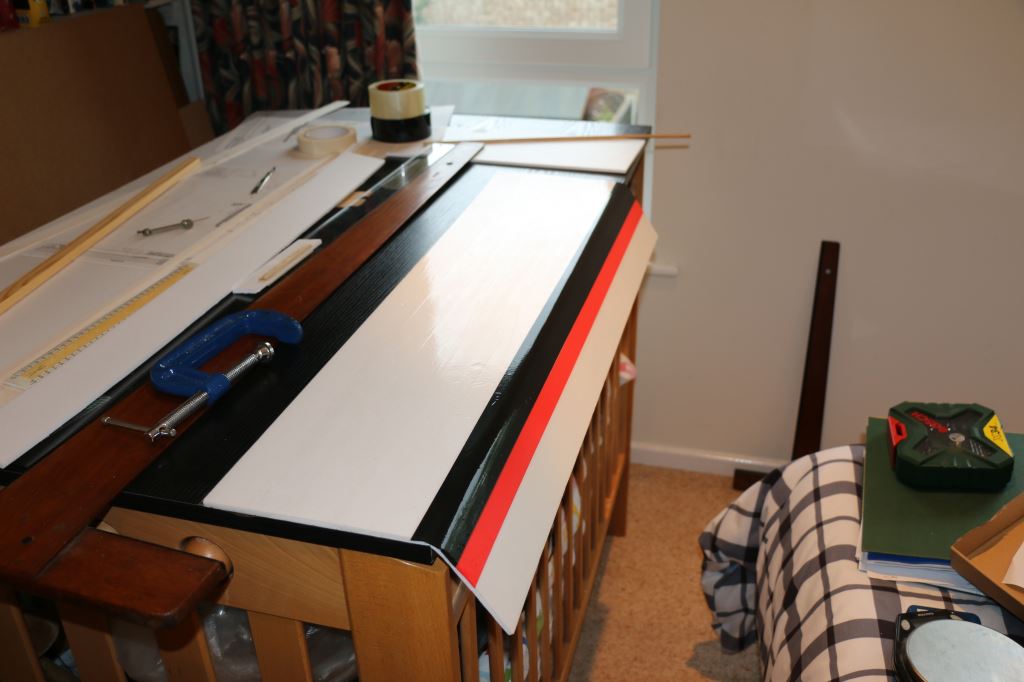 I incorporated two wing spars made up of a Depron core with balsa top and bottom. It was all glued with Gorilla Glue and made the wing nicely rigid whilst also giving enough thickness to accommodate the two HXT900 servos and their leads.
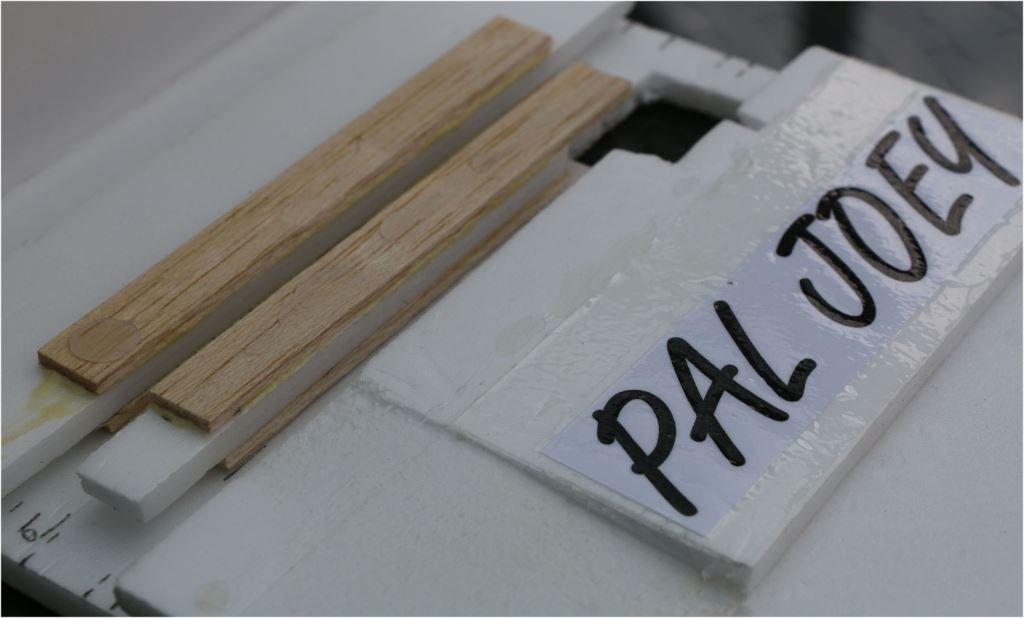 I converted it from single channel rudder control to aileron, rudder and elevator and replaced a 1cc “Quickstart” IC with an E-Max GT series 2815-06 motor from BRC with 9×6 prop, a 40amp Turnigy ESC and an 1800 Zippy Compact battery. So it’s a real mixture of old and new but as the Kline-Fogleman sections were first tried around 50 years ago it’s actually spot on correct.
1066 built a model from scratch and rather oddly he built a balsa fuselage and then covered it in Depron. Presumably it has a square balsa box and the Depron gives the shape.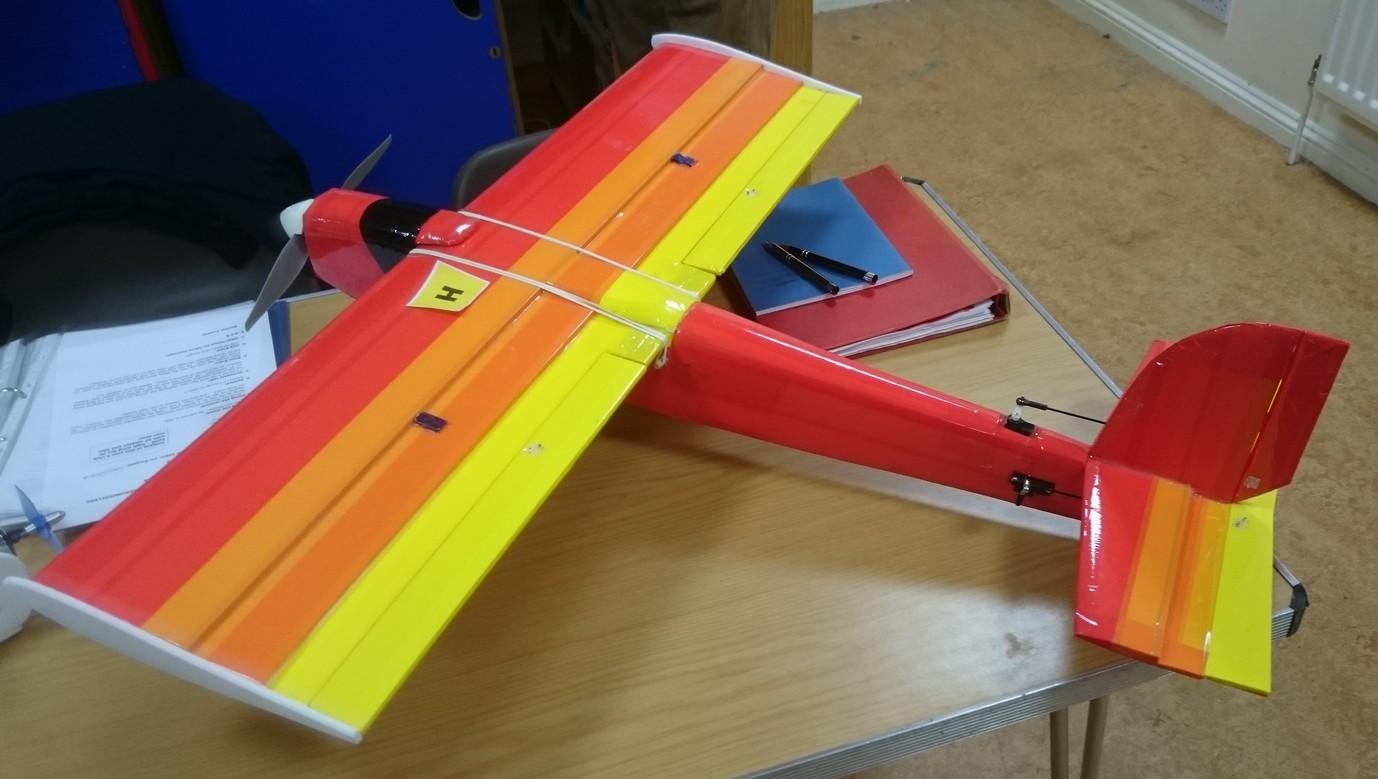 The wing is all Depron but has pine spars for rigidity and two KF steps, 1066 describes it as a KF3 Plus, not sure what the Plus part is. The tailplane is also made from Depron and has a KF step, just one. The whole model is covered in red, orange and yellow wing tape. For power he fitted a NTM 3528 1200Kv motor, a 2200 3s lipo, and a 50 Amp speed controller.
Another scratch built model came from Percy Vears. It’s another Depron one with just a few pieces of ply, dowel, and carbon rod to provide the necessary strength.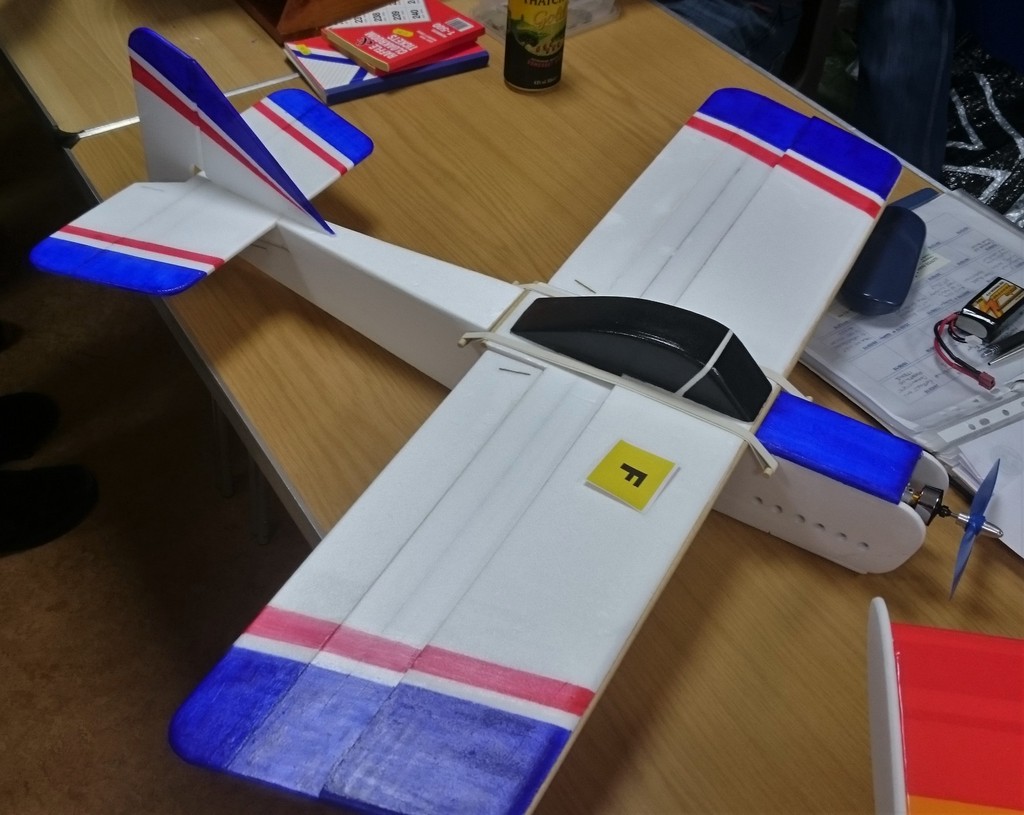 The wing is 34” span and has a KF2 section, which means it has one step on top of the wing. The motor is a 2208 2150kv which is coupled to a HobbyKing 20A speed controller with a 3A UBEC and Percy uses a 3 cell 1000mAH lipo.
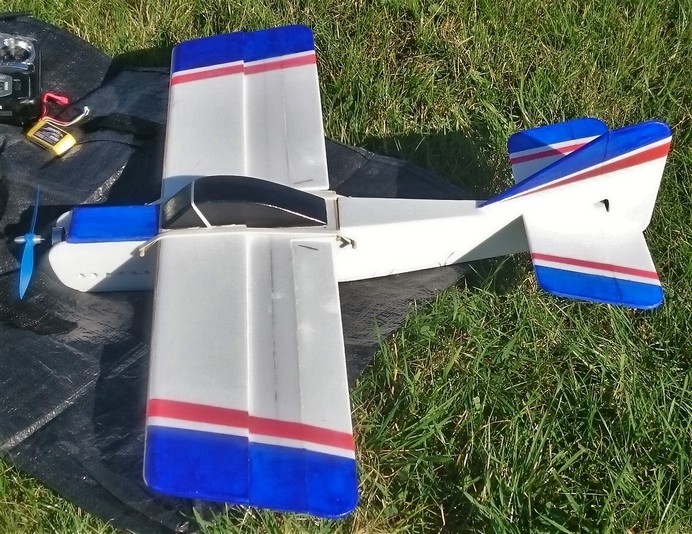 Unusually these days the model only has one aileron servo, along with the normal rudder and elevator ones. All three are HobbyKing TG9Zs. The finished model is extremely light at just 280g (around 10ozs) without the battery.
Modelling Clay’s model has a balsa and ply fuselage which he based on a Wot4, and it has a homemade undercarriage. He built a Depron wing with carbon spars and balsa leading and trailing edges. It has two steps on the top of the wing so I think it’s a KF3.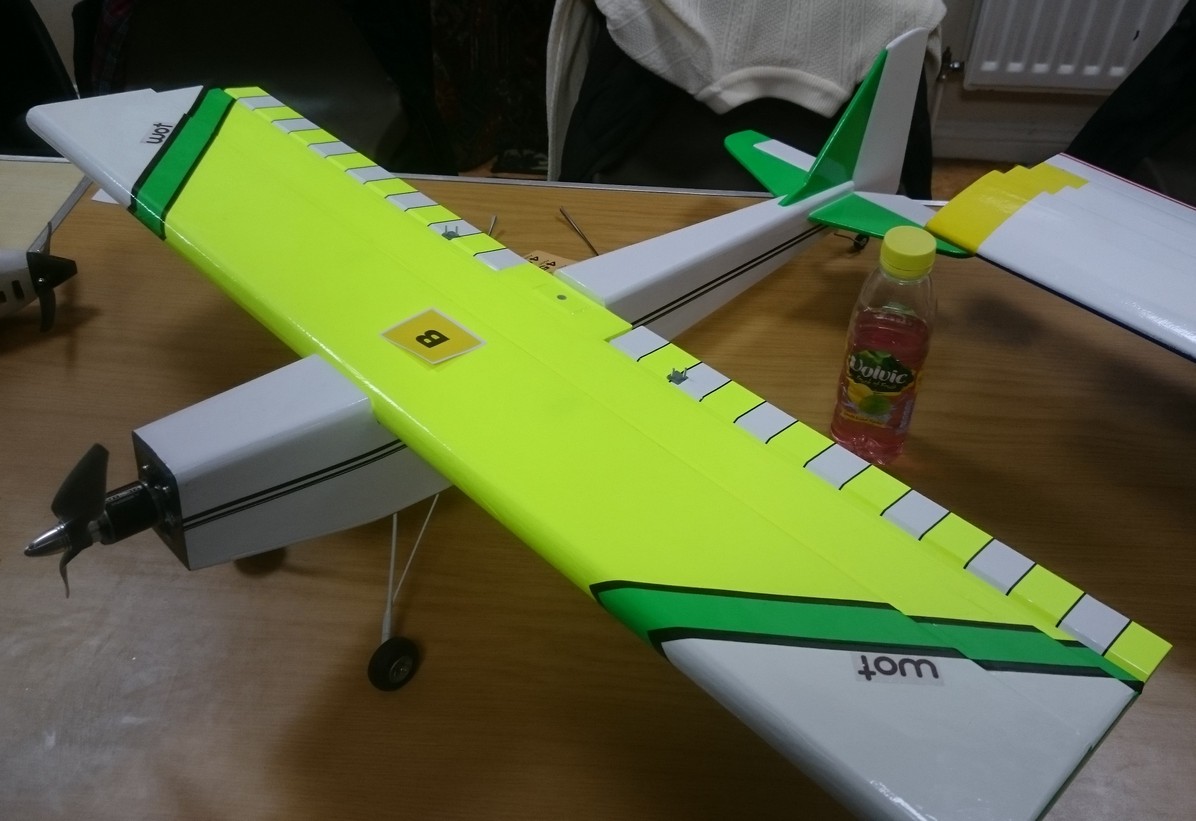 He fitted an NTM Prop Drive 2836 1400kV motor and a 40A speed controller and a 9×5 prop. Battery is a 30C 1800mAH 3 cell lipo. The whole model is covered in Solarfilm and looks very smart. I think the whole model is basically a scaled down Wot4.
Tony Neal had built a Big Stick from a HobbyKing laser cut kit and then made an alternative Depron wing with two steps. The Depron is brown paper covered and then sprayed but the fuselage and tail are covered in some HobbyKing film.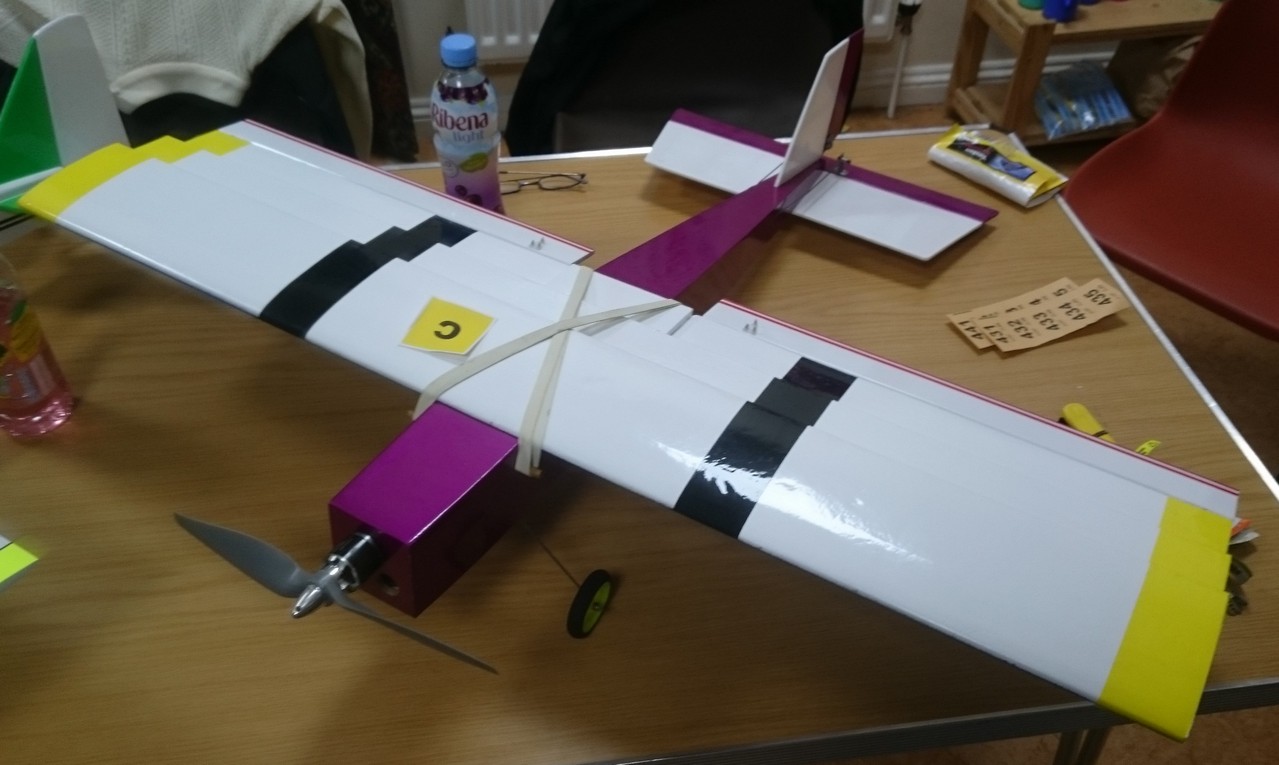 I believe the motor is an NTM Pro Drive 2826 1200KV that swings a 10×5 prop and it’s powered by a 3 cell 2200mAH lipo pack. On the video below you can hear Tony saying the model flies better with the original wing than it does with the KF one.
As things turned out, the Friday morning following the club meeting was perfect weather for test flying and, as I wasn’t going on holiday until after lunch, I decided to fly my model in the morning. I didn’t intend to spoil a mass test session on the Sunday but both Percy and Kryten brought theirs along as well so I test flew all three. The remaining four models were all test flown the following Sunday as originally planned. Fortunately Captain Slow was able to be present on both days and he filmed all seven test flights so the whole of the following video was all taken by him, something for which I’m very grateful, thanks John.
Please watch the video full screen, it’s so much better with small models flying around. If the video above won’t play for you CLICK HERE
While Captain Slow was filming on the Friday Kryten took a few flying shots of the first flights of two of the three that were flown. He uses a proper camera, not a mobile phone so they‘re of excellent quality, so a big thanks for those Graham.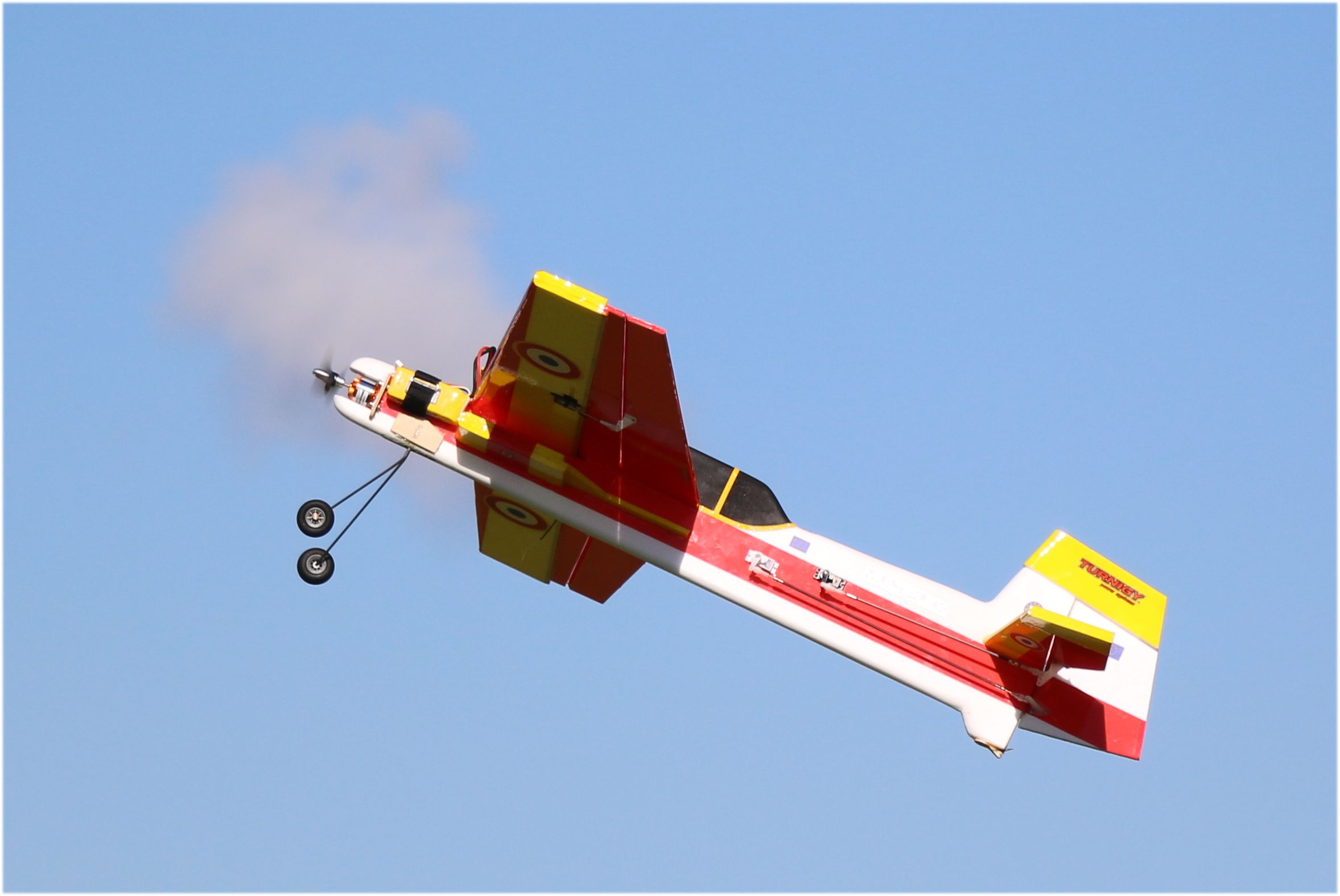
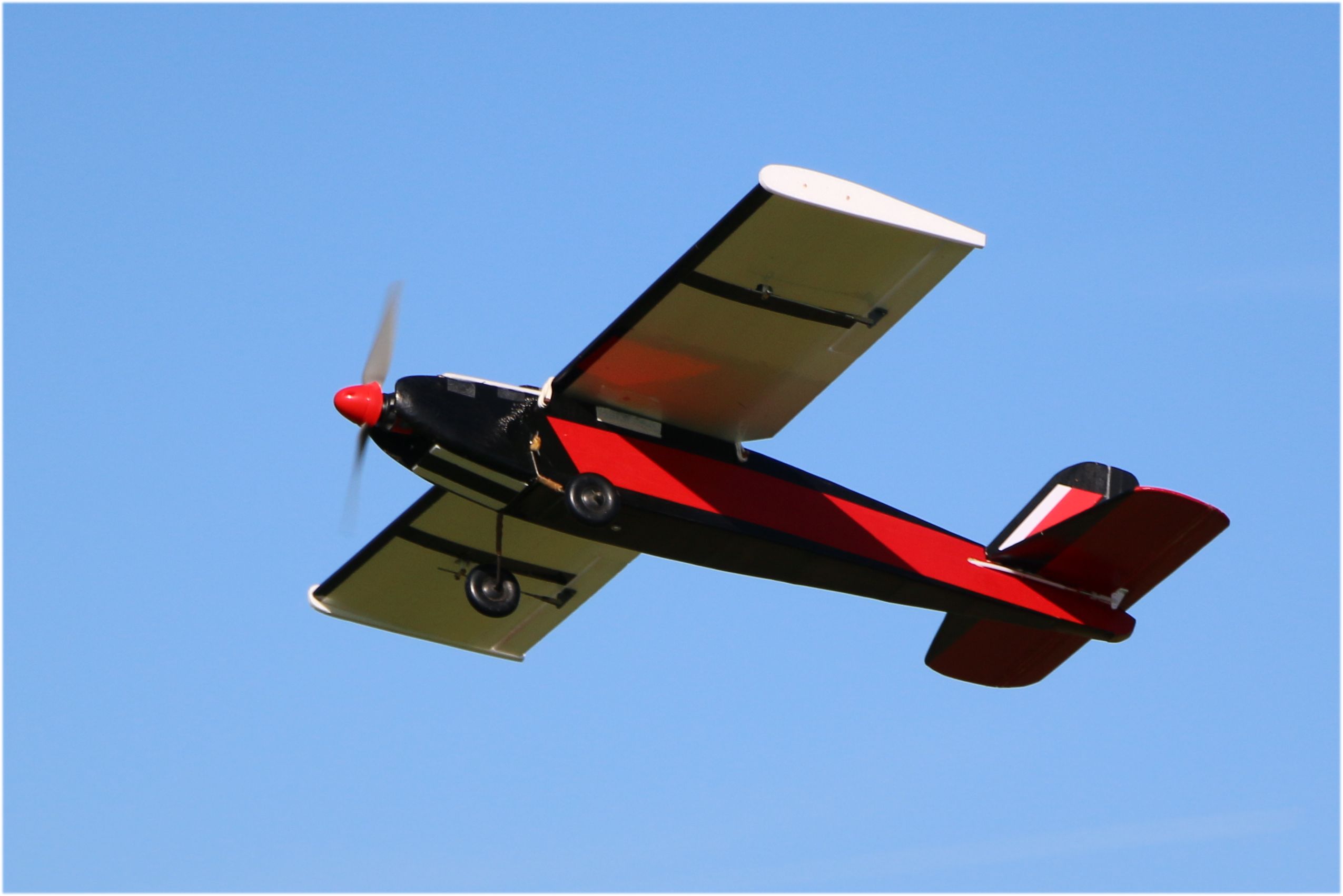 Unfortunately he wasn’t able to make it on the Sunday so I don’t have any stills of those.
Q. What do pilots use for birth control? A: Their personality.
Colin Cowplain
Patch News – September 2016 Part One
Ok, this is going to be shorter than usual as I’m away on holiday before the end of the month. All being well you’ll be able to read this on 1st October while I am in Mexico. This was the sunset the other night, taken from the hotel reception.

I’ll probably write a September Part Two Patch News when I’m home which cover the unveiling of the 2016 Club Build models and their subsequent flying (and probably some crashing!). I hope some of you will have taken photos and video of the flying for me to use. I’ll fly own model, the Euro Fun-Fighter, as soon as possible in October. Meanwhile, here’s a photo of it before judging at club and subsequent flying.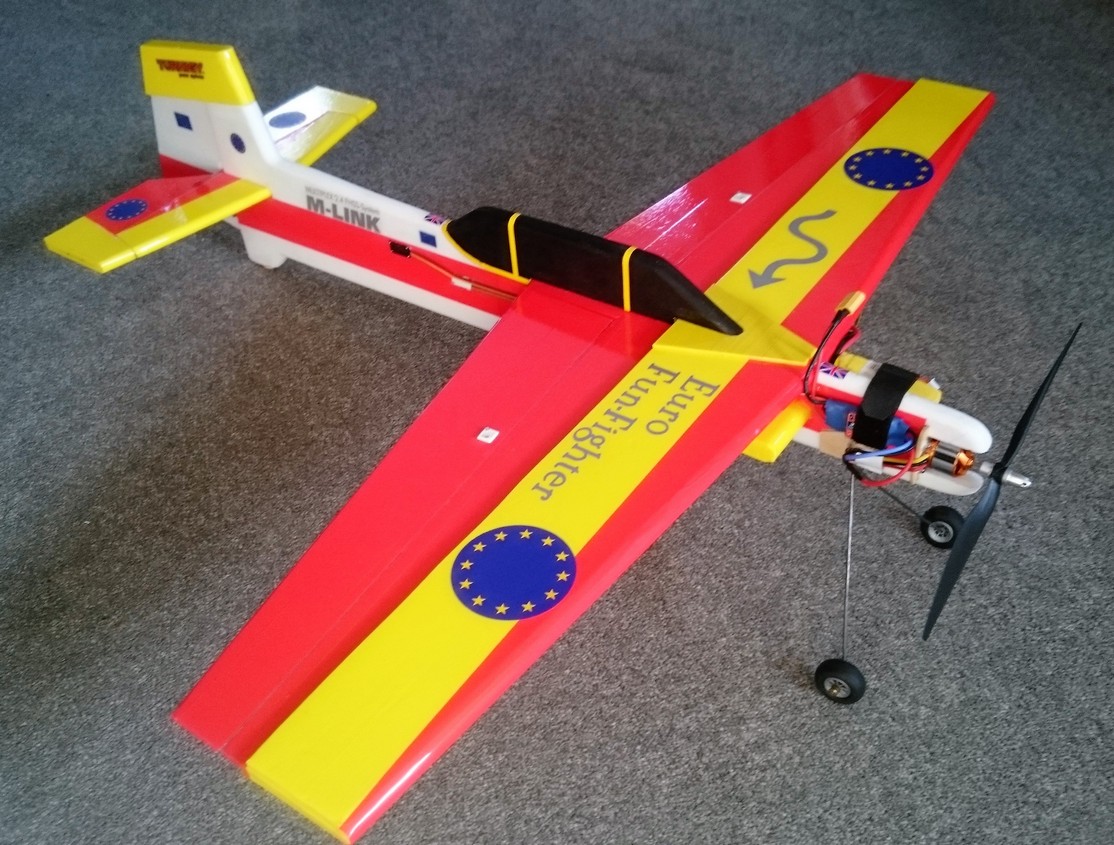
September saw some good flying weather and we had some great turnouts on Sunday mornings.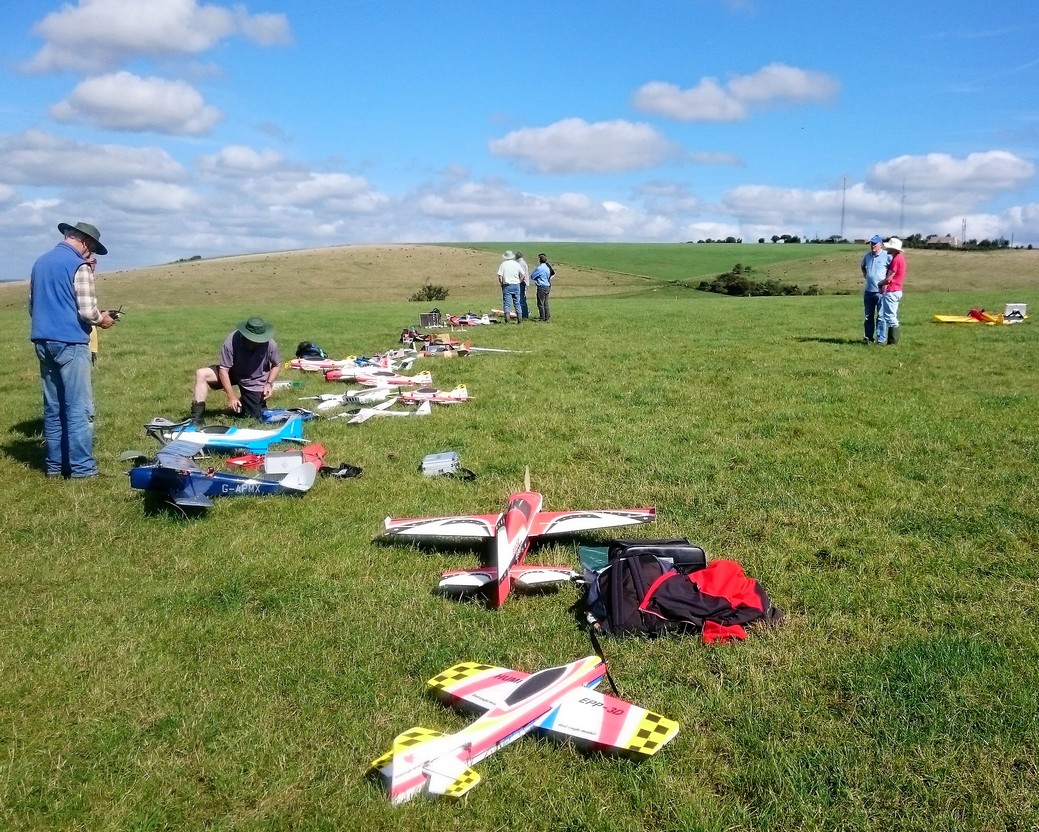 Lots happened early in the month so I have plenty to write about, but little time to write it! In this month’s video I’ll include the footage from August that I had mislaid. It includes the maiden flight of Modelling Clay’s Acro Wot.
First up this month is the latest formation team to form in the club, the Flock of Seagulls.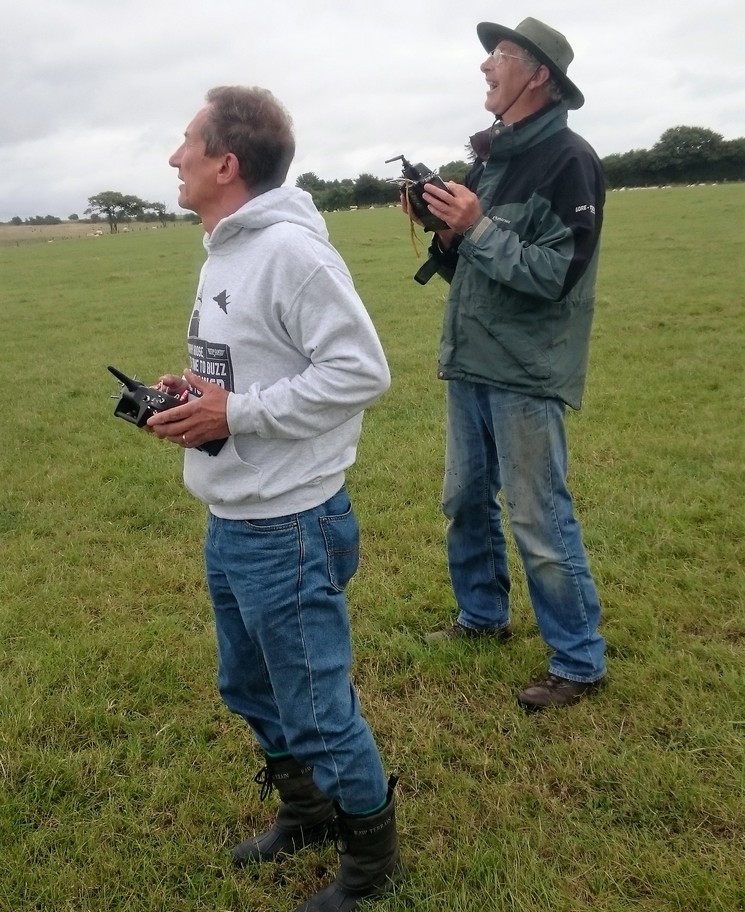 The team consists of Basher Bob and Woody flying their Seagull Swifts trainers.
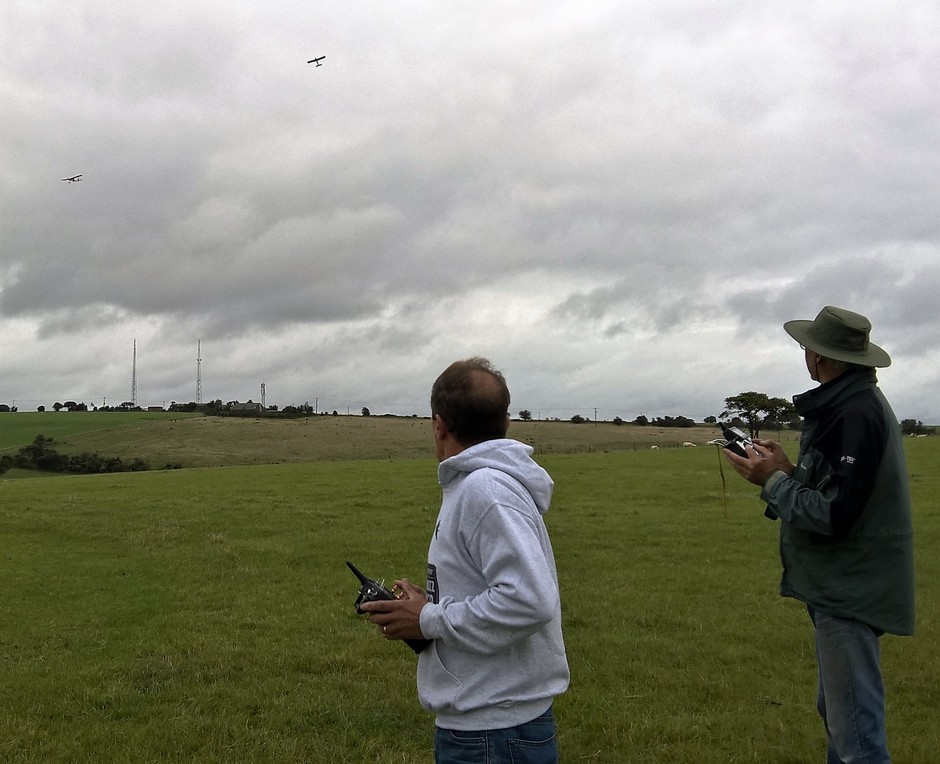 As you can see they have been flying a fairly loose formation, but then with Basher’s reputation for mid-airs who can blame Woody for keeping his distance!
At long last Captain Slow has got his Durafly Auto-G autogyro finished and he flew it earlier this month.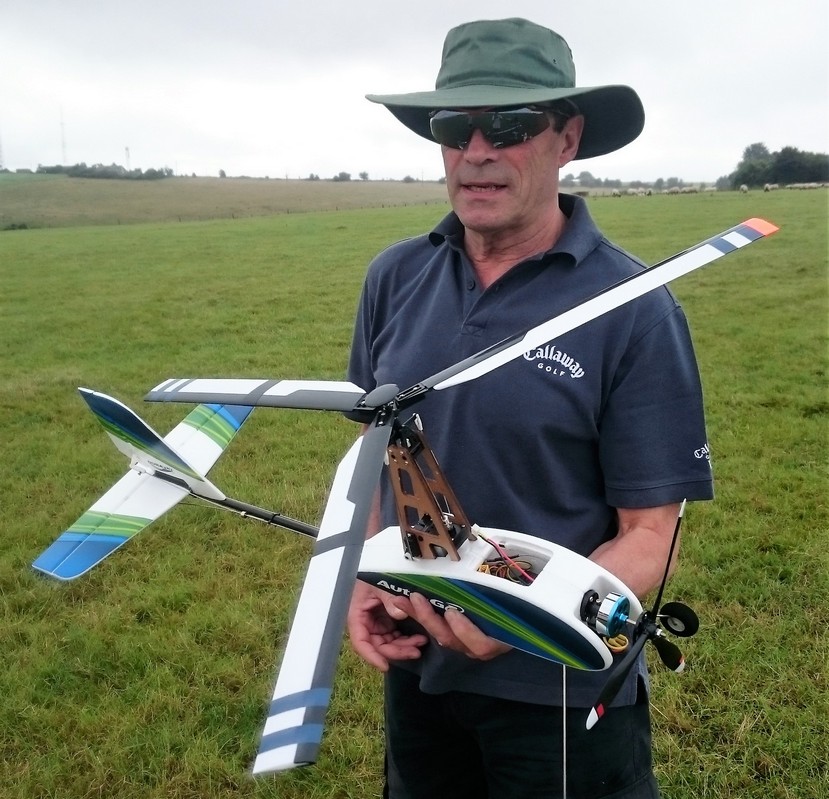 It was very much an unknown entity but as Captain Slow flies both fixed wing and helis we figured he should be ok with something that’s a mixture of the two. He spun up the main rotor, then opened the throttle, and the gyrocopter ran gently into the breeze and took off perfectly.
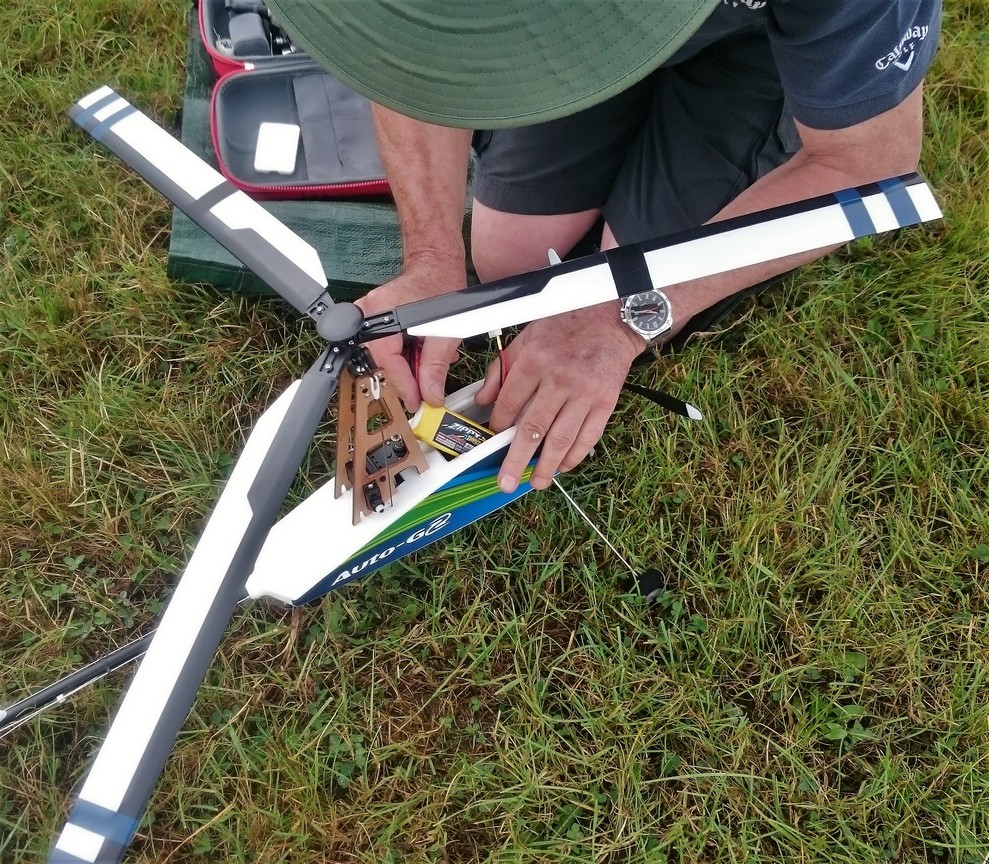 If I remember correctly it needed a lot of down elevator trim but then appeared to be flying very nicely, although Captain Slow said it was dropping a lot in the turns. He was having trouble with orientation and after a couple of minutes it came down close to the lower track. Fortunately there was little damage and the required spares were soon ordered from the HobbyKing European warehouse.
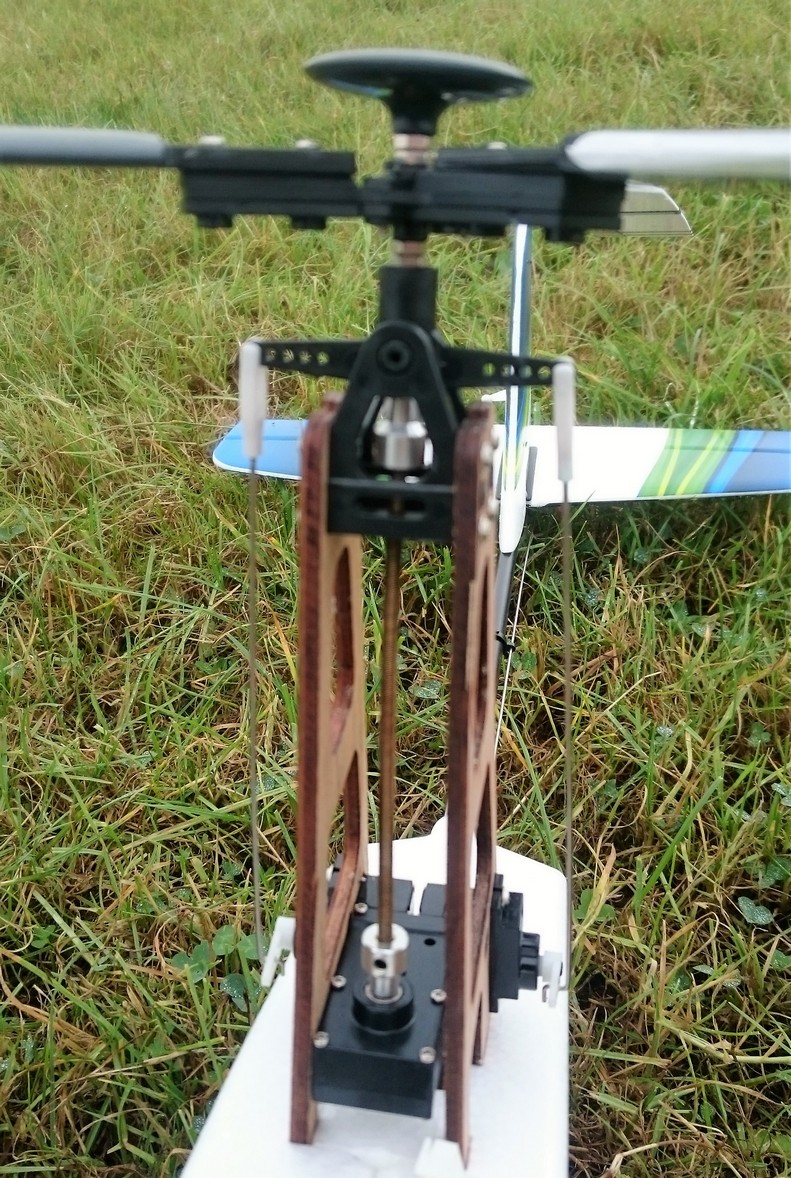 Captain Slow had a few ideas, such as moving the C of G forward a little for the next time out. He muttered something about possibly losing too much head speed in the turns but it was largely gobbledegook to my simple fixed wing brain! He tried again a couple of weeks later but with similar results, although he is gradually finding the problems and making adjustments. Both flights can be seen in this month’s video at the end of this Patch News.
Terribull (I’m pleased to report that he hates his nickname, excellent!) has now completed his scaled up version of his Weekender that I featured last month. He’s called it Weekender Plus and unlike the smaller one it’s four channel so it has no dihedral and has ailerons as well as rudder.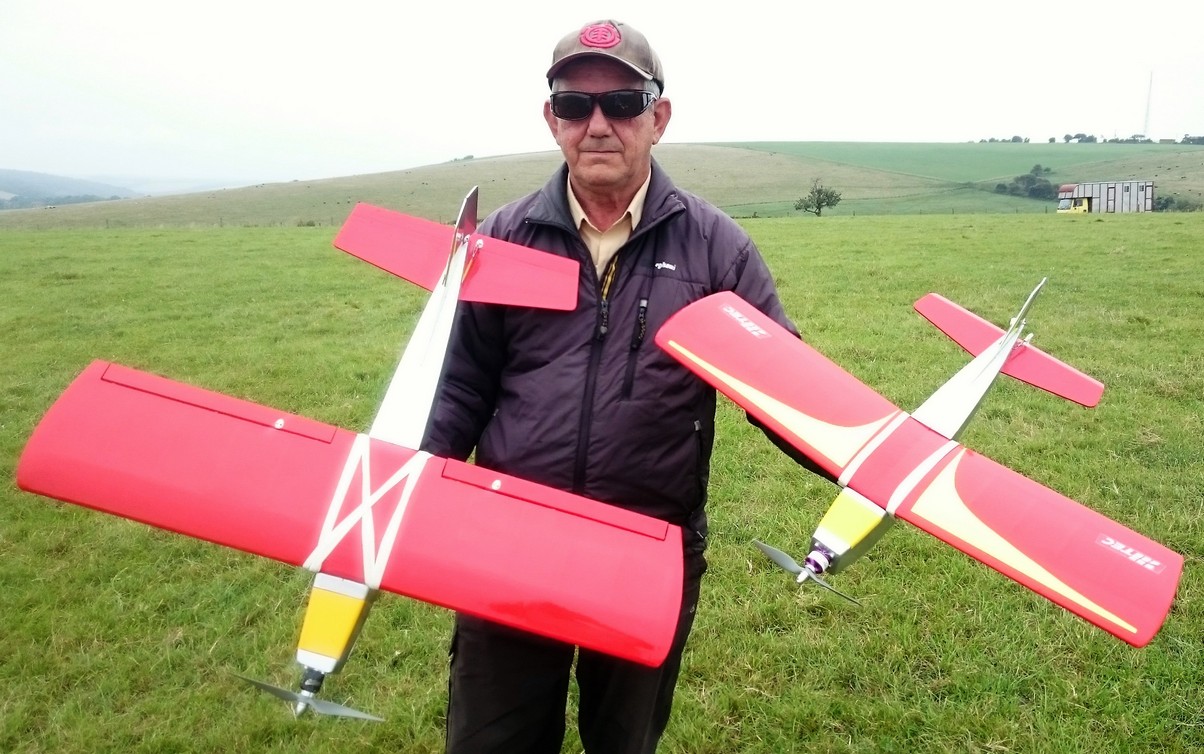 Some of you will have seen it at a recent club meeting when Terribull brought it along and gave a short talk about it.
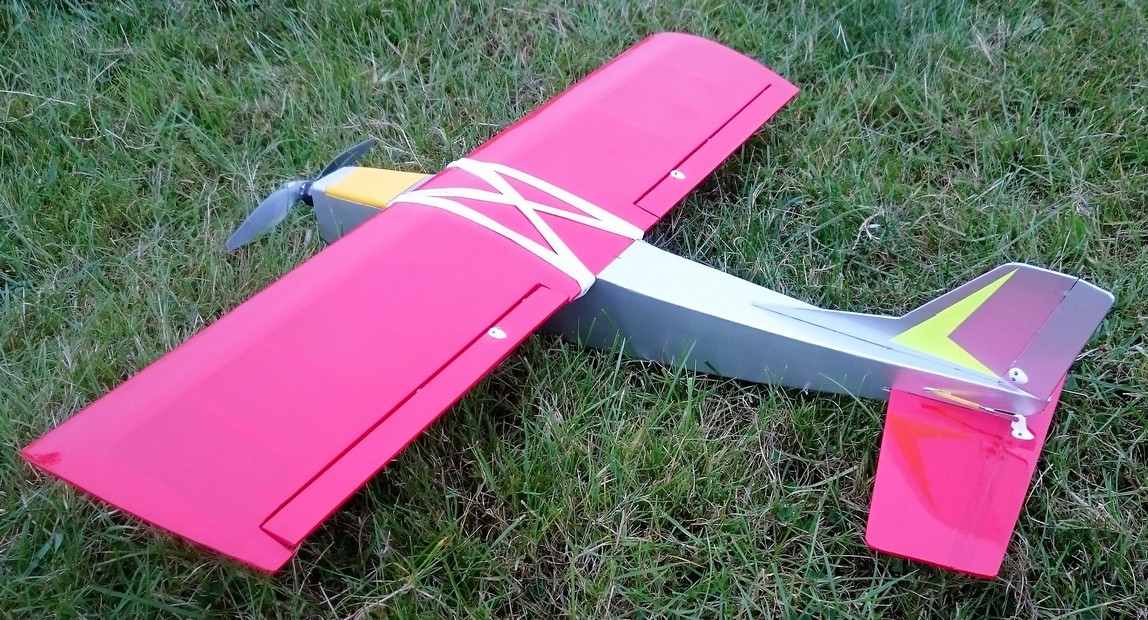 It flies very well, a fairly typical club Sunday flier type; personally I think Terribull should add an undercarriage, that would make it perfect.
The long awaited Sea Vixen from Norwegian Nick has flown at last. I featured the unfinished ducted fan model way back in the April 2013 Patch News. Nick built it from the Chris Golds’ plan and it weighs just 623grams ready to go.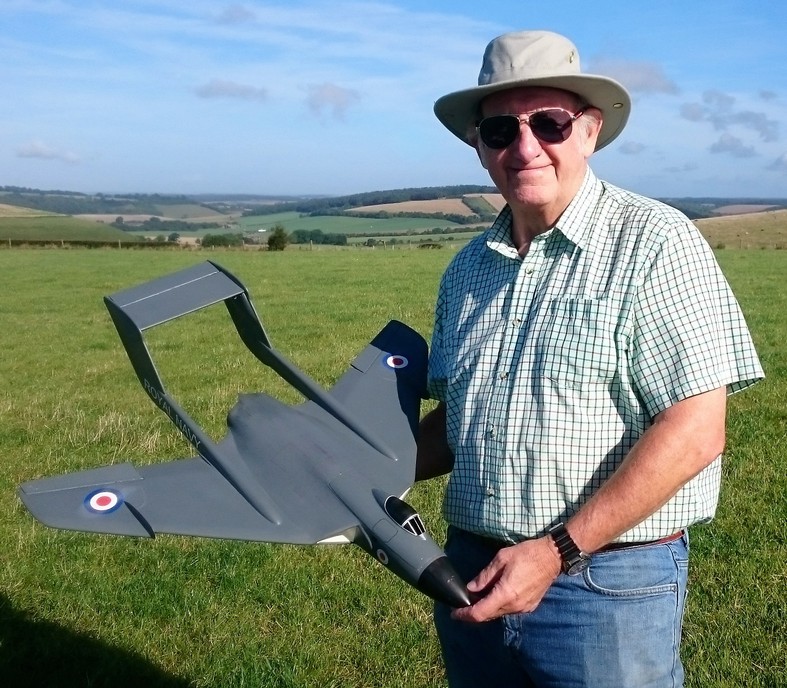
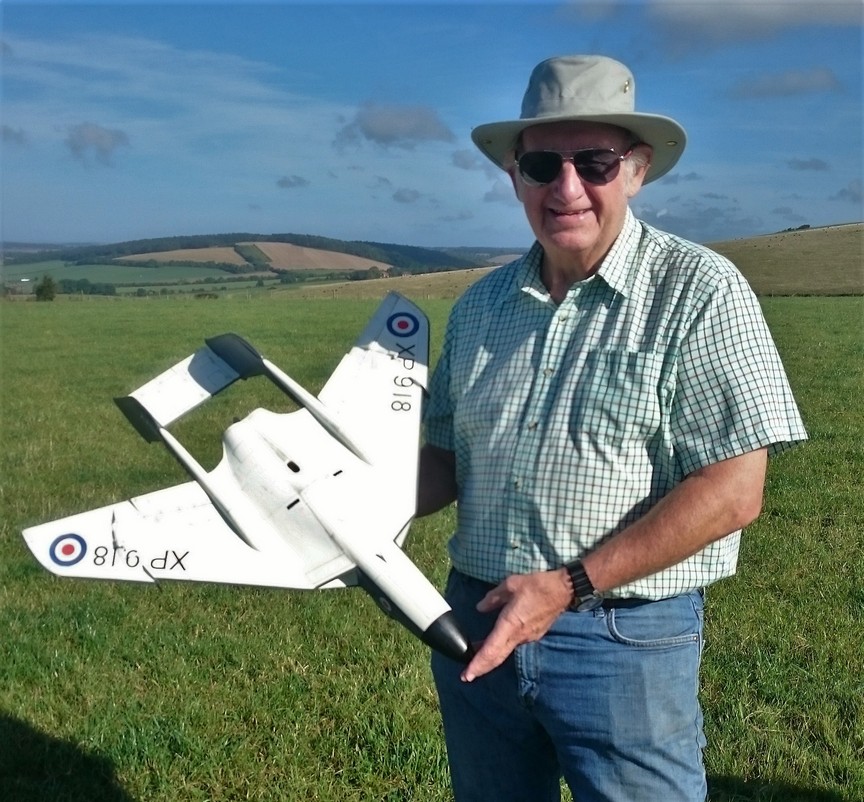 It’s pushed along by a couple of 32mm ducted fans supplied by ex-PAM member Derek Knight who is the force behind KP Aero Models based in Rowlands Castle. The fans are linked to a couple of 10A speed controllers and the maximum current is 18A giving around 200W.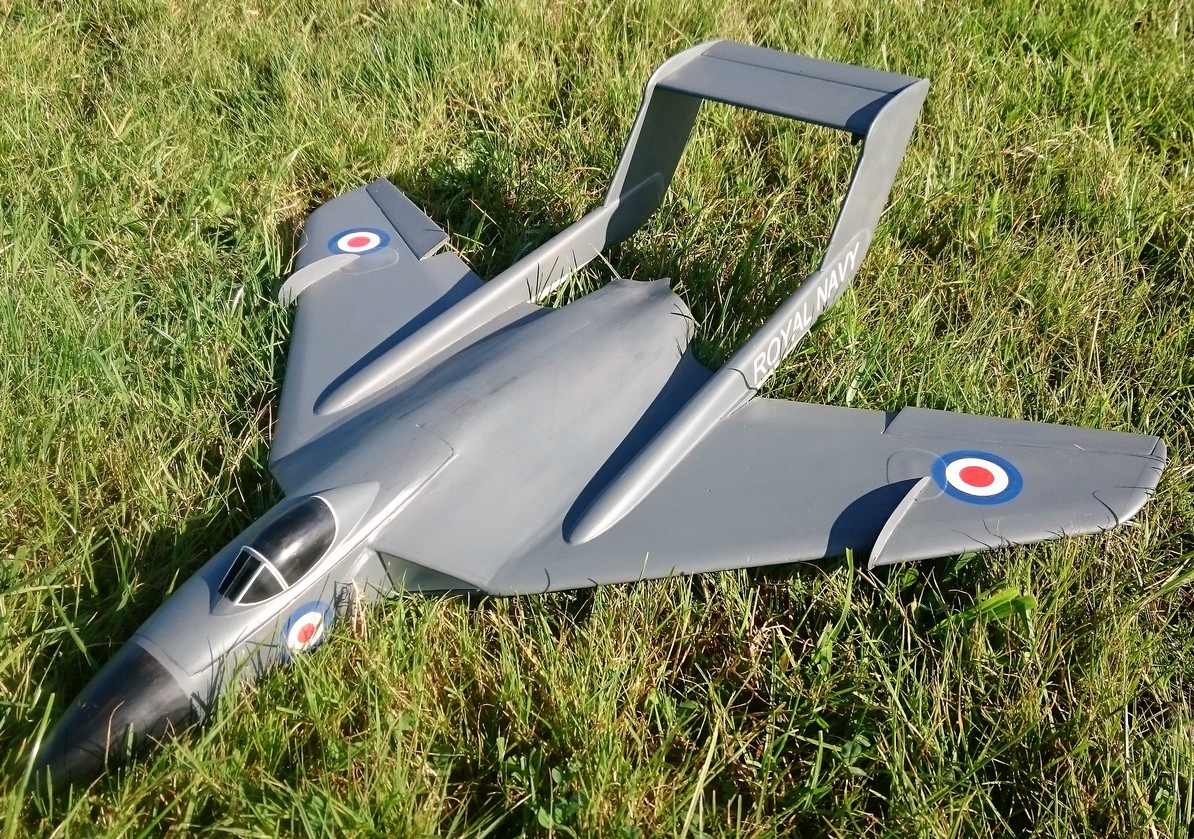
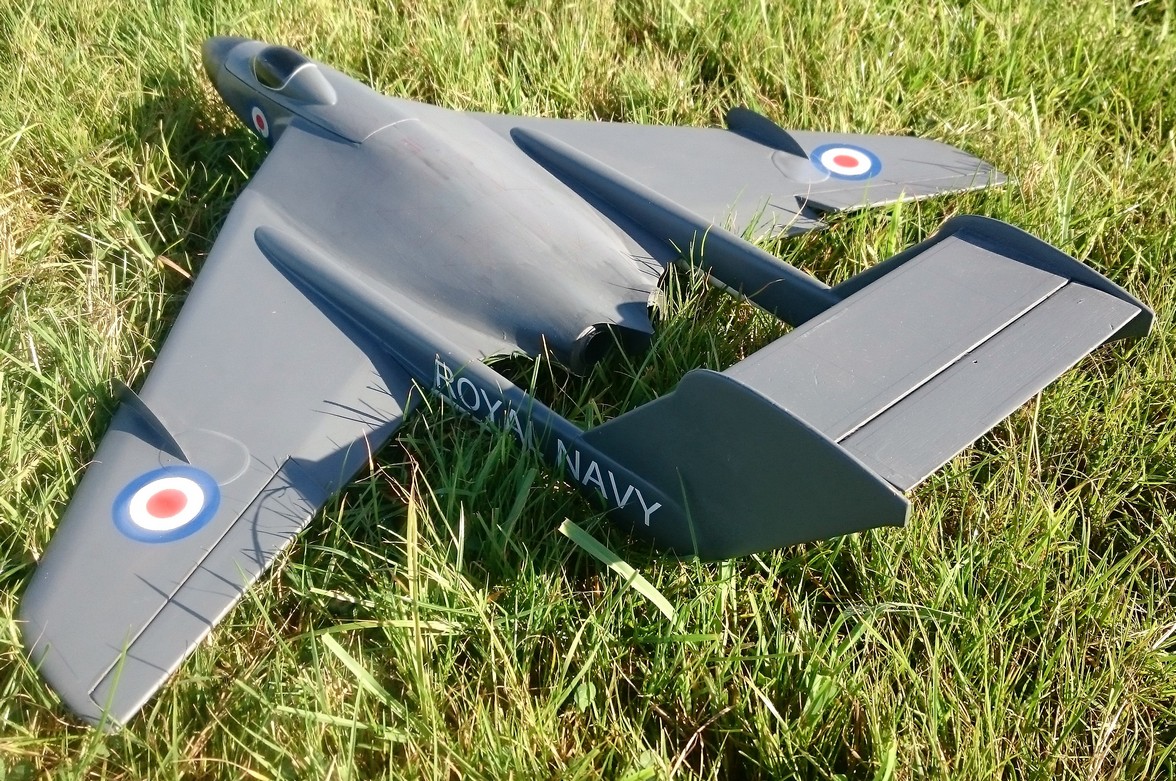 Nick used a bungee launch and the model shot away beautifully, needing a little down trim to counteract a slightly rearward C of G. It was flown with a 3 cell 770mAH battery but next time Nick will use a 1000mAH which will move the balance point a little further forward as well as give a longer flight time. Some of the first flight can be seen in this month’s video but please bear in mind it’s not easy to video a small fast moving Sea Vixen.
Another new model that flew in September was Basher Bob’s beautiful DH82a Tiger Moth.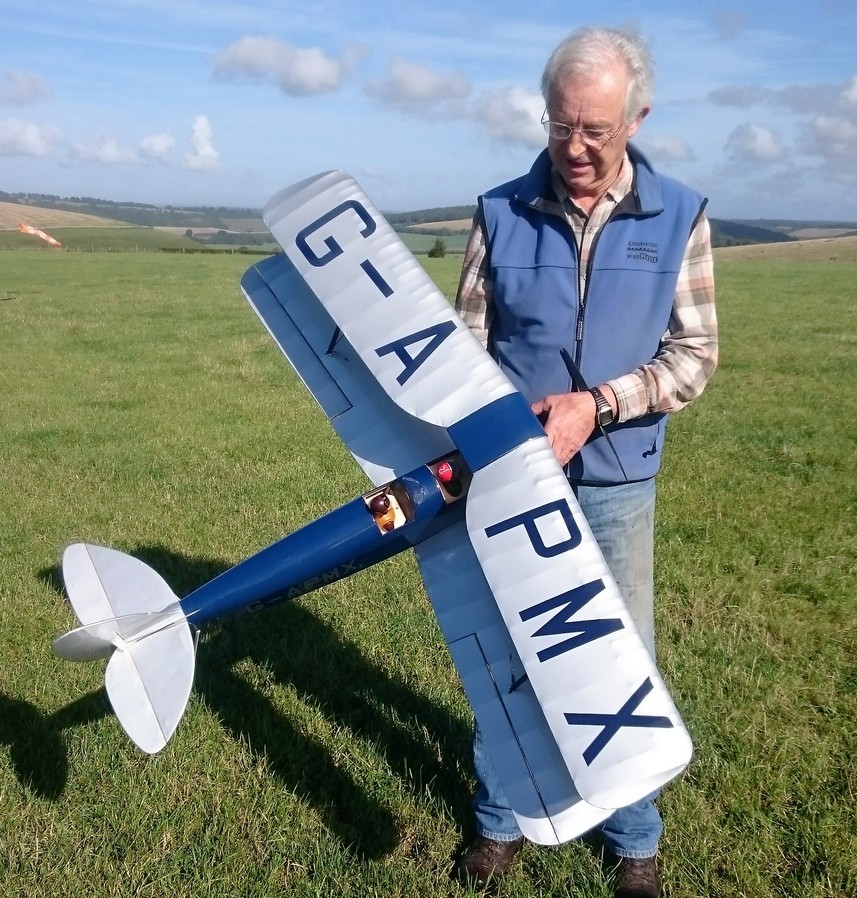
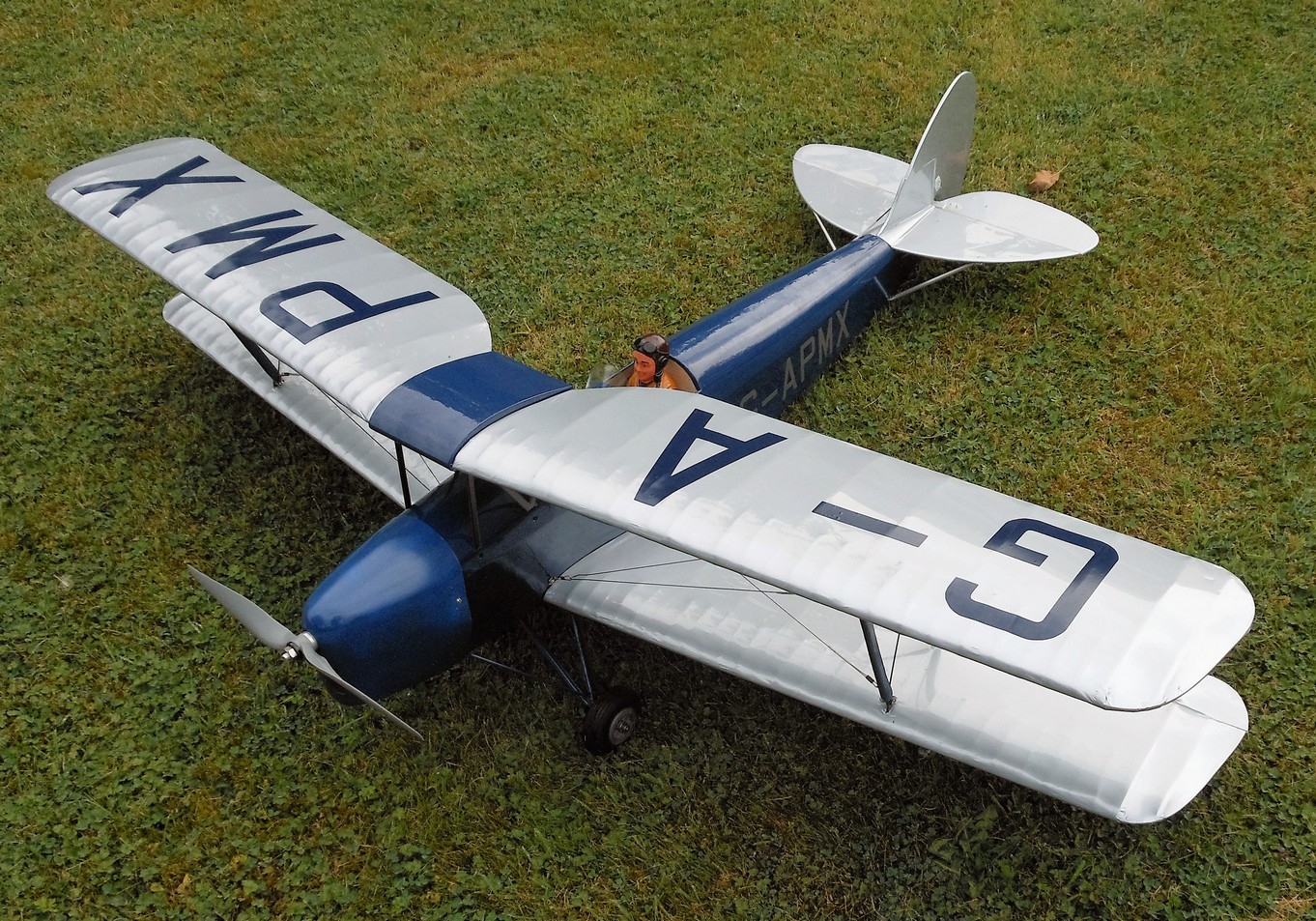 Basher has spent the last eight models building the 1400mm span biplane from the HobbyKing laser cut kit and he reports that the kit was mostly pretty good although he did make a few changes along the way. Surprisingly the kit doesn’t include a full-size plan, just a series of exploded diagrams, but because the parts are all laser cut it simply clicks together and as long as it’s done on a nice flat building board the lack of a plan isn’t a problem. Basher chose to finish the model in the colour scheme of the full-size Tiger that has visited the field a couple of times and, as you can see, he’s made a lovely job of it.
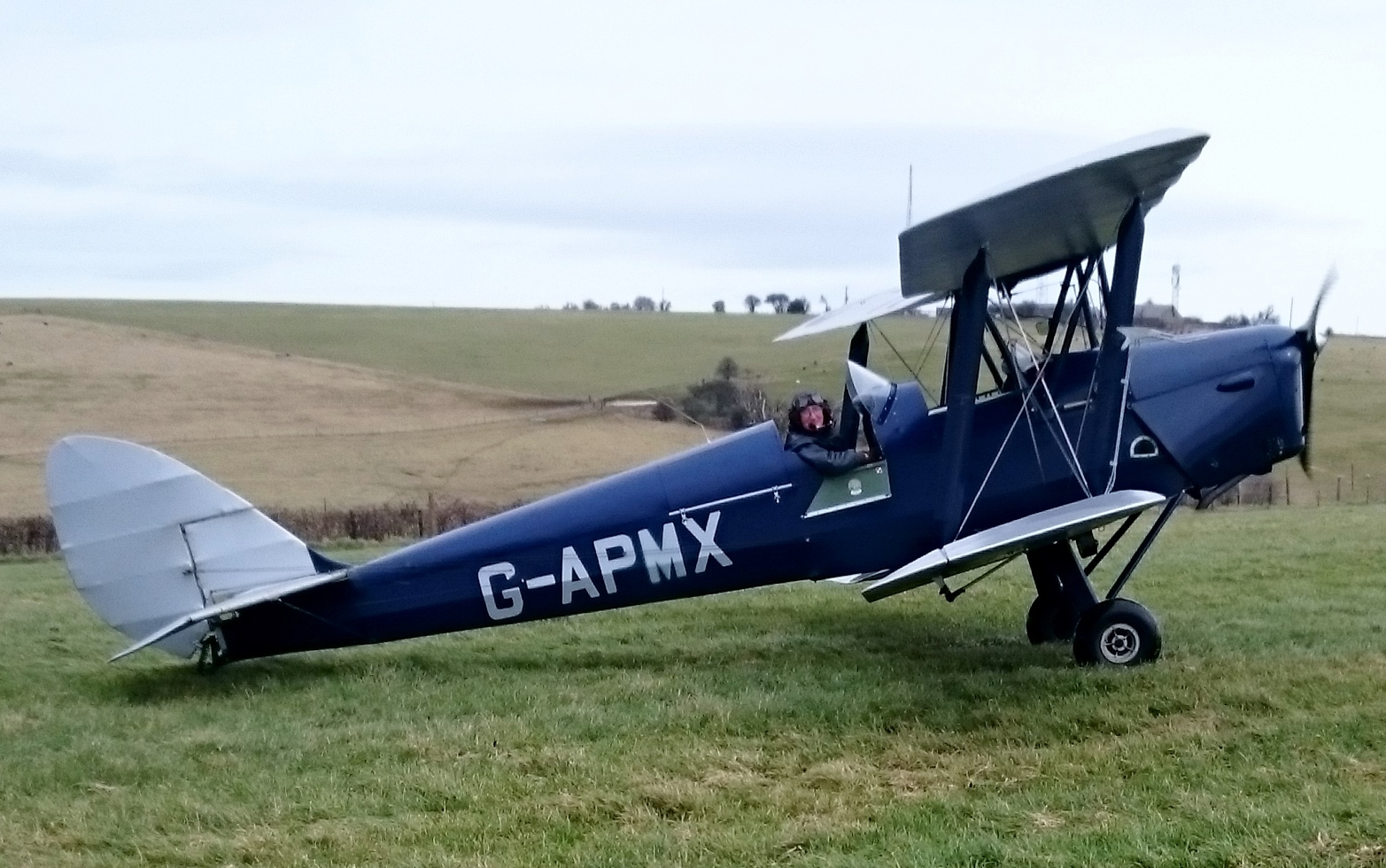 I neglected to note the details of the power set-up etc. but I remember that it uses a 4 cell lipo and the model weighs around 6lbs. I had the pleasure of doing the test flight and am happy to report that it went without a hitch, it takes off and lands very nicely and in between flies just like a Tiger should, lovely low passes and gentle aerobatics being the order of the day.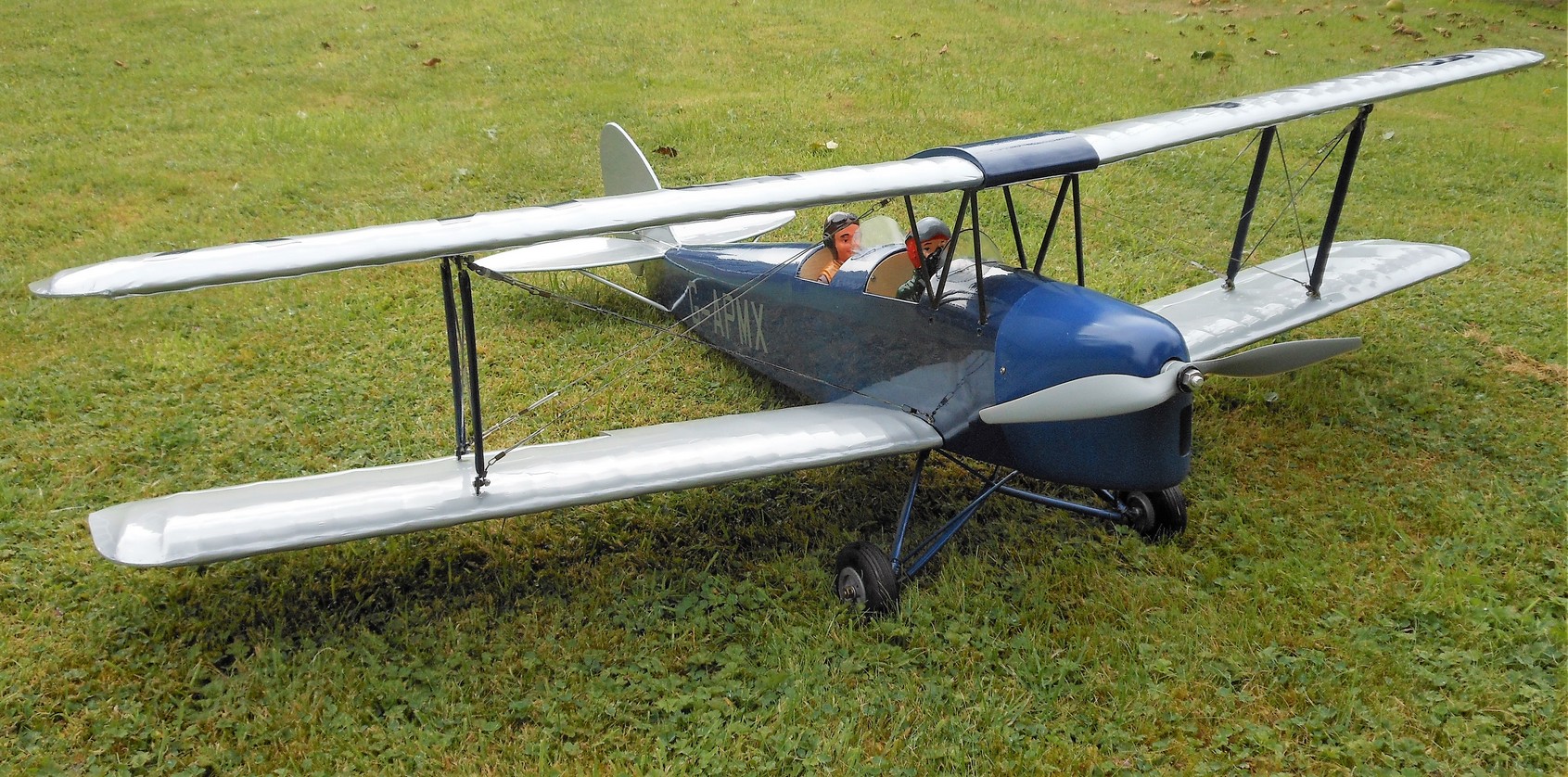
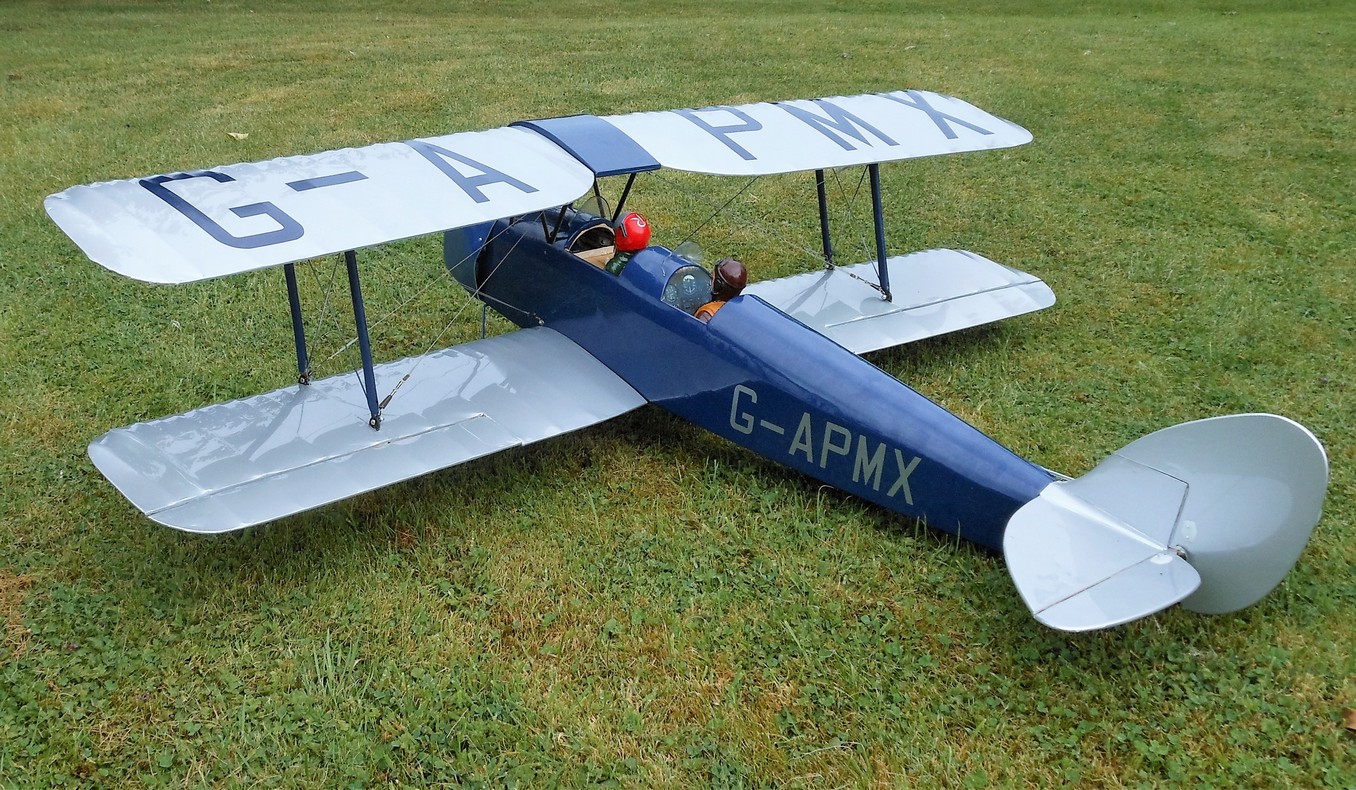 Basher has now had a couple of flights with it but is still getting used to having to fly it in under power for the landing so the one on the video isn’t perfect but no doubt he’ll soon get it sorted.
The final new model to feature this month (well in Part One anyway) is another from Terribull. It’s a Fizza, built from a Nigel Hawes plan. It’s a four channel model that has a wingspan of 32” and it only weighs around 14ozs. It’s a fairly simple pylon race style model with a solid flat-plate sheet wing and Terribull has made an excellent job of the build and finishing.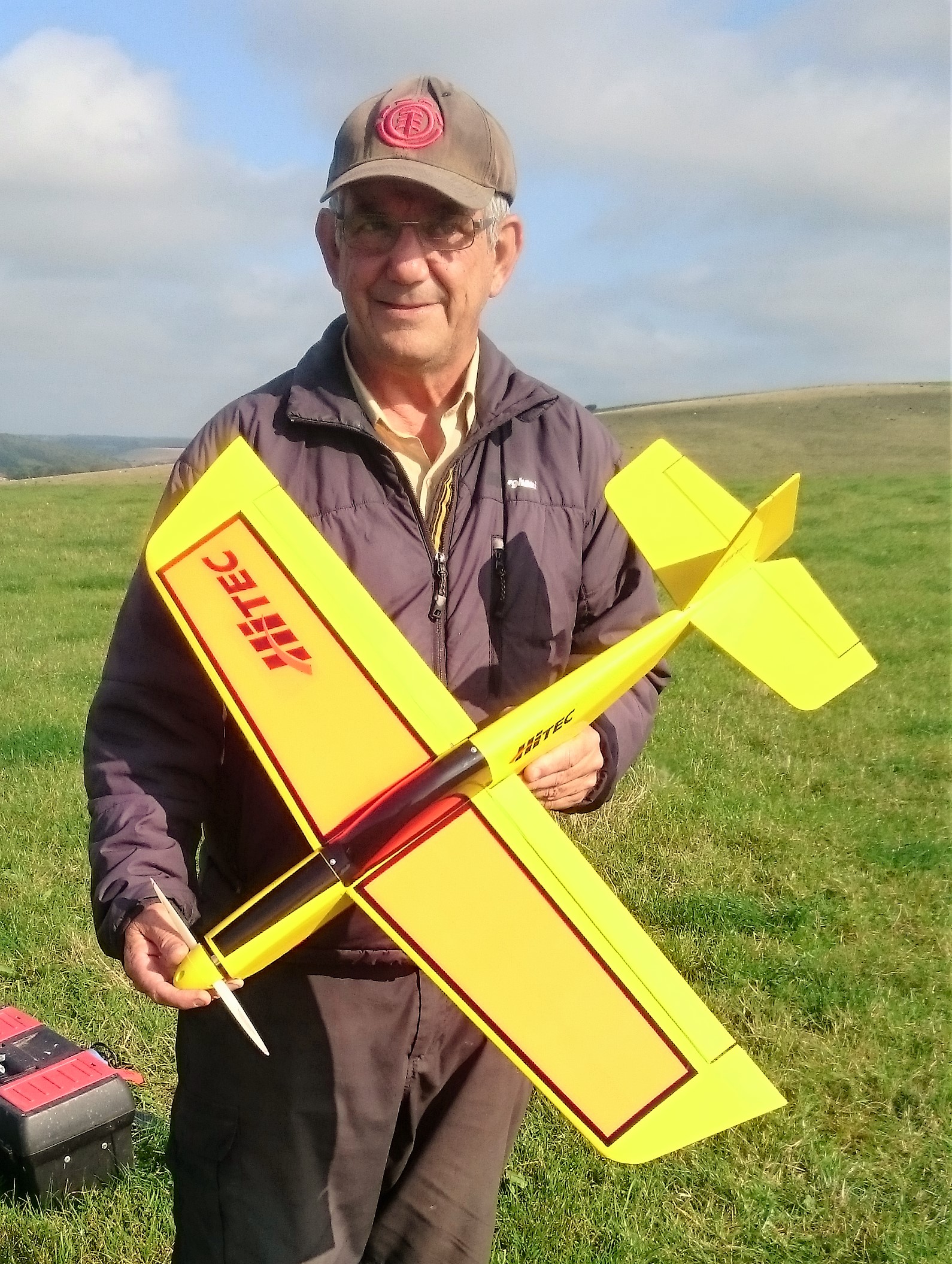 I was asked to do the first flight and it flew very well, just a bit of aileron trim needed to get it flying straight and level. Having trimmed it out I did a few basic aerobatics with no problems and then offered the transmitter to Terribull so he could complete the flight. He declined and said I could complete the flight. Big mistake! I carried on enjoying flying the model when suddenly, bang, a mid-air with Chris P Bacon’s Cougar 2000! Lots of pieces fluttered down, mostly from the Cougar, but the wing must have been knocked round on the Fizza and I couldn’t stop it going in. Chris P was a bit more fortunate and manged a controlled landing although there was quite a lot of damage to the Cougar. The Fizza got away fairly lightly but the prop adaptor was bent in the crash and there was a bit of a lump missing from the wing leading edge that obviously occurred in the collision. It was a great shame but these things do happen occasionally. Anyway, Terribull has now repaired the wing and fitted a new prop adaptor and it’s flying well again. I think Chris P’s Cougar will take a little longer to repair, maybe it will never happen. There was just one strange thing about this episode…Basher Bob was stood in the pits watching!
Gorgeous Gary sent me a photo of an interesting item he spotted in Nesbits auction room in Southsea. It’s a Martin Baker ejector seat from a DH Vampire that’s been chromed and had buttoned upholstery fitted presumably to make a comfortable talking point in your living room. Sorry about the reflections.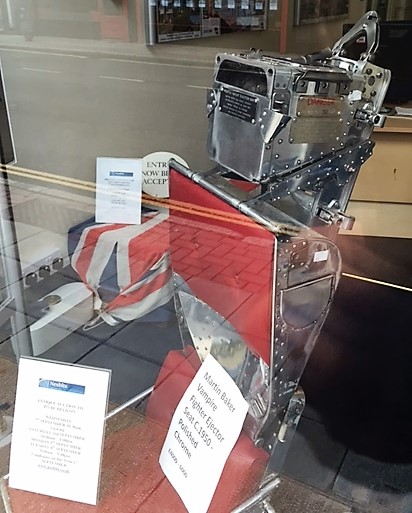 Personally I’d have preferred it in its original condition. Anyway, it’s valued at £4000-£6000 if you fancy it, but the auction was on 7th September so you’ve probably missed your chance.
I’m sure most of you will know that a group of us paid a visit to Vulcan XM655 at Wellesbourne early in September. It was a good day and when I was looking at my video later I couldn’t help noticing the look of Rusty G (Graham Swan) sat in the crew area immediately behind the cockpit. This still is taken from the video: I couldn’t help thinking he reminded me of someone…
 Rusty said it was because his jacket was Red and he was Dwarfed by the size of Vulcan! Is it just me or should he now be called Kryten?! Let me know what you think.
Please watch the video full screen, it’s so much better with small models flying around. If the video above won’t play for you CLICK HERE
That’s all for now, check for Part Two later in the month.
Every time I go through airport security and am forced to remove my shoes, I’m grateful Richard Reid is not known as the Underwear Bomber.
Colin Cowplain.
Patch News – August 2016
Well the summer has continued to give us some excellent flying weather; in fact some members have been moaning it’s too hot at the field! As predicted last month we have been joined by the bullocks and as a special bonus the sheep are also in the field. The bullocks haven’t given us too much trouble so far and apparently they should be gone in a week or so, hopefully before the patch gets too badly damaged.
The first thing to happen in August was the club barbecue on 31st July… It was too late to report in the July Patch News so I’ve included a short report here now: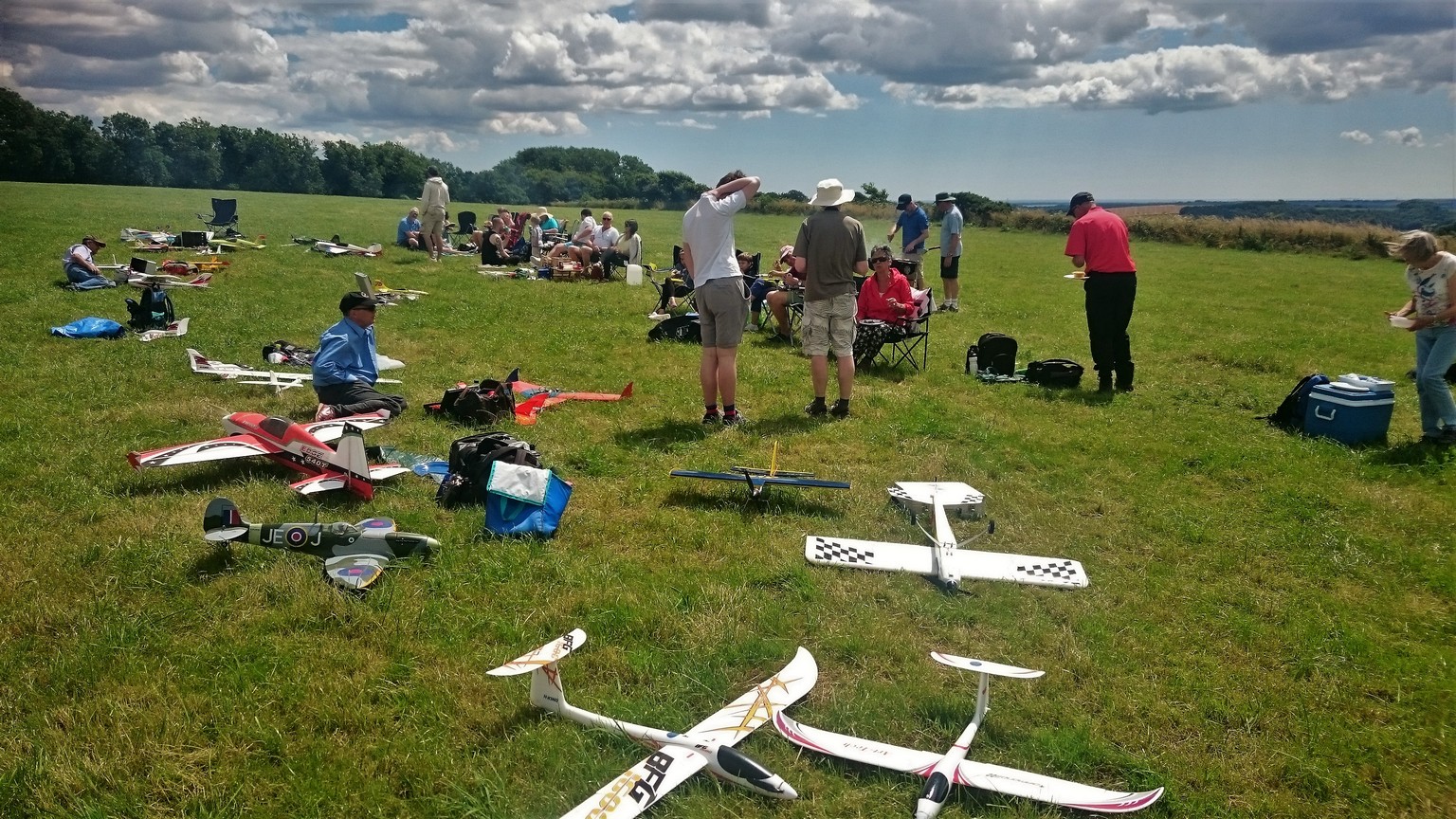 I think everyone enjoyed it, the weather was perfect with just a light westerly breeze, the field had been cut and cleared, and the animals hadn’t yet arrived. Farmer George was good enough to allow us to park in the field which made life much easier for everyone. 1066 brought along the new drum barbecue and loads of charcoal that he had purchased for the club and soon all the men were cooking away for their wives and families. This photo features Colin Cowplain, Mike Creamer, and Wonky Wiltshire cooking while 1066 struggles to unwrap a sandwich.
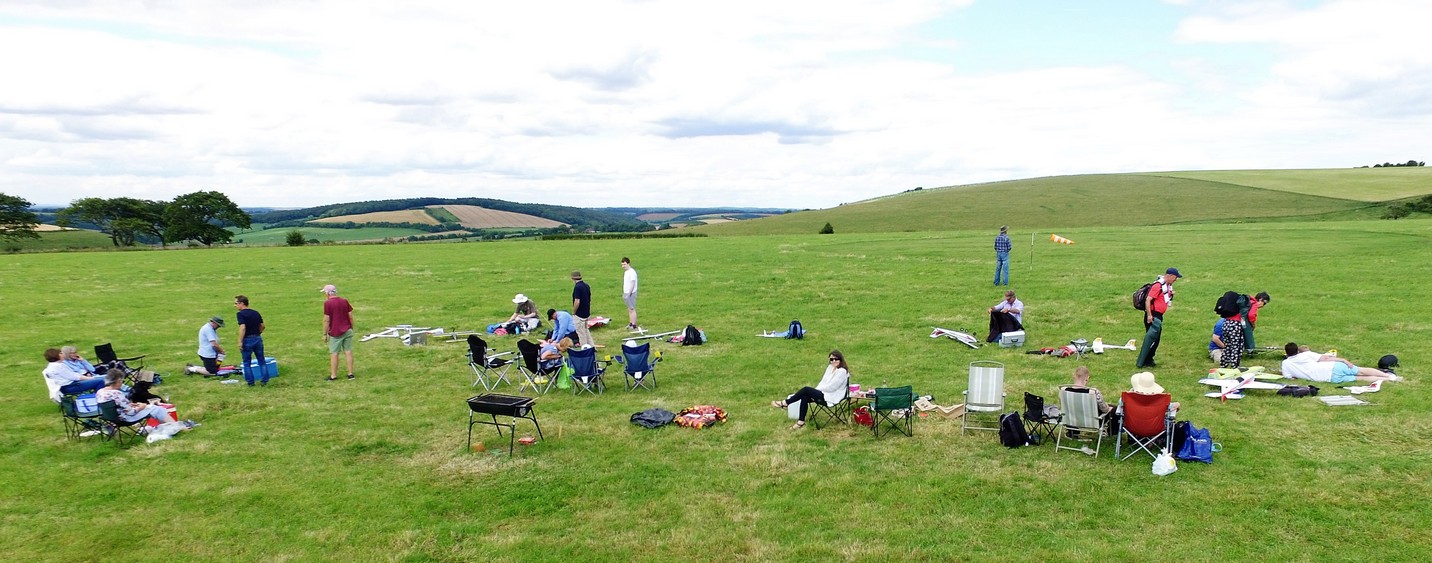
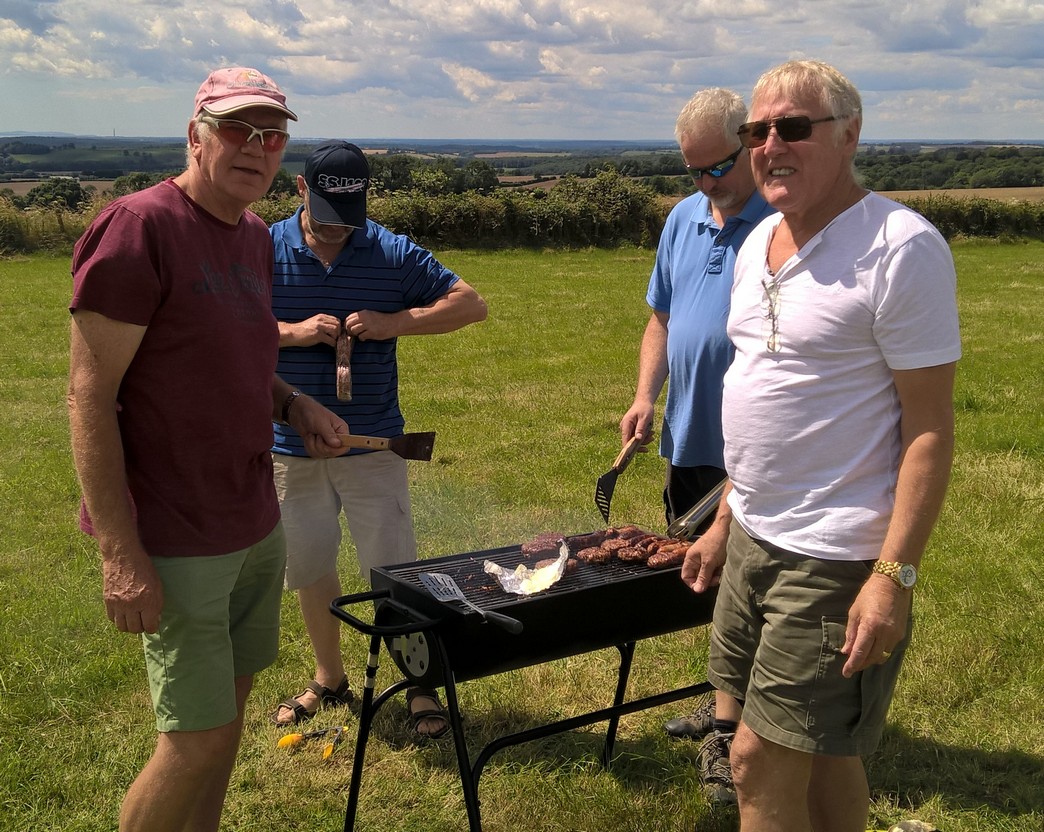 Mike flew his drone behind the families and flight line and took a few photos and some video, a snippet of which can be seen in this month’s video at the end of this Patch News.
 Modelling Clay and Wonky Wiltshire treated us all to a display of what they said was ‘formation flying’ with their EFX Racers and received the usual encouraging shouts of ‘lower, lower’. Always one to please, Modelling duly flew lower and lower until, eventually, the inevitable happened!
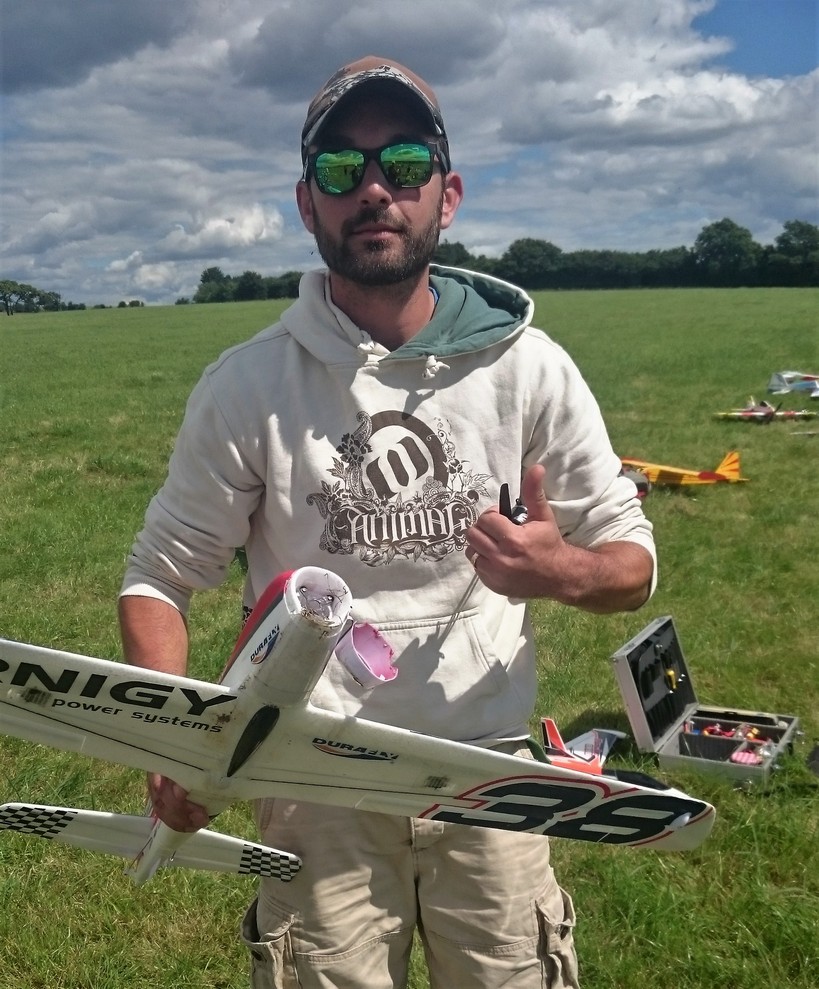 Fortunately the damage was minimal and easily repaired.
Another July event that seems to have gone unreported was the annual Chuck Glider competition which was held at Buriton before our mid-July meeting. The club Comp Sec Dwayne Pipe was master of ceremonies and made sure the competitors stuck to the correct flight order and he also timed each flight. There was a pretty good turnout, about ten competitors from memory. Catapult King had a novel biplane chuck glider, something I’ve never seen before. Sadly its performance explained why I’ve not seen one before.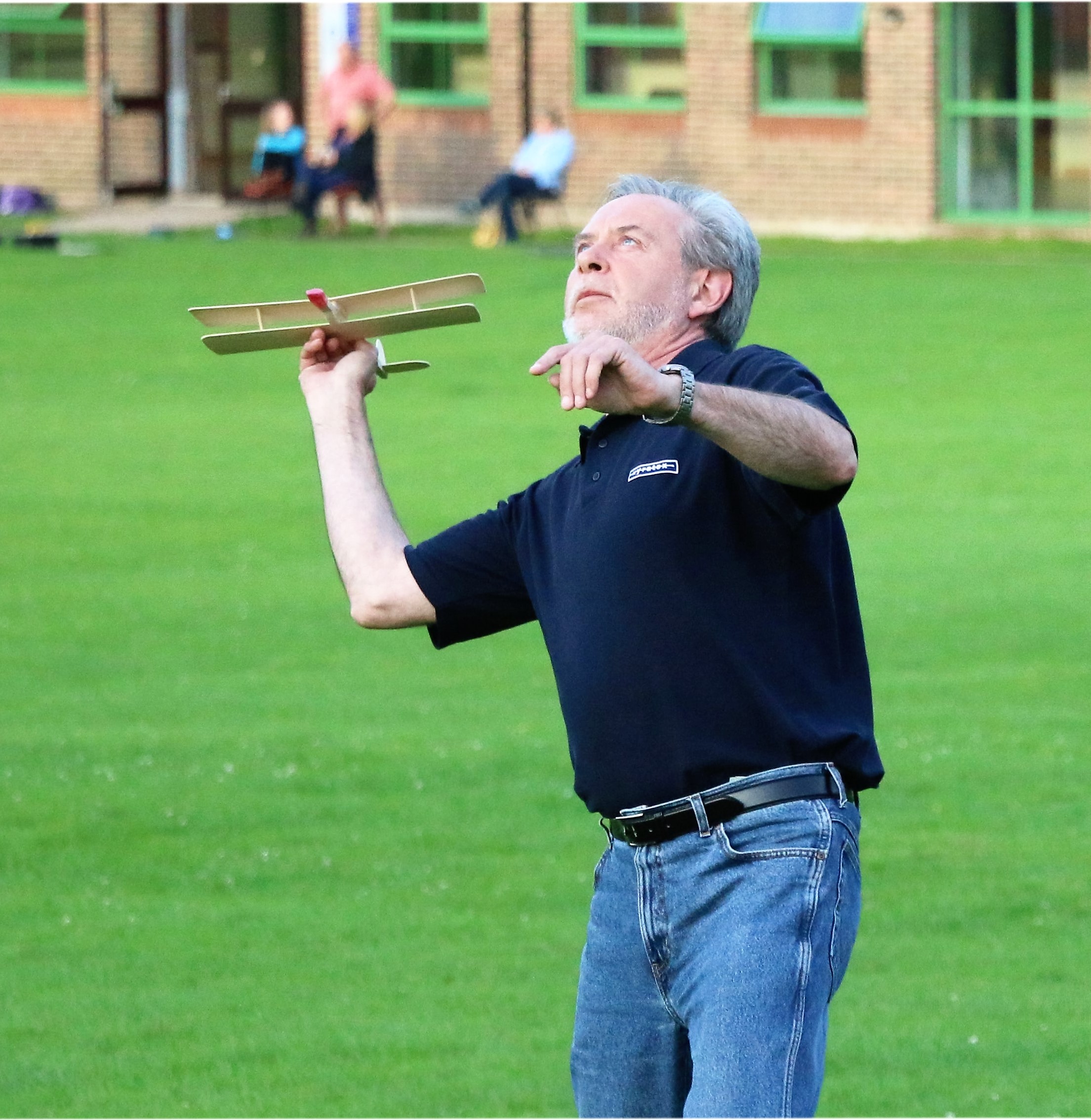 President Don’s ancient model looked like the one to beat, it really is a superb glider, but I think Don’s throwing arm isn’t what it used to be and he couldn’t manage any really long flights.
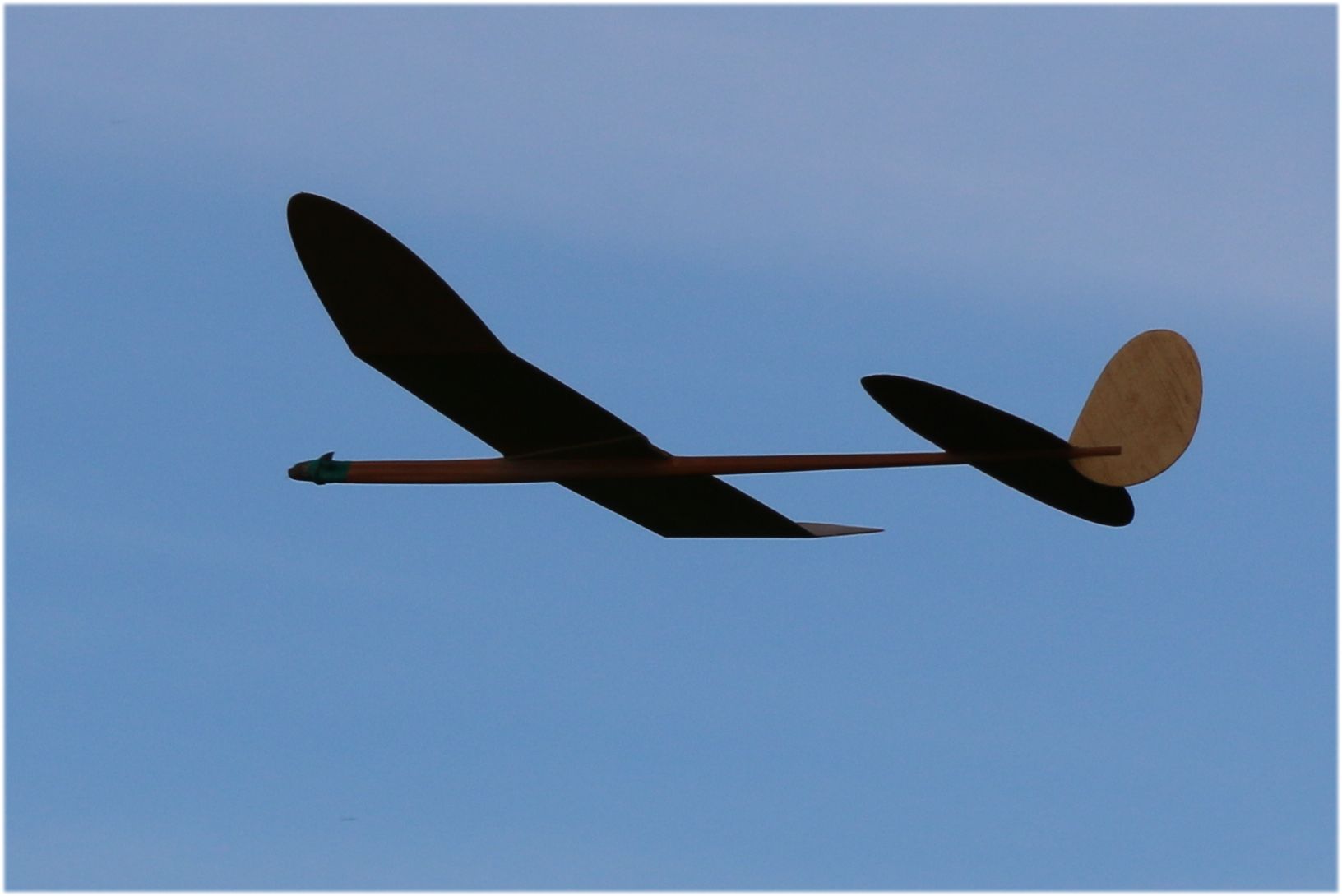 Many of the pilots launched facing downwind…why? I didn’t understand the logic but they continued to do it even after being advised that throwing into the wind had to be better.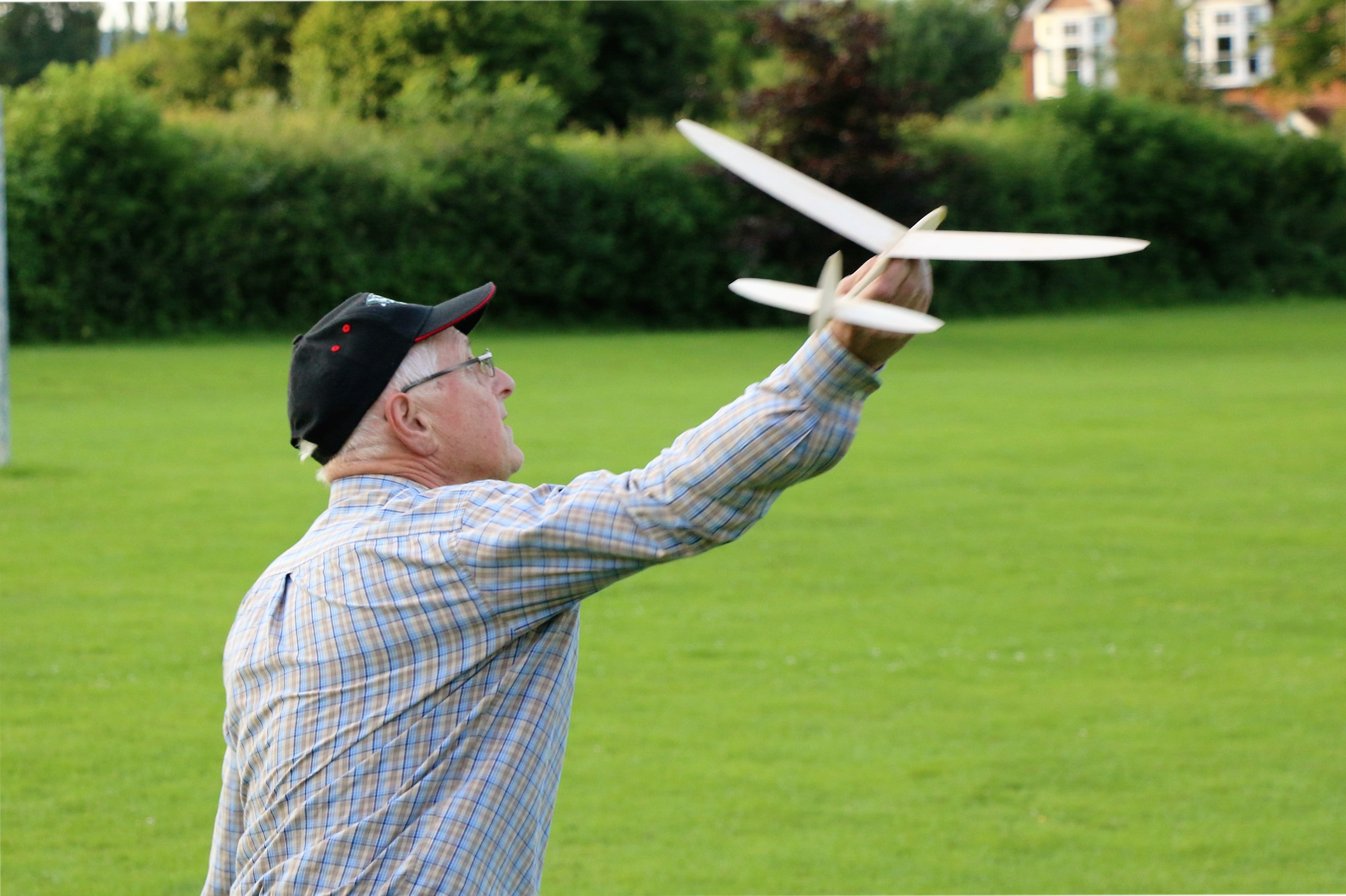
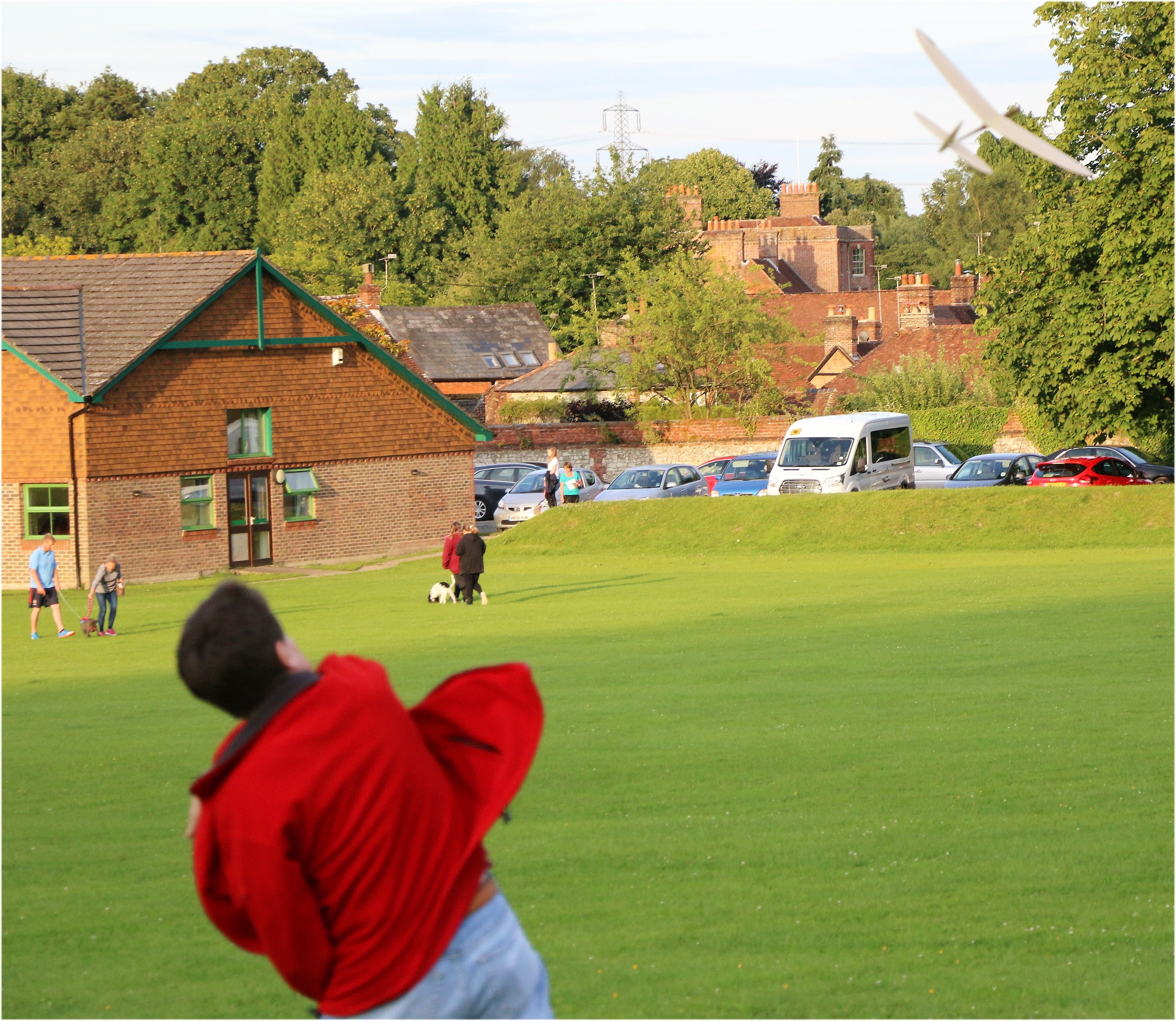
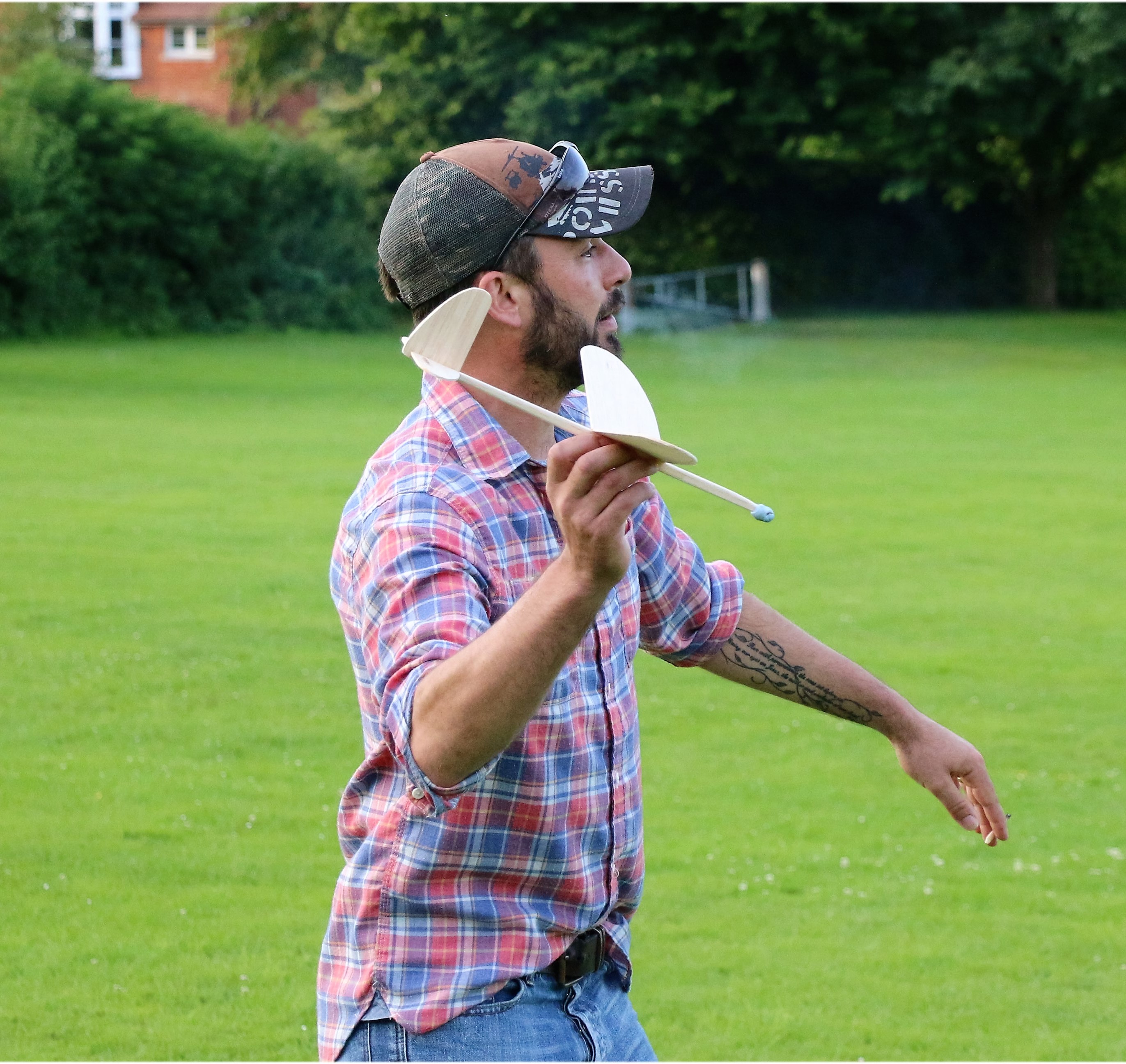
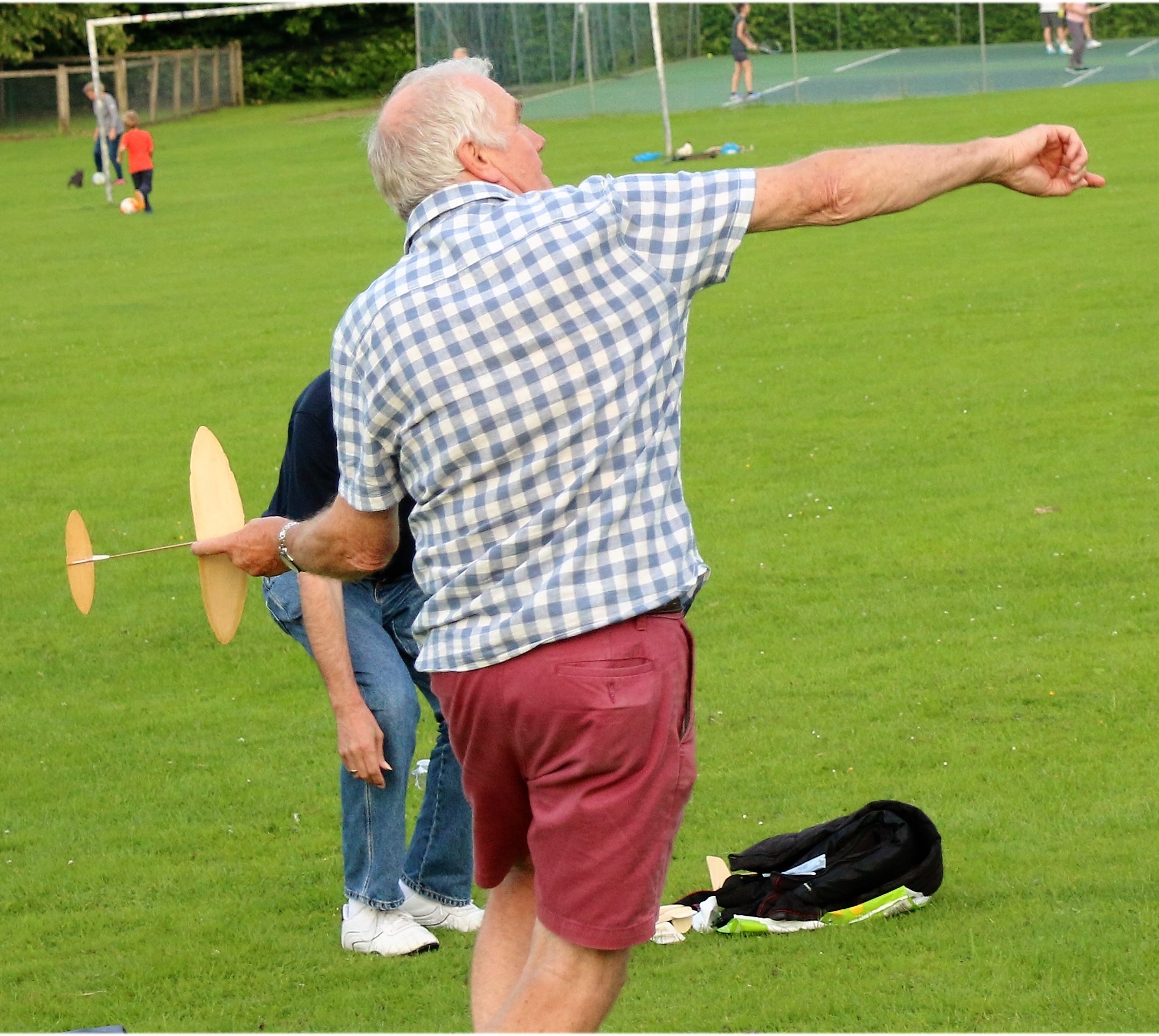 A good time was had by all so thanks go to Dwayne for organising it. Modesty prevents me from naming the eventual winner, I think Don was second, and I’ve no idea who came third. I was too busy throwing and retrieving my chuck glider to take any photos but somebody took some excellent ones, I wonder who! I think it was probably Rusty G (Graham Swan). Anyway thanks to all those who have contributed photos and video for this edition.
Woody has finished building his Splot at last and has been happily flying it throughout August. He’s made a great job of his first ever build off a plan, and his covering skills look good too.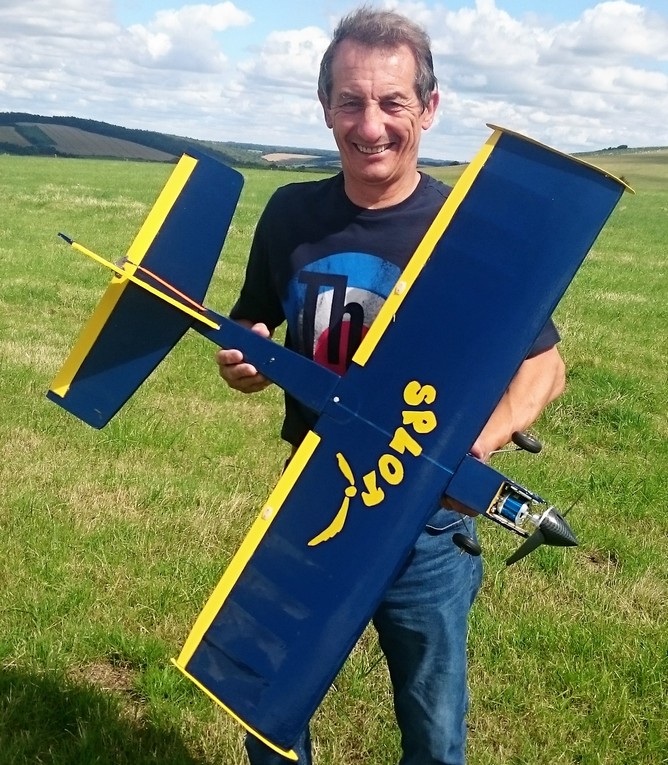
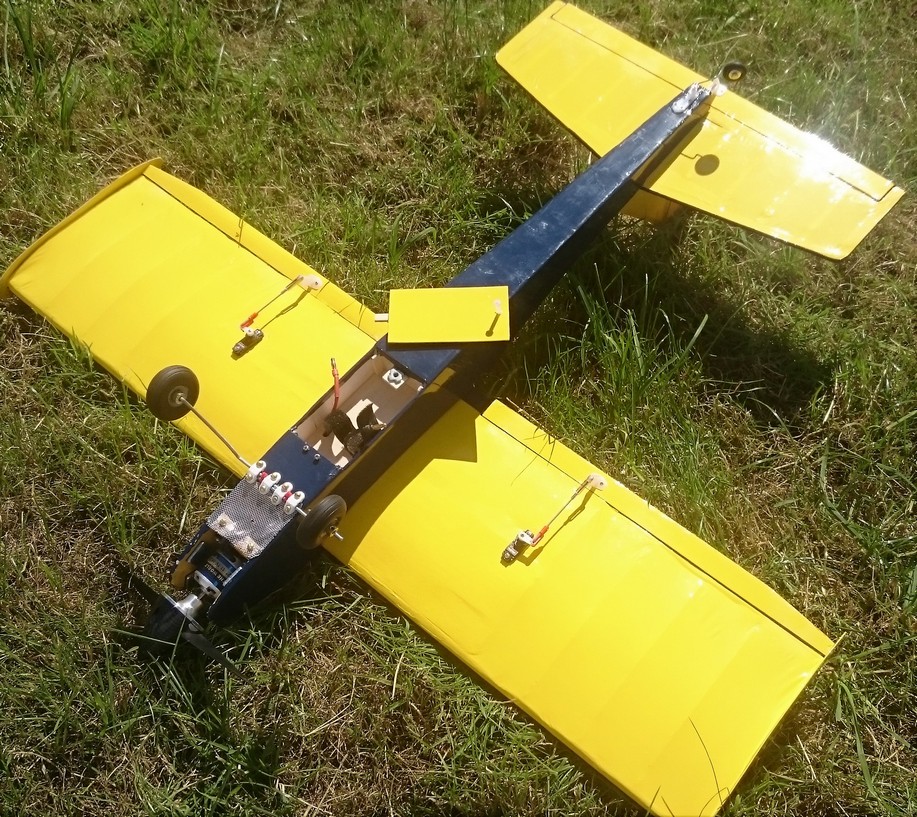 It flies like…well like all the other Splots really. Once he’d got the rates and expo sorted to his liking Woody got very brave and even did some low passes for me to film. A huge step for Captain Altitude!
The lovely weather brought out lots of electric gliders and Stanley Knife maidened his new Phoenix 2000.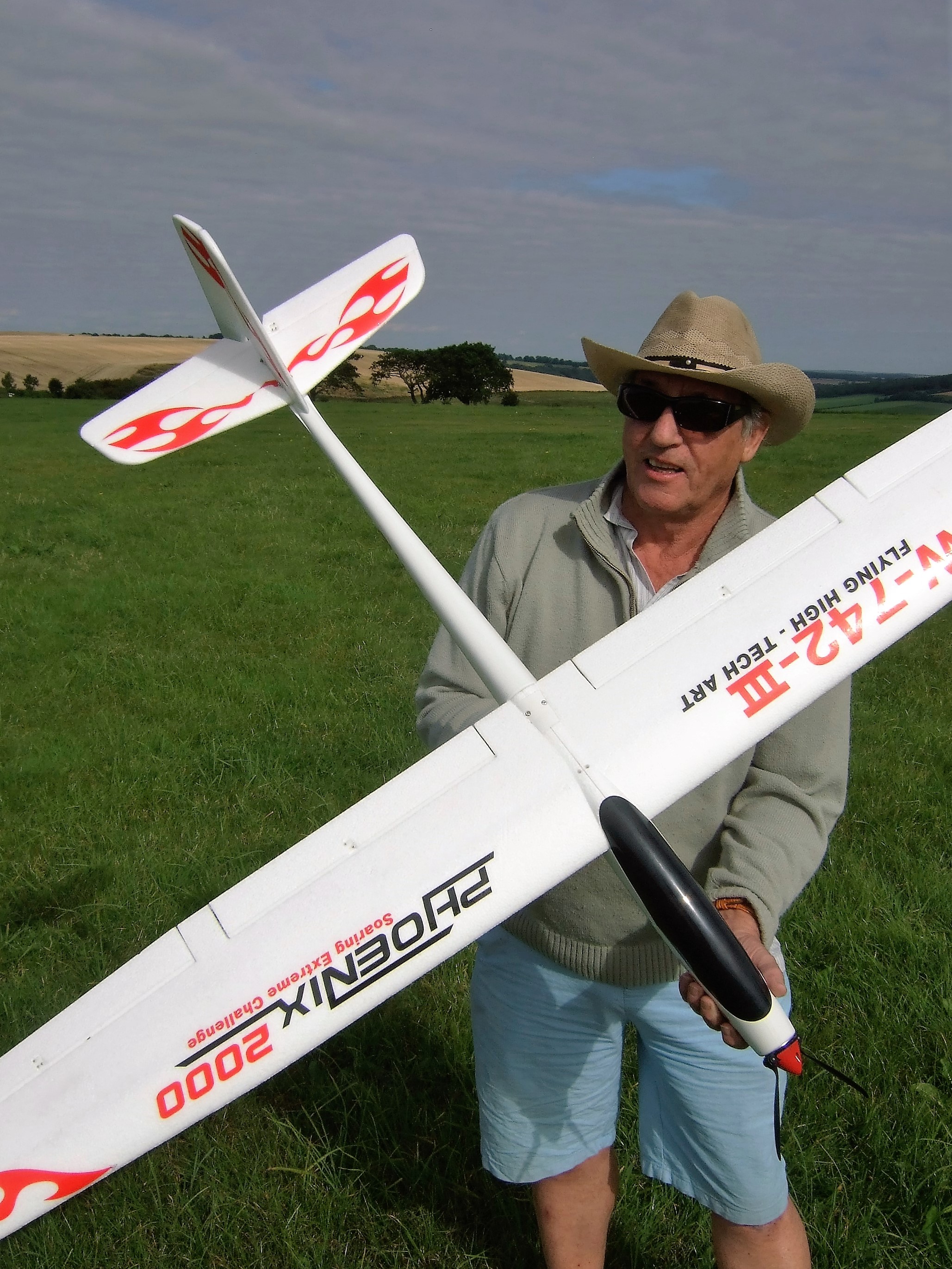 This 2M span Plug’n’Fly glider comes complete, already fitted with 4 x 9gm servos, a 30A speed controller, and a 4010 850kV motor. It flew very nicely with a 3 cell lipo as suggested but next time out Stanley found that the motor had died an early death. He couldn’t find an identical replacement on the HK website so he simply fitted a spare motor he had kicking around and found a suitable folding prop for it. Once again it flew perfectly, just the right amount of power so the replacement motor was obviously a good choice.
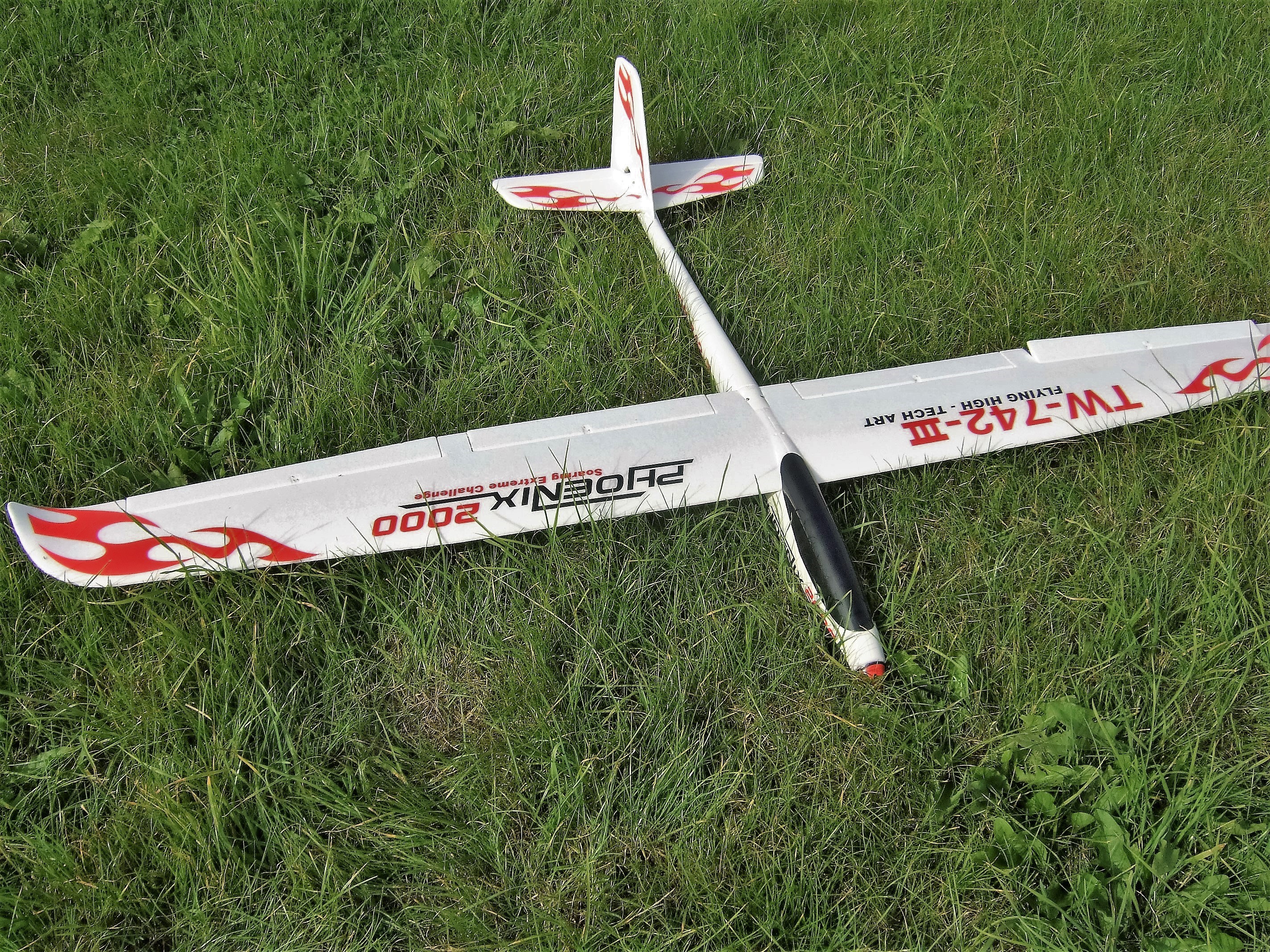 The Phoenix is fairly unusual in that it has a blown nylon fuselage fitted with plywood formers, although the wings and tail are made from the more common EPO foam. It doesn’t come with working flaps but they are moulded in so if you require them it’s just a case of fitting a couple of servos and suitable linkages.
Jeremy Stuttard came along one midweek day to test fly his new E-Flite Radian XL.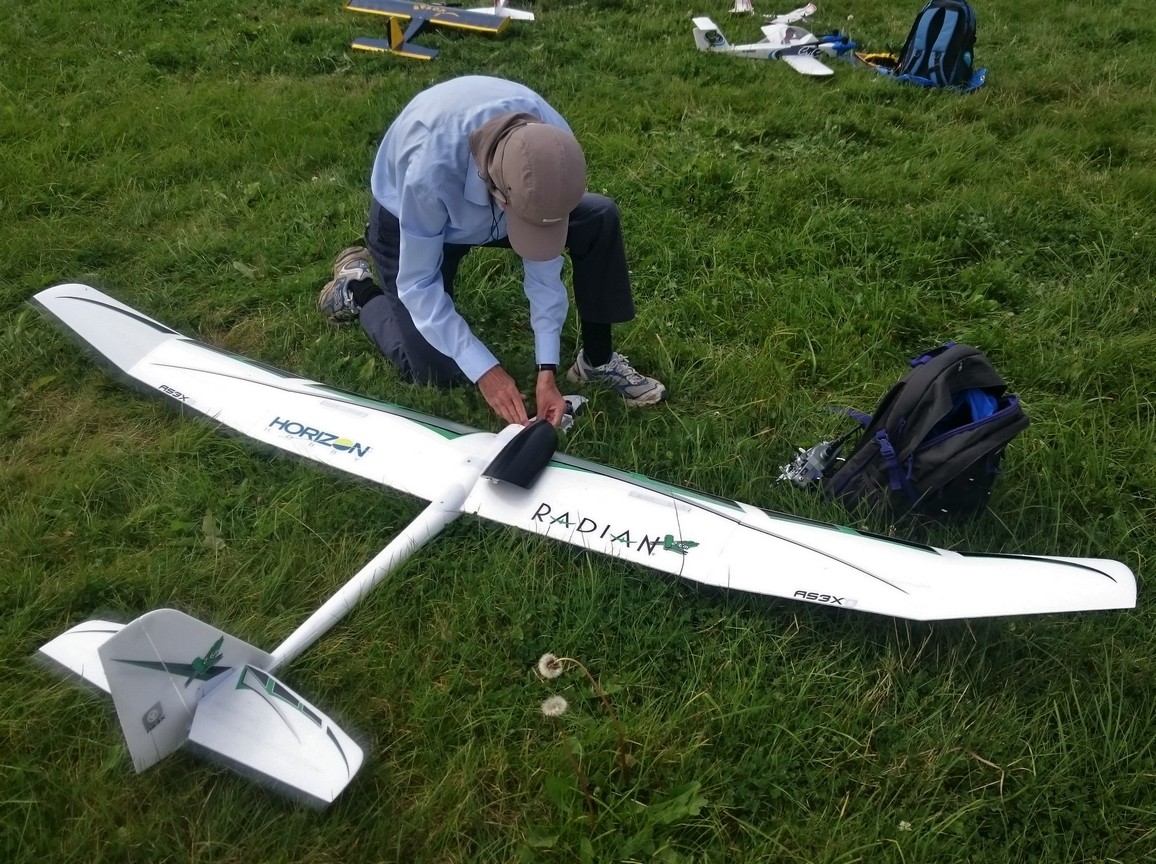 The Radian is available in a variety of sizes, the XL being 2.6M span. That’s 102”, so fairly large. It comes as a Bind’n’Fly model, being already fitted with a Spektrum AS3X receiver. That means it has a built in gyro for super stable flight. The model is rudder/elevator, no ailerons, but it does have pre-fitted spoilers so getting it down shouldn’t be a problem. I launched it for Jeremy’s first flight and it felt heavy but it flew away beautifully and looked mightily impressive stooging around in the light wind we had that day.
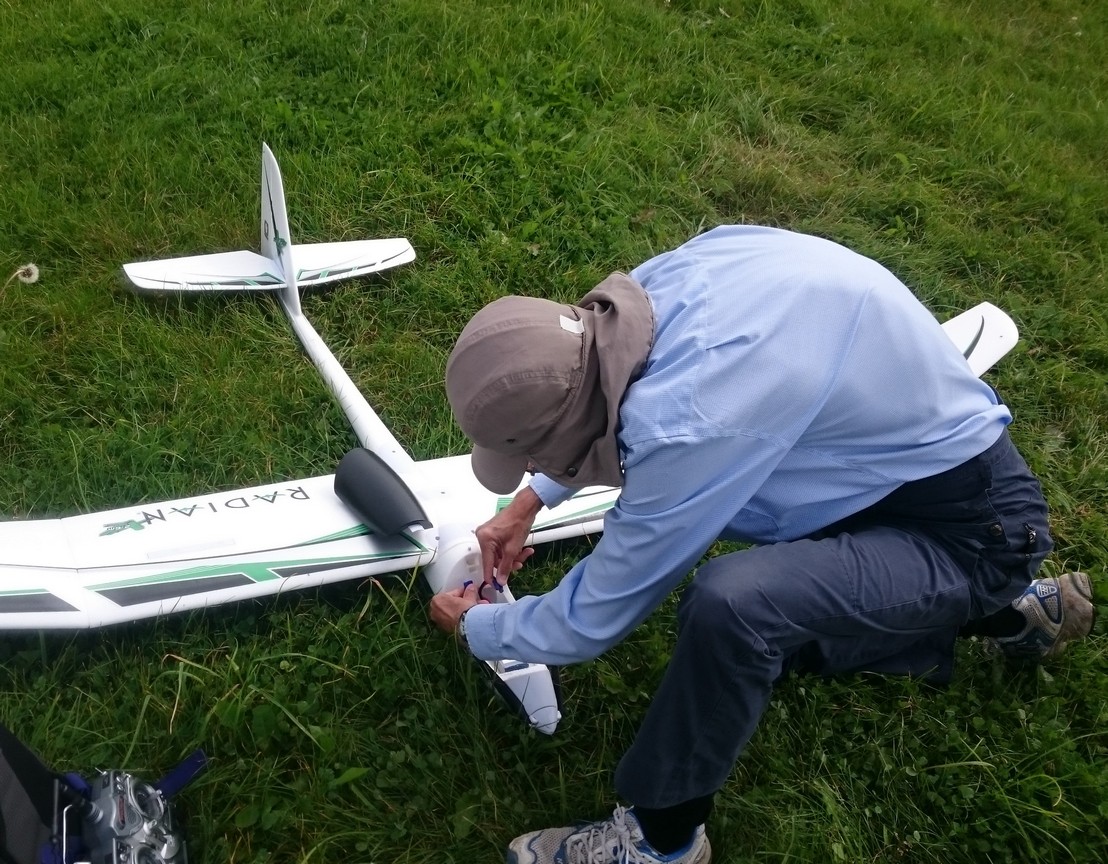 I recorded some video which you can see in this month’s video, including a brilliant low pass, but Jeremy was still enjoying that long first flight when I had to leave to I didn’t get to see the landing.
New member Terry Paget has been flying with PAM for a few months now and has been working towards his ‘A’ certificate so that he’s able to fly without a suitably qualified pilot stood next to him. I’m pleased to report that Examiner Dougal Entendre took and passed Terry during August and he received his new certificate at the last club meeting. Congratulations Terry.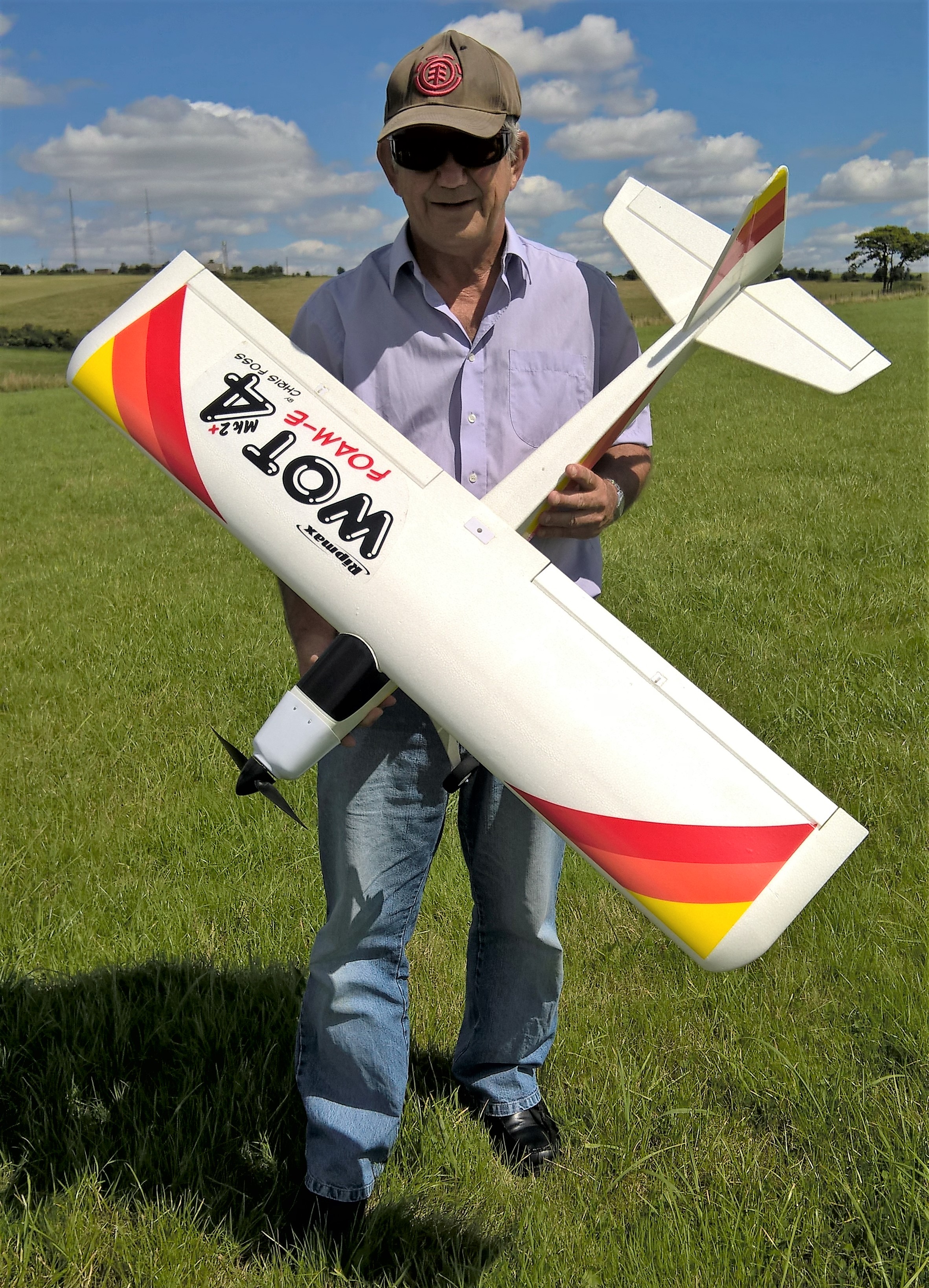 The subject of nicknames arose recently and, as Terry isn’t exactly known for ever being short of something to say, some unkind person suggested Terribull. Sounds absolutely perfect on so many fronts to me!
Terribull passed the test flying his WOT4 Foam-E but manged to bury it shortly afterwards when flying with the Firebirds club, so more recently he’s been flying his Weekender, a 31” span model designed by Dave Hughes back in 1966, the days of single channel radio and Cox 049 glow-plug motors.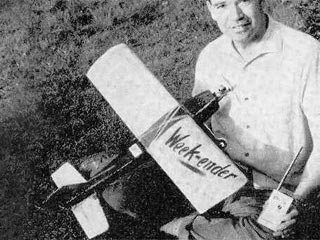
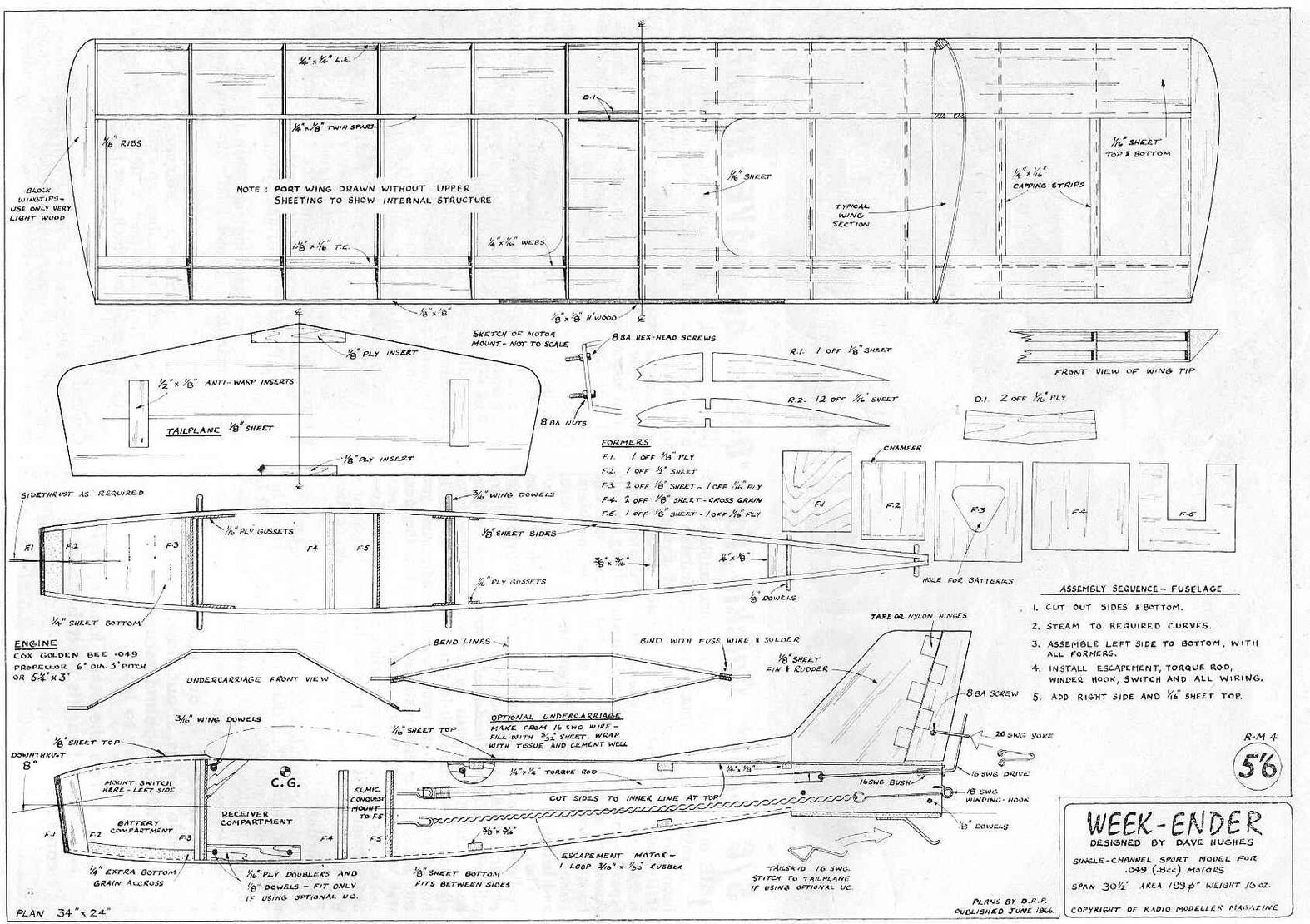
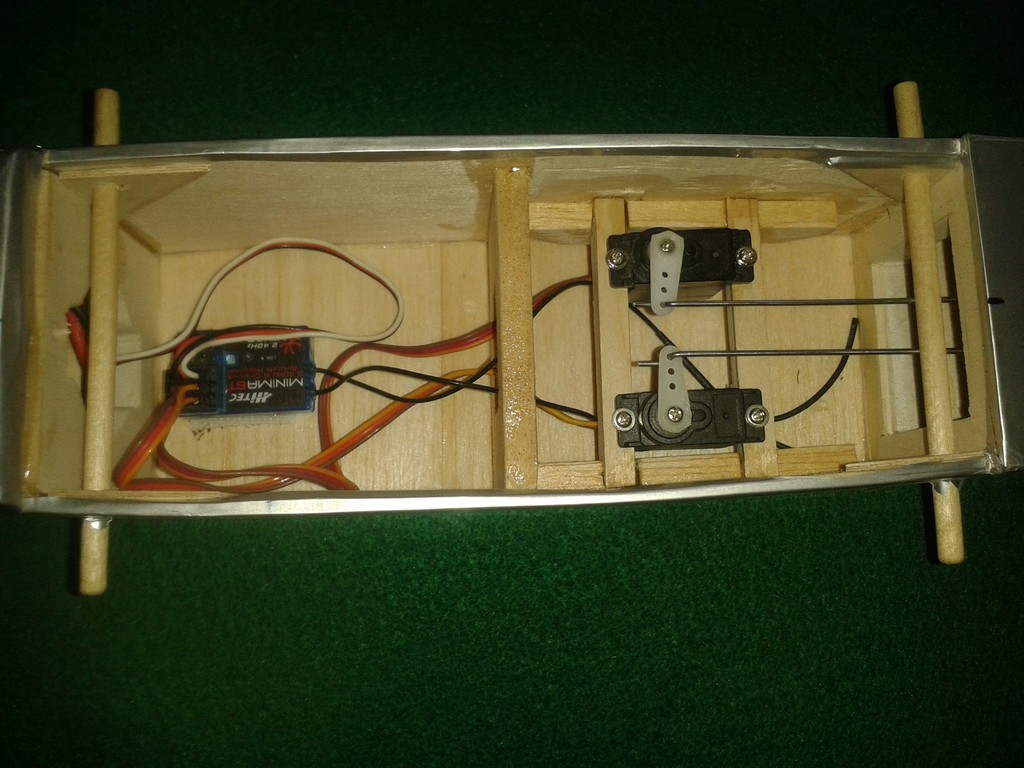
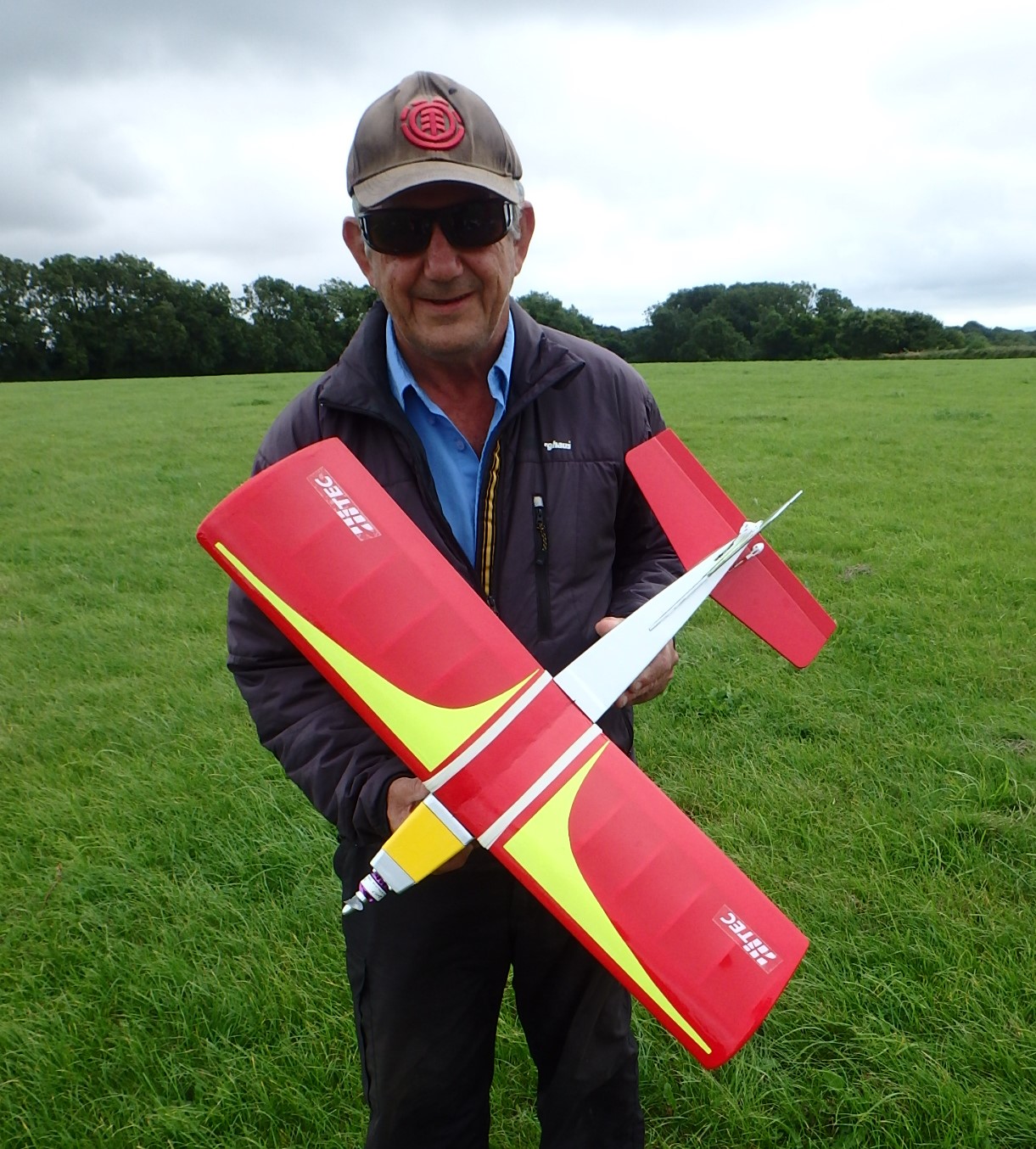 Terribull has adapted it for rudder/elevator control and fitted a Purple Power 2827 1350kV motor from 4-Max, coupled to a 20A Overlander speed controller. He uses a 1300mAh 3 cell lipo pack which gives good long flight times. There’s more than enough room inside for the radio gear.
 I’ve had a flight with the Weekender and it’s as aerobatic as can be expected of a 3 channel model and very well behaved. Terribull is now building a larger version with ailerons and no dihedral. I wonder if the larger one will be called Long Weekend…
Dougal send me through a photo of 1066 prop hanging his Hummer. Note the body language, the tightly clenched buttocks, leaning the way he wants the model to go, the tightly clenched buttocks, you can almost feel him squeezing the transmitter as he angles it round to the right, the tightly clenched buttocks…!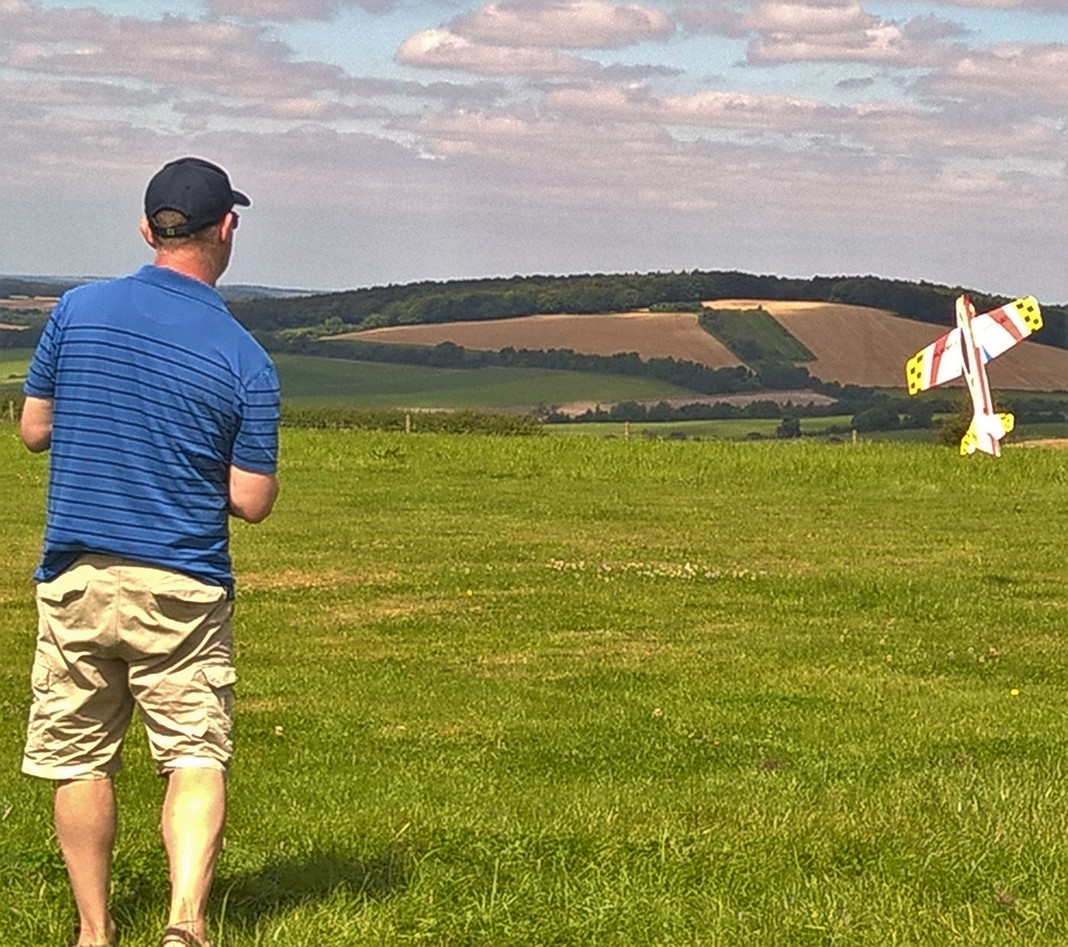
Norwegian Nick brought along his beautifully finished ME163 Komet for another try after it had previously failed to get away from a hand-launch despite a really strong heave.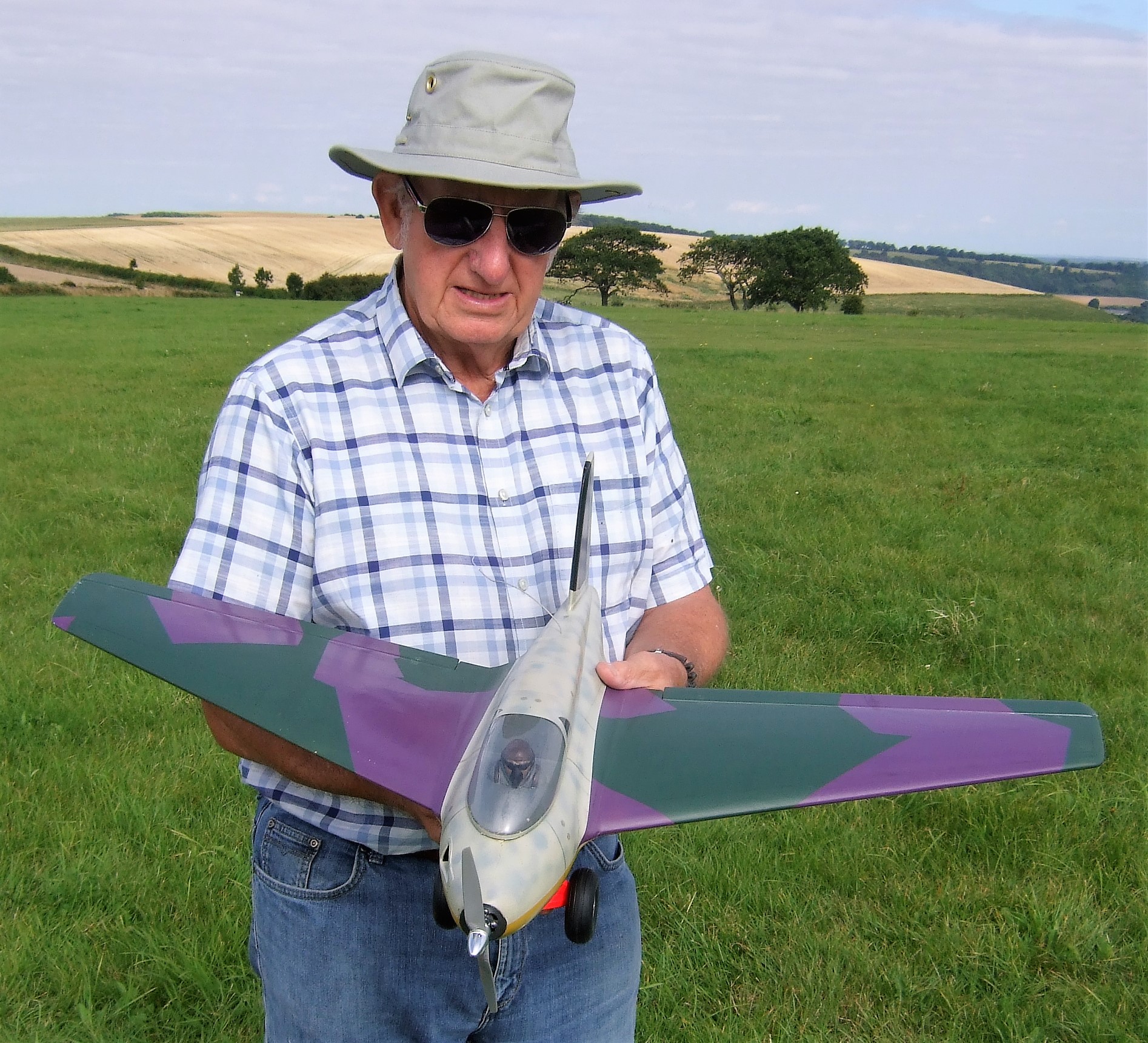 This time Nick had added a detachable dolly in the hope that it would be able to get off the patch. The model was built from the Cloud Models kit and features a fibreglass fuselage which makes for a lovely model but unfortunately it also makes it rather heavy.
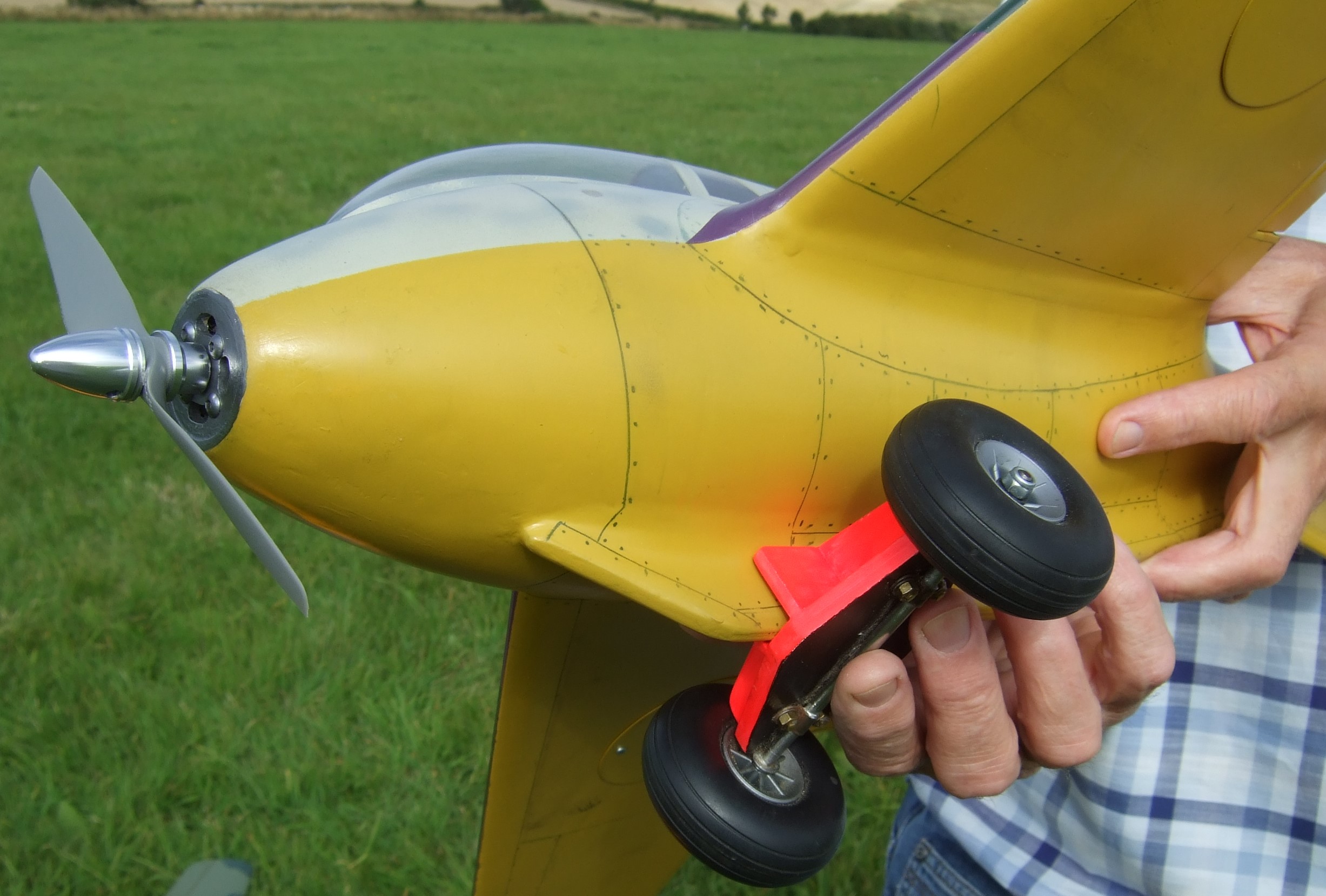 Despite various attempts to reach reasonable speed across the patch the Komet failed to get airborne so Nick has gone away to think of something else to try. I reckon it would go fine from a tarmac runway, and maybe from a longer grass one than we have at our field.
Chris Hard flew on several occasions this month and flew a couple of models we haven’t seen for a while.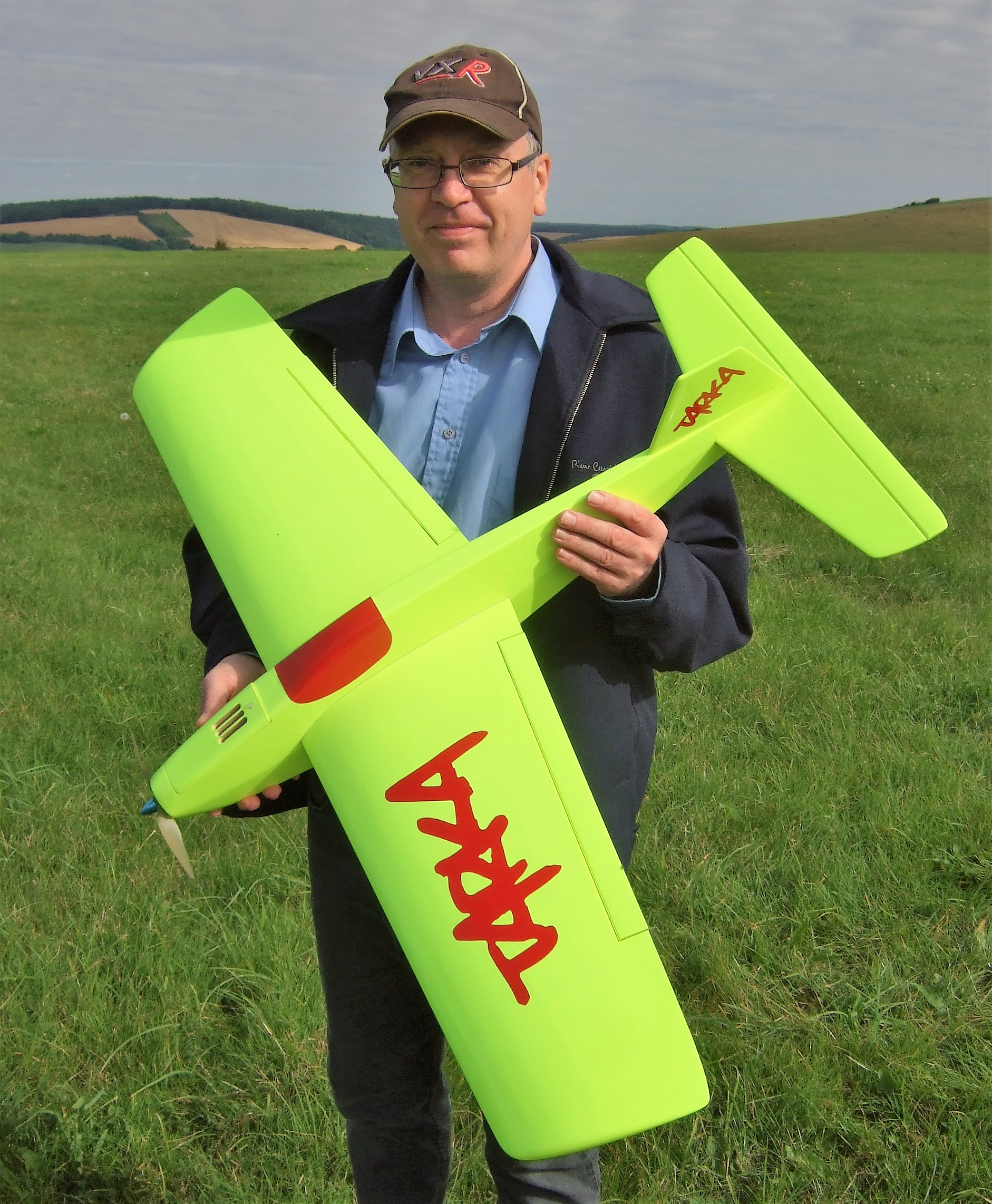 The first one was his Tarka, a model originally designed by Dave Boddington for Club 20 racing, so named because the models all had to use 0.20 cu inch sized I/C engines (just over 3cc). Chris’s Tarka uses electric power of course but I’m afraid I didn’t record which motor etc. Chris used.
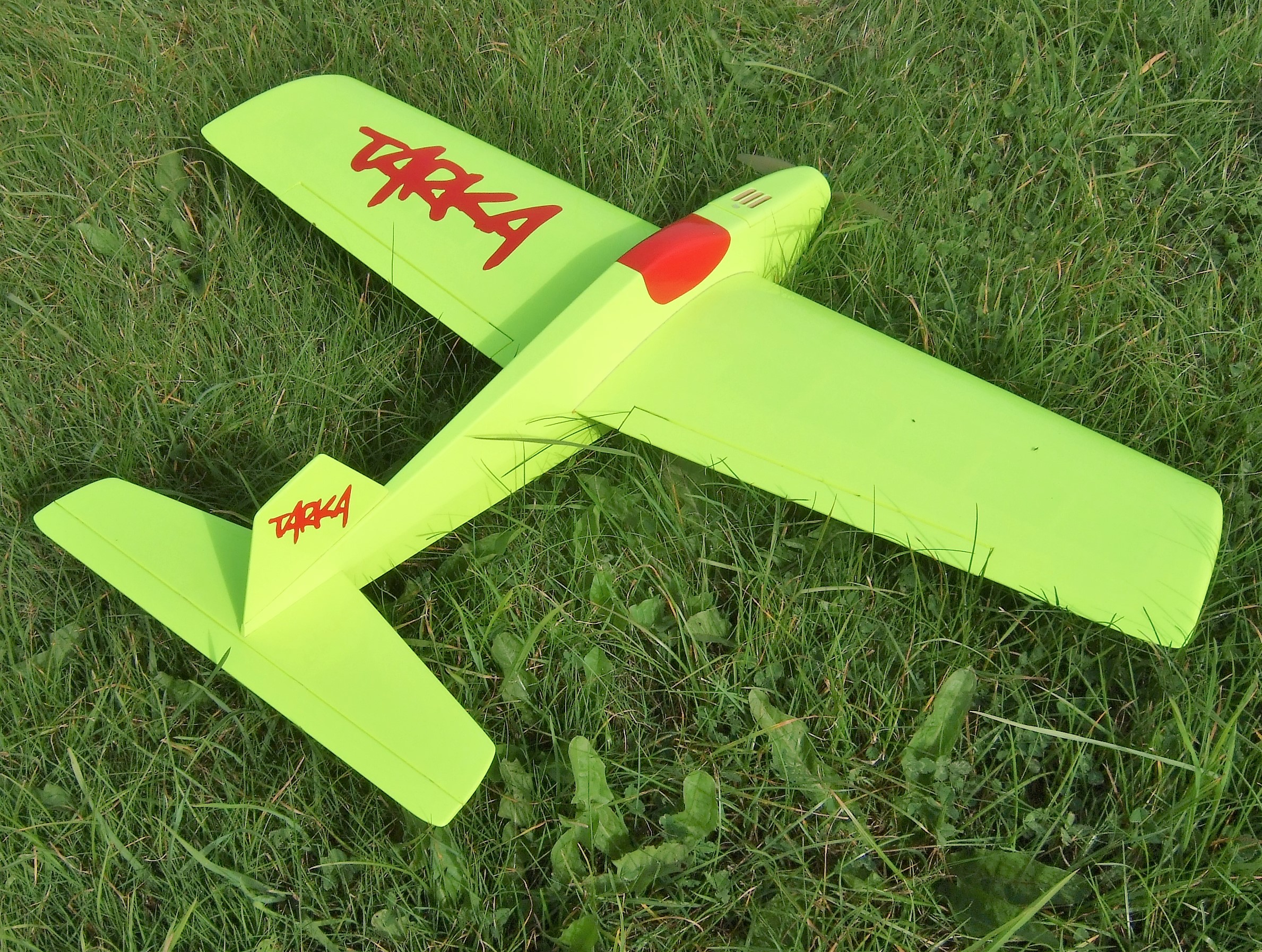 The Tarka flies well, fast but not ridiculously so, and is fully aerobatic. The second model Chris flew was his Radjet 400 which I’ve featured previously. Chris owns both this 400 version and the larger 800 version. They both fly well, but the small one is quite a hairy little bugger and it’s not something for the faint-hearted or the short-sighted, it disappears very rapidly if you’re not very careful!
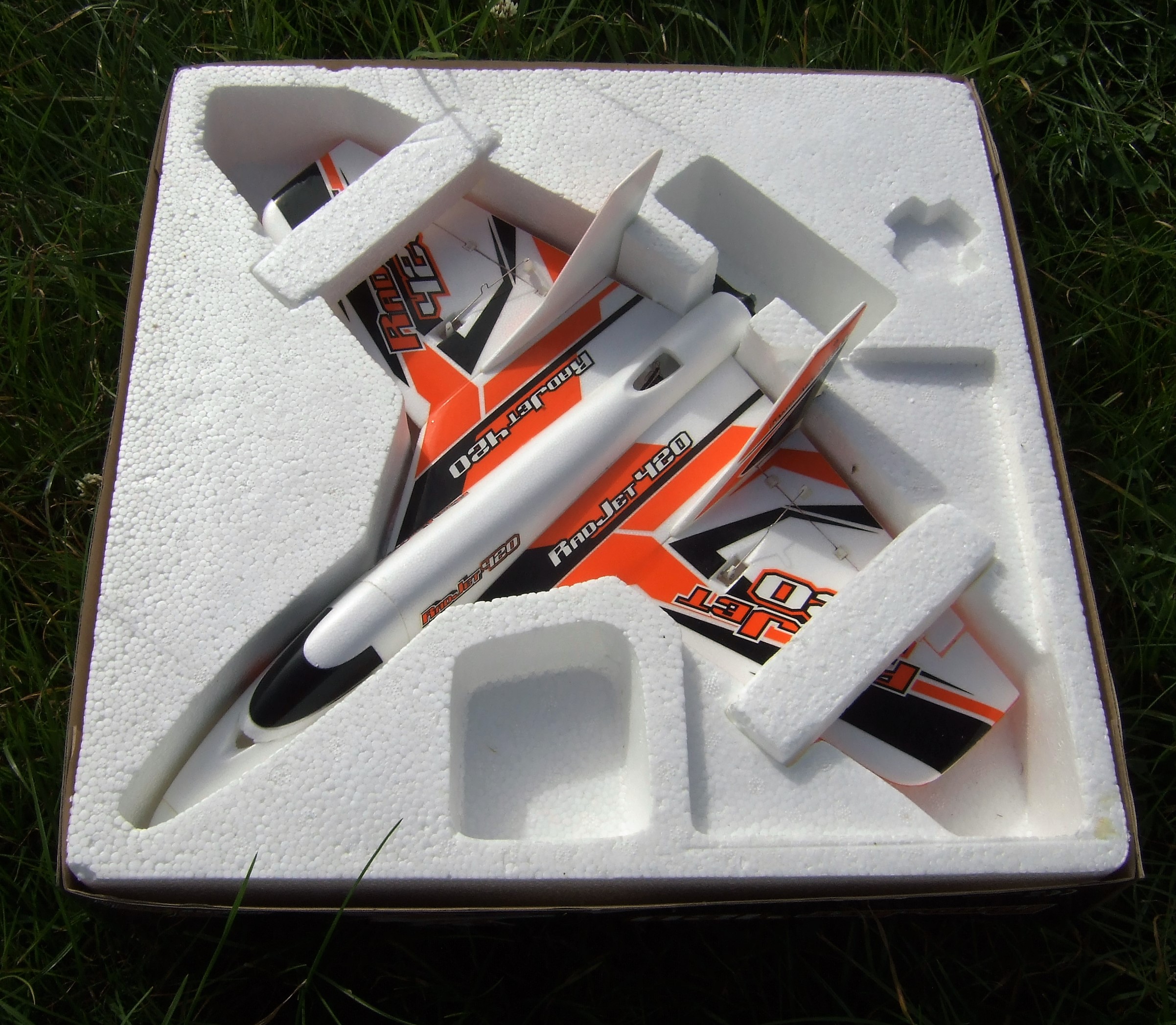 Every time Chris brings it along it makes me laugh, it just looks as if he’s bringing a pizza for his lunch!
Back now to Modelling Clay; one Sunday he made the fatal mistake of saying he’d have ‘one last flight’ and promptly had an aileron servo fail in his WOT4 Foam-E. The damage looks pretty terminal to me and I doubt it will be repaired. A sad end but it had served him well.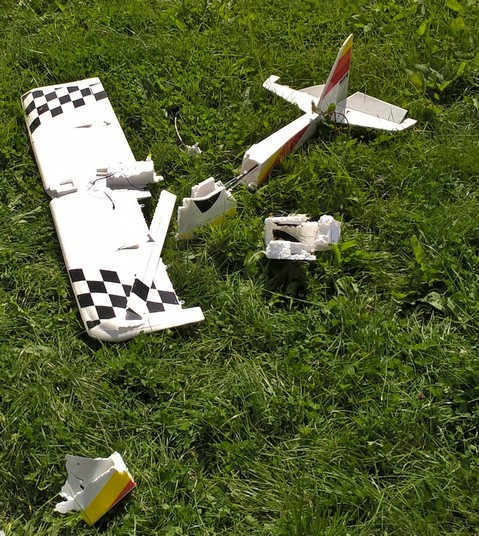
Many of you will have seen Modelling’s new Acro Wot when he gave a presentation at a recent club meeting. The presentation covered the trials and tribulations of his first covering and spray job. The model is built from a Chris Foss wood kit, rather than one of the foam ones, and Modelling chose to do the electric version.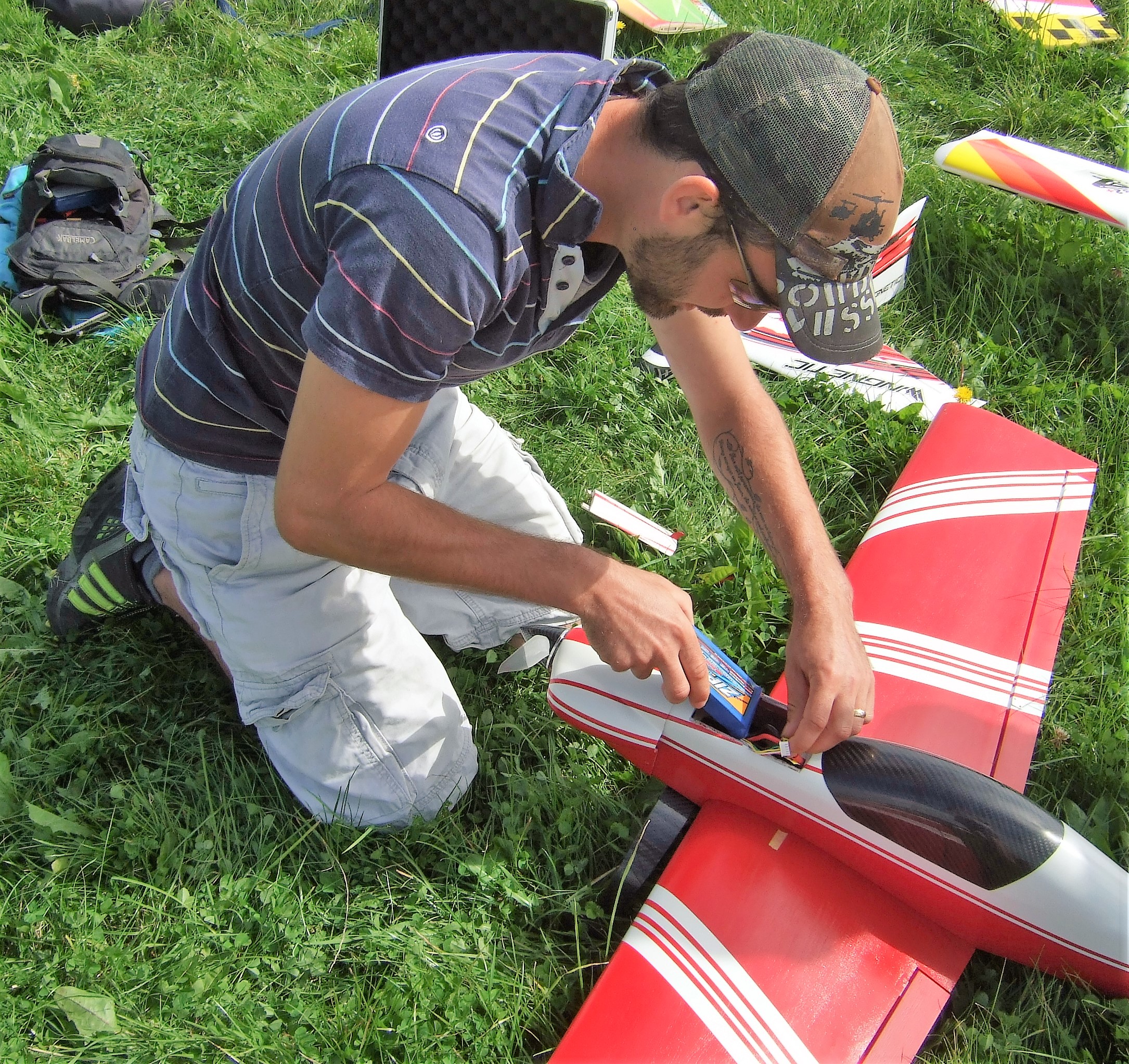 As far as I could see the only difference between the old original I/C version and this one is that it has a battery hatch at the front.
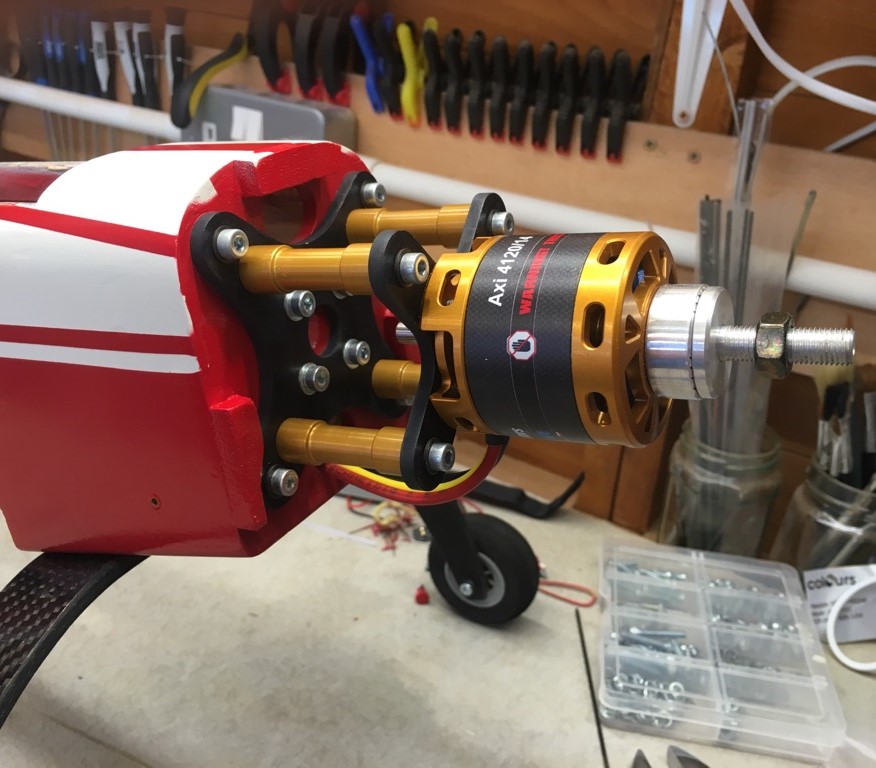 He has fitted an AXI 4120/14 V2 motor fitted with a 13 x 8 prop and coupled to a Jeti 70A speed controller with a switching BEC. He uses a 4 cell 4000mAh lipo rated at 25C. The servos are Hitec HS82MG and he splashed out on a Carbon Copy canopy and undercarriage. Modelling has made a lovely job of the glass-cloth covering and spray job.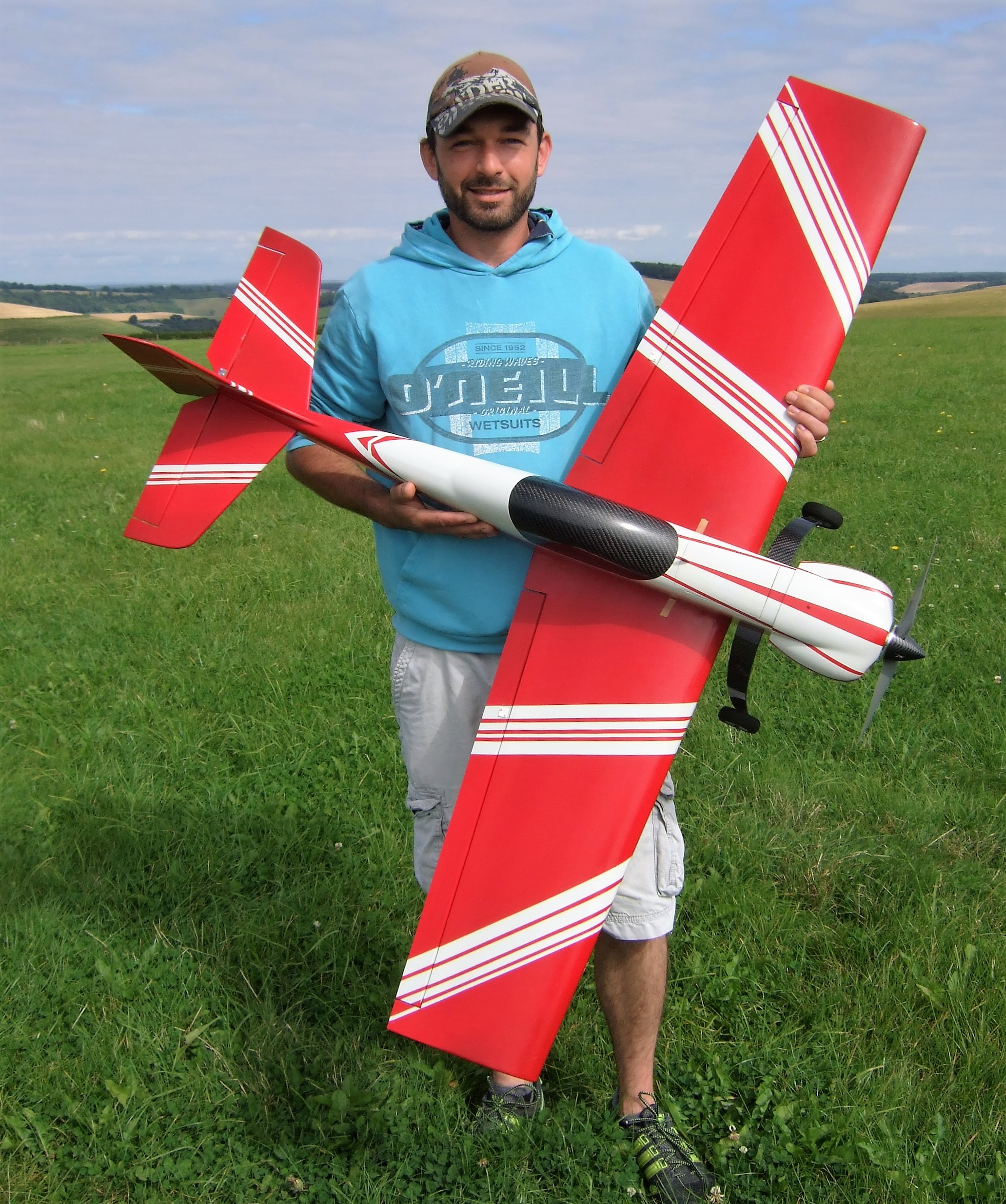
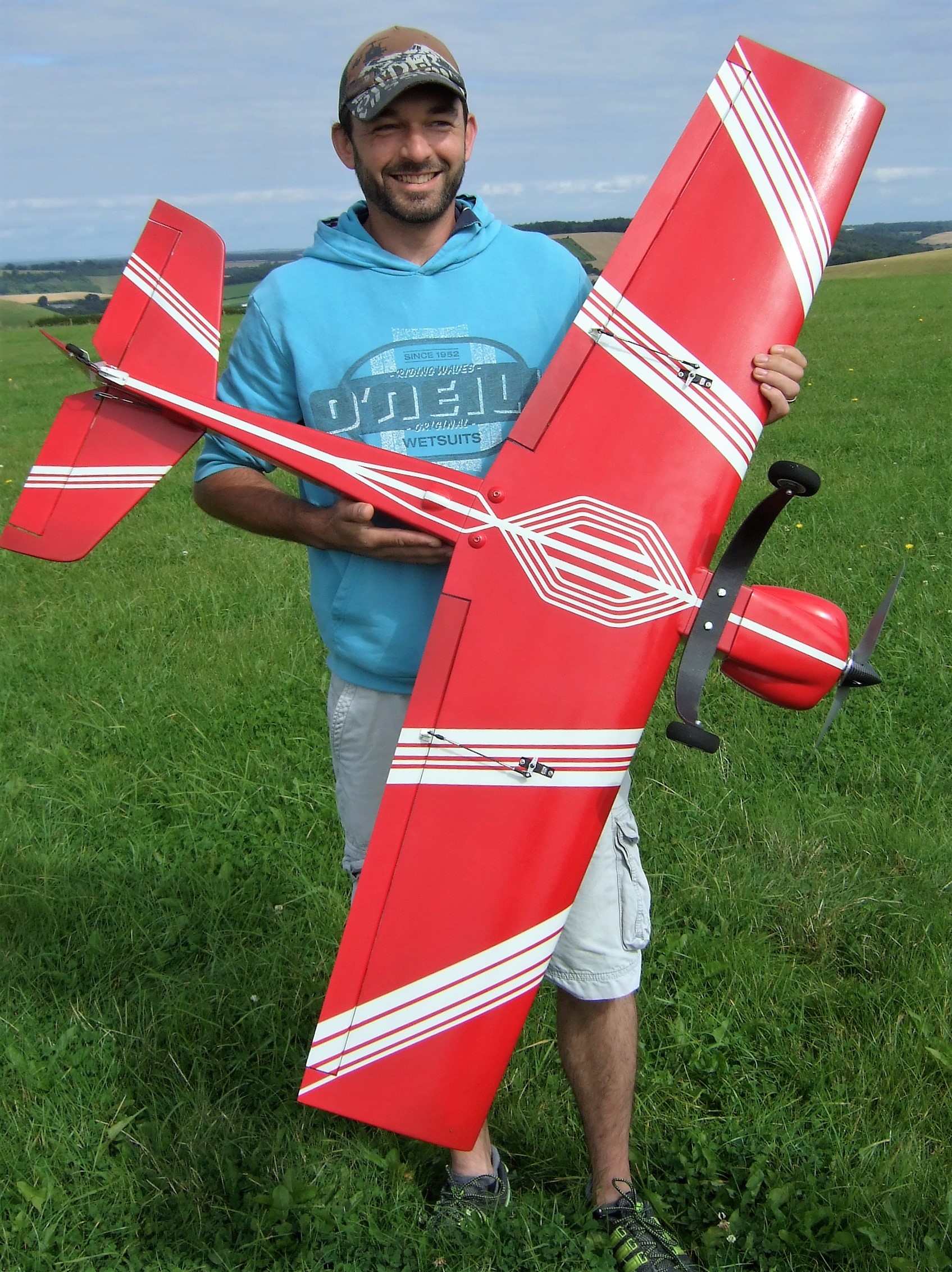 He didn’t make it easy for himself as he designed a scheme that included lots of pin stripes, particularly on the underside of the wing centre. 1066 talked Modelling into doing the first flight himself (I think 1066 was too scared to do it!) and the plane flew perfectly, as if it was on rails. Acro Wots are known for being a bit tricky to get down on our patch as they tend to float on and on but Modelling even did a lovely landing. Well done Tim, we all hate you!
I managed to lose some of the video I shot this month, including the Acro Wot’s first flight but I’ve just found it all again! As I have already completed this month’s video I will include the ‘lost’ footage next month, try not to get over excited in anticipation…
The last new model to feature this month is Dougal Entendre’s Vignette. He’s built a fuselage and V-tail and fitted the wing from his deceased Spirit. I think it looks really good and it reminds me of my first ever electric model, a Proof, designed by Dave Wilshire, that I first flew on 24th August 1991. Twenty five years of electric flying, wow!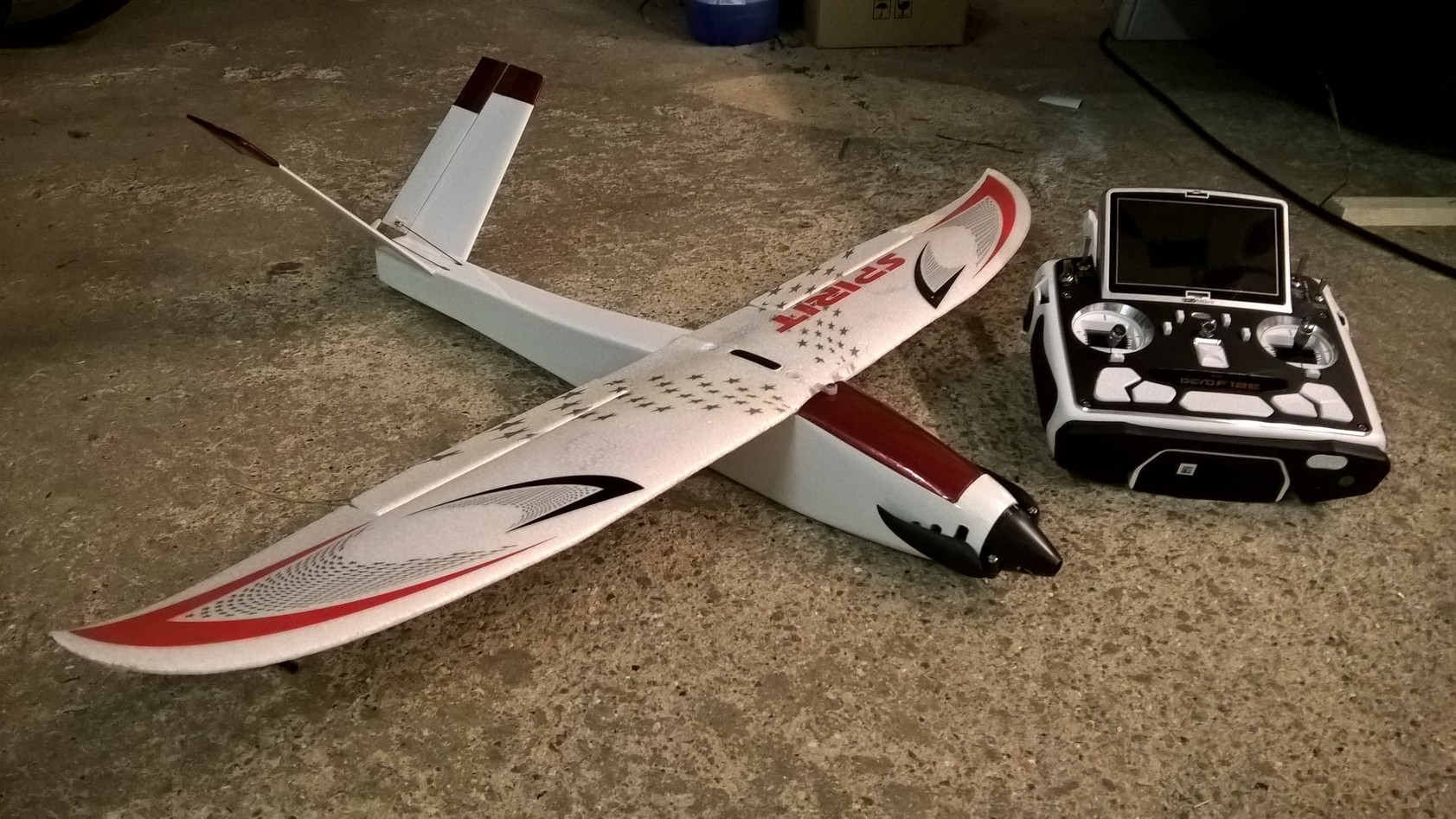
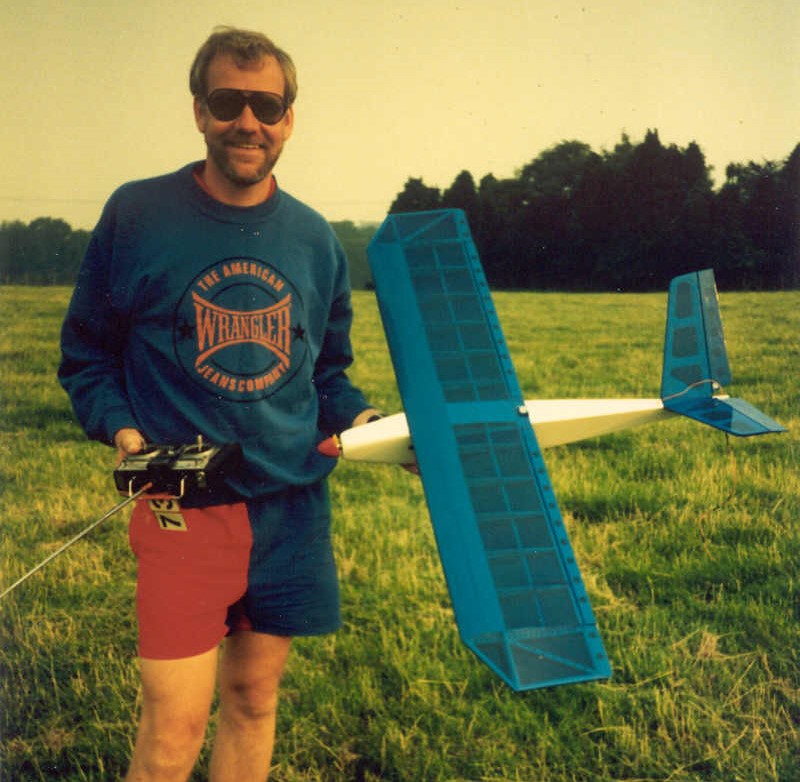 And I’ve hardly changed at all… The Vignette motor is from the Spirit’s evil twin, a Wingnetic, the same as I have fitted in my own Spirit. The V-tail controls elevator and rudder so with the aileron wing Dougal has all four functions.
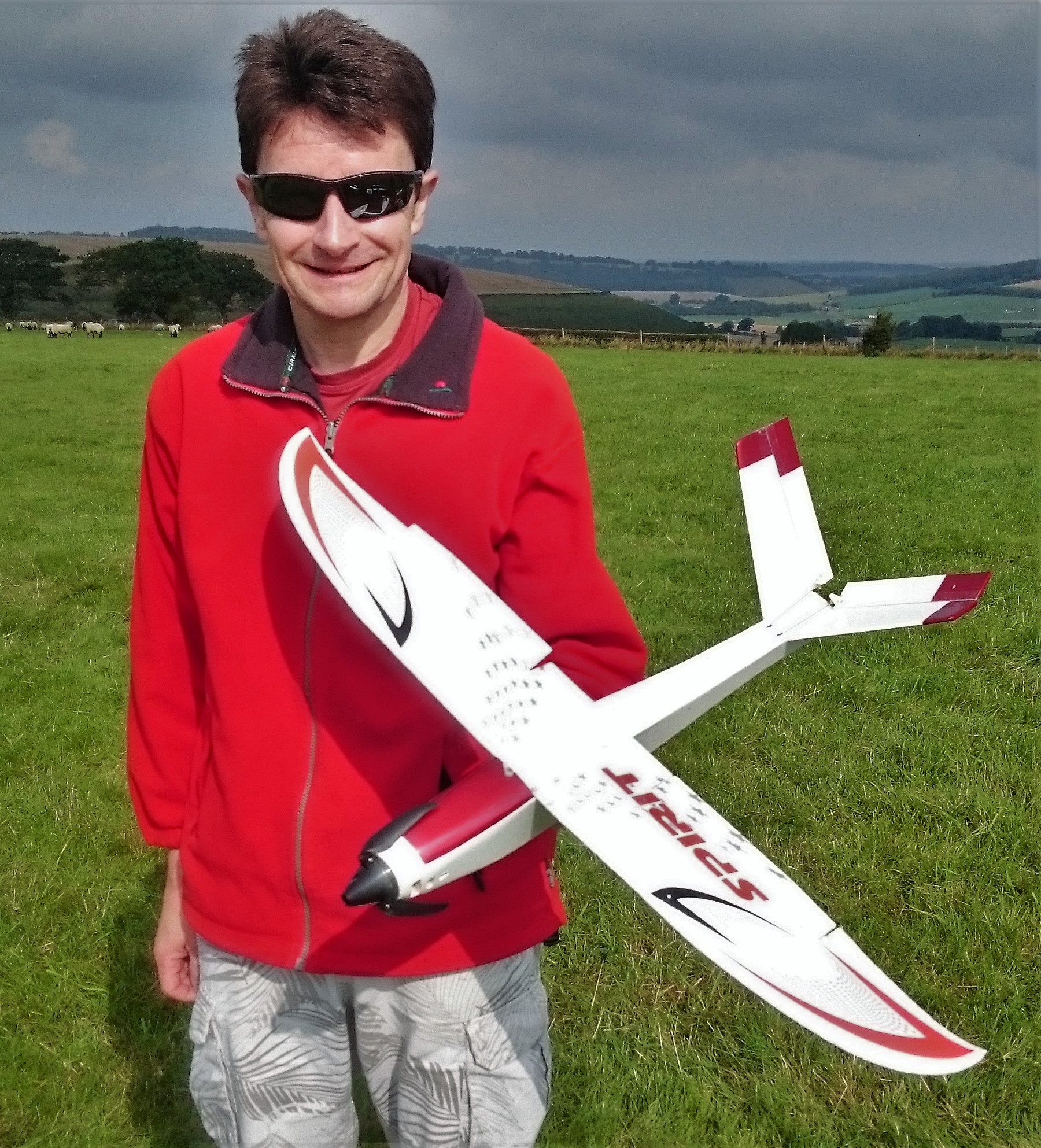 I suspect that if it had failed to fly nicely the name would have changed to Vinegarette but it didn’t, it flew brilliantly. You can see some of the first flight in this month’s video, although it’s so fast and agile it’s not easy to film. It’s very annoying, it seemed to be faster than my Spirit, and flew even better.
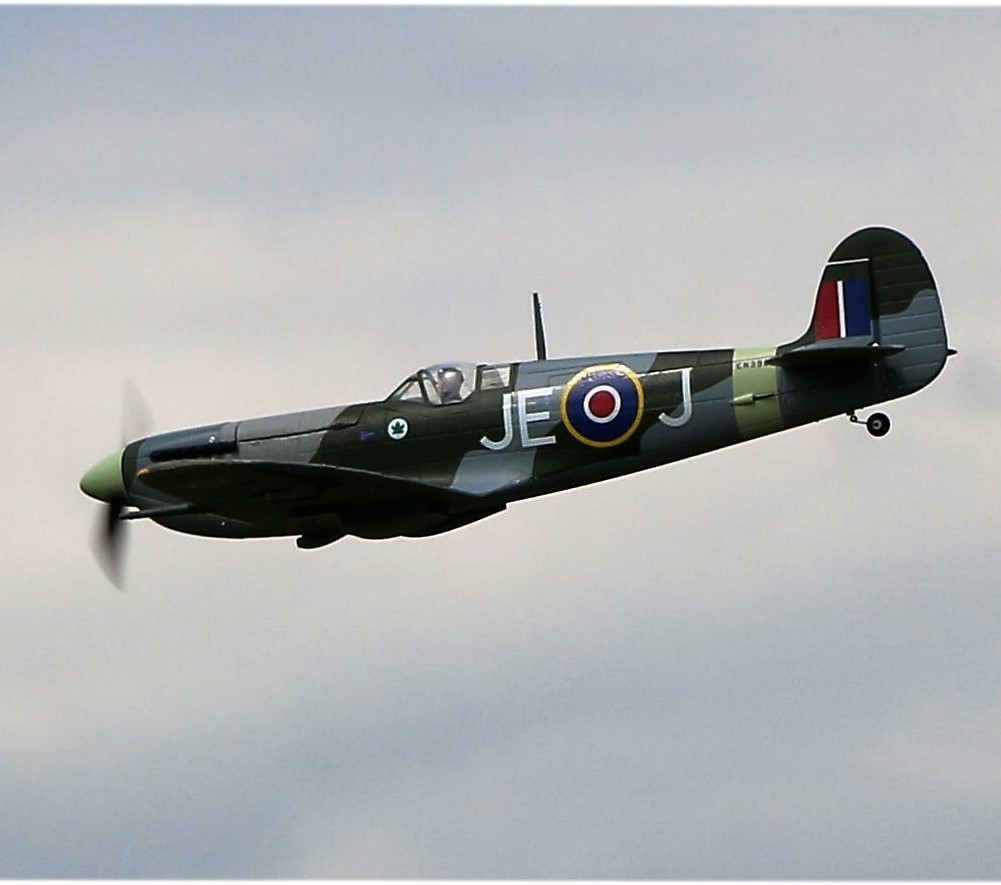
Finally, a couple of superb quality photos from Rusty G. These both feature Dougal’s Spitfire, I think you’ll have to agree they are absolutely stunning.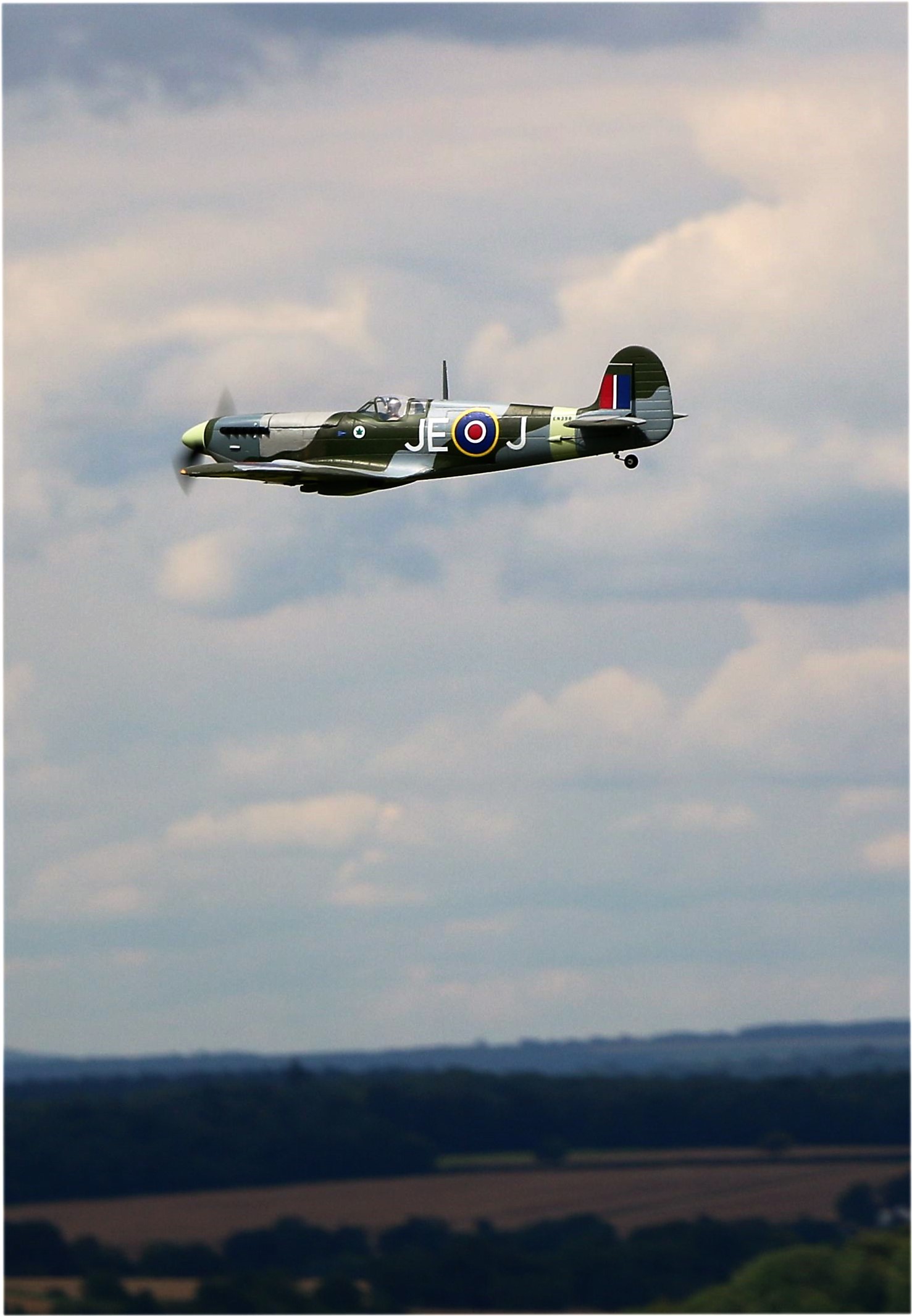
Next month’s Patch News may well be rather late making an appearance as I will be in Mexico at the end of September and beginning of October. Before that I’ll be in France for a few days, and I’ve got to find time to organise the skittles on 17th September and finish my club model (with the Fine Klogleman wing) before the meeting on 22nd September so that doesn’t leave me very much time for writing. All contributions of anything I miss while away will be gratefully received, photos, videos, and write-ups.
Please watch the video full screen, it’s so much better with small models flying around. If the video above won’t play for you CLICK HERE
A Boeing 747 was having engine trouble, and the pilot instructed the cabin crew to have the passengers take their seats and get prepared for an emergency landing.
A couple minutes later, the pilot asked the flight attendants if everyone was ready. Back came the reply:
“All set back here, Captain, except the lawyers are still going around passing out business cards.”
Colin Cowplain