Patch News – January 2026

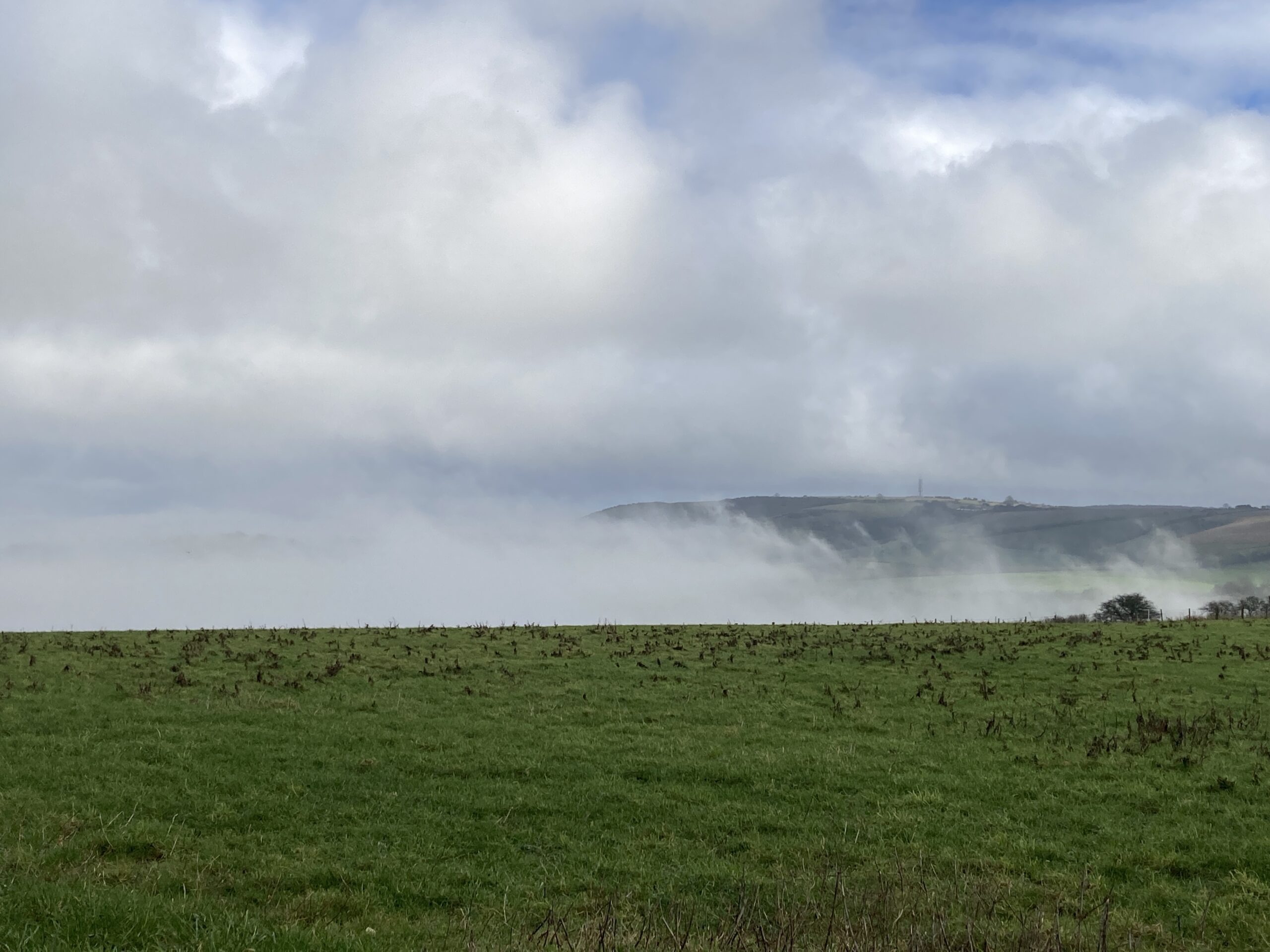 We shouldn’t really complain, it is mid-winter after all and we are certainly luckier with the weather than the clubs further north. I know some clubs stop all flying in the winter.
 There was a small amount of snow at home on January 5th and I imagine there would have been much more at the flying field but I’m afraid I wasn’t going to venture out to check!
The Petersfield Aero Modellers AGM was held in January at the Hampshire Hog in Clanfield. I won’t bore you with all the details, suffice to say that the main points were the committee elections (no changes at all), agreeing to the new, slightly increased subscriptions, and review and acceptance of the accounts. I was pleased to note that, despite the rumours that had been circulating, treasurer Nick was present and not laying on a sun-drenched beach in the Bahamas! There was an excellent turnout of members and all went smoothly with no major issues. Everyone seemed to enjoy the evening, it was good to catch up with some of the members who are unable to make it to the field very regularly.
There was a small amount of snow at home on January 5th and I imagine there would have been much more at the flying field but I’m afraid I wasn’t going to venture out to check!
The Petersfield Aero Modellers AGM was held in January at the Hampshire Hog in Clanfield. I won’t bore you with all the details, suffice to say that the main points were the committee elections (no changes at all), agreeing to the new, slightly increased subscriptions, and review and acceptance of the accounts. I was pleased to note that, despite the rumours that had been circulating, treasurer Nick was present and not laying on a sun-drenched beach in the Bahamas! There was an excellent turnout of members and all went smoothly with no major issues. Everyone seemed to enjoy the evening, it was good to catch up with some of the members who are unable to make it to the field very regularly. 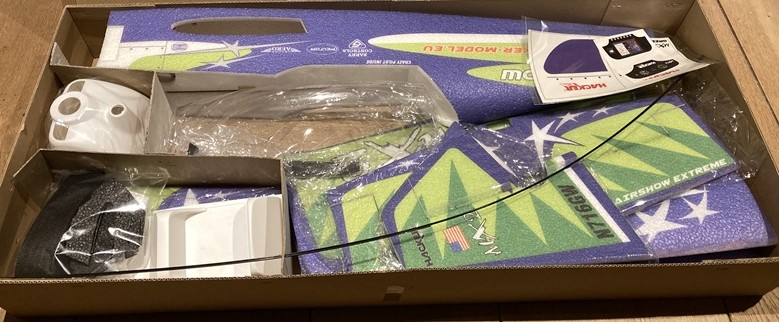 The evening ended with the drawing of an absolutely amazingly brilliant raffle (guess who ran it!) and the major prize of a Hacker MX2 ARTF was won by the club secretary and ever popular Woody who also won the members vote for Clubman of the Year trophy.
Club members should all have received an email about the memorial service on 26th January for ex-member Ken Knox who sadly passed away just before Christmas. Unfortunately I was away but Chas and his wife Dawn attended so PAM was represented.
The evening ended with the drawing of an absolutely amazingly brilliant raffle (guess who ran it!) and the major prize of a Hacker MX2 ARTF was won by the club secretary and ever popular Woody who also won the members vote for Clubman of the Year trophy.
Club members should all have received an email about the memorial service on 26th January for ex-member Ken Knox who sadly passed away just before Christmas. Unfortunately I was away but Chas and his wife Dawn attended so PAM was represented.  This is what Chas said about the service: Dawn and I attended Ken Knox’s memorial service on Monday. We sat with Tony Butterworth and Peter Turley in what was a pretty full church. There was a eulogy from Declan Cousins and a dual one by Ken’s two sisters. It’s sometimes surprising what you learn from these presentations. Ken went to the same school as John Lennon and although Ken was a bit younger than John he was often teased by him. Ken also took his younger sisters to a local venue where the Quarrymen were playing in their early days. Thanks Chas, I’m glad that you went along.
With the wintry weather limiting flying somewhat there weren’t many new models flown in January. Never mind, I’ll start with 1066’s newly completed and rather nice Flair Attila.
This is what Chas said about the service: Dawn and I attended Ken Knox’s memorial service on Monday. We sat with Tony Butterworth and Peter Turley in what was a pretty full church. There was a eulogy from Declan Cousins and a dual one by Ken’s two sisters. It’s sometimes surprising what you learn from these presentations. Ken went to the same school as John Lennon and although Ken was a bit younger than John he was often teased by him. Ken also took his younger sisters to a local venue where the Quarrymen were playing in their early days. Thanks Chas, I’m glad that you went along.
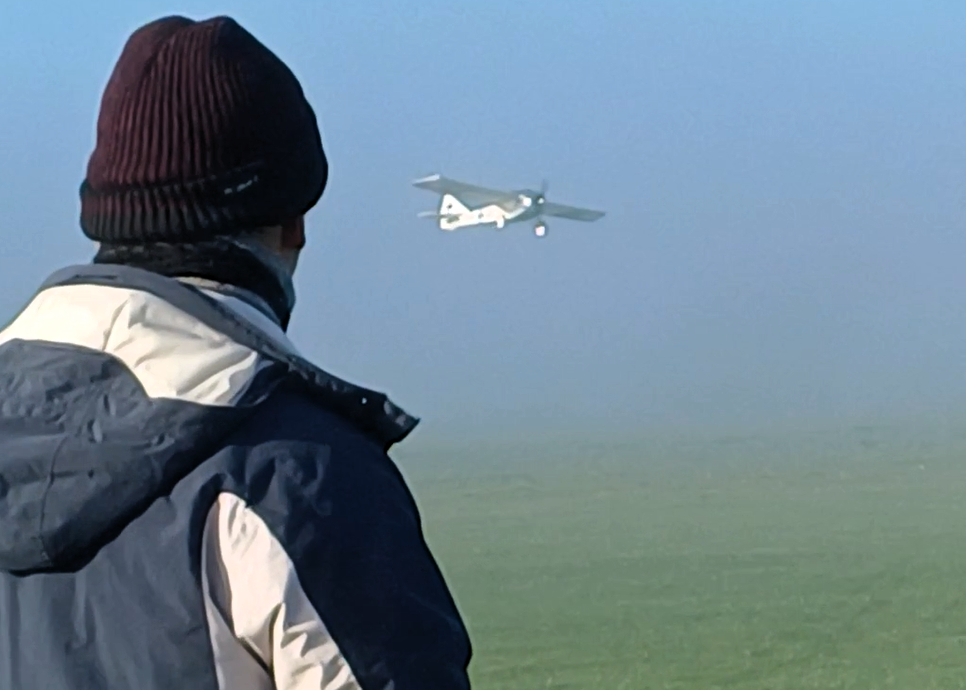
With the wintry weather limiting flying somewhat there weren’t many new models flown in January. Never mind, I’ll start with 1066’s newly completed and rather nice Flair Attila. 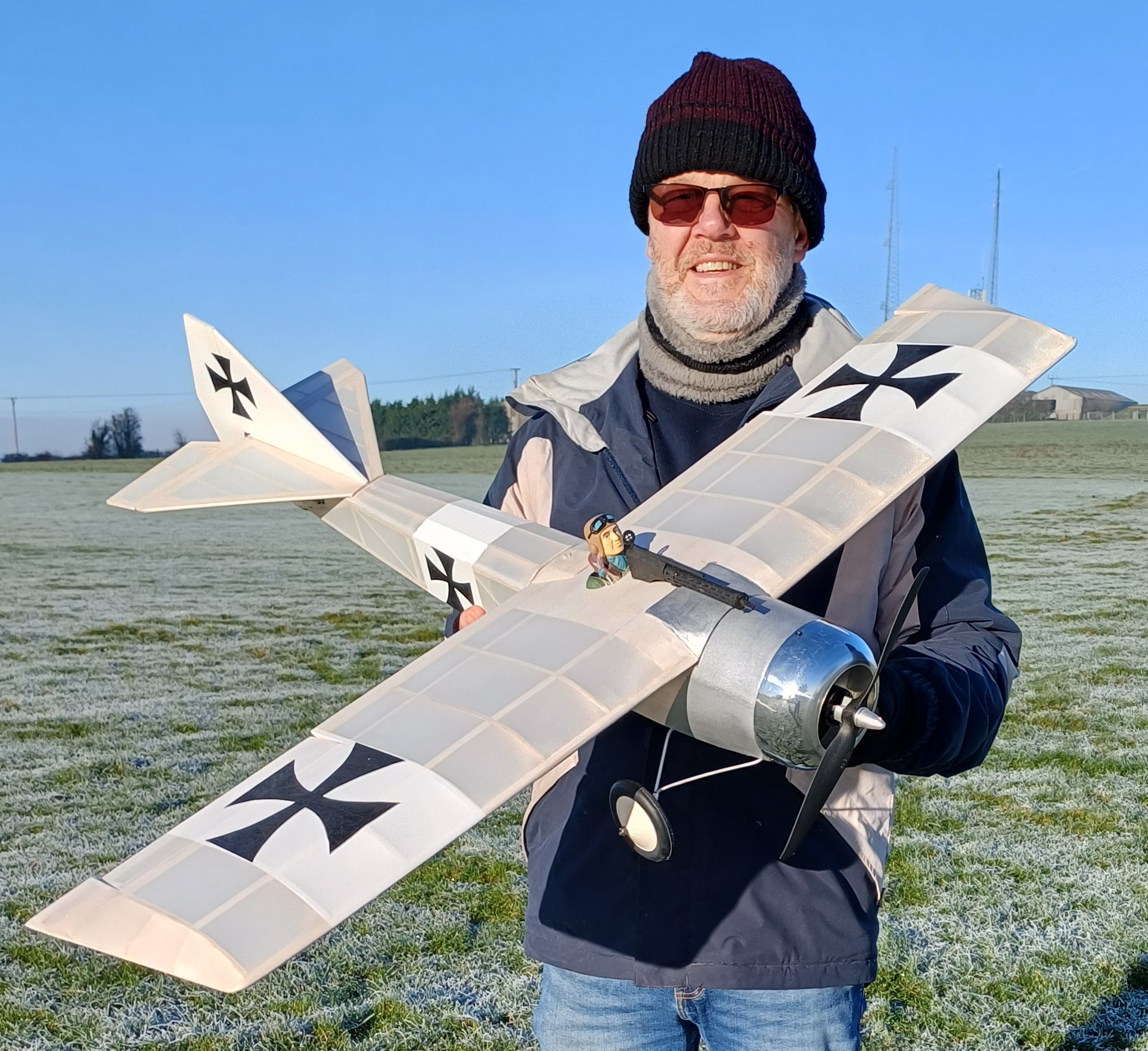 Remember those? Flair RC models were primarily produced from the early 1980s through the mid-2000s, with the company undergoing a major restructuring in 2005. Known for their high-quality “Classic Scale” and “Scout” series, the kits were a staple of the British modelling scene, with many designs dating back to roughly forty plus years ago.
The Attila is a 46” (1168mm) sports scale model originally designed for small IC engines, either two or four stroke, but obviously 1066 has made his electric. Here’s what 1066 has to say about his journey to the Attila: Back in the mid-eighties I built a Flair Magnattila, it was fitted with a worn out Irvine 40 that barely had enough power to get it off the ground, but I loved it, flying very slow low level aerobatics, it was so stable with no vices. A few years ago I had the privilege of flying Nick Squire’s late father’s Magnattila, probably the most emotional flight I’ve ever undertaken, but it was everything I remembered from my own model. Having recently fallen back in love with building I started looking for a Magnattila kit, but they are very rare, and when they do appear they are ridiculously expensive. Move to a Friday morning in late 2025 when John, Andy and I made the mistake of believing a weather forecast and tried to go flying. After about half an hour we realised the mist wasn’t going to lift so John invited us to his man cave for a coffee. While snooping around his cave I saw, what I originally thought was the sought after Magnattila, but turned out to be its’ smaller, almost identical brother, Attila.
Remember those? Flair RC models were primarily produced from the early 1980s through the mid-2000s, with the company undergoing a major restructuring in 2005. Known for their high-quality “Classic Scale” and “Scout” series, the kits were a staple of the British modelling scene, with many designs dating back to roughly forty plus years ago.
The Attila is a 46” (1168mm) sports scale model originally designed for small IC engines, either two or four stroke, but obviously 1066 has made his electric. Here’s what 1066 has to say about his journey to the Attila: Back in the mid-eighties I built a Flair Magnattila, it was fitted with a worn out Irvine 40 that barely had enough power to get it off the ground, but I loved it, flying very slow low level aerobatics, it was so stable with no vices. A few years ago I had the privilege of flying Nick Squire’s late father’s Magnattila, probably the most emotional flight I’ve ever undertaken, but it was everything I remembered from my own model. Having recently fallen back in love with building I started looking for a Magnattila kit, but they are very rare, and when they do appear they are ridiculously expensive. Move to a Friday morning in late 2025 when John, Andy and I made the mistake of believing a weather forecast and tried to go flying. After about half an hour we realised the mist wasn’t going to lift so John invited us to his man cave for a coffee. While snooping around his cave I saw, what I originally thought was the sought after Magnattila, but turned out to be its’ smaller, almost identical brother, Attila.  An offer was quickly made, and accepted, so I was now the owner of an Attila kit, for a great price. They say the nicest things come in small parcels; the Attila proves the point. Easy to transport with very forgiving flying characteristics, the Attila provides economical fun flying. The kit provides all materials for the 3-channel version but aileron conversion is detailed on the plan, so I decided to build mine with ailerons, using two small servos instead of the central servo with bellcranks as shown on the plan.
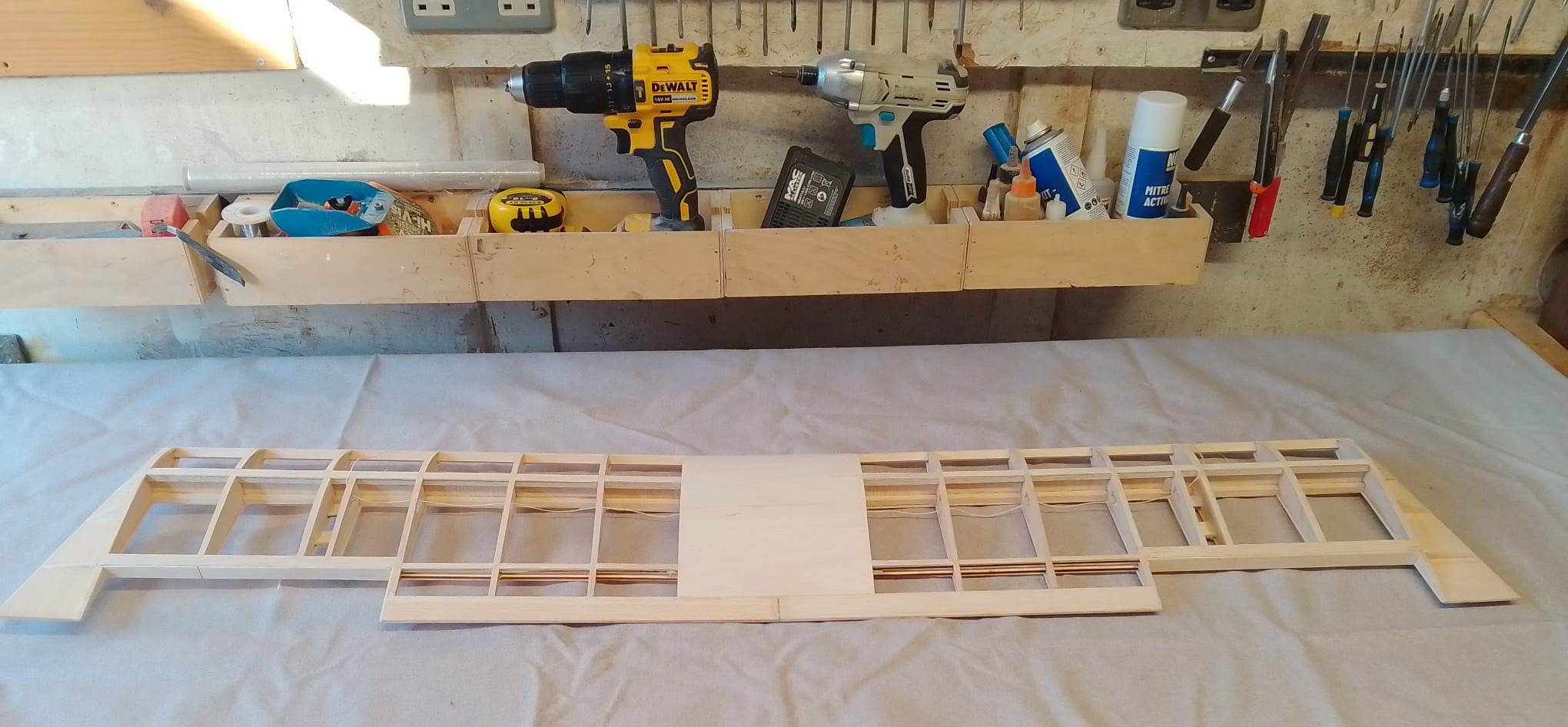
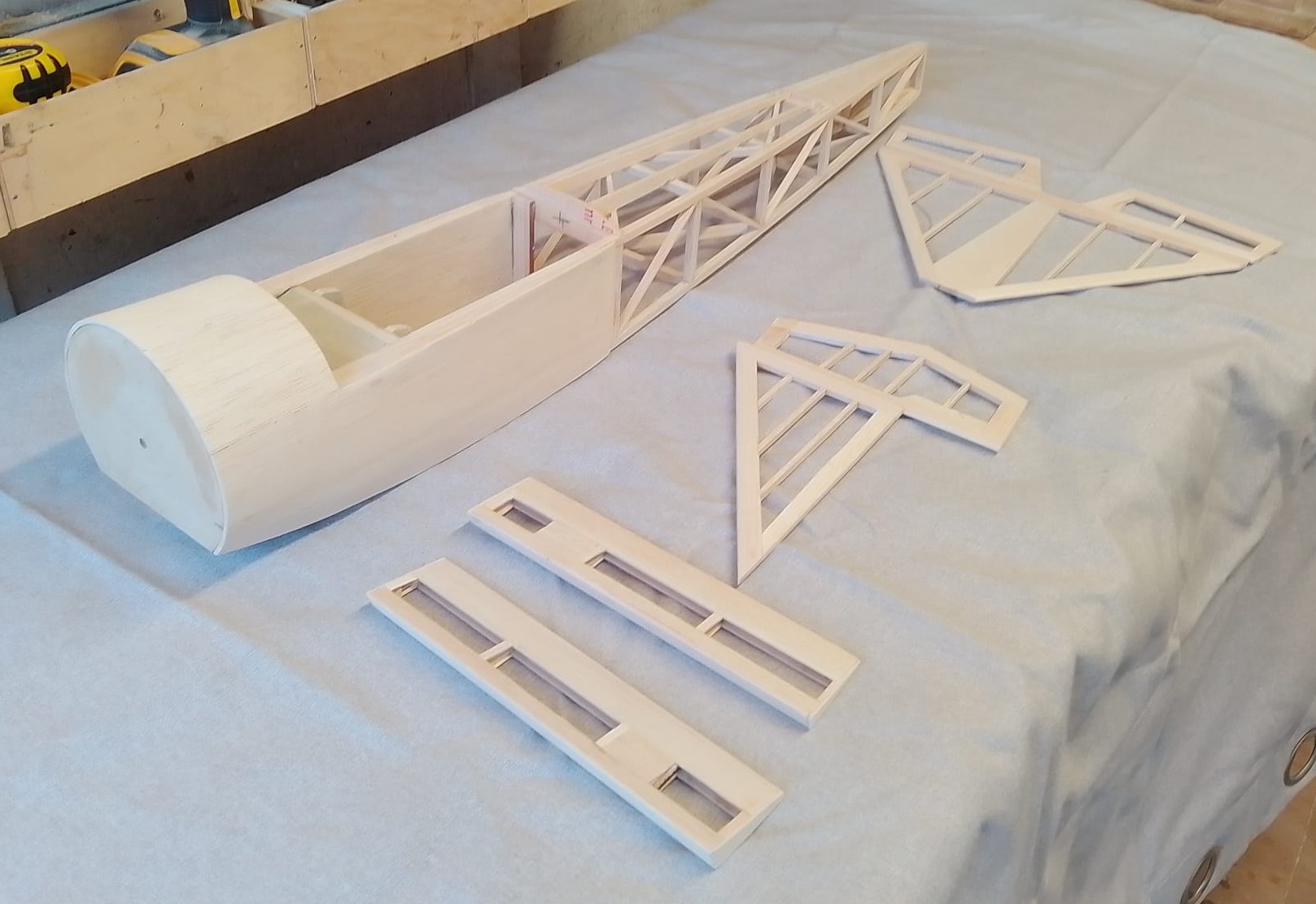 This is one of the earlier types of kit and as such it should be remembered that the instructions require the builder to interpret the full-size plan more so than more modern kits. This is where building from a kit comes into its own because you can incorporate any modifications as you build the model. With a bit of thought it was fairly easy to come up with a mod that made getting the battery in and out very practical, and with the generous proportions of the fuz a 3700mAh three cell fits with ease.
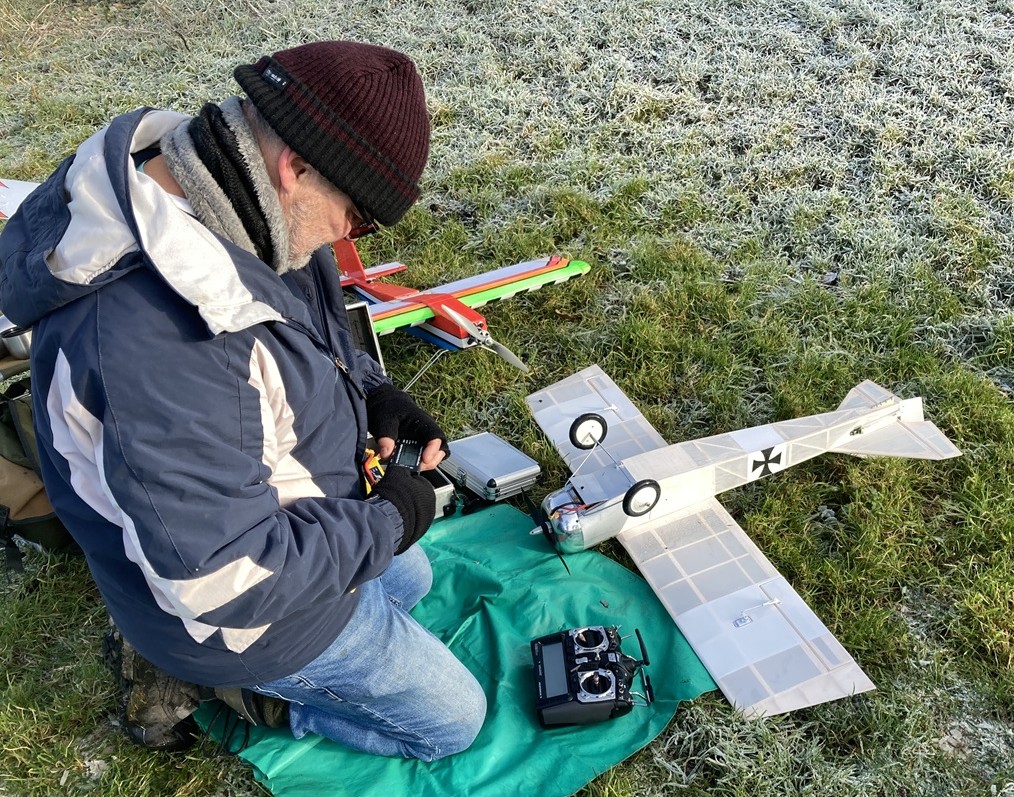 Because the original was designed for IC, using a relatively large battery helps with CG, especially as I wanted to fit the Rudder and Elevator servos at the rear of the fuz. This type of model just has to be covered in fabric, and not film. Checking the internet for Antique Oracover I was shocked by the cost, to cover the Attila I calculated I would need about 2.75 metres, so would need two rolls at a total cost of £75, ouch, almost twice what I paid for the kit. However after further investigation I found a product being sold by Sarik Hobbies called Diacov 1000. The material is 10 cm wider than the normal hobby products, so I calculated that if I was careful I would only need 2 metres, which came too £ 29.00 delivered. The only drawback is that it only comes in translucent white. I watched a couple of YouTube videos demonstrating the product and it looked to be really good, so decided to try it, and I can confirm it is a great product for this type of model.
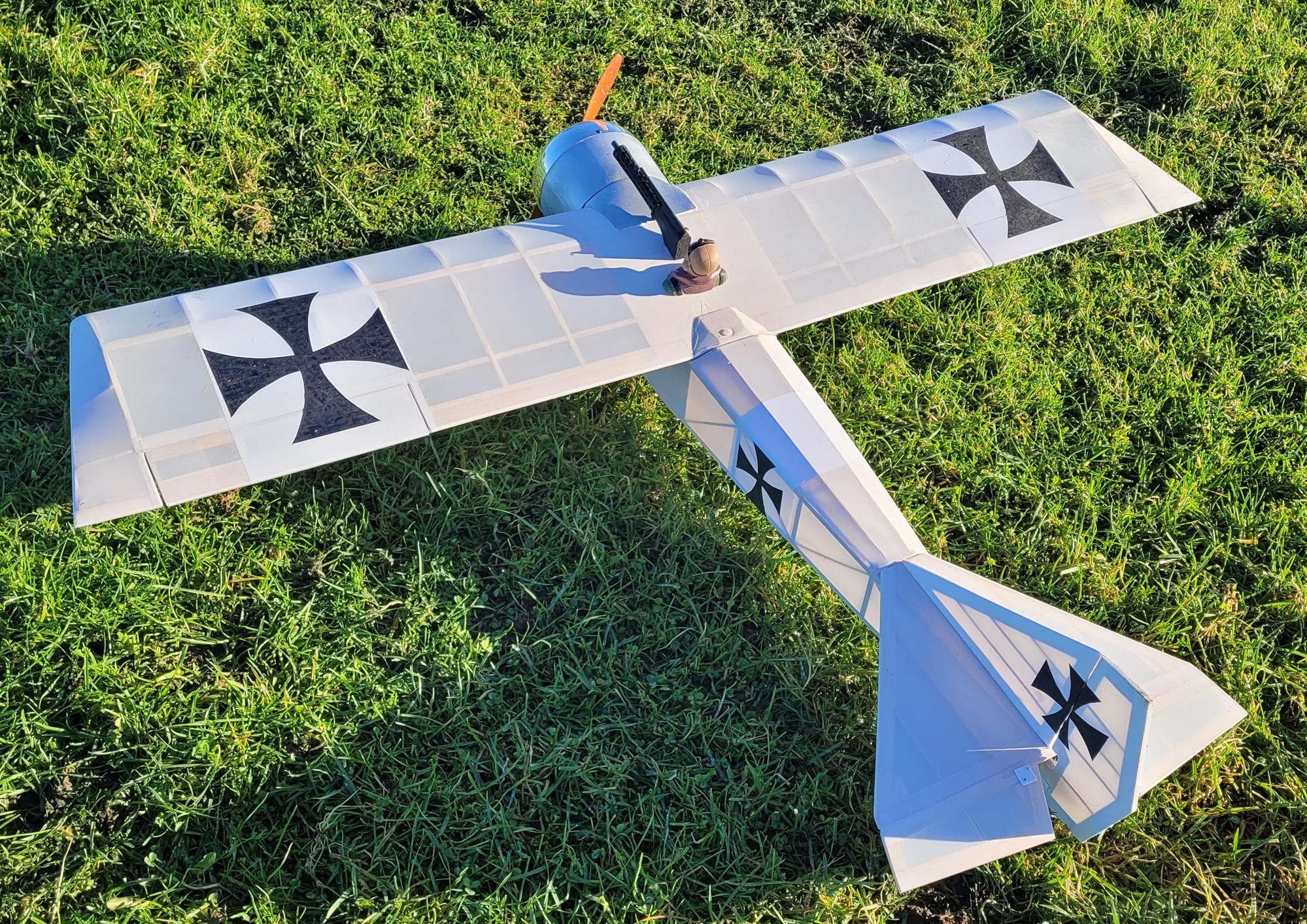
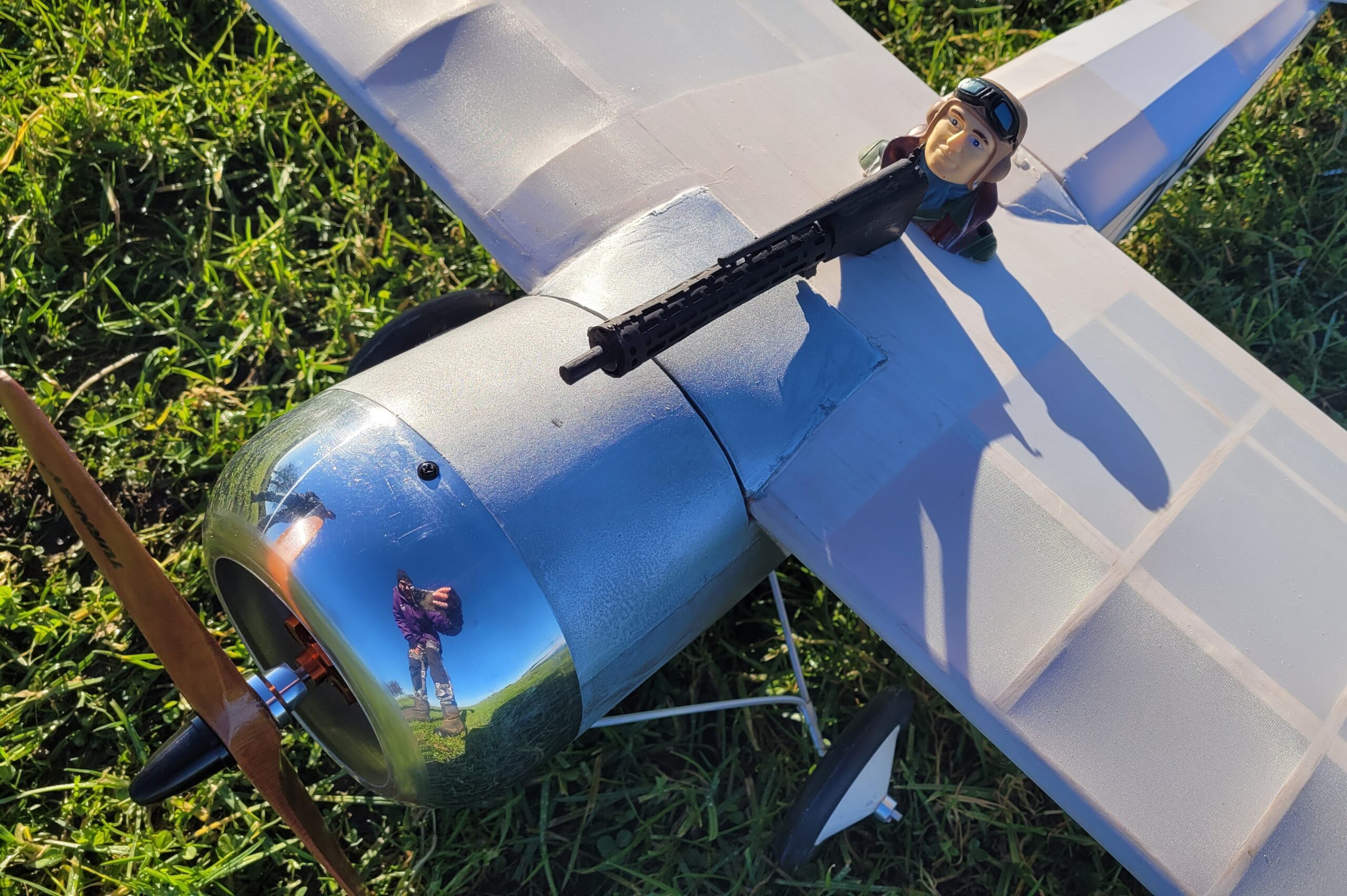 To complete the set up an old HobbyKing 35/42 1250 KV motor, 50 Amp Esc, and 11 x 5 prop was fitted. The Maiden flight was done on a very misty morning, so things had to be kept low and slow, but I did learn that the motor was very noisy and worn out, the motor thrust line was way out, and the control movements were probably a bit too large.
 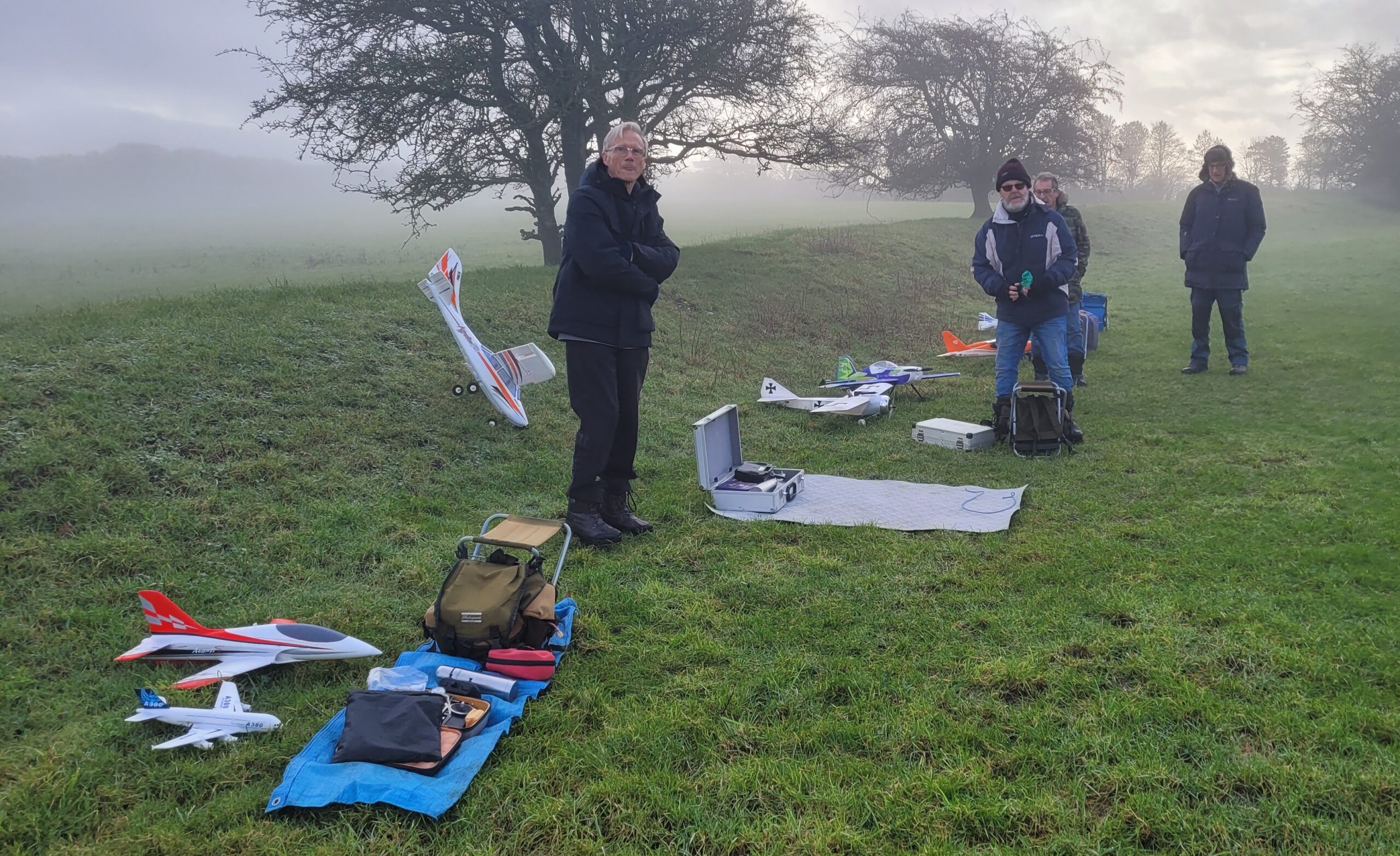 Before the next flights a new motor of the same spec was obtained from AliExpress for just £11.00, downthrust was added, and a smaller 10 x 5 wooden prop was fitted. These changes improved things a lot, but the prop still didn’t feel right, and the CG felt a little rearward. Next a bit of lead was added, the prop was changed for an APC type 10 x 5, everything felt about right now so I started to fly her a bit more adventurously, but I soon learned the smaller model was not as vice free as the larger Magnattila, probably due to the higher wing loading, however, by simply reducing the control throws, the bad manners were tamed. I’m very happy with my little Attila, something that looks a bit different from my normal fare, is reasonably aerobatic, and fits in my car in one piece.
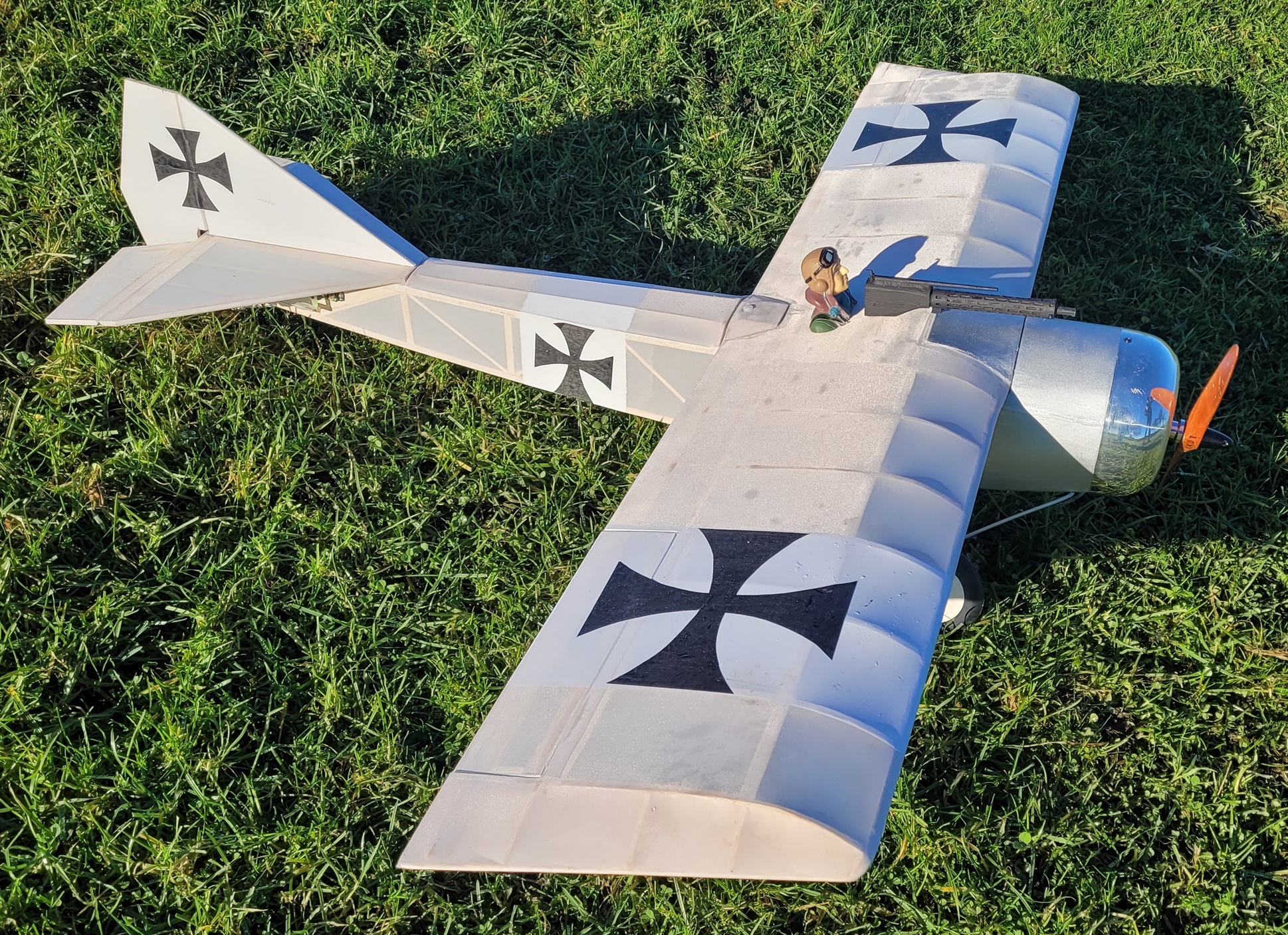 Thanks for that 1066, I really like the look of the Attila, both on the ground and in the air. It’s more agile than I expected, a good all-rounder, and that covering is exactly right for it. You can of course see the Attila flying in this month’s video.
I should point out that the kit came from a stash of kits and other modelling goods that Captain Slow has been selling for an old friend who is no longer able to fly. All the money he receives will go to a charity. So far, as well as the Attila, he has sold two Electro Streaks, one to Woody and the other to 1066. He still has a couple of kits to sell, a Cambrian Southern Dragon and two Great Planes ElectriCubs, along with a selection of canopies.
Thanks for that 1066, I really like the look of the Attila, both on the ground and in the air. It’s more agile than I expected, a good all-rounder, and that covering is exactly right for it. You can of course see the Attila flying in this month’s video.
I should point out that the kit came from a stash of kits and other modelling goods that Captain Slow has been selling for an old friend who is no longer able to fly. All the money he receives will go to a charity. So far, as well as the Attila, he has sold two Electro Streaks, one to Woody and the other to 1066. He still has a couple of kits to sell, a Cambrian Southern Dragon and two Great Planes ElectriCubs, along with a selection of canopies.
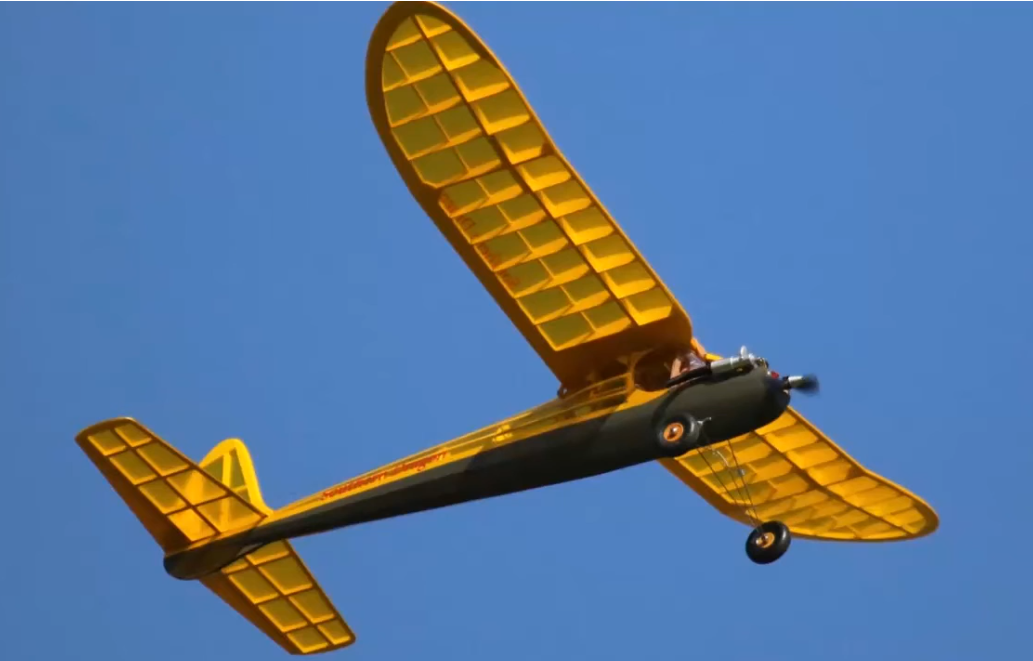
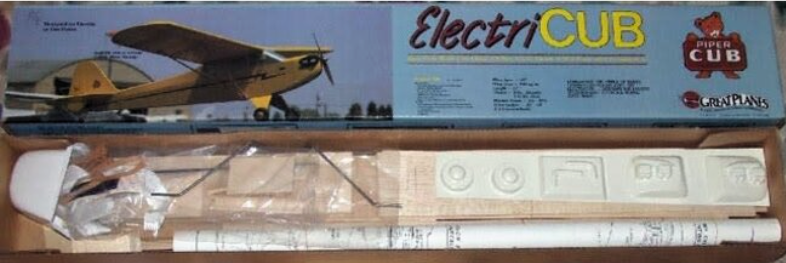 If either of the kits appeals, or if you need a canopy, have a word with Captain Slow.
When I’m scouring the internet for information about models etc for Patch News I often stumble across other aviation items that might be of interest, and I tend to save them for quiet months when there hasn’t been a lot of flying to write about. One such snippet is about a chap called David Williams who lived close to a new by-pass that was being built around Hinstock, Shropshire in 1983. He saw a bridge had been built to carry Pixley Lane over the new by-pass and, after some careful measuring, decided to fly under it the day before the road was opened to traffic. His plane was a Saab 91D Safir, a four seat, single engined light aircraft that was built in Holland. The Swedish Air Force had used Saab 91s in the fifties and sixties and David’s had previously been used for radio equipment testing.
If either of the kits appeals, or if you need a canopy, have a word with Captain Slow.
When I’m scouring the internet for information about models etc for Patch News I often stumble across other aviation items that might be of interest, and I tend to save them for quiet months when there hasn’t been a lot of flying to write about. One such snippet is about a chap called David Williams who lived close to a new by-pass that was being built around Hinstock, Shropshire in 1983. He saw a bridge had been built to carry Pixley Lane over the new by-pass and, after some careful measuring, decided to fly under it the day before the road was opened to traffic. His plane was a Saab 91D Safir, a four seat, single engined light aircraft that was built in Holland. The Swedish Air Force had used Saab 91s in the fifties and sixties and David’s had previously been used for radio equipment testing. 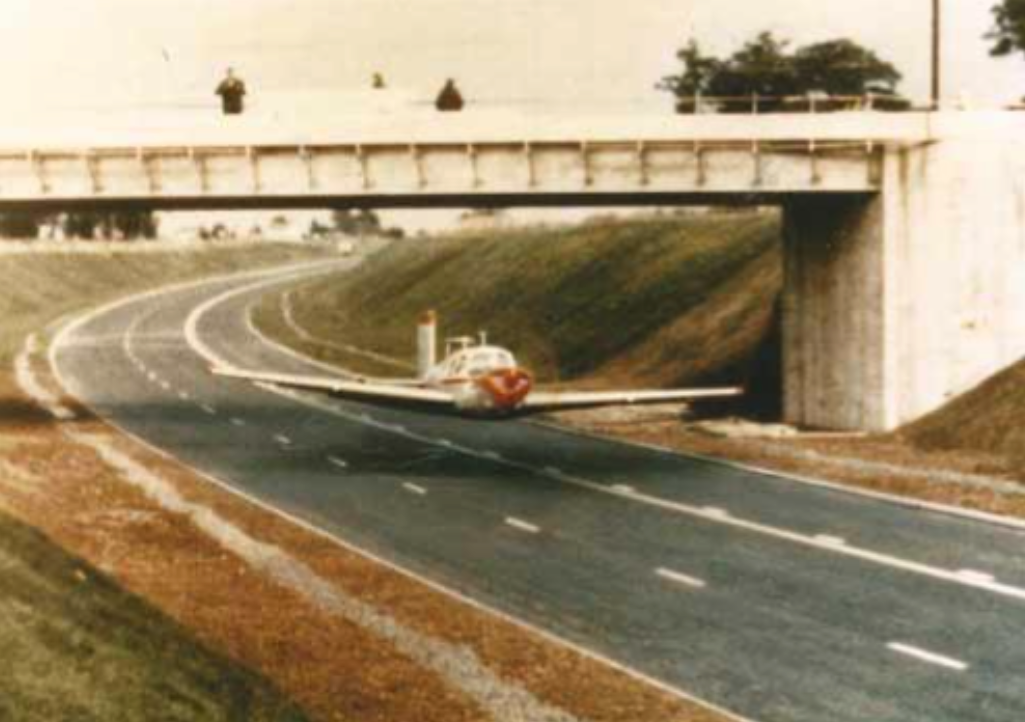 David asked his dad stand on top of the bridge to take a photo (this was pre-digital days) but his dad was too quick on the shutter and missed the shot. Fortunately a friend was positioned further along the by-pass and he managed to successfully capture the moment.
Nothing unusual to see here officer, it’s just a Saab going along a by-pass!
Confession time now, I managed to fly my little A380 ‘toy’ plane into Dougal’s Dogwood!
David asked his dad stand on top of the bridge to take a photo (this was pre-digital days) but his dad was too quick on the shutter and missed the shot. Fortunately a friend was positioned further along the by-pass and he managed to successfully capture the moment.
Nothing unusual to see here officer, it’s just a Saab going along a by-pass!
Confession time now, I managed to fly my little A380 ‘toy’ plane into Dougal’s Dogwood!
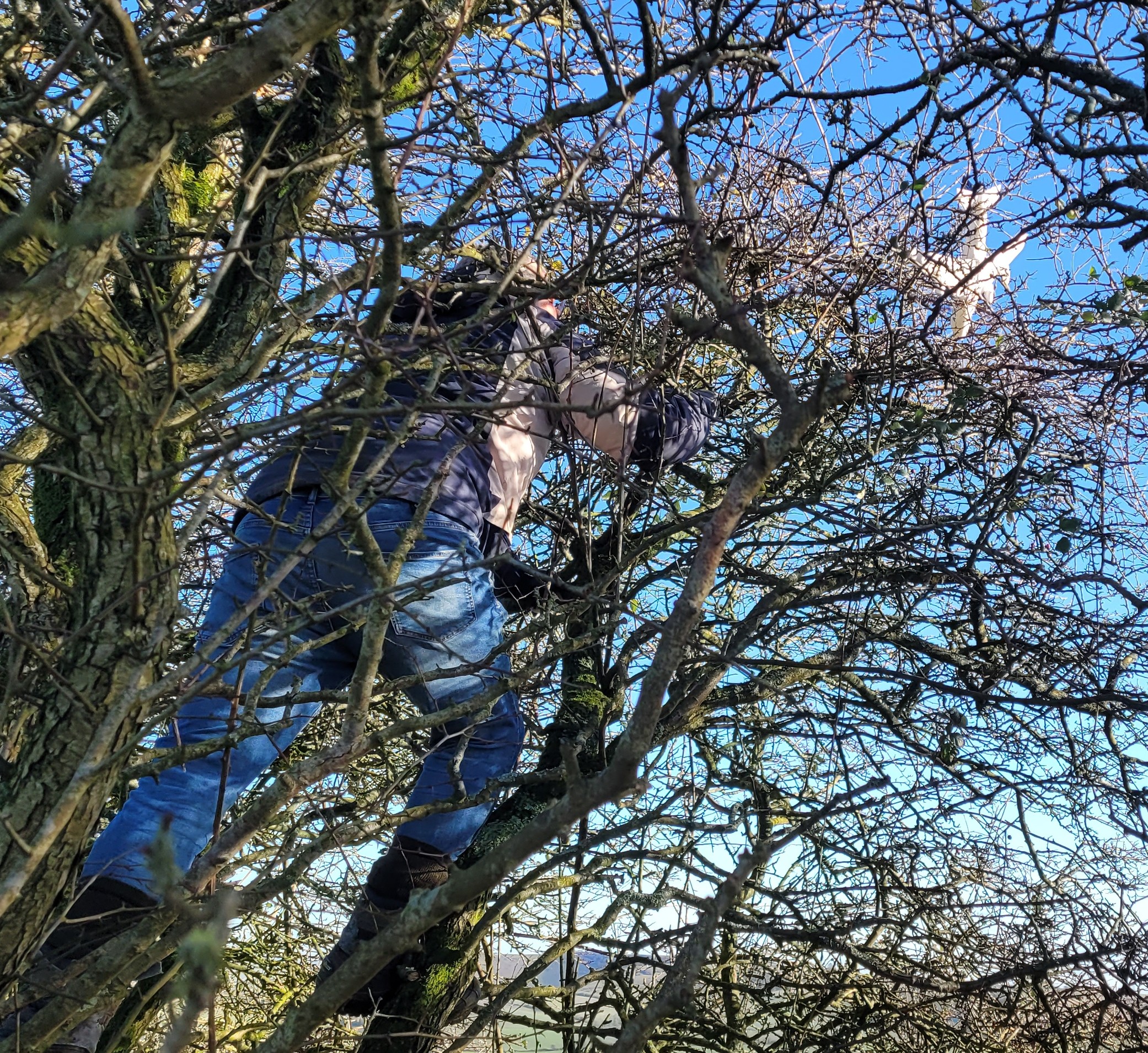 I could come out with a long tale of what happened and explain that it wasn’t my fault at all (that should be perfectly obvious!) but I’ll just say that it’s not the most controllable little model and things went slightly awry. Fortunately 1066 came to the rescue when he decided he needed to show off his tree climbing abilities and he quickly retrieved it for me.
 Presumably the extremely light weight (of the plane, not 1066!) helped the A380 and it survived with barely a scratch and was soon back flying again.
Early on in the month Snoopy, spurred on by passing his ‘A’ certificate, flew his new Max Thrust Aggressor. The Aggressor has proved to be a popular model with PAM members and there are several in the club. They are excellent aerobatic gliders which can be flown gently if the control rates are low and the throttle usage restrained, but can also be reasonably ‘hot’ with bigger control throws and full throttle. They certainly aren’t the best gliders for thermal hunting but are still capable of good long flights when required.
Presumably the extremely light weight (of the plane, not 1066!) helped the A380 and it survived with barely a scratch and was soon back flying again.
Early on in the month Snoopy, spurred on by passing his ‘A’ certificate, flew his new Max Thrust Aggressor. The Aggressor has proved to be a popular model with PAM members and there are several in the club. They are excellent aerobatic gliders which can be flown gently if the control rates are low and the throttle usage restrained, but can also be reasonably ‘hot’ with bigger control throws and full throttle. They certainly aren’t the best gliders for thermal hunting but are still capable of good long flights when required.

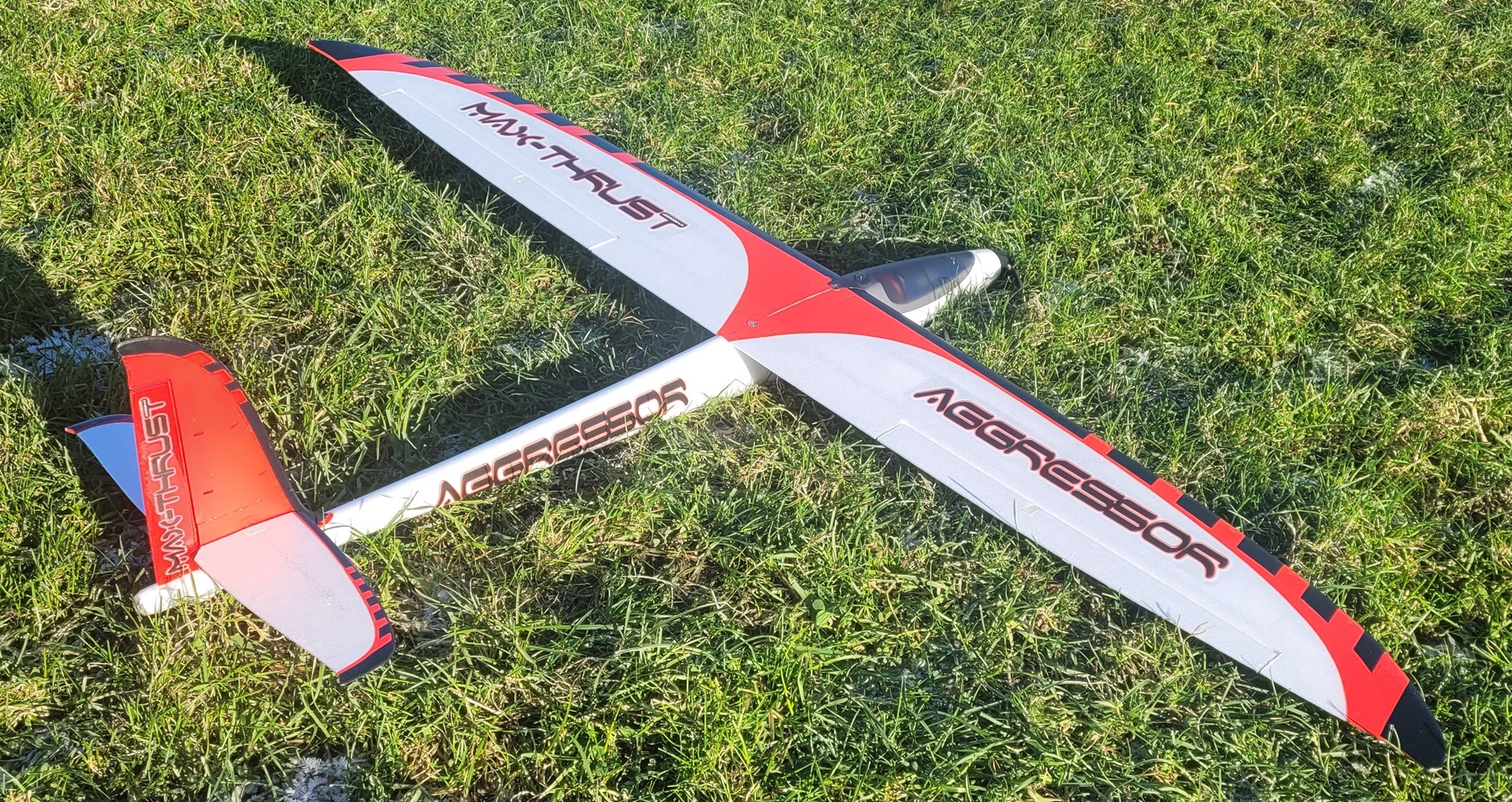 Here’s what Snoopy has to say about his: It’s a nicely put together model, it took me about 20 minutes to construct, I had to install some Velcro to make sure the battery didn’t move, that was the most difficult part of the build. The first flight was uneventful with the rates turned down, full throttle, a nice straight hand launch, and off it went at a slight up angle. The plane was quite quick and responded to inputs quickly even at low rates. The first flight was over quite quickly, and the landing was interesting as it was quite slick and didn’t want to slow down, unlike my Tundra which is a great plane but a bit of a brick. I over flew the runway a few times before I got the measure of the landing glide. The second flight was much the same as the first, but I flew it for a little longer, I changed the rates to medium and did a few hard turns which it seemed to do without any problems, a loop and a few rolls later I brought it back to earth safely. The only thing I did find was that if the conditions are not great it can disappear in the sky.
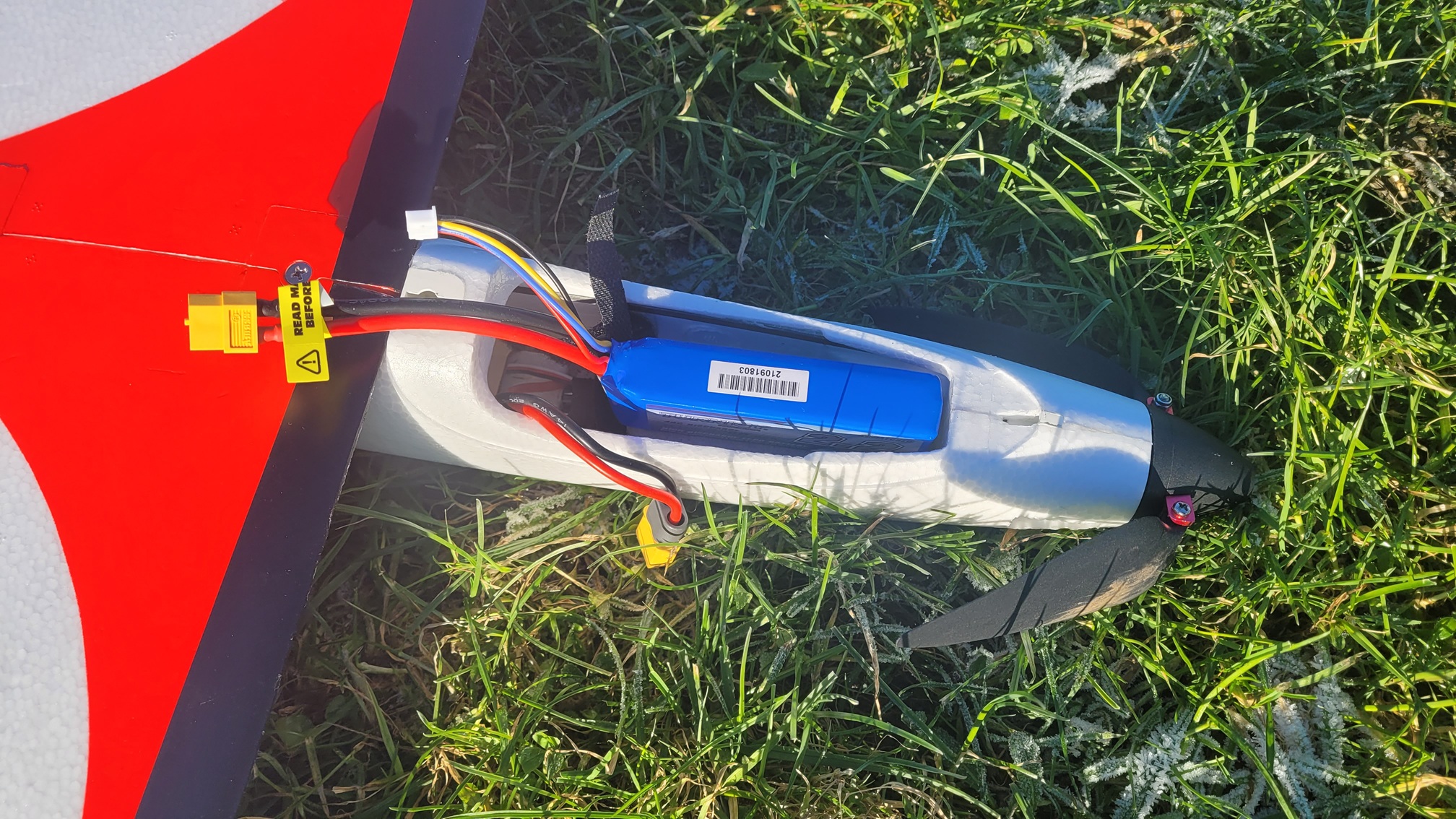 Other than that it is a nice model, quite fast with my 3 cell lipos, I might try some 4 cells. Thanks for that Snoopy. You can see Snoopy flying his Aggressor in this month’s video.
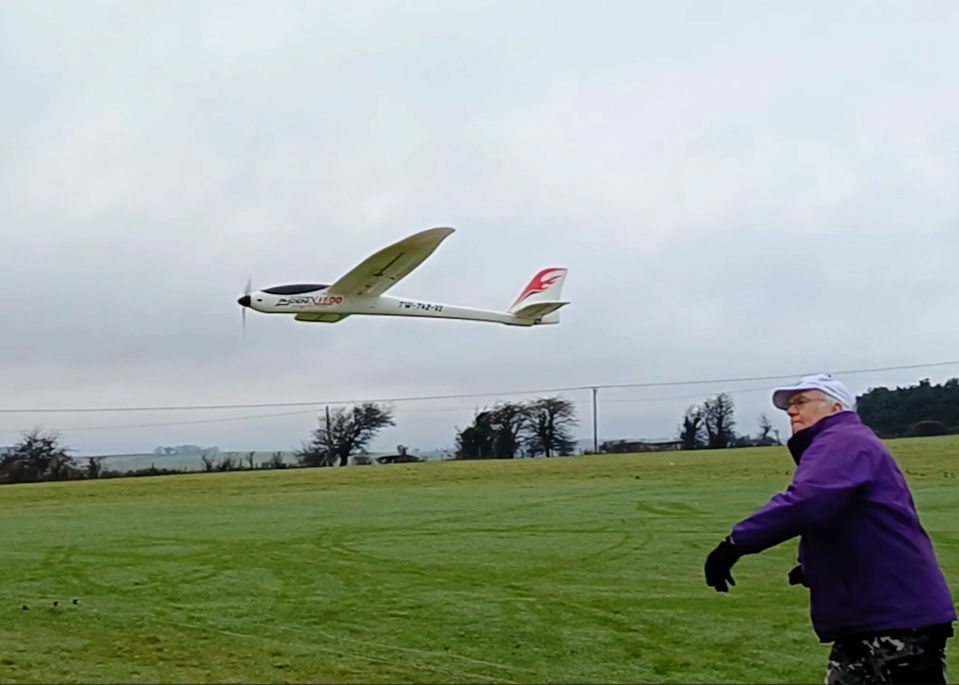
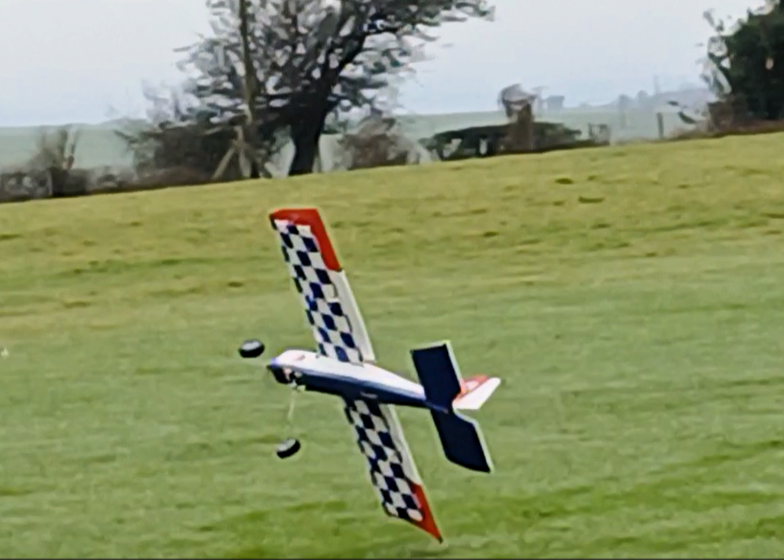
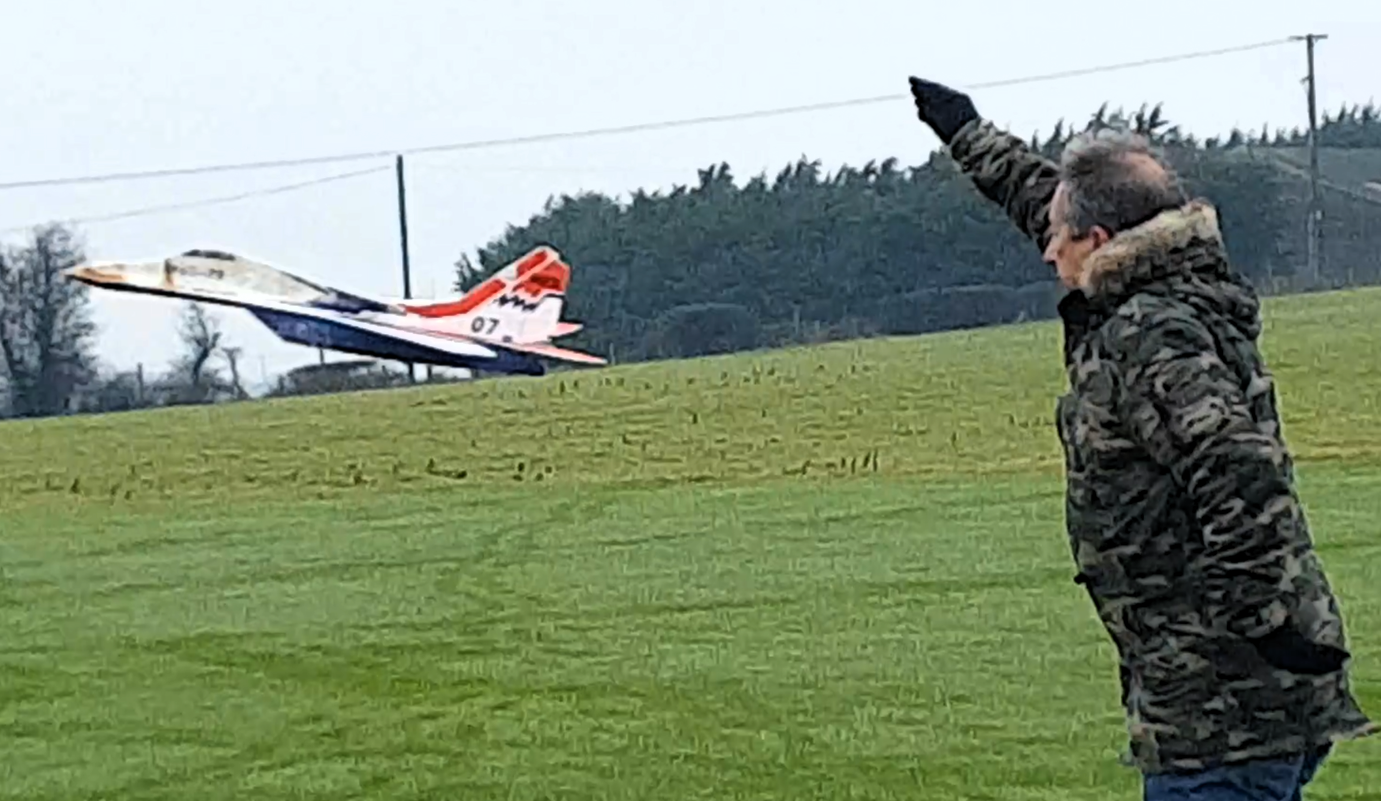
This month the action photos are all taken from this month’s video:
Other than that it is a nice model, quite fast with my 3 cell lipos, I might try some 4 cells. Thanks for that Snoopy. You can see Snoopy flying his Aggressor in this month’s video.
This month the action photos are all taken from this month’s video: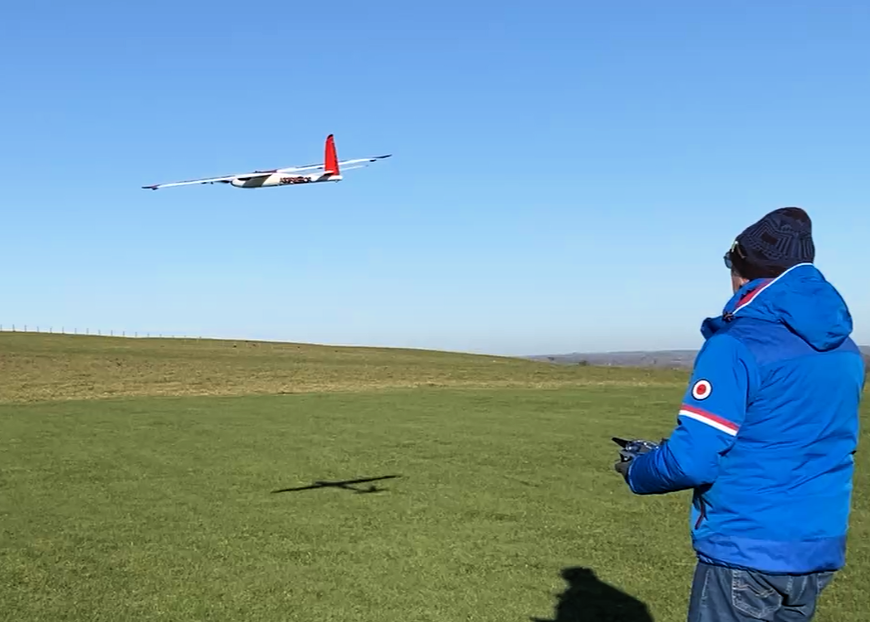
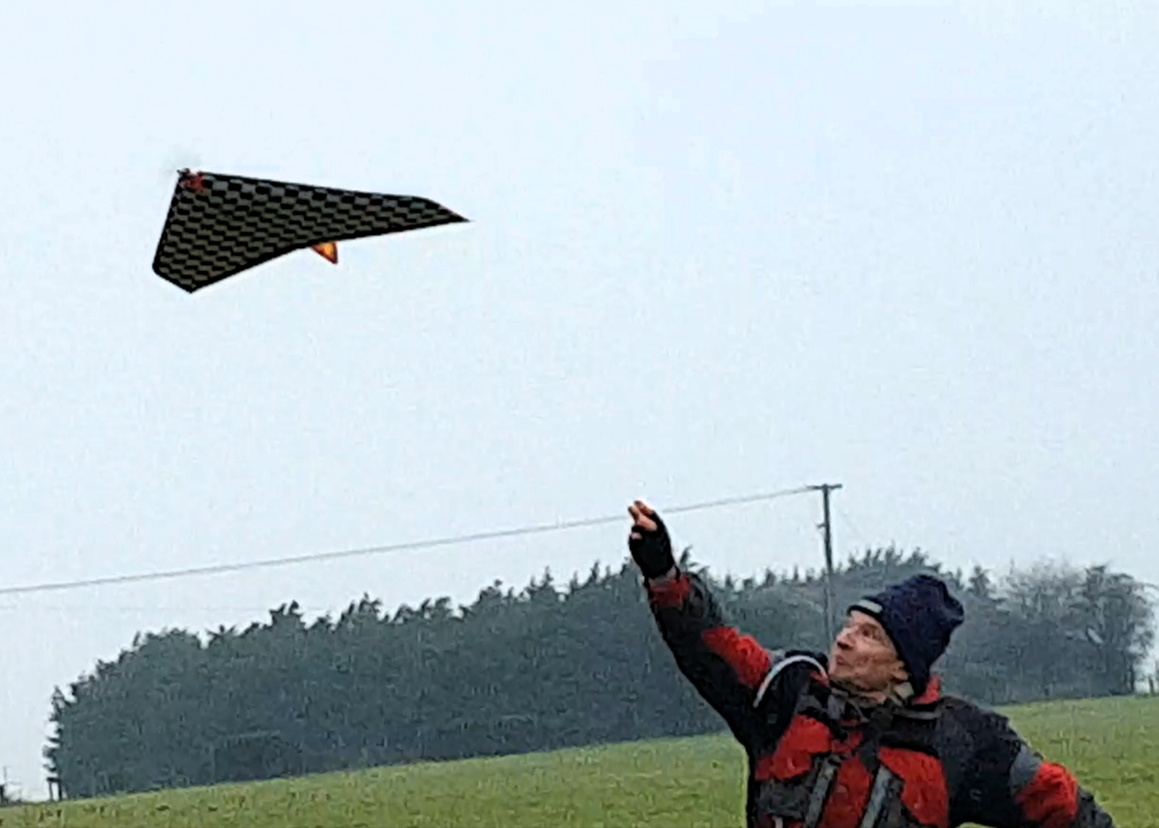
 Video time now, this month with footage shot by me, Dougal Entendre, and MacFly. Please watch the video full-screen, it’s so much better with small models flying around:
If the video won’t play for you please click HERE
The Final Funny.
This month it’s a little something that Dougal Entendre sent me.
Video time now, this month with footage shot by me, Dougal Entendre, and MacFly. Please watch the video full-screen, it’s so much better with small models flying around:
If the video won’t play for you please click HERE
The Final Funny.
This month it’s a little something that Dougal Entendre sent me.
 Colin Cowplain
 Patch News – December 2025
Happy New Year everybody! That’s 2025 done and dusted, another successful year for the club with no real problems. I hope you’ve all had a great Christmas and Santa brought you lots of modelling goodies. I’d like to thank all who contributed to Patch News over the last twelve months, it makes my job so much easier when you write about your models for me.
December was of course rather wintry and some flying days were lost to wind and rain but we also had some almost perfect days with a good number of members turning out to fly.  But on Sunday 21st December only myself, Captain Slow, Snoopy, and Woody came to fly. I think most of the regular fliers had Christmas commitments. There was an easterly breeze blowing and we could see there was mist/low cloud down in the valley between us and Butser. We had to keep a careful eye out, as every so often it blew up over the flying site.
  There were a couple of times while we were flying that the next bank of cloud blew in and precautionary landings were quickly made. Snoopy almost got caught out on one flight!
 Woody was still recovering from flu and arrived a bit late, when the cloud was at its worst.
  He wasn’t feeling well enough to fly so he didn’t bring any models, but he did bring cakes!
New models now, I’ll begin with an early Christmas gift I bought myself, an Airbus A380. 
 OK, I know it’s really just a toy but I spotted it on the AliExpress website and was intrigued to see how well it would fly. Sadly, it’s not a four engine EDF, it’s powered by a pair of motors with pusher props at the back of the wings. It has a gyro that cannot be adjusted or switched off, it just does its’ thing. The A380 is available in either two or three channel versions, the two channel one relying on variable thrust from the motors to both steer and also control the altitude, but the three channel one has the addition of an elevator servo.

 I went for the three channel version and splashed out £21.96 for the model, transmitter, one battery, and delivery from China. The ‘building’ consists of plugging the elevator servo into the board in the wing, screwing the wing on, and applying the cockpit window decals.
 An undercarriage was included but I didn’t rate the chances of taking off from grass with 10mm diameter wheels so I didn’t fit it. The instruction leaflet is mostly good but does have some Chinglish such as ‘It adopts high efficient pneumatic contour design to ensure good flying feature and stability, better gliding performance’ and ‘wind less than 4 outdoor environmental flight.’ I was lucky that the day after the A380 arrived the weather was lovely although the wind was probably higher than 4 outdoor environmental flight!
 For the first flight I pressed the ‘High and low speed’ switch that I think actually means Rates and it was a bit erratic, so for subsequent flights I’ve kept it on low. At the time of writing I’ve had nine flights, it takes a bit of getting used to but overall it flies well. It’s in this month’s video so take a look. For me, I think it was worth the money for a little fun.
Last month I wrote about Dwayne Pipe’s P51B Mustang that he’d built from the Flite Test plan, and I explained that the first flight hadn’t gone well. After completing some repairs Dwayne tried again in December but the second attempt was similar to the first and more repairs were needed. But the third attempt was different and the finicky flier finally flew.  Dwayne explains: The Flight Test P51B had two memorable but short maiden flights. The first one flew about 15 feet and dived in. The second made it about 30 feet. In both cases the plane pitched up and rolled to the left before crashing. In addition, the plane felt underpowered. What I did to correct these faults was to replace the 1000 Kv motor with a 2200 Kv one, and reduce the prop size from 9×6” to 7×4”. The C of G on the Flite test plan was ambiguous, so I moved it forward by about 5mm. Lastly, I reset and trimmed the ailerons to ensure that they were symmetrical. The resulting third flight was much improved and landed safely but showed that I needed to increase the motor downthrust and trim the ailerons to the right. All part of the joy of building your own plane.
As Dwayne says, the third flight was successful, but sadly the cameraman (me) wasn’t!
So in the video this month you can see all three attempts but only the first couple of seconds of the Mustang getting away for its proper flight. Hopefully I’ll do better next month and I’ll have some footage of it flying nicely, it’ll be worth the wait I’m sure!
Next up we have Bob the Builder’s F-803 Skylark S that he purchased from AliExpress.  The AliExpress website says this: The Skylark is a high-quality EPO foam RC plane designed for intermediate pilots, offering F3A aerobatic performance, durable construction, and reliable flight characteristics, making it a top choice among similar models on AliExpress. The Skylark is available from various sources and can be purchased as a fully kitted out ARTF or just a basic kit which comes without a motor, esc, servos etc.
  This is what Bob’s says about it: Felt like a change and something different and a bit more challenging than my Tasman. I also gave up on my Mini Tasman that never seemed to
fly quite right so I had a spare set of electronics, receiver, motor, ESC etc. to use. The Skylark from AliExpress at £42 for the kit version,seemed to fit the bill. It took about 5 weeks to arrive but everything fitted OK except the motor which was a Hobbyking PropDrive 28-36 1400KV. The mounting holes were 90 degrees offset from the mounting holes in the model so instead of the ESC wires being at the bottom they were at the side. Luckily there is an air intake hole where the wires exit the motor and after a small modification to the motor mounting bracket all was well. Have since replaced the motor because everybody complained about the noise from the old motor. New one is the same except it is a 1200KV so I have upped the prop to a 10 x 7 instead of a 10 x 6 and it
still gives me 150watts per pound on 3 cells. Quite challenging to fly but that’s what I wanted. Just need some good flying weather to practice the F3A aerobatics! Ha Ha.  Thanks for that Bob. A few years ago Dougal Entendre had bought an earlier version of the Skylark which flew well so he was the obvious candidate to do the maiden flight. As you can see in the video the Skylark flew very well but you might be able to hear that the motor sounds like a bag of nails! As Bob says he has since bought a new motor and the Skylark now flies just the same but sounds a whole lot better while it’s doing it!
Woody’s latest is a Great Planes Electro Streak, the same as the one 1066 built recently.  Captain Slow had two of the long-discontinued kits for sale along with several other kits, all of which came from the wife of a modeller who had passed away. Having seen 1066’s Electro Streak fly Woody decided to build the second kit and set about balsa bashing.
 Woody had a few problems along the way and 1066 helped him greatly. He says 1066 was a vital part of the build. That’s odd as I’ve never found a 1066 included with any of my kits!
 Woody fitted a Ripmax Power 25 1000 Kv motor, a 40A speed controller, a Multiplex 5 channel receiver, and some servos recycled from a previous model. 1066 flies his Electro Streak on four cell lipos but Woody is using three cell packs as he doesn’t want it going as quickly as 1066’s! Despite his trials and tribulations with the build the finished model looks great in its red heat-shrink film covering, I especially like the chequered underside.
 The first flight was undertaken with 1066 on the transmitter and all went well although it was a little underpowered, mostly down to the 7×6 propeller being a bit too small for the 1000KV motor. 1066 has provided Woody with an 11×7 folding prop for the next flight which should make a big difference. The first flight can be seen in this month’s video.
Dwayne Pipe has sent me some information on how to work out the Kv of an unmarked motor: I was looking for a brushless outrunner motor for the P51 I was building and found one the right size in my spares box. The motor had no markings on it and no indication of its Kv which is important for sizing the propeller. After some internet research I came across this simple way of measuring the motors Kv which I pass on for any other PAM member who needs it.
If you apply voltage across a motors terminal it spins, similarly if you spin a motor, it will generate a voltage. Fit the shaft of the motor you want to find the Kv of into the chuck of a power drill with a known maximum speed. (Its normally specified on the body of the drill.)
Secure the base of the motor so that it won’t rotate, and turn on the drill.
Measure the voltage across any two of the three motor leads in turn so that you have measured all possible combinations. You will have three separate values. Take the average of these values. We will call it Vac
Plug this value into the equation below to get the Kv of the motor
Kv = (1/((Vac x 1.414)x(1000/power drill rpm))/1000)/0.95
Looks complicated but take it step by step. If you’re not sure check it out against a motor you know the Kv of already. In my case the unknown motor had a Kv of 2588 (approximately). Thanks for that Dwayne, it could prove very useful.
Having completed a couple of minor repairs to the wings and tail of his Weston Cougar 2000, Mini Mike decided to completely refurbish it. He stripped off the original covering and re-covered the whole model in orange Ripmax Aero Film and added some white trim.

 Mini Mike rated the film highly but he thought the Cougar looked a little plain with none of the original lettering, so he treated himself to a Loklik iCraft Vinyl Cutting Machine and used some Cricut Smart Vinyl to produce the lettering you see applied to the model here.

 Having paid a lot of money for the machine I’m sure Mini Mike would be happy to cut any decals, lettering etc that any of us might want and any cash donations would be very welcome. The Cougar looks great in its new clothes and as he had changed nothing else Mike expected it to fly exactly as before but oddly it didn’t. Some of the first flight after the refurb can be seen in this month’s video and you’ll see it was a bit erratic after the take-off.
 The trim seems to have altered quite a lot and Mike is gradually sorting it out but hasn’t really found a definitive reason for the change. I wonder if the new film is heavier than the original and the centre of gravity has moved rearward. Anyway, after a few tweaks and several more test flights the Cougar is now flying as well as ever again.
This month the action pics are taken from various videos shot over the last few months:


 Video time now, this month with footage shot by myself, Dougal Entendre, and MacFly. Please watch the video full-screen, it’s so much better with small models flying around:
If the video won’t play for you please click HERE
The Final Funny
A wealthy jeweller boarded a plane to fly home for Christmas and when he took his seat up in the First Class section he was sat next to a very elegant and wealthy looking lady.
He immediately spotted that she was wearing a large 20-carat diamond wedding ring.
He turned to the lady and said “Merry Christmas. Excuse me, I don’t wish to intrude, but I’ve been a jeweller for forty years and couldn’t help noticing your very impressive ring.”
”Merry Christmas” she replied, smiling gracefully “It’s actually the Schmidt’s diamond.”
“The Schmidt’s diamond?” the jeweller queried “I’ve not heard of the Schmidt diamond”
“Yes, it’s like the Hope diamond, and just like the Hope diamond it comes with a curse.” Intrigued, the jeweller said “Well, now I have to know, please tell me, what’s the curse?”
“Mr Schmidt”
Colin Cowplain
Patch News – November 2025
The November weather was pretty much what we expect for the south of England. The first couple of weeks were mostly wet and windy and flying was rather limited, but things improved a little in the second half of the month. We had occasional days that were perfect for flying with clear blue skies and light winds although rather cold on pilots’ hands.
 Captain Slow has done a great job for us all year, consistently keeping the fence batteries charged and changed so the sheep and bullocks have been kept off the patch which is in excellent condition. We didn’t need to mow at all in November but I suspect there will need to be a cut in December, probably before Christmas, something to look forward to!
Regular fliers will have realised that our chairman Gordon (Paul Bennett) has rarely been flying in the last few months. For some time now Gordon has been volunteering a couple of days a week at Portsmouth Historic Dockyard in Boathouse 4 and earlier this year the chap in charge resigned. Gordon was offered the position and he took it on without realising that there were some big regulation changes looming which would require an initial massive amount a work. The regulations primarily affect the running of the High Speed Launch 102 and Motor Gun Boat 81, a bit like trying to keep a Spitfire flying under regulations designed for modern aircraft. (Did I ever mention my flight in a Spitfire?)!
 This has meant Gordon has had to work full-time to get everything sorted out, but the end is in sight, he hasn’t lost interest in the club or flying and he will return. There is an excellent video of Gordon skippering the Motor Gun Boat, which you can see below:
It’s well worth watching and shows the more enjoyable side, away from all the paperwork!  Incidentally, it’s worth visiting Boathouse 4 in the dockyard, it’s a very interesting place and it’s FREE to enter. When you go to the dockyard main entrance ticket area just say you want to visit Boathouse 4 and you’ll be given free access. Obviously that doesn’t include access to HMS Victory, Warrior, Mary Rose etc but there’s still plenty to see. In the summer months you can do a harbour tour on an ex-Falklands Landing Craft F8.
Check the website for Boathouse 4 opening times as they are very limited in winter.
Unsurprisingly not many new models arrived at the patch in November, but Dot Cottam brought along what can only be described as a reborn model, I’ll let him explain:
After an over enthusiastic full tilt dive, my WOT 4 Foam-e never pulled out and subsequently expired. In my defence it was a bit blowy! I must have looked at least a little bit perturbed as 1066, managing to control his laughter, immediately offered me one of his older models to “get me back in the sky”. After a tour of his vast modelling empire, I think his house was in there somewhere too, Steve emerged with a HobbyKing MXS. “First electric 3D machine I had,” he said, “don’t worry if you crash it, just bring back the RC gear”… I was extremely grateful as, right at that moment, I had nothing but a bin liner full of broken up foam, half a propeller and some reconfigured electrics.
 Back home I took a closer look at the MXS. The first thing I did was put my finger through the thin foam that covers a lite ply framework – Oops! After removing most of the grass cuttings, I realised Steve had left all the servos, ESC and Motor in situ! There was an additional and therefore somewhat conspicuous component that I couldn’t identify. It was a small PCB with one wire soldered into the LiPo battery connector and the other wire terminating in a receiver/servo style connector. Must be a gyro or something I thought and disconnected it. I put it carefully into a box of bits I’d managed to salvage from the WOT 4, taking out the old Spektrum AR610 receiver. Amazingly it still worked even after it’s high speed foray with the flying field. At least it was nothing that a bit of T-Cut wouldn’t polish out. Eager to see what worked, I randomly plugged the MXS servos into the WOT4 Spektrum receiver including the lead from the ESC which I duly plugged into the ‘thro’ skt. Can’t help but think servo, pushrod & carb but – Hey Ho…. Connecting up a 3s LiPo, still modelling a bit of patch mud, the expectation was high – very high. Sadly there was nothing. No lights, sound or smoke other than possibly a few bleats from the ESC. Back in the box it went whilst I gave it a good thinking!
  Several weeks passed until one day I went down to the patch, model less but looking for a chat and some inspiration. The wise owls sat down, drank coffee and thought about it then Steve said – that ESC doesn’t have a BEC, it’s separate. At least I think that’s what he said. Later on Google translated that and I realised the ‘gyro’ I’d put in the box was probably the standalone BEC (S/UBEC). Simples! With the Gyro, now BEC, reinstated and providing power to the receiver, everything burst into life. ‘My what big throws you’ve got’ I thought, even with the WOT 4 setup. This gave some of the servos something new to think about but otherwise progress – at last! I just needed to add a new model to my RadioMaster TX16S transmitter and configure it specifically for the MXS. Just a quick job then I can get flying again….. The ‘add a new model button’ had gone into hiding on my transmitter. No matter, I’ll do it long hand and go through the menus I thought. No chance, I tried everything including using Companion and even overwriting the WOT 4 profile. Then one day that profile disappeared too, leaving me with what the internet delightfully seemed to describe as a ‘bricked’ transmitter. When I first learned about computers back in the dark ages, I used to create hex bytes and words from binary switches set using jumpers. One of those pointless academic activities that we all think we’ll never have to use again. Well what do you know, it turns out to be jolly useful when you try to ‘de-brick’ an Edge TX transmitter. Several weeks and many pause/rewind YouTube videos later I managed to reload the latest brains into my RadioMaster TX. Hurrah and lashings of Ginger Beer! I have to say though, it’s since performed perfectly without even a hint of a hiccup. A new model was added, suitably called – 1066MXSwithGyro. The config includes Rates – 3 levels and 50% Expo. Steve kindly ‘maidened’ it with a 3S 2200 LiPo as that was all I had. It was like it recognised it’s owner and behaved impeccably. It was wheezing a bit – don’t we all. So I’ve since upgraded to a 4S 5000 LiPo which has changed things – quite a lot!
 Good job I have 3 levels or rates and all that Expo to enjoy over 6 minutes of squeaky bum flying time. The wheels also squeak during the few feet it takes to get airborne. I did oil them, must be some grass in there somewhere! Thanks Steve and all the wise owls for getting me “back in the air” after the demise of my WOT 4. Thanks for that Dot, excellent stuff, and it’s good to know that 1066 does have some uses after all! I couldn’t help noticing that when you flew the MXS it seems to have come complete with ‘1066 throttle’…it appeared to be stuck fully open for most of the flight! Some of Dot’s first flight using the 5000mAh 4 cell pack can be seen in this month’s video.
One of just two completely new models that were brought out in November was an Arrows Bigfoot that had been purchased by Captain Slow several weeks ago but he hadn’t brought it out earlier as he was waiting for a day with good weather. The Bigfoot is a 1300mm span foamie that comes fitted with a 3536 850KV motor, a 30A speed controller, and 6 servos.  This is what Captain Slow says about it: I wanted a model that could cope with the grass as we don’t, for understandable reasons, keep the Patch that short much of the time and most of my models have smallish wheels and struggle to take-off and land without tripping over. The answer was a “Bush Plane”. There are a number on the market: the XFly Tasman Bob has; the XFly Glastar Woody and Bob have; FMS Kingfisher; Durafly Tundra that Mini Mike has; Top RC S Cub and the Arrows Bigfoot; there are also some others that are silly money. I looked at lots of YouTube videos: the Glastar doesn’t have flaps; at 1500mm I felt the Tasman was a tad large; the Tundra didn’t appeal and the S Cub was, at the time £30 – 40 more, it also had a tow hook that I doubted I’d use.
 So, based on this and the reviews plus price I opted for the Bigfoot and I knew the lights would just annoy Woody; I did remove the sequencer that flashed the nav lights.
 The only confusion in the instructions was the control throw setting; one page advised one set whilst another page offered a different set; in the end I put both sets on as different phases. The gyro was very sensitive and I don’t think it can be adjusted so I didn’t use it after a brief trial. If you add flaps at too high a speed it balloons and I will correct that by adding a down elevator mix. It flies very slowly which is good because if you land without flaps the tyres are really solid and it does bounce.
 Overall I’m very pleased with it. Thanks for that Captain Slow, it certainly looked to be flying very well and incredibly slowly when required. We’re going to have to consider changing your name to Captain Sloth! Of course the first flight is in this month’s video.
The other completely new model to fly this month was a P51B Mustang that Dwayne Pipe has built from a plan that is available as a free download from the Flite Test website.


Dwayne explains: The Mustang is designed for all the parts to be cut from two A1 sheets of 5mm foam board. By foam board designs this is quite complex, but there is a set of photos and guides to building the plane included with the plans. In this case I had all the components, so it didn’t cost me anything extra. (Apart from some silver spray paint).

 All the external control surfaces are covered in clear packing tape, and the fuselage was sprayed silver and then covered in tape before assembly. My version deviated a little from the original design and ended up heavier than the prototype.


The main specifications are: Wingspan 762mm, dry weight 425 grams, all up weight 550 grams, motor 1000Kv, ESC 30A, battery 3 cell 1600mAh, and a 9″x6″ folding prop.
After the first flight there are some modifications to be made. Changing the prop size and adding extra side thrust for a start, this is still work in progress! Yes, the first flight was brief as the Mustang torque rolled hard left from the launch and ‘arrived’ rather heavily!
Next up is some battery information from Dougal Entendre, something to think about next time you are thinking of buying some lipo packs at what seems to be good prices:
When I got my Wasp E2K racer at the Popham show in May, I needed some 4S packs with XT60 connectors to power it. I found some Nihewo 2200mAh packs rated as 100C on Amazon, and parted with about £42 for a pair of them. These proved to be very capable batteries, though I had to limit flight times of the Wasp to about 3 minutes if I really opened the taps for much of the flight.
Soon afterwards I got the HobbyKing Rare Bear, which also required 4S packs. The Nihewo ones proved ideal, but I really wanted more than just two, so I looked on Amazon once again. This time I found a pair of Zop Power 2800mAh 4S packs rated as 60C, at only £27.71 for the pair. I thought the extra capacity would be useful for the Wasp, but they were also small enough to fit the Rare Bear, so an order was duly placed.
 Using the new packs in the Wasp, the plane seemed to perform just the same as with the smaller packs, so the 60C rating wasn’t a problem. However, I was disappointed to find that the Zop 2800 packs consistently came down with less capacity remaining than the Nihewo 2200 ones. It was the same story using them in the Rare Bear. Setting a 3 mins 30 second flight time, the Nihewo packs would come down with typically 53% remaining, but the Zop Power ones only showed about 20% or less on the tester.
When I charge from storage voltage to full, my chargers normally report putting at least 1300mAh into the Nihewo packs, but only 850mAh or so into the Zop Power ones. On Sunday I discharged one of the Zop packs from 97% down to 47% on the charger, and it reported that it only took 611mAh to do so! I don’t know how accurate these measurements are, but they certainly suggest the capacity of the Zop Power “2800” packs is a good deal less than that of the Nihewo 2200 ones.
These observations are borne out elsewhere. I found a buggy racing site with lots of negative comments, notably that the cells had been puffing up after only a few uses – often a sign of the packs getting discharged too low. I suppose the message is that “you get what you pay for”, so I won’t be buying any Zop Power packs again. Thanks Dougal.
This month the action shots are all screenshots from FPV videos by myself and Dougal:


Video time now, this month with footage shot by myself, Dougal Entendre, and MacFly. Please watch the video full-screen, it’s so much better with small models flying around:
If the video won’t play for you please click HERE
The Final Funny (provided by Dougal this month)
On reaching his plane seat a man is surprised to see a parrot strapped in next to him.
He asks the flight attendant for a coffee whereupon the parrot squawks, ‘And get me a coke, you cow!’ The attendant, upset, brings a coke for the parrot but forgets the coffee.
When this omission is pointed out to her, the parrot drains its glass and bawls ‘And get me another coke dogface!’
Now, really upset, the girl comes back shaking with another coke but still no coffee.
Unaccustomed to such slackness from an attendant the man tries the parrot’s approach.
‘I’ve asked you twice for a coffee! Go and get it now, you old goat!’
The next moment both he and the parrot have been wrenched up and thrown out of the emergency exit by two burly stewards.
Plunging downwards the parrot turns to him and says:
‘For someone who can’t fly, you’ve got guts!’
Colin Cowplain
Patch News – October 2025
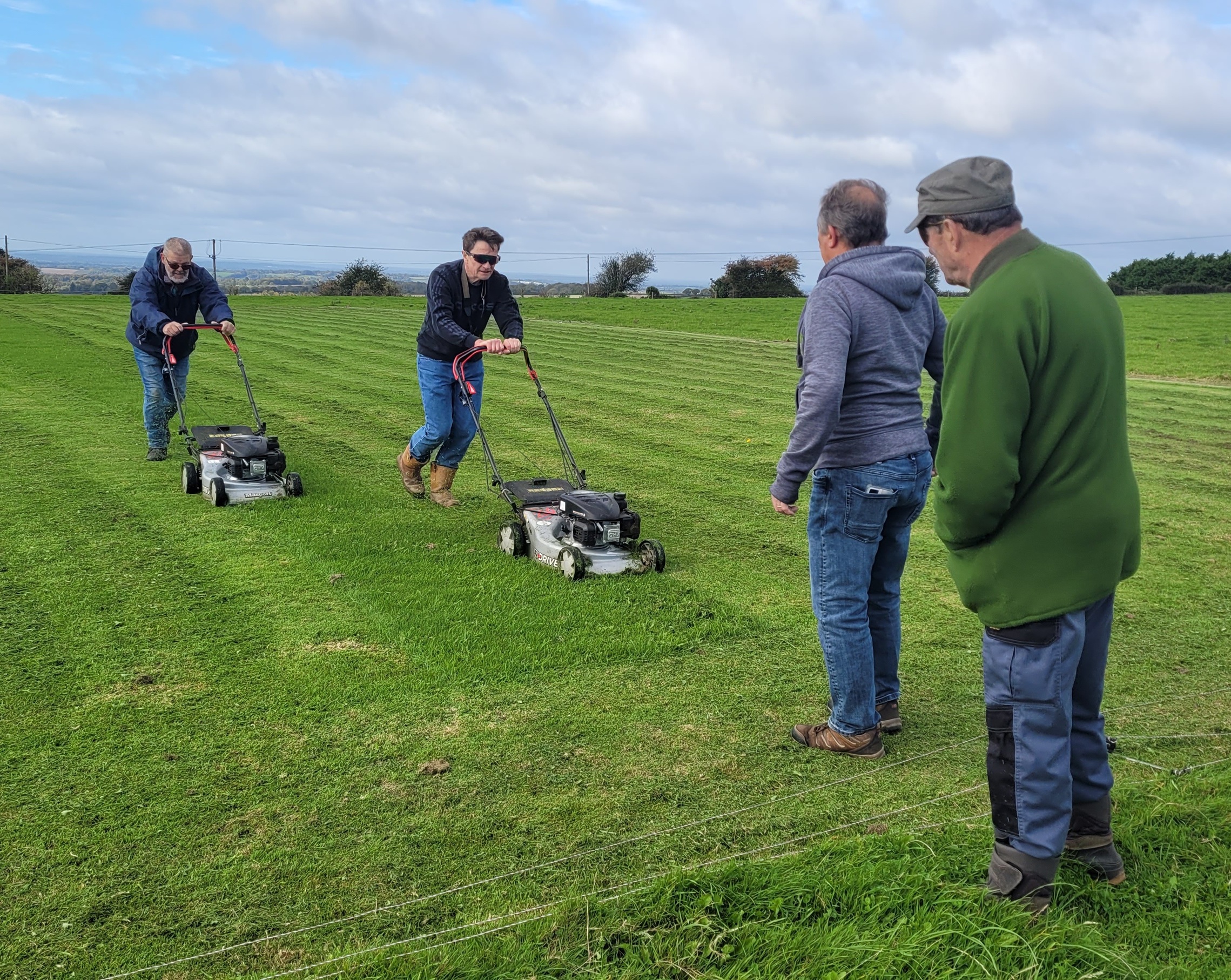
We are now in mid-autumn and the clocks have gone back, so we expect the British weather to take a downturn. We lost a few flying days in October and some days were ‘less than optimal.’ One such day was Sunday 5th when a few of us turned up with various models as usual, but mostly with mowing in mind and the vague possibility of flying if the weather improved through the morning. Sadly, it didn’t, and the wind continued to blow ferociously, but Dougal Entendre decided to fly his Wasp E2K pylon racer anyway.
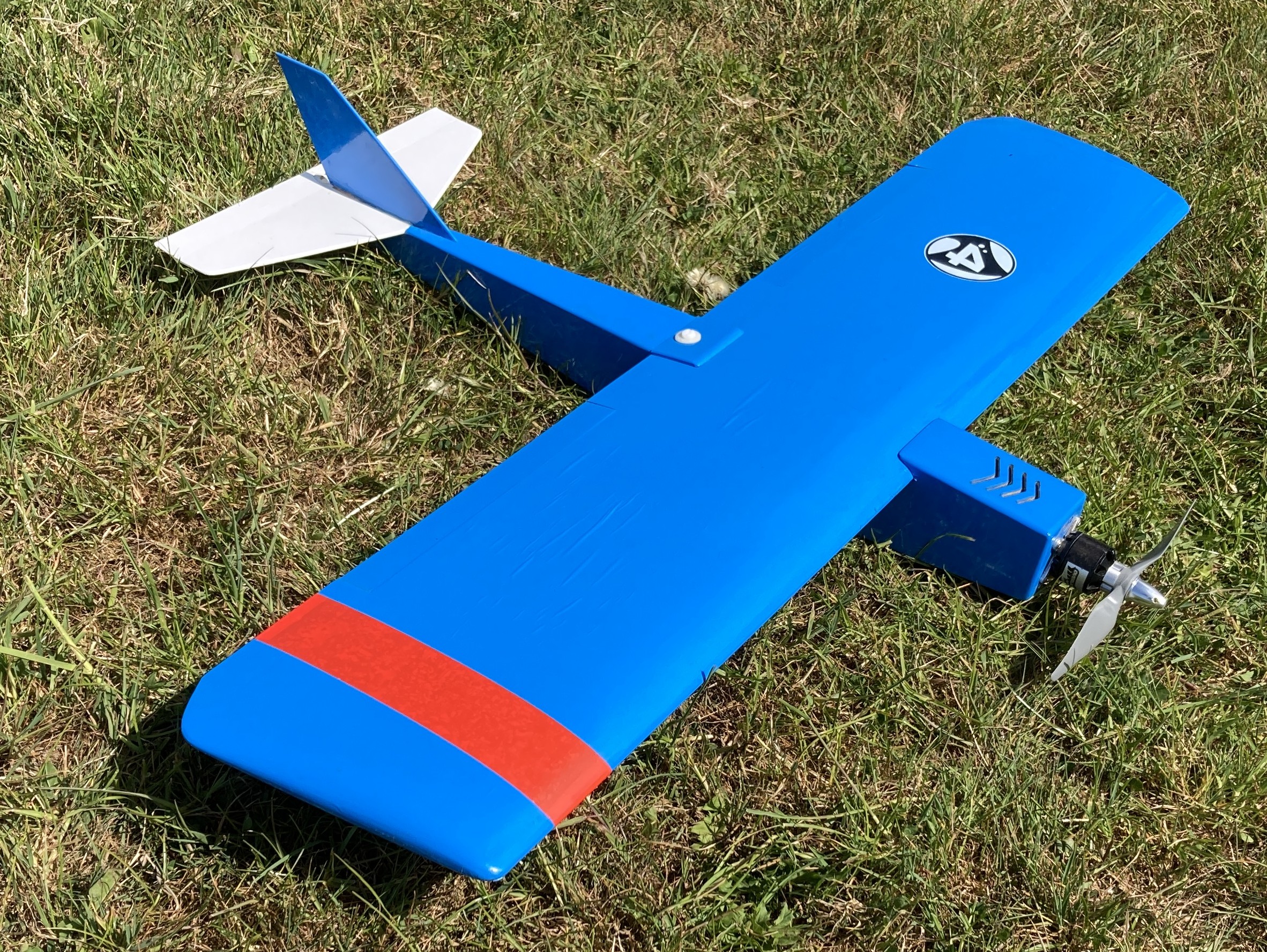 It was a good choice of plane for someone who was determined to fly despite the gale and Dougal flew before we got down to mowing and then flew again when we had finished.
  Well done Dougal for showing the rest of us how to do it! Some of Dougal’s in-gale flying can be seen at the start of this month’s video. The patch looked much better once mown that day and better still when 1066 and Woody went up and cut it again on Friday 17th.
Speaking of Woody, it’s hard to believe but he reached the big 70 on Saturday 25th Oct.
 He was kind enough to do the right thing and brought cakes along for everyone on Sunday.
On the last Sunday of the month there was quite a brisk north west wind blowing but despite that, Snoopy (aka Patrick Beagles) took the decision to take his BMFA ‘A’ test. Snoopy has been practising hard for the test with his Durafly Tundra in recent months and that is the model he used on the day. He had already asked club examiner Dougal to bring along the necessary paperwork so there was no backing out just because it was windy!
 Dougal said this about Snoopy’s flight: Patrick put up a very good flight performance given the wind conditions. His simulated deadstick was no problem at all despite the wind and his plane’s rubbish glide angle! I had no hesitation in awarding him a pass.
 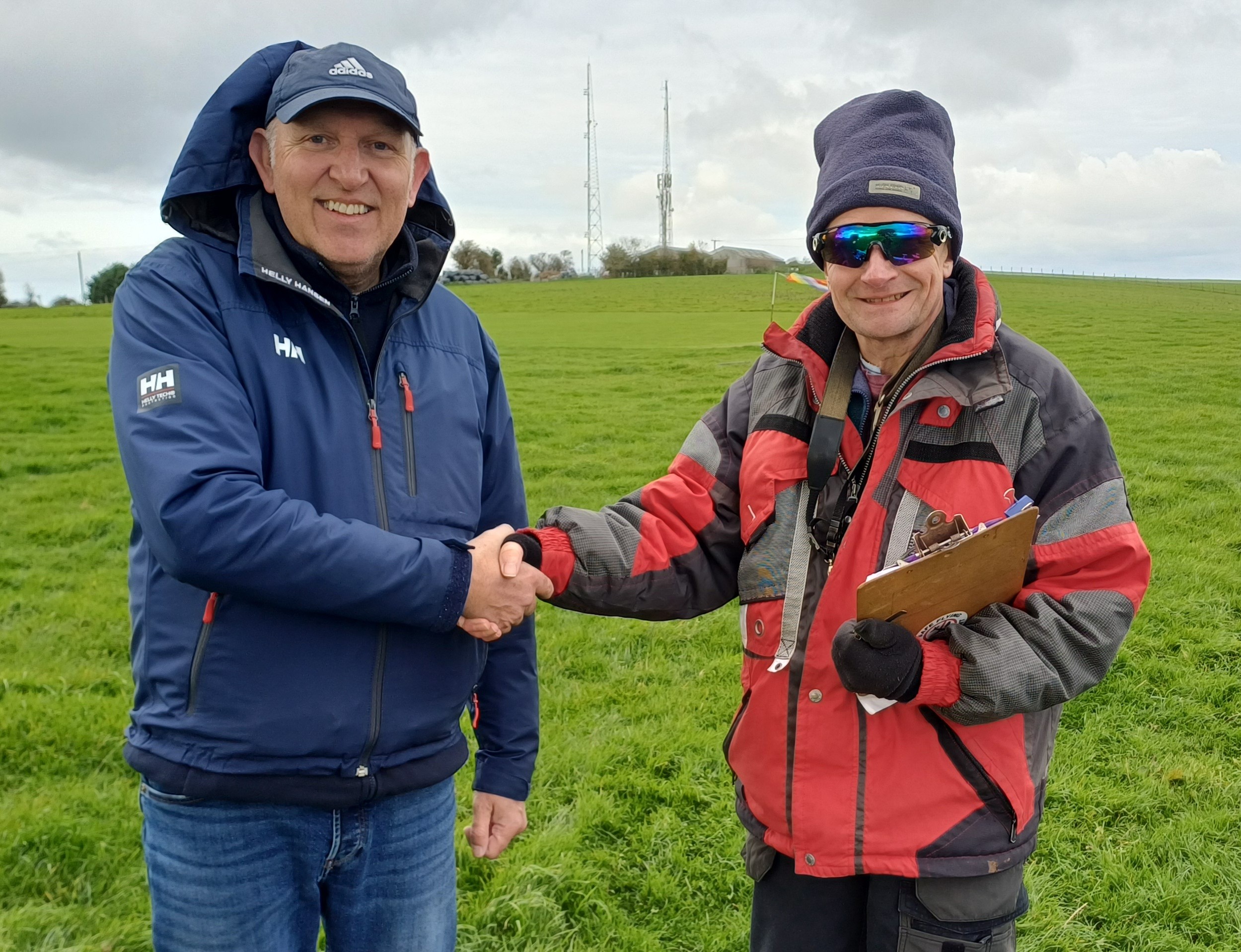 Congratulations Snoopy, a good flight and an excellent result on a less than ideal day.
Several new or revived models were flown in October and I’ll begin with Woody’s Delta. 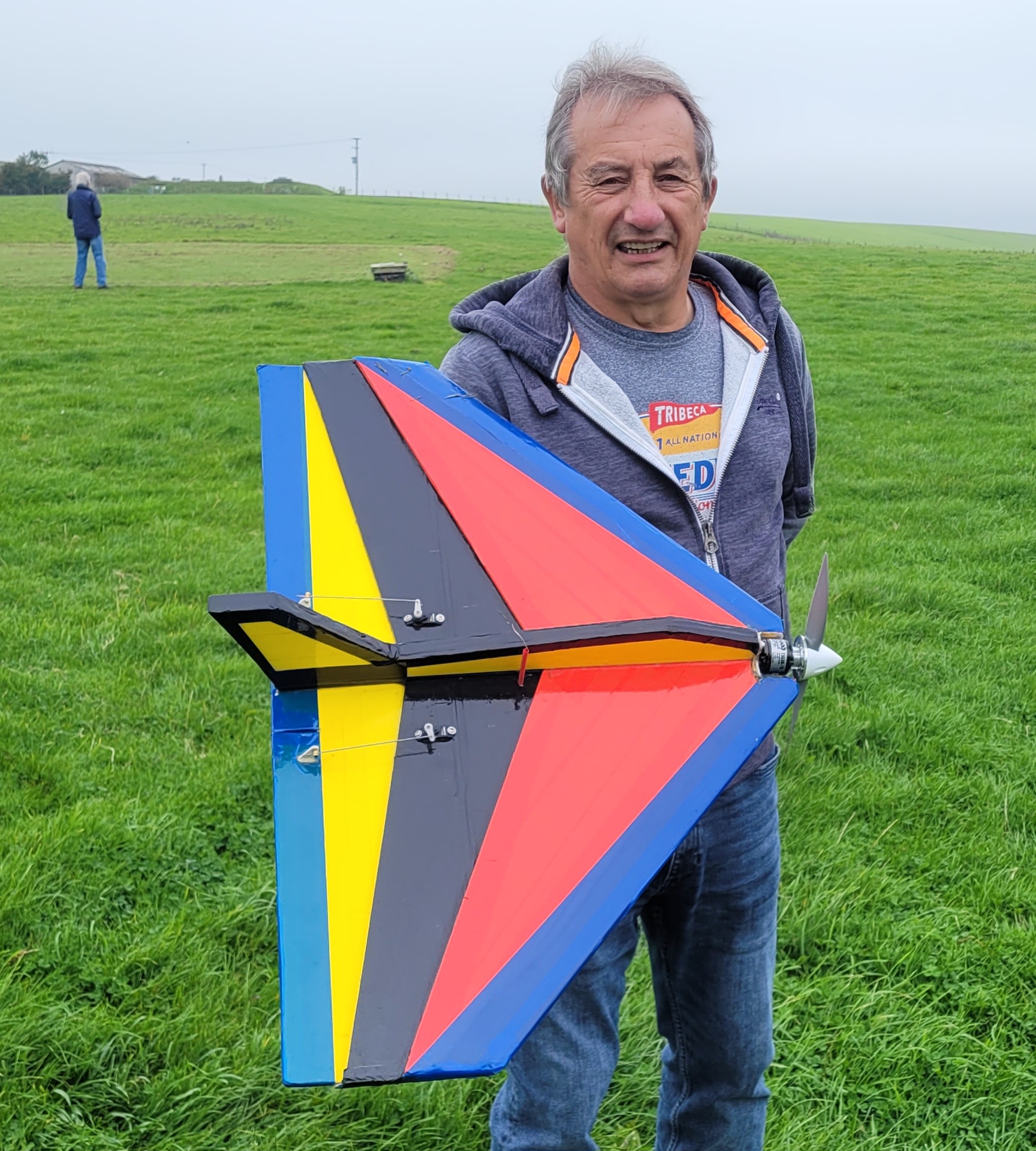 The model is a later version of one originally built by 1066 for the club’s Delta competition way back in 2015 when club members built deltas of their own design but they had to have a flat plate wing of a specified size and outline. They then competed in a series of tasks over the following few months, great fun. Some flew better than others but they all flew.
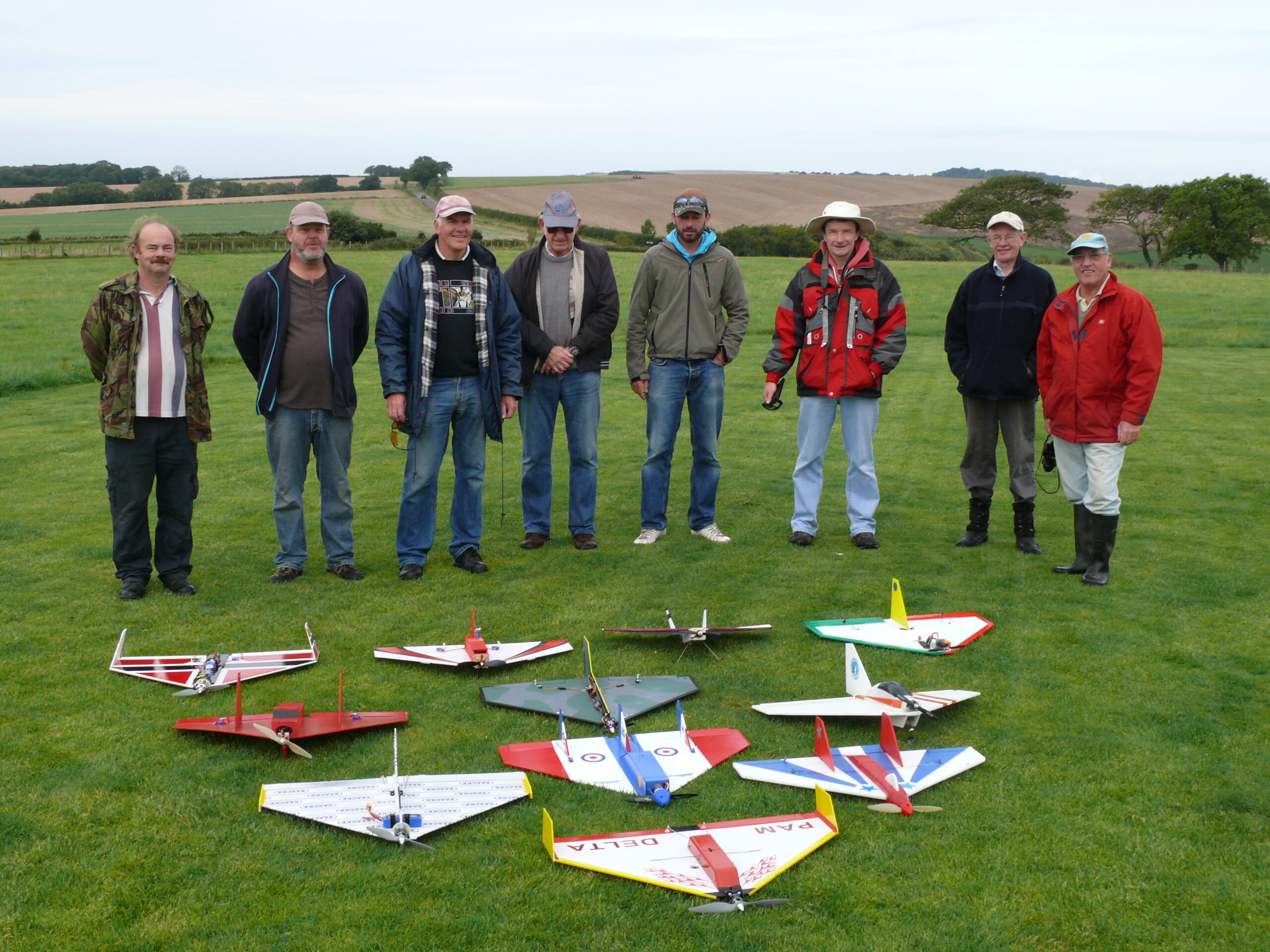 Oh look, ten years on and Dougal is still wearing that same coat! Back to the models now… 1066’s was a good flier and he enjoyed it so much that he built a Mark 2 version that used a Kline Fogleman wing section and it flew even better than the first one pictured below.
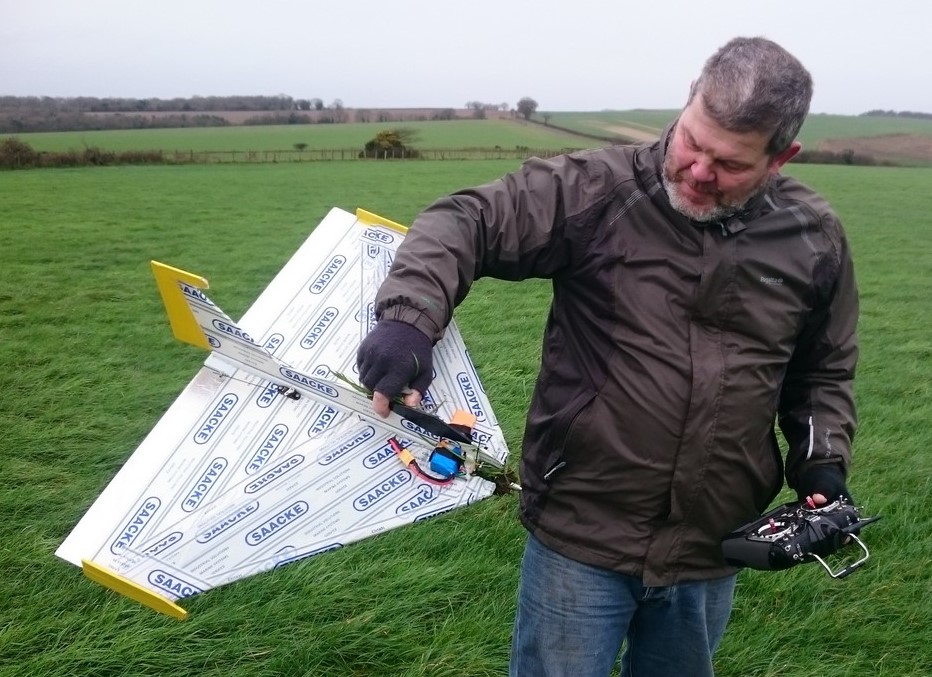 Eventually 1066 got a bit bored with flying the Mark 2 and it was discarded, just cluttering up his workshop, so this month he removed the running gear and passed it on to Woody.
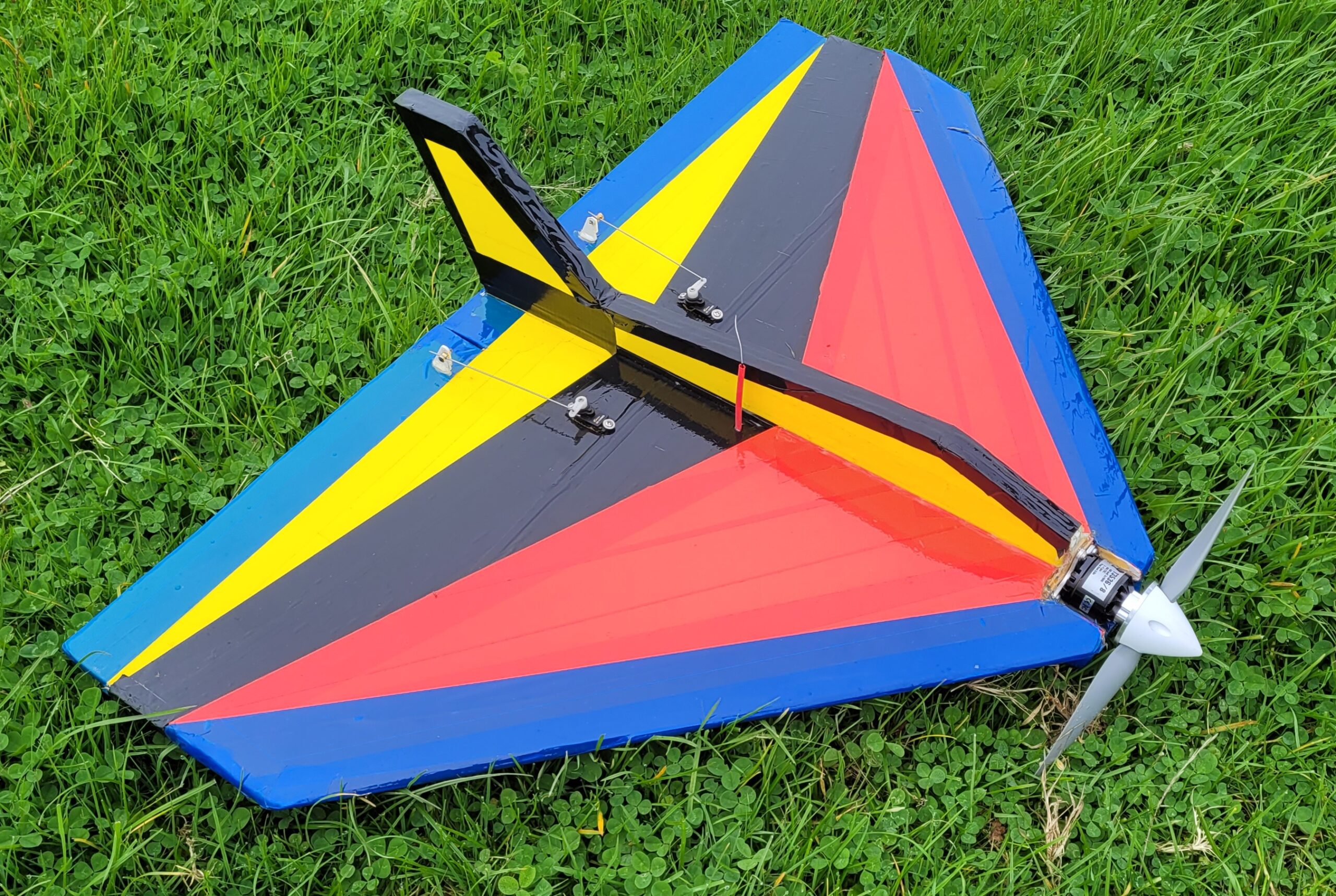 1066 used to fly it with a fairly high KV motor and it was quite fast, but now, Woody has fitted a Tornado Thumper 3536/08 motor powered by a three cell 2200mAh lipo battery.
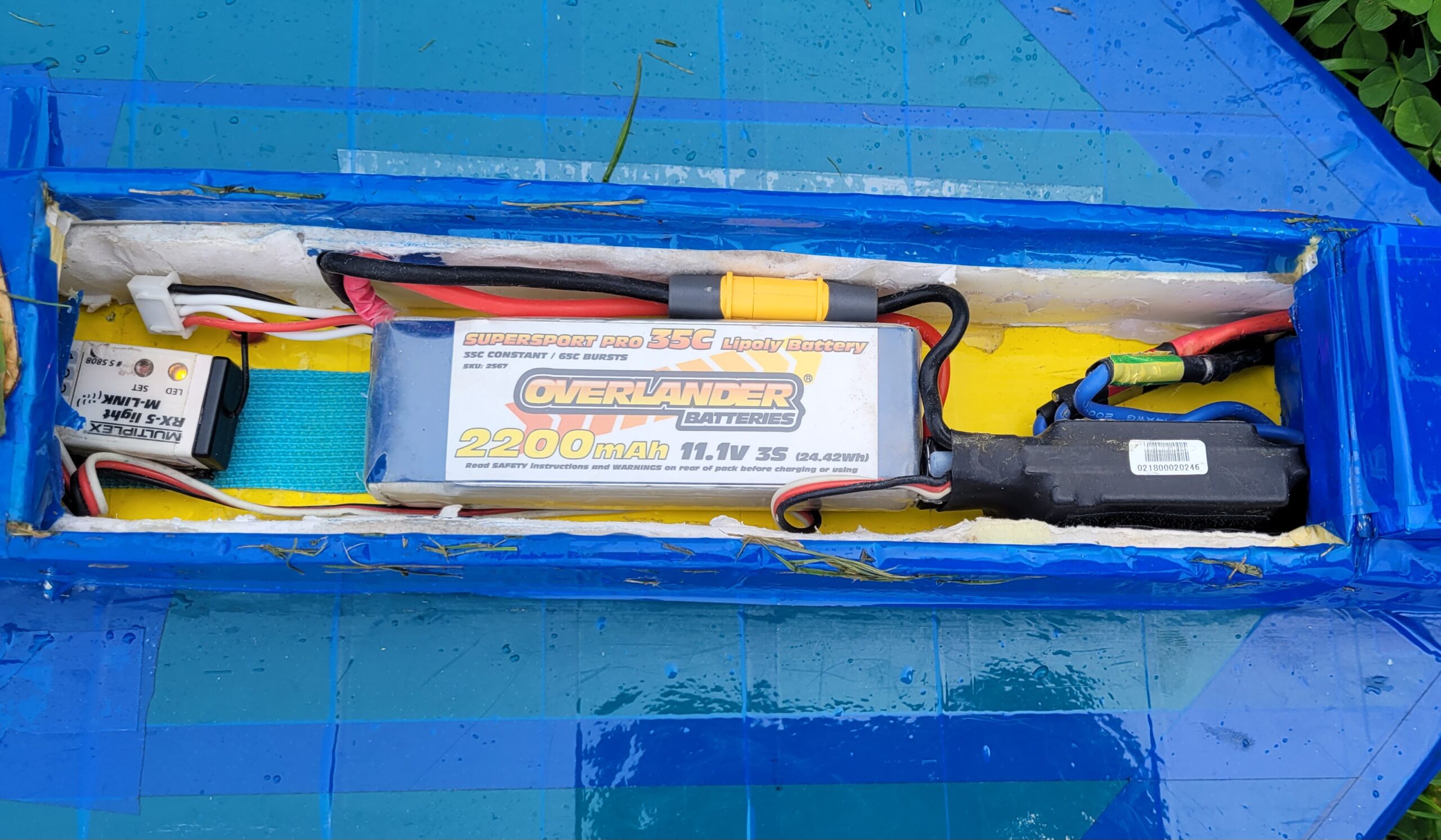
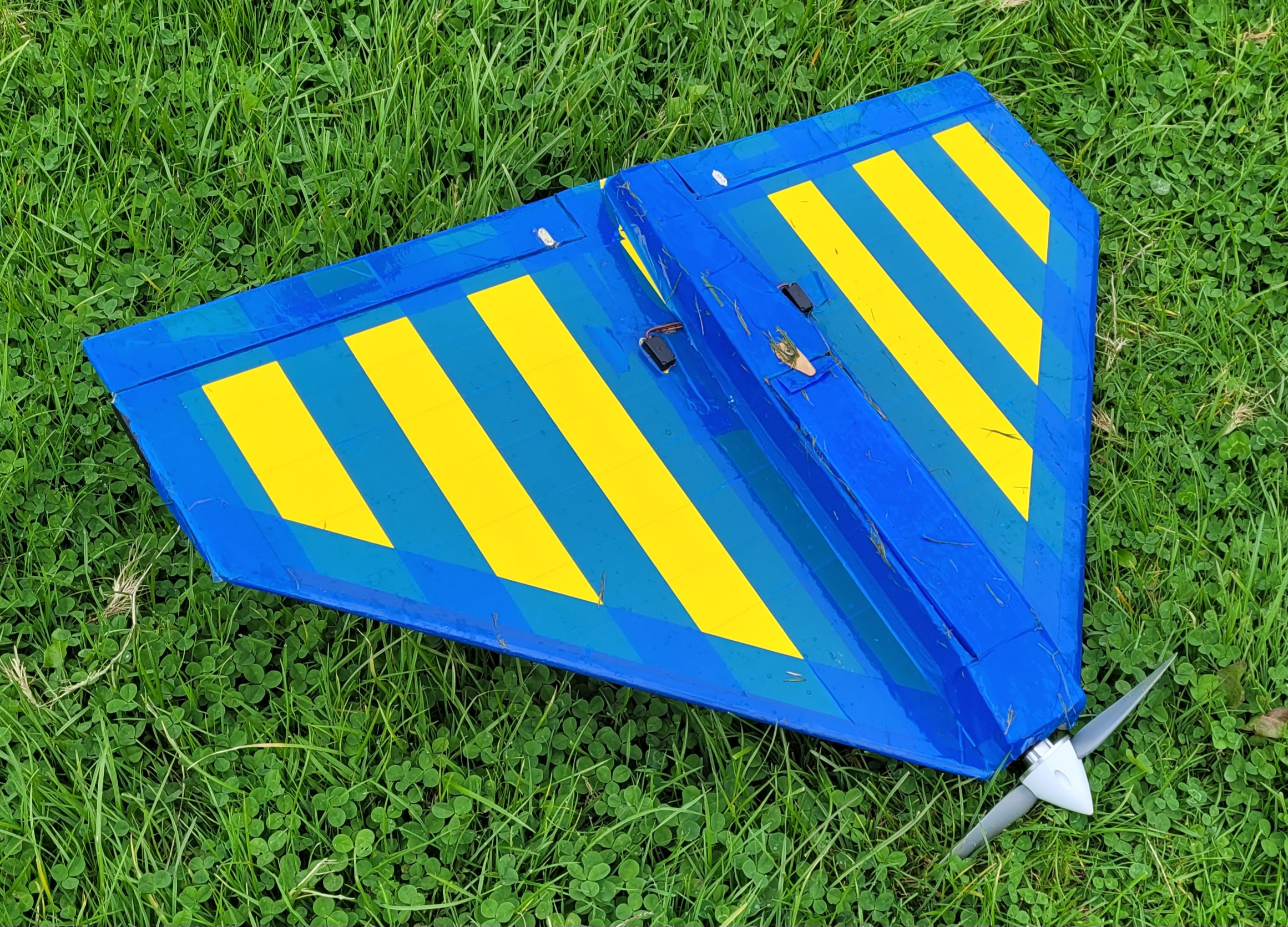 It flies very well, slower than previously of course which is just what Woody wanted and, as you can see in the video, is an excellent, steady flier. It’s good to see it back in use again.
Sticking with Woody, he had a bit of a mishap with his foamboard Typhoon in October.
He was flying it really well and did a lovely low pass over the patch, pulled up vertically, and promptly stalled! The Typhoon’s fall was halted by a large bush alongside the track. 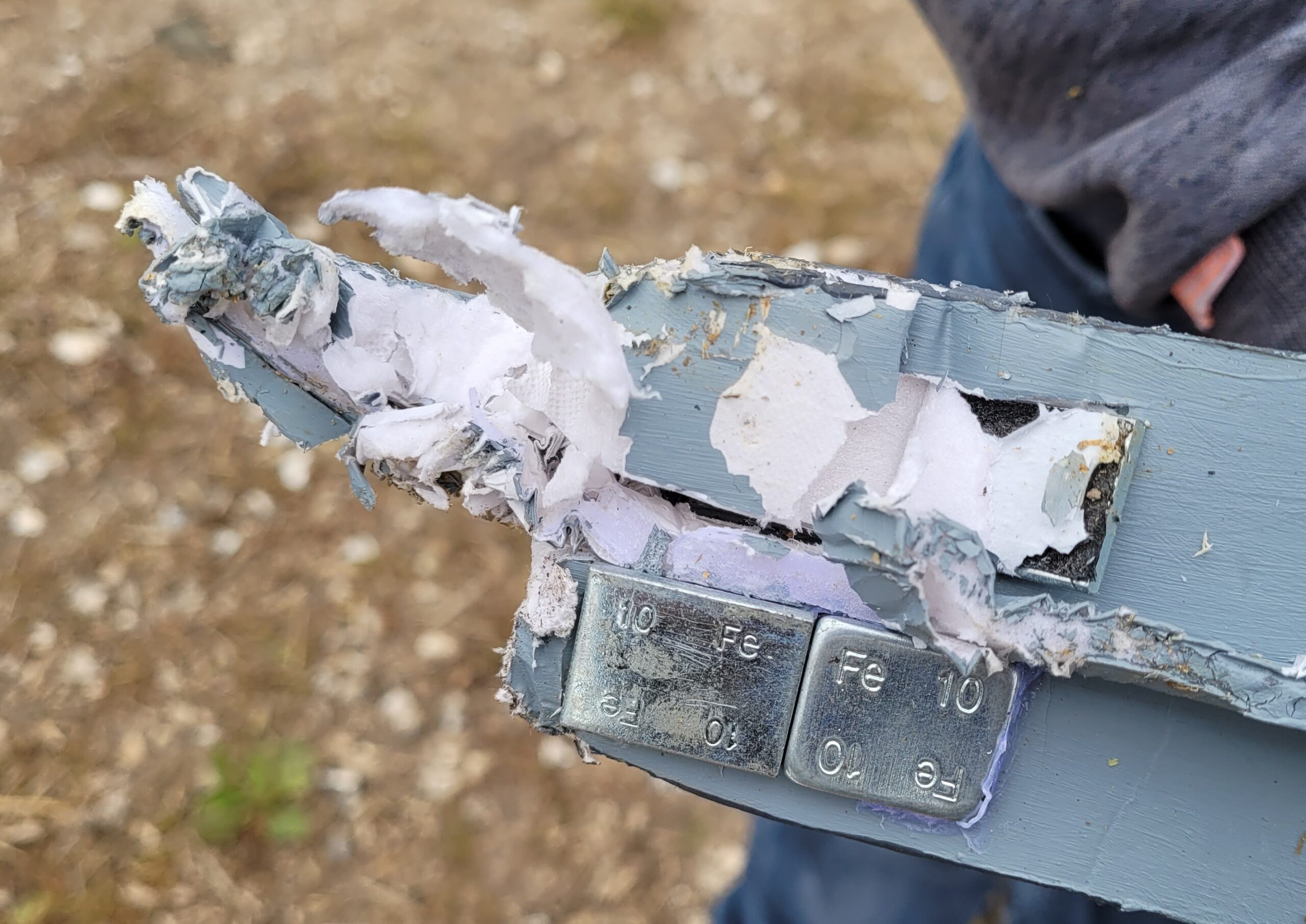
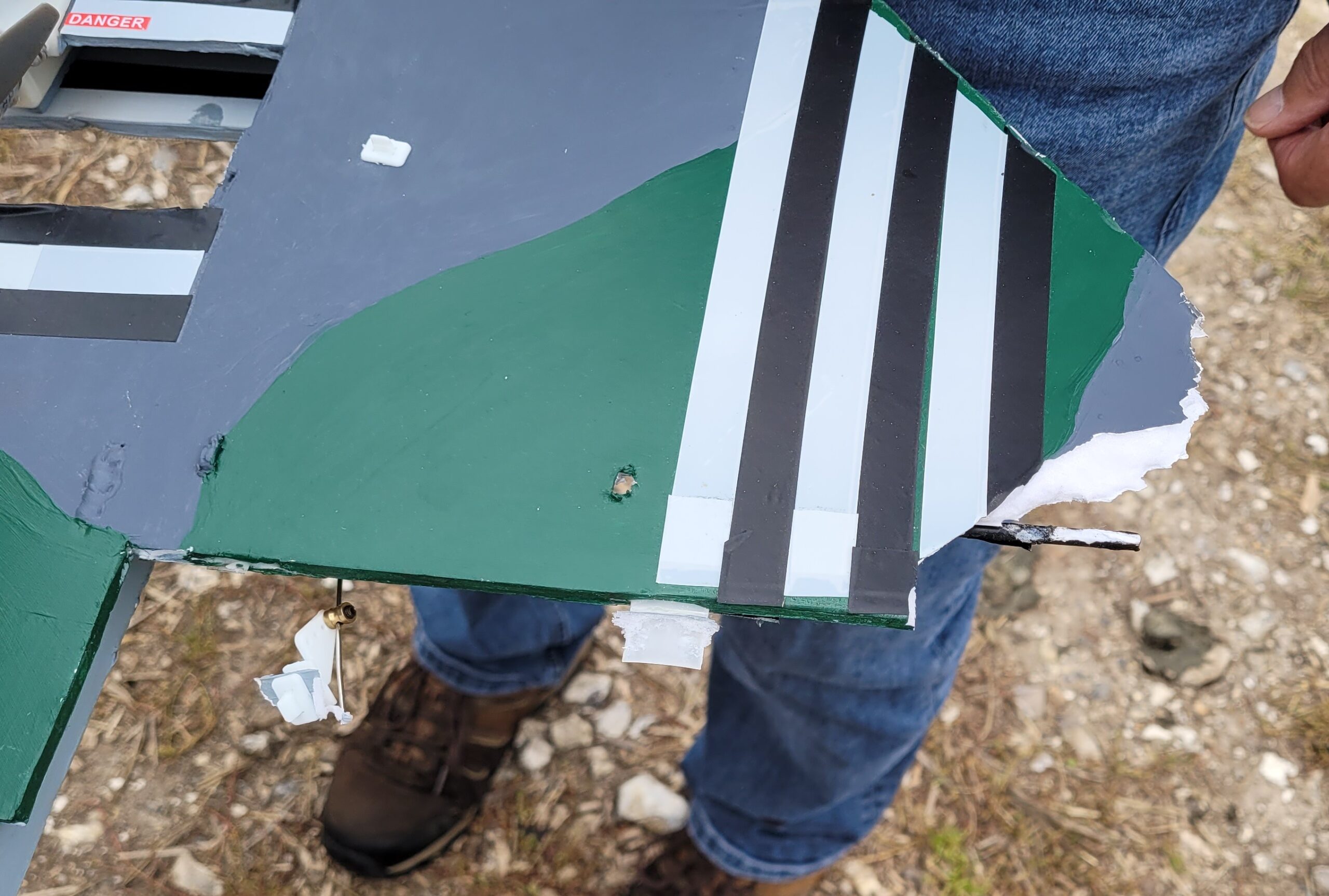 Fortunately, the damage was not too bad, less fortunately (for us) although I was filming at the time I missed the bush entry! Here’s a couple of screenshots from the video I took.
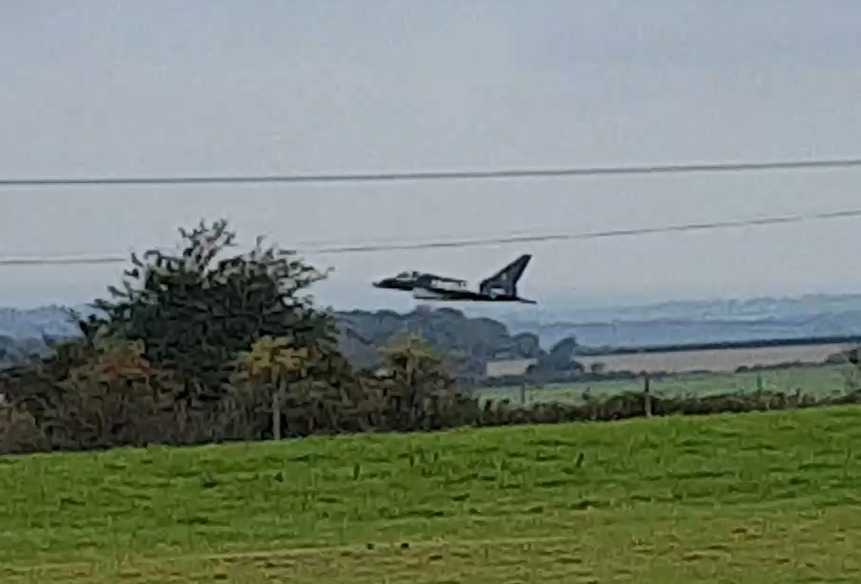
 Not wishing to hurt Woody’s feelings I haven’t included the Moggie mishap in this month’s video, instead I have included Woody flying his foamboard F-16 with rather more success!
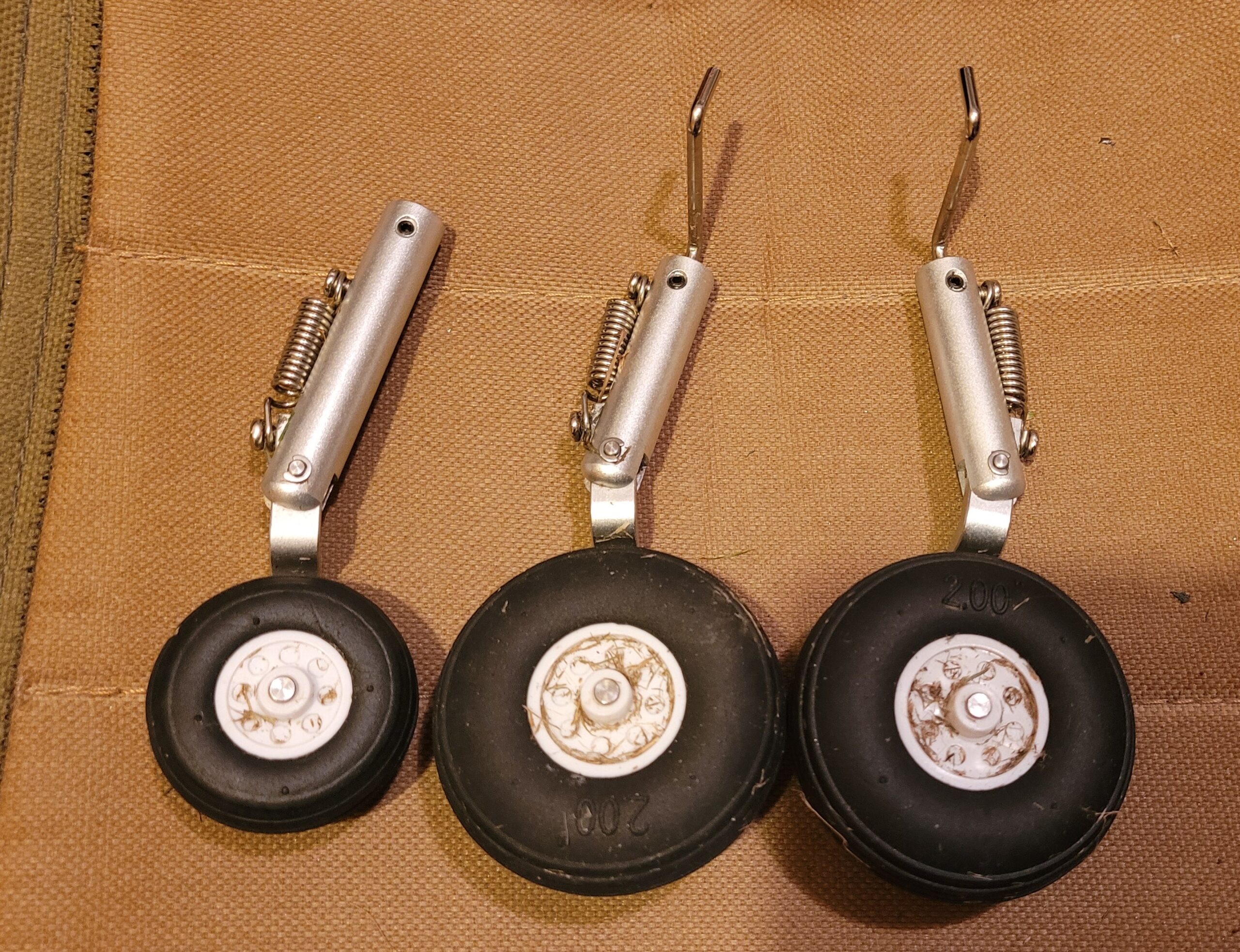
At one flying session in October I was flying my FMS Futura but was struggling to take-off with the slightly long grass wet with autumn dew and eventually I snapped the nose-leg.
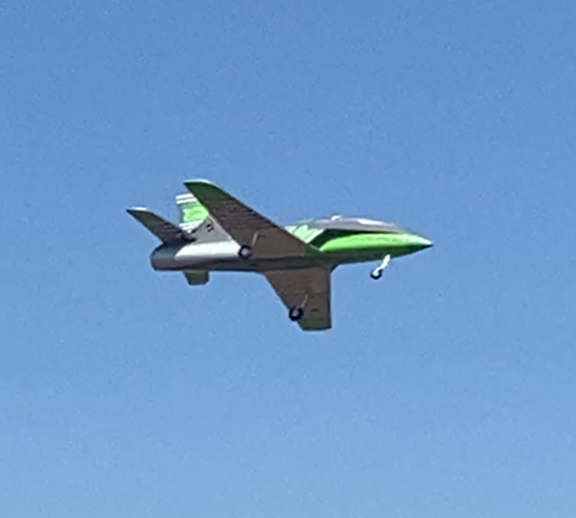 Although the EDF jets look nicer in the air with the undercarriage removed I had left mine on as I was rather enjoying landing on wheels and taxiing back, plus I was unsure how well the Futura would go from a hand launch. Having snapped the nose-leg it was time to find out so I removed the main undercarriage legs as well and asked 1066 to try launching it.
 No problems at all, it went away perfectly and had an increase in performance as well as looking better. While all this was going on 1066 mentioned that there was an Arrows Hobby Avanti for sale on Facebook for a sensible price and someone reckoned the seller was PAM member Page Boy. I have always liked the Avanti so I contacted Page Boy via WhatsApp and we discussed the Avanti between Futura flights. But during one flight there was a sudden bang as the Futura and John Warren’s Tasman clipped each other! John’s Tasman carried on flying perfectly but the Futura spun in, and on examination afterwards, it seems that one of the Tasman’s wheels had removed a large part of the Futura’s fin.
 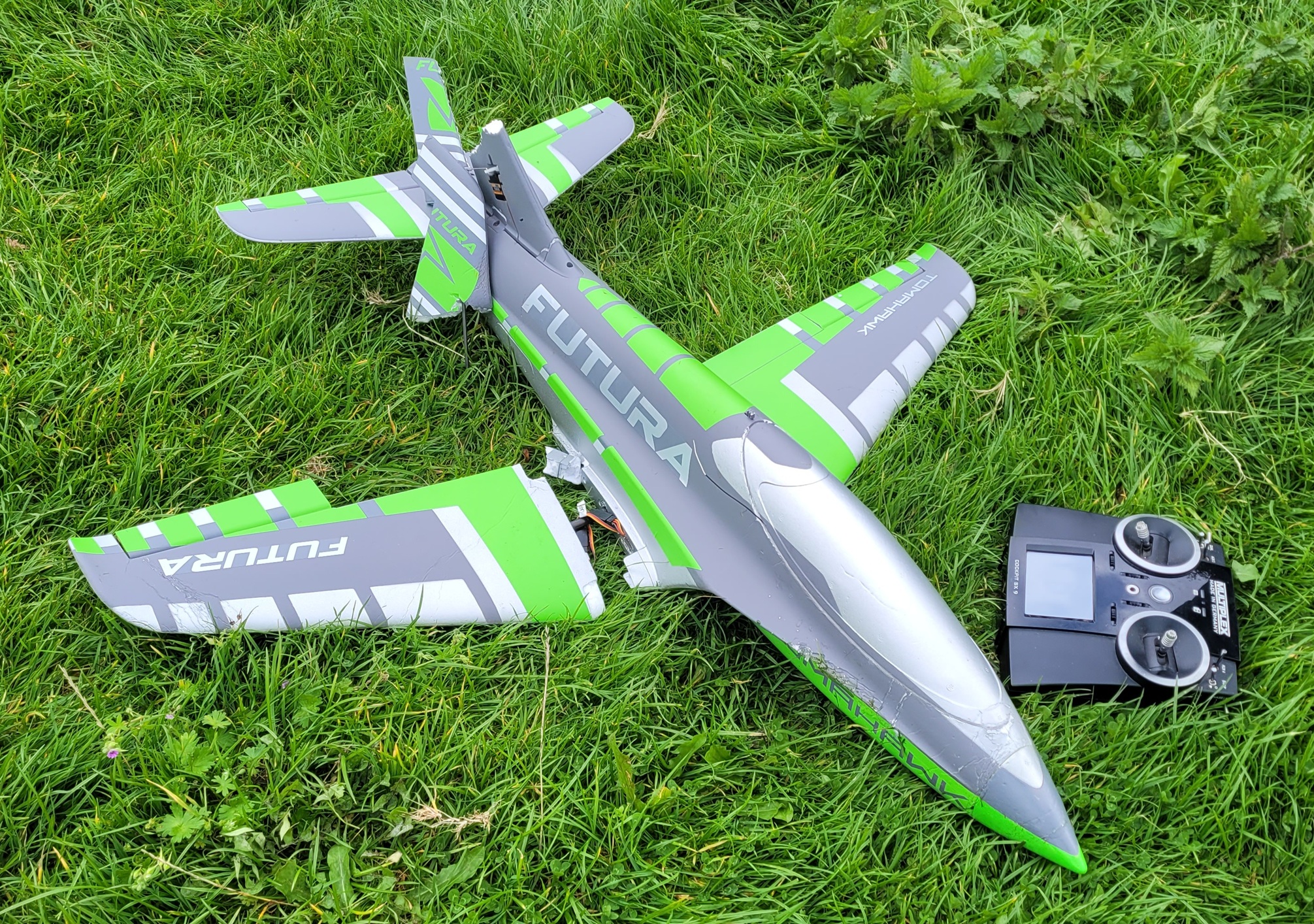 Fortunately, the Futura damage was not nearly as bad as I had expected and I will soon have it flying again. So then it was back to chatting with Page Boy as now I really needed the Avanti! The deal was done and Page Boy even delivered the plane to me that evening.
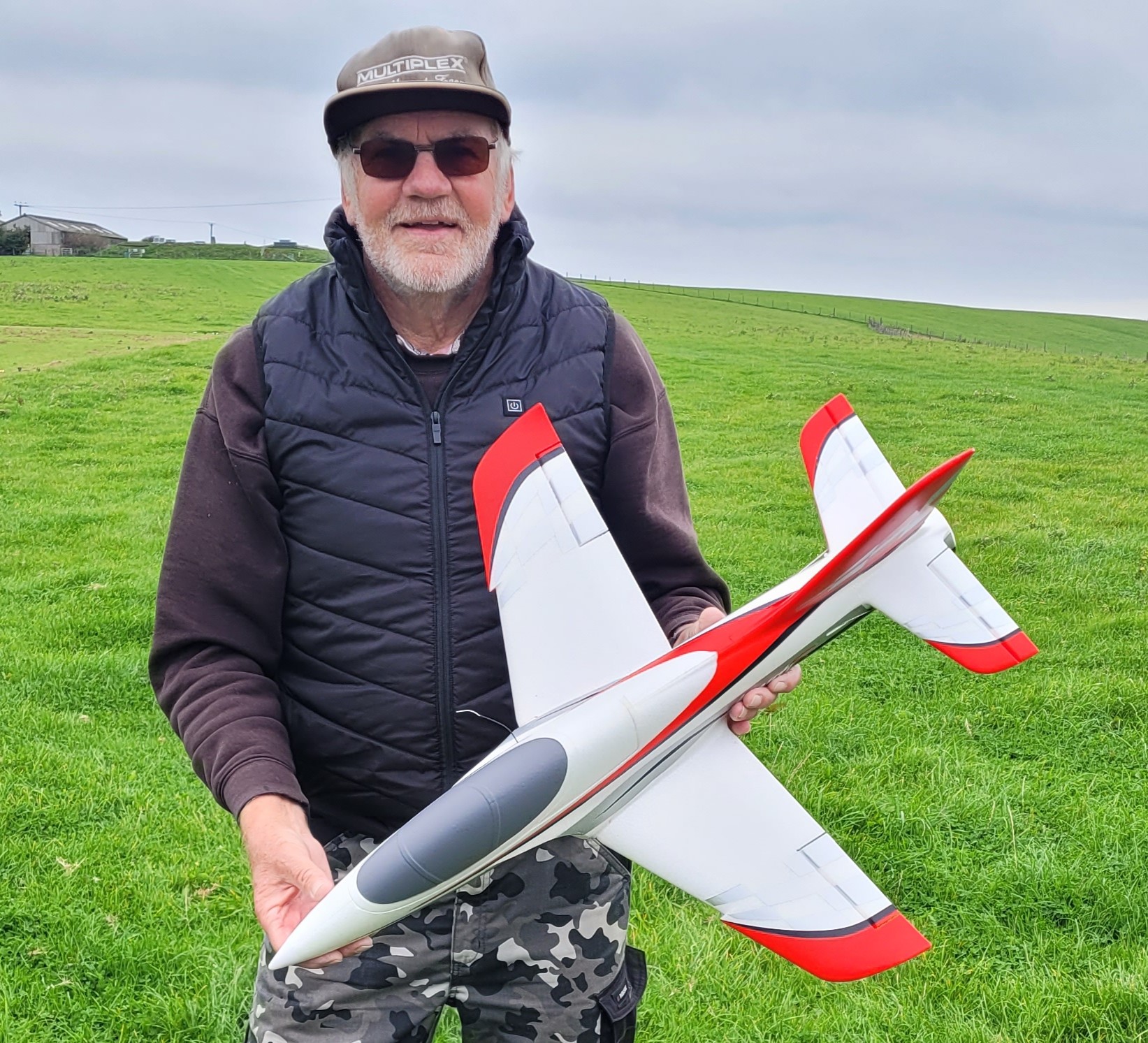
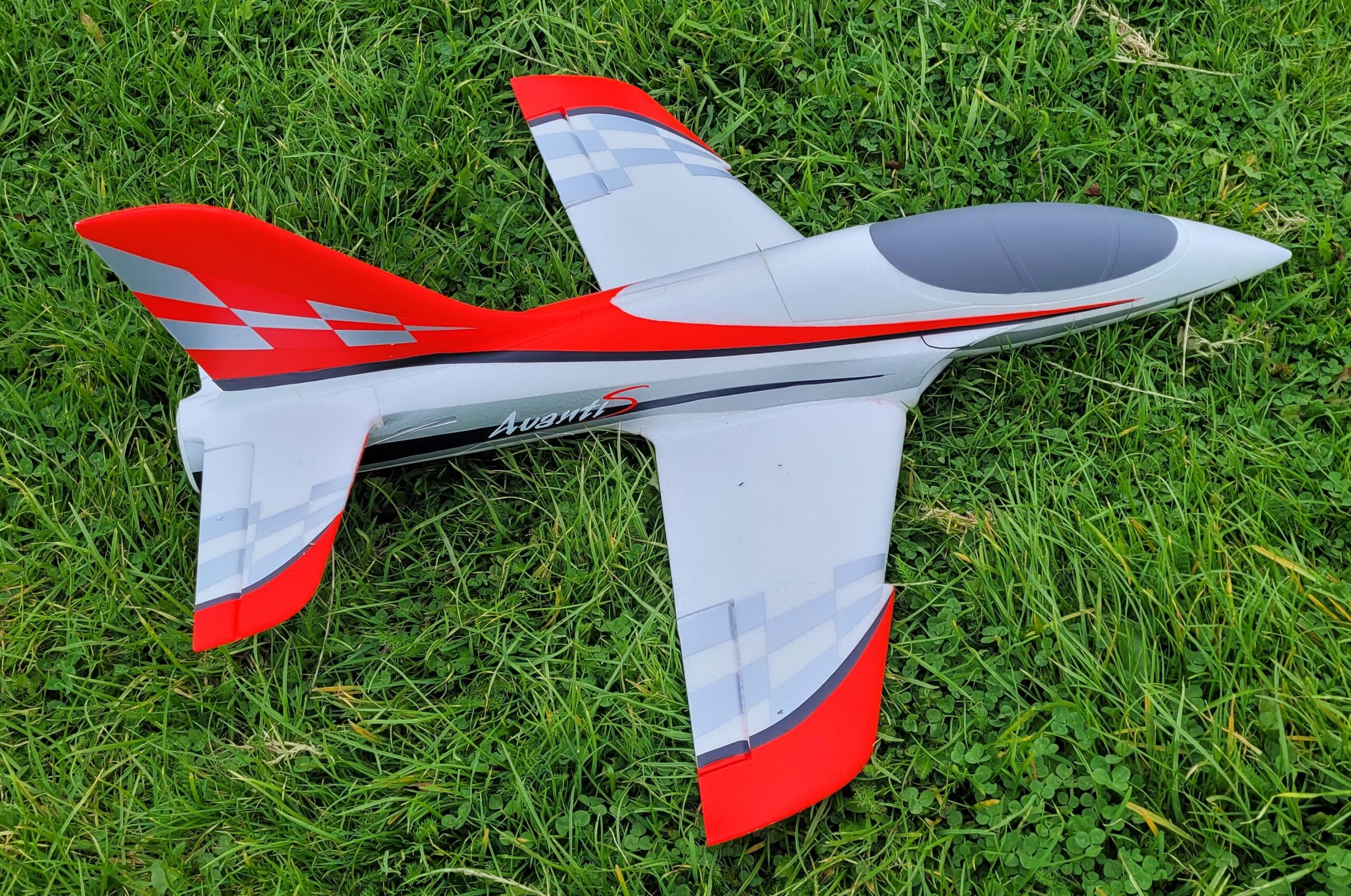 Despite me featuring the Avanti in the March Patch News I had forgotten Page Boy even had one but he had only flown it two or three times as he is currently bogged down with other things and hasn’t been able to come flying. He decided to do a bit of a thinning out of his models and as the Avanti is in ‘as new’ condition he thought it would be an easy sell.
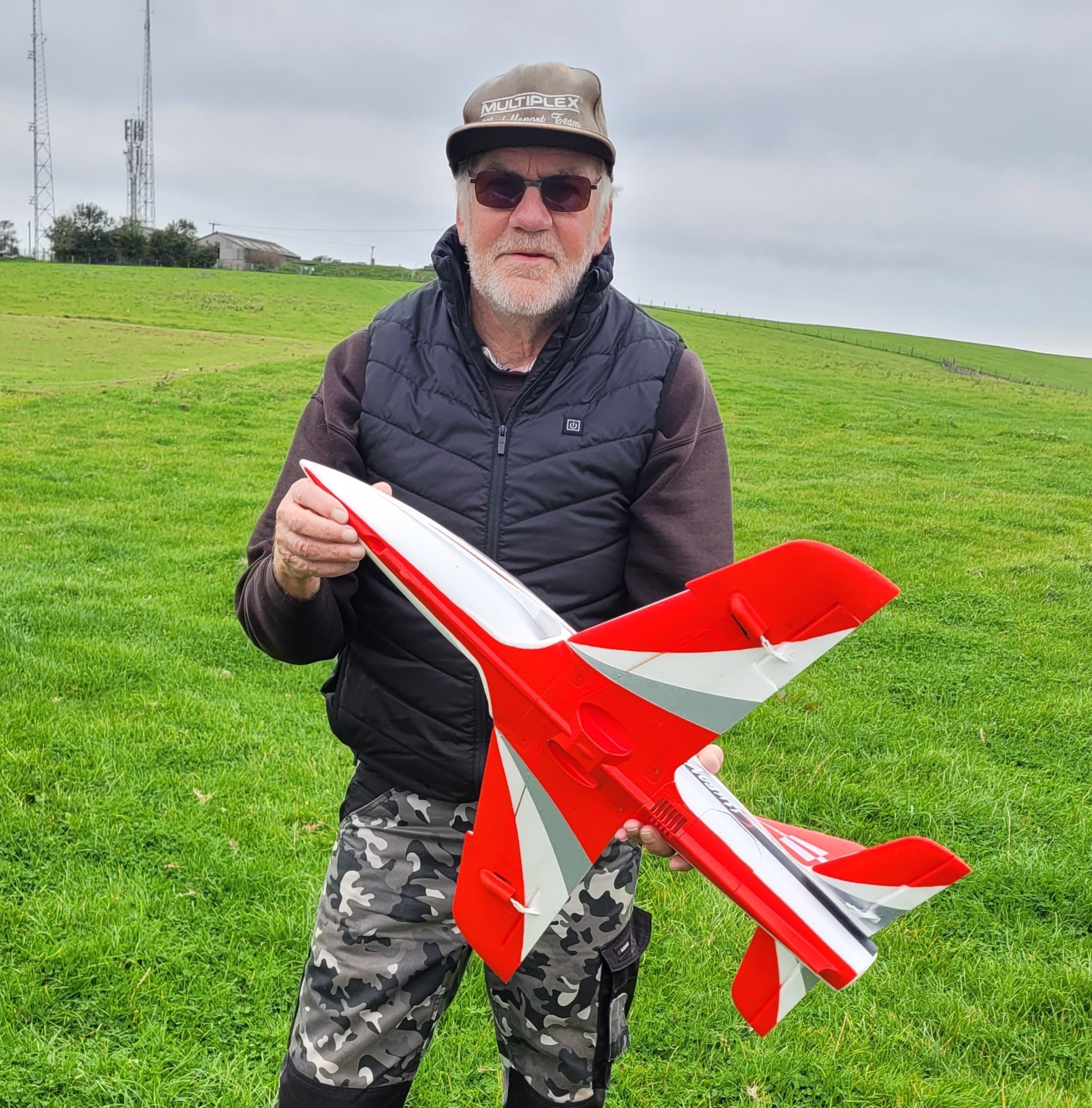 The EPO foam Avanti comes almost finished with an 11 blade fan, 2627 4500kv motor, 30A esc, 6 axis gyro, and 3 x 9g servos all pre-installed. All I had to do was replace Page Boy’s Spektrum receiver with a Multiplex one and it was ready for the next flying session.
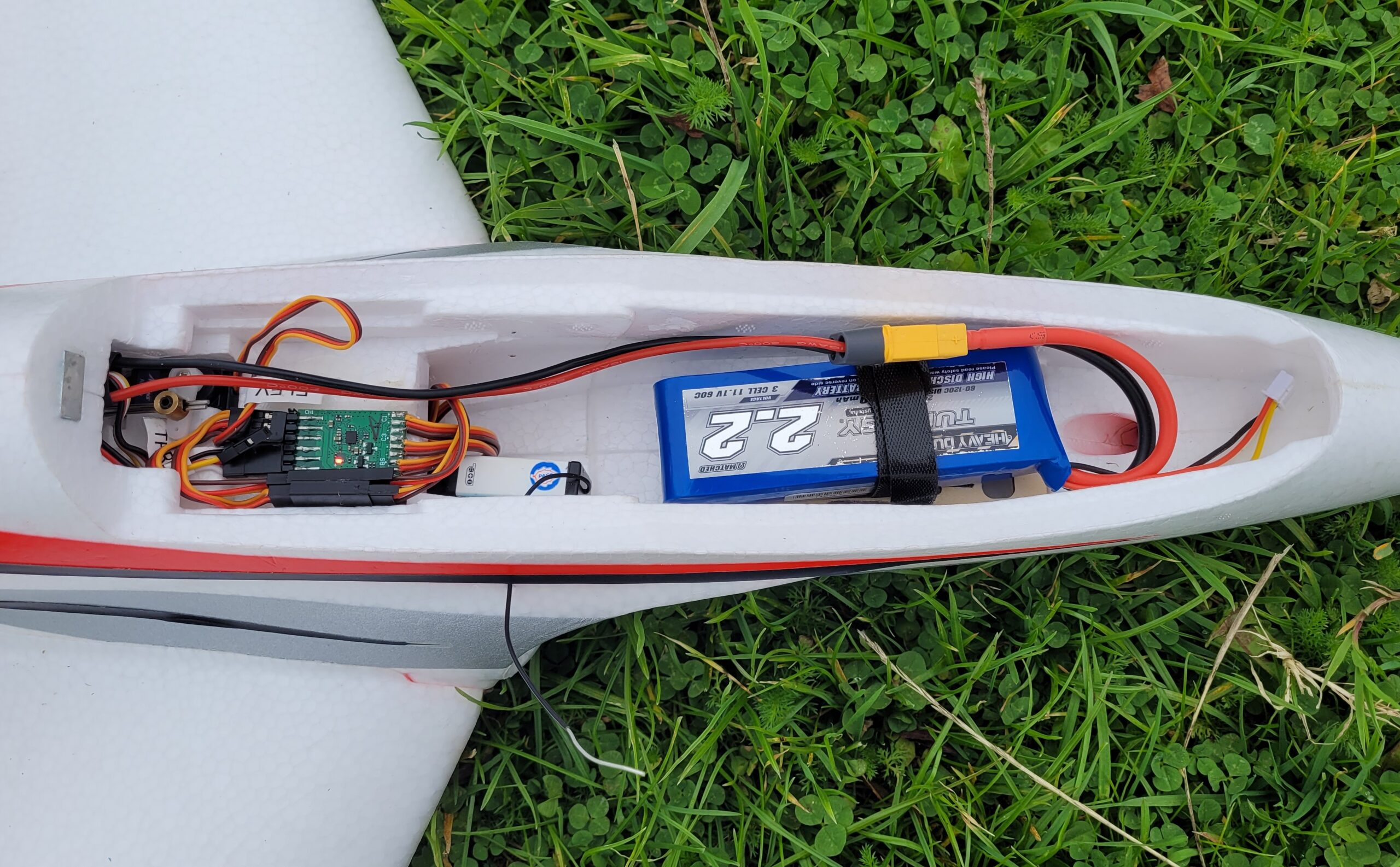 The specs say to use a three cell lipo with a capacity of 1300mAh to 16oomAh so of course I promptly fitted a 2200mAh pack! This is my first Arrows EDF so I had asked other club members what they use and most seem to use 2200mAh packs, hence my decision.
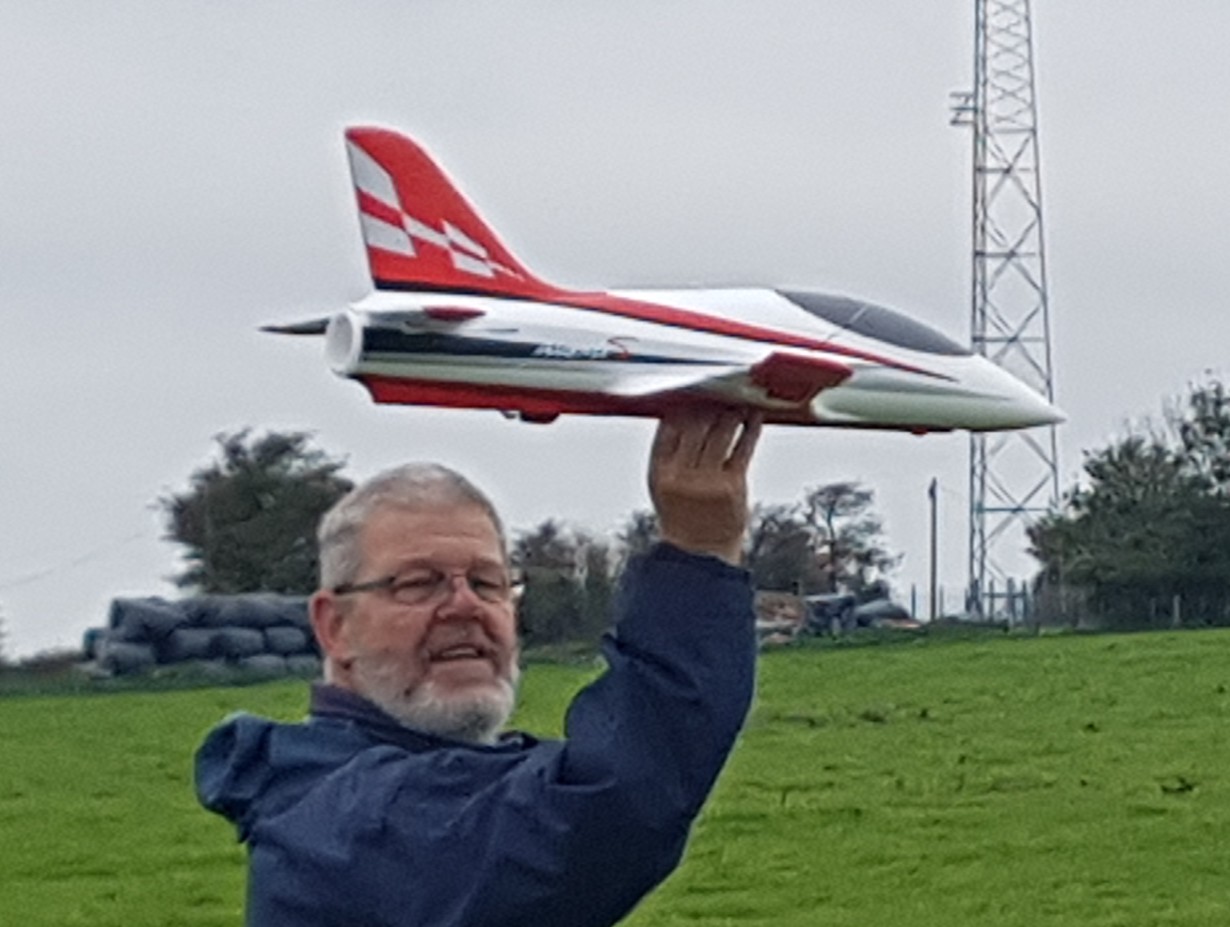 1066 gave it a chuck and I’m happy to report that it flies beautifully. It’s slightly nose heavy with the 2200mAh lipo but it’s fine. You can see the Avanti flying in this month’s video.
Mini Mike’s latest E-flite Electro Streak flies extremely well, and he has proved that it will reach 125mph. 1066 got jealous and decided that he wanted some of that action so he set about building an Electro Streak from the long discontinued Great Planes kit.
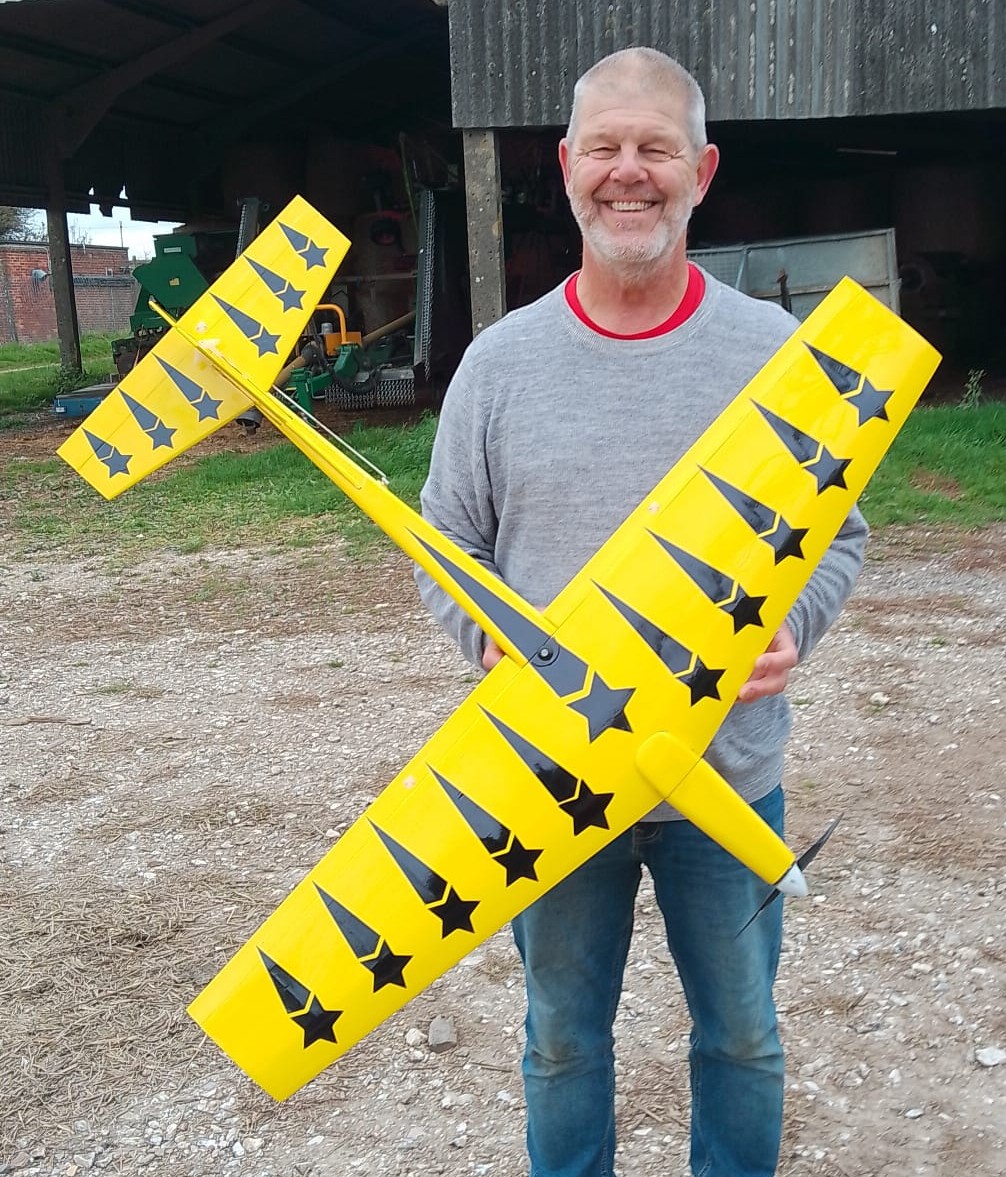 I pictured it last month, built but awaiting it’s covering, and it’s now finished and flying.
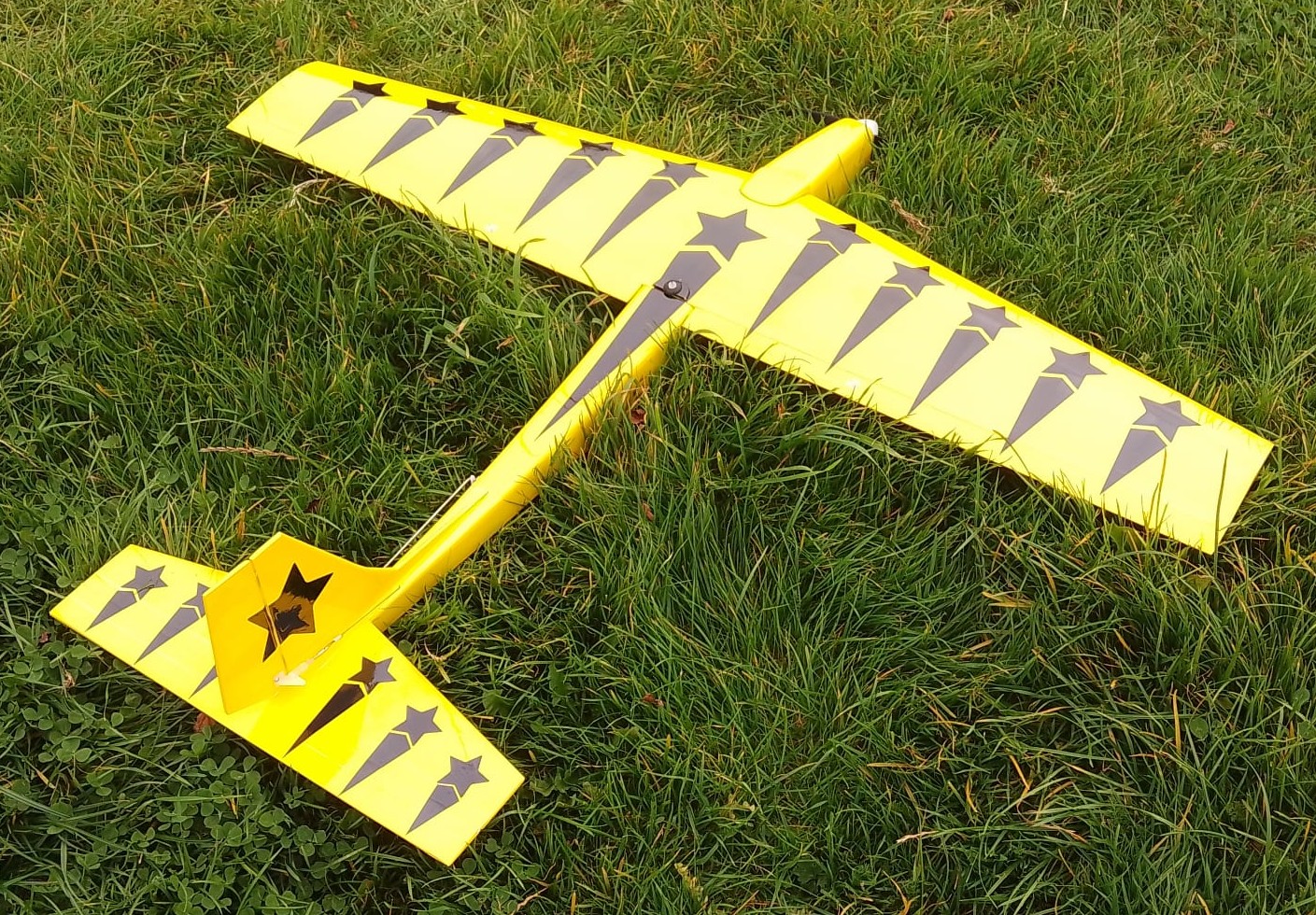 Here’s a little of the Electro Streak history that I gleaned from the Outer Zone website:
The Electro Streak was originally designed by Tom Stryker and featured in November 1987 Model Aviation… it was kitted the next year by Great Planes. A 44 in span aerobatic model designed for 550 motors and 7 cells (Great Planes own Goldfire motor was included with the kit, the equivalent of a 7.2V speed 600 or the Simprop power speed 660) the Electro Streak is a fine exercise in minimal design, the lightweight air-frame offsetting the heavy motors and batteries of the day to give excellent performance.
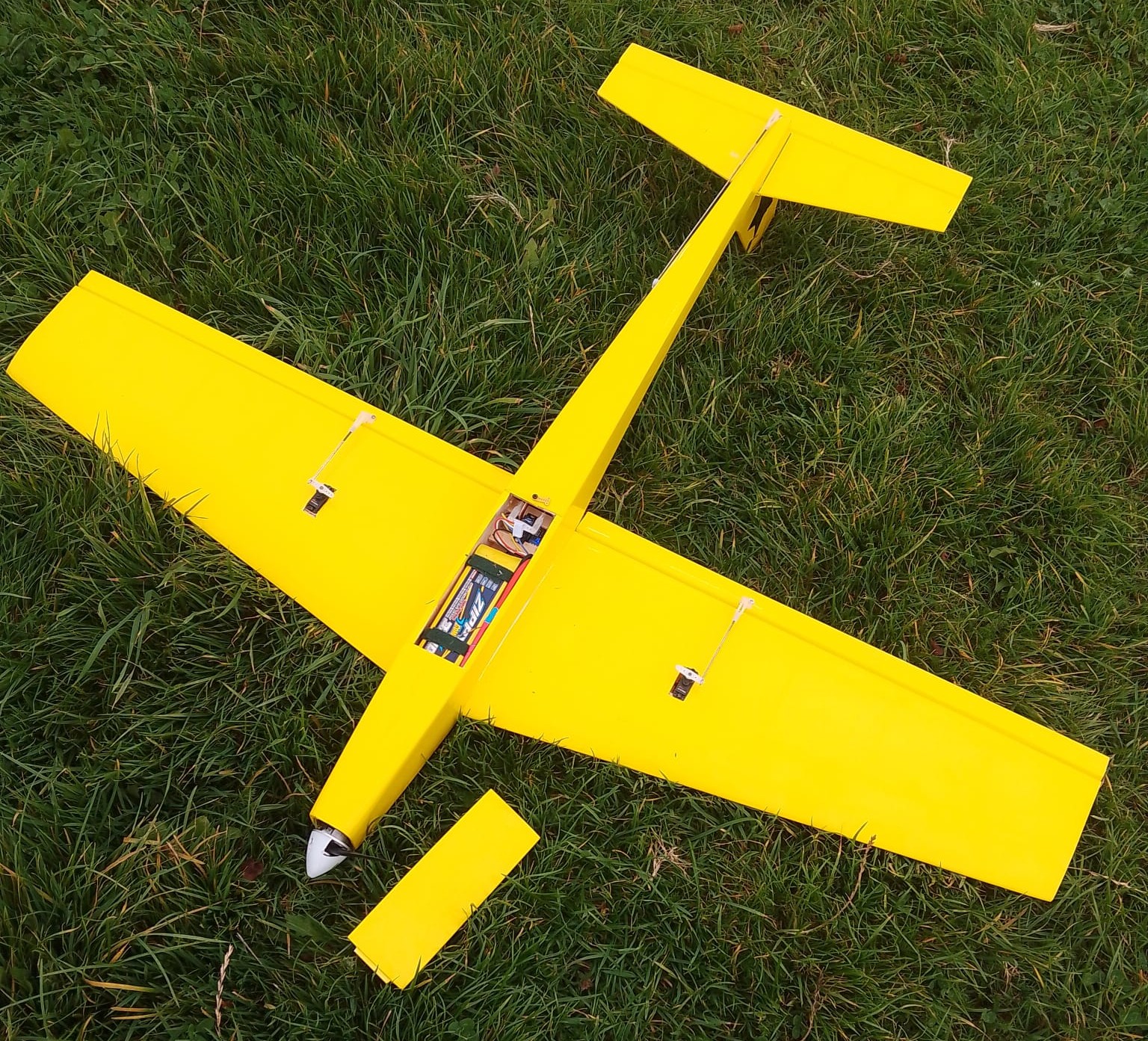
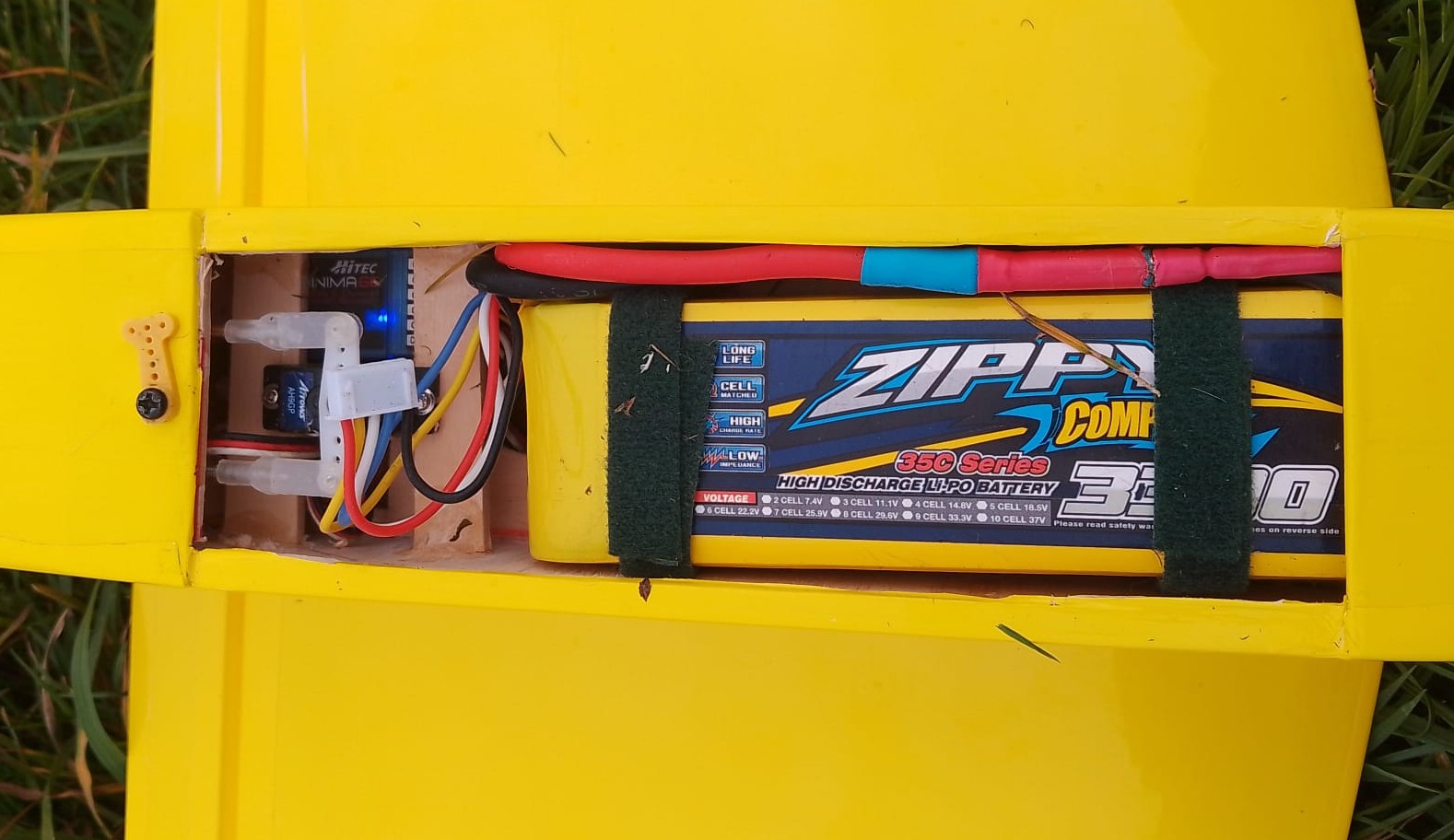 Things have moved on a lot since 1987 of course and we now use brushless motors and lipo batteries. In his Electro Streak 1066 is using four cell 3300mAh packs for power.
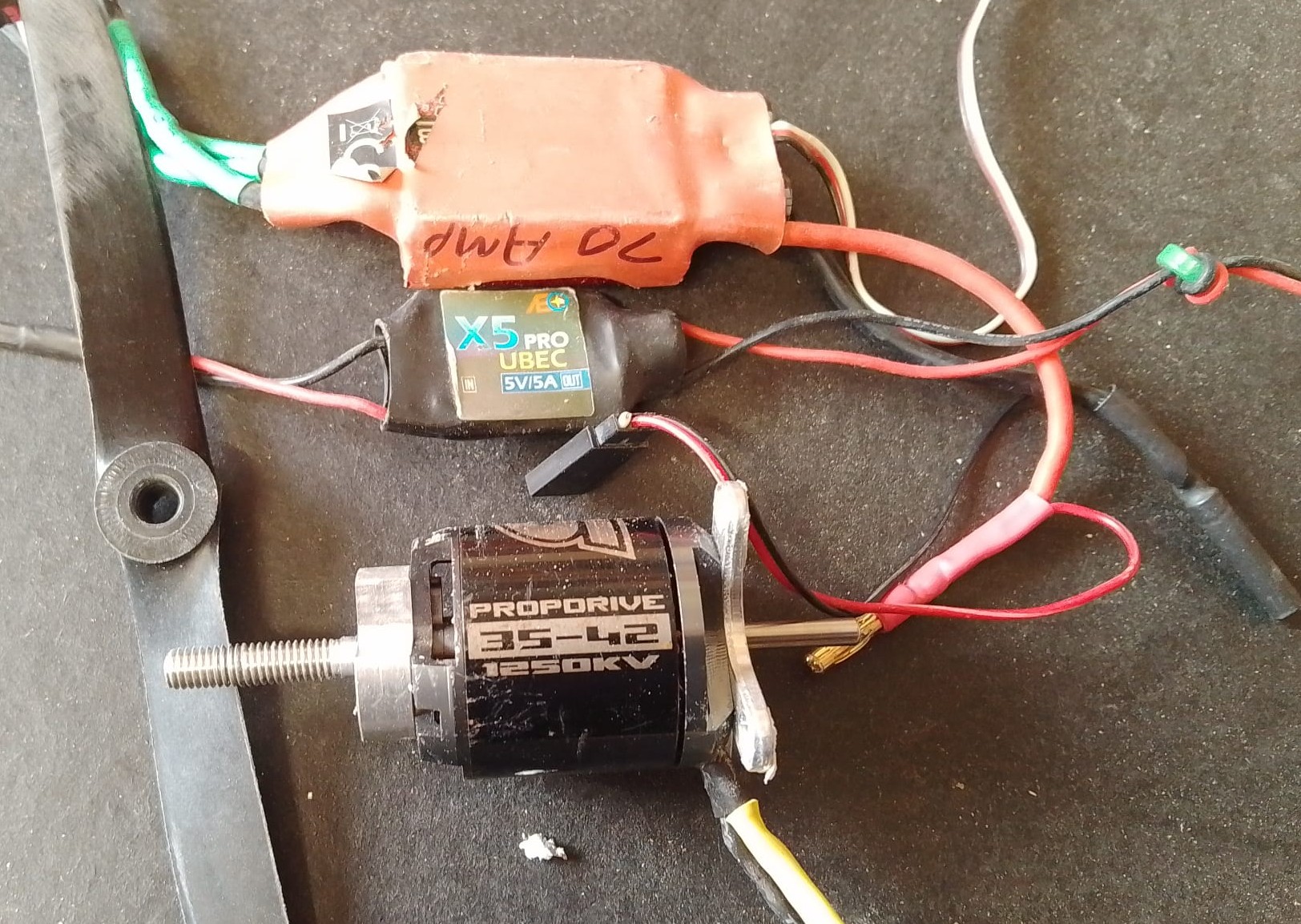
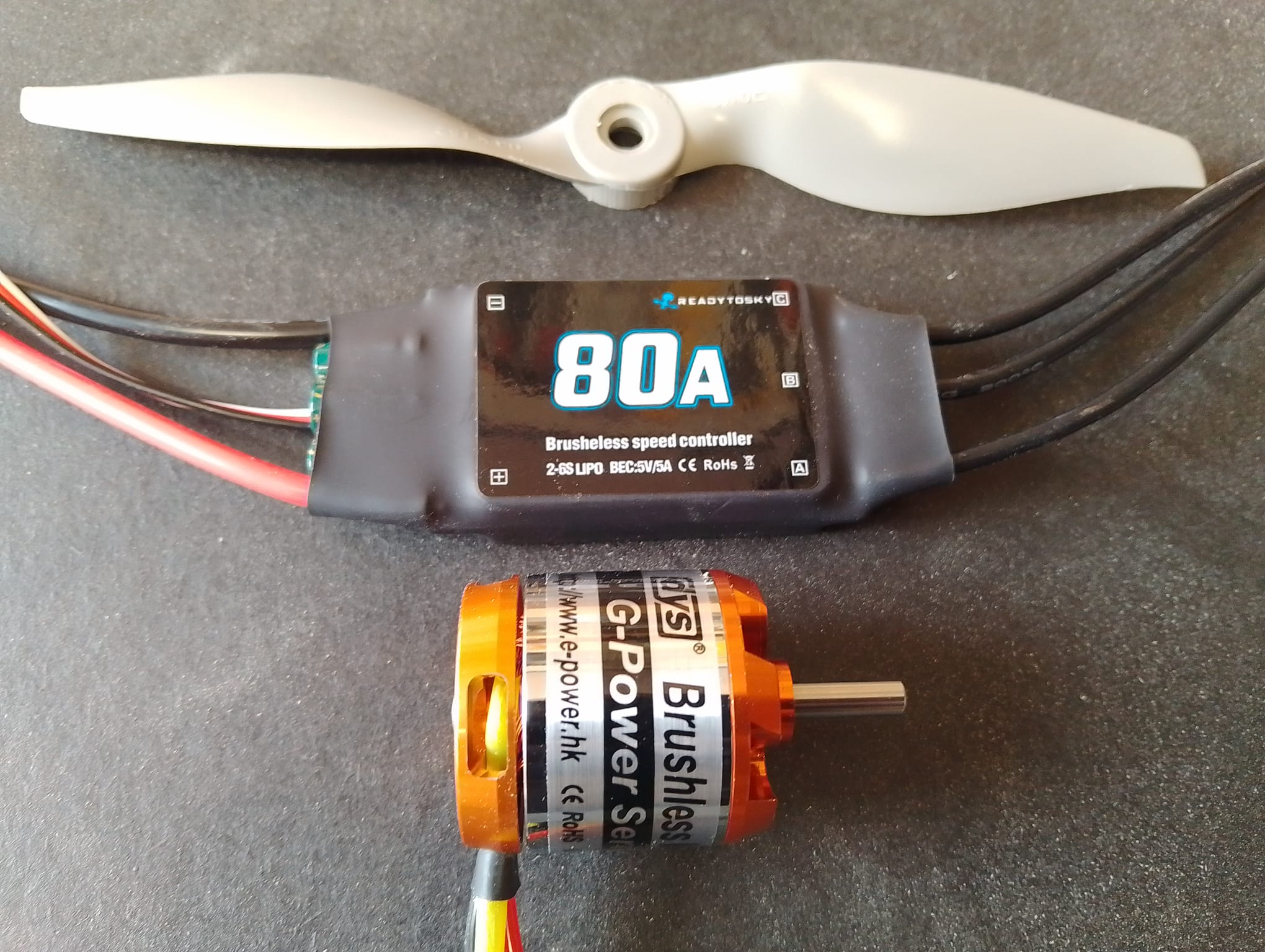 For the first flights 1066 fitted an old Propdrive 3542 1250KV motor along with a 70A speed controller, but has since changed to an E-Power D3542 1450KV motor and an 80A speed controller. He says he’s not sure that there is much more power but it certainly sounds better. You can see it flying in this month’s video with the Propdrive motor and it appears to have reasonable speed and plenty of power for vertical climbs but the motor does sound a bit rough. If you fancy building an Electro Streak for yourself you can find out more and download the free plan from the Outer Zone website by clicking HERE
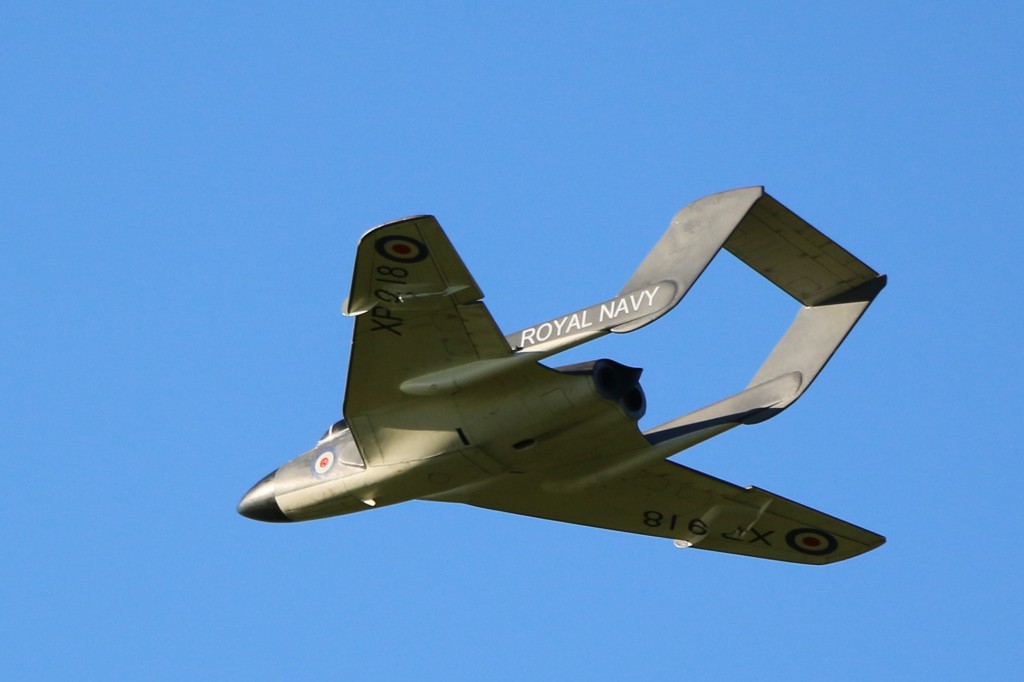
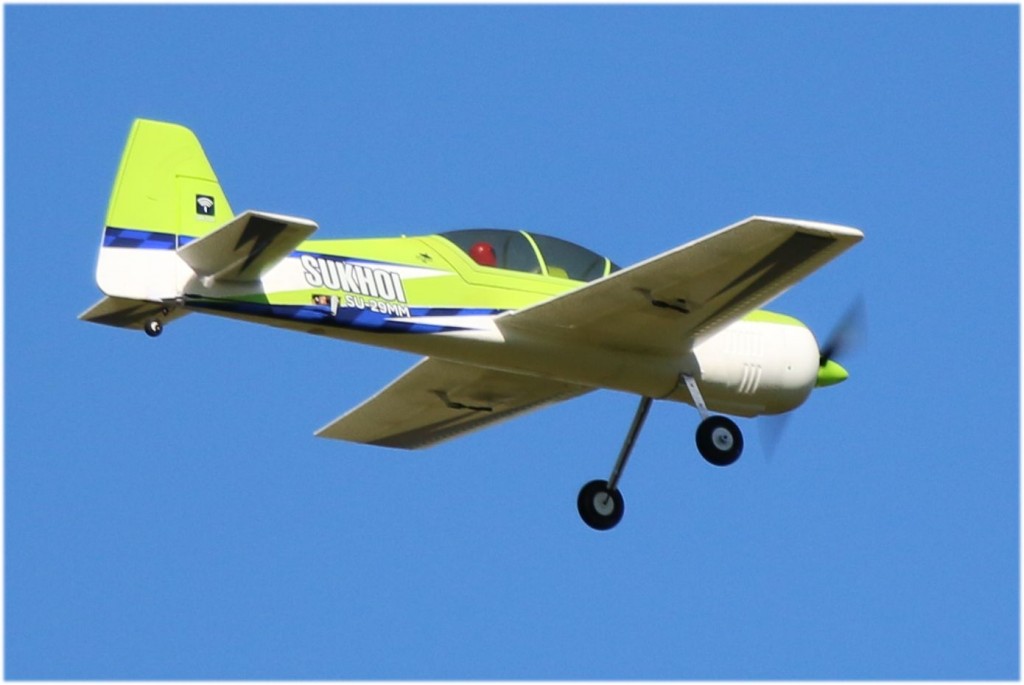
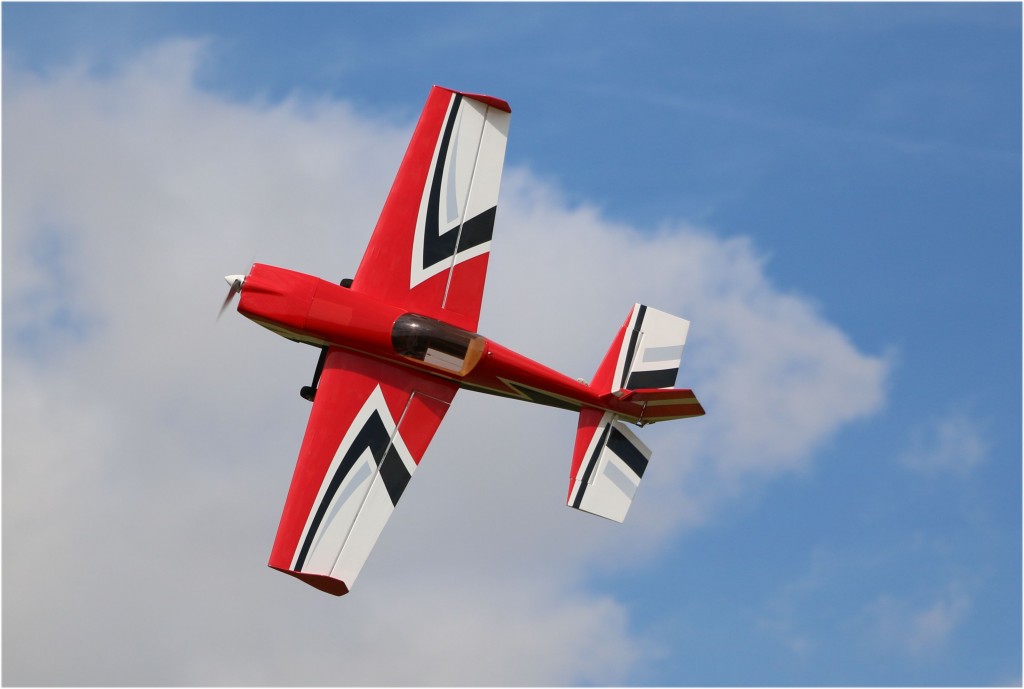
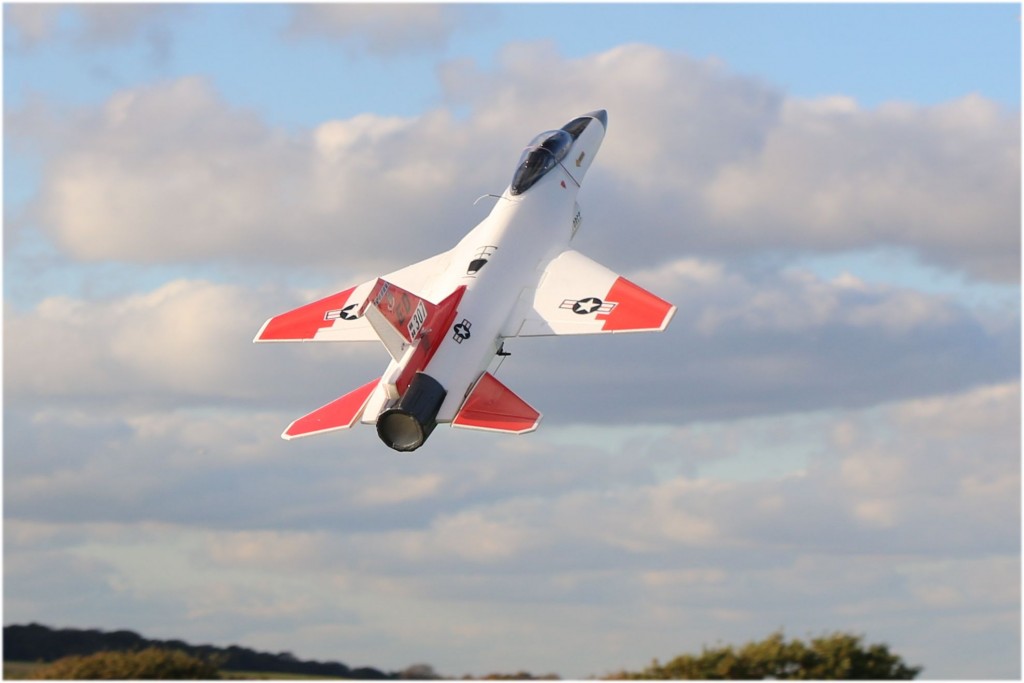
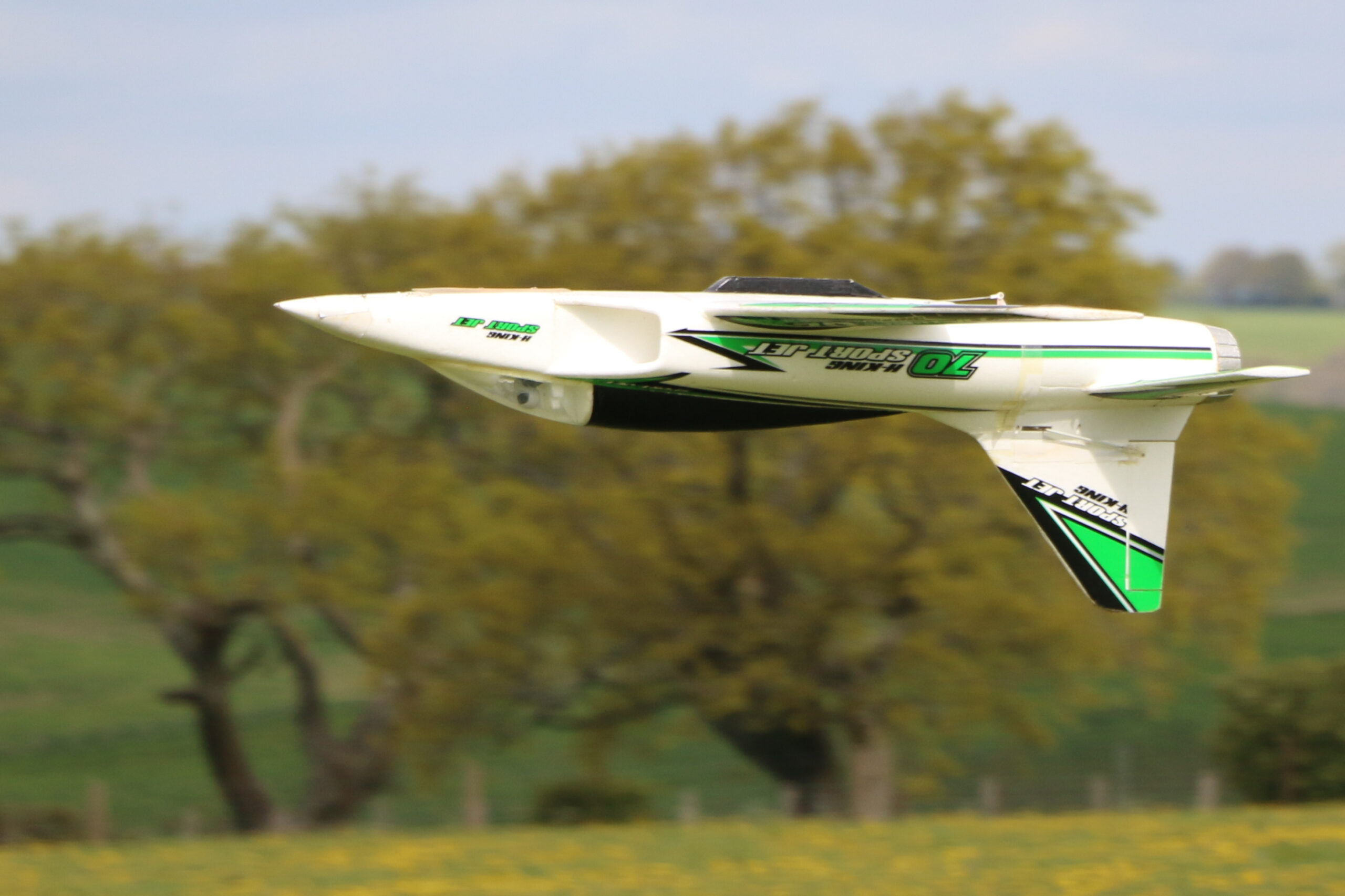
This month the action shots are all ones that Kryten has taken over the last few years: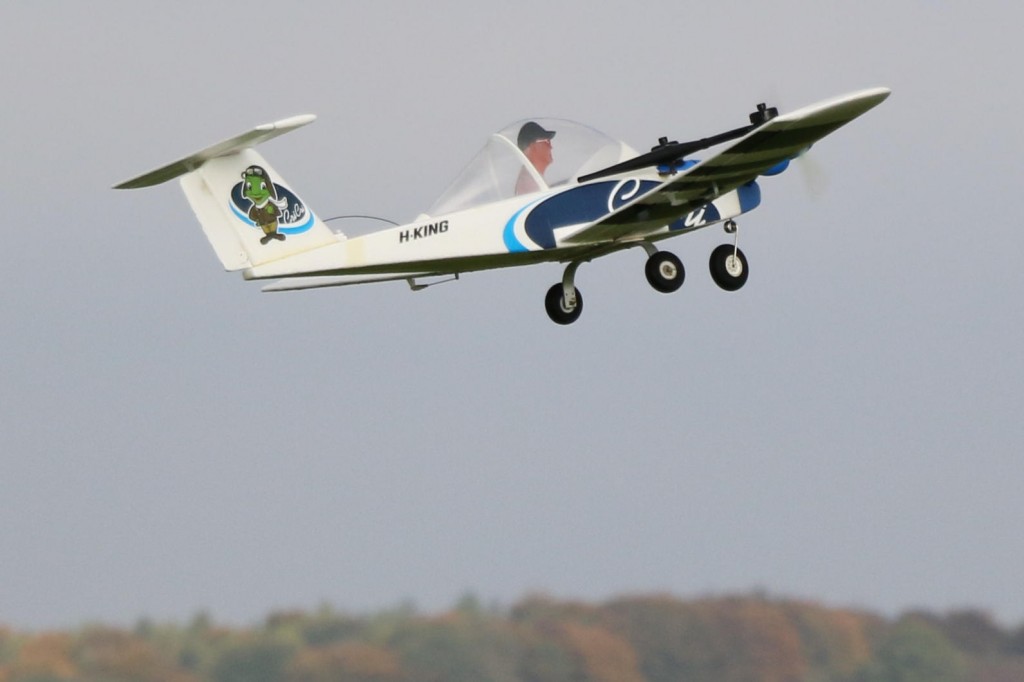
 >
>
This month’s video is a little different as I’ve made it with Microsoft Clipchamp rather than the old Windows Movie Maker that I’d always used previously. Movie Maker was originally released in September 2000(!) and was officially discontinued by Microsoft in January 2017 so it’s not really surprising that I was having lots of problems and crashes running it on Windows 11 in 2025. I was reluctant to change as I’d grown to know Movie Maker really well over the years and it had all the basic editing functions that I needed. But it ran very slowly and I had to save my work every few minutes under two different filenames as I knew it would randomly crash and I’d lose whichever filename I was on at the time.
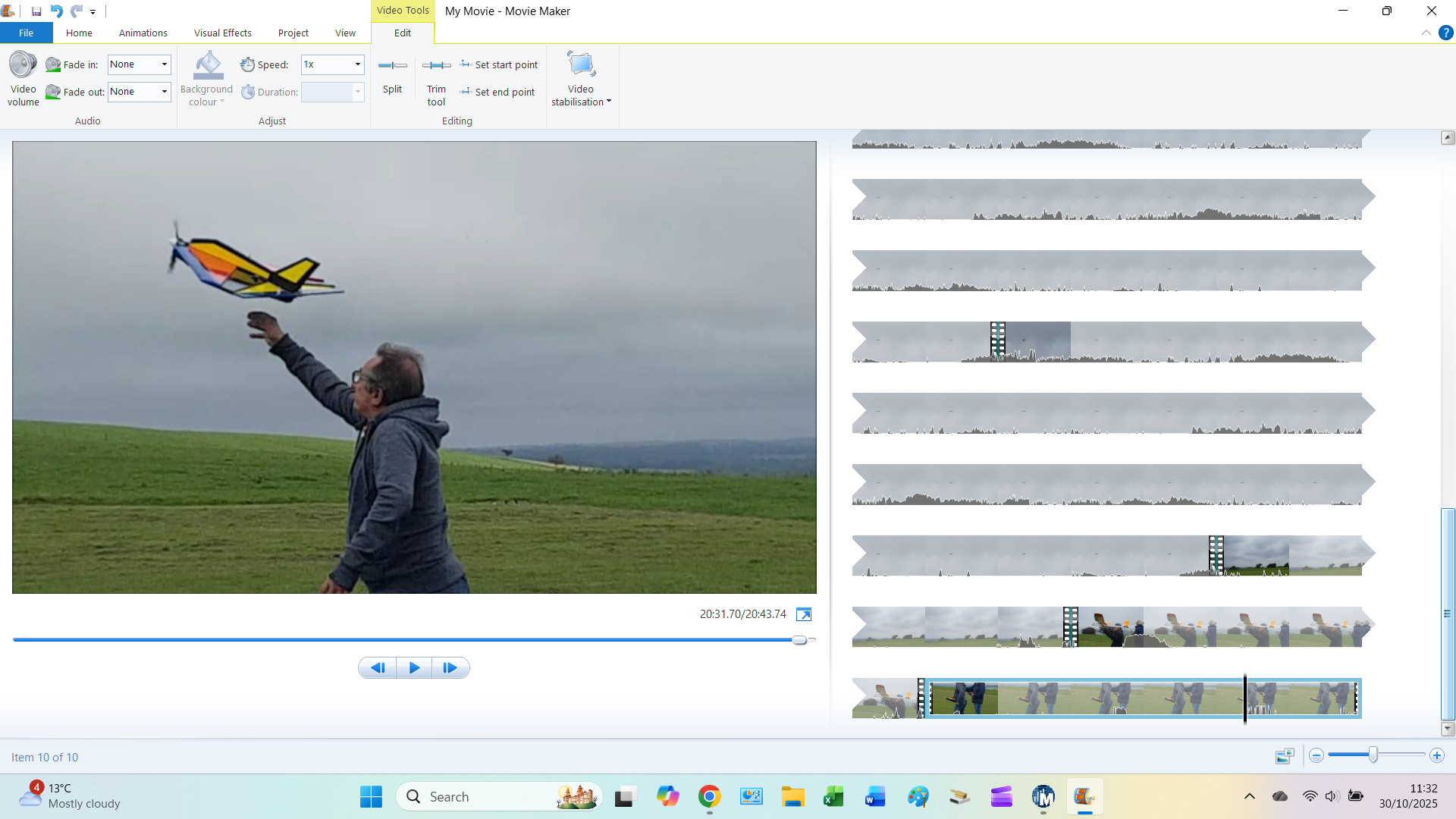 I discussed the problem with my son who understands these things and he talked about 32-bit/64-bit etc and suggested I try Clipchamp. So I bit the bullet and after an awful lot of faffing about I seem to have got the hang of it, and it did not lock up or crash once.
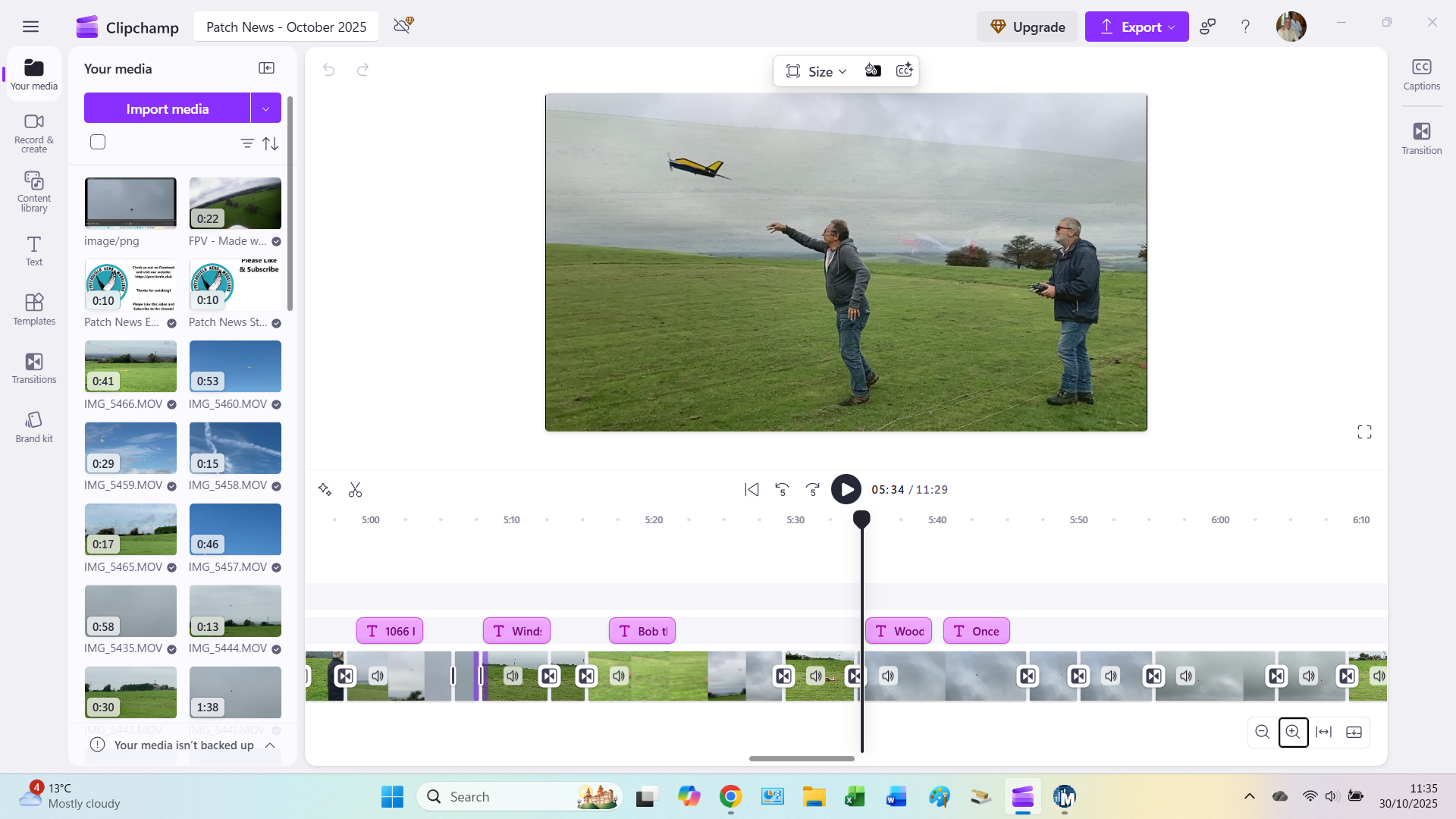 I don’t think any of you will notice anything very different in the video, I’ve tried to make it much the same as before but there will be a few small differences. This month the clips were filmed by me, MacFly, Dougal, and Captain Slow, thanks for all your efforts guys.
Please watch the video full-screen, it’s so much better with small models flying around:
If the video won’t play for you please click HERE
The Final Funny:
For homework, a teacher told his students to ask their parents for a story with a moral. The next day, each of the kids told their stories, until only one little girl, Katie, was left.
“Katie, did your parents tell you a story with a moral?” asked the teacher.
‘Yes Sir…my mum told me a story about my dad.”
“OK Katie, go ahead, let’s hear the story then.” said the teacher.
“Well, my dad was an RAF pilot in Iraq and his plane got hit by enemy fire.”
“He had to bail out over enemy territory and all he had was a bottle of whisky, a pistol, and a survival knife. He drank the whisky on the way down in case the bottle broke, and then his parachute landed him right in the middle of twenty enemy fighters.”
“He shot fifteen of them with the pistol but then he ran out of bullets. He killed four more with the knife, then the blade broke, and then he killed the last one with his bare hands.”
”OMG!” said the horrified teacher. “What did your mum say was the moral of this?”
“Stay away from Daddy when he’s drunk!!!”
Colin Cowplain