
Patch News – May 2019
First, as Capt. Edmund Blackadder once said, “We’re in the stickiest situation since Sticky the stick insect got stuck on a sticky bun”. Dougal Entendre sent me that quote to celebrate the emergence this month of the latest club model, the Sticky. More on that later, the month of May saw lots of other exciting things as well.
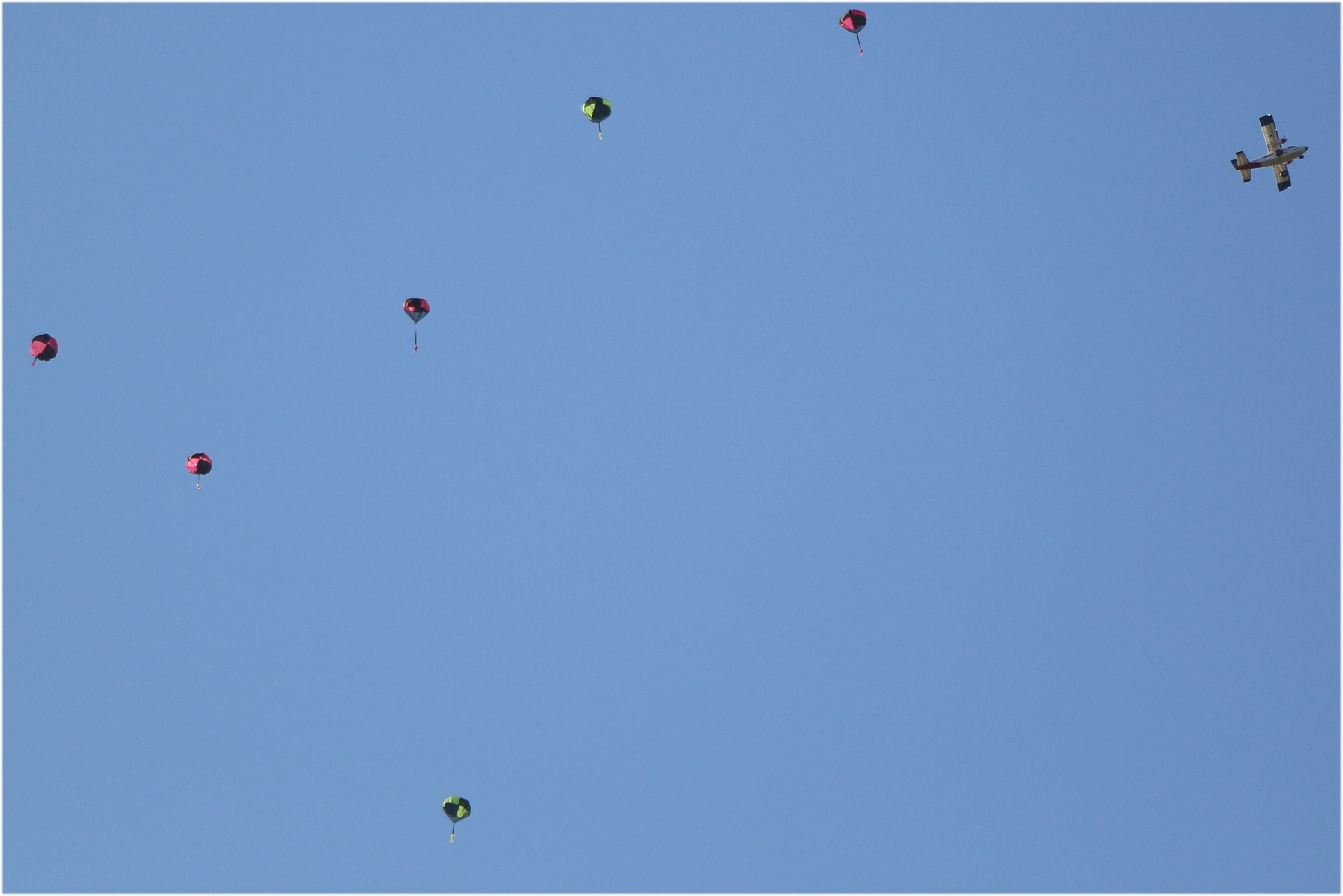
The month began with the resurgence of the Colin Cowplain Flyer Fitness Club. After letting the members relax for a month or so I did some more parachute drops from the Bush Mule. I never expect anyone to do the retrieving and everybody moans about it but they still go running off after the wayward chutes! One rather blustery day the wind was obviously going in totally different directions at different heights and on one drop all the chutes ended up in the valley and the next time they went way down over the lower field. That time Dougal went off in hot pursuit not realising just how far they would go. He returned, ages later, puffing, panting and moaning, and that evening sent me a Google Maps screenshot with the parachute tracking marked showing a distance of 650m from the patch. It didn’t sound too bad to me but I suppose there and back was 1.3km and it was uphill most of the way back. Anyway he failed, he only found five chutes, the sixth was last seen heading in the general directions of Chichester at a great height, much higher than when I dropped it! The things I do just to keep the members fit and healthy…
On 12th May the field was being used as a car park for the Sustainability Centre Green Fair so some of us visited the Mini Airshow that was being held at the Drone Zone base on Popham Airfield. It was called MA5 (Mini Airshow 5), and MA6 is already on the calendar for 9th May 2020. It’s billed as a drone racing event with some fixed wing aircraft as an aside but when we went the aircraft side seemed to be bigger than the drone racing.
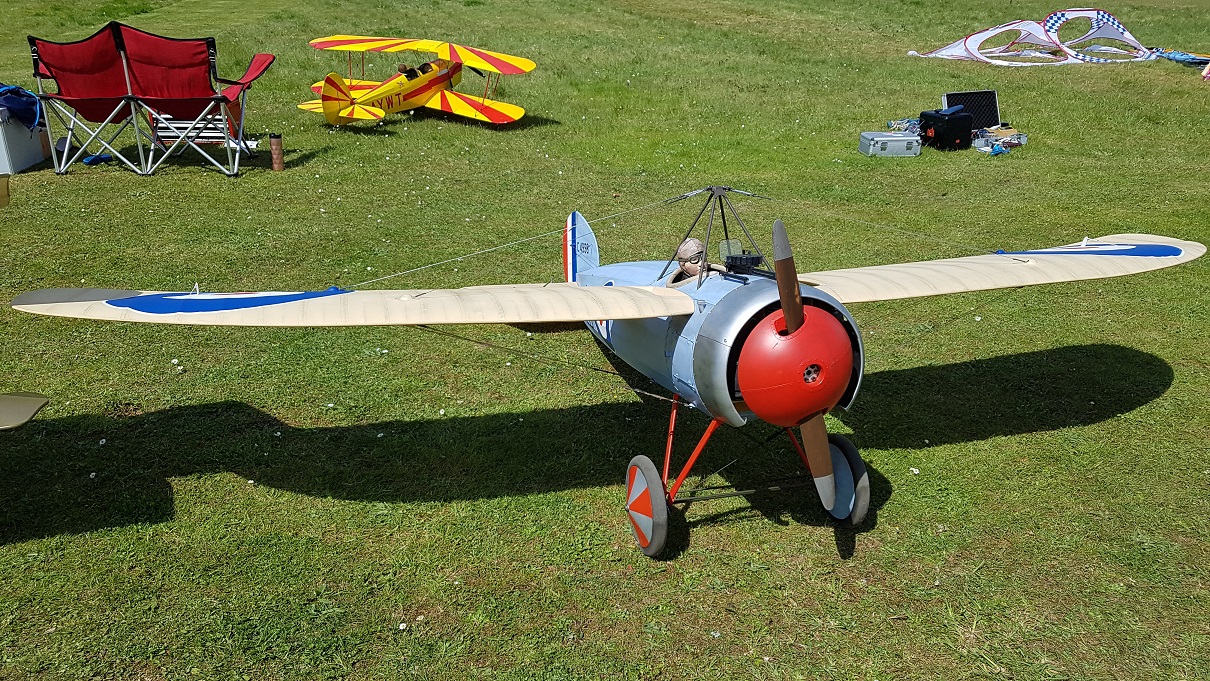
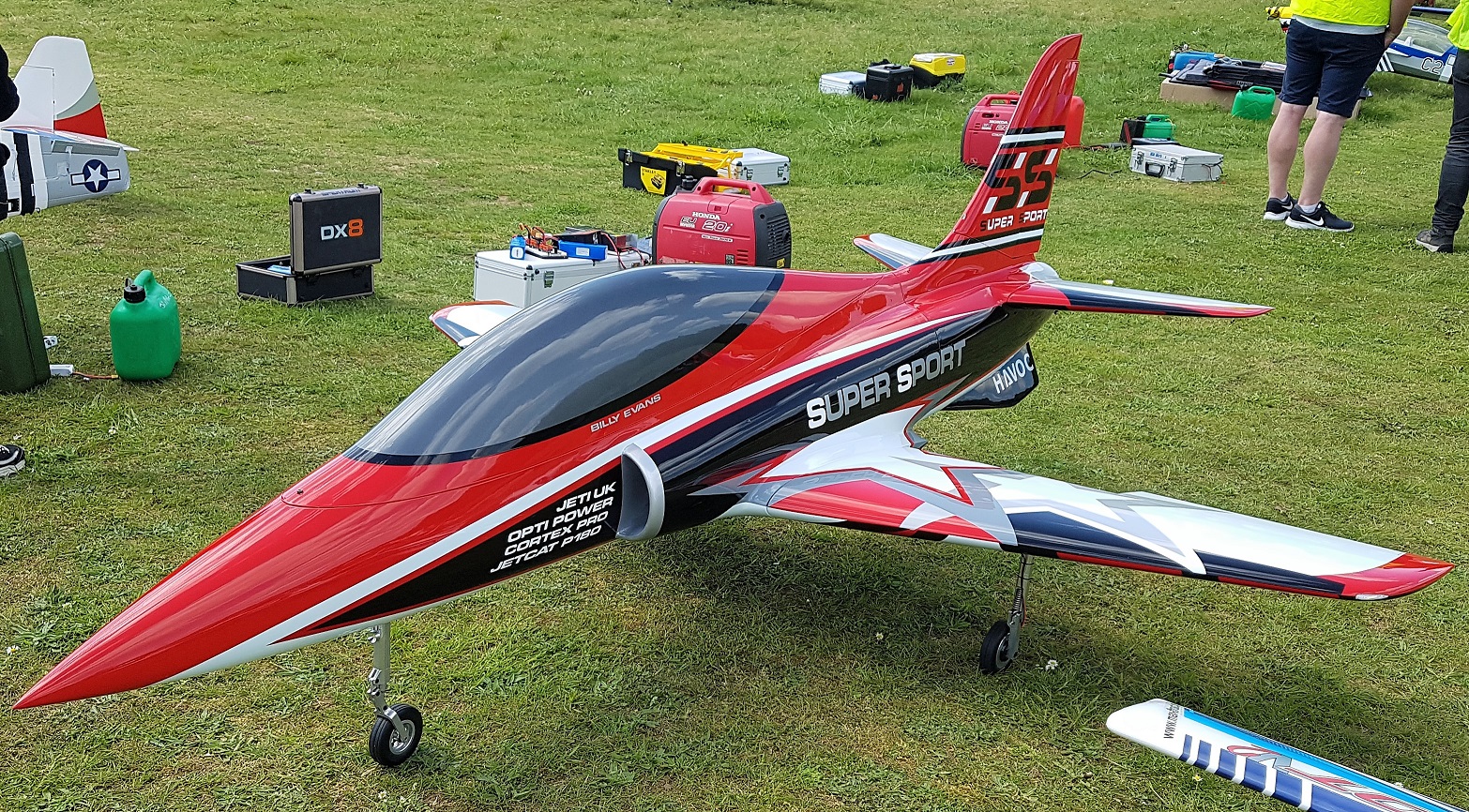 The drone racing was interesting for a while but didn’t really do much for me although the people were very friendly and keen to tell us all about it. The aircraft side of things was really good with a fair cross-section of models from Wot-4s through to enormous turbines. Some of the display flying was excellent, I always find the turbines impressive and there were also several large WW1 aircraft that were nicely built and flown well.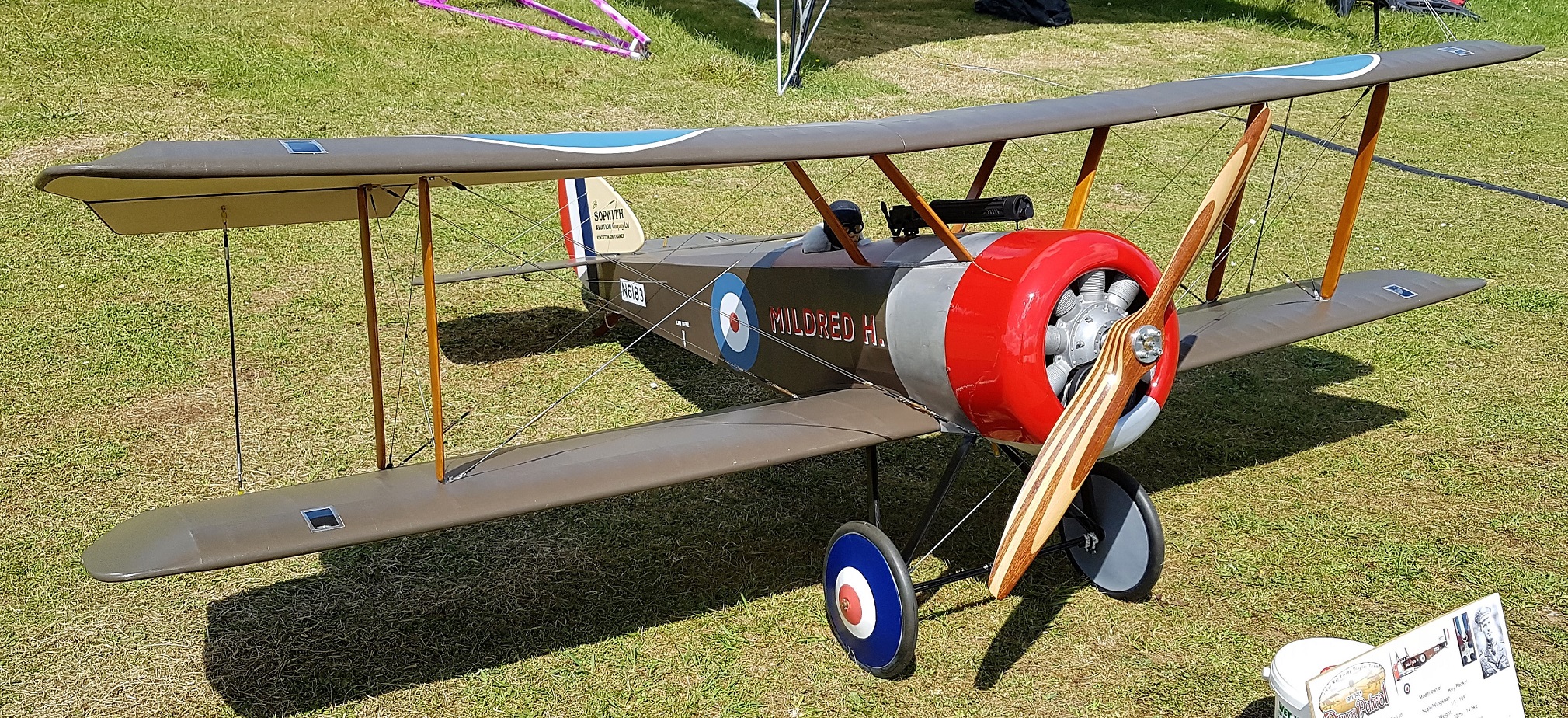

 Several large 3D machines powered by petrol engines were very ably flown, some with smoke systems. About the only thing lacking were the trade stands, there was just one and that was all drone based bits and pieces although Dougal did manage to pick up a couple of speed controllers and some small props at good prices.
It was good to see Chas Butler return to the fold and fly regularly throughout the month. Chas must be one of the longest serving club members but had been absent from the flying field for a few years until this month.
 Chas is an excellent flyer with a B certificate and he gave sterling service as the club Secretary for twenty one years before deciding he’d done his bit and taking a step back. He’s returned flying a Radian electric glider and an electric Wot-4 and using a JR PCM9 transmitter with a 2.4GHz module. Later in the month he showed up sporting an extremely snazzy green transmitter which I believe is a JR XG11, very upmarket!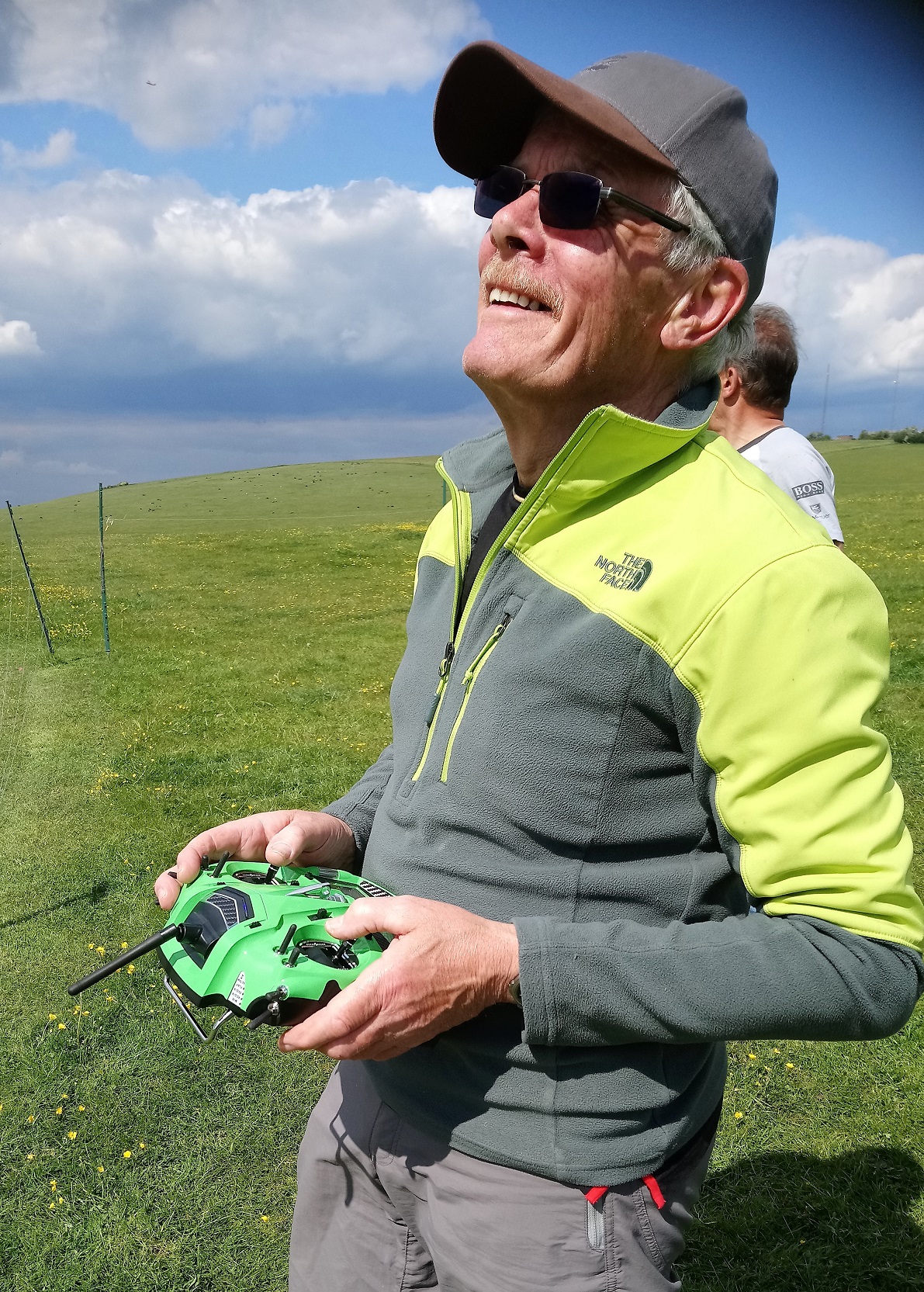
 Good to see you back Chas, now just stop working and fly with the Midweekers!
Geoff Berry also flew with us again in May, this time with a Max Thrust Riot, a model that’s similar in many ways to a Wot-4. Geoff seemed to be enjoying it and was flying very well indeed, partly due no doubt to his lovely Multiplex Cockpit SX9 radio (same as mine!). I failed to get any photos of the Riot on the ground but I did take some video and Kryten took some lovely flying shots.

In the January Patch News I mentioned that for Christmas my daughter had bought me a couple of indoor skydiving ‘flights’ at iFly in Basingstoke. On their website it says “Turn Dad into a flying legend’, does she not know I already am one?! Anyway, in May I went and did my bit and thoroughly enjoyed it. Basically the set-up is a transparent vertical 14ft diameter wind tunnel with a mesh ‘floor’ to stop you falling to the bottom if the fans stop. The average height that you ‘fly’ at is about 6ft above the mesh but you can go up to a max 39ft. An instructor is in the tunnel the whole flight to keep the student in the right place and stable. The air speed is controlled by an operator who is watching what’s happening the whole time and they adjust the speed from between 90mph and 180mph. The experience begins with a pre-flight briefing where you’re taught what to expect, what to do, and basic hand signals. Then it’s time to get kitted up, all the necessary gear is included in the price of the flights.
 On the first flight I got generally accustomed to the experience of floating around in a 120mph gale and was shown the correct position to hover mostly unaided. Before the second flight I was offered the chance of flying up to the top of the tunnel (securely held by the instructor) for an extra £7, how could I refuse?
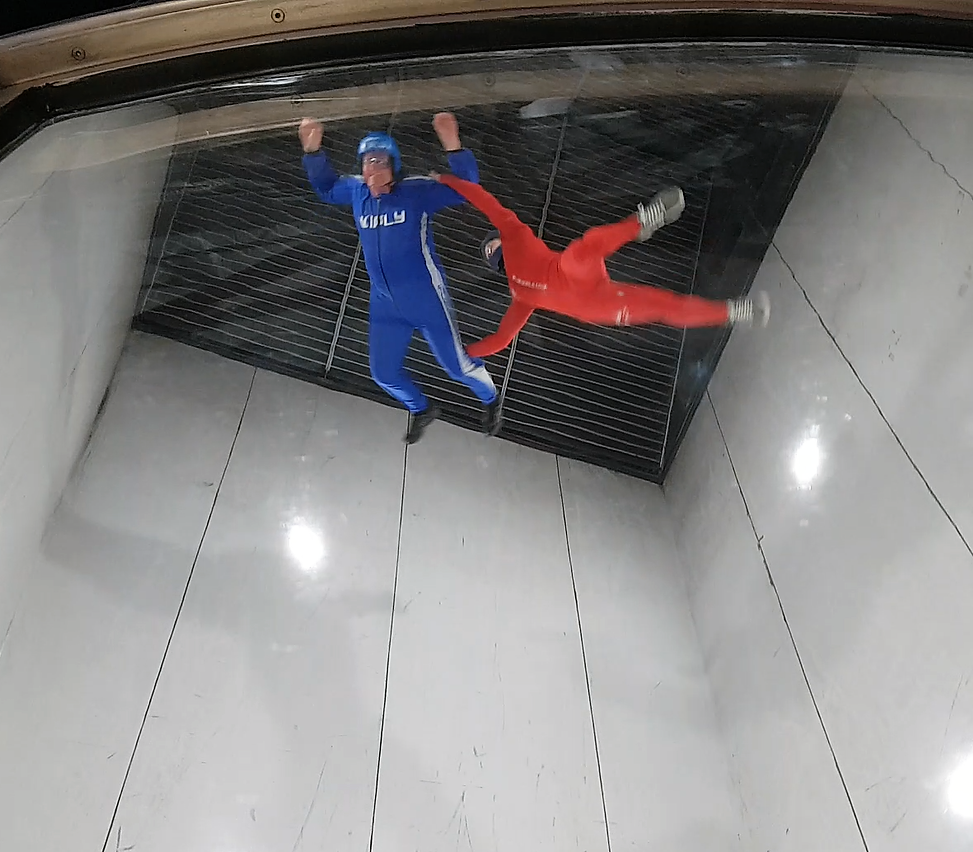 The controller raises the air speed when signalled by the instructor and up you go, weird! It was all over far too quickly but I really enjoyed the whole experience. I was surprised how busy the place was considering it was a Monday morning in school term time, it’s a very popular experience. Have a look at the website HERE
Catapult King never shies away from tricky projects and in May he turned up with an SR-71 Blackbird. This is what Richard says about it:
Following on from the influx of mid prop jets recently I thought I would do a Depron ‘quicky’ build of some sort and came up with the SR-71 with a pusher prop (needless to say it turned out not to be so quick). A colleague found a 3D-view print which I exploded until I got a fuselage that would be fat enough to hold a 3s-2200 lipo. The power train was going to be from my old HK AXN.
Having printed this off, I cut out a silhouette of the plane which even then was bigger than planned. There are two CF tubes running the length of the fuselage and a triangle of CF spars to support the wings. In addition this was skinned with 2mm balsa on the top. I thought there would be a weak point where the fuse meets the wing so I put a 4mm ply section in here as that’s also where the battery would go. I placed the electrics around until I found suitable places for each piece then started building with Depron. The fuselage first and getting the shape of the cockpit area was horrid, then equally difficult was getting the engine nacelles and cones roughly correct, this is what made the ‘quicky’ not so quick. The plane is covered with black and red packing tape with mylar tape on the underside to protect the Depron on landing.
I wasn’t sure how the air from the elevators would react as it immediately goes through the prop so initially all four control surfaces were set up as elevons and as we saw on the maiden flight there was far too much throw and it did have to come down like an arrow didn’t it? I wasn’t going for the Concord droopy nose look. Subsequently the front has been rebuilt with ply all the way back to the wing area. The inner control surfaces are now elevators but the outer surfaces still have 50% elevator mixed in to support them and the throws have been drastically reduced and I now have a plane that is almost there. The power train is a 3cell 2200 lipo, a 30amp ESC, the motor is a 2200Kv something (from the AXN) and a 6×4 prop. It’s certainly fast enough I just need to get that trim right as I’m not sure it was designed to do a pirouette as seen in the video. Oh, and it is awfully difficult to spot the orientation so when things go slightly wrong they tend to go very wrong very quickly!
Thanks for that Richard, it was a brave undertaking and you’ve done really well to get it flying so well. 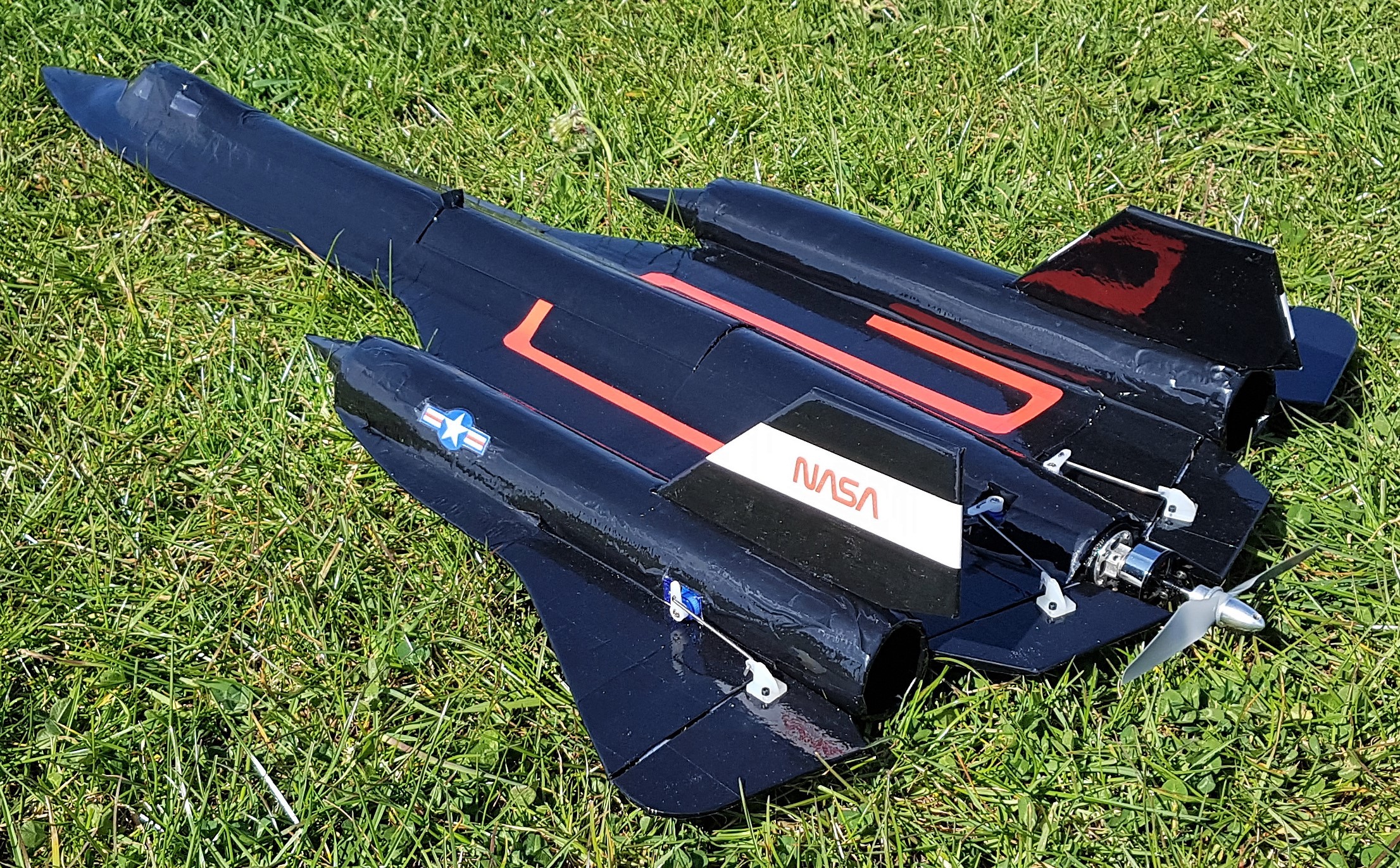


While holidaying in the Lake District Basher Bob went to a Splash-In and took a few photos for us all to enjoy.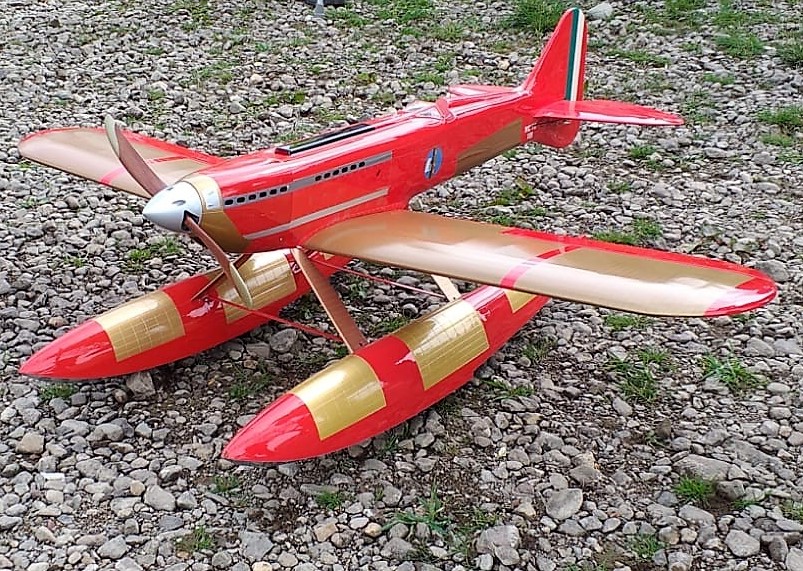
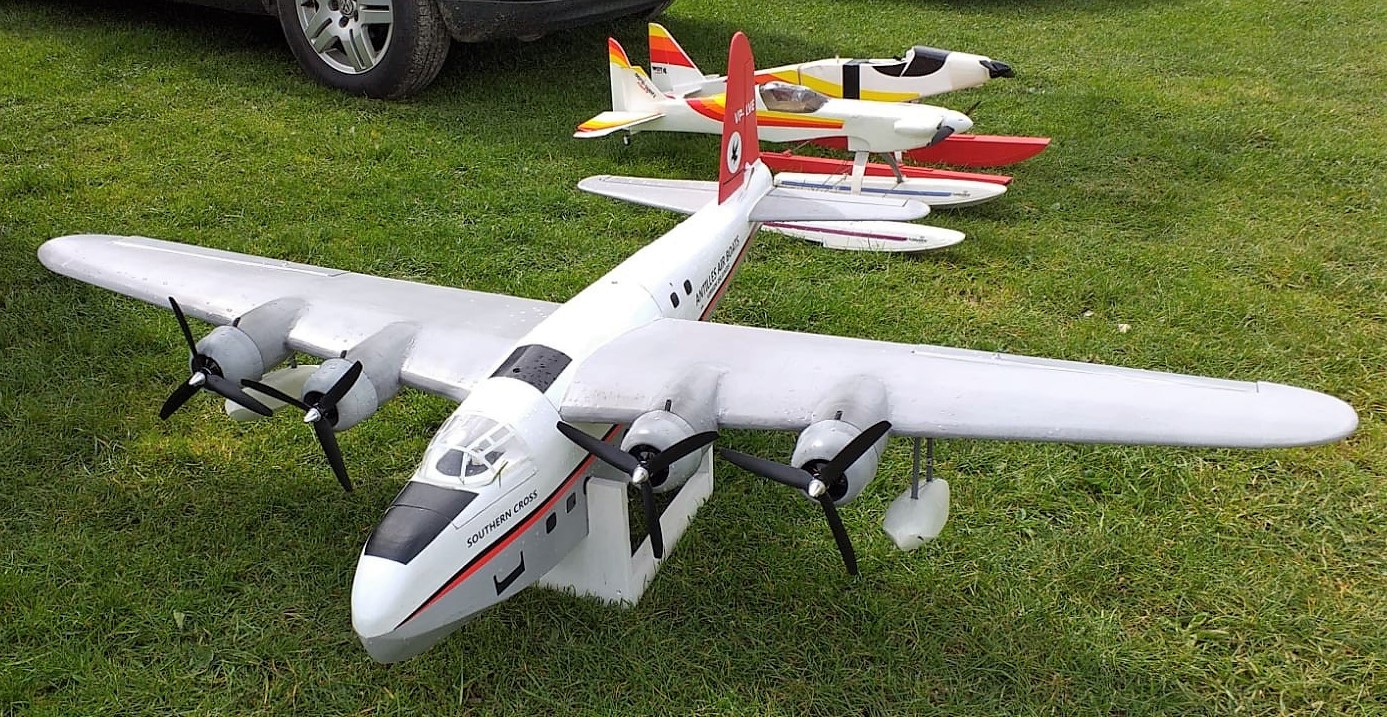
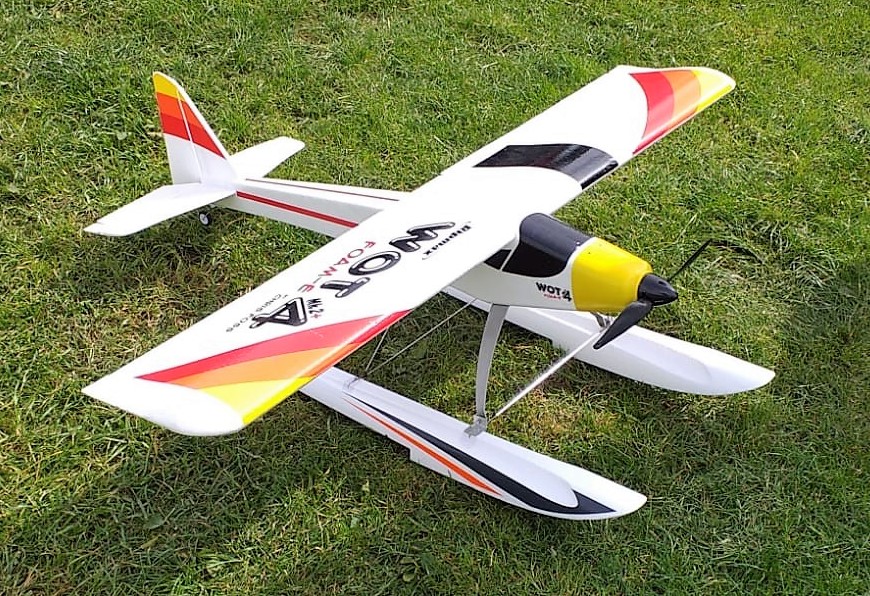
 Thanks Bob, it looks like a good event, shame there isn’t something similar locally as I’m sure several of us would like to give flying from water a try. I doubt we’d get away with it on the Heath for more than a few minutes.
During the recent HobbyKing price slashing of the foamboard jets Woody picked up an F-4 Phantom for £1.68! The Phantom is different to the other jets as it has a rear mounted motor and a box fuselage instead of a profile one.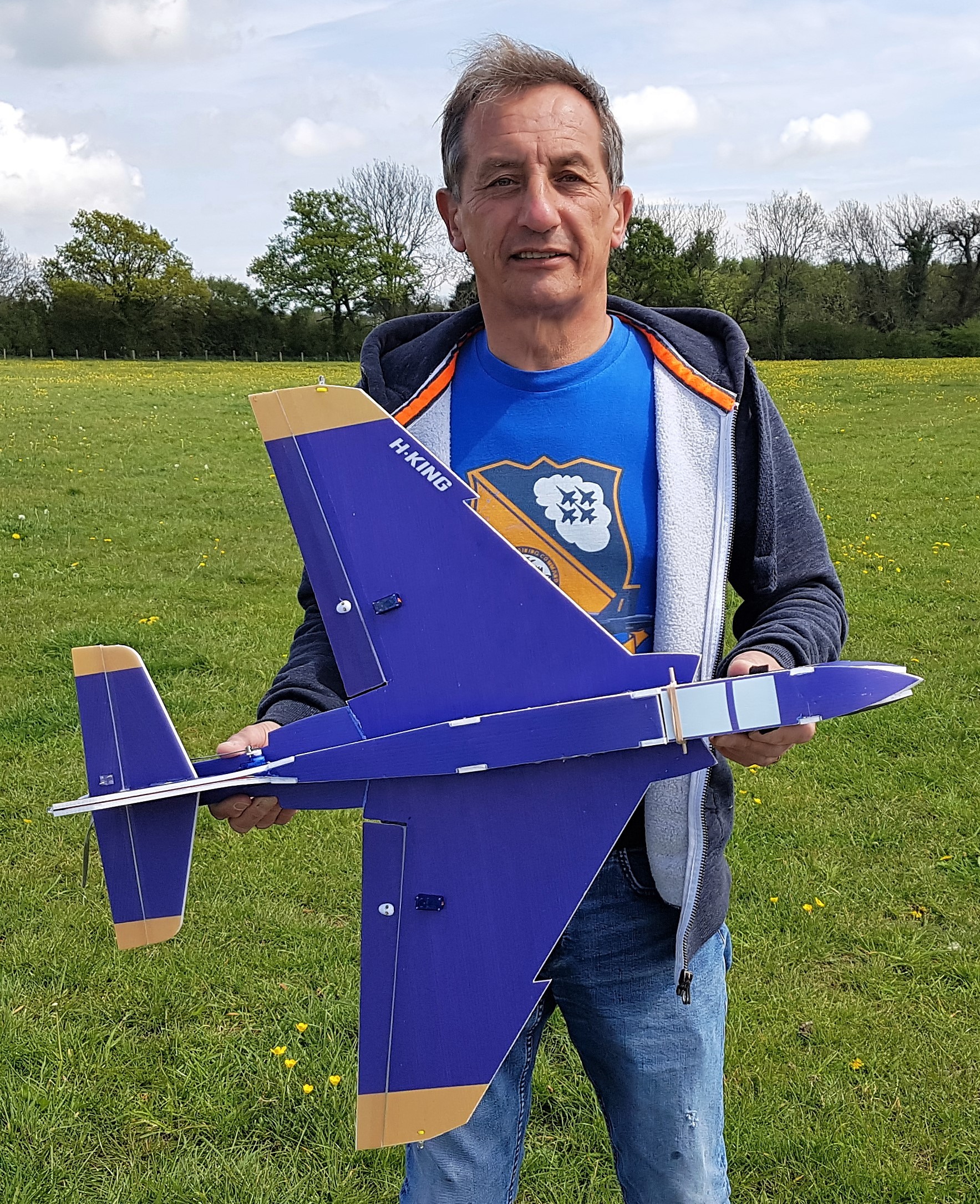
 Personally I don’t think it looks much like a Phantom, at the very least the tail should have anhedral. I think Woody only bought it because it come in Blue Angels colours and of course Woody being Woody he’s added lights. As the motor is at the back the model required a fair bit of nose weight, more being added after the first attempt at flight. I was the nominated test pilot and had just about got it somewhere near in trim when it suddenly just stopped flying and crashed, fortunately with very little damage. With some additional nose weight the second flight went much better although the wings appeared to be twisting in flight, on a low fly-by we could see and hear a slight fluttering, not good. After a couple of minutes I was downwind heading towards us when the model just suddenly dived into the deck, this time with major damage. I think I probably went to full throttle as I turned into wind and the wings suddenly twisted making the model uncontrollable. You can enjoy the crash for yourselves in the video!
Meanwhile the fun continues with the other jets, Woody had the motor come loose on his Sukhoi, very loose!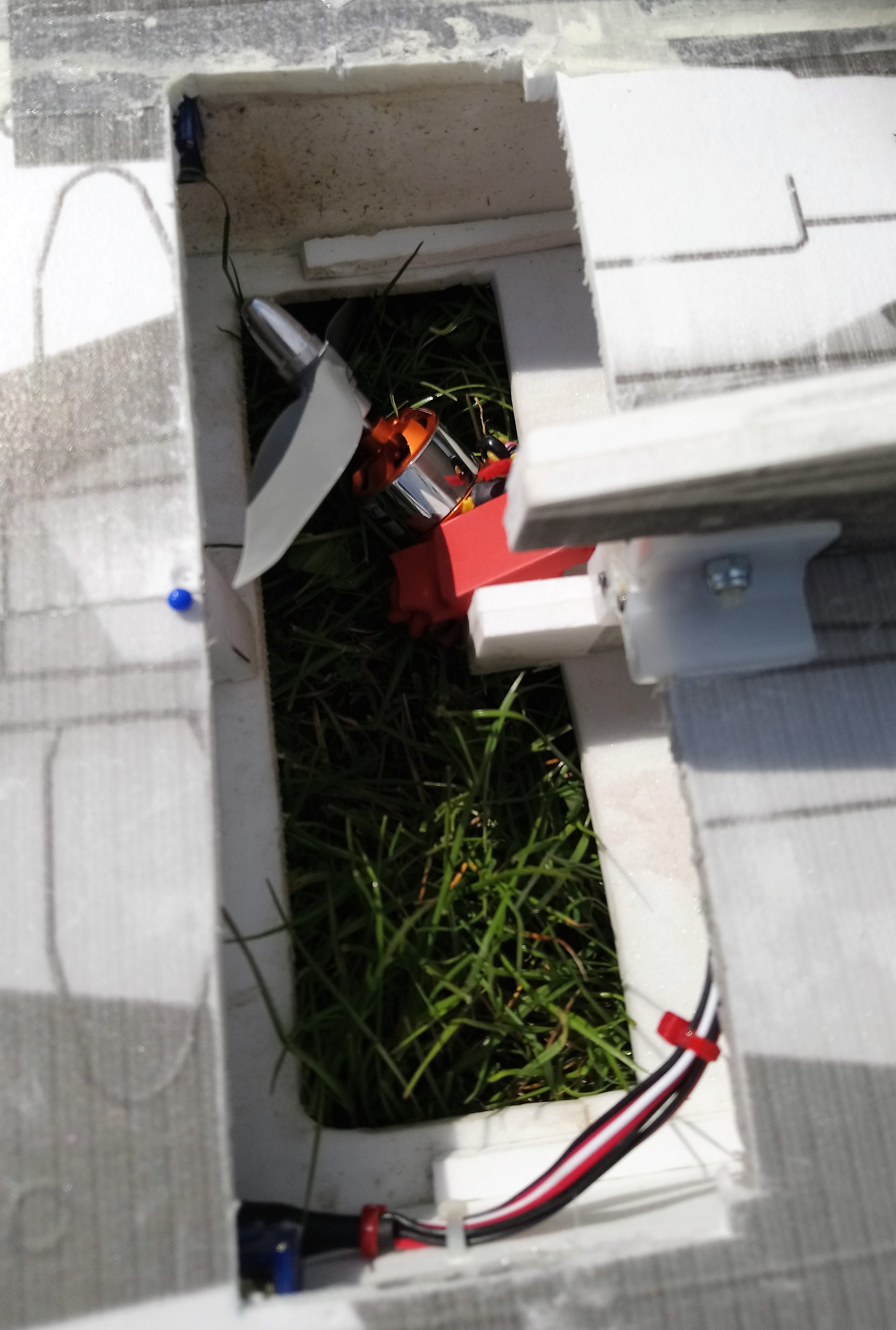 And Basher Bob did an ‘alternative landing’ with his Sukhoi, don’t worry Bob, it’ll buff out ok!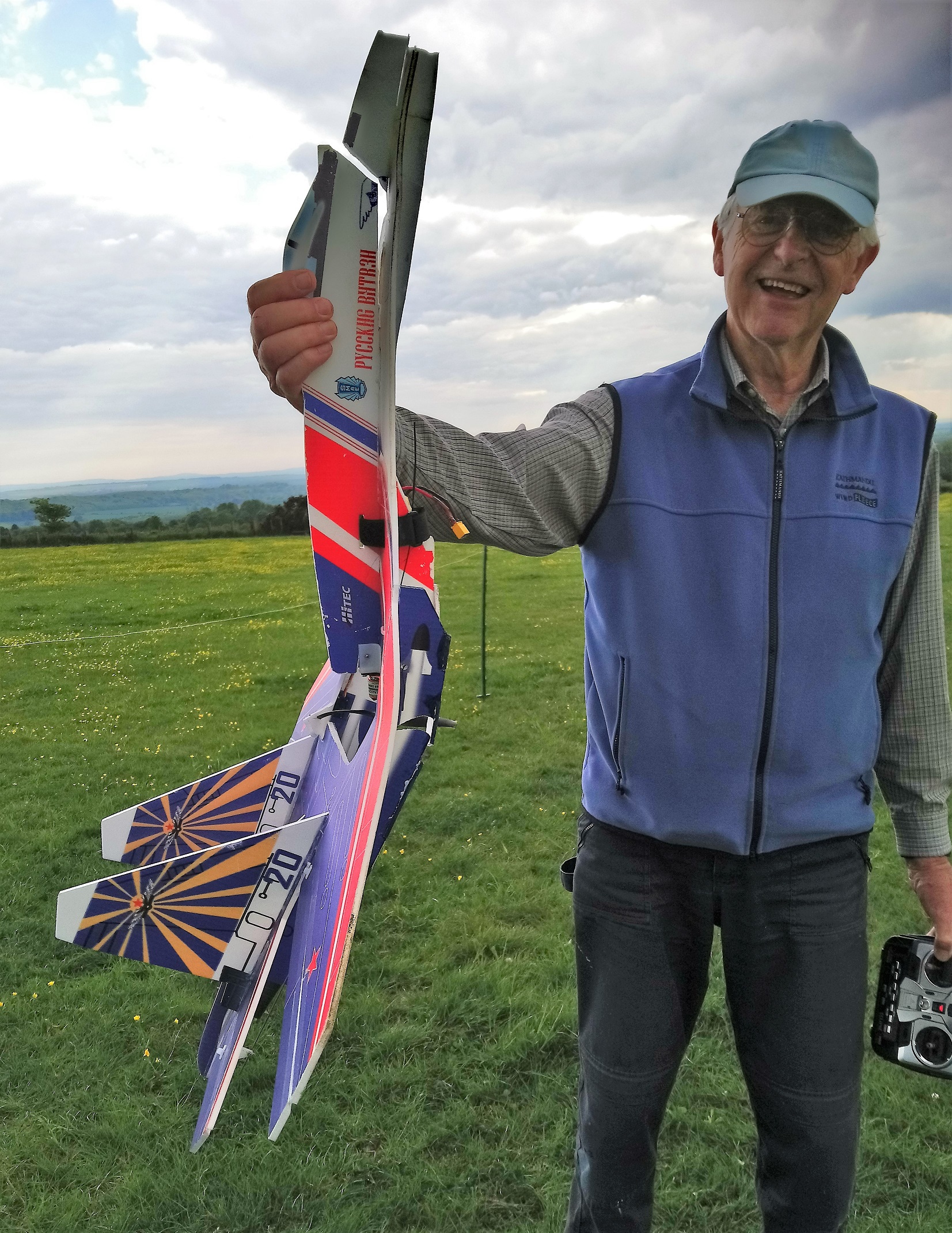
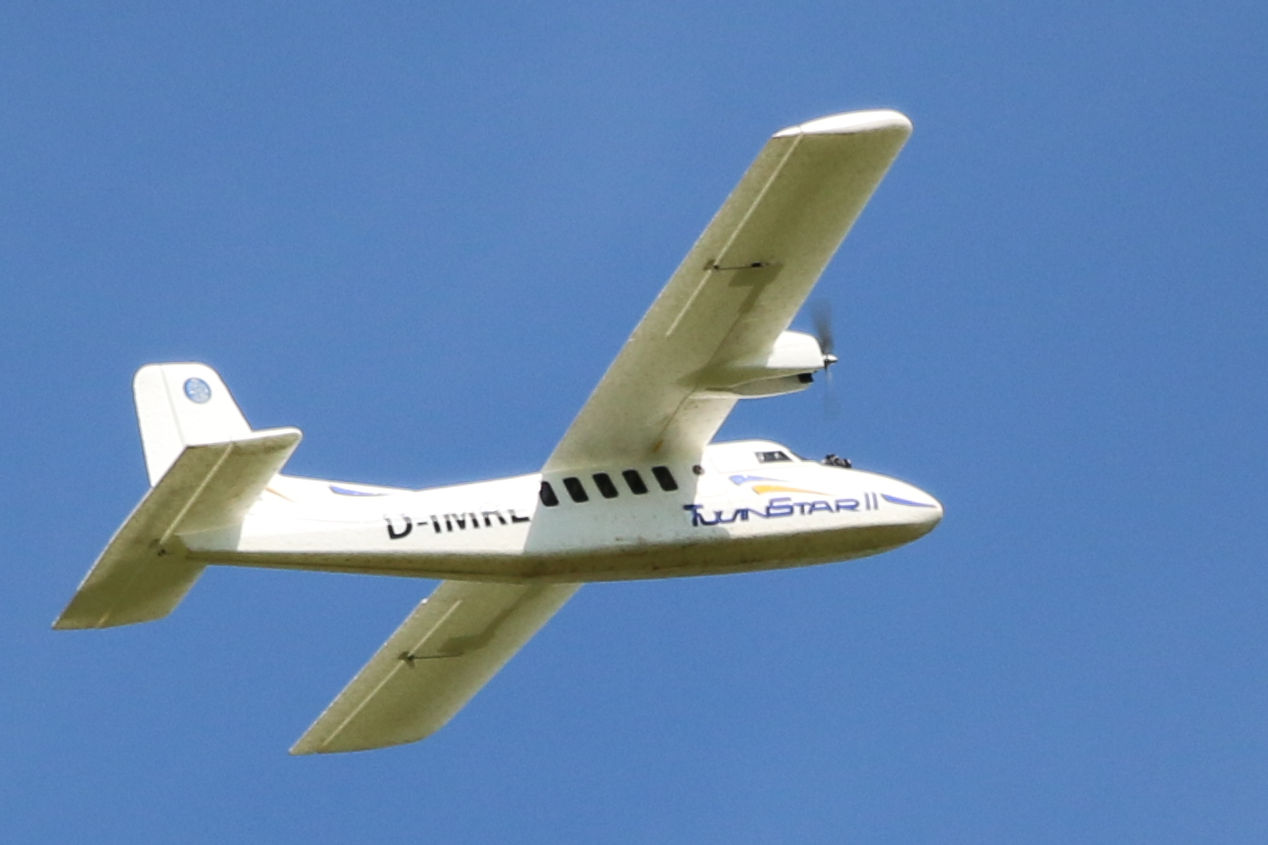
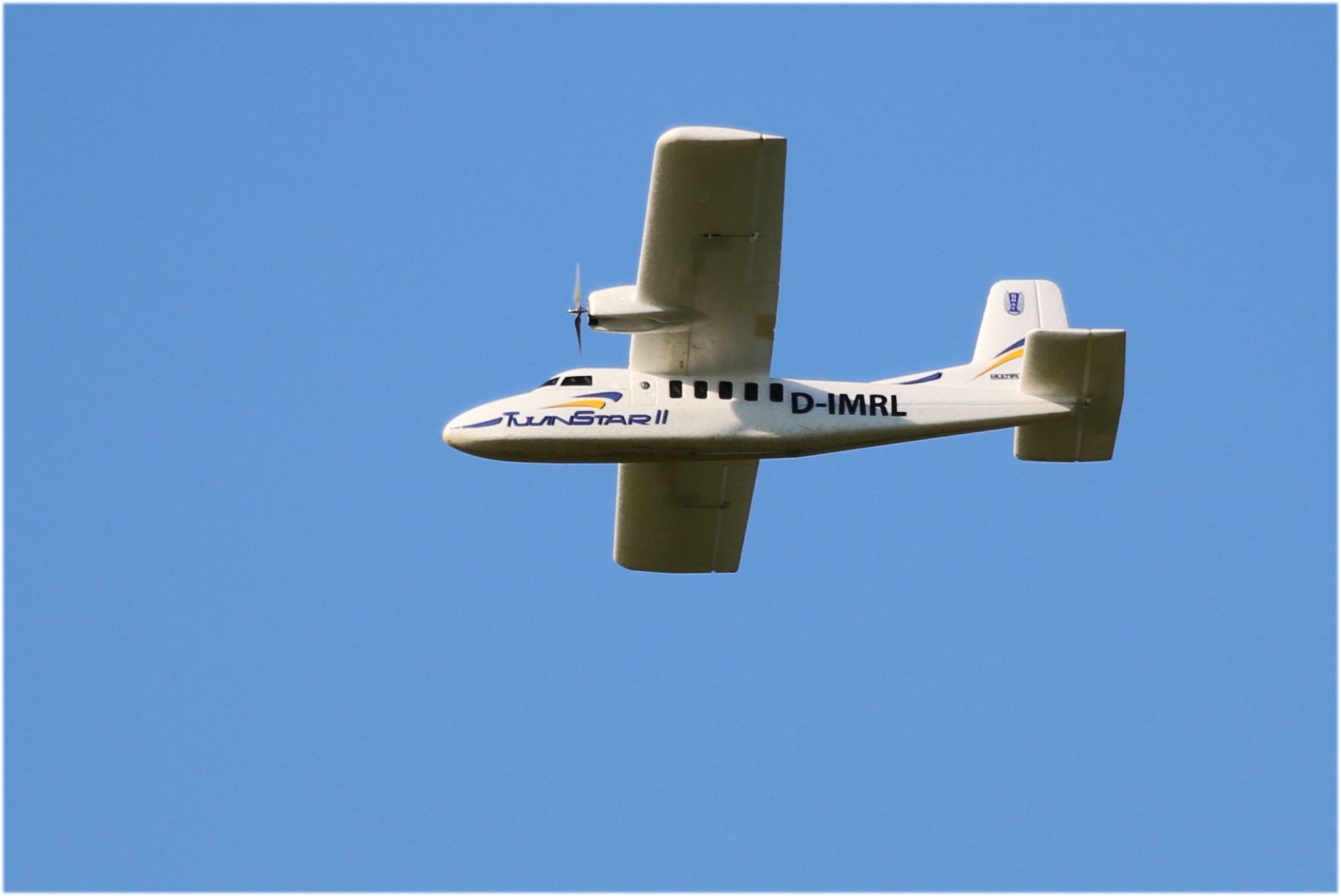
As I mentioned last month Captain Slow has now bought some FPV equipment. He’s fitted the gear into his Multiplex Twinstar, an ideal plane for getting used to flying FPV. His initial set-up was a bit of a compromise with the FPV transmitter being stuffed back between the servos due to the short antenna.
 He’s since bought an antenna extension and has managed to fit the gear in a much better way. At the time of writing Captain Slow has only had a couple of FPV flights with the Twinstar and he’s discovered it’s not especially easy to fly FPV but it’s very easy to get a long way away rather quickly! With a little guidance from the spotter all was well and he landed safely back on the patch. More to follow…
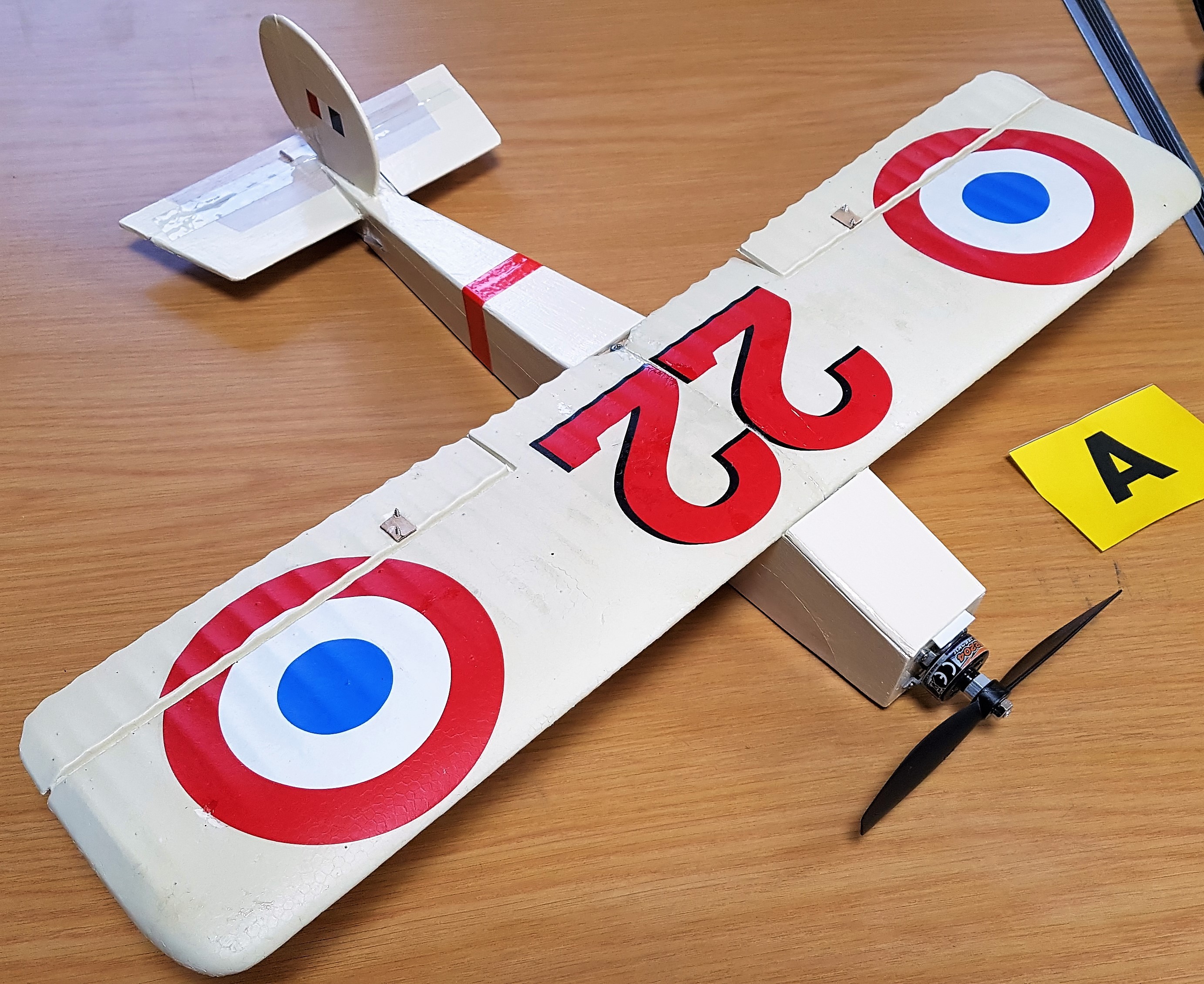
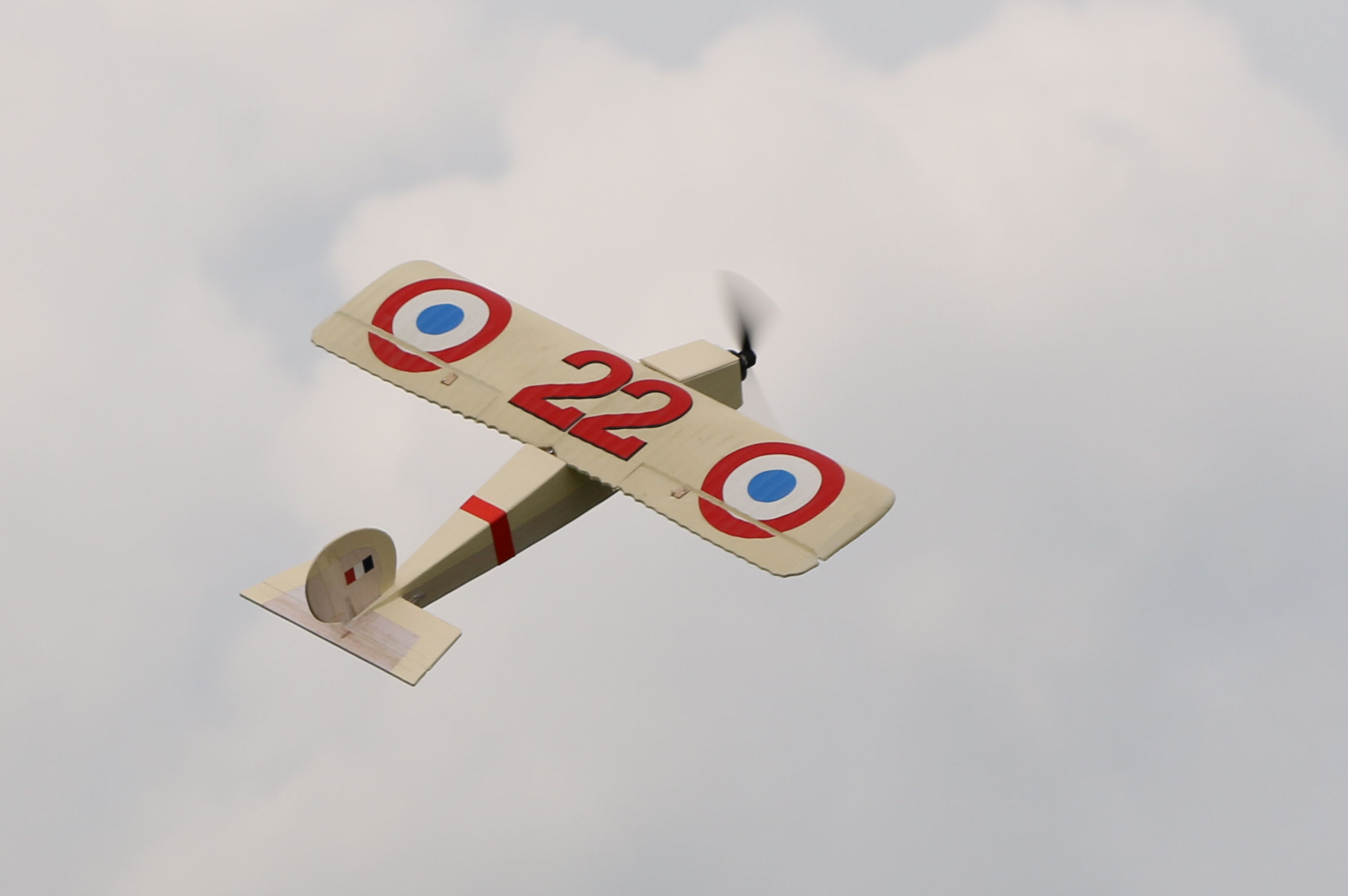
Time to get all Sticky now. Sadly the Sticky didn’t prove as popular as previous club models and only five appeared for the judging at the May club meeting. Dougal produced one that used the old wing from his now defunct Spad which meant it lacked dihedral but gained ailerons. So it’s Stickyish really and that earned him the Most Original Design prize.
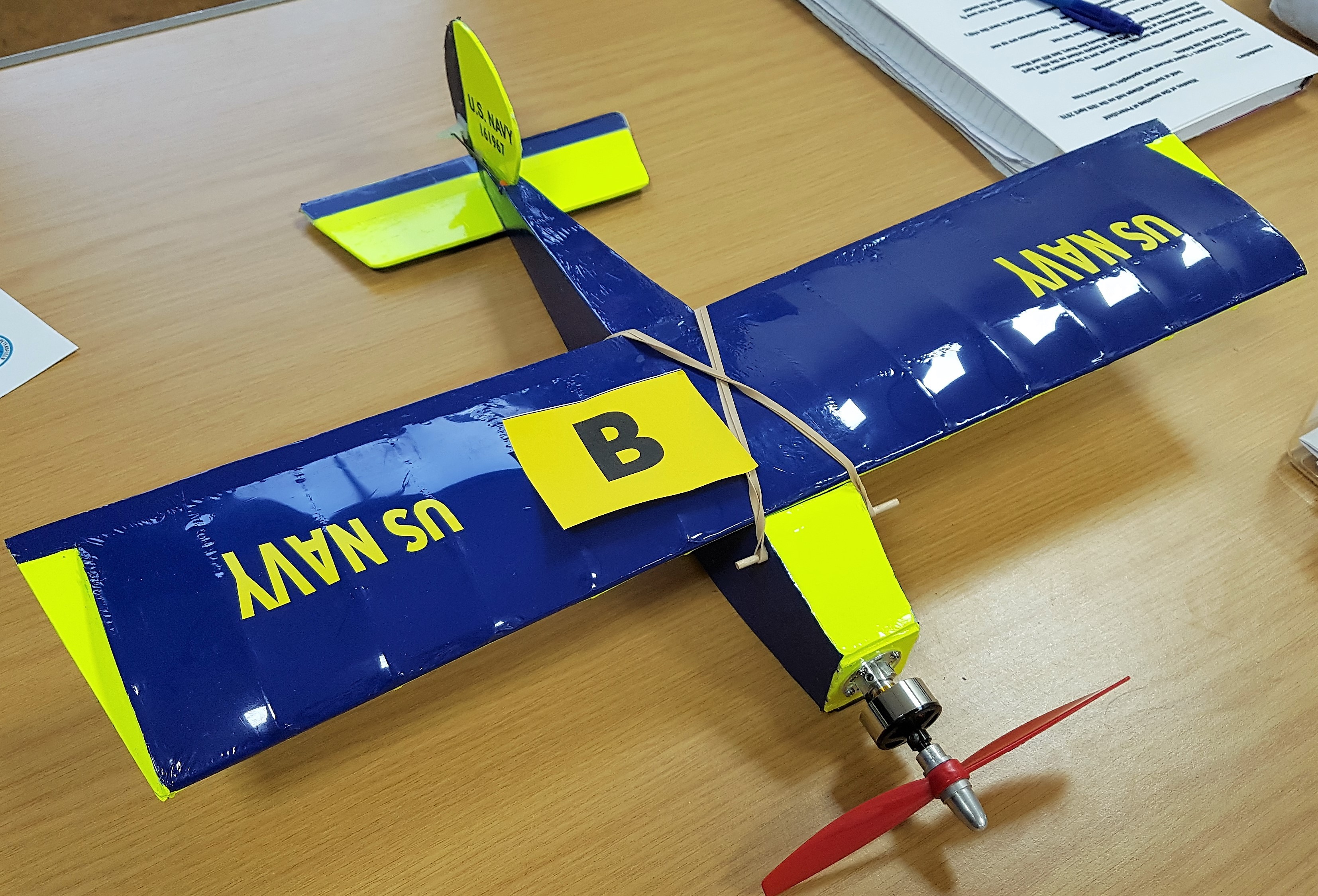
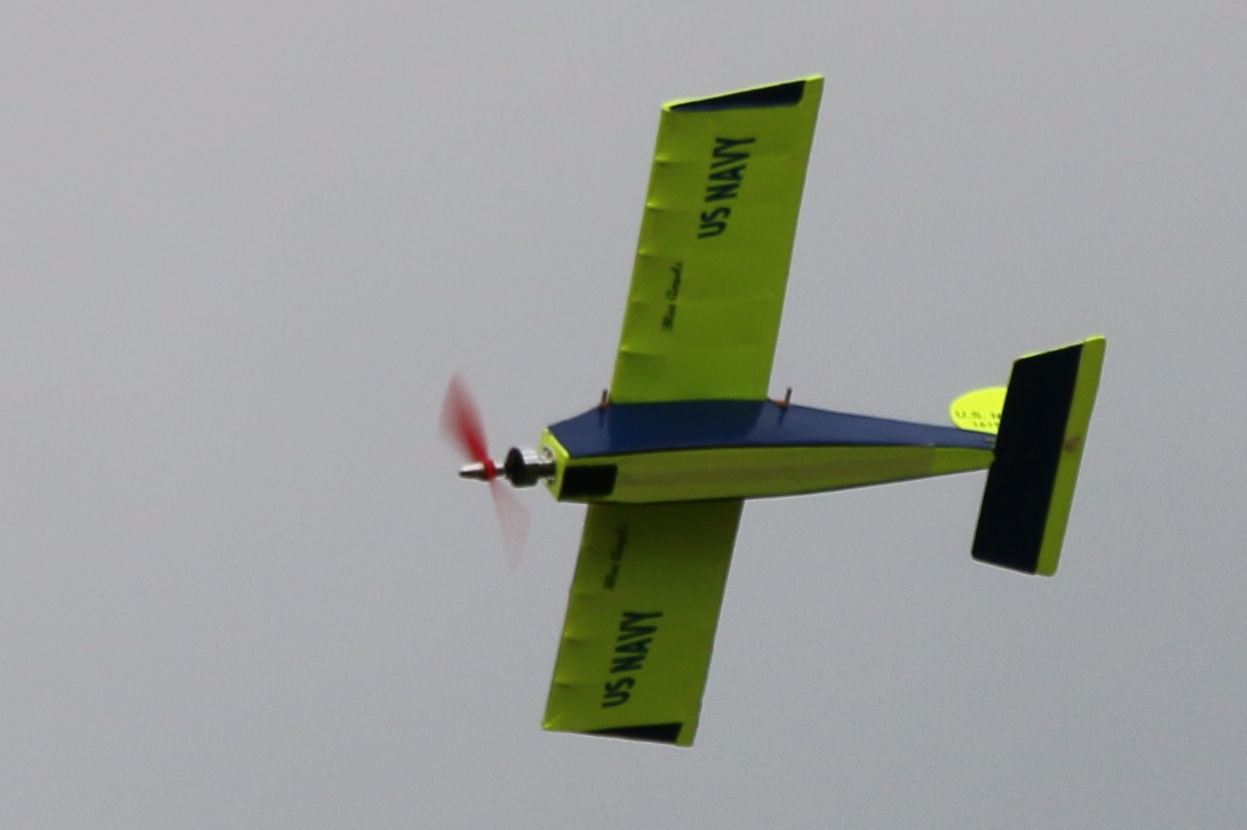
 Unsurprisingly Woody’s creation was finished in Blue Angels colours. He won the prize for Least Likely to Fly as both wings had a huge amount of washout. Later Basher Bob took the wings home to straighten them as best he could.
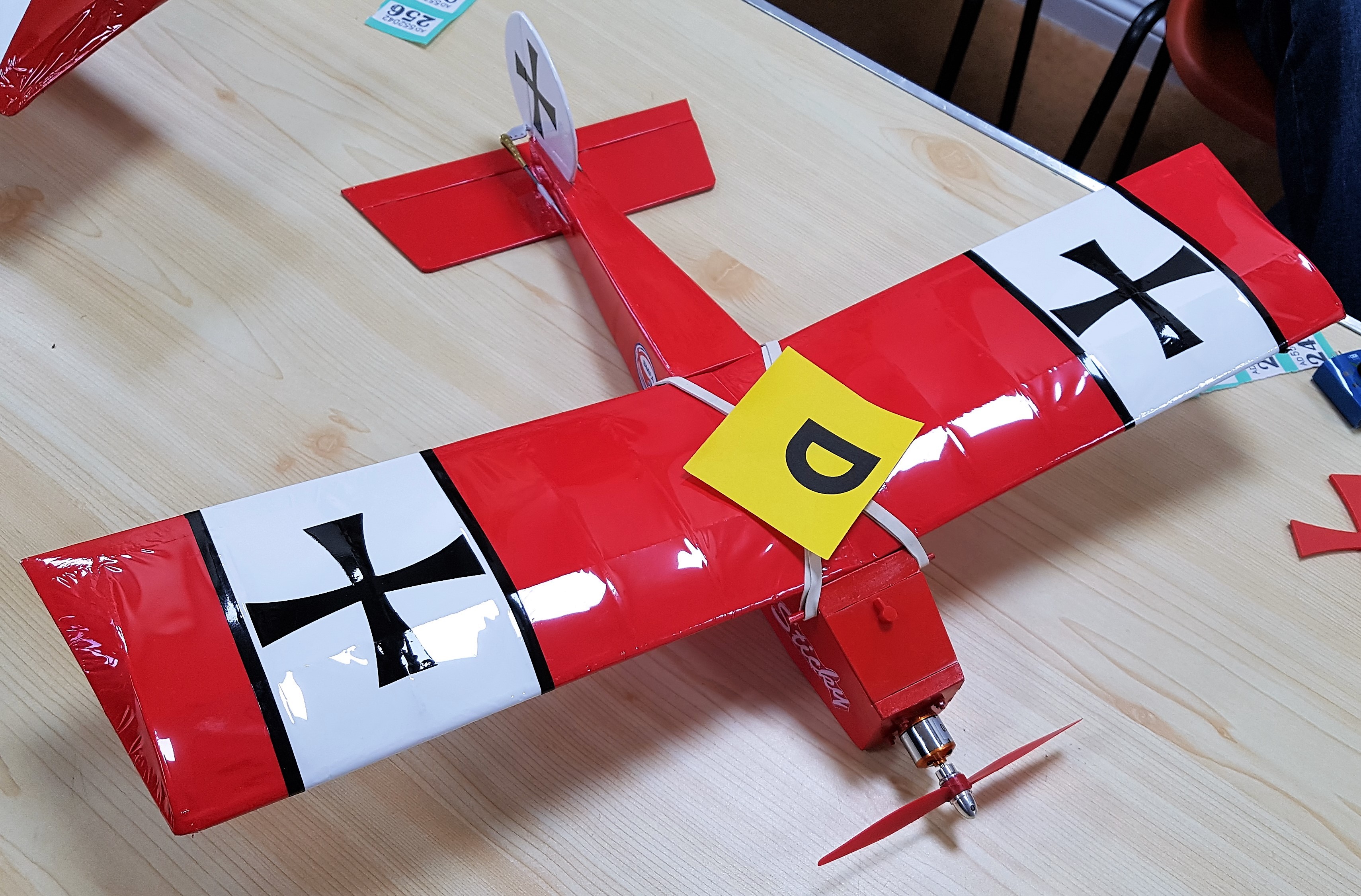
 The prize for the Best Looking Model went to Percy Vears for his Baron Von Stickthofen finished model, nice one.
 The other builders were John Warren, who finished his in the now familiar red and white Warren Inc. colour scheme, and Basher Bob who had built a scaled up version, Extremely Sticky maybe?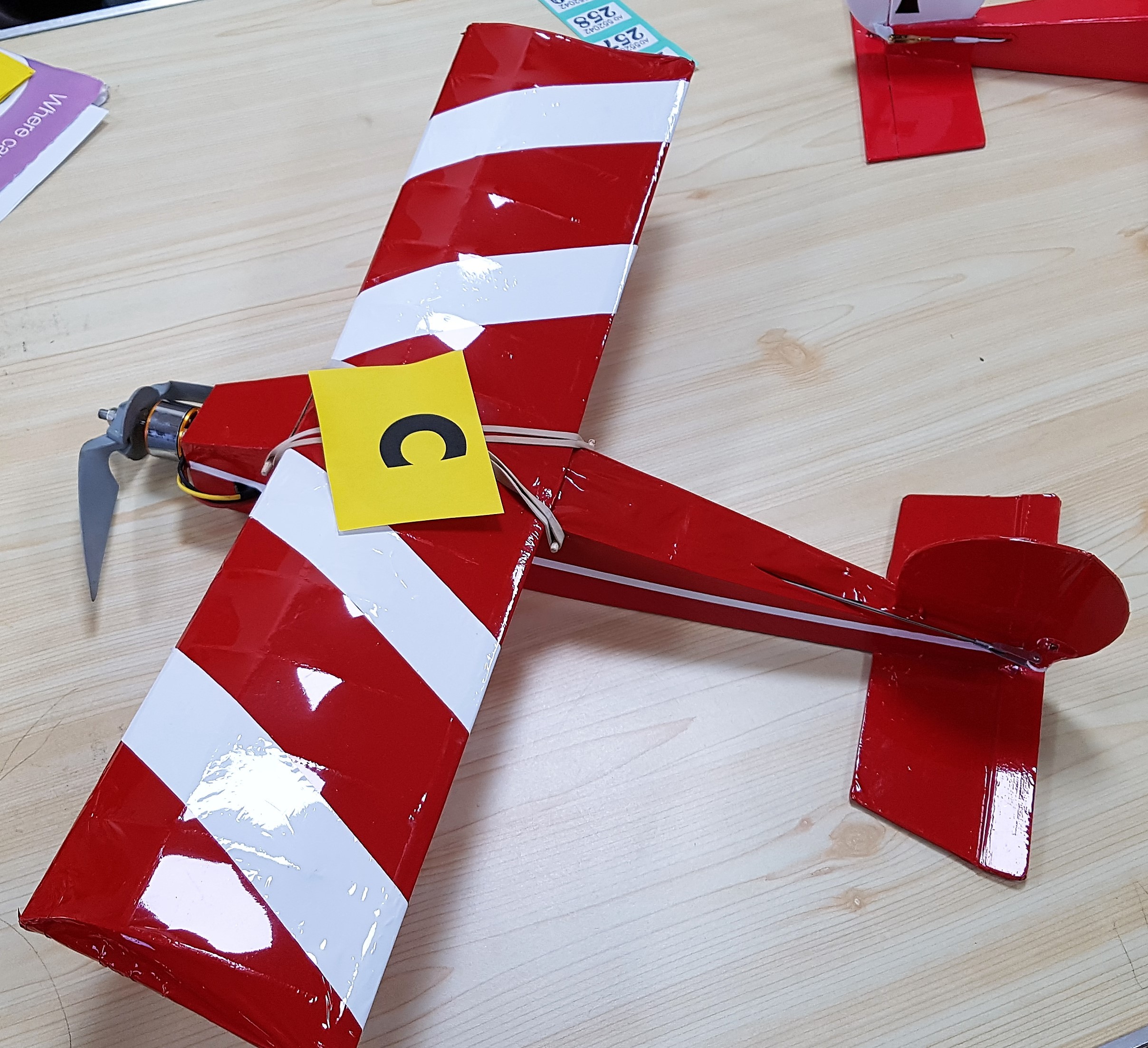

John couldn’t make the flying on the Sunday, he gave some pathetic excuse about sunning himself on the other side of the world! Dougal’s flew very well right from the start, the aileron wing definitely proved to be an advantage.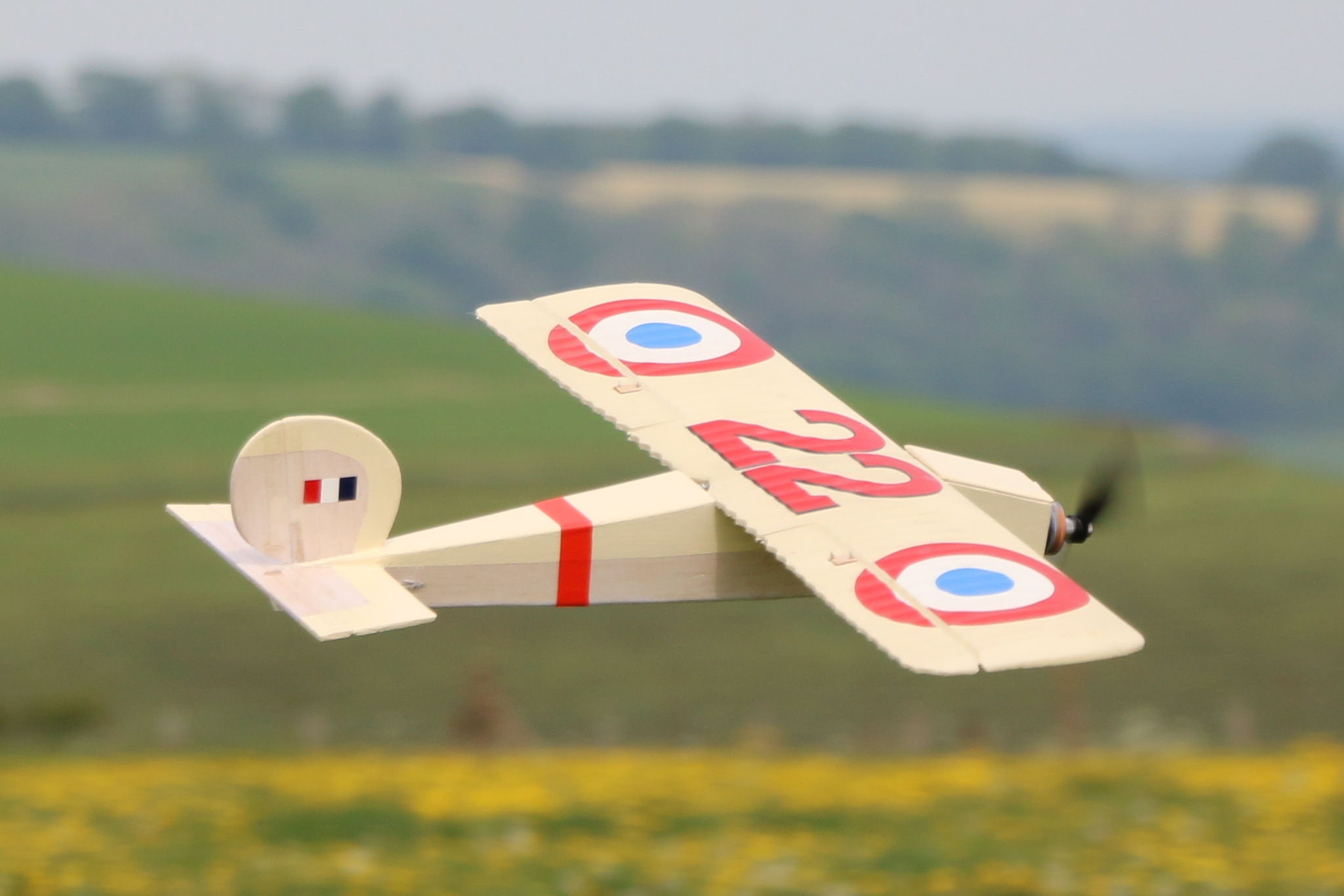
 Having had the wings straightened somewhat by Bob Woody’s Sticky flew reasonably well, it looks pretty good on the video but Dougal says it was a tricky Sticky. I’ve since had a go with it myself and I’m not sure what has changed but it didn’t fly well at all, maybe the wings have warped again. After a few adjustments I got it flying fairly well but then the motor came off mid-flight. Fortunately it landed on the patch with almost no damage.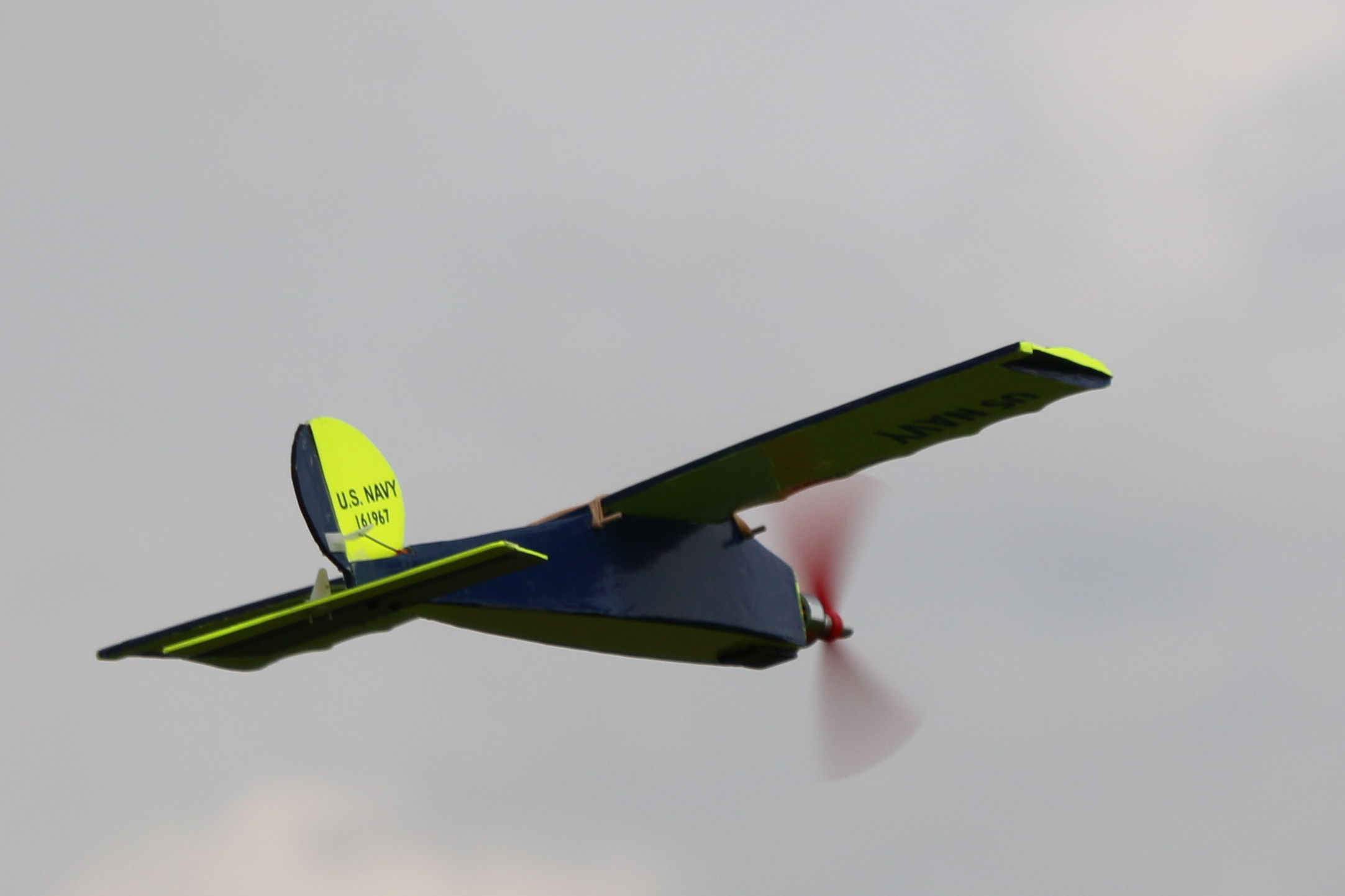
 Percy Vears’ Sticky flew well on the second flight after the centre of gravity had been moved forward, and Basher’s larger version flew very well straight from the start and needed no trim adjustments at all, well done Bob.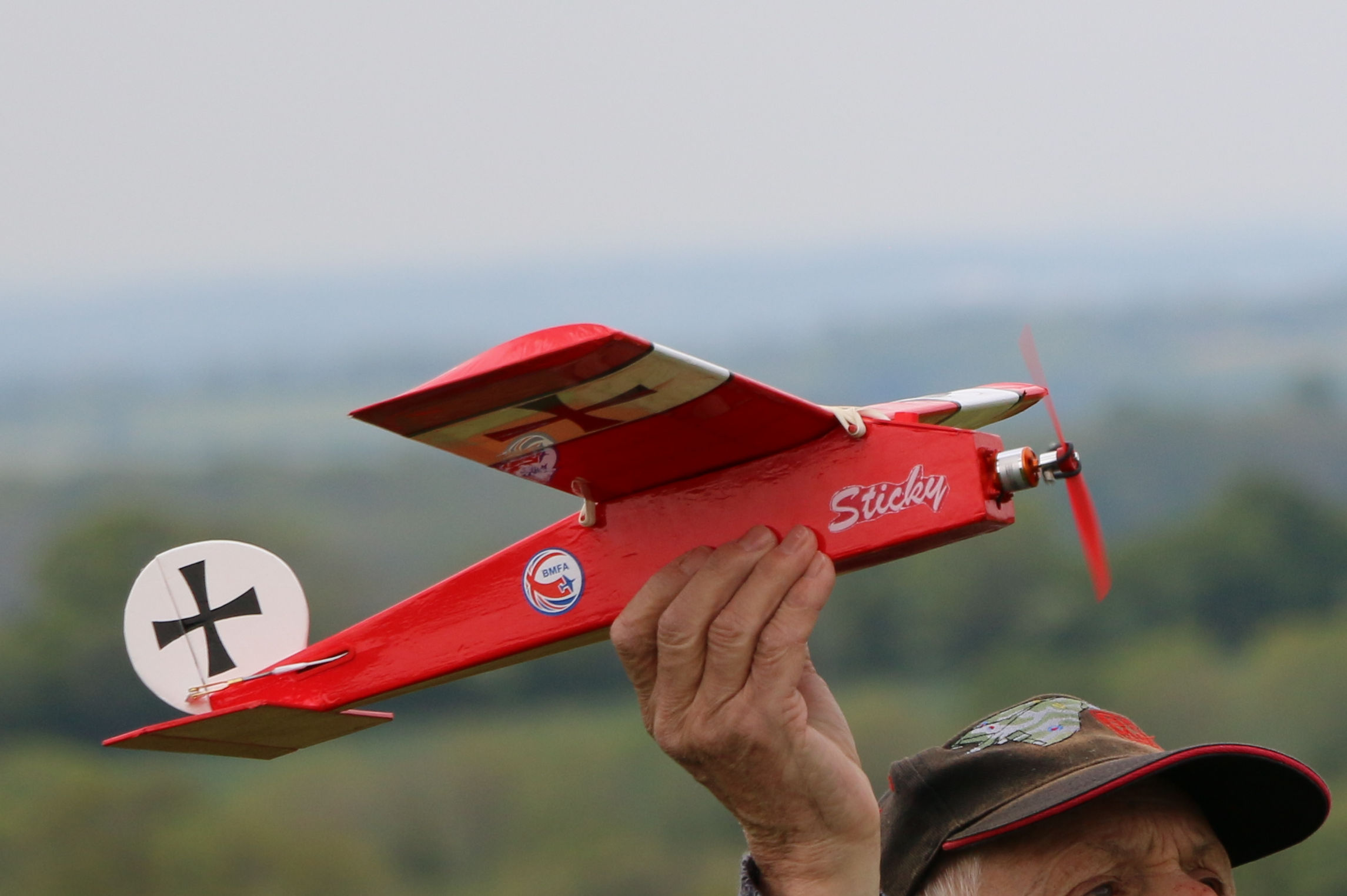

 This month’s video will show you how they flew on the day, Dougal’s was definitely the best flier. No doubt John’s will be flown next month so I’ll let you know how it goes.
Gentleman Jim brought along a Wot-4 Foam-E Mk 2 + in May. I’ve lost track of all the different versions of Wot-4s that have been produced but this is what the advertising blurb says about this one:
The ever popular Chris Foss Wot4 Foam-E Mk2 has been updated into the MK2+. The previous Wot4 Foam-E gained a reputation as one of the best sports models available and the Mk2+ builds on that with numerous new features. The model comes supplied with a powerful pre-installed brushless outrunner motor, matching 40A brushless electronic speed controller and 4 x 9g micro servos. All you need to add is your preferred receiver/transmitter combo and a 3S 2200mAh Li-Po of your choice.
Like the previous version, the Mk2+ only requires minor assembly to get airborne. No glue is required, only a cross headed screwdriver, a 10mm spanner and some double sided tape to mount your receiver.
Buried inside the structure there are numerous changes to the internal design. The tailplane has been re-designed for improved styling with solid tips and inset elevators for improved style yet still providing good control authority.
The wing has an extra carbon wing spar and the fuselage has extra carbon bracing making the airframe even tougher. The tail wheel has also been re-designed to be bolted on, allowing easy removal if accidentally broken. The control surfaces use ‘live’ moulded foam hinges with plastic hinge re-enforcement for extra security and peace of mind. Just like the previous version the control surfaces have carbon fibre re-enforcement for optimal control authority.
Well it all sounds good but unfortunately Jim’s came with a twisted fuselage which meant the tailplane was badly out of line with the wings. Jim added some packing under one side of the tail to bring everything back in line and it’s fine now but Jim was less than impressed with the quality of the model in general.
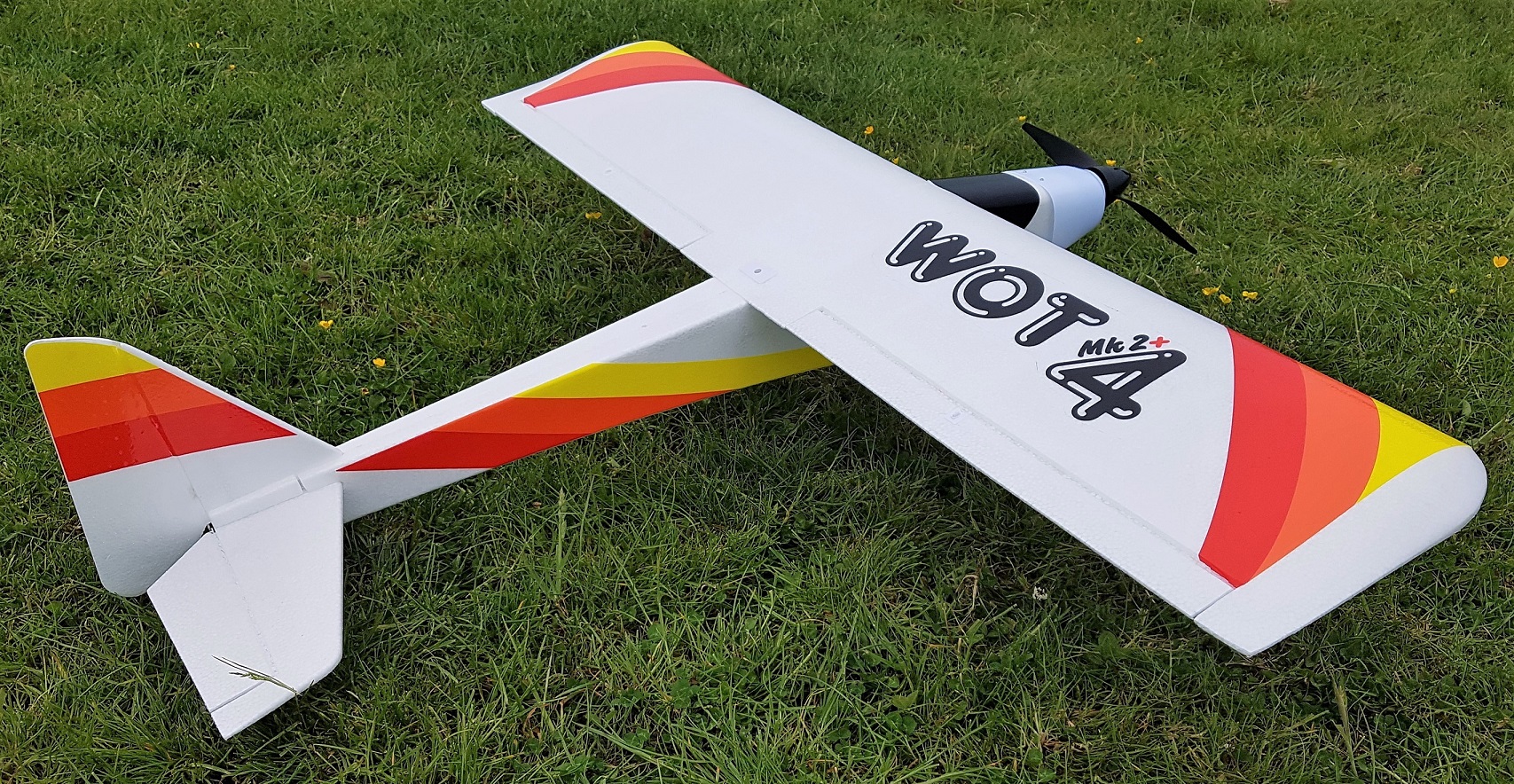 Anyway, it’s all ended up looking good, rather like every other Wot-4 really! Jim asked me to do the test flight and after a few clicks of trim it flew beautifully, one of the nicest models to fly that I can think of actually. I’d love to know how many Wot-4s have been produced over the years, I would imagine it’s now in the hundreds of thousands, so the basic design has to be good. I think Jim will enjoy this one for a long time.
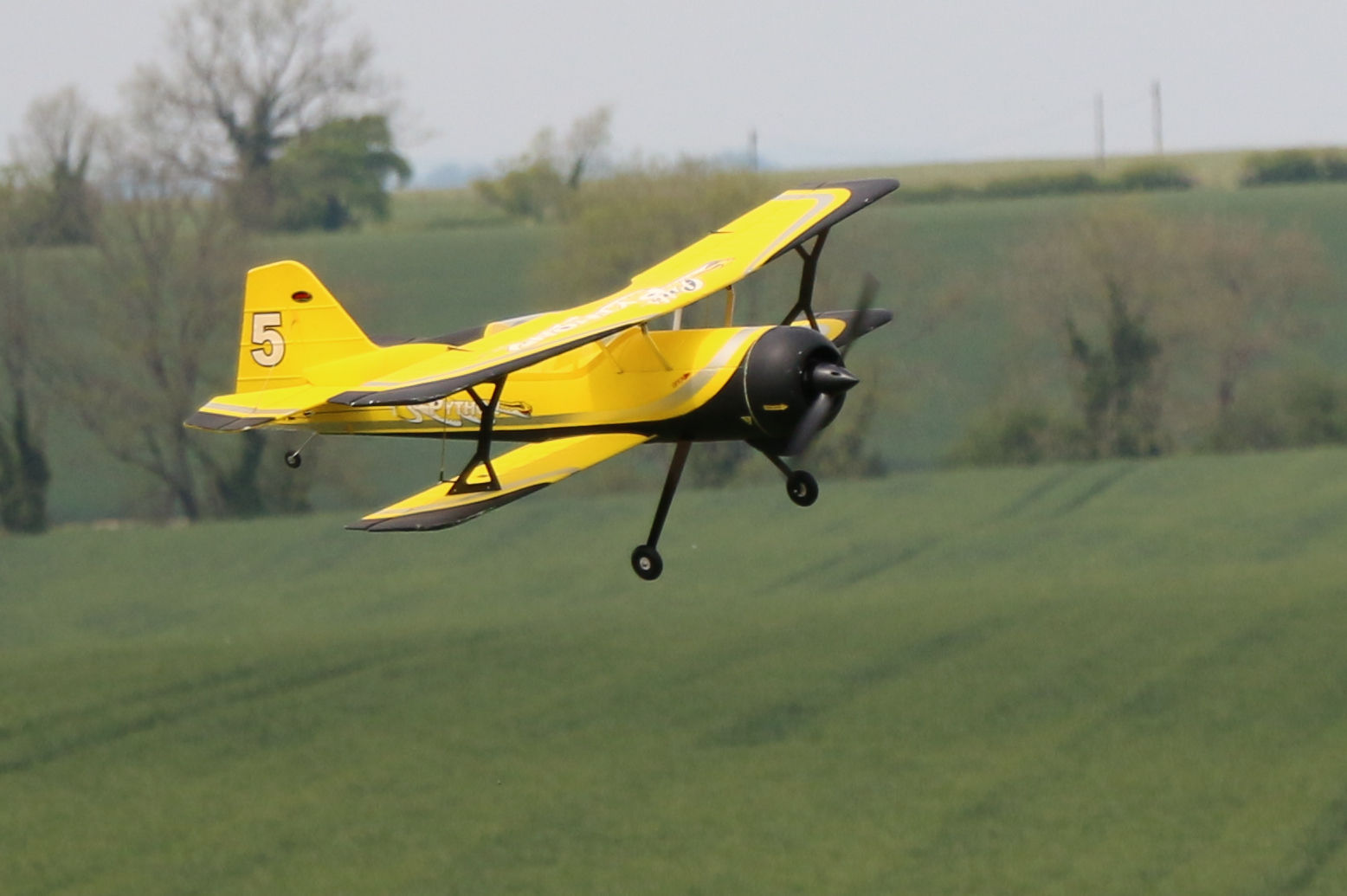
Kryten took lots of excellent flying photos this month including the above Sticky ones. Here are some of his others: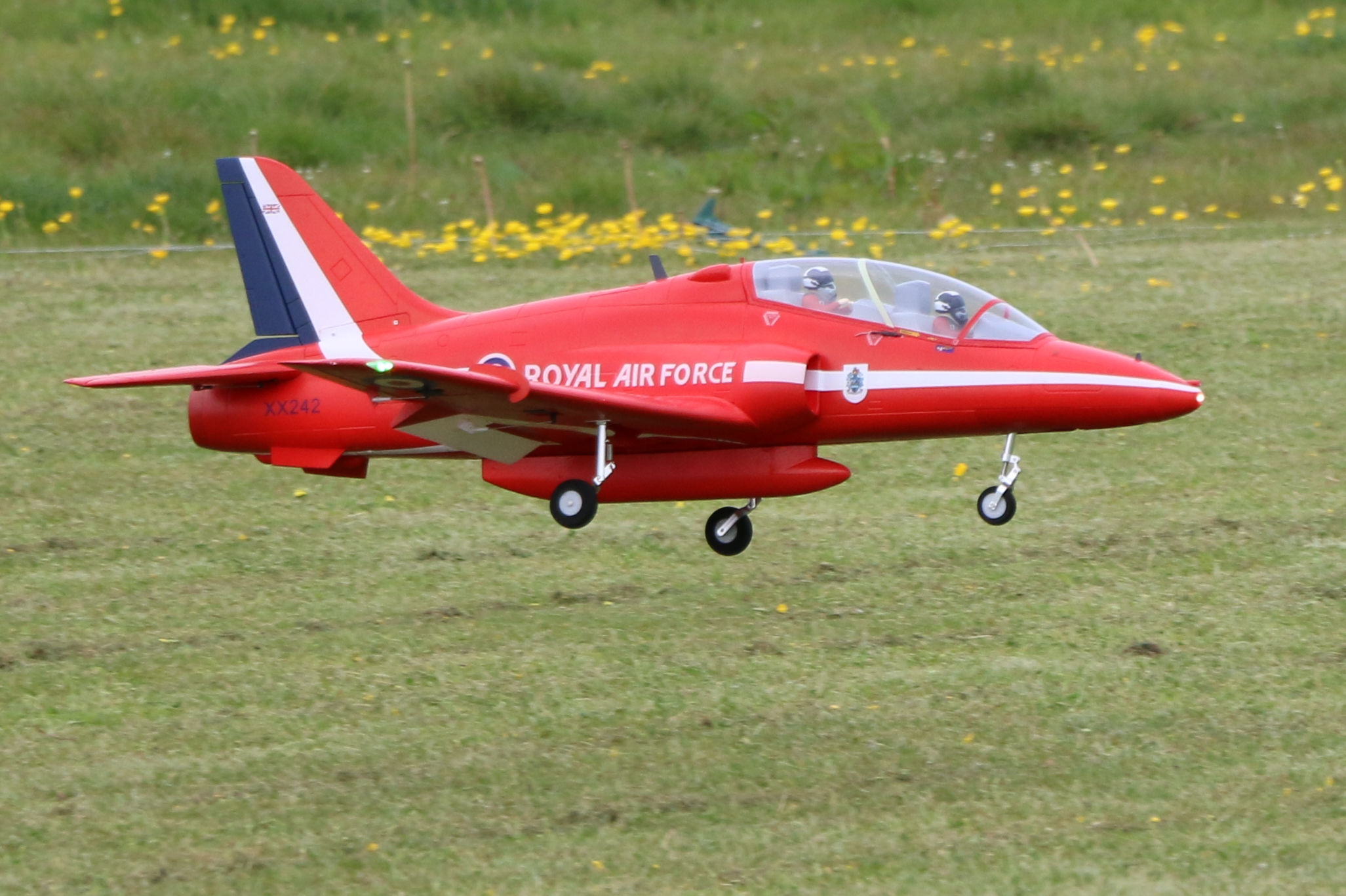



Video time now which this month includes contributions from Dougal, Basher Bob, and Captain Slow:Please watch the video full screen, it’s so much better with small models flying around.
My girlfriend just asked me, “When we go to Egypt, can I go on a camel?” I said, “Of course you can” and booked it for her. She’s going tomorrow… I’m leaving in three weeks and going by plane!
Colin Cowplain
Patch News – April 2019
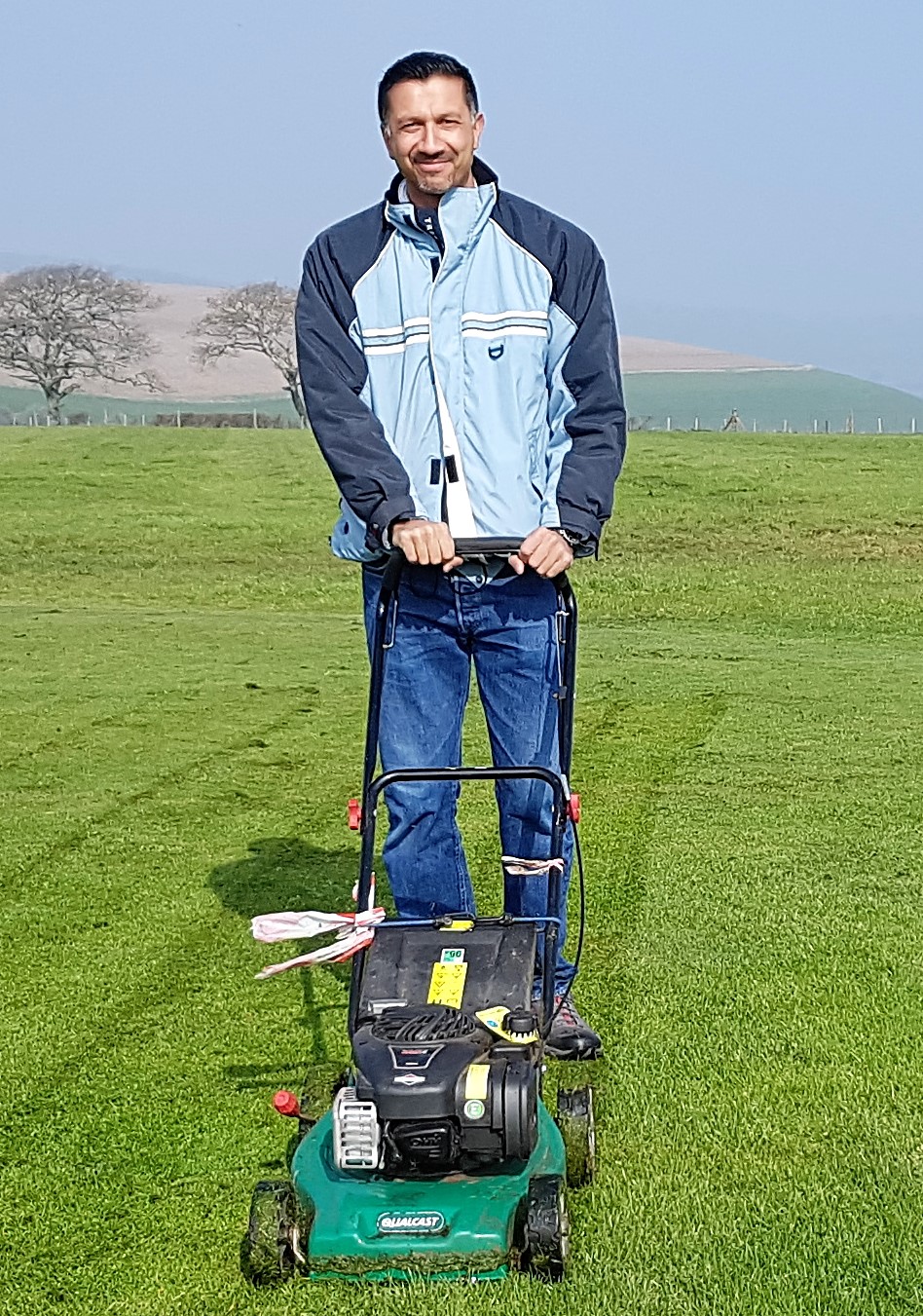
What a great month April was, not many April showers, an amazing Easter weekend, and loads of flying. The bullocks that joined us in March soon got used to us again and ignored us most of the time but did occasionally wander over and became annoyingly inquisitive. They seemed to have quickly learnt not to touch the fence, even if it was laid down, but they sometimes came right up to the pits area and had to be herded away before they chewed a model or two. I think they just want to be friends and have very little idea of the needs of model fliers! Matt snapped this photo of Captain Slow’s idea of herding them away… It makes me think of John Le Mesurier in Dad’s Army “I say, would you mind awfully popping down to the gate, there’s a good chap”.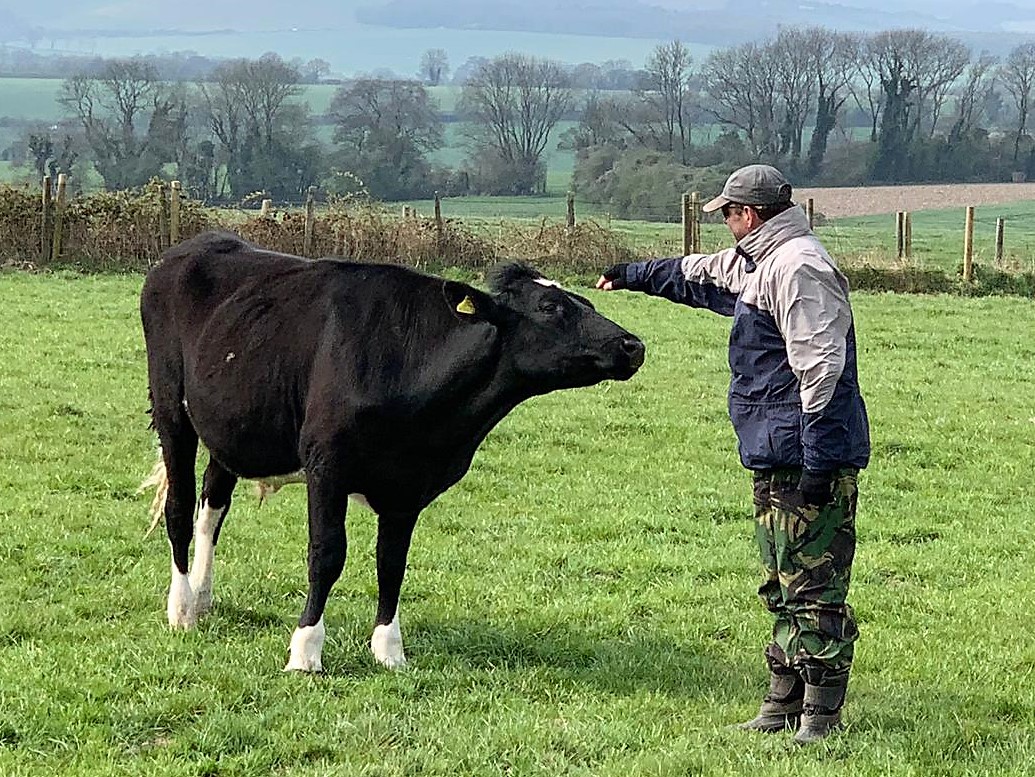 Can you think of a decent caption for the photo? Answers in the Comments section please, there will be a small prize for the one I like the most. Happily they moved out again at the end of the month so the field will hopefully be bullock free for a few weeks. The patch is in excellent condition and has been mown regularly by the Farts (Friday Afternoon Rural Trimming Society). One Friday afternoon Matt made an appearance and was cajoled into pushing the mower for a few minutes. Such a rare and momentous occasion seemed an unmissable photo opportunity!
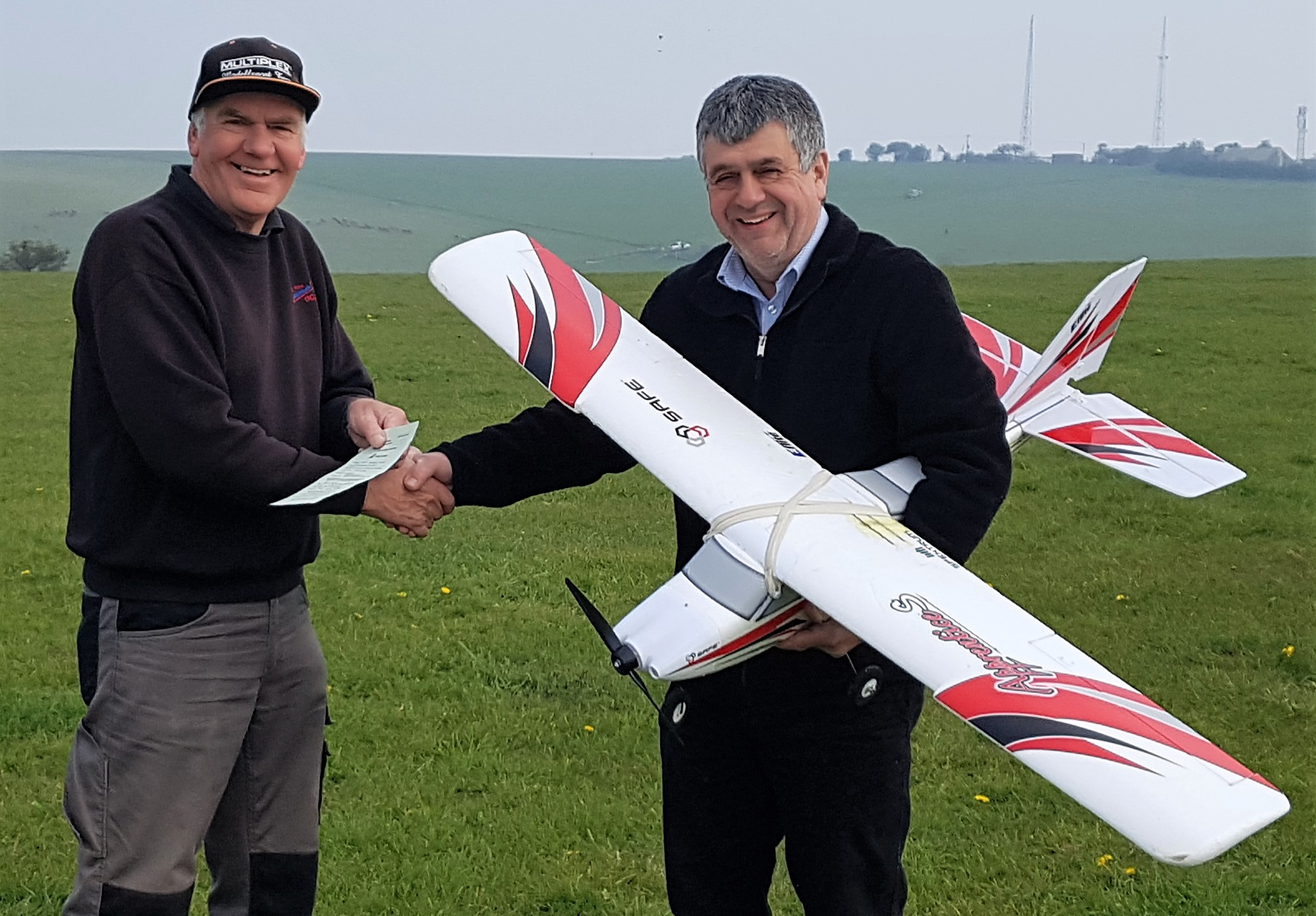
 New member Iven has flown with the Midweekers on many occasions and has been practising hard for his ‘A’ cert.
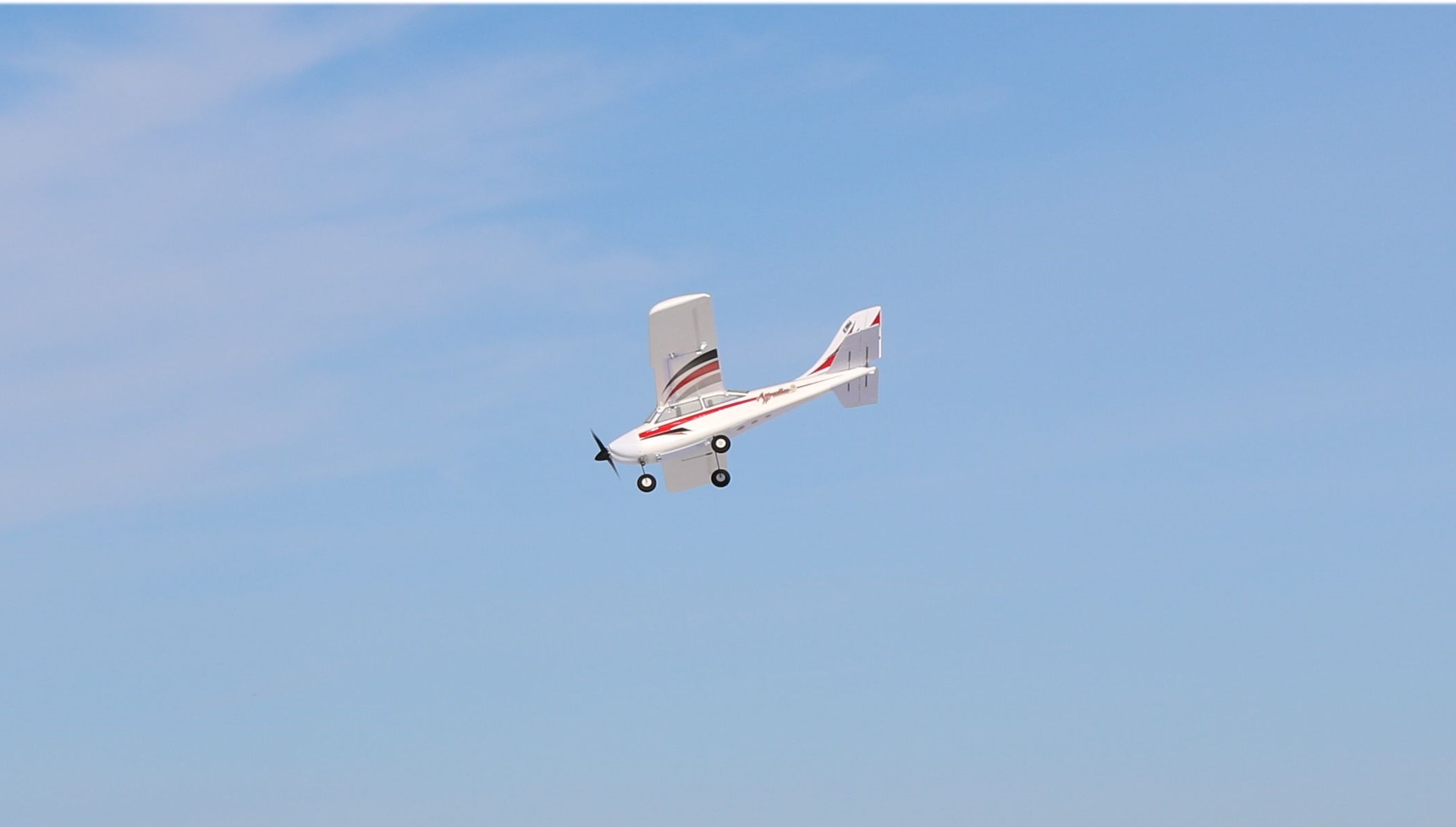 Before taking his certificate he was already on the lookout for a follow-on model that will test his skills a little more than his E-Flite Apprentice. He was very taken with Basher Bob’s Durafly Slow Poke and before you could say ‘PayPal’ one was on its way to him. Iven soon had it assembled and at the patch ready for flight.
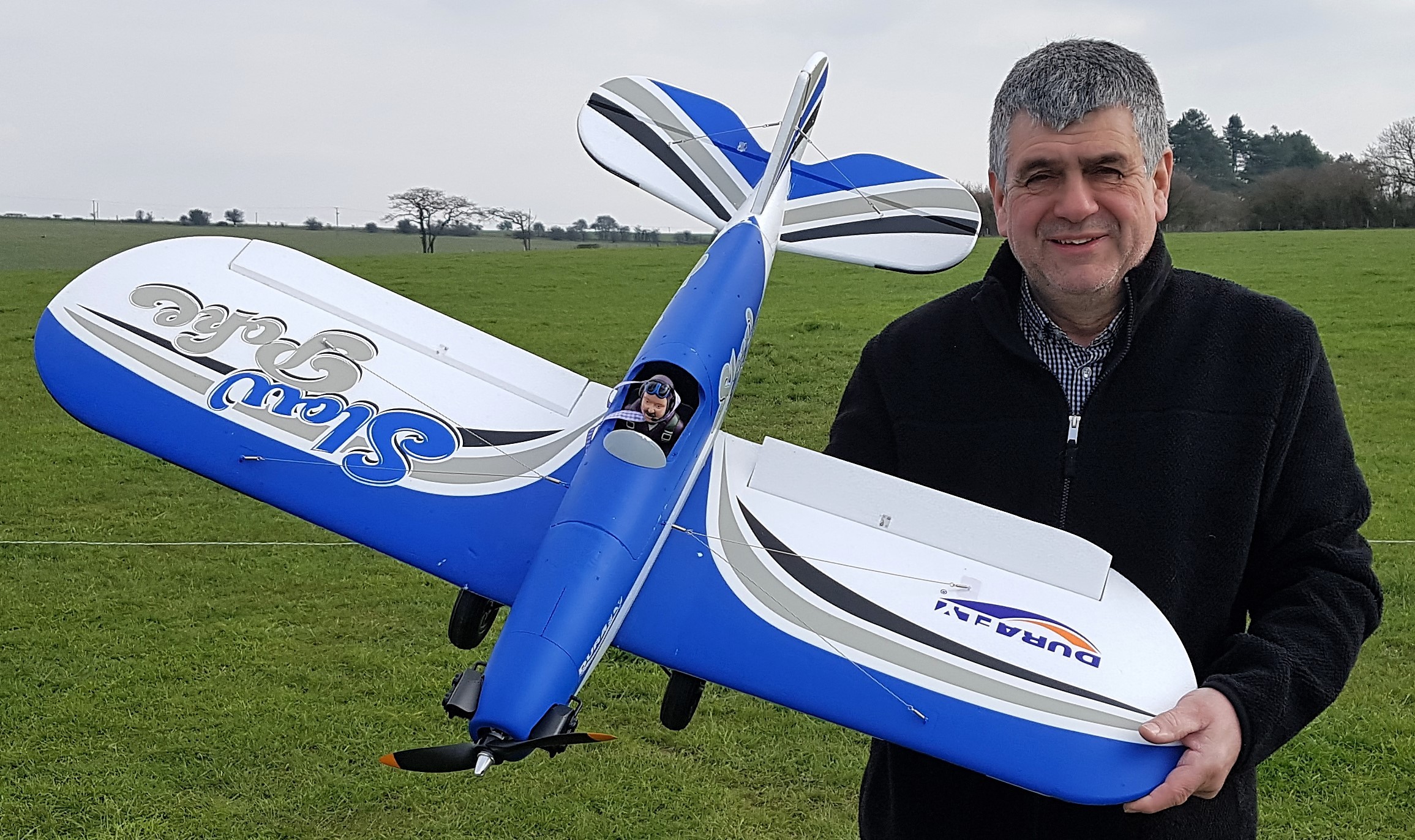 I test flew Basher’s Slow Poke for him and remember saying “If you can’t land this you can’t land anything”, it was a delight to fly, but Basher has never seemed totally at ease with it, maybe he’s changed some settings since that first flight. He did raise a few eyebrows one day when he announced that he’d had a slow poke in the back of his car…
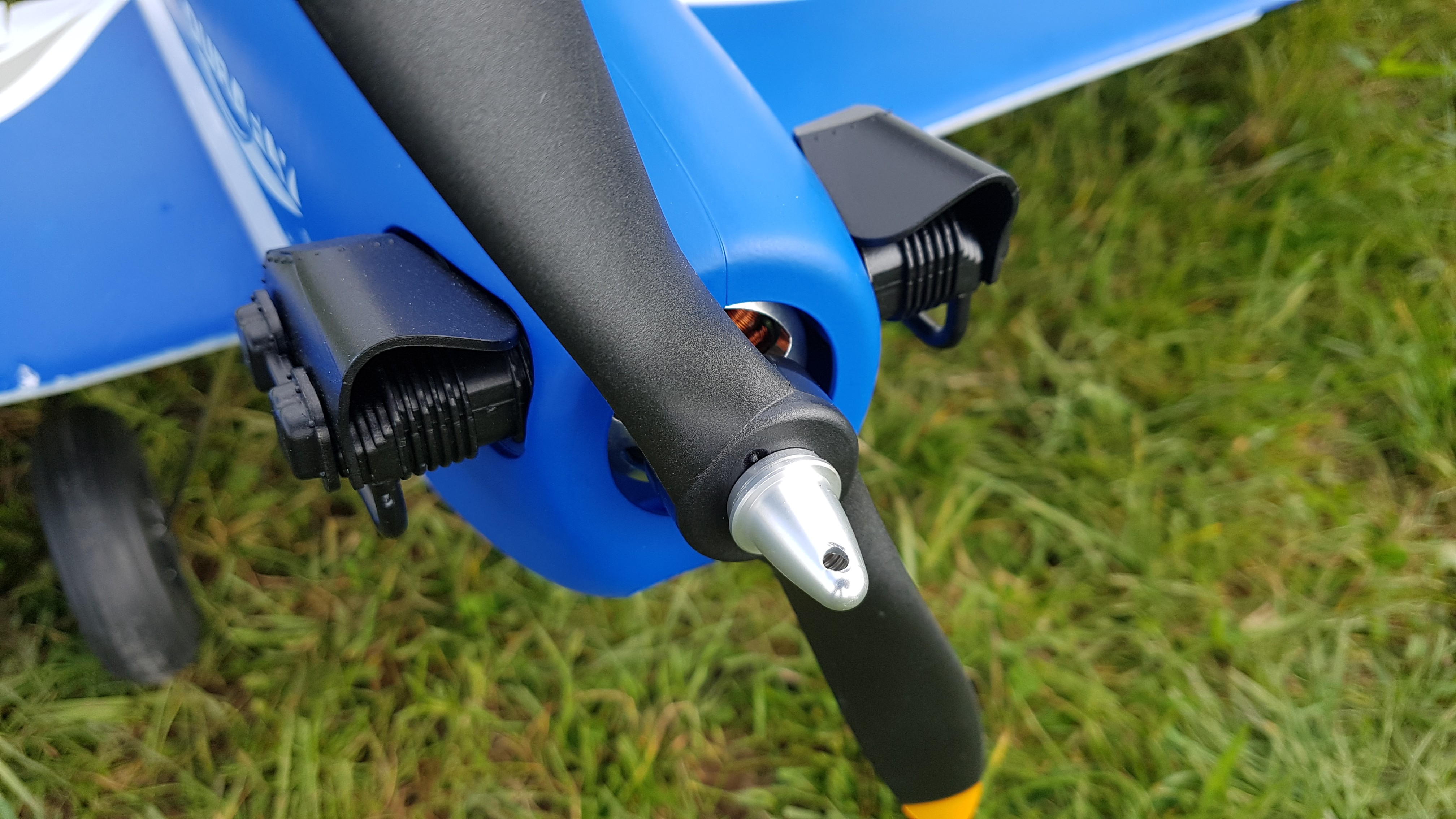 When Iven asked me to maiden his new Slow Poke I was interested to see if it flew as well as I remembered Basher’s had. It did, the model needed no trimming and flew beautifully. Iven had a go with it and coped with no problems at all, I think he’ll enjoy it a lot. The 1200mm wingspan Slow Poke is made of EPO foam and comes as a ‘plug and play’ model, just add your own receiver and battery and off you go. I see that Iven is using one of the new Spektrum receivers that doesn’t have any external aerials. It worked perfectly and not having any aerials to route or worry about damaging must be a plus point. Finally, something I like about Spektrum!
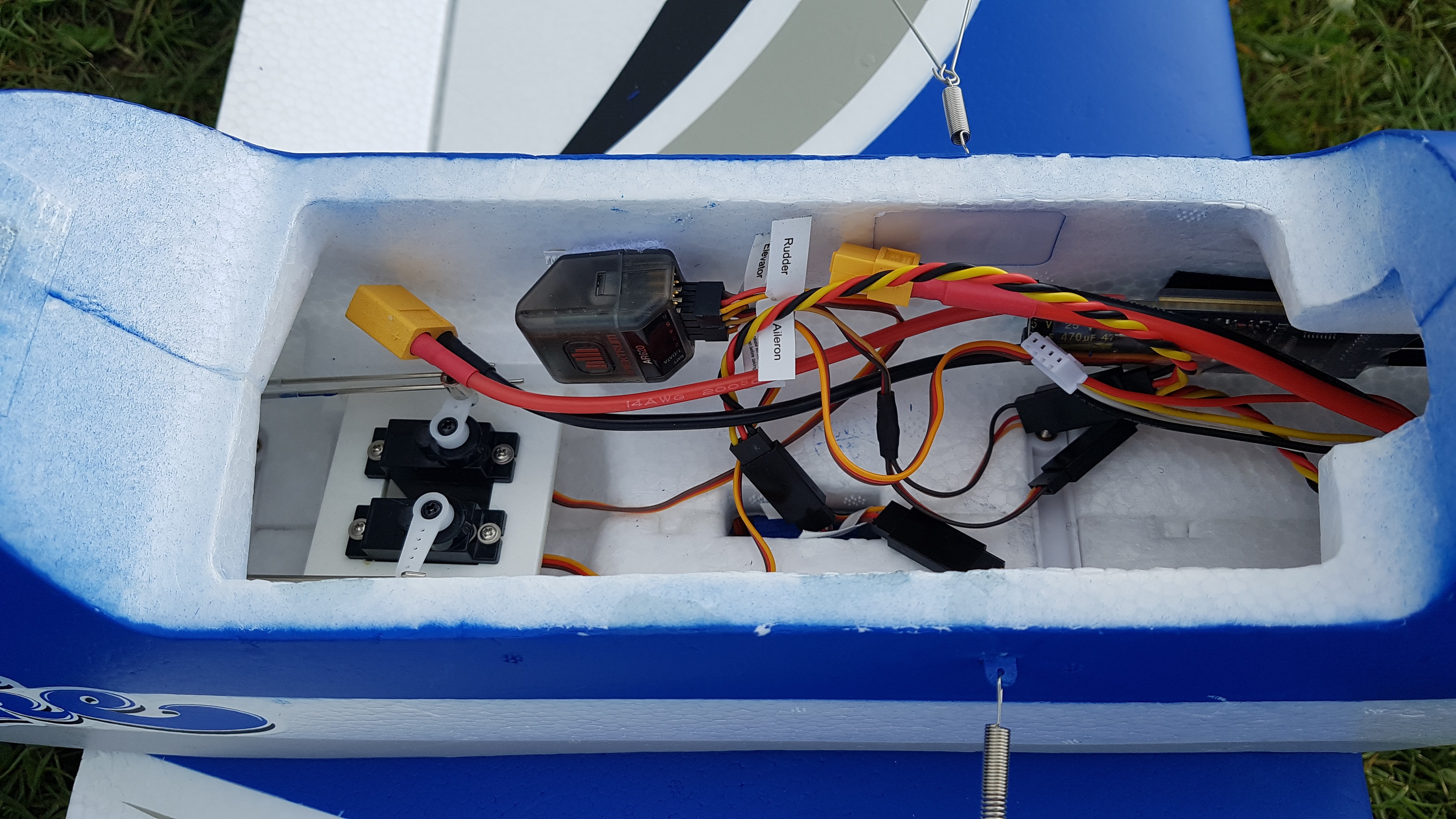 The motor is a 3648 700Kv outrunner that swings a 12×8 prop. It has a 40A Aerostar esc and uses a 3 cell 2200mAh lipo. Basher has been flying his on a 4 cell lipo but I really don’t think it needs 4 cells. Having proved the Slow Poke Iven returned to his Apprentice and passed his BMFA ‘A’ cert a couple of weeks later, well done Iven.
 You may have noticed that Bob has reverted back to Basher having been Bob the Builder for some while now. Bob first became Basher following his involvement in a series of mid-air collisions, none of which were necessarily his fault, but he always seemed to be there. But then things changed, the mid-airs stopped and we rechristened him Bob the Builder…until now. Yes, he’s been at it again! One fine April day I was flying my FPV Sukhoi and both Woody and Basher decided to fly their foamboard jets to give me something to follow. Woody was flying his Sukhoi nice and steadily when Basher’s Mig made a sudden turn and cut right across him, resulting in the a series of prop hacks to the leading edge of his left wing. Both models landed safely and Basher’s was completely unmarked, typical!
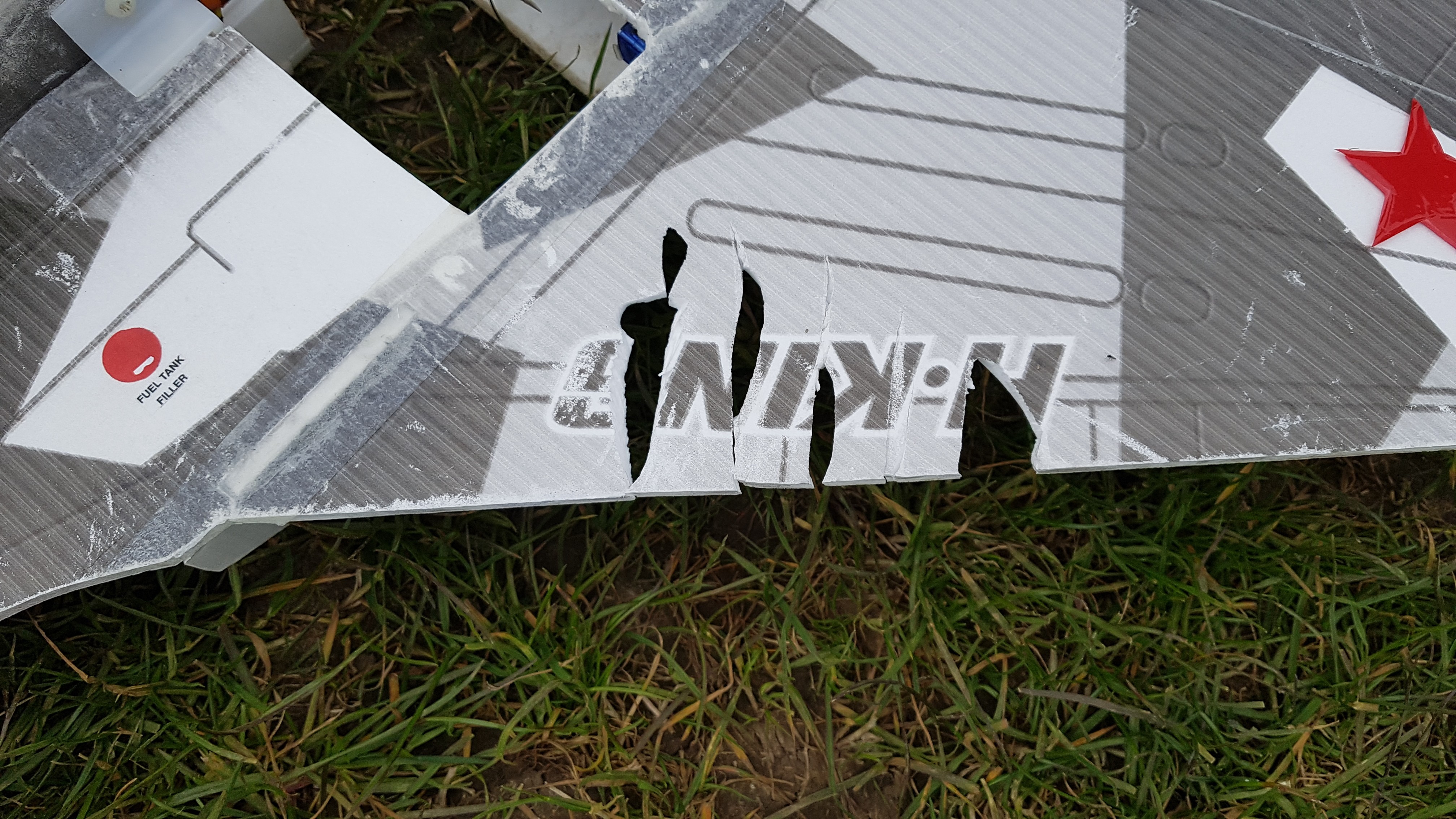 Both the models were out of sight of my FPV camera at the time so I didn’t see any of the action but Iven happened to be videoing from the ground and caught the action. I’ve included the footage at the end of this month’s video so you can all enjoy it! Strangely, although Woody was the victim of the collision for some reason the incident seemed to upset 1066 much more than Woody and he really laid into poor old Basher.
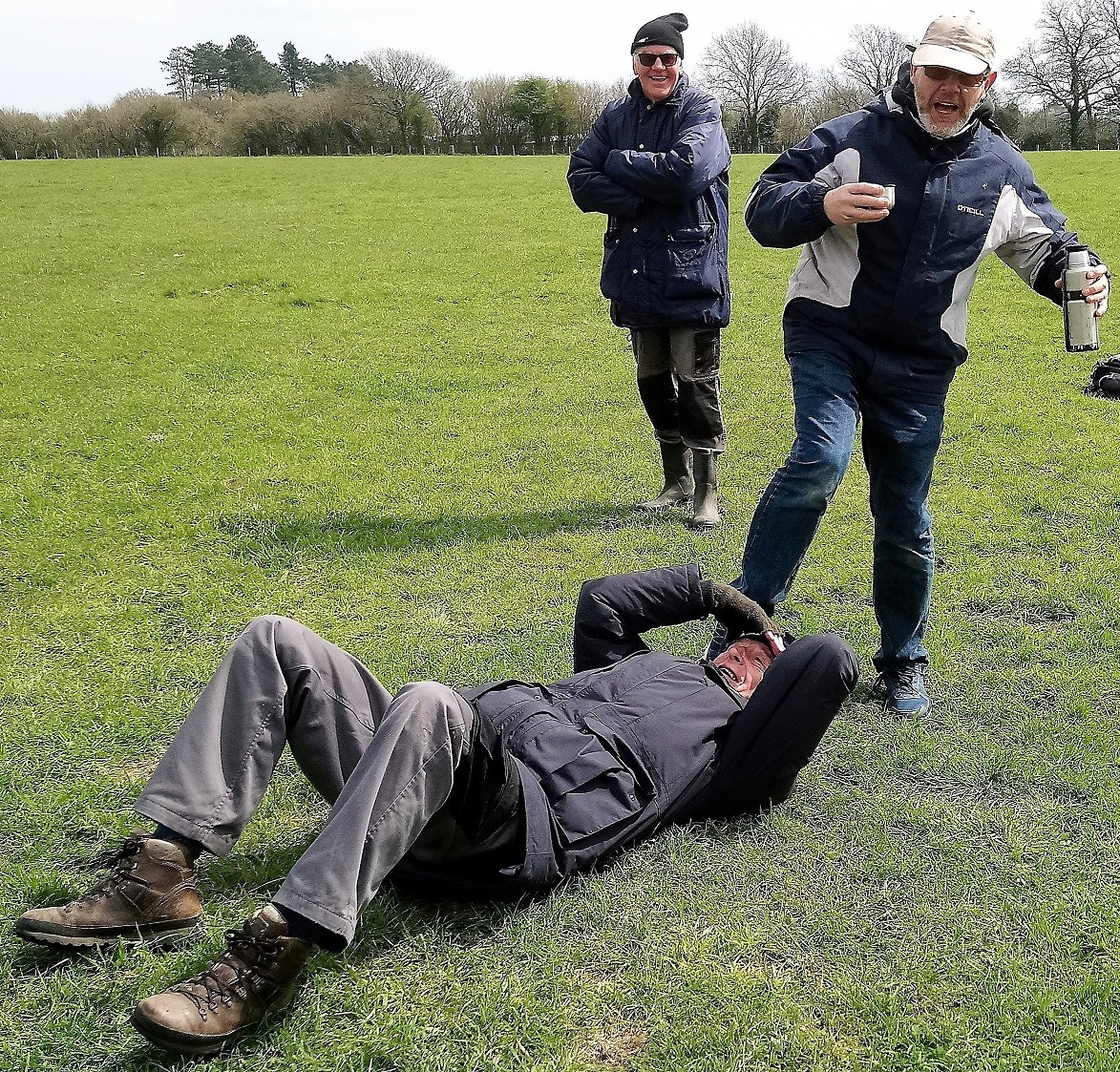 Violence towards OAPs is not something to be encouraged, especially as I’m one of them!
One Sunday morning saw lots of full-size activity around the field. As well as the often seen paragliders up by the masts a few high-tech hang gliders were flying and some overflew the patch at great height. Then, just as we were packing up to leave, four full-size gliders started circling in a thermal right above us. It was a lovely site and as we strained our necks to watch Basher laid on the ground for an easier view… the real reason for the photo above.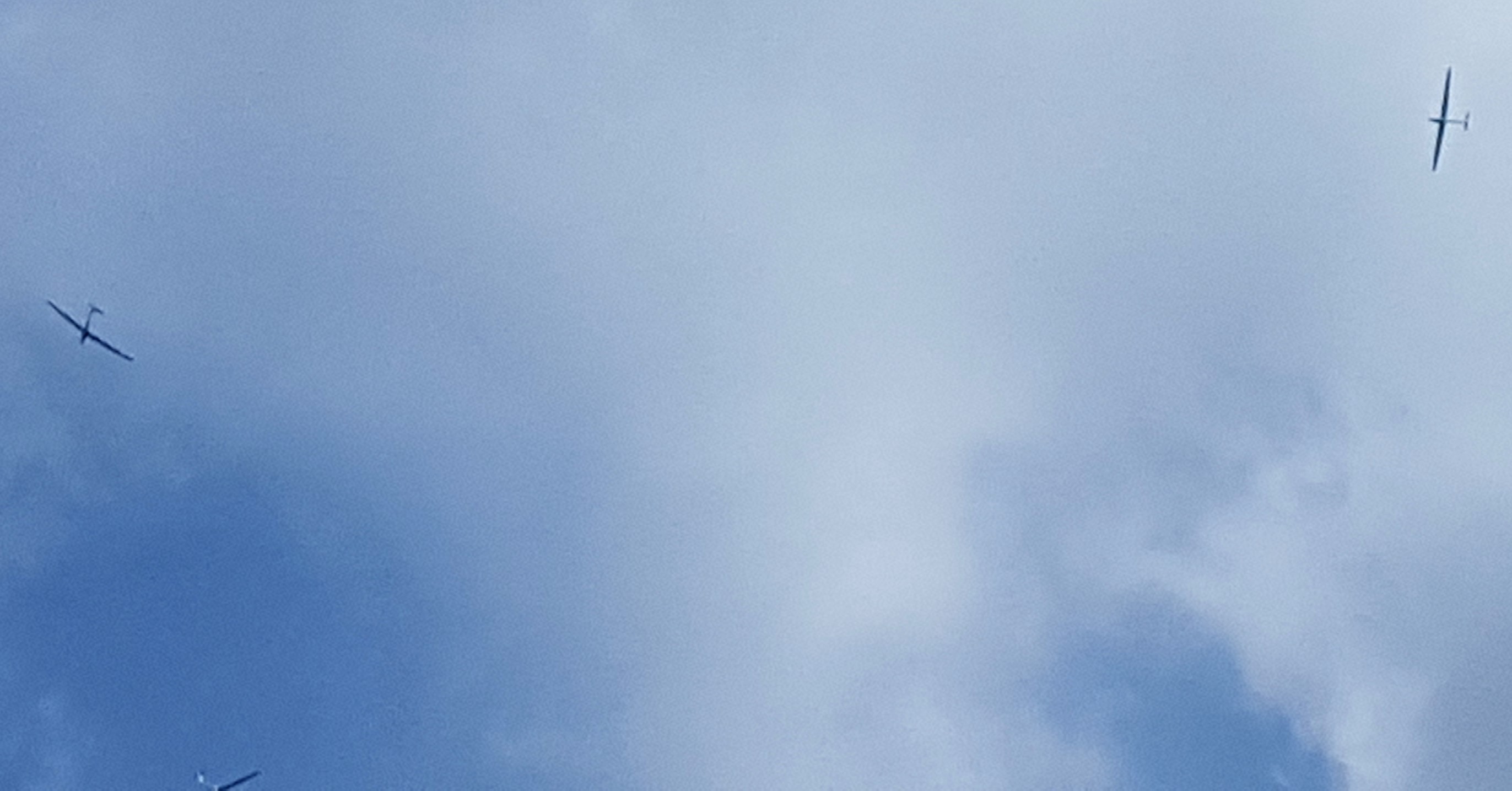 The gliders were very high and I didn’t manage to get all four in a photo but you can just about see two and a half here. This month’s video includes a snippet of three of the gliders circling upwards in the thermal.
Basher also had a go at taking out my Sukhoi with his own Sukhoi on one of my FPV flights, it’s in the video…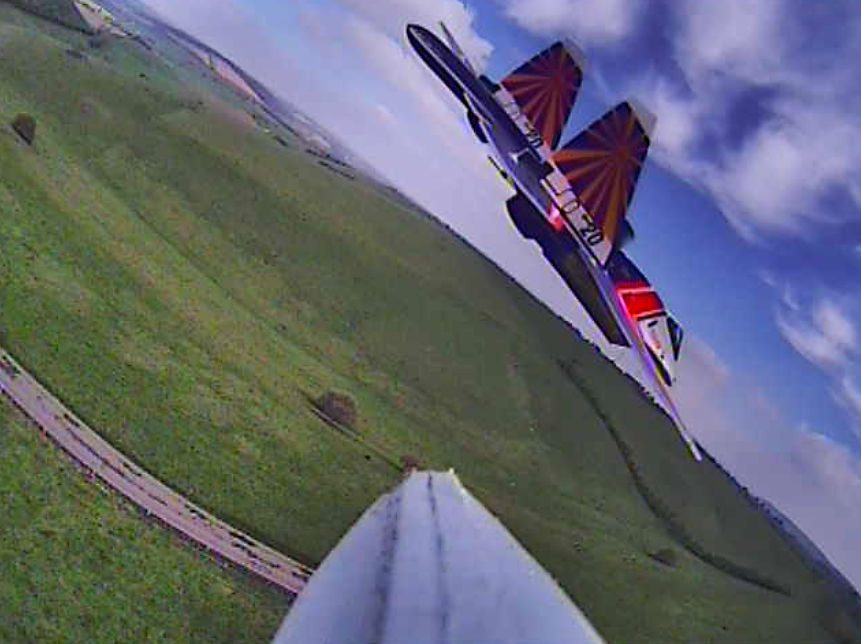 Dougal and I continued with our FPV learning and we’ve progressed with our flying. Dougal did the first low level pass through the Harper’s Oak group of trees one Friday afternoon when I wasn’t present so I was forced to copy it the following Sunday morning! We also both made some more FPV purchases. Dougal had been using some cheap Crazepony box goggles that performed reasonably well but they weren’t as clear as the not quite so cheap Cyclops box goggles that I have, so when he spotted some second-hand Aomway goggles for sale Dougal snapped them up.
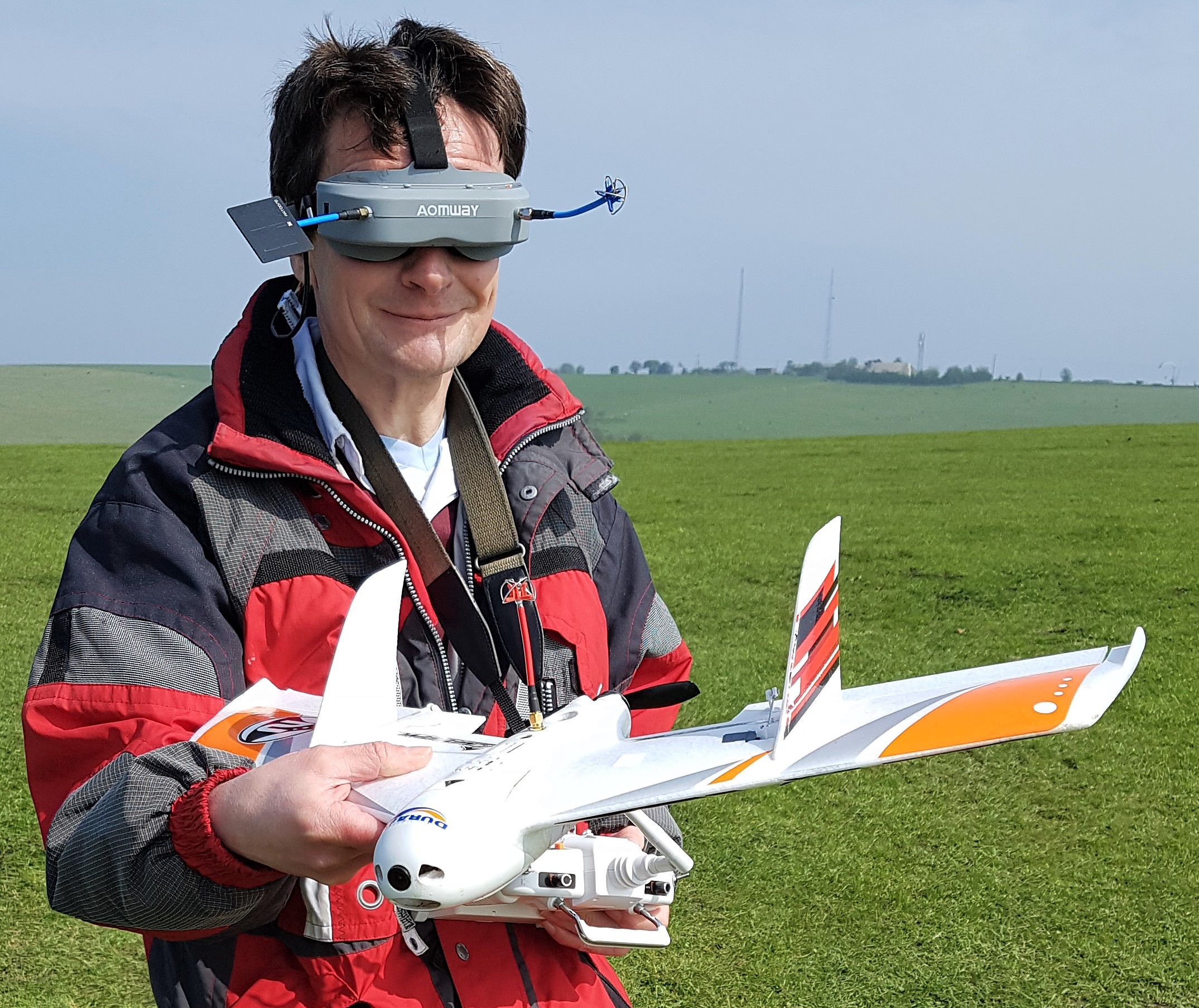 The Aomways are not box goggles so are smaller and lighter to wear and have a much better resolution but even second-hand cost four times as much as the Crazepony ones. And they still look almost as stupid!
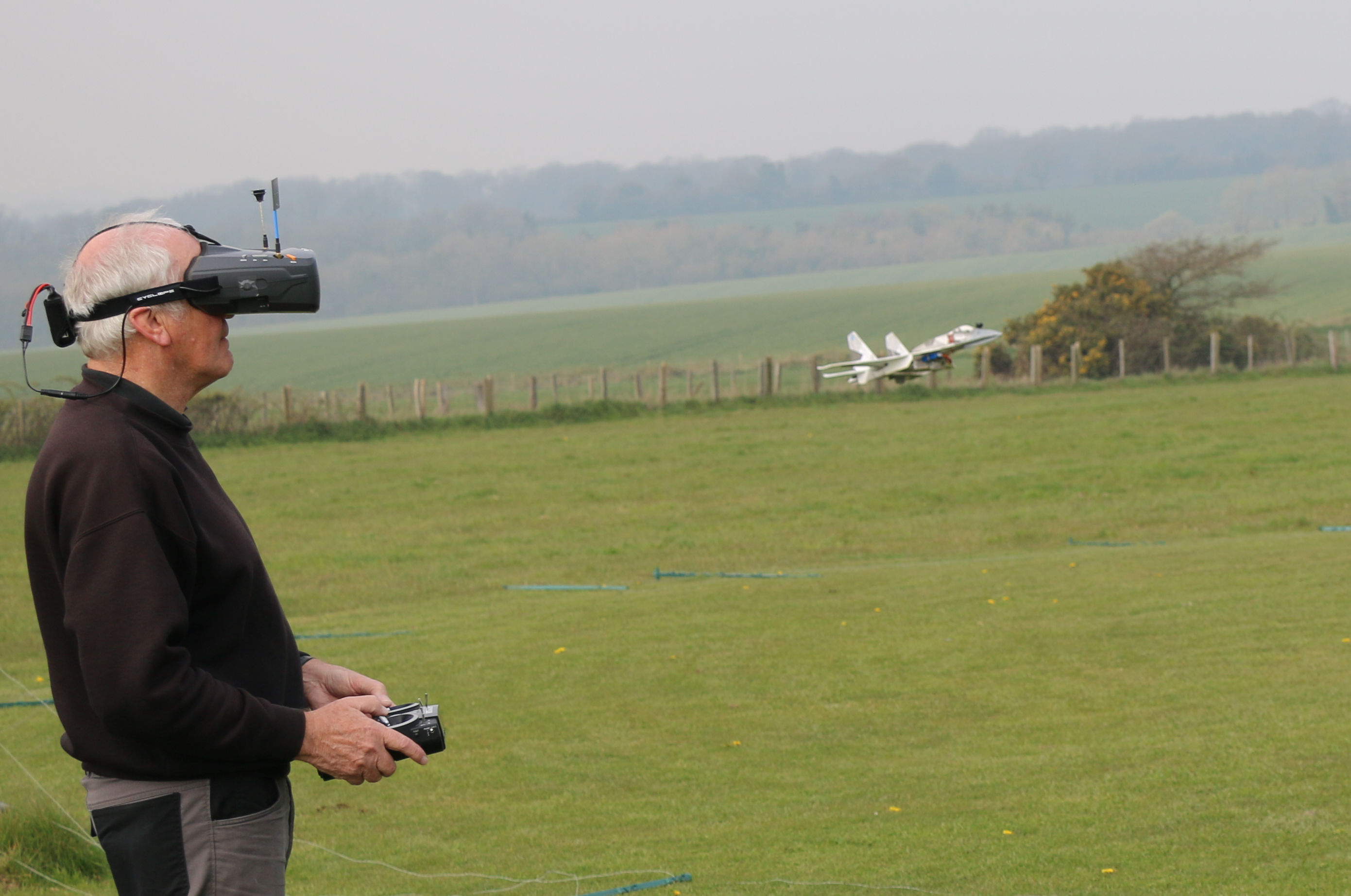 Not sure who that bald bloke is! My Cyclops goggles are big and cumbersome but have a good picture quality and the only complaint I have with them is the low quality recordings of the built-in DVR (video recorder). Dougal spotted an FPV transmitter that has a built-in DVR on the Banggood website for around £15 so I ordered one to try. As the recorder is on the tx rather than the rx in the goggles there is no signal break-up that might occur on the downlink and the video quality is much better than the one built into the goggles.
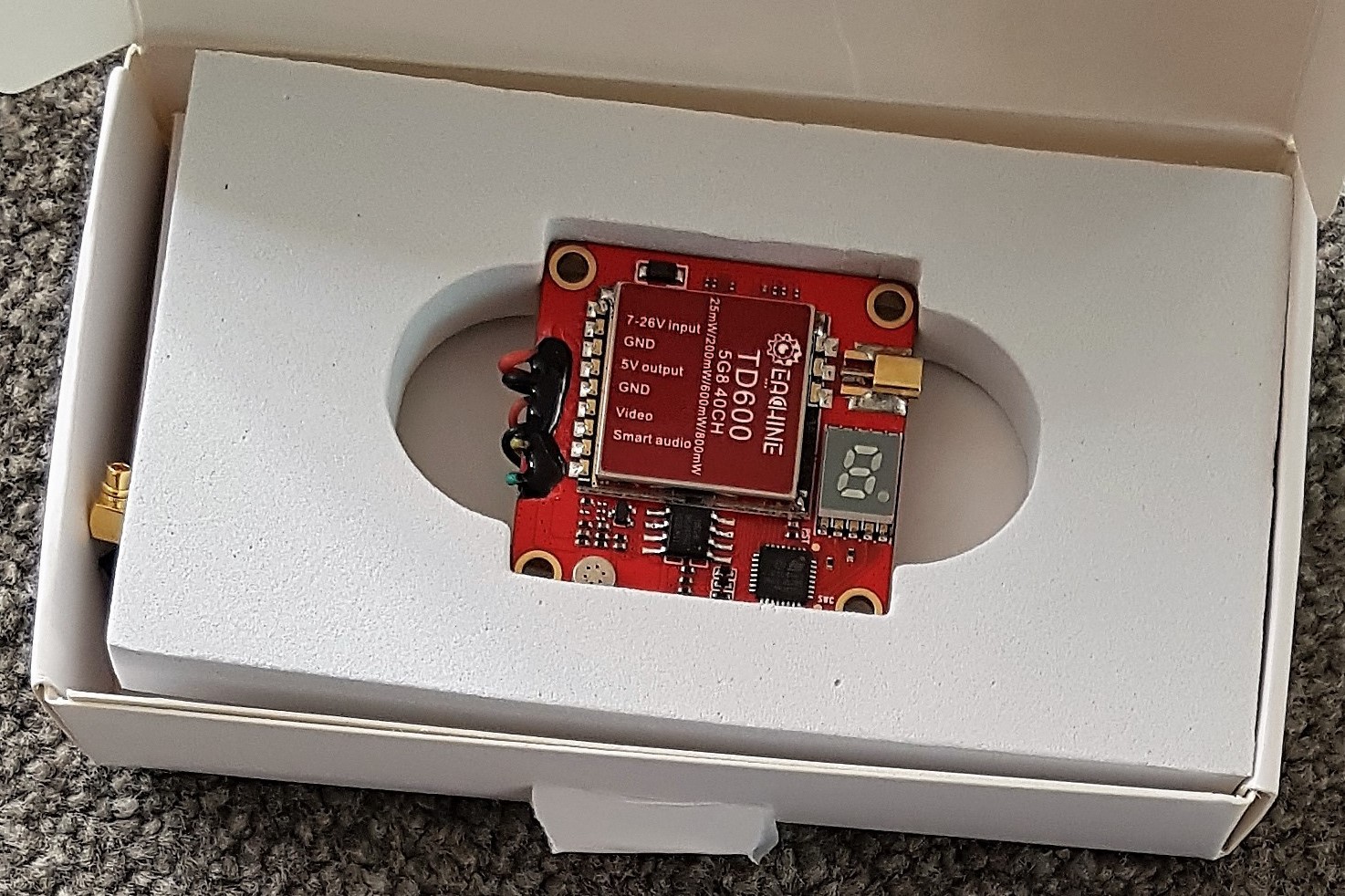 The recorders save the videos to micro SD cards, either in the goggles or on the tx depending on which type you are using. Dougal then realised that his video quality wasn’t as good as mine and that could only be down to his cheap camera. I’m using a Foxeer Predator Mini V2 camera that cost about £32 from HobbyKing but Dougal was using a very cheap camera he bought some while ago. So he’s now bought a Foxeer Monster Mini Pro V3 from HobbyKing that cost around £18 and has similar specs to mine but with slightly fewer features. He’s mounted it on his Tomahawk flying wing on a small servo so he can look from side to side using the rudder control.
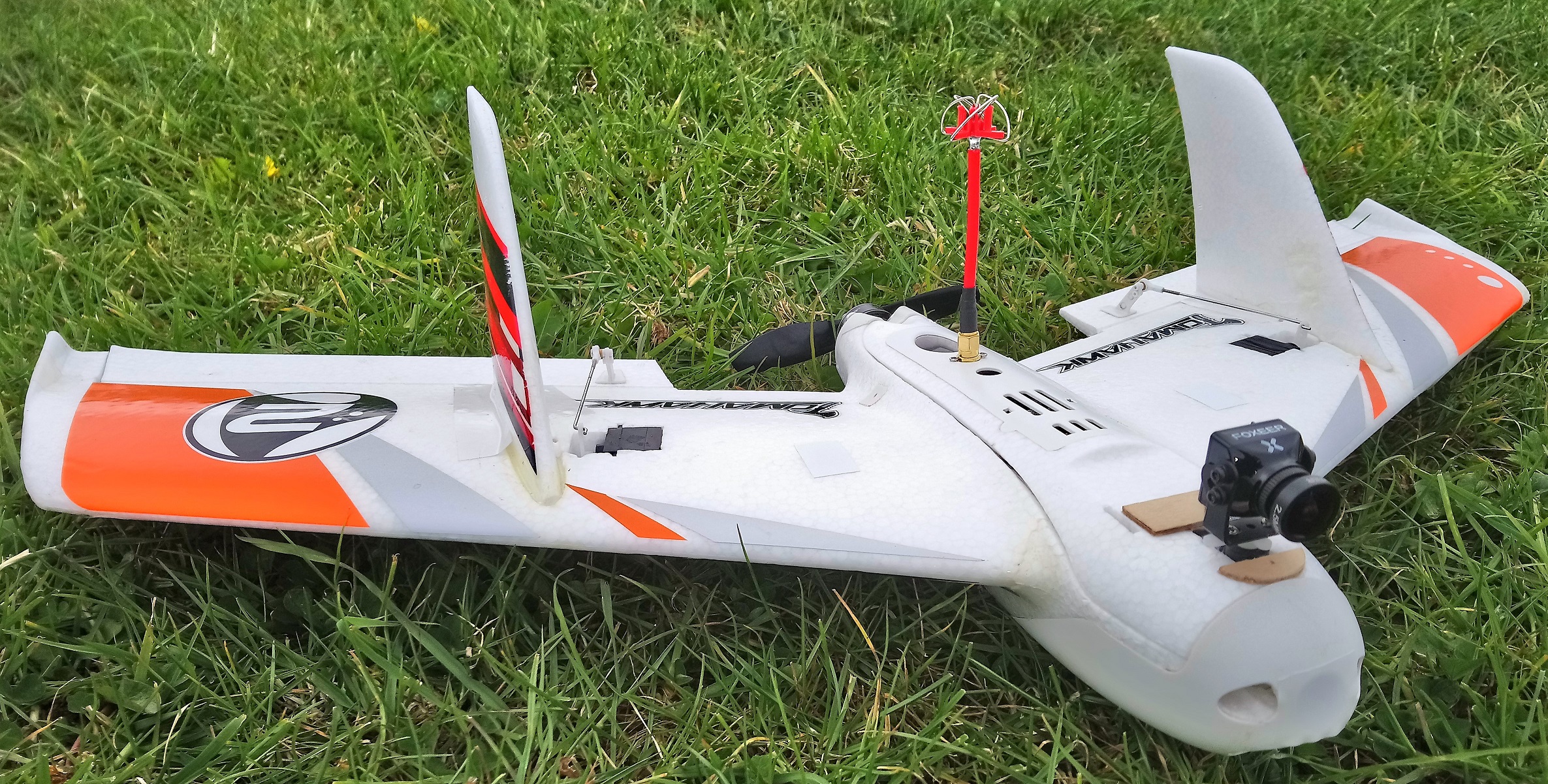 Its early days but the video quality is definitely much better than with his previous camera and the swivel mount is also looking worthwhile. Captain Slow is also now getting into FPV and has ordered the same goggles and tx as me and the V3 version of the Foxeer Predator Mini camera. He’s not certain which plane he’ll fit the gear to yet but his Multiplex Twinstar is looking like an obvious choice.
Gentleman Jim hasn’t managed to get to the field much recently but he did bring along a very pretty little Freewing Space Walker to fly a couple of times in April. Jim bought it on a whim while browsing in Modellbau UK at Medstead.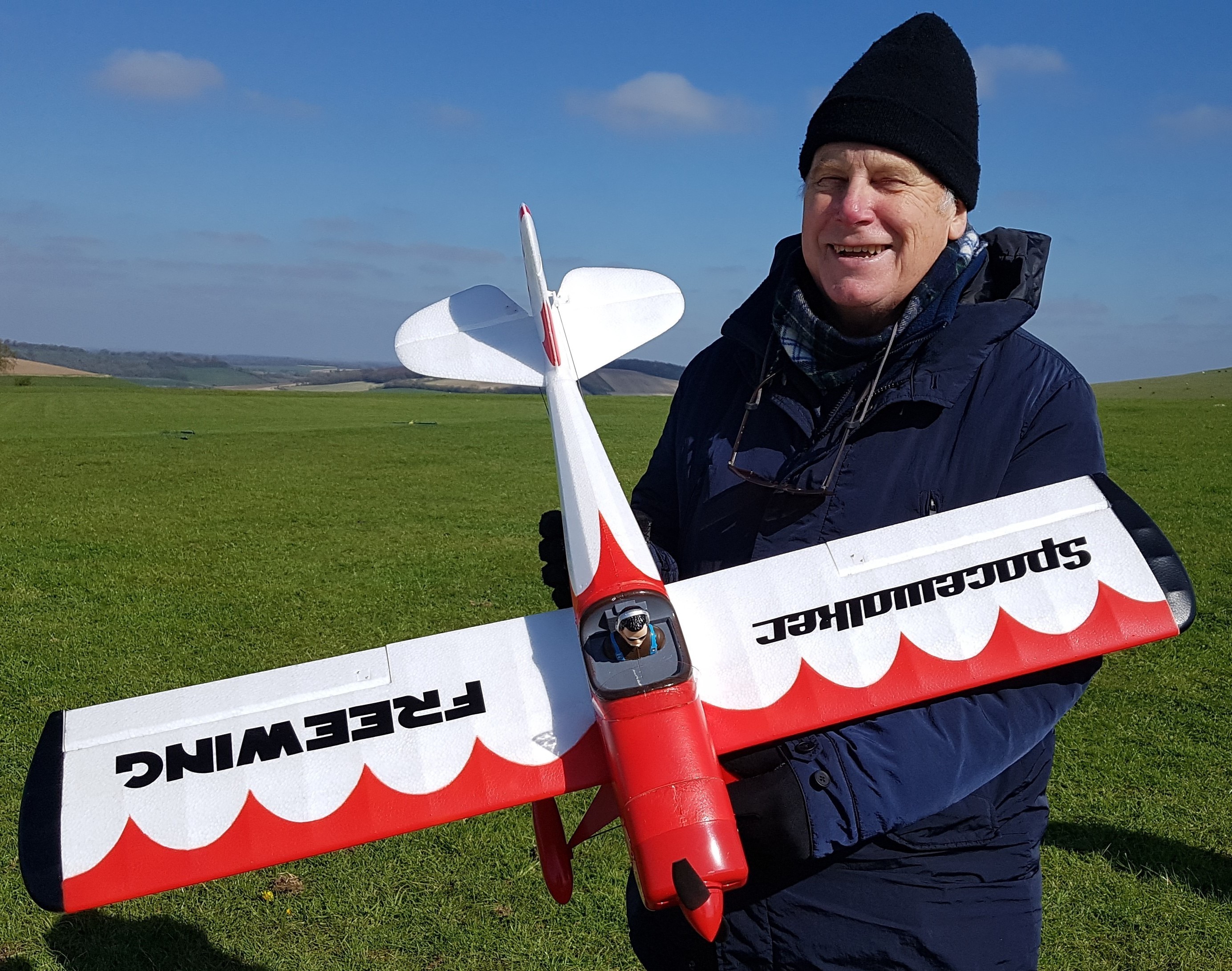 Its 1120mm span and weighs just 850g so probably not a model for a windy day but it does fly very nicely.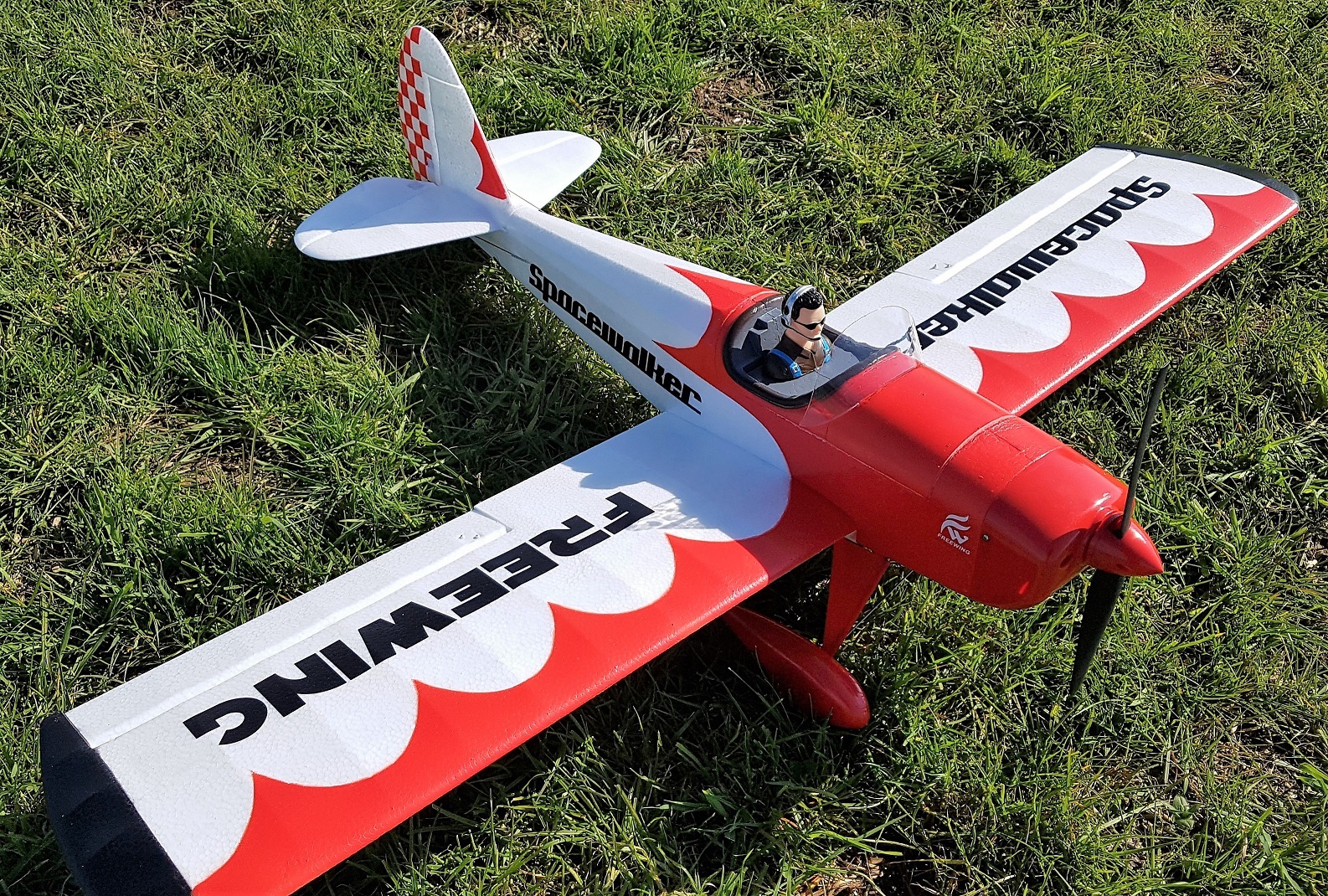
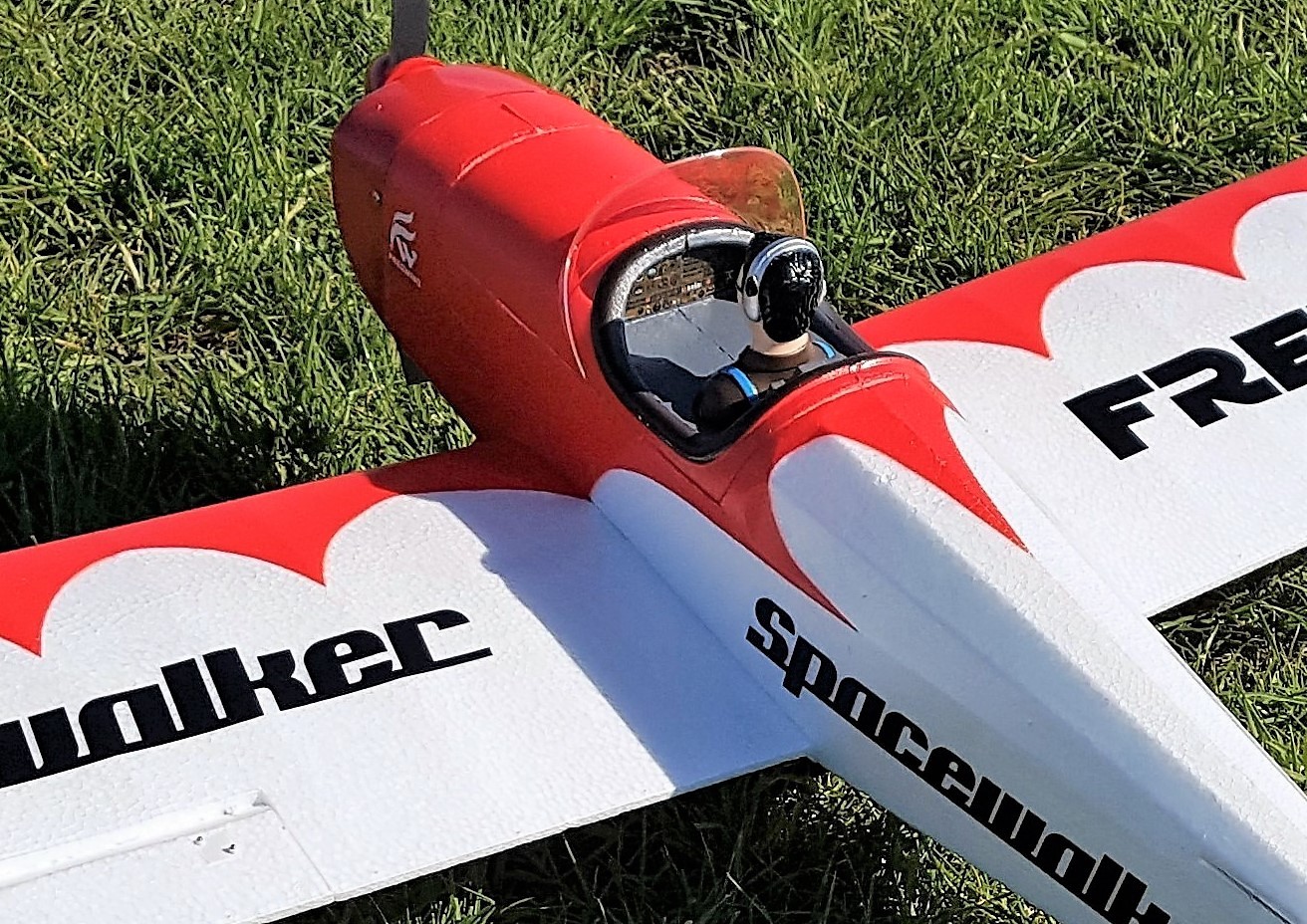 The EPO model comes complete with four 9g servos, a 3130 1200kV motor, a 30A esc, and a 10×6 propeller. It requires a 3 cell lipo in the 1600- 2200mAh range and a receiver of your choice but is otherwise complete. It was a bit blustery on the day of its first flight so the Space Walker got chucked around a bit but it flew well anyway. The weather was much calmer for its second outing and it was much more pleasant to fly, I think Jim will enjoy this one.
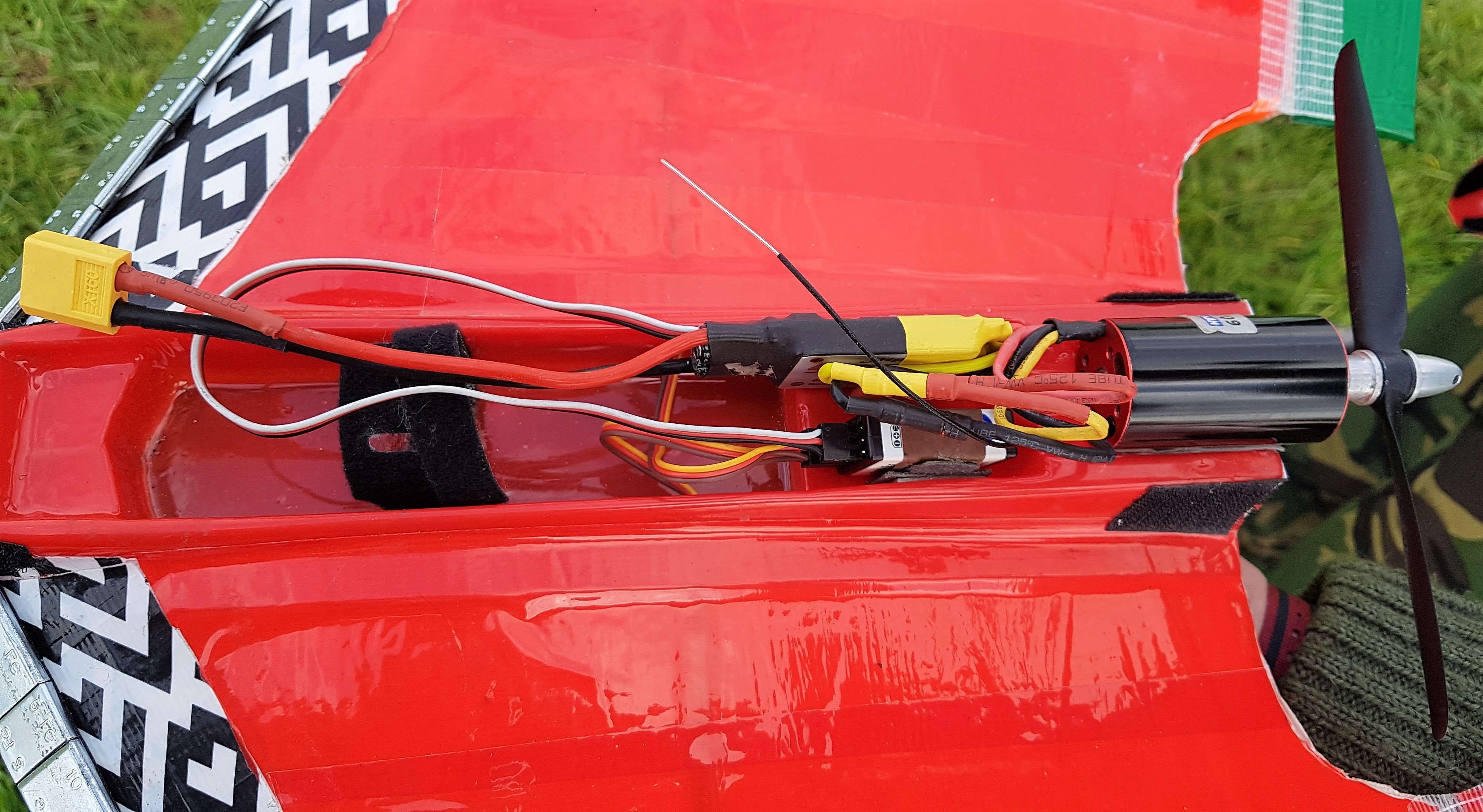
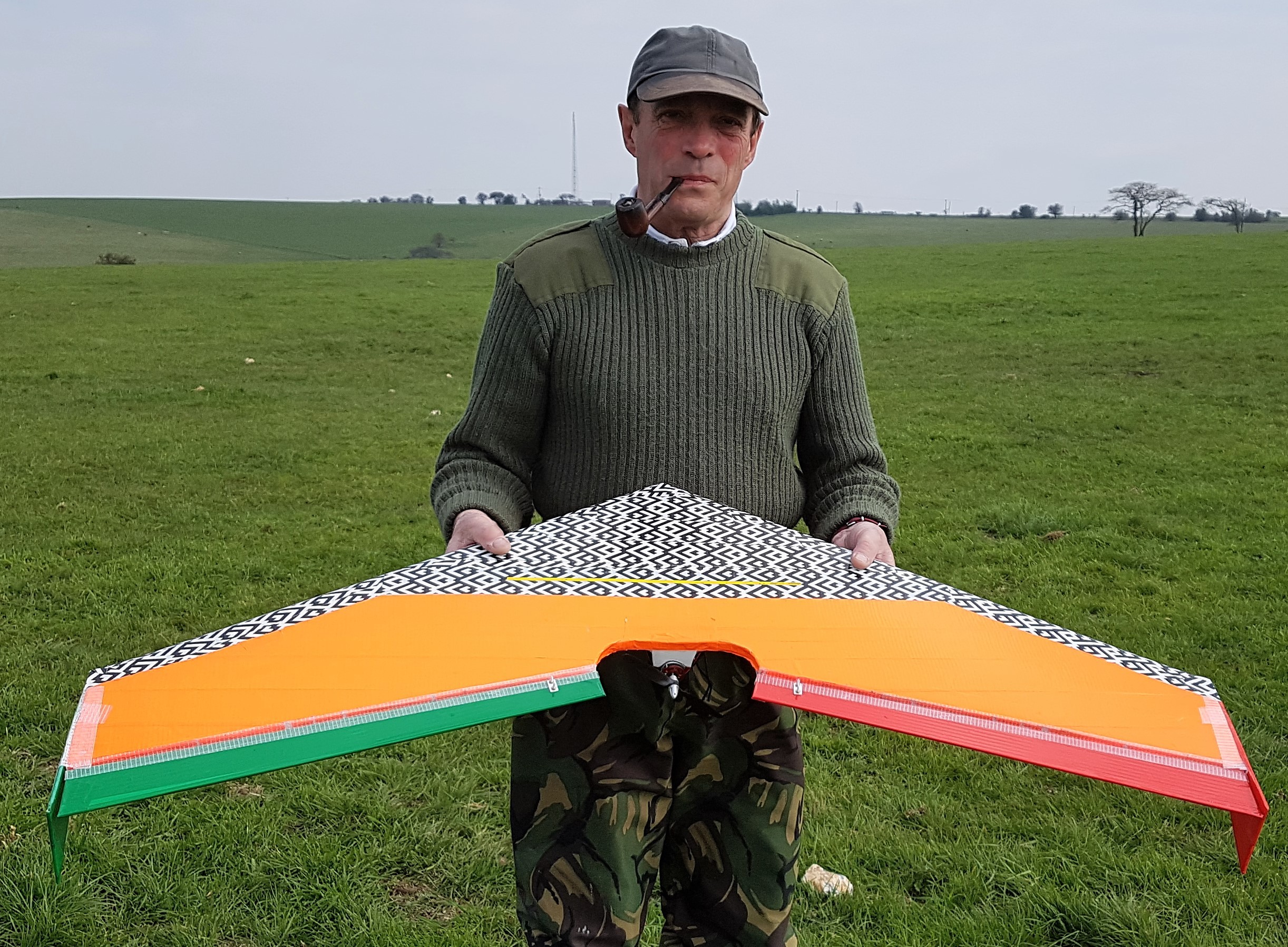
Ok, now for some amazing news, you’d better be sitting down for this one: Captain Slow has finished his Zagi!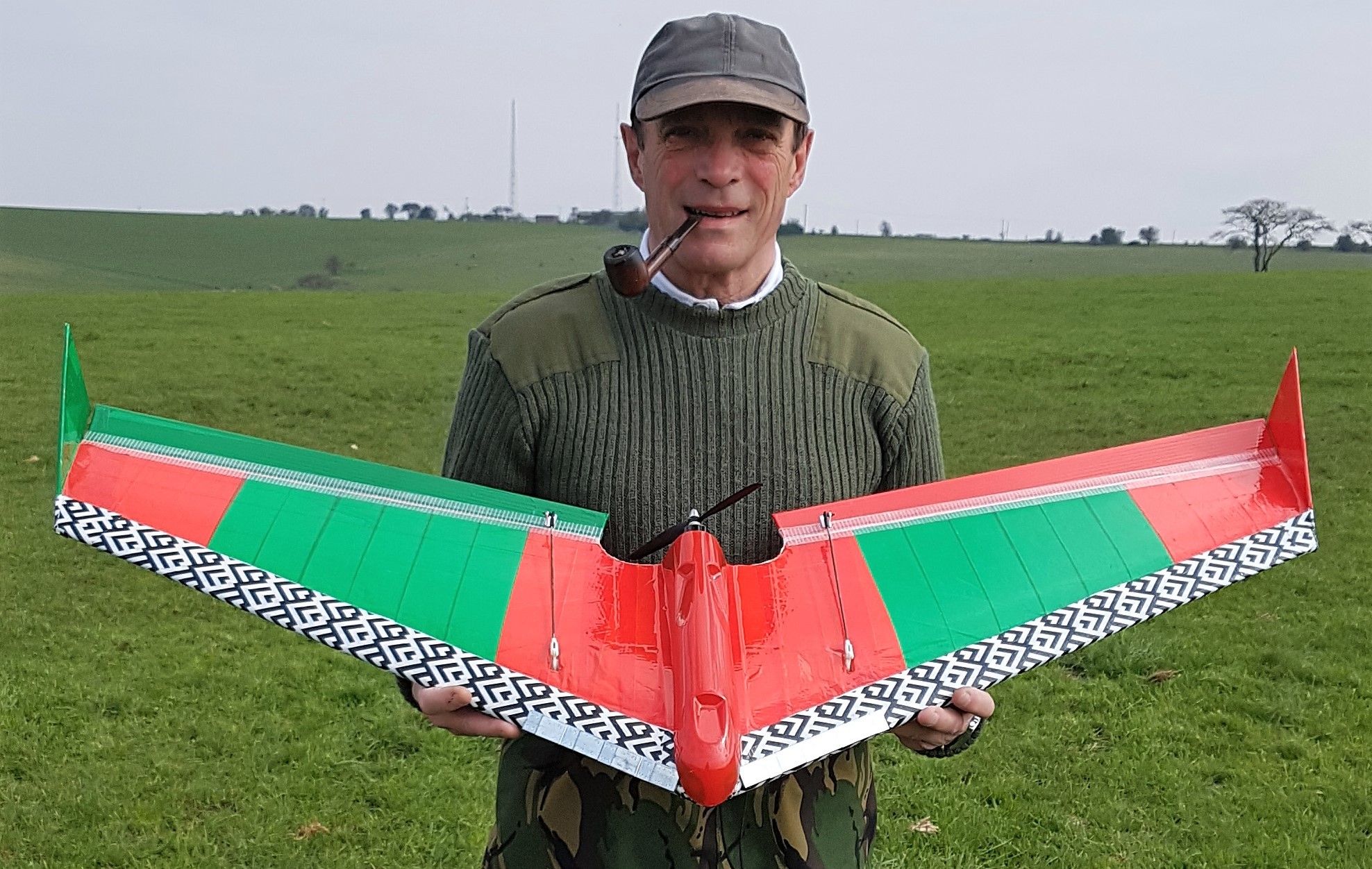 It only took him five months to complete the ‘buy today, fly tomorrow’ model, incredible! After much deliberation about the choice of motor and how to hold the Zagi to launch it Captain Slow settled on a Pelikan 2200kV inrunner motor and fitted a small balsa block as a launching hold under the nose. As the original was designed for a small brushed ‘can’ motor and relatively heavy nicad battery Captain Slow found that the brushless inrunner motor at the back and much lighter lipo battery at the front meant a lot of lead was required to achieve the correct centre of gravity. You can see some of the weights along the leading edge in the photo.
 But although the Zagi felt very heavy it flew extremely well and the extra weight didn’t seem to bother it at all. Captain Slow wanted it as a windy weather model anyway so the extra weight is probably not a bad thing.
 After only a couple of flights the motor started making an odd noise and when he landed it Captain Slow’s finger discovered that the motor was hot, sizzlingly hot in fact! The rear bearing had come loose and the motor was totally ruined. I remembered I had a similar size inrunner at home so donated it to the worthy cause and, although the 3900kV is really much too high (it’s really an EDF motor) it fitted ok and with a 4.5×4.1 prop it does the job perfectly. The Pelikan motor was using a 6×4 prop but that pulled more than 60A with the new motor. The Zagi flies much better than expected, it’s aerobatic and despite the weight it glides very well. It was almost worth the wait…
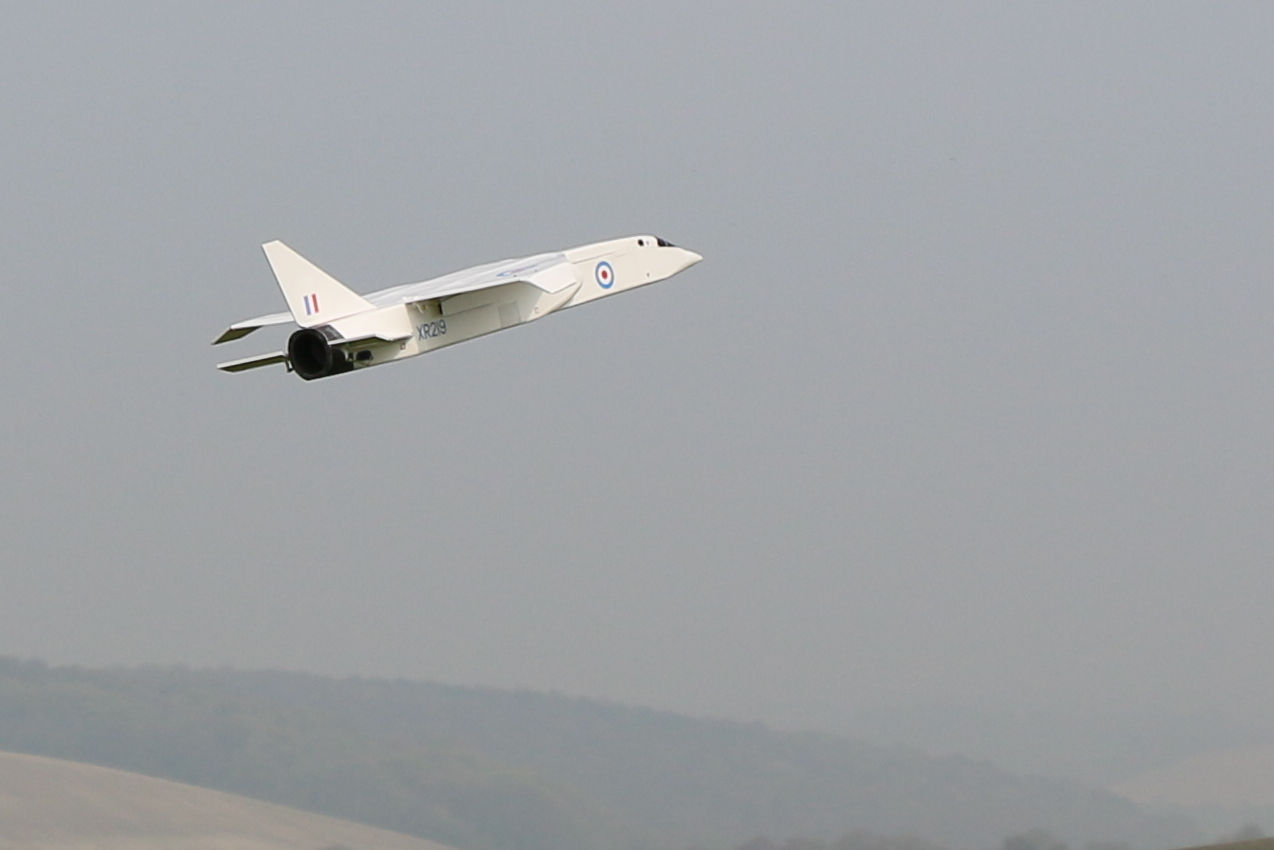
Following on from his TSR2 success last month Dwayne Pipe has continued to make a few changes and improvements to the model and it is now flying very well indeed. It still needs a good heave when launched but it goes away well now and it both looks and sounds great in the air.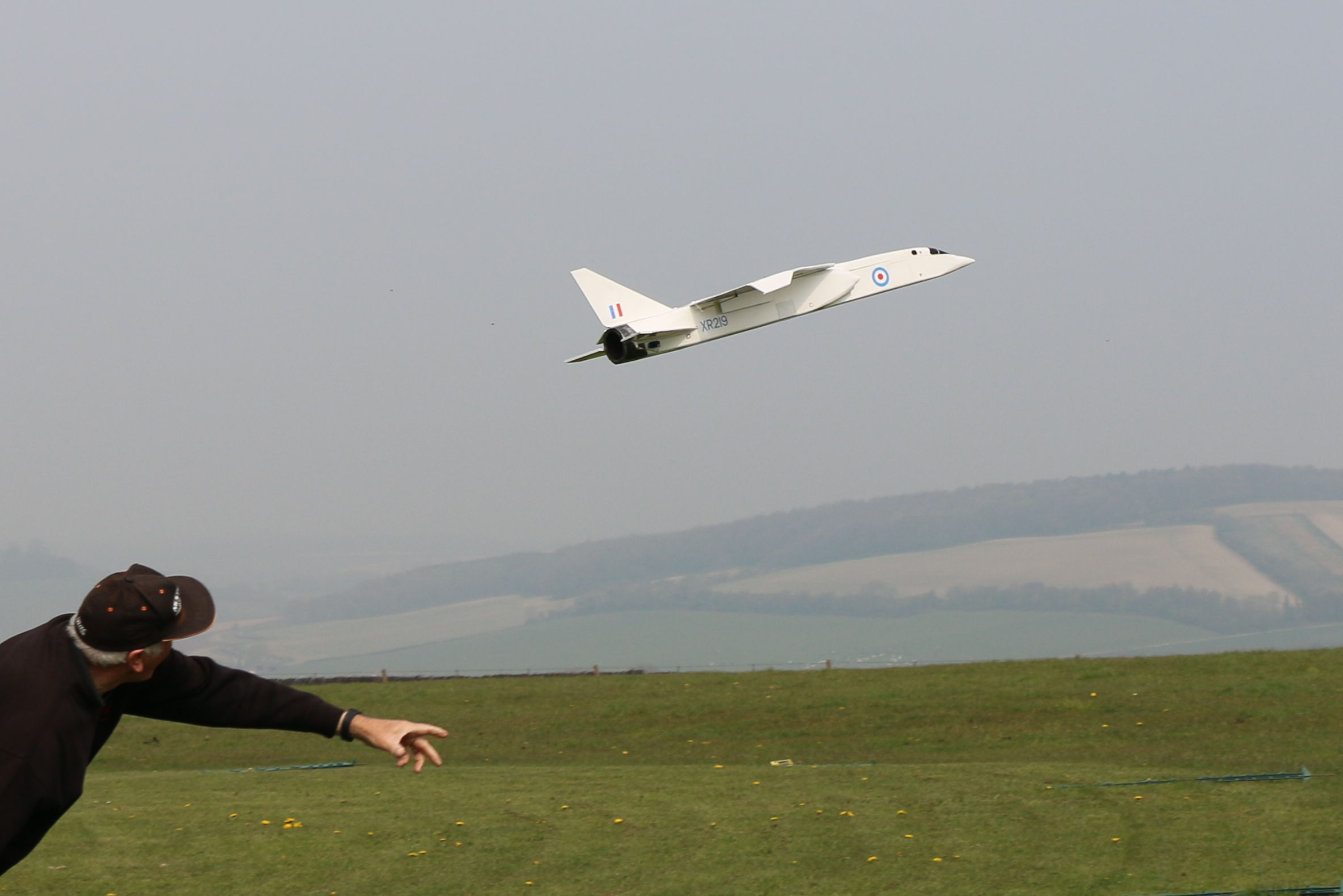 I believe Dwayne will be telling us all about the model at the next Official meeting on 16th May.
Kryten was good enough to send me a few more excellent quality photos this month, including the one above.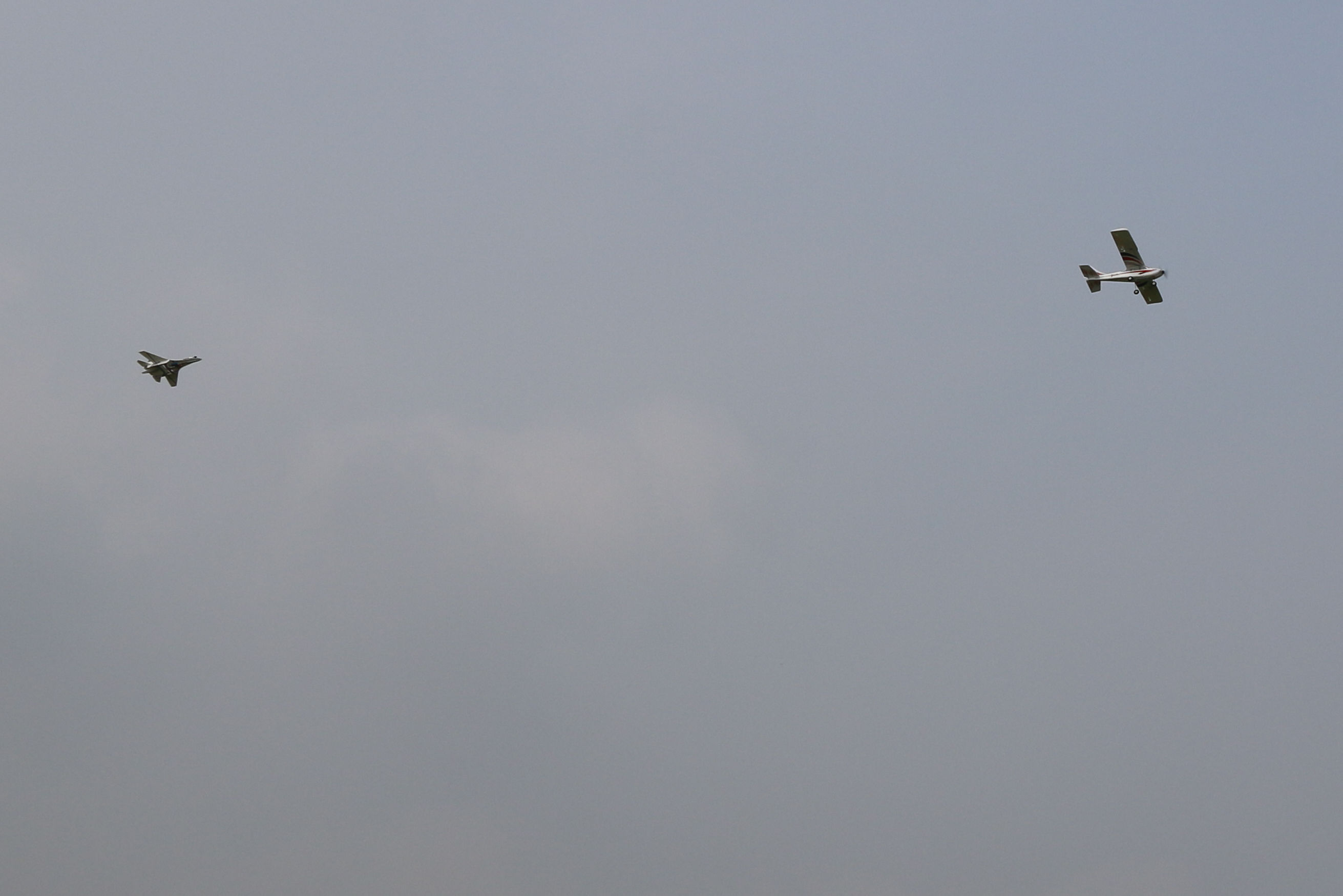
Video time now which this month includes contributions from Dougal and Captain Slow:Please watch the video full screen, it’s so much better with small models flying around. If the video won’t play for you click HERE
Before I went to the airfield today I said to the wife “I am just going to polish the wings and clean the screen”
“You’re going flying, aren’t you” she moaned. “No I am just going to clean the plane” I promised.
I got to the airfield and did my cleaning jobs on the aircraft. On the way home driving through the village I came across a pretty young woman in distress with a punctured wheel on her bicycle.
“Can I help you” I asked. “Please could you give me a lift to my hotel at the end of the village?”
I placed her bicycle in my boot and drove to the hotel. She was very grateful and invited me in for a coffee. One thing led to another and a jolly good time was had.
I drove home and was greeted by the wife saying “What time do you call this, you’ve been flying haven’t you”
“No, I went to the airfield, and cleaned the aircraft. On the way home I met a woman in distress took her back to her hotel and made mad passionate love to her.”
“You’re such a swine” she said “You promised me you wouldn’t go flying.”
Colin Cowplain
Patch News – March 2019
After the unseasonable February weather normal service was resumed in March. Overall it wasn’t bad although there was one week of continual high winds and torrential rain which just happened to be the week I was in Marrakech! Farmer George put the bullocks in the field mid-month and, being a new young herd, they were very inquisitive and frisky. Some of us were in the field flying when the bullocks arrived and we only just managed to get the fence up round the patch before they reached us. There was lots of laughter as they discovered what an electric fence does!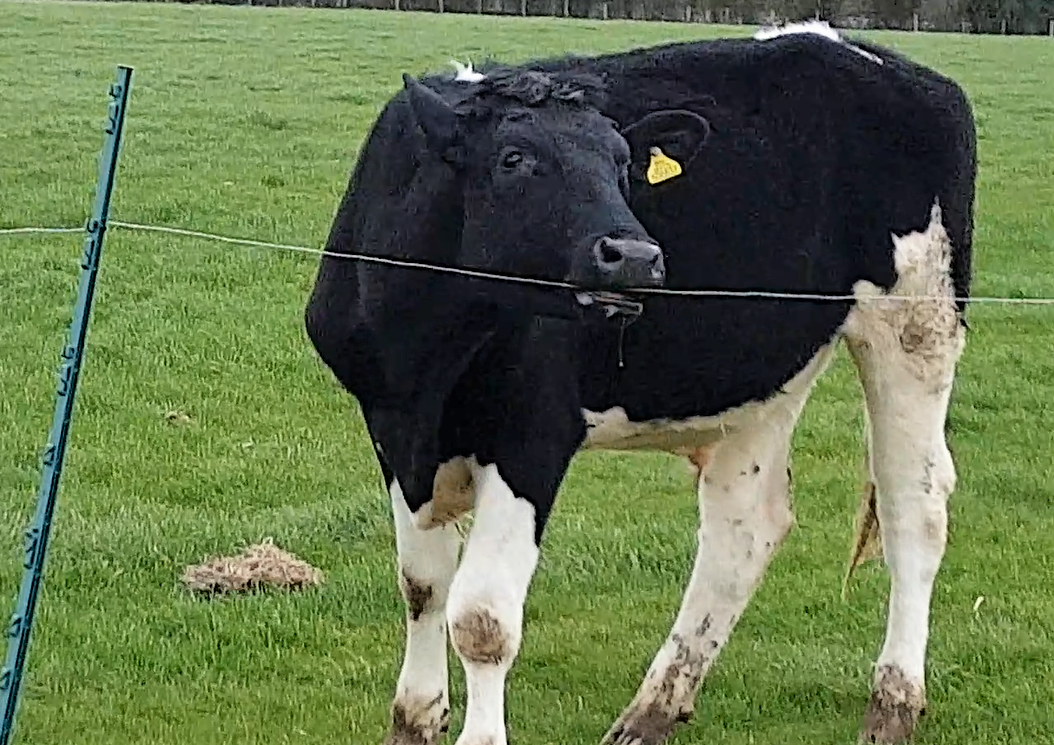
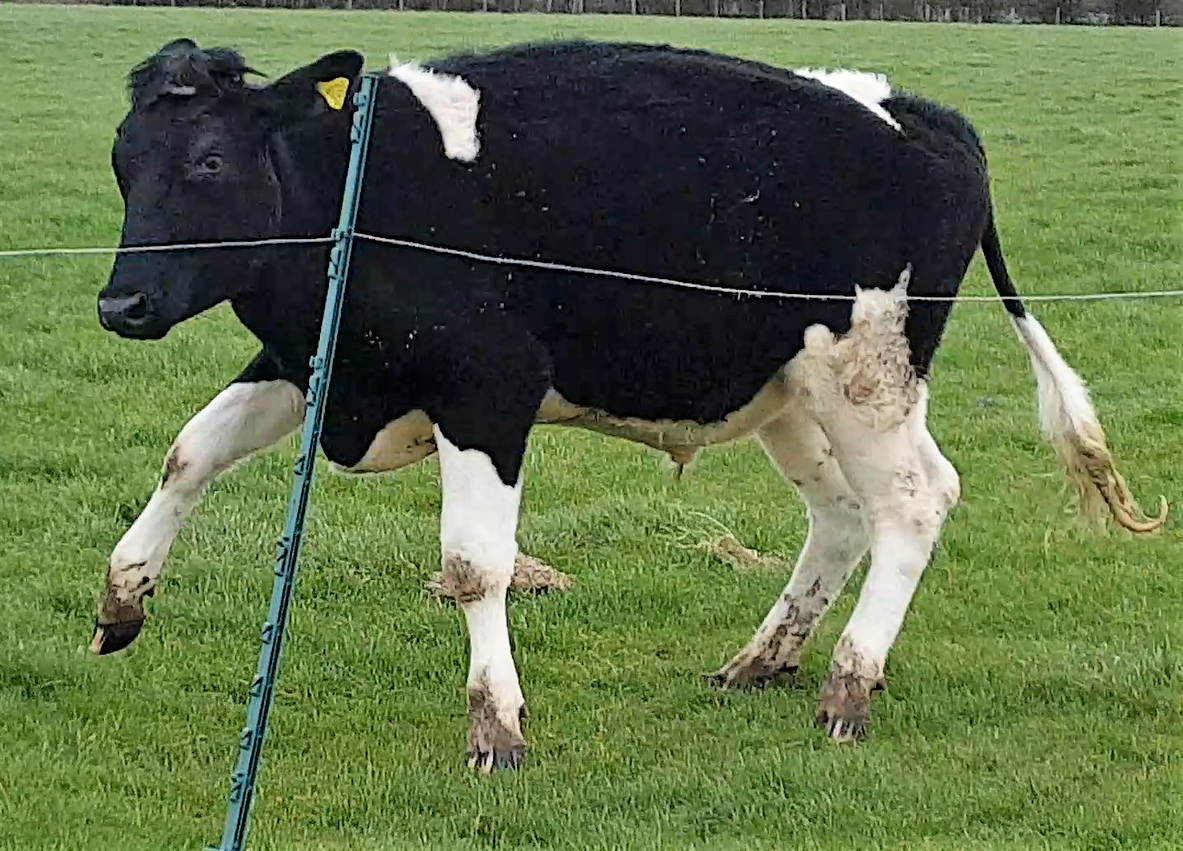 The fence is working well and, unlike the surrounding area, the patch is still in pristine condition. The Farts have cut the grass several times in March and it really is as good as it’s ever been at the moment.
At the end of February Norwegian Nick flew his Kavan Bird of Prey, it’s previous outing being back in January 2016.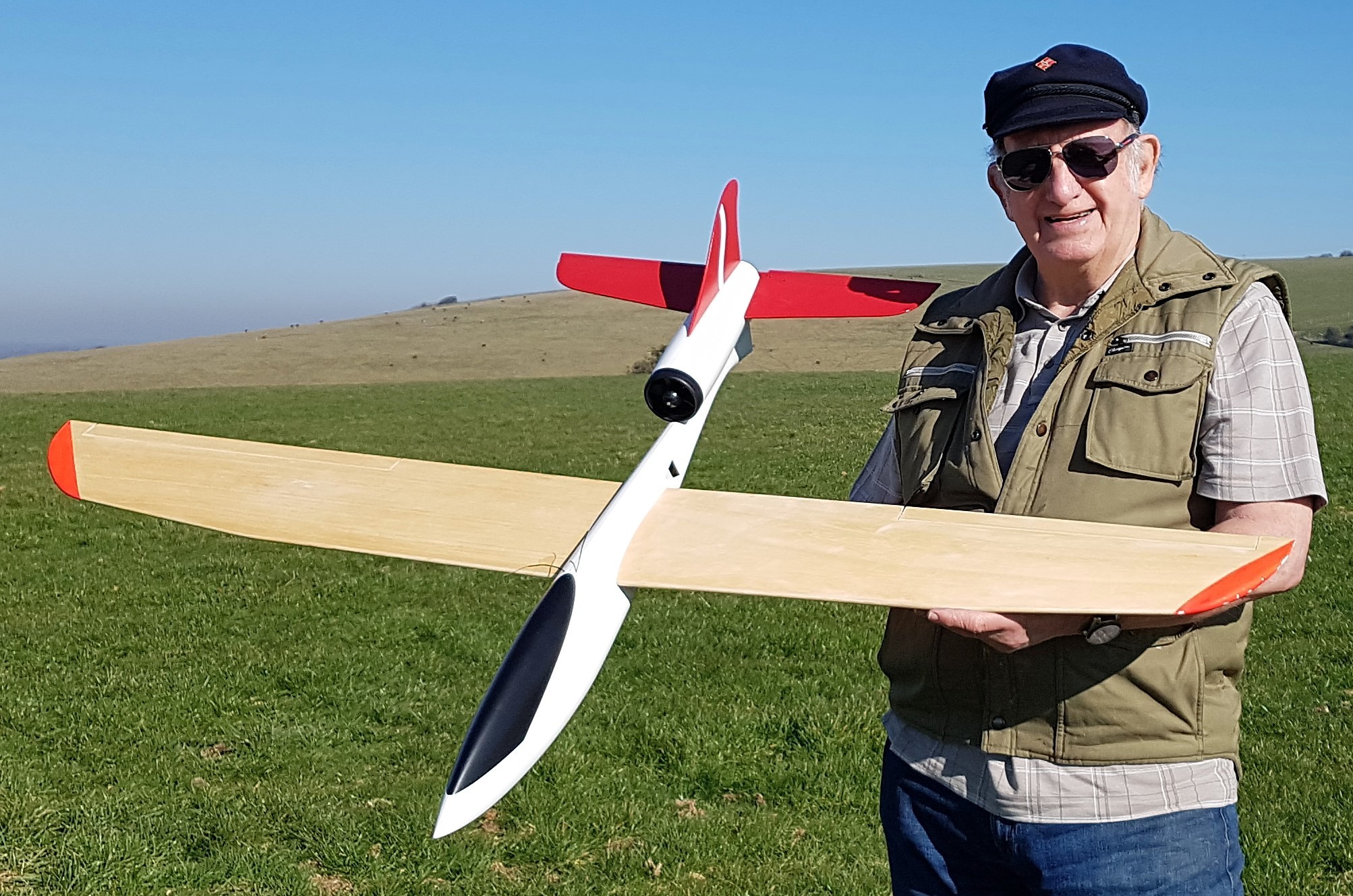
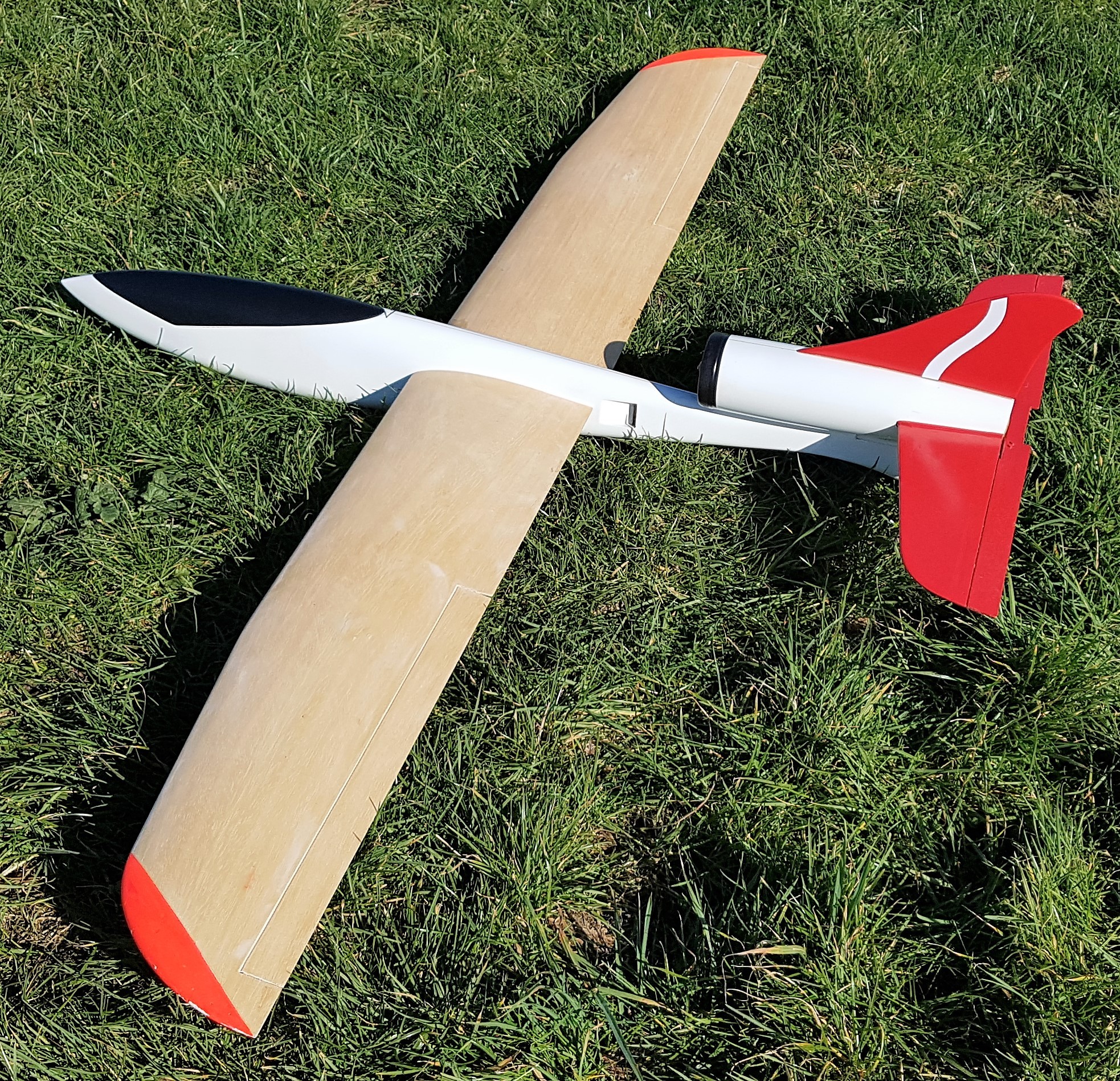 The Bird of Prey is a long discontinued kit that has a fibreglass fuselage and obechi veneered foam wings. The wingspan is approximately 58” and the all up weight is around 2lb 14ozs. Back in 2016 Nick was running a different fan/motor/battery set-up and although the model flew ok it seemed to make a lot of noise but lacked power. So now Nick has fitted a Mega 16 EDF motor, a YEP 60A esc and is using a 4 cell lipo instead of the original 3 cell.
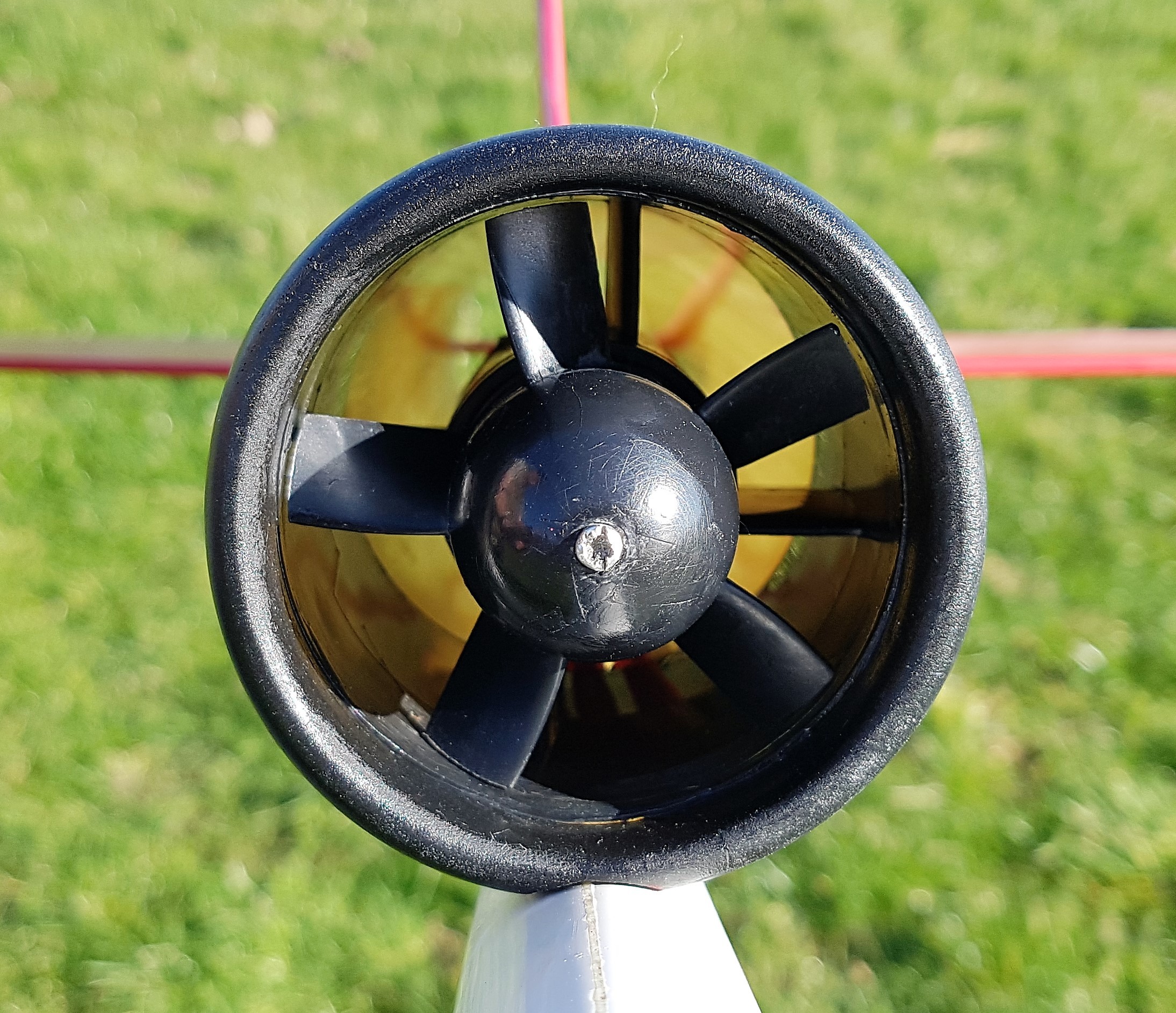 He also made and fitted a thrust tube out of glass fibre cloth to make the whole thing more efficient.
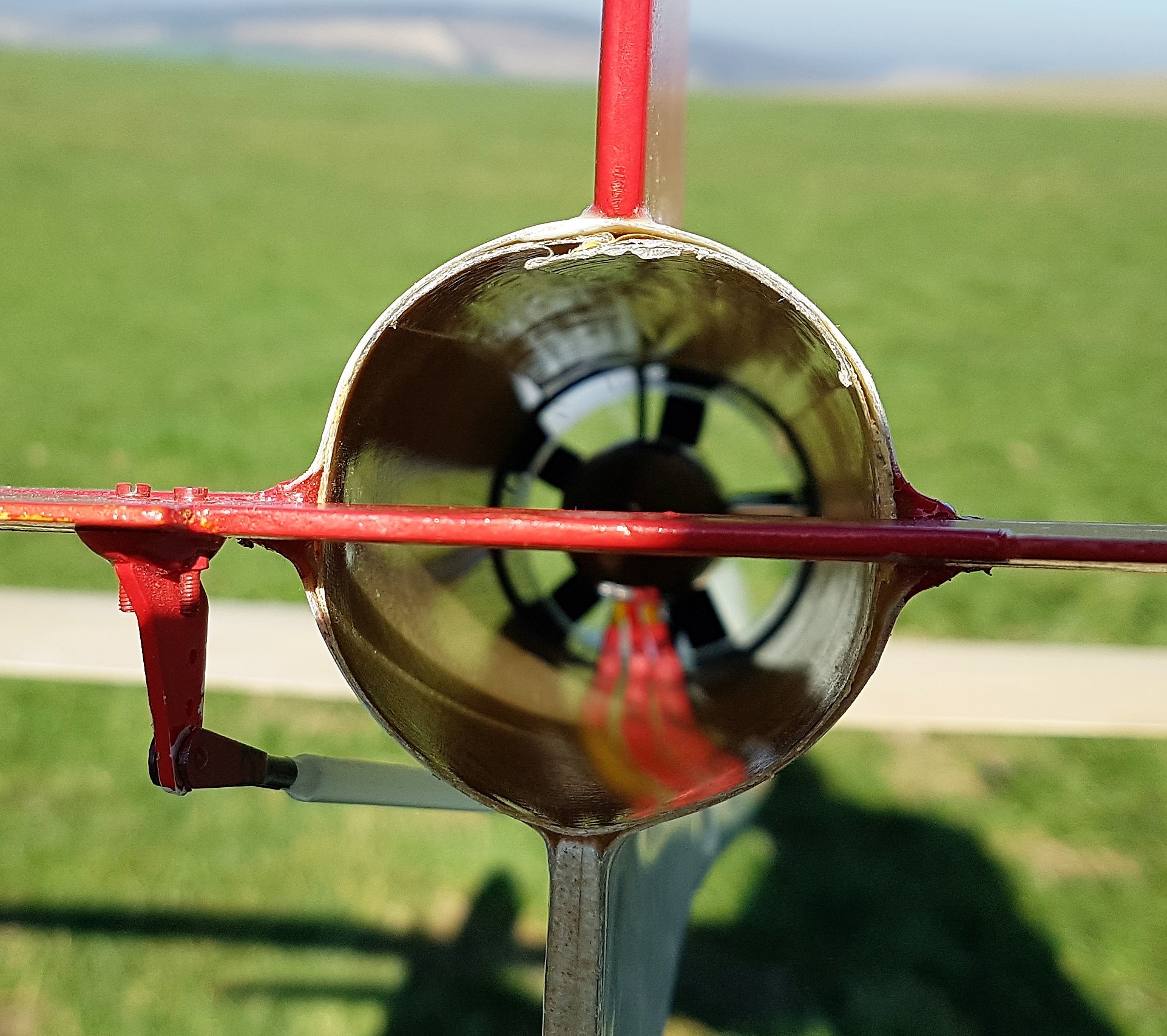 It certainly worked as the model now has much more power and is significantly quieter. It flies really well and I expect we’ll see a lot of it through the summer months. You can see it flying in this month’s video.
On the 3rd of the month those of us who are on WhatsApp were alerted by Bob the Builder to a massive price reduction of the HobbyKing foamboard models. Various ones were in the sale including the popular Sukhoi SU-27 and Mig-29 and the prices were ridiculous, the SU-27s were slashed to £1.68 and the others were in a similar range.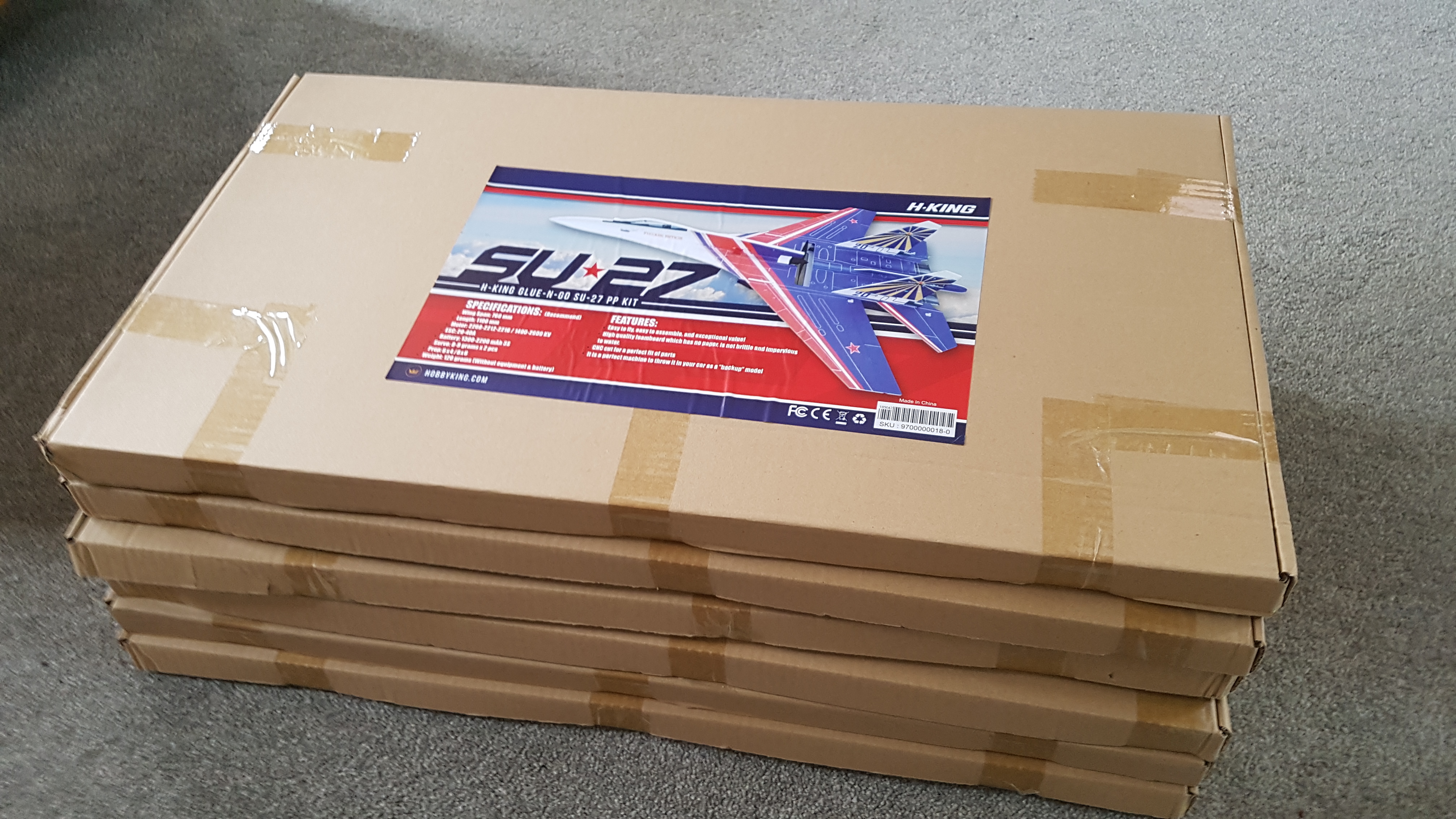 Bob ordered himself a couple of SU-27s, Woody went for an F-4 Phantom, and I jumped in quick with an order for six SU-27s, one for me and five for raffle prizes. Once postage was factored in those six cost just £2.50 each, ridiculous! Great spot Bob, thank you, and it shows the worth of being on the club WhatsApp list.
I’m looking forward to seeing how Woody’s Phantom flies, it’s a little different to the SU-27s and Mig-29s in that it has a box fuselage and a pusher motor right at the back rather than the mid mounted engine of the others. Personally I prefer the look on the similar T-45, I’ll wait and see how the F-4 turns out and then I might be tempted.
Bob the builder wasted no time in putting one of his SU-27s together and brought it along to fly one midweek day.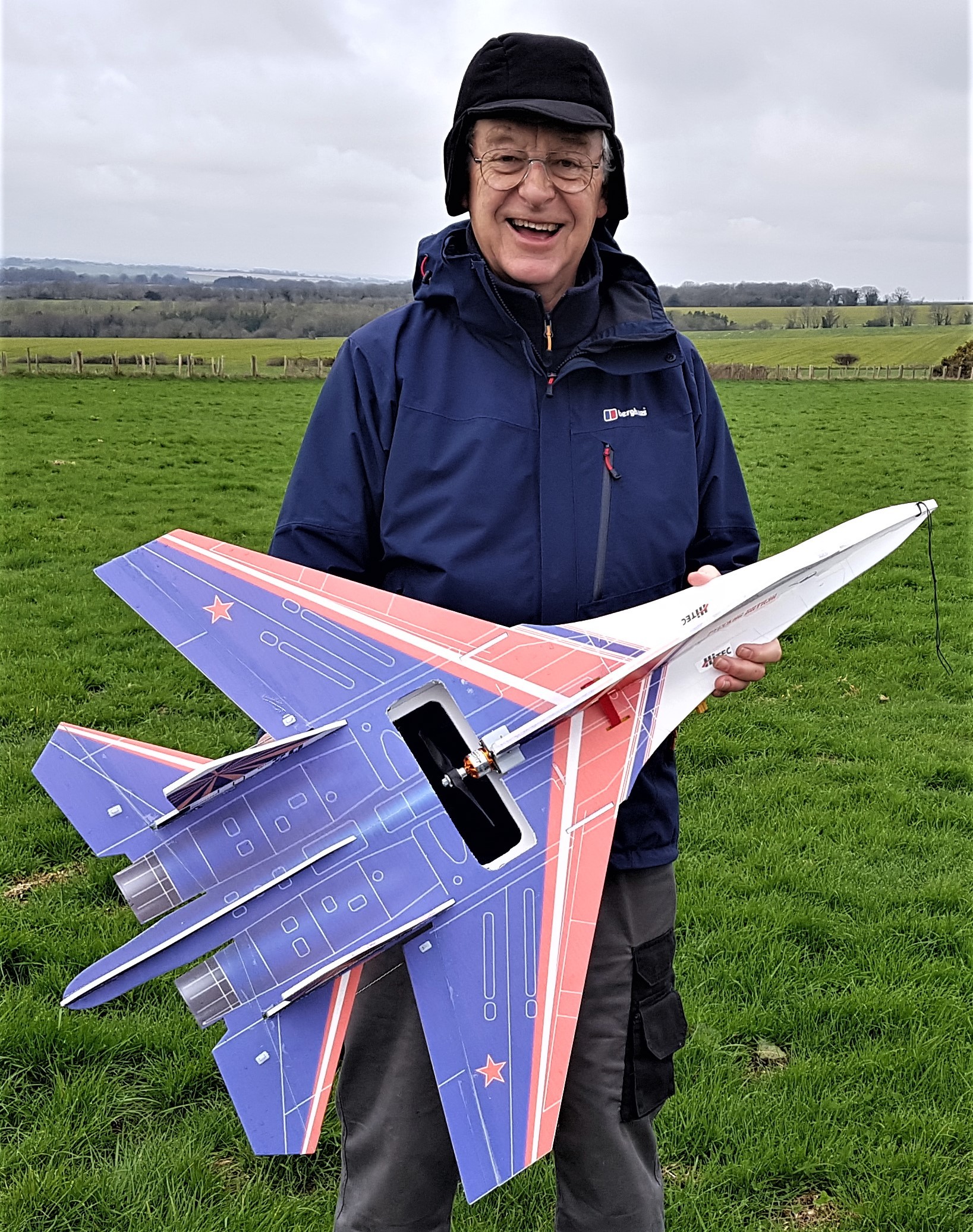
But he noticed a problem, luckily before flying, and had to take it home again to repair. Can you spot the problem?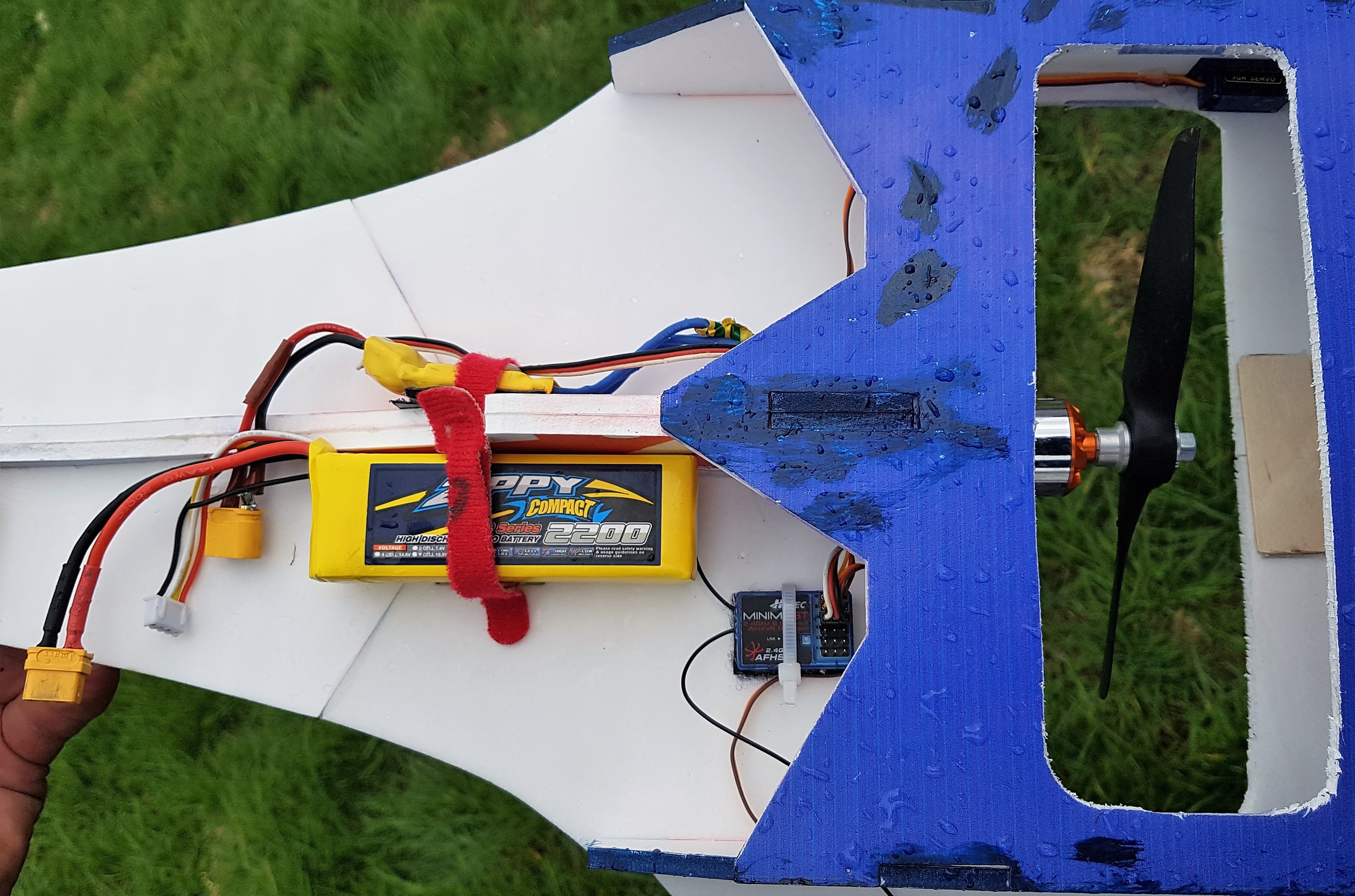 A couple of days later he was back and the Sukhoi flew perfectly with little trimming or adjustments required. Bob is using a 2826 2200kV motor with a 7″ prop and has opened up the prop slot as usual and it works a treat, not too noisy at all. I’ve lost count of how many foamboard fighters there are now, at least sixteen and more on the way.
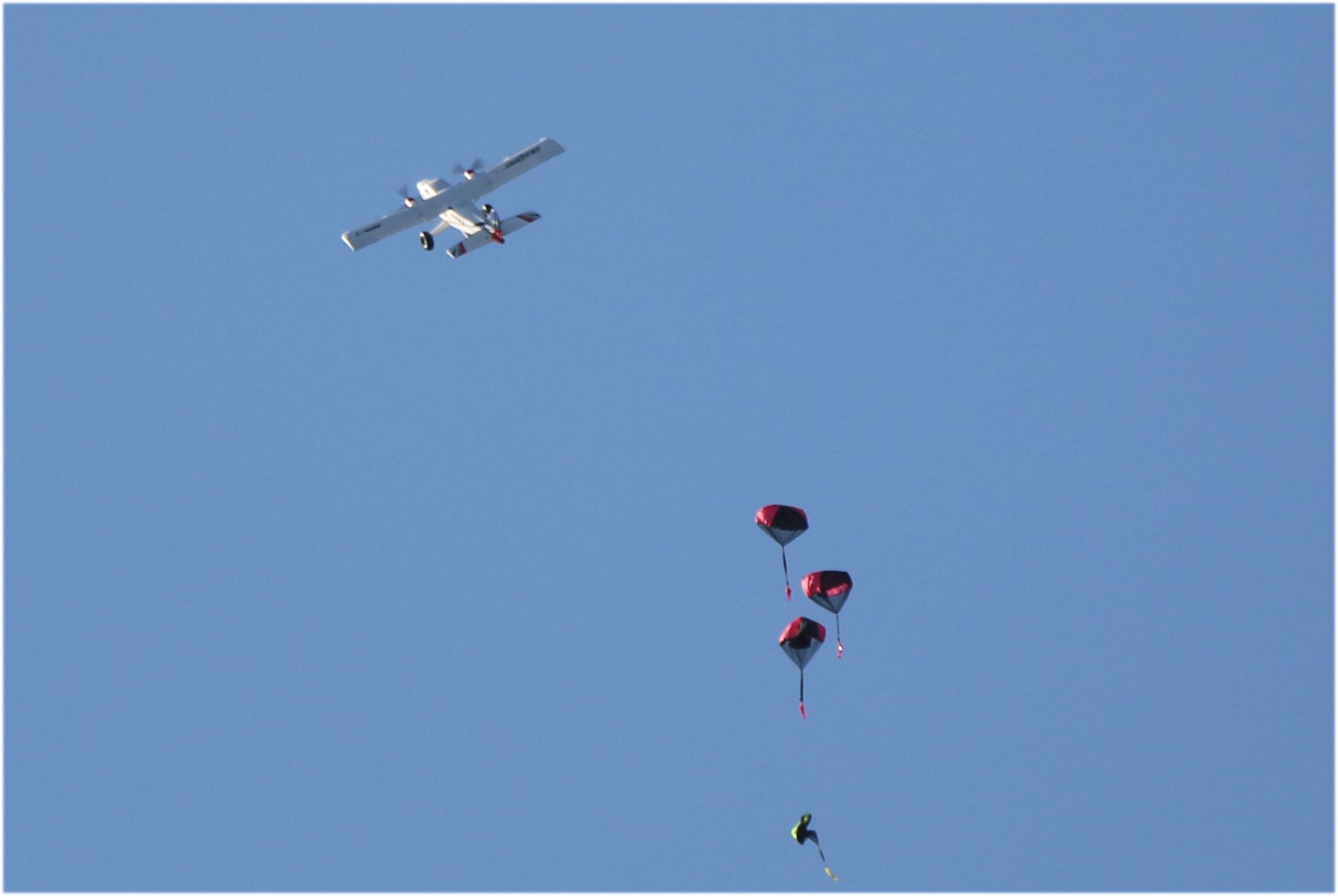
During February I played around dropping parachutists from my Bush Mule and was generally pretty pleased with the results, although I did have to make several trips to the bottom of the valley! Several times I dropped multiple parachutists but they were really a bit too big for the cargo bay and sometimes got jammed in the door. So this month I scoured the internet for smaller parachutists and discovered some that were not only about half the size but also incorporated smoke bombs. As they were smaller I figured they wouldn’t drift so far despite having to be dropped higher to allow the smoke bombs to discharge. They came in packs of eight and were about £24 including postage from China so I bought one pack to play with. I tested them on a rather murky day when Kryten was on hand with his camera and they worked fairly well although not all the smoke bombs worked properly and they all landed in the bottom field! Considering the height I dropped them from Kryten did well to snap a reasonable photo.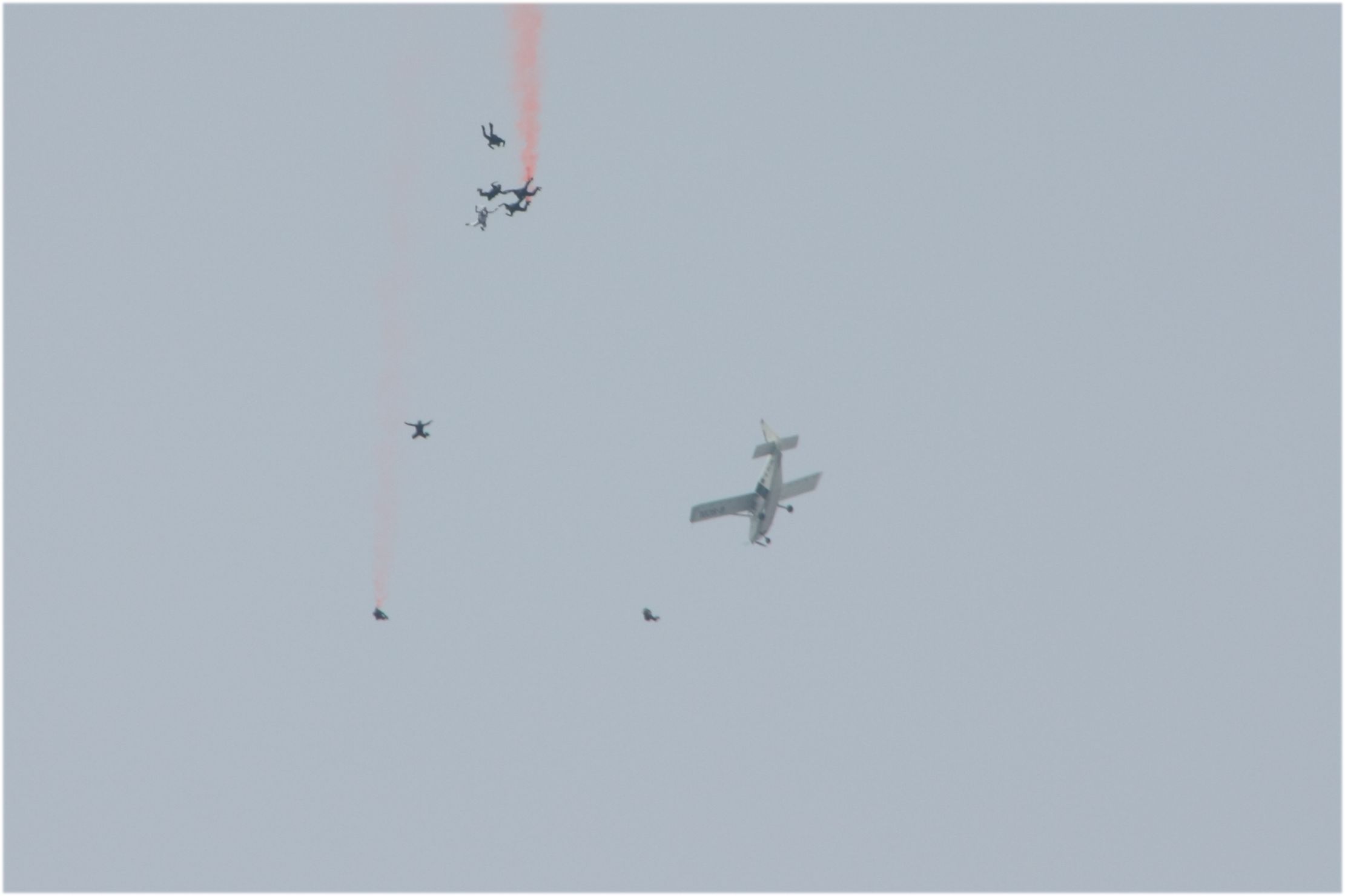 The smoke bombs are replaceable items but spares can only be purchased in packs of twenty four so it would be rather expensive to do very often but meantime I can use the parachutists without the smoke. Maybe I’ll order some more smoke bombs and save them for special occasions.
Last month I featured Dougal Entendre’s new Tomahawk flying wing that is kitted out with FPV (First Person View) equipment. After the initial flights he fitted a pair of larger, ex-Wingnetic, fins to aid stability and got on pretty well with the FPV flying. But he was getting lots of signal break-up so ordered a few different pieces of equipment.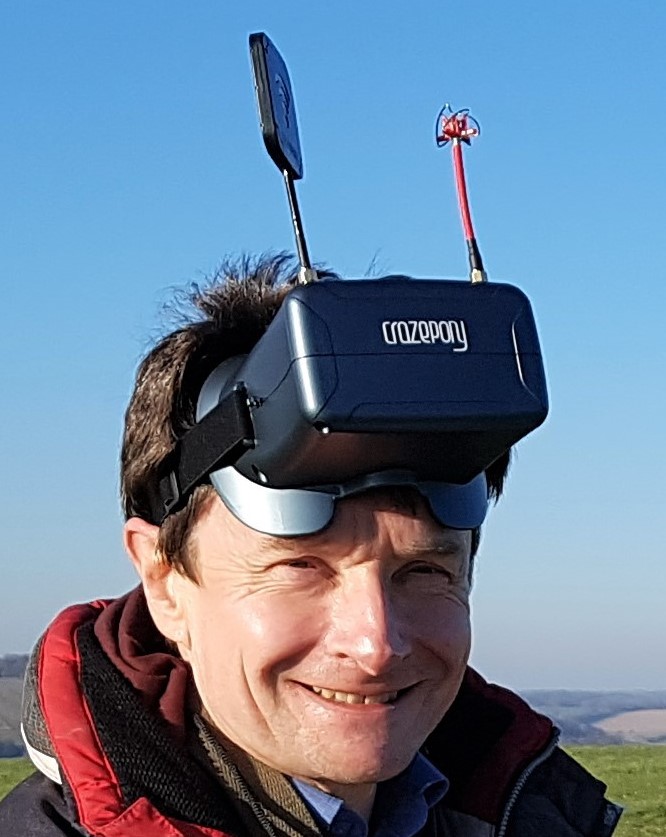
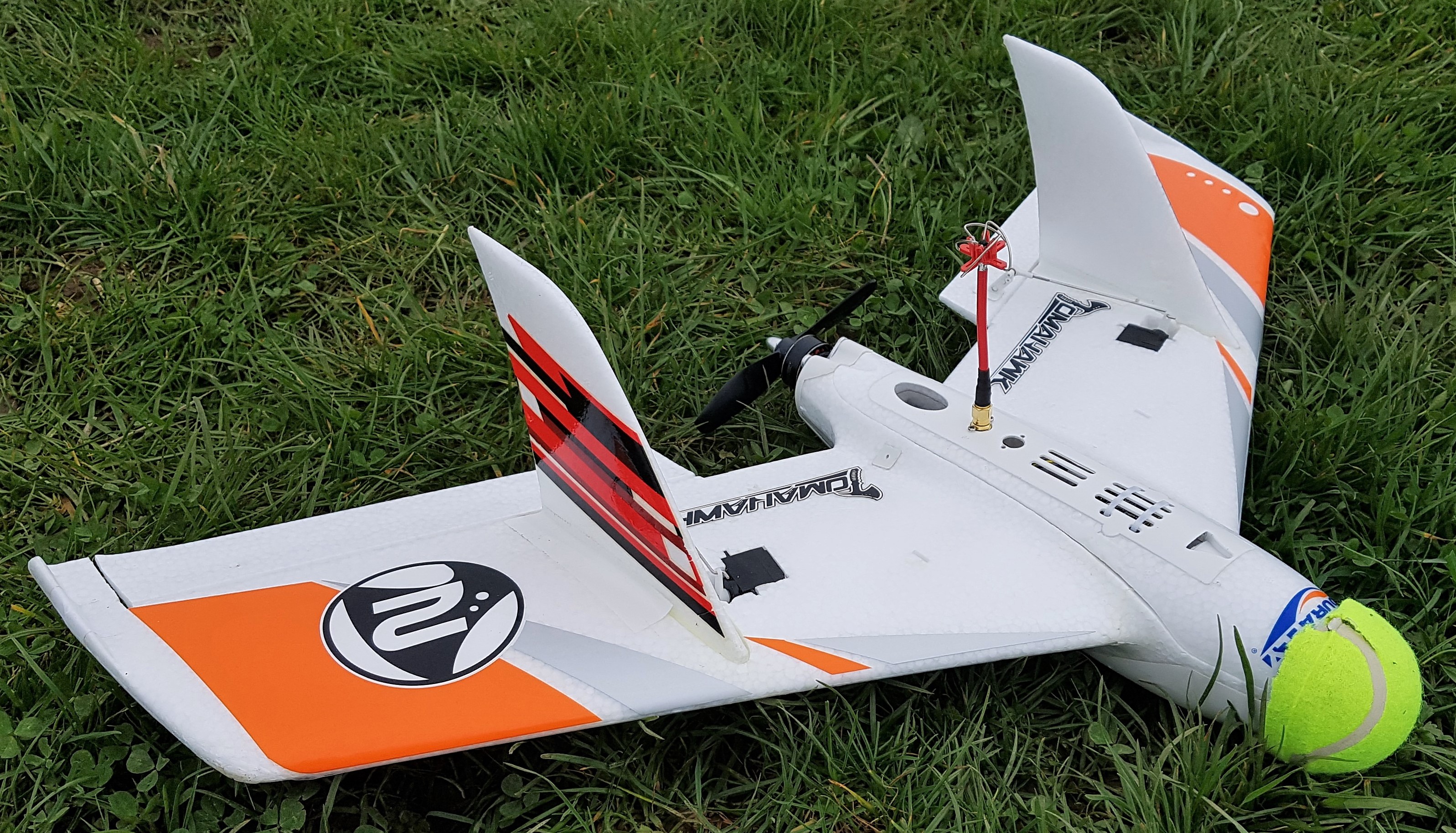 I was fascinated by the FPV and ordered some gear for myself, leaning heavily on Dougal for advice. It’s quite a steep learning curve as neither of us really know much about it but in March we both managed several successful flights and began to feel reasonably at ease while flying. So what do you need? A basic set-up consists of a small camera to mount on the model, a transmitter (with an antenna) that sends the images back to a pair of goggles that are fitted with a receiver, and a video recorder (DVR) if you want to record what you see in the goggles.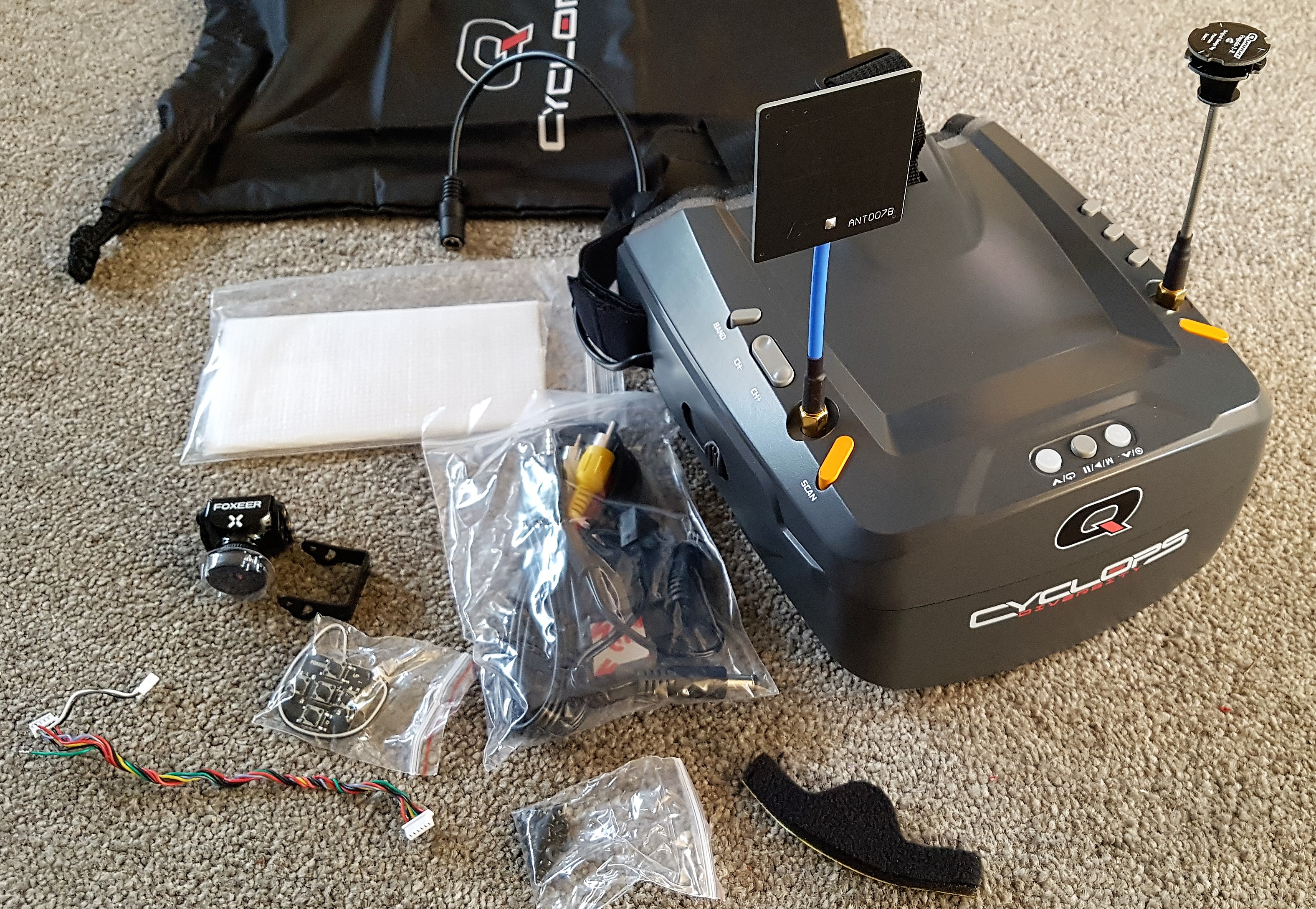
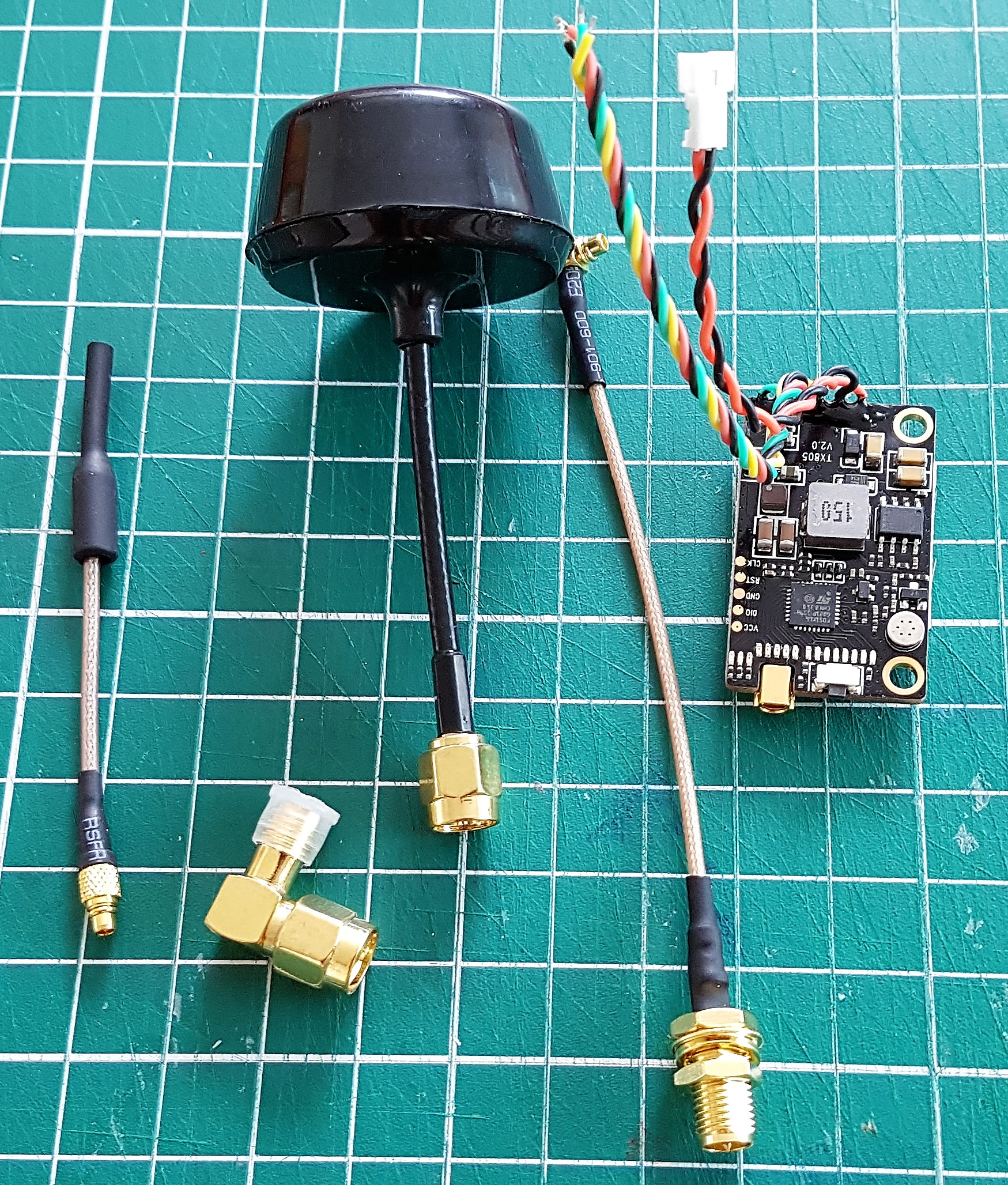 We both have diversity goggles which means the receiver has two antennae and uses whichever one is receiving the strongest signal at the time. Dougal’s goggles have a built-in battery but mine use a separate three cell lipo. Comparing the goggles mine seem to have a slightly better screen image but Dougal’s have a better DVR. We are still very much at the learning and experimenting stage and the antennae seem to have quite a large effect on the performance. Both our systems work on 5.8GHz, so avoiding any interference with our 2.4GHz RC sets, various other frequencies can be used but 5.8 is the most common. Watching Dougal’s 26” span flying wing made me think I needed something rather larger and slower to start with. Obviously you don’t want something that has a propeller in front of the camera and I eventually decided to fit the gear to my foamboard Sukhoi SU-27.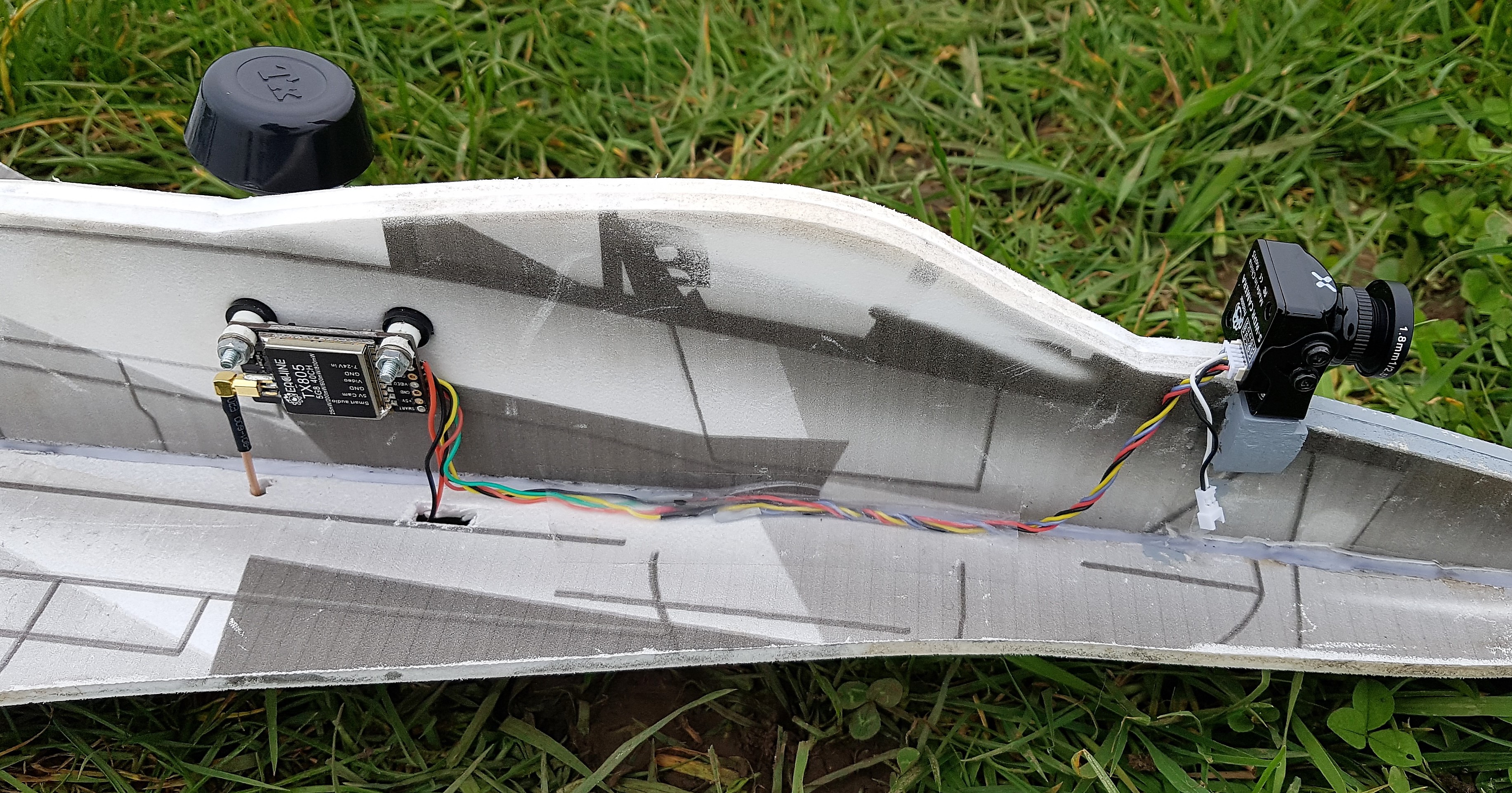
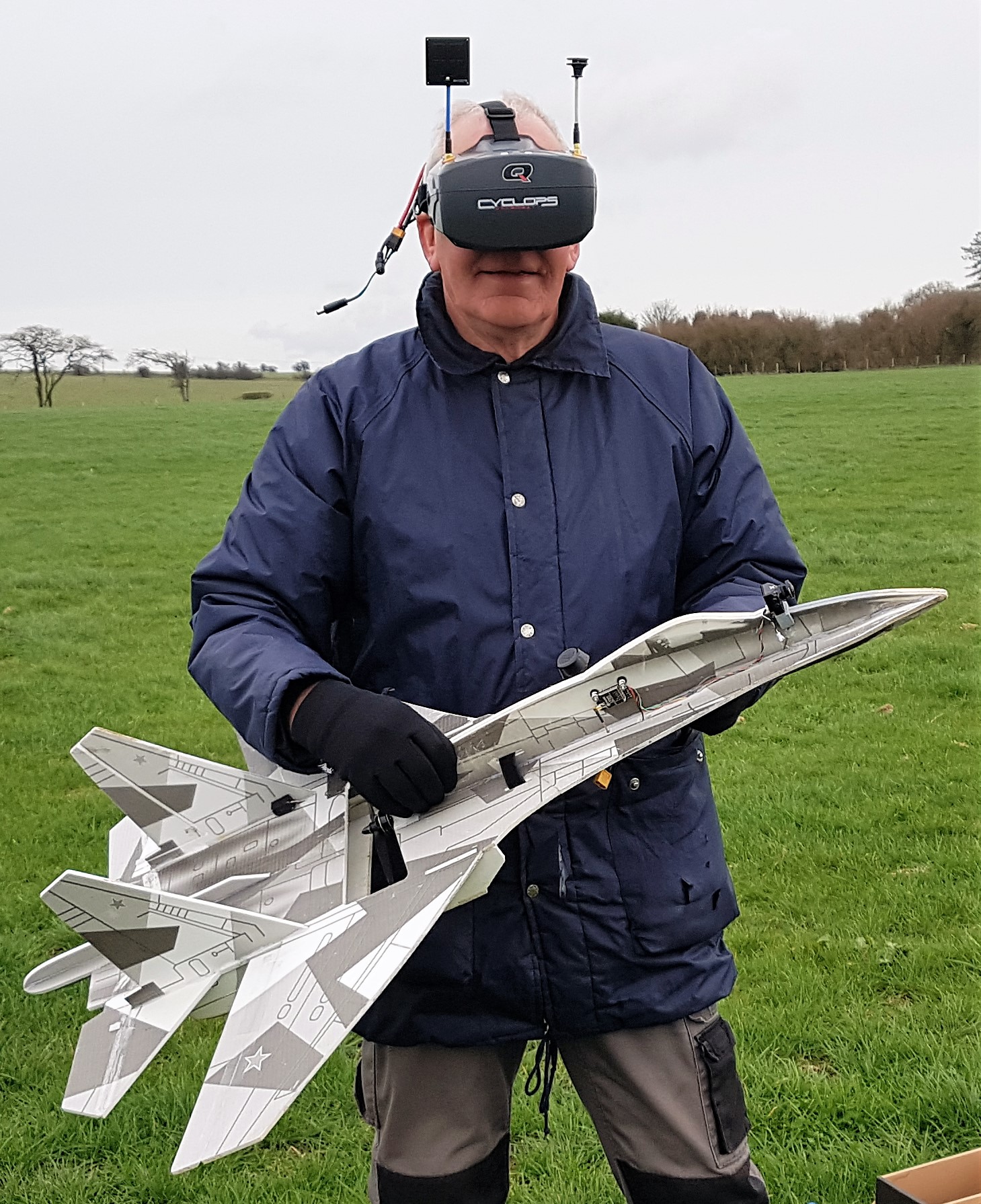 As it’s a very cheap foamboard plane it doesn’t matter too much if I break it, it has a centrally mounted motor so the propeller isn’t a problem, and it will fly slowly when required. It’s not the perfect model, something like a Bixler would be better but I don’t have one. My Bush Mule twin would be perfect but I don’t want to risk crashing it while I’m learning. As I’m able to fly midweek I’ve been able to get more FPV flights in than Dougal and I think the Sukhoi is probably easier to fly. I’ve found the temptation is to fly at slow speed and unintentionally pull in up elevator at which point the plane simply stops moving forward so now I force myself to fly faster and lower. It is essential (legally and sensibly) to have a spotter alongside the pilot and stay in line of sight view so they can take control if there’s a problem with the FPV. Now we are getting more used to flying FPV we find it tempting to fly further away than we should (we can see perfectly well where we are) which causes shouts of “Turn NOW” etc. from the helper, (in my case mostly Captain Slow) very amusing!. There is some footage from both models in this month’s video.
If you fancy having a go at FPV a HobbyKing Bixler is the perfect model to begin with and Stanley Knife has one.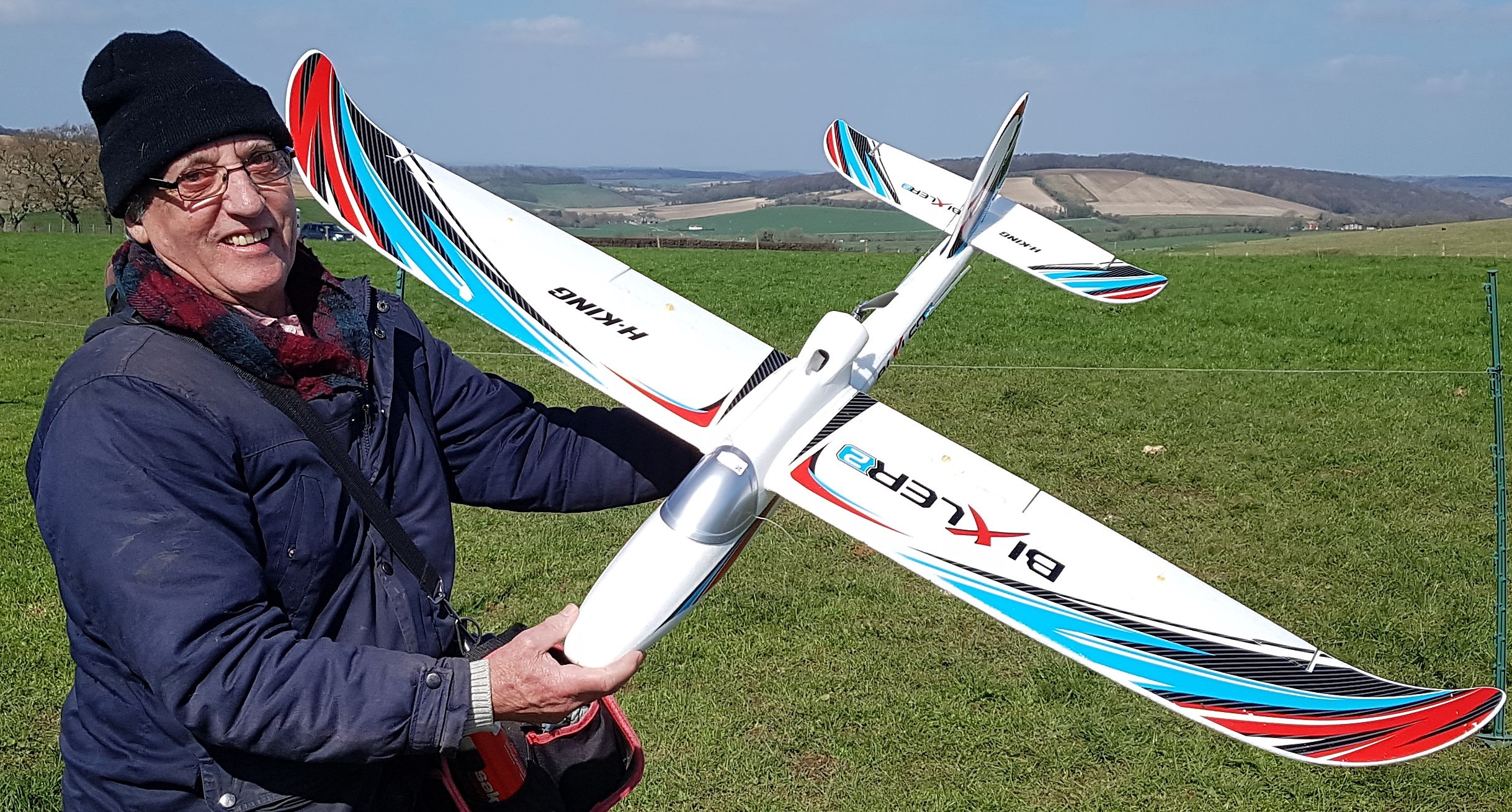 It’s a simple but efficient electric glider style model with a high mounted pusher prop so ideal for FPV. Stanley’s is a Bixler 2 but HobbyKing still sell the original Bixler 1 and also the latest version, the Bixler 3. They’ve grown in size with each version, the Bixler 1 being 1400mm span, the 2 is 1500mm spam, and the 3 is 1550 span. Version 3 comes with an undercarriage but an aftermarket undercarriage is available for versions 1 & 2 if you want one. It’s become Stanley’s model of choice when he wants to fly something gentle and I can see why, it flies extremely well.
A little while ago Dwayne Pipe announced his intention to build a TSR2. He knew I’d built an electric powered pusher version many years ago and picked my brains about it. I built mine in 1992 from a Jeremy Collins plan that was featured in RCM&E and it was designed for an IC engine, ‘minimum power OS25FSR’ was stated. I made lots of changes to make mine lighter but kept the outline the same as the plan. Originally it flew on a 7 cell NiCad pack but the power was marginal so I altered it to take 10 cells and then it flew well.
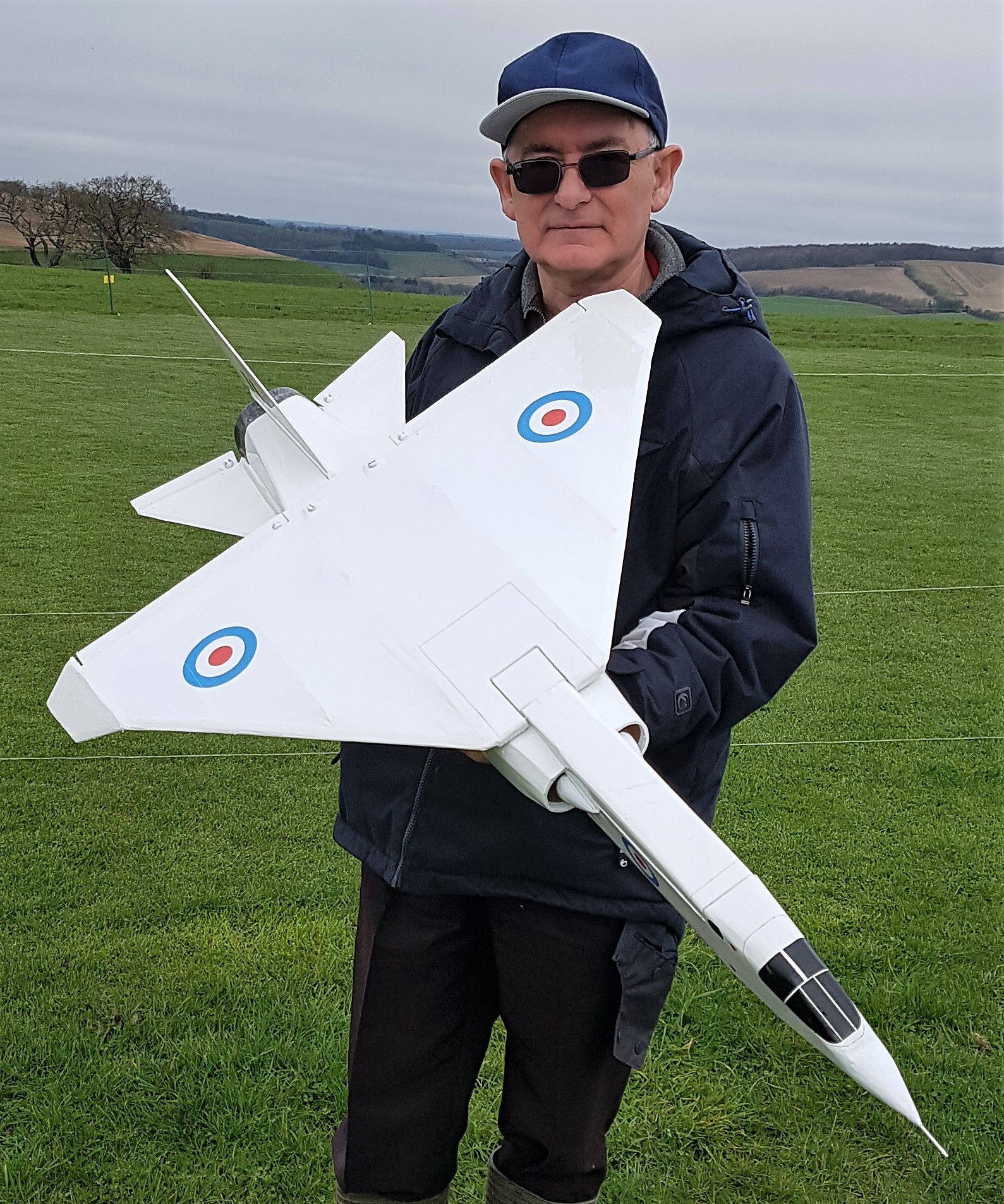 In those days it simply wasn’t possible to have a ducted fan version but times have changed and that’s what Dwayne intended to try. He planned to use a HobbyKing 70mm 5 bladed ducted fan sold as a spare for their Durafly Vampire with a 3300Kv motor so he scaled down the fuselage a little to suit the fan housing and save weight but kept the original 30” wingspan. Mine had an all moving tailplane as per the full-size but the mechanism would have been in the way of the fan so Dwayne’s has a fixed tailplane with elevators.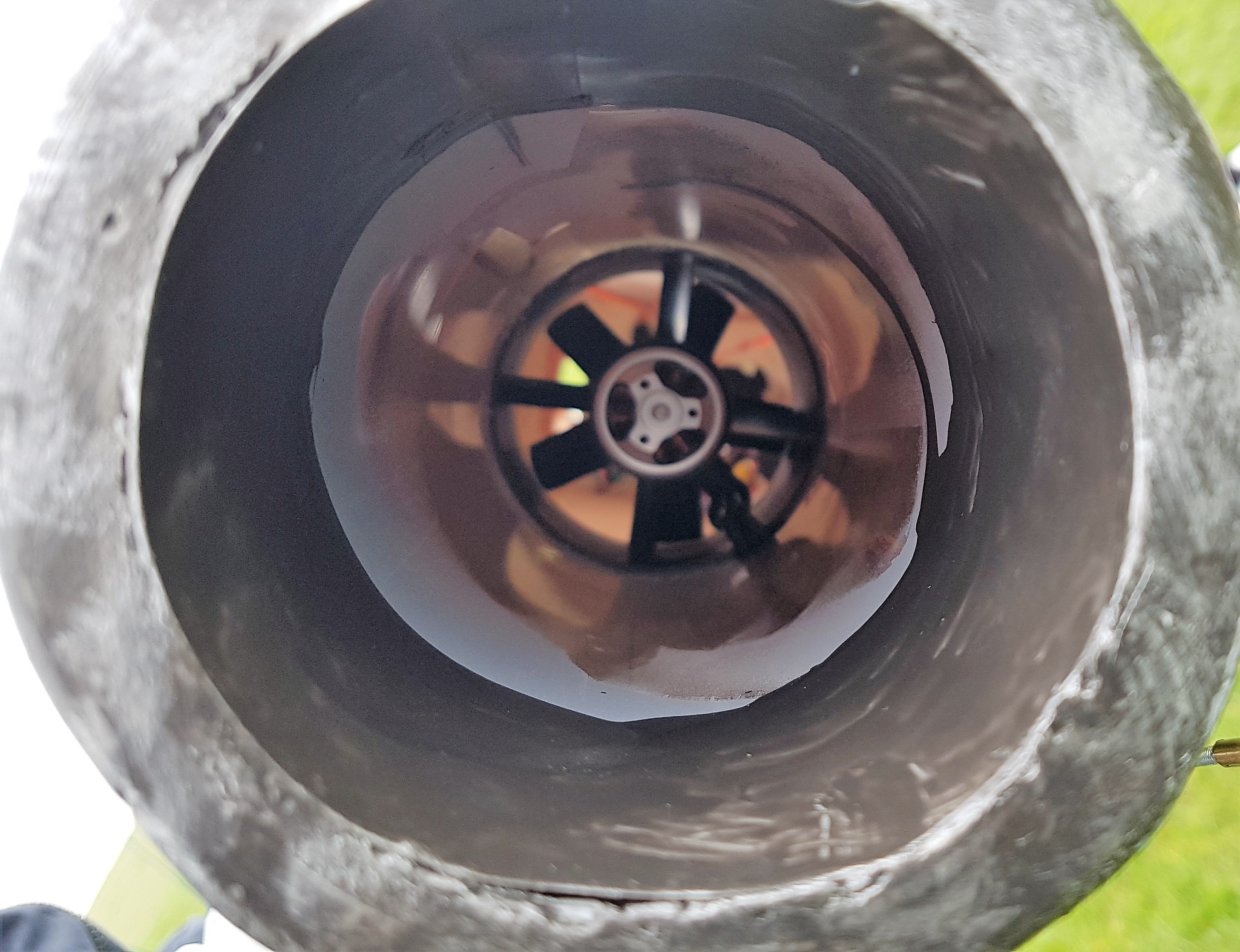
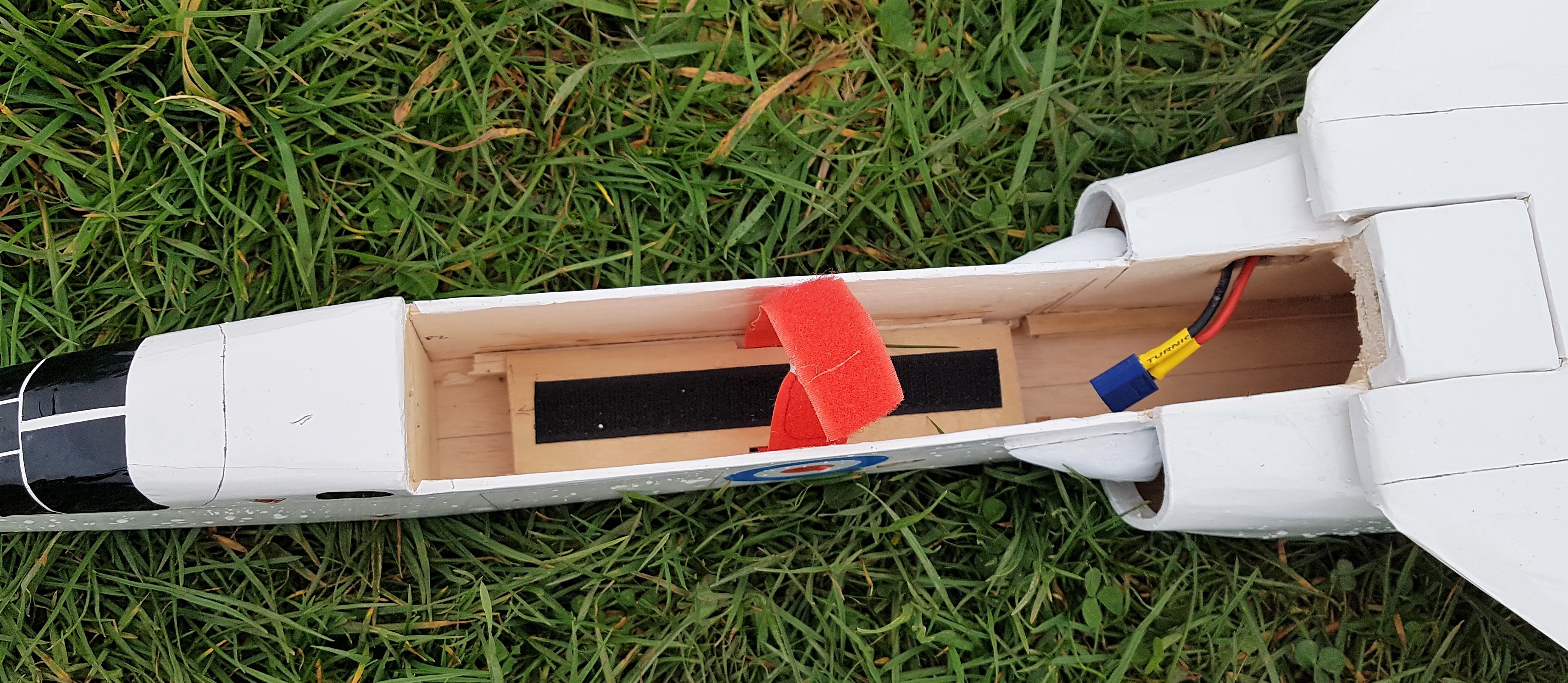
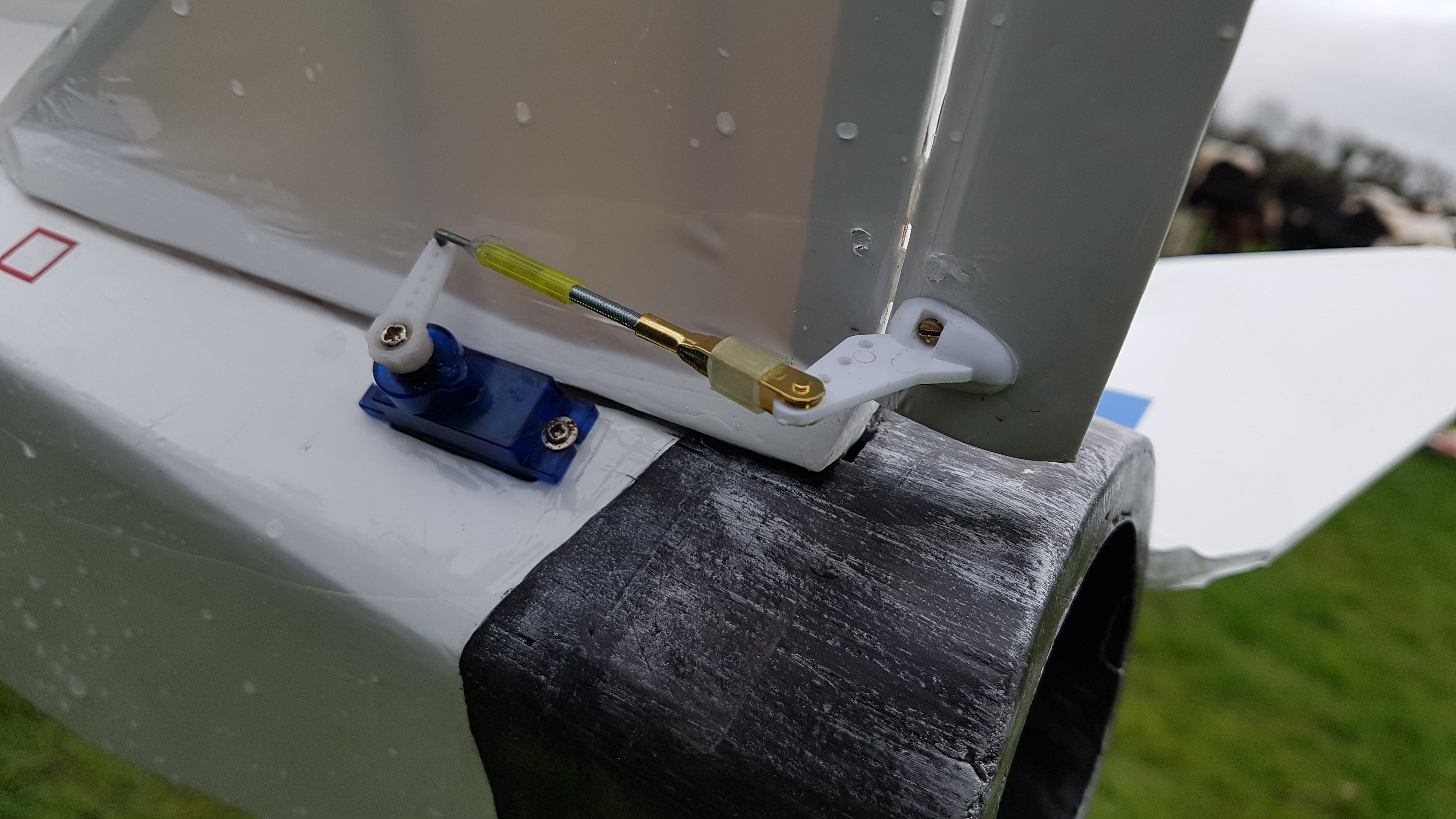 The TSR2 has very small intakes that are made even smaller by inlet cones so Dwayne has added a series of cheater holes in the fuselage sides under the wing. The fuselage has plenty of room for a 4 cell lipo of either 2200mAh or 3300mAh capacity and he’s using a 60A speed controller. At full throttle the motor pulls 49A and the fan gives 2lb 6oz of thrust which is the same as the weight of the model with a 2200mAh battery.
 So does it fly? Yes, and it’s surprisingly similar to mine all those years ago. It takes a good heave to get away from the launch but once it’s away it goes well. It rolls well and even inverted flight is ok but it won’t loop. Well it might after a 500ft dive but not from level flight, it gets to vertical and just stops, exactly like mine used to. But it’s superb at fast low passes and really looks the part during those. Dwayne is going to enlarge the cheater holes to try to get a bit more thrust and also has some covers for them so they don’t look like airliner windows! He’s also increasing the size of the elevators and will try moving the centre of gravity back a little. But even before the mods it’s a great success and you can see parts of the first three flights in this month’s video. UPDATE: On 28th March, having carried out the mods I mentioned above, Dwayne had a further two flights with the TSR2. It went away from launch much better both times, had a bit more power and it will now loop. Superb!
Dougal Entendre got tempted by a little F3A (pattern ship) called Skylark on the Banggood website.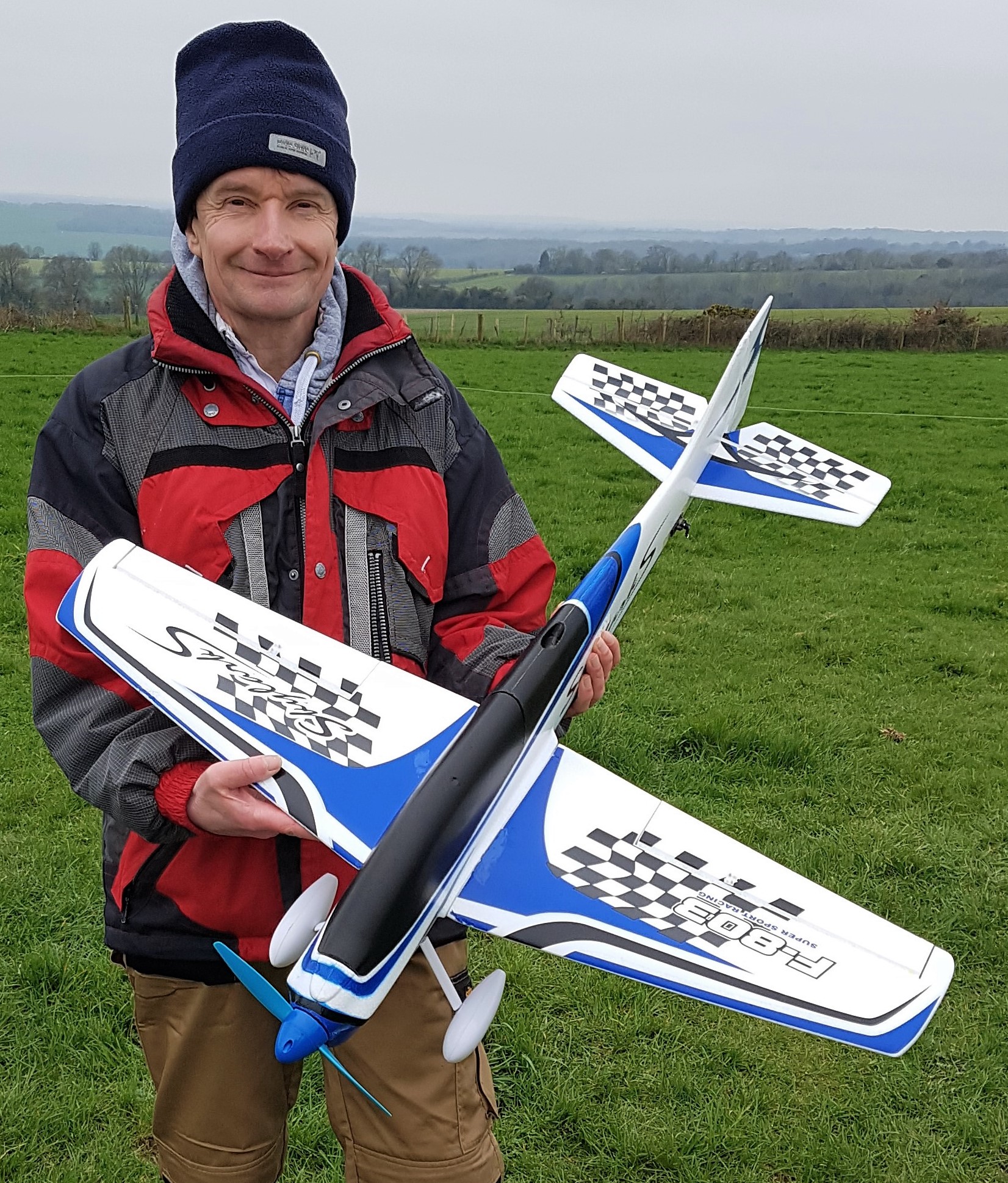
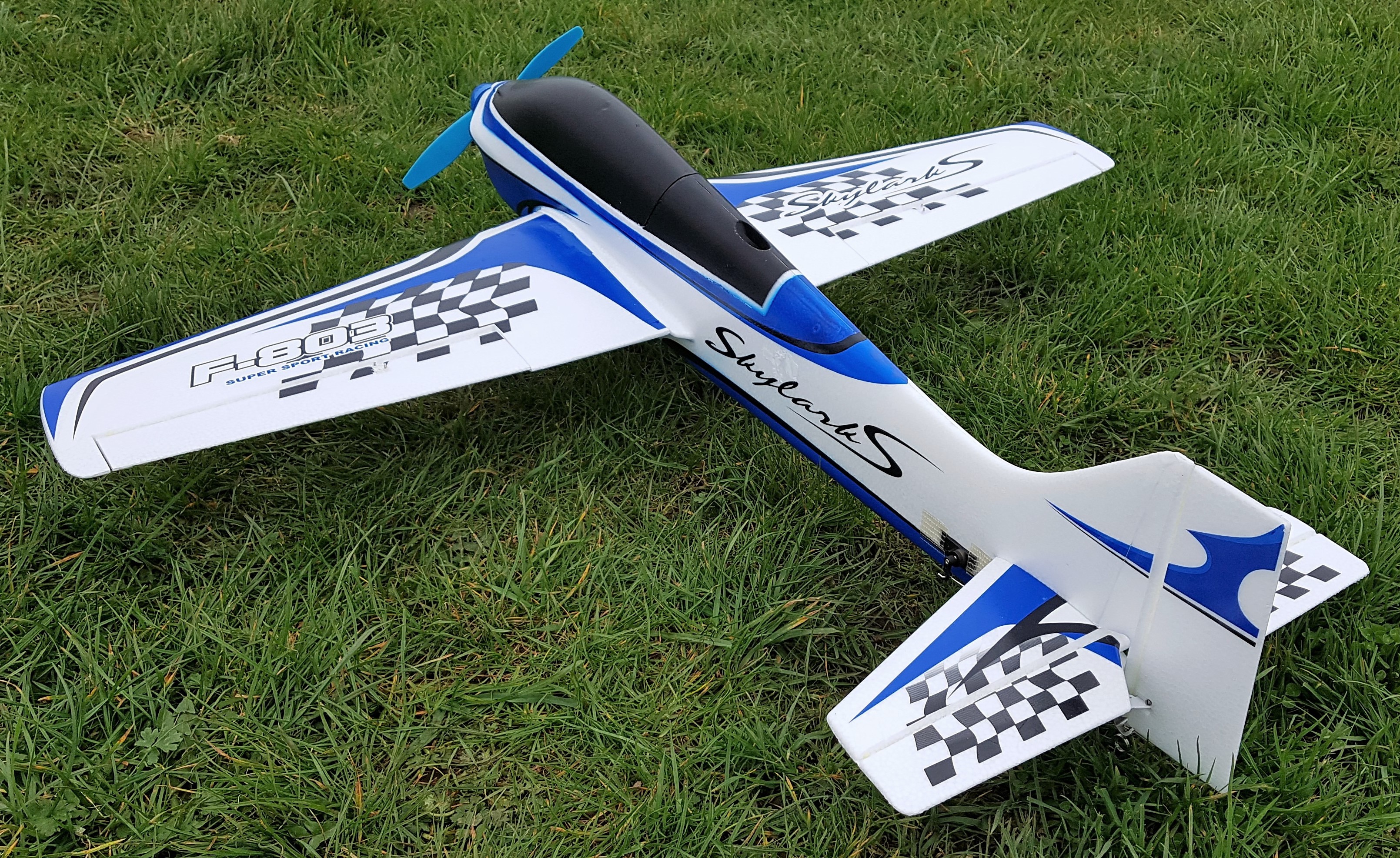 Banggood describe it as a trainer so Dougal should just about be able to cope with it! I assume they mean an aerobatic trainer as it’s most definitely not a model for beginners. It’s available in blue, green, or red colour schemes and Dougal plumped for a blue one. The model is a 950mm span EPO foamie and comes as airframe only, all the electrics have to be provided by the builder. Dougal doesn’t rate Banggood packaging as the box was quite badly knocked about when it arrived and one end was completely open, presumably where it had been inspected by customs. The model inside was a bit bashed cosmetically but basically sound so Dougal put in a lot of effort to get his son Cameron to assemble it for him…lazy bugger! The instructions call for a 2216 motor, 40A esc and a 9×6 prop. This is all powered by a 2200mAh 3 cell lipo that also powers the receiver and 4 x 9g servos.
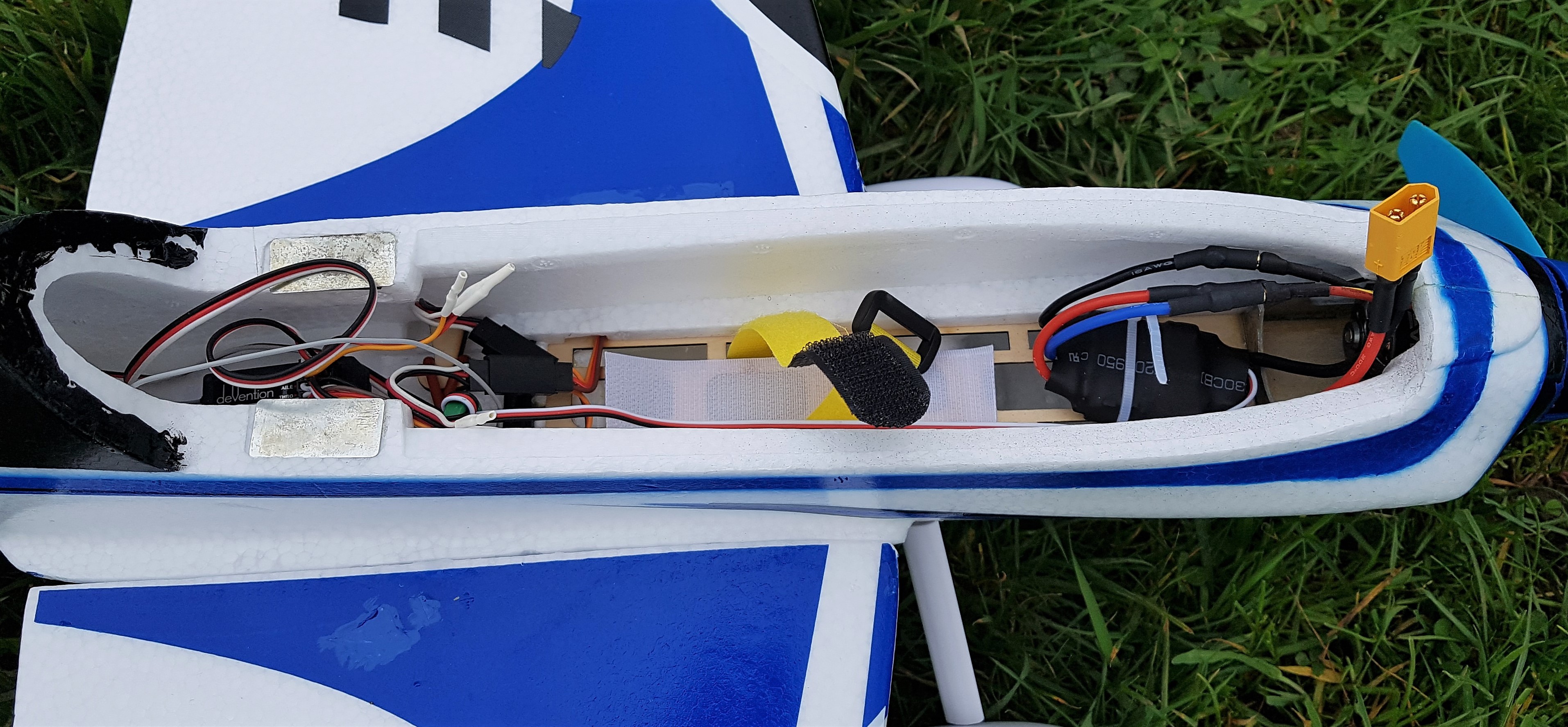 It’s a pretty little model and certainly looks as if it should fly well. But the initial take-off proved ‘interesting’, the Skylark was way out of trim and it took a couple of minutes for Dougal to tame it. But once trimmed it seemed reasonable and, having done a bit of sorting later at home, the next time out it flew very nicely. I think it will prove to be a good all round model well suited to our field. The hairy first flight is in the video.
You may remember that at the end of December Matt Takhar’s Velox misbehaved itself (nothing to do with the pilot obviously…) and required a new fuselage. At 81” wingspan the Velox is a large impressive model that’s powered by an Xpwr 40 (40cc equivalent) motor running on 12 cells and has a Castle Phoenix Edge HV120 speed controller. The gear was all transferred into a new fuselage by ProBuild who put the first one together and Matt did a bit of tarting up with some new stickers. So in March the model was brought out once again and the first flight went perfectly.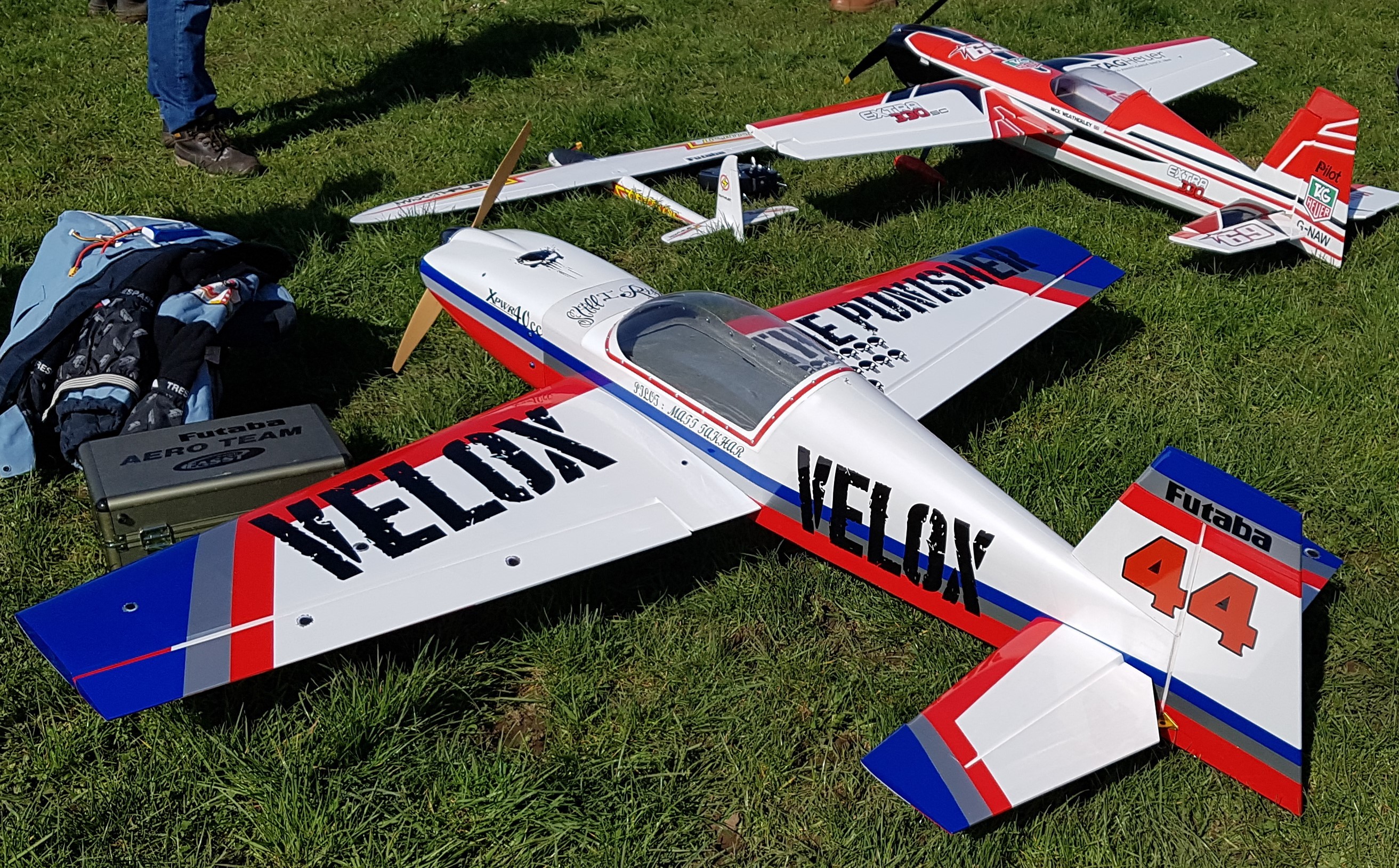
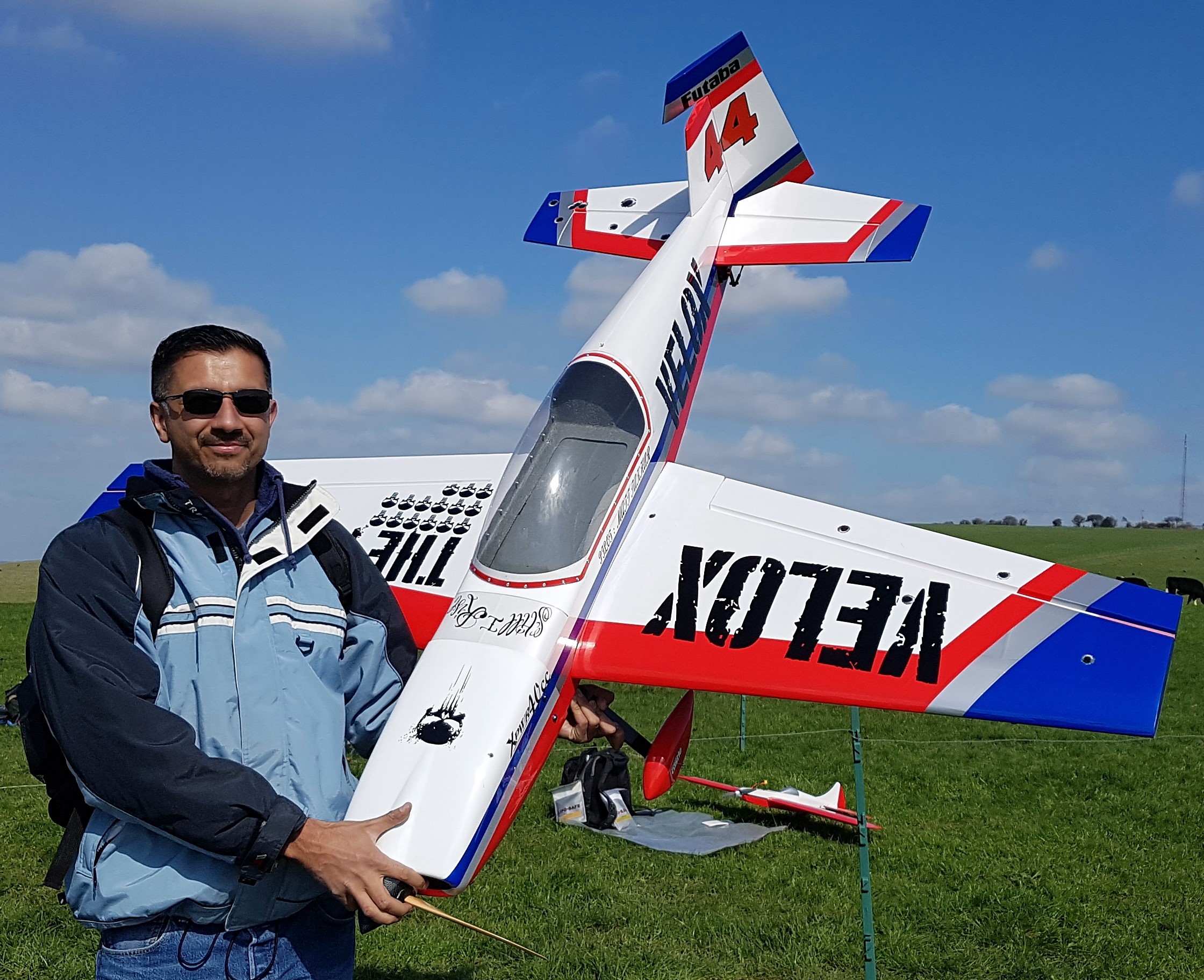 It has an impressive amount of power and really eats up the sky which makes it difficult to video but I got some of it. But during the second flight there was a bang and I thought the motor had kicked the prop loose. Matt called dead-stick and headed for the patch but on the approach we saw a sudden ball of flame followed by a plume of smoke! Matt did very well to make a perfect landing on the patch and Nick rushed over to disconnect the battery.
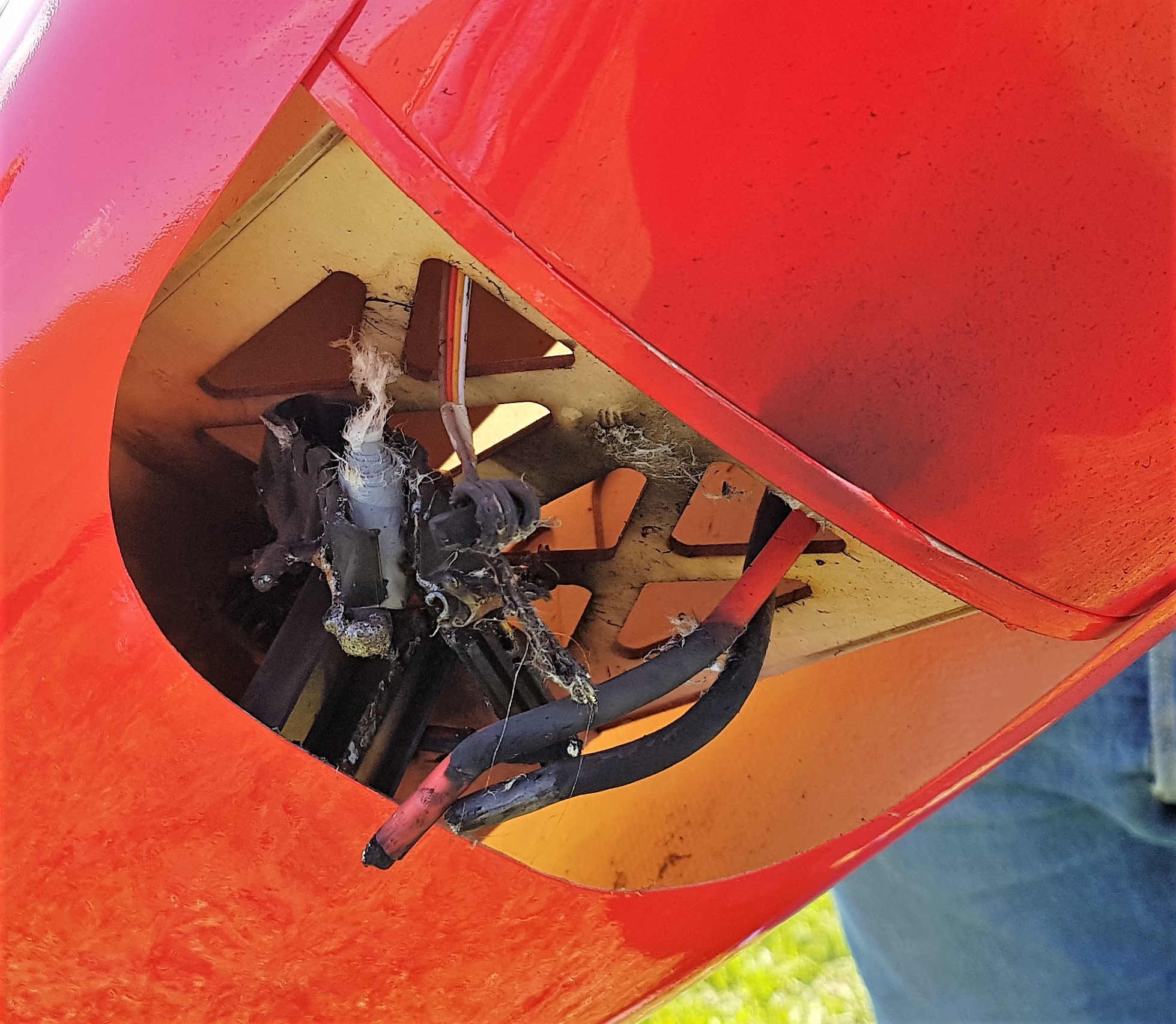 Fortunately there was no fire and the ball of flame turned out to be the speed controller exploding! The model survived unscathed apart from some minor burn marks inside where the controller was mounted. Probuild/Castle Creations have agreed to replace the esc as apparently it’s not supposed to do that!
Speaking of fires: “No, I’m sure it’ll be perfectly alright, nothing can possibly go wrong”: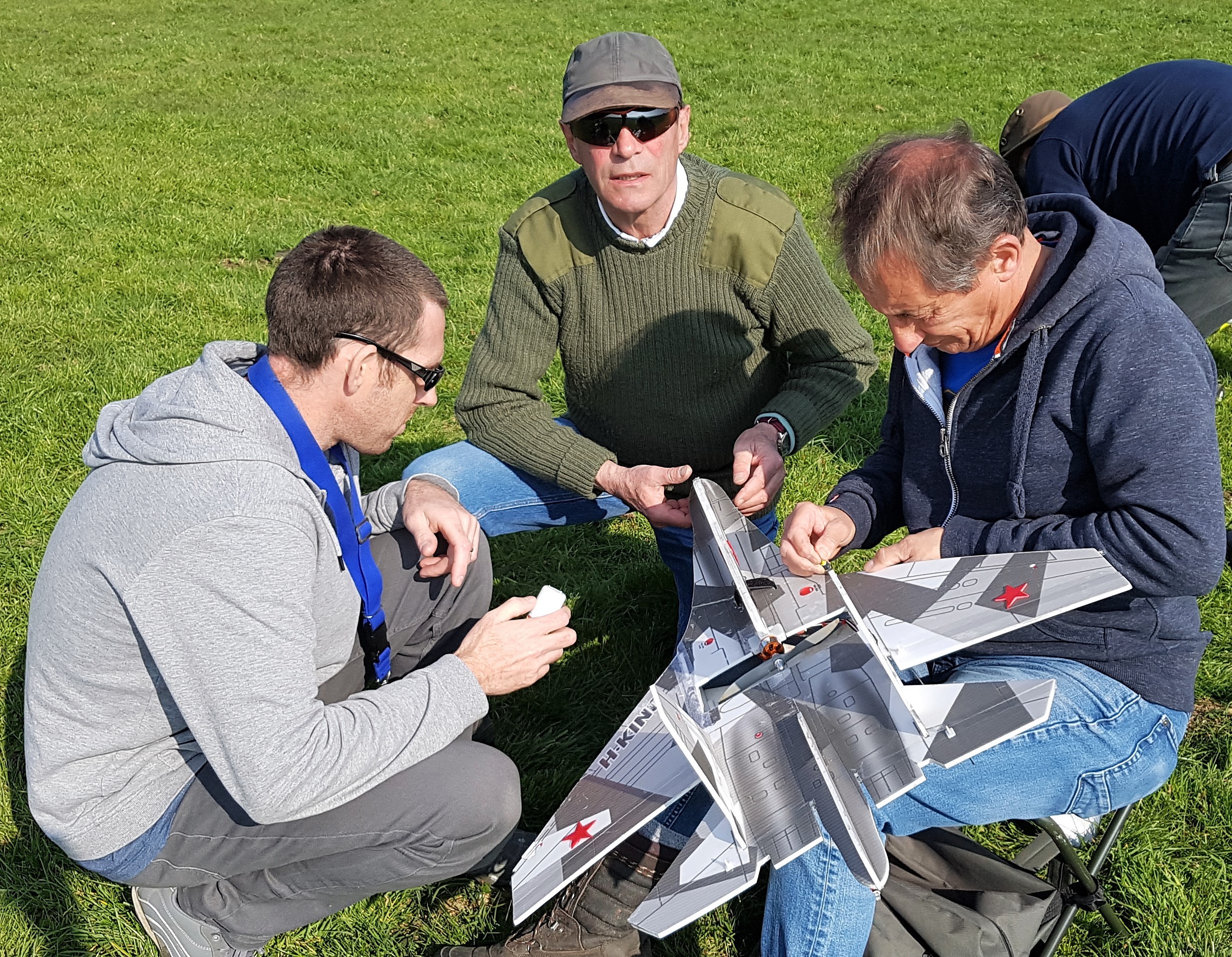 “OOPS!”
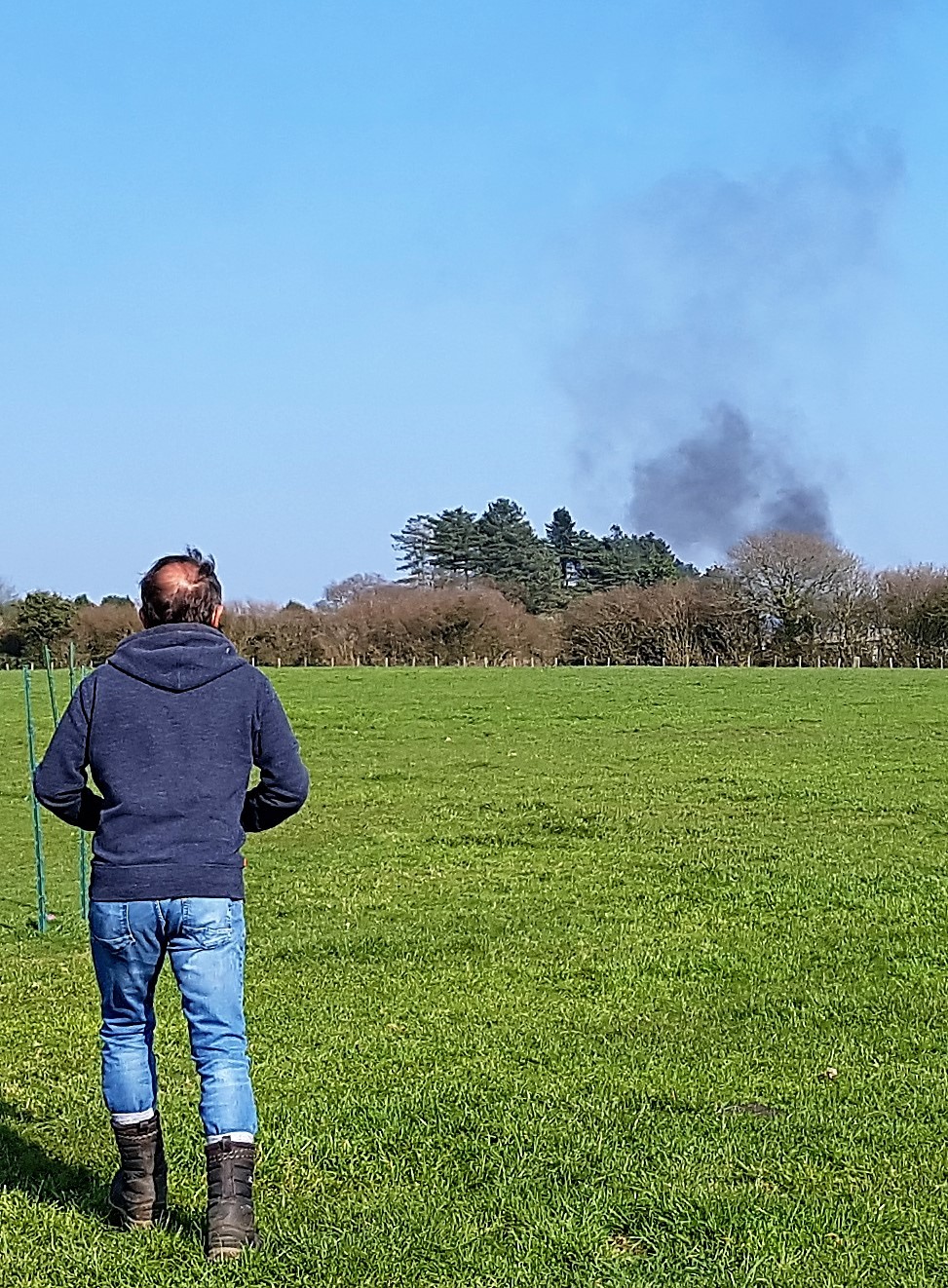 Don’t worry, I don’t know what the pall of smoke was but it was nothing to do with Woody or any of us!
Nothing to do with Petersfield Aero Modellers or the patch but I spotted a video that I thought you’d like to see. It is Gernot Bruckmann flying an indoor model and winning his 4th World Championship in a row. I saw him flying outdoors for Multiplex at the Multiplex Airshow in Germany two years ago which is odd as he uses Jeti radio, maybe with Multiplex servos. I have to say he’s not bad! The video is worth watching if only for the take-off:
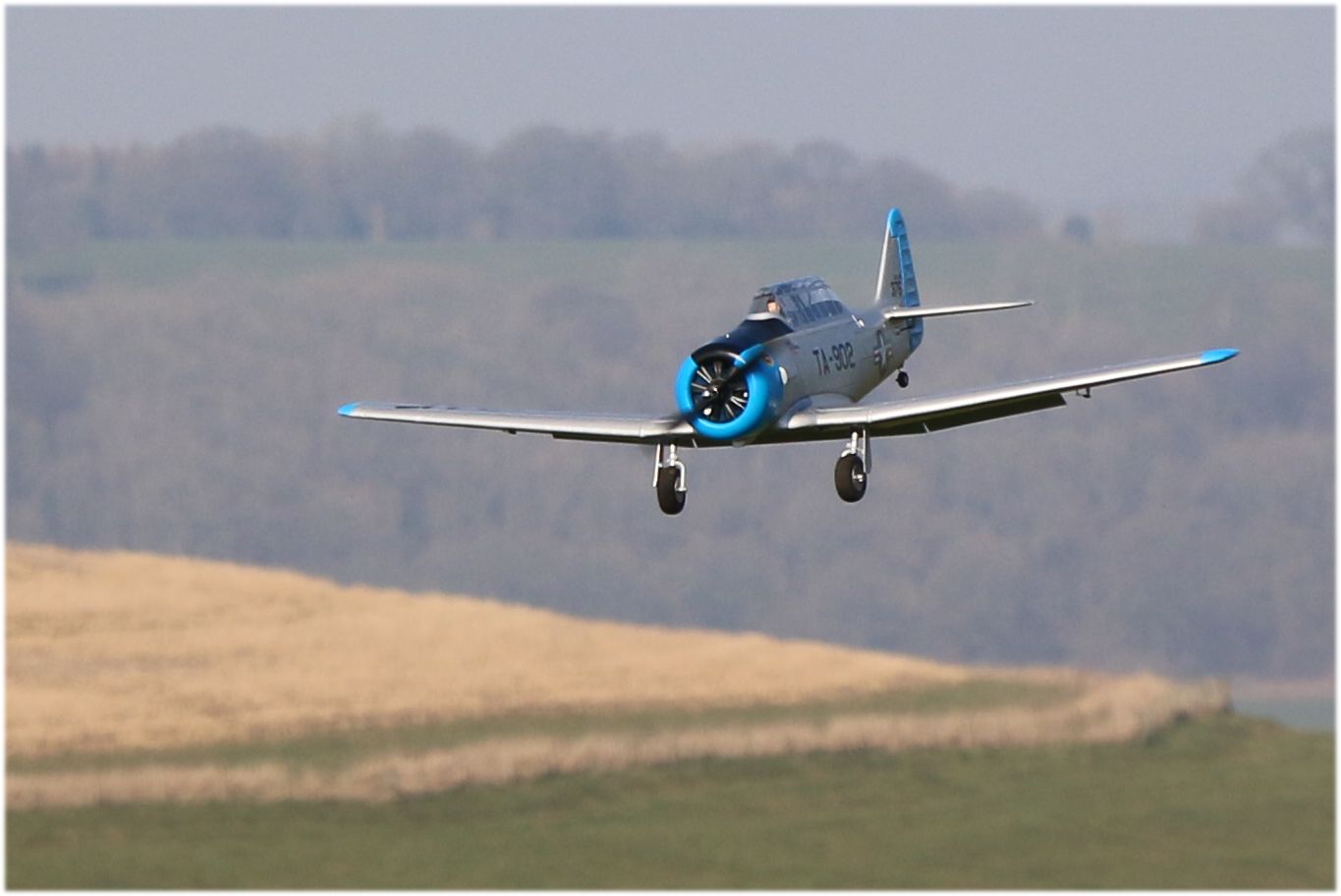
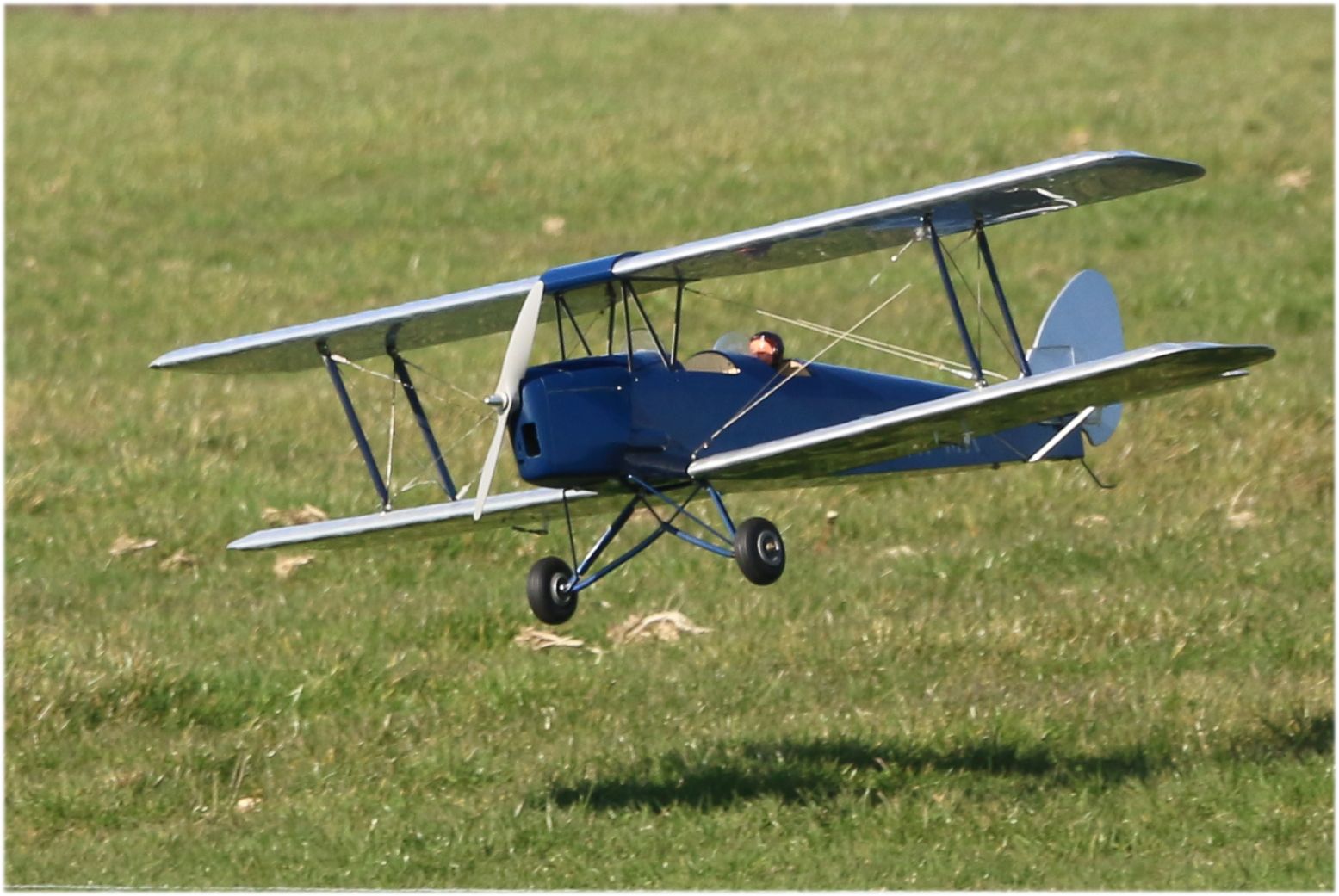
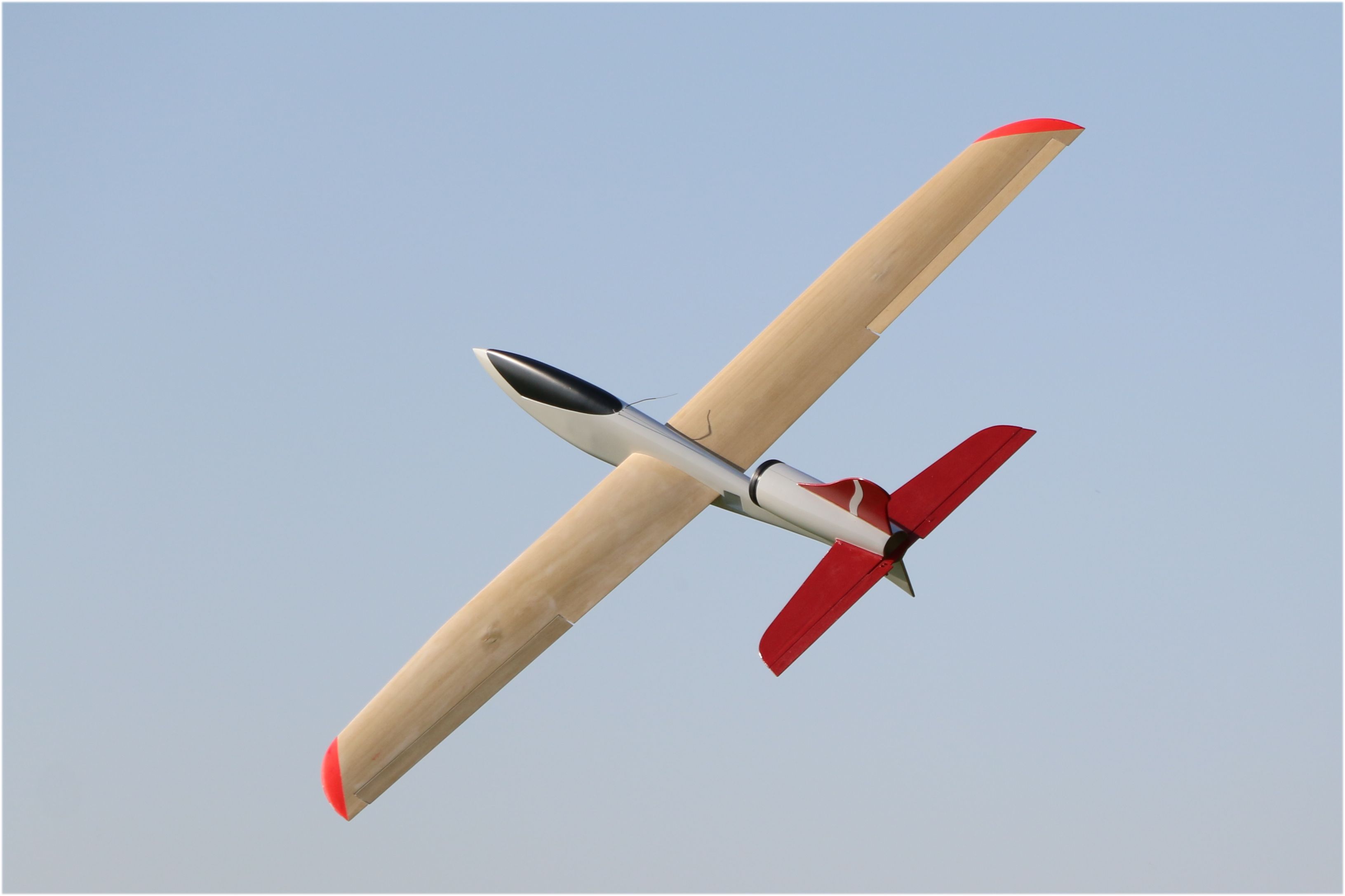
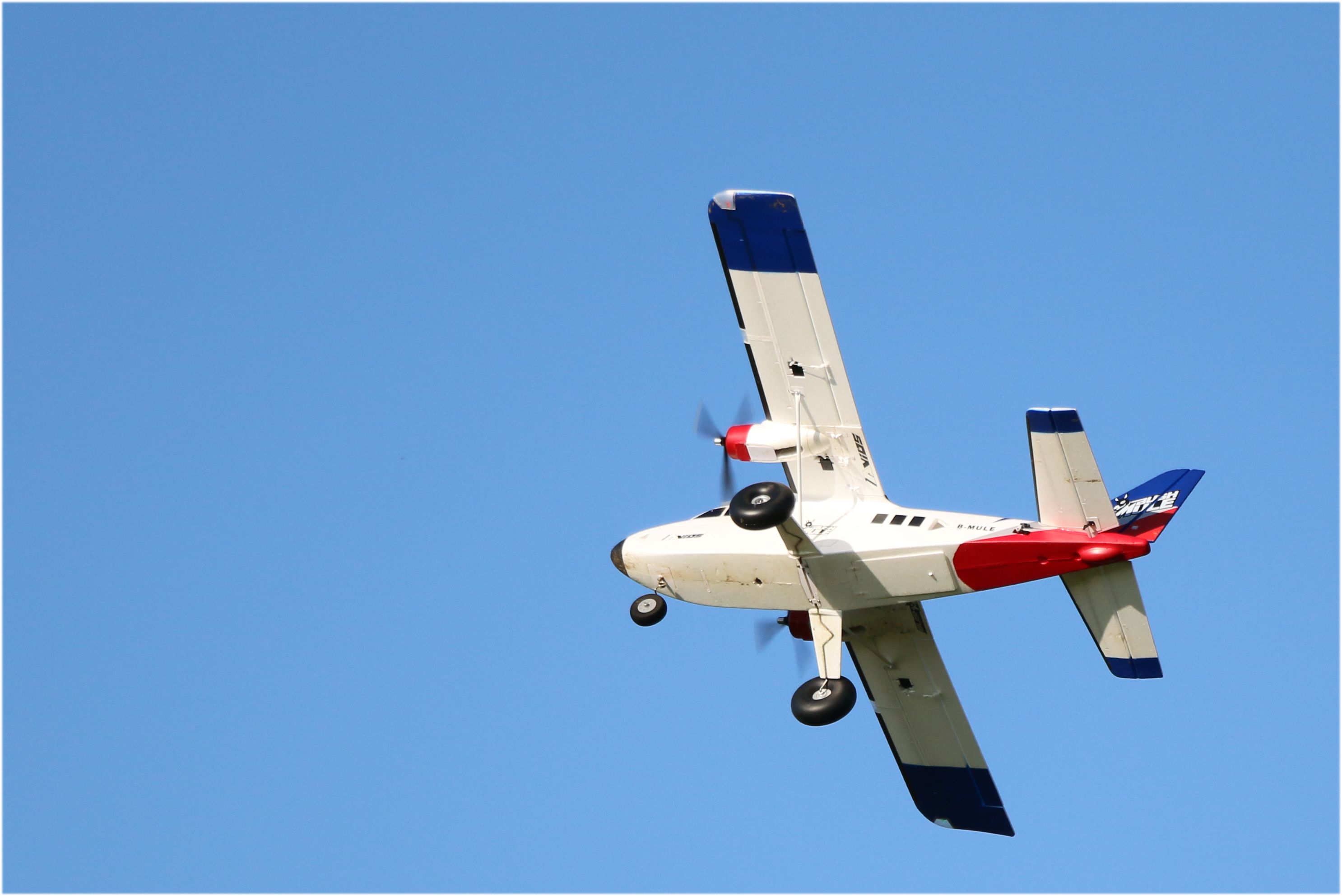
Kryten has just sent me some superb flying photos that he took last month. In particular Page Boy’s Harvard and Bob the Builder’s Tiger Moth look fantastic.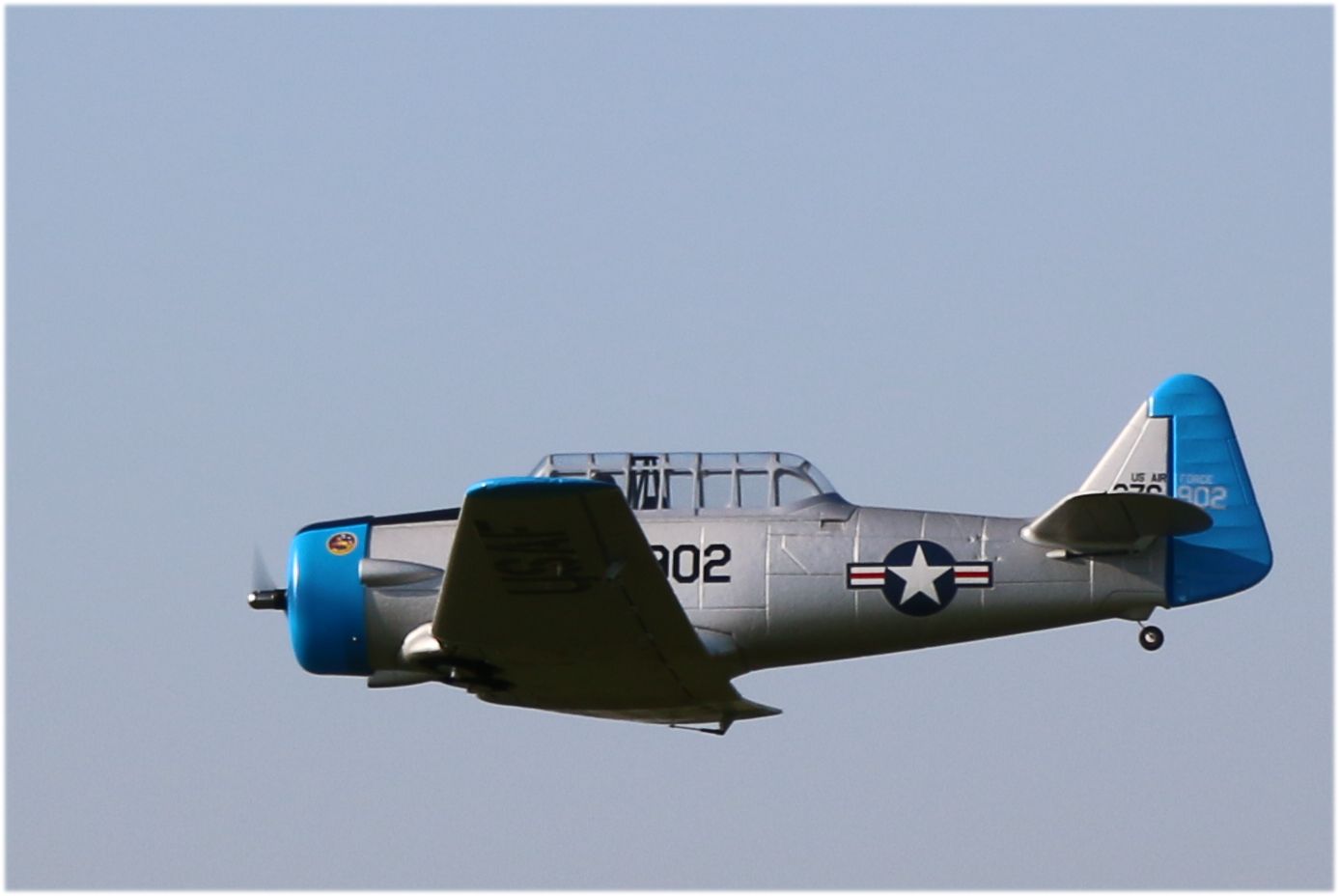
Monthly video time now, this month it includes helpings from Iven, Dougal, and Captain Slow, thanks chaps:
Please watch the video full screen, it’s so much better with small models flying around. If the video won’t play for you click HERE
A chap was sitting at an airport bar when he noticed a beautiful woman sitting next to him. He thought to himself “Wow, she’s so gorgeous she must be a flight attendant. But which airline does she work for?”
Hoping to pick her up, he leaned towards her and uttered the BA slogan: “To Fly. To Serve?” She gave him a blank, confused stare and he immediately thought to himself “Hmm, she doesn’t work for BA.”
A moment later, another slogan popped into his head. He leaned towards her again, “Something special in the air?” She gave him the same confused look. He mentally kicked himself, and scratched American Airlines off the list.
Next he tried the United Airlines slogan: “I would really love to fly your friendly skies?” This time the woman turned on him and screamed “What the *@#! do you want?”
The man smiled, then slumped back in his chair… “Ah yes, Ryanair”.
Colin Cowplain
Patch News – February 2019
What a Fantastic February! The first Sunday of the month saw the field covered with a light dusting of snow whilst being bright and sunny with light winds, perfect for me to try the skis on my Bush Mule. The snow wasn’t very deep so wheeled models (and their pilots) coped with the conditions ok as well. A great day with a decent turnout.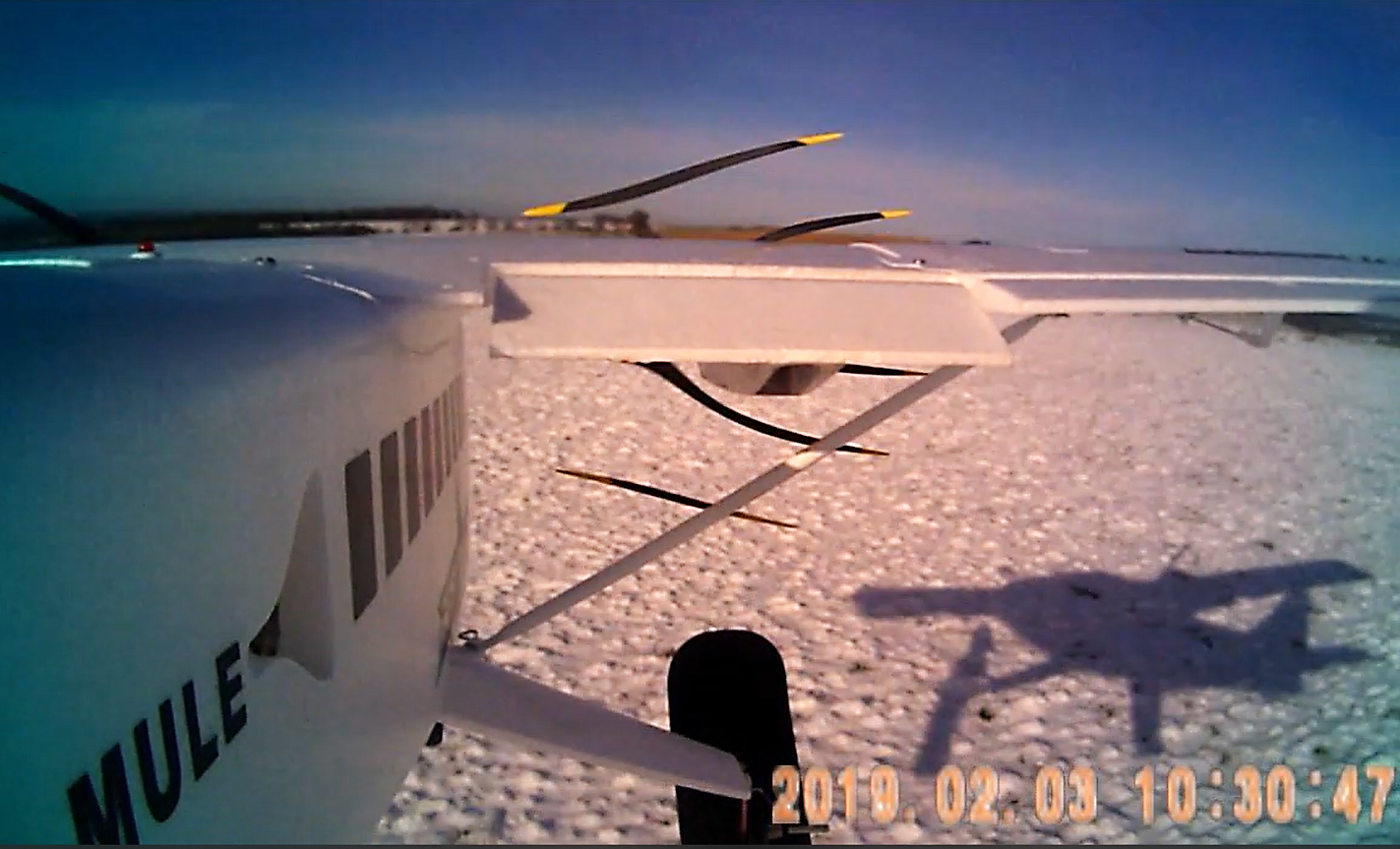

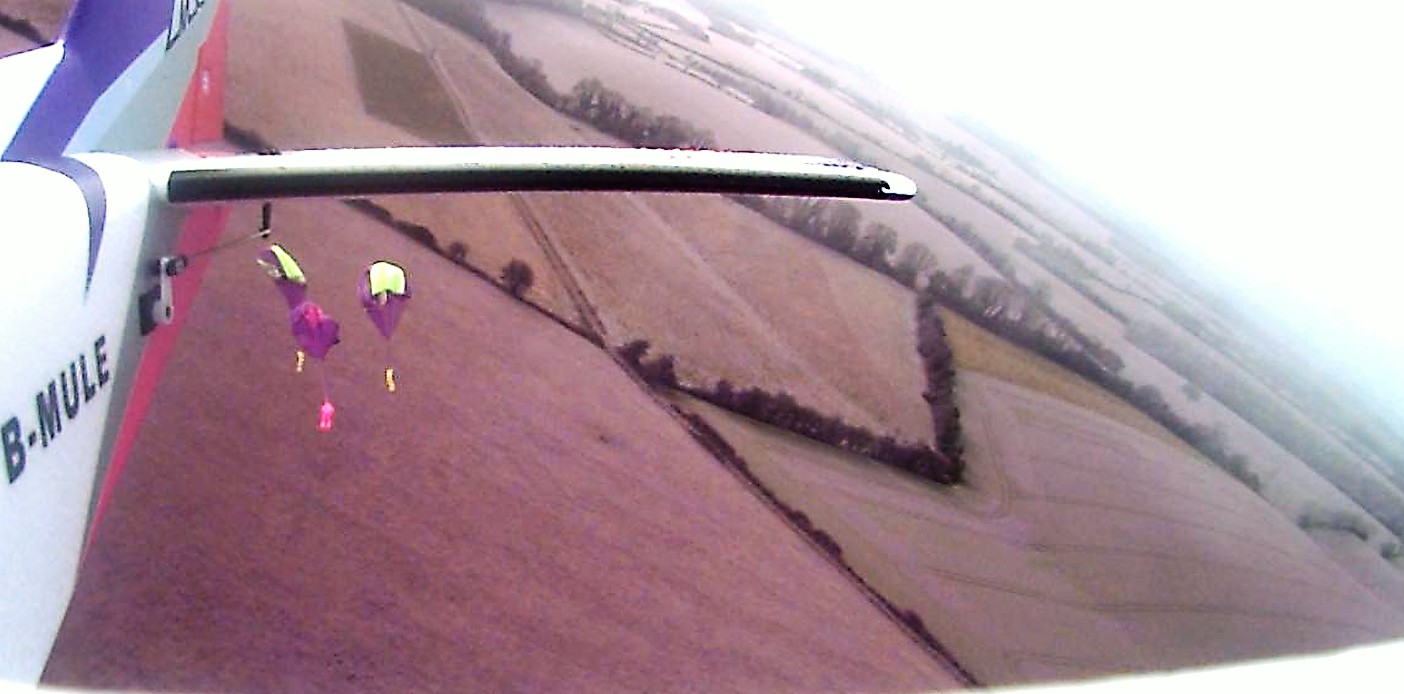
 Later in the month we had a long spell of dry weather with light winds and a fair bit of sunshine. The last Sunday was absolutely glorious and we had thirteen flyers come out to play, I would think that’s a record for February. I played around with a couple of cameras on the Bush Mule throughout February and managed to capture some reasonable video of touch and go’s in the snow, general scenery, and also dropping parachutes later in the month.
 I also tried to get some air to air video with a camera on my SU-27 and had a very close encounter with Woody’s Mig-29! I’m afraid the quality of some of the screenshots from a cheap video camera is poor but you get the idea.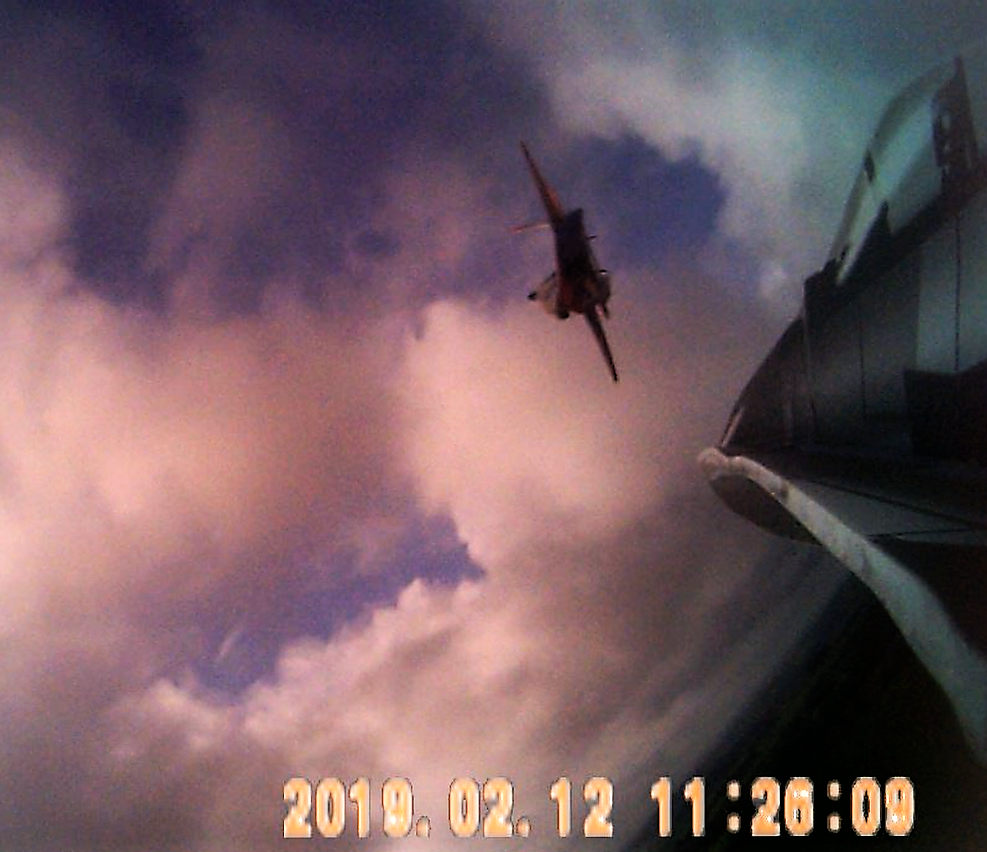
At the end of January, too late for the last Patch News, Matt Takhar flew his new 67” wingspan Pilot-RC Extra 330SC. It’s almost identical to Newbie Nick’s Extra that I featured last month but it’s a second generation model not a first.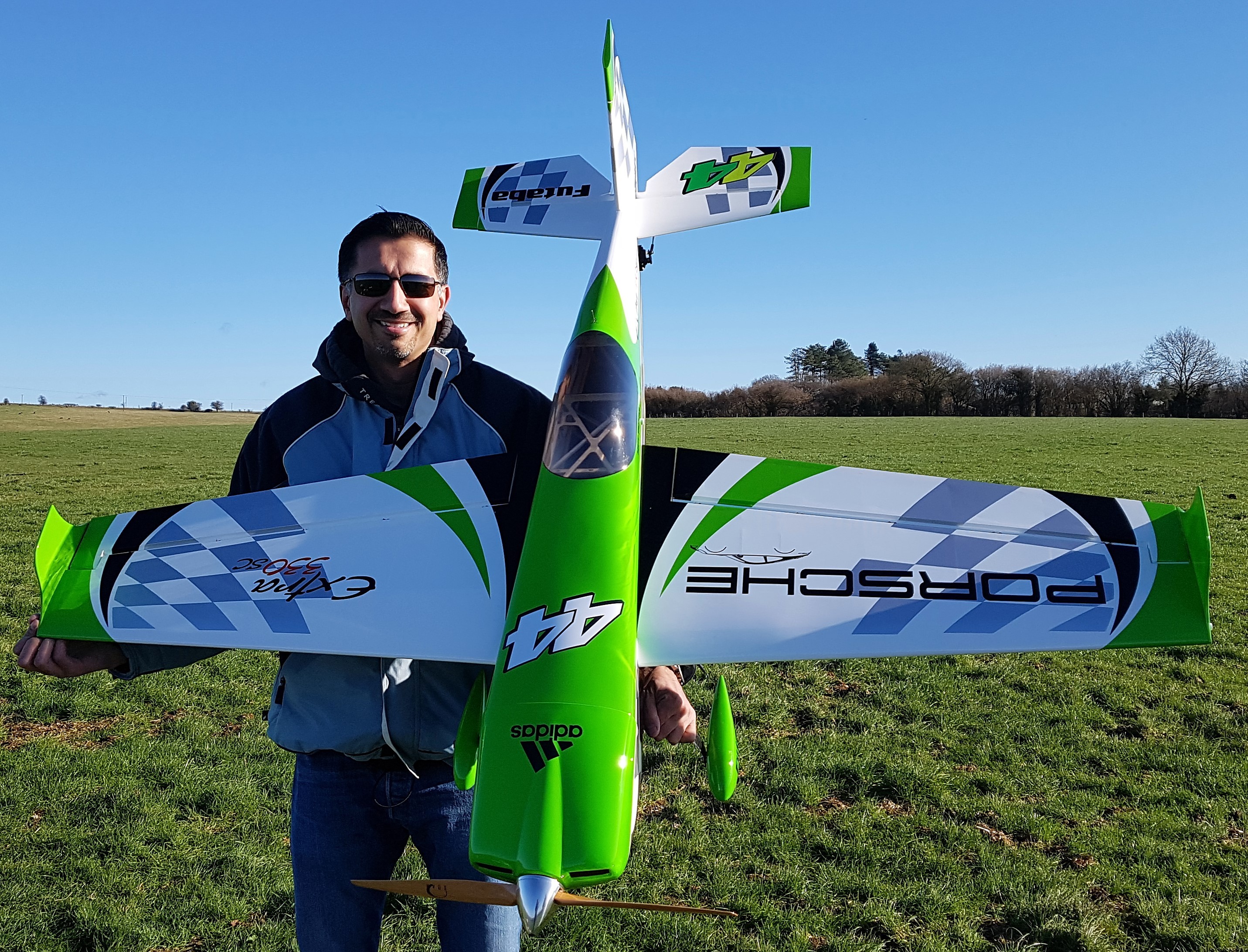
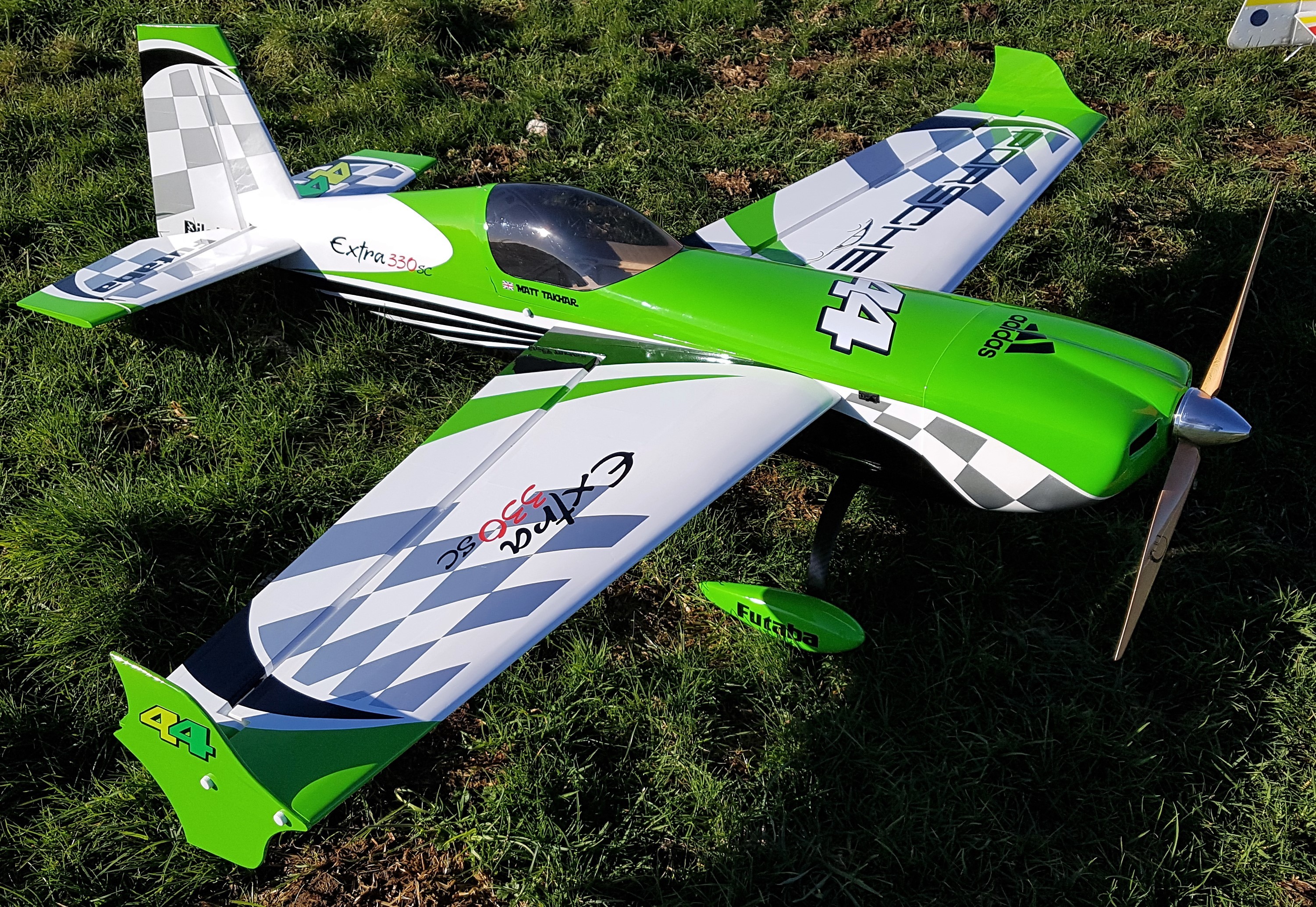 Matt has fitted a 470kV Potenza 60 motor with the HobbyWing speed controller and uses a 6 cell 5000mAh lipo battery. It swings a 20×8 wooden prop and, as you’ll see in this month video, has loads of power.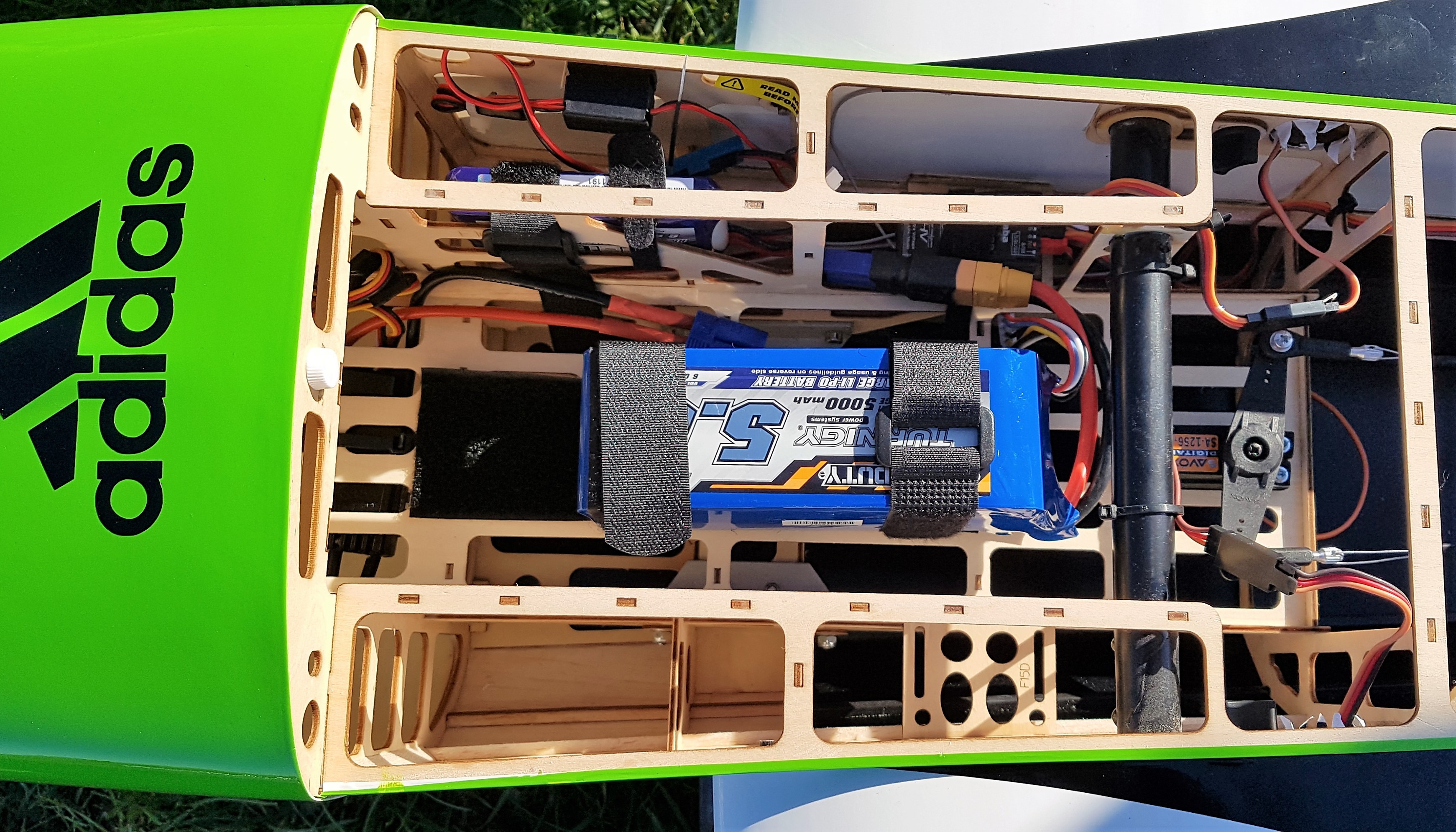
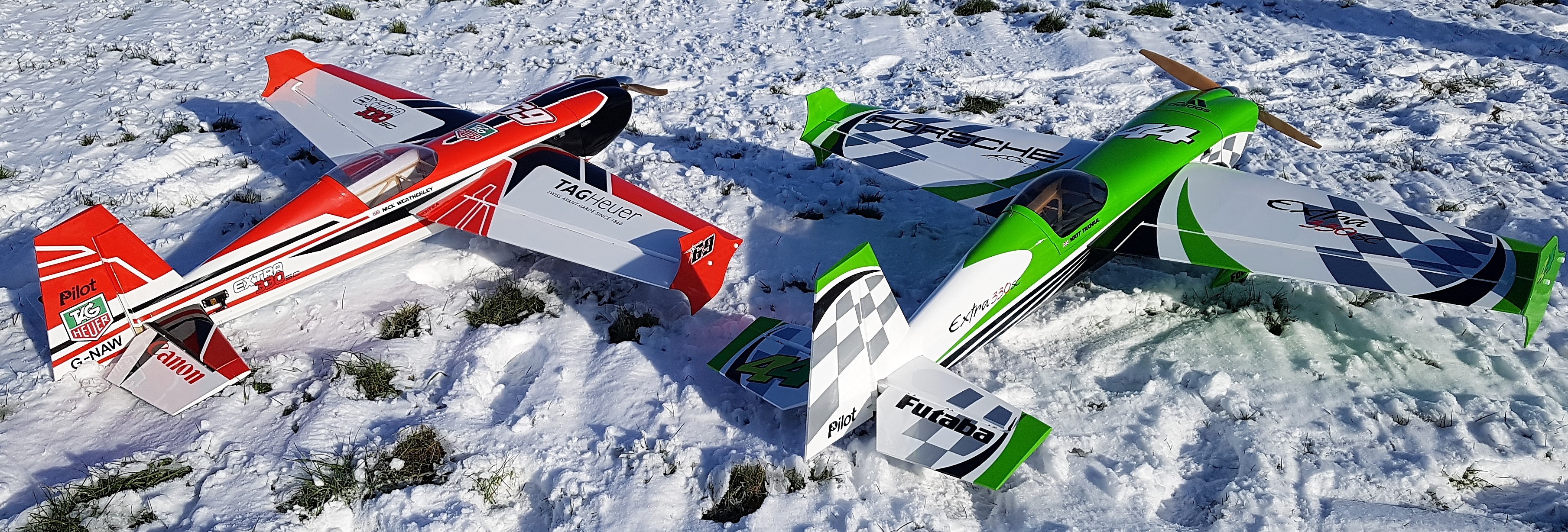
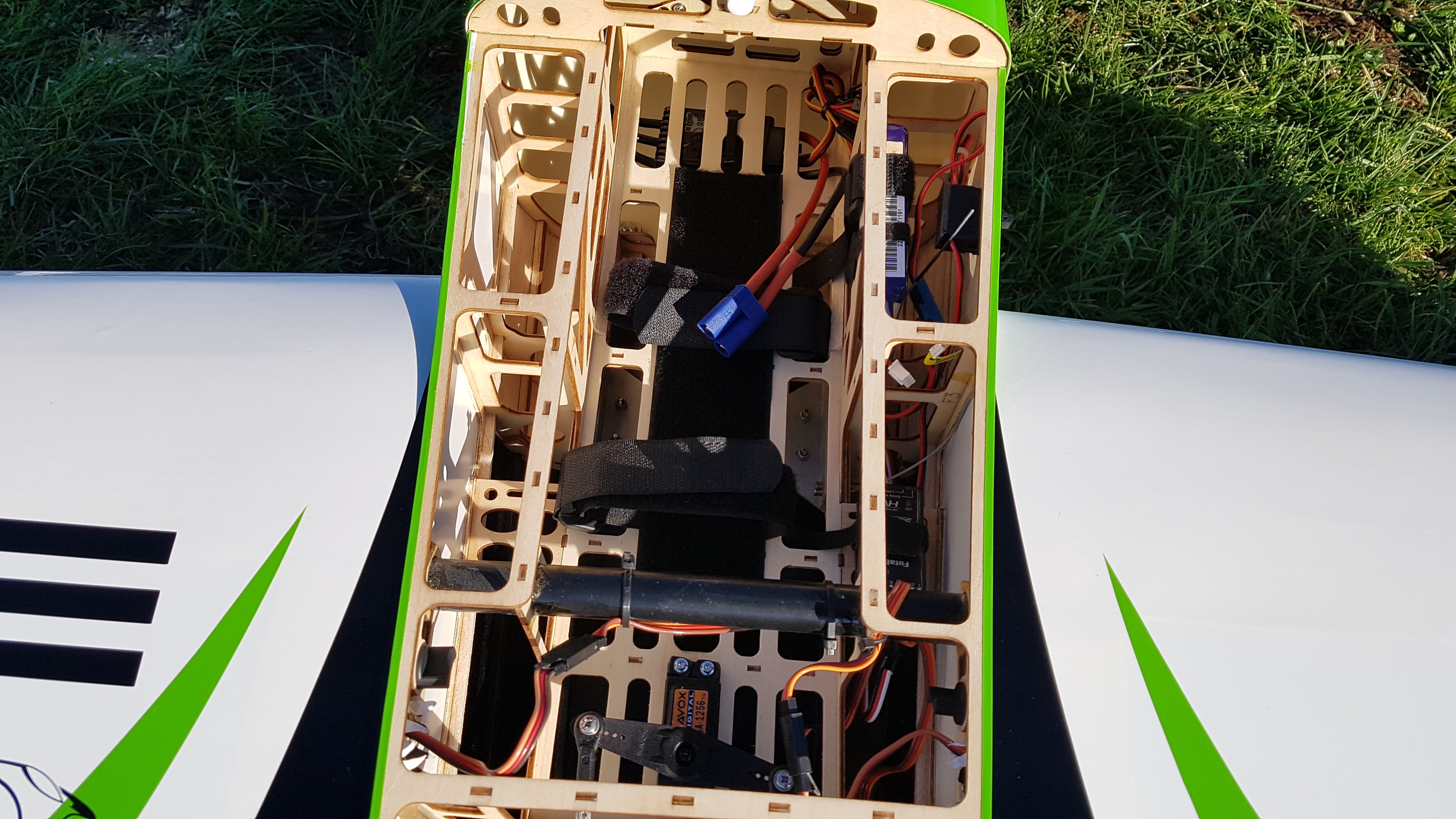 The video is of the understandably cautious first flight and, like Nick, Matt is now getting more adventurous, flying lower, closer and more aggressively. The Extras are lightweight to the extreme, the structure really is only there to keep the various components apart and I would hate to see the result of even a heavy landing.
When we had the snow at the field many of us realised our lipos were suffering in the cold and not giving the power they do in warmer weather. I spotted a heated lipo bag on the HobbyKing website but it was out of stock. However, an alternative heater for R/C car tyres that doubles as a transmitter muff heater popped up on screen and figured I could warm my batteries in the muff and then keep my hands warm when flying for only around £13.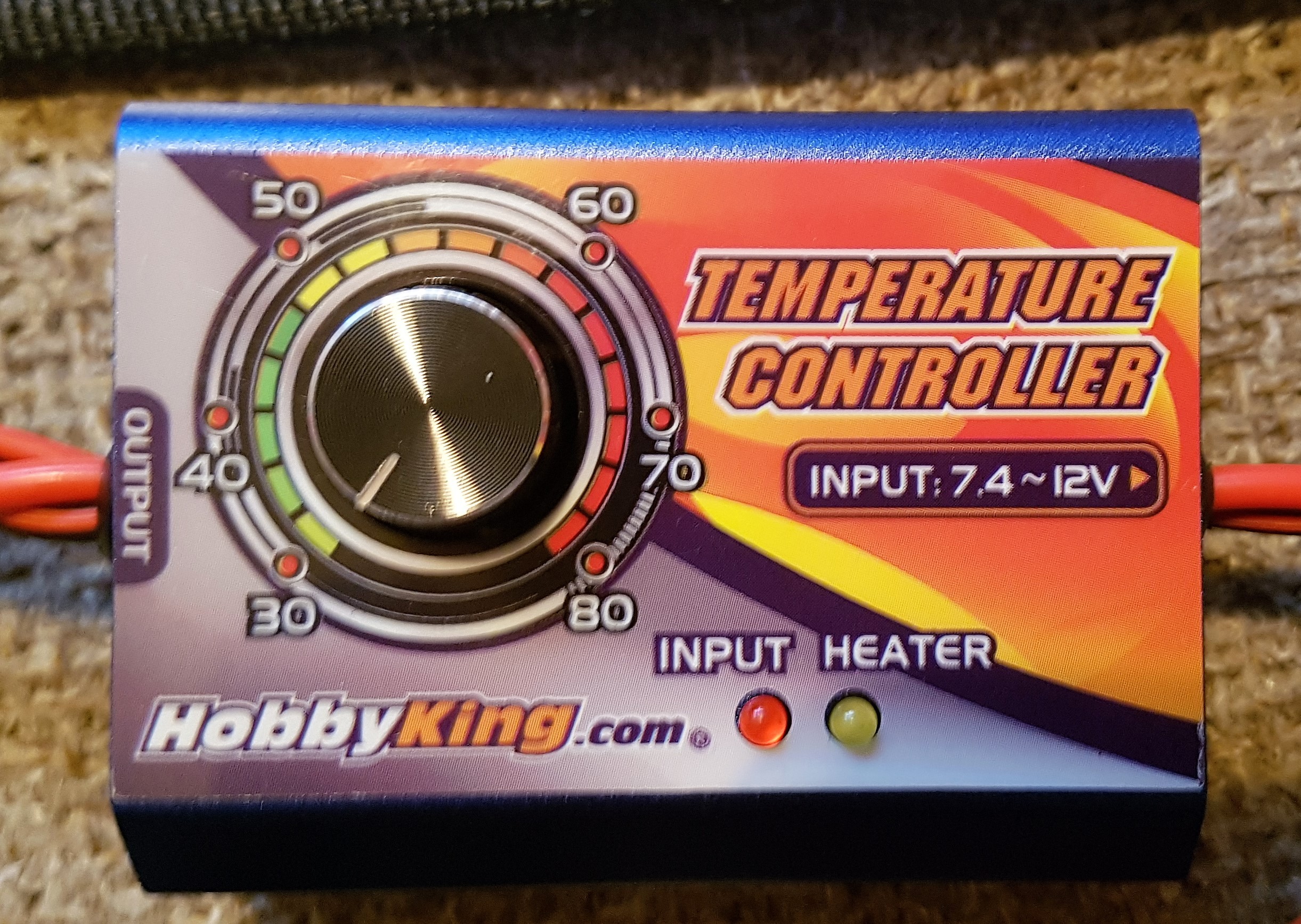
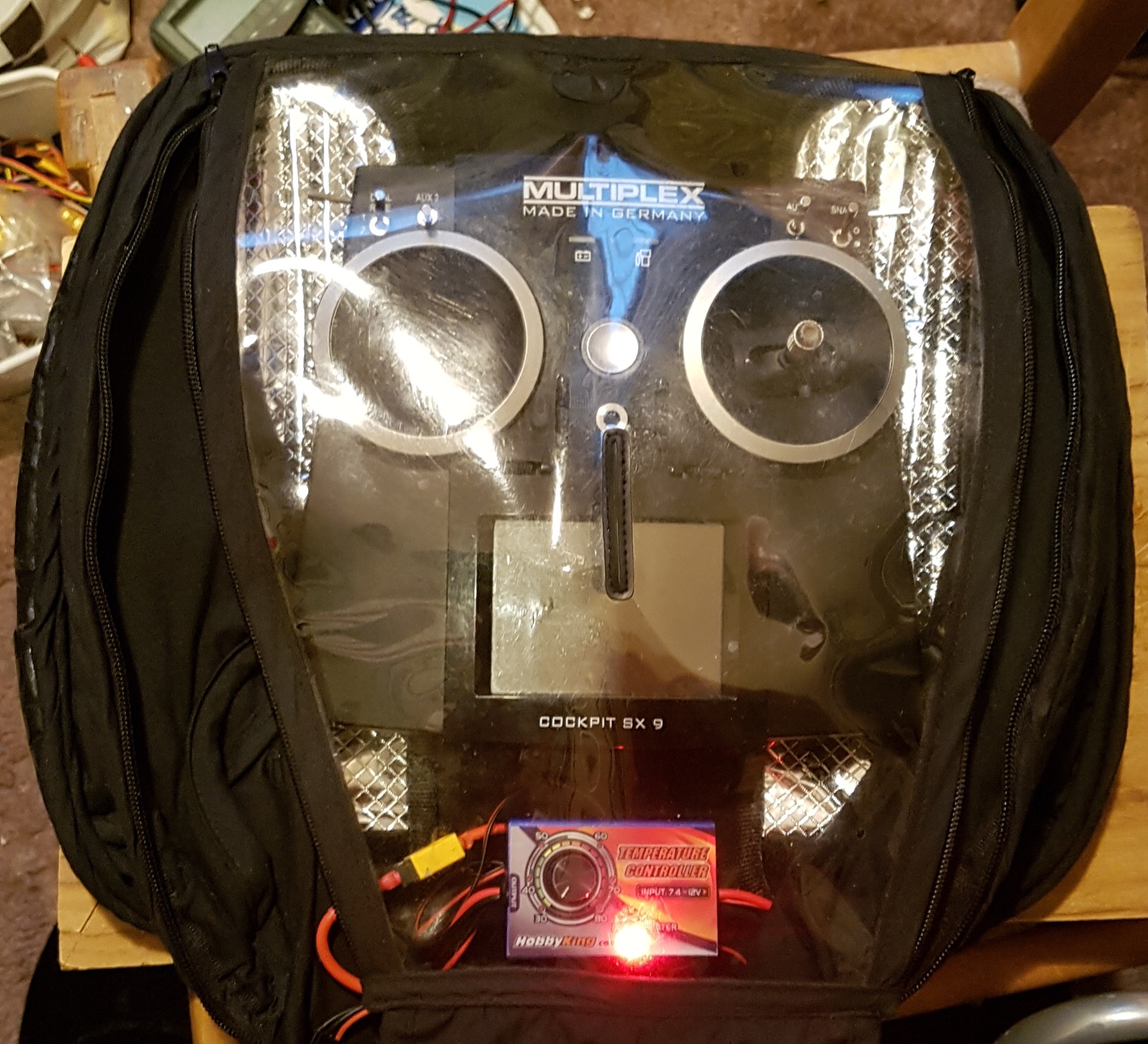 It consists of an adjustable temperature controller connected to a pair of pads containing heater elements and the power is supplied by a 2 or 3 cell lipo. Having found the controller to be very sensitive I rewired the pads in series rather than parallel which made it more manageable. I fitted the system into my Turnigy muff with strips of Velcro so it’s easy to remove when not required. So, did it work? Yes perfectly, we haven’t had a single cold day since!
Yet more of the foamboard jets appeared in February, at the last count there were thirteen fourteen in the club.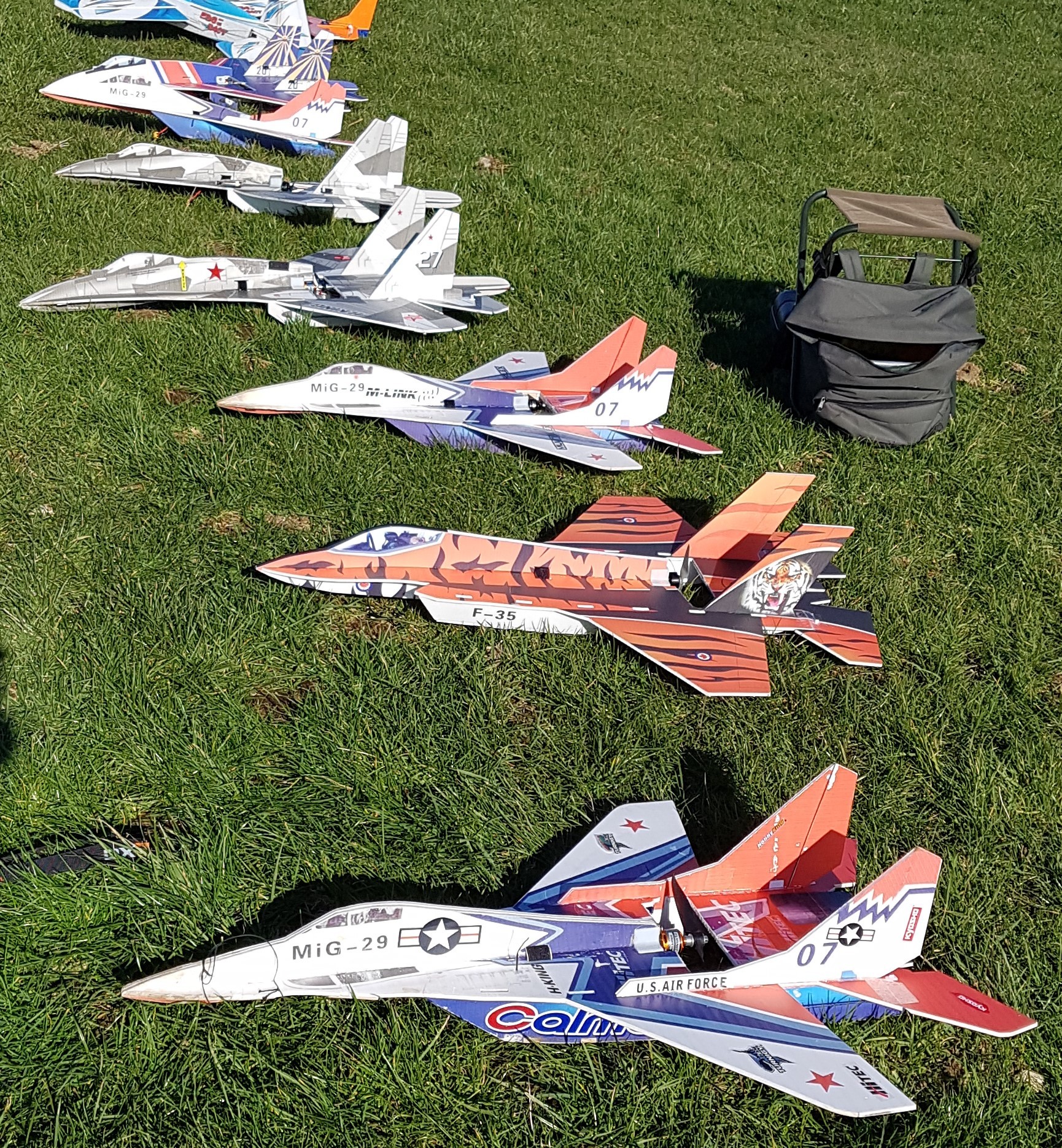 Gorgeous Gary, spurred on by the success of his Mig-29, has now built a Sukhoi SU-27. It’s one with the new colour scheme, quite bright rather than the original grey ones like mine but is otherwise an identical model.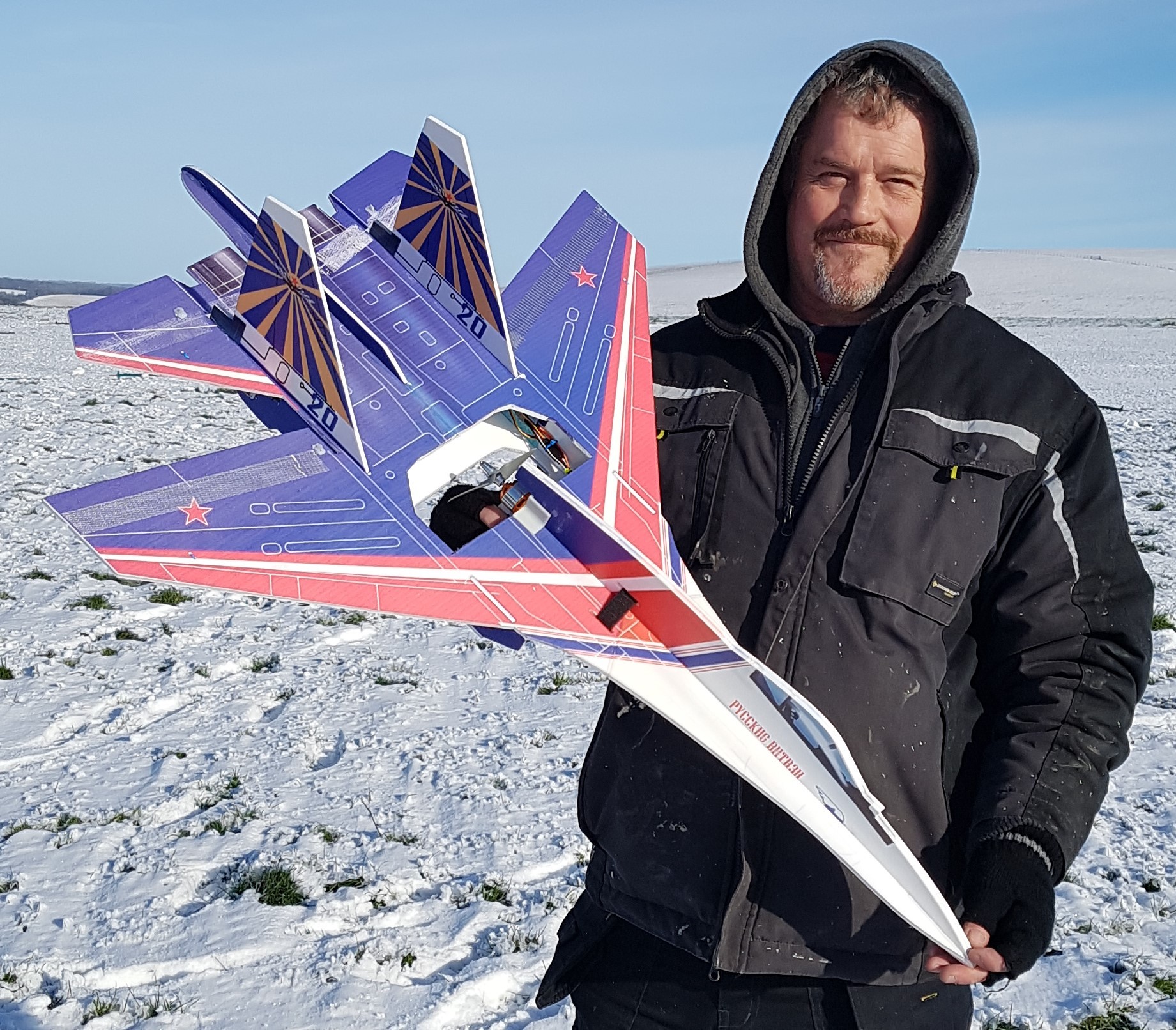
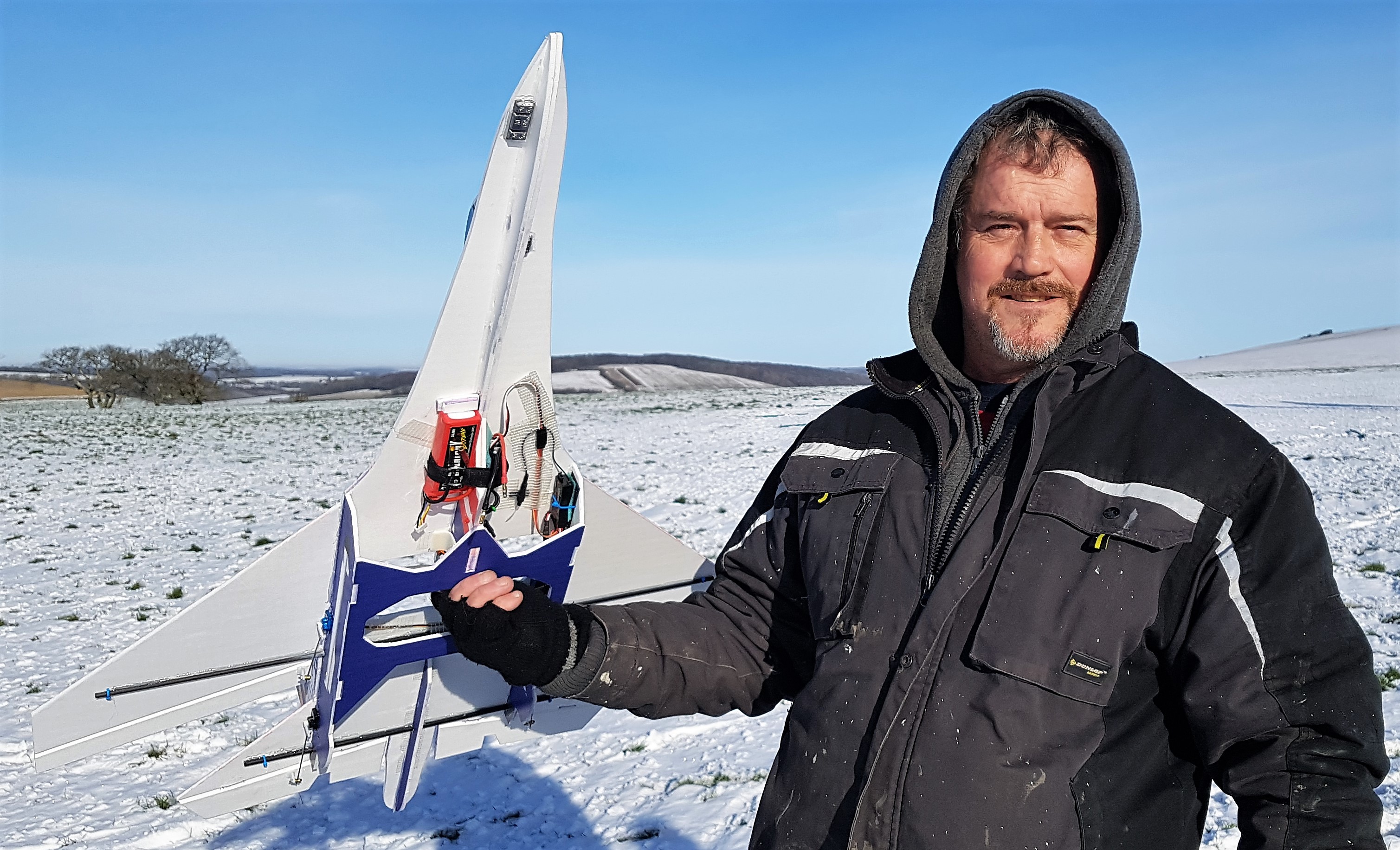 Gary has added a second carbon tube to stiffen up the tail end and he wasn’t keen on the unusual format of linked ailerons and elevators so has added a couple of extras servos and the surfaces are now all independent. When I put mine together I thought having them coupled the way HK suggest was very odd but it seems to work perfectly well. I haven’t flown Gary’s so I can’t say if it’s any better or not, it would be interesting to compare the two.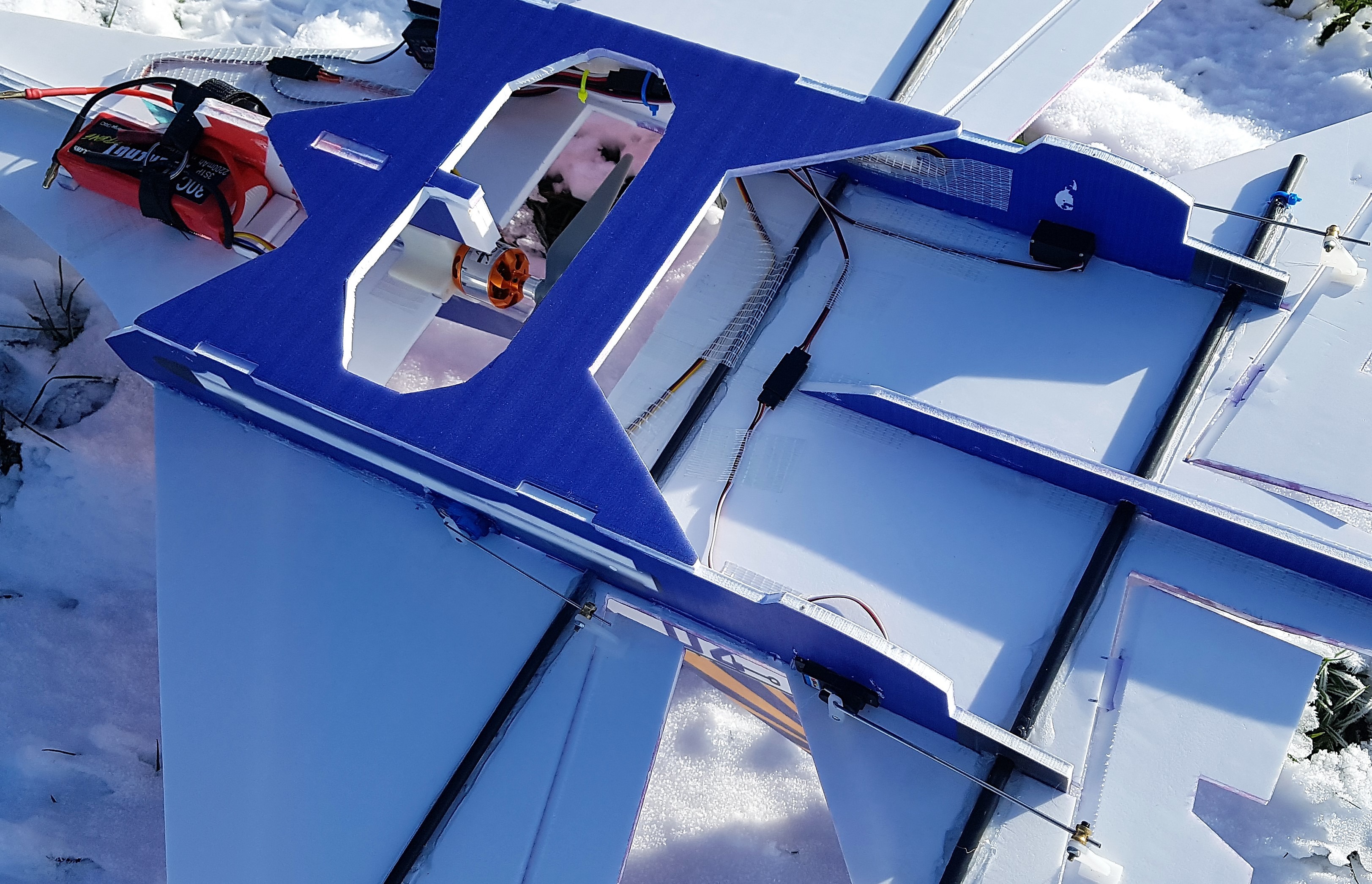
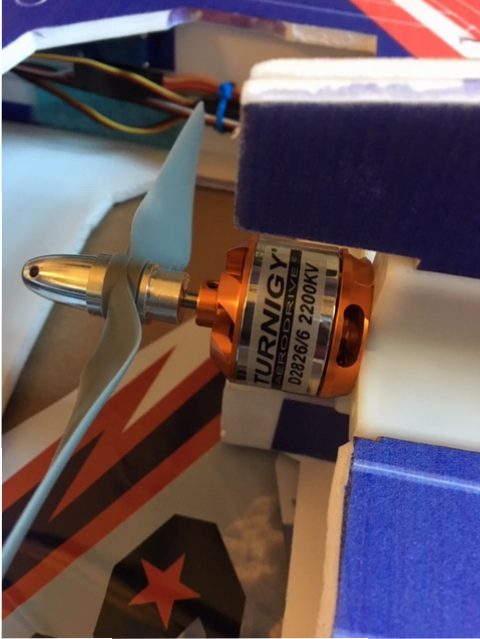 As you’ll see in the video Gorgeous Gary enjoyed flying his Sukhoi in the snow, it certainly flies well and maybe the controls look more positive than mine. A little bird tells me he’s bought a second Mig to join his existing one…!
Shock horror, Captain Slow has also completed one of the new colour scheme Sukhoi SU-27s, a record two new models in two months! His is completely stock and just uses two servos to control the ailerons and elevators.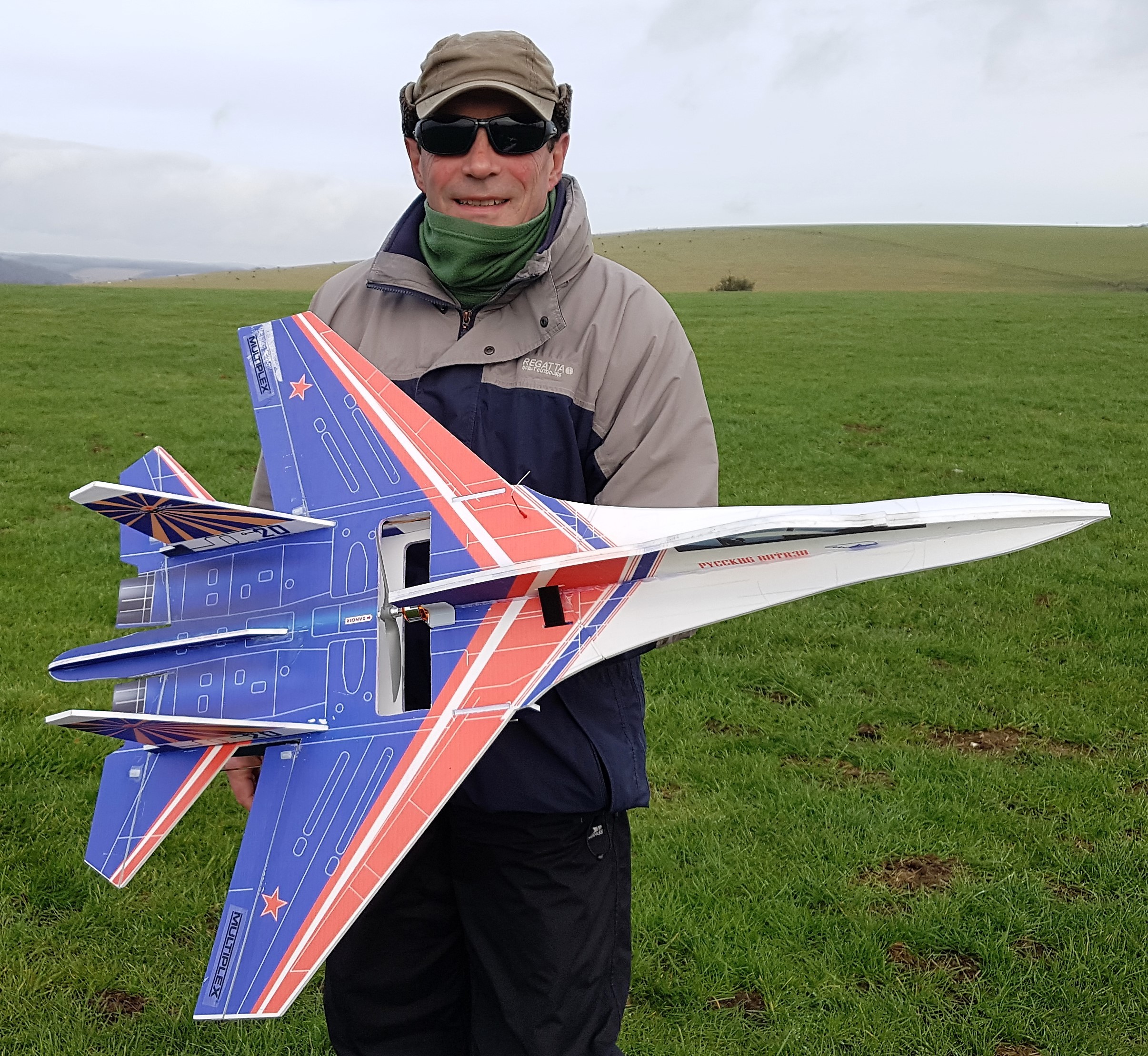
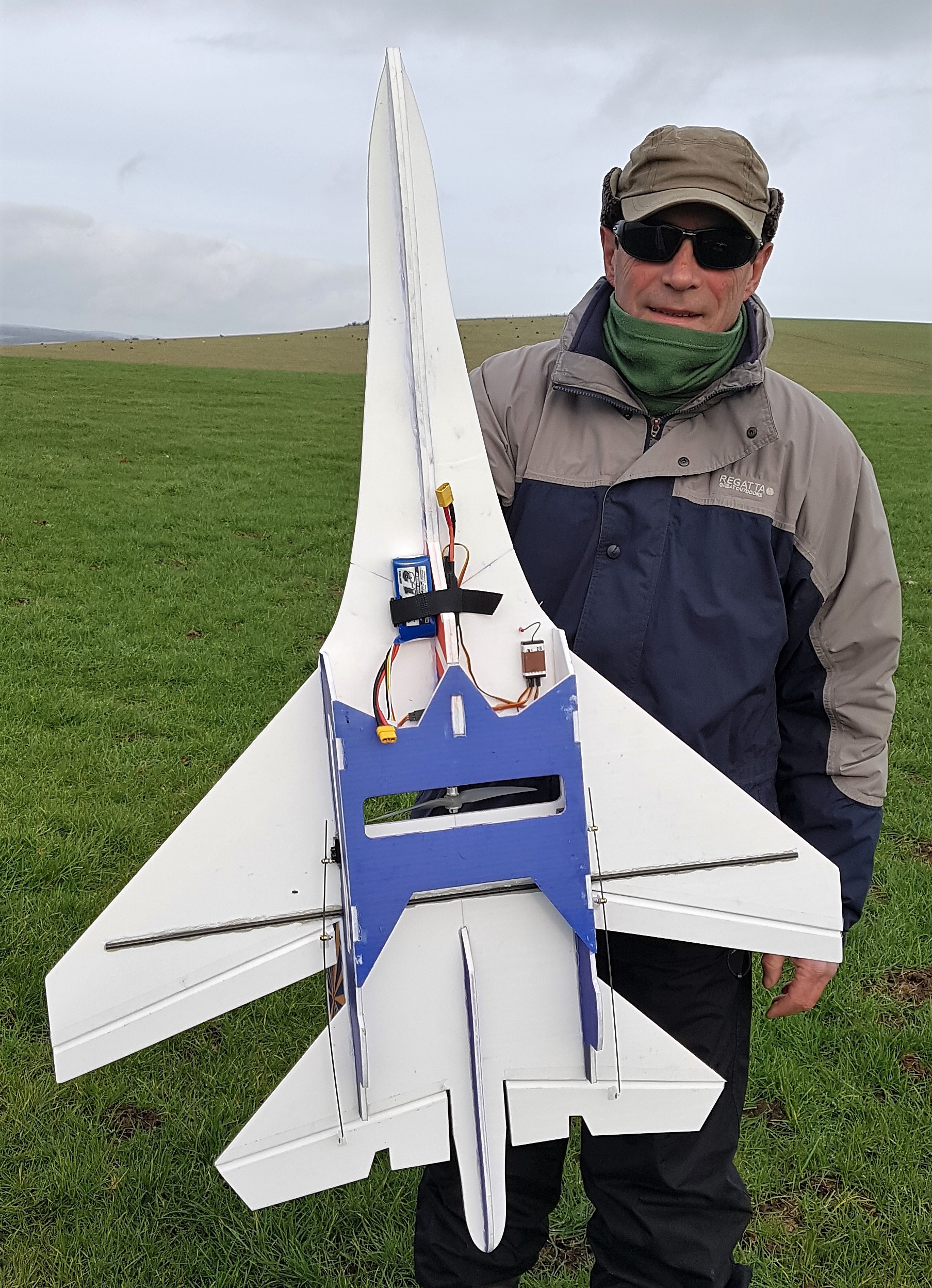 All of these foamboard jets are using motors with a kV of around 2200 but Captain Slow had a 1400kV motor spare and decided to try it in his Sukhoi. The advantage of a lower kV motor is that it will swing a bigger diameter propeller and hopefully keep the noise down a bit. I think it’s fair to say that some of us doubted the lower kV motor would be any good but in fact the plane flies the same as all the others with the advantage that it’s a little quieter.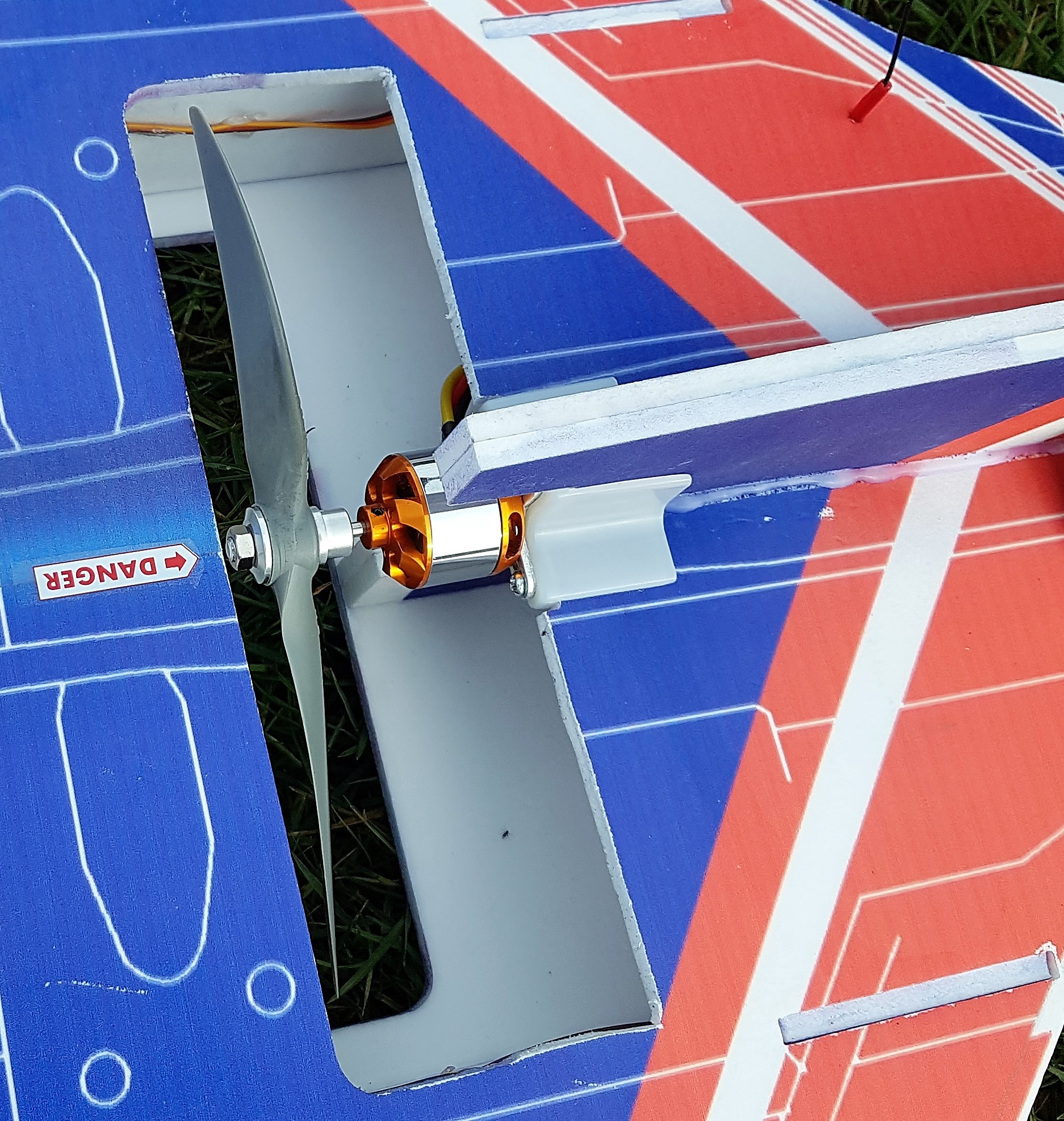
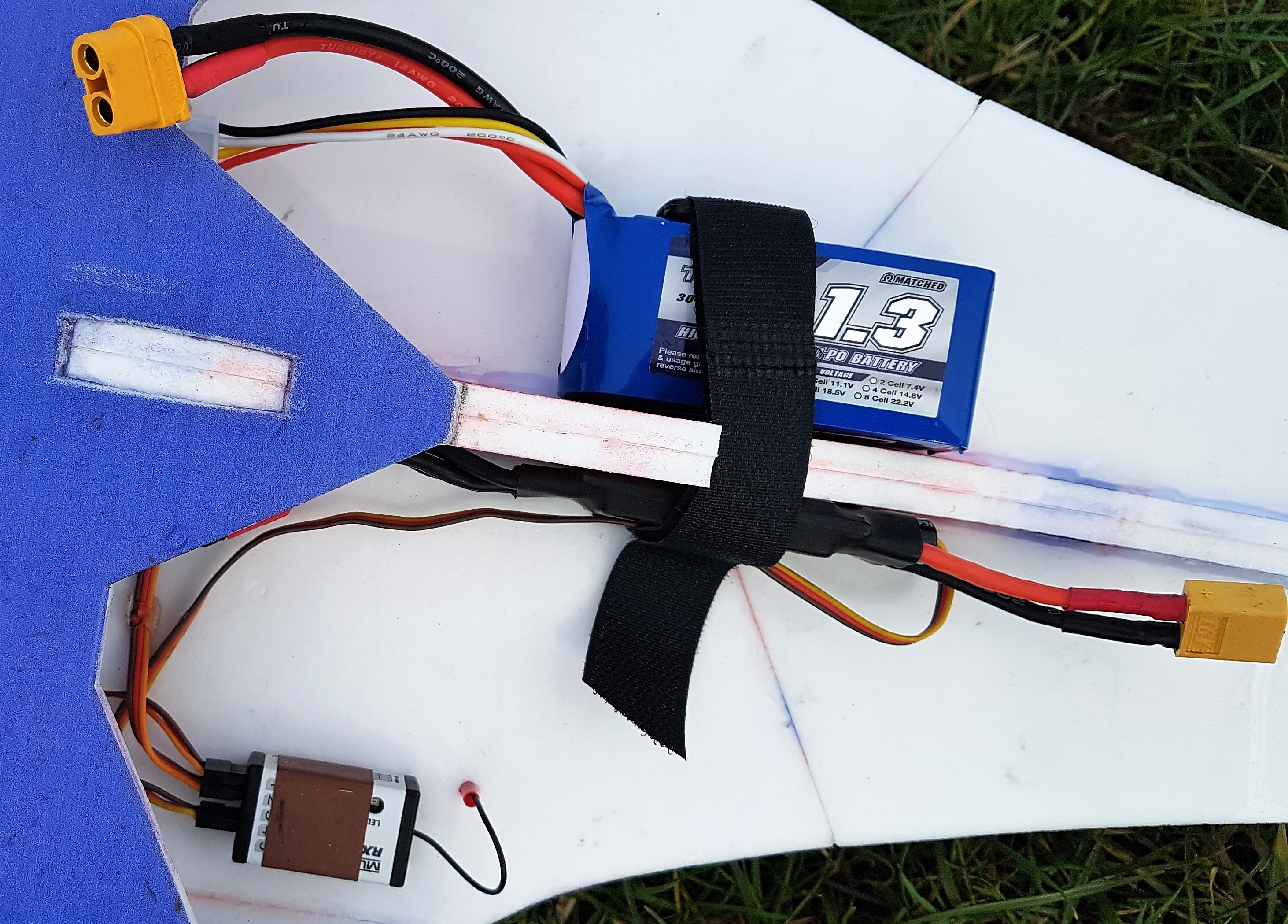 At first he said he didn’t like it as much as the Mig-29 but has since got used to it and now loves it. They do fly surprisingly differently, both are good in their own way, the Mig is faster but the Sukhoi is better for high alpha stuff. I know the Mig is faster because Captain Slow decided to ram my Sukhoi from behind with his Mig! To be fair he’s probably never experienced anyone flying slower than him before. Dougal managed to capture the collision on video so you can watch it before deciding for yourself that it was Captain Slow’s fault. This is where they ended up.
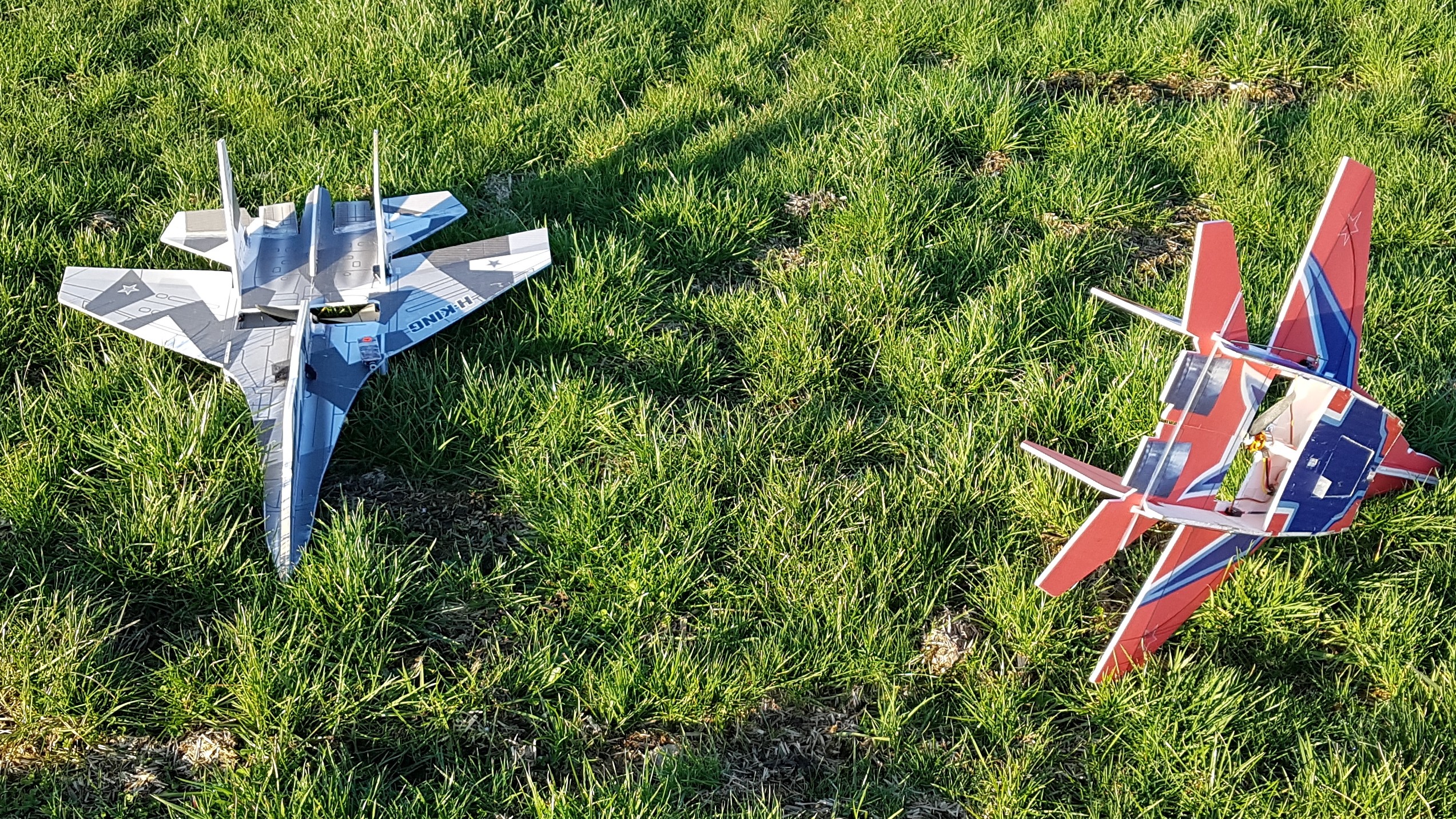 There was zero damage to my Sukhoi and just a small chunk out of the foamboard on Whacker Wheeley’s Mig where it hit my propeller. He’s replaced the chunk and added libellous markings!
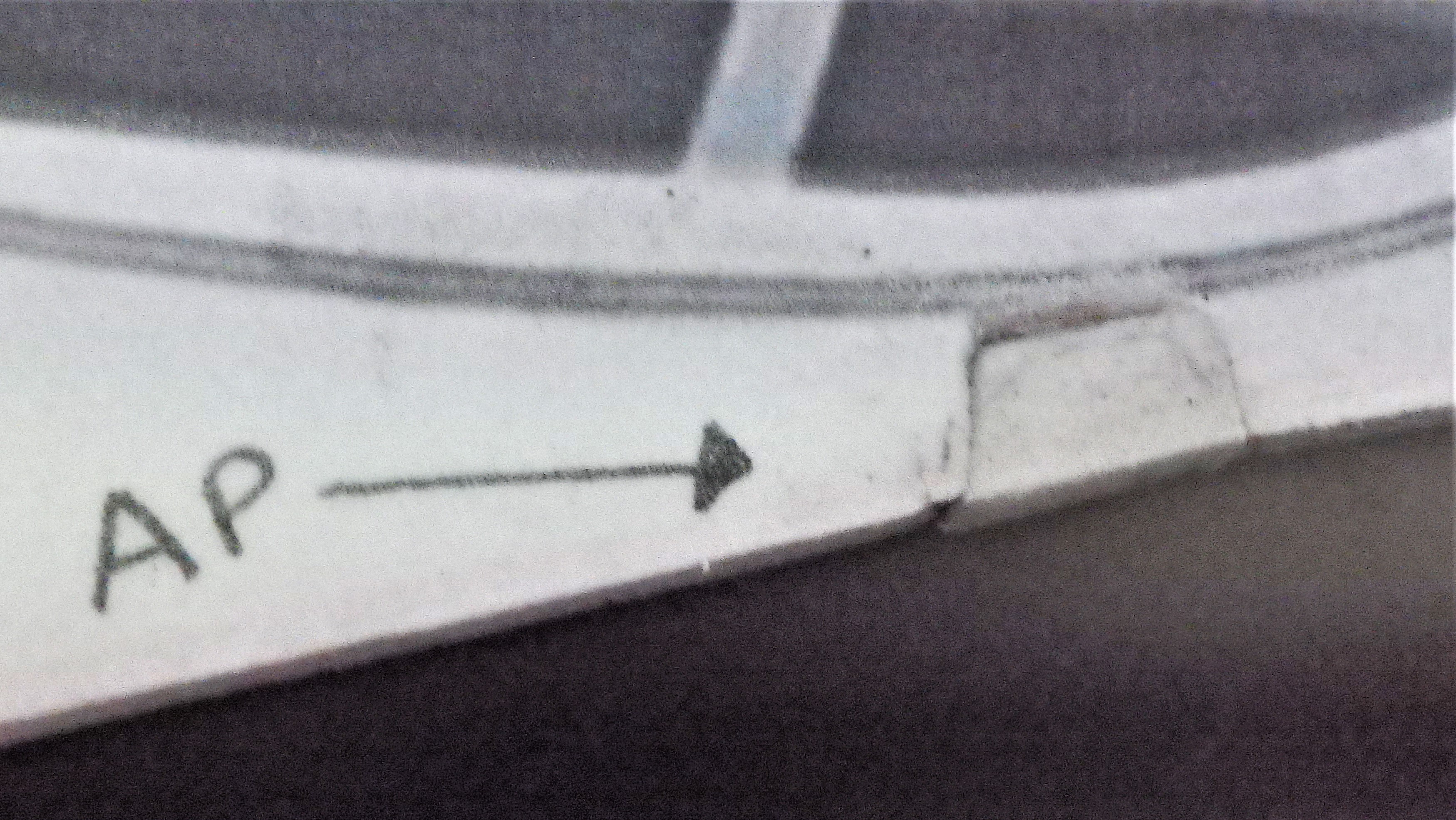 Despite his continual moaning about hating the foamboard jets 1066 has also succumbed to a new Sukhoi!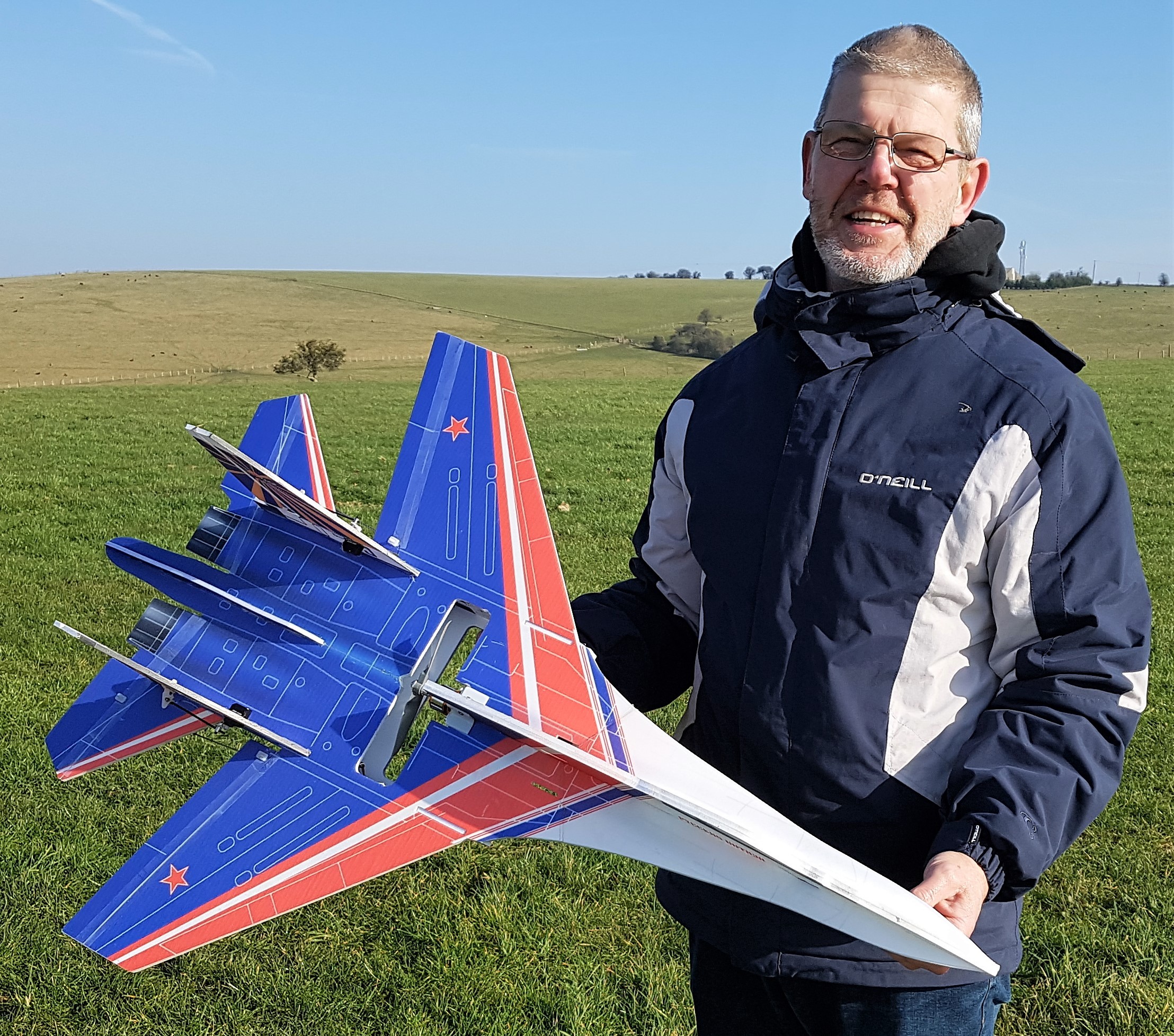
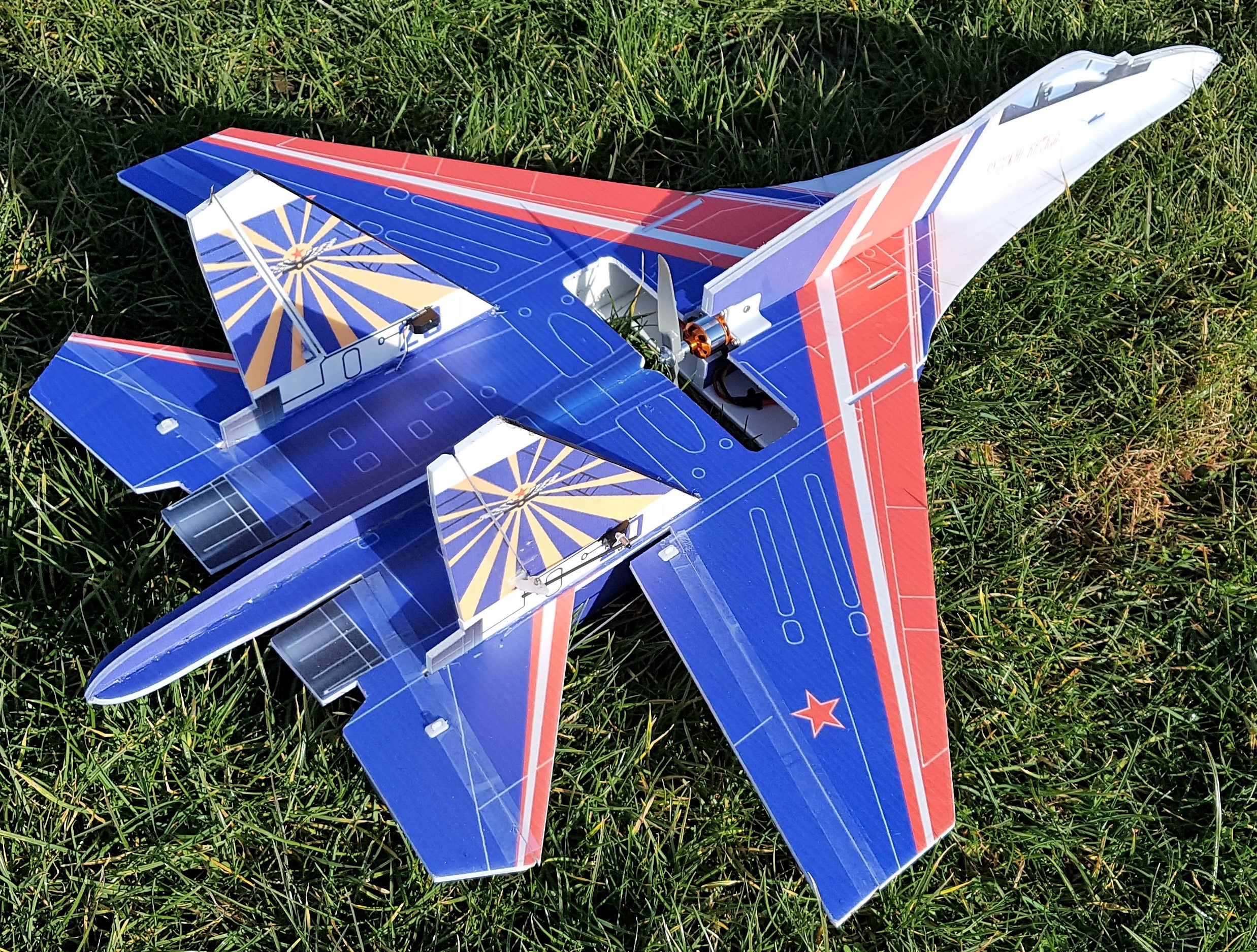 He’s using the stock coupled aileron/elevator set up using just two servos. I’ve retro fitted one servo to move one rudder on mine but 1066 just had to go one better and he’s fitted two servos to operate two rudders.
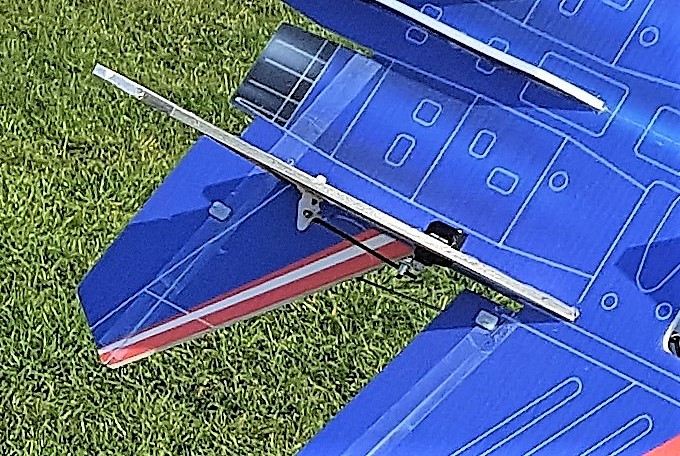 The rudders are quite effective, presumably two more so than one, and enable some very strange manoeuvres to be performed once you get used to them. After 1066 dripped on that his Sukhoi wasn’t nice to fly I took a look at it and decided his CG was about 6” too far back…well maybe not that much but it was certainly a long way rearward.
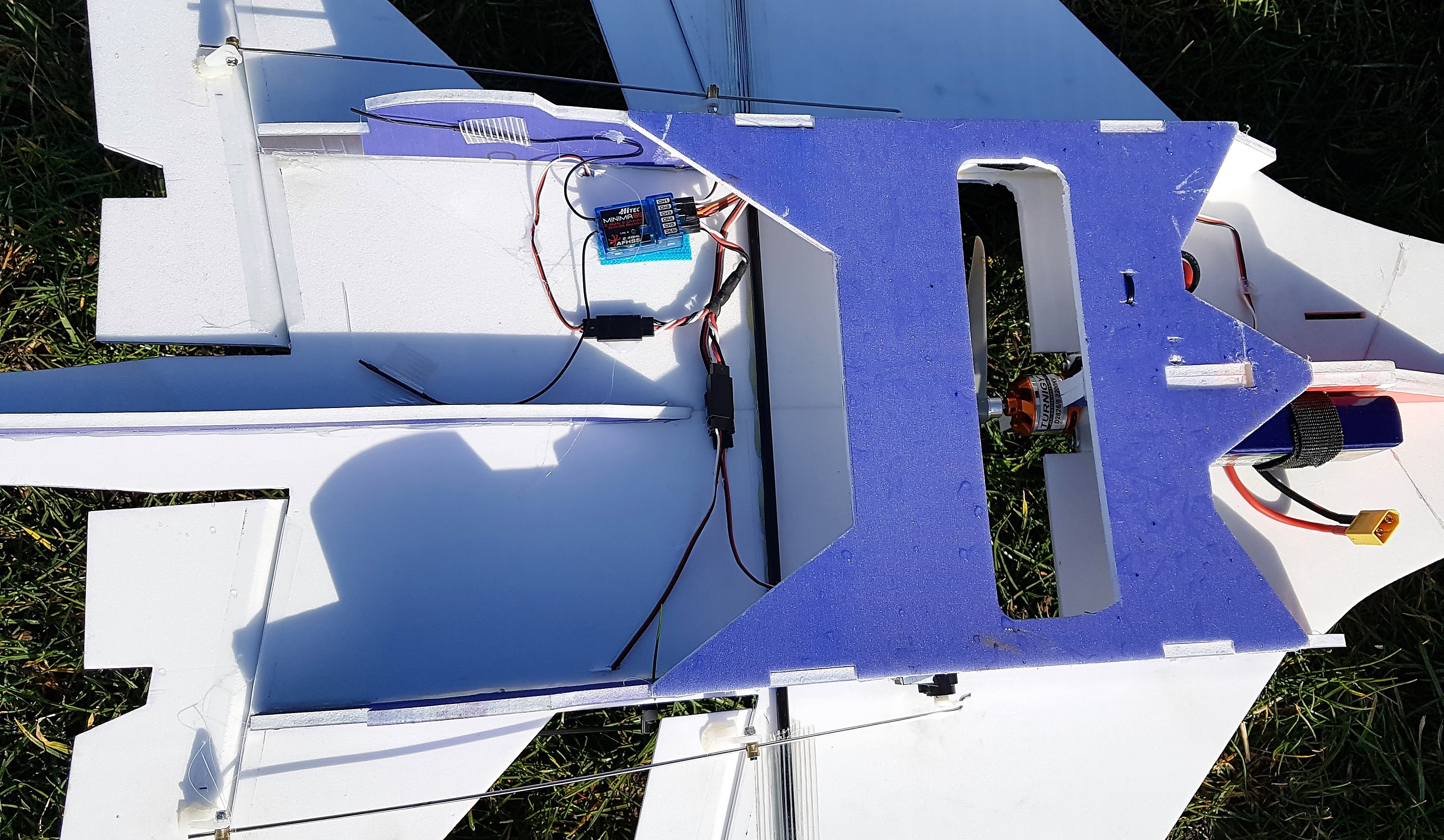 Having checked out the locations of the radio gear and battery on all the other SU-27s he’s since repositioned everything to bring the CG forward to the correct place and now begrudgingly admits that he’s enjoying flying it!
Yet another foamboard jet, this time it’s an F-35 Lightning which was put together by Cream Egg.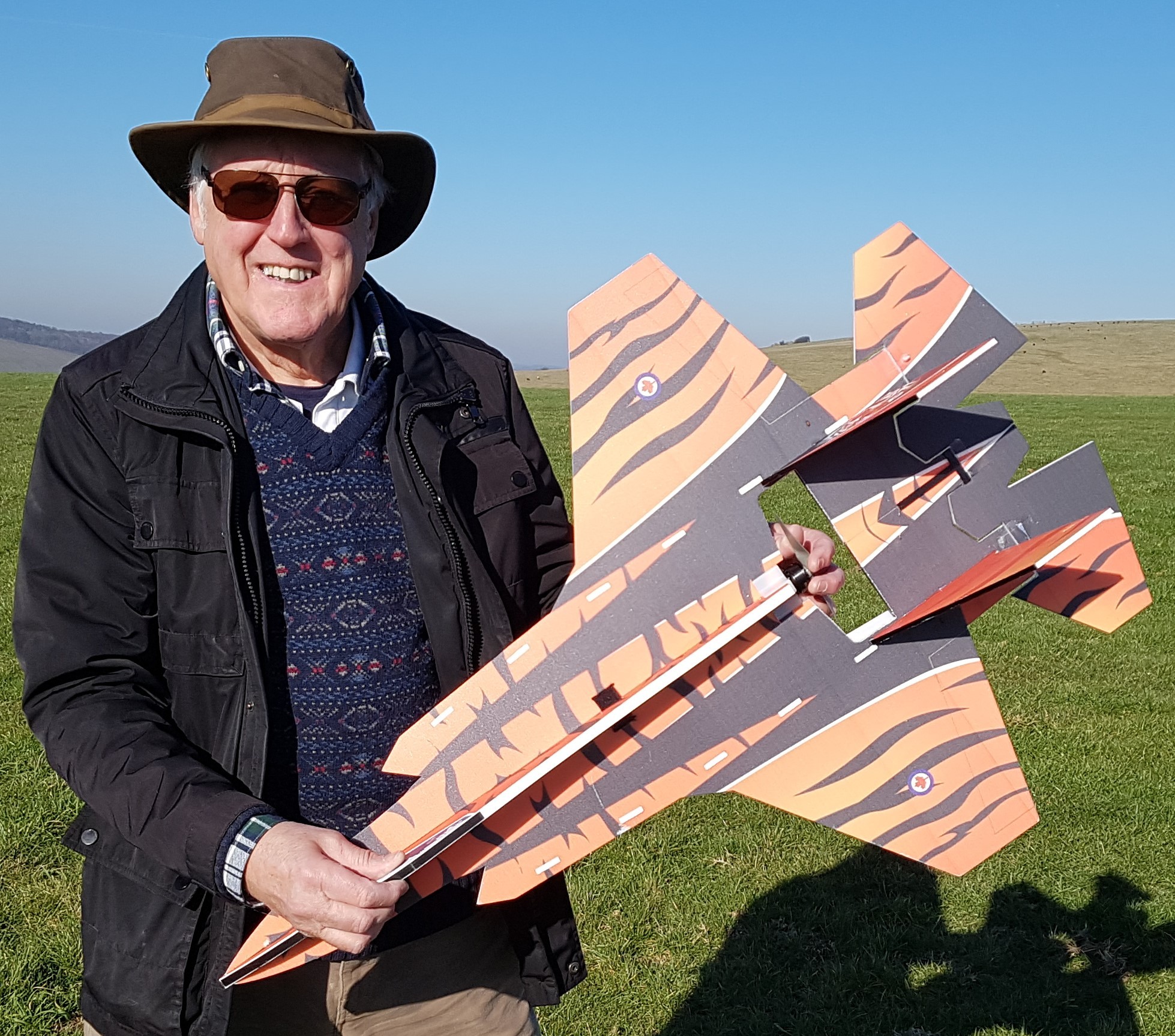 I was asked to do the test flight and quickly discovered that Cream Egg’s batteries were past their best, although fully charged they didn’t provide enough current to fly the F-35. We tried it with one of my packs and it flew fine after a few tweaks to the movements and trims. The only problem was that it was very noisy, the centre mounted motor makes all these foamboard jets noisy and the propeller slot needs to be enlarged to lower the noise.
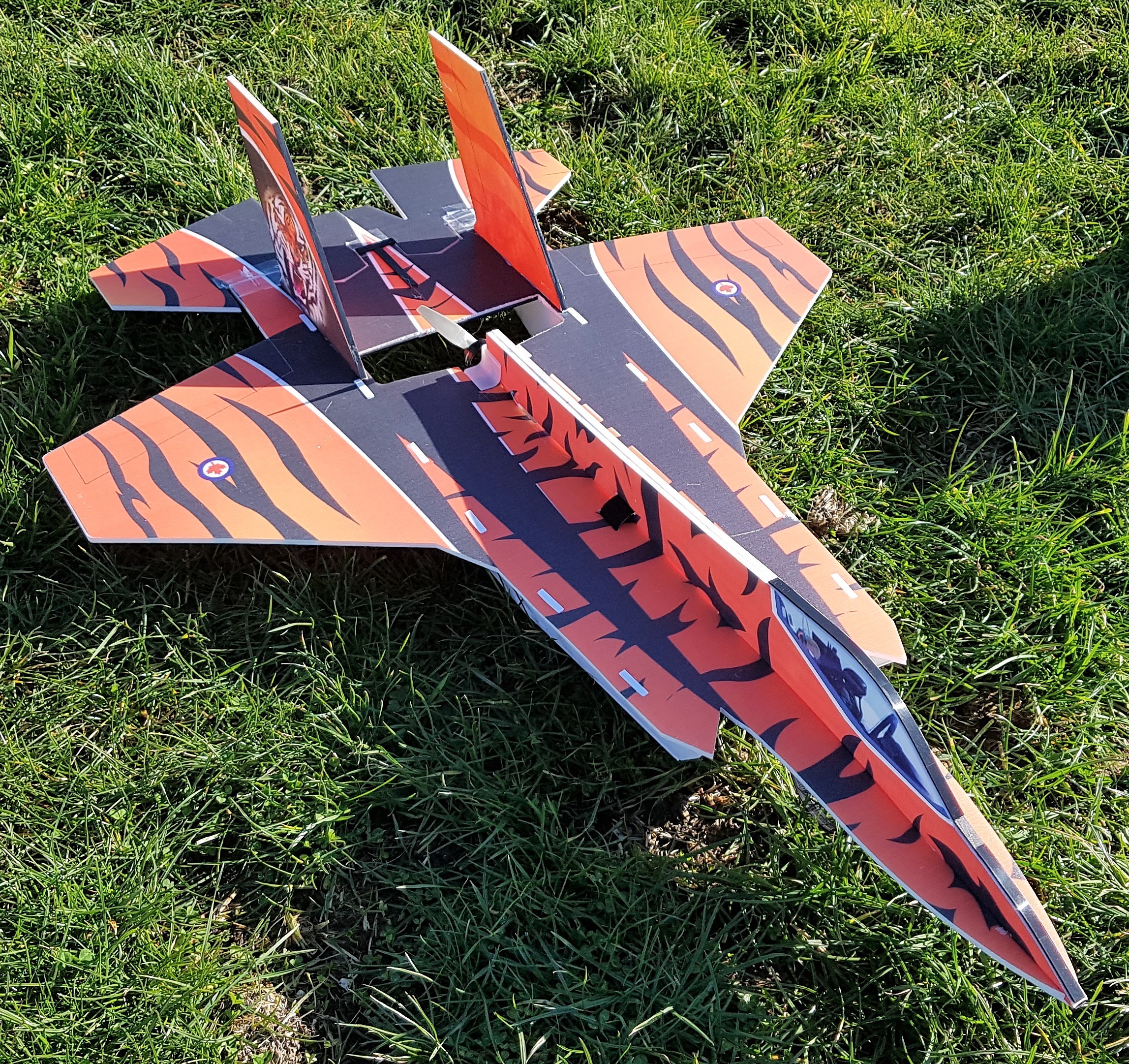 Cream Egg has cut the slot a little but the propeller tips are still close to the foamboard and that’s what causes the noise. No problem, a couple of minutes work cutting the foam well clear of the front of the propeller will sort it out.
There are some videos on YouTube of a chap who’s added an undercarriage made from plastic tie-wraps to his foamboard jets and Cream Egg has copied the idea. In the videos the guy is taking off from tarmac and the jets skid along on the plastic loops but I’m not sure they’ll work on grass. But nothing ventured nothing gained, we’ll see…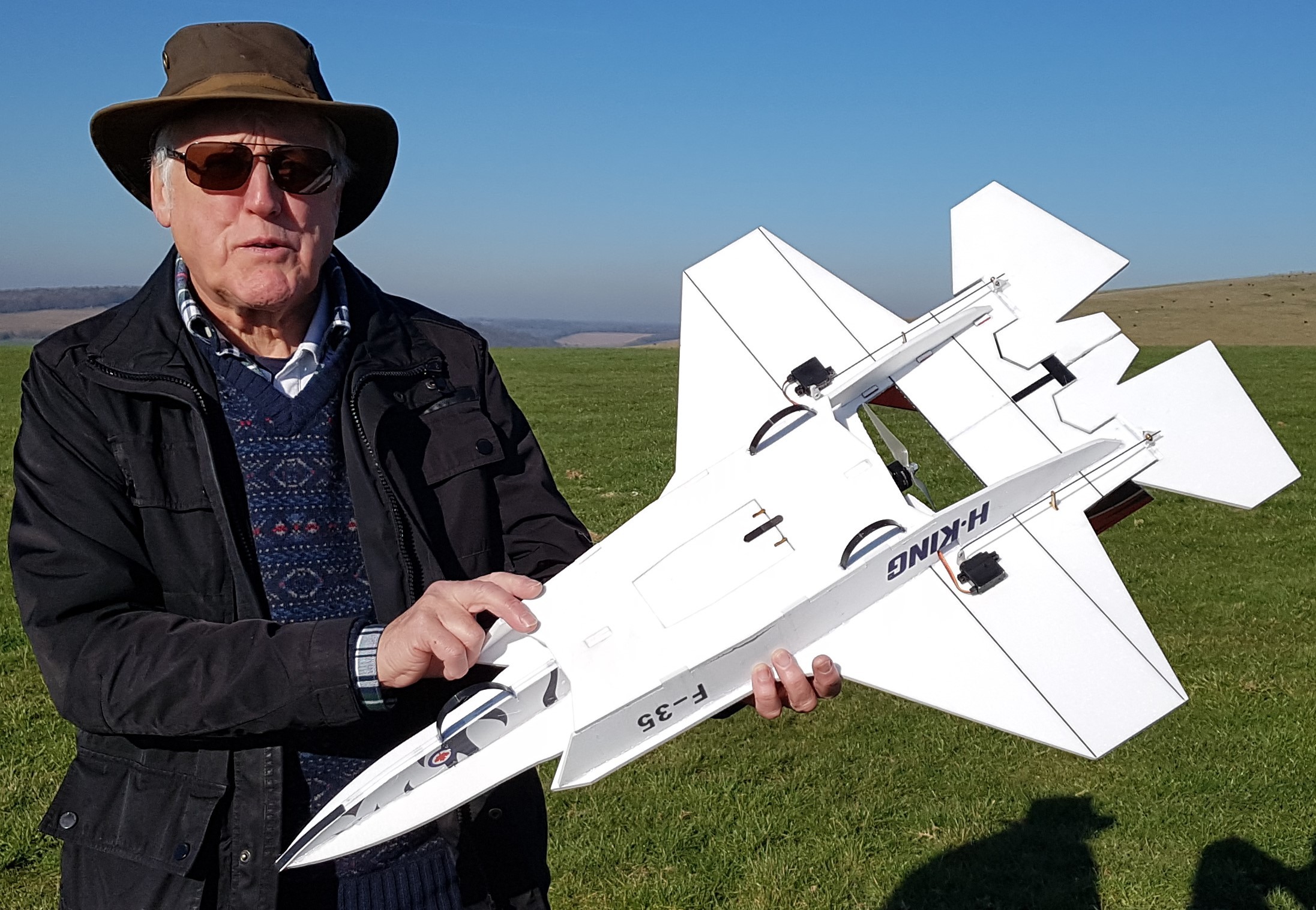
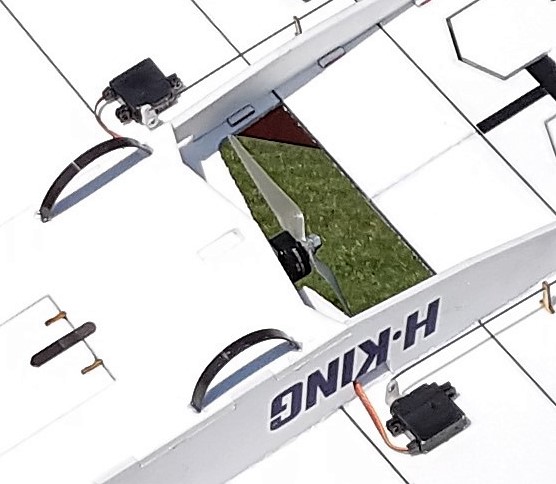 In the photo of the underside you can also see how Cream Egg has mounted the servos. Er…the servos are supposed to go in the cut outs in the sides of the ‘fuselage’, or maybe I’m missing something? Newbie Nick also has an F-35 and it flies well so no doubt Cream Egg’s F-35 will soon be joining all the other hooligans careering around the sky.
Dougal Entendre has been hankering after an FPV (First Person View) model for a while. He had a go at it with his old Olympic glider a while back but he was using the rather small screen on his Devention transmitter rather than proper goggles to view the transmitted video stream. The system worked but he found the screen difficult to see, especially in bright sunlight, so he asked Mrs Christmas (Angie) for a pair of goggles.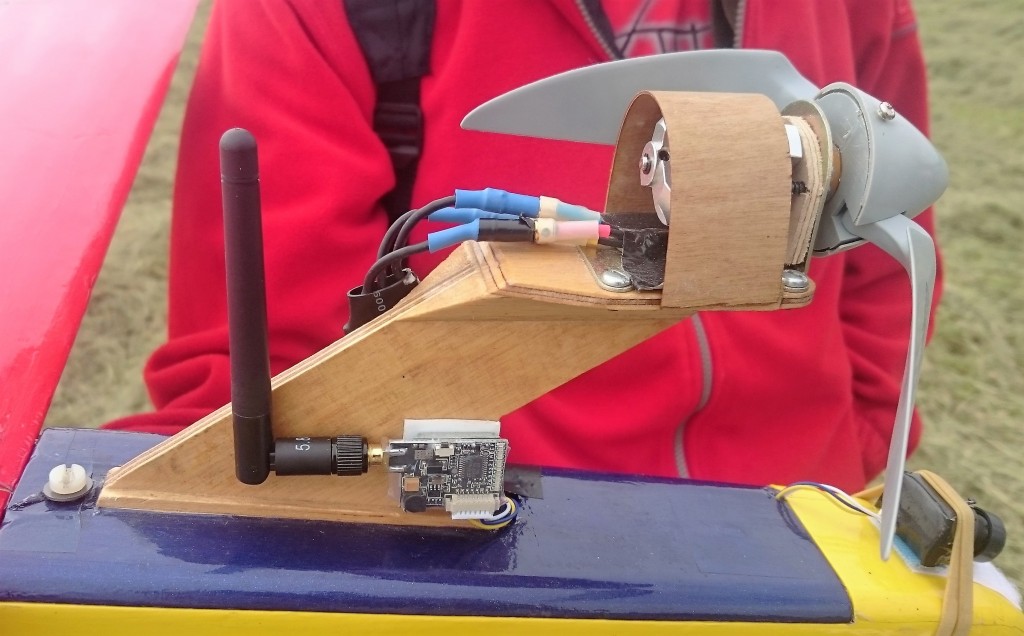
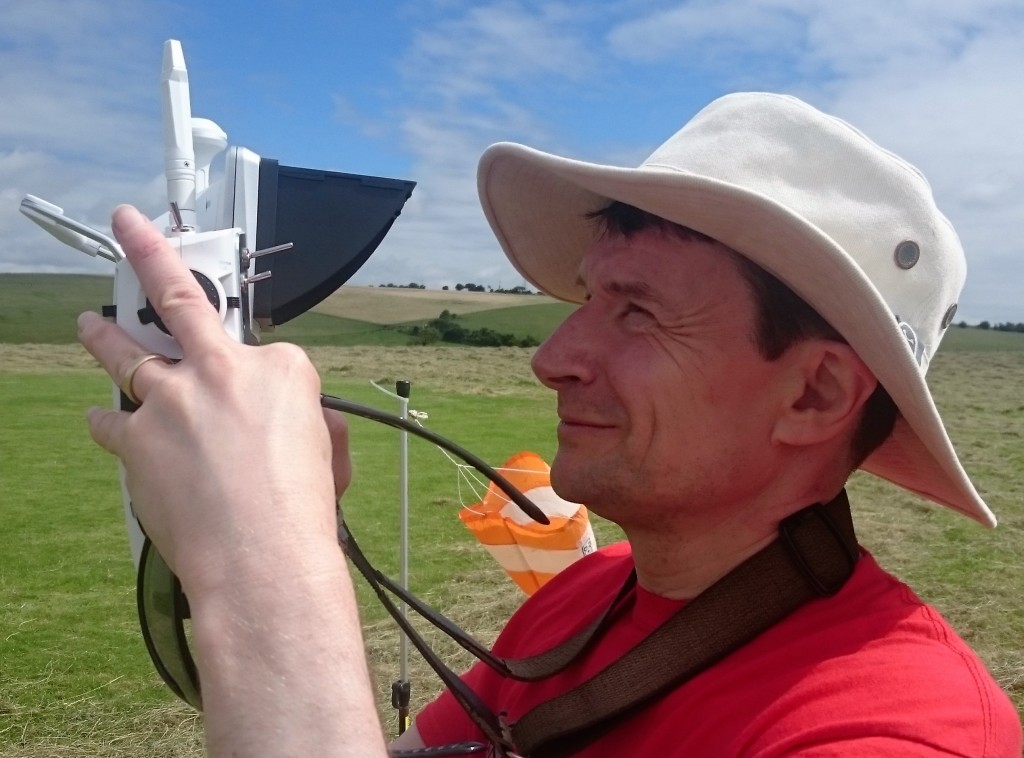 Sure enough a pair of Crazepony VR008 Pro FPV goggles with built-in digital video recorder turned up in his Christmas stocking. (I would normally make a comment at this point about stockings and Tranny Agate but he’s getting fed up with it so I won’t). He bought a Durafly Tomahawk from HobbyKing which is designed for FPV racing and fitted it out with the camera and transmitter from the Olympic. The first flights were on the snowy Sunday and Dougal flew the model in the normal manner (not using the FPV) and quickly discovered that the Tomahawk was a bit of a handful. Well it is advertised as a Mini Racing Wing so that wasn’t totally unexpected I suppose.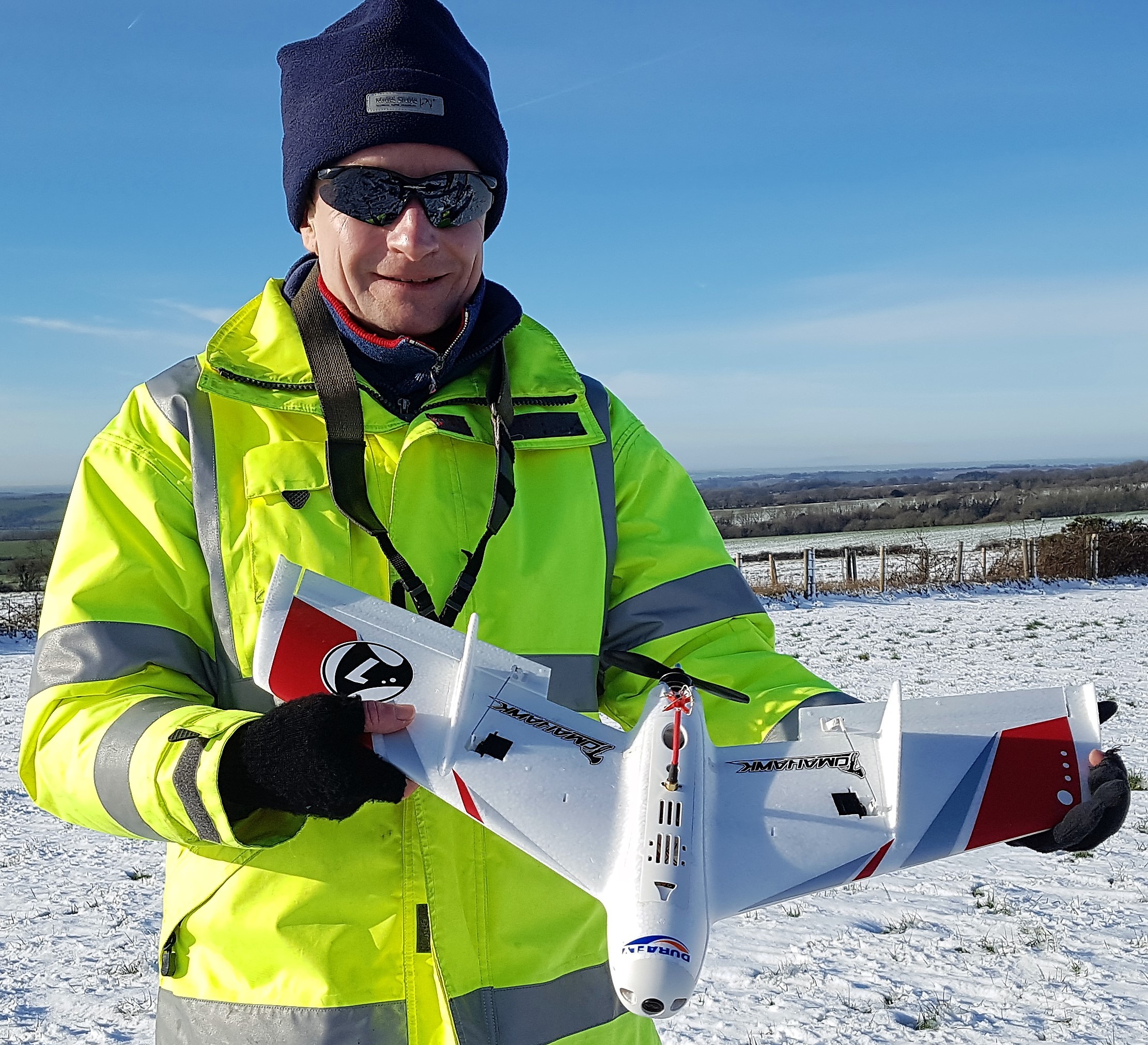
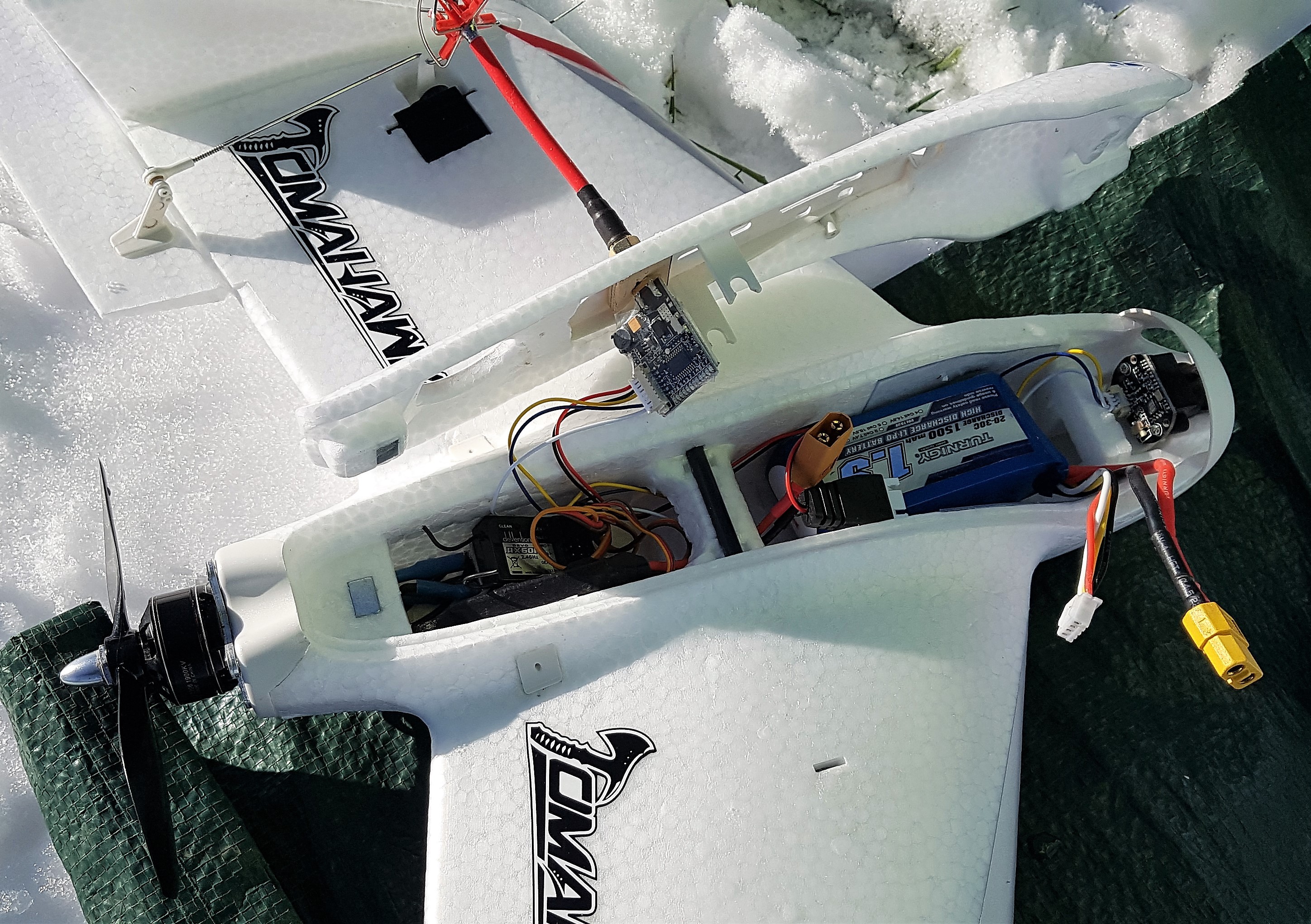 Kryten was monitoring the FPV via the goggles and reported that it all worked well as long as the model didn’t get too far away. Dougal decided the Tomahawk needed more fin area so back in the workshop he fitted it with a couple of cut down fins from his now defunct Wingnetic. The photo shows the mock-up before the fins were cut down.
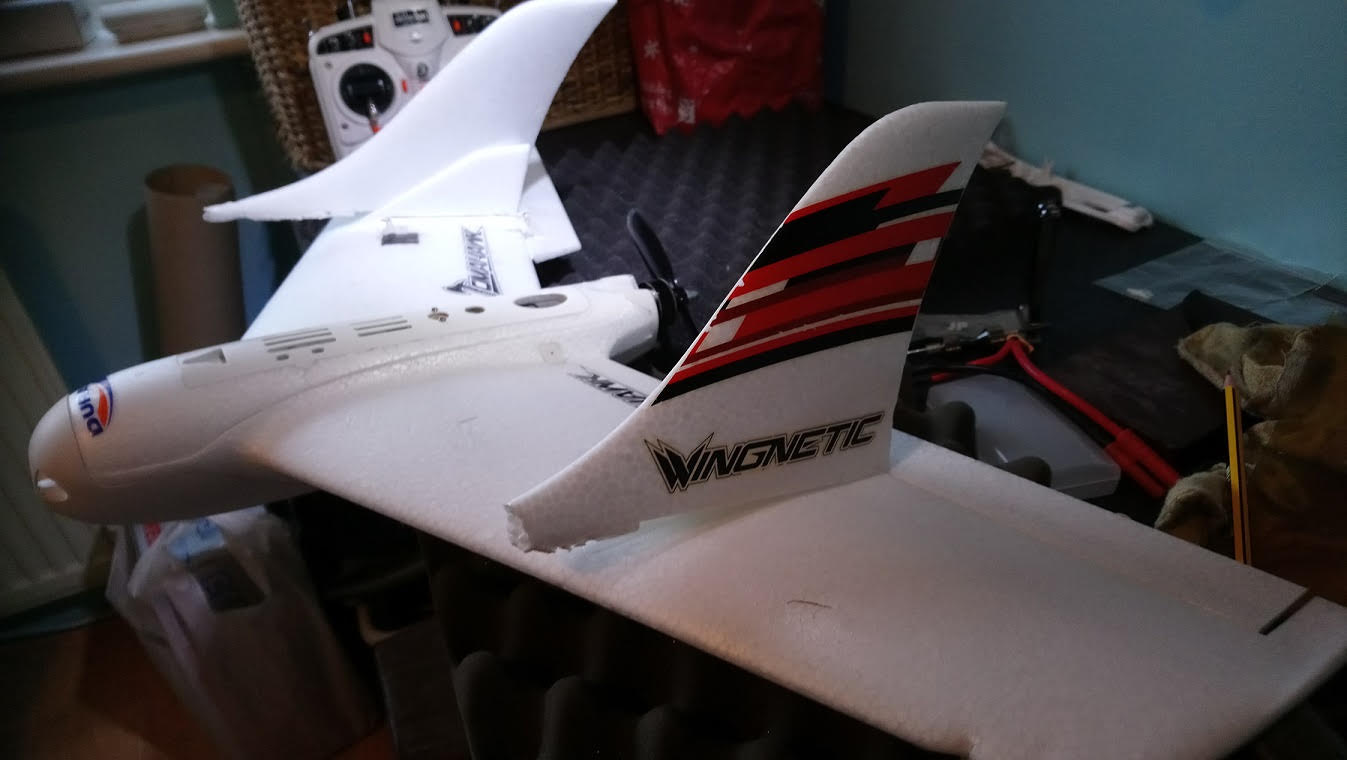 Next time out it flew much more steadily and he decided to try flying it FPV with me as the obligatory ‘competent observer’. All went well, better than I expected actually, and Dougal had a couple of flights totally unaided other than a few comments from me if I felt he was getting a bit too far away, he even landed safely back on the patch.
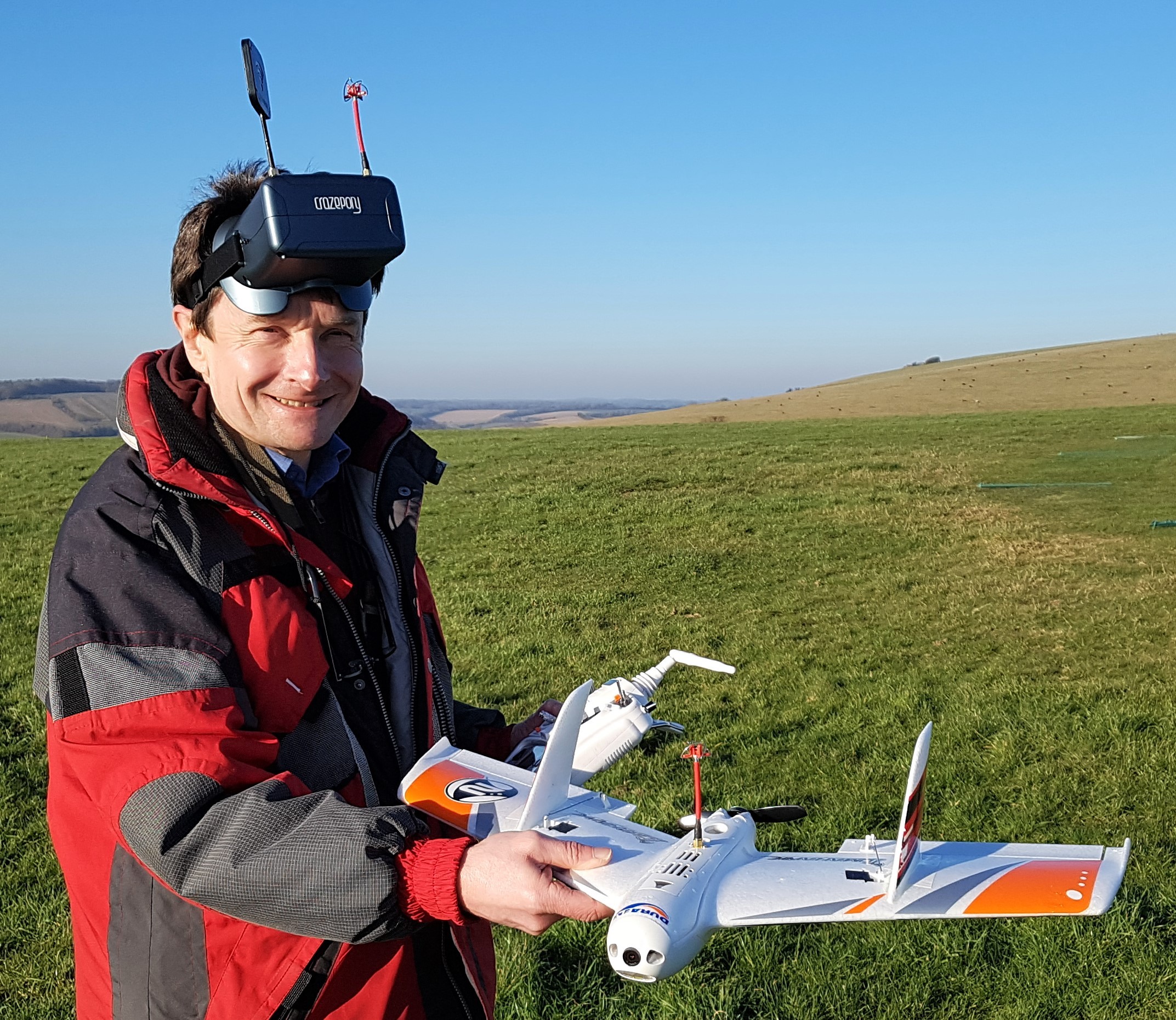 Having watched the onboard recording of the second flight I was surprised to see that the model was actually flying much closer to us than I’d thought but as it’s only 670mm (26”) wingspan it was bound to look small to me. You can see in the video that there’s some signal break-up which Dougal said didn’t happen on the first flight when the DVR wasn’t running so maybe the DVR is a source of interference. Dougal is planning a few changes to the set-up and then more flights will follow. I fancy having a go at FPV myself and have ordered some equipment…watch this space!
Not one to hang around 1066 hasn’t just built a foamboard SU-27, he’s also built a lovely little HK Mini Edge 540T. It’s one of their ‘EPP skins over a ply and carbon framework’ type of model that has now sadly been discontinued, 1066 has had the kit in his loft for a while. The Edge is 935mm (36.8”) wingspan and 1066 has fitted a 28mm 1400kV motor, a 10×4 prop, and a 50A speed controller. He uses a 3 cell 22mAh lipo which gives decent length flights. It flies brilliantly and in the video you’ll see it knife-edging from horizon to horizon.
Stanley Knife has put together this lovely looking ASW-28 that he won in a recent club big raffle.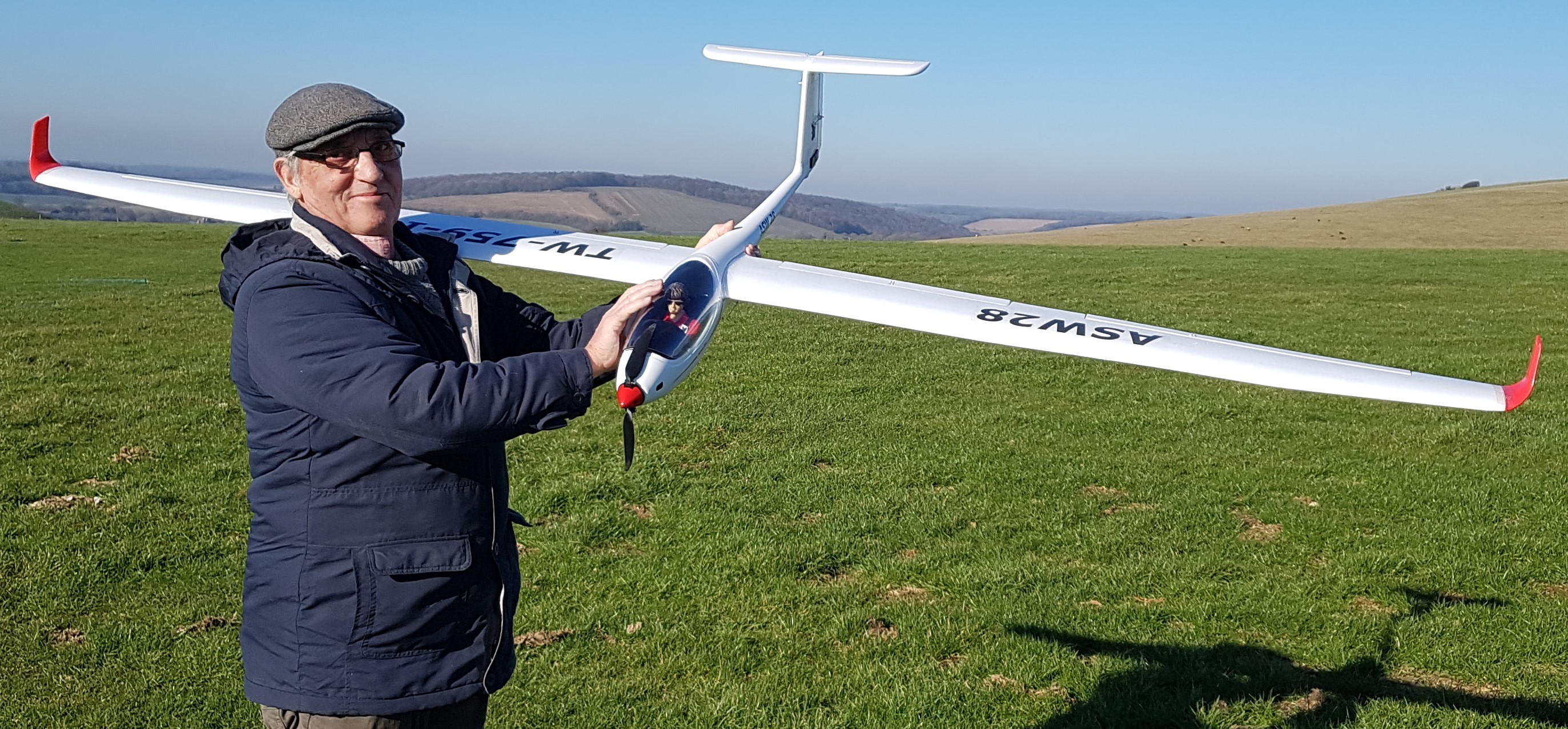
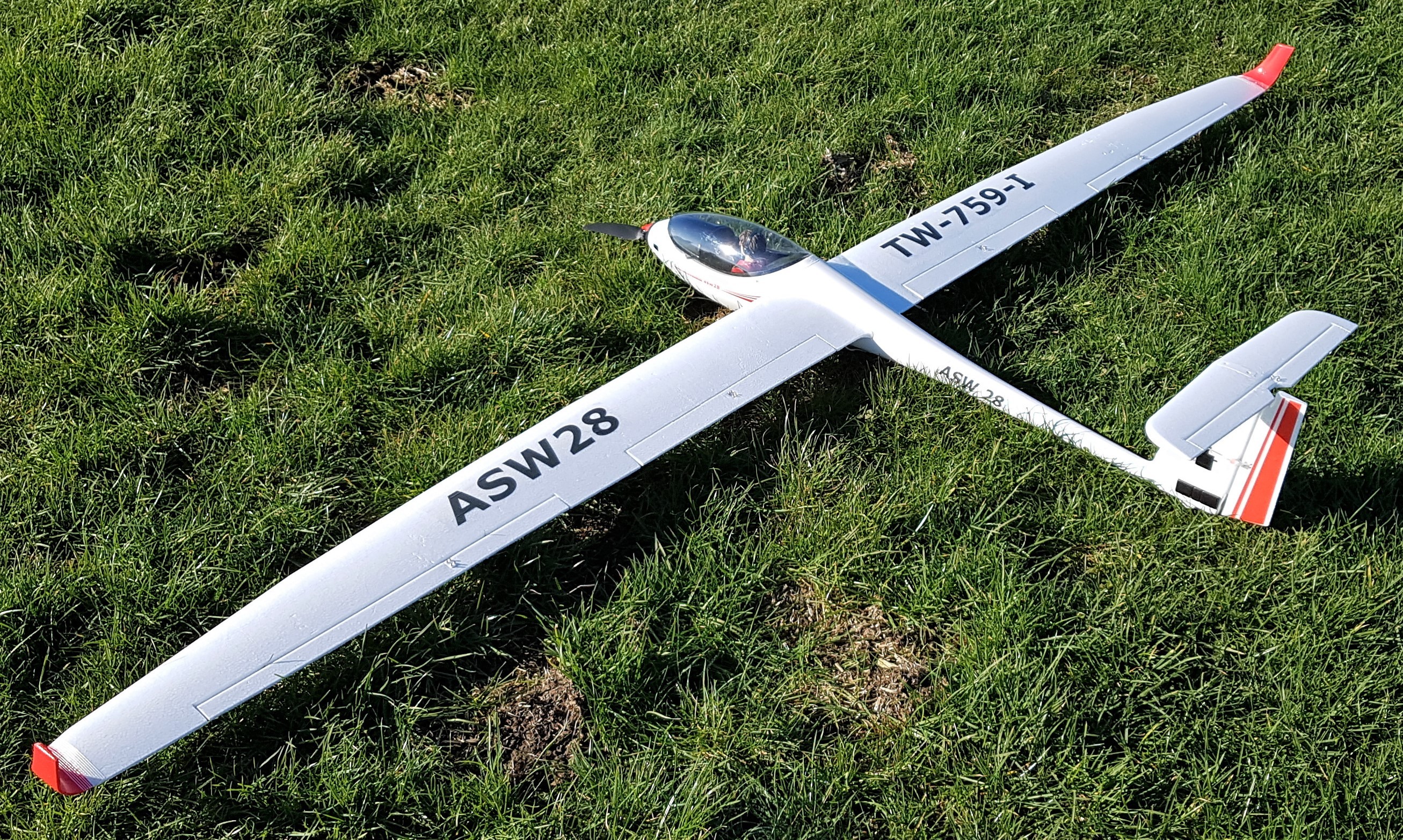 The 2540mm wingspan electric glider comes as a plug and fly model with all the electronics pre-installed. The motor is a 4018-850kV outrunner, the ESC is a 30A with BEC, and there are 6 x 9g servos controlling ailerons, rudder, elevator, and flaps. The fuselage is blow moulded plastic and the wings and tail are moulded in EPO foam.
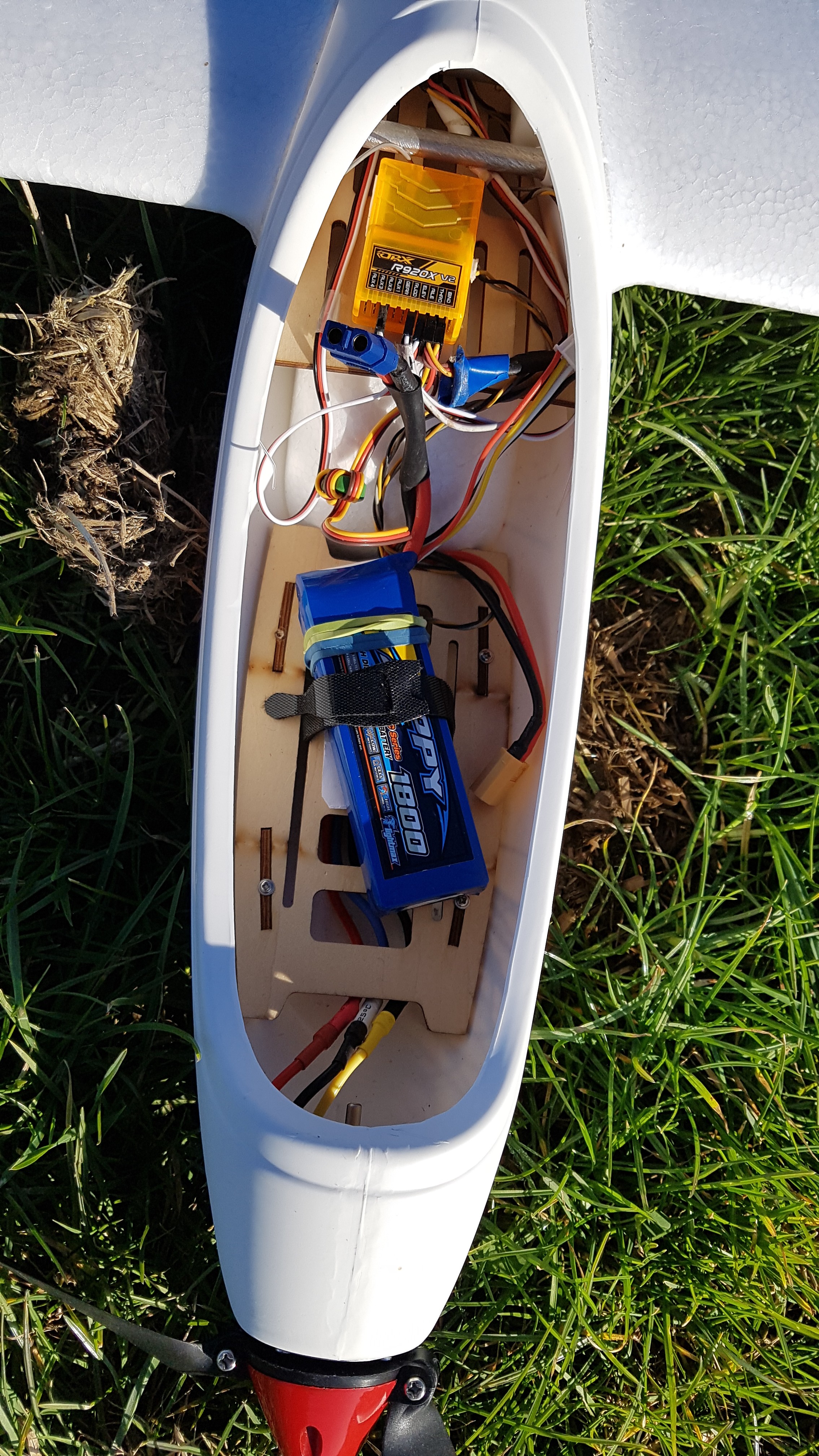 Stanley is using an 1800mAh 3 cell lipo but as you can see there’s loads of room for a bigger battery if required. The ASW flies beautifully, it’s certainly not overpowered but performs gentle scale-like aerobatics very nicely.
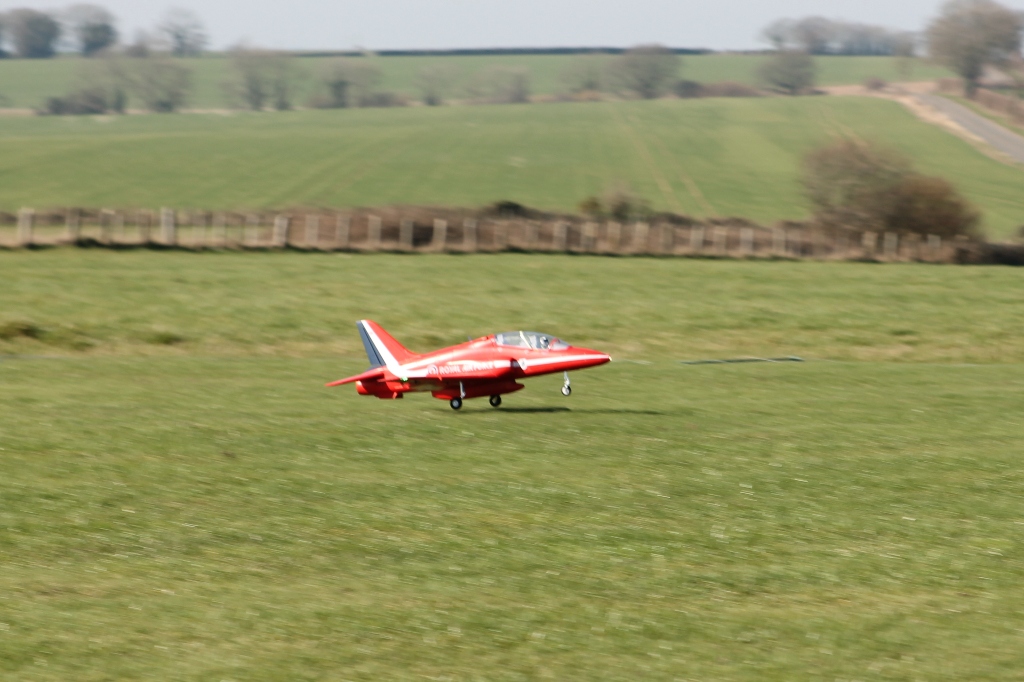
Now for something a bit special, Page Boy has treated himself to a Freewing Bae Hawk T1 in the Red Arrows colours.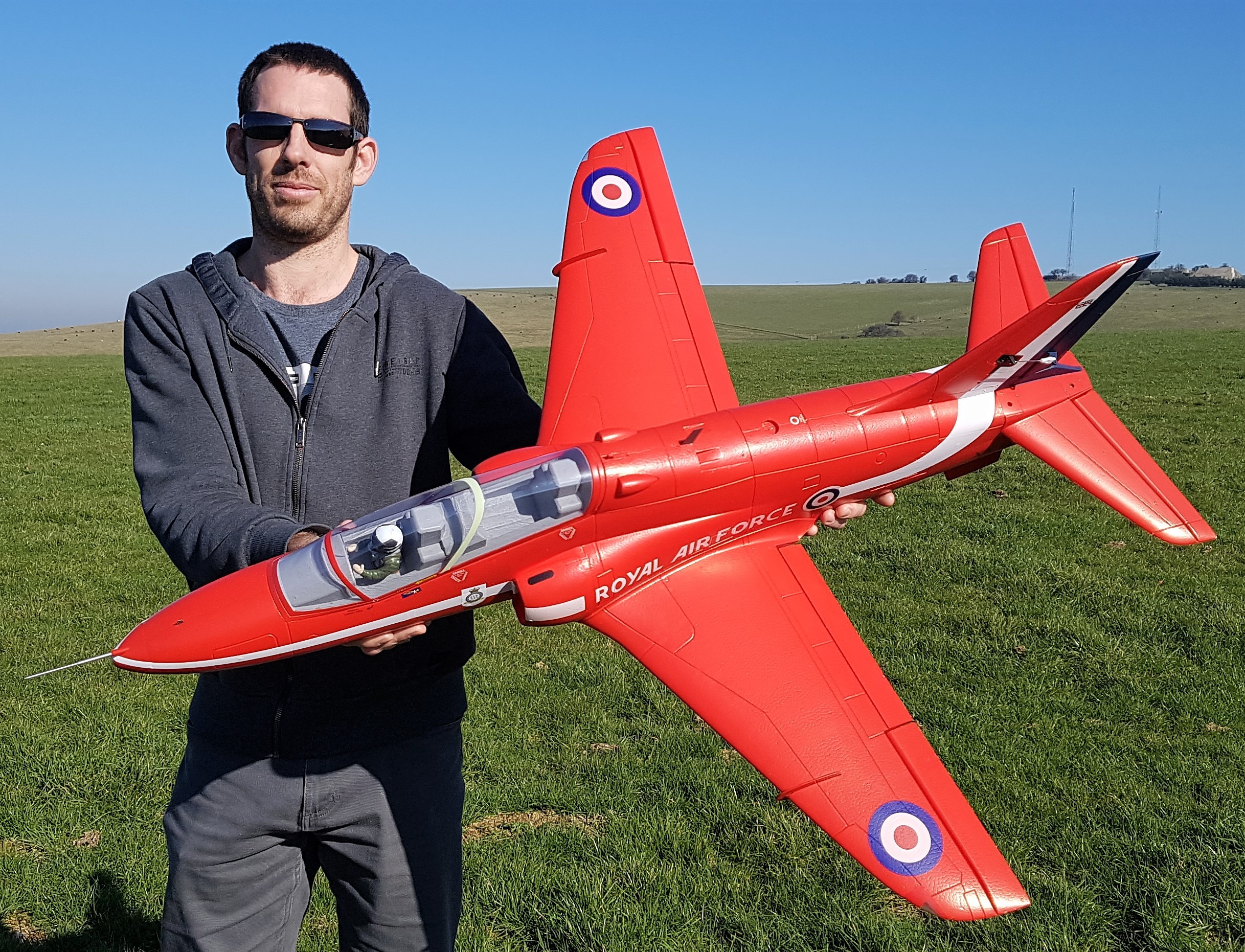
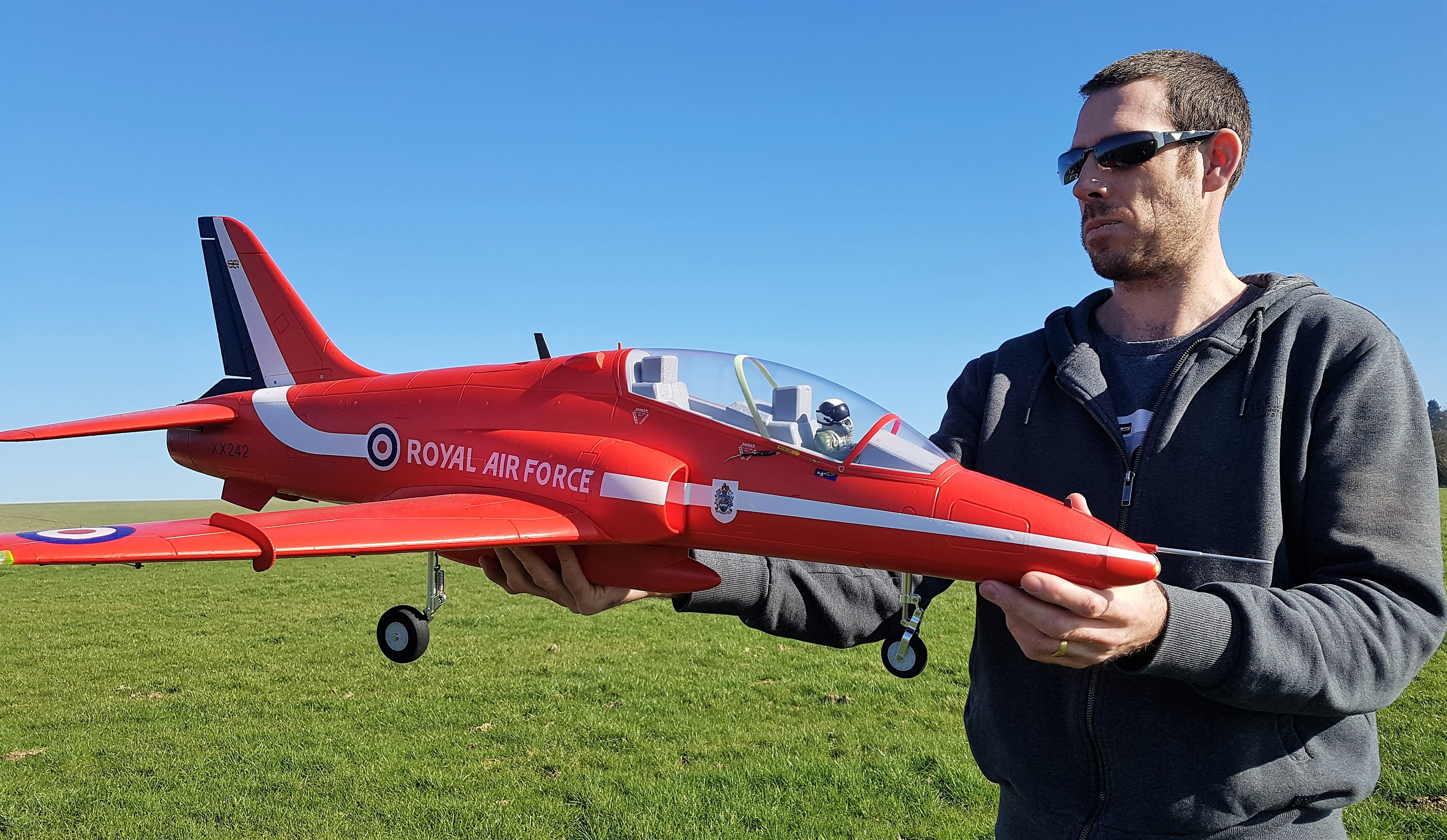 The 1020mm (40”) wingspan plug and play EPO foam model uses a 12 bladed 70mm diameter fan that’s spun by a brushless inrunner motor connected to an 80A speed controller and a 6 cell 4000mAh battery. That set-up provides a lot of thrust but has a very quiet turbine like sound. The Hawk is a very high quality model and looks fantastic with it’s lights, flaps, and retracts as standard and Page Boy’s came with the upgraded sprung undercarriage oleo set.
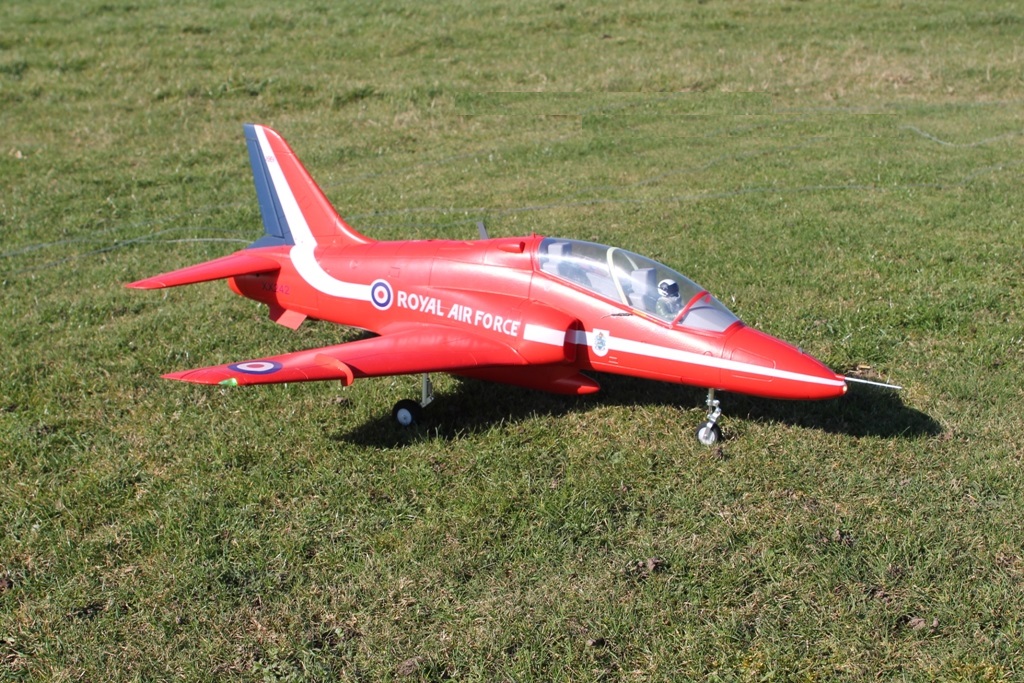 Page Boy asked me to do the maiden flight as he’s never flown a ducted fan model before. The Hawk took-off from the patch nicely with half flap (the grass is in great condition at the moment) and required little trim to fly straight and level. With the wheels retracted she’s quite fast flat out but she’ll also fly slowly when throttled back and I didn’t find any handling problems. Page Boy had a quick go on the first flight before handing the transmitter back to me for the landing and she came in beautifully with full flap and landed gently on the patch. He had longer on the controls on the second flight and seemed to be getting the feel of ducted fan flying. I love it…want one…!
This Patch News includes contributions from Dougal Entendre, Captain Slow, Iven, Kryten, Gorgeous Gary, and Catapult King, thanks chaps.
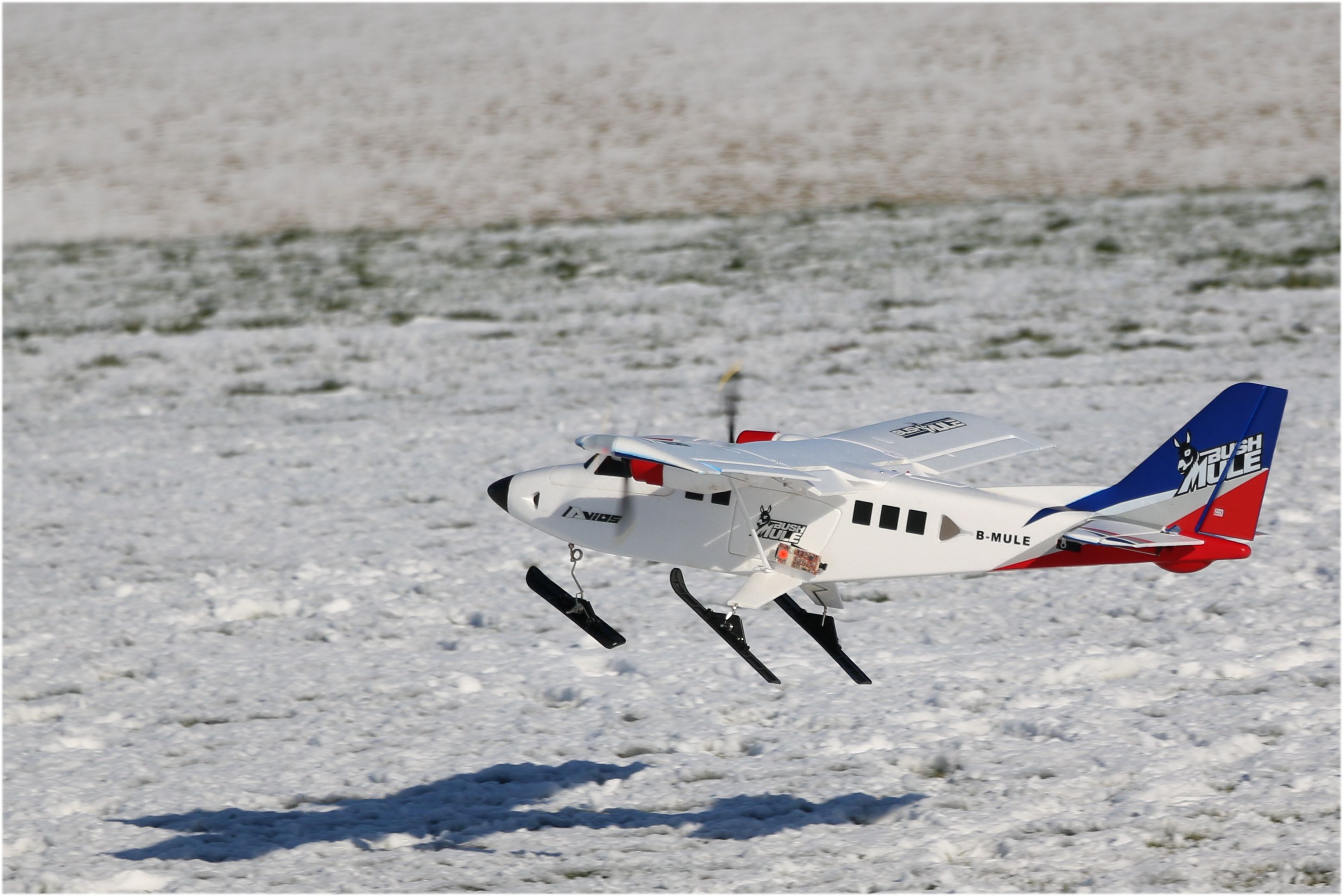
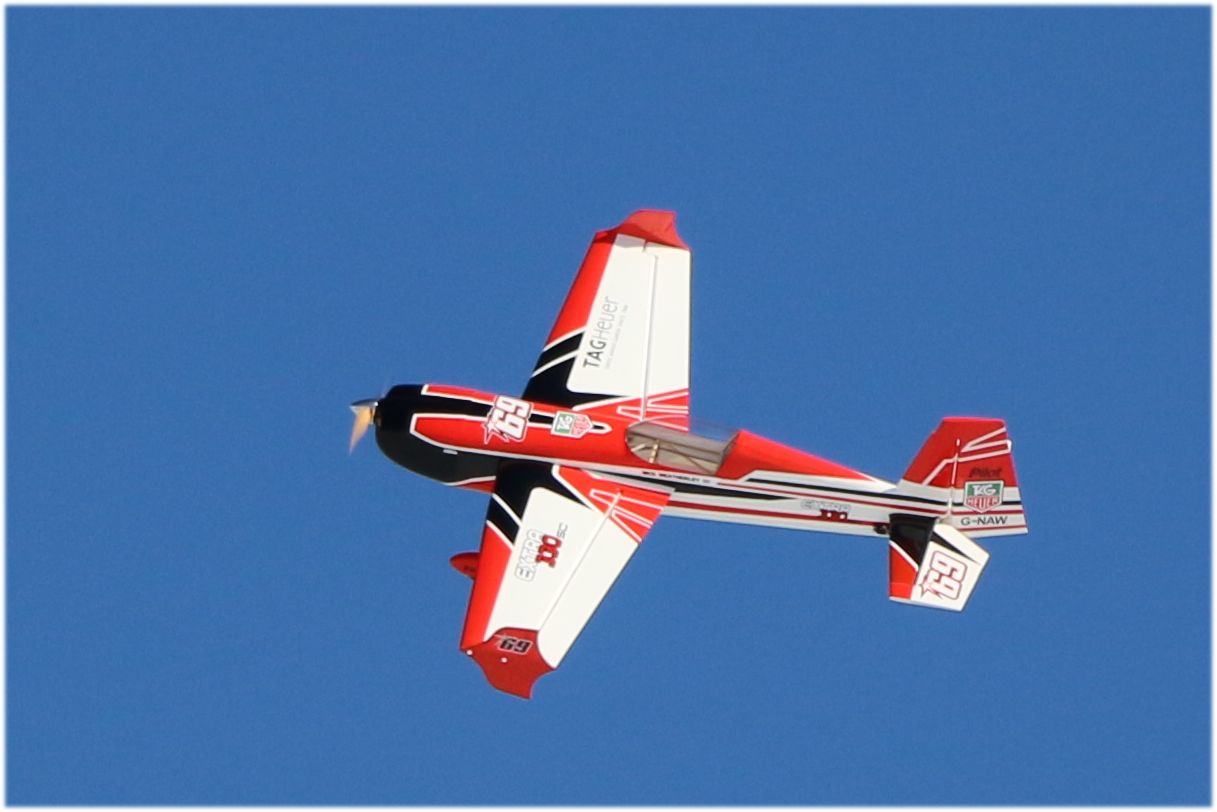
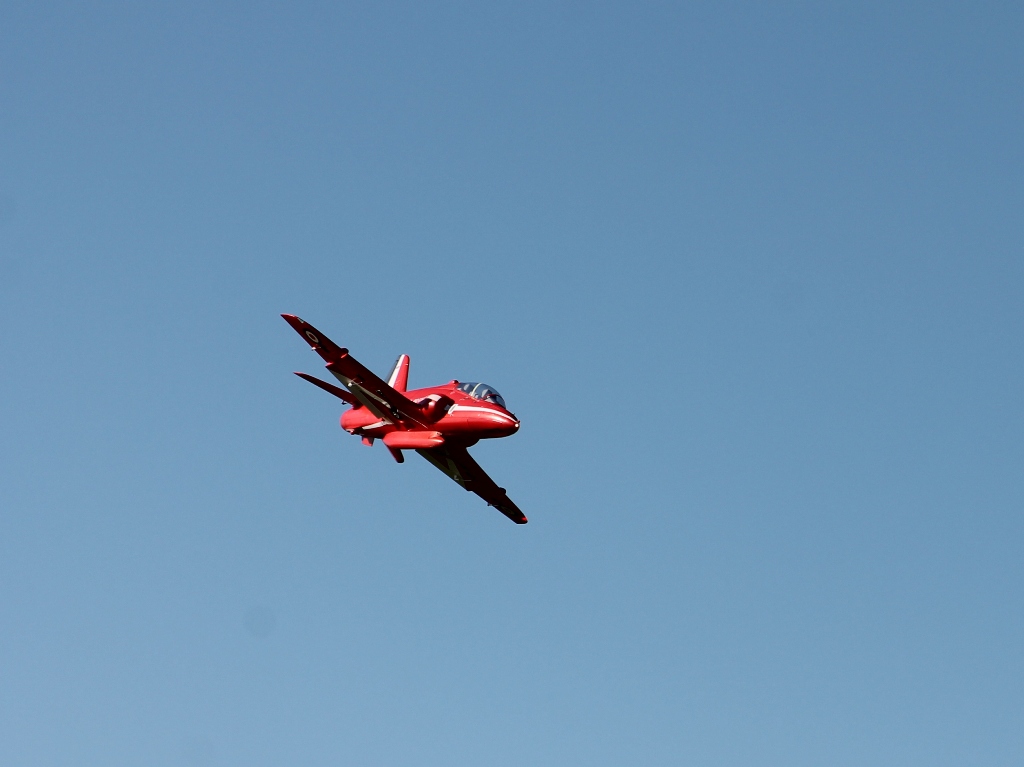
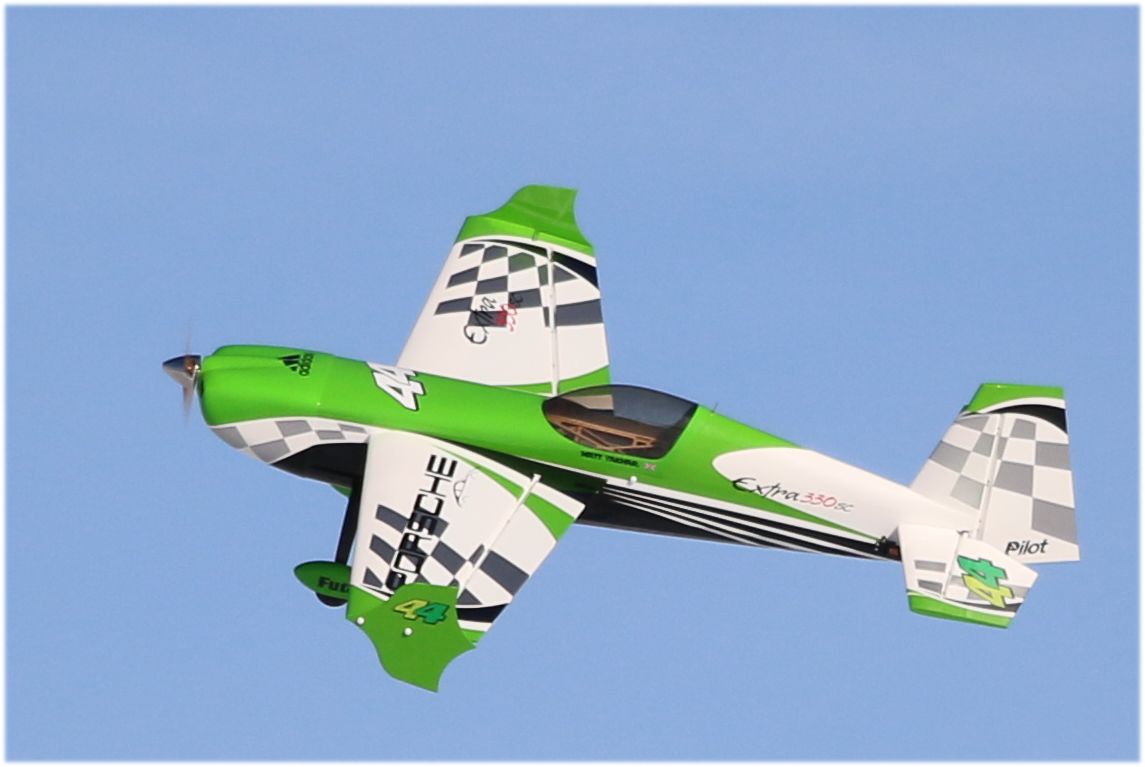
Flying photo time:

 Time now for this month’s video:Please watch the video full screen, it’s so much better with small models flying around. If the video won’t play for you click HERE
This month’s February Funny was sent in by Bob the Builder:
Yesterday my daughter emailed me, asking why I didn’t do something useful with my time. She said she was ‘only thinking of me’ and suggested I go down to the Pensioner Centre and hang out with other chaps my age.
So later I replied to her email saying that I’d been and had joined the Seniors Parachute Club.
She wrote back, ‘Are you mad? You’re much too old now, you can’t start jumping out of aeroplanes!’
Sensing that she didn’t believe me, I told her that I even had a Membership Card and emailed a copy to her.
Immediately, she rang me and yelled, “Good grief, Dad, where are your glasses? This is a membership to a Prostitute Club, not a Parachute Club!”
“Oh dear, ” I said, “I signed up for five jumps a week!”
The line went dead…
Colin Cowplain