
Patch News – September 2017
Well this Patch News is going to be a bit of an odd one due to holidays. I’ll start with some bits I missed at the end of August but I won’t be able to include the second half of September as I’m going away again. So this edition will be rather shorter than usual but on the plus side the October one should be a bumper edition as it will feature the unveiling and flying of this years’ club models, the Kung Fu’s. Did you spot the unintentional unveiling of Catapult King’s Kung Fu in the August Patch News? Check out the photos of his modelling room for a sneak preview.
What I missed at the end of August was the annual club barbecue on Sunday 27 August followed by more flying on the Bank Holiday Monday. Fortunately both Dougal Entendre and Kryten took some photos for me to use.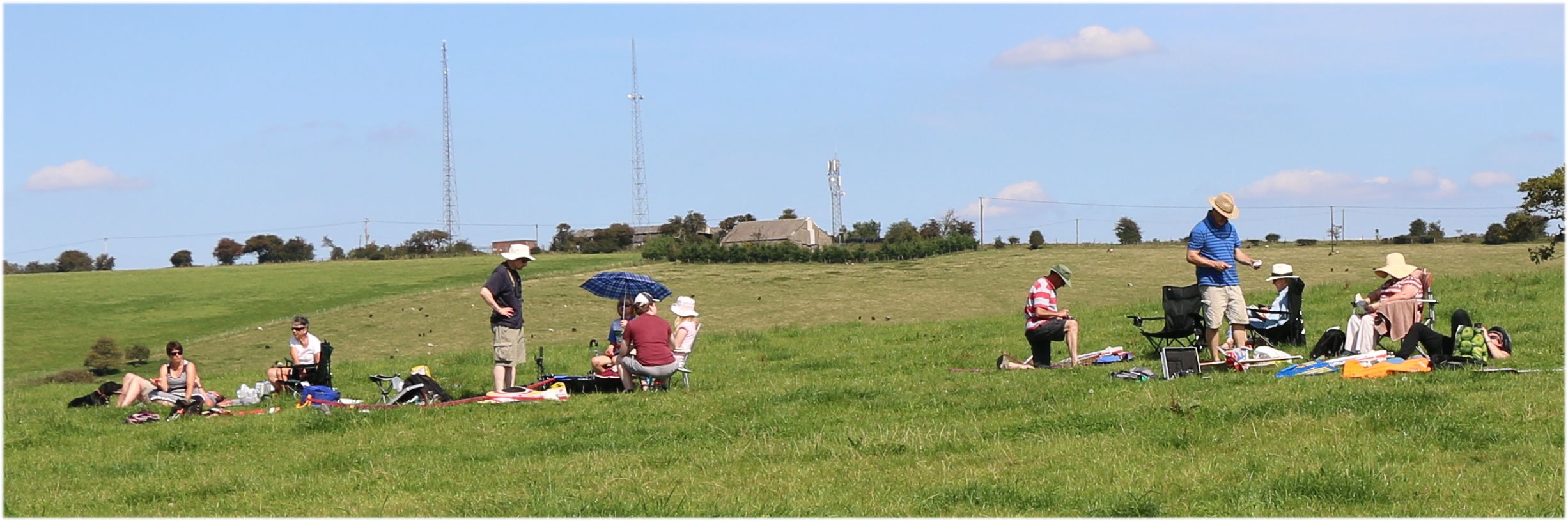 Choosing the date of the barbecue is always a last minute decision as we have to consider the condition of the field as well as the weather. Fortunately at the end of August the field had been bullock free for long enough for most traces of them to disappear and George the farmer was happy to keep it clear of animals for a while. The weather forecast looked just about perfect so the date was fixed and members emailed. The short notice inevitably meant some (like me) couldn’t make it but on the day the turnout was pretty good. As predicted the weather was very good and I understand both the barbecue and the flying went well, apparently a good time was had by all.
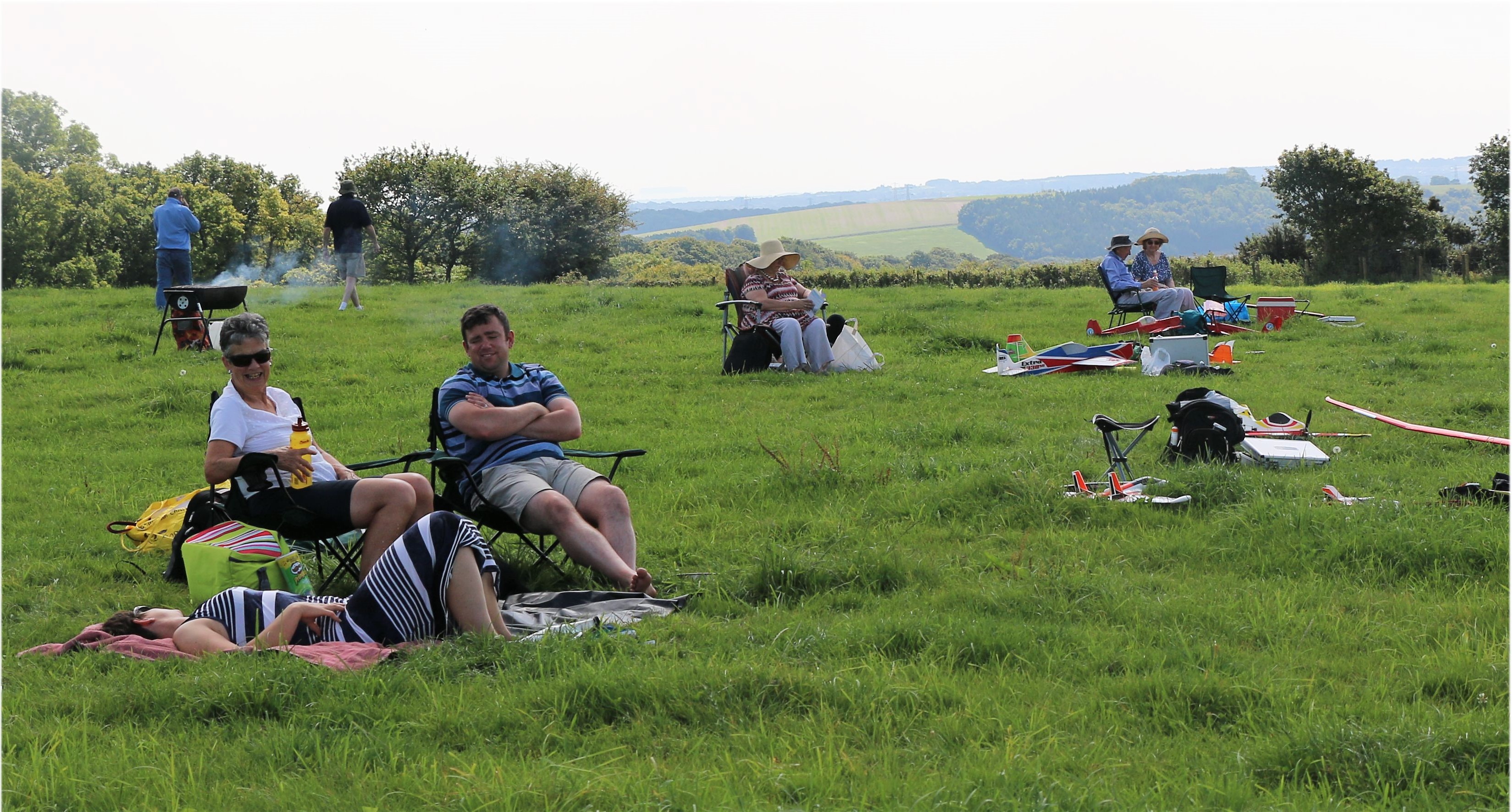 Congratulations and thanks are due to the people that did all the work to make it happen, mostly 1066 I believe.
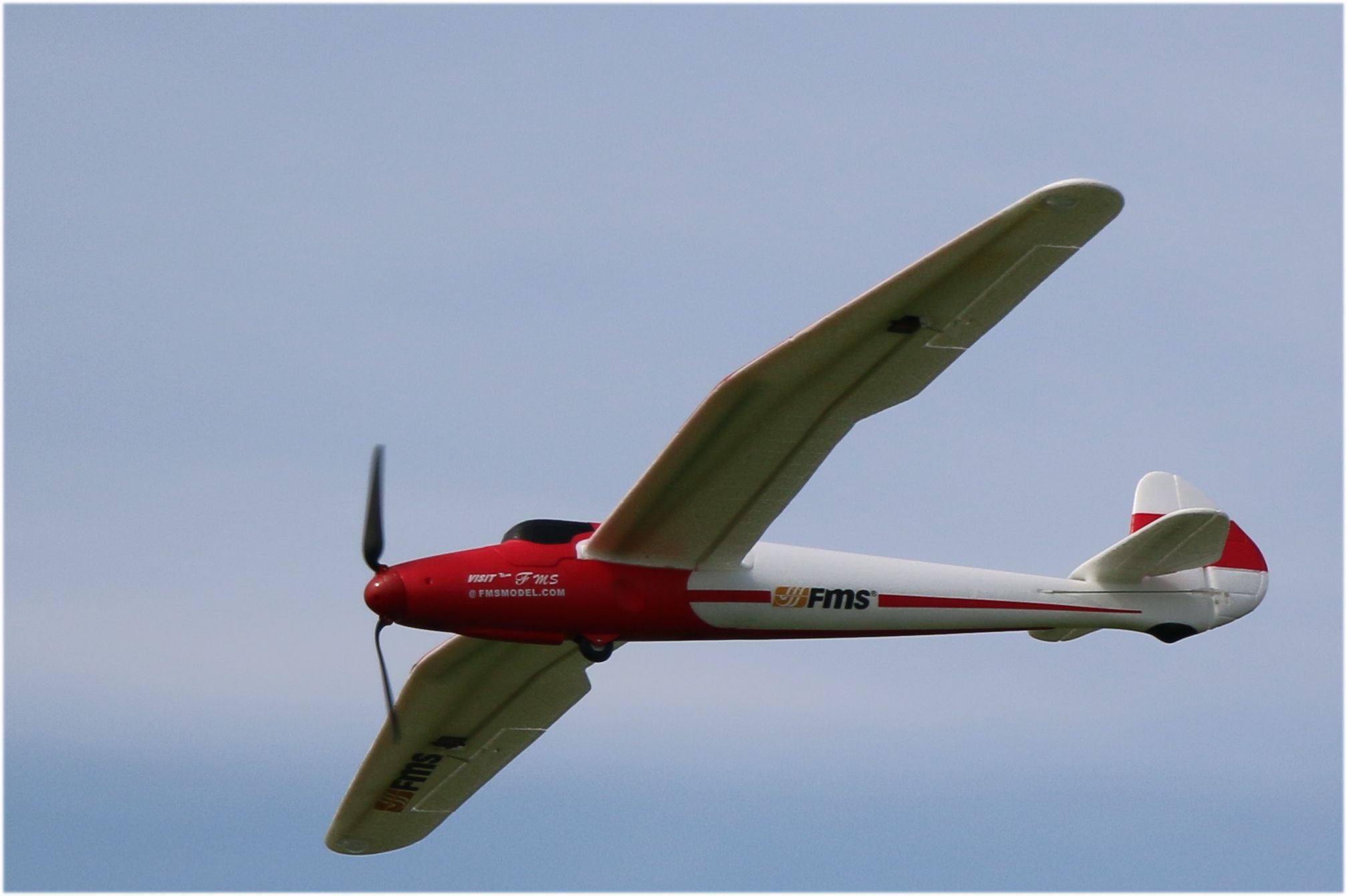
As well as many old favourites several new models made their debut appearance at the barbecue and the first to feature is Woody’s FMS Minimoa which he purchased from Gliders Distribution of Newark.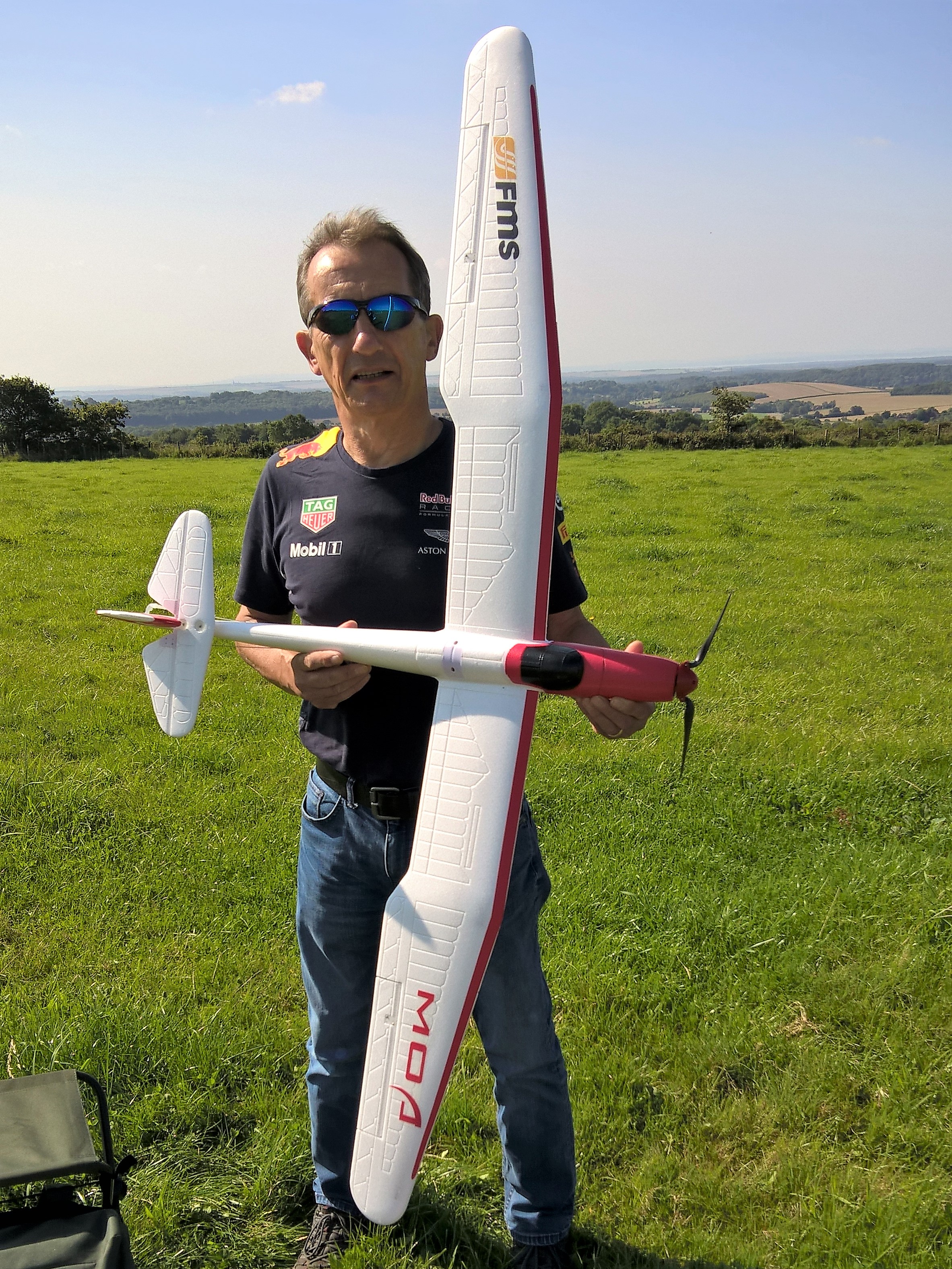 Dougal test flew it for Woody and it went well with no problems. Woody has since let me have a go with it, and I must say I was impressed. This is what the website says about it: As the newest addition to the FMS line, with a wingspan of 1500mm, this mid-sized glider is ideal for both beginning and advanced fliers. This plane comes with four installed servos, a 20 Amp ESC, and a brushless motor. The gentle flying characteristics, from low to high speeds, and the added advantage of a landing wheel, to help protect the foam, makes it a perfect choice for everyone. Simple construction makes assembly quick and easy, so you can get flying faster!
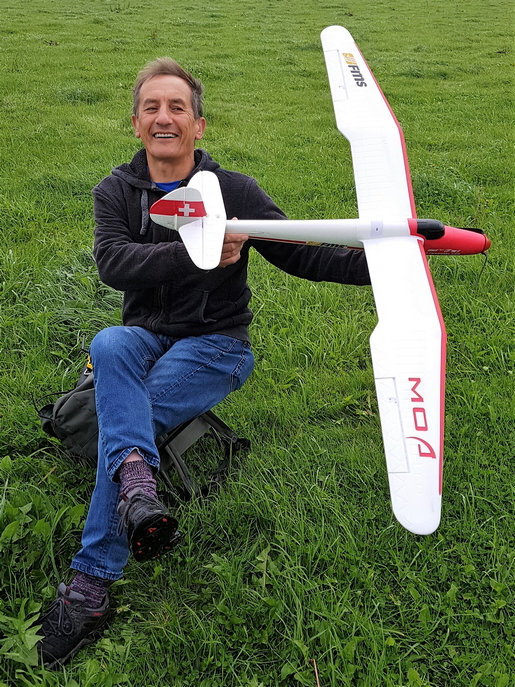 I must admit that when Woody first mentioned his choice of glider I was a bit dubious; I thought it was too small and lightweight for his purposes, but having flown it I’ve changed my mind. It only uses a 2 cell lipo, in Woody’s case an E-Flight 1300mAh pack, but it goes very well and handles fairly blustery conditions with no problems.
Last month I included a photo of Dougal’s empty transmitter case at Buriton one evening. He said he’d simply forgotten to put the transmitter in but now I’m starting to think he’s lost it, as next time out he had a new one!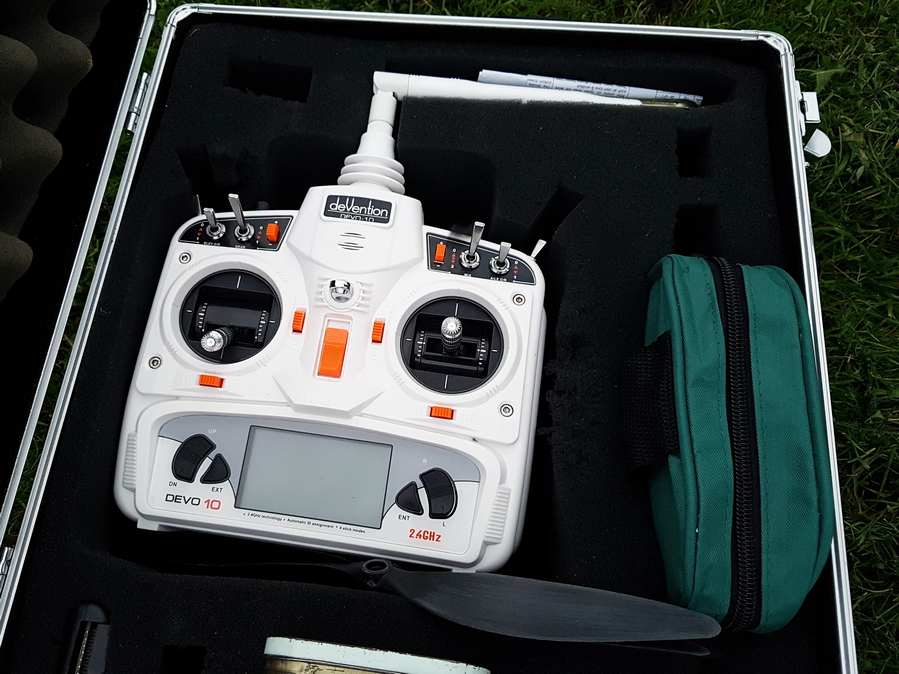 It’s another Walkera deVention transmitter but this one is a Devo 10, his previous one being a Devo 12E. He actually has three deVention transmitters now so he’s quite a fan, they are well priced, have all the usual features and never seem to give him any problems. His excuse for buying the Devo 10 was that the Devo12E was too heavy. As well as being a ‘normal’ 2.4GHz 12 channel transmitter it also has a 32 channel 5.8 GHz FPV (First Person View) image receiver and a 5” full colour screen built into it so I suppose that lot does add a fair bit of weight. But Dougal uses a neck strap so I wouldn’t have thought the weight made too much difference, man up Dougal! As far as I can see the new Devo 10 is simply a 10 channel version of the same transmitter but minus all the FPV stuff. So far it’s performed perfectly and he seems very happy with it.
The first new model Dougal got to try out the Devo 10 on was his Lidl glider. Both Dougal and I bought gliders from Lidl a few months ago when they were one of the twice weekly ‘specials’ items. They are just an 850mm span moulded foam chuck glider for kids really but at £7.99 they were quickly snapped up by loads of RC fliers who realised it would be easy to fit them with radio gear. They have been a huge success and as well as featuring on various forums there is even a Lidl Glider Group Facebook page with over 700 members. They were available in various colours, this is my as yet untouched slime green and black one.
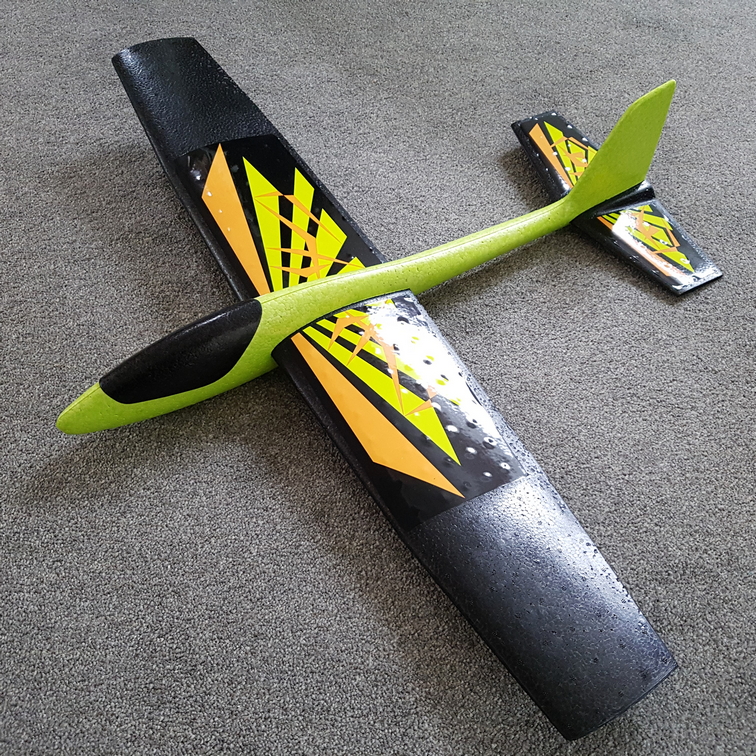 There have been countless conversions done, some people have simply fitted two or three channel radio and turned them into slope soarers, but many have also added motors as well. I’ve seen just about every conversion possible including one with twin ducted fans! Dougal took the easy route and got his son Cameron to fit it out for him.
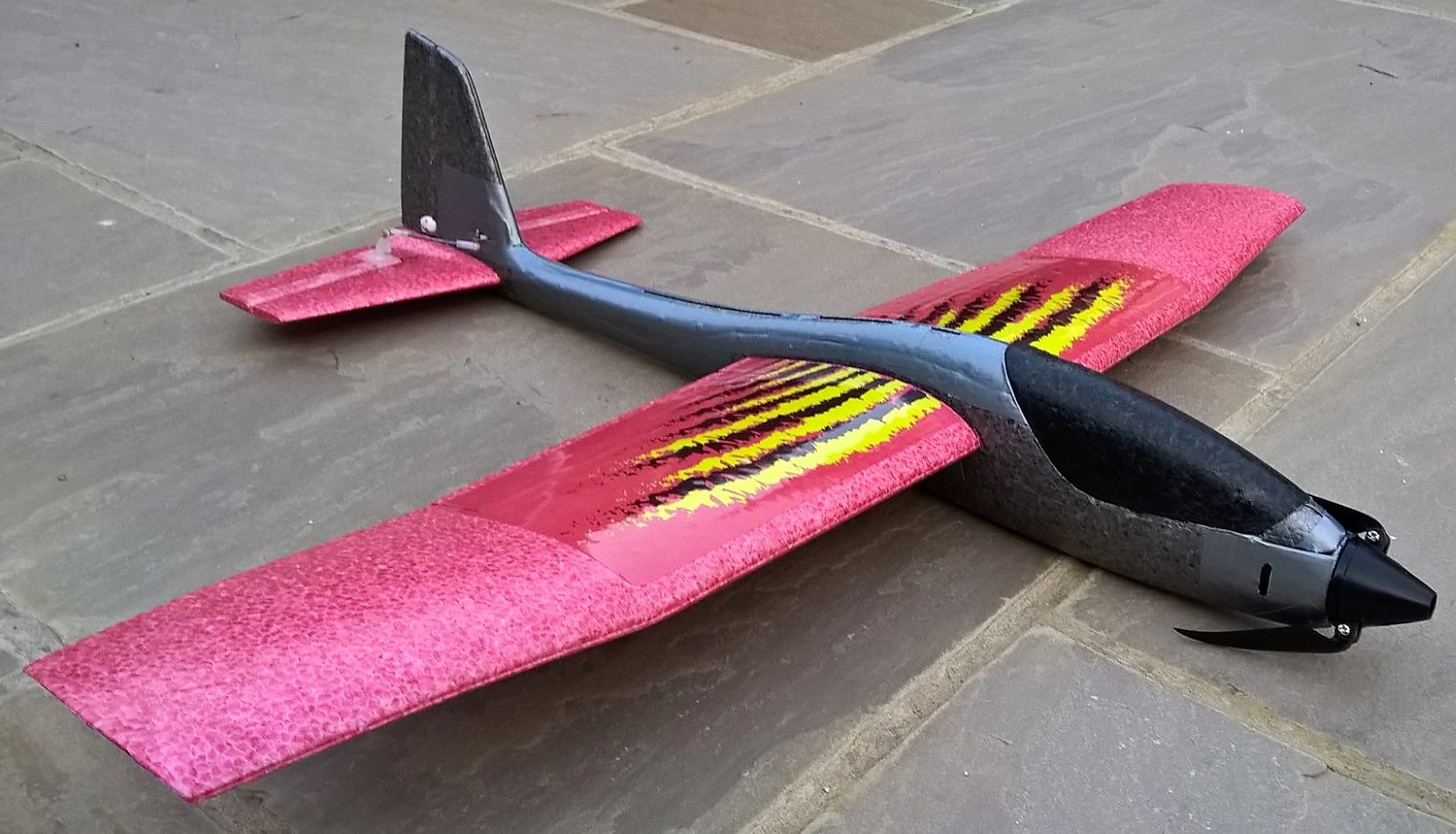 He used 5 gram servos on ailerons, elevator, and rudder, and used a motor, speed controller, and folding prop from an old HobbyKing Spirit/Kinetic/Wingnetic. Cameron cut ailerons into the inner wing panels and elevators into both sides of the tailplane. The elevator servo is fitted into the bottom of the fin but the rudder servo is mounted just behind the wing. To stiffen the fuselage Cameron has added some 3mm carbon rod along the length.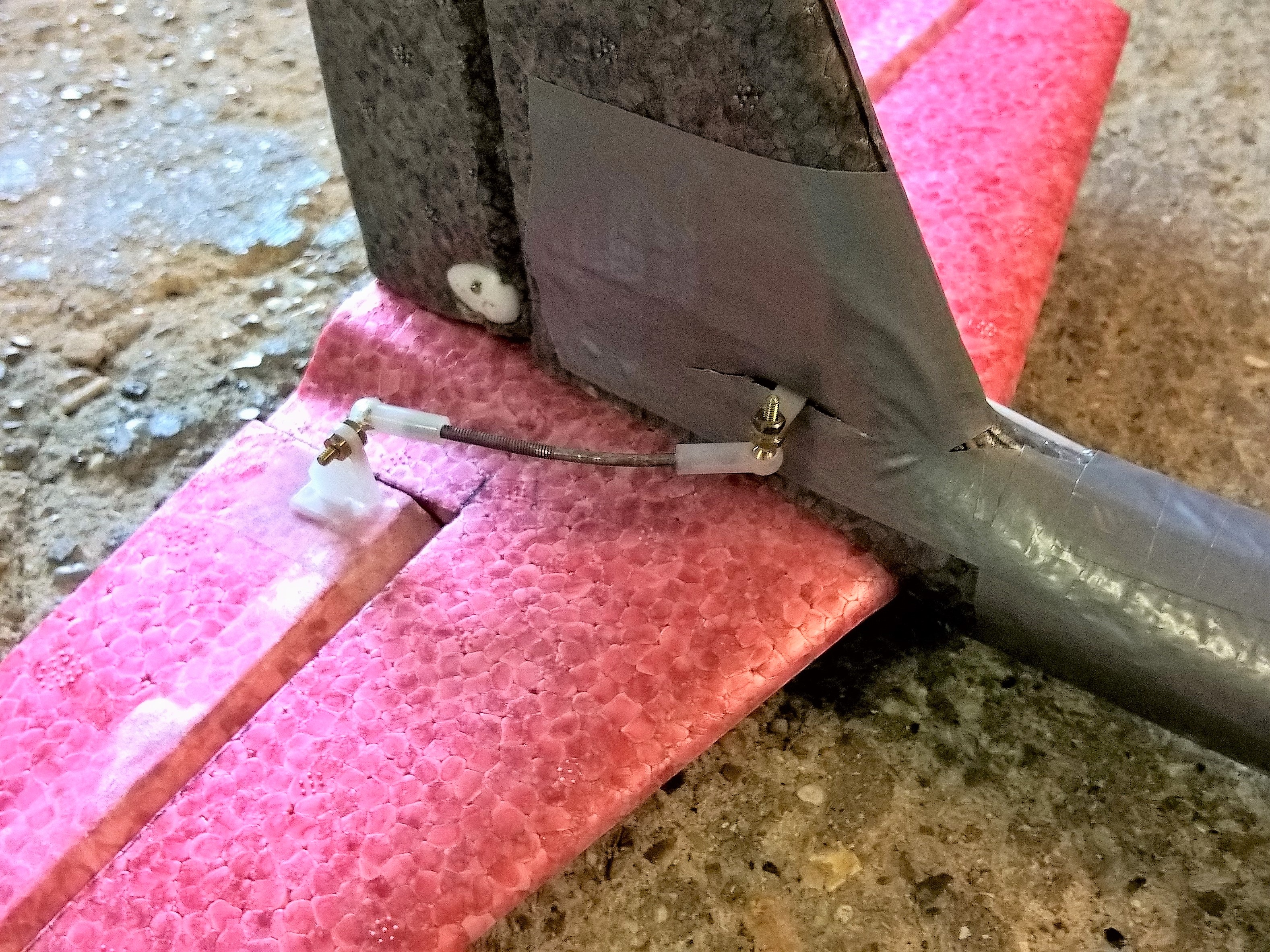
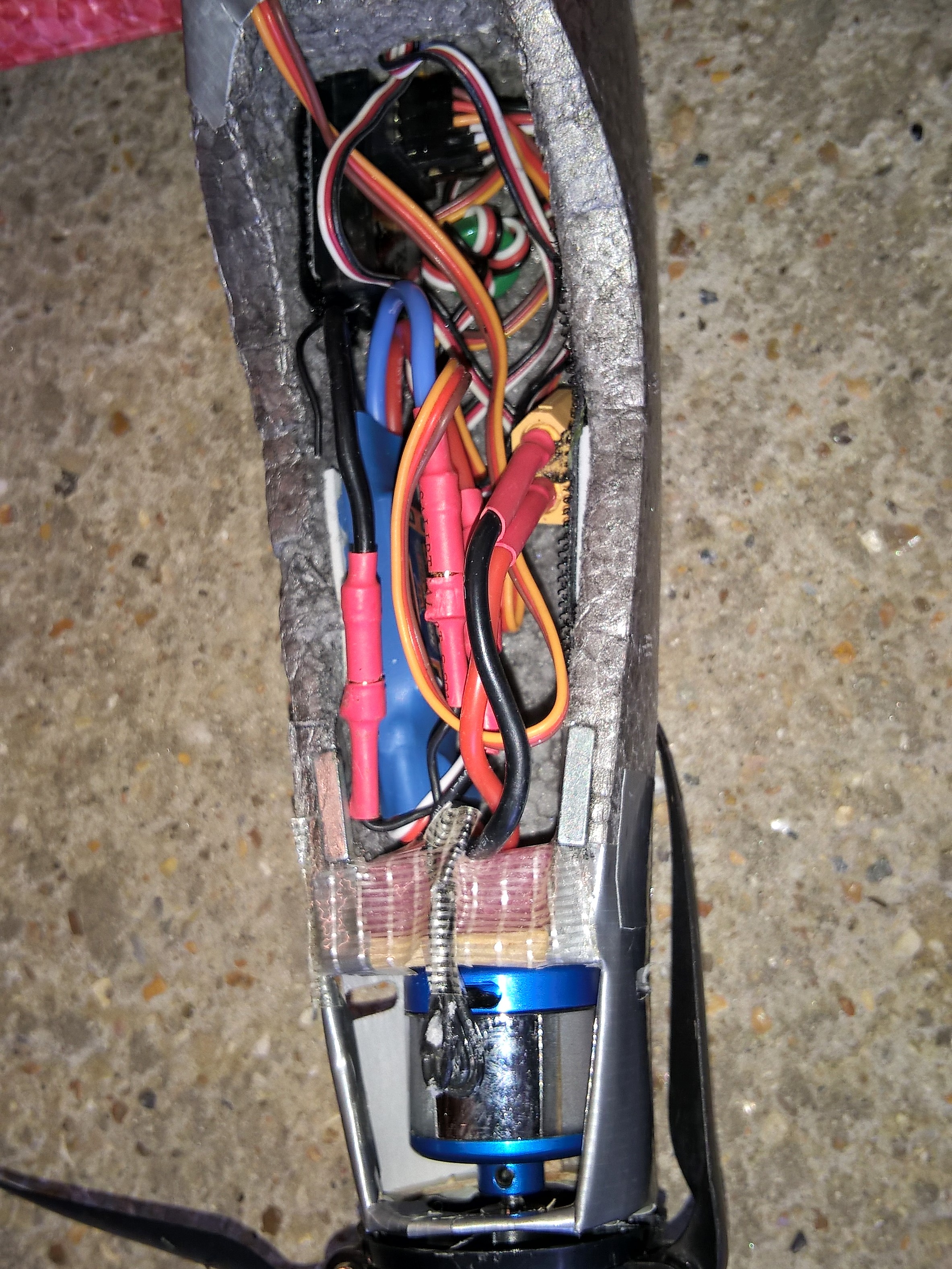 Dougal had to add 20gms of tail weight so it would be better to have the rudder servo at the rear with the elevator one and also mount the battery further back, but that might mean extra strengthening is required. Cameron used duct tape to cover up all the messy bits and tidy it up in general. It seems to fly well, not unlike a slightly larger and more docile Spirit. The only real problem is that it needs a lot of down-thrust on the motor, something not easily achieved, so I imagine Dougal will shortly be mixing some down elevator in with the throttle control. It can be seen flying in this month’s video at the end of this Patch News.
Catapult King has built a Sunbird from the HobbyKing laser cut kit and, as this was his first balsa model build, he used the kit parts as templates and cut his own replacements to use for the build.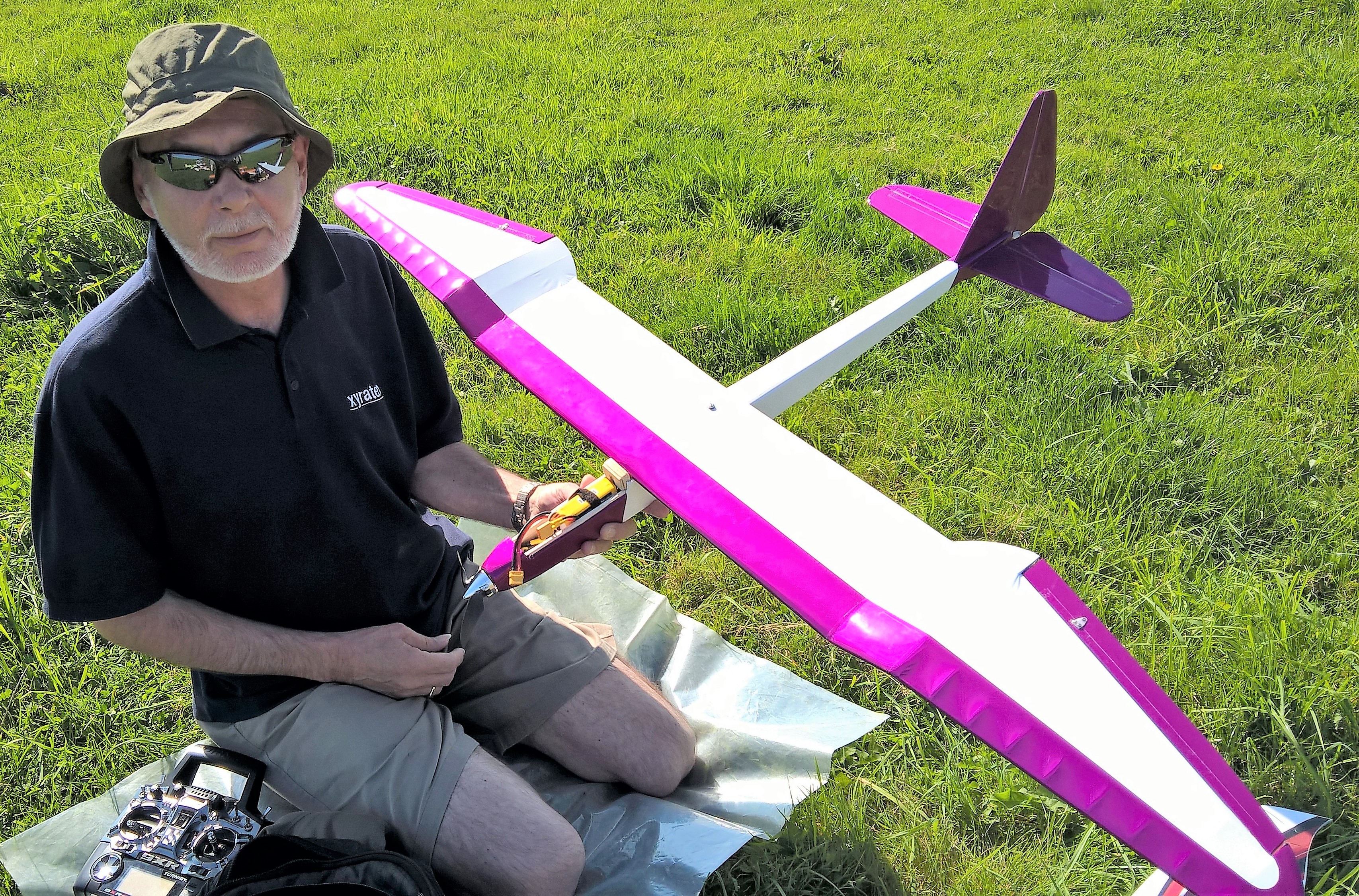 So now he not only has a very nice Sunbird, he also has a Sunbird kit. There has been lots of discussion about the wing and Catapult thinks it’s wrong and should have polyhedral but I’m not convinced, looking at the HK photo and others that have been built I think he’s wrong, he got it right!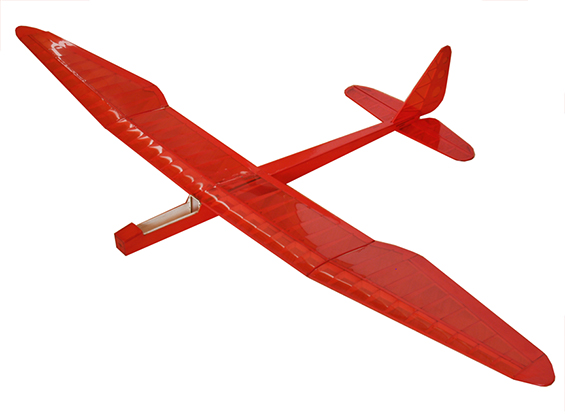
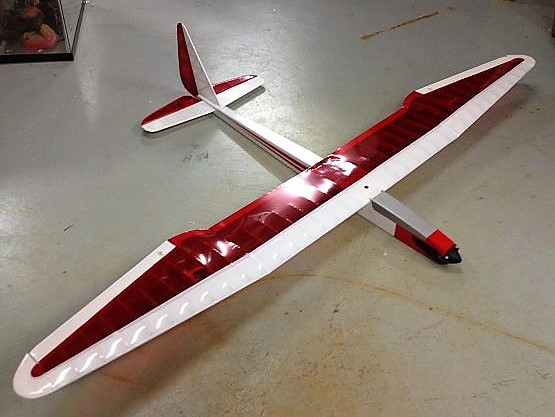
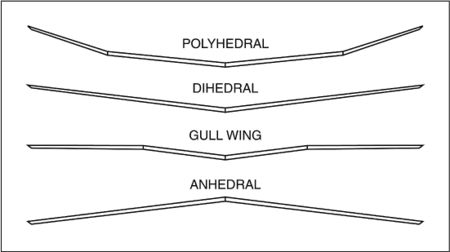
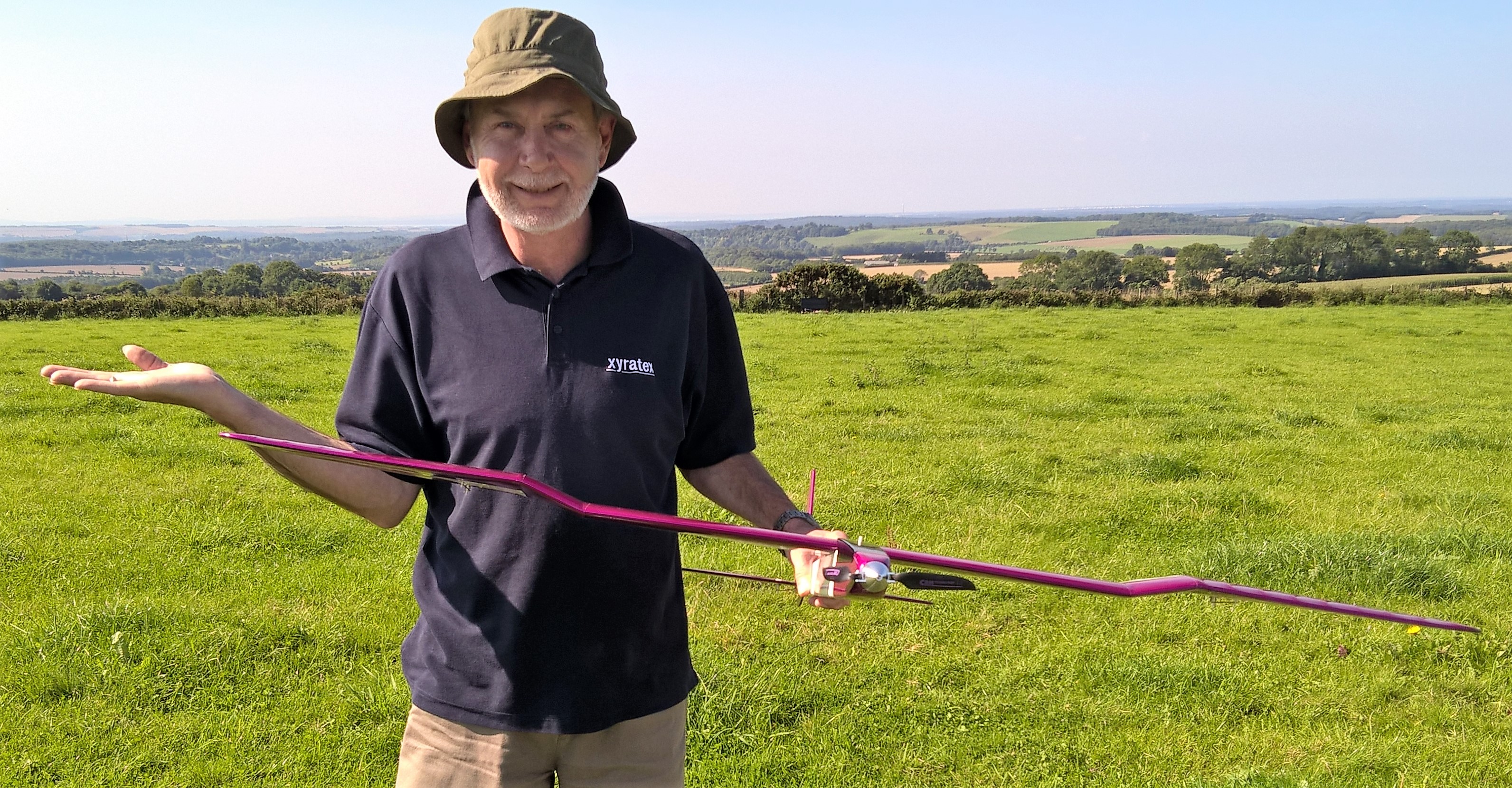 It seems to fly well enough anyway and he’s made a nice job of the building and covering so I think Catapult should be well pleased. The motor is a Turnigy 2830/1000kv connected to an HK 30A ESC and a 3 cell 1300maH Zippy Compact lipo. So far Catapult has been using a 7×4.5 folding prop but it’s a bit underpowered and is only drawing 9A so he’s going to try a 9×5. I think it’s probably going to be more suited to light winds rather than the strong ones we tend to get at Chidden Down but I’m happy to be proved wrong. You can see it flying in this month’s video.
At the first club meeting in September JP gave us a very interesting talk on photography. Club member JP has been a self-employed commercial photographer for around twenty years and hasn’t starved yet so he must be doing something right. The talk covered the basics principles of how and how not to take a decent photo whether you’re using a mobile phone, a compact, or an SLR camera. As well as covering the composition of the picture (being careful of what is in the foreground and background and focusing in the correct area) JP explained about balancing shutter speed and exposure. With all this in mind I snapped JP during his talk and think I covered just about everything he mentioned in this one shot, even including Captain Slow who was asleep by this time!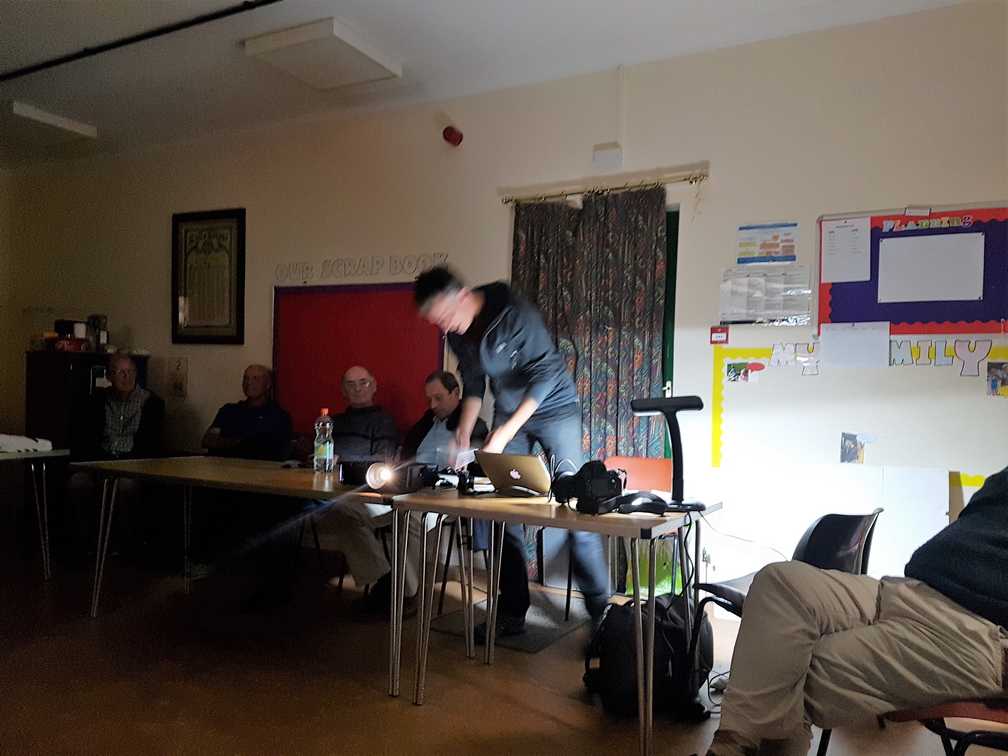 Thanks JP, I think we all found it a useful and informative talk, hopefully my Patch News photos and videos will show some improvements in the future.
We were pleased to welcome back ex PAM member Alan Flux at a recent club meeting. Alan and his wife Pam emigrated to Australia several years ago but he has remained in touch with some of the club members and has visited us before. He took a Splot plan home with him at the end of his last trip to England and built one back in Australia. Apparently it flies inverted even better down under…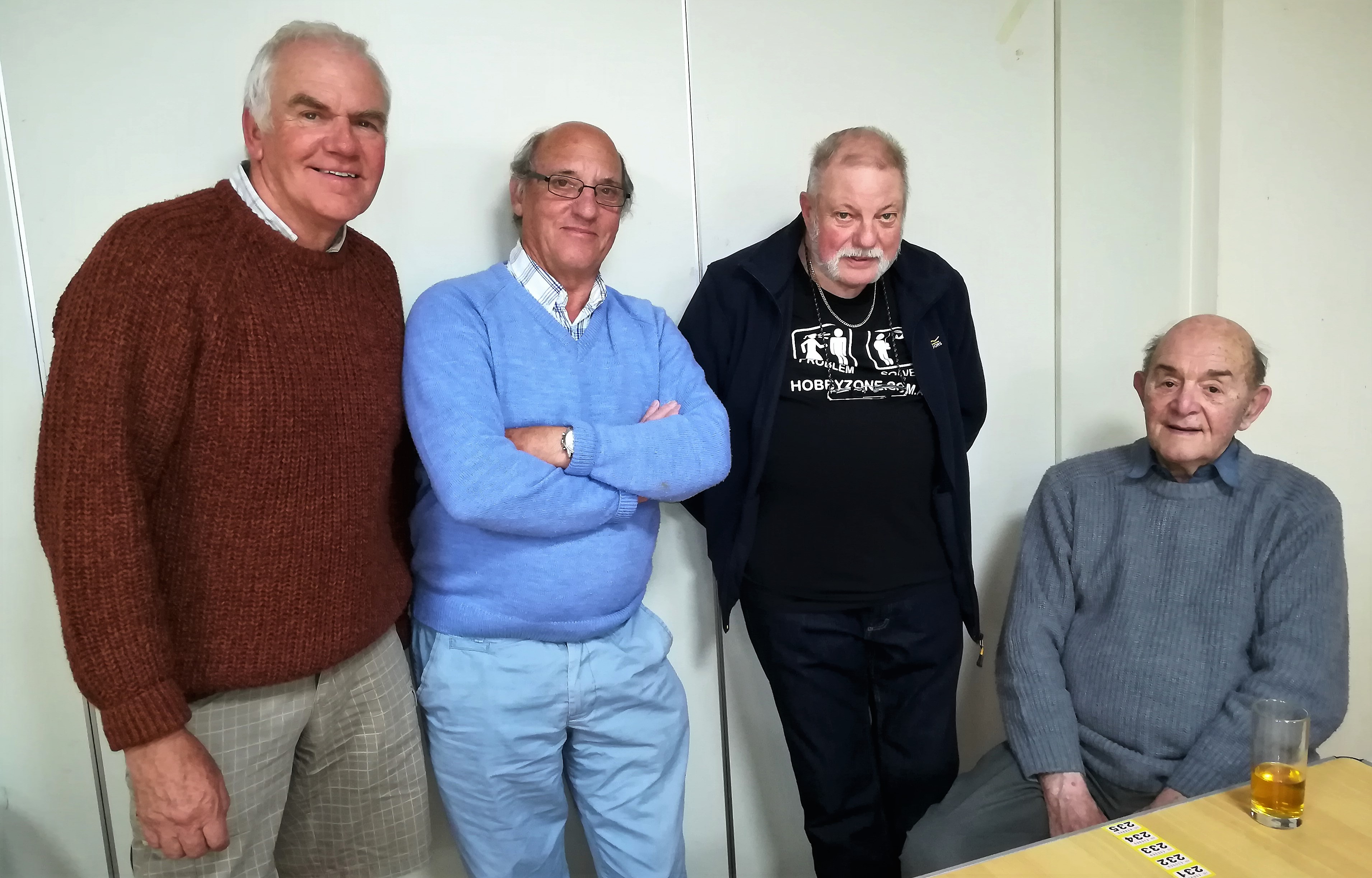 Alan wanted a photo with his old buddies and the Squire snapped this shot of me (Colin Cowplain), Viv (Stanley Knife), Alan, and President Don, all long time PAM members.
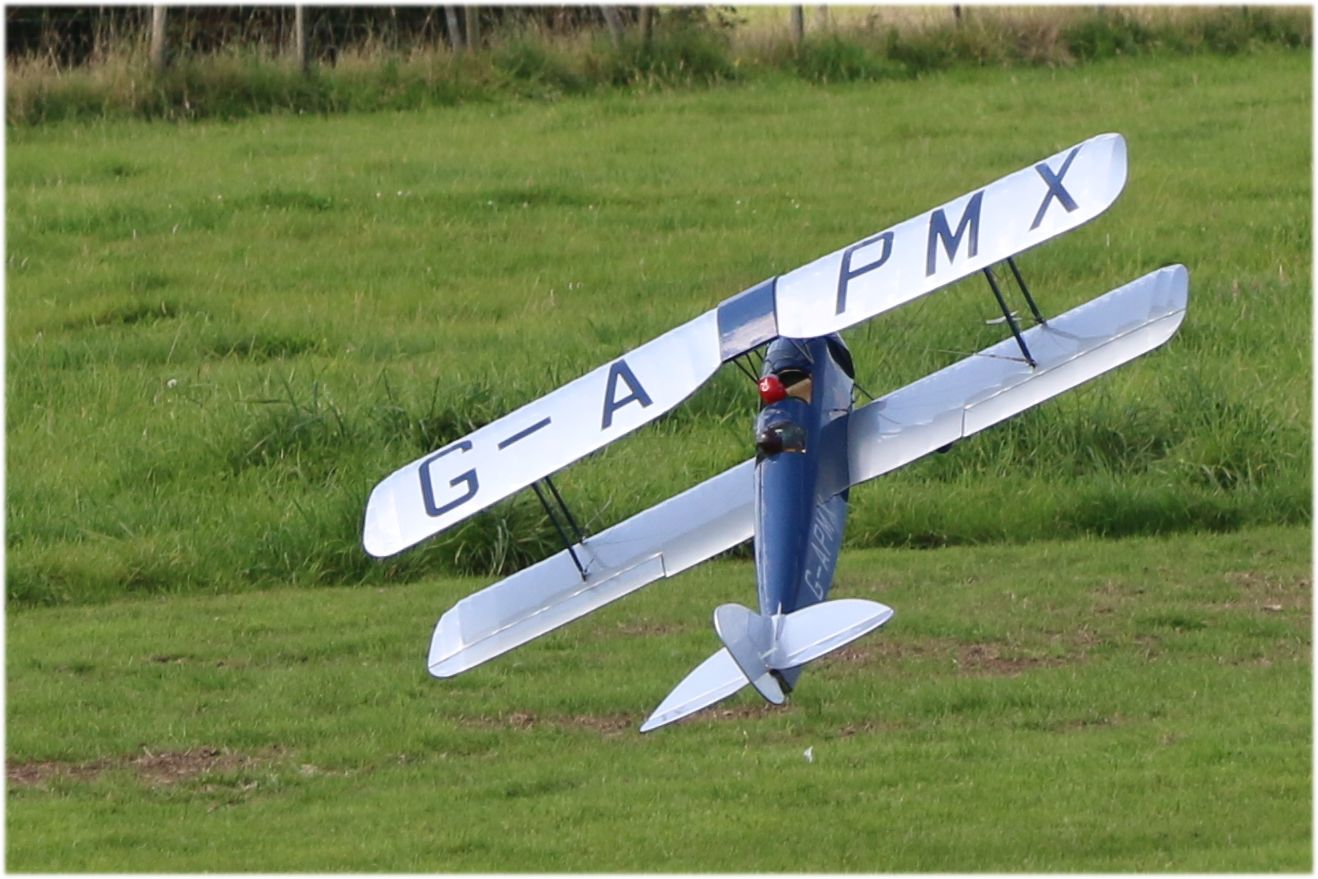
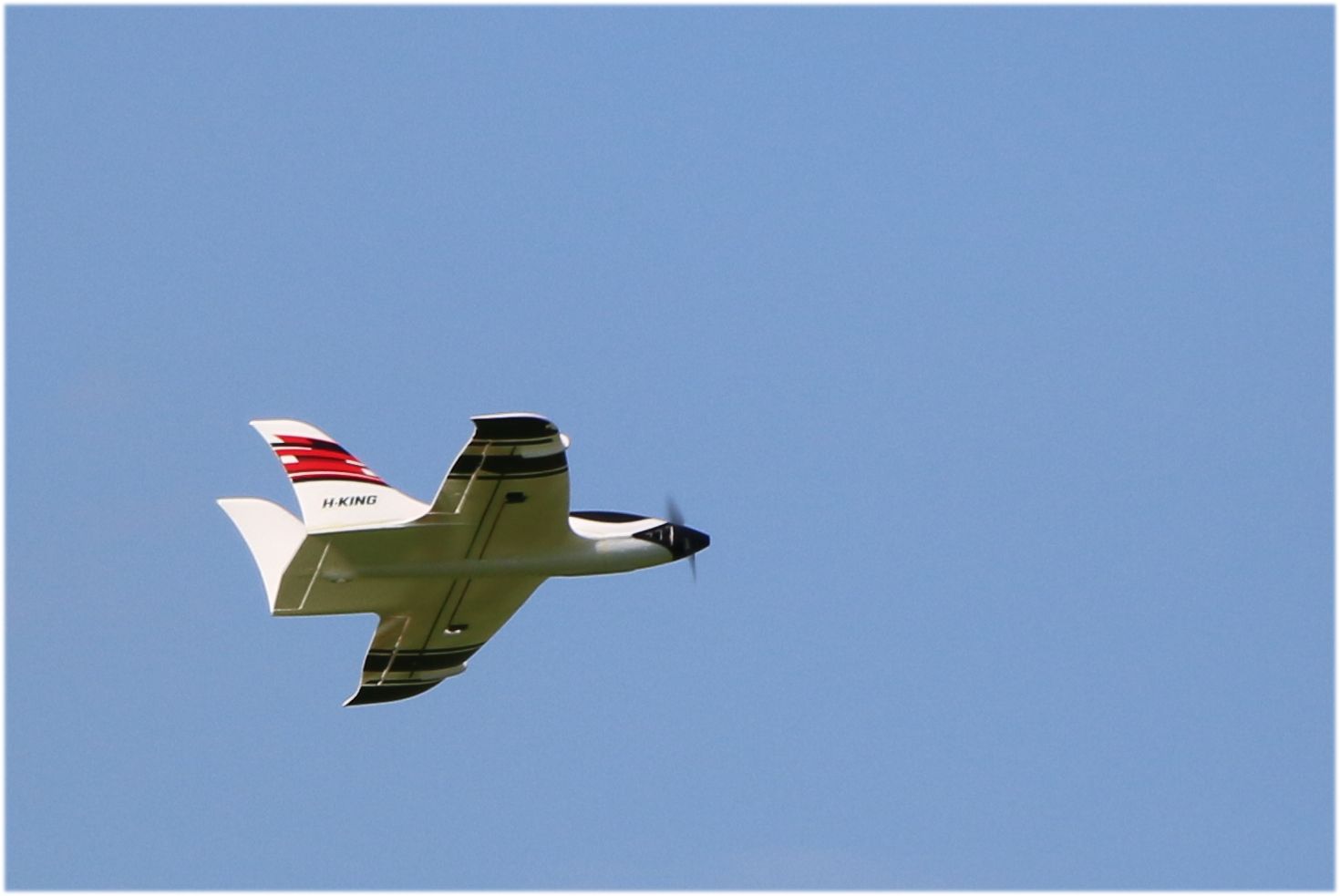
This month the high quality flying shots are all from Kryten.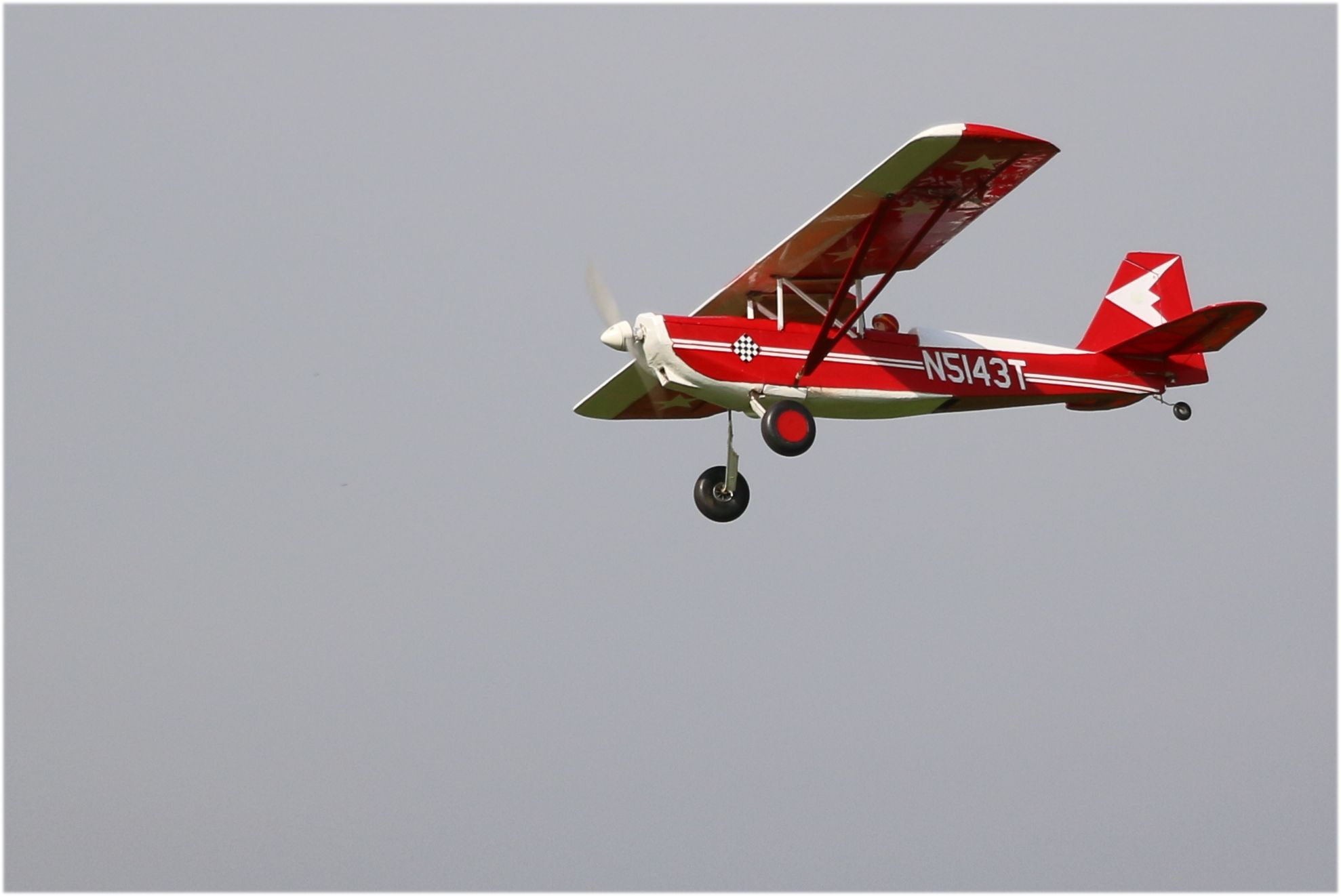
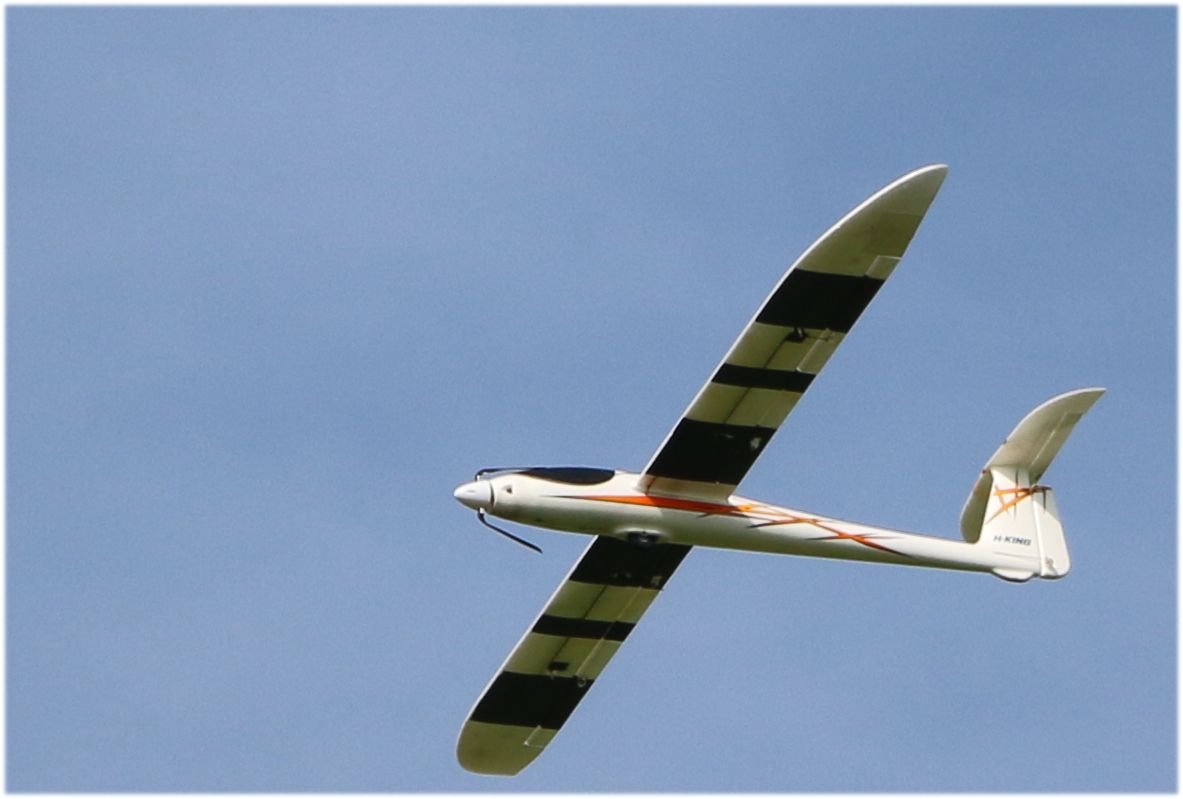
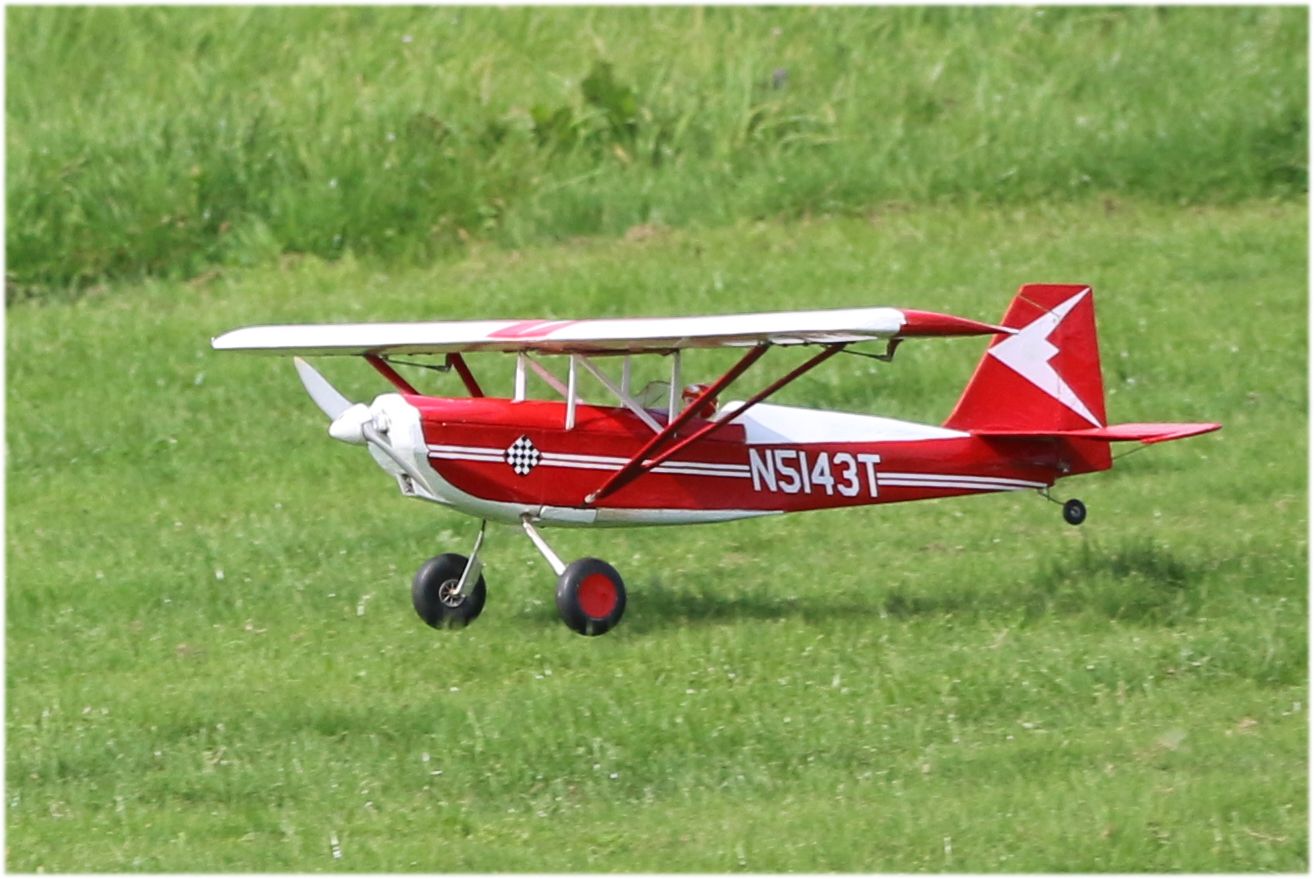
Time for this month’s video which this month begins with Norwegian Nick’s tiny Trojan:Please watch the video full screen, it’s so much better with small models flying around. If the video above won’t play for you CLICK HERE
Q: What do you call it when you’re sick of being in the airport? A: Terminal illness.
Colin Cowplain
Patch News – August 2017
August saw the return of the bullocks, and happily, their departure as well. We had some pretty wet weather while they were in the field and they didn’t do the patch any favours but it’s nothing like as bad as before. I think it will be fine again given a decent bit of weather over the next few weeks, although apparently there will probably be sheep in the field by the time you read this. The sheep are less of a problem to us and don’t really damage the patch other than by adding their own brand of fertiliser! While the bullocks were in the field they mostly ignored us and, although we did have to herd them away from the models and patch a few times, very often they paid little or no attention to us despite being fairly close. Personally I’m rather fond of them, but I prefer them medium rare…
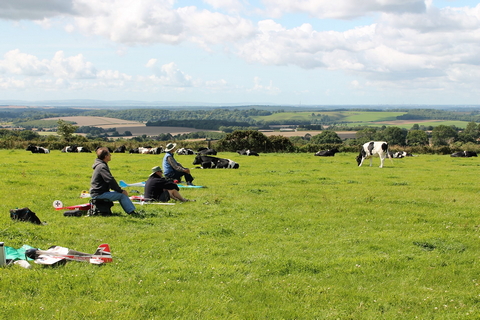 1066 wasn’t too keen on my Friday Afternoon Gardening Society acronym and suggested the Friday Afternoon Rural Trimmers Society was more appropriate, so next time you head off up to the field on a Friday afternoon you can truthfully tell the wife “just off to see the old farts”.
While I’m talking about 1066 he’ll be really pleased to see that I’m featuring one of his models this month…or maybe not. This is the remains of his Speedy glider that met an unfortunate, untimely, and unusual end.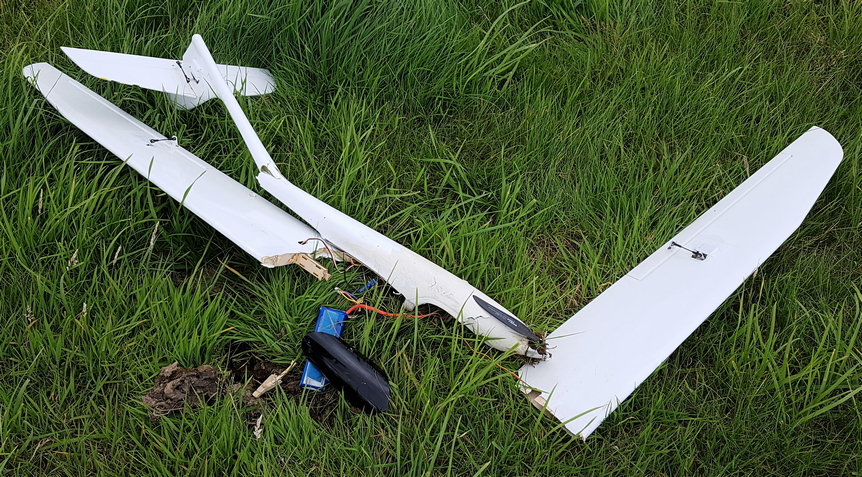 The photo shows it exactly as it was when we reached it, note the divot by the battery pack! He was doing a flat out low pass over the patch when there was a very sudden and loud screech from the motor immediately followed by total loss of control. We think the motor must have seized and the sudden stop somehow killed the speed controller including the BEC (Battery Eliminator Circuit). No doubt people that understand the electronics better than I will mutter about ‘spikes’ and ‘back emf’ etc. but all we know was that it screeched and the radio stopped working. As I said, the model was flat out and low so from the screech to the crash was probably less than a second. It’s a great shame as the Speedy was an entertaining hotliner to fly and to watch. We’ll have to keep a watchful eye on Catapults King’s Speedy which has the same ‘outrunner in a case’ motor to see if there are any tell-tale signs of motor problems before the worst happens.
August was supposed to be the month that saw the maiden flight of Percy Vears’ Vulcan but sadly it wasn’t to be.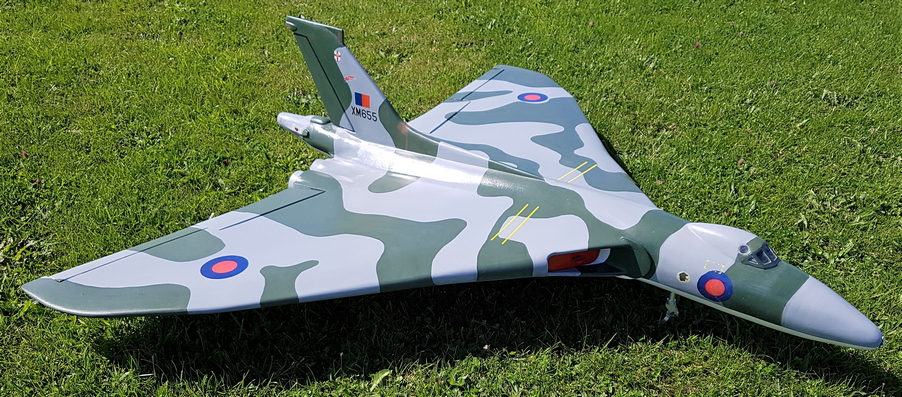 Percy built the Vulcan from the Tony Nijhuis plan and with a wingspan of 1.24m (49”) it’s a fair size for a one piece model. The airframe is constructed from balsa and plywood, covered with glass cloth and epoxy resin, and finished with Humbrol acrylic and weighs only 2.3kg (5lb) without batteries.
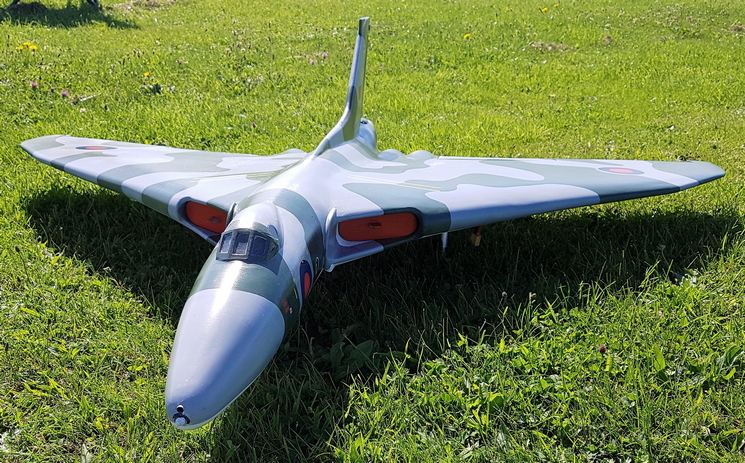 Thrust is provided by four electric motors driving four 50mm 10-bladed fans. Two 4-cell lipo batteries located in the wings provide power for the motors, radio equipment and retracting undercarriage. With its’ retracts and small wheels the model isn’t suited to our rather rough grass patch so Percy was pleased to be offered the chance to fly from the tarmac runway at the CADMAC’s Thorney Island site. Two dates that fitted in with the CADMAC schedule were provisionally planned and on the first date we arrived to find ideal weather conditions but when doing radio checks we found a problem with the receiver sometimes going to ‘hold’ mode. We couldn’t sort it on the field so we aborted and Percy investigated the problem in his workshop. It turned out that the UBEC wasn’t able to supply enough current to power the retracts, servos, and speed controllers, exacerbated by a nose-wheel retract that wasn’t always retracting quite fully so was continuing to pull current. So he’s now fitted a higher current UBEC which seems to have sorted the problem. The second date was forecast to have strong gusty winds so we scrubbed it before making the trip. The next available date is 16 September so fingers crossed the weather plays ball.
You may remember that a couple of months ago I reported that Woody had managed to pull the wings off his Ugly Stick at about 200ft altitude. Surprisingly the only major damage was to the dummy I/C engine but they are currently unavailable from HobbyKing so I thought Woody would write the model off. But this month it reappeared, reborn as a ‘normal’ electric model with no dummy engine.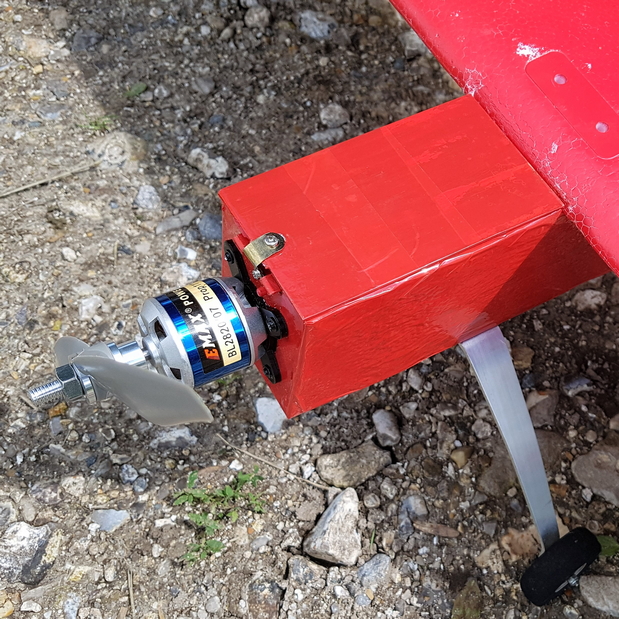
 Woody simply removed all the dummy bits, the original electric motor, and the driveshaft connecting the two together, and then bolted an Emax 2820-07 straight to the front bulkhead. It worked perfectly and the Ugly Stick is now back flying just as well as it ever did, a great result.
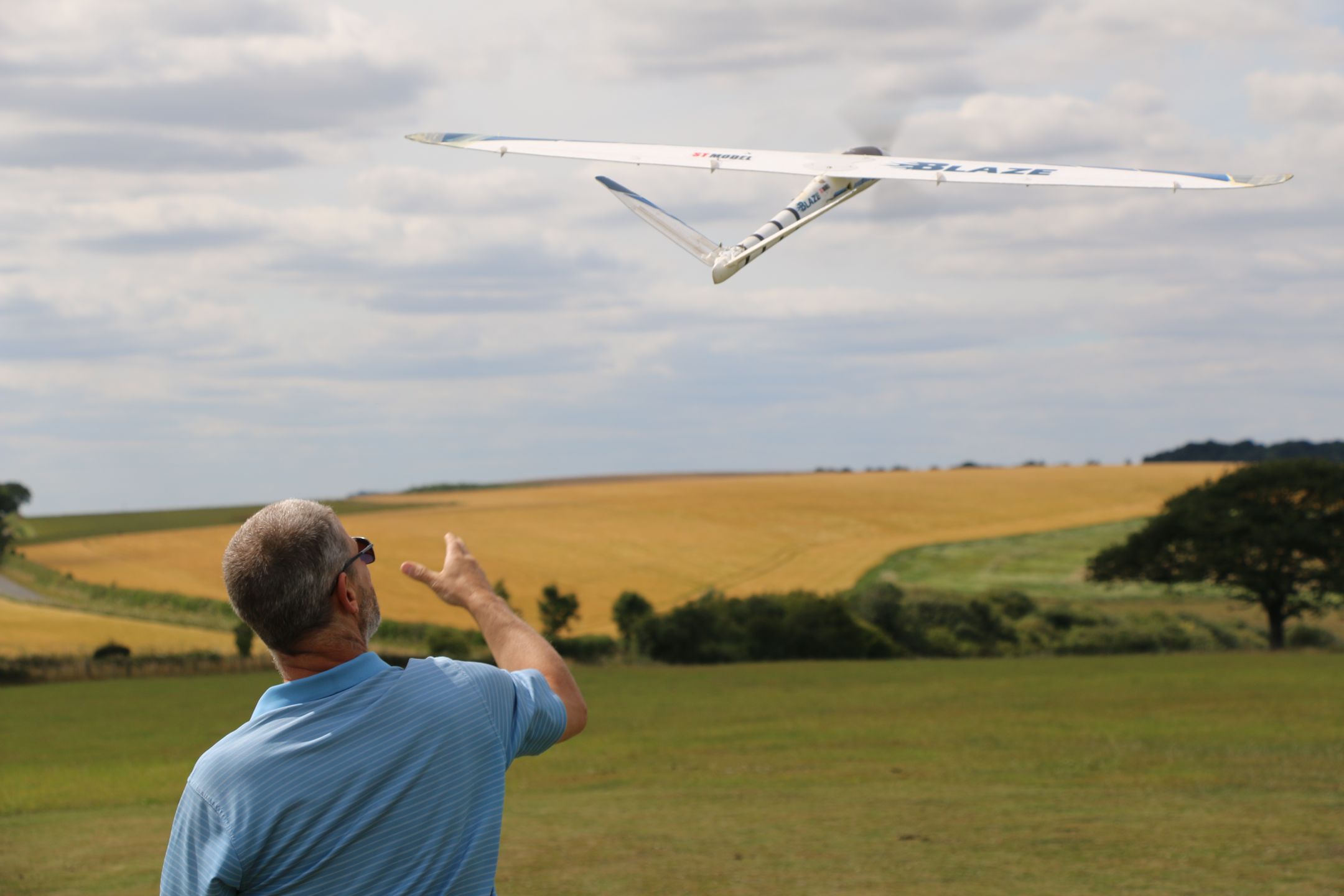
The current popular trend of electric powered gliders seems to be growing and another three appeared in August. First up is Gentleman Jim who has bought a Phoenix from HobbyKing.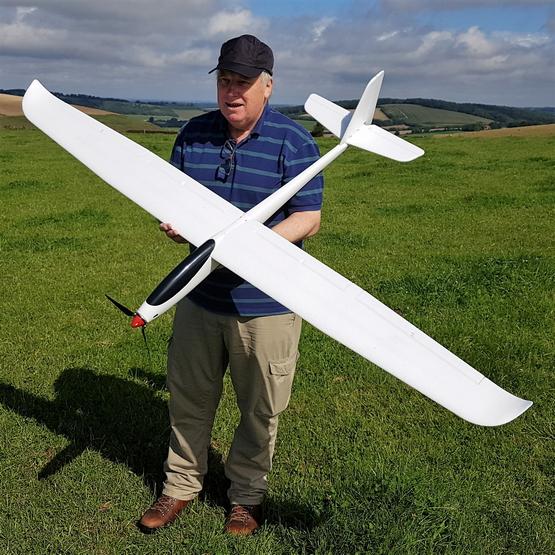 The Phoenix is available in two sizes, 1600mm and 2000mm wingspan, and Jim, like Kryten last month, and Stanley Knife last year, bought the 2000 version. According to the website the Plug’n’Play version only takes 15 minutes to assemble, something both Jim and Kryten disagree with! However it does go together very quickly and the end result is a great flier, good for both soaring and gentle aerobatics.
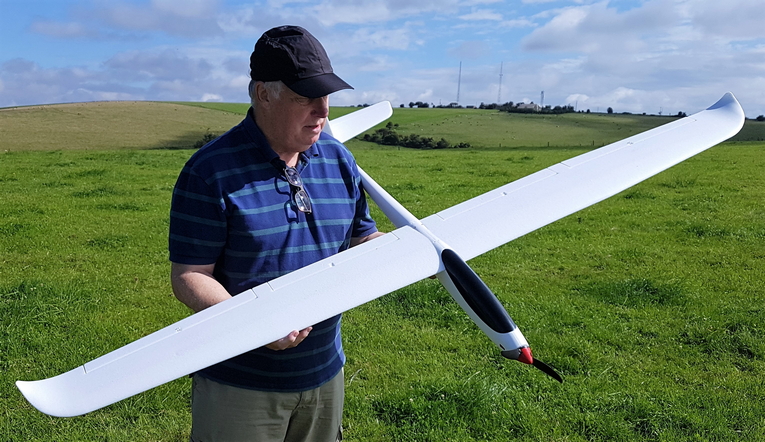 Jim wasn’t keen on the supplied stickers and when I took the photos his Phoenix was in its bare form. He has since applied some of the supplied ones along with some of his own design. Kryten and Stanley Knife have both added the optional flaps but so far Jim hasn’t bothered with them. But having watched Jim’s Phoenix several times cruising sedately over the patch at a few feet altitude and steadfastly refusing to land I think they might soon be added!
Second of the new gliders to show up was Captain Slow’s Dalasy Models Expert 600 that he purchased in 1999.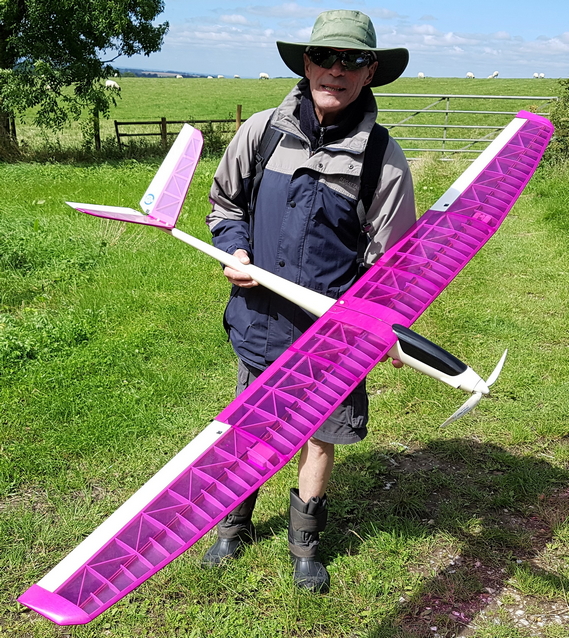 Now I know we call him Captain Slow but I thought that was because he likes slow flying models not because it takes him 18 years to finish an ARTF glider! Ok, the truth, he bought the model when he was in the army based in Germany in 1999 (he’s really a Major not a Captain) and flew the model a lot out there. He flew it at our field a few years ago but it’s only in this month that he’s fitted it with 2.4 GHz radio gear and started flying it again.
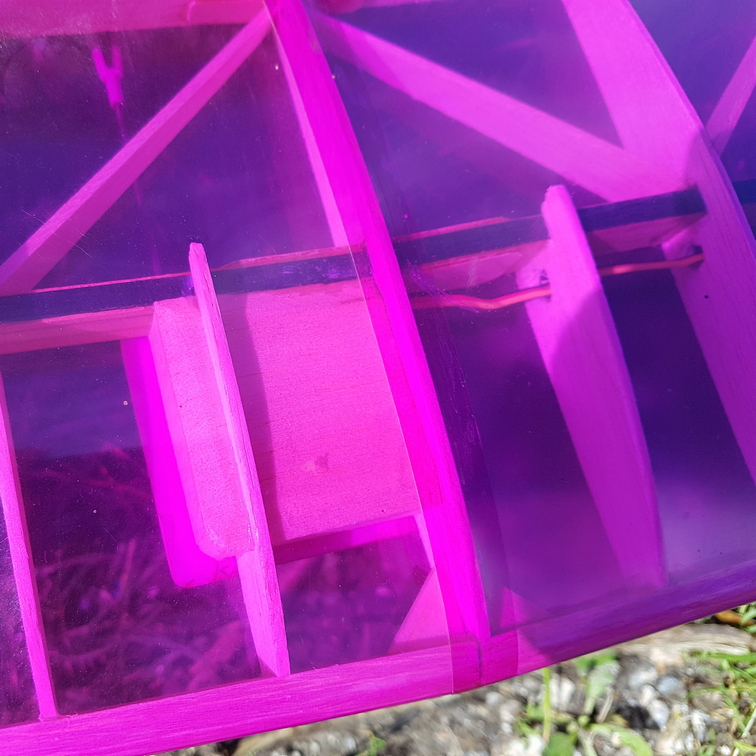 Dalasy Models was a Czech manufacturer and there are similarities in the construction with my own Czech made Swing Plus. Both models feature a glass fibre fuselage, a V-tail, and built-up wing with a carbon sandwiched spar for strength, but the Swing Plus is only 1.7 metre span whereas the Expert is 2 metre span and is fitted with ailerons.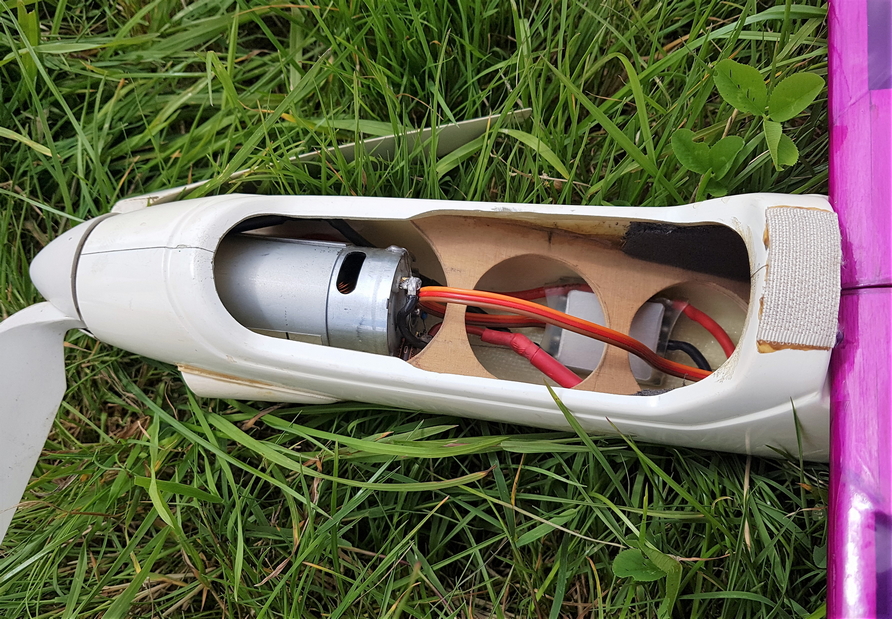
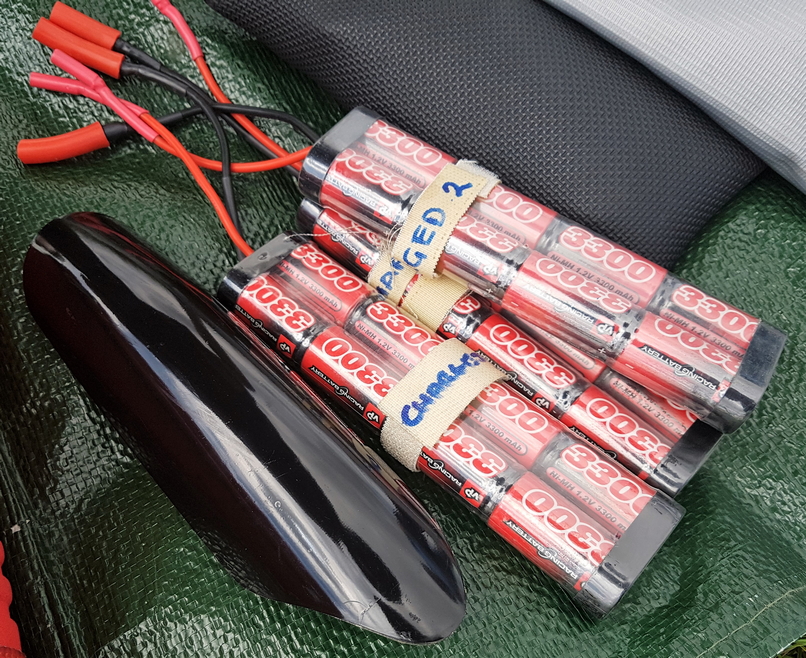 Captain Slow is still flying it with the original brushed Speed 600 motor which is fitted with a gearbox and he’s still using 8 cell NiMh batteries of 3200mAh capacity. This all makes the model a little on the heavy side compared with more modern set-ups but nevertheless it performs well. The climb is relatively sedate but that’s how he likes his models and it thermals well once it’s up there.
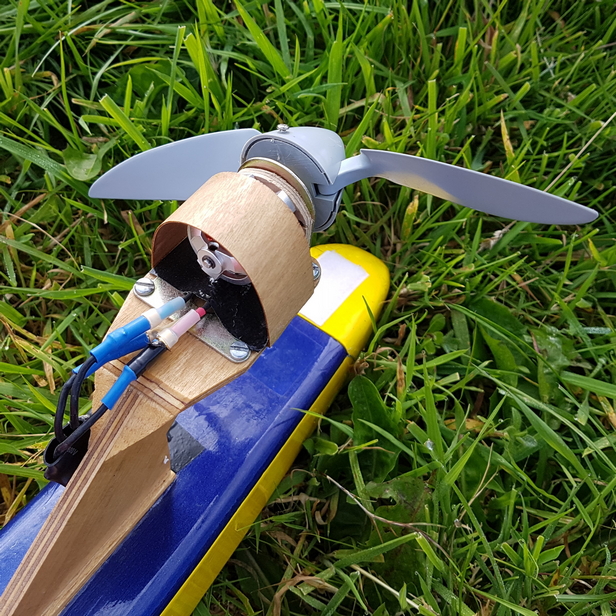
The final ‘new’ glider to show up in August was Dougal Entendre’s ancient Olympic 100” thermal soarer. He actually flew it with FPV at our patch back in July 2014 but I expect you’ve all forgotten about it by now.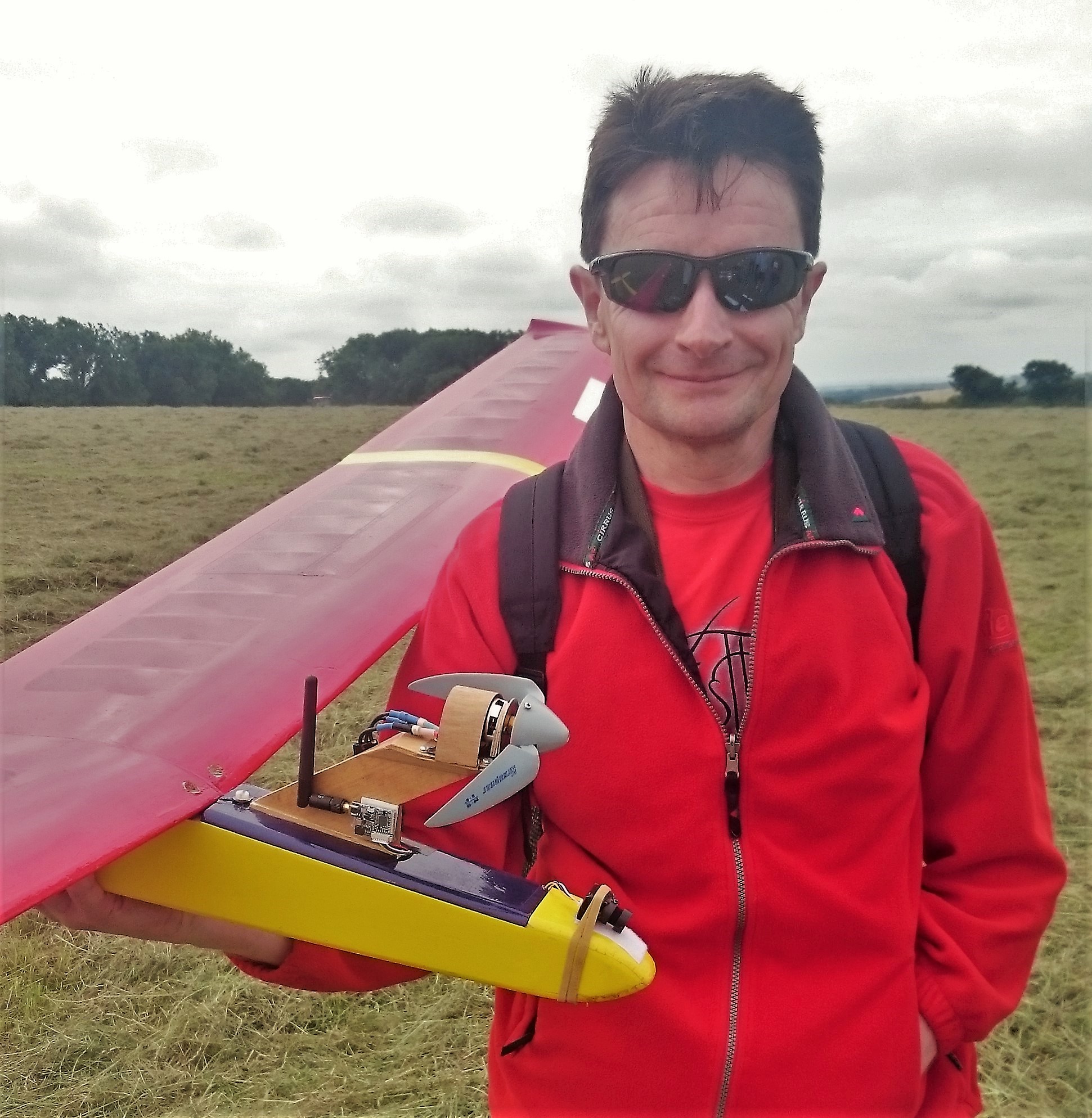 As you can see it’s a proper ‘built from balsa’ glider to which he’s added a small pylon that holds the electric motor and speed controller. The Olympic was originally a plan from the American mag RCM back in the 70’s and Dougal has recently discovered that Airtronics kitted the model for a while.
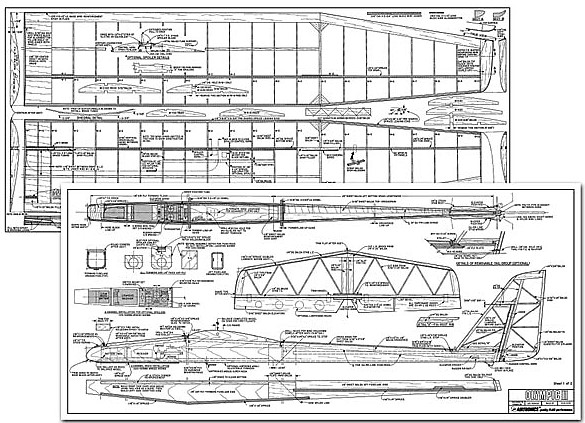
 If you fancy building one the plan can be found by clicking HERE. Dougal has added some sheeting and rib capping strips to improve the torsional rigidity of the wing.
 Under power it’s best described as ‘I can hear the motor so it must be climbing’ but it soars beautifully. Dougal’s claim to fame with the Olympic is that he once came second to Chris Foss in the Towner Trophy thermal competition many moons ago, that’s no mean feat.
At the first club meeting in August we had an RTP (Round The Pole) night. A few months ago I bought an RTP set-up from HobbyKing, mainly to utilise the spare weight for which I was paying postage anyway. I spotted the package in the HK Bargain Bin for under £12 and it just looked like too much fun to refuse. When it arrived I discovered I didn’t have a big enough space at home to fly it so I suggested flying it in the hall one club evening. It was a popular suggestion and another 5 identical ones were promptly ordered by others members.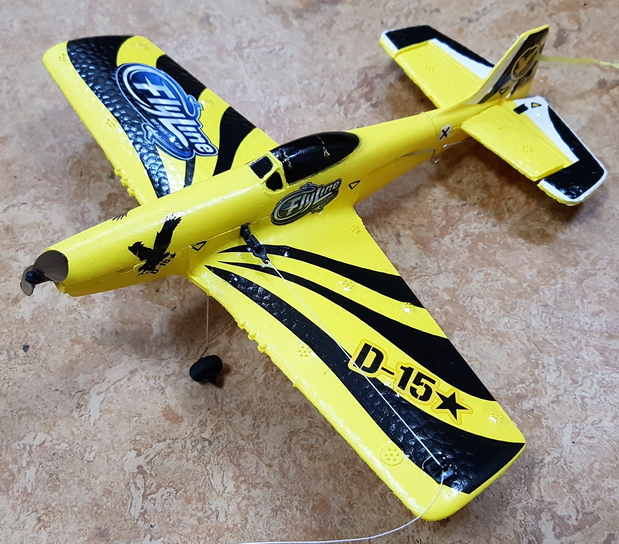 We started off with just one model flying but that was a bit boring and they come with streamers so you can do combat with two models flying at once on the same pole. That was much more exciting so we decided to try three models at once, and then four! If you weren’t there to witness the ensuing chaos you can see some of it in this month’s video at the end of this Patch News!
Along the same lines (that’s a joke) also in the video is attempt number two with 1066’s electric control-line model. One evening 1066, Dougal, and I went to a local park to play with the modified model.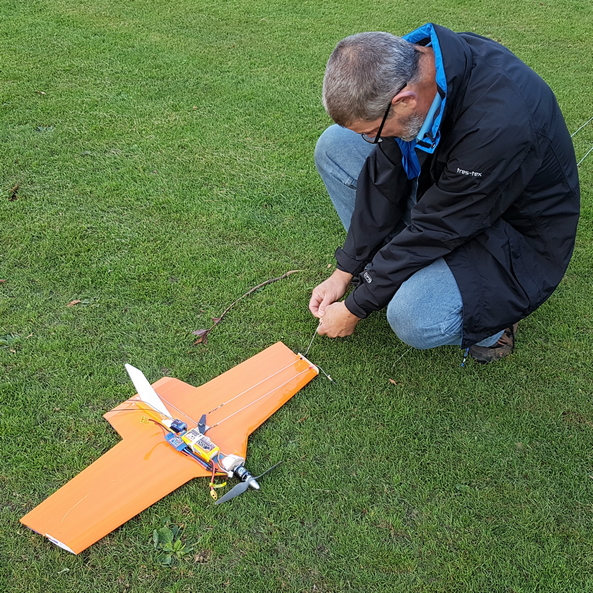
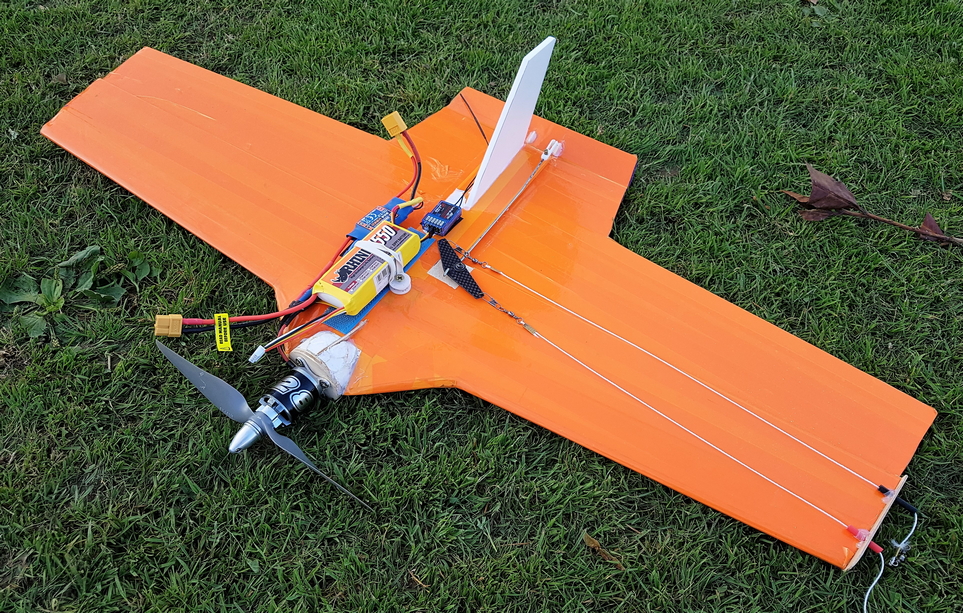 It was much better than previously and we all had successful flights with it. At least with electric control-line you can just shut the throttle and land when you get dizzy. Eventually 1066 decided to try looping it…and failed, minor repairs are now required. You can see it fly in the video. No doubt more on this subject will follow.
Norwegian Nick brought along a Christmas present from his kids to fly at Buriton before one club meeting.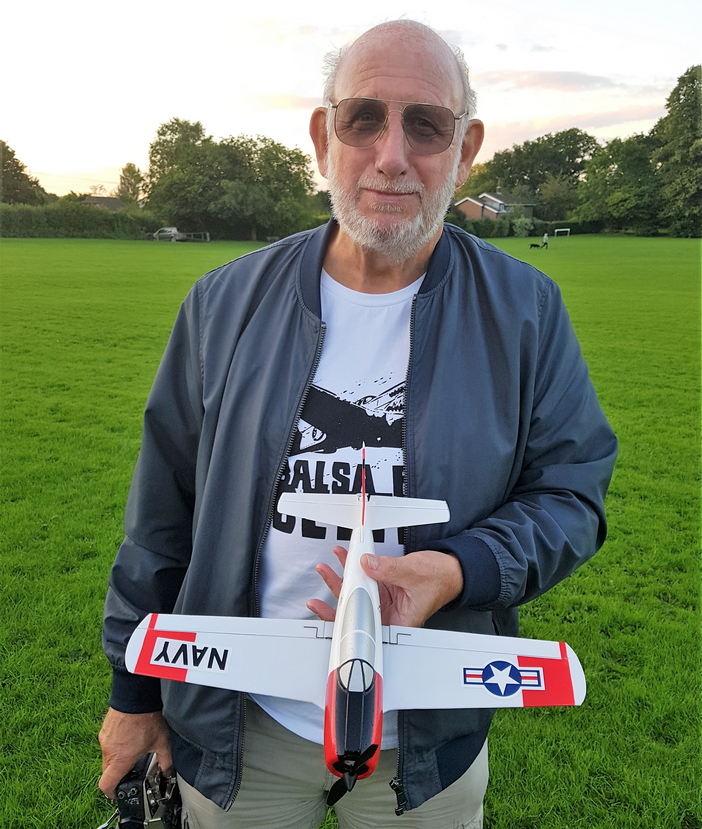 It’s a Parkzone Ultra Micro T-28 Trojan BNF (Bind’N’Fly). It comes completely finished; all you have to do is charge the battery and bind the pre-installed receiver to your existing Spektrum transmitter. The Trojan is just 16.5” wingspan (420mm) and the flying weight is 38gms (1.34oz) complete with four channel radio controlling ailerons, elevator, rudder, throttle and steerable nose leg. That’s ridiculous, 4 channel ready to fly weight of 38gms!
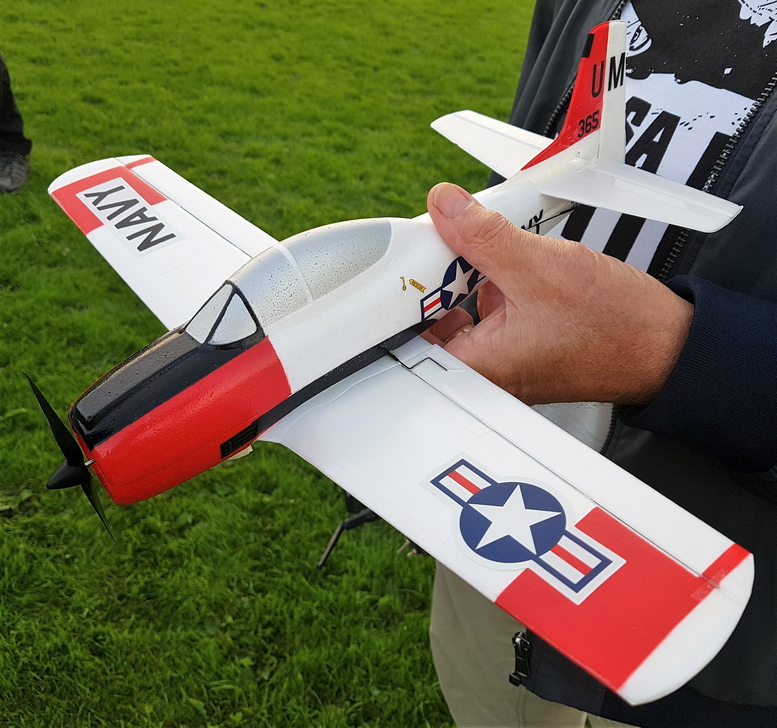 The undercarriage is removable and Nick flew without it. It took a few attempts to get the centre of gravity and trim correct but once they were sorted but then it flew very well. Unfortunately I didn’t get any video of it flying; maybe I’ll be able to get some for next month.
Tony Neil flew his P51 Mustang once during August. Tony won the Mustang in the November 2013 big raffle and flew it early in 2014 but I haven’t seen it fly since then. It’s a 59” span Phoenix Models ARTF that comes with all the parts to make it either I/C or electric powered. Tony chose the I/C route and installed an ASP46 2-stroke.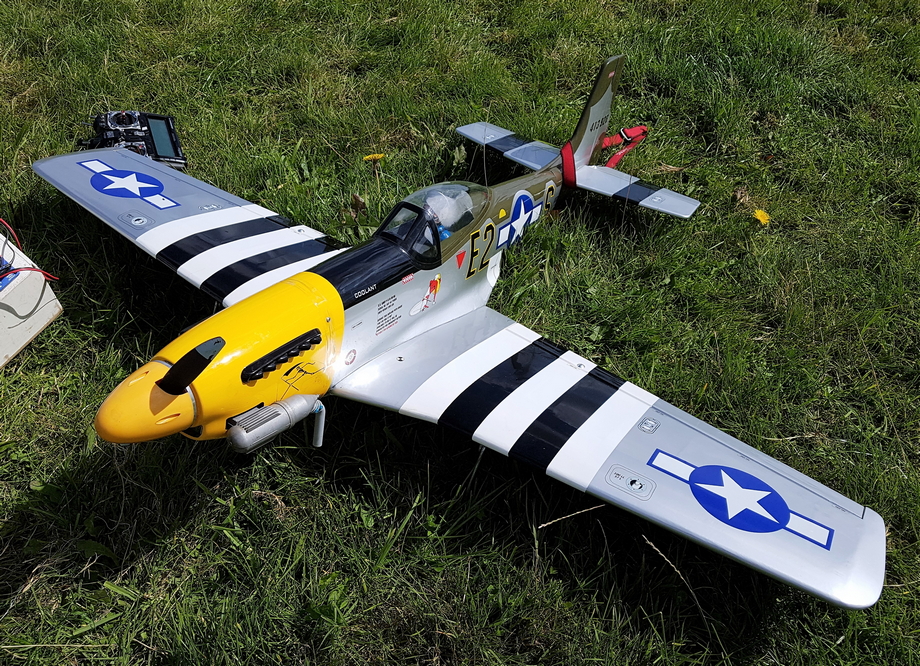
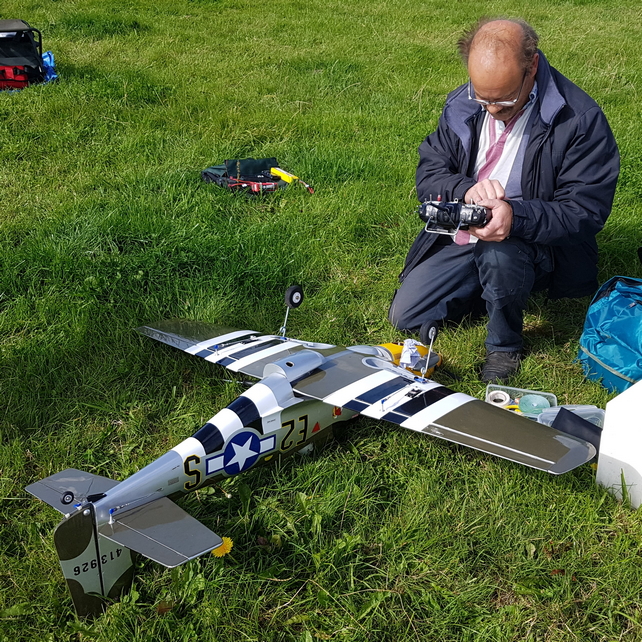 It’s a lovely model but would be so much lovelier if Tony had fitted an electric motor instead! He struggled to take-off with small wheels and the rather rough patch but eventually made it ok only to discover it had much too much aileron movement. This meant the flight was a bit ‘interesting’ but he got it under control and back down in one piece so it ended well.
Bob the Builder has been building again and he’s named his latest model a Splotel as it’s a cross between a Splot and a Trottel. You know what a Splot is, the Trottel is the little Depron model he’s been flying lately, it’s on the same forum as the Kung Fu’s that is this year’s club model. Basically the Splotel has a Splot wing that’s made from an earlier Depron version that Bob built and he’s made a balsa and ply Trottel fuselage, tailplane, and fin but scaled them up to Splot size. The wing has a 10mm diameter carbon spar so he won’t be breaking that in a hurry!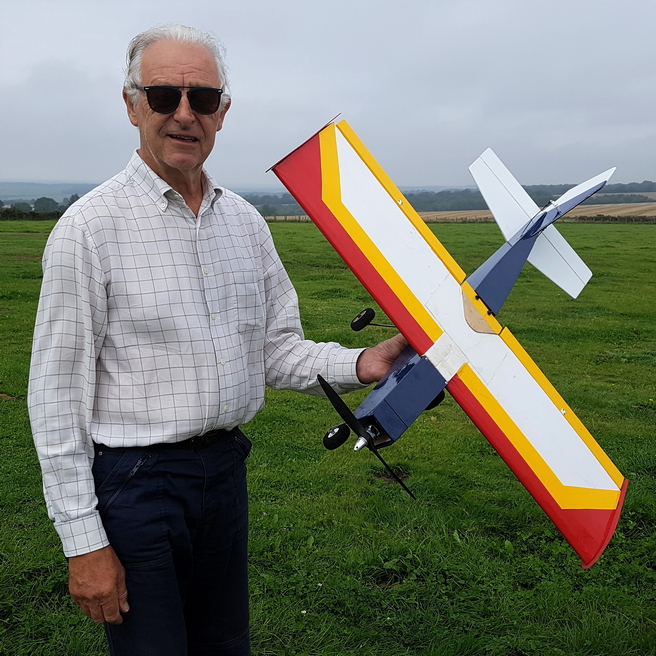 The finished model just looks like a Splot with a tricycle undercarriage to me. It has a PropDrive 3536-1400KV motor than can take either three or four cells and the model weighs 3lbs with a 2200mAh four cell pack. On four cells the motor produces more than 600W so the model has over 200W/lb! The power certainly showed when I took off on its test flight, it and it shot off across the patch like a startled rabbit.
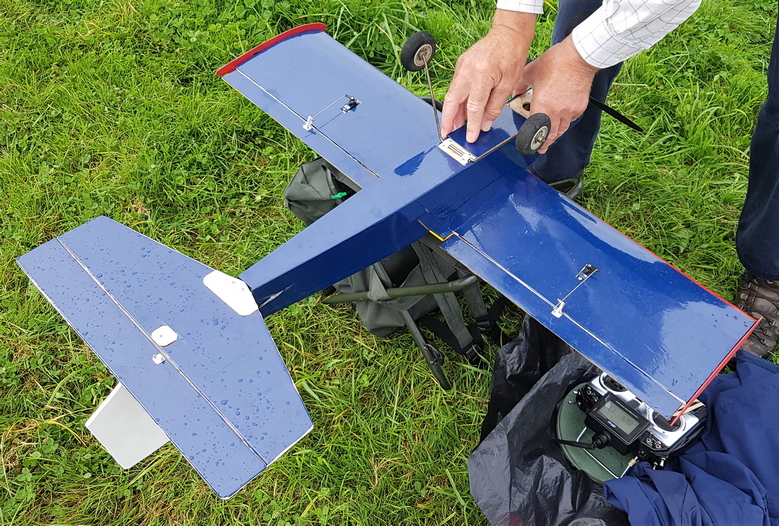 It flew well, I spent most of the flight at less than half throttle but it would go vertical forever if you wanted. I managed to remove the main wheels when I landed and was rather relieved when Bob did exactly the same when he landed on the second flight, obviously a bit of a weak point. No doubt Bob will sort that easily enough.
I had a bit of an issue with my Multiplex transmitter in August. When I tried switch it on one Sunday morning it was totally dead, just a quick flash of the power LED, then nothing. Needless to say I took a lot stick, mostly from Spektrum users who very kindly let me fly their models whilst mentioning Superb Spektrum. The problem turned out to be my own fault; apparently if you leave the transmitter switched on when you stop flying at lunchtime on Wednesday the battery will be flat by Sunday morning…doh! After a quick charge everything is working perfectly again, Marvellous Multiplex. But Dougal had an even more embarrassing problem with his Devention transmitter when he went to fly at Buriton before one club meeting. He opened his transmitter case only to find this: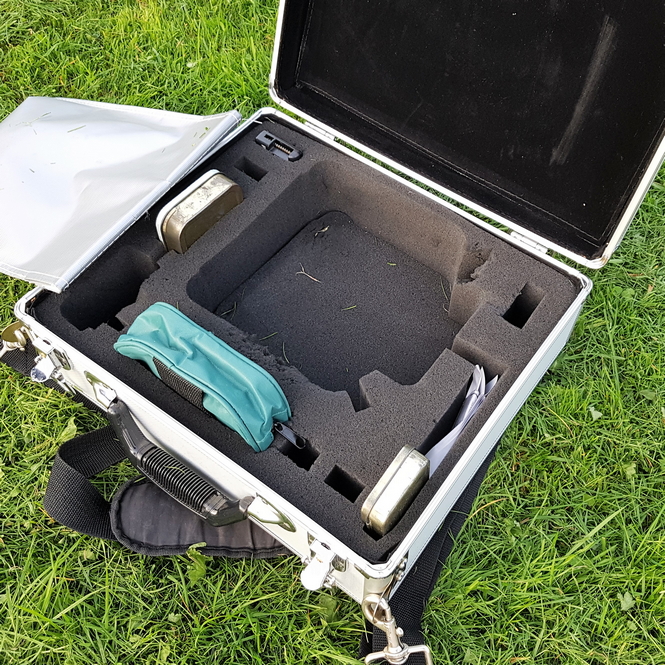 Leaving the transmitter at home must surely be worse than leaving it switched on?! However, he redeemed himself later that by giving us an excellent talk on launching gliders and brought along a 3.8 metre span one to show us.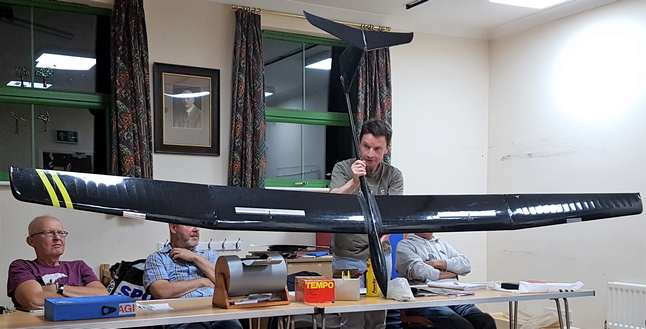
A few months ago I featured some members’ modelling rooms/sheds/garages. Now Catapult King has sent me some photos of his spare room, explaining that it’s now so full he has had to resort to building his models in the kitchen.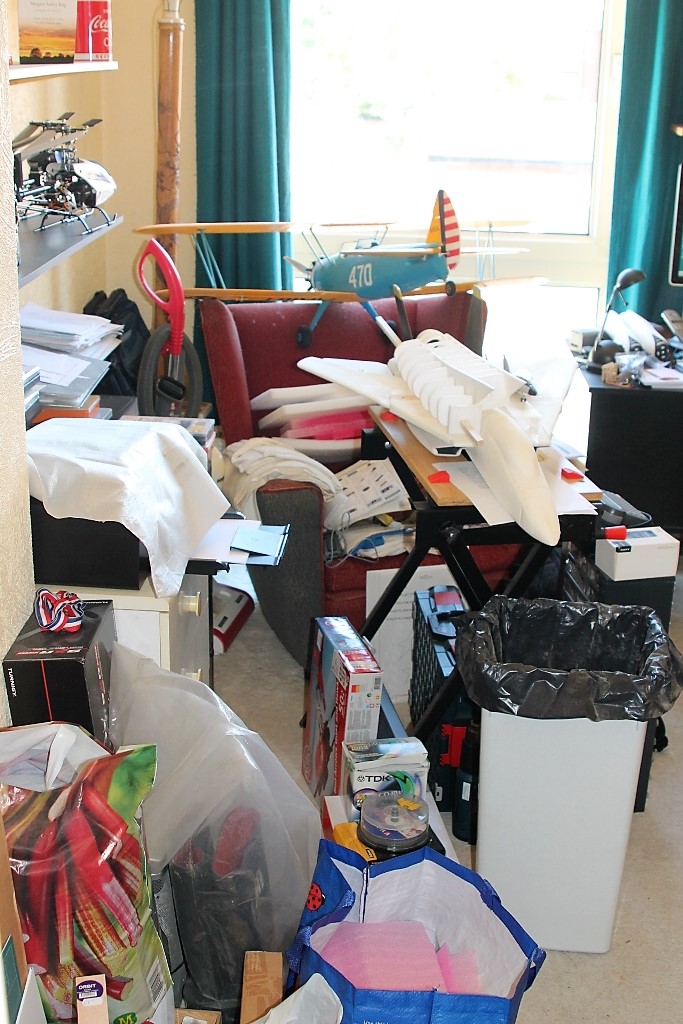
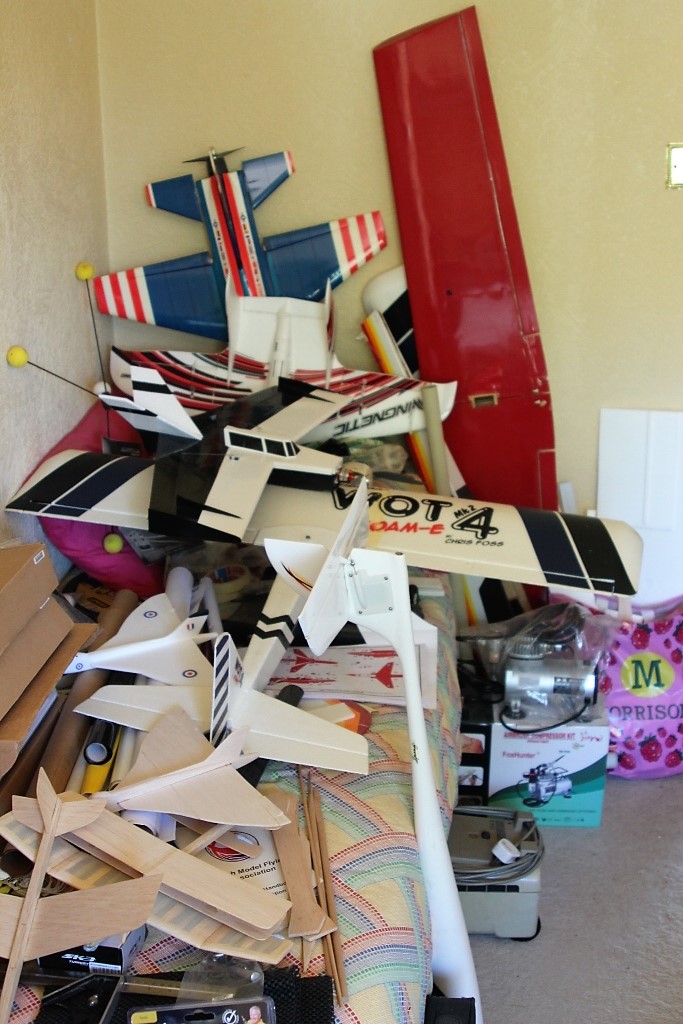 He says it’s less than ideal but it’s convenient that he doesn’t have an other half to pester him!
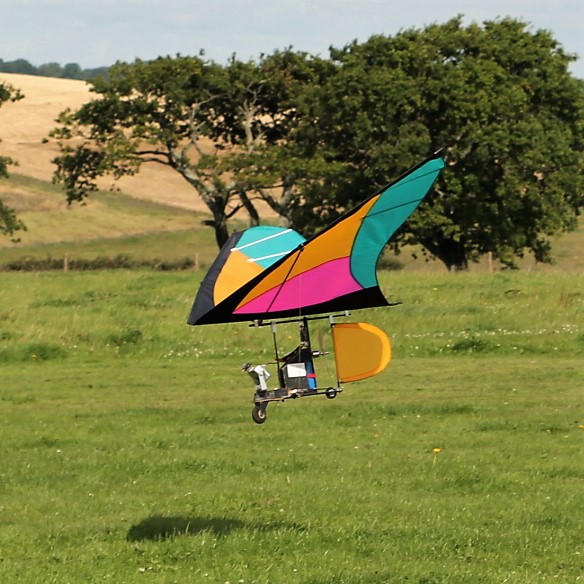
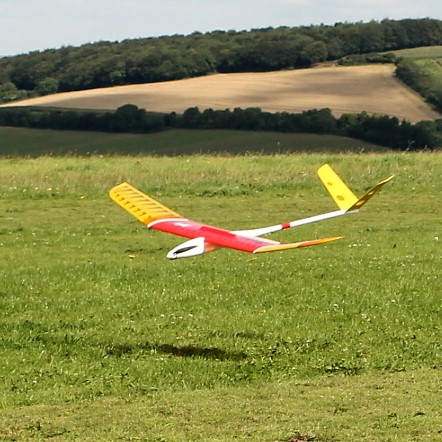
Now for a few flying photos, Gentleman Jim snapped the first two on his mobile, the others are from Catapult King.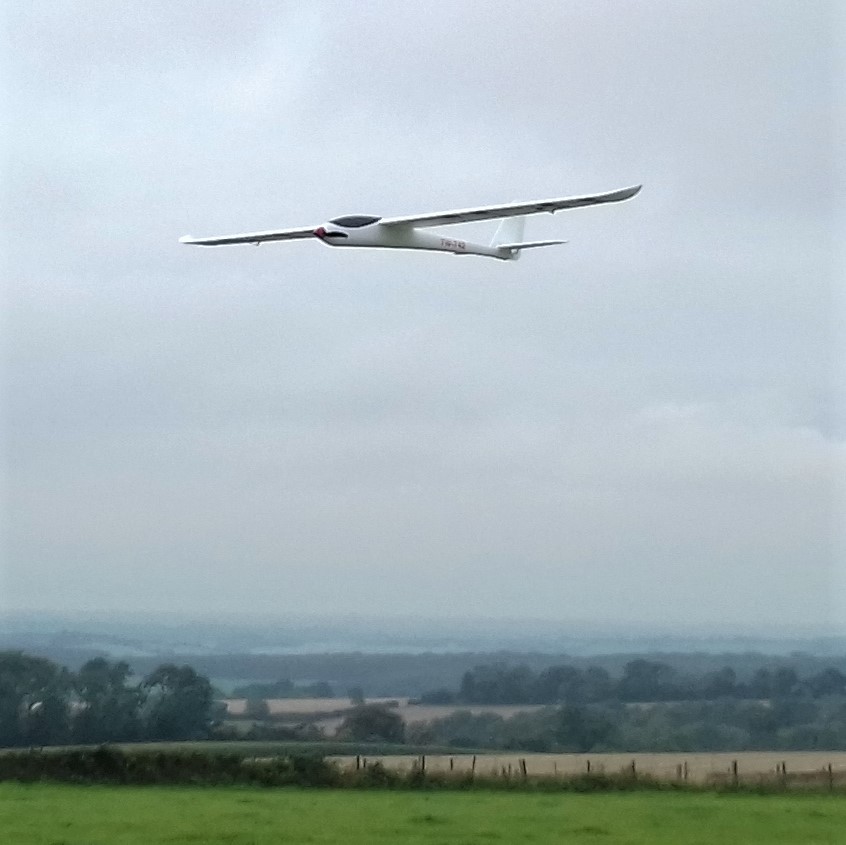
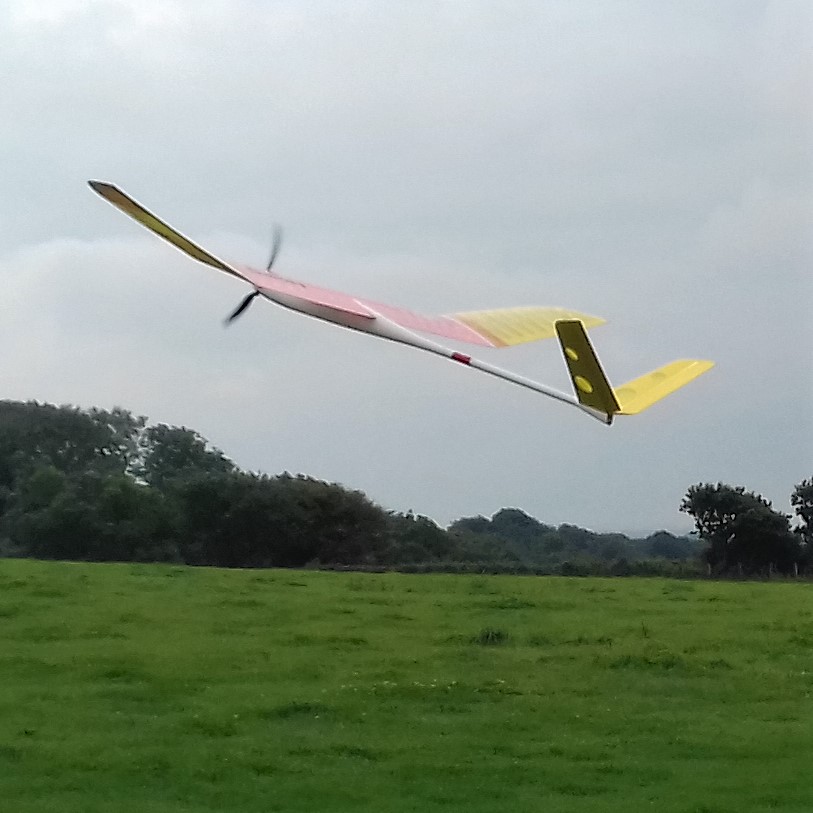
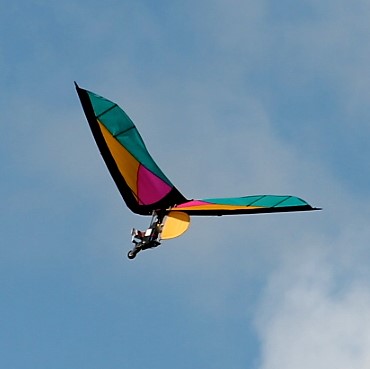
Now it’s time for this month’s video, some was done by The Squire, Dougal, and Captain Slow, thanks guys:Please watch the video full screen, it’s so much better with small models flying around. If the video above won’t play for you CLICK HERE
This month’s joke was sent in by Dougal Entendre so don’t blame me:
I watched a documentary on how wings are fixed to planes. It was riveting.
Colin Cowplain
Patch News – July 2017
July was a typically British July, some glorious weather and some downright awful. Doreen and I were away camping for the first week of July when the weather was pretty much perfect. Coincidently at exactly the same time the bullocks were put in the field, just for that week. I heard mutterings about me having influence over farmer George but it’s not true…honest guv! Fortunately, because the weather was perfect, the bullocks didn’t churn up the newly repositioned patch and, apart from a few deposits, it remained relatively unscathed.
The newly formed Friday Afternoon Gardening Club mowed the patch regularly and it’s now in excellent condition (considering its just part of a farmer’s field). I wonder if the name should be Friday Afternoon Gardening Society, the acronym is so much better…
The club meeting on 27th July was moved from Buriton to the field so the members could clear the parking areas of the undergrowth. Tony Neil used his brush cutter to great effect and others cleared while 1066 leant on a rake!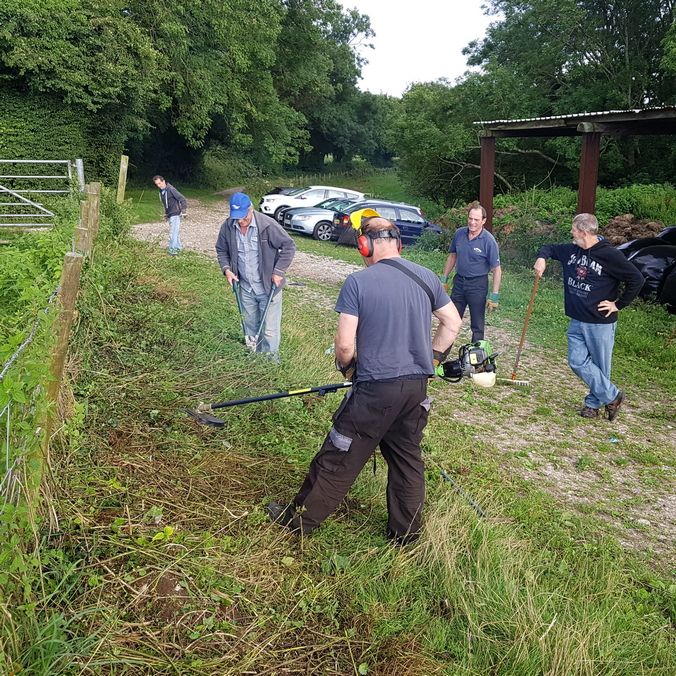 Modelling Clay made short work of some dangerous branches overhanging one area and everybody mucked in with the clearing up. We even managed to do some flying and mow the patch. Thanks to all the members that turned up.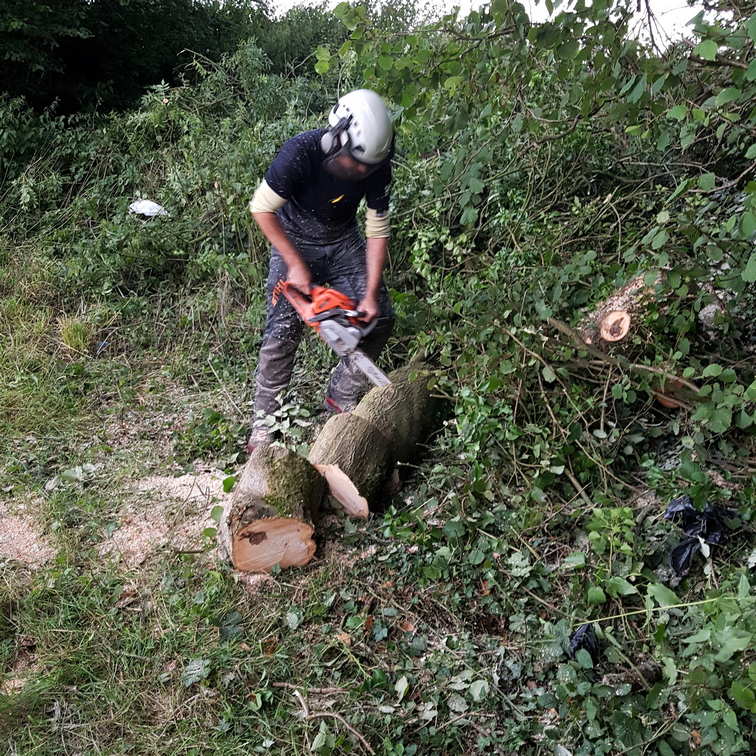
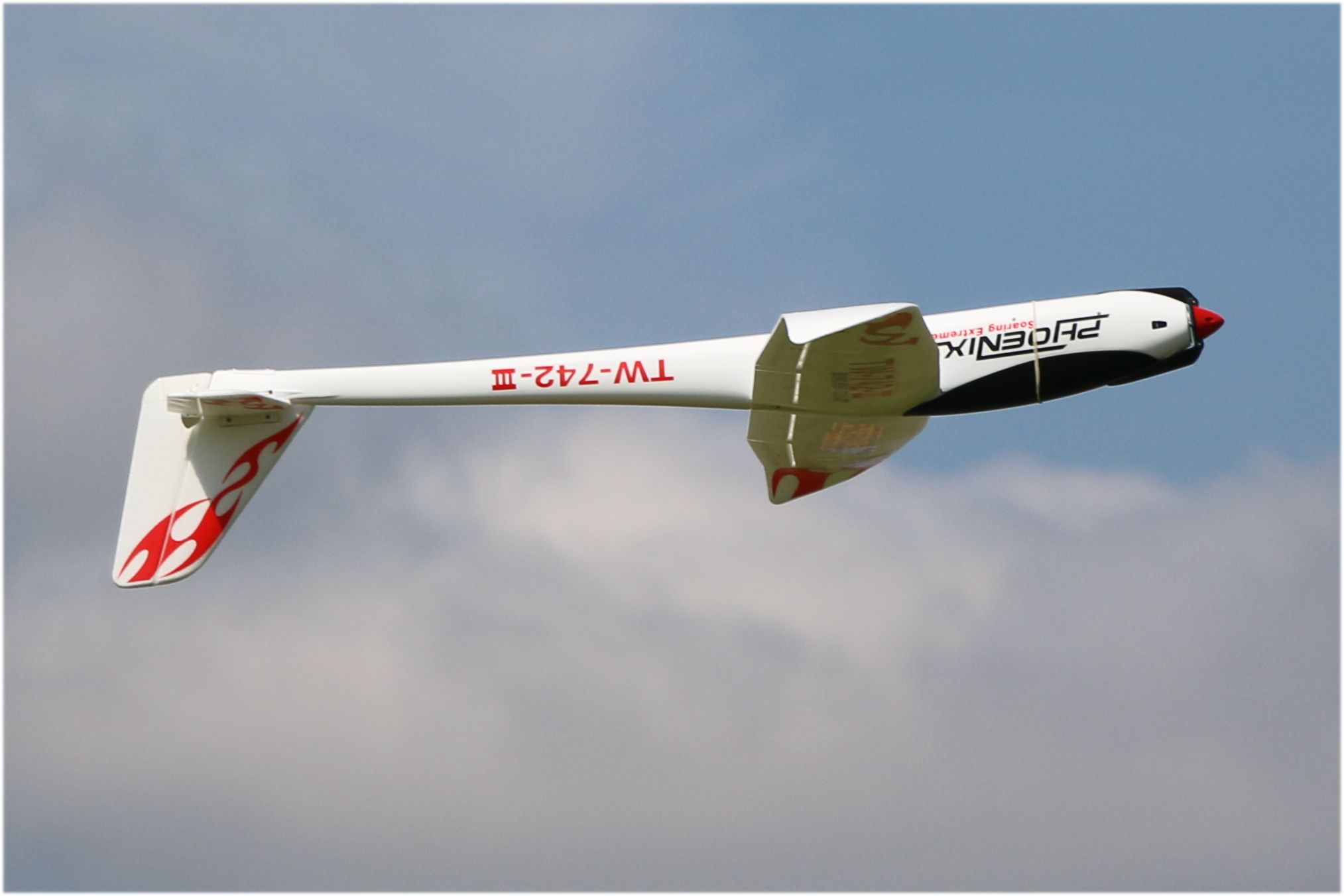
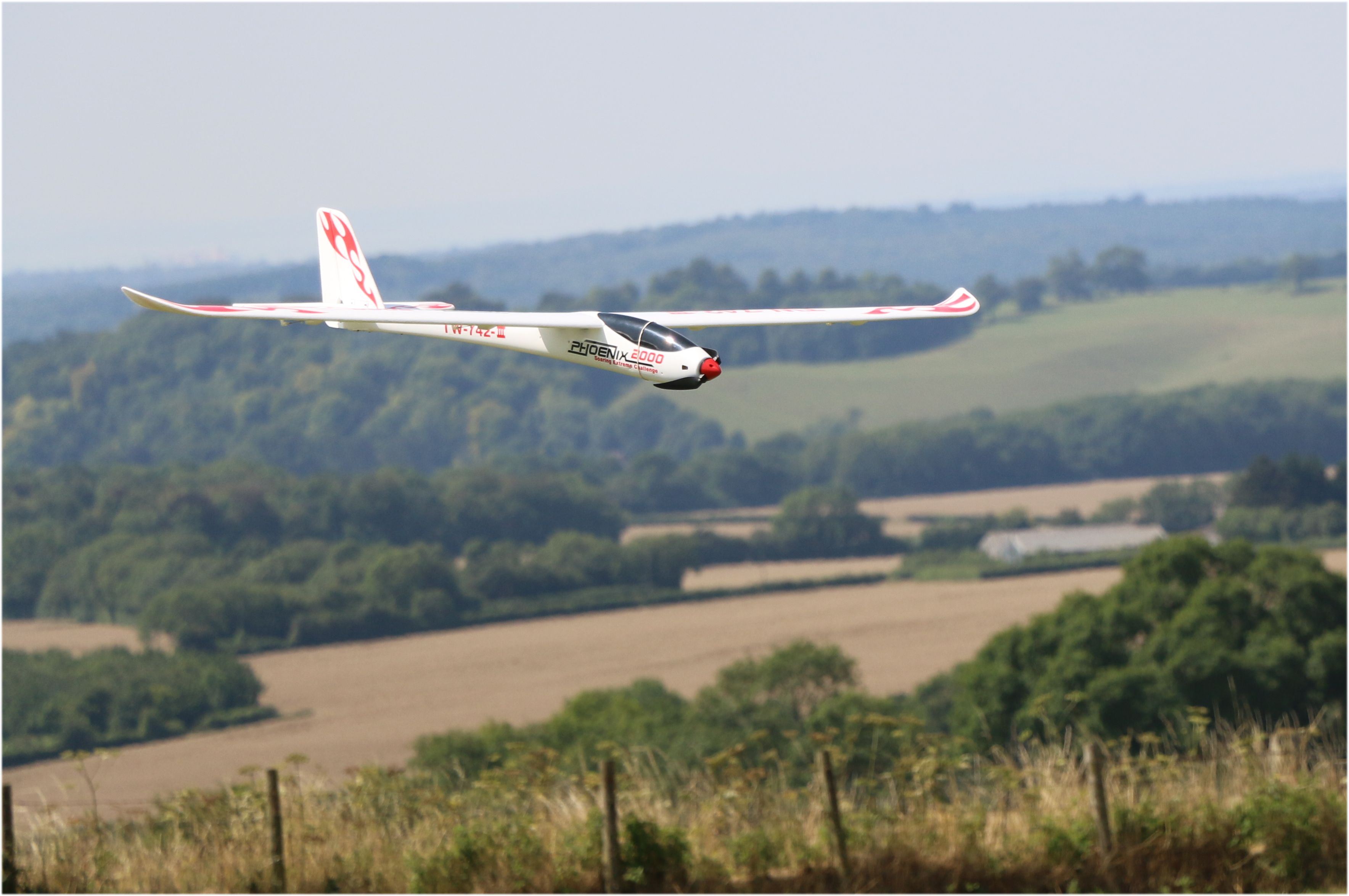
Although lots of flying took place during the month there seemed to be a dearth of new models. The only one I spotted was Kryten’s new electric glider, a Phoenix 2000 from HobbyKing.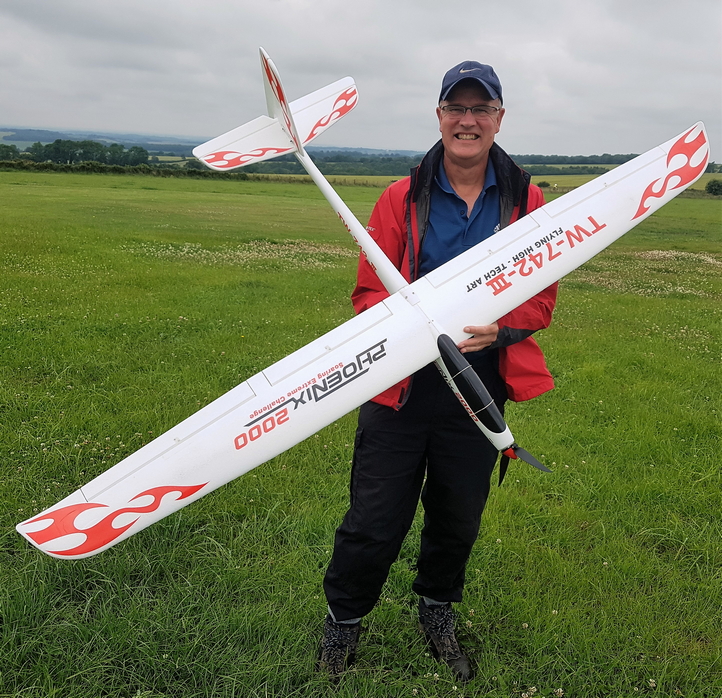 This is what the HobbyKing website says about it: This two metre wingspan glider takes 15 minutes to assemble and lasts a lifetime! The wings and tail are made from tough EPO foam. However, the fuselage is made from a really strong blow moulded nylon skin with plywood formers, making it almost indestructible, this is usually reserved for baby toys. The virtually indestructible fuselage is smooth and rigid, yet still light enough for the glider to perform. Both the main wing and tail are screwed into place and the two wing halves have a carbon fibre rod for added strength. The main wing includes one servo per aileron for strong control surface movement plus there is a pre-moulded slot so you can add your own flaps later. All four 9g servos, speed controller and brushless outrunner are included. Just add your own receiver and battery to be flight ready!
The pre-fitted motor is a 28mm 1050kv outrunner and the speed controller is 30A. All the purchaser has to supply is a suitable 3 cell lipo and a receiver. Kryten is using a Zippy Flight Max 1500 20C lipo with the transmitter timer initially set for a 6 minute motor run, and an Orange 620 receiver.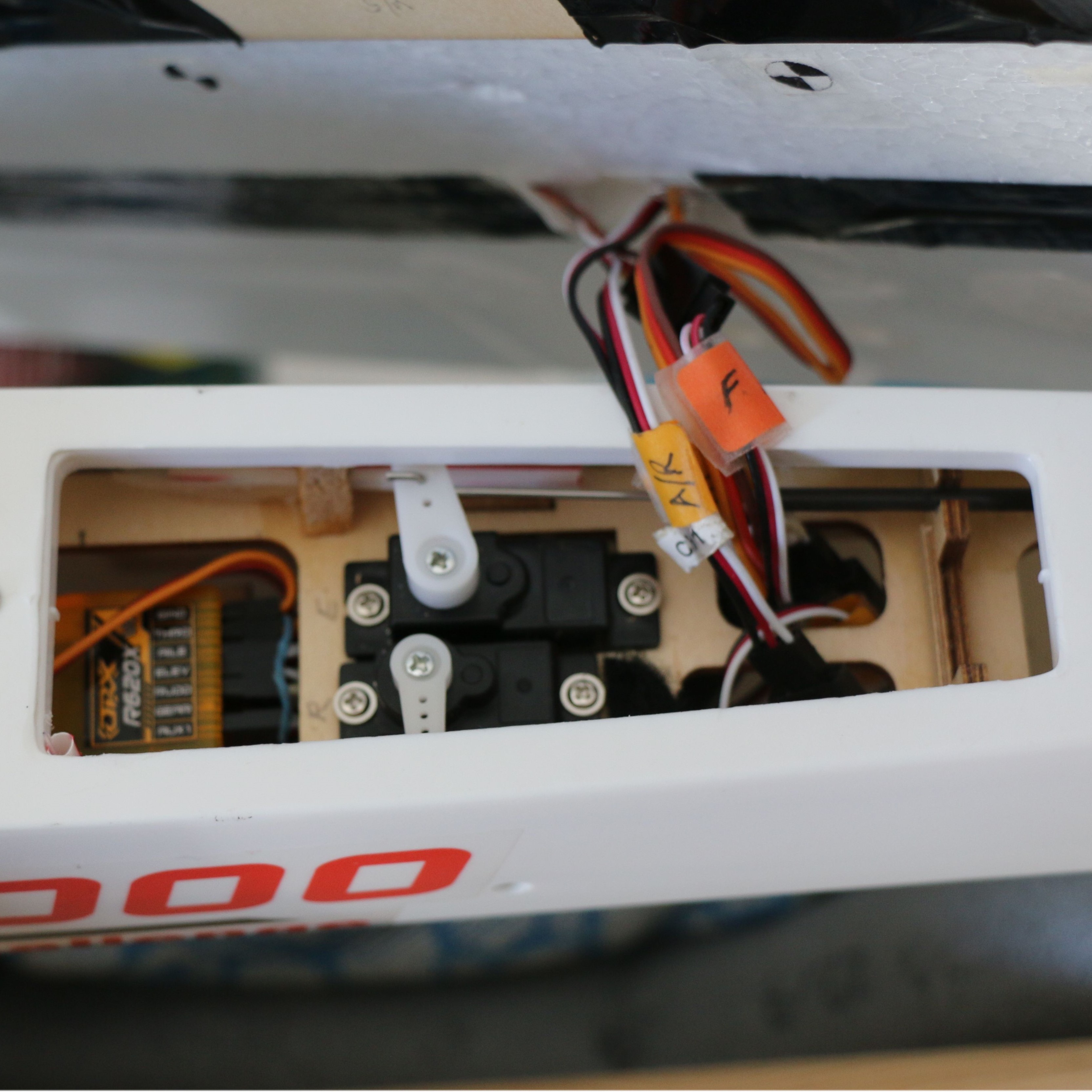
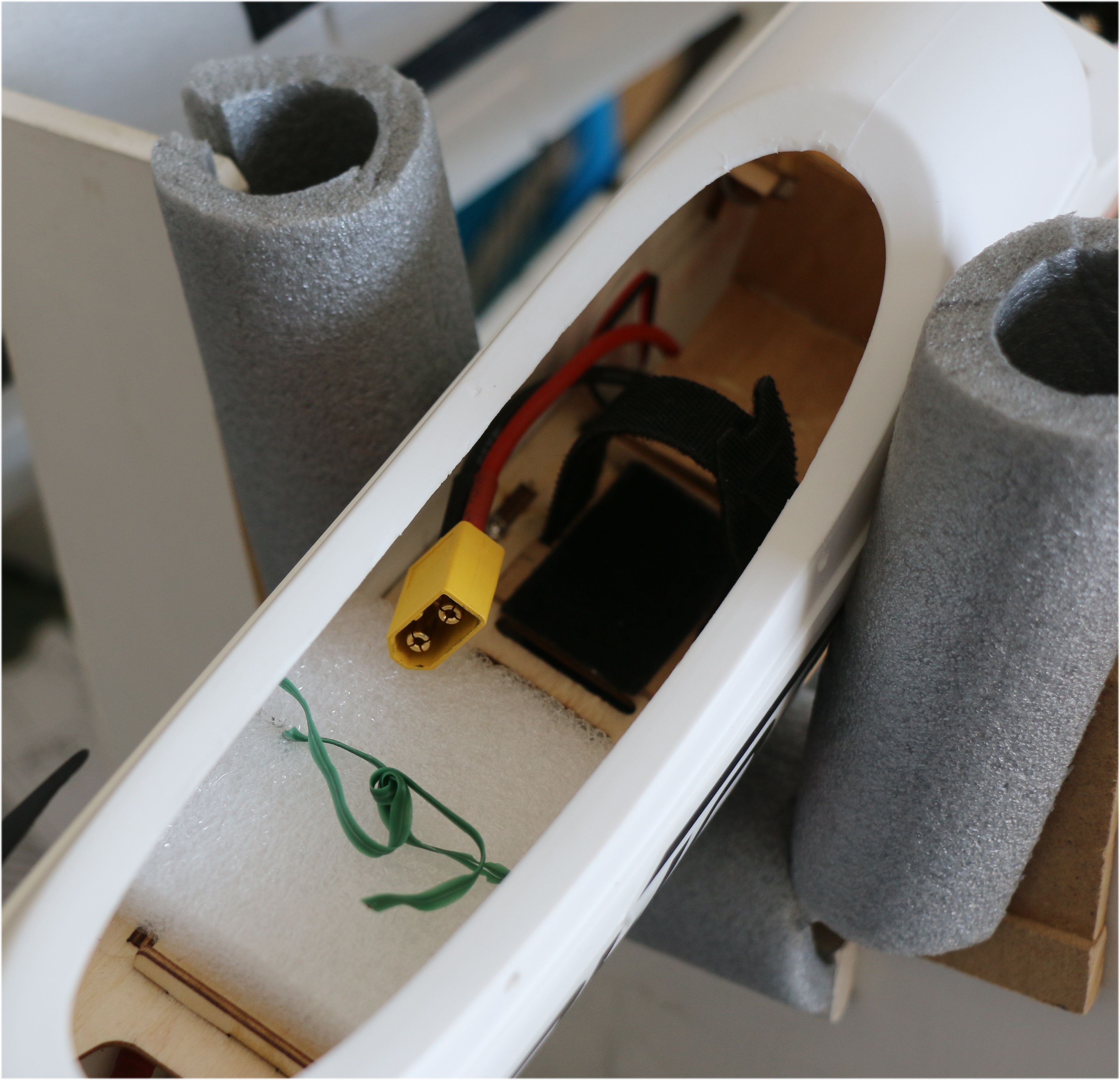 The battery is pushed as far back as possible which results in a C of G slightly forward of the recommended position. He has also added a pair of 9gm HXT900 servos to operate the optional flaps which makes accurate landing easier.
Kryten asked me to do the initial trimming and I thoroughly enjoyed flying the Phoenix, it’s a good glider but is also capable of some nice aerobatics, a good all round performer.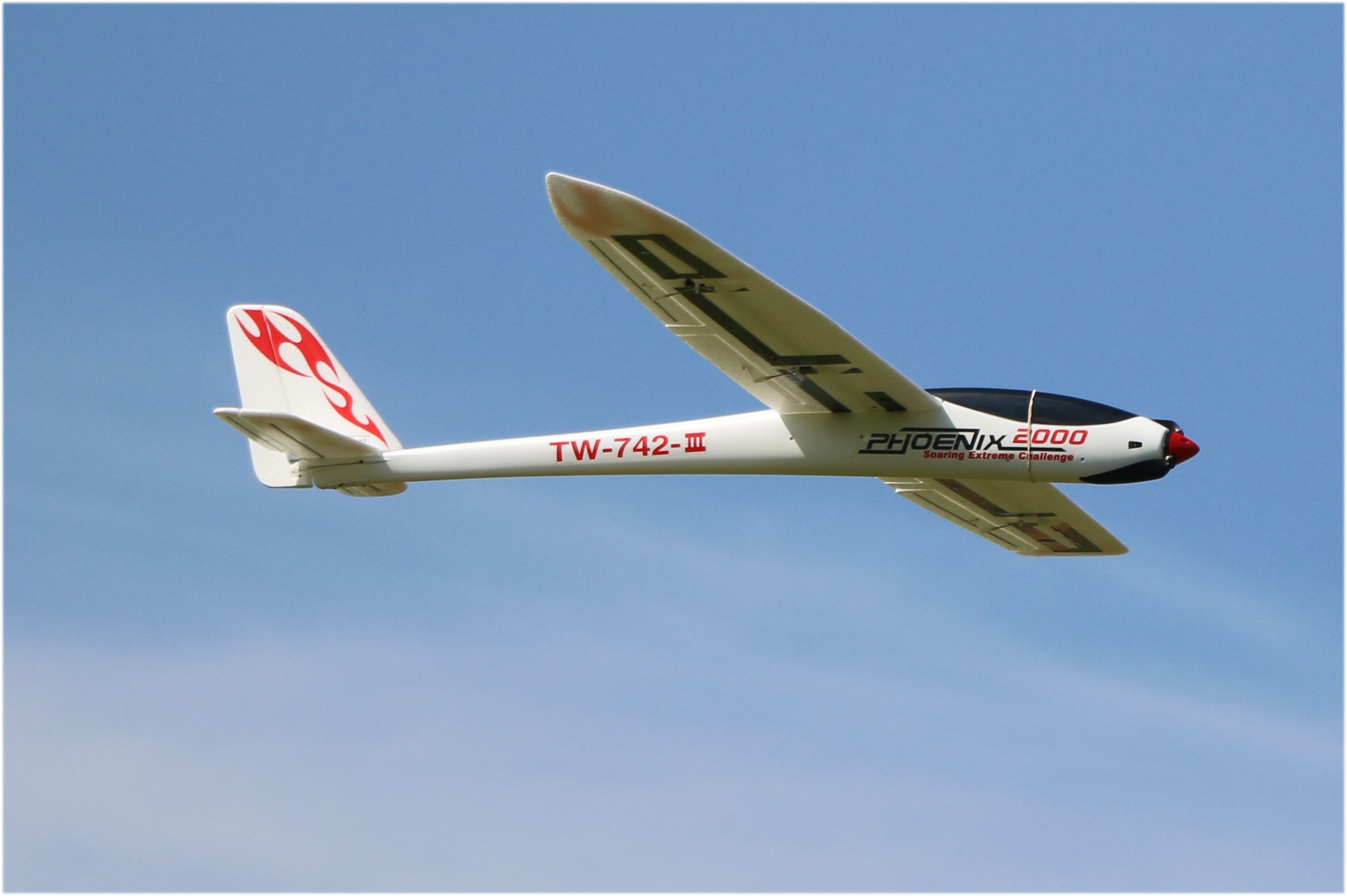 When I reluctantly handed the transmitter over to Kryten he handled the glider with no problems at all. You can see both of us flying the Phoenix in this month’s video at the end of Patch News.
Sticking with gliders, I recently brought one of mine out of retirement. It’s a Swing Plus produced by Kostka Model Centrum in the Czech Republic. I bought mine many years ago from Gordon Tarling, one of the early promoters of electric flight. I don’t remember exactly when it was but on the wing there is a BEFA (British Electric Flight Association) sticker with the year 2000 so I probably bought it in the late nineties.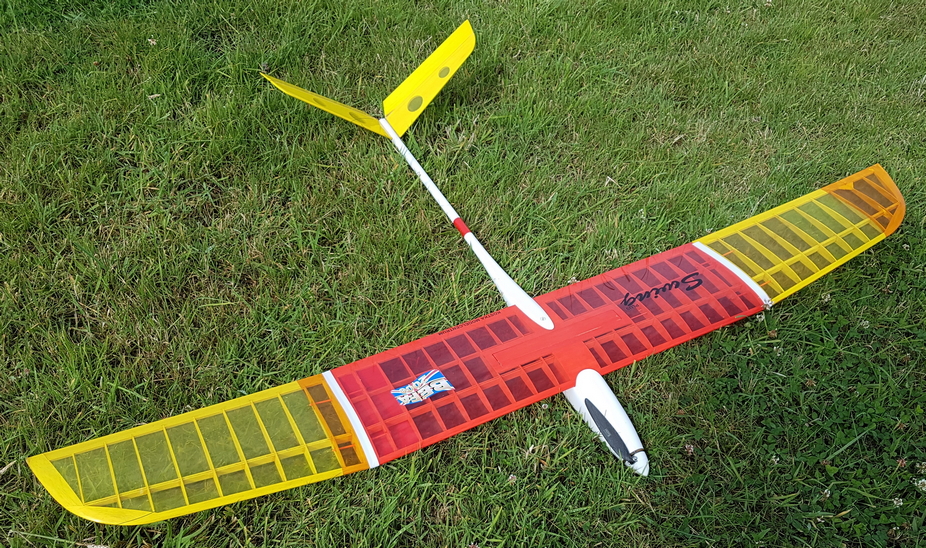 The Swing Plus was designed to be flown in one of the lesser classes of F5B competitions, a contest that consists of doing as many laps as possible between 2 poles 150 meters apart in 200 seconds followed by 10 minutes of thermalling, and then landing on a 30 meter landing circle. The laps must be made while gliding only, no motor allowed, so the motor is used to rapidly climb and power into the course. So, although being lightly built it’s also very strong and the wing spar has carbon sandwiched in it. Full blown F5B planes nowadays are mostly fully moulded machines that scream vertically at unbelievable speeds but mine doesn’t do that!
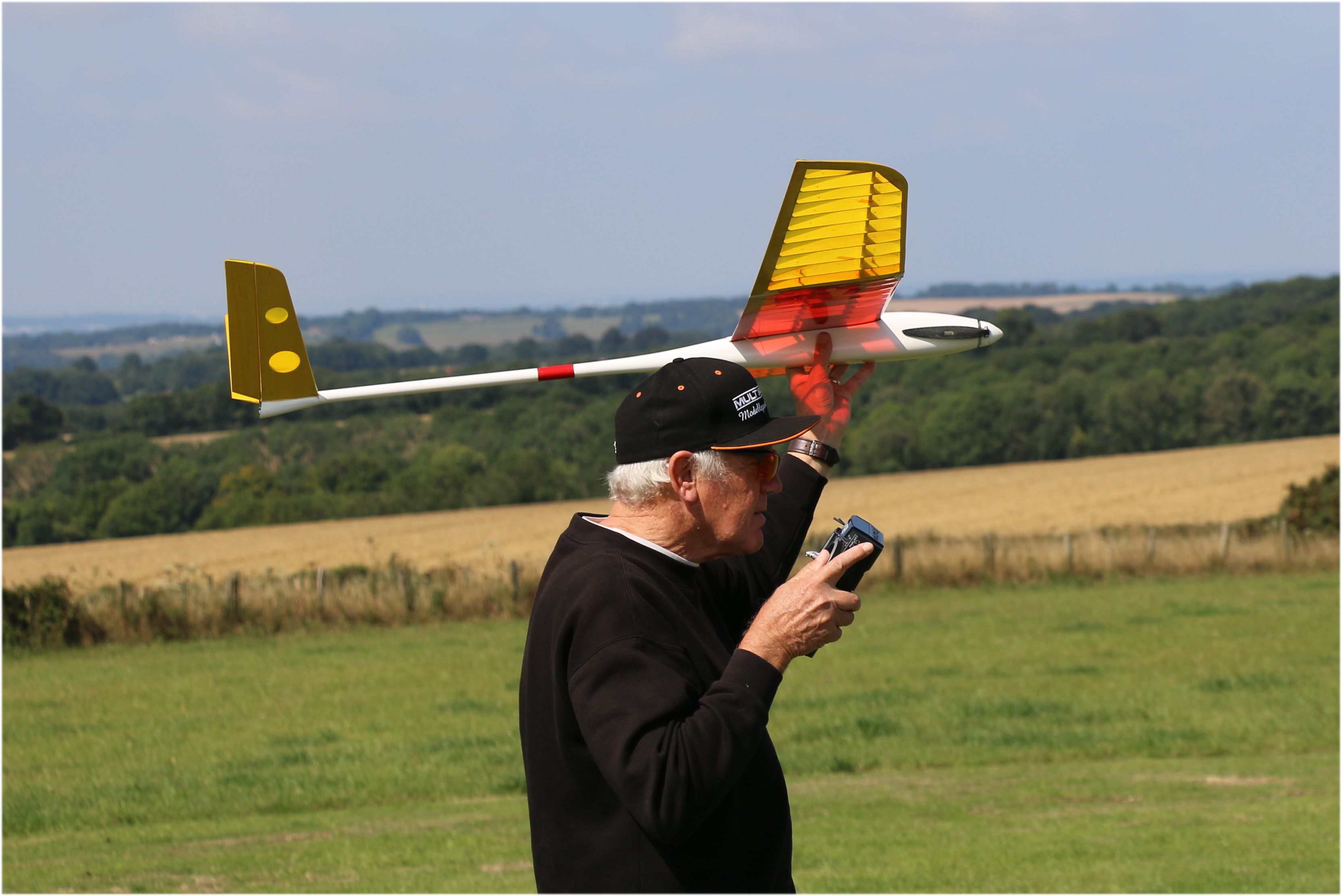 It was built before the days of outrunner motors and lipo batteries so mine was fitted with a very expensive Keller brushed motor and it used 8 NiCad cells. Eventually the motor brushes wore out and I was unable to find any replacements so I fitted a tow hook and for several years used to bungee launch it (remember those strong wings) in club glider comps.
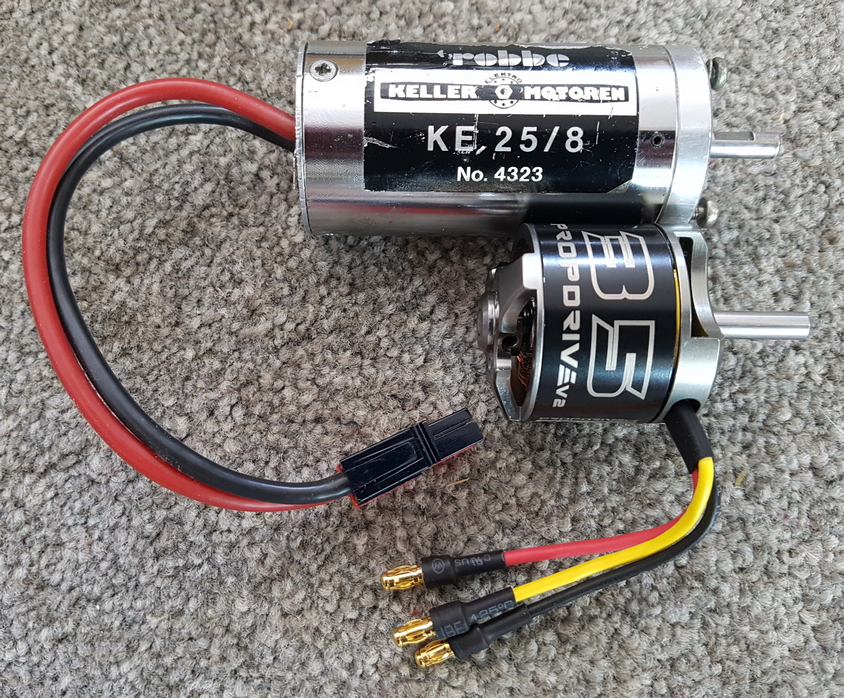 But I’ve now fitted a Propdrive 3536 910kv outrunner and 50A speed controller at a cost of just over £22 for the pair and I can fly using either my 2200mAh or 4000mAh 3 cell lipos. I chose the 910kv motor as that enabled me to use the original Rasa 12 x 8.5 carbon folding prop. I had to fit a large lump of lead in the nose as the new set-up is considerably lighter than the original one but the overall performance is pretty similar to before.
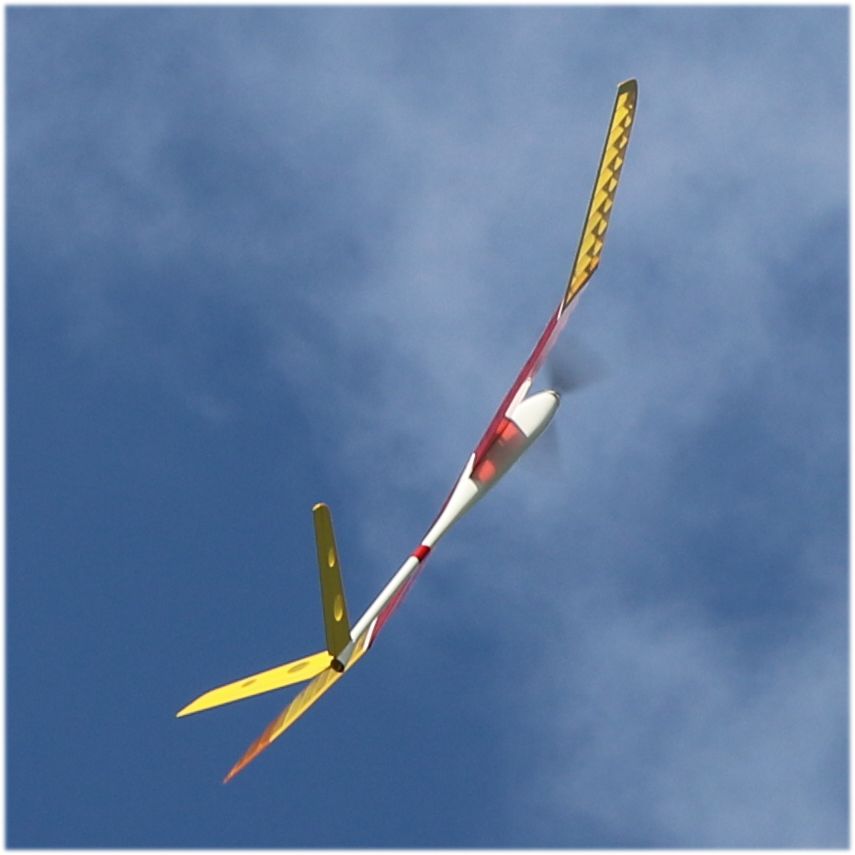 It will climb almost vertically (but not at the ridiculous speeds of proper F5B models) and it glides around pretty well. The Swing Plus doesn’t have ailerons, instead it relies on ruddervators on the V-tail. They work well enough and it rolls as if it has ailerons, and it also flies inverted pretty well. The wing has a relatively small central spoiler which doesn’t really appear to do much. Oddly the spoiler seems to make the controls more sensitive, must be something to do with being in line with that V-tail.
While I was away at the start of July Dougal Entendre decided to strap his GPS equipped watch to one of his planes just for a bit of fun, to see what it would record. He flew four circuits at roughly constant height and later he was able to upload the information to his pc and overlay the track onto Google Earth.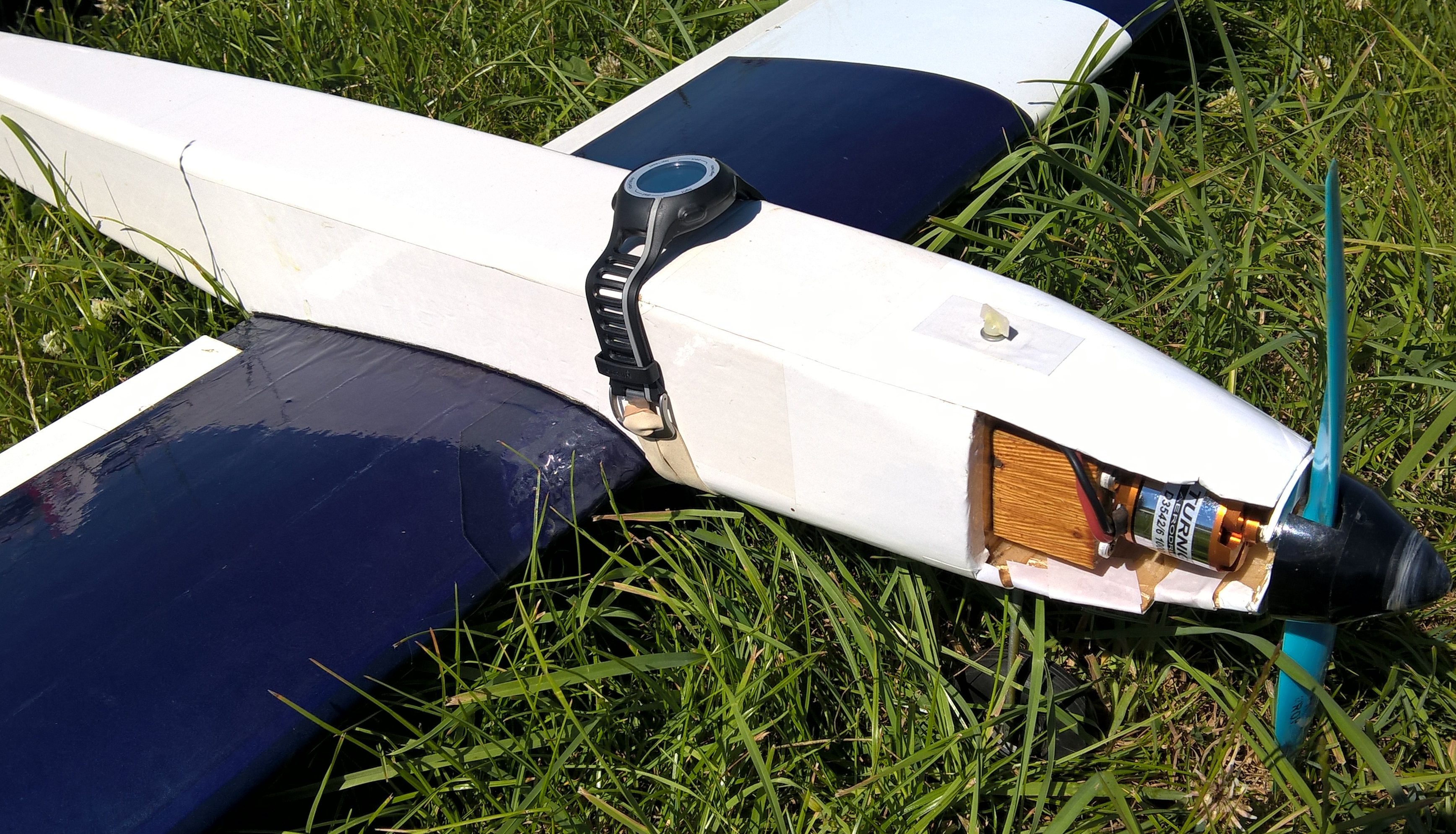
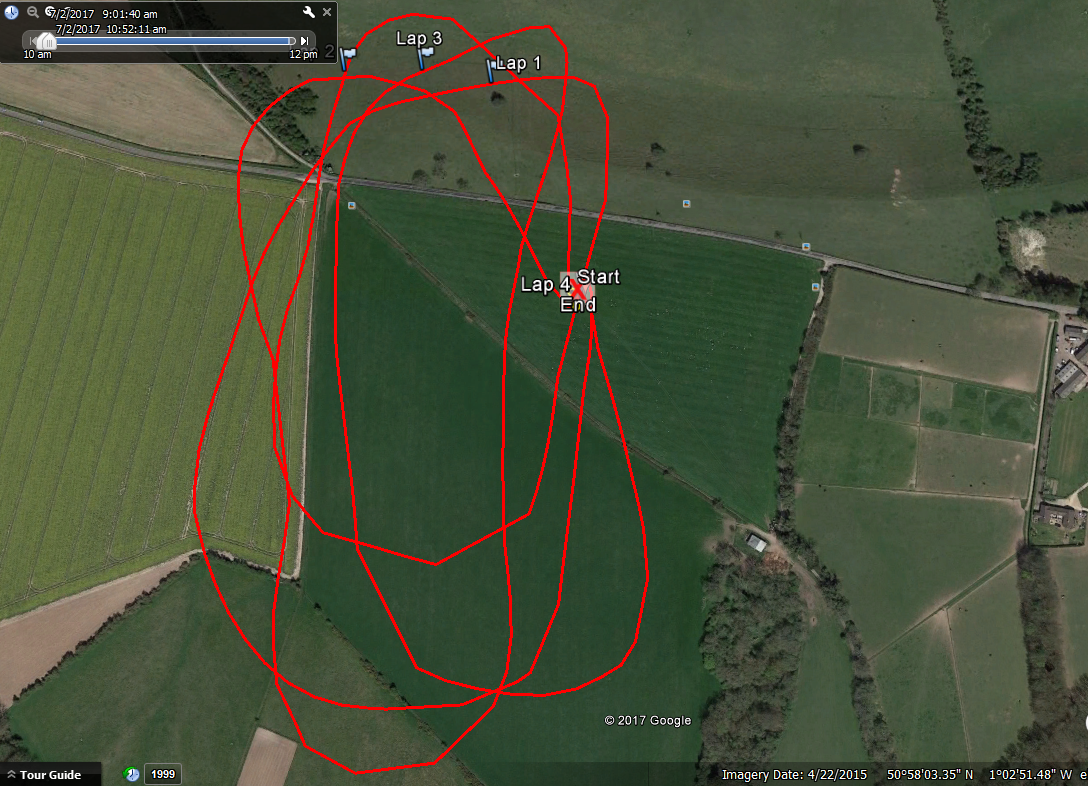 This is what was recorded: Average speed 50mph, max speed 78.3mph, height about 132ft. I think it was an interesting experiment and hope Dougal decides to repeat it one day. Of course with modern radio sets equipped telemetry it’s possible to record the same information and more without having to strap a watch to your model but Dougal did it without forking out a penny, simply using equipment he already owned. While you are looking at the Google Earth photo take a look at the extreme right of the picture, just above the road. You can see a white splodge (chalk?) with trees on three sides. That’s the field where phase three of the new houses will eventually be built and you can see just how close to our field they will be, hence our concerns about the noise we make.
Now for a bit of nostalgia, a couple more photos from PAM days gone by, I’m guessing they’re from around 1990.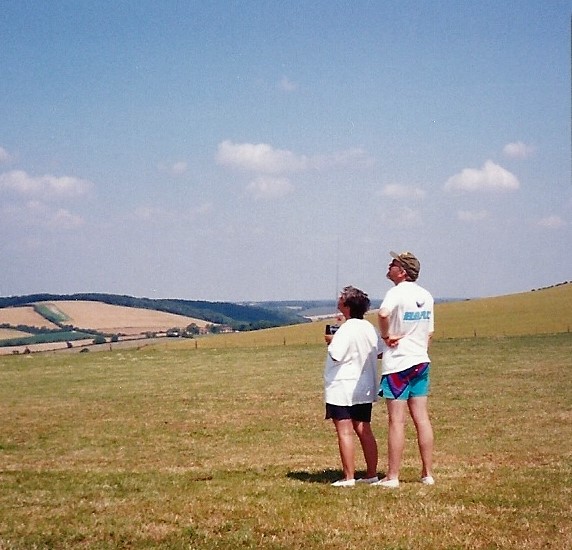 The first is one of Doreen flying and me supervising. The radio she’s using is my Simprop SAM 35FM transmitter and the photo below is of the basic set with rubber blanks in the switch positions.
 The purchaser could choose which functions they required and fit the relevant switches and modules themselves.
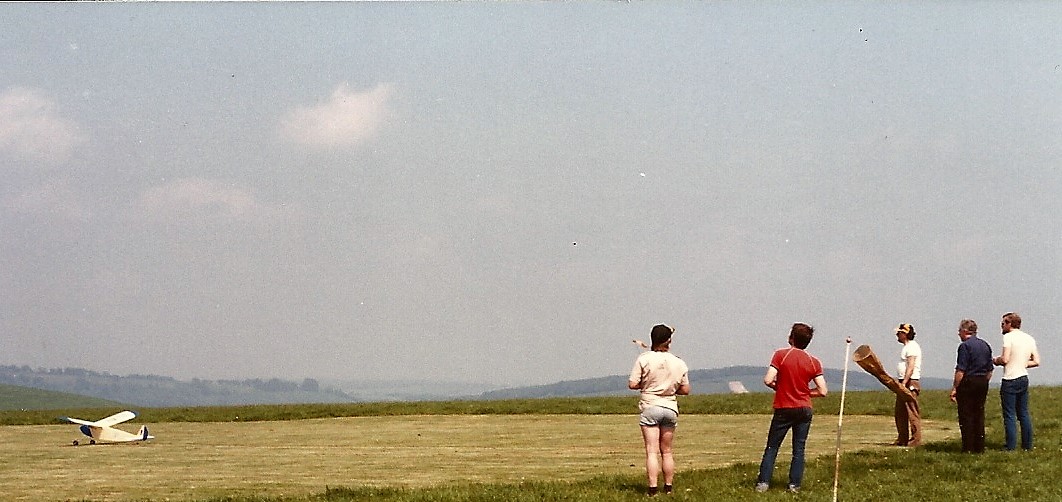 The second photo is from the same era and features (I think) from left to right: Viv Stanley Knife Burgess, Phil Wonky Wiltshire, designer of the Splot Graham Head, Peter Ford, and me. I’m appear to be test flying one of Peter’s vintage models. I still have another of Peter’s vintage models in my loft; I bought it in an auction many years ago but have never got around to doing anything with it. One day…
Last month I said that Dougal had fitted a helicopter gyro on his Hummer ailerons to reduce the workload when prop-hanging. Well this month Captain Slow has been playing with a Multiplex MultiGyro G3 on his Hummer.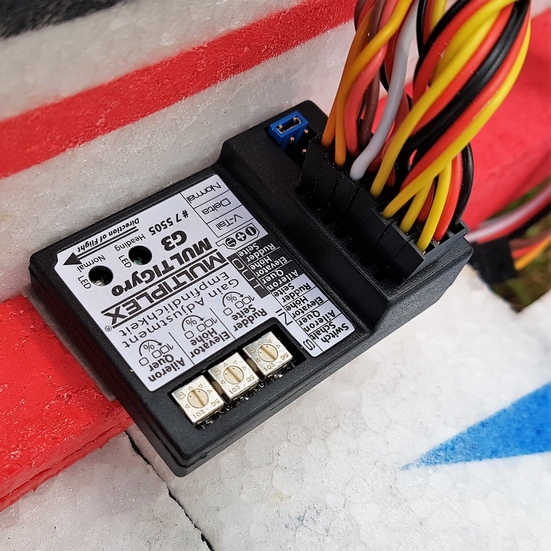 The Multiplex gyro works on ailerons, elevator, and rudder and is really intended to smooth out bumps in windy weather. But it also has ‘heading hold’ which basically means at the flick of a switch the model will stay in whatever attitude it’s in at the time i.e. prop-hanging. It works well in normal flight but when prop-hanging it maintains the attitude until the pilot touches the controls, at which point it then tries to hold the new attitude. So if the pilot pushes left rudder to keep the model vertical the gyro thinks the pilot wants to go to the left and off it goes! However, Captain Slow flew his Hummer in very strong and gusty winds the other day, conditions that would normally make the Hummer unflyable, and it handled the conditions very well. Woody has also fitted the same model of gyro to his new Edge 540T but only wants to use it for normal flying and it’s very good for that. That particular gyro has actually been superseded by the Multiplex Wingstabi gyro which, as you can see in THIS VIDEO, will handle prop-hanging correctly. Try not to enjoy the start of the video too much, you’ll go blind! The prop-hanging part is 40 seconds in. The only downside to the Wingstabi is that it’s very expensive.
I also decided to join the fun as I had an unused Orange Stabilizer kicking around.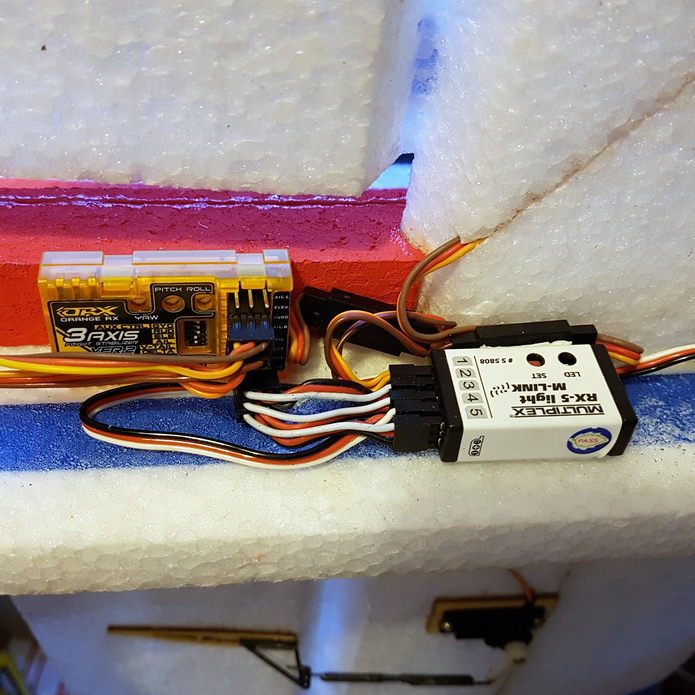 I fitted it to my Hummer and, like the Multiplex gyro, it smooths bumps well enough but it doesn’t have ‘heading hold’ so it’s no help at all for prop-hanging.
Last month I pictured the nose of my Wingnetic which was ripped apart when the motor threw a prop blade.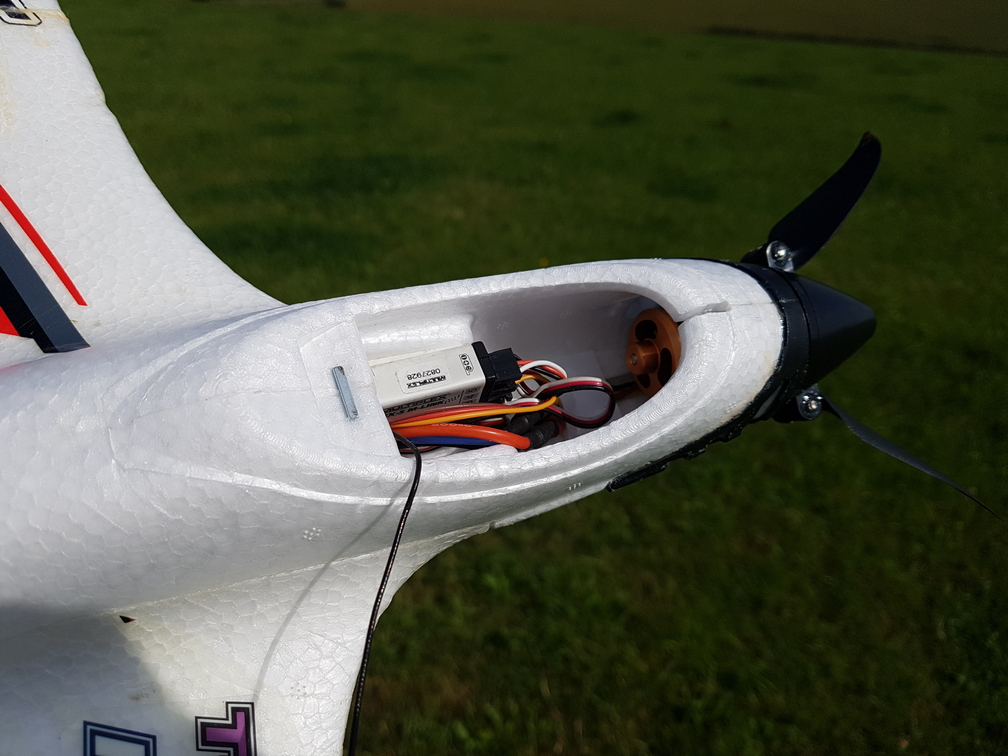 I noticed that HobbyKing stock spare fuselage front sections so I ordered one along with a new prop and motor mount, and it’s now all repaired and flying well again.
Cream Egg had a bit of a moment while practising aerobatics the other day resulting in the damage seen below. Apparently the problem wasn’t Cream Egg’s fault, it was caused by the Friday Afternoon Gardening Club.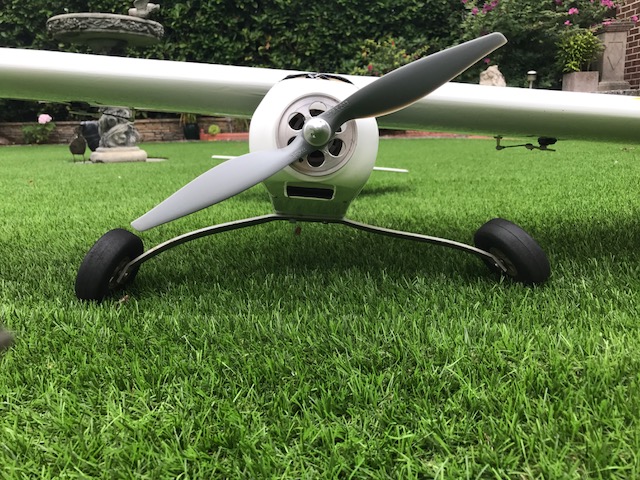 When they fixed the new position of the patch they failed to lower it by about a metre! You need to practice your aerobatics a little higher Cream Egg. Fortunately it’s all straightened out now and flying again.
About a month ago 1066, Dougal, and I were discussing the possibility of flying electric powered control-line models. This is nothing new, it’s been done lots of times before, but it’s new to us. 1066 wanted to try it but without spending any money at all (sounds about right!). The only real problem was how to control the throttle, devices are available but oddly none of them are free. Eventually he decided to simply use a normal speed controller and RC set-up. So he knocked up a simple combat wing style model from foam, fitted a receiver, motor, esc, and battery.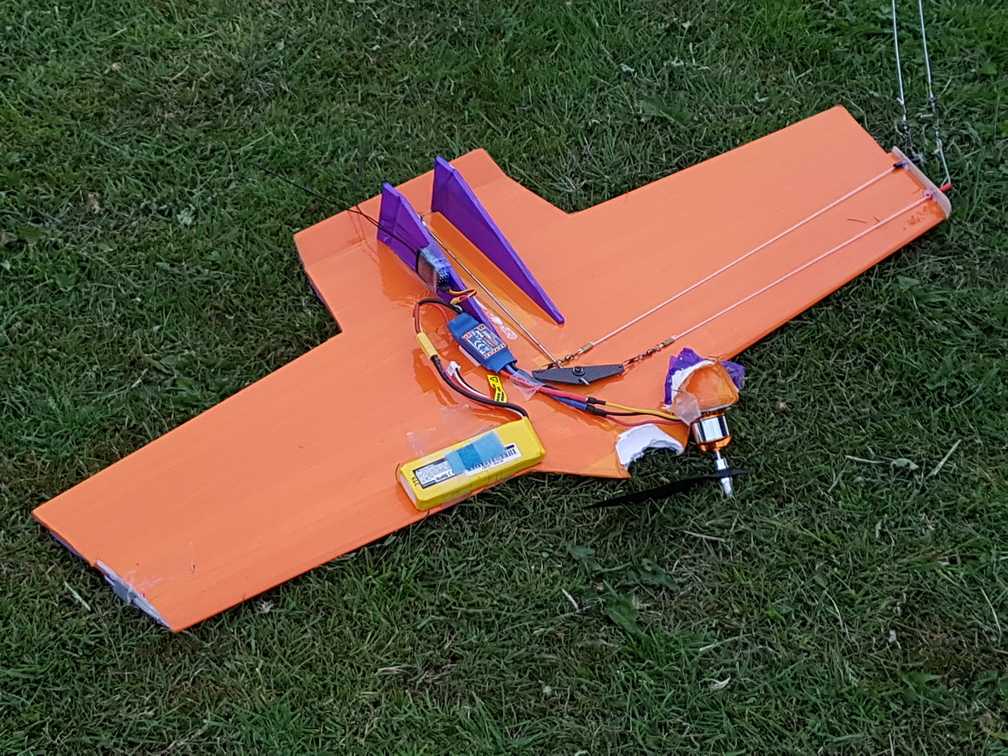 He chose to test it at Buriton at the same time that Dwayne Pipe was running the Chuck glider Competition; I reckon it was just because he couldn’t build a decent chuck glider. Anyway, ably assisted by Dougal Entendre in between chuck glider flights, he gave it a go. Several goes actually, gradually changing things such as centre of gravity etc. until finally it flew quite well. 1066 looked very odd with a control-line handle in one hand and an RC transmitter in the other hand but it did the job. Unfortunately I neglected to take any photos before it got broken.
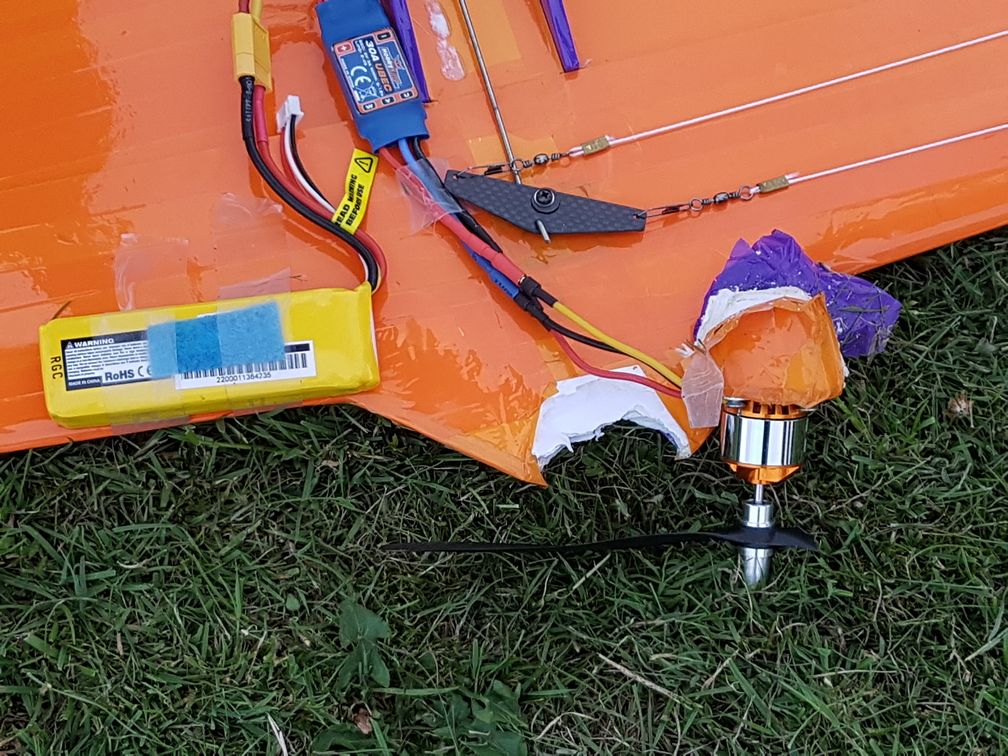 You can see the flights in this month’s video.
On several occasions during July we spotted large flocks of gulls over the field. They didn’t seem to be thermalling, maybe they were catching flying insects. Sadly I missed the shot of Woody flying his model right through middle of one of the large groups but I did capture this photo of one of the smaller groups.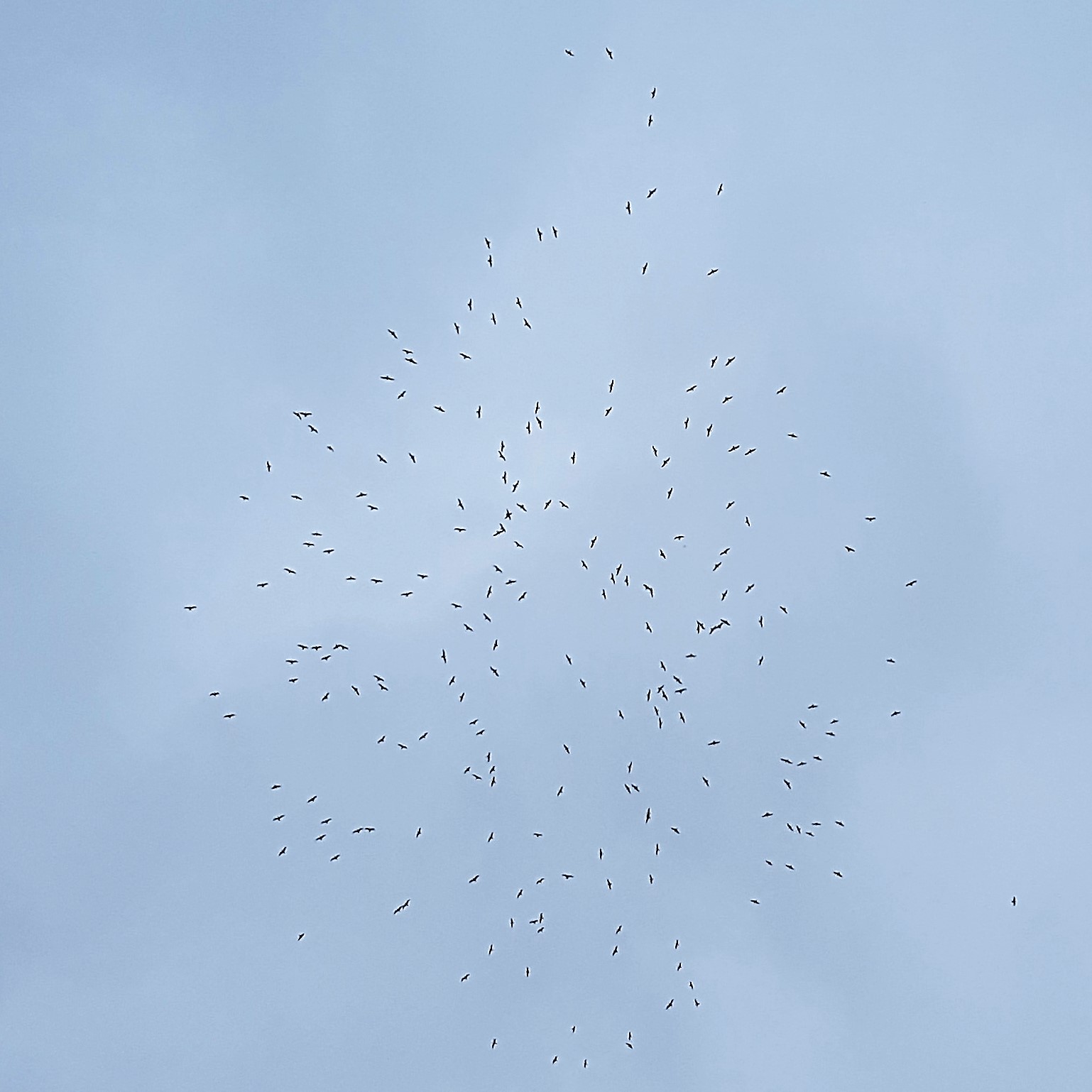 I know you get a murmuration of starlings, is there a collective noun for seagulls? A sh**face of seagulls perhaps?!
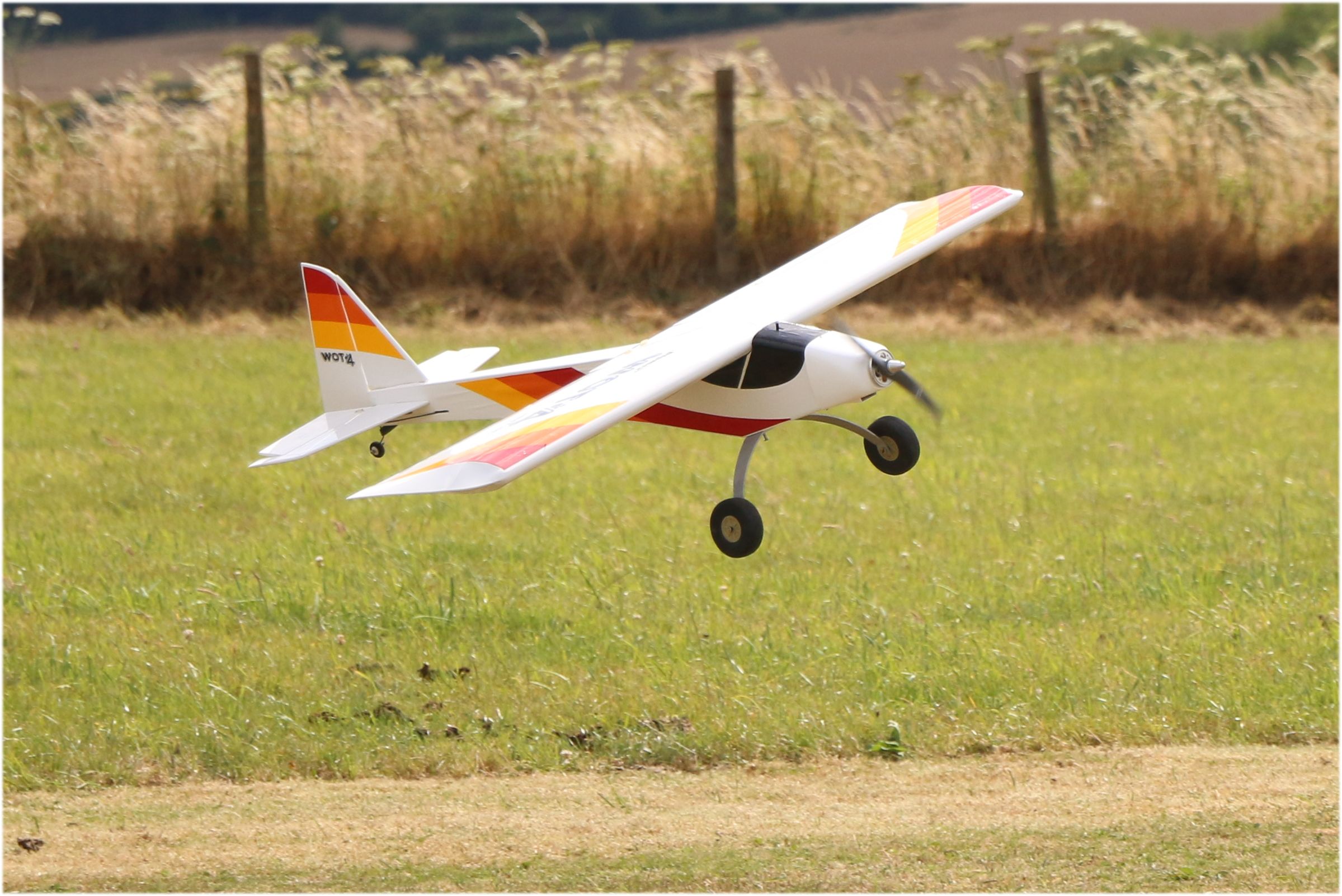
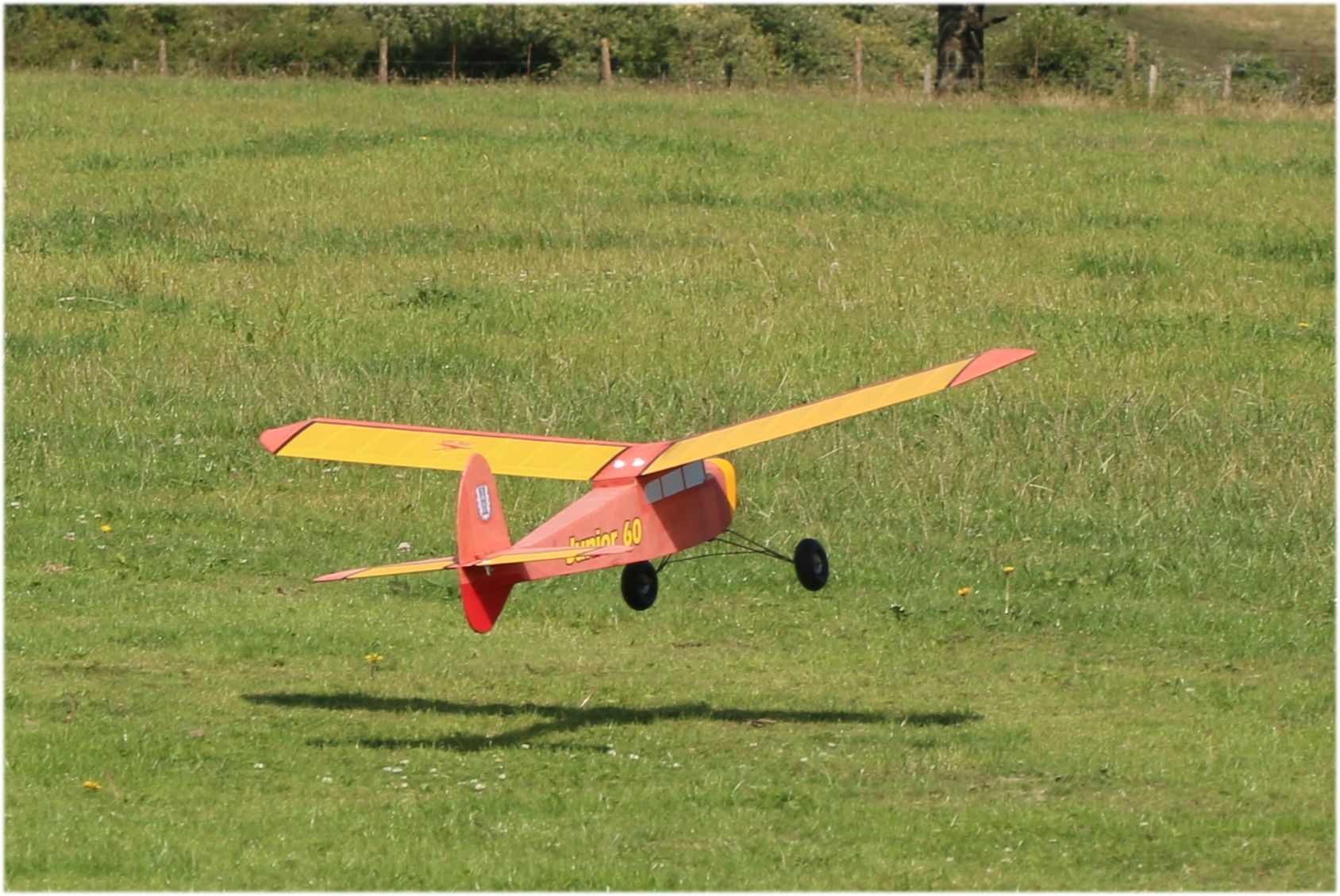
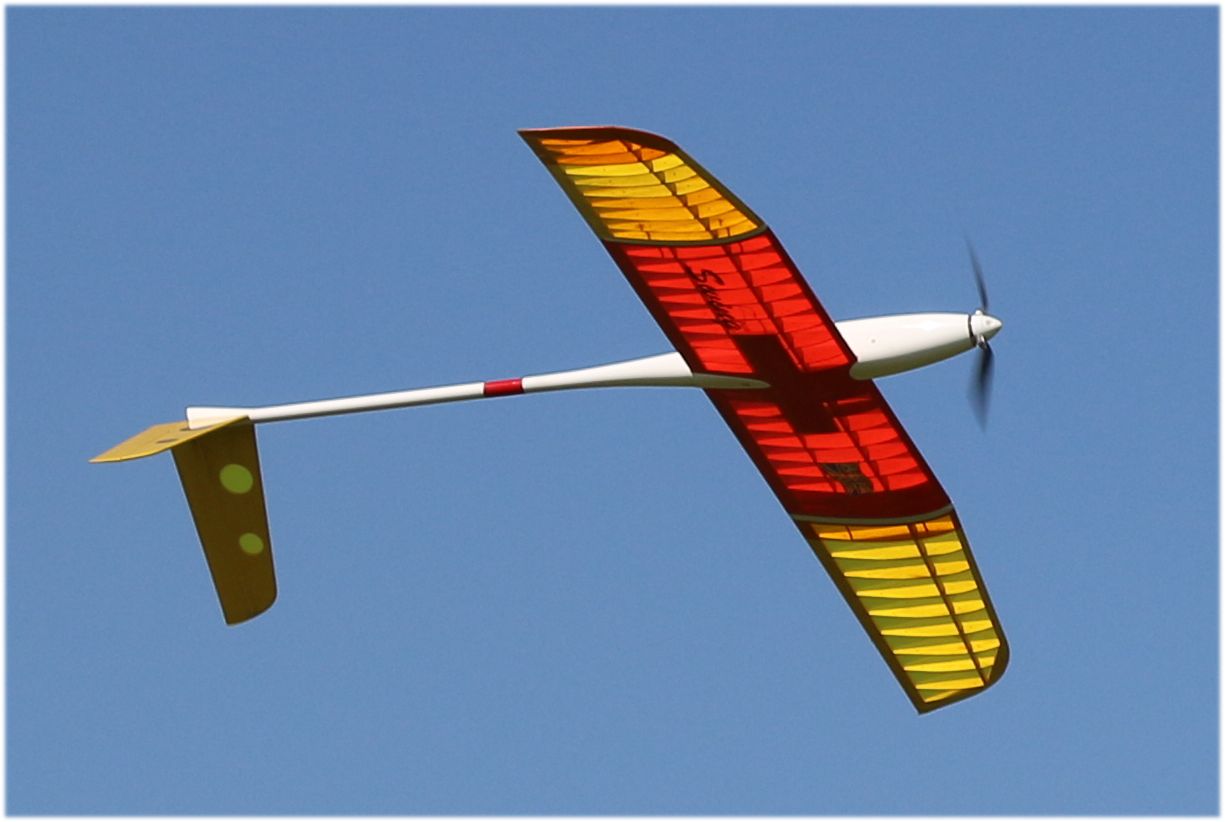
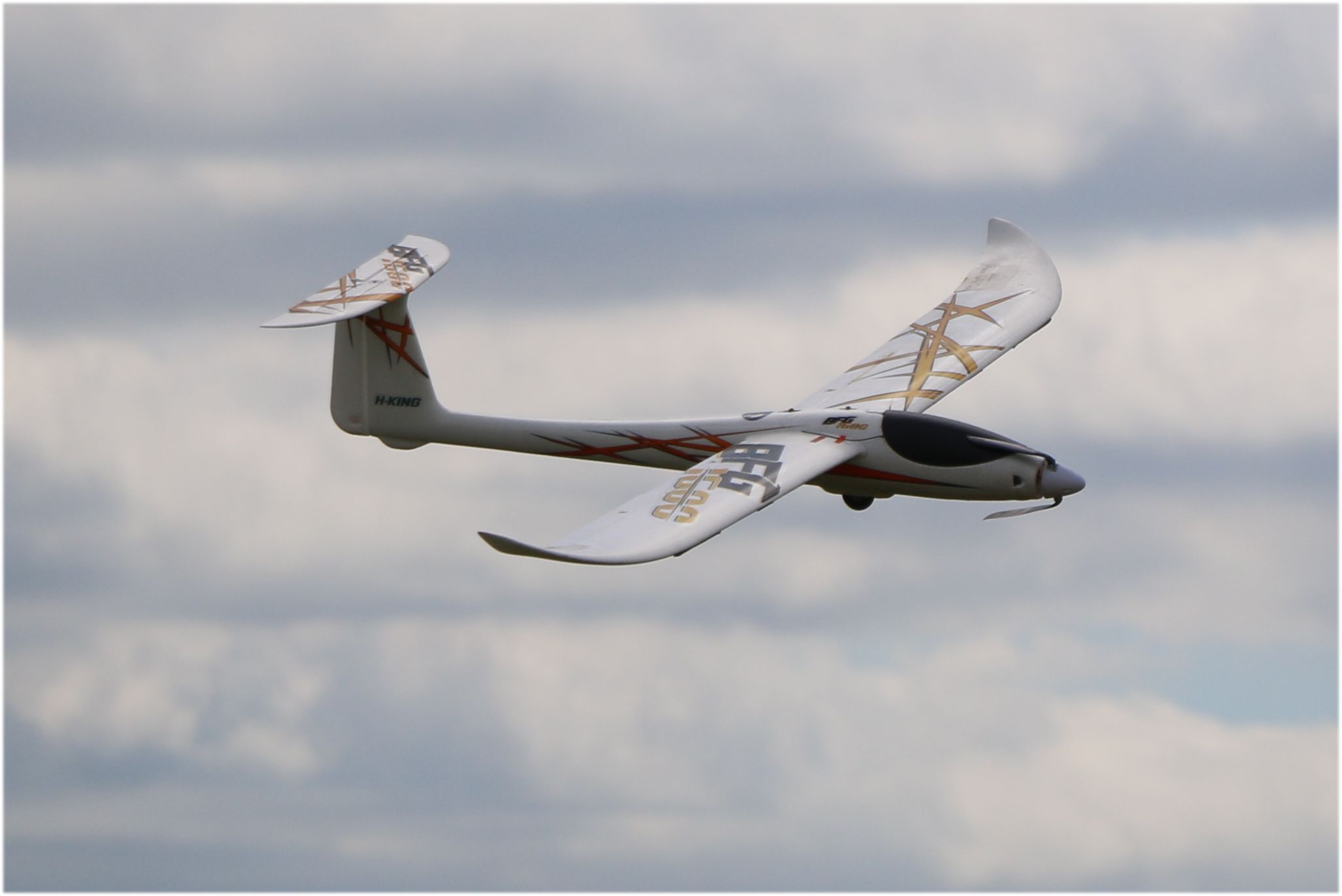
Kryten took some more excellent photos this month, including all of the flying ones in this Patch News. No, not the one of the seagulls, all the other ones you idiot! After the first three we have a bit of a glider theme this month: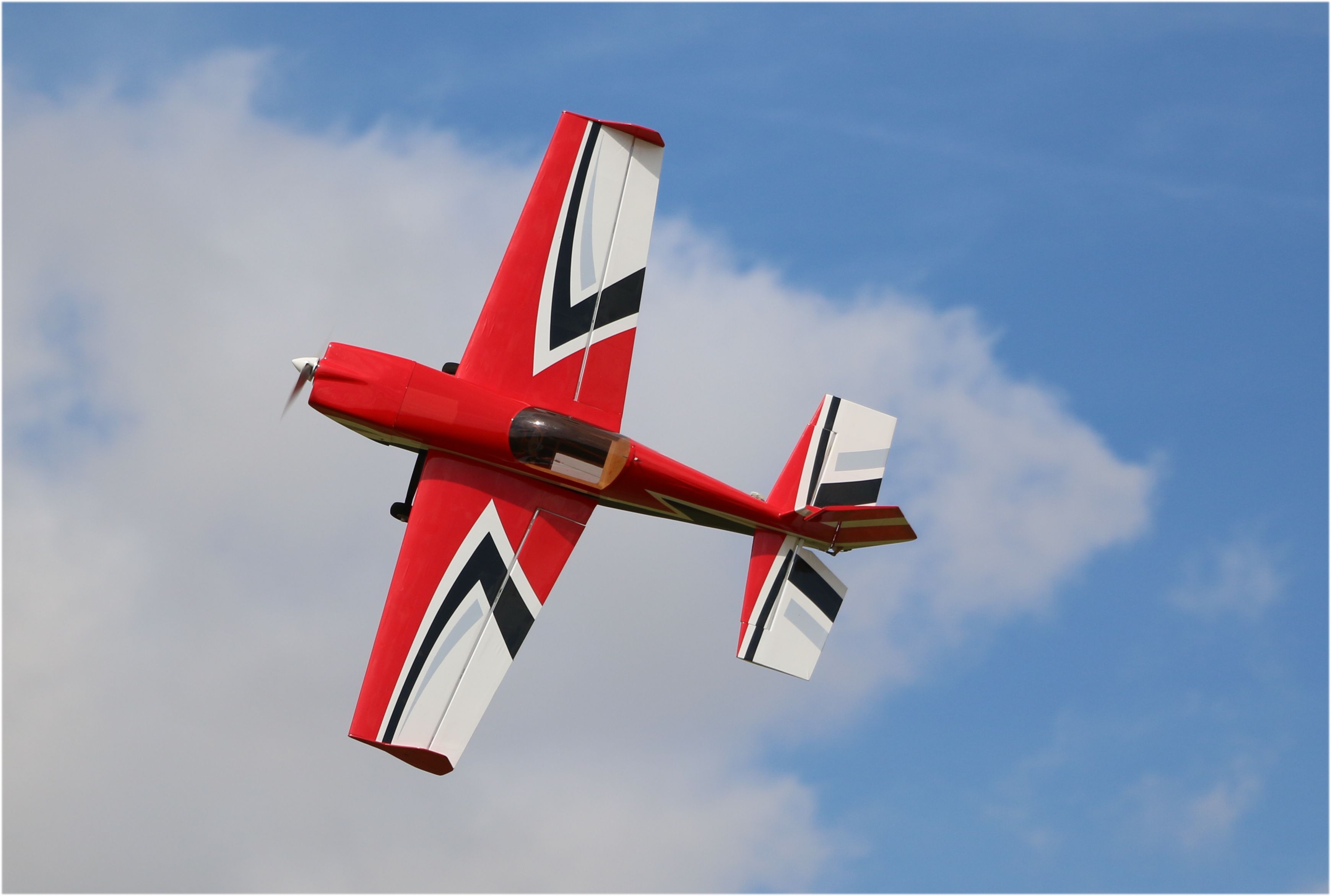
OK, time for this month’s video:
Please watch the video full screen, it’s so much better with small models flying around. If the video above won’t play for you CLICK HERE
Heard as part of an airline passenger safety announcement: “In the case of sudden loss of cabin pressure oxygen masks will deploy from overhead. Please use these to muffle your screams”
Colin Cowplain
Patch News – June 2017
I must begin this month with the sad news that long-term PAM member Frank Buckland passed away on 19th June. Frank had joined the club in its very early days and he served on the committee for many years in various positions including Competition Secretary, Vice-Chairman, and Chairman. Frank’s background was in Sevenoaks and he was a modeller for most of his life, long before he came to Petersfield in 1956.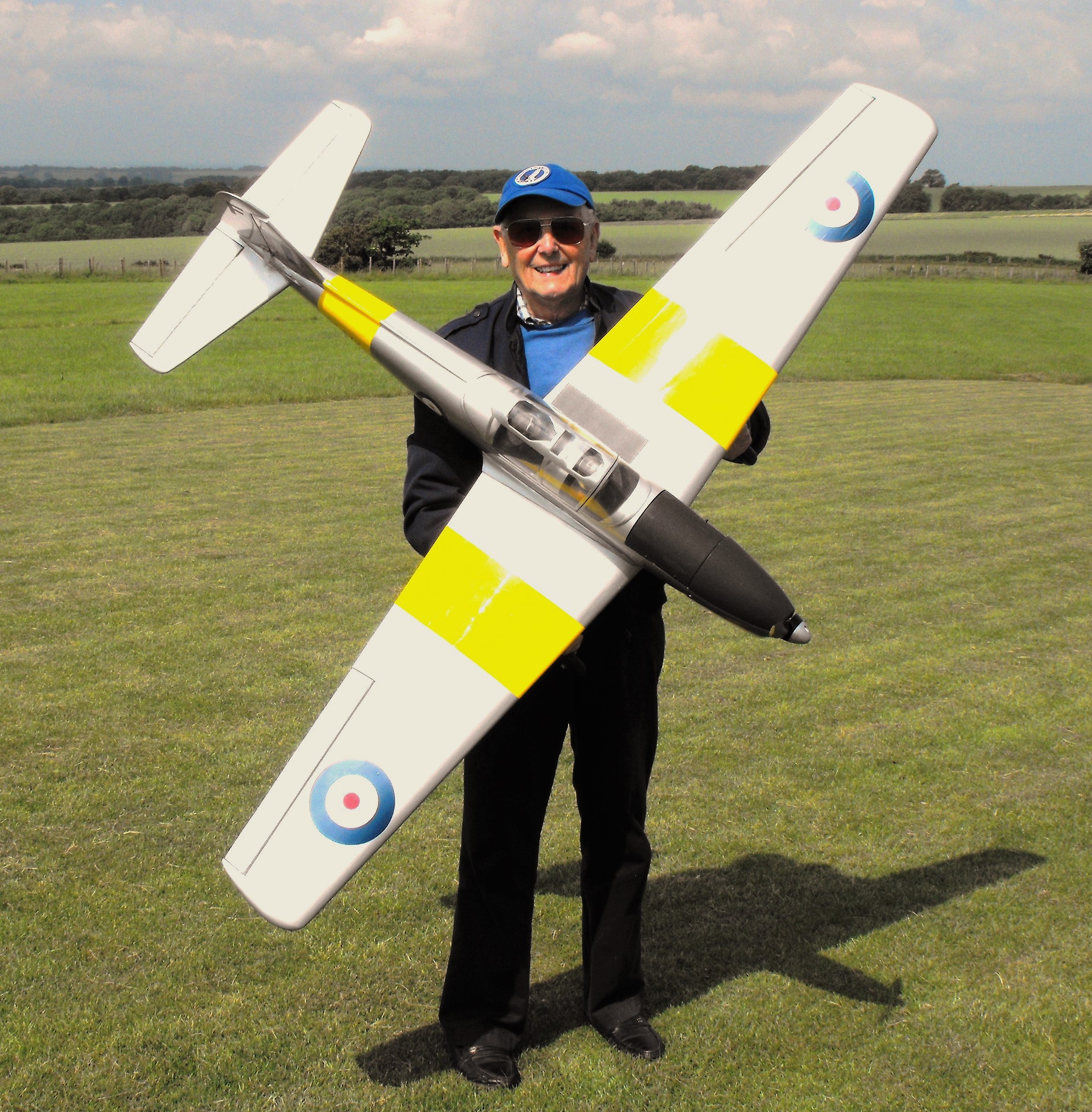 Frank always liked scale models and in the 1950’s had several control-line scale plans published in both Aero-Modeller and Model Aircraft magazines including a four engined 64” span De Havilland Heron. At the age of 65 Frank gained his Private Pilots Licence and went on to part own various aircraft over the next few years. Several PAM members enjoyed flights with him from Goodwood Airfield. Frank eventually left the club a few years ago following a garage fire that destroyed lots of his models and equipment but he never lost interest in PAM. Doreen and I visited Frank several times over the last few months and he always asked about the club, its activities, and the members. Frank’s funeral will be held at Chichester Crematorium on 11th July at 11.45.
Moving on now, we had the hottest June on record…well it was hot for five days anyway. The rest of the month wasn’t bad and PAM members did lots of flying. The patch was in a really bad state after the bullocks and the rain had done their worst last month so it was decided to move it south east by around half the patch width.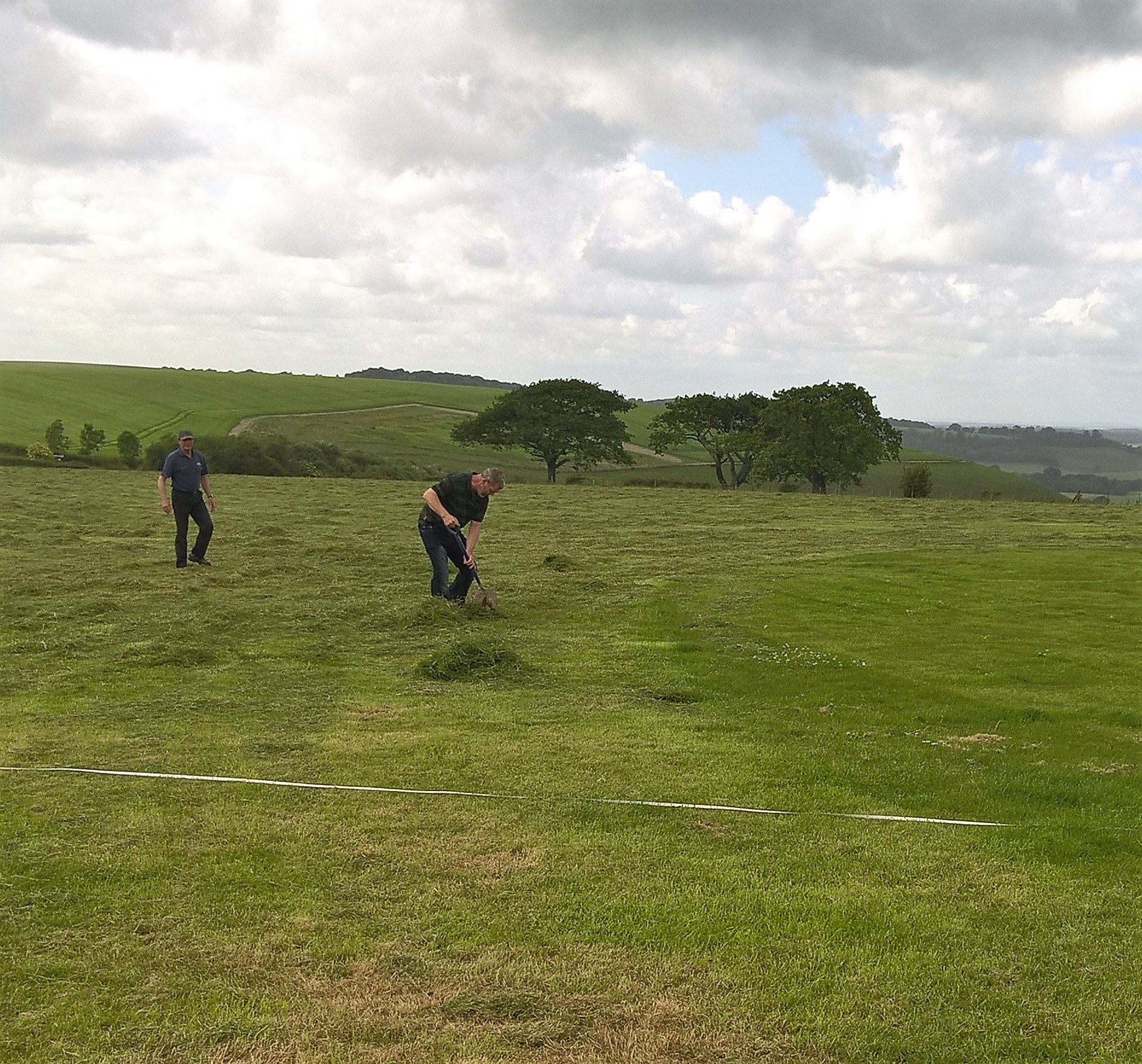
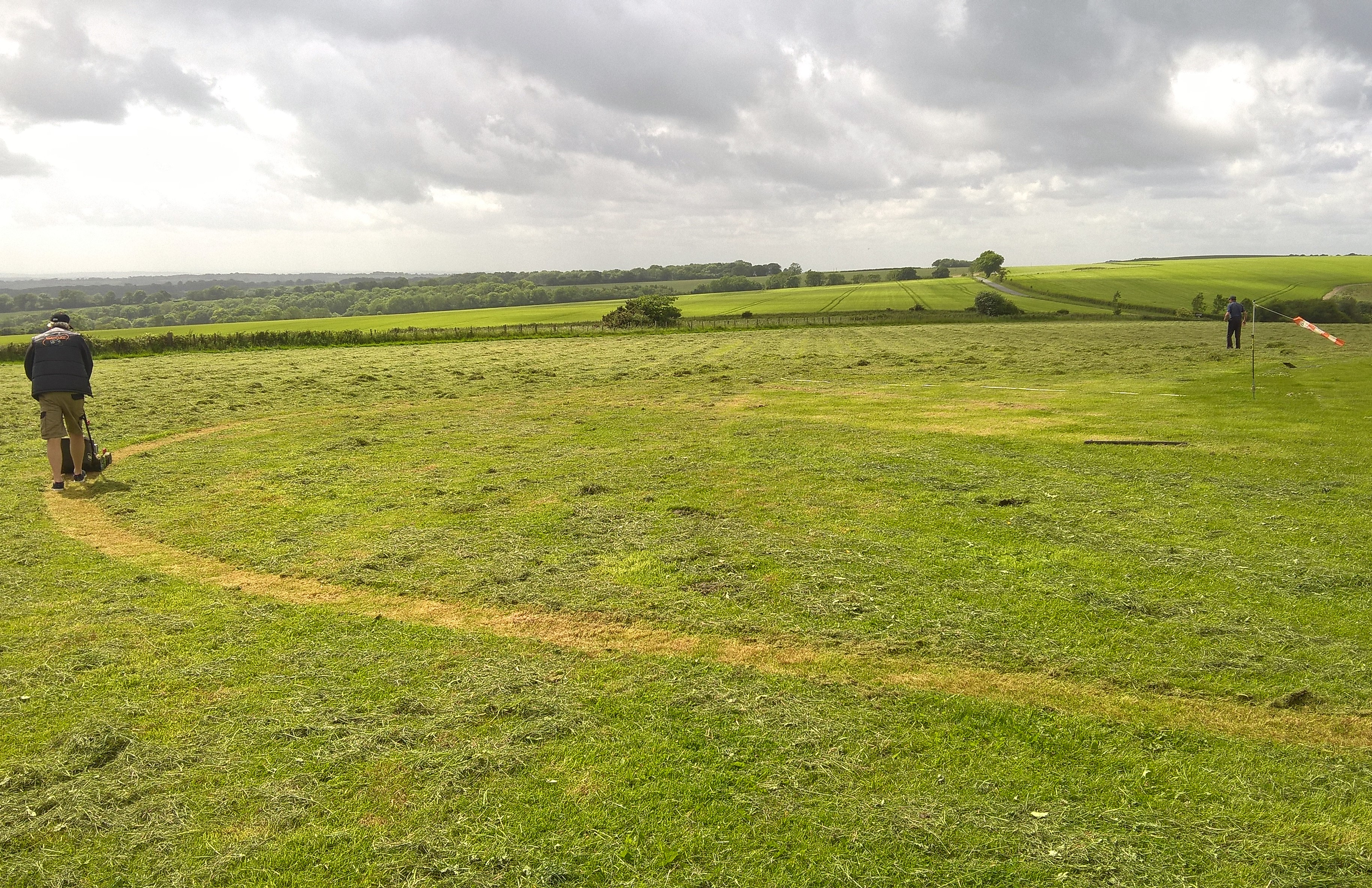 That meant we would avoid the really badly churned up part and also be a little further from the road. Farmer George cut the whole field at the time which made the job a little easier when the Friday Afternoon Gardening Club sprang into action. I lost count of the number of cuts it took to get the new part down to the same level as the original patch but we got there eventually and we now have a much flatter patch with the grass in pretty good condition; good work guys. The bullocks will return soon so let’s hope that they don’t mess it up again.
Last month I admitted to crashing my Wingnetic and pictured the damage. It was soon repaired and flying again but I think I must have failed to spot some damage to the folding prop as early this month it threw a blade mid-flight. The resultant imbalance tore the motor out, destroying the front of the fuselage in the process.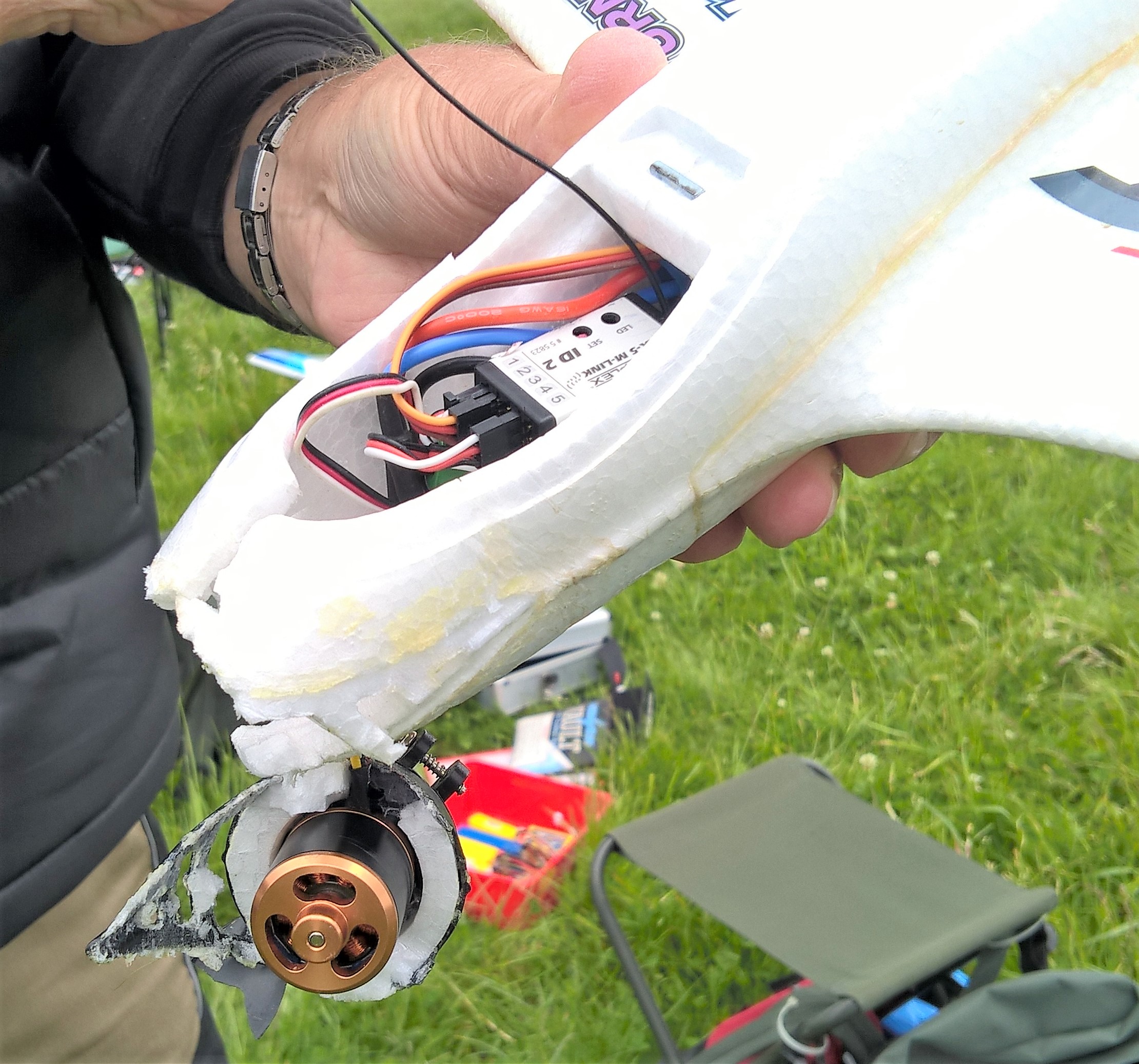 Fortunately the front fuselage is available as a spare from Hobbyking so I ordered one along with a new folding propeller and motor mount, all I have to do now is to get round to repairing it. Captain Slow had an almost identical incident the other day with his electric glider, it threw a blade and the motor ripped out. The damage was not too bad so he too will soon be flying again.
When I order small low value bits and pieces from HobbyKing I often use the European warehouse as the untracked postage is much cheaper than from the UK one. Crazy but true. But recently the part I wanted was only in stock in the UK warehouse so I was forced to pay over £5 shipping for a £5 item. When this happens, as the package weight can be up to 2kg, I usually add a few extra bits and pieces to make the postage worthwhile, and on this occasion I browsed the Bargain Bin for something I couldn’t live without. I found a complete RTP (Round the Pole) set-up that includes a P51D Mustang fitted with elevator and throttle controls, the pole and base, the line, and 2.4 GHz transmitter for less than £12, ridiculous! The plane charges from the transmitter batteries (you do have to supply 4 of your own AA cells) and off you go. The transmitter is mode 2 so is the same as most of us use and there is a beginner or advanced setting which basically restricts the elevator movement.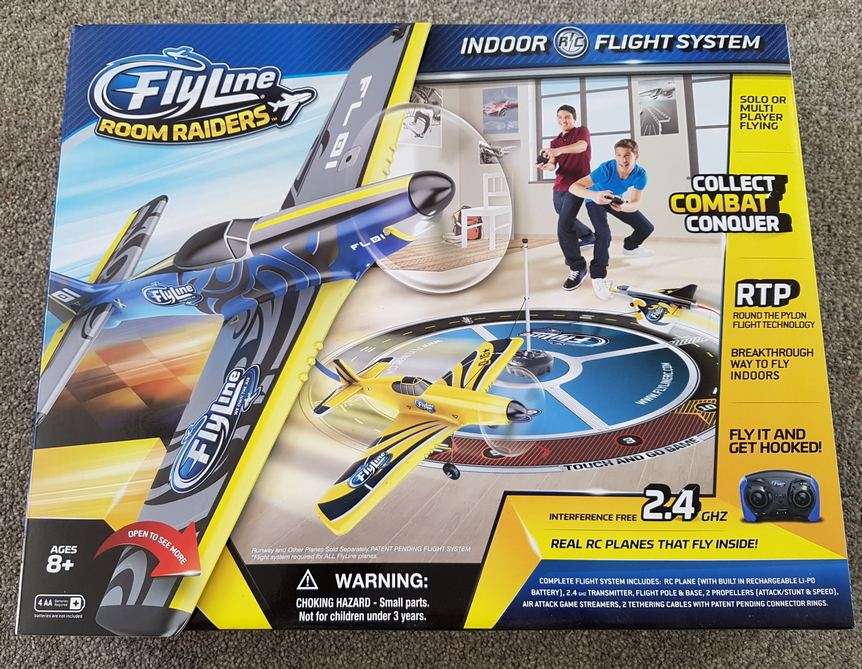
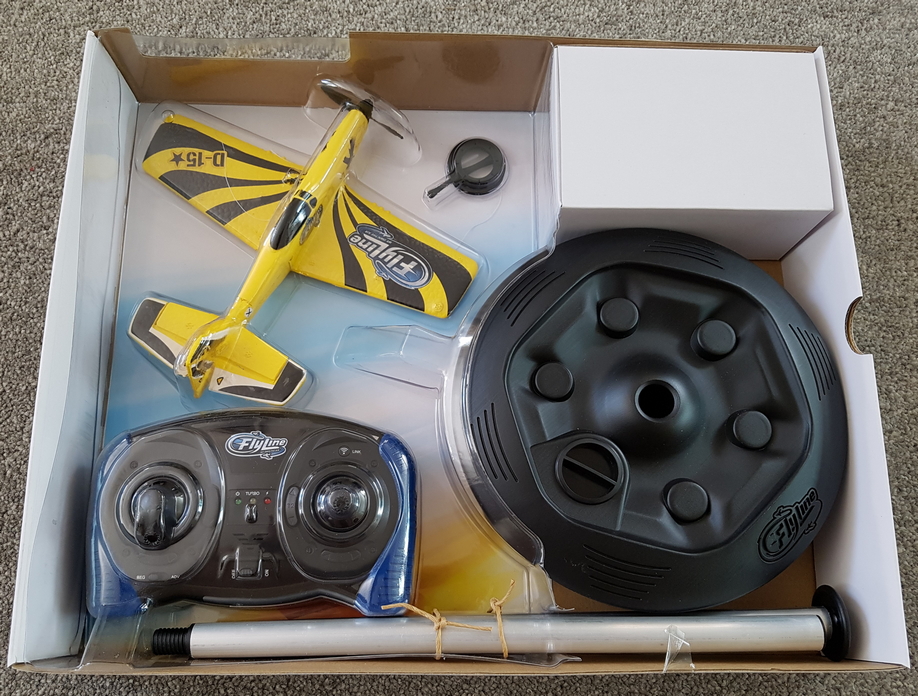 The only problem I’ve found is that our house is too small unless I start shifting furniture (that suggestion didn’t go down too well) so I ended up putting the base on the dining room table and taking off along the sideboard! The RTP system worked a treat but my ‘airfield’ proved to be less than ideal so I stopped before I broke anything. I think we need an RTP evening at club very soon, it would fit in our meeting room ok and we could all have a play. You can use two models on the same pole and do combat; they even come with little streamers, so if anyone fancies shelling out £11.77 we could try that.
I mentioned last month that Woody had damaged his Ugly Stik and while I was browsing the HobbyKing site I checked to see what Ugly Stick spares were available.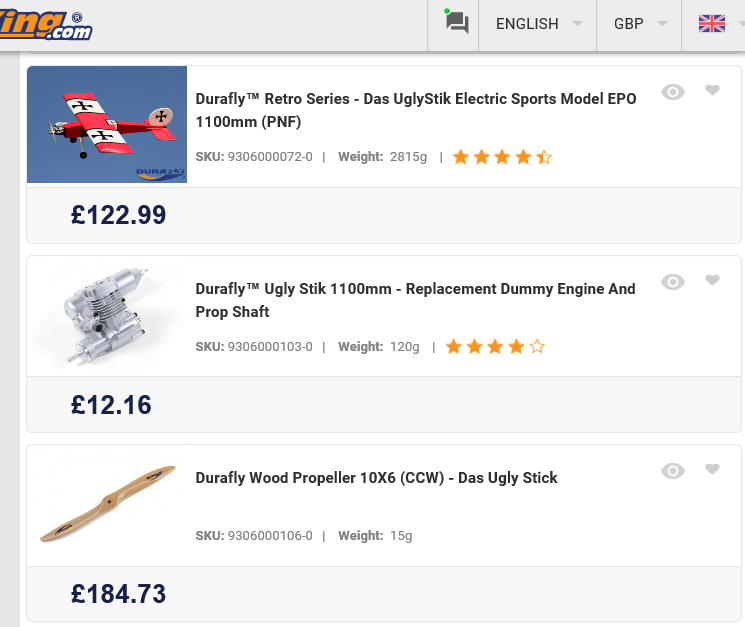 Sorry Woody but I don’t think it would be an economical repair, you can buy a complete new model for £122.99 but you broke the prop and a replacement prop costs £184.73! I think HobbyKing still have a few glitches on their site…
Catapult King is the proud new owner of an F-16 Fighting Falcon, courtesy of Chris Hard.
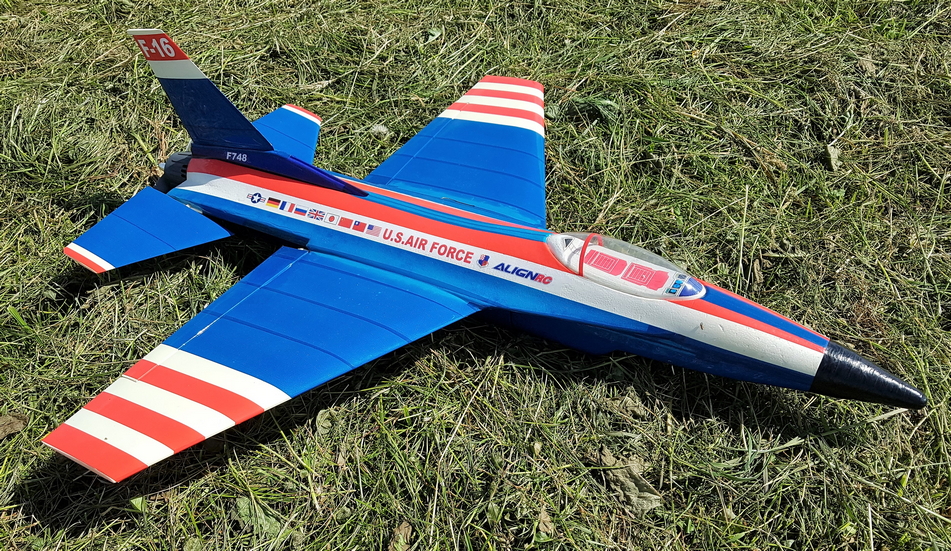 The model was built by Chris about four years ago from a no longer available Align RC kit and is fitted with a Turnigy 2826 2200kv pusher motor driving an APC 6×4 prop. Catapult is using 3 cell 1300mAh Zippy Compact lipos connected to a 40A speed controller. He gets surprisingly long flights so a 40A esc sounds a bit like overkill to me but too much is better than too little. Part of the reason for the long flights is that at the moment Catapult spends most of the time at less than half throttle. I can’t say I blame him, it’s a small model and it is very fast flat out, not something you’d take your eyes off for a second!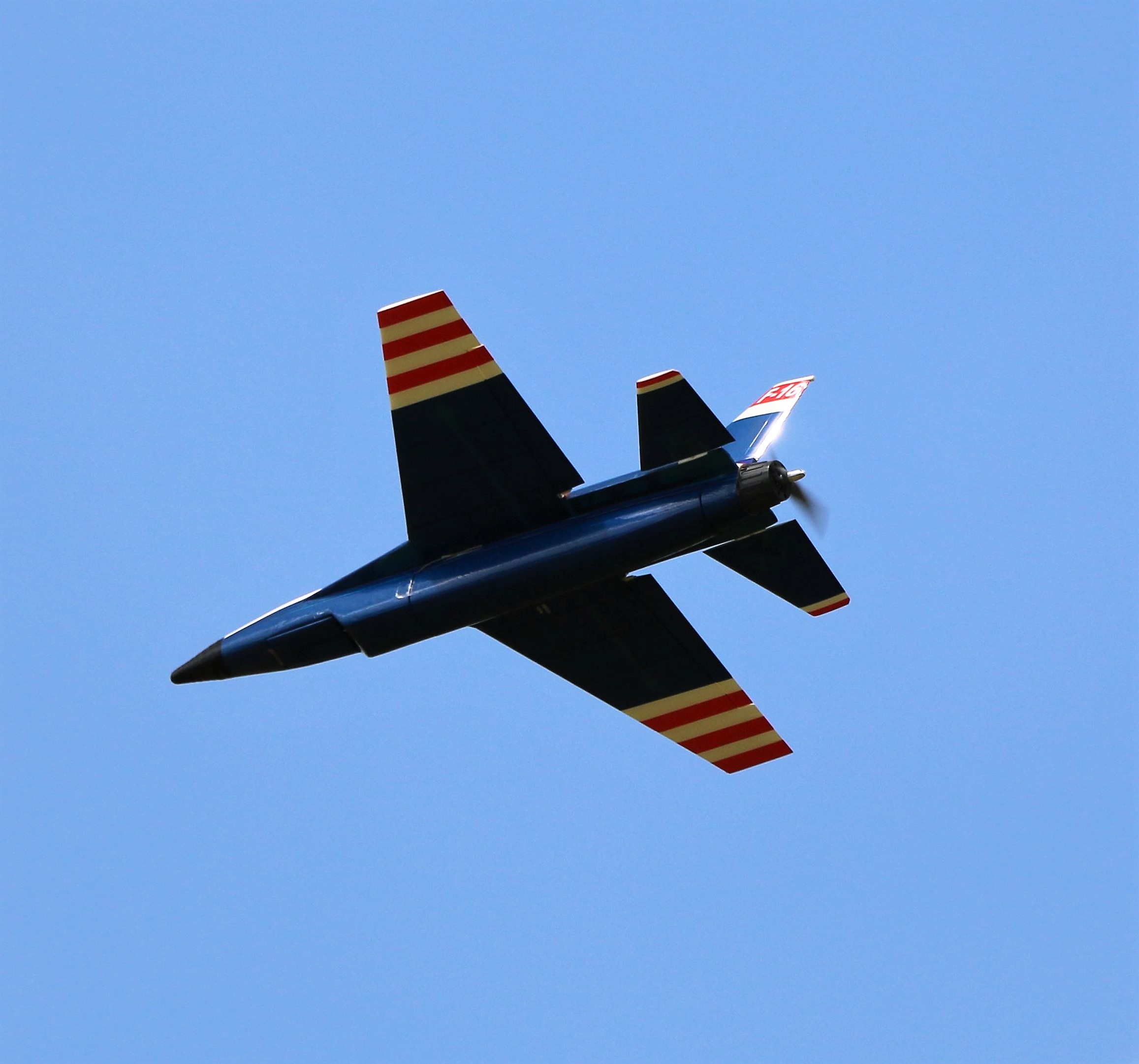
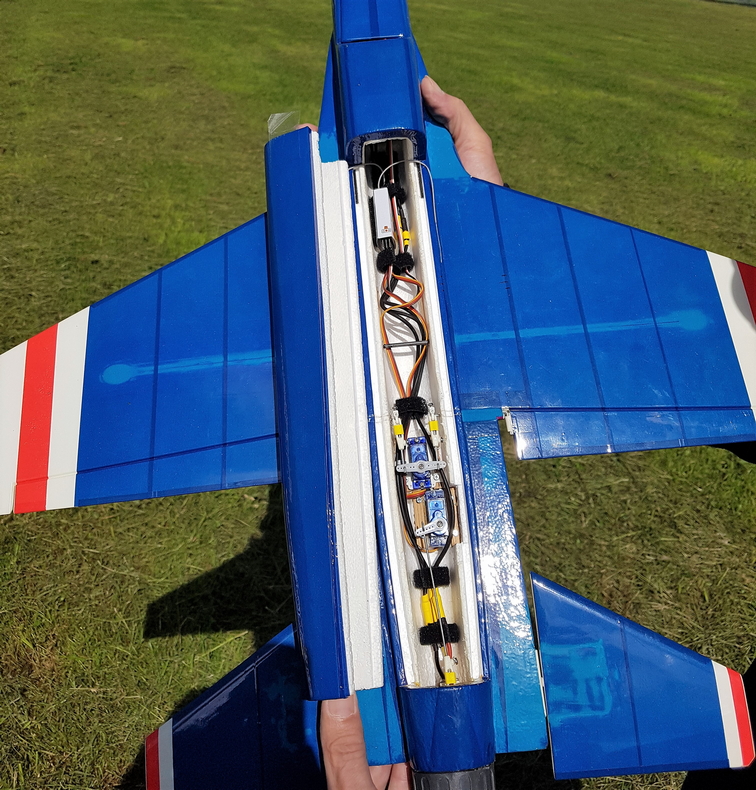 As you can see the whole of the underside of the fuselage hinges open to provide access to all the gear. Catapult asked me to fly it one day as he was having trouble with the elevator trim and I also had trouble, it just wouldn’t seem to stay in level flight. When I landed we checked it all out and discovered the elevator servo had come loose, once that was sorted it flew perfectly again!
On some of the really hot days this month there was very little wind so all the Hummers came out to play. The Hummer is great for practising prop-hanging and some of the 3D stuff but is otherwise not really very nice to fly, and in anything above a very gentle breeze it’s just plain horrible. Anyway, when you’re practising prop-hanging the model tends to get into all sorts of unusual attitudes at very low level and sometimes you reach the stage where it’s just easier to dump it onto the ground than to fight to keep it in the air. I did exactly that on one flight, when it got almost uncontrollably out of shape I just dropped it onto the patch on its wheels and then simply took-off again to continue practising. I noticed the motor noise had increased a bit and thought that I might have damaged the tip of one of the prop blades. When I landed after several more minutes I saw that I had indeed damaged the prop… a lot!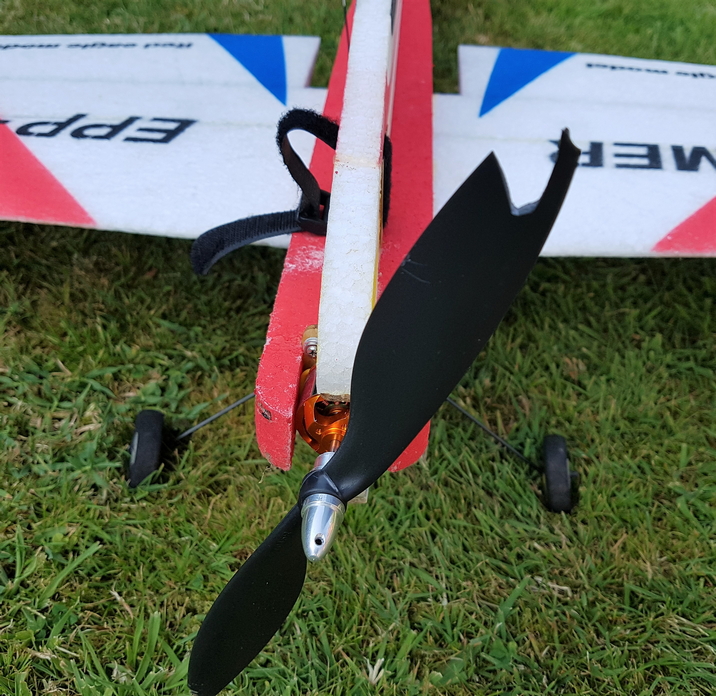 I’m amazed it didn’t shed the blade or shake the motor out of the model.
The other day Norwegian Nick brought along an unfinished model to show us, an Eze Twin.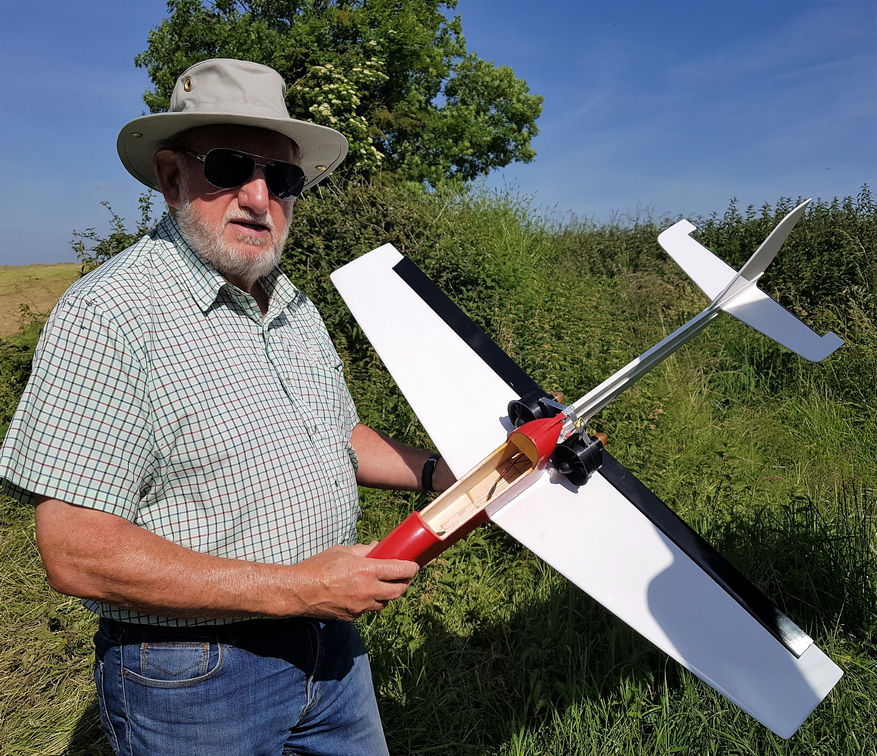 The model was built from a free plan by Nigel Hawes in the January 2010 edition of the RCME mag. It’s all balsa construction and glass clothed all over except tailplane and fin which is tissue covered. The wingspan is 40” (1015mm) and the all up weight is 2lb 8oz (1135gms). Nick has fitted two ChangeSun 64mm 12 blade EDF units with 3200kv inrunner motors, and two 60A speed controllers. He’ll power it all with two 3 cell lipos of between 2200 and 3700mAh, presumably whatever is best for the correct centre of gravity.
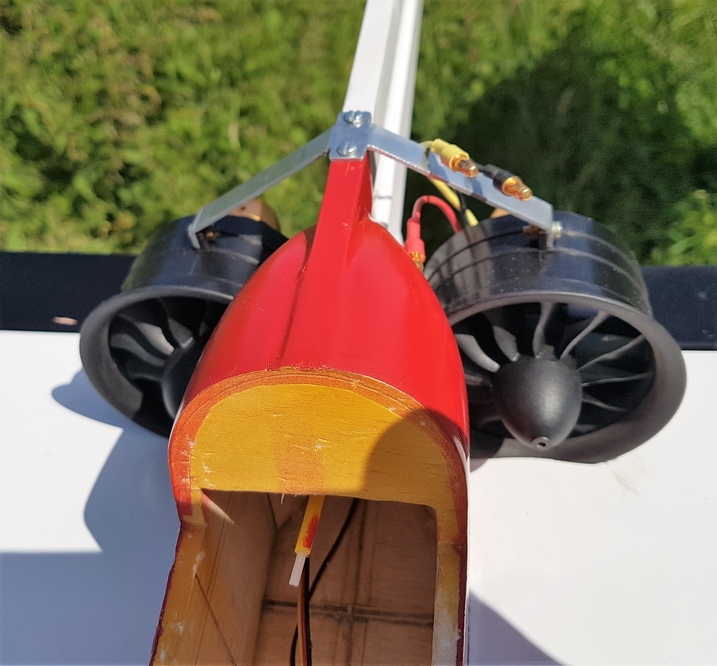 Nick just has to make a foam canopy and install the radio, and then it’ll be ready to fly. The EZE Twin is an interesting model with an unusual fuselage and its two externally mounted fans, I look forward to seeing it fly.
I took this photo the other day as I felt it showed the courage and bravery that exists in the club.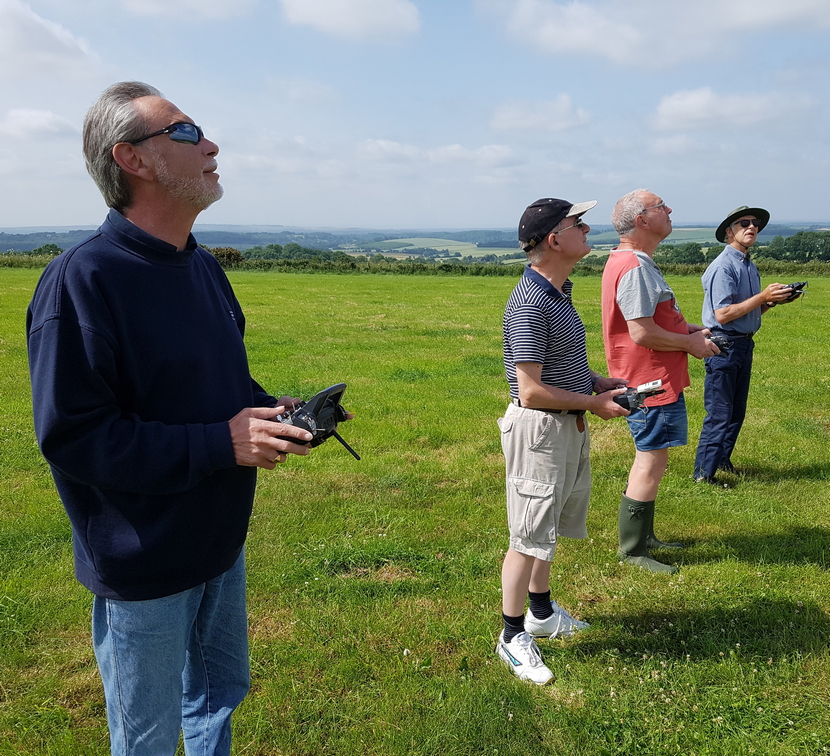 Yes, it’s three brave men flying at the same time as Basher Bob! From left to right we have Catapult King flying his F-16, then it’s Dwayne Pipe showing off his Jersey holiday tan and fashion style, next is Chris P Bacon who is still saving up for some sandals, and finally Basher Bob. Basher earned his nickname by having a series of mid-airs in close succession several years ago. I don’t think any of them were actually his fault but you can’t let the truth stop a good nickname! However, more recently he has produced several scratch built models and he hasn’t had a mid-air for ages so a change of name to Bob the Builder has been proposed. I’ll give it a go; let me know what you think.
So… Bob the Builder has built another new model, it’s called Trottel (that’s German for Fool!).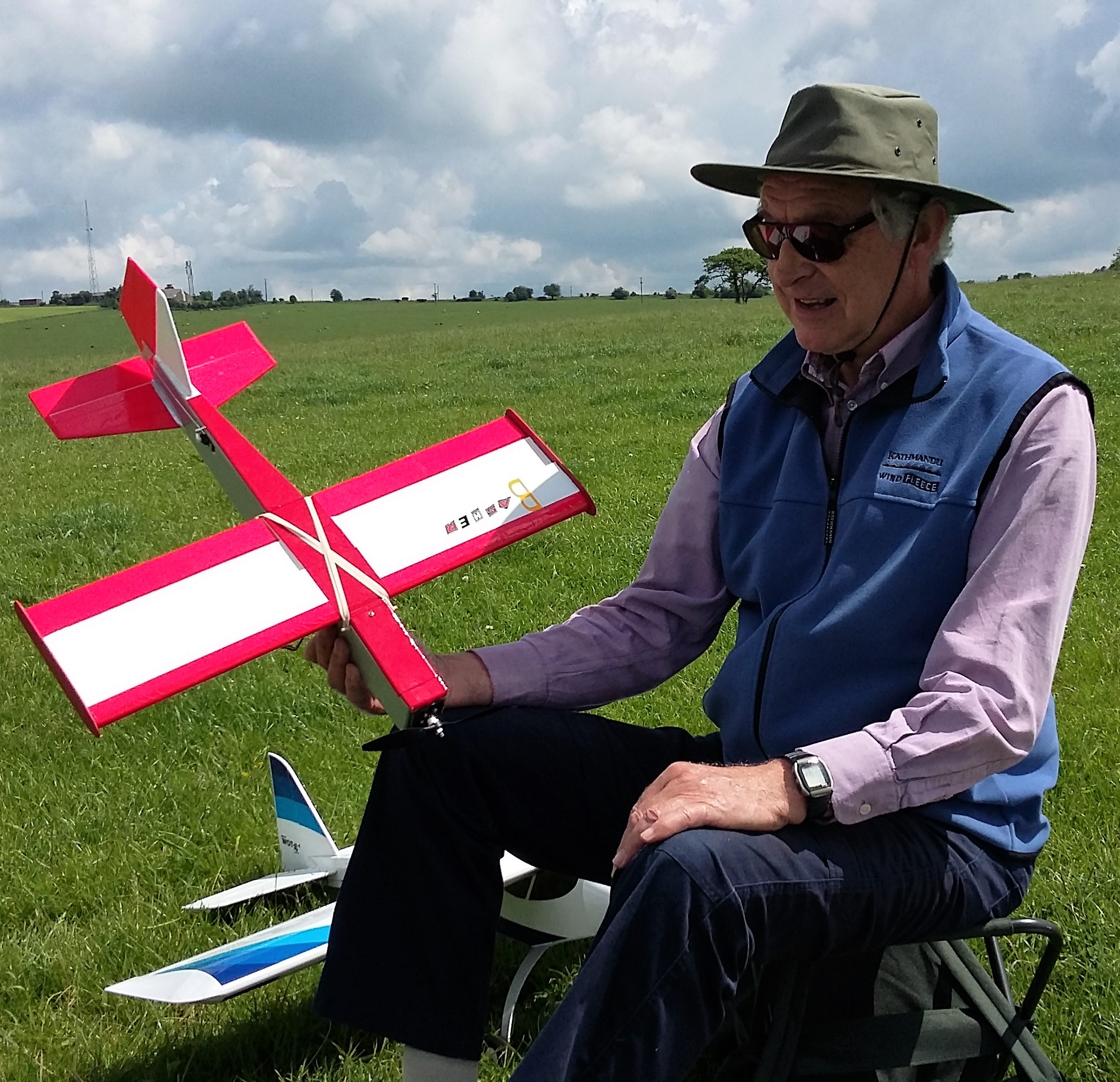 He found it on the RCGroups forum while looking at this years’ Club Build. For a direct link CLICK HERE
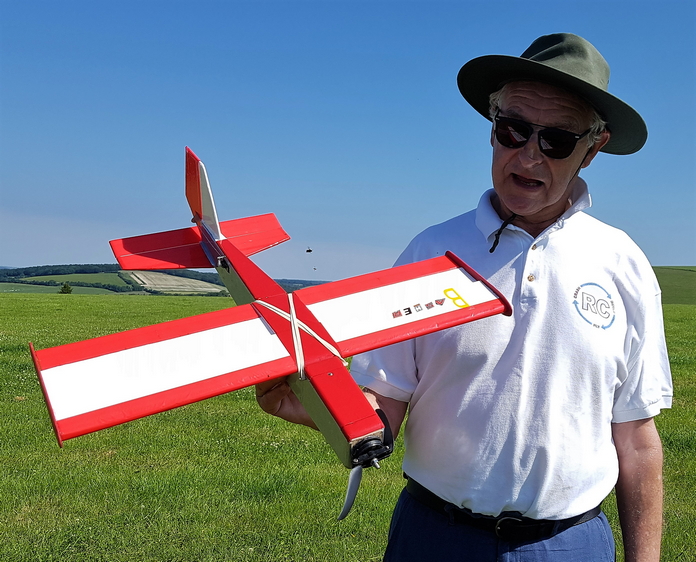 The Trottel is actually designed to be a small, tough, fun/aerobatic/full 3D model but Bob decided to increase the moment arm a little to make it a bit more docile but otherwise it’s built to the plan. The construction is almost all from Depron and features a Kline-Fogleman wing section that so many of us are now used to using. For servos, motor, and speed controller Bob simply fitted the gear he had left after the demise of his Spirit/Kinetic. It flies really well and doesn’t seem to mind windy conditions too much so is ideal for our field.
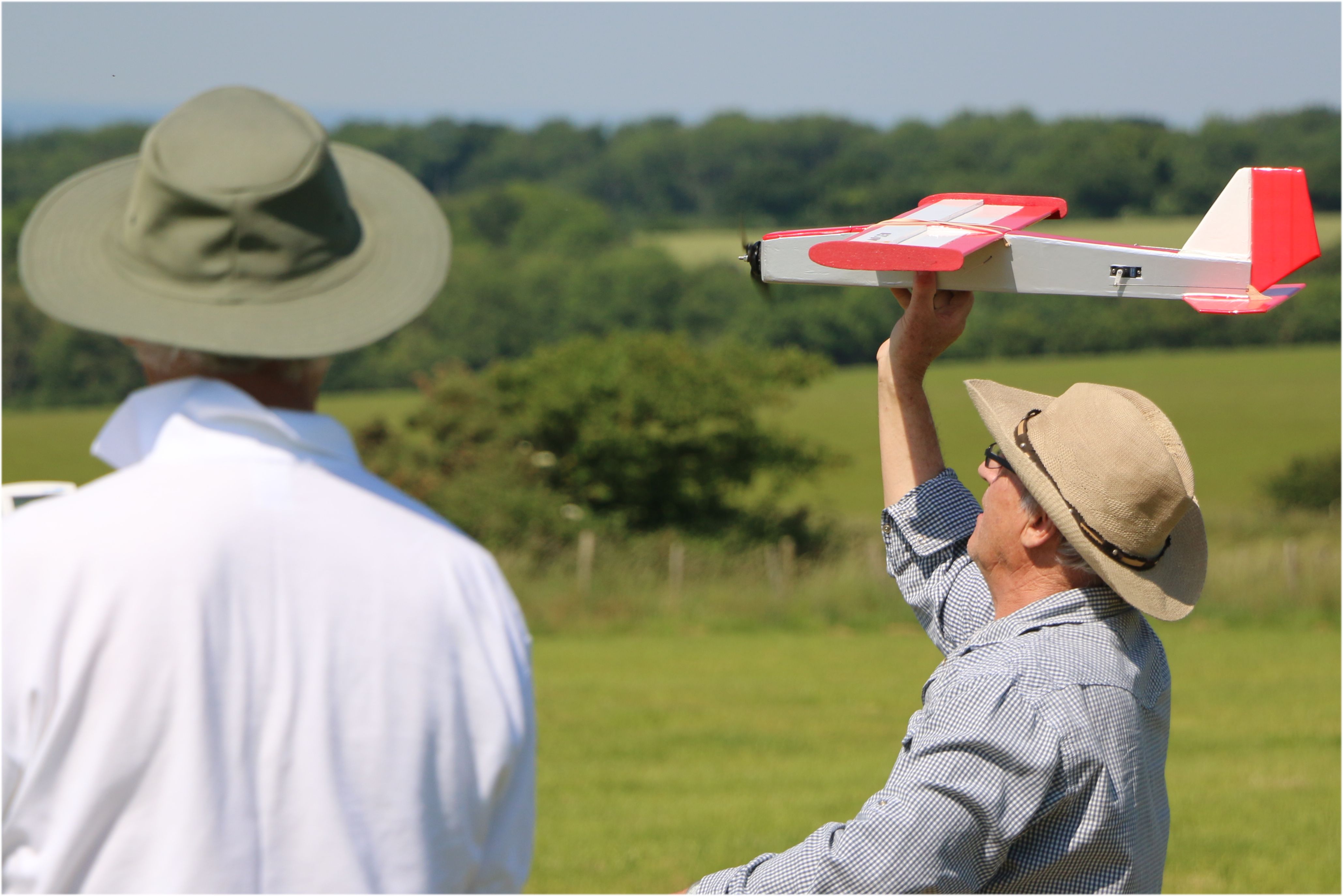
When I was at the Multiplex Airshow recently one of the pilots was showing off by prop-hanging the model whilst holding the transmitter behind his back. I’ve seen it done a few times at other shows but never thought about trying it myself. I was flying my delta the other day and suddenly thought ‘I can do that’ so I gave it a go.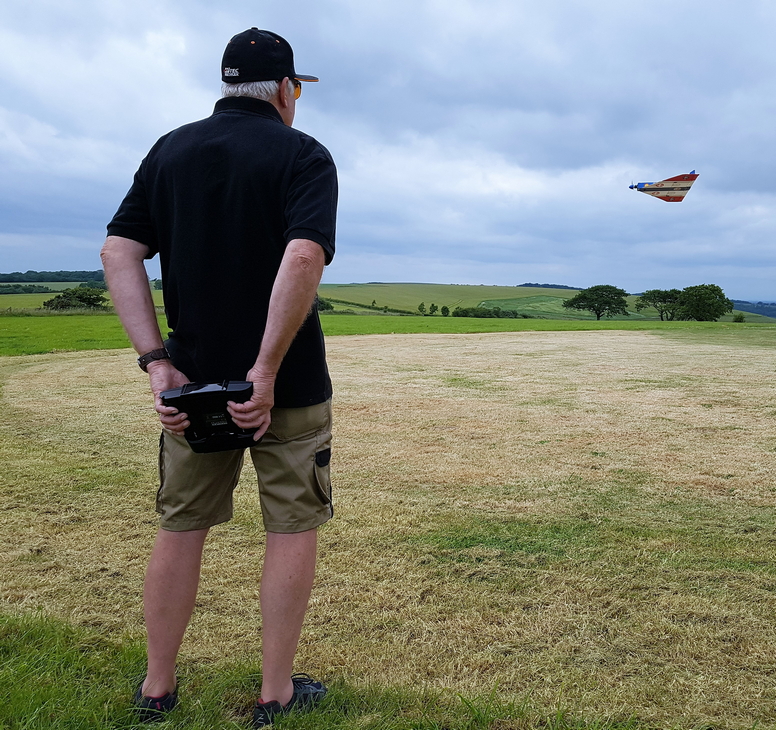 I should explain that I was at a safe height, half throttle, with an almost indestructible old model that I don’t care about too much! It turned out to be really easy, I had no problems at all other than not being able to hear the transmitter speaking the time. I’m not very good at prop-hanging even with everything in my favour so I haven’t attempted that but for normal flying around I found it easy. 1066 then decided he’d try it as well and, like me, managed without any trouble, the only problem he found was that it made his shoulders hurt!
Dougal Entendre (our new Chairman) recently acquired a little delta from the estate of a late aeromodelling friend.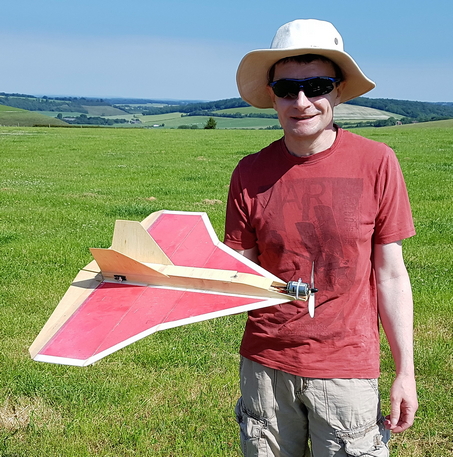 It’s very light and is made of balsa and some sort of foam, and is powered by an old Kontronic Speedy 400 6v brushed motor. The esc/bec is mounted directly on the back of the motor, that’s how some of them were manufactured in early days of electric flying. The span is just over 25” (635mm), the length is 23” (584mm) and the wing is only around ¼” (6.35mm) thick. Dougal doesn’t actually know what the model is called, several of us think it looks familiar but can’t recall a name so let Dougal know if you can identify it.
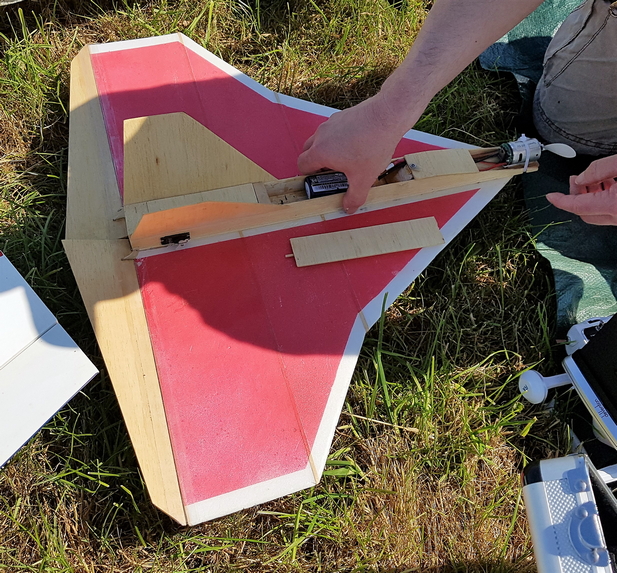 It would have originally been intended for a 6 or 7 cells NiCad battery but he tested the motor set-up at home on a 3 cell lipo and it seemed fine so he brought it up to the field only to find it wasn’t working. The motor is ok so presumably a 3 cell lipo was too much for the esc so when he’s fitted another one he’ll try it on 2 cells. It looks nicely put together and I think it should fly ok although it’s probably one for calm days.
During June 1066 has been flying one of the several models that he acquired from Cyano Steve (Montague), a Precision Aerobatics Katana MX.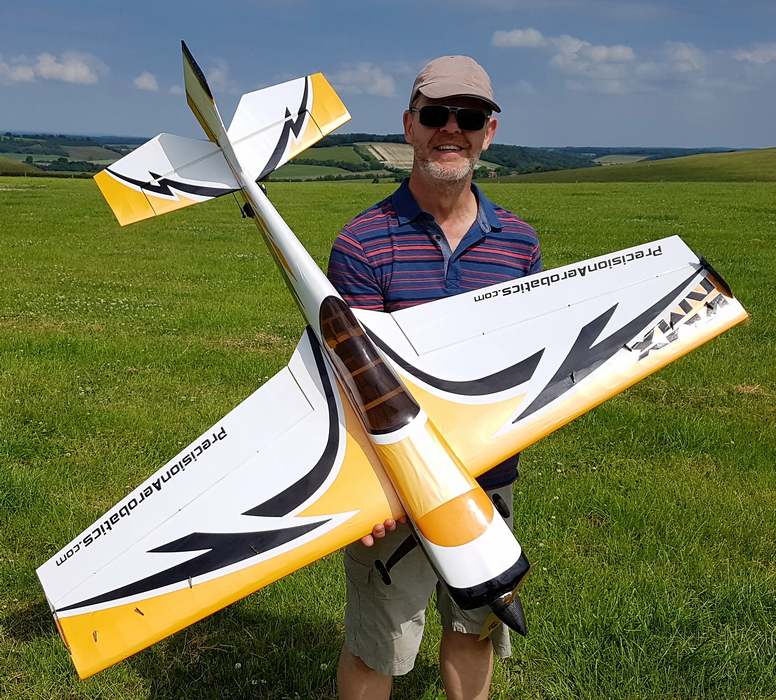 This is very much an upmarket model when compared to the usual foamy 3D models from HobbyKing and 1066 is treating it carefully at the moment. I believe the model came with the recommended PA Thrust 50 outrunner motor and matching 70A esc and it flies on 2 x 3 cells 2200mAh lipos which give a flight time of around 6 minutes.
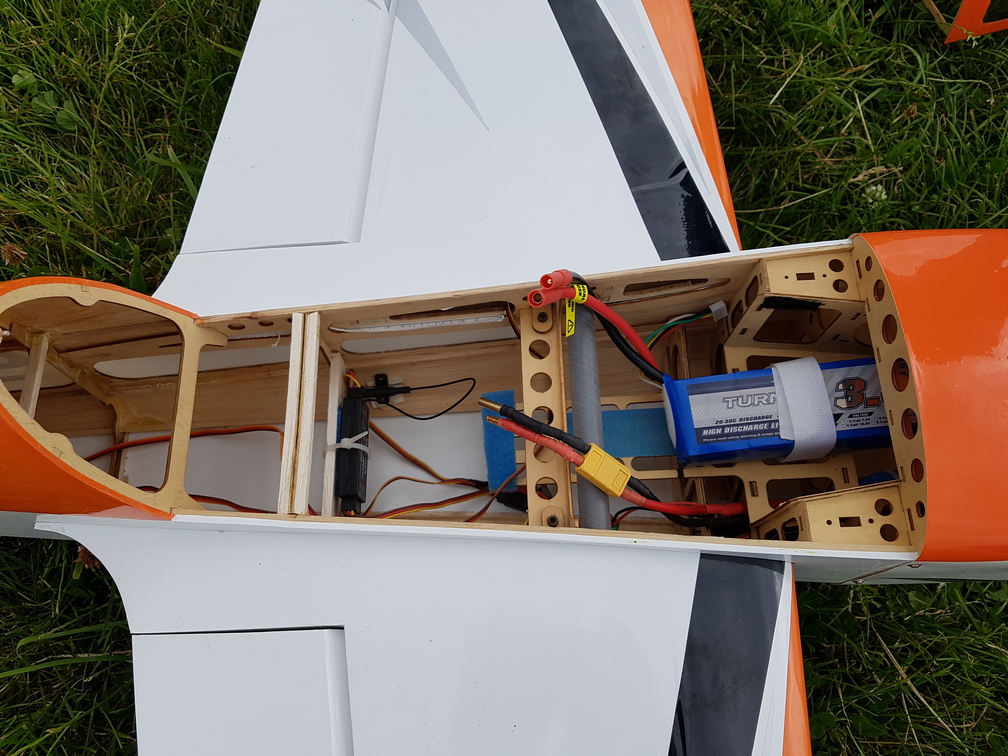 When Cyano Steve owned it I always reckoned it was the best flying 3D model he had and I think when 1066 gets used to it he’ll get on very well. During a recent flight with the model 1066 was complaining that the motor sounded odd and it was down on power. When he landed he found the cause, can you spot it?
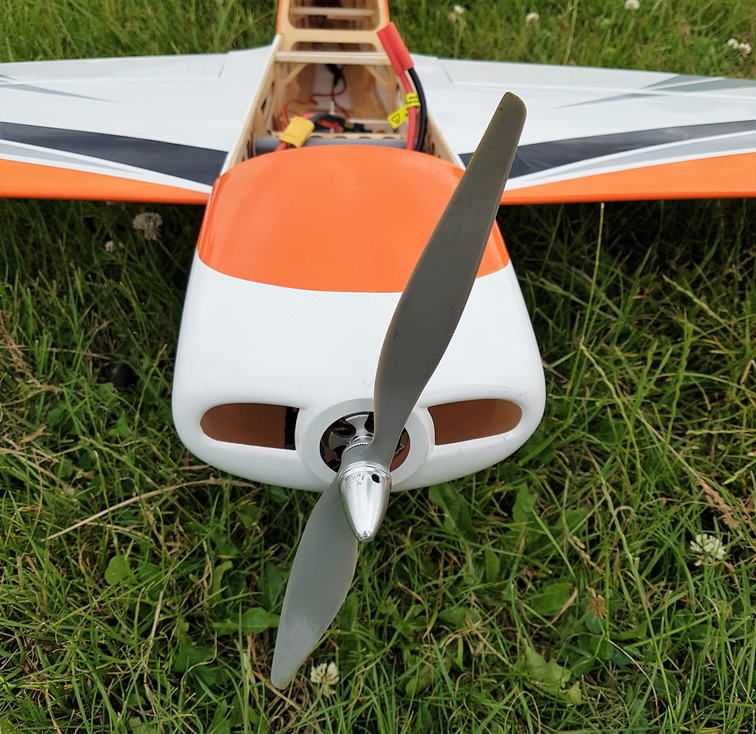 Please email your answers to: imanidiot@proponbackwards.plonker
The final new model to fly in June was Chris P Bacon’s newly acquired Junior 60. He bought a Ben Buckle Junior 60 kit a while ago but has never got round to building it, and then he spotted this one on eBay.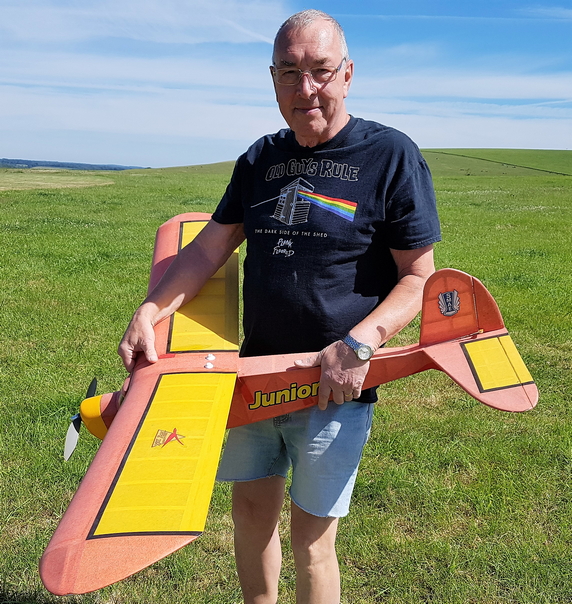
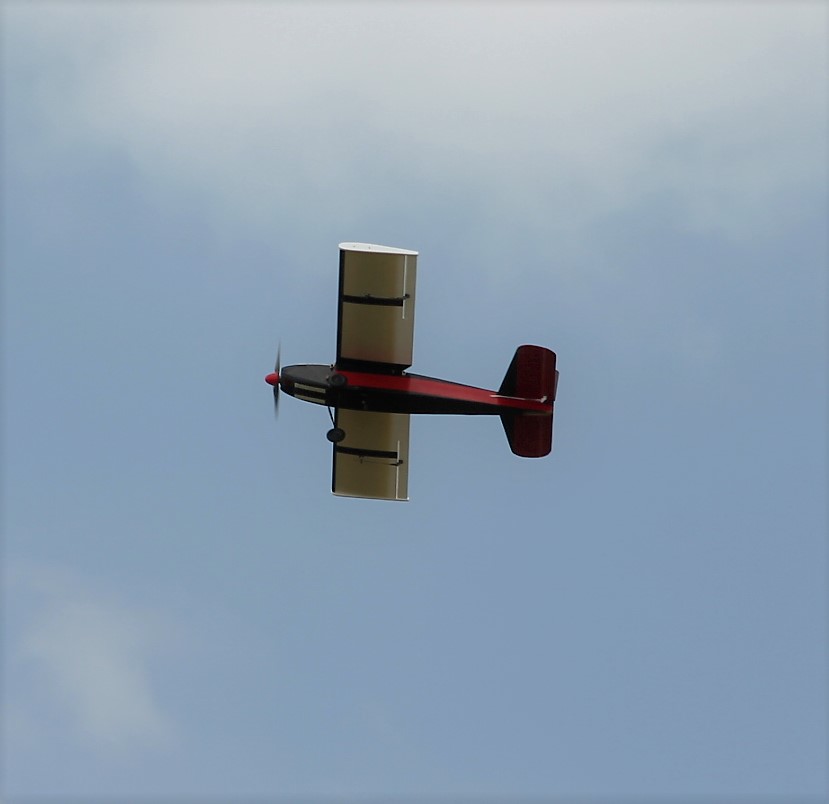
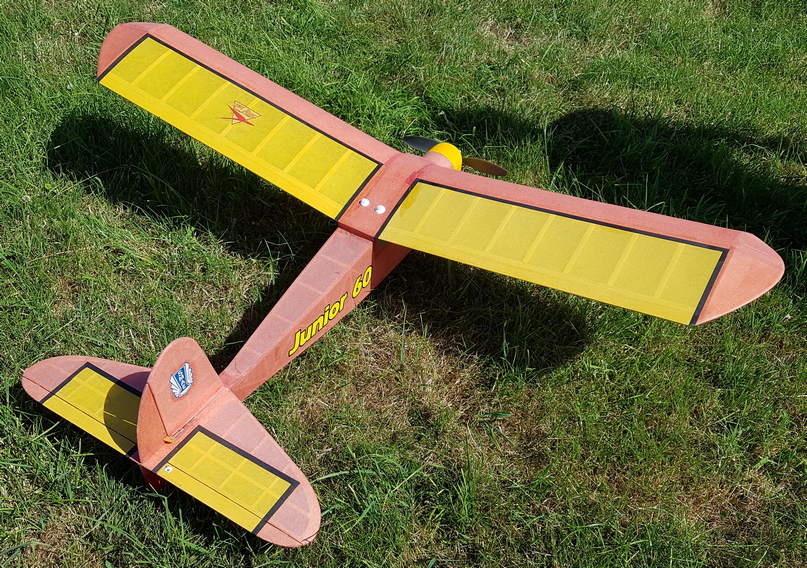 It is beautifully built, tissue covered, and came complete, it even included a couple of 3 cell 3350mAh lipos. The motor is an Emax BL2820/07 which swings a 12×3.8 prop and using the lipos it came with the flight times are around 12 minutes. Chris P doesn’t know how old the model is, the guy he bought it from lives on Hayling Island but the original builder was from Newark in Nottinghamshire. It flies exactly as you’d expect for a Junior 60, slowly and majestically.
Thanks go to Kryten, Dougal, Captain Slow, and Catapult King for their contributions of pics and video this month.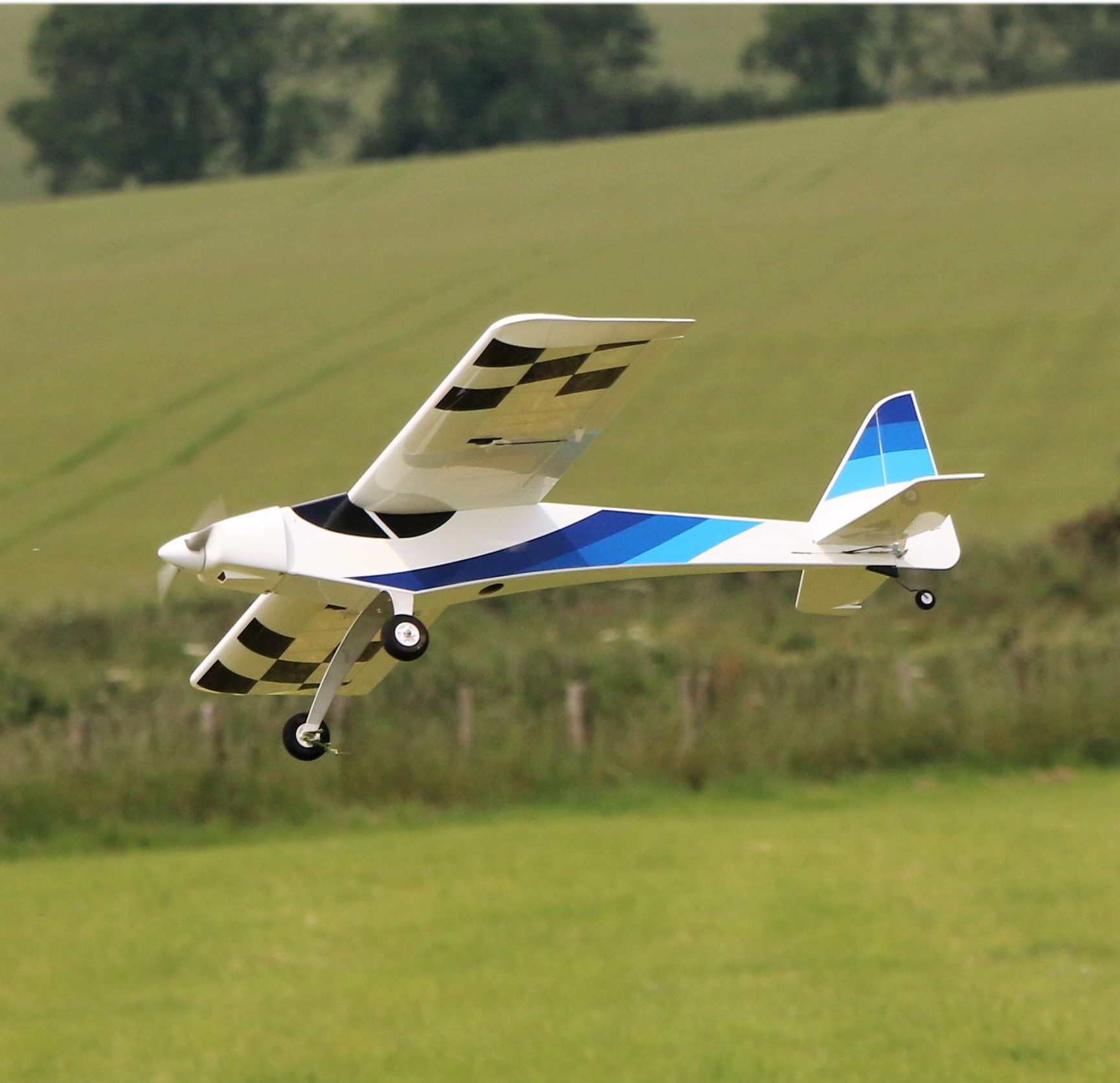

Time for this month’s video:
Please watch the video full screen, it’s so much better with small models flying around. If the video above won’t play for you CLICK HERE
Remember: Helicopters can’t fly; they’re just so ugly the earth repels them!
Colin Cowplain