Happy New Year everybody! That’s 2025 done and dusted, another successful year for the club with no real problems. I hope you’ve all had a great Christmas and Santa brought you lots of modelling goodies. I’d like to thank all who contributed to Patch News over the last twelve months, it makes my job so much easier when you write about your models for me.
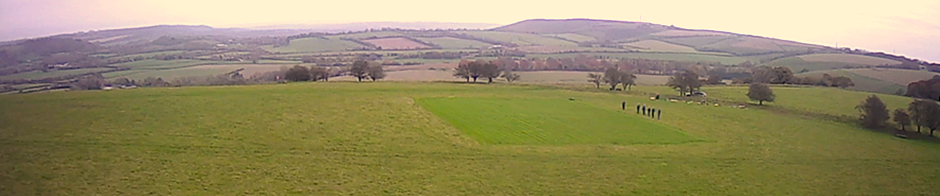
December was of course rather wintry and some flying days were lost to wind and rain but we also had some almost perfect days with a good number of members turning out to fly.  But on Sunday 21st December only myself, Captain Slow, Snoopy, and Woody came to fly. I think most of the regular fliers had Christmas commitments. There was an easterly breeze blowing and we could see there was mist/low cloud down in the valley between us and Butser. We had to keep a careful eye out, as every so often it blew up over the flying site.
  There were a couple of times while we were flying that the next bank of cloud blew in and precautionary landings were quickly made. Snoopy almost got caught out on one flight!
 Woody was still recovering from flu and arrived a bit late, when the cloud was at its worst.
  He wasn’t feeling well enough to fly so he didn’t bring any models, but he did bring cakes!
New models now, I’ll begin with an early Christmas gift I bought myself, an Airbus A380. 
 OK, I know it’s really just a toy but I spotted it on the AliExpress website and was intrigued to see how well it would fly. Sadly, it’s not a four engine EDF, it’s powered by a pair of motors with pusher props at the back of the wings. It has a gyro that cannot be adjusted or switched off, it just does its’ thing. The A380 is available in either two or three channel versions, the two channel one relying on variable thrust from the motors to both steer and also control the altitude, but the three channel one has the addition of an elevator servo.

 I went for the three channel version and splashed out £21.96 for the model, transmitter, one battery, and delivery from China. The ‘building’ consists of plugging the elevator servo into the board in the wing, screwing the wing on, and applying the cockpit window decals.
 An undercarriage was included but I didn’t rate the chances of taking off from grass with 10mm diameter wheels so I didn’t fit it. The instruction leaflet is mostly good but does have some Chinglish such as ‘It adopts high efficient pneumatic contour design to ensure good flying feature and stability, better gliding performance’ and ‘wind less than 4 outdoor environmental flight.’ I was lucky that the day after the A380 arrived the weather was lovely although the wind was probably higher than 4 outdoor environmental flight!
 For the first flight I pressed the ‘High and low speed’ switch that I think actually means Rates and it was a bit erratic, so for subsequent flights I’ve kept it on low. At the time of writing I’ve had nine flights, it takes a bit of getting used to but overall it flies well. It’s in this month’s video so take a look. For me, I think it was worth the money for a little fun.
Last month I wrote about Dwayne Pipe’s P51B Mustang that he’d built from the Flite Test plan, and I explained that the first flight hadn’t gone well. After completing some repairs Dwayne tried again in December but the second attempt was similar to the first and more repairs were needed. But the third attempt was different and the finicky flier finally flew.  Dwayne explains: The Flight Test P51B had two memorable but short maiden flights. The first one flew about 15 feet and dived in. The second made it about 30 feet. In both cases the plane pitched up and rolled to the left before crashing. In addition, the plane felt underpowered. What I did to correct these faults was to replace the 1000 Kv motor with a 2200 Kv one, and reduce the prop size from 9×6” to 7×4”. The C of G on the Flite test plan was ambiguous, so I moved it forward by about 5mm. Lastly, I reset and trimmed the ailerons to ensure that they were symmetrical. The resulting third flight was much improved and landed safely but showed that I needed to increase the motor downthrust and trim the ailerons to the right. All part of the joy of building your own plane.
As Dwayne says, the third flight was successful, but sadly the cameraman (me) wasn’t!
So in the video this month you can see all three attempts but only the first couple of seconds of the Mustang getting away for its proper flight. Hopefully I’ll do better next month and I’ll have some footage of it flying nicely, it’ll be worth the wait I’m sure!
Next up we have Bob the Builder’s F-803 Skylark S that he purchased from AliExpress.  The AliExpress website says this: The Skylark is a high-quality EPO foam RC plane designed for intermediate pilots, offering F3A aerobatic performance, durable construction, and reliable flight characteristics, making it a top choice among similar models on AliExpress. The Skylark is available from various sources and can be purchased as a fully kitted out ARTF or just a basic kit which comes without a motor, esc, servos etc.
  This is what Bob’s says about it: Felt like a change and something different and a bit more challenging than my Tasman. I also gave up on my Mini Tasman that never seemed to
fly quite right so I had a spare set of electronics, receiver, motor, ESC etc. to use. The Skylark from AliExpress at £42 for the kit version,seemed to fit the bill. It took about 5 weeks to arrive but everything fitted OK except the motor which was a Hobbyking PropDrive 28-36 1400KV. The mounting holes were 90 degrees offset from the mounting holes in the model so instead of the ESC wires being at the bottom they were at the side. Luckily there is an air intake hole where the wires exit the motor and after a small modification to the motor mounting bracket all was well. Have since replaced the motor because everybody complained about the noise from the old motor. New one is the same except it is a 1200KV so I have upped the prop to a 10 x 7 instead of a 10 x 6 and it
still gives me 150watts per pound on 3 cells. Quite challenging to fly but that’s what I wanted. Just need some good flying weather to practice the F3A aerobatics! Ha Ha.  Thanks for that Bob. A few years ago Dougal Entendre had bought an earlier version of the Skylark which flew well so he was the obvious candidate to do the maiden flight. As you can see in the video the Skylark flew very well but you might be able to hear that the motor sounds like a bag of nails! As Bob says he has since bought a new motor and the Skylark now flies just the same but sounds a whole lot better while it’s doing it!
Woody’s latest is a Great Planes Electro Streak, the same as the one 1066 built recently.  Captain Slow had two of the long-discontinued kits for sale along with several other kits, all of which came from the wife of a modeller who had passed away. Having seen 1066’s Electro Streak fly Woody decided to build the second kit and set about balsa bashing.
 Woody had a few problems along the way and 1066 helped him greatly. He says 1066 was a vital part of the build. That’s odd as I’ve never found a 1066 included with any of my kits!
 Woody fitted a Ripmax Power 25 1000 Kv motor, a 40A speed controller, a Multiplex 5 channel receiver, and some servos recycled from a previous model. 1066 flies his Electro Streak on four cell lipos but Woody is using three cell packs as he doesn’t want it going as quickly as 1066’s! Despite his trials and tribulations with the build the finished model looks great in its red heat-shrink film covering, I especially like the chequered underside.
 The first flight was undertaken with 1066 on the transmitter and all went well although it was a little underpowered, mostly down to the 7×6 propeller being a bit too small for the 1000KV motor. 1066 has provided Woody with an 11×7 folding prop for the next flight which should make a big difference. The first flight can be seen in this month’s video.
Dwayne Pipe has sent me some information on how to work out the Kv of an unmarked motor: I was looking for a brushless outrunner motor for the P51 I was building and found one the right size in my spares box. The motor had no markings on it and no indication of its Kv which is important for sizing the propeller. After some internet research I came across this simple way of measuring the motors Kv which I pass on for any other PAM member who needs it.
If you apply voltage across a motors terminal it spins, similarly if you spin a motor, it will generate a voltage. Fit the shaft of the motor you want to find the Kv of into the chuck of a power drill with a known maximum speed. (Its normally specified on the body of the drill.)
Secure the base of the motor so that it won’t rotate, and turn on the drill.
Measure the voltage across any two of the three motor leads in turn so that you have measured all possible combinations. You will have three separate values. Take the average of these values. We will call it Vac
Plug this value into the equation below to get the Kv of the motor
Kv = (1/((Vac x 1.414)x(1000/power drill rpm))/1000)/0.95
Looks complicated but take it step by step. If you’re not sure check it out against a motor you know the Kv of already. In my case the unknown motor had a Kv of 2588 (approximately). Thanks for that Dwayne, it could prove very useful.
Having completed a couple of minor repairs to the wings and tail of his Weston Cougar 2000, Mini Mike decided to completely refurbish it. He stripped off the original covering and re-covered the whole model in orange Ripmax Aero Film and added some white trim.

 Mini Mike rated the film highly but he thought the Cougar looked a little plain with none of the original lettering, so he treated himself to a Loklik iCraft Vinyl Cutting Machine and used some Cricut Smart Vinyl to produce the lettering you see applied to the model here.

 Having paid a lot of money for the machine I’m sure Mini Mike would be happy to cut any decals, lettering etc that any of us might want and any cash donations would be very welcome. The Cougar looks great in its new clothes and as he had changed nothing else Mike expected it to fly exactly as before but oddly it didn’t. Some of the first flight after the refurb can be seen in this month’s video and you’ll see it was a bit erratic after the take-off.
 The trim seems to have altered quite a lot and Mike is gradually sorting it out but hasn’t really found a definitive reason for the change. I wonder if the new film is heavier than the original and the centre of gravity has moved rearward. Anyway, after a few tweaks and several more test flights the Cougar is now flying as well as ever again.
This month the action pics are taken from various videos shot over the last few months:


 Video time now, this month with footage shot by myself, Dougal Entendre, and MacFly. Please watch the video full-screen, it’s so much better with small models flying around:
If the video won’t play for you please click HERE
The Final Funny
A wealthy jeweller boarded a plane to fly home for Christmas and when he took his seat up in the First Class section he was sat next to a very elegant and wealthy looking lady.
He immediately spotted that she was wearing a large 20-carat diamond wedding ring.
He turned to the lady and said “Merry Christmas. Excuse me, I don’t wish to intrude, but I’ve been a jeweller for forty years and couldn’t help noticing your very impressive ring.”
”Merry Christmas” she replied, smiling gracefully “It’s actually the Schmidt’s diamond.”
“The Schmidt’s diamond?” the jeweller queried “I’ve not heard of the Schmidt diamond”
“Yes, it’s like the Hope diamond, and just like the Hope diamond it comes with a curse.” Intrigued, the jeweller said “Well, now I have to know, please tell me, what’s the curse?”
“Mr Schmidt”
Colin Cowplain

Happy new year to everyone. Thanks Colin for your great patch news every month.
Thanks Dwayne & Happy New Year 🙂
Happy new year Colin, great work as always.
Thanks 1066, Happy New Year. Next month…Attila the Hast…! 🙂
Nice one Colin. Happy New Year.
Thanks Woody, Happy New Year 🙂
Happy new year to everyone in the club. It’s nice to see what’s going on via the website. Looks like you are all having fun!
Hi Chris, it’s good to hear from you. Happy New Year to you also. The club is going well, you should come and visit us one day, you might be tempted to re-join!