
Patch news this month will only cover part of October as I’ll be away for the last week of the month and, as I was also away for the start of the month, I don’t have much time to write it. But I’ll catch up with anything I’ve missed in November. October was a good month for the club with unseasonably warm weather and quite a few good flying days.
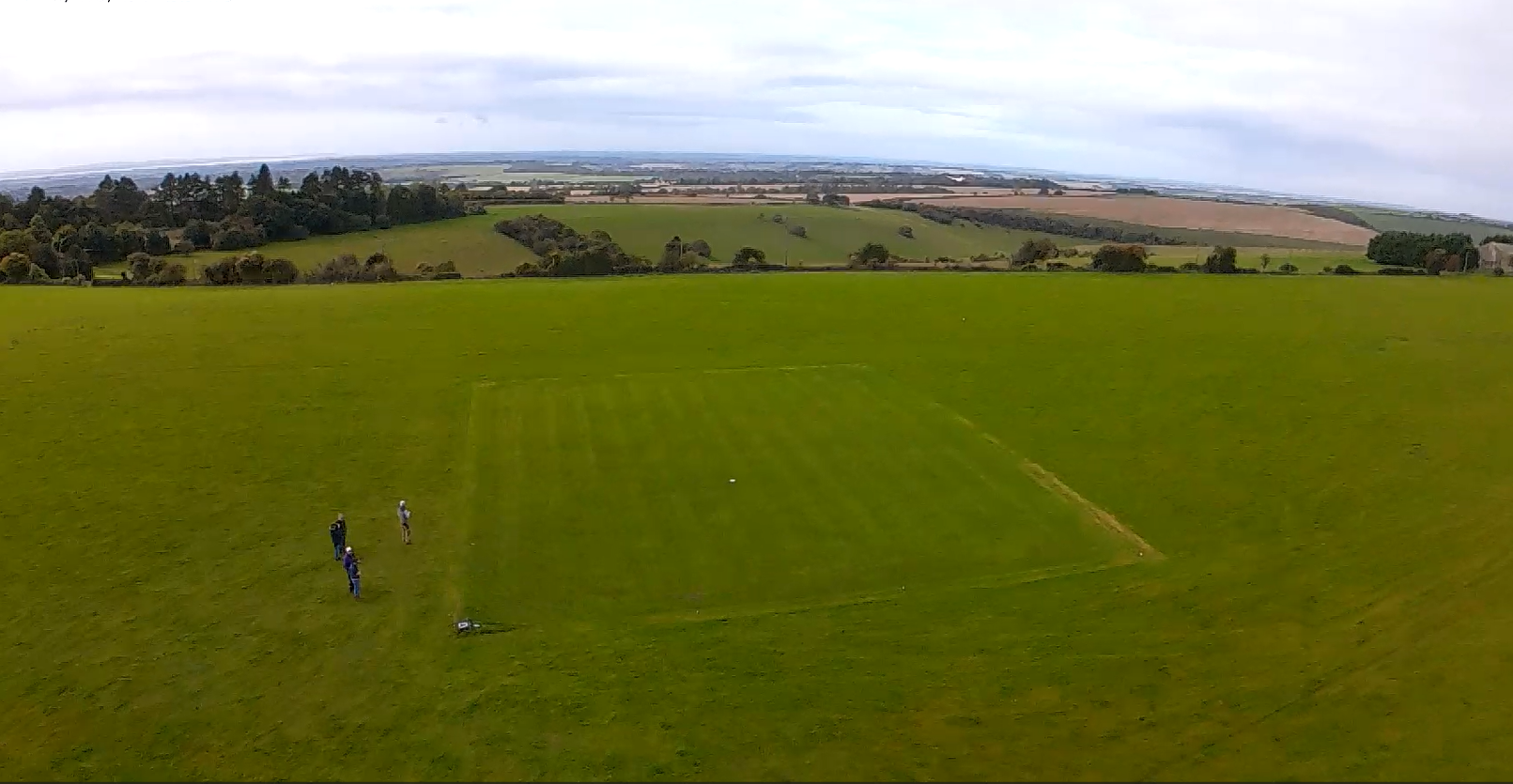 We were pleased to welcome another prospective junior member, another Tom, and his dad Ed. This Tom knows existing member Tom through school and like him had already flown a small ‘toy’ foamie plane but with limited success and is looking for a club for some guidance. This is going to get confusing, we’ll have to dream up a nickname for one or both of them, or maybe just Tom1 and Tom2. Tom2 has spent some time on a flight simulator which has stood him in good stead. Following their first visit Tom2 and Ed went away and bought an XFly Glastar, an ideal model to learn with. I did the Glastar trimming flight and then Tom2 had a go on the second flight. He flew it well, I’m sure he’ll very quickly master it. I didn’t get any photos or video of Tim2 flying yet but hope to include some next month.
Meanwhile Tom1’s flying has been progressing very well and 1066 decided to give him the old Kung Fu that was just cluttering up his workspace. There’s lots of history with Kung Fu’s in the club as way back in 2017 many of them were built them as a ‘Club Model’.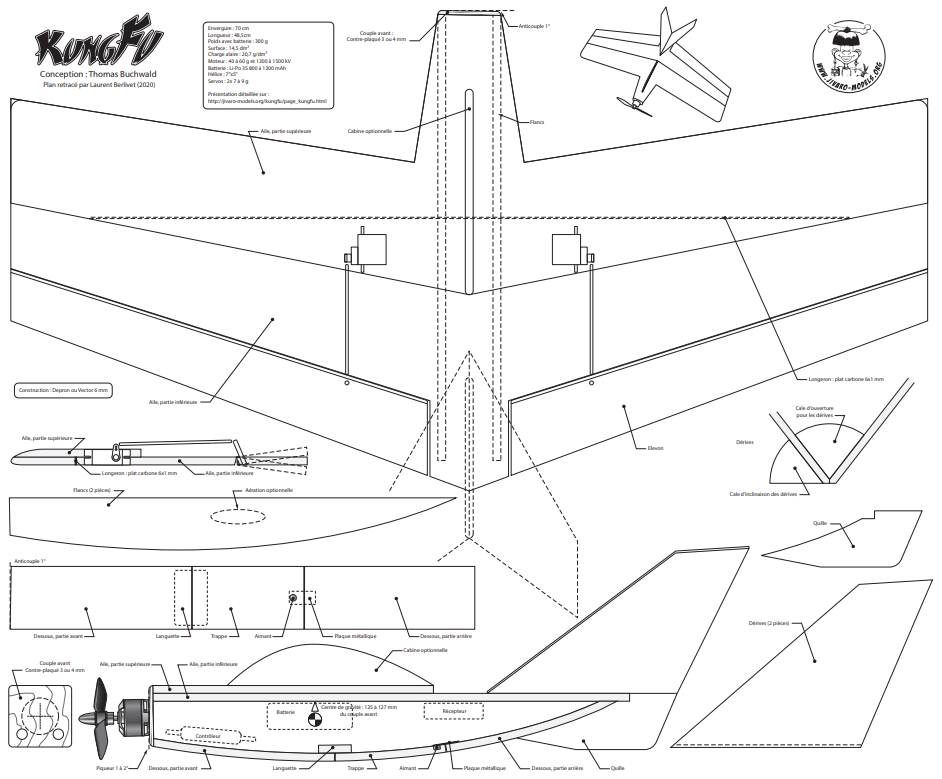
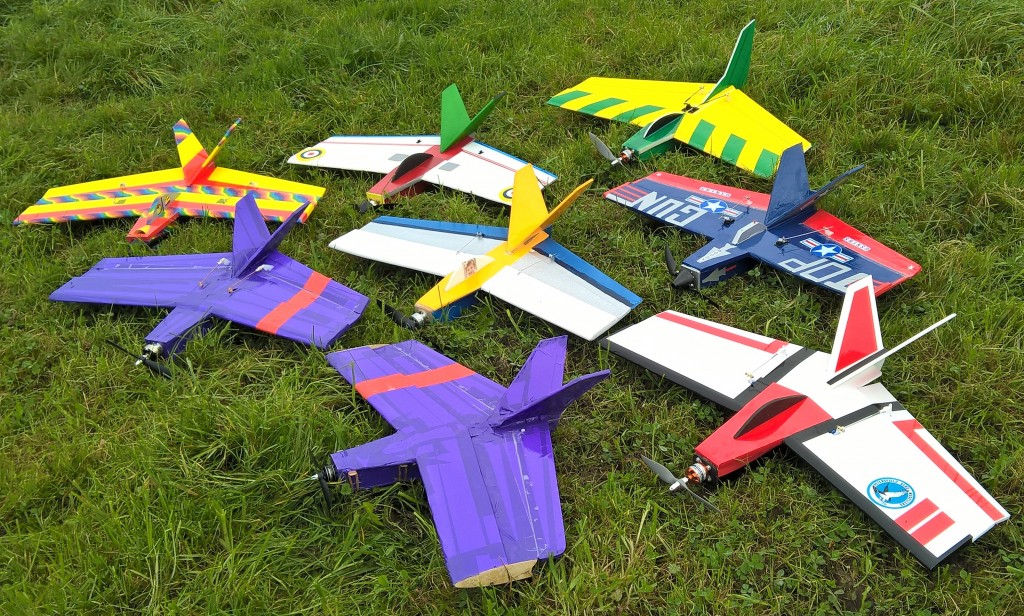 The idea was that members all built the same design model and there were a series of competitions with everybody using an identical design. This is what I wrote in the October 2017 edition of Patch News: The Kung Fu was chosen as this years’ club model as it is a very simple Depron flying wing that is quick and easy to build and can use equipment that many of us already have kicking around. At the club meeting on 5th October a total of eleven Kung Fu’s were presented although one of them was a control-line version!
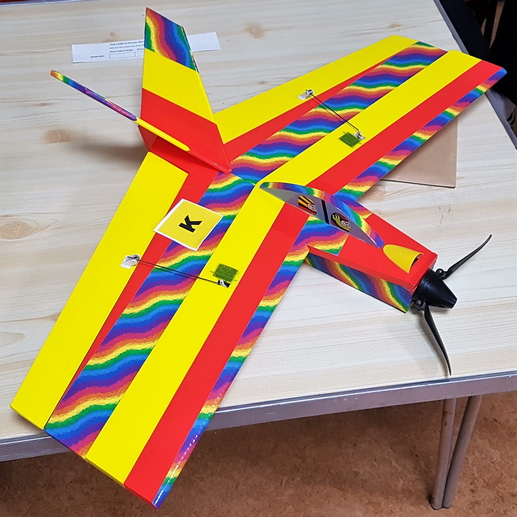 The models were judged in three categories by all members present, Most Original Design, Best Looking Model, and Least Likely To Fly. The winner of the first category was 1066, purely because he was the only person who couldn’t follow the plan properly! Best Looking Model was Colin Cowplain (his Kung Fu was quite nice as well).
Least Likely To Fly went to Woody, a choice that proved to be totally correct!
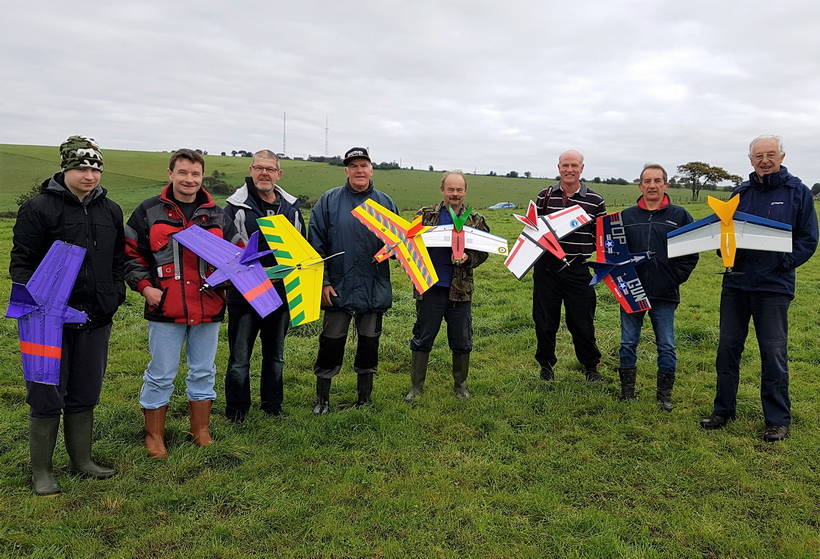 The Sunday after that the models were all test flown at the field and most were very successful with many going on to be flown many times over the next couple of years.
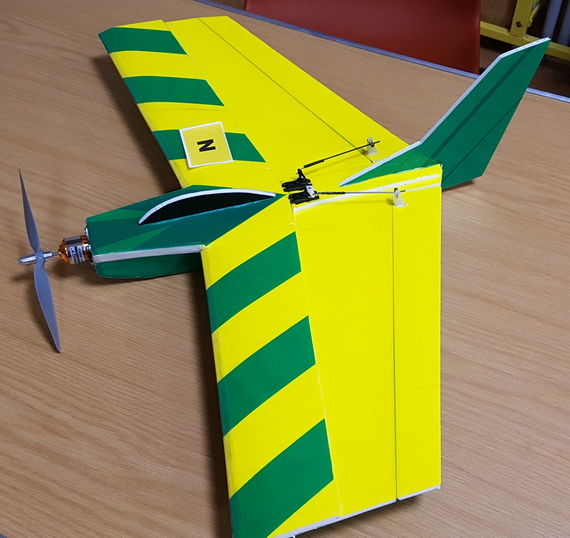
Eventually 1066 crashed his and in August 2018 he decided to build another one.
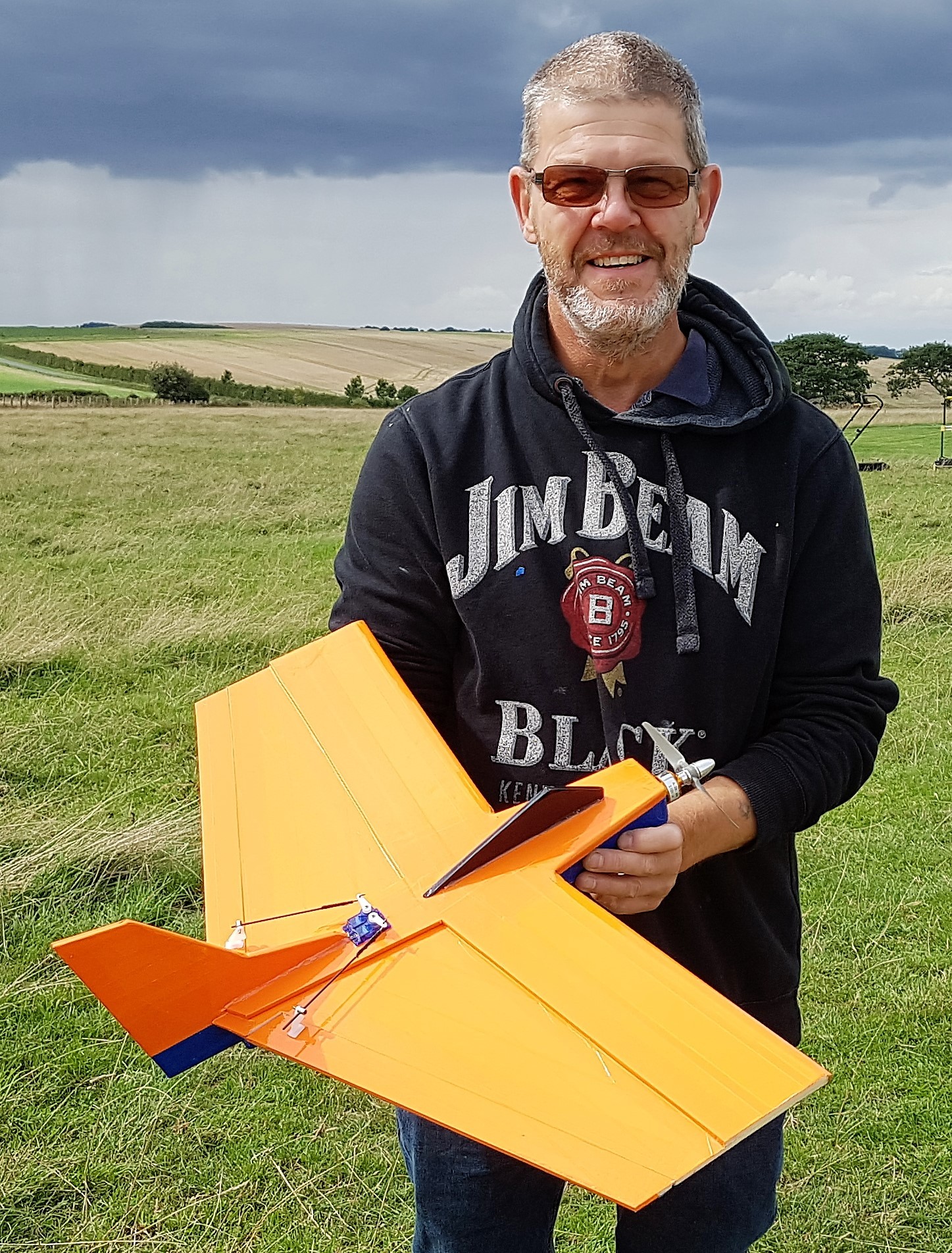 Just like the first one he’d built 1066 seemed to have trouble counting fins as his only had one rather than the two shown on the plan. The club models were built from Depron and most flew very well, 1066’s being vastly over-powered as usual. He built the replacement Kung Fu from foam board, the paper faced/foam core stuff that can be found in art supply shops etc. It’s very easy to work with although 1066 found the paper is easily damaged by tape when trying to hold it together while glue dries. I imagine cyano would melt the foam so UHU Por, Gorilla Glue or epoxy would be the obvious choices. The new one is to the plan apart from only having one fin and a slightly lengthened nose in order to achieve the C of G without requiring nose weight. It seems to fly just like the original which is unsurprising as 1066 has fitted the same motor etc. Back to 2026 now and the Kung Fu was given to Tom1 as a step-up from the Ugly Stick that he has been flying recently.
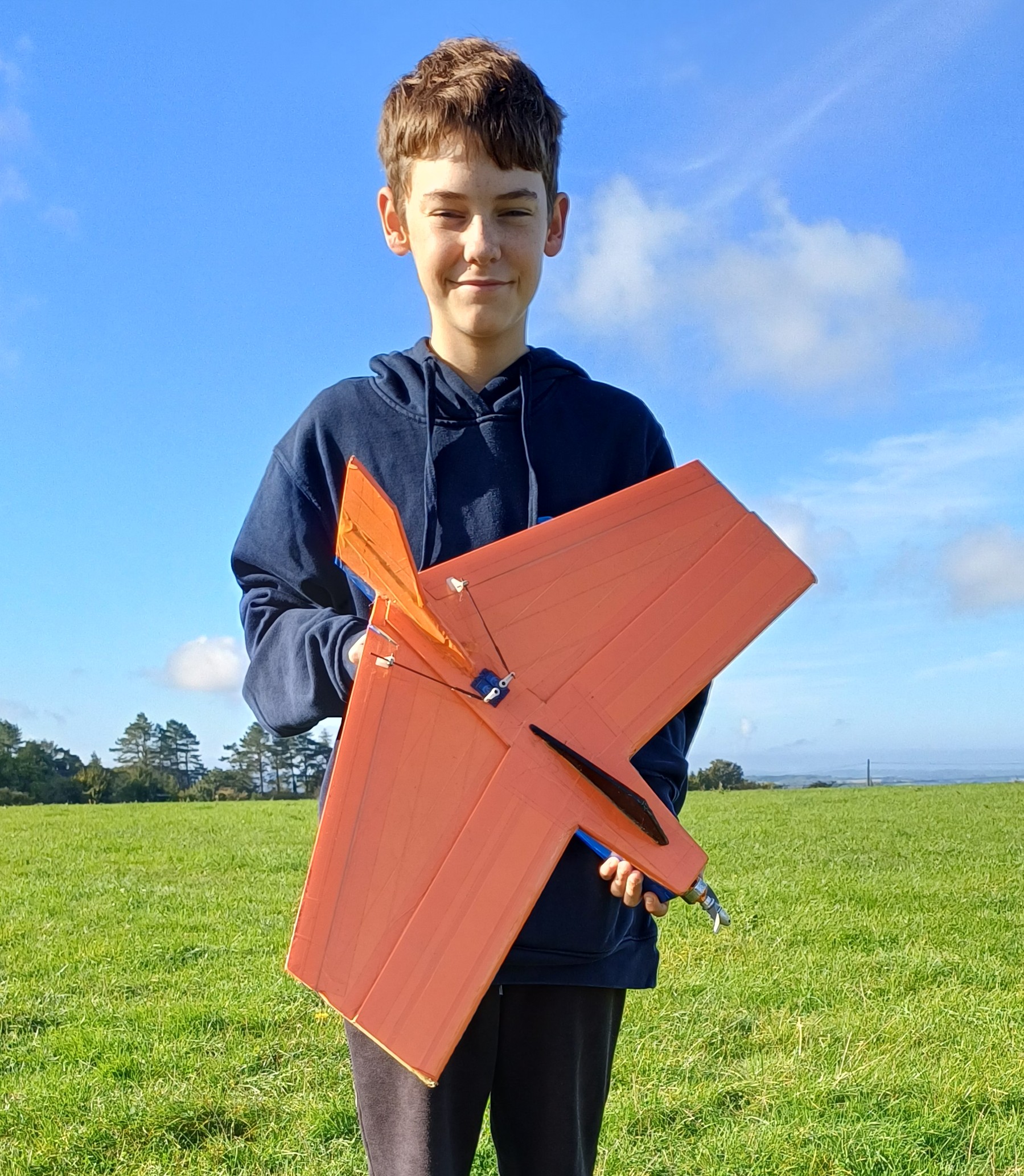
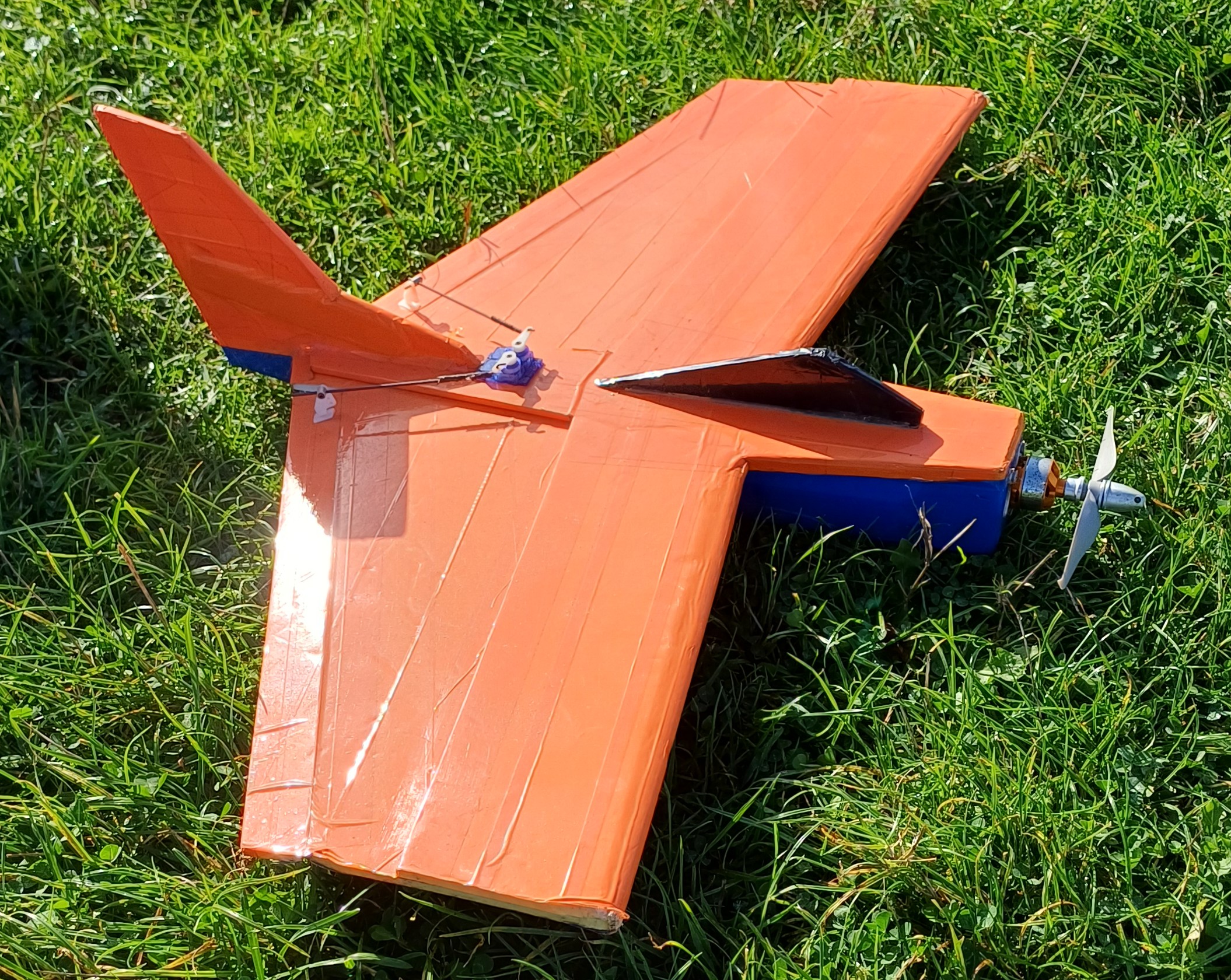 1066 took it up first to trim it out and check everything was still working as it should.
 All went well so he handed control over to Tom1 who quickly found he could handle the Kung Fu with no problems at all, an amazing feat considering the short time that he’s been flying. In this month’s video you’ll see Tom1 flying the Kung Fu in a really strong wind.
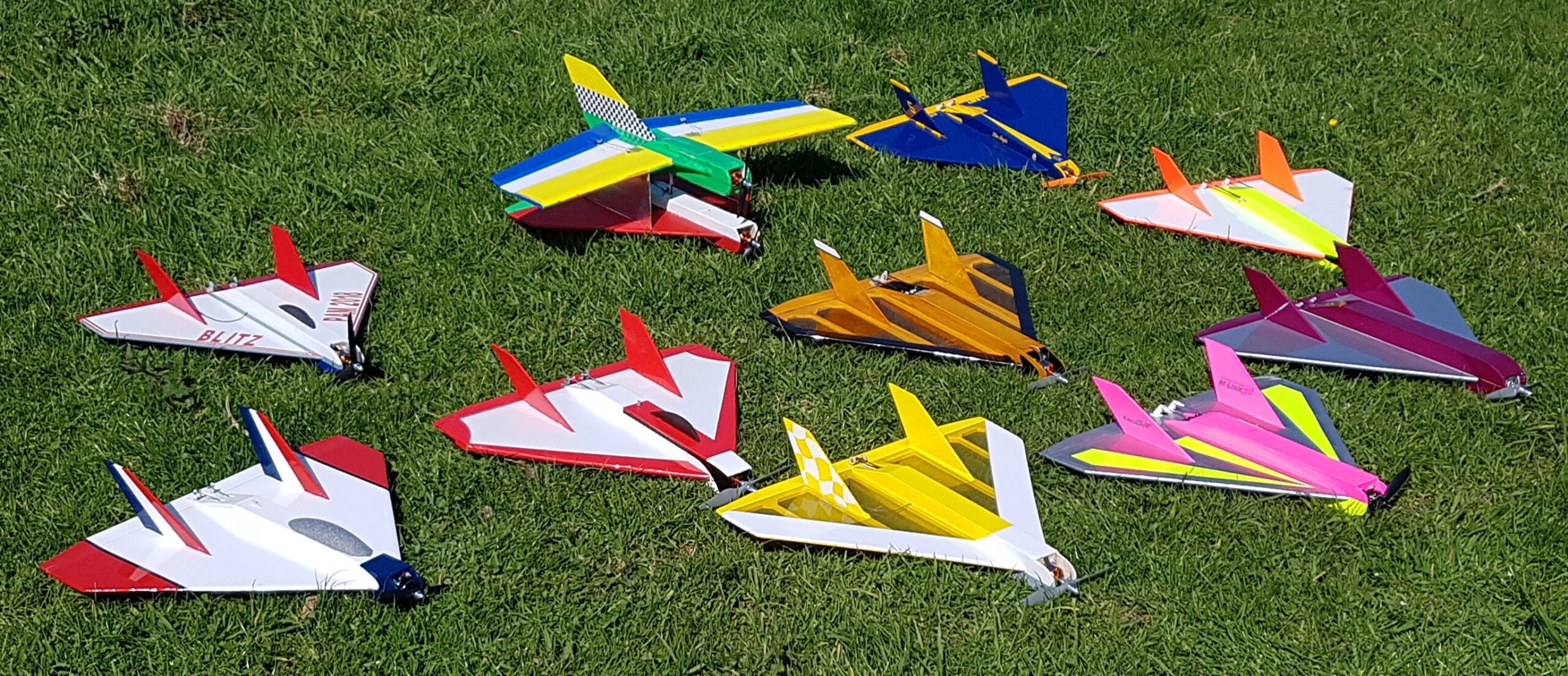
Now for a couple of Jono’s models that are not new but are new to our field. First up is Jono’s Mini Blitz which he built from a plan he downloaded from the Outerzone website. 
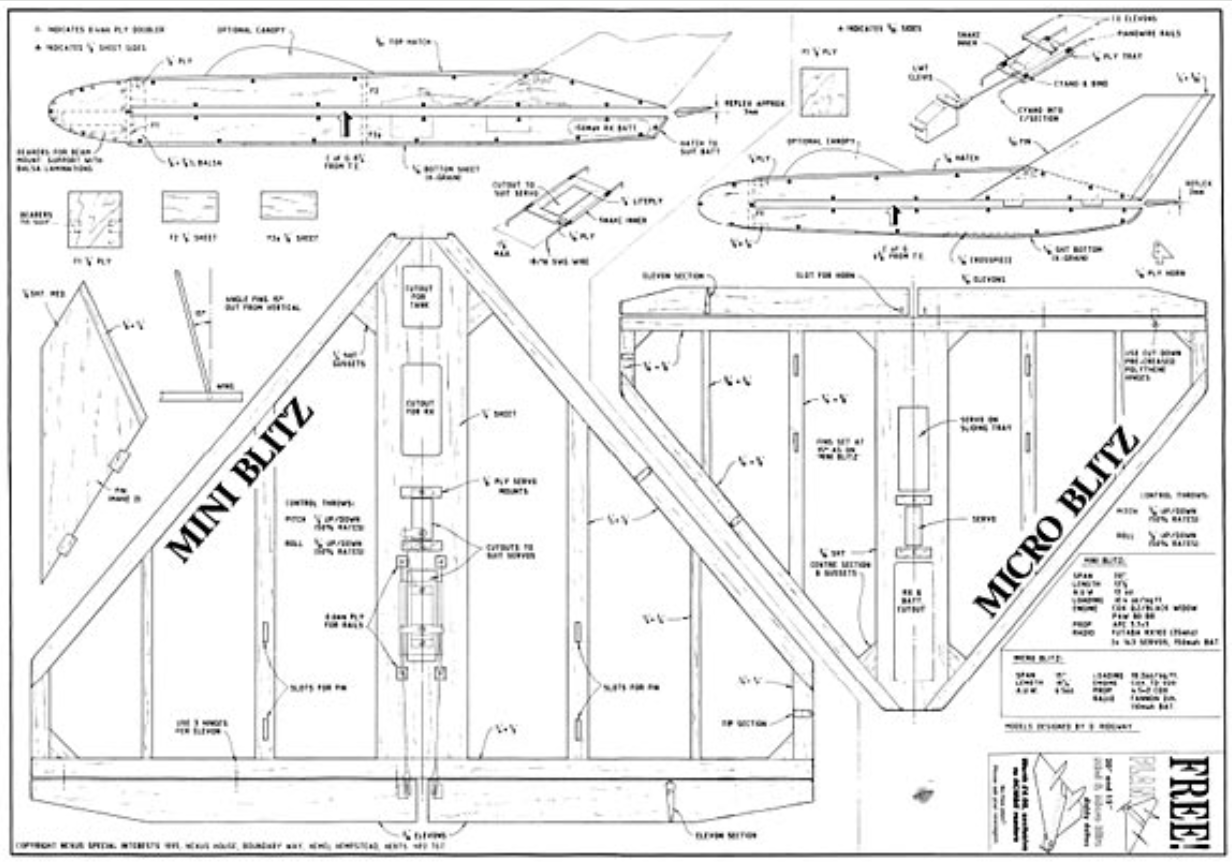 The Mini Blitz is familiar to club many members as, like the Kung Fu mentioned above, it was a ‘club model’. It was the chosen model in 2018 ago and fifteen members built one.
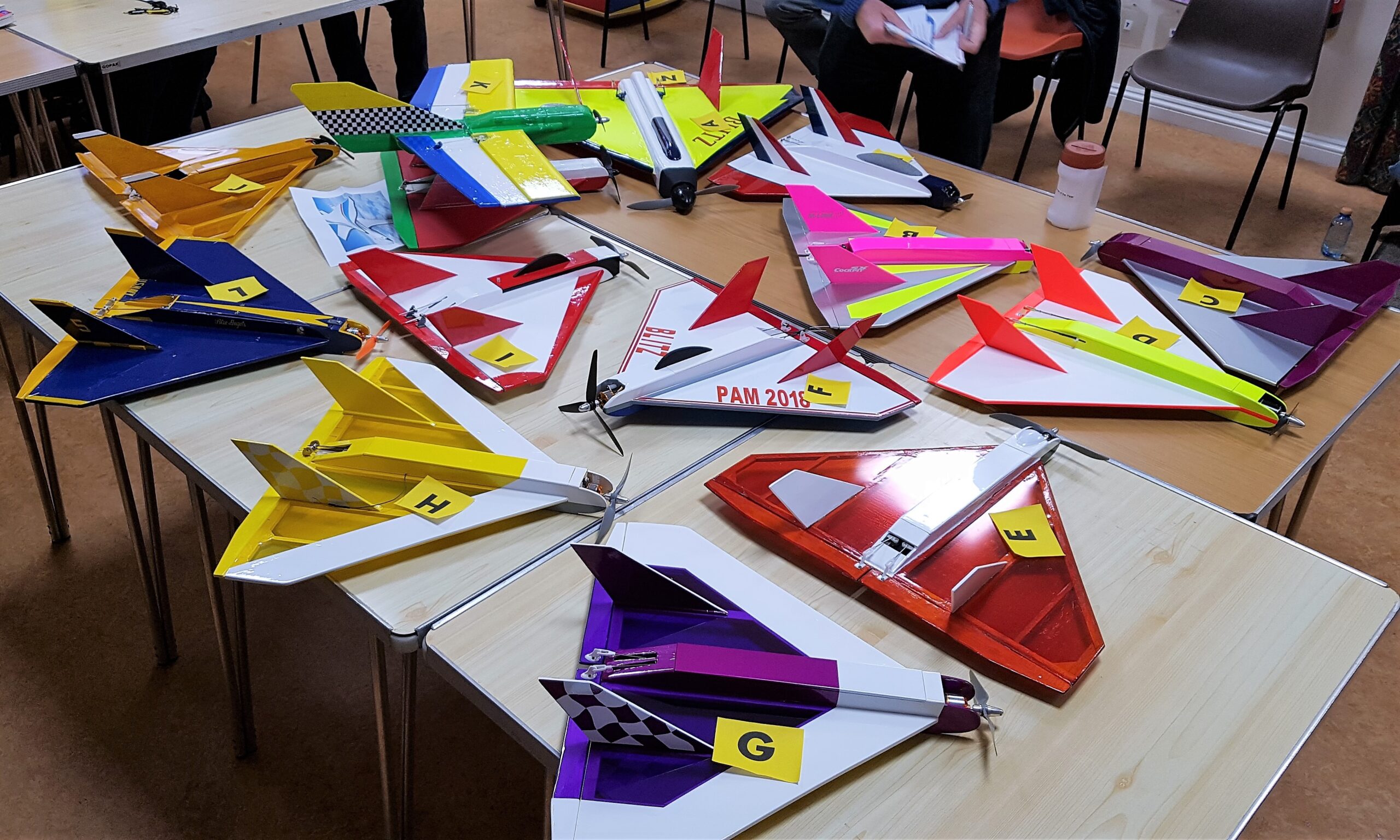
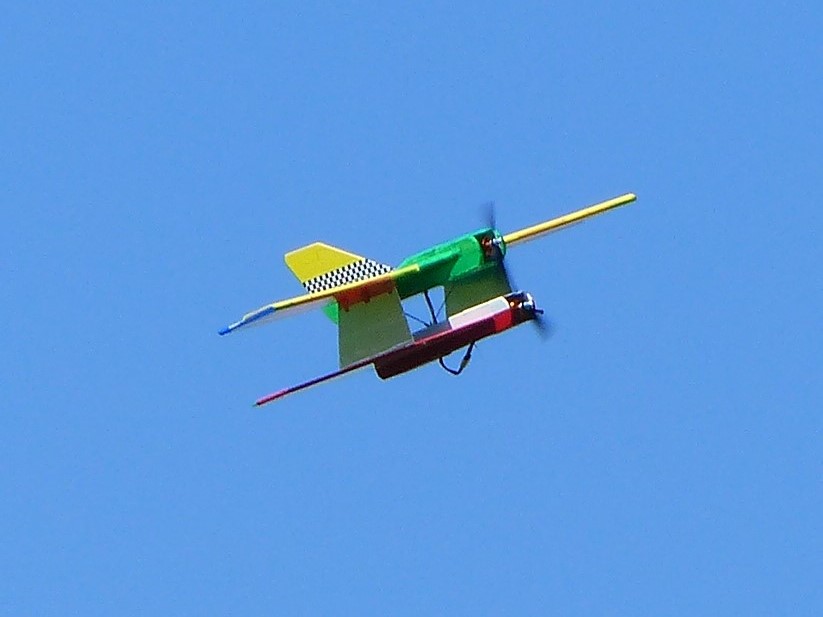
 Bob the builder actually combined a Kung Fu and Mini Blitz by joining them together and amazed everybody when not only did it fly, it actually flew very well! Unfortunately it met an untimely end when the hatch became detached and the battery fell out mid-flight.
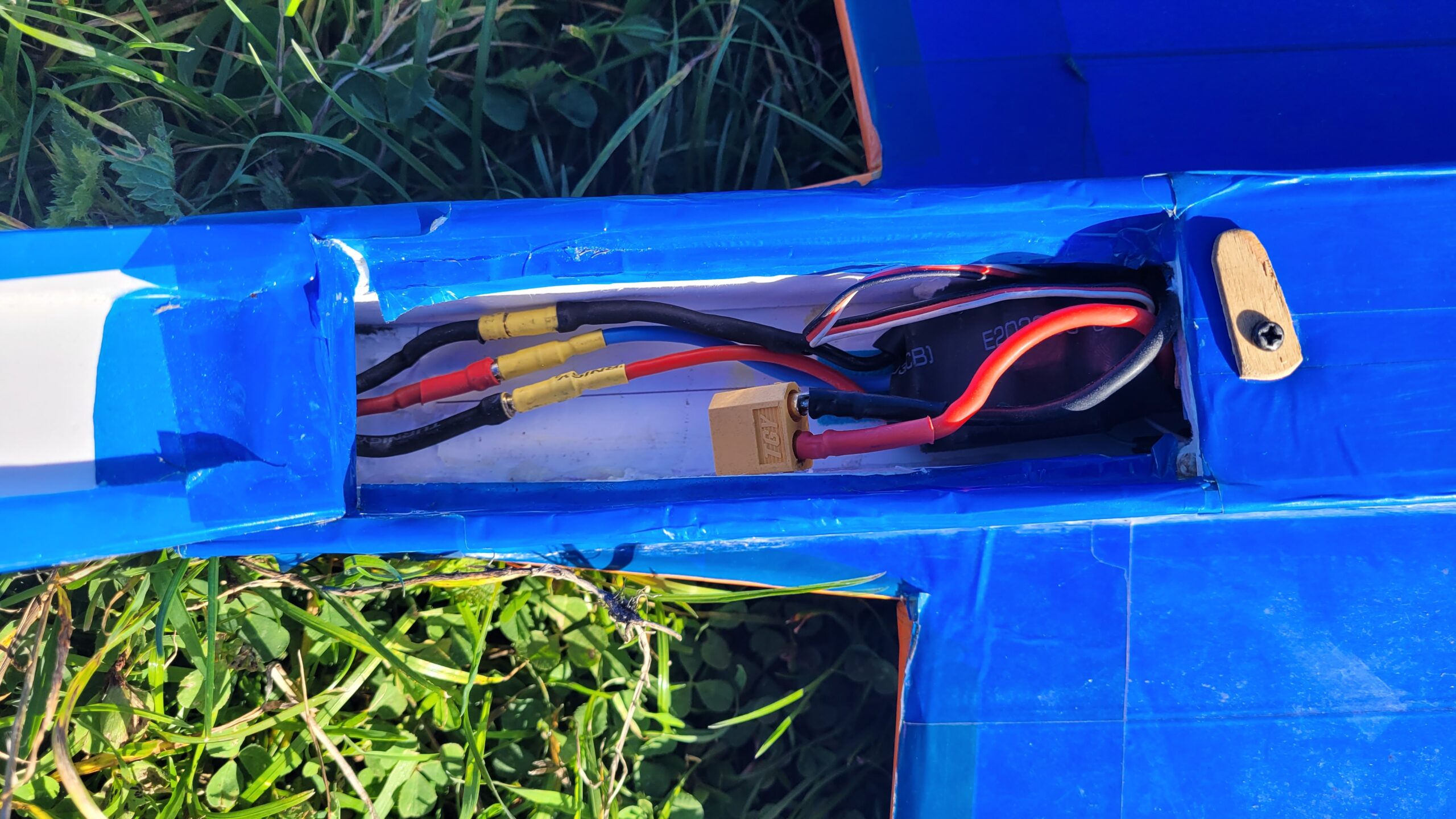
 To this day Dougal Entendre still flies his Mini Blitz regularly. Back to Jono’s now, the motor is a Scorpion 2208 MkII 1280Kv with an APC 7x6e prop which is powered by a three cell lipo via a Robotbirds 18A speed controller. Jono says the set-up is possibly a bit soft and he’ll check with Dougal to see what motor he’s using. Jono uses RadioMaster RC gear and has fitted an ELRS ER4 receiver with battery monitor, along with Hitec servos.
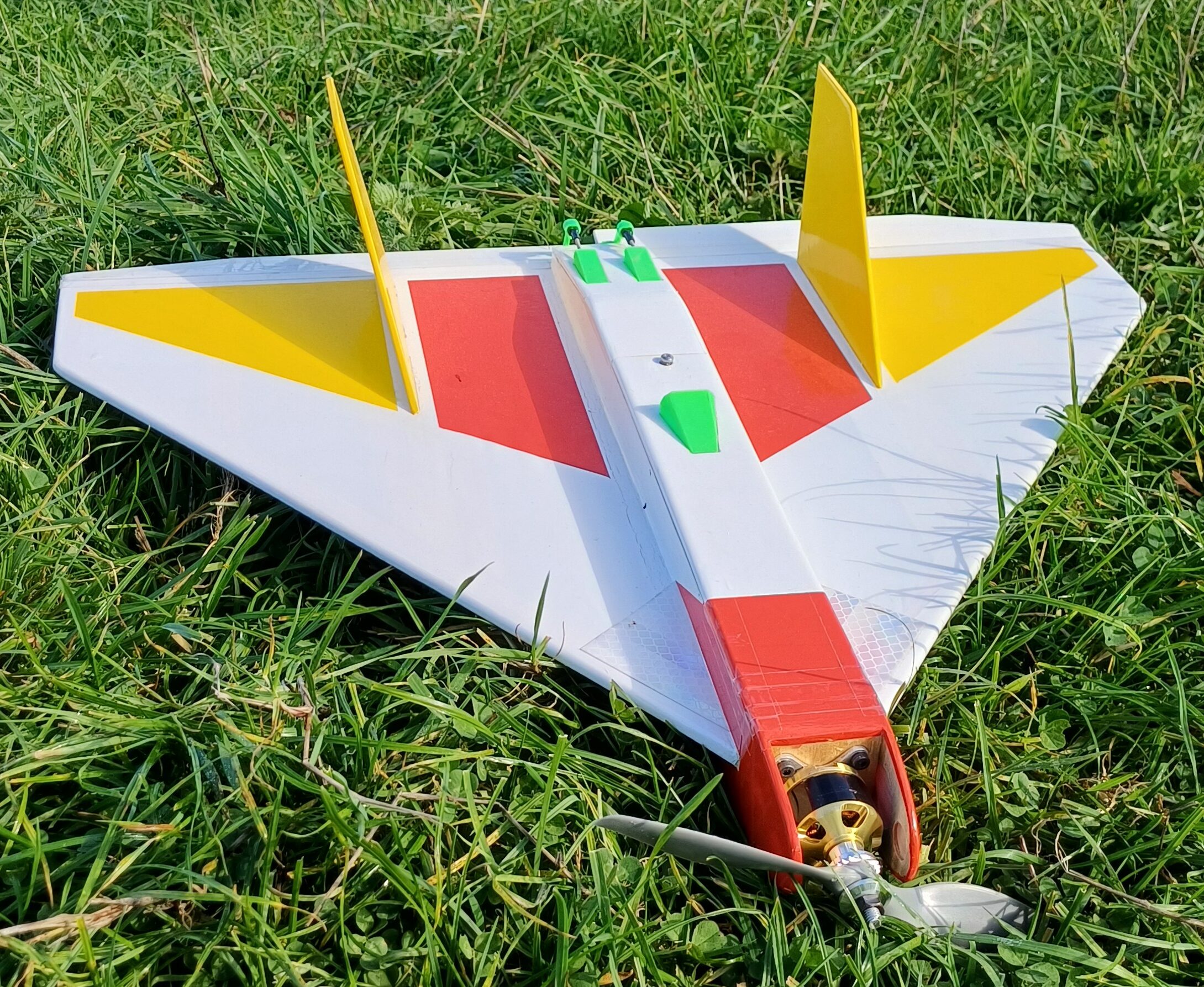 The green parts on the Mini Blitz are interesting, they are all pieces that Jono 3D printed.
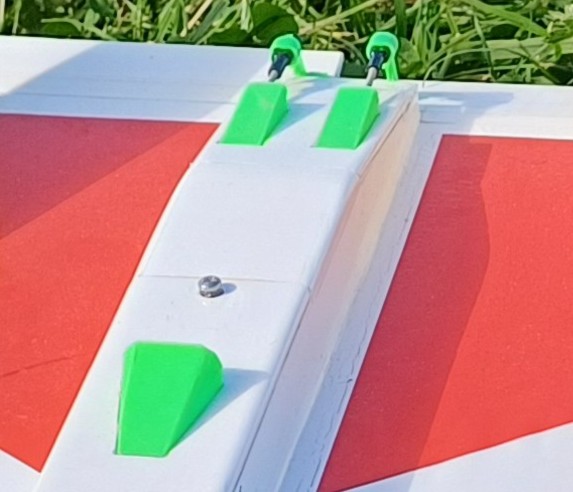 Yes, not only does Jono have a laser cutter, he also has a 3D printer…that’s two things worth remembering! So, now for the important bit, how does it fly? I’ve got no idea as he chickened out of flying it that day (Jono’s words not mine)! He has flown the Mini Blitz before, just not at our field, so no doubt we’ll see it over the PAM patch before too long.
On the subject of Jono’s 3D printing, I noticed a very neat receiver holder in his OMP Challenger and asked him if it was a proprietory item or something he’d 3D printed.
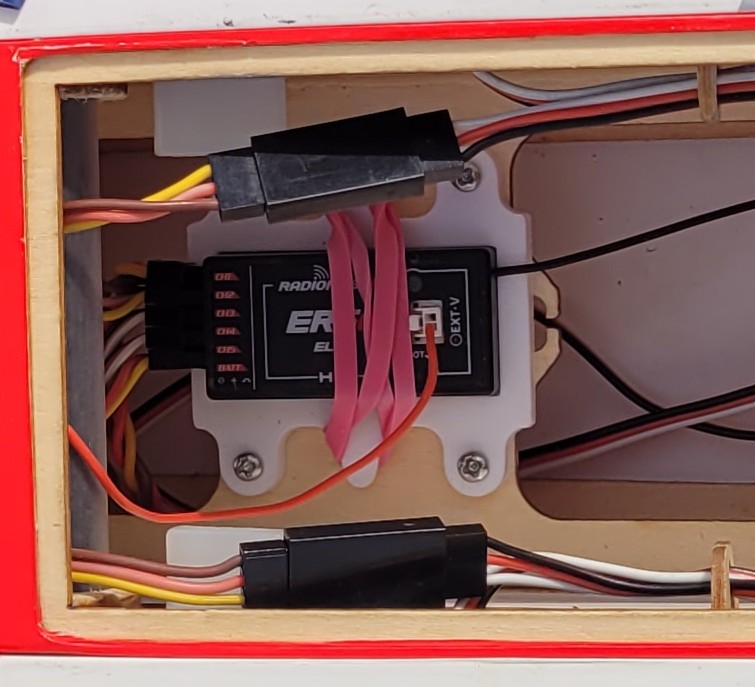 He explained that first he had drawn it with the Autodesk Fusion 360 CAD package and then he had 3D printed it in PLA on his Elegoo Centauri Carbon printer.
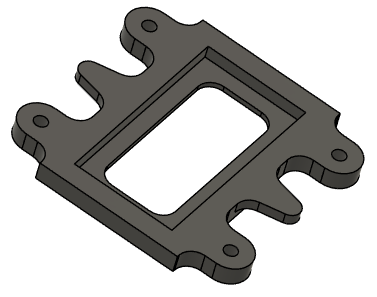 As it was so successful it’s something he has now done for quite a few of his models.
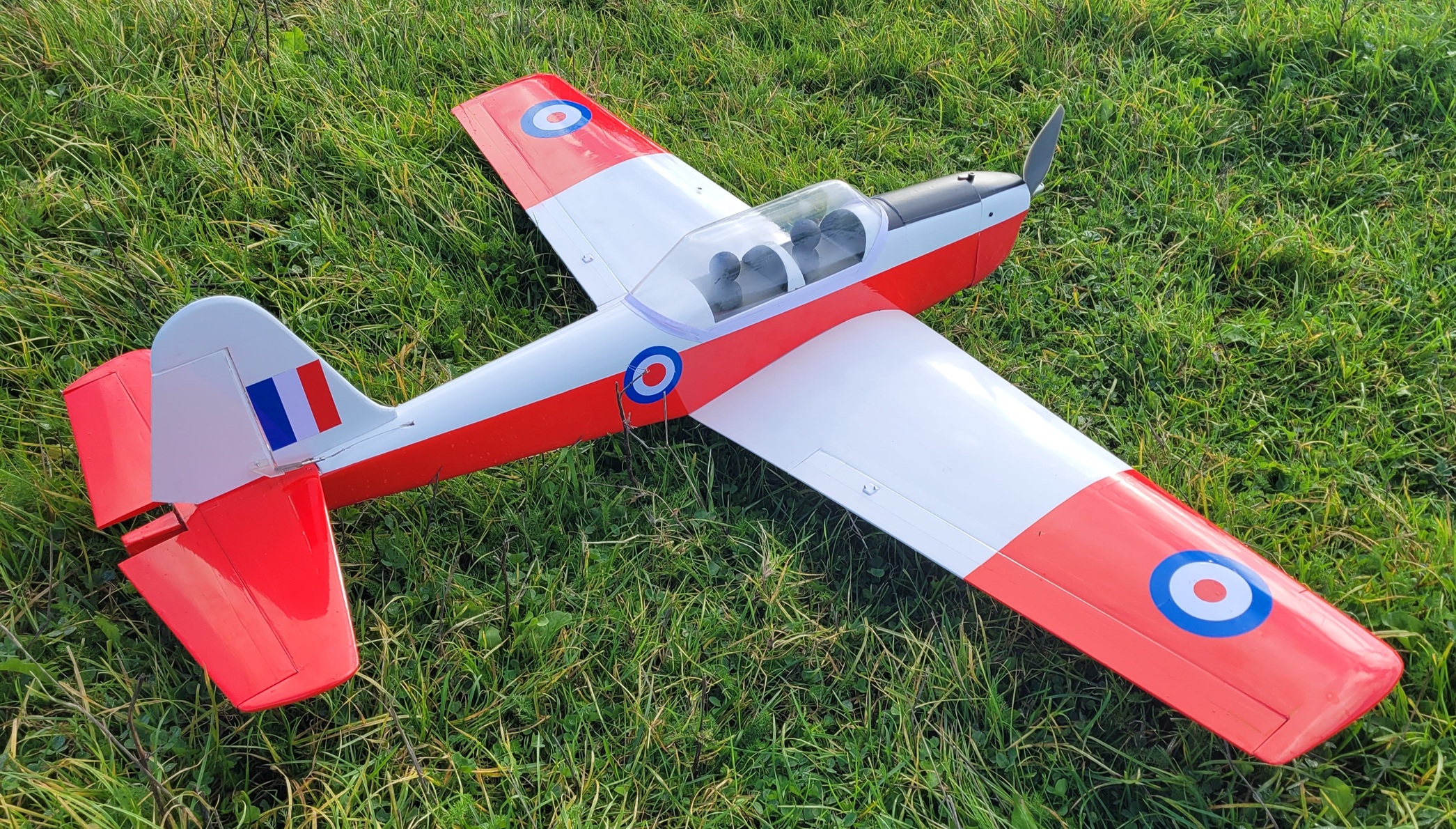
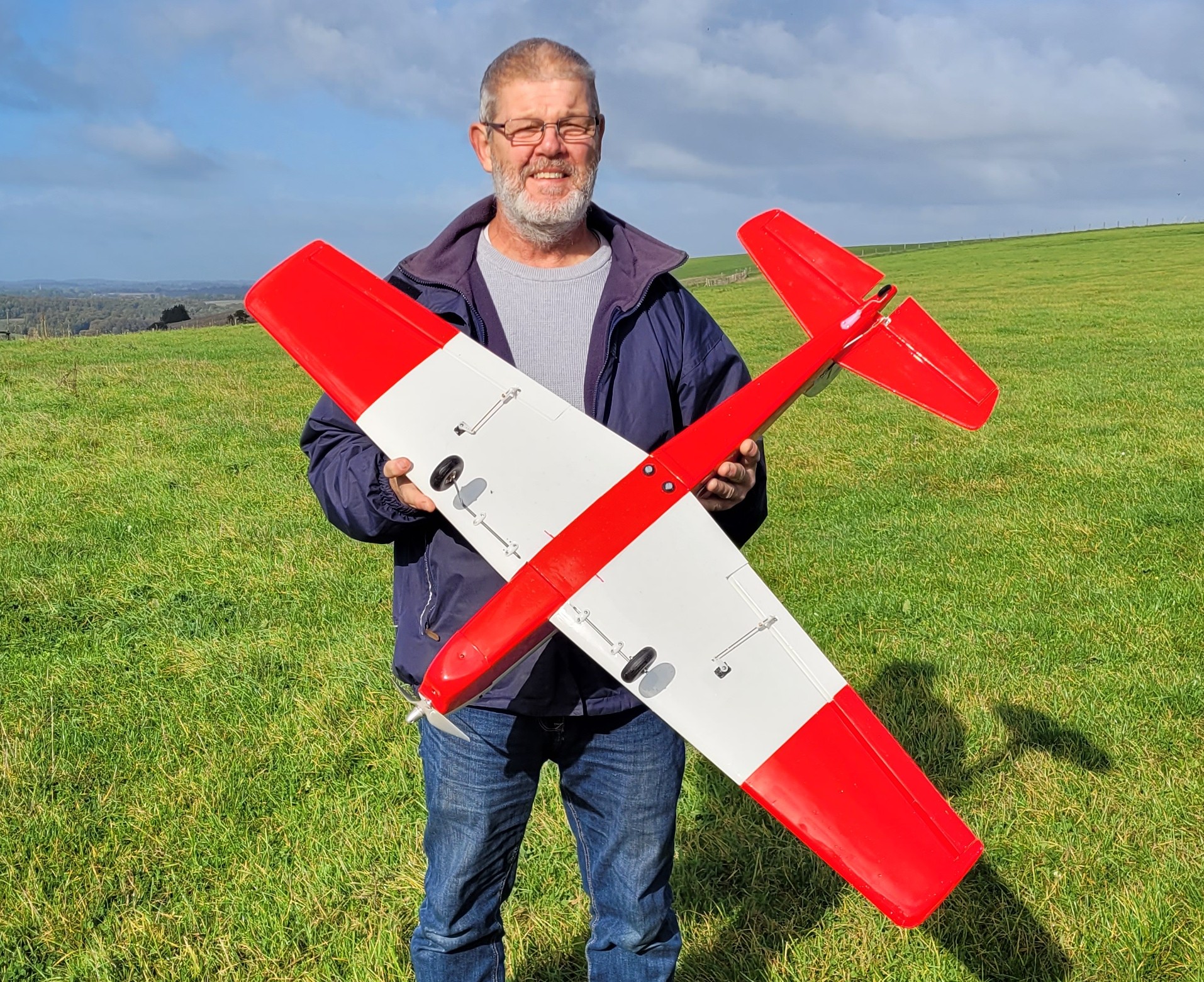
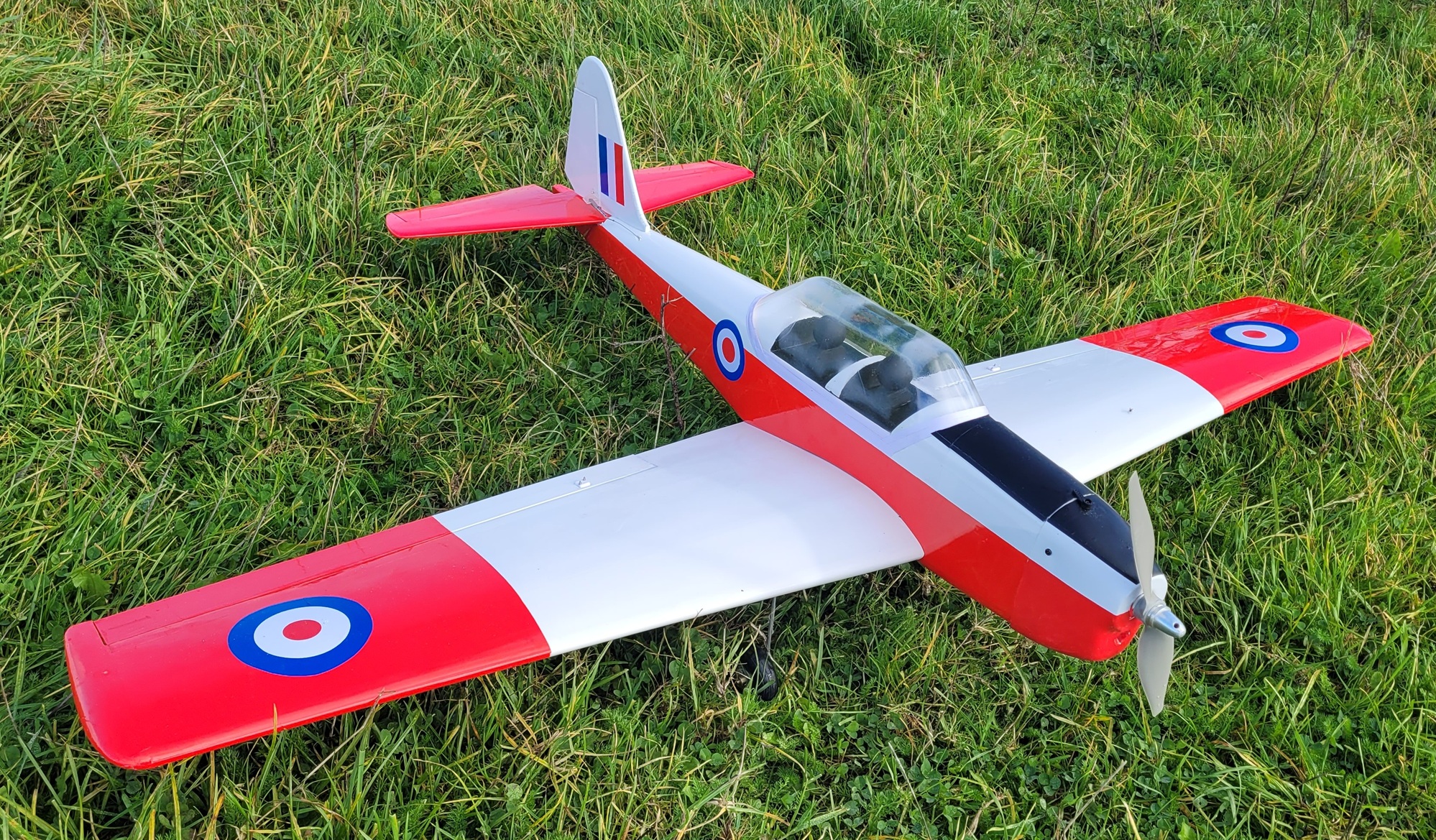
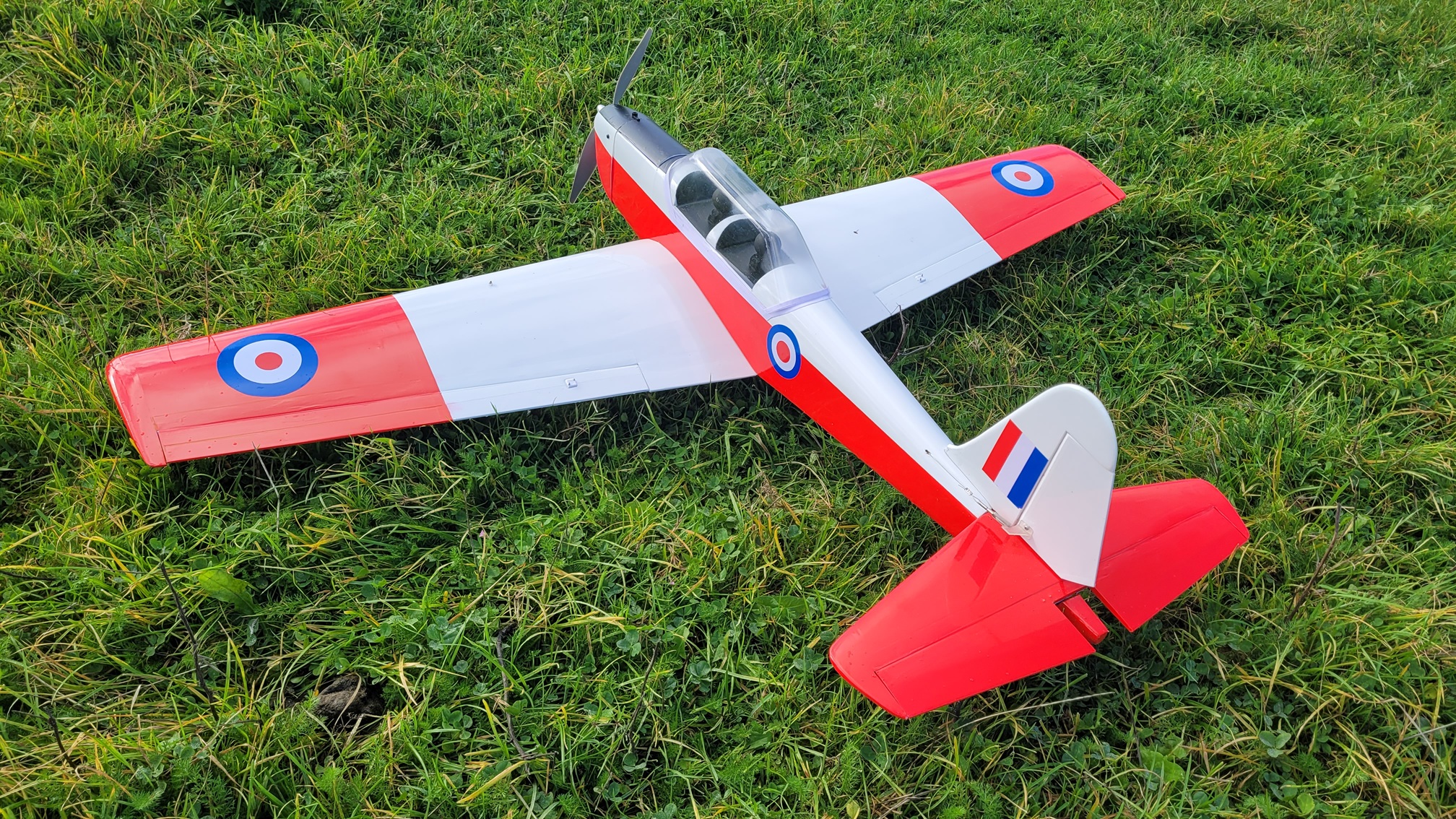
Next, 1066 has finally finished building the Chipmunk kit that he bought from Stan Yeo.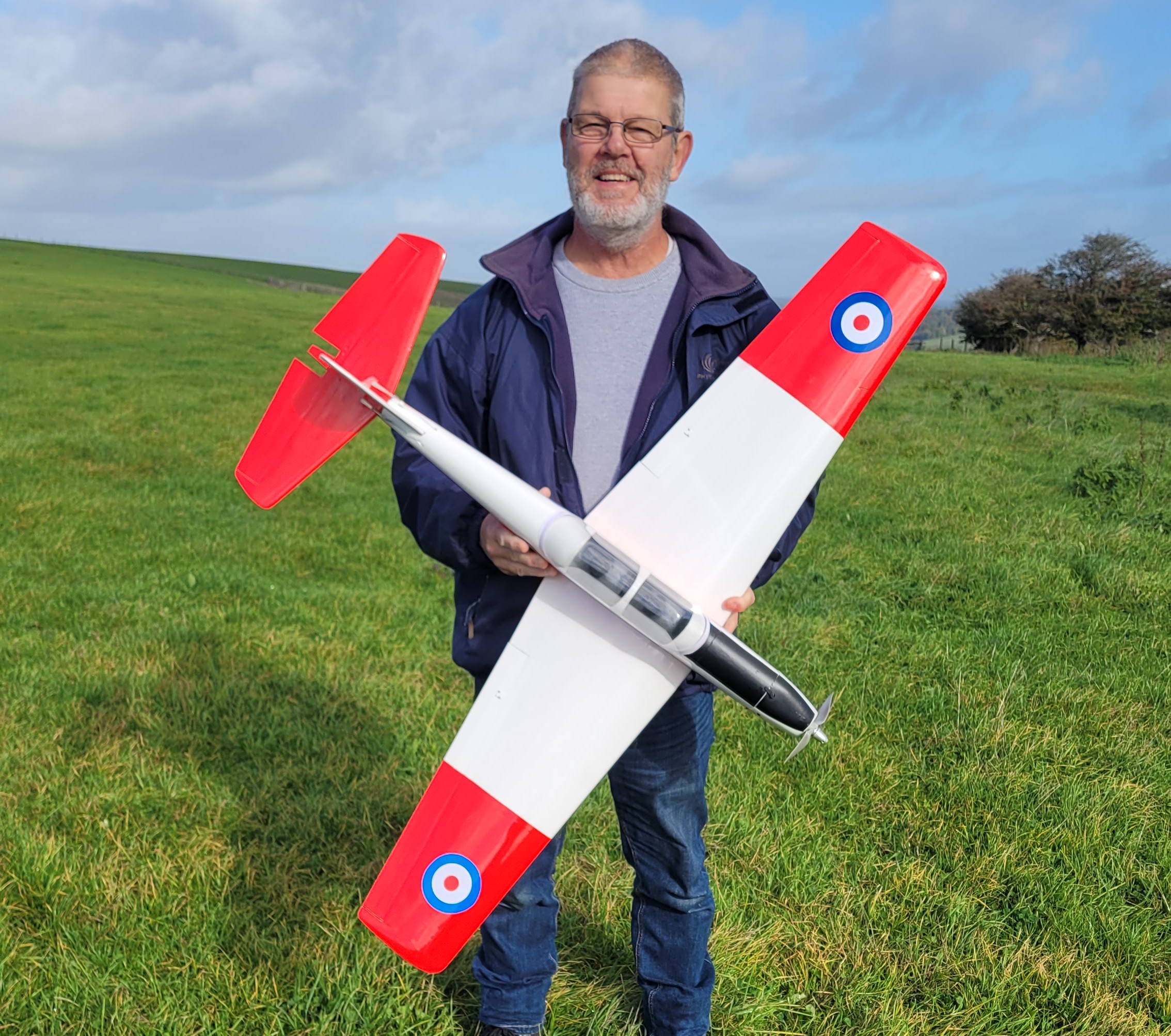
For those of you who are not already aware, Stan is the owner of Phoenix Model Products.
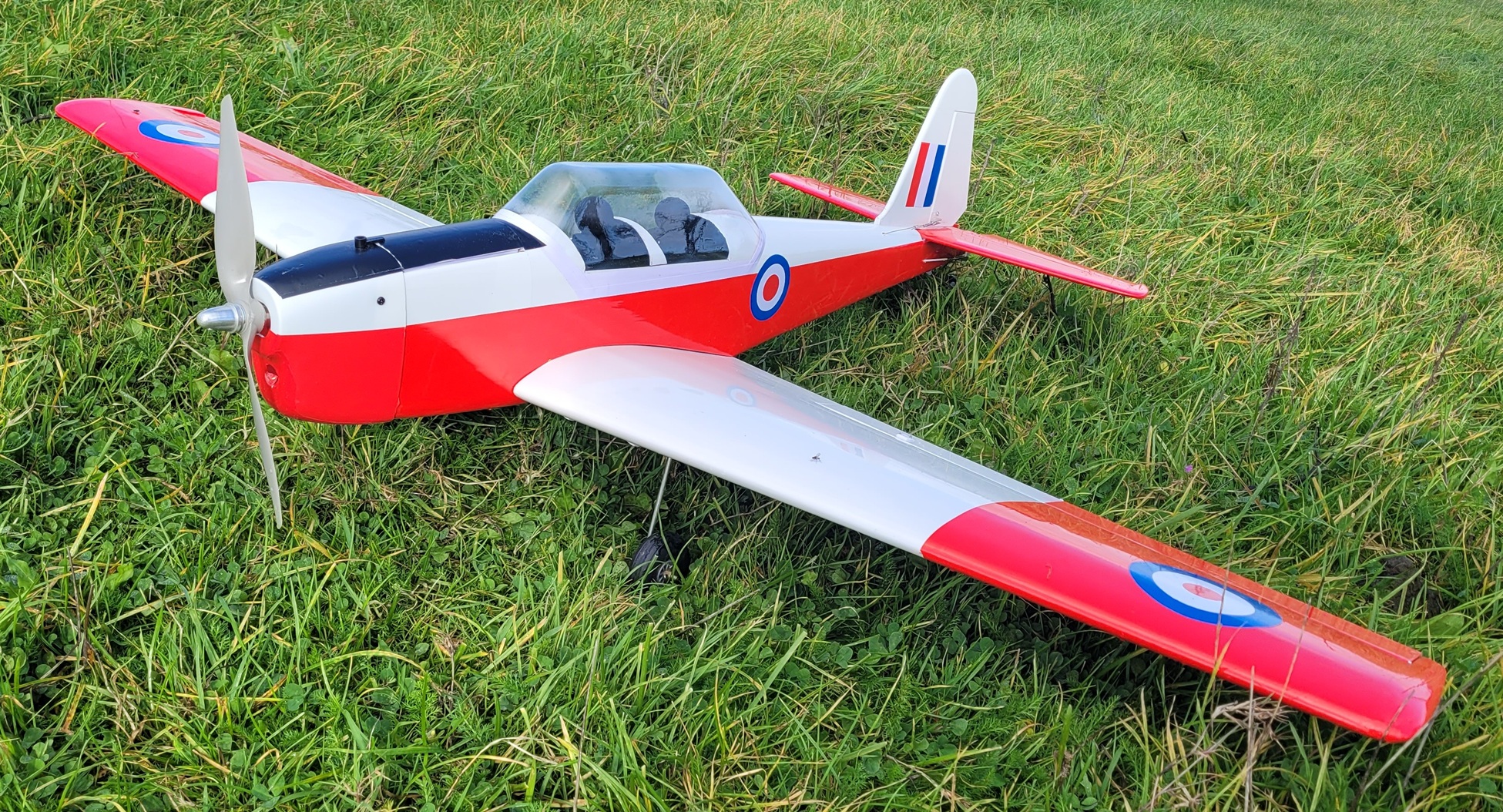 I asked 1066 for a few words and this is what he came up with: As most of you know, over the last few years I have rediscovered building from kits. I started with a modern kit from the Dancing Wings brand but the quality was very poor, so much so I very quickly gave up on it, eventually giving it to Dwayne Pipe to see if he could make it work. I also tried an Angel Wings Delta, this was far better, modern laser cutting which just slotted together, but sadly their range is mainly small slope soarers, so nothing else tempted.
 My Fugly (to you and me that’s an Evolution Models Fusion II that 1066 thinks is Flippin’ Ugly…or something similar…) was more traditional apart from the wing ribs which were made from foam, so made building the wing quite difficult. So, if you want a traditional kit you have to look back to manufacturers like Great Planes, Chris Foss, Ripmax, Flair, or Phoenix Models, which is where I found the character scale Chipmunk.
 Those who have been a part of this hobby as long as I have will know the name Stan Yeo, so having placed the order for the Chipmunk, I was surprised to get a phone call from Stan the next day. During the call Stan explained he doesn’t debit your card until the kit is ready to dispatch, and that as he is now in his eighties it can take a day or two as he is fully responsible for putting the kits together himself. I got the impression he wasn’t selling so many kits these days. His kits are really old school, with all the small wooden parts produced by Stan, all the hardware is supplied, and it looks like the pre-bent push rods etc are all made by Stan. It’s obvious the kit is from a life-long builder, all the wood is beautifully chosen for its specific job, which means it builds into a very nice model.
 My only criticism is a couple of the wing sheets being too soft, and being thin it takes a lot of concentration not to overdo the sanding. Unfortunately, I didn’t concentrate hard enough, resulting in putting my finger through the bottom sheet of one wing at almost every bay. I found this very disheartening and put the almost completed model aside in our spare room. Seven months later the wife had become tired of my toy plane sleeping on our spare bed, and gently suggested it was time it returned to my modelling shed.
 Having not looked at the model for all this time, it turned out the repairs to the underside of the wing weren’t as bad as I remembered, so I decided to finish it. I already had the covering, but had used the electronics on another model, so a quick AliExpress order was made to purchase the recommended setup. A couple of weeks later it was ready for its maiden which was pretty straightforward, just a few adjustments to trims, control movements (I never look at the recommendations) and CG had the model flying nicely.
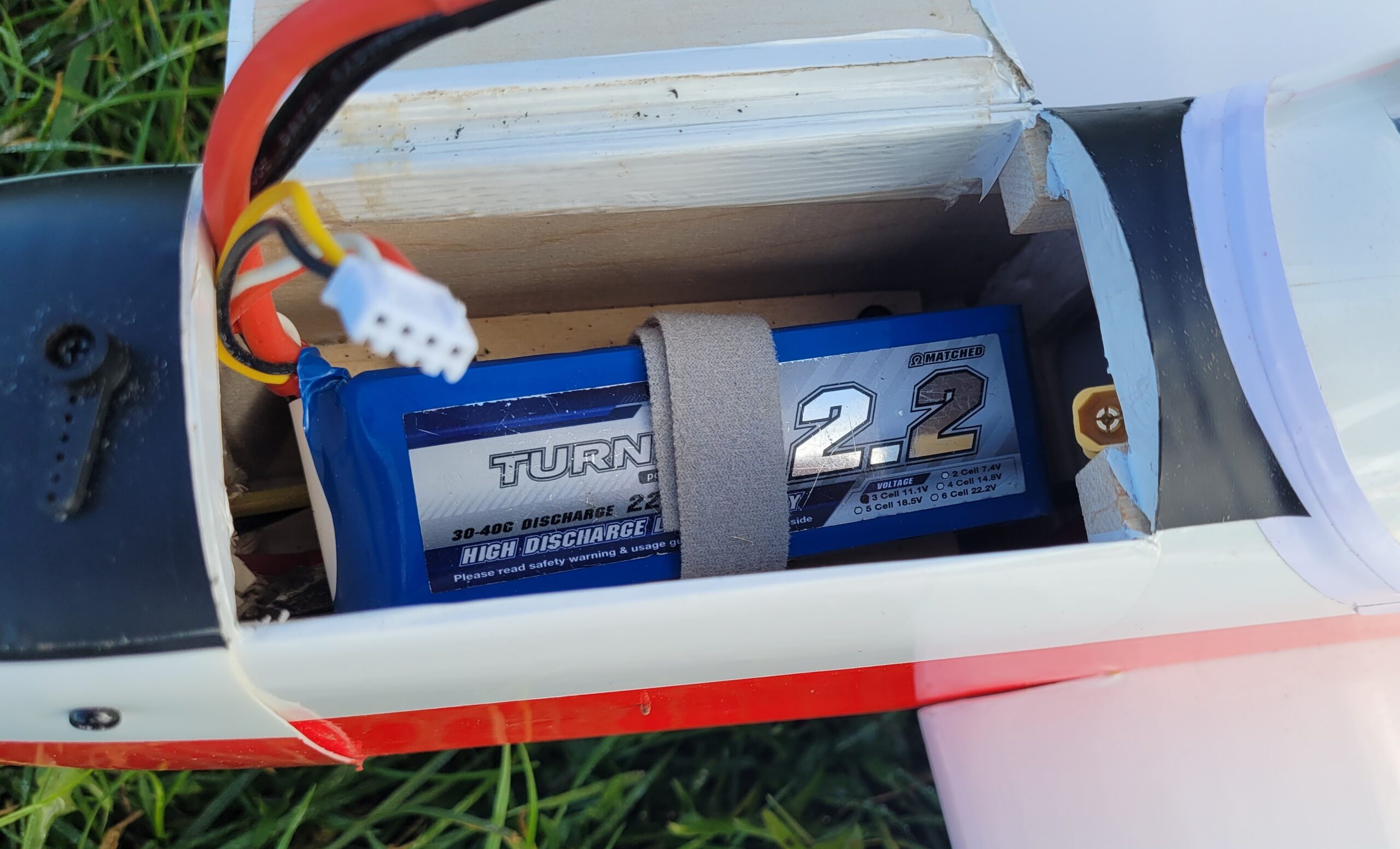 In the words of our illustrious editor, “Here is what Stan has to say about the model”: “The Chipmunk is a favourite among modellers, evoking fond memories for many of their first flight in an aeroplane. Whilst the Chipmunk CS is not true scale it captures the essence of the full-size aircraft. With a typical 4/500W 3542 size motor and using 3S 22/2900mAh lipos, the Chipmunk has a spritely performance and capable of performing a wide variety of manoeuvres. It is both a delight to build and fly attracting compliments on both fronts. The all-wood easy build construction follows the now well proven path of other models in our range in that it incorporates a fully sheeted built-up wing with a comprehensive collection of cut parts and accessories. The unique adjustable motor mount assembly means most 35mm diameter brushless motors can be accommodated.” Thanks for that 1066, I can happily agree that the Chipmunk flies very nicely indeed and certainly looks the part in the air. You can judge for yourselves, it’s in this month’s video.
Back to Jono for the second plane he brought along, an Evolution Models Micro Fusion.
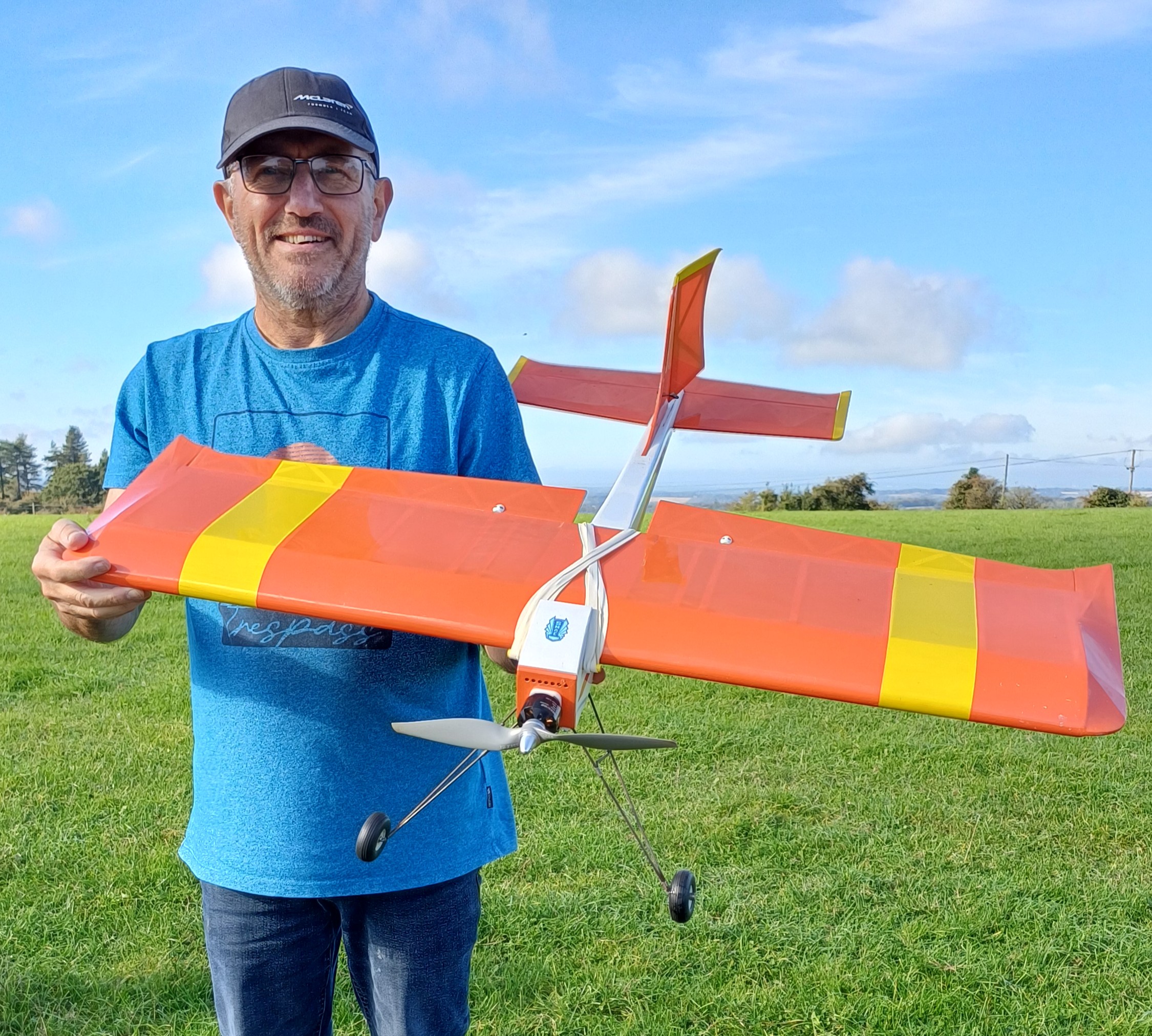 As the name suggests it’s simply a smaller version of the Fusion with a wingspan of 39” against the larger Fusion II at 52”. This is from the Evolution website: The Micro Fusion maintains the characteristics of it larger brother! It’s the perfect size to throw in the back of the car and fly anywhere (responsibly!). Using affordable servos, motor, ESC and batteries the Micro will fly just about anywhere and perform fun fly aerobatics straight from the boot of the car. The kit is supplied with the same high quality components as the larger Fusion, and will contain the following components: Laser Cut Balsa Laser Cut Ply Laser Cut Depron High Quality strip and sheet materials Comprehensive Hardware Pack inc Closed loop kits, pushrod connectors, saddle clamps, hinges, pre-bent Undercarriage etc and a Comprehensive Instruction Manual.
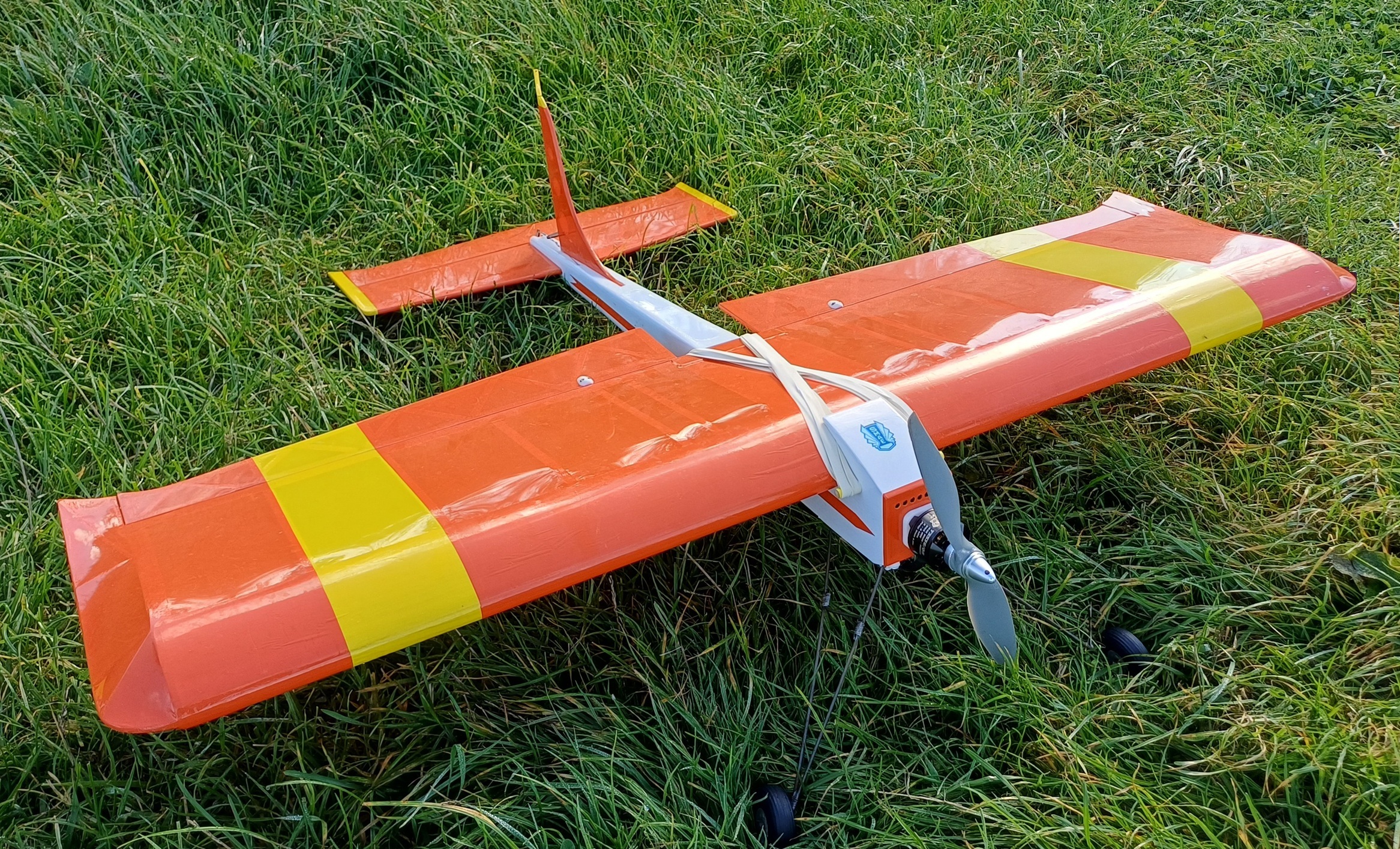 Jono has fitted his out with an Overlander Thumper T3536 1050Kv motor and an Overlander 30A speed controller which he has mounted externally as per the kit instructions. He says the wing was a pain to build as the ribs are made of Depron and are very fragile but other than that the kit was OK. He has finished it using Oralight which apparently is 40-50% lighter than the more common Oracover. Jono has used more of his own 3D printed parts including a receiver holder, the undercarriage clamps, and a motor spacer. The finished model looks very smart and, as you can see in the video, flies well.
Action shots time now, with the photos being taken from the last two month’s videos: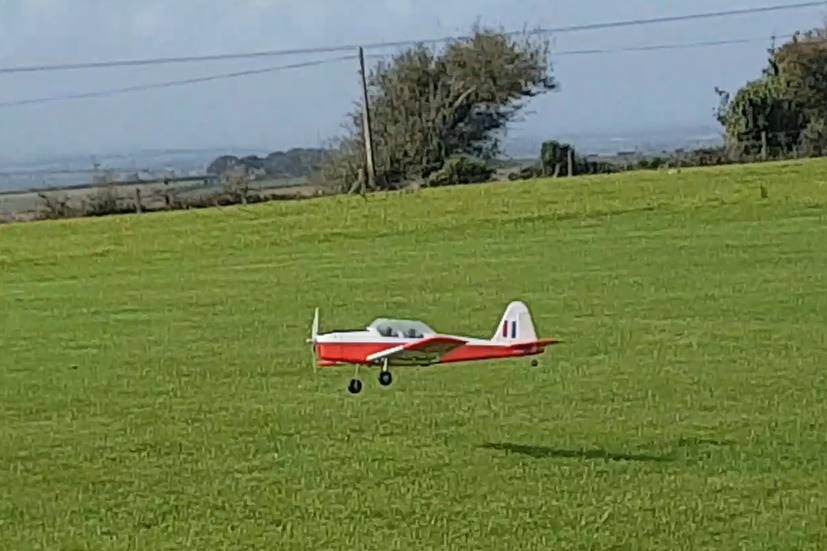
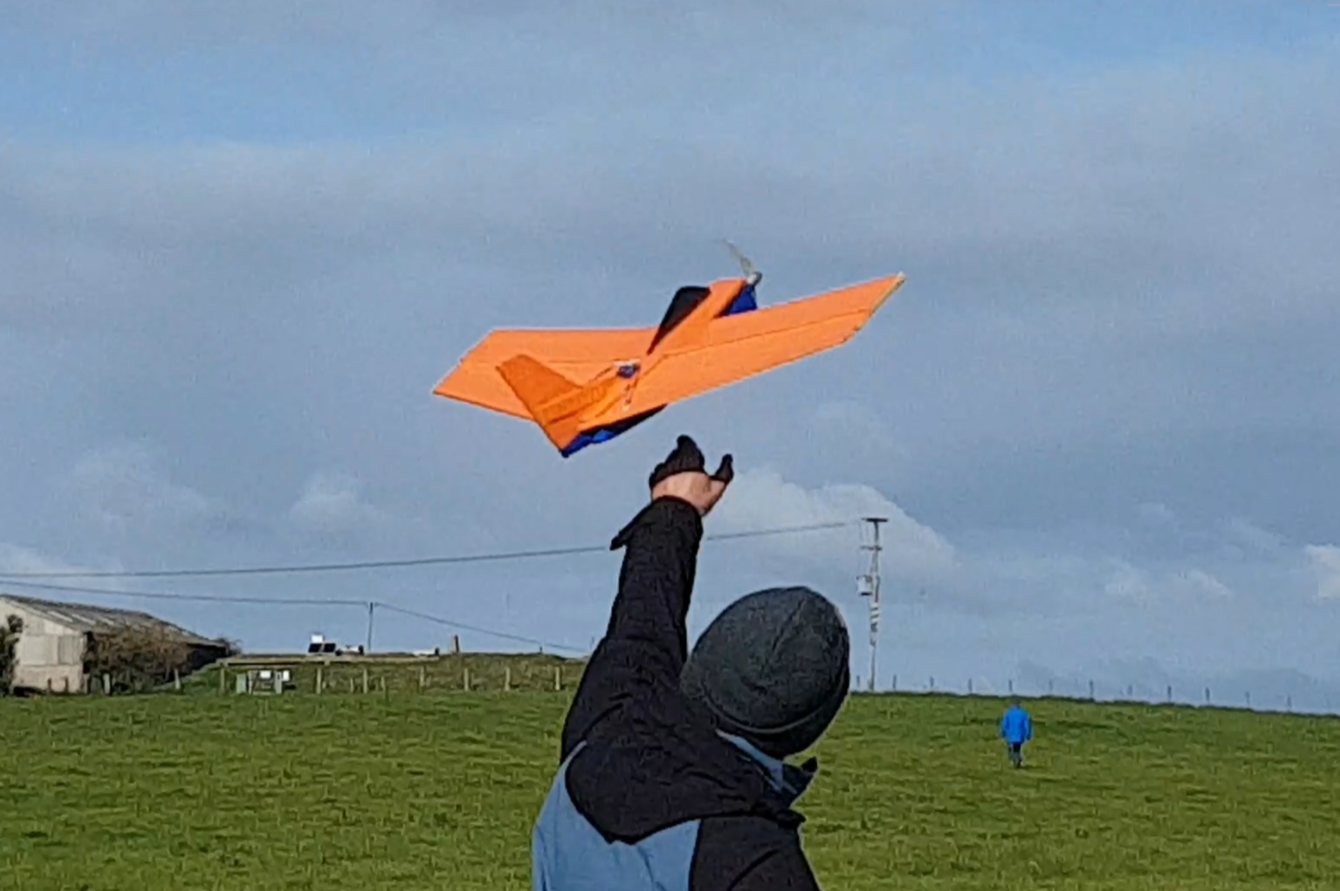
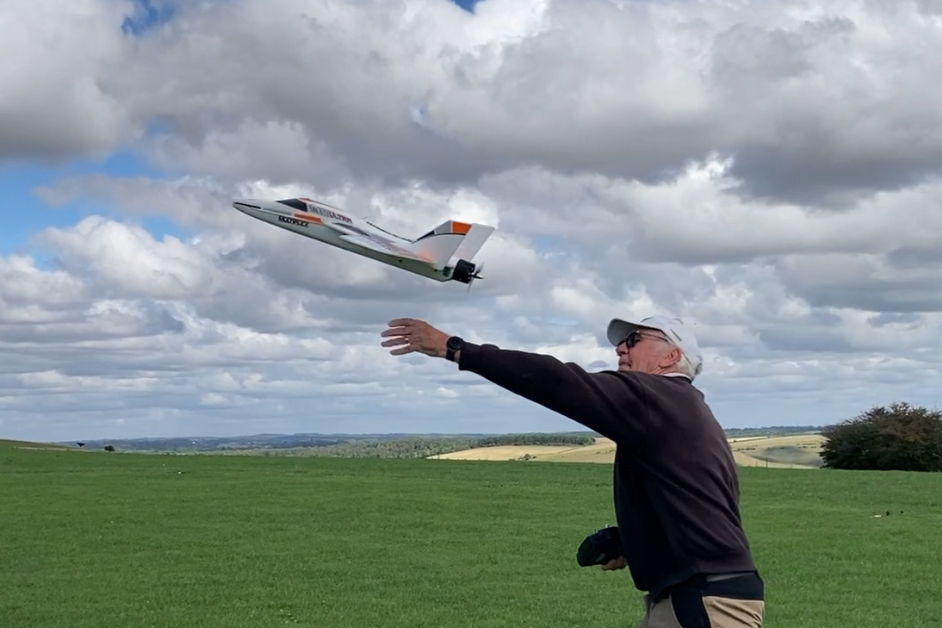
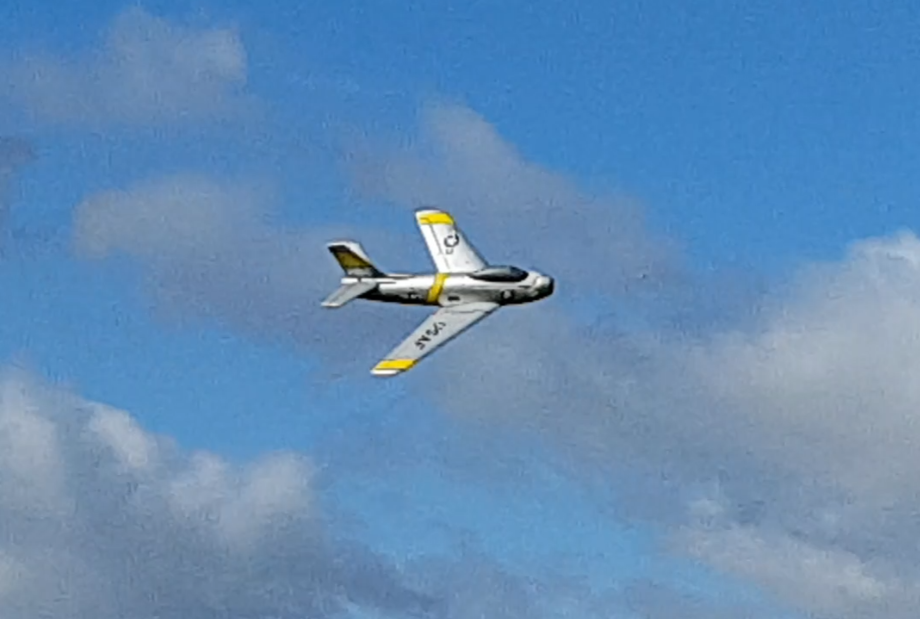

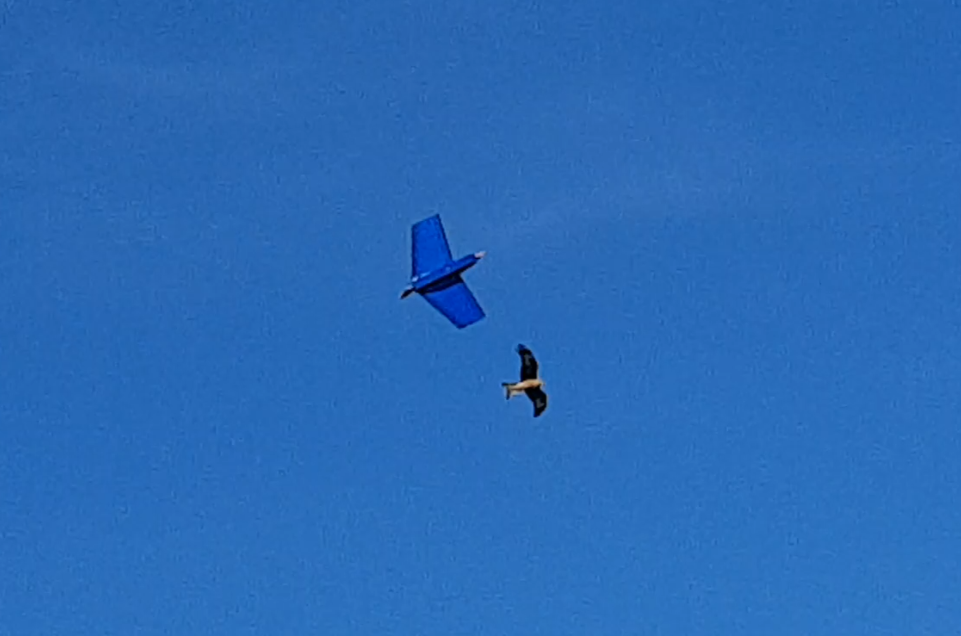
This month’s video includes footage shot by Dougal Entendre, and Colin Cowplain.
Please watch the video full-screen, it’s so much better with small models flying around:
If the video won’t play for you please click HERE
The Final Funny:
A USAF C-130 Hercules, full of marines, had to make an unscheduled landing at Thule Air Base due to some unexpected headwinds that had cut into fuel reserve.
Thule is located about 750 miles north of the Arctic Circle so is permanently cold.
While on the ground the Aircraft Commander, a very inexperienced captain, calls the control tower and asks to have the nearly full toilet serviced.
About 30 minutes later, an airman shows up with a pumper truck to empty the toilet. With the temperature hovering around -30C the airman is struggling to get the valve on the end of the hose unfrozen. After about 15 minutes struggling with it, the airman decides the only way to get it working is to go back to the hangar and either thaw out the hose, or get a new one. Meanwhile the Aircraft Commander is impatient to get back in the air and asks the Airman what the problem is and how long he thinks it will take to fix. The Airman says the hose is frozen, and he doesn’t know how long it will take to thaw it.
After some 45 minutes, the Airman returns to the aircraft and begins to empty the toilet. The captain confronts and berates the Airman for taking so long, and for his “lackadaisical attitude”. He tells the Airman he will be making a report about how the Airman caused a long delay, and how his attitude bordered on insubordination.
The Airman gives the captain a sidelong look, then says, “Captain, I’m stationed here at Thule; the nearest single woman is probably 1000 miles away; my tour isn’t up for another 11 months; I’ve got one stripe; it’s 30 degrees below zero and I’m pumping crap out of an airplane. What exactly do you think they’re going to do to punish me?”
Colin Cowplain